Expressing condolences and support for assistance to the victims of the earthquake and tsunamis that occurred on December 26, 2004, in South and Southeast Asia.

Legislative Activity
Stay on top of the latest movement without scrolling through every action
Motion to reconsider laid on the table Agreed to without objection.
January 4, 2005 • 6:52 PM
View full timeline
Introduced in House
January 4, 2005
Considered as privileged matter. (consideration: CR H37-47)
January 4, 2005 • 5:50 PM
DEBATE - The House proceeded with one hour of debate on H. Res. 12.
January 4, 2005 • 5:50 PM
Passed/agreed to in House: On agreeing to the resolution Agreed to without objection.(text: CR H37)
January 4, 2005 • 6:51 PM
On agreeing to the resolution Agreed to without objection. (text: CR H37)
January 4, 2005 • 6:51 PM
Motion to reconsider laid on the table Agreed to without objection.
January 4, 2005 • 6:52 PM
Floor Debate
24 membersWhat members said about H.Res. 12 on the floor
 SJL
 EFH
 NP
 TL
 DR+19
Floor Debate
24 membersWhat members said about H.Res. 12 on the floor
Mr. Speaker, let me add my great appreciation to the distinguished gentleman from California (Mr. Lantos), the gentleman from Illinois (Chairman Hyde), and the gentleman from Iowa (Mr. Leach) for…
Mr. Speaker, let me add my great appreciation to the distinguished gentleman from California (Mr. Lantos), the gentleman from Illinois (Chairman Hyde), and the gentleman from Iowa (Mr. Leach) for recognizing the need for this Congress on the very day of our swearing-in ceremonies to offer to the people of the world our deepest sympathy, and also our ability to be able to understand a horrific tragedy that is unspeakable.
We note 140,000 who may have died by the tsunami, but it may be growing, 150,000, 160,000. As I listened to the remarks being made by the gentleman from Illinois (Mr. Hyde), I noted as we have worked together on these issues that more than one-third are children, and how we can all recall the day of 9/11 when it came to our attention in New York that so many children had been left behind because of the tragedy and death of their parents.
Now not only do we have children that have died, but we have children that are left behind. So I say to those in Indonesia and Sri Lanka, Thailand and India, Somalia, Malaysia, Maldives, Bangladesh, Kenya, Burma, and many other places, that we recognize that no words can comfort you for this tragedy.
But out of this enormous tragedy I believe that the world can now take its rightful place as a healer, as a place where there is caring, there is nurturing. And so for the $350 million, although many of us recognize that the initial response was not what we wanted it to be, today we come in celebration and acknowledgment of the leadership that has been given by this Nation. We are grateful for the $350 million; but more importantly, I am grateful for the words of the gentleman from Illinois (Mr. Hastert) that we will do more.
I think it is also important to state for the record $2 billion around the world has been promised. That shows that the world can work together for peace for humanitarian causes. Might I also say in a special note and special prerogative that I would like to congratulate those in the city of Houston
and acknowledge the work that was done by that city.
On December 27, 2004, over 75 persons joined in a very small room in my Federal building and organized a Houston's Solution For Tsunami Victims. The representatives were from the council offices of Indonesia, Sri Lanka, the Council Office of Thailand, Pakistan, India and the Vietnam community and others.
What we wanted to do is not to be selfish and to separate ourselves but we wanted to have the Houston mark on this terrible tragedy. And so to my colleagues, the City of Houston is organizing as a city. Some of our ideas will be, of course, to adopt cities in those regions to be part of the long-term rebuild of schools and hospitals and as well to provide medical supplies and other dollars to be part of the larger effort. My hat is off to that effort. In fact, our first event will be this Sunday, January 9, in Houston, Texas.
Might I close by saying this is what can be done all over the Nation and I know it is being done. I will also ask my colleagues to join me in supporting legislation that I am filing, a resolution on temporary protective status of those individuals in this country whose documentation may be expiring and therefore are not able to go back to these devastated countries will be allowed to stay here until their nations are rebuilt. I look forward to working with my colleagues on this important effort.
I thank the leaders who have put forward this resolution. They are visionaries but most importantly they are humanitarians. I am glad today this Congress is standing up to be called not just a Congress but people who care, who believe in the world family.
Mr. Speaker, I rise to support the resolution and join all Americans in an expression of condolences to the people and countries that have been devastated by last week's tsunami. In particular, I want to offer my personal sympathy to: Ambassador Sen of India, Ambassador Brotodiningrat of Indonesia, Ambassador Subasinghe of Sri Lanka, and Ambassador Piromya of Thailand.
Tsunamis are walls of water that inundate coastal areas with little or no warning, often taking many lives and causing extensive property damage. They are initiated by sudden underwater disruptions and in this regard they differ from wind generated waves because the power they pack is not limited to the surface. Tsunamis are usually started as a result of an undersea earthquake, which for years was considered to be the sole cause of tsunamis. Research is now showing that tsunami generation involves intricate interactions between earthquakes, landslides, and sympathetic vibrations between the quake and the ocean above it.
Tsunamis have been known since 426 B.C., and between 1990 and 2001 there were 11 major tsunami events in the Pacific Rim, killing over 4,000 people and causing hundreds of millions in property damage. Before this week, the most devastating tsunami occurred in 1755 in the Atlantic which killed 60,000 people and destroyed much of Lisbon. By comparison, the death toll from the Banda Aceh tsunami could exceed 150,000 on top of the unthinkable numbers of displaced, orphaned, and injured. Subsequent disease and untreated injuries will undoubtedly add to these statistics.
The President has already pledged $350 million in direct support to the affected countries on top of the medical, infrastructure, and logistics support from the U.S. Military. I want to encourage my colleagues in the Congress to work together as we did last fall to provide nearly $14 billion in relief to the Southeastern states and Caribbean nations following the four devastating hurricanes.
Former Presidents Clinton and Bush are leading the Nation's private fundraising activities, and I want to ask all Americans, to contribute whatever they can to the relief efforts for what is likely history's most deadly natural disaster.
Beyond these immediate needs, I want to encourage you to work with me in developing programs that will help to minimize losses suffered in future natural disasters. The National Oceanographic and Atmospheric Administration and the U.S. Geological Survey lead the United States in the research, monitoring, and warning of tsunamis and other natural disasters. For example, the Deep-ocean Assessment and Reporting of Tsunamis Project (DART) can detect ocean level anomalies as small as \1/2\ inch in 20,000 feet of water to determine if a tsunami event is occurring in the deep sea. This system was useful to avoid a false alarm in response to an Alaskan earthquake in 2001. DART stations cost about $250,000 to purchase and around $125,000 per year to maintain. Stations are now located off the coasts of Alaska, the Pacific Northwest, and Chile, but we need to consider how this system can be expanded to other parts of the world.
Even with detection systems such as DART, notification alarms and awareness programs must be implemented for them to be effective. The first waves took 2-3 hours to hit Phuket
(Thailand), Sri Lanka, and India after the initiating quakes. Even a few minutes of warning can make a huge difference if preceded with the proper awareness training. For example a 1993 tsunami followed an earthquake in Japan by a mere 6 minutes. Although 200 people perished, 1,200 people escaped the waves by running inland as soon as they felt the shaking.
Research on the causes of tsunamis is also needed. One of the most severe tsunamis in recent history occurred in Papua New Guinea in July 1998. The initiating earthquake was unexceptional at a magnitude of 7.1--the size of an earthquake that strikes somewhere in the world about every 3 weeks. Geological modeling strongly suggested that the quake caused an underwater landslide that together triggered the exceptional size tsunami. Other preliminary research indicates that under some conditions, tsunamis may be detectable from aircraft or satellites using radar or radiometers miles away from coastal areas.
In this regard, I look forward to working with the Science Committee to identify opportunities for natural disaster detection and warning, and I look forward to hearing tomorrow's briefing from Dr. David Applegate from USGS and General D.L. Johnson from NOAA.
In addition to these financial and research initiatives, I want to remind my colleagues of the friends and families of the victims within the United States who also need our assistance.
Many national from affected countries that reside in the United States on either a permanent or temporary basis. Some have no one left to provide monetary support and no home due to demolition by the violent waves and flooding. It is in the spirit of rebuilding and internationalism that I will introduce legislation to give nationals from affected countries that reside in the United States an opportunity to establish eligibility for Temporary Protected Status (TPS).
This legislation would grant TPS to eligible nationals from specified countries who presently reside in the United States. TPS relief under this proposal will provide a necessary but temporary respite from deportation that will permit eligible applicants to work and live lawfully in the United States pending the restoration of a habitable homeland that is not laden with disease. Additionally, this proposal will allow eligible aliens to travel abroad and to return to the United States and be treated the same as any returning alien provided TPS-- which will be helpful to family members of tsunami victims. I ask all of you to support this legislation and to join together in pledging the maximum level of resources to make the recovery of the affected areas expedient.
Mr. Speaker, I thank the gentleman from California for yielding me this time and also extend my appreciation to the chairman of our committee for the support and cosponsorship of this important…
Mr. Speaker, I thank the gentleman from California for yielding me this time and also extend my appreciation to the chairman of our committee for the support and cosponsorship of this important resolution.
Mr. Speaker, this certainly has been a tragic crisis in Southeast Asia, and I do not know if my colleagues know that I am probably one of the few Members who has ever personally experienced what it means to go through a tidal wave and so sad to hear from the media reports and learning in some parts of this region when the reefs and the beaches are sucked into the ocean and the water recedes some 300 yards from the reefs and the children and people not knowing the nature, that this is how a tidal wave comes about.
And then, the children playing and the fish flopping all over the place thinking this is a blessing from God, and then knowing that they should be running in the opposite direction when the tidal wave hits. This is really a sad situation.
Mr. Speaker, what I really wanted to address and share with my colleagues is a certain criticism that has been brought not only to the world community, but to our Nation, suggesting that our country has been stingy in giving assistance to those who are in need. Nothing could be further from the truth.
Mr. Speaker, in the Wall Street Journal article on 31 January, and according to a USAID report, in the year 2000, our country donated over $56 billion in international assistance. Eighteen percent of that alone came from the government. $33.6 billion, or 60 percent, came from private donors, $3 billion from corporations, $3.4 billion from religious organizations, $18 billion from individual donations alone, not even counting foundations and from public organizations and universities.
I suggest that the next time we get criticisms from others suggesting that our Nation has not been generous in giving assistance to those in need really needs to be corrected. And I am very, very glad not only from Secretary Powell, but from President Bush, that we need to make certain corrections.
Mr. Speaker, I will insert for the Record the full text of this editorial commentary in the Wall Street Journal of 31 January. I urge my colleagues to support this resolution.
[From the Wall Street Journal, Jan. 3, 2005]
Far From Stingy
Across the world, the reaction to Asia's tsunami is
bringing out the best in human nature. Fund-raising appeals,
disaster-relief teams, military assets--all are being
marshaled for the victims of this tragedy.
Which makes it all the more outrageous that a top United
Nations official chose this week to accuse the U.S. and other
Western nations of being stingy with assistance to poorer
nations. ``We were more generous when we were less rich,''
Undersecretary-General for Humanitarian Affairs Jan Egeland
lectured on Monday. ``And it is beyond me why we are so
stingy, really.''
Now, complaints about U.S. miserliness are more routine
than the earthquakes and floods that strike the globe. A
favorite ``fact'' of international critics is that while the
U.S. government nearly always ranks first in absolute amounts
of foreign aid, it tends to fall last among industrial
countries in aid as a percentage of gross national product.
The one-tenth of one percent that Washington devoted to
foreign assistance, they say, is nothing compared with what
the U.S. could afford.
The problem is that, as with so many questions of
accounting (say, Oil for Food), the U.N. and other
international bodies rely on unreliable ledgers. Groups like
the Development Assistance Committee (part of the
Organization for Economic Cooperation and Development) tend
to look only at ``official'' government aid. What this misses
is that Americans have never trusted government institutions
to dole out assistance. Instead, we open our wallets for
private groups that are better at targeting money where it's
needed, tracking projects, cutting waste--and getting
results.
When it comes to this sort of giving, nobody beats
Americans. According to a 2003 report from the U.S. Agency
for International Development, U.S. international assistance
to developing countries in 2000 was $56 billion. Yet just 18%
of that was ``official'' government assistance. Some $33.6
billion--or 60%--came from the private sector. Corporations
shelled out nearly $3 billion. Religious groups weighed in
with $3.4 billion. Individuals provided $18 billion. To say
nothing of funds from foundations, private and voluntary
organizations, or universities.
Cynics mark this generosity down to a U.S. tax code that
encourages giving. Yet most research shows that Americans
view donations as a duty. Philanthropy magazine reports a
study showing the average U.S. contribution outweighs the
average German or French one seven- or eight-fold. This sense
of responsibility is often motivated by faith; some 60% of
American donations go to religious groups or causes.
None of this sits well with the U.N., whose own budget
relies on state dollars. A chastened Mr. Egeland was forced
later this week to claim he'd been misinterpreted and to
acknowledge U.S. generosity. But behind this apology is the
U.N.'s longstanding belief that what's really needed is for
the U.S. and others to raise taxes to pay for more public
foreign aid.
That approach reigns in Western Europe and explains what's
wrong with so much of current foreign aid. Europeans have
come to view private donations as a failure of the state and
expect their governments to collect billions in taxes to
shuffle along to slow-moving and unaccountable international
bureaucracies. The result is a lose-lose situation. Giving
countries see their own economies depressed by higher taxes
and receiving countries find the aid too often enabling
strongmen or perpetuating poor policies.
A far better approach, at least in the public sphere, are
initiatives such as President Bush's Millennium Challenge
Account. By tying long-term assistance to improvements in
specific economic and political goals--such as cracking down
on corruption or establishing rules of law--foreign aid
brings about real reform. This approach drives U.N.
bureaucrats nuts, a sure sign it's on the right track.
Today's priority in Asia is immediate humanitarian relief.
The list of U.S.-based private and religious organizations
already working in the area is stunning. And it's good to see
the U.S. decision effectively to go around U.N. bureaucracy
by working directly with a coalition of Japan, Australia and
India to coordinate relief. Meanwhile, we can expect the
federal government to continue its tradition of generosity in
the upcoming weeks--a tradition that resulted in $2.4 billion
in humanitarian relief last year along, or 40% of the world
total.
But future money, both public and private, should be aimed
at developing the sort of governments and economies that will
be equipped to deal with disasters on their own.
Mr. Speaker, I thank the distinguished ranking member of the committee for his kind words and for his great leadership. And I thank the gentleman from Illinois, the two of them, for bringing this…
Mr. Speaker, I thank the distinguished ranking member of the committee for his kind words and for his great leadership. And I thank the gentleman from Illinois, the two of them, for bringing this very important resolution both to the floor. They both have been champions for humanitarian causes and human rights throughout the world. I thank the gentleman from California (Mr. Lantos), especially for his work on the Human Rights Caucus. And, in fact, the definition of human rights and our attention to the condition of mankind extends to the issue that is before us today.
As the world knows, 9 days ago we witnessed on television the most destructive power of nature, a powerful earthquake and subsequent tsunami that took more than 150,000 lives and seriously injured hundreds of thousands more across Asia. The unspeakable devastation the world has witnessed in these areas presents a challenge not only for the millions of people who are struggling to recover and rebuild but also for all of us who are called by our faith and our common humanity to help those in need.
Nothing can give back all that has been lost, but the actions we take today and in the days ahead help to keep the epic disaster from becoming even more far reaching. In a tragedy such as this one, there is only the smallest measure of inspiration that can be taken from the devastation.
But if there is anything hopeful to be found in the aftermath of the tragedy, it is that the worst of Mother Nature has brought out the best in human nature. Americans have donated hundreds of millions of dollars in private donations. The coordinated efforts by USAID, the International Red Cross, UNICEF, OXFAM and Care and many others are providing quick and vital resources. Relief workers are struggling 24 hours a day to distribute supplies and medical care to the injured and homeless. The United States Government has pledged $350 million in emergency assistance for the region. And when the victims of the disaster in Asia see our soldiers and ships and helicopters bringing food, supplies, and medical care, they see the compassion that is the best of America.
The chairman and ranking member of the Committee on International Relations and I in my capacity as ranking member on the Foreign Operations, Export Financing and Related Programs of the Committee on Appropriations, we have traveled the world to see our assistance at work, and we know that when the U.S. military becomes involved in humanitarian assistance, they are the best. They are well organized. They get the job done in record time. We are very proud of them and all that they do and certainly in the case of the tsunami.
All of these things are critical, but much more needs to be done. It is estimated by the United Nations that 1.8 million people will need food aid, 1.8 million people. Roads and bridges will need to be rebuilt to get that aid to the people who need it. Millions of people are homeless and in need of shelter. The statistics are daunting, but we must not lose sight of the power of the United States to soften nature's blow. The statistics are staggering, but we remember every single individual as a person who is affected by this. A compassionate and generous response from the United States is essential to save these individual lives and to stabilize the entire region.
While there has been a strong initial response to the crisis, there must be initiative to assist in the longer-term reconstruction process. The United States must take the lead by providing a multi-year assistance package that does not come at the expense of other disaster relief efforts around the world. I hope that a package of aid and assistance for the victims of last week's tsunamis will be the first significant bipartisan accomplishment of this 109th Congress, and I know under the leadership of the gentleman from Illinois and the gentleman from California (Mr. Lantos) and our distinguished Speaker in his beautiful words today about the disaster that we have a good chance that that will be possible.
There is a passage in the Bible that speaks to the power of the spirit at times such as this: ``The bricks have fallen down, but we will rebuild with dressed stone; the fig trees have been felled, but we will replace them with cedars.'' As one who kind of likes victories, I understand the strength of cedars, but we will replace and rebuild.
I kind of think another passage from the Bible is appropriate here. It is appropriate on many occasions, but I thought of it the minute I saw the tsunami, and that is in the Old Testament they tell us that to minister to the needs of God's creation is an act of worship, to ignore those needs is to dishonor the God who made us and them. So we can have an act of worship by ministering to the needs of these people.
I especially want to mention the country of Indonesia that has been devastated by the crisis. Indonesian health authorities reported Sunday that the tsunami may have killed 100,000 people in the Aceh province alone. This natural disaster comes after the Indonesian Government has performed massive military operations and frankly brutal acts of violence against the civilian population of Aceh in recent years.
The international response presents an opportunity for the government of Indonesia to form a new partnership, a fresh start, with the people of Aceh. It is critical that the Indonesian Government continue to open the region to relief organizations, nongovernmental organizations, and the media. It will take a long time. It will require a great deal of help. The scars may never heal entirely, and the memories of loved ones lost will linger forever. But with the help of people of the world, the people of the affected countries will recover and rebuild.
Already we see people who were strangers to each other before the disaster standing together, some of them
right in this very room, and today with this resolution and with the actions that will be necessary in the coming days to give substance to our words, we say to them the people of the United States stand with them. We can say that with great assurance because of the leadership of the gentleman from Illinois (Mr. Hyde) and the gentleman from California (Mr. Lantos) and those kind words, again, of the Speaker this morning.
Mr. Speaker, I yield myself such time as I might consume, and I rise in strong support of this resolution. I want to thank the gentleman from Illinois (Mr. Hyde), my good friend and distinguished…
Mr. Speaker, I yield myself such time as I might consume, and I rise in strong support of this resolution.
I want to thank the gentleman from Illinois (Mr. Hyde), my good friend and distinguished colleague, the chairman of the Committee on International Relations, for sponsoring this critical resolution, and I want to express my thanks to the chairman and ranking member of our Subcommittee on Asia and the Pacific for their outstanding work on this resolution.
Mr. Speaker, I want to extend my deepest and heartfelt sympathy to the people of the countries so deeply stricken by the earthquake, the tsunamis and their after-effects.
This disaster has taken some 150,000 lives and left millions homeless, separated from their families, with no access to clean water, shelter, food, sanitation or health care.
Mr. Speaker, late in December we all watched in shock as the news emerged detailing the horrors from the earthquake and tsunami-affected region. The initial reports of some 14,000 killed were simply stunning at the time, but a week later the numbers are 10 times higher, and with the horrendous death toll, we find there are countless more who are missing, including many American citizens.
The numbers of people killed, missing, wounded or left homeless are nothing short of overwhelming, and the mind struggles to grasp that a tragedy of such dimensions is possible. But the destruction and the numbers are all too real, and the needs of the survivors are real as well.
Our resolution affirms the rock-solid commitment of the American people and the government of the United States for relief and long-term reconstruction assistance in the areas affected by both the earthquake and the tsunamis, and it urges continued attention by all donors to the needs of the survivors, particularly the most vulnerable population, the children.
Mr. Speaker, every country has the moral obligation to help the millions of people affected by the earthquake and the tsunamis. There is a human imperative to ensure that the survivors of this tragedy obtain much-needed humanitarian relief, but we must also work with the international community to help in the long-term reconstruction of the disaster-stricken countries, reconstruction efforts which will be needed for many years to come.
I want to pay particular tribute to our military for their heroic assistance in this gigantic humanitarian crisis. No organization on the face of this planet could perform the miracles that our men and women in our military are doing every minute of every day as this crisis unfolds.
Mr. Speaker, I find it an outrage that some of the wealthiest oil- rich States have pledged only a pittance, even though since oil prices are at sky-high levels they have received an enormous windfall; in the case of Saudi Arabia, some $50 billion last year, that is $50,000 million.
Our resolution applauds the prompt humanitarian response of the United States, the American people, many of our friends and allies, international organizations and relief bodies. We must continue to support these efforts as long as they are necessary.
The gentleman from Illinois (Chairman Hyde) and I will continue to work to determine the best way the Congress and the American people can continue to help the affected countries over the long run. It is only fitting, Mr. Speaker, that the first legislative act of this Congress is a truly bipartisan effort to demonstrate the generosity and the caring of the American people.
I firmly hope that this spirit of bipartisanship may spread to some of our other efforts in the 109th Congress. I urge all of my colleagues to support H. Res. 12.
Mr. Speaker, I reserve the balance of my time.
Mr. Speaker, I am pleased to yield 3 minutes to the gentleman from New Jersey (Mr. Menendez), a distinguished member of the Committee on International Relations and the chairman of the House Democratic Caucus.
Mr. Speaker, I yield 3 minutes to the gentlewoman from Texas (Ms. Jackson-Lee), an indefatigable fighter on behalf of suffering people across the globe.
(Ms. JACKSON-LEE of Texas asked and was given permission to revise and extend her remarks.)
Mr. Speaker, I am very pleased to yield 2 minutes to the distinguished gentleman from New Jersey (Mr. Pallone).
Mr. Speaker, I am delighted to yield 2 minutes to my good friend, the distinguished gentleman from Illinois (Mr. Davis).
Mr. Speaker, I yield 2 minutes to the gentlewoman from California (Ms. Zoe Lofgren), the dean of the California delegation.
Mr. Speaker, I yield myself such time as I may consume.
Long before she joined the Congress, the gentlewoman from California (Ms. Pelosi) was a fighter for all humane and humanitarian endeavors across the globe. She expresses the views of all Democrats on this important humanitarian crisis.
Mr. Speaker, I yield such time as she may consume to the gentlewoman from California (Ms. Pelosi).
Mr. Speaker, I thank the leader for her powerful and eloquent statement.
Mr. Speaker, I yield 2 minutes to the gentleman from American Samoa (Mr. Faleomavaega), a distinguished member of the Committee on International Relations and ranking member of the Asia and the Pacific Subcommittee.
Mr. Speaker, we have no additional requests for time. In concluding, I yield myself such time as I may consume.
I again want to express my deep appreciation to my friend and distinguished colleague, the chairman of our committee, the gentleman from Illinois (Mr. Hyde). I want to say that all of us here are profoundly proud of the generosity of the American people, the generosity of our government, and the extraordinary skill and heroism of our military in facing up to this crisis. Those who cannot get over their mindless anti-Americanism should look at what the American people, the American government, and our military have done in the last few days concerning this crisis, and they will need to rethink their mindless hatred of this great Nation.
Mr. Speaker, I yield back the balance of my time.
Mr. Speaker, I rise in support of this resolution. I would like to express my appreciation to the gentleman from Illinois (Mr. Hyde) and the gentleman from California (Mr. Lantos) again leading,…
Mr. Speaker, I rise in support of this resolution. I would like to express my appreciation to the gentleman from Illinois (Mr. Hyde) and the gentleman from California (Mr. Lantos) again leading, being the moral leaders of this body concerning issues of human rights and humanitarian concerns. I appreciate their leadership. I am a very grateful follower. I would like to thank the gentleman from Iowa (Mr. Leach) for his leadership on this issue as well.
This resolution does express our condolences to the people of Asia and East Africa devastated by this incredible tsunami which on December 26 hit this region and has cost at least 140,000 lives. It is a staggering number of lives. It is hard to comprehend how many people have lost loved ones and are suffering. In this time of need, the world has responded in a manner unprecedented in its size and scope to a catastrophe that is unprecedented. Between private and public donations, the relief effort so far has totaled over $3 billion. The distorted characterization of a confused United Nations official notwithstanding, America can be especially proud that in this time of need our people and our government have stepped forward. In addition to government aid, which sometimes people overseas only recognize the government aid, a significant amount of donations have come from charitable organizations and private donations in which our people voluntarily give out of a loveness in their heart and a concern for humanity. As we speak, financial and material donations, private sector as well as public, continue to be pledged.
However, all the relief does not diminish the anguish and personal pain of so many tens of thousands, hundreds of thousands of people who have lost loved ones. And to those people, you have the prayers of the American people and our hearts are with you. Every day there are new stories of a family having lost both mother and father or parents who have lost their children. Communities have been demolished and the hard work in piecing these people's lives together will take many, many years.
The people of the United States stand with these people who are in need and who have been affected by this horrible tragedy. Incidentally, many of those who have been suffering from this natural disaster are Muslims. I would hope that these people in the Islamic world understand that America is stepping forward with generosity to help these people not because they are Muslims or whatever their faith is but because we care about them as human beings. We hope that they put that in perspective when they are trying to analyze what the United States is all about.
Compounding this tragedy, of course, is an economic issue that we need to discuss as well and that is the lapse of a 30-year-old WTO agreement for manufactured apparel. This would not even come up and people would not understand it had it not been for the tsunami. A critical part of Sri Lanka's and Thailand's as well as Indonesia's economy deals with producing this apparel. With the ending of this agreement, of the quota system for apparel, we can expect that China will benefit dramatically even though China has not suffered from this natural disaster. It will benefit and $2.5 billion of trade will be taken from Sri Lanka alone, for example.
I think in light of this tsunami tragedy and the current labor practices in China that an extension of this agreement is not only in the best interests of our friends in Thailand and Sri Lanka but for all countries who believe in standards of labor and human rights practices. I would suggest that we go back to those quotas as of January 1 and postpone the elimination of the quotas for 2 years in order to help those countries that are now suffering.
I would also like to recognize the people of Thailand and the royal family of Thailand who have cared for thousands of refugees and people over the years from Burma, Laos, Cambodia and Vietnam. For over 30 years they have taken in refugees and so generously cared for them. Now they are in need of help and it is up to us to help the people of Thailand. Our relief efforts and our donations go with a great deal of understanding that the Thais have themselves been generous and it is our time to be generous to them. Relief workers are now struggling to reunite families and find loved ones that are dead and their remains brought back to the family. As they do, the people of Thailand are going to be suffering. We know that. I know those people. Let us keep them in mind and their suffering in mind. As we move forward, let us do ourselves proud by doing what is right and that is what is happening throughout America and the free world today.
Show 8 more
Mr. Speaker, I offer a resolution (H. Res. 12) expressing condolences and support for assistance to the victims of the earthquake and tsunamis that occurred on December 26, 2004, in South and…
Mr. Speaker, I offer a resolution (H. Res. 12) expressing condolences and support for assistance to the victims of the earthquake and tsunamis that occurred on December 26, 2004, in South and Southeast Asia, and ask unanimous consent for its immediate consideration.
Mr. Speaker, I ask unanimous consent that all Members may have 5 legislative days within which to revise and extend their remarks on H. Res. 12, the resolution under consideration.
Mr. Speaker, I yield half my time to the gentleman from California (Mr. Lantos) and ask unanimous consent that he may control that time.
Mr. Speaker, I yield myself such time as I may consume.
Mr. Speaker, I stand in support of House Resolution 12 which the gentleman from California (Mr. Lantos), the gentleman from Iowa (Mr. Leach) and I introduced earlier today with numerous of our colleagues. It expresses the deep condolences of the House of Representatives for the victims of the massive earthquake and tsunamis that struck South and Southeast Asia on December 26, 2004, and affirms our commitment to additional generous support for relief and reconstruction efforts.
The destruction wrought by this disaster is nearly incomprehensible. The confirmed death toll is nearly 150,000, approximately one-third of whom were children. Those countries that were hardest hit, Indonesia, Sri Lanka, India and Thailand, each lost many thousands, and the deadly effects were felt as far away as the eastern coasts of Africa. Millions of people are affected and lack the basic food, water, shelter and medical care necessary for survival. But, as the resolution notes, the human cost of this disaster transcends mere statistics and has resulted in deeply personal tragedies for countless
families in the region and throughout the world. Our prayers are with the victims, their families and the many men and women working tirelessly to provide critical assistance to those still at risk.
I am proud of the swiftness and the magnitude of the relief effort that has been organized during the past week and a half. The United States has stepped forward with an initial commitment of $350 million, and we are providing crucial transportation and logistic support for the larger relief effort. The current total of international commitment stands at approximately $2 billion. I fully expect additional resources will be required, and we must all recognize that reconstruction from this epic catastrophe will not be a short-term project.
It is fitting we consider this resolution on the first day of this new Congress. This effort is the latest instance in a long American tradition of humanitarian generosity, and our actions demonstrate our belief that the earthquake and the tsunamis of December 26 were not primarily an Asian tragedy but a human tragedy. The people of the United States and all people of goodwill stand in solidarity with the many victims.
Mr. Speaker, I reserve the balance of my time.
Mr. Speaker, I yield 5 minutes to the gentleman from Iowa (Mr. Leach).
Mr. Speaker, I yield 3 minutes to the gentleman from Indiana (Mr. Burton), my learned colleague.
Mr. Speaker, I am very pleased to yield 4 minutes to the distinguished gentleman from California (Mr. Rohrabacher).
Mr. Speaker, I am pleased to yield 3 minutes to the gentleman from New Jersey (Mr. Ferguson).
Mr. Speaker, I yield 3 minutes to the distinguished gentleman from California (Mr. Royce).
Mr. Speaker, I am very pleased to yield 3 minutes to the gentleman from Illinois (Mr. Weller).
Mr. Speaker, I yield back the balance of my time.

Mr. Speaker, I thank the gentleman from California (Mr. Lantos), the distinguished ranking member of the Committee on International Relations, for his early work on this, along with the chairman. As…
Mr. Speaker, I thank the gentleman from California (Mr. Lantos), the distinguished ranking member of the Committee on International Relations, for his early work on this, along with the chairman.
As a cosponsor, I rise in strong support of this resolution expressing our condolences and our support for additional assistance to the victims of the natural disasters in South and Southeast Asia. It is hard to find words to express our sympathy, our condolences, and for that fact our admiration for the strength and courage of the people in the many countries who survived the devastating earthquakes and tsunamis only 10 days ago.
I am proud that the United States has pledged $350 million in aid, bringing the total aid pledged worldwide to approximately $2 billion; but we will be called upon to do more.
It is almost impossible to comprehend that over 150,000 people died and that an additional 3 to 5 million are living without the basic necessities to survive. Unfortunately, these survivors now face a new threat from disease and starvation. Right now, ruined transportation, infrastructure, and communication systems are hampering some aid efforts. The international community needs to address these serious problems to ensure aid reaches all those who need it. We must house, feed, and protect the people who survived and help these same people rebuild their homes, their economies, and their lives. That is why the United States and other donor countries have pledged our involvement now and in the future. But it is also the individual contributions of Americans that make the difference and show our collective compassion and understanding.
It is impossible to calculate the number of people who lost family members or whose homes, towns, and villages were destroyed; and I often think about how would we feel if this catastrophe happened in our homes, our towns, our States, or our country. We must also remember that each person lost was an individual whose life touched many others. In New Jersey in my own district, we have families from the impacted countries; and I extend my deepest sympathy to anyone who has lost a family member or a loved one.
I also want to recognize the generosity of Americans and private citizens around the world. Just as the world supported the United States and the victims of the families of the victims of the 9/11 attacks, our citizens have shown their sympathy and commitment to the victims of the tsunami. In particular, I want to thank our troops who are on the front lines in the disaster areas, bringing food, water, medical assistance, and other relief to those who need it most.
Finally, even in the midst of our mourning, I believe that from the ashes of this tragedy new opportunity will arise. In Sri Lanka, rebels and the government are working to provide relief together. In Indonesia, the United States and the international community are all working to provide assistance to those affected by the disaster. In the United States, we have a great opportunity to show our empathy and our generosity to the world. I believe we can lead not only in war but in relief, and that we need to be as committed to fighting disease, famine, and tragedy as we are to fighting the war on terror. Then we will win the hearts and minds of many people in this country, as well as show America to be the beacon of light that it is.

Mr. Speaker, today I rise representing the great people of South Florida and join with them in extending our most heartfelt condolences and thoughts to the people who have been devastated by the most…
Mr. Speaker, today I rise representing the great people of South Florida and join with them in extending our most heartfelt condolences and thoughts to the people who have been devastated by the most recent tsunami in Asia. We offer them our prayers.
Mr. Speaker, as the world continues to focus on the wrath of this dreadful disaster, it is important to remember the people who have perished. It is important to help the people who have survived and are now picking up the pieces and restarting their lives.
Across 11 nations, over 155,000 people are dead and millions were left homeless. These incredulous numbers, rising by the day, hide the human facet of this appalling disaster. Countless images of men and women holding their children tight, frantically running towards the helicopters with aid. Never-ending lines of families hoping for clean water and food. Thousands upon thousands of men, women and children desperately looking among the rubble upon what was once their homes and lives.
Mr. Speaker, this catastrophe is one of unbelievable magnitude and challenges all nations to join in the relief efforts. I am proud of our brave men and women in the military who are currently manning the lifeline to the devastated regions. From the crew of the USS Lincoln to the Seahawk pilots, these young Americans continue to show the generosity--the heart and conscience of--our Nation. I am also tremendously proud of the volunteers across the globe who, in a moment's notice, picked up and journeyed to Asia to help in any way they could. I applaud President Bush's decision to call upon former Presidents Clinton and Bush to raise money for victims.
As we know Mr. Speaker, the greatest source of America's generosity-- our essence--is not our government; it's the heart of the American people. I call upon all Americans to give and give generously to organizations that are on the ground, helping the countless victims in the devastated region. In South Florida, organizations such as the American Red Cross of Greater Miami & The Keys, The Association of Indians in America, Catholic Charities of the Archdiocese of Miami, and the Greater Miami Jewish Federation; to name a few.
Mr. Speaker, we in Congress also have an obligation to help the people who have been devastated by the tsunami. As the newly selected co-chair of the India Caucus, I am confident that Congress will do its part in bringing assistance to the peoples of the regions that were hit. In India itself Mr. Speaker, the government increased its death toll to 9,571 dead and also raised its missing total to 5,914 people missing. As horrific as these numbers are, it is encouraging to hear of the joint cooperation between our two peoples and nations. The joint cooperation between the two nations to aid the people of India is clearly evident Mr. Speaker, as the Navies of India and the United States continue to work together and share information. America stands ready to aid the people of India.
Again, I would like to extend our deep condolence to the families of the many earthquake and tsunami victims. We also affirm our commitment to the peoples of the affected regions and urge continued attention by relief agencies to the needs of the vulnerable populations. Our prayers and thoughts are with the victims of this horrible devastation.

Mr. Speaker, let me also thank the chairman and the ranking member for putting forth House Resolution 12, of which I am a cosponsor, which I do think is very significant in light of what we have…
Mr. Speaker, let me also thank the chairman and the ranking member for putting forth House Resolution 12, of which I am a cosponsor, which I do think is very significant in light of what we have witnessed in the aftermath of the tsunami over the last 10 days.
I want to say, first of all, that this resolution as we know talks about a number of things that we need to do and that to some extent we have already done. One is to provide humanitarian assistance. I know the President has pledged $350 million, which may seem like a lot, but I frankly think that we probably will end up needing significantly more in terms of humanitarian assistance. In addition to that, the gentleman from California (Mr. Lantos) mentioned long-term reconstruction, development assistance because we must remember that many of the people no longer have a means of livelihood, fishermen who no longer have their fishing boats, farmers whose land may be salted and have no longer the ability to farm. We have to think in terms of long-term reconstruction and development aid.
And finally what I call the early warning system. There has been a lot of discussion and I think there is a need to expand the tsunami early warning system that exists in the Pacific not only to the Indian Ocean but also possibly to the Atlantic Ocean and throughout the world. We know that this can be done fairly inexpensively. We are talking about maybe 5 to $10 million for the Atlantic, maybe $20 million at the most for the Indian Ocean. I think this has to be part of our effort to make sure that this event never occurs again.
I just also wanted to say I was, of course, disappointed with the early stages of the President's response, but when he said that he wanted now to provide all appropriate assistance, I
certainly take him at his word and I appreciate the fact that now we are moving forward. He has not only provided a public element with the $350 million but sent his brother and Secretary of State Powell overseas and now we have the private element with the two former Presidents that are involved. We should be very happy with the fact that more private American assistance has been pledged than even the $350 million in government assistance that the President has promised. I know that at some point we may have to do an appropriations bill, perhaps an emergency appropriations bill to replenish the assistance that has already been out there, and I certainly know that over the next few weeks that the chairman and the ranking member and the members of the Appropriations Committee will be looking at that. I think it is very important.
The last thing that I did want to mention is the fact that in my district, as many of my colleagues have mentioned, we have a large number of Indian Americans, Sri Lankan Americans, South Asians from many of the countries that have been impacted. It is amazing to see the outpouring from these communities and from the public in general in terms of providing money, providing clothing, providing medical supplies. The outpouring that we have seen I think is really a symbol and a reality of what Americans are all about from all walks of life.
Again I want to thank my colleagues for putting this resolution together and the other commitments that I expect will be forthcoming over the next few weeks.

Mr. Speaker, I stand in support of H.R. 12 expressing the condolences of this House and the support for the people of the countries that have been impacted by the tsunami in Asia. A friend of our…
Mr. Speaker, I stand in support of H.R. 12 expressing the condolences of this House and the support for the people of the countries that have been impacted by the tsunami in Asia.
A friend of our country, Sri Lanka, was one of the countries most devastated. Sadly, Sri Lanka lost at least 30,000 of its citizens, and that toll may rise well into the 40,000 range. I serve as co-chairman of the Sri Lanka Caucus in the House and I have traveled personally to Sri Lanka. I have seen firsthand many of the areas now devastated by the tsunami, and my heart and prayers and those of my colleagues go out to the people of Sri Lanka at this difficult time.
Today many Americans are still unaccounted for who were in Sri Lanka when this tragedy struck, but as we deal with that loss and also work to help the nearly 1 million living survivors who are now displaced in Sri Lanka, we continue to move forward and we want to express our support.
Secretary of State Colin Powell plans to be in Sri Lanka this Friday to express our support and to see firsthand what more we can do, and I am proud of the support that the United States Government has been providing. In the early hours of the day after Christmas, top U.S. Government officials began the work of aiding Sri Lanka and the entire region, immediately moving money to the affected areas and sending out teams to survey the damage for accurate assessment of needs. To date our President, President Bush, has pledged $350 million in relief in recovery assistance, and already $13 million has been allocated to our friend Sri Lanka alone.
The Department of Defense and USAID have established a regional coordination center in Sri Lanka to coordinate our relief efforts to the region as well as this friendly country. Hundreds of USAID and military personnel are on the ground in Sri Lanka helping to assist the relief efforts. I would also note that the men and women of the United States military are fully engaged helping Sri Lanka. In this region, the United States has committed a vast majority of military assets to the region: 20 ships, 14 strategic lift cargo planes, and 48 helicopters. The USS Bonhomme Richard Expeditionary Strike Group is in route to Sri Lanka, as well as a ship capable of producing 90,000 gallons of fresh water every day. We have also instituted a cash for work program, helping the local economy and cleanup efforts at the same time.
Mr. Speaker, there is so much that we can do, and I want to thank our friends in the private sector who have stepped forward. We in the United States are doing our part and we want to do more. We are working in partnership with the world in this effort to aid Sri Lanka, and the Indian government in particular has been very helpful in the Sri Lanka mission.
The United States will continue to help Sri Lanka and the entire region as long as needs are there. We stand in support and we express our condolences, and our prayers go out to the people of Sri Lanka.

Mr. Speaker, I thank the gentleman for yielding me this time and for his kind remarks. Mr. Speaker, this is a very solemn occasion on which we meet here tonight: 150,000 people have perished in an…
Mr. Speaker, I thank the gentleman for yielding me this time and for his kind remarks.
Mr. Speaker, this is a very solemn occasion on which we meet here tonight: 150,000 people have perished in an unforeseen disaster that took place a little over a week ago. The world has joined hands to try to help these people who suffered in Indonesia and the entire region.
The gentleman from Florida (Mr. Wexler) and I are co-chairmen of the Indonesian Caucus, and we have been working with people in the Indonesian Government because they have moved so rapidly towards democracy and the things that we believe in in this country. It is tragic at this moment in history that they have suffered, along with Sri Lanka, India, and the rest of that region, so heavily because of this horrible tragedy that occurred just a short time ago. President Bush has responded. This country has responded to the tune of $350 million, as the gentleman from California (Mr. Lantos) and the gentleman from Illinois (Mr. Hyde) have just recently stated. That is great. Our military has responded very rapidly. That is important as well.
But the American people, if I were able to talk to them tonight, could respond in an equal fashion. If I were allowed, Mr. Speaker, and I know I am not allowed to speak directly to the American people, but if I were, I would say, if they want to make contributions to help our government help the people of that region, they could contact and make contributions through www.usafreedomcorps.gov. I know I cannot say that because we are not able to make that kind of a plea from the well to the American people. But if I could, I would once again ask them to make contributions through www.usafreedomcorps.gov because that would help augment what the United States Government is trying to do to help the people of this region.
As many as 5 million people, as many as the people in the whole State of Indiana, could adversely be affected if they do not get the resources necessary to help with the potential health problems and the infrastructure problems that occur over there. We want to make sure that the world tragedy that has occurred in that region does not get any worse, and the best way to do that is to make sure the resources they need get there as quickly as possible.
We are doing our part as a government, but the American people and the rest of the people could help as well if they choose to do so.
Mr. Speaker, I want to thank my colleagues, the gentleman from California (Mr. Lantos) and the gentleman from Illinois (Mr. Hyde), for bringing this resolution forward tonight, along with the gentleman from Iowa (Mr. Leach). We really appreciate what our government and the President is trying to do. The President has appointed former President Bush and President Clinton to head up an effort to raise additional resources. We appreciate that, and we urge the American people to help as well in any way that they can.
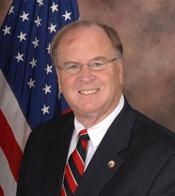
Mr. Speaker, on behalf of myself, my family and the constituents of the 17th District of California, I would like to express our heartfelt condolences to the victims and their families of the tsunami…
Mr. Speaker, on behalf of myself, my family and the constituents of the 17th District of California, I would like to express our heartfelt condolences to the victims and their families of the tsunami natural disaster. As the number of victims continues to increase, America is united in mourning the staggering loss of lives-- many, many of whom are children.
In the last week, the millions of people affected by the tsunami have faced terrifying obstacles. But the global community stands in solidarity with the 12 affected nations. While the United States and other governments have promised humanitarian aid, private citizens in the United States have also shown an amazing outpouring of generosity and compassion. In my own congressional district, which has experienced a number of natural disasters, a number of compassionate people are reaching out to the South Asia disaster victims. For example, the Salinas Rotary Club, along with other Rotary Clubs across the country, is organizing to supply ``Shelter Boxes'' that contain basic necessities like tents and sleeping bags.
Humanitarian assistance is desperately needed on an unprecedented global scale. The international community has pledged $2 billion, with a contribution of $350 million from the United States, but it is clear that more will be required of many. I intend to support an emergency funding bill for U.S. tsunami aid and I urge the President and the Republican leadership to be generous, as the world community was to the United States in the wake of 9/11.
In addition to our efforts to help the survivors of this tragedy, we must also work to ensure that we can better alert people to similar events in the future. The United States should lead the world in implementing a global ocean observing system. The recently-released U.S. Commission on Ocean Policy final report noted the importance of using observation systems to help us to prevent the loss of life and property and be better stewards of the oceans. One of my priorities in the coming year will be to continue pushing for implementation of the U.S. Commission recommendations.
Millions of people were left homeless and facing terrifying obstacles as a result of this tsunami. But I hope they can take some solace in knowing that people across the globe stand in solidarity with them. Not only have governments promised extensive support, but private citizens everywhere are digging into their own pockets to give what they can. This outpouring of generosity and compassion is amazing and reaffirming. No matter cultural differences or physical distance, in times of crisis we always come together to help one another. As the New Year begins, I pray for the quick recovery of those affected by the disaster and hope that the compassion shown during this crisis continues far into the future.
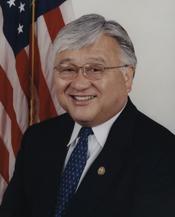
Mr. Speaker, I join my House colleagues in extending condolences to the victims of the earthquake and tsunamis that recently battered South and Southeast Asia as well as parts of East Africa.…
Mr. Speaker, I join my House colleagues in extending condolences to the victims of the earthquake and tsunamis that recently battered South and Southeast Asia as well as parts of East Africa. Generated by a magnitude 9.0 earthquake on December 26, massive tsunamis devastated whole villages in Thailand, Indonesia, Sri Lanka, and India.
The degree of this calamity has shocked and saddened all Americans, and I am pleased that through their representatives, the American people have an opportunity to formally express their grief for the more than 150,000 people who perished.
Our sorrow for those lost, however, should not distract us from the immediate humanitarian crisis gripping the region. The World Health Organization (WHO) has suggested that between three to five million people lack basic survival requirements, including access to clean water, adequate shelter, food, sanitation, and health care.
The WHO is also warning of an imminent health crisis, as contaminated water sources increase the risk of cholera, dysentery, malaria, and dengue fever.
As the world community responds to this natural disaster, I hope and expect that the United States Government and the American people will be on the forefront of efforts to provide immediate and long-term aid. President Bush has so far committed $350 million for disaster relief, and I am hopeful that this amount will increase as we get a clearer picture of the devastation that has taken place.
In the meantime, U.S. Government agencies are on the ground. The U.S. Air Force has transported 43,000 lbs of food, supplies, and equipment to the region, and helicopters from the USS Abraham Lincoln are shuttling supplies into northern Sumatra. The Defense Department is deploying Navy and Marine Corps supply ships and dispatching military medical teams to the most isolated and hard-hit areas.
In addition, USAID, the federal agency responsible for the distribution of foreign aid, is now assessing the damage and individual country needs. These assessments will help better direct the emergency aid that is already flowing to the region. USAID will also identify the long-term goals to rebuild local economies, housing and infrastructure.
The President has also enlisted former Presidents George H.W. Bush and Bill Clinton to lead nationwide private fundraising efforts which are sure to generate large amounts of private donations. The American people are compassionate, and they will certainly give generously to help tsunami victims regain their health and their livelihoods.
My thoughts and prayers go out to all those impacted by the tsunamis, including the estimated 5,000 Americans in the region who have not yet been heard from. I urge my colleagues to support this resolution.
Show 11 more
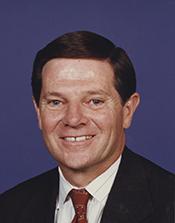
Mr. Speaker, it is a peculiar and embarrassing mark of man's fallen nature that so often it takes tragedy for human beings to see past our differences and into each others' hearts. Two weeks ago, a…
Mr. Speaker, it is a peculiar and embarrassing mark of man's fallen nature that so often it takes tragedy for human beings to see past our differences and into each others' hearts. Two weeks ago, a tragedy of incomprehensible magnitude struck our brothers and sisters on the other side of the world. It was the day after Christmas, actually, when much of the world was still celebrating, that an earthquake beneath the Indian Ocean set off massive tsunamis that have devastated island and coastal countries in southeast Asia and east Africa. The sum total of those killed, injured, diseased, and orphaned by the tsunami is larger than the populations of many countries. And yet, it is also a mark of the dignity of man that, in the face of such tragedy, we do see beyond our differences--cultural, political, religious--and see to it, with all our strength, that right is done.
The tsunami's waters will recede, Mr. Speaker, but the waves of prayers, love, and generous support--already making their way over the ocean--will not. Nor will the attention of the world--nor the attention of this body--until the victim nations recover.
As we meet today, millions of people have been displaced from their homes and communities, and millions more are without the basic needs of survival--food, shelter, clean water, and health care. Countless children have lost their parents, and are now at the mercy of, at best, the crippled social institutions of their homelands, and at worst, we now learn, human traffickers. When faced by devastation and misery of this magnitude, when we see the grief of parents who had to choose which of their children to save, or hear stories of entire villages destroyed by the waves, there seems so little we can do.
But on the contrary, Mr. Speaker, there is so much we must do. President Bush has pledged $350 million in relief and recovery assistance, dispatched Secretary of State Powell and Florida Governor Bush to the region to assess the situation, and tasked former Presidents Clinton and Bush to lead American fund raising for the relief effort. Thousands of our armed forces and America's civilian relief agencies are already on the scene helping the relief effort-- transporting food, medical supplies, mobile hospitals, and water- purifying equipment to the scene. And the generosity of the American people will continue to lead the way in the recovery, and in the effort to mitigate the long-term consequences of the disaster. The waters will recede, and life will one day return to normal. All humanity's mission is to bring that day about before another life is needlessly lost. And the world should know that the American people and their Congress will help until no more help is needed.

Mr. Speaker, I thank my distinguished chairman and distinguished ranking member for bringing this very thoughtful resolution to the floor. What the world is witnessing with this tsunami in the Indian…
Mr. Speaker, I thank my distinguished chairman and distinguished ranking member for bringing this very thoughtful resolution to the floor.
What the world is witnessing with this tsunami in the Indian Ocean is a tragedy of awesome dimensions which the executive branch of the United States, the Congress, and the American people are determined to address in the most compassionate way possible.
I stress the word ``compassion'' because in international affairs today, the issue of motives is on everybody's mind. I would like to make it very clear that the only motive of the American people is compassion. There may be geopolitical spinoffs to any actions any government at any time makes or does not make, but this is an issue of people; and it is the obligation of the people's House of the United States to reflect the heart and soul of our constituents, and this we are doing in this resolution.
It is true that this issue is a long way from home. It is also true that it is expensive. Beyond that, it is impressive to me how unprecedented the initial reaction has been. In less than 2 weeks, hundreds of millions of dollars of assistance have already been brought to bear. Indeed, a kind of competitive compassion has been precipitated involving nation states, international organizations, nongovernmental organizations, and faith-based institutions.
As the gentleman from California (Mr. Lantos) mentioned, it is particularly impressive what the United States military has been able to do in very short order. It is the institution of our society that can act the quickest in the face of every kind of emergencies. Our military has become, in essence, an instrument of peace in a way that it was not necessarily designed to be, but which we as the American people want it to perform.
Finally, let me stress that in addition to the issue at stake, this is an incredibly important time in human history to attempt to develop models of concern and action that bring people together rather than tear them apart. To the degree that a model of compassion which may or may not be competitive is contrasted with models of accelerating hate, we have hope that other kinds of disasters that may be man-made instead of nature-made can be addressed in similar kinds of ways.
This is a beginning, somewhat hortatory resolution of the United States Congress; but it is meaningful because it is a commitment. I would simply like to stress how impressed I am how every Member of Congress, every constituent that has talked to me, every member of the executive branch is committed to doing the utmost we conceivably can.
This is an issue, as the gentleman from California (Mr. Lantos) mentioned, of a human dimension, not any other kind.

Mr. Speaker, I thank the chairman for yielding me this time. I rise in support of this resolution. I think we all watched in shock at the devastation caused by the December 26 earthquake and the…
Mr. Speaker, I thank the chairman for yielding me this time.
I rise in support of this resolution. I think we all watched in shock at the devastation caused by the December 26 earthquake and the subsequent tsunami. I led a delegation to Gujarat in 2001 to assess the damage after the earthquake that shook India, and that devastation, that tragedy, was indescribable. And after that quake, the world community pulled together, as did the people of India, including Indian Americans, to address the humanitarian disaster. But the quake there in magnitude was less than this quake. This quake was 9.0. And the effect has been such that the death toll today is over 150,000.
As we have heard on the floor, millions have been left homeless. Indeed the images of death and destruction that we have seen on television are sobering. It is difficult to comprehend the extent of the damage because the devastation stretches across 5,000 miles and 12 countries. It stretches across geographical and cultural and religious lines.
As is often the case in extreme disaster, we also see the best in the human spirit. There has been an outpouring of support across our country from both individuals and from businesses. Members from the Los Angeles County Fire Department's disaster response team have been dispatched to Sri Lanka. Niagara Water Company of Irvine, California, has donated 55,000 gallons of water.
The actions taken by the United States Government speak louder than any statement can. Not surprisingly, first on the scene was the United States military. An aircraft carrier task force was immediately diverted from Hong Kong to the Gulf of Thailand, and a Marine Expeditionary Force from Guam was dispatched to the Bay of Bengal. No other organization in the world can tackle the logistical challenge of getting these types of assets on location to assist the people in need. As a matter of fact, the local governor in Aceh said that the U.S. Navy helicopters appeared to him like ``angels,'' in his words, as they arrived to deliver supplies to those people in need.
Through this challenge we see opportunities for the United States to make a lasting impression in South and in Southeast Asia. Cooperation between the U.S. and India is expanding like never before. The U.S. regional command center for this unprecedented relief operation has been established in Thailand. And the U.S. and Indonesian military forces are working together for the first time in many years.
The United States stands by the people of South and Southeast Asia during this catastrophe.

Mr. Speaker, I rise today to express my most sincere condolences to everyone affected by the devastating tsunami that ravaged Southeast Asia on December 26. My thoughts and prayers go out to those…
Mr. Speaker, I rise today to express my most sincere condolences to everyone affected by the devastating tsunami that ravaged Southeast Asia on December 26. My thoughts and prayers go out to those who perished that day and to their families.
The destructive tsunami that shook Southeast Asia claimed the lives of over 156,000.
Just this morning, I read the heart-wrenching story of a 13-year-old boy in Indonesia who lost his father, mother, and brother to the shocking natural disaster. Countless other families have been altered: thousands of children have lost their mothers and fathers, parents have lost their sons and daughters, men and women have lost their husbands and wives. The world has not seen a tragedy of this magnitude in decades, and my heart breaks for those who grieve the death of their family and friends.
Despite the horrendous impact of this overwhelming tragedy, I am moved by the international outpouring of support and compassion to help the tsunami victims as they struggle to overcome the loss of loved ones and piece their lives together. The people of the world and of Southeast Asia have come together to take care of one another. Strangers, who themselves are struggling to find sufficient food and clean water, are taking in orphans who lost their families. International aid workers from countries, rich and poor, and large and small, have traveled to Southeast Asia to help provide essential materials to tsunami victims.
Back in my district, a telethon hosted by a local television station along with efforts of the local branch of the American Red Cross helped Rochesterians raise $365,000 to help fund the disaster relief efforts. In Buffalo, various religious organizations have come together to raise money. The India Association of Buffalo raised $38,000 in a benefit held last Thursday and plans to continue fundraising.
The number of people attempting to give money overwhelmed charity organizations collecting money for tsunami relief. Donations have ranged from $10 to thousands of dollars, and people from all economic brackets are giving what they can to help alleviate the suffering of their fellow fathers, mothers, husbands, wives, and children.
When speaking of international natural disaster relief, President Dwight Eisenhower once said, ``These are deeds of peace. They speak more loudly than promises or protestations of peaceful intent.'' I hope that the worldwide generosity will continue until the need no longer exists, and that the solidarity among people from around the world will persist.
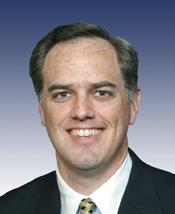
Mr. Speaker, I want to thank the chairman and thank the gentleman from California as well for bringing this resolution to the floor. As a mark of respect for the victims of the Indian Ocean…
Mr. Speaker, I want to thank the chairman and thank the gentleman from California as well for bringing this resolution to the floor. As a mark of respect for the victims of the Indian Ocean earthquake and the resulting tsunamis, I rise today in strong support of this resolution, as a cosponsor of this resolution, to honor the victims and to show my support for the humanitarian aid that our country is helping to provide with our partners from around the world. My prayers go out to the victims and their families who have been struck by this horrific tragedy, in particular, the large Asian and Indian community that resides in my district and, in fact, in all of our State of New Jersey.
Currently the estimated death toll is more than 140,000, in some cases over 150,000 people in South and Southeast Asia and East Africa. Between 3 and 5 million people throughout the affected region are lacking basic survival requirements, access to clean water, adequate shelter, food, sanitation and health care. Contaminated water sources in the affected countries have increased the risk of cholera, dysentery and malaria. Approximately 500,000 people have been displaced in Indonesia; more than 889,000 are displaced in Sri Lanka; 3.5 million people are affected in India; and more than 10,000 are injured in Thailand. In addition, between 15,000 and 30,000 may be affected in Somalia; 12,000 are displaced in Malaysia; and approximately 12,000 are displaced and 300,000 affected in the Maldives. These numbers are astounding. We must continue to do all that we can to help the millions who have been affected by this disaster. I strongly support all efforts by our country and the many others that are helping to meet the call for financial and voluntary relief. In fact, it is my hope to travel to the affected areas very soon to help do my part in seeing that the relief effort under way is a success.
Further, I would like to recognize the strong support of the American people. They have heeded the call to help their neighbors across the globe with a dedication and a determination that is an embodiment of our American spirit. We have banded together as a Nation and have continued our longstanding tradition of donating our considerable resources to our fellow men and women around the world. Again, let me thank Chairman Hyde and Ranking Member Lantos for bringing this important resolution to the floor. I am proud to be a cosponsor.

Mr. Speaker, I give thanks to the chairman and ranking member for having this resolution before us this evening. When we turn on the TV, when we read the news and we learn of just the scope of the…
Mr. Speaker, I give thanks to the chairman and ranking member for having this resolution before us this evening. When we turn on the TV, when we read the
news and we learn of just the scope of the magnitude of this disaster, it is simply staggering. In India and Sri Lanka and Thailand and Indonesia, Malaysia, the Maldives, Bangladesh, Burma, even Kenya and Somalia on the African coast, the devastation is simply stunning. And it is important that the United States show leadership to the world and to the victims in coming to grips with this. I really cannot think of an event in my lifetime that has been this enormous in terms of loss of life and long-term implications for this part of the world. So I am glad that we are here on this first day of the 109th Congress to show the world that we stand ready and in solidarity with those who have lost their lives, those who have lost members of their family, and certainly there are those from other parts of the world visiting South Asia.
I want, as others have mentioned, to give great thanks to my constituents in Silicon Valley first started by Americans who were from South Asia or whose families were originally from South Asia, organizing volunteer efforts; and the response has been dramatic and huge from every corner of Silicon Valley to step forward and to help with the relief effort. However, as others have mentioned, our assistance is going to be needed for some time to come.
I heard on the radio news this morning that in some of the towns, 80 percent of the teachers have been lost, 85 percent of all the police officers have died. The infrastructure of civilization for many of the towns and localities is simply gone. So we will look to so many of our fellow citizens to do volunteer efforts and to donate generously. They are not disappointing us. But it is the institution of the United States Government that is going to have to be in with a helping hand to help these parts of the world become civilized again, to come up from the muck that the tsunami brought to them and to take once again their place in the world. I am pledged to work with all of my colleagues in the House towards that end. I am proud that the Speaker and the gentlewoman from California (Ms. Pelosi), our leader, each made this tragedy part of their opening remarks at the start of the 109th Congress. I thank them for that.

Mr. Speaker, I rise today in support of H. Res. 12, expressing support to the victims of the tragic earthquake and tsunami that occurred on December 26, 2004. I offer my deepest condolences to the…
Mr. Speaker, I rise today in support of H. Res. 12, expressing support to the victims of the tragic earthquake and tsunami that occurred on December 26, 2004. I offer my deepest condolences to the people of Indonesia, Thailand, Sri Lanka, and India, along with all of the children and families across South Asia and Eastern Africa, in the wake of this devastating event.
The toll taken by this tragic earthquake and tsunami is staggering: More than 150,000 dead, thousands still missing, and 5 million lacking basic survival necessities like clean water, food and shelter, and healthcare. The world endured the largest earthquake since 1900 and the tsunami that followed took the lives of children, their parents, tourists and entire families. This is a region ill-prepared for such a colossal and devastating natural occurrence. It is a human tragedy of epic proportions.
In response, the world community has embarked on a massive humanitarian relief effort unparalleled in the history of disaster relief. To date, the United States and other donors have pledged an estimated $2 billion in emergency and reconstruction assistance.
As the wealthiest nation in the world, the United States must lead the effort to provide humanitarian assistance. A once belated and undervalued response by the United States must now be erased with aggressive and generous action. I call on Congress to swiftly authorize and appropriate the $350 million pledged by the President so it can be delivered promptly to those who need it immediately.
I also call on the President to ensure that the money he pledged to provide humanitarian relief in the wake of this disaster does not come at the expense of existing international aid programs assisting millions of people across the globe. These programs, for example, help AIDS orphans, victims of drought, war refugees and the families in Iraq and Afghanistan that are rebuilding their homes and communities. Our assistance in these areas must remain a priority.
The tragic loss of human life and destruction from the earthquake and tsunami unite the United States and the entire international community in solidarity and support. My thoughts and prayers go out to the victims of this terrible tragedy and I pledge my continued support and help for their families and the hundreds of relief workers who have come to their aid.
Mr. Speaker, I rise today to pay my respects and give my deepest condolences to those who have suffered through one of the worst natural disasters in history. As our nation celebrated the holiday…
Mr. Speaker, I rise today to pay my respects and give my deepest condolences to those who have suffered through one of the worst natural disasters in history.
As our nation celebrated the holiday season with our loved ones, a tragedy of epic proportions was occurring half a world away. An earthquake with a magnitude of 9.0 off the coast of Indonesia triggered a massive tsunami that engulfed several countries throughout South and Southeast Asia. The total aftermath is not yet known as the number of lives lost continues to rise to immeasurable levels.
Though this tragic disaster destroyed lives, families, and entire economies, it did not destroy the strength of character and sense of purpose displayed by the victims who continue to fight daily for survival. The victims of this tsunami are not alone in their struggle. Across our great Nation, Americans, together with the world community, have exhibited their generosity of spirit as they pray for the suffering families and continue to give monetary assistance to those in need.
More than 150,000 people have been killed with millions more affected. These numbers are already impossible to comprehend yet countless others are missing.
We are now presented with a defining historical moment as a nation and as an international community. We must share the fiscal and emotional burden that will only get worse for our brothers and sisters in Southeast Asia. We cannot under-fund, undercut, or undermine our relief efforts by failing to follow through on our promises as a government or our compassion as Americans.
9/11 will always be remembered in our nation as a time of crisis and devastation, yet also a time of perseverance and unity. We survived this horrific event because of the resolve exhibited by our Nation's people and the support received from the international community. The tragedy that has struck Southeast Asia is no less of a crisis and no less devastating.
It is the responsibility of the United States and the world community to continue the aid and assistance of these countries during their time of need. During times of crises are when the integrity of a nation and its people are judged in history. I am encouraged by the overwhelming response and generosity shown by the people across this world. It is the human way to respond; it is the American way to respond.
Mr. Speaker, I rise today in support of the resolution expressing support and condolences to the victims of the earthquake and tsunami in South and Southeast Asia. I also want to commend Chairman…
Mr. Speaker, I rise today in support of the resolution expressing support and condolences to the victims of the earthquake and tsunami in South and Southeast Asia. I also want to commend Chairman Hyde and Ranking Member Lantos for their leadership on the resolution.
Mr. Speaker, the people of South and Southeast Asia are faced with a natural disaster of an unprecedented scale. Over 150,000 people are dead and the World Health Organization estimates that between 3 and 5 million people are lacking basic survival requirements. Unfortunately, these numbers seem to rise with each passing day. Our condolences and prayers go out to all of those who have been affected by this deeply personal tragedy. But beyond our prayers, the people affected will need the assistance of the international community to prevent the outbreak of disease which threatens to take as many lives as the tsunami.
The humanitarian response by the affected governments, the United Nations, and NGOs working in the region has been impressive in the face of tremendous need and daunting logistics. The outpouring of private contributions from all over the world should reaffirm our faith in humanity. But the magnitude of the need will remain long after the initial humanitarian response has provided people with shelter, food, clean water, and medical care.
The $2 billion already pledged by the United States and other donors is an excellent down-payment, but I think we are only beginning to glimpse the massive undertaking that reconstruction will be. I hope that the House will rapidly consider the legislation that Chairman Hyde and Mr. Lantos are working on to provide substantial emergency assistance to the affected survivors, to help them rebuild their homes and their lives.
Mr. Speaker, I urge my colleagues to support the resolution and to commit themselves to supporting the additional relief we can certainly expect to be necessary.
Mr. Speaker, I rise today with a heavy heart to share my condolences with the victims of the tsunami in South Asia. The magnitude of destruction and devastation left in the wake of this tragic…
Mr. Speaker, I rise today with a heavy heart to share my condolences with the victims of the tsunami in South Asia. The magnitude of destruction and devastation left in the wake of this tragic disaster is incomprehensible. I join all Americans who are heartbroken by the images of towns and villages washed away and of the thousands of orphaned children who will grow up as survivors of this disaster.
As the United States and the international community work to provide relief for the victims of this tragedy, I urge my colleagues to ensure that our efforts to assist in the reconstruction not be short-lived. While it is imperative that we immediately provide the necessary funds for relief work and humanitarian aid, we must ensure that as we assist in this recovery effort, and provide long term assistance to rebuild the infrastructure and communities devastated by this disaster. Beyond financial and humanitarian assistance, the United States must lead an international effort to implement a global tsunami warning and detection system so we can avoid future tragedies.
During this time of recovery, governments and citizens from around the world have worked together to help those in need, regardless of politics, race and religion. It is my sincere hope that out of this tragic situation a lasting spirit of cooperation and mutual respect can emerge. Hopefully this unprecedented cooperation can be used as a trigger to jumpstart the prospects for peace and coexistence throughout the region.
My thoughts and prayers are with the victims and their families.
Mr. Speaker, I rise to express my deepest condolences and support to those affected by the earthquake-generated tsunamis that struck numerous countries in South Asia and East Africa on December 26,…
Mr. Speaker, I rise to express my deepest condolences and support to those affected by the earthquake-generated tsunamis that struck numerous countries in South Asia and East Africa on December 26, 2004. This enormous natural disaster, which has so far claimed more than 150,000 lives, including many Americans, requires a robust response from the international community.
I am pleased that the United States is taking a leading role in the relief and recovery efforts. We should continue to partner with the United Nations, non-governmental organizations, and other members of the international community to render humanitarian assistance throughout the region. I look forward to working in Congress to increase America's contributions to this effort as additional needs required for long-term rebuilding are identified.
Over the past 10 days, the outpouring of condolences and financial support from the American people has been tremendous. The efforts of the thousands of Americans who are giving of their time, money, and resources are truly reflective of the American spirit, and they exemplify our Nation's values and ideals. I join with my colleagues today in support of the House resolution.
Bill Text
Latest available legislative text
        [Congressional Bills 109th Congress]
[From the U.S. Government Publishing Office]
[H. Res. 12 Engrossed in House (EH)]

In the House of Representatives, U.S.,

January 4, 2005.
Whereas on December 26, 2004, a powerful earthquake measuring 9.0 on the Richter
Scale occurred off the west coast of Northern Sumatra, Indonesia;
Whereas the undersea earthquake created massive tsunamis that struck several
countries throughout South and Southeast Asia, as well as on the coast
of East Africa;
Whereas the giant waves caused death and destruction on a nearly unprecedented
scale, killing more than 140,000 people and leaving millions homeless;
Whereas many thousands of people were killed in Indonesia, Sri Lanka, India, and
Thailand, and numerous others were killed in Somalia, Malaysia,
Maldives, Bangladesh, Kenya, Burma, and elsewhere;
Whereas an estimated one-third of the earthquake and tsunami victims were
children, and many thousands more have been left orphaned or separated
from their families;
Whereas thousands of visitors and tourists from nearly 40 countries were killed
in this natural disaster;
Whereas between 3,000,000 and 5,000,000 people throughout the affected region
are lacking basic survival requirements as a result of the tsunamis and
there remains the risk of numerous additional deaths due to shortages of
clean water, adequate shelter, food, sanitation, and basic healthcare;
Whereas the United States and other donors have, to date, pledged an estimated
$2,000,000,000 in emergency and long-term reconstruction assistance; and
Whereas the human cost of this disaster transcends mere statistics and has
resulted in deeply personal tragedies for countless families in the
region and throughout the world: Now, therefore, be it
Resolved,  That the House of Representatives--
(1) mourns the horrific loss of life caused by the earthquake and
tsunamis that occurred on December 26, 2004, in South and Southeast
Asia;
(2) expresses its deep condolences to the families of the many
earthquake and tsunami victims;
(3) applauds the prompt humanitarian response to the tsunami tragedy
by governments, the United Nations and other international
organizations, and nongovernmental organizations;
(4) recognizes the generous outpouring of support for relief efforts
from private citizens around the world, including in the United States;
(5) affirms its commitment to additional generous United States
support for relief and long-term reconstruction efforts in areas
affected by the earthquake and tsunamis; and
(6) urges continued attention by donors and relief agencies to the
needs of vulnerable populations in the stricken countries, particularly
the thousands of children who have been left parentless and homeless by
this disaster.
Attest:

Clerk.