Providing for further consideration of the bill (H.R. 3) to authorize funds for Federal-aid highways, highway safety programs, and transit programs, and for other purposes.
Legislative Activity
Stay on top of the latest movement without scrolling through every action
Motion to reconsider laid on the table Agreed to without objection.
March 10, 2005 • 11:40 AM
View full timeline
Introduced in House
March 9, 2005
The House Committee on Rules reported an original measure, H. Rept. 109-15, by Mrs. Capito.
March 9, 2005
No further general debate (except for the final period contemplated in H. Res. 140) shall be in order.
March 9, 2005 • 9:28 PM
Placed on the House Calendar, Calendar No. 10.
March 9, 2005
Considered as privileged matter. (consideration: CR H1272-1276)
March 10, 2005 • 11:05 AM
DEBATE - The House proceeded with one hour of debate on H. Res. 144.
March 10, 2005 • 11:07 AM
The previous question was ordered without objection.
March 10, 2005 • 11:40 AM
Passed/agreed to in House: On agreeing to the resolution Agreed to by voice vote.(text: CR H1272)
March 10, 2005 • 11:40 AM
On agreeing to the resolution Agreed to by voice vote. (text: CR H1272)
March 10, 2005 • 11:40 AM
Motion to reconsider laid on the table Agreed to without objection.
March 10, 2005 • 11:40 AM
Floor Debate
21 membersWhat members said about H.Res. 144 on the floor
 JLO
JLO SJL
SJL RM
RM BPJ
BPJ JB+16
JB+16
Floor Debate
21 membersWhat members said about H.Res. 144 on the floor
Mr. Chairman, will the gentleman yield? Mr. Chairman, I support the manager's amendment. It is a delicate balance which we have reached, and we need to pass it now. Mr. Chairman, how much time…
Mr. Chairman, will the gentleman yield?
Mr. Chairman, I support the manager's amendment. It is a delicate balance which we have reached, and we need to pass it now.
Mr. Chairman, how much time remains for the gentleman from Virginia?
Mr. Chairman, I claim the time in opposition to the gentleman's amendment, and I yield myself 4 minutes.
We have waited patiently for the gentleman to arrive, and recognize that he has, like all of us, many demands on his time. I am glad the gentleman is here to offer his amendment, and we understand the problems in this committee of Northern Virginia, which the gentleman so ably represents.
In the fashioning of TEA-21, along with the gentleman's Senator, Senator Warner, and former Chairman Shuster, we supported the Wilson Bridge, which all of America contributed out of the Highway Trust Fund over $900 million. This is the only bridge of its kind in the country to get that kind of special consideration. We recognize, and I have watched the growth of toll facilities in the Dulles access corridor. I understand those problems that this growth-bedeviled area has had to cope with.
However, there is a very serious problem here of low-income people living in an area distant from the job. My daughter worked at Jubilee Jobs in the Adams-Morgan area in D.C. placing people who came out of homeless shelters, people who had just been released from prison, people who, through, in many cases, no fault of their own, had just fallen through the welfare safety net. There were a number of jobs available for those people out at Dulles Airport, but they could not afford to drive. There is no public transportation for them to take to get out to Dulles Airport to match the person with the job. Their jobs went unanswered and people went jobless because of the cost of transportation.
In Chicago, Chicago experienced white flight to the suburbs. The suburbs needed people to perform work in stores, in homes, in facilities, hospitals, and nursing homes; but the workers were in the city. Chicago initiated a welfare-to-work program to provide compensation for those who would still live in their neighborhoods in the city, but provide the jobs in the suburbs. For every thousand jobs in the suburbs a $10 million economic benefit resulted.
Now, Chicago could set up a very simple process of matching the welfare workers, the welfare-level workers to the jobs and provide assistance to them. So can Virginia. So can other States. There is no need to say, oh, there is going to be a huge bureaucracy created. It is a very simple process. A person comes in and shows their immediate basis and applies for the assistance, applies for whatever designation is required, the FAST pass or the designation to get through the toll facility. It does not cost anything additional. And if there is a derogation of dollars to the toll facility, then the State in the public interest can make that up.
All we are saying in the legislation pending is that low-income people pay a higher percentage of their household income for transportation than other income groups, and tolling facilities should not drive people out of the job marketplace.
Mr. Chairman, I reserve the balance of my time.
Mr. Chairman, the language in the bill just directs States to establish a program and procedures. All you have to do is issue a pass to the individuals based on their qualification as a low- income person and use the pass to get through the tolling facility. That is all we are saying.
Otherwise, those toll facilities produce Lexus lanes, produce Mercedes and Hummer lanes, who will whiz through while the poor folk cannot afford to get through. I know from personal experience. I have traveled around this country to areas where we have those problems, either some communities have responded by investing in transit systems so that low-income people, as in Sacramento, 3,200 low-income persons were able to use their transit system to get to jobs.
You are not doing that in Northern Virginia for various reasons. I concur with what the gentleman says, another $90 billion invested in transportation, as this committee introduced the bill in its original form, would take care of this problem. But we must insist on the committee position and defeat the gentleman's amendment.
Mr. Chairman, I demand a recorded vote, and pending that, I make the point of order that a quorum is not present.
Mr. Chairman, I claim the time in opposition. How much time remains for the gentleman from Texas?
Mr. Chairman, I yield myself 4 minutes.
This amendment really crosses the line on tolling. I have always believed tolls are a bad idea, but if a State wants to do that and citizens want to subject themselves to toll facilities, that is their business.
But on the interstate highway system, we have a very effective financing mechanism through the Highway Trust Fund and through the national highway system. Again, the Highway Trust Fund supports construction of needed transportation facilities.
But to mix Federal funds with tolls is anathema to the idea of a publicly supported transportation system through our Highway Trust Fund and the user fee.
I could understand if the gentleman from Texas (Mr. Burgess) were advocating and others were advocating tolls and toll-only facilities. But to cross the line and mix Highway Trust Fund dollars with toll funds to encourage building of toll facilities to indirect competition with toll-free highways, just does not make any sense at all.
In fact, there is an example in the State of California where a toll operator persuaded the State legislature to enact authority to build a toll facility but then prohibited the public sector from building additional capacity in the same corridor in the adjoining public roadway.
The toll was built; it did not work. It was on the verge of bankruptcy. At the same time, the State was ready to build additional lanes on the public facility. The toll operator took the State to court and prevailed against building the publicly-free facility, so the State wound up buying the toll facility and building additional lanes.
Mr. Chairman, I reserve the balance of my time.
Mr. Chairman, I yield myself the balance of my time.
To push the idea of toll facilities in the direction of merging Federal highway trust fund dollars with toll dollars is just anathema to the whole concept of a publicly supported transportation network. We should not allow this type of initiative in tolling.
If Members want to have tolls, do it the old-fashioned way and use the toll dollars and create Lexus lanes and create Mercedes lanes, but do not use the public dollars to merge with the toll facility dollars and create a severe disparity and discrimination against publicly built toll facilities.
Remember the California example; that is what will happen here. We will have others of that nature. I urge a ``no'' vote on this amendment.
Mr. Chairman, I yield back the balance of my time.
Mr. Chairman, I ask unanimous consent that the proceedings by which the request for a recorded vote on the amendment offered by the gentleman from Texas (Mr. Burgess) was considered be vacated and the vote be put anew.
Mr. Chairman, I rise in opposition to the amendment.
Mr. Chairman, I yield myself 2 minutes.
Mr. Chairman, the gentleman from Pennsylvania has made a very strong case for the issue which he presents with this amendment, and we in the committee have worked with the gentleman and his staff to allow transit systems in urbanized areas to retain flexibility in the use of Federal transit formula funds, and I thought we had worked out throughout the development of TEA-LU the extension that the gentleman was seeking to extend the period of flexibility for urbanized areas to use Federal funds for operating assistance through this year, which is half the time before the next census.
More than 50 urbanized areas have been eligible to use their transit grants for operating expenses, but apparently the gentleman wants to go further than we agreed in our internal deliberations and discussions, and I think that it goes beyond the agreement that we reached in committee. For that reason, I cannot support it.
Mr. Chairman, I reserve the balance of my time.
Mr. Chairman, I yield myself the balance of my time.
Mr. Chairman, certainly there is a concern among those metropolitan areas whose population has grown significantly since the 2000 Census, and they are seeking more flexibility for the use of funds on their Federal transit formula grant to use those dollars for operating assistance. But to extend the flexibility beyond the 5 years, as we have provided in TEA-LU, would undermine the statutory formulas.
It might benefit some areas, the pending amendment might benefit some areas, but would inflict a fairness issue upon other areas, to indicate that statutory formula that we use to apportion funds using most recent census data is no longer applicable for a certain area.
The amendment as offered would create confusion and would create unfairness among users, among other transit systems across the country.
I yield to the gentleman from Pennsylvania.
Mr. Chairman, reclaiming my time, that is correct. I said that at the very outset. I made it very clear we extended it through 2005. That was our understanding. That is what I thought was the agreement we reached and the compromise, that we would go through 2005. Then you just have a few more years until the next census, and then the issue would be resolved for all of the country and not just a few areas.
So I urge defeat of the amendment.
Mr. Chairman, I claim the time in opposition to the amendment.
Mr. Chairman, how much time remains of the gentleman from Texas?
Mr. Chairman, I yield myself 2 minutes.
Mr. Chairman, on the face of it, who could object to sound science, objective science? That is what science should be. But the thrust of this amendment is not in the words of the amendment. They are not going to get us to that point. The language says, in considering assessment of risks to human health and the environment, such an assessment, where an assessment concerns the evaluation of multiple studies, shall include the best available science and description of the weight of the scientific evidence. And further on, in subsection 2, a description of the weight. That is not objectivity. That is totally subjective. To start considering the weight of scientific evidence, that is not a scientific term in and of itself.
So I am all for science and for good science, but this language is going to obfuscate the evaluation of risks and open the door of opportunity for more lawsuits over what is meant by weight, multiple studies, available science. I think this goes directly in the opposite direction of the purpose of the gentleman from Texas.
Mr. Chairman, I reserve the balance of my time.
Mr. Chairman, can I inquire of the Chairman how much time remains on the side of the gentleman from Texas.
Mr. Chairman, I yield 1\1/2\ minutes to the gentleman from Tennessee (Mr. Gordon).
(Mr. GORDON asked and was given permission to revise and extend his remarks.)
Mr. Chairman, our side has the right to close. I await the arguments on the part of the gentleman from Texas.
Mr. Chairman, I yield 30 seconds to the gentleman from Oregon (Mr. DeFazio).
Mr. Chairman, how much time do I have remaining?
Mr. Chairman, I yield myself the remaining time.
Let me first make it clear that the language of this amendment was not worked out with staff on our side, nor by the majority staff. I represent on this issue the bipartisan position of the committee in opposition.
We have seen the dangers of manipulated science. The tobacco industry produced study after study trashing the impact of smoking and secondhand smoke, only to be overturned in case after case and by Federal Government health agencies. This year, we have seen the dangers of industry-funded studies on Vioxx and Celebrex, and those two drugs have been withdrawn. Was that done on the basis of weight of evidence? Such a vague and subjective standard.
Mr. Chairman, the National Academy of Sciences is the authority that we frequently turn to in the Committee on Transportation and Infrastructure and in the transportation community. They oversee transportation environmental research. They, the National Academy of Sciences, truly are the gold standard. They do not play around the edges with such vague terms as ``weight of evidence.'' They evaluate the evidence. They make scientific judgments. They come to good science-based conclusions. That is where we ought to go; and if the gentleman were serious about this issue of getting very objective scientific evidence to bear on environmental issues of health or environment, subject it to review of the National Academy of Sciences. That would be standard enough for us. We would let it ride at that. But as it stands, I must oppose the amendment.
Mr. Chairman, I demand a recorded vote.
Mr. Chairman, I claim time in opposition to the amendment, and I yield myself such time as I may consume.
Mr. Chairman, the gentleman from Arizona (Mr. Shadegg) raises a very serious matter, modifying the Congestion Management and Air Quality Improvement provisions in current law and the formula.
The manner in which the gentleman proposes to do this is a little more complicated than I think is appropriate to resolve in amendment form on the floor. But I, in cooperation with the chairman of the full committee, believe we can work this out with the gentleman from Arizona (Mr. Shadegg) as we proceed to conference.
If the gentleman is inclined to withdraw the amendment, having given a very thoughtful discussion of it, I believe as we did last year in the effort to reach a bill which we ultimately did not, not for this reason but for other reasons, that we can work this matter out.
I yield to the gentleman from Arizona.
Mr. Chairman, I assure the gentleman that we will reach in every good faith a resolution to this matter.
Mr. Chairman, I reserve the balance of my time.
Mr. Chairman, I yield myself the balance of my time.
Mr. Chairman, I affirm my willingness to work with the gentleman and the chairman to resolve this matter as we proceed to conference on withdrawal of the amendment.
Mr. Chairman, I yield back the balance of my time.
Mr. Chairman, I rise in opposition to the amendment.
Mr. Chairman, I yield myself such time as I may consume.
Mr. Chairman, this amendment gets to the guts of the bill that we are presenting to the House today. A similar amendment, maybe even the exact language of this amendment, was overwhelmingly defeated last year by a vote of 367 to 60. The intent of the amendment is simply to reduce a State's apportionment under the Surface Transportation Program dollar for dollar by the authorizations that Members of that State receive for highways and transit high-priority projects and require the Secretary to use a revised apportionment that includes the offset in determining the State's rate of return.
The amendment punishes States that do well in high-priority projects and transit new starts and redistributes those dollars elsewhere. That is contrary to the entire intent of this legislation. Members should have a say in the distribution of the dollars under this legislation.
Mr. Chairman, I reserve the balance of my time.
Mr. Chairman, we reached a delicate balance in extensive negotiation between the majority and minority, between the leadership in a formula that is spelled out in the manager's amendment that accomplishes the goal in real terms of achieving 92.6 percent return for all States.
Mr. Chairman, how much time remains on my side?
Mr. Chairman, I yield myself such time as I may consume.
The chairman of the full committee has explained the issue very well. The point of inviting Members to submit for designation by the committee projects of great significance within their districts acknowledges the reality that not all wisdom in investing transportation dollars resides in State DOTs.
That is why the Federal Highway Administration does not make these decisions. The dollars go from the Highway Trust Fund through the Federal Highway Administration out to the States to make decisions and when a road or a bridge is not built or improved, or a transit system investment is not made, our constituents come to us, Members of Congress, you are out there in Washington, you vote on this legislation, you vote for the Highway Trust Fund, you set up the policies by which those dollars are invested, and we are not getting the investment that we need. So they come to us, and it is for us to serve as a correction to State DOTs, and that is what we do in this process.
Now, in including Member high-priority projects in the minimum guarantee, we have reached the 92.6 percent return on equity to the States, resolving the issue and the problem the gentleman from Arizona has raised.
I yield to the gentleman from Alaska.
Mr. Chairman, reclaiming my time, I think the gentleman has made his case. Our side has made the case, and we have the right to close, and I assure the gentleman from Arizona that the interests of the State of Arizona are well cared for in this legislation and of all the States and the agreement that is embodied in the manager's amendment was reached at the very highest levels of policy within this body and on the majority side, and we have to reject the gentleman's amendment, and I would, in fact, urge him to withdraw the amendment.
Mr. Chairman, I yield back the balance of my time.
Mr. Chairman, I ask unanimous consent to vacate the proceedings by which a recorded vote was requested on the Barton amendment.
Mr. Chairman, I rise to commend Chairman Young and Ranking Member Oberstar, as well as the subcommittee leadership for their hard work in crafting the underlying legislation. However, I offer my…
Mr. Chairman, I rise to commend Chairman Young and Ranking Member Oberstar, as well as the subcommittee leadership for their hard work in crafting the underlying legislation. However, I offer my support for the manager's amendment that seeks to incorporate very important initiatives that were contained in some of the amendments that were made in order by the Committee on Rules.
While the underlying bill before us proposes to provide $620 million for some 175 high priority projects in the State of Texas, there remain issues that will pose significant problems for Houston and for Texas unless this body offers its commitment to address in the future.
Toll credits are a significant resource for transit providers because they can use them in lieu of obtaining a Federal match--thereby greatly expediting the development of major projects that serve the communities. This amendment will cripple the value of the toll credit program.
Without the revenue from toll credits, Texas will have less funding for the reduction of congestion and the improvement of air quality. In reducing an otherwise viable revenue stream, this amendment would restrict local governments like Houston from choosing the best tool to respond to local conditions and priorities. I would have voted against the amendment that would prohibit the tolling of new interstates, including the I-69 Corridor, which lacks an alternate source of financing.
I ask that the Committee on Transportation and Infrastructure continue its efforts to provide funds to complete the Interstate 69 Corridor. The termination of the Interstate Program in 1995 left no mechanism to finish the Nation's few remaining incomplete Interstates such as I-69. Currently, there is no program to fund major projects which benefit the Nation as a whole but whose costs exceed States' apportioned funds. Based on these needs, I ask my colleagues to include the National Corridor Infrastructure Improvement Program and the Projects of National and Regional Significance provisions in the bill underlying today. Furthermore, I ask that the committee include them at a funding level equal to those included in H.R. 3550.
The Greater Houston area is subdivided into 6 counties: Chambers, Fort Bend, Liberty, Montgomery, Waller, and my District, Harris. Harris County contains the city of Houston and the largest concentration of people. In the year 2000, approximately 3.5 million people lived in Harris County alone--by far the most populous area. Over the next 20 years, the population of the Houston region will continue to grow.
The historic Fourth Ward in Houston is long overdue for major transportation improvements. Within the underlying bill we have before us today are projects that propose to make critical improvements to the Main Street Corridor. The Fourth Ward emerged as Houston's most prominent African-American neighborhood when thousands of freed slaves flooded into the city after emancipation. These newcomers settled on the fringes of the Third, Fifth, and Fourth wards. The Freedmentown area north of San Felipe and the streets west of downtown not only attracted the largest number of the new black residents but also housed the first black churches, schools, and political organizations. Several factors combined to facilitate the subsequent growth of the Fourth Ward's black community. I would ask that my colleagues take these requests under strong consideration after passage and leading into the conference report.
Improvements to Houston's and Texas' infrastructure will be the priority for me and for my colleagues. Statistically, Houstonians travel more miles per day than there are miles between the earth and the sun. The distance between the earth and the sun is about 93 million miles. Houstonians drive about 156 million miles per day.
The manager's amendment proposes key technical and program improvements to the underlying bill language. In particular, I support the changes to the calculation of ``Revenue Aligned Budget Authority,'' RABA; re-establishment of budgetary firewalls for highways and transit programs; reauthorization of the Swift Rail Act at $100 million per year, title IX of the bill; and extension of revenue provisions approved by the Ways and Means Committee.
Moreover, I support the improvements to the bill proposed in the manager's amendment. In particular, due to the tremendous bipartisan efforts of my colleagues, the amendment now includes language to guarantee that TEA 21's 90.5 percent minimum guarantee is protected, with a scope defined as no less than 92.6 percent of the highway program funds in the bill. This is a significant improvement over the bill passed by the House last year. I thank the distinguished majority leader for his work in ensuring that this measure will protect these provisions, allowing the House to move into conference in a stronger negotiating position toward achieving a higher MG above 90.5 percent. The manager's amendment makes this a better bill for Houstonians and for Texans.
I would like to offer my support for the amendment offered by Mr. Davis of Virginia that will ensure that tolls are applied equally to all users of toll facilities. This amendment would eliminate language in the underlying bill that requires lower tolls to be charged to low income drivers. Since the administration of differential tolls may be challenging for our existing and future toll authorities, this amendment will make important adjustments to the underlying bill.
Secondly, I support the Burgess amendment, which would change the calculation for transportation development credits to ensure that Texas and other States with toll facilities are able to take full advantage of these credits for the benefit of our transit, highway, and highway safety programs. This proposal is vital to the provision of a pro rata calculation of the credits so that we are not penalized for using Federal dollars in our transportation development projects. I support this amendment and ask that my colleagues join me as the Gentleman brings this proposal to the floor.
Furthermore, I support the proposal of Mr. Pitts that would provide a temporary transition period for transit entities, including three in Texas, that, under the most recent census, are now subject to the over 200,000 population prohibition on the use of transit formula dollars for operating expenses. The Pitts amendment would allow those small transit entities in this new situation to use up to 50 percent of their formula funds for operating expenses for fiscal years 2005 through 2007 and up to 25 percent of the formula funds for operating expenses in fiscal years 2008 and 2009.
In addition, I join my colleague from Texas, Mr. Barton in the initiative of his amendment to require studies and assessments of risks to human health or the environment to use sound and objective scientific practices.
Due to the short time allotment given to the floor debate on this measure, I was unable to engage the distinguished ranking member from Minnesota in a colloquy. I wanted to discuss two very specific and very significant issues that relate not only to Houston, but to Texas and many other States that have developing infrastructure and economic cores.
I would have asked the ranking member for his assistance in maintaining the issues that I underscore here as priorities as he and his fellow conferees move closer to finalizing negotiations on this measure. These issues speak to (1) the need for increased transit- related funding in future authorizing and appropriating measures, and (2) the need to maintain Federal oversight of the way in which States and localities regulate the flow of interstate traffic. The Metropolitan Transit Authority of Harris County, METRO, is the agency charged with the public transportation and transit needs. METRO has worked over the past 2 years to create a long-range plan for mass transit in the Houston area. After having worked with the community to receive input, the METRO board of directors adopted a blue-print for its long-range plan called ``METRO Solutions.''
The METRO Solutions plan includes: (1) 50 percent increase in METRO's bus service, including approximately 44 new local, signature express, express, and Park & Ride bus routes, (2) nine new Transit Centers and nine new Park & Ride lots, as well as expansion and upgrading existing facilities, (3) expansion of the METRO Rail line and commuter line components, including an overall plan with 72.8 miles of rail, and (4) extension of the payments to local governments for street and other mobility improvements for five additional years, 2010-2014. Texas has a transportation code and it is authorized to act in this field of local government through METRO.
I believe that long-term and comprehensive projects such as that of Houston METRO should be given full Federal support? I would add that the authorization process should allow for innovative financing options to allow projects such as METRO's Advance Transit Plan, ATP, and METRO Solutions.
I would ask that the appropriators and authorizers remain open-minded in crafting measures such as H.R. 3 to the transit needs that exist in areas like Houston, the fourth largest city in the Nation. The distinguished majority leader has been cited as advocating the need for more innovative financing to build infrastructure and to foster economic activity.
Given the situation that Houston METRO and other similar entities face with administrative delays that stem from a very lengthy funding process, I ask that our colleagues follow
the leadership of the majority leader from Texas.
We should go to conference and continue to work with the committee to maintain the need for innovative financing for major transit infrastructure.
We should remain committed to maintaining the need for financing options for transit projects that promise to foster economic activity as a priority. Also, with respect to the issue of the need to maintain Federal oversight of the way in which States and localities regulate the flow of interstate traffic, a program called ``SAFE Clear'' has been initiated in the city of Houston and is in the city ordinance.
I congratulate the mayor and city council on the vigorous work that its Office of Mobility has done to improve transportation throughout the city of Houston and remain eager to collaborate with them to facilitate this endeavor from the Federal level.
However, I must make my colleagues aware that, through feedback that I have received from my constituents, the program has disproportionately affected certain groups of motorists, particularly those of lower socio-economic status and those who are or who primarily transport the elderly. While the proposed improvements to the ordinance that provide a ``free tow'' could serve our goals well, motorists who do not qualify for a ``free tow'' will possibly suffer from the disparate effects of the ordinance complained of by constituents.
I ask that the Transportation Conference ensure that provisions are included in this measure and measures in the future that maintain Federal oversight over the regulation of interstate travel. The potentially disparate overall effect of the ordinance merits further analysis, research, and oversight.
I hope we will continue to provide oversight over programs such as this through the legislation that is crafted in committee.
Mr. Chairman, for the foregoing reasons, I support the drafters of this legislation for their efforts to fund priority projects and urge my colleagues to do the same.
Mr. Speaker, I thank the gentleman for yielding me time. Mr. Speaker, I rise today in support of the rule and the transportation bill that our distinguished committee leadership worked for so long…
Mr. Speaker, I thank the gentleman for yielding me time.
Mr. Speaker, I rise today in support of the rule and the transportation bill that our distinguished committee leadership worked for so long and so hard to bring to the Floor this week. I commend them on a tremendous job in crafting a bill that works within such title fiscal constraints, yet still manages to focus on so many of our transportation priorities. I want to particularly thank the Committee on Rules for making the Pascrell/Menendez/LoBiondo pay to play reform amendment in order.
I appreciate the hard work of the distinguished ranking member, the gentlewoman from New York (Ms. Slaughter), who has been a strong supporter of our amendment. I want to thank the gentleman from Massachusetts (Mr. McGovern) for his strong comments in support of the amendment as well.
Like many here, I had hoped that there would be a lot more money in this bill. As a member of the Committee on Transportation and Infrastructure, I know how important transportation investment is for the good of the Nation as a whole. As the representative of the 13th District of New
Jersey, which is densely packed with almost every transportation mode imaginable, I know firsthand how important this investment is for the well-being of the people in our community because transportation is more than about getting from one place to another.
The money we spend in this bill will create jobs, stimulate new businesses, revitalize neighborhoods, reduce congestion, clean our air and make us more secure. That is why I am disappointed that we have been forced to adhere to an unnecessary low level of funding the administration has forced upon us.
Those of us in the New Jersey-New York metropolitan area learned on September 11 how important it is to have a multiplicity of transportation modes. When the bridges and tunnels out of Manhattan were closed, it was ferries that allowed people to evacuate the city to New Jersey. When the airports were closed, it was rail service that allowed people to travel across the country. September 11 showed us that the national security value of making a strong investment in multiple modes of transportation is necessary.
Those of us from New Jersey know particularly well how desperately we need the money in this bill. We are the most densely populated State in the Nation with very old highways that are desperately in need of repair; 71 percent of our major roads are in either poor or mediocre condition. Over 36 percent of our highway bridges are either structurally deficient or functionally obsolete, far above the national average. And despite being the fifth smallest State, we are the 11th most traveled on our highways.
These miles take a toll on our environment. Every county in the State has unhealthy levels of ozone, and over half of the counties have dangerous levels of airborne soot. By providing enhanced funding for public transportation and other pollution control measures, this bill will help to clean our air.
One of the other problems we have in New Jersey is with pay to play. That is a process by which contributions, often very large contributions, are offered to politicians and State officials with the hope of being able to gain a government contract. It is in my mind a very corrupting practice and severely undermines the trust and credibility of the government.
What my colleagues and I from New Jersey are trying to do is change the nature of that process. Now, this is not merely an issue for New Jersey. This is an issue for any State that hopes it can strike a blow for clean government by limiting such a corrupting influence. And the issue is simply about the right of any State, of any State, to take the steps it needs to maintain the trust of its people. Nothing in what we are trying to do would force any State to enact a pay to play reform law. Nothing in our amendment would alter the competitive bidding process one bit.
The amendment strictly conforms to the ideals behind the current Federal highway contracting statute which is to ensure fairness and integrity in the awarding of public contracts.
I for one am surprised that we even need this amendment at all. For 50 years, Section 441(c) of Title 2 in the U.S. Code has banned political contributions from Federal contractors. The Federal government clearly recognizes the corrupting influence of pay to play and has taken steps to control it, steps that the Federal Highway Administration now says that New Jersey is not allowed to take on its own.
Clearly, the Federal Government recognizes that there are situations where merely looking for the lowest bidder is not the best way to serve the public interest.
The Securities and Exchange Commission has also enacted its own pay to play protection regulation, Rule G-37, which is even stronger than the Federal statute in Section 441. Brokers and municipal security dealers are forbidden from making political contributions to any official who issues municipal securities for 2 years before any business can be transacted. The rule was challenged and upheld in Federal court. Clearly, the SEC recognized and the courts agreed that restricting campaign contributions by people who are looking to do business with government is in the public interest and helps maintain the public trust.
I have heard some arguments that the problem with this amendment is that it would open the flood gates. Once we add a restriction about campaign contributions to highway contracting, this argument goes, we will not know where to stop. I strongly disagree.
First of all, New Jersey's Pay to Play Reform Act is not a highway issue. It only became one when the Federal Highway Administration, which is apparently not very concerned with Section 441 of the Federal law, decided to make it one by withholding New Jersey's highway financing.
Second, we already put a number of restrictions on highway contracting and procurement in Federal law. We give, for example, priority to minority-owned businesses, veteran-owned businesses, women- owned businesses, businesses owned by Native Americans or the disabled. We do these things because they are right to do and because they serve a social good. Limiting campaign contributions by prospective contractors is also a social good. It preserves the integrity of the government. It preserves the trust of the public in the contracting process. And it will very likely save the government money by lowering the cost of contracts.
Mr. Speaker, this amendment is simple. It is straightforward, and it is fair. It is also bipartisan and supported by a broad range of good government groups, such as Common Cause, the Center of Civic Responsibility, and Democracy 21.
I urge my colleagues, when it comes time, to pass the Pascrell/ Menendez/LoBiondo amendments and the underlying bill so we can protect the rights of the States and allow them to combat corruption as they see fit. This will apply only to those States that, number one, choose to have such legislation for their States, and it will only apply to office holders in their States of a State nature.
I do not think the Federal Government should be telling the States that they cannot do that to preserve the trust and integrity of the contracting process in their States.
Mr. Speaker, I thank the gentleman for his gracious amount of time.
Mr. Chairman, three quick points. This does not require any State to do anything. It simply allows a State to perform a reform in the context of contracting. We recognize this already under Federal law in section 441 of the Federal highway bill. The SEC has done the same type of thing in its context. No State should be prohibited from enacting reforms as it relates to improving the integrity of public contracting in their State. It will not apply to any Federal officeholder, but it will allow States ultimately to pursue reforms in the context of contracting and the integrity of its process.
We should support the amendment.
Mr. Chairman, I rise to commend Chairman Young and Ranking Member Oberstar, as well as the Subcommittee leadership for their hard work in crafting the underlying legislation. However, I offer my…
Mr. Chairman, I rise to commend Chairman Young and Ranking Member Oberstar, as well as the Subcommittee leadership for their hard work in crafting the underlying legislation. However, I offer my support for the Manager's Amendment that seeks to incorporate very important initiatives that were contained in some of the amendments that were made in order by the Committee on Rules.
While the underlying bill before us proposes to provide $620 million for some 175 high priority projects in the State of Texas, there remain issues that will pose significant problems for Houston and for Texas unless this body offers its commitment to address in the future.
Toll credits are a significant resource for transit providers because they can use them in lieu of obtaining a Federal match--thereby greatly expediting the development of major projects that serve the communities. This amendment will cripple the value of the toll credit program.
Without the revenue from toll credits, Texas will have less funding for the reduction of congestion and the improvement of air quality. In reducing an otherwise viable revenue stream, this amendment would restrict local governments like Houston from choosing the best tool to respond to local conditions and priorities. I would have voted against the amendment that would prohibit the tolling of new interstates, including the I-69 Corridor, which lacks an alternate source of financing.
I ask that the Committee on Transportation and Infrastructure continue its efforts to provide funds to complete the Interstate 69 Corridor. The termination of the Interstate Program in 1995 left no mechanism to finish the nation's few remaining incomplete Interstates such as I-69. Currently, there is no program to fund major projects which benefit the nation as a whole but whose costs exceed states' apportioned funds. Based on these needs, I ask my colleagues to include the National Corridor Infrastructure Improvement Program and the Projects of National and Regional Significance provisions in the bill underlying today. Furthermore, I ask that the Committee include them at a funding level equal to those included in H.R. 3550.
The Manager's Amendment proposes key technical and program improvements to the underlying bill language. In particular, I support the changes to the calculation of ``Revenue Aligned Budget Authority'' (RABA''; re-establishment of budgetary firewalls for highways and transit programs; reauthorization of the Swift Rail Act at $100 million per year (title IX of the bill); and extension of revenue provisions approved by the Ways and Means Committee.
Moreover, I support the improvements to the bill proposed in the Manager's amendment. In particular, due to the tremendous bipartisan efforts of my colleagues, the amendment now includes language to guarantee that TEA 21's 90.5 percent Minimum Guarantee is protected, with a scope defined as no less than 92.6 percent of the highway program funds in the bill. This is a significant improvement over the bill passed by the House last year. I thank the distinguished Majority Leader for his work in ensuring that this measure will protect these provisions, allowing the House to move into conference in a stronger negotiating position toward achieving a higher MG above 90.5 percent. The Manager's Amendment makes this a better bill for Houstonians and for Texans.
I would like to offer my support for the amendment offered by Mr. Davis of Virginia that will ensure that tolls are applied equally to all users of toll facilities. This amendment would eliminate language in the underlying bill that requires lower tolls to be charged to low income drivers. Since the administration of differential tolls may be challenging for our existing and future toll authorities, this amendment will make important adjustments to the underlying bill.
Secondly, I support the Burgess Amendment, which would change the calculation for transportation development credits to ensure that Texas and other states with toll facilities are able to take full advantage of these credits for the benefit of our transit, highway, and highway safety programs. This proposal is vital to the provision of a pro rata calculation of the credits so that we are not penalized for using Federal dollars in our transportation development projects. I support this amendment and ask that my colleagues join me as the Gentleman brings this proposal to the floor.
Furthermore, I support the proposal of Mr. Pitts that would provide a temporary transition period for transit entities (including three in Texas) that, under the most recent Census, are now subject to the over 200,000 population prohibition on the use of transit formula dollars for operating expenses. The Pitts amendment would allow those small transit entities in this new situation to use up to 50 percent of their formula funds for operating expenses for FYs 2005 through 2007 and up to 25 percent of the formula funds for operating expenses in FYs 2008 and 2009.
In addition, I join my colleague from Texas, Mr. Barton in the initiative of his amendment to require studies and assessments of risks to human health or the environment to use sound and objective scientific practices.
Mr. Chairman, for the foregoing reasons, I support the Manager's Amendment and urge my colleagues to do the same.
Mr. Chairman, I rise to strongly oppose the Davis of Virginia amendment to TEA-LU, which would remove the requirement that toll rates on high occupancy toll lanes be differentiated for low income drivers. I find it unfortunate that Members of this body would offer amendments to this legislation that effectively say that lower income individuals are on the same financial footing as those who are in upper income brackets.
The fact is that we as Americans have decided that those who make less, share less of the burden to bring revenue into our local, State, and Federal government. Indeed, we all know that we are taxed based on our income and value of our possessions. In the same vein, tolls that will go towards paying for public transportation projects, should have some variability based on the income of drivers. This principle is applied throughout our economic practices and it is a fair principle because we recognize that unduly burdening lower income individuals will only weaken our national economy.
The fact is that lower income Americans depend on their automobiles the same way higher income Americans do. Lower income Americans often need their cars to reach jobs they can't otherwise reach through public transportation. They use their cars to transport their families and take part in commerce that would otherwise be unavailable to them without their own private transportation. However, if we insist on making lower income drivers pay the same tolls as higher income drivers then we make the cost of transportation more prohibitive for lower income Americans. These drivers already have to deal with the soaring costs of fuel and the high premiums they pay to maintain car insurance. If we also burden them with high tolls then we will keep them from achieving their potential and we can only hurt our overall society that benefits from lower unemployment and increased commerce.
I urge the Members of this body to reject this amendment because it only seeks to create a larger burden upon lower income Americans. We must all be given a chance to achieve the American Dream and this dream is made harder for too many lower class Americans when we unfairly raise the level of their tolls.
Mr. Speaker, in a letter that went from Suzanne Novak on behalf of the Brennan Center for Justice at NYU to the gentleman from Alaska (Mr. Young), the honorary chairman of the Committee on…
Mr. Speaker, in a letter that went from Suzanne Novak on behalf of the Brennan Center for Justice at NYU to the gentleman from Alaska (Mr. Young), the honorary chairman of the Committee on Transportation and Infrastructure, and the gentleman from Minnesota (Mr. Oberstar), ranking member, she wrote in that letter in support of the Federal Government supporting States and being very specific about the bidding laws in contracting to respond to the collusion or the possibilities of collusion that have existed, I can assure my colleagues, not only in the State of New Jersey.
She wrote this: ``Several recent scandals regarding government contracting in New Jersey prompted New Jersey to establish a criterion of responsibility for government contracting which prohibited the State from contracting with an entity that has contributed to a candidate for or holder of the office of Governor, or to any State or county political party committee, within certain time frames. The executive ``order of the Governor'' ``explicitly stated that `the growing infusion of funds donated by business entities into the political process at all level of government has generated widespread cynicism among the public that special interest groups are ``buying'' favors from elected officeholders.' ''
Mr. Speaker, the courts have recognized that contributions from government contractors present a severe risk of engendering corruption, the appearance of corruption and, thus, have generally upheld pay-to- play contribution bans, and this is what this amendment is all about. It is a bipartisan amendment to reform government, to help government clean up its act. We have similar laws on the Federal books about contracting and bidding. We want to remove cynicism from the public about when the government does business that there is proper conditions that will be implemented to make sure that it is done according to the law.
Blount v. the SEC was a perfect example. The Securities and Exchange Commission made it very clear that if you were going to do some bonding work, that if you give a political contribution to the entity beforehand, that is rather suspect. So let us remove that possibility. There is no doubt, if we do not allow the States to do what the Federal Government has on the books, how are we going to justify that?
This is a win-win situation. Neither party is the source of corruption and neither party is privy to virtue; let us accept that. Let us also accept that this is a bipartisan amendment, introduced in good faith, so that each of the parties, if you will, look good. Not only talk the talk but take that extra step to clean up their own acts. How can we in this House not permit or allow each of the States to provide for cleaner governments?
This is reality. The Federal law, the court cases have backed up this effort. There is no reason under the sun. This is bipartisan. It will help both parties and it will reduce the cynicism that exists in many, many areas of the public.
So, Mr. Speaker, this great H.R. 3, the Transportation Equity Act, we have worked on it a long time. I have saluted both the Chair, as well as the ranking member. I have not heard one cogent argument as to why we should not pass and allow States to reform their own act and clean up their own acts.
One criticism I heard is that this is going to open up a Pandora's box. The Federal Government has rules on the books already. Are we going to tell the Federal Government, you have opened up a Pandora's box because you are trying to implement clean-government rules? That is absurd. Give me one legal reason why this amendment should not only be in order, which it is, but it should not be both sides of the aisle supportive. Give me one good legal reason.
Mr. Chairman, I offer an amendment.
Mr. Chairman, I yield myself such time as I may consume.
The so-called ``pay-to-play'' restrictions, Mr. Chairman, enacted in many States like Connecticut, New Jersey, Pennsylvania, Illinois, South Carolina, Kentucky and West Virginia, for instance, there is a threat which is real; and whether it is real or whether it is apparent, we need to stamp out corruption. We have come to an agreement in the State of New Jersey. We have come to bipartisan support of an attempt by both sides of the aisle to end corruption as not only we know it because neither party is privy to virtue, neither State is privy to corruption.
What we are trying to do here is look at what is the result of large political contributions from contractors who try to influence the awarding of public contracts. Mr. Chairman, there is Federal precedent for this, and I would venture to say that we all in this Chamber should be reading what that precedent is. This does not open up a Pandora's box. This is simply providing States the ability to clean up their own act, to reform their own government, and to give those people an opportunity to bid in a more apparent, transparent process.
Mr. Chairman, the Federal Highway Administration argued that the New Jersey order violated section 112 of title XXIII, a provision dealing with bid-letting. This amendment intends to support what New Jersey has attempted to do to open up the bid process, not to close it down, not to shrink it, but rather to expand it so that there is more transparency.
Why should the Federal Government stop those States who want to end the process of corruption in their contract-letting? Why should this Federal Government, which has our own rules, the SEC was a perfect example of this just a few years ago, that if you are going to contribute, then you need to stay out of the process of bidding. This passed in the New Jersey Assembly 78-0. It passed in the New Jersey Senate 34-0. It is bipartisan.
Mr. Chairman, I yield to the gentleman from New Jersey.
Mr. Chairman, reclaiming my time, the Pascrell- Menendez-LoBiondo amendment only impacts States that choose to pass a pay-to-play reform law. This is a win-win for both sides. I cannot emphasize that enough. How many times have we come to this Chamber when we try to get it over on the other side? That is natural in politics.
This is a win-win for both sides, not only in New Jersey but throughout the country. I ask for the support of this body. I think this is good legislation, I think the amendment makes sense, and it is backed up by Federal law.
Mr. Chairman, I yield the balance of my time to the gentleman from New Jersey (Mr. Menendez).
Show 8 more
Mr. Chairman, I offer an amendment. Mr. Chairman, I yield myself such time as I may consume. I offer this amendment to make sure that the so-called scientific studies performed under the provisions…
Mr. Chairman, I offer an amendment.
Mr. Chairman, I yield myself such time as I may consume.
I offer this amendment to make sure that the so-called scientific studies performed under the provisions of the bill are, in fact, based on science and not on anyone's view or preconceived notions of what science should be.
For too long, documents and studies performed on risk assessments on health and the environment have been produced that do not really reflect science, but rather a given policy bias mixed with elements of science. That document is then paraded forward, as if it were a true risk assessment.
I want to make sure that when the Federal Government asks for a risk assessment, that the response is based on sound and objective scientific practices. I also want to ensure that the assessor of those risks to human health and the environment consider the best available scientific information.
These types of requirements are not new. These are the same types of requirements we have enacted in law for the purpose of the Safe Water Drinking Act; and not surprisingly, those principles have worked very well.
With this amendment, we will also follow a related recommendation with the 1997 recommendation of the President's Commission on Risk Assessment and Risk Management. Specifically, the amendment asks assessors of risks to provide a description of the weight of the evidence concerning a given risk. In other words, when a new risk to our health or the environment is claimed in a study, those responsible for releasing the study must describe their understanding of what best science tells us about that risk.
The bill before us today contains a section providing for the Surface Transportation Environment and Planning Cooperative Research program.
This section, among other items, addresses risk assessments of public health and the environment. These subject matters are within the jurisdiction of the Committee on Energy and Commerce. I want to ensure that these provisions reflect the congressional desire for sound science.
I want to thank the gentleman from New York (Chairman Boehlert) of the Committee on Science for his work and assistance in the base text of the language and also for his and his staff's assistance in working out the language of this amendment.
Mr. Chairman, I urge my colleagues to support the amendment.
Mr. Chairman, I reserve the balance of my time.
Mr. Chairman, I yield myself such time as I may consume.
I want to make a brief comment and then recognize the gentleman from New York (Mr. Boehlert), the chairman of the Committee on Science. When the gentleman from Minnesota asked who could object to this, we know the answer. The good gentleman from Minnesota, my good friend objects to it. So that answers that question.
I would point out that the gentleman from Alaska (Chairman Young) supports this, and the gentleman from New York (Chairman Boehlert) supports this, and the President's Council on Risk Assessment supports this language. It is language that is in current law for the Safe Water Drinking Act. So there are a number of eminent groups and individuals that do support it.
Mr. Chairman, I yield such time as he may consume to the gentleman from New York (Mr. Boehlert).
Mr. Chairman, I believe I have the right to close, and I am ready to close if the gentleman from Minnesota is ready.
I thought the author of the amendment had the right to close.
Mr. Chairman, I yield myself the remaining time.
My first response to my good friend, the gentleman from Tennessee (Mr. Gordon), who is a member of both the Committee on Science and the Committee on Energy and Commerce, is that he is right that this amendment exceeds the jurisdiction of the Committee on Transportation and Infrastructure. That is why it was offered by the chairman of the Committee on Energy and Commerce, because it does not exceed the jurisdiction of the committee that I chair and has been worked out in conjunction with the chairman of the Committee on Transportation and Infrastructure and the chairman of the Committee on Science. So if you put us all in the same tent collectively, it does not exceed the jurisdiction.
The language that we are using is language that was put forward initially by a Presidential commission under President Clinton's administration in the mid-1990s, and it is their language that we are incorporating into the amendment. So this is not some subterfuge to use Republican language or conservative language; it is language that was originally adopted and supported by President Clinton in his administration.
All we are trying to do with this amendment is make sure that as various projects come forward and we need to do investigations and risk assessments, that it be done based on sound scientific principles. I think that is an issue that both sides can agree upon, and I would urge a ``yes'' vote on the amendment.
In my view, the CMAQ program--like any use of tax dollars--should be applied as cost effectively as possible to achieve appropriate Federal policy goals.
A recent study suggests some CMAQ uses--such as building bike paths-- do little to relieve either congestion or air pollution, which are the policy goals of CMAQ. The Transportation Research Board study estimates that bike paths funded with CMAQ money cost the taxpayer on average $80,000 per ton of pollution removed. If this study is correct, in my
view, CMAQ dollars can and should be better spent.
New technologies have recently proven very cost effective in reducing pollution. For example, diesel retrofit and anti-idling technologies are having positive results around the Nation. Retrofit technologies-- which are being used in the President's Clean School Bus program are much like the catalytic converter on your car. These devices are capable of removing 80 to 90 percent of the pollutants from the exhaust of a diesel engine. The increased use of these technologies in other sectors of the economy should be encouraged.
Any steps we can take to clarify that CMAQ money can be spent to deploy a new crop of technologies including retrofits and anti-idling devices that are highly effective at reducing emissions from diesel engines makes good sense. Our states are scrambling to find ways to deal with the new EPA designations without jeopardizing economic development. Using CMAQ funds more wisely may help us out a great deal.
Mr. Chairman, I yield myself such time as I may consume, and I further yield to the gentleman from South Carolina (Mr. Spratt) for a colloquy. Mr. Chairman, reclaiming my time, the regional transit…
Mr. Chairman, I yield myself such time as I may consume, and I further yield to the gentleman from South Carolina (Mr. Spratt) for a colloquy.
Mr. Chairman, reclaiming my time, the regional transit authorities are important to transportation in rural areas. I would be happy to discuss this matter further with the gentleman from South Carolina (Mr. Clyburn) and the gentleman to determine whether we can help with the problems in South Carolina.
I yield to the gentleman from Oregon.
Mr. Chairman, I reserve the balance of my time.
Mr. Chairman, I yield myself such time as I may consume.
I echo the words of my good friend, the gentleman from Oregon (Mr. DeFazio) and, of course, the gentleman from Minnesota (Mr. Oberstar), the ranking member.
I would also like to not only thank my staff but everybody who has dealt with me for the past 4 years on this legislation. This is a very frustrating position to be in when the cash flow is not really what we wanted it to be and yet trying to achieve what is necessary for this country, and that is a good infrastructure system.
I am convinced that we will be revisiting this issue when this bill is on the President's desk in the years coming because we have a real challenge in this great Nation of ours. We have heard it time and again about how people are delayed and how product is delayed and how our bridges are crumbling, our roads are crumbling. These are not myths. These are actual facts. It was testified before us that we actually need probably $500 billion to make sure this country keeps moving, to be competitive with that competitive China.
So this is just a small step forward, and I will agree with my friend from Oregon; I do believe this will be the premier domestic legislation that we will pass that will affect more lives immediately than any other piece of legislation we will have before this body in the next 14 months.
I am proud of the fact that we have been able to do this in a bipartisan fashion. I am proud of the fact that we have been able to, in fact, craft this bill, and there has been lots of cooks in this kitchen, but we have managed to bring everybody together, and I think come out with a very, not think, I know, a very good product in TEA-LU.
Now, we are going to go to the Senate after I hope everybody votes for this legislation. We will go to the Senate. God willing, they will move something, and we will have this bill done before the first of June.
And for that I thank each Member of this House, for participating in the process and showing the public how this House can work together to produce a product for the benefit of this Nation.
Mr. Chairman, I yield back the balance of my time.
Mr. Chairman, I insert into the Record an exchange of letters between myself and Chairman Pombo regarding H.R. 3.
House of Representatives,
Committee on Resources,
Washington, DC, March 9, 2005.
Hon. Don Young, Chairman,
Committee on Transportation, and Infrastructure, Rayburn HOB
Washington, DC.
Dear Mr. Chairman: I have reviewed the text of H.R. 3, the
Transportation Equity Act: A Legacy for Users, as ordered
reported from the Committee on Transportation and
Infrastructure on March 2, 2005. I believe that the Committee
on Resources has a substantial jurisdictional interest in
many provisions of this important legislation including
streamlining of procedures under the National Environmental
Policy Act and resolving confusion on highway construction
and section 106 of the National Historic Preservation Act
Further, this Committee maintains jurisdictional interests
in provisions affecting recreational trails, highways on
federal public lands (including national parks, Indian lands
and public domain forest lands), the National Scenic Byways
Program, projects to benefit wildlife, highway safety as it
applies to Indian country.
Recognizing that this historic bill is scheduled to be
considered by the House of Representatives this week, and
noting the strong spirit of cooperation and coordination your
staff has shown mine in the development of this bill, I will
forego seeking a sequential referral of H.R. 3 to the
Committee on Resources. Waiving the Committee on Resources'
right to a referral in this case does not waive the
Committee's jurisdiction over any provision in H.R. 3 or
similar provisions in other bills. In addition, I ask that
you support my request to have the Committee on Resources
represented on the conference on this bill, if a conference
is necessary. Finally, I ask that you include this letter in
the Congressional Record during consideration of the bill.
Following your mark-up of H.R. 3, I want to acknowledge
your efforts on the bill's environmental provisions, many of
which touch upon Committee on Resources jurisdiction. I
commend your efforts to streamline the environmental review
process under the National Environmental Protection Act as
well as Section 4(f) procedures. However, I do have serious
concerns about the provision dealing with the pilot program
for mass transit in National Parks. This provision address
issues that lie squarely within the jurisdiction of the
Committee on Resources and should be addressed in that
context. Moreover, the bill passed last year by the Senate,
S. 1075, contained a number of troubling provisions that I
feel should not be included in any version of transportation
legislation. These provisions include language relating to
the Endangered Species Act and programs to address invasive
species. Thank you for not including these provisions in your
bill.
I appreciate your leadership and cooperation on this bill
and I look forward to working with you to see that H.R. 3 is
enacted into law soon.
Sincerely,
Richard W. Pombo,
Chairman.
Mr. Speaker, I claim the time in opposition to the motion to recommit.
Mr. Speaker, I yield myself such time as I may consume.
Mr. Speaker, I rise in opposition to the motion to recommit. I want to remind my fellow colleagues that this is a very well-crafted, bipartisan effort and this would disrupt what I would say is a great chariot that is going to go off on to the horizon and become law.
Mr. Speaker, I oppose the motion.
Mr. Speaker, I yield to the gentleman from California (Mr. Thomas).
Mr. Speaker, I yield back the balance of my time.
Mr. Speaker, on that I demand the yeas and nays.

Mr. Speaker, I want to thank the gentlewoman from West Virginia (Mrs. Capito) for yielding me this time, and I yield myself such time as I may consume. (Mr. McGOVERN asked and was given permission to…
Mr. Speaker, I want to thank the gentlewoman from West Virginia (Mrs. Capito) for yielding me this time, and I yield myself such time as I may consume.
(Mr. McGOVERN asked and was given permission to revise and extend his remarks.)
Mr. Speaker, I am supporting this rule, despite the fact that it does restrict the amendment process; and while an open rule is generally preferable, this rule does allow the House to consider and vote on some important amendments, especially the Pascrell-Menendez-LoBiondo anti-corruption amendment.
The first rule provided for general debate on H.R. 3 and made in order nine Republican amendments, and one that was bipartisan. This rule makes in order 10 Republican amendments, including a manager's amendment by the gentleman from Alaska (Chairman Young) that was drafted in consultation with the Committee on Transportation and Infrastructure Democrats and is supported by the gentleman from Minnesota (Ranking Member Oberstar).
I want to again applaud the Committee on Transportation and Infrastructure for working together in a truly bipartisan fashion in drafting our Nation's massive highway and transit authorization legislation.
Mr. Speaker, H.R. 3 is an all-too-rare example of bipartisanship in this body. Negotiations were undertaken, compromises were made on both sides, and the diverse transportation needs of all regions of the Nation were carefully considered. The final product truly represented the priorities of all sides involved, regardless of political affiliation. The American people have been well-served by the process, and that is what they deserve.
The rule also makes in order two of the five Democratic amendments that were submitted to the Committee on Rules. The first one is by the gentleman from California (Mr. Honda) and would allow basic grant funds to be used for DWI courts seeking to change the behavior of alcohol or drug-dependent offenders arrested while driving or while impaired.
I am particularly pleased that the second Democratic amendment, the anti-graft and anti-corruption amendment by the gentlemen from New Jersey (Mr. Pascrell), (Mr. Menendez) and (Mr. LoBiondo), is included in this rule. Their vital amendment will allow States to enact anti- corruption laws, curbing the practice of pay-to-play contracting, without losing their Federal aid highway dollars. These laws are critical to help stop the threat of real and apparent corruption resulting from large political contributions from contractors to influence the awarding of public contracts.
As ludicrous as it seems, the Federal Highway Administration last year ruled that a State of New Jersey executive order limiting the size of political contributions from government contractors to State candidates violated Federal competitive bidding requirements. Had New Jersey not suspended this portion of the executive order, that State would have lost its Federal highway funding. So unless this amendment is adopted, States will not be able to stop contractors from contributing to the campaigns of those who may ultimately award these contracts.
I cannot imagine why anyone in this House would want such seemingly unethical activity to continue. Ethics and integrity are among the most cherished of American values. We, the representatives of the people, have a responsibility to lead by example. I fully support the Pascrell- Menendez-LoBiondo amendment and challenge my colleagues, Republican and Democrat alike, to join with me in taking a stand for ethics. Highway contractors in America should not have to bribe their way to win Federal contracts. We have the power and the responsibility to end this today. Vote for this amendment.
Once again, Mr. Speaker, I want to make it clear that I support H.R. 3 to reauthorize our Nation's transportation programs. The Committee on Transportation and Infrastructure has put together a fair, bipartisan bill that will improve our Nation's highways and transit systems.
Mr. Speaker, I reserve the balance of my time.
Mr. Speaker, I yield 5 minutes to the gentleman from New Jersey (Mr. Pallone).
Mr. Speaker, I yield 8 minutes to the gentleman from New Jersey (Mr. Menendez), the Chair of our Democratic Caucus.
(Mr. MENENDEZ asked and was given permission to revise and extend his remarks.)
Mr. Speaker, I yield 2 minutes to the gentleman from New Jersey (Mr. Holt).
Mr. Speaker, I yield 5 minutes to the gentleman from New Jersey (Mr. Pascrell).
Mr. Speaker, I yield myself such time as I may consume, and we have no further requests for time.
So let me just again say that while I wish the funding level of this bill were higher, TEA-LU is a good bill. It is a tribute to the gentleman from Alaska (Chairman Young) and the gentleman from Minnesota (Ranking Member Oberstar). I urge my colleagues to support it. We also will support the rule.
Mr. Speaker, I yield back my time.
Mr. Chairman, I rise today in support of the amendment proposed by Mr. Pitts of Pennsylvania. The Pitts amendment protects smaller transit systems' flexibility in utilizing Federal transit funds. Unlike current law, which punishes these transit systems and communities, the Pitts amendment extends flexibility by providing additional time to seek State and local solutions to the funding problems they face.
Transit systems across the country are severely restricted by the current regulation. In my district in Massachusetts, the Southeast Regional Transit Authority is being constrained by this regulation, making it impossible for them to meet local needs of the city of Fall River.
Current law punishes smaller transit systems and the communities they serve simply because they are thriving. These smaller transit systems rely on budget flexibility and cannot make major revisions overnight. On October 1, 2005, these systems will lose all flexibility. The Pitts amendment extends their flexibility by phasing out their funding options over a 5-year period. That's a good idea. I urge my colleagues to join me in supporting this important amendment.
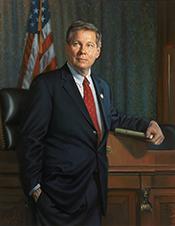
Mr. Chairman, I offer an amendment. Mr. Chairman, I yield myself such time as I may consume. Mr. Chairman, let me address my friends on the other side, because they are aware of our traffic problems…
Mr. Chairman, I offer an amendment.
Mr. Chairman, I yield myself such time as I may consume.
Mr. Chairman, let me address my friends on the other side, because they are aware of our traffic problems in Northern Virginia where we have tried to get infusions of money to take care of the second-largest traffic jams in the country, and we have arrived at something called the HOT lanes, these high-occupancy toll lanes that we are looking at for a public-private cooperation that we would use along the Beltway and possibly I-66.
This is a partnership. The Federal Government will fund part of it, but there is just not enough money in the highway bill, or at least we have not been able to get enough money out of the highway bill, if the gentleman would help on that there would be no need for this amendment, to build these extra lanes. We have the private sector coming in and building the lanes, and then the users do the tolls on the lanes, and that is how we lay asphalt. Because there is not enough
money at the State, local, and Federal levels to lay enough asphalt on these lanes; and so we are using tolls in some of these areas.
The current bill contains several provisions that make it difficult for us to collect tolls on the interstate highway without trying to decide how much money people make, and there is almost a means testing into who uses them. It is very, very difficult to determine how much you are going to collect to get your bonds, what percent are low income and what percent are high income, and so we basically knock that out of the current language in this legislation.
I support the provisions that allow the high-occupancy tolls, but I am concerned about the requirement for States to establish procedures to permit low-income individuals to pay reduced tolls. These are user fees. These are not taxes. This requirement would impose unmanageable requirements on those States who would otherwise like to make use of these tolling provisions, and in our case it is the only way we can lay down new pavement.
The Commonwealth of Virginia now seeks to use toll provisions to finance several important projects, including widening of the Capital Beltway, adding HOT lanes to I-95, and adding dedicated truck lanes on I-81 in the Shenandoah Valley. The Capital Beltway HOT lane proposal, which would greatly benefit my constituents, as an example, is a public-private partnership. In addition, the I-81 partnership is another example. These partnerships are increasingly important as Virginia and, I think, other States in the Union grapple with massive infrastructure needs that are not met, even though this bill will help toward our final results.
In this instance, the ability of tolls on a HOT lane to pay for construction has been determined by cost-benefit analysis, which would be skewed by some users not paying the full toll. As we look for these public-private partnerships to take over construction of some road projects, it is important not to set a precedent for eliminating or reducing tolls which could affect bond financing.
In addition, the cost of a bureaucracy to administer a reduced-toll program would add tremendously to the cost of operating a toll facility and I believe would provide a strong disincentive for private investment. The existence of automated tolling technologies does not address the issue. The most fundamental question is how the Department of Transportation would determine the income. It seems to me this would be extraordinarily problematic and would make tolling an impractical option.
Tolls are user fees, not taxes. There are currently no tolling facilities in the country that provide an income-based discount. Furthermore, no other highway-user expenses are regulated by the Federal Government to require discounts based on income: not the gas tax, not the price of automobiles, and not the price of auto insurance. Why do we single out tolls?
Finally, I want to make clear that while I do not think that income- based tolling is a viable solution, my amendment would not stop anybody from doing it. The Governor of Virginia does not think it is practical, but the Governor of another State might have another view, and that flexibility would remain in this legislation if my amendment passes.
Frankly, I would be interested in seeing how a State might implement income-based tolling. But this provision would amount to a considerable mandate upon the States, a mandate I do not believe we should add to their already full plate with growing transportation infrastructure needs. This just takes some of the flexibilities we are trying to employ outside the box now off the table.
So, Mr. Chairman, I would hope the House would adopt this amendment.
Mr. Chairman, I reserve the balance of my time.
Mr. Chairman, I yield 30 seconds to the gentleman from Virginia (Mr. Moran), my colleague and friend from Northern Virginia.
Mr. Chairman, I yield myself the balance of my time.
Let me say to my friend, if you really want to help poor people, build additional lanes of traffic and get some of
the traffic off the road so they can get onto the conventional lanes. That is what this does.
This is the only way we have found to lay new pavement in Northern Virginia, unless we can come up with billions more dollars that we cannot get into this bill. Poor people would still be able to use existing roads to get there. This will divert traffic that is currently on those roads into other lanes as well.
I agree with the gentleman in terms of the impact that this has on low-income families, but I think the current language is not the way to do it; and I kindly ask for favorable consideration of my amendment.
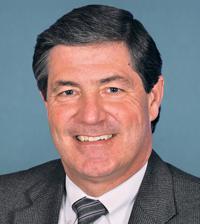
Mr. Chairman, I rise in support of H.R. 3 and commend Chairman Young and Ranking Member Oberstar for their hard work in bringing this bill to the floor. As a Member of the House Transportation and…
Mr. Chairman, I rise in support of H.R. 3 and commend Chairman Young and Ranking Member Oberstar for their hard work in bringing this bill to the floor. As a Member of the House Transportation and Infrastructure Committee, I am proud of the work of our committee and am hopeful that we can enact TEA-LU quickly to give out State departments of transportation the stability and resources they need to plan for, design and build important highway and transit projects.
I would also like to highlight a few issues that I look forward to working with the chairman and ranking member on as this bill moves forward.
First, I strongly support a provision that was included in S. 1072, the Senate's version of the reauthorization in the 108th Congress. This provision, section 1620 of S. 1072, would provide a 2 percent set aside of funds to be used to address stormwater mitigation. If included in H.R. 3, the provision would bring over $29 million back to Pennsylvania to help address some of the major stormwater runoff problems. Stormwater runoff is a significant source of water pollution, untreated sewage overflows, beach closings and flooding. I believe addressing this need with specific funding in the bill to correct runoff problems associated with existing highways is good policy. Many of the communities in my own district have to deal with the impacts of runoff from highways and roads, yet have no funding to do so. This provision would correct this problem and give local communities access to much- needed funding for stormwater mitigation.
Second, I have worked with my colleagues on the Transportation and Infrastructure Committee from Pennsylvania to address a problem that has recently come to our attention regarding ``flexing'' of Federal highway dollars to shore up the operating budgets of Pennsylvania's transit agencies. I hope that the chairman will continue to work with us to see that our concerns are taken into account. While I certainly understand the ongoing crisis confronting SEPTA and the Commonwealth of Pennsylvania's other transit agencies, and hence believe the flexing of Federal highway dollars may provide an appropriate, short-term answer to the agency's budgetary problems, I likewise believe that any agreed- to flexing plan should be contingent upon an agreed-to repayment of these much-needed dollars within a short and fixed time period. These highway dollars are absolutely critical to the continued improvement of our region's road infrastructure. While the Pennsylvania Legislature and Governor Rendell continue to work toward a permanent solution to mass transit funding, the need to provide transit agencies with a ``hand up'' with these dollars may be appropriate. But that assistance should only be provided if the Commonwealth agrees to return these dollars to the effected MPOs within a specified time period to ensure the use of these dollars for the initial purposes for which the appropriations were made by the Federal Government. Further, I would like to see a plan in place to assure that the projects delayed by the flexing action are fast-tracked once the flexed dollars are returned.
Mr. Chairman, providing flexibility to our metropolitan planning organizations is a laudable goal, but these Federal dollars were never intended to plug holes in the operating budgets of transit agencies, I therefore ask the chairman and members of the committee to work with us to achieve an acceptable solution.
Finally, in the section 307 of the National Highway System Designation Act of 1995, there was included a provision that prohibited states from imposing arbitrary overhead rate caps. Section 307 did have its desired effect, most States are following common overhead and auditing procedures that promote quality design work. The problem is that section 307 provided states a window of opportunity to opt out of the Federal Highway Administration FHWA, overhead and auditing procedures by adopting State laws establishing alternative procedures. Thirteen States have taken advantage of this opt out and passed law to impose arbitrary overhead rate caps.
As a result, Congress cannot be assured that the most qualified firms are being selected for working on Federal-aid design projects. At the same time, many of these States require their own audits with their own procedures, instead of accepting the uniform
audit procedures used by most of their peers. This places unnecessary burdens on engineering firms and diverts time, staff and focus away from the technical aspect of the project.
Section 1703 of S. 1072, the Senate version of the highway reauthorization in the 108th Congress, included a permanent fix for this problem and I hope that the provision finds its way into the final bill.
Again, I would like to commend Chairman Young and Ranking Member Oberstar for their commitment to our Nation's highways and transit systems. I am proud to support H.R. 3 and urge all my colleagues to support the bill as well.
Mr. Chairman, I offer an amendment. Mr. Chairman, I yield myself such time as I may consume. Mr. Chairman, my amendment seeks to address a significant air quality issue facing many of our communities…
Mr. Chairman, I offer an amendment.
Mr. Chairman, I yield myself such time as I may consume.
Mr. Chairman, my amendment seeks to address a significant air quality issue facing many of our communities and our constituents.
Our Nation faces a serious air quality problem with tiny particles of dust and chemicals otherwise known as particulate matter. Particulate matter is a health hazard because people breathe it in and the human respiratory system cannot filter the particles out because they are so small.
Thirty States have areas with particulate matter problems and over 100 million Americans live in communities facing this issue. Many scientific studies have linked the breathing of particulate matter to a series of health problems, including aggravated asthma, chronic bronchitis, decreased lung function and also premature death.
Particulate matter is also the major cause of haze and reduced visibility in many parts of the country. That is precisely the reason why Congress required communities to achieve air quality standards for these small particulate matters under the Clean Air Act.
The EPA has accordingly established two standards for particulate matter. One is PM-10, which is a fairly fine particulate matter, and the second is PM-2.5 which is extremely fine particulate matter. Both are produced by vehicles driving on both paved and unpaved roads, and neither PM-10 nor PM-2.5 can be filtered out by the human respiratory system.
Current law allows States to use funds provided through the Congestion Management Air Quality Improvement
program, known as CMAQ, to achieve compliance with particulate matter. However, the current allocation formula for funding under that law does not make any reference to or include particulate matter. This leads to significant funding shortfalls with regard to dealing with particulate matter problems.
My amendment seeks to correct this inequity by adding both the EPA standards for particulate matter for PM-10 and PM-2.5 to this allocation formula. The language is essential because it will greatly aid areas with particulate matter pollution problems in meeting the air quality standards, particularly the emissions of these pollutants from roads.
Measures which States and counties are required by law to take to deal with particulate matter problems include purchasing specially designed street sweepers; curbing, paving and stabilizing the shoulders of paved roads; paving, vegetating and chemically stabilizing access points and unpaved roads; the timing of traffic lights; and using unformulated gasoline.
Again, this is a serious issue facing our communities. It directly affects my constituents and those of many of my fellow colleagues.
My amendment would make the CMAQ program more equitable in its allocation of resources and would recognize the significant air quality concern which is currently overlooked in the programs' funding formula.
I urge my colleagues to support the amendment.
Mr. Chairman, I reserve the balance of my time.
Mr. Speaker, will the gentleman yield?
Mr. Chairman, as we have discussed, this is an issue which I raised last year and on which the gentleman graciously agreed to address, both the gentleman and the full committee chairman, in the conference.
It is a complicated issue. When we dealt with this issue last year, one of these two pollutants had been included in the bill on the Senate side; the other had not. So our concern was to make sure that, if we dealt with one, we should deal with both because some States are confronted by a problem by one of those, and some States are confronted by a problem with the other. Quite frankly, some States have both. But I am prepared at the right point in time to withdraw the amendment based on my understanding from both the full committee chairman and the ranking member that this is an issue which can be addressed. It is indeed a more complicated issue than can be dealt with in a floor amendment and it can be addressed in conference. And based on the assurances I received I am more than willing to do that.
I am not anxious to do it now because I have one gentleman who would like to speak to the issue, but once he has had a chance to do so I will be happy to proceed as agreed.
Mr. Chairman, I yield 1 minute to the gentleman from Georgia (Mr. Gingrey).
Mr. Chairman, based on the representations of both the chairman of the committee and the ranking member, their gracious willingness to work on this issue as it moves to conference and their acknowledgment that it is a serious concern, I ask unanimous consent to withdraw the amendment.

Mr. Chairman, I rise in support of H.R. 3, the Transportation Equity Act: A Legacy for Users. Mr. Speaker, TEA-LU represents the Federal government's ongoing commitment to improving our Nation's…
Mr. Chairman, I rise in support of H.R. 3, the Transportation Equity Act: A Legacy for Users.
Mr. Speaker, TEA-LU represents the Federal government's ongoing commitment to improving our Nation's entire transportation system for the benefit of everyone.
Our taxes pay for this infrastructure, and this infrastructure is the lifeblood of the commerce that fuels our Nation. The profits of every single business are dependent on this transportation network, and in turn, are dependent on our willingness to pay the taxes that fund this network.
The very existence of our roads, our highways, our rail lines, our ports and our airports is testament to the critical role of the Federal government as the embodiment of our collective responsibility.
It's the elegantly simple idea that by paying your taxes you improve the quality of life of every person in this country and lay the foundation for a strong economy that benefits everyone.
Federal, State and local governments, corporations, small businesses, individuals--all of us have a responsibility to contribute our share. It is our right to use this infrastructure, but it is also our duty to maintain and improve it for the future.
While we plan for the future, the benefits are real, now.
In my district this bill will provide funding to a number of worthwhile projects that will improve the quality of life for my constituents, the State of California and the entire Nation.
One project in particular that I'm very proud of is the Ed Roberts Campus. This state of the art project makes it easier for people with disabilities to get around. It links eight disability organizations to create a multi-tenant facility that will serve as an intermodal transit center as well as a transportation information and travel-training center for people with disabilities.
The Ed Roberts Campus will play a major role in assisting and teaching people with disabilities to live their lives independently. And because it will be located above the Ashby BART station in Berkeley, its reach will stretch throughout the entire Bay Area, simultaneously serving as a model for urban independent living throughout the Nation.
I'm proud to support the Ed Roberts Campus, and I'm happy to announce that $3 million will go towards it through TEA-LU.
Another set of projects that I'm also very proud of are the transit oriented developments planned in the City of Oakland and the City of Emeryville. Transit oriented development is a relatively new concept that joins housing, business, public transportation and recreational areas into one liveable community.
We have been on the cutting edge of transit oriented development in my district from the very beginning. And last year's successful opening of the Fruitvale Transit Village in Oakland has served as a model for other transit oriented development projects in the Bay Area and throughout the country.
I'm happy to announce that TEA-LU will directly provide another $2 million for such projects in Oakland and Emeryville.
Another issue of concern and an area where this bill makes an immediate impact for my constituents is the construction of sidewalks in several unincorporated areas in Ashland and Cherryland in my district.
Even though sidewalks are often taken for granted--for a child, the simple act of walking to school can be treacherous without them. Thanks to TEA-LU, we will have another $1 million to construct those sidewalks and keep these kids safe in many neglected parts of my district.
The funding in TEA-LU for these and other projects is incredibly important to me and my constituents. But the truth is we need much more funding and not just in my district, but throughout the country.
Our transportation system is aging. The growth and sprawl of many of our cities has
strained transportation networks throughout the country, and placed a greater burden on our environment.
I commend my colleagues on the Transportation and Infrastructure Committee for trying to address these problems through TEA-LU. But the President must also do his part and support more funding.
Make no mistake, this is not just about transportation. This is about jobs. This is about the health of our environment, and the health of our economy.
Every state, every city, and every member is invested in this piece of legislation, because this bill makes an investment in America.
The decisions we make today will affect the health of our nation for decades to come. And I hope that the President listens to us and makes the right one.
Mr. Speaker, by direction of the Committee on Rules, I call up House Resolution 144 and ask for its immediate consideration. Mr. Speaker, for the purpose of debate only, I yield the customary 30…
Mr. Speaker, by direction of the Committee on Rules, I call up House Resolution 144 and ask for its immediate consideration.
Mr. Speaker, for the purpose of debate only, I yield the customary 30 minutes to the gentlewoman from New York (Ms. Slaughter), pending which I yield myself such time as I
may consume. During consideration of this resolution, all time yielded is for the purpose of debate only.
Mr. Speaker, on Wednesday, the Committee on Rules met and granted a structured rule for further consideration of H.R. 3, the Transportation Equity Act: A Legacy For Users, more commonly referred to as TEA-LU. This rule provides for no further general debate, except for the final period of 10 minutes contemplated in the House Resolution 140. Finally, the rule makes in order the 12 amendments printed in the Committee on Rules report and provides for one motion to recommit, with or without instructions. Mr. Speaker, the rule we have before us is a fair rule, and I believe all Members should be able to support it.
Mr. Speaker, since October 1, 2003, Federal surface transportation programs have been forced to operate on a basis of a short-term extension. We are approaching the end of the most recent extension, which will expire on May 31, 2005. Our Nation's highways desperately need the assurance and stability of a 5-year reauthorization provided by H.R. 3.
As a former member of the House Committee on Transportation and Infrastructure, I can appreciate the incredible bipartisan effort that has gone into writing this legislation. I would like to applaud the efforts of the gentleman from Alaska (Chairman Young) and the gentleman from Minnesota (Ranking Member Oberstar) for bringing this legislation to the floor in an expedient and bipartisan manner.
I look forward to the passage of this bill and hope that our colleagues in the other body will take swift action.
The highway bill is a vitally important investment in our Nation's surface transportation system and fosters job growth across the country. In fact, it is estimated that for every $1 trillion in highway funding, 47,500 jobs are created. The highway bill provides $284 billion in funding for vital programs that will impact citizens across the States, improving safety and accessibility.
In my district, the highway bill represents the strongest step forward ever to replace U.S. Route 35, a 2-lane death trap through West Virginia's Mason and Putnam counties. U.S. Route 35 is dominated by tractor trailers and tanker trucks traveling south from Ohio and north from Interstate 64 in Charleston. Far too often, the high volume of traffic swallows up local commuters, resulting in tragic motorist fatalities.
With the passage of the highway bill, construction of a new 4-lane appropriate to meet the demand will be built, diverting traffic around dozens of residential neighborhoods. Mr. Speaker, this is just one example from my home district, and there are countless others from across the country.
Mr. Speaker, I am a strong supporter of this legislation, which provides for countless improvements in the Nation's surface transportation system. The numerous projects and programs authorized by this bill will improve our highway systems and the ability of our constituents to travel from State to State. To that end, I urge my colleagues to support the rule and the underlying bill.
Mr. Speaker, I reserve the balance of my time.
Mr. Speaker, it is my honor to yield such time as he may consume to the gentleman from California (Mr. Lewis), the distinguished chairman of the Committee on Appropriations.
Mr. Speaker, I continue to reserve the balance of my time.
Mr. Speaker, I yield myself such time as I may consume.
I would like to thank my colleague, the gentleman from Massachusetts, and I would like to reiterate as well that this legislation is crucial to the continued growth of our economy. We are creating jobs and improving the ability of current workers to commute to their places of employment, among a myriad of other transportation issues.
I look forward to the strong bipartisan support of this legislation. I urge a ``yes'' vote on the rule and the underlying legislation.
Mr. Speaker, I yield back the balance of my time, and I move the previous question on the resolution.
The previous question was ordered.
Show 11 more
Mr. Chairman, I rise today to thank the leadership of the Transportation and Infrastructure Committee for their hard work shepherding through TEA-LU, a bill that I will support despite its flaws. The…
Mr. Chairman, I rise today to thank the leadership of the Transportation and Infrastructure Committee for their hard work shepherding through TEA-LU, a bill that I will support despite its flaws. The Department of Transportation studied the Nation's infrastructure and prescribed a $375 billion solution. In the 108th Congress, I joined the leadership in endorsing the original version of this bill, which filled that prescription. Unfortunately, the administration is unwilling to come up with the support necessary to ensure that we are able to maintain and improve the Nation's infrastructure, and threatened to veto any bill that authorized more than $283.9 billion. As a result, we are today considering a bill that does not do nearly enough to improve the quality of life for individuals living in New York City and around the country. I look forward to working with the Committee leadership to see that this bill is improved in conference.
Mr. Chairman, as this bill moves to conference, I want to highlight four issues that are of particular import to me and my constituents. It is my hope that the conferees will include these improvements in the conference report.
First, this bill should ensure that resources are devoted by formula to states that require improvements. The minimum guarantee program shifts funding from states that have the greatest need--like New York-- to other States. Each year, New York provides $20 billion more to Washington than it gets back. New Yorkers ought not be punished for our efforts to conserve fuel, as any expansion of the minimum guarantee program would do.
Second, this bill shortchanges New York on transit funding. Despite having almost half of the Nation's transit ridership, New York's share of transit funding leaves much to be desired. Transit funding should better reflect need.
Third, I hope that conferees will ensure that States starved for a consistent funding stream for ferries and waterborne transportation can count on funding from the Ferry Boat Discretionary Fund. I am acutely aware of how much a guaranteed stream of funding would mean to improve both congestion and homeland security all across the country, and particularly in New York City, where roads are clogged on a normal day, and ferry transportation would provide not only congestion relief but another way to ensure escape from Manhattan in the case of a terrorist attack. At a minimum, New York should receive $5 million per year. I hope conferees will work with me and other Members who represent districts that would benefit from a guaranteed ferry funding stream.
Fourth, I hope that conferees will work with me to ensure that the generous funding we have provided for Senior transportation in this bill is put to its best use. I believe that establishing a center for best practices and a technical assistance center, would provide an enormous service to this nation's elderly population.
Nevertheless, Chairman Young, Mr. Oberstar, Chairman Petri, and Mr. DeFazio deserve the thanks and appreciation of every Member of this House for their tireless effort to ensure that the Nation's surface transportation systems receive the resources required to keep America moving.
In particular, I would like to thank both the Democratic and Republican staff of the Transportation Committee, both of whom worked tirelessly on this piece of legislation, and who deserve the entire House's thanks. In particular, I would like to thank Ken House, Clyde Woodle, Eric Vanschyndle, Ward McCarragher, Kathleen Zern, David Heymsfeld, Dara Schleiker, and Sheila Lockwood of Mr. Oberstar's staff. Additionally, I would like to thank Jim Tymon of Mr. Young's staff for his willingness to work with me on the issue of Ferry Transportation.
I would also like to thank Tom Kearney, Tom Herritt and their colleagues at the Albany Office of the Federal Highway Administration, Nancy Ross, Fred Neveu, Ron Epstein and their colleagues at the New York State Department of Transportation, and Andra Horsch and David Woloch and their colleagues at the New York City Department of Transportation.

Mr. Speaker, I rise in support of the rule and want to thank my colleagues on the Committee on Rules for placing in order the Pascrell/Menendez/LoBiondo amendment which would protect New Jersey's…
Mr. Speaker, I rise in support of the rule and want to thank my colleagues on the Committee on Rules for placing in order the Pascrell/Menendez/LoBiondo amendment which would protect New Jersey's ability to combat the influence money plays in the contracting process and also to reaffirm States' rights. As far as I am concerned, this is also a States' rights issue and the ability of States to pass legislation that would deal with the corruption issues.
I think you should know, Mr. Speaker, that the buzz word in our State these days in New Jersey is ``pay to play.'' Pay to play simply means awarding lucrative government contracts to those who have given large political contributions. Unfortunately, it has become almost a way of life that people get contracts by giving large campaign contributions to politicians.
I do not have to tell anyone here why that becomes a problem. It does not basically allow the best contract to go forward, the most efficient, the lowest bid, the one that is in the best interest of the public.
It also wastes tax dollars. There have been numerous reports in the media in New Jersey about how tax dollars are wasted essentially when pay to play is in effect because it means that money that could have been perhaps used better for other educational or other government functions is, in effect, wasted in the pay to play process.
So what has happened in New Jersey is that New Jersey has been seeking a way to essentially eliminate pay to play.
Shortly before his resignation, our former governor Jim McGreevy, issued an executive order banning pay to play and his successor Governor Dick Cody has worked with the legislature to make the ban a permanent law. Again, this would be a vital step towards cleaning up the influence money plays in the contracting process in New Jersey. The problem though is that the rigid contracting rules of the Federal Government are putting a serious crimp on our State's attempts to foster good government.
The Federal Highway Administration requires that all contracts go to the lowest bidder, and they have said that the New Jersey pay to play ban would violate that rule. I know that the gentleman from Massachusetts (Mr. McGovern) on the Committee on Rules explained that that is patently absurd. There is no reason why the Federal Government should block a State's ability to combat political influence, in this case, potentially withholding $1 billion in transportation funding that is critical to our Nation's most densely populated State.
I have always had an opinion from a State's rights point of view that, if a State wants to go further, in this case, our State trying to go further to eliminate corruption and the potential for political influence, there is no reason why the Federal Government should stand in the way of that. That does not make any sense.
I should also tell my colleagues that, before you think that the New Jersey delegation is just doing this as a parochial issue on the highway bill, you should look to your own State. The Highway Administration's rules could potentially block similar efforts pending in Connecticut and could effect existing anti-corruption laws in Kentucky, South Carolina, Ohio and West Virginia. This is not a New Jersey specific problem. This is something that the Highway Administration could potentially block in a number of other States.
So I think, for all these reasons, this amendment makes sense. Again, I want to thank the Committee on Rules for putting the amendment in order. I want to thank particularly my colleagues, the gentleman from New Jersey (Mr. Pascrell), the gentleman from New Jersey (Mr. Menendez) and the gentleman from New Jersey (Mr. LoBiondo) for sponsoring this amendment. But I should say, every one of the Members of the New Jersey delegation on a bipartisan basis does support this and is joining us in our effort to preserve States' rights and stand up for good government.
Mr. Chairman, I offer an amendment. Mr. Chairman, I yield myself such time as I may consume. Mr. Chairman, in years past, I have offered this amendment as well. My concern with the highway bill is…
Mr. Chairman, I offer an amendment.
Mr. Chairman, I yield myself such time as I may consume.
Mr. Chairman, in years past, I have offered this amendment as well. My concern with the highway bill is that there are so many earmarks totaling over $11 million in last year's bill and somewhere similar this year that those earmarks come off the top, and it decreases the amount of money made available to Arizona in the end.
My amendment would fund the earmarks under the line, meaning that the earmarks would come out of a State's formula, not off the top, meaning that my formula in Arizona would be diminished for earmarks in Vermont or Alaska or another State.
My amendment, I should point out, would neither strike nor prevent Members from securing earmarks for their district. It would, however, put the discussion for State priorities where it belongs, at the State levels or among State delegations. Members of my delegation from Arizona, for example, could get together and say we are not convinced that our State Department of Transportation is putting the right priority on this area or this area, or, politically, they are ignoring my district, for example. Those are decisions that could be made there; but other States should not be penalized by our earmarks. And that is what has happened in years past. I just want to make sure that it does not.
I would like to ask the chairman or the ranking minority member if they are willing, after offering this amendment, my understanding is that the manager's amendment actually contains language to fund earmarks below the line and do much of what my amendment intended to do.
My concern is that the criteria for earmarks that will still be funded above the line may be a little too loose and that, in the end, those earmarks will end up coming out of my State's formula as well.
Mr. Chairman, I reserve the balance of my time.
Mr. Chairman, I yield myself such time as I may consume.
Mr. Chairman, my understanding of the gentleman from Minnesota (Mr. Oberstar), if he will clarify, my understanding is that the manager's amendment did contain language to actually fund the earmarks below the line, meaning that they actually will and much of this amendment is actually contained in the bill already. Is that not the case? Because if so, there is no way we can come anywhere close to reaching the 92.6 that has been, if not guaranteed, bandied about.
I yield to the gentleman from Minnesota.
Reclaiming my time, if the chairman would chair, my understanding is, and if the gentleman would clarify, that the guts of this amendment is already contained in the manager's amendment. If that is the case, then I am willing to consider withdrawing. But what I want to make sure is that the earmarks that are still funded, and according to news reports this morning, earmarks will still be funded above the line that are regional in nature or regional in national significance. I just want to make sure there is criteria for those that will not start pulling other earmarks above the line, therefore diminishing the amount of return that my State gets.
I yield to the gentleman from Alaska.
Mr. Chairman, will the gentleman yield?
Mr. Chairman, I do, with the understanding that we do reach the 92.6 and understanding that we can only do that if we include earmarks under the line. Frankly, if my colleagues do the math, that is the only way we can. That is why I was pleased to see that the manager's amendment did contain that provision.
My concern is, and the gentleman from Alaska, my good friend, did mention that every dollar goes toward transportation. It is simply not the case. I read the bill last night, and some of it, some of it, but I did not have to read all of it.
I have the right to close. I do have a minute to close.
Mr. Chairman, I ask unanimous consent to withdraw my amendment.
Chairman Young and Ranking Member Oberstar have done an impressive job moving the transportation reauthorization so quickly in the 109th Congress. With this summer's construction season nearly upon…
Chairman Young and Ranking Member Oberstar have done an impressive job moving the transportation reauthorization so quickly in the 109th Congress. With this summer's construction season nearly upon us, it is critical that we enact a strong transportation bill prior to the current extension's expiration--May 31, 2005. It's just as critical that this legislation be fair for all States. That's why I've supported efforts to increase the rate-of-return in the minimum guarantee to 95 percent.
Keeping the scope of programs covered by TEA 21's Minimum Guarantee calculation at the TEA 21 level of 92.6 percent is an essential part of achieving improved highway funding equity.
Keeping the scope in TEA-LU consistent with current law will provide more funding to my State's core programs and help address the funding inequities for donor States.
I am pleased that the Manager's Amendment includes a new distribution formula that brings the scope of programs covered by the Minimum Guarantee closer to current law under TEA 21. Michigan and other donor States need to prevent going backwards on scope and to improve our rate of return to 95 percent.
I thank Chairman Young for his cooperation with donor States on this issue. I hope to work with my colleagues to improve the rate-of-return when we get to conference with the Senate. For my State, we're depending on a higher rate of return as well as the scope improvements we're making today.
Mr. Chairman, I rise in support of the Honda/Ehlers amendment.
The purpose of this amendment is simply to clarify and make explicit that DWI courts are eligible for funding under the Alcohol-Impaired Driving Countermeasures section of the bill.
It has become clear that the traditional process is not working for repeat drunk driving offenders. Punishment that is unaccompanied by treatment and accountability is an ineffective deterrent for the repeat DWI offender. The outcome for the offender is continued dependence on alcohol; the outcome for communities is the continued threat of drivers under the influence of drugs and alcohol.
DWI/Drug Courts are distinct court systems dedicated to changing the behavior of alcohol/drug dependent offenders arrested for DWI. The goal of DWI/Drug Courts is to protect public safety by attacking the root cause of DWI: alcohol and other drug abuse.
DWI/Drug Courts utilize all criminal justice stateholders (prosecutors, defense attorneys, probation, law enforcement, and others) along with alcohol/drug treatment professionals. This group of professionals comprises a ``DWI/Drug Courts Team,'' which is usually accountable to the DWI/Drug Court judge who heads the team. The DWI/ Drug Court Team uses a team-oriented approach to systematically change participant behavior. This approach includes identification and referral of participants early in the legal process to a full continuum of drug/alcohol treatment and other rehabilitative services. These courts have been very successful in Michigan, where approximately one- third of all DWI courts are located.
A five-year study conducted on the Lansing, MI DUI/Drug Court demonstrates a 13 percent recidivism rate for graduates of the DUI/Drug Court program versus 35 percent for a comparison group. Unfortunately, funding and resources are often an obstacle to starting DWI courts.
Adopotion of this amendment will deliver a clear and unmistakable message to the American people that Congress will take the necessary steps to stop drunk driving. It will send the clear and unmistakable message that we support the valuable work being done by DWI/Drug Courts.
Clarifying that DWI courts are eligible for funding will encourage more state and local courts to pursue these comprehensive, treatment- driven programs. I encourage my colleagues to support the Honda amendment.
Mr. Chairman, I rise today to encourage my senior colleagues in the upcoming conference on the highway bill to agree to a provision which will appear in the Senate highway bill to more cost…
Mr. Chairman, I rise today to encourage my senior colleagues in the upcoming conference on the highway bill to agree to a provision which will appear in the Senate highway bill to more cost effectively use funding under the Congestion Mitigation and Air Quality Improvement Program--the so-called CMAQ program.
CMAQ is a program which has been used in the past to fund air quality improvements. It's a good program, but I think we can make it a lot better. Here's how.
Congress asked the National Research Council of the National Academy of Sciences to examine the cost-effectiveness of the CMAQ program. The Council reported that CMAQ funding could be used more cost effectively in the future to reduce pollution caused by fine particulate matter. This pollution is the most serious threat to human health. It has also been found to be 10 to 20 times more damaging to human health than other pollutants, like ozone, that have been historically the focus of CMAQ. And, EPA has found that excessive amounts of fine particulate matter are causing air quality problems for over 100 million people throughout the country.
The Senate amendment recognizes this reality and rebalances CMAQ toward the use of technologies which will reduce fine particulate matter. This change will focus CMAQ on the right issue. And, as importantly, it will result in a far more cost-effective use of limited government resources. The National Research Council found in its study commissioned by Congress that CMAQ is currently being used to fund projects that cost as much as $252,000 per ton of pollution reduction. In the future, CMAQ can be spent on diesel retrofit technologies, made in my district, which can reduce pollution for a maximum of $5,300 per ton--nearly a 50 times improvement in cost effectiveness. In fact, diesel retrofits, in many circumstances, are the most cost-effective way to use CMAQ funding.
In light of these facts, I strongly urge my senior colleagues who will be involved in the upcoming conference on the highway bill to adopt the Senate amendment to use CMAQ to fund the installation of diesel retrofit devices on heavy duty diesel vehicles used on construction sites. This amendment was included in last year's Senate bill and, from what I understand, will very likely be included in Chairman Inhofe's bill for consideration in his Committee next week. And, significantly, the Administration strongly endorsed the amendment during the debate over the highway bill last year.
Reduction of fine particulate matter emitted by heavy duty diesel vehicles has been a centerpiece of the President's environmental policy. He spoke about this during the Presidential debate. And, in his FY06 budget, he proposed the appropriation of $25 million to deploy diesel retrofit technology on a range of heavy duty vehicles from school buses to dump trucks.
Mr. Chairman, I am very proud to promote the use of diesel retrofit technology because it was invented in my district by Corning Incorporated. As many of my colleagues know, Corning was founded by the great, great grandfather of our distinguished former colleague, Amo Houghton. Under the Houghton family leadership, Corning has been a technology leader. In fact, it will receive the Technology Medal of Honor next week by President Bush for its invention of the core element of a catalytic converter. Diesel retrofit technology was built on this core invention.
In closing, Mr. Chairman, I strongly urge the leadership to accept the Senate amendment in conference, because it will lead to the most cost-effective use of CMAQ, because it will advance the use of technology to clean up the biggest threat in the environment to human health, and because it is a centerpiece of the President's environmental policy.
Mr. Speaker, I very much appreciate the gentlewoman being so generous with the time available. It is a great privilege to work with the Committee on Rules on this very important issue that we have…
Mr. Speaker, I very much appreciate the gentlewoman being so generous with the time available. It is a great privilege to work with the Committee on Rules on this very important issue that we have been trying to finalize here in the House for a couple of years.
I rise in very strong support of H.R. 39, Transportation Equity Act: A Legacy For Users, known as TEA-LU. I want to commend the gentleman from Alaska (Mr. Young) and his ranking member, the gentleman from Minnesota (Mr. Oberstar) for the effort they put into this package. It is a bill that reflects much of the balance of the needs of the Members of the House.
As the gentleman from Alaska (Mr. Young) will recall, I have spent a lot of time working with Members of this
committee from the first day I walked into the Congress. Years ago, my first committee assignment was to the Committee on Public Works, which is the heart of this work itself. The chairman believes that a key to a successful 6-year transportation bill involves the revenue of the bill itself.
Indeed, I understand that the chairman has worked rather intently to find mechanisms whereby we can be assured that enough money is available to meet the many demands across the country, including such things as indexing the gas tax, a proposal that I myself was involved in many years ago in the State legislature.
It is a fact that the demands for transportation systems that work are a primary national concern. The major lacking regarding that is money availability. So I am very much appreciative of the chairman's difficulties. I appreciate the gentleman from Alaska's (Mr. Young) efforts to meet the enormous demands from the Members across the country. My colleague from West Virginia (Mrs. Capito) mentioned an item, a highway transportation item, that is very critical to her constituency, the people of West Virginia. That can be replicated across the country. Almost every district faces these challenges.
I do, as I speak to the challenge, express also some concern about the guarantee within this bill that essentially would suggest where we fall short of money under current circumstances, additional funding will come by way, or likely come by way, of the general funds.
As all of the Members know, we are working intently this year to move our appropriations bills ahead of schedule and indeed under budget. As we go about that, there are a lot of pressures on our dollar availability as relates to the general fund.
So I really rise to express concern about things like the following: The funding floors mandated in TEA-LU would require discretionary appropriations of about $1.7 billion from the general fund for 2006. Because those funds remain short, obviously, such a conflict will create difficulty in moving forward with the regular appropriations process.
In addition to the mass transit difficulty that is obvious to anybody who will but look, the highway category of TEA-LU guarantees $37.4 billion in highway budget resources. This is $1.6 billion over the President's request of $35.9 billion. As you can see, we have great difficulty moving our way through this process and making sense out of the budget, too. It is my intention to work very closely with the chairman and the ranking member to make sure that these challenges are handled in a way that meets all of our needs.
In turn, I look forward to working with members of the committee and the House to try to be responsive to challenges they face relative to transportation as well.
Mr. Chairman, I offer an amendment. Mr. Chairman, I yield myself such time as I may consume. Mr. Chairman, under current law, when an urbanized area exceeds 200,000 in population, the transit system…
Mr. Chairman, I offer an amendment.
Mr. Chairman, I yield myself such time as I may consume.
Mr. Chairman, under current law, when an urbanized area exceeds 200,000 in population, the transit system serving the area not only receives less Federal transit funding, but also loses their flexibility to use Federal transit funds to meet unique local transit needs.
The 2000 Census was the first census carried out under this law, and we are now seeing the consequences of this law, which uses an arbitrary and outdated threshold that was really first established and used in the 1950s.
Today it is hurting our Nation's most thriving communities. Fifty-two small transit systems across the Nation and the communities they serve face a financial crisis that they are not equipped to handle. That means more than 11 million people across the country will have their public transit service affected.
These systems will have to cut routes and raise fares in the hope of making ends meet. But for most, even that will not be enough. This will hurt passengers who rely on transit, workers who need to get to their jobs, elderly who need to get to the grocery store or pharmacy and, in my district, particularly the Amish, who rely on transit because it is against their religion to owns cars.
We need to give these transit systems time to find alternative funding solutions at the State and local levels. My
amendment allows these small transit systems, only 52 of them, to have flexibility in using 50 percent of their Federal transit funds through the year 2007 and then reduces that 25 percent for 2008 and 2009.
This is the least we can do for these systems that are servicing some of the healthiest growing communities across the country.
Two systems in my districts, Red Rose Transit and BARTA in Reading are facing a financial crisis because of this law. We should not punish healthy systems in growing communities.
Mr. Chairman, I appreciate the chairman's support for holding these systems harmless over the past couple of years. However, due to the uncertainty surrounding this year and the transportation programs throughout the country, these small systems have not been able to find local solutions. We need more time, and I urge Members to support the amendment.
Mr. Chairman, I reserve the balance of my time.
Mr. Chairman, I yield myself such time as I may consume.
Mr. Chairman, the extensions we have had are only 6 months at a time. We have had a couple of those. We would like to extend to the end of the authorization period.
Mr. Chairman, I yield 1 minute to the gentleman from Texas (Mr. Neugebauer).
Mr. Chairman, I yield myself such time as I may consume.
Mr. Chairman, let me just say, again, this is not asking for more money; it is flexibility, and it is a phased-down flexibility to soften the blow on the small transit system and provide them more time to find alternative solutions to the funding crises they face. There are some 52 systems, many represented by Members from the other side of the aisle.
I urge support for the amendment.
Mr. Chairman, I yield back the balance of my time.
Mr. Chairman, will the gentleman yield?
Mr. Chairman, as a point of clarification, it is my understanding that what is in TEA-LU only extends the flexibility to 2005. What mine does is just extends it to end of the authorization.
Mr. Chairman, I offer an amendment. Mr. Chairman, I yield myself such time as I may consume. This is a bipartisan amendment, submitted by the gentleman from Minnesota (Mr. Oberstar) and me, and I…
Mr. Chairman, I offer an amendment.
Mr. Chairman, I yield myself such time as I may consume.
This is a bipartisan amendment, submitted by the gentleman from Minnesota (Mr. Oberstar) and me, and I urge the passage of the amendment.
I yield to the gentleman from Minnesota.
Mr. Chairman, I yield back my time.
Mr. Chairman, will the gentleman yield?
Mr. Chairman, I agree with the goals of the gentleman from Texas, and I look forward to working with the gentleman's entire delegation to meet these goals in conference.
Mr. Chairman, I do not believe the gentleman's State will get any less money under what we propose. It will be at 92.6, and the problem with this amendment is that it is the Flake amendment and that is the number one problem. I will tell you very frankly, after stressing that we worked very closely with the leadership, with everybody trying to reach a solution with the amount of dollars we have and still in fact take care of those Members that believe in fact they should have a say about some monies that go into their State and where it goes. The idea that collectively you will sit down with your fellow Members and you will arrive at a decision and you have got two senators over there, you can forget it because that is not going to happen. And this is the one time Members themselves have an opportunity to make a decision for the State in their district.
California, in which I believe has 52 Congressman now, I have some areas that have never got a nickel of Federal monies because of Caltrain who spends it all in the larger populated areas. That is the unfortunate fact of life. Because the Department of Transportation is not always right on the transportation needs for individual districts, and this is the House of the people. And if I thought for one moment that any of these dollars were spent for anything other than transportation, I would be frankly against it. But every dollar being spent is for transportation. And this is the one time every 6 years that there is an opportunity to, in fact, advance for each of the Members' district, and if you do not choose to do that, that is your prerogative. But to have other Members to be deprived of that opportunity, I think, is inappropriate.
The gentleman and I have discussed this amendment for quite a while, and I can just about assure him I have committed to the donor States that we would be able to, in fact, reach that 92.6, and it will be in the final version of the bill when it goes to the President's desk.
Mr. Chairman, in all due respects to my good colleague from Arizona, I would appreciate it if he would withdraw the amendment. We know what he is trying to do, and I have told the leadership we are going to get to where he
wants to go. If my colleague insists on a vote, I will reluctantly have to vigorously oppose it.
So I would like to make a suggestion. Discretion is the better part of valor.
Mr. Chairman, I move that the Committee do now rise.
Mr. Chairman, I rise today in support of H.R. 3, the Transportation Equity Act: A Legacy for Users (TEA-LU). I commend Chairman Don Young and Ranking Member Jim Oberstar of the Committee on…
Mr. Chairman, I rise today in support of H.R. 3, the Transportation Equity Act: A Legacy for Users (TEA-LU). I commend Chairman Don Young and Ranking Member Jim Oberstar of the Committee on Transportation for their leadership in drafting this legislation and I thank them for supporting my request to set aside $16 million for high priority projects in American Samoa.
This funding is in addition to American Samoa's annual federal highway funds and will be used for village road improvements, drainage mitigation, shoreline protection and upgrades and repairs of the Ta'u ferry terminal facility.
In consultation with the Honorable Togiola Tulafono, Governor of American Samoa, we have set aside $10 million for village road improvements in the Eastern, Western, Central and Manu'a districts of American Samoa.
In consultation with Senator Tuaolo Fruean and High Paramount Chief Mauga and members of the Pago Pago council of chiefs, we have set aside $1 million for drainage mitigation for Pago Pago village roads.
In consultation with Senator Tago Suilefaiga, Representative Fagasoaia Lealaitafea and Representative Mary Taufete'e and members of the Nuuli council of chiefs, we have set aside $1 million for shoreline protection and drainage mitigation for Nuuli village roads.
In consultation with Senator Faiivae Galea'i, Senator Lualemaga Faoa and members of the Leone and Malaeloa councils of chiefs, we have set aside $1.4 million for drainage mitigation for Malaeloa-Leone village roads.
In consultation with Senator Liufau Sonoma and Representative Paopao Fiaui, we have set aside $1 million for shoreline protection and drainage mitigation in Aua village.
In consultation with Senator Faamausili Pola and members of the Ta'u village council of chiefs, we have set aside $1.6 million to upgrade and repair the Ta'u harbor facility.
Like other insular areas, American Samoa will continue to receive its annual share of federal dollars provided by the Territorial Highway Program. The Territorial Highway Program includes American Samoa, Guam, the Virgin Islands and CNMI. Based on population, area, road mileage, or any combination of these factors, each Territory receives a portion of the funds allocated to the Territorial Highway Program.
To assure that American Samoa is treated equitably, I have worked closely with Chairman Young and Ranking Member Oberstar to make sure that the administrative formula for apportionment is closely reviewed. It is my understanding that the Federal Highway Administration has not reviewed its administrative formula for ten years and I thank Chairman Young and Ranking Member Oberstar for their commitment to revisit this issue.
Again, I commend the Chairman and Ranking Member for their leadership and for supporting my efforts to make sure that American Samoa's needs are addressed in this historic and important initiative. Without reservation, I urge my colleagues to vote yes on H.R. 3.
Mr. Speaker, I offer a motion to recommit. Mr. Speaker, I am opposed to the bill in its current form. Mr. Speaker, our Chamber is in its final moments of consideration of this landmark bill which…
Mr. Speaker, I offer a motion to recommit.
Mr. Speaker, I am opposed to the bill in its current form.
Mr. Speaker, our Chamber is in its final moments of consideration of this landmark bill which proposes $284 billion worth of Federal investments in transportation infrastructure across this Nation.
This measure represents so much to each of our districts. It is the embodiment of roads and transit systems that will be either newly built or rehabilitated to aid safe and efficient travel. It will spark an abundance of economic development and create millions of jobs specifically to carry out this transportation work.
I have been grateful for the opportunity during my first few weeks as a Member of this body to work alongside Chairman Young and Ranking Member Oberstar on this legislation which will do so much for western New York. But I believe that before we submit to final passage of the bill, we must first acknowledge the fact that we should and can do more.
The President has signaled that he will support a transportation bill that spends no more than $284 billion in guaranteed funding over 6 years. This number is simply arbitrary and could easily be increased, a fact that was demonstrated by the other body's version of transportation reauthorization last year.
My motion demonstrates one way in which we can match their level of guaranteed funding, $318 billion, for even more transportation, economic and safety initiatives within this measure.
Specifically, this motion proposes to close a number of offshore loopholes that are enabling American companies to move jobs abroad, avoiding paying U.S. taxes in the process. In closing these loopholes, we are raising an additional $34 billion, not from an increase in the gasoline tax, but instead by abolishing unfair tax shelters that are strangling job creation and growth in our country.
Seventy-two members of the other body voted to federally fund our transportation expenditures at $318 billion last year. If we can find a way to match that funding without raising the gasoline tax, without falling deeper into deficit, then I for one believe it is our responsibility to pursue that option.
This motion to recommit would mean $34 billion more in Federal infrastructure investments, as well as the final eradication of a number of unfair tax shelters that are weakening economic development efforts throughout our Nation. The motion would bring 100,000 additional jobs to my own State of New York, and countless more to the rest of the country. I hope that I may count on my colleagues to support this important measure.
Mr. Speaker, I yield back the balance of my time.
Mr. Speaker, I demand a recorded vote.
Mr. Chairman, the gentleman from Alaska (Mr. Young), our chairman, expressed it very well. We are on the brink of a new era in transportation, with a substantially increased investment in…
Mr. Chairman, the gentleman from Alaska (Mr. Young), our chairman, expressed it very well. We are on the brink of a new era in transportation, with a substantially increased investment in transportation. It is and will be, as the title of this bill describes, transportation equity and a legacy for users, a legacy of a substantially increased investment in surface transportation; highways, bridges, and safety, over $6 billion, over the next years of this legislation.
There is substantial investment in transit, the fastest growing segment of transportation over the last 5 years, adding 1 million new riders a day in transit systems. New innovations, truck lanes that the chairman has strongly advocated will be part of this legislation; increased funding for ferry service, to take more pressure off our roads. The environmental provisions of this provision are far-reaching, forward-looking, and visionary. We have a good beginning on this legacy for users of our transportation system, properly named.
In coming to this point, I, of course, want to thank our chairman, as I have
done at the outset, for his leadership and standing firmly for the $375 billion we truly ought to be investing in transportation, but with the opener we have the opportunity to come back and do this again. And also thank you to the chairman of the subcommittee, the gentleman from Wisconsin (Mr. Petri), and my very good friend and partner, the gentleman from Oregon (Mr. DeFazio), who is our ranking member on the Subcommittee on Highways, Transit & Pipelines.
Also our committee staff on both sides have worked tirelessly and selflessly toward this objective: Dave Heymsfeld, Ward McCarragher, Kathie Zern, Dara Schlieker, and Jen Walsh.
Ken House, Art Chan, Stephanie Manning, and Eric Van Schyndle, who spent an enormous amount of time on the Member high-priority projects. Beth Goldstein, and from the staff of the gentleman from Oregon (Mr. DeFazio) Kathie Dedrick.
We have also had unsung heroes and heroines: our unpaid interns Lauren Reed and Homer Carlisle.
The Legislative Counsel's office: Dave Mendelsohn, who I have known for years and who is a fount of knowledge on the crafting of the right legislative language; Curt Haensel and Rosemary Gallagher.
And Susan Binder and Ross Chrichton from the Federal Highway Administration.
That old African adage that it takes a village to raise a family, well, it really took a village of staff, of Members, of support, of participation by the leadership to produce this child, this Transportation Equity Act, this Legacy For Users. Let us move forward to make this the Transportation Century.
Bill Text
2 versions available
        [Congressional Bills 109th Congress]
[From the U.S. Government Publishing Office]
[H. Res. 144 Engrossed in House (EH)]

In the House of Representatives, U.S.,

March 10, 2005.
Resolved, That at any time after the adoption of this resolution the Speaker
may, pursuant to clause 2(b) of rule XVIII, declare the House resolved into the
Committee of the Whole House on the state of the Union for further consideration
of the bill (H.R. 3) to authorize funds for Federal-aid highways, highway safety
programs, and transit programs, and for other purposes. No further general
debate (except for the final period contemplated in House Resolution 140) shall
be in order. No further amendment to the bill, as amended, shall be in order
except those printed in the report of the Committee on Rules accompanying this
resolution. Each such amendment may be offered only in the order printed in the
report, may be offered only by a Member designated in the report, shall be
considered as read, shall be debatable for the time specified in the report
equally divided and controlled by the proponent and an opponent, shall not be
subject to amendment, and shall not be subject to a demand for division of the
question in the House or in the Committee of the Whole. All points of order
against such amendments are waived. At the conclusion of the final period of
debate, the Committee shall rise and report the bill, as amended, to the House
with such further amendments as may have been adopted. The previous question
shall be considered as ordered on the bill and amendments thereto to final
passage without intervening motion except one motion to recommit with or without
instructions.
Attest:

Clerk.