Supporting the goals and ideals of Financial Literacy Month, and for other purposes.
Legislative Activity
Stay on top of the latest movement without scrolling through every action
Motion to reconsider laid on the table Agreed to without objection.
April 6, 2005 • 3:54 PM
View full timeline
Introduced in House
March 10, 2005
Referred to the House Committee on Government Reform.
March 10, 2005
Committee Consideration and Mark-up Session Held.
March 16, 2005
Ordered to be Reported by Unanimous Consent.
March 16, 2005
Mr. Gutknecht moved to suspend the rules and agree to the resolution.
April 6, 2005 • 1:20 PM
Considered under suspension of the rules. (consideration: CR H1797-1802)
April 6, 2005 • 1:21 PM
DEBATE - The House proceeded with forty minutes of debate on H. Res. 148.
April 6, 2005 • 1:21 PM
At the conclusion of debate, the Yeas and Nays were demanded and ordered. Pursuant to the provisions of clause 8, rule XX, the Chair announced that further proceedings on the motion would be postponed.
April 6, 2005 • 1:42 PM
Considered as unfinished business. (consideration: CR H1821-1822)
April 6, 2005 • 3:46 PM
Passed/agreed to in House: On motion to suspend the rules and agree to the resolution Agreed to by the Yeas and Nays: (2/3 required): 409 - 2 (Roll no. 95).(text: CR H1797-1798)
April 6, 2005 • 3:54 PM
On motion to suspend the rules and agree to the resolution Agreed to by the Yeas and Nays: (2/3 required): 409 - 2 (Roll no. 95). (text: CR H1797-1798)
April 6, 2005 • 3:54 PM
Motion to reconsider laid on the table Agreed to without objection.
April 6, 2005 • 3:54 PM
Voting History
1 vote recorded • Roll call available
Floor Debate
20 membersWhat members said about H.Res. 148 on the floor
 NP
NP ZL
ZL SML
SML SJL
SJL CC+15
CC+15
Floor Debate
20 membersWhat members said about H.Res. 148 on the floor
Mr. Speaker, I thank the gentleman for yielding me time and thank him for his distinguished leadership as the ranking member on the Committee on the Judiciary and his important statements on this…
Mr. Speaker, I thank the gentleman for yielding me time and thank him for his distinguished leadership as the ranking member on the Committee on the Judiciary and his important statements on this bankruptcy bill today.
Mr. Speaker, we all agree that every person in our country must be financially responsible, that we take responsibility for our action, for our debts and we do so in a way that is honorable.
In the course of our country's history, our economy, our government has always provided for people to get a fresh start under the bankruptcy law to enable them to go forward to make a contribution to our economy and our society. Recognizing that tradition and recognizing the appreciation that we have for personal responsibility, I regretfully rise in opposition to this bill because this bankruptcy bill seeks to squeeze even more money for credit card companies from the most hard-pressed Americans.
It would bind hardworking and honest Americans to credit card companies and other lenders as modern day indentured servants. I think it is our duty to speak up for those who would be hurt by this bill.
This duty is paramount because we have been shut out of the process here, the legislative process to bring any amendments to the floor. That would have been an amendment on identity theft, which this week's news accounts demonstrate there are real problems of identity theft, and an amendment was rejected.
We tried to take a legislative course of action in our previous question, which is a technicality, is a procedure here on the floor; but we were not able to get any Republican support to address the issue of identity theft and how individuals can be protected from identity theft under the bankruptcy bill.
According to the sponsors of this bill, 1.6 million Americans who filed for bankruptcy last year are deadbeats who are avoiding their debts. That is really the essence of what they are saying with this bill. Proponents claim that there is a bankruptcy tax in which honest Americans are footing the bill for abusive users of credit cards.
We should be vigilant for any abuse of any legal process. There is no evidence, however, of widespread bankruptcy abuse. In fact, a recent study indicated that 45 percent of those filing for bankruptcy had skipped a needed doctor's visit, 25 percent had utilities shut off, 20 percent went without food. They are not using this money that they should be paying in for luxuries. They just simply do not have money to survive.
As a distinguished group of law professors wrote: ``Some people do abuse the bankruptcy system, but the overwhelming majority of people in bankruptcy are in financial distress as a result of job loss, medical expense, divorce, or a combination of those causes. This bill attempts to kill a mosquito with a shotgun.''
I have a problem with the bill on several counts as to what is contained in the bill. The bankruptcy bill fails miserably, I believe, on its merits. It employs, for the first time, a stringent and unworkable means test that limits access to chapter 7 and forces individuals into payment plans that will fail.
It frustrates a key goal of the bankruptcy code, to give individuals who suffer economic misfortunes through no fault of their own a fresh start. That is an American tradition.
The bill neglects the real causes of bankruptcies, as I just mentioned, medical concerns, divorce, in some cases death, while rewarding irresponsible corporate behavior.
It lets those who truly abuse and game the bankruptcy system, the wealthy debtors who shield their assets in asset trusts and homestead exemptions, keep their loopholes and get off, in some cases, scot-free.
It is wholly unnecessary. Current law already allows a bankruptcy judge to deny a discharge in chapter 7 to prevent abuses. That is why bankruptcy judges are uniformly opposed to the bill.
I just would like to quote Keith Lundin, a Federal bankruptcy judge in Tennessee and an authority on bankruptcy repayment plans. Judge Lundin says, ``The folks who brought you `those who can pay, should pay' are pulling the stuffing out of the very part of the bankruptcy law where debtors do pay.'' He says, ``The advocates aren't trying to fix the bankruptcy law; they're trying to mess it up so much that nobody can use it.''
They interviewed dozens of bankruptcy judges, whose names have been suggested by proponents and opponents of this legislation, for their standing on this issue, to speak out; and the reasons why these judges are opposed are several reasons.
One is the judges now have broad discretion to determine how much a debtor must pay to creditors and on what schedule, and the schedule is very important, after declaring bankruptcy under what is known as chapter 13; but under the legislation, that discretion would be substantially curtailed.
The new legislation would bar courts from reducing the amount that many debtors would have to repay on their cars and other big-ticket items. It
would also extend the length of time people would have to make repayments and impose repayment schedules that critics describe as so onerous that debtors would fall behind. It just prescribes that they would.
The bankruptcy judges say the result would be the collapse of more repayment plans, forcing debtors out of bankruptcy court protection. Creditors could then force debtors to pay the full amount owed, not the reduced amount, and by moving to repossess their belongings. Many people would have to pay creditors far into the future and thus be unable to restart their economic lives, a long-held aim of bankruptcy.
I will submit this article from the Los Angeles Times for the Record at this point.
[From the Los Angeles Times, Mar. 29, 2005]
Judges Say Overhaul Would Weaken Bankruptcy System.
(By Peter G. Gosselin)
For nearly a decade, proponents of overhauling the nation's
bankruptcy laws have described their aim as ensuring that
Americans who enter bankruptcy court do not escape bills that
they can truly afford to pay.
But only weeks before Congress is likely to approve the
long-sought overhaul, bankruptcy judges across the country
warn that the measure would undermine the very section of the
law under which debtors are now repaying more than $3 billion
annually to their creditors.
These judges say the effect of the overhaul would be to
discourage most forms of personal bankruptcy, which--for
nearly two centuries has served as a safety net for people in
economic trouble.
``The folks who brought you `those who can pay, should pay'
are pulling the stuffing out of the very part of the
bankruptcy law where debtors do pay,'' said Keith Lundin, a
federal bankruptcy judge in the eastern district of Tennessee
in Nashville and an authority on bankruptcy repayment plans.
``The advocates aren't trying to fix the bankruptcy law;
they're trying to mess it up so much that nobody can use
it,'' Lundin charged.
In interviews, a dozen current or former bankruptcy judges,
whose names were suggested by proponents as well as opponents
of the overhaul legislation, described what they saw as the
problems that could result from key provisions of the new
measure.
Judges now have broad discretion to determine how much a
debtor must pay to creditors and on what schedule after
declaring bankruptcy under what is known as Chapter 13. But
under the legislation, that discretion would be substantially
curtailed.
The new legislation would bar courts from reducing the
amount that many debtors would have to repay on their cars
and other big-ticket items. It would also extend the length
of time people would have to make repayments and impose
repayment schedules that critics describe as so onerous that
many debtors would fall behind.
The result, the judges said, would be the collapse of more
repayment plans, forcing debtors out of bankruptcy court
protection. Creditors then could try to force debtors to pay
the full amount owed--not the reduced amount a judge had
ordered--by moving to repossess their belongings or bringing
legal actions. Many people would have to pay creditors far
into the future, the critics said, and thus be unable to
restart their economic lives, a long-held aim of bankruptcy.
Repayment plans ``are pretty fragile documents to begin
with, but they're going to get a lot more fragile under these
conditions,'' said Ronald Barliant, a former bankruptcy judge
from the northern district of Illinois in Chicago.
``It's going to take away a lot of the incentives'' for
people to enter repayment plans, said David W. Houston III, a
bankruptcy judge from the northern district of Mississippi in
Aberdeen.
Overhaul proponents respond to such criticisms by
contending that the current bankruptcy system is rife with
fraud and abuse and is stacked against creditors. Many
proponents are deeply scornful of bankruptcy judges, who they
charge have let the system spin out of control.
``They're part of the . . . problem,'' declared Jeff
Tassey, a Washington lobbyist who heads the coalition of
credit card companies, banks and others that has spearheaded
the overhaul drive.
``They're not real judges, not Article 3 judges,'' Tassey
said. He was referring to Article 3 of the U.S. Constitution,
under which judges in the regular federal court system are
appointed for life. Bankruptcy judges are appointed under
Article 1 to 14-year renewable terms.
As matters now stand, financially distressed Americans
generally have two options in bankruptcy. They can file a
Chapter 7 case, in which they forfeit most of their assets in
return for cancellation of most debts and a debt-free ``fresh
start.'' Or, they can file a Chapter 13 case, in which they
get to keep most of their property but must agree to repay a
portion of their debts over a period of time.
Some advocates for changing the system have contended that
these provisions should be rewritten to address a kind of
moral laxness in bankruptcy practices.
``When you have seen a system that has gone from a few
hundred thousand cases to 1.5 million last year--most of that
increase during the fat years of the Clinton administration--
you must conclude something is not right,'' said Edith H.
Jones, a federal appellate court judge in Houston who served
on a blue-ribbon panel to review bankruptcy law in the 1990s
and is widely believed to be seen as on President Bush's
short list for a position on the Supreme Court.
``People have been encouraged to see bankruptcy as an easy
way out of uncomfortable situations,'' Jones said.
Overhaul proponents have also said that the new measure is
so narrowly cast that it would affect no more than 15 pecent
of bankruptcy filers.
The legislation would require courts to check whether
people make more than their state's median income and can
pass a ``means test,'' which gauges whether they have enough
to cover allowable living expenses, pay secured creditors
such as mortgage lenders and still have some left over for
unsecured creditors such as credit card companies. Those who
are above the median and have the means would no longer be
allowed to file under Chapter 7 and wipe out most of their
debts, but would have to file Chapter 13 cases and agree
to a repayment plan.
Nearly all congressional Republicans, together with many
Democrats, support the overhaul measure, which the president
has warmly endorsed and said he would sign. The Senate passed
the measure this month in a 74-25 vote. Approval from the
House is expected next month.
However, largely overlooked in the debate has been a series
of proposed changes in Chapter 13 that critics say would make
it harder for debtors to stick with repayment plans--the
opposite effect of what supporters say they want.
Critics, including bankruptcy judges in California, North
Carolina, Massachusetts, and Florida say there is nowhere
near the fraud in the system that advocates claim.
They cite a study by the nonpartisan American Bankruptcy
Institute, which concludes that only about 3 percent of those
who wipe out their debts in Chapter 7 could afford to repay a
portion in Chapter 13. Lobbyists for the credit card and
banking industries estimate that 10 percent or more would be
able to pay.
Those opposed to the changes contend that most people who
file for bankruptcy are truly distressed finanacially--and
say the success that courts have in collecting as much as
they do under Chapter 13 shows the system is working.
According to figures from the U.S. Trustee Program, a
Justice Department agency, Chapter 13 debtors repaid almost
$3.6 billion in 2003, the latest year for which figures are
available.
But critics say the courts' success with Chapter 13 is
threatened by several little-noticed elements of the proposed
legislation:
Under current law, those who file under Chapter 13 must
repay car loans only up to the amount the car is worth at the
time they enter court, or they risk losing the vehicle. A
debtor who bought a $24,000 sport utility vehicle and filed
for bankruptcy two years later, for example, might have to
pay far less because the vehicle had depreciated.
By reducing what debtors owe auto lenders in this fashion,
the law ensures more money for other creditors. And,
according to bankruptcy experts, it means that auto lenders
are treated on an equal footing with other ``secured''
creditors--they are promised repayment only to the value of
the item they could repossess.
Under the new measure, debtors would have to pay the full
amount on any vehicle purchased within 2 \1/2\ years of
bankruptcy, or risk losing the vehicle. The change may seem
minor to an outsider, but not to Chapter 13 debtors or
bankruptcy judges. ``That's going to be a big deal,''
predicted A. Thomas Small, a bankruptcy judge for the eastern
district of North Carolina in Raleigh. It would mean that
many repayment plans that work now would fail under the new
measure, he said.
Under current law, the debtor and his lawyer work out a
repayment plan that they think represents the most the debtor
can pay and still cover basic living expenses. A bankruptcy
judge must eventually approve the plan, which usually has
reduced or stretched-out payments to creditors. In the
meantime, the debtor immediately begins making payments to a
court-appointed trustee.
Under the legislation, many debtors would have to make full
payments on such big-ticket items as houses, furniture and
appliances. They would have to make those payments directly
to the lenders. And at the same time, they would have to
start paying the court-appointed trustee for debts to
doctors, credit card companies and other unsecured creditors.
Many bankruptcy judges say debtors who come before them
often do not have enough income to make both sets of
payments.
The result, they warned, would be that many debtors' plans
would quickly fail.
Under current bankruptcy law, two guiding principles are
that debtors should not be required to repay indefinitely, or
they effectively become indentured servants to their
creditors, and that they should eventually be given a debt-
free ``fresh start'' on their economic lives.
The legislation would require debtors to agree to repayment
plans with a five-year minimum repayment schedule, up from
the current three-year minimum. It would also
boost the chances that debtors would be required to continue
paying some debts even after a plan's successful completion.
Todd Zywicki, a law professor at George Mason University in
Virginia, said the shift away from the ``fresh start''
philosophy is justified because another bedrock American
value--that people who incur debts should pay them--is being
sullied under the current system.
But many bankruptcy judges and independent experts warn
that equally compelling values would be lost if the proposed
measure becomes law.
Practically, they warn, debtors who would no longer qualify
for Chapter 7 and fail to complete Chapter 13 repayment plans
would either have to keep paying creditors indefinitely or
drop out.
``If you're confronted with a mountain of debt and have no
hope of getting out from under it, you're either going to go
underground or turn to crime,'' said Kenneth N. Klee, a
former Republican congressional staffer who was one of the
chief authors of the last major bankruptcy law change in 1978
and now teaches law at UCLA.
More broadly, say judges and others, the ability to start
over after running into financial problems should not be
discounted.
``Loads of people have filed bankruptcy--Mark Twain, Buster
Keaton, Walt Disney,'' said Lundin, the Nashville-based
bankruptcy judge. ``Bankruptcy is a very American safety net.
``It's part and parcel of the American dream.''
Mr. Speaker, while this bill fails to improve the bankruptcy system, the bill succeeds in being harsh, punitive and mean-spirited.
The bill is particularly harsh on women who are often the primary care givers for their children or their parents and are the largest single group in bankruptcy; on older Americans who are the fastest growing group in bankruptcy due to medical costs; and on children. Parents seeking child support will compete with credit card companies and other lenders in State courts, but will have little protection and fewer resources than the large credit card companies they are up against.
Finally, the bill does a disservice to those who serve our Nation, especially our National Guard troops and Reservists who are not protected by an amendment passed by the other body.
National Guard and Reservists make up nearly 40 percent of those serving in the Iraqi theater. They often leave behind small businesses and jobs and incur debt, but they do not have the benefits and services offered to active duty Armed Forces.
This bill would not stop abusive creditors who are stalking down military families while their loved ones are serving our Nation bravely and heroically.
I would hope that our Republican colleagues would join us in a bipartisan way to support our motion to recommit that would give some opportunities for the National Guard not to be treated this way under the bankruptcy bill.
As for the bill, instead of addressing real causes of bankruptcy, this bill rewards irresponsible corporate behavior and fattens the already large profits of the credit card industry.
While bankruptcy filings have increased 17 percent in the last 8 years, credit card profits have increased more than 160 percent, from $11 billion to more than $30 billion. There are now 5 billion credit card solicitations a year stuffed into our mail boxes and many targeted at teenagers with no jobs, no income, no visible means of support to pay these credit card bills.
It is an industry with little oversight and loose underwriting that charges enormous fees and unfair interest payments. The legislation does nothing to address these failings. In fact, the other body rejected an amendment to tell customers how much it would cost in additional interest if they make only minimum payments on their credit card bills.
For these and other reasons, Mr. Speaker, I sadly oppose this bill. I say sadly because this is an area where there should not be any major disagreement. If the point is to honor a tradition in our country where people are entitled to a fresh start so they can begin contributing back to our economy and to our society, then we should uphold that; and if people are abusing the system, existing law already covers that.
Instead, we have a situation where it is mean and harsh to those who can least afford to pay back and gives opportunity to the wealthiest, the wealthiest, and corporate abusers of the system.
With that, Mr. Speaker, I am giving my reasons for why I oppose the bill.
Mr. Speaker, this bill hurts Americans. One group who will be especially hurt are family forced into bankruptcy because of a medical crisis. A recent study conducted by professors at Harvard Medical…
Mr. Speaker, this bill hurts Americans. One group who will be especially hurt are family forced into bankruptcy because of a medical crisis.
A recent study conducted by professors at Harvard Medical and Law School showed that about half of all personal bankruptcies can be attributed to medical costs.
Among those who cited illnesses as a cause of bankruptcy, the average unreimbursed medical costs totaled nearly $12,000 even though more than three-quarters had health insurance.
How does the bill hurt the families? Under the bill for the first time there will be a presumption that many of these families abuse the bankruptcy system. Under current law, people facing a medical bankruptcy can seek several forms of relief. Chapter 7 is by far the most common. Under 7 debtors are required to forfeit all of their property other than the exempt assets in exchange for having their debts extinguished.
Current law already gives bankruptcy courts discretion to deny chapter 7 relieve where the filing is found to be a substantial abuse. But unlike this bill, current law provides a presumption in favor of granting relief to the debtor.
The other option is chapter 13 where a debtor is required to continue paying creditors. This makes it more difficult for debtors to get back on their feet.
This bill will hurt families facing medical bankruptcy because it will force many of them into chapter 13. That is because it presumes that these families are abusing the bankruptcy system if they fail the means test. The means tests starts with a family's income and then subtracts monthly expenses permitted by IRS guidelines. But instead of using a debtor's actual projected income, the means tests uses the debtor's average income over the prior 6 months. Thus, if a family's bankruptcy was triggered by a loss of income resulting from a serious illness, the means test would still attribute the lost income for the purpose of determining whether the family is abusing the bankruptcy system.
Further, the means test uses the median income for a State. My constituents in Santa Clara County live in a
high-cost area. Almost nobody will be able to discharge their debts in bankruptcy from Santa Clara County because of that high cost, no matter how meritorious for their claim for relief.
Similarly, instead of using the debtor's actual expenses, the inflexible guidelines developed by the IRS is used. As a result, more families facing medical bankruptcy will be presumed to be abusing the system, will be forced into chapter 13 and will never be able to stand on their feet again. That is not right.
The Harvard study found that these struggling families did everything they could to pay their medical bills to avoid bankruptcy. One in five skipped meals. One-third had their electricity cut off. Almost half lost their phone service. One in five was forced to move.
Incredibly, they also cut back on needed medications to try to avoid bankruptcy. In fact, half went without needed prescriptions. And a full 60 percent went without a needed doctor appointment.
Please join me in opposing this unfair bill.
[From Market Watch]
Illness and Injury as Contributors to Bankruptcy
(By David U. Himmelstein, Elizabeth Warren, Deborah Thorne, and Steffie
Woolhandler)
ABSTRACT: In 2001, 1.458 million American families filed
for bankruptcy. To investigate medical contributors to
bankruptcy, we surveyed 1,771 personal bankruptcy filers in
five federal courts and subsequently completed in-depth
interviews with 931 of them. About half cited medical causes,
which indicates that 1.9-2.2 million Americans (filers plus
dependents) experienced medical bankruptcy. Among those whose
illnesses led to bankruptcy, out-of-pocket costs averaged
$11,854 since the start of illness; 75.7 percent had
insurance at the onset of illness. Medical debtors were 42
percent more likely than other debtors to experience lapses
in coverage. Even middle-class insured families often fall
prey to financial catastrophe when sick.
``If the debtor be insolvent to serve creditors, let his
body be cut in pieces on the third market day. It may be cut
into more or fewer pieces with impunity. Or, if his creditors
consent to it, let him be sold to foreigners beyond the
Tiber.''
--Twelve Tables, Table III, 6 (ca. 450 B.C.)
Our bankruptcy system works differently from that of
ancient Rome; creditors carve up the debtor's assets, not the
debtor. Even so, bankruptcy leaves painful problems in its
wake. It remains on credit reports for a decade, making
everything from car insurance to house payments more
expensive. Debtors' names are often published in the
newspaper, and the fact of their bankruptcy may show up
whenever someone tries to find them via the Internet.
Potential employers who run routine credit checks (a common
screening practice) will discover the bankruptcy, which can
lead to embarrassment or, worse, the lost chance for a much-
needed job.
Personal bankruptcy is common. Nearly 1.5 million couples
or individuals filed bankruptcy petitions in 2001, a 360
percent increase since 1980. Fragmentary data from the legal
literature suggest that illness and medical bills contribute
to bankruptcy. Most previous studies of medical bankruptcy,
however, have relied on court records--where medical debts
may be subsumed under credit card or mortgage debt--or on
responses to a single survey question. None has collected
detailed information on medical expenses, diagnoses, access
to care, work loss, or insurance coverage. Research has been
impeded both by the absence of a national repository for
bankruptcy filings and by debtors' reticence to discuss their
bankruptcy, in population-based surveys, only half of those
who have undergone bankruptcy admit to it.
The health policy literature is virtually silent on
bankruptcy, although a few studies have looked at
impoverishment attributable to illness. In his 1972 book,
Sen. Edward Kennedy (D-MA) gave an impressionistic account of
``sickness and bankruptcy.'' The likelihood of incurring high
out-of-pocket costs was incorporated into older estimates of
the number of underinsured Americans: twenty-nine million in
1987. About 16 percent of families now spend more than one-
twentieth of their income on health care. Among terminally
ill patients (most of them insured), 39 percent reported that
health care costs caused moderate or severe financial
problems. Medical debt is common among the poor, even those
with insurance, and interferes with access to care. At least
8 percent, and perhaps as many as 21 percent of American
families are contacted by collection agencies about medical
bills annually.
Our study provides the first extensive data on the medical
concomitants of bankruptcy, based on a survey of debtors in
bankruptcy courts. We address the following questions: (1)
Who files for bankruptcy? (2) How frequently do illness and
medical bills contribute to bankruptcy? (3) When medical
bills contribute, how large are they and for what services?
(4) Does inadequate health insurance play a role in
bankruptcy? (5) Does bankruptcy compromise access to care?
a brief primer on bankruptcy
``Bankrupt'' is not synonymous with ``broke.'' ``Bankrupt''
means filing a petition in a federal court asking for
protection from creditors via the bankruptcy laws. A single
petition may cover an individual or married couple. The
instant a debtor files for bankruptcy, the court assumes
legal control of the debtor's assets and halts all collection
efforts.
Shortly after the filing, a court-appointed trustee
convenes a meeting to inventory the debtor's assets and debts
and to determine which assets are exempt from seizure. States
may regulate these exemptions, which often include work
tools, clothes, Bibles, and some equity in a home.
About 70 percent of all consumer debtors file under Chapter
7 of the Bankruptcy Code; most others file under Chapter 13.
In Chapter 7 the trustee liquidates all nonexempt assets--
although 96 percent of debtors have so little unencumbered
property that there is nothing left to liquidate. At the
conclusion of the bankruptcy, the debtor is freed from many
debts. In Chapter 13 the debtor proposes a repayment plan,
which extends for up to five years. Chapter 13 debtors may
retain their property so long as they stay current with their
repayments.
Under both chapters, taxes, student loans, alimony, and
child support remain payable in full, and debtors must make
payments on all secured loans (such as home mortgages and car
loans) or forfeit the collateral.
study data and methods
This study is based on a cohort of 1,771 bankruptcy filings
in 2001. For each filing, a debtor completed a written
questionnaire at the mandatory meeting with the trustee, and
we abstracted financial data from public court records. In
addition, we conducted follow-up telephone interviews with
about half (931) of these debtors.
Sampling strategy. We used cluster sampling to assemble a
cohort to households filing for personal bankruptcy in five
(of the seventy-seven total) federal judicial districts. We
collected 250 questionnaires in each district, representative
of the proportion of Chapters 7 and 13 filings in that
district. These 1,250 cases constitute our ``core sample.''
For planned studies on housing, we collected identical data
from an additional 521 homeowners filing for bankruptcy. We
based our analyses on all 1,771 bankruptcies with responses
weighted to maintain the representativeness of the sample.
Data collection. With the cooperation of the judges in each
district, we contacted the trustees who officiate at meetings
with debtors. The trustees agreed to distribute, or to allow
a research assistant to distribute, a self-administered
questionnaire to debtors appearing at the bankruptcy meeting.
Questionnaires (which were available in English and Spanish)
included a cover letter explaining the research project and
human subjects protections and encouraging debtors to consult
their attorneys (who were almost always present) before
participating.
The questionnaire asked about demographics, employment,
housing, and specific reasons for filing for bankruptcy, it
also asked whether the debtor had medical debts exceeding
$1,000, had lost two or more weeks of work-related income
because of illness, or had health insurance coverage for
themselves and all dependents at the time of filing, and
whether there had been a gap of one month or more in that
coverage during the past two years. In joint filings, we
collected demographic information for each spouse.
During the spring and summer of 2001 we collected
questionnaires from consecutive debtors in each district
until the target number was reached.
Follow-up telephone interviews. The written questionnaire
distributed at the time of bankruptcy filing invited debtors
to participate in future telephone interviews, for which they
would receive $50; 70 percent agreed to such interviews. We
ultimately completed follow-up telephone interviews with 931
of the 1,771 debtor families, a response rate of 53 percent.
The telephone interviews, conducted between June 2001 and
February 2002 using a structured, computer-assisted protocol,
explored financial, housing, and medical issues. Many debtors
also provided a narrative description of their bankruptcy
experience.
Detailed medical questions. Each of the 931 interviewees
was asked if any of the following had been a significant
cause of their bankruptcy: an illness or injury; the death of
a family member; or the addition of a family member through
birth, adoption, custody, or fostering. Those who answered
yes to this screening question were queried about diagnoses,
health insurance during the illness, and medical care use and
spending. Interviewers collected information about each
household member with medical problems. In total, we
collected in-depth medical information on 391 people with
health problems in 332 debtor households.
Data analysis. We used data from the self-administered
questionnaires (and court records) obtained from all 1,771
filters to analyze demographics, health coverage at the time
of filing, and gaps in coverage in the two years before
filing.
We also used the questionnaire to estimate how frequently
illness and medical bills contributed to bankruptcy. We
developed two summary measures of medical bankruptcy. Under
the rubric ``Major Medical Bankruptcy'' we included debtors
who either (1) cited illness or injury as a specific reason
for bankruptcy, or (2) reported uncovered medical bills
exceeding $1,000 in the past years,
or (3) lost at least two weeks of work-related income because
of illness/injury, or (4) mortgaged a home to pay medical
bills. Our more inclusive category, ``Any Medical
Bankruptcy,'' included debtors who cited any of the above, or
addiction, or uncontrolled gambling, or birth, or the death
of a family member.
Data from the 931 follow-up telephone interviews were used
to analyze hardships experienced by debtors in the period
surrounding their bankruptcy, including problems gaining
access to medical care. The in-depth medical interviews
regarding 391 people with medical problems are the basis for
our analyses of which household members were ill, diagnoses,
health insurance at onset of illness, and out-of-pocket
spending. Two physicians (Himmelstein and Woolhandler) coded
the diagnoses given by debtors into categories for analysis.
SAS and SUDAAN were used for statistical analyses,
adjusting for complex sample design. To extrapolate our
findings nationally, we assumed that our sample was
representative of the 1,457,572 households filing for
bankruptcy during 2001. Human subject committees at Harvard
Law School and the Cambridge Hospital approved the project.
study findings
Who files for bankruptcy? Exhibit 1 displays the
demographic characteristics of our weighted sample of 1,771
bankruptcy filers. The average debtor was a forty-one-year-
old woman with children and at least some college education.
Most debtors owned homes; their occupational prestige scores
place them predominantly in the middle or working classes.
On average, each bankruptcy involved 1.32 debtors
(reflecting some joint filings by married couples) and 1.33
dependents. Extrapolating from our data, the 1.5 million
personal bankruptcy filings nationally in 2001 involved 3.9
million people: 1.9 million debtors, 1.3 million children
under age eighteen, and 0.7 million other dependents.
Medical causes of bankruptcy. Exhibit 2 shows the
Mr. Speaker, I rise in opposition to the bankruptcy bill before the House. This legislation has two fundamental flaws. The first problem is that the bill does not distinguish between those…
Mr. Speaker, I rise in opposition to the bankruptcy bill before the House.
This legislation has two fundamental flaws. The first problem is that the bill does not distinguish between those individuals who abuse their credit and then seek to wipe the slate clean through Chapter 7, and those who enter bankruptcy as the result of a costly medical emergency or after one of the breadwinners in a family loses their job. We need to make a distinction between a family who is struggling to pay for a medical operation for a child and a person who maxes out their credit cards on a shopping spree at the mall. This bill does not do so.
A recent Harvard University study underscores the fact that the bankruptcy bill's impact will extend well beyond cracking down on people who abuse credit. The study looked at 1771 bankruptcy filers in five states. The results were striking: Half of the people in the study said that illness or medical bills drove them into bankruptcy. Most of these people actually had some health insurance; but high co-payments, deductibles, exclusions from coverages left them liable for thousands of dollars in out-of-pocket costs when serious illness struck. Other people in the study suddenly lost their jobs and therefore their health insurance. In many cases, people were let go from their jobs soon after the onset of a debilitating illness, so the medical bills begin to arrive just as the insurance and paychecks disappear.
The second fundamental problem left unaddressed by the bill is the credit card industry's role in the surge of bankruptcy filings in recent years. The industry hands out credit cards like popcorn, and then loads on extraordinary penalty fees and higher interest rates after a payment is late. The result is that even if someone wants to pay off their credit debts, they are unable to do so because of thousands of dollars of punitive fees and penalty interest rates that can run as high as 40 percent. The lending policies of the credit card companies themselves is a major factor in driving consumers into bankruptcy, yet the legislation before the House does nothing to end these abuses.
I include with my statement an article from the March 6 edition of the Washington Post entitled, ``Credit Card Penalties, Fees Bury Debtors; Senate Nears Action on Bankruptcy Curbs.''
[From the Washington Post, Mar. 6, 2005]
Credit Card Penalties, Fees Bury Debtors; Senate Nears Action on
Bankruptcy Curbs
(By Kathleen Day and Caroline E. Mayer)
For more than two years, special-education teacher Fatemeh
Hosseini worked a second job to keep up with the $2,000 in
monthly payments she collectively sent to five banks to try
to pay $25,000 in credit card debt.
Even though she had not used the cards to buy anything
more, her debt had nearly doubled to $49,574 by the time the
Sunnyvale, Calif., resident filed for bankruptcy last June.
That is because Hosseini's payments sometimes were tardy,
triggering late fees ranging from $25 to $50 and doubling
interest rates to nearly 30 percent. When the additional
costs pushed her balance over her credit limit, the credit
card companies added more penalties.
``I was really trying hard to make minimum payments,'' said
Hosseini, whose financial problems began in the late 1990s
when her husband left her and their three children. ``All of
my salary was going to the credit card companies, but there
was no change in the balances because of that interest and
those penalties.''
Punitive charges--penalty fees and sharply higher interest
rates after a payment is late--compound the problems of many
financially strapped consumers, sometimes making it
impossible for them to dig their way out of debt and pushing
them into bankruptcy.
The Senate is to vote as soon as this week on a bill that
would make it harder for individuals to wipe out debt through
bankruptcy. The Senate last week voted down several
amendments intended to curb excessive fees and other
practices that critics of the industry say are abusive. House
leaders say they will act soon after that, and President Bush
has said he supports the bill.
Bankruptcy experts say that too often, by the time an
individual has filed for bankruptcy or is hauled into court
by creditors, he or she has repaid an amount equal to their
original credit card debt plus double-digit interest, but
still owes hundreds or thousands of dollars because of
penalties.
``How is it that the person who wants to do right ends up
so worse off?'' Cleveland Municipal Judge Robert J. Triozzi
said last fall when he ruled against Discover in the
company's breach-of-contract suit against another struggling
credit cardholder, Ruth M. Owens.
Owens tried for six years to pay off a $1,900 balance on
her Discover card, sending the credit company a total of
$3,492 in monthly payments from 1997 to 2003. Yet her balance
grew to $5,564.28, even though, like Hosseini, she never used
the card to buy anything more. Of that total, over-limit
penalty fees alone were $1,158.
Triozzi denied Discover's claim, calling its attempt to
collect more money from Owens ``unconscionable.''
The bankruptcy measure now being debated in Congress has
been sought for nearly eight years by the credit card
industry. Twice in that time, versions of it have passed both
the House and Senate. Once, President Bill Clinton refused to
sign it, saying it was unfair, and once the House reversed
its vote after Democrats attached an amendment that would
prevent individuals such as anti-abortion protesters from
using bankruptcy as a shield against court-imposed fines.
Credit card companies and most congressional Republicans
say current law needs to be changed to prevent abuse and make
more people repay at least part of their debt. Consumer-
advocacy groups and many Democrats say people who seek
bankruptcy protection do so mostly because they have fallen
on hard times through illness, divorce or job loss. They also
argue that current law has strong provisions that judges can
use to weed out those who abuse the system.
Opponents also argue that the legislation is unfair because
it ignores loopholes that would allow rich debtors to shield
millions of dollars during bankruptcy through expensive homes
and complex trusts, while ignoring the need for more
disclosure to cardholders about rates and fees and curbs on
what they say is irresponsible behavior by the credit card
industry. The Republican majority, along with a few
Democrats, has voted down dozens of proposed amendments to
the bill, including one that would make it easier for the
elderly to protect their homes in bankruptcy and another that
would require credit card companies to tell customers how
much extra interest they would pay over time by making only
minimum payments.
No one knows how many consumers get caught in the spiral of
``negative amortization,'' which is what regulators call it
when a consumer makes payments but balances continue to grow
because of penalty costs. The problem is widespread enough to
worry federal bank regulators, who say nearly all major
credit card issuers engage in the practice.
Two years ago regulators adopted a policy that will require
credit card companies to set monthly minimum payments high
enough to cover penalties and interest and lower some of the
customer's original debt, known as principal, so that if a
consumer makes no new charges and makes monthly minimum
payments, his or her balance will begin to decline.
Banks agreed to the new rules after, in the words of one
top federal regulator, ``some arm-twisting.'' But bank
executives persuaded regulators to allow the higher minimum
payments to be phased in over several years, through 2006,
arguing that many customers are so much in debt that even
slight increases too soon could push many into financial
disaster.
Credit card companies declined to comment on specific cases
or customers for this article, but banking industry
officials, speaking generally, said there is a good reason
for the fees they charge.
``It's to encourage people to pay their bills the way they
said they would in their contract, to encourage good
financial management,'' said Nessa Feddis, senior federal
counsel for the American Bankers Association. ``There has to
be some onus on the cardholder, some responsibility to manage
their finances.''
High fees ``may be extreme cases, but they are not the
trend, not the norm,'' Feddis said.
``Banks are pretty flexible,'' she said. ``If you are a
good customer and have an occasional mishap, they'll waive
the fees, because there's so much competition and it's too
easy to go someplace else.'' Banks are also willing to work
out settlements with people in financial difficulty, she
said, because ``there are still a lot of options even for
people who've been in trouble.''
Many bankruptcy lawyers disagree. James S.K. ``Ike''
Shulman, Hosseini's lawyer, said credit card companies
hounded her and did not live up to several promises to work
with her to cut mounting fees.
Regulators say it is appropriate for lenders to charge
higher-risk debtors a higher interest rate, but that negative
amortization and other practices go too far, posing risks to
the banking system by threatening borrowers' ability to repay
their debts and by being unfair to individuals.
U.S. Bankruptcy Judge David H. Adams of Norfolk, who is
also the president of the National Conference of Bankruptcy
Judges, said many debtors who get in over their heads ``are
spending money, buying things they shouldn't be buying.''
Even so, he said, ``once you add all these fees on, the
amount of principal being paid is negligible. The fees and
interest and other charges are so high, they may never be
able to pay it off.''
Judges say there is little they can do by the time cases
get to bankruptcy court. Under the law, ``the credit card
company is legally entitled to collect every dollar without a
distinction'' whether the balance is from fees, interest or
principal, said retired U.S. bankruptcy judge Ronald
Barliant, who presided in Chicago. The only question for the
courts is whether the debt is accurate, judges and lawyers
say.
John Rao, staff attorney of the National Consumer Law
Center, one of many consumer groups fighting the bankruptcy
bill, says the plight consumers face was illustrated last
year in a bankruptcy case filed in Northern Virginia.
Manassas resident Josephine McCarthy's Providian Visa bill
increased to $5,357 from $4,888 in two years, even though
McCarthy has used the card for only $218.16 in purchases and
has made monthly payments totaling $3,058. Those payments,
noted U.S. Bankruptcy Judge Stephen S. Mitchell in
Alexandria, all went to ``pay finance charges (at a whopping
29.99%), late charges, over-limit fees, bad check fees and
phone payment fees.'' Mitchell allowed the claim ``because
the debtor admitted owing it.'' McCarthy, through her lawyer,
declined to be interviewed.
Alan Elias, a Providian Financial Corp. spokesman, said:
``When consumers sign up for a credit card, they should
understand that it's a loan, no different than their mortgage
payment or their car payment, and it needs to be repaid. And
just like a mortgage payment and a car payment, if you are
late you are assessed a fee.'' The 29.99 percent interest
rate, he said, is the default rate charged to consumers ``who
don't meet their obligation to pay their bills on time''
and is clearly disclosed on account applications.
Feddis, of the banker's association, said the nature of
debt means that interest will often end up being more than
the original principal. ``Anytime you have a loan that's
going to extend for any period of time, the interest is going
to accumulate. Look at a 30-year-mortgage. The interest is
much, much more than the principal.''
Samuel J. Gerdano, executive director of the American
Bankruptcy Institute, a nonpartisan research group, said that
focusing on late fees is ``refusing to look at the elephant
in the room, and that's the massive levels of consumer debt
which is not being paid. People are living right up to the
edge,'' failing to save so when they lose a second job or
overtime, face medical expense or their family breaks up,
they have no money to cope.
``Late fees aren't the cause of debt,'' he said.
Credit card use continues to grow, with an average of 6.3
bank credit cards and 6.3 store credit cards for every
household, according to Cardweb.com Inc., which monitors the
industry. Fifteen years ago, the averages were 3.4 bank
credit cards and 4.1 retail credit cards per household.
Despite, or perhaps because of, the large increase in
cards, there is a ``fee feeding frenzy,'' among credit card
issuers, said Robert McKinley, Cardweb's president and chief
executive. ``The whole mentality has really changed over the
last several years,'' with the industry imposing fees and
increasing interest rates if a single payment is late.
Penalty interest rates usually are about 30 percent, with
some as high as 40 percent, while late fees now often are $39
a month, and over-limit fees, about $35, McKinley said. ``If
you drag that out for a year, it could be very damaging,'' he
said. ``Late and over-limit fees alone can easily rack up
$900 in fees, and a 30 percent interest rate on a $3,000
balance can add another $1,000, so you could go from $2,000
to $5,000 in just one year if you fail to make payments.''
According to R.K. Hammer Investment Bankers, a California
credit card consulting firm, banks collected $14.8 billion in
penalty fees last year, or 10.9 percent of revenue, up from
$10.7 billion, or 9 percent of revenue, in 2002, the first
year the firm began to track penalty fees.
The way the fees are now imposed, ``people would be better
off if they stopped paying'' once they get in over their
heads, said T. Bentley Leonard, a North Carolina bankruptcy
attorney. Once you stop paying, creditors write off the debt
and sell it to a
debt collector. ``They may harass you, but your balance
doesn't keep rising. That's the irony.''
Mr. Speaker, I think it is important as we debate this question that the opponents of this bill not be defined or classified as opposing responsibility and opposing the responsibility of being a good…
Mr. Speaker, I think it is important as we debate this question that the opponents of this bill not be defined or classified as opposing responsibility and opposing the responsibility of being a good citizen and adhering to the debt that you accrue. I think that is a wrong-headed definition of the opponents.
We have been described as non-patriot in other debates; in war and peace, scoundrels and socialists. But I think it is important for the American people to understand that we are engaging in a democratic process to be able to allow a voice of opposition to be heard for a tainted, stale and stagnant piece of legislation that has been bought and paid for by special interests.
Our desire is to possibly encourage our colleagues in the House to take a serious and deliberative review of S. 256.
Now, we have heard already that we were refused and denied amendments and one would ask the question why. If we are a deliberative body, why not make a bill that is as dated almost as the Gulf War, not the Iraq war, to make it better.
Now, I hear my colleagues talking about $400 that will go to each household. What a misnomer. Someone said that there was a tax refund a couple of years ago, $350, $400. I can tell you that the constituents in the 18th Congressional District never saw that money. I would like to suggest to you that really what is happening is what Professor Elizabeth Warren has said, that this is an overreaching problem, the overreaching problem with this bill this time is that the American economy has passed it by.
We are in the depth almost of a deficit that is about to stagnate and stifle us. This bill will close the door to working and middle class persons. Since this bill was written, Mr. Speaker, Enron, WorldCom, Adelphia, United Airlines, LTV Steel, M-Mart, Polaroid, Global Crossing have filed bankruptcy and they did not have to use a means test.
So let me suggest to you as I look at the medical conditions, I would ask my colleagues on the other side of the aisle does their stale old bill, this stack of old papers respond to the medical causes of bankruptcy that shows that because there is death in the family, illness or injury, people who go try to repay their bills and they fall into bankruptcy and this old stale 1998 bill does not respond to that.
My next question, Mr. Speaker, is whether or not this old stale bill deals with the military, the military who is in Iraq right now, does this old stale bill deal with it? Does the old stale bill deal with the loan sharks. That is a travesty and should be defeated.
Testimony of Elizabeth Warren Before the Senate Committee on the
Judiciary
My name is Elizabeth Warren. I teach bankruptcy law. As
some of you know, I have followed this issue with interest
for some time.
The overarching problem with this bill is that time and the
American economy have passed it by. It was drafted--never
mind by whom--eight years ago. Even if it had been a flawless
piece of legislation then, and it surely was not, the events
of the past eight years have dramatically changed the
economic and social environment in which you must consider
this bill.
In the eight years since this bill was introduced, new
cases have burst on the scene. The names are burned in our
collective memories: Enron, Worldcom, Adelphia, United
Airlines, USAirways and TWA, LTV Steel, K-Mart, Polaroid,
Global Crossing.
While the actual number of consumer bankruptcy cases has
declined slightly in the past year, many of the largest
corporate bankruptcy cases in American history have occurred
since the Senate last reevaluated the bankruptcy laws, and
some of those cases are already legend for the corporate
scandals that accompanied them. Because it was written eight
years ago, this bill has nothing to deal with these abuses,
with these dangers, with the needs that these cases have made
so painfully clear.
Problems not even on the horizon when this bill was written
are now front and center.
Companies in Chapter 11 that cancel pension plans and
health benefits, leaving thousands of families economically
devastated.
Companies that continue to pay executives and insiders tens
of millions of dollars, while they demand concessions from
their creditors.
Military families targeted for payday loans at 400%
interest, insurance scams, and other forms of financial
chicanery.
Scandals have rocked the so-called non-profit credit
counseling industry, exposing how tens of thousands of
consumers struggling desperately to pay their bills and not
file for bankruptcy were cheated.
Sub-prime mortgage companies, financed by some of the best
names in American banking, have unlawfully taken millions of
dollars from homeowners, then fled to the bankruptcy courts
to protect their insiders and bank lenders.
In the eight years since this bill was introduced, there
has been a revolution in the data available to us. Unlike
eight years ago, we need not have a theoretical debate about
who turns to the bankruptcy system. We now know:
One million men and women each year are turning to
bankruptcy in the aftermath of a serious medical problem--and
three-quarters of them have health Insurance.
A family with children is nearly three times more likely to
file for bankruptcy than an individual or couple with no
children.
More children now live through their parents' bankruptcy
than through their parents' divorce.
Unlike eight years ago, we need not have a theoretical
debate about the homestead exemption because we have had
example after example of abuse tied directly to the failure
of American companies. Millions of jobs have been lost but
not the Florida and Texas fortunes of their corporate
executives. Others are welcome to use the unlimited homestead
exemption as well.
After he lost a $33 million lawsuit in California, O.J.
Simpson moved to Florida, explaining to a reporter that the
unlimited exemption would permit him to protect a
multimillion-dollar house.
Abe Grossman ran up $233 million in debts in Massachusetts
and Rhode Island, then fled to Florida to purchase a 64,000
square foot home valued at $55 million.
Some physicians are reportedly dropping their malpractice
insurance and putting all their assets in their homes--where
they can't be touched by bankruptcy.
Under S. 256, they would still be welcome to file for
bankruptcy and to keep their fortunes and properties intact
while leaving their creditors with nothing.
Unlike eight years ago, we need not have a theoretical
debate about the effects of the proposed legislation on small
business.
It takes time to negotiate a reorganization, even for a
small company. The time-lines in S. 256 would have denied
reorganization to more than a third of the small businesses
that eventually saved themselves--destroying value for the
companies, their creditors, their employees and their
communities.
This bill would be the first in American history to
discriminate affirmatively against small businesses. For the
first time ever, Congress would pass a law that says
companies like Enron and Worldcom don't have to file extra
forms, Enron and Worldcom don't have to schedule meetings
with the Office of the United States Trustee, and Enron
and Worldcom don't have to meet fixed deadlines that a
judge cannot waive for any reason--but every troubled
small business in the Chapter 11 system would have to file
those papers, undergo that supervision and meet those
deadlines or be liquidated. No exceptions allowed for
small companies.
Unlike eight years ago, we need not have a theoretical
debate about the economic impact of bankruptcies on credit
card company profits.
In the eight years since this bill was introduced, credit
has not been curtailed. Minors--under 18 years of age--with
no incomes and no credit history are now described as an
``emerging market'' for the credit industry. Credit card
solicitations have doubled to 5 billion a year. Bankruptcy
filings have increased 17 percent, while credit card profits
have increased 163 percent, from $11.5 billion to $30.2
billion.
Some courts have demanded that credit card companies
disclose how much of their claims are the amounts actually
borrowed and how much are fees, penalties and interest.
Companies have admitted that for every
dollar they claim the customer borrowed, they are demanding
two more dollars in fees and interest.
With increased fees and universal default clauses that
drive up interest rates even for customers paying on time, a
growing number of people have no option but to declare
bankruptcy. Cases continue to surface like In re McCarthy, in
which a woman borrowed $2200, paid back $2010 in the two
years before bankruptcy, and was told by her credit card
company that she still owed $2600 more. Ms. McCarthy had two
choices: She could either declare bankruptcy or she could pay
$2000 every year for life--and die owing as much as she owes
today.
The means test in this bill, Section 102, has been one of
its most controversial provisions. Proponents like to say
that the means test will put pressure only on the families
that can afford to repay. And yet, the bill has 217 sections
that run for 239 pages. The means test aside, virtually every
consumer provision aims in the same direction. The bill
increases the cost of bankruptcy protection for every family,
regardless of income or the cause of financial crisis, and it
decreases the protection of bankruptcy for every family,
regardless of income or the cause of financial crisis.
There are provisions that will make Chapter 13 impossible
for many of the debtors who would file today, provisions that
make it easier than ever to abuse the unlimited homestead
provisions in some states and yet at the same time hurt
people with more modest homesteads in those same states.
Other provisions will compromise the privacy of millions of
families by putting their entire tax returns in the court
files and potentially on the Internet, making them easy prey
for identity thieves. Women trying to collect alimony or
child support will more often be forced to compete with
credit card companies that can have more of their debts
declared non-dischargeable. All these provisions apply
whether a person earns $20,000 a year or $200,000 a year.
But the means test as written has another, more basic
problem: It treats all families alike. It assumes that
everyone is in bankruptcy for the same reason--too much
unnecessary spending. A family driven to bankruptcy by the
increased costs of caring for an elderly parent with
Alzheimer's disease is treated the same as someone who maxed
out his credit cards at a casino. A person who had a heart
attack is treated the same as someone who had a spending
spree at the shopping mall. A mother who works two jobs and
who cannot manage the prescription drugs needed for a child
with diabetes is treated the same as someone who charged a
bunch of credit cards with only a vague intent to repay. A
person cheated by a sub-prime mortgage lender and lied to by
a credit counseling agency is treated the same as a person
who gamed the system in every possible way.
If Congress is determined to sort the good debtors from the
bad, then it is both morally and economically imperative that
they distinguish those who have worked hard and played by the
rules from those who have shirked their responsibilities. If
Congress is determined to sort the good from the bad, then
begin by sorting those who have been laid low by medical
debts, those who lost their jobs, those whose breadwinners
have been called to active duty and sent to Iraq, those who
are caring for elderly parents and sick children from those
few who overspend on frivolous purchases.
This Congress wants to set a new moral tone. Do it with the
bankruptcy bill. Don't press ``one-size-fits-all-and-they-
are-all-bad'' judgments on the very good and the very bad.
Spend the time to make the hard decisions. Leave discretion
with the bankruptcy judges to evaluate these families. Based
on the Harvard medical study and other research, I think you
will find that most debtors are filing for bankruptcy not
because they had too many Rolex watches and Gameboys, but
because they had no choice.
You have a choice. It's a choice that you're making for the
American people. Adopt new bankruptcy legislation. Establish
a means test that targets abuse. But do not enact a proposal
written to address myth and mirage more than reality. Do not
enact a proposal written for 1997 when the problems of the
American corporate economy in 1997 deserve far more attention
and the problems of the American middle class can no longer
be ignored.
Overwhelmingly, American families file for bankruptcy
because they have been driven there--largely by medical and
economic catastrophe--not because they want to go there. Your
legislation should respect that harsh reality and the
families who face it.
Announcement by the Speaker Pro Tempore
Mr. Speaker, I rise in support of Senate bill 256 and urge its adoption by the House. Whether or not we have a cost of $400 per household or some other cost, I think it is clear to all Americans that…
Mr. Speaker, I rise in support of Senate bill 256 and urge its adoption by the House.
Whether or not we have a cost of $400 per household or some other cost, I think it is clear to all Americans that we pay a cost if we have excessive bankruptcies in America. What we are looking for here is workable markets where consumers have the opportunity to borrow money at the lowest cost. Hopefully, they are not above 18 percent; certainly not at 75 percent. The market does a remarkable job for that purpose.
For more than 7 years now, almost as long as I have been in Congress, we have struggled with the rising tide of bankruptcy abuse which threatens the delicate balance in this country between creditors and debtors. As this reform measure has developed, slowly, inexorably, we have dealt with each issue: framing, debating, considering, and ultimately resolving each controversy. Progressive Congresses have moved toward ultimate resolution, until finally today the House has been presented with a bill that it can send directly to the President for signature.
As chairman of the Subcommittee on Commercial and Administrative Law, I take considerable satisfaction that, through collective effort, we would be able to achieve what many said would never happen. We have crafted fair and balanced legislation dealing in a straightforward manner with a problem that has vexed the Nation for the past decade and threatens economic growth and stability. By the way, the Bankruptcy Act has not been amended for 25 years in a serious way.
The American people will truly be well served by this effort. This bill is a rare achievement of reducing disparity in the bankruptcy system. It establishes more uniform and predictable standards. It strengthens the integrity of the bankruptcy process. It deals with the continuing wave of bankruptcy filings and abuse of State homestead exemptions. It will reinforce the public perception that the system is fair for all participants. It improves the administration of the bankruptcy process. And, finally, it restores a measure of personal responsibility to the bankruptcy system that is spiraling out of control.
Mr. Speaker, my constituents need this legislation, and America needs this legislation, and I urge support today for S. 256.
I would also note that the need for additional bankruptcy judgeships may need to be considered to reflect the numbers submitted by the Judicial Conference's most recent report. Additional judgeships are sorely needed in a number of districts across the country, including my State of Utah. I was heartened by the assurance of the chairman of the Committee on the Judiciary during the markup of Senate 256 that this matter will be considered later this year. In that regard, I would like to thank the gentleman from Georgia (Mr. Kingston) who has worked tirelessly on the issue of expanding the number of bankruptcy judges we have to meet this need.
Mr. Speaker, at this point I will place additional information on the bill in the Record.
During the course of the Senate Judiciary Committee's consideration of S. 256, a provision was added to deal with excessive retention bonuses, severance payments and other forms of inducements paid by a debtor to retain key personnel or otherwise induce a debtor's management to remain with the debtor.
This provision addresses serious conserns and I support the intent of its drafters. Nevertheless, this provision should not be construed to invalidate all key employee retention programs for companies that may someday wind up in Chapter 11. It is very important that a Chapter 11 debtor be able to retain management that is dedicated to maintaining the company's value for the benefit of its creditors, investors, employees, and other stakeholders. All too often, companies that fail to reorganize successfully are converted to Chapter 7 for liquidation, where creditors receive pennies on the dollar and employees face job dislocation.
Where appropriate, key employee retention programs may be necessary to bring a company in financial distress successfully through the Chapter 11 process. Accordingly, section 331 of S. 256 should not be applied to invalidate such programs where there is no evidence of insider negligence, mismanagement, or fraudulent conduct contributed to a company's insolvency--in whole or in part.
Given the possibility that the intent of the Congress with respect to this provision and the interpretation of Section 331's text may not be consistent, legislation clarifying language may be necessary. If so, I will work with my colleagues in the House and Senate to address any such inconsistencies.
I ask that a letter from the Association of Insolvency and Restructuring Advisors be printed at this point in the Record.
Association of Insolvency,
and Restructuring Advisors,
Medford, OR, March 1, 2005.
Senator Arlen Specter,
Chairman, Committee on the Judiciary, U.S. Senate,
Washington, DC.
Dear Mr. Chairman: The undersigned are financial and legal
professionals who serve as the Board of Directors of the
Association of Insolvency and Restructuring Advisors (AIRA).
As board members we work to further the AIRA's goal of
increasing industry awareness of the organization as an
important educational and technical resource for
professionals in business turnaround, restructuring, and
bankruptcy practice, and of the Certified Insolvency and
Restructuring Advisor (CIRA) designation as an assurance of
expertise in this area.
We write to make you aware of serious concerns we have
regarding a provision contained in S. 256, the ``Bankruptcy
Abuse Prevention and Consumer Protection Act of 2005.'' The
provision in question effectively prohibits the use of key
employee retention plans in Chapter 11 reorganizations. It
was added during the Judiciary Committee mark-up of the bill
and elicited little attention at the time. However, we
believe this provision will cause considerable harm to a
number of companies that will become subject to bankruptcy
proceedings, and, most importantly, to their employees,
customers, and creditors.
When a company is operating in Chapter 11, a primary
responsibility of management is to maintain and grow the
company's value for the benefit of all of its stakeholders. A
company that is well-managed through its restructuring
benefits its creditors, employees, retirees, unions and the
local communities of which the company is a part. Companies
that fail to successfully reorganize in Chapter 11 are
liquidated. Creditors receive pennies on the dollar and
employees see their jobs and retirement savings destroyed.
When companies enter Chapter 11, it is critical that they
attract and retain top management talent. But Chapter 11 is
also the most difficult time to attract and retain such
talent. Managers of Chapter 11 companies are faced with
intense scrutiny, stress, insecurity, and an enormously
complex process. Compensation and incentive tools used by
non-bankrupt companies such as equity compensation programs
are not available to assist with attracting and retaining the
type of management talent necessary to bring the company
successfully through the Chapter 11 process--this is because
the pre-petition equity is almost always without value. Key
employee retention plans (``KERPs'') have become common
practice since the early 1990's and have been viewed by
courts, debtors, and creditors alike as an important and
useful way to help reorganization by retaining key employees.
Bankruptcy courts have agreed with this reasoning, and many
judges have used their judicial discretion to approve KERPs.
For a court to approve a KERP under existing law, however, a
debtor must use proper business judgment in formulating the
program, and the court must find the program to be reasonable
and fair. Creditors have the right to object to proposed
KERPs, and judges are presented with a full evidentiary
record upon which to make a determination. If a KERP is
not appropriate or if it is not in the best interest of
the company's creditors, the judge can refuse to approve
it.
In the last few years, there has been a trend, with which
we agree, towards stricter judicial scrutiny of proposed
KERPs by bankruptcy judges. Such a trend seems appropriate in
the wake of numerous high profile bankruptcy filings where
management's misconduct or mismanagement has led to the
Chapter 11 filing. Judges have discretion to deny KERPs in
these circumstances, and they do so when the facts and
circumstances warrant.
Unfortunately, S. 256 as reported by the Senate Judiciary
Committee includes an amendment authored by Senator Edward M.
Kennedy (the Kennedy amendment) that places significant
limits on retention bonuses and severance payments to
employees of companies in Chapter 11. It would prohibit a
bankruptcy judge from approving retention bonuses in every
Chapter 11 case unless he or she finds that the company in
question has proven that the employee has a bona fide job
offer at the same or greater rate of compensation; was
prepared to accept the job offer; and the services of that
employee are ``essential to the survival of the business.''
The amendment also places significant caps on the amount of
such bonus and payments.
The Kennedy amendment appears to be motivated by a desire
to combat KERPs in Chapter 11 cases where employee-related
fraud substantially contributed to the bankruptcy of the
company. Yet, by painting with such a broad brush, the
Kennedy amendment will, if enacted, effectively eliminate all
companies' ability to ever receive court approval for a KERP.
Federal bankruptcy judges would have little or no discretion
to approve KERPs. In turn, bankrupt companies would have less
flexibility in trying to retain or attract necessary
employees. This result will cause considerable harm to
companies in bankruptcy, their employees, and their
creditors.
It is apparent that the Kennedy amendment is designed to
prevent abuses of the system, where creditors', employees'
and retirees' monies are unnecessarily expended for the
enrichment of management. Whether there currently is or is
not sufficient judicial scrutiny of KERPs is a valid
question, insofar as the overall bankruptcy system allows
debtors a fair amount of flexibility in exercising reasonable
judgment--but there must be an approach better than
handcuffing the judiciary and stakeholders in bankruptcy
cases by essentially precluding all use KERPs. The proper use
of KERPs requires an analysis of all facts and circumstances
of the case, and not what is essentially a blanket
proscription of these tools.
Senator Kennedy has advanced an important public policy
discussion with his amendment. Managers who have had
responsibility for driving a company into bankruptcy should
not be paid a bonus to remain. Similarly, if the retention of
an employee would not enhance a company's value for its
stakeholders, they should not be paid a bonus to stay.
Current law provides bankruptcy judges with the discretion
necessary to deny a KERP in such circumstances and bankruptcy
judges do deny KERP payments in these circumstances. Still,
if the Congress wishes to improve the operation of current
law while still safeguarding the ability of the courts to
approve legitimate KERPs, we would welcome a discussion on
how best to achieve that end. Unfortunately, S. 256, as
reported by the Committee, goes too far and should be amended
so as not to unnecessarily limit the bankruptcy court's
ability to determine what is in the best interest of each
individual bankruptcy estate.
Mr. Chairman, we thank you for considering our views on
this important matter. We would be pleased to address any
questions you or other members of the Committee on the
Judiciary may have.
Sincerely,
The members of the board and management of the Association
of Insolvency and Restructuring Advisors.
Soneet R. Kapila, CIRA, Kapila & Company; President, AIRA.
James M. Lukenda, CIRA, Huron Consulting Group; Chairman,
Show 8 more

Mr. Speaker, pursuant to House Resolution 211, I call up the Senate bill (S. 256) to amend title 11 of the United States Code, and for other purposes, and ask for its immediate consideration in the…
Mr. Speaker, pursuant to House Resolution 211, I call up the Senate bill (S. 256) to amend title 11 of the United States Code, and for other purposes, and ask for its immediate consideration in the House.
Mr. Speaker, I ask unanimous consent that all Members may have 5 legislative days within which to revise and extend their remarks and include extraneous material on S. 256.
Mr. Speaker, I yield by myself such time as I may consume.
Mr. Speaker, I rise in support of S. 256, the Bankruptcy Abuse Prevention and Consumer Protection Act of 2005. This legislation consists of a comprehensive package of reform measures pertaining to consumer and business bankruptcy cases. The current system has created a set of incentives that encourage opportunistic personal filings and the abuse of a bankruptcy system originally intended to strike a delicate balance between debtor and creditor rights. These abuses ultimately hurt debtors as well as creditors, consumers as well as businesses, suppliers as well as purchasers. The only winners in the current bankruptcy system are those who game the system for personal gain.
S. 256 restores personal responsibility and integrity to the bankruptcy system and ensures that the system is fair
to both debtors and creditors. This legislation represents the most comprehensive reform of the bankruptcy system in more than 25 years.
As many of us know, bankruptcy reform has been subject to exhaustive congressional review for more than a decade, beginning with the establishment of a National Bankruptcy Review Commission in 1994. It is important to note that over the course of the last four Congresses, the House has passed bankruptcy reform on eight separate occasions by overwhelming and bipartisan margins.
This bill will help stop fraudulent, abusive, and opportunistic bankruptcy claims by closing various loopholes and incentives that have produced steadily cascading claims.
Central to these reforms is a merit-based test that reflects the commonsense proposition that those who are capable of repaying their debts after seeking bankruptcy relief must actually repay their debts. S. 256 will also give the courts greater powers to dismiss abusive bankruptcy cases and to punish attorneys who encourage their clients to file such claims. In addition, the bill prevents violent criminals or drug traffickers from using bankruptcy relief to evade their creditors.
The bill closes the ``millionaire's mansion'' loophole in the current bankruptcy code that permits corporate criminals to shield their multi- million dollar homesteads from deserving creditors. Of critical importance, the legislation prevents deadbeat parents from abusing the bankruptcy system to shirk their child support obligations. With respect to these reforms, the National Child Support Enforcement Association stated that S. 256 is ``crucial to the collection of child support during bankruptcy.''
Some might ask why Congress has been so concerned about abuse in the bankruptcy system. The answer to this question should be obvious. It is estimated that every American household bears an annual $400 hidden tax for profligate and abusive bankruptcy filings. That is a $400 tax on every household that no politician has to vote for, but gets paid anyhow.
As a result, every abusive bankruptcy filing impacts hard-working Americans in the form of higher interest rates and increased costs of goods and service. Our economy and the hard-working Americans who sustain it should not suffer any longer from the billions of dollars in losses associated with abusive bankruptcy filings.
Mr. Speaker, this legislation not only deals with abuse in the bankruptcy system; it includes many vital consumer protections as well. S. 256 will provide the tools to crack down on bankruptcy petition mills, which often misrepresent the benefits and risks of bankruptcy relief. It will impose heightened standards of professional responsibility for attorneys who represent debtors. It will require certain credit card solicitations, monthly billing statements, and related materials to include important disclosures and explanatory statements on a broad range of credit terms and conditions, including introductory interest rates and minimum payments.
The bill also helps America's family farmers and fishermen confronting economic hard times by providing more tools to assist in their bankruptcy reorganization. The bill includes protections for medical patients in bankruptcy health care facilities and pro-privacy provisions that protect against the unwanted disclosure of personal information.
There are several other critical reforms contained in this comprehensive legislation, but the limits of time prevent an exhaustive recitation.
Mr. Speaker, the time for bankruptcy reform is long overdue. Bankruptcy reform legislation has been subject to more process, more consideration, more deliberation, more debate, and more voting than virtually any other legislative item in the past decade. We have before us legislation that represents the culmination of a decade of legislative toil and persistence. It is the product of extensive bicameral and bipartisan compromise and was approved by the other body by a vote of 74 to 25.
We also have before us a historic opportunity to return a measure of fairness and accountability to the bankruptcy system in a manner that will curb bankruptcy abuse while rewarding the vast majority of hard- working Americans who play by the rules and pay their bills as agreed upon.
Mr. Speaker, I urge my colleagues to seize this opportunity to join me in supporting this legislation.
Mr. Speaker, before closing, I include for the Record a supplemental statement acknowledging the hard work of many Members and staff who have helped make this legislation possible, as well as a summary of the principal provisions of this bill.
Mr. Speaker, over the many years this legislation has been pending in the Congress, many Members, Senators, and staff members have devoted themselves to making S. 256 a reality. I would like to take this opportunity to recognize these individuals.
Beginning with my colleagues in the House, I would like to mention the many contributions of the Chairman of the Subcommittee on Commercial and Administrative Law (Mr. Cannon) for his hard work on behalf of this legislation. The Chairman of the Financial Services Committee (Mr. Oxley) has also been a great resource. I also appreciate the contributions of my colleagues on the other side of the aisle, the Ranking Member of the Judiciary Committee (Mr. Conyers) and the gentleman from Virginia (Mr. Boucher). Former Members should also be recognized for their contributions. Bill McCollum is to be commended for being the first to introduce comprehensive bankruptcy reform and George Gekas deserves our gratitude for his tireless efforts.
In addition, I would like to mention the following staff on the Judiciary Committee for their contributions: Phil Kiko, Majority Committee General Counsel and Chief of Staff; Rob Tracci, Chief Legislative Counsel and Parliamentarian; Raymond Smietanka, Chief Counsel, Subcommittee on Commercial and Administrative Law; Perry Apelbaum; David Lachmann; Matt Iandoli, Legislative Director for Representative Cannon; Todd Thorpe, Chief of Staff for Representative Cannon; Laura Vaught, Deputy Chief of Staff for Representative Boucher; Jean Harmann, House Legislative Counsel and Dina Ellis, Counsel for the House Financial Services Committee.
Former staffers who should also be recognized, include Will Moschella, Joe Rubin, Alan Cagnoli, and Liz Trainer.
The vital and indispensable efforts of one staff member have uniquely contributed to the bankruptcy reform legislation we consider today. From her service as general counsel on the congressionally-created National Bankruptcy Review Commission to her often behind the scenes work on bankruptcy reform legislation extending to the 105th Congress, Susan Jensen, counsel to the Judiciary Subcommittee on Commercial and Administrative Law, deserves special recognition. Her technical expertise in a complex area of law has resulted in dramatic improvements in successive drafts of bankruptcy reform legislation and helped establish a record of legislative history that elucidates the legislation we consider today. Her professionalism, attention to detail, and commitment to serving the House of Representatives deserves the recognition and commendation of this House.
I would also like to acknowledge the countless contributions of our colleagues in the other body. These include Senators Grassley, Hatch, Sessions, Specter, Biden and Leahy.
This legislation has also benefitted from the hard work and devoted assistance of numerous Senate staff members. These include, Rita Lari, counsel for Senator Grassley, who has been a wonderful resource for our staff. In addition, the following individuals must also be acknowledged: Harold Kim and Tim Strachan, counsels for Senator Specter; Perry Barber, Rene Augustine, and former staffer Makan Delrahim, counsels for Senator Hatch; and Ed Pagano, Chief of Staff for Senator Leahy.
Summary of Principal Provisions of S. 256, ``The Bankruptcy Abuse
Prevention and Consumer Protection Act of 2005''
Mr. Speaker, I yield 2 minutes to the gentleman
from Virginia (Mr. Boucher) to show that this is truly a bipartisan effort.
(Mr. BOUCHER asked and was given permission to revise and extend his remarks.)
Mr. Speaker, I yield 3 minutes to the gentleman from Utah (Mr. Cannon), the chairman of the Subcommittee on Commercial and Administrative Law.
Mr. Speaker, I reserve the balance of my time.
Mr. Speaker, I yield 2 minutes to the gentleman from Virginia (Mr. Goodlatte).
(Mr. GOODLATTE asked and was given permission to revise and extend his remarks.)
Mr. Speaker, I yield 2 minutes to the gentlewoman from Illinois (Mrs. Biggert).
Mr. Speaker, I yield myself 1 minute.
Mr. Speaker, unfortunately what the gentlewoman from California (Ms. Zoe Lofgren) said is not correct. There is a means test that is contained in this bill, but 11 United States Code, section 1307 which permits the conversion of a chapter 13 case to a chapter 7 case is not amended at all in any respect.
I would just like to read 11 U.S.C. 1307(a): ``A debtor may convert a case under this chapter to a case under chapter 7 of this title at any time. Any waiver of the right to convert under this subsection is unenforceable.''
So if chapter 13 is such a straight jacket, the way out is through the conversion as provided for in section 1307.
Mr. Speaker, I yield 4 minutes to the gentleman from Ohio (Mr. Chabot).
Mr. Speaker, I yield 1\1/2\ minutes to the gentleman from Delaware (Mr. Castle).
Mr. Speaker, I yield myself a minute and a half.
Mr. Speaker, once again the opponents of this legislation are not correct. My friend, the gentleman from Massachusetts, says that someone who
is injured in Iraq and comes home is not going to be protected from medical expenses. The United States Government has stood behind everybody who has a service-connected injury or disability and pays for the medical treatment out of taxpayers' money because that is the right thing to do.
Secondly, he says that this bill continues the millionaires' exemption in the eight States that have unlimited exemption. Wrong. It plugs that exemption.
And if this bill goes down, a corporate crook can build a multimillion dollar mansion on the Intercostal waterway in Florida and be able to shield that asset from bankruptcy. What this bill does is it does plug that unlimited exemption and it plugs it in a way that was negotiated out in a bipartisan manner in the conference committee two Congresses ago with a motion that was made in that conference committee by my senior Senator, Herb Kohl, who is a Democrat.
Mr. Speaker, I reserve the balance of my time.
Mr. Speaker, if the gentleman will yield, just me at the present time.
Mr. Speaker, I thank the gentleman for yielding me this time. Mr. Speaker, this bill is the worst giveaway to special interests, the worst rip-off of the public, of the middle class than I have ever…
Mr. Speaker, I thank the gentleman for yielding me this time.
Mr. Speaker, this bill is the worst giveaway to special interests, the worst rip-off of the public, of the middle class than I have ever seen in my public life. The people who understand how bankruptcy law functions in the real world, the scholars, judges, trustees and lawyers, whether they represent debtors, creditors, businesses or individuals, have all told us this bill will not work, that it will be costly, and that it will produce unfair and irrational results. But we are ignoring them, trusting instead lobbyists, credit card companies, banks, and anyone else who wants a special favor; and, boy, are there special favors galore.
The credit card companies are the big winners, but so are shopping centers, car lenders, crooked debt collectors, investment bankers, credit unions, and assorted sub-prime lenders.
Those credit counseling operations that we have investigated for dishonest activity, they now get a monopoly on granting access to bankruptcy. Credit card companies that want their debts to survive the bankruptcy and compete with child support claims, they get their wish. Landlords who want to boot tenants out of their apartments, it is easier.
Did you buy a trailer home or a car on credit? Now you will have to pay the lender more than the home or car is worth to keep it.
Are you a tax collector? There is an entire title in the bill just to squeeze more money out of debtors.
Are you a pawnbroker? Section 1230 is for you. You get to keep the pawned property, and it cannot be sold to pay other debts like child support or medical expenses. That is right. Congress is more worried about the rights of pawnbrokers than about the rights of children.
So what is going on here? Why are bankers and bureaucrats telling us this bill is great for single parents with children while children and family advocates are telling us that it is not? Why does Congress believe studies paid for by the credit card industry that label millions of Americans crooks, while ignoring our own Congressional Budget Office, the independent and nonpartisan American Bankruptcy Institute, and the Government Accountability Office, all say these studies are bunk?
The supporters say if we help the banks collect more money from bankrupt families, we will not have to pay that $400 bankruptcy tax. Our interest rates will go down because the banks will be able to collect more money. But the Republican leadership would not allow us to consider an amendment that would sunset the bill in several years if no savings are passed on to consumers, and they will not be. Interest rates have come down over the last 10 years on mortgages, on cars, on everything, but not on credit cards.
Does anyone here trust VISA and MasterCard? Because we are writing them a blank check paid for with taxpayer money and trusting them to share the benefits with American consumers. Trust the banks. Trust the lobbyists. Do not trust the people who do these cases for a living. Do not trust the advocates for women and kids. Do not trust the civil rights community. Do not trust the laboring community. Do not trust disabled veterans and military family advocates. Do not trust crime victims organizations.
Trust the banks. Trust the credit card companies. Trust VISA card. Trust MasterCard. They are the beneficiaries. The public will be the victims, and we will rue the day in a few years when the 60 or 70 different ways in which this bill enables the credit card companies to stick their hands in the pockets of low- and middle-income people and extremists going bankrupt because of a medical emergency, and take more money out of that. Then the voters will know who really owns this place.
Mr. Speaker, this bill is the worst giveaway to special interests, the worst rip-off of the public, of the middle class, I have ever seen in my public life.
Mr. Speaker, it is fitting that this House take up this 512-page goodie bag for every special interest in town. Just yesterday, the Republican majority rammed through a bill that would eliminate the estate tax for the very wealthiest Americans. At least the Republican majority is consistent: more for the very wealthy, no responsibility for big banks, and squeeze the middle class.
This bill, which can only be described as the poster-child for campaign finance reform, will soon shoot through this House and to a President who has vowed that he would sign it.
Mr. Speaker, bankruptcy is notoriously complicated, but the members of this House have certainly never let the complexity of a problem get in the way of a good deal. The people who understand how bankruptcy law functions in the real world: the scholars, judges, trustees, and lawyers--whether they represent debtors, creditors, businesses or individuals--have all told us this bill won't work, that it will be costly, that it will produce unfair and irrational results. But we are ignoring them, trusting instead lobbyists, credit card companies, banks, and anyone else who wants some special favor.
And boy, are there favors galore. The credit card companies are the big winners, but so are shopping centers, car lenders, crooked debt collectors, investment bankers, credit unions, and assorted sub-prime lenders.
Those credit counseling operations that we've investigated for dishonest activity? They now get a monopoly on granting access to bankruptcy. Credit card companies that want their debts to survive the bankruptcy and compete with child support claims? They get their wish?
Landlords who want to boot tenants out of their apartments? This bill makes it easier.
Did you buy a trailer home or a car on credit? Now you will have to pay the lender more than the home or car is worth to keep it.
Are you a tax collector? There is an entire title in this bill just for you to squeeze more money out of debtors.
Are you a pawn broker? Section 1230 is for you! You get to keep the pawned property and it can't be sold to pay other debts, like child support, or medical expenses. That's right, Congress is more worried about the rights of pawn brokers than about the rights of children.
So what's going on here? Why are bankers and bureaucrats telling us that this bill is great for single parents with children while children and family advocates are telling us that it is not? More to the point-- why are so many members of Congress so willing to believe bankers over the people who we work with day in and day out to protect the rights of children?
Why does Congress believe studies paid for by the credit card industry that label millions of Americans crooks, while ignoring our own Congressional Budget Office, the independent and non-partisan American Bankruptcy Institute, and the Government Accountability Office, all of whom tell us these studies are bunk?
Why are we willing to spend so much public money to collect private debts for banks? According to the Congressional Budget Office, this bill will cost the government $392 million over the first 5 years, increasing the deficit by $280 million. It will impose new costs on the private sector of more than $123 million per year, in violation of the Unfunded Mandate Reform Act. That number does not include increased costs to debtors.
What are we spending this money on?
Means testing alone will cost the government $150 million over the first 5 years.
The government will be a private collection agency for credit card companies. Government funded audits will cost $66 million. The government will collect and store debtors' tax returns for another $10 million.
Just to administer this whole mess, we will spend another $26 million on extra judges--and no one here thinks that will be enough.
So why should taxpayers spend all these millions to collect private debts for MasterCard and Visa? I asked George Wallace, the representative of the creditor coalition, that question. I asked whether he was aware that current law gives creditors the right to challenge the discharge of debts, examine debtors under oath, demand any documents from the debtors, seek dismissal of a case, and many other legal remedies.
He said ``I have done these things and they do take a fair amount of time and I bill my clients for them. They are expensive.'' So I asked him why the government should pay to collect these debts if the banks think it's too expensive to collect their debts themselves.
His response explains this whole bill. ``Because it's a governmental program, sir. Because it is not the job of the creditor.''
A governmental program? We need to spend millions of taxpayer dollars to help the nation's biggest banks collect money from bankrupt families? Is this the new welfare?
I want to thank Mr. Wallace for his honesty. He may be the only honest lobbyist left in Washington.
Some will say that if we help the banks collect more money from bankrupt families, then we won't have to pay that $400 ``bankruptcy tax.'' Our interest rates will go down because the banks will be able to collect more money.
The distinguished chairman of the Judiciary Committee has made this the cornerstone of the legislation. He recently told the Financial Times of London, ``The responsible thing for the credit card issuers to do would be to reduce interest rates because there is less risk. If they don't they will play into the hands of the opponents of the bill-- it would reduce their credibility.''
I agree, but the Republican leadership wouldn't allow us to consider an amendment that would sunset the bill in 2 years if no savings are passed on to consumers. So I guess we're being asked to trust the biggest banks in America not to pocket the extra money. And they won't be. Interest rates have come down. Mortgage rates, car loans, but not credit card rates.
Ask yourself: Where's my $400? Does any one here trust Visa and MasterCard? Because you are writing them a blank check, paid for with taxpayer money, and trusting them to share the benefits with American consumers.
Anyone who really trust them to do this, raise your hand. Anyone?
Go ahead and vote for this. Why not? It's a done deal. Trust the banks. Trust the lobbyists. Don't trust the people who do these cases for a living. Don't trust the advocates for women and kids. Don't trust the civil rights community. Don't trust labor. Don't trust disabled veterans' and military family advocates. Don't trust crime victims organizations. Trust the banks. Trust Visa. Trust MasterCard.
At least the voters will know who really runs this place.
Announcement by the Speaker Pro Tempore
Mr. Speaker, as I stated with respect to the consideration of the rule, today is a sad day for America, its elderly, its veterans, its bereaved, and its aspirants for a second chance. This 512-page…
Mr. Speaker, as I stated with respect to the consideration of the rule, today is a sad day for America, its elderly, its veterans, its bereaved, and its aspirants for a second chance.
This 512-page legislation before the Committee of the Whole simply falls far short of its purported goal of ensuring that every debtor repay as much of her debt as she can reasonably afford. Instead, this bill appeals to special interest groups--mainly credit card companies. The bill's sponsor has said that bankruptcy has become a system ``where deadbeats can get out of paying their debt scott-free, while honest Americans who play by the rules have to foot the bill.'' Given the economic gap as evidenced by the predominance of African American and Hispanic bankruptcy filers, it is clear that these minorities are viewed as the ``deadbeats'' of society. Given the harmful provisions that are contained within the legislation, it is clear that the Republican Majority wishes to perpetuate this condition.
According to the Democratic Platform: ``The heart of the American promise has always been the middle class, the greatest engine of economic growth the world has ever known. When the middle class grows in size and security, our country gets stronger. And when more American families save and invest in their children's future, America grows stronger still . . . Today, the average American family is earning $1,500 less than in 2000. At the same time, health care costs are up by nearly one-half, college tuition has increased by more than one-third, gas and oil prices have gone through the roof, and housing costs have soared. Life literally costs more than ever before--and our families have less money to pay for it. Three million more Americans have fallen into poverty since 2000''.
The bankruptcy bill, as it stands, has the potential to crush the dreams and futures of the vast majority of Americans. It will shut the door to the one avenue that is available to those who are eventually overwhelmed by debt.
The proposed bankruptcy bill will lead to a new feudal system. Let me share a few facts with you. Do you know that currently, more that 1 of every 100 adults in America files bankruptcy each year? Families with children are twice as likely to file. Research shows that approximately 50 percent of all families are forced to file bankruptcy due to medical expenses; and other 40 percent of families file bankruptcy due to divorce, job loss or death in the family.
Hispanic homeowners are nearly three times more likely than White homeowners to file, and African American homeowners are nearly six times more likely than White homeowners. African Americans are also twice as likely to lose their homes due to foreclosures, often falling victim to the unscrupulous practices of predatory lenders. Furthermore, African Americans consistently have higher levels of debt. In a study of African American families, the typical family had debt of 30 percent of its assets, while the debt of the typical White family was 11 percent of its assets.
The process by which this bankruptcy bill has made its way to the Floor of the House frustrates both the notion of democracy and of representative government.
I offered amendments to the bill that included: (1) closing a new loophole that threatens to undermine the comprehensive scheme to compensate victims of nuclear accidents, which Congress enacted long ago in the Price-Anderson Act (PAA); (2) increasing the amount of tuition expenses allowed under the Chapter 7 means test; and (3) precluding the discharge of debt arising out of suits against sex offenses; (4) striking the means test; and (5) supporting an amendment by my colleague Mr. Schiff to offer relief to those who are victims of identity theft.
Chairman Mel Watt offered substantive amendments including one that would protect consumers from predatory lending tactics, and another that would seek to protect the credit of college students. Similarly, Representative Bobby Scott offered amendments that included proposals to allow debt to be discharged when bankruptcy is caused by unforeseen medical expenses or by the death of a spouse.
However, the Republican Majority did not accept the amendments, and therefore ignored the issues advocated by my constituents and those of my seventeen Democratic colleagues.
The Republican leadership of the Judiciary Committee passed this measure without consideration of a single amendment that was offered by my Democratic colleagues and me. They effectively shut Democrats out of the markup process and thereby ignored the voices of the people's representatives on this very serious policy matter. When the bill was considered in the Senate, the Majority rejected over 25 Democratic amendments, including one that would have helped debtors to keep their homes if they have been driven into bankruptcy by medical expenses. Clearly, the Majority has priorities that do not protect Americans who are victims of circumstances that have nothing to do with creditworthiness.
Of the amendments that my Democratic colleagues and I plan to offer (for our upcoming consideration) before the House is one that would remove the Chapter 7 `means test'. This would sift out debtors who can afford to repay at least a portion of their debts from those who cannot. Debtors who have income above a ``state median'' would have to plead before a bankruptcy judge.
The egregious provisions of this bankruptcy bill and its name are not unlike many recent bills that have sifted through committee and onto the House Floor. Banks, credit card companies, and retailers have accounted for more than $24.8 million of campaign and partisan contributions since 1999. Commercial banks have given some $76.2 million, according to a study of campaign finance and lobbying disclosure reports and the Center for Responsive Politics. The banking industry has spent $22 million on federal lobbying in the past five years. In fact, according to the New York Times, ``The main lobbying forces for the bill--a coalition that included Visa, MasterCard, the American Bankers Association, MBNA America, Capital One, Citicorp, the Ford Motor Credit Company and the General Motors Acceptance Corporation--spent more than $40 million in political fund-raising efforts and many millions more on lobbying efforts since 1989.''
Clearly, the Republican Majority has shut Democrats out of the process in order to appease these special interest groups--to the detriment of middle-class and elderly Americans.
As an African American, I am troubled by the fact that both African American and Hispanic families, both of whom are over-represented in bankruptcy, would suffer disproportionately if this bill becomes law.
Proponents of this bankruptcy bill suggest that it will put pressure only on the families that have the ability to repay. In fact, the weight of the evidence demonstrates that this legislation will increase the cost of bankruptcy for every family, and decrease the protection of bankruptcy for every family, regardless of income or the cause of financial crisis. The bill contains provisions that will force many honest debtors unnecessarily out of Chapter 7, make Chapter 13 impossible for many of the debtors who file today, protect significant loopholes for wealthy and well-advised debtors, as well as raise the cost of the system for all parties. It will turn the government into a private collection agency for large creditors, and force women trying to collect child support or alimony to compete with credit card companies that will have more of their debts declared non- dischargeable.
The ability to file for bankruptcy relief and to receive a fresh start is a source of hope for a number of American families that suffer the burden of financial problems. What this Administration proposes with this bankruptcy reform bill is an attack upon minorities. It will make it virtually impossible for many families to extricate themselves from a web of high interest debt--and kill the dream of these families to become homeowners.
Mr. Speaker, I reject this legislation not only because it is flawed in and of itself but also because the process by which it is being considered is severely flawed. Americans deserve and have a right to a better process.
Mr. Speaker, I yield myself the balance of my time. Mr. Speaker, one does not need to get a good grade in Economics 101 to realize that those who pay their bills as agreed end up having to pay for…
Mr. Speaker, I yield myself the balance of my time.
Mr. Speaker, one does not need to get a good grade in Economics 101 to realize that those who pay their bills as agreed end up having to pay for the cost of debts that are ripped off in bankruptcy. The number of bankruptcy filings has exploded. The number of proven instances of people gaming the system and using bankruptcy as a financial planning tool has gone up, and this bill stops those types of abuses.
I would like to quote from page 4 of the committee report from testimony that was given by Professor Todd Zywicki, and he said, ``Like all other business expenses, when creditors are unable to collect debts because of bankruptcy, some of those losses are inevitably passed on to responsible Americans who live up to their financial obligations. Every phone bill, electric bill, mortgage, furniture purchase, medical bill and car loan contains an implicit bankruptcy tax that the rest of us pay to subsidize those who do not pay their bills. Exactly how much of these bankruptcy losses is passed on from lenders to consumer borrowers is unclear, but economics tell us that at least some of it is. We all pay for bankruptcy abuse in higher down payments, higher interest rates and higher costs for goods and services.''
The Credit Union National Association, which is a national organization of nonprofit credit unions that are owned by their members, said that, as of 2002, they lost over $3 billion from bankruptcies since Congress started its consideration of bankruptcy reform legislation in 1998; and CUNA estimates that over 40 percent of all credit union losses in 2004 will be bankruptcy related, and those losses will total approximately $900 million.
Now the credit unions are not the big issuers of credit cards. They are owned by their members, and those members have to pay additional costs of the services of their own credit unions because of the huge write-offs that have been described in this report.
Now if my friends on the other side of the aisle were so concerned about bankruptcy abuse and the fact that this bill does not deal with the problem, they could have spent the time drafting an amendment in the nature of a substitute. They were offered by the Committee on Rules and I requested the Committee on Rules to make such a substitute in order, but, no, all they want to do is criticize, attack and come up with no positive alternatives.
If that is their position, then the bankruptcy tax that everybody realizes is passed on to people who pay their bills as agreed to is on their shoulders, because we are trying to stop the abuse.
I have heard an awful lot about the homestead exemption. If this bill goes down, eight States and the District of Columbia will continue to have an unlimited homestead exemption where corporate crooks can hide their assets from bankruptcy in a homestead and, once they get their discharge, sell that mansion and go off on their merry way. They want to keep that. Our bill closes it.
We have heard an awful lot about asset protection trusts that become the law in a number of States. Page 506 of the bill contains a new section on fraudulent transfers and obligations that says that anybody who creates one of these trusts within 10 years of the date of filing can have that transfer voided if such a transfer was made to a self- settled trust or similar device, such transfer was made by the debtor, the debtor is the beneficiary of the trust or similar device, and the debtor made the transfer with actual intent to hinder, delay, or defraud any entity to which the debtor was or became, on or after the date such transfer was made, indebted. Our bill closes those asset protection trusts. If the other side votes this bill down, they continue on and the blame for that is on their shoulders.
We have heard an awful lot about medical bills. Well, the people who are complaining about medical bills put a tin ear on to the testimony that has been submitted in this extensive hearing record.
The United States trustees program, independent people who administer the
Bankruptcy Code, collected data and made findings on medical debt. They drew a random sample and, of 5,203 debtors, 54 percent listed no medical debt. Those that did, medical debt accounted for 5.5 percent of the total general unsecured debt; 90.1 percent reported medical debts of less than $5,000; 1 percent of the cases accounted for 36.5 percent of the medical debt; and less than 10 percent of all cases represented 80 percent of all reported medical debt. This is not the big problem that the people on the minority side have said it is. The data from the United States trustees proves this.
Finally, we have heard about debt that has been run up by service people who are on active duty, whether it is the permanent active duty military service or Guard and Reserve members who have been called up to active duty.
In the last Congress, the Congress enacted the Servicemembers Civil Relief Act, Public Law 108-189, which gives protection to people on active duty from collection of these debts by those that they have become indebted to, and this law puts a cap on interest at an annual rate of 6 percent on debts incurred prior to a person's entry into active military duty service.
Mr. Speaker, this is a good bill. It is not a perfect bill. It is a good bill, but it plugs a lot of loopholes that abuse has been generated under, and it does provide protection for medical debts and to our service people.
Let us not listen to the inaccurate statements that have been made by people who have been opposed to bankruptcy reform beginning 8 years ago, long before the military actions in Iraq and Afghanistan. Let us give some protection to the people who pay their bills that they have agreed to from the hidden bankruptcy tax, and the way we do that is by passing this legislation.
Mr. Speaker, I yield back the balance of my time.
Mr. Speaker, I rise in opposition to the motion to recommit.
Mr. Speaker, the motion to recommit creates a blanket exemption from the bill's needs-based test, and I do not think that that is necessary because it would exempt a wealthy debtor from the needs-based test solely based on the debtor's military service. People who fall behind the lines of the needs-based test will continue to have bankruptcy protection under chapter 7 as is provided in the current law. The bill also contains an exception from the needs-based test for disabled veterans who incurred indebtedness while on active duty.
CRS and even the New York Times recognized that the Servicemembers Civil Relief Act of 2003 provides a broad spectrum of protection to servicemembers, their spouses and their dependents; and the revised statute, according to the New York Times, is clearer and more protective than the old one. The Times also recognized that the news was apparently slow in reaching those who would have to interpret and enforce the law, which apparently includes the people who are offering this motion to recommit.
Let me summarize. Already there is in law, signed by President Bush in 2003, we have responded to the special financial burdens that members of the military may encounter. CRS has said the Servicemembers Civil Relief Act provides protection for servicemembers in the event their military service impedes their ability to meet financial obligations incurred before their entry into active military service, as well as during that service. There is a cap on the interest rates of 6 percent. It clarifies that the balance of interest for the period of the servicemember's military service is to be forgiven by the lender.
There are protections against evictions from rental property or foreclosures on mortgaged property. There are restrictions on cancellation of life insurance and more flexible options to allow servicemembers on active duty to terminate residential and automobile leases.
We do not need this motion to recommit. Congress has already passed a law that provides those types of protections. The motion to recommit should be defeated, and the bill should be passed.
Mr. Speaker, I yield back the balance of my time.
Mr. Speaker, on that I demand the yeas and nays.
Mr. Speaker, I thank the distinguished ranking member for yielding time, and I thank the gentleman from Illinois (Chairman Hyde) for bringing this resolution to the floor. Might I offer my deepest…
Mr. Speaker, I thank the distinguished ranking member for yielding time, and I thank the gentleman from Illinois (Chairman Hyde) for bringing this resolution to the floor. Might I offer my deepest sympathy to the world's family of Catholics, to those Catholics in my congressional district, the 18th Congressional District in the State of Texas, and as well allow me as a member of the ecumenical community, many different faiths, to be able to express our sympathy as well.
It is important to note what many of us believe Pope John Paul II stood for, an unyielding spine, backbone, someone who was larger than life, who believed in humanity and its safety and love and as well had the common touch, a man who understood suffering, having lost his mother at an early age of 8 years old, his older brother of scarlet fever just a few years later, and his father, who was a sergeant in the army, in 1941. He understood suffering. Yet he was the first Pope to expand his reach and understand the value of the world's religious communities coming together.
And so he paid homage to the victims of the Holocaust. He was the first Pope to visit Auschwitz and as well to visit the synagogue of Rome. In March 2000, Pope John Paul II went to the Holocaust memorial as well. And, yes, he visited Syria. Pope John Paul II was also the first Pope to visit a Muslim mosque when he traveled to Damascus, Syria. Later on, with the strength of his conscience, he said to us, war is a defeat for humanity and that wars generally do not resolve the problems for which they are fought and therefore prove ultimately futile.
So I simply have these words to say, Mr. Speaker, simply to thank Pope John Paul II for his legacy and his life, to appreciate the fact that he was willing to lift those who could not lift themselves and thank him for teaching us about the genocide in Sudan and allowing us to lift ourselves to be able to stand against it and to fight with every breath in our body to be able to live his legacy, and that is a man of peace and a man who loved humanity.
Mr. Speaker, I rise today as a cosponsor of the House Resolution honoring the life and achievements of His Holiness Pope John Paul II and expressing profound sorrow on his death. Truly, billions of people around the world, both Catholic and non-Catholic alike mourn the death of Pope John Paul II. He held one of most influential positions on Earth, but his life will be remembered as a man of the people, a man who never saw any barriers between people.
I plan to travel with the Congressional Delegation to Pope John Paul's funeral at the Vatican in Rome along with an estimated two million mourners. This man has touched the life of so many both with his words and with his actions, that people now come together to honor this great man. Pope John Paul was born Karol Wojtyla on May 18, 1920, in Wadowice, Poland. His early life was not easy, his mother died when he was only eight years old. Three years later, he lost his older brother to scarlet fever. His father, who was a sergeant in the army, died in 1941. By the age of 20, he had lost three of his closest family members. But as he would throughout his life, he summoned his courage and his remarkable resolve to remain true to his religious upbringing. He would grow up in Poland during an era of Nazi occupation and repression. He worked as a common laborer and even as religious expression was being quelled by the Nazis he continued his Catholic teachings.
He would become the youngest bishop in modern Polish history at the age of 38 as the Archbishop of Krakow. Nine years later he was the youngest cardinal, guiding the Catholic faithful in a country that was officially atheist. He was known even then for his stance against Communism and the forces of oppression and hate. On Oct. 16, 1978 at the age of 58, John Paul II was selected to lead the Roman Catholic Church as the youngest pope of the 20th century. His relative youth allowed him to be extremely active and meet with people throughout the world. His charisma and grace allowed him to touch the hearts of people and convey a message of peace and collective humanity.
As Pope, John Paul II traveled the world to directly speak to the issues that confronted society. Whereas previous pontiffs often remained distant, never straying far from the Vatican, John Paul maintained a busy travel schedule. He completed 102 pastoral visits outside of Italy, and 144 within, visiting almost 130 countries during his 26 years as Pope. He logged more kilometers of travel than all other popes combined. His first visit as pope was to his homeland of Poland which was still beset by Communist rule. He advocated for the solidarity movement and he pushed for change, but he insisted above all else that any movement in order to be successful must be peaceful. It was Pope John Paul who aptly stated that: ``Social justice cannot be attained by violence. Violence kills what it intends to create.'' His influence and guiding hand brought down the rule of Communism in Poland and ushered in a new era throughout Europe and indeed much of the world. I was honored to recently have meetings with both former Polish President Lech Walesa and current President Aleksander Kwasniewski and it seems clear that together with the Pope's influence Poland was able to transform from an oppressive communist country under strict Soviet control and with a weak economy to an independent and democratic country with a fast growing free-market economy. The end of communism fell like a series of dominoes in nations throughout the world and truly Pope John Paul was among the most influential in setting off these series of events.
Pope John Paul also used his travel to improve relations between the Vatican and people of other faiths. He grew up in an area of Poland where he lived next to many people of Jewish faith during the era of Nazi persecution where he saw his Jewish neighbors face brutality. As Pope he wrote and delivered a number of speeches on the subject of the Church's relationship with Jews, and often paid homage to the victims of the Holocaust in many nations. He was the first pope to have visited Auschwitz concentration camp in Poland, in 1979 and his visit to the Synagogue of Rome was the first by a pope in the history of the Catholic Church. In March 2000, Pope John Paul II went to the Holocaust memorial Yad Vashem in Israel and touched the holiest shrine of the Jewish people, the Western Wall in Jerusalem, promoting Christian- Jewish reconciliation. The Pope said at that time that Jews are ``our older brothers''. Pope John Paul was also the first Pope to visit a Muslim Mosque when he traveled to Damascus, Syria. He used his position of influence to bring people of all faiths together and for that we should be grateful.
At each stop he made as Pope he reiterated that we only have one lifetime to live and that we must ensure that we use this time to achieve peace instead of suffering in war. It was Pope John Paul who stated: ``War is a defeat for humanity.'' And that ``Wars generally do not resolve the problems for which they are fought and therefore . . . prove ultimately futile.'' His words certainly ring true for the present, as well as the past and future. Indeed, Pope John Paul II was a great man for all ages; it was he who stated: ``The future starts today, not tomorrow.'' His presence and stature will be missed and we are right to mourn this great man. However, the Pope John Paul would be the first to tell us that the future is now and we must continue to move forward. We must all use his words and the lessons learned to help guide future generations. Because while the issues of society may change over time, the basic spirit of humanity never does.
Mr. Speaker, I am submitting for the Record the following remarks from Mr. Arkadi Kuhlmann, CEO of ING DIRECT, in opposition to the bankruptcy reform legislation under consideration. I remain a…
Mr. Speaker, I am submitting for the Record the following remarks from Mr. Arkadi Kuhlmann, CEO of ING DIRECT, in opposition to the bankruptcy reform legislation under consideration. I remain a strong supporter of S. 256; however, I believe Mr. Kuhlmann's statement should be made part of the record.
Statement of Arkadi Kuhlmann, CEO, ING DIRECT
Mr. Speaker, I am Arkadi Kuhlmann, CEO of ING DIRECT, a
federally chartered thrift headquartered in Wilmington,
Delaware. ING DIRECT launched in the U.S. in September 2000
to challenge traditional banking by touting the high
interest, no fee and no minimum Orange Savings Account as its
signature product, with a brand vision to lead Americans back
to saving.
ING DIRECT has since expanded its product line to include
the Orange Mortgage, the Orange Home Equity Line of Credit,
Orange CDs and the Orange Investment Account. With over 2.5
million customers and more than $43 billion in assets, ING
DIRECT is the fourth largest thrift in the U.S.
The House is now considering consumer bankruptcy
legislation that would make major changes to how consumers'
debts and obligations are treated in the bankruptcy process.
Thank you for this opportunity to submit testimony for the
record on this legislation.
Despite the many important and positive changes this bill
would make to our bankruptcy laws, this proposal remains
seriously flawed. One significant oversight is the bill's
failure to consider one of the biggest problems we face in
business today: identity theft.
The Washington Post ran a story recently about a woman
whose identity was stolen, yet her credit card company forced
the fraudster's debt on her by using the arbitration clause
in her card agreement.
The Bankruptcy Bill must address the possibility that
identity theft could lead to financial devastation through no
fault of the person's own. In addition to overlooking the
problem of identity theft, this proposal had additional
shortcomings. It actually encourages further bad lending
decisions by removing an important market discipline--the
possibility of a clean bankruptcy.
Without important changes, millions of consumers, who might
otherwise be savers, will be encouraged into debt by
aggressive credit card and other lending. We believe it is
crucial that a serious study of the connection between credit
card marketing and personal bankruptcy be completed. The bill
as drafted requires such a study. We challenge the Congress
to take a very hard look at the results of the study and
consider further legislation, if necessary.
Another important issue is the Bill's creation of a ``means
test.'' By giving disparate treatment to secured versus
unsecured debt, the law would treat secured creditors even
more favorably than under current rules. We believe the means
test should be applied across the board or not at all.
We at ING DIRECT believe this country is still willing to
give working Americans--the engine of our economy--a second
chance when debt overwhelms them. This bill seriously limits
that second chance.
Thank you for the opportunity to present our views.
Mr. Speaker, I rise today in strong support of S. 256, the ``Bankruptcy Abuse and Consumer Prevention Act of 2005.''
It has been seven years since we made our first attempt to reform the bankruptcy system in the 105th Congress and thanks to the tireless efforts of Chairman Sensenbrenner's Committee, we can see a real chance for passing a full and comprehensive bill this year.
Mr. Speaker, we have seen a sharp increase in bankruptcies over the past 25 years. In 2003, consumer filings peaked at over 1.6 million filings--a 465 percent increase from 1980. Those who believe credit card companies, mortgage lenders and other financial institutions are bearing the costs of consumer's filing for bankruptcy don't understand how business works. American families are paying the price for this debt--some studies reflect $400 per year in every household--by higher interest rates on their credit cards, auto loans, school loans and mortgages. When the legislation before us passes today it will be the American families that are the real winners.
This legislation balances the consumer's challenge of debt repayment with the needs of businesses to collect money rightfully owed to them. In an effort to better educate consumers and improve financial literacy, the legislation requires many filers of bankruptcy to attend financial counseling. This change, coupled with Congressional encouragement for schools to incorporate personal finance curricula in elementary and secondary education programs, are both useful methods of curbing future debt. As Chairman of the Education Reform Subcommittee, which has jurisdiction over all K-12 programs, I feel strongly that educating future spenders can prevent debts incurred as adults.
I also support the new requirement for lending institutions, which will now have to take additional steps to ensure consumers fully understand the ramifications of credit spending. Credit card billing statements will now reflect the actual time it would take to repay a full balance at a specified interest rate; contain warnings to alert consumers that paying only the minimum will increase the amount of interest; and list a toll-free number for consumer's to call for an estimate of the time it would take to repay the balance if only the minimum is paid. With these steps, lending institutions can improve their chances of repayment while pro-actively educating consumers of true costs associated with borrowing.
I believe the ``Bankruptcy Abuse and Consumer Protection Act'' reflects fair solutions to minimizing spending abuse, while protecting those with genuine hardship. Relief is still available for low and moderate income families. However, this legislation will end the protection for those who make obvious attempts to abuse their credit. Those who are able to pay their debts--will now be held to those commitments--through means testing. A means test would be used to determine a debtor's eligibility for Chapter 7 bankruptcy relief, where the majority of debt is excused, or Chapter 13, where a significant portion of debt
must be repaid. Importantly, disabled veterans would be exempt from the means test if their debts occurred primarily as a result of being called to active duty or for homeland defense operations.
Lastly, Mr. Speaker, this legislation also includes four additional judges for Delaware's bankruptcy court. This increase is long overdue, as the bankruptcy caseloads in Delaware continue to exceed other districts' caseloads for Chapter 11 businesses cases. Last year alone, weighted filings for Delaware judges were 11,789, while the national average was 1,763--in other words, the Delaware caseload was 10 times the national average. The Delaware District tends to have the largest Chapter 11 business cases, often referred to as the ``mega'' Chapter 11 cases which are ``those involving extremely large assets, unusual public interest, a high level of creditor involvement, complex debt, a significant amount of related litigation, or a combination of such factors.'' These are complex cases in which the judicial system in Delaware has built a high level of expertise as well as a sound reputation for fair practices. I am pleased the legislation before us today takes a solid step towards alleviating Delaware's heavily burdened bankruptcy court system.
Again, Mr. Speaker, I want to thank Chairman Sensenbrenner for his years of strong and tenacious support for this legislation and thank him for not giving up on these important, common-sense changes to our bankruptcy system. I urge my colleagues to support this bipartisan legislation.

Madam Speaker, I yield myself such time as I may consume, and I rise in strong support of this resolution. Madam Speaker, at the outset, I would like to express my deep appreciation to the…
Madam Speaker, I yield myself such time as I may consume, and I rise in strong support of this resolution.
Madam Speaker, at the outset, I would like to express my deep appreciation to the distinguished chairman of the Committee on International Relations, my good friend, the gentleman from Illinois (Mr. Hyde), for authoring this resolution remembering the life of Pope John Paul II. I also welcome the wholehearted support for this measure of my friend, our Democratic leader, the gentlewoman from California (Ms. Pelosi).
Madam Speaker, one billion Catholics worldwide, more than 60 million of them Americans, have suffered the staggering loss of a unique spiritual leader. And for all humanity, Pope John Paul II was a towering figure in the struggle for freedom. He railed against injustice all his life. He fought tirelessly on behalf of the poor, and he kept alive the aspirations of the oppressed wherever they were.
Those of us who have shared in his fight against both Nazism and communism have a special appreciation for him. Those of us who lived in the grip of Nazism and communism will always be grateful for his eloquence and his courage in his fight against Hitler's tyranny and Soviet domination during the Cold War.
I had the profound honor, with my wife, of having a serious conversation with Pope John Paul II during the visit to Rome in 1998. In our long discussion with His Holiness, we were struck by his clarity of mind, his captivating personality, and his absolute refusal to let his deteriorating health force him to remain behind the walls of Vatican City. These impressions came back to me during these very last days when a Pope silenced by illness nevertheless continued to call out forcefully for freedom and peace and to bring comfort to millions around the globe.
In his first public address at his installation as the Supreme Pontiff in 1978, John Paul II famously urged the faithful, and I quote, ``Be not afraid.'' In the decades that followed, this message resonated well beyond the Church and the City of Rome. Within months of assuming his papacy, Pope John Paul II traveled to his native Poland. Enormous crowds poured onto the streets to greet him. The Pope pointed out that it was impossible to understand Poland without the context of Catholicism, and that, in his words, ``There can be no just Europe without the independence of Poland.''
Throughout the 1980s, the Pope remained in constant contact with the nascent Solidarity labor movement and with the Polish Government, pushing successfully for the end of martial law in 1983, and, ultimately, Madam Speaker, the end of the Polish Communist regime in 1989.
The demise of communism in Poland dramatically influenced the pace of Democratic change throughout Central and Eastern Europe. Americans, together with the rest of the world, will be eternally grateful for his important role in bringing liberty and democracy to tens of millions of men and women behind the Iron Curtain.
The Pontiff went on to provide inspiration for the ``people power'' revolt against the corrupt rule of Ferdinand Marcos in the Philippines, and he strongly supported the pro-democracy efforts of the Archbishop of Manila, Cardinal Jaime Sin. Marcos fell from power in 1986. Then the Pope traveled to Chile in 1987 and spoke out firmly against the authoritarian rule of Augusto Pinochet. Democracy took hold in Chile in 1990. Then the Pope traveled to East Timor in 1999, inspiring a whole generation of young Timorese to protest Indonesian occupation. East Timor won its freedom in 2002.
Pope John Paul II also made extraordinary efforts to repair relations between Catholics and Jews. In 1982, he took the historic step of establishing diplomatic relations between the Vatican and the State of Israel. He became the first Pope in modern times to visit a synagogue. In 2000, he was the first Pope to travel to the State of Israel; and there, Madam Speaker, he quietly read a prayer of reconciliation at the Western Wall, requesting forgiveness for the sins of the Church against Jews through the centuries.
At a somber visit to the Yad Vashem, the memorial to the Holocaust, the
Pope spoke movingly of his Jewish friends he had lost to the death camps during the Holocaust, and he recommitted the Catholic Church to battling anti-Semitism around the globe. He said, ``The world must heed the warning that comes to all of us from the victims of the Holocaust, and from the testimony of the survivors.''
Madam Speaker, with his efforts to reach out to Jews worldwide and to the State of Israel, and with his ceaseless work to promote human rights globally, Pope John Paul II, became a truly historic figure. We were all inspired by his passion for justice. His voice will be missed in the great global chorus that sings out for freedom in all corners of the world. I strongly urge all of my colleagues to support this resolution.
Madam Speaker, I reserve the balance of my time.
Mr. Speaker, I yield 2 minutes to the gentleman from Illinois (Mr. Davis).
(Mr. DAVIS of Illinois asked and was given permission to revise and extend his remarks.)
Mr. Speaker, I yield 3 minutes to the gentleman from Maryland (Mr. Cummings).
Mr. Speaker, I am very pleased to yield 2 minutes to my distinguished colleague, the gentlewoman from Texas (Ms. Jackson-Lee).
Mr. Speaker, I am delighted to yield such time as she may consume to the gentlewoman from California (Ms. Pelosi), our Democratic leader and my friend and neighbor who will be one of the leaders of the congressional delegation leaving for Rome.
Mr. Speaker, I am delighted to yield 2 minutes to my friend, the distinguished gentleman from New York (Mr. Engel), a member of the Committee on International Relations.
Mr. Speaker, I yield such time as he may consume to the gentleman from Pennsylvania.
Mr. Speaker, I am delighted to yield 3 minutes to my good friend, the gentleman from Missouri (Mr. Blunt), the distinguished majority whip.
Mr. Speaker, I yield myself such time as I may consume.
Mr. Speaker, in concluding on our side, may I just say that for the last hour you have heard an outpouring of genuine affection and respect and admiration for a great spiritual leader. These were not empty phrases. These were heartfelt thoughts and expressions of profound respect for a person who in a profound way has changed our world for the better.
In concluding, I again want to thank my friend for crafting this brilliant and moving resolution on which we are about to vote.
Mr. Speaker, I yield back the balance of my time.
Madam Speaker, I thank the gentleman from Minnesota for yielding me time and for cosponsoring this resolution and for his advocacy for financial literacy. Madam Speaker, I rise today in strong…
Madam Speaker, I thank the gentleman from Minnesota for yielding me time and for cosponsoring this resolution and for his advocacy for financial literacy.
Madam Speaker, I rise today in strong support of House Resolution 148, which my colleague, the gentleman from Texas (Mr. Hinojosa), and I introduced for a second year to designate April as Financial Literacy Month. We did this once again to raise public awareness about the importance of financial education in the United States and the serious consequences that come when young people, adults, and older Americans lack basic understanding of personal finance and economics.
Madam Speaker, ours is a compelling case, and I know that many Members of the House who cosponsored this resolution agree that our country is in a financial literacy deficit. The most recent statistics indicate that most of our States do not require schools to have financial literacy programs, and 7 out of 10 of our children and grandchildren failed a basic financial literacy exam.
The numbers look equally bad for young and older adults. Studies show that almost all of our Nation's college students have a credit card by the second year of college, but only about a quarter report that their parents actively taught them how to manage money. The number of bankruptcies remains at a historic high. Over 1.6 million bankruptcy cases were filed in 2004.
And we all know Social Security will soon reach a juncture, and now is the time for us to encourage our children and young and older adults to embrace learning about finance and economics and engage in good budget and long-term savings habits.
Abraham Lincoln, one of our most beloved Presidents and fellow Illinoisan, once said, ``You cannot escape the responsibility of tomorrow by evading it today,'' and I agree. We should help our citizens avoid getting caught in a credit quagmire, stay out of bankruptcy court, and steer clear of a financially unsound retirement. I believe that we need to encourage all Americans to take ownership over their finances, to be financially astute, and establish financial security now. Now is the time.
I pledge to continue to promote financial and economic education, and I know that I am joined by an army of supporters here on the Hill and across the country. In recent years, the Congress, Federal agencies, State and local governments, schools, the private sector, not-for- profit and for-profit groups have worked hard and made incremental strides toward improving the financial aptitude of Americans of all ages and walks of life. However, there is so much more that we can and must do to turn the tide.
Many States have implemented outstanding financial literacy programs for children. In my home State of Illinois, State Treasurer Judy Baar Topinka created the Bank At School program which helps children learn the fundamentals of money management through the operation of an in- school bank. Schools are partnering with financial institutions which conduct a monthly Bank Day at the school where students open savings accounts and make regular deposits.
I believe that programs like this will provide the guidance that is desperately needed; but we do need to do more. We need to coordinate our programs. We need to improve America's financial report card, and we need to encourage financially sound behavior.
In Congress we catapulted the Financial Literacy Movement into action when we passed the Fair and Accurate Credit Transactions Act. This act established the Financial Literacy and Education Commission, which has made great strides since its first meeting in 2004. They have established a Website, mymoney.gov., and are in the process of developing a national strategy.
While the Commission's work to date has been commendable, some of us in Congress thought that we ought to do more. That is why in February, the gentleman from Texas (Mr. Hinojosa) and I formed the Financial and Economic Literacy Caucus. The caucus currently has 45 Members with 23 Republicans, 21 Democrats, and 1 Independent. We all agree that financial literacy is a national priority, and our goal is to bring together interested parties and participants at the national, State, and local levels to establish best practices and to promote financial and economic literacy on Capitol Hill, at home in our districts and, eventually, around the world.
We are forming an ambitious agenda for the weeks and months to come. On April 27 we will host our first Financial Literacy Fair in the House Cannon Caucus Room. I would encourage everyone to attend the fair. Our caucus also aims to establish a Website, provide a focal point in working with the Senate and executive branch, including the Commission, and showcase all of the great programs that have been launched in the business, education, and not-for-profit communities.
Today I encourage all Members of the House to join the caucus and work with us to educate Americans about finance and economics.
Madam Speaker, the state of financial literacy among our citizens may not garner much in the way of headlines, but it is an issue nonetheless that should command our attention. While it is a problem that is serious and urgent, it is one that can be solved through education. That is why I urge my colleagues to support this resolution in support of financial literacy. It is our duty to help our citizens of all ages and walks of life to succeed in today's increasingly sophisticated world of finance.
I want to thank my distinguished colleague and friend, the gentleman from Texas (Mr. Hinojosa), for his strong support and sponsorship of this resolution. I would also like to thank the chairman of the Committee on Government Reform, the gentleman from Virginia (Mr. Davis), for being a cosponsor of this resolution and moving it through his committee. I would especially like to thank the gentleman from Minnesota (Mr. Gutknecht) and the gentleman from Illinois (Mr. Davis), also members of the Committee on Government Reform, for managing this resolution. I would also like to thank the distinguished gentlewoman from Ohio (Ms. Pryce) for her support of the resolution and dedication to this initiative.
In conclusion, I would like to thank all of the Members who cosponsored this resolution for their support.
Show 11 more
Mr. Speaker, Rome 1993. I knew the City. Except for the machine-gun carrying Carbineri at Rome's Fumicino Airport, and the cars whizzing by me on the autostrada at 150 kilometers per mile, Rome seem…
Mr. Speaker, Rome 1993. I knew the City. Except for the machine-gun carrying Carbineri at Rome's Fumicino Airport, and the cars whizzing by me on the autostrada at 150 kilometers per mile, Rome seem strangely familiar. Perhaps it was the ten years studying Latin, following the exploits of Caesar, Veni, Vedi, Vici, except Caesar never had to drive his chariots in rush hour. Nor did anyone dare crowd his style along the Appian Way. Everywhere I looked cars were bumper on bumper, I did a sidewalk survey and noticed that about seven of ten cars parked along any given street had body damage. Rome was very personal like that. My friend Judy and I had come to visit the Eternal City to study the cradle of our faith. As we toured, it became clear that just as Washington is a monument to Presidents, Rome is a celebration of the Papacy.
Prior to leaving for Rome I had lunch with an old friend, Dr. Robert White, the famed neurosurgeon and physician to the Pope. I told him I was soon going to be visiting Rome. He made a call to his friend at the Jesuit's headquarters in Rome and was able to arrange for a special visit to the Vatican, including attendance at a general Papal audience, Judy and I, and about five thousand other persons.
Minutes before we left the hotel for our Vatican tour, I received a call that there had been a change of plans. Judy and I were to come immediately to a certain entrance off St. Peter's Square. Just in case I was going to meet someone I always wanted to meet, I brought with me a ceremonial presentation of a Key of the City of Cleveland, although they changed the locks when I left the Mayor's office. When we arrived, we were greeted by Swiss guards. Then we were ushered into the large hall where the general audience was held. It had the air of carnival, colorful, noisy, boisterous. Slowly we were escorted past one jammed pew after another to the front pew, et introibo ad altare Dei . . .
A priest in a simple black cassock, a former resident of Milwaukee, who followed American politics, approached smilingly, ``Mayor Kucinich?'' I accepted the honorific though it had been thirteen years since I left Cleveland City Hall, concluding my own personal experience with Manichean struggles with the forces of power and light. The years after City Hall were, well, different. Except for brief service in City Council, filling an unexpired term, I could not win an election to save (or lose) my soul.
``Yes. We're very excited to be here,'' I said. The priest, now a personal assistant to the Pope responded: ``We're really glad you could make it.'' Wait a minute. I waited my whole life just to get into close proximity to the Pope and one of his assistants is telling me he's glad? ``The Holy Father will be here shortly. There will be a general audience. Afterwards, people will file out and then he will come over to talk with you.''
That is the moment I knew I was about to meet Pope John Paul II. I was lost in thought. Judy feigned panic ``Omigosh,'' she kept saying over and over.
The General Audience is something like Cleveland's West Side Market on a Saturday, except many a pilgrims dancing, playing music, and singing, while wearing the colorful costumes of their native lands.
The Pope enters to wild applause. He sits on a simple throne and after about an hour and a half his right hand is supporting his head. I thought how physically demanding it was for him.
The General Audience ended. The Pope had brief discussions with a group of clergy. He then walked in our direction. He stopped and spoke to two other couples. Then he approached.
He looked at Judy, and greeted her first. He then turned to me. ``Is this your wife?'' he asked, in English. She wasn't. Neither of us were married. I wasn't going to lie to the Pope. Talk about setting yourself up to go to Hell . . .
``A friend, Holy Father.''
He nodded.
``Holy Father, I come from Cleveland. . . .''
``Yes, we were talking about you earlier, about your public service,'' he said.
``I remember Cleveland.''
Indeed the Pope had visited Cleveland, as Cardinal Karol Wojtyla, at St. Stanislaus Church in the Slavic Village Neighborhood. One of his closest friends was John Cardinal Krol, whose family came from St. Stanislaus Parish. There was a great joy in Cleveland when he was chosen Pope. The Polish community brought together 10,000 people in Public Hall to celebrate in prayer and song. We spoke for a few minutes about how the same Polish community was instrumental in my election as Mayor in 1977.
``Holy Father, I have a special gift I would like to give you, a Key to the City of Cleveland. It was one of the last Keys from my Administration. I supposed he received a thousand like it, but he accepted it and an accompanying certificate graciously as several cameras flashed around us. He turned to Judy and he thanked her for coming.
Then my life changed. John Paul II put his hand on my head. He looked into my eyes and said in a Polish-accented English I have come to know so well in my own neighborhood: ``My son, I give you my special blessing.'' I felt something at that moment. Whether it was a connection with his charisma or grace, I felt something, a different energy field, a buzz, my imagination? A sense of peace? I felt something. Later I would mark that bright encounter as one when conditions began to change for the better in my own life.
I thanked him in Polish. He smiled.
He invited us to visit again. Ever the altar boy, as he was about to leave, I offered to him a prayer in Latin: ``Emitte lucem tuam et veritatem tuam.'' Send forth your light and your truth. It was said as an affirmation of his spiritual leadership, his own quest to bring peace to the world.
He said goodbye. Judy and I were suddenly alone in the pew. The Audience had ended.
There are millions of people the world over who felt a personal connection to John Paul II. Yet his passing may become significant not for that aspect of him which died in us, but for something within each of us that was reborn through his life.
It was the only time I would ever meet him. I have often thought back to that moment when he offered me his blessing.
Mr. Speaker, I support equitable reform of our nation's bankruptcy laws. I recognize that there has been abuse of our bankruptcy system, and that reform is needed. I think we can all agree that those…
Mr. Speaker, I support equitable reform of our nation's bankruptcy laws.
I recognize that there has been abuse of our bankruptcy system, and that reform is needed. I think we can all agree that those who can afford to should pay their creditors back--that they should be responsible for their debt. Those debtors who charge thousands of dollars on luxury items prior to declaring bankruptcy, should be held accountable. It is contrary to our values as Americans--this idea that some people are able to abandon their debts by gaming the system. Their actions are not fair to the vast majority of Americans who work hard to pay their debts in full, and Congress should act to limit irresponsible use of our bankruptcy system.
I have in the past supported reasonable bankruptcy legislation, and although this bill does contain some good provisions, I regret that I cannot vote for the bill before the House today.
S. 256 would make it more difficult for individuals and families who have suffered bona fide financial misfortune to get a fresh start. It does so by establishing a rigid means test to determine if an individual is eligible for Chapter 7 relief. Regardless of the circumstances that led the individual to seek bankruptcy, the court is not permitted to waive the means test. In other words, ``one strike, you're out.''
I am disappointed that we did not add some reasonable flexibility measures to the ``means test.'' The stated purpose of the bill's means test is to prevent consumers who can afford to repay some of their debts from abusing the system by filing for chapter 7 bankruptcy. It makes sense to require those who are able to repay their debts to do so. However, there are some situations that warrant an exception to the means test.
What are the reasons that individuals seek what we call ``bankruptcy protection?''
Harvard Law School recently researched bankruptcies and found that nine out of ten persons filing bankruptcy have faced job loss, severe health problems, divorce or separation. Illness or medical bills drove nearly half of these filings.
Unfortunately, the bill before us does not offer any relief in these or other tragic circumstances. I voted against the rule because it provides the House no opportunity to vote on amendments that would allow a court to consider extreme circumstances that might have led to bankruptcy filings.
I am disappointed that here in the House, the Judiciary Committee failed to close a popular loophole used by the very wealthy to shield millions of dollars by setting up asset protection trusts. If the majority were truly interested in creating a more fair bankruptcy system for all Americans, this would have been included in the bill.
The Judiciary Committee also failed to rein in some of the practices of credit card companies that are in part responsible for the rise in bankruptcy filings. They refused to provide credit card users with more detailed information to assist them in handling debt. Why not help consumers understand the consequences of their financial decisions, such as making only the minimum payment each month, so that they can avoid some of the missteps that can lead to higher debt?
We do need bankruptcy reform, and I wish that we had an opportunity to address many of these valid concerns.
I want to address the concerns of elderly Americans. The number of senior citizens in bankruptcy tripled from 1992 to 2001, representing the largest increase of any group of Americans. According to the Baltimore City Department of Aging, bankruptcies among elderly city residents have increased by nearly 50 percent over the past year.
Their costs of living are increasing steadily, including their rent, food, and heating costs. Many of them routinely use credit cards to cover their daily expenses. They are not spending frivolously--they are just getting by.
During previous Congresses when this bill was considered, employers were less likely to file for bankruptcy to shed health care and pension obligations to their retirees. More than one million Americans have had their pension plans taken over by the Pension Benefit Guarantee Corporation. From 2003 to 2004 alone, 192 plans were taken over by the PBGC. These retirees have seen their benefits reduced and so they must pay more for health care. But they have not had their debts reduced accordingly. An amendment in the other body that would have required companies that dropped retiree health benefits to reimburse each affected retiree for 18 months of COBRA coverage upon reemerging from bankruptcy was defeated.
Many seniors who do not yet qualify for Medicare or who have prohibitively high copays also pay medical bills and prescription
drug costs with credit cards. Often they skip dosages or forgo care entirely because they cannot afford it. We know the result, which is that many end up with much more severe conditions and many wind up in nursing homes. That translates into greater burdens on our federal and state budgets, and higher costs for us all.
I am disappointed that the victims of identity theft cannot seek relief under this bill. We have just learned that between ChoicePoint and Lexis-Nexis, thousands of individuals have been the victims of identity theft. In the last few years, the Ways and Means Committee has held fifteen hearings on a bill to reduce Social Security Number theft, and last year, we reported out a responsible bipartisan bill, but it was not brought to the floor. This year, I am again an original cosponsor of this bill, but it is not yet law, and so virtually every American remains at great risk for identity theft. Unfortunately, our vote on the previous question--to allow bankruptcy judges to take into consideration the fact that persons are forced into bankruptcy because of identity theft--was defeated.
Mr. Speaker, I want to vote for an equitable bankruptcy reform bill. So many Americans have been driven into bankruptcy not from a desire to game the system, but because of circumstances beyond their control. This legislation fails to adequately protect their legitimate needs. It is because of them that I must vote against this bill.
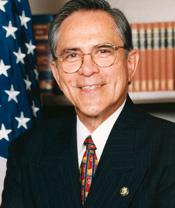
Madam Speaker, I rise in support of House Resolution 148 that the gentlewoman from Illinois (Mrs. Biggert) and I introduced earlier this year. The legislation supports the ideals and the goals of…
Madam Speaker, I rise in support of House Resolution 148 that the gentlewoman from Illinois (Mrs. Biggert) and I introduced earlier this year. The legislation supports the ideals and the goals of Financial Literacy Month, which falls in April of each year.
Before I proceed, I want to take this opportunity to thank the gentlewoman from Virginia (Mrs. Jo Ann Davis), the chairman of the Subcommittee on Civil Service, and especially my Ranking Member, the gentleman from Illinois (Mr. Danny Davis). Also, I would like to recognize and thank Tania Shand on the minority staff for helping expedite committee consideration of our bill. My distinguished colleague, the gentleman from Illinois (Mr. Davis), has always been a strong supporter of economic education and financial literacy, and I want to thank him for managing the bill today for our side of the aisle.
The gentlewoman from Illinois (Mrs. Biggert) and I have also worked closely on financial literacy issues with the gentleman from California (Mr. Dreier), the chairman of the House Committee on Rules. I think all of us owe him a great deal of gratitude for being one of the first Members of Congress to call for bringing attention to the need to improve financial literacy rates.
To celebrate Financial Literacy Month, a Financial Literacy Day Fair will be held April 27 from noon to 4 p.m. in the Cannon Caucus Room. I join my friend, the gentlewoman from Illinois (Mrs. Biggert), in encouraging all of our colleagues and their staffs to attend this event.
Every day, consumers deal with money, from balancing a checking account to shopping for a mortgage or auto loan, researching ways to pay for a college education, checking credit card statements, saving money for retirement, understanding a credit report, or simply deciding whether to pay cash or charge a purchase. The list goes on and on, but many consumers do not really understand their finances.
In 2004, reports from Jump$tart and the National Council on Economic Education, the Schwab Foundation and others indicated that almost 66 percent of high school students failed a basic financial literacy exam. The numbers are not much better for adults. High bankruptcy rates, increased credit card debt, and identity theft make it imperative that all of us take an active role in providing financial and economic education during all stages of one's life.
On February 15, 2005, I cofounded, and currently cochair, the Congressional Hispanic and Economic Literacy Caucus with the gentlewoman from Illinois (Mrs. Biggert). The caucus seeks to address these issues head on by increasing public awareness of poor financial literacy rates, and will work to improve those rates. The caucus will provide a forum for my colleagues to promote policies that advance financial literacy and economic education. It is my hope that through the Financial and Economic Literacy Caucus, we can further educate Americans about financial and economic topics ranging from homeownership to credit ratings and, yes, insurance.
At this point, Madam Speaker, I will insert for the Record letters and press releases supporting passage of this resolution. They include a press release from the National Association of Mortgage Brokers and a letter of support from Merrill Lynch. I would also insert letters supporting the creation of the Financial and Economic Literacy Caucus be included in the Record. They include a statement by Treasury Deputy Assistant Secretary Dan Iannicola, a release by the National Council on Economic Education, a letter of support from Junior Achievement, a press release from the Investment Company Institute, a statement from the North American Securities Administrators Association, and a statement by the Savings Coalition of America, and I have them all included here.
National Association of Mortgage Brokers Applauds Resolution Declaring
April ``Financial Literacy Month''
McLean, VA--The National Association of Mortgage Brokers
(NAMB) supports the bi-partisan resolution passed by the U.S.
House of Representatives today designating April as
``Financial Literacy Month.''
``We commend Reps. Judy Biggert (R-IL) and Ruben Hinojosa
(D-TX) for introducing a resolution that calls for the
federal government, states, local governments, schools,
businesses and other groups to observe Financial Literacy
Month,'' said NAMB President Bob Armbruster. ``Financial
education is important for today's consumers who face a
complex array of financial products and services.''
NAMB works closely with the financial services industry as
part of its on-going commitment to consumer education. NAMB
has a long history of promoting consumer financial education.
Last year, for example, NABM initiated a pilot consumer
credit education program using Freddie Mac's CreditSmart
' and CreditSmart ' Espanol financial
literacy curricula. The pilot is currently being managed by
NAMB state affiliates in California, Florida and Texas.
NAMB also has partnered with United Guaranty to create a
consumer information presentation--``Are You Prepared to Head
Down the Road to Homeownership? '''--to help
educate minorities, immigrants and low-to-moderate income
households on the home-buying process. The presentation
covers common home mortgage terminology, important steps in
the home-buying process, fair housing laws, credit reports
and more.
``For consumers, financial education is essential to
protecting oneself against fraud or abusive financial
practices and this education process should begin at a young
age, with some targeted curriculum in our high schools,''
adds Armbruster. ``The more consumers know, the better they
are at managing their finances.''
For more information visit NAMB's consumer home page on the
NAMB Web site, www.namb.org.
Mr. Speaker, bankruptcy filings are at an all-time high. When bankruptcy filings increase, every American must pay more for credit, goods, and services through higher rates and charges. It is time…
Mr. Speaker, bankruptcy filings are at an all-time high. When bankruptcy filings increase, every American must pay more for credit, goods, and services through higher rates and charges. It is time that we relieve consumers from the burden of paying for the debts of others.
Since the 105th Congress, the House has passed bankruptcy reform legislation eighty times. S. 256, the Bankruptcy Abuse Prevention and Consumer Protection Act, is the culmination of years of work and bicameral as well as bipartisan negotiations.
A key aspect of S. 256 is retention of the income-based means test. The means test applies clear and well-defined standards to determine whether a debtor has the financial capability to pay his or her debts. The application of such objective standards will help ensure that the fresh start provisions of Chapter VII will be granted to those who need them, while debtors that can afford to repay some of their debts are steered toward filing chapter 13 bankruptcies.
S. 256 is good for America's family farmers. As Chairman of the House Committee on Agriculture, I am pleased that we are finally making the chapter 12 provisions of the Bankruptcy Code permanent. Bankruptcy relief for family farmers will be made easier for those to obtain a discharge of their indebtedness. In addition, the bill allows more family farmers to qualify for chapter 12 relief by doubling the debt limit and lowering the percentage of income that must be derived from farming operations.
In addition, S. 256 prevents fraud. Under the current system, irresponsible people filing for bankruptcy could run up their credit card debt immediately prior to filing knowing that their debts will soon be wind away. What these people may not realize or care about is that these debts do not just disappear. They are passed along in higher charges and rates to hard working people.
Mr. Speaker, I rise in strong support of the ``Bankruptcy Abuse Prevention and Consumer Protection Act of 2005.''
Bankruptcy filings are at an all time high. When Bankruptcy filings increase every American must pay more for credit, goods, and services through higher rates and charges. It is time that we relieve consumers from the burden of paying for the debts of others.
Since the 105th Congress, the House has passed bankruptcy reform legislation eight times. S. 256, the ``Bankruptcy Abuse Prevention and Consumer Protection Act of 2005'' is the culmination of years of work and bi-camerla, as well as bi-partisan negotiations.
A key aspect of S. 256 is the retention of the income-based means test. The means test applies clear and well-defined standards to determine whether a debtor has the financial capability to pay his or her debts. The application of such objective standards will help ensure that the fresh start provisions of Chapter 7 will be granted to those who need them, while debtors that can afford to repay some of their debts are steered toward filing Chapter 13 bankruptcies.
S. 256 is good for America's family farmers, who are the backbone of our agriculture industry. The bill permanently extends Chapter 12 bankruptcy relief for family farmers and makes it easier for family farmers to obtain discharges of their indebtedness. In addition, the bill allows more family farmers to qualify for Chapter 12 relief by doubling the debt limit and lowering the percentage of income that must be derived from farming operations.
In addition, S. 256 prevents fraud. Under the current system, irresponsible people filing for bankruptcy could run up their credit card debt immediately prior to filing, knowing that their debts will soon be wiped away. What these people may not realize or care about is that these debts do not just disappear--they are passed along in higher chargers and rates to hard-working folks who pay their bills on time. S. 256 ends this fraudulent practice by requiring bankruptcy filers to pay back nondischargable debts made in the period immediately preceding their filing.
S. 256 also helps consumers. For example, this legislation helps children by strengthening the protections in the law that prioritize child support and alimony payments. In addition, it protects consumers from ``bankruptcy mills'' that encourage people to file for bankruptcy without fully informing them of their rights and the potential harms that bankruptcy can cause.
S. 256 also ensures the fair treatment of those that administer our bankruptcy laws. Specifically, this legislation restores fairness and equity to the relationship between the U.S. trustee and private standing bankruptcy
trustees by providing that in certain circumstances, after an administrative hearing on the record, private trustees may seek judicial review of U.S. trustee actions related to trustee removal. This compromise, worked out between the U.S. trustee's office and representatives of the private bankruptcy trustees, will ensure fairness for those who dedicate themselves to their duties as private trustees while ensuring that the U.S. trustee is subject to the same checks and balances as other government agencies.
Bankruptcy should remain available to people who truly need it, but those who can afford to repay their debts should repay their debts. S. 256 provides bankruptcy relief for those who truly cannot pay their debts, but also clearly demonstrates to those who would abuse our system that the free ride is over. I believe that S. 256 strikes the appropriate balance between these two important goals. I want to commend Chairmen Sensenbrenner and Cannon for their tremendous work on this legislation, and I urge each of my colleagues to support this fair and reasonable overhaul of the U.S. bankruptcy system.

Mr. Speaker, today I join with fellow Catholics around the world in mourning the death of the Holy Father, Pope John Paul II. The world has seen the passing of a great man dedicated to peace…
Mr. Speaker, today I join with fellow Catholics around the world in mourning the death of the Holy Father, Pope John Paul II. The world has seen the passing of a great man dedicated to peace throughout the world. His actions reflected his preaching of love, healing and forgiveness, advocating for peace and reaching out to other faith traditions. Despite turmoil and controversy, he held fast to his beliefs, gaining the respect of many around the world, even those who did not agree with him. His teachings will be remembered by millions and his influence will guide world leaders for years to come.
Throughout his ministry, he remained firm in his beliefs, leading by word and deed, fearless in his efforts to spread the Gospel of Christ. He believed in the inalienable right and dignity of the human person from conception through the moment of death. He was unafraid to shape world events, speaking passionately for peace and advocating for human rights. From his early years during the Nazi occupation of Poland where he risked his life to protect Polish Jews from persecution to his forgiveness of his would-be assassin, he has led by example, in faith and humility.
His steadfast support of the Solidarity movement in his homeland of Poland provided hope and encouragement to the Polish people and led to peaceful government reforms that precipitated the collapse of communism in Poland and the eventual fall of the Soviet Union, bringing freedom to millions of people. As these events were unfolding, Pope John Paul II was also reaching out to other parts of the world, using his influence to bring about change.
Through his efforts, he helped reduce tensions between world leaders, advocating for peace and justice. He sought to heal divisions across the different faith traditions, promoting reconciliation and dialogue between members to further understanding and respect for all people.
Pope John Paul II traveled all over the world. For millions, his visits would be the only opportunity to see a pope in person. Despite his afflictions of arthritis and Parkinson's disease, the Holy Father continued to travel the world, bringing hope and encouragement to the millions still oppressed by tyranny, hunger, disease and despair.
Pope John Paul II was especially dear to the people of Guam. He was the only Pope to visit Guam and he mesmerized our people with his dignity, kindness and sincerity. From his first words upon his arrival, spoken in the native Chamorro language, and throughout his short visit, his presence brought a spiritual renewal to the island's Catholics, many of whom camped overnight in streets and parking lots near the plaza where he was to say Mass. On February 23, 1981, tens of thousands of people gathered at the Plaza de Espana in Agana, Guam, to attend the service and receive his blessing. The crowd was captivated by this gentle man who spoke passionately of his love for God and his love for humanity, praising the dedication of Catholics in Guam and Micronesia for their faithfulness while reminding them that their faith should be practiced in all that they do. He then took time to comfort the elderly and the sick in our hospital who were unable to attend his Mass, blessing and encouraging them with his words, ``You are the strongest among all of us, who build the church through your suffering.''
It was an awesome sight to see children with their parents and grandparents, religious and government leaders, gathered to welcome the Holy Father, to celebrate Mass and to bid him farewell as he departed our island.
His visit marked a turning point for Catholics in Micronesia. In 1984, three years after his visit, the Pontiff honored our island and the Chamorro people with the elevation of the Diocese of Agana to a Metropolitan Archdiocese, naming the late Bishop Felixberto C. Flores, the first Chamorro Bishop, the first Metropolitan Archbishop of Agana and appointing another Chamorro, Father Anthony S. Apuron as Auxiliary Bishop. A year later, he approved the creation of the Diocese of Chalan Kanoa in the Commonwealth of the Northern Mariana Islands and appointed Monsignor Tomas A. Camacho, a Chamorro and a native of Saipan, as its first Bishop.
Also in 1984, the Holy Father announced the beatification of Padre Diego Luis de San Vitores, the Jesuit priest who brought Christianity to Guam and was later martyred for baptizing the child of a Chamorro chief. Over two hundred people from Guam went on the pilgrimage to Rome to attend the beatification ceremony.
Although he would not return to the island before his passing, his visit will never be forgotten. From the street named in his honor, Chalan Santo Papa Juan Pablo Dos, to the bronze statue erected to commemorate his visit, the people of Guam will always remember this man of faith and vision who taught us ``not to be content to boast of a glorious heritage from the past without turning to the demands of the present moment.'' Rather, we must put our faith into practice each and every day, seeking more effective ways to proclaim the message of love to all those we meet.
Pope John Paul II was beloved by Catholics and non-Catholics alike. Through the many challenges confronting the Catholic faith and the world, Pope John Paul II as the Bishop of Rome and Supreme Pastor of the Catholic Church was the rock of the Church and the conscience of the world. At his passing, we mourn the loss of a great person. For Catholics, we take comfort in the knowledge that he is at peace with God the Father, His Son, Jesus Christ, and the Holy Spirit in heaven. On behalf of the people of Guam, ``Adios Santo Papa yan in guiya hao.''
Mr. Speaker, I thank the distinguished gentleman for yielding me this time and for his kind words. It is indeed a privilege to be part of a delegation to the funeral of the Holy Father. I also thank…
Mr. Speaker, I thank the distinguished gentleman for yielding me this time and for his kind words. It is indeed a privilege to be part of a delegation to the funeral of the Holy Father. I also thank the distinguished chairman of the committee. I know how much he respected and admired the Holy Father. I thank him for his leadership in helping us express our condolences as well.
Mr. Speaker, my mother used to always say of John Paul II, ``He is a saint walking the Earth.'' Indeed, he was. It is in that spirit and with deep sadness at his passing but with great thanks and joy for his life of good works that I rise today to join my colleagues in paying tribute to Pope John Paul II.
Pope John Paul II was one of the great spiritual and humanitarian leaders of our time. His deeds, his words and his indomitable spirit of love were a blessing to this world, and the entire world mourns his passing.
Again, I am very honored to be part of the congressional delegation to the Pope's funeral on Friday, and I hope that our delegation can help convey the thoughts, prayers, and deep sympathies of the American people on his passing. We will be pleased to join our President in doing that.
Pope John Paul II was a man of God, and he was a man of the people. He was passionate in his commitment to doing God's work here on Earth. St. Francis of Assisi, who was the patron saint of my city of San Francisco, said, ``Preach often, sometimes use words.'' The life of John Paul II was a sermon he preached every day by example. His ministry fed the hungry, cared for the sick, and invited the stranger. He was a champion for the poor, promoting justice and economic development around the world. His work built on the legacy of Pope Paul VI, not his immediate predecessor, except for 33 days his predecessor, who believed, ``If you want peace, work for justice.'' Pope John Paul II helped to bring justice and healing to the relationship between Catholics and Jews, and I know how important that is to the gentleman from California (Mr. Lantos). His commitment to nonviolence and to peace on Earth was heartfelt and steadfast.
With a concern and caring for all of God's children, John Paul II reached out to people of all ages, nationalities, and faiths. As we all know, he traveled to so many countries in his service as Pope, and he spent more than 2 years in his papacy outside of Rome. I like to say that he was aptly named John Paul: John, the Apostle of love, and Paul, who preached the Gospel to such a wide range of people in the earliest days of Christendom. In doing so himself, Pope John Paul II brought the redemptive message of the Catholic Church to places it had never been, and he inspired millions of individuals who saw in his conviction and in his example the light of God.
He had a special bond with the youth of the world. I remember when I met him in San Francisco when he came there, and it was so exciting for us to welcome the Holy Father, and when he landed at Crissey Field in a helicopter, it was so dramatic. And when I met him, our Archbishop, Archbishop Quinn, said, as we were chatting, ``Your Holiness, I have confirmed the Congresswoman's children.'' And he said, ``That's good, that's good.'' And he said, ``Your Holiness, I have confirmed the Congresswoman's five children.'' And he said, ``That's very good, that's very good.''
And as I said, he had a special bond with the youth of the world. He spoke with them as a spiritual leader, but also as a teacher and as a friend. The guidance he offered to today's youth will benefit the world for years to come.
Likewise, his influence on world events will be felt for generations. John Paul II played an enormous role in the fall of communism and ending the Cold War, and that has been mentioned here. He was a man of peace. As a priest in Poland, he waged a persistent struggle for nearly three decades against the Communist Government over the building of churches and the right of his people to worship as they choose. He continued that work as Pope, inspiring the Polish people and the Solidarity movement, and offering spiritual strength to others working to free themselves from Communist regimes.
In his later years, the Pope offered the world a very different but significant form of inspiration. Suffering from Parkinson's disease and with failing health, he struggled until the end to share God's word. He taught us about the dignity of every individual and showed us that we must always seek to make a difference on this Earth.
It is written in the Book of Genesis, ``Thou shalt go to thy fathers in peace; thou shalt be buried in a good old age.'' John Paul II is with our Father now. We were blessed that he preached peace in this world for so long.
As we honor his memory, as we sing his praises, we must also heed his message. The Catholic Church recently gave us a guide, the compendium of Catholic social justice, for how we can address some of the issues the previous speaker talked about, addressing the needs of the poor, the vulnerable, and the weak. President Bush mentioned that when he gave His Holiness the Presidential Medal of Freedom, he mentioned that he had championed the
work for the poor, the vulnerable, the needy, he said, and the weak. We must do that in our work here. It would then be an appropriate honor and remembrance for the life, leadership, service, and holiness.
My mother said, as I said in the beginning, he is a saint walking this Earth. Anyone who was ever in his presence knew they were in the presence of a holy man. Because he lived and we observed him, we have a responsibility to follow his lead.
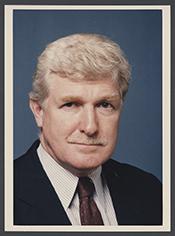
Mr. Speaker, the ``Bankruptcy Abuse Prevention and Consumer Act'' is long overdue and with House passage later today, it stands a very real prospect of becoming law. It's been an extremely long road…
Mr. Speaker, the ``Bankruptcy Abuse Prevention and Consumer Act'' is long overdue and with House passage later today, it stands a very real prospect of becoming law. It's been an extremely long road to reform.
I originally supported bankruptcy reform in 1998 with former Representative George Gekas. Ironically, the legislation was drawn from the recommendations of the bipartisan National Bankruptcy Review Commission that was established through legislation passed in 1994 by a Democratic-controlled Congress. It enjoyed the same level of bipartisan support as when it passed the Senate last month.
The main component of the commission's recommendations and the legislation we have here today is to establish a means-based test to determine who should work with creditors on a plan to repay their debts and those who cannot afford to do so. Sometimes a market-based capitalist economy can be unforgiving, but Americans are fair and decent people. We want a system that allows a fresh start to those in financial trouble, but also one that promotes personal responsibility and is not susceptible to fraud and abuse.
The means test in this bill carves out a series of exemptions to steer those who can afford to repay at least part of their debt toward a Chapter 13 repayment plan. This test takes into account exemptions for living expenses, health and disability insurance, expenses to care for an elderly or disabled family member, secured debts, and home energy costs among others. It also recognizes situations where individuals face overwhelming medical costs or other debilitating situations. Under the bill, if an individual can demonstrate ``special circumstances'' that create an overwhelming financial burden, those individuals would not be required to file for Chapter 13. As a final safeguard, those people earning less than their state's median income would automatically be ineligible for Chapter 13.
It is estimated that only a small minority of those already filing for bankruptcy would be affected, perhaps as little as 7 percent. Contrary to some reports, families and individuals facing difficult economic circumstances, people who may have lost their job or family breadwinner or have been devastated by a severe medical condition, will be given a chance to clear their debts and receive a fresh start under this bankruptcy reform legislation.
Back in 1998, I encouraged supporters of the bill to improve its consumer protection provisions. They responded by making child support a priority in a repayment plan, requiring credit counseling prior to filing for bankruptcy, and limiting abuses caused by a few unscrupulous individuals who hide their wealth behind a state's homestead provisions.
At the onset of the 107th Session, I sought and won the House's approval of my pro-consumer amendments that remain a part of today' s bill. These provisions:
Require credit card companies to include a disclosure statement highlighting the number of months necessary to repay a balance if the card holder were to pay only the minimum amount due;
Require credit card companies to inform cardholders on when their low introductory rates expire and new higher rates take effect; and
Prevent deceptive and fraudulent advertising practices by debt relief agencies by making certain that creditors are informed of their rights as debtors.
Could these provisions be perfected? I suspect so. There were several other consumer protections we were unsuccessful in getting included. But perfection should not be an enemy of the good.
Increasingly, bankruptcy has become a tool of first impulse rather than a last option after all other avenues have been exhausted. Last year, 1.6 million consumers filed for bankruptcy, a figure just short of the number of filings in 2003, which represented the most in our nation's history. How is it that during periods of sustained economic growth and prosperity, such as during the Clinton presidency, when all incomes rose, bankruptcies also continued to climb?
S. 256 has been criticized for advancing the interests of the credit card industry on the backs of the poor and the middle class, many of whom are in debt because of circumstances beyond their control. I am sympathetic to this argument, but the flaw is not with this legislation. Those deserving of a fresh start will still be able to do so under this legislation.
The real flaw is with an agenda that the majority continues to advance.
Most families in dire financial straits and filing for bankruptcy will be able to discharge their debts under this legislation. But why are they facing bankruptcy?
One reason is that 41 million Americans are uninsured because the majority party refuses to address this growing crisis.
Another is because 7.3 million Americans live on the minimum wage, more than one-third of whom rely on the $5.15 cents per hour to support their family. They last saw a minimum wage increase in 1997.
It is because during the height of the last recession, the majority party refused to allow any extension of unemployment benefits, because they were too busy falling all over themselves to cut taxes for the wealthiest Americans.
We just passed this week a permanent elimination of the estate tax, helping the wealthiest among us avoid paying any tax on their untaxed earnings, and passed a budget resolution that will cut health care to the indigent.
Mr. Speaker, bankruptcy reform has merit and should become law. It is the majority's overall agenda that is bankrupt and in need of reform.
Mr. Speaker, I yield myself such time as I may consume. Mr. Speaker, this is the most special interest-vested bill that I have ever dealt with in my career in Congress. It massively tilts the playing…
Mr. Speaker, I yield myself such time as I may consume.
Mr. Speaker, this is the most special interest-vested bill that I have ever dealt with in my career in Congress. It massively tilts the playing field in favor of banks and credit card companies and against working people and their families. I have never, ever faced such a piece of legislation. That explains to me why it took 8 years to get this thing up here, because they kept fixing it up, making it wrong.
Mr. Speaker, all I want to say as we open this debate is that to those who assert that this bill cracks down on creditor abuse, I would ask them to realize that this bill does absolutely nothing to discourage abusive, underage lending; nothing to discourage reckless lending to the developmentally disabled; nothing to regulate the practice of sub-prime lending to persons with no means or little ability to repay their debts; nothing to crack down on the sharks, the lenders, that charge members of the Armed Forces up to 500 percent interest per year or more. They hang around the bases and lure them in.
What this is is something that we should all be truly embarrassed about. This bill is opposed by every consumer group, by all the bankruptcy judges, the trustees, law professors, by all of organized labor, by the military groups, by the civil rights organizations, and by every major group concerned about seniors, women, and children.
Please, if we do not do anything else in the 109th Congress, let us not let this bill get out of the House of Representatives.
Mr. Speaker, I reserve the balance of my time.
Mr. Speaker, I am pleased to yield 2\1/2\ minutes to the gentleman from Massachusetts (Mr. Delahunt), a distinguished member of the committee.
Mr. Speaker, I am pleased to yield 3 minutes to the gentleman from North Carolina (Mr. Watt), the ranking member of the Subcommittee on Commercial and Administrative Law.
Mr. Speaker, I yield 3 minutes to the gentleman from New York (Mr. Nadler), the former ranking member of the Subcommittee on Commercial and Administrative Law. This is an 8-year-old bill, and the gentleman has been foremost in this process for all of those years.
Mr. Speaker, I yield 3 minutes to the gentlewoman from Houston, Texas (Ms. Jackson-Lee), a member of the committee.
(Ms. JACKSON-LEE of Texas asked and was given permission to revise and extend her remarks.)
Mr. Speaker, I yield 3 minutes to the gentlewoman from California (Ms. Zoe Lofgren), a distinguished member of the committee.
Mr. Speaker, I yield 20 seconds to my friend, the gentleman from Virginia (Mr. Scott).
Mr. Speaker, I yield to the gentleman from Ohio (Mr. Kucinich) for a unanimous consent request.
(Mr. KUCINICH asked and was given permission to revise and extend his remarks.)
Mr. Speaker, I am now pleased to break the line of members of the committee. I yield 1 minute and 15 seconds to a distinguished friend of mine, the gentleman from New Jersey (Mr. Pascrell).
Mr. Speaker, before I recognize the gentleman from Massachusetts, I want to go back and yield 10 seconds to the gentleman from New Jersey (Mr. Pascrell).
Mr. Speaker, I am pleased to yield 2 minutes to my friend, the gentleman from Massachusetts (Mr. Meehan), an excellent member of the committee.
Mr. Speaker, I yield 10 seconds to the gentleman from Massachusetts (Mr. Meehan).
Mr. Speaker, how much time remains on either side?
Mr. Speaker, I am now pleased to yield 2 minutes to the gentlewoman from California (Ms. Linda T. Sanchez), who is an able member of the committee.
Mr. Speaker, I yield 3 minutes to the gentlewoman from Los Angeles, California (Ms. Waters), a member of the committee.
Mr. Speaker, I yield myself 5 seconds to let the gentlewoman from California know that the credit card companies solicit five billion mailings every year to college kids and others.
Mr. Speaker, may I ask the chairman how many speakers he may have remaining.
Mr. Speaker, I yield 1 minute to the dynamic gentlewoman from California (Ms. Woolsey).
(Ms. WOOLSEY asked and was given permission to revise and extend her remarks.)
Mr. Speaker, I yield myself 1 minute.
We should all be embarrassed that instead of repealing the biggest loophole in the bankruptcy code, we have had 8 years to study it, the homestead exemption, the bill places only weak obstacles in its path. Instead of protecting women and health care providers from those who would terrorize abortion clinics, we lay out a blueprint for them to avoid their debts. Instead of helping individuals who have lost their job or faced a health care emergency, we deny them the chance for a fresh start.
By passing this measure in this form, the majority is telling the American people, Republicans are telling the American people, it is more important to help credit card companies than innocent spouses and children; that it is more important to protect corporate scam artists than workers losing their pension; that it is more important to protect unscrupulous lenders than disabled veterans.
Mr. Speaker, I yield the remainder of my time to the gentlewoman from California (Ms. Pelosi), the distinguished minority leader.
(Ms. PELOSI asked and was given permission to revise and extend her remarks, and include extraneous material.)

Mr. Speaker, I offer a motion to recommit. Yes. Mr. Speaker, I yield myself 3 minutes. Mr. Speaker, I rise today with the gentleman from Ohio (Mr. Strickland) to offer this motion on behalf of our…
Mr. Speaker, I offer a motion to recommit.
Yes.
Mr. Speaker, I yield myself 3 minutes.
Mr. Speaker, I rise today with the gentleman from Ohio (Mr. Strickland) to offer this motion on behalf of our brave citizen soldiers who are risking their lives for us and then, as a thank you, risking their homes and their businesses, too. Our motion simply shields financially distressed National Guard and Reservists from the means test found in S. 256 while they are in service and for the 2 years after they have transitioned back to civilian life if a substantial portion of their debt is due to their service.
This motion is a narrow protection for those who suffer financial hardship, financial disaster, as a direct result of serving our country. It builds on Senator Durbin's amendment to the Senate bankruptcy bill which exempts from the bill's means test disabled veterans if their debts were incurred primarily when they were on active duty or performing homeland defense duties.
Regardless of Members' position on the overall bill, we owe it to those who risk their lives and their livelihoods to prevent financial catastrophe caused by their service. This motion is the least we can do to ease their pain.
According to the National Guard, 4 out of 10 members of the guard and reserve forces lose income when they leave their civilian jobs for active duty. Many left for the war thinking they would be deployed for 6 months and have ended up staying for a year or even longer and may be shipped out again. There is no reasonable way they could have financially anticipated and prepared for those extensions of their service. Their families struggle to pay the bills. Some face the reality of losing their homes, as this cartoon depicts: Tie a yellow ribbon around the old oak tree, and for some of those returning from Iraq, it is a foreclosure sign around their house.
Many Guard and Reservists are self-employed or run small businesses and face the daunting task of reestablishing their businesses after their release from active duties. The 2 years after they return from service are the
most difficult, and we owe it to them to provide a safe harbor from the means test.
Since 9/11, approximately 470,000 Guard and Reservists have been called to active duty, tens of thousands more than once. Some of these patriotic Americans are facing financial crisis not because they are exploiting loopholes in the bankruptcy law, they are not scheming to avoid paying their debts, they are in a financial hole their country dug for them.
Some will argue we do not need this motion because our solders are already covered by the Servicemembers' Civil Relief Act, but that is not true. Even with that minimal help, many are forced to file for bankruptcy and the relief act provides no assistance once they file. It is hard enough under current law for them to pick up the pieces. The special circumstances and sacrifices of Guard and Reserve forces require that we not make recovery even harder for them. Soldiering is not their livelihood, but they take it on. They leave their day-to-day lives and jobs behind because their country asks them to do so. Exemption from the means test is the least we can do to tell our citizen soldiers and their families not only do we appreciate the physical and emotional risks they have taken, we recognize their financial risk.
To do any less than this simple, narrow protection would be morally bankrupt.
Disabled American Veterans,
Washington, DC, April 1, 2005.
Hon. John Conyers, Jr.,
Ranking Minority Member, House Committee on the Judiciary,
Rayburn House Office Building, Washington, DC.
Dear Representative Conyers: The Disabled American Veterans
(DAV) is a nonprofit organization of more than one million
veterans disabled during time of war or armed conflict. The
DAV is the official voice of our nation's service-connected
disabled veterans, their families, and survivors.
On behalf of the DAV, I ask you please keep in mind the
sacrifices of the brave men and women of our Armed Forces as
you consider S. 256, the Bankruptcy Abuse Prevention and
Consumer Protection Act of 2005.
Returning service members often experience financial
difficulties during their transition back to civilian life.
They should be afforded protections to ensure that the
already significant burdens upon military members and their
families are not compounded by unintended consequences from
this bill. Specifically, disabled veterans who incur debt
during the initial 24 months following completion of active
duty should not be subject to the bankruptcy means test. Such
heroic citizens deserve the utmost consideration with regard
to bankruptcy laws.
Thank you for your consideration. I look forward to
continuing to work with you to ensure better lives for
America's service-connected disabled veterans and their
families.
Sincerely,
Joseph A. Violante,
National Legislative Director.
Mr. Speaker, I yield 2 minutes to the gentleman from Ohio (Mr. Strickland), a champion for our service men and women.
Mr. Speaker, I object to the vote on the ground that a quorum is not present and make the point of order that a quorum is not present.
Madam Speaker, pursuant to the order of the House of April 5, 2005, and as the designee of the majority leader, I call up the resolution (H. Res. 190) honoring the life and achievements of His…
Madam Speaker, pursuant to the order of the House of April 5, 2005, and as the designee of the majority leader, I call up the resolution (H. Res. 190) honoring the life and achievements of His Holiness Pope John Paul II and expressing profound sorrow on his death, and ask for its immediate consideration in the House.
Madam Speaker, I ask unanimous consent that all Members may have 5 legislative days within which to revise and extend their remarks on House Resolution 190, the resolution under consideration.
Madam Speaker, I yield myself such time as I may consume.
Madam Speaker, it is a privilege to speak in honor of the life and the achievements of His Holiness Pope John Paul II. It is hard to imagine any other person who holds so much worldwide respect regardless of religious faith. The estimated 4 million people, including 200 heads of state, expected to attend the Pope's funeral in Rome later this week will bear witness to history's high regard for this man of principle and courage.
John Paul II dedicated his long life to peace and freedom for all mankind. As a young man, the Pontiff risked his life and defied Nazi forces which occupied Poland in an effort to protect the Jewish population and others in his homeland. As the 264th Pope, his faith remained steadfast during the years of the Cold War, playing an important role in the demise of Soviet communism.
As columnist Charles Krauthammer commented this week, ``John Paul II's first great mission was to reclaim his native Eastern Europe for civilization, and he demonstrated what Europe had forgotten and Stalin never knew: the power of faith as an instrument of political mobilization.'' Visiting more than 125 countries over his career, the Pope reached out to people of other cultures and religions in an effort toward greater understanding, healing, and harmony.
Despite the steady decline in his health due to Parkinson's disease, and especially since he fell ill in early February, John Paul II continued to lead the Roman Catholic Church with his gentle strength and noble heart. He remained faithful, principled, and resolute concerning the continuing defense of the Church's traditional belief in the unique dignity of every human life from conception until natural death.
During a long and fruitful life, he literally provided the world with an example of how to live with dignity and unshakable faith. He told us to ``be not afraid'' in the face of seemingly insurmountable challenges. He showed us how to demand justice from the unjust. His faith inspired us when we most needed reassurance. His composure and dignity during times of great suffering serves as an inspiration to us all. He bore his personal cross with grace and serenity until the very end of his long and remarkable life.
As John Paul II has said, ``Faith opens us to a hope that does not disappoint, placing us before the perspective of the final resurrection.'' While life itself is short and tenuous, I am comforted by the fact that His Holiness is finally at home and in a place of peace and refreshment with the Father. I am sure he is praying for us even now, as we are praying for him.
It is appropriate we mourn his passing. It is right and proper that we grieve over the loss of humanity's great champion; but we should also feel gratitude that this Pope stayed with us for so long and look forward to the time when we will hear the words he surely heard last Saturday: ``Come, Beloved of my Father, and enter the Kingdom which has been prepared for you since the beginning of time.''
I urge my colleagues to vote in favor of this resolution.
Madam Speaker, I reserve the balance of my time.
Madam Speaker, I yield such time as he may consume to the gentleman from Minnesota (Mr. Gutknecht).
Mr. Speaker, I yield such time as he may consume to the gentleman from Kansas (Mr. Tiahrt).
Mr. Speaker, I yield such time as he may consume to the gentleman from Indiana (Mr. Pence).
(Mr. PENCE asked and was given permission to revise and extend his remarks.)
Mr. Speaker, I am pleased to yield such time as he may consume to the gentleman from Texas (Mr. Paul).
(Mr. PAUL asked and was given permission to revise and extend his remarks.)
Mr. Speaker, I am very pleased to yield 1 minute to the distinguished gentleman from Texas (Mr. DeLay), the majority leader.
Mr. Speaker, I am pleased to yield such time as he may consume to the gentleman from Nebraska (Mr. Fortenberry).
(Mr. FORTENBERRY asked and was given permission to revise and extend his remarks.)
Mr. Speaker, I yield such time as she may consume to the gentlewoman from Pennsylvania (Ms. Hart).
Mr. Speaker, I yield such time as he may consume to the gentleman from Colorado (Mr. Beauprez).
Mr. Speaker, I am pleased to yield 15 seconds to the gentleman from Pennsylvania (Mr. Fitzpatrick).
Mr. Speaker, I yield myself such time as I may consume.
Mr. Speaker, I want to thank the gentleman from California (Mr. Lantos) for his usual superb cooperation, and I wish to associate myself with his remarks in closing.
Mr. Speaker, I yield back the balance of my time.
Mr. Speaker, on that I demand the yeas and nays.
Mr. Speaker, I rise in opposition to S. 256, the Bankruptcy Abuse Prevention and Consumer Protection Action. The title of this bill is a misnomer. It should be titled the ``Corporate Protection and…
Mr. Speaker, I rise in opposition to S. 256, the Bankruptcy Abuse Prevention and Consumer Protection Action. The title of this bill is a misnomer. It should be titled the ``Corporate Protection and Improved Profitability Act''. If passed, this Act will be a boon for credit card and financial lending institutions and a nightmare for American families who are struggling to stay strong in an economically depressed society. Essentially, the House is contemplating legislation that is more punitive to individuals seeking bankruptcy protection than corporations that resort to filing for bankruptcy.
I also have concerns about House procedures for S. 256. A closed rule was employed, resulting in thirty-five Democratic amendments being rejected from consideration. Debate on an amendment to the bill was prevented. Thirty-five amendments were submitted before the Rules Committee and not one was accepted. Not only were members of the House prevented from engaging in debate but also the American people have been denied the opportunity to hear legitimate debate regarding this Act we are considering today. I am especially distressed about the majority's refusal to accept amendments that related to identify theft and exemptions for disabled veterans whose indebtedness occurs after active duty.
My review of S. 256 compels me to conclude that the framers of the bill failed or refused to recognize that recent economic policies by the current administration have directly contributed to the proliferation of bankruptcy filings by consumers. Burgeoning deficits, perpetual and high unemployment, and the exportation of jobs overseas are just a few of the by-products of failed and poorly conceived government policies that have contributed and continue to contribute to the need for individuals to seek bankruptcy protection.
I also oppose S. 256 because it does absolutely nothing to stem the predatory practices employed by credit card companies, or the abusive fees and penalties imposed on individuals who make just one late payment. Further, the wealthiest citizens in our country are able to insulate their assets by placing them in trusts that are protected in bankruptcy proceedings.
I staunchly oppose S. 256. Democrats were denied the opportunity to offer amendments, the American people have been denied a full opportunity to determine the full implications of the changes in bankruptcy law, and the Act is fundamentally anticonsumer.
Mr. Speaker, my conscience dictates that I oppose S. 256. I encourage my House colleague to vote No on the Bankruptcy Abuse Prevention and Consumer Protection Act.
Mrs. DAVIS California. Mr. Speaker, I rise to voice my opposition to the bankruptcy reform legislation before us today.
Unfortunately, there are individuals who abuse the credit system and use it for their own gain.
This is wrong and we should be working to stop those who take advantage of the bankruptcy laws.
However, I worry S. 256 will hurt the thousands of Americans who have absolutely no choice but to file bankruptcy as a last resort.
Specifically, I am concerned about the impact on our brave service members and our military families.
The numerous activations and extended tours of duty in Iraq and Afghanistan are causing our military families to face debt and serious financial strain.
Studies show that the incomes of military, families decrease significantly when the service member is deployed.
Four out of 10 Reservists, for example, take a drop in pay once they are deployed overseas.
I have met with military families in San Diego who are facing the realities and the financial strain that come with activation.
I worry about the military spouse whose husband is activated to serve in Iraq for a year and must leave his job or his business.
Somehow, we expect the spouse to care her children, to make the house payment, and to pay the bills on an income that is significantly lower.
Some military families will have no choice but to file for bankruptcy because of the environment we have created for them.
The bankruptcy reform bill before us today does not address the needs of our military families and the realities they are facing.
S. 256 will make it harder for military families to recover from a bankruptcy because of the additional costs and the stricter requirements.
The Senate did include provisions exempting military personnel serving in combat from certain provisions of the bill.
But, unfortunately, the financial impact of an extended deployment could remain long after the service member returns home to his family.
S. 256 does not recognize this reality and does not consider the difficult circumstances facing military families today.
I am against passing legislation only adding to the enormous burden we are already placing on those defending the United States and the families sending a loved one into harm's way.
I urge my colleagues to vote against the Bankruptcy Abuse Prevention and Consumer Protection Act.
Bill Text
2 versions available
        [Congressional Bills 109th Congress]
[From the U.S. Government Publishing Office]
[H. Res. 148 Engrossed in House (EH)]

In the House of Representatives, U.S.,

April 6, 2005.
Whereas the financial services industry in the United States benefits millions
of people in the United States, providing products and services that
allow individuals and families to build homes, buy cars, finance
educations, start businesses, and meet everyday needs;
Whereas personal financial education is essential to ensure that individuals are
prepared to manage money, credit, and debt, and become responsible
workers, heads of households, investors, entrepreneurs, business
leaders, and citizens, yet a study completed in 2004 by the Jump$tart
Coalition for Personal Financial Literacy found that high school seniors
know less about principles of basic personal finance than did high
school seniors 7 years earlier;
Whereas financial education has been linked to lower delinquency rates for
mortgage borrowers, higher participation and contribution rates in
retirement plans, improved spending and saving habits, higher net worth,
and positive knowledge, attitude, and behavior changes, yet a 2004
survey completed by the National Council on Economic Education found
that the number of States that include personal finance in education
standards for students in kindergarten through high school has improved
since 2002 but still falls below 2000 levels;
Whereas expanding access to the mainstream financial system provides individuals
with lower-cost and safer options for managing finances and building
wealth and is likely to lead to increased economic activity and growth,
yet studies show that as many as 10 million households in the United
States are ``unbanked'' or are without access to mainstream bank
products and services;
Whereas personal financial management skills and lifelong habits develop during
childhood, and 55 percent of college students acquire their first credit
card during their first year in college, and 92 percent of college
students acquire at least one credit card by their second year in
college, yet only 26 percent of people between the ages of 13 and 21
reported that their parents actively taught them how to manage money;
Whereas although more than 42,000,000 people in the United States participate in
qualified cash or deferred arrangements described in section 401(k) of
the Internal Revenue Code of 1986 (commonly referred to as ``401(k)
plans''), a Retirement Confidence Survey conducted in 2004 found that
only 42 percent of workers surveyed have calculated how much money they
will need to save for retirement and 4 in 10 workers say that they are
not currently saving for retirement;
Whereas personal savings as a percentage of personal income decreased from 7.5
percent in the early 1980s to 1.1 percent in the last two quarters of
2004;
Whereas Congress sought to implement a national strategy for coordination of
Federal financial literacy efforts through the establishment of the
Financial Literacy and Education Commission (FLEC) in 2003, the
designation of the Office of Financial Education of the Department of
the Treasury to provide support for the Commission, and requirements
that the Commission's materials, website, toll-free hotline, and
national multimedia campaign be multilingual;
Whereas Members of the United States House of Representatives established the
Financial and Economic Literacy Caucus (FELC) in February 2005 to (1)
provide a forum for interested Members of Congress to work in
collaboration with the Financial Literacy and Education Commission, (2)
highlight public and private sector best-practices, and (3) organize and
promote financial literacy legislation, seminars and events, such as
``Financial Literacy Month'' in April 2005 and the annual ``Financial
Literacy Day'' fair on April 27, 2005; and
Whereas the National Council on Economic Education, its State Councils and
Centers for Economic Education, the Jump$tart Coalition for Personal
Financial Literacy, its State affiliates, and its partner organizations
have designated April as `Financial Literacy Month' to educate the
public about the need for increased financial literacy for youth and
adults in the United States: Now, therefore, be it
Resolved, That the House of Representatives--
(1) supports the goals and ideals of Financial Literacy Month; and
(2) requests that the President issue a proclamation calling on the
Federal Government, States, localities, schools, nonprofit
organizations, businesses, other entities, and the people of the United
States to observe the month with appropriate programs and activities.
Attest:

Clerk.