Amending the Rules of the House of Representatives to reinstate certain provisions of the rules relating to procedures of the Committee on Standards of Official Conduct to the form in which those provisions existed at the close of the 108th Congress.
 Rep. Doc Hastings (R-WA)
Legislative Activity
Stay on top of the latest movement without scrolling through every action
Passed House pursuant to H. Res. 241. (consideration: CR H2625-2626; text: CR H2625-2626)
April 27, 2005 • 8:35 PM
View full timeline
Introduced in House
April 27, 2005
Rules Committee Resolution H. Res. 241 Reported to House. Rule provides for consideration of H. Res. 240. Upon the adoption of H. Res. 241, H. Res. 240 is considered to be adopted.
April 27, 2005 • 7:08 PM
Rule H. Res. 241 passed House.
April 27, 2005 • 8:34 PM
Passed/agreed to in House: Passed House pursuant to H. Res. 241.(consideration: CR H2625-2626; text: CR H2625-2626)
April 27, 2005 • 8:35 PM
Passed House pursuant to H. Res. 241. (consideration: CR H2625-2626; text: CR H2625-2626)
April 27, 2005 • 8:35 PM
Floor Debate
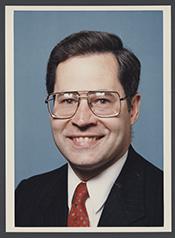
21 membersWhat members said about H.Res. 240 on the floor


 +16
+16
Floor Debate
21 membersWhat members said about H.Res. 240 on the floor
Mr. Speaker, by direction of the Committee on Rules, I call up House Resolution 241 and ask for its immediate consideration. Mr. Speaker, for the purpose of debate only, I yield the customary 30…
Mr. Speaker, I commend the gentlewoman from New York (Ms. Slaughter) for upholding a high ethical standard in the House, and I rise in strong support of the resolution before us. Mr. Speaker, this is…
Mr. Speaker, I am pleased to rise in support of this resolution which will repeal the unfortunate ethics rules changes that the majority included in the House rules package that was adopted on…
Mr. Speaker, this resolution is long, long, long overdue. We should not have to be here today at all. We should not have to fix something that the Republicans broke for no good reason. Let us be…
Mr. Speaker, I would like to thank the distinguished chairman of the Rules Committee (Mr. Dreier) for his graceful words. And I want to say, Mr. Speaker, that no one has worked longer and harder over…
Show 8 more

Mr. Speaker, I yield myself such time as I may consume. (Ms. SLAUGHTER asked and was given permission to revise and extend her remarks.) Mr. Speaker, this bill represents a true victory for the…

Mr. Speaker, I thank the gentlewoman for yielding me time. I would observe at the outset that if the arguments propounded by the gentleman from California (Mr. Dreier) and the distinguished chairman…

Mr. Speaker, I just want to compliment the gentleman from Colorado (Mr. Hefley) for his comments. I support this resolution, and I think he has really stated the case very well, that the ethics…

Mr. Speaker, I thank the gentleman from California (Mr. Dreier) for yielding me this time, and, Mr. Speaker, I am a recovering member of the Committee on Standards of Official Conduct. I just want to…

Mr. Speaker, I thank the gentleman very much for the time. Let me say that the Committee on Standards of Official Conduct was not broken. There was no deadlock ever. There were no partisan votes…
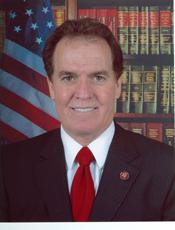
Mr. Speaker, I rise today in support of House Resolution 240, a bill providing for changes to the rules of the House of Representatives related to the procedures of the Committee on Standards of…

Mr. Speaker, I thank the gentlewoman from New York for yielding me this time. I rise in support of this resolution to restore the integrity to our ethics process and reinstate the standards of…

Mr. Speaker, I rise to urge my colleagues to vote for this resolution, not because I think it is a good resolution, but because I think it is the lesser of two evils. What is the first evil? Well,…
Show 8 more

Mr. Speaker, I rise to support this resolution because I am convinced that it is the right and proper way to address a tough partisan division that exists at this time. I thank the Speaker and the…

Mr. Speaker, I thank my colleague for yielding me this time, and since I do not need the full 2 minutes, I will be yielding back some time, but I just want to say to her and to everyone in this…
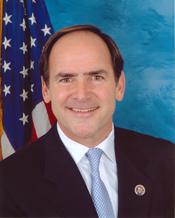
Mr. Speaker, once again today, the Speaker of the Whole House, the gentleman from Illinois (Mr. Hastert), has proven that he is a decent, fair, humble, and, today, magnanimous person, putting the…

Mr. Speaker, I rise, gratefully, in support of this resolution, and applaud you, Mr. Speaker, for allowing it to come to the floor for consideration. My colleagues, there are those beyond this…

Mr. Speaker, some in the minority are obsessed with the vanity of power and they will hatchet the ethics process and people. I have taken down some of the words used here tonight by the minority:…
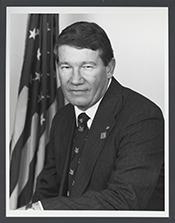
Mr. Speaker, I am not a member of the Committee on Standards of Official Conduct, nor have I ever been, nor do I ever want to be. I think we need to laud the members on both sides of that Committee.…
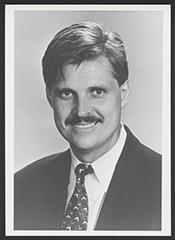
Mr. Speaker, I thank the gentleman for yielding me this time. Some people may say the majority party is in full retreat, that we were wrong in processing substance with the new rules. Well, that is…

Mr. Speaker, my sister says of our four siblings, I may be the only true optimist. I am like the kid who got the horse manure for Christmas, and all he could do is run around asking, Where is the…
Bill Text
Latest available legislative text
        [Congressional Bills 109th Congress]
[From the U.S. Government Publishing Office]
[H. Res. 240 Engrossed in House (EH)]

In the House of Representatives, U.S.,

April 27, 2005.
Resolved, That clause 3 of rule XI of the Rules of the House of
Representatives (relating to the Committee on Standards of Official Conduct) is
amended as follows:
(1) Subparagraph (2) of paragraph (b) is amended to read as follows:
``(2) Except in the case of an investigation undertaken by the committee on
its own initiative, the committee may undertake an investigation relating to the
official conduct of an individual Member, Delegate, Resident Commissioner,
officer, or employee of the House only--
``(A) upon receipt of information offered as a complaint, in writing
and under oath, from a Member, Delegate, or Resident Commissioner and
transmitted to the committee by such Member, Delegate, or Resident
Commissioner; or
``(B) upon receipt of information offered as a complaint, in writing
and under oath, from a person not a Member, Delegate, or Resident
Commissioner provided that a Member, Delegate, or Resident Commissioner
certifies in writing to the committee that he believes the information
is submitted in good faith and warrants the review and consideration of
the committee.
If a complaint is not disposed of within the applicable periods set forth in the
rules of the Committee on Standards of Official Conduct, the chairman and
ranking minority member shall establish jointly an investigative subcommittee
and forward the complaint, or any portion thereof, to that subcommittee for its
consideration. However, if at any time during those periods either the chairman
or ranking minority member places on the agenda the issue of whether to
establish an investigative subcommittee, then an investigative subcommittee may
be established only by an affirmative vote of a majority of the members of the
committee.''.
(2) Paragraph (k) is amended to read as follows:
``Duties of chairman and ranking minority member regarding properly filed
complaints
``(k)(1) The committee shall adopt rules providing that whenever the
chairman and ranking minority member jointly determine that information
submitted to the committee meets the requirements of the rules of the committee
for what constitutes a complaint, they shall have 45 calendar days or five
legislative days, whichever is later, after that determination (unless the
committee by an affirmative vote of a majority of its members votes otherwise)
to--
``(A) recommend to the committee that it dispose of the complaint,
or any portion thereof, in any manner that does not require action by
the House, which may include dismissal of the complaint or resolution of
the complaint by a letter to the Member, officer, or employee of the
House against whom the complaint is made;
``(B) establish an investigative subcommittee; or
``(C) request that the committee extend the applicable 45-calendar
day or five-legislative day period by one additional 45-calendar day
period when they determine more time is necessary in order to make a
recommendation under subdivision (A).
``(2) The committee shall adopt rules providing that if the chairman and
ranking minority member jointly determine that information submitted to the
committee meets the requirements of the rules of the committee for what
constitutes a complaint, and the complaint is not disposed of within the
applicable time periods under subparagraph (1), then they shall establish an
investigative subcommittee and forward the complaint, or any portion thereof, to
that subcommittee for its consideration. However, if, at any time during those
periods, either the chairman or ranking minority member places on the agenda the
issue of whether to establish an investigative subcommittee, then an
investigative subcommittee may be established only by an affirmative vote of a
majority of the members of the committee.''.
(3) Paragraphs (p) and (q) are amended to read as follows:
``Due process rights of respondents
``(p) The committee shall adopt rules to provide that--
``(1) not less than 10 calendar days before a scheduled vote by an
investigative subcommittee on a statement of alleged violation, the
subcommittee shall provide the respondent with a copy of the statement
of alleged violation it intends to adopt together with all evidence it
intends to use to prove those charges which it intends to adopt,
including documentary evidence, witness testimony, memoranda of witness
interviews, and physical evidence, unless the subcommittee by an
affirmative vote of a majority of its members decides to withhold
certain evidence in order to protect a witness; but if such evidence is
withheld, the subcommittee shall inform the respondent that evidence is
being withheld and of the count to which such evidence relates;
``(2) neither the respondent nor his counsel shall, directly or
indirectly, contact the subcommittee or any member thereof during the
period of time set forth in paragraph (1) except for the sole purpose of
settlement discussions where counsel for the respondent and the
subcommittee are present;
``(3) if, at any time after the issuance of a statement of alleged
violation, the committee or any subcommittee thereof determines that it
intends to use evidence not provided to a respondent under paragraph (1)
to prove the charges contained in the statement of alleged violation (or
any amendment thereof), such evidence shall be made immediately
available to the respondent, and it may be used in any further
proceeding under the rules of the committee;
``(4) evidence provided pursuant to paragraph (1) or (3) shall be
made available to the respondent and his or her counsel only after each
agrees, in writing, that no document, information, or other materials
obtained pursuant to that paragraph shall be made public until--
``(A) such time as a statement of alleged violation is made
public by the committee if the respondent has waived the
adjudicatory hearing; or
``(B) the commencement of an adjudicatory hearing if the
respondent has not waived an adjudicatory hearing;
but the failure of respondent and his counsel to so agree in writing,
and their consequent failure to receive the evidence, shall not preclude
the issuance of a statement of alleged violation at the end of the
period referred to in paragraph (1);
``(5) a respondent shall receive written notice whenever--
``(A) the chairman and ranking minority member determine
that information the committee has received constitutes a
complaint;
``(B) a complaint or allegation is transmitted to an
investigative subcommittee;
``(C) an investigative subcommittee votes to authorize its
first subpoena or to take testimony under oath, whichever occurs
first; or
``(D) an investigative subcommittee votes to expand the
scope of its investigation;
``(6) whenever an investigative subcommittee adopts a statement of
alleged violation and a respondent enters into an agreement with that
subcommittee to settle a complaint on which that statement is based,
that agreement, unless the respondent requests otherwise, shall be in
writing and signed by the respondent and respondent's counsel, the
chairman and ranking minority member of the subcommittee, and the
outside counsel, if any;
``(7) statements or information derived solely from a respondent or
his counsel during any settlement discussions between the committee or a
subcommittee thereof and the respondent shall not be included in any
report of the subcommittee or the committee or otherwise publicly
disclosed without the consent of the respondent; and
``(8) whenever a motion to establish an investigative subcommittee
does not prevail, the committee shall promptly send a letter to the
respondent informing him of such vote.
``Committee reporting requirements
``(q) The committee shall adopt rules to provide that--
``(1) whenever an investigative subcommittee does not adopt a
statement of alleged violation and transmits a report to that effect to
the committee, the committee may by an affirmative vote of a majority of
its members transmit such report to the House of Representatives;
``(2) whenever an investigative subcommittee adopts a statement of
alleged violation, the respondent admits to the violations set forth in
such statement, the respondent waives his or her right to an
adjudicatory hearing, and the respondent's waiver is approved by the
committee--
``(A) the subcommittee shall prepare a report for
transmittal to the committee, a final draft of which shall be
provided to the respondent not less than 15 calendar days before
the subcommittee votes on whether to adopt the report;
``(B) the respondent may submit views in writing regarding
the final draft to the subcommittee within seven calendar days
of receipt of that draft;
``(C) the subcommittee shall transmit a report to the
committee regarding the statement of alleged violation together
with any views submitted by the respondent pursuant to
subdivision (B), and the committee shall make the report
together with the respondent's views available to the public
before the commencement of any sanction hearing; and
``(D) the committee shall by an affirmative vote of a
majority of its members issue a report and transmit such report
to the House of Representatives, together with the respondent's
views previously submitted pursuant to subdivision (B) and any
additional views respondent may submit for attachment to the
final report; and
``(3) members of the committee shall have not less than 72 hours to
review any report transmitted to the committee by an investigative
subcommittee before both the commencement of a sanction hearing and the
committee vote on whether to adopt the report.''.
Attest:

Clerk.