Waiving a requirement of clause 6(a) of rule XIII with respect to consideration of certain resolutions reported from the Committee on Rules.
Legislative Activity
Stay on top of the latest movement without scrolling through every action
On agreeing to the resolution Agreed to by the Yeas and Nays: 230 - 199 (Roll no. 146). (text: CR H2653)
April 28, 2005 • 11:29 AM
View full timeline
Introduced in House
April 27, 2005
The House Committee on Rules reported an original measure, H. Rept. 109-60, by Mr. Putnam.
April 27, 2005
The requirement of clause 6(a) of rule XIII for a two-thirds vote to consider a report from the Committee on Rules on the same day it is presented to the House is waived with respect to any resolution reported on the legislative day of April 28, 2005 providing for consideration or disposition of a conference report accompanying H. Con. Res. 95.
April 27, 2005 • 8:58 PM
Placed on the House Calendar, Calendar No. 31.
April 27, 2005
Considered as privileged matter. (consideration: CR H2653-2659)
April 28, 2005 • 10:18 AM
DEBATE - The House proceeded with one hour of debate on H. Res. 242.
April 28, 2005 • 10:18 AM
The previous question was ordered without objection. (consideration: CR H2659)
April 28, 2005 • 11:04 AM
Passed/agreed to in House: On agreeing to the resolution Agreed to by the Yeas and Nays: 230 - 199 (Roll no. 146).(text: CR H2653)
April 28, 2005 • 11:29 AM
Motion to reconsider laid on the table Agreed to without objection.
April 28, 2005 • 11:29 AM
On agreeing to the resolution Agreed to by the Yeas and Nays: 230 - 199 (Roll no. 146). (text: CR H2653)
April 28, 2005 • 11:29 AM
Voting History
1 vote recorded • Roll call available
Floor Debate
7 membersWhat members said about H.Res. 242 on the floor
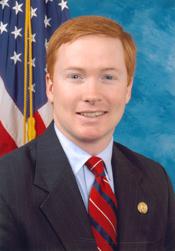
AHP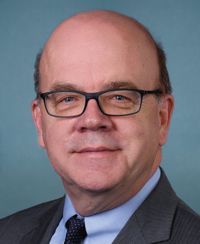 JPM
JPM JMS
JMS LMS
LMS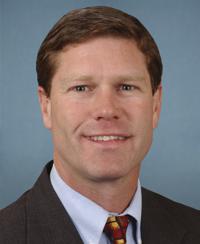 RK+2
RK+2
Floor Debate
7 membersWhat members said about H.Res. 242 on the floor
Mr. Speaker, by the direction of the Committee on Rules, I call up House Resolution 242 and ask for its immediate consideration. Mr. Speaker, for the purposes of debate only, I yield the customary 30…
Mr. Speaker, by the direction of the Committee on Rules, I call up House Resolution 242 and ask for its immediate consideration.
Mr. Speaker, for the purposes of debate only, I yield the customary 30 minutes to the ranking member of the Committee on Rules, the gentlewoman from New York (Ms. Slaughter), pending which I yield myself such time as I may consume. During consideration of this resolution, all time yielded is for the purposes of debate only.
(Mr. PUTNAM asked and was given permission to revise and extend his remarks.)
Mr. Speaker, House Resolution 242 is a same-day rule. It waives clause 6(a) of rule XIII requiring a two-thirds vote to consider a rule on the same day it is reported from the Committee on Rules.
H. Res. 242 allows the House to consider the rule and conference report accompanying H. Con. Res. 95, establishing the congressional budget for the United States Government for fiscal year 2006, revising appropriate budgetary levels for fiscal year 2005, and setting forth appropriate budgetary levels for fiscal years 2007 through 2010 or establishing a separate order relating to budget enforcement.
Mr. Speaker, it is imperative we pass this same-day rule so that we may consider the congressional budget resolution today. Once the House completes consideration and passes the budget, we can send the budget resolution to the Senate. The Senate will then be in a position to consider, and hopefully pass, the budget resolution on Friday, before they recess next week.
I am pleased and excited at the prospect of the passage of this budget. For the first time since 1997, the budget includes reconciliation instructions to authorizing committees, calling for the reduced rate of growth of mandatory programs. Mandatory spending is the guaranteed spending that grows every year, mostly without reform or review.
It currently consumes 55 percent of our budget; and if it continues unchecked, it will reach 61 percent of the total Federal budget by 2015.
More than half of the government's spending today is essentially on automatic pilot. This is neither sound nor sustainable fiscal policy. Congress is on its way to losing control over the spending priorities that the people send us here to debate and review and vote on as entitlements squeeze the budget more and more. Reconciliation instructions are the critical step to beginning the process of getting mandatory spending back to a sustainable rate of growth.
These savings are an excellent precedent. My hope is that reconciliation instructions become a standard practice in this time of deficits. With budget deficits, it is imperative to get a handle on all spending, both discretionary and mandatory. This budget is an inauguration of true fiscal discipline in a period of restrained spending.
I want to commend the Committee on the Budget and its staff for their hard work through the night to get this budget resolution finished so that we may consider it today in preparation for the recess that the Senate intends to take next week. The House will be back to work next week.
The House Committee on Rules will be meeting later today to provide a rule for the consideration of the budget resolution. I am pleased that this same-day rule will help facilitate the timely deliberation of our budget. Mr. Speaker, I urge my colleagues to support this same-day rule so that we can move forward to the rule and eventually on to the conference report on the budget today.
Mr. Speaker, I reserve the balance of my time.
Mr. Speaker, I yield myself such time as I may consume.
To the gentlewoman from New York (Ms. Slaughter), my good friend and distinguished colleague, I can certainly understand the gentlewoman's desire to read the completed conference report. I would just point out that the same-day rule was passed last night in the Committee on Rules as an accommodation to the entire House so we can facilitate the work, enable the budget conference report to be passed out of the House so that it can go to the Senate; because the Senate, apparently in need of a respite from their legislative productivity of the last several weeks, will be taking next week off.
So in order to get the budget process moving and give the Federal Government and the American people a blueprint of our priorities, we wanted to move this as expeditiously as possible and out of consideration for all Members to be able to get home to their districts and have the budget conference report get to the Senate and be passed out as soon as possible.
I certainly understand the gentlewoman's concern. I would like to see the conference report completed as quickly as possible. We fully expect that it will be today. The Committee on Rules will meet again where the gentlewoman and our other colleagues on the Committee on Rules will be able to consider the rule for the consideration of that conference report.
As to the facts and figures in the budget, apparently they are available as we heard during the 1-minute speeches from colleagues on the gentlewoman's side of the aisle. There were a number of challenges and concerns and problems that were discussed in disagreement with the proposed budget, so I assume that some Members have
managed to find the facts and figures and statistics that they are using to urge opposition to the budget. Apparently those figures are available.
Mr. Speaker, I reserve the balance of my time.
Mr. Speaker, I yield myself such time as I may consume.
I certainly respect the views of the distinguished ranking member of the Committee on the Budget, the gentleman from South Carolina (Mr. Spratt), who has worked very hard on the blueprint for the Federal Government. He enjoys an exceptional working relationship on the House Committee on the Budget. I think it has worked as well as that committee can possibly work under the gentleman's leadership and the chairmanship of the gentleman from Iowa (Mr. Nussle).
I would just say, as a conferee he is probably privy to more information about the status of the blueprint than I am, having been in the meeting and having been one of the three House conferees. Representing a third of our entire representation on that body, he certainly has had access to the information about the differences between the House views on the budget and the Senate views on the budget, and he has articulated them well.
I yield to the gentleman from South Carolina.
Mr. Speaker, reclaiming my time, I would simply point out the gentleman making up one-third of the entire delegation to the conference committee, the ranking member has certainly been a greater participant in that conference role than members on the majority side, other than the chairman and the gentleman from Wisconsin (Mr. Ryan).
Mr. Speaker, I know there is some interest on the part of both parties about the schedule for today and tomorrow as it relates to consideration of the budget conference report. We are considering the same-day rule now allowing an hour of debate. We will take up the rule, and then of course be able to debate the conference report.
After consulting with the majority leader, I can say with a strong level of confidence that we will not have votes tomorrow. The Committee on the Budget chairman has indicated he will have a conference report ready to file within the next hour or so, and we would hope to consider this conference report later this afternoon and conclude votes for the week by late afternoon or early evening, giving Members an opportunity to return to their districts.
Mr. Speaker, I reserve the balance of my time.
Mr. Speaker, I yield myself such time as I may consume.
I just marvel that in this deep dark process that we are engaged in enough light has been cast to find all of the flaws in the budget. So on the one hand, there are tremendous problems with the budget that will be presented in the budget; and on the other hand, we do not know what is in the budget because there has been inadequate time.
I submit that the gentleman from Massachusetts (Mr. McGovern) was right when he said that this is a big deal, it is an important issue. Having a blueprint, having a budget resolution for the Congress is hugely important so that we may avoid the omnibus at the end of the year, which also is open to the criticism that it is difficult to find everything that is in it when we have to pass and manage the government in that way. And the budget resolution lays forth a blueprint that enables the Committee on Appropriations to do their work and enables the American people to know what the priorities of their government are for that fiscal year.
I yield to the gentlewoman from Texas.
Mr. Speaker, reclaiming my time, I appreciate the sincerity of the gentlewoman from Texas. I would just point out that this is a tool that we are using to enable us to expedite the consideration of the budget conference report so that she can be with her constituents tomorrow to tell them all of her disagreements with our plans to reform Social Security.
Mr. Speaker, will the gentleman yield?
Mr. Speaker, their reliance on the press reports is much more favorable to their side than it would be for ours and a much more reliable source of information than it would be in our case.
Mr. Speaker, I yield myself such time as I may consume.
The gentleman is obviously very passionate about the views that he has on the direction this country should take, and I would encourage him to offer his new New Deal concept. But it is clear that his difference of opinion is about the substance of the budget, and this is a rule about the facilitation of consideration of that budget.
There was not a single person from his side of the aisle that voted for this budget in committee. There was not a single person from his side of the aisle who voted for this on the floor of this House. He knows that the Senate version differs greatly from the House version, and he knows that the House version differs greatly from the President's submission.
So there are three distinct visions out there that are being reconciled through this conference process that we will take up later today.
Mr. Speaker, I reserve the balance of my time.
Mr. Speaker, I yield myself such time as I may consume.
Mr. Speaker, the gentleman is entitled to his opinion, and we are here to deliberate it on the floor, a criticism that he has leveled against us. We are deliberating it under the same-day rule. He will be able to make that same charge to me and my party when we debate the rule, and he will be able to, along with the others who have managed to find their facts and figures about all the terrible, awful, horrible, no good things this budget will do that they have expressed on the floor of this House, they will be back to deliberate it when we take up the conference report.
There are very wide differences of opinion between these two parties. The budget is the vision, the blueprint, the spending priorities of this government for the fiscal year. Not one of your party voted for it in committee, not one of your party voted for it on the House floor, and I would dare say not one of you will vote for the conference report. I cannot speak to that, but if I were a betting man, I think it would be a pretty safe bet.
It is a reflection of the difference in philosophy about where we ought to be going as a government, and we are judged by the American people on that philosophy in this body every 2 years.
The gentleman from Wisconsin (Mr. Kind) made reference to a vision of a new New Deal. I am fairly confident there will not be a new New Deal in this budget conference report because that is a difference in philosophy.
We have put together in negotiations with the Senate a spending and budget package that gets our arms around mandatory spending, around discretionary spending, that looks for savings through the reconciliation process and attempts through economic growth and development to put in place an economy that allows everyone to succeed and find their piece of the American dream. Apparently you all disagree, and that is your right, and we have hours of this floor debate to go through these disagreements.
I yield to the gentleman from Massachusetts.
Mr. Speaker, reclaiming my time, as the gentleman knows, I voted for the same-day rule in the Committee on Rules, and, as I said earlier, it is to facilitate Members getting back to their district, like the gentlewoman from Texas (Ms. Jackson-Lee) and the other Members who have expressed an interest in being back to talk about the issues going on before this Congress, whatever those issues may be, and whatever the individual Members' opinion of the outcome of those votes may also be.
Mr. Speaker, reclaiming my time, as the gentleman knows, the Senate is taking a respite next week, apparently from their labors of legislative productivity, whereas the House will be in session. Our goal, knowing that April 15 was when we would have liked to have had this budget done, our goal is to facilitate getting this process along and pass the budget conference report out of this body so that the Senate may consider it before they go out for a week, because, as the gentleman knows, we are moving into the appropriations season and it is important that the American
people and the Congress have a budget blueprint in place.
This is an important process that we have in place. It is important, as a Committee on the Budget member, to me and to the entire House that we have in place a working budget, something that the government has not had every year, but I believe it is important that we should. I think it is important that we reconcile our differences with the Senate and move this along so that the House and Senate can take it up.
Mr. Speaker, reclaiming my time, the gentleman in his 30 minutes of debate has made the point that he is opposed to us facilitating consideration of this bill today so that Members can get home, and he has respectfully made his point. We have made ours.
Mr. Speaker, I yield back the balance of my time, and I move the previous question on the resolution.
The previous question was ordered.
Mr. Speaker, I yield myself such time as I may consume. Mr. Speaker, let me respond to the gentleman from Florida (Mr. Putnam) by saying his party controls the White House, the House, and the Senate.…
Mr. Speaker, I yield myself such time as I may consume.
Mr. Speaker, let me respond to the gentleman from Florida (Mr. Putnam) by saying his party controls the White House, the House, and the Senate. We should be able to expect a better, smoother process here. We should not have to be going to martial-law rules where we are going to bring up a budget on the same day when Members will not have a chance to go through it and read it.
A lot of us are getting our information from the newspapers because we do not get very much information from the other side of the aisle, and the newspapers tend to know more than we do, unfortunately.
We need to figure out a way, or the Republicans should figure out a way, since they control everything, to work better with themselves so we do not have to have a situation where major pieces of legislation come to the floor like this under same-day martial-law rules.
Mr. Speaker, I yield 7 minutes to the gentleman from South Carolina (Mr. Spratt).
(Mr. SPRATT asked and was given permission to revise and extend his remarks.)
Mr. Speaker, I yield myself such time as I may consume.
Mr. Speaker, I want to thank the gentleman from Florida (Mr. Putnam) for clarifying the schedule, but it just seems to me that a budget resolution that deals with over $2.5 trillion deserves a little bit more attention by each Member in this House than what the leadership on that side of the aisle is giving us.
As the gentleman from South Carolina (Mr. Spratt) pointed out, we have rules in this House that the other side of the aisle continues to break. One of those rules is that we are supposed to be able to read the legislation before we vote on it. We are supposed to understand what the impacts are. I would think that a concern on not only our side of the aisle, but I would think there are thoughtful Members on the gentleman's side of the aisle who would want to read and understand what the budget conference has decided. We are not going to know until this budget is filed. It is just frustrating. This is a big deal.
The other side of the aisle routinely waives the rules on major pieces of legislation and Members on both sides of the aisle have no idea what they are voting on. There are just the sound bites which the Republicans put on on how they defend this budget.
As the gentleman from South Carolina (Mr. Spratt) pointed out, we are concerned that the budget resolution conference report is expected to mirror the President's budget by using every penny of the Social Security trust fund surplus to help finance the deficits that the other side has produced. That in our opinion is unacceptable.
This whole process is just bad. I wish this were just the exception to the rule, but it has become a pattern in this House. I know that your party is in control, but for the life of me I cannot understand why you want to undercut a deliberative process. What is wrong with having Members understand what they are voting on, participate in the debate and read the legislation? That should not be too much to ask; and, unfortunately, we are going to be denied that opportunity.
Mr. Speaker, I yield 2 minutes to the gentlewoman from California (Ms. Solis).
Mr. Speaker, I yield 3 minutes to the gentlewoman from Texas (Ms. Jackson-Lee).
(Ms. JACKSON-LEE of Texas asked and was given permission to revise and extend her remarks.)
Mr. Speaker, I yield myself such time as I may consume.
Let me again just remind my friend from Florida we are relying on press accounts to try to figure out what is in this budget.
I yield to the gentleman from Florida.
Mr. Speaker, reclaiming my time, the gentleman's party controls everything. I thought he would be an expert on this budget by now, given the fact that all the decisions are being made in a very one-sided way.
And, again, some of us here are concerned about the potential Medicaid cuts. These cuts would impact real people. We are not going to know for sure what is in that budget until it is filed, and it just seems that we need to fix this process. And, again, I have to believe that there are people on his side of the aisle who feel as we do over here that there is nothing wrong with deliberating, there is nothing wrong with reading the bills before they come to the floor and understanding what, in fact, are in these bills.
And they are giving away tomorrow. We could be here tomorrow. There is no problem on our side about working tomorrow. But the bottom line is they are just kind of giving it away. We spend a lot of our legislative days doing nothing meaningful, quite frankly. It seems to me we could take some of that time, and we are going to be here all next week, to go over this in a very thoughtful way. But we are not going to be given that opportunity.
Mr. Speaker, I yield 4 minutes to the distinguished gentleman from Wisconsin (Mr. Kind).
(Mr. KIND asked and was given permission to revise and extend his remarks.)
Mr. Speaker, I yield myself such time as I may consume.
Mr. Speaker, let me say to the gentleman, first of all, he mentioned the three different versions of the budget that have been drafted. What worries me is that in all three versions, Medicare and Medicaid get whacked.
What everybody on our side has been talking about here today, even aside from the substance of what is in the ultimate budget, is the fact that there should be a process where people can read and understand what is in the budget before they vote on it. That should not be a big deal. The House rules say you are supposed to have 3 days, and you routinely waive those rules so that Members on our side, and even Members on your side, do not have a chance to even know what they are actually talking about when they get to the House floor to debate some of these major pieces of legislation. That is wrong.
Why do we have rules, if all you do is waive them all the time? We should be able to have a deliberative process. We should not have to do this. This should not be a controversial point. We should all be able to agree, no matter what we think about the substance of a bill, that we should be able to give Members an opportunity to look at what is in these bills.
Now, you have the votes to do whatever you want and you will ram this thing through, like you ram everything else through, and that is the way it goes. But let me close, and I say this with no disrespect to the gentleman, who I have great admiration for, and I am proud to serve with him on the Committee on Rules, but it is my view that your party is doing a lousy job running this government, and, quite frankly, this process stinks, and I would urge all my colleagues to vote ``no'' on this martial-law rule.
Mr. Speaker, I yield back the balance of my time.
Mr. Speaker, will the gentleman yield?
Mr. Speaker, is the gentleman suggesting that we should have the right to read legislation only if we pledge to support the legislation that comes to the floor? I am trying to understand, when the gentleman was going on about how he did not think any of our side would vote for the budget resolution, that may very well be true, but the point of this martial-law rule is to bring it up on the same day so we will not have an opportunity to fully read the entire budget. The rules of the House say we should have 3 days.
I am asking the gentleman, does he believe the rules should be waived and people should not have an opportunity to be able to read legislation if they will disagree with the gentleman's party?
Mr Speaker, if the gentleman will yield further, what is wrong with us debating this next week?
If the gentleman will yield one last time to me, I just want to make the point, and obviously it is falling on deaf ears today, but one of the things that concerns many of us is that what is happening today has become a pattern. Again, it impacts not only Members on our side, but also a lot of Members on your side.
Important pieces of legislation are coming to the floor and people have not had an opportunity to even look at them. That is a bad process. That is undermining the process.
Mr. Speaker, I object to the vote on the ground that a quorum is not present and make the point of order that a quorum is not present.
Mr. Speaker, I thank the gentlewoman for yielding me this time. Mr. Speaker, this is an outrage. This resolution shows nothing but contempt for the deliberative processes of the House. More than a…
Mr. Speaker, I thank the gentlewoman for yielding me this time.
Mr. Speaker, this is an outrage. This resolution shows nothing but contempt for the deliberative processes of the House. More than a month has passed since the House passed the Republican budget resolution by a narrow margin on this floor. In the House and in the Senate the budget resolution this year was on a fast track. We had minimal witnesses, fewer than any time I can recall; all, ostensibly, to get the work done by the Easter break.
Well, it has been a case of hurry up and wait. More than a month has passed. Only 2 days ago, after wasting a month, were conferees finally appointed; and yesterday we had our first and only conference committee meeting which essentially was a formality, a gesture taken to bless a done deal, because as we met, a conference report, without a conference committee, had been negotiated over the last 30 days and was coming close to agreement. All we met for was to give some semblance of collaboration to the budget process, but there has been absolutely no collaboration and no transparency.
We have second-hand reports as to what may be in this budget resolution coming here today which provides for the expenditure and the taxing of $2.6 trillion. That is what we are treating with such haste today. We have a little bit of insight into what it may contain, but we will not know until we can examine the budget resolution. And I was told last night by the chairman of the committee that we could not expect the conference report to come to the floor before midday because numerous changes had been negotiated into the agreement. I understand that. I simply would like the opportunity to examine the changes and weigh the bill in its entirety. This is no way to do the people's business. It is not the process that we all agreed upon.
When we laid down the House rules, we said when Members want to bring a conference report of consequence to the floor, it has to lay over for 3 days. That is being waived here today. This is not some inconsequential piece of legislation. We are not naming a Federal building here, we are deciding how we do the people's business with respect to the allocation of $2.6 trillion. It comes to this floor minutes after it has been filed, maybe an hour or two. This is no way to deal with something so consequential.
We have only minutes to flip through this conference report and find out what does it do to Medicaid. We had a very impassioned debate on the House floor just 2 days ago. We showed 44 Republican Members who had written a letter to their leadership saying do not whack into Medicaid. It is the health care of last resort for the neediest among us. If we are going to make changes, be careful.
Mr. Speaker, 44 Republican Members and an overwhelming majority voted that sentiment on the House floor, just as the Senate did when they eliminated the Medicaid cuts that were in the resolution that passed the House. What does it do to Medicaid? My strong suspicion is we will find that the will of this House and Senate has been ignored and that substantial cuts have been made in not just Medicaid but in Medicare, and in student loans and veterans health care, supplemental security income, the earned income tax credit, and other programs for the working poor. We will have minutes to find out what this resolution does.
It will be argued here on the House floor that all of these cuts are necessary because we have such a big deficit. Therefore, we have to cut the spending of this country, including entitlement programs on which people depend, in order to diminish the deficit. But the truth is this budget resolution, I fully expect, will be like the House resolution that passed a month ago and like the Senate resolution and like the President's budget, it will add to the deficit. It will not diminish the deficit. These cuts will not go to the bottom line. They will be used to offset tax cuts that are being proposed, once again knowing full well that these tax cuts will go straight to the bottom line and swell the deficit and make it larger. They want to do some tax cuts that will offset, at least partially, the effects of these tax cuts on the bottom line. But this budget resolution will make the deficit worse, not better. There is no question about it.
We do not have the opportunity to get here on the House floor and examine and explain that to people. I think it is fair to ask, for example, how do we justify a budget with a deficit of $427 billion this year and every year that this budget covers, all 5 years, how do we justify additional tax cuts that add to that deficit? And how do we run the government when we continually cut taxes?
One answer which is adopted and used in this budget resolution and on which we should debate closely on this House floor is you dip into the Social Security trust fund which has a surplus of $160 billion and use payroll taxes to make up for the income taxes that you are cutting and diminishing, and that is exactly what this budget resolution does.
So why is it not coming to the floor in the deliberate processes as prescribed by the House rules? Because they do not want the public or the House to see that this conference report does not reduce the deficit, it adds to the deficit. They do not want the House or the public to see that this conference report raids Social Security once again. It does not make Social Security solvent, it is a step backwards from solvency. They do not want the House to see or the public to see that this conference report will cut help to the working poor, it will cut inner-city and rural hospitals that depend on Medicaid, it will cut students loans and EITC. They do not want them to see that this is a budget resolution in name only. There is no plan and there is no process for reducing the deficit. That is why they are overriding the process of this House and showing such contempt for the deliberative procedures that we have laid down.
Mr. Speaker, will the gentleman yield?
Mr. Speaker, I have not been to a conference meeting where
we discussed the contents of this. This is not a collaborative process, this is a unilateral process which makes it all the worse, to bring the conference report to the floor and cram it down, giving us no time to examine its contents.
Mr. Speaker, I thank the gentleman from Florida (Mr. Putnam), my good friend, for yielding me the customary 30 minutes; and I yield myself such time as I may consume. (Ms. SLAUGHTER asked and was…
Mr. Speaker, I thank the gentleman from Florida (Mr. Putnam), my good friend, for yielding me the customary 30 minutes; and I yield myself such time as I may consume.
(Ms. SLAUGHTER asked and was given permission to revise and extend her remarks.)
Mr. Speaker, well, here we are doing another martial law rule and we wait and wait for the conference committee to finish its work, the conference committee that, I might add, did not include a single Democrat, which is unusual. Let me say that again. This conference committee we are waiting for did not include a single Democrat.
Whenever we do a rule to waive two-thirds consideration, it means we will be rushing the underlying bill to the floor, giving the Members virtually no time at all to actually read the bill or determine what it is we are voting on. This time, we are waiting for the fiscal year 2006 budget conference, a bill that will spend more than 2 trillion taxpayer dollars.
Why are we rushing something that is so important and impacts virtually every American? Why do we not just follow the regular order of business set forth in the House rules and let the conference finish its work and file its report and give Members a minimum of 3 days, required by House rules, so they can read and understand the blueprint for spending the taxes? Is that too much to ask? After all, we only have a 2\1/2\-day workweek in the House, and certainly most Americans would not consider that a heavy workload, not compared to the ones they have anyway.
The situation we are faced with today is one that is all too familiar in the House. Yesterday, after 4 months of stonewalling, the majority finally acquiesced and reinstated the proper ethical standards for the House. But we did not find out about their intentions until the early afternoon. And less than 45 minutes later, we were in the Committee on Rules and asked to vote on a resolution we had never been given an opportunity to read.
When the gentleman from Florida (Mr. Hastings) made a motion for a brief adjournment from the Committee on Rules to give members and the gentleman from West Virginia (Mr. Mollohan), the ranking member, time to read the new rules they were being asked to support, we were defeated on a party-line vote.
The bottom line, the majority, after 4 months, decided the new ethics rules had to be passed on an emergency status, in one day; and as a result, no one in the House was given an opportunity to read the legislation.
Where are these emergencies coming from? It is not an emergency the first week of January or February or March, or the first three weeks in April. And, unfortunately, these tactics and the poor administration of the House are all too common. Today, we are faced with a similar situation on the budget. The situation is sadly all too familiar to the Members of the body: a great crisis has arisen.
The majority expects the House to pass a budget today that no one has seen, and I would like to give a speech right now about what is and is not in that budget, but I am not able to because I have not seen the budget, nor has anyone else, not even the gentleman from South Carolina (Mr. Spratt), the ranking member of the Committee on the Budget. It is truly a remarkable phenomenon that can only be found in Washington.
I guess this majority believes we should take everything they say at face value and we should trust them. However, we have had enough experience to know all too well we cannot do that. In fact, just yesterday on this very floor we discussed how the Committee on the Judiciary's majority staff grossly mischaracterized the work of several Democratic members of that committee. It was truly one of the most offensive acts I have witnessed in my 20 years in Congress and years before that in legislative bodies. And that was just yesterday.
In fact, early in the term I released a 147-page report about the unethical administration of the Congress by its leadership, filled to the brim with tactics just like the one we witnessed this past week and the one we are suffering under today.
That is why I have said and will continue to say that the manner in which this House is administered is not in keeping with democratic values that we as Americans share. We have a shortage of deliberation, democracy, and debate in the House of Representatives, and there is no relief in sight.
In fact, the leadership is asking this body to pass the congressional budget today, a bill which is probably the most important document we will pass in the entire session of the 109th Congress without even a single sheet of paper, and without even one day to review the hundreds of pages contained in the bill. It is the height of arrogance. This is not democracy under any definition of the word, and that is why I strongly oppose this rule and urge my colleagues to vote ``no.''
Mr. Speaker, I reserve the balance of my time.
Mr. Speaker, I thank the gentleman for yielding me this time. Mr. Speaker, I do rise in opposition to this martial law rule, and I would encourage my colleagues to vote against it because this budget…
Mr. Speaker, I thank the gentleman for yielding me this time.
Mr. Speaker, I do rise in opposition to this martial law rule, and I would encourage my colleagues to vote against it because this budget resolution is a travesty; but what is even worse is the process in which this budget resolution is going to come before this body within the next day or so.
This is a $2.6 trillion document. This is going to establish the priorities and the important investments that we need to make as a Nation for the next fiscal year, and yet it is being written by a handful of people, mainly in the Speaker's office, at 2, 3, 4 o'clock in the morning, drafted by a bunch of staff people, and not one of us in this body will have the chance to thoroughly review it before we are asked to cast a vote on it. And that is a joke.
And what is even worse is that it basically adopts wholesale the budget parameters that the President had submitted earlier this year, which, by the way, was written by a bunch of unknown people in the President's Office of Management and Budget, which in essence now is drafting and writing these budget documents that the Congress is considering.
And I would defy any Member of this body to stand here today and claim with a straight face that they think this House and this Congress is a co-equal branch of government today. We have ceded everything to the executive branch. Not only that, but just to a few enlightened individuals, it seems, to make these important decisions for the rest of the Nation. And we do not even have the common decency or courtesy to take the time to allow an important deliberative discussion about these priorities and allow a little bit more input from the various Members who want to be involved in this process for the sake of the people whom they are representing.
The resolution itself, I feel, lacks the vision that we need to deal with the challenges facing our Nation. Instead of the majority party and the President being so eager to dismantle the New Deal, we should be talking about offering the American people a new New Deal to prepare them for the challenges of a global marketplace, because it is here now. And yet the effort that we are making in regards to support for education and job-training programs is a joke, and it is not going to get us there to maintain our technological and scientific edge in the world when it comes to the competition of the jobs that are coming up.
This budget resolution that is coming before us allows the continuation of the exploding budget deficits. It automatically increases the debt ceiling for the fourth time in 4 years, and every Member should understand that, by voting for it, they are increasing the debt ceiling by another half a trillion dollars in this budget resolution.
It fails to adopt budget disciplinary rules such as pay-as-you-go for both the spending and the revenue side, rules that worked effectively in the 1990s that led us on a glidepath to 4 years of budget surpluses. It continues the raid on the Social Security, Medicare trust funds, being used for other purposes, either tax cuts that are primarily benefiting the most wealthy in this country or other spending priorities at a time when they are claiming that Social Security is in dire financial crisis; and there is no effort to try to repay those trust fund moneys.
I think we can offer the American people a more realistic vision of the challenges that I think we all appreciate on both sides of the aisle; and yet this budget that is going to be coming up before us, again mainly drafted in the dark wee hours of the early morning, lacks that vision. And it is not offering enough people in this country the hope or the optimism that we are going to be able to compete in the global marketplace in light of what other countries are doing.
Let us start over. There is no need to rush to get this done within the next day or even the next week. I would rather do it the right way than the wrong way, and there are too many missed opportunities in this budget resolution that is going to be coming up to be able to support it.
So, again, I oppose the process, the martial law rule that we are debating here this morning, and I oppose the substance of this budget resolution and encourage my colleagues to vote ``no.''
Show 2 more

Mr. Speaker, I think it is important, when we begin to talk about inside-the-ballpark language, why we come to the floor of the House and challenge this process. It is almost like for those who have…
Mr. Speaker, I think it is important, when we begin to talk about inside-the-ballpark language, why we come to the floor of the House and challenge this process. It is almost like for those who have been in school to be taught a lesson at 9 o'clock in the morning and asked to take a 3-hour exam at 9:30 a.m. Although one may be very bright, it is important to deliberate and study, maybe digest, even, the information that is given.
Tomorrow I will meet with my constituents to talk with them about the devastating pathway that we have taken on Social Security, and now today I have to debate a budget resolution that has not even been given the light of day. No one has had the opportunity to review and find out whether or not this destructive Republican budget resolution undermines the very infrastructure of Social Security that is so very important to the American people.
We already know that after 60 days on the road that the administration has failed to convince anybody that the right way to go is a private savings account rather than finding a way to make Social Security solvent, for whether or not one is 21 years old or 30 years old or 100 years old, if we are granted to live that long, Social Security is necessary. This budget resolution makes the wrong choices. They have made the choice to give out reckless tax cuts, not the kind that help to shore up middle-class Americans; and while they make that choice, they then make another choice to underfund Social Security.
That is what is wrong with this budget resolution: the continuing use of moneys that should be utilized for Social Security. Of course, as we take dollars out, we have got an indebtedness on behalf of the United States of America. The crisis, of course, is that our President has gone to West Virginia and said that does not count. We Democrats believe we can put a budget resolution that provides solvency for Social Security, funds Medicaid, eliminates a $60 billion cut that will throw senior citizens out of nursing homes across America, and we believe that we can fund education and provide the resources that we need for our veterans and stop closing veterans hospitals.
But the choices over here are an insolvent Social Security, a $60 billion cut in Medicaid, and closing the doors on our veterans.
I have not taken a servicemen's oath, but when I listen to a young veteran talk to me about the oath of service or the oath that our soldiers take, willing to give the ultimate sacrifice, then I think today we need a little bit more light on this budget resolution to allow us to give a little bit more dignity to the returning veterans, the injured soldiers coming back as amputees, the widows and widowers who lost their loved ones who deserve to be funded for the rest of their lives.
There are flaws in this conference report; but most importantly, there is a major flaw in this budget. And I would hope that we would have the good sense to turn this back and give us the opportunity to serve the American people.
Mr. Speaker, will the gentleman yield?
Mr. Speaker, I thank the distinguished gentleman for yielding to me.
I appreciate the tone of this debate, frankly. We have substantive disagreements. But the point that I was making about the light of day, and there certainly have been hearings. There is a conference report. But I believe that when they come to the floor and ask for a same-day consideration, they leave out the vast numbers of Members of the United States House of Representatives that have not been on the Committee on the Budget and therefore may not have the adequate time.
I hope that we can collegially work together to extend that time the next time we come to the floor on a serious matter.
Mr. Speaker, would the gentleman further yield?
Mr. Speaker, his genuine attitude is appreciated. I think the American people would welcome a closer study of this issue; and I thank him for allowing me to go home, however, and wake up the constituents of the 18th Congressional District for a fight to come in the future. And we will continue the fight. I thank the gentleman for yielding to me.

Mr. Speaker, I want to thank our ranking member on the Committee on Rules for yielding me this time for the opportunity to speak. Mr. Speaker, I rise in opposition to the fiscally irresponsible…
Mr. Speaker, I want to thank our ranking member on the Committee on Rules for yielding me this time for the opportunity to speak.
Mr. Speaker, I rise in opposition to the fiscally irresponsible Republican budget that is being presented here today. The Republican- passed budget claims to cut the deficit in half within 5 years, but instead will actually provide for a $150 billion worse deficit over 5 years.
And I hope that the American public is paying attention and will understand that the Bush administration and the Republican majority refuse to finance priorities that matter most to Americans, like jobs, cleaning the environment, and guaranteeing good health care.
The Republican budget will severely damage our Nation's health care system by cutting Medicaid by $10 billion. Medicaid is so important in my district. It helps to provide coverage for millions of low-income and elderly and disabled Americans. Medicaid cuts would shut the neediest individuals out of the public health insurance system and severely impact Latinos across the country.
Latinos have the highest uninsured rates. One out of every three Hispanics is without health insurance. Latinos are already marginalized from our Nation's safety net programs because they have been severely cut back. Despite this national tragedy, the proposed Republican budget would cut billions from Medicaid while doing nothing, or minimally nothing, to help health care to become more affordable for Americans. Medicaid cuts will shift costs to the States, and beneficiaries or health care providers, many of the doctors that serve in my district, will not receive sufficient funds to provide services to the very needy. And I have heard this over and over and over again, and we must stop the hemorrhaging. States will be forced to reduce Medicaid coverage or benefits, increasing the number of low-income Americans, not only Latinos but African Americans, who are uninsured and underinsured.
We must protect Medicaid and maintain the current Federal commitment to the public health insurance system. The low-income families in my district and throughout the country need to know that these programs can be there so that they can depend on them.
Bill Text
2 versions available
        [Congressional Bills 109th Congress]
[From the U.S. Government Publishing Office]
[H. Res. 242 Engrossed in House (EH)]

In the House of Representatives, U.S.,

April 28, 2005.
Resolved, That the requirement of clause 6(a) of rule XIII for a two-thirds
vote to consider a report from the Committee on Rules on the same day it is
presented to the House is waived with respect to any resolution reported on the
legislative day of April 28, 2005: (1) providing for consideration or
disposition of a conference report to accompany the concurrent resolution (H.
Con. Res. 95) establishing the congressional budget for the United States
Government for fiscal year 2006, revising appropriate budgetary levels for
fiscal year 2005, and setting forth appropriate budgetary levels for fiscal
years 2007 through 2010; or (2) establishing a separate order relating to budget
enforcement.
Attest:

Clerk.