Waiving points of order against the conference report to accompany the concurrent resolution (H. Con. Res. 95) establishing the congressional budget for the United States Government for fiscal year 2006, revising appropriate budgetary levels for fiscal year 2005, and setting forth appropriate budgetary levels for fiscal years 2007 through 2010, and for other purposes.
Legislative Activity
Stay on top of the latest movement without scrolling through every action
Motion to reconsider laid on the table Agreed to without objection.
April 28, 2005 • 6:22 PM
View full timeline
Introduced in House
April 28, 2005
The House Committee on Rules reported an original measure, H. Rept. 109-63, by Mr. Putnam.
April 28, 2005
All points of order against the conference report and against its consideration are waived. The conference report shall be considered as read and shall be debatable for one hour, equally divided and controlled.
April 28, 2005 • 4:51 PM
Placed on the House Calendar, Calendar No. 32.
April 28, 2005
Considered as privileged matter. (consideration: CR H2693-2702)
April 28, 2005 • 4:52 PM
DEBATE - The House proceeded with one hour of debate on H. Res. 248.
April 28, 2005 • 4:54 PM
On ordering the previous question Agreed to by the Yeas and Nays: 228 - 196 (Roll no. 147). (consideration: CR H2701; text: CR H2701)
April 28, 2005 • 6:22 PM
Passed/agreed to in House: On agreeing to the resolution Agreed to by voice vote.(text: CR H2693)
April 28, 2005 • 6:22 PM
On agreeing to the resolution Agreed to by voice vote. (text: CR H2693)
April 28, 2005 • 6:22 PM
Motion to reconsider laid on the table Agreed to without objection.
April 28, 2005 • 6:22 PM
Voting History
1 vote recorded • Roll call available
Floor Debate
23 membersWhat members said about H.Res. 248 on the floor
AHP JN
JN JMS
JMS LMS
LMS SJL+18
Floor Debate
23 membersWhat members said about H.Res. 248 on the floor
Mr. Speaker, by direction of the Committee on Rules, I call up House Resolution 248 and ask for its immediate consideration. Mr. Speaker, for the purpose of debate only, I yield the customary 30…
Mr. Speaker, by direction of the Committee on Rules, I call up House Resolution 248 and ask for its immediate consideration.
Mr. Speaker, for the purpose of debate only, I yield the customary 30 minutes to the gentlewoman from New York (Ms. Slaughter), pending which I yield myself such time as I may consume. During consideration of this resolution, all time yielded is for the purpose of debate only.
(Mr. PUTNAM asked and was given permission to revise and extend his remarks.)
Mr. Speaker, it is a great day in this House and a great day for our Nation and an honor to kick off the debate about the fiscal blueprint, that our conference of the House and the Senate has come together to set forth the priorities for our Nation.
House Resolution 248 is a closed rule that provides for consideration of the conference report on House Concurrent Resolution 95, establishing the congressional budget for the United States Government for fiscal year 2006 and setting forth appropriate budgetary levels for fiscal years 2007 through 2010.
As a member of both the Committee on Rules and the Committee on the Budget, I am pleased to bring this resolution to the floor for its consideration. The rule provides for 1 hour of general debate, equally divided and controlled by the chairman and ranking minority member of the Committee on the Budget. The rule waives all points of order against the conference report and against its consideration. It provides that the conference report shall be considered as read.
Importantly, section 2 of the resolution is a valuable addition to the rules and process of the House. I appreciate the work that a number of Members in the House have put into this effort. Specifically, the gentleman from Texas (Mr. Hensarling), the gentleman from Indiana (Mr. Pence), and the gentleman from Illinois (Mr. Kirk) particularly have fought for budget process reform and, with the leadership of the gentleman from California (Chairman Dreier) and the gentleman from Iowa (Chairman Nussle), have included it. Congress in this resolution makes a strong commitment to enforcing fiscal responsibility with the addition of a separate order for the 109th Congress. The resolution creates a point of order in the Committee of the Whole against a motion to rise and report a general appropriations bill if that legislation, as amended, is in breach of its 302(b) budget allocation. Any Member of either side of the aisle, on the Committee on the Budget or not, on the Committee on Rules or not, may raise this point of order.
A breach in allocation will be determined by the Chair, based on estimates provided by the Committee on the Budget as is currently prescribed in the Budget Act.
If the Chair sustains the point of order, the Chair would put the question to the Committee, and there would then follow 10 minutes of debate on the question, equally divided.
At the conclusion of the debate, the Chair would put the question to the whole Committee. If the motion to rise and report were defeated, then no further amendment shall be in order except one proper amendment equally divided and debated and multiple pro forma amendments, if offered by the chairman and ranking minority member of the Committee on Appropriations, for the purpose of debate.
This point of order is only applicable once for a given bill and does not apply to a motion offered under clause 2(d) of rule XXI.
The congressional budget is the ultimate enforcement tool, allowing Congress to clearly identify its priorities, to lay out that fiscal blueprint and vision for the coming fiscal year. It lays out the plan for how America's tax dollars will be spent. It allows us at a time of war to ensure that our Nation's soldiers, Guardsmen, Reservists, sailors, Marines, Coast Guardsmen are equipped and trained and supported, prioritizing guarantees that our economy continues to expand, providing jobs and opportunities for more Americans to achieve their piece of the American Dream each and every day. It is a tool that allows us to make certain that our government acts in a fiscally responsible manner to ensure opportunities and safety for future generations of Americans.
This added point of order gives one more enforcement mechanism to ensure that Congress spends responsibly and follows the priorities set forth in the congressional budget. Just as small businesses and large businesses, families and individuals sit down on a regular basis and review their budget and, despite the pressure, have to stick to it, so should Congress.
Mr. Speaker, I am proud to be a member of the Committee on the Budget that this year reported out a historic blueprint that sets in motion a path to cutting the deficit both in dollars and as a percentage of our gross domestic product, a percentage of our economy. This budget wisely targets both discretionary and mandatory spending in an effort to do that and in establishing priorities.
The Committee on the Budget calls for a reduction in total nondefense, non-homeland security discretionary spending. That has not been done since President Reagan was in the White House. And for the first time since 1997, the budget includes reconciliation instructions to authorizing committees calling for a reduction in the rate of growth in mandatory programs.
Mandatory spending is the guaranteed spending, the entitlement spending, if you will, that grows each and every year, largely without congressional reform or review. Today it consumes 55 percent of the budget, and if
it continues unchecked, it will reach nearly two-thirds of the entire Federal budget by 2015.
It is unacceptable that more than half of the government's spending today is largely on automatic pilot. This is neither sound policy nor sustainable fiscal policy, and Congress is on its way to losing control over spending priorities as entitlements squeeze the budget more and more.
These reconciliation instructions embodied in this conference report are the vital step to begin the process of getting mandatory spending back to growth at a sustainable rate and continuing to lead us on that path toward cutting the deficit in half in 5 years.
I am hopeful that while the authorizing committees are reviewing their programs, they would also conclude that a number of these mandatory programs would be better suited as discretionary, and therefore subject to continued oversight by the Congress.
I am proud of the work the Committee on the Budget has done this year. I thank the gentleman from Iowa (Mr. Nussle) for his tremendous, steadfast, fair, balanced and honorable leadership of that committee and for driving us forward with a fiscal discipline that brings us to this point of consideration of the conference report on the budget.
I urge Members to support the rule and the underlying conference report.
Mr. Speaker, I reserve the balance of my time.
Mr. Speaker, I am pleased to yield 3 minutes to a distinguished physician, the gentleman from Georgia (Mr. Gingrey), a member of the Committee on Rules.
Mr. Speaker, I am pleased to yield 3 minutes to the gentleman from Ohio (Mr. Boehner), the distinguished chairman of the Committee on Education and the Workforce.
Mr. Speaker, I am pleased to yield 2 minutes to my colleague on the Committee on the Budget, the gentleman from New Hampshire (Mr. Bradley).
Mr. Speaker, I am pleased to yield 3 minutes to another aged and crusty Member of the House, a leader on fiscal policy, the gentleman from Wisconsin (Mr. Ryan).
Mr. Speaker, I am pleased to yield 5 minutes to the gentleman from Texas (Mr. Hensarling) who has been a leader in budget process reform and in fiscal discipline.
Mr. Speaker, I yield myself such time as I may consume.
I would remind the gentleman that the Social Security bonds are still backed by the full faith and credit of the United States. And unlike the other side of the aisle, this side of the aisle is concerned not just about Social Security for today's seniors, who are perfectly cared for if you are 50 and older, but for tomorrow's seniors as well, those students who are graduating from college today who will retire 15 years after the system has gone bust if action is not taken.
One side has plans, competing plans even, a variety of plans. The other side is in denial.
Mr. Speaker, I am pleased to yield 2\1/2\ minutes to the distinguished member of the Committee on Ways and Means, the gentleman from Kentucky (Mr. Lewis).
Mr. Speaker, I yield myself such time as I may consume.
Mr. Speaker, I would remind the House of what this budget is since we have heard what it is not. It accommodates the tax relief that was passed by this House on a bipartisan basis. It fully supports national defense with an increase of nearly 5 percent. Homeland security expenses are dealt with with an increase of 2.3 percent, and an overall nonsecurity, nondefense discretionary spending reduction of less than 1 point, something that, if you only heard the other side, you would believe would lead to massive chaos in the streets, the sky falling and ruin of biblical proportions.
I only wonder what will be said next year. What type of analogy or metaphor will top that of this year? This is a budget that is responsible, that lays out priorities for a Nation and is one that gives a vision, a direction for the country towards cutting the deficit in half in 5 years, by dealing not just with discretionary spending but with mandatory as well, and in doing so by reducing the rate of growth.
Something that is lost in this debate is that it is not even a net cut. It is only a Washington, D.C. cut when you are going up 7.3 percent instead of 7.5 percent and accused of making cuts. This is a budget that meets the needs of our national defense. It creates a climate of opportunity and growth for small businesses and individuals who are working every day to be a part of the American Dream and to achieve their goals that they have set out to achieve and take risks and seek capital and take on new employees and buy
equipment. It allows them to continue to do that.
It has an eye towards future generations. It is not a budget about today or about the selfishness of one generation over another, but looking ahead multiple generations and saying, how do we deal with problems that we know nonpartisan experts in these areas, the comptroller general, think tanks of all shapes and sizes and stripes say in 2040, you have a major problem in Social Security. What are you going to do for that first year, teacher? What are you going to do for that student who is graduating from high school this year who will retire years after the system has become insolvent if we fail to act?
On this side you see a variety of opinions, in fact, even clashing ideas about ways to address the problem. And on the other side there is silence. The party that gave us a pillar of domestic policy is in denial about a problem that will affect future generations, and I believe that is a tragedy.
This budget is a budget for today, tomorrow, and decades to come.
Mr. Speaker, I reserve the balance of my time.
Mr. Speaker, I yield the remaining time to the gentleman from California (Mr. Dreier), my distinguished chairman of the Committee on Rules.
(Mr. DREIER asked and was given permission to revise and extend his remarks.)
Mr. Speaker, all time on our side having expired, I move the previous question on the resolution.
Mr. Speaker, pursuant to House Resolution 248, I call up the conference report on the concurrent resolution (H. Con. Res. 95) establishing the congressional budget for the United States Government…
Mr. Speaker, pursuant to House Resolution 248, I call up the conference report on the concurrent resolution (H. Con. Res. 95) establishing the congressional budget for the United States Government for fiscal year 2006, revising appropriate budgetary levels for fiscal year 2005, and setting forth appropriate budgetary levels for fiscal years 2007 through 2010.
Mr. Speaker, I yield myself 9 minutes.
Mr. Speaker, before I begin with the opening, let me just thank our staff. We have to make a lot of decisions around here, and we put together the policy and make the votes, but the staff makes it all come together in the document that we review today, as well as the work of the Committee on the Budget. I thank Jim Bates who is the majority staff director, who has done an excellent job this year, and Tom Kahn on the minority side who has done an excellent job. Both their staffs do a great job on behalf of the budget, the Senate staff in putting this together working with Chairman Gregg and the Senate Budget Committee, and our leadership staff that is here that works the floor and helps us put this all together. They do an excellent job. It is a big job putting together a budget.
But if there was ever a time that we needed a plan and we need a budget, this is the time. We have seen what it is like in years past when we do not have budgets, when we are not able to come together. And yes, the House has been able to manage the process. We have been able to keep the line on discretionary spending, but we need to do more this year. We need a fiscal blueprint. We have enormous and quickly growing sets of challenges, and we do not have infinite resources with which to meet them. We can and will meet those challenges with a fiscal blueprint, with a budget.
But in order to do that, we have to make some tough choices. We cannot say yes to everything. There is going to be a lot of debate today where Members say you did not say yes to this, you did not say yes to that, you did not give enough here, you did not give enough there, or you gave too much over here. That is the whole budget in a nutshell, is that no one is going to be perfectly satisfied with either how much you spend on one side or how much or how little you take from the other side of the ledger. No one will be satisfied, but it needs to be put in writing. It needs to be a fence around our process. We need a plan.
I am extremely pleased that we have brought our plan and our conference report here today. It was not easy to get to this position. I thank the gentleman from Illinois (Mr. Hastert); the gentleman from Texas (Mr. DeLay), the majority leader; the members of my committee; the gentleman from Wisconsin (Mr. Ryan), a member of the conference. I thank the gentleman from South Carolina (Mr. Spratt), my friend and colleague. He will remind us that he was not a party to this conference in the way that either one of us would have liked, but I would like to thank his partnership and the way we run the committee.
Mr. Speaker, we have work to do, and I believe it can continue in a very positive way today if we pass this resolution.
Last year we were able to reduce the deficit 20 percent. We need to continue that work. We need to continue the strength of this country. We need to continue the growth of our economy. We need to continue the restraint of spending for deficit reduction. These are our highest national priorities, and if these priorities are not met, none of the rest of the priorities will be met.
All of the programs, all of the areas of government, none of them can happen if our economy is not strong, if our Nation is not strong, if our freedom is not protected, and if we do not have a fiscal blueprint to surround us. These are our fiscal priorities as we move forward.
Let me talk about the conference report that we are bringing today. First, the budget fully accommodates the President's request for defense and homeland security. That is our number one job. None of the rest of the discussion matters if we do not protect the country. In addition, it provides for $50 billion in emergency supplementals looking forward, recognizing that we have a continuing obligation in our global war on terror.
Second, the budget continues our successful economic policies, including
tax relief, spending restraint, and deficit reduction to ensure a strong, sustained economic growth and job creation dynamic. This is why we are doing it, so that people can continue to find the opportunities to earn the money to take care of themselves and their families and their communities first before the IRS and the Federal Government takes a portion of that out here for the national priorities. People have an obligation to manage their affairs first, and we allow that here.
Finally, the budget takes a critical, I think, next step, because we made the first step last year in reducing the unsustainable rate of Federal spending and our deficit. We take the next step this year to reduce that deficit.
Last year we wrote and passed in this House and actually stuck to a budget that for the first time in a long time called for a little restraint in our discretionary spending. When the books were closed at the end of the year, we saw the deficit go down. The deficit went down. In fact, the reduction of the deficit last year alone was 20 percent, still way too high, a deficit still way too high by my count, by the count of my colleagues, by the President, and by the other body. But during a war, during a time of new national priorities such as homeland security, it is not unusual that we made a determination to borrow some money in the short term to shore that up.
But we also have to continue the work that we started last year on reducing that deficit.
This year this budget takes the necessary steps to get our spending back on a sustainable path and to continue to reduce that deficit. On the discretionary side, this budget will actually reduce the overall amount of nonsecurity discretionary spending. The nondefense discretionary spending will actually be reduced, something we have not seen done on this floor or in this government since Ronald Reagan was in town, the last time that we had an actual reduction in the nondefense discretionary.
But more important than that, this budget begins the process of addressing the growth in the automatic spending, what we call mandatory spending, the spending that continues year after year unless we reform the programs that underlie that spending. And this year this is a reform budget. This is a budget that allows us to continue on the path that we need to head. Mandatory spending is growing out of control. We know it, Governors know it, the President knows it, the other body knows it, our committees know it. What we have not had is the mechanism to do something about it.
Let me show how mandatory spending is growing. If we look at this chart, we will see that back in 1995, the automatic spending was almost half of the budget. Now it is over half, about 55 percent of the budget. And if we do nothing, it will eventually take two thirds of the budget by 2015 alone, meaning mandatory spending will crowd out things like national defense, homeland security, education, transportation, the environment, health care. A number of important issues that we need to be focusing on will be enveloped by the mandatory spending side of the ledger without reform. And these programs in many instances are plainly not working.
I think of a senior citizen sitting in a hallway of a nursing home in Iowa and wondering whether or not that senior is getting the best quality care for the huge increases and the unsustainable growth that we find in Medicaid. And I do not see that being the case. Is the quality there? Is the program being delivered in the best possible way? And for that one instance and thousands of others that are out there we need to focus programs on doing a better job for the money that is put forth in order to meet the needs of some of our most vulnerable citizens; children who are poor, people with disabilities, seniors who are either locked in poverty or unable to meet their needs. We have got to handle the mandatory growth in this budget and do so in a way that provides the reform to make sure that the needs of the people that these programs were intended to meet, that those needs are met. And that is the reason that we bring this budget forth.
Mr. Speaker, I reserve the balance of my time.
Mr. Speaker, I yield 2 minutes to the gentleman from Texas (Mr. Barton), the distinguished chairman of the Committee on Energy and Commerce, which has jurisdiction over the Medicaid program.
(Mr. BARTON of Texas asked and was given permission to revise and extend his remarks.)
Mr. Speaker, I yield 2 minutes to the gentleman from Kansas (Mr. Ryun), a conferee and a member of the Committee on the Budget.
Mr. Speaker, I yield 30 seconds to the gentleman from Texas (Mr. DeLay), our distinguished majority leader.
Mr. Speaker, I yield 2 minutes to the distinguished majority whip, the gentleman from Missouri (Mr. Blunt).
Mr. Speaker, we stand for growing the economy; and to speak about that, let me yield 2 minutes to the gentleman from Florida (Mr. Crenshaw), a member of the committee.
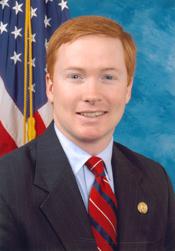
Mr. Speaker, I yield 2 minutes to the gentleman from Florida (Mr. Putnam), a member of the committee.
Mr. Speaker, I yield 2\1/2\ minutes to the gentleman from Mississippi (Mr. Wicker) and a member of the committee.
Mr. Speaker, I yield 1 minute to the gentleman from Indiana (Mr. Pence).
(Mr. PENCE asked and was given permission to revise and extend his remarks.)
Mr. Speaker, I yield 1\1/2\ minutes to the gentleman from Indiana (Mr. Buyer), the distinguished chairman of the Veterans Affairs Committee.
Mr. Speaker, I yield myself 15 seconds to just point out, because there has been some question, so let us get the facts. The budget calls for veterans increases; fiscal year 2005 will be $30 billion; fiscal year 2006, $31.8 billion. It is an increase of almost a billion dollars, or a 3.2 percent increase. That is an increase. So there may be some other facts on the floor, but let us look at the facts in the budget.
Mr. Speaker, I reserve the balance of my time.
Mr. Speaker, I yield myself 15 seconds. This is veterans medical care before and after 1995, and that is what we are going to increase that beyond. I can understand when you want to put, you know, some kind of magical inflation number that you have just pulled out of the air and then make up a number. That is a different issue.
The budget has an increase for veterans. They deserve it, and that is what we are going to pass.
Mr. Speaker, I yield 2 minutes to the gentleman from Georgia (Mr. Deal).
Mr. Speaker, how much time remains?
Mr. Speaker, I yield the balance of my time to the gentlewoman from New Mexico (Mrs. Wilson), a real leader on our side when it comes to Medicaid reform.
Mr. Speaker, I yield myself 5 minutes and 15 seconds. Mr. Speaker, basically, the budget before us is the President's budget sent to us a couple of months ago, subject to a few puts and takes.…
Mr. Speaker, I yield myself 5 minutes and 15 seconds.
Mr. Speaker, basically, the budget before us is the President's budget sent to us a couple of months ago, subject to a few puts and takes. Unfortunately, neither the President nor the Republicans in the House nor the Republicans in the Senate have done what was done for years in good budget practice, and that is run their numbers out for 10 years. They simply give us a 5-year display of their numbers and that conveniently avoids showing the effect, the enormous effect, on the budget of having the renewal of the tax cuts after the year 2010.
But if Members want to see basically where this budget will take us, they can look in CBO's analysis done in the early part of March required by law of the President's budget because it basically is the same as the President's budget. They do not have to read past Page 2 in this analysis of the President's budget. And when they do, they will see that if we follow the path that the President is proposing, we will add $5.135 trillion to the national debt to the United States between now and 2015, over the next 10 years.
But that calculation does not include anything for fixing the AMT, which CBO tells us will cost $642 billion in revenues; and it includes nothing for deployment of our troops in Iraq and Afghanistan after 2005, which CBO calculates at $384 billion; and it includes nothing for partial privatization of Social Security even though the President estimates it will cost $774 billion.
When we add all of those things in and calculate their effect on the budget, here is what happens. I have sat here for the last hour, heard Member after Member on the other side saying we have got a budget that will cut the deficit in half over the next 5 years. Here is what happens: take it from CBO, make these two or three noncontroversial adjustments to their number, and see what happens. The deficit never gets below $362 billion. At the end of the time frame, it is $621 billion, $7 trillion of additional debt. That is where we are headed. That is where this train will take us if we adopt this budget resolution today.
Do the Members believe me?
Let me show which side should be regarded as credible. Let us just look back at the recent past. When Bill Clinton came to office, the deficit was $290 billion. Awaiting him was the biggest deficit in our Nation's peacetime history. We passed the Clinton budget, and every year thereafter the bottom line of the budget got better for 8 straight years until in the year 2000 we had a surplus, 5 years ago, of $236 billion. Every year since, the bottom line of the budget has gotten worse.
And I have got a much simpler, more emphatic way to describe the effects of it. This chart right here shows us how much we have had to raise the statutory ceiling on the permissible amount of debt that the United States can incur, the debt ceiling, over the first Bush administration. And guess what. In this budget resolution too. Over the first Bush administration, in 4 years there were three increases in the debt ceiling that totaled $2.234 trillion. It is a matter of record. That is where the budget took us over the last 4 years. And this budget, vote for this budget resolution and buried in it is a provision which will increase the debt ceiling of the United States by another $781 billion. Members are voting for that if they vote for this resolution tonight, a total over 5 years of $3.015 trillion increase in the national debt of the United States. Incredible.
But as I said, that is not all. Read chart two, Page 2 in the CBO report, and they will see it goes on and on and on. We stack debt on top of debt.
I have heard people come out here and say we are flush with revenues in the aftermath of these tax cuts, we have had a rejuvenation of revenues. Here is the truth if Members want a very simple back-of-the- envelope form: this is where the Bush administration told us we would be if we passed their tax cuts. We would have, in the year 2004, $1.118 trillion in individual income taxes. And here is what the actual take was last year: $811 billion. That $300 billion shortfall in revenues accounts for three-fourths of the $412 billion deficit last year.
People may ask, and I think it is fair for all of us to ask, how do we run a
$427 billion deficit and still have room for additional tax cuts which the Republicans are pushing in this budget resolution, another $106 billion of tax cuts pushed in this budget resolution? There is one short answer, a simple step: when we do not have the income taxes because we cut these taxes, we go to the Social Security trust fund, and there is a surplus there of $160 billion. We reach into the surplus not this year but next year and every year for 10 years to come as far as the horizon can see, and this is what happens: every year this budget resolution will result in the consumption of the Social Security surplus. With the problems we have got in Social Security, surely we should have one rule until we finally find the grand solution, that is, do no harm. This bill does harm year after year after year because it raids the Social Security trust fund.
Mr. Speaker, I reserve the balance of my time.
Mr. Speaker, I yield 2 minutes to the gentleman from New Jersey (Mr. Menendez), the distinguished chairman of the House Democratic Caucus.
Mr. Speaker, I yield 4 minutes to the gentleman from Maryland (Mr. Hoyer), the distinguished whip.
Mr. Speaker, I yield 30 seconds to the gentlewoman from California (Ms. Pelosi), the distinguished minority leader of the House.
Mr. Speaker, I yield 1 minute and 15 seconds to the gentleman from Alabama (Mr. Davis).
Mr. Speaker, I yield 1\1/2\ minutes to the gentleman from Ohio (Mr. Brown).
Mr. Speaker, I yield myself 15 seconds to respond to the gentleman.
This chart clearly shows, Mr. Speaker, where the increases in spending have come. They have been supported by the Bush administration and supported by both sides of the aisle because they have gone to national defense, homeland defense, and response to 9/11. Ninety to 95 percent of the spending increases in the discretionary accounts over and above current services have gone to these programs in these 4 fiscal years. You supported it, the President sought it, and we have done it because we had to do it.
Mr. Speaker, I yield 1\1/2\ minutes to the gentleman from Illinois (Mr. Emanuel).
Mr. Speaker, I yield a minute to the gentleman from Wisconsin (Mr. Kind).
Mr. Speaker, I yield 1\1/2\ minutes to the gentleman from Texas (Mr. Edwards).
Mr. Speaker, before yielding to the gentlewoman from California (Mrs. Capps), I yield 30 seconds to the gentleman from Texas (Mr. Edwards) to respond to the last speaker.
Mr. Speaker, I yield a minute to the gentlewoman from California (Mrs. Capps).
(Mrs. CAPPS asked and was given permission to revise and extend her remarks.)
Mr. Speaker, before yielding to the ranking member of the Committee on Agriculture, I yield 30 seconds to the gentleman from Texas (Mr. Edwards) to respond.
Mr. Speaker, I yield 15 seconds to myself.
Mr. Speaker, the numbers that the gentleman from Texas (Mr. Edwards) was citing come from a document that we have prepared that compares the conference report with the Congressional Budget Office's current services baseline. And by that comparison, this conference report falls $13.504 billion below current services over the next 5 years.
Mr. Speaker, I yield 1 minute to the gentleman from Minnesota (Mr. Peterson), the ranking Democrat on the Committee on Agriculture.
Mr. Speaker, I yield 1\1/4\ minutes to the gentlewoman from Pennsylvania (Ms. Schwartz).
Mr. Speaker, I yield 1 minute to the gentlewoman from California (Ms. Lee).
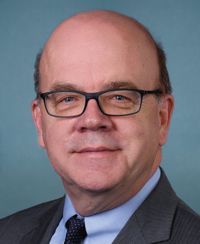
Mr. Speaker, I yield 1 minute to the gentleman from Washington (Mr. McDermott).
(Mr. McDERMOTT asked and was given permission to revise and extend his remarks.)
Mr. Speaker, I yield 1\1/4\ minutes to the gentlewoman from South Dakota (Ms. Herseth).
Mr. Speaker, I yield 1 minute to the gentleman from Mississippi (Mr. Taylor).
Mr. Speaker, I yield 1 minute to the gentleman from Washington (Mr. Inslee).
(Mr. INSLEE asked and was given permission to revise and extend his remarks.)
Mr. Speaker, I yield myself the balance of my time.
Mr. Speaker, this is not a budget that follows the will of the House. That is the first problem with it.
The will was expressed 2 days ago. Two days ago, 348 Members voted emphatically against any Medicaid cuts. The conferees disdained that instruction and whacked $10 billion out of Medicaid.
This is a budget that does contain spending cuts, but in this budget the spending cuts do not go to the bottom line and reduce the deficit dollar for dollar. Basically, what they do is offset partially the tax cuts that are also called for. Consequently, this budget is not a budget that will bring the deficit into balance. We have a deficit of $427 billion this year.
I said earlier, do not take it from me. Take it from CBO. Read their analysis of the President's budget. This is basically the President's budget with some puts and takes. They project that over the next 10 years, if you follow that budget, we will incur $5.130 trillion.
This budget resolution, if Members vote for it, includes an increase in the statutory debt ceiling of almost $800 billion. That is the course we are on, stacking debt on top of debt.
Now, one would think with all the problems we have got we would do something about the deficit in this budget, but this budget does not make the deficit better. It adds $167 billion to the CBO baseline deficit over the next 5 years and worse in the second 5 years. We are just kicking the can down the road, and this budget very conveniently avoids the huge mountains just over the crest of the horizon.
So if you want to vote for a balanced budget, vote down this budget resolution. If you want to vote against accumulating debt on debt and leaving our children with mountains of debt, vote against this budget resolution. Send the budget conferees back to work with something that is respectable and deserving of our vote.
Mr. Speaker, I yield myself such time as I may consume. Mr. Speaker, I thank the gentleman from Florida for yielding me the customary 30 minutes, and yield myself such time as I may consume. Mr.…
Mr. Speaker, I yield myself such time as I may consume.
Mr. Speaker, I thank the gentleman from Florida for yielding me the customary 30 minutes, and yield myself such time as I may consume.
Mr. Speaker, every Republican Congress has its winners and its losers, and no where is that more apparent than in the budget. Looking at this budget, we could clearly see that those losing far outnumber those winning. The winners are millionaires and billionaires who will benefit from repeal of the estate tax, the credit card companies who make billions off of bankruptcy legislation, and oil and gas companies given subsidies by the energy bill while oil is at $55 a barrel.
The losers in the budget are anyone who relies on Medicare, Medicaid or Social Security, and our Nation's veterans desperately needing health care funding, families with seniors who depend on Social Security, and any family that might have a child in need of a student loan.
Those are the winners and losers chosen by this budget, and each and every one of America's hardworking men and women are in one of these two categories.
I would ask my fellow Americans, which category do you fall into? If you are a millionaire, a billionaire or a senior executive at a major credit card company, insurance company or pharmaceutical company, chances are very high you are a winner. Likewise, if you are a foreign financial institution, you are likely a winner, because you will be granted even more opportunities to buy your own piece of America's skyrocketing debt.
On the other hand, if you are part of the hardworking American middle- class, you are likely one of the many who will lose out. The debt your children will have to pay likely exceeds the amount of money you have saved for their college education. Gas prices will continue to rise as your tax dollars go to fund incentives for oil companies. And the benefits and programs that your parents and relatives depend on to make ends meet, as well as the resources that your children will depend on to get funding for a college education, are being slashed in order to give more of your money to the winners, a group which should be easy to recognize at this point.
Now, if you are a member of the working class or the working poor, or if you are a single mother, there should be no doubt in your mind; of course, you are a loser in this budget. And, likewise, if you are a senior citizen, you depend on Social Security, middle aged, a young person counting on Social Security to be there when you retire, you lose out more than anyone in this budget.
In fact, just as Republicans scheme to privatize Social Security and decry that financial crisis with the right hand, they have been raiding the Social Security surplus since Bush took office with the left. I believe that as of this budget, all of the Social Security surplus will be gone.
Remember all that talk about the lockbox? Well, I guess the lock has been broken. We do not need a security camera to see who has been getting away with all the loot. On this President's watch, fiscal year 2002, 2003, 2004, 2005, every penny of the Social Security trust fund has been spent to finance deficits for a 4-year total of $635 billion. That is billion with a B. That is a staggering betrayal of the trust given by the American people.
And what about the new budget resolution that we consider today? It spends 100 percent of the Social Security surplus. This budget, when projected over the next 10 years, spends a total of $2.6 trillion from the Social Security surplus. That is the retirement security of America's middle class. And they have the gall to wonder why so many fiscally responsible Democrats have objected to these irresponsible tax cuts that benefit the rich.
I think it is time that we slowed things down and explain to our friends across the aisle what fiscal responsibility is and what it is not. Fiscal responsibility does not include giving away the store, regardless of whether the consequences will be in 5 years or 10 years or 20 years. It means to look and plan for the future so there is an opportunity available for generations yet to come.
Being fiscally responsible does not mean mortgaging the future of this country on the backs of our children and grandchildren. It means providing adequate funding for schools and health care and retirement security.
It does not include asking the American people to pay for the tax cuts given to the millionaires and billionaires. It means giving a break to folks who work hard day in and day out to put food on the table for themselves and their children.
And, most of all, being fiscally responsible does not include robbing the Social Security trust fund blind.
So, as I am sure everyone can see with this budget, the people who need our help the most lose out.
It does not have to be this way. There was a choice. The Democratic alternative offered by the gentleman from South Carolina (Mr. Spratt) would have made us proud and protected the core principles that we say we fight for in this institution, such as great schools, good jobs, secure retirements and quality health care.
It would have brought the budget back into balance by 2012 and reinstated the budget enforcement rules to protect Social Security and increased our commitment to education, protected our Nation's veterans and eliminated the cuts to Medicare and Medicaid. That is the kind of budget I wish we were considering. That is the kind of budget that the hardworking men and women of America want from their Congress. They want a fair approach that gets us back to fiscal sanity.
Much like the President's Social Security proposal, this budget is the wrong bill at the wrong time and will hurt a vast majority of our Americans, and I urge all my colleagues to defeat this conference report.
Mr. Speaker, I reserve the balance of my time.
Mr. Speaker, I yield 2\1/2\ minutes to the gentleman from Massachusetts (Mr. McGovern).
Mr. Speaker, I am pleased to yield 3 minutes to the gentleman from Florida (Mr. Hastings).
Mr. Speaker, I am pleased to yield 3 minutes to the gentlewoman from California (Ms. Matsui).
(Ms. MATSUI asked and was given permission to revise and extend her remarks.)
Mr. Speaker, I yield 4 minutes to the gentleman from South Carolina (Mr. Spratt).
Mr. Speaker, I yield 30 seconds to the gentleman from South Carolina (Mr. Spratt) for a response.
Mr. Speaker, I yield 3 minutes to the gentleman from Michigan (Mr. Levin).
(Mr. LEVIN asked and was given permission to revise and extend his remarks.)
Mr. Speaker, I yield 4 minutes to the gentleman from Massachusetts (Mr. Neal).
Mr. Speaker, I yield 1 minute to the gentleman from Washington (Mr. Baird).
Mr. Speaker, I yield 2 minutes to the gentleman from Maine (Mr. Allen).
Mr. Speaker, I yield myself such time as I may consume.
Mr. Speaker, let me close this debate by urging Members to vote ``no'' on the previous question so I can modify the rule to allow the House to reject this flawed budget conference report and require the House Committee on the Budget to produce a new Federal budget that does not raid the Social Security trust fund.
Mr. Speaker, since President Bush took office, Republican budgets have spent every penny of Social Security trust surplus in order to finance the deficits and pay for their tax cuts.
While the President travels the country trying and failing to convince Americans that privatizing Social Security is a good idea, his tax cuts continue to pile up the IOUs in the Social Security trust fund.
We need a budget that will bring back budget enforcement, to protect the Social Security surplus and return the budget to balance by 2012.
The Spratt budget would put us back on the path to fiscal solvency and that is the kind of budget America needs and deserves, not the budget before us today.
Please vote ``no'' on the previous question so we can protect Social Security and begin restoring some fiscal sanity to the Nation.
Mr. Speaker, I ask unanimous consent to insert the text of the amendment immediately prior to the vote on the previous question.
Mr. Speaker, I object to the vote on the ground that a quorum is not present and make the point of order that a quorum is not present.
Mr. Speaker, I rise today being very disturbed with the direction that the Republican Party and this administration is taking our great Nation. The reason for my concern is the Budget Conference…
Mr. Speaker, I rise today being very disturbed with the direction that the Republican Party and this administration is taking our great Nation. The reason for my concern is the Budget Conference Report which stands before this body today. Sadly, this body has just now received a copy of the Budget Conference Report. It's truly tragic to think that this piece of legislation actually affects every single American and yet here we are in the `people's house' and there is no real deliberation on this monumental bill. The Budget Conference Report clearly does not improve upon the severely flawed Republican budget, which barely passed in the House a little more than a month ago. The needs of average Americans are still ignored. The interests of a wealthy few outweigh the needs of an entire Nation in this budget. I say this not out of partisanship, but from a statement of the facts. I want to highlight a few areas in this Budget Conference Report that are particularly egregious.
This President and the majority party in this body have spent so much time talking about their record on education and as hard as I try I can not see what they have to be proud of. It is one thing to address areas of critical need with rhetoric, but to advocate a policy and then not fund it sufficiently is plain irresponsible. This Budget Conference Report eliminates 48 education programs that receive $4.3 billion this year. These eliminations include wiping out $1.3 billion for all vocational education programs, $522 million for all education technology programs, and $29 million for all civic education programs. The budget eliminates other large programs including the Even Start family literacy program ($225 million) and State grants for safe and drug-free schools and communities ($437 million). The President's budget cuts 2006 funding for the Department of Education by $1.3 billion below the amount needed to maintain purchasing power at the current level, and by $530 million below the 2005 enacted level of $56.6 billion. This is the first time since 1989 that an administration has submitted a budget that cuts the Department's funding. This administration and the majority in this Congress promised to leave no child behind, but clearly they have reneged on their promise.
Our brave American veterans are another group who were outraged by the President's budget and will unfortunately be disappointed with the Budget Conference Report. I hear so much in this body from the majority party about the greatness of our Armed Forces, and their rights, but again it's just empty rhetoric on their part. Those brave men and women fighting on the front lines in our War Against Terror will come back home and find that the Republican Party looks at them differently once they become veterans. Almost all veterans need some form of health care, some will need drastic care for the rest of their lives because of the sacrifice they made in war, but the Republican Party continues to turn a blind eye to their needs. The fact is that $3.2 billion more than the current budget proposal is needed just to maintain the current level of health care programs for veterans.
The entire Department of Veteran's Affairs is going to suffer because of the Republican agenda. I have heard from veterans groups throughout my district in Houston and I am sure each Member of this body has heard from groups in their own district because veterans are one group that come from all parts of this Nation. These brave veterans have told me their stories of how they are suffering now with the current state of Veterans Affairs, I am going to have trouble telling them that not only will things continue to stay bad but if this Budget Conference Report passes this body things will only continue to get worse. That is not what our returning soldiers from Iraq and Afghanistan should have to look forward to, a future where their needs are not only unprovided for, but are in fact ignored.
Education and Veterans Affairs make up only two areas where the Budget Conference Report fails Americans. The truth is there are many other programs and services vital to our Nation that are at risk because of the Republican agenda. At this point, an average American may be asking why the Republican Party finds it necessary to cut so many fundamental programs. The answer is simple, yet disturbing; the majority party is cutting important programs in order to finance all their irresponsible tax cuts. They will continue to make the argument that tax cuts provide stimulus for our economy, but millions of unemployed Americans will tell you otherwise. In fact the Congressional Budget Office itself said ``tax legislation will probably have a net negative effect on saving, investment, and capital accumulation over the next 10 years.''
While the Republican Party continues its offensive for irresponsible tax policies they allow our national deficit to grow increasingly larger. When President Bush came into office he inherited a budget surplus of $236 billion in 2000. Now, however, this administration has raided those surpluses and its fiscally irresponsible tax policies have driven the country ever deeper into debt. A $5.6 trillion 10-year projected surplus for the period 2002-2011 has been converted into a projected deficit for the same period of $3.9 trillion--a reversal of $9.5 trillion. Much like the President's budget, the Budget Conference Report before us omits the longer-term costs of either the war in Iraq or fixing the AMT, yet still tries to make claims of reducing the deficit. It is clear that the Republican Party is hiding from the American people. This President and this majority in Congress have yet to advocate a fiscal policy that helps average Americans. Special interests have become king in this Budget Conference Report at the price of sound fiscal policies.
This body was made to stand for the will of all Americans; if we allow this budget proposal to take effect we will have failed our mandate. I for one will not stand by silently; I have a duty to my constituents and indeed to all Americans to work for their well being and I will continue to honor that duty.
Show 8 more

Mr. Speaker, I rise in support of the budget resolution that we are going to vote on here in about 30 or 45 minutes because we are a body about solutions. If we do not pass the budget, we have no…
Mr. Speaker, I rise in support of the budget resolution that we are going to vote on here in about 30 or 45 minutes because we are a body about solutions. If we do not pass the budget, we have no opportunity to solve some of the problems that face our great Nation.
The committee that I chair does have jurisdiction over the Medicaid program and a large portion of the Medicare program, as well as telecommunications and energy. And in the instructions for reconciliation in this budget, we are asked to try to find savings of approximately $20 billion over the next 5 years.
For those who are not familiar with the arcane process of reconciliation, it is very similar to what happens when a husband and wife have a spat and they get mad and they do not talk to each other for a while. Eventually they reconcile. They come back together. That is what we do here in this body. We do it between the Committee on Appropriations and the authorizing committees, and we also do it between the House and the Senate. We fight all year, but at the end of the year, we are going to have a reconciliation. We are going to come forward, hopefully on a bipartisan basis; and we are going to say we want some solutions to some of these problems.
The Medicaid program is a $300 billion-a-year program. It is about 60 percent funded by the Federal taxpayers and about 40 percent funded by State taxpayers. Twenty-nine States in the last 3 years have frozen their Medicaid populations. The State of Tennessee, for example, has kicked 323,000 people off their Medicaid rolls because they just did not have the money.
There are a lot of good ideas out there in terms of things we could do to reform Medicaid. We are not talking about trying to do things to kick people off the rolls. We are talking about things like letting people stay at home instead of having to go to a nursing home to get long-term care. We are talking about giving the States the flexibility perhaps to decide how to price some of their pharmaceuticals. We are talking about commonsense things like people that have some assets, getting them to use reverse mortgages on their homes so they can stay and live at home and not have to hide that or sell that home and then go into a nursing home.
So I know it is difficult, but this is a budget about solutions. And I hope that we will pass it so that we can begin the reconciliation process at the appropriate time with the other body.
Mr. Speaker, I rise today in support of this budget resolution. On March 17, this House voted 218 to 214 in support of a budget that instructed the Committee on Energy and Commerce to find $20 billion in savings. Members at that time recognized the importance of reducing the rapid rate of growth in entitlement programs like Medicaid. As the House and Senate reconcile our two budgets, we need to continue to be diligent and stay on the path of fiscal responsibility.
Opponents of this resolution argue that any budget resolution that allows for Medicaid reforms will cause untold suffering for Medicaid beneficiaries. This argument ignores the fundamental truth that these beneficiaries are already suffering. In Tennessee and Missouri, over three hundred thousand beneficiaries are going to lose their health coverage, due to the out-of-control growth in Medicaid costs. Other States are imposing restrictions on benefits, including limits on the total number of prescriptions a beneficiary can receive per month and restricting access to other basic services.
Without Congressional action, these problems are just going to get worse. Mississippi's Medicaid program ran out of money last year, and they were almost unable to pay their providers. Unfortunately, the current Medicaid program traps beneficiaries in a second rate health program, where too often they cannot get access to quality care or manage their chronic conditions.
These problems stem in large part from the explosive growth in Medicaid spending. From 2000 to 2003 alone, Medicaid spending grew at an average rate of 10 percent each year. Neither the States nor the Federal Government can sustain these rates of spending growth. That is why Governor Mark Warner (D-VA) recently warned that ``we are on our way to a meltdown'' on Medicaid.
By including Medicaid reforms in the budget, we're attempting to save this important program. Our efforts will not cut Medicaid, but only slow its rate of growth. In 1993, Medicaid spending was approximately $132 billion. By 2003, the program had more than doubled, and it is expected to cost $5 trillion over the next 10 years. The Office of Management and Budget (OMB) projects that Medicaid will ``grow more rapidly than the economy over the next several decades and . . . add substantially to the overall budget deficit.''
I take Medicaid reform extremely seriously. There are 46 million people out there who depend on the Medicaid program, and I don't want to let them down. That is why I have been working with members of Congress, Secretary Mike Leavitt, and several key Governors to identify solutions to the problems that face Medicaid. Over the next few months, my Committee will hold several additional hearings on different aspects of Medicaid reform. Yesterday, we held our first Medicaid hearing this year on long-term care. These hearings and the additional work we are doing will lead to a reform proposal that can strengthen and improve the Medicaid program. The Energy & Commerce Committee is doing its job. I would urge Members of Congress to do theirs and vote against this budget.

Mr. Speaker, since coming to Congress, I have been struck by the majority party's spending policies. Under their watch, the Nation's debt has grown by $2.2 trillion over the last 4 years. The annual…
Mr. Speaker, since coming to Congress, I have been struck by the majority party's spending policies. Under their watch, the Nation's debt has grown by $2.2 trillion over the last 4 years. The annual deficit is averaging more than $200 billion and this year's budget is no different, spending more than we are bringing in and increasing the Nation's debt. In fact, this budget will allow for $412 billion in deficit spending, increasing the interest that we are paying on our Nation's debts, interest that already totals more than we are spending on education, the environment and veterans.
I was proud to join my Democratic colleagues in putting forward better ways to refocus our spending and investments on the priorities that matter to everyday lives of Americans: keeping and creating new jobs, lowering the cost of health care, and providing for a safe and secure homeland.
We put forward an alternative budget that would have balanced the Federal Government's checkbook by 2012, something the Republican budget fails to do, while meeting our basic obligations to hardworking Americans. These efforts were, unfortunately, rejected along party lines.
Mr. Speaker, the time has come for us to lead not just with words, but in deeds. This means enacting a spending plan that will meet basic budgetary principles of meeting our obligations, working within our resources, and making smart investments. I urge a ``no'' vote on this resolution so we can return to negotiations and return to fiscal discipline.
Mr. Speaker, I rise in strong opposition to the resolution.
Two weeks ago, the House passed legislation aimed at promoting and encouraging personal financial responsibility. Yet, we are on the cusp of enacting a fiscal year 2006 budget that is fiscally-unsound.
It is a budget that prioritizes tax cuts to the wealthiest Americans and largest corporations at the expense of creating opportunities for hard-working Americans and helping people meet their responsibilities. It is a budget that puts political expediency over honest budgeting by failing to acknowledge future increases in the deficit and neglecting to live within available revenues. It is a budget that will allow the government to increase spending and implement new tax cuts without finding a way to pay for the associated costs.
Mr. Speaker, I supported the bankruptcy bill because I believe people who have the means available have an obligation to meet their financial obligations. However, just as we are asking individual Americans to take responsibility for their spending decisions, so must the Federal Government.
Since coming to Congress, I've been struck by the majority party's spending policies. Under their watch, the nation's debt has grown by $2.2 trillion over the last four years, with annual deficits averaging more than $200 billion. And this year's budget is no different; spending more that we are bringing in and increasing the Nation's debt. In fact, this budget will allow for $412 billion in deficit spending. Increasing the interest we are paying on our Nation's debt; interest that already totals more than we are spending on education, the environment or our veterans.
My colleagues, our decisions have consequences, and the consequences of this budget will be felt by every American. Our first-responders will go without equipment needed to keep communities, and themselves, safe from harm. Our veterans will be subjected to health care fees or reduced benefits. Our best and brightest will continue to struggle to afford a college degree. And some of our Nation's disabled and sickest citizens will continue to go without needed medical care and services unless our State and local governments pick up the costs.
During committee consideration of the budget resolution, I was proud to join my Democratic colleagues in putting forward better ways to re- focus our spending and investments on the priorities that matter to the everyday lives of Americans--keeping and creating new jobs, lowering the costs of health care and providing for a safe and secure homeland. We put forward an alternative budget, one that would have balanced the Federal Government's checkbook by 2012--something the Republican budget fails to do--while better meeting our obligations to hard-working Americans. These efforts were, unfortunately, rejected along party lines.
Mr. Speaker, the time has come for us to lead not just in words, but in deeds. That means enacting a spending plan that meets basic budgetary principles of meeting one's obligations, working within the resources you have and making smart investments that will ensure the Nation's current and future fiscal well-being.
I urge a ``no'' vote on this resolution so that we can return to the negotiating table and find a better way; one that represents a true commitment to sound budgetary principles and fiscal responsibility. One that funds the right priorities, makes the right investments and in so doing builds a Nation that is strengthened rather than weakened by the decisions we make today.
Mr. Speaker, the Rules Committee, or should I say the Break-the-Rules Committee, is at it again. Here we are taking up a bill that adds to the deficit and cuts billions of dollars from the safety net…
Mr. Speaker, the Rules Committee, or should I say the Break-the-Rules Committee, is at it again. Here we are taking up a bill that adds to the deficit and cuts billions of dollars from the safety net that protects the most vulnerable people in our country. We are considering this bill under a martial-law rule and without the 3 days required by the House rules so that Members can actually read and analyze this bill for themselves.
What is the big hurry, Mr. Speaker? The House is in session all next week. We do not need to ram this important bill through like this.
I have an idea. Let us take the weekend and actually read the budget. Let us figure out what it really means. Let us listen to our constituents before we vote on this conference report.
Perhaps the Republican leadership is concerned that the more the American people learn about what is in this budget, the less they will like it. We know that this budget resolution includes upwards of $40 billion, maybe more, worth of budget cuts, and we know that the people affected by these cuts are those who can least afford it.
With passage of this budget, the Republican leadership will deny school breakfasts and school lunches to hungry children. They will deny health care to people who cannot afford health insurance. They will deny poor, pregnant women and infant children food and nutrition advice through the WIC program. Of course, they will deny the wealthiest few in this country their huge tax cuts.
To make matters worse, this is not a balanced budget. It is not even close. It continues to burden our children and grandchildren with record debt.
Mr. Speaker, the Reverend Jim Wallis recently issued a statement in reaction to this budget entitled ``Budgets Are Moral Documents . . . and There is Still Time to Speak.''
He writes, ``Poverty reduction should be a moral imperative in politics. A budget that scapegoats the poor, fattens the rich and asks for sacrifice mostly from those who can least afford it, is a moral outrage. These budget priorities would cause the prophets to rise up in righteous indignation, as should we. Our Nation deserves better vision.''
Mr. Speaker, this budget creates a government without a conscience, and we must do better. I urge my colleagues to reject the rule and reject this budget conference report.
Mr. Speaker, I include Reverend Wallis' article for the Record.
[From Convener of Call to Renewal, Apr. 27, 2005]
Budgets Are Moral Documents . . . and There Is Still Time to Speak
(By Jim Wallis)
The biblical prophets frequently spoke to rulers and kings,
and usually spoke for the dispossessed, widows and orphans,
the hungry, the homeless, the helpless, the least, last, and
lost. People of faith are called to speak in the same ways.
Budgets are moral documents that reflect the values and
priorities of a family, church, organization, city, state, or
nation. Examining budget priorities is a moral and religious
concern. According to press accounts, the final budget
resolution could include cuts to Medicaid of $10 billion;
cuts of $6 billion to programs that empower the poor,
disabled, abused and neglected--the least, last and lost; and
billions in cuts to food stamps. These are misguided
priorities. Cutting pro-work and pro-family supports for the
less fortunate jeopardizes the common good. This approach is
not value-based and does not square with our moral and
religious convictions.
To add what some reports say could be $70 billion more in
tax cuts for the wealthy at the same time shows that this
budget has not received enough moral scrutiny. Our political
leadership's tax cut mentality ignores ``the least of
these''--leaving them with crumbs from the feast of the
comfortable. And it does nothing to help our deficit
problems. Religious communities spoke clearly in the past
years about the perils of a domestic policy based primarily
on tax cuts for the rich, program cuts for low-income people,
and an expectation of faith-based charity. We speak clearly
now against budget proposals asking that the cost of the
deficit be borne by the poor, who are not to blame and can
least afford it.
Poverty reduction should be a moral imperative in politics.
A budget that scapegoats the poor, fattens the rich, and asks
for sacrifice mostly from those who can least afford it is a
moral outrage. These budget priorities would cause the
prophets to rise up in righteous indignation, as should we.
Our nation deserves better vision.
People of faith will continue to speak for the least, the
last and the lost. We urge congressional leaders to join us
by opposing budget resolutions that place basic human needs
at risk. Will leaders who can positively impact the budget
debate do so? It's not too late to ``Speak out for those who
cannot speak, for the rights of all the destitute. Speak out,
judge righteously, defend the rights of the poor and needy.''
(Proverbs 31:8-9).

Mr. Speaker, I rise today in very strong support of this conference report. And I also want to congratulate the gentleman from Iowa (Mr. Nussle), the chairman of the Budget Committee, who I know is…
Mr. Speaker, I rise today in very strong support of this conference report. And I also want to congratulate the gentleman from Iowa (Mr. Nussle), the chairman of the Budget Committee, who I know is on the floor now.
Mr. Speaker, I believe he probably has the most difficult job that one has in the United States House of Representatives; and that is, each one of us, 435 of us, have opinions about how much money we should take from American families and spend in government, and once we get that money what should we spend it on.
And certainly I have my opinions. I believe we need to do more to protect the family budget from the Federal budget. And at the same time there are some categories of government I wish we could spend more money on. I believe that there is still more we could do in policing our border, more we can do in veterans health care.
But I strongly support this budget for several reasons. Number one, a budget is a whole lot more than just numbers. It is more than just an accounting green eye-shade function. It is about priorities. It is about vision.
This is a budget that provides for the common defense. This is a budget that helps us fight and win this war on terror. It is a budget that promotes economic growth.
Under this Republican administration's economic policies, we have come out of the recession. We have created 3 million jobs. We are giving Americans jobs and growth and hope and opportunity. And this budget protects that.
And perhaps also, very important and very historic, this budget provides for something we call reconciliation. Now, in Washington terms, that is kind of an insider baseball term. But what it means is we start the process to reform our entitlement spending.
Now, why is that important?
Our friends on the other side of the aisle are always talking about how, for some reason, their budget is fiscally responsible and ours is not. But right now we have Medicare; over the next decade it is growing to grow at 9 percent a year. Medicaid is going to grow at almost 8 percent a year. Social Security is growing at 5\1/2\ percent a year. The General Accounting Office tells us that if we do not reform these programs, that we are on a glide path to where our children and our grandchildren will have to see their taxes increased 2\1/2\ times. This is fiscally responsible?
Sure. We can balance the budget in 2040. All we do is we leave spending on automatic pilot, and we raise taxes on our children and grandchildren 2\1/2\ times.
Mr. Speaker, I see nothing fiscally responsible in that approach. And this is why I am a strong supporter of this. And I believe we must start the process of reform. Our children and grandchildren are facing this legacy, this sea, this tsunami of red ink. There is a question of generational fairness here.
And Mr. Speaker, many of us in this Chamber know that we can get better retirement security at a lesser cost. We can get better health care at a lesser cost if we just have different policies. I mean, right now we know, we know that if we will embrace real Social Security personal accounts with real assets that owners can work and have a nest egg, that they can get more, greater retirement security than what present Social Security is promising and cannot deliver.
Now, our friends on the other side of the aisle will find fault in this budget in a couple of ways. And I have been listening to the debate. They say tax relief is why we have these massive budget deficits.
Well, unfortunately, they have not looked at the latest Treasury reports. We have actually cut marginal rates. And guess what? We have more tax revenue because people have incentives to go opt and create new small businesses and to expand and to hire new people. Again, look at the facts. The facts are indisputable. We have cut marginal tax rates, and we increase more tax revenue.
But say that we believe in their theory, that tax relief is actually part of the problem. Say tax relief was just a line item that said the office of widget control.
Well, if you look very closely at what this budget does, it provides $16.6 billion in tax relief versus $2.5 trillion in spending. That is less than 1 percent. So somehow less than 1 percent of the Federal budget supposed to cause all these problems? I do not think so. In this case, tax relief has proven to be part of the deficit solution, not the deficit problem.
And when it comes to the deficit, the deficit is really a symptom. It is spending that is the disease. And without real reform, without real reconciliation, we do not get it, Mr. Speaker, and this is why I am so strongly in favor of this budget resolution.
And once again I congratulate our great chairman, the gentleman from Iowa (Mr. Nussle) for the work he has done.

Mr. Speaker, I cannot vote for this conference report. It not only is no better than the version of the budget resolution previously passed by the House, it is significantly worse in several ways. In…
Mr. Speaker, I cannot vote for this conference report.
It not only is no better than the version of the budget resolution previously passed by the House, it is significantly worse in several ways.
In my opinion, it reflects only the priorities of the Republican leadership, not the right priorities for our country.
Over the last five years the federal budget has reversed a decade of progress that saw the budget go from the $290 billion deficit when President Clinton took office to a surplus of $236 billion in 2000, which was where things stood when the current President Bush came to office.
Since then, we have gone from projected surpluses to undeniable deficits. The toxic combination of recession, necessary spending for defense and homeland security, and excessive and unbalanced tax cuts have taken us to the largest deficits in our Nation's history--a $375 billion deficit two years ago, a deficit of $412 billion last year, and for this year, according to the Bush Administration itself, a deficit of $427 billion.
That is three record-setting years in a row. And, regrettably, this conference report reflects neither a serious effort to reduce deficits nor an attempt to increase fairness.
According to the nonpartisan Congressional Budget Office, following the path suggested by the Bush Administration and this budget resolution will add $5.135 trillion to our national debt over the next 10 years.
It is true that the Republican leadership claims this conference report will put us on the path to cut the deficit in half by 2009. But this bit of Enron bookkeeping rests on omitting enormous predictable costs--including the $200 billion five-year cost of fixing the Alternative Minimum Tax and realistic five-year costs for military activities in Iraq.
And this conference report not only fails to recognize the deficit as a problem, it sets the stage for new tax cuts for selected beneficiaries. In all, these could amount to as much as $106 billion over the next five years, and the tax-writing committees are instructed to report bills worth $70 billion in the next few months.
Further, the conference report sets the stage for reducing the ability of States, local governments, and charities to provide essential services to the many thousands of families who are struggling to stay above water in this time of a sluggish recovery from recession. I do not think this is the right way to go.
I also have very serious concerns about other aspects of this conference report.
For one thing, it continues the pattern of spending 100 percent of the Social Security surplus--a total of $2.6 trillion over the next 10 years. We cannot continue on this reckless and irresponsible fiscal path. That is why I supported an effort to require the Budget Committee to instead bring forward a conference report that would ensure that the Social Security surplus would not be spent for any purpose other than Social Security. Unfortunately, the Republican leadership opposed that effort, and it was not successful.
In addition, the conference report calls for $34.7 billion in mandatory spending reductions, including $10 billion in Medicaid cuts and billions in other cuts that could affect pension programs, student loans, and food stamps.
And further, on top of the cuts in social services, the conference report cuts discretionary spending on environmental and natural resource programs to the extent that over the next five years funding for these programs would be cut 21 percent below the level needed to maintain current status.
These punitive cuts threaten a wide range of programs that ensure the health of our communities and protect our natural resources. Among the programs that could be most severely affected are clean water infrastructure investments, the Land and Water Conservation Fund, oceans and coastal protection, and agricultural conservation.
Finally, the budget resolution clearly will pave the way for legislation as a part of the reconciliation process to open the coastal plain of the Arctic National Wildlife Refuge for oil drilling. I cannot support this.
When the House first debated this budget resolution, I supported an alternative that would have provided more resources for important priorities and would have laid the basis for more responsible tax policy. It was better fiscally and better in terms of the education of our children, the health care of our veterans, the development of our communities, and the quality of our environment.
Unfortunately, that alternative was not adopted--and this conference report not only does not resemble that alternative, in several respects it is even worse than the House-passed resolution. As a result, I must vote against it.
Mr. Speaker, I thank the gentlewoman for yielding me this time. Mr. Speaker, it has been more than a month since the House and Senate both passed budget resolutions on a fast track, but it was only…
Mr. Speaker, I thank the gentlewoman for yielding me this time.
Mr. Speaker, it has been more than a month since the House and Senate both passed budget resolutions on a fast track, but it was only Tuesday of this week that the House finally got around to appointing conferees. We had the first and only meeting of the conference yesterday amid reports that a conference report was almost a done deal.
The meeting was a formality, to give some semblance of collaboration to the budget process. But there has been no collaboration. There has been no transparency. This conference report was prepared by Republicans and their staff behind closed doors, at times and places unknown to me, even though I am a conferee. So not surprisingly, this conference report does not reflect the resolution that we would have passed had we been full partners in this process.
Let me tell you what this conference report is not. This is not a budget that follows the will of the House as expressed 2 days ago in the motion to instruct conferees. Two days ago, 348 Members of the House voted emphatically against Medicaid cuts. The conferees disdained the instruction and whacked Medicaid anyway for $10 billion.
So this is a budget with spending cuts, and the Republicans will tell you that these are necessary to reduce the deficit. But in this budget, the spending cuts do not go to the bottom line and reduce the deficit dollar for dollar. They will be used to offset tax cuts so that they will at least partially offset their impact on the bottom line of the budget, because, you see, this budget does not make the bottom line better. It does not make the deficit better. It makes it worse.
The government faces a deficit this year of $427 billion. Now, you would think that with deficits of this size, that the budget would be used to make the bottom line smaller not larger, but not this budget. It does just the opposite. This will make the budget $167 billion worse on the bottom line over the next 5 years than the CBO baseline budget.
I have right here what we could put together as quickly as possible, given the short amount of time we have had, a back-of-the-envelope analysis. Let me go through it bullet by bullet. The House-passed budget produced deficits of $127 billion above the deficit in CBO's current services baseline forecast.
This report, this conference report produces deficits that are $40 billion greater than the House-passed budget; $167 billion above the CBO baseline. This does not improve the deficit problem. It makes it worse.
The conference report calls for $35 billion in reconciled spending cuts, compared with $69 billion in reconciled spending cuts in the House budget resolution. That $35 billion difference accounts for most of the $40 billion difference in total deficits.
In the conference report, there are cuts in nondiscretionary spending, big cuts, $150 billion over 5 years. But they are virtually offset with defense discretionary spending increases, so these two accounts in discretionary spending are basically a wash. And as for the tax cuts, they remain at $106 billion.
So what we have here is a budget that does not help the situation. This is a budget that hurts the situation. And let me mention one particular aspect where harm is done that is wholly unnecessary.
Everybody knows that we have a problem with Social Security, looming insolvency. Call it a crisis, call it a problem. You would think that a budget of this kind would at least, if it did not have a grand solution, would at
least do no further harm. But instead, this budget, in order to pay for the reduction in income taxes, reaches into the Social Security trust fund, takes out $160 billion and spends that entire trust fund surplus for the operation of the government, not for Social Security benefits.
This is not a step forward for Social Security. This is a step backward. And it is just another reason that we should all, all of us, oppose this bill. It is bad in substance. It's bad process.
Mr. Speaker, let me respond to the gentleman's contention about taxes. When the Bush administration presented its tax package, they told us that the revenues produced by the individual income tax in 2004 would be $1,118,000,000,000. In fact, in 2004 revenues produced by the individual income tax were just over $810 billion. There was a $300 billion shortfall in revenues beneath the projection of the Bush administration, which accounts for three-fourths of the deficit, $412 billion deficit in 2004.
Mr. Speaker, first I want to congratulate the chairman of the Committee on the Budget and every member of Committee on the Budget for doing a fantastic job under very difficult circumstances. Also I…
Mr. Speaker, first I want to congratulate the chairman of the Committee on the Budget and every member of Committee on the Budget for doing a fantastic job under very difficult circumstances. Also I want to say it is a day of small miracles.
First, we hear that the Democrats all of a sudden have become fiscally responsible. I have been here 20 years. I have lived through their fiscal responsibility. On the one hand, they do not like tax relief to grow the economy; on the other hand, they do not like spending cuts. So, how in the world are you going to balance the budget?
Secondly, in eastern Arkansas, ornithologists are confirming the rediscovery of the Ivory-Billed Woodpecker, a species of birds long feared extinct. Meanwhile, here in Washington, the House and Senate have agreed on a resolution that will provide for reforms in Federal entitlement programs, a fiscal strategy whose prospects for survival critics said were not much better than the survival of the Ivory-Billed Woodpecker.
Now that the final details of the budget conference report have been negotiated, we can say for sure that this budget before us today is the best since the historic Balanced Budget Act of 1997.
I mentioned the mandatory spending reforms before, Mr. Speaker, but they merit further explanation. These entitlement programs deserve reform. The Medicaid system is antiquated and the
quality of care is not being brought to the people that need it. It needs to be reformed so that we can get that health care to them. These reforms are necessary in other programs that are at the same time popular but rife with waste. It is time to implement these reforms. These reforms are therefore necessary if we are going to get our arms around the deficit.
The needed belt-tightening this year will help build momentum toward more savings in the future as we slow the overall rate of growth of the Federal Government. That is how we balanced the budget in the 1990s, by holding down spending and growing the economy.
Just this week, we received more evidence of the fruit of our strategy. New home sales last month increased by 12.2 percent over last year, and the Commerce Department reports that the United States gross domestic product grew at 3.1 percent for the first quarter of 2005, marking the 14th consecutive quarter of real growth and the 8th straight above 3 percent.
Meanwhile, the budget agreement holds overall discretionary spending growth to 2 percent, that is including the war spending, and provides for a real cut, a real cut, in nonsecurity discretionary spending. That is what makes them squawk, because we are trying to hold down spending. And at the same time, it provides for continued pro-growth tax policies over the next 5 years.
The bottom line, Mr. Speaker, is that this budget meets all of our current needs, makes realistic assumptions about emerging challenges, takes real aim at waste and fraud and will cut the deficit in half in 5 years, all in a time of war.
This is the budget that the American people voted for when they returned a Republican House, a Republican Senate and a Republican White House last November. It is the next step in our long-term plan to reform government at every level to better serve the American people.
For 10 years, this Republican majority has built an historic record of economic and fiscal accomplishments, and the proof is in the pudding: 17 million new jobs, 14 million new homeowners, low inflation, a 24 percent increase in the GDP, the first balanced budget in a generation, smaller welfare rolls and fewer families living in poverty.
So looking at today's budget, Mr. Speaker, some might say that fiscal accountability is back in the Republican Congress, but as the evidence bears out, like that rediscovered woodpecker, it never left.
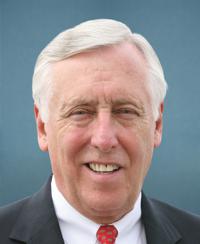
Mr. Speaker, I thank the gentleman for yielding me this time. Very frankly, I listened to the Republican comments about this budget, and I cannot decide whether it is George Orwell or Lewis Carroll…
Mr. Speaker, I thank the gentleman for yielding me this time. Very frankly, I listened to the Republican comments about this budget, and I cannot decide whether it is George Orwell or Lewis Carroll who is writing their stuff: Up is down; down is up; black is white; huge deficits are really savings. My, my, my.
Mr. Speaker, it is very tempting to come to the House floor today and to focus solely on the numbers; to focus on the fact that in just 4 short years the Republican Party has turned a projected 10-year budget surplus of $5.6 trillion in surplus into a projected deficit of $4 trillion; to focus on the fact that this year OMB projects a record budget deficit of $427 billion, and it will actually be over half a trillion dollars, the third record deficit in a row; to focus on the fact that since 2001, this Republican Party has added more than $2.2 trillion to the national debt, now $8.2 trillion, and that Republicans will increase the debt ceiling by another $780 billion this year in this budget.
It is tempting, Mr. Speaker, to let this important debate revolve around numbers, but I think the American people want the big picture, and here is the unvarnished truth: This budget conference report is the absolute epitome of unfairness and irresponsibility.
At a time of exploding deficits and debt, this conference report calls for another $70 billion in tax cuts, with nearly 75 percent of those tax breaks going to the wealthiest 3 percent of Americans. At the very same time, it calls for $10 billion cut to Medicaid. I would presume that the 43 people plus the gentlewoman from New Mexico (Mrs. Wilson) who signed this letter and said ``don't cut Medicaid,'' I would presume all 44 of those Republicans will vote ``no'' on this budget. We will see.
It also calls for cuts to student loans, food stamps, pension benefits and other national priorities. I suggest to my friend the majority leader, who was concerned rightfully about the vulnerable, those, Mr. Leader, are the vulnerable. They are let down in this budget.
Furthermore, this conference report not only fails to arrest our exploding deficit, it makes it worse, increasing the deficit by some $168 billion over the next 5 years. And while the Republican Party tries to convince the American people that Social Security faces an imminent crisis, the Republican conference report would spend every last nickel of the Social Security trust fund; every last nickel.
Now, let me refer the gentleman from Iowa (Mr. Nussle) to comments I am sure that are emblazoned upon his brain: ``The Congress will protect 100 percent of the Social Security and Medicare trust funds. Period. No speculation. No supposition. No projections. Jim Nussle, July 11, 2001.''
Mr. Speaker, let me remind my friends that the other side of the aisle on seven different times between 1999 and 2001, House Republicans voted to protect our Social Security surplus. They could do it because of the Clinton surpluses. They could do it because of the Clinton surpluses.
But over the last 4 years, when you controlled this House, the Presidency, and the Senate, you could not do it. You have not done it. You have spent every nickel and decimated the lockbox.
The chairman of the Committee on the Budget boldly proclaimed in 2001 again, ``We will not touch a nickel of Social Security.'' He touches every nickel tonight.
What the Nation has seen over the last 4 years is nothing short of full-scale retreat from fiscal responsibility and the imposition of Republican policies that will immorally force our children to pay our bills, because we are not paying for what we propose buying tonight. This conference report is the latest example of that irresponsibility.
I urge my colleagues in all good conscience, vote ``no.''
Show 11 more
Mr. Speaker, I want to thank the gentlewoman from New York (Ms. Slaughter) for yielding me time. It is curious to me, each speaker that has come to the Republican side in the last half hour since we…
Mr. Speaker, I want to thank the gentlewoman from New York (Ms. Slaughter) for yielding me time.
It is curious to me, each speaker that has come to the Republican side in the last half hour since we have debated the rule is introduced as an expert on fiscal policy, an expert on fiscal policy.
Look at the deficit that they have run up. Look at where we find ourselves today, two wars and five tax cuts; and they present themselves to the people as an expert on fiscal policy.
Mr. Speaker, in the election of the year 2000, there was a lot of mocking about the term the ``lockbox.'' It made great play even on ``Saturday Night Live.''
Let me tell you what they have done. Over the next 10 years Social Security will raise $2.6 trillion for the trust fund. This Republican budget spends every cent of that surplus. That means that we need this money to provide benefits to retirees, and guess how we are going to do it? We are going to borrow the money. And we are going to do just what we have been doing since they have been in charge, and then we are going to increase our indebtedness to the Chinese and to the Japanese.
Everybody knows this for what it is. It is unsound policy. The first Bush budget promised that ``none of the Social Security surpluses will be used to fund other spending initiatives or tax relief.''
That is what they said. Let us give you the record. It is the polar opposite. After acknowledging the importance of keeping the trust fund secure, they have raided every single cent of the trust fund in the fiscal year 2002 budget to pay for their tax cuts that, by the way, went to the top 1 percent of wage earners in America.
Well, let us have another refresher here in recent history. In fiscal year 2003 the same thing happened. The Republicans spent every cent of the Social Security trust fund surplus. In 2004 they spent every cent of the Social Security trust fund surplus. And in 2005 they intend to spend every cent of the Social Security trust fund surplus. So over these last 4 years the Republicans' budgets have spent $635 billion of the Social Security trust fund on huge tax cuts for the wealthiest among us.
Only in Washington could you lop $2 trillion off the Federal budget with tax cuts for the wealthiest Americans and then in the next breath say Social Security is in danger.
We have got to do something to fix Social Security after they have raided the trust fund. Now, after draining the Social Security trust fund, the President then says, Social Security is going bankrupt. His strategy is failing on every front. It is failing his fiscal policy with record deficits. By the way, this is from a Republican Party that at one time spoke to fiscal rectitude.
It is failing politically because the American people who are paying attention, and they all are, are rejecting the Social Security trust fund because they know the trust fund account has been raided by the majority party.
We know we will have to do some adjustments to Social Security to strengthen it, but look what their answer is: raid the trust fund. We have offered a budget alternative that would begin to shore up Social Security. Our plan offers tough budget rules that would force Congress to pay for new spending or tax cuts that would pull money out of the Social Security trust funds.
I want to say something, Mr. Speaker. In the 17 years that I have been in this House, this is absolutely the worst budget that has been presented. There is not even competition for how bad this budget proposal is, and they do it on the backs of the Social Security trust fund.
So let me close on the basis on which I began, and I would like to have them answer this question: two wars, and five tax cuts.
Mr. Speaker, I rise in opposition to the 2006 budget conference report. I believe that the federal budget is a reflection of values and priorities, and that the spending choices made in the 2006…
Mr. Speaker, I rise in opposition to the 2006 budget conference report. I believe that the federal budget is a reflection of values and priorities, and that the spending choices made in the 2006 budget bring into focus where this administration and House of Representatives leadership's priorities lie. Frankly, this budget is a travesty, and it's going to cost the American people dearly, and seriously imperil our nation's economic and national security.
The budget makes tax cuts for the most affluent members of our society a top priority. By contrast, it shortchanges investments in our future and fails to honor past commitments to our veterans, seniors, and those in need.
Mr. Speaker, this budget is surely not what the American people bargained for. Given what we know about our America's financial situation--a national debt approaching $8 trillion, interest payments of $280 billion, weakening economy, growing health care needs, a weak dollar, and weakening economy--why would the Republican leadership continue to cut taxes for the wealthy? The House voted two weeks ago to eliminate the estate tax.
The conference report will take $40 billion from programs for the poor, much of it in from Medicaid, yet it protects $70 billion in new tax cuts for the wealthy. After the five year budget window, these tax cuts will balloon, costing $1.5 trillion over the next 10 years. It's sad that we're debating how much to cut from Medicaid, TANF and other programs for the poor, yet few of my colleagues on the other side of the isle are criticizing the additional tax cuts in this budget.
According to the Congressional Budget Office, independent CBO projections show that the proposed budget would add another $5.135 trillion to the national debt over the next 10 years, a more than 50 percent increase over the current total. If Congress passes the President's Social Security plan, then you can add several trillion more to that figure.
The Administration has cleverly (and dishonestly) hidden both the projected cost of the war in Iraq and the plan to take money out of Social Security from its budget documents. They have to know that the costs, in the long run, will be exceedingly high. Yet they stubbornly continue to cut taxes for high income tier individuals, shifting the burden on the already squeezed middle class and poor. These fiscal policies, I contend, are without precedent in their level of irresponsibility.
In an attempt to hide the full ramification of the budget, documents submitted by the White House and the resolution adopted by the House purposely withheld cost estimates of the war in Iraq and the President's Social Security privatization plan. According to the Congressional Budget Office (CBO), when you combine the cost of the war with that of the plan to privatize Social Security and other unstated expenses such as relief from the Alternative Minimum Tax, you get a deficit that moves from $427 billion in fiscal 2006 to $621 billion in 2015.
When President Bush assumed office in 2001 we had a projected budget surplus of $236 billion. Not only do I oppose these fiscally irresponsible policies that will produce growing deficits and debt, I object to the false claim that non-defense discretionary spending programs are responsible for the budget deficits. While these programs ate the principal target of the proposed spending cuts, the total non- defense discretionary budget is at the lowest level in the past 30 years.
I urge a ``no'' vote on this sham conference report.
Mr. Speaker, I rise today in opposition to the Republican Budget Conference Report. The Republican budget makes huge cuts to critical programs for the poor and the most vulnerable in our country in…
Mr. Speaker, I rise today in opposition to the Republican Budget Conference Report.
The Republican budget makes huge cuts to critical programs for the poor and the most vulnerable in our country in order to give away $106 billion in tax cuts to the wealthiest in our society.
The Republican budget instructs the Energy and Commerce committee to cut $14.7 billion, of which at least $10 billion is supposed to be cut from the Medicaid program that serves nearly 50 million Americans. Medicaid provides health care not only to poor moms and kids, but also to the elderly and the disabled.
The Republicans will tell you that they have to cut Medicaid because we are in state of fiscal crisis. And it's true we are in the midst of crisis. But it is a manufactured crisis.
If you add up all the spending that Congress has approved since 2001, you will see that: 48 percent of all the spending has gone to tax cuts, 37 percent has gone to Defense and Homeland Security, and only 15% has gone to Domestic programs.
It is clear when you look at these numbers that the deficit did not balloon upward due to social programs, or even the war in Iraq. The deficit came from the Republican's irresponsible tax giveaways to help their fat cat friends get fatter and fatter and fatter.
This Republican budget asks the mothers and grandmothers in the nursing home, the disabled children, the poor, those with Alzheimer's and Parkinson's disease, to sacrifice their health and dignity in order to finance the tax cuts of the wealthiest 1 percent in this country.
It asks those who have nothing to sacrifice everything, and those who have everything to sacrifice nothing.
This budget is about giving $106 billion away in tax cuts, cutting up to $14.7 billion from the Medicaid program.
I urge my colleagues to vote ``no'' on this shortsighted, fiscally irresponsible, and immoral budget.
Mr. Speaker, I rise today in opposition to the Republican Budget Conference Report.
One of the most egregious offenses committed in the Republican Budget is the proposal to open the Arctic National Wildlife Refuge to oil and gas drilling.
Although a budget should have nothing to do with controversial environmental policy decisions, this budget would open the Arctic National Wildlife Refuge through backdoor budget chicanery. In poll after poll, the American people have expressed their disapproval of using the budget to decide such a contentious issue. The Republican Majority knows that it cannot pass this measure as standalone legislation. By shoehorning the Arctic Refuge into the budget, they are making an end-run around the legislative process, knowing that it cannot pass in the Senate any other way.
While the budget claims that oil leases from the Arctic Refuge will generate $2.4 billion in revenue, this appears to be a case of gross deception and misinformation.
When the President's Office of Management and Budget was asked why it is assuming that the oil leases in the Refuge will sell for amounts that are hundreds of times greater than the average North Slope lease over the last 15 years, OMB passed the buck--they said, ``Go ask Interior; we don't know.''
Ladies and gentleman, we deserve more than such dodges and lame excuses. This Republican budget will destroy forever the wilderness quality of one of God's most magnificent ecological systems on the basis of illusory economic projections.
I urge my colleagues to vote ``no'' on this shortsighted, fiscally irresponsible, and immoral budget.
Mr. Speaker, I rise in opposition to H. Con. Res. 95. The GOP budget resolution will leave Department of Veterans Affairs programs $2 billion short of meeting the needs of our veterans. VA will not…
Mr. Speaker, I rise in opposition to H. Con. Res. 95.
The GOP budget resolution will leave Department of Veterans Affairs programs $2 billion short of meeting the needs of our veterans. VA will not be able to make critical program enhancements for servicemembers returning from Iraq and Afghanistan and it is even deficient to maintain current services.
The Bush Administration's budget submission for FY 2006 requested less than half of a one-percent increase for its health care services. This budget offers us about a one to two-percent increase. VA has testified that it requires a 13- to 14-percent increase just to adjust for the growth in VA enrollment partly due to the rising tide of uninsured and underinsured Americans and medical inflation rates often approaching eight percent.
Mr. Chairman, I joined every Democrat on the Veterans Affairs Committee in asking our Budget Committee to add $3.2 billion to our budget for America's veterans. Earlier measures offered by Mr. Obey and Mr. Spratt on the floor of this House would have supported increased amounts of funding for our veterans, but these efforts have been soundly rejected by Republicans in favor of tax cuts and the funding we must provide to our troops in Afghanistan and Iraq. Ironically, when the troops return from these deployments, they will find a health care system that is not adequately funded to address their needs.
The President's budget has proposals that are anathema to many veterans. In addition to
the increased copayments, new enrollment fees, and draconian reductions in long-term care programs, it would force VA to shoulder even greater ``management efficiencies''--a myth which many in this Congress continue to believe. At this point, ``management efficiencies'' must be viewed as what they truly are--cuts in services to veterans, longer queues for care, and fewer points of access for care than veterans have been promised or deserve.
Republicans seem to have bought into many of these fantasies. Democrats have not been involved in the preparation of the conference package and are being forced to vote with little review of it. An $872 million increase over the President's budget is a minimal increase in the total amount of funding available for veterans programs. This may only be enough to compensate VA for once again rejecting the proposals the President has sent up to increase copayments for pharmaceutical drugs and charge new enrollment fees.
It is not enough to restore long-term care services, to bolster mental health programs for our returning troops, or to better ensure that veterans' claims can be administered on a timely basis. It will not fill the deficits created from unspecified management efficiencies. It will not be adequate to allow for growth in medical inflation or veterans enrollment. It will not allow VA to make critical investments in its aging medical infrastructure.
The Senate has at least rejected House budget reconciliation instructions that would have forced Congress to make $155 million in cuts to veterans' benefits in fiscal year 2006 and almost $800 million in cuts by fiscal year 2011.
America's veterans deserve our eternal support and gratitude, and we should reflect this gratitude by providing adequate funds for the programs that serve them and help them readjust to their lives as civilians. This budget resolution fails our Nation's heroes and we should be ashamed if we pass it.
Mr. Speaker, I thank the distinguished gentleman from South Carolina (Mr. Spratt) for yielding me time, and also, more importantly, for his very distinguished service to our country through his…
Mr. Speaker, I thank the distinguished gentleman from South Carolina (Mr. Spratt) for yielding me time, and also, more importantly, for his very distinguished service to our country through his leadership on issues relating to our budget and other matters of concern to working families in America. I thank him for his great leadership.
Mr. Speaker, I rise in opposition to this misguided budget resolution because it is a missed opportunity. Instead of strengthening Social Security, this budget spends 100 percent of the Social Security surplus, $160 billion for this year alone, on tax cuts to the wealthiest Americans. Instead of being an engine of growth, this budget and its deficits will put the brake on job creation.
Do not take it from me. Chairman Greenspan said just recently, ``The Federal budget deficit is on an unsustainable path in which large deficits result in rising interest rates and ever-growing interest payments that augment deficits in future years. Unless this trend is reversed, at some point these deficits would cause the economy to stagnate, or worse.''
A missed opportunity, because instead of being a blueprint of positive initiatives for the future, this budget is an assault on our values. The budget calls for $10 billion in Medicaid cuts, maybe more, despite the fact that both this House and the other body explicitly rejected such cuts. That is a cut that is deeper than was even originally proposed by the President.
Republicans must explain to the American people, who oppose Medicaid cuts by 4 to 1, why they insist on slashing funds for sick children, seniors in nursing homes and the disabled. Governors across the country, both Democrat and Republican, oppose these cuts, because they know the devastating impact they will have on Americans, more than 1 million of whom will likely lose their health coverage.
The reckless Republican budget does not stop with cuts in Medicaid and Social Security.
Its wrong priorities mean cuts in education, medicare, student loans, and changes in the pension guarantee program which will cause American workers to lose their pensions.
Democrats have a better idea. During the last years of President Clinton's administration, the entire Social Security trust fund surplus was saved, and we were on a budget path to continue saving that money. We were on a path of $5.6 trillion in surplus. America would have been debt-free by 2008. Think of it: our country would have been debt-free by 2008. No more spending a big chunk of our budget on debt service interest payments which soon will be bigger than all of our domestic discretionary spending. But the Republicans have turned that $5.6 trillion surplus into a $4 trillion deficit; a $10 trillion, I repeat, a $10 trillion failure of leadership on the part of the Republicans.
This budget we are passing today will pass mountains of debt on to our children and grandchildren, jeopardizing economic security by increasing our debt to China and Japan and other foreign investors. The Republican budget does not do justice, it does great harm, to our country. Instead of being a statement of our values, the Republican budget is an assault on our values.
I urge my colleagues to return to fiscal discipline, to honor our values, and to oppose this disgraceful Republican budget.
Mr. Speaker, I thank the gentleman for yielding me time. Mr. Speaker, I rise today in support of the fiscal 2006 budget conference report. I would also like to take this opportunity to express my…
Mr. Speaker, I thank the gentleman for yielding me time.
Mr. Speaker, I rise today in support of the fiscal 2006 budget conference report. I would also like to take this opportunity to express my support for permanent budget reform that will enable us to further restrain the growth of the Federal Government and Federal spending.
Like many of my colleagues, I believe that streamlining the budget and eliminating the deficit are absolutely necessary and essential to the continued growth of our economy. While I might not agree with every detail of this conference report, and I even believe that a few more dollars could be saved, we must accept this compromise between the House and the Senate as a solid step in the right direction.
Failure to pass a budget should not and cannot be an option. Only with the passage of this budget can we move forward with a blueprint to advance further fundamental reforms and save
more of the people's money. Therefore, this budgetary blueprint will enable us to strengthen fiscal discipline, without endangering the current opportunity for budget reconciliation.
Mr. Speaker, I am amazed by some of my colleagues who continue their steady drumbeat of support for increased taxes and increased spending. This is a dangerous philosophy, and will only destroy jobs and opportunities for working Americans. We cannot tax and spend the deficit away, Mr. Speaker. We cannot strengthen the economy with a tax- and-spend mentality.
Mr. Speaker, we in the majority will never, let me repeat, never accept tax-and-spend policies as fiscally sound and fundamentally fair for the American taxpayer.
The other side tries to hide their intentions for increased taxes by using phrases like ``rolling back the tax cuts.'' But, Mr. Speaker, they cannot fool the American people, because when they say ``rolling back,'' they mean increasing taxes for working Americans and small businesses.
``Rolling back'' means killing the almost 2.5 million jobs created over the past year. ``Rolling back'' means reversing the economic growth that has helped improve the lives of all Americans. ``Rolling back'' the tax cuts means rolling over the American taxpayer, and, Mr. Speaker, that would be simply unacceptable.
Like the President, I reject any attempt to raise taxes. This budget does not raise taxes. It does, however, provide for continued tax relief. From tax cuts on capital gains and dividends, to relief to the alternative minimum tax, this budget puts money back into the pockets of American workers while funding our Nation's priorities and cutting the budget deficit.
This budget also ensures the continued strength of our Armed Forces and homeland security through providing an increase in defense and homeland spending.
Mr. Speaker, for the first time since 1997, this budget will include instructions for the Congress to find savings and mandatory spending this year, and additional savings over the next 5 years.
This budget makes dramatic strides to reduce spending, and it forces Congress to tighten its belt and to eliminate waste, fraud and abuse.
Again, Mr. Speaker, I want to express my support and encourage my colleagues to support this budget conference report.
Mr. Speaker, let me thank my colleague from Florida for yielding. Mr. Speaker, I rise in support of the rule for the budget for fiscal year 2006 and stand firmly behind our effort to exercise fiscal…
Mr. Speaker, let me thank my colleague from Florida for yielding.
Mr. Speaker, I rise in support of the rule for the budget for fiscal year 2006 and stand firmly behind our effort to exercise fiscal responsibility when it comes to spending taxpayers' hard-earned dollars.
I came to Congress in part because I believed Federal spending had gotten out of hand. The Federal Government was growing by leaps and bounds, and as government grew larger, it was crowding out the private sector, the engine that drives our Nation's growth and prosperity. I was concerned about that, and I still am.
We have done a lot of good things since the American people put a new majority in charge in 1994. We have repeatedly reduced the tax burden on families and entrepreneurs, we have reformed the welfare system, we have reformed elementary and secondary education. The government has continued to grow, and this budget is a chance for us to renew America's confidence and prove that we still have the courage to lead.
I want to recognize my colleague, the chairman of the House Committee on
the Budget, the gentleman from Iowa (Mr. Nussle), for taking a firm stand against out-of-control Federal spending by crafting the resolution we have before us. He and the leadership on both sides have worked hard to bring us to this point.
There is no question that this budget is going to require us to make some difficult choices. We are going to look closely at how we are spending taxpayers' money and how we can do better. I applaud the gentleman from Iowa (Mr. Nussle) for putting us on this path. It is time for us to get serious about fiscal discipline.
Under this budget resolution, my committee is being asked to play a large role in reining in spending; and my response is that we want to be a part of the solution, and we will be part of the solution. The time has come to make the tough choices, because there is a bigger picture that we cannot afford to ignore. We are going to look at each program in our jurisdiction with a skeptical eye. Instead of asking why should we not spend more on this program, I think we are going to ask, why should we not spend less.
Our committee has undertaken a bold agenda for reform in the last 4 years, and we will continue down that path into the future. We will be working to improve education from early childhood programs under Head Start, to helping students pursue a college education under the Higher Education Act, and we will continue to fight for secure access to health care and retirement security in a changing economy.
However, we cannot allow ourselves to believe that our commitment to reform is measured by how much money we throw at the problems facing our Nation. Instead, we will judge our success by what we demand in return for our investment, which has always been about achieving results for American taxpayers.
Mr. Speaker, I am proud to support a responsible budget that shows our resolve to rein in Federal spending. The budget is about setting priorities, and it is about showing leadership. I support this bill, and I urge my colleagues to do the same.
Mr. Speaker, I thank the elderly gentleman from Florida for yielding me this time. Mr. Speaker, I wish to speak in favor of this rule and in favor of this budget. It all comes down to priorities, Mr.…
Mr. Speaker, I thank the elderly gentleman from Florida for yielding me this time.
Mr. Speaker, I wish to speak in favor of this rule and in favor of this budget. It all comes down to priorities, Mr. Speaker: how are we going to balance the budget. There are different ways of doing it. We believe the way to balance the budget is grow the economy and create more jobs and control spending. What the other side has said they want to do is raise taxes. You can raise taxes, but you will hurt jobs.
What we have done in the last year is remarkable, Mr. Speaker. The budget deficit has gone down from a projected $521 billion, down by 20 percent over the last year, to $412 billion, largely because of increased jobs and economic activity.
Now, what we want to do to ensure that we cut the deficit in half over 5 years and, hopefully, exceed that goal is control spending. For the first time since the Reagan administration, we are actually going to reduce nonsecurity discretionary spending, an actual reduction in expenditures on nonsecurity discretionary spending. That is a great step in the right direction.
For the first time since 1997, we are actually going to address entitlement reform. Fifty-four percent of the Federal budget, Mr. Speaker, is on auto pilot, our entitlements. We are finally going to be trying to control the growth of entitlements. Is it Draconian? Hardly. We are growing entitlements at 5.6 percent instead of 5.7 percent over the next 10 years. In fact, those who say that this bill cuts Medicaid are simply missing the mark. Medicaid is going to grow at 7.3 percent instead of 7.6 percent. So for the next 5 years, Medicaid will spend $1,112,808,000,000. That is $1,112,800,000. Instead, Medicaid will now spend $1,102,800,000,000. We are talking about growing Medicaid at 7.3 percent instead of 7.6 percent. We are talking about getting a handle on out-of-control spending so we can control spending to reduce the deficit.
It is all about priorities, Mr. Speaker. We believe that the money that is made in America, the money that comes to the Federal Government through revenues is not our money, it is our constituents' money, it is the taxpayers' money. We believe we have an obligation to be good stewards of taxpayers' dollars. We believe that there is waste, fraud, and abuse in the Federal Government; and we believe that everything the Federal Government is doing is not being done exactly right, that we can reform, get better use of our tax dollars, and get better savings so that we can get rid of this budget deficit. We have already reduced the deficit by 20 percent.
We need to keep good jobs, keep the economy growing, and control spending. That is exactly what this budget does. It has unprecedented advances. The first time we are actually getting some spending control on mandatory spending since 1997; the first time we are actually reducing nonsecurity spending and discretionary since the Reagan administration.
It is a good budget, and I urge its support.
I rise in opposition to the resolution. It is punitive to low-income families. The conference agreement proposes cuts totaling $10 billion in Medicaid. It also calls for significant cuts in domestic…
I rise in opposition to the resolution. It is punitive to low-income families. The conference agreement proposes cuts totaling $10 billion in Medicaid. It also calls for significant cuts in domestic programs.
In addition to cuts in Medicaid services, the resolution also calls for cuts in education, including student loans, the Earned Income Tax Credit, and large tax cuts. At a time when we need to add jobs to the economy, the budget agreement cuts back on funding for adult and vocational education. Finally, the budget resolution conference report requires drastic increases in the premiums paid by employers to the Pension Benefit Guaranty Corporation (PBGC). These premium increases will drive many employers to exit the defined benefit pension system, thereby undermining the retirement security for millions of workers and retirees and ultimately weakening the PBGC.
The tax cuts called for in the resolution total $100 billion over five years, but will balloon to $1.4 trillion when stretched out over a 10-year period through 2015. Despite all the domestic program cuts, the tax cuts will make the budget deficit picture worse, not better.
The $2.56 trillion budget agreement cuts domestic spending below Fiscal Year 2005 levels. It does this without making any progress on reducing record level budget deficits. Supporters of the budget resolution, spin this document as a vehicle for bringing the budget deficit into check, but do not be persuaded by that argument. The Republican leadership have made the same argument in the last three budget cycles and look at their performance: more record budget deficits.
It took this country 204 years to run up a public debt of $1 trillion. Under this administration, under this Republican Congress, we are adding $l trillion to the public debt every 18 months. Over the last four years, we have added $2.2 trillion to the national debt.
What concerns me most about this budget is that it signals the call of retreat. It is a blue print for disinvesting in the programs that make our economy and our people competitive in the global marketplace. We cannot build a stronger economy and create good paying jobs if we cut programs for worker education and job training--critical programs that invest in our human capital resources--the future American workforce.
This budget does not represent the values of my district, nor does it represent the priorities of the American people. Is there any wonder that poll after poll has registered declining public confidence in the direction of our economy and the nation's spending priorities. The real test of this budget resolution will come when we attempt to pass the 10 appropriations bills later this year. I predict a tough time ahead because it will be difficult to obtain the consensus needed to pass the spending bills that will keep the government running.
For these reasons, I urge my colleagues to vote against this conference report.

Mr. Speaker, I rise in opposition to this rule and the underlying budget conference agreement. More than a month ago, the House passed a concurrent budget resolution that left average Americans out…
Mr. Speaker, I rise in opposition to this rule and the underlying budget conference agreement.
More than a month ago, the House passed a concurrent budget resolution that left average Americans out in the cold. The budget slashed domestic programs for education, health care, and veterans health benefits in order to make room for more tax cuts for the wealthiest Americans. I voted against it because I thought it left out the needs of the middle class and working families and would hurt my constituents in my hometown of Sacramento.
Today we are considering the conference agreement to that budget which has been negotiated in secret over the past several weeks and rushed to the floor without time for Members to even read through it. But it appears that these several weeks have not yielded many improvements. The cuts to the most vulnerable are still there. The cuts to education are still there. And it still favors big oil companies at the expense of our natural treasures by allowing drilling in ANWR.
More fundamentally, Mr. Speaker, this is a budget agreement without courage. During President Clinton's administration, Congress took up the hard work involved in weighing our Nation's competing priorities, and it meant that we were able to create a Social Security surplus for future generations in a very responsible manner. But it has been just the opposite under this Republican majority. They are spending every dollar of the Social Security surplus in order to finance their
deficits and their tax breaks for the wealthiest of Americans.
Just as irresponsibly, this budget is trying to hide the President's plan to privatize Social Security. The President wants to divert Social Security payroll taxes out of the Social Security system and into private accounts. Replacing a guaranteed benefit with the risks of Wall Street is bad public policy. It would mean an average benefit reduction of $152,000. It is not surprising that the American people have rejected it. We should be strengthening Social Security's fundamental commitment made from one generation to another instead of weakening it.
Conveniently, the budget agreement before us ducks responsibility for this reckless plan. We know that privatizing Social Security would require borrowing $2 trillion over the next 10 years, debt borrowed against our children and our grandchildren. Not surprisingly, this inconvenient reality is left out of the conference report.
Mr. Speaker, the budget is our Federal Government's statement of priorities. Crafting it involves tough choices among many competing and worthwhile programs. Nonetheless, Democratic priorities are clear: making health care more affordable, strengthening Social Security, investing in our local communities. I do not believe this budget has these priorities in mind, and I urge my colleagues to vote against this misguided agreement.
Mr. Speaker, tonight I rise in strong opposition to H. Con. Res. 95, the Republican Budget Conference Report. During House consideration of the budget last month, we had the opportunity to pass the…
Mr. Speaker, tonight I rise in strong opposition to H. Con. Res. 95, the Republican Budget Conference Report. During House consideration of the budget last month, we had the opportunity to pass the Spratt Substitute, which contained thoughtful policies to balance the budget by 2012 without individual tax rate increases or harmful cuts to security, health care, education, veterans' benefits, and other programs that improve the quality of life for Rhode Island's working families. Unfortunately, these responsible ideas were cast aside in favor of the Republican values we have before us today: tax cuts for the wealthy paid for by slashing programs that Rhode Islanders depend on.
While the Republicans claim that budget cuts are needed to return to fiscal discipline, they forget their own policies caused today's financial problems. Without the tax cuts for the wealthiest 1 percent of Americans enacted since 2001, our nation's fiscal health would be much rosier, and the neediest and most vulnerable Americans would not be forced to sacrifice. Their fiscal year 2006 budget proposal continues to move in the wrong direction, and next year's deficit will likely be the largest in history, with more than $400 billion added to the national credit card.
Unfortunately, the budget before us today lacks the vision needed to move our country forward. In addition to driving us further into debt, H. Con. Res. 95 also contains vast cuts to programs that benefit the working class. Most troubling is a $10 billion cut to Medicaid, which will place an enormous burden on Rhode Island. My state has successfully leveraged federal Medicaid dollars and currently offers health care coverage to many vulnerable, low-income pregnant women, parents of young children, and other groups not included in the federal mandate. Without sufficient Medicaid funding, these people would likely join the increasing ranks of the uninsured.
In addition, this budget implements a multitude of other cuts proposed by the President. These cuts include reductions in law enforcement and firefighter funding, the elimination of 48 education programs, and new fees for veterans' health care. Clearly, these reductions are not the priorities of the American people.
The Republican blueprint does not make us safer or healthier, prepare children for the future, or honor veterans. By continuing failed tax policies while cutting effective programs that Rhode Islanders depend on, their proposal is a misguided and unjust starting point. As Democrats show, it is possible to create a realistic blueprint that is fiscally responsible and is built around the needs of the American people. I urge my colleagues to reject the Conference Report on H. Con. Res. 95.
Bill Text
2 versions available
        [Congressional Bills 109th Congress]
[From the U.S. Government Publishing Office]
[H. Res. 248 Engrossed in House (EH)]

In the House of Representatives, U.S.,

April 28, 2005.
Resolved, That upon adoption of this resolution it shall be in order to
consider the conference report to accompany the concurrent resolution (H. Con.
Res. 95) establishing the congressional budget for the United States Government
for fiscal year 2006, revising appropriate budgetary levels for fiscal year
2005, and setting forth appropriate budgetary levels for fiscal years 2007
through 2010. All points of order against the conference report and against its
consideration are waived. The conference report shall be considered as read. The
conference report shall be debatable for one hour equally divided and controlled
by the chairman and ranking minority member of the Committee on the Budget.
Sec. 2. (a) During the One Hundred Ninth Congress, except as provided in
subsection (c), a motion that the Committee of the Whole rise and report a bill
to the House shall not be in order if the bill, as amended, exceeds an
applicable allocation of new budget authority under section 302(b) of the
Congressional Budget Act of 1974, as estimated by the Committee on the Budget.
(b) If a point of order under subsection (a) is sustained, the Chair shall
put the question: ``Shall the Committee of the Whole rise and report the bill to
the House with such amendments as may have been adopted notwithstanding that the
bill exceeds its allocation of new budget authority under section 302(b) of the
Congressional Budget Act of 1974?''. Such question shall be debatable for 10
minutes equally divided and controlled by a proponent of the question and an
opponent but shall be decided without intervening motion.
(c) Subsection (a) shall not apply--
(1) to a motion offered under clause 2(d) of rule XXI; or
(2) after disposition of a question under subsection (b) on a given
bill.
(d) If a question under subsection (b) is decided in the negative, no
further amendment shall be in order except--
(1) one proper amendment, which shall be debatable for 10 minutes
equally divided and controlled by the proponent and an opponent, shall
not be subject to amendment, and shall not be subject to a demand for
division of the question in the House or in the Committee of the Whole;
and
(2) pro forma amendments, if offered by the chairman or ranking
minority member of the Committee on Appropriations or their designees,
for the purpose of debate.
Attest:

Clerk.