Providing for consideration of the bill (H.R. 1815) to authorize appropriations for fiscal year 2006 for military activities of the Department of Defense, to prescribe military personnel strengths for fiscal year 2006, and for other purposes.

Legislative Activity
Stay on top of the latest movement without scrolling through every action
Motion to reconsider laid on the table Agreed to without objection.
May 25, 2005 • 12:06 PM
View full timeline
Introduced in House
May 24, 2005
The House Committee on Rules reported an original measure, H. Rept. 109-96, by Mr. Cole (OK).
May 25, 2005
Placed on the House Calendar, Calendar No. 43.
May 25, 2005
Rule provides for consideration of H.R. 1815 with 1 hour of general debate. Previous question shall be considered as ordered without intervening motions except motion to recommit with or without instructions.
May 25, 2005 • 12:10 AM
Considered as privileged matter. (consideration: CR H3900-3912)
May 25, 2005 • 10:24 AM
DEBATE - The House proceeded with one hour of debate on H. Res. 293.
May 25, 2005 • 10:29 AM
On ordering the previous question Agreed to by the Yeas and Nays: 225 - 200 (Roll no. 212). (consideration: CR H3909-3911; text: CR H3909-3910)
May 25, 2005 • 11:59 AM
Passed/agreed to in House: On agreeing to the resolution Agreed to by recorded vote: 225 - 198 (Roll no. 213).(text: CR H3900-3901)
May 25, 2005 • 12:06 PM
On agreeing to the resolution Agreed to by recorded vote: 225 - 198 (Roll no. 213). (text: CR H3900-3901)
May 25, 2005 • 12:06 PM
Motion to reconsider laid on the table Agreed to without objection.
May 25, 2005 • 12:06 PM
Voting History
2 votes recorded • Roll call available
Floor Debate
22 membersWhat members said about H.Res. 293 on the floor
TC MU
MU DH
DH TB
TB IS+17
IS+17
Floor Debate
22 membersWhat members said about H.Res. 293 on the floor
Madam Speaker, by direction of the Committee on Rules, I call up House Resolution 293 and ask for its immediate consideration. Madam Speaker, for the purpose of debate only, I yield the customary 30…
Madam Speaker, by direction of the Committee on Rules, I call up House Resolution 293 and ask for its immediate consideration.
Madam Speaker, for the purpose of debate only, I yield the customary 30 minutes to the gentlewoman from New York (Ms. Slaughter), pending which I yield myself such time as I may consume. During consideration of this resolution, all time yielded is for the purpose of debate only.
General Leave
Madam Speaker, I ask unanimous consent that all Members may have 5 legislative days to revise and extend their remarks on H. Res. 293.
Madam Speaker, on Tuesday the Rules Committee met and reported a rule for consideration of H.R. 1815, the National Defense Authorization Act for Fiscal Year 2006.
Madam Speaker, the rule is a structured rule providing for 1 hour of debate equally divided and waives all points of order against the rule. It provides that the amendment in the nature of a substitute recommended by the Committee on Armed Services now printed in the bill shall be considered as an original bill for the purpose of amendment and shall be considered as read and waives all points of order against the amendment. It makes in order only those amendments printed in the report of the Committee on Rules and provides that amendments shall be considered only in the order specified in the report, may be offered only by a Member designated in the report, shall be debatable for the time specified in the report, and shall not be subject to amendment. Additionally, it allows the chairman of the Committee on Armed Services to offer an en bloc amendment consisting of amendments printed in the report of the Committee on Rules and provides one motion to recommit, with or without instructions.
Madam Speaker, I rise today in support of the rule for H.R. 1815 and the underlying bill. This bill will enhance our security, increase the capabilities of our military, and improve the lives of the brave men and women who defend our country. Since September 11, 2001, our military has proven its mettle and validated its doctrine, plans, and programs during the ongoing war on terror.
Madam Speaker, I genuinely believe that the Committee on Armed Services has presented us with an outstanding bill that addresses many of the challenges our troops face on a daily basis. However, it is important to remember that this yearly authorization is at root an ongoing transformative process that occurs on an annual basis. This year we have taken important steps in the improvement and transformation of our existing forces during an era that is dangerous, demanding, and filled with challenges that our country neither anticipated nor prepared for during the 1990s.
To fully appreciate the significance of H.R. 1815, one must understand the four long-term challenges we seek to address in this legislation. The first long-term challenge stems from the procurement holiday that our government voluntarily took during the 1990s. In those years, neither the President nor the Congress funded the procurement needs of our Armed Forces. As one example, during the 1990s the ammunition accounts of our military were woefully underfunded. As a result, even after radically increasing the productivity of our ammunition plants in the last few years, we are still struggling to keep pace with our current and projected needs.
The same is true of equipment, which was neither acquired nor replaced in sufficient quantities during the years between the collapse of the old Soviet Union and the onset of the war on terror. As a result, our military is still dealing with the shortages of equipment and munitions that were created in the 1990s and that have yet to be fully resolved. This bill helps address these shortages.
Madam Speaker, the second long-term challenge we must address on a continual basis is related to the transformation of our military forces. With the passage of the Goldwater-Nickles reforms of 1986, our military began putting an increased emphasis on jointness. Over the years, increased jointness has generated different requirements for our forces. Those requirements demand procedural, bureaucratic, and technological changes within our Armed Forces. The principle of transformation has affected everything that our military does, from how we fight to how we deliver services to those who serve in our Armed Forces. Properly used, joint planning, procurement, and operations are an effective combat multiplier that creates the critical edge that our forces need to defeat our adversaries. However, transformation comes with a substantial cost. This is an issue we must address on an ongoing basis. H.R. 1815 does just that.
Madam Speaker, the third long-term challenge we face is the need to expand the size of our military. Over the past few years, it has become clear that we went much too far in downsizing our military forces after the end of the Cold War. To begin to address our manpower shortage, the Committee on Armed Services increased end strength by 10,000 soldiers for the Army and 1,000 Marines for the Marine Corps. This is on top of increases made in the last 2 years. It is also in addition to reforms allowing us to use a greater percentage of our military personnel in a combat capacity.
Unfortunately, even these steps are not enough for our long-term needs, but they are at least a start and responsive to the heavy demands we are placing on our military forces. Over the next several years, we will be forced to look more carefully at manpower needs and come up with a more realistic assessment of what is actually required. Still, H.R. 1815 is a good next step and one which we should support and build upon in the coming years.
The fourth long-term challenge faced by the military results from the global war on terror. This is not a conventional war. It is a generational war which will take decades to win. We need to remember this when approaching the needs of the military in the authorization and the appropriations process. Hence, I believe we took a wise and important step in this direction when we added $49 billion to the defense bill to offset a portion of the costs of this conflict next year. It is something that indicates our understanding of the long-term nature of the challenge we face.
Madam Speaker, H.R. 1815 is not a perfect bill; but it is a very, very good piece of legislation. We must remember that the National Defense Authorization Act moves us in the direction we need to go. For that, all of us should be grateful. Ultimately, this bill is not about programs, weapons, or research and development. It is about our soldiers and their ability to defend the United States.
Today, some may want to discuss issues that, however important, are superfluous to the war on terrorism and the long-term military challenges that we face. We owe it to the sons and daughters of America who are on a global battlefield in the war on terror
to address the real issues and challenges our military will confront today and tomorrow. This legislation is a step in a continuing process of enhancing our military capabilities in a dangerous world.
I would ask Members to support these prudent steps taken in this thoughtful and comprehensive piece of legislation. Madam Speaker, to that end, I urge support for the rule and the underlying bill.
Madam Speaker, I reserve the balance of my time.
Madam Speaker, I am pleased to yield such time as he may consume to the gentleman from California (Mr. Dreier), the chairman of the Committee on Rules.
(Mr. DREIER asked and was given permission to revise and extend his remarks.)
Madam Speaker, I am pleased to yield 3\1/2\ minutes to the gentleman from North Carolina (Mr. Hayes).
Mr. Speaker, may I inquire as to how much time is remaining.
Mr. Speaker, I reserve the balance of my time.
Mr. Speaker, I yield myself such time as I may consume.
Mr. Speaker, to my good friends on the other side, I would simply point out that most of the speakers are actually members of the authorizing committee and passed out this bill 61 to 1, had opportunities to offer those amendments at the committee level, presumably did so, and if they did so, were not successful, and still felt the bill was worthy of being sent on to the floor for further consideration.
In addition, the Rules Committee actually considered and has allowed 29 amendments, a majority of which are Democratic amendments. There is always going to be a judgment debate as to what should or should not be considered and how much time should be devoted in a process to any particular piece of legislation. So I respect the gentlewoman from California's opinion, but obviously we have a difference on this.
Mr. Speaker, I reserve the balance of my time.
I yield to the gentleman from Mississippi.
That is correct.
I am aware of that.
Reclaiming my time, I am also aware that the item the gentleman mentioned was actually stricken on the parliamentary question.
I would like to submit for the Record the chairman of the committee's letter to that effect and also the statement from CBO upholding that decision.
Committee on Armed Services,
U.S. House of Representatives,
Washington, DC, May 20, 2005.
Dear Armed Services Committee Colleague: This morning the
Congressional Budget Office informed me via letter (copy
attached), that the amendment agreed to during the
committee's mark-up of H.R. 1815, the National Defense
Authorization Act for Fiscal Year 2006, extending TRICARE
coverage to all reservists will result in additional direct
(or mandatory) spending. As a result, the inclusion of this
provision would cause the bill to exceed the mandatory
spending allocation provided under the Concurrent Resolution
on the Budget. Exceeding the mandatory allocation will cause
H.R. 1815 to violate the Congressional Budget Act and subject
the bill to a point of order against its consideration on the
House floor.
I have consulted the Chairman of the House Budget Committee
on this matter and he informs me that if the bill is brought
forward to the floor in violation of the Budget Act, he will
exercise his prerogative to raise the applicable point of
order and thus prevent its consideration on the floor.
Accordingly, after informing Mr. Skelton and the sponsor of
the amendment, I am exercising the authority granted to me by
the committee to remove this section in order to bring the
bill back into compliance with the Budget Act and eliminate
this impediment to its floor consideration. In summary, if
this action is not taken, a point of order will be raised and
sustained against the bill and its consideration will be
blocked.
Sincerely,
Duncan Hunter,
Chairman.
Attachment.
U.S. Congress,
Congressional Budget Office,
Washington, DC, May 20, 2005.
Hon. Duncan Hunter,
Chairman, Committee on Armed Services, U.S. House of
Representatives, Washington DC.
Dear Mr. Chairman: As requested by your staff, we are
sending you this letter containing our preliminary estimate
of a provision in H.R. 1815, the National Defense
Authorization Act for Fiscal Year 2006, as ordered reported
by the committee on May 19, 2005. The provision would provide
access to TRlCARE health insurance benefits for reserve
component personnel. Implementing that provision would have
significant effects on both spending subject to appropriation
and direct spending.
The provision would affect direct spending by increasing
mandatory expenditures in the Federal Employees Health
Benefits (FEHB) program. On a preliminary basis, CBO
estimates that enacting this provision would increase direct
spending for the government's share of FEHB premiums for
retirees by $5 million in 2006, $94 million over the 2006-
2010 period, and $269 million over the 2006-2015 period.
Under the provision, all reservists in the Selected Reserve
would be eligible to enroll in TRlCARE, the health insurance
system for the Department of Defense (DoD). Based on
information from DoD, CBO estimates that about 120,000
reservists work for the federal government. CBO expects that
some of these reservists who are currently enrolled in the
FEHB program would leave that program and enroll in the new
TRlCARE for Reservists program because the premiums would be
lower than for FEHB and the coverage would be more generous.
Generally, TRICARE premiums are lower because medical costs
are highly correlated with age--the average reservist is age
34 while the average for enrollees in the FEHB program
(including retirees) is closer to age 60.
Because the estimated health care costs for reservists
switching to TRICARE are likely to be lower than the average
per capita costs for all other enrollees in the FEHB program,
average costs for the FEHB program would rise, even though
its total costs would decline. Thus, CBO expects premiums for
the remaining enrollees in the FEHB program would rise to
cover the higher average cost. The government's share of
premiums for annuitants (about 72 percent) is direct
spending.
In addition to the direct spending effects, this provision
would affect spending subject to appropriation. CBO estimates
that implementing this provision would increase spending by
DoD for this new benefit by about $230 million in 2006, and
$4.6 billion over the 2006-
2010 period, assuming appropriation of the estimated amounts.
In addition, we estimate that spending for reservists in the
Coast Guard would increase by $2 million in 2006 and $46
million over the 2006-2010 period, assuming appropriation of
the estimated amounts. Finally, under this provision,
spending by the federal government for active workers in the
FEHB program would decline by an estimated $340 million over
the 2006-2010 period.
If you have any questions, the CBO staff contact is Sam
Papenfuss, who can be reached at 226-2840.
Sincerely,
Douglas Holtz-Eakin,
Director.
Mr. Speaker, I yield such time as he may consume to the gentleman from California (Mr. Hunter), the distinguished chairman of the Committee on Armed Services.
Mr. Speaker, I yield 2 minutes to the gentlewoman from California (Mrs. Capps).
Mr. Speaker, I yield myself such time as I may consume.
Mr. Speaker, today, in closing, I again want to draw the attention of the Members to the strengths of H.R. 1815. It takes many steps forward in reforming the procurement and acquisition systems, increasing end strength, and provides $49.1 billion in supplemental funds for the war on terror.
Mr. Speaker, I would also like to respond just briefly to some of the concerns expressed on the other side of the aisle. First, about the process by which the Committee on Rules operated.
I remind my good friends that this bill was again reported out of the House Committee on Armed Services by a vote that was nearly unanimous, only one dissent; that 29 amendments have been made in order; that the majority of those amendments are Democratic amendments; and that we will, obviously, have an additional opportunity to debate the full merits of the bill as we move forward. I think there is more than ample time for discussion and debate.
Second, on the Reservist health care issue. This is a difficult issue, to say the least. It is an emotional issue and an important issue. I would like to point out that under the leadership of the gentleman from California (Mr. Hunter), the Committee on Armed Services has made important progress in this particular area. It has extended the amount of time that members that are going to be deployed are eligible for TRICARE. It has extended the amount of time that those who are leaving service are able to enjoy the benefits of TRICARE. It has allowed additional time granted for time served in deployment and combat situations. So I think the Committee on Armed Services has expressed a continuous desire to keep looking at these issues.
I have personally visited with the gentleman from New York (Mr. McHugh), who is the subcommittee chairman responsible for this particular area; and he has assured me he wants to continue the progress that has been made over the last several years.
Again, I remind my good friends there were many opportunities when they were in the majority to address these type of issues. While we have been in the majority, we have addressed concurrent receipt in a step-by-step process that is moving us in the right direction. We have addressed survivor benefits in a step-by-step process moving us in the right direction. And now we are addressing the critical issue of health care as well. So I think important progress is being made on all these fronts, Mr. Speaker.
Finally, I would like to note that this legislation would not have been possible without much hard work on the part of the gentleman from California (Chairman Hunter); the gentleman from Missouri (Mr. Skelton), the ranking member of the committee; and the other subcommittee chairmen, and finally the members of the Committee on Armed Services themselves. As evidenced by their hard work, this is a bipartisan bill that the vast majority of the House should be able to agree is a good product. H.R. 1815 passed in the committee, again by a vote of 61 to 1. It deserves the same strong bipartisan support on the floor, as does its underlying rule.
Mr. Speaker, many today have complained about what they consider to be critical shortcomings in this legislation. No legislation is ever perfect; and as I said in my opening statement, the defense authorization specifically is more of an ongoing process than a final product. However frustrated some may be with particular aspects of H.R. 1815, it undoubtedly moves our military in the direction it needs to evolve and enhances the security of our country and the well-being of our men and women in uniform.
I would urge the Members on the other side of the aisle to consider carefully what a ``no'' vote would mean and say to our servicemen and - women in the field. Therefore, I once again urge my colleagues to support this rule and the underlying legislation.
Mr. Speaker, I yield back the balance of my time, and I move the previous question on the resolution.
Mr. Chairman, I rise in support of this bill. It is deficient in many ways, but it includes critical provisions that I think are necessary. So I will vote for it. As a new Member of the Armed…
Mr. Chairman, I rise in support of this bill. It is deficient in many ways, but it includes critical provisions that I think are necessary. So I will vote for it.
As a new Member of the Armed Services Committee, I am grateful to Chairman Hunter for working with me on a number of provisions in the bill that are important to me and my state of Colorado.
The bill incorporates an amendment I offered to reauthorize for one year the Welcome Home Warrior and Freedom Salute programs for the Army Reserve and Army and Air National Guard. Both programs are first and foremost recruiting and retention programs. They help reintroduce returning soldiers to civilian life and honor them with gifts of flags, lapel pins and other items honoring their service. Especially given the amount of strain our citizen soldiers are under, it's all the more important that we take the time to let them know how much their service and sacrifices mean to their communities and to the nation.
The bill also includes language directing the Secretary of the Army to evaluate the type of aircraft available in the Army's inventory that can replace aging equipment currently in use at High-Altitude Aviation Training Site (HAATS) in Eagle, CO. HAATS, which is operated by the Colorado Army National Guard, is the primary site for training military pilots on operations in hostile and high-altitude environments under all weather conditions. The training that is done at HAATS is essential to reduce the number of accidents our forces have recently experienced when operating in high mountainous areas, such as Afghanistan and Northern Iraq. But the training site currently uses aircraft that are being phased out this year, and no replacement aircraft have been programmed. So I'm glad that the Chairman has pledged to work with me to help HAATS continue to provide its important training.
I was pleased that the bill includes favorable language on the Pueblo Chemical Depot, a former chemical weapons site located in southeastern Colorado. Coloradans were alarmed last year when the demilitarization project was put on hold, so they want to see that DoD is committed to using the neutralization technology to destroy the 2,600 tons of mustard agent stored at Pueblo--not transporting the weapons to a different site for destruction. The Colorado delegation has worked hard to put the project back on the right track, so I am grateful for language in the bill directing the Secretary of the Army to continue to implement fully the neutralization technology at Pueblo.
I also want to call attention to language that would transfer program responsibility from the Under Secretary of Defense for Acquisition, Technology, and Logistics to the Secretary of the Army. I understand that objection to this transfer in the past was due to the preference of the Program Manager for Chemical Destruction under the Department of the Army for baseline incineration. Now that DoD is committed to the neutralization approach, and given the numerous GAO reports and testimony to Congress stating that effective management of the chemical demilitarization program has been hindered by the complexity of its management structure, it appears to make sense to pursue the transfer. Still, I've asked the Chairman to follow this move closely to ensure that this proposed change in oversight of the project doesn't change the path forward for the development of the neutralization technology.
Finally, I'm pleased that the bill includes $6.4 million for the Air National Guard Station at Greeley for the Space Warning Squadron Support Facility as well as $5.5 million for the Network Information and Space Security Center (NISSC) at the University of Colorado at Colorado Springs. These funds will enable Colorado's Air National Guard to replace its outdated facility and allow NISSC to expand its programs and services through a multidisciplinary homeland security lab environment.
There are also many broad provisions in the bill that benefit our troops. An important one increases the active duty Army and Marine Corp by 10,000 and 1,000 respectively, thereby helping to ease the strain on our troops. I'm also glad that the bill includes provisions to increase recruiting and retention incentives, increase the death gratuity to $100,000, and provide a 3.1 percent pay raise for members of the armed forces. The bill also provides better force protection for our troops, including nearly doubled funding for up-armored Humvees.
Also important--especially at this time of budget tightening--is the bill's focus on reining in costs of major procurement programs, particularly the Future Combat Systems and other programs that have relied on immature technology.
On a less positive note, I am concerned that the bill authorizes nearly $50 billion in a ``bridge fund''--over and above the $440 billion in the regular bill--for FY06 supplemental
appropriations for the wars in Iraq and Afghanistan and the global war on terror. While inclusion in the bill does mean that the authorizing process has been followed to an extent, still, the additional money in this bridge fund should be included in the regular budget request, since there is nothing unexpected about the need for these funds. The ``emergency'' label that these funds bear hides the fact that they do increase the size of the budget deficit. I don't believe this is a responsible way for us to pay for our military operations.
I'm also disappointed that the leadership and the Rules Committee did not provide for adequate debate on issues of importance to the nation and to the prosecution of the war in Iraq and Afghanistan.
Last week the Armed Services Committee voted for Representative Taylor's amendment to provide TRICARE to all Reservists on a permanent basis. But Chairman Hunter took the language out due to budget constraints, and the Rules Committee refused to make Mr. Taylor's amendment in order. I agree with my colleague Representative Taylor that as long as our nation continues to use our reserve components in the same capacities as active duty troops, they deserve similar benefits for similar service. The needs of our Reservists will continue to grow as we continue to call them to service in the war in Iraq and Afghanistan. But the Republicans put off this decision on TRICARE to another day.
The Rules Committee also precluded debate on Representative Spratt's amendment to increase spending on nonproliferation programs. As Mr. Spratt pointed out, we are currently spending less on the cooperative threat reduction program than we did before September 11th. President Bush agreed with Senator Kerry in one of the presidential debates that the biggest danger we face is the threat of nuclear weapons and other weapons of mass destruction in the hands of terrorists. Yet this bill doesn't provide funding for our nonproliferation programs commensurate with this threat.
I am disappointed that debate was not allowed on Representative Tauscher's excellent amendment on sharing reports on detainee treatment with Congress or on an amendment I offered with my colleague Representative Beauprez to help former nuclear weapons workers in Colorado who are suffering from cancer and other conditions related to their exposure to radiation and other hazards.
I'm very relieved that the majority saw fit to scale back for the second time language that was first proposed two weeks ago in the Personnel Subcommittee on which I serve. That language would have removed women from Army combat support and combat service support units in which they currently serve, a move that would have affected many thousands of women in Iraq and Afghanistan.
Last week's amendment watered down the initial language, codifying the status quo with regard to positions women currently hold in the military. Along with my colleagues in the Armed Services Committee, I objected to this revised language because it would take flexibility away from our commanders who need to make their own decisions about battlefield needs. So last week's amendment meant that if one of the services wanted to expand or change positions open to women, this could only be done through a change in the law. Ranking Member Skelton said it best: ``By limiting women to only those jobs they perform today, it will be more difficult for commanders to adapt their forces to the changing needs of current operations around the world.''
Given the current difficulties our military is facing with recruitment and retention, it doesn't make sense to tie the hands of our commanders, discourage women from joining the armed forces, or create confusion among our troops. So I'm glad that Chairman Hunter revised his language yet again in the manager's amendment today. This final provision requires the Defense Department to provide more detailed reporting if the services want to expand the role of women, and establishes a longer waiting period following notice to Congress before those changes can go into effect.
Finally, I want to discuss an amendment brought to the floor by our colleague from California, Ms. Woolsey.
This is an annual authorization bill, but its provisions will have lasting effects beyond the next fiscal year. So, I sympathized with those who supported the amendment calling for the Administration to tell us how they intend to complete the work we have undertaken to do in Iraq. But, after careful consideration, I decided that I could not support the Woolsey amendment.
That does not mean I am confident that the Administration has a clear blueprint--in fact, just the opposite. I opposed the resolution authorizing the use of force in Iraq because I thought other alternatives had not been exhausted. And events since then have made clear that while the Administration planned for invasion, they lacked a plan for what would follow.
But just as rushing into Iraq was a mistake, rushing to get out would also be a mistake. Ms. Woolsey's amendment may be helpful in sending an important signal to the Muslim world that America has no desire to stay in Iraq, but it fails to address the necessary linkage between an exit strategy and security. Moreover, I am persuaded that this is not the moment for Congress to cast what the insurgents predictably would describe as a vote of no confidence in our efforts to assist the new Iraqi government to draft a constitution and to develop the police and military forces needed to maintain order so that the Iraqi people can decide in free and fair elections whether to ratify that document.
Mr. Chairman, this is not a perfect bill. And the process under which it was debated was not all that it should have been. But, overall, the bill deserves to pass and I urge its approval.
Mr. Chairman, I yield myself such time as I may consume. This year, the Committee on Armed Services has put together a bill that is a true example of bipartisan cooperation, providing the men and…
Mr. Chairman, I yield myself such time as I may consume.
This year, the Committee on Armed Services has put together a bill that is a true example of bipartisan cooperation, providing the men and women of the armed services with the best equipment, best training, and a benefit package that is worthy of their service and their sacrifice.
The National Defense Authorization Act For Fiscal Year 2006 provides $441 billion for the Department of Defense and the Department of Energy. The bill was voted out of committee by a vote of 61 to 1 and contains significant improvements in areas of military personnel, acquisition reform, responsible defense procurement strategies, and addresses a need for continuity in funding for our ongoing efforts in the global war on terror.
But before I get into any details, Mr. Chairman, I would like to thank the gentleman from Missouri (Mr. Skelton), who has been my partner on this committee, for all the great work that he has done. I would also like to praise our subcommittee chairmen and ranking members. This bill is a culmination of their many hearings and oversight reviews.
Almost every member of this full committee has been to the war fighting theaters in Iraq and Afghanistan and gathered firsthand important information that has ultimately been reflected in this bill that we have put together. I want to thank all the members of the committee and all our great leaders on both the Democrat and Republican side, the chairmen of the subcommittees and the ranking members, for their work.
This year, Mr. Chairman, we have made taking care of our troops, both now and in the future, one of our top priorities. We can do all of these things in developing great weapons systems and facilities, but the only thing that really is important, the element that drives the security apparatus of the United States, is people. It is the men and women in uniform. To recognize these sacrifices, the committee has included a number of very well-deserved changes in our MILPER system, and it starts with this 3.1 percent pay raise across the board.
Incidentally, that pulls down this difference in pay on the outside in the domestic world and military pay. There has always been a differential. If you were a military technician in a certain area, you have historically made less money than your counterpart in the private world.
But we have pulled down that differential now to a very low rate, which is now about 4.6 percent. We have increased, in fact, military pay 25 percent over the last 4 years, and that has been the result of the great work of members of our committee, Mr. Chairman.
We have also increased the death gratuity to $100,000, and understanding that there is no way we can repay those who have lost their loved ones, this helps to bridge those very difficult times when that man or woman does not come back from the warfighting theaters.
We also provide additional increases in end strength. With this bill we have completed our end strength increase plan of 30,000 more soldiers for the Army and 4,000 for the Marine Corps.
But we also realize that there are a lot of other things we need to do, especially in the warfighting theaters. We have increased by $572 million our inventory of Humvees, $183 million for counter-rocket and mortar systems. Those are the systems that can take down those mortars and rockets that
are coming into the fire bases in Iraq and Afghanistan, inflicting in some cases egregious wounds on our personnel.
And we have put in an additional $45 million for these jamming devices to jam improvised explosive devices that the insurgents are using in the warfighting theaters. That is a place where the insurgents can stand back 300 or 400 yards from a roadway, wait for that Marine or Army convoy to line up on a lamppost, and by using a low-power device like a garage door opener, detonate an improvised explosive device, which may be an artillery shell next to that road, hurting the Americans. Jamming that capability, defeating that capability, is an important thing, and we have put a lot of money into that, Mr. Chairman.
These are a couple of examples I wanted to go over.
But I wanted to go to another area that is very important for our Nation's future and the future of our defense apparatus. We are paying a ton of money now for single systems. The future combat system for the Army is now projected to cost almost twice what we originally projected. The cost of the new destroyer, the DD(X), is going to be, according to projections, well over $3 billion.
So we see these escalating prices threatening our ability to buy enough systems, enough trucks, tanks, ships, planes, to provide the coverage that we need in power projection around the world. We are putting some very important disciplines into the acquisition process to make it more difficult for the private sector to increase these prices dramatically and for this combination of our own bureaucracy and the private sector to inadvertently allow their program costs to rise. So we are working to instill some fiscal discipline, Mr. Chairman, and that is manifested in this particular mark.
Finally, Mr. Chairman, let me just say that we have extraordinary people in the warfighting theaters today. These young men and women went in initially thinking they would see poison gas on the battlefield. They did not see that poison gas, but they have come up against things like IEDs, new ways of attacking that we did not anticipate, and that will continue to evolve as the insurgents search for new ways to attack Americans. And we have to have the flexibility and the agility to provide new systems and new types of operations to counter what we are going to see not only in Iraq and Afghanistan, but around the world in this global war against terrorism.
So we have given the tools to our troops today, and this is just part of the process, but we have initiated, with this bill, giving to our troops the tools that they need to get the job done. It has been a bipartisan effort, and the gentleman from Missouri has been a real partner in putting this bill together.
Mr. Chairman, I reserve the balance of my time.
Mr. Chairman, I yield 4 minutes to the gentleman from Pennsylvania (Mr. Weldon), who is the vice chairman of the full committee and the chairman of the Tactical Air and Land Forces Subcommittee, and who has done a great job in putting his package together in terms of modernizing our forces.
(Mr. WELDON of Pennsylvania asked and was given permission to revise and extend his remarks.)
Mr. Chairman, I yield 4 minutes to the gentleman from New Jersey (Mr. Saxton), the chairman of the Subcommittee on Terrorism, Unconventional Threats and Capabilities, and oversees those wonderful people in our Special Operations Command.
(Mr. SAXTON asked and was given permission to revise and extend his remarks.)
Mr. Chairman, I yield such time as he may consume to the gentleman from Colorado (Mr. Hefley), who chairs the Subcommittee on Readiness and does a wonderful job making sure our men and women have the facilities that they need.
Mr. Chairman, I yield 3 minutes to the gentleman from New York (Mr. McHugh), who does such an able job of presiding over the Subcommittee on Military Personnel and who takes care of all of our folks in uniform, men and women, active, Guard, and Reserve.
Mr. Chairman, I yield an additional 2 minutes to the gentleman from New York (Mr. McHugh).
Mr. Chairman, I yield 3 minutes to the gentleman from Maryland (Mr. Bartlett), the gentleman who chairs the Projection Forces Subcommittee.
Mr. Chairman, I want to thank the previous speaker.
Mr. Chairman, I yield to the gentleman from California (Mr. McKeon) for a unanimous consent request.
(Mr. McKEON asked and was given permission to revise and extend his remarks.)
Mr. Chairman, I want to thank the gentleman who just spoke.
Mr. Chairman, I yield 3 minutes to the gentleman from Alabama (Mr. Everett), the chairman of the Strategic Forces Subcommittee.
(Mr. EVERETT asked and was given permission to revise and extend his remarks.)
Mr. Chairman, how much time do we have?
Mr. Chairman, I yield 1\1/2\ minutes to the gentlewoman from New Mexico (Mrs. Wilson) who worked very hard on putting together the compromise amendment on women in combat.
Mr. Chairman, I ask unanimous consent to yield for the purpose of making a unanimous consent request to the gentleman from South Carolina (Mr. Wilson).
Mr. Chairman, I want to say, we all know one thing in this House Chamber, those who know the record of the gentleman from Texas (Mr. Reyes), he is the finest border patrol chief probably in the history of our country. He has done a wonderful job.
We are on opposite sides of this vote. I think the gentleman pointed out very clearly one reason we can be on opposite sides of this vote, and that is, this is a permission which, arguably, the President already has. It is not a mandate; it is a permission. I would contemplate this would only be used in extraordinary circumstances.
Nonetheless, it is a resource that the Department of Homeland Security should have at their disposal should they need it for some exigency in the future.
I want to support the Goode amendment, as I have historically. I thank Members on both sides for a very high-level debate.
Mr. Chairman, I offer amendments en bloc.
Mr. Chairman, I ask unanimous consent that amendment No. 13 offered by the gentlewoman from Connecticut (Ms. DeLauro) and amendment No. 28 offered by the gentleman from South Carolina (Mr. Spratt) and printed in House Report 109-96 be modified in the form I have placed at the desk.
Mr. Chairman, I yield 3 minutes to the gentleman from Connecticut (Mr. Simmons).
Mr. Chairman, I yield 3 minutes to the gentlewoman from New York (Mrs. Kelly).
Mr. Chairman, will the gentlewoman yield?
Mr. Chairman, I understand the gentlewoman's concern. I look forward to working with her to prevent unnecessary closures or transfers not just at West Point but also at DDESS across the country. I agree it is important to provide such benefits for our military personnel to not only recruit the best for our military but to provide the safety, security, and necessary programs to the DDESS students and their parents.
Mr. Chairman, I yield 4 minutes to the gentleman from Virginia (Mr. Tom Davis), chairman of the Committee on Government Reform.
Mr. Chairman, I yield 5 minutes to the gentleman from Colorado (Mr. Beauprez), who has exhibited enormous concern and support for our men and women in uniform.
Mr. Chairman, I yield back the balance of my time.
Mr. Chairman, I rise in opposition to H.R. 1815, the Defense Authorization Act for Fiscal Year 2006. This legislation reflects misplaced priorities, wrong choices, excessive spending, and a failure…
Mr. Chairman, I rise in opposition to H.R. 1815, the Defense Authorization Act for Fiscal Year 2006. This legislation reflects misplaced priorities, wrong choices, excessive spending, and a failure to make hard choices. This bill also fails to assert any meaningful Congressional oversight over the war in Iraq which has been mismanaged from the very beginning.
Passage of this bill today will set our annual defense spending in Fiscal Year 2006 at $490.7 billion, including additional funding for the war in Iraq. This will account for 55 percent of all discretionary spending. In real terms, it will be 20 percent higher than the average defense budget during the Cold War. We will spend just shy of a million dollars a minute, 24 hours a day, for all 365 days next year.
Mr. Chairman, in the past, I have supported many defense authorization and defense appropriations bills. As a Member of this House, I take extremely seriously my oath of office that obligates me to provide for the protection of the American people. Providing for our common defense is critical, but like other federal government programs, we are bound to ensure that each dollar that we spend is necessary and used wisely.
Not only will this be a record defense budget, it will also be nearly as large as every other country in the world combined. Let me repeat that, this defense budget will nearly equal all other military spending in the world, including nations that are our allies and nations that are potential adversaries. According to estimates by the Center for Arms Control and Nonproliferation, all nations except for the United States are spending a total of $527 billion. This includes our NATO allies like Britain at $49 billion and France at $40 billion, and Japan at $45 billion. Our spending dwarfs those of countries that are considered possible threats to our security: Iran at $3.5 billion, North Korea at $5.5 billion, Syria at $1.6 billion, and Sudan at $500 million.
We have already appropriated approximately $250 billion for the wars in Iraq and Afghanistan since 2003. The day after we passed our latest FY 2005 supplemental, the Administration signaled that we should expect another supplemental request in the $50 billion range. It is clear that the Administration has no idea what the costs of the Iraq operations will be or is withholding that information from the Congress and the American people.
In March 2003, before the war began, I wrote to the President with 22 of our colleagues to ask him to specifically define our objectives and to provide an exit strategy. We asked the President a number of questions including: ``Under what circumstances will our military occupation of (and financial commitment to) Iraq end? And how will we know when these circumstances are present.'' We, and the American people, never received an answer to these crucial questions. Even today, the Administration is unwilling or unable to answer. This is simply unacceptable.
Time and again, the President has requested money to fund the war in Iraq while refusing to answer our questions about this war and provide a comprehensive strategy for bringing our troops home. We must insist that the administration articulate the conditions necessary to bring our troops home, and push them to do that as soon as possible. The administration's refusal to address these is quite astounding to me and should be of great concern to all Americans who believe in principles of accountability and checks and balances.
It is absolutely essential that President Bush formulate an exit strategy. This strategy must specify our objectives clearly, benchmarks to measure our success, or lack of success, and a realistic time line for withdrawing our troops. I know that many argue that a timeline for withdrawal would encourage insurgents to ``run out the clock.'' I disagree. A timeline would establish deadlines for us and the Iraqis to achieve our objectives. It gives us deadlines with which to hold ourselves accountable. For example, we set a date for elections, and despite the violence, we were successful in holding them on time.
My colleague from California, Lynn Woolsey, offered an amendment today to ask the President to develop a plan for withdrawing U.S. forces from Iraq. This amendment did not set a date for withdrawal, nor did it require that any plan developed by the President have a fixed timeline for withdrawal. It simply said that the President should put together a plan and share it with Congress and the American people. Yet, the House leadership only allocated 30 minutes for this crucial debate.
This legislation fails to make tough choices about our military priorities. I support transformation of our armed forces into a more mobile, flexible force that can take on a wide variety of missions, from combat to peacekeeping, from hurricane relief to securing weapons of mass destruction. Our country cannot afford to maintain our current Cold War structure and legacy weapons systems while fully transforming into the modern force we need in this century. Yet this bill fails to make the tough choices and instead tries to fund both. And it fails to fully succeed at either.
I want to focus on some of the weapons systems we are funding in this bill.
Since 1983, we have spent $100 billion on missile defense. President Bush decided to move forward with deployment of a system that has been inadequately tested. As the Government Accountability Office (GAO) noted last year, the system is ``largely unproven.'' The GAO went on to state that tests so far have been ``repetitive and scripted'' and that ``decision makers in the Defense Department and Congress do not have a full understanding of the overall cost of developing and fielding the Ballistic Missile System and what the system's true capabilities will be.'' Each year we put more and more resources into this unproven technology that does not address the most likely threats from weapons of mass destruction. Is a nuclear weapon likely to arrive on an intercontinental ballistic missile? Homeland security experts don't believe so. Moving forward with another $7.9 billion this year and plans for at least $50 billion more in coming years does not make military or fiscal sense.
I am pleased that the committee report on this bill raises serious questions about the future of the Future Combat System (FCS) program. The GAO found in March 2005 that ``the FCS program faces significant challenges in setting requirements, developing systems, financing development, and managing the effort.'' Let me quote from the report:
The FCS has demonstrated a level of knowledge far below
that suggested by best practices or DOD policy. Nearly 2
years after program launch and about $4.6 billion invested to
date, requirements are not firm and only 1 of over 50
technologies are mature--activities that should have been
done before the start of system development and
demonstration.
If everything goes as planned, the program will attain the
level of knowledge in 2008 that it should have had before it
started in 2003. But things are not going as planned.
Progress in critical areas, such as the network, software,
and requirements has been slower than planned. Proceeding
with such low levels of knowledge makes it likely that FCS
will encounter problems late in development, when they are
costly to correct. The relatively immature state of program
knowledge at this point provides an insufficient basis for
making a good cost estimate.
Despite the clear concern of the committee expressed in the committee report, FCS is funded at $3.4 billion, only $400 million less than the President's request.
The F/A-22 Raptor is the most expensive fighter ever built. Originally budgeted at $96 billion for 648 planes, it is now going to cost us $68 billion for 178 planes. Because of changing capabilities, the planes are now estimated to cost $258 million each, five times the cost of the F-15 and F-16 that they are replacing. This year, we are going to spend $3.8 billion for 24 planes while spending another $480 million for research and development. We have a plane that is way over budget and whose mission is unclear. The answer to this dilemma is to end the program, not spend more.
In December, the Defense Department proposed cutting the C-130J cargo plane, which would have saved $30 billion over the next five years. This made a lot of sense since the plane cannot complete its intended mission. Most of the planes have design flaws that prevent them from dropping paratroopers or heavy equipment. The chief weapons inspector at the Pentagon reported that it is ``neither operationally effective nor operationally suitable.'' Unfortunately, DOD has backed off cancellation and this bill will authorize more than $1 billion for procurement in FY 2006.
I do want to mention some positive features of this legislation. I am pleased that it contains a 3.1 percent increase in military pay. Our men and women in uniform deserve our admiration and respect for their dedication and
commitment. They have demonstrated again and again their professionalism when faced with incredibly difficult challenges. They truly are the best in the world. This legislation contains improvements to benefits and facilities that will help members of our armed forces and their families. It also increases hazardous duty pay, raises the caps on enlistment and reenlistment bonuses, and enhances the TRICARE Reserve Select Program (TRS). I support those provisions.
I was disappointed that expanded eligibility for TRICARE for our guard and reserve that the committee added to the bill was dropped by Chairman Hunter. This bill should also have included full concurrent receipt and ended taxation of survivor benefits.
This bill fails to make the tough choices necessary to transform our military force for the 21st Century. This bill fails to account for the real costs of war in Iraq and fails to press the President to put together a realistic exit strategy. I therefore must vote against this legislation.
Mr. Chairman, I yield myself such time as I may consume. First let me thank the gentleman from California (Mr. Hunter), my friend and colleague, the chairman, for his leadership on this committee,…
Mr. Chairman, I yield myself such time as I may consume.
First let me thank the gentleman from California (Mr. Hunter), my friend and colleague, the chairman, for his leadership on this committee, for the by and large strong bipartisanship that we have had on this bill. I thank him and all the members on both sides of the aisle, the chairman, the subcommittee chairmen and ranking members. They have all worked so well and so hard.
This is a $440 billion bill, and it means so very much for the national security of our country.
So we again thank the gentleman from California (Mr. Hunter) for his participation, for his friendship and for being a strong colleague in national defense.
I am pleased that this year's defense budget represents a real increase in defense spending over last year's level. The committee made good use of the money in recommending vital readiness, modernization, infrastructure improvements, which will keep our forces the best trained and best equipped in the world.
At this point, Mr. Chairman, I feel that I must say that I am so very proud of every man and every woman who wears the uniform of the United States. It is up to us, in the Constitution, to provide and maintain them, and, that is, from all of us who serve on this committee, it is a labor of love. Those young men and young women putting their hearts and souls, their bodies, their careers on the line for our country. So the least we can do at this moment is say a special thanks to them by passing an excellent bill which does help them in their duties.
I want to commend the gentleman from Arkansas (Mr. Snyder), ranking member, and the gentleman from New York (Chairman Mr. McHugh) for increasing the Army and Marine Corps end-strength. I have been saying since 1995, Mr. Chairman, that we needed 40,000 more troops in the United States Army, and this year we are authorizing an additional 30,000 for the Army and an additional 4,000 for the United States Marines.
However, they are paid for out of the supplemental that we are authorizing. Nevertheless, it is happening. It should be paid for out of the base bill, but it is happening because they are stretched, they are strained.
I also want to commend the efforts to reform the purchase of Navy ships. If we are ever going to get to the point where we can afford to buy more than just a few ships a year, we are going to have to do things differently, and I think that buying the number of ships that we are doing, the additional three ships, is a major step in the right direction.
I do, however, want to raise two matters of concern. The bill authorizes almost $50 billion in fiscal year 2006 supplemental appropriations for the wars in Iraq and Afghanistan. These funds are separate and apart from the $440-plus billion we are authorizing. My concern is that the conflicts for which we are authorizing this additional money are mature enough that their costs are foreseeable and could and should be included in the base bill. In my view, budgeting in this fashion has adverse consequences.
Secondly, the ``emergency'' designation that goes along with supplemental appropriations hides the true extent of the Federal deficit. Although we may disagree on the practice of funding operations in the Iraq war and the Afghanistan conflict through supplemental appropriations, if we are going to go down this road, then we should not short-circuit the authorization process. And that is what we are doing. We are authorizing, as we should, rather than leave it up to the Committee on Appropriations; and I think that is a move in the right direction.
Finally, Mr. Chairman, let me say a word about the Hunter amendment. This deals with the women in uniform. At the outset I must say I am proud of every man and woman who wears the uniform and the duty that they perform.
In the Military Personnel Subcommittee, the amendment was adopted on a party-line vote, which had the effect of freezing out and causing to be closed some 21,950 positions. That was not a good move. That would be disruptive, not just to women; it would be disruptive to our national defense because so many of them are serving all over the globe in such superb fashion.
In the full committee, another amendment was adopted that was an attempt to codify Secretary Les Aspin's 1994 women issue language. It was not full and complete, and there were some serious problems with that, and the United States Army opposed that. That is the way the bill is at this moment.
I understand there is an amendment by the gentleman from California (Mr. Hunter) that will wipe that out and that will call for a special way of counting notification to Congress and call for a study. Should that pass, it will wipe out the onerous language that is there that is causing a great deal of concern not just with women in the uniform, but those others who work with them and for them.
The process in this regard has been, I think, unfair to Democrats. So as a matter of fact, we have come out on the issue regarding women. If the new Hunter amendment is adopted, possibly those two amendments are behind us and we do not have to worry about their being concerned; and that is the major victory in this issue of personnel.
I feel constrained to mention that the committee adopted an amendment that would have extended TRICARE coverage to Reservists. Unfortunately, the provision was technically defective, and the Committee on Rules had the opportunity to right that wrong,
and they did not do so. So we look forward to discussing that at a later time. The gentleman from Mississippi (Mr. Taylor), I am sure, will address that situation.
By and large, this is a good bill. We have worked hard on it. The subcommittees have worked hard on it. And so often we have serious problems, as we have with the issue regarding the women in uniform, but I do not want those issues to detract from the fact that this is a solid piece of legislation that helps fight the war against terrorism and helps fight against the insurgency in Iraq and also funds the men and women in the performance of their duties all over this globe.
So I will say that we have a tremendous military that we should be very proud of.
Mr. Chairman, I reserve the balance of my time.
Mr. Chairman, I yield 1\1/2\ minutes to the gentleman from Texas (Mr. Ortiz).
(Mr. ORTIZ asked and was given permission to revise and extend his remarks.)
Mr. Chairman, I yield 1 minute to the gentleman from Illinois (Mr. Evans).
(Mr. EVANS asked and was given permission to revise and extend his remarks.)
Mr. Chairman, I yield 2 minutes to the gentleman from Arkansas (Mr. Snyder).
Mr. Chairman, I yield 2 minutes to the gentleman from Massachusetts (Mr. Meehan).
(Mr. MEEHAN asked and was given permission to revise and extend his remarks.)
Mr. Chairman, I yield 2\1/2\ minutes to the gentleman from Maryland (Mr. Hoyer), the distinguished whip.
Mr. Chairman, I yield 2 minutes to the gentleman from Texas (Mr. Reyes).
Mr. Chairman, I yield 2 minutes to the gentleman from Mississippi (Mr. Taylor).
Mr. Chairman, I yield 2\1/2\ minutes to the gentleman from Massachusetts (Mr. Markey).
Mr. Chairman, I yield 2\1/2\ minutes to the gentlewoman from California (Ms. Loretta Sanchez).
Mr. Chairman, I yield 3 minutes to the gentlewoman from Georgia (Ms. McKinney).
Mr. Chairman, I yield 30 seconds to the gentlewoman from Virginia (Mrs. Drake).
(Mrs. DRAKE asked and was given permission to revise and extend her remarks.)
Mr. Chairman, I yield myself the balance of my time.
Mr. Chairman, in reference to the gentlewoman from New Mexico's (Mrs. Wilson) remarks, the women in the military issue is past. There were some trying moments, there were two amendments, one quite onerous and the other just onerous. I thank the gentlewoman.
I thank the gentleman from Arkansas (Mr. Snyder), I thank the gentleman from Illinois (Mr. Shimkus), for their work, along with the chairman and the gentlewoman from Virginia (Mrs. Drake) for gluing together a piece of legislation that replaces the onerous language.
Mr. Chairman, we have a remarkable military. History will prove that we have the finest young men and young women who are in uniform ever. As it was pointed out a few moments ago, they are all volunteers. They are all dedicated. They understand duties. They understand service. They understand professionalism.
And today when we pass this bill, and I know the gentleman from California (Mr. Hunter) joins me, we hope this will be a tribute to them and their hard work, their dedication and their patriotism. For without them, without the young men and women who wear the uniform of all the services today, our country would not be safe and secure.
Mr. Chairman, I admire and appreciate those who serve in our military today.
Mr. Chairman, I yield back the balance of my time.
I thank the gentleman for yielding time.
Mr. Chairman, if there is anyone in this Chamber that understands the border and the business at the border, it is the former border patrol chief, the gentleman from Texas (Mr. Reyes). His expertise is beyond question.
At a time when we are stretching our young people in uniform, particularly
the United States Army, at a time when 40 percent of those in Iraq and Afghanistan are Reservists or National Guardsmen, at a time when we are having a difficult time in recruiting and problems rising in retention, we just cannot afford to put additional troops on the border. That is the purpose of the border patrol, and it is up to this body in other amendments and other bills to authorize and appropriate more border patrolmen for that necessary job.
Mr. Chairman, I yield 2 minutes to the gentlewoman from Connecticut (Ms. DeLauro).
Mr. Chairman, I yield 2 minutes to the gentleman from South Carolina (Mr. Spratt).
Mr. Chairman, I yield 2 minutes to the gentleman from New York (Mr. Crowley).
Mr. Chairman, I yield 2 minutes to the gentlewoman from Ohio (Ms. Kaptur).
Mr. Chairman, I yield 2 minutes to the gentleman from California (Mr. Filner).
Show 8 more

Madam Speaker, I thank the gentleman from Oklahoma for yielding me the customary 30 minutes, and I yield myself such time as I may consume. (Ms. SLAUGHTER asked and was given permission to revise and…
Madam Speaker, I thank the gentleman from Oklahoma for yielding me the customary 30 minutes, and I yield myself such time as I may consume.
(Ms. SLAUGHTER asked and was given permission to revise and extend her remarks.)
Madam Speaker, we find ourselves here today debating the rule for next year's Defense authorization bill. But while we should be discussing ways to better support our hardworking men and women in uniform, we find ourselves revisiting a debate I had assumed we settled years ago. Buried within H.R. 1815 is section 574, a provision that would severely limit the participation of women in our military. To say that I am disappointed would be an understatement of enormous proportions.
Some will say that section 574 merely codifies existing military policy; but if this provision is passed, we will be sending an entirely different message, not just to the brave women currently serving our Nation throughout the world but to those who have made the ultimate sacrifice, those who have been wounded or even killed. We will be telling them and indeed their families, We have seen you at work defending freedom and liberty here at home and abroad and you aren't good enough. I cannot think of a more disgusting message to be sending our troops, especially in a time of war.
This year, the Subcommittee on Military Personnel has not held hearings, commissioned studies, or released reports on this important issue. In fact, we have not seen a shred of evidence that a problem even exists with the integration of women in the Armed Forces. Yet the religious right wing in this country, against the advice of our military leaders, has once again decided to bend the process of government to their political will and force this issue upon America without research, without fact, without debate, and without the benefit of the democratic process.
We are in the middle of a war, in Iraq and on terror. Now is not the time to be telling more than 20,000 women that we do not value their service, especially when you consider that we are having serious problems meeting our recruitment goals. What woman is going to join a military that treats them as if they are second-class citizens not worthy of respect and dignity? Last night in the Rules Committee we watched as the coalition of members who stand rightly beside our women in uniform were slapped down on a party-line vote by the majority in their attempts to approve the Skelton-Snyder amendment which would remove this ill-conceived provision from the bill. The Secretary of the Army and the Army Vice Chief of Staff wrote the Armed Services Committee voicing their strong opposition to this provision.
Likewise, we can have no real discussion on the future of America's defense without talking about the base realignment and closure process. I share the concern of many experts and many of my colleagues across the political spectrum when I say that we are a Nation at war. Now is not the time to be closing America's military bases.
Many experts are also concerned that we are overconsolidating our resources in too few locations, especially when the greatest threat to our security comes not from a massive invasion but from a sneak attack by a terrorist organization on a target of opportunity. Did we not learn after Pearl Harbor not to put everything in one place? Does it not make more sense to have our resources strategically placed across the country? Moreover, as record numbers of Guard and Reserve troops are dying in combat defending this country, the Defense Secretary's proposed BRAC list would ground a third of the Nation's Air National Guard and Reserve units and shutter hundreds of other armories and readiness centers across the country.
Many local leaders and homeland security specialists, including the National Guard Association of the United States, has said that the consolidation would hamper State responses to local emergencies and domestic terrorist threats.
Unfortunately, the DOD did not adequately take into account a military installation's value to homeland security when developing their criteria. For example, the Niagara Falls Air Reserve Station has been recommended for closure despite the fact that it is the closest base to three major United States cities and the two largest cities in Canada. The Guard and Reserves who train there assist the Department of Homeland Security in interrogating suspicious individuals detained at the northern border. Yet the Air Force proposes to reduce the Air Mobility Command by 54 percent in the Northeast, incapacitating homeland defense in a region which comprises 20 percent of the entire United States population. I understand this is also a problem for other major cities and population centers around the country.
That is why I offered an amendment last night that would have required the commission to evaluate bases for their homeland security value, but unfortunately it was voted down.
All of us know that recruitment is another major issue that we are facing today. We have a recruitment crisis in America and an Armed Forces already stretched way too thin. But the DOD wants to close bases that regularly exceed their recruitment goals for the Guard and military reserves, like Niagara Falls. We do not know what will happen to the large Guard and Reserve units who serve at bases recommended for closure. We know exactly where their equipment is headed, but even the Pentagon admits it does not know what is going to happen to our most valuable assets, and those are the people stationed at the bases.
But perhaps what is most troubling about the BRAC list that was submitted to the commission is that according to an Air Force BRAC spokesman, the extensive criteria used to evaluate the strategic military value of each base was not even adhered to by the Pentagon when compiling their closure list.
Instead, they used a collective judgment. I do not even know what ``collective judgment'' is supposed to mean, but I know that in Niagara, thousands of people are losing their jobs and are at risk at a base that is highly ranked in performing its duties, and one that has always been evaluated highly that is on the chopping block. This is unacceptable to me, and it should be unacceptable to this body.
This BRAC constitutes a complete reorganization of our military resources during a time of war with very little thought, doing untold damage to the National Guard and military Reserves, and does not consider the homeland security role.
But there are a lot of concerns about the Pentagon that we have that we will not talk about today because we did not get enough amendments approved.
Madam Speaker, I reserve the balance of my time.
Madam Speaker, I yield 4 minutes to the gentleman from Missouri (Mr. Skelton).
Madam Speaker, I yield 3 minutes to the gentlewoman from California (Ms. Matsui).
(Ms. MATSUI asked and was given permission to revise and extend her remarks.)
Mr. Speaker, I yield 3 minutes to the gentleman from Mississippi (Mr. Taylor).
(Mr. TAYLOR of Mississippi asked and was given permission to revise and extend his remarks and include extraneous material.)
Mr. Speaker, I yield 2 minutes to the gentleman from South Carolina (Mr. Spratt).
(Mr. SPRATT asked and was given permission to revise and extend his remarks.)
Mr. Speaker, I yield 2 minutes to the gentleman from Georgia (Mr. Lewis).
Mr. Speaker, I yield 1\1/2\ minutes to the gentlewoman from California (Mrs. Tauscher).
Mr. Speaker, I yield 2 minutes to the gentleman from Colorado (Mr. Salazar).
(Mr. SALAZAR asked and was given permission to revise and extend his remarks.)
Mr. Speaker, I yield 2 minutes to the gentleman from Georgia (Mr. Marshall).
Mr. Speaker, I yield 1 minute to the gentleman from Oregon (Mr. Blumenauer).
Mr. Speaker, I yield 1\1/2\ minutes to the gentleman from Colorado (Mr. Udall).
(Mr. UDALL of Colorado asked and was given permission to revise and extend his remarks.)
Mr. Speaker, I yield 1\1/2\ minutes to the gentlewoman from Georgia (Ms. McKinney).
Mr. Speaker, I reserve the balance of my time.
Mr. Speaker, I yield myself the balance of my time, and I urge Members to vote ``no'' on the previous question. If the previous question is defeated, I will amend the rule to allow three very important amendments that were offered to the Committee on Rules last night and defeated on party-line votes.
The first amendment is by the gentleman from Mississippi (Mr. Taylor) and would provide members of the selected reserves access to the TRICARE military health care program on a permanent basis for the duration of their service. The second amendment, by the gentleman from Georgia (Mr. Marshall), would provide eligibility for payment of both retired pay and veterans disability compensation for certain additional military retirees with compensable service-connected disabilities. The last amendment is by the gentleman from Colorado (Mr. Salazar) and would repeal the dependency and indemnity compensation offset from survivor benefit plans' surviving spouse annuities.
Let me make it clear that a ``no'' vote will not stop the House from taking up the authorization bill, but a ``yes'' vote will preclude the House from considering these three amendments critical to the debate of our national defense. I urge a ``no'' vote on the previous question.
Mr. Speaker, I ask unanimous consent to insert the text of the amendment immediately prior to the vote on the previous question.
Mr. Speaker, I object to the vote on the ground that a quorum is not present and make the point of order that a quorum is not present.
Mr. Speaker, I demand a recorded vote.
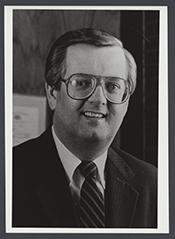
Mr. Chairman, I, first of all, want to thank my distinguished chairman and the ranking member for their work. Let me say this at the outset. I cannot tell the Members how proud I am to serve on this…
Mr. Chairman, I, first of all, want to thank my distinguished chairman and the ranking member for their work.
Let me say this at the outset. I cannot tell the Members how proud I am to serve on this committee. Every day that I serve in this institution, I am happy that we work so well together. But this committee, I think, sets the entire example for the entire Congress. Democrats and Republicans, we work together.
I think the best evidence of that is, we had a vote out of committee of 61 of the 62 members coming together, and where we had areas of disagreement, we have been able to work those out. What a real credit and testimony to this Congress and those 62 members who are on this committee and to our leader.
The chairman has done a fantastic job. He has done what many said was the impossible, and I applaud him for that, under extremely difficult circumstances.
The gentleman from Missouri (Mr. Skelton) has been a tireless advocate for what is right for our military, and I applaud him for that. To the gentleman from Hawaii (Mr. Abercrombie), my ranking member, I thank him. He is a great American and it is great to work with him.
And I want to add a special amount of praise to our new staff director, who is sitting here for the first time at the table. I look forward to what I know is going to be an extremely productive relationship with a real professional who is going help us in our job.
Mr. Chairman, in my part of the bill in the Tactical Air and Land Forces Subcommittee, we had some difficult decisions to make. I had $10 billion of requests for plus-ups that I could not meet, that the services wanted, that Members came to me for. It was impossible. We did the best that we could.
And again this committee did what we did last year. It was this committee that called for additional funding to up-armor our Humvees and take care of the troops that were in harm's way. It was this committee that led the White House last year in getting that first $25 billion supplemental.
This weekend, I will take a bipartisan delegation back to Iraq, and we will spend Memorial Day in theater with the troops seeing the visible examples that we have helped provide to allow our military to be so capable and so successful. And that was our primary focus in the defense bill this year, how best to support our military and civilian personnel in the war against terrorism.
The second thing that we did, and it was difficult, was accountability for DOD programs. And that is not easy. We have services each wanting their own individual platforms while accomplishing the same objective. We put language in this that says they cannot do that. We cannot afford to have the exact same helicopter for the Army that meets the exact same need of the Marine Corps. Why do we not come together with one platform for both? This committee took that action, and I am proud to say that is a part of our recommendation.
We also said that in the case of new technology and new programs, we want to see the technology before we buy it. What disappointed me was that some of the contractors and some of my good friends in this body tried to mischaracterize the language we put in the bill on the Presidential helicopter.
Our language on the Presidential helicopter was not to score a point against or for any contractor or any region of the country. I fully support the decision of the Navy and the Marine Corps and the down- select that they made. And it is not about ``Buy America'' or not buying America. It is about what is the best helicopter to meet the needs of our President. But I would say we have to have closer control over the dollar amount going into this program.
We also had to make a difficult decision, as my chairman outlined, on Future Combat Systems. We cut the program by $400 million; but it was the right decision to make financially, to make sure that we are protecting the taxpayers' interest as well as giving the warfighter the best technology. We made a number of other changes in terms of the overall purchasing of our major platforms. I will not go into them. I will submit them all for the Record.
In closing, I want to say again how proud I am to serve with a Democrat and Republican who truly understand how to lead, to work together, and in the end to do what is best for our warfighters. I thank my distinguished chairman and ranking member and the gentleman from Hawaii (Mr. Abercrombie), as my own subcommittee ranking member, for their cooperation on this final product. It is deserving of a ``yes'' vote from every Member of this body.
Jurisdiction includes $67 billion in DOD procurement and research and development.
Bill increases the requested authorization for programs within the jurisdiction of the Tactical Air and Land Forces Subcommittee by $4.5 billion.
Focus: First, how best to support our military and civilian personnel serving in the global war on terrorism; and second, accountability in DOD programs.
Legislative initiatives that seek to redress several unfavorable trends in the Department of Defense:
Programs being called joint programs with only one service participating in the program. This results in large, single service and program research and development expenditures for service unique programs followed by short production runs and inefficient use of taxpayer dollars.
Each service would like its 100 percent solution to every requirement, but that simply cannot be afforded. We want to make sure valid needs of the services are met, but affordability and unique solutions to requirements have to be balanced. We cannot afford to continue to have individual, service solutions within our ground forces for helicopters, tactical wheeled vehicles, blue force tracking, body armor, armored vehicle upgrades, vehicle add-on armor kits, and unmanned aerial vehicle systems, as well as other programs.
Also, programs cannot continue to be allowed to enter pre-production R&D, with immature technologies and ill-defined or unrealistic requirements.
Further, the Office of the Secretary of Defense is there for a purpose, to exercise oversight and reconcile differing service requirements. OSD needs to start exercising its responsibility in programs like unmanned aerial vehicles and helicopter development.
We must stop the trend toward excessive research and development and procurement concurrency in acquisition programs, resulting in not ``flying before buying,'' potential extensive post production modifications, and the associated increased acquisition costs. An example is in the action we have taken on the VXX--the presidential helicopter replacement program. The companies involved have tried to portray the action we have taken as a win for their particular marketing strategy when all that our legislation requires is flying the VXX before buying. It is not a Buy American provision. It is not trying to reverse the source selection. It is simply telling the Pentagon to test and fly the R&D aircraft before you buy production aircraft, so we don't have to go back and spend millions of dollars on already produced aircraft because the test results were not available in time to incorporate fixes into production aircraft. The Pentagon request to us would have us authorize procurement of 15 of the required 23 VXX aircraft before any testing has been done--likely resulting in expensive retrofits to production aircraft.
Other legislation includes:
Multiyear Procurement for UH-60 helicopters;
Multiyear Procurement for the Apache helicopter Target Acquisition/ Pilot Night Vision Sensor;
Multiyear Procurement for Apache Helicopter Block II conversion;
A Requirement for an Acquisition Strategy for Tactical Wheeled Vehicle programs;
A Requirement for Full and Open competition for the Objective Individual Combat Weapon;
A Requirement for use of the Tactical Common Data Link by all services for tactical unmanned aerial vehicles;
A Requirement for the Office of the Secretary of Defense to approve all new UAV programs;
An annual Government Accountability Office review of the Future Combat Systems program;
A Requirement to maintain the lethality and survivability requirement of the Non Line of Sight Cannon as established in the operational requirements document;
A Requirement for an independent analysis of the FCS manned ground vehicle weight requirement; and
A Requirement for a single, joint heavy lift rotorcraft program.
In addition adjustments have been made to the following programs:
The C-130J multiyear procurement is reinstated to the levels projected in the fiscal year 2005 budget, resulting in an authorization for 9 C-130Js and 4 KC-130Js, with advance procurement for those same quantities included for fiscal year 2007. [This program has been poorly managed by the Pentagon, but we need the tactical airlift that these aircraft will provide and termination costs were estimated to exceed the one year procurement value of these aircraft.]
The Future Combat Systems' budget request is reduced by $400 million.
The Joint Strike Fighter program is reduced by $150 million, the amount requested for advance procurement--again to require flying test aircraft before procuring production aircraft.
The Heavy Lift Rotorcraft replacement program is restructured and combined with the Joint Heavy Lift rotorcraft program.
The Global Hawk unmanned aerial vehicle program is reduced by $30 million, as the requested amount is early to need.
Mr. Chairman, I thank the gentleman for yielding me this time. Mr. Chairman, as the ranking member of the Subcommittee on Strategic Forces, I rise today in strong support of this bill. The…
Mr. Chairman, I thank the gentleman for yielding me this time.
Mr. Chairman, as the ranking member of the Subcommittee on Strategic Forces, I rise today in strong support of this bill. The Subcommittee on Strategic Forces has jurisdiction over several of the most complex and contentious programs, which include ballistic missile defense and nuclear weapons.
I want to recognize and I want to thank our subcommittee chairman, the gentleman from Alabama (Chairman Everett), my good friend, for his leadership and all the effort that he put into forging a bipartisan mark. I should tell my colleagues that we often do not see eye-to-eye on every single matter, but I am pleased to report that our subcommittee reached bipartisan accord on several major issues that are important to our Nation.
In the short time that I have here this morning, I want to highlight two areas of bipartisan agreement: satellite programs and the Department of Energy's Reliable Replacement Warhead program.
Mr. Chairman, H.R. 1815 restructures two high-profile satellite development programs, TSAT and Space Radar. Restructuring these programs was a bipartisan decision, an effort that I think will save both programs from experiencing cost overruns and schedule slips that have plagued them in the past.
Turning to the Department of Energy, I am also pleased that we were able to set a reasonable, bipartisan objective for the Reliable Replacement Warhead program. The RRW program has the potential to significantly lower the number of weapons in the U.S. nuclear arsenal and to ensure that our Nation never resumes nuclear testing.
Of course, as always, the devil is in the details. The mark contains a detailed reporting requirement on the RRW, and in truth, only when we receive the report will we likely know whether or not that program can live up to its full potential. Still, setting a bipartisan charter for this program and others in our subcommittee is a significant accomplishment of this mark.
With that, Mr. Chairman, time does not permit me to go into the other areas that are of concern to our great Nation, only to say that I urge all Members to support this bill. It is important to our Nation. It is important to those that are in harm's way today keeping us free.
Mr. Chairman, I claim time in opposition to the amendment.
Mr. Chairman, I yield myself such time as I may consume.
Mr. Chairman, I rise today to express strong opposition to my good friend, the gentleman from Virginia (Mr. Goode's) amendment.
I understand his concern. There has been a lot of talk both on the floor of Congress, throughout the country about border control. I understand the need to increase enforcement along our borders to protect against terrorism and drug trafficking.
Mr. Chairman, as a former Border Patrol agent with 26\1/2\ years' experience along our Nation's border, I know firsthand the difficulties that we have protecting our borders. But I also know that what we need are more trained law enforcement professionals, not military forces and, most certainly, not untrained civilians and vigilantes.
I know how difficult it is to secure our Nation's borders and the need for additional resources; however, this amendment is the wrong solution to our current problem along the border. The military has been more than willing to provide assistance to law enforcement already, but, Mr. Chairman, let me just for the record state that the Department of Defense opposes this amendment.
The Department of Homeland Security needs more border patrol agents, not troops on the border. The President already has the constitutional authority to deploy troops, as necessary, during a national emergency. There is no reason for this amendment.
We have recently authorized an additional 1,500 border agents and have funded those 1,500 border agents.
Last August, we passed the intelligence reform legislation that has a provision for 2,000 border patrol agents per year for the next 5 years. That is the solution, in my opinion, that we need: professional trained Spanish-speaking border patrol agents that know and understand the challenge they face.
Our military today is already stressed. Just last month, the U.S. Army told us that their recruitment was down some 42 percent. We do not have the forces, we do not have the Reserves, and we do not have the National Guard because of the commitments overseas.
Mr. Chairman, I reserve the balance of my time.
Mr. Chairman, I yield 4 minutes to the gentleman from Texas (Mr. Ortiz), a former sheriff who knows and understands border issues.
Mr. Chairman, will the gentleman yield?
Mr. Chairman, we have been in contact with border patrol agents that currently are telling us that they are demoralized. Because if you are an other-than-Mexican undocumented individual, you can come in. We have instances where they are actually flagging down our border patrol agents and they are asking local residents to call the border patrol so they can get what they call their permiso, or their permit, to be able to travel anywhere in the United States.
This is an abuse of our immigration laws, and it is all because we will not
fund and we will not establish temporary detention facilities. When I was chief in McAllen sector, we had the same situation in the mid- 1980s, where we had Central Americans coming in to the country. I was told that my agents were to issue I-210 letters, which is that permiso, that permit, they want today and wanted in the mid-1980s. I said, no, we are going to arrest them, and we are going to detain them.
We put together a plan. We put temporary detention facilities down in south Texas, and guess what, Mr. Chairman? It worked. They stopped coming. And more importantly, Mexico had to become engaged to make sure that people coming from Central America did not come into Mexico and create difficulties for them.
There is a solution, my colleagues, to this issue. The solution is enforcing our laws. If we put military on the border, all they are going to be doing is refer these undocumented other-than-Mexican aliens to the border patrol so they can be issued another permit to go anywhere in the country that they want. Does that make sense? Is that what we want to use our military for, just the equivalent of tour guides, referring illegals to the border patrol for issuing of a permit so they can go anywhere in the country?
Mr. Chairman, I yield myself such time as I may consume to remind my friend from Arizona that the Department of Defense opposes this amendment, and the President already has the constitutional authority.
Mr. Chairman, I yield 1\1/2\ minutes to the gentleman from Minnesota (Mr. Kline), who is, coincidentally, from the northern border that the gentleman from Arizona was just speaking about and who is a member of our committee.
Mr. Chairman, I yield myself such time as I may consume.
Mr. Chairman, I remind my good friend, the gentleman from Iowa (Mr. King), that the Department of Defense is opposed to this amendment. The President already has the authority.
Mr. Chairman, I yield 1\1/2\ minutes to the gentleman from California (Mr. Filner).
Mr. Chairman, I yield myself such time as I may consume.
I would say to the gentleman from North Carolina (Mr. Jones) that I have the utmost respect for him, but I would remind the gentleman that it is poor public policy to allow citizens to take the law into their own hands, whether it is Arizona or not.
Mr. Chairman, I yield 1 minute to the gentleman from Texas (Mr. Hinojosa), who represents a border district.
Mr. Chairman, I yield 2 minutes to the gentlewoman from Texas (Ms. Jackson-Lee), the ranking member on the Subcommittee on Immigration.
(Ms. JACKSON-LEE of Texas asked and was given permission to revise and extend her remarks.)
Mr. Chairman, it is my pleasure to yield 30 seconds to the gentleman from Missouri (Mr. Skelton), the ranking member of the committee.
Mr. Chairman, I yield myself the balance of my time. I want to also thank the gentleman from Virginia (Mr. Goode) for a great debate here and all the Members that participated.
Mr. Chairman, this is an issue that is very much discussed around the country. As my friend from South Carolina said, this is in response to the issue that the American people seek relief on. But this is a false response. The Department of Defense opposes this amendment. Homeland Security needs more border patrol agents, more technology, more resources, not troops, to help them. The President already has the constitutional authority to deploy troops as necessary.
I would ask all Members that have spoken on this very important issue, let us get together and let us ask for hearings so that we can have relief in areas like my friend and colleague from south Texas (Mr. Ortiz) articulated. Border patrol agents are demoralized today because they are the equivalent of tourist enterprises, in terms of passing out letters to other-than-Mexican undocumented people that are allowed to travel anywhere in the country.
I urge my colleagues to oppose this amendment and support efforts to recruit, train, and deploy additional border patrol agents and resources. That is the way we ought to be going.
Mr. Chairman, I demand a recorded vote.
Mr. Chairman, I rise today to speak in support of the Defense Authorization bill. I would like to commend the distinguished Chairman of the Armed Services Committee Duncan Hunter and his counterpart…
Mr. Chairman, I rise today to speak in support of the Defense Authorization bill. I would like to commend the distinguished Chairman of the Armed Services Committee Duncan Hunter and his counterpart Ike Skelton, a man who I greatly respect, for crafting a bipartisan bill.
While this is not a perfect bill, in today's environment on Capitol Hill it is a testament to both of these men and their staff that they are able to work so well together to put a bill forward that so many of us can support. I would also like to thank the Rules Committee for making my amendment in order for debate today.
My amendment is a Sense of Congress honoring the diversity of the men and women who have given their lives in defense of our country. Diversity is an essential part of the strength of the Armed Forces, in which members having different ethnic backgrounds and faiths share the same goal of defending the cause of freedom, democracy, and liberty. These brave men and women who come from such diverse backgrounds are one of the best foreign policy tools we have.
When we have a broad mosaic of the diversity of our country all working together, like African Americans, Arab Americans, Asian Americans, Hindu Americans, Jewish Americans, Latino Americans, Muslim Americans,
and Sikh Americans all working together fighting for the same cause, it says something to the rest of the world.
I know a lot about diversity because I have the privilege of representing one of the most diverse Congressional districts and I'm proud to say that my constituents are members of the Armed Forces and unfortunately, several have lost their lives fighting to defend the cause of freedom, democracy, and liberty.
As the former co-chair of the Caucus on India and Indian Americans, I read with interest about a young Sikh American, Specialist Uday Singh, who died fighting in Iraq. He was the first Sikh to die in combat operations during Operation Iraqi Freedom. As I read on, it told the story of how Specialist Singh joined the military--Singh joined because he believed in what the United States represents and felt the strong desire to fight for the freedoms we have here. I would like to commend the family of this young man for his sacrifice for our freedom.
I also represent a large Latino community and have had the privilege of meeting with the Latino members of the Armed Forces. They've told me stories about what made them join, whether it was to defend the cause of freedom, democracy, and liberty or to make a better life for themselves through the military, regardless of the reasons their actions are commendable.
A constituent of mine, Sergeant Christian Engeldrum was killed during service in Iraq. This patriot was a Firefighter in New York City and was one of the first people to raise an American flag over Ground Zero after September 11, 2001. The events he witnessed that horrible day spurred him to re-enlist into the Army to fight for our nation overseas and ensure our protection here at home. While he left his pregnant wife and two growing sons behind, he volunteered so they could live in a safer country, and a better world. Tragically, on November 30, he paid the ultimate price for his love of family and country when a roadside bomb exploded near his convoy outside of Baghdad.
Sergeant Engeldrum was the fIrst New York City firefighter to die in service to his nation in Iraq. My heart and sincerest condolences go out to his family and all the other families who have lost loved ones, but we also need to focus our attention on those who have lost their lives but also the ones who have come back with injuries and unexplained ailments.
I also have some veterans who are still struggling with the effects of serving in the military, both mentally and physically. One such veteran had gone undiagnosed and recently had a child born with birth defects. The military doesn't know why this happened but I believe it had to do with the large amount of depleted uranium found in his body. I would like to thank the committee for including language in the bill for the Department of Defense which addresses and acknowledges the widespread problem of exposure to depleted uranium by military personnel.
The language, which I authored, was in honor of my constituent Gerard Mathew and his family. This language will require the Department of Defense to rework its strategy regarding depleted uranium, require the Department of Defense to update their testing methodology to the most modern standards and provide testing to all who request it and provide better protections and coverage for members of the military.
This language is an important issue that all the members of our Armed Forces face and I want to thank the Committee for their willingness to address this concern. No piece of legislation is perfect but I would like to commend the chairman and the ranking member and their incredible staff for working hard to craft such a bipartisan bill that I hope many of the members of this House will support.
Mr. Chairman, I thank the distinguished gentleman from Missouri (Mr. Skelton), the ranking member, for yielding me this time.
Mr. Chairman, I rise in support of the Defense Authorization bill. I want to thank the gentleman from California (Chairman Hunter), chairman of the committee; and, again, his counterpart, the gentleman from Missouri (Mr. Skelton), a man whom I greatly respect for crafting along, with the gentleman from California (Mr. Hunter), a very bipartisan bill.
While this is not a perfect bill, in today's environment here on Capitol Hill, it is a testament to both of these men and their staffs that they are able to work so well together to put a bill forward that so many of us can support; and to both of them we are extremely grateful.
I would also like to thank the Committee on Rules for making our amendment in order for debate today. My amendment is a Sense of Congress honoring the diversity of the men and women who have given their lives in defense of our country. The people of our Armed Forces are put in harm's way on a daily basis, and I am so proud of them for having the ability to keep fighting to protect our Nation's security.
Over 1,500 members of the armed services have been killed while serving in Operation Iraqi Freedom and Operation Enduring Freedom. And I believe it is important for this body to recognize the sacrifices being made by these diverse members of the Armed Forces and their families in the war on terror. Several members of our Armed Forces from my district have been killed while serving in defense of our Nation.
I happen to represent one of the most diverse districts in our country today, and I am proud to say that this diversity is strongly represented in the military today as well. When I am back in my district, I make it my business to meet with veterans and members of the Armed Forces who have just returned from service, and I have found that many of these brave men and women are from the Latino and African American communities. While they are so happy to be home with their families, many of them still have the sense that their mission is not over, and they want to continue to protect our Nation against those who look to do us harm.
The military is an opportunity for minority communities to start a better way of life for themselves, whether it is going to college after service or using the skills they have learned in the military to find a good job.
I commend these men and women and send my sincerest condolences to the families of those who have lost loved ones in their service to our Nation.
Mr. Chairman, I thank the distinguished chairman, the gentleman from California, for yielding me this time, and I give my compliments both to both him and the ranking member, the gentleman from…
Mr. Chairman, I thank the distinguished chairman, the gentleman from California, for yielding me
this time, and I give my compliments both to both him and the ranking member, the gentleman from Missouri (Mr. Skelton) for always working together to bring us a good bill.
The gentleman from Arkansas (Mr. Snyder), my distinguished ranking member, pretty much gave my speech, except for perhaps the closing comments that he made, and I am looking forward later, at the appropriate time, to making some comments about the path that we traveled to get to the issue of women in combat.
But without trying to be too redundant, Mr. Chairman, let me just say that the gentleman from Arkansas (Mr. Snyder) indeed spoke about the 3.1 percent pay increase, and that reduces the gap in civilian and military pay from 5.1 to 4.6 percent. Importantly, this is the seventh year in a row that the subcommittee has recommended a pay raise that is larger than the level that is granted for private-sector pay raises.
We also very importantly recommend continued growth in the Army and the Marine Corps end strength. The House has long advocated those kinds of increases. We supported increases of 10,300 in fiscal year 2003, 6,200 in fiscal year 2004, and in fiscal year 2005, Congress authorized manpower increases of 20,000 in the Army and 3,000 in the Marine Corps.
Under the bill today, we propose additional growth of 10,000 in the Army and 1,000 in the Marine Corps, and that would bring Army end strength to 512,400 and the Marine Corps to 179,000. I think this is critical to alleviating the stress on the operations and personnel tempo that has been so negative upon our troops.
This bill also provides very important recruiting and retention and pay initiatives that increase the maximum amounts that may be paid for active duty enlistments from $20,000 to $30,000, and Reserve enlistments from $10,000 to $15,000, and active duty enlistments and reenlistments from $60,000 to $90,000.
As the gentleman from Arkansas (Mr. Snyder) said, it would eliminate BAH II, which is an irritant within the Reserve component. With this mark, Reserve rates for the basic allowance for housing will be the same as active duty rates when Reservists are mobilized for more than 30 days, and on and on and on.
In essence, Mr. Chairman, this is a very, very good bill. It continues this House's very remarkable and, I think, very admirable record toward trying to respond to the efforts of those brave men and women, men and women who do such an amazingly incredible, fantastic job for us as they go about the hard work of defending freedom across this globe.
Let me say, Mr. Chairman, I would urge all of our Members to support this initiative, and I look forward to its passage.
Mr. Chairman, let me just say with respect to what the gentleman from Arkansas (Mr. Snyder) said, never has so much been written and said about one issue in such a short period that has been so wrong, and I wanted to clarify the record.
The amendment that was introduced, and the second amendment that the gentleman from Arkansas (Mr. Snyder) described as terrible and that the manager's amendment will replace, has been described as antiwoman, has been described as disruptive to current operations, and has been described as confusing to commanders.
I just want to be clear, Mr. Chairman. The language that was inserted would not have resulted in one woman losing her job or risk being shut out from any position for which she was qualified or that was open to her, not one, not now, not at any time in the future, despite what some of the opponents have said.
That was the entire intent, to make it clear for the first time in law that the women who are doing a fantastic job on behalf of the military could not be excluded from any job for which they are operating and were qualified at that moment, not from forward support companies, not from any other position which they had, just because the traditional, linear battlefield had changed.
As to the confusion that some say occurred, let me just say to my friends in the military and to my friends who have questioned this amendment, and particularly my friends in the Army, does it not trouble you when you say that it would be confusing to your commanders when, for the first time ever, they are handed something that just embodies what you say is your policy? The policy that was developed and placed into that amendment, the military wrote and now you claim that you are following.
Congress did not make that up. Politicians did not define it; the military did. Now you say it is confusing. I would ask my friends in the military particularly, when did you plan on making it clear?
The amendment today will clarify matters even further. I fully support it. But I really think the characterizations that have been made against the text that is replacing it have been unfair and simply inaccurate as to what the position would be with respect to the honorable men and women in military uniform.

Mr. Chairman, it should be known that the gentleman from Texas (Mr. Reyes) has years of very profound experience, serving our country not only in the United States military, but certainly as a border…
Mr. Chairman, it should be known that the gentleman from Texas (Mr. Reyes) has years of very profound experience, serving our country not only in the United States military, but certainly as a border patrol agent and certainly a leader in that particular profession.
Let me suggest to my colleagues that albeit there is a crisis and a need for Federal intervention on immigration, I would join my colleagues and ask that we join it in comprehensive immigration reform, legislative initiatives that have been offered by the Senate and the House. I have just introduced a Save America comprehensive immigration reform bill; and frankly, if we would fund fully border patrol agents and ICE agents, the problem would be solved.
Putting military at the borders is a violation of the Posse Comitatus Act of 1878, and it misuses our military whose basic training is defense and shoot to kill. Migrants and immigrants are not enemy combatants. And, frankly, if you come to the border of Texas where people live in harmony, those who happen to look possibly alike, illegal immigrants, there is a great possibility of danger, danger to the soldiers and danger to those civilians.
Border patrol agents are serving our country. In fact, in testimony yesterday before our Subcommittee on Homeland Security, when I spoke to one of their representatives, he indicated what is the sense of training military personnel who are temporarily in the United States Army or Marines, and then lose or eliminate that training by them leaving the service and losing the investment, where you would have border patrol agents who have the long-term investment.
Mr. Chairman, yes, this sounds great and it has an emotional appeal as we go toward Memorial Day, but I have the greatest respect and honor for the United States military as they fight to defend this Nation. To use them in a civilian capacity that is the responsibility of the Federal Government is an outrage and should not be done.
Let us work together harmoniously to secure the American borders in the right way, and let us allow the United States military to serve their Nation and defend this country in the way that they have been trained to do it, not water down their duties and add to the danger of civilian/military conflict.
I rise in opposition to this amendment. It would authorize the Secretary of Defense to assign members of the Army, the Navy, the Air Force, and the Marines to assist the Department of Homeland Security in the performance of border protection functions.
I share my colleague's desire for a secure border, but this is not the way to do it. Border security is a civilian responsibility that has been assigned to the Department of Homeland Security, not to the military. I also want to express my disapproval of permitting civilian volunteers such as the minutemen to assist in securing our borders. We can provide the additional support the Department needs by increasing the number of border patrol agents. Soldiers are not necessary or desirable as border patrolmen.
Putting troops on the border would violate the Posse Comitatus Act of 1878, which prohibits the United States military from patrolling within United States borders.
The United States military is stretched thin from wars in Afghanistan and Iraq. Putting troops at our border would further strain our capabilities abroad.
Migrants are not enemy combatants. They are seeking better economic opportunities for their families. Their plight should not be combated with military force, but rather with immigration reform.
The United States Border Patrol actively cooperates with the military in many areas--from infrastructure construction to the implementation of new high-tech monitoring such as unmanned aerial vehicles. The Border Patrol already knows when and how to ask for cooperation from the military.
The military is not trained to operate in United States civilian communities, as is the case with much of the border. More than 10 million people live along the American side of the Mexico border. Putting military patrols in their communities would put many people at risk.
For instance, on May 20, 1997, a Marine shot and killed an 18-year- old goat herder, Ezekiel ``Zeke'' Hernandez. The incident occurred on the eastern outskirts of the village of Redford, Texas. The Marines were on the border to patrol against drug smugglers. Ezekiel was shot because he was carrying a gun to protect his flock, and fired a shot, most likely to scare away predators threatening his herd. In view of the fact the Marines were camouflaged, it is unlikely that Ezekiel saw them. I do not want to see more incidents like this take place on American soil.
I urge you to vote against this amendment.

Mr. Chairman, I would like to speak against the Manzullo amendment, which is part of the en bloc amendments, and also the Blunt amendment. The Manzullo amendment, basically, will radically change the…
Mr. Chairman, I would like to speak against the Manzullo amendment, which is part of the en bloc amendments, and also the Blunt amendment.
The Manzullo amendment, basically, will radically change the current application of the Buy American Act. I think it could place the United States in violation of more than 20 critical defense memoranda of understanding with some of our strong allies like Australia, Canada, Israel, and the United Kingdom.
Under DOD policies, under Buy American, there is a 50 percent cost differential if they cannot certify that a product is made with more than half
of its components in the United States. In a global economy it is often hard to certify, and we actually put some of these companies at risk with their certifications. Some companies have had to set up costly accounting procedures so that they can track where different pieces of a product's components are assembled around the world to add up: Does it comply with the Buy American Act or does it not comply with the Buy American Act?
This amendment would sweep away the current waivers of the Buy American Act that have been carefully negotiated with our strongest military partners, and I am afraid will invoke retaliation if they are upheld. The restriction would cause the Department of Defense problems in purchasing the best goods for a fair price, particularly commercial technologies, so we would be denied in some cases the best cameras, the best laboratory and surveillance equipment. Even the BlackBerrys, which Members have, would be subject to this because 50 percent of its components are not assembled in the United States.
With this we would deprive our soldiers of the best equipment, the best equipment in many cases that would make them more efficient. In some cases it could make them even less safe. And that is the problem with this amendment. Our soldiers deserve the best wherever its components are assembled, and this blanks out some of the waiver provisions that we have under the current law.
We are already challenged to compete in a global marketplace where we do not always have a competitive advantage. Dismantling the regime of defense memoranda of understanding that have helped create and support the vibrant world marketplace in the end only hurts American workers.
Besides violating our defense MOUs, this provision will require DOD to pay an artificially high price for products it needs to protect all of us. Defense dollars are already scarce. We need to be getting the maximum bang for our bucks, and the difficulty with our procurement system is that the Members try to do too many things with them.
In the Blunt amendment case, they want to give a differentiation for people who hire a number of National Guard or Reserve officers; in this case, it is Buy American; in other cases, it may be a small or minority business. At the end of the day, this creates many inefficiencies in our procurement system that cost our taxpayers billions of dollars when, in fact, we do not have them.
I think when we go out and procure goods for our soldiers, we ought to get the best goods, we ought to get them at the lowest price. The American taxpayer demands it and our soldiers demand it.
Under this amendment, more businesses would be required to certify compliance with the Buy American Act, potentially exposing them to civil false claims and other sanctions even if they have made a good- faith effort to comply with these government-unique requirements. This creates significant financial and legal burdens for industry, given that more and more IT, information technology, so critical for our defense efforts, is being sourced, in a global economy, from around the world.
Some companies have responded by setting up costly, labor-intensive product tracking systems that are not needed in their commercial business simply to sell to the government. That ends up costing the taxpayer more. Some companies have simply stopped selling certain products in the Federal marketplace, denying us access to some of the latest, most cost-effective, safest products for our soldiers.
This radical expansion of the application of the Buy American Act will impose financial and legal burdens on commercial companies that sell to the government. In fact, it could well prevent our brave servicemembers from obtaining the best technology to protect them and to protect our Nation.
This increased restriction on DOD's ability to obtain needed technology from the world market is basically a Cold War anachronism. Given DOD's growing reliance on information technology and other products and the current global nature, these are crippling in their restrictive provisions.
Madam Speaker, I thank the gentlewoman from New York for yielding me this time, and I rise in strong opposition to the rule. To start with, the Committee on Rules made in order almost no amendments…
Madam Speaker, I thank the gentlewoman from New York for yielding me this time, and I rise in strong opposition to the rule. To start with, the Committee on Rules made in order almost no amendments that were of importance to the Democrats, including my amendment on women in the military.
Madam Speaker, in my opinion, the Committee on Rules has a duty to this institution and to each of us to create circumstances that will permit orderly consideration of legislation that is important to our country and also structured to the debate, so that we will have the opportunity to work our will on these important issues. Sadly, that is not the case.
Let me start with the most important issue, women in the military. Not only did the Committee on Rules not make my amendment in order, which would have stricken horrendous language and established a study; and by the way, my amendment was bipartisan in nature, along with my colleague, the gentleman from Arkansas (Mr. Snyder), the ranking member on the Subcommittee on Military Personnel of the Committee on Armed Services; the gentlewoman from New Mexico (Mrs. Wilson), and the gentleman from Illinois (Mr. Shimkus) from the other side of the aisle.
It was not only not made in order, but a brand-new amendment by our colleague, the gentleman from California (Mr. Hunter), was filed, not in a very timely fashion, and which we did not see for the first time until last evening. His amendment, which creates a time mechanism wherein any MOS or specialty changes for women will be notified to the Congress, also establishes a study. Should that amendment pass, that wipes out the onerous language that is presently in the bill.
This amendment, though, that the gentleman from California (Mr. Hunter) is offering, is camouflaged with other amendments, including a memorial to the USS Oklahoma and a veterans' preference amendment and one amendment dealing with missile defense. Further, it allows only 10 minutes of debate.
I think that is wrong. It is not an overstatement to say that the action by the Committee on Rules is not living up to its responsibility.
Let me give a bit of a history of the women in military. All of a sudden, with only hours' or a day's notice, an amendment was passed in the Subcommittee on Military Personnel of the House Committee on Armed Services. That amendment related to women in the military, and the military stated in a letter signed by Lieutenant General Campbell, and I will place it in the Record, that over 21,900 positions would have to be closed to women. To say it was wrong is an understatement.
That was wiped out by a second amendment in full committee. The second amendment was one that froze the specialties and did not allow full expansion of specialties or MOS's for the women and, furthermore, it was an attempt to codify 1994 language from Secretary Les Aspin, but it did not include all of the elements. That is the bill right now.
The new Hunter language, which I described a few moments ago, fortunately wipes that out. If the Hunter language passes, which is not necessarily artfully written, but if that passes, the women in the military can breathe easier. It is a victory for the women in the military and victory for national security.
Every person that wears the uniform of the United States of America has the respect of every one of us in this body. We thank them for their service. The women are putting their hearts, their souls, their professionalism, their careers on the line every time they put the uniform on every day, and I think it is wrong to have come up and challenged these women in what they do for our country in this fashion.
I would also like to mention that the rule failed to mention the Taylor amendment regarding TRICARE for Reservists.
Department of the Army,
Office of the Chief of Staff,
Washington, DC, May 17, 2005.
Hon. Ike Skelton,
Committee on Armed Services,
House of Representatives, Washington, DC.
Dear Representative Skelton: Sir, if the amendment to H.R.
1815, proposing to prohibit the assignment of female Soldiers
to Forward Support Companies (FSC) addressed only FSCs in
Heavy and Infantry Brigade Combat Teams and equivalent
elements of Stryker Brigades, a total of 21, 925 spaces
currently open for assignment to female Soldiers would be
closed.
We appreciate your interest in and support of our Soldiers
as we continue to fight the Global War on Terrorism.
Sincerely,
James L. Campbell,
Lieutenant General, U.S. Army,
Director of the Army Staff.
Show 11 more
Mr. Speaker, I rise to voice my strong objection to this rule. It allows debate on some important amendments, but leaves out many more, some of them dealing with key issues that I believe the House…
Mr. Speaker, I rise to voice my strong objection to this rule. It allows debate on some important amendments, but leaves out many more, some of them dealing with key issues that I believe the House should have an opportunity to consider.
As a new member of the Committee on Armed Services, I am grateful to the gentleman from California (Mr. Hunter) for working with me on a number of provisions on the bill that are important to my State of Colorado.
But I am disappointed that the gentleman from California (Mr. Hunter) and the committee did not see it fit to work with Democrats on issues of additional importance to the Nation.
Last week, the Committee on Armed Services voted for the Taylor amendment to provide TRICARE to all Reservists on a permanent basis. But this language was removed due to budget constraints, and the Committee on Rules refused to make the Taylor amendment in order.
The Committee on Rules also precluded debate on the Spratt amendment to increase spending on nonproliferation programs, on the excellent Tauscher amendment on sharing reports on detainee treatment, and on an amendment I offered with my colleague, a bipartisan amendment to help former nuclear weapons workers in Colorado who are suffering from cancer related to exposure to radiation.
The rule also precludes debate on the Skelton-Snyder-Wilson-Shimkus amendment that should have been offered, another bipartisan amendment, to strike the provisions saying that any positions currently closed to women shall remain closed.
Many more amendments worthy of consideration were not made in order, Mr. Speaker.
My friend, the gentleman from Oklahoma (Mr. Cole) mentioned that in the committee the bill was voted out almost unanimously, but that does not mean that on the floor we cannot improve it. There are many of these amendments that should have been made in order.
For that reason, Mr. Speaker, I oppose the rule. It stifles debate and I cannot support it.
Mr. Speaker, I rise to voice my strong objection to this rule. It allows debate on some important amendments but leaves out many more, some of them dealing with key issues that I believe the House should have an opportunity to consider.
As a new Member of the Armed Services Committee, I am grateful to Chairman Hunter for working with me on a number of provisions in the bill that are important to me and my state of Colorado. But I'm disappointed that Mr. Hunter and the Committee didn't see fit to work with the Democrats on additional issues of importance to the nation and to the prosecution of the war in Iraq and Afghanistan.
I'm sure that the views of the Republican leadership of the Armed Services Committee influenced the deliberations of the Rules Committee and thus the final rule that was adopted. But it is the Rules Committee--not the Armed Services Committee--that determines which amendments are made in order.
Last week the Armed Services Committee voted for Representative Taylor's amendment to provide TRICARE to all Reservists on a permanent basis. But Chairman Hunter took the language out due to budget constraints, and the Rules Committee refused to make Mr. Taylor's amendment in order. The Rules Committee also precluded debate on Representative Spratt's amendment to increase spending on nonproliferation programs, on Representative Tauscher's excellent amendment on sharing reports on detainee treatment with Congress, and on an amendment I offered with my colleague Representative Beauprez to help former nuclear weapons workers in Colorado who are suffering from cancer and other conditions related to their exposure to radiation and other hazards.
The rule also precludes debate on an amendment to be offered by Representatives Skelton, Snyder, Wilson and Shimkus to strike the provision saying that any positions currently closed to women shall remain closed. Mr. Hunter will offer an amendment that waters down the provision slightly but combines it with other provisions, thus preventing a clean up or down vote on this very important issue.
Many more amendments worthy of House consideration were not made in order. This means that the bill we will debate today on the House floor will not address some of the key issues affecting our military and our policy in Iraq and Afghanistan.
Mr. Speaker, this rule stifles debate, and I cannot support it.
Madam Speaker, I thank the gentleman for yielding me this time. I rise today in support of the rule to provide consideration for the National Defense Authorization bill. This legislation focuses on…
Madam Speaker, I thank the gentleman for yielding me this time.
I rise today in support of the rule to provide consideration for the National Defense Authorization bill. This legislation focuses on force protection and personnel benefits for the soldiers and
airmen in my district at Fort Bragg and Pope Air Force Base. The ability to adequately execute the mission for which they are called and care for their families are the two issues that are second to none. I believe this legislation makes significant progress in these areas and will enable our men and women in uniform to continue to successfully win the war on terrorism.
My trip to Iraq just a few weeks ago, the third I have made, did nothing but reinforce my pride and confidence in our Nation's warfighters. These brave men and women serve with honor and distinction as they liberate a nation. Troops from the Eighth District of North Carolina have been at the tip of the spear that ended the dark reign of Saddam Hussein and continue to lead the way in post-conflict resolution in Iraq and Afghanistan.
This legislation, first and foremost, takes care of our most vital asset of our military: our people. It provides every serviceman with an across-the-board 3.1 percent pay raise and increases the force structure of the Army and the Marine Corps. It boosts the maximum amount of hardship-duty pay and increases the amounts paid for active duty and Reserve enlistments and reenlistments.
I am particularly happy that we are expanding the capacity of the military health care system to provide health care to service members and their families by requiring the reimbursement for services of mental health counselors without a referral from a primary care manager.
Additionally, I would like to mention the direct effects this legislation will have for the men and women at Fort Bragg. There is over $200 million for infrastructure and housing improvement, including $11.4 million more than was in the President's request for the Third Brigade Combat Team barracks complex. I worked hard to secure this funding because it will help improve the living conditions for our soldiers and support the Army's transformation to modularity.
Additionally, I am happy to support the funding for a new junior high school at Fort Bragg.
The National Defense Act also addresses another critical issue, that of fortifying the defense industrial base, ensuring that the Department of Defense purchases textiles that are made in America. My top two priorities are national security and economic security. There is seldom, if ever, a reason that these two goals should be considered mutually exclusive. I have vowed to always work and support and promote the U.S. manufacturing industry, but we must develop transparency within DOD to ensure that our troops are wearing uniforms made in America. I am hopeful that our colleagues in the other body will recognize the need to safeguard U.S. textile jobs and work with us through the conference process.
Madam Speaker, it is a gross injustice and misfortune that it took the tragedy of 9/11 to focus the public eye on the need for a more robust defense budget, but I feel that the legislation in front of us today will help our troops accomplish their mission. We are establishing a clear and strong course of support for our troops. I encourage my colleagues to send a message loud and clear to our soldiers, sailors, airmen, Marines and Coasties, that we will strongly support you and give you the resources necessary to perform the mission.
Madam Speaker, I urge a vote in favor of the rule, as well as the national defense bill.
The campaign began with shock and awe. At this point, it should be awe, admiration and appreciation for what these men and women are doing. Having been here for 7 years, the trend and support for our men and women in uniform has trended ever upward. That is where it should be.
As we look at this bill today, the way we can best thank our troops, show our love and appreciation for them, is to pass this bill and continue the upward trend that shows that we not only talk about our troops, but we do things that will make their lives better and show our appreciation.
I urge support for the rule and the underlying bill.
Mr. Speaker, in South Mississippi this morning, four families of National Guardsmen will be notified that their loved ones died yesterday in Iraq. Last Friday, as I visited Walter Reed, I had the…
Mr. Speaker, in South Mississippi this morning, four families of National Guardsmen will be notified that their loved ones died yesterday in Iraq.
Last Friday, as I visited Walter Reed, I had the opportunity to visit five Mississippians, three of whom are amputees, all of whom are National Guardsmen or Reservists.
As the gentlewoman from California just mentioned, over 40 percent of all the people serving in Iraq right now are Guardsmen and Reservists, and a disproportionately high percentage of the deaths and wounds have been received by them.
One way we tried to make it up to them for their supreme sacrifice to our Nation was to see to that those Guardsmen and Reservists who choose to can buy into the TRICARE health care coverage provided by our Nation to every
other member of the Armed Forces, the regular soldier to their right, the regular Marine to their left.
It was brought up in committee, and by a majority vote the Armed Services Committee voted to allow National Guardsmen and Reservists to buy into TRICARE. But somewhere between the committee and the Rules Committee, someone decided that there was mandatory spending involved. So the same Congress that has brought 21 bills to this floor that waived all budgetary rules, no matter how much it ran up the deficit, the same Congress that has added $2.2 trillion to the National debt in just 4 years, that decided Paris Hilton can inherit hundreds of millions of dollars without paying a penny in taxes, decided because there was $5 million mandatory spending, these National Guardsmen could no longer buy into that policy.
So we went to the Rules Committee. We showed the Rules Committee where the National Guard Association, the Military Officers Association of America, the Enlisted Association of the National Guard, the Adjutant Generals of every single State voted unanimously for this amendment. The Reserve Officers Association and the Fleet Reserve Association all endorsed this amendment. And yet the Rules Committee, in a straight party line vote, decided that National Guardsmen and Reservists cannot buy their health care.
The gentleman from Illinois (Mr. Hastert), the Speaker of the House, ignored the call of the adjutant general of Illinois and the 12,500 National Guardsmen in his State.
The gentleman from Texas (Mr. DeLay) ignored the call of his adjutant general and the 20,000 National Guardsmen in Texas.
The gentleman from Missouri (Mr. Blunt) ignored the call of his adjutant general and the 10,000 National Guardsmen from Missouri.
The gentleman from California (Mr. Dreier) ignored the call of his adjutant general and 20,400 National Guardsmen.
The gentleman from Florida (Mr. Putnam) ignored the call of 12,000 National Guardsmen. The list goes on.
The bottom line is, if these people are good enough to serve our Nation in Iraq, if they are going to die in disproportionately high numbers, if they are going to lose their limbs in disproportionately high numbers, do you not think this Congress could find the time to debate an amendment that has already passed the Armed Services Committee, and let every Member of this body decide whether or not those Americans who are serving our country in the Guard deserve the opportunity to buy health insurance for themselves and their families?
Mr. Speaker, I urge a ``no'' vote on the rule.
Committee on Rules
David Dreier, CA--Chairman; Lincoln Diaz-Balart, FL; Doc
Hastings, WA; Pete Sessions, TX; Adam Putnam, FL;
Shelley Moore Capito, WV; Tom Cole, OK; Rob Bishop, UT;
and Phil Gingrey, GA.
Louise McIntosh Slaughter, NY--Ranking Minority Member;
James P. McGovern, MA; Alcee Hastings, FL; and Doris
Matsui.
Mr. Speaker, will the gentleman yield?
Mr. Speaker, I had to leave the room briefly. It was my understanding, when I left the room, that the gentleman had mentioned that the bill had passed committee 61 to 1. Is that correct?
Is the gentleman aware that when the bill passed the committee, the amendment that provided TRICARE for every single Guard member and Reservist was a part of that bill?
Okay. I just want the gentleman to know that that 61 to 1 vote included that amendment.
Mr. Chairman, I offer an amendment. Mr. Chairman, I yield myself such time as I may consume. Mr. Chairman, this amendment would permit military personnel to secure America's borders. It authorizes,…
Mr. Chairman, I offer an amendment.
Mr. Chairman, I yield myself such time as I may consume.
Mr. Chairman, this amendment would permit military personnel to secure America's borders. It authorizes, but does not require the Secretary of Defense to utilize members of the Army, Navy, Air Force, Marine Corps and Reserves under certain circumstances and subject to certain conditions to assist the Department of Homeland Security upon the request of the Department of Homeland Security in the performance of its border functions.
This amendment has passed in the two previous Congresses, and prior to my offering this amendment in the past two Congresses, it was offered by other Members and it has passed the House, but has not survived conference. I hope this year it will pass the House and then survive a conference.
I want to emphasize, this is an authorization measure so that the Department of Homeland Security and the Department of Defense would not be subject to posse comitatus charges if they utilize this in a nonemergency situation.
This simply makes it clear that if the Secretary of Homeland Security requests of the Secretary of Defense the utilization of forces to assist the border patrol in combating illegal drugs, combating illegal immigration or to reduce the threat of terrorism, that authority exists and it would not require the declaring of a national emergency by the executive branch.
Mr. Chairman, I reserve the balance of my time.
Mr. Chairman, I yield 3 minutes to the gentlewoman from North Carolina (Ms. Foxx).
Mr. Chairman, how much time remains on each side?
Mr. Chairman, I yield 4\1/2\ minutes to the gentleman from Arizona (Mr. Hayworth).
Mr. Chairman, I yield myself such time as I may consume.
Just to comment briefly, this amendment does not require forces on the border, it simply authorizes the Department of Homeland Security and the Department of Defense to utilize them if necessary to supplement the border control, and they have to be trained.
This amendment is a message-sender to tell the world we are serious about
illegal immigration, drug trafficking and the threat of terrorism coming across the border.
Mr. Chairman, I yield 2 minutes to the gentleman from Iowa (Mr. King).
Mr. Chairman, I yield myself such time as I may consume.
I would point out to the gentleman from California, I did vote for his motion to recommit to increase funding to add more border patrol officers. This is simply an authorization measure to allow the United States, if the Department of Homeland Security and if the Department of Defense thought necessary, to utilize forces to supplement the border control.
There are troops on the border today, but they are not U.S. troops, they are Mexican troops. We should certainly allow, not mandate, just give the permission for our troops to be there and not have them violate posse comitatus.
Mr. Chairman, I yield 2 minutes to the gentleman from North Carolina (Mr. Jones).
Mr. Chairman, I yield 30 seconds to the gentleman from California (Chairman Hunter).
Mr. Chairman, I yield myself the balance of my time.
I would like to say that I think the gentlewoman from Texas (Ms. Jackson-Lee) was right on target when she said allowing troops on the border under current law in the United States would violate posse comitatus. I am not sure that it would, but if they were requested tomorrow by the Secretary of Homeland Security and went there, I assure you there would be lawsuits and national media saying we were violating posse comitatus. Pass this amendment and we will not have that obstruction to protecting the security of the United States of America.
I want to salute the gentleman from Texas (Mr. Reyes) for his conducting of this debate, a great debate. I also want to thank him for his service which was truly outstanding, as the gentleman from California said.
I would like to close by urging you to vote for the security of the United States and simply give to the Department of Homeland Security with the concurrence of the Department of Defense the authorization to use troops without running afoul of posse comitatus.

Mr. Chairman, I rise in support of the Department of Defense Authorization Act for Fiscal Year 2006. This bill provides $441 billion in budget authority for the Department of Defense, as well as an…
Mr. Chairman, I rise in support of the Department of Defense Authorization Act for Fiscal Year 2006. This bill provides $441 billion in budget authority for the Department of Defense, as well as an additional $49 billion funding bridge for Fiscal Year 2006 costs associated with Operation Iraqi Freedom and Operation Enduring Freedom. Overall I am pleased with the funding authorization level and the major initiatives outlined in this bill, though I do harbor reservations over several more minor provisions which I believe should be more thoroughly reviewed in conference. However, after working diligently with my colleagues on the Armed Services Committee, I am confident that we have produced a Defense Authorization bill that will support the mission of our men and women in uniform who are currently deployed in Iraq and Afghanistan and provide adequate direction for our armed forces to meet future challenges.
One issue that I hope will be revisited in conference is that of allowing members of the National Guard and Reserves to access health benefits under the military's TRICARE program. Despite bi-partisan support for extending this benefit to National Guardsmen and Reservists, this provision was stripped from the Defense Authorization bill without the full consent of members of the Armed Services Committee due to a budget technicality. My colleague, Congressman Gene Taylor of Mississippi, had hoped to offer an amendment to the Defense Authorization bill to restore this provision. Unfortunately, however, the House Rules Committee did not make his amendment in order for consideration, therefore House members were deprived of the opportunity to vote to restore this important initiative.
It is important that we recognize the hardship encountered by National Guardsmen and Reservists when they are called up for duty. In addition to placing their lives in the line of fire and separating themselves from their families for extended periods of time, these individuals must bear additional personal financial costs. One way to recognize their courage and sacrifice and to mitigate against the economic hardships that they must endure is to allow these men and women to enroll in TRICARE. TRICARE offers high quality coverage at a reasonable cost to members of the armed forces and their families. Allowing National Guardsmen and Reservists to enroll in TRICARE would serve as an additional incentive and help strengthen morale.
At a time when the military is facing unprecedented difficulties insofar as personnel recruitment and retention, it is important that we do everything we can to demonstrate to our men and women of the National Guard and Reserves that we recognize their sacrifice and the hardship that they and their families endure. National Guardsmen and Reservists have played a vital and integral role as soldiers on the front lines of Operation Iraqi Freedom and Operation Enduring Freedom. National Guardsmen and Reservists have been required to extend their tours of duty in Iraq and Afghanistan to a point where their level of involvement in this conflict is virtually indistinguishable from that of active duty members of the armed services. It is also clear that their efforts will be required indefinitely.
We must take this opportunity to recognize the heroic efforts and the vital role played by our National Guardsmen and Reservists in securing freedom for the people of Iraq and Afghanistan. We must also recognize the evolving nature of the role of National Guardsmen and Reservists and how much our armed services now depend upon their service, a trend that one can only assume will continue in the future. These men and women have labored well beyond traditional tours of duty in order to help maintain security for the new democracies. They are soldiers and they deserve to be treated as such. I hope that conferees will revisit this bi-partisan proposal and that it will ultimately be included in the final version of the Defense Authorization Act.
Mr. Chairman, I thank the gentleman for yielding me time. Mr. Chairman, I rise in strong support of H.R. 1815, the National Defense Authorization Act for the next fiscal year. Last week, the…
Mr. Chairman, I thank the gentleman for yielding me time.
Mr. Chairman, I rise in strong support of H.R. 1815, the National Defense Authorization Act for the next fiscal year. Last week, the Committee on Armed Services approved this bill by an overwhelming vote, as was noted by the gentleman from Pennsylvania (Mr. Weldon), 61 to 1. This demonstrates once again the committee's long tradition of bipartisanship in addressing the defense needs of our Nation.
Mr. Chairman, I would like to commend the chairman and the ranking member for leading us through this process this year in a bipartisan basis.
Mr. Chairman, the war on terror requires the determination of this Nation. This bill demonstrates that determination.
The war on terror requires flexibility to be able to change to meet the threat. This bill demonstrates our ability to change to meet the threat.
The war on terror requires the use of new technology, information technology, robotics, detection equipment. This bill demonstrates our ability to do that.
The members of the Committee on Armed Services never forget that we are a Nation at war. Our young people in uniform face danger daily, while bringing peace and prosperity to benighted areas around the world. Moreover, they are taking the fight to the terrorists on their home ground, keeping the terrorists on the run and fearing for their very lives.
The highest responsibility of those of us privileged to serve on the Committee on Armed Services is to do whatever we can to help our troops. We make the point of visiting the troops in the theater to better appreciate the conditions they live and operate under and the needs they have.
My subcommittee and I have been diligent in that regard and have tried our best to include measures that help our soldiers. We have taken several actions in the bill that will provide the resources and direction to better protect our men and women who are selflessly serving in dangerous conditions overseas.
We have not forgotten our valiant warriors in the Special Operations Command in particular. We have authorized funds for several items in the SOCOM commander's unfunded requirements list and have authorized additional funding that would provide some necessary operational flexibility for special operations forces on the ground.
The bill provides increased funding to accelerate the development and fielding of advanced technologies that I mentioned earlier for emerging critical operational needs, including protection of our forces against improvised explosive devices and rocket and mortar attack and to provide real-time surveillance of suspected enemy activities.
The bill also provides increased funding for combating terrorism technology support to accelerate the development and fielding of advanced technologies in the war on terror. We continue our successful initiative to develop chemical and biological defense countermeasures and start a new initiative for medical defensive countermeasures.
The bill recommended by the committee recognizes that we remain a nation at war. The asymmetrical threat that I have warned of since the middle 1980s has indeed grown to be a worldwide menace. Our successes in meeting this new world threat are measured by our ability to evolve our warfighting strategies and tactics more quickly than the enemy. While we certainly have the initiative, we do not have a monopoly on all of the ideas. The enemy is clever, growing desperate and must be taken seriously by the people of our country. This bill will help our soldiers keep the enemy on the defensive.
In closing, Mr. Chairman, I want to express my appreciation again to you and to the ranking member, as well as to the ranking member on our subcommittee, the gentleman from Massachusetts (Mr. Meehan), with whom I have worked closely over the years and particularly this year. This is an excellent bill, and I urge all Members to support it.
Mr. Chairman, I rise in strong support of the Goode amendment, and I do so with the utmost respect for the preceding speakers on the other side of the aisle. Because in pointing out the symptoms and…
Mr. Chairman, I rise in strong support of the Goode amendment, and I do so with the utmost respect for the preceding speakers on the other side of the aisle. Because in pointing out the symptoms and the challenges of the problems we confront on our border, rather than arguing against the amendment, as is the intent of my friends from Texas, in fact they are bolstering the argument for the very reason we should support this amendment.
Here is why, Mr. Chairman. National security and border security are one and the same. As my colleagues from Texas, who share a common border as I do in my home State in Arizona, as we share a common border with the Republic of Mexico, I would remind my colleagues that to our north there is a border stretching with Canada that is close to 8,000 miles, when you take a look at all the ins and outs. So it is not directed absolutely at our neighbors in the south. There is a danger to our north.
This has little to do with morale or professionalism of border patrol agents. Instead, it has to do with the incredible job we ask our border patrol to do across that vast northern border and across our important southern border. It is because of the tenor of the times, in the wake of 9/11, and, Mr. Chairman, precisely because of what we heard our former colleague, Mr. Goss of Florida, now Director of the Central Intelligence Agency, say in an open session to a committee in the other body, that his greatest concern is the introduction of some sort of weapon or some hostile action taken by those crossing our porous borders.
My colleagues from Texas just pointed out, in terms of those other- than-Mexicans coming across our southern border, and as the Director of the FBI confirmed to a subcommittee of this House, there are individuals coming in to this Nation through our southern border who are coming from nations that export Islamofascism and terrorism and they are adopting Hispanic-sounding surnames as their aliases. And my good friend, the gentleman from Texas (Mr. Ortiz), took a direct hand in pointing out those who are involved in creating security risks along our border. He mentioned the threat of the MS-13 gangs and all that is going on.
My colleagues, the Goode amendment is needed now more than ever. And I say that as one from a border State who stood in opposition to amendments of this type during my previous years in Congress. But the bottom line, Mr. Chairman, is this: yes, we have troops in the field; we have troops far from home fighting on the streets of Tikrit so we do not see a fight on the streets of Tucson; fighting on the streets of Baghdad so we do not see this on the streets of Boston.
But by the same token, 1 week ago, when we discussed the challenges that we were confronting in terms of border security and national security, I would suggest that a vacuum exists, because we hear so much debate in this House about resources for first responders.
Mr. Chairman, I would recommend and I would suggest that there is an interim vacuum that we should take into account. Not only are men and women in uniform on the offensive around the world in a global war on terror, but we also must deal with the ability of the Secretary of Defense in coordination with the Secretary of the Department of Homeland Security to utilize our military personnel. If we had in place the adequate manpower and resources for first defenders on our borders, perhaps the first responders would not be needed.
Mr. Chairman, I respect my colleagues from Texas. I understand their concerns. Indeed, there is much on this topic where we have agreement. We understand the danger we confront. But we have seen the results of force multiplication, or at least the presence of American citizens on the border in my home State. Force multiplication, and another option here is what is needed. Support the Goode amendment.
Madam Speaker, I rise in strong support of this very fair and balanced rule that will allow us to deal with what is clearly the single most important issue that we address as a Federal Government and…
Madam Speaker, I rise in strong support of this very fair and balanced rule that will allow us to deal with what is clearly the single most important issue that we address as a Federal Government and as a Congress.
I want to begin by complimenting my very good friend, the gentleman from Oklahoma (Mr. Cole), for his great service to the United States of America, his superb management of this rule, and his commitment to our Nation's security. I also want to compliment the distinguished chairman of the Committee on Armed Services, as well as the ranking member, the gentleman from California (Mr. Hunter) and the gentleman from Missouri (Mr. Skelton), for their fine work and the
fact that they have worked together so well on a wide range of very important issues.
Madam Speaker, I also want to extend my congratulations to our commander in chief, George W. Bush, and our great Secretary of Defense, Donald Rumsfeld.
It is very clear that the United States of America over the past few years has gone through challenges the likes of which we have never in our Nation's history seen. Frankly, I believe that we are doing extraordinarily well.
The Defense Authorization bill that we are going to be considering today will create an opportunity for a free-flowing debate, a wide- ranging discussion on important issues that we face. Eighty-nine amendments were submitted to the Committee on Rules for consideration by 10 o'clock yesterday morning, and I am happy to say that of those 89 amendments, we have been able to take 29 of them and make them in order. Of those 29, 16 amendments were offered by Democrats that will be made in order, 13 will be offered by Republicans, and they will deal with the tough issues that we have faced.
Now, the issue that my friend, the gentlewoman from Rochester, New York (Ms. Slaughter), just raised is one which has been contentious, and I believe we have been able to come to a consensus on the issue. There was a great deal of stir over this question of women in combat and what exactly we were going to do.
The manager's amendment, Madam Speaker, throws out the provisions that the committee had, and it put into place a requirement that over a 60 legislative day period, the United States Congress will be involved in any kind of change in the policy of women in combat that will be on the horizon. Secretary Rumsfeld has made it very clear publicly that he does not support any kind of change, and I believe that the action that we will see in the passage of the manager's amendment will help to ensure that that will take place.
I also have to say, Madam Speaker, that we are in a position today where we have just gotten the report issued from the Base Realignment and Closure Commission, and we know that there are concerns that have come to the forefront from a number of our Members on the recommendations of the BRAC Commission. As we begin debate on this bill, we will allow for a wide-ranging discussion on the issue of base realignment and closure.
The gentleman from New Hampshire (Mr. Bradley) and the gentleman from Connecticut (Mr. Simmons), have a BRAC amendment that is made in order, so that we will be able to discuss that here.
Madam Speaker, the five most important words in the preamble of the U.S. Constitution are ``provide for the common defense.'' There is nothing that we do that is more important than providing for the common defense. Virtually every issue that we address can be handled by some other level of government, but local governments and State governments cannot provide for the common defense. That is why it is so important that we step up to the plate, have bipartisan support for this rule which will allow for free-flowing debate, and do everything that we can to ensure that we get a great Defense Authorization bill to the President of the United States.
Mr. Chairman, before proceeding as chairman of the Subcommittee on Projection Forces, I believe it appropriate to underscore the magnificent service rendered the Nation by the men and women serving…
Mr. Chairman, before proceeding as chairman of the Subcommittee on Projection Forces, I believe it appropriate to underscore the magnificent service rendered the Nation by the men and women serving in our Armed Forces around the world who so steadfastly meet every challenge with true dedication and commitment. We thank each and every one of them for their service. And we thank all Americans, specifically the families of servicemembers, for their unwavering support of our servicemen and -women.
History has repeatedly taught us that peace is only achieved through strength. We have sought to apply the lessons learned from the ongoing global operations to the committee markup of the National Defense Authorization Act for Fiscal Year 2006 in order to strengthen our Armed Forces.
Oceans cover three-quarters of the Earth's surface. The vast majority of the world's population lives within a few miles of a sea coast. Seventy percent of our trade moves by sea. Thus, maintaining America's naval superiority is an imperative. I am pleased to report that the National Defense Authorization Act that we will consider initiates a program to infuse our shipyards with leading-edge manufacturing technology and management systems that reduce shipbuilding costs and to return our shipyards to global competitiveness.
We have also taken steps to confront excessive shipbuilding cost growth by capping costs on specific ship types, recognizing that both the Navy and industry must work together to design and build affordable ships with adequate capability.
Authorization for Department of Defense programs within the jurisdiction of the Projection Forces Subcommittee are increased by $2.3 billion above the budget request. $538 million of the additional authorization is for programs on the military service chiefs' unfunded requirements list.
Authorization is included for two additional Arleigh Burke-class guided missile destroyers, an additional T-AKE ship, and to accelerate fielding of the new amphibious assault ship. This is three more ships than the budget requested. Also included is a recommendation to authorize a multi-year procurement for the C-17.
We have also taken several initiatives to begin to address shortfalls in important requirements to the Department of Defense. These programs include:
$418 million to accelerate the development of the amphibious assault ship replacement;
$20 million to upgrade the fleet of B-2 bombers;
$60 million to complete development and evaluation of the Affordable Weapon System, a low-cost cruise missile, and increased authorization for several procurement, research and development programs of the services.
While there is much more to do, the National Defense Authorization Act of 2006 is an important step in making our country more secure. I urge all of my colleagues to support the bill.
I would like to thank the gentleman from Mississippi (Mr. Taylor), ranking member of our subcommittee, for his extraordinary partnership, dedication, and support. I would like to thank all my colleagues on the subcommittee for their diligence, commitment, and hard work.
I would like to also thank our chairman, the gentleman from California (Mr. Hunter), for his leadership, and our ranking member, the gentleman from Missouri (Mr. Skelton).
In conclusion, I would like to recognize the contributions and thank the many staff members for their invaluable assistance in preparing
Mr. Chairman, will the gentleman yield?
Mr. Chairman, I would be happy to join my colleague in a colloquy.
Mr. Chairman, I agree with the gentleman from Colorado (Mr. Beauprez) that the Surface Ship Torpedo Defense program is extremely important for the protection of our high-value ships and sailors at sea. I will encourage the Navy to move expeditiously to field this system with the Anti-Torpedo Torpedo.

Mr. Chairman, I rise today in support of H.R. 1815, the ``National Defense Authorization Act for Fiscal Year 2006.'' I am pleased that the bill includes provisions to provide retirement credit to the…
Mr. Chairman, I rise today in support of H.R. 1815, the ``National Defense Authorization Act for Fiscal Year 2006.'' I am pleased that the bill includes provisions to provide retirement credit to the members of the National guard serving on State duty who responded to the 9/11 attacks in New York and at the Pentagon. I along with my friend and colleague, Representative King, and other members of the New York delegation, have introduced legislation, H.R. 2499, which would accomplish the same goal, and I am thankful that the Committee has worked with us to correct this inequity.
In the aftermath of 9/11, the National Guard responded to the call of duty heroically. While others were moving toward safety, the guard moved into unknown dangers around Ground Zero. They did not know if another attack was coming, but they did not hesitate to respond. All they did was their selfless duty.
They secured lower Manhattan, they protected against a possible second attack, and they stood up for our Nation, knowing their lives may be in danger. For almost a year after 9/11, these National Guard heroes streamlined the movement of rescue personnel during the critical first phases of the response and they endured the toxic air conditions of Ground Zero with thousands of responders.
What we face now is a question of fairness. Last year, I visited the units of the Manhattan based 69th National Guard Regiment--known as the Fighting 69th--just days before they were to leave for Iraq. I asked if there was anything I could do on their behalf. And the had only one request. It was to seek fair federal retirement credit for their 9/11 service to the country.
We, in Congress, now have a chance to express the Nation's gratitude to these soldiers, not just through words of praise but through action.
The problem is a simple one: The national Guard units that served in the disaster zones of New York after 9/11 are not receiving Federal retirement credit, while the National Guard units that protected Federal sites like West Point are receiving Federal retirement credit. We all agree that protecting Federal sites was an important duty after 9/11, and that soldiers who served in that capacity deserve Federal retirement credit. But those who risked their lives at Ground Zero, in the most dangerous conditions anywhere in the country, deserve the same fair treatment.
Right now, many of the same soldiers who protected New York after 9/ 11 from the Fighting 69th are serving courageously in Iraq. Sixteen members of the Manhattan-based 69th National Guard Regiment have died in the Iraq war--8 in the past year. In April, 6 members of the 69th were Awarded Purple Hearts after being wounded in Iraq from roadside bombs. We can honor the service of our National Guard, by providing them with fair Federal retirement credit for their 9/11 service.
I would like to thank Chairman Hunter, Ranking Member Skelton, Representative Snyder, and especially Representative McHugh, who were so instrumental in this process, and I commend them for their commitment to the men and women serving this country all over the world. I also would like to acknowledge both the majority and minority staff of the committee for their assistance.
The terrorist attacks of September 11, 2001, were an unprecedented event in American history. The provisions included in this bill will show our gratitude to the brave men and women who responded on that day by giving them the retirement benefits to which they are entitled.

Mr. Chairman, as California's border Congressman, I rise to oppose this amendment. I am amazed at some of the arguments supporting this amendment. Members who agree that we need more security on the…
Mr. Chairman, as California's border Congressman, I rise to oppose this amendment.
I am amazed at some of the arguments supporting this amendment. Members who agree that we need more security on the border, yet every one of them voted for a budget that only had 10 percent of the border patrol increase that this Congress has authorized. So they talk about more border patrol, but they voted for a budget that did not include it!
Mr. Chairman, I would not vote for an amendment that militarizes my colleagues' districts, and I urge my colleagues to oppose the amendment aimed at militarizing my district on the California-Mexico border.
We have a highly trained military. It is the best in the world, but it is not trained to perform domestic security duties. It is not trained to go on patrol in my neighborhood. It is trained to pursue and kill foreign enemies, not to check if visas have expired.
We do need more border security, but we should give the border patrol the support they need to do the job. They are the professionals. Let us give them the critical manpower and equipment they need. Let us invest in 21st century technology.
The gentleman from Iowa (Mr. King) talked about a haystack. As our border patrol looks for the dangerous needle in the haystack, we can use technology to make that haystack smaller. Let us pass more support for the border patrol, let us pass comprehensive immigration reform. Let us allow the border patrol and other homeland security officials to focus on the real dangers to our national security.
We must have a secure and efficient border, but do not confuse immigrants with terrorists, and do not send the Army into my neighborhood. The Goode amendment is bad!
Mr. Chairman, I thank the gentleman for yielding me this time.
I thank the gentleman from San Diego, California (Mr. Hunter), for including my amendment in the en bloc amendment.
My amendment would call for a study by the Secretary of Defense in conjunction with the Secretary of the Department of Veterans Affairs on the feasibility of allowing veterans with a service-connected disability rating 50 percent or higher access to transportation on military aircraft on a space available, or Space-A, basis. Such a study is supported by the national organization, Disabled American Veterans.
Space-A, of course, is used for government-owned or contracted aircraft where there is space available that is unused for the primary purpose of the flight. Currently, disabled veterans are not eligible for this Space-A travel solely on the basis of their disability. But other groups are, whether they are members of the uniformed services and their families, foreign exchange servicemembers on permanent duty with the Department of Defense, civilian employees of the Department of Defense stationed overseas, American Red Cross personnel stationed overseas. All these are eligible for Space-A travel.
We should allow disabled veterans the same access to Space-A travel. From all indications, the Department of Defense would incur no cost by allowing disabled veterans access to this Space-A travel. We need to allow the seats which would otherwise go unused to be occupied by men and women who have been disabled in their service to our great Nation.
Again, I thank the gentleman from California (Mr. Hunter) and the gentleman from Missouri (Mr. Skelton) for including the amendment in the bill.
Bill Text
2 versions available
        [Congressional Bills 109th Congress]
[From the U.S. Government Publishing Office]
[H. Res. 293 Engrossed in House (EH)]

In the House of Representatives, U.S.,

May 25, 2005.
Resolved, That at any time after the adoption of this resolution the Speaker
may, pursuant to clause 2(b) of rule XVIII, declare the House resolved into the
Committee of the Whole House on the state of the Union for consideration of the
bill (H.R. 1815) to authorize appropriations for fiscal year 2006 for military
activities of the Department of Defense, to prescribe military personnel
strengths for fiscal year 2006, and for other purposes. The first reading of the
bill shall be dispensed with. All points of order against consideration of the
bill are waived. General debate shall be confined to the bill and the amendments
made in order by this resolution and shall not exceed one hour equally divided
and controlled by the chairman and ranking minority member of the Committee on
Armed Services. After general debate the bill shall be considered for amendment
under the five-minute rule.
Sec. 2. (a) It shall be in order to consider as an original bill for the
purpose of amendment under the five-minute rule the amendment in the nature of a
substitute recommended by the Committee on Armed Services now printed in the
bill. The committee amendment in the nature of a substitute shall be considered
as read. All points of order against the committee amendment in the nature of a
substitute are waived.
(b) Notwithstanding clause 11 of rule XVIII, no amendment to the committee
amendment in the nature of a substitute shall be in order except those printed
in the report of the Committee on Rules accompanying this resolution and
amendments en bloc described in section 3 of this resolution.
(c) Each amendment printed in the report of the Committee on Rules shall be
considered only in the order printed in the report (except as specified in
section 4 of this resolution), may be offered only by a Member designated in the
report, shall be considered as read, and shall not be subject to a demand for
division of the question in the House or in the Committee of the Whole. Each
amendment printed in the report shall be debatable as specified in the report
equally divided and controlled by the proponent and an opponent and shall not be
subject to amendment (except that the chairman and ranking minority member of
the Committee on Armed Services each may offer one pro forma amendment for the
purpose of further debate on any pending amendment).
(d) All points of order against amendments printed in the report of the
Committee on Rules or amendments en bloc described in section 3 of this
resolution are waived.
Sec. 3. It shall be in order at any time for the chairman of the Committee
on Armed Services or his designee to offer amendments en bloc consisting of
amendments printed in the report of the Committee on Rules accompanying this
resolution not earlier disposed of. Amendments en bloc offered pursuant to this
section shall be considered as read, shall be debatable for 40 minutes equally
divided and controlled by the chairman and ranking minority member of the
Committee on Armed Services or their designees, shall not be subject to
amendment, and shall not be subject to a demand for division of the question in
the House or in the Committee of the Whole. The original proponent of an
amendment included in such amendments en bloc may insert a statement in the
Congressional Record immediately before the disposition of the amendments en
bloc.
Sec. 4. The Chairman of the Committee of the Whole may recognize for
consideration of any amendment printed in the report of the Committee on Rules
accompanying this resolution out of the order printed, but not sooner than one
hour after the chairman of the Committee on Armed Services or a designee
announces from the floor a request to that effect.
Sec. 5. At the conclusion of consideration of the bill for amendment the
Committee shall rise and report the bill to the House with such amendments as
may have been adopted. Any Member may demand a separate vote in the House on any
amendment adopted in the Committee of the Whole to the bill or to the committee
amendment in the nature of a substitute. The previous question shall be
considered as ordered on the bill and amendments thereto to final passage
without intervening motion except one motion to recommit with or without
instructions.
Sec. 6. During consideration of the bill under this resolution--
(1) after a motion that the Committee rise has been rejected on a
legislative day, the Chairman of the Committee of the Whole may
entertain another such motion on that day only if offered by the
chairman of the Committee on Armed Services or the Majority Leader or a
designee; and
(2) after a motion to strike out the enacting words of the bill (as
described in clause 9 of rule XVIII) has been rejected, the Chairman may
not entertain another such motion.
Attest:

Clerk.