Providing for consideration of (H.J. Res. 27) withdrawing the approval of the United States from the Agreement establishing the World Trade Organization.

Legislative Activity
Stay on top of the latest movement without scrolling through every action
Motion to reconsider laid on the table Agreed to without objection.
June 8, 2005 • 11:23 AM
View full timeline
Introduced in House
June 7, 2005
The House Committee on Rules reported an original measure, H. Rept. 109-106, by Mr. Hastings (WA).
June 7, 2005
Rule provides for consideration of H.J. Res. 27 with 2 hours of general debate. Previous question shall be considered as ordered without intervening motions. Measure will be considered read. Bill is closed to amendments.
June 7, 2005 • 7:43 PM
Placed on the House Calendar, Calendar No. 47.
June 7, 2005
Considered as privileged matter. (consideration: CR H4197-4201)
June 8, 2005 • 10:47 AM
DEBATE - The House proceeded with one hour of debate on H. Res. 304.
June 8, 2005 • 10:47 AM
The previous question was ordered without objection. (consideration: CR H4201)
June 8, 2005 • 11:23 AM
Passed/agreed to in House: On agreeing to the resolution Agreed to by voice vote.(text: CR H4197)
June 8, 2005 • 11:23 AM
On agreeing to the resolution Agreed to by voice vote. (text: CR H4197)
June 8, 2005 • 11:23 AM
Motion to reconsider laid on the table Agreed to without objection.
June 8, 2005 • 11:23 AM
Floor Debate
23 membersWhat members said about H.Res. 304 on the floor
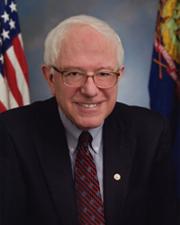 BS
BS ECS
ECS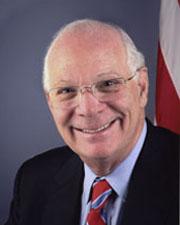 BLC
BLC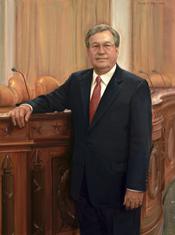 WMT
WMT SML+18
Floor Debate
23 membersWhat members said about H.Res. 304 on the floor
Mr. Speaker, I yield myself such time as I may consume. Mr. Speaker, let me begin by mentioning that this is a tripartisan resolution, and I want to thank our cosponsors: the gentleman from Oregon…
Mr. Speaker, I yield myself such time as I may consume.
Mr. Speaker, let me begin by mentioning that this is a tripartisan resolution, and I want to thank our cosponsors: the gentleman from Oregon (Mr. DeFazio), the gentleman from Tennessee (Mr. Duncan), the gentleman from Arizona (Mr. Grijalva), the gentleman from Indiana (Mr. Hostettler), the gentleman from North Carolina (Mr. Jones), the gentleman from Ohio (Mr. Kucinich), the gentleman from Texas (Mr. Paul), the gentleman from Wisconsin (Mr. Sensenbrenner), the gentleman from Michigan (Mr. Stupak) and the gentleman from Colorado (Mr. Tancredo). I thank them very much for their support.
Mr. Speaker, I do not have any great illusions that this resolution will win today. When the gentleman from Texas (Mr. Paul) offered it 5 years ago, it only received 56 votes. I hope, however, that as many Members as possible will vote for it today for one simple reason. It is time to send the Bush administration a message and a wake-up call that our current trade policies have failed and need to be completely rethought so that they represent the needs of the middle class and working families of our country and not just the CEOs of large corporations.
Mr. Speaker, international trade is a good thing, if implemented properly, but the evidence is overwhelming that our current trade policies, including NAFTA, including permanent normal trade relations with China, and the current roles of the WTO are not working for average Americans, they are not working for the environment, and they are not working for human rights. If we do not fundamentally change those policies, we can only expect more of the same.
The WTO was signed in 1995, and our current support of unfettered free trade has gone on for some 30 years. And what has been the result of those policies for the middle class of this country? Let us discuss it.
In a period in which technology has exploded, in a period in which worker productivity has significantly increased, we would think that the middle class would be better off.
But the economic reality today is that what every American knows is that the middle class of this country is collapsing. Poverty is increasing, and the gap between the rich and the poor is wider today than at any time since the 1920s. Are our disastrous trade policies the only reason for this? No. But they are an extremely important part of that equation, and that is for sure.
Mr. Speaker, in 1995 when the WTO was established, our trade deficit was $96 billion. Today our trade deficit is a record-breaking $617 billion and is on pace to become $700 billion next year. Our trade deficit with China alone is $162 billion.
Mr. Speaker, while some of my colleagues are going to extol all of the wonderful virtues of unfettered free trade, perhaps they can explain why in the last 4 years alone we have lost 2.8 million good- paying manufacturing jobs, one out of six in this country. One out of six in the last 4 years. In my own small State of Vermont, we have lost 20 percent of our manufacturing jobs in the last 5 years. Many people know
that General Motors has just announced they are going to lay off another 25,000 American workers. GM is producing cars in China, and there is some reason to fear that in 10 or 20 years, Detroit and automobile production in this country will be diminished as car manufacturing moves to China.
When my friends come up here and they tell us how great free trade is for our economy, I want them to explain why real inflation accounted for wages in the United States today is 7 percent lower than they were in 1973 for the bottom 90 percent of workers. And why is it that million of workers today in Vermont and throughout this country are forced to work two or three jobs just to keep their heads above water if free trade and globalization are all so great?
When my friends talk about the so-called robust economy that has been created, perhaps they can explain to us why 4 million more Americans now live in poverty than just 4 years ago, 4 million more Americans in poverty; and why incredibly there are 24,000 fewer private sector jobs now than when George Bush first took office. If our trade policies are so successful, how could we have experienced an unprecedented net loss of private sector jobs over the last 5 years? The only new net jobs that have been created by the Bush administration have been government jobs, 917,000 of them. Maybe the Republican Party is becoming the party of big government and creating government jobs, but certainly it has not been private sector jobs that free trade is supposed to create.
Today the gap between the rich and the poor is growing wider. The richest 1 percent of our population now own more wealth than the bottom 90 percent, and unfettered free trade has only made that worse. The gap between the rich and the poor more than doubled from 1979 to 2000. According to the Institute for International Economics, 39 percent of the increase in income equality is due to unfettered free trade.
Further and most ominously, if our present trade and economic policies continue, the likelihood is that the next generation will be the first in the modern history of the United States to have a lower standard of living than we do. According to a recent report from the Department of Labor's Bureau of Labor statistics, over the next decade, seven out of the 10 fastest-growing occupations will be low-paying, low-skilled jobs that do not require a college education. Is that what free trade is giving to our kids, jobs at Wal-Mart, jobs at McDonald's, while the General Motors jobs, the General Electric jobs are going to China?
Mr. Speaker, it is not only blue collar jobs that we are on the cusp of losing. Millions of white collar information technology jobs are also on the line to go to China and India. Andy Grove, the founder of Intel, predicts that the United States will lose the bulk of its information technology to jobs to China and India within the next decade.
Mr. Speaker, the bottom line of this debate, and I want my friends to answer this, is that American workers should not be asked to compete against desperate people in China who make 30 cents an hour and who go to jail when they stand up for their political rights. That is not what we should be engaged in. The race to the bottom has been a disaster for the middle class.
Mr. Speaker, I reserve the balance of my time.
Mr. Speaker, I am happy to yield 3 minutes to the gentleman from Oregon (Mr. DeFazio).
Mr. Speaker, how much time remains?
Mr. Speaker, I yield 4 minutes to the gentleman from Ohio (Mr. Kucinich).
Mr. Speaker, I yield 3 minutes to the gentleman from Indiana (Mr. Visclosky).
Mr. Speaker, I yield myself such time as I may consume.
My good friend mentioned what has happened since China has joined the WTO. I think he has neglected to mention that our trade deficit with China has soared, that millions of jobs have left the United States to go to China.
Mr. Speaker, I am very pleased to yield 4 minutes to the gentlewoman from California (Ms. Waters).
Mr. Speaker, can I inquire again as to how much time remains?
Mr. Speaker, I am pleased to yield 4 minutes to the gentleman from Utah (Mr. Bishop).
Mr. Speaker, I yield 5 minutes to the gentleman from Ohio (Mr. Brown) who has been leading this Congress in opposition to the disastrous CAFTA agreement.
Mr. Speaker, I yield 4 minutes to the gentleman from California (Mr. Rohrabacher).
Mr. Speaker, how much time remains for either side?
Mr. Speaker, I yield myself the balance of my time.
To begin with, at a time when there is so much animosity and partisanship in this body, I am very pleased that what we have brought forth together is a true tripartisan effort.
I want to thank the gentleman from Texas (Mr. Paul), the gentleman from Oregon (Mr. DeFazio), the gentleman from Tennessee (Mr. Duncan), the gentleman from Arizona (Mr. Grijalva), the gentleman from Indiana (Mr. Hostettler), the gentleman from North Carolina (Mr. Jones), the gentleman from Ohio (Mr. Kucinich), the gentleman from Wisconsin (Mr. Sensenbrenner), the gentleman from Michigan (Mr. Stupak), and the gentleman from Colorado (Mr. Tancredo) for cosponsoring this amendment and, as I think most people know, that covers a very, very broad spectrum of political thought.
Mr. Speaker, some have argued against this resolution by saying it
would be a disaster if it were passed, that we would be withdrawing from the international economy, but the reality is that what we are trying to do here is not to withdraw from international trade. Trade is a good thing. What we are saying is let us send a message to the President of the United States to wake up and to fully recognize that our current trade policies are an unmitigated failure and that we have got to renegotiate them. We cannot continue on the policy of the race to the bottom. That has got to change.
Some of my friends say what we are talking about is international rules, and of course we are talking about international rules. The problem is that the rules within this WTO are rigged against the middle class of America. If the United States Congress said, wait a second, we are going to pass a law because we think it is unfair that slave labor in China is producing a product that is exported to the United States, or that child labor around the world is competing against American workers, we will be ruled incorrect by the WTO. A complaint will be waged against us saying, gee, why are you protesting slave labor or child labor? You are violating international free trade.
Another issue that has not been touched on today, a moral issue, which is very important, when I was mayor of the City of Burlington in the 1980s, we passed, as did cities throughout the country, as did the United States Congress, legislation which said to the apartheid regime which had then imprisoned Nelson Mandela, we are going to impose trade restrictions against an apartheid regime. Mr. Speaker, if that occurred today, if the City of Burlington, Vermont, the State of Vermont, the United States Congress, said we want to bring down economically some type of fascistic government running the country, that country would go to the WTO and the WTO would say, gee, you are in violation of free trade agreements. It does not matter the morality of the issue. The only thing that matters is unfettered free trade.
Mr. Speaker, what my friends on the other side of this debate have really failed to discuss is the impact of the unfettered trade policies that we have been developing over the last 30 years. You have not heard them say really one word about that. Yes, they have talked about economic growth that is taking place in America, but they forgot to tell you who was benefiting from that economic growth. They have forgotten to tell you that for the average American worker his or her wages have gone down significantly in the last 30 years.
Yes, the wealthiest people in this country are making out like bandits. Yes, there has been a doubling in the gap between the rich and the poor. That is true. Yes, CEOs of large corporations make 400 times what their workers make. Is that the free trade agreement that we are fighting for?
The reality is, and they know it, Republicans know it, Democrats, conservatives, progressives, when going back to their district. In my State in the last couple of months, I had to talk to workers whose jobs are gone because those companies could not compete against imports coming in from China where workers are paid 30 cents an hour.
I would yield a moment to my friends on the other side if they want to tell the American people that they think it is fair that our working people should have to compete against desperate people working for pennies an hour who go to jail when they stand up for their rights. I would yield to the gentleman from Florida, the gentleman from Maryland, or anyone else who wants to tell me now that that is fair. I do not hear anybody saying that it is fair.
I yield to the gentleman from Maryland.
Taking back my time, and I thank the gentleman. He says that it is unfair. But we have had this trade agreement, we have been in the WTO for 10 years. We have had a Democratic President. We have had a Republican President. If it is unfair, why is the President of the United States not going to the WTO tomorrow? Why did Bill Clinton not go? I do not want to be partisan here. Why did neither of them go? And they are not going to go.
The issue here is that these trade agreements have been forced on Congress, not forced, Congress willfully did it, because of the power of big money. It is no secret. Some of us who were here for NAFTA, some of us here for the China agreement, we know the millions and millions of dollars in campaign contributions and huge lobbying effort on the part of the large corporations. Because the truth of the matter is that while unfettered free trade is a disaster for the middle class and working families of this country, it really does benefit the heads of large corporations. They are, in fact, doing very well.
We see General Electric, General Motors moving to China. That is not a good thing for Americans.
Let me conclude simply by saying, Mr. Speaker, let us send the President of the United States a message. Let us say that our current trade policies are failing. Let us stand up for working families around the country. Let us pass this resolution.
Mr. Speaker, I yield back the balance of my time.
Mr. Speaker, on that I demand the yeas and nays.
Mr. Speaker, pursuant to House Resolution 304, I call up the joint resolution (H.J. Res. 27) withdrawing the approval of the United States from the Agreement establishing the World Trade…
Mr. Speaker, pursuant to House Resolution 304, I call up the joint resolution (H.J. Res. 27) withdrawing the approval of the United States from the Agreement establishing the World Trade Organization, and ask for its immediate consideration.
Mr. Speaker, I ask unanimous consent that all Members may have 5 legislative days within which to revise and extend their remarks and include extraneous material on H.J. Res. 27, the joint resolution under consideration.
Mr. Speaker, I yield myself such time as I may consume.
Mr. Speaker, this morning the House considers the withdrawal of the United States from the World Trade Organization. I strongly oppose this resolution and urge my Members to join me in this opposition.
As a member of the World Trade Organization, the United States is one of 148 member countries. Our role in this global body is tremendously important, not only for the future of the United States trade but for the continuation of global trade liberalization.
As the world's leading economy, the largest economy that has ever been on the face of this earth, we all too often focus our attention on the aspects of trade we disagree with. When Members of Congress meet with our international counterparts, we spend a large amount of time discussing specific trade barriers and little time supporting the broad range of cooperation and successes that we may share.
Continued membership in the World Trade Organization will allow the United States the opportunity to continue cooperating as we work towards free trade benefiting United States consumers, farmers, manufacturers and firms.
Currently, the World Trade Organization is negotiating the Doha Round. Congress has been deeply involved with the administration as the Round continues to move forward. It is tremendously importantly that we remain active in these negotiations and push for a completed Doha.
Finally, I congratulate Mr. Pascal Lamy of France on his selection as the new World Trade Organization Director General. I am hopeful his abilities will enable the World Trade Organization to balance the concerns of its members. I look forward to working with him in the future.
Finally, Mr. Speaker, it is my strong view that the United States greatly benefits from our continued participation in the World Trade Organization.
Mr. Speaker, I reserve the balance of my time.
Mr. Speaker, I yield myself such time as I may consume. A lot of astounding remarks have been made since I stood up here and introduced this resolution, in the negative. There are a couple of things I think we need to really talk about.
What has been the economic growth of the United States? How fast is our economy growing? It is growing at the rate of 4 percent. How fast is the economy in Europe growing? It is 1 percent. How fast is the European economy growing? It is 1 percent. The China economy is growing at 9 percent, but let us look at what that means. Nine percent of the Chinese economy is less than 4 percent of our economy. So I can say with all certainty that we have, in terms of dollars, the fastest growing economy in the world. No question about that.
And of this economy, what percentage is exports? It is 25 percent. Are we not concerned about those jobs? And when we talk about the loss of jobs in the United States, we are not talking about a net loss; we are talking about, yes, there has been some loss of jobs and, yes, a lot of these jobs have been because of foreign competition, yes. But our economy has grown in other areas, so it has also created jobs. If we look at just the jobless rate of where we are now and where we were a few years ago, we are doing pretty darn good. If we look at the world economy, we are doing really good.
So why would we want to send a message to the administration by attempting to throw the world economy into chaos? It makes absolutely, absolutely no sense.
Mr. Speaker, I yield 3 minutes to the gentleman from Arizona (Mr. Kolbe).
Mr. Speaker, just one moment, I think, to respond to the gentleman who was just in the well, and that is in the 10 years that we have been members of the World Trade Organization, our environmental laws have never been challenged, have never been challenged, nor will they.
Mr. Speaker, I reserve the balance of my time.
Mr. Speaker, so that no one listening to this debate is confused,
this vote has nothing to do with DR-CAFTA, it has nothing to do with free trade, it is simply are we going to continue as part of the World Trade Organization.
Mr. Speaker, I yield such time as he may consume to the gentleman from California (Mr. Thomas), the Chairman of the Ways and Means Committee.
(Mr. THOMAS asked and was given permission to revise and extend his remarks.)
Mr. Speaker, I would remind the gentleman in the well that of the 50 cases we have brought before the World Trade Organization, we have won 46 which is a 92 percent success rate.
Mr. Speaker, I yield 3 minutes to the gentleman from Wisconsin (Mr. Ryan), a member of the Committee on Ways and Means.
Mr. Speaker, I yield 3 minutes to the gentleman from Pennsylvania (Mr. Murphy).
Mr. Speaker, I yield myself the balance of my time.
There is quite a bit of ground that we have covered here this morning. One is that somehow CAFTA has been brought into this debate by a couple of speakers.
I would like to submit for printing in the Record a letter dated June 8, 2005, which was just yesterday, from former President Jimmy Carter to Mr. Bill Thomas, the chairman of the Ways and Means Committee, in support of CAFTA.
In this letter, he says, If the United States Congress were to turn its back on CAFTA, it would undercut these fragile democracies, compel them to retreat to protectionism, and make it harder for them to cooperate with the United States.
This is the type of bipartisan cooperation that we are about here today. It is important, I think, to realize that this resolution came before the Ways and Means Committee because we were required to take it up if it were to be filed under the law originally bringing us into the World Trade Organization. On both sides of the aisle, I believe I am correct on this, that the decision by the Ways and Means Committee to report this out unfavorably to the House, which we had to do procedurally, but to report it out unfavorably, I think, was unanimous on both sides of the aisle.
There is criticism as to what is happening, and some people would like to change some of the things within the framework of the World Trade Organization, but the Ways and Means Committee, I think, was very, very responsible.
Now the question of jobs and the economy has been raised, and China has been brought into this debate. China has got some problems with their currency and some things we need to do and their enforcement of their own laws. I will yield that ground to those that bring that criticism to us. But I think it is important to realize where those jobs are coming from or where those exports, who are the winners and losers with regard to the Chinese exports.
The Chinese exports are draining off the exports from Japan, Korea and other Pacific Asian countries. That is where those jobs are coming from. If you talk about and look at exactly the exports into the United States from that region of the world, you will see that it is fairly flat, not for China, but China is increasing its exports at the expense of these other countries.
The question has been brought into this debate as to the sovereignty of the United States. It is very clear to anyone, any of the lawmakers in this Congress, that Congress and the President make United States laws. The World Trade Organization cannot change laws either today or in the future. The World Trade Organization has no enforcement authority. It cannot impose fines, levies, sanctions, modify tariff rates or change the laws of any country. The only sanction for a violation of the World Trade Organization is that affected World Trade Organization
member, and that member country may in some cases impose retaliatory measures on trade of the country that violates the rules. But that is not enforcement by the World Trade Organization. The World Trade Organization agreement permits the United States to regulate and even stop trade to protect United States national security, public health and safety, natural resources and human rights. So we are not giving up any of our sovereignty by remaining in the World Trade Organization.
On the question of jobs and the exporting of American jobs, exports account for about 25 percent of the United States economic growth over the course of the past decade. Exports support an estimated 12 million jobs, and those workers' wages are estimated to pay 13 to 18 percent more on the average than nonexport jobs. United States exports directly support one in every five manufacturing jobs. Workers in most trade- engaged industries where combined exports and imports amount to at least 40 percent of their domestic industrial output earn an annual compensation package that is one-third more than the average compensation in the least trade-engaged sectors. A recent University of Michigan study shows that lowering remaining global trade barriers by just one-third would boost annual average family income by an additional $2,500.
So if you are interested in jobs, vote against this resolution. If you are interested in the economy and the growth of our economy of this United States, vote against this resolution. If you want chaos in world trade, vote for it, because that would exactly be what we would have. We would have total chaos. It would be the wild, wild west. I think that the only responsible vote here today for the American worker and the American economy is to vote no on this resolution.
June 8, 2005.
Hon. Bill Thomas,
Rayburn House Office Building,
Washington, DC.
To Representative Bill Thomas: as you prepare for your
initial consideration of the Central American Free Trade
Agreement (CAFTA) with the nations of Central America and the
Dominican Republic, I want to express my strong support for
this progressive move. From a trade perspective, this will
help both the United States and Central America.
Some 80 percent of Central America's exports to the U.S.
are already duty free, so they will be opening their markets
to U.S. exports more than we will for their remaining
products. Independent studies indicate that U.S. incomes will
rise by over $15 billion and those in Central America by some
$5 billion. New jobs will be created in Central America, and
labor standards are likely to improve as a result of CAFTA.
Some improvements could be made in the trade bill,
particularly on the labor protection side, but, more
importantly our own national security and hemispheric
influence will be enhanced with improved stability,
democracy, and development in our poor, fragile neighbors in
Central America and the Caribbean. During my presidency and
now at The Carter Center, I have been dedicated to the
promotion of democracy and stability in the region. From the
negotiation of the Panama Canal Treaties and the championing
of human rights at the time when the region suffered under
military dictatorships to the monitoring of a number of free
elections in the region, Central America has been a major
focus of my attention.
There now are democratically elected governments in each of
the countries covered by CAFTA. In negotiating this
agreement, the president of each of the six nations had to
content with their own companies that fear competition with
U.S. firms. They have put their credibility on the line, not
only with this trade agreement but more broadly by promoting
market reforms that have been urged for decades by U.S.
presidents of both parties. If the U.S. Congress were to turn
its back on CAFTA, it would undercut these fragile
democracies, compel them to retreat to protectionism, and
make it harder for them to cooperate with the U.S.
For the first time ever, we have a chance to reinforce
democracies in the region. This is the moment to move forward
and to help those leaders that want to modernize and humanize
their countries. Moreover, strong economies in the region are
the best antidote to illegal immigration from the region.
In appreciate your consideration of my views and hope they
will be helpful in your important deliberations.
Sincerley,
Jimmy Carter.
Mr. Speaker, I yield back the balance of my time.
Mr. Speaker, I yield myself such time as I may consume. Mr. Speaker, let me first point out to those who may be following this debate why we are here today. I am sure people are wondering why we have…
Mr. Speaker, I yield myself such time as I may consume.
Mr. Speaker, let me first point out to those who may be following this debate why we are here today. I am sure people are wondering why we have a resolution on the floor that would withdraw us from the WTO and how that comes to the floor from a recommendation of the committee of jurisdiction that it be reported unfavorably, that is, that we vote against this resolution.
The reason we have this resolution before us is that 10 years ago we passed legislation to gain access to the WTO. At that time Bill Clinton was the President of the United States. Congressman Gingrich thought it was important that because the legislative branch of government is the branch responsible for trade that there be a review process every 5 years as to whether we should remain within the WTO, to give Congress the ability to exercise its constitutional responsibility to oversight and be responsible for trade. At that time, Mr. Speaker, I must tell the Members I had certain concerns as to why we would want to have basically a nuclear option in pulling out from the WTO.
Today, I am pleased that we can review the WTO because I think it is important for us to have a debate as to where we are in the WTO. I would suggest, though, we should have a more sophisticated review process than just to vote to withdraw from the WTO. As the ranking Democrat on the Trade Subcommittee working with the gentleman from Florida (Mr. Shaw), we very much oppose this resolution and urge the rejection of the resolution. We believe it is in the interest of the United States to be in a rules-based trading system and to withdraw from a rules-based trading system would be folly, it would be wrong. Do we need to improve it? Yes, we do need to improve the WTO. Can we strengthen it? Yes, we need to strengthen it.
Quite frankly, I think that we should be working more aggressively with our trading partners to enforce our existing trade rules. When we see the manipulation of currency by China and we take no action against it, that is wrong. When we see other countries infringe on our intellectual property rights and we do not enforce our existing rules to make sure that we do not allow the stealing of our intellectual property rights, that is wrong. When we see Europe provide subsidies for everything from aircraft to agriculture products and we do not take efficient action against them, that is wrong. When we do not enforce our own anti-dumping laws which are permitted to be enforced to stop the surge of products into this country, that is wrong.
So, Mr. Speaker, I do think we need to strengthen these laws, but it would be wrong for us to withdraw. We want a rules-based system, but we want to strengthen that system.
Mr. Speaker, quite frankly, I think we should be spending more time talking about the Doha Round. That is the next stage of trying to move internationally under the WTO to expand opportunity for American manufacturers, farmers, and producers. The so-called Doha Development Agenda negotiations have reached a critical phase. It is generally agreed that in order to have a successful meeting of the ministers this December in Hong Kong, the members of the WTO will have to come to a significant level of agreement by July on three key areas.
First, agriculture. I must tell the Members I am concerned we have not made anywhere near the progress on agriculture that we need to do. I welcomed the announcement last week that the next director-general of the WTO will be Pascal Lamy, the former trade commissioner of EU, who comes from France. Obviously, Mr. Lamy will have a special burden to demonstrate that he can make progress in this area where the European Union has been so outrageous in its subsidies. We need to narrow that gap. We will wait to see whether, in fact, that can be accomplished.
The second area is in manufactured goods. There are two challenges here: tariff reductions particularly by the advanced developing countries and the elimination of the so-called nontariff barriers, the NTBs. And in both of these areas, much work remains to be done if we are going to have a successful Doha Round. I am particularly concerned about the negotiations on the NTBs which lie far behind at this time. This is a critical area for U.S. manufacturing, particularly in large markets such as Japan, Korea, and China.
And, finally, in the area of services, we are far behind where we should be in expanding opportunity for services by U.S. companies in other markets. I hope that our negotiators will be able to make up for lost time in the next couple of months so that an ambitious services package will be approved in Hong Kong.
There is one other area I want to mention, Mr. Speaker, as we review our participation in the WTO, and that is the dispute settlement system. The dispute settlement system is absolutely critical to a successful WTO. I must tell the Members I have major concerns as to how the dispute resolution system is working within the WTO. Under the old GATT system, silence in an agreement meant that a country could do what it deemed appropriate.
Under the decisions of the appellate body and the panels of the WTO, silence has been altered to mean that the appellate body and panels do what they think is appropriate. That is just wrong.
The number of cases are disturbing. In 33 cases brought against the United States since 1995, panels or the appellate body have overreached, overreached, in 22 of them. That is two-thirds. We need to have a way to review what the appellate body and dispute resolution panels are doing, and we are not doing that.
The consequences of this overreaching are clear. In 10 years the WTO has not affirmed a single safeguard measure as applied by the United States or any other country. In trade remedy cases involving the United States, anti-dumping duties, countervailing duty measures, and safeguard cases, the WTO has upheld the United States decision in two of 17 cases. That is an 88 percent loss ratio, clearly one that we need to take a better look at.
A growing number of observers are coming to recognize that the extraordinary loss rate is because the WTO panels and its appellate body do not respect the letter of the WTO agreements and are filling in the gaps beyond what the U.S. negotiators agreed to in the Uruguay Round.
Mr. Speaker, I mention this because this is another area that we have to make up for lost ground in our negotiations under the WTO. So make no mistake about it, we should reject this resolution overwhelmingly because it is in the interest of the United States to participate in a rules-based international trading system. I represent a community that includes the port of Baltimore. I want products coming into the United States. I also want products leaving the United States through the port of Baltimore. It is important for our economy. But we have to do a better job in our negotiations within the WTO, and that is what we need to concentrate on. That is what we need to work together on. And if we do that, it will be a win-win for this Nation. We will be able to increase jobs through manufacturing, through production, and through farming.
Mr. Speaker, I reserve the balance of my time.
(Mr. PAUL asked and was given permission to revise and extend his remarks.)
Mr. Speaker, I am pleased to yield 4 minutes to the gentleman from Louisiana (Mr. Jefferson), a distinguished member of the Committee on Ways and Means.
Mr. Speaker, I am now pleased to yield such time as he may consume to the gentleman from Michigan (Mr. Levin), the former ranking Democrat on the Subcommittee on Trade, one of the senior members of the committee on Ways and Means.
(Mr. LEVIN asked and was given permission to revise and extend his remarks.)
Mr. Speaker, I yield myself such time as I may consume.
Mr. Speaker, first let me say that I agree with my colleague that we should be negotiating higher labor standards, at least international labor standards; but I would suggest the way to do that is engagement, not to pull out of the WTO and to do better in our bilateral agreements. I agree with him on CAFTA and to elevate the WTO to do better on international standards.
The withdrawal would leave these countries without any opportunity to improve labor standards.
Mr. Speaker, I yield 2 minutes to the gentlewoman from Michigan (Ms. Kilpatrick).
Mr. Speaker, I yield 2 minutes to the gentleman from California (Mr. Sherman).
Mr. Speaker, I yield myself the balance of my time.
Mr. Speaker, I once again rise to urge my colleagues to reject this resolution. It is important that we work within a rules-based trading system in order to expand opportunities. Only by working within a rules-based trading system can we raise the international bar on labor standards, on environmental standards. If we were to pull out of the WTO, we would have no opportunity to raise at all the labor standards in other countries or the environmental standards. We need to be within a rules-based trading system to reduce barriers.
The U.S. market is the most open market. We want our trading partners to open up their markets. Staying within the WTO offers us that opportunity. We need effective enforcement of our agreements. We need to work within the WTO in order to accomplish those objectives. And, Mr. Speaker, here is an area where we must exercise more of our responsibility by changing laws and strengthening laws so that we can enforce the obligations that we have negotiated within the WTO. I will be introducing legislation to do that, and I urge my colleagues to work with me so that we can enforce the agreements that we have reached with other countries.
Mr. Speaker, I urge my colleagues to reject this resolution. Let us work together to open up markets.
Mr. Speaker, I yield back the balance of my time.
Mr. Speaker, will the gentleman yield?
Mr. Speaker, I believe that is unfair. I agree with my colleague completely. The question is, why are we not negotiating with our trading partners to do something about that?
Mr. Speaker, I thank the gentleman from Florida (Mr. Shaw) on that clarification, because I find it kind of ironic, the fact that we are on a fundamental question, should the United States continue…
Mr. Speaker, I thank the gentleman from Florida (Mr. Shaw) on that clarification, because I find it kind of ironic, the fact that we are on a fundamental question, should the United States continue to belong to the World Trade Organization or not, complaining about degrees of differences in various pieces of trade legislation.
That is, in fact, how we got here in the first place. Prior to World War II, in fact, many historians argue the reason we got into the Great Depression as deeply as we did is because the United States chose to throw up significant tariffs and barriers to commercial interaction among nations.
Following World War II, there was an agreement that we should not do that again; and we created a rather imperfect agreement called the General Agreement on Tariffs and Trade. It was as good as we could get at the time. As we continued to operate under the General Agreement on Tariffs and Trade, with so-called rounds named after various cities, which has become a tradition now, the Uruguay Round, the Tokyo Round, the Rome Round, we decided that we need to move to another level, a higher level of integration and coordination; and that became the World Trade Organization.
The United States was somewhat frustrated, one, in our dispute resolution mechanism, and the problem was we were winning with no substantive result in those disputes. We thought we needed a better dispute resolution mechanism.
Marginally, the one we have today, I believe is better. Is it good? Not yet. As the gentleman from Michigan (Mr. Levin) indicated, I think there needs to be a much higher degree of transparency, especially on the resources used to research decisions. That will be an ongoing point of discussion.
But what is good primarily I think for the United States and the World Trade Organization restructure from the General Agreement on Tariffs and Trade is that agriculture became one of the points of discussion and importantly for the U.S. services and financial instruments and in the protection of intellectual property rights. Those were critical. These were, in essence, new additions; and we are continuing to try to expand those areas that countries sit down and discuss under a structure.
The decision today is, should that imperfect structure remain and we continue to work toward a better structure or should we simply withdraw? That really is not a difficult decision for most Members; and, overwhelmingly, we will agree to stay in the World Trade Organization when we vote on this particular measure.
But what you are hearing primarily are complaints and concerns that we have about the ongoing world trade relationship; and, heaven knows, I can wheel out all of my arguments as well. But, as correctly pointed out by the gentleman from Florida (Mr. Shaw), this is narrowly on the WTO issue.
But let me just select a couple of areas of trade action by the United States in the last several years.
First of all, under the Constitution, all trade-related activity with foreign countries is constitutionally the responsibility of Congress.
Now how many trade agreements do you think we would reach if we went to a country and said, come on in, negotiate with the House and the Senate, wait until we go through a conference committee in deciding what that agreement is going to be, and you ought to agree ahead of time before you see the final product?
Now, obviously, that led to a desire to restain the responsibility but provide the administration the ability to do the negotiating nation to nation. We are currently under the trade promotion authority structure. Can you imagine the World Trade Organization where every country has a veto, you can only to things by unanimous agreement, and how rapidly you can advance concerns that you have when the primary criteria is unanimity?
So one of the reasons we continue to use bilateral country-to-country relationships and regional agreements, in part, so that we do not get bogged down by waiting for the WTO, but also to a certain extent, since we believe in transparency, since this country is the most open large country of trade, import, export, of any in the world, that open markets all over the world are good.
So when you examine a bilateral agreement, for example, like the United States and Singapore, Singapore obviously is not too worried about agricultural product protection. They are worried about intellectual property rights. They are worried about services.
We were able to enter into an agreement with Singapore, the United States and Singapore, to set a mark for other countries on what is the best way to deal with those particular concerns; and that is down now as an agreement which we can point to as a model that we should move forward on dealing with other countries.
A regional agreement would be the Central American Free Trade Agreement, and what is left out of the discussion with CAFTA are just a couple of points I would like to mention.
One, before we decided to deal with the region, we told those countries, initially the five Central American countries, they had to deal with each other. That El Salvador, Guatemala, Honduras, et cetera, all had to come together as a region, which, first of all, is fundamentally significant. They are not looking at themselves as individuals. The final question was an individual one, but they looked at themselves as a region. Once they did that, we then entered into trade negotiations with them.
You need to know something about those trade relations. They were not driven by the Central American countries' desire to get into the U.S. marketplace. Normally, we can say an opportunity to get into the U.S. marketplace is a pretty good club in which we can get them to agree to various things we want them to agree to. Obviously, it is voluntary on both sides, but the incentive of getting into the U.S. market is a terrific reason to push the agreement probably farther than they would want, because the reward is getting into the U.S. market.
Not the case in Central America. We gave away the U.S. market for security, humanitarian reasons. Their products come into the United States tariff free already. If there is no CAFTA, their products still come into the U.S. market virtually tariff free.
Basically, what we are trying to do is open up the Central American market to U.S. goods and services where they have high tariffs. And when you negotiate freely, one of the things you cannot do is dictate to other people what it is that they are going to do internally in their country. You can set standards, you can cajole, you can create a mutual growth structure, you can bring money to the table to assist them in moving forward. That is basically what the United States does with the rest of the world on bilateral and regional agreements.
And the CAFTA agreement is good for the United States in terms of the economics of getting into the Central American marketplace so that we have a little more of a level playing field with other countries around the world. But it also is a chance for these fledgling and growing democracies to have the input of knowledge, training, and financial assistance in growing their responsible labor structure as well.
Most of this is tinted with ``protect America'' as the argument. America does not really need protection. America needs the opening of markets around the world in voluntary structures whether they be bilateral, regional, or multinational, as the WTO is. There will always be resistance. China coming into the WTO was a good thing. Are we having difficulties with them? Yes. Will they continue to have difficulties with themselves as they advance as the world's largest nation? Yes. But those discussions occur under a framework which over time has gotten better and will get better, especially with the United States leadership.
For the United States to walk away unilaterally from what is the best historical example of nations dealing economically in a meaningful and useful way makes no sense whatsoever. And that is why overwhelmingly the vote today will be ``no'' on withdrawing from the WTO. Does that resolve any of the ongoing difficulties we have in terms of our perception of the world, how fair the world is, how open markets in the world are, what instruments we need to use to try to push a more transparent and open marketplace, between countries, among countries, and in fact in all trading nations of the world? Of course not.
All of those issues will continue to be before us, but they will be before us in a structure which allows us to measure, allows us to judge, and most importantly allows us to change as the key competitive component between nations of the world today and tomorrow will be the question of trade. And ordered and structured competition is to the advantage of the United States. And that is why overwhelmingly you will see support staying in the WTO, nurturing and growing the WTO, notwithstanding the fact that we have a whole lot of concerns about a whole lot of issues.
Mr. Speaker, I rise in opposition to the proposal that we withdraw from the WTO. I urge that we look at this basic question: on balance, would we be better off if there were not a WTO? And I think…
Mr. Speaker, I rise in opposition to the proposal that we withdraw from the WTO. I urge that we look at this basic question: on balance, would we be better off if there were not a WTO? And I think the answer to that is we would not be.
Expanded trade has occurred in this country and in this world. It is not a win-win proposition, as some people like to say. There are losers as well as winners, both individually and in nations. It is not an easy proposition, expanded trade. However, globalization is here to stay. There is no turning back the clock. The question is to try to make the hands tick well and in the right direction.
There has been some argument about sovereignty. It is not true that WTO decisions do not impact U.S. laws. That is not true. I supported the GATT agreement; I helped to shape the implementation language. Did it have some impact on U.S. laws? Yes. Were there some requirements that U.S. laws be changed? Yes. By definition, tariff agreements require changes in laws here and everywhere else, unless they are decreed by edict. The WTO changed from GATT, and so now there is a final dispute settlement mechanism. I think on balance that was a good idea because, otherwise, every country could veto, and that was not workable.
But we have to look at the problems as well as the promise, the problems as well as the achievements.
The dispute settlement system is flawed. The answer is not to withdraw from the WTO; it is to work hard to change the dispute settlement system. As was said earlier, it is very opaque, that is true. There is not an openness that there should be; and when it comes to our safeguard provisions that many of us worked hard to put into law, the gentleman from Maryland (Mr. Cardin), who is the ranking member, was part and parcel of that, as well as the gentleman from New York (Mr. Rangel), and those on the Republican side, we worked hard to put safeguards in. Every challenge to safeguards has been upheld by the WTO. We have lost every case. We have not known what went into the consideration of the decision fully, we did not see all the briefs, and we did not know the basis for the decisions, in many cases. In some cases they went beyond the language of the WTO agreements.
A Wall Street Journal article earlier this month had this statement about panelists: ``They don't have time to develop expertise and procedural and technical aspects of the dispute settlement system.'' And we are going to have them judge the Boeing, the complicated Boeing case, for example? We need to change, and work harder to change, the dispute settlement system, not to withdraw from the WTO.
So there are some major structural problems.
Also, relating to China, I have been very dissatisfied with the way the WTO has handled the annual review of China's obligations that we worked so hard to bring about. Part of the problem is with the WTO in Geneva, part of the problem has been our administration that has not vigorously, and the gentleman from Maryland (Mr. Cardin) has worked so hard to illustrate this, the administration has not worked actively enough to get China to live up to its agreements. So more needs to be done by the administration, and we have been losing too many cases, and we have been filing too few cases.
So my suggestion is that we focus today on the accomplishments, but also the barriers, to effective operation of the WTO.
One issue the WTO has totally failed to address relates to core labor standards. On environment, they have kind of a group that looks at environmental issues.
On core labor standards, there has been resistance to address this. Years ago, there was a proposal by the Clinton administration to set up a working group within the WTO. That was resisted, resisted by many, including developing nations.
I think now, as developing nations have to compete with each other, including China, where labor standards essentially are nonexistent, those developing nations are beginning to say, well, maybe the WTO should address it. But it has not.
The argument was, okay, let us use bilateral agreements as building blocks in a number of areas, including core labor standards. And that is why I want to say just a few words now about the failure of this administration to use bilateral agreements effectively as a building block when it comes to basic core labor standards, the ILO labor standards, child labor, forced labor, nondiscrimination, and the right of workers to assemble, to organize, to have unions if they desire, and to bargain collectively.
CAFTA is a vital agreement in terms of where globalization is going. In Latin America, there is growing unrest and changes in government, in part because of the failure to have the large numbers of people, the largest proportion of people, share in the benefits of globalization.
So what did this administration do under these circumstances? It negotiates a standard, enforce your own laws. Enforce your own laws is only used as to core labor standards, not as to intellectual property or tariffs or anything else. And the tragedy of it is that the laws in Central America, to some extent the Dominican Republic, do not meet the basic standards giving people the freedom in the labor market. That is the basic fact. The ILO reports say so, despite what the administration tries to say. Their own State Department reports say that, despite what the administration and our new USTR, Mr. Portman, said this morning.
What is at stake is the development of a middle class that is so critical. And I am going to say more about this later today. The experience in countries is that workers are a critical part of the evolution towards a strong middle class.
There was a reference by Mr. Portman to Jordan. And what he said, that CAFTA is stronger than Jordan, it is simply not true. It is not correct. Jordan has reference in its agreement to the core labor standards, that is not true of CAFTA. And the enforcement capability in Jordan was left to each country to undertake.
So I just wanted to comment on this, because the bilateral agreements were supposed to be a building block where the WTO did not address an issue; and there is a failure at this critical point of globalization, a critical missed opportunity in terms of helping the benefits of globilization being widely shared.
I want to close, and I will say more about this later today, why it matters to the U.S. It matters in terms of Central America, which, as I say, has such income disparities that are true of Latin America generally.
What it means is, as to Central America, if workers are not going to be able to participate, to have freedom, to be able to associate, to become a part of the workplace, and are going to remain in poverty, it is bad for those workers, it is bad for those countries that desperately need a middle class, it is bad for our workers who will not compete with countries where workers are suppressed, and it is bad for our companies if there is no strong middle class to purchase our products.
So I am deeply disappointed by this effort to skirt this basic issue at this important time. A building block? No, CAFTA moves backwards from the present status instead of moving forward. And this notion that we are going to give more money to our Labor Department to enforce the laws, when they are cutting the budget, this Congress and the administration, are cutting these moneys for ILAB and other parts of the Labor Department. You cannot pour money to enforce inadequate laws and have it work out well.
So, in a word, what we need is a trade policy built on a bipartisan foundation, which is not true today. What we need is a trade policy that helps move globalization forward, that makes sure that more and more people share in the benefits of globalization. Pulling out of the WTO is not going to accomplish that. Instead, we need to work together to make the WTO more responsive in all respects and also to make sure that our bilateral agreements meet the challenges that the WTO is not meeting today. On the latter, this administration continues to fail.
Mr. Speaker, I yield 2 minutes to the gentleman from New York (Mr. Meeks).
Show 8 more
Mr. Speaker, I rise in support of this rule and in very, very strong opposition to what this resolution is attempting to do. The great economist Milton Friedman once said, ``Underlying most arguments…
Mr. Speaker, I rise in support of this rule and in very, very strong opposition to what this resolution is attempting to do.
The great economist Milton Friedman once said, ``Underlying most arguments against the free market is a lack of belief in freedom itself.'' Now, Mr. Speaker, if we listen carefully to the reasons we commonly hear for abandoning our open trade agenda, it becomes very clear that Milton Friedman was absolutely right.
We hear these claims all the time: Free trade agreements will leave working families without good jobs. Trade liberalization will weaken worker rights in developing countries. Lowering barriers to open trade will devastate the environment.
The underlying claim is that greater economic freedom will harm Americans and our trading partners alike, but this fear of freedom is not based in fact.
Following World War II, the world's major trading partners came together, the global leaders, and established the General Agreement on Tariffs and Trade, the GATT. This agreement was designed to establish an international system of fair trade rules, pursuing that goal of the complete elimination of tariff and nontariff barriers, providing a forum for trading partners to settle any disputes that existed. The General Agreement on Tariffs and Trade was the predecessor to what is now known as the World Trade Organization. Through trade liberalization that the GATT and the WTO have enabled, with the existence of those, have seen average tariffs in industrialized countries go from 40 percent down to 4 percent, spurring a six-fold increase in global GDP.
And, of course, remember, a tariff is a tax, so by reducing that tariff burden, through the goal of the GATT and now the WTO, we have been able to reduce the tax burden on consumers throughout the world. So we have seen, by virtue of that 40 percent to 4 percent reduction, a six-fold increase in gross domestic product growth.
Since the creation of the World Trade Organization 11 years ago, U.S. exports have increased by $300 billion. We have seen our exports since the establishment of the WTO increase by $300 billion. Over this time period, exports have come to support over 25 percent of the economic growth that we enjoy in the United States. Remember, we have a, virtually, almost $11 trillion economy here in the United States. 25 percent of the growth in that economy is due to exports. Open trade and investment has netted an extra $1 trillion in U.S. income every year, or about $10,000 per household, as a result of those reductions that we have seen in tariff and nontariff barriers.
As the world's largest exporter and importer, the United States has the most to gain from the lower trade barriers and fairer global trade rules that the WTO brings. By reducing tariffs,
strengthening intellectual property protection, and increasing transparency in all of the 148 member countries, the WTO is our largest, most comprehensive, and most effective forum for expanding markets and creating new opportunities for Americans.
The WTO has also been an important tool for the United States in ensuring that international trade commitments are honored. Of the 47 WTO cases brought by the United States that have been concluded, 44 have been resolved in our favor. That is a 94 percent success rate for the United States of America within the structure of the World Trade Organization.
Our WTO membership has been absolutely critical in maintaining our global economic leadership. With 80 percent of the world's economy and 95 percent of the world's consumers outside of the United States, our role in the WTO remains essential to opening new markets and expanding existing ones for U.S. producers, service providers, and investors.
But the WTO is not our only forum for liberalizing trade rules and expanding foreign markets for American goods and services. The Free Trade Agreement negotiating process has long been highly successful in opening up new opportunities for Americans. We are on the forefront of I hope passing the Dominican Republic Central American Free Trade Agreement, which is critical to continuing on that path of prosperity that began with the GATT back in 1947 and has continued through the WTO, the North American Free Trade Agreement, and a wide range of bilateral agreements that we have put together over the past several years with Israel, Jordan, Chile, Singapore, Australia and Morocco, among others.
DR-CAFTA will make our trading relationship with the region reciprocal by granting U.S. producers the same access to their markets that the Dominican Republic-Central American producers have long enjoyed in ours. It will boost the competitiveness and productivity of American companies and workers by providing an export and investment destination that fully respects the rule of law and protects intellectual property rights.
But even more important, Mr. Speaker, it will empower the Dominican Republic-Central American countries to experience the economic growth, increased prosperity, and rising living standards that Americans have long enjoyed. All of the benefits of trade that I have described, greater family incomes, export-supported growth, transparent and fair trading rules for U.S. companies that participate in the global marketplace, these are all benefits, these are all benefits that our neighbors in Latin America deserve to enjoy along with us.
Again, there are many who will argue against greater economic freedom. They will say that it will cost American jobs. They will say that workers and the environment and the DR-CAFTA bill will be devastating. They will in effect argue that the region is too poor to trade with us. But we cannot let this unfounded fear of economic freedom cause us to abandon our very important open trade agenda.
We are very fortunate to have our former colleague, Rob Portman, now serving as our ambassador, as the representative, the head of focusing on the whole issue of trade, the U.S. Trade Representative for us. We have to work closely with him, through the World Trade Organization, to tear down tariff and nontariff barriers to trade. We must continue to utilize this very important forum to ensure that our trading partners stick with their commitment. Living with a rules-based trading system is the only way that we are going to be able to vigorously pursue the diminution of those barriers to the free flow of goods and services throughout the world.
So, for the sake of the American people, for the sake of those throughout the world who are seeking to get onto the first rung of the economic ladder, it is absolutely imperative that the United States of America maintain its leadership role in the World Trade Organization.
Mr. Speaker, I thank the gentlewoman from California for yielding me this time. Mr. Speaker, I have no illusions that the resolution that we bring up tomorrow is going to win. Five years ago, when…
Mr. Speaker, I thank the gentlewoman from California for yielding me this time.
Mr. Speaker, I have no illusions that the resolution that we bring up tomorrow is going to win. Five years ago, when the gentleman from Texas (Mr. Paul) brought it up, I think we received 56 votes. I think we will probably do better tomorrow, but I do not think we are going to win. But I do think that this resolution that is coming up tomorrow, which I strongly support, is enormously important, because it is high time for the United States Congress to take a tough look at our trade policies, our membership in the WTO. I believe that any objective assessment will tell every Member of this body and the American people that our trade policies have failed the American worker, the American middle class in a disastrous way, and that it is high time to rethink our trade policies so that they begin to work for the middle class of this country and not just the CEOs of our major corporations.
Mr. Speaker, the middle class of the United States of America is collapsing. Poverty is increasing. Our trade deficit is soaring.
I find it amazing to hear the gentleman from California (Mr. Dreier) give his portrayal of what is going on in America and the world. He is very much at odds with what the American people perceive.
The average American worker is asking why, with an explosion of technology, with a huge increase in worker productivity, why is the average American worker working longer hours for lower wages? Why is it that real wages in the United States today are 7 percent lower than they were in 1973 for the bottom 90 percent of American workers?
Why is it that with all of this globalization and all of this free trade there are few middle-class families in America where women no longer have the option of staying home with their kids, but they have got to go into the workforce, where people in America are working two jobs, and three jobs just to pay the bills.
The reality of what is going on in America today is that globalization is not working for ordinary people. In the last 4 years alone in the United States, we have lost 2.8 million good-paying manufacturing jobs. Just yesterday, we learned that General Motors is now going to cut back on another 25,000 good-paying jobs for American workers.
Study after study shows that the new jobs that are being created are paying low wages, with minimal benefits, and the jobs that we are losing were good-paying jobs that had good benefits.
Now, the bottom line of this discussion is that, yes, international trade is a good thing. But it is a good thing when it benefits ordinary Americans. It is not a good thing when it simply makes the CEOs of large corporations even wealthier so that they can earn as much as 500 times what the average American worker in their company makes. That is not a good thing.
When we talk about unfettered free trade, let us remember that every single year our trade deficit is going up and up and up. And the singular question that we have got to address is, does our trade policy work when American workers are being forced to compete against desperate people in countries like China who earn 30 cents an hour?
My friends, that is what this debate is about. Large corporations like General Electric, General Motors, all of those companies who are throwing American workers out on the street, they think this agreement is greet, because they are moving to China lock, stock and barrel, hiring desperate people for pennies an hour, people who go to jail when they stand up for their political rights when they try to form a union.
And the result of that is an extremely unfair competitive situation against the needs of the American worker.
My friend, the gentleman from California (Mr. Dreier), talked about the need to pass the Central American Free Trade Agreement, CAFTA. Well, I think he is going to be disappointed, because I think that the results are so clear in terms of what NAFTA has done for American workers, what Permanent Normal Trade Relations with China have done for American workers, that not only are the American people catching on that CAFTA will be a continuation of a failed policy, I think the American people are demanding that it is time for Congress to represent workers and not just the big money interests.
I am not going to suggest that trade alone is the only reason for the decline of the middle class. But I will suggest that it is a very significant reason. The middle class in America will not survive unless we create good-paying jobs here. And what study after study suggests is that the new jobs that are going to be available to our kids are not going to be the high-tech information technology jobs, because they are off to India, they are off to China. The new jobs are going to be in Wal-Mart industry, in the service industry, where people are earning low wages with low benefits.
Mr. Speaker, let me simply conclude by saying this: all of the objective evidence in terms of job loss, in terms of the loss of good- paying jobs, in terms of the growing gap between the rich and the poor in America which is now wider than in any other industrialized country on Earth, wider in the United States than it has been the 1920s, all of that suggests that the economy is not working for the middle class.
My Republican friends talk about a robust economy. President George Bush has not created one new job in the private sector since he has been in office; he has lost jobs. All of the new jobs have been created in the government. And it is obligatory upon us to analyze why our economy is failing the middle class, why poverty is increasing, why the gap between the rich and the poor is growing wider, why the new jobs that are being created are primarily low wage with poor benefits.
Trade is not the only cause of this problem, but it is a significant cause. We need a trade policy that reflects the interests of the middle class and working people of this country and not the CEOs who are busy sending our jobs to China.
Let me quote the CEO of General Electric, Jeffrey Immelt, several years ago. He said, that when I look to the future of General Electric, I see China, China, China.
Well, I think maybe Mr. Immelt should look to the United States for the future of GE, and GM and other corporations should do the same. We cannot continue to hemorrhage decent-paying jobs going to countries that do not have democracy, where people are forced to work for pennies an hour. We and the other industrialized world must do everything we can to uplift the poor of the world. But we do not have to sacrifice the middle class of this country as part of that process.
Mr. Speaker, I yield myself such time as I may consume. (Ms. MATSUI asked and was given permission to revise and extend her remarks, and include extraneous material.) Mr. Speaker, I thank the…
Mr. Speaker, I yield myself such time as I may consume.
(Ms. MATSUI asked and was given permission to revise and extend her remarks, and include extraneous material.)
Mr. Speaker, I thank the gentleman from Washington for yielding me this time.
Mr. Speaker, as my colleagues look around the world today, I have no doubt most would agree that whether the subject is fully engaging our allies on matters of national security and diplomacy, working to protect our shared environment from global warming and other threats or striving to grow our economies in a fashion that is both efficient and humane, the United States should be playing a larger role in the world arena, not withdrawing from it.
Clearly, there are many areas in which the WTO needs reform. However, our continued participation is far too important for walking away to be considered a real option. Simply put, if America were to pull out of the WTO, we would be relegated to the small community of nations who are not members, losing any ability to influence the organization and its negotiations on a wide range of issues.
Ninety-seven percent of all U.S. trade is with other WTO members. No matter where you fall on trade issues these days, it is clear that our economic interests continue to lie with engaging our preeminent trading partners. And we must keep working to ensure that American companies that create jobs here at home by doing business overseas are able to do so in the most transparent, lawful, and predictable business environment possible.
In short, America's long-term economic interests are too important to disengage from this organization, and America is too great a Nation to send yet another signal to the world that we are withdrawing from the community of nations. In recent years we have already done that all too often.
So I commend the gentleman from California (Mr. Thomas), the gentleman from New York (Mr. Rangel), and all of the members of both parties on the Committee on Ways and Means for unanimously reporting this legislation with an adverse recommendation. I am pleased that both parties are prepared to make a strong statement about the importance of this Nation's continued engagement in the world economy.
Trade issues today are stirring a great deal of concern among Members of both parties, and my opponents in this debate are men and women of goodwill with real concerns that the American people's ability to maintain appropriate standards for their communities on issues from food safety to environmental protection will be undermined by the lower standards of other countries. These are worthy and real concerns, concerns that reflect the complexity and seriousness of these issues which have real consequences for our economy and our citizens.
America must be tough and smart and represent the interests of all our people in the trade arena, especially as we negotiate new trade agreements. Many Members of both parties in this Chamber have valid and important questions about whether our trade policymakers are doing that. But withdrawing from the WTO is not the answer.
Americans are right to demand that our negotiators look out for the broader community as the United States engages the world economically, but engage it we must. I am hopeful that today the House is prepared to reject this resolution on a bipartisan basis with a vote that will help preserve our leadership role in the world.
Mr. Speaker, I reserve the balance of my time.
Mr. Speaker, I yield 5 minutes to the gentleman from Maryland (Mr. Cardin).
Mr. Speaker, I yield 8 minutes to the gentleman from Vermont (Mr. Sanders).
Mr. Speaker, I yield myself the balance of my time.
The WTO reflects many years of development resulting in broad and bipartisan support for expanded trade. Participation is vital to America's interest, be it economic, strategic, or as an avenue to strengthen the rule of law in the world. There is certainly a need to improve the WTO, something I believe can be done.
But this will only be the case if we maintain an active presence in the WTO, engage in negotiations to strengthen American interests. In a few weeks, trade issues will again be before us as this Chamber considers the Central American Free Trade Agreement, or CAFTA.
We should not confuse the debate today about the WTO and the upcoming debate on CAFTA. These are both avenues to advance America's interests through trade partnerships. But CAFTA is a very good example of what can happen when the United States is not looking out for the interests of all of our people and the dangers that can pose for standards that previous generations of Americans worked so hard for and that we benefit from today.
CAFTA would undercut existing protections for workers and United States trade law by requiring only that countries enforce their existing labor laws, which in many cases fail to provide the most basic and internationally recognized protections. Our trade policy should benefit workers, not undermine them.
That is another debate for another day. I mention it only to demonstrate that issues related to international trade are complex, serious, and with real consequences for our economy and our people.
Participation in the WTO is vital to America's interest, be it economic, strategic, or to strengthen the rule of law in the world.
I would like to note while this rule provides for 2 hours of debate, that under our House rules, this resolution and other bills we debate under the procedures established by the Trade Act of 1974 are entitled to 20 hours of debate. While in this case, 20 hours is certainly not necessary, many Members of both parties in this Chamber have valid and important questions about whether our trade policymakers are protecting our interests.
I would hope that when other trade agreements come before this body, and they will, that Members will be able to fully debate the issues and not be limited by stringent time constraints.
I intend to vote against the underlying resolution because I believe that the WTO is essential to a strong rules-based trading system. I hope my colleagues would do as well.
Mr. Speaker, I yield back the balance of my time.
Mr. Speaker, by direction of the Committee on Rules, I call up House Resolution 304 and ask for its immediate consideration. Mr. Speaker, for the purpose of debate only, I yield the customary 30…
Mr. Speaker, by direction of the Committee on Rules, I call up House Resolution 304 and ask for its immediate consideration.
Mr. Speaker, for the purpose of debate only, I yield the customary 30 minutes to the gentlewoman from California (Ms. Matsui), pending which I yield myself such time as I may consume. During consideration of this resolution, all time yielded is for the purpose of debate only.
(Mr. HASTINGS of Washington asked and was given permission to revise and extend his remarks, and include extraneous material.)
Mr. Speaker, House Resolution 304 is a rule providing for 2 hours of general debate on H.J. Res. 27, withdrawing the approval of the United States from the agreement establishing the World Trade Organization, to be equally divided among and controlled by the chairman and ranking member of the Committee on Ways and Means, the gentleman from Texas (Mr. Paul), and the gentleman from Vermont (Mr. Sanders).
The rule provides that during consideration of H.J. Res. 27 pursuant to this resolution, notwithstanding the operation of the previous question, the Chair may postpone further consideration of the bill to a time designated by the Speaker.
Mr. Speaker, I rise today in support of this fair rule, but in opposition to the underlying H.J. Res. 27, withdrawing the approval of the United States from the agreement establishing the World Trade Organization.
In 1994, Congress passed the Uruguay Round Table Agreements Act establishing the World Trade Organization, an independent body charged with monitoring and determining compliance with trade agreements. That law authorized the President to accept the United States' membership in the WTO and requires a report to be submitted to Congress every 5 years on the United States' participation in the WTO.
The law also offers Congress the opportunity every 5 years to assess whether continued membership in this organization is in the best interest of the United States. I believe that Members of the House should be afforded this opportunity to register their views on this question through a vote of the House, which I urge my colleagues to vote on in support of this rule.
The United States already has low tariffs, few subsidies, and a history of abiding bylaws and agreements. Our farmers and producers in my area in central Washington and across the country are some of the most efficient in the world and are capable of competing and winning in world markets, so long as they do not face foreign government policies like subsidies and dumping practices that stack the deck against them.
The enforcement of a rules-based trading system through the World Trade Organization is our best opportunity to gain access to these markets for our Nation's farmers and rural communities. The removal of artificial barriers to trade is of critical importance
to apple growers and tree fruit farmers in the agricultural-based economy in central Washington that I represent.
I am pleased that in 2003, the World Trade Organization stood up for the apple growers in central Washington and across the Nation by leveling the playing field in a dispute over Japan's import restrictions on imported U.S. apples. For nearly a decade, U.S. apple growers dealt with Japan's unjustified import requirements, which are imposed with no scientifically sound evidence. Trade restrictions should be based on scientific evidence and should be implemented on a limited basis, not used merely as tools to create unfair trade barriers.
The World Trade Organization ruled that Japan's restrictions were not justified and were in breach of their World Trade Organization obligations. This United States victory brought the hopes of meaningful access to Japan's markets to the domestic apple industry and will help us fight similar trade barriers in markets throughout the world.
Withdrawing from the World Trade Organization would result in our farmers, growers, and producers being shut out of these export opportunities and the loss of millions of jobs depending on them. Therefore, I believe that we must support our Nation's continued membership in the WTO and must continue aggressive enforcement of the rules of international trade. Our Nation's economy can continue to grow if we have access to global markets on a level playing field.
So, Mr. Speaker, I urge my colleagues to support the rule and to oppose the underlying bill.
Mr. Speaker, I reserve the balance of my time.
Mr. Speaker, I am pleased to yield such time as he may consume to the distinguished chairman of the Committee on Rules, the gentleman from San Dimas, California (Mr. Dreier).
(Mr. DREIER asked and was given permission to revise and extend his remarks.)
Mr. Speaker, I reserve the balance of my time.
Mr. Speaker, I just ask my friend from California, I have no more requests for time except for me to close. If she is prepared to yield back, I will be prepared to yield back.
Mr. Speaker, I yield myself the balance of the time.
Mr. Speaker, American workers produce goods that are second to none. However, our success in selling these goods in a global marketplace, and we have to admit that we are in a global market, is dependent on fair and open markets. The World Trade Organization continues to advance and create more fair and open markets.
While I oppose the underlying bill, Members of the Congress should have the opportunity today to examine the merits of the United States' participation in the WTO. The debate on House Resolution 27 is an important one, and one that should be had.
So I urge my colleagues to support the rule, House Resolution 304, and to oppose the underlying bill.
Mr. Speaker, I yield back the balance of my time, and I move the previous question on the resolution.
The previous question was ordered.
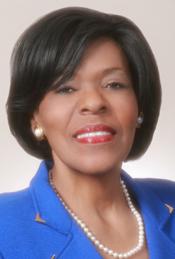
Mr. Speaker, I thank the gentleman for yielding me time. Mr. Speaker, I strongly oppose the pull-out of the U.S. of the WTO. This is a global economy that we live in. We have got to be at the table…
Mr. Speaker, I thank the gentleman for yielding me time.
Mr. Speaker, I strongly oppose the pull-out of the U.S. of the WTO. This is a global economy that we live in. We have got to be at the table to work with the companies and work with the countries that are taking our jobs, and I believe the pull-out is the wrong thing to do.
Should it be strengthened? Yes, it should and the administration should reject all principles that would make our trade laws weaker. If we talk about intellectual property rights, we need to enforce those that are in there. And the Bush administration and our U.S. administration, regardless of who sits in that White House, must make sure that those property rights are enforced internationally, and that is what the WTO should be about.
In 1995 when the WTO was established, I thought then and I do hope now that dispute resolution procedures would be those where we could come to the table to resolve some of those disputes. The dispute process has become too cumbersome, too lengthy; and many times we find our companies, U.S. companies, not taking advantage and being very much put out of business.
The steel industries in my district, too much dumping from some other countries into America. We ought to rectify that so that U.S. companies can take U.S. companies and that we be able to employ our citizens.
Too many dislocated workers, the only way to address this is to stay in the WTO to work with the other countries. And our administration must see that our rules, our trade laws, our employees' rights are saved. We want to upgrade and lift up other countries, but we must save America.
America is in crisis. Our workers, too many have lost their jobs and many more to come. I represent General Motors, and this week they announced the closing of more plants, dislocating more workers and at the same time put $2 billion in China last year.
So I say stay in the WTO; make it better. This is a world economy, and the U.S. is the most powerful. I would hope that as we move forward in this discussion, and I know the vote will be overwhelming that we stay, that we build it and that we make sure that the countries that are taking our jobs have a responsibility to the workers of this country.
However Members intend to vote on the resolution before us, the issue of trade remedies under the rules established by the World Trade Organization (WTO) is of paramount concern to the industries of my district in the years ahead. How we address this issue will be an important factor in determining whether we can retain support for open markets and the international trading system as we know it.
Countries like China, Japan, and India that have most consistently dumped in this market
and violated international rules are pushed hard to have those disciplines eviscerated. That would be a disaster for U.S. manufacturers, agricultural producers and workers.
Anti-dumping and anti-subsidy laws have already been critically weakened as a result of groundless WTO dispute resolution decisions. If we see yet another new trade agreement that limits the use of these laws, I am afraid they will become completely ineffective.
Our trading partners, in the name of free trade, have been effective in putting forward a number of specific proposals that are designed to weaken U.S. trade laws. Congress is on record as opposing these efforts and I welcome this opportunity to advocate that our top priority should be to preserve core trade disciplines. However, our trade negotiators have not offered meaningful proposals to challenge those who would weaken our trade remedy laws. This is a recipe for failure.
If the Administration comes back with an agreement that waters down our trade remedy laws even further, I am confident we will see a strong backlash in Congress--and a major effect on support for any new trade agreements.
Support for the WTO cannot be taken for granted in Congress or in this country if we cannot maintain the assurance that unfair trade can and will be remedied. I urge the Administration to focus on this issue and to reject any WTO deal that would weaken U.S. trade remedy laws. Otherwise, we may well see the next WTO vote have a very different outcome than is likely today.
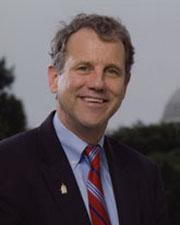
Mr. Speaker, I very much appreciate the good work of my friend, the gentleman from Vermont (Mr. Sanders). Mr. Speaker, earlier this week the Committee on Appropriations passed an amendment to prevent…
Mr. Speaker, I very much appreciate the good work of my friend, the gentleman from Vermont (Mr. Sanders).
Mr. Speaker, earlier this week the Committee on Appropriations passed an amendment to prevent the U.S. trade representative from using trade pacts as a tool to block prescription drug reimportation. The fact that appropriators in this body felt compelled to take this dramatic step points to a larger issue. Congress should not have to police the U.S. trade representative to make sure he or she is acting in the best interests of U.S. consumers. We should not have to instruct our trade representative to make sure that he is looking out for U.S. workers and U.S. manufacturers. We should not have to tell the trade representative to protect the environment and our food supply.
Congress should not have to scour every trade pact to make sure that some patent extension or importation barrier or other Big Government crutch designed specifically for the drug industry has not been inserted into the trade agreement by the U.S. trade representative or by the President or by my friends on the other side of the aisle.
Congress should not have to take the U.S. trade representative to task for trying to reverse the world's progress against the global AIDS epidemic, progress partially financed with U.S. tax dollars. Congress should not have to fight the U.S. trade representative in order to ensure jobs for our Nation's workforce, affordable medicine for our Nation's consumers, and manufacturing capacity for our Nation's protection.
Who does the U.S. trade representative work for?
The USTR should be acting in the interest of all Americans. If the international drug industry benefits too, all the better. Instead, the multinational drug industry's interests trump those every day of everyday Americans. The tail is wagging the dog. In fact, our trade representative's office includes a position, and I am not making this up, our trade representative's office includes a position called U.S. Trade Representative for Asia, Pacific and Pharmaceutical Policies. So we are bringing the drug industry into the USTR to make sure these trade agreements protect the drug industry, usually at the expense of American consumers who pay twice as much, three times as much, four times as much for prescription drugs, and even more seriously, frankly, who harm the world's poorest people.
In the CAFTA agreement, as the gentleman from Michigan (Mr. Levin) said earlier, in Africa, in Asia, the world's poorest people have to pay more for prescription drugs because the U.S. has, in our trade representative's office, a U.S. trade representative for Asia, Pacific and pharmaceutical policy. It begs the question, What are our trade agreements for?
Mr. Speaker, it is not like they are working. Look what has happened to our trade deficit in the last 12 years. I came to Congress in 1992. We had a trade deficit of $38 billion. In 2004, 12 years later, our trade deficit was $618 billion. From $38 billion to $618 billion, and my friends are arguing our trade policy is working?
Look at our stagnating wages, the fact that the top 10 percent of people in this society are doing very well. Their incomes are going up and up and up. The 90 percent of the rest of the country, their wages are stagnant and partly because of trade policies. Look at our crippling job loss in my State, and especially in manufacturing.
Not only has our trade deficit gone from $38 billion to $618 billion in only a dozen years, look at what has happened in manufacturing. The States in red have all lost 20 percent of their manufacturing in the last 5 years. My State of Ohio, 216; Pennsylvania, 200; Michigan, 210; Alabama and Mississippi combined, 130; Illinois, 225; Virginia, 80,000; New York, 220,000. Our trade policy, Mr. Speaker, simply is not working.
When Members think about this, maybe in fact some people would say our trade agreements are working. After all, these trade agreements do work for the pharmaceutical industry.
Mr. Speaker, I rise in thoughtful support for H.J. Res. 27, and I say thoughtful because I believe we should take a good look at what we are doing and what has been proposed and try to figure out…
Mr. Speaker, I rise in thoughtful support for H.J. Res. 27, and I say thoughtful because I believe we should take a good look at what we are doing and what has been proposed and try to figure out what is going to happen in the future, and what are the ideas that these decisions are based upon.
We are living in a time when a significant number of Americans are rushing forward to support any effort to transfer sovereignty from elected officials in the United States to unelected officials elsewhere at a global level who will exercise power and control,
mandate policies and shape our lives; yet they are not elected by the people of the United States of America, as if we should expect them in the WTO or even the United Nations to watch out for our interests.
Mr. Speaker, it is our job to watch out for the interests of the American people. We are elected to do so. Transferring our sovereignty and decisionmaking power to the WTO, to the United Nations, or any other international body is not in the long-term interests of our people.
The United States did this back in the 1950s or 1940s with the United Nations, and it too was a dream, a dream for a better world, a new order that would bring about prosperity and peace. What do we see now in the United Nations, corruption at the highest levels and arrogance. We see United Nations peacekeeping troops stand by as people are massacred. They themselves have participated in atrocities, and yet we see cover-up at the United Nations and corruption. Is that the type of people we want to give sovereignty to? No.
So why do we think the WTO is going to be any different? The WTO is made up of nondemocratic countries as well as democratic countries, just like the United Nations. We are not going to bring them up; they will bring us down if we give up our decision-making process to unelected bodies that have been set up.
They call it the new world order. The new world order, what is that going to bring the American people? A loss of sovereignty, a loss of our ability to control our own destinies. We will see the WTO manipulated by special interests in the same way we have seen other bodies manipulated by special interests, but the WTO will be made up of organizations that are comprised of governments that do not believe in democracy and honesty and free press and free speech and the standards we believe in.
Mr. Speaker, 10 years from now as the WTO evolves, and even today, we will find our huge international corporations and international corporations in general going to these bodies and manipulating them and bribing them. And why not accept the bribes? The people of Burma or China or these other countries who are not democratic, who are not honest, that is their way of life. So why are we transferring authority, putting our faith in an organization, even if today in the short run we can see some examples where it might be in our benefit? In the long run it is not to the benefit of the American people to give up this kind of decisionmaking.
If we want more trade in the world, we should establish bilateral trade agreements with other democratic countries. That way we can control the decision-making process. The major economic countries of the world will enter into those agreements.
I say we should have free trade between free people. We should not be establishing superpowerful, unelected bodies by the WTO to control our destiny in the United States and determine what economic policies we will have in the long run. These things make no sense to me, and it is a great threat looming over us. Whatever examples can be given today of some good things that are happening, just remember what will happen 10 years down the road once these panels and bodies have been corrupted by the vicious dictatorships that we have let into the WTO.
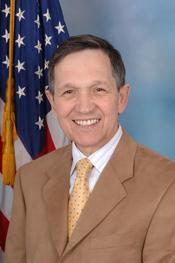
Mr. Speaker, I could hardly believe my ears to hear one of my colleagues say that America does not need protection from the WTO. We have lost almost 3 million manufacturing jobs. Tell that to those…
Mr. Speaker, I could hardly believe my ears to hear one of my colleagues say that America does not need protection from the WTO. We have lost almost 3 million manufacturing jobs. Tell that to those millions of families who have seen their lives destroyed by this trade structure which is based, inherently based, on inequality.
We have a $617 billion trade deficit. America does not need protection?
We have workers who are struggling to save their homes; but these trade agreements are causing jobs to be moved out and people do not have the opportunity to save their homes.
I have been all over this country, and I have seen padlocks on gates and grass growing in parking lots where they used to make steel, where they used to make cars, where they used to washing machines, where they used to make bicycles. America does not need protection?
Yes, it is time for us to get out of the WTO because the WTO has set the stage for a driving down of the quality of life in this country. Everyone in this House knows that we cannot write into our laws that workers' rights must be regarded, let us say, in China. I want someone here to contradict that because if we put that China must have the right to organize in any of their conduct of commerce in their country, that would be ruled WTO illegal and the United States would be subject to a fine or sanctions by the WTO just for standing up for workers' rights.
There is a moral imperative here, and that imperative is as old as this country. But it is also consistent with basic Christian morality, and may I quote from a Papal Encyclical, Leo XIII, 1891 in Rerum Novarum said, ``Let the working man and the employer make free agreement and in particular let them agree freely as to wages. Nevertheless, there underlies a dictate of natural justice more imperious and ancient than any bargain between man and man, namely, that wages ought not be insufficient to support a frugal and well- behaved wage earner if through necessity or fear of a worse evil the workman accept harder conditions because an employer or contractor will afford him no better. He is made a victim of force and injustice.''
I maintain that the WTO helps to keep in place a structure of force and injustice against workers because we in this country cannot pass laws that would lift the yoke of this force and injustice off workers anywhere in the world because the WTO does not permit, does not permit any type of workers' rights to be included or to be regarded. They are WTO illegal. We cannot pass workers' rights and put them in our trade agreements.
Another Papal Encyclical from Pope Paul VI, Populorum Progressio: ``But it is unfortunate that on these new conditions of society, a system has been constructed which considers profit as the key motive for economic progress, competition as the supreme law of economics, and private ownership with the means of production as an absolute right that has no limits and carries no corresponding social obligation.'' He goes on to say that ``this leads to a dictatorship rightly denounced by Pious XI by producing the international imperialism of money.''
There is a moral imperative here that we have to recognize that we need trade agreements that have workers' rights, human rights, and environmental quality principles; and we cannot have that with the WTO. It is time to get out of the WTO and set up a trade structure based on those principles.
Show 11 more

Mr. Speaker, I rise to support House Joint Resolution 27 to withdraw the United States from the World Trade Organization. The WTO is not about free trade or fair trade. It is about corporate power.…
Mr. Speaker, I rise to support House Joint Resolution 27 to withdraw the United States from the World Trade Organization.
The WTO is not about free trade or fair trade. It is about corporate power. WTO rules allow America's labor, environmental and public interest laws to be challenged by multinational corporations seeking profits and power. Other countries have also seen their domestic laws challenged in order to
expand corporate power. The WTO sacrifices the rights of workers, the protection of the environment and the health and safety of working families.
WTO rules support corporations to move their operations from one country to another in search of the cheapest labor and the least government regulation. If a country enacts a minimum wage law, a corporation that does not want to pay a decent wage can simply move its factory to another country. If workers in that country organize a labor union, the corporation can move the factory to a third country. Many corporations prefer to operate in countries such as the People's Republic of China, which outlaw independent labor organizations. The WTO has no restrictions on sweatshops, child labor, prison labor or slave labor.
WTO rules promote investment opportunities for multinational corporations without regard to their impact on workers, the environment or the public interest. Countries' labor, health and environmental laws can be challenged if they have a side effect of restricting trade.
In the 10 years since the WTO was established, a wide variety of U.S. and foreign laws have been challenged. With only two exceptions, every health, food safety and environmental law challenged at the WTO has been ruled illegal. Meanwhile, multinational pharmaceutical companies have used WTO intellectual property rules to deny poor countries the right to provide live-saving medicine to people with terrible diseases like HIV and AIDS.
They tried it with Brazil. The world protest against the attempt to keep Brazil from using generic drugs to save lives, prevent HIV and AIDS was fought off because of the protest, and they had to back down.
But look what they did in South Africa. I wish I had time to tell my colleagues about it.
In 42 out of the 48 completed cases brought against the United States, the WTO has labeled U.S. laws illegal. U.S. laws ruled illegal by WTO include tax laws, anti-dumping laws, sea turtle protections and clean air rules. And when the WTO ruled in favor of the United States in a case on bananas, it was to benefit who? A large corporation, Chiquita, that has now driven Grenada and some of these small countries into poverty. We do not produce any bananas here in the United States. We protected Chiquita, who mistreats its workers in Central America, and we put small Caribbean farmers out of work.
Mr. Speaker, after the WTO rules a country's laws illegal, the WTO authorizes economic sanctions that cost the country millions of dollars. These sanctions put small businesses out of business and workers out of work. History has proven that the WTO does not prevent trade wars. It authorizes trade wars.
The WTO puts profits of the world's wealthiest and most powerful corporations ahead of the health, safety and welfare and well-being of working families.
I urge my colleagues to support the WTO Withdrawal Resolution. It's time to stop the global expansion of corporate power and put working families first.
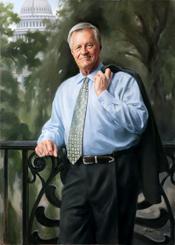
Mr. Speaker, there are many reasons to question whether or not the United States should remain in the WTO. Among them: the current trade deficit of $618 billion; the disappointing enforcement efforts…
Mr. Speaker, there are many reasons to question whether or not the United States should remain in the WTO. Among them: the current trade deficit of $618 billion; the disappointing enforcement efforts of the Administration on past trade agreements; and the lack of consensus in the WTO on how to move forward with the Doha Round. But at this point, it is too early to give up hope. The WTO is essentially our only chance to address the major distortions in world agricultural markets.
The Organization for Economic Cooperation and Development is a group of 30 countries including the United States, most European countries, Japan, Mexico, Australia, and New Zealand. It is widely regarded as the most reliable source of objective information comparing subsidy levels of various developed countries.
Perhaps the most useful number the OECD calculates is one that compares the amount of each dollar that a farmer receives due to government policies, such as tariffs or farm support programs, versus the amount the farmer receives from the marketplace. They call this number the Producer Support Estimate.
In its 2004 report on Agriculture, the OECD notes that the Producer Support Estimate for the United States decreased in recent years, and that this is a part of a long term trend in U.S. agricultural policy. As the OECD points out, support in the U.S. to producers decreased from 25% in 1986-88 to 18% in 2003, and has remained below the OECD average. Europe has increased support to 37% in 2003.
What this means is that European farmers rely on the government for twice as much of their income as do U.S. farmers--or 37 cents from each dollar versus 18 cents for U.S. farmers.
What relevance do all these statistics have to the current WTO negotiations on agriculture? The framework agreement provides for harmonization in all three major areas of negotiation. On domestic subsidies, the framework states: ``Specifically, higher levels of permitted trade-distorting domestic support will be subject to deeper cuts.''
In the section of the WTO framework agreement on export competition, it is agreed that export subsidies will be eliminated. The EU remains the largest user of export subsidies in the world, and the elimination of export subsidies will eventually apply additional pressure to its domestic subsidy programs.
In the section of the WTO framework agreement dealing with market access, there is language calling for a tiered formula with ``deeper cuts in higher tariffs''. Average U.S. tariffs on agricultural products is 12% versus 30% in Europe and 50% in Japan. The world average tariff on agricultural products is 62%. This means that the U.S. tariffs on agricultural imports should be cut less than European, Japanese, or other countries tariffs on our exports to them.
As with all negotiations, the framework agreement reached last July on agriculture allows for a best-case and worst-case scenario to exist, which future negotiations will determine. In these negotiations, we will depend on our U.S. Trade Representative to achieve a result that upholds the principle of harmonization that was set out in the original U.S. negotiating position in June of 2000. If that principle is upheld in the final agreement, we will be glad we rejected this resolution today. If not, it will be time to give serious consideration to leaving the WTO.
Mr. Speaker, it is with a combination of perhaps resignation and frustration with which I stand here. Will Rogers once said, in explaining the length of a political platform, that it takes a lot of…
Mr. Speaker, it is with a combination of perhaps resignation and frustration with which I stand here.
Will Rogers once said, in explaining the length of a political platform, that it takes a lot of words to straddle an issue, and I have every intention of using a lot of words here this morning.
I think, like many people, like most of us, we have no fear of free trade, that the United States, playing on a level playing field, can easily compete in the world market, and I do not ascribe to some of the statements that I think have been somewhat overzealous or vitriolic in describing policies here. I also agree that in some respects moving out of the policy we have right now without a substantial alternative would be chaotic. Having said that, this is where the ``but'' comes in.
I intend on either giving a symbolic vote or maybe a symbolic speech in place of that vote with concerns of sovereignty issues that are dealt with here and that some of those voices that are concerned about sovereignty issues are not just simply those fearful of the dark but there are legitimate concerns which require a periodic reanalysis of what we are doing.
I speak specifically about a case which has sent the Attorney General from the State of Utah to join 28 Attorney Generals from other States in protest of the situation in which the World Trade Organization has thrown State statutes in jeopardy.
Antigua, with which we had a policy dating back to 1993, has complained that laws prohibiting Internet gambling as well as gambling and betting paraphernalia, which have been for about 100 years the social policy of Utah, violate trade organizations; and the trade organization ruled in favor of Antigua.
It is inherently wrong for any adjudicative panel of any organization, internationally or trade, to put in jeopardy the kinds of State laws that we have in place, especially when they deal with social policies that have been there for almost 100 years. Whether this is simply a glitch in negotiations that can easily be worked out or whether this is a systemic problem or whether, as the Attorney Generals are arguing, that the States need a greater voice in the organization and the application of these trade policies, especially if it is going to relate to State law, that is the discussion that needs to take place.
My State may have lucked out because a clerical error in this particular case did not refer specifically to the Utah State law; and, therefore, it may not be applicable. But the fear factor is still there, that in the future State efforts, State regulations and State policies may be put in jeopardy not only by our trade policies but also by Federal regulations that affect those trade
policies when they ought not to be. That is the issue that needs to be periodically addressed.
I recognize that this particular resolution is very narrow in its application. It may not be specifically on that point, but it does at least give us the opportunity of saying not only is that an issue and a concern for the future but it is an issue that we should take seriously and we should discuss seriously and we should address seriously so that these particular problems, especially as it deals with State issues and State rights, will not be put in jeopardy with the future.
Mr. Speaker, I appreciate the gentleman for yielding me time. Mr. Speaker, this is a good debate. It is a good, healthy debate that we are having here on the floor of Congress. The earlier speaker,…
Mr. Speaker, I appreciate the gentleman for yielding me time.
Mr. Speaker, this is a good debate. It is a good, healthy debate that we are having here on the floor of Congress.
The earlier speaker, the gentleman from Ohio, cited some papal encyclicals, but, as a practicing Catholic, I will be the first to defend his right to do that here on the floor, but I also think there are some bigger issues we need to talk about.
First of all, how do we keep jobs in America? We all care about that. This is what we are talking about. I would argue we have got to do basically two things: stop pushing jobs overseas and stop countries from unfairly taking jobs overseas.
How do we stop pushing jobs overseas? Well, for starters, we can address health care costs. We can address the fact that we tax our businesses and our jobs more than any other country in the world, save Japan. We can address tort costs, regulatory costs, have a comprehensive energy policy to make energy more affordable.
How do we stop countries from unfairly taking jobs overseas? We have to remember, Mr. Speaker, that 97 percent of the world's consumers are not in this country. They are outside of this country. One in five manufacturing jobs are tied to exports. Exports, on average, pay more than other jobs. We cannot put our head in the sand. Pulling out of the WTO is the economic equivalent of throwing the baby out with the bath water.
What has happened since we have gone into the WTO? Let us look at the challenges that confront us.
We talk about China, a very appropriate topic to discuss here. Since China joined the WTO, do my colleagues know how many laws we had to change and pass in America to go there? Zero. Do my colleagues know how many laws China had to change, laws and regulations, to enter the WTO? 1,100. To get into the WTO, to join countries of fair trade, China had to change 1,100 laws. Are they following all these rules and agreements? Of course not. But because they are in the WTO, because we have the WTO, we finally have a forum, a mechanism, a system to bring these countries into compliance to play by the rules. If we did not have this system, all these countries could play by whatever rules they set.
We are the economic superpower of the world. We play by the rules. We are the most transparent, most honest, most basic system in the world. We need other countries to play by the same rules, too, so we can all join together in growing economic growth here in America and across the world. Pulling out of the WTO would be the economic equivalent of biting off our nose to spite our face.
Since we have had China in the WTO, I have been critical of the administration's stance in its first 3 years. I have joined with my colleagues on the other side of the aisle criticizing the administration on their China policy. However, over the past year and a half, the administration, through the WTO rules, has brought 12 different actions against China.
We are making success. We are bringing accountability. Pull out now, and the situation gets much worse. Stay in it. Fight for fair trade. We can clean up these rules, and that is the only way to bring other nations into the fair trade arena.
Mr. Speaker, I thank the gentleman for yielding me time. Mr. Speaker, I rise today to stress the importance of our country's participation in the World Trade Organization. Right now, it seems this…
Mr. Speaker, I thank the gentleman for yielding me time.
Mr. Speaker, I rise today to stress the importance of our country's participation in the World Trade Organization. Right now, it seems this resolution is destined for rejection. But addressing it today does give us a much-needed opportunity to focus on the WTO and how the U.S. can maximize its membership for the benefit of U.S. firms, workers and farmers.
The success of U.S. participation in the WTO should be measured by our ability to liberalize markets and set fair trade rules for all WTO Members. Clearly, the United States has benefited greatly from its WTO membership and plays a leading role in shaping the way the world trades today.
Since the creation of the WTO, U.S. exports and overall trade have expanded significantly, with a $283 billion or 64 percent increase in U.S. manufacturing exports; a $139 billion or a 70 percent increase in U.S. services exports; and an $18 billion or 39 percent increase in U.S. agricultural exports.
Once WTO agreements are set and commitments are made, however, it is crucial that the U.S. ensure that the countries involved live up to their part of the deal. This is where we have fallen short.
Here, the U.S. has several concerns, such as China's failure to follow through with its commitments to ensure that domestic and foreign firms can distribute products within that country as of December 2004; many countries have failed to meet their TRIPS commitments and have not effectively enforced intellectual property rights and the protection of data privacy; there is concern regarding the establishment of standards, licensing and customs barriers, including the EU's customs procedures and its proposed new chemical regulations; and there is concern about the continued proliferation of many agricultural barriers, such as the unscientific barriers to many agricultural products in Europe, China and elsewhere.
The United States should continue to insist that all WTO members implement the WTO agreements in a timely and comprehensive manner.
Like many of my colleagues, I hope the WTO will successfully conclude the Doha Development Round and continue to contribute to the dynamic global marketplace as a growth engine for WTO member economies.
However, in the Doha Development Round, many developing countries expressed concerns regarding implementation of some commitments, and they have sought extensions and delays. Here, technical assistance and support for capacity building are critical tools needed to advance implementation goals.
I will continue to work with my colleagues on the Committee on Ways and Means and in the Congress to ensure that the U.S. provides technical support and capacity building measures to assist developing countries in meeting their WTO commitments.
If trade is to be a tool of development and growth for our developing-country trading partners, we must play a central role in helping the WTO facilitate compliance with member obligations. I stress this today because I want our new USTR Ambassador Portman to know that this is and should always be
a priority for the United States at the World Trade Organization.
Mr. Speaker, the economic disaster wrought by a radical free trade policy on the working people of America is well documented, but I am going to focus on another aspect of this WTO agreement that the…
Mr. Speaker, the economic disaster wrought by a radical free trade policy on the working people of America is well documented, but I am going to focus on another aspect of this WTO agreement that the previous gentleman spoke about. He said that the secretive dispute resolution panel, which has no conflict-of-interest rules, does not allow outside interveners, only allows the two representative governments into the room, and deliberates secretly and comes up with a binding, a binding, decision and cannot change U.S. laws.
Now, I raised this issue with the Clinton administration when they negotiated this misbegotten agreement; and I said, How can you enter us into an agreement where secretive panels can preempt our laws? They said, oh, you do not understand, you are wrong, just like the gentleman before me. Yes, it is technically true, they cannot reach into the United States and change a law. We can, if they find our rule to be non-WTO compliant, which they have more than 90 percent of the time when complaints are brought against the United States of America, we have an option. We can repeal the law, or we can pay a fine to keep it, a huge fine, in many cases. So environmental protection, consumer protection, buy America, buy Oregon, buy your State, all of those things, we can have those laws. That is right. He is technically right. We just have to pay massive penalties to foreign governments to keep them.
This is an extraordinary undermining of the sovereignty of the United States of America and the interests of the American people. This is not about free trade; this is about corporate-managed trade through a secretive body which is dominated by those very same corporations and many dictatorial governments around the world; and the U.S. is bound by their secretive decisions. This is absolutely outrageous.
To date, the WTO has ruled U.S. policies illegal 42 out of 48 cases, 85.7 percent that has been brought against us. They ruled illegal regulation issued under the Clean Air Act; the United States Tax Code; laws to protect companies from unfair dumping or subsidized foreign products, among others. And it is true. We can keep those laws if we are willing to pay massive fines to keep them.
Now, what kind of sovereignty is that? Next in their sights are buy America laws, those referenced by the gentleman from the Carolinas. What he said is he does not want to see a Social Security program administered from China. Now, people would have thought that was a weird thing to say. No. The WTO requires we cannot discriminate in terms of who the vendors will be. In fact, homeland security can be provided by the Chinese, or maybe even by Iran, under the rules of the WTO. Will that not be just peachy?
This is an extraordinarily radical agreement which we do not need. The U.S. did just fine as the greatest trading Nation in the world with bilateral agreements. We can go back to that system, and we can do better than we are doing under this so-called rules-based system.
Mr. Speaker, I thank the gentleman from Texas and the gentleman from Vermont (Mr. Sanders) for bringing this joint resolution to the floor. Mr. Speaker, I come to the floor today because I believe…
Mr. Speaker, I thank the gentleman from Texas and the gentleman from Vermont (Mr. Sanders) for bringing this joint resolution to the floor.
Mr. Speaker, I come to the floor today because I believe that WTO membership has been a disaster for the U.S. worker. Since WTO, 1995, America's annual trade deficit grew from $96 billion to $617 billion. My home State of North Carolina has lost over 251,000 manufacturing jobs. The United States has lost over 2.9 million manufacturing jobs.
Mr. Speaker, it was not too long ago that, I did not vote for it, but we gave trade promotion authority to the President of the United States. I was opposed to it when Mr. Clinton asked for it. I was opposed to it when Mr. Bush asked for it. And let me tell the Members what has happened since trade promotion authority, August of 2002.
North Carolina has lost over 52,000 manufacturing jobs, and the United States has lost over 600,000 manufacturing jobs.
Let me take just a moment to talk about how WTO membership strips American sovereignty. If the United States does not change its laws to suit WTO, then America's businesses and consumers face trade sanctions. Trade disputes are decided by international panels that are hand-picked by the WTO. The identities of panel members are kept secret, and deliberations are kept confidential. These WTO panels have ruled in favor of the United States less than one-third of the time. They have ruled in favor of the United States less than one-third of the time.
WTO panel rulings go far beyond trade. In fact, the WTO panel recently found a Utah law prohibiting Internet gambling to be illegal. What will the WTO do next?
Let me quote from Robert Stumberg, a trade law expert at Georgetown University, from Business Week, March 7, 2005. I quote: ``If Bush successfully engineers the introduction of private Social Security accounts, WTO rules would require the feds to let foreign money managers and insurers bid to manage them.''
How far do we have to go before we give up the sovereignty of this Nation? I do not know about you, Mr. Speaker, but I think letting the Chinese manage American Social Security accounts is a bad idea. Unfortunately, under WTO, there is little we can do to prevent it. We have already outsourced 1.5 million jobs since 1989 to the Chinese. We do not need to give control over to the Chinese of Social Security accounts in America.
Mr. Speaker, before I close, I want to make a real quick point. On my right, this chart shows on July 31, 2003, in North Carolina we lost 6,450 jobs. It says, ``Five North Carolina plants close in the largest single job loss in the State's history.'' Just 3 weeks ago, Mr. Speaker, a plant in my district announced that 445 jobs would be going overseas.
Mr. Speaker, I close by asking my colleagues that care about the American workers and care about the sovereignty of America to please join us in this effort.
Mr. Speaker, I thank the gentleman from Florida for yielding me this time, and I want to associate myself with his remarks, and I appreciate his leadership on this. Mr. Speaker, I rise in opposition…
Mr. Speaker, I thank the gentleman from Florida for yielding me this time, and I want to associate myself with his remarks, and I appreciate his leadership on this.
Mr. Speaker, I rise in opposition to the resolution calling for the U.S. withdrawal from the World Trade Organization.
The WTO is the most important international organization that governs world trade. Decisions are made by the member countries. The WTO has 148 members and 31 observer governments, many of those, most of those are applicants for membership. Its members represent over 95 percent of world trade. Trade agreements administered by the WTO cover a broad range of goods and services trade and apply to virtually all government practices that directly relate to trade; for example, tariffs, subsidies, government procurement, and trade-related intellectual property rights.
U.S. membership and leadership in the World Trade Organization is essential. It is definitely in our national and our political and our economic interests to continue to be a member. Our membership translates into real economic growth in this country, as the gentleman from Florida very correctly said. During the 10 years of U.S. participation in the WTO, international trade and investment have been important forces driving our impressive economic growth. Over that period, trade accounted for one-quarter of all U.S. economic growth and supported an estimated 12 million jobs. Furthermore, trade promotes economic competition, which keeps inflation low.
Now, let me take just one moment to rebut an all-too-often made allegation against U.S. membership in the WTO, namely, that membership is a violation of U.S. sovereignty and the U.S. Constitution. WTO dispute panels cannot overturn or change U.S. Federal, State, or local laws. They have no authority to change a U.S. law or to require the United States or any State or local government to change its laws or decisions. Only the Federal or State governments can change a Federal or State law.
If a U.S. law is inconsistent with the WTO, our trading partners may withdraw trade benefits of equivalent effect. However, under trade agreement rules, the United States retains complete sovereignty in its decision of how to respond to any panel decision against it. That was made abundantly clear the last several years as Congress grappled with changes to our corporate tax structures for foreign sales corporations, or FSC, to accommodate commitments we have made to our trading partners. Only Congress could make those changes to the law as we grapple, and we grappled, with that.
Those who falsely portray the WTO as a violation of U.S. sovereignty are ones who simply want an unfettered ability to preserve or create more protectionism.
I urge my colleagues to vote against this resolution and to continue the U.S. membership in the World Trade Organization.

Mr. Speaker, although I disagree with much of what the WTO does, I do not think it is in the best interest of our Nation to withdraw from that organization at this time. Doing so would give the…
Mr. Speaker, although I disagree with much of what the WTO does, I do not think it is in the best interest of our Nation to withdraw from that organization at this time. Doing so would give the United States little bargaining power as we work to promote a global economy that is both free and fair. Withdrawal would put in jeopardy negotiations that are necessary to meet that goal.
However, my support for the long-term goal of more equitable international trade does not translate into blanket support, but it is difficult to ignore the fact that the U.S. is increasingly the target of WTO action. We are sued more than any other country, and our laws seem to be condemned by the WTO every month. We have been the defendant in 19 of the last 36 cases decided by the appellate body. These negative decisions have threatened American products and American businesses with sanctions. For example, in recent years the WTO has disapproved everything from our tax policies and trade laws to our sovereign right to regulate activity such as Internet gambling and set tariffs against unfair pricing by foreign countries.
It is becoming all too clear that these decisions are not the result of any shortcomings by this country or any true violation of international rules; rather, one must wonder if we are facing a forum that sees our country's prosperity and economic success as an opportunity to further bolster their own industries and markets. It seems as though nations are using the WTO to gain through litigation that they could not secure through negotiation.
But to help our economy, we cannot turn toward a simplistic, bellicose jingoism approach that blames the WTO and seeks protectionism as the answer to all. What we need to do on our own is to pass our energy policy that is otherwise costing us millions of jobs and to pass our own health care reforms to cut costs and not cut care.
Free trade is in everyone's best interest, and the WTO negotiations are vital to securing new markets for American products and creating new jobs for American workers. The negotiations must ultimately bring us to a system that is fair for all member countries while respecting the fundamental rights of a nation to determine its own law.
This administration needs to pay very close attention to the issue as we cannot sit idly by while the world unfairly threatens U.S. laws and remedies designed to protect our Nation against unfair practices.
The WTO clearly is not operating always in the best interests of the United States of America. However, it is the forum that exists; and as such, we need to remain partners with those that are vigilant and vigorous defenders of both free and fair trade in that forum for the benefit of our Nation.
Mr. Speaker, I rise in opposition to H.J. Res. 27, which withdraws approval of the United States from the agreement establishing the World Trade Organization. The WTO was created to oversee and…
Mr. Speaker, I rise in opposition to H.J. Res. 27, which withdraws approval of the United States from the agreement establishing the World Trade Organization.
The WTO was created to oversee and regulate international commerce through the establishment of universal trade agreements. The institution of these agreements would provide assurance and accountability between member nations, with the prospect of future economic prosperity. The goal of these trade practices is to ease facilitation of global business for producers, exporters, and importers.
My opposition to this resolution and consequent support of the WTO is not without qualification.
While there is great value in continuing multilateral trade regulations and mailltaining the general integrity of the WTO, this organization has consistently foundered in its role of impartial adjudicator and continues to undermine the domestic trade sovereignty of our Nation.
Over the past decade, we have witnessed a massive increase in the U.S. trade deficit, an alarming number of dislocated American workers, and consistent threats to the autonomy of U.S. domestic trade policy.
The international community has seen the numerous shortcomings of the WTO system, including poorly enforced labor laws that afford many countries an unfortunate competitive advantage in the global marketplace. The premise of independent unionization and equitable development has not been realized in the past 10 years under the WTO and continues to underscore the need for a reevaluation and modification of the institution.
Though the World Trade Organization has failed to deliver on the promises of economic gains to developing countries and general worldwide trade policy, the solution is not to withdraw U.S. support or approval. We must continue to work inside the infrastructure of the WTO and towards progressive policies. As a principal partner in the WTO, we must not disassociate ourselves from the organization or we will realize the regression of our global economy. Our obligations to the American worker necessitate a competent and responsible trade policy that can only be achieved through the refinement of the current system.
Mr. Speaker, I oppose this resolution but reserve judgment over the current policies and procedures of the World Trade Organization. It is in the best interests of our nation to continue our active involvement in the WTO, while reconsidering and reworking current international trade policies.
Mr. Speaker, I thank the gentleman for yielding me time. Mr. Speaker, in 1994 I supported the establishment of the WTO. I supported the establishment of it because the creation of the WTO was…
Mr. Speaker, I thank the gentleman for yielding me time.
Mr. Speaker, in 1994 I supported the establishment of the WTO. I supported the establishment of it because the creation of the WTO was supposed to lower trade barriers. The WTO was supposed to include developed and developing countries, and environmental and labor standards were expected to rise for all.
The WTO was created with the assumption that the rules would be applied fairly to all. Today, I am voting against the WTO because it has failed to deliver on any of its promises. The WTO was created by sovereign nations to create a true international trade community, but today the WTO is manipulated by multinational corporations with a loyalty to nothing but their bottom line. These multilaterals are patronizing, not patriotic. They treat human labor as nothing more than disposable machinery. The only discernable labor standard under the WTO is exploitation.
Under the WTO there are two environmental standards, pollute and to spoil. Moreover, there is no transparency at the WTO. Who is in charge?
The WTO is grossly prejudiced against U.S. interests. As one of my colleagues mentioned earlier today, the U.S. has lost 42 of 48 cases.
I am proud to be an American citizen. I understand, however, that the United States is not always right. But only 12\1/2\ percent of the time?
Worse, the WTO struck down steel safeguards that were put in place after record levels of illegal steel dumping caused more than 40 steel companies into bankruptcy and more than 50,000 steel workers to lose their jobs.
In 1994, the last full year before the WTO came into existence, the United States had a trade deficit, unfortunately, of about $150 billion. During 2004 the U.S. trade deficit hit an all-time high of $650 billion, an increase of 333 percent. We have clearly benefited under the WTO.
A more frightening figure is that the U.S. trade deficit last year with China alone was more than our trade deficit was with the entire world the year before the WTO was created. As we debate this resolution today, we will borrow an additional $1.7 billion in these 24 hours for our children to pay off for the rest of their lives just to finance the trade deficit we are accumulating today under the wanted WTO.
I appreciate my colleague from Vermont for bringing this resolution to the floor. I support it and ask my colleagues to do so as well.
Bill Text
2 versions available
        [Congressional Bills 109th Congress]
[From the U.S. Government Publishing Office]
[H. Res. 304 Engrossed in House (EH)]

H. Res. 304

In the House of Representatives, U.S.,

June 8, 2005.
Resolved, That upon the adoption of this resolution it shall be in order to
consider in the House the joint resolution (H.J. Res. 27) withdrawing the
approval of the United States from the Agreement establishing the World Trade
Organization. The joint resolution shall be considered as read. The joint
resolution shall be debatable for two hours equally divided among and controlled
by the chairman and ranking minority member of the Committee on Ways and Means,
Representative Paul of Texas, and Representative Sanders of Vermont or their
designees. Pursuant to section 152 of the Trade Act of 1974 and section 125 of
the Uruguay Round Agreements Act, the previous question shall be considered as
ordered on the joint resolution to final passage without intervening motion.
Sec. 2. During consideration of H.J. Res. 27 pursuant to this resolution,
notwithstanding the operation of the previous question, the Chair may postpone
further consideration of the bill to a time designated by the Speaker.
Attest:

Clerk.