Supporting the goals of National Marina Day and urging marinas continue providing environmentally friendly gateways to boating.
Legislative Activity
Stay on top of the latest movement without scrolling through every action
Motion to reconsider laid on the table Agreed to without objection.
July 28, 2005 • 12:09 AM
View full timeline
Introduced in House
June 8, 2005
Referred to the House Committee on Transportation and Infrastructure.
June 8, 2005
Referred to the Subcommittee on Coast Guard and Maritime Transportation.
June 9, 2005
Mr. Coble moved to suspend the rules and agree to the resolution.
July 25, 2005 • 3:26 PM
Considered under suspension of the rules. (consideration: CR H6400-6401)
July 25, 2005 • 3:26 PM
DEBATE - The House proceeded with forty minutes of debate on H. Res. 308.
July 25, 2005 • 3:26 PM
At the conclusion of debate, the Yeas and Nays were demanded and ordered. Pursuant to the provisions of clause 8, rule XX, the Chair announced that further proceedings on the motion would be postponed.
July 25, 2005 • 3:31 PM
Considered as unfinished business. (consideration: CR 7/27/2005 H6928)
July 28, 2005 • 12:02 AM
Passed/agreed to in House: On motion to suspend the rules and agree to the resolution Agreed to by the Yeas and Nays: (2/3 required): 385 - 0 (Roll no. 444).(text: CR 7/25/2005 H6400)
July 28, 2005 • 12:09 AM
On motion to suspend the rules and agree to the resolution Agreed to by the Yeas and Nays: (2/3 required): 385 - 0 (Roll no. 444). (text: CR 7/25/2005 H6400)
July 28, 2005 • 12:09 AM
Motion to reconsider laid on the table Agreed to without objection.
July 28, 2005 • 12:09 AM
Voting History
1 vote recorded • Roll call available
Floor Debate
24 membersWhat members said about H.Res. 308 on the floor
 CBR
CBR ECS
ECS SJL
SJL NP
NP HAW+19
Floor Debate
24 membersWhat members said about H.Res. 308 on the floor
Mr. Speaker, I yield myself such time as I may consume. Mr. Speaker, let me join with the handful of Republicans in complimenting the chairman of the Committee on Ways and Means. His attack against…
Mr. Speaker, I yield myself such time as I may consume.
Mr. Speaker, let me join with the handful of Republicans in complimenting the chairman of the Committee on Ways and Means. His attack against arrogance has moved my heart, and those of others in the House, as well as his conversations with the immigrants and the newcomers to find out what should be in the trade bill. It certainly would have worked out a heck of a lot better if he had talked with some of the Democrats in the House.
This is one day that we all should remember. A small bill designed to help small countries. I was successful in having the Dominican Republic included in it. People who indeed wanted to work, wanted to have the dignity of having a job, wanted to be able to buy some of those U.S. products, really wanted to be partners, but they also wanted to be a part of this. Arrogance? How can you have a bill you say that is helping these people to make certain that they stave off communism and that become, indeed, a democratic country and, at the same time, exclude them from participating?
Yes, they want a Central American Free Trade Agreement. Yes, the Dominicans want to have a Dominican Republic Free Trade Agreement, but they want to be a part of it, and they want their people protected.
The gentleman talked about people who fought and died for our Constitution. You do not have to remind us about that. Patriotism can bring a tear to our eyes, but why do we not talk about the people who fought and died for workers' rights? Hey, can you not get that on your agenda? Those who fought and died for human rights, should that not be a part of it?
But let us talk about the moral values. The Catholic bishops in the United States, the Catholic bishops in the Dominican Republic, the Catholic bishops throughout the island; the religious leaders, the labor leaders, the peasants, the farmers, those who work in the free trade zone, do they not count for something?
This could have been an easy thing. This is no big deal. It was not before the President came down here. This could have been something we could have worked out. There has to be some compassion and less arrogance on the other side. We could have talked these things out.
And what is wrong with language that protects kids? Just because people do not have a design to commit crime does not mean you do not have a criminal code. Just because people are not inclined to abuse workers does not mean you do not have a code.
All we are saying is this: Let us protect intellectual property rights, let us protect our exporters, let us protect the multinationals, let us protect the big farm corporations. But, while you do that, protect the little guy where, in many of the countries, they have not the slightest clue, and they tell us each and every day, we want trade, we want to improve our lives; all we want to do is to be a part of the agreement.
Now, I was told that we cannot get back to that. With regard to the side agreements, I thought it meant the issue had to be related to trade. But some of the offers that I have heard that relate to getting votes around here, side agreements mean something else. And that is why maybe it may still be light tonight in California, but for those who are wide awake tonight, they should know it is not prime time in Washington, D.C. As a matter of fact, it is the worst of times.
This administration has taken a bill that could have meant something, a bill we could have been proud of, and has made a political toy out of it. They have excluded Democrats; they have offended some Republicans.
So when we hear about this bill tonight, it will not be a trade bill, it will be a bill that would say, which side are you on? Are you on the side of transparency, open discussion, wanting to protect American farmers, wanting to protect American entrepreneurs, wanting to do business with people in these small countries that are impoverished, and do you want to help those who are the lesser among us, who, at the end of the day, have been excluded from consideration from this treaty?
Mr. Speaker, I reserve the balance of my time.
Mr. Speaker, I yield 3 minutes to the gentleman from Georgia (Mr. Norwood).
Mr. Speaker, the gentleman from Maryland (Mr. Cardin) is the ranking member of the trade committee. He has worked hard on this, and he probably never has voted against any trade agreement in this
House. And I guess he is saying that this is an agreement worthy of his vote.
Mr. Speaker, I yield 3 minutes to the gentleman from Maryland (Mr. Cardin).
Announcement By the Speaker Pro Tempore
Mr. Speaker, I yield myself such time as I may consume.
Mr. Speaker, I would like to quote what the bishops have said about this because I think the previous speaker gave an eloquent speech, but he said one thing: It could be better for the workers.
I do not have any argument with that. And the bishop said, the panel urged that the agreement should contribute to sustainable human development, especially among the poorest and most vulnerable sectors; that the countries' governments take as much time as necessary to provide adequate information and foster broad debates about the contact and impact of the agreement, and that the moral measure of any trade agreement should be how it affects the lives and the dignity of poor families and vulnerable workers whose voices should receive special attention in this discussion.
Mr. Speaker, the following six pages are organizations representing religious leaders in Central America and the Dominican Republic, representing peasants, representing farmers, representing workers that all they are asking is please include us.
Central American Groups Opposed to CAFTA
Accion Ciudadana (Nicaragua)
Action Aid International (Guatemala)
Action Network of Citizens Against Free Trade (SINTI
Mr. Speaker, I yield 2 minutes to the gentleman from North Carolina (Mr. Coble), who served this country and served it well, and he wears that lapel pin showing how proud he is to be a veteran, not a Republican, not a Democrat.
Mr. Speaker, I yield 3 minutes to the gentleman from Michigan (Mr. Levin), who has been not only a supporter of trade agreements, but he has been an architect in designing trade agreements. Every major agreement he just did not vote for, but he helped to make it better. That is when we used to work together on trade agreements.
(Mr. LEVIN asked and was given permission to revise and extend his remarks.)
Mr. Speaker, I yield 2\1/2\ minutes to the gentleman from North Carolina (Mr. Jones), a distinguished Member of the House and of the majority party.
Mr. Speaker, I yield for the purpose of making a unanimous consent request to the gentleman from Michigan (Mr. Kildee).
(Mr. KILDEE asked and was given permission to revise and extend his remarks.)
Mr. Speaker, I yield 3 minutes to the gentleman from Washington (Mr. McDermott), a senior member of the Committee on Ways and Means, and who, without his research and support, we never would have the Africa Growth and Opportunity Bill and who has worked on every trade agreement that we have passed in this House.
(Mr. McDERMOTT asked and was given permission to revise and extend his remarks.)
Mr. Speaker, I yield 2 minutes to the gentleman from Idaho (Mr. Otter) on the other side of the aisle.
Mr. Speaker, I yield 2 minutes to the gentleman from California (Mr. Becerra), someone who has studied and is very familiar with this legislation.
Mr. Speaker, I yield 2 minutes to the gentleman from Texas (Mr. Paul).
Mr. Speaker, I yield myself such time as I may consume.
The gentleman from Indiana is really so entertaining. After he got past Fidel Castro, I was ready for Osama bin Laden and Saddam Hussein. Now that you mention it, I think we ought to have a search for weapons of mass destruction. I do not know how short you are on votes, but I want the gentleman to know, I appreciate his edification of how serious it can be. The Communists can come back.
I yield to the gentleman from Indiana.
You have access to secret information from what I read in the paper, so be careful what you say because you may have to go to Niger.
Mr. Speaker, I yield 2 minutes to the gentlewoman from Ohio (Mrs. Jones), a member of the committee.
Mr. Speaker, I yield 2 minutes to the gentleman from North Dakota (Mr. Pomeroy), an outstanding member of the Committee on Ways and Means.
Mr. Speaker, I yield 3 minutes to the gentleman from Ohio (Mr. Brown), who has worked very hard in trying to perfect this legislation.
Mr. Speaker, we are privileged on this side to have someone who is very familiar with that area, who worked hard and became a Member of this body.
Mr. Speaker, I yield 2\1/2\ minutes to the gentlewoman from California (Ms. Solis).
Mr. Speaker, I have been reminded by staff that the Costa Rican Government has not approved of these changes; but since they are merely side agreements, I guess that means it is on the side.
Mr. Speaker, I yield 1\1/2\ minutes to the gentleman from Texas (Mr. Doggett), a distinguished member of the Committee on Ways and Means.
Mr. Speaker, I yield 2 minutes and 10 seconds to the gentlewoman from Ohio (Ms. Kaptur).
Mr. Speaker, I yield 2 minutes to the gentleman from Alabama (Mr. Davis).
Mr. Speaker, I yield 2 minutes to the gentleman from Tennessee (Mr. Ford).
Mr. Speaker, I yield 30 seconds to the gentleman from Rhode Island (Mr. Kennedy) for purposes of correcting the record.
Mr. Speaker, I yield 1 minute to the gentleman from Georgia (Mr. Scott).
Mr. Speaker, I yield 1 minute to the gentleman from Louisiana (Mr. Melancon).
Mr. Speaker, I yield 1 minute the gentleman from Ohio (Mr. Kucinich), a former Presidential candidate.
Mr. Speaker, I yield 1 minute to the gentleman from Maine (Mr. Michaud).
Mr. Speaker, I yield 1 minute to the gentlewoman from California (Mrs. Capps).
Mr. Speaker, I yield 1 minute to the outstanding gentlewoman from California (Ms. Waters).
Mr. Speaker, how much time remains?
Mr. Speaker, I yield 1 minute to the gentleman from Texas (Mr. Gene Green).
(Mr. GENE GREEN of Texas asked and was given permission to revise and extend his remarks.)
Mr. Speaker, I yield 1 minute to the distinguished gentlewoman from Texas (Ms. Jackson-Lee).
(Ms. JACKSON-LEE of Texas asked and was given permission to revise and extend her remarks.)
Mr. Speaker, I yield 1 minute to the gentleman from Chicago, Illinois (Mr. Davis).
Mr. Speaker, I yield 1 minute to the gentleman from Oregon (Mr. Blumenauer).
Mr. Speaker, I yield for the purpose of making a unanimous consent request to the gentleman from North Carolina (Mr. Etheridge).
(Mr. ETHERIDGE asked and was given permission to revise and extend his remarks.)
Mr. Speaker, I yield for the purpose of making a unanimous consent request to the gentleman from New York (Mr. Engel).
(Mr. ENGEL asked and was given permission to revise and extend his remarks.)
Mr. Speaker, I yield 1 minute to a gentleman from California (Mr. Farr), who was a Peace Corps volunteer in South America.
(Mr. FARR asked and was given permission to revise and extend his remarks.)
Mr. Speaker, I yield myself such time as I may consume to note that when the chairman of the Committee on Ways and Means indicated that the speech and debate clause of the Constitution allowed us to distort the truth, I had no idea where he was coming from. But I now truly understand why he opened up the debate that way.
Mr. Speaker, I yield the balance of my time to the gentlewoman from California (Ms. Pelosi), our gentle minority leader, who made certain that we did not make this a partisan issue, who struggled hard to keep this agreement and to try to get it open so that we could have input and have a bipartisan agreement, and who will close on behalf of the minority.
Mr. Speaker, I demand a recorded vote.
Mr. Speaker, I yield 5 minutes to the gentleman from Louisiana (Mr. Jefferson), a very respected Democratic member of the Ways and Means Committee. Mr. Speaker, I would remind the gentleman from…
Mr. Speaker, I yield 5 minutes to the gentleman from Louisiana (Mr. Jefferson), a very respected Democratic member of the Ways and Means Committee.
Mr. Speaker, I would remind the gentleman from Maryland (Mr. Cardin) who has voted for previous trade agreements that this agreement has the strongest labor provision of any of the agreements that the gentleman has voted for, and that these countries, all of these countries adhere to international labor standards.
Mr. Speaker, I yield 5 minutes to the gentleman from Virginia (Mr. Moran), a distinguished Democratic Member of the House of Representatives.
Mr. Speaker, I yield 3 minutes to the gentleman from Texas (Mr. Cuellar).
Mr. Speaker, I yield myself such time as I may consume to point out that the last couple of speakers here, including the gentleman who just left the well, voted for trade preferences for these countries with much weaker labor standards in 1983. It passed this House by 392 to 18. It passed in 1990 by a voice vote. And then with the labor standards put in there, more labor standards, it was 309 to 110. We have strengthened the labor standards.
Mr. Speaker, I yield for the purpose of making a unanimous consent request to the gentleman from Texas (Mr. Barton).
(Mr. BARTON of Texas asked and was given permission to revise and extend his remarks.)
Mr. Speaker, I yield 2 minutes to the gentleman from Kentucky (Mr. Lewis), a member of the House Committee on Ways and Means.
Mr. Speaker, I yield 2 minutes to the gentleman from Georgia (Mr. Linder), a distinguished member of the Committee on Ways and Means.
Mr. Speaker, I yield 3 minutes to the distinguished gentleman from Texas (Mr. Brady), a member of the Committee on Ways and Means who has been very active in putting together this agreement.
Mr. Speaker, I guess that challenge would go in both directions.
Mr. Speaker, I yield 2 minutes to the gentleman from Indiana (Mr. Chocola).
Mr. Speaker, I yield 2 minutes to the gentleman from Wisconsin (Mr. Ryan), a distinguished member of the Committee on Ways and Means.
Mr. Speaker, I yield myself such time as I may consume.
Mr. Speaker, I will supply to the gentleman who just left the well the case number of the case which settles this. This is certainly within the bounds of the Constitution.
Mr. Speaker, I yield 2 minutes to the gentleman from Indiana (Mr. Burton).
Mr. Speaker, I yield 2 minutes to the gentleman from Ohio (Mr. Oxley).
Mr. Speaker, I yield 2 minutes to the gentleman from Arizona (Mr. Kolbe), a great advocate of free trade.
Mr. Speaker, I yield 2 minutes to the gentlewoman from Florida (Ms. Ros-Lehtinen), who knows what it is like to lose freedom in her native country.
Mr. Speaker, I yield myself such time as I may consume.
Mr. Speaker, I would say to the gentlewoman in the well that this bill contains an unprecedented amount of capacity-building in which we will give assistance to these countries to enforce their own labor laws, more than in any other bill that has ever come to the floor of this House. Also, the enforcement provisions are within the trade bill itself.
Mr. Speaker, I yield 1\1/2\ minutes to the gentleman from South Carolina (Mr. Inglis).
Mr. Speaker, I yield 1\1/2\ minutes to the gentleman from Michigan (Mr. Knollenberg).
Mr. Speaker, I yield 2\1/2\ minutes to the gentleman from Michigan (Mr. Hoekstra).
Mr. Speaker, I yield 2 minutes to the gentleman from Colorado (Mr. Beauprez), a valued member of the Committee on Ways and Means.
Mr. Speaker, I yield 2\1/2\ minutes to the gentlewoman from Connecticut (Mrs. Johnson), a distinguished member of the Committee on Ways and Means.
Mr. Speaker, I yield 2 minutes to the gentlewoman from Pennsylvania (Ms. Hart).
Mr. Speaker, I would remind the gentleman in the well that the vast majority of our agriculture community vigorously supports this bill.
Mr. Speaker, I yield 2\1/2\ minutes to the gentleman from California (Mr. Herger).
Mr. Speaker, I yield 2 minutes to the gentleman from South Carolina (Mr. Barrett).
Mr. Speaker, I yield myself 3\1/2\ minutes.
Mr. Speaker, I have been listening to particularly the last few people who have gotten up, and they talk about how they support free trade, but they cannot support this agreement. And I ask why. This is the strongest trade agreement we have ever had, it has the best labor standards of any that we ever had, and they voted for the others, and they cannot vote for this.
Mr. Speaker, we already have free trade. The problem is it is free trade from the CAFTA countries into the United States, not from the United States into the CAFTA countries. Now we want fair trade. We want to have the same privacy for American workers and American business, American farmers that the CAFTA countries have by having access to our markets. How can one be against that, particularly when these other countries are behind it?
We even put capacity building into this agreement so that we are assisting these countries in enforcing their own labor laws, and we put more enforcement money in this for our being able to enforce those labor laws and keep watch over these other countries.
This is a strong agreement. It is a strong agreement. But let us look at something else. The President was up here on the Hill yesterday talking to the Republican Members, and he made a statement that I think all of us can agree to, and that statement is that family values do not end at our border. And he is absolutely correct.
We know right well that any of us here as a mother and a father, that if our children are hungry, we are going to find a way to work. And so many of these countries now send their workers north into the United States, most of them illegally. We want to build jobs at home for them, permanent jobs, good jobs, and at the same time we would be able to use our markets to get to supply them.
If you get a pair of blue jeans made in Honduras, it is 70 percent American content. These jobs that go to China, if those sewing factories move out and it goes to China, those same jeans are 1 percent American content. So we know that American workers, American jobs will benefit from this type of agreement. And it brings wealth into our
hemisphere. Right now, in Nicaragua, the average salary, the average pay for a worker is somewhere less than $800 a year. This will help.
Politically, let us talk about it. What is going on down there politically and what will happen? We are going to be driving these countries away that are looking towards us. They are all looking north. They have democracies now, they are capitalistic systems, and they are working towards being a part of this hemisphere. And my colleagues want to kick them in the teeth? They are also supporting us in our war against terror in Iraq, and that is not an easy lift for all of these countries, I can tell you that.
This CAFTA agreement has been endorsed by a number of groups, and I would like to put their endorsement in the Record at this time. Former President Jimmy Carter, the American Jewish Committee, and B'nai B'rith, they have all endorsed this agreement. We have also enjoyed the endorsement by many of the newspapers, including The Washington Post and the New York Times, the Miami Herald and the Orlando Sentinel.
This is a good agreement. It is good for America, so let us vote for it.
Mr. Speaker, I submit herewith for the Record the letters of support I just referred to:
Hon. Bill Thomas,
Rayburn House Office Building,
Washington, DC.
June 8, 2005.
To Representative Bill Thomas: As you prepare for your
initial consideration of the Central American Free Trade
Agreement (CAFTA) with the nations of Central America and the
Dominican Republic, I want to express my strong support for
this progressive move. From a trade perspective, this will
help both the United States and Central America.
Some 80 percent of Central Americas exports to the U.S. are
already duty free, so they will be opening their markets to
U.S. exports more than we will for their remaining products.
Independent studies indicate that U.S. incomes will rise by
over $l5 billion and those in Central America by some $5
billion. New Jobs will be created in Central America, and
labor standards are likely to improve as a result of CAFTA.
Some improvements could be made in the trade bill
particularly on the labor protection side, but, more
importantly, our own national security and hemisphere
influence will be enhanced with improved stability,
democracy, and development in our poor, fragile neighbors in
Central America and the Caribbean. During my presidency and
now at The Carter Center, I have been dedicated to the
promotion or democracy and stability in the region. From the
negotiation of the Panama Canal Treaties and the championing
of human rights at a time when the region suffered under
military dictatorships to the monitoring of a number of free
elections in the region, Central America has been a major
focus of my attention.
There now are democratically elected governments in each of
the countries covered by CAFTA. In negotiating this
agreement, the presidents of each of the six nations had to
contend with their own companies that fear competition with
U.S. firms. They have put their credibility on the line, not
only with this trade agreement but more broadly by promoting
market reforms that have been urged for decades by U.S.
presidents of both parties. If the U.S. Congress were to turn
its back on CAFTA, it would undercut these fragile
democracies, compel them to retreat to protectionism, and
make it harder for them to cooperate with the U.S.
For the first time ever, we have a chance to reinforce
democracies in the region. This is the moment to move forward
and to help those leaders that want to modernize and humanize
their countries. Moreover, strong economies in the region are
the best antidote to illegal immigration from the region.
I appreciate your consideration of my views and hope they
will be helpful in your important deliberations.
Sincerely,
Jimmy Carter.
Mr. Speaker, I reserve the balance of my time.
Mr. Speaker, I yield the balance of my time to the gentleman from California (Mr. Thomas), chairman of the Committee on Ways and Means.
Mr. Speaker, there is a dump in Nicaragua where 700 adults and children pick through fields of rotting garbage for scraps of food, metal and plastic to eat and sell. I want the American people to…
Mr. Speaker, there is a dump in Nicaragua where 700 adults and children pick through fields of rotting garbage for scraps of food, metal and plastic to eat and sell.
I want the American people to know that this is the trade agreement, 3,600 pages, 3,000-plus pages; not one statement is in this document that talks about protecting American jobs. Not one statement is in here that confirms that the language in the laws of labor in these particular nations refers to the children age 5 and 14 to work that are working in these dumps, that are picking up the trash in these dumps.
There is no language in here about creating American jobs. There is no specific language in here that talks about the language of labor laws that would protect the children from these dumps.
I say to you out of 3,000 pages, do you not think America deserves one line protecting their jobs? Do not you think the children of Central America deserve one specific line about keeping them from the damages of a dump in Central America?
Vote against CAFTA. It does not protect American jobs, and it does not protect children.
Mr. Speaker I rise in opposition to CAFTA though not without reservation. Increased Economic, social, and political ties with Central America are noble goals and ones for which we should strive. However, the facts behind the crafting of DR-CAFTA suggest that this is an irresponsible and rushed trade agreement.
I can support an agreement that serves to support the interests of all parties at stake. By this standard, I have based my previous votes on free trade agreements, and by this standard I have decided to vote against CAFTA. While I do not doubt that several parts of the US economy will benefit from passage of this bill I shudder at the repercussions that will face many of our manufacturing industries.
Increased trade with this region will lead to an increase in economic exchange and probably to overall job growth. I also recognize that overall job growth as a result of NAFTA in all likelihood exceeded job losses. However, trade agreements should not be judged by job loss and creation statistics alone. CAFTA will undoubtedly create more opportunities for exports to Central America and will produce more wealth, but where does that wealth go? Thousands of hard working Americans will lose their jobs under CAFTA. Will they benefit from the increased trade with Central America?
The problem with wealth created through free trade agreements is the high probability it will not reach the average worker. The example of NAFTA proves this point. Some economic gains in both the Untied States and Mexico have made from NAFTA, but there is scant evidence as to the improvement of the livelihood of the average worker. The fact of the matter is that NAFTA has lead to neither improved working conditions in Mexico nor a windfall for higher paying jobs here in the U.S. Instead it has lead to more employer who pay their employees 5 dollars per day. There simply has not been enough effort on the part of the US or the Mexican government to ensure that the poor and middle classes benefited from the accord.
Trade agreements should be implemented to increase the standing of both nations and help both all people. We must guarantee the protection of rights and wellbeing of the poor. Without this guarantee, we can not nor we will we make strides in fighting poverty. In the words of the Great Cesar Chavez, ``What is at stake is human dignity. If a man is not accorded respect he cannot respect himself and if he does not respect himself, he cannot demand it.'' When the lower classes have no power or support, they cannot stand up and fight for themselves. Poverty reduction must be a key factor in all trade agreements.
The United States does not see such indept poverty. I have been to Honduras and Guatemala and have seen the pain and suffering of the masses. In Guatemala, over 75 percent of the population lives below the poverty line. In Nicaragua, the GDP per capita is $2,300. This sort of endemic poverty is far too common in
the region. At the ``La Chureca'' (La--Chew-RAKE-aa) dump in Managua (mun-A-gwa), Nicaragua (knee-ka-Rah-gwa) about 700 adults and children pick through fields of rotting garbage for scraps of food, metal, and plastic to eat and sell. For these residents, the dump is home--one laden with disease and danger, broken bottles and old tires, cardboard- and-tin shacks, grazing cattle, circling buzzards, screeching bulldozers and smoke that often obscures the sun. This is poverty on a level most Americans have never seen.
In order to fight this poverty, we must be committed to a comprehensive plan to help the poor. I would like to think that free trade agreements would alleviate poverty in third world nations, but unfortunately, the facts prove otherwise. Conditions in Mexico over the past 10 years demonstrate this fact quite succinctly. Since the passage of NAFTA, environmental problems along the border with Mexico have worsened, drug trafficking and violent crime in the border regions have increased, and violence against women has intensified. Ten years ago, there were few reports of rape and kidnappings of women in northern Mexico, today they are wide spread. These are not the indicia of progress.
In order to ensure progress, we must establish a system of improved standards in education, labor, and environment, among others. In this regard, the DR-CAFTA fails drastically. The DR-CAFTA does not have sufficient labor protection provisions. This omission of labor standards will result in the continuation of awful and unconscionable labor conditions for both adults and children. What concerns me most is the use of child labor throughout the region. Child labor is an activity that must eradicated from of all comers of the world. The DR- CAFTA contains no provisions that would prevent or alleviate the use of child labor. The DR-CAFTA fails to enforce international labor standards set by the International Labor Organization. This will result in the continued use of child labor in the fields and factories of the signatory countries. With this agreement, many will make money on the backs of Central American children, literally. These Children will be our beast of burden. I cannot accept an agreement that allows others to increase their profits margins on the backs of children. These children should be in school getting educated, not toiling on a farm for 5 dollars a day under the hot Central American sun.
It seems clear to me that under the current system of ``free trade to fight poverty,'' sufficient resources are not being used to help the poor. Businesses are often more interested in the bottom line then the bottom of society. Foreign governments are often far too eager to invite these companies into their nations. This is not the best manner to help fight poverty in the 3rd world. In order to fight poverty, we must insist on the resources used to protect the poor, not exploit them. We must insist on better labor and environmental standards in order to ensure that the poor also benefit from free trade agreements. Fair trade should be our paramount concern.
Supporters of the bill have claimed that its passage is imperative for Central America and will be mutually beneficial to all parties. They also argue that since 80 percent of goods from the DR-CAFTA countries already enter the United States duty free as a result of the Caribbean Basin Initiative and on that basis we have no reason to fear job exportation to the region. They argue that if job exportation was to happen, it would have occurred all ready. Yet, they also argue that passage of the DR-CAFTA is imperative for Central American economies to succeed. It seems to me that while they use the 80 percent duty free number to quell fears of job exportation, they somehow forget it when they talk of the necessity of the agreement for Central America's economies. If the DR-CAFTA countries already import 80 percent of their goods duty free then they have already received most of the benefits of a free trade agreement!
I am not opposed to allowing Central American nations to import many of their goods duty free. I believe that this number, 80 percent duty free importation, is a good number because it was designed to help alleviate poverty in the region. It has succeeded in doing so. Central America is far better off today then it was 20 years ago. Yet, this duty free access also means that it is not imperative for the US to pass this legislation. Since these countries already import 80 percent of goods duty free, the remaining 20 percent will not have such a dramatic effect. The USTR should have taken the success of the Caribbean Basin Initiative and used it to negotiate a fair and balanced trade agreement. Clearly, passage of this bill is not imperative to the economic well-being of Central America. So why were the USTR and the Bush administration so hasty in forcing execution and enactment of this agreement? Because of the success of the Caribbean Basin Initiative, we have the leeway to send this agreement back to the Bush Administration and ask that it not return until it has an agreement that genuinely benefits the poor and marginalized sectors of society both here in the United States and in Central America and the Dominican Republic.
The DR-CAFTA is not a fair trade agreement. It is a mechanism to support business interests in the United States and Central America. In the United States, we have sufficient labor standards to accommodate business interests. Over the past 200 years, the labor movement in this country has fought diligently to provide us with these protections. In Central America, these safeguards exist on paper, but not in practice. When we submit to special interests in this situation, we forfeit work protections. Therefore, we must insist that our trade agreements contain more then an expansion of business interests, they must contain provisions that expand social and justice interests. We must ensure that trade agreements benefit all of the people, men and women, young and old. This agreement fails to meet these standards and therefore should not be supported.
Mr. Speaker, I thank the gentleman for yielding me this time and, more importantly, for his distinguished leadership on many issues concerning America's working families. I know I speak for all our…
Mr. Speaker, I thank the gentleman for yielding me this time and, more importantly, for his distinguished leadership on many issues concerning America's working families. I know I speak for all our colleagues when I say it is a privilege to call the gentleman from New York (Mr. Rangel) colleague.
I also extend my thanks to the distinguished ranking member of the Subcommittee on Trade, the gentleman from Maryland (Mr. Cardin), for his very, very substantive review of this CAFTA treaty. It has been an enormous help to Members, and I thank him for his leadership as well.
Mr. Speaker, I rise in strong opposition to the Central American Free Trade Agreement. It is a small treaty economically, but it has enormous implications for our country. I oppose CAFTA because it is a step backward for workers in Central America and a job killer here at home.
As a Californian, and there are many of us in the Chamber this evening, we all know full well the significance of our close ties to Central America. My own city of San Francisco is blessed with large populations of Central Americans, including those who sought sanctuary from El Salvador and those fleeing decades of civil war in Guatemala. Our fate is tied with our neighbors in the hemisphere.
President John F. Kennedy recognized this in 1961 when he announced the Alliance for Progress calling for ``vast multilateral programs to relieve the continent's poverty and social inequities.'' The Alliance for Progress included both economic cooperation and called for economic reforms as conditions of participation, just as we call for stronger labor and environmental standards today as the reasonable condition for trade agreements.
Mr. Speaker, I wish that the CAFTA bill we are debating tonight were an agreement that opened markets, included basic labor standards, and protected our environment. This type of agreement would have lifted the economies of both the United States and Central America. It would have attracted support from a large number of Democratic Members who have long histories of supporting free and fair trade, including recent trade agreements with Australia, Singapore, Chile, Morocco, Jordan, Vietnam, and Cambodia. Unfortunately, that is not the type of trade agreement before us tonight.
Instead, we are considering a trade agreement that promotes a race to the bottom, that hurts U.S. workers, that turns back the clock on basic internationally accepted worker protections, and fails to protect the environment. As a result, the Republican leadership is having a hard time convincing its own Members to vote for this bill.
We have heard our colleague earlier, the gentleman from Ohio (Mr. Brown), talking about twisting arms until they are broken into a thousand pieces. The New York Times today, the gentleman referenced The New York Times, so I will too, said that a White House official said that the last votes are likely to be won with the most expensive deals. We should be able to pass good fair trade agreement treaties on their merits. Instead, the administration is trying to persuade people with side bars, side letters, and side deals. They have never worked in the past. They are just a con. And I hope that our colleagues will not fall for the con.
In their desperation to win votes, the President and the Republican leadership in the House have also proclaimed that CAFTA here tonight will promote U.S. security and democracy in Central America. The truth is if we want to improve our national security and promote democracy there, we should heed the words of Pope Paul VI, who said ``If you want peace, work for justice.''
Trade alone, devoid of basic living and working standards, has not and will not promote security, nor will it lift developing nations out of poverty. Our national security will not be improved by exploiting workers in Central America.
Here at home, this CAFTA threatens U.S. jobs by making it harder for American businesses and farmers to compete with countries that have excessively low wages and deficient working conditions. Mr. Speaker, I repeat: here at home CAFTA threatens U.S. jobs by making it harder for American businesses and farmers to compete with countries that have excessively low wages and deficient working conditions. We have lost 2.8 million manufacturing jobs since President Bush took office. CAFTA does not solve the jobs problem; it only digs the hole deeper.
These downward pressures create a race to the bottom that needlessly threaten U.S. jobs. Nothing in this agreement will help raise substandard wages in Central America or help create a strong middle class that has the disposable income to buy U.S. goods. Democrats understand the need to help our Central American neighbors reap the benefits of increased trade, but the cost of this CAFTA are too high, with too little to justify this agreement's deficiencies.
We must have basic worker protections which ensure that our trading partners abide by the most fundamental standards of common decency and fairness. The CAFTA we are debating today fails to promote these basic measures of decency and fairness and, in fact, takes a step backward from current law because it removes the requirement from these countries to abide by the workers' rights standards of the international labor standards.
When it comes to the environment, Democrats believe that environmental principles must be a central part of the core trade agreement. CAFTA will do absolutely nothing to improve environmental protection in Central America, and it will open up our own environmental laws to attack by foreign corporations.
My colleagues, this CAFTA allows multinational corporations to sue governments, including our own, for compensation if the environmental laws reduce the value of their investment or cut their profits. I repeat: CAFTA allows multinational corporations to sue governments, including our own, for compensation if an environmental law reduces the value of their investment or cuts into their profits.
CAFTA places no value on the environmental health of the Americas. Moreover, the enforcement provisions of this CAFTA are virtually nonexistent. It merely calls for CAFTA countries to enforce their own laws. Enforcement in these areas must be written in to CAFTA if they are to be effective. They are not.
Democrats believe that to keep America in the lead, the Nation must adopt a bold new and sustained commitment to technological innovation and educational excellence. That commitment would ensure that our country remains competitive and vibrant against formidable international competition, generating high-quality jobs throughout the 21st century.
We are committed to addressing challenges of increasing competitive global market. Our economic future rests on our ability to innovate new products and to create new markets for those goods and services. We insist that this administration revisit its flawed trade policy and work with Democrats so that we can pass free trade agreements, including a new improved CAFTA that will expand markets, spur economic growth, protect the environment, and raise living standards in the United States and abroad. That would allow us to move forward with our other priorities.
Mr. Speaker, American families are facing serious challenges: rising health care costs, record gas prices, climbing college costs, and massive job layoffs. They are worried about the direction of our country. Instead of addressing the serious issues that directly affect America's families and coming up with real solutions, Republicans have abused their power and focused on the wrong priorities: pursuing an energy bill that does nothing to lower gas prices or a Social Security privatization plan that weakens the safety net for America's elderly.
Sadly, this trade agreement and the way it has been pursued by the administration has become yet another example of those misplaced priorities and missed opportunities. Again, President Kennedy said in 1961 that the United States and Latin America are ``firm and ancient friends, united by history and experience and by our determination to advance the values of American civilization. We must support all economic integration, which is a genuine step toward larger markets and greater competitive opportunity.'' It was true then; it is an inspiration now.
I urge my colleagues to send this CAFTA back to the drawing board. The administration can negotiate a new CAFTA that will open new markets, include basic labor standards, and protect the environment. Such an agreement would attract strong bipartisan support. This CAFTA does none of the above. It does not protect the environment, it does not grow the economy in our country, it does not lift the living standard in Central America, and it does not have my support. Vote ``no'' on this CAFTA.
Mr. Speaker, It is with great disappointment that I rise in opposition to CAFTA. I support free trade. Trade agreements are an important tool to strengthen ties with strategic partners, expand…
Mr. Speaker, It is with great disappointment that I rise in opposition to CAFTA. I support free trade. Trade agreements are an important tool to strengthen ties with strategic partners, expand opportunities for American industry, and improve the standard of living. Unfortunately, I believe that this agreement will do more harm than good.
Among my chief concerns, the agreement perpetuates weak and unenforced labor and environmental standards. The failure to raise these standards will hurt Central Americans and create unfair competition for American workers.
CAFTA would also allow foreign companies to bypass the U.S. court system and challenge Federal, State and local laws and regulations through a veiled and unaccountable trade tribunal.
But, today I would like to focus my remarks on a major issue that unfortunately has gotten relatively little attention in this debate, which is that CAFTA will seriously impede access to essential medicine in poor developing countries.
In June, the minority staff on the Government Reform Committee released a report entitled ``Trade Agreements and Access to Medications Under the Bush Administration.'' The complete report is available at www.democrats.reform.house.gov and I would ask unanimous consent that the Executive Summary be printed in the Congressional Record.
The alarming conclusion the report reached is that under CAFTA, patients in poor countries will often have to wait longer than those in the United States to gain access to generic drugs.
Specifically, CAFTA would block governments from approving the sale of generic drugs for at least five years after a new drug is introduced, even if the drug's patent has already expired. The agreement would also inhibit generic competition with patent extensions and other measures that will make it harder for drug regulators to approve generic drugs.
The impact will be devastating in the developing world where large poor and uninsured populations cannot afford brand name drugs. For many patients suffering from diseases like AIDS, tuberculosis, heart disease and cancer, waiting five years to afford new cures will mean the difference between life and death.
In reality, the pharmaceutical companies actually stand to gain little from these protections in a region of the world that barely represents one half of one percent of the global drug market. But the companies view this trade agreement as a cookie cutter model for USTR to negotiate with all countries regardless of the consequences.
The Bush Administration has boldly advanced the pharmaceutical agenda, claiming that the provisions are merely an extension of a U.S. law known as Hatch-Waxman. As an author of that legislation, I could not disagree more.
Hatch-Waxman was a carefully crafted measure that reflects both the need to promote innovation and the need to facilitate generic competition. In contrast, CAFTA does not establish a proper balance between the interests of the drug companies and consumers, between intellectual property rights and the human rights of patients.
It is reckless and dangerous to force our partners in the developing world to trade away their timely access to inexpensive, lifesaving medications.
It is irresponsible for the United States to undermine its commitment to the 2001 Doha Declaration, which expressly called for trade rules to respect public health needs.
It is wrong for CAFTA to advance the financial interests of large multinational drug companies at the expense of the developing world's ability to address public health problems.
If we defeat CAFTA today, we can put pressure on the Bush Administration to change course. Then we can vote on an agreement that is both ethically and economically sound.
Executive Summary
In 2001, 142 countries, including the United States,
adopted ``the Doha Declaration,'' an international agreement
that trade obligations should be interpreted and implemented
in ways that protect public health and access to essential
medications. In August 2002, the U.S. Congress passed the
Trade Promotion Authority Act, which directs adherence to the
Doha Declaration in U.S. trade negotiations.
Since the adoption of the Doha Declaration and the passage
of the Trade Promotion Authority Act, the Bush Administration
has signed and Congress has ratified bilateral free trade
agreements with three developing countries: Chile, Singapore,
and Morocco. The Administration has signed one regional free
trade agreement, commonly referred to as CAFTA, with five
Central American nations and the Dominican Republic, and a
bilateral agreement with Bahrain. Six more free trade
agreements with 13 developing countries have been initiated,
including a proposed agreement with four Andean nations.
Negotiations have also continued on the Free Trade Agreement
of the Americas (FTAA).
At the request of Rep. Henry A. Waxman, this report
examines whether the Administration is complying with the
Doha Declaration in its pursuit of these trade agreements.
The report finds that contrary to the Doha Declaration, U.S.
trade negotiators have repeatedly used the trade agreements
to restrict the ability of developing nations to acquire
medicines at affordable prices. In effect, the President's
trade representatives have elevated the protection of
pharmaceutical patents above the pressing health needs of
developing countries.
Specifically, the report finds that the agreements:
Delay approval of generic drugs. CAFTA and the other four
signed trade agreements, as well as the Andean proposal and
FTAA draft, contain provisions that block the approval of
inexpensive generic drugs until the more expensive brand-name
drug has received at least five years of market exclusivity
in the developing nation. Under the agreements, the
developing nations will often have to wait longer than the
United States to gain access to low-cost versions of
essential medications.
Require patent extensions. CAFTA and the other four signed
trade agreements, as well as the Andean proposal, require the
developing nations to grant patent extensions to the
manufacturers of brand-name drugs to account for delays in
the regulatory approval process in the developing nation.
These provisions can extend the term of patents in the
developing nations beyond their duration in the United
States.
Link drug approval to patent status. CAFTA and the other
four signed trade agreements, as well as the Andean proposal
and the FTAA draft, require drug regulatory authorities in
the developing nations to adjudicate patents despite their
lack of expertise in the area of patent enforcement, placing
an additional constraint on the approval and availability of
low-cost generics.
Restrict compulsory licensing. The Singapore agreement, the
Andean proposal, and the FTAA draft limit the circumstances
under which developing nations can issue compulsory licenses
authorizing generic manufacturers to produce low-cost
versions of patented drugs.
Prohibit parallel importation. The trade agreements with
Morocco and Singapore, as well as the Andean proposal and the
FTAA draft, prevent the developing nations from importing
patented drugs from abroad at the lowest available price.
Expand patent protections. The Andean proposal has a
provision that would require the Andean nations to issue
patents for diagnostic, therapeutic, and surgical methods
that are currently exempted from patentability.
Taken together, these trade provisions will significantly
impede the ability of developing countries to obtain access
to inexpensive, lifesaving medications. Contrary to the
principles of the Doha Declaration, these provisions in the
trade agreements advance the financial interests of large
multinational drug companies at the expense of the developing
world's ability to address public health problems.
Show 8 more
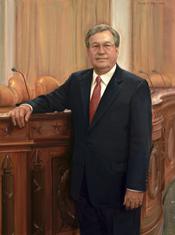
Mr. Speaker, pursuant to House Resolution 386, I call up the bill (H.R. 3045) to implement the Dominican Republic-Central America-United States Free Trade Agreement, and ask for its immediate…
Mr. Speaker, pursuant to House Resolution 386, I call up the bill (H.R. 3045) to implement the Dominican Republic-Central America-United States Free Trade Agreement, and ask for its immediate consideration.
Mr. Speaker, I yield myself such time as I may consume.
Mr. Speaker, for those individuals within our eyesight and earshot, there may be some people wondering about the debate that was begun under the rule, and that if it, in fact, carries over into the general debate, you will be quite perplexed.
The statement was repeated several times that we are doing this in the dead of the night. My friends, it is 5:30 in California. People are just getting home from work. Would we not rather debate this during prime time when there are people home and who can watch it?
Words such as ``shameful,'' ``disrespectful,'' ``arrogant''; accusations about freely-elected people in countries south of our border; someone who is not familiar with the way this place operates would be quite amazed at what has been said. Let me assure you, those of you who are concerned need only turn to the United States Constitution, Article I, section 6. Therein is contained what is often called the Speech and Debate Clause. The Speech and Debate Clause in the Constitution says, ``And for any speech or debate in either House they, the Senators and Representatives, shall not be questioned in any other place.''
In other words, truth, veracity, facts do not apply here if you choose not to use them. If you choose to misrepresent, you are allowed to do that on the floor of the House. If you wish to confuse, if you wish to say black is white or white is black, you can.
But I do think that you ought to at least give minimum respect for people who laid their lives down to have an opportunity to share the blessings of democracy.
In the 1980s we were all concerned, and speeches were made on the floor of this House, about the impending loss of Central America to totalitarian governments, and, frankly, sometimes it was to the right, and sometimes it was to the left.
We have before us tonight a freely negotiated trade agreement between sovereign countries freely elected by the people of those countries in Central America and in the Dominican Republic and in the United States. Yet a Member feels comfortable coming to the floor, and the gentlewoman from California said that they are going to be able to enforce their own trade laws. Does that not worry you? Well, so do we. She said, they could change their trade laws to allow child labor. Well, so can we. Will we? Of course not. What makes you think they will? The argument that somehow these people down there do not love their children any more than we do is, in fact, the words that were used earlier, that argument is shameful, it is disrespectful, and it is arrogant.
The idea that these people do not care about their families; have you driven around the greater Washington area and run into all these people from Central America who are here because they were driven here because of the political conditions in the 1980s, and that, in fact, the best import they have are the jobs people have here? You do not think they want to go home to their families?
This was negotiated by freely elected people, not because they want to sell products and services in the United States; they already have that. They want this so that our goods, our services, our jobs will come to Central America. And as you make the arguments that you make so shamefully, so disrespectfully, and so arrogantly about the governments freely elected, supported by their people, just remember, they want a job, too. They love their children. They are respectful of you; be respectful of them.
Mr. Speaker, I reserve the balance of my time.
Mr. Speaker, I yield myself such time as I may consume.
Mr. Speaker, I know the gentleman's district is in New York, and television is very expensive there, but it may surprise the gentleman to know that 8:30 on the east coast is called prime time, and you have to pay for it. We are in prime time.
Just let me say that you must be very proud, as you just indicated, to advocate for your side to vote ``no'' on democracy, ``no'' to jobs in their own country, ``yes'' to continued poverty, and ``yes'' to a threat to fragile democracies, because that is what this vote is. And it really is a sad night for your once proud, aggressive party, which has a lot of words and no action for people in need.
Mr. Speaker, I yield the remainder of my time to the gentleman from Florida (Mr. Shaw), the chairman of the Subcommittee on Trade of the Committee on Ways and Means, and I ask unanimous consent that he control the remainder of the time.
Mr. Speaker, I wondered when this moment would come, and apparently it comes tonight.
For more than 40 years the Democratic Party was a very forward- looking, progressive party. It led us into
many new and important endeavors in helping people around the world. It was FDR that coined the phrase ``good neighbor policy.'' I want to explain what this is all about.
This is a letter from 20 labor leaders, and it is addressed to the minority leader. It says, The American labor movement has been one of the Democratic Party's most consistent and stalwart supporters. Every election cycle labor delivers. We expect that House Democratic leadership will convey very strongly to all wavering Democrats that voting for CAFTA against our strong, clear, and loud objections, would signal to the labor movement that those candidates do not want our support. Our work to help elect at-risk Members at your urging will not extend to those who vote against us on this issue.
Tonight I will tell my party, they moved from the majority to the minority. We moved from the minority to the majority. And tonight we have an opportunity to move to the progressive, aggressive and good neighbor policy party. They have urged all-night protectionism. They have urged fear. They have urged that we do not do what is right.
All I ask of Members is tonight we have been a majority for a decade. It is time that we mature into a permanent majority. We will lead, we will be progressive, we will help our neighbors. We will not quote 40- year-old quotes about how much we want to help and, when we have an opportunity to do so, heel to the protectionism labor union movement in this country.
Please, those freely elected Presidents came to us and said, help us. We help them by voting ``yes'' on CAFTA. We will be the good neighbors.
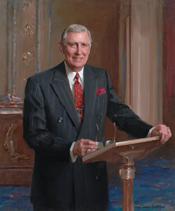
Mr. Speaker, I would like to talk to my colleagues who were here back in the early to mid-1980s, some of the older gentry in this body. Do you remember when we saw the Contras and the Sandinistas…
Mr. Speaker, I would like to talk to my colleagues who were here back in the early to mid-1980s, some of the older gentry in this body. Do you remember when we saw the Contras and the Sandinistas fighting and the bodies in the streets of Nicaragua, Managua? Do you remember all the wrangling that went on in this place because of the war down there? Do you remember the FMLN in El Salvador and the killing that went on down there?
The same people that were involved in the leftist movements down there that Fidel Castro was supporting, the Communists down there that Che Guevara was supporting are the same people that are opposing CAFTA today because they believe in a different form of government and a different approach to government. The Sandinistas are opposed in Nicaragua to CAFTA. The leftists throughout Central and South America are opposed to CAFTA because they do not want free enterprise to flourish down there. They do not want trade to flourish.
I would like to say to my colleagues tonight, look back at history. It is extremely important that you think about not only trade, but the security of the United States and immigration. When the wars broke out in Nicaragua and El Salvador, there was a massive migration of people to the United States. Go to Miami today. There are a lot of people who illegally came into this country from El Salvador and Nicaragua because they were fleeing the war down there. The people who could not afford it came up through Mexico and started coming across the border.
I submit to you tonight if we do not pass CAFTA and help stabilize those fledgling democracies and deal with the poverty problems down there, that we are going to have more wars down there, we are going to have more civil disorder and insurrection. There are governments down there that are trying to undermine fledgling democracies with their largesse, and they are going to continue to do it. What we have to do to combat that, in my opinion, is to support CAFTA, support trade, which will create more jobs down there and create an economy that will keep people at home and stop massive immigration into the United States. If we do not, in my opinion, there will be wars there, there will be massive immigration, and the security of the United States as well as the immigration problems will increase.
Mr. Speaker, will the gentleman yield?
I love you, man. You know that. But I have got to tell you, the Sandinistas and the leftists in Central and South America are against this for the reasons I stated. If you really believe in stability in our hemisphere, and you do not want to see more conflict and massive immigration, this is a good vehicle to vote for. And I love you, man.
Mr. Speaker, the debate over the potential costs and benefits of the proposed Dominican Republic-Central American Free Trade Agreement, CAFTA, has been contentious; and at times it has been difficult to separate fact from fiction and the myths from reality. In fact, I don't think I have ever seen as many wild and unsubstantiated allegations thrown around about a bill as I have seen during the debate over CAFTA. I rise tonight though because one myth perpetuated by opponents of CAFTA has caused me great deal of concern; namely the myth that CAFTA will restrict American consumers' access to the wide range of vitamin and mineral supplements of varying potencies that are legally sold in the United States. Then there are the related myths that CAFTA will limit the amount and type of information on the labels of dietary supplements sold in the United States or even require that dietary supplements be sold as drugs.
I, along with millions of Americans, firmly believe that dietary supplements have been shown through research and historical use to be of immeasurable benefit to human health. As a regular consumer, I know firsthand the health benefits of using dietary supplements on a daily basis. Whether taking a multi-vitamin, herbal product, or specialty supplement, I know that people can and do live healthier lives and save money in long-term health costs by supplementing their diets.
Approximately 10 years ago, seeing a need for the Federal Government to address the American consumer's growing interest in dietary products and public safety, Congress overwhelmingly passed the Dietary Supplement Health and Education Act, DSHEA, to make certain that all dietary health products sold in the United States are held to the highest and safest quality standards.
This legislation ensures the safety of dietary supplements by requiring manufacturers to follow standards called ``Good Manufacturing Practices,'' or GMPs. Essentially, all ingredients in supplements sold in the United States must be previously approved by the FDA and listed on the bottle label, and distributors must follow strict guidelines on any claims that are made in regard to a particular product--to provide consumers with the most accurate information on supplements. Additionally, if at any time the FDA decides that a particular product or dietary ingredient is detrimental to human health; it reserves the right to have those items removed from the marketplace.
This legislation provides the current framework for how the Federal government ensures the safety and efficacy of dietary supplements sold in the United States, and there is no provision in CAFTA that requires the United States to change DSHEA in any way.
Nevertheless, I was so concerned about this issue that I asked the U.S. Trade Representative's, USTR, Office to clear up any misunderstanding about CAFTA and DSHEA. I would like to have the text of the USTR's fact sheet on CAFTA and Dietary Supplements placed into the Congressional Record following my statement.
CAFTA and Dietary Supplements
The CAFTA-DR will not limit consumer access to dietary
supplements in any way, nor will it change the way the
federal government or U.S. states regulate dietary
supplements.
Chapter Six of the CAFTA-DR (Sanitary and Phytosanitary
Measures--SPS), which some have claimed could limit access by
American consumers to dietary supplements, does not create
any substantive rights or obligations. It merely:
Says the seven governments do not intend the CAFTA-DR to
change their existing SPS rights and obligations under the
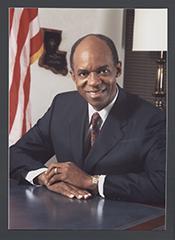
Mr. Speaker, as a Democrat with a firm commitment to eliminate poverty and to improve the lives of workers both here and abroad, I believe it is important to discuss the policy implications contained…
Mr. Speaker, as a Democrat with a firm commitment to eliminate poverty and to improve the lives of workers both here and abroad, I believe it is important to discuss the policy implications contained in the proposed U.S. FTA with the Dominican Republic and the countries of Central America.
In support of the CAFTA, I support the people of my port city. I have determined that the United States can best promote improvements both to working conditions and labor standards in those countries with the commitment and the supporting capacity-building provisions of this agreement.
I understand that our workers are concerned about our growing trade deficit. But CAFTA will have no negative impact here. Our trade deficit is driven by our own behavior as a Nation: massive consumption, low savings rates, and unwise borrow-and-spend economic policies of our own government, not CAFTA-like trade agreements.
In fact, an ITC study concludes CAFTA will reduce overall U.S. trade deficits by $756 million. And the CAFTA-NAFTA talk is a catchy play on words, but the comparison is really inappropriate.
Unlike the situation with Mexico prior to NAFTA, our market is already nearly completely open to Central American products. More than 80 percent of Central American products imported to the United States are already duty free. CAFTA will simply open their markets to our products leveling the playing field.
For years, Democrats and Republicans have promoted democracy in Central America and have spoken about the need to secure commitments from developing countries on core international labor standards, on labor enforcement, and have sought U.S. commitments to substantive and comprehensive labor-capacity building programs.
We have sought to ensure a role for international labor organizations in these efforts. With this unprecedented agreement, we have concluded and included all of these things. CAFTA promotes economic opportunity for the workers of the region who are facing massive competition from Asia and elsewhere in the most significant formal source of economic livelihood, textile and apparel production. With nearly half the population of these countries living in extreme poverty, with formal employment, the continued competitiveness the textile and apparel industry in our and other CAFTA industries can promote is very, very critical.
I have heard my colleagues suggest that the CAFTA textile and apparel rules remain too strict to really make a difference. But the countries and the companies who invest and purchase from the region believe differently.
Many of us had hoped for more flexibility. But those whose livelihoods depend on these issues believe that the new flexibilities CAFTA provides are critical to support an industry that provides some of the best-paying jobs in the region.
Are we to substitute our judgment for theirs?
CAFTA will also help these countries improve their investment climate through a more permanent relationship with the United States and many other provisions of CAFTA, including increased transparency, curbs on corruption and provisions that promote the rule of law, which could in fact be the single most important driver to improve the lives of our neighbors in Central America and the Dominican Republic.
And there are the agreement's labor provisions. Both the commitments made by each country in the labor chapter to enforce domestic laws and the capacity-building program built into the CAFTA, which each of the six governments recently relied on in undertaking an unprecedented commitment to improve labor standards and enforcement in each of their countries in very concrete ways.
But despite all of these provisions and commitments, it is argued that the CAFTA's labor provisions are a backwards step and that CAFTA should not be supported because of the CAFTA countries' histories of weak labor laws and suppressing worker rights.
The biggest labor issue of the CAFTA countries is in fact the inadequacy of their enforcement of existing laws. Indeed, this is where many of the 20-plus labor problems the critics allege actually fall. They are issues of enforcement, not issues with the substantive existing labor laws; and that is where the CAFTA can do the most good.
In taking a close look at the other recent trade agreements that passed with overwhelming bipartisan support, it is difficult to understand why the CAFTA countries are being held to a different standard and therefore a double standard.
The labor laws in the CAFTA countries are similar to those of Jordan and Morocco. For example, foreign nationals cannot lead or administer local labor unions in Morocco. This is the case for all of the CAFTA countries, but Nicaragua. The right to collective bargaining is not recognized in Morocco's constitution, but it is in most of the CAFTA countries. And, finally, Morocco allows minors to work longer per week than all of the CAFTA countries.
If we can vote overwhelmingly for Morocco and Jordan with these labor provisions on the basis that we should engage them economically because they have made progress on liberalizing their economies and on improving their human rights pictures, then why can we not support this FTA with our neighbors in the popularly elected democracies with even better laws on the same grounds?
What all of these countries, Jordan, Morocco and the Centrals, share are the same challenges in enforcement and lack of resources. In fact, the CAFTA provisions are stronger than those in NAFTA, which has labor protections in the signed agreements and did not provide dispute resolutions in the main agreement.
The last point I want to make, Mr. Speaker, is that at our door stand our neighbors from Central America literally pleading with us to approve this CAFTA agreement. We are substituting our judgment for theirs, people who are elected by their own people as we are elected by ours.
Mr. Speaker, I think instead of turning a deaf ear to them, we ought to heed them, we ought to hear them. These are our neighbors and our friends. And we ought to support them. I urge adoption of this agreement.
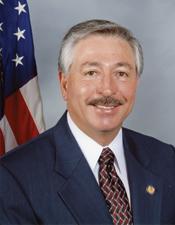
Mr. Speaker, I came to Congress to defend the values of rural Colorado; our farming lifestyle, our ranching communities, our jobs. DR-CAFTA, the Dominican Republic-Central America Free Trade…
Mr. Speaker, I came to Congress to defend the values of rural Colorado; our farming lifestyle, our ranching communities, our jobs. DR-CAFTA, the Dominican Republic-Central America Free Trade Agreement goes against those values, posing a threat to the very backbone of our economy and our lifestyle.
Trade has always been a way for cultures to exchange not only goods, but also ideas and good will. I support trade with our neighbors; it is what we should be doing to help promote democracy and economic prosperity. But just because we have a trade agreement before us does not mean it is the right agreement.
DR-CAFTA is an attempt to liberalize trade between the United States and six Latin American countries. The Administration negotiated with other foreign leaders in 2004 and today the House of Representatives will vote whether to approve the agreement. Due to Fast Track Authority, however, Congress will not have an opportunity to amend the agreement--it will merely have an up-or-down vote regardless of any concerns that may be voiced. DR-CAFTA has divided many agricultural groups among the states as well as other industries, business groups and human rights organizations.
Over the last several months, I have met with a variety of groups from Colorado and around the nation about DR-CAFTA and I am sad to report there is no consensus about how this agreement will affect our nation's economy.
The promise of new markets for agricultural exports has prompted many groups to throw their weight behind DR-CAFTA, but a deeper examination of the supposed benefits vs. the actual consequences of DR-CAFTA's enactment warrants hesitation.
Our beef industry is strong and fiercely protected in our state. According to the proponents of the deal, DR-CAFTA will open up new markets and opportunities for the U.S. beef industry. But our local ranchers and beef producers will not benefit from the agreement--DR- CAFTA will only allow duty-free access for prime and choice cuts of U.S. beef, which makes little sense when 40 percent of the people in DR-CAFTA nations make $2 a day or less.
Meanwhile, DR-CAFTA is silent on the issue of imports meeting our rigorous food safety and sanitary standards, creating a challenge to the safety of our food supply.
The Colorado Farm Bureau has publicly expressed its opposition to this agreement because of the potential adverse effects it would have on agricultural sectors. In particular, the Colorado sugar industry could be devastated by increased imports of sugar from the Dominican Republic. According to estimates, the effect of lower sugar prices after increased imports could be nearly $180 million. This means the loss of nearly 150,000 sugar-industry jobs. A report prepared by the United States International Trade Commission estimates job loss in the sugar industry will be 38 times higher than the next most harmed sector.
Not only would DR-CAFTA threaten the livelihoods of thousands of US. sugar farmers and workers, but it would cost taxpayers millions of dollars. Another government report reveals information condemning DR- CAFTA as a burden on taxpayers. According to the Congressional Budget Office, the influx of sugar from Central American countries would push prices down so low that our own sugar farmers would be forced to forfeit government loans on their crops. These forfeitures would cost taxpayers about $50 million annually through 2015. When added to a trade deficit that has ballooned to $617 billion, claims of economic gain are hard to believe.
The trade commission study states DR-CAFTA will actually accelerate the pace at which jobs are outsourced overseas. The North America Free Trade Agreement certainly hasn't set a good precedent, with estimates of nearly 900,000 jobs lost.
In the wake of NAFTA, Trade Adjustment Assistance programs were designed to assist those who lose their jobs as a result of companies moving out of the United States. More than a decade after NAFTA, the programs receive only one-quarter of the needed funding. Despite progress made in recent years to improve the Trade Adjustment Assistance program, budget cuts have left many workers who qualify for TAA benefits without access to this program when they need it most. Workers in Grand Junction were displaced this year when their jobs were outsourced overseas; I would hate to see other communities have to deal with this problem.
How will the TAA programs keep up with DR-CAFTA's fast-paced outsourcing? And why spend millions of dollars to fix the effects of a flawed trade agreement, instead of renegotiating the entire agreement? Proponents of DR-CAFTA can't seem to defend the agreement on its own merits.
Since the solid economic reasoning isn't there, curbing illegal immigration has become the new purpose of DR-CAFTA, another argument that doesn't have the backing of facts or figures. In the wake of NAFTA, 1.3 million farmers in small to medium-size operations were forced off their land because they were unable to compete with the multinational producers. For those concerned about ``broken borders,'' think of this: The employed farmers and agriculture workers of 10 years ago have become the undocumented immigrants of today. I fear DR-CAFTA will create a new wave of illegal immigration from Latin America.
I will close as I began by reiterating my feelings about free trade. I support trade as part of a long-term strategy to grow our economy and support democracy. Economic ties with other nations help the American economy and national security. But trade agreements should provide real gains for U.S. workers and businesses. In any agreement, we must be vigilant about protecting our economic security. DR-CAFTA is a flawed agreement that needs to be renegotiated to address the concerns of our agricultural sector and the concerns of illegal immigration. Safeguards to protect American jobs and rural values must be strengthened before moving ahead with free trade in Latin America.

Mr. Speaker, over the past several weeks, I have closely studied the proposed free trade pact between the United States and Costa Rica, El Salvador, Guatemala, Honduras, Nicaragua, and the Dominican…
Mr. Speaker, over the past several weeks, I have closely studied the proposed free trade pact between the United States and Costa Rica, El Salvador, Guatemala, Honduras, Nicaragua, and the Dominican Republic, commonly referred to as CAFTA.
After careful consideration, research, and meetings with national security experts and representatives of Missouri agriculture, labor, and business, I have decided to vote in favor of CAFTA. While this legislation is far from perfect--no trade pact ever is--my support comes down to two issues.
First, CAFTA is a national security issue. As the ranking Democrat on the House Armed Services Committee, I have the opportunity to consider not only the military component of national security, but other elements as well. Our security depends upon the success and the competitiveness of the U.S. economy. We must exert leadership, especially in our own hemisphere.
Just 20 years ago, civil wars, communist insurgencies, and military dictatorships oppressed and destabilized much of Central America. Because conditions in Central America are critical to our national security, the
United States has actively supported these nations during the transition from insurgency and military rule to democracy. However, these new democratic governments cannot be taken for granted. Threats to their existence remain, notably from countries in South America that are suffering the effects of civil war, narcotics trafficking, and communist inspired agitation. Turning our backs on a region only recently freed from the grasp of dictatorship would diminish our international credibility and would send the wrong message to the world at a time when our troops are fighting in Afghanistan and Iraq to build stable, democratically-elected governments.
As former President Jimmy Carter said, ``For the first time ever, we have a chance to reinforce democracies in the region. This is the moment to move forward and to help those leaders who want to modernize and humanize their countries.''
Second, the market access provided by CAFTA will benefit American agriculture, which is of primary importance to those of us who care about the future of rural America and want to promote a strong rural economy. Currently, 99 percent of, agricultural products from CAFTA countries enter the United States duty free, while U.S. farm exports face significant barriers in these markets. Many of these commodities are produced in Missouri, where agricultural exports totaled $1.24 billion in 2003 and account for one-fourth of farm cash receipts.
Under CAFTA, U.S. farm products--like pork, poultry, soybeans, corn, and beef--will receive preferential access to Central American markets, giving Missouri's agricultural exports a significant economic advantage over agricultural exports from our competitors in South America, Europe, and Canada. It is projected the CAFTA could increase agricultural exports in the Show-Me State by $33 million annually once the agreement is fully implemented in 2024.
Again, no trade deal is perfect. Clearly, some improvements could be made in the bill, especially on the labor protection side. But, as I studied CAFTA and heard from national security, agriculture, labor, and business leaders, I became convinced that this trade agreement is critical to U.S. national security and to rural America.
June 8, 2005.
Hon. Bill Thomas,
Rayburn House Office Building,
Washington, DC.
To Representative Bill Thomas: As you prepare for your
initial consideration of the Central American Free Trade
Agreement (CAFTA) with the nations of Central America and the
Dominican Republic, I want to express my strong support for
this progressive move. From a trade perspective. this will
help both the United States and Central America.
Some 80 percent of Central America's exports to the U.S.
are already duty free, so they will be opening their markets
to U.S. exports more than we will for their remaining
products. Independent studies indicate that U.S. incomes will
rise by over $15 billion and those in Central America by some
$5 billion. New jobs will be created in Central America, and
labor standards are likely to improve as a result of CAFTA.
Some improvements could be made in the trade bill,
particularly on the labor protection side, but, more
importantly, our own national security and hemispheric
influence will be enhanced with improved stability,
democracy, and development in our poor, fragile neighbors in
Central America and the Caribbean. During my presidency and
now at The Carter Center, I have been dedicated to the
promotion of democracy and stability in the region. From the
negotiation of the Panama Canal Treaties and the championing
of human rights at a time when the region suffered under
military dictatorships to the monitoring of a number of free
elections in the region, Central America has been a major
focus of my attention.
There now are democratically elected governments in each of
the countries covered by CAFTA. In negotiating this
agreement, the presidents of each of the six nations had to
contend with their own companies that fear competition with
U.S. firms. They have put their credibility on the line, not
only with this trade agreement but more broadly by promoting
market reforms that have been urged for decades by U.S.
presidents of both parties. If the U.S. Congress were to turn
its back on CAFTA it would undercut these fragile
democracies, compel them to retreat to protectionism, and
make it harder for them to cooperate with the U.S.
For the first time ever, we have a clause to reinforce
democracies in the region. This is the moment to move forward
and to help those leaders that want to modernize and humanize
their countries. Moreover, strong economics in the region are
the best antidote to illegal immigration from the region.
I appreciate your consideration of my views and hope they
will be helpful in your important deliberations.
Sincerely,
Jimmy Carter.

Mr. Speaker, today, after much deliberation, I decided to cast my vote against the Central American Free Trade Agreement. After careful review, I have concluded that the benefits of CAFTA are likely…
Mr. Speaker, today, after much deliberation, I decided to cast my vote against the Central American Free Trade Agreement. After careful review, I have concluded that the benefits of CAFTA are likely to flow to a few powerful economic special interests at the expense of working men and women in the United States and Central America. It is my hope that a `no vote' will encourage the President to go back and re-negotiate the labor and environmental provisions of CAFTA so that everyone, not just a few special interests, will experience the rewards of free trade.
The Bush Administration offered as one of its reasons for negotiating this agreement that the growing economic prosperity in Central America as a result of CAFTA would pull Central Americans up from poverty to become enthusiastic consumers of American goods. But by not sufficiently addressing the issue of weak labor protections throughout Central America, the Bush Administration neglected an important tool that could help make this dream a reality.
According to the Administration, CAFTA adequately addressed labor concerns by requiring that each country enforce its own labor laws. Ordinarily, I would not object to this.
Similar language is included in some of the other FTAs I have supported in the past. But what is troubling about CAFTA is that, while Central American countries may indeed have worker protections on the books, they have a dismal record of enforcing them. This became clear to me while researching the human rights records of CAFTA countries.
I was disheartened to learn that while the constitutions of each CAFTA country provides for rights of workers, bureaucratic impediments, ineffective legal systems and insufficient resources have precipitated a culture of neglect that has left workers vulnerable to exploitation by employers.
In Guatemala, the law prohibits retribution for forming or participating in trade unions. But, enforcement of these provisions is weak. Employers often circumvent the Labor Code or simply ignore judicial pronouncements altogether.
In El Salvador, there have been repeated complaints that the government prevents workers from exercising their constitutionally recognized right of association by employing excessive judicial formalities and denying unions legal standing.
In Honduras, the Labor Code expressly prohibits retribution by employers for trade union activity and blacklisting--but such violations continue.
The Administration's response to objections about the dismal enforcement records of Central American governments is that CAFTA contains penalties to discourage such activities. While CAFTA does contain provisions crafted to encourage enforcement of labor rights, these provisions fall short of the strength needed to reverse years of indifference and systematic neglect.
CAFTA's enforcement mechanism centers on a strategy of financial penalties. Each time a party is found guilty of violating a worker's rights, that country is assessed a fine. This approach has been employed in earlier agreements with few objections. But in CAFTA, such an approach is problematic.
My principal concern is that only the U.S. has the standing to bring a case against a CAFTA country. NGOs and other international institutions, who are often the most knowledgeable about the labor conditions in these countries, are forbidden from seeking redress on behalf of workers--which means that only the U.S. government will be able to take issue with labor violations under CAFTA. Given our poor history of forcing compliance with labor laws among our trading partners, I am not convinced that this approach will adequately protect Central American workers.
Equally troubling is the requirement that countries found to be in violation pay the fine back to themselves instead of to the United States. This hardly seems like a penalty at all.
Unfortunately, CAFTA would turn the labor conditions in some Central American countries from bad to worse. The Caribbean Basin Initiative, which currently governs U.S. trade relations with Central America provides for periodic opportunities to reconsider and re-negotiate its provisions--including its labor provisions. That creates a mechanism where, over time, we can press for improved labor conditions. But the labor provisions in CAFTA would preempt the CBI process. Once passed, CAFTA can only be changed if each individual country agrees to the change.
Over the years, unions have helped bring scores of Americans into the middle class. Unions helped shield workers from retribution as they sought a fair wage and better benefits for themselves and their families. Given the increased opportunity for trade that CAFTA will bring about, Central American workers deserve the chance to enjoy some of the benefits.
The debate on CAFTA has been long and spirited. Along the way, critics have had time to clearly annunciate their objections. The Bush Administration heard and responded to concerns about textiles and even re-opened negotiations on the issue. Why can't the same be done for labor rights?
Mr. President, many of the flaws in the agreement with respect to labor rights also apply to its environmental provisions. The enforcement mechanisms are weak.
I have therefore concluded that CAFTA is a missed opportunity. Without adequate mechanisms to enforce labor and environmental standards it will trigger a race to the bottom--a race for certain special economic interests to exploit lax labor and environmental protections. The result will be substantial benefits for a few at the expense of many. We can do better. We must do better.
Mr. President, Americans and Central Americans deserve a chance to have their concerns about this agreement addressed--please re-negotiate
Mr. Speaker, a question you might ask tonight is: Why are we passing this Central American Free Trade Agreement? Today, the President of the United States came up to the Republican caucus and someone…
Mr. Speaker, a question you might ask tonight is: Why are we passing this Central American Free Trade Agreement?
Today, the President of the United States came up to the Republican caucus and someone reported to me that he made some statement equal to, we have had a marvelous year. Now, if you think about what has gone on in the last 6 months, you would have a hard time finding any marvelous year. I must have missed it somewhere.
Our trade deficit is as big as it has ever been in our history. So is this a fix for that? If we pass the Central American Free Trade Agreement, will that fix our problems in trade?
Let me put it in perspective for you. The combined economies of these six countries is $85 million GDP. That is equivalent to Tampa, Florida, and the neighborhood around it. That is what kind of place we are talking about. We are talking about a little bitty place.
Now, what do they have down there? Well, they have lots of poor people. Right? Good workers. Hard workers. A lot of them go to a lot of trouble to try to come up here and get into this country. And people wonder why? Well, it is because they are hard-working people. They are tough, they work hard, and they go through a lot of stress and strain. So if we can keep them down in their own country and keep them working down there where they do not have any laws and move our jobs down there to them, well, who wins in that?
I guess they get a 50-cent-an-hour job. That is a real improvement. With no protections, no guarantees from a union that they are going to have health care or education or worker safety or any of the things that our workers have in this country. But we have got a cheap workforce.
You heard the gentleman from North Carolina (Mr. Jones) talk about one of the underlying things here. One of the ideas about this bill is if we can keep them down there, they will not be coming in up here. We will stop that immigration. Let me tell you something, folks. It has not stopped it from Mexico. It is not going to stop it from Central America. These people know. They are not stupid. They may be poor, but they can figure it out. And they can figure out working for 50 cents an hour down there is not as good as coming up here and getting involved in even the most menial jobs in this country.
So what we are saying is we have negotiated a treaty. Did we negotiate a trade agreement with the workers? No. If you look at every single one of those countries, they are all the same. They have a very thin elite who control the whole country, and have for centuries. And all we are doing is giving them more power to work on their workers. That, in my view, is not fair to the workers, and it is not an honest way for this country to operate. We are setting no example for the world by keeping poor workers down.
Mr. Speaker, I rise in support of the American worker and American business, and the best way I can do that this week is to vote against CAFTA and I urge every I Member to do the same.
We know better, it is as simple as that.
CAFTA is bad public policy that has no place in a 21st century global economy.
Free trade between the United States, and the Dominican Republic and Central America is vitally important, but it has to be fair trade and CAFTA does not measure up. We have known this about CAFTA for some time.
For over a year, the American people kept hearing that CAFTA was coming, but it never arrived. The majority didn't have the votes because they had not earned the votes--even within their own party--by floating a blatantly unfair agreement that fails repeatedly to make real gains and real change.
For over a year, Democrats and many rank-and-file Republicans repeatedly urged the majority to act like statesmen and not henchmen for the administration.
Instead, Republican leaders have chosen destructive confrontation instead of constructive dialogue. If their strong arm tactics succeed, America will have an unfair international trade policy that would not help Central America much and will harm America a lot.
The omissions are glaring in CAFTA--chief among them: environmental protection, worker rights, and fair policies that could benefit every American business, not just a few.
As the largest market in the world, United States international trade policy should be leading the world, not following special interests, which have only their own interests in mind. But that is not the case in CAFTA, which retains protectionist trade policies that benefit U.S. textile interests and no one else.
CAFTA represented a real opportunity for the United States to apply what we have learned--both good and bad--from NAFTA and all the other trade agreements implemented over the last decade.
In CAFTA, we could have supported American jobs and American companies. We could have led the region into creating real family wage jobs instead of any wage employment.
There is so much we could have done but what we have is a Republican majority attempting to export their philosophy of the Haves and Have- nots. ``Greed is good'' should not be the mantra that comes from CAFTA.
The United States and Central America need an honest trade agreement that represents the best of America and CAFTA doesn't come close. Vote to keep America as a beacon of hope and not a bastion of greed.
We need to renegotiate CAFTA and the first step in that process is to vote ``no'' on this hopeless, helpless, and hapless agreement.
Mr. Speaker, I have supported trade agreements that have come through this body since I have been here, but this one falls short. I stand in opposition to the legislation. Mr. Speaker, I rise today…
Mr. Speaker, I have supported trade agreements that have come through this body since I have been here, but this one falls short. I stand in opposition to the legislation.
Mr. Speaker, I rise today in reluctant opposition to the implementation legislation for the Free Trade Agreement with the Dominican Republic and Central America, known as DR-CAFTA.
Throughout my service in the U.S. House, I have supported policies that encourage export promotion because exports can play an important role in strengthening our economy. But our economic policies must work to build the American middle class by investing in education, training and health care for working families as well as expanding access to new markets for our products. Our trade policies must lift living standards in other countries whose workers will compete for American jobs. If American workers are forced to compete with workers from countries without a growing standard of living, the race to the bottom will lower the economic opportunities and quality of life for everyone. I firmly believe that America must exert our global economic leadership to promote democracy and economic growth, but that engagement must be matched with a commitment to empower middle class Americans to compete and win in the global economy. We can do better than this DR-CAFTA, and we must.
First, as a member of the House New Democrats Coalition, I have worked with administrations of both political parties, including the Bush administration, to promote policy for sound economic growth and a growing middle class. I have met with business leaders and officials from each of the DR-CAFTA countries, and I recently traveled to visit Honduras
and El Salvador to see for myself the conditions of these trading partners. Although I want to help the peoples of the DR-CAFTA countries to secure their democracies and build economic opportunities, this free trade agreement fails to erect the conditions necessary for those goals. For example, in Honduras, I saw oxen pulling carts as a primary means of industrial production and impoverished workers struggling to eke out a meager living. Without strict, enforceable labor standards, these workers will suffer exploitation of market forces without enjoying any upward mobility. I also want to see our trading partners make the kind of commitment to education and infrastructure that we have in the U.S. that has provided us the foundation for our economic growth and rising living standards for our people.
Unfortunately, this DR-CAFTA represents a step backwards in strengthening labor standards, and thereby standards of living, abroad. Specifically, DR-CAFTA is a step back from the progress made in the Jordan Free Trade Agreement and even the rules under the Generalized System of Preferences, GSP, and the Caribbean Basin Initiative, CBI. America must maintain our global economic leadership and be a force for rising living standards with all of our trading partners so that broad- based economic growth creates sustainable markets for American goods and services. The countries of the DR-CAFTA accord possess some of the world's worst records for workers' rights, and this DR-CAFTA not only fails to correct this glaring problem but reverses progress made in previous trade agreements to raise labor standards abroad.
It is also important to note DR-CAFTA's weak environmental enforcement provisions. Although the agreement contains important protections for intellectual property that are subject to dispute resolution, it fails to include adequate enforcement of environmental protection, which will put American companies at a competitive disadvantage with companies in the DR-CAFTA countries. In fact, what language DR-CAFTA does contain on environmental protection and improvement of standards is explicitly excluded from dispute settlement under the agreement, rendering it meaningless. Previous trade pacts, such as the Jordan Free Trade Agreement, contain strong labor and environment provisions, and DR-CAFTA should as well.
Finally, the vote on DR-CAFTA comes at a time when the Bush administration economic program has reversed years of progress in building a thriving middle class. Instead of making critical investments in education, training and health care so working families can compete and prosper in the global economy, the administration is cutting these vital initiatives. Specifically, this administration and Congress have shortchanged our schools $39 billion they were promised in order to comply with the No Child Left Behind education reform law. And last month, the House passed an appropriations bill with devastating cuts in needed efforts for education, Trade Adjustment Assistance and other job training, and rural health care. In the global economy of the 21st century, working Americans can compete and win only if they are equipped with the tools to make the most of their God-given abilities. We need an economic policy that helps middle class families, those striving to get into the middle class and those struggling to stay in the middle class.
In conclusion, I will vote against DR-CAFTA because it is a missed opportunity to help our neighbors in the Dominican Republic and Central America and put America back on the path to a growing middle class.
Show 11 more
Mr. Speaker, I rise today to voice my strong opposition to the Dominican Republic-Central American Free Trade Agreement and intend to vote it against. I am proud to be a pro-trade Democrat in…
Mr. Speaker, I rise today to voice my strong opposition to the Dominican Republic-Central American Free Trade Agreement and intend to vote it against.
I am proud to be a pro-trade Democrat in Congress and am proud of my record--having supported every free trade agreement since I took office in 1997.
I voted in favor of granting the President Trade Promotion Authority in 2002 and voted against withdrawing from the World Trade Organization in 2000 and again earlier this year.
I am a longtime member, and the current chair of the New Democrat Coalition, a group of members who often support free trade. We see our role as a group of pro-business, pro-defense, and pro-trade leaning members who seek ways to open foreign markets to American goods and services. I also co-chair the Friends of New Zealand Caucus in the House, and hope we may soon see a free trade agreement with New Zealand.
Mr. Speaker, I believe that free trade, when organized properly, benefits our economy. It can only help to improve our relations with the other countries involved.
In the case of CAFTA, I want to see our Nation maintain close ties with our neighbors in Central America. Our economic security and our National security depend on cooperative relationships with our friends and allies.
However, in pursuing free trade, we must also consider the impact and direct effects the agreements will have on workers--both here and abroad.
And CAFTA fails to provide adequate protection.
It simply does not do enough to invest in basic job training and education for Americans--specifically those Americans who lose their jobs due to trade.
The current budget for Trade Adjustment Assistance is insufficient: the President's 2005 request was $300 million less than Congress authorized for FY 2004, despite the obvious needs for job training and retraining. What's worse, Mr. Speaker, is that CAFTA does not provide any TAA funds for service workers, who comprise 80 percent of today's American workforce and produce three-quarters of our products. When job training programs go under funded, American workers are at risk.
Furthermore, CAFTA is the first FTA negotiated by the United States with developing countries, some of which have weak labor laws and a history of suppressing the rights of their workers.
We need to do all in our power to ensure that this agreement helps these countries raise their working standards. Unfortunately, the labor chapter requires that each country simply enforce its existing laws. It does nothing to require the DR-CAFTA countries improve their laws to reflect fairness to working people. There are also no safeguards in the agreement to prevent countries to explicitly weakening their labor laws. This ``enforce your own laws'' standard is a giant step backwards. Under our current trade policy, the Caribbean Basin Initiative allows us to withdraw trade benefits from countries who violate the labor standards of the agreements they have signed. If CAFTA goes into effect, those remedies are wiped out and simply replaced with the ``enforce your own laws'' standard.
This labor agreement is simply unacceptable.
And finally Mr. Speaker, I feel compelled to say a word about the legislative process here in Congress. I would be remiss if I did not do so.
This Administration has made a habit of regularly excluding Democrats from the table during the negotiation and drafting of all major legislation. We saw this with the energy bill, the Medicare prescription drug bill, and again with CAFTA. We were not consulted at all on this FTA.
We all have valid ideas and concerns worthy of discussion regarding improving international market economies and they need to be fully and fairly debated. That did not happen with CAFTA. We were not engaged. I thought that at some point in the process members of the New Democrat Coalition would be consulted, as we generally support free trade. However, I was wrong. There was no outreach from House leaders or from the President to us.
One would think that after the passage of Trade Promotion Authority in 2002--by a 3 vote margin--a clear signal was sent to the Administration that passing free trade agreements will not be easy. Everyone ought to be at the table. Instead of heeding past warnings, they have continued to make a habit of regularly excluding Democrats. CAFTA has been no exception.
As a result of poor negotiations with the Democrats and a lack of steady involvement by the President with members of his own party, on the day of the CAFTA vote, President Bush made an eleventh hour trip to Congress to twist arms in hopes of squeaking out the minimum number of votes needed to pass this agreement.
Mr. Speaker, trade should not be a Republican or Democrat issue. It is an American issue. Passing trade agreements by one or two votes, in the dead of night when both the American and Central American people are sleeping, is not the way to have a responsible trade policy.
Both the people of Central America and workers here in the United States deserve better.
Mr. Speaker, I rise in strong support of the U.S.- Central American Free Trade Agreement For me, free trade has always been about jobs and economic opportunity. But this agreement is about much more…
Mr. Speaker, I rise in strong support of the U.S.- Central American Free Trade Agreement
For me, free trade has always been about jobs and economic opportunity. But this agreement is about much more than that. It's also about increasing democracy in a region whose stability is fragile but moving in the right direction. It's about improving the environment. And it's about stemming illegal immigration.
The economic benefits of CAFTA are undeniable. CAFTA countries comprise the tenth largest market for U.S. goods, and the rapid growth of U.S. exports to CAFTA countries suggests this market could grow even more with the lowering of trade barriers.
My home State of Minnesota exported $12.7 billion in goods worldwide last year and ranks seventh in State agriculture exporters. Between 2000 and 2004, Minnesota manufacturers' exports to Central America increased by 83 percent, which clearly demonstrates Central America's viability as an emerging market for U.S. exports. And the elimination of protectionist tariffs in Central American countries will provide further increases in export opportunities for Minnesota farmers, manufacturers and service providers.
Passage of this agreement is so important to the U.S. economy because under the Caribbean Basin Initiative, over 80 percent of Central American imports already receive duty-free treatment. And if you separate the agriculture sector, CAFTA countries receive duty-free treatment on 99 percent of imports, 99 percent. It's time for our farmers and manufacturers to get fair treatment by allowing our exports to have duty-free access to their market.
CAFTA's passage is also necessary to advance overall trade liberalization. CAFTA's failure could cause a significant setback to other bilateral agreements in the works and also to the WTO-wide Doha Round negotiations.
The U.S. must remain competitive in the global economy, especially with the emergence of major exporters like China. Lowering trade barriers with developing countries in our hemisphere helps our overall competitiveness against China by increasing competition in growth sectors that China would otherwise dominate--like textiles, apparel and light manufacturing.
So the economic argument is rock solid, but CAFTA's passage goes beyond economic considerations. It will also help promote democracy, decrease illegal immigration and increase environmental standards.
For decades during the cold war, the U.S. spent significant resources fighting the spread of Communist and tyrannical dictatorships in Central America. Fortunately, Daniel Ortega's Sandinistas and the other leftist insurgencies which tore Central American countries apart have since been defeated and replaced by fledgling democracies. But now another destabilizing leader--Venezuela's Hugo Chavez--threatens peace and prosperity in the region.
Just last week, Chavez was reportedly revving up his military-- warning them to be prepared for the imminent invasion by the U.S. And not surprisingly, Chavez is also the most vociferous opponent of CAFTA in the region.
Make no mistake, Hugo Chavez is licking his chops at the prospect of CAFTA's failure--waiting to exploit our missed opportunity and trap these nascent democracies under his thumb. These Central American countries lie on the precipice of economic stability and democratic government, and they deserve a chance to develop the same freedoms we have here.
Mr. Speaker, in addition to the economic and political benefits, CAFTA's passage will also improve environmental standards in Central America and decrease the flow of illegal immigrants from the region.
Study after study has shown that as economies improve, so do environmental standards. Once people get beyond the basic needs of food and shelter for their families, they can focus on the greater goods of clean air, clean water and conservation. Trade is not a zero-sum game. The elimination of tariffs helps increase exports and grow economies, and as the economies of Central America grow, so will their environmental quality.
Similarly, illegal immigration stems from the human desire to improve one's economic condition. As a member of the Immigration Reform Caucus, I believe we have a long way to go to improve our border security and stop the flow of illegal immigration. An improving economy in Central America will help achieve this goal, as the increase in job opportunities in the region will encourage more people to remain in their native countries.
The empirical data supports the agreement. Trade liberalization has always had the empirical data on its side. The immediate tariff reductions found in CAFTA expand market access for U.S. farmers, manufacturers and service providers and continue our country down the path of even greater market access worldwide. It will also significantly improve standards of living in Central America.
Congress must now have the resolve to do what is right and pass CAFTA. The future of our economy and the political stability of our region depend on it.
Mr. Speaker, there are various good reasons to vote against CAFTA, but the first is enough and it's basic: this is not a good deal. The U.S. is running unprecedented trade deficits--$618 billion last…
Mr. Speaker, there are various good reasons to vote against CAFTA, but the first is enough and it's basic: this is not a good deal.
The U.S. is running unprecedented trade deficits--$618 billion last year, $195 billion this year in the first quarter alone. And the deficit worsens every year, weakening our economy and our independence. Virtually every trade deal the U.S. has made has resulted in far more imports than exports. Yet we keep creating free trade zones in the blind faith that the market will optimize the outcome.
Central American countries are part of the Carribean Basin and already enjoy wide-open access to our markets by virtue of tariff Item 807, the Generalized System of Preferences, the Carribean Basin Trade Partnership Agreement, and the Uruguay Round of GATT, which has removed all quotas on textile/apparel imports. Far from being disadvantaged, these countries enjoy preferential access now.
In fact, the Caribbean Basin countries as a group already export more to the U.S. than Mexico and import less. The CBI countries shipped $2.6 billion in apparel exports to the U.S. versus $1.6 billion in apparel shipments from Mexico. During the most recent quarter, CBI countries imported $655 million in fabric from the U.S. Mexico imported $809 million. Overall, in 2004 our textile/apparel trade deficit with Mexico was $3.765 versus $5.669 with CBI countries.
CAFTA purports to be based on a rule of origin adopted from NAFTA. NAFTA provides that for textile and apparel goods to move freely among Mexico, Canada, and the U.S., they must be made from the yarn stage forward in these three countries. CAFTA follows the same rule, but carves out so many exceptions that the exceptions swallow the rule.
Here are some of the exceptions to the rule of origin that CAFTA allows for textiles and apparel:
Only the component that gives the garment its essential character is subject to the rule of origin. Non-essential components are excepted.
Textile or apparel goods that contain fabric or yarn deemed ``in short supply'' in the U.S. are treated as originating in CAFTA, regardless of origin. This opens the door to more Chinese components entering the U.S. duty-free.
Denim, wool, cotton, and man-made fiber woven products from Mexico and Canada, are permitted under the rule of ``cumulation.'' Cumulation allows countries that have free trade agreements with us to supply component parts to CAFTA countries without affecting duty-free treatment. This opens the sale of U.S. yarn and fabric to competition and increases the likelihood that transshipped textiles from China will enter the U.S. duty free.
For the first 10 years, CAFTA grants Tariff Preference Levels (TPL) to Nicaragua, for up to 100 million square meter equivalents of out-of- region cotton or man-made fiber garments. These goods come into the U.S. at nominal duties. This exception represents \2/3\ of Nicaragua's current capacity and opens another back door to Chinese imports.
The origin of collars, cuffs, and linings is not considered when determining the origin of the apparel goods. This allows the use of Chinese collars, cuffs and linings.
CAFTA allows Central American countries to use components from anywhere--including China--to make pajamas, bras, and boxers and import them duty-free. The import of these goods from China has been found disruptive to our markets. So, they are subject to ``restraints'' under a special ``safeguard'' agreement with China. By allowing duty-free access to the U.S. for these goods, CAFTA allows China a route around the ``safeguard'' restraints.
Here's another oddity about CAFTA. CAFTA benefits are retroactive to January 1, 2004. Manufacturers will receive duty rebates if CAFTA is ratified. Under the Caribbean Basin Trade Partnership Act, garments made in the region from U.S. yarns and fabrics already receive duty- free treatment. The only manufacturers who will benefit from retroactivity are the ones who want to use non-U.S. fabric as part of the single transformation, TPL, or cumulation loopholes. Retroactivity is essentially an invitation from the U.S. government to manufacturers to start using non-U.S. fabrics immediately.
The U.S. has been unable to make labor and environmental standards a condition of free trade for GATT/WTO members, though they should be. Otherwise, free trade becomes a race to the bottom. Our goal should not be just to expand markets, but to raise living standards. All CAFTA says is that a country must enforce its own laws. CAFTA sanctions the status quo, doing nothing for labor or environmental laws.
All in all, CAFTA strikes a poor bargain. China is now making trade deals world-wide, using as leverage the largest emerging market in the world. The U.S. still has the largest existing market in the world. Surely in exchange for access to our markets, we can cut a better deal than CAFTA--better for our workers and theirs.
Mr. Speaker, the late Pope John Paul said, ``If globalization is ruled merely by the laws of the market applied to suit the powerful, the consequences cannot be but negative.'' I agree with the late…
Mr. Speaker, the late Pope John Paul said, ``If globalization is ruled merely by the laws of the market applied to suit the powerful, the consequences cannot be but negative.''
I agree with the late Pope John Paul. Trade is more than just economics. It's about peoples' lives and livelihoods. Our economic policies should create the rising tide that lifts all boats. Each decision we make must take into account the welfare and dignity of all people, but especially the poor and vulnerable who struggle daily to support themselves and their families.
When CAFTA is viewed through this moral framework, it is clear the agreement does not pass muster. That is why Pax Christi, Catholics for Faithful Citizenship and 34 other organizations (attached) of faith oppose CAFTA. If this agreement is enacted, the poor will get poorer and the rich will get richer.
The consequences of CAFTA will be felt by people throughout the Northern hemisphere--from the Michigan sugarbeet farmer trying to put food on the table for his family to the poor Dominican laborer in need of basic medicines.
The developing countries affected by CAFTA have an enormous need for better access to medication. Despite these compelling health needs, CAFTA would undermine their access to affordable medicine and potentially give billions of dollars worth of patent protections to drug companies.
Closer to home, the sugarbeet farmers in Michigan will be forced off their farms as the price of sugar plummets. Hourly workers at sugar refineries will find their jobs outsourced to other countries. These workers' and farmers' livelihoods will be ruined. We're not talking about big Agri-business here--we are talking about small farmers who will no longer be able to support themselves. We're talking about small businesses owners laying off their workforces.
I ask the Bush Administration and the Republican Leadership, ``If enacted, can you imagine what kind of damage CAFTA would inflict on Michigan's sugar industry, which ranks fourth in the country?''
With a state sugar beet economy that spans 2,000 farms, employs thousands of people, and totals over $300 million annually, it doesn't take a genius to predict that flooding our market with sugar imports will strike a blow that may be unrecoverable.
The National Farmers Union, the National Family Farm Coalition, the Institute on Agriculture and Trade Policy, Michigan Sugar Company, and the Monitor Sugar Company--they understand the impact it will have on the sugar industry. Why doesn't the House Leadership pushing this bill get it? Or maybe they just don't care.
This bill is bad for sugar beet growers and bad for Michigan.
As Pope John Paul said, let's not strengthen the powerful at the expense of the less fortunate. That is what CAFTA will do--advance the financial interests of large multinational companies at the expense of the common good.
I cannot support an agreement that fails to protect the livelihood of so many families, in Michigan, the United States, and abroad. That is why I will vote ``NO'' on CAFTA.
Interfaith Working Group on Trade and Investment member
organizations have mission workers and partner institutions
in Central America who believe that DR-CAFTA will harm their
families and communities. IWG members on record as opposing
CAFTA include:
American Friends Service Committee, Center of Concern,
Church of the Brethren Witness/Washington Office, Church
World Service, Conference of Major Superiors of Men
Religious, Columban Mission Center, Columban Office: Justice,
Peace and Integrity of Creation, Congregation Justice
Committee: Sisters of Holy Cross, Notre Dame, IN,
Congregation of St. Joseph, Cleveland, Ohio, Office of
Governmental Affairs (Evangelical Lutheran Church of
America), Franciscan Sisters of Allegheny, New York, Holy
Cross Institute Office, Institute Justice Team: Sisters of
Mercy of the Americas, International Association of the
Presentations, Leadership Conference of Women Religious,
Lutheran World Relief, Maryknoll Office of Global Concerns.
Mennonite Central Committee: Washington Office, Medical
Mission Sisters Alliance for Justice, Missionary Oblates:
Justice, Peace and Integrity of Creation, National Council of
Churches USA, NETWORK: A National Catholic Social Justice
Lobby, Presbyterian Church (USA Washington Office), Religious
Task Force on Central America and Mexico, SHARE Foundation,
Sisters of Charity of St. Augustine: Social Concerns
Committee, Sisters of Charity of Cincinnati, Sisters of
Humility of Mary, Sisters of Notre Dame, Notre Dame, Indiana,
Sisters of Notre Dame, Justice and Peace Office, United
Church of Christ Justice and Witness Ministries, United
Methodist Church: General Board of Church and Society,
Unitarian Universalist Association of Congregations, Witness
for Peace.
Mr. Speaker, as chairman of the Committee on Energy and Commerce, which has some jurisdiction on trade, I rise in strong support of the CAFTA agreement. Mr. Speaker, I rise today in strong support of…
Mr. Speaker, as chairman of the Committee on Energy and Commerce, which has some jurisdiction on trade, I rise in strong support of the CAFTA agreement.
Mr. Speaker, I rise today in strong support of H.R. 3045, the Dominican Republic-Central America-United States Free Trade Agreement Implementation Act (DR-CAFTA). This important Agreement ensures the spread of fair and open markets for American goods and services. I want to commend the Bush administration, the majority leader, and my good friends on the Committee on Ways and Means for bringing this important legislation before the House.
The provisions in DR-CAFTA go beyond the mere dissolution of tariffs. This wide-ranging Agreement sets forth detailed requirements to eliminate the non-tariff trade barriers erected by the member countries. Often more nefarious than traditional protectionist measures, these barriers now constitute the principle impediment to achieving free and unfettered foreign commerce.
The elimination of all trade barriers to foreign commerce has long been a goal of the Committee on Energy and Commerce. So I want to express my great satisfaction that DR-CAFTA contains numerous chapters resolving potential non- tariff trade barriers.
Chapter 6 addresses each country's ability to promulgate needed sanitary measures. It is very important that our countries cooperate closely, and assist one another in protecting human, animal, and plant health. Plant- and animal-borne pests and diseases, including toxins and disease-causing organisms, must be carefully controlled, and the reaffirmation of WTO rules in this area strengthens the Agreement in a significant way.
Chapter 13 and 14 focus on telecommunications and E-commerce. These are some of the most important pieces of the Agreement before us. They promote, instead of hamper, growth in these areas. Chapter 13 ensures non-discriminatory access to public telecommunications networks in the Member countries, and requires the signatories to regulate their dominant telecommunications suppliers in ways that will ensure a level playing field for new market entrants; deregulation and technological neutrality are the key goals. Costa Rica is of particular note because of its government-provided telecom services, and the Agreement has special requirements for this country to open its market to American competition. Additionally, Chapter 14 builds on these goals by prohibiting discriminatory regulation of electronic trade. This chapter represents a major advance over previous international arrangements with regard to E-commerce.
The protection of Intellectual Property, IP, rights must be a part of any Free Trade Agreement, FTA, and Chapter 15 complements and enhances existing international standards in this area. It requires the Parties to ratify or accede to several existing agreements on IP rights, including two significant World Intellectual Property Organization
agreements to which the U.S. is already a Party.
Chapter 17 sets out the Parties' commitments and undertakings regarding environmental protection. It draws on the North American Agreement on Environmental Cooperation and the environmental provisions of other recent U.S. FTAs, including those with Jordan, Chile, Singapore, Australia, and Morocco. DR-CAFTA goes further however, and notably is the first American FTA that includes a process for public submission on environmental enforcement matters. The Parties must ensure that their laws provide a high level of environmental protection, and no Party may strive to weaken these laws to promote trade with Another.
The Committee on Energy and Commerce has jurisdiction over the areas I have discussed--as well as jurisdiction over non-tariff trade barriers generally--and my Committee plans to continue to exercise its jurisdiction over trade barriers to further the expansion of free and open foreign commerce.
Finally--and aside from the actual text of the Agreement--this implementing legislation offers an opportunity to show the people of the developing countries of Central America and the people of the world that when we speak of freedom and liberty and the importance of self- rule, we mean every word of it. The still-struggling, but nascent democracies of the DR-CAFTA countries need political stability to continue to grow. Economic stability and growth are important parts of that goal. Passing this legislation will help to tie these countries' futures to our own, and to reinforce our own democratic principles.
Mr. Speaker, I would again like to commend all the parties that made this Agreement possible, and to once again urge my colleagues to support unimpeded trade with foreign nations and to help strengthen economic and political stability in our hemisphere through the adoption of DR-CAFTA.
Mr. Speaker, I want to address my colleagues on this side of the aisle, the Democratic side of the aisle, because there are so many good people and true leaders among you, people who understand that…
Mr. Speaker, I want to address my colleagues on this side of the aisle, the Democratic side of the aisle, because there are so many good people and true leaders among you, people who understand that we need to do more than we have done for Central America and Central Americans.
In a perfect political world, a Central American trade agreement should have passed on the Consent Calendar.
In a perfect world it would have, because there is virtually no Member of Congress who does not have undocumented immigrants who have risked their life and limb to come to the United States so as to provide some future for themselves and their families. Many of our grandparents could empathize, but surely we who were born here must at least sympathize.
We all know the conditions in Central America. You would have to be blind or without conscience not to recognize the suffering that Central Americans are enduring. Thirty percent of the population cannot afford the most basic foodstuffs. In most countries, more than half of the population are living in poverty. Certainly we feel some obligation, do we not, to do something about it?
I understand the politics, though, and I regret the politics. But from the standpoint of policy, certainly this could and should have been a much better agreement. We should have addressed labor conditions in a more robust way, likewise, in language to preserve the environment. But on the whole this agreement does much more for Central America than we will have the opportunity to do in a long time to come, and that is the reality.
Today we have a perfect storm of political confluence where the elected leaders of all of these nations are products of democratic elections, and their leaders are telling us they want this trade agreement to pass. The leader I have the most respect for, Oscar Arias, a Nobel Peace Prize winner, wrote an editorial, in the Post, and I trust we read it on both sides of the aisle. The thrust of his argument was, please give us an opportunity to stop having to export our people and let us begin to export our products and our services. And the only way that we can do that is to provide an incentive for all these multinational corporations, people with capital to invest, to invest it in Central America; ultimately invested in the human infrastructure, the roads and the bridges, the transportation and the communication systems, and the human infrastructure, the people, their education, their skills, their training. It will be in their interest. It is not in their interest now.
Central Americans have paid the price for a system of government that continually exploited people who had no power; that was ruled largely by a handful of elite families, many of them descendents from the original European settlers who came there half a millenia ago. For 500 years they have been suffering. It is time to put an end to their desperation and isolation. They need and deserve a seat at the table of the global economy.
I am not going to try to justify or rationalize or excuse all of the problems with a globalized economy. Certainly people lose their jobs and people are hurt, but the global economy is a reality of today's world. And if you are not at the table, you will suffer. We cannot maintain even the status quo in Central America any more than we can in this country. If CAFTA doesn't pass poverty will get worse in Central America. Jobs will continue to be lost at an even faster pace to China and other countries who are more competitive, and capital will go elsewhere if we do not pass this trade agreement.
It is in so many ways deficient. I am not going to argue about that. But it is a fact that over the next 4 years $160 million is going to be invested in enforcement of labor laws, labor laws that are actually pretty good on the books of these nations. They are not enforced, but today this is the best opportunity to have them enforced. There will not be another opportunity to
have them enforced, and we have that commitment. And, likewise, the environment will not be exploited to the degree that it has been.
It is not a perfect agreement, but it is our responsibility, our duty, as far as I am concerned, to pass this agreement now, to work with Central America, to work with the people that will invest in Central America to bring about a better world. A world one day of opportunity for the best and brightest Central Americans in their own country, so they don't have to risk everything in pursuit of it outside their country of birth. I do understand that it is important to be on the right side of the political equation tonight, but it is even more important to be on the right side of history, and I think the right side of history will prove to be a yes vote for CAFTA.
Mr. Speaker, I rise today in strong opposition to the Dominican Republic-Central America-United States Free Trade Agreement Implementation Act, DR-CAFTA or CAFTA. This trade agreement will eliminate…
Mr. Speaker, I rise today in strong opposition to the Dominican Republic-Central America-United States Free Trade Agreement Implementation Act, DR-CAFTA or CAFTA. This trade agreement will eliminate thousands of American jobs without raising the quality of life for Central Americans and Dominicans. It is an agreement written to raise profits for multinational corporations at the expense of workers and the environment in the U.S. and the CAFTA countries. CAFTA should be renegotiated or voted down.
There is wide, bipartisan opposition to this bill here in the Congress because it endangers workers and jobs in the U.S. and abroad, it endangers our economy and it endangers the environment. Opposition to congressional ratification of this flawed agreement also runs deep outside of the Congress, throughout this country and the other signatory nations. The public as well as labor leaders, environmentalists, economists, and business owners and the clergy all strongly oppose the measure. Hundreds of thousands of Central Americans have taken to the streets to protest CAFTA.
I strongly support increased global trade for the United States. However, when negotiated, I believe free trade agreements should place human and labor rights and the protection of the environment on an equal par with the rights of capital. While CAFTA provides extensive protections for goods and capital, it provides no new protections for workers or the environment, and allows the signatory nations to do nothing more than enforce their own laws on labor and the environment.
Implementation of CAFTA would further the failed experiment that was NAFTA. As a result of NAFTA, my home State of Illinois has suffered the loss of over 100,000 jobs. The Nation has lost almost 1 million jobs due to the displacement of production that supported them prior to the implementation of NAFTA. Free trade agreements like NAFTA and PNTR for China perpetuate the race to the bottom in the global economy. They lower working and living standards for workers in other countries and kill jobs in the United States. CAFTA's effects would be no different.
The labor provisions in CAFTA are intentionally unenforceable. Violations of core labor standards cannot be taken to dispute resolution. The commitment to enforce domestic labor laws is subject to remedies weaker than those available for commercial disputes. This violates the negotiating objective of current U.S. trade law that equivalent remedies should exist for all parts of an agreement. Further, the ``enforce your own laws'' standard allows countries the opportunity to rewrite and weaken their labor laws to attract investment.
Instead of pursuing policies that undermine the rights and security of U.S. workers and workers in other countries, the United States should lead the world by example through a trade policy that improves the lives of individuals and does not just add to the profits of major corporations. Our policies should benefit workers here in this country, create and sustain jobs and help our small and medium-sized and family- owned businesses grow. CAFTA will not accomplish those goals nor will it offer better opportunities to the people of Central America and the Dominican Republic.
The abysmal working conditions in Mexico should serve as a sign of what CAFTA will bring to Central America and the Dominican Republic. The Mexican middle class that was supposed to arise as a result of NAFTA is missing. I visited Ciudad Juarez on the tenth anniversary of NAFTA. Instead of finding a thriving Mexican middle class, I found workers living in the packing crates of the products that they were manufacturing. The poverty rates and disparities in wealth in Mexico have actually grown since NAFTA. CAFTA would just spread those conditions further south by offering multinational corporations new opportunities to profit off the backs of low-wage workers.
I dispute the attempts by free trade proponents to reduce the debate to a choice between ``free trade'' and ``no trade,'' ``this agreement'' or ``no agreement.'' We can do better. We can achieve our economic objectives and moral responsibilities through responsible trade. And we can and should go back to the drawing board and fix CAFTA if we want to protect workers and the environment and give
the people of the DR-CAFTA countries the chance for a better future. I urge my colleagues to vote no on CAFTA so that we can renegotiate this flawed trade agreement.
Mr. Speaker, as our nation leads the world into the 21st century, we should not shy away from opportunities to guide and expand global trade. Lowering tariffs and advancing economic engagement among…
Mr. Speaker, as our nation leads the world into the 21st century, we should not shy away from opportunities to guide and expand global trade. Lowering tariffs and advancing economic engagement among nations not only helps the American economy, it also can provide real opportunity to those in the developing world who are working to eradicate poverty, build their nations and bring prosperity to their people.
It is critical that we build a bipartisan consensus around the importance of trade, which, unfortunately, does not currently exist. Such a consensus requires that trade agreements be balanced and fair for American workers and companies as well as for the nations with which we seek to engage. It also requires that domestic priorities be put in place to assist Americans in transitioning to the global economy.
While I have supported previous free trade agreements, it is with regret that I oppose H.R. 3045, legislation implementing the Central American Free Trade Agreement (CAFTA) between the United States, the Dominican Republic and five Central American nations: Costa Rica, Honduras, Nicaragua, EI Salvador and Guatemala. DR-CAFTA does not build the bipartisan consensus we must achieve to succeed in the emerging global economy.
When increasing opportunities through trade, we must be sure to do more to empower the American workforce through a comprehensive and upgraded education and worker training policy. The single most important factor in determining America's success in the 21st Century will be maintaining our innovation and creativity.
Over the last few years, the world has become a smaller and more integrated place with technology, which levels the playing field like never before. Greater competition and collaboration exist now between countries, companies, and individuals. Meeting this challenge requires a new set of big ideas. Instead of this Administration being so eager to dismantle the new deal, it should be working with Congress to offer the American people a new ``New Deal.''
This new ``New Deal'' should provide working families with the skills to compete successfully in the 21st Century economy. We must renew our commitment to worker training programs, an education investment that emphasizes math, science and engineering, research funding in science and medicine, and a comprehensive broad-band strategy for all America.
Unfortunately, DR-CAFTA fails on a number of fronts. While the Administration has aggressively negotiated intellectual property and investor rights provisions in the agreement, it has simply not taken the same approach to protect workers' rights abroad or address the needs of working families here at home.
DR-CAFTA does not require nations to bring their laws into compliance with the International Labor Organization (ILO) core labor standards, even though the ILO and U.S. State Department have documented numerous areas where the CAFTA countries' laws fail to comply with even the most basic international norms. Further, the agreement lacks critical dispute settlement and enforcement mechanisms for worker rights provisions beyond a normal fine for countries that fail to enforce their own current labor laws. Even this minimal standard is flawed, as DR-CAFTA does not require countries to maintain their current labor laws.
In addition to the inadequate labor provisions in the trade agreement, the Administration has done nothing to prepare hard-working American families for the consequences of increased trade. Rather, the Administration and Congressional Leadership have provided irresponsible tax cuts benefiting the wealthiest one percent of Americans at the expense of investing in education, skills training, and research and development.
Mr. Speaker, economics and trade need not be a zero-sum game; it can be a win-win for everyone involved as long as people have the tools to succeed. I cannot in good faith support an incomplete trade and economic policy that leaves Americans less able to be creative and innovative.
Mr. Speaker, I fully support global commerce. Almonds, which I grow on my land in Fresno, have become one of California's most valuable exports through development of foreign markets. In fact, more…
Mr. Speaker, I fully support global commerce.
Almonds, which I grow on my land in Fresno, have become one of California's most valuable exports through development of foreign markets. In fact, more than two-thirds of this $1 billion a year crop is shipped outside of the United States every year. So, I truly understand the benefit of opening the world to the abundance of U.S. products. Of the producers in my district, some will win and some will lose with CAFTA.
I am here to speak on behalf of America's best interest. That interest is a trade policy that is free and, more importantly, fair.
Unfortunately, regardless of the diligent work and excellent intentions of our trade negotiators, the bi-lateral and multi-lateral agreements we have entered into are not serving America well, especially not American agriculture, if you use the last 10 years of increasing trade deficit as the standard.
The evidence of our trade failures is undeniable. Over the last dozen years, the U.S. trade deficit has grown exponentially from a deficit of $38 billion in 1992 to $668 billion last year, a incredible increase of more than $630 billion in 12 years--more than 1700 percent. This year, in spite of the Trade Promotion Authority enjoyed by the President and the plethora of agreements brought before this body, America's trade deficit is the largest it has been in nearly 50 years.
Last year, of the ships arriving from Asia to West Coast ports-- Seattle, Portland, Oakland, Los Angeles--more than half of them traveled back across the Pacific empty. This is a tragic illustration of a trade policy that is not working.
It is not working because these agreements give us little or no ability to leverage our strengths as a trading partner.
Do we truly need another agreement when Japan, one of our most important trading partners, continues to refuse entry to American beef--one of our safest and highest quality food products?
For the sake of the American agricultural economy, and other American industries, we must do better. We must seriously evaluate the way in which we conduct trade, beginning with the agreements we negotiate; to look at what is working and, more importantly, what is not working.
Ten years ago, I supported NAFTA. But, with the current state of our trade situation and the weakness and our current agreements, I cannot find any sense in supporting another trade agreement that perpetuates this sort of ineffective policy. I am reminded of a familiar quote attributed to Albert Einstein that illustrates my hesitation about CAFTA. ``Insanity is doing the same thing over and over and expecting different results.''
In light of our trade deficits, how can we approve another agreement and expect different, better results for the American farmer?
In conclusion, my vote today against CAFTA is a vote of protest, a vote of dissatisfaction, a line in the sand. My ``nay'' vote today is a message on behalf of American agriculture, American businesses, and American workers to the administration and my colleagues in Congress that we absolutely must develop a new trade strategy, a strategy that reverses, over time, our trade deficit.
This new trade strategy must be straight with the American public. It must define who--over the next 10, or 20, or 30 years--will be the winners and losers. Because, for America to be economically strong in the 21st century, we must have a plan to address the transitions and shifts in our domestic economy.
As participants in the 21st century economy that Thomas Friedman refers to as ``the new flat earth,'' American workers and businessmen deserve to know what their chances are in the global economy. They need to know who among them will be the winners and losers. And, throughout that deliberation, American agriculture must have a seat at the table.

Mr. Speaker, I rise today to oppose approval of the US- Dominican Republic-Central American Free Trade Agreement (DR-CAFTA). On the floor today we are considering a far reaching and important trade…
Mr. Speaker, I rise today to oppose approval of the US- Dominican Republic-Central American Free Trade Agreement (DR-CAFTA).
On the floor today we are considering a far reaching and important trade agreement with our Central American neighbors, and yet we will only spend two hours debating DR-CAFTA. I am disappointed that more time was not provided to debate this highly controversial legislation. We will have spent more time this week naming various post offices than seriously debating this trade agreement. This is simply wrong. When the House considered the North American Free Trade (NAFTA), a full eight hours of debate was allowed. This is how the House should consider such agreements, with meaningful and extended debate.
International trade is not just inevitable, it is a good thing. But lowering the cost of goods and increasing their availably is not the single goal of trade. Trade done right helps lift the global standard of living and works to protect the irreplaceable environment we inherited. Trade is about values. Trade agreements are not just about goods and commodities; they are also about what constitutes acceptable behavior in environmental matters, worker's rights, intellectual property, and so forth. We should make sure we export the goods we produce and not the workers who produce them. Unfortunately, the DR- CAFTA before us today fails these basic tests. The DR-CAFTA does not contain the values we would require in America and that we must help spread in Central America. Even the United States Conference of Catholic Bishops has come out in opposition to DR-CAFTA because of its effect on the poor and most vulnerable in Central America.
Each new trade agreement entered into by the U.S. should be very closely scrutinized. Each ought to include the strongest enforceable worker rights, human rights, and environmental safeguards attainable, like those included in the U.S.-Jordan agreement of 2000. Each should also include enforceable rules to protect intellectual property rights and guarantee access for U.S.-based corporations to foreign markets. This can be achieved in trade agreements if we enter negotiations with clear principles.
I voted against the Chile and Singapore trade agreements, for example, because the inadequate labor and environmental provisions included in them, in my estimation, failed to meet the negotiating objectives that Congress carefully spelled out in the 2002 law extending fast-track negotiating authority to the President. They did not provide, for example, that trade dispute settlement mechanisms within those free trade agreements afford equivalent treatment to trade-related labor and environmental protection as intellectual property rights and capital subsidies, and the impending DR-CAFTA fails in this regard, too. The agreement between the US and Jordan, on the other hand, is a fine example that good agreements are achievable.
I am deeply troubled by the DR-CAFTA before us today. The DR-CAFTA does not contain strong, enforceable provisions to protect internationally-recognized worker rights. Nor does it have any provisions for environmental safeguards. Such provisions are critical because they both preserve existing labor laws and environmental standards in the affected countries, and because they ensure that American companies will be competing on a more level playing field with our Central American neighbors. Without such provisions, U.S. companies and employees are forced to compete with countries that have inadequate wage, working conditions, or environmental protections. The people of all countries lose in such a ``race to the bottom''.
Mr. Speaker, I am going to vote no on DR-CAFTA tonight, and I urge my colleagues to do the same.
Mr. Speaker, I rise today in support of H.R. 3045, the Dominican Republic-Central America-United States Free Trade Agreement Implementation Act. Passage of this important legislation will give…
Mr. Speaker, I rise today in support of H.R. 3045, the Dominican Republic-Central America-United States Free Trade Agreement Implementation Act. Passage of this important legislation will give Alabama exporters greater access to Central American markets and bolster American security.
When I co-chaired the Republican anti-NAFTA task force in 1993 we were determined to defeat NAFTA, but we failed by a few votes. I remain convinced that NAFTA has been bad for my district and increased the Nation's trade deficit with Mexico. While CAFTA and NAFTA sound alike, the two trade agreements have substantial differences that cannot be overlooked. NAFTA exported thousands of jobs to Mexico, while dramatically increasing the flood of Mexican made products into the U.S. market. CAFTA, meanwhile, gives U.S. goods the same market access to Costa Rica, the Dominican Republic, El Salvador, Guatemala, Honduras, and Nicaragua as those countries already enjoy here, thereby leveling the playing field for American exporters.
Ratifying CAFTA actually benefits the United States significantly more than it does Central America since those nations already have 90 percent duty-free access to our markets. CAFTA simply gives American companies and workers equal access to Central America. As such, Alabama agriculture and other industry will benefit from the ability to export more goods duty-free, resulting in lower prices and increased consumption in this area. Alabama ranks eighth among all U.S. states in exports to Central America and that is expected to grow with CAFTA's passage.
However, I did not give my support to this agreement without carefully considering several issues. First, I remain concerned about saving thousands of remaining textile jobs in Alabama and protecting agriculture and other industries in my district. Secondly, I have serious concerns over the return of leftist insurgencies in the struggling democratic countries that are a part of CAFTA and the harm that would do to our national security. Finally, I also have concerns about the threat of illegal immigration.
Most of the Alabama textile plants that survived the effects of NAFTA did so by establishing relationships with Central American partners who assemble Alabama-made components. This delicate balance would be upset if this relationship were not allowed to continue; ultimately forcing the remaining U.S. textile industry to Asia. CAFTA strengthens this beneficial arrangement by making these current trading arrangements permanent.
While I have consistently supported tougher immigration laws, the Congress has resisted approving some of these measures. Also, the Administration has not been as helpful as I would like in trying to solve the border security problem.
I am convinced that should CAFTA fail the illegal immigration flow into America would increase. Venezuelan president Hugo Chavez is using his country's vast oil money to create anti-American and anti- democratic upheaval in the countries affected by CAFTA. Should CAFTA fail and Chavez is successful in bringing down these fragile governments, thousands more would flood our borders seeking to escape new leftist regimes. Such an unstable situation would increase many times over our worry of terrorists crossing into the United States.
In summary, passage of CAFTA will provide a tremendous economic boost to our critical industrial base, support fledgling democracies in a crucial part of the world, and help stem the tide of illegal immigration into the U.S.
I urge all of my colleagues to support this measure.
Bill Text
2 versions available
        [Congressional Bills 109th Congress]
[From the U.S. Government Publishing Office]
[H. Res. 308 Engrossed in House (EH)]

H. Res. 308

In the House of Representatives, U.S.,

July 28 (legislative day, July 27), 2005.
Whereas the people of the United States highly value their recreational time and
their ability to access the waterways of the United States, one of the
Nation's greatest natural resources;
Whereas in 1928, the National Association of Engine and Boat Manufacturers first
used the word ``marina'' to describe a recreational boating facility;
Whereas the United States is home to more than 12,000 marinas that contribute
substantially to local communities by providing safe and reliable
gateways to boating;
Whereas the marinas of the United States serve as stewards of the environment
and actively seek to protect the waterways that surround them for the
enjoyment of this generation and generations to come;
Whereas the marinas of the United States provide communities and visitors with a
place where friends and families, united by a passion for the water, can
come together for recreation, rest, and relaxation; and
Whereas the Marina Operators Association of America has designated August 13,
2005 as ``National Marina Day'' to increase awareness among citizens,
policymakers, and elected officials about the many contributions that
marinas make to communities: Now, therefore, be it
Resolved, That the House of Representatives--
(1) supports the goals of National Marina Day; and
(2) urges that the marinas of the United States continue to provide
environmentally friendly gateways to boating for the people of the
United States.
Attest:

Clerk.