Providing for consideration of the bill (H.R. 2601) to authorize appropriations for the Department of State for the fiscal years 2006 and 2007, and for other purposes.
Legislative Activity
Stay on top of the latest movement without scrolling through every action
Motion to reconsider laid on the table Agreed to without objection.
July 19, 2005 • 1:20 PM
View full timeline
Introduced in House
July 18, 2005
The House Committee on Rules reported an original measure, H. Rept. 109-175, by Mr. Bishop (UT).
July 18, 2005
Rule provides for consideration of H.R. 2601. Previous question shall be considered as ordered without intervening motions except motion to recommit with or without instructions. Measure will be considered read. Specified amendments are in order.
July 18, 2005 • 11:24 PM
Placed on the House Calendar, Calendar No. 62.
July 18, 2005
Considered as privileged matter. (consideration: CR H5972-5982)
July 19, 2005 • 11:52 AM
DEBATE - The House proceeded with one hour of debate on H. Res. 365.
July 19, 2005 • 11:55 AM
Passed/agreed to in House: On agreeing to the resolution Agreed to by recorded vote: 228 - 190 (Roll no. 384).
July 19, 2005 • 1:20 PM
On agreeing to the resolution Agreed to by recorded vote: 228 - 190 (Roll no. 384).
July 19, 2005 • 1:20 PM
Motion to reconsider laid on the table Agreed to without objection.
July 19, 2005 • 1:20 PM
Voting History
2 votes recorded • Roll call available
Floor Debate
22 membersWhat members said about H.Res. 365 on the floor
 TL
TL SJLRB
SJLRB MES
MES CHS+17
Floor Debate
22 membersWhat members said about H.Res. 365 on the floor
Mr. Chairman, I yield myself such time as I may consume. Mr. Chairman, I rise in strong support of H.R. 2601, the Foreign Relations Authorization Bill for Fiscal Years 2006 and 2007 as it was…
Mr. Chairman, I yield myself such time as I may consume.
Mr. Chairman, I rise in strong support of H.R. 2601, the Foreign Relations Authorization Bill for Fiscal Years 2006 and 2007 as it was reported out of committee.
At the outset I want to pay tribute to the chairman of the committee, my good friend, the gentleman from Illinois (Mr. Hyde), for conducting the complex discussions and debates leading to this legislation with statesmanlike dignity.
Mr. Chairman, today our great Nation continues to face a grave terrorist threat. Despite our many successes at disrupting al Qaeda and other violent and brutal Islamic extremists, our determination to defeat terror remains unshakable, and we know we shall prevail in this struggle.
We saw a tragic demonstration of terror this month in London's underground and on its famed double-decker buses. While a number of Osama bin Laden's top lieutenants have been captured and killed, he remains at large, as do otherkey terrorist figures. In this security environment, Mr. Chairman, legislation on foreign policy should be bipartisan. And our legislation, passed unanimously by the Committee on International Relations by a vote of 44 to 0, is a tribute to my friend, the gentleman from Illinois (Mr. Hyde), and his effort to work in a bipartisan fashion.
Chairman Hyde has outlined many of the features of our legislation, and I will merely add a footnote. To address the dangers of terrorist attacks on our embassies, which are the platform abroad for every agency of the U.S. Government, our bill fully funds the administration's request for worldwide embassy security.
Mr. Chairman, in 2003, when an extremist involved in attacks against the British consulate in Istanbul and other British facilities was captured, he said that he had explored the U.S. consulate as a possible target but had decided to move elsewhere, and I quote, ``Because even a bird cannot fly into the U.S. embassy.'' This statement is a dramatic
demonstration that our embassy security program, begun after the East Africa bombings in 1998, is bearing fruit.
I am pleased that our bill fully funds the administration's request for the State Department and contains most of the provisions that Secretary Rice has requested and needs to help her administer the Department more effectively.
Our bill, Mr. Chairman, also launches a critical initiative to address the key issue of disrupting nuclear black markets. The Nuclear Black Market Elimination Act, which is included in our bill, authorizes sanctions against individuals and companies that provide nuclear enrichment technology to countries which do not have it or have not signed the additional IAEA, International Atomic Energy Agency, protocols relating to verification. Our initiative will help prevent nuclear weapons technology from getting into the hands of terrorists and rogue states, and clearly that is our most significant national security concern.
Our bill contains provisions of the Missile Threat Reduction Act, which I introduced in the last Congress with the support of Chairman Hyde. These provisions are designed to confront the alarming spread of offensive ballistic missiles, which can be used for launching nuclear, chemical, and biological warheads. This measure commits the United States to seeking a new international mechanism to restrict the trade in missiles and components. It strengthens U.S. sanctions against those who trade in missiles, and it provides assistance to countries that agree to destroy their missile arsenals.
Let me just say a word, Mr. Chairman, about another important initiative in our bill, the ADVANCE Democracy Act of 2005. I introduced a version of this legislation earlier this year with my good friend, the gentleman from Virginia (Mr. Wolf), my cochairman of the congressional Human Rights Caucus. We consulted extensively with democracy experts, former diplomats, and U.S. Government officials. I am delighted to report that our work stimulated much discussion about how the U.S. Government could organize better to promote democracy around the globe.
With invaluable input from Chairman Hyde, the ADVANCE Democracy Act that is included as part of this legislation will require forward- looking strategies for democracy promotion, enhanced training for our diplomats, and increased resources for those who are responsible for democracy promotion. We trust that our bill will help institutionalize the advancement of democracy throughout the U.S. Government.
Mr. Chairman, our bill also provides support for the next critical phase in Afghanistan's transition from chaos, civil war, and disorder to an increasingly prosperous and democratic state by providing assistance for that country's upcoming parliamentary elections. Continued attention from the international community on this critical next step is essential if reformers are not to be intimidated by narcotraffickers and warlords.
Given the general bipartisan nature of our legislation, Mr. Chairman, I regret that the majority has decided to offer some ill-advised partisan amendments to our bill. In particular, I am profoundly disappointed that a U.N. reform amendment, virtually identical to the bill considered and barely passed by a sharply divided House last month, is going to be offered. I see no need to debate this controversial and divisive topic yet another time. The House has already spoken.
This amendment requires withholding 50 percent of our contributions to the United Nations if any one of 46 conditions is not fully implemented. During debates earlier, I called this an automatic guillotine, and it certainly has not changed since that debate. Adding this amendment threatens to undermine bipartisan support for our legislation. I will oppose this amendment, and I ask all of my colleagues to join me in voting against it.
Mr. Chairman, we are considering this important legislation at a pivotal moment in our Nation's history. We are engaged in intense diplomacy on every continent. We are working to resolve long-festering disputes and crises in North Korea, in Iran, in Iraq, in Afghanistan, in Congo, in Colombia, and countless other places. And we are doing this in the midst of a critical conflict against the violent forces of nihilism and bloodthirsty Islamic fanaticism.
I believe that enactment of our legislation will provide important tools that can help resolve these international disputes and crises. I continue to hope that at the end of this legislative process we will all be able to support the bill.
Mr. Chairman, I reserve the balance of my time.
Mr. Chairman, I yield 3 minutes to the gentleman from New Jersey (Mr. Menendez), the chairman of the Democratic Caucus, a serious and hard-working member of the Committee on International Relations.
(Mr. MENENDEZ asked and was given permission to revise and extend his remarks.)
Mr. Chairman, I am delighted to yield 3\1/2\ minutes to the gentleman from Oregon (Mr. Blumenauer), a distinguished member
of the Committee on International Relations and the conscience on environmental issues of both the committee and the Congress.
Mr. Chairman, I yield 2\1/2\ minutes to the gentleman from California (Mr. Schiff), a valued member of the Committee on International Relations.
Madam Chairman, I yield 2\1/2\ minutes to the gentlewoman from California (Ms. Lee), a distinguished member of the Committee on International Relations.
Madam Chairman, I yield 2 minutes to the distinguished gentleman from Maryland (Mr. Cardin), who has done extraordinary work on the Helsinki Commission.
Madam Chairman, I have no further requests for time, and I yield back the balance of my time.
Madam Chairman, will the gentleman yield?
Madam Chairman, I thank the gentleman for yielding to me.
The changes entailed in this amendment are technical, noncontroversial, and fully acceptable to our side.
Madam Chairman, I yield myself such time as I may consume.
Madam Chairman, I rise in strong opposition to this amendment. I deeply regret that the majority has chosen to offer this amendment. If adopted, this amendment, which barely passed along partisan lines last month, will blight a very serious and bipartisan effort by the Committee on International Relations to create the authorization bill before us.
Let me state at the outset, Madam Chairman, that I share the passionate commitment of the gentleman from Illinois (Chairman Hyde) to meaningful and thorough reforms at the United Nations. This global institution must become more transparent and more accountable. Its employees must be held to the highest ethical and moral standards, and the abuses of the Oil-for-Food Program must never be repeated.
But, Madam Chairman, the deluge of stories of scandal at the United Nations has forced a long overdue recognition of a fundamental fact: the United Nations is a derivative reality, reflecting its less-than- perfect member states in a deeply flawed world.
I would like to remind all of my colleagues that there will be no quick fix for an organization composed of 191 member states that in varying degrees have their own shortcomings, injustices, flaws, and hypocrisies of all types. Because a quick fix is not to be expected, nor will a rigid and unbending punitive measure bring about long-term solution, I must oppose this amendment.
I want to tell my Republican colleagues that this Republican administration also opposes the Hyde amendment. It has stated unambiguously its strong opposition to the automatic withholding provisions of this measure.
Madam Chairman, the Lord gave us ten commandments, but the amendment before us gives us 46. What is worse, if the United Nations achieves 45 of those goals and only achieves half of the 46th requirement, this amendment will automatically cut off 50 percent of U.S. contribution to the United Nations. With such a mindlessly inflexible mechanism, this amendment is a guillotine on autopilot. It will force us to cut 50 percent of our dues to the U.N. even if that institution is moving quickly and effectively to implement meaningful reform.
The amendment would also be a death blow to peacekeeping. Immediately upon enactment, the United States would be forced to oppose any new or expanded mission until every single reform is implemented, many of which will take years to implement. Rwanda-style genocides could unfold before our eyes, and the United States would be paralyzed and would be incapable of acting.
Madam Chairman, this amendment will cause our Nation to go back into arrears at the United Nations without achieving its desired outcome. Given the important role the United Nations is currently playing in Afghanistan, in Darfur and elsewhere, I fail to see how our going into arrears will promote American national security interests. It will only force the United States to take on global responsibilities on a unilateral basis at a moment when our troops and our diplomats are already spread thin.
For these reasons, and because it would significantly undermine the underlying authorization act, which does reflect a unique bipartisan consensus about our Nation's foreign policy priorities, I strongly urge all of my colleagues to reject this amendment.
I particularly appeal to my Republican colleagues. During an earlier debate on this very issue, practically every single Democrat voted to approve a more flexible measure that would put the punitive power into the hands of our distinguished Secretary of State, not leave it on automatic pilot. I hope we will find a dozen Republicans who will put the national interests ahead of a partisan consideration. Certainly the administration has done so. The administration is on record opposing this amendment. Practically the
entire Democratic side of this body is opposed to this amendment. We trust that there will be a dozen Republicans who will listen to reason and will see the virtue of providing our distinguished Secretary of State with the discretion that she needs and will be fully prepared to use.
Madam Chairman, I reserve the balance of my time.
Madam Chairman, I yield myself such time as I may consume. I briefly would like to respond to both of my good friends.
We are not offering a resolution. Our legislation is identical to the Republican legislation. The only difference is that your punitive provision is automatic; our punitive provision provides discretion to the Secretary of State to implement it or not. So please do not talk about resolutions. We are not talking about toothless resolutions. Our legislation is as binding as the Republican legislation is. We just do not put it on autopilot. The guillotine does not fall automatically; it is put in the hands of a singularly intelligent Secretary of State.
With respect to the long list of items that my good friend, the gentleman from New Jersey, outlined, every single one of them is part of our legislation. Every single one of them is part of our legislation. The only difference is that the Republican proposal, looking years ahead into the future, automatically mandates a 50 percent cut in funding if only one of 46 goals is not achieved. Our legislation allows the Secretary of State to implement that provision as she sees fit.
Madam Chairman, I reserve the balance of my time.
Madam Chairman, I yield myself such time as I may consume.
I strongly urge all of my colleagues on both sides of the aisle to reject this amendment. This amendment serves only to divide this House, which is ready to pass an important State Department authorization bill practically on a unanimous basis. There is no earthly reason to have a divisive provision which we have debated and on which we have voted.
I urge all of my colleagues on both sides to reject this amendment and move on with the bipartisan authorization measure.
Madam Chairman, I demand a recorded vote.
Madam Chairman, I am not opposed to the amendment, but I ask unanimous consent to claim the time in opposition.
Madam Chairman, I yield myself such time as I may consume. I want to commend my good friend, the gentleman from California (Mr. Dreier), for offering this very valuable and important amendment.
Since the end of the Cold War, the United States has undertaken numerous post-conflict reconstruction and stabilization operations in Bosnia, Kosovo, East Timor, Haiti, Somalia, and now in Afghanistan and Iraq. Given the dangerous and ever-changing world we live in, we will most surely have to undertake many more similar operations. Today, we witness numerous international crises that, if left ignored, will most certainly threaten not only the security of the United States, but the entire world.
We need to look no further than September 11, 2001, to understand why the failure to respond adequately to weak and failed states can have catastrophic consequences for our country.
In 2004, in response to the threat of failing and post-conflict states and our national and international security interests, the administration established the Office for the Coordinator for Reconstruction and Stabilization to enhance our Nation's institutional capability to respond to crises involving failing, failed, post- conflict countries, and complex emergencies.
The Dreier amendment will enhance our capacity to support reconstruction and stabilization activities in conflict and post- conflict countries by establishing an Active Response Corps. This will consist of United States Government personnel with the training and expertise to participate in stabilization and reconstruction activities, thereby improving our capacity to assist countries in recovering from conflict. It
will be a critically important weapon in our arsenal in supporting post-conflict countries. I urge all of my colleagues to support this amendment.
Madam Chairman, I yield the balance of my time to the gentleman from California (Mr. Farr).
Madam Chairman, I yield myself such time as I may consume. I strongly support the amendment of the gentleman from Texas (Mr. Poe). I urge all of my colleagues to do so as well.
Over half a million ethnic minorities have been forced from their homes in Eastern Burma. These minorities have left their homes because they have no other option. Burmese military forces are committing horrendous human rights abuses which give families living in Eastern Burma no option.
Ethnic minorities which remain in their homes in Eastern Burma face forced relocation, rape, village destruction and forced labor.
The half a million ethnic minorities who live life on the run in the jungles of Eastern Burma face horrendous conditions. They have no homes, no ability to grow their own food, no access to medical facilities or education for their children.
Exposed to ongoing state-sponsored violence and systematic human rights abuses, they lack protection from both the government and the international humanitarian community.
The Poe amendment would provide $3 million per year to established reputable NGOs working on the Thai-Burma border to provide direct humanitarian assistance to internally displaced persons inside Burma. It will be extremely difficult work, but it is imperative that the international community get aid to these ethnic minorities in Burma as soon as possible.
Again, Madam Chairman, I want to commend my friend from Texas, and I strongly urge all of my colleagues to vote for this amendment.
Madam Chairman, I yield back the balance of my time.
Madam Chairman, I am not opposed to the amendment, but
I ask unanimous consent to claim the time in opposition.
Madam Chairman, I yield myself such time as I may consume.
Plan Colombia and its successive program, the Andean Counterdrug Initiative, are essential for strengthening the most viable democracy and the most loyal U.S. ally in the Andean region. The amendment offered by the two distinguished gentlemen from Indiana (Mr. Burton) and (Mr. Souder) will aid the Colombian security forces in their effort to track the movement of narcotics traffickers in the air, and for that reason I will support the amendment.
I have one concern which I do want to register for the record. Colombia faces many challenges in addition to fighting narcotrafficking. Poverty is endemic in much of the countryside. The police, judges, prosecutors, doctors and teachers are often not present in many small towns because of the security situation and the lack of resources by the Colombian government.
We should seek to ensure that as we support the efforts of the Uribe administration to beat back the terrorists and their drug-dealing accomplices, we also provide resources to him so that he can extend basic government services to those most in need.
I was very disappointed that a provision seeking to ensure the maintenance of just such a balance in our approach to Colombia was rejected along party lines in our committee and in the Committee on Rules.
If the Souder amendment were to be adopted, the purchase of the two aircraft it mandates would represent approximately 20 percent of the amount budgeted this year for the development of all of Colombia under the Andean Counterdrug Initiative. This illustrates the point that a significant rebalancing of our assistance package to Colombia is in order.
Mr. Chairman, I yield the balance of my time to the gentleman from Massachusetts (Mr. McGovern).
Mr. Chairman, I am not opposed to the amendment, and I ask unanimous consent to claim the time in opposition.
Mr. Chairman, I yield myself such time as I may consume.
Mr. Chairman, I rise in strong support of the amendment offered by the gentleman from Minnesota (Mr. Kennedy) and my good friend, the gentlewoman from Oregon (Ms. Hooley).
The scourge of methamphetamine addiction is overtaking our streets and ruining the lives of thousands of Americans. This amendment will identify the top five countries which export the precursor chemicals for methamphetamine as well as the top five importers. The amendment also threatens to withhold 50 percent of U.S. assistance from the top five exporters and importers of methamphetamines if they fail to cooperate with the United States in the war on illegal drugs. Hopefully, this threat will persuade them to cooperate fully with us to end this abhorrent trade.
I urge all of my colleagues to support this amendment.
Mr. Chairman, I yield the balance of my time to the gentlewoman from Oregon (Ms. Hooley) for purposes of control.
Mr. Chairman, I ask unanimous consent to claim the time in opposition, although I do not oppose the amendment.
Mr. Chairman, I yield myself such time as I may consume.
Mr. Chairman, I rise in support of this amendment. It is important the drug kingpins of Afghanistan who are the source of so much misery, corruption, and continued instability in that long-suffering nation come to fear that they will be brought to justice.
Unfortunately, there is as yet no functioning legal or penal system in Afghanistan, and there may not be one for some time to come. In many cases, extradition of these drug kingpins to the United States to face trial may be the only justice they will face.
This amendment requires our Secretary of State to submit a report describing all pending United States requests for extradition from Afghanistan of illicit drug traffickers and kingpins who are under indictment in the United States as well as the response from the government of Afghanistan.
This will be the first necessary step in determining how best we in Congress may address this issue with the government in Afghanistan, and I urge all of my colleagues to support this amendment.
Mr. Chairman, I reserve the balance of my time.
Mr. Chairman, I yield back the balance of my time.
Mr. Chairman, I yield myself such time as I may consume.
Mr. Chairman, I rise in support of the amendment. It is of critical importance that the United States not be outgunned or outmaneuvered by narcotics traffickers either in the streets of our towns or on the high seas.
It is very disturbing to learn that drug traffickers are in fact developing their own navies with at-sea refueling capabilities for their drug cargo vessels, yet our own Coast Guard is not similarly equipped when it hunts and pursues these deep water vessels in the eastern Pacific.
This amendment will authorize $50 million for the next two fiscal years to the Department of State International Narcotics and Law Enforcement Bureau to purchase or lease a maritime refueling support vessel to refuel U.S. Coast Guard and other drug interdiction vessels in the eastern Pacific. In the drug war, unilateral disarmament is the worst position to be in. I urge all of my colleagues to support this amendment.
Mr. Chairman, I yield back the balance of my time.
Madam Chairman, I rise to address H.R. 2601, the Foreign Relations Authorization Act for Fiscal Years 2006 and 2007. This legislation is far reaching and will have a broad impact on the direction of…
Madam Chairman, I rise to address H.R. 2601, the Foreign Relations Authorization Act for Fiscal Years 2006 and 2007. This legislation is far reaching and will have a broad impact on the direction of our foreign policy. I hope that this Authorization Act will serve as an instrument for international cooperation, instead of the Administration's current policy of antagonizing the international community.
This Authorization Act funds the Department of State at virtually the same level as the Administration's request, representing a substantial increase from FY2005. Minor cuts to the request were made to substantially increase funds for refugee protection and to increase funding for the Asia Foundation. This bill funds international broadcasting, international exchanges, U.S. dues for international organizations, U.N. peacekeeping, and the National Endowment for Democracy at the FY2006 request level.
To be specific, this bill authorizes $10.8 billion in 2006 and $10 billion in 2007 for the Department of State, international broadcasting activities, international assistance programs,
and related agencies. The bill includes the following authorization levels: $3.77 billion for FY06 and $3.89 billion for FY07 for Diplomatic and Consular programs; $1.52 billion for FY06 and $1.55 billion for FY07 Embassy Security, Construction and Maintenance, and $689 million in FY06 and $710 million in FY07 for worldwide security upgrades; $1.3 billion in FY06 and FY07 for contributions to international organizations; $955 million in FY06 and $985 million in FY07 for migration and refugee assistance; $661 million in FY06 for international broadcasting activities.
I am heartened that this bill contains a number of Democratic initiatives that were either included by Chairman Hyde or were added by amendment in Committee. This bill funds virtually all of the President's requests for the State Department, including funding for embassy security and expanding the U.S. diplomatic corps. The bill includes provisions to strangle nuclear black markets; to provide an institutional framework for the promotion of democracy; and to provide the State Department with tools to confront the alarming spread of ballistic missiles.
In addition, this legislation includes provisions related to creating a more formal structure for the promotion of democracy at the Department of State. It also requires a report on Administration strategy and efforts to advance democracy around the world, and it increases funding for the State Department's Human Rights and Democracy Fund, which currently faces a 20 percent decrease in the FY2006 budget request. It is my sincere hope that these provisions will actually take our talk of promoting democracy through peaceful means and make it a reality.
I appreciate the fact that this Authorization includes a sense of Congress that the United States should render assistance to the efforts of the International Criminal Court to bring to justice persons accused of genocide, war crimes, or crimes against humanity in Darfur, Sudan. However, this nation must do more to stop the genocide in Darfur. The genocidal regime in Sudan has left 2.5 million people displaced and at least 380,000 people dead in the Darfur. Due to increasing violence, 15,000 innocent civilians continue to die each month. Tragically, many of the women and young girls have been raped. In addition, water and food supplies have been completely destroyed making it impossible for many Sudanese to survive. Furthermore, under the U.S. Refugee Admission Program for FY05, up to 20,000 refugees from parts of Africa may be allowed to enter the U.S. As of May 31, 2005 there have been 10,326 persons allowed in the U.S. from Africa and only 1,190 of them have been Sudanese refugees. Truly, we have not gone as far as we can to aid these suffering people and end the genocide in Darfur. We can not allow the war in Iraq to divert us from this humanitarian crisis. As the world's most powerful nation we have an obligation to ensure that we do not turn a blind eye to those who are truly suffering.
The war in Iraq continues unabated and yet this Administration finds the need to hide the true cost of this war from the American people. I wrote a letter to President Bush on Memorial Day along with my Congressional colleague to ask him to allow the public to once again view the flag draped coffins of our soldiers who have paid the ultimate sacrifice to their nation. I find it sad that this President has changed a long standing precedent of showing the flag draped coffins when they return to be buried here in the United States. This ceremony is a true sign of honor, which should be shared with the American people, both young and old as a reminder of the bravery of our Armed Forces. I truly hope that President Bush will change his policy and allow Americans to once again pay proper tribute to our fallen soldiers who we hold dear in our hearts.
I am disappointed that this Authorization Act does not address the deteriorating situation in Haiti. I am also extremely disturbed by the role our own Administration has played in suppressing the voice of the people of Haiti. The Bush Administration has given tacit approval to the current Haitian government in their efforts to impose their regime. It is time for our Administration to play an active role in restoring real representative government in Haiti. We can not continue to turn a blind eye to the needs and desires of the Haitian people. The Haitian people were already suffering after the illegal overthrow of President Aristide and the subsequent unrest. Today they are faced with a new challenge of trying to hold their nation together in the face of an illegitimate and collapsing government. The United States must play the lead role in rebuilding the institutions and capabilities of the nation of Haiti.
I am pleased that this Authorization contains support for famine relief in Ethiopia up to $4,000,000 for fiscal year 2006. Ethiopia is another nation in which we must support democracy and give the people reason to hope. Recently, the first official results from Ethiopia's disputed May elections show the ruling party and the opposition won roughly the same number of seats. The National Election Board said it was investigating allegations of fraud in up to 200 seats. The United States must support free and fair elections regardless of who may eventually win. I hope that all cases of election fraud will be properly investigated and that the final results will reflect the will of the Ethiopian people.
It was an honor today to welcome such a distinguished guest as Prime Minister Singh to the United States Capitol. I am pleased to have signed a letter to Speaker Hastert requesting that the Prime Minister be able to address a joint session of Congress. I must say that the international development that I feel most positively about is the continued peace talks between Pakistan and India. I was heartened to see the effort made by Prime Minister Singh and President Musharraf in April, when they managed to turn a small visit to India to watch a cricket match into a three-day summit that yielded a series of agreements.Together these two nations agreed to set up a joint business council to improve trade and open more meeting points and travel routes for divided families along the Line of Control, which divides the region of Kashmir between India and Pakistan. Both Prime Minister Singh and President Musharraf declared that the peace process is now ``irreversible.'' In addition, they agreed that they would continue talks on Kashmir in ``a sincere and purposeful and forward-looking manner for a final settlement.'' It's due to this that I introduced H. Res. 272, the India-Pakistan Peace Resolution which recognizes the historic steps India and Pakistan have taken toward achieving bilateral peace. I am proud to say that this resolution passed through the International Relations Committee by unanimous consent. I have long advocated for the idea that both these great nations have much to offer and the promise of regional stability can only be in the interest of the United States.
I do have concerns about China and especially its bid to purchase Unocal. I am satisfied that the House of Representatives recently voted to not approve any sale of Unocal to China based on national security grounds. In addition, the Chinese yuan continues to be undervalued in relation to the U.S. dollar.The yuan has been pegged to the dollar at an exchange rate of about 8.28 yuan for 14 years, a rate which gives China an unfair edge in the export market. At its current level, China's goods are very inexpensive relative to American products, which ultimately threaten U.S. jobs. I am not asking to close our relationship with China, but only to have some reasonableness in our dealings with them.
This Foreign Relations Authorization Act addresses a number of international issues. However, I feel it does not go far enough on many vital international issues such as the genocide in Darfur and the deteriorating situation in Haiti. I hope that this Congress and this Administration will sincerely work to address these pressing international issues. Truly, those conflicts, which we ignore, will only be to the detriment of our Nation later.
Madam Chairman, I rise to oppose the Hyde Amendment to add the text of H.R. 2745, the U.N. Reform Act of 2005 to the underlying bill. This legislation sends the signal to the world that our Nation has a disdain for the United Nations and I for one can not support that idea. There are many instances in which the U.N. has been instrumental in furthering U.S. foreign policy objectives. In the past year alone, the U.N. helped organize parliamentary elections in Iraq, reconstruction efforts following the Indian Ocean tsunami, and helped mediate the withdrawal of Syrian armed forces from Lebanon. A reformed U.N. could be even
more complementary to U.S. interests abroad, but only if the U.S. does not alienate other Member States and create animosity in the process. The inflexibility of the Hyde legislation would create resentment among Member States, and the automatic withholding of dues would cripple the institution.
Chairman Hyde's unilateral approach to U.N. reform promises to thwart the growing international consensus for reform, which will be addressed by at least 174 nations at the September Summit in New York. We need a more flexible approach which does not dictate unrealistic deadlines for changes or threaten automatic withholding of dues, will achieve U.S. goals without causing widespread resentment among Member States whose support we depend on.
The Hyde bill on U.N. reform contains many serious flaws which if implemented would not be welcome by the international community. Peacekeeping is one such area where this bill contains deeply flawed logic. The Hyde bill points to peacekeeping reforms that everyone agrees are needed. These reforms are in fact endorsed by the U.N. Department of Peacekeeping Operations and in most cases, these reforms are already underway to address recent concerns raised about sexual exploitation and abuse in peacekeeping missions. However, the Hyde bill says that starting this fall, the U.S. must prevent the expansion of existing missions or the creation of any new U.N. peacekeeping missions until all specified reforms are completed and certified by the Secretary of State. The truth is that some of these requirements simply cannot be met by the fall, true reform takes time. Reforms will require careful implementation at the U.N. as well as by the 100-plus troop contributing countries, and in some cases will require additional U.N. staff and funding which of course is not provided by this legislation. And yet, the Hyde bill will likely prevent Security Council resolutions to enable the creation or expansion of important U.N. missions in places like Darfur in Sudan, Haiti, Congo, and Afghanistan. We as the United States of America have always prided ourselves on helping those who can not help themselves, on aiding those who are being massacred simply because of who they are, but now this bill seeks for our nation to turn a blind eye to these people. We, as the 109th Congress can not allow ourselves to be the ones who cut off assistance to these desperate people.
Not only does the Hyde bill take a wrong approach to peacekeeping, but it will also create great problems with the budget at the United Nations. The Hyde bill claims to ``pursue a streamline, efficient, and accountable regular assessed budget of the United Nations,'' yet in reality the approach taken by the bill will wreak havoc on the U.N. budget process and will result in the automatic withholding of U.S. financial obligations to the U.N. regular budget. This flawed bill attempts to shift funding for 18 specific programs from assessed contributions to voluntary contributions. To achieve these goals, the bill mandates the withholding of up to $100 million in U.S. dues to the U.N. regular budget. While this idea may have merit, the U.S. should work with its allies to advance it through the Budget Committee at the U.N. instead of starting from the point of withholding dues, which should be our nation's last resort. Furthermore, the Hyde proposal links 50 percent of U.N. dues to a list of 39 conditions, not only at the U.N. Secretariat, but also at various U.N. specialized agencies over which the U.N. has no direct control. All of this will create a new U.S. debt at the U.N., since many of the conditions are so rigid and specific that they are not achievable. In the end, all that any of this will do is create resentment towards the United States in the international community. As the Washington Post editorialized, ``This is like using a sledgehammer to drive a nail into an antique table: Even if you're aiming at the right nail, you're going to cause damage.''
The Hyde bill also calls for certain steps supported by the U.N. and the U.S., such as the strengthening of the U.N.'s oversight functions, the creation of a Peacebuilding Commission, and reforms in U.N. peacekeeping. However, it calls for these reforms to be funded solely within existing resources. If the U.S. withholds dues as this bill calls for, even less funding will be available to support these reforms. This bill also calls for the creation of new positions in several departments, including the Office of Internal Oversight Services and the Department of Peacekeeping Operations, without allowing resources to fund these positions.
Clearly, too many of the provisions of the Hyde U.N. reform bill will only cause resentment against the United States in the international community. Achieving reform by consensus in a body with 191 members is difficult, but this is not in itself a reason by by-pass the consensus building process. The more Member States that are engaged in achieving reform, the more legitimate and effective the changes will be. The U.S. should lead the way by actively promoting a tough reform agenda and retaining the threat of withholding dues as a last resort. Reform should not, however, be a crusade led by the U.S. against the institution and its Member States. Unfortunately, this bill on U.N. reform will not lead to reform, but only to the weakening of the United Nations. I urge support against the Hyde amendment.
Madam Chairman, I yield back the balance of my time.
Mr. Chairman, I thank the distinguished gentleman for yielding me time. I think he realizes that some of us who have met with leadership from Colombia recognize that there are multiple problems, and certainly the resources needed to interdict drug traffickers responds to a series of those problems. So I rise in support of the gentleman's amendment. But I hope as well in listening to my colleague and friend, the gentleman from Massachusetts (Mr. McGovern), that we also emphasize the impoverishment of that area.
This week I met with the governor of the region that governs Afro- Colombians. It is a region very small, but well populated. In addition to these resources, they are, if you will, isolated by law enforcement to protect them against the drug cartels and violence. They are lacking in educational resources and health resources.
I hope that we will have the opportunity to acknowledge the needs of Afro-Colombians, those who are descendents of the continent of Africa and former slaves. They want to work with the Colombian Government, but they need more resources. We in the United States can give them the strength and also the backbone and pressure to ask Colombia to provide them with more resources.
Drug interdiction is needed and necessary, but we must stop the poverty for those who cannot survive.
Mr. Chairman, I rise in support of this amendment though not without reservation. Fighting the war on drugs is an important part of creating a safe and stable hemisphere and Mr. Burton must be thanked for his efforts to assist the Colombian government in fighting drug trafficking.
Drug trafficking is the cause of many evils that befall upon our society. It creates violence and feeds off of the weakest members of society. We must take every effort to root out this heinous activity in all corners of the world.
The Burton amendment will help to wage the war on drugs and will make it more difficult for Colombian drug traffickers to export their products. I support this amendment for those reasons, yet acknowledge that there is an entire other part of the war on drugs that we must face.
Our anti-drug activities in the region must also take the shape of social development programs. We must insist that our actions in the war on drugs are not simply military programs, but social and economic as well. To truly win the war on drugs we must take action to help sectors of Colombian society most adversely affected. These communities; the poor, indigenous, and Afro-Colombians, are most often the worst affected from the violence associated with the drug trade. The social marginalization that these groups already face is exacerbated intensely by the conflict. In our course of action in the war on drugs we must be vigilant in maintaining support for the socially marginalized. We cannot accept the undue burden placed on these groups as an acceptable side effect of the Andean Counter-drug initiative.
The current situation in regions where these groups reside is unacceptable. Choco, a province consisting of approximately 75 percent
Afro-Colombian inhabitants, is perhaps the most adversely affected region of Colombia as a result of the armed conflict. In 2003 the region had the highest number of internally displaced persons in the country. As the only province with access to both the Atlantic and the Pacific oceans it has been a highly desirable location for drug traffickers. With little or no government presence in the region, its inhabitants have had virtually no means to halt this invasion of drug traffickers.
I recently met with Mr. Julio Ibarguen, Governor of Choco, and he could not emphasize enough the necessity of more assistance to the Afro-Colombian population. The Afro-Colombian population was already impoverished, marginalized, and discriminated against. Governor Ibarguen illustrated how the conflict worsened this already horrible situation. The Afro-Colombian community has literally been decimated by the armed conflict and has been forcibly dispersed through Colombia. Those who have remained in Choco are faced with little or no access to healthcare, education, or law enforcement. Approximately 80 percent of Afro-Colombians live in extreme poverty.
In the war on drugs, Afro-Colombians have become the forgotten victims of the conflict. We must strive to ensure that their plight is not overshadowed by our efforts to eradicate drug trafficking. We must insist that the U.S. government provide more aid to Afro-Colombian regions. American resources must be used to help alleviate the pain and suffering on the part of Afro-Colombians and provide them access to a better, more stable, livelihood. Members of Congress should take an active role in working with their Colombian counterparts and must convince the Colombian government that the United States is interested in the well-being of Colombia's minority populations. During this time of conflict and distress for Afro-Colombians, the United States must be vigilant in providing support and assistance.
I support the Burton amendment because it assists the Colombian government in fighting the war on drugs. We must take our commitment to fight this war, and match it with a commitment to support the victims of the Colombian Conflict. Attention must be paid to Afro-Colombian populations so that they receive the aid they deserve. We must use our resources to fight drugs and poverty, corruption and racism, and insurgency and bigotry.
Mr. Speaker, by direction of the Committee on Rules, I call up House Resolution 365 and ask for its immediate consideration. Mr. Speaker, for the purpose of debate only, I yield the customary 30…
Mr. Speaker, by direction of the Committee on Rules, I call up House Resolution 365 and ask for its immediate consideration.
Mr. Speaker, for the purpose of debate only, I yield the customary 30 minutes to the gentleman from Florida (Mr. Hastings), pending which I yield myself such time as I may consume. During consideration of this resolution, all time yielded is for the purpose of debate only.
Mr. Speaker, the resolution provides for the consideration of H.R. 2601, the Foreign Relations Authorization Act for fiscal years 2006 and 2007. It is a structured rule with 1 hour of general debate and provides for the orderly consideration of 38 separate amendments specified in the text of the resolution. It is important to note that the rules made in order the majority of the amendments that were filed, even some that will be reconsidered here on the floor, and will provide for a wide-ranging debate on virtually all aspects of U.S. foreign policy. The rule also ensures that the bill fits within the budget resolution, thereby also maintaining fiscal discipline within this year's budget.
H.R. 2601 was reported out of the Committee on International Relations with a unanimous vote which is a testament to the tremendous efforts on both sides of the aisle which have gone into this bill. Even though they have dealt with some of the most controversial issues before us, this bipartisanship demonstrated in the unanimous vote by the Committee on International Relations is all that more remarkable and a testament to the fairness, the professionalism, and the statesmanship of both the gentleman from Illinois (Chairman Hyde), as well as the ranking member, the gentleman from California (Mr. Lantos). We will also be joining in an en bloc amendment, further illustrating their unique efforts in this particular matter.
They are to be commended for demonstrating to the rest of us how Members can work through differences in a constructive manner to move legislation forward for the best interest of our country. Indeed, the Prime Minister of India just a few minutes ago on this floor said there is much we can do together, and this committee has illustrated they can do that.
That is not to say there will not be differences of opinions or views on some of the matters. The rule which we are considering would provide for adequate as well as a wide-ranging debate on all sides of different issues.
The bill, H.R. 2601, is a 2-year authorization for the U.S. Department of State, their activities and programs. Since 1985, or for the past 20 years, the foreign assistance authorization measures have been folded into the State Department authorization legislation. H.R. 2601 continues this pattern. It authorizes for fiscal year 2006 $10.8 billion and $10 billion for 2007. Included in that is $1.5 billion to fortify U.S. embassies and $690 million to bolster security for American diplomatic workers abroad.
It was significant that the ranking member did bring before testimony of the Committee on Rules that this bill fully funds the administration request for worldwide security for our embassies and our personnel working abroad. As he illustrated in 2003, one of the terrorist extremists attacked the British consulate and other British interests in the city of Istanbul. When interrogated, he said that he considered the U.S. consulate, but in his terms, even a bird cannot fly in there, which means that our efforts for security since the tragic bombings in East Africa in 1998 have had some success.
This continues on with that particular practice.
$930 million will also be authorized for border security; $67 million to continue broadcasts into Cuba. The ranking member also illustrated that once again there is an initiative to disrupt the nuclear black markets, that this initiative will help prevent nuclear weapons and weapons technology from getting into the hands of terrorists or rogue nations which is extremely important for our national security. The measure also commits new international mechanisms to restrict the trade in missiles and their components. As the ranking member also pointed out, Secretary Rice is continuing the practices of Secretary Powell in trying to reform the Department of State and this bill authorizes adequate resources for a first-class and well-trained diplomatic service and diplomatic corps.
These are some of the issues that were brought forth with a plethora of amendments that were adopted on both sides of the aisle during the International Relations Committee markup of this particular bill.
Mr. Speaker, H. Res. 356 provides for a structured rule and makes in order the majority of the amendments which were filed in the Rules Committee. Once again, it is a fair, comprehensive and balanced rule. I urge its adoption as well as the adoption of the underlying legislation.
Mr. Speaker, I reserve the balance of my time.
Mr. Speaker, I yield myself such time as I may consume.
I appreciate the remarks that have been given so far by the gentleman from Florida as well as the gentleman from Massachusetts. Saying there were 70 amendments proposed happens to be rounding up the number, but of those that were not allowed in the process, six were withdrawn by their sponsors. The majority of the others were either duplicative or not germane. And may I remind this body that why we are talking in a structured rule is because the bulk of the issues should have been done in the hearing and in the committee level. The committee who did hear these issues did pass this bill, I remind you once again, unanimously from both sides of the body. The issues that have been addressed so far will have a chance because there is also another amendment that deals with Colombia, so the gentleman from Massachusetts will have a chance once again to give some dramatic rhetoric one more time on this particular issue.
Mr. Speaker, I yield 4 minutes to the gentleman from Florida (Mr. Foley).
Mr. Speaker, I yield 5 minutes to the gentleman from New Jersey (Mr. Smith), one of the subcommittee chairmen, one who has spent a great deal of time working on this significant piece of legislation.
Mr. Speaker, I yield myself such time as I may consume.
Mr. Speaker, as I said at the introduction of this particular rule, this bill covers a wide range of issues. As you can see from the discussion we have had so far, there are a wide range of issues that are covered in this particular bill. That is why it is also remarkable, one more time, that this particular bill came through its committee in a uniquely bipartisan way, in which there were hearings and then a markup, over 62 amendments presented, bipartisan, discussed, and once again with a bipartisan result were submitted to us.
The committee process that we have in the House is of a unique and supreme importance. Without trying to make any kind of value statement on what is done on the other side of this particular Capitol, former Senator McCarthy of Minnesota once said that the Senate has rules, but it does not
matter because no one over there follows them.
We on the House side though, have an orderly process in which to discuss issues and bring them in a timely and consistent manner, and the specifics of those are the importance that we put on the committee, and especially the hearing process in the committee. It is the committee process in which issues of specifics as well as long-range importance should be debated and discussed and allow that hearing process to go forward, so that what is brought to the floor becomes a significantly refined model, and that therefore on the floor we can narrow our process and narrow our discussion into those particular areas and into certain particular areas.
This bill is still a significant issue. It is a significant bill. It is a 2-year authorization, and within that authorization is a blueprint for the reform of the State Department. It is significant that that move forward, because we are talking about how we fully authorize and fully purport to have a well-balanced and strong core of diplomatic personnel representing us in every institution.
Within this bill are specific and important issues that fully authorize the safety and security of that personnel. Those are significant issues, and though we may differ with specifics of what is happening today, we must also look to the fact that this bill deals with long-term results, long-term goals, long-term aspirations of our State Department and our foreign policy.
Mr. Speaker, what I am trying to say is this bill has had significant debate on a wide variety of issues within the committee process, and that is the way the House tries to function, by also authorizing 38, which is a majority of the resolutions. Once again, the majority of the amendments not offered were taken away either from withdrawal or from redundancy or from germaneness issues.
But by authorizing 38 and providing a process for that discussion means that, once again, we are going to take these issues in a wide range and a wide variety and move forward with those with that type of discussion on the floor. My only hope at this stage is that as a floor, we can be as wise as the Committee on International Relations was when they came up with a bipartisan product and a 44-0 vote and presented it here for our further considerations.
Hopefully we will maintain the same kind of collegiality and standards that particular committee did, because I think it sets a standard and a goal for us to try and emulate as we go through with the floor discussion.
I am proud of the underlying bill and I am proud of the rule because it provides the fair representation for this bill as a continuation of the committee process, but does not supplant the committee process, which is what we do here on the House floor for an orderly discussion of those particular issues.
Mr. Speaker, I reserve the balance of my time.
Mr. Speaker, I reserve my time.
Mr. Speaker, I yield myself such time as I may consume.
I appreciate the debate that we have heard so far. It has been very riveting rhetoric that has gone on. Sometimes I am a little bit surprised at it, as we are told we cannot debate the things we are debating.
In specific, if I could mention something about the Colombia policy, which, once again, it was said we are not going to be able to talk about, even though we have, I think the United States has a great record in what it has been doing so far down there. We are making progress. There is much to do, but we are making progress.
There is already a 17 percent reduction in South American purity of heroin that is coming from Colombia. Hospital overdoses from that same issue are down by one-third.
It is significant that that issue, that issue that was brought up before was debated in the Committee on International Relations. They debated demobilization of terrorists. They adopted two resolutions. The gentleman from Indiana (Mr. Burton) presented a resolution on this same issue that was adopted that dealt with section 944 on the issue, and it was about the demobilization of Colombia, and it was passed with bipartisan support in that particular committee.
The gentleman from Massachusetts (Mr. Delahunt) also had an issue that dealt with Colombian tax policy. What I am trying to emphasize is, once again, we have had opportunity to discuss these issues in the committee process, which is the appropriate process. There will also be other opportunities to discuss this issue, not only here but, again, in other areas.
I appreciate what the gentlewoman from New York just said. On the issue of Iraq, we have had a defense authorization bill as well as defense appropriations for 3 days. We have had the opportunity to debate these particular issues on the floor. There will also be one other time to bring those positions up. Whether the amendment is passed, either for or against, that opportunity will still be here.
These issues are before us; but, once again, what we are trying to do with this rule is what we are trying to do with the House process, that is, to do things in an orderly fashion so that the bulk of these issues can be heard in the committee and could go forward in the committee where the true interaction takes place in a much, much more specific way by those people who become experts in this particular area.
Mr. Speaker, I reserve the balance of my time.
Mr. Speaker, I offer an amendment.
Mr. Speaker, as we continue on after the passage of this rule, I am looking forward to an hour of general debate, which will be as riveting as what we have had discussing this particular rule.
Mr. Speaker, I yield back the balance of my time, and I move the previous question on the amendment and on the resolution.
Parliamentary Inquiry
Mr. Chairman, I want to thank the gentleman from Minnesota (Mr. Kennedy), the gentlewoman from Oregon (Ms. Hooley), the gentleman from Nebraska (Mr. Osborne), and the others who have been working on…
Mr. Chairman, I want to thank the gentleman from Minnesota (Mr. Kennedy), the gentlewoman from Oregon (Ms. Hooley), the gentleman from Nebraska (Mr. Osborne), and the others who have been working on this amendment and many others over the last few weeks on methamphetamines, a scourge that is sweeping our country, starting to hammer some of our major cities, and is going to be something that we have not seen for a long time in America unless we can get control of this.
Starting in Oklahoma, many States, including my home State of Indiana, have tried to regulate pseudoephedrine through drug stores and grocery stores by putting it behind the counter. But unless we control it internationally, it is irrelevant because what they will do is they will go to the Internet. These large trafficking organizations will bring it in. We have to get at it at the manufacturing level and the wholesale level.
Laws like these at the State level may work for a year, but they are not a long-term solution. We have to address it from an international perspective.
In Mexico alone, the Mexican imports of pseudoephedrine, and these are coming from just a few countries in the world, with India having most of the plants, China, and one in Europe, they are estimating imports have risen from 100 tons to 224 tons and their demand is 70 tons. That means we have 150 new tons of pseudoephedrine pouring across the border from Mexico. We must get control of this from a national and international perspective.
Mr. Chairman, I ask unanimous consent to claim the time in opposition, though I am not opposed to the amendment.
Mr. Chairman, I yield myself such time as I may consume, and I also rise in support of the amendment offered by the gentlewoman from Oregon (Ms. Hooley), together with the gentleman from Washington (Mr. Baird), myself, the gentleman from Minnesota (Mr. Kennedy), and many others, to H.R. 2601.
This amendment addresses the growing problem of meth production as we have talked about, in particular in Mexico. Like the amendment just offered by the gentleman from Minnesota (Mr. Kennedy), this amendment is targeted at the superlabs in Mexico that produce most of the meth. Cooperative efforts with Mexico can work if they are vigorously pursued by the State Department and other Federal agencies.
For example, until only recently, Canada was the primary conduit for illegal pseudoephedrine tracking, largely because Canada has no internal regulation for the chemical, which obviously presents a problem as you go to the Internet and start to move this. But under pressure from the U.S., Canada adopted controls on the chemical. And that, combined with better joint law enforcement, helped dry up the U.S.-Canadian smuggling.
The gentlewoman from Oregon recently introduced, and the House adopted, an amendment to the fiscal year 2006 foreign operations appropriation bill that added $5 million to the State Department's Bureau for International Narcotics Control and Law Enforcement Affairs. This amendment was intended to help INL work much more closely with Mexican law enforcement officials to stem the tide of illegal diversion and superlab meth production.
This amendment would build on that approach by requiring INL to provide assistance to Mexico to prevent the production of methamphetamine in that country and to encourage Mexico to stop the illegal diversion of meth precursor chemicals. The amendment would authorize the use of $4 million of the $5 million for these purposes. The remaining funds would be available to help the State Department implement the amendment of the gentleman from Minnesota (Mr. Kennedy).
Mr. Chairman, I want to again thank the gentlewoman from Oregon (Ms. Hooley) for her leadership, the gentleman from Minnesota (Mr. Kennedy) for his leadership, and continuing to work with those of us who are committed to trying to tackle the scourge of methamphetamines before it overwhelms the United States.
Mr. Chairman, I reserve the balance of my time.
Mr. Chairman, I yield back the balance of my time.
Mr. Chairman, I offer an amendment.
Mr. Chairman, I yield myself such time as I may consume.
(Mr. SOUDER asked and was given permission to revise and extend his remarks.)
Mr. Chairman, I rise to ask my colleagues' support for this amendment which seeks to obtain vital information necessary for congressional oversight of our policies in Afghanistan.
I first want to commend the gentleman from Illinois (Mr. Hyde) for his leadership in bringing this legislation before the House. Chairman Hyde has been a consistent champion in the fight against international drug trafficking, and I thank him for his tireless efforts in that regard.
This amendment is quite simple. It would require a report from the State Department identifying all requests made by the U.S. Government for extradition of drug traffickers from Afghanistan, the status of those requests, and the response of the Afghan government. This report will enable Congress to evaluate the level of cooperation from the Afghan government on this vital aspect of counterdrug activity.
The U.S. will not be able to take effective action against the heroin trade if the Afghan government refuses to apprehend and extradite major opium traffickers.
Mr. Chairman, extradition is one of the most important tools in the struggle against international narcoterrorism. We need to be very sure that tool is functioning properly in Afghanistan, the epicenter of the world's heroin trade. As we vote to keep our troops still in Afghanistan, they are not being shot at by missiles and bullets and guns bought by making microcomputers or by sales from their local Wal- Mart. It is coming from the heroin trade.
The men and women dying in Afghanistan are dying because of illegal narcotics and the heroin trade, which funded al Qaeda and the Taliban when they were in charge of Afghanistan and continues to fund those who are shooting at us. We have to understand, and the Afghan Government has to understand, the necessity of going after these traffickers aggressively. To do that, we need information here in Congress. Because of that, although I know that the committee supports this, I am going to ask for a rollcall vote because I believe it is important that we in a bipartisan way go on record and say we must pursue in Afghanistan, for the protection of our soldiers and families and workers all over the world, as heroin pours out of Afghanistan at three times the level of anything that ever happened under the Taliban. The greatest flow of heroin in world history is occurring now, and we have to get to the traffickers behind this.
Mr. Chairman, I reserve the balance of my time.
Mr. Chairman, I yield 1 minute to the gentleman from New Jersey (Mr. Smith).
Mr. Chairman, I yield myself the balance of my time.
Mr. Chairman, I want to again thank the gentleman from Illinois (Mr. Hyde) for his steadfast leadership against drug traffickers around the world, as well as the gentleman from New Jersey (Mr. Smith). They have been yeomen in the fight against narcotics, human trafficking, terrorism, and in defense of international human rights.
I urge unanimous consent, if not an overwhelming majority, asking that these drug traffickers be extradited and we get adequate information from the State Department so we know what we are requesting because we have not been able to get that data.
Mr. Chairman, I demand a recorded vote.
Mr. Chairman, I yield myself such time as I may consume.
I ask my colleagues for their support on this amendment which would authorize new resources for our drug interdiction efforts. I again want to commend the gentleman from Illinois (Mr. Hyde) for his assistance in getting this much-needed help for drug interdiction throughout the world.
The amendment I propose seeks to build on the efforts of the gentleman from Illinois (Chairman Hyde) by authorizing the State Department's Bureau for International Narcotics and Law Enforcement Affairs, INL, to acquire a refueling vessel for the benefit of the U.S. and allied drug interdiction activities, such as the U.S. Coast Guard and Navy, operating in the eastern Pacific region. That would be the area on the west side of Mexico and as you come down through Central America.
According to testimony provided by the Coast Guard, Department of Defense, Office of National Drug Control Policy, and other agencies to the Government Reform Subcommittee on Criminal Justice, Drug Policy and Human Resources, which I chair, drug traffickers have increasingly pushed their routes into that area further and further west from landfall. U.S. vessels have no refueling capability in that area, often coming from San Diego, and thus cannot operate for any significant length of time.
The traffickers, by contrast, have developed their own sophisticated refueling system and can now simply bypass our interdiction forces. Today we face an almost unique situation in drug interdiction history. We now have more intelligence about drug trafficking than assets to act on it, meaning that we have to watch helplessly while some shipments of poisonous narcotics are brought to the U.S.
The testimony provided to the subcommittee by Federal agencies has indicated that the acquisition of a refueling vessel would be of significant benefit in stopping this gaping hole. By allowing Coast Guard and other ships to carry out longer patrols in the eastern Pacific region, we will no longer be at such major logistical disadvantage vis-a-vis the drug kingpins.
Moreover, although the amendment authorizes up to $25 million for the refueler, it also authorizes INL to purchase or lease the vessel, thus allowing INL to obtain this vital asset at the lowest cost.
Again, I thank the gentleman from Illinois (Mr. Hyde) for his leadership and support in the fight against drug trafficking, and I urge my colleagues to support this amendment.
Mr. Chairman, I reserve the balance of my time.
Mr. Chairman, I yield myself such time as I may consume to engage in a colloquy with the gentleman from New Jersey (Mr. Smith).
Mr. CHAIRMAN, I would like to seek the support of the chairman in acquiring three cables from the State Department: one cable from the U.S. Embassy in Kabul describing the lack of assistance from the Afghan government on heroin trade, and two cables from the U.S. Embassy in Bogota regarding lack of U.S. support thus far for the demobilization program.
I yield to the gentleman from New Jersey.
Mr. Chairman, I thank the gentleman from New Jersey.
Mr. Chairman, I thank the gentleman from Illinois (Mr. Hyde) again, the gentleman from New Jersey (Mr. Smith), and the gentleman from California (Mr. Lantos) for their support on these amendments. It is important that we have a bipartisan effort to send a message, whether it is to methamphetamine traffickers, pseudoephedrine, cocaine traffickers around the world, or heroin traffickers in Afghan. The fact is we lose 20,000 to 30,000 Americans every year to drug deaths. Because they do not happen on the same day at the same place, it is not as dramatic as what happened on 9/11, but they are still dead.
I thank the leadership of the committee for their support on these important amendments so we can, in a bipartisan way, make a dent in this terrible scourge, drug use.
Mr. Chairman, I yield back the balance of my time.
Mr. Chairman, I thank the very distinguished chairman for yielding me this time. I would echo the statements of the gentleman from California (Mr. Lantos) in applauding Chairman Hyde for his…
Mr. Chairman, I thank the very distinguished chairman for yielding me this time. I would echo the statements of the gentleman from California (Mr. Lantos) in applauding Chairman Hyde for his extraordinary leadership on the Committee on International Relations. He is the best and the most effective chairman I have ever seen, and I want to thank him for his leadership.
Mr. Chairman, the Foreign Relations Authorization Act for 2006 and 2007 is a comprehensive 332-page bill. With 11 titles, it authorizes funding for the State Department, international broadcasting, education and exchange programs, peacekeeping, international organizations and much, much more. H.R. 2601 funds the all-important framework by which the United States carries out its foreign aid and foreign policy programs and authorizes U.S. contributions to the United Nations, NATO, the OSCE, and other vital international organizations.
The cost of the bill is $10.8 billion for fiscal year 2006, $10 billion for 2007, with some costs in the outyears totaling $1.9 billion, for a total multiyear price tag of $22.3 billion, and it is within budget.
As chairman of the Subcommittee on Africa, Global Human Rights and International Relations, I chaired eight hearings on issues related to the bill, and the full committee met twice for consideration of these provisions. There were 10 amendments considered during markup in our subcommittee and another 52 amendments considered during the full committee. This bipartisan bill, as the gentleman from California (Mr. Lantos) pointed out, passed 42 to 0, and the rule today permits 39 additional amendments for consideration.
The legislation, Mr. Chairman, puts a heavy emphasis on security and authorizes $1.5 billion for security-related construction at U.S. missions, $690 million to increase security for diplomatic personnel and $930 million for border security programs.
This funding continues the work begun after the devastating terrorist bombings in the late 1990s of our two U.S. embassies in Africa. Subsequent to that, Admiral Crowe, who headed up the Accountability Review Board, reported that some 85 percent of our missions at the time were vulnerable. Since then, Congress has stepped up and provided funding to try to close that gap.
This bill continues that work and includes funding for 55 additional diplomatic security personnel positions and 55 new consular positions. Under the capital security construction program, eight new embassy compounds in Eritrea, Zimbabwe, Pakistan, Ukraine, Rwanda, Zambia, Mozambique, Bosnia, and for St. Petersburg in Russia, and four USAID annexes in Nigeria, Ghana, Nicaragua, and Georgia would be funded.
The bill also increases funding for minority recruitment, and continues the annual report on minority recruiting efforts at the Department of State. It increases the ceiling on differential pay for hardship and danger at a time when we are operating new posts in extremely dangerous locations. It supports human rights efforts at the Department through targeted funding for the Office of Democracy, Human Rights and Labor; promotes programs to fight anti-Semitism, protects religious freedom in OSCE countries; provides a permanent authorization for Radio Free Asia; and funds scholarships for outstanding individuals from the Southern Sudan region to study in the United States.
Given the unparalleled threat to the United States and to the world from the continued proliferation of nuclear weapons, strengthening our nuclear nonproliferation effort is an important and vital piece of this legislation. Title VII of the bill revises and strengthens strategic export controls and mandates
a comprehensive review of U.S. strategic exports, including arms and dual-use items. Its aim is to ensure that U.S. military superiority remains, and that terrorist states and organizations are denied the means to advance their nefarious goals.
The bill also states that U.S. national interests would be advanced by a stronger International Atomic Energy Agency, or the IAEA, including ensuring that a recurring delay in the U.S. annual payment is corrected.
Title VIII upgrades policies related to the elimination of the U.N. nuclear black market and establishes that nonproliferation is a condition of U.S. foreign aid. The bill mandates that countries must be fully cooperative with U.S. efforts to eliminate the nuclear black- market network, again as a precondition to receiving U.S. foreign aid.
One title, title VI, the ADVANCE Democracy Act of 2005, authored by the gentleman from Virginia (Mr. Wolf) and the gentleman from California (Mr. Lantos), creates a new office at State to work with democratic movements, establishes an annual report and a list of countries, countries that are either undemocratic or democratic transition countries, and launches a more robust coordinated effort to systematically promote democracy.
Mr. Chairman, I am grateful the committee has included a number of provisions that I proposed, including services for overseas children suffering from autism; a global prevalence study on autism; steps to promote human rights and democracy in Vietnam, Belarus, and Zimbabwe; support for a strengthened rule of law in Northern Ireland, as well as assistance to maternal and child victims of Chernobyl; and the creation of a program to repair and prevent the tragic condition of obstetric fistula.
Mr. Chairman, I urge strong support for this bill.
Madam Chairman, I thank my friend for yielding me time.
Madam Chairman, despite almost universal acknowledgment of the problems that exist within the U.N. human rights system and in its peacekeeping operations, there has been little reform, a lot of talk, but very little actual reform. This amendment is needed to help end this deplorable state of affairs.
Even U.N. officials like Kofi Annan have said, ``Unless we remake our human rights machinery, we may be unable to renew public confidence in the U.N. itself.'' No truer words have ever been spoken. It is a mess and it must be rectified.
But it is not just the Commission on Human Rights that is broken. Other U.N. bodies, especially the treaty bodies, have strayed from core mandates and failed to act against severe violations of human rights. Groups like CEDAW and others, without absolutely any mandate, promote a right to abortion, nothing mentioned about the unborn child. They promote violence against children and they call it a human right. Nowhere in their documents, including the CEDAW Convention, can that be found.
Let me also point out that the Hyde amendment mandates that countries that fail to uphold the Human Declaration of Human Rights should be ineligible for membership on the Human Rights Commission or any followup, like the Human Rights Council that is being proposed.
We will get rid of those items where Israel is singled out by itself at these Human Rights Commission meetings for all kinds of false charges and slander, and other countries like Sudan or the People's Republic of China get away unscathed.
The Hyde amendment also mandates that the Economic and Social Council, or ECOSOC, abolish secret voting, which has led to all kinds of abuse. Like I said, we would no longer allow members, rogue nations with despicable human rights records, to be a part of it.
The Hyde U.N. Reform Act also focuses on the area of peacekeeping. I would ask Members, look at this legislation that is pending before you, H.R. 2601. It doubles the amount of money available for U.N. peacekeeping, doubles it. I will give you the numbers if you would like to hear them. We go from $483 million to $1.035 billion. We are for peacekeeping. We want to assure that the kind of abuses that we have seen in Congo, in other countries are stopped, and hopefully this legislation will help to do that.
Every single reform that has been proposed is eminently doable, if and only if the political will is there to effectuate it.
We need to ensure accountability and transparency in the $1.2 billion in taxpayer money we spend on peacekeeping every year.
The Hyde amendment does it. We need a U.N. that speaks strongly and clearly for the universal respect and observance of fundamental human rights and the dignity and the worth of every human person, the equal rights of men and women, as the foundation for freedom, justice, and peace. The Hyde amendment promotes that.
More high-sounding words will not help the U.N. reform itself. As the chairman said a moment ago, we have seen resolution upon resolution here, as well as in New York at the U.N., and what happens? It dies a slow and ceremonial death because it never gets acted upon. We are giving it a push, a real prod. This will not end peacekeeping as we know it. I think it will make it transparent and, hopefully, make it much more effective and stop the horrific abuses that have been committed by U.N. peacekeepers in places like Congo.
Madam Chairman, will the gentleman yield?
I thank the gentleman for yielding. I want to commend my friend from Texas for a very constructive amendment which the committee supports. This provision seeks to alleviate the plight of hundreds of thousands of Burmese who have been forced to flee from their native villages by the repressive policies of the military dictatorship in Rangoon, the same dictatorship that represses Nobel Peace Prize winner Aung San Suu Kyi. This amendment would facilitate the provision of much needed food, medical and other humanitarian relief, and I thank the gentleman for offering it on the floor today.
Mr. Chairman, on behalf of the majority, we welcome and support the amendment by the gentleman from Indiana (Mr. Souder). The links between drugs and terrorism and the overall future of a democratic Afghanistan are self-evident and important. It is critical that we take down and extradite to the United States those kingpins and warlords in the drug trade who are affecting our Nation here at home and poisoning the new democracy in Afghanistan and fueling terrorism at the same time.
The Souder amendment will let us know whether we are getting cooperation and support from the government of Afghanistan on this critical part in the fight against illicit drugs: extraditions.
According to DEA, there are four pending U.S. requests for extradition from the government of Afghanistan, including one major kingpin. We need to know if we are getting cooperation on these requests, and if not, why not. I support and strongly urge adoption of the Souder amendment.
Mr. Chairman, will the gentleman yield?
Mr. Chairman, I want to assure the gentleman that the committee stands ready to work with the gentleman from Indiana (Mr. Souder) to ensure that he gets the cables he has requested. It is an important part of the gentleman's work and our Congressional oversight function. We will work very closely with the gentleman on this.
Show 8 more
Mr. Chairman, I yield myself such time as I may consume. Mr. Chairman, today we will be considering H.R. 2601, the Foreign Relations Authorization Act for Fiscal Years 2006 and 2007 or as it is…
Mr. Chairman, I yield myself such time as I may consume.
Mr. Chairman, today we will be considering H.R. 2601, the Foreign Relations Authorization Act for Fiscal Years 2006 and 2007 or as it is commonly referred to, the State Department Authorization Bill.
The bill includes several requests from the administration which are oriented toward improving the operations of the Department or the quality of life for those serving in our embassies in missions abroad. This bill authorizes funding for the State Department international organizations, international commissions, refugee programs and various related authorizations. This measure also authorizes a variety of foreign assistance programs and speaks to many current international issues to include a review of our strategic export controls.
Given the unparalleled threat to the United States and to the world from the continued proliferation of nuclear weapons, strengthening our nuclear nonproliferation efforts is an important piece of this legislation. The bill states that U.S. national interests would be advanced by a stronger International Atomic Energy Agency including and ensuring that the delay in the U.S. annual payment is corrected, along with various other recommendations.
H.R. 2601 authorizes $10.8 billion for fiscal year 2006 and is essentially within the President's fiscal year 2006 budget request for State Department and foreign aid accounts.
Public diplomacy activities are fully supported in this bill. While we support the traditional methods of reaching foreign audiences, we strongly urge State to be creative in finding the most effective program mix for any given country.
In closing, this bill reflects contributions of the administration as well as the Republican and Democratic members of the Committee on International Relations. We bring a solid bill to the House floor. I urge its adoption.
Mr. Chairman, I have enclosed a series of letters concerning committee jurisdiction on the bill, H.R. 2601, ``To authorize appropriations for the Department of State for fiscal years 2006 and 2007, and for other purposes.''
Committee on International Relations, House of
Representatives,
Washington, DC, July 13, 2005.
Hon. Peter Hoekstra,
Chairman, Permanent Select Committee on Intelligence, House
of Representatives, The Capitol, Washington, DC.
Dear Mr. Chairman: I am writing to you concerning H.R.
2601, a bill to authorize appropriations for the Department
of State for Fiscal Years 2006 and 2007, and for other
purposes. The Committee on International Relations has marked
up the bill and ordered it reported by a unanimous vote.
There are certain provisions within the version of the
legislation ordered reported by the Committee which fall
within the shared Rule X jurisdiction of your Committee.
Specifically, I refer to the language concerning the
amendments to Section 140 of the Foreign Relations
Authorization Act, Fiscal Years 1988 and 1989 (22 U.S.C.
2656f), relating to comparability standards for the Annual
Patterns of Global Terrorism Report required under Section 22
U.S.C. 2656(a).
In the interest of permitting this Committee to proceed
expeditiously to the floor consideration of this bill, I
request your Committee waive its right to sequential referral
on this matter. I understand that such a waiver only applies
to this language in this bill, and not to the underlying
subject matter. I will urge the Speaker of the House of
Representatives to name Members of your Committee to any
conference committee which is named to consider this bill.
I appreciate your willingness to allow us to proceed. I
will insert this exchange of letters into the Congressional
Record during the debate on this bill.
Sincerely,
Henry J. Hyde,
Chairman.
Mr. Chairman, I yield 6 minutes to the gentleman from New Jersey (Mr. Smith).
Mr. Chairman, I yield 3 minutes to the gentleman from Virginia (Mr. Wolf).
(Mr. WOLF asked and was given permission to revise and extend his remarks.)
Mr. Chairman, I yield 3 minutes to the gentleman from California (Mr. Gary G. Miller).
Madam Chairman, I yield back the balance of my time.
Madam Chairman, I offer an amendment.
Madam Chairman, I yield myself such time as I may consume.
This en bloc amendment has been prepared in coordination with the gentleman from California (Mr. Lantos), ranking member, and all the changes it contains are noncontroversial and make either technical, clarifying, or minor changes. The en bloc contains adjustments to section 205 regarding surcharges on the U.S. passport based on the sound recommendation of the Committee on Ways and Means. We appreciate the contributions the Committee on Ways and Means made to further refine the purpose of section 205. As a matter of budget policy, it is important that fees that are collected and retained by the State Department are collected and used for a specific purpose.
This amendment also makes some useful additions to section 1021 by adding to the sense of Congress that the al-Manar TV station in Lebanon poses a threat because Hezbollah uses the station to recruit terrorists and adds
to the report section efforts taken to end broadcasts by al-Manar.
The en bloc also includes a clarification that licenses shall be required under an arms embargo when dual-use goods or technology are knowingly sold or transferred for military end use to the military intelligence or other security forces of the embargoed government.
I yield to the gentleman from California.
Madam Chairman, I yield myself such time as I may consume.
The amendment attaches the Hyde United Nations Reform Act of 2005, passed by this Chamber on June 17 to H.R. 2601. The Hyde United Nations Reform Act addresses key areas such as streamlining the budget, strengthening accountability and oversight, restoring credibility and integrity to the United Nations human rights bodies, strengthening IAEA monitoring and compliance apparatus, addressing sexual abuse and exploitation scandals with U.N. peacekeepers and injustices toward Israel, areas that no one denies must be reformed.
From the debate that took place 4 weeks ago, there is no question that Members of this body agree the U.N. is in desperate need of reform. As discussed, corruption is rampant. Look no further than the ever-expanding Oil-for-Food scandal. U.N. peacekeepers have sexually abused children in Bosnia, Congo, Haiti, and Sierra Leone.
A culture of concealment makes rudimentary oversight virtually impossible. A casual attitude toward conflict of interest rules undermines trust in the U.N.'s basic governance. If you recall, the debate focused very little on what the U.N. needs to do to reform itself and instead very much on how. We should ensure these reforms are actually implemented.
There was a lengthy exchange on the issue of withholding of dues, and I want to make it clear that Congress must take action to withhold dues if we truly want to see the U.N. reformed. To do less, to set forth aspirational suggestions or to cede total congressional authority of the power of the purse to the executive branch would send a clear message that Congress does not think the U.N. is doing too bad a job, that Congress does not really care how the U.N. spends taxpayer money, and the U.N. can continue operating under the status quo.
Let me also be clear: the withholdings called for are not immediate. The United Nations has 2 years to get its act together before certification kicks in; and then, if the U.N. implements 32 of the reforms, no funds are withheld. The U.N. has another year to accomplish the remaining 14 reforms before any withholdings would occur. That is a total of 3 years. A reasonable person would have to ask, is this not enough time? When is enough enough? Are we serious about U.N. reform, or not?
History shows that when Congress stands tough, when it says if you do not reform, we are not going to pay, then change occurs. Look at the Kassebaum-Solomon amendment in the mid-80s. That amendment eventually led to the implementation of consensus-based budgeting, a reform that no one said could be achieved.
What about UNESCO? We withdrew in protest. We stopped paying our assessed dues. Let me repeat, we stopped paying our assessed dues. Reforms of that agency were made, and we rejoined.
Does anyone remember the genesis of the Office of Internal Oversight Services in the middle 1990s? The U.S. threatened to withhold funding. Lo and behold, the U.N. created an oversight function.
Even with Helms-Biden, Congress leveraged the fact that in order for us to pay arrears the U.N. had to undertake certain reforms.
All of these requirements were legislated and directed actions which resulted in reforms that were actually implemented. Let the lesson be lost on no one: Congress taking action to withhold dues equals reform of the U.N.
Madam Chairman, I reserve the balance of my time.
Madam Chairman, I yield myself such time as I may consume.
Madam Chairman, I just want to briefly respond to the comments of my dear friend, the gentleman from California (Mr. Lantos), on the U.N. amendment. If you are serious about reforming the U.N., and we all say that we are, then you have to have some leverage over them.
More resolutions, we have endured a blizzard of resolutions and rhetoric about reform, but nothing ever happens. It just gets worse and worse. Look at Oil-For-Food. But the way to get reform is to threaten them with cutting off the money pipeline. It has worked in the past; it will work again.
Now, this does not mean that it is going to happen. This bill, if it goes anywhere, has to go through the other body, then through a conference. You go into those things with as much strength as you can, and it seems to me that we ought to do that with U.N. reform.
But if we do not cut off the money if they fail to get certifications on 46 points that we all agree are essentially reform, we do not dispute, the Democrats and Republicans, the need for reform nor the items of reform. The dispute is how to implement.
The gentleman from California (Mr. Lantos) suggests to leave it up to the Secretary of State to have a waiver or not. My suggestion is, legislate the withholding if they do not live up to reform. What is more likely to get reform?
In any event, I hope that we will support the U.N. reform bill that puts some teeth into the implementation.
Madam Chairman, I yield 4 minutes to the gentleman from New Jersey (Mr. Smith).
Madam Chairman, I just want to say to my good friend that it is not on automatic pilot. There are 3 years over which there is time to comply, the U.N. can comply. So that is a pretty slow automatic.
Madam Chairman, I yield back the balance of my time.
Madam Chairman, someone once said brevity is the soul of eloquence. I shall attempt to emulate that by saying we are happy to accept this excellent amendment.
Mr. Speaker, I thank the gentleman from Utah for yielding me the time, and I yield myself such time as I may consume. Mr. Speaker, I rise today in strong opposition to this restrictive rule. At a…
Mr. Speaker, I thank the gentleman from Utah for yielding me the time, and I yield myself such time as I may consume.
Mr. Speaker, I rise today in strong opposition to this restrictive rule. At a time when America's role in international affairs is greater than it has been in over 60 years, it is reprehensible that the majority is trying to block all but a select few from offering amendments to improve the underlying bill.
Yesterday afternoon in the Rules Committee, 70 amendments were brought to the committee. Seventy amendments, Mr. Speaker. Predictably, under the rule, barely 50 percent of those amendments were actually made in order. And of the 39 amendments made in order under the rule, only nine of them are Democratic amendments. In stark contrast, Republican Members will be permitted to offer 24 amendments under this rule, almost three times as many as those on this side of the aisle will be able to offer. And of those 24 amendments, two are downright inflammatory and completely unnecessary.
For starters, as public support for the war in Iraq wavers, Republicans are pulling out every political maneuver they can to regain the support of the American people for a war that has not uncovered any weapons of mass destruction in Iraq and certainly not made us any safer today than we were 3 years ago. Later today, the gentlewoman from Florida (Ms. Ros-Lehtinen) will offer an amendment in direct contrast to language that her committee unanimously included in the underlying legislation regarding the war in Iraq. The bill rightfully urges the President to develop and provide to Congress a plan for the establishment of a stable government in Iraq that will permit a decreased presence. Three years after this war began and 1,700 American casualties later, the Ros-Lehtinen amendment would provide the President with the same blank-check, open-ended support that got us into this mess in the first place. Have we not learned anything?
Additionally, the rule also fails to make in order amendments offered by the gentlewoman from California (Ms. Lee), the gentlewoman from California (Ms. Waters), and the gentleman from Florida (Mr. Foley) regarding Haiti. While I am not 100 percent supportive of any of their approaches toward bringing about peace and stability in Haiti, doing nothing should not be an option. Congressional silence in improving the lives of Haitians and Haitian refugees is completely unacceptable. I am deeply disappointed that the Republican leadership has blocked the House from debating the issue today.
Realize, Mr. Speaker, I believe that the underlying bill is generally a decent bill. As a member of the Helsinki Commission and as the president of the Organization for Security and Cooperation in Europe's parliamentary assembly, I thank the gentleman from Illinois (Mr. Hyde) and the gentleman from California (Mr. Lantos) for the bill's commitment to the United States' role in the OSCE and the OSCE sphere, including authorizations for OSCE religious tolerance and anti-Semitism awareness programs.
The underlying legislation includes crackdowns on the trading of nuclear material on the black market, establishes the Rangel Fellowship Program to encourage minority recruitment at the State Department, reexamines our export control laws, reaffirms Congress' position that Jerusalem is the capital of Israel, and calls for a crackdown on terrorist activities in the Gaza strip and West Bank.
Despite all of these positive measures, Mr. Speaker, I am most concerned about what the bill does not do regarding the Sudan. The underlying legislation includes a sense of Congress that the United States should work with the International Criminal Court to bring to justice those accused of genocide, war crimes, or crimes against humanity. I support this provision but am deeply disappointed that nothing exists in the bill that will actually bring an end to the genocide in Sudan. When will the United States say enough is enough and do the right thing to end the heinous act of genocide in Darfur? Our inaction in Rwanda cost the lives of nearly 1 million and our absence in Darfur has permitted instability to manifest itself into murder and ethnic cleansing. I ask, at what point did we decide that the life of an African is worth less than the life of anyone else? We must place ending genocide anywhere in the world above anything else. Frankly, the ignorance in the House about this particular issue is appalling.
Mr. Speaker, when history judges this Congress and this President, we will be judged not only by what we do during these trying times but also by what we have neglected. America must act responsibly not only in helping to facilitate democracy in the world but also in combating poverty, disease, famine and hunger in the world's poorest countries. In all of these areas, despite the honest efforts of a few, we are failing. Blocking Members from offering amendments that speak to these and many other issues of critical importance to the United States' role in the world today is irresponsible. I urge my colleagues to reject this restrictive rule and take into account my concerns throughout consideration of the underlying legislation.
Mr. Speaker, I am very pleased to yield 4 minutes to the distinguished gentleman from Massachusetts (Mr. McGovern) with whom I serve on the Rules Committee.
Mr. Speaker, I yield 2\1/2\ minutes to the distinguished gentleman from Massachusetts (Mr. Delahunt).
Mr. Speaker, I yield 4 minutes to the distinguished gentleman from New Jersey (Mr. Menendez), who is the chairman of the House Democratic Caucus, my good friend and classmate.
(Mr. MENENDEZ asked and was given permission to revise and extend his remarks.)
Mr. Speaker, I yield 2 minutes to the distinguished gentleman from Massachusetts (Mr. Capuano).
Mr. Speaker, I yield 15 seconds to the gentleman from Massachusetts (Mr. McGovern).
Mr. Speaker, I yield myself such time as I may consume.
I will be asking members to vote ``no'' on the previous question. If the previous question is defeated, I will amend the rule to allow the House to consider the Ros-Lehtinen amendment on Iraq as a separate, freestanding bill with an open amendment process instead of just another amendment to this bill.
Mr. Speaker, all of us in this House have very strong opinions on the war in Iraq. We also have many different viewpoints on our Nation's continued role in that country. But regardless of our individual positions on this conflict, we all support the courageous men and women who put their lives on the line every day.
Any vote on Iraq significantly impacts these brave Americans and should not be taken irresponsibly, and it should not be taken for blatantly political purposes. The Ros-Lehtinen amendment, which came to light only yesterday when it was submitted to the Committee on Rules, is a good example of exploiting the current situation in Iraq purely for partisan gain. The original version of this amendment submitted to the Committee on Rules accused opponents of the President's plan, whatever that is, of supporting a ``cut-and-run'' Iraq policy that is a ``craven surrender to terrorism.'' This inflammatory language has now been removed, but it still appears that the sole intention of this amendment is to polarize Members of this House on a crucial question of national security.
Under this rule, Members can only vote up or down, take it or leave it, with no opportunity for amendment or any position except that of the amendment's author.
If we are going to discuss and vote on the U.S. presence in Iraq, it deserves a thorough and respectful debate. We owe our brave young men and women more than a divisive and meaningless sense of Congress resolution.
Members should be aware that a ``no'' vote will not prevent consideration of the Foreign Relations Authorization bill, and it will not affect any of the other amendments that are in order under this rule.
I urge Members to vote ``no'' on the previous question.
Mr. Speaker, I ask unanimous consent to insert the text of my amendment immediately prior to the vote on the previous question.
Mr. Speaker, I yield back the balance of my time.
Amendment Offered by Mr. Bishop of Utah
Mr. Speaker, I have a parliamentary inquiry.
Mr. Speaker, I do need to have an explanation. I am not familiar with this process, and I do not know whether there has been an agreement reached, and I am trying to learn the answer to that.
Mr. Speaker, I object to the vote on the ground that a quorum is not present and make the point of order that a quorum is not present.
Mr. Speaker, I demand a recorded vote.
Mr. Speaker, I rise in opposition to this rule. Last night, the Republican leadership decided to refuse this House the right to debate U.S. policy towards Colombia. Out of 70 amendments that were…
Mr. Speaker, I rise in opposition to this rule.
Last night, the Republican leadership decided to refuse this House the right to debate U.S. policy towards Colombia. Out of 70 amendments that were submitted to the Rules Committee, only two dealt substantively with U.S. Colombia policy. I offered an amendment to match language approved by the Senate that would strengthen the accountability over U.S. funds for Colombia's demobilization of right- wing paramilitary forces. The gentlewoman from California (Ms. Lee) offered another amendment to ensure that 40 percent of U.S. aid to Colombia would be used for alternative economic development, human rights, rule of law and strengthening democratic institutions.
Well, Mr. Speaker, when it comes to strengthening democratic institutions, the Republican leadership certainly does not believe in teaching the Colombians by example. At the end of June, I stood here on the House floor during debate on military aid to Colombia and was criticized by Republicans for not talking about what kind of policy I stood for. But here we are today taking up a bill that only comes to the House floor every 2 years and is one of the only bills where an amendment on U.S. Colombia policy can actually be offered, and both the Lee and the McGovern amendments are banned from the debate.
Mr. Speaker, once again the Republican leadership has rejected any attempt to bring some kind of accountability to our policy on Colombia. Once again, the Republican leadership is serving as the chief apologist for the Colombian government. When it comes to Colombia, the Republican leadership continues to engage in a policy of see no evil, hear no evil and speak no evil. Once again, the House is being asked to look the other way, to sit down and to shut up, as Colombia moves towards carrying out what appears to be a deeply flawed plan for demobilizing the right-wing paramilitary forces, forces that are on the State Department's list of foreign terrorist organizations. The State Department estimates it will cost about $80 million to carry out the demobilization. Who do you think the Colombian government is going to ask to bankroll this process? The American taxpayer, that is who.
Well, before we spend one more single solitary U.S. tax dollar on this demobilization process, I for one want to make sure that my tax dollars are not paying for some sweetheart deal for Colombian drug lords, terrorists and killers to escape extradition to the United States or serve a couple of years under house arrest at their country estate. These are the paramilitary masterminds and commanders who have flooded our streets and our neighborhoods with cocaine and heroin. Yet on July 1, President Uribe told the Voice of America that their extradition warrants would have to be suspended. If Colombia wants to stand in the way of these drug lords facing U.S. justice, then that is Colombia's decision. They can just do it without U.S. tax dollar support. I want to make sure that my
constituents' hard-earned tax dollars are not paying for a process that will allow paramilitary money laundering and organizational structures to remain intact so that they can transform themselves into Mafia-like political, social and criminal networks.
The OAS has denounced the Colombian law on the paramilitary demobilization. Human Rights Watch and Amnesty International have denounced it. The U.N. High Commissioner For Human Rights in Colombia has raised grave concerns about it. So why, then, Mr. Speaker, is it so hard for this House to even have a debate over having some accountability if the Colombian government asks us to fund this process?
That is all I want, Mr. Speaker, is a little bit of accountability. Quite frankly, the majority on the Rules Committee and the Republican leadership should be ashamed of themselves for running away from this debate and for being complicit in a policy that will very likely end up protecting drug lords, terrorists, killers and their profits from facing any kind of genuine justice.
Oppose this rule. Demand that the House be allowed to debate the Lee and McGovern amendments on Colombia.
[From the New York Times, July 4, 2005]
Colombia's Capitulation
Colombia has just passed a law to demobilize paramilitary
fighters that the government calls the ``Justice and Peace
Law.'' It should be called the ``Impunity for Mass Murderers,
Terrorists and Major Cocaine Traffickers Law.''
Colombia's right-wing paramilitary armies, one party in a
40-year civil war, have massacred thousands of people. They
control 40 percent of Colombia's cocaine exports, and many
paramilitary leaders are wanted for extradition to the United
States. The State Department considers the paramilitaries
terrorists.
The new law, which reflects the paramilitaries'
considerable political power, will block the extradition of
paramilitary leaders wanted for trafficking to the United
States and allow them to continue their drug dealing,
extortion, land theft and other criminal activities
undisturbed. Even those responsible for the most heinous
crimes against humanity may go free because of strict time
limits for prosecutions. The few who are convicted will
likely serve sentences of only 22 months.
Several members of Colombia's Congress proposed a good law
that would have given reduced jail time to paramilitaries who
confessed in full, paid reparations, turned over their
illegal assets and provided authorities with the information
necessary to take apart their criminal gangs. The government
opposed the bill; it didn't pass.
The current law will bring neither justice nor peace. No
confession is required to get the shortened sentences offered
by the law. Paramilitary leaders are supposed to disclose
their illegal assets and describe their criminal
organizations. But there is no credible penalty for lying or
hiding their wealth.
The Bush administration could have pushed President Alvaro
Uribe to pass a good bill. Instead, Ambassador William Wood
enthusiastically backed the new law, giving Washington's
endorsement to Colombia's capitulation to a terrorist mafia.
Mr. Speaker, I want to point out to the gentleman that when the Committee on International Relations marked up the provisions on the Colombia issues, this new law in Colombia had not been passed yet. This is since the markup in the committee. So we are dealing with a new law that may very well let go terrorists, killers, paramilitary leaders who have done harm not only to Colombian citizens, but to our citizens. So we need a debate on Colombia.
Mr. Chairman, I yield myself such time as I may consume. Mr. Chairman, I rise in opposition to the amendment. Mr. Chairman, women who develop fistula as a result of childbirth are often abandoned by…
Mr. Chairman, I yield myself such time as I may consume.
Mr. Chairman, I rise in opposition to the amendment. Mr. Chairman, women who develop fistula as a result of childbirth are often abandoned by their husbands, rejected by their communities, and forced to live in an isolated existence. For that reason I am very pleased that the State bill contains $5 million for treatment of women with obstetric fistula and for fistula prevention services. The fistula prevention section of the bill was added in committee by an amendment that I sponsored that had enjoyed unanimous support, including support of the gentleman from New Jersey (Mr. Smith).
Because the fistula provision enjoyed strong bipartisan support in committee, I am disappointed that my friend has chosen to offer this amendment. The Smith amendment establishes two tiers of fistula services to be carried out by clinics supported by the United States. Fistula repair and rehabilitation services are ``mandatory,'' while fistula prevention services, including the provision of contraception, is considered ``discretionary.'' Also, references to ``contraceptives'' have been removed.
Mr. Chairman, the most effective way to decrease the incidence of fistula is to ensure that 12-year-old girls in rural Africa and other young high-risk women do not get pregnant in the first place. For the life of me, I fail to understand why we would want to downgrade the attention paid in this bill to fistula prevention and remove any discussion of contraceptives. I understand the concerns raised by the gentleman from New Jersey that some faith-based hospitals do not wish, as a matter of conscience, to distribute contraceptives. I have no problem with that exemption.
But in order to deal with the faith-based hospitals, the entire fistula prevention section of the bill, which I authored in committee and, again, had the support of every member of the Committee International Relations, was accepted, including the gentleman from New Jersey (Mr. Smith), it is a shame, Mr. Chairman, that this amendment is offered, and I therefore oppose this amendment.
Mr. Chairman, I reserve the balance of my time.
Mr. Chairman, I yield 1\1/2\ minutes to the gentlewoman from New York (Mrs. Maloney).
(Mrs. MALONEY asked and was given permission to revise and extend her remarks.)
Mr. Chairman, I yield 1 minute to the gentlewoman from California (Ms. Lee).
Mr. Chairman, I yield myself the balance of my time.
Once again I have to express my disappointment that we find ourselves here now in final passage of this bill when we had an amicable agreement in the committee and the gentleman from New Jersey (Mr. Smith) and I, somewhat working together in the committee, agreed to this initial amendment to include my language.
I will just say for the record it says in the underlying text of the bill: ``Each center established pursuant to subparagraph (A) shall, to the maximum extent practicable.'' It is not mandatory. It does not say they have to do this. Shall ``carry out the following activities,'' and included in that is contraception.
My question for the gentleman from New Jersey (Mr. Smith) is, is contraception included in family planning?
I yield to the gentleman from New Jersey.
Mr. Chairman, it is not clear to me. It is again unfortunate we find ourselves here at this point. And I stand, again, in opposition to this amendment.
Mr. Chairman, I rise in opposition to the Smith amendment on fistula.
While we are similarly concerned about preventing fistula and the impact it has on women's lives in the developing world, I must rise in opposition to this specific language as it does not expressly support contraception as a means of preventing fistula.
While this may sound like nit picking to some, it goes to the heart of preventing this horrific tragedy in women.
Mr. Smith and I were in agreement in Committee on my original language on fistula prevention, and I appreciated your initial comments about this language on our plan to prevent fistulas from occurring by focusing on prevention of pregnancy through contraception.
May amendment, which was universally accepted by the committee, expressly called for support of contraception because this is often the only way girls, young women, and women whose bodies are not prepared for pregnancy-contraception is often the only way they can protect themselves.
This language takes out contraception--which is the best way to prevent fistula.
It would be nice to imagine that all young girls in the developing world--who are especially vulnerable to fistula--would delay their first pregnancy. But that is simply not the reality that many young girls face.
As such, we must include contraception in this bill when we talk about fistula. Otherwise we are--
In fact, I recently met with a physician who repairs fistulas in Nigeria. He said that Nigeria sees 20,000 new fistulas cases per year and--to use his words--``we can't only treat these cases, we have to prevent them.''
And how do we prevent them--the answer is clear. Contraception.
But for millions of girls and women who in the developing world-- fistula is an all too real part of their everyday existence.
I am pleased that the base bill addresses the fistula issue, by providing funding for fistula treatment. And I applaud this committee for including language on fistula.
However, we need to do both prevention and treatment. Unless the incidence of fistula can be reduced through prevention activities, women and girls in the developing world will face a never-ending cycle of despair. And the backlog of women needing surgical repair will never be erased.
But for many, the simplest and best answer is to make family planning
available to those who want to use it. In fact, one estimate finds access to family planning--including contraception--would reduce maternal disability and death by at least 20%.
To be sure, we need to address the larger social issues that contribute to the problem--girls' education, general access to healthcare, and women's economic development and empowerment are all an important part of confronting the fistula tragedy.
And that must include contraception. It is as simple as life and death. It is as important as the humanity that unites all of us.
If we understand fistula to be as tragic as it truly is, then the best response must include steps to prevent women and girls from ever having to face it in the first place.
Mr. Chairman, I demand a recorded vote.
Madam Chairman, last week, I rose in opposition to bringing up the East Asia Security Act of 2005 (H.R. 3100) on the suspension calendar because it contained some provisions that created unintended…
Madam Chairman, last week, I rose in opposition to bringing up the East Asia Security Act of 2005 (H.R. 3100) on the suspension calendar because it contained some provisions that created unintended consequences for our exports to China as well as some of our largest export markets in Canada and Europe.
I strongly support the efforts to strengthen our arms embargoes and make them more multilateral, particularly against China. Strengthening the weakest link--Europe--in the arms embargo against China will serve the cause of peace and freedom in the Pacific Rim region. At the same time, we must act diligently in pursuing this noble goal so we do not weaken our overall global competitiveness and give more reasons to foreign customers to avoid American-made products.
I am pleased to report that many of my initial concerns have been addressed in a subsequent modification of H.R. 3100 that will now be offered as the Hyde/Lantos/Hunter/Manzullo amendment to the Foreign Relations Reauthorization Act, Fiscal Years 2006 and 2007 (H.R. 2601). In addition, another similar section that was already incorporated into H.R. 2601--dealing with the comprehensive nature of U.S. arms embargoes (Section 733)--will also be amended as part of the manager's amendment to address certain unintended consequences of this section.
Some were concerned H.R. 3100 could have terminated U.S. defense cooperative projects with our allies whose policies permit arms transfers to China, regardless of whether such transfers actually occur. At a minimum, H.R. 3100 would have required an export license for every transaction and a notification to Congress regardless of dollar value, adding a costly new regulatory burden on U.S. companies specializing in the defense trade. It no doubt would have persuaded some of our closest allies to withdraw from cooperating with us. The bill as originally drafted threatened to disrupt numerous ongoing U.S. defense projects in Israel, Canada, Australia, and among member nations of the North Atlantic Treaty Organization, NATO. The compromise contained in this amendment permits the Secretary of State, with the concurrence of the Secretary of Defense, to waive the export license requirement.
H.R. 3100 also would have imposed a new export licensing requirement for ``dual use'' products (primarily commercial goods that may have a military application that currently do not require an export license) if the item is intended for military end use by the PRC.
Some were concerned that because the language was not specific enough to just target military institutions inside China, such as the People's Liberation Army, PLA, and that there are still many state-owned enterprises in China, including all of their airline companies which can be taken over by their military in case of national emergency, this could have been an incentive for China to purchase non-U.S. products. The compromise contained in this amendment eliminates this new licensing regime and replaces it with a reporting requirement to the Commerce Department by the U.S. exporter 15 days after an item is exported. Commerce would then provide a report to Congress every quarter on the information provided by affected exporters.
In addition, H.R. 3100 originally contained a list of five possible foreign sanctions the President could apply to any foreign person, including foreign governments, who violated the terms of the bill. Included in this list was a prohibition on the approval of ``dual use'' export licenses. If imposed, the only way around this sanction was to obtain a written presidential waiver to Congress. In 2004, Commerce approved $547 million in ``dual use'' exports to China. The compromise strikes the language that would prohibit Commerce from continuing to approve ``dual use'' exports licenses.
Finally, I had several concerns about Section 733 of H.R. 2601, which aims to make U.S. arms embargoes more comprehensive. Again, this is a noble goal but must be achieved in a prudent manner. The section as originally written would have required U.S. exporters to obtain a ``dual use'' export license from the State and Defense Departments to sell to any entity or person even remotely connected with a foreign military that is subject to a U.S. arms embargo. Thus, for the first time, Section 733 would have transferred the licensing of these types of commercial ``dual use'' products from Commerce to the State and Defense Departments.
Also, Section 733 as originally drafted did not recognize the commercial ties the PLA has in enterprises throughout China. For example, the PLA is technically the prime contractor for the 2008 Olympics in Beijing. Even many U.S. multinational corporations have joint ventures with Chinese partners in which the PLA has some stake. Thus, the provision would have imposed a new huge licensing burden on U.S. exporters selling to China. The Hyde manager's amendment institutes this new licensing procedure only for products that a U.S. exporter knows will be used for military, not commercial, purposes by any entity or person associated with a foreign military subject to a U.S. arms embargo. I trust that as the Executive Branch implements this provision, they will look to Section 1237 of the National Defense Authorization Act of FY 1999 for a clear definition of a Chinese military end user.
The compromise also retains Commerce as the lead agency to decide on commercial ``dual use'' export licenses. This compromise will allow our federal export control agencies to focus on what is truly important and will also not impose an undue regulatory burden particularly upon our small business exporters.
Madam Chairman, I urge my colleagues to support the Hyde/Hunter/ Lantos/Manzullo amendment and also the Hyde manager's bloc amendment to
Madam Chairman, I rise today in strong support of the Foreign Relations Authorization Act. Chairman Hyde along with Ranking Member Lantos crafted a bipartisan bill that was strongly supported by the…
Madam Chairman, I rise today in strong support of the Foreign Relations Authorization Act.
Chairman Hyde along with Ranking Member Lantos crafted a bipartisan bill that was strongly supported by the House International Relations Committee.
I would also like to give my sincerest thanks to all the staff of the committee who have worked so hard to make sure that all the members of this committee had an opportunity to way in on the bill to make improvements that were important to us.
The committee has worked with me and my staff to make sure that language was included, which expresses the Sense of Congress that the President of the United States and the Secretary of State should engage in an open dialogue with the Government of Poland to achieve a final and complete settlement for individuals and groups who had their private property seized by the Nazis during World War II or by the Communist Polish government after the war.
This clause simply calls on the government of Poland to develop a final and complete settlement for private property that was seized or confiscated by the Nazis during WW II or by the Communist government of Poland after the war.
The President of Poland Alexsander Kwanieski met with congressional leaders from the United States Helsinki Commission and said that he intended to draft a new law intended to provide compensation that would not discriminate based on residency or citizenship of an individual and it would be ready to take effect by the beginning of 2003.
This clause calls on the President of the United States and the Secretary of State to engage in an open dialogue with the government of Poland and work with them to ensure that restitution legislation is implemented.
We are now in June of 2005 and limited action has been taken to resolve this situation.
These reparations need to be made immediately if they are to be of any benefit to many of the Holocaust survivors.
Another initiative that was included was regarding language to create a report on what the United States is doing to assist our friend and ally Israel in their efforts to establish diplomatic relations.
As I'm sure many of my colleagues in this committee are aware that a number of nations have not established full diplomatic relations with the State of Israel. Israel currently maintains diplomatic relations with 160 countries. Thirty-three countries do not have any diplomatic relations with Israel at all and one country has only limited relations.
The violence that has consumed Israel, Gaza and the West Bank has only exacerbated this problem.
In order for Israel to be a full member of the world community, it must establish diplomatic relations. The Israeli Embassy tells me that Israel is actively seeking to establish and upgrade their relations with several countries. This has proven difficult with many of the Islamic nations.
I believe the U.S. should be doing everything possible to help Israel establish these relations and that is why I have authored this language.
Another issue I worked on was the inclusion of a sense of Congress on the need for an additional Consular Post in southern India. With Bangalore and Hyderabad becoming booming high technology centers the need for the United States to have a close center to these areas is imperative.
I have also worked to include an authorization of funding to two well deserving groups, Project Children and Cooperation Ireland.
Many of my colleagues will be familiar with this because you have taken summer interns from this program.
These two organizations have a long history of successfully developing people-to-people exchanges that encourage reconciliation and conflict resolution in Northern Ireland.
For over a decade, there has been a sustained bipartisan national policy to support ongoing efforts to end the civil conflict in the north of Ireland. This policy has included the direct involvement of both President Clinton and President Bush.
While the latest efforts to restore power sharing have fallen short and the political process is at a standstill, I believe that the United States must remain engaged in Northern Ireland at all levels to encourage peace and reconciliation.
With the assistance of the committee, I was able to include report language supporting the Asian University for Women.
The goal of this university is to prepare these women for positions of political, financial, cultural and social leadership across the globe.
By convening a new class of 500 women each year in a supportive, non- sectarian, intellectually rich and rigorous academic environment, the University eventually will generate a network of women professionals who will drive the development and enrichment of their countries and the region.
War is not the only way to fight terrorism, the education of women is one way of stopping the breeding of hate in the children around the world.
Finally, on the issue of Iraq, I was able to include by a bipartisan vote language calling on the President to put forth a plan for success in Iraq.
This clause requests a plan from this Administration on how we will be providing for a stable and secure Iraqi government, military and police force that will allow the United States presence to be diminished.
By accomplishing these tasks, the United States would be taking a realistic and viable approach to longer term success in Iraq.
I would like to thank the Chairman and Ranking members as well as their staffs for crafting a bill we should all be proud to support.
Madam Chairman, I offer an amendment. Madam Chairman, I yield myself such time as I may consume. Let me begin by extending my hearty congratulations to the distinguished chairman of the committee,…
Madam Chairman, I offer an amendment.
Madam Chairman, I yield myself such time as I may consume.
Let me begin by extending my hearty congratulations to the distinguished chairman of the committee, the gentleman from Illinois (Mr. Hyde), and my very dear friend and neighbor, the gentleman from California (Mr. Lantos), not only for their fine work on this legislation, but for their support of the amendment that I am offering here.
I rise, Madam Chairman, to ask for my colleagues' support for this amendment which I have authored to improve our government's response to complex international conflict, and this amendment I hope will ultimately improve our ability to prevent the conflicts before they erupt.
The events of September 11 of 2001 have obviously taught all of us that we no longer have the luxury of ignoring state failure. At the turn of the millennium, the government of Afghanistan all too quickly collapsed, was replaced by the ruthless Taliban, and became a safe haven for al Qaeda. The attacks that our country suffered were a tragic wake-up call to the dangers that failed states pose to our national security.
Nearly 4 years later, too many countries remain beset by corruption, violence, resource scarcity, and literally no leadership. Scores of these governments could collapse at a moment's notice and be replaced by anarchy. These failing states represent a grave danger to the United States. Our government must be prepared to stabilize where we can and reconstruct what we must in order to prevent a devastating vacuum of lawlessness from developing, which allows terrorists and rogue leaders to flourish.
The President and Congress have already taken a strong first step in addressing this challenge. The establishment of the Office for the Coordinator for Reconstruction and Stabilization created a central interagency coordination point for international stabilization and reconstruction operations. The office, headed by Ambassador Carlos Pascual, will monitor political and economic stability worldwide and prepare plans for stabilization missions for the most dire of cases.
But more must be done. Madam Chairman, one of the President's top priorities for this new office is to create a civilian ``rapid response'' unit to deploy on short notice to sites of international instability. The goal is to mitigate any potential conflict and, if possible, prevent it.
The amendment that I am offering would today authorize the creation of an Active Response Corps comprised of U.S. Government personnel who have the skills necessary for such missions.
The amendment also will expand the use of civilian volunteers from outside the government who have the right talents and are willing to serve in stabilization reconstruction missions overseas. There are many Americans who have the skills and desire to serve the country by preventing conflict and expanding democracy, as we heard today from Prime Minister Singh. Judges, law enforcement officers, civil administrators, constitutional experts, engineers, linguists, and many other individuals are needed to address the challenges posed by failing states. This amendment gives the State Department the mechanism it needs to identify and rapidly deploy these volunteers who come from all walks of life.
Madam Chairman, it is the top priority of every Member of this body to protect the national security of the United States of America. Fortress America is a thing of the past, and we can no longer comfortably ignore weak and failing states just because they sit halfway across the globe. When our government deems it necessary to initiate a stabilization or reconstruction operation, it must have the tools to do the job.
This amendment provides the President with those tools. By deploying early with the most appropriate personnel, the Active Response Corps will save lives by stabilizing countries and preventing the spread of conflict and civil strife, thereby reducing the need for later military intervention.
For too many years, the United States has lacked the institutional civilian capacity to rapidly respond to failing states. We ignore the dangers of such states at our own peril. I am gratified to have the support, as I said, of the chairman and ranking minority member of the committee, and I ask my colleagues to join with us in support of this effort.
Madam Chairman, I reserve the balance of my time.
Madam Chairman, will the gentleman yield?
I thank the gentleman for yielding. And I would just like to congratulate him for the emphasis that he has had on the education aspect of this, along with training, as a very important part of our effort here. He has helped us modify the language in the measure and he represents the Navy Postgraduate School very, very well. And we look forward to seeing the success of this program due in large part to his efforts.
Madam Chairman, may I inquire how much time is remaining?
Madam Chairman, I am very happy to yield the balance of my time to the gentleman from Illinois (Mr. Hyde), the very distinguished chairman of the Committee on International Relations.
Madam Chairman, following the example of brevity, I urge my colleagues to support the amendment.
Madam Chairman, I yield back the balance of my time.
Mr. Chairman, I offer an amendment. Mr. Chairman, I yield myself such time as I may consume. Mr. Chairman, for several years now I have pushed USAID and the Congress to establish a program to assist…
Mr. Chairman, I offer an amendment.
Mr. Chairman, I yield myself such time as I may consume.
Mr. Chairman, for several years now I have pushed USAID and the Congress to establish a program to assist women who suffer from obstetric fistula. According to the USAID, an estimated 2 million women suffer needlessly from fistula and from 50,000 to 100,000 new cases are added every year, mostly in Africa.
Fistula occurs during obstetric labor, which sometime damages soft tissues. The destroyed tissues leave a hole or fistula in the pelvic floor area which causes incontinence. Tragically, the constant leaking of urine and feces leads to sickness, desertion by husbands and family, extreme social isolation, and poverty. Who are vulnerable, according to the USAID, very young mothers, women experiencing their first birth, women whose growth has been stunted due to malnutrition or illness, and poor women who lack access to the most basic of obstetric services.
My amendment and the underlying language in H.R. 2601, section 901, that I put into the bill, establishes 12 centers for the treatment and prevention of obstetric fistula. Funding is authorized at $5 million in 2006, and the amendment increases the authorization by $2.5 million to $7.5 million in fiscal year 2007.
Amazingly, for $150 to a couple hundred dollars, a woman victimized by fistula can obtain a surgical repair that gives her back her life. No woman should be denied this minimal, life-saving surgical repair. My amendment requires that the centers include increased access for women to emergency obstetrical care, including increased access to skilled birth attendants and care facilities.
My amendment states that the centers may include activities to expand abstinence education, postponement of marriage and child bearing until after the teenage years, and access to family-planning services.
During markup, an amendment was offered to exclude, and this would be the result of that language, certain faith-based health care providers who, while deeply committed to mitigating the pain of fistula, would be barred from receiving funds. I have been in contact with Dr. Kent Hill, the Acting Assistant Administrator for Global Health at USAID, and he concurs that my amendment is preferable and balanced because it permits inclusion of family planning programs, gives USAID the flexibility to get the job done, and is consistent with the conscience clause we secured through an amendment I inserted in Mr. Hyde's $15 billion HIV/ AIDS law.
Section 901 is a modest $5 million in 2006, $7.5 million in 2007, and we need to begin in earnest to give women who suffer the tragedy of fistula the basic care that they need.
Mr. Chairman, I reserve the balance of my time.
Mr. Chairman, I reserve the balance of my time.
Mr. Chairman, I yield myself the balance of my time.
Just to make the very clear point to my colleagues, this section 901 creates a brand new program that, until this legislation is enacted, has not existed. I authored section 901, and the emphasis is on surgical repair. We have 2 million women who are in dire need of repair--the walking wounded--and it takes a very modest amount of money to effectuate the repair of their damaged bodies so, again, they can get their lives back.
Secondly, the gentleman from New York's (Mr. Crowley) amendment, wittingly or unwittingly, will preclude a number of faith-based hospitals--language that he added that at first blush looked okay but upon further scrutiny and study, we found that it was a major problem. There are at least four hospitals, one in Uganda, Congo, Ethiopia, and in Bangladesh, that would be denied fistula funding, because under Crawley, inclusion of contraception is absolutely mandatory. It should be discretionary. These are proposed fistula centers pursuant to AID's plan to role out and to implement. So we are talking about those who could provide fistula services being told they cannot have the money.
Let me also point out to my friends and colleagues that the U.S. spends about $450 million in overseas family planning per year in the budget. Nobody is touching that. That will go forward in FY '06. Some of that money can be used to try to prevent and repair fistula and to incorporate the two. But let me point out to my colleagues, that my language says the centers may include: ``Activities to expand abstinence education, postponement of marriage'' and ``expand access to family planning services.'' That is my amendment. Expand access to family planning services. It is discretionary however. I would suspect that some--maybe most--of the fistula centers will do just that. But there are faith-based health centers for which that is a problem, and we want to get this fistula repair program out to as many women as humanly possible.
Let me just tell my colleagues as well if they vote against this amendment, they are also voting against $2.5 million in addition to what is in the bill to expand surgical repairs for these women.
Mr. Chairman, will the gentleman yield?
Mr. Chairman, it is very obvious that family planning includes contraception, and our language makes that very clear.
Show 11 more
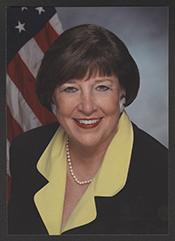
Mr. Chairman, I yield myself such time as I may consume. Mr. Chairman, I thank the gentleman from California (Mr. Lantos) and my friend, the gentleman from Minnesota (Mr. Kennedy), for putting this…
Mr. Chairman, I yield myself such time as I may consume.
Mr. Chairman, I thank the gentleman from California (Mr. Lantos) and my friend, the gentleman from Minnesota (Mr. Kennedy), for putting this piece of legislation together.
In my 3 decades of public service, I do not think I have ever seen a problem as pervasive or damaging as the methamphetamine epidemic that is sweeping our country. While a number of States have enacted tough rules to control the availability of pseudoephedrine, this is not enough to solve the problem when the vast majority of meth consumed in this country is made in Mexico and smuggled into the U.S. by Mexican drug cartels.
If we are going to stop the flow of meth into this country, we must have better information about where the meth precursor chemicals are going, but we cannot do it alone. Foreign governments who import large quantities of meth precursors must take steps within their own countries to ensure these chemicals do not fall into the hands of meth producers and drug traffickers.
The spread of methamphetamine is a multifaceted problem ranging from the homemade mom and pop labs to the sophisticated illegal drug factories in foreign countries. This amendment represents an important step in dealing with the international meth production by preventing by diversion of precursor chemicals into the hands of meth producers.
I urge Members to support this amendment.
Mr. Chairman, I reserve the balance of my time.
Mr. Chairman, I yield such time as he may consume to the gentleman from Nebraska (Mr. Osborne).
Mr. Chairman, how much time is remaining?
Mr. Chairman, I yield myself the balance of my time and urge people to support this amendment. It is an important piece of legislation. It is time that we start dealing with this on an international level.
Again, I thank my cosponsor and all of the other people that have worked so hard on this legislation.
Mr. Chairman, I yield back the balance of my time.
Mr. Chairman, I offer an amendment.
Mr. Chairman, I yield myself 1\1/2\ minutes.
(Ms. HOOLEY asked and was given permission to revise and extend her remarks.)
Mr. Chairman, my amendment represents a crucial step in the ongoing effort to stop the flow of methamphetamines into the United States. A cheap, easily manufactured drug that gives addicts an intense long-lasting high, meth has emerged as the drug of choice for users across this country. This amendment offers a solution to stopping this scourge by directing the State Department, through its Bureau of International Narcotics and Law Enforcement Affairs, to engage in bilateral efforts with our friend and ally, Mexico, to cut down on the importation of methamphetamine precursor chemicals into Mexico and cut down on the smuggling of methamphetamines into the United States.
This amendment directs the Bureau of International Narcotics and Law Enforcement Affairs to work with the Mexican government to take immediate action to reduce the amount of pseudoephedrine in the hands of drug cartels, to work with Mexican law enforcement to improve their abilities to fight the production and trafficking of meth, and to improve efforts at the U.S.-Mexican border to prevent the smuggling of methamphetamines into the United States.
I believe that this amendment will in fact help prevent the export of meth into the United States. By engaging our allies to stop the mass production of meth rather than solely focusing on its limited domestic manufacturing, we can create a broad-based strategy that will not only keep meth away from our communities and families, but limit production and use of this deadly drug worldwide.
I call on my colleagues to support the Hooley-Souder-Kennedy-Baird amendment.
Mr. Chairman, I reserve the balance of my time.
Mr. Chairman, I yield 1 minute to the gentleman from Minnesota (Mr. Kennedy).
Mr. Chairman, how much times remains on this side?
Mr. Chairman, I yield 1 minute to the gentleman from Washington (Mr. Baird).
Mr. Chairman, I yield 1 minute to the gentlewoman from Minnesota (Ms. McCollum).
Mr. Chairman, I yield myself the balance of my time, and urge passage of this Hooley-Souder amendment, and I would like to thank my friends, the gentleman from Minnesota (Mr. Kennedy) and the gentleman from Washington (Mr. Baird), for all their hard work. They have been tremendous working on this methamphetamine legislation.
This is like a great big huge pipeline with meth coming into the United States, and we are committed to making sure that every single valve is turned off.
Mr. Chairman, I demand a recorded vote.

Mr. Speaker, the rule we are considering today commits a small but significant act of principle over convenience: In addition to providing for the consideration of the Foreign Relations bill, it…
Mr. Speaker, the rule we are considering today commits a small but significant act of principle over convenience: In addition to providing for the consideration of the Foreign Relations bill, it firmly establishes the precedent that this House will not consider legislation on the floor if it exceeds the levels established by the budget resolution. This choice will not make us heroes; it will not win us accolades in The Washington Post. But it does show that we will stick to our budget disciplines, and I rise to commend Chairman Dreier and the Rules Committee for this very important decision.
By way of explanation: As originally reported by the Committee on International Affairs, the bill increases mandatory spending by $103 million over 5 years. Specifically, the bill as reported would allow the State Department to automatically spend leftover funds on other purposes without further legislative action. Traditionally these transfers are subject to appropriations. But the reported bill eliminated that requirement. As a result, the bill converted discretionary spending to mandatory at a time when we are trying to restrain mandatory spending.
This increase in mandatory spending breaches the spending limit, or ``allocation,'' established for the IR Committee in the budget resolution. In technical terms, this violates section 302(f) of the Budget Act, which precludes the House from considering a bill that exceeds the 302(a) allocation of the committee that reported the bill.
Now, the Rules Committee could have let this slide: The rule could simply have waived the Budget Act restriction, and let the authorizing committee fix the problem through a floor amendment. After all, many will say it wasn't really a large amount of money to worry about--and hardly anyone would have noticed anyway.
While that step might have fixed the problem with this particular bill, it would have done it the wrong way. The principle underlying the congressional budget process is that we should not consider bills on this floor until they comply with spending limits established in the budget resolution. In other words, the burden is on the committee reporting the bill to comply with the budget before the measure reaches the floor. If compliance were left to a floor amendment or a subsequent point of order, it would cost budgetary commitment to the winds of the moment--which is no commitment at all. Chairman Dreier and the Rules Committee have shown the appropriate kind of leadership: They have upheld this important principle of fiscal discipline.
Once again, I commend Chairman Dreier and the Rules Committee for enforcing the budget resolution and upholding the integrity of the budget process. We may not win any medals for this; we won't get to brag about it to Chris Matthews on Hardball. But this is the right thing to do, and that should be all the reason we need. This is an excellent rule and merits all of our support.
The material previously referred to by Mr. Hastings of Florida is as follows:
Sec. 2. Notwithstanding any provision of this resolution,
amendment numbered 38 in House Report 109-175 shall not be in
order.
Sec. 3. That immediately upon disposition of H.R. 2601 the
Speaker shall declare the House resolved into the Committee
of the Whole House on the state of the Union for
consideration of a bill proposing to add a new section 1111
as contemplated in amendment numbered 38 in House Report 109-
175. the first reading of the bill shall be dispensed with.
All points of order against consideration of the bill are
waived. General debate shall be confined to the bill and
shall not exceed one hour equally divided and controlled by
the chairman and ranking minority member of the Committee on
International Relations. After general debate the bill shall
be considered for amendment under the five-minute rule. The
bill shall be considered as read. At the conclusion of
consideration of the bill for amendment the Committee shall
rise and report the bill to the House with such further
amendments as may have been adopted. The previous question
shall be considered as ordered on the bill and amendments
thereto to final passage without intervening motion except
one motion to recommit with or without instructions.
Sec. 4. If the Committee of the Whole rises and reports
that it has come to no resolution on the bill, then on the
next legislative day the House shall, immediately after the
third daily order of business under clause 1 of rule XIV,
resolve into the Committee of the Whole for further
consideration of the bill.
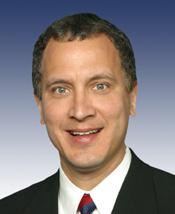
Mr. Chairman, I offer an amendment. Mr. Chairman, I yield myself such time as I may consume. Mr. Chairman, if we understand the meth problem, we understand that it has brought a trail of destruction…
Mr. Chairman, I offer an amendment.
Mr. Chairman, I yield myself such time as I may consume.
Mr. Chairman, if we understand the meth problem, we understand that it has brought a trail of destruction and misery across the country, from San Diego to the Shenandoah Valley.
My colleagues have heard me talk on this floor before about the tragic story of a young girl named Megan from a beautiful town in Minnesota. She was 13 in the seventh grade when she got started in meth. One of her friends offered her the drug and in her words she said she liked it so much she knew she would do it over and over again. But when she could not afford her addiction, she, like too many others, turned to prostitution to pay for the meth she craved so much.
After hitting rock bottom at age 18, she is now managing to pull her life back together after the 5 years that meth stole from her.
Mr. Chairman, I rise today because we want to make sure there are no more Megans in our communities that have gone through this by cutting off the international flow of meth precursors like pseudoephedrine.
In Minnesota and so many other States dealing with the meth problems, law enforcement spends roughly 80 percent of their time with small meth labs that produce 20 percent or so of meth on our streets. However, they lack the tools and resources to go after the source of the other 80 percent of meth, international superlabs.
Today we can give law enforcement a big helping hand by adopting this amendment to fully engage the State Department and our diplomats in this fight. Under our amendment, the State Department will have to report and certify that the five largest exporters and the five largest importers of pseudoephedrine are fully cooperating with U.S. law enforcement to prevent its misuse and diversion. If the State Department cannot certify their fully cooperation with U.S. law enforcement, then these countries would face consequences for their eligibility for U.S. bilateral and multilateral assistance under this act.
This amendment would put meth on the same footing as heroin and cocaine, which are regulated in a similar way. Such treatment is precisely what the State Department and the United Nations Drug and Crime Control Bureau agreed in Vienna.
Mr. Chairman, this amendment is trying for a true multinational approach towards fighting the spread of harmful drugs like methamphetamine. Our amendment will demonstrate to our friends and allies that we are serious about cutting off the flow of internationally produced meth. It will also show law enforcement officers that we stand with them in the fight against drugs and will work to give them every tool they need to be successful.
I urge my colleagues support the Kennedy-Hooley-Osborne-Souder amendment.
Mr. Chairman, I reserve the balance of my time.
Mr. Chairman, how much time do I have remaining?
Mr. Chairman, I yield 1 minute to the gentleman from Indiana (Mr. Souder).
(Mr. SOUDER asked and was given permission to revise and extend his remarks.)
Mr. Chairman, I yield myself the balance of my time by thanking the gentlewoman from Oregon (Ms. Hooley), the gentleman from Nebraska (Mr. Osborne), and the gentleman from Indiana (Mr. Souder) for helping to advance this
very important cause. I thank also the chairman and the ranking member for their support, and I encourage my colleagues to support this amendment to end the scourge that is providing a poison across our communities and drawing in our children and putting them towards a life that will lead them down a road they should not go. Let us get them back on the path towards prosperity and hope for the future.
Mr. Chairman, I yield back the balance of my time.
Mr. Chairman, I demand a recorded vote.
Mr. Chairman, I thank the gentlewoman from Oregon for yielding me this time, and for her leadership on this very important issue. This is a very important step to deal with what is said to be up to 80 percent of the source of methamphetamines in our country.
If you look at law enforcement, they are doing a wonderful job fighting the crime in their local communities. But this is something where they cannot reach beyond the borders. It is only us in the Federal Government that can do that. We need to have the State Department fully supportive, having the resources they need to go after the methamphetamines coming in from other countries.
This amendment will do that. It is an important step forward. I urge my colleagues to support this amendment. I thank again the gentlewoman for her leadership on this.
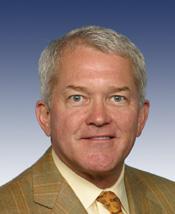
Let me thank the gentleman very, very much for yielding me the time. Mr. Speaker, I, too, want to commend the rule. I was somewhat disappointed, as expressed by the gentleman from Florida (Mr.…
Let me thank the gentleman very, very much for yielding me the time.
Mr. Speaker, I, too, want to commend the rule. I was somewhat disappointed, as expressed by the gentleman from Florida (Mr. Hastings), on the lack of a couple of amendments that we were attempting to insert in the bill dealing with Haiti. Haiti is a tragedy. There is no other way to describe it. They are kind, wonderful, hardworking people who are desperate for a solution to their ever-growing controversy. No matter whose side you believe in, no matter what you thought of past presidents or future presidents, the one thing that is abundantly clear to most of us is that Haiti is drowning in despair. The people have been ravaged not only by political unrest and upheaval, natural disasters, hurricanes and other things and what I was trying to do in the amendment was to provide a new concept much like a Peace Corps, taking Haitian citizens who are now here in the United States who are learning a free economy, learning to be teachers, police officers, pharmacists, to create a structure in the State Department, in cooperation with NGOs, to use those talents and capabilities to help bring some stability to Haiti.
I know we have tried and the White House both past and present have injected significant amounts of resources to try to help the island. For whatever
reason, one side pits the other, the lack of any clear-cut direction, and I believe to some degree the Haitian people lack trust in some of our motives and motivations, which is why I thought of this concept of bringing people who now had learned about the free market concepts of America to send them back to Haiti for a limited time so that they too could use that talent that they have learned here in the United States to help their brothers and sisters in Haiti try to build an economy, build an education system, build a health care dynamic, and try to create a pathway for their future.
We have seen billions, honestly, squandered in Haiti from one regime to the next. None seems to be better than the last. And at the same time, the people in Haiti are starved, some are imprisoned. An election is contemplated, and I do not know how in the world we will structure an election based on the current chaos that is evidenced in Haiti. However, many of us, the gentleman from Massachusetts (Mr. Delahunt), many people in the room, the gentleman from Florida (Mr. Meek), the gentleman from Maryland (Mr. Cummings), I am just naming a couple people. The gentlewoman from California (Ms. Lee) I know has had a unique and particular interest in this area. We may come from different political parties, but I think our motives are pure at least on the point of view that it is about the people of Haiti, not about whoever is running the country.
So I commend the bill and of course will support the very important endeavors of our Committee on International Relations as they work across the globe to try to bring unity of purpose to a very complicated and convoluted and dangerous world. But for this Member from Florida, my heart really does truly go out to the Haitian people. I pray that in the days ahead we come up with some significant ways in order to look at the concerns some members of the Congressional Black Caucus have relative to our intervention or activities in Haiti and try to put aside some of our animus towards recognizing that unless we get our act together the people of Haiti will still be starving, they will still be dying of disease, they will still be cleaning up after hurricane debris, and they will still be wondering what is their future to be like.
So I want to thank all who have participated in the debate. I want to thank Members, both Republicans and Democrats, who have submitted amendments yesterday that were not included in the rule. But I can assure my colleagues that we will continue to endeavor to see that our points of view are brought forward either in this vehicle or future vehicles as we move down the road.
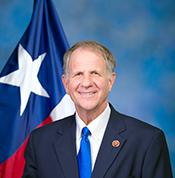
Madam Chairman, I offer an amendment. Madam Chairman, I yield myself such time as I may consume. First of all, I want to say as one of the new Members of Congress and serving on the International…
Madam Chairman, I offer an amendment.
Madam Chairman, I yield myself such time as I may consume.
First of all, I want to say as one of the new Members of Congress and serving on the International Relations Committee, I appreciate the example that the chairman of the committee and ranking member set for all members of the International Relations Committee on how both sides of the committee can work together to achieve goals that are best for the United States. It would be my hope that other committees would work so well in getting the job done.
A brutal campaign of village burnings, destruction of rice supplies and killings by Burma's military regime has resulted in the forcible displacement of between 500,000 and 1 million innocent civilians in Eastern Burma.
Hundreds of thousands of these internal refugees that are called internally displaced peoples, or IDPs, they are persecuted for their strong commitment to democracy and their fervent belief in human rights. Regardless of what their religion may be, all of the IDP victims are being systematically hunted down by the evil military regime.
The Burmese Freedom and Democracy Act of 2003, which passed the United States Congress overwhelmingly, found that these acts add up to ethnic cleansing. Secretary of State Rice has rightfully called Burma one of the six outposts of tyranny in the world.
My fellow colleagues on both sides of the aisle have echoed this sentiment.
With all this said, virtually no humanitarian aid reaches those who have been driven from their homes in Eastern Burma. The Burmese military regime blocks all assistance. Shockingly, as a result of attacks and blocking this aid, child mortality and malnutrition rates are comparable to those recorded among the internally displaced population in the Horn of Africa.
Even worse, maternal mortality rates are well above emergency levels. Acute respiratory infections, diarrhea, malaria, anemia are serious problems in this region. This is a bona fide humanitarian crisis which we in the United States need to address.
I would like to thank the chairman and the ranking member of the International Relations Committee for their strong and bipartisan support of this amendment.
Madam Chairman, I reserve the balance of my time.
I yield to the gentleman from New Jersey.
Madam Chairman, following the encouragement and example of the chairman of the committee to be brief, I yield back the balance of my time.
Madam Chairman, I yield myself such time as I may consume.
I rise today to offer an amendment which would clarify congressional intent regarding the medical clearance process for people wishing to work in the Foreign Service as a Foreign Service officer at one of our 263 embassy posts throughout the world.
If someone wants to work in one of our embassies, they must have worldwide availability. This means that someone must be able to work in any region of the world without having medical conditions that would put them at risk.
Many of the areas where these Foreign Service officers are placed do not have hospitals or medical facilities to treat many types of conditions that are treated here in the United States, including Type I diabetes, severe hypertension, cancer and various psychiatric disorders. These people would have to have several emergency medical evacuations per year from the region in which they are located back to the States. Each evacuation would cost an average of about $6,000.
Hiring people that do not meet this worldwide availability requirement is irresponsible. It puts that person's life at risk and it costs several tens of thousands of dollars extra to facilitate emergency treatments.
This amendment then would clarify the conditions for worldwide availability, create a new appeals process to ensure that every applicant is given fair consideration.
Madam Chairman, I yield back the balance of my time.

Mr. Speaker, I thank the gentleman for his leadership and for yielding to me. Mr. Speaker, I rise in strong opposition to this restrictive rule. It prevents the House from discussing our policy…
Mr. Speaker, I thank the gentleman for his leadership and for yielding to me.
Mr. Speaker, I rise in strong opposition to this restrictive rule. It prevents the House from discussing our policy toward the Andean region and Colombia in particular in a serious way. Two important amendments on these subjects were offered by Democrats in the Committee on Rules, and the Committee on Rules, in refusing to make them in order for debate, has denied Members the opportunity to address these critical issues that were raised in the amendments.
The gentlewoman from California (Ms. Lee) offered an amendment that would have required at least 40 percent of Andean Counterdrug Initiative funds to be dedicated for alternative economic and social development in rural areas, encouraging human rights and protecting democratic institutions.
I guess the majority thinks this is not a worthwhile discussion to have. Clearly they are not interested in results or wise investment of our funds in Colombia. As we know, despite billions invested in the Andean region over the last several years in a largely supply side and military drug eradication program, drug cultivation has gone up in the Andean region and the availability of cocaine in the United States has gone virtually unchecked, with prices low and products more potent than ever.
The Republican leadership must know this bill is more of the same, instead of a balanced policy that would provide some real results on the ground.
The amendment of the gentleman from Massachusetts' (Mr. McGovern) amendment sought to place serious conditions on any funding that goes from the United States to the Colombian paramilitary demobilization process, just as the Senate did, so that paramilitary and drug trafficking organizations are fully dismantled and the worst criminals, murderers and terrorists face real and tough prison sentences.
By denying Members a chance to debate the McGovern amendment, the Republican leadership has made it clear they are not serious about ensuring those terrorists are brought to justice. Without the McGovern amendment, this bill is toothless. It does nothing to prevent U.S. dollars from helping to set Colombia's worst criminals free. Colombia's deceptively named ``peace and justice law'' fails to fully dismantle paramilitary organizations and threatens to let criminals off the hook, and without more stringent conditions, U.S. taxpayers should not support what amounts to an allowance for individuals implicated in drug trafficking and murder.
The McGovern amendment would replace the House's language, which authorizes funds for the demobilization of Colombia's paramilitary organizations, with the provisions adopted by the Senate Committee on Appropriations. Unlike the Senate provision, the House bill carries with it no accountability to the U.S. Congress or U.S. taxpayers for how our money is spent.
We are talking about members of paramilitary death squads that have massacred Colombian civilians and have trafficked drugs to our country. I do not oppose Colombia's efforts to negotiate with armed groups to foster peace for its people. I want peace and stability for Colombia. However, I do object to U.S. dollars being used with no strings attached in a process that may lead to known killers and narcoterrorists going free without adequate punishment.
So I suggest that our colleagues make the following calculation: Do you want U.S. taxpayer dollars to fund drug traffickers and murderers? If not, oppose the rule and demand a new one that allows debate on these important issues.
Mr. Chairman, I rise in support of the Kennedy-Hooley Amendment to H.R. 2601. The U.S. Department of Justice estimates that 90 percent of the meth available in Nebraska is trafficked from superlabs…
Mr. Chairman, I rise in support of the Kennedy-Hooley Amendment to H.R. 2601.
The U.S. Department of Justice estimates that 90 percent of the meth available in Nebraska is trafficked from superlabs operated by drug cartels in Mexico, California, and the southwestern states. Local law enforcement officers face that challenge of dismantling home-based meth labs while combating the flow of meth from international drug trafficking.
The Kennedy-Hooley amendment will help give local law enforcement officers the tools they need to combat meth. It requires the U.S. State Department to report and certify that countries heavily involved in the import or export of pseudoephedrine--a key meth ingredient--are cooperating with local law enforcement agencies to prevent its misuse and diversion. Countries that do not comply would be subject to consequences under the Foreign Assistance Act.
In Omaha, Nebraska, seven of nine law enforcement jurisdictions identify meth as the drug that most contributes to violent crime. Omaha policemen tell me that meth is now the drug of choice for gangs in North Omaha, replacing crack cocaine and heroin. Sixty percent of inmates in Nebraska jails have problems with meth, and the toll on families in Nebraska is incalculable.
I urge my colleagues to join me in voting for the Kennedy-Hooley amendment to help stop meth smuggling for Mexican drug cartels, and support our law enforcement officers.
Mr. Chairman, I rise in support of the Hooley-Souder amendment to H.R. 2601. I ask unanimous consent to revise and extend my remarks.
This amendment will authorize $4 million in 2006 and 2007 to help prevent the smuggling of methamphetamine from Mexico to the United States. It authorizes the Secretary of State to work with Mexican government and law enforcement officials to improve their abilities to fight the production and trafficking of meth.
The U.S. Department of Justice estimates that 90 percent of the meth available in my home state of Nebraska is trafficked from Mexico, California and the southwestern states. Nationwide, 65 percent of available meth was smuggled into the U.S. by Mexican drug cartels and gangs.
During a routine traffic stop last January, the Douglas County Sheriff's Office in Nebraska seized five pounds of meth from two Mexican nationals who had concealed the drug inside a spare tire in the trunk. In March, an 8-month investigation culminated in the arrest of five Mexican and Hispanic drug cartel members. Law enforcement officials seized 12.5 pounds of meth being transported to Omaha from California.
Although 90 percent of the meth problem in Nebraska stems from international and intrastate drug trafficking, local law enforcement officers must spend the majority of their resources fighting home-based meth labs. Dismantling hundreds of ``Mom and Pop'' labs operated out of kitchen sinks and car trunks, and disposing of the highly toxic chemicals used to manufacture meth, is a timely and expensive process.
The Hooley-Souder amendment is critical to support our police officers on the front lines in the battle against meth. Reducing the amount of meth smuggled into the U.S. from Mexican super-labs will help our law enforcement officers protect families and children from this insidious drug that destroys lives and ruins communities. I urge my colleagues to join me in voting for the Hooley-Souder amendment today.
Mr. Chairman, I appreciate the gentleman yielding me this time, his leadership and his partnership with our chairman, the gentleman from Illinois (Mr. Hyde). There is no more important forum for…
Mr. Chairman, I appreciate the gentleman yielding me this time, his leadership and his partnership with our chairman, the gentleman from Illinois (Mr. Hyde).
There is no more important forum for Members of this Chamber to be focusing on than what is happening in the international arena. I am pleased in these troubled times that our chairman and ranking member have provided a framework for us to deal with things that matter, from human rights to the environment. I join in expressing my appreciation for what you gentlemen have permitted us to move forward.
I like so much of what is in this bill. I like the notion that we are dealing with the welfare of the men and women who serve us in the State Department and the related agencies. Too little attention is given to their welfare, the fact that they are in the line of fire and they are producing activities that are every bit as important as what is happening with the armed services.
The money that is put in here and the attention that is given to their welfare and for a platform for them to operate is vitally important.
I appreciate the ranking member mentioning the consulate in Istanbul, which happened to be designed by people back home in Portland, who have demonstrated that we can deal with the welfare of our employees, their security, give them a good working environment, and actually save money. It is a little detail, but it is, oh, so important. At a time when we have seen international acts of terrorism triple from 2003 to 2004, we know that this is important.
I also appreciate what is in this bill to try and move the great battleship that deals with our relationship with Egypt. For years we have spent billions of dollars for work in the Middle East to try to promote a partnership with Egypt. This bill starts to move us away from the preponderance of military aid and move that same dollar amount, but to humanitarian aid. There is an effort that is going to come forward to try to eliminate that. I strongly urge it be defeated. I think that is an important message that is a part of this bill.
I appreciate things that can be found in the language of the bill that deal with disaster preparedness. Many of us from the committee were in the tsunami area and saw the devastation. If we are able to reposition the billions of dollars of assistance to help move these people out of harm's way, to help them not degrade their environment that actually makes them more vulnerable to more loss, I think this is an important step forward. I appreciate the linkage there. In fact, we are told if we had spent $40 billion in mitigation, we could have prevented $280 billion of disaster relief in the last decade, and countless lives that would have been saved.
I appreciate the notion of what this bill does in the language that talks about dealing with planning our troubled urban areas, and that helps these areas where there is an explosion of population and caldrons of unrest that the United States may be able to do a better job of helping these people as well.
In sum, I think we will have a lively and spirited debate over the course of the next day and a half. I appreciate our committee leadership in bringing us to this point. I hope we on the floor will do our job on all of these issues to make it an even better bill before we are done.
Mr. Speaker, I thank the distinguished gentleman for yielding me this time. Mr. Speaker, I am outraged that the Committee on Rules did not make my amendment in order. Our amendment on global climate…
Mr. Speaker, I thank the distinguished gentleman for yielding me this time.
Mr. Speaker, I am outraged that the Committee on Rules did not make my
amendment in order. Our amendment on global climate change, which passed both the House and the Senate in a previous version, simply says that the United States must lead the world in the fight against global warming.
In this Chamber of democratic ideals, the House of Representatives is supposed to be the place where we take a stand on the issues. If one disagrees, for example, with my amendments, fine. Then stand up and vote against them.
The fact is that global warming exists and is fully acknowledged by the scientific community. The fact is that a report which President Bush himself commissioned from the National Academy of Sciences says that human activity causes global warming. The truth is that the United States should lead on climate change, not avoid it.
Let me be clear. I was not advocating for the Kyoto Protocol. Other countries took the lead when we backed out, and it entered into force earlier this year. But just because we rejected Kyoto does not absolve us from working with other countries on climate change. Actually, it means that we have to take the lead, be creative and find a solution. The G-8 statement on climate change is a start, by acknowledging that climate change is a serious challenge that human activities are contributing to. Unfortunately, the administration reportedly exerted a considerable amount of pressure to water down the G-8 statement and the document falls far short of making a call for strong and immediate action.
The truth is that the world's future depends on our actions today. Global warming could devastate our environment and our economy. President Bush's administration, in a report to the United Nations, said that global climate change could mean greater storm surges on the coasts, reduced snowpack and water supplies in the West, declining water levels in the Great Lakes, stronger hurricanes, more extreme weather events, and greater risk of both flooding and drought. If that is not an incentive for the administration to act, nothing will be.
Finally, I am also concerned that the gentleman from Massachusetts' (Mr. McGovern) amendment on the demobilization process in Colombia was not made in order. The current Colombian demobilization framework, as discussed in the bill, does not provide minimal guarantees on at least three basic points. First, terrorist leaders who are under standing indictments in our country for serious crimes can escape extradition to the United States. Second, the bill does not require that these terrorists provide complete information on their networks so they could be dismantled. And, lastly, the law does not build in adequate monitoring mechanisms to ensure that those who have forsworn violence do not return to their terrorist activities.
We must address these issues before we authorize assistance to a process that could cost the U.S. taxpayer an estimated $80 million over 3 years. The Colombia and global climate change amendments should have been made in order so that Members would have had the opportunity to debate and vote on these important issues.
I urge my colleagues, therefore, to vote ``no'' on the rule.

Mr. Chairman, I rise in strong support of the provisions in this bill that address the unwillingness of Mexico to extradite violent criminals back to the United States for prosecution. I want to be…
Mr. Chairman, I rise in strong support of the provisions in this bill that address the unwillingness of Mexico to extradite violent criminals back to the United States for prosecution.
I want to be sure all of my colleagues are aware that we share our southern border with a country that willingly harbors criminals: rapists, robbers, and murderers.
Since 2001, Mexico has become a fugitive paradise where people accused of heinous crimes in the United States can escape from American justice. I would like to share one of these stories with Members today.
In 2002, Deputy David March, a 7-year veteran of the Los Angeles Sheriff's Department, was brutally shot while performing a routine traffic stop at 10:30 in the morning. The suspect, Armando Garcia, fled to Mexico to avoid prosecution. Garcia was an illegal alien who disregarded our Nation's immigration laws when coming to California from Mexico. Once in the United States, he continued his life as a criminal plaguing our streets with drugs and engaging in other criminal activities, including two attempted murders.
While he had already been deported three times, Garcia again ignored our Nation's laws and illegally entered the United States a fourth time. This time, he brutally murdered a police officer who was merely stopping him for a routine traffic violation. Garcia killed Deputy March by shooting him execution style in the side of his chest where the bulletproof vest did not cover, and in the head.
Now this monster, who has demonstrated a total disregard for the laws of our country over and over again, walks free in Mexico. Even worse, his blatant contempt for our laws is being implicitly sanctioned by the Mexican Government which is protecting him from prosecution for his heinous crimes. Mexican officials have refused to extradite Garcia because he could face the death penalty or life in prison for murdering Deputy David March.
Let us be clear, the Mexican Government is harboring a cop killer. Every day law enforcement officers nobly protect our friends, neighbors, and families from crime. They work to improve the quality of life for all of us. Sometimes they pay the ultimate sacrifice. For that, they and their families deserve our sincere appreciation and utmost respect.
For 7 years, Deputy March dedicated his life to the pursuit of justice and to the protection of our communities. We must honor the sacrifice that he and his family paid for our safety by pursuing justice for his senseless murder. I have met Deputy March's family. To see the pain and anger in their faces, knowing their son's killer is roaming free across our southern border, is heart-breaking.
We cannot sit silently while Mexico becomes a criminal black hole for murderers seeking to escape from justice. We must learn from Deputy March's murderer. If another country is unwilling to respect America's laws, its citizens will also disregard our rule of law when they cross over our borders. I commend the gentleman from Illinois (Mr. Hyde) for including a provision in this bill to urge the Mexican Government to reconsider its faulty extradition policy, and I hope my colleagues will support this and other legislative efforts to ensure that Mexico respects the laws of the United States.

Madam Chairman, I offer an amendment. Madam Chairman, I yield myself such time as I may consume. I want to thank Chairman Hyde and Ranking Member Lantos for their exceptional work on this bill. I…
Madam Chairman, I offer an amendment.
Madam Chairman, I yield myself such time as I may consume.
I want to thank Chairman Hyde and Ranking Member Lantos for their exceptional work on this bill. I think they have done a great job and I think it is something that every Member of the House should support. This amendment is the first of two that I am going to offer today and we brought this up because it was a recommendation made by the House International Relations Committee itself. It would authorize the State Department's Bureau of International Narcotics and Law Enforcement to acquire and transfer to the Colombian Navy two tactical unpressurized DC-3 maritime patrol aircraft to carry out drug interdiction operations in or near the coastal waters of Colombia.
We were down in Colombia not too long ago and when we were done there our ambassador and the people who were working for the Colombian military and the Colombian national police indicated to us that they needed additional aircraft to be able to interdict drug trafficking that is starting in Colombia and ending in the United States of America. These two aircraft I think will help in the fight against drug interdiction. We have been successful the last couple of years doing a pretty good of job of interdicting drugs. We picked up a couple of hundred tons more of cocaine last year and the year before that than we did before that. And with these two additional aircraft I think we will be able to do an even better job.
So this is something I think that is not that controversial. It is an authorization. The cost would be between 10 and $20 million. It is something that is needed if we are going to continue the war against drugs. I urge my colleagues to support this amendment.
Madam Chairman, I reserve the balance of my time.
Mr. Chairman, I yield 1 minute to the gentlewoman from Texas (Ms. Jackson-Lee).
Mr. Chairman, how much time remains?
Mr. Chairman, I yield myself the balance of my time.
First of all, let me say there are a multitude of problems in Colombia. We have had the drug cartels. We have had the terrorist organizations down there, the FARC guerillas, the ELN. These are all problems that must be addressed. My colleagues on both sides of the aisle are well aware of that. And the poverty issue that was just raised by the gentlewoman from Texas (Ms. Jackson-Lee) is also a very real issue. But the issue at hand right now is whether or not we are going to put these two additional aircraft down there to be able to track drug cartels in the distribution of cocaine and other narcotics that reach the shores of the United States that kill and maim young Americans.
It is extremely important that we do whatever is necessary right now. These two planes are a modest step in that direction. This additional equipment is asked for by our ambassador down there, by the Colombian National Police, by the Colombian military, our drug interdiction agencies, and everybody else who realizes how important this is.
I would urge my colleagues to take all of that into consideration and vote for this amendment. It is a modest step, but it is something that is very necessary in the war against drugs.
Mr. Chairman, I yield back the balance of my time.
Bill Text
2 versions available
        [Congressional Bills 109th Congress]
[From the U.S. Government Publishing Office]
[H. Res. 365 Engrossed in House (EH)]

H. Res. 365

In the House of Representatives, U.S.,

July 19, 2005.
Resolved, That at any time after the adoption of this resolution the Speaker
may, pursuant to clause 2(b) of rule XVIII, declare the House resolved into the
Committee of the Whole House on the state of the Union for consideration of the
bill (H.R. 2601) to authorize appropriations for the Department of State for
fiscal years 2006 and 2007, and for other purposes. The first reading of the
bill shall be dispensed with. All points of order against consideration of the
bill are waived. General debate shall be confined to the bill and shall not
exceed one hour equally divided and controlled by the chairman and ranking
minority member of the Committee on International Relations. After general
debate the bill shall be considered for amendment under the five-minute rule. It
shall be in order to consider as an original bill for the purpose of amendment
under the five-minute rule the amendment in the nature of a substitute
recommended by the Committee on International Relations now printed in the bill
modified by the amendment printed in part A of the report of the Committee on
Rules accompanying this resolution. That amendment in the nature of a substitute
shall be considered as read. All points of order against that amendment in the
nature of a substitute are waived. Notwithstanding clause 11 of rule XVIII, no
amendment to that amendment in the nature of a substitute shall be in order
except those printed in part B of the report of the Committee on Rules. Each
such amendment may be offered only in the order printed in the report, may be
offered only by a Member designated in the report, shall be considered as read,
shall be debatable for the time specified in the report equally divided and
controlled by the proponent and an opponent, shall not be subject to amendment,
and shall not be subject to a demand for division of the question in the House
or in the Committee of the Whole. All points of order against such amendments
are waived. At the conclusion of consideration of the bill for amendment, the
Committee shall rise and report the bill to the House with such amendments as
may have been adopted. Any Member may demand a separate vote in the House on any
amendment adopted in the Committee of the Whole to the bill or to the amendment
in the nature of a substitute made in order as original text. The previous
question shall be considered as ordered on the bill and amendments thereto to
final passage without intervening motion except one motion to recommit with or
without instructions.
Sec. 2. Notwithstanding any other provision of this resolution--
(1) the amendments by Representative Dreier of California,
Representative Crowley of New York, Representative King of Iowa, and
Representative Rohrabacher of California at the desk at the time of
adoption of this resolution and numbered 3A, 18A, 21A, and 37A, shall be
in order in lieu of the amendments in part B of House Report No. 109-175
and numbered 3, 18, 21, and 37, respectively; and
(2) the amendment numbered 2 in part B of House Report No. 109-175
shall be debatable for 20 minutes.
Attest:

Clerk.