Providing for consideration of the bill (H.R. 22) to reform the postal laws of the United States.
Legislative Activity
Stay on top of the latest movement without scrolling through every action
Motion to reconsider laid on the table Agreed to without objection.
July 26, 2005 • 3:30 PM
View full timeline
Introduced in House
July 25, 2005
The House Committee on Rules reported an original measure, H. Rept. 109-184, by Mr. Sessions.
July 25, 2005
Rule provides for consideration of H.R. 22 with 1 hour of general debate. Previous question shall be considered as ordered without intervening motions except motion to recommit with or without instructions. Measure will be considered read. Specified amendments are in order.
July 25, 2005 • 8:09 PM
Placed on the House Calendar, Calendar No. 66.
July 25, 2005
Considered as privileged matter. (consideration: CR H6472-6477)
July 26, 2005 • 2:44 PM
DEBATE - The House proceeded with one hour of debate on H. Res. 380.
July 26, 2005 • 2:48 PM
The previous question was ordered without objection. (consideration: CR H6477)
July 26, 2005 • 3:30 PM
Passed/agreed to in House: On agreeing to the resolution Agreed to by voice vote.(text: CR H6472-6473)
July 26, 2005 • 3:30 PM
On agreeing to the resolution Agreed to by voice vote. (text: CR H6472-6473)
July 26, 2005 • 3:30 PM
Motion to reconsider laid on the table Agreed to without objection.
July 26, 2005 • 3:30 PM
Floor Debate
21 membersWhat members said about H.Res. 380 on the floor
 TD
TD JMMPS
JMMPS DKD
DKD JH+16
JH+16
Floor Debate
21 membersWhat members said about H.Res. 380 on the floor
Mr. Chairman, I yield 2 minutes to the gentleman from Indiana (Mr. Burton), the former chairman of the Government Reform and Oversight Committee, who has played a lead role in moving this bill to…
Mr. Chairman, I yield 2 minutes to the gentleman from Indiana (Mr. Burton), the former chairman of the Government Reform and Oversight Committee, who has played a lead role in moving this bill to where it is today, and spent 6 long years in the vineyards laboring on this when he was chairman of the committee.
Mr. Chairman, will the gentleman yield?
I thank the gentleman for yielding.
Mr. Chairman, the committee intends that the Postal Service will exercise the more clearly delineated rulemaking powers provided under this section in a way that is rationally related to the policy objectives set out in the revised statute, and it is predicated upon an understanding of the effect the regulations will have on the conditions in the postal sector.
I thank the gentleman for yielding. Mr. Chairman, the committee further expects that the Postal Regulatory Commission will distinguish carefully between abuses of the Regulatory Authority set out in section 404 and the legitimate exercise of managerial discretion by the Postal Service in its implementation of the complaint provisions contained in section 205 of the bill.
Mr. Chairman, I yield myself such time as I may consume.
Mr. Chairman, most of us are familiar with the engraved saying outside the James A. Farley Post Office in New York City: ``Neither rain, nor snow, nor heat, nor gloom of night might stay these couriers from the swift completion of their appointed rounds.''
This is the unofficial motto depicting some of the circumstances our Nation's letter carriers face in fulfillment of the universal service obligation of the United States Postal Service.
Mr. Chairman, I rise today in support of H.R. 22, the Postal Accountability and Enhancement Act, which addresses a problem plaguing our Postal Service today that is far greater than the snow or rain or heat or gloom of night. That problem is the outdated and unsustainable structural framework of the Postal Service which threatens to bring it to the brink of catastrophe unless Congress acts immediately.
This legislation is about more than reforming the Postal Service itself. It is about reforming and sustaining a vital sector of our overall economy. After all, the Postal Service currently has about 707,000 career and 98,000 noncareer employees. In addition, more than 9 million American jobs, $900 billion in commerce, 9 percent of the Nation's gross domestic product, let me repeat, 9 percent of GDP depend on mail and package delivery. Thus, the Postal Service is not only vital to our national communication network but also to our national economy.
Each year the Postal Service processes and delivers 208 billion pieces of mail to more than 130 million addressees in the United States. That is 208 billion magazines, catalogs, thank-you notes, birthday cards, wedding invitations, Social Security checks, IRS refunds, letters to Congressmen, movie rentals, all delivered in fulfillment of the Postal Service's promise of universal service.
The last time Congress successfully passed legislation to overhaul the post office was 1970 when President Nixon signed the Postal Reorganization Act, before e-mails, before fax machines. It is time to bring the service into the 21st century.
The legislation we are considering today, the Postal Accountability and Enhancement Act, is the culmination of a decade of hard work and study, not to mention a great deal of bipartisan negotiation and cooperation amongst various groups. Consequently, H.R. 22 now represents our best chance at solving the structural, legal, and financial constraints that have brought the Postal Service to the brink of utter breakdown.
This past April, the Postal Service filed paperwork with the Postal Rate Commission to request a 5.4 percent rate increase for most categories of mail. These rate hikes, which are scheduled to take effect early next year unless Congress acts to prevent them, will impose a significant cost burden, let us call it what it is, a tax on the postal consumer.
For direct marketers, financial service companies and businesses relying heavily on shipping and mailing, these rate hikes are devastating. To make matters worse, increasing postal rates could send the postal office into what many observers call a death spiral, where declining business leads to higher rates which in turn leads to decline in business until it is too late to change course.
Unfortunately, under current law, the Postal Service's only recourse to remain competitive in today's market is to raise rates. That is no way to run an operation. In addition, the Postal Service's most recent request for a rate increase was spurred in part by an existing requirement that the Postal Service contribute $3.1 billion to a Federal pension escrow account which now houses more than $73 billion in civil service retirement savings that rightfully belongs to the United States Postal Service.
This is just one of many instances in which the USPS is hampered by the current legal framework. And it is one of many outdated requirements that H.R. 22 seeks to reform.
Quite simply, the laws that the Postal Service has today are outdated and unsuited for today's competitive environment. Let me take just a minute to highlight a few of the reform components included in this comprehensive bill that will enable the service to move into the 21st century.
Universal service. First and foremost, the bill preserves the Postal Service's commitment to universal service, the guaranteed delivery 6 days a week to each and every address in the United States.
Pension responsibility. It returns responsibility for funding the military cost of postal retirees' pension to the Treasury Department where it belongs. It is recommended by the President's commission. This liability was shifted to the Postal Service in the last Congress. That shift was little more than an accounting gimmick, but it is one that must be reversed if we are to be serious about fixing the Postal Service's long-term balance sheet.
The escrow account. As I have already mentioned, the bill frees up the $73 billion in civil service retirement savings that has been held in escrow, allowing the Postal Service to use this money to defray rate increases, among other options.
Modern rate regulation. This legislation shifts the basis of the Postal Rate Commission from a costly, complex scheme of rates to a modern system designed to ensure that rate increases generally do not exceed the annual change in the consumer price index. This applies only to market-dominated products, such as letters, periodicals, and advertising mail, because the Postal Service has provided different pricing freedom for its competitive products, like express mail and priority mail.
Strengthening the commission. This act will rename the Postal Rate Commission the Postal Regulatory Commission and give it teeth by granting it subpoena power and a broader scope for regulation and oversight.
Finally, the act sets the stage for future reforms by mandating several studies including a comprehensive assessment of the scope of standards for universal service.
Today, the White House released its statement of administration policy, its SAP, regarding this legislation. While we share the ultimate goal of effectively reforming the Postal Service, some issues still lack consensus between the Congress and the White House. The administration has established some general, overarching principles to guide the framing of the comprehensive reform of the U.S. Postal Service. These include best practices of corporate governance, transparency, flexibility, accountability, and self-financing.
Our bill shares these goals, but recognizes these principles are often times at odds with one another and may require some give and take. For example, the administration has proposed segment reporting for each and every class of mail, a practice which would unfortunately place the Postal Service at a competitive disadvantage with some of its toughest competitors. Thus, this requirement would be contrary to the administration's first stated proposal of best practices of corporate governance. It is just one example of an instance in which compromise is needed if we are to enact meaningful, comprehensive reform.
This bill, the refined product of nearly 10 years of careful negotiation and compromise, strikes an ideal balance among the guiding principles on which both the House and administration are in agreement. I just want to assure the administration we will continue to work closely will them as H.R. 22 heads toward a conference.
Before I conclude, I want to take this opportunity to thank the gentleman from New York (Mr. McHugh), who chaired our special panel on postal reform and was the original bill's chief sponsor. He was, without doubt, the right leader to undertake this daunting task.
I also want to thank the former chairman of the Committee on Government Reform, the gentleman from Indiana (Mr. Burton), who played an integral role in moving the ball forward on postal reform that allowed us to be where we are today.
Finally, I want to thank the Committee on Government Reform's ranking member, the gentleman from California (Mr. Waxman), and the gentleman from Illinois (Mr. Davis), the ranking member on the special panel, for their dedication to this subject and their willingness to operate in a bipartisan manner and work through this, through the difficult issues that have been presented.
Bipartisan cooperation is the primary reason why this bill has finally reached the House floor and why we have been able to keep such diverse stakeholders around the table in productive discussions.
Mr. Chairman, I reserve the balance of my time.
Mr. Chairman, I yield such time as he may consume to the gentleman from New York (Mr. McHugh), the chief author of this, someone who has championed this cause since I came to Congress.
Mr. Chairman, may I inquire as to how much time remains on each side?
Mr. Chairman, I yield 3 minutes to the gentleman from Utah (Mr. Cannon), who has been very helpful in putting this bill together.
Mr. Chairman, we have tried on this legislation to not get into some of the specific shortcomings of Postal Service delivery on ZIP codes and the like, but I want to tell the gentleman that I have looked at this Taylorsville issue. I want to pledge to work with the gentleman from Utah and with the Postmaster General to make sure these needs are resolved and to support a thoughtful solution for the city of Taylorsville, and just assure the gentleman that that is a priority.
Mr. Chairman, I yield 2 minutes to the gentleman from Pennsylvania (Mr. Murphy).
Mr. Chairman, I reserve the balance of my time.
Mr. Chairman, I thank the gentleman from California for his support of this legislation and his efforts. I think it is important, as he points out, that all of these different impacts are taken into account when the Postal Service undertakes the realignment and consolidation of postal facilities. I look forward to working with him and the Postal Service as these unfold.
Mr. Chairman, I yield 1\1/2\ minutes to the gentlewoman from Texas (Ms. Jackson-Lee).
Mr. Chairman, I yield 30 seconds to the gentleman from Connecticut (Mr. Shays), the vice chairman of the Committee on Government Reform.
Mr. Chairman, I yield myself the balance of my time.
It has been said that victory has 1,000 fathers, and defeat is an orphan. As we approach a victory on this bill tonight, at least on the House side, let me thank some of the fathers. We have talked about some of the Members being involved, but thanks also go out to the National Association of Manufacturers, the National Federation of Independent Business, the Small Business Legislative Council; a group of financial service companies like American Express, Bank of America, Capital One, Chase, Citigroup, Financial Services Roundtable, J.P. Morgan; groups in the newspaper and publisher business like Magazine Publishers of America, National Newspaper Association, Printing Industries of America, Time, Inc.; labor unions like the American Postal Workers Union, National Association of Letter Carriers, National Rural Letter Carriers and the National Postal Mail Handlers Association; postal management organizations like the National Association of Postmasters, National League of Postmasters, National Association of Postal Supervisors; postal competitors like United Parcel Express, UPS and FedEx; and other organizations like the Alliance of Nonprofit Mailers, the Mailers Council, the Parcel Shippers Association, Pitney-Bowes and others.
And on the staff side, Melissa Wojciak, my staff director; Jack Callender, who has made his career on the committee the Postal Service; Robert Taub, who the gentleman from New York (Mr. McHugh) rightly, I think, gives the credit for being the father of this behind the scenes; Ellen Brown, Mason Alinger of our staff, Rob Borden, Kristina Sherry, Michael Layman, Phil Barnett, Michelle Ash, Denise Wilson, Naomi Seiler, Jill Hunter-Williams and Richard Boykin from the committee as well. All of these made major contributions.
What does this tell us if we pass this legislation? The cost of stamps is going up, but if we pass this legislation, it
will be nowhere near the increases that we will get without this important legislation.
The need for postal reform is obvious in this case. Failure to act is a job-killer. Inaction will jeopardize at least 1.5 million jobs. This is a top priority for industry, the mailing industry, a $900-billion-a- year industry, nearly 9 percent of GDP, its economic value, 9 million jobs. Failure to act would be the same as a tax increase on American consumers. If we do not seize this moment, we effectively impose a significant new tax and a new tax burden on every American who uses stamps. If we do not take action, the Postal Service will be forced to begin increasing postal rates, starting with 2 cents at the beginning of next year. A small business that spends $5,000 annually on postage will lose almost $300 a year. An industry like financial services would get slammed with over $600 million in increases annually with no increase in productivity. And the American public will waste over $20 billion in unnecessary postage over the next decade. That is why this legislation needs to be passed.
What is wrong with the current Postal Service? We have got some of the best and most dedicated workers in the world, as the gentleman from Maryland (Mr. Hoyer) and the gentleman from California (Mr. Waxman) and others have pointed out, but they are operating under a 30-year-old system that completely missed the information technology revolution. It is a service that is saddled with $7 billion in workers' comp claims, $5 billion in retirement payments and $57 billion in health care costs. The statutes governing USPS are some of the most rigid and restrictive in the U.S. Code.
Finally, this means jobs. We can talk about trade and everything else, but failure to enact this will cost jobs in every State.
Let me conclude by saying and echoing what the gentleman from California (Mr. Waxman) noted, and that is, this bill is not a perfect bill. It is not a perfect bill today. It will not be perfect probably when it comes out of conference. But as we look at this, this is a finely balanced piece of legislation that today has almost unanimous agreement in the industries that are affected, among the workers that are affected and among the consumers that are affected.
We want to keep this balance as this comes to the floor. There are some very attractive amendments, well-meaning amendments that are going to be offered, but they upset this balance and jeopardize this bill. We have in front of us jobs, we have productivity, and we have almost 9 percent of the gross domestic product of this country at stake if we fail to pass this bill. I urge my colleagues to support it.
Mr. Chairman, please include the attached exchange of letters between Chairman Don Young of the Committee on Transportation and Infrastructure, Chairman F. James Sensenbrenner, Jr. of the Committee on the Judiciary, Chairman Bill Thomas of the Committee on Ways and Means and myself.
House of Representatives, Committee on Transportation and
Infrastructure,
Washington, DC, April 25, 2005.
Hon. Tom Davis,
Chairman, Committee on Government Reform, Rayburn Building,
Washington, DC.
Dear Mr. Chairman: I am writing to you concerning the
jurisdictional interest of the Transportation and
Infrastructure Committee in matters being considered in H.R.
22, the Postal Accountability and Enhancement Act.
Our Committee recognizes the importance of H.R. 22 and the
need for the legislation to move expeditiously. Therefore,
while we have a valid claim to jurisdiction over certain
provisions of the bill, I will agree not to request a
sequential referral. This, of course, is conditional on our
mutual understanding that nothing in this legislation or my
decision to forego a sequential referral waives, reduces or
otherwise affects the jurisdiction of the Transportation and
Infrastructure Committee, and that a copy of this letter and
of your response acknowledging our valid jurisdictional
interest will be included in the Committee report and in the
Congressional Record'' when the bill considered on the House
Floor.
The Committee on Transportation and Infrastructure also
asks that you support our request to be conferees on the
provisions over which we have jurisdiction during any House
Senate conference.
Thank you for your cooperation in this matter.
Sincerely,
Don Young,
Chairman.
Mr. Chairman, I yield back the balance of my time.
Mr. Chairman, I yield 2 minutes to the gentleman from California (Mr. Waxman).
Mr. Chairman, I yield 2 minutes to the gentlewoman from Florida (Ms. Ginny Brown-Waite).
Mr. Chairman, I yield 3 minutes to the gentleman from New York (Mr. McHugh).
Mr. Chairman, I yield 2 minutes to the gentleman from Illinois (Mr. Davis).
Mr. Chairman, I yield 1 minute to the gentlewoman from Texas (Ms. Jackson-Lee).
(Ms. JACKSON-LEE of Texas asked and was given permission to revise and extend her remarks.)
Mr. Chairman, I yield myself such time as
I may consume. I thank my friend for offering his amendment. I am unable to support it, but I understand the spirit in which he is giving it to try to make this a better bill.
This is a carefully crafted bill in which Republicans and Democrats have come together to try to work through a lot of issues, and moving one part out really jeopardizes the total package.
The gentleman quoted the minority leader, or the minority whip, as saying, This is a good bill and it should be passed this year; and he understood that, but why would a Republican Congress do it.
A Republican Congress would pass this bill because we do not want a 2-cent rate increase next January. The only way we can forestall that rate increase is by passing this legislation; and to pass this legislation, we need to work together with Republicans and Democrats. That means we give on some issues and we take on others.
The question was raised, well, we ought to have a taxpayer on the board. I think everybody who is on the board is a taxpayer. The fact of the matter is, there are four members of the board who are management, but they are not postal management. There are two postal management members of the board, and this would reserve one for the unions to pick; and by the way, there are diversity among the postal unions. That is a tough job to pick somebody because of competing interests over mail handlers versus letter carriers and the like.
But this is good legislation, and I am afraid that this amendment, in my judgment, despite I think the best intentions of its author, will upset that delicate balance that we have created to this point. It is not something that is new to corporate America to have a member of labor sitting on corporate boards. It is actually done quite frequently, particularly in the airline industry and a number of other industries where this is fairly common at this point. And since the postal workers have a lot to gain or lose by this as well, we think their voice can be very constructive at the end of the day.
So for those reasons and the fact that this particular provision has been in the bill since its introduction 11 years ago, and until this amendment was filed, I do not think any objections have been raised. I understand where the gentleman is coming from; but for those reasons, I would ask my colleagues to reject the Pence amendment and to support the final passage.
Mr. Chairman, I yield back the balance of my time.
Mr. Chairman, I rise to claim the time in opposition, and I yield 2 minutes to the gentleman from California (Mr. Waxman).
Mr. Chairman, I yield myself such time as I may consume.
We are not bailing out the post office every 4 years; it is like every 35 years, since the last act. We did come out with some additional money because of anthrax and because of the added burdens that we put on the post office at that point, but the post office has to operate under its own budget; and right now, the only thing they can rely on is rate increases, and rate increases drive mail away into other areas, which is why we are working this bill tonight.
I appreciate the gentleman's amendment, but I think it is unnecessary. The Postal Service already has considerable authority to test and implement different methods of providing services to the public. Nothing in the current law, I repeat, nothing in the current law or in H.R. 22 prevents the Postal Service from employing contractors in providing mail service.
The post office has a long history of doing so, starting with the Pony Express. For most of its history, the Postal Service has relied on dedicated contractors to manage small post offices, often in rural communities. Almost 8 percent of all of the post offices are operated under contract, not by postal employees; 8 percent.
Also, for 160 years, the Postal Service has relied on private contractors for the transportation and delivery of mail. Star route carriers today continue to operate, transporting mail efficiently and effectively nationwide, even delivering the mail to over 2 million homes 6 days a week. In many rural communities, those served by both contract postal units and star route carriers, the Postal Service's entire relationship with their customers is already handled by contractors, not employees.
For these longstanding and successful postal contract arrangements, this amendment is at best unnecessary. At worst it adds a new layer of procedures that will place burdens on expanding these programs into newer areas. One puzzling aspect is its provision allowing the Postal Service to waive laws, rules and regulations, including sections of the criminal code, which I am not sure I understand. Maybe the gentleman on his time will explain.
But the Service does not need this waiver to contract the provisions. In fact, it only serves to remove needed protections safeguarding the sanctity, privacy and security of the mail. Do customers really want their mail delivered by contractors to whom no laws apply?
In short, the Postal Service has been conducting pilot tests of these ideas since the 19th century. I would say the evaluation phase is over, the results are in, they work. Let us not mess them up with a new, unnecessary, convoluted regulation. Both postmaster organizations oppose this.
And so I would urge that we defeat this amendment.
Mr. Chairman, I reserve the balance of my time.
Mr. Chairman, I yield 2 minutes to the gentleman from New York (Mr. McHugh).
Mr. Chairman, I yield myself 30 seconds.
Mr. Chairman, let me just say this: On the $6 billion figure floating around, it is important to understand that the reason the Congressional Budget Office scores this as an increase is because they have contemplated and put into their figuring that there will be rate increases. Our legislation takes away those rate increases, so that is not coming into the Treasury. So if you do not have a rate increase, it scores.
When you sit here and say it is going to cost the taxpayers, that means they do not have to go with a rate increase. We are being penalized because we are not doing rate increases, and it scores against us. We need to understand that. And that is why this legislation is being passed.
Mr. Chairman, I yield 1\1/2\ minutes to the gentleman from Connecticut (Mr. Shays).
Mr. Chairman, I will reserve the balance of my time.
Mr. Chairman, I would just note that the universal service obligation of the post office gives it a burden in requirements that some of the other facts and figures alluded to do not have to meet.
Mr. Chairman, I would yield the remaining time to my colleague, the gentleman from Illinois (Mr. Davis).
Mr. Chairman, I yield 1\1/2\ minutes to the gentlewoman from Michigan (Mrs. Miller).
Mr. Chairman, I yield 1 minute to the gentleman from Illinois (Mr. Davis).
Mr. Chairman, I urge opposition to this. First of all, the Postal Service is self-operating. What it raises, it spends. The increased money that was added was because of the anthrax issue. It was a national security issue.
This amendment is bad for the economy. We are talking about 8 percent of GDP now having at least a 2 percent increase. In fact, under this amendment, it would not just be a rate increase, this would be basically a rate shock to Americans. It would be far in excess of that.
This hurts Americans' competitiveness, it is bad for the economy, and I urge my colleagues to vote against this amendment.
Mr. Speaker, I demand a recorded vote.
Mr. Chairman, I thank the gentleman for yielding me time. Mr. Chairman, today, obviously, represents a critical step in what has to this point been a journey of more than 10 years, a decade and a…
Mr. Chairman, I thank the gentleman for yielding me time.
Mr. Chairman, today, obviously, represents a critical step in what has to this point been a journey of more than 10 years, a decade and a half of hearings and meeting, of negotiations followed by more hearings, more meetings, more negotiations, to rewrite and rewrite again and again a piece of legislation that will serve as the first true serious reform of the sector known as the United States Postal Service, that since 1970.
In that length of effort, Mr. Chairman, that incredible commitment to the issue speaks directly to the critical importance of the Postal Service of this Nation and the complexity of this system that each and every day and each and every year delivers some 206 billion pieces of mail going through 38,000 postal facilities to 143 million addresses in virtually every community in every State in this Nation, 6 days a week, day in, day out, week in and week out.
So since 1775 this is the service that American people and American businesses alike have come and grown to expect. Universal service at a uniform price, no questions asked. No one in this country, Mr. Chairman, goes to his or her mailbox or his or her local post office wondering if the mail will be there. It is always there. It has always been there. But the true question, the question that this bill seeks to answer with a resounding yes, I might add, is will the mail always be there?
I am concerned that truly without this legislation the answer might well be far different than that resounding yes. Postal service of today is far removed from that of 30 years ago when reform was last enacted. Unlike then, the mail stream of today has diminished by such things as e-mails and faxes and cell phones and text messages, largely electronic means of communication that replace mail. They replace stamps. And thus they replace the revenues necessary to operate our key mail delivery system.
Some ask, if people are choosing to communicate in different ways, why do we need to change things at all? Some even go so far as to suggest that the time of the Postal Service has passed, that we ought to let the private sector take over.
But the fact is, Mr. Chairman, for all the challenges the Postal Service of the 21st century faces, it still retains its traditional place as a key cog in how American businesses conduct their affairs and how Americans all across this land communicate.
The postal business sector of this Nation, as we have heard the distinguished chairman of the full committee clearly state, represents a $900-billion-a-year industry, with 9 million jobs, and more than 8 percent, nearly 9 percent, of our entire Nation's economy.
The fact is, Mr. Chairman, if the Postal Service did not exist here in 2005, we would have to invent it. That is why more than 200 major companies in this country have strongly endorsed this measure, 200 companies representing the lifeblood of the economy of this Nation. That is why virtually every major labor organization within the Postal Service has endorsed it, why even those companies that compete against the Postal Service have endorsed H.R. 22, including United Parcel Service, including FedEx, and others.
Now, I have no doubt there are going to be those who believe they have a better idea, those who will say they can improve this bill by adding or diminishing its provisions. And, Mr. Chairman, speaking honestly, as someone who has been involved from day one for more than 10 years, probably some, if not all, of these critics may be right. But what I would urge my colleagues to resist this day is the understandable temptation to make the perfect the enemy of the good.
This bill's formation has taken more than a decade for some very good reasons. It is, frankly, based upon the complexity of the system itself. We have considered those interests of the people who manage it, those who man it, the businesses that rely upon it, those who compete against it, those who depend upon it, so many interests whose input and whose needs are all carefully balanced in this bill. Perfection? No, perhaps not, but a solution nevertheless, a solution to the challenges that provide the United States Postal Service with the necessary tools to operate in a manner that most of us expect, like a modern, flexible, nimble business competing on a fair playing field, operating in an efficient and professional manner.
Mr. Chairman, at the risk of sounding immodest, I am very, very proud of this legislation. I am proud of its vision, I am proud of its construct and its provisions, but I am truly prouder still of those organizations and those special people, those individuals involved in those organizations and in this reform effort that have been there from the start.
They say a year in government and politics is a lifetime, and if that is true, 10 years has to approach infinity. But through it all, we have had special people devoted to extraordinary efforts in a singularly vital cause. And our thanks, and clearly my thanks, are owed to so many to even begin to list at this moment. Many of them are cited on the page that I just held up, all those more than 200 interests who strongly support this.
Many, if it were appropriate under the House rules, I would note are in the gallery today. But seeing as how it is not appropriate to say that under the House rules, I will resist the temptation. But without naming them specifically, I owe them thanks.
At perhaps the risk of offending many, I have to acknowledge a particularly special few: The gentleman from Illinois (Mr. Davis) and the gentleman from Pennsylvania (Mr. Fattah), the two ranking members who first began
to help us move this issue forward. Mr. Chairman, the gentleman from Illinois (Mr. Davis) has been a stalwart, a ranking member who lost focus at no time and never lost faith.
The gentleman from California (Mr. Waxman), the full committee ranking member, who put aside partisanship, not an easy thing to do in Washington these days, for the simple reason he understood and deeply cared about the conclusion of this challenge.
Bill Clinger, followed by the gentleman from Indiana (Mr. Burton), the first and second chairman of the Committee on Government Reform, who continued to bring our attention to it and keep us focused.
And our current chairman, the gentleman from Virginia (Mr. Tom Davis), who might have, who might have, but thankfully did not, let this effort die; who urged us forward; whose political skills, intellectual depth, and administrative acumen have really advanced us to this threshold of success.
These are all important folks, but I want to say, as much as I deeply indebted for those efforts, in my opinion the success of today's consideration is predicated largely upon the efforts of one very special, very dedicated man: Robert Taub. Through it all, Robert has been the intellectual and spiritual glue that has held this effort together. He was always willing, even anxious, to my amazement, to do one more meeting, one more effort to advance reform. And when others saw failure, Robert saw a challenge. When others lost hope, Robert remained focused. When others remained angry, including myself, Robert remained calm. He has been the eye of the storm in a torrent of conflict, of divergent and seemingly irreconcilable differences. I am very, very proud that the payroll lists this very extraordinary man as my chief of staff. I am prouder still that in my heart I consider him a friend, and I am deeply in his debt particularly.
So I will, with again a thanks to Chairman Davis for all that he has done, look forward to the passage of this bill.
Mr. Chairman, I thank the gentleman for yielding me this time.
I want to be very quick here, and I certainly appreciate our distinguished colleague's comments and deeply appreciate his concern.
Just a couple of points. As the gentleman from California (Mr. Waxman) said, I have to disagree with the gentleman's comments that somehow the President's Commission is at odds with what this bill entails. In fact, I think it is fair to say the President's Commission adopted at least, at least, 80 percent of H.R. 22 as it was originally crafted and continues to be contained therein.
He also spoke about the Statement of Administration Policy, the SAP, and talked about labor representation as though the President has opposed this. That is not true. The President's SAP does not address this issue, and, in fact, the United States Postal Service has not taken a position on this particular provision as well, which is the context of the gentleman's amendment. So with all due respect, I think that clarification is vital.
It also talked about Republican-Democrat. I do not think this is a novel concept. Many major corporations from DaimlerChrysler, TWA, and on and on have labor union representation on their boards. I would also note that many organizations that are generally not considered liberal, perhaps Democrat, not just support H.R. 22, but oppose the gentleman's amendment. I will name just a few: American Express, Bank of America, Capital One, JP Morgan Chase, the Citigroup, Financial Services Roundtable. As I said, pretty conservative organizations that oppose this amendment.
The fact of the matter is, this is well accepted in the industry sector. There will be one out of nine members of the Board of Governors, and I do not think it is unreasonable to have such a labor- intensive organization have a labor vote on that. While I do respect the gentleman's intent, I think, as has been suggested, these are issues that are much better dealt with in the context of the committee.
Mr. Chairman, a couple of comments. The gentleman from Arizona (Mr. Flake) said you cannot expect the Postal Service to give back any of its monopoly powers. With all due respect, the Postal Service has agreed to this bill. In this bill there is a substantial reduction in the monopoly scope on first class mail.
Right now first class mail and monopoly is whatever the Postal Service says it is. Under this bill there is a bright line determination; it is six times the rate of the first class stamp, which is a substantial give-back.
I also have to underscore the distinguished chairman's concerns about the suspension of title 18. You can argue about the needs for reform in pilot tests and such, but maybe it was an inadvertent step, but the fact still remains the amendment before the committee today will be a suspension of the criminal code, which would empower, rightly or wrongly, those who would be entrusted with the mail of the United States Postal Service to be totally absolved under criminal responsibility.
Now, I can leave it to the imagination of the Members what that could potentially mean for identity theft and on and on and on. I doubt that the gentleman from Arizona (Mr. Flake) meant it, but regardless, that is what this reform calls for.
The last thing I would say is I think that a concern is about a new model for the Postal Service, and I would agree, and this bill understands that as well. We specifically negotiated with the administration a study to be conducted under the auspices of GAO. They will hire a contract specialty firm that will look at establishing a future business model that, in part, and I will quote from the bill, ``seeks to study the maintenance of the Postal Service in its current form as an independent establishment in the executive branch; and, two, transforming the Postal Service into an ordinary corporation, wholly owned by the government or wholly owned by private shareholders or partly by the government and partially by private shareholders.''
This bill admits we have to take a careful look at the future of the business model of the Postal Service. That is why this amendment should be rejected.
Mr. Chairman, a couple points with respect to the gentlewoman's comments about the 1971 legislation. She is right, but she is also a little behind because that is why we are making changes.
H.R. 22, in fact, applies anti-trust provisions against the Postal Service, overturning the 1971 bill. We require taxes paid on the business computations for the competitive products portion of the Postal Service, again overchanging the 1971 bill. So that is what this is all about. I am glad I had the opportunity to update the gentlewoman's perspective on that.
The other thing I would note is that, again, this would be the only Federal agency treated in this manner, the only Federal agency. And there is really no justification for it. I have heard a great deal about budget scoring, and I cannot speak as to the author of this amendment, but I suspect he along with others including myself, stood in the well of this House many, many times and spoke about the moronic perspective of scoring when it came to tax cuts. We did not want that kind of scoring, the same kind of scoring that is applied here. We wanted dynamic scoring, and if we were dynamically scoring, I think we would be referring to the statistics provided by others including the Envelope Manufacturing Association that says if this amendment were to pass, it would result in the loss of $64 billion in tax revenues from those firms that use the Postal Service for mailing and such that pay sales taxes and others; 245,000 jobs would be impacted just in the first year; and 3.5 million jobs would be impacted over 10 years, all of whom are taxpayers.
So if we are dynamically scoring, as all of us who were so strongly in support of it when it came to the tax cuts, this would not be even an issue.
Let me just state, here is what the Postal Service says about this particular amendment: ``If the Hensarling amendment is adopted, the Postal Service will be in worse financial situation then it occupied before the CSRS overfunding was identified and corrected. If the Hensarling amendment is adopted, the total of these four payments would be $97 billion over the next 10 years.'' That is a tax on the American mailing public, and I think we ought to resist this amendment.
Mr. Speaker, by direction of the Committee on Rules, I call up House Resolution 380 and ask for its immediate consideration. Mr. Speaker, for the purpose of debate only, I yield the customary 30…
Mr. Speaker, by direction of the Committee on Rules, I call up House Resolution 380 and ask for its immediate consideration.
Mr. Speaker, for the purpose of debate only, I yield the customary 30 minutes to the gentleman from Florida (Mr. Hastings), pending which I yield myself such time as I may consume. During consideration of this resolution, all time yielded is for the purpose of debate only.
This structured rule provides 1 hour of general debate, equally divided and controlled by the chairman and ranking minority member of the Committee on Government Reform, and waives all points of order against consideration of the bill. It provides that the amendment in the nature of a substitute recommended by the Committee on Government Reform now printed in the bill shall be considered as an original bill for the purpose of amendment and waives all points of order against the amendment in the nature of a substitute recommended by the Committee on Government Reform.
The rule makes in order only those amendments printed in the Committee on Rules report accompanying the resolution and provides that these amendments may be offered only in the order printed in the report, only by a Member designated in the report, and shall be considered as read. They shall be debatable for the time specified in the report equally divided and controlled by the proponent and an opponent, shall not be subject to amendment, and shall not be subject to a demand for division of the question in the House or in the Committee of the Whole.
Finally, the rule waives all points of order against the amendments printed in the report and provides one motion to recommit with or without instructions.
Mr. Speaker, I rise in strong support of H.R. 22, the Postal Accountability and Enhancement Act, and this underlying rule. When I was first elected to Congress in 1996, I served on the Committee on Government Reform and Oversight's Postal Service Subcommittee, which was charged with the task of reforming our Nation's postal operations to make them more efficient, cost-effective, and responsive. And although I no longer serve on the committee or the subcommittee charged with the oversight of the U.S. Postal Service, my commitment to reforming the Postal Service has not decreased.
Today, for the first time in three decades, the gentleman from Virginia (Mr. Tom Davis), chairman of Committee on Government Reform; and the gentleman from New York (Mr. McHugh), my friend, have brought to the House floor a comprehensive bill that would vastly improve the United States Postal Service, and I would like to thank both of them for all the hard work that the Committee on Government Reform has invested in this legislation.
Since President Nixon signed the Postal Reorganization Act in 1970, the United States Postal Service has not significantly updated its fundamental operations. While this legislation helped to update the Postal Service and to move it from a bureaucracy subsidized by tax revenue to self-sufficiency, a market-based entity, the way that people communicate has changed dramatically over the last three decades, and the Postal Service must now evolve to meet the changing demands of consumers.
The Postal Service is a very large organization that sits at the center of a $900 billion industry, representing about 9 percent of America's GDP, that employs more than 9 million workers nationwide. It processes more than 200 billion pieces of mail to 130 million households and businesses every year, and it directly employs 700,000 people, making it the second largest employer in the country. If the Postal Service were a private company, it would rank 11th on the Fortune 500 in terms of revenue.
However, 21st century realities, including decreasing volume; insufficient revenue; mounting debts; and the rapid growth of electronic communications for advertising, bill payments, and information transfer present an enormous challenge to the Postal Service in fulfilling its mission to ``provide postal services that bind the Nation together through the correspondence of the people, to provide access in all communities, and to offer prompt, reliable postal services at uniform prices.''
H.R. 22 maps out a responsible and accountable future for the United States Postal Service that will provide increased oversight for its operations, renew its focus on its core mission of delivering the mail, and save as many as 1.5 million jobs in the private sector that rely on the Postal, and accomplishing all of this without imposing a significant new tax burden on every American who uses stamps.
This bill would transform today's Postal Rate Commission into the Postal Regulatory Commission and give it to the authority to ensure that the Postal Service as an efficient and responsible operation in the 21st Century environment exists. It would require the Postal Service to account for all of its costs in SCC-like financial disclosure statements and give the Regulatory Commission the authority to punish the Postal Service for any noncompliance. It would also subject the Postal Service to antitrust laws, require the Regulatory Commission to account for the advantages that its government status confers, and build these advantages into a competitive product that helps to raise the level playing field with private business.
H.R. 22 would renew the Postal Service's focus on its core mission also of collecting, sorting, transporting, and delivering the mail more efficiently, and to bar it from new nonpostal products and services already being provided efficiently by the private sector. It would also prevent a 2-cent postage rate increase this year with another even larger increase that might have been anticipated next year that would act as a significant drain and back-door tax on our growing economy.
According to estimates, if mail decreased by 10 percent, over 780,000 mailing industry jobs would also be at risk; and if decreased by 20 percent, over 1.5 million jobs would also be at risk.
As our economy continues to expand with 25 consecutive months of job gains adding over 3.7 million new jobs to payrolls, and payroll employment having increased by 2.1 over the year, we should not be adding artificial impediments to future job growth and expansion like a stamp price increase. Adding this new stealth tax on American families and businesses would simply accelerate the movement of mailers to other communications media, decreasing volumes at the Postal Service even further and exposing taxpayers to the unfunded obligations of the United States Postal Service.
I am very proud of the hard work that so many Members have put into reforming the United States Postal Service to ensure that it is a dynamic, market-based entity that provides uniform and universal service to America while preventing its status as a government entity from subsidizing its competition for providing goods and services already being supplied by the private sector.
I would personally like to thank the gentleman from New York (Mr. McHugh) and the gentleman from Virginia (Mr. Tom Davis), our wonderful chairman, for their tireless efforts to
improve the United States Postal Office.
Mr. Speaker, I reserve the balance of my time.
Mr. Speaker, I yield myself such time as I may consume.
The gentleman from Florida (Mr. Hastings) has made some very good points, and that is that the work that has gone into this bill, while it has been some probably 10 years in the making, was done through strong leadership, it was done through strong bipartisan leadership, it was done not only with the negotiation of the United States Postal Service, its management and its unions, but also so many outside groups that had an influence in impacting a bill that was done properly.
A lot of that credit goes to the chairman of the Committee on Government Reform, who a long time ago decided that it was in the best interest of the economy of this country to make sure that a carefully crafted bill, a bipartisan bill that could be supported on this floor by members like the gentleman from Florida (Mr. Hastings) and the gentleman from Virginia (Mr. Tom Davis), who had served on the postal committee many years ago with me, would be able to bring forth to this floor a good answer. I am very proud to support this bill.
Mr. Speaker, I yield 5 minutes to the gentleman from Virginia (Mr. Tom Davis).
Mr. Speaker, I yield myself such time as I may consume.
A lot of the leadership that has been talked about, making sure that this bill is a carefully crafted bill, is true. But there are also a lot of people who played a big role in making sure that the elements and the people who are a part of the dialogue and a part of the things that were necessary to make sure this balanced bill was brought forward were important also.
Mr. Speaker, the gentlewoman from Michigan (Mrs. Miller), the chairman of the Subcommittee on Regulatory Affairs for the Committee on Government Reform, has played an integral role in making sure that not only her footprint was on this and hand print was on this but, also, in particular, that other people who had a vested interest, most of all the taxpayers of this country, were also involved.
Mr. Speaker, I yield 5 minutes to the gentlewoman from Michigan (Mrs. Miller).
Mr. Speaker, I yield 2 minutes to the gentleman from Ohio (Mr. Boehner).
Mr. Speaker, as you know, this bill is about the taxpayer. It is also about high-tech areas that depend upon a Postal Service that works properly. And our next speaker is from one of those areas, a high-tech area that is important to this country in not only manufacturing, but also delivery of goods and products.
Mr. Speaker, I yield 3 minutes to the gentlewoman from West Virginia (Mrs. Capito).
Mr. Speaker, I yield myself such time as I may consume.
Today, we have had an opportunity to bring forth this postal bill with not only bipartisanship, but really some pats on the back to a lot of people who have been engaged in this issue for a long time, and perhaps none more diligent about this than the gentleman from New York (Mr. McHugh), our wonderful colleague. I think the way he has gone about this, Mr. Speaker, has been good, not only for this House but a credit to the men and women who have also been engaged in this.
I remember some 9 years ago as I went with a rural letter carrier down in Jeuitt, Texas, Stan Waltrip. I had a chance to go and deliver the mail with Stan and to see firsthand the kinds of, not only the people he came in contact with but the importance of doing this. So this bill is important that we have done this.
There are other people who have contributed to the success, rural letter carriers, certainly the postal carriers, letter carriers, those people who represent the Post Masters, the Financial Services Roundtable and many others. I would also like to thank the White House for their involvement. Three people in particular from the Leg Affairs office, Brian Conklin, Elan Liang, and Chris Frech, have been very diligent in making sure that this House and its Members are updated about the position of the White House.
Mr. Speaker, I would say this is a good piece of legislation. It is one that comes at a great time for this country. It is one that will spur the economy and make sure we are prepared for the future.
I ask my colleagues to please make sure they support this rule and also the underlying legislation.
Mr. Speaker, I yield back the balance of my time, and I move the previous question on the resolution.
The previous question was ordered.
Mr. Chairman, I ask unanimous consent that I control the time of the gentleman from California (Mr. Waxman). Mr. Chairman, I yield myself such time as I might consume. Mr. Chairman, Members of the…
Mr. Chairman, I ask unanimous consent that I control the time of the gentleman from California (Mr. Waxman).
Mr. Chairman, I yield myself such time as I might consume.
Mr. Chairman, Members of the House have worked over a decade to reform this important part of our national culture and economy. I am truly pleased to serve in this Congress which is moving this historic reform forward.
I also want to commend the gentleman from New York (Mr. McHugh), the gentleman from Virginia (Chairman Davis), and the gentleman from California (Mr. Waxman) and their dedicated staffs for their commitment to postal reform and for the bipartisan cooperation to work for its passage.
The gentleman from New York (Mr. McHugh) deserves particular recognition for his leadership and perseverance with regard to postal reform.
Postal reform is a significant issue for my congressional district as it is for much of America. I represent one of the primary postal hubs in the Midwest, the great city of Chicago. In addition to the 12,000 postal employees who deliver mail daily to 1.2 million homes and businesses in the Chicago area, we have many respected companies like R.R. Donnelley, the largest printing company in North America, that are clients of the Postal Service.
The Postal Accountability and Enhancement Act of 2005 modernizes the postal system, helping it remain healthy and affordable well into the 21st century. This bill is a delicate compromise that has gone through a series of processes of hearings, meetings and negotiations. We have worked extensively and effectively with administration representatives to address their concerns.
There is something in this bill for everyone. It may not be everything that interest groups desire; however, as the gentleman from Virginia (Chairman Tom Davis) has said, it is our best chance at solving the structural, legal and financial constraints that put the Postal Service at risk of catastrophe.
As the Comptroller General recognized this past January, comprehensive postal reform is urgently needed. The Postal Service historically has accumulated billions of dollars in debt and currently has massive unfunded liabilities.
Declining first class mail volumes, high infrastructure-related costs and rigid statutes necessitate reform. It has been 35 years since comprehensive postal reform occurred. It is our responsibility to protect our treasured national asset before it is in crisis. The time for reform is now.
H.R. 22 has many highlights for the Postal Service. It provides the rate-making flexibility and incentives needed to operate as an efficient business. For businesses it provides rate stability, fair competition rules, financial transparency, and procurement protections needed to predict costs and operate on a level playing field. For consumers it preserves universal service, maintains high-quality standards, and eliminates unfair mailing costs so that they have an affordable and reliable means of communication. For workers it protects collective bargaining and offers whistleblower protections that are needed to ensure safe employment. For taxpayers it ensures the viability of a national asset and removes the threat of a taxpayer bail-out of the Postal Service due to financial insolvency.
These are just some of the provisions that will go a long way to helping the Postal Service better serve its customers, compete fairly with the mailing industry and contribute to our Nation.
In addition, I am pleased that the bill requires a study of the number of contracts with women, minorities and small businesses, and that it protects our domestic airlines from outsourcing of jobs to foreign carriers. I represent many members from each of these groups, and it is important that our reforms treat them all fairly. I reiterate that this bill is the best option to protect our treasured national asset before it is in crisis.
I know that the issue of classifying single-piece parcels as competitive or market-dominant has caused a good deal of anxiety for many parties affected by postal reform. I look forward to addressing this issue in conference.
And at this time, Mr. Chairman, I would like to enter into a colloquy with the distinguished chairman of the Government Reform Committee, the gentleman from Virginia (Mr. Tom Davis).
Mr. Chairman, section 404 of the Postal Accountability and Enhancement Act alters paragraph 2 of section 401 of title 39 of the U.S. Code. This section pertains to the rulemaking authority of the United States Postal Service. Obviously the issue of fairness in rulemaking by the Postal Service affects a number of businesses in my district.
I would like to ask the distinguished chairman to clarify how rulemaking by the Postal Service should consider the circumstances within the postal sector.
I yield to the gentleman from Virginia.
Reclaiming my time, I would like to ask the distinguished chairman of the Committee on Government Reform to further clarify the meaning of the language related to the role of the Postal Regulatory Commission in entering complaints related to rule-making.
I yield to the chairman to find out his understanding.
Reclaiming my time, I would like to thank the distinguished chairman for his answers and for his cooperation.
Mr. Chairman, I reserve the balance of my time.
Mr. Chairman, I yield 3 minutes to the gentleman from Missouri (Mr. Clay), a member of the Committee on Government Reform whose father preceded him, and his father preceded him not only in office but in having a great interest in postal matters.
Mr. Chairman, I yield myself such time as I may consume to say that there is a big difference between vanity and pride, and the gentleman from New York (Mr. McHugh) has every reason to be proud of this product, and we do not think it is vanity at all.
Mr. Chairman, it is my pleasure to yield 3 minutes to the gentlewoman from New York (Mrs. Maloney).
Mr. Chairman, I am pleased to yield 2 minutes to the gentlewoman from California (Ms. Watson).
Mr. Chairman, I yield 2 minutes to the gentleman from Oregon (Mr. Blumenauer).
Mr. Chairman, I yield 4 minutes to the gentleman from Maryland (Mr. Hoyer).
Mr. Chairman, I yield 2 minutes to the gentleman from Massachusetts (Mr. Lynch).
Mr. Chairman, I yield 3 minutes to the gentleman from California (Mr. Schiff) for a colloquy.
Mr. Chairman, will the gentleman yield?
Mr. Chairman, I appreciate the gentleman's desire to see that the Postal Service takes into account the impact on local communities. I share his desire for a comprehensive evaluation of all issues regarding the realignment and consolidation of postal facilities, including individual impact on our local communities.
Mr. Chairman, I yield myself such time as I may consume.
We have heard a great deal of discussion, all good, and again I think it is important that we realize that it took the coming together not only of dedicated Members of the House, but also tremendous staff work. I know that the gentleman from California (Mr. Waxman) is not here at the moment, but I want to take the time to commend not only him, but his staff, Phil Schiliro, Phil Barnett, Naomi Seiler, Althea Gregory, as well as the members of my staff, Richard Boykin, Jill Hunter- Williams, and, of course, Denise Wilson, who have worked tirelessly and tirelessly for months and some of them even into years of trying to make sure that we shaped a comprehensive bill, one that all of the stakeholders and shareholders could, in fact, agree with and be proud of, one that did, in fact, continue to protect universal service, everyday delivery, knowing that people can get their mail no matter where they live, whether it is on a remote countryside, up the mountain, across the way, across the river, knowing that the mail is going to come.
Again, I want to commend, as we have done so often, and not without reason, the hard work and continuous dedication of the gentleman from New York (Mr. McHugh), who almost single-mindedly and sometimes people would say single-handedly has kept this train rolling, has kept this ship going, and has prevented it from veering off course. I am very pleased to have been a part of the process. I again commend all of those for making it happen.
Mr. Chairman, I urge strong support for the passage of this important piece of legislation.
Mr. Chairman, I reserve the balance of my time.
Mr. Chairman, I yield 1 minute to the gentlewoman from Texas (Ms. Jackson-Lee).
Mr. Chairman, I yield the balance of my time to the gentleman from California (Mr. Waxman), the ranking member.
Mr. Chairman, one of the great accomplishments of this legislation is the fact that it was able to bring labor and management together, to bring both sides to the table and have them agree. The gentleman from Indiana's amendment did not mention the fact that four of the slots were designated for management. So certainly, if management would have at least four slots pretty much designated, then certainly labor ought to have one.
The other point is that throughout the deliberations, very seldom did we hear much conversation about Democrats and Republicans. We really talked about moving a postal system and a postal service forward. So I would oppose the gentleman's amendment.
Mr. Chairman, where I come from, there is an old saying: If it looks like a duck, acts like a duck, quacks like a duck, talks like a duck, then it is a duck. And it seems to me that the bottom line is this is an attempt to privatize the Postal Service, which would decimate the concept of universal service. There could be no universal service if this amendment is passed.
Mr. Chairman, the argument for budget-neutral reform reminds me of the teaching of Frederick Douglass when he said that he understood one thing, if he did not understand anything else; and that is that in this world we may not get everything that we pay for, but we most
certainly will pay for everything that we get.
As the Comptroller General has pointed out, respected accounting principles indicate that the burden for payment for service belongs to the beneficiary. The U.S. Government benefited from military service, and it should cover the cost.
To ensure predictable rate increases, H.R. 22 employs strict rate caps at the subclass level, prohibiting rate increases at a rate greater than CPI. These restrictions, however, make it important that the Service have access to the one-third of its own money to help cover operational costs if need be. Otherwise there is no alternative but to accumulate debt.
Mr. Chairman, the Hensarling amendment would have us embedded in debt. I oppose it.
Mr. Chairman, I thank the gentleman for yielding me this time, and I rise in support of his amendment. As I understand it, if there are nine members of this board, no more than five can be from the…
Mr. Chairman, I thank the gentleman for yielding me this time, and I rise in support of his amendment.
As I understand it, if there are nine members of this board, no more than five can be from the party of the President. Inasmuch as the President is presently a Republican, that would mean that at least four seats would be allocated to those who are members of the Democrat party. The last time I looked, although perhaps some labor unions are having a falling out amongst themselves, there has not been a falling out between the labor union movement and the Democrat Party, so I would think they would be well represented.
I think perhaps somebody that might be terribly underrepresented tonight would be the poor beleaguered taxpayer. Given that there are over 140 million of them, perhaps we should consider reserving at least one seat for them, to make sure that their interests are represented since, too often, so many of the aspects of this legislation that we are discussing tonight ultimately could fall upon them. If there is anybody who deserves special recognition, and not that all stakeholders should not be considered, I would suggest that we reserve a seat for the taxpayer.
Mr. Chairman, I thank the gentleman for yielding me time.
Mr. Chairman, I rise in support of this amendment. I do want to add my voice to those congratulating the gentleman from Virginia (Chairman Tom Davis) for his good work, and I know that the job has been very tough to try to reconcile all of the differing interests and opinions that are brought to bear. But I find it very difficult to believe that we have something to fear from a pilot program in 20 communities out of 38,000. It appears that something is not working, or we would not be here this evening.
Many, many years ago when I was in high school, I played both football and tennis, and I was equally poor at both, but I remember something a tennis coach once told me: There are many ways to lose at tennis. Try them all.
Well, we are losing here tonight if we are contemplating rate increases and imposing $6 billion on the taxpayers. Maybe we should try something new. Maybe we should try some pilot programs. Maybe we should get some more experimentation, some more innovation, some more competition into the system, and maybe we can find ways to start winning at this.
And because of that, I do rise in strong support of the gentleman's amendment.
Mr. Chairman, I offer an amendment.
Mr. Chairman, I yield myself such time as I may consume.
Mr. Chairman, earlier this evening some Members rose in support of postal workers. Other rose in support of large postal customers. This is good, and this is well, and I respect that.
But tonight I wish to rise in support of the taxpayer. Today our Nation is riding a wave, an impending fiscal tsunami, that threatens to drown our children and grandchildren in a sea of red ink.
Since 2000, the amount that government spends annually per household has risen from $18,000 to over $20,000 in 2004. This is only the fourth time in our Nation's history that spending exceeded $20,000 per household. It also represents the largest expansion of the Federal Government since the Vietnam era.
The Federal debt now stands at a staggering $7.8 trillion, or roughly $26,600 for every man, woman and child in America. And the Nation's financial challenges are about to get markedly worse over the next decade.
Without reforms we know that Medicare will grow at a rate of 9 percent, Medicaid 7.8 percent and Social Security at 5.5 percent a year, far outstripping our country's economic growth or our ability to pay for them. Where will it all end?
According to the GAO, if we ignore the runaway growth of government spending, we will have to double taxes, double taxes on our children and grandchildren just to balance the budget by the year 2040. If this occurs, we stand to become the first generation of Americans to leave our children with a lower standard of living, not to mention a legacy of limited freedom and unlimited government.
Now, day after day Member after Member comes to this floor to decry the Federal deficit and the legacy of debt that we are leaving our children. Rarely have so many of us spoken so passionately against the Federal deficit and yet done so little about it.
Today, I wish to provide us with an opportunity to change that. In 1970, the fundamental principle of postal reform was established, that the Postal Service would become a self-financed entity. According to title 39 of the U.S. Code: ``Postal rates shall be established to apportion the costs of all postal operations to all users of the mail.''
Simply put, the U.S. Postal Service is supposed to pay its own freight; but according to the Congressional Budget Office, and I understand that the chairman of the full committee respectfully disagrees with their score, the CBO says H.R. 22 will actually place us further in debt by almost $6 billion over 10 years. And who should pay for that $6 billion?
It either must be paid by those who use the Postal Service or the taxpayers. I vote for those who actually use the service. Now, some of my colleagues have argued that the Postal Service faces unique responsibilities and thus taxpayers must subsidize them. It is true. The Postal Service does have some unique responsibilities, but they also enjoy a host of unique benefits that private businesses do not. The Postal Service pays no Federal, States, or local taxes. They are immune from most regulations such as zoning, motor vehicle registration, and even parking tickets.
The Postal Service can borrow from the Treasury at below-market rates and is immune from anti-trust laws despite the fact that it can compete against private companies.
The number one problem facing the United States Postal Service is not the lack of a taxpayer subsidy. It is their seeming inability to control costs. Labor costs consume 80 percent of the
Postal Service's revenue, whereas UPS and Fed Ex spend only 56 percent and 42 percent of their revenues on labor.
The Postal Service has been unable to close existing facilities or consolidate new operations. In fact, Mr. Chairman, over half of its 38,000 facilities do not generate enough revenue to cover their costs.
Mr. Chairman, again, I want to state that I respect the hard work that the gentleman from Virginia (Mr. Tom Davis) and the gentleman from New York (Mr. McHugh) have done on this bill. And I do understand that many different opinions had to be reconciled to get a postal reform bill to the floor. But I believe that we need to stand with President Bush, we need to stand with the American taxpayer and make this a budget-neutral bill. Instead, if we want to make the Postal Service more cost competitive, what we really need to do is enact all of the Presidential commission's workforce reforms.
In 2003, Congress decided that the Postal Service was on a course to possibly overpay its civil service retirement system costs. Rather than let the Postal Service spend the money, it retained it and an escrow account was created within the U.S. Treasury.
H.R. 22 releases that escrow account to pre-fund Postal Service health care liabilities. I agree this is a sound use of funds, but it is unfortunately incomplete. Under H.R. 22, only two-thirds of the funds would be used to fund the health care liabilities letting 2 to $3 billion a year slip back to the Postal Service for other expenditures.
With the Postal Service currently facing an unfunded health care liability of roughly $75 billion, I believe every dollar in the escrow account should be used to offset this growing concern. If not, taxpayers will surely be called upon to make up this tremendous shortfall.
Mr. Chairman, my amendment would reduce the cost of H.R. 22 substantially by ensuring that 100 percent of the civil service retirement system savings will be directed to the Postal Service's unfunded health care liability. In addition, this amendment would maintain the Postal Service's financial responsibility for paying the civil service retirement system costs associated with military service credits, instead of passing the cost on to the Treasury and the American taxpayer.
Again, the question is not whether but who will pay, the customers that use the Postal Service or the American taxpayers.
Mr. Chairman, I want the Postal Service to become more efficient, and I believe we can do so by enacting more of the President's initiatives. Let us not pass the buck to American taxpayers yet again. Let us not pile further debt upon our grandchildren. Let us ensure the United States Postal Service continues to pay its own freight. I do appreciate the good work of the gentleman from Virginia (Mr. Tom Davis), but let us make H.R. 22 budget neutral. I urge all of my colleagues to vote for this amendment.
Mr. Chairman, I reserve the balance of my time.
Mr. Chairman, how much time do I have remaining?
Mr. Chairman, I yield 1\1/2\ minutes to the gentlewoman from Tennessee (Mrs. Blackburn).
Mr. Chairman, I yield 1\1/2\ minutes to the gentleman from New Jersey (Mr. Garrett).
Mr. Chairman, I yield myself the balance of my time.
Mr. Chairman, 2 years ago the Postal Service was here asking for $7 billion from the taxpayer. They come here tonight asking for $6 billion from the taxpayers. Again, I ask the question: Where will it all end?
If we do not change the way we do business in Washington, we will have to double taxes on future generations just to balance the budget. Somehow, somewhere, some way, someday we must stop the madness of the spending.
I agree with many of my colleagues that there are only two choices: Either ratepayers or taxpayers are going to pick up this tab. I vote for ratepayers.
Show 8 more
Mr. Chairman, I offer an amendment. Mr. Chairman, I yield myself such time as I may consume. I rise today to offer the Pence amendment to the Postal Accountability and Enhancement Act, and, along…
Mr. Chairman, I offer an amendment.
Mr. Chairman, I yield myself such time as I may consume.
I rise today to offer the Pence amendment to the Postal Accountability and Enhancement Act, and, along with several of my colleagues, will endeavor to bring real reform and real enhancement to a bill however well conceived and well intentioned by my colleagues. In fact, I rise today to begin by thanking the gentleman from Virginia (Chairman Tom Davis) and the gentleman from New York (Mr. McHugh), the author of this legislation, for their leadership on this measure and their sincerity in attempting to ensure the ongoing vitality of the U.S. Postal Service and the tradition that it has enjoyed in this Nation, an invaluable part of our economy since before our Nation was formed.
But before I get to the substance of the Pence amendment, Mr. Chairman, I want to begin to address the reasons why the Bush administration did today issue a Statement of Administration Policy opposing significant portions of this legislation and, in fact, suggesting that if this legislation did not achieve the objective of budget restraint and fiscal reform, that the President's advisers would encourage him to veto this legislation that will come before the House today.
A few observations from the report on the President's Commission of the United States Postal Service are in order. The Commission found that the number one problem facing the United States Postal Service is its complete inability to control costs, and ratepayers have been paying the freight as
a result of that along with taxpayers, who recently financed nearly $7 billion in a Postal Service bailout just a few short years ago. Of that uncontrollable cost, 80 percent of the United States Postal Service costs are constituted in labor, this in a competitive marketplace where its competitors like UPS and FedEx spend only 56 percent and 42 percent of their cost on labor. Clearly the United States Postal Service is, as the President's Commission found, desperately in need of flexibility to achieve labor and workforce reforms.
The USPS is currently providing its workers roughly $870 million more in benefits than Federal workers receive as a result of lucrative health and life insurance benefits, and that is just the beginning.
H.R. 22 that we will consider today contains none of the main collective bargaining proposals offered by the President's Commission. It contains none of the reforms offered by the Commission to establish a BRAC-style process to consolidate and shut down facilities that use money. And while H.R. 22 does laudably contain a cap on postal rate increases, many are highly skeptical about how that will work. The Congressional Budget Office states that the USPS will ``increase rates . . . more frequently than under current law, but by smaller increments.'' In addition, the cap could be blown if such an increase were ``reasonable and equitable and necessary'' for the continuation of services. Such a cap hardly equips the U.S. Postal Service with the tools to control costs and renegotiate its labor costs.
So we come today, a series of us, with the kind of reforms that we believe will give the Postal Service the opportunity and the flexibility to achieve reforms necessary to live within its means. That is why I submitted an amendment to enact the Commission's recommendation to ensure that health care and pension benefits ought to be a part of normal collective bargaining. It was rejected and will not be considered today. That is why the gentleman from North Carolina (Mr. McHenry) had offered an amendment to enact the Commission's recommendation to reform the workmen's compensation reforms to align more closely with the private sector. Unfortunately, these amendments were made not in order.
In fact, today the Pence amendment will deal with a provision of this legislation that, believe it or not, would set aside a seat on the Board of Governors specifically for an individual unanimously approved by all labor unions. More on that in a moment.
I say this with deep respect, Mr. Chairman. I understand why the Democratic minority whip just said on this floor that this was ``a good bill that should be passed this year.'' I just do not understand why a Republican majority in Congress, with the firm and clear opposition of a Republican President, would do likewise.
Let me get to the substance of the Pence amendment, if I may. The Pence amendment essentially removes a provision of H.R. 22 that requires that the first vacant slot on the Board of Governors literally be filled by an individual with the unanimous backing of ``all labor organizations.'' The headlines today would attest that it might be difficult, depending on the definition of ``all labor organizations,'' to get all labor organizations to agree on anything these days.
Currently the Board of Governors consists of nine members with no more than five from the same party. This bill would ensure that one of these seats would be set aside to represent the interests of one special interest group to the exclusion of other interests like mailers or, dare I say it, taxpayers. It is this type of provision that we must confront in this legislation, and the Pence amendment humbly seeks to strike that.
And workforce is the issue. Mr. Chairman, the U.S. Postal Service is the second largest employer in the United States, second only to Wal- Mart. And according to the President's Commission report, 3 out of every $4 earned by the Postal Service went to pay wages and benefits of its employees in fiscal year 2002. The unions have been extraordinarily effective over the last 25 years, as has been said over and over again, preventing layoffs and recently announcing having inked the second largest pay increase in the unions' history. I believe that is why the Statement of Administration Policy that was issued today simply read, and I quote, ``Should the final bill have such an adverse impact on the federal budget, the President's senior advisers would recommend that he veto the bill.''
The Pence amendment is all about bringing the kind of reforms in this bill that will allow the U.S. Postal Service to maintain its vitality and its fiscal integrity for years to come. The Pence amendment in its effort to strike section 401 is a modest effort to achieve that goal.
Mr. Chairman, I reserve the balance of my time.
Mr. Chairman, I yield 1 minute to the gentleman from Arizona (Mr. Flake).
Mr. Chairman, I yield 1 minute to the gentleman from Texas (Mr. Hensarling).
Mr. Chairman, I yield myself such time as I may consume.
I thank the members of the committee, especially the author of this bill, for their sincerity of purpose and civility in this debate. I also thank my colleagues who have risen in support of the Pence amendment, which, again, simply removes the provision of H.R. 22 that requires that the first vacant slot on the Board of Governors be filled by an individual with unanimous backing by all labor organizations.
The Pence amendment is supported by National Right to Work, by Americans For Tax Reform. We already have fairness on the board, Mr. Chairman: five members of one political party, the party in power in the White House, and four members appointed by the other political party. We do not need a tie-breaker member that is selected by the unanimous consent of all the labor unions.
If we are going to achieve the labor and workforce reforms necessary to restore efficiency to the Postal Service and ensure its vitality in the 21st century, we must ensure that those reforms are not stymied by a reserved seat for labor unions on the postal board.
Mr. Chairman, I yield back the balance of my time.
Mr. Chairman, I demand a recorded vote.
Mr. Chairman, I thank the gentleman for yielding me this time.
Mr. Chairman, I rise in strong support of the Flake amendment. There are 38,000 post offices, stations and branches in the U.S. Postal Service. The Flake amendment contemplates a pilot program that would affect 20 communities.
By my bad math, that is about \1/20\ of 1 percent of the communities that are served by 38,000 post offices, stations and branches. But that is an unacceptable reform.
I rise with great respect to the gentleman from California (Mr. Waxman), who has been a champion of postal reform for much longer than I have been in Congress. I do respect the gentleman and have great respect for the chairman. It is lost on me why we cannot say, in the name of reform, in the greatest free-market economy in the history of the world, that we will allow for competition in 20 pilot programs to run out inefficiencies and to bring innovation and new ideas to the delivery of postal services.
The Flake amendment is just simply that; 38,000 post offices, stations and branches. The Flake amendment asks humbly that we identify 20 communities to test the feasibility and desirability of alternative methods of delivery of postal services, and this reform bill and its reformers oppose that pilot program.
Let us bring real reform to reform. If we cannot, let us introduce a pilot program where reform and the ideas of reform might be able to take hold to create a truly diverse 21st century postal delivery system for America.

Mr. Chairman, I thank the gentleman for yielding me this time and for his extraordinary leadership on the Task Force for Postal Reform, on which I have served, and I rise in strong support of it. It…
Mr. Chairman, I thank the gentleman for yielding me this time and for his extraordinary leadership on the Task Force for Postal Reform, on which I have served, and I rise in strong support of it.
It has been a long and difficult journey which has brought us here today, well over 10 years, and I thank everyone who has been involved in this bipartisan effort to reform the way the Postal Service currently operates: the gentleman from Virginia (Mr. Tom Davis), our chairman; the ranking member, the gentleman from California (Mr. Waxman); the gentleman from New York (Mr. McHugh); the gentleman from Illinois (Mr. Davis); and their hard and dedicated working staffs.
This is very strongly supported legislation. It is a balance that we have achieved. We urge everyone to vote for it and to vote against the amendments that will be coming forward. It is supported by many of the unions, APWU, the Letter Carriers, the Postmasters, and the postal- reliant businesses, some of whom are located in my district, the Magazine Publishers of America, the direct marketers, the financial services. In fact, there is a coalition of many, literally hundreds, of businesses, and the 21st Century Postal Service Committee has issued a statement of support along with the over seven union statements in support of this bipartisan legislation.
As we know, this is incredibly important to our economy, with more than 9 million workers worldwide. They generate over $900 billion annually of our GDP, and represent nearly 9 percent of our overall budget. If we fail to act on this very pressing issue, the public and the postal-reliant businesses surely will face higher postal rates in the near future.
With the Postal Service facing billions of dollars in debt over the next few years, this Congress, 2 years ago, passed bipartisan legislation that reduced the Postal Service's contribution to the Civil Service Retirement and Disability Fund after it was determined that it had been making overpayments. This reform was expected to help the Service reduce its debt to the Treasury by approximately $3 billion each year and to keep rates stable until 2006. It also created an escrow account designed to ensure that the Postal Service uses these savings wisely. The bill before us today releases that escrow account and will help us to keep our rates stable.
Earlier this year, the Postal Service filed a request with the Rate Commission for yet another increase of 5.4 percent. It would be the fourth increase since 2001, and it is critical that we release these monies in the escrow to delay this rate increase.
Mr. Chairman, this legislation relieves the Postal Service and postal customers of the $27 billion burden in military service payments by returning that responsibility to the Treasury. After all, every other agency has this responsibility in the Treasury, and Postal should also.
This legislation also creates a Postal Regulatory Commission with authority to create a modern system for postal rate regulation. Mr. Chairman, a number of magazines have gone out of business because of rate increases, and so this legislation is vital to our economy.
Mr. Chairman, I submit for the Record the material I referred to above regarding the unions in favor of this legislation, and also a listing of numerous companies and organizations in favor of the legislation:
[From the Coalition for a 21st Century Postal Service]
9 Million Workers . . . $900 Billion Economy . . . 9 Percent of U.S. GDP Help Keep the Mailing Industry Strong and the USPS Viable--Vote Yes
on H.R. 22
Dear Representative: The companies and organizations below
urge you to support H.R. 22, the ``Postal Accountability and
Enhancement Act of 2005.'' This legislation will bring
urgently needed modernization and meaningful reform to the
United States Postal Service (USPS), the lynchpin of the
mailing industry--a key economic sector that employs 9
million workers adding $900 billion annually to the U.S.
Gross Domestic Product. In fact, 9 percent of the nation's
GDP can be directly attributed to the mailing industry.
H.R. 22 will bring increased efficiencies to the USPS, and
would allow for more predictability and affordability in
future postal rate increases. Without postal reform, American
jobs will be placed at risk as companies are forced to
compensate for capricious and expensive rate hikes in the
future.
The companies and organizations listed below consider
passing postal reform legislation this year an urgent
priority, and urge you to cast a ``YES'' vote on H.R. 22 when
it is considered on the House floor. Thank you for your
consideration.
Advertising/Marketing/Retail Industries
Arandell, CC3, Direct Marketing Association, Domtar,
Hayzlett Companies, Inc., J.C. Penney, National Retail
Federation, Vertis Direct Marketing Services.
Financial Services/Insurance Industries
Aegon, American Express, Bank of America, CapitalOne,
Chase, JP Morgan Chase, Citigroup, CUNA Mutual, The Financial
Services Roundtable, LaSalle Bank, MBNA, Property Casualty
Insurers Association of America, USAA, Wachovia.
Forestry/Paper/Printing Industries
American Forest & Paper Association, Banta, International
Paper, MeadWestvaco, National Association for Printing
Leadership, Paramount Cards, Quad Graphics, Quebecor World,
R.R. Donnelly, Richardson Printing, Inc., Solar
Communications, Stora Enso, Weyerhaeuser Company, Wisconsin
Paper Council.
Newspaper/Publishing Industries
Harcourt, Inc., Holt Reinhart & Winston, Inc., IDEAlliance,
LexisNexis, Magazine Publishers of America, McGraw-Hill,
National Newspaper Association, Printing Industries of
America/GATF, Publishers Press, Reed Business Information,
Reed Elsevier, Inc., Time, Inc.
Mailing/Fulfillment/Shipping Industries
Alliance of Non-Profit Mailers, Association for Postal
Commerce, Association of Priority Mail Users, Mailers
Council, Mailing and Fulfillment Service Association,
National Postal Policy Council, Parcel Shippers Association,
Pitney Bowes, PSI Group, Total Systems Services, Inc.
Manufacturing/Technology Industries
Document Management Industries Association, Envelope
Manufacturers Association, Keyspan, Kodak, Multi-Plastics,
Inc., National Association of Manufacturers, NPES The
Association for Suppliers of Printing, Publishing and
Converting Technologies.
Small Business/General Commerce
National Federation of Independent Business, Small Business
Legislative Council.
USPS Management/Labor Organizations
National Association of Postal Supervisors, National Rural
Letter Carriers Association.
State and Local Organizations
Printing Industry Association of the South, Inc., Pacific
Printing and Imaging Association, PIA, Inc. of Arizona, PIA
of Southern California, PIA of San Diego, Printing Industries
of Northern California, Printing & Imaging Association
Mountain States, The Association of Graphic Communications,
Graphic Arts Association, Printing and Graphics Association
MidAtlantic, Printing Association of Florida, Inc., PIA of
Georgia, Inc., Printing Industries of Illinois/Indiana
Association, Printing Industries of the Midlands, Inc.,
Printing and Imaging Association of Mid America, Printing
Industries of New England, Printing Industries of Michigan,
Printing Industry of Minnesota, Inc., Printing Industries of
St. Louis, Printing & Imaging Association of New York State,
Inc., PI of the Carolinas, Inc., Printing Industries of Utah,
Printing Industries of Virginia, Inc., Printing Industries of
Wisconsin.
Mr. Chairman, I rise in opposition to the Hensarling amendment.
This amendment would strip critical provisions contained in the underlying bill.
The gentleman's amendment would require the Postal Service to continue to be responsible for the military retirement costs of its employees.
No agency other than the Postal Service is responsible for the military retirement costs that Treasury pays for all other Federal employees.
It is absolutely essential to the long-term survival of the Postal Service to relieve it and postal customers of this $27 billion burden by returning that responsibility to the Treasury.
Additionally, his amendment would mandate that 100 percent, rather than \2/3\, of the Civil Service Retirement System savings that resulted from the fix Congress enacted 2 years ago and are currently in an escrow account, must go to the Retiree Health Benefits Fund.
This provision would have the effect of increasing postal rates by preventing the USPS from using these savings to help keep postal rates stable.
If Congress had not fixed this formula, the Postal Service's required share of this Federal government retirement fund would have resulted in a long-term overpayment of more than $70 billion.
These savings were intended to provide the Postal Service with much- needed fiscal relief and a promise of stable postal rates until 2006.
A vote for this amendment would undermine the very reason why this bill is on the Floor today . . . to enact long overdue reforms of the Postal Service.
I urge my colleagues to vote ``no.''

Mr. Chairman, I want to thank my friend and colleague for yielding to me and also, more importantly, for the enormous contribution he has made to this legislation along with the gentleman from New…
Mr. Chairman, I want to thank my friend and colleague for yielding to me and also, more importantly, for the enormous contribution he has made to this legislation along with the gentleman from New York (Mr. McHugh) and the gentleman from Virginia (Mr. Tom Davis). The four of us have been working very, very closely and produced legislation that was unanimously voted out of our committee.
The legislation is to modernize the structure of the Postal Service. It is a $69 billion entity with 700,000 employees. It supports industries that produce goods and services worth $900 billion annually. For generations Americans have relied on the system for universal service for letters and packages.
Reaching unanimity was not easy. A primary goal of postal reform was to give the Postal Service the flexibility it needs to survive in a changing and increasingly competitive environment. At the same time, we took into account the varied and complex needs of the mailing community and the American people. The result is a strong bill with the primary goal of allowing the Postal Service to continue to fulfill its universal service mission at a reasonable cost.
The legislation makes a number of key changes, but all of the changes in this bill are calibrated to balance out conflicting forces so that we could bring everybody on board. That is why this bill, I would urge my colleagues to understand, is one that we need to support in its entirety and to resist changes, however attractive they may be.
The bill, in closing, will make sure that the Postal Service can go into this 21st century as a viable institution; where it competes, to make sure that it will not compete unfairly; and where it is doing its job as a unique establishment, it will be handled in a way so that it will be run efficiently and effectively for the public good.
I ask support for the legislation before us.
Mr. Chairman, the gentleman from Indiana described the President's Commission on Postal Reform. Many of the broad outlines of that Commission's recommendations are in the legislation before us today.
The legislation before us today is supported by not Democrats, not just Republicans, but by labor unions and management, the National Association of Manufacturers, the National Federation of Independent Businesses, Small Business Legislative Council, and the postal unions. And I will not go through all of them, but all the newspapers, the publishers, the mailers, all the people that look to the Postal Service for their service.
This amendment, when we get right to what the amendment is all about, is to take the one out of nine seats on the Board of Governors away from a union representative. The Postal Service has 700,000 career employees. They are the ones who make the system work. Are they not entitled to have one representative on this board? This idea of giving them representation is backed by labor, management, business. We have all worked cooperatively together on postal reform legislation. They have built trust and made compromises. That is why this legislation is so broadly supported.
This amendment would undermine the consensus behind the legislation. It singles out one group and says they lose, they lose their seat on the Board. That may be good politics for people who want to say they are antiunions, but it is not good for this legislation or for the Postal Service.
So I would urge my colleagues to oppose the Pence amendment and to support the bill, not to adopt this or any other amendment that would undermine the consensus behind the legislation. And then let us move forward. We will have to be talking to the other body. We will have to be talking to the President and people in his administration in order to get a law, but we have a consensus for a bill that we hope will become law.
Mr. Chairman, I understand this amendment is to do something on a pilot project basis with the idea that we are going to promote innovation in the delivery of the mail. Well, I support that goal.
H.R. 22 has many provisions to promote flexibility and innovation; but this amendment, maybe it was not intended this way, but it is drafted in a way that is an open invitation to abuse. It allows a local postmaster to contract out the delivery of the mail to private companies; and in the course of that amendment, it provides that any provision of Federal law that might otherwise apply to these contracts and the delivery of mail can be waived.
Well, that is incredibly far-reaching. It would mean a local postal official could set up his own company. He can ask his brother-in-law to set up another company and then contract with that company to do the job of delivering the mail. It is certainly a blatant conflict of interest.
But even criminal laws could be waived under this amendment. There would be no prohibition against under-the-table kickbacks. The provision could allow the waiver of the privacy of first-class mail. This could lead to a lot of unforeseen problems.
That is why the postmasters of this country, the National League of Postmasters, which represents the local postmasters, has said that the postmasters very strongly oppose the amendment: ``The Congressman's approach would be harmful to universal service.''
So it is not just that this amendment goes against the compromise that has brought this whole bill together, but I do not think it has been thought through, and I do not think we ought to adopt something that has so many possible ramifications to it that we would certainly regret.
Mr. Chairman, I join my chairman in opposing this amendment. It sounds like the gentleman from Texas (Mr. Hensarling) has some vision of postal reform. Well, I just think that is great, except we cannot pass it.
The alternative to this, as the chairman has pointed out, is going to be the existing system and undesirable increases on rates.
So what is the amendment before us? It is not a different version of reform of the Postal Service. It would micro-manage the Postal Service's use of money that is now in an escrow and will tell them they have to use most of that money to prefund health benefits.
Well, we say they must use some of that money for that, but if they shift the money for that purpose, then to run the Postal Service they are going to have to ask for an increase in rates. That is why in amendment would certainly be opposed by all the people who use the Postal Service, the mailers, the enterprises, the businesses in this country that rely on the Postal Service for their success.
Now, the amendment does something else, and I just have to underscore it. As the chairman of the Committee on Government Reform mentioned, it would require the Postal Service to pay for the pensions for those who served in the military before they went to work for the Postal Service. If you were in the military and went to work for any other agency of government, that agency would not be required to pay for your military pension. They might be required to pay for the pension accrued from service in that agency.
Why should the Postal Service have to pay for the military pensions? It does not make sense. And the consequence of it would be that the Postal Service would have to ask for an increase in rates because they have this extra financial burden to pay for military pensions. That is why this amendment is one that I think it to be a poison pill for the legislation.
You could imagine the groups that oppose this legislation like the National Association of Manufacturers and NFIB and others opposing this because they do not want higher rates. I urge opposition to the amendment.

Mr. Chairman, I want to acknowledge the gentleman from New York (Mr. McHugh) and the authors of this very, very strong legislation that has taken us more than a decade. To the gentleman from Virginia…
Mr. Chairman, I want to acknowledge the gentleman from New York (Mr. McHugh) and the authors of this very, very strong legislation that has taken us more than a decade. To the gentleman from Virginia (Mr. Tom Davis), to the gentleman from California (Mr. Waxman), to the gentleman from Illinois (Mr. Davis), who have worked extremely hard on this issue, might I add my applause and congratulations.
Might I, Mr. Chairman, to the distinguished chairman of the full committee just say one thing. Might I thank the many, many postal workers around America who have been there when you needed them and who have managed to do a major industry with less than a third of the personnel. They are to be congratulated. I thank you very much, and I thank you for your interest in discussing the issue of whistleblower protection for Federal employees in the context of considering H.R. 22 today. I do want to recognize that you have in the bill itself provisions dealing with the inspector general.
Let me, first of all, say that I would have offered an amendment today, but I want the supporters of that amendment, those who have advocated for the No Fear Act that was passed by this body, legislation authored by myself and the gentleman from Wisconsin (Mr. Sensenbrenner) and signed by the President, that my amendment would have tracked the No Fear Act, which would have established a Civil Rights and Civil Liberties Board pilot program within the Postal Service to monitor and enforce claims of abuse that would call for congressional review after 3 years. There is a grave need for such a body not only within the Postal Service, but in every Federal agency given the poor implementation of the No Fear Act. This public law is known as Public Law 107-174. I understand that the legislation as currently drafted contains, as I said, several new provisions that would protect
Federal employees and minorities such as the antikickback provisions, increase oversight functions for the inspector general, and a study of the Board of Governors of the number of contracts awarded to women and minority contractors. I applaud the gentleman for this.
My real point is that the No Fear Act has been slowly implemented. There are people in the government, workers in the government that we respect for their service wanting us to give oversight on the No Fear Legislation. I would like to work with the gentlemen as they go through conference, and as we go forward to ensure that this particular legislation is implemented, and enhanced civil rights are given to federal employees and our fine postal workers have the whistleblower protection and as well their civil liberties and civil rights are also protected.
Mr. Chairman, I rise in support of the H.R. 22. It is important that it was brought through Committee and to the Floor for expeditious consideration. I have an amendment that was made in order that would seek to address the very critical issue of slow implementation of Public Law No. 107-174, the No FEAR Act (5 U.S.C. 2301) and provide avenues of relief for the many federal employees who continue to complain of workplace civil rights abuse.
My amendment would establish a Civil Rights and Civil Liberties Board Pilot Program within the Postal Service to monitor and enforce claims of abuse that will call for congressional review after three years. There is a grave need for such a body--not only within the Postal Service but in every federal agency, given the poor implementation of the No FEAR Act.
I joined Chairman Sensenbrenner and Ranking Member John Conyers in authorizing the Notification and Federal Employee Anti-Discrimination and Retaliation Act of 2002, or No Fear Act, that was signed into law by President Bush on May 15, 2002. This legislation was passed in order to bring immediate relief to federal government employees who have suffered from civil rights or other abuse in the workplace.
The product that we have before us today has many highlights. For the Postal Service, it provides the ratemaking flexibility and incentives needed to operate as an efficient business. For businesses, it provides the rate stability, fair competition rules, financial transparency, and procurement protections needed to predict costs and operate on a level playing field. For consumers, it preserves universal service, maintains high quality standards, and eliminates unfair mailing costs so that they have an affordable and reliable means of communication. For workers, it protects collective bargaining and offers whistle-blower protections that are needed to ensure safe employment. For taxpayers, it ensures the viability of a national asset and removes the threat of a tax-payer bailout of the Postal Service due to financial insolvency. These provisions, I am sure, will go a long way toward helping the Postal Service to better serve its customers, compete fairly with the mailing industry, and contribute to our nation.
In addition, I am pleased that the bill requires a study of the number of contracts with women, minorities, and small businesses and that it protects our domestic airlines from outsourcing of jobs to foreign air carriers.
Nevertheless, the issue of slow implementation of No FEAR remains a tremendous problem that I hope the Chairman, Ranking Member, and the members of the Committee on Government Reform will pursue both as this bill goes to Conference and in hearing forum.
Mr. Chairman, I support H.R. 22 and hope that the Chairman, Ranking Member, and the Conferees on this bill will address the issues that I presented with my amendment, and I hope that both the Committee on Government Reform as well as that of the Judiciary will hold oversight hearings on the implementation of the No Fear Act, and I yield back. It is critical that we use opportunities such as is afforded today to address the slow implementation of the No Fear Act. I yield back.
Mr. Chairman, I thank the distinguished gentleman for yielding me this time.
First of all, I cannot thank the ranking member and the chairman of the full committee, and the ranking member of the subcommittee and chairman of the subcommittee enough for such a thoughtful piece of legislation. But with respect to this amendment, might I say the composition of this board and the representation of one union member is what you call consensus and what you call cooperation.
Just listening to the leadership of my local union, the letter carriers, with the President, President Prissy Grace, and the American Postal Workers Union, as well as the Postmaster General in my congressional district, Ms. Green, they have had a working relationship that can be exhibited by the structure in which this particular legislation allows: representation of the workers, the workers who are committed to delivering the mail, rain or shine. I think that to eliminate this particular position really eliminates the voice of the workers.
We are already saying that we are committed to the work ethic of the postal workers in the postal system. This is a reform and reformation of the postal system for the better, to make them efficient, to make them productive, and to serve the American people. Having their work represented on this board serves the American people, and I ask my colleagues to support the amendment.
Mr. Speaker, I thank my friend, an alumnus of the Committee on Government Reform, a very active former committee member, for yielding me this time. I rise today in support of House Resolution 380,…
Mr. Speaker, I thank my friend, an alumnus of the Committee on Government Reform, a very active former committee member, for yielding me this time.
I rise today in support of House Resolution 380, the rule to provide for the consideration of the Postal Accountability and Enhancement Act.
``Neither snow nor rain nor heat nor gloom of night stays these couriers from the swift completion of their appointed rounds.'' This is the unofficial motto of the Postal Service, engraved outside the James A. Farley Post Office in New York City.
But today, the Postal Service faces a threat far greater than snow or rain or heat or gloom of night. The threat is the outdated and unsustainable structural framework within which the Postal Service operates. It threatens to bring it to the brink of catastrophe unless Congress acts immediately. I think that H.R. 22, the Postal Accountability and Enhancement Act, is the solution.
This legislation reforms and sustains a vital sector of our overall economy. Standing alone, the Postal Service currently has more than 800,000 employees. But more than 9 million American jobs, $900 billion in commerce, and nearly 9 percent of the Nation's gross domestic product depend on mail and package delivery.
Each year the Postal Service processes and delivers 208 billion pieces of mail to more than 130 million addresses in the United States. That is 208 billion magazines, catalogs, thank-you notes, birthday cards, wedding invitations, Social Security checks, IRS refunds, letters to our Congressmen, movie rentals, all delivered in fulfillment of the Postal Service's promise of universal service.
The last time that the Congress passed legislation to overhaul the Postal Service was 1970 when President Nixon signed the Postal Reorganization Act, before e-mails, before faxes. The world has changed.
It is now time to bring the Postal Service into the 21st century, to rescue it from the structural, legal, and financial constraints that have brought it to the brink of utter breakdown.
Now, our time to act is short. This past April, the Postal Service began the process of requesting a 5.4 percent rate hike for all categories of mail. These rate hikes, think of them as a tax on the average postal customer which, of course, is practically everybody in the United States, will take effect next year unless Congress acts. For direct marketers, financial service companies, businesses relying heavily on shipping and mailing, these rate hikes will be devastating.
Some observers have likened the Postal Service's current situation to a death spiral, where declining business leads to higher rates which, in turn, leads to further declines in business until it is too late to change course. Unfortunately, under current law, the Postal Service's only recourse to remain competitive in today's markets is to raise its rates.
Moreover, the Postal Service's more recent request for a rate increase was spurred in part by an existing requirement that the Postal Service contribute $3.1 billion to a Federal pension escrow account, even though this account now houses more than $73 billion in civil service retirement savings that rightfully belongs to the USPS. This is but one of the outdated requirements that H.R. 22 seeks to reform.
Is this bill perfect? No, but there is no magic legislative potion that will cure the Postal Service of its ills. But I think that all of the stakeholders, the postal employees, the financial service companies, major marketers and, most importantly, all Americans who use stamps, are better off with this legislation than they would be without this long overdue package of reform.
More than 35 years after the last reform of the Postal Service, with millions of jobs at stake, and particularly in the face of the pending rate increases, the time has come for Congress to act. I want to thank the gentleman from California (Chairman Dreier) and the Committee on Rules
for crafting this rule. I urge Members to support it. I thank my good friend, the gentleman from Texas (Mr. Sessions), a former member of the committee, for his leadership and assistance in crafting this rule and getting this bill to the House floor. It was very, very important; and without his efforts, we probably would not be here today.
Ben Franklin once said: ``A penny saved is a penny earned.'' Rates are set to go up 2 cents. If we act today, we can stave that off, we can delay that, we can put savings back into the post office.
I want to also thank my colleague, the gentleman from New York (Mr. McHugh), who has forgotten more about the Postal Service than I will ever know, who struggled with this for 10 years and has been very critical in crafting this legislation; and on the other side of the aisle, my ranking member, the gentleman from California (Mr. Waxman), and the gentleman from Illinois (Mr. Davis) who have put innumerable hours into crafting the bipartisan bill.
I think this is a good rule, it is a good bill, and I urge my colleagues to support it.
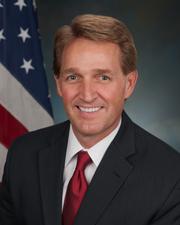
Mr. Chairman, I rise in support of the Pence amendment. It is important to remove this language in H.R. 22 that reserves one seat on the Postal Board of Governors for a representative of labor…
Mr. Chairman, I rise in support of the Pence amendment.
It is important to remove this language in H.R. 22 that reserves one seat on the Postal Board of Governors for a representative of labor unions.
The U.S. Postal Service is a government-owned corporation and, as such, is technically owned by the U.S. taxpayers. Reserving one space exclusively for labor representatives confers preferential status and, in my view, undue influence to one interest group at the expense of all other stakeholders in postal operations, particularly first-class mail users.
I think it is a good amendment. I think it is something that I believe this kind of set-aside may not be in the Senate version of the bill. It is certainly a topic that needs to be debated and taken up in conference, and I would encourage my colleagues to accept it.
Mr. Chairman, I offer an amendment.
Mr. Chairman, I yield myself such time as I may consume.
My amendment is quite simple. It establishes a pilot program in at least 20 test communities, which would sunset in 5 years, to allow the U.S. Postal Service and the Congress to simply gather information. This pilot program would test the feasibility and desirability of alternative methods for the delivery of postal services.
The pilot program would test the current following assumptions about the Postal Service: Are consumers better off if the Postal Service remains a monopoly? Does the current postal infrastructure allow for as many delivery offerings as possible? Is the total value of the universal service model for postal delivery worth the expense?
Now, universal service by the Postal Service would continue to be provided, but participating postmasters would not be limited by the current monopoly statutes on first-class delivery and the use of postal mailboxes. If the postmaster so chooses, alternative providers, such as commercial enterprise, nonprofit organization, or a labor organization that satisfies a strict set of criteria could serve as an alternative provider for postal services. They would also be able to use the equipment and facilities of the USPS at the discretion of the postmaster for fair market value.
Mr. Chairman, with the dramatic reduction in first-class mail volume, coupled with the inability of the Postal Service to control costs, the Postal Service and Congress must have many well-tested alternatives for the future of mail delivery in the U.S.
Many European countries are well ahead of the U.S. on some new innovative ideas for structuring their respective postal delivery services. The pilot program is simply a test program to provide the Postal Service and Congress with useful information to make future changes to postal services, if needed.
I might add, Mr. Chairman, we know that some changes are needed. We are running into deficits; and every 4 years, we are bailing out the USPS. I do not want to be here 4 years from now doing the same thing. So let us test some alternatives. Let us see what else works. Let us see what other countries are doing that we might adopt to control costs and improve quality.
Mr. Chairman, I reserve the balance of my time.
Mr. Chairman, I yield myself 1 minute.
I should point out to the gentleman that postmasters would have full authority under this legislation, under this amendment to actually contract out or not. They can disband the alternative at any time.
Now, under the law, only the government can do it right, and we ought to take over the entire economy. If we do not trust the private sector to deliver services more effectively and more efficiently than the government can, shoot, why do we not get in every business.
We know that that is not the case. We know the private sector typically can do it better, faster, cheaper, smarter than government.
Every 4 years, we are back in again to bail out the USPS. This simply says, why do we not try something, try some alternatives that are working in other countries; try some things that might work, that might lower the cost, that might be more taxpayer-friendly than this. That is what this amendment is all about.
Mr. Chairman, I reserve the balance of my time.
Mr. Chairman, before yielding 2 minutes to the gentleman from Indiana, let me just say that asking the Postal Service to give up what might lead to giving up their monopoly or a portion of their monopoly is unreasonable. We need to prime the pump a little. No private business would in their self-interest do that either. That is why this amendment is important.
Mr. Chairman, I yield 2 minutes to the gentleman from Indiana (Mr. Pence).
Mr. Chairman, I yield 1 minute to the gentleman from Texas (Mr. Hensarling).
Mr. Chairman, I yield myself the balance of the time. I will go ahead and wrap up.
Labor costs consume 80 percent of the Postal Service revenue, whereas UPS and FedEx spend only 56 and 42 percent of their revenues on labor.
Mr. Chairman, I demand a recorded vote.
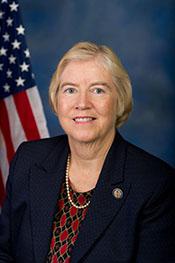
Mr. Speaker, I thank the gentleman for yielding me this time. Mr. Speaker, I rise to support this rule, and I am very proud to be a cosponsor of this legislation. I did serve on the postal panel and…
Mr. Speaker, I thank the gentleman for yielding me this time.
Mr. Speaker, I rise to support this rule, and I am very proud to be a cosponsor of this legislation. I did serve on the postal panel and the Committee on Government Reform as well. This is really the first real reform of the United States Postal Service since the 1970s.
Mr. Speaker, America succeeds and America prospers because America evolves. Our Nation evolves. We are always striving to leverage our economic, our technological, and our political advancements to improve our entire Nation. Much of what might have been good in the 1970s is clearly not good enough for the 21st century, especially when it comes to communications; and the United States Postal Service, with a uniquely critical means of communicating in our Nation, unfortunately, is laboring under a business model that was built in an era that predates the Internet, that predates e-mail, and even fax machines.
Any private sector business would have been put out of business. But the United States Postal Service today, and these are some staggering numbers, actually delivers 200 billion pieces of mail each and every year, it delivers to 130 million households, and it is the center of a nearly $1 trillion industry.
But the competition is growing, of course. Revenues are at risk; its workforce, unfortunately, is aging, and so is its equipment. Yet these are all the same kinds of challenges that so many businesses today face.
I was very proud to cosponsor and to update and to upgrade this legislation, which does all of that, for our Postal Service. The Postal Accountability and Enhancement Act modernizes the Postal Service's infrastructure and its financial framework; and at the same time, it also maintains its traditional benefit, the best benefit I think, and that, of course, is 6-day, universal service.
H.R. 22 provides the postal office with firmer financial ground, and it mitigates the needs to constantly raise postal rates. It ensures those that live in America's rural communities that they still have very close access to a full-service postal center. What is more, equally as important, I think, is it preserves the right for collective bargaining for our postal workers.
Our postal employees have a record of achievement of on-time delivery performance, and many of us, I think, were reminded of how much we take them for granted after the anthrax scare. In fact, I remember it was a commercial that was playing that was put out by the Postal Service that had that Carly Simon song in the background, Let the River Run, and it really, I think, was a very powerful ad that reminded us all of how important our postal employees are.
The men and women of the United States Postal Service stood then and they stand now in harm's way sometimes, because they have dedicated themselves to serving all of us. They certainly deserve the right to bargain collectively to protect the financial future of their families.
This bill also serves as the framework that will help the United States Postal Service to become a model, quite frankly, as a governmental agency to be both cost-effective and cost-efficient, to help them to create a business plan, to negotiate the best business practices with its customers, and it allows for them to focus on a term, customer service, that is not exclusively a concept that is exclusively in the private domain, it can also be in the public domain as well.
This bill embraces concepts like work sharing, in which the Postal Service embarks in a partnership with private companies offering postage discounts to businesses who help the Postal Service prepare and move our mail, flexibility that the private sector enjoys and that they employee as part of its competitive business mix.
This bill essentially allows the United States Postal Service to operate like a business, which will clearly benefit all Americans. So I do want to thank everybody who worked so very hard on this piece of legislation. It is a very important piece of legislation. I want to personally recognize the gentleman from Virginia (Chairman Davis), who just made some remarks earlier. I have watched him work tirelessly on this bill, as well as the gentleman from New York (Mr. McHugh), who has been a leader in postal reform for a very long time.
Mr. Speaker, I think this is a great piece of legislation which also demonstrates very clearly how bipartisanship can work very well on the floor of this House. It certainly has done that. I commend all of the Democratic Members who have worked very hard on this as well, and I would urge my colleagues to support this rule and urge them to support this critical piece of legislation as well.
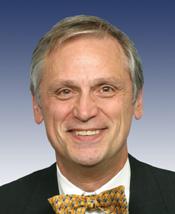
Mr. Speaker, I appreciate the gentleman's courtesy in permitting me to speak on this rule. I rise in support of the approach that has been taken. I add my praise for the gentleman from Virginia (Mr.…
Mr. Speaker, I appreciate the gentleman's courtesy in permitting me to speak on this rule. I rise in support of the approach that has been taken. I add my praise for the gentleman from Virginia (Mr. Tom Davis), for the gentleman from New York (Mr. McHugh), for the gentleman from Illinois (Mr. Davis), for the gentleman from California (Mr. Waxman), for people who have labored long and hard dealing with the first post office update in over a third of a century. What we have before us is a carefully balanced effort to update and modernize this critical service.
I became involved with this effort when I first came to Congress 10 years ago, dealing with one specific element of focus, and that is to make sure that the post office, the local post office, which is the cornerstone of a livable community in small neighborhoods, in small- town America, in downtowns, that those 38,000 postal facilities in every way were assets to the community.
Sadly, what we found was a litany of efforts in the past where the post office basically did not play by the rules. It was idiosyncratic. Local land-use decisions were turned into political footballs. We had a series of efforts where the post office unfortunately ignored environmental regulations, local needs and desires. We set about to fix that with legislation that basically would have required the post office to play by the same rules as the rest of America.
I will say over the course of the 10 years, working with some of the colleagues that I mentioned, working with the Board of Governors of the Postal Service, working with three Postmasters General and others who are active in this effort, that we have come a long way. In fact, in many areas of the United States, we have seen examples where the post office has taken seriously its responsibilities and has been a model player providing that essential cornerstone.
It is important that this not be idiosyncratic. It is important that this approach, this way of doing business, must be codified into law so everybody can be protected. One of the reasons I support H.R. 22 is because it does just that. It requires the post office to obey zoning, planning, environmental regulations. It will be better for the post office; it is better for our communities.
But I want to go a little beyond that, because as I have been involved, I have been struck with the importance, not just in bringing up the physical facilities of 38,000 postal offices around the country, but to be active in terms of the change that is taking place.
The United States Postal Service occasionally comes into criticism by people who are concerned about it, but the fact is the post office handles one-half of the mail in the entire world. They collect only one-quarter of the revenue; they have less than a fifth of the work force; they are more than three times as productive as postal services around the world, and their rates are lower than any other of the developed countries. It is also important that we are ready for the changes that are cascading down upon the Postal Service. The status quo is not tenable. This legislation recognizes that.
I strongly urge, however, that as we come forward with a range of amendments that they be rejected. I appreciate that they are well- intended. Some of them in other contexts I may be interested in, but this is part of this carefully crafted balance. It is important that we not upset the apple cart. It does not take much to derail it. It has been a hard pull to get to this point. I strongly urge that we support making the post office a full partner, that we resist amendments that would upset the balance, and that we can all be, after the approval of H.R. 22, the modernization, so that we can be about the business that is going to have to go on from here. Because there is more work that is going to be done. Controversy is not going to go away. Luckily, this legislation provides a platform that is going to help us all do this important work.
Show 11 more
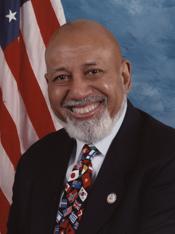
Mr. Speaker, I thank the gentleman from Texas (Mr. Sessions) for yielding me the customary 30 minutes, and I yield myself such time as I may consume. Mr. Speaker, I rise today with disappointment…
Mr. Speaker, I thank the gentleman from Texas (Mr. Sessions) for yielding me the customary 30 minutes, and I yield myself such time as I may consume.
Mr. Speaker, I rise today with disappointment that the House is again considering a rule that blocks all but a select few from offering amendments. Let me make it clear I do not oppose the underlying bill, and I intend to vote for it, but the closed manner by which the majority is bringing the underlying bill to the floor is just plain wrong.
Yesterday in the Committee on Rules, the gentleman from Tennessee (Mr. Ford) offered an amendment that would permit military personnel on Active Duty in the Department of Defense-designated combat zones to receive packages on a postage-free basis. Under this rule, however, the gentleman from Tennessee (Mr. Ford) is not permitted to offer his amendment. I am disappointed and displeased that the majority has once again failed to provide the House with an opportunity to extend the most meager of benefits to those men and women who risk their lives so that all of us can be free. We really should be ashamed of ourselves.
As the gentleman from Texas has noted, Mr. Speaker, the Postal Accountability and Enhancement Act represents the first major restructuring of the United States Postal Service in over 30 years. This bill provides the Postal Service with greater flexibility to set its rates and manage its costs. It also creates a new regulatory system for overseeing the Postal Service's operations and levels the playing field for the Postal Service to finally compete against the megacommercial delivery services of the world.
Mr. Speaker, this legislation is long overdue. On July 26, 1775, Benjamin Franklin was named our country's first Postmaster General. It took the Continental Congress just 1 day to name Benjamin Franklin to that prestigious post. As many of my colleagues and students of American history are well aware, the Congress of 1775 had many great issues to deal with at that particular time, such as the Revolutionary War, disputes over taxes, and the issue of private landownership, just to name a few. Yet with all the great events that were taking place at the time, the Continental Congress still managed to name a Postmaster General in just 1 day. Ironically, it took President Bush 5 years to finally support the Postal Accountability and Enhancement Act.
Benjamin Franklin once said: ``You may delay, but time will not.''
Mr. Speaker, I applaud my colleagues on both sides of the aisle for refusing to delay this bill any further and for demonstrating the intuition to present such a sensible and necessary piece of legislation. The success of the legislative process by which the underlying bill comes to the floor today should serve as an example of what Congress can accomplish when bipartisanship and openness overwhelm political partisanship.
Mr. Speaker, I urge my colleagues to support the underlying legislation, and I reserve the balance of my time.
Mr. Speaker, I am very pleased to yield 4 minutes to my friend, the distinguished gentleman from Oregon (Mr. Blumenauer).
Mr. Speaker, I yield 3 minutes to the gentleman from Illinois (Mr. Davis), my good friend. A lot has been made of those who crafted this legislation. The gentleman from Illinois (Mr. Davis) was extremely instrumental in providing that bipartisan flavor to bring us to this moment.
Mr. Speaker, I yield 4 minutes to the distinguished gentlewoman from the District of Columbia (Ms. Norton).
Mr. Speaker, I yield myself such time as I may consume.
Mr. Speaker, we come to the close offering praise to those who brought us this far. I add my congratulations to the distinguished leadership of this committee on both sides of the aisle for fashioning a piece of legislation that I believe will pass the House overwhelmingly and that I certainly intend to support, and I ask all of our colleagues to do likewise.
Mr. Speaker, I yield back the balance of my time.

Mr. Chairman, I thank the gentleman for yielding me this time and rise in support of H.R. 22. It is a good bill that should be enacted this year. I applaud the gentleman from Illinois (Mr. Davis) and…
Mr. Chairman, I thank the gentleman for yielding me this time and rise in support of H.R. 22. It is a good bill that should be enacted this year.
I applaud the gentleman from Illinois (Mr. Davis) and the ranking member, the gentleman from California (Mr. Waxman), and the gentleman from New York (Mr. McHugh). The gentleman from New York (Mr. McHugh) has made a career of this bill, and we are thankful for that. He is not on the floor, but I want to congratulate him on his efforts.
Just a few months ago, the Committee on Government Reform marked up and passed this bill 39-0. Given the current political environment, that is amazing. An extraordinary achievement. Such bipartisanship on Capitol Hill is all too rare these days. When it happens, we should take note. The fact that every Democrat and Republican on the committee embraced H.R. 22 testifies to the need for postal reform that puts politics aside and focuses on pressing issues.
It is also a tribute to the hard work and energy that postal employees, business groups, and postal customers brought to bear educating lawmakers about the merits of reform.
Let me say something as an aside. The United States Postal Service is the most efficient and productive postal service in the world. It may surprise some to learn that some years ago when I took testimony in the Treasury Postal Subcommittee as chairman, the United States Postal Service was 40 percent more efficient than the number two postal service in the world which was Japan. I observed if we had that kind of productivity efficiency with respect to VCRs, we would not be buying JVCs, we would be buying RCAs made in America or Emerson or some other manufacturer.
Why has H.R. 22 earned my support and the support of a bipartisan group? Simply put, because it satisfies four areas. First, it protects universal service. That is absolutely essential. Secondly, it protects collective bargaining. Since the Postal Reorganization Act of 1970 established collective bargaining as a fundamental right, there has not been a single work stoppage or significant disruption in service as a result of labor-management discord. It is appropriate to protect it and continue it.
I noticed the gentleman from New York (Mr. McHugh) is back on the floor. I congratulate the gentleman. I said how steadfast you have been in the face of coming right up to the brink of passage and then having to withdraw. We all owe you a debt of gratitude and appreciation for the work you have done on this particular piece of legislation.
H.R. 22 ensures the Postal Service is treated exactly the same way every other Federal agency is in the area of military pensions. Our postal workers who served in the military served America, not the Postal Service, America. It is the U.S. Government that ought to compensate those military veterans. H.R. 22 mandates that the proportion of their retirement that comes from military service will be paid for by the Treasury, as it should be.
Lastly, H.R. 22 provides the Postal Service the flexibility it needs to set postal rates in a competitive manner. This is a difficult area. I know the committee has grappled with it, but I think the committee has come out with a solution that ought to be supported. There is no legislative reason why postal reform should not be enacted before the end of the year.
Unfortunately, however, I understand the administration has signaled its opposition to key provisions of H.R. 22 and its Senate counterpart S. 662. It is my hope and, yes, my expectation, that the gentleman from Virginia (Mr. Tom Davis), the gentleman from New York (Mr. McHugh), and the gentleman from Illinois (Mr. Davis) will be successful in resisting efforts by the administration to weaken or repeal provisions that are the product of years of hard bipartisan work.
I urge support of this product. I again congratulate the gentleman from New York (Mr. McHugh) on the work he has so ably led for so long.
Mr. Speaker, I thank the gentleman for yielding me time and for his work in bringing this bill and this rule to the floor. The reason that my colleagues are hearing such kudos for the chairman, the…
Mr. Speaker, I thank the gentleman for yielding me time and for his work in bringing this bill and this rule to the floor.
The reason that my colleagues are hearing such kudos for the chairman, the gentleman from Virginia (Mr. Davis), subcommittee chairman, the gentleman from New York (Mr. McHugh), the ranking member, the gentleman from California (Mr. Waxman), and the gentleman from Illinois (Mr. Davis) will be understood, I think, if you understand that it has taken us 11 years to get here. So only great tenacity and skill could have brought us this far.
I have been in Congress for 15 years. It seems to me that this has been before us forever, but never on the floor before, and there is a good reason for it. It is not because there were special interests or cantankerous Members; it is we are trying to do almost the impossible. We are trying to make an agency meant to be only partially competitive stand alongside one of the most competitive parts of our economy.
So what was necessary was to somehow bring the likes of UPS and FedEx on board at the same time that all of the unions could be brought with us, UPS and the entire industry. That is why it has taken so long and why in reverence we have to be thankful for those who have accomplished this mission. Understand we are dealing with
an industry that is 9 percent of our GDP, nothing to be taken lightly.
Yet what you have before you is something of a miracle. It is a unanimous and bipartisan bill where Members have put aside their selfish concerns, and we do have them, for the greater good of the Postal Service, because one thing we have to come to grips with is not a single Member that can go home and say, well, it was not good enough for me, so I put your Postal Service in jeopardy. Just try that out on your constituents.
At the same time, the Postal Service had to wake up to the 21st century, had to modernize in ways that 9/11 had nothing to do with, had to modernize because the world has come forward with technology that challenges them, the way UPS and FedEx will never challenge them. How do you do that?
They are still trying to do that. But one of the things you do is give the Postal Service some of the flexibility that is associated with the private sector, as much of it as you can, consistent with the fact that this is a controlled section of the economy, because there are some things that the Postal Service must do and nobody else can do; that is, go to some of the far reaches of your rural districts where they better get their mail on time the way I do mine nine blocks from the Capitol.
Even those who had serious problems with this bill, the mail handlers, for example, have a real problem and one that has to be taken seriously with the way in which the bill deals with single pieces of parcels, single parcels, where we have allowed the Postal Service to transfer revenue in order to keep this part of the service lower, and we are getting rid of that to make them more competitive with the private sector.
They say, watch out because you are going to raise the costs, and that is not good. But you know what they have said and agreed to? Perhaps we can resolve it in conference. So they say, pass the bill. I say as well, because we need to modernize the Postal Service. And we have even gotten around for ourselves the part that says that we might contribute to the deficit by giving back to the Treasury what they put on to the Postal Service, which is the cost of military pensions.
We say you have held billions of dollars from the Postal Service. Tell you one thing, if we did not do that, what it means is that the Postal Service, which has already filed for a rate increase, would be forced to go ahead. I, for one, do not want to go home in 2006 and say, I voted for a mail increase. That is what you will vote for if you vote against this bill.
My thanks to the sponsors once again for this historic work.
Mr. Chairman, since the days of the pony express, the USPS has become a part of the American family. Consider the special place of the Postal Service in our society and its importance to Americans:…
Mr. Chairman, since the days of the pony express, the USPS has become a part of the American family.
Consider the special place of the Postal Service in our society and its importance to Americans: to the teenagers waiting by the mailbox for the college acceptance letters, to families waiting for letters from loved ones serving abroad, to businesses reaching out to new customers and to so many others.
The Postal Service delivers mail six days a week to nearly 140 million addresses. Every year this number increases by 2 million.
The Postal Service's unmatched ability to reach every household and business in America six days a week is a vital part of the nation's infrastructure.
The Postal Service needs tools to modernize and compete. That is why today I am a cosponsor of H.R. 22, the Postal Accountability and Enhancement Act.
This legislation will not only ensure survival of the Postal Service but also help preserve universal service at affordable rates for American mailing consumers.
We need to ensure the long-term viability of this $900 billion industry and its nine million employees.
I only wish that we could also pass H.R. 147, the Social Security Fairness Act.
We need to correct the Windfall Elimination Provision, which lowers Social Security benefits for retirees who receive a Civil Service Retirement System annuity and Social Security benefits from other jobs.
Too many Postal Service employees have seen their Social Security benefits reduced by as much as 55 percent because of the Windfall Elimination Provision.
We also need to fix the Government Pension Offset, so that spouses and survivors do not have their benefits reduced.
Mr. Chairman, H.R. 22 is a good first step and I encourage my colleagues to support the bill.
Mr. Chairman, since the days of the pony express, the USPS has become a part of the American family.
Consider the special place of the Postal Service in our society and its importance to Americans: to the teenagers waiting by the mailbox for the college acceptance letters, to families waiting for letters from loved ones serving abroad, to businesses reaching out to new customers and to so many others.
The Postal Service delivers mail six days a week to nearly 140 million addresses. Every year this number increases by 2 million. The Postal Service's unmatched ability to reach every household and business in America six days a week is a vital part of the nation's infrastructure.
The Postal Service needs tools to modernize and compete. That is why today I am a cosponsor of H.R. 22, the Postal Accountability and Enhancement Act. This legislation will not only ensure survival of the Postal Service but also help preserve universal service at affordable rates for American mailing consumers. We need to ensure the long-term viability of this $900 billion industry and its nine million employees. I only wish that we could also pass H.R. 147, the Social Security Fairness Act.
We need to correct the Windfall Elimination Provision, which lowers Social Security benefits for retirees who receive a Civil Service Retirement System annuity and Social Security benefits from other jobs. Too many Postal Service employees have seen their Social Security benefits reduced by as much as 55% because of the Windfall Elimination Provision. We also need to fix the Government Pension Offset, so that spouses and survivors do not have their benefits reduced.
Mr. Chairman, H.R. 22 is a good first step and I encourage my colleagues to support the bill.

Mr. Chairman, I rise in strong support of H.R. 22, the Postal Accountability and Enhancement Act. This legislation, which is long overdue, will improve commerce in this country, better the lives of…
Mr. Chairman, I rise in strong support of H.R. 22, the Postal Accountability and Enhancement Act. This legislation, which is long overdue, will improve commerce in this country, better the lives of the nation's postal workers, and guarantee that the mail will be delivered each day to the 140 million American households that look forward to a daily visit from their letter carrier.
In a time of declining revenues and increased costs, it is no secret that the Postal Service faces financial challenges. Competition in the package-delivery business and from Internet-based communication has intensified. And, as a result, each year, the dedicated letter carriers of the Postal Service are asked to carry less mail to more households and businesses nationwide. In part, that is because the Postal Service is operating under laws written 35 years ago--long before anyone had ever heard of the Internet.
This legislation will modernize the Postal Service, giving it the resources and flexibility it needs to manage its operations and set fair prices. The bill will help the Postal Service cut through the bureaucratic red tape and allow it to act more like the businesses it must compete against.
In addition to providing a more streamlined rate-setting process that will allow the Postal Service to make business decisions quickly, the bill also will allow the Postal Service to enter into partnerships with second- and third-class mailers, while preserving the jobs of those at postal sorting and processing centers. I welcome these improvements, although I anticipate more will need to be done to balance
the mailing industry's need for price certainty with unanticipated or extraordinary fiscal needs of the Postal Service.
The bill will alleviate a $27 billion burden by limiting the Postal Service's responsibility to pay the benefits of veterans who also worked in the Postal Service. To be clear, this provision does not limit the benefits of our brave veterans who, after military service, went to work for the Postal Service. This bill simply says that the U.S. Treasury must pay veterans benefits, and the Postal Service must pay postal benefits.
Mr. Chairman, this legislation is also good for one of the Postal Service's best assets--its human capital. I am particularly pleased that this bill preserves the right of more than 500,000 postal workers and letter carriers to bargain collectively. These dedicated men and women work in processing centers, they work in local post offices, and they work in our neighborhoods delivering the mail to our doorsteps each day. They are the reason that the postal service has a 96 percent on-time delivery record for first-class mail.
Mr. Chairman, this is a good bill. It will make the Postal Service leaner and more efficient, while preserving the collective bargaining rights of its workers. And it will continue the legacy of universal service. Since the birth of this nation, the United States Postal Service has been committed to delivering the mail to every single household in the country--142 million in all today. The daily mail delivery is something that many Americans look forward to, and this bill will ensure that the Postal Service has the resources it needs to maintain that commitment well into the future. I urge my colleagues to support this important legislation.
Mr. Chairman, I claim the time in opposition to the amendment. Mr. Chairman, I yield myself such time as I may consume. Mr. Chairman, I appreciate where the gentleman is trying to go with this, but…
Mr. Chairman, I claim the time in opposition to the amendment.
Mr. Chairman, I yield myself such time as I may consume.
Mr. Chairman, I appreciate where the gentleman is trying to go with this, but even the White House does not want to have this scored neutrally under CBO numbers. They have asked for the Office of Management and Budget numbers because the Congressional Budget Office ends up counting rate increases that have not taken effect as already being part of revenue. And to the extent that we can stave off stamp tax rate increases, what the gentleman's amendment would do, not stave it off but it includes it, to the extent we do that, then it counts against the budget.
The other problem in terms of budget neutrality comes from the President's own commission on the Postal Service which recommended that the military years of service for postal employees under the CSRS retirement program, that those years be paid for by the military like they are for every other agency of government instead of having postal patrons for that. This was the President's commission which recommended that.
What I have talked about, we save money, not take money away. But the question is why should rate payers have to pay for military service in an agency where you have veterans hiring preference? It is not fair to rate payers. It is driving up rates.
Finally, let me say, it is not two-thirds of the escrow funds that is funding health care. Ninety percent of the escrow funds over the next 5 years are to fund health care. That is more than any other agency in government. Not enough for some Members, I am sure; but this is the appropriate way in my opinion for the post office to operate.
We have committed to the White House. We are going to work to try to get this as budget neutral as we can as we move forward to the conference working with OMB, but the Congressional Budget Office's arcane scoring rules make it virtually impossible to get here in this particular case.
Once again, let me remind everyone, what is the alternative? The alternative to this legislation is rate increases, postal rate increases, a stamp act, on every man, woman and child that mails a letter in this country. That is what we are trying to stave off, because as rate increases go up, people quit using the post office; and it gets this downward spiral that will lead to the demise of the post office as we know it. That is why this legislation has such broad support from such diverse groups in the private sector and in the public sector.
Mr. Chairman, I yield 2 minutes to the gentleman from California (Mr. Waxman).
Mr. Chairman, I yield myself such time as I may consume.
Let me just note for the record that we did agree at that point as a condition of releasing overpayment by the Post Office Department into pension funds that they, for a temporary period of time, fund the military for CSRS retirees. But we awaited studies; and the President's own commission, which has been quoted here, came back and recommended that in point of fact the post office should not be making these payments, that it should to go to the general fund side of the ledger.
Mr. Chairman, I yield 2 minutes to the gentleman from New York (Mr. McHugh).
Mr. Chairman, I came to Congress to help the Federal Government be a better partner and make communities more livable. One of the simplest ways to achieve that objective does not require new rules or…
Mr. Chairman, I came to Congress to help the Federal Government be a better partner and make communities more livable. One of the simplest ways to achieve that objective does not require new rules or regulations. It simply requires that the Federal Government follow the same rules as others.
Well, H.R. 22 contains language from the Community Postal Partnership Act which I first introduced in the 105th Congress. It requires the Postal Service to abide by the same zoning and land use laws as everybody else and requires that the Postal Service garner input from communities on proposed changes for facilities.
We have had tremendous support for this concept, from homebuilders, the National Association of Postmasters, the Trust for Historic Preservation, Realtors, landscape architects, planners, and from within the postal community itself.
Good government organizations across the country have joined with mayors and local officials who understand that the over-37,000 postal facilities are not just remote outposts of Federal activity. They can, often are, and always should be centers of community activity.
This legislation has had bipartisan support from the majority of the House of Representatives and has passed the Senate, only to become victim of the politics of postal reform which I am pleased the committee has been able to sort out.
It is time, however, to make this relationship something that every community can count on. It should not be the exception, nor should it require extraordinary political action. There should be no variation in the commitment to provide the finest facilities that are part of each and every community. I am happy that the committee has chosen to include this language in the comprehensive postal reform bill.
In turn, I think it is essential that we recognize the valuable service provided by the Postal Service. It delivers more items in one day than Fed Ex does in a year; it manages half the world's mail with one-fourth of the revenue and a fifth of the workforce. It is important that we not just applaud these accomplishments, but give the Postal Service the tools it needs to continue to deliver its valuable service.
This bill accomplishes that goal. It is a delicately balanced compromise which I hope the House will support, rejecting amendments that would upset that balance, and build on this for a better Postal Service in the future.
Mr. Speaker, I want to thank the gentleman from Florida (Mr. Hastings) for yielding me this time. I also want to thank him and the gentleman from Texas (Mr. Sessions) for the presentation of this…
Mr. Speaker, I want to thank the gentleman from Florida (Mr. Hastings) for yielding me this time. I also want to thank him and the gentleman from Texas (Mr. Sessions) for the presentation of this rule.
I want to commend the chairman of the Committee on Government Reform, the gentleman from Virginia (Mr. Davis), and the ranking member, the gentleman from California (Mr. Waxman), for the tremendous leadership that they have displayed in shaping this bipartisan legislation.
I also want to commend the gentleman from New York (Mr. McHugh), who is known as ``Postal Reform'' in our committee, because he has worked on this issue for such a long period of time.
Many of us recognize that postal issues are not considered to be the most exotic business that will come before this House, but if you are waiting for an important document that does not come at the time you were hoping to receive it, or maybe it was a letter from a relative, from your mother or your father or from your child, and it is not there, or it was an admissions letter to college or university and you are anticipating its arrival, and it does not come, then you begin to realize how important the Postal Service is.
I want to commend the thousands of men and women who work every day to make sure that these channels of communication are still open. Imagine being able to get a letter from anyplace, first class, in the United States of America for 37 cents. That is no easy feat.
And so I commend all of those who have made sure that these channels of communication have been kept open. I commend all of those members of the committee who have labored, and all of the stakeholders. Shaping this legislation was not the easiest thing in the world to do, but I have been told that when men and women of goodwill come together with a basic recognition of the need to be in sync, that you can work out solutions to any problems that have existed.
That is what has taken place in the Committee on Government Reform. Again, I commend the tremendous leadership that we have gotten from the chairman and ranking member. I know that there are amendments that are desirable, but I am going to resist them, and urge that they be resisted, and urge passage of this landmark legislation that seeks to reform the postal system and postal operations.

Mr. Chairman, first of all, I want to congratulate the gentleman from New York (Mr. McHugh), who has done yeoman's service to the committee and to this government in fighting for a postal reform…
Mr. Chairman, first of all, I want to congratulate the gentleman from New York (Mr. McHugh), who has done yeoman's service to the committee and to this government in fighting for a postal reform measure. He has just done a great job. I want to congratulate him on all of the hard work in bringing this thing to the floor.
I want to congratulate our chairman, the gentleman from Virginia (Mr. Tom Davis). We fought for, I think, 6 years when I was chairman to bring this bill to the floor and pass it, and, Mr. Chairman, I want to congratulate you on being able to get this thing to the floor.
I hope that we are successful in getting it not only through here, but through the Senate as well.
I want to congratulate the gentleman from Illinois (Mr. Davis), my good buddy, who has one of the best voices in the Congress. If I could talk like
him, I would be President. He has got that deep, resonant voice.
I want to thank you and the gentleman from California (Mr. Waxman) for all of the hard work that you have put in on this bill. I want to congratulate you as well.
Let me just say that we have been working on this now for, gosh, I guess at least 10 years, but 6 years when I was chairman and now 4 years that you have been chairman. We have finally brought a bill to the floor. I do not think it is perfect, but it sure is a giant step in the right direction.
If we do not do something about postal reform, what is going to happen is the costs are going to go through the roof, and instead of this being an agency that deals with the expenses themselves, we are going to be seeing taxpayers footing the bill for additional costs for postal service.
With the advent of faxes and e-mails, you have seen the Postal Service have a lot more problems with revenues than they have had in the past. And it is absolutely essential, if we are going to have a viable Postal Service in this country, that we pass this legislation.
So I think this is a very good bill. I believe it will pass tonight, and I hope that all of my colleagues will vote for it. Once again, I want to thank all of those responsible, especially the gentleman from New York (Mr. McHugh), the gentleman from Virginia (Mr. Tom Davis) and the gentleman from Illinois (Mr. Davis) for working so hard on this.

Mr. Chairman, although we may be living in the age of technology and more than a few of us cannot live without our e-mail, the United States Postal Service continues to serve a key role for both…
Mr. Chairman, although we may be living in the age of technology and more than a few of us cannot live without our e-mail, the United States Postal Service continues to serve a key role for both personal and business communications. With 9 million jobs and $900 billion in annual commerce dependent on services provided by USPS, consideration of this reform package could not come soon enough.
In recent years, the U.S. Postal Service has struggled to perform its core mission of providing affordable mail service 6 days a week to every American. Today, the Postal Service operates under the same set of rules established in 1970; yet the service now delivers nearly 2\1/ 2\ times more mail to almost twice as many homes.
Rising costs and financial losses, coupled with rate increases meant to remedy a declining fiscal situation, have left the Postal Service in a position that threatens the long-term viability of mail as an affordable, effective business communications channel.
I am pleased H.R. 22 protects universal service while taking steps to alleviate the seemingly constant threat of rate increases by modernizing rate regulation and by freeing up $73 billion in civil service retirement savings that have been held in escrow.
Accountability and transparency are of particular interest to me as there continues to be unresolved questions surrounding the unfair and inconsistent application of a postal regulation more than 5 years ago.
This particular issue is one I have championed for some time, and while I am disappointed that we were unable to reach a resolution before the bill reached the House floor, I look forward to working with the committee and the Pennsylvania Senators on the issue of postal reform legislation moves into conference.
Comprehensive legislation is 10 years in the making; and without the passage of this bill, we are putting in jeopardy millions of American jobs and the future availability of affordable mail service, the repercussions of which will be felt well beyond the mailing industry.
In the last session of Congress when I was a member of the Subcommittee on Postal Reform and the Committee on Government Reform, we worked on this bill. I am pleased it has come before us, and I urge my colleagues to support H.R. 22.

Mr. Speaker, I rise today in strong support of this rule and underlying postal reform legislation. I commend the gentleman from Virginia (Chairman Davis) and the ranking member, the gentleman from…
Mr. Speaker, I rise today in strong support of this rule and underlying postal reform legislation. I commend the gentleman from Virginia (Chairman Davis) and the ranking member, the gentleman from California (Mr. Waxman), along with the much heralded sponsor of this bill, the gentleman from New York (Mr. McHugh), for working in a bipartisan manner that has twice allowed this bill to be reported from committee by a unanimous vote.
Now, I have only been here 5 years, and like my colleague from Washington, DC, says, she feels like every year it is painstakingly making its way through the process. And even in the 5 years since I have been here, I know how important this bill is, and I am so pleased that we are at the point we are today.
I am pleased to be a cosponsor of H.R. 22 because of its importance to businesses, postal employees, and all of us who have mail delivered to our homes or our businesses. This legislation has provisions that will allow the Postal Service to operate more efficiently and would require that it focus primarily on its main focus, which is delivering the mail.
H.R. 22 helps enable mailers to partner with the Postal Service to reduce the cost of mailings, providing an efficiency to the Postal Service, and helping businesses to save money that can be invested in jobs and job growth.
The bill is a good idea for postal employees for a lot of different reasons, one of which is because it returns the responsibility for the military service portion of postal retiree benefits back to the government and corrects overpayments by the Postal Service to the Civil Service Retirement System.
In short, the bill provides the changes necessary to keep the Postal Service operating. It is so important to all of us every day. I mean, I know at certain times in my life I felt like if I did not see my friendly mailman or mailwoman at my door, I felt like I did not have a friend in the world. So let us keep the Postal Service operating without the hefty rate increases that would inevitably come with the status quo.
This bill means a great deal to very many people. After so many years of work, I congratulate all of those intimately involved. I urge my colleagues to join me in support of the rule and the underlying bill.
Bill Text
2 versions available
        [Congressional Bills 109th Congress]
[From the U.S. Government Publishing Office]
[H. Res. 380 Engrossed in House (EH)]

H. Res. 380

In the House of Representatives, U.S.,

July 26, 2005.
Resolved, That at any time after the adoption of this resolution the Speaker
may, pursuant to clause 2(b) of rule XVIII, declare the House resolved into the
Committee of the Whole House on the state of the Union for consideration of the
bill (H.R. 22) to reform the postal laws of the United States. The first reading
of the bill shall be dispensed with. All points of order against consideration
of the bill are waived. General debate shall be confined to the bill and shall
not exceed one hour equally divided and controlled by the chairman and ranking
minority member of the Committee on Government Reform. After general debate the
bill shall be considered for amendment under the five-minute rule. It shall be
in order to consider as an original bill for the purpose of amendment under the
five-minute rule the amendment in the nature of a substitute recommended by the
Committee on Government Reform now printed in the bill. The committee amendment
in the nature of a substitute shall be considered as read. All points of order
against the committee amendment in the nature of a substitute are waived.
Notwithstanding clause 11 of rule XVIII, no amendment to the committee amendment
in the nature of a substitute shall be in order except those printed in the
report of the Committee on Rules accompanying this resolution. Each such
amendment may be offered only in the order printed in the report, may be offered
only by a Member designated in the report, shall be considered as read, shall be
debatable for the time specified in the report equally divided and controlled by
the proponent and an opponent, shall not be subject to amendment, and shall not
be subject to a demand for division of the question in the House or in the
Committee of the Whole. All points of order against such amendments are waived.
At the conclusion of consideration of the bill for amendment the Committee shall
rise and report the bill to the House with such amendments as may have been
adopted. Any Member may demand a separate vote in the House on any amendment
adopted in the Committee of the Whole to the bill or to the committee amendment
in the nature of a substitute. The previous question shall be considered as
ordered on the bill and amendments thereto to final passage without intervening
motion except one motion to recommit with or without instructions.
Attest:

Clerk.