Condemning in the strongest terms the terrorist attacks in Sharm el-Sheikh, Egypt, on July 23, 2005, and for other purposes.
Legislative Activity
Stay on top of the latest movement without scrolling through every action
Motion to reconsider laid on the table Agreed to without objection.
July 27, 2005 • 5:04 PM
View full timeline
Introduced in House
July 26, 2005
Referred to the House Committee on International Relations.
July 26, 2005
Ms. Ros-Lehtinen moved to suspend the rules and agree to the resolution.
July 27, 2005 • 1:50 PM
Considered under suspension of the rules. (consideration: CR H6837-6839)
July 27, 2005 • 1:51 PM
DEBATE - The House proceeded with forty minutes of debate on H. Res. 384.
July 27, 2005 • 1:51 PM
At the conclusion of debate, the Yeas and Nays were demanded and ordered. Pursuant to the provisions of clause 8, rule XX, the Chair announced that further proceedings on the motion would be postponed.
July 27, 2005 • 2:03 PM
Considered as unfinished business. (consideration: CR H6859)
July 27, 2005 • 4:53 PM
Passed/agreed to in House: On motion to suspend the rules and agree to the resolution Agreed to by the Yeas and Nays: (2/3 required): 428 - 0 (Roll no. 439).(text: CR H6837)
July 27, 2005 • 5:03 PM
On motion to suspend the rules and agree to the resolution Agreed to by the Yeas and Nays: (2/3 required): 428 - 0 (Roll no. 439). (text: CR H6837)
July 27, 2005 • 5:03 PM
Motion to reconsider laid on the table Agreed to without objection.
July 27, 2005 • 5:04 PM
Voting History
1 vote recorded • Roll call available
Floor Debate
17 membersWhat members said about H.Res. 384 on the floor
 BLC
BLC PE
PE JM
JM SML
SML TL+12
TL+12
Floor Debate
17 membersWhat members said about H.Res. 384 on the floor
Madam Speaker, I yield myself such time as I may consume. Madam Speaker, I normally am in agreement with my friend, the gentleman from Pennsylvania, when it comes to antidumping and countervailing…
Madam Speaker, I yield myself such time as I may consume.
Madam Speaker, I normally am in agreement with my friend, the gentleman from Pennsylvania, when it comes to antidumping and countervailing duty laws. We have worked together to try to improve those laws. But I disagree with him in regards to this legislation.
Madam Speaker, I disagree with the gentleman's assessment of this legislation. I think it is an inconsequential bill. I do not believe it will do very much one way or the other. It will certainly not hold China accountable. There is nothing in this bill that would hold China accountable for its violations of its international trade obligations.
So, Madam Speaker, let me try to get the Members to focus on what is in this bill and not what people who may be coming to this well say is in this bill. I would urge my colleagues to please read the legislation that is before us. It is not the original bill that was filed by the gentleman from Pennsylvania (Mr. English), a bill that was supported by the industry, that would have extended countervailing duty laws to China and nonmarket economies. Instead, what this bill does in section 2 is a ``sense of Congress.'' Now, a sense of Congress resolution is exactly that. It expresses our concerns, but takes no action.
The first section that takes any action at all in changing law is section 3, and section 3 does deal with the countervailing duty provisions. It extends countervailing duties to nonmarket economies. That is good. Countervailing duties are imposed when a country inappropriately subsidizes its products that go into international trade. And China and nonmarket economies should be held to our countervailing duty laws. Unfortunately, they are not today.
The problem is that the amended bill then puts 2 hurdles in being able to apply those countervailing duty provisions. It first does what is known as double-counting and prevents from using on the countervailing duties the import and export subsidies by the country involved. Now, that is a different standard than we have for market economies, where you only have to double-count export subsidies. The change here is dramatic, and that is why the industries that are affected by the countervailing duty statute that we would hope would help in regards to China oppose this provision.
Nu Car, which is one of the companies that asked us to apply the countervailing duty law to China, has written us in opposition to this section, because it will not help them remedy the situation of subsidized product coming from China into the United States. That is why the Committee to Support U.S. Trade Laws, the committee of business groups that have joined together in order to strengthen our antidumping and countervailing duty laws, oppose this section. It will not help companies that are hurt by subsidized, manufactured product coming into the United States. That is section 3. That is why I say, you try to help in one respect, but you take it away by putting obstacles in the way.
You also put a second test that is not currently required, a certification of compliance of international law. That is not required today for a market economy violation for us to file a countervailing duty claim. That is section 3.
Let us go to section 4. Section 4 deals with the new shipper review amendment. Well, here we have a problem with Chinese exporters who are not getting an adequate security when they come into our market. You provided a temporary fix for 3 years. We should do it permanently. It should be done permanently.
Going to section 5, section 5 talks about monitoring compliance with the People's Republic of China with international trade obligations. Read what is here. There is no action. There is review, but no action. We should not be doing this now, the review. The administration does this already. There is nothing new that is added to the requirements that we are going to be able to take action against China for violating intellectual property rights or access to market for services, or access to market for goods. We should be taking action under our safeguards in that regard. But no, there is no action at all taken in section 5. If I am wrong, please correct me on this point.
Then we move to section 6. Section 6 is probably the most egregious section in the bill: report on currency manipulation by foreign countries. Read it. It is only a couple lines. You are asking Treasury to define currency manipulation. We have already had Treasury report to us and fail to take action against China. China is manipulating its currency. We all know that. So why do we not take action against China?
No. This bill does, again, nothing in regards to China currency.
Then, in section 7, you talk about providing more money for the USTR. You are not providing more money for the USTR. The amount that you have here in authorized levels has already been provided in the appropriations bill. There is no new money here.
Then, in section 8, you talk about more money for the U.S. International Trade Commission. Again, it is equal to the amount that we have already provided through the appropriation process. There is no new money here in either section 7 or section 8.
I want to give you credit in section 9, talking about sense of Congress regarding the expansion of membership in the agreement on government procurement of the WTO. I support that section. I think we should be asking for broader participation in government procurement under the WTO. No action here again, strictly a sense of Congress.
So, Madam Speaker, I take this time to go through section by section because I challenge Members who come and speak on this bill to please speak about the facts of what is in this bill. There are only two sections that actually provide any change in law or action. One deals with countervailing duty, and I have already pointed out how there is negative along with the positive, and the other deals with a temporary fix of the exporter license issue, which is certainly not the major problem that we are having with China today.
As I said earlier, this bill is a missed opportunity. It is a missed opportunity because the overwhelming majority of the Members of this body would like to vote on a bill that would provide real relief to the problems that we have in China living up to its international trade responsibilities. That legislation just happens to be H.R. 3306, which has been introduced by the gentleman from New York (Mr. Rangel). I regret that we do not have an opportunity to debate that bill and do what is right for the people of this country in enforcing our trade rules against the People's Republic of China.
Madam Speaker, I reserve the balance of my time.
Madam Speaker, I yield myself 30 seconds to respond to the gentleman from Pennsylvania (Mr. English).
I think the gentleman pointed out that there are no sections other than the two I mentioned that are action sections in your bill. And I point out again that the double-counting provision will make the application of countervailing duties much more difficult, if not impossible, in a nonmarket economy; and that is not helpful to companies that have been hurt by subsidized products coming from China.
Madam Speaker, I yield 3 minutes to the gentleman from Washington (Mr. McDermott).
Madam Speaker, I yield myself 30 seconds just to respond to gentlewoman's comments.
Madam Speaker, there is nothing in this bill that deals with dumping and enforcement in China. There is nothing in this bill that takes action against China for currency manipulation. And there is nothing in this bill that takes action against China for intellectual property failures. On the countervailing duties, I have already commented on that.
Madam Speaker, I yield 4\1/2\ minutes to the gentleman from Michigan (Mr. Levin), the former ranking Democrat on trade, the senior member of the Ways and Means Committee.
(Mr. LEVIN asked and was given permission to revise and extend his remarks.)
Madam Speaker, I yield myself 2 minutes.
Madam Speaker, in response to my friend from Florida's (Mr. Shaw) comments on the intellectual property problems that we are having with China, and they are substantial, China is violating intellectual property rights every day not only with videos and tapes, but also with industrial products. Listen to what the gentleman from Florida (Mr. Shaw) said. Listen to the action required by the President if China violates intellectual property to gather information.
We already have that, Madam Speaker. Action is filing a claim under the WTO. That is following the requirements of the WTO dispute settlement resolution process. There is no action whatsoever in this bill. The gentleman from Michigan (Mr. Levin) got it right. This is a bill about saying things about China that people might feel good about. And if you are so inclined to feel good about it and want to vote for it, fine. But to say that this is taking action against China is just wrong. It does not take action against China.
The administration tomorrow could file a claim against China on intellectual property against China if it wanted to, and it should have. The administration yesterday should have filed claims against China for currency manipulation, and it has not, and then allow the WTO process to proceed. But for us to say that we are requiring the administration to make a finding and then collect information which they already have is being tough on China, come on now. Let us be straightforward on this bill.
It is a bill that says things about China that many Members might feel good about, but as far as taking action against China, this bill comes out short.
Madam Speaker, I reserve the balance of my time.
Madam Speaker, I yield myself 2 minutes. In response on the currency issue, section 6 in this legislation deals with currency manipulation. It does not deal with China specifically. And it requires the Secretary of the Treasury to define currency manipulation and describe actions of foreign countries that will be considered to be currency manipulation.
The problem is Treasury has already done this and found that China was not manipulating its currency despite the fact that we know it undervalues its currency between 15 percent and 40 percent. So I appreciate the gentleman's concern about the competitive problems that we have with American manufacturers and producers trying to compete with an undervalued Chinese currency, but this bill comes up very short.
But I very much appreciate what the gentleman said because we will be come back in a little bit and offer him an opportunity to really do something about the manipulation of China's currency.
Madam Speaker, let me also point out while I am on the floor that legislation filed by the gentleman from New York (Mr. Rangel), H.R. 3306, would take action in this area by requiring the administration to initiate a WTO action to address China's currency manipulation.
Now, that would bring action consistent with our obligations under the World Trade Organization because we would act under the World Trade Organization. That is what we should be doing.
Let me suggest that when you file an action under the WTO, it is not the end of issues, it is the beginning of a process. To ask the Secretary of the Treasury to do another study or come up with another definition, all we do is delay for another year any action against China. And to suggest that there are minor adjustments that they made is in any way dealing with the underlying problems of currency manipulation is just unreal. China announced today that they do not intend to do more. So we need to take action against China.
American jobs are at stake. We can compete if it is on a fair, level playing field. It is not. This bill does not deal with the China currency issue.
Madam Speaker, I reserve the balance of my time.
Madam Speaker, I yield myself 1 minute to respond to the textile issue that was recently mentioned on the other side.
When we negotiated our WTO accession agreement with China, we provided certain safeguards against the flooding of a market on textiles, knowing that the textile quota would be expiring. The concern many of us have had with China is that our government has not exercised the safeguards that are currently available to us under the agreement negotiated with China. We would like to see the administration be more aggressive in making sure that we do not get a flooded market either here or with trading partners that would have an adverse impact on the textile industry.
That is a major concern in our relationship with the People's Republic of China. The concern is that this legislation does absolutely nothing about that. So I appreciate the comments of my colleague on the other side of the aisle that there is no provision in this bill that would require action against China consistent with the provisions of the WTO accession agreement.
Madam Speaker, I reserve the balance of my time.
Madam Speaker, I yield myself such time as I may consume.
Madam Speaker, I very much appreciate the discussion that we have had. One of the advantages of the consideration of this bill under a rule as restrictive and repressive as the rule was, is that we do have a chance to have a more open and full debate, and I appreciate that.
I appreciate also the fact that we have been able to go through many of the provisions, including the colloquy that was just recently put on the record. I found that colloquy helpful, because I must tell you I shared the same concerns as to whether we were turning over to dispute settlement panels a decision as to whether we would bring future cases using counterveiling duties. And if I understand my friend, the gentleman from Pennsylvania (Mr. English), that would be a determination made solely by our Commerce Department consistent with U.S. interests, and I certainly agree with that interpretation.
I regret that we have not had the chance to consider amendments or consider a substitute, because I do think that there is general sentiment among the overwhelming majority of the Members of this body to take action against China for its failure to comply with international trading rules. China has violated currency manipulation, which has worked to the disadvantage of American manufacturers, farmers, and producers. China has not enforced intellectual property issues, which has worked to the disadvantage of our entertainment industry, and to our engineering and manufacturing industries.
China has flooded the markets, contrary to its trade agreements on textiles, which has worked to the disadvantage of the U.S. markets. China over and over again has denied access on services and many other areas that require action. So it is appropriate that we should be considering legislation to address the shortcomings of China's compliance with international trade rules.
Now, I think we could have come up with a much stronger bill. The gentleman from New York (Mr. Rangel), as I pointed out earlier, introduced H.R. 3306. And when you compare H.R. 3306 with the bill that is before us, you cannot help but feel that we should have done a much better job.
H.R. 3306 would have applied U.S. countervailing duty laws to China and other nonmarket economies without the additional burdens imposed by the underlying bill. The gentleman from Pennsylvania (Mr. English) quoted from some sources that support that provision. Let me just tell you that Nucor, which is, as you know, a steel company that has to live with subsidized steel from China coming into the U.S. market, opposes the provision. Nucor believes that the extra burden of trying to establish the amount of subsidy when you have to factor additionally for nonmarket economies domestic subsidies, it is a burden that will make the new countervailing duty application meaningless as it relates to China. That is a specific company telling us, who supported the original English bill, they oppose this provision because of the problems.
I could cite other examples, Madam Speaker, but on one hand the bill gives some relief for countervailing duties to nonmarket economies; but on the other, the bill imposes new restrictions that really make it very difficult if it provides any help at all.
The Rangel bill would require the administration to initiate WTO action to address China's currency manipulation. Instead, the underlying bill provides for another study generally by Treasury which will delay action taken against China by another period of time. H.R. 3306, the Rangel bill, would strengthen special China safeguard laws. The underlying bill does nothing on that at all.
So, Madam Speaker, we have a bill that contains the sense of Congress and provisions that I think most of the Members of this body would agree with. It contains some other provisions that are well intended, and I think the majority of the Members of this body would agree with. But I want to make it clear that for those who are claiming this bill is tough on China or tough on enforcing our trade rules with China, it does not do that.
It does say certain things about China that most Members of this body would agree with. The main purpose of this bill was to deal with countervailing duties to nonmarket economies, and it does that in a way that probably will provide no relief. It provides authorizations for additional funds for two agencies that deal with trade, but we have already taken care of that in the appropriation bill.
So I come back to the point of the gentleman from Michigan (Mr. Levin). If you want to feel good and vote for this bill, go ahead and do it. But if you think you are taking action against China, if you believe that this bill will speak to the trade imbalance we currently have with China because of China's failure to adhere to their international responsibilities under the WTO or under the accession agreement with the United States, if you believe that, this bill does not do that. This bill is a missed opportunity because we were not able to have a free and open rule.
So I regret, Madam Speaker, that we are sort of in a dilemma with this bill as to what advice we should give Members. If you look at it as a resolution expressing the sense of Congress, there is nothing wrong with this bill. But if you look at it as a bill to provide action against China, there is really nothing in it to do that.
Mr. Speaker, I yield to the gentlewoman from Ohio (Ms. Kaptur) for the purpose of a unanimous consent request.
(Ms. KAPTUR asked and was given permission to revise and extend her remarks.)
Mr. Speaker, I yield back the balance of my time.
Mr. Speaker, I offer a motion to recommit.
I am at this time
Mr. Speaker, the only opportunity we have is on a motion to recommit, and this motion to recommit will deal with the currency manipulation issue with China, and will take real action on China's currency manipulation.
Since 1994, China has pegged its currency to the U.S. dollar. This policy has caused China's currency to become undervalued by as much as 40 percent. What this means in practice is that Chinese manufacturers have a significant unfair advantage over U.S. manufacturers because China's currency manipulation makes Chinese exports to the United States cheaper and U.S. exports to China more expensive.
It is simply unacceptable that this administration has allowed China to continue this policy, and the Chinese Government appears to realize that this administration is not serious about stopping China's currency manipulation. Just last year when the vice governor of the People's Bank of China was asked when China would change its currency policy, he stated, ``China has 8,000 years of history. One year, three years, five years, or ten years, for Chinese, that is just a twinkling of an eye.''
Now I know that the administration and many of those on the opposite side of the aisle will point to the fact that China reevaluated its currency by about 2 percent last week. However, I would urge them to read the report in today's Washington Post and New York Times indicating that China's Central Bank issued a statement yesterday to clarify that last week's change was a one-time event, and that we should not expect more changes any time soon.
China's continuing refusal to end its currency manipulation demands action by this body. However, the bill before us today, H.R. 3283, calls on one more report and another delay. The Treasury Department has already issued reports on Chinese currency and has not taken any action.
Mr. Speaker, I have heard my colleagues talk about taking action against China during this debate. Here is an opportunity to do that. What this motion to recommit would do would be to bring the bill immediately back with an amendment that would have the administration file a WTO claim. That is consistent with the WTO. It starts the process. It tells China we are serious. It does not do anything in violation of the WTO. It starts the process, but it tells China that this body is serious about their dealing with their currency issue. That is what China understands. We cannot justify tying a currency to another currency. That is manipulation. That is working to the disadvantage of American manufacturers.
I would hope that we could join together. I have heard many of my Republican and Democratic colleagues tell me it is time to take action against China. This does it in a responsible way. It does not require any tariff; it does not do anything inconsistent with the WTO obligations. It exercises the constitutional responsibility that we have on trade. It is the legislative branch that is responsible for trade. We delegate to the executive branch. We should be willing to assume our responsibility.
If Members believe it is wrong for China to continue to manipulate its currency to the disadvantage of U.S. manufacturers and producers and employment here in this Nation, vote for the motion to recommit so we can finally start action against China on currency manipulation.
Mr. Speaker, I yield back the balance of my time.
Mr. Speaker, on that I demand the yeas and nays.
Madam Speaker, pursuant to House Resolution 387, I call up the bill (H.R. 3283) to enhance resources to enforce United States trade rights, and ask for its immediate consideration. Madam Speaker, I…
Madam Speaker, pursuant to House Resolution 387, I call up the bill (H.R. 3283) to enhance resources to enforce United States trade rights, and ask for its immediate consideration.
Madam Speaker, I yield myself such time as I may consume.
Madam Speaker, today the House has yet another opportunity to vote on a very important bill, which, in my view, takes the largest step towards strengthening our trade remedy laws in over 15 years.
Madam Speaker, this bill is a comprehensive approach toward eliminating many of the inequities that exist in our existing trade relationships, and particularly the U.S.-China bilateral trade relationship. This legislation would hold China accountable and create tough mechanisms to ensure compliance, providing tools for us to use to gain compliance, should China fail to do so, on its fundamental trade obligations.
Voting for this bill today, Madam Speaker, will send a strong signal to Beijing that Congress will not sit idly by while China's mercantilist trade policy injures U.S. employers and destroys jobs, particularly in our vital manufacturing sector. Voting for this bill today, Madam Speaker, will send a strong signal to China and to every country that this Congress will do what it takes to ensure that our trading partners fully abide by the rules and are not rewarded with unfettered access to our market when they are not prepared to make the tough choices that they are obligated to, to follow the rules.
Let me make it very clear, given the experience with this bill with the minority as this bill was brought up yesterday, it has to be clear, Madam
Speaker, that voting against this bill will send a dangerous signal that this Congress is willing to turn a blind eye to Chinese complacency, and we continue with the status quo which, ultimately, puts many of our most important parts of the economy at risk.
I believe this bill is strong, responsible, and comprehensive. This legislation would, among other things, close an existing loophole which bars the use of the countervailing duty law against nonmarket economies such as China. Right now a major tool in our arsenal is unavailable when dealing with Communist countries. To my mind, it is absurd that when we are able to determine that products come in from France, Japan, Brazil, or Taiwan containing subsidies, we can use the countervailing duty law to strip the benefits of those subsidies, but, by contrast, we cannot do so if we discover that China or Vietnam have subsidized products that are entering our market.
This is an absurd situation. It is one that is the result of a court decision from the 1980s, the so-called Georgetown case, and for years I have advocated that we close this loophole. This is the core of this bill and the single most important reform that we have included.
Second of all, this bill would establish a strong and external system to audit China on its compliance with trade obligations on important issues like intellectual property rights, market access, and transparency. What is more, this legislation would place Congress strongly on record as opposing attempts to use the WTO to water down our domestic trade law protections.
This legislation would require the Treasury Department to define currency manipulation and clarify legal protections against China, an important initiative and language that we have refined in light of the developments of a week ago in Chinese currency policy.
This legislation would also authorize increased funding for the United States Trade Representative to create more trade cops to improve enforcement of existing trade laws.
This legislation would also replace the current bonds that are used by new shippers and antidumping cases with cash deposits, and, over the next 3 years, in a sunset situation, would effectively close a loophole that particularly the Chinese have been using to avoid antidumping penalties in certain cases.
Finally, this legislation would authorize funding for the International Trade Commission to provide help in expediting its dealings with all trade issues.
This is a responsible, WTO-consistent initiative that I realize has been described by the other side as a fig leaf, a smoke screen, or something else. I must say, this is very much a mainstream initiative that is designed to show the strongest possible support in this Chamber for challenging China on its mercantilist trade policies.
I regret the vote of yesterday in which I think, in a very shortsighted fashion, many in the minority chose to put up a vote to slow us down here and, in the process, reduce the opportunity, if not eliminate the opportunity, for quick Senate action on this bill. I believe we should have voted yesterday to pass this bill. But the other side has one more opportunity to set the record right and make very clear that they are prepared to work with us to deal with the problem of China trade.
I believe that passage of this legislation is essential for the economic future of the next generation, for the future of good-paying jobs in places like my native northwestern Pennsylvania, where we make things for a living, and we need to get this policy right. That is why I strongly urge my colleagues to support and swiftly pass this important measure.
Madam Speaker, I reserve the balance of my time.
Madam Speaker, I yield myself 1\1/2\ minutes, first off, to invite my opponent, or my colleague, to actually read the bill.
I think this is sort of amusing. He criticizes us for dealing with the problem of double-counting, and yet the GAO conceded that this was a serious problem. Our bill has dealt with it directly, and this is an issue I have been involved in for years, and, honestly, our friends from the Committee on Ways and Means on the other side have not been.
Yes, our language encourages compliance with the WTO, but it is not self-executing, so I think that is actually a good thing.
He criticizes us for having a sunset on bonds. I thought the other side loved sunset provisions, particularly in the PATRIOT Act. We need to revisit this issue in a few years and see if it is having a negative impact.
We also, may I point out, do require the Treasury to revisit its current definition on currency manipulation, which, I would submit, is the principal problem with the application of the current law as it applies to currency manipulation.
Finally, we authorize funds, which is within the jurisdiction of our committee. Their bill does not authorize funds. In my view it is appropriate for us to specify through the authorization process how USTR is going to apply this money to new trade cops.
And, finally, may I point out, the gentleman claims that people in affected industries are opposing this legislation. Actually, this has been endorsed by the National Association of Manufacturers, the American Forest and Paper Association, the Forging Industry Association, the North American Die Casting Association, the Industrial Fasteners Institute, and the Vanadium Producers and Reclaimers Association.
The final point I would make is that when it comes to government procurement, we lifted Mr. Rangel's provisions. So I am not sure where their criticism is coming from.
Madam Speaker, I yield 2\1/2\ minutes to the gentleman from Arizona (Mr. Hayworth).
(Mr. HAYWORTH asked and was given permission to revise and extend his remarks.)
Madam Speaker, I yield 2 minutes to the gentlewoman from Pennsylvania (Ms. Hart).
Madam Speaker, I yield myself 45 seconds.
First of all, if I am guilty of hyperbole, that certainly was not my intent.
I would also like to point out there are some that share my view of the importance of this legislation. Endorsing this bill from the National Association of Manufacturers, John Engler, their president, wrote, This bill would give U.S. companies the ability to offset unfair subsidies that benefit many of their competitors in China and other nations. For the first time, it will give Americans the same trade rights guaranteed to others under the World Trade Organization rules.
For those who wonder why the other side voted en masse against this bill yesterday, in today's Hill, according to the spokesman for the Ways and Means Democrats, ``The minority's near unified opposition to the bill stemmed as much from its role in the CAFTA battle as from the strength of its content.''
Now that to me is cynicism, and I think puts it into context.
Madam Speaker, I yield 4 minutes to the gentleman from Florida (Mr. Shaw), the chairman of the Subcommittee on Trade of the Committee on Ways and Means.
Madam Speaker, how much time is remaining?
Madam Speaker, I yield 2 minutes to the gentleman from Ohio (Mr. Turner), a very distinguished Member of the House, who in a short period of time has become a real fighter for fair trade.
(Mr. TURNER asked and was given permission to revise and extend his remarks.)
Madam Speaker, I yield myself 1\1/2\ minutes to clarify a few points raised by the gentleman from Maryland (Mr. Cardin) and the prior speaker.
First of all, this legislation does have a significant approach not only to dealing with some of the loopholes in the antidumping, as spoken for in the bond provision, but also dealing with the problem of subsidies, where we do not apply countervailing duties in cases where communist countries are found to be sending products into our market currently. I believe, as I will make clear in a colloquy in a few minutes, that this language does not create additional loopholes but, in fact, I think provides a real and substantial solution.
I would also point out that this legislation does do something meaningful on the currency issue by requiring the Treasury to revisit how they define currency. I will concede in the bill that was belatedly filed by the other side, when we had already announced our bill, there is a provision using a 301 to deal with currency. But I must tell you, Madam Speaker, that even that procedure has a potential loophole to allow an administration to wiggle out. So substantively, it is not clear to me there is a major difference.
I believe with the limited move forward that China has already evidenced, the time has come to give them an opportunity to indicate to us by action whether they are sincere or not. I think the currency language in our bill is adequate to allow that to happen.
Madam Speaker, I yield 3 minutes to the gentleman from Georgia (Mr. Gingrey), who in two terms in the House has already made clear he is a leader on trade issues and on economic issues.
Madam Speaker, I yield such time as he may consume to the gentleman from Utah (Mr. Bishop) in order to engage in a colloquy on some of the issues raised by this debate.
Mr. Speaker, will the gentleman yield?
No, and I thank the gentleman for raising this issue, Madam Speaker, because it has been raised during this debate. It is well understood that World Trade Organization agreements and WTO dispute settlement decisions are not self-executing, that is, they are not binding on the United States in and of themselves. Congress must enact any changes to U.S. law resulting from WTO agreements or WTO decisions.
If the gentleman will continue to yield, that is correct.
No, and I thank the gentleman. This provision does not force the Commerce Department to do anything inconsistent with U.S. law. Instead, it is designed to provide flexibility to Commerce in interpreting the law.
That is correct.
No. Agencies are presumed to act in good faith when implementing a statute in accordance with international obligations. There is no additional requirement.
Madam Speaker, I have no further requests for time, and I believe I have the right to close.
Mr. Speaker, I yield myself the balance of my time.
First of all, I would like to thank the chairman of the Committee on Ways and Means, the gentleman from California (Mr. Thomas), for giving us the opportunity to have a debate and have a vote on this bill at a time when I
think it is particularly important that this Congress go on record deliberately challenging China in many of its mercantilist trade policies.
As I sat down with the gentleman from California (Mr. Thomas), I worked closely with him to come up with a bill that would not be a panacea, would be a compromise, and would be a compromise that we could pass in the House by a wide margin and also pass in the United States Senate.
We have heard some sentiment from the other side of the aisle, and I think it is sincere, that wishes we could have gone further in this bill. I must say part of me also wishes to have gone further in this bill, but I believe this is a practical bill, but also a substantial bill that we can pass and can make a tangible start in strengthening our trade policy. That, I believe, makes it a very important bill in itself.
I congratulate the gentleman from Maryland (Mr. Cardin), whom I have worked with on so many trade issues, and I am sorry to be disagreeing with him on this bill. I believe on the face of it, this bill is substantial. It is strong, responsible, comprehensive, and it moves in the right direction. It closes a loophole dealing with countervailing duties, a loophole that has for years been out there, and Congress has lacked the will to take it on.
We would for the first time apply countervailing duties where we determine Communist countries like China are involved in subsidizing their products. This would add a major tool in our arsenal in dealing with these countries and making them play by the rules. To me it is absurd when we find a subsidized product coming in from France, Brazil, Japan or Taiwan, we can apply countervailing duties to strip them of the benefit of their subsidy, but we cannot do it with China or Vietnam.
This bill moves forward and with clear language, but without double counting, which was not our intent; deals with this issue in a direct and refined way.
This bill also would establish a strong auditing system to make sure that China is complying with the trade agreements for which we are already a party, and deal with their trade obligations on intellectual property rights, market access and transparency.
This legislation does include resolution language dealing with issues like the current rules negotiation on the WTO, but it also requires the Treasury Department to do more than a study. It requires the Treasury Department to revisit its current definition of currency manipulation so as to make the current laws already on the books against currency manipulation something other than a dead letter.
We do increase funding, but we do it in the form of an authorization, and that is so important because that spells out how the U.S. Trade Representative can use the money, and it specifies that we are going to use that additional money for trade cops that are going to improve the enforcement of existing trade laws and the tracking of existing treaties, and that is essential if we are going to have a more balanced approach to that important trade relationship we have with China as well as with other countries.
This legislation would also close the current loophole dealing with antidumping cases in which some use bonds and then skip out on them in order to avoid paying their obligations. This is something I know the other side of the aisle agrees with because they included it in their last-minute legislation as well.
I was disappointed to hear my colleague on the other side of the aisle suggest that this is all reports and not action items. As is clear from a plain reading of the provisions of this bill, these are all action items, and they are all substantial, and they all move our trade policy substantially forward, a trade policy that, after all, we depend on energy in the executive to enforce, but ultimately Congress needs to inform, and it is our constitutional obligation to take an active role in shaping our trade policy.
With record trade deficits that are now exceeding 6 percent of GDP every year, we cannot go forward with the status quo, and this legislation is a substantial, modest, but achievable piece of legislation that will allow us to begin to deal with these problems in a much more direct and aggressive way.
I would hope that having listened to the debate, everyone in this Chamber would think carefully before doing what some in the minority did yesterday, and that is registering a vote against this legislation. This legislation was designed to be a consensus bill. It should not be wrapped up in any other debate, but I do not control the timing of that.
I believe it is fairly clear that our friends in Beijing will look at this debate, will look at how we respond to this legislation, and if we do not overwhelmingly pass this bill, they will conclude that we are not committed to dealing with these problems.
Mr. Speaker, I encourage all of my colleagues to vote for this bill and to send a clear message to our trading partners that we are not prepared to see the status quo go forward.
Mr. Speaker, I reserve the balance of my time.
Mr. Speaker, I yield back the balance of my time.
Mr. Speaker, I rise in opposition to the motion to recommit.
Mr. Speaker, I rise with mixed feelings because in a different setting, I might be very sympathetic to the argument the gentleman from Maryland (Mr. Cardin) is making. I have been involved myself in the fight to specifically challenge the Chinese on currency issues, but I am disappointed in the timing of this motion, particularly in view of China's recent and very modest actions to move forward on currency, and with the fact that in this context, this motion would function effectively as a poison pill that might very well kill the bill in the Senate.
On the substance, the motion from the other side of the aisle seeks to force the administration to bring a section 301 case against China based on its old currency peg to the dollar. It would also force the administration to use a very narrow and simplistic definition of currency manipulation in its foreign exchange reports.
My understanding is the USTR rightly rejected this petition twice in the past because it would hinder the efforts to change China's former currency regime. In fact, China's recent steps in moving in the direction of a float, however limited, have made it very clear that the timing on this provision is not good.
I would argue that my bill requires that the USTR instead report to Congress every 6 months on the degree to
which the new mechanism moves the currency closer to a market-based representation of its value and requires Treasury to reconsider how it currently defines currency manipulation.
The gentleman from Maryland (Mr. Cardin) might argue that in a sense all that this does is force the United States to bring a WTO case against China on grounds that China is manipulating its currency. However, the motion itself does not appear designed to force the United States to bring a WTO case. In fact, the motion's definition of currency manipulation clearly bears no relationship to the WTO rules.
Instead, this proposal from the other side of the aisle would force the United States to take unilateral action under section 301, which would potentially place us in violation of WTO rules. Section 301 mandates specific actions, including possibly trade retaliation if a foreign act or measure: one, violates or is inconsistent with a trade agreement such as the WTO agreements; or, two, is unjustifiable and burdens or restricts U.S. commerce.
These are separate grounds for taking mandatory action under section 301. The recommittal defines currency manipulation using a fabricated definition as ``unjustifiable.'' Thus, it appears that this initiative is really intended to force the United States to take action under the second prong of section 301, not the prong intended to be used where there are potential WTO violations.
The intent thus appears to be to force the U.S. to impose sanctions without a WTO finding of a breach, thus allowing China to shift the focus from China's currency policies to claims of U.S. breaches of the WTO. In the current context, in my view, that would not be helpful.
Accordingly, with great regret and acknowledging that my colleague from Maryland has been serious about moving forward in the area of currency reform and challenging the Chinese, I feel that his motion to recommit comes up short, and I would urge all of my colleagues to vote it down.
Mr. Speaker, I yield back the balance of my time.
Mr. Speaker, on that I demand the yeas and nays.
Madam Speaker, the Republicans have another installment in their blame game before us today. The trade deficit is rising higher and faster than the Space Shuttle because of policies blasted through…
Madam Speaker, the Republicans have another installment in their blame game before us today. The trade deficit is rising higher and faster than the Space Shuttle because of policies blasted through the Congress by the Republicans. But they want to blame someone else. They say it is the fault of the Chinese, failing to remember their massive cuts in education and job training programs. They fail to remember that our trade deficit occurred because foreigners are financing our budget deficit.
When the Republicans took control of the Congress over a decade ago, they came in as the party of free trade and free enterprise and balanced budgets. Well, now we have got companies and workers racing out of this country because of high energy and high health care costs. We have got employers leaving this country because they cannot find better skilled employees in this country than they can find elsewhere. And what do the Republicans do?
They blame the patients and the courts for higher health care costs. They blame environmentalists for the high price of crude oil, and they blame workers when their jobs are outsourced. They blame everyone but themselves for our problems and avoid doing anything that can improve the situation. And that is what this bill is today.
This bill does not really require the administration to do anything to level
the playing field with China. Does this bill invest in the American workforce so they can better compete in the global economy? The answer is no.
Does this bill do something about the explosive energy prices that eat away at our competitiveness? No. Does this bill significantly invest in research and development so that the new services and products consumed around the world are created here at home by Americans? The answer is no.
And does this bill do anything to combat health care costs that are spiraling out of control and force companies to reconsider whether they want to incorporate here or in Canada? The answer is no. Does this bill do anything to improve the security of America's working people? The answer is no.
This is just a mechanism the Republicans would use to point their fingers elsewhere, to China. They will not even put this bill before the Ways and Means Committee for an honest discussion. That is because this bill is not about solving America's problems or supporting America's workers. It is to make the workers believe that they are supporting them.
This bill is about bashing the Chinese in order to divert attention from the fact that the next bill up is CAFTA. The Republicans have ignored making America competitive in the world economy. This is a sop. This bill is out here first for a sop, for those Members who are going to vote for CAFTA, but want something to balance it off when they go home.
I was strong against China, but I did shift some stuff down to Central America; but please do not hold that against me, because I was strong against China. This is a sop. There are no teeth in this. There are no teeth at all. This is simply China bashing. And that does not make us more competitive in the world, and it does not make us deal with our deficit.
We have to deal with the budget in this country if we are going to be serious about the Chinese investing in our bonds. They own big chunks of America, and they are going to continue it as long as the Republicans run the kind of deficits that they seem to think do not make any difference any more.
I remember guys out here talking about, oh, my goodness, we have to have a balanced budget amendment. This country is going to go to the dogs if we do not have a balanced budget amendment. Then they got in charge, and they started spending like there was no end to their credit card. Stop it. Do not bash the Chinese.
Madam Speaker, the gentleman from Maryland (Mr. Cardin) has done such a splendid job, I am not sure what more needs to be said. Mr. Cardin, you want me to say it again. You and I have spoken on this…
Madam Speaker, the gentleman from Maryland (Mr. Cardin) has done such a splendid job, I am not sure what more needs to be said.
Mr. Cardin, you want me to say it again.
You and I have spoken on this earlier, and it is unbelievable the hyperbole that we hear. I mean, if people want to vote for hyperbole, I guess this is a good way to do it. If they want to vote for this as a balance to vote for CAFTA, my suggestion is no one is going to buy that. They are going to see right through it.
I mean, you already responded. It has been said that there are tools here. I mean, I have been looking in this bill. You have read it carefully. And you have not been able to find the tool.
And I looked at it, and I cannot find anything that resembles a tool to do anything. On piracy, I am not sure what we are talking about. It is an immense problem. This administration has had years to do something about it, years. When I was last in China, I walked out of the hotel for the first time and immediately someone said, I have got a DVD, it is brand new, for $1. And I said, I do not want it. And the gentleman was kind of insulted that I did not want to buy a DVD that was brand new for just a buck.
You come here with all of these problems and say this bill is going to do anything about that? Really? On currency, it is mind-boggling.
You say you want reports. You want reports. Every 6 months the Treasury Department sends us a report. How thick is it? I forget. They are like this or like this. If we had brought these reports over from the last few years, I would guess they would be maybe a foot and a half high.
I say to the gentleman from Pennsylvania (Mr. English), we do not need reports. We need some serious discussion and then action in this place. And I read the sense of the Congress provisions. The hyperbole we hear is that we are somehow going to impact somebody, I will use that word carefully.
I read, for example, subparagraph 12, regarding Japan. This is in section 2, sense of the Congress. It says: In addition the USTR should place particular emphasis on trade barriers imposed by Japan.
My word, we need more than words. We have been urging this administration to take action against nontariff barriers put up by Japan from the day they came into office, and nothing has happened. And you think some words here will impact?
I close with a comment about the bonds. Look, I remember sitting in the Committee on Ways and Means years ago talking about this problem, and it was only within the last 12 months that once again we asked the majority to take action against this evasion, and you refused to do it. So now you come here with something that is temporary. Why not make it permanent? We have been studying this darn problem for years. This is such a lame bill that it does not really get out of the starting gate.
So do not paint this as what it is not. Do not paint this as some turning point. What this is more than anything else is an effort to say to some people, we will give you this vote in return for your vote on CAFTA. Some people have been biting on that apple. Do not do it.
If you want to vote for a bill that is so short of what we have introduced, and by the way, I say to the gentleman from Florida (Mr. Shaw), it does not violate the WTO requirements in any respects, the bill of the gentleman from New York (Mr. Rangel). If you want to vote for this thinking it does something, go ahead. Do not vote for it as an excuse to vote for something else.
Mr. Speaker, I yield myself such time as I may consume. Mr. Speaker, I rise in strong support of this resolution. The recent deadly terrorist attacks in Egypt culminating in last week's assault on…
Mr. Speaker, I yield myself such time as I may consume.
Mr. Speaker, I rise in strong support of this resolution. The recent deadly terrorist attacks in Egypt culminating in last week's assault on Sharm el-Sheikh have proven once again that the extreme ideology of violent Islamic fundamentalism poses a danger not only to the Western world, but to peace-loving people everywhere. The terrorists do not distinguish between Christians, Jews or Muslims in their search to destroy the core values of civilized society.
Mr. Speaker, at this difficult time we extend our deepest sympathies to the people of Egypt and to the loved ones of those many nations who perished in the bombing. Egypt has suffered several recent losses at the hands of violent fanatics. Earlier this month, Egypt's ambassador- designate in Iraq, Ambassador Ihab al-Sharif, was kidnapped and murdered. This courageous diplomat was to have been the first Arab ambassador accredited to the newly liberated Iraq, and his murder is a tragedy for all decent people.
In that spirit, let me express my profound concern over reports just this morning from Iraq that two recently kidnapped Algerian diplomats also may have been assassinated. I sincerely hope that these reports may not be true.
Mr. Speaker, we want the Egyptian people to know that they have our full support as they seek to hunt down those who planned and implemented the heinous attack at Sharm el-Sheikh, and as they seek to eradicate the scourge of fundamentalist violent Islam that has afflicted Egypt in several spasms over recent years, the same horrendous scourge that took the life of the late President Anwar Sadat, one of the towering figures of the 20th century.
I believe, Mr. Speaker, that the ultimate answer to this problem lies in
education, improved health, economic development, and political reform. But now is not the time to debate those issues. Now is the time to defeat and to destroy the terrorists and those who have created them.
Today, Mr. Speaker, we stand as one with the Egyptian people and the Egyptian Government in opposing and rejecting the violent ideology of extremist Islamic hate of which Egypt has been the latest victim. I support this resolution strongly. I urge all of my colleagues to do so.
Mr. Speaker, I reserve the balance of my time.
Mr. Speaker, I am very pleased to yield 3 minutes to the gentleman from Florida (Mr. Wexler), a member of the Committee on International Relations.
Mr. Speaker, I yield myself such time as I may consume.
In this global struggle between chaos and civilization, there is no doubt in my mind that civilization will prevail; yet every time we are confronted with a tragedy, whether it be London or Sharm el-Sheikh, in Jerusalem or elsewhere, we must express our solidarity with the victims, with the survivors, and with the governments that stand with us against global terrorism.
Our support for the Egyptian people and for the government of Egypt is offered without any reservation or qualification. This House is united in expressing our sympathy and our condolences.
Mr. Speaker, I yield back the balance of my time.
Show 8 more
Madam Speaker, I thank the gentleman from Pennsylvania (Mr. English) for yielding me this time, and I congratulate him on his leadership for bringing this bill to the floor. My friend from Michigan…
Madam Speaker, I thank the gentleman from Pennsylvania (Mr. English) for yielding me this time, and I congratulate him on his leadership for bringing this bill to the floor.
My friend from Michigan who just left the well has been critical of this bill regarding to intellectual property rights. Well, sometimes we should go to the bill and read the bill. And I am going to read it. It says, ``Dispute settlement proceedings in World Trade Organization. If the President determines that the People's Republic of China has not met each of the obligations described in A through N, paragraph one,'' and that is the provision in there that talks about the trade obligations. It then goes on to say, ``or taken steps that result in significant improvements or protection of intellectual property rights in accordance with its trade obligations, then the President shall assign such resources as necessary to collect such evidence of trade agreement violations for use in dispute settlement agreements against China in the World Trade Organization.''
In other words, it says the President will proceed in accordance with the law through the World Trade Organization to obtain sanctions. That is what the World Trade Organization is about. It is not about unilateral sanctions. It is simply about that.
This bill has got a lot of teeth in it, and for anyone to get to the well and say, hey, this does not have teeth in it really is misstating what this bill actually does. It takes us a long way down the road in solving some of the problems with China.
This is not the end of the legislative process as it relates to China. I think every Member of this Congress should know that. This does not cut off further debate on China. This does not cut off or set aside the possibility of new legislation dealing with the problems of China. We are all concerned about the tremendous increase in the deficit as it goes from China, but most of that deficit, if not all of it, is actually taking trade out of Japan and taking it out of Korea, South Korea.
When you look at the trade deficit as it is to that part of the world, it is pretty flat. But China's part is increasing, and the other countries' are decreasing. That is concern for alarm. And I am concerned about some of the trade practices of China which are very sloppy and, quite frankly, not dealing entirely honestly with the trading partners.
So I would ask that Members put aside the politics and all the rhetoric, read the bill. If you like what is in the bill, it moves us further down the road. If you do not think we have gone far enough, that does not mean that you vote no on this particular bill. If you are interested in going forward with legislation that will control the violation of law committed by China, vote yes.

Mr. Speaker, I rise in opposition to the English bill, which will only create more red ink with Red China in our global trade. Our job and trade deficit with China is exploding with more jobs being…
Mr. Speaker, I rise in opposition to the English bill, which will only create more red ink with Red China in our global trade.
Our job and trade deficit with China is exploding with more jobs being lost every day. Our red ink in jobs and trade give new meaning to the name ``Red China.'' We need strong and effective laws to make China follow the rules to which we hold everyone else responsible.
This bill does not give us those strong and effective rules.
Instead of demanding action, the Republican bill calls for more reports, more studies, and more dialogue. It fails to include real solutions proposed by members on both sides of aisle. These include strengthening remedies for American industries hurt by export surges caused by Chinese imports and requiring the administration to take action to bring down China's trade barriers. Further, the English bill actually adds new loopholes that gut the effect of the bill. The bill would harm U.S. trade laws by giving direct effect to the World Trade Organization to impose its decisions against U.S. laws and would create harmful precedents on U.S. sovereignty.
I support subjecting China and other non-market economies to our subsidy laws. But this bill actually places restrictions on the Department of Commerce's ability to go after those very illegal government subsidies.
In fact, this bill may give China an advantage in this situation. This bill places a greater burden on the U.S. Department of Commerce than current U.S. law or WTO rules to protect the U.S. against unfair competition from China's subsidies. By further limiting counting of subsidies, this places China in a special category above all other trading partners. It also places such a burden on the agency that the costs of doing this far outweigh the gains.
There is a provision in this bill that says that DoC must ensure that trade law is implemented consistent with U.S. international trade obligations. This hasn't appeared in U.S. trade law before and could give the WTO special influence over U.S. law. Are we an independent Nation or are we but a client State for multinational giants?
This bill fails to address the real problem of our growing deficit with China. In fact, sadly, it appears that this bill is simply a cover for some Members to vote for CAFTA later today. They can say they spoke out about our widening trade deficits, but actually then make them worse by voting for CAFTA.
I ask Members to consider their conscience. Why use this fig leaf of a bill that will lead to more job loss, poorer working conditions and more misery for working people in the U.S. and in China, and ultimately with Central America.

Madam Speaker, I thank the gentleman for yielding me this time. Clearly, I am in support of the U.S. Trade Rights Enforcement Act; and as yesterday, I stood somewhat flummoxed at the lack of support…
Madam Speaker, I thank the gentleman for yielding me this time.
Clearly, I am in support of the U.S. Trade Rights Enforcement Act; and as yesterday, I stood somewhat flummoxed at the lack of support on the other side of the aisle where they claim to care about workers in the United States, but will not support this legislation.
I stand here again to explain how this certainly is the best way available to us today to help workers in the United States. I visit many plants in the communities I represent in western Pennsylvania; and when people talk to me about their top issue, there are several, but one that always recurs, no matter the size of the manufacturer, are concerns about China.
Their concerns deal with market access, they deal with piracy of products, they deal with dumping of products in the American market, and they deal with Chinese currency manipulation. Our U.S. Government has put a significant amount of pressure on China, but not enough.
This bill gives our government the tools to put that real pressure on China and to actually deal with them. It gives them teeth. Currently, U.S. companies can only file antidumping trade cases against companies in market economies. We need to deal with nonmarket economies like China. This bill helps us to do that. The other issue of piracy is one that we have struggled with in the Judiciary Committee trying to find ways to protect the intellectual property that we create here in the United States to make sure that those creators get the benefit of their ideas.
We have now under this bill tools to fight piracy, to enforce our laws; dumping of products, a huge concern for manufacturers, especially of commodity products. This bill helps us deal with dumping. Finally, China made a step in the right direction on currency manipulation last week.
This bill helps us to monitor the results of what they have done and to push them to do even more to make sure that their currency floats. This legislation, the United States Trade Rights Enforcement Act, is a very broad and very helpful piece of legislation to our manufacturers, our farmers and our service providers in the United States. It will help us get into that economy in China to sell our products there, to protect our products that are created here. It will monitor their system. It will enforce the laws that they have agreed to follow.
It gives our United States Trade Representative the opportunity to make sure that the atmosphere here in the United States only gets better and our access to Chinese markets improves significantly.
Mr. Speaker, I move to suspend the rules and agree to the resolution (H. Res. 384) condemning in the strongest terms the terrorist attacks in Sharm el-Sheikh, Egypt, on July 23, 2005, and for other…
Mr. Speaker, I move to suspend the rules and agree to the resolution (H. Res. 384) condemning in the strongest terms the terrorist attacks in Sharm el-Sheikh, Egypt, on July 23, 2005, and for other purposes.
Mr. Speaker, I ask unanimous consent that all Members may have 5 legislative days within which to revise and extend their remarks and include extraneous material on H. Res. 384.
Mr. Speaker, I yield myself such time as I may consume.
Mr. Speaker, it is highly regrettable that the House must once again be in the position of having to express its outrage at yet another terrorist incident. Again, that incident is linked to a terrible distortion or perversion of Islam, a perversion that resulted in the killing of scores of Egyptians and their foreign guests, including an American, at Sharm el-Sheikh last weekend.
Two weeks ago we were sharing in the loss of scores of British citizens after the treacherous attacks in London. Today through this resolution we share in the mourning of Egyptians. Our feeling of sympathy is common to both peoples who share with us, most of all, our humanity, and whom we mourn just as we mourn all others who are lost in terrorists attacks around the world.
Despite our differences with certain policies pursued by the Government of Egypt, the killing of innocents must be strongly condemned, and we stand ready to support Egyptian authorities in bringing to justice those responsible for the recent attacks. We must unite with the Government and the people of Egypt to help fight a common enemy.
Mr. Speaker, I reserve the balance of my time.
Mr. Speaker, I yield 2 minutes to the gentleman from Virginia (Mr. Tom Davis), the distinguished chairman of the House Committee on Government Reform.
Mr. Speaker, I yield myself such time as I may consume.
Mr. Speaker, I have no further requests for time; but before yielding back my time, I would like to express my personal best wishes to Danielle Simonetta, who is back here, and who will end her exceptional service with the House this week. With her warm good spirits and a depth of managerial skills, she has conducted the legislative agenda on this side of the aisle, frequently under tremendous pressure from many quarters, though not, of course, from Members.
I know I speak for Members on both sides of the aisle when I say, Thank you, Danielle. We are going to miss you, and we welcome you back to our congressional family at any time.
Mr. Speaker, I yield back the balance of my time.
Mr. Speaker, on that I demand the yeas and nays.
Mr. Speaker, I want to thank the very eloquent ranking member of the Committee on International Relations, the gentleman from California (Mr. Lantos), for yielding me this time; and I would first…
Mr. Speaker, I want to thank the very eloquent ranking member of the Committee on International Relations, the gentleman from California (Mr. Lantos), for yielding me this time; and I would first like to associate myself with both his remarks and the remarks of the gentlewoman from Florida (Ms. Ros-Lehtinen) as they very aptly expressed the sentiments of the American people in regard to the most recent attacks in Egypt.
The attacks in Sharm el-Sheikh were unconscionable acts of tragedy and terror. At this difficult time, the American people stand shoulder to shoulder with the people of Egypt in condemning these reprehensible and senseless acts. As partners in the war against terror, the United States and Egypt are united in our struggle against al Qaeda and the desire for security and peace.
In the past decade, Sharm el-Sheikh has served as an embodiment of hope for the future of the Middle East. It has been a popular tourist destination for Israelis and Europeans and for people worldwide, and the site of high-level peace talks regarding the Arab-Israeli conflict and the future of Iraq. It is my hope that Sharm el-Sheikh will continue to serve as a haven for the hope of peace, irrespective of this tragic event. This is the only way to ensure that the victims of this atrocity will not have died in vain.
I join my colleagues in condemning these horrific acts, expressing condolences to the families of those lost, and reaffirming the long- standing partnership between the United States and Egypt. The gentleman from California (Mr. Lantos) very eloquently and aptly said: ``At such a time, it is not the time for debate regarding policy. It is a time for humanity to come together in the quest for the victory of freedom and democracy.''
It would be naive, however, Mr. Speaker, not to acknowledge that these attacks come in a political context. And I would hope, as a result of these attacks, that Egypt continue its efforts, as it has done in the past year, in returning its ambassador to Israel and implementing the QIZ legislation requiring and promoting joint investment between business people in Egypt and Israel for the betterment of Egyptian workers, that Egypt progress on a path of both political and economic reform. That ultimately will provide the victory of freedom and democracy that both Americans and Egyptians justly deserve and the terrorists that committed these heinous acts most definitely oppose.
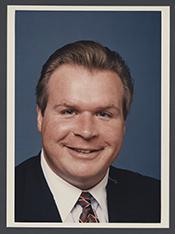
Madam Speaker, I come to the well again, and it seems like only yesterday we were here. In fact, it was yesterday, was it not? And, Madam Speaker, I think we have just seen why my colleague, the…
Madam Speaker, I come to the well again, and it seems like only yesterday we were here. In fact, it was yesterday, was it not? And, Madam Speaker, I think we have just seen why my colleague, the gentleman from Pennsylvania (Mr. English), is one of the most able members of the Ways and Means Committee, because he put to rest many of the criticisms offered by my friend, the gentleman from Maryland (Mr. Cardin).
It was interesting to pick up on one of the criticisms. Let us just deal with it, lamenting the fact that this bill conveys a sense of Congress to the People's Republic of China, that it carries little consequence.
Well, I would invite every Member of this House, including my colleague from Maryland, to think back just a couple of weeks ago when a bipartisan sense of the Congress was offered on this floor from Democrats and Republicans alike, dealing with a possible Chinese purchase of Unocal.
It so incensed the Chinese Government, they told us to butt out. Now, that is very interesting, because if it is only a sense of the Congress, if it is only a useless exercise, it certainly awakened those in the Chinese Polit Bureau in Beijing; and I stand in this well again supporting this legislation today because the facts have not changed from yesterday.
The fact is, this legislation puts the Communist Chinese on notice: if you want to get in the game, you better start playing by the rules. And, Madam Speaker, I say this in all candor. As one who opposed the most favored nation trade status for China, I believe this is important legislation. At the end of the day, this is the dilemma for my friends on the other side: Does the upcoming midterm election and political posturing win out to make the perfect the enemy of the good, or do they stand with us, as they did in this well 2 weeks ago, not only conveying the sense of Congress, but putting teeth behind our policy to tell the Chinese enough is enough?
Support this legislation. Do not deal with domestic political obstruction. Strike a blow for freedom and putting Communist China on notice.

Mr. Speaker, I rise today in support of H. Res. 384. This legislation condemns the vicious terrorist attacks in Sharm el-Sheikh, Egypt on July 23, 2005. Those tragic blasts left 88 innocent civilians…
Mr. Speaker, I rise today in support of H. Res. 384. This legislation condemns the vicious terrorist attacks in Sharm el-Sheikh, Egypt on July 23, 2005. Those tragic blasts left 88 innocent civilians dead and 119 other injured and were the result of a coordinated plan to build fear in the hearts of the Egyptian people and rob them of their liberty.
These acts and many others have been perpetrated by individuals who claim they are acting in the name of Islam. Nothing could be further from the truth. Islam is a religion of peace and tolerance. It is an insult to Muslim Americans and Muslims worldwide to suggest that their chosen religion has anything to do with these terrorist attacks. Let me be clear, those who kill innocents and even themselves in the name of Islam are perverting their religion.
When I talk to Muslim leaders in my district they tell me that the only good thing to come out of these attacks is the raised awareness of their religion and their resulting ability to educate many for the first time on the true tenants of their faith. I am proud of the many Muslims in New Jersey for the work they do everyday to promote peace and religious tolerance. I look forward to a day when all Americans will know the true values of Islam, and understand the hateful and perverted ``faith'' of those who would commit these deadly attacks.
Terrorism sadly has become a tragic trend in our day and age. The targeting of innocent civilians in brutal attacks throughout the world, in London, New York, Washington, Madrid, the Middle East, and the latest attacks in Sharm El-Sheikh, Egypt all make us a little less secure as human beings. These attacks cannot be allowed to continue. They rob us all of our life and liberty. We cannot let terrorism become a commonplace aspect of our lives. Consequently, I support this resolution to affirm the solidarity of all Americans with the Egyptian people, and condemn these terrorists attacks.
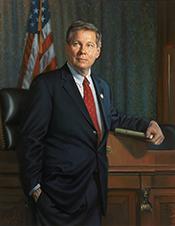
Mr. Speaker, last Saturday July 23, 2005, was a dreadful day for the entire civilized world. The multiple bombings in the Egyptian city of Sharm el-Sheikh that killed dozens constituted the deadliest…
Mr. Speaker, last Saturday July 23, 2005, was a dreadful day for the entire civilized world. The multiple bombings in the Egyptian city of Sharm el-Sheikh that killed dozens constituted the deadliest act of terrorism in Egypt's history.
I want to assure the victims of the attack, their families, and all Egyptian people that the House of Representatives and the American people stand with them during this time of loss.
As we know all too well, terrorists remain committed to senseless killing of innocent people. Their evil must be defeated. That a suicide attacker would ram a pick-up truck packed with 660 pounds of explosives into a hotel is just the most recent demonstration of the viciousness of these killers.
Last weekend's attack is not an isolated incident. A suicide bomber exploded a bomb in a Cairo market on April 7 this year, killing three, including one American. On April 30, two women fired several gunshots into a tour bus in Cairo wounding seven people. And on July 7, Egypt's Ambassador to Iraq, Dr. Ihab al-Sharif, was kidnapped and killed by a group associated with al Qaeda.
The July 23 attack is a heartbreaking reminder of the human toll in the war on terror, but it will only serve to steel the resolve of America, Egypt, and our allies. The U.S. Government will continue its cooperation with Egyptian President Hosni Mubarak to track down the terrorists involved in these attacks. America and our allies do not distinguish between terrorist acts aimed at interrupting the Israeli- Palestinian appeals process, those attacking the operations of the new Iraqi government, or those that result in the murder of innocent sightseers in Sharm el-Sheikh.
Mr. Speaker, as this legislation resolves all to do, I am proud to join President Bush in expressing the solidarity of the American people with the Egyptian people in the aftermath of the July 23 attacks. I strongly support House Resolution 384.
Show 4 more
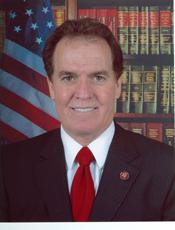
Madam Speaker, I thank the gentleman for yielding me this time, and I want to thank my colleague, the gentleman from Pennsylvania (Mr. English), for introducing H.R. 3283, the United States Trade…
Madam Speaker, I thank the gentleman for yielding me this time, and I want to thank my colleague, the gentleman from Pennsylvania (Mr. English), for introducing H.R. 3283, the United States Trade Enforcement Act. I believe this legislation is a positive step in addressing our trade discrepancies with the People's Republic of China; and, yes, it does serve as a great precursor for the debate on the Dominican Republic and Central American Free Trade Agreement.
The district I represent in western Georgia has a rich history of manufacturing textiles from the Swift Denim Company in Columbus, Georgia, to Mt. Vernon Mills in Trion, Georgia, which has been in business since the 1840s and currently employs 1,800 associates. The textile industry, Madam Speaker, continues to provide quality jobs for the citizens of Georgia's 11th Congressional District. I make this point because many of these employees have established a culture and a community around textile manufacturing.
Although the administration is working diligently to enforce our trade policies, I remain concerned that our country has not taken the most aggressive position needed to prevent the People's Republic of China or any other nation from ignoring their trade responsibilities and agreements. If we continue to allow abuses such as currency manipulation and violations of intellectual property rights, an entire way of life in these textile communities will be endangered. When ratifying trade agreements, it is important to encourage both free and fair trade. We cannot afford to lose any more textile jobs, especially those lost due to the unfair practices of the Communist Government on Mainland China.
Madam Speaker, I encourage the passage of H.R. 3283 mandating stronger enforcement of our trade policies.
Madam Speaker, I support H.R. 3283, the United States Trade Rights Enforcement Act, because it is necessary to send a strong message to foreign governments who are unfairly dumping product on our…
Madam Speaker, I support H.R. 3283, the United States Trade Rights Enforcement Act, because it is necessary to send a strong message to foreign governments who are unfairly dumping product on our shores and manipulating their currency rates.
In June, I hosted my second Manufacturing and Jobs Forum in my district. I invited manufacturers from southwest Ohio to share their concerns about their businesses. The gentleman from Pennsylvania (Mr. English) joined me for my first forum, and the gentleman from Illinois (Mr. Manzullo) joined me in Dayton for the second forum. I would like to thank both gentlemen for their leadership on the issue of trade fairness.
Madam Speaker, the manufacturers I spoke with during both forums shared a common concern about the survival of their businesses, the American economy, and unfair trade practices of China, including the undervaluing of
China's currency. Congress must continue to work to level the playing field for manufacturers.
Last Thursday the Chinese Government announced that they would no longer peg their currency to the American dollar. Chinese currency will be given room to float among a bundle of foreign currency rates. Mr. Speaker, this is an important first step; however, this adjustment will still result in an undervalued Chinese currency.
H.R. 3283 will take further steps to enforce our trade rights. H.R. 3283 will require the Secretary of the Treasury to submit a report to Congress defining currency manipulation and describing the actions of foreign countries who are manipulating their currency. This important provision, along with others included in the bill, will help Ohio manufacturers who are continually harmed by unfair trade practices. I urge my colleagues to vote for this bill.
Madam Speaker, I thank the gentleman from Pennsylvania for yielding me this time. The legislation drafted by the gentleman specifies that the Commerce Department shall ensure that the application of…
Madam Speaker, I thank the gentleman from Pennsylvania for yielding me this time.
The legislation drafted by the gentleman specifies that the Commerce Department shall ensure that the application of countervailing duty law to nonmarket economies is consistent with international obligations to the United States. Some Members have expressed concern that this legislation would give the WTO special influence over U.S. law. Is that true?
I yield to the gentleman from Pennsylvania.
Reclaiming my time, Madam Speaker, and to further clarify, to implement any WTO agreement or a decision of a WTO panel or the appellate body, the United States must enact the agreement or the implementation changes through congressional action?
Is this provision in H.R. 3283, therefore, intended to
change this fact in any way or to impose any new obligations on the Commerce Department or the United States beyond those already set forth in U.S. law?
Therefore, where H.R. 3283 says that ``the Commerce shall ensure that the application of CVD law is consistent with the international obligations of the United States,'' am I correct that Commerce, which administers both U.S. antidumping law and U.S. countervailing duty law, may reach this determination of consistency on its own?
So, does H.R. 3283 require Commerce to take additional steps to ensure consistency?
Madam Speaker, I thank the gentleman from Pennsylvania for his kindness and his information.
Mr. Speaker, I rise today in support of H. Res. 384, ``Condemning in the strongest terms the terrorist attacks in Sharm el- Sheikh, Egypt, on July 23, 2005.'' I wish to express my condolences to the…
Mr. Speaker, I rise today in support of H. Res. 384, ``Condemning in the strongest terms the terrorist attacks in Sharm el- Sheikh, Egypt, on July 23, 2005.''
I wish to express my condolences to the families of those killed in last week's terrorist attacks, and my sympathy to those injured in the bombings. I would also like to join with Presdient's George W. Bush in expressing the solidarity of the people and government of the United States with the people and government of Egypt. The United States stands ready to support the Egyptian authorities in their efforts to bring to justice those responsible for these cowardly attacks.
These attacks, again, make plain the fact that the Global War on Terrorism is not a way of the West against the Muslim world but a war being fought between those who value freedom and democracy and respect for human rights and those who kill innocent civilians.
Egypt is a friend and ally of the United States. The people of the United States stand by the people of Egypt at this time tragedy.
Bill Text
2 versions available
        [Congressional Bills 109th Congress]
[From the U.S. Government Publishing Office]
[H. Res. 384 Engrossed in House (EH)]

H. Res. 384

In the House of Representatives, U.S.,

July 27, 2005.
Whereas on July 23, 2005, a series of explosions at tourist facilities in Sharm
el-Sheikh, Egypt, planned and carried out by terrorists, resulted in the
death of scores of civilians and the injury of hundreds of others;
Whereas the people of Egypt have been subjected to several other terrorist
deadly attacks over the past year;
Whereas Egypt's appointed ambassador to Iraq, Dr. Ihab al-Sherif, was kidnapped
and executed by terrorists in Baghdad during July 2005; and
Whereas President George W. Bush expressed the solidarity of the people and
Government of the United States with the people and Government of Egypt
during his visit to the Embassy of Egypt: Now, therefore, be it
Resolved, That the House of Representatives--
(1) condemns in the strongest terms the terrorist attacks on Sharm
el-Sheikh, Egypt and other terrorist attacks directed against Egypt;
(2) expresses its condolences to the families and friends of those
individuals who were killed in the attacks and expresses its sympathies
to those individuals who have been injured;
(3) joins with President George W. Bush in expressing the solidarity
of the people and Government of the United States with the people and
Government of Egypt as they recover from these cowardly and inhuman
attacks; and
(4) expresses its readiness to support the Egyptian authorities in
their efforts to bring to justice those individuals responsible for the
recent attacks in Egypt and to pursue, disrupt, undermine, and dismantle
the networks which plan and carry out such attacks.
Attest:

Clerk.