Providing for consideration of the bill (H.R. 5) to improve patient access to health care services and provide improved medical care by reducing the excessive burden the liability system places on the health care delivery system.
Legislative Activity
Stay on top of the latest movement without scrolling through every action
Motion to reconsider laid on the table Agreed to without objection.
July 27, 2005 • 8:05 PM
View full timeline
Introduced in House
July 26, 2005
The House Committee on Rules reported an original measure, H. Rept. 109-185, by Mr. Gingrey.
July 26, 2005
During consideration of H.R. 5, pursuant to this resolution, notwithstanding the operation of the previous question, the Chair may postpone further consideration of the bill to a time designated by the Speaker.
July 26, 2005 • 10:33 PM
Placed on the House Calendar, Calendar No. 67.
July 26, 2005
Considered as privileged matter. (consideration: CR H6860-6869)
July 27, 2005 • 5:04 PM
DEBATE - The House proceeded with one hour of debate on H. Res. 385.
July 27, 2005 • 5:05 PM
POSTPONED PROCEEDINGS - At the conclusion of debate on H. Res. 385, the Chair put the question on ordering the previous question and by voice vote, announced that the ayes had prevailed. Mr. Hastings (FL) demanded the yeas and nays and pursuant to the rule, the Chair postponed further proceedings on the question of ordering the previous question until later in the legislative day.
July 27, 2005 • 6:17 PM
Considered as unfinished business. (consideration: CR H6882-6883)
July 27, 2005 • 7:33 PM
On ordering the previous question Agreed to by the Yeas and Nays: 226 - 200, 1 Present (Roll no. 440). (consideration: CR H6869, H6882-6883; text: CR H6869)
July 27, 2005 • 7:54 PM
Passed/agreed to in House: On agreeing to the resolution Agreed to by recorded vote: 226 - 200, 1 Present (Roll no. 441).(text: CR H6860)
July 27, 2005 • 8:05 PM
On agreeing to the resolution Agreed to by recorded vote: 226 - 200, 1 Present (Roll no. 441). (text: CR H6860)
July 27, 2005 • 8:05 PM
Motion to reconsider laid on the table Agreed to without objection.
July 27, 2005 • 8:05 PM
Voting History
2 votes recorded • Roll call available
Floor Debate
23 membersWhat members said about H.Res. 385 on the floor
 LSPG
LSPG WJJ
WJJ ALH
ALH SJL+18
Floor Debate
23 membersWhat members said about H.Res. 385 on the floor
Mr. Speaker, pursuant to House Resolution 385 and as the designee of the majority leader, I call up the bill (H.R. 5) to improve patient access to health care services and provide improved medical…
Mr. Speaker, pursuant to House Resolution 385 and as the designee of the majority leader, I call up the bill (H.R. 5) to improve patient access to health care services and provide improved medical care by reducing the excessive burden the liability system places on the health care delivery system, and ask for its immediate consideration.
Mr. Speaker, I ask unanimous consent that all Members may have 5 legislative days within which to revise and extend their remarks and include extraneous material on H.R. 5.
Mr. Speaker, I yield myself such time as I may consume.
Mr. Speaker, I strongly support the HEALTH Act, which is identical to two other bills that passed the House during the last Congress. The HEALTH Act is modeled on California's Medical Injury Compensation Reform Act, called MICRA, which has resulted in California's medical liability premiums increasing only one-third as much as they have in other States.
MICRA's reforms, which are included in the HEALTH Act, include a $250,000 cap on noneconomic damages; limits on the contingency fees lawyers can charge; a fair-share rule by which damages are allocated in direct proportion to fault; reasonable guidelines, but not caps, on the award of punitive damages; and a safe harbor from punitive damages for products that meet FDA safety requirements.
According to the nonpartisan organization Jury Verdict Research, the median medical liability award has more than doubled in the last 7 years to $1.2 million.
Doctors and other health care providers are being forced to abandon patients and practices, particularly in high-risk specialties such as emergency medicine, brain surgery and obstetrics and gynecology.
Women are particularly hard hit, as are low-income neighborhoods and rural areas. According to a report by the Department of Health and Human Services, ``Unless a State has adopted limitations on noneconomic damages, the cost of these awards for noneconomic damages is paid by all other Americans through higher health care costs, higher health insurance premiums, higher taxes, reduced access to quality care, and threats to quality of care.''
Many doctors are no longer available to treat patients. Mary Rasar's father did not get the medical care he needed following a car accident last summer, because the only trauma center in his area closed for 10 days due to medical liability costs. Her father died from those injuries.
Melinda Sallard, a 22-year-old mother, was forced to deliver her own baby on the side of the road after her physician stopped delivering babies and her hospital's maternity department closed because of rising medical liability costs.
Leanne Dyess' husband Tony sustained head injuries in a car accident and could not find a neurosurgeon to treat him because rising liability costs had forced insurers to drop their coverage. Tony was airlifted to a hospital in another State that still had neurosurgeons, but 6 hours had passed, and it was too late. As a result Tony suffered permanent brain damage.
In my hometown, the CEO of San Antonio's Methodist Children's Hospital has seen his premiums increase 400 percent. He has been sued three times. In one case the only interaction with the person suing was that he stepped in her child's hospital room and asked simply, how is your child doing? Each jury cleared him of any wrongdoing, and the total amount of time all three juries spent deliberating was less than an hour. But the doctor's insurance company spent a great deal of time, effort and money in his defense.
It is no surprise the American College of Emergency Physicians found that large majorities of both rural and urban hospitals had inadequate on-call specialists coverage. And there has been a 40 percent reduction in medical students entering obstetrics and gynecology.
According to the chair of the OB/GYN department at the Yale School of Medicine, ``Within 2 years we will be faced with a very real possibility of having to shut down our high-risk obstetrical practice, a practice that cares for the sickest mothers in the State.''
As for legitimate cases of medical malpractice, nothing in the HEALTH Act prevents juries from awarding very large amounts to victims, including children. The HEALTH Act does not limit in any way an award of economic damages to injured victims. Economic damages include lost wages or home services, medical costs, the cost of pain-reducing drugs, therapy and lifetime rehabilitation care.
In fact, in just the last few years, juries in California have awarded the following damages to medical malpractice victims: An $84 million award to a 5-year-old boy, a $59 million award to a 3-year-old girl, a $50 million award to a 10-year-old boy, a $12 million award to a 30-year-old homemaker, and a $27 million award to a 25-year-old woman. Other examples include damages of $7, $22, $25, $30, and $49 million, all in just the last few years. Awards of these same sizes would be available under the HEALTH Act. Researchers at the Harvard School of Public Health stated
that ``we found no evidence that women or the elderly were disparately impacted by the cap'' on noneconomic damages in California under MICRA.
The HEALTH Act will work. According to the Congressional Budget Office, ``Under the HEALTH Act, premiums from medical malpractice insurance ultimately would be an average of 25 percent to 30 percent below what they would be under current law.''
The American people support the HEALTH Act. The Gallup poll found that 72 percent of those surveyed favor a limit on the amount patients can be awarded for noneconomic damages. The HEALTH Act also respects the judgments of State legislatures because it does not preempt any State law that limits damages, be they higher or lower than the limits provided for in the HEALTH Act.
Finally, this legislation is supported by some 200 organizations, including the American Medical Association, the American Academy of Pediatrics, the American College of Emergency Physicians, the American College of Nurse Practitioners, the American College of Obstetricians and Gynecologists, and the Council of Women's and Infant's Specialty Hospitals.
Mr. Speaker, for the sake of those who need health care, for the sake of health care providers who simply want to practice their professions, please join me and these selfless organizations in supporting the HEALTH Act.
Mr. Speaker, I reserve the balance of my time.
Mr. Speaker, I yield 6\1/2\ minutes to the gentleman from Georgia (Mr. Gingrey) the primary author of the bill itself.
Mr. Speaker, I yield 2 minutes to the gentlewoman from New York (Mrs. Kelly), a subcommittee Chair of the Committee on Financial Services.
Mr. Speaker, I yield 2 minutes to the gentleman from Wisconsin (Mr. Green), a member of Committee on the Judiciary and an expert on this subject.
Mr. Speaker, I yield myself 30 seconds.
Mr. Speaker, opponents of reform claim that the current crisis is driven by a small number of so-called bad doctors. But as Yale Medicine Professor Dr. Robert Auerbach has explained, ``The American Trial Lawyers Association has perpetrated myths on the American public, including the myth that a very small proportion of all physicians are responsible for the majority of claims. This is a sort of statistical magic, because, unfortunately, a small proportion of the physicians in high-risk specialties, such as obstetrics and gynecology and neurosurgery, are responsible for a disproportionate number of the claims.''
Mr. Speaker, I yield 2 minutes to the gentleman from Indiana (Mr. Burton), former chairman of the Committee on Government Reform.
Mr. Speaker, will the gentleman yield?
Mr. Speaker, the gentleman and I have spoken about this before. I happen to think that the problem lies with current law and not with this particular piece of legislation. But in any case, I share the gentleman's concerns and will work with him to address those concerns as this bill progresses to conference committee.
Mr. Speaker, I yield 30 seconds to the gentleman from Georgia (Mr. Gingrey).
Mr. Speaker, I yield 2 minutes to the gentleman from Florida (Mr. Keller), a valued member of the Committee on the Judiciary.
Mr. Speaker, I object to the unanimous consent request.
Mr. Speaker, I yield myself 10 seconds.
Mr. Speaker, I want to say I appreciate the gentleman from Massachusetts (Mr. Frank), who just spoke, voting for this legislation in the last Congress.
Mr. Speaker, I yield 2 minutes to the gentlewoman from Pennsylvania (Ms. Hart), a former member of the Committee on the Judiciary and now a member of the Committee on Ways and Means.
Mr. Speaker, I yield 1\1/2\ minutes to the gentlewoman from Tennessee (Mrs. Blackburn), a member of the Committee on Energy and Commerce and a former member of the Committee on the Judiciary.
Mr. Speaker, I yield myself 20 seconds.
Mr. Speaker, regarding Vioxx, some have alleged the company knowingly misrepresented or withheld information from the FDA. If so, they would be denied the protections in the bill because the bill specifically in section 7 says and excludes any instances in which a person, before or after premarket approval, clearance, or licensure of such medical product, knowingly misrepresented to or withheld from the FDA information that is required to be submitted.
If we look at the language of the bill, we can see that what the gentleman said is not relevant.
Mr. Speaker, I yield 2 minutes to the gentleman from Pennsylvania (Mr. Dent).
Mr. Speaker, I yield 2 minutes to the gentleman from Texas (Mr. Burgess).
Mr. Speaker, I yield 2 minutes to the gentlewoman from North Carolina (Ms. Foxx).
Mr. Speaker, I yield 2 minutes to the gentlewoman from Washington (Miss McMorris).
Miss McMORRIS. Mr. Speaker, I thank the gentleman for yielding me this time.
I also rise in support of H.R. 5, which will bring needed medical liability reform to health care providers in Washington State.
As I travel around eastern Washington, I hear from desperate doctors and health care providers that these lawsuits are increasing costs to patients and driving doctors out of business. It is not unusual to hear that doctors are being forced to drop their insurance or stop delivering babies, or younger doctors are quitting to practice overseas. This is at a time when we have a health care personnel shortage. This has happened in areas within my district, such as Odessa, Republic, and Davenport, where we have no OB/GYNs, and pregnant women must travel over an hour now for care. Additionally, it is becoming impossible to recruit and retain specialists, such as neurosurgeons and cardiologists, when 30 to 50 percent experience lawsuits annually. Emergency care is in no better shape with over 30 percent of trauma surgeons being sued each year. This is unacceptable for 21st century health care.
Skyrocketing medical liability insurance costs for doctors and health care providers has caused the American Medical Association to declare that Washington State is in a medical liability crisis. In the past 10 years, the average jury findings in my State have increased 68 percent. As well, the number of million-dollar settlements has risen almost ten times.
This is an important bill that limits excessive lawsuits, but also ensures that those who are truly harmed are going to get their day in court. Over the past few years, had this law been enacted, Washington would have saved an estimated $53 million. HHS estimates that by setting reasonable guidelines for these noneconomic damage awards, we will save between $70 billion and $126 billion in national health care costs annually.
H.R. 5 will bring common-sense reform to outrageous liability rates and will protect patients' access to quality and affordable health care.
Mr. Speaker, I yield 2 minutes to the gentleman from California (Mr. Lungren), a member of the Committee on the Judiciary and former attorney general of California.
Mr. Speaker, I yield myself 20 seconds.
Mr. Speaker, I just want to reply very quickly to the point that was made, and that is that this bill does not violate any States' rights. Section 7(a), it very clearly says that if any State has any cap of any amount, be it higher or lower than the caps in the bill, then that State's cap will prevail.
So this recognizes States' rights. It is friendly to States' rights.
Mr. Speaker, I yield 2 minutes to the gentleman from Ohio (Mr. Chabot), a member of the Committee on the Judiciary and also chairman of the Subcommittee on Constitutional Law.
(Mr. CHABOT asked and was given permission to revise and extend his remarks.)
Mr. Speaker, I yield myself 1\1/2\ minutes.
Mr. Speaker, what was just said was actually contradicted by the Government Accountability Office. The GAO found that rising litigation awards are responsible for skyrocketing medical professional liability premiums. The report stated that ``GAO found that losses on medical malpractice claims, which make up the largest part of the insurers' costs, appear to be the primary driver of rate increases.''
The GAO found that insurers are not to blame for skyrocketing medical professional liability premiums. The GAO report states that insurer ``profits are not increasing, indicating that insurers are not charging and profiting from excessively high premium rates.''
Mr. Speaker, I also want to say that the opponents of this legislation are forgetting, I hope not ignoring, a study by the Harvard Medical Practice. What this study found is that over half, over half of the filed medical professional liability claims they studied were brought by plaintiffs who suffered either no injuries at all or, if they did, such injuries were not caused by their health care providers, but rather by the underlying disease itself.
Mr. Speaker, I yield 4 minutes to the gentleman from Georgia (Mr. Gingrey).
Mr. Speaker, I yield myself 3 minutes.
Mr. Speaker, I thought my colleagues might be interested in some quotes. One quote is from a former Democratic Senator, and the other quote is from a liberal Washington Post columnist. I would like to read those now.
Former Democratic Senator George McGovern has written that ``legal fear drives doctors to prescribe medicines and order tests, even invasive procedures that they feel are necessary. Reputable studies estimate that this defensive medicine squanders $50 billion a year, enough to provide medical care to millions of uninsured Americans.''
Mr. Speaker, this is from a prominent liberal commentator, Michael Kinsley. He wrote in the Washington Post, ``Limits on malpractice lawsuits are a good idea that Democrats are wrong and possibly foolish to oppose. Republicans are right about malpractice reform.''
Mr. Speaker, also we have a number of polls showing that the American people support the HEALTH Act. Between two-thirds and three-quarters of the American people support exactly what we are trying to do. Just this week a poll conducted by Harris Interactive showed that 74 percent of those surveyed support reasonable limits on the award of noneconomic damages and limiting payments to personal injury attorneys.
A poll by the Harvard School of Public Health found the following: ``More than 6 in 10, 63 percent, say they would favor legislation that would limit the amount of money that can be awarded as damages for pain and suffering to someone suing a doctor for malpractice.''
The same poll found that 69 percent of the people surveyed say a law limiting pain and suffering awards would help either a lot or some in reducing the overall cost of health care.
Finally, the results of a recent Gallup poll show that the American public strongly supports the HEALTH Act. The survey asked whether those surveyed would favor or oppose a limit on the amount patients can be awarded for their emotional pain and suffering. Mr. Speaker, 72 percent were in favor. That means three-quarters of the American people favor this HEALTH Act.
Mr. Speaker, I reserve the balance of my time.
Mr. Speaker, I yield 3 minutes to the gentleman from Pennsylvania (Mr. Dent).
Mr. Speaker, I yield myself 2 minutes.
Mr. Speaker, let me share with my colleagues the result of three studies,
and let me emphasize that these studies are not about hypothetical situations. They are not theoretical studies. They are studies of the actual experiences of States that have enacted reforms similar to the ones we have in this bill that we are talking about today.
According to the U.S. Department of Health and Human Services, States with reasonable legal reforms including caps on noneconomic damages enjoy access to more physicians per capita: ``We found that States with caps on noneconomic damages experienced about 12 percent more physicians per capita than the States without such a cap. Moreover, we found that States with relatively high caps were less likely to experience an increase in physician supply than States with lower caps.''
Mr. Speaker, also, research shows that California reforms, which the HEALTH Act is based on, have not resulted in unfair awards to deserving victims. A recent comprehensive study of California's MICRA reforms by the Rand Institute concluded that under MICRA, ``awards generally remained quite large despite the imposition of the cap, and California's reforms have not resulted in any disparate impact on women or the elderly.''
Mr. Speaker, in another study, researchers at the Harvard School of Public Health stated that ``we found no evidence that women or the elderly were disparately impacted by the cap by noneconomic damages in California under MICRA.''
Mr. Speaker, I reserve the balance of my time.
Mr. Speaker, I yield 4 minutes to the gentleman from Georgia (Mr. Gingrey).
Mr. Speaker, I yield myself 3 minutes.
Mr. Speaker, I just want to remind my colleague who just spoke that our separation of powers provides that all aspects of the government are limited to some extent. If juries or judges give outrageous awards, like any other exercise of government power, they should be subject to reasonable checks and balances.
Mr. Speaker, I also want to remind my colleagues that unnecessary and frivolous litigation is threatening the viability of the life-saving drug industry. To encourage the development of life-saving drugs, the HEALTH Act contains a safe harbor from punitive damages from a defendant whose drugs or medical product comply with rigorous rules or regulations. The provision is manifestly fair.
Why should a drug manufacturer be found guilty of malicious conduct when
all they did was sell a product approved as safe under the comprehensive regulations of the FDA? Claims for unlimited economic damages and reasonable noneconomic damages could still go forward under the HEALTH Act. The safe harbor does not apply if relevant information was misrepresented or withheld from the FDA.
Eight States have, in fact, provided an FDA regulatory compliance defense against damages just like this bill. Those States are Arizona, Colorado, Illinois, New Jersey, North Dakota, Ohio, Oregon, and Utah. Opposing this bill jeopardizes those State laws. And the Members who are from those States might want to remember that.
Mr. Speaker, the evidence is overwhelming. Without legal reform, patients will continue to go without needed doctors: women will continue to deliver babies on the side of the road because the nearest OB/GYN is hundreds of miles away; parents will continue to be forced to watch as their child with brain injury suffers because lawsuits forced the nearest neurosurgeon to stop practicing.
Mr. Speaker, we need to pass this legislation.
Mr. Speaker, I reserve the balance of my time.
Mr. Speaker, I reserve the balance of my time, as we are prepared to close on this side.
Mr. Speaker, I yield myself the balance of my time.
Mr. Speaker, first let me say to my colleagues who are not usually concerned about States rights that if they will look at section 11 of the bill, they will find the bill respects the right of any State to set a cap of any amount, be it higher or lower, than the caps in the bill itself.
Mr. Speaker, the HEALTH Act is the only proven legislative solution to the current medical liability insurance crisis. According to the Congressional Budget Office, under this bill, ``Premiums for medical malpractice insurance ultimately would be an average of 25 percent to 30 percent below what they would be under current law.''
H.R. 5 allows unlimited awards of economic damages. These include past and future medical expenses, lost or past and future earnings, the cost of obtaining domestic services, loss of employment, and loss of business or employment opportunities. Deserving victims can be awarded tens of millions of dollars in damages, as we have already seen in the States that have similar reforms to those contained in this bill.
Mr. Speaker, the Harvard Medical Practice Study found that over half of the filed medical professional liability claims they studied were brought by plaintiffs who suffered either no injuries at all or, if they did, such injuries were not caused by the health care providers, but rather by the underlying disease.
H.R. 5 is modeled on California's legal reforms. Those reforms have resulted in California's medical liability premiums increasing at a rate that is only one-third the rate of those of other States.
Mr. Speaker, we need to act, and we need to act now. The nonpartisan Annals of Medicine predicts that the current doctor shortage could get worse, and we could lose 20 percent of needed doctors in the coming years. Let us protect patients everywhere. Let us pass the HEALTH Act.
Mr. Speaker, by direction of the Committee on Rules, I call up House Resolution 385 and ask for its immediate consideration. Mr. Speaker, for the purpose of debate only, I yield the customary 30…
Mr. Speaker, by direction of the Committee on Rules, I call up House Resolution 385 and ask for its immediate consideration.
Mr. Speaker, for the purpose of debate only, I yield the customary 30 minutes to the gentleman from Florida (Mr. Hastings), pending which I yield myself such time as I may consume. During consideration of this resolution, all time yielded is for the purpose of debate only.
Mr. Speaker, House Resolution 385 is a closed rule that provides 2 hours of debate in the House, equally divided and controlled by the majority leader and the minority leader or their designees. It waives all points of order against consideration of the bill, provides that notwithstanding the operation of the previous question, the Chair may postpone further consideration of the bill to a time designated by the Speaker, and it provides one motion to recommit.
Mr. Speaker, I rise today as the proud sponsor of H.R. 5, the Help Efficient, Accessible, Low Cost, Timely Health Care Act of 2005, or the Health Act, and to speak on behalf of both the rule and the underlying bill.
First, I would like to thank both the gentleman from Wisconsin (Mr. Sensenbrenner), the chairman of the Judiciary Committee, and the gentleman from Texas (Mr. Barton), the chairman of the Energy and Commerce Committee, for their work on this issue, as this is not the first time the House of Representatives has considered this measure.
Mr. Speaker, H.R. 5 is a good bill that has passed this House in the 108th Congress with bipartisan support. Therefore this bill and its substance have been thoroughly debated both on this floor and in committee in the previous two Congresses.
As the sponsor of H.R. 5, I am very excited about the opportunity that we have today to strengthen our health care system for the sake of every household's health and every household's pocketbook.
Mr. Speaker, H.R. 5 is without question one of the best opportunities this Congress has to address the health care crisis we face today. There is no doubt among the American people, and there should be no doubt among Members of this Congress, that we need fundamental reforms to strengthen access to health care and to control the burgeoning cost of health care.
Having practiced for almost 30 years as an OB/GYN physician, I have not forgotten the experiences and the lessons that I learned on the front lines of medicine. I came to this Congress not only with a background in health care, but also with an important charge to do all that I could to make our health care system better.
And, Mr. Speaker, I can tell you in no uncertain terms, we have a problem. We are losing too many good doctors because of the skyrocketing costs of medical liability insurance and the threat of frivolous lawsuits.
These costs have been driven up by frivolous lawsuits and runaway awards that are more about someone's ship coming in, and I do not mean the injured plaintiffs, than the provision of justice for those who are injured.
In fact, the Department of Health and Human Services reports: ``The litigation system is threatening health care quality for all Americans as well as raising the cost of health care for all Americans.''
While I am no economist, it does not take a financial expert to know that with fewer and fewer practicing doctors and an ever-growing number of patients, the price of health care will inevitably go up and skyrocket out of the reach of the average consumer.
These increasing costs not only create a significant burden on the American people, but also increasingly aggravate the current strain on the Federal budget resulting in bigger and bigger deficits.
Therefore, Mr. Speaker, I, along with the gentleman from Texas (Mr. Smith), introduced H.R. 5 as a simple, straightforward solution to reform and strengthen our civil justice system as it pertains to medical liability.
Mr. Speaker, I am thankful for the other 55 Members who have joined with us to cosponsor this bill. Mr. Speaker, the HEALTH Act will not, let me repeat, it will not limit economic awards such as medical bills and lost wages.
So if, as an example, a plaintiff has $10 million in economic damages, they can still collect $10 million for their economic damages. Again, there is no limit to the economic awards. H.R. 5 would, however, limit noneconomic awards to $250,000.
Additionally, punitive damages, if assessed, would be limited to $250,000 or twice the amount of economic loss suffered, whichever of the two is greater.
And, again, Mr. Speaker, as an example, if the economic damages were $5 million, and there were cause to impose punitive damages because of someone's deliberate action, deliberately harmed a patient, then the punitive damages could be $10 million in addition to the $5 million in economic, while the noneconomic would still be limited to $250,000.
The HEALTH Act will also make liability more equitable. If one or more parties is a defendant and ordered to pay damages, then each party pays damages proportional to their fault in the case as determined by the trier of fact, the jury.
Mr. Speaker, no one should have to take the blame and pay damages for the negligence of another defendant, as under current law. That is not justice and this bill will make sure that this inequity is eliminated.
Now, I realize that there are some who have tried to cloud the issue here, and they will certainly oppose this bill. And while I am not questioning anybody's motives, I have to insist that each and everyone of us ask ourselves, Where do my loyalties lie? Do they lie with the American people and their best interests, or do they lie with those special interest trial lawyers?
Some, some, seek to game our judicial system for big bucks, of which their clients, the actual victims, see very little.
For this reason, H.R. 5 includes a provision that will limit the contingency fees of lawyers and health care lawsuits on a sliding-scale basis. This provision will ensure that victims actually receive fair compensation for their damages and they are not bilked and taken advantage by certain greedy trial lawyers.
I cannot stress enough the importance of this bill, Mr. Speaker. Too many of our States are now in a condition of medical liability crisis. My home State of Georgia is one of those States in crisis. And while our legislature, along with Governor Sonny Perdue, has passed meaningful medical liability reform in this past session, there is still much work to be done to undo the damage inflicted on Georgia's health care system. Specifically, according to the Alliance of Specialty Medicine, over the past 3 years, 15 of Georgia's 20 active insurance companies have stopped issuing medical malpractice policies for doctors. This fact flies in the face of the argument from the other side that suggests that greedy insurers are just overcharging doctors for their insurance coverage.
And without this insurance coverage, doctors from emergency medical specialists, neurosurgeons, OB-GYN physicians, they are being chased out of their profession and leaving ordinary people without their specialty doctor and without efficient and timely health care.
Mr. Speaker, H.R. 5 is not the silver bullet to America's health care problems. However, in conjunction with things like associated health plans, which we just passed again, the Medicare Part D prescription drug benefit which will go into effect January 1 of 2006, and other important initiatives developed by the majority in this Congress, this bill is the right prescription for the American people at the right time and will put us well on the road toward recovery.
I would like to encourage my colleagues to give their full consideration to H.R. 5. This Congress has an important opportunity to pass this meaningful health care reform.
Mr. Speaker, the American people deserve no less from us. Again, I would encourage my colleagues on both sides of the aisle to support the rule and the underlying bill.
Mr. Speaker, I reserve the balance of my time.
Mr. Speaker, I yield myself such time as I may consume.
Mr. Speaker, this mention of greedy, gouging insurance companies, I just want to point out to my colleague that the only insurance company that still is offering medical malpractice insurance in the State of Georgia is Mag Mutual. And in 2004 they made $7 million on their rather conservative investment portfolio and still lost money because of the claims paid and defending all of these frivolous lawsuits.
Mr. Speaker, I yield 2 minutes to the gentlewoman from West Virginia (Mrs. Capito), my colleague on the Committee on Rules.
Mr. Speaker, I am pleased to yield 2 minutes to the gentleman from Florida (Mr. Weldon), an internal medicine specialist.
Mr. Speaker, I am pleased to yield 2 minutes to the gentleman from Georgia (Mr. Price), my physician colleague, an orthopedic surgeon.
Mr. Speaker, I yield myself 15 seconds.
Mr. Speaker, eight States have specifically focused on pharmaceuticals and punitive damages and statutorily provide an FDA regulatory compliance defense against such damages. Those States are: Arizona, Colorado, Illinois, New Jersey, North Dakota, Ohio, Oregon and Utah.
Mr. Speaker, I yield 1 minute to the gentleman from Pennsylvania (Mr. Pitts).
Mr. Speaker, I yield myself 2 minutes.
Mr. Speaker, listen to these numbers: 19, the number of States in a full-blown medical liability crisis; 72 percent, the number of Americans who favor a law that guarantees full payment for lost wages and medical expenses, but limits noneconomic damages; $70- to 127 billion a year, the cost of the defense of medicine, which could be significantly reduced by medical liability reforms; $10.2 billion, the amount of money paid out by licensed commercial insurers in 2002 for medical liability claims; 100 percent or more, the increase in liability insurance premiums that one-third of the Nation's hospitals saw in 2002; 48 percent, the proportion of America's medical students in their third or fourth year of medical school who indicated that the liability crisis was a factor in their choice of specialty, threatening patients' future access to critical services; 3.9 million, the increase in the number of Americans with health insurance if Congress were to pass common-sense reforms.
Mr. Speaker, we are not talking about anybody's right to a redress of grievances when they have been injured because of a physician or provider of care or a facility or hospital practicing below the standard of care in that local community. There are no limits on economic awards. As I said earlier, that could be $5 million. And as I said earlier, when you get into a courtroom and you listen to the plaintiff's attorney calculating the cost, the economic cost, a new home because of a disability access need costing $450,000, an au pair, a companion to go to the movies with the person that was injured, and on and on and on, these economic costs sometimes are astronomical.
Mr. Speaker, I reserve the balance of my time.
Mr. Speaker, I yield myself 3 minutes.
A couple of minutes ago I was given some statistics. I want to continue in that vein. The gentleman from New Jersey (Mr. Pascrell) just mentioned the situation in California. Of course, this bill, H.R. 5, is patterned after that very successful MICRA legislation, Medical Injury Compensation Reform Act, passed in 1979 in California. Here we are some 26 years later, and medical malpractice insurance premium rates have stabilized, growing only at about 6 percent per year.
But listen to these numbers in regard to whether people continue to get just compensation for their injuries when you do have a cap on so- called noneconomic or pain and suffering.
September 2003, 9-year-old boy, San Francisco jury awarded $70.9 million in compensatory damages after finding a hospital and a medical clinic negligent for failing to diagnose his metabolic disease.
December 2002, $84.250 million total award, Alameda County, a 5-year- old boy with cerebral palsy and quadriplegia because of delayed treatment of jaundice after birth.
January 1999, $21.789 million award, Los Angeles County, newborn girl with cerebral palsy and mental retardation because of a birth-related injury.
October 1997, $25 million total award, San Diego County, boy with severe brain damage, spastic quadriplegia, mental retardation because of too much anesthesia administered during a procedure.
November of 2000, $27.573 million, San Bernardino, California, 25- year-old woman with quadriplegia because of failure to diagnose a spinal injury.
July 2002, $12.5 million, Los Angeles County, 30-year-old homemaker with brain damage because of lack of oxygen during recovery from surgery.
Mr. Speaker, people are not being denied access to an opportunity to redress their grievances when they have been injured when someone has practiced below the standard of care. No physician member of this body, no physician in this United States would want anything like that. We want people to recover when one of our colleagues have indeed caused that harm.
Mr. Speaker, we know of cases in our own hospitals where lawsuits are brought against one of our colleagues where we know they practiced below the standard of care, and we are the biggest cheerleaders for the plaintiffs in those situations. H.R. 5 has nothing to do with that.
Mr. Speaker, we are just limiting this noneconomic so-called pain and suffering. It has worked in California, and it will work in the rest of the country.
Mr. Speaker, I reserve the balance of my time.
Mr. Speaker, I yield myself 2 minutes.
I am sure the gentleman from Oregon was not questioning anyone's motives in his remarks. I think maybe the section of H.R. 5 that says no punitive damages to a pharmaceutical company, a drug maker or a medical products manufacturer that makes something, a drug or a medical product, that has been ruled safe, it has gone through all FDA testing, there is absolutely no reason to suspect that the drug or product is defective based on phase 1, phase 2, phase 3 trials, and then something turns up. It only relieves that manufacturer of punitive damages. As I say, Mr. Speaker, maybe we ought to call that section the Oregon model, because that is the exact same thing that exists under Oregon law.
Mr. Speaker, I reserve the balance of my time.
Mr. Speaker, I yield myself 1 minute.
Mr. Speaker, in addition to about 75 percent of the American public that are in favor of placing caps on noneconomic damages, let me just list a few other organizations that are in favor of that as well: The American Academy of Family Physicians, the American Academy of Pediatricians, the American Association of Home and Services For the Aging, the American College of Emergency Physicians, the American College of Nurse Midwives, the American College of Obstetricians and Gynecologists, the American College of Surgeons, the American Health Care Association, the American Hospital Association, the American Medical Association; the absence, of course, of the American Trial Lawyers Association.
Mr. Speaker, I reserve the balance of my time.
Mr. Speaker, I yield 1\1/2\ minutes to the gentleman from Indiana (Mr. Burton).
Mr. Speaker, I yield myself such time as I may consume.
Mr. Speaker, in concluding this debate on House Resolution 385, I would like to encourage my colleagues to not only support this rule but also the underlying bill. I want to thank all of those who spoke on behalf of the rule and applaud them for their willingness to address this problem in an honest and an open fashion.
Unfortunately, some opponents of this legislation seem content to demagogue the issue and pander to those special interests who are determined to keep the playing field tilted in their favor.
Mr. Speaker, I include for the Record letters of the many organizations that have been submitted to me in support of this bill.
Letters of Support
A. PIAA (Physician Insurers Association of America)
B. American Osteopathic Association
C. American College of Obstetricians and Gynecologists
D. American Academy of Ophthalmology
E. American College of Surgeons
F. The Society of Thoracic Surgeons
G. The Doctor's Company
H. Californians Allied for Patient Protection
I. Physicians Insurance
J. JPMSLIC Insurance Company
K. American College of Physicians
L. American Society of Anesthesiologists
M. Premier Advocacy
N. American Association of Nurse Anesthetists
O. American Medical Directors Association
P. American Association of Orthopaedic Surgeons
Q. American Medical Association--Michael Maves, Executive
Vice President
R. Chamber of Commerce
S. American Benefits Council
T. American College of Cardiology
U. American Academy of Otolaryngology--Head and Neck
Surgery
V. American College of Osteopathic Family Physicians
Mr. Speaker, some might not want to see reform, but I have list upon list and a binder full of organizations and individuals who recognize that we have a problem, and they see H.R. 5 as the solution. Over 200 medical organizations from the American Medical Association, the American College of Surgeons, to the American Dental Association to the United States Chamber of Commerce have urged this Congress to act now, not later.
A recent survey by the Health Coalition on Liability and Access found that 72 percent of Americans favor a law that would guarantee full payment for economic losses like lost pay and medical costs, but would limit noneconomic costs. With an overwhelming majority of the American people and most health care organizations in support of the language of this legislation, we in the House of Representatives cannot stand idly by with a good commonsense solution at our fingertips.
Again, this bill in no way, shape, or form limits the amount an individual can receive in economic damages. If someone's hospital bill or lost wages costs $50,000, $500,000, or even $5 million, they can still be awarded the full amount in damages less attorneys' costs and fees. If there are punitive damages that are applicable because a physician or health care provider deliberately, deliberately, causes injury to a patient, then punitive damages can be awarded double the economic damages. So if it were $5 million worth of economic damages, then there could be $10 million worth of punitive damages.
The same thing, Mr. Speaker, is applicable to medical product manufacturers and the pharmaceutical industry that produces these drugs. The other side would make us believe that they were granted complete immunity. Absolutely not, if they knowingly withheld information. Only economic damages are limited; and punitive damages, as I say, would be calculated by a responsible formula.
Finally, H.R. 5 ensures that victims benefit from a fairer system and they receive a greater portion of their damages. Ultimately, the biggest winner in H.R. 5 is the American consumer-patient who will have better access to health care and lower health care costs. I think that alone testifies to the importance of this bill and the need to put partisanship aside for the sake of the people who sent us here to represent them. They deserve no less.
Again, I want to thank the gentleman from Wisconsin (Chairman Sensenbrenner) and the gentleman from Texas (Mr. Barton) for their timely consideration of this bill, as well as the gentleman from Texas (Mr. Smith), who is the Courts, the Internet, and Intellectual Property Subcommittee chairman of the Committee on the Judiciary and floor manager of H.R. 5.
I again would encourage my colleagues to support House Resolution 385 and H.R. 5.
Mr. Speaker, I yield back the balance of my time, and I move the previous question on the resolution.
Mr. Speaker, H.R. 5--the so-called HEALTH Act of 2005--is anything but healthy. If there was even the remotest possibility that H.R. 5 could help get efficient, accessible, low-cost, timely health…
Mr. Speaker, H.R. 5--the so-called HEALTH Act of 2005--is anything but healthy.
If there was even the remotest possibility that H.R. 5 could help get efficient, accessible, low-cost, timely health care to the American people, it would probably get 435 votes in this House.
However, H.R. 5 does absolutely nothing to achieve the admirable goals embodied in its misleading name. It does absolutely nothing to address the specific problem it is purported to fix: skyrocketing medical malpractice insurance premiums.
Let me be perfectly clear. I am in complete agreement with this bill's supposed and stated purpose: to help get efficient, accessible, low-cost, timely health care to all Americans. I agree that one of the obstacles to low-cost, accessible health care is outrageous medical malpractice liability insurance premiums charged to physicians and other health care providers throughout our Nation. I also agree that some litigation strategies contribute to the escalating costs of our Nation's health care by encouraging providers to order tests, procedures and treatments that may not be medically necessary. I agree with the supporters of H.R. 5 that high malpractice insurance premiums charged by carriers have led some physicians to abandon high-risk specialties and patients.
I ask you though to look at the legislation before us. H.R. 5 contains about 4,000 words. In those 4,000 words, the word ``premium'' appears only once; the word ``insurance'' appears only 5 times; and the word ``cost'' appears 14 times, the vast majority in the definitions and not the operative clauses of the bill.
I ask you to consider whether H.R. 5 is really about skyrocketing medical malpractice insurance premiums as its proponents claim. I have looked very carefully at this bill, and, after much reflection, have reached the only reasonable conclusion: It is not.
I stand here today because someone needs to stand up for American physicians. Someone needs to stand up for the American health care system.
The proponents of H.R. 5 tell us medical malpractice insurance premiums are skyrocketing out of control. There is no dispute that malpractice insurance premiums are increasing at an alarming rate. We agree on that.
There is no question that medical malpractice premiums are escalating across the country, particularly for physicians in high-risk specialties and certain geographic centers. In some cases, premiums have increased so dramatically that physicians have relocated their practices, reduced their services, or retired early. While there is little doubt that something must be done to alleviate this crisis, H.R. 5 is no solution.
Our friends on the other side of the aisle believe that if you limit the amount that insurance carriers have to pay for legitimate claims, then insurance rates will fall.
But I ask you to consider the fact that the American Insurance Association--the American Insurance Association--has repeatedly and specifically denied that tort reform will result in premium savings. Sherman Joyce, the president of the American Tort Reform Association, has stated, ``We wouldn't tell you or anyone that the reason to pass tort reform would be to reduce insurance rates.''
So, by the insurance industry's own admission, H.R. 5 will not stem the tide of rising medical malpractice insurance rates. Nevertheless, our friends on the other side would have us believe that limiting the exposure of insurance carriers is a panacea. It is not.
H.R. 5 is a hoax. It is a sham, and our friends on the other side know it. It is a fraud on the American medical establishment by insurance carriers who want to limit their exposure but will not commit to reducing premiums.
Please read the bill. H.R. 5 has absolutely no provision requiring the reduction of medical malpractice premiums, despite the fact that our friends believe that it is these high premiums that are crippling the health care system. Nevertheless, there is not a single word in this bill that directly calls for reductions in premiums: zero, zilch, nada, nothing, and they know it. It is a scam. H.R. 5 is absolutely nothing more than a boon, a windfall for the insurance industry.
Our friends on the other side tell us that damage caps will solve the premium crisis. Mr. Speaker, I ask that you consider the fact that in States that have enacted caps, the medical malpractice insurance premiums are higher than in States that have no caps. The carriers do not want us to know that.
In fact, in California--the State the other side holds up as a shining example of the benefits of legislation like H.R. 5--the average premium is $27,570, fully 8 percent higher than the average of all States that have no caps on noneconomic damages.
Recently, the American Medical Association issued a list of States that it concluded were in crisis due to exploding medical malpractice insurance rates. Five of those States have caps on noneconomic damages like the one proposed in H.R. 5. Yet, Mr. Speaker, they are still in crisis.
One of those States is Florida, where, despite having caps of just the kind proposed by H.R. 5, obstetricians and gynecologists pay the highest premiums in the Nation for medical malpractice insurance, some in excess of $200,000 per year. Florida has caps, and Florida has a crisis. So, Mr. Speaker, damage caps alone are not the solution to the problem.
If you look further at the California example, it becomes clear that damage caps alone are not an effective premium-reduction measure. In the 12 years after California passed MICRA, medical malpractice premiums rose 190 percent. Only after California passed Proposition 103--actual insurance reform--did medical malpractice premiums stabilize. Since California passed insurance reform--not medical malpractice reform--its medical malpractice premiums have been more stable than in most States.
Mr. Speaker, the lesson to be learned from California is that measures like H.R. 5 do not reduce medical malpractice insurance premiums. The facts simply do not bear it out.
Nevertheless, Mr. Speaker, our friends on the other side insist that one-size-fits-all approach of H.R. 5 is the last and best cure for the crisis of escalating malpractice insurance rates.
Some of our colleagues are, like me, very deeply concerned about rising malpractice insurance rates. Some of our colleagues have expressed an inclination to vote for this bill in order to get the ball rolling, in order to take a first step toward solving the premium crisis. But I want to be very clear: If H.R. 5 is our first step, as the saying goes, it's a doozy. It is a step on the backs of doctors, hospitals and patients to help out greedy insurance carriers. It is certainly a step in the wrong direction. H.R. 5--as the best evidence proves--is an ill-conceived, ill-advised bill that will not--let me repeat--will not solve the problem. This bill helps insurance companies--period.
Recent articles in newspapers across the country show in clear and compelling ways that this crisis is as complex as it is serious. ``Malpractice litigation is only part of the cause of the huge increases in insurance premiums. The insurance industry's pricing and accounting practices . . . play [at least] as big a role.''
The insurance company patrons of our friends on the other side want to hide behind what they consider out-of-control jury awards. Again, Mr. Speaker, the facts simply do not support this claim.
Over the past few years, many physicians have been hit with medical liability premium increases of 25 to 400 percent. Yet, according to The Journal of Health Affairs, during the past decade, malpractice payouts have grown approximately 6.2 percent per year. That's almost exactly the rate of medical inflation: an average of 6.7 percent between 1990 and 2004.
Moreover, contrary to the claims of proponents of H.R. 5, juries are not overly sympathetic to plaintiffs, as evidenced by the rate at which physicians prevail in medical malpractice suits. Dr. Barry Manuel, chairman and CEO of ProMutual Group, one of the Nation's leading malpractice insurance carriers, reported in 2001 that ``we continue to close 60 percent of all claims without payment, and of those cases we are forced to defend in court, we prevail in 90 percent.'' In addition, many of the leading scholars studying the problem have concluded that despite conventional wisdom, juries in fact often favor physicians.
Neil Vidmar, a professor at Duke University School of Law and a leading scholar in the field, states unequivocally that ``the assertion that jurors decide cases out of sympathy for injured plaintiffs rather than the legal merits of the case . . . have been made about malpractice juries in the United States since at least the nineteenth century. Yet, research shows no support for these claims.''
So, Mr. Speaker, one begins to wonder what has caused such extraordinary increases on medical malpractice insurance premiums during the past few years.
Well, investment losses, like those of average Americans, and a weak economy have made a greater dent in the bottom lines of insurance companies than malpractice payouts.
The difference between insurance companies and average Americans is that most of us can't give ourselves a raise to cover our losses. A medical malpractice insurance company can--and does. It alone controls the premium rates it charges our country's doctors. I think you can guess what malpractice carriers have done in response to the general economic climate in the past few years.
The truth is that medical malpractice insurance carriers are asking doctors, hospitals and patients to pay for underperforming investments. It is as simple as that. They know it. We have asked the insurance carriers to commit to reducing premiums in this bill. They will not do it. They will not even talk about it. That is because they have absolutely no intention of reducing medical malpractice insurance premiums.
The bottom line is that H.R. 5 is a jackpot for insurance carriers, and it is the doctors, hospitals and patients that are going to pay for it.
Mr. Speaker, I want to talk for just a minute about the cap on noneconomic damages. If H.R. 5 becomes law, we will be speaking with a loud and clear voice that the injuries victims of medical malpractice suffer are valued in direct relation to how much money those victims have. The unfortunate consequence of this legislation is that-- regardless of the severity of your injury, regardless of how long you suffer, regardless of its effect on even the most basic functions of your life, the things we take for granted every day, regardless of whether you can ever play with your children again, regardless of whether you can ever hug your grandchildren again, regardless even whether you or your child or your wife or mother die due to medical malpractice--no one's injury is ever worth more than $250,000.
Our friends on the other side of the aisle like to equate ``noneconomic damages'' with ``pain and suffering.'' But ``pain and suffering'' is a misleading label. What is capped is recovery for disability and disfigurement, among other things, not just ``pain and suffering.'' H.R. 5 lumps together everything that is not ``economic'' and calls it ``noneconomic''--subject to a $250,000 cap that the bill does not even adjust for inflation.
Our friends on the other side of the aisle go to great lengths to emphasize that H.R. 5 in no way limits economic damages as long as they are objectively quantifiable monetary damages. In other words, if a surgeon loses his hand and is unable to perform surgery again, the injury he will suffer is greater than that suffered by a carpenter who loses his hand due to medical malpractice and is never again able to do his job. Why? Well, under H.R. 5 the answer is simple: The surgeon makes more money, so his economic damages are greater. Not to worry, they tell us, both of them can get up to $250,000 in addition to soothe their wounds.
The same is true in the case of an injury suffered by a working mother when compared to a mother working inside the home. Do our friends on the other side of the aisle believe that those women's husbands or children will understand the difference?
At many jobs, the loss of a leg, for example, may not prevent a worker from earning a living. But it will make it difficult to enjoy ``noneconomic'' pursuits like playing soccer with your kids, or basketball and volleyball with friends, or a multitude of other things that make life enjoyable.
Mr. Speaker, H.R. 5 instructs that the value of life is capped at economic losses plus $250,000. That seems inconsistent with the administration's recent characterization of the value of life as ``immeasurable.'' Remarkably, our friends on the other side of the aisle have taken out their calculators, and they have measured the immeasurable. Perhaps they should call the White House, and let them know.
While the proponents of H.R. 5 appear already to have figured it all out, I want to ask them: How much is hugging your grandchildren worth? How much is kissing your husband or wife worth? How much is the ability to walk or to drive or to play a round of golf worth? How much is your ability to feed, bathe and clothe yourself worth? How much is seeing your children grow up worth? How much is your life worth?
I honestly don't know, and I don't think we should be answering those questions for every American either.
Whether it's losing a limb, or an eye, or just the freedom to be able to go where you want and do what you want, how many of us would trade a lifetime of disability or disfigurement, not to mention pain, for $250,000?
The very real consequence of this legislation is that it punishes the most economically vulnerable members of our society to the benefit of greedy insurance companies. It discriminates against children, against women, against older Americans, against ethnic minorities, against the poor. And for what, Mr. Speaker? History shows us the only winners emerging from H.R. 5 are the medical malpractice insurance carriers-- not the doctors, hospitals and patients our friends on the other side of the aisle purportedly seek to help.
I urge you to vote against this ill-conceived and mean-spirited legislation.
Mr. Speaker, I thank the gentleman from Texas (Mr. Smith) for yielding me the time. With all due respect to the distinguished ranking member, let me say that in response to his comments, this is a…
Mr. Speaker, I thank the gentleman from Texas (Mr. Smith) for yielding me the time.
With all due respect to the distinguished ranking member, let me say that in response to his comments, this is a special interest bill. That is right. It is a special interest bill. It is a special interest bill for the American consumer of health care, for our patients. That is where the special interest is; not, Mr. Speaker, the insurance industry, not drug companies or manufacturers of medical devices.
The insurance industry, of course, offers a broad range of products. It could be health insurance. It could be automobile insurance. It could be homeowners insurance. It could be an umbrella policy for general liability. And, yes, of course there is a product line called medical liability insurance.
But let me tell you what is happening to the insurance industry in regard to that piece of their business. In my home State of Georgia, 3 years ago we had 20 companies that offered that line of business. Today we have one. We have gone from 20 to 1, and that is a mutual company.
If these insurance companies were making out like bandits, as the other side of the aisle and the opposition to this commonsense bill are suggesting, then they would not be quitting the business in droves. They would be continuing to stay in the business and raising those premiums and making these tremendous profits.
I do not know, Mr. Speaker, what is happening with the industry of insurance in regard to other product lines. The gentleman may be right on that. But in regard to this line of business, I can tell you they are losing money even when they have good returns on their investments, as did Mag Mutual in Georgia several years ago. In fact, the return on their very conservative investments, they are very restricted by the insurance commissioner in that very conservative portfolio of investments, returned them $7 million; but they still are losing money because of these outrageous claims and the expense of defending so many frivolous lawsuits.
In regard, Mr. Speaker, to the drug companies and the manufacturers of medical devices that the distinguished ranking member mentioned, this bill would only relieve them of punitive damages, that is all, punitive damages, if it is shown that they did deliberately market a drug or a device that they knew was harmful to a patient and they deliberately withheld that information from the FDA. It does not relieve them of liability for being named in a lawsuit. It is only the punitive damages.
If they are guilty of something like that, of withholding information deliberately, we went through this with the tobacco industry in regard to lung cancer, the punitive damages can be in the hundreds of millions and, maybe if it is a big Fortune 500 company, billions of dollars.
So this is a distraction from the real problem. And the real problem, Mr. Speaker, is that we have an unlevel playing field. That is all it is. This bill, H.R. 5, the HEALTH Act of 2005, is not going to take away anybody's right to sue if they have been injured and to seek economic damages and payments for medical care for the rest of their lives.
The gentleman from Texas explained to us that many of these cases in California, a State that since 1979 has had a cap on noneconomic so- called ``pain and suffering'' at $250,000, these cases that he just talked about, $10 million, $20 million, $30 million worth of economic awards, people are not being denied access to that care, Mr. Speaker. This is only to balance the playing field so that we do not have this situation in this country where we are supposed to have the greatest health care in the world, and yet our specialists are dropping out. They are not delivering babies. They are not getting involved in high- risk pregnancies. They are not manning emergency rooms. They are not doing newer surgery.
Because of all the defensive practice of medicine, every specialist practices in two areas: his or her specialty and also the specialty of defensive medicine, and it is driving up the cost of health care and people cannot afford to get health insurance. That is all we are talking about here, Mr. Speaker, of leveling the playing field. It is not taking away anybody's right to sue. It is not denigrating or bashing the legal profession.
Those attorneys who specialize in personal injury, most of them do a great job representing their clients well. My brother is an attorney. My daughter is an attorney. We are not here to bash the legal profession. But we just want to ask them to give us an opportunity to level this playing field to make it fair for everyone. And so this idea that the other side suggests that we are taking away anybody's rights is absolutely not true, Mr. Speaker.
Let me say some of the things that this bill does do besides limiting noneconomic to $250,000. What it does, Mr. Speaker, is something called ``collateral source disclosure.'' Current law did not allow a jury to know that a plaintiff in a malpractice case has health insurance or has a disability policy. So when they are calculating all of these economic losses and loss of wages, it is not known by the jury that maybe that disability policy gives them 80 percent of their earnings or their income for their whole life or that they have health insurance.
The other thing, and I will conclude on this, Mr. Speaker, the other things this bill does is it stops this issue of joint and several liability where, when multiple defendants are named, the person, the doctor who has the deepest pockets, who may have had very little to do, if anything to do, maybe just walked down the corridor on a Saturday and said hello to the patient, but they happened to have the most insurance and the deepest pockets so they pay all of the claims.
Mr. Speaker, the last two commentators in opposition to this bill talked about the biggest problem with this bill being the lack of consumer protection.
I am going to tell my colleagues that the biggest consumer protection in this bill is limitation of contingency lawyer fees. When a person is injured severely, they ought to walk out of that courtroom at the end of the day with the preponderance, the largest portion, of that judgment in their pocket and not in the pocket of the lawyers. And that is consumer protection at its very best.
Mr. Speaker, I thank the gentleman for yielding me this time.
Mr. Speaker, I would like to take my time, I hope sufficient time, to refute some of these statements that have been made in opposition. I want to start with the gentlewoman from Colorado who just spoke. It is absolutely wrong about the issue of Federal law superseding State law in cases where the State has already addressed the issue.
Let us say the issue of caps, my State of Georgia passed a law this year, and the caps there are $350,000. That would be applicable State law would apply. It is only when States have not addressed the issue when the Federal law would speak.
I want to also address something the gentlewoman said in regard to this bill being nothing. I have heard this not just from her, but from number of other speakers on the other side in opposition, talking about that this is nothing but a protection for the insurance industry, and it is another bail-out of protection for the pharmaceutical industry, and they are relieved of all liability, which is absolutely untrue, Mr. Speaker.
In fact, last night when we were talking about the rule, the gentleman from Arkansas, a registered pharmacist, opposed the rule and the bill basically for the same reason. I would like to remind him. I hope the gentleman is listening to the discussion this afternoon. But this would protect a pharmacist who prescribes a drug, a legally FDA- approved drug, that the pharmacist had no idea that there might be a problem or an adverse reaction. This is what this bill does. That would protect the pharmacist from punitive damages in a case like that, where there was no deliberate intent to harm the patient.
So it is very important that all of our colleagues understand the truth
here. The gentleman from Illinois kept talking about the Vioxx case, and the marathon runner. Well, if Vioxx and the company that makes that drug is guilty of withholding pertinent information that they had in clinical trials, and they knew that it was a harmful drug that they put out there on the market and exposed patients to that drug, then they are going to pay one heck of a price for that, yes, in punitive damages.
So they are not relieved from that under this bill. It is only when they did everything right and they were approved by the FDA that they would have any relief from punitive damages.
There are plenty of great athletes, Mr. Speaker. I remember an All- American basketball player from St. Joseph's University 10 or 15 years ago that dropped dead on the basketball court. He was not taking Vioxx. But we will see how that case turns out.
The issue was brought up, Mr. Speaker, about young children who are injured, and they do not have a job or profession, so they need this pain and suffering compensation that can be infinity, hundreds of millions of dollars, rather than a cap at 250-, when the truth is the triers of fact, Mr. Speaker, the jury, can determine the life span, the expected life span of that child and what their earnings would be over the course of that lifetime. The same thing in regard to a stay-at-home mom who was a professional maybe, an attorney possibly, before she decided to become a mother and a homemaker. Those earnings would be calculated as well.
Finally, Mr. Speaker, a little while earlier a speaker in opposition, the gentleman from New York, he made this statement: It comes down to the issue of who we are fighting for. I am really not sure who the gentleman in the opposition is fighting for. I suspect that I know who they are fighting for. Does ATLA sound familiar to you, my colleagues?
But I am going to tell you who we are fighting for. We are fighting for the patient. We are fighting for their right to have the ability to access needed specialists in health care, and they are not going to be there if we do not level this playing field.
Mr. Speaker, I thank the gentleman for yielding me time.
Mr. Speaker, I think it is important that we make sure that all our colleagues are clear on some of the issues that have been discussed here today. I know there has been some hyperbole maybe on both sides of the issue, and I want to be very clear.
This bill protects our patients, first and foremost, and gives them an opportunity to have access to affordable health care and to the specialist that they need and when they need them. It also helps our physicians, our doctors be able to stay in practice when they have an opportunity to have a stable medical malpractice insurance premium that they have to pay.
Yes, there is no question, Mr. Speaker, that section 7 in regard to punitive damages, that is applicable to our doctors as well as to companies that make medical equipment. It also is applicable to drug companies that provide us with life-saving drugs if they have done so in a fashion that is not negligent and not deliberately intended to harm a patient.
Here is an example, Mr. Speaker: things like time released infusion, chemotherapy, treating cancer patients, insulin pumps for diabetics, titanium hip replacements, artificial heart valves. If the makers of these life-saving devices were subject to punitive damages every time something through no fault of their own went wrong, we would be in the situation that we were in a year and a half ago in regard to the flu vaccine. Nobody wants to get involved in that business for the fear of a lawsuit. And with the government setting prices on flu vaccines, the profit margin to begin with was very limited.
So this section 7 is a very important provision in this bill, Mr. Speaker. So again, I want my colleagues on both sides of the aisle to understand that this is not a bad provision. This is a good provision.
Mr. Speaker, also one of the speakers in opposition, well, actually several of the speakers in opposition, said that this bill has been brought to us, we have had no hearings, we have had no opportunity, we have had no voice. It is not true, Mr. Speaker.
This is the fourth time in 3 years that this exact same bill, H.R. 5, has been dealt with on the floor of this House. It is the exact same bill.
I joined this body in 2003. We dealt with it in 2003. We dealt with it in 2004, and here we are with the exact same bill. Section 7 was in the bill, the section in regard to punitive damages. Nothing has changed. In fact, in the Committee on Energy and Commerce this February, a hearing was held on medical liability and some 15 witnesses were at that hearing, Mr. Speaker. So it is untrue to suggest that we have not had hearings and they have not had an opportunity. They know this bill.
It is a good bill. We have passed it three times. We are going to, in a few minutes, pass it for a fourth time; and, hopefully, the other body will do the same thing so we can get this to the President for his signature and level this playing field once and for all.
Mr. Speaker, I yield for the purpose of making a unanimous consent request to the gentleman from Virginia (Mr. Moran). (Mr. MORAN of Virginia asked and was given permission to revise and extend his…
Mr. Speaker, I yield for the purpose of making a unanimous consent request to the gentleman from Virginia (Mr. Moran).
(Mr. MORAN of Virginia asked and was given permission to revise and extend his remarks.)
Mr. Speaker, I yield myself 5 minutes.
Mr. Speaker, I thank the gentleman from Georgia (Mr. Gingrey), my friend, for yielding me the time. I should say Doctor Gingrey and that I want him to call me Attorney Hastings so we get it clear as to who we are around here.
Mr. Speaker, I rise today in strong opposition to this closed rule. Like a broken record, my friends on the other side on the aisle are yet again blocking every single Member of this body, Republican and Democrat, from offering an amendment to this ill-conceived legislation. I might add, no hearings were held regarding same.
Under this closed rule the majority is committing the greatest form of political malpractice. The Republican medical malpractice bill does nothing to lower the cost of health care for low- and middle-income families. Instead, insurance companies make out like bandits while the 45 million uninsured Americans continue to live without access to quality health care.
This is the third time in as many years that Republicans are bringing this incredulous bill to the floor under a closed rule. In the last 3 years, 67 amendments have been offered to the underlying bill in the Committee on Rules. Republicans have blocked all 67 of them from being considered by the House.
The gentleman from Michigan (Mr. Conyers) and the gentleman from Michigan (Mr. Dingell), the ranking Democrats of the two committees of jurisdiction, offered a fair and balanced substitute to this legislation last night. Their substitute takes steps to weed out frivolous lawsuits, requires insurance companies to pass their savings on to health care providers, and provides targeted assistance to physicians and communities that need it most. The House, however, will never have a chance to debate their proposal. As they have done so often in the past, what Republicans cannot defeat, they simply do not allow.
The gentleman from Illinois (Mr. Emanuel) and the gentleman from Arkansas (Mr. Berry) were also prohibited under the rule from offering their common-sense amendment. Their amendment would have taken out language from the underlying legislation that protects manufacturers of medical products, including pharmaceutical
companies, from being sued even when they knowingly place a faulty product on the market.
For example, when Merck did an internal test on the side effects of Vioxx, it reported that only \1/2\ of 1 percent of those tested had incurred some type of cardiovascular event. A further investigation showed that Merck had actually doctored the study when, in fact, 14.6 percent of Vioxx patients were negatively affected by the medication.
Under the Republican medical malpractice bill, those who have died or been injured when taking Vioxx will have no legal ground on which to seek compensation for Merck's outright negligence. Many at home may be asking themselves, How could Congress knowingly protect a manufacturer from being sued if it continues producing a product that it knows is faulty and can cause real harm or even death to someone? What about corporate responsibility? What about protecting the lives of innocent Americans?
To them I say, if the underlying legislation becomes law, what I just described will become the norm. The majority have made it crystal clear that they do not believe irresponsible companies and manufacturers should be held responsible for their actions no matter the harm they inflict. As my colleague and good friend on the Committee on Rules, the gentleman from Massachusetts (Mr. McGovern) said last night, welcome to the Committee on Rules, where democracy goes to die.
Mr. Speaker, President Bush and the Republican Party have unfairly singled out trial lawyers as the root cause of skyrocketing medical malpractice insurance rates across the Nation. They suggest that the prevalence of ``pain and suffering'' awards in malpractice suits have forced insurance companies to raise their liability insurance rates and force doctors out of business. This suggestion is both superficial and wrong.
H.R. 5 does nothing to help doctors with high malpractice insurance premiums. Study after study have confirmed that while the insurance company is raising premiums for doctors at a record pace, the amount they pay out for lawsuits has remained stable. The insurance industry is price-gouging physicians and lying to the public all to justify limiting the rights of victims so that the industry can add to its already record-setting bottom line.
This bill is a distraction from the real problems that exist in America's failing health care system. Physicians and lawyers are pointing fingers at each other while insurance companies are quietly and quickly running to the bank.
Solutions to our Nation's health care woes do exist, Mr. Speaker, but they go beyond blaming one group of Americans and involve more than one easy-to-fix resolution. I urge my colleagues to oppose this closed rule and reject the underlying bill.
Mr. Speaker, I reserve the balance of my time.
Mr. Speaker, I yield 4 minutes to the distinguished gentleman from Massachusetts (Mr. McGovern), my good friend who serves on the Committee on Rules.
Mr. Speaker, I am very pleased to yield 3 minutes and 20 seconds to the very distinguished gentleman from Illinois (Mr. Emanuel).
Mr. Speaker, I am very pleased to yield 4 minutes to the gentleman from Arkansas (Mr. Berry), who is a farmer and a pharmacist.
Mr. Speaker, I yield 2 minutes to the gentleman from New York (Mr. Crowley).
Mr. Speaker, I yield 3 minutes to the gentleman from New Jersey (Mr. Pascrell).
Mr. Speaker, I yield myself such time as I may consume.
I went to school and almost became a physician. I do not know what there is about some of the damages that the gentleman from Georgia calls so-called damages. I do not know how brain damage, losing my legs, double mastectomies, those kinds of things, are so-called punitive damages. If doctors commit those kinds of errors, they ought to be held accountable, and juries are the best place for that to occur.
Mr. Speaker, I yield 3 minutes to the distinguished gentleman from Oregon (Mr. DeFazio).
Mr. Speaker, I am very pleased to yield 1\1/ 2\ minutes to the gentleman from Illinois (Mr. Lipinski), a new Member, the son of a former Member of the United States Congress, our former colleague Bill Lipinski.
Mr. Speaker, I yield myself the balance of my time.
One of the previous speakers, the gentleman from Georgia (Mr. Price), said that some victims have won, quote, the malpractice lottery. Tell that to, for example, Ms. Linda McDougal, who had a double mastectomy because a doctor misdiagnosed her condition and recommended this radical procedure. Does the gentleman from Georgia (Mr. Price) really think that Ms. McDougal has won some sort of lottery? I just cannot believe that.
Key findings from ``The Growth of Physician Medical Malpractice Payments: Evidence From The National Practitioner Data Bank'' show that the average annual malpractice claim pay-out rose only 4 percent a year from 1991 to 2003, in line with the average overall increase in the cost of health care.
Time will not permit me to go into a litany of statistics and supporters, but I do want to point out that the thought seems to be that people do not want to practice medicine. Well, the number of doctors increased throughout the Nation from 1985 to 2001, even in States with no malpractice award caps. The study showed that there were 497,140 professionally active doctors in 1985 and 709,168 in 2001. The report found little evidence that doctors are leaving one State for another State with malpractice award caps.
Mr. Speaker, I urge Members to vote ``no'' on the previous question so I can amend the rule to make in order the Emanuel-Berry amendment. This amendment would strike from the bill a provision granting immunity to manufacturers of medical products from being sued when it is discovered that those manufacturers withheld potentially damaging information from the FDA and the public. The amendment was offered in the Rules Committee yesterday, but, like all the rest, was defeated on a straight party-line vote.
Mr. Speaker, I ask unanimous consent to print the text of the amendment immediately prior to the vote on the previous question.
Mr. Speaker, what is a provision protecting the drug companies doing in a bill that is supposed to be about doctors' malpractice premiums? How does this provision ever get into this bill in the first place? My guess is that many of my colleagues who support this bill have been asking the same question and would vote to strike it from the bill if they were given the opportunity. But because of this closed rule, the House will not have the opportunity to strike this embarrassing sop to the pharmaceutical industry from this legislation. Defeating the previous question will give Members a chance to vote on what has now been dubbed the ``Merck loophole.''
This section is not just bad policy, Mr. Speaker, it is almost criminal. Every day we read about more evidence that the pharmaceutical company Merck concealed information about the risks of its FDA-approved drug Vioxx. I do not think any of my colleagues want to find themselves in the position of defending people who hid information about this drug that could have saved someone's life.
Vote ``no'' on the previous question so we can debate this important amendment. I want to make it very clear that a ``no'' vote will not stop us from considering this legislation. We will still be able to consider the medical malpractice legislation on the floor today. However, a ``yes'' vote will prevent us from considering the Emanuel amendment to strike this ill-conceived language.
Again, vote ``no'' on the previous question.
Mr. Speaker, I yield back the balance of my time.
Mr. Speaker, on that I demand the yeas and nays.
Show 8 more
Mr. Speaker, I thank the distinguished ranking member, and I thank him for his continued leadership on this issue. It looks as if this is deja vu. We have been at this table for a number of years,…
Mr. Speaker, I thank the distinguished ranking member, and I thank him for his continued leadership on this issue.
It looks as if this is deja vu. We have been at this table for a number of years, and I am delighted that the gentleman from Georgia (Mr. Gingrey) cleared it up. When you have a daughter that is a lawyer, I know you have a great affection for lawyers. And I appreciate the fact that he recognizes that as physicians care for the sick, lawyers have to keep the doors of justice open. For that reason, if anyone gets up on the floor of the House and cites the number of lawsuits, 60 percent of the doctors being sued, that has nothing to do with those cases that prevailed.
Most Americans understand the distinction between frivolous lawsuits and so does the court system. But, really, what this bill is premised on is absolutely false, and Americans should know that because I have heard from so many with so many tragic incidents, amputated legs, individuals at hospitals who have died not because of what they went into the hospital for but because they caught an infection in the hospital.
But as it relates to insurance and low rates, let me cite a study that is the prevailing trend in America. A new study by the former insurance commissioner of Missouri, Jay Angoff, shows that insurance companies are gouging doctors. The study shows that insurance premiums are skyrocketing, while payouts have remained flat or in some cases even decreased. There is no evidence that we are making a dent with this medical malpractice oppressive legislation--oppressive legislation, in insurance rates.
In particular, it is a shame that when you have a tragedy in your family, someone who lost their life because of negligence, and there are three defendants, the general trend is that you go against the defendant with the deepest pockets. That defendant who is well-situated will go against the others who contributed to that terrible tragedy.
Now, this bill locks the door, closes out the bus driver, the teacher, the nurse's aid, the oil refinery worker, absolutely closes them out. It also denies children who are innocent, under 18, enhanced economic damages. That was my amendment, to take away that cap of 250,000, to take away that cap of 250,000 on noneconomic damages because we do not know long range with all these tables about what someone will be needing the rest of their life after they have been maimed, after they have been disabled, or after they have died and what their family will need.
This is a tragic day because first of all this bill came to the floor with no committee work, no rules work of sorts, all amendments died; and we have failed. Herman Cole of Connecticut we have failed, whose wife slipped into a coma when in a procedure for a tubal ligation. Her blood pressure dropped dangerously and damagingly low and the doctor and anesthesiologist ignored the warning signs. What is he supposed to do? What is he supposed to do about his wife, Sadie, who is now in a vegetative state?
This is a bad bill. I hope my colleagues will have enough courage to vote for those who have been injured and vote against special interest.
Mr. Speaker, I rise in opposition to H.R. 5, the ``Medical Malpractice Bill.'' Not only is the overall bill bad, but the process in which the majority followed was flawed as well. This bill came straight to the floor and bypassed both committees of jurisdiction. This begs the question, ``what are the proponents of the bill so
afraid of that they need to rush to the floor. Both the House Judiciary and Energy and Commerce Committees have been bypassed and this should not have been done on such an important piece of legislation. Given the new information that is available about the insurance industry gouging doctors, shouldn't the committees at least have had the opportunity to review the new information?
Turning to the bill itself, it should be noted that this bill applies across the board to all cases, not just frivolous cases. It applies no matter how much merit a case has, or the extent of the misconduct of the hospital, doctor or drug company. The bill applies regardless of the severity of the injury. Those most hurt by the bill are the most catastrophically injured. In addition, it undermines our constitutional right to trial by jury. The bill limits the power and authority of jurors to decide cases based on the facts presented to them. Washington politicians should not be making these decisions--juries should.
This legislation also reduces the accountability of hospitals, nursing homes, HMOs and drug companies. This will hurt patient safety. Patient safety must come first. We should be cracking down on the small number of doctors responsible for most of the malpractice. This will reduce both incidents of malpractice and lawsuits. Doctors and hospitals must be required to tell their patients or the patients' families when they know they have made a medical error, rather than allowing them to keep their mistakes secret.
This bill completely ignores the insurance industry's major role in the high price of medical malpractice insurance premiums. We must protect the legal system and make it accessible for everyone seeking justice, accountability and adequate compensation for devastating injuries or death.
In discussing the flaws of this bill, I would be remiss if I did not take a moment to mention some of the families who have survived medical malpractice.
Kim and Ryan Bliss of Florida, whose 8\1/2\-month-old daughter died when the doctor inserted an adult IV in her jugular and caused an air bubble to go directly into her bloodstream.
Herman Cole of Connecticut, whose wife slipped into a coma when, during a procedure for tubal ligation, her blood pressure dropped dangerously and damagingly low and the doctor and anesthesiologist ignored the warning signs. Herman's wife Sadie has been in a vegetative state ever since.
Diane Meyer of Nevada, who was diagnosed with kidney stones and was sent home to pass them, despite the fact that one was too large and was poisoning her body from within. Doctors later discovered this but failed to call Diane, who then slipped into a coma and later had to have both legs amputated below the knee.
Mark Unger of Oregon, whose mother was diagnosed with Burkitt's lymphoma in early 2001 and was injected with 1000 times more methotrexate than the appropriate dosage by a doctor who did not follow protocol. Mark's mother passed away in April 2001.
John McCormack of Massachusetts, whose 13-month-old daughter died while awaiting surgery to repair a malfunctioning shunt in her skull, while the attending physician slept through repeated pages because his beeper was set to vibrate and didn't wake him, leaving two neurosurgery residents in charge of her care.
Deborah Gillham of Maryland, who suffered injury when, during a routine laparoscopic procedure to look for a cyst on her left ovary, her physician punctured her colon.
Before closing, let me take a moment to speak on two amendments I would have offered had the rule not been so restrictive. My first amendment would have eliminated one of the many egregious provisions in the bill. In essence, it would eliminate the one-size-fits-all limit on awards for non-economic loss (i.e. pain and suffering damages) of $250,000. Typically, such damages exceed $250,000 only in cases involving catastrophic injuries such as deafness, blindness, loss of limb or organ, paraplegia, severe brain damage or loss of reproductive capacity. Limiting patients' rights to sue for medical injuries would have virtually no impact on the affordability of malpractice coverage. States with little or no tort law restrictions experience the same insurance rates as states that have enacted tort restrictions.
My second amendment also focused on the $250,000 cap for non-economic loss (i.e. pain and suffering damages). This amendment would have carved out an exception for plaintiffs or a person(s) representing a minor. In summary, the $250,000 cap for non-economic loss (i.e. and suffering damages) would not apply with respect to an injury to an individual who is under 18 years of age. Minors are more vulnerable in regards to injuries they suffer and the consequences of those injuries. Furthermore, the impacts of an injury suffered by a minor due to malpractice will be felt for a much longer time period than for an adult. This is especially true of children who suffer injuries at birth due to malpractice. These children will more likely have to suffer the consequences of these injuries for the rest of their lives.
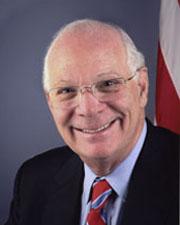
Mr. Speaker, I rise in opposition to this bill. I support reform of our nation's medical liability system. I also believe that doctors and medical institutions who are experiencing unsustainable…
Mr. Speaker, I rise in opposition to this bill. I support reform of our nation's medical liability system. I also believe that doctors and medical institutions who are experiencing unsustainable increases in their malpractice premiums deserve relief. Before coming to Congress, as Speaker of the Maryland House of Delegates, I worked to craft legislation that brought significant changes at the state level, including reasonable caps on non-economic damages. It worked well to hold down the cost of premiums and make our State's malpractice system a much fairer one.
The problems in our Nation's medical liability system require a multi-faceted approach that includes addressing the causes of premium increases, reducing the number of frivolous lawsuits, and limiting the number of medical errors. I support enacting fair reforms that will continue to permit injured patients to hold wrongdoers accountable, and I am willing to support legislation that provides for reasonable caps on non-economic and punitive damages.
In recent years, I have seen so-called malpractice ``reform'' bills come to the floor of this House. Those bills provided an inequitable approach--limiting patients' access to the courts and imposing strict limits on compensation for their injuries, no matter how serious the injury or how egregious the malpractice, while doing nothing to lower malpractice premiums. Fortunately, they were not enacted into law.
I had hoped that this year's legislation would be the product of careful deliberation at the committee level. I had hoped that the authors would take into consideration the rights of patients and balance them carefully with the need to alleviate the burden of escalating malpractice insurance costs. Unfortunately, once again this year, the bill before us does neither. In fact, the leadership has simply rolled out a bill that is nearly identical to the one we considered in the last Congress. There were no hearings, no markups, and today, there are no opportunities to amend the bill. The same bill, the same bill number, the same disregard for the rights of patients, the same ineffectual approach to helping physicians.
Mr. Speaker, I want to call attention to a few aspects of this bill. First, this bill contains an arbitrary cap of $250,000 on non-economic damages. Non-economic awards compensate patients and their families for real injuries, and sharply capping them will disproportionately hurt families, children, seniors, and others who have lower or fixed incomes.
Second, H.R. 5 provides a shield against punitive damages for manufacturers of prescription drugs and medical devices as long as they have been approved by the U.S. Food and Drug Administration. At one time, the FDA shield might have been less controversial. After all, the FDA has long been considered the gold standard for prescription drug quality and safety, and for years its seal of approval was viewed by the American public as a guarantee that drugs were safe. But in light of developments related to several other pharmaceuticals approved by the FDA, this provision is truly baffling. Cases involving life- threatening complications from these drugs have raised fundamental questions about the safety determinations made by the FDA.
In 2004, the Energy and Commerce Committee held hearings to examine safety Issues
surrounding the prescribing of antidepressants to children. At that time, several members of the Committee criticized the FDA for failing to take prompt action to address these concerns. Last September, Vioxx was withdrawn from the market after a study showed it doubled the risk of heart attacks and strokes in patients taking the drug for more than 18 months. Since then, it has been reported that more than 130,000 persons have suffered heart attacks as a result of taking Vioxx. Richard Matthews of Thurmont, Maryland, was one of the first reported fatalities from Vioxx. According to an Associated Press account, Richard's wife, Lisa, said her husband had no previous heart problems and died in 2002 at age 42 of a heart arrhythmia only a few days after he began taking Vioxx. Several Congressional committees have responded to these events by initiating investigations of drug safety issues, including the FDA's procedures for evaluating the safety of prescription drugs.
Given the questions that have arisen about FDA's effectiveness, it is truly astonishing that the leadership is here promoting a bill that prohibits the awarding of any punitive damages and limits non-economic damages for drugs and devices approved by the FDA. This bill, H.R. 5, was referred to the Energy and Commerce Committee, the same committee that acknowledged problems at the FDA. Did the committee's members try to amend this bill to strike or tone down the FDA provision? There was no opportunity. H.R. 5 was introduced one week ago, July 21, referred to the Judiciary and Energy and Commerce Committees, which did not hold a hearing or mark-up, and then brought to the floor today. The FDA shield is an irresponsible provision that should have been stricken from this bill. We have no opportunity to strike it today, because an amendment that would have done so was not made in order by the Rules Committee. It may endanger the health and lives of thousands of Americans. It will certainly deny them the opportunity to receive fair compensation when they are injured.
Third, I firmly believe that we must reduce medical errors in our health care system if we are to reduce the number of malpractice cases. It has been nearly six years since the 1999 report of the Institute of Medicine, IOM, entitled ``To Err Is Human: Building A Safer Health System.'' That report focused a great deal of attention on the issue of medical errors and patient safety. IOM estimated that between 44,000 and 98,000 people die in hospitals each year as the result of medical errors.
Even using the lower estimate, this would make medical errors the eighth leading cause of death in this country, higher than motor vehicle accidents, breast cancer, or AIDS. This House has just passed S. 544, legislation intended to reduce medical errors and improve patient safety. But its passage by a nearly unanimous vote of 428 to 3 is a clear indication that Congress knows there are valid cases whose victims deserve their day in court. The patient safety bill has not yet been signed into law. I hope it will be law soon, and that it will help improve patient safety. But each case is an individual case, and those who are harmed by medical errors deserve just compensation for their injuries.
Finally, I must question why the authors of this bill are not addressing malpractice insurance premium increases in this bill. The provisions of H.R. 5 would not reduce the rates that insurance companies charge providers. We have an alternative that would directly address the problems of frivolous lawsuits and insurance industry abuses. But once again this year, the base bill, H.R. 5, contains no provisions that will lower malpractice premiums.
Mr. Speaker, I must tell you, malpractice premium costs are the reason that providers ask me to support medical malpractice reform. These are practitioners who truly love their professions, and they are troubled by dramatic increases in their malpractice rates, increases that they must pay whether or not there have been any malpractice claims filed against them in the past year. They say that they want to continue practicing medicine next year, but they may not be able to afford to. When I ask if they would like to see provisions in the bill that limit their premium increases, they emphatically reply yes. So it is puzzling that this bill, which the authors say was written to help physicians stay in business, fails to address their central concern by even monitoring insurance companies' rate hikes. In fact, there are no provisions anywhere in the bill that affect malpractice insurers.
In sum, H.R. 5 represents a missed opportunity for this House. We could have produced a bill that would truly make a difference, in lowering malpractice premiums, in placing reasonable caps on non- economic damages. I am disappointed that we don't have a better bill, a more responsible bill that we can vote on today. I urge my colleagues to reject this approach, which will do nothing to improve access to care, nothing to hold insurance companies accountable for premium increases, and nothing to make our nation's medical liability system more fair.
Mr. Speaker, prior to coming to the U.S. Congress, I served 14 years in my State general assembly. I spent a lot of time on this issue, dealing with issues like caps on noneconomic damages,…
Mr. Speaker, prior to coming to the U.S. Congress, I served 14 years in my State general assembly. I spent a lot of time on this issue, dealing with issues like caps on noneconomic damages, collateral sources, periodic payments, joint and several liability modifications and venue shopping. I just heard some statements from the other side, well-intentioned, but, I must respectfully say, misguided, that simply mandating a premium reduction will not solve this problem. What will happen is what happened in my State.
In 1975, a State-administered medical liability program was created because no one wanted to write insurance in the Commonwealth of Pennsylvania in 1975. We were in a crisis. That did not solve the problem. That State-administered program is broke. My general assembly has appropriated hundreds of millions of dollars to pay doctors' medical liability premiums and hospitals' premiums. That is what will happen if you mandate that premium reduction. It sounds good, but it does not fix it.
The Governor of my State, Ed Rendell, a Democrat, I talked to his insurance commissioner a couple of years ago. I said, if this is an insurance problem, let's look at the numbers. For every dollar paid at that time in medical liability premiums, there was $1.27 in losses incurred; $1 in, $1.27 out. That is an insurance problem. No one wants to write insurance. So if you mandate a premium reduction or hold it harmless, the State is going to have to set up a program, and they are going to have to find the money, and they are going to turn to the taxpayers. That is what is happening. We are in crisis.
This legislation we are dealing with helps deal with this issue because providing for caps on noneconomic damages, Mr. Speaker, will help restore some level of predictability and stability to the insurance marketplace. You need to have people wanting to write insurance in these States. Competition will help you actually drive down costs. I know that some might find that unbelievable, but it will work. It has to work.
I rise to speak in favor of H.R. 5, the Health Act of 2005.
This bill addresses one of the central issues in health care today: the way in which unpredictable, out-of-control legal judgments are driving up health care costs. This bill sets caps on punitive and non- economic damages that result from malpractice litigation. This is important because, as the Congressional Budget Office has noted, under this act, medical liability premiums would be an average of 25 to 30 percent below what they would be under current law.
High medical liability premiums are creating serious doctor recruitment and retention problems in my State, especially in so-called ``high
risk'' disciplines such as neurosurgery, orthopedics, emergency medicine, I and obstetrics. In my district, the crisis created in part by outrageous malpractice judgments is best exemplified by the experience of St. Luke's Hospital.
St. Luke's has been recognized nationally 17 times for clinical excellence. Despite this accomplishment, St. Luke's became the target of a frivolous, outrageous lawsuit in the fall of 2000. As a direct result, St. Luke's professional medical liability costs increased more than $4 million in just 2 years.
As a result of medical liability issues, Pennsylvania hospitals face challenges retaining neurosurgeons, without whom trauma centers cannot operate. In fact, a few years ago, another regional hospital serving my district--Easton Hospital--lost all of its neurosurgeons to other States. And Lehigh Valley Hospital, an extraordinary three-hospital network and the largest employer in my district, experienced a fivefold increase in their liability costs over the past few years.
Nothing about this bill prevents a litigant from seeking his or her day in court. In California, which was the model for the current health act, plaintiffs with legitimate claims still enjoy large recoveries. The Government Accountability Office, GAO, has determined that California has controlled medical liability insurance premiums much better than has my home State, Pennsylvania. In fact, in Pennsylvania the medical liability crisis is so acute that the legislature has appropriated hundreds of millions of dollars to assist physicians and hospitals with rapidly rising medical liability premiums. That's like placing a Band-Aid on a gaping wound. Structural reform is needed; taxpayers bailouts--Band Aids, if you will--don't solve the underlying problem.
For all these reasons, I believe that congressional intervention is essential in the form of support for the Health Act of 2005.
Mr. Speaker, as I mentioned a little earlier today, we talked about the insurance industry and its role in this issue. But let us be very clear. We need the structural reforms contained in the HEALTH Act, H.R. 5, in order to continue to provide access to quality care for our constituents and patients of the United States.
We also need to incent insurance companies to write policies in our States, which they will not do indefinitely in this current environment. And I remember a few years ago when people said, when the crisis was acute in Pennsylvania, they said the problem is the insurance companies invested money foolishly in the stock market. Well, a lot of people lost money in the stock market a few years ago. At that time the insurance companies in my State had about 8 to 10 percent of their money in equities. Most of it was in investment-grade bonds, which did rather well. But that really was not the cause of the problem.
But let me tell you about the city of Philadelphia. In my State, many people want to get their cases heard in a Philadelphia courtroom. Why? Because the juries pay more. According to Jury Verdict Research, at that time the average jury verdict award in Philadelphia was over a million dollars, and the average everywhere else in the State was under a half million. No wonder people wanted to go to Philadelphia.
In fact, President Bush even cited Philadelphia in a speech he made in Scranton, Pennsylvania, where trauma centers were closing down. What the President said there is that in the city of Philadelphia, there were more jury awards, more dollars sent out by Philadelphia juries than in the entire State of California, a State of 35 million people, and Philadelphia a city of 1.5 million people.
How is that? The system is broken. I am in the Lehigh Valley of Pennsylvania, 60 miles north of Philadelphia. One hospital, St. Luke's, was hit with a $100 million jury verdict in a Philadelphia courtroom. In a Philadelphia courtroom. It was an outrageous decision. It was settled for something less than that, I will tell you that right now. But it was an outrageous situation, could have bankrupted a major institution that has been nationally recognized on many occasions for clinical excellence. That is one of my problems.
We have also heard, too, that this is not a Federal problem. Does the word Medicare mean anything to anyone around here? Medicare will save billions of dollars over 10 years if we enact the reforms contained in this legislation.
Furthermore, in many States again like mine in Pennsylvania, to amend the constitution to permit caps on noneconomic damages literally is a 4- to 5-year process.
But we cannot wait 4 to 5 years to solve this problem. That is why we need the HEALTH Act now. We can do it much more quickly. It is absolutely critical. A Band-Aid will not stop the bleeding. Structural reforms are required.
As I mentioned a little earlier today, in my State, taxpayers, particularly cigarette smokers, that is who is paying the bill for doctors' premiums and hospitals' medical liability premiums, that is who is paying the bill because no one wants to write insurance, and the State-administered fund is broke. They will have to find hundreds of millions of dollars more come January 1 to fix this problem.
The point is, structural reform is needed. Taxpayer bail-outs and Band-Aids will not fix the problem. I commend the gentleman from Georgia (Mr. Gingrey) for his leadership on this issue. A former colleague, Jim Greenwood, I thank for his leadership in the last session; and I thank the gentleman from California (Mr. Cox) as well. I want to thank them for their leadership. I urge passage of H.R. 5.
Yes, sir. That is correct. (Mr. CONYERS asked and was given permission to revise and extend his remarks, and include extraneous material.) Mr. Speaker, I yield myself such time as I may consume. Now,…
Yes, sir. That is correct.
(Mr. CONYERS asked and was given permission to revise and extend his remarks, and include extraneous material.)
Mr. Speaker, I yield myself such time as I may consume.
Now, the reason that many people might support this bill is that they do not know that inside the bill, if they were asked, are you for legislation that makes it harder to sue drug companies and HMOs, I do not think you would get the same polling results.
Mr. Speaker, I will insert into the Record after these remarks letters and reports in opposition to H.R. 5 from the American Bar Association, Public Citizen, and the American Federation of State, County and Municipal Employees and the National Conference of State Legislators.
Mr. Speaker, make no mistake about it. This is a special interest bill before us today. The bill would supersede the law in all States in the Union to cap noneconomic damages, to cap and limit punitive damages, to cap attorneys' fees for poor victims, to shorten the statute of limitations, to eliminate joint and several liability, and to eliminate collateral source.
That is a pretty large menu. But, more amazing, this bill comes before us today without the benefit of a committee hearing, or a committee markup, and under a totally closed rule. How do you like that?
Rather than helping doctors and victims, this measure pads the pockets of insurance companies, health maintenance organizations, and manufacturers and distributors of defective medical products and pharmaceuticals, and it does so at the expense of innocent victims, particularly women, children, the elderly and the poor. We have a bill today for you.
So let us cut the charade and get to the heart of the problem, and the insurance industry is the greatest place to start. This month we found out that the insurance industry has increased premiums by more than 100 percent over the last 5 years, while the claims they have paid out were essentially the same, were flat.
This may have something to do with the fact that the insurance industry, which is exempt from antitrust laws, is not immune from collusion, price fixing, and other anticompetitive problems that they would be subject to if they did not have an antitrust exemption.
It is also clear that a legislative solution, largely focused on limiting victim rights, available under our State tort system will do little other than increase the incidence of medical malpractice, which is already the third leading cause of preventable death in our Nation.
So under the proposal, we here in Congress would be saying to the American people, we do not care if you lose your ability to bear children. We do not care if are you forced to bear excruciating pain for the reminder of your life. We do not care if you are permanently disfigured or crippled. We are going to limit your recovery no matter what.
The proposed new statute of limitations in this bill takes absolutely no account of the fact that many injuries caused by malpractice or faulty drugs take years, sometimes decades, to manifest themselves. Under this proposal a patient who is negligently infected with HIV blood and develops AIDS 6 years later would be forever barred from filing a liability claim.
The so-called periodic plan provisions are really nothing less than a Federal installment plan for the health maintenance organizations. The measure we have here right now would allow insurance companies teetering on the verge of bankruptcy to delay and then completely avoid future financial obligations. And they would have no obligation to pay interest on the amounts that they owe their victims.
And guess who else gets a sweetheart deal under the legislation? The drug companies. The producers of such killer devices like the Dalkon Shield, the Cooper-7 IUD, high-absorbency tampons linked to toxic shock syndrome, and silicone gel implants all would have completely avoided the billions of dollars in damages that they have had to pay had this bill been law.
Do you really want to do this today, my colleagues? It would help insulate Vioxx claims for liability, adding insult to injury to hundreds of thousands of individuals and families who suffered heart attacks or lost their life as a result of this dangerous drug.
I conclude. Nearly 100,000 people die in this country every year from medical malpractice. And at a time when 5 percent of our health care professionals cause 54 percent of all medical malpractice injuries, just a few, a few doctors causing all of this problem, the last thing we need to do is exacerbate this problem while ignoring the true causes of medical malpractice, the crisis that exists in this country today.
My colleagues, I urge you to please do not accept this antipatient, antivictim legislation.
Mr. Speaker, the material I referred to previously is as follows:
National Conference of
State Legislatures,
Denver, CO, July 26, 2005.
Re H.R. 5, the Help Efficient, Accessible, Low-Cost, Timely
Healthcare (HEALTH) Act of 2005.
Hon. Dennis Hastert,
Speaker of the House, House of Representatives, Washington,
Mr. Speaker, I yield myself such time as I may consume.
Mr. Speaker, I would just let the gentlewoman from New York (Mrs. Kelly) and the gentleman from Georgia (Mr. Gingrey) know about the General Accounting Office report that found there is no evidence that caps on damages have reduced losses or helped consumers. They found, instead, that the contention that premiums are rising because there is a surge in jury awards is a myth and that while premiums have increased claims payments of insurance companies have remained essentially flat.
Mr. Speaker, I yield 3 minutes to the gentlewoman from Texas (Ms. Jackson-Lee), a member of the Committee on the Judiciary.
Mr. Speaker, I am pleased to yield 3\1/2\ minutes to the gentleman from Virginia (Mr. Scott), a distinguished member of the Committee on Judiciary.
Mr. Speaker, I am pleased now to yield 3 minutes to the gentleman from New York (Mr. Nadler), a distinguished member of the Committee on the Judiciary.
Mr. Speaker, I yield 3 minutes to the gentleman from New York (Mr. Weiner), a valuable member of the Committee on the Judiciary.
request to amend h.r. 5
Mr. Speaker, I yield to the gentleman from Massachusetts (Mr. Frank) for a unanimous consent request.
Request to Offer Amendment
Mr. Speaker, I yield 3 minutes to the gentleman from Massachusetts (Mr. Frank).
Mr. Speaker, I yield 3 minutes to the gentleman from Massachusetts (Mr. Delahunt).
Mr. Speaker, I yield 2 minutes to the gentleman from Illinois (Mr. Emanuel), who has followed this subject ever since he has come to Congress.
Mr. Speaker, I yield 2\1/2\ minutes to the gentleman from Florida (Mr. Wexler).
Mr. Speaker, I yield 2 minutes to the gentlewoman from Nevada (Ms. Berkley).
Mr. Speaker, I yield 2\1/2\ minutes to the gentlewoman from California (Ms. Linda T. Sanchez), who serves with distinction on the Committee on the Judiciary.
Mr. Speaker, I yield 3 minutes to the gentleman from Massachusetts (Mr. Markey).
Mr. Speaker, I would like my colleague to know that this bill is based on the California program MICRA, and premiums for medical malpractice insurance grew more quickly between 1991 and 2000 than the national averages. Just remember that.
Mr. Speaker, I yield 45 seconds to the gentlewoman from California (Ms. Solis).
Mr. Speaker, I yield the remainder of my time to the gentlewoman from South Dakota (Ms. Herseth).
Mr. Speaker, I offer a motion to recommit.

Mr. Speaker, I rise in strong opposition to H.R. 5, the so-called HEALTH Act. The civil justice system is about giving injured consumers their day in court, allowing them the opportunity to hold…
Mr. Speaker, I rise in strong opposition to H.R. 5, the so-called HEALTH Act. The civil justice system is about giving injured consumers their day in court, allowing them the opportunity to hold wrongdoers accountable, recover damages and change dangerous behaviors. H.R. 5 is a frontal assault on those consumer rights.
H.R. 5 is a dangerous, anti-consumer bill that would impose an arbitrary ceiling $250,000--on the amount a patient injured by medical malpractice, HMO denials, nursing home abuse or defective drugs or medical devices could receive for noneconomic damages, no matter how devastating the injury. In many cases, the victim may have few out-of pocket losses, but suffer great harm. For example, an l8-year old woman who loses her ability to have a child for the rest of her life may suffer no monetary loss. Under H.R. 5, the most she could recover in a medical malpractice lawsuit would be $250,000.
Politicians should not impose arbitrary caps on non-economic damages. We are no substitute for a jury of one's peers, which has the ability to look at the facts and weigh the evidence in individual cases. There are some who say that it is appropriate to limit non-economic damages since economic damages are not capped. But non-economic damages are not ``extras,'' they are not inconsequential. Unbearable and long-term pain, loss of sight and mobility, the inability to bear children, the loss of an infant or a grandparent--these may not be as easily quantifiable as lost wages but the losses are just as real. And, for many consumers who have been injured or lost a loved one, noneconomic damages might be the only damages available.
The National Citizens' Coalition for Nursing Home Reform has provided actual histories of nursing home residents harmed by medical negligence. Frances G's physician described her as ``the victim of gross nursing home neglect. Her pressure sores and dehydration were inexcusable.'' Her nursing home was consistently understaffed, her physician's orders were repeatedly ignored, and she endured excruciating and continual pain from pressure sores but was given no pain medication. Gertrude H., according to charge nurses, was grossly neglected and suffered life-threatening pressure sores. Her physician stated that, ``I have no doubt that Gertrude experienced severe and unrelenting pain from June 27, 2000 to February 6, 2001, from the deep, eroding pressure sores.'' Because both Frances and Gertrude were senior citizens, any compensation would come in the form of non-economic damages. Do my colleagues really believe that $250,000 is ``reasonable'' compensation for Frances and Gertrude and their families?
Children are also adversely affected by caps on non-economic damages. Shannon Hughes had a long and difficult labor. The doctor was called repeatedly and finally showed up at her 35th hour of labor. At 37 hours, the doctor performed an emergency C-section. The umbilical cord was twice wrapped around the child's neck. Tyler suffered cardiac arrest for 18 minutes. As a result, Tyler, who is now 7 years old, is severely brain-damaged and bedridden. He must be turned every two hours, is
fed through a tube, suffers seizures daily and is non-communicative. Shannon says, ``My son has no future but pain and suffering. No politician in Washington has the right to decide what is proper compensation for him.'' Like many parents, Shannon may need to use whatever noneconomic damages she received in order to pay for Tyler's care once her economic compensation runs out. In many instances, because of rising medical costs and new technologies, the damages awarded for medical care run out while the medical bills keep coming.
Tyler survived, but many babies do not. Where medical malpractice results in the death of a child during labor, a mother most often will not have any physical injury but only emotional distress of losing her child. In this case, under the proposal by H.R. 5, no amount of economic damages will be awarded, and the non-economic damages would be capped at $250,000.
Non-economic damage caps have a disproportionate effect on women who work inside the home, children, senior citizens, children and low wage- earners who are more likely to receive a greater percentage of their compensation in the form of non-economic damages if they are injured. But caps on damages are not the only anti-consumer provisions in this legislation.
In addition to the arbitrary ceiling on non-economic damages, H.R. 5 lets wrongdoers--those found guilty of medical malpractice--decide whether to pay damages on a periodic basis, even if the injured consumer wants and needs damages paid upfront.
H.R. 5 eliminates joint and several liability. This means that a consumer injured by more than one wrongdoer will not be fully compensated if one of those wrongdoers declares bankruptcy or cannot pay their share.
H.R. 5 eliminates the collateral source rule, which could mean that an injured consumer's health insurer--not the wrongdoer--pays the medical bill.
H.R. 5 also places limits on punitive damages, gives special protections for drug companies and medical device manufacturers, caps attorneys' fees for plaintiffs but not defendants, and shortens the statute of limitations. Finally, it includes a state preemption provision that leaves in place state laws more favorable to medical providers and organizations while overturning state laws more favorable to injured consumers.
While it is clear what H.R. 5 would do in terms of eliminating consumers' rights, it is equally clear what it won't do. No insurance company executive has yet to come forward to say that passage of H.R. 5 would reduce medical malpractice premiums. In fact, according to American Insurance Association spokesman Dennis Kelly, quoted in the January 3, 2005 Chicago Tribune, ``We have not promised price reductions with tort reform.'' The General Counsel for the American Tort Reform Association admitted that ``There is no question that it is very rare that frivolous suits are brought against doctors. They are too expensive to bring.'' (Los Angeles Times, 10/22/04).
At the same time, multiple studies have indicated that medical malpractice premiums are not connected to jury award or settlement levels. A recent analysis of the top 15 medical malpractice insurers found no rise in payouts from 2000 to 2004, at the same time that premiums doubled. Some companies significantly increased premiums while their claims actually decreased. A study by the Economic Policy Institute found that the number of tort cases fell 4 percent from 1993 to 2002 and that the real causes of higher premiums were economic factors and insurers' investment decisions.
H.R. 5 takes away consumers' rights and particularly hurts women, children and seniors, while doing nothing to help doctors with high malpractice insurance premiums. I urge my colleagues to vote ``no'' on
Mr. Speaker, one of the greatest challenges facing our Nation's health care system today is the medical malpractice insurance crisis. My State of Georgia is one of 18 States that have the highest,…
Mr. Speaker, one of the greatest challenges facing our Nation's health care system today is the medical malpractice insurance crisis. My State of Georgia is one of 18 States that have the highest, most significant medical malpractice insurance premium costs, and it is costing our Georgia and our entire country dearly. Because when our health care industry is in danger, we are all threatened.
Who among us is not a patient, who among us does not need and deserve quality medical care? At its heart, this crisis is a patient care issue. Every one of us wants ourselves and our loved ones to receive the highest quality health care possible.
We have to address the issue of medical malpractice insurance and the extremely high cost of health care. In 2000, Georgia physicians paid more than $92 million to cover jury awards. That amount was the 11th highest in the Nation despite the fact that Georgia ranks 38th in total number of physicians in the United States.
Forty percent of the State's hospitals faced premium increases of 50 percent or more in 2002. St. Paul, the State's second largest insurance carrier, stopped selling medical liability insurance last year. Remaining insurers have reportedly raised rates for some specialties by 70 percent or greater. Some emergency room physicians, OB-GYNs and radiologists have not yet found a new carrier.
Our health care system is suffering immensely, but some say that this moment in time will pass, that this crisis does not warrant taking serious action. But study after study proves them wrong.
Earlier this year, the Georgia Board for Physician Workforce released a study showing the effects of the medical liability crisis on access to health care for Georgia's patients. For example, the study shows that 17.8 percent of physicians, more than 2,800 physicians in Georgia, are expected to limit the scope of their practices which is by far the largest effect of the medical liability insurance crisis on access to medical care.
These physicians are expected to stop providing high-risk procedures in their practices during the next year in order to limit their liability risk. Nearly 1 in 3 obstetrician/gynecologists and 1 in 5 family practitioners reported plans to stop providing high-risk procedures, indicating that access to obstetrical care may be significantly reduced during the next year as a result of the medical liability insurance crisis.
In addition, nearly 11 percent or 1,750 physicians reported that they have stopped or plan to stop providing emergency room services. Six hundred and thirty physicians plan to stop practicing medicine altogether or leave the state because of high medical malpractice insurance rates. About 13 percent of doctors reported that they had difficulty finding malpractice insurance coverage.
In fact, at one particular Georgia hospital, the hospital could not give credentials to a surgeon and add that physician to its staff because the surgeon could not afford to buy medical malpractice insurance. In another instance, an obstetrician-gynecologist had to close his Georgia practice and work for a health care agency because he could not afford to buy medical malpractice insurance.
What happens to the patients that his hospital could have treated but now it cannot because it does not have the surgeons that it needs? What happens to the mothers who need a doctor to provide pre- and post-natal health care but cannot find one because doctors are leaving the profession due to the high cost of medical malpractice care?
In addition, Georgia is heavily dependent on other states to train physicians. Approximately 70 percent of participating physicians in Georgia completed training in another State. High costs of medical malpractice liability insurance may reduce the attractiveness of Georgia as a location for medical practice. High professional liability insurance costs are a significant financial problem for teaching hospitals, reducing the already limited funding available for faculty, residents, and other medical education costs.
Even more upsetting, the high cost of medical malpractice insurance for doctors and hospitals disproportionately affects seniors, minority and low-income patients. The physicians and hospitals who depend on Medicare reimbursements and who serve the over 44 million uninsured Americans every day cannot afford to pay higher insurance premiums. We need to ensure that these communities have access to quality health care and the best physicians or the health disparity that currently exists will continue to deepen and create a two-tier health care system.
But it is not only medical care in the present that is threatened, but also into the future. Many of the medical schools in our State are saying now that many of students are having second thoughts about even coming into the medical profession.
These statistics prove that Georgia's doctors cannot wait. More and more each day, good, principled health care providers are confronting the possibility of being unable to treat their patients because of out- of-control medical malpractice insurance premiums. There is no question that Congress must act, and act immediately.
I support H.R. 5 because doctors, hospitals, and the health care industry are caught in the middle between insurance companies and lawyers. Doctors are being squeezed by their medical malpractice insurance premiums and by the high amounts being awarded to injured patients. Doctors need to see results; they need to know that if this bill becomes law that their insurance premiums will go down. The message must reach the insurance companies that premiums have to go down so that the medical profession can survive and access to health care is improved. The health care industry must have relief and this bill, although not the final answer, is the first step in addressing the problems that affect doctors and the health care industry.
We must help doctors, physicians and dentists, hospitals, other health care providers, and, ultimately, American patients who are suffering in untold ways. Immeasurable damage is occurring in our Nation's health care delivery system because of the high cost of medical malpractice insurance. With the passage of this bill, the House of Representatives will send a clear and salient message to the insurance industry, and that message is: Bring down the cost of medical malpractice insurance for physicians and hospitals.
Mr. Speaker, I yield myself 5\1/2\ minutes. Mr. Speaker, the American health care system is in crisis, in part, because of skyrocketing medical malpractice insurance rates. This crisis, however, is…
Mr. Speaker, I yield myself 5\1/2\ minutes.
Mr. Speaker, the American health care system is in crisis, in part, because of skyrocketing medical malpractice insurance rates. This crisis, however, is not the result of frivolous lawsuits, but of insurance industry practices.
The so-called solution that we are debating today, carving out enormous new liability exemptions for health insurers, pharmaceutical companies, medical device manufacturers, and nursing homes would not lower doctors' malpractice insurance rates by one dollar. Too many doctors are struggling to keep their practices afloat under the burden of enormous insurance premiums but, instead of helping them, what we are doing today is penalizing the severely injured patients and the families of those who die a result of medical negligence without providing any relief to the doctors from high malpractice insurance rates.
A new study, and we have been talking about it today, by the Kaiser Family Foundation, found that since 2001, there has been a 25 percent decrease in the average number of medical malpractice claims per physician.
Now, if medical malpractice claims have decreased, why do insurance premiums continue to increase? We have been talking today about MICRA, the California insurance program. Now, it is true, the State capped medical malpractice payments in 1975; but despite this, as we just heard from the gentleman from Michigan (Mr. Conyers), malpractice premiums rose 450 percent over the next 13 years. Only after 1988, when California also implemented insurance reform, did the rates go down. But, today, instead of insurance reform, we are focusing entirely on capping damages.
Now, even the spokesman for the American Insurance Association, Dennis Kelly, said these words. He said, ``We have not promised price reductions with tort reform.''
So I want to ask my colleagues, why are we doing this bill today? What is the real reason for this bill? If the malpractice insurance companies are not going to reduce insurance premiums for these beleaguered doctors, why are we passing this bill? And what is the cause of the increasing insurance rates?
Some suggest that rate hikes are due to insurer investment losses. Others point to old-fashioned price gouging. This year, for example, the Washington State insurance commissioner ordered insurers to refund more than $1 million in premiums to physicians because rate hikes were unjustifiable. But I tried to do an amendment, I did it in committee last time when we heard it, and I tried to submit it to the Committee on Rules: let us do a study. Let us figure out why these rates are high and why Dennis Kelly says they are not going to go down.
The Republican majority refused to even allow a study of malpractice insurance rates and why they are so high. That is what this bill is really about. Because billion-dollar insurance companies have Federal antitrust exemptions, they are allowed to legally fix prices, and this has helped the industry gain a record $25 billion in annual profits.
Now, there is one thing we can agree on across the aisle: Congress must stop this price-gouging of physicians. But granting blanket liability protection to negligent nursing homes, to pharmaceutical companies, and insurance companies, without addressing insurance billing practices, does nothing to solve the problem for these doctors. And what is worse, the immunity for these other industries will be broader than any State tort reform law. It will do nothing to help the doctors; and in the end, it will serve to severely limit the rights of many millions of Americans.
It undermines our health care system to penalize victims of medical negligence in the name of relieving doctors' burdensome malpractice premiums when, actually, nothing is being done to reduce those premiums. Unfortunately, I think this is as a result of an aversion of some in Washington to what I would call fact-based policymaking.
Now, there is a solution. We could work across the aisle to reduce medical malpractice insurance rates, and we could do this by passing bipartisan insurance reform. This would get to the root of the crisis by reducing artificially inflated insurance rates for doctors and not punishing injured patients.
One further note. I hear all day that States are having a terrible problem: doctors cannot get insurance, OB/GYNs are leaving. If this is a State problem, I say to my colleagues, if States are having these issues, I want to know why we are trying to address it at a Federal level. This is not traditionally a Federal issue. The States can do it.
One further note. Anyone reading this bill would know, for the gentlewoman from South Dakota's (Ms. Herseth) State and every other State, this bill would supersede any other rate or caps they might have with the Federal law. That is wrong. I think we should abide by States' rights and defeat this bill.
Mr. Speaker, I yield 2\1/2\ minutes to the gentlewoman from California (Mrs. Capps).
Mr. Speaker, I yield 3 minutes to the gentleman from Michigan (Mr. Stupak).
(Mr. STUPAK asked and was given permission to revise and extend his remarks.)
Mr. Speaker, how much time remains?
Mr. Speaker, I yield 2 minutes to the gentleman from Washington (Mr. Inslee).
(Mr. INSLEE asked and was given permission to revise and extend his remarks.)
Mr. Speaker, I yield for the purpose of making a unanimous consent request to the gentleman from Rhode Island (Mr. Kennedy).
(Mr. KENNEDY of Rhode Island asked and was given permission to revise and extend his remarks.)
Mr. Speaker, I am honored to yield 1 minute to the gentlewoman from California (Ms. Pelosi), the distinguished minority leader.
Mr. Speaker, I yield myself 1 minute.
Mr. Speaker, the gentleman from Texas says that this bill does not preempt State law. In fact, the bill includes a sweeping preemption of State law which is designed to override State laws that protect consumers and patients while keeping in place State laws that favor doctors, hospitals, nursing homes, HMOs, pharmaceuticals and medical device manufacturers, and other health care defendants.
In fact, the only laws that this bill does not supersede are the ones that protect those groups, and that is at the great risk to patients.
Mr. Speaker, I yield the balance of my time to the gentleman from California (Mr. Waxman).
Mr. Speaker, I thank the gentleman for yielding me this time; and as he stated, I practiced internal medicine, but that was not the only type of medicine I practiced. I also practiced defensive…
Mr. Speaker, I thank the gentleman for yielding me this time; and as he stated, I practiced internal medicine, but that was not the only type of medicine I practiced. I also practiced defensive medicine.
We can talk about medical malpractice premiums and the costs for doctors, and we can talk about suing drug companies, and we can talk about high premiums in States like West Virginia, which we heard about from the gentlewoman from West Virginia, how specialists leave the States. We had that problem in Florida. We had the neurosurgeons in Orlando threatening to leave because of the high premiums in Orlando. The trauma center would have been downgraded from a level one to a level two center.
But those are really not the issues. The real issue here is the incredible, incredible cost of defensive medicine. And I practiced it every day. I confess, I ordered extra tests to keep myself from being sued. And if you think this is just anecdotal, it is not, my colleagues. This was studied very nicely at Stanford University.
This is old data. It was published in the Quarterly Journal of Economics, 1996. They looked at California, and they looked at just two diagnostic codes, unstable angina, eschemic heart disease; and the study showed after the medical malpractice reforms went in place in California, the charges to the Medicare plan declined significantly. Guess what? Morbidity and mortality did not go up. Quality was maintained.
They estimated in that study, in 1996 dollars, that defensive medicine cost our health care delivery system $50 billion a year. It is estimated by today's dollars that it is well over $100 billion a year.
Now, my colleagues want to take care of the uninsured and they want prescription drugs for senior citizens? Then do something about this very costly system.
Mr. Speaker, the study earlier referred to follows:
[From Forbes Magazine, Jan. 27, 1997]
Rx: Radical Lawyerectomy
(By Peter Huber)
How do you trim $20 billion a year from Medicare? That's
about what it will take to stave off bankruptcy. The easiest
way: amputate lawyers.
It can be done. In 1995 Congress immunized community health
care centers from malpractice suits. The federal government
now covers the claims incurred by these federally subsidized
clinics--claims are heard by a judge, not a jury, and there
are no punitive awards. The clinics save an estimated $40
million in malpractice insurance. That funds treatment for an
additional half-million indigent patients.
Why stop there? The country spends about $8 billion a year
treating elderly heart-disease patients. Cap awards, abolish
punitive damages, implement a few other direct, financial
limits on medical malpractice suits, and you reduce hospital
expenditures on cardiac patients by 5% to 9%.
If limits like these had been written into federal law,
nationwide spending on cardiac disease in the late 1980s
would have been $600 million a year lower. Extrapolate these
results to medical spending generally--a debatable but
reasonable enough basis for estimation--and you find that
tort reform would save the country as a whole well over $50
billion a year.
But how much more negligent medicine would that encourage?
How many more cardiac patients would die? How many more would
get inferior treatment and suffer a second heart attack as a
result? The best estimate: None at all. Nor would any true
victims of negligence go uncompensated. The reforms we're
talking about here don't eliminate liability, they just place
sensible limits on windfalls and double-dipping. They are in
fact already part of the law in many states.
The numbers I cite come from a very important paper, ``Do
Doctors Practice Defensive Medicine?'' written by Daniel
Kessler and Mark McClellan, both of Stanford University. The
paper appeared in the May 1996 Quarterly Journal of
Economics.
The authors analyze data on all elderly Medicare
beneficiaries hospitalized for serious heart disease in 1984,
1987 and 1990. The study correlates spending for medical care
with state tort laws. About three patients in five were
treated in states that placed no direct limits on rights to
sue. But two in five were hospitalized in states that did.
Direct liability limits have clear, strong effects on medical
spending, the study concludes.
But that's just the first half of the story. Previous
studies--most notably one conducted by Harvard Medical School
in 1990--asked panels of doctors to review patient files and
attach subjective judgments about adverse outcomes and
deficient treatment. Much of the ``negligence'' identified in
this way had no significant impact on the ostensible victim.
Studies like this didn't reveal much about the consequences
of malpractice litigation because they didn't pin down the
consequences of malpractice itself.
With elderly cardiac patients there are objective standards
for assessing ineffective care: Patients die, or they end up
back in a cardiac ward not long after discharge. Analyzing
the record on these solid criteria, Kessler and McClellan
reach a second, clear conclusion: None of the liability
reforms studied ``led to any consequential differences in
mortality or the occurrence of serious complications.''
If liability doesn't force doctors to provide better
treatment, why does it boost the cost of medicine so sharply?
Unlimited liability gets you more medicine, not better.
Lawyer-shy doctors administer tests willy-nilly, and hand off
patients to specialists with great alacrity. They know that
the surest way to avoid liability is to dispatch your problem
patient to someone else--a lab technician or another doctor.
This can go on indefinitely. It's very expensive. And
medically useless.
Congress has generally left medical malpractice reform to
the states. But when Medicare and Medicaid patients sneeze,
it's the federal Treasury that catches cold. No principle of
federalism requires federal taxpayers in Montana to pay for
Mississippi medicine ordered up by the lawyers there, not the
doctors or patients.
The best place for Congress to balance the Medicare budget
is on the backs of trial lawyers. These lawyers are not old,
not poor and not needed.
Show 11 more

Mr. Speaker, I thank the gentleman for yielding me this time. First of all, I am for medical malpractice reform. I think it is extremely important we address this issue. However, I have a real…
Mr. Speaker, I thank the gentleman for yielding me this time.
First of all, I am for medical malpractice reform. I think it is extremely important we address this issue. However, I have a real problem with this bill. In section 7, item (c), under punitive damages, it in effect will protect the pharmaceutical industry against class action lawsuits by parents who have had their children damaged by mercury in vaccines that causes neurological problems, such as autism.
We had hearings on this for about 6 years, and we had scientists from all over the world, and the mercury in vaccines is a contributing factor to autism and other neurological disorders in children. It is in adult vaccines as well.
Now, I will not go into specifics of the language in here, but according to attorneys I have talked to in the last couple of days, it protects the pharmaceutical companies against class action lawsuits. I would not have a problem with that if there was another avenue for these parents to go to get money.
We created the Vaccine Injury Compensation Fund to take care of that. It was supposed to be nonadversarial. Unfortunately, parents have gotten nothing out of the Vaccine Injury Compensation Fund, even though there is $3 billion there. So there is only one avenue they have, and this legislation, the way I read it, blocks that.
The gentleman from Florida (Mr. Weldon) has worked with me on this, and I think he shares some of the same concerns that I have, and he is welcome to say a word or two if he wants to, but what I want to ask of the manager of the bill, would the gentleman work with me to try to clean this up so that that problem does not exist anymore; so they at least have an avenue to deal with this?
I yield to the gentleman from Texas.
Mr. Speaker, I thank the gentleman for his assurances.
I yield to the gentleman from Florida.
Mr. Speaker, I thank my colleague.
Mr. Speaker, I wish to submit for the Record a Dear Colleague letter which I sent to Members regarding this legislation:
Congress of the United States,
House of Representatives,
Washington, DC, July 27, 2005.
The Vaccine Liability Waiver in the Medical Malpractice Legislation
Will Hurt Autistic Children and Their Families
Dear Colleague: As we debate medical malpractice this week,
I want to bring to your attention a provision in the bill
that would waive vaccine manufacturer liability. Section 7(c)
of the legislation states that no punitive damages may be
awarded against a manufacturer or distributor of a medical
product based on a claim that the product caused harm, unless
the company violated FDA regulations. Essentially, this means
as long as the vaccine goes through the regular FDA approval
process, the company is shielded from liability.
In the 1980's, roughly 1 in 10,000 American children were
diagnosed with some kind of autism spectrum disorder. Today,
that number has risen to 1 in 166 with the number rising
alarmingly as children have been required to get more and
more shots containing the mercury-based preservative
thimerosal During my tenure as Chairman of the House
Committee on Government Reform, and as Chairman of the
Subcommittee on Human Rights and Wellness, I chaired numerous
hearings examining the alarming increase in autism in this
country over the last several decades. We also conducted a
four-year long investigation into the facts and theories
surrounding the connection between mercury in vaccines
(thimerosal) and autism and other childhood and adult
neurodevelopment disorders, such as Alzheimer's. Credible
scientific evidence points to a connection between
thimerosal, autism and other neurodevelopmental disorders.
Many of the families of thimerosal's victims did not know
about the National Vaccine Injury Compensation Program--the
no-fault compensation system that provided for quick and fair
recovery for those who experience injuries related to a
vaccination which Congress established in 1986--and were
unable to file claims within the 3 year Statute of
Limitations. Thousands of families were left out in the cold,
unable to get into the program. They are out there with
nothing. Their houses are being sold, they are going
bankrupt, they are spending all their money and leading
desperate lives trying to help their kids, and they cannot do
it. Therefore, the only recourse they had was to file a class
action lawsuit.
As the number of thimerosal injured children grew, concerns
over the potential financial impact of these class action
lawsuits, and the growing scientific research demonstrating a
connection between thimerosal and autism, and the subsequent
effect on the pharmaceutical industry's bottom line prompted
supporters of the Pharmaceutical industry to slip sections
1714 through 1717 into the Homeland Security Act of 2002
effectively killing all thimerosal class action lawsuits. In
the 11th hour without any debate, without anybody knowing
about it until it was too late, these lawsuits were stopped
in their tracks.
Fortunately, the language was ultimately removed after
being discovered by several deeply concerned Members of both
the House and Senate. Section 7(c) of the Help Efficient,
Accessible, Low-cost, Timely
Healthcare (HEALTH) Act of 2005 (H.R. 5) is arguably a thinly
veiled attempt to resurrect the ill-conceived Homeland
Security Act provisions of 2002, and although Section 10 of
the bill exempts vaccine cases before the National Vaccine
Injury Compensation Program, if a vaccine claimant exercises
his or her right to opt-out of VICA and bring a lawsuit in
state or Federal court or has no recourse but to file a
lawsuit because of the Statute of Limitations, Section 7(c)
of H.R. 5 will fully apply to limit that civil claimant's
rights.
Congress should strike this provision from the medical
malpractice legislation. We serve the interests of the
American people, not the pharmaceutical industry.
Sincerely,
Dan Burton,
Member of Congress.

Parliamentary inquiry, Mr. Speaker. Mr. Speaker, I would ask to what guidelines the gentleman refers. I know there have been guidelines about bringing a bill up at all, but I am not aware of any…
Parliamentary inquiry, Mr. Speaker.
Mr. Speaker, I would ask to what guidelines the gentleman refers. I know there have been guidelines about bringing a bill up at all, but I am not aware of any guidelines that govern the deliberations of a bill once it has been brought forward. Could the Speaker enlighten us as to what guidelines he is discussing?
I am not aware of guidelines that deal with the bill once it is before us. I understand they have dealt with whether or not you consider the bill.
Mr. Speaker, further parliamentary inquiry. Would someone point to the rule of the House? First, Mr. Speaker, I must say ``inappropriate'' does not seem to me to be a parliamentary term. Something is either in order or it is out of order. Appropriateness may deal with etiquette, it may deal with how well Members are dressed and how nice they look, but I understood under parliamentary procedure you are either in order or not in order. Would someone refer to me the section of our rules, Jefferson's Manual, which talks about appropriateness?
Mr. Speaker, why would I have to approach the Chair? This is a public forum. I believe this notion of appropriateness is a gloss on the rules that does not exist. Can we not have a citation to the rule of appropriateness?
Mr. Speaker, further parliamentary inquiry. We are told that these guidelines supersede the rules, during the consideration of a bill that unanimous consent is not in order? I had not previously heard that. Further, I understood they dealt with whether or not Members were recognized. Once recognized, as the gentleman from New York was, I am not aware of any restriction on what the gentleman can do as long as it is within the rules. Those guidelines dealt with recognition, as I understood it.
Mr. Speaker, further parliamentary inquiry. Does that mean any unanimous consent request to amend a bill is out of order unless it meets what standard? Could the Chair enlighten us as to how one would become in order?
Mr. Speaker, I ask unanimous consent to offer an amendment which is in writing at the desk and is germane.
Mr. Speaker, the amendment I sought to offer which was kept out by an objection from the bill's manager would have dealt with the section referred to by the gentleman from Indiana. I also, like the gentleman from Indiana, am prepared to vote for, as I have in the past, some restrictions on medical malpractice.
But what we have in this bill which has not gotten a lot of attention, and the gentleman from Indiana pointed it out, is a total exemption from punitive damages for drug manufacturers who get an FDA approval even though we have seen flaws in the FDA approval process.
What the majority has now made clear, they are insisting that this be taken in whole. The gentleman from Indiana made a good point, an objection to this amendment, and I share his objection. What I do not share is his faith that this is going to be taken care of.
The gentleman from Indiana, my good friend, was uncharacteristically mellow today in accepting an assurance that this will be looked at. I agree it will be looked at. It will be held up to the light. It will be turned upside down, and it will be looked at and looked at and looked at until it is signed into law, and then people will still be able to look at it as the law and those drug companies will have that exemption.
So what I offer today, and one might have thought under democratic procedures this would have been allowed, was simply to vote on that. I was, in the spirit of bipartisanship, acting on the suggestion of the gentleman from Indiana. Forget about everything said about medical malpractice; the amendment I sought to offer and was blocked from offering by that objection, as we were by the Committee on Rules' heavy-handedness, simply would have allowed this body to decide whether as part of a medical malpractice bill you would give an exemption from punitive damages to drug companies. That is not medical malpractice. That is not related to the core of this bill. The majority will not even allow this to be discussed.
I think it is wrong to give that kind of exemption certainly without a lot more consideration, but what is even more wrong is this further abuse of power. The majority simply will not allow this House, like the gentleman from Indiana, elected representatives of the people, to decide on whether or not we give an exemption to the drug manufacturers.
They take medical malpractice, a sympathetic issue, and use it to cloak immunity for the drug manufacturers in part, and then arrogantly refuse to allow the House to vote on it.
Mr. Speaker, I will say what I have said before. We are working with the people of Iraq and we are trying to get them to implement democracy. To the extent anyone from Iraq is watching the proceedings here, I would say to them, Please do not try this at home. Please do not, in the Iraqi Assembly, show the contempt and the disregard and the arrogance for minority rights and democratic procedures, and maybe majority rights. I should amend this. They are not afraid of minority rights; they are afraid if we had an open and honest vote on this that a majority would decide not to let the drug companies carry out under that darkness.
Mr. Speaker, will the gentleman yield?
Mr. Speaker, the gentleman from Texas is right. I did vote for this bill last year, because I thought it was about medical malpractice and did not read it carefully. In fact, what happened was I made the mistake last year that the gentleman from Indiana might make this year. I believed that they would honestly talk about medical malpractice, and it did not occur to me they would try to sneak into this bill something that gave partial immunity to the drug manufacturers.
So I admit that I did not read it thoroughly, but I will not when the gentleman is managing bills make that mistake again.
Mr. Speaker, I thank the gentlewoman from Colorado (Ms. DeGette) for yielding me this time and for her leadership on issues that relate to the health and well-being of the American people. I also…
Mr. Speaker, I thank the gentlewoman from Colorado (Ms. DeGette) for yielding me this time and for her leadership on issues that relate to the health and well-being of the American people.
I also want to salute the two distinguished ranking members, first the gentleman from Michigan (Mr. Conyers) of the Committee on the Judiciary for his leadership on this important legislation; and I especially want to acknowledge the gentleman from Michigan (Mr. Dingell), who this year celebrates his 50th anniversary in Congress, and every day of those 50 years he has worked to improve access to quality health care for all Americans. But particularly on this 40th anniversary of Medicare and Medicaid, it is worth noting the contributions of the gentleman from Michigan in providing health care security for millions of Americans and for upholding the fundamental principle that Democrats believe in: Health care is a right, not a privilege.
Mr. Speaker, I rise in strong opposition to the Republican medical malpractice bill. Let me begin with this simple fact: Under President Bush, 5.2 million more Americans have joined the ranks of the uninsured. Today, 45 million Americans have no health insurance. The bill before us does not, nor does any other Republican bill during this so-called Health Week, provide health insurance to one single American.
This bill is not about solving the urgent health insurance crisis that affects millions of American families, nor is it about improving our health care system, containing costs, or even lowering medical malpractice insurance premiums. Instead, the Republican medical malpractice bill, first and foremost, is a windfall to the big drug companies at the expense of Americans who have been injured or killed by harmful and unsafe drugs. Once again, protecting the big drug companies is at the top of the Republican agenda.
The Republicans have attempted to hide the true purpose and the real reason for this bill. It contains a special liability waiver for drug companies for the types of injuries caused by drugs. Under this Republican bill, when Americans are injured, or even killed, by drugs that have been negligently marketed, they will not be able to obtain justice and hold drug companies wholly accountable.
The Republican leadership, beholden to the pharmaceutical companies, refused to allow amendments that would strike this unjust provision. As with the Medicare prescription drug bill, where Republicans prohibited the government from negotiating for low prices for seniors, and forbade Americans from purchasing lower-priced drugs from Canada, this is yet another example of the Republicans being the handmaidens of the pharmaceutical industry.
The Republican medical malpractice bill is an extreme bill that is an injustice to consumers, and it unconscionably rewards irresponsible drug companies. If we are to remain a Nation that seeks justice for all, the special liability waiver for drug companies must be removed. Unfortunately, the Republicans refused to permit the consideration of the Emanuel-Berry amendment to remove this unjust and reprehensible provision.
Apart from pandering to drug companies, this bill utterly fails to achieve its stated purpose. It will not lower medical malpractice insurance premiums, nor does it address the real cause. The real cause of high malpractice premiums is not the payouts for malpractice claims. Former Missouri State Insurance Commissioner Jay Angoff issued a recent study showing the amount collected in premiums by major medical malpractice insurers has doubled. The amount received in premiums has doubled, while the claims paid out have remained flat, resulting in excessive profits and excessive reserve surpluses.
The Angoff study found that insurance companies are charging far more for malpractice insurance than actual payments or estimated future payments warrant. This finding is also supported by numerous studies that document that in States that have enacted caps or damage awards, they have not seen their premiums for malpractice insurance lowered.
Rather than addressing insurance companies' refusal to lower rates, the Republican bill instead interferes with the rights of injured Americans to be compensated for their injuries and have their claims heard by a jury of their peers. If enacted, the cap on damages would severely harm women, children, and the elderly who have been injured. Unfortunately, the Republican leadership did not allow the Democratic substitutes by the gentleman from Michigan (Mr. Conyers) and the gentleman from Michigan (Mr. Dingell) to be offered.
The Democratic substitute supports sensible approaches that permit only valid claims to go forward. More significantly, the Democratic substitute addresses real causes for premium increases and offers real solutions for the doctors. It repeals the antitrust exemption for insurance companies. It provides targeted assistance to help physicians stay in crisis areas.
We all respect the magnificent contribution that doctors provide to our society. It is not only a profession, it is a vocation, and we literally could not live without them. So it is with great respect for them that I say they deserve better than this bill, which purports to help them.
President Harry Truman said it so well: ``The Democratic party stands for the people. The Republican party stands, and always has stood, for special interests.'' That was true almost 60 years ago when he said it, and it is certainly true today. Let us uphold the public interest. Let us stand up to the big drug and insurance companies, and let us oppose this unjust bill.
Mr. Speaker, I rise in opposition to this rule. Mr. Speaker, I rise in opposition to H.R. 5, which purports to help stem rising medical malpractice insurance premiums and relieve health care…
Mr. Speaker, I rise in opposition to this rule.
Mr. Speaker, I rise in opposition to H.R. 5, which purports to help stem rising medical malpractice insurance premiums and relieve health care professionals, but, in reality, will have very little effect.
What this body should be considering today is comprehensive medical malpractice reform and this measure does not even come close to achieving this important goal.
Last night, the Rules Committee did not make in order several amendments, which taken together, would have achieved true comprehensive medical malpractice reform.
Earlier this year, I, along with Brian Baird, Dutch Ruppersberger and Dan Lipinski, introduced the Comprehensive Medical Malpractice Reform Act of 2005, which would have achieved three key goals, namely (1) constrain the cost of medical liability insurance and reduce unwarranted litigation; (2) protect the rights of patients who have been harmed to receive proper and justified compensation; and (3) improve overall the quality of health care in our country.
Unfortunately, we, along with several other Members, were denied the opportunity to improve H.R. 5 with these amendments.
One of our amendments that was denied debate would have set reasonable limits on non-economic damages.
We all know that a cap of $250,000 on non-economic damages is too low since some valid cases with catastrophic or lifetime injuries may merit additional compensation, particularly in the case of the negligent death of an infant.
Our amendment would have set a cap on awards for pain and suffering that is based on California's enactment into law of the Medical Injury Compensation Reform Act in 1975. Many provisions of H.R. 5, including caps on non-economic damages, are modeled after this California law.
Our amendment would have indexed non-economic damages at the rate of inflation, which comes to about $877,000 in today's market. Certainly a far more reasonable number than $250,000.
This amendment would also have weeded out frivolous lawsuits by going after lawyers who continue to file claims that are not substantiated by evidence or expert opinion. Courts would be able to impose a ``3 Strikes & You're Out'' law and suspend from practice for no less than one year, lawyers who file their third frivolous lawsuit.
Our comprehensive medical malpractice reform package also considers alternative dispute resolution, as a means of avoiding litigation, while at the same time, still addressing victims' rights. We modeled this provision after a successful program at Rush Medical Center in Illinois.
This first-ever hospital based mediation program has proven to be very beneficial to the hospital and other health care providers, and brings closure for individual plaintiffs and defendants.
Over the years, the number of suits against Rush has declined and other hospitals have conducted mediations and have reported favorable results. Our amendment would have given health care institutions the training necessary to implement mediation programs.
Another rejected amendment would have given liability protection to those health care providers, who in good faith, report to report to state medical boards regarding the competence or professional conduct of a physician. These good-faith reporting health care providers would not be held responsible for attorney fees and costs incurred as a result of legal action.
According to data from the National Practitioner Data Bank from 1990 to 2002, just 5 percent of doctors were involved in 54 percent of all medical malpractice payouts, including jury awards and settlements. More startling, the data shows that of the 35,000 doctors with two or more payouts during that period, only 8 percent were disciplined by state medical boards.
Health care providers need better whistle-blower protections. Currently there is an imbalance between the legal obligation health care workers have to report errors or unusual incidents and the legal protections they have against retaliation once they report these incidents.
Greater liability protections for health care workers would help to ensure that future medical errors are not made, as well as give state medical boards the opportunity to work with colleagues on weeding out those doctors that provide an inadequate quality of care to patients.
Those who are going to support H.R. 5 today will return to their respective congressional districts during the August recess and brag to the doctors that they voted in favor of medical malpractice reform.
What they will not tell their constituents is that H.R. 5 is DOA when it is sent to the Senate for consideration, and that the other body would not think of entertaining legislation with inadequate caps on awards.
Nor will proponents of this bill reveal that H.R. 5, if signed into law, would not stem rising medical malpractice insurance premiums, because not one provision contained in this bill reforms the insurance industry.
Last night our colleagues on the Rules Committee squandered a valuable opportunity to actually fix the root problem of medical malpractice.
Let us send a message to the American people that we are now prepared to take the issue of medical malpractice reform seriously. I urge all my colleagues to vote against H.R. 5.
Mr. Speaker, I rise today in strong opposition to H.R. 5, the Help Efficient, Accessible, Low Cost, Timely Health Care (HEALTH) Act. It is irresponsible to limit patients' access to the civil justice…
Mr. Speaker, I rise today in strong opposition to H.R. 5, the Help Efficient, Accessible, Low Cost, Timely Health Care (HEALTH) Act. It is irresponsible to limit patients' access to the civil justice system, particularly without any guaranteed decrease in the cost of malpractice insurance coverage. This measure contains no provision requiring insurers to lower their rates once these so-called reforms are in place. As a result, it would leave countless patients deprived of relief while failing completely to help our struggling health providers.
Like many of my colleagues, I am deeply troubled by the rising cost of malpractice insurance. Doctors across the country are being adversely affected by an increase in medical liability insurance premiums. These increases are making it more costly for physicians to practice, and rising insurance rates could eventually mean that patients no longer will have easy access to medical care. Doctors completing residencies in expensive areas are seeking better rates elsewhere, and physicians already in the market are leaving. I recognize that this is becoming a national crisis.
There is wide agreement that something must be done to ensure reasonable rates and protect access to health care. Unfortunately, the leadership has presented us with a partisan bill, identical to that which we voted on in two previous Congressional sessions. Nothing in this legislation would decrease premium costs or increase the availability of medical malpractice insurance. Instead, it would make detrimental changes to the health care liability system that would extend beyond malpractice and compromise the ability of patients and other health care consumers to hold pharmaceutical companies, HMO's and health care and medical products providers accountable.
Once again, we are presented with a bill that the leadership claims will lower costs of medical liability insurance for doctors, but fails to address the rate-setting process followed by the insurance industry. Insurance companies benefit from a federal exemption to antitrust
laws, which allows them to collectively raise premiums without fear of prosecution. A recent study of the annual statements of the 15 largest medical malpractice insurers found that insurers substantially increased their premiums while both their claims payments and projected future claims payments were decreasing. Other studies suggest that rate changes in premiums are closely tied to the fluctuations of the stock market--not the increases in claims from frivolous lawsuits.
Perhaps most troubling to me is that nothing in this bill stipulates that savings earned as a result of the ``reforms'' must be passed along to doctors, through a lowering of their own insurance costs. In light of the lack of transparency requirements of the insurance industry, there is no mechanism to hold them accountable to actually lower costs. I believe this must be the crux of any meaningful reform measure.
I recognize that the rapid increase in insurance premiums is having real effects on the health care industry. Not only does it drive up the cost of health care for consumers and doctors--it is having an impact on the medical professional workforce. Residents are being encouraged to enter lower-risk fields of practice and doctors are making decisions about their careers based the costs of insurance.
The Democratic motion to recommit proposes to address these issues by allowing patients to seek redress and providing assistance to physicians and hospitals in need. Specifically, this alternative would end frivolous lawsuits by requiring affidavits to be filed by qualified specialists certifying that the case is meritorious. It would also establish an independent advisory commission to explore the impact of malpractice insurance rates, particularly in areas where health care providers are lacking. These are the steps that we must take in order to adequately address this problem.
In addition to meaningful systemic reform, any responsible approach to the issues of medical malpractice insurance costs should include efforts to reduce medical errors in the first place. Reports show that there preventable medical errors that kill nearly 100,000 hospital patients a year. The utilization of electronic health records at our hospitals can go a long way in this effort. The Veteran's Administration (VA), which relies heavily on information technology, has been the first large health system in the nation to replace paper charts with this fully electronic record. Electronic medical records and the efficient use of technology can be a significant agent for change in health care quality across all settings, reducing not only inefficiencies, but the number of medical errors as well.
Mr. Speaker, I urge my colleagues to oppose the underlying bill, support the Democratic alternative and commit to working together on reform measures that will result in significant change, benefiting doctors and consumers alike.
Mr. Speaker, I move by unanimous request that we amend H.R. 5 to include a cap on premium increases for the duration of the bill. Mr. Speaker, parliamentary inquiry. I am making a unanimous consent…
Mr. Speaker, I move by unanimous request that we amend H.R. 5 to include a cap on premium increases for the duration of the bill.
Mr. Speaker, parliamentary inquiry. I am making a unanimous consent request.
Certainly. My unanimous consent request is that H.R. 5 be amended by unanimous consent, the consent here of both the majority and the minority, that premium increases, health insurance premium increases, be limited to zero for the duration of the period of this bill.
Mr. Speaker, further parliamentary inquiry. Is the Chair ruling a unanimous consent request which expresses the unanimous desire of the House of Representatives, is the Chair refusing that to be put to the body?
Mr. Speaker, further parliamentary inquiry. Is the concern that it is not in proper form? There has not been a point of order that it is not germane.
Mr. Speaker, I have been recognized, so that is not the issue. Is the issue the form of the unanimous consent request?
Mr. Speaker, if I can be further heard on the unanimous consent request, and I believe the paperwork is on the way, it is a very simple matter. The sponsor of the legislation says he wants to do what is right for consumers. Over and over we have heard the connection between the legislation and reducing premiums. All I am saying is, if we all agree upon that, let us include the language herein.
No, I want to be heard on my unanimous consent, and I was recognized.
Mr. Speaker, I still have a unanimous consent that is, I believe, in the hands of the Parliamentarian now.
Mr. Speaker, I withdraw my unanimous consent request.
Mr. Speaker, I think all of the assembled Parliamentarians, staffers, the histrionics of the other side, the apoplexy over the idea that perhaps we might actually reduce premiums is fairly instructive to this debate.
We had no hearings on this. We had no chance to mark it up. We had no chance to include a reduction in premiums.
The gentleman from Georgia said this is a pro-consumer thing. If you really wanted it to be pro-consumer, you would reduce premiums. I would ask any Member on the other side of the aisle who supports this bill to simply say, We do not really care about reducing premiums.
Mr. Speaker, who we are fighting for in this bill is the insurance industry; they are getting protected. The HMOs, they are getting protected. The pharmaceutical companies, that is who is being protected by H.R. 5. But, frankly, do not deceive the American public by what this bill will do.
Insurance prices will not go down. Do Members know how we know this? First of all, the industry themselves have said in public that they have no intention of reducing premiums if this legislation is passed. We can look at other States that have caps. Find me one where insurance premiums went down. Look at California, ask them whether their premiums have gone down.
Frankly, the only way we know for sure that premiums will go down is to cap the premiums, but you will not do that. Not only will you not do that; you will do everything possible to avoid even considering it. That is why committee was bypassed.
And do not also say that doctors are going to face fewer claims as a result of this legislation. They are already seeing fewer claims since they did in 2001. There were 25 per 1,000 physicians in 2001. There are 19 per 1,000 physicians in 2003. If we had a hearing in committee, we might find out what it is this year. You cannot say that, and you also cannot say this: you cannot say the amount being paid out in claims against physicians has reduced in States where there are caps.
You want us to be a Nation where there are caps. Let us look at the States where the caps are in place. The lowest number of claims per 1,000 physicians is in a State that does not have a cap, and the highest are among the States that do have the caps. What this issue is really all about, it is about who you all are fighting for and who we are fighting for.
You are fighting to take away the right of a jury. Your citizens, your constituents who apparently are brilliant enough to elect you, but not smart enough to solve a case that deals with medical malpractice, you are taking the right of a family who wants to take on a megapharmaceutical company or a mega-HMO, and the only way they can bring that suit is to make sure
they get enough money out of that company that they learn the lesson and they do not do it again.
Mr. Speaker, there is some irony here. You control the legislature, you control the executive, you control the judiciary, and still you do not trust any of those people to make the decisions. Only you know how much each and every one of these cases will yield.
Mr. Speaker, I have an alternative idea: get rid of the bad doctors, get rid of the bad lawyers, get rid of the bad judges, and get rid of this bad bill.

Mr. Speaker, I rise today in support of H.R. 5. Listen to why. For many years, the world has come to New York for medical care. But between 1998 and 2002, 70 percent of New York's neurosurgeons, 60…
Mr. Speaker, I rise today in support of H.R. 5. Listen to why. For many years, the world has come to New York for medical care. But between 1998 and 2002, 70 percent of New York's neurosurgeons, 60 percent of the OB-GYNs in New York, 60 percent of New York's orthopedic surgeons, and 60 percent of the general surgeons in New York were sued.
Mr. Speaker, it is impossible that all of these physicians were bad doctors. We can all agree that there are some physicians that may be better than others, but it would be difficult to come to the consensus that more than half of the physicians in several vital practice areas have performed this poorly.
This is a problem. In New York, the average jury award increased from $1.7 million in 1994 to $6 million in 1999, which was an increase of 350 percent. New York physicians are now paying 34 to 50 percent more in 2005 for the same insurance coverage they had in 2002. This is in part due to an across-the-board average rate increase of 7 percent for the 2004-2005 policy year. In 2001, six of the top eight medical malpractice awards in the United States came from New York courts. In 2002, 7 of the top 10 jury verdicts in medical negligence cases were from New York courts. And in 2003, it was four of the top six.
The cost is not just to the doctors. It is a cost we all ultimately share. There are steps this Congress can take in solving the problem. The HEALTH Act is a step that is both reasonable and fair. It is reasonable because it calls for a cap on unquantifiable damages. State laws that otherwise cap damages at specific amounts, even at higher amounts than those provided in the HEALTH Act, would remain in effect. The act is fair when it allows for the full recovery of economic damages. In other words, when damages can be quantified, they are unlimited in the HEALTH Act.
The HEALTH Act is going to help solve the national crisis we are seeing in medical malpractice. Without this legislation, doctors will not just leave the area where they practice; they will leave the profession. I urge support of the HEALTH Act.
Today, I rise in support of H.R. 5--The HEALTH Act of 2005.
Between 1998 and 2002, the largest insurer of physicians in New York state had: 70 percent of its neurosurgeons sued, 60 percent of OB-GYNs were sued, 60 percent of orthopedic surgeons were sued, and 60 percent of general surgeons were sued.
Mr. Speaker, it is impossible that all of these physicians are bad doctors.
We can all agree that there are some physicians who may be better than others--but it would be difficult to come to the consensus that more than 50 percent of physicians in several vital practice areas have performed this poorly.
There is a problem.
Just in New York, the average jury award increased from $1.7 million in 1994 to $6 million in 1999--an increase of 350 percent.
New York physicians are now paying 34-50 percent more in 2005 for the same insurance coverage they had in 2002. This is in part due to an across the board average increase of 7 percent rate increase for the 2004-05 policy year.
In 2001, 6 of the top 8 medical malpractice awards came from New York courts.
In 2002, 7 of the top 10 jury verdicts in medical negligence cases were from New York courts. And in 2003, it was 4 of the top 6.
But, there are also steps that this Congress can take towards solving this problem.
We have learned today that the HEALTH Act is a step that is both reasonable and fair.
It's reasonable because it calls for a cap only on unquantifiable damages. State laws that otherwise cap damages at specific amounts, even at higher amounts than those provided in the HEALTH Act, would remain in effect under the HEALTH Act.
The Act is fair where it allows for full recovery of economic damages. In other words, when damages can be quantified, they are unlimited under the HEALTH Act.
The HEALTH Act will help solve the national crisis that we are seeing in medical malpractice liability insurance.
Without this legislation doctors will not just leave the area where they practice, they will leave the profession. Patients, who are the real victims in this crisis, will be left to suffer and die because there is no one to provide the care.
As a member of the Medical Malpractice Crisis Task Force, I ask my colleagues to recognize that there is a problem, and this legislation is one great step in the direction towards solving that problem.
Please support the HEALTH Act of 2005.
Mr. Speaker, I thank the gentleman from Florida for yielding me time. I rise in opposition to this rule and to the underlying legislation. This bill is a perfect example of the ironclad control that…
Mr. Speaker, I thank the gentleman from Florida for yielding me time.
I rise in opposition to this rule and to the underlying legislation. This bill is a perfect example of the ironclad control that the pharmaceutical industry has over the Republican leadership of this House. It is so in your face, it is so out in the open, it takes my breath away.
Instead of improving the medical industry and providing protection to its consumers, H.R. 5 provides sweeping liability protections to drug manufacturers. H.R. 5 does nothing to address the dramatic escalation of insurance premiums and health care costs. Forty-five million Americans, 16 percent of our population, do not have health insurance. Placing caps on the punitive damages that could be awarded to victims of medical malpractice will not provide one single American with health insurance.
From the onset this bill has been handled improperly: no mark-ups, no amendments, no hearings. In fact, for the third time in 3 years, as the gentleman from Florida (Mr. Hastings) has pointed out, the Committee on Rules' Republicans have prevented any House Members from offering amendments to this bill.
Last night the committee Republicans rejected all 15 amendments offered, including an amendment that would have stripped the bill of the special protections for irresponsible drug companies. Over the past 3 years, Committee on Rules' Republicans have rejected a whopping 67 amendments to medical malpractice legislation. Eliminating amendments and shutting down debate is not how this House should operate.
Why has this bill been rushed to the floor, bypassing both the Committee on the Judiciary and the Committee on Energy and Commerce despite the abundance of startling information in the headlines regarding the misconduct of drug industry giants like Merck, the creator of the deadly drug Vioxx?
According to testimony given by FDA scientist Dr. David Graham before the Senate Committee on Finance, Vioxx may have caused as many as 55,000 deaths and 160,000 hearts attacks. Mr. Speaker, how can we reward a company that has knowingly created, marketed and distributed a drug which has caused 55,000 deaths?
Well, that is exactly what this bill does. By providing across-the- board immunities to drug and device manufacturers, the pharmaceutical industry would never be held accountable for injuring or even killing people.
Without the threat of full liability, there are no financial incentives for drug companies to keep life-threatening drugs like Vioxx off the market. Vioxx was always a dangerous drug. From its inception in 1999, Merck knew that Vioxx significantly increased the chance of hearts attacks and cardiovascular problems. In 1999 and 2000, two clinical trials showed that people taking Vioxx had a fivefold increase in hearts attacks.
It was not until 2002, after multiple requests from the FDA, that Merck reluctantly change its warning label to include the severe risk of heart attack.
Mr. Speaker, this was too little, too late. Vioxx should have been pulled from the market years ago, and its victims and victims' families should have been compensated appropriately.
It was not until September 2004, after several more studies and testimonies from high-level FDA officials that Merck voluntarily withdrew Vioxx from the market. And here we are, less than a year later, considering a bill that provides immunity for drug manufacturers that create and distribute unsafe, possibly deadly, drugs.
Mr. Speaker, everyone is aware of the dangers of Vioxx, and the fact that Merck continued selling it knowing of its dangers. How can this House in good conscience reward the drug industry for bad behavior? The American people deserve a better bill, a bill that actually protects, not endangers them.
I would like to say to my friends on the other side of the aisle: if you want to protect irresponsible drug companies, that is your choice. Go right ahead and do it. But I am interested in protecting people. The least you could do is allow us to vote up or down on amendments that would hold the drug companies accountable.
There is no reason why, none whatsoever, why this rule needs to be closed. It is a disgrace that this has been brought to the House floor under a closed rule. I urge my colleagues to vote ``no'' on the rule and ``no'' on the underlying bill.

Mr. Speaker, I rise to ask why we are not doing more to ensure fewer mistakes are made in the first place. Mr. Speaker, nobody disputes that malpractice premiums are heavily impacting many…
Mr. Speaker, I rise to ask why we are not doing more to ensure fewer mistakes are made in the first place.
Mr. Speaker, nobody disputes that malpractice premiums are heavily impacting many physicians. I think very few of us would dispute that there are frivolous claims filed. All of the justifications for this bill about losing physicians in high-risk practices are real concerns.
So why is it that we are spending this time debating a bill that won't address this problem? Repeatedly dramatizing the problem doesn't make this bill a solution. This bill does nothing to prevent frivolous lawsuits. It doesn't rein in the bad actors, in penalizes those who are the most grievously injured.
Experience shows that the link between awards or settlements and premiums is tenuous at best. An exhaustive study published this month showed that premiums have gone up 120 percent over the last 5 years while claims were flat. The GAO has found no evidence that caps on damages hold premiums down.
But even if this bill could work--it would not, Mr. Speaker, but even if it could--we are completely missing the real issue.
We are fighting about how or how not to compensate the victims of mistakes and hold negligent providers accountable. Shouldn't we be talking instead about how to ensure fewer mistakes in the first place?
We are talking about closing the barn door but the horse is already galloping across the field.
Mr. Speaker, Sorrel King can teach us all a lesson. Several years ago, her 18-month-old daughter Josie suffered severe burns and was rushed to the ICU at Johns Hopkins Hospital.
She got the world-class care you would expect and they saved her life. She was going home in just a few days. And then communications were botched, orders were lost, and Josie was administered a drug she was not supposed to get, over Sorrel's objection. And even then, further warning signs were missed.
Josie King wound up dying of dehydration in one of our Nation's finest hospitals. Johns Hopkins settled with Sorrel and her family. And--here is where we can learn something--Sorrel turned around and gave the money back to Hopkins to create a new patient safety program.
Mr. Speaker, like Sorrel, we need to spend less effort apportioning blame and more effort making our system safer and better. Hundreds of thousands of our constituents die in hospitals every year not in spite of the care they get, but because of it. These are mostly systems problems, not the result of individual negligence.
Last year I introduced the Josie King Act to begin transforming health care delivery so that the system itself is driving better quality at lower costs. It laid out a roadmap to bringing health care into the information age and promoted the development of uniform quality metrics so that providers, the public, and purchasers have a clearer picture of which providers get the best outcomes for patients.
Now we are finally beginning to see attention to these priorities, which, unlike the current debate, have bipartisan support. We won't reach agreement about capping damages to patients who are hurt, but we can agree that the system should hurt fewer people.
We can pass strong health IT legislation this year, like the bill Mr. Murphy from Pennsylvania and I introduced or the one that was reported out of committee in the other body.
We can pass legislation this year to begin linking reimbursements to outcomes and quality. I know we have strong leadership on both sides of the aisle, in several committees and in the House leadership, for both of those things.
Until we begin aligning incentives in health care so that providers who go the extra mile to make their patients better or, even better, keep them healthy--people are going to keep getting hurt.
Until we begin aligning incentives in health care so that the tools of the information age can help make care more accurate and more efficient.
Mr. Speaker, I agree with my friends on other side that physicians need lower malpractice rates. I also believe that the best way to get fewer lawsuits is to get fewer mistakes. Let's keep our eyes on the ball and make our health care system better, safer, and more efficient and make everyone better off.
Mr. Speaker, I rise today to express my opposition to H.R. 5, the HEALTH Act of 2005. I rise to oppose this legislation, not because I do not recognize the crisis that is brewing in the area of…
Mr. Speaker, I rise today to express my opposition to H.R. 5, the HEALTH Act of 2005. I rise to oppose this legislation, not because I do not recognize the crisis that is brewing in the area of medical malpractice insurance, but because this legislation tries to remedy this crisis with the wrong prescription.
Many of my distinguished colleagues on both sides of the aisle have expressed their concern regarding the access to healthcare that their constituents face. We all recognize this is a major problem in our country. In addition, physicians are constantly under increased pressure throughout the nation to deal with the increased burden that high malpractice premiums pose to their livelihood. In my home state of Illinois, only two neurosurgeons can be found south of Springfield because malpractice insurance rates are so out-of-control. Due to this shortage of neurosurgeons, patients with serious brain injuries are airlifted to St. Louis, many times costing them valuable minutes that can mean the difference between life and death. To remedy this situation as well as the overall problem of liability premium increases, my state imposed caps on non-economic damages to offer a quick fix to keep fleeing doctors. Currently, there are some 21 other states with similar caps.
While caps give the appearance of remedying this crisis in some states, they do nothing to stem the tide of ``frivolous lawsuits.'' Frivolous lawsuits by definition are lawsuits without merit. According to the Physicians Insurers Association of America, the trade group representing physician-owned insurance companies, 70% of malpractice lawsuits are dismissed and only 0.8% of cases actually go through a trial and reach a verdict in favor of the plaintiff.
Advocates of caps argue that this 0.8% is what drives up the cost of malpractice insurance. They argue that out-of-control jury awards drive up malpractice premiums. Are we to assume that this 0.8% of cases which go through fair trial, find in favor of the plaintiff, are in fact ``frivolous''? I would argue that the 70% of cases which are dismissed are the ``frivolous cases,'' and this 0.8% represents many egregious cases of malpractice.
Without addressing this problem, this bill does nothing to stop ``frivolous lawsuits,'' it only limits the claims of a person who suffers a terrible and often extreme example of malpractice. Minor injuries or pain and suffering do not receive massive awards. I ask my colleagues, if you or one of your family members suffered a tremendously egregious example of malpractice, would you want to be limited in what you or your family member could be compensated? I am sure your response, much as mine is that you would not.
My colleagues, we can debate over and over again on legislation such as this, but all the debate in the world will not lead to solving this problem when we are headed in a direction such as this. As many of my colleagues have pointed out, a recent study of the 15 largest malpractice insurers in the country found that insurers substantially increased their net premiums by an average of 120% while both their payments and projected future claims payments were flat or decreasing over the past few years. This directly contradicts the insurance industry's claims that premiums are increasing due to increased jury awards. Many of these same insurers even admit that capping malpractice awards will not reverse the trend of rising premiums. The malpractice insurance industry is unjustifiably raising their premiums, gouging doctors, and pushing for legislation that only does one thing: pits doctors against their patients.
If Congress is really serious about fixing this problem it will develop a system which benefits patients most while sidelining the interests of big business. Physicians are in the business of caring for patients, and I appreciate the burden they face with increased malpractice premiums. I am fully aware that this burden affects their ability to practice the profession they love. I only hope that in this struggle to find a remedy to this problem, the few patients who are harmed as a result of malpractice will not be further harmed by a limit on a just compensation.

Mr. Speaker, I want to thank my colleague for yielding me this time. I was a sponsor of the Vioxx amendment, to strip out the protection of the pharmaceutical industry. As Americans are watching this…
Mr. Speaker, I want to thank my colleague for yielding me this time.
I was a sponsor of the Vioxx amendment, to strip out the protection of the pharmaceutical industry. As Americans are watching this debate here, here we are on the floor debating about protecting the pharmaceutical industry from all liability in a protection that no other industry in America would receive, and on the other side of the screen the American people are going to be watching the trial on Vioxx
down in Texas, where a marathon runner, who was also a personal trainer, and who took Vioxx for 6 months, died a premature death. They will see what this Congress is doing on that civil case.
Now, we know from the head of FDA that by their estimate 55,000 Americans died because of Vioxx and the medication. Yet my colleagues want to deny that man's family their day at trial and give this industry, the only industry in America, a single protection.
Last year, my colleagues voted for a prescription drug bill to give the pharmaceutical industry $132 billion in extra profit, and now you want to give them liability protection. This Congress is like the gift that keeps on giving. You just do not know how to stop yourself.
Now, there is a place to redress these grievances. It is called the courtroom. With 55,000 deaths, have you no shame? Have you no respect for what is going on in America? The American people will see what is being done and understand the cost. But Merck, with Vioxx, is not the only pharmaceutical company. There is beckstra, accutane. There is phen-fen. Those are just some of the medications where other companies have not provided the FDA the material they needed to make the decision, and then, after the fact, after the consequences, those drugs get pulled.
What is ironic about this whole case and this whole piece of legislation is very simple. Just a year ago, many of our colleagues on the other side of the aisle joined us in agreeing that the FDA did not have the authority, the capability, or the funding to regulate the drug market. We were talking about in this very Chamber, on both sides of the aisle, setting up another whole entity to regulate this agency. So now what do we do in the dark of night, and nonrelevant to the medical malpractice legislation, you want to stick in a provision to protect the pharmaceutical industry because the FDA approval somehow gives them a Good Housekeeping seal when you said here in the well that the FDA was not doing its job.
George Orwell would smile upon this Chamber for the hypocrisy that runs free. You have done it with the pharmaceutical industry in the prescription drug bill last year, with $132 billion in additional profits over 10 years, and now you give them liability protection that no other industry in the Nation has, to our knowledge. And all the while Americans will watch their TVs, read in their newspapers, and listen on radio of the case of an individual's death because of the medication he took that was prescribed, and Merck, the company, had data before that drug got approved that it would lead to heart attacks and premature deaths.
The right forum is the American court. Yet my colleagues want to do this. Let us have an up-and-down vote. Do not be scared. Do not hide behind some little rule. Come on out here. Put it out on the table, and let us have a vote. The Senate knew it was wrong and pulled it out. So do not hide behind the rule. If this is what you want to do, let us have an up-and-down vote. You can put your votes right up there if you want to stand with this industry, and then the American people can see what it is all about.
I would recommend to my colleagues on the other side that there is a gift ban here. You gave them $132 billion in additional profits last year. There is a gift ban. The gift has got to stopping giving to the pharmaceutical industry.
Bill Text
2 versions available
        [Congressional Bills 109th Congress]
[From the U.S. Government Publishing Office]
[H. Res. 385 Engrossed in House (EH)]

H. Res. 385

In the House of Representatives, U.S.,

July 27, 2005.
Resolved, That upon the adoption of this resolution it shall be in order
without intervention of any point of order to consider in the House the bill
(H.R. 5) to improve patient access to health care services and provide improved
medical care by reducing the excessive burden the liability system places on the
health care delivery system. The bill shall be considered as read. The previous
question shall be considered as ordered on the bill to final passage without
intervening motion except: (1) two hours of debate on the bill equally divided
and controlled by the Majority Leader and the Minority Leader or their
designees; and (2) one motion to recommit.
Sec. 2. During consideration of H.R. 5 pursuant to this resolution,
notwithstanding the operation of the previous question, the Chair may postpone
further consideration of the bill to a time designated by the Speaker.
Attest:

Clerk.