Providing for consideration of the bill (H.R. 2123) to reauthorize the Head Start Act to improve the school readiness of disadvantaged children, and for other purposes.
Legislative Activity
Stay on top of the latest movement without scrolling through every action
Motion to reconsider laid on the table Agreed to without objection.
September 22, 2005 • 11:50 AM
View full timeline
Introduced in House
September 21, 2005
The House Committee on Rules reported an original measure, H. Rept. 109-229, by Mr. Bishop (UT).
September 21, 2005
It shall be in order to consider as an original bill for the purpose of amendment under the five-minute rule the amendment in the nature of a substitute recommended by the Committee on Education and the Workforce now printed in the bill.
September 21, 2005 • 5:32 PM
Placed on the House Calendar, Calendar No. 92.
September 21, 2005
Considered as privileged matter. (consideration: CR H8253-8263)
September 22, 2005 • 10:15 AM
DEBATE - The House proceeded with one hour of debate on H. Res. 455.
September 22, 2005 • 10:18 AM
The previous question was ordered without objection. (consideration: CR H8262)
September 22, 2005 • 11:25 AM
Passed/agreed to in House: On agreeing to the resolution Agreed to by the Yeas and Nays: 221 - 189 (Roll no. 486).(text: CR H8253)
September 22, 2005 • 11:50 AM
On agreeing to the resolution Agreed to by the Yeas and Nays: 221 - 189 (Roll no. 486). (text: CR H8253)
September 22, 2005 • 11:50 AM
Motion to reconsider laid on the table Agreed to without objection.
September 22, 2005 • 11:50 AM
Voting History
1 vote recorded • Roll call available
Floor Debate
23 membersWhat members said about H.Res. 455 on the floor
 JABRB
JABRB MNC
MNC BM
BM RK+18
RK+18
Floor Debate
23 membersWhat members said about H.Res. 455 on the floor
Mr. Chairman, I yield myself such time as I may consume. Mr. Chairman, I rise today in support of this bill to reform and reauthorize the Head Start early childhood program. I want to commend the…
Mr. Chairman, I yield myself such time as I may consume.
Mr. Chairman, I rise today in support of this bill to reform and reauthorize the Head Start early childhood program.
I want to commend the chairman of the Subcommittee on Education Reform, the author of this bill and my good friend, the gentleman from Delaware (Mr. Castle). I also want to recognize the gentlewoman from California (Ms. Woolsey) and the gentleman from California (Mr. George Miller) for their work to strengthen the Head Start program.
The School Readiness Act will introduce greater competition into the Head Start program and use that competition to leverage reforms that will result in a better program for the children Head Start was created to serve.
This bill will strengthen school readiness and increase the role of all 50 States and local communities in Head Start. It will protect children and taxpayers against the abuse and mismanagement of Head Start funds, and it will make Head Start more transparent and more accountable to parents and taxpayers.
I am pleased at the approach that this bill takes to solve the school readiness gap between Head Start children and their peers when they reach kindergarten.
There is no question that most Head Start children are better off in the program than they would have been without it. That is not in dispute here. But there is evidence that some Head Start centers could be doing an even better job of providing preschoolers with the academic foundation they need in order to succeed in school.
This bill will strengthen Head Start's academic standards by emphasizing cognitive development and the results of scientifically based research and topics critical to children's school readiness. It will also improve teacher quality by ensuring a greater number of Head Start teachers have degrees and are adequately trained in early childhood development, particularly in teaching the fundamentals.
I am particularly pleased about how the bill will improve coordination between Head Start and State and local early childhood education programs. We are going to improve program integration in all 50 States by encouraging cooperation and program coordination from the ground up.
The bill also addresses weaknesses in the Head Start financial oversight structure that have allowed the mismanagement and outright abuse of Federal funds meant for disadvantaged children. Local media outlets across the Nation have documented more than a dozen instances of financial mismanagement involving millions of dollars and thousands of children. This lack of program integrity and financial accountability is unacceptable. The Federal Government is investing nearly $7 billion per year in Head Start, and every dime should be going to support disadvantaged children.
The GAO, the Government Accountability Office, in a report that we requested, found that the financial management weaknesses in Head Start are resulting in diminished services for children. Unfortunately, there is currently no system in place to assure parents and taxpayers that these types of abuses will be prevented. This is unfair to parents and children. It is unfair to taxpayers. And it is unfair to the many high- quality, hard-working, law abiding people who operate Head Start centers across the country who should not be associated with the deeds of these bad actors.
Head Start is an important program entrusted with a vitally important mission. The vast majority of those in Head Start are honest individuals dedicated to making sure the poorest of our Nation's children have a chance to succeed.
The School Readiness Act takes critical steps to support quality Head Start programs and the children they serve by encouraging quality through competition, strengthening transparency and disclosure, and improving the financial oversight structure to protect children and taxpayers.
I would like to address one more issue that is the subject of great debate today. In numerous Federal programs across the country, faith- based institutions that want to lend a helping hand and providing critical social services are allowed to do so without changing the fundamental character of their organization. Former President Bill Clinton, for example, signed four bills into law that explicitly protected the hiring rights for faith-based organizations when participating in Federal programs.
The Head Start program unfortunately provides no such protections to these organizations. To the contrary, faith-based organizations are forced to relinquish their protected right to hire individuals who share their beliefs or they are not allowed to participate in the program at all. For many faith-based organizations, it is their very nature to offer help and support the neediest among us. Their efforts in response to Hurricane Katrina serve as just one more example.
Their mission defined by their faith is to serve their community. Yet, when they seek to participate in federally funded programs for this purpose, they must forfeit the identity that drives them to serve.
Today I urge Members to support an amendment that I will be offering on behalf of the gentleman from Louisiana (Mr. Boustany) to restore the hiring protections in the Head Start program so that faith-based institutions can participate fully without giving up their mission and character that make them such an effective partner for programs like Head Start that serve those in need.
Once again, I would like to thank the author of the bill, the gentleman from Delaware (Mr. Castle), for his hard work on behalf of the nearly one million children served each year by the Head Start program. We have got a strong bill that will help give disadvantaged children the head start they need
to succeed in school and in life. I urge my colleagues to support the bill.
Mr. Chairman, I reserve the balance of my time.
Mr. Chairman, I yield such time as he may consume to the gentleman from Florida (Mr. Putnam) for purposes of a colloquy.
Mr. Chairman, will the gentleman yield?
Mr. Chairman, I want to thank the gentleman from Florida (Mr. Putnam), my friend and colleague, for his efforts. His contributions and commitment to Head Start and the financial accountability that needs to exist within the program are so important.
Many of the accountability principles that were outlined in the gentleman's bill, H.R. 778, have been included in the School Readiness Act, and these reforms I think are critical if we are going to ensure grantees are effectively managing taxpayer dollars and also to ensure that funding is targeted most effectively for purposes that support the program's goal of preparing kids for school.
So, with that, I want to thank the gentleman for his contributions.
Mr. Chairman, I am pleased to yield 6 minutes to the gentleman from Delaware (Mr. Castle), the author of the bill and the chairman of the Subcommittee on Education Reform.
Mr. Chairman, I yield myself such time as I may consume.
There has been a great deal of effort been put into this bill on a bipartisan basis, and it has been pointed out it came out of committee 48-0.
One of the reasons that there is some concern is that Members on both sides of a question over the role of faith-based organizations, there are meaningful differences on both sides, but we have nothing to fear in allowing the House to work its will.
I respect those views of others who do not believe that if a faith- based organization takes a dollar of Federal money, they should give up their rights protected by the 1964 Civil Rights Act, but there is no reason to fear allowing the House to make that decision.
So, later today, we will have an amendment that I will offer on behalf of the gentleman from Louisiana (Mr. Boustany) to allow those organizations to have their rights protected under the 1964 Civil Rights Act and still provide these necessary services.
Mr. Chairman, I am pleased to yield 2 minutes to the gentlewoman from Illinois (Mrs. Biggert).
Mr. Chairman, I am pleased to yield 3 minutes to the gentleman from Georgia (Mr. Price).
Mr. Chairman, I am pleased to yield 2 minutes to the gentleman from Pennsylvania (Mr. Platts).
Mr. Chairman, I yield myself such time as I may consume.
Mr. Chairman, when our forefathers in the 1960s wrote the 1964 Civil Rights Act landmark legislation, they provided a specific exemption in hiring for religious organizations, understanding that religious organizations would probably want to hire someone of their own faith. Now, if you disagree with that, go to the Committee on the Judiciary and rewrite the 1964 Civil Rights Act.
Nowhere in this exemption does it say that, well, you have the exemption if you use your own money, but if you participate in Federal programs, you lose the exemption. It does not say that anywhere in the 1964 Civil Rights Act.
The fact is, that I understand there are deeply held beliefs here, but I do not think a religious organization should have to give up their rights under the 1964 Civil Rights Act just to participate in providing services to poor children who desperately need them.
Mr. Chairman, I reserve the balance of my time.
Mr. Chairman, I yield myself such time as I may consume.
If what is being proposed under the Boustany amendment is so awful, why would President Bill Clinton, during his 8 years in office, have signed the following bills into law: the 1996 welfare reform law; the 1998 Community Services Block Grant reauthorization, the 2000 Community Renewal Tax Relief Act; the 2000 Substance Abuse and Mental Health Services Administration Act.
Why would President Bill Clinton have signed all of these bills into law if, in fact, this was such a bad idea? Because all of these acts, signed into law by President Clinton, have the same identical language that is going to be offered later today.
The second point I would make is that what do we have to fear from allowing the House to work its will and letting the majority rule? Let us have the debate. Let us have the vote. Unfortunately, my colleagues know that we are likely to win, because we have won on this case time and time again as this debate has occurred in this House.
Mr. Chairman, I reserve the balance of my time.
Mr. Chairman, I yield 2 minutes to the gentleman from Nebraska (Mr. Terry).
Mr. Chairman, I yield 1 minute to the gentleman from California (Mr. Cunningham).
Mr. Chairman, I yield 1 minute to the gentleman from Indiana (Mr. Souder).
Mr. Chairman, I yield myself the balance of my time.
The underlying reauthorization bill here is a good one, to help Head Start children to get the head start they need if they are going to have a chance to succeed in school. And we know from all of the studies for low-income children to have a chance in school, going through an early childhood development program like Head Start is
absolutely essential and that those children that are involved in Head Start and other like programs have a much better opportunity and a much better chance to succeed while they are in school.
We are about to get into the amendment process where we will consider a number of amendments to perfect this bill, and I would ask my colleagues to pay attention to these amendments. I think for most of them there is quite a bit of agreement. But, clearly, the one amendment dealing with the rights of faith-based organizations will draw an awful lot of attention.
But I would ask my colleagues, why should we not let the House work its will? If Members agree or disagree, we ought to have that right and we ought to respect the outcome of that vote.
Mr. Chairman, I yield back the balance of my time.
Mr. Chairman, I yield myself such time as I may consume.
Mr. Chairman, I appreciate the amendment offered by my friend, the gentleman from Indiana, a member of our committee. It is over a very sensitive issue of how to deal with the parent councils. Under the current law, the current practice, these parent advisory councils have actually had veto authority over the decisions of the Head Start grantee.
Now, there is no one in this House who believes more in empowering parents to be active participants with their children, active and empowered parents with Head Start programs. But we have seen a number of problems in Head Start programs, from financial abuses to very poor results for children; and the gentleman from California (Mr. George Miller) and I have worked closely to develop this bill and to develop this proposal that continues to allow parents to be actively involved.
It still requires the grantees to urge parents to be involved; but we do it, though, in a strictly advisory capacity. They are still going to play a big role. The only difference here is the veto power: whether, in fact, the parent councils can veto the decisions of the board or the management.
Now, this bill came out of committee 48 to nothing with the language that we are trying to preserve. I appreciate my colleague from Indiana coming along at the eleventh hour, wanting to change it, but the fact is that the committee endorsed the underlying language, and I would ask my colleagues to reject this amendment.
Mr. Chairman, I reserve the balance of my time.
Mr. Chairman, I yield 2 minutes to the gentleman from California (Mr. George Miller), the ranking Democrat on the committee.
Mr. Chairman, I am pleased to yield the balance of my time to the gentleman from Delaware (Mr. Castle), the chairman of the subcommittee and the author of the bill.
Mr. Chairman, I do not oppose the amendment, but I ask unanimous consent to claim the time in opposition.
Mr. Chairman, I yield myself such time as I may consume.
Mr. Chairman, the gentlewoman from Connecticut (Ms. DeLauro) brings a very good amendment to this debate. And I certainly support the good work of Jump Start and think that the amendment that she offers makes a valuable contribution to the bill.
Mr. Chairman, I yield the balance of my time to the gentleman from Ohio (Mr. Regula), the chairman of the Labor-HHS Subcommittee of the Committee on Appropriations, and the Dean of the Ohio Delegation, for general remarks on the bill.
(Mr. REGULA asked and was given permission to revise and extend his remarks.)
Mr. Chairman, I yield myself such time as I may consume.
Mr. Chairman, I rise today in support of the amendment offered by the gentleman from Wisconsin (Mr. Kind).
The amendment would temporarily suspend a large-scale assessment of Head Start children while needed work is done to ensure that the test is suitable for Head Start children and until we have greater assurances that the results are accurate and used for appropriate purposes.
The Head Start National Reporting System developed by the Department of Health and Human Services is a standardized assessment administered at the beginning to all 4- and 5-year-olds enrolled in Head Start.
During the first year's administration, the National Reporting System was completed by nearly 437,000 preschool children participating in Head Start, including 35,000 children with disabilities and 125,000 children with limited English proficiency.
The NRS was developed with limited congressional authority and input and has been the subject of great concern by many child development and early childhood advocates. There was general agreement by early childhood experts on the value of the assessment, and I tend to agree with that; and children are assessed regularly in nearly every preschool program across the country, including all Head Start classrooms.
I, too, recognize that early childhood assessments play an important role in measuring children's progress in key areas such as vocabulary, letter recognition, and early math, as well as other aspects of early childhood development.
I also agree with this administration that better data is needed on how well individual Head Start programs are doing in preparing children for kindergarten. However, we have a responsibility to ensure that assessments are conducted appropriately and effectively. And if we are going to do this, we need to make sure we get it right.
I want to commend the Secretary for convening panels to review and take steps to improve the National Reporting System, but I also believe that more time should be taken to make sure we get it right before its data are used to evaluate the progress of children participating in individual Head Start programs.
Mr. Chairman, I yield such time as he may consume to the gentleman from Rhode Island (Mr. Kennedy).
Mr. Chairman, I suggest to my colleagues that the amendment the gentleman from Wisconsin offers, he and I have worked together on this closely over the course of this year. I think it is a good amendment and would urge my colleagues to adopt it.
Mr. Chairman, I yield back the balance of my time.
Mr. Chairman, I yield myself such time as I may consume.
I rise in support of the amendment offered by the gentleman from Florida (Mr. Mica) which makes further improvements to the management of the Head Start program. This has been a particular concern of mine as we have held hearings and taken a comprehensive look at how we can improve the effectiveness of the program on behalf of children and families. As we have heard here today, there are many great things happening in Head Start, but many of my colleagues on both sides of the aisle share my view that not everything is working as well as it should.
When approaching this reauthorization, I took my job seriously to take a hard look at every aspect of the Head Start program and work toward the reforms that were necessary to make this program the very best that it can be. And to be perfectly frank, I did not like everything that I saw.
Over the course of the last several years, incidents of waste, fraud, program mismanagement, and even financial abuse of taxpayer dollars have been reported in at least two dozen Head Start programs across the country. While a large majority of the Head Start programs have responsible management organizations in place, I think this Congress has an obligation to improve known problems before they get worse. I think it is unfair to taxpayers, but most importantly, it is unfair to children and their parents who count on the Head Start program.
The underlying bill contains meaningful program reforms, focused primarily on improving program oversight and accountability at the local level, but in my assessment, additional reforms are needed to ensure effective program management at the top. In fact, as a recent General Accountability Office report reveals, there are systemic flaws in the program's Federal management, and these systemic flaws have been there for many, many years.
There is no need no question that we need to fix the problems at the local level. However, addressing issues locally is not enough, and I believe weaknesses in the Federal oversight mechanisms have contributed to the rash of financial mismanagement that we have seen in recent years because Head Start lacks the fundamental management standards and risk-based assessment tools necessary to prevent these types of abuses.
This amendment offers reforms that will lead to more efficient and effective Federal management of the Head Start program. In my view, the best way to accomplish this goal is for the department to contract with an experienced, independent organization to conduct a wholesale review, and support the implementation of reforms to the system of Federal management of Head Start grants. The amendment would task the intermediary organization to evaluate all systems affecting program quality, including grant selection, resource allocation, and processes to ensure the early identification of programs in need of intervention.
This amendment I think is a commonsense opportunity to inject accountability and sound management principles into the upper levels of the Head Start program. This bill seeks excellence from local Head Start programs, and I believe the same standard should be applied to the Federal Head Start structure as well.
Mr. Chairman, passage of the underlying bill will mark an important step toward enactment of the most far-reaching reforms to Head Start since the program first began 40 years ago, and this amendment could greatly improve the national program quality and maximize the use of taxpayer dollars. I want to thank my colleague from Florida, once again, for offering this amendment and ask my colleagues to support it.
Mr. Chairman, I yield back the balance of my time.
Mr. Speaker, by direction of the Committee on Rules, I call up House Resolution 455 and ask for its immediate consideration. Mr. Speaker, for the purpose of debate only, I yield the customary 30…
Mr. Speaker, by direction of the Committee on Rules, I call up House Resolution 455 and ask for its immediate consideration.
Mr. Speaker, for the purpose of debate only, I yield the customary 30 minutes to the gentleman from Florida (Mr. Hastings), pending which I yield myself such time as I may consume. During consideration of this resolution, all time yielded is for the purpose of debate only.
The resolution before us provides for a structured rule for the consideration of H.R. 2123, the School Readiness Act of 2005, and makes a good number of important amendments in order and will provide for a full and wide-ranging debate on all the aspects of the Head Start program.
Mr. Speaker, H.R. 2123 was passed out of the Committee on Education and the Workforce unanimously. It reauthorizes the Head Start program for fiscal 2011. At the same time, the bill incorporates a number of wide-ranging and widely supported commonsense improvements to Head Start which will improve teacher education standards, increase the accountability for the use of funds, and enhance outreach to the most deserving students.
The underlying bill does not include provisions which were deemed by some controversial in the base text, such as providing hiring protection for faith-based Head Start providers. Instead, the rule does provide for this and other items to be debated and voted upon separately so that the House may work its will and the final outcome will reflect the views of the majority of the Members, which is an understandable approach.
The Head Start program has provided comprehensive early childhood development services to low-income and disadvantaged children since the mid-1960s. Today, almost 1 million students are involved in Head Start. The Head Start program is good. In some places the Head Start program is great.
I do not want to be a little bit parochial here, but being well acquainted with those involved in Head Start in my particular area, they do a great job and I am very proud of my association with them. But in each of these situations, the program still could be better. For that purpose, this bill focuses or attempts to focus the academic program more clearly in particular areas. They put greater emphasis on language skills, prereading, premath, and cognitive skills. They insist that any new money above and beyond the funding skills, 60 percent of that be tendered only to teacher quality, which is where that emphasis needs to be.
The Head Start program is administered by the Department of Health and Human Services and is accomplished through grants that directly go to applying entities.
The Head Start program has been largely successful because the Head Start program is locally designed and they are administered by a network of 1,600 public and private nonprofit and forprofit agencies at the local level. Because of this local emphasis, educators can tailor their approaches to fill the specific needs of the populations they serve, instead of a one-size-fits-all approach that too many other Federal programs, including other Federal education programs, have.
Especially important is this particular thing, that in the text of this particular bill it puts a greater emphasis on tying Head Start programs to a State's curricular standards. To be a priority grantee in the Head Start program, they have to show a pure correlation to a State's curriculum standard. This is for the benefit of the kids coming through the system.
Of increasing specific importance to me is the local tie-in that is demanded by this particular bill. The Head Start
programs have to demonstrate an active support in trying to tie their programs into local school districts. This is essential in the long run if you want to have a smooth transition between Head Start and the local schools. Too often programs running contrary to that simply have a disconnect; and, therefore, there is not local support for these programs. This bill recognizes that is a serious problem and a serious error and attempts to try to bridge that gap by insisting that Head Start programs work closely with their local school districts to provide a seamless entry for those kids going through Head Start into the regular school programs in the States where they are.
The GAO was critical of some financial management standards of the Head Start program. To solve that without losing the purpose of Head Start, which is to help disadvantaged kids prepare for school, they have increased the element of competition within the program. The competition that will be new in this particular program will drive improvements in Head Start; at the same time it will meet the needs of a recommended financial management that the GAO suggested. By looking for and rewarding success in Head Start programs and also looking for and punishing deficiencies in any 5-year cycle, there is an element to try to improve this program, taking a program that is good and great and in every situation making it indeed better.
There are also within this guarantees that there is a guaranteed share of the money that will go to Native American programs, migrant and seasonal workers, the most disadvantaged of the groups that Head Start is trying to help and assist, who will never be placed at a disadvantage in the overall process.
In addition to that, this bill removes certain flawed techniques of evaluation that have been standardly used by the Head Start program and replaces them with something that is more scientifically based.
The rule that is currently before us provides for important amendments and policy discussion, and it is a very fair rule. In addition to a manager's amendment, the chairman of the committee who recommended this bill recommended four amendments, two by Republicans and two by Democrats. The Committee on Rules instead, in addition to the manager's amendment, recommended 11 additional amendments, five by Republicans, six by Democrats.
I commend the gentleman from Ohio (Mr. Boehner) and the sponsor of this legislation, the gentleman from Delaware (Mr. Castle), for their hard work in placing this bill before the House; and I urge all of my colleagues to support this rule.
Mr. Speaker, I reserve the balance of my time.
Mr. Speaker, I yield myself such time as I may consume.
If I could just make a note of the amendments that were not made in order, of the 12, four were defeated in committee. So they did have a hearing in which they were discussed. Two were not germane. One was withdrawn in the committee. One was withdrawn before our Committee on Rules. Two dealt with issues that can be dealt with in other bills and should be dealt with in other bills. One was combined and given preference to a similar bill, and one was a policy issue that we simply said would not be there because it would take money away from the training of teachers, in contradiction with what the bill was trying to do.
Mr. Speaker, it is my pleasure to yield 4 minutes to the gentleman from Ohio (Mr. Boehner), the chairman of the Committee on Education and the Workforce.
Mr. Speaker, I am more than pleased to yield 2 minutes to the gentleman from Florida (Mr. Keller).
Mr. Speaker, I appreciate the comments of the gentlewoman from Minnesota. I understand her feelings about not being allowed to have an amendment placed in order on the floor. I have been in that situation myself several times.
I would simply point out that the particular amendment to which the gentlewoman refers was offered in the committee itself and was defeated on a bipartisan vote in that committee. It was one of the concepts that we thought was not necessary to replow all old ground over and over again, and that is probably one of the reasons why this particular amendment was not placed in order by the Committee on Rules.
Mr. Speaker, I reserve the balance of my time.
Mr. Speaker, once again I share the frustration and understand the gentlewoman from California, as to her amendment not being made in order here. But I once again would point out that the amendment was presented in the committee and was rejected by the committee. And once again, it is not necessary to replow old ground every time the bill appears before the group again. So I appreciate that consideration very much.
Mr. Speaker, I reserve the balance of my time.
Mr. Speaker, I yield myself such time as I may consume.
Mr. Speaker, there is a time and place for everything we do. If this rule is passed, there will be a 30-minute time and place to discuss the details of the specific amendment which has been referred to several times. I hope saying there is a time and place for that, and I apologize since I am paraphrasing from a faith-based piece of literature, and if it would be more profitable I could say I am paraphrasing from a popular song of the counterculture of the 1960s, and I am sure that would absolve anyone with 9th and 10th Circuit concerns. But let me say just one particular word, and I appreciate the comments that have been made so far.
Mr. Speaker, what we are talking about is the rule on if an amendment should be debated, which is far different than actually debating the amendment itself.
Since the minority has jumped over that line and tried to go into the amendment itself, let me say a couple of things about it, and I appreciate the comments from the gentleman from Texas.
I served as a missionary from my church for a couple of years. I am used to people asking me those questions, so if the gentleman has got more, he should. Although when you put the discrimination, if the gentleman put my religion first instead of the end of the line, it would have been nicer.
I also was a school teacher, and I realize in the article the gentleman quoted from the Constitution I was an officer of public office and trust.
What we are talking about here is simply whether a church who is organized should be able to hire Members of their church to work for their church. That is a concept which has been upheld in statute by this body. It is a concept which has been upheld by the courts. Should the State be able to compel a church to hire somebody outside of that church to work for that church: That is the question. Then the issue is once you have decided that, and it has been decided by both the courts and the legislature, can we allow those people to help kids?
What we are talking about is if we can help kids and how best we can help kids. The entire purpose of this act is to try and focus academic efforts to try and make sure that kids are prepared to enter the school system, and are there groups that can help kids. We should not put some kind of artificial barrier in front of groups that can help kids from actually doing that, especially when they are functioning under the rules that we have established and have been upheld by the courts.
This debate is going to be extremely lively during its proper time and place during the debate on the floor when the amendment is presented.
Mr. Speaker, I reserve the balance of my time.
Mr. Speaker, I yield myself such time as I may consume.
Mr. Speaker, I appreciate the gentleman from Florida (Mr. Hastings). I have always enjoyed his comments in the Committee on Rules, and I have oftentimes agreed with his comments in the Committee on Rules.
I do disagree here about the concept of time and place and when this amendment should be discussed. I would point out that contrary to what we sometimes hear on the floor, the minority's first approach on this particular amendment was to try to ban it and take it off the table so it would not be discussed. That did not pass, and there will be a time for discussion. I am sure when the amendment is actually before us, it will be a remarkable discussion based on what we have had right now on the rule on if we discuss the amendment. But I appreciate very much the gentleman from Florida.
Mr. Speaker, I yield 2 minutes to the gentleman from Delaware (Mr. Castle), the sponsor of this piece of legislation; not the rule, but the sponsor of the legislation.
Mr. Speaker, I yield 2 minutes to the gentleman from Puerto Rico (Mr. Fortuno).
Mr. Speaker, I yield 2 minutes to the distinguished gentleman from Nebraska (Mr. Osborne).
Mr. Speaker, I yield 2 minutes to the gentlewoman from North Carolina (Ms. Foxx).
Mr. Speaker, I yield 4 minutes to the gentlewoman from Pennsylvania (Ms. Hart).
Mr. Speaker, I yield myself such time as I may consume.
Mr. Speaker, as we conclude the debate on this rule, I would remind people that the underlying bill provides for the Head Start program in many different areas. It provides for academic refocusing on class readiness and to close the class readiness gap. It provides for competition to improve the quality and to meet questions of mismanagement of financial abilities. It provides for a closer tie to State curricula and to local ties which will improve it, and it also provides, if the amendment is adopted, for faith-based institutions to actually help kids.
We have an opportunity to discuss 12 amendments plus the underlying bill, and we have an opportunity to hit a home run for kids. That is the goal that we still have.
Mr. Speaker, this is a good and balanced rule, and I urge the Members to support this rule.
Mr. Speaker, I yield back the balance of my time, and I move the previous question on the resolution.
The previous question was ordered.
Mr. Chairman, I thank the chairman for yielding me time, and I also thank him for his tremendous work in bringing this bill together. It is not always that easy. He has done a superb job working with…
Mr. Chairman, I thank the chairman for yielding me time, and I also thank him for his tremendous work in bringing this bill together. It is not always that easy. He has done a superb job working with the other side.
I do rise today to ask everybody here to support the legislation which will reauthorize the Head Start program. I, like I think most of us, if not all of us, believe very strongly in the Head Start program, and I believe that this act emphasizes every child, regardless of his or her economic status, should have the best chance possible to succeed.
In 1965, Head Start was created to give economically disadvantaged children access to the same educational, health, nutritional, social, and other services that were enjoyed by their more affluent peers. The goal of the program was, as it remains today, to provide children a solid foundation that will prepare them for success in school and later in life.
As the centerpiece of the Federal Government's efforts to support quality early childhood education for our Nation's most disadvantaged youth, Head Start has served nearly 20 million low-income children and their families. Currently, Head Start serves over 900,000 children every day and has nearly 1,600 grantees across the United States. In my home State of Delaware, Head Start programs serve over 1,500 children, with almost 500 additional 4-year-olds receiving assistance through State government funding.
We all can agree on the need for Head Start and its successes. We must also recognize Head Start can produce even greater results for children. Children who attend Head Start programs start school more prepared than those with similar backgrounds that do not attend Head Start. However, Head Start students continue to enter kindergarten well below national norms in school readiness. By moving to close the school readiness gap, this bill will improve results for almost 1 million Head Start students across the Nation.
Towards the goal of closing the readiness gap, the School Readiness Act strengthens Head Start's academic focus while maintaining its comprehensive nature that is imperative to its success. The bill improves the academic focus of the program by establishing new quality standards that ensure enrolled children develop and demonstrate language skills; pre-reading knowledge; including an interest in and appreciation of books; reading and writing; pre-math knowledge such as recognition of numbers and counting; cognitive abilities related to academic achievement; and social development important for environments constructive for child development, early learning, and school success.
Research clearly and consistently demonstrates a link between the learning potential of children and the level of education and training of classroom teachers. For that reason, we improve the quality of teachers in Head Start classrooms by requiring that, in time, 50 percent of all Head Start teachers nationwide must have a baccalaureate degree.
I am sure some of my colleagues were pleased to learn that this bill does not include a block grant or a State demonstration project. I believe strongly, however, in the policy goals of coordination and integration that were at the heart of the demonstration project incorporated in the legislation I introduced last Congress. We continue to believe it is essential to remove barriers and prevent collaboration between Head Start and successful State and local early childhood initiatives, and I believe the proposal we are offering will, in fact, go further to foster integration among quality early childhood programs.
About 40 States, including Delaware, have established some form of early childhood education, because States recognize that these services can make a real difference in preparing children for a successful future. Various local initiatives have been launched, and today, disadvantaged children and families have access to programs and services from a wide range of sources. Some of these programs rival or exceed the quality of Head Start, while others fall short. Head Start is no longer the only option for early childhood education. We must ensure that all children are receiving the same quality education. In this new era, Head Start should be working towards integrating services with other school readiness programs, not competing against them.
Where we previously would have allowed no more than eight States to improve Head Start coordination with State and local efforts, this bill will ensure programs in all 50 States are able to increase collaboration. We are encouraging Head Start grantees to align their academics with State-developed K-through-12 content standards, as well as to have a more active partnership with local school districts that serve the same communities. This will help to facilitate a smooth transition to kindergarten for their students. Finally, we are asking early childhood providers in a State, including Head Start, preschool and child care, to come together to identify ways to integrate school readiness initiatives across the State.
As I have said, I believe in the program, particularly because of how the program helps children later in their academic lives. Despite these stories, we have also heard many stories of programs in which funds were being diverted away from this purpose. The GAO recently released a report that warned the financial control system in the Federal Head Start early childhood program is flawed and failing to prevent multimillion-dollar financial abuses that cheat poor children, taxpayers, and law-abiding Head Start operators.
The GAO made a couple of recommendations on how we can strengthen the oversight structure to prevent abuses and protect good grantees. It recommended that increased competition in the program could help weed out poorly performing grantees and ensure high-quality services are available to children and families. In response to the GAO's recommendations, we are increasing the competitive nature of current program. The competition requirements in the School Readiness Act will help to alleviate these programs, but more importantly, will drive program improvement across the board, program improvements that will ultimately help thousands of children nationwide, which should always be our goal.
This is an important and a very popular program. The importance of early childhood education services cannot be overstated, and I believe strongly in the reforms which are here.
I would say finally, although we may have some disagreement about some of the amendments on this legislation, that ultimately getting all these children up to the starting line equal in school, and particularly those who are at 100 percent of poverty or less, is in the best interests of all of us in Congress and all the kids out there in the United States of America.
I hope we can go forward with good legislation to make a very good program even better than it is.
Mr. Chairman, I offer an amendment.
Mr. Chairman, I yield myself such time as I may consume.
I am pleased to offer this amendment which I indicated was drafted on a bipartisan basis. Specifically, the amendment would revise the financial audit language to ensure that financial audit requirements for Head Start programs are consistent with those required under the Single Audit Act Amendments of 1986; that it builds on parental consent requirements included in H.R. 2123 as reported, to further clarify that any health service available to children in Head Start may not be performed without the prior written consent of the parent; and included a number of technical and conforming amendments.
To the best of our knowledge, there is no dispute about this, and the details of it can be discussed at further length if anybody wants.
Mr. Chairman, I reserve the balance of my time.
Mr. Chairman, I yield back the balance of my time.
Mr. Chairman, I totally oppose this amendment, and I oppose the statements which have been made here that it takes away from the parents, the rights they may have. Basically, what our bill does is reinstate the parents council where it was always supposed to be.
Dr. Edward Zigler, who is opposed, by the way, to some things that I was for in the past, so I do not always quote him, but he is widely credited as the Father of Head Start, and many people follow him here, and he stated with respect to the policy council: ``I created and implemented the policy councils in the early 1970s. The time was past due to take a fresh look at the government issue. In fact, I very much like that the House bill keeps in place the policy council with the role I had in mind for it, while putting above it a board of directors with what I see to be some good requirements for membership on this board. I like the synergism that you have built between the board and the policy council,'' said Zigler's letter.
I think this is the right governance for our Head Start operations in the United States of America. I would encourage everyone here to listen carefully, as it is very easy to say, oh, give the authority to the parents. The bottom line is they will be involved and engaged, but the board will make the decisions. That is the way it should be. I urge the defeat of this amendment.
Mr. Chairman, I do not oppose the amendment, but I ask unanimous consent to claim the time in opposition.
Mr. Chairman, I yield myself such time as I may consume.
Mr. Chairman, I would like to say how strongly I personally, and I hope all of us would support the Stearns amendment. I think it makes a tremendous amount of sense.
This amendment, the one before it, and a couple of others we have I think actually truly improve the bill. They are not just amendments we are accepting, but they are amendments which indeed make the bill better.
The gentleman from Florida (Mr. Stearns) has pointed out, in my judgment, a significant problem in education. I think it is greater as you deal with lower-income children, to even a greater extent than perhaps it is with other children, and as a result of that, I think such training is absolutely in order.
So I would like to thank the gentleman for that and I would like to congratulate him for thinking of the idea. Certainly I am in support of the amendment.
Mr. Chairman, I yield back the balance of my time.
Mr. Chairman, I yield myself such time as I may consume.
Mr. Chairman, I do rise in support of the Davis amendment. I believe this is one that improves our legislation.
The amendment supports outreach efforts to train and recruit African American and Latino American men to become Head Start teachers. Any such teachers would still be required to meet teacher qualification requirements, of course, which are in the School Readiness Act.
The amendment would help to ensure African American and Latino American men are encouraged to become teachers, Head Start teachers. I think that is a goal that is very laudable, teachers in general, as a matter of fact.
This amendment supports these men to provide quality services and instruction to the many children with diverse backgrounds and participate in the Head Start program. That is absolutely true. That there are many people with diverse backgrounds in the Head Start program. It is important to understand this amendment does not create a new program. Instead, it directs the Secretary of HHS to support outreach to minorities. That is only correct and right, and for that reason I hope we would all support the Davis amendment.
Mr. Chairman, I reserve the balance of my time.
Mr. Chairman, I yield myself such time as I may consume.
First, let me just say that I strongly support the Filner amendment. Actually, it is interesting to hear some of these amendments, because they would apply to education in general and not just to Head Start, and I think this is one that falls into that category.
It is very important to understand qualifications, retention, and what is happening in that particular area. I think, as I know the gentleman from California (Mr. Filner) is aware, but I think everybody needs to be aware of the fact that the underlying bill requires that at least 50 percent of all Head Start teachers nationwide have a baccalaureate or advanced degree in early childhood education or related field by September 30, 2011. And it also requires that within 3 years all Head Start teachers hired after the date of enactment of this act must have at least an associate degree in early childhood education or related field, or be enrolled in a program of study leading to an associate degree in early childhood education or related field within 3 years.
These are significant steps. They will enhance the educational progress as far as Head Start is concerned. We also need to worry about the retention. It is going to raise economic issues in terms of being able to pay for this. We are clearly going to have to look at that in terms of our future appropriations. So I think all this melds together in what in my mind would be a dramatic improvement in Head Start.
Again, we retain all of the services presently provided. It is just that there is an added emphasis on the educational side of it, which I think we all agree is needed. So I am strongly in support of the amendment.
Mr. Chairman, I reserve the balance of my time.
Mr. Speaker, I rise today to express my sincere disappointment in the Committee on Rules decision to report a restrictive rule for consideration of the bill before us today, the reauthorization of…
Mr. Speaker, I rise today to express my sincere disappointment in the Committee on Rules decision to report a restrictive rule for consideration of the bill before us today, the reauthorization of Head Start, the future of our children.
Several commonsense amendments were not ruled in order. Not surprising, most of them were Democratic amendments. Instead, several amendments that were ruled in order will weaken Head Start and the opportunity for our children.
In the committee, there was support of adding the language ``faith- based'' into the bill, even though faith-based institutions currently participate in providing Head Start programs. We were happy to do this in committee; I was also, along with my colleagues, because the Equal Opportunity Employment Act is also spelled out clearly in the bill, which does not allow for discrimination in hiring.
But there was another amendment that was not ruled in order, my amendment, an amendment which would have protected the privacy of our faith-based organizations and the integrity of our tax dollars. The amendment that I offered in the Committee on Rules would have simply required faith-based organizations to create a separate bank account, a separate bank account in which to receive Federal dollars for the Head Start program, a distinct and separate bank account from the private dollars that a religious organization collects to put forward their religious mission.
Why do we need to do that? Well, first, we need to protect Federal tax dollars from being used improperly; and, secondly, we need to protect the privacy of faith-based organizations' accounting books for their religious mission. With the commingling of funds, if fraud is suspected, a faith-based organization would have to open up all of their books for inspection. My amendment would have required separate accounts, therefore, protecting the church's mission and the Federal education mission of Head Start.
Mr. Speaker, let me quote from the Covenant Companion, a Christian publication. I quote from this publication, and I will also include this in the Record, as well as two other publications that speak to this. From the Covenant: ``Churches are particularly vulnerable to embezzlement because of the high-level of trust given to employees and volunteers that lack the sophistication, fiscal controls, and oversight.''
My amendment simply would have been a preemptive strike against financial abuse that we know will happen because it has already occurred. For example, this past summer, $80,000 was stolen from a Federal Head Start program run by a church.
Mr. Speaker, I urge my colleagues to reject this rule. We need a new rule, one that will protect the taxpayers, one that will protect faith- based organizations and stop discrimination.
[From the Covenant Companion, Apr. 2003]
When the Numbers Don't Add Up
(By Bob Smietana)
Sandra had a problem--an overdue Visa bill for $672 and no
cash to pay it. And the Visa bill wasn't the only problem.
Sandra was behind on a number of other bills and her
creditors were calling. And calling.
Then Sandra, the bookkeeper at a small manufacturing
company in Kansas, came up with a desperate plan. She would
use one of the company's checks to pay her bill. ``I thought,
just this one time, just to get back on my feet,'' she told
Fortune Small Business (FSB) magazine. ``No one will know.''
To disguise her actions, Sandra recorded the check under
the name of one of the company's vendors. When the bank
statement came, she removed the canceled check, leaving no
trace of the theft.
But it wasn't just one time. From 1992 to 1999, Sandra, a
former small town cheerleader and mother of two, wrote out
eighty-eight checks to pay her bills and made eighty-eight
false entries. The total, according to FSB, was $248,383--all
of it going to pay living expenses. Since her employers at
the small, family-run business trusted her, they never
checked her work.
The embezzlement was discovered when Sandra went on
vacation. While she was gone, one of the canceled checks was
found and her boss discovered what she had done. Sandra was
convicted of embezzlement and sentenced to eighteen months in
prison.
While fraud at major companies like World Com and Enron
have made headlines in recent years, small businesses,
nonprofits, and churches arc particularly vulnerable to
embezzlement because of the level of trust given to employees
and volunteers and the lack of sophisticated financial
controls and oversight.
In the past three years, GuideOne, which insures 45,000
churches in the United States, paid 3,845 claims to churches
for losses from theft (by people outside the church) or
embezzlement (by people inside the church). Those claims
total over $8 million, with an average claim of $2,106.
In the past ten years, at least eleven Covenant churches
have reported being victims of embezzlement, with anywhere
from ``just over'' $10,000 to more than $300,000 taken by
people they trusted--volunteer treasurers, church staff, even
a pastor. At least one major embezzlement at a Covenant
church was discovered in 2002. And the actual number of
embezzlements is likely higher because many churches are
reluctant to report when a member of the church has embezzled
money.
Kent Egging, interim pastor of Bethany Covenant Church in
Mount Vernon, Washington, has studied embezzlement in
churches as part of a doctor of ministry degree program.
Egging also knows the effects of embezzlement on a church
firsthand--while he was co-pastor of a Covenant church in
Portland, Oregon, the church's treasurer embezzled more than
$45,000.
The embezzlement began in 1992, soon after Jim, a member of
the church, became treasurer. His main qualification, Egging
says, was not formal training in business or accounting--``he
was willing to do the job.''
Soon after starting, Jim learned that the church had a
separate account to handle funds for a campaign to build a
Christian education (CE) wing. Since the funds were not
needed immediately, there seemed to be no need to closely
monitor the account.
That separate account gave Jim two things that an embezzler
needs to succeed--access and no accountability. ``He found he
could transfer funds into this CE account and then withdraw
them,'' says Egging, ``and absolutely nobody knew.''
The transfers were made by phone, leaving no paper trail,
and then the treasurer would create a false financial
statement, which made it appear that the transactions had
never taken place.
``When the building committee began asking for access to
the CE funds, they had a hard time getting Jim to write them
a check. In April 1993, he admitted--at first--taking
$20,000. After learning about the embezzlement, the church
discussed whether or not to call the police. In the process,
Egging talked with a friend who worked in the local district
attorney's office.
``You call the police now,'' his friend told him. ''You
call them now. Here's what I can tell you--if he says it's
twenty, it's probably forty. If he says he'll do anything you
want right now to repay it, two months from now he won't be
willing to do anything.''
Much of what Egging's friend said was accurate. A thorough
investigation revealed that $45,000 was missing. While the
church filed a police report, they did not press charges.
Instead, they reached a binding agreement with their former
treasurer to repay the money.
``We ended up having a stipulated statement of judgment,''
says Egging, ``which is a combination of a legally binding
confession to a crime, so there is no need for prosecution,
and a contract for repayment.'' The agreement for repayment
was for about $50,000. The church only received about $300.
Restoring trust after an embezzlement at a church is a long
process. The first step is getting an accurate picture of
what was lost. ``It was very important for us to do a proper
accounting,'' says Egging. ``The biggest issue in all of this
is trust, the violation of trust. It's not about the money so
much. It's about the trust. He violated our trust. The trust
of leaders in the congregation was in question because of
this.''
To prevent any embezzlement from happening in the future,
the church revamped its entire financial system. They hired a
CPA to set up and monitor new accounting procedures. The
church changed its bank accounts so that telephone transfers
were no longer allowed. All financial statements were kept at
the church, and all accounting work was done on the church's
office computer rather than on a volunteer's home computer.
That's an area of vulnerability in most churches, says
Egging.
``I would bet that most churches in America have some or a
significant number of financial records at somebody's house
in a box or on somebody's home computer,'' he says, ``because
home computers are generally better than church computers. A
church wants to make it easy for a volunteer who's working on
church finances.''
Embezzlement can happen even when a church has taken steps
to prevent financial losses. That was the case at Highland
Covenant Church in Bellevue, Washington, during the mid-
1990s. The church had a number of common financial safeguards
in place--two signatures were required on every check, two
people were present whenever collections were counted, and
the church did an internal audit of its book each year.
Highland also practiced a ``segregation of duties.'' One
person, the financial secretary, deposited funds; another
person, the bookkeeper, prepared checks. Neither the
bookkeeper nor the financial secretary was allowed to sign
checks.
For the most part, Beth, the church's bookkeeper, generated
Highland's checks on her computer. ``But every few months,
she would call up and say her printer wasn't working,'' says
Dave Kersten, who was pastor of Highland Covenant from 1986
to 1997.
When this happened, Beth would prepare all of the payroll
checks by hand and then send them to the church office to be
signed. After they were signed, she would alter the checks,
adding just a single digit to increase the amount, sometimes
by several thousand dollars.
``She would write herself a check and her husband a check,
because he was the part-time janitor,'' says Kersten.
``Instead of it being a check for $700--it could become a
check for $4,700.'' Over a seven-year period, Beth took more
than $300,000.
The embezzlement was not detected because the church's
bookkeeper had control of the bank statements. Early on, she
had asked that all of the church's bank statement be sent to
her home. ``And in a very trusting environment,'' says
Kersten, ``that was the big mistake.''
When the first altered check was discovered, Kersten called
the Bellevue police and spoke to a fraud detective.
``As soon as he heard that she had control of the bank
statements, he knew that he had a real case,'' Kersten says.
``Invariably, when an organization allows a person who is
writing the checks to control the bank statements, they are
very vulnerable.''
While the church's financial reports indicated that it had
money in savings and other discretionary funds, that proved
to be false as well. All of those funds had been folded into
the church's checking account. And because the embezzlement
had taken place slowly, over a long period of time, it was
easier to hide even during internal audits.
Each year, two members were appointed to audit the books.
They would call up Beth and ask her to send 3 months of
statements, picked at random. ``She would pick months she
didn't embezzle any funds and send them those accounts,''
says Kersten. ``The books balanced and that was the end of
the story.''
The embezzlement came to light in April 1995, after the
church let Beth go as bookkeeper because of suspicions that
something was wrong with the church's finances. She was
arrested, tried, convicted, and sentenced to 40 months in
jail. The decision to turn the matter over to the police had
been fairly straightforward, because of the amount of money
involved.
Because their policy limited the amount of losses due to
embezzlement or fraud, Highland received less than $20,000
from their insurance company. But the church was able to
recover from the embezzlement, and by the time Kersten left
in 1997, had rebuilt their savings and completed a major
fundraising campaign.
Most churches, charities, and businesses that arc victims
of embezzlement are never able to recover the funds they
lost. Often their insurance policies have clauses that limit
liability due to fraud. Many embezzlers have financial
problems and, despite stealing large sums of money, have no
assets left when they arc caught. And while embezzlers often
make restitution plans, it is difficult to enforce them.
Remember Sandra, the accountant from Kansas? She was
released from prison 2 months early so she could start
repaying what she stole. According to FSB, she makes a
monthly payment of $100--at that rate, it will take 20 years
to pay it all back. She said she told her story because she
wanted to help prevent other people from making the same
mistakes she did.
``I'm not a bad person,'' Sandra told FSB. ``But I did a
really bad thing.''
Mr. Chairman, the evidence of financial mismanagement is real, and I believe the committee has taken steps in this bill to try to address that, and this authorization bill goes a long way to do that.…
Mr. Chairman, the evidence of financial mismanagement is real, and I believe the committee has taken steps in this bill to try to address that, and this authorization bill goes a long way to do that. But as a member of the Committee on Education and the Workforce, I have had the chance to visit all of my Head Start centers in western Wisconsin. You cannot help but walk away from that with an overwhelming feeling of pride and sense of security that those kids are receiving very professional, caring treatment in those Head Start centers.
Head Start has been one of the most successful anti-poverty programs ever created. It is also the most poked, prodded, picked, analyzed, and surveyed program in the Federal Government; and for the last 40 years it has withstood the test of time. It consistently ranks at the top of participant satisfaction surveys compared to any other Federal program.
I commend the leadership of the committee, the chairman, the gentleman from Ohio (Mr. Boehner); and the subcommittee chairman, the gentleman from Delaware (Mr. Castle); and the ranking members, the gentleman from California (Mr. George Miller) and the gentlewoman from California (Ms. Woolsey), for putting together a good bipartisan bill that we were able to report out 48 to zero in committee, because there is a right and a wrong way to reauthorize this important program.
The right way is to enhance integrated services, increase accountability, tighten up the financial oversight, and require highly qualified teachers. A wrong way is to continue to leave behind over 400,000 students who currently qualify, but cannot go to Head Start because of inadequate resources. A wrong way is to allow the legal discrimination against an individual based on religion.
Later this afternoon, I will be offering my own amendment that would allow the National Research Council of the National Academy of Sciences to establish proper standards and assessments so we can properly measure the progress of these kids. The current national reporting system is not working well, and we need to make sure that we get the measurements and the testing of these children done correctly at this very early age so we do not do any harm. I will ask my colleagues to support my amendment when it comes up later.
Mr. Chairman, I join educators, parents, and Head Start staff from Wisconsin as well as many of my colleagues here today in support. of reauthorizing Head Start. This program has helped millions of high-risk children from impoverished families achieve academic success.
Since the creation of Head Start 40 years ago, there has always been bipartisan consensus to continue this program that serves more than 13,000 children in Wisconsin and 2,000 in the Third Congressional District. As a member of the House Education and Workforce Committee, I am pleased to have had the opportunity to work with my colleagues on both sides of the aisle to produce the best possible bill. I would like to thank Chairman Boehner, Representative Castle, Ranking Member Miller, and Representative Woolsey for their leadership and commitment to our children in crafting this legislation.
I also would like to thank those people in western Wisconsin who have advised me throughout reauthorization. They include: Lori Dilley, director of Southwest Wisconsin Head Start; Dan Stickler, director of Western Dairyland, Paula Wainscott, director of Head Start in Eau Claire Area School District; Tim Hathaway, director of Renewal Unlited, Sue Schultz, and Barbara Wehman at CESA 11; and James Vermeul, director of Child & Family Development Centers.
Since the reauthorization process began in the spring of 2003, we have made tremendous progress to reach consensus on the bill before us. However, I remain concerned with the implementation of the National Reporting System for Head Start children. The NRS is an assessment instrument developed under HHS's guidance in 2003 and used to test half a million children in Head Start twice yearly.
Unfortunately, HHS implemented NRS--at the cost of $25 million so far--despite protests by early child education experts who question the validity, reliability, and appropriateness of the assessment. While we support ongoing assessments of Head Start children to help ensure their school readiness, these specific tests were developed behind closed doors and with very little input from child development experts, Congress, or Head Start centers.
The GAG validates many of these concerns. In May, they released a report stating: ``If the test is to be used as a measure of program performance or to assess changes in child outcomes, it is important to ensure that it is sensitive to the range of development typically demonstrated in Head Start. Based on our analysis and that of the Technical Working Group and independent experts, we continue to believe that further study is necessary to ensure that the NRS results are reliable and valid and the results are appropriate for the intended purposes.''
I authored language in H.R. 2123 to commission a study by the National Academy of Sciences to report on appropriate standards and benchmarks for school readiness and valid measures of assessment. Today, I will offer an amendment to suspend the National Reporting System until the National Academy of Sciences completes its review, and I urge all my colleagues to support my amendment.
Reauthorization provides Congress with an opportunity to evaluate appropriate standards and benchmarks for school readiness, as well
as valid measures of assessments for Head Start students. Until child development and early education experts can agree about the appropriateness of the NRS, we should not be spending millions of dollars on its implementation and subjecting 500,000 children to it every year.
In addition to promoting development of the mind, I also believe that we must promote good physical development for all children. I am pleased that an amendment I offered in committee to promote physical development, including outdoor activity to support children's motor development and overall health and nutrition, was accepted.
The requirement for physical activity and nutrition for pre-schoolers is increasingly important as childhood obesity rates have doubled for young children in the past 20 years. Studies show that healthy eating habits help to prevent childhood obesity and other nutrition-related diseases. Given the epidemic rate of child obesity, dramatic changes need to take place in school nutrition environment.
The Society for Nutrition Education, SNE, reports that child nutrition programs present opportunities for positive role modeling of healthy and nutritious meals, from the formative years of early childhood through the teen years. Additionally, implementation of educational programs that guide and motivate parents and children to improve the nutritional quality of their dietary choices and to increase their physical activity levels is extremely important. Physical activity, particularly for youth, help to improve school performance, establish positive health habits, and possibly prevent the onset of adult diseases.
Mr. Chairman, again, I am pleased to have worked on this bipartisan bill to reauthorize the Head Start Act. The consensus we have reached on H.R. 2123 reflects positively on how well Head Start is working. Numerous studies indicate that every dollar spent on Head Start saves taxpayers $4 to $7 in the future due to savings in education and welfare expenses. Therefore, it is my belief that the bill before us today will continue to provide the best Head Start program for all of our children.
Mr. Chairman, I offer an amendment.
Mr. Chairman, I yield myself such time as I may consume.
Mr. Chairman, my amendment is very simple and straightforward. It would suspend the use and implementation of the National Reporting Service until the National Research Council of the National Academy of Sciences has an opportunity to conduct their study to determine what would be the proper measurements, standards, and assessments to be used with children at this age with different developmental stages in their life.
Mr. Chairman, I believe this is a very important issue because there has been a lot of outside expertise devoted to early childhood learning, and we are going to be taking measurements that they are done appropriately so we do not do any harm to them; and that is why I believe that what is in the bill right now calling for a National Academy study to be conducted so that the National Reporting System can use those recommendations for measurements and standards as we move forward will improve the quality of Head Start.
It was not so long ago, Mr. Chairman, when the National Research Council of the academy published a book called ``Eager to Learn, Educating Our Preschoolers.'' And in that publication they indicated why it is important for us to take the time and the energy to make sure that we get the measurements done correctly rather than wrongly.
In that book I quote their summary: ``All assessments, and particularly assessments for accountability, must be used carefully and appropriately if they are to resolve and not create educational problems. Assessments of young children pose greater challenges than people generally realize. The first five years of life are a time of incredible growth and learning. But the course of development is uneven and sporadic. The status of a child's development, as of any given day, can change very rapidly. Consequently, assessment results, in particular, standardized test scores that reflect a given point in time, can easily misrepresent children's learning.''
Now, when the National Reporting System was created, it was done internally. I do not believe that there was any consultation with us members of the committee, nor were any outside experts brought in for advice or consent or what standards and assessments should be used.
Shortly after the National Reporting System was implemented, the President then appointed his technical working group for the NRS. This was a group of outside experts. Even the technical working group trying to work with the National Reporting System has highlighted a lot of problems and deficiencies with the current system and is recommending changes to it.
That advice from the technical working group was recently backed up and supported by a May GAO report which found, among other things: ``If the test is to be used as a measure of program performance or assess changes in child outcomes, it is important to ensure that it is sensitive to the range of development typically demonstrated in Head Start. Based on our analysis and that of the technical working group and independent experts, we continue to believe that further study is necessary to ensure that the NRS results are reliable and valid and the results are appropriate for intended purposes.''
Mr. Chairman, we have had a lot of discussions in this committee. We have had a discussion during the hearings and markup of this bill. I have enjoyed working with the chairman of the committee and the ranking members of the appropriate committees in trying to resolve this issue. I think we can resolve it. I think it is the right direction to go with the amendment that I am offering. I hope my colleagues will support it.
Mr. Chairman, I reserve the balance of my time.
Mr. Chairman, I yield myself such time as I may consume.
Mr. Chairman, I want to thank the chairman of the committee for his support of the amendment and for working with us in order to get this accomplished. I also want to thank the gentleman from Rhode Island (Mr. Kennedy), my good friend, for helping to elevate this issue and educate other Members in this place about the importance of the measurements and the assessments that are being used, especially for these children at this early age.
Mr. Chairman, I yield for the purpose of making a unanimous consent request to the gentlewoman from California (Ms. Woolsey), the ranking member of the subcommittee, and thank her for her support.
(Ms. WOOLSEY asked and was given permission to revise and extend her remarks.)
Mr. Chairman, I yield back the remainder of my time.
Show 8 more
Mr. Chairman, I rise in support of the School Readiness Act which will reauthorize the Head Start program, but this measure will not get my vote if the amendment allowing for religious discrimination…
Mr. Chairman, I rise in support of the School Readiness Act which will reauthorize the Head Start program, but this measure will not get my vote if the amendment allowing for religious discrimination is adopted by this House.
I think that we can all agree that this is not a perfect bill, though it is certainly an improvement over the Headstart reauthorization bill that the 108th Congress considered.
As a former mayor of the city of Alexandria, Virginia, I know just how important Head Start programs are to communities because they help to provide our low-income preschool-aged children much needed services such as child development, educational, health, nutritional activities which help them receive greater advantages in life. More importantly, these programs help to level the playing field for disadvantaged children and prepare them for school.
In addition to the educational services that are provided by Head Start programs, some of the other services include health screenings, such as dental and eye care. Statistics have shown that children who receive these crucial services, along with a hot breakfast every morning, have increased their readiness for school.
In my congressional district, one of the most successful Head Start programs is the Alexandria Head Start. This is a collaboration that the Campaign Center, the city of Alexandria and the Alexandria City Public Schools system formed about 37 years ago.
AHS serves over 250 Head Start children and because of a wonderful group of dedicated educators and involved parents, these children are truly getting a ``head start.''
I am pleased that many of my low-income constituents are served by Head Start programs. I am concerned, however, that the School Readiness Act's authorized funding levels, with limitations, will allow less than one-half of the eligible preschoolers, to participate in Head Start.
Unfortunately the cost of the Iraq war and massive tax cuts have produced a fiscal crisis which now translates into the under-funding of critical programs like Head Start and others focused on our low-income citizens.
I am saddened that so many children, who truly would benefit from participation in a Head Start program, will not be given a chance of doing so, and as a result, will be far less likely to reach their true potential.
Another area of concern in this bill relates to teacher quality.
The School Readiness Act will require that half of the Head Start teachers nationwide have at least a B.A. in child development or a related field by 2011, and that all new teachers, beginning three years after the enactment of the bill have at least an associate's degree or be enrolled in a program to achieve an associate's degree.
While I certainly agree that our Head Start teachers should be highly educated, however, unless additional funding is provided for increased salaries, it will be extremely difficult for Head Start programs to attract and more importantly, retain the highly educated teachers the bill requires.
Why would someone who is interested in being a teacher and possesses the education and background the bill requires, choose to make $25,000 a year as a Head Start teacher instead of $41,000 as a kindergarten teacher for a school system that provides its teaches with cost-of- living adjustments?
The non-profit Trust for Early Education said it best in a recent report, ``If we do not provide appropriate compensation for our pre- kindergarten teachers, they will leave the pre-kindergarten classroom.''
The School Readiness Act needs to provide Head Start programs with the financial ability to recruit and retain our Nation's brightest teachers to educate our Nation's most disadvantaged.
I am also adamantly opposed to the Boustany amendment.
If a Head Start program is being administered by a faith-based institution and it is receiving federal funding for the program, it must not be permitted to discriminate on religious grounds when making employment decisions.
It is as simple as that.
Head Start teachers and workers not only provide cognitive development services to children; they help in the development of children's character.
Most preschoolers have a strong sense of right from wrong. This will be setting a confusing example if we authorize discrimination of any kind. This amendment is opposed by every credible anti-discrimination an civil rights protection organization, and I ask my colleagues to oppose it.
It was once said that ``Education is the great equalizer in a democratic society, and if people are not given access to a quality education, then what we are doing is creating an underclass of people who will ultimately challenge our very way of life.''
While I recognize the shortcomings of the School Readiness Act, it is a worthwhile effort that will help our low-income children by working to level a very un-level playing field, so they will be prepared and successful in school.
Mr. Chairman, I rise in support of the School Readiness Act which will reauthorize the Head Start program, but this measure will not get my vote if the amendment allowing for religious discrimination is adopted by this House.
I think that we can all agree that this is not a perfect bill, though it is certainly an improvement over the Head Start reauthorization bill that the 108th Congress considered.
As a former Mayor of the city of Alexandria, Virginia, I know just how important Head Start programs are to communities. They help to provide our low-income preschool-aged children much needed services in the area of child development. These educational, health and nutritional activities help them receive greater opportunities in life. More importantly, these programs help to level the playing field for disadvantaged children by preparing them for public school.
In addition to the educational services that are provided by Head Start programs, some of the other services include health screenings, such as dental and eye care. Statistics have shown that children who receive these crucial services, along with a hot breakfast every morning, have increased their readiness for school.
In my congressional district, one of the most successful Head Start programs is the Alexandria Head Start. This is a collaboration that the Campagna Center, the City of Alexandria and the Alexandria City Public Schools system formed about 37 years ago.
AHS serves over 250 Head Start children and because of a wonderful group of dedicated educators and involved parents, these children are truly getting a ``head start.''.
I am pleased that many of my low-income constituents are served by Head Start programs. I am concerned, however, that the School Readiness Act's authorized funding levels, with limitations, will allow less than one-half of the eligible preschoolers to participate in Head Start.
Unfortunately the cost of the Iraq war and massive tax cuts have produced a fiscal crisis which now translates into the under-funding of critical programs like Head Start and others focused on our low-income citizens.
I am saddened that so many children, who truly would benefit from participation in a Head Start program, will not be given a chance of doing so, and as a result, will be far less likely to reach their true potential.
Another area of concern in this bill relates to teacher quality.
The School Readiness Act will require that half of the Head Start teachers nationwide have at least a B.A. in child development or a related field by 2011, and that all new teachers, beginning three years after the enactment of bill have at least an associate's degree or be enrolled in a program to achieve an associate's degree.
While I certainly agree that our Head Start teachers should be highly educated. However, unless additional funding is provided for increased salaries, it will be extremely difficult for Head Start programs to attract and more importantly, retain the highly educated teachers the bill requires.
Why would someone who is interested in being a teacher and possesses the education and background the bill requires, choose to make $25,000 a year as a Head Start teacher instead of $41,000 as a kindergarten teacher for a school system that provides its teachers with cost-of- living adjustments?
The non-profit Trust for Early Education said it best in a recent report, ``If we do not provide appropriate compensation for our pre- kindergarten teachers, they will leave the pre-kindergarten classroom.''
The School Readiness Act needs to provide Head Start programs with the financial ability to recruit and retain our nation's brightest teachers to educate our nation's most disadvantaged.
I am also adamantly opposed to the Boustany amendment.
If a Head Start program is being administered by a faith-based institution and it is receiving federal funding for the program, it must not be permitted to discriminate on religious grounds when making employment decisions.
It is as simple as that.
Head Start teachers and workers not only provide cognitive development services to children; they help in the development of just as importantly, they aid them in their character development skills.
Most preschoolers have a strong sense of right from wrong. This will be setting a confusing example if we authorize discrimination of any kind.
This amendment is opposed by every credible anti-discrimination and civil rights protection organization, and I ask my colleagues to oppose it.
It was once said that ``Education is the great equalizer in a democratic society, and if people are not given access to a quality education, then what we are doing is creating an underclass of people who will ultimately challenge our very way of life.''
While I recognize the shortcomings of the School Readiness Act, it is a worthwhile effort that will help our low-income children by working to level a very un-level playing field, so they will be prepared and successful in school.

Mr. Chairman, I thank the chairman for yielding me this time. I have an amendment, the second amendment, coming up that I believe is very critical. It goes to the heart and soul of the Head Start…
Mr. Chairman, I thank the chairman for yielding me this time.
I have an amendment, the second amendment, coming up that I believe is very critical. It goes to the heart and soul of the Head Start program, and that is whether parents have voting rights or whether they are just going to get a pat on the head and told we like their opinions. I believe it is critical to Head Start that we put this back in.
But two points: first off, I thank the chairman and the Committee on Rules for allowing an amendment in order that they do not support, and I appreciate that and I want to thank them for that.
Secondly, I gave my word and I believe it is important that we move this Head Start bill whether my amendment is agreed to or not. I believe the Senate will never allow an amendment that strips parents, and I believe the administration will not sign a bill that strips parents, and I believe it is important that we have that debate, but it is also important we move ahead.
A number of Members have told me that if the amendment is not agreed to, they would vote against the bill. I urge them to move the bill forward regardless of what happens to the parents amendment. We need to address it in conference if we do not today, but it is the number one empowerment program in America. We do not need to go backwards and give more power to the government and boards that are not responsible to parents. We need to keep it at the parents level.
But I want to, again, thank the chairman for his leadership in trying to clean up the financial problems. It was not the parents. This bill does that, and I support this bill.
Mr. Chairman, I offer an amendment.
Mr. Chairman, I yield myself 2\1/2\ minutes.
(Mr. SOUDER asked and was given permission to revise and extend his remarks.)
Mr. Chairman, first I want to again thank the chairman for making my amendment in order. Let me give a very short history, and then I will elaborate a little further.
After the Great Society was less than sensitive to many urban areas in the United States, empowerment movements developed in America, led actually by a leftist named Sal Olinsky, that said local people, when they are being displaced, ought to have more input into the decisions that are being made in their lives. This happened originally in Chicago and it is something that we are looking at doing in New Orleans in the name of empowerment.
We saw, when the Republicans came to power in the 1980s and to the Presidency, President Reagan put Jack Kemp in charge of HUD, Housing and Urban Development, and we had tenant management and resident management moving to homeownership and we said, let the people make the decisions themselves. Sometimes it was messy. Sometimes we did not really like their decisions, just like sometimes we do not necessarily agree with the people who they elect to Congress; but we let the people make the decisions.
Head Start, when it came in the 1970s as part of Richard Nixon's efforts to block grant, to give more local empowerment to react to the programs of the 1960s, the heart and soul of this program was to say, we are going to let the parents, in these preschool situations, in these low-income situations, we are going to let them make the decisions. It is not going to be like PTAs in schools where often they become fund-raising supplements and they are allowed to give their opinions, but they have no vote. We are going to let them actually vote. When you go into Head Start programs, they get to vote on what they are going to serve for lunch, they get to vote on the textbooks, they get to hire and fire the teachers.
This bill, unfortunately, because of a broader concern about how to address some of the problems in Head Start, removes the voting rights, the actual powers of those parents. Not because of any GAO report. Not because the GAO report says there is a problem with the parents. There is no reference to the parents in the GAO report, other than one. It says the tips of financial mismanagement came from the parents. It is not because of the boards because, in the GAO report, the boards are only mentioned twice, because they had financial problems.
The underlying part of the bill addresses the financial difficulties that we have, and we have added in our amendment to make sure that fraud is actually addressed because there the board has legal liability if there is fraud, but not what is being served for lunch or what textbook or even who is hired and fired. They have legal liability for fraud. That is already granted. But we made it clear that the board has the legal liability on fraud and they have the decision-making power on fraud.
I somehow think that we have drifted into this policy that we think we know better than the people who are making the decisions themselves. How are we going to move ahead in New Orleans with this attitude? We cannot one week strip the number one empowerment program in America, and the next week say we are going to empower in New Orleans.
Mr. Chairman, I reserve the balance of my time.
Mr. Chairman, I yield myself 1 minute.
Mr. Chairman, there was no testimony at any hearings about this subject. The only reference in the hearings, I believe, was actually on the Senate side from the deputy mayor of Memphis who complained that he did not have decision-making powers to make some changes that he wanted to make, but it was not financial abuse or financial waste. I have asked the committee staff, as well as the chairman, to come up with an example. There is not an example.
There are problems in the whole system; but mostly it is the grantees and the board that have been the problems. The board is not as engaged like the parents. In this case, it is not a question of whether the parents have veto power. The parents have the power, the board has shared power, and the parents have the primary power, the board has the veto power. The parent council is 51 percent parents, 49 percent community leaders who are actively engaged. The board tends to be leading citizens of the community who come in and review that.
We are gutting, for a pat on the head, saying we like your opinion, but not your vote. You are not good enough to vote, but you are good enough to give your opinion.
This is an empowerment program by the people who are running it, it has worked well, and we should not change it.
Mr. Chairman, I yield 1 minute to the gentleman from Florida
(Mr. Keller), a member of the Committee on Education and the Workforce and a leader on education issues.
Mr. Chairman, I yield myself the balance of the time.
Let us make this absolutely clear. Advice is nice. We just went through this in high-intensity drug trafficking areas where we tried to take the voting power away and we resisted that in Congress.
Power comes from voting, not advise. This strips the parents of their power and lets them give their opinions. This is a tremendous reversal for either side of the aisle to make of the number one parent advisory program in America. There are not financial problems with the parent councils. The financial problems were with the agencies that were granted to and the boards. For fraud, they need to be held accountable. This bill does that. Do not take the power away from the parents.
I have also received these letters which help explain my concerns.
Dear Mr. Mark Souder: My name is Chris Wallace Sr. and I am
a parent of 3 children. Two of which have been enrolled and
ongoing participants in CANI's Headstart program, my third
child is going into her 2nd grade year with Adams Elementary,
Fort Wayne Community Schools. I am currently the Policy
Council President, and the Vice-President of MILC (Males
Involved Leading Children), and my wife and I are repeatedly
volunteering for CANI (in-kind). I have received the
Volunteer of the Year Award from CANI, and I have also
received a Certificate of Recognition from the City of Fort
Wayne, for my ongoing commitments with CANI. Currently I am
looking forward to another successful year with my
involvement with CANI, MILC, and introducing MILC along with
All Pro Dads into the Fort Wayne Community school system.
Which brings me to my disappointment with the news that
some of these programs, most importantly the parent
involvement initiative may be withdrawn from CANI's Headstart
programs. I would like for you and those involved with this
decision to understand the importance of parent involvement.
It has not only allowed for me to be more involved in the
decisions that affect my children, it has also allowed me to
be involved in some of the decisions that affect my
community. These programs allow parents to understand more
how important education, family and social development is to
their family, and the community around them. I believe that
these programs empower parents, and give them leadership
skills that they may never learn elsewhere. I can attest to
this, for I have learned many leadership, mentoring, and role
model skills. I also have learned how important I am to the
community and the development of my children, and my peers
children.
I believe it would be an injustice to take this away from
so many who are currently involved and those in the future
that have yet to benefit. Please pass on our plea, meaning
the parents, employees, and even more important our children,
that you work for keeping the current programs well
established within CANI's Headstart program. This will
continue to allow us to provide a good start to our future
leaders.
On behalf of parents of CANI Headstart.
Sincerely,
Chris Wallace, Sr.,
Parent, Volunteer.
Mr. Chairman, I demand a recorded vote.
Mr. Speaker, I thank the gentleman from Utah (Mr. Bishop) for the time, and I yield myself such time as I may consume. Mr. Speaker, yesterday the Committee on Rules reported out a restrictive rule…
Mr. Speaker, I thank the gentleman from Utah (Mr. Bishop) for the time, and I yield myself such time as I may consume.
Mr. Speaker, yesterday the Committee on Rules reported out a restrictive rule providing for the consideration of the School Readiness and Head Start Reauthorization Act.
A total of 24 amendments were submitted to the Committee on Rules on this bill, 16 by Democratic members and eight by Republicans. In typical fashion, however, only 12 of those amendments were made in order. Half of our colleagues' proposals, half of their legislative ideas, half of their amendments are blocked from consideration under this rule.
This includes, among many others, the McCollum-Van Hollen amendment, which calls for providing assistance to Head Start providers complying with congressional transportation mandates and the rising costs of gasoline. This commonsense amendment provided much needed assistance to Head Start programs that are having to cope with escalating gasoline costs. They are now choosing between buying new books for their students and putting gas into their buses. Unfortunately, the House will not have the opportunity to debate this amendment because it was not made in order under the rule.
As all Members should know, Head Start was created to address the preparatory educational deficiencies among economically disadvantaged children as a part of the War on Poverty. Since that time, millions of children and families have been the beneficiaries of a proven winning educational model for early childhood development.
This body likes to talk about readiness in many contexts: disaster readiness, military readiness, emergency readiness. We devise and implement all kinds of plans in order to be ready or prepared for any eventuality. School readiness is more than just being prepared for entry into the educational system. It is preparation for entry into life's systems.
Head Start is just what it says: a head start. It gives systematically, economically and socially disadvantaged children the head start that potentially allows for the navigation and negotiation of hurdles in life's race that they may not otherwise have been able to maneuver without. It is at this very point in the lives of our children that they are introduced to varying themes and concepts that will shape them into the individuals they will become.
Several of my Democratic colleagues from the Congressional Black Caucus have designed excellent amendments designed to broaden the scope of readiness for America's disadvantaged children.
The gentleman from Illinois (Mr. Davis) had an amendment and it asked for the recruitment of African American and Latino men to become Head Start teachers. This was made in order.
The gentleman from Mississippi's (Mr. Thompson) amendment calls for the Department of Health and Human Services to provide additional assistance in areas affected by Hurricane Katrina, and I suggested to the Chair that we broaden that to include any disaster so that children are covered who are in the Head Start category.
The gentlewoman from California's (Ms. Millender-McDonald) amendment allows homeless and foster children to be automatically eligible for Head Start. These amendments were designed to help, not hinder; to move forward, not backward; to grow, not stifle.
I am pleased that they were made in order and enthusiastically support each of these amendments.
Unfortunately, although the underlying legislation has the support of both parties, the rule also makes in order a controversial and discriminatory amendment offered by the gentleman from Louisiana (Mr. Boustany), our colleague. His amendment contains language that should give all of us pause and may cause this bill not to pass should it be approved by this body.
The Boustany amendment allows faith-based Head Start providers to discriminate with regard to religion when hiring personnel to run their programs.
Does this not blatantly and egregiously undermine what we are trying to do here? We are supposed to be about the business of creating opportunities and closing gaps.
The Boustany amendment only creates opportunities of systemic disadvantage and discrimination and closes doors to the very ones trying to open them for America's children.
Even more, title VII of the 1964 Civil Rights Act clearly stands in opposition to the gentleman from Louisiana's (Mr. Boustany) amendment, the same title VII that was voted on and agreed to by the Members of this great body 41 years ago. Title VII provides every citizen broad- based protection against employment discrimination based on race, color, religion, sex, and national origin.
Supporters of the amendment will argue that the Supreme Court decision in the Amos case allows for the amendment to be in order and is, therefore, constitutional. That decision does, in fact, allow for the consideration of religion in hiring practices. However, it does not allow for the consideration of religion to discriminate in hiring practices.
How soon we forget that it is the very same language that made this bill highly controversial in the 108th Congress, and it will allow for it to be controversial if it passes again. I urge my colleagues to oppose this amendment.
Mr. Speaker, if we are serious about the lives of our children, if we are serious about readiness, if we are serious about reauthorizing Head Start, then it is critical that we continue to work in a bipartisan fashion and reject proposals which seek to divide this body
and its Members. The chairman of this committee and the ranking member and the members of this committee have worked very actively to fashion a reasonable and bipartisan effort. Congress should not be in the business of supporting State-sponsored discrimination. Forty-one years ago we said no. Today, 41 years later, no still is no.
The House should, without question or hesitation, reject the Boustany amendment and approve the bipartisan underlying legislation with some of the proposed amendments.
Mr. Speaker, I reserve the balance of my time.
Mr. Speaker, I yield myself such time as I may consume.
Mr. Speaker, I cannot impress enough to the chairman that title VII of the Civil Rights Act of 1964 applies to the use of religious organizations' own resources, not Federal taxpayer dollars.
Mr. Speaker, I am very pleased to yield 4 minutes to the distinguished gentlewoman from California (Ms. Matsui), my good friend with whom I serve on the Committee on Rules.
(Ms. MATSUI asked and was given permission to revise and extend her remarks.)
Mr. Speaker, I am very pleased to yield 3 minutes to the distinguished gentlewoman from Minnesota (Ms. McCollum).
Mr. Speaker, I am very pleased to yield 4 minutes to the distinguished gentleman from Texas (Mr. Edwards), my good friend and a leader in the fight for education and for veterans and other affairs in this Congress.
Mr. Speaker, I am very pleased to yield 2 minutes to the distinguished gentlewoman from California (Ms. Woolsey), my classmate, the ranking member of the Subcommittee on Education Reform, the subcommittee of relevant jurisdiction for this legislation.
Mr. Speaker, I am very pleased to yield 3 minutes to the distinguished gentleman from Missouri (Mr. Cleaver), a man of the cloth, a reverend representative.
(Mr. CLEAVER asked and was given permission to revise and extend his remarks.)
Mr. Speaker, I yield myself such time as I may consume.
My distinguished friend on the Committee on Rules never ceases to amaze me, but he has done it again. The gentleman says we are going to have a time and place to debate this. It will be for 30 minutes; 435 Members of this body are going to have 30 minutes to debate this. For the gentleman's information, the Boustany amendment has been made in order. And yes, we are discussing it and this is the time and this is the place to make sure that we do not discriminate with Federal dollars.
Mr. Speaker, I yield 3 minutes to the gentleman from New Jersey (Mr. Pascrell).
Mr. Speaker, I yield 2 minutes to the gentleman from Virginia (Mr. Scott), my classmate and good friend.
Mr. Speaker, I reserve the balance of my time.
Mr. Speaker, I yield myself the balance of my time.
When I was a child, my grandmomma took me to churches. She played piano for all of the churches in town, four in Altamonte Springs. Sometimes I did not know whether I was going to be sprinkled and be baptized here or repent and be baptized. It was very difficult, but all of the children in that town went to all of the churches.
For 41 years Head Start has existed, and it is the most empirically collected database organization supporting the children of the United States of America. And for all of those 41 years, all of these faith- based organizations have been involved in receiving contracts to do business. What we are saying is they cannot do it with Federal dollars. They have to do it with their own money.
Mr. Speaker, I object to the vote on the ground that a quorum is not present and make the point of order that a quorum is not present.

Mr. Chairman, I yield myself such time as I may consume. Mr. Chairman, this debate reminds me of the old saying, I have got good news and I have got bad news. The good news is that our committee…
Mr. Chairman, I yield myself such time as I may consume.
Mr. Chairman, this debate reminds me of the old saying, I have got good news and I have got bad news.
The good news is that our committee worked in a bipartisan way to report out a bill by a vote of 48 to zero. And I want to thank our ranking member, the gentleman from California (Mr. George Miller); our chairman, the gentleman from Ohio (Mr. Boehner); and the subcommittee chair, the gentleman from Delaware (Mr. Castle), for making that possible, as well as all the members of the committee.
This bill is a great step forward from where we were last Congress. First and foremost, the bill protects the high quality of Head Start programs by protecting local control of those programs. In other words, there is no State block granting. The bill also increases funding to migrant and seasonal and Indian Head Start programs, strengthens teacher qualification requirements, and limits uses of the administration's ill-conceived national testing system.
But there is also bad news. First, even though fewer than half of eligible children receive Head Start services, and even though the number of children served has been going down under the Bush administration, this bill does nothing to increase the number of children who will receive these critical services.
Second, this bill does not increase resources to help Head Start programs hire the better qualified teachers that the bill requires. It is unusual for me to be the one explaining to my Republican colleagues how market forces work, but in this case it is pretty clear they do not get it. More highly qualified teachers will cost more money, and we are demanding more qualified teachers without providing the necessary financial support. That is the good news and the bad news.
Now, here is the worst news, which is actually a poison pill for this bill. The majority has decided to choose religious discrimination over what could have been a rare bipartisan achievement. That probably sounds hard to believe, but it is true.
Under current law, religious organizations can and do receive Head Start funding. They also can only hire members of their faith when they use their own funds. So I ask you, what is the problem? Apparently, the problem is that religious organizations want to discriminate in hiring when they are using public funds, your tax dollars. Well, actually, religious organizations have never asked any of us to waive their discriminatory rights and privileges that they are asking for over on the other side of the aisle.
Under the Boustany amendment, a prospective Head Start teacher could face a religious test before being hired. This amendment is unnecessary. It is wrong. I will not support a final bill that includes it.
Head Start kids are enough at risk as it is, without their teachers being chosen because of their religion, rather than because they are actually the best qualified.
Mr. Chairman, I reserve the balance of my time.
Mr. Chairman, I yield 2 minutes to the gentleman from Michigan (Mr. Kildee), a member of the Committee on Education and the Workforce.
Mr. Chairman, I yield 2 minutes to the gentleman from Massachusetts (Mr. Tierney).
Mr. Chairman, I yield myself such time as I may consume to respond to the chairman of the committee.
The rights for faith-based organizations are already protected when they use their own funds. We are talking about using Federal funds, taxpayers' dollars, or they are talking about it, in order to enhance religious discrimination. That is what we oppose.
Mr. Chairman, I yield 2 minutes to the gentleman from New Jersey (Mr. Menendez), the Chair of the Democratic Caucus.
(Mr. MENENDEZ asked and was given permission to revise and extend his remarks.)
Mr. Chairman, I yield 2 minutes to the gentleman from Wisconsin (Mr. Kind), a member of our subcommittee.
Mr. Chairman, I yield 2 minutes to the gentleman from Ohio (Mr. Kucinich), a member of the Subcommittee on Education Reform.
Mr. Chairman, in response to the chairman, we are talking about taxpayers' money to support religious discrimination. That is what we cannot forget.
Mr. Chairman, I yield 2 minutes to the gentleman from Maryland (Mr. Van Hollen), a member of the committee.
Mr. Chairman, I yield 2 minutes to the gentlewoman from California (Ms. Loretta Sanchez).
Mr. Chairman, I yield 2 minutes to the gentleman from Texas (Mr. Cuellar).
Mr. Chairman, I yield 2 minutes to the gentlewoman from California (Ms. Waters).
Mr. Chairman, I yield myself such time as I may consume.
Mr. Chairman, kill Head Start? Supporting religious discrimination which was added by the majority to this otherwise very good bill is exactly what would kill Head Start. Shame on the gentleman for thinking that it is any other way.
Mr. Chairman, I yield 2 minutes to the gentleman from New Jersey (Mr. Holt), a member of the Committee on Education and the Workforce.
Mr. Chairman, I yield 2 minutes to the gentleman from Maryland (Mr. Hoyer), the minority whip.
Mr. Chairman, I yield 2 minutes to the gentlewoman from California (Mrs. Davis), who is a member of the Education Reform Subcommittee.
Mr. Chairman, I yield 2 minutes to the gentleman from Virginia (Mr. Scott), a member of the subcommittee.
Mr. Chairman, I yield myself such time as I may consume.
I want to thank the subcommittee chairman, the gentleman from Delaware (Mr. Castle), for his hard work on this bill. This language has been negotiated, and we have no objections to the amendment.
Mr. Chairman, I yield back the balance of my time.
Mr. Chairman, I thank the gentlewoman from Connecticut (Ms. DeLauro) for offering this amendment, and the gentleman from Ohio (Mr. Boehner) for supporting it.
Mr. Chairman, helping Head Start centers develop with college students, students who will then help young children when they are learning to read, certainly will help those children. But also it is going to encourage more students at the college level to become and remain Head Start teachers.
Anything that accomplishes both of these goals is worth doing. And I support the amendment.
Mr. Chairman, I thank my friend, the gentleman from Illinois (Mr. Davis), for offering this amendment and the gentleman from Delaware (Mr. Castle) for his support.
Approximately two-thirds of Head Start children are African American or Hispanic, but not nearly so many of their teachers are. The more diverse our teachers are, the better they will be able to understand the experiences of children in our evermore diverse society, and the better they will be able to help those children learn. And the children will also learn better because they will have models that they are missing in their lives right now.
I want to caution, however, any Member that cares about teacher diversity not to vote for the Boustany amendment because religious discrimination bears a direct relationship to race and ethnicity. It goes hand in hand. Think about that if you want diversity with your teachers.
This is an excellent amendment that is provided by the gentleman from Illinois (Mr. Davis) and I support it.
Mr. Chairman, I thank the gentleman from Wisconsin (Mr. Kind) for yielding me this time.
Mr. Chairman, I want to thank my friend, Mr. Kind, for offering this important amendment.
It is one thing to assess children to understand how best to help them learn.
But, this Administration rushed to test hundreds of thousands of children, and in so doing, used tests that are invalid and unreliable.
Moreover, in its rush, the Administration also seems to have virtually no idea how to use this unreliable data. Had the data been reliable, it would still have been virtually useless.
This amendment will bring a critically needed scientific perspective to bear on the Administration and keep them from implementing this program until they do it right. It is an important amendment and I support it.
Mr. Chairman, I want to thank the gentleman from California (Mr. Filner) for offering this amendment and the chairman, the gentleman from Delaware (Mr. Castle) for supporting it.
We know the base bill increases teacher quality requirements, and we also know that we are not doing nearly enough to help Head Start programs hire and keep these more qualified teachers. So I support my colleague's interests and understanding on making this happen.
Mr. Speaker, I oppose the rule on the basis of an exclusion of some very pertinent amendments, but I have to respond to what I just heard. It is not the church that hires the individual, it is the…
Mr. Speaker, I oppose the rule on the basis of an exclusion of some very pertinent amendments, but I have to respond to what I just heard. It is not the church that hires the individual, it is the Federal Government's money that is being utilized. You are missing this point. Do not, and I warn everyone about this, do not place one party against the other. We support faith-based, but taxpayers should not have their money taken so that one church can say you are not of this religion so you cannot work for me. That is discrimination and it will never stand up with the Constitution.
How dare anyone say on this floor that we are allowed to separate with Federal money, with Federal money, the horror of tens of thousands of desperately poor Americans trapped in an environment of extreme neglect, abandoned by its government, left behind to fend for themselves without the most basic resources to survive? We witnessed that in the last 3 weeks. We witnessed the aftermath and we witnessed a wake-up call to America.
I am proud that Americans have opened their hearts in the wake of this tragedy to lend a helping hand that the government at first refused. America believes in giving all of its citizens the resources and opportunities to make a decent life for themselves and their families. America believes in bringing the buses in on time so everyone gets out, not just the wealthiest among us.
Head Start is that helping hand. Head Start is bringing the buses in before the floodwaters of poverty trap people in a desperate life of illiteracy, unemployment, crumbling homes, dangerous streets, drug addiction, and no hope.
If we did not know it before, the tragedy of Hurricane Katrina has reaffirmed that a Head Start is the very least we owe each other; so I am pleased that there is bipartisan efforts to put this reauthorization bill together. It protects the basic structure of the program. I commend the gentleman for that. But do not separate those of us in this room in saying those are for values and these are not for values. We are talking about a very narrow scope of debate here. Head Start programs continue to address the many needs of low-income children and their families.
In the words of Cecile Dickey, the former executive director of Head Start in Paterson, New Jersey, my home town, and a personal hero of mine, she was there when we started Head Start in this Nation, and she said, ``You cannot do anything for the kids without doing something for their parents, too. That is why we have programs designed to help them improve themselves through education and job training, as well as opportunities for them to be involved in planning activities involving their children. We serve the entire family unit.''
Cecile is a perfect example of how Head Start can turn a family's life around. A struggling young mother with two children working in a daycare center, she was recruited by Head Start as a teacher, trained at New York University. Through Head Start, Cecile learned that looking out for her kids meant looking out for her community, and she became a tremendous advocate for her sons.
A struggling young mother with two children working in a day care center, she was recruited by Head Start as a teacher and trained at New York University.
Through Head Start, Cecile learned that looking out for her kids meant looking out for her community, and she became a tremendous advocate for her sons, and for the children of Paterson.
Cecile's four sons, two of whom were Head Start children, have grown up to be surgeons, engineers, and teachers.
Cecile and other Head Start advocates argue that the only problem with the program is that not enough eligible children can be served.
Nationwide, nearly 50 percent of three and four year olds who qualify by their parents' income have been denied this opportunity in the last few years. In Paterson alone, over 2,000 eligible children are on the waiting list.
A study by Rutgers University has reported that high quality pre- school more than pays for itself.
When children are enrolled in pre-school programs, mothers are better equipped to find stable, paying jobs. After these children leave school, they earn $143,000 more over their lifetimes and are less likely to need special education than other children.
This program has had tremendous success at improving educational and social outcomes for children, and is a good deal for the country: It costs American taxpayers a little more than $6 billion a year, or one third of one percent of the national budget.
I hope that the House today will vote for this good bipartisan bill, and will vote down any poison pill amendment that will allow hiring and firing on the basis of religious affiliation. This is anti-American.
It will be a shame if all the bipartisan hard work that has gone into crafting this worthy legislation was scuttled by the cynical attempts of a few to codify discrimination into our national laws.
No rule for more amendments should have been in order. I urge my colleagues in the House to continue to expand its support of a program that every American can be proud of.
Mr. Chairman, I rise today to address the House about H.R. 2123, the Head Start School Readiness Act of 2005. Once again, we gather here to address the needs of the Nation's youth and debate how we…
Mr. Chairman, I rise today to address the House about H.R. 2123, the Head Start School Readiness Act of 2005. Once again, we gather here to address the needs of the Nation's youth and debate how we will meet those needs.
For the past 30 years, Head Start has set the foundation for the educational achievement of most young children in this country and has many of today's successful young adults as its proof of effectiveness. Many years ago, we did the necessary research and identified the conditions under which young children are more receptive to learning. We realized that it would take special effort and targeted resources to prepare children for the rigors of the academic day.
From the beginning until today, we have implemented changes to reflect technological advances, changing demographics, professional advancements, etc. We, as a Nation, have risen to the call of our children and provided a caring, nurturing responsive environment for them. We spend millions of dollars every year training teachers to carry out the Head Start function.
Mr. Chairman, we also lose those well-trained individuals one after the other because we professionally abandon them after we have spent hard earned dollars training them. Along with my colleague from Illinois, I sought to provide the authorization for Head Start to implement salary and work incentives to retain trained teachers in the Head Start program. The amendment was not ruled in order and we have not had the opportunity to even have a discussion about the amendment. We proposed up to $300 million to aid the many Head Start programs nationwide.
Mr. Chairman, rejecting my amendment I believe deprived the American people of an opportunity to hear how their elected representatives viewed something as critical as Head Start. It would have given the voting public an opportunity to compare how we prioritize items. They would have heard us debate how to spend our scarce dollars. They would have had a reference point and a window seat to observe how we determined what is important and measure that with what they think is important. To some the comparison may have been Head Start versus Iraq; for some it may have even been Head Start versus health care; for others it may have been Head Start versus affordable housing.
As one who has fought tirelessly for the victims of natural and manmade disasters, I have supported every effort to rebuild New York after 9/11; I have supported every dime of supplemental funds for the victims of Hurricane Katrina; I have supported appropriations bills for every conceivable assistance package this country has had to provide. I now stand in support of retaining qualified certified and government- trained teachers in a Head Start program free from discrimination, prejudice and intolerance. I submit to you, Mr. Chairman, it is not too much to spend and it is right on time.
In any case, the people will not get that chance. They will never know if we may have carefully studied this issue and decide teacher retention was a worthy, valuable and cost effective expense.
What they will hear is a debate on an amendment designed to re- introduce discrimination and disadvantage to a program created to overcome the vestiges of poverty, racism, and academic neglect. This House will debate an amendment today to permit faith-based recipients of Federal Head Start dollars to discriminate against individual based on their individual, guaranteed right of free religious affiliation. As a former judge and prosecutor and an American--I am offended and insulted.
We as a body cannot effect a simple reauthorization because each time we get to a bi-partisan agreement to move Head Start in to the 21st century--this poison pill provision rears its ugly head. Not to mention separation of Church and State.
Mr. Chairman, this is a sad and unfortunate event in the history of this august body: That after over 200 years as a sovereign country-- with a checkered past, at best, on discrimination, we now debate discrimination by statute in the case of our young and budding leaders of tomorrow. I rise in objection to this amendment to permit discrimination based on religious affiliation in the Head Start program.
I raise the highest objection that I can to rolling back over 200 years of progress on justice, harmony and tolerance. I rise in objection to holding the future of Head Start hostage to this provision.
Equally important, I rise to object to the proverbial slap in the face this amendment visits upon true and significant bipartisanship. I commend the chairman and the ranking minority on the Education and Workforce Committee for their commitment to the children of this Nation by presenting a bill free of polarizing provisions. Unlike so many contentious issues brought before the House, bipartisanship was not D.O.A.--``Dead on Arrival.'' Instead, a bipartisan, thought provoking legislative initiative was D.U.A.--``Dead Under Attack.''
Mr. Chairman, I urge my colleagues to reject this amendment and let Head Start get on with the business of preparing America's youth for tomorrow.
Mr. Chairman, I offer an amendment. Mr. Chairman, I yield myself such time as I may consume. Mr. Chairman, the Individuals with Disabilities Act and the 1998 Head Start Act simply required Head Start…
Mr. Chairman, I offer an amendment.
Mr. Chairman, I yield myself such time as I may consume.
Mr. Chairman, the Individuals with Disabilities Act and the 1998 Head Start Act simply required Head Start programs to reach out to families who have children with disabilities. Including children with disabilities in Head Start programs can be a rewarding experience for all involved: children, parents, and of course Head Start employees.
But the linchpin for success with inclusion is proper training of employees to care for the children's unique needs. However, the underlying legislation I think perhaps can be strengthened in this area.
My amendment would simply do that. How? Include families who have one or more children with disabilities in the list of training course subjects the Secretary is directed to provide for Head Start training employees so they can cope with that. I know firsthand, personally, both the victories and pitfalls of families who have dealt with children with learning disabilities.
I know the worry and concern parents feel when they entrust the most precious being in their lives to the care of a stranger. Head Start personnel need to be trained, my colleagues, to mitigate these many concerns, and of course to provide meaningful guidance when a family faces a new challenge.
So families with children with disabilities need support. Proper training of Head Start employees will enable them to anticipate possible challenges, evaluate the current difficulties that they may or may not have, and will educate the employees in current strategies and resources which are available to parents.
For parents' piece of mind, it is imperative that those individuals caring for their children are simply equipped to handle any situation that may arise in that classroom. If not convinced, they will not send their child to the Head Start program, which would deprive the child from needed preparation for school.
Now, for Head Start teachers, training will equip them with the necessary tools, of course, to be successful. Many human resources studies show the most common cause for dissatisfaction with a job is when employees feel ill equipped to meet the goals that are expected of them.
Now this dissatisfaction is compounded for educational professionals, because when they fail to meet their goals, they feel they have failed the child. With proper training, teachers will feel empowered. They will have greater understanding of the underlying issues causing difficulty for that child and will be armed with a strategy to help them so they can ultimately succeed.
Training can make that experience teaching children with disabilities a positive one instead of a negative one. Now, there was a teacher who did not feel properly trained, for example, to teach a child with disabilities. When required to include a student with disabilities in her classroom, she then received the necessary training to do it. As a result, and this is a good clear example, this is what she said. ``Ronnie is truly my most favorite student and my greatest accomplishment.'' Now that is a learning disability student. Bear with me here. ``Thanks to him, I cannot wait to get to school every morning to see what he has learned today. Thanks to him I feel proud to be a teacher again. On November 3, 2001, I never thought anything good could come out from having him in my class. Little did I know that he would be a great blessing for which I will always be thankful.''
Our children deserve effective teachers. Children with a disability generally do not respond well to change. We all know that. School is an enormous change that needs to be adequately prepared for. When starting school, they enter that simple, unknown world that scares them.
Many of the expectations are new. Directions from the teachers do not make sense. They feel out of control themselves and they feel sort of helpless. Teachers can ease that child's anxiety, see when they are feeling overwhelmed, and simply provide support, and, more importantly, guidance.
They are also able to give children specific strategies to handle these feelings, their feelings on their own, so that they in turn will feel more in control.
By attending Head Start programs staffed with trained professionals, children will experience less stress, be more comfortable with their peers, accustom themselves with the behavioral expectations of classrooms, and learn strategies to deal with the inevitable distractions that are in a school setting.
These are vital skills for them to learn at any time. And by learning them before beginning school, they will be better focused, more and better equipped to learn.
Mr. Chairman, I urge my colleagues to support my amendment. Provide Head Start employees with the training they need to support families and children with disabilities.
Mr. Chairman, I reserve the balance of my time.
Mr. Chairman, I demand a recorded vote.

Mr. Chairman, I offer an amendment. Mr. Chairman, I yield myself such time as I may consume. I just would read the amendment: ``Not later than one year after implementation of the Head Start teacher…
Mr. Chairman, I offer an amendment.
Mr. Chairman, I yield myself such time as I may consume.
I just would read the amendment: ``Not later than one year after implementation of the Head Start teacher qualifications and development under amendments made by this Act, the Secretary of Health and Human Services shall submit to Congress a report on Head Start teacher retention levels.''
I rise to support this amendment, and I want to thank the gentlewoman from California (Ms. Woolsey), my good friend, who for the 13 years she has been here has been a tireless advocate for Head Start and all other education programs that provide access of all our country's children to the quality education that they deserve. I know she looks forward to the day, as I do, that we do get full funding for the Head Start program for all children who are eligible in this Nation, and we will work with the gentlewoman toward that end.
We all know and we have heard today from both sides of the aisle about the importance and quality of Head Start. It has played, for four decades now, a vital role in the lives of thousands of children and parents across the country, and certainly in my home area of San Diego and Imperial Counties of California.
The government gets it right on Head Start. We are providing opportunities for children in underserved areas where parents may not be able to afford preschool so they can begin their schooling with a running or Head Start.
I have witnessed Head Start's benefits firsthand at different levels. Before entering Congress, I taught for 20 years as a history professor at San Diego State University, and I will tell my colleagues that, even at that level, the students who had been through Head Start as children owe that program a great deal for their getting through college, and they may not even have been able to get through high school without it.
I was on the San Diego school board for 4 years, where I watched children successfully matriculate into elementary schools from Head Start programs from all around our city. It was clear then, and remains equally clear today, that the work of Head Start plays an enormously significant role within our education community.
Now, as we know, in this year's reauthorization, Congress is implementing the strongest requirements for teacher qualifications and development in Head Start's history. Teachers will have to have more incoming experience and face more on-the-job professional development than ever before.
I commend the committee and I commend this Congress for taking that action, but we have to remember that, as we add these more stringent requirements and more accountability and more professional development, we are going to have to fund the resources necessary to achieve that.
In fact, we have to answer the question: Might we be pricing Head Start right out of the teaching market? Right now, teaching is a profession that has more openings than can be filled. When we drastically increase the work requirements without increasing the salary levels, there is a risk of running many successful and experienced teachers right out of the program. If we narrow Head Start's hiring pool, it may be forced to compete with institutions that have greater funding and resources to hire. So without providing far more funding than this bill offers, hiring may become difficult as prospective teachers may go elsewhere.
We have seen that, in another unfunded mandate, the so-called No Child Left Behind Act, which created tougher standards, and we all support that, but Congress did not provide the money to attract and hire the best teachers. So since there is a real possibility of increased teacher requirements leading to a dropoff in the number of experienced Head Start teachers, I hope the House will accept my amendment, which calls for the Secretary of Health and Human Services to submit to Congress a study reporting on Head Start's teacher retention levels. This study will be completed within 1 year of the enactment of the new regulations.
With this study, we will have an early look at the impact of these regulations. It will paint a picture of whether Head Start teachers are staying and meeting the new requirements or whether these new requirements are inadvertently driving experienced teachers from such an important program as Head Start. These early results will tell us if we are on the correct path or if we need to modify some of the rules before there is more damage.
Mr. Chairman, I reserve the balance of my time.
Mr. Chairman, I thank the chairman both for his support and for his commitment to Head Start. I also have fond remembrance of being a graduate student at the University of Delaware, which the gentleman knows very well, and appreciate the education in his State of Delaware.
Mr. Chairman, I yield such time as she may consume to the gentlewoman from California (Ms. Woolsey).
Show 11 more
Mr. Chairman, after years of hard work on both sides of the aisle to create a Head Start reauthorization bill that treats our Nation's neediest children fairly, it is with a heavy heart that I must…
Mr. Chairman, after years of hard work on both sides of the aisle to create a Head Start reauthorization bill that treats our Nation's neediest children fairly, it is with a heavy heart that I must oppose the final passage of H.R. 2123.
Head Start is designed to ensure that all children--regardless of their family's income, race, or ethnic background--are able to enter kindergarten ready to learn. The Boustany amendment, which promotes discrimination on the basis of religion for faith-based organizations, destroys the principle of fairness that I believe is central and crucial to the success of Head Start. It is for this reason that I cannot support final passage of the bill.
I have long been a supporter of the Head Start program because each and every year I witness the dramatic positive impact that early intervention services have on children's lives in my congressional district. My district includes many children who are in desperate need of Head Start services, especially those Hispanic children who depend on Head Start services to learn critical early literacy skills. These skills are doubly important now to meet the rigorous requirements of the No Child Left Behind Act. Latino children currently make up more than one-third of all eligible Head Start children, and the Los Angeles County Office of Education is home to the largest Head Start program in the Nation, serving more than 24,000 children. As a member of the Appropriations Subcommittee on Labor, Health and Human Services, and Education, I have continuously supported strong and sustained funding for the Head Start program.
During consideration in the Education and the Workforce Committee this year, Democrats and Republicans worked constructively together to improve the delivery of Head Start services to the target populations. The product of this collaborative process was a bill that contained several forward-looking provisions that would help the overall administration and accountability of the program. In particular, I highlight the reauthorization bill's provisions to ensure that Head Start teachers possess at least an associate's degree in early childhood education within three years of the bill's enactment. In addition, I applaud the provision that would allocate 5 percent of total funds toward programs that support the children of migrant and seasonal workers, an easily-overlooked populace that is disproportionately Latino.
It is important to note that I and my fellow Democrats recognize and appreciate the wonderful work that faith-based organizations do to support the mission of Head Start. Faith-based groups have and should continue to play a critical and respected role in the education of our Nation's youngsters.
While the participation of faith-based groups is respected and valuable, however, the Boustany amendment would seriously damage the mission of Head Start, which is to ``level the playing field'' when it comes to early childhood education. It is essential that faith-based groups respect the civil rights of the thousands of Head Start teachers and volunteers who are committed to improving the lives of children, regardless of their personal religious beliefs. There are many faith- based groups that
work to prepare preschool-aged children for school without federal funds, and it is entirely permissible for these groups using private funds to hire their teachers based on religious grounds. What the Boustany amendment would allow, however, is for faith-based groups to ignore civil rights precedent and discriminate on the basis of religion when those programs are supported by public funds.
It is important to note that not all faith-based organizations support the discrimination practices supported by the Boustany amendment. In fact, many religious organizations specifically oppose discrimination in hiring based on religion, including: American Jewish Congress, Church Women United, Interfaith Alliance/Foundation, Union for Reform Judaism, Unitarian Universalist Association of Congregations, and United Church of Christ Justice & Witness Ministries.
Although the Boustany discrimination amendment has forced me to oppose H.R. 2123, I remain committed to the Head Start program and the services the program provides to our country's underserved children. I can only hope that the Republican leadership will come to its senses during the conference of this bill with the Senate and move to eliminate this discriminatory provision so that Head Start can once again go forward with the universal support that it has earned and that it deserves.

Mr. Chairman, I strongly supported this bill as it came out of the committee. I was proud of the product the committee passed out. I was pleased to join with many of my colleagues on the other side…
Mr. Chairman, I strongly supported this bill as it came out of the committee. I was proud of the product the committee passed out. I was pleased to join with many of my colleagues on the other side in offering amendments that were supported on a bipartisan basis that I think strengthen the Head Start program.
I am very sorry that that bipartisan consensus may be shattered, and it will be shattered if we later adopt the Boustany amendment because, make no mistake about it, the Boustany amendment is, in fact, an attack on religious liberty in this country. It takes us down a very dangerous road of taxpayer-financed religious bigotry.
It is important to understand what the Boustany amendment does and does not do. This is not a debate about whether or not faith-based institutions play a valuable role. Of course they do. We have seen it in response to Hurricane Katrina. We have seen it elsewhere. Nor is it about whether faith-based Head Start programs should receive Federal funds. They are receiving those today.
The issue is very simple. The question is whether we should eliminate the protections in current law against discrimination based upon religion or whether we should preserve those protections. The Boustany amendment would give a green light to religious discrimination.
Just imagine if you are a highly qualified early education teacher, who is applying for a Head Start program that is expanding to take care of children who are victims of Hurricane Katrina. You go down and they say, I am sorry, you are the wrong religion. Only Catholics need apply, only Jews need apply, only Baptists need apply. That is a terrible message to be sending to our children. And does it not violate someone's religious liberty to take someone's tax dollars, give them to an organization and then say to that person, you cannot have a job with this organization?
In all of the hearings that we have held in our committee on this issue, no faith-based organization has ever come up and said, gee, we could do a better job of teaching children if only we were allowed to discriminate in hiring teachers.
I must say, one of the puzzling things, they concede that you cannot proselytize, yet they say you can discriminate.
Mr. Chairman, in solidarity with the National Head Start Association, the Children's Defense Fund and countless other lifelong advocates of the Head Start program, it is with a heavy heart that I must oppose this final, amended version of the Head Start reauthorization on the floor today.
It did not have to be this way.
I sit on the Education and Workforce Committee, which reported a genuinely bipartisan Head Start bill to this House. It wasn't perfect, and it did not reflect in every respect the Head Start reauthorization I would have written. For example, an amendment I offered to fully fund the program so that every eligible child could reap its benefits was defeated on a party line vote. Moreover, a second amendment I proposed to offset the significant costs faced by Head Start grantees working to comply with the Department of Health and Human Services' transportation safety requirements so that program dollars weren't diverted from serving kids was similarly not included.
But, unlike failed initiatives in the recent past, the committee reported bill did not walk down the misguided path of block granting the Head Start program. Additionally, it took very positive steps towards establishing high standards for teacher quality and strengthening accountability for underperforming programs. It even included an amendment I offered on a bipartisan basis with Representatives Platts and Biggert to provide grantees new flexibility to serve additional needy children when program slots became available.
That is why I am so disappointed to vote against this bill today. With the inclusion of the Boustany amendment, this bill for the first time seeks to legitimize publicly funded religious discrimination in the Head Start program. It takes money from taxpayers and then turns around and tells those same taxpayers they can be excluded from federally funded jobs in a Head Start center solely on the basis of their religious beliefs. In effect, it is a green light for religious bigotry.
It has no place in the Head Start program, and it is precisely the wrong message to be sending to our nation's children. I will continue to support Head Start. But I must forcefully oppose this legislation.
Mr. Chairman, I just wanted to remind the House that faith-based organizations can and do sponsor federally funded Head Start programs. Any sponsor who will agree not to discriminate in employment,…
Mr. Chairman, I just wanted to remind the House that faith-based organizations can and do sponsor federally funded Head Start programs. Any sponsor who will agree not to discriminate in employment, if they can sponsor a program with the discrimination amendment, they can sponsor the program without that amendment if they would agree not to discriminate.
What we are talking about is discrimination. Some people want to discriminate against Catholics, Jews, Muslims, African Americans. We had this discussion in the 1960s, and the consensus back then was that discrimination in employment was so offensive that we made it illegal. The victim needs to be protected and the weight of the Federal Government will fall down on the side of the victim.
The vote was not unanimous. Some people did not like it then; they do not like it now. And we are discussing where should the weight of the government be, with the victim or with somebody trying to discriminate. This is Head Start. We should not give students of Head Start the idea that their parents were denied a federally funded job solely because of their religion.
We have heard of the Supreme Court. All of the Supreme Court decisions have said it is okay for a church to discriminate in employment with church money. None have supported discrimination with direct Federal funding. We have heard of our forefathers in 1964. We know that since 1965 it has been illegal, at least until this administration, to discriminate with Federal money. Head Start has been reauthorized for over 40 years with the civil rights protections.
President Clinton's name has been invoked. What is left out is his signing statement where he said that his analysis was that they could not discriminate with the Federal money under his analysis. This administration has changed that analysis, but we need to make sure that President Clinton's whole signing statement is included.
Mr. Chairman, I submit for printing in the Record letters from numerous organizations including the National Head Start Association which oppose the discrimination amendment and ask us to vote ``no'' on the underlying bill if they sabotage civil rights protections.
September 22, 2005.
Dear Member of Congress: I have become aware that an
amendment has been offered by Rep. Boustany (R-LA) to the
Head Start bill on the House floor today that would give
faith-based organizations providing Head Start services the
right to discriminate with federal funds against employees
who are of different faiths. As the State President of the
Louisiana Head Start Association, I strongly oppose such an
amendment.
It is a sad day when Members of Congress try to manipulate
compassion evoked by the national tragedy in my state of
Louisiana caused by Katrina to pass a civil rights repeal in
Head Start or jeopardize the passage of this law so important
to the children of my state and our nation.
I know, firsthand, that Head Start is a model for
demonstrating that a strong prohibition on religious
employment discrimination with federal funds is fully
compatible with federal assistance to faith-based charities.
Faith-based organizations, like the ones I oversee, can and
do fully participate in federally funded programs without
discriminating in hiring with those same federal funds. I see
no reason to change the law to allow them to use federal
funds to discriminate against our employees. My state's
religiously affiliated providers are more than capable and
willing to honor the civil rights requirements of the Head
Start program.
I am greatly concerned that the provision to remove civil
rights protections for employees could have a negative impact
on the children and families who participate in these
programs. Tens of thousands of at-risk 3- and 4-year-old
children currently in Head Start could lose their teachers--
who often are the most important adults to whom they have
bonded, other than their parents--not because those teachers
are doing a bad job, but because they are the ``wrong''
religion.
As the State President of the Louisiana Head Start
Association, I urge you to reject the Boustany amendment to
allow discrimination in Head Start. Such a provision is
incompatible with the mission of this program.
Sincerely,
Barbara Pickney,
St. Landry Parish Head Start Program, State President of
the Louisiana Head Start Association.
Mr. Chairman, as a former teacher and principal, I rise today to voice my support for H.R. 2123, the bipartisan Head Start bill. Since 1965, Head Start has helped over 20 million children build the…
Mr. Chairman, as a former teacher and principal, I rise today to voice my support for H.R. 2123, the bipartisan Head Start bill.
Since 1965, Head Start has helped over 20 million children build the confidence and skills they need to succeed in school and to become the leaders and productive citizens of the future. Children cannot learn when they are hungry, sick, or too worried about their families to concentrate in school. That is precisely why we need Head Start.
Head Start is unique in its comprehensive approach to supporting children and families, offering early education, health care, social services, and nutrition services, while emphasizing parent involvement and support. This approach has represented a formula for success for nearly 40 years.
I am pleased that my colleagues on the other side of the aisle have not pursued their strategy of last year and have worked with Members from this side of the aisle to produce a bill that does not include the block grant proposal that was advanced in the last Congress.
I am also pleased that the bill will align Head Start curricula with K-12 education while preserving the comprehensive nature of the Head Start program. This will support effective transitions for children's learning and development and ensure that children will enter school ready to learn. At the same time, the proposal will provide continuity for children by retaining
the essential parental involvement, nutrition, and other non-academic features of Head Start.
I am glad that H.R. 2123 has a strong focus on early childhood educator professional development. Improving teacher quality in Head Start is critical to increasing overall program quality and helping more children reach kindergarten better prepared to succeed. I am concerned, however, that while the bill requires teachers to have higher academic degrees, it provides no funding to support the implementation of its important teacher quality provisions. Improving teacher quality is very important, but without providing the means to support the provision, the initiative is severely undercut. I hope that this problem is addressed in conference.
Despite my support for the bill, I will vote against it if the divisive amendment being offered by Mr. Boustany passes. I strongly oppose this amendment, which would allow faith based-sponsored Head Start programs to use Federal taxpayer dollars to discriminate against qualified teachers and other employees solely because of their religion or personal religious views.
Head Start began as a civil rights platform--ensuring that all children, regardless of race, ethnicity, or religion--get a head start in life. This amendment would roll back civil rights for Head Start teachers and parent volunteers by allowing religious discrimination. This is an outright assault on religious liberty and civil rights in federally funded programs. To trample on this now will turn back the clock on the progress we have made in protecting the civil rights of the people we entrust to give our children a head start.
Allowing discrimination based on religion would significantly impede the important goals of Head Start as well as sending a damaging message to students. Religious institutions have been providing invaluable Head Start services for years and do not need this misguided amendment to continue their good work.
As chair of the Congressional Asian Pacific American Caucus, I recognize how important Head Start is to APA communities. Nationwide, over 25,000 APA children are served by Head Start. In California alone, over 6,000 APA children are enrolled in Head Start, with over half of them coming from homes where English is not the primary language.
I want to support the improvements in Head Start that this bill will make in order to provide the children in these communities with the opportunities they richly deserve. But these communities, which have had to fight so hard to protect their own civil rights, do not want a Head Start program that discriminates and do not want Congress to act for the first time to specifically repeal civil rights protections against discrimination.
Mr. Chairman, I urge all Members to put the needs of children first, vote against the Boustany amendment which is a poison pill that will kill this bill, and make a real commitment to improve the Head Start program.
Mr. Chairman, I offer an amendment. Mr. Chairman, I yield myself such time as I may consume, and I first want to thank my colleague and friend, the gentlewoman from California (Ms. Woolsey), as well…
Mr. Chairman, I offer an amendment.
Mr. Chairman, I yield myself such time as I may consume, and I first want to thank my colleague and friend, the gentlewoman from California (Ms. Woolsey), as well as the chairman of the subcommittee, for allowing me to come before the body today for this very important amendment.
Today, I am offering an amendment that addresses one of our Nation's greatest needs: providing a sound educational foundation for children who are homeless or in foster care. There are many obstacles these children must overcome, but access to early education should not be one of them.
Quite simply, my amendment does the following: it encourages Head Start grantees to reduce barriers by directing them to increase their outreach to homeless and foster children. It encourages coordination between Head Start grantees and community service providers and homeless and foster children. It increases the coordination of these populations as they transition out of Head Start to elementary school and increases reporting requirements. It allows homeless children and foster children to be automatically eligible for Head Start.
Mr. Chairman, the early years of a child's life are critical to their development. Homeless and foster youth face monumental hurdles, starting with their need for stability, emotional reassurance, and access to educational resources. Because of these inherent challenges, homeless children and foster youth are twice as likely to have a learning disability and are three times as likely to have emotional and behavioral problems that can contribute to long-term learning disabilities. We can help these kids by identifying them early and making sure that they are enrolled in Head Start. The work we do now for these kids will help them throughout their life.
This, Mr. Chairman, is an investment worth making, but we must make this investment now. The numbers are staggering. Tragically, an estimated 1.4 million children experience homelessness each year. More than 40 percent of the children in homeless shelters are under the age of 5. Currently, only 2 percent of the more than 900,000 students served by Head Start are children identified as homeless.
In my home State of California, there are more homeless children today than ever before. The California Department of Housing and Community Development estimates that there are 80,000 to 95,000 homeless children statewide. The vast majority of these children come from homeless families that consist of a single mother and her children.
The numbers of children in foster care are equally astonishing. There are approximately 532,000 children in foster care in the United States. In California, there are approximately 85,226 children in foster care.
With the devastation of Hurricane Katrina in the gulf States, and the displacement of families, these numbers will only increase. Now, more than ever, our children need a head start just to keep up.
Providing opportunities for foster children has long been a priority of mine. I have introduced legislation in this Congress that creates a foster care mentoring program that seeks to team college students with foster kids who age out of the system. The purpose of this is to provide structure for these children and to open new doors and opportunities through education and community partnerships.
But all of these partnerships, Mr. Chairman, start at an early age and must begin with Head Start.
Mr. Chairman, my amendment is good policy. This is an excellent investment in our most vulnerable population. No child should be alone in the world, and in these United States of America no child should be left behind. My amendment will prevent these children from the beginning in becoming victims of bureaucratic loopholes and keep them transitioning into and through life with the support and commitment that they deserve. I ask all of my colleagues to support this critical amendment.
Mr. Chairman, I reserve the balance of my time.
Mr. Chairman, I yield 1 minute to the gentlewoman from California (Ms. Woolsey).
Mr. Chairman, I thank the chairman of the subcommittee, the chairman of the full committee, and the gentlewoman from California (Ms. Woolsey) for their support. I ask all of my colleagues to support this very worthy amendment.
Mr. Chairman, I yield back the balance of my time.

Mr. Chairman, I offer an amendment. Mr. Chairman, I yield myself such time as I may consume. First, I want to thank the gentleman from Ohio (Chairman Boehner), also the gentleman from Illinois (Mr.…
Mr. Chairman, I offer an amendment.
Mr. Chairman, I yield myself such time as I may consume.
First, I want to thank the gentleman from Ohio (Chairman Boehner), also the gentleman from Illinois (Mr. Davis), the gentleman from Delaware (Mr. Castle), the subcommittee chairman, and others who have worked on this legislation. There is probably no piece of legislation in this Congress that is more important to the future of this country and our children and our students than this piece of legislation.
I have educated as an educator and have worked over the years to try to get improvement in the quality of Head Start, and I commend all of those involved and also the President of the United States for emphasizing improving the quality of Head Start.
We spend $7,222 per student for some 900,000 students involved in Head Start and improving the quality. These young people can learn, and they should have an academic component, and we should have the best personnel in these Head Start programs, and we have gone a long way in that regard.
Unfortunately, over the course of the last years, we have had incidents of waste, fraud, abuse, mismanagement, even financial abuse of taxpayer dollars in the Head Start programs, and again, we have limited taxpayer dollars to expend, and we want them expended in the most efficient and proper manner.
While a large majority of Head Start programs have very responsible management and organization in place, I think Congress has an obligation to improve known problems before they get worse and also insist on correction.
Weak or failing Head Start programs are unfair to taxpayers, but mostly, and most importantly, they are unfair to the children who need assistance in these programs, not to mention they are unfair to the taxpayers.
So this amendment directs the Secretary of HHS to undertake a management reform initiative, and I want to thank the gentleman from Ohio (Mr. Boehner) for crafting this amendment, and he has my strong support, and I am pleased to offer it because we want this to be the best program possible.
In conclusion, I just want to give a couple of examples. I have one Head Start program I looked at that has 135 students, 17 teachers, and none of the teachers are certified in the program. That should be corrected by this legislation. But the cost for the program is $900,000, and we are spending $72,000 per student on this one Head Start program.
I have other Head Start programs, one in my district, where we have 526 students, and we reviewed what other preschool programs were paying. Right now, it is costing us about $8,439 per student. The most expensive private prep school in the district costs $8,400 a year. The private Catholic school costs $2,160 a year, and the private Christian academy costs $4,400 a year.
We need to look at what the management, what the waste and inefficiencies are in the programs that we have with Head Start, make certain that we are expending this money properly, that we eliminate bureaucracy, wasteful mismanagement and, unfortunately, in some instances, fraud and abuse.
This amendment will go a long way towards achieving that goal and making certain that every one of these taxpayer dollars are spent in the best way to benefit these children and give them truly a head start.
Mr. Chairman, I reserve the balance of my time.
Mr. Chairman, I yield myself such time as I may consume.
In conclusion, I know we all saw the pictures that were quite shocking in New Orleans, and many people were stunned by the level of poverty that we saw when the dikes and the levees broke. Much more was broken in that community and our communities, and that is, the education of our poorest children. No piece of legislation will do more, I think, in advancing the interests and the educational opportunities for our children than this legislation.
So I thank the gentlewoman from California (Ms. Woolsey), I thank the gentleman from Ohio (Chairman Boehner), the gentleman from Delaware (Mr. Castle), and others involved in moving this important piece of legislation forward, improving the quality and also improving the management, making certain with this amendment
that every dollar goes towards the betterment of those disadvantaged in our society.
Mr. Chairman, I yield back the balance of my time.
Mr. Speaker, as the father of two young sons, I am a strong supporter of the Head Start program because I want every child in America to have a chance to reach his or her highest God-given potential.…
Mr. Speaker, as the father of two young sons, I am a strong supporter of the Head Start program because I want every child in America to have a chance to reach his or her highest God-given potential. As a person of faith, I believe in the important role of faith-based organizations in addressing society's needs, including the education needs of children. But also as a person of faith, someone who has revered my religious freedom under the Constitution, I am deeply disappointed and offended that the Republican leadership of this House has allowed an amendment on the floor today that would deny potentially hundreds of thousands of American citizens a government-funded job simply because of their religious faith.
How ironic and disappointing it is that just at the very same time that we are preaching to the Iraqis that they should adopt a constitution that protects religious freedom, the Republican leadership of this House is willing to deny that freedom, that religious freedom to American citizens.
I wonder how the gentleman from Utah (Mr. Bishop), who is the floor manager on the Republican side of this rule, would feel, Mr. Speaker, if right now I asked him to answer my 20-point religious test. I hope he would be offended that I would ask him 20 specific questions about his personal religious faith. Yet that gentleman and others who support this rule and the Boustany amendment would allow faith-based groups, using tax dollars to give every individual applying for a job to teach children how to have a better life in the world, allow them to give a personal detailed religious test.
And then they can say, you know what, even though you have a Ph.D. in education and 30 years of experience in helping young children get a better education, we are going to deny you, Mr. Jones or Mrs. Smith, this federally funded Head Start job because you did not pass our personal religious test. No American citizen should have to choose between his or her religious faith and a job, a job paid for by American taxpayers.
What is wrong with this, the Boustany amendment, is that it would allow religious discrimination, period. Call it what you want, it would allow religious discrimination. Number two, it is worse than that. It actually uses taxpayers' money to subsidize religious discrimination and bigotry.
Next, I think it is inconsistent with article VI of the Constitution. We have heard a lot of debate about strict construction of the Constitution. Article VI, the only reference to religion in the original Constitution before the amendments were passed, said basically that no religious test shall ever be required as a qualification to any office or public trust under the United States. The spirit of that article is that you should not have to pass a religious test to get a publicly funded taxpayer-paid-for job.
Talk about strict interpretation of the Constitution. If having to choose between my religious faith and getting a Head Start tax-funded job is not restricting my religious freedom, then what is?
Let me tell you what could happen under the Boustany amendment, which the gentleman from Ohio (Mr. Boehner) said he supported, because it is pretty ugly.
I could get a Federal million dollar taxpayer job grant and put out a sign that says ``No Jews or Catholics need apply here to this federally funded job.'' Another group might put out a sign that says ``No Baptists or Methodists need apply here for a federally funded job.'' Another group might put out a sign that says ``No Mormons need apply here for a federally funded job.'' Despite the fact they are qualified to help children have a better life, have a Ph.D. in early childhood education or even special education, simply because of their religious faith they are denied the right to have that job to help children.
That is morally wrong. Shame on the Republican leadership for endorsing and subsidizing religious discrimination.
Mr. Speaker, will the gentlewoman yield?
Mr. Speaker, I respect the gentlewoman's views, but let me ask her this question: What is right about letting a group take her or my tax dollars and put out a sign that says ``Jews nor Catholics need not apply here for this Head Start job''? What is right about that?
Mr. Speaker, I want to thank my colleague from Utah for yielding time, and Mr. Speaker, today we have an opportunity to act on behalf of the nearly 1 million disadvantaged children in the United…
Mr. Speaker, I want to thank my colleague from Utah for yielding time, and Mr. Speaker, today we have an opportunity to act on behalf of the nearly 1 million disadvantaged children in the United States who participate in the Head Start early childhood education program every year. The bill before us, the School Readiness Act, was introduced by the gentleman from Delaware (Mr. Castle), my friend and colleague, and approved unanimously by the Committee on Education and the Workforce in May.
For four decades, Head Start has provided comprehensive services to help prepare low-income preschool children for success in school and in life. Unfortunately, Head Start children still enter school lagging behind their more affluent peers. If we do not address this readiness gap, Head Start children will continue to enter school without the level of preparedness that we know that they need. Another problem we have witnessed is an alarming number of financial abuses in various Head Start programs, showing that taxpayer dollars are not always being used to serve disadvantaged children and their families.
We must demand more in exchange for the money we are investing, and that is why the bill before us reforms and strengthens the Head Start program. To protect parents, children and taxpayers, the School Readiness Act subjects Head Start operators to an annual independent financial audit and requires them to file an annual financial disclosure statement that documents how Federal Head Start funds were used. These protections are a direct response to the reports of chronic financial abuse that have surfaced in recent years.
Another important component of this bill is that it will create greater competition to ensure Federal dollars are being spent wisely. The bill requires Head Start grantees that fail to meet program requirements to compete in order to continue receiving funds. This commonsense reform will fundamentally shift expectations in the Head Start program by demanding nothing less than the highest quality programs, and for the first time ever, programs that fail to meet expectations will face the possibility of losing Federal funding.
Later today we will debate an important amendment offered by the gentleman from Florida (Mr. Mica), which has been a priority of mine, that will complement our efforts to introduce greater competition into the program. The amendment would help implement a reform initiative at the Department of Health and Human Services designed to address the internal weaknesses in the Head Start management structure and improve its overall effectiveness, and I would urge my colleagues to support it.
Lastly, I would like to note another critical issue we will consider today in the aftermath of Hurricane Katrina. Faith-based organizations were among the first to reach out and lend a hand in service to those impacted by this disaster. It does not take a hurricane or another large-scale catastrophe to rally faith-based organizations to assist their fellow Americans each and every day. They focus on issues from job training to child care and everything in between. President Bush has called them the armies of compassion, and these armies are always on the front lines when our Nation needs them most.
Too often, the Federal Government has ignored or impeded the efforts of faith-based organizations willing to lend a helping hand in providing critical services to the neediest in our communities. The Boustany amendment will protect the rights of faith-based groups to fully participate in serving Head Start children without relinquishing their religious identities.
The 1964 Civil Rights Act made clear that when faith-based groups hire employees on a religious basis, it is an exercise of the group's civil liberties. Former President Bill Clinton signed four laws explicitly allowing faith-based groups to staff on a religious basis when they receive Federal funds, and a 1987 Supreme Court decision unanimously upheld this right. This amendment deserves the support of all of our colleagues.
I think the rule before us today is a fair rule that makes in order an array of Democrat and Republican amendments, and I would urge my colleagues to support it.
Mr. Speaker, I thank the gentleman for yielding me this time. I rise in support of the rule, but most especially in support of the rule allowing for the offering of the amendment by the gentleman…
Mr. Speaker, I thank the gentleman for yielding me this time.
I rise in support of the rule, but most especially in support of the rule allowing for the offering of the amendment by the gentleman from Louisiana (Mr. Boustany). This amendment is clearly dominating a lot of the discussion this morning regarding the rule. It is the one that protects faith-based Head Start providers, and it is so important for us to be very sensitive about this issue as we look to those who are willing to provide some very difficult services and ones that certainly the providers must be very interested in as far as the well-being of the student, the well-being of the families involved in these programs. Certainly, faith-based organizations are first in mind when it comes to providing the services that require the most care, and we would be remiss in not providing an opportunity for this amendment to be adopted. This rule does allow that, and this rule is very well crafted. And I support it for that very reason.
We the Congress have specified in several statutes that religious organizations that receive Federal funds in the form of grants or contracts must not lose their Title VII exemption. In fact, former President Bill Clinton signed four laws that explicitly allow faith- based groups to staff on a religious basis when they receive Federal funds. They should not be discriminated against. If we tell faith-based groups they cannot hire on a faith basis in order to receive Federal funds, then we will force those organizations out of providing these services.
Some examples of laws that we have passed that allow for faith-based groups to continue to hire on their continued basis are the Personal Responsibility and Work Opportunities Reconciliation Act, or Welfare Reform of 1996; the Substance Abuse and Mental Health Services Administration Act of 1998; the Community Service Block Grant Act, which everyone has been very supportive of; as well as the Community Renewal Tax Relief Act of 2000.
We have had debates before regarding faith-based groups being involved in government contracting. It would be a huge error for us to exempt the most caring, conscious, and helpful organizations, especially from Head Start contracts. Those groups should not be forced to hire anybody off the street simply because they have a Federal contract. They should hire the best people and the ones who are most capable of carrying out their mission. The very reason why many of these organizations will win the contracts is because they have the best track record of service and results. What more important place is there for us to care about results than in Head Start?
I think it is important for us, as Members of the United States House of Representatives, to be very careful as we move forward on this bill. The Committee on Education and the Workforce has worked very hard to craft it. They are very concerned about making sure that students get every advantage at that early age. We need to contract with the organizations that can best provide the service.
I yield to the gentleman from Texas.
Mr. Speaker, reclaiming my time, the gentleman, again, is trying to inflame what I think is really an unreasonable discussion in this conversation.
The point of faith-based providers is that they are mostly obviously church people who have a mission. They want to provide a service. They are not discriminating against others. They are encouraging service within their church, and we should allow them to provide that service because we know that they have the best track record of success.
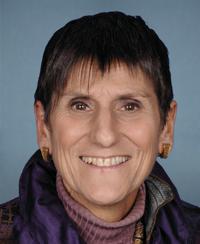
Mr. Chairman, I offer an amendment. Mr. Chairman, I yield myself such time as I may consume. Mr. Chairman, for four decades, Head Start has provided comprehensive child development, literacy, family…
Mr. Chairman, I offer an amendment.
Mr. Chairman, I yield myself such time as I may consume.
Mr. Chairman, for four decades, Head Start has provided comprehensive child development, literacy, family services to more than 18 million preschoolers from low-income and working poor families. It is a proven success. Head Start graduates are less likely to need special education services, to be held back a grade, or to get in trouble with the law. They are more likely to go on to college and to have professional careers. It is unquestionably the most effective early childhood development program ever developed.
For all the program's success, we know that even the best teachers struggle with overwhelming class sizes, particularly with young children, and Head Start's 10 to 1 ratio of students to teachers in the classroom presents clear challenges in helping Head Start children gain the cognitive skills other children have.
That is why this amendment, allowing Head Start centers to recruit and train college students as mentors, reading mentors for preschool children, is so needed.
We all know the benefits of mentoring, whether it is after school, on weekends, or during the school day, mentoring programs change young peoples' lives. There is a proven link between mentoring and reduced substance abuse later in life and improved academic achievement.
And of course the benefits of mentoring are mutual. Some of the college student mentors in this initiative will even become Head Start teachers themselves some day. That is what we have seen in one program which deploys 2,100 college students who devote 15 hours per week during the school year to mentor Head Start students. That program is also a proven success.
I want to be clear, my amendment would not replace the specialized work of Head Start teachers. There is no substitute for the work of a qualified, trained teacher, nor would anything in this amendment require local Head Start centers to offer mentoring programs.
Head Start grantees would have the chance whether or not to start a mentoring program for Head Start children. Mr. Chairman, with this amendment we are simply seeking to supplement the remarkable work of our Head Start teachers in a way that allows for children to learn at their optimum capacity.
It allows Head Start teachers to make the greatest impact possible. And that is why I urge my colleagues to support this amendment.
Mr. Chairman, I reserve the balance of my time.
Mr. Chairman, I yield 1\1/2\ minutes to the gentlewoman from California (Ms. Woolsey).
Mr. Chairman, I yield myself such time as I may consume.
Mr. Chairman, in closing, let me just say that I am excited about the opportunity for this amendment, because I think that we can create a partnership with the Head Start program and with our college students. And the beneficiaries are our youngsters.
And we give an opportunity to college students to be stakeholders in an education process. It keeps them involved in their community. It keeps them involved in public life. And they have so much to offer and to give, and then couple that with the tremendous work of the Head Start teachers.
So with that, I would urge my colleagues to support this amendment.
Mr. Chairman, I yield back the balance of my time.
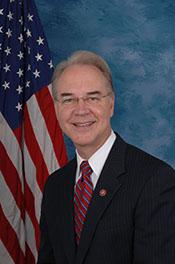
Mr. Chairman, I thank the chairman for yielding me this time and allowing me to participate in this discussion. We know that children who begin kindergarten and first grade prepared both socially and…
Mr. Chairman, I thank the chairman for yielding me
this time and allowing me to participate in this discussion.
We know that children who begin kindergarten and first grade prepared both socially and mentally to learn have a much greater opportunity of success, not just in school but in life. Improving the quality of Head Start should be a priority for all of us.
One of the greatest challenges of any Federal program is to ensure that hard-earned taxpayer money is used only for the purpose intended, and the current Head Start program does not live up to that principle. The need for safeguards and accountability are needed now more than ever.
The School Readiness Act addresses financial management weaknesses found in the current Head Start system and publicly documented in various news accounts. There is disturbing evidence that a sizable share of Head Start funding never reaches its target: disadvantaged children. Instead, the money is being lost to waste, financial abuse, and mismanagement; and there are collective media accounts that suggest that the problem is not isolated.
The director of a Head Start program in Gardenville, Maryland, was indicted on charges that she stole more than $350,000 from the organization over a 4-year period. Imagine if this money were spent on students rather than stolen from Head Start.
A former director of a Head Start program in Charleston, West Virginia, was sentenced up to 5 months in Federal prison after admitting he used an agency credit card for a personal trip to the Kentucky Derby and preparing a false invoice for computer repairs. Rather than investing money in student nutrition, this director took this money from school cafeterias and went to the horse races.
The executive director of the Kansas City, Missouri, Head Start operation earned a salary in excess of $300,000 annually and drove a luxury SUV, leased in part with Federal Head Start funds. The gentleman has since resigned. Head Start was never intended to provide for six- figure salaries and luxury cars.
The Department of Justice gained a guilty plea from an executive director of a Lubbock, Texas, Head Start program after he embezzled more than $800,000 over 2 years and diverted part of the money to a local restaurant.
Mr. Chairman, it is a priority of this Republican Congress to ensure that the necessary financial controls are in place to safeguard against these abuses and to protect the public's confidence in this important school readiness program. Safeguards against financial abuse in this bill include an independent financial audit annually, an annual report detailing how their money is spent and the sources of their funding, oversight by a local governance board, and a requirement that administrative costs may not exceed more than 15 percent of the total program cost.
Congress must not ignore the evidence that much money invested in the Head Start program currently never reaches the disadvantaged children it is intended to serve. I commend the chairman for his leadership and the leadership of the subcommittee chairman, the gentleman from Delaware (Mr. Castle), for this bill; and I urge all Members of the House to support H.R. 2123.
Bill Text
2 versions available
        [Congressional Bills 109th Congress]
[From the U.S. Government Publishing Office]
[H. Res. 455 Engrossed in House (EH)]

H. Res. 455

In the House of Representatives, U.S.,

September 22, 2005.
Resolved, That at any time after the adoption of this resolution the Speaker
may, pursuant to clause 2(b) of rule XVIII, declare the House resolved into the
Committee of the Whole House on the state of the Union for consideration of the
bill (H.R. 2123) to reauthorize the Head Start Act to improve the school
readiness of disadvantaged children, and for other purposes. The first reading
of the bill shall be dispensed with. All points of order against consideration
of the bill are waived. General debate shall be confined to the bill and shall
not exceed one hour equally divided and controlled by the chairman and ranking
minority member of the Committee on Education and the Workforce. After general
debate the bill shall be considered for amendment under the five-minute rule. It
shall be in order to consider as an original bill for the purpose of amendment
under the five-minute rule the amendment in the nature of a substitute
recommended by the Committee on Education and the Workforce now printed in the
bill. The committee amendment in the nature of a substitute shall be considered
as read. Notwithstanding clause 11 of rule XVIII, no amendment to the committee
amendment in the nature of a substitute shall be in order except those printed
in the report of the Committee on Rules accompanying this resolution. Each such
amendment may be offered only in the order printed in the report, may be offered
only by a Member designated in the report, shall be considered as read, shall be
debatable for the time specified in the report equally divided and controlled by
the proponent and an opponent, shall not be subject to amendment, and shall not
be subject to a demand for division of the question in the House or in the
Committee of the Whole. All points of order against such amendments are waived.
At the conclusion of consideration of the bill for amendment the Committee shall
rise and report the bill to the House with such amendments as may have been
adopted. Any Member may demand a separate vote in the House on any amendment
adopted in the Committee of the Whole to the bill or to the committee amendment
in the nature of a substitute. The previous question shall be considered as
ordered on the bill and amendments thereto to final passage without intervening
motion except one motion to recommit with or without instructions.

Attest:

Clerk.