Providing for consideration of the bill (H.R. 1065) to establish the United States Boxing Commission to protect the general welfare of boxers and to ensure fairness in the sport of professional boxing.
Legislative Activity
Stay on top of the latest movement without scrolling through every action
Motion to reconsider laid on the table Agreed to without objection.
November 16, 2005 • 3:16 PM
View full timeline
Introduced in House
November 15, 2005
The House Committee on Rules reported an original measure, H. Rept. 109-295, by Mr. Diaz-Balart, L..
November 15, 2005
Rule provides for consideration of H.R. 1065 with 1 hour of general debate. Previous question shall be considered as ordered without intervening motions except motion to recommit with or without instructions. Measure will be considered read. Specified amendments are in order.
November 15, 2005 • 6:43 PM
Placed on the House Calendar, Calendar No. 118.
November 15, 2005
Considered as privileged matter. (consideration: CR H10339-10342)
November 16, 2005 • 2:28 PM
DEBATE - The House proceeded with one hour of debate on H. Res. 553.
November 16, 2005 • 2:33 PM
The previous question was ordered without objection. (consideration: CR H10341)
November 16, 2005 • 2:48 PM
Passed/agreed to in House: On agreeing to the resolution Agreed to by the Yeas and Nays: 366 - 56 (Roll no. 589).(text: CR H10339)
November 16, 2005 • 3:16 PM
On agreeing to the resolution Agreed to by the Yeas and Nays: 366 - 56 (Roll no. 589). (text: CR H10339)
November 16, 2005 • 3:16 PM
Motion to reconsider laid on the table Agreed to without objection.
November 16, 2005 • 3:16 PM
Voting History
1 vote recorded • Roll call available
Floor Debate
10 membersWhat members said about H.Res. 553 on the floor
 JDS
JDS CSLD
CSLD ALH
ALH CW"+5
CW"+5
Floor Debate
10 membersWhat members said about H.Res. 553 on the floor
Mr. Chairman, I yield myself as much time as I may consume. I rise in strong support of H.R. 1065, the U.S. Boxing Commission Act, which would establish a national regulatory body for the sport that…
Mr. Chairman, I yield myself as much time as I may consume.
I rise in strong support of H.R. 1065, the U.S. Boxing Commission Act, which would establish a national regulatory body for the sport that has been riddled with corruption, scandals and lax enforcement of regulations, putting the lives of contenders on the line.
I want to thank the chairman of the subcommittee Chairman Stearns with, whom I worked closely on this legislation in a bipartisan way, to produce a product that I hope that our colleagues on both sides of the aisle will readily support.
I want to thank in addition to the bipartisan staff who worked on this legislation, I would like to thank our legislative counsel, Brady Young, for his advice, expertise and the patience that is often required when working with our bipartisan team.
I know that there are some in this body who have just wondered why we are addressing this particular issue of boxing when they argue there are more important issues facing our country. I would respectfully point out that it certainly is not the least important issue that we find time to deal with in this body, and that, in fact, it does deal with the health and the safety of literally thousands of people in our country. So I am happy to be supporting this bill right now.
With the passage of the Professional Boxing Safety Act of 1996 and the Muhammad Ali Act in 2000, minimum Federal standards were set to protect the physical and economic well-being of boxers, and State boxing commissions
were charged with meeting those standards. Some States have strong boxing commissions such as New York, Pennsylvania and Nevada that not only require the Federal standards but set additional regulations beyond the minimum requirements.
I want to point out that nothing in this legislation would prevent those that have stronger regulations from using those. Let me read directly from the legislation on minimum standards: Nothing in this Act prohibits any boxing commission from enforcing local standards and requirements that exceed the minimum standards or requirements promulgated by the commission under this Act.
What we found, however, was that there are too many other States that are ignoring the rules, and boxers are the ones who are paying the price.
Many argue that federally mandated health and safety standards are not being adhered to because no corresponding national regulatory body exists. Let me quote from the letter I received from the College of Sports Medicine, who heavily supports this legislation, when they say that, professional boxing is the only major sport which does not have a governing body to establish and enforce rules and practices. It is the only major sport that does not have that.
When the greatest and prettiest of all times, Muhammad Ali, tells you, ``Boxing reform measures are unlikely to succeed unless a U.S. Boxing Commission is created with authority to oversee a sport that still attracts a disproportionate number of unsavory elements that prey upon the hopes and dreams of young athletes,'' when Muhammad Ali tells you that, as he did to us in our hearing, one listens, and that is what Chairman Stearns and I did with the drafting of H.R. 1065.
Boxing is an enormous enterprise. The sport generates over $500 million in revenues each year. However, because so many parties have a financial stake in each boxing match and because competing interests often run counter to the boxers' well-being and because not every manager is as upright as Clint Eastwood in ``Million Dollar Baby,'' many contenders end up destitute.
In this sense, boxers are like many other kinds of talent or workers. Their gifts and their hard work are others' fortunes, and they are treated as disposable assets.
Boxing is also unlike many other sports in that there are very serious physical repercussions. If health and safety standards are not being met, boxers could die, and they do.
Over the past 50 years, more than 130 fighters have died due to boxing-related injuries in the United States. In 2005, we lost the first woman to boxing, Becky Zerlentes. Dr. Zerlentes, a professor of geography, got her Ph.D. at my alma mater, the University of Illinois at Urbana-Champaign.
I believe that it is our responsibility to ensure that boxers are not being put in the ring without being protected, both physically and economically. We know it is a dangerous sport by its nature, but it is our responsibility to ensure that laws that are already on the books are enforced. That is why I joined Chairman Stearns in drafting H.R. 1065 to establish the United States Boxing Commission. This bill will help to ensure that standards are uniform and enforced and that boxers are protected.
The formation of a national regulatory body is supported by the Association of Boxing Commissioners, the organization of State boxing commissioners. They love their sport, and they want to make sure that the laws that govern it are being enforced, keeping the sport safe and respectable. Our bill also enjoys the support of those who say that boxers' health must come first, the American College of Sports Medicine and the American Association of Professional Ringside Physicians.
Finally, it would be a tribute to the greatest of all times, to Muhammad Ali, who lent his name to the law that is meant to protect boxers from those who see them as just a commodity and is not being enforced as it should be.
We need to pass this bill to do a service to the boxers, to the young athletes who see their dreams and their hopes come to life when they are in the center of that ring and the bell signals the first round.
I urge my colleagues to join in this bipartisan leadership of this legislation and support H.R. 1065.
Mr. Chairman, I reserve the balance of my time.
Mr. Chairman, I yield myself such time as I may consume.
I am aware of some concerns raised by the Governor's office in New Jersey about this legislation, where they are concerned about what they say is the erosion of State authority. So I want to be very clear about this and once again read from the bill and read an additional section from it:
``Section 9, Noninterference with Boxing Commissions. Paragraph a, Noninterference: Nothing in this act prohibits any boxing commission from exercising any of its powers, duties, or functions with respect to the regulation or supervision of professional boxing or professional boxing matches to the extent not inconsistent with the provisions of this act.'' By that we mean anything that has more enforcement powers. We are just setting a floor and the States can exercise all their powers, duties, or functions in addition to that.
And ``b, Minimum Standards: Nothing in this act prohibits any boxing commission from enforcing local standards or requirements that exceed the minimum standards or requirements promulgated by the commission under this act.''
A State like New Jersey that contends that they are doing a good job, we say go ahead and do it. We welcome that. We acknowledge that, and we hope that they will continue to do it. But the fact of the matter is that the vast majority of States, despite the passage of the acts of 1996 and the Muhammad Ali Act in 2000, are not doing that; and that is why most people associated with this sport including State commissioners, including State commissioners have weighed in in support of this legislation and look forward to the Federal Government seeing that boxing alone is not without some kind of national standards, and that is why this commission is so important.
Mr. Chairman, I reserve the balance of my time.
Mr. Chairman, I yield myself such time as I may consume.
I would like to say a special thank you to the gentleman from Illinois (Mr. Rush) for the work he has done on the bill and for his strong support of the legislation.
I would also like to read a statement on behalf of the gentleman from Michigan (Mr. Conyers) who is the ranking Democrat on the Committee on the Judiciary.
He says, ``I rise in strong support of H.R. 1065, the United States Boxing Commission Act, which establishes a Federal commission with oversight responsibilities for professional boxing in the United States. This much-needed commission will establish uniform minimum standards which States must follow. It will also be empowered to issue additional regulations to improve the integrity and safety of the sport.
``Further, the commission will establish a Federal licensing requirement for participation in United States matches for certain boxing personnel, including boxers, managers, promoters, match makers, referees, judges and sanctioning.
``In July 2003, the GAO issued a report on professional boxing and listed elements identified by industry experts as essential to improving the health, safety and economic interests of boxers: medical examinations, monitoring of training injuries, assessments of medical risks, health and life insurance, the presence of appropriate medical personnel and equipment, and enforcement of suspensions for injuries.
``Additionally, the GAO found that industry experts believe additional changes are required in boxing and listed the following needed changes: one, require pension plans for boxers; two, require full disclosure of purses and payments; three, require minimum uniform contractual terms between boxers and promoters; and, four, prohibit conflicts of interest.
``While the Federal law has created requirements for States to follow, these laws are largely being ignored. H.R. 1065 will aid in correcting this injustice.
``Boxers often have little or nothing to show from their match proceeds, despite others earning vast wealth off the boxers' talents. We owe it to our athletes to create laws that protect their interests and to make sure those laws are enforced. I urge my colleagues to support H.R. 1065 and to support professional boxers.''
Mr. Conyers was unable to come down to the floor himself and wanted to make sure that this strong support of the legislation was placed in the Record.
Mr. Chairman, I reserve the balance of my time.
Mr. Chairman, I yield myself the balance of my time.
Mr. Chairman, I want to thank the gentleman from Hawaii (Mr. Abercrombie), who is himself a champion weight lifter, for weighing in on this legislation. I appreciate it very much.
There are literally millions of people who enjoy the sport of boxing, who watch it and follow it and who want to see that there is some integrity in that sport. A lot has been said about the contenders themselves, about the boxers. I would echo what my chairman, Mr. Stearns, has said in response to
the question, why should we care? We should care about these young boxers who are trying to follow their dreams and to help create a sport that does guarantee them some level of standards of health and safety and opportunity. And we should also care because it is a $500 million industry in this country that has been plagued with lots of scandals and irregularities.
So we are not talking about creating a major bureaucracy to oversee this, we are looking at a self-funding body that would now add professional boxing to every other sport that has some national standards and national rules and regulations. I think it is fairly modest in its construction, and I would certainly urge all Members on both sides of the aisle to join us, and thank Members on both sides who came down and supported this regulation.
Mr. Chairman, I yield back the balance of my time.
Mr. Chairman, I ask unanimous consent to claim the time in opposition, although I do not oppose the amendment.
Mr. Chairman, I yield myself such time as I may consume.
I just want to make a few remarks in support of the Stearns amendment. The Stearns amendment would ensure that establishment of the boxing commission would not be a burden to the taxpayers. It would require that the fees collected from the licenses go to offset the cost of running the commission. The amendment is fiscally responsible, and it is consistent with PAYGO principles that helped us achieve budget surpluses in the 1990s.
This amendment was crafted in consultation with the Committee on Appropriations and achieves the stated objective. While I believe that boxing needs to have serious oversight, I also believe it should be paid for by those who profit and promote the ringside event. It is the least they can do for the sport they love, and I urge my colleagues to support this amendment.
Mr. Chairman, I yield back the balance of my time.
Mr. Chairman, as the designee of Mr. Filner of California, I offer an amendment.
Mr. Chairman, this amendment enhances safeguards to protect professional boxers. We all know that boxing is a tough sport with even tougher consequences and it is essential that we protect boxers as much as possible.
Unfortunately, there are varying standards among the States on what type of medical services need to be available during boxing matches. Because appropriate medical care is critical in determining whether the fighter injured in the match will recover, suffer permanent damage or will die, depending on the extent of the injury, this amendment would call on the boxing commission to establish minimum standards and what type of medical services must be available at professional boxing matches.
Additionally, many boxers only have insurance coverage the night of the fight. It is not surprising that many insurance companies do not offer boxers health and life insurance policies at affordable rates for the rest of the time. And not every boxer is a prize fighter taking home a big purse. This amendment would simply encourage the Boxing Commission to establish an insurance fund to cover members of the professional boxing community.
We have all heard of the destitute boxer struggling to get by. This amendment would call on the Boxing Commission to come forward on recommendations regarding the feasibility of the pension system for professional boxing participants. Remember, again, this is asking them to come forward simply with a recommendation regarding the feasibility of a pension system.
Finally, like most other sports, boxing is an international business. As such, I believe it is important for the Boxing Commission to enter into agreements with other foreign boxing entities to set minimum health standards for boxers who fight overseas.
All of these measures are important to improve the sport and to provide additional safeguards to boxing, and I urge support of this amendment.
I yield to the gentleman from Florida.
Mr. Chairman, the gentleman from California (Mr. Filner) named this the Archie Moore Criteria for Rating Boxers. So the reason that he called this amendment the Archie Moore criteria for rating boxers is because Archie Moore, also known as the Old Mongoose, held the light middleweight title for 10 years. By the time of his retirement, after 197 fights, Archie had compiled a truly unassailable sports record of 145 knockouts. All of this is even more remarkable when one considers that he spent a large part of his career, approximately 16 years, traveling to an unending string of boxing honky tonks open to fighters who could not break into the big leagues.
Archie did not get a title shot until he turned 39, a time when most boxers retire. There were many barriers preventing great boxers like Archie from rising through the ranks. One primarily being a broken rating system for boxers.
It is the job of the sanctioning organizations to rate boxers and to designate a champion. Sanctioning organizations make their money by sanctioning champion fights. The higher a fighter is rated, the more likely it will be for him to get high paying fights, especially championship fights.
However, often rankings are not based on objective talent or win-loss records; rather, boxers who belong to certain promoters may be highly ranked regardless of skill and ability. A fighter could be the best in his weight class, but if he is not associated with the right people he may not be ranked and thus lose his chance to further his career.
Previously, Congress passed legislation under the Mohammed Ali act to require all sanctioning organizations to develop credible and consistent ratings criteria. However, there are still problems with the system.
For example, one of the sanctioning organizations had a dead man ranked in the top 10 of a super middle weight division for 4 months. During the 4 months in which the dead man was actually ranked, he moved up in the ratings, going from Number 7 to Number 5.
This is just one incident on a long list of problems associated with the ratings system conducted by boxing sanctioning organizations. Obviously, something is wrong, and something ought to be done.
My amendment will require the Boxing Commission to establish guidelines for rating boxers. These guidelines must be followed by organizations that sanction boxing events. My amendment does not strip boxing sanctioning organizations from ranking boxers; however, it does require them to adhere to a set criteria established by the Boxing Commission.
Boxing will never be the sport it once was until the rating system is made more legitimate and respectable, which is why I am asking you to support my amendment.
Mr. Chairman, I yield to the gentleman from Florida.
Mr. Chairman, I yield myself such time as I may consume. Mr. Chairman, I rise today to express my strong support for H.R. 1065, the United States Boxing Commission Act. This bill will establish for…
Mr. Chairman, I yield myself such time as I may consume.
Mr. Chairman, I rise today to express my strong support for H.R. 1065, the United States Boxing Commission Act.
This bill will establish for the first time the United States Boxing Commission within the Department of Commerce. The USBC will be charged with overseeing licensing and registration of boxers and boxing personnel nationally to improve the current inconsistent and lack of regulation of the sport at the State and also at the local levels.
The sport of boxing with its rich and glorious history is slowly being corroded by corruption and abuse in and outside the ring.
I am no fan of bigger and more intrusive government, but in this case the power and sweep of a Federal regulator can establish a uniform minimum standard for boxing on a national level and will hopefully salvage this great sport and reestablish it as a main
event, not some shady, corrupt business enterprise.
In terms of fiscal impact, there has been a lot of misinformation about this bill, its budgetary impact. But let me be perfectly clear: this bill requires the United States Boxing Commission to be funded through receipts from licensed and registration fees, not from taxpayers' money. The USBC will also sunset in 12 years. Here we have a bill that will sunset. The USBC will not be a drain on government resources. Rather, it will function and operate from revenues derived from its oversight function of licensing and registration.
Later, I intend to offer an amendment to clarify this intent during our consideration. This is an important point to be made and needs to be made crystal clear.
In addition, as I mentioned, professional boxing is suffering today. Boxers are in danger of losing life and limb every day, and likewise, every day, we hear more and more stories about needless injuries and even deaths. We had two boxers die in Nevada just recently.
Boxing obviously is a great American sport, with a rich and glorious tradition, but it is in real danger of becoming marginalized into nothing more than a dangerous and corrupt sideshow. This would be a tragedy.
We have celebrated our Olympic heroes and cheered them when they later fought professionally. I believe that adding a backstop of Federal oversight over the various pockets of inconsistent regulation at the State level will help clean up boxing and honor its positive impact on the lives of young men and women who, despite sometimes difficult financial or social circumstances, achieve greatness through discipline, hard work and simply sheer determination.
One of those obscure fighters that rose to become one of America's most important symbols of athletic and human excellence obviously was Muhammad Ali. He testified at one of our hearings. Unfortunately, he could not testify, so his wife read the speech for him, and this is what he said: ``For all of its difficulties, boxing is still a wonderful sport. It still attracts men and women from all walks of life to reach glory in the ring. For many, it's their first experience with hard work, determination and discipline. For still others, it remains the only way up and out from a life filled with bad choices, failure and worse.''
He went on to say: ``Reform measures are unlikely to succeed unless a U.S. Boxing Commission is created with the authority to oversee a sport that still attracts a disproportionate number of unsavory elements that prey upon the hopes and dreams of young athletes.''
My bill, cosponsored with the gentlewoman from Illinois (Ms. Schakowsky), my colleague and the ranking member of my subcommittee, and the gentleman from Illinois (Mr. Rush), my friend and colleague, will push reform and put the weight of uniform national oversight mechanism behind those reforms to ensure that the United States Boxing Commission is successful and those hopes and those dreams are protected.
Specifically, the manager's amendment I am offering will do the following:
First and foremost, it makes it clear that the United States Boxing Commission will be funded largely through revenues generated by licenses and registrations so that it is essentially self-funding. Specifically, section 5 of the bill has been amended to clarify that fees authorized and collected shall be available to fund the operation of the commission and the administration of the Act. Section 14 of the bill was amended to clarify that offsetting collections are available to the commission subject to appropriations.
The next thing, it empowers the United States Boxing Commission to promulgate uniform standards for professional boxing and oversee all professional boxing in the United States.
It ensures that Federal and State laws applicable to boxing are enforced and requires and issues licenses for all professional boxers and, importantly, boxing personnel.
It allows the United States Boxing Commission to suspend or revoke a license if it finds the holder has violated provisions of this Act.
It requires a study and report on health and safety aspects related to boxing, as well as on the definition of a promoter.
It requires the United States Boxing Commission to provide an annual report to Congress on its activities.
I think Mr. Bruce Spizler, chair of the Legal Committee of the Association of Boxing Commissioners and a former member of the National Association of Attorneys General Task Force on Boxing, in his testimony to our subcommittee, summed up the current situation best when he said: ``The regulation of the sport of professional boxing has been left to those individual States and, more recently, tribal organizations, which, legislatively, have provided for its own boxing commission to regulate the sport in its own particular jurisdiction. Thus, considering that the authority of each regulatory component is restricted by its territorial borders, the effective regulation of the sport of professional boxing in the United States is only as strong as its weakest link; leaving `venue shopping' as an effective tool for those seeking a lighter regulatory `punch.' The glaring absence of regulatory uniformity, together with the difficulty, and varying degrees, of effective enforcement, has lent itself to a perpetuation of the inequities, lack of integrity and, in some instances, non-adherence to health and safety measures for which the inherently dangerous sport of professional boxing, unfortunately,'' by its reputation ``has become known.''
I cannot think of a more powerful argument in favor of a Federal commission, that is sunset, designed to oversee the sport of boxing and ensure uniform minimum standards, especially for those States that do not have programs or have inferior ones. States with mature programs, in my opinion, should be supportive because they are already leading and serving as benchmarks.
In addition to the support of the Association of Boxing Commissioners, this bill has been endorsed by the American College of Sports Medicine and the American Association of Professional Ringside Physicians.
In closing, this is an important opportunity to save a sport that has brought so much pride and glory to the United States. Boxing is suffering from problems that stretch far beyond the boundaries of State regulation. It is a sport worth saving that will need the power of our Federal Government oversight to clean up its act and ensure the safety of all its athletes. All the great champions that have paved the way for the sport should be able to count on us to provide a minimum amount of oversight in this situation.
I urge my colleagues to consider this bill, H.R. 1065, the United States Boxing Commission.
Mr. Chairman, I reserve the balance of my time.
Mr. Chairman, I yield myself such time as I may consume.
Mr. Chairman, I rise just in reply to my colleague who is chairman of the Judiciary Committee who made some points in terms of jurisdiction and also made some points that the bill has minimum impact upon the budget.
I have here a copy of the amendment which is part of the manager's amendment that we have next in place, which takes care of the concerns he has by striking a portion of the bill and in place putting it that the bill is self-sufficient and the money that is appropriated comes from the licensure fees. So I would urge the gentleman to vote for the manager's amendment, which will be coming up shortly. That will take care of his main concern, which appears to be that he is concerned it was $5 million the first year and the GAO audit indicated more money thereafter. But with this manager's amendment, the GAO audit is nullified and we have a self-sufficient bill.
Another point I would like to make is the basic thrust of the bill is a 12-year supervision with three appointees
on the commission from the President of the United States with 3-year duration of tenure. At that point they can be reappointed, or they can continue at the President's request. We have in place something here that is very rare on the House floor, and that is something that is sunsetted. So when people talk about a new Federal bureaucracy, let me be perfectly clear. This is a very, very light, temporary government oversight committee to bring accountability and to bring justice to a great American sport. Everybody in the business who testified wants this type of temporary structure. So I think in a larger sense we have to say to ourselves now is the time to do this and, in so doing, in this way we will do the least amount of harm by making it temporary and at the same time asking them to pick up the ball and run with this as a voluntary organization much like other professional sports do.
So I am glad to rise to point out to my colleague that it is going to be amended so that it is budget neutral; and, two, to point out to him that this is not a new Federal bureaucracy, but instead an oversight board to help guide this sport to its ultimate success.
Mr. Chairman, I reserve the balance of my time.
Mr. Chairman, I yield myself such time as I may consume.
I would point out, as the gentleman from Nebraska did say he offered an amendment to abolish all of boxing, I think in his statement he also made an argument in favor of our bill. When he posed the question why should we care, think about that. Why should we care? That was his question that he asked in the hearing, and it simply came back to him that we should care about these fighters, these young fighters who are starting out, many from very difficult economic situations. We should care. And I think as Members of Congress, I hope they will keep that question in mind when they support the bill and realize that the gentleman from Nebraska really had an amendment to abolish boxing, which is almost in direct counterpoint to the question he posed, Why should we care?
Mr. Chairman, I yield such time as he may consume to the gentleman from Nebraska (Mr. Osborne), the former head coach of the Nebraska Cornhuskers.
Mr. Chairman, I yield such time as he may consume to the gentleman from Hawaii (Mr. Abercrombie).
(Mr. ABERCROMBIE asked and was given permission to revise and extend his remarks.)
Mr. Chairman, I offer an amendment.
Mr. Chairman, I yield myself such time as I may consume.
I am offering today a manager's amendment that will perfect the underlying bill to ensure that H.R. 1065 is a fiscally sound piece of legislation that uses a self-funding mechanism for the United States Boxing Commission established under the act.
Let me be crystal clear to my colleagues, taxpayers are not being forced to pay for the USBC. Boxers, boxing personnel and the sanctioning organization, such as the World Boxing Association, WBA, the International Boxing Federation, IBF, and so on, will provide the funds, through payment of license and other fees, which will be collected by the USBC.
Specifically, my amendment will do the following: Section 5 of the bill will be amended to clarify that fees authorized and collected shall be available to fund the operation of the United States Boxing Commission and administration of this act.
Section 14 of the bill will be amended to clarify that offsetting collections are available to the USBC subject to appropriation. This is a very good amendment. It is bipartisan. The bill itself will save lives, protect vulnerable athletes and help get the sport of boxing back in fighting shape.
First and foremost, it will end the corruption and abuse that has plagued the sport for so long so America will regain its pride in boxing and all of its wonderful champions. Moreover, it will be done in a fiscally responsible way. I urge my colleagues to support this perfecting amendment and support H.R. 1065.
Mr. Chairman, I reserve the balance of my time.
Mr. Chairman, I yield back the balance of my time.
Mr. Chairman, will the gentlewoman yield?
Mr. Chairman, I rise in support of my colleague's amendment, and I think I would accept it. Both our staffs have looked at this. We think it is a good improvement on the bill, and so I commend the gentlewoman for her extra work here on the amendment and the gentleman from California (Mr. Filner) who has also been involved with it.
Mr. Chairman, I thank the gentlewoman from Florida for yielding. I do not rise in opposition. I think this amendment is good. We accept it. I would point out, during the hearing, we had a boxer who died of natural causes and as a result of that he rose in the ranking because of the lack of standards that are set. And so I think, in this case, her amendment would be worthwhile, so that this sort
of anomaly does not occur again in which a boxer dies naturally and he rises in rank in the standing in the overall professional standing. So I rise in support of the amendment.
Mr. Chairman, the gentleman's amendment, I think, improves the bill quite a bit, addresses the fee language to ensure that the fees collected pursuant to the act are credited, as the gentleman mentioned, as offsetting collections only for the purpose of funding the commission. It is important to ensure that any fee collected is used expressly for the purpose intended, namely, the funding of this commission.
User fees are common throughout most industries and are often used to fund activities that, other than the purpose of the fee that is collected. We know that. We see that oftentimes in Congress. But this amendment will ensure that this does not happen. So I think it is very good. And I compliment the gentleman for it. It is a good policy. The insurance commission is the only entity that receives the industry fees that it is collecting from. It has bipartisan support, and I appreciate the gentleman working with me and my staff, and I commend my colleagues to vote and support it.
Mr. Speaker, I object to the vote on the ground that a quorum is not present and make the point of order that a quorum is not present.
Mr. Speaker, by direction of the Committee on Rules, I call up House Resolution 553 and ask for its immediate consideration. Mr. Speaker, for the purpose of debate only, I yield the customary 30…
Mr. Speaker, by direction of the Committee on Rules, I call up House Resolution 553 and ask for its immediate consideration.
Mr. Speaker, for the purpose of debate only, I yield the customary 30 minutes to the gentleman from Florida (Mr. Hastings), pending which I yield myself such time as I may consume. During consideration of this resolution, all time yielded is for the purpose of debate only.
(Mr. LINCOLN DIAZ-BALART of Florida asked and was given permission to revise and extend his remarks.)
Mr. Speaker, House Resolution 553 is a fair rule. It provides for consideration of H.R. 1065, the United States Boxing Commission Act. The rule allows for consideration of the amendments, all the amendments that were submitted to the Rules Committee. We are making in order all the amendments that were submitted to the Rules Committee.
It also provides 1 hour of general debate, with 40 minutes equally divided and controlled by the chairman and ranking minority member of the Committee on Energy and Commerce and 20
minutes equally divided and controlled by the chairman and ranking minority member of the Committee on the Judiciary. The rule also provides one motion to recommit, with or without instructions.
The underlying bill, Mr. Speaker, would establish a Federal boxing regulatory agency, the United States Boxing Commission. The commission would have the responsibility to protect the general interests of boxers, ensure uniformity, fairness, and integrity in professional boxing, and oversee all the professional boxing matches in the United States.
The boxing commission, in consultation with the Association of Boxing Commissions, will formulate uniform minimum standards for professional boxing. The commission would also ensure that Federal and State laws applicable to professional boxing are enforced and will assist State boxing commissions in meeting the minimum standards prescribed by the bill.
The bill requires that every boxer, promoter, or sanctioning organization connected with a boxing match must obtain a license from the boxing commission. The license could be suspended or revoked for violations of the standards adopted by the commission. This bill does not preempt any existing State boxing standards. As I stated before, Mr. Speaker, what it does is it establishes a national boxing commission really to oversee this sport, which is a sport of long tradition; but it is obviously one that is peculiar in terms of its degree of violence.
Mr. Speaker, when I was a child, I remember I was living in Spain. We had a friend, my family had a friend, who was in exile from Cuba. He was living in Madrid at the time. He had been welterweight champion of the world. He was a fine, gentle man. Really just an extraordinary human being. His name was Kid Tunero. He was very famous not only in Cuba but throughout the boxing world.
And I remember, and obviously this bill is not directly related to this that I am going to bring up now, but he impacted me in a number of ways. I remember his gentleness. It was impacting that a man who had made such a reputation as a champion boxer was perhaps one of the most gentle men that I have ever met. And he had two sons, and they were both artists. I do not know where they are today. At that time they were living in Paris.
And he told me, I would do anything in the world, anything in the world, so that my sons are not boxers because of what you go through when you are a boxer. Not only the actual physical torture, the physical pain, but having to deal with really much of an unfortunate set of circumstances. By the way, another aside, he was such a great boxer, Kid Tunero, in Madrid I remember, when I was a child, he was training a young man who became the flyweight champion of the world, and I met him. That was the only time I have ever been to a boxing fight, but I remember he got us really good seats. Imagine he was training Legra, and Legra got to be the flyweight champion of the world.
Mr. Speaker, I will tell the Members I remember I was 9 years old and to this day I can tell the Members I was up ringside being shocked, and I can remember the shock that I felt at the violence, the violence of that sport, the physical pain that those two boxers were feeling. I have never gone back to a match. I respect it. There are millions, millions of fans.
What we want to do with this legislation is set minimum standards for the protection of those people who make a living out of that tough sport. So even though Kid Tunero is no longer around, no longer with us, I think of him today and the lessons that I learned from him, how to be an ultimate gentleman. What a great man he was.
Anyway, that is what we are doing with the underlying legislation, Mr. Speaker. The will of the House will be manifested today, and people can either establish or not establish the boxing commission, but we are bringing forth that legislation with this rule.
Mr. Speaker, I reserve the balance of my time.
Mr. Speaker, I yield myself the balance of my time.
Mr. Speaker, I am pleased that my friend has advocated for the importance of States' rights. I think that is something that is to be commended. We certainly do believe in the American system of federalism. We do believe as well in regular order, and this bill came up. There were hearings before Chairman Barton. Mr. Stearns was telling us in the Rules Committee about how impacted he was at the hearing when he listened to Mrs. Ali because Muhammad Ali could not speak, but he was insisting on supporting, through Mrs. Ali, urging the committee to support and pass out this legislation because of corruption that exists in the boxing world and the need to regulate the sport and eliminate that corruption.
We believe in regular order in addition to federalism, and this bill had hearings. It came up through regular order, and we believe in letting the House express its will. Every single amendment, every single amendment that was brought to the Rules Committee for consideration was made in order for debate. I am going to vote for the bill, and obviously the Members can make up their minds whether they support it or not. I urge all Members to support this rule. The rule is fair and made in order every amendment submitted to the Rules Committee.
Mr. Speaker, I yield back the balance of my time, and I move the previous question on the resolution.
The previous question was ordered.
Mr. Speaker, on that I demand the yeas and nays.
Mr. Speaker, I thank the gentleman from Florida (Mr. Lincoln Diaz-Balart), my good friend, for yielding me the customary 30 minutes; and I yield myself such time as I may consume. (Mr. HASTINGS of…
Mr. Speaker, I thank the gentleman from Florida (Mr. Lincoln Diaz-Balart), my good friend, for yielding me the customary 30 minutes; and I yield myself such time as I may consume.
(Mr. HASTINGS of Florida asked and was given permission to revise and extend his remarks.)
Mr. Speaker, I rise with great disappointment that the House is being asked again to consider legislation under a restrictive rule. My good friend from Florida said that the will of the House will be expressed here today. I query him as to how that will occur under a restrictive rule.
Under this rule, only a limited number of amendments will be offered by a select few. There are many who will argue that this legislation, when considered, is noncontroversial. If that is the case, then why not make this an open rule?
Or perhaps the question ought to be, Why are we considering this bill at a time when the House should be considering legislation that increases veterans benefits, invests in affordable housing, and ensures that our country's neediest have access to affordable health care under Medicare and Medicaid? The truth of the matter is, Mr. Speaker, none of these issues are being debated on this floor today because my colleagues in the majority are too busy cutting backroom deals that will cut Federal funding in each of these critically important areas as well as other areas of import. I just spoke with a group of foreign service officers who were pointing out to me some of the cuts that will take place in places where they are scheduled to go.
The majority knows that they are wrong on all of these issues, and that is why they do not want to debate us on them. So, Mr. Speaker, we find ourselves at this moment on the floor of the House debating a bill that I would think my friends on the other side of the aisle would say reeks of hypocrisy and overarching Federal Government interference. Are not Republicans the ones who claim that they are the party of States' rights? Are not Republicans the ones who claim that States are more effective in regulating what happens within their own State? Are not Republicans the ones who claim that another Federal commission trumping State commissions already in existence is nothing more than unnecessary bureaucracy? Are not Republicans federalists?
But Republicans are not saying these things. Instead, some are trying to divert attention away from the things on a much larger scale that actually matter.
Mr. Speaker, I am not trying to say that a problem does not exist in the sport of boxing. My friend mentioned one Kid. Mention to him another, Kid Gavilan, who died in our area and of my good friend, Representative Diaz-Balart, a shoeshine man after fighting some of the better fights in two divisions with some of the better fighters in the world at some point. So there are a lot of things to be said from people receiving too many blows upside their heads. In the last decade, amateur and professional boxing has grown into a multibillion dollar business. Promoters, cable companies, and the sporting industry as a whole reap big ticket sales from the sweat and toil of young athletes.
Yet those who actually step into the ring often find an entirely different opponent outside the ring, as Kid Gavilan did. Many boxers find those who claim to be in their corner have made dirty deals and shortcuts that undermine a boxer's earnings and in some cases their health. Contracts are often broken or exploited. Injuries and adequate medical care are sometimes overlooked. These are important issues that should be dealt with, but not by this body and not in this manner.
The solution would seem to be a crackdown on State commissions that woefully fail to enforce their own rules and regulations. Better yet, maybe we need a national sports commission to regulate all sports that Congress all of a sudden wants to regulate.
First it was baseball; and we really did clean up baseball and steroids. That is gone. We do not have that as an issue any more. And now it is boxing. What next? The National Hockey League or the National Football League?
All of these sports in some ways are violent, and we hear stories every year about athletes being injured, paralyzed and even killed. What about the Ultimate Fighting Championships, where
they put people in cages and then knock each other's brains out? Or World Wrestling Entertainment business where a lot of people wind up after careers in that field with broken bodies because they missed the trick at a given point? Or even our own United States Olympic Committee? If we are doing this about corruption, I can think of few sports committees in history as corrupt as the Olympic Committees. However, that is not what we are doing today.
In the grand scheme of things, we have more important issues to deal with: a failing war in Iraq, skyrocketing prescription drug prices, our own citizens displaced by a recent torrent of natural disasters in my good friend from Florida's district and my district alone, and continuing unethical behavior from executive and legislative branches of our government, including national security leaks.
All of these issues and so many more need to be higher priorities in our work today, but this body is silent on all of them. On behalf of the American people, I say, speak up. The silence is deafening. It is time that my friends in the majority stop wasting our time with bills that neglect those in need and divert attention from the failures of this body over the last decade. I urge my colleagues to reject this rule and the underlying legislation that does little, if anything, to promote the general welfare of our great Nation.
One of the arguments that was made is if we do not regulate this from a national level, what is going to happen is boxing will go on venue shopping. I pointed out yesterday that Ali fought the Thriller in Manila and in addition to that fought the Rumble in the Jungle, so if we regulate it from the Federal level, what is going to stop them from going abroad to rope-a-dope?
Mr. Speaker, I yield back the balance of my time.
Mr. Chairman, some might not know this, but my State of Mississippi has a great history of boxing. Archie Moore, from Benoit, Mississippi, participated in professional boxing for over 27 years,…
Mr. Chairman, some might not know this, but my State of Mississippi has a great history of boxing. Archie Moore, from Benoit, Mississippi, participated in professional boxing for over 27 years, holding the title of light heavyweight champion, and facing the likes of Rocky Marciano and Cassius Clay, during his career. While he went on to train Foreman and Ali, he will probably be best remembered as holding the record for the most knockouts in a career at 141. What I think is more important and that he may not be remembered as much for was his integrity in such a scandalous and corrupt sport during the years he boxed from 1936 to 1963. While we would have hoped boxing would have progressed and reformed over the years, it has not. The sport is still riddled with many problems, not the least is the exploited nature of its athletes. Muhammed Ali once said this: ``I say get an education. Become an electrician, a mechanic, a doctor, a lawyer--anything but a fighter. In this trade, it's the managers that make the money and last the longest.'' This seemingly benign statement illustrates one small problem among the multitude of problems the sport of boxing faces.
Today, many fans are saddened and upset by the lack of integrity they see in professional boxing that has significantly weakened the sport-- the most deplorable problem of which is the treatment of the sport's athletes. Without a doubt, professional boxers are the most exploited athletes in our Nation. While Congress has made efforts to protect professional boxers before, through the Professional Boxing Safety Act of 1996 and the Muhammad Ali Boxing Reform Act of 2000, these are not enough. The real problem today is the ineffective and inconsistent oversight of professional boxing, which has led to continuing scandals, controversies, unethical practices, and unnecessary injuries and deaths in the sport. That is why we are here today.
Mr. Chairman, through the leadership of members of Congress like Senator John McCain, Representative Cliff Stearns and Representative Peter King, Congress is addressing and hopefully rectifying this harrowing situation. In order to better protect boxers and the integrity of professional boxing, we must establish a Federal regulatory entity to oversee professional boxing and set basic uniform standards for certain aspects of the sport. Consider this--professional boxing remains the only major sport in the United States that does not have a strong, centralized association, league, or other regulatory body to establish and enforce uniform rules and practices. And because a powerful few benefit greatly from the current system of patchwork compliance and enforcement of Federal boxing law, a national self- regulating organization--although preferable to Federal government oversight--is not a realistic option.
Mr. Chairman, I was an original co-sponsor to Representative King's bill, ``The Professional Boxing Amendments Act of 2005,'' which would also establish a United States Boxing Commission that perform substantially similar functions. I am very pleased that this idea is finally being considered on the House floor. The troubles that plague the sport of professional boxing undermine its credibility in the eyes of the public and--more importantly--compromise the health and safety of boxers. The creation of a Federal boxing commission would effectively curb these problems. The Senate has passed Senator McCain's boxing bill, S. 148, the Professional Boxing Amendments Act of 2005, and I think it will be a travesty if the House does not do the same. Therefore, Mr. Chairman, I rise in great support of this legislation today and urge my colleagues to swiftly and expeditiously approve this legislation.
House of Representatives, Committee on Education and the
Workforce,
Washington, DC, September 28, 2005.
Hon. Joe Barton,
Chairman, Committee on Energy and Commerce, Rayburn House
Office Building, Washington, DC.
Dear Chairman Barton: I am writing to confirm our mutual
understanding with respect to consideration of H.R. 1065, the
United States Boxing Commission Act, which was referred to
the Committee on Energy and Commerce and in addition the
Committee on Education and the Workforce. The Committee on
Energy and Commerce reported this bill on July 28, 2005.
As you know, provisions within H.R. 1065, directing a
United States Boxing Commission to establish health and
safety standards and a licensing registry for boxing
personnel, fall within the jurisdiction of the Committee on
Education and the Workforce. In addition, section 11 of the
bill requires the Commission to study and report to Congress
on health and safety standards in the boxing industry; this
provision likewise falls within the jurisdiction of the
Committee on Education and the Workforce.
I do not intend to delay consideration of H.R. 1065, nor
will I object to the scheduling of this bill for
consideration in the House of Representatives. However, I do
so only with the understanding that this procedural route
should not be construed to prejudice the Committee on
Education and the Workforce's jurisdictional interest and
prerogatives on these provisions or any other similar
legislation, and will not be considered as precedent for
consideration of matters of jurisdiction to my committee in
the future. Further, this understanding is based on the
agreement reached between our staffs to provide that the
study commissioned in section 11 of the bill is transmitted
to the Committee on Education and the Workforce, as well as
your committee. Finally, we would expect you to support our
request for appointment of conferees on these provisions
should a conference arise with the Senate.
I would ask that you include a copy of our exchange of
letters in the Congressional Record on this bill. Thank you
for your consideration and cooperation in this matter.
Sincerely,
John A. Boehner,
Chairman.
Show 5 more
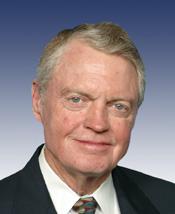
Mr. Chairman, I thank Chairman Stearns for yielding me this time. Mr. Chairman, I speak in support of H.R. 1065, the United States Boxing Commission Act. When we think about boxing, we often think…
Mr. Chairman, I thank Chairman Stearns for yielding me this time.
Mr. Chairman, I speak in support of H.R. 1065, the United States Boxing Commission Act.
When we think about boxing, we often think about Jack Dempsey and Gene Tunney, Joe Louis, Max Schmaeling, Muhammad Ali, Sonny Liston. These are all high-profile fights, a lot of press coverage, pretty well attended by trainers and doctors, a lot of money involved. But what we do not see is the low profile, the seamy side of boxing, the mismatches, the dishonesty, the lack of medical attention, sometimes the brain damage, the low pay, the high number of people who leave the sport with absolutely no financial resources and many times in pretty poor shape physically. So sometimes this part of boxing has been called the ``red light district'' of professional sports. And I would have to say from my knowledge of it, somewhat limited, I would agree that that is an apt title.
Professional boxing, as has been mentioned, is the only major U.S. sport that does not have a centralized association or league to establish and enforce uniform rules and practices. In football we have the National Football League; basketball, the National Basketball Association; Major League Baseball; National Collegiate Athletic Association; U.S. Olympic Committee.
So people say, why did boxing not do this? Why would this not be something that would be natural? And the reason is there is a lot more organization in those other sports. NCAA is composed of member institutions. The Olympic Committee has a variety of supporting organizations. Boxing is almost something that one would have to say has total anarchy, and it is spread all over the place. Some of these club fights, obviously, are very low-budget items; and it is almost impossible to get any kind of organization involved.
I have spent most of my life working with young athletes, and some of these
athletes came from backgrounds similar to that of most prizefighters. There is a lot of poverty. There is sometimes very little family support, sometimes poor schools, sometimes gang influence. But with somebody to care and supervise and nurture, many will come out of that environment and do reasonably well. But they need a little bit of guidance. They need a little bit of help. But I would say the exploitation is more often the norm than a good outcome.
So years of corruption and abuse in boxing would indicate that no effective regulation would come from within the sport. We have asked the question, why do they not just take care of it themselves? But how long are we going to wait?
We have had years and years and years of this sport, going back to the 1700s, and we have seen no regulatory body emerge. How many people have to die? How many people have to have their brains scrambled? And how many matches do we have to have with no medical attention before we do something about it? We would not do something like this with animals. We are very much against cockfighting and other kinds of contests, and we regulate, and we make some of those illegal as well.
So H.R. 1065 provides a uniform Federal standard to regulate business practices and safety issues within the boxing world. This is something whose time has come. It establishes the United States Boxing Commission which oversees all boxing matches in the U.S.
This is a good bill. It is a needed bill. I would really like to see the States do this. But States, again, in many cases, have abdicated their responsibility. They are all over the place. What goes in one State does not go in another. Again, the medical supervision is the main thing that I am interested in, and the injury factor and the fact that we are not having adequate supervision.
I urge support of this bill. I realize it does add some government responsibility. Generally, as a Republican, I do not like to see those things, but when health and safety is involved, I think we need to intervene.
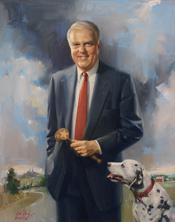
Mr. Chairman, I yield myself as much time as I may consume. Mr. Chairman, I rise in opposition to H.R. 1065, the United States Boxing Commission Act. This is a big government bill that creates a new…
Mr. Chairman, I yield myself as much time as I may consume.
Mr. Chairman, I rise in opposition to H.R. 1065, the United States Boxing Commission Act. This is a big government bill that creates a new Federal agency that provides for more regulation and is not self- financing as has been intimated.
The top of page 13 of the Energy and Commerce Committee's report uses a CBO estimate that says: ``Assuming appropriation of the necessary amounts, CBO estimates that implementing H.R. 1065 would cost $5 million in 2006 and $26 million over the 2006-2010 period.''
That means that we are adding $26 million to the deficit to regulate one sport. That is not right. The Judiciary Committee received the sequential referral of this bill to consider several provisions within the legislation. The Judiciary Committee has long been involved in issues relating to professional sports, including oversight of the U.S. Olympic Committee, Major League Baseball, and the NCAA.
Many are concerned and have raised serious questions about the commercial and legal aspects within the sport of professional boxing. As a result, some have urged the creation of a Federal boxing commission to regulate this sport. The legislation would accomplish that goal.
Although the creation of the U.S. Boxing Commission itself does not fall within the jurisdiction of the Judiciary Committee, significant provisions relating to title 18 of the U.S. Code, which is the criminal code, and the authority of the Attorney General and the commission's executive director are within the committee's purview.
During the markup of this bill, the Judiciary Committee adopted a technical change to ensure that the use of administrative subpoenas comports with existing title 18 provisions. Additionally, as amended by the committee, the legislation will now allow a designee of the Attorney General to represent the commission in judicial proceedings rather than requiring the Attorney General himself to do so. Finally, the Judiciary Committee amendment removed the authority of the commission's executive director to make unilateral determinations regarding violations of this act or to bring action in Federal court. This means that such determinations will be required to be made by the full commission before action can be taken.
Although these Judiciary Committee amendments improved the legislation, the committee reported the bill with no recommendation, no recommendation, as a result of the concerns of many Members on both sides of the aisle regarding the underlying merits of the legislation. I share these concerns and do not support the goal of the legislation.
Notwithstanding the fact that there are well-founded concerns surrounding the support of boxing, I believe that the creation of a boxing commission is unnecessary and urge my colleagues to oppose this legislation.
Mr. Chairman, I reserve the balance of my time.
Mr. Chairman, I yield such time as he may consume to the gentleman from Nebraska (Mr. Terry).
Mr. Chairman, I yield back the balance of my time.
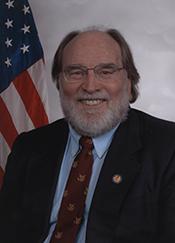
Mr. Chairman, this legislation may seem a bit esoteric to some not only in Congress here but in the public at large. But this issue, and I want to commend you and the ranking member for bringing it…
Mr. Chairman, this legislation may seem a bit esoteric to some not only in Congress here but in the public at large. But this issue, and I want to commend you and the ranking member for bringing it to our attention, this legislation could not be more crucial in terms of what our national responsibilities are.
Boxing and some of the so-called sports that are now associated with physical contact, things called the extreme sports, are interstate in nature, almost by definition. And because they are interstate, without regulation or oversight by the Congress, that means that many of the people associated with, in particular in this instance, the boxers, are in a sense victimized by our failure to take this up as a national question.
The stories may be instructive that are associated with boxing and boxing history. They may be even redemptive in terms of our contemplation of them: People struggling up from the bottom of the economic and social scale, sometimes tragic in nature in terms of those that have succeeded, and then are undone by success. For example, it is well known that the great heavyweight challenger Joe Louis Barrow was considered not only a great champion and a great personality, but was associated in many people's minds symbolically with being able to rise above race to be a symbol for brotherhood, someone who sacrificed financially for the United States by joining the Army during the war. And his reward was to be persecuted by the Internal Revenue Service for not paying taxes on purses and funds that he earned during that period of time. As a result, it had tragic dimensions for him in later life.
These kinds of stories can be replicated over and over again throughout the history of boxing. So what we have right now is the opportunity, Mr. Chairman, for us to put together a commission that will deal with some of the fundamental issues within the purview of the Congress in terms of interstate regulation.
This has to do with health care and the capacity to see to it that anybody engaged in boxing has access to and provision for health care and for pensions for that time when they have to retire. There is no reason why a percentage of every purse cannot be put into some kind of fund that will guarantee a pension and access to a pension for those engaged in boxing.
We have had great champions in Hawaii. Everyone has a story in this regard, Stan Harrington and Bobo Olson, some of the folks that I had an opportunity to know, and some of our champions right now, and potential champions in Hawaii and elsewhere across the country. I ask that everyone give us a chance to move this legislation along so we can complete the opportunity that is before us.
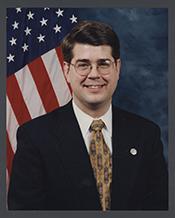
Mr. Chairman, I thank the gentleman from Wisconsin for yielding me this time. I rise in opposition to this bill, and I first want to say that the gentleman from Florida is my chairman. I am a part of…
Mr. Chairman, I thank the gentleman from Wisconsin for yielding me this time.
I rise in opposition to this bill, and I first want to say that the gentleman from Florida is my chairman. I am a part of his subcommittee and really respect and appreciate his efforts on this bill. We have just drawn different conclusions.
I think the fundamental question that we have to ask about this bill is whether or not boxing, professional boxing, and that is what we are here to talk about is professional boxing, is worth creating another bureaucracy within the Department of Commerce. No matter how we cloak this, it is creating a new entity of rules and regulation, enforcement within the Department of Commerce to oversee a professional sport, although I will say ``professional sport'' with quotations around it.
Where we have professional sports, all of the professional sports have their own regulatory body where they themselves have gotten together and formed, like the Mayflower Compact, their own regulatory or government overseeing body with their own rules and regulations within that body. To my knowledge, boxing is the only sport that has come before Congress asking us to save the sport from itself.
We held several hearings on this within our committee and subcommittee. We had several big-name people from the sport, Muhammad Ali, commissioners from around the State, promoters. All testified to the corruptness of professional boxing, and I asked the witnesses before us at one of our panels, I said, if professional boxing wants to eliminate any semblance of legitimacy, make themselves in essence the wrestling of that sport, why should we care? They came back and said, Well, because we have to. We cannot, in essence, get our own act together; and it is for the health of the boxers. That is why if it is for the health of the boxers, I suggested that we should just ban professional boxing. I offered an amendment and withdrew it.
But the issue to me is if the boxing profession wants to make itself irrelevant as a legitimate professional sport, let us give them that opportunity to do so. Let us not create a new Federal bureaucracy to save themselves from themselves.
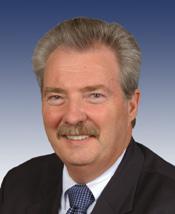
Mr. Chairman, I offer an amendment. Mr. Chairman, I ask unanimous consent that the amendment be modified by the modification at the desk. Mr. Chairman, I yield myself such time as I may consume. Mr.…
Mr. Chairman, I offer an amendment.
Mr. Chairman, I ask unanimous consent that the amendment be modified by the modification at the desk.
Mr. Chairman, I yield myself such time as I may consume.
Mr. Chairman, the sport of boxing is an amusement. It is a luxury often costing participants hundreds of dollars to attend a single prize fight.
In a time when we are searching for ways to fund necessities, we should not expose the taxpayer to a left hook and the possibility of paying millions of dollars to clean up corruption of a highly profitable business that estimates are brings in a billion dollars a year.
I commend the gentleman from Florida for working with me to ensure that taxpayers keep their guard up to prevent them from sharing the burden of paying for this commission.
I am still uncomfortable with the prospect of the Federal Government serving directly as the referee for licensing and regulating commercial sports.
Other professional sports, baseball, football, hockey, basketball all have their own governing body to thwart the problems now faced by the professional boxing industry.
However, if it must be done, then we must ensure that the costs fall on those that have generated the need for regulation and who benefit the most from boxing industry's revenues.
I believe my amendment will ensure this commission will be funded exclusively by licensing fees on the boxing industry participants and not from appropriations of general funds.
I ask my colleagues to support this amendment to hold the boxing industry accountable to pay for its own regulation.
Mr. Chairman, I yield 2 minutes to the gentleman from Florida (Mr. Stearns).
Mr. Chairman, I yield back the balance of my time.
Bill Text
2 versions available
        [Congressional Bills 109th Congress]
[From the U.S. Government Publishing Office]
[H. Res. 553 Engrossed in House (EH)]

H. Res. 553

In the House of Representatives, U.S.,

November 16, 2005.
Resolved, That at any time after the adoption of this resolution the Speaker
may, pursuant to clause 2(b) of rule XVIII, declare the House resolved into the
Committee of the Whole House on the state of the Union for consideration of the
bill (H.R. 1065) to establish the United States Boxing Commission to protect the
general welfare of boxers and to ensure fairness in the sport of professional
boxing. The first reading of the bill shall be dispensed with. All points of
order against consideration of the bill are waived. General debate shall be
confined to the bill and shall not exceed one hour, with 40 minutes equally
divided and controlled by the chairman and ranking minority member of the
Committee on Energy and Commerce and 20 minutes equally divided and controlled
by the chairman and ranking minority member of the Committee on the Judiciary.
After general debate the bill shall be considered for amendment under the five-
minute rule. In lieu of the amendments recommended by the Committees on Energy
and Commerce and the Judiciary now printed in the bill, it shall be in order to
consider as an original bill for the purpose of amendment under the five-minute
rule the amendment in the nature of a substitute printed in part A of the report
of the Committee on Rules accompanying this resolution. That amendment in the
nature of a substitute shall be considered as read. All points of order against
that amendment in the nature of a substitute are waived. Notwithstanding clause
11 of rule XVIII, no amendment to that amendment in the nature of a substitute
shall be in order except those printed in part B of the report of the Committee
on Rules. Each amendment may be offered only in the order printed in the report,
may be offered only by a Member designated in the report, shall be considered as
read, shall be debatable for the time specified in the report equally divided
and controlled by the proponent and an opponent, shall not be subject to
amendment, and shall not be subject to a demand for division of the question in
the House or in the Committee of the Whole. All points of order against such
amendments are waived. At the conclusion of consideration of the bill for
amendment the Committee shall rise and report the bill to the House with such
amendments as may have been adopted. Any Member may demand a separate vote in
the House on any amendment adopted in the Committee of the Whole to the bill or
to the amendment in the nature of a substitute made in order as original text.
The previous question shall be considered as ordered on the bill and amendments
thereto to final passage without intervening motion except one motion to
recommit with or without instructions.
Attest:

Clerk.