Asserting that Hamas and other terrorist organizations should not participate in elections held by the Palestinian Authority, and for other purposes.

Legislative Activity
Stay on top of the latest movement without scrolling through every action
The title of the measure was amended. Agreed to without objection.
December 16, 2005 • 2:56 PM
View full timeline
Introduced in House
November 18, 2005
Referred to the House Committee on International Relations.
November 18, 2005
Ms. Ros-Lehtinen moved to suspend the rules and agree to the resolution, as amended.
December 14, 2005 • 10:49 PM
Considered under suspension of the rules. (consideration: CR H11637-11642)
December 14, 2005 • 10:49 PM
DEBATE - The House proceeded with forty minutes of debate on H. Res. 575.
December 14, 2005 • 10:49 PM
At the conclusion of debate, the Yeas and Nays were demanded and ordered. Pursuant to the provisions of clause 8, rule XX, the Chair announced that further proceedings on the motion would be postponed.
December 14, 2005 • 11:21 PM
Considered as unfinished business. (consideration: CR H11921-11922)
December 16, 2005 • 2:48 PM
Passed/agreed to in House: On motion to suspend the rules and agree to the resolution, as amended Agreed to by the Yeas and Nays: (2/3 required): 397 - 17, 7 Present (Roll no. 650).(text: CR 12/14/2005 H11637)
December 16, 2005 • 2:56 PM
On motion to suspend the rules and agree to the resolution, as amended Agreed to by the Yeas and Nays: (2/3 required): 397 - 17, 7 Present (Roll no. 650). (text: CR 12/14/2005 H11637)
December 16, 2005 • 2:56 PM
Motion to reconsider laid on the table Agreed to without objection.
December 16, 2005 • 2:56 PM
The title of the measure was amended. Agreed to without objection.
December 16, 2005 • 2:56 PM
Voting History
1 vote recorded • Roll call available
Floor Debate
19 membersWhat members said about H.Res. 575 on the floor
 TL
TL IR
IR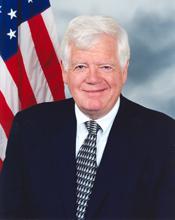 JM
JM RPF
RPF HJH+14
Floor Debate
19 membersWhat members said about H.Res. 575 on the floor
Mr. Speaker, I yield for the purpose of making a unanimous consent request to the gentlewoman from California (Ms. Woolsey). (Ms. WOOLSEY asked and was given permission to revise and extend her…
Mr. Speaker, I yield for the purpose of making a unanimous
consent request to the gentlewoman from California (Ms. Woolsey).
(Ms. WOOLSEY asked and was given permission to revise and extend her remarks.)
Mr. Speaker, I yield for the purpose of making a unanimous consent request to the gentlewoman from California (Ms. Solis).
(Ms. SOLIS asked and was given permission to revise and extend her remarks.)
Mr. Speaker, I yield for the purpose of making a unanimous consent request to the gentleman from California (Mr. Honda).
(Mr. HONDA asked and was given permission to revise and extend his remarks.)
Mr. Speaker, I yield for the purpose of making a unanimous consent request to the gentleman from New York (Mr. Hinchey).
(Mr. HINCHEY asked and was given permission to revise and extend his remarks.)
Mr. Speaker, I yield for the purpose of making a unanimous consent request to the gentlewoman from California (Ms. Lee).
(Ms. LEE asked and was given permission to revise and extend her remarks.)
Mr. Speaker, I yield for the purpose of making a unanimous consent request to the gentlewoman from Wisconsin (Ms. Baldwin).
(Ms. BALDWIN asked and was given permission to revise and extend her remarks.)
Mr. Speaker, I yield for the purpose of making a unanimous consent request to the gentlewoman from Michigan (Ms. Kilpatrick).
(Ms. KILPATRICK of Michigan asked and was given permission to revise and extend her remarks.)
Mr. Speaker, I yield for the purpose of making a unanimous consent request to the gentlewoman from Texas (Ms. Eddie Bernice Johnson).
(Ms. EDDIE BERNICE JOHNSON of Texas asked and was given permission to revise and extend her remarks.)
Mr. Speaker, I yield for the purpose of making a unanimous consent request to the gentleman from Massachusetts (Mr. Olver).
(Mr. OLVER asked and was given permission to revise and extend his remarks.)
Mr. Speaker, I yield for the purpose of making a unanimous consent request to the gentlewoman from California (Ms. Watson).
(Ms. WATSON asked and was given permission to revise and extend her remarks.)
Mr. Speaker, I yield for the purpose of making a unanimous consent request to the gentlewoman from Wisconsin (Ms. Moore).
(Ms. MOORE of Wisconsin asked and was given permission to revise and extend her remarks.)
Mr. Speaker, I yield for the purpose of making a unanimous consent request to the gentlewoman from California (Ms. Waters).
(Ms. WATERS asked and was given permission to revise and extend her remarks.)
Announcement By the Speaker Pro Tempore
Mr. Speaker, I yield for the purpose of making a unanimous consent request to the gentlewoman from Ohio (Mrs. Jones).
(Mrs. JONES of Ohio asked and was given permission to revise and extend her remarks.)
Mr. Speaker, I yield for the purpose of making a unanimous consent request to the gentleman from Michigan (Mr. Conyers).
(Mr. CONYERS asked and was given permission to revise and extend his remarks.)
Mr. Speaker, I yield for the purpose of making a unanimous consent request to the gentleman from Illinois (Mr. Gutierrez).
(Mr. GUTIERREZ asked and was given permission to revise and extend his remarks.)
Mr. Speaker, I yield for the purpose of making a unanimous consent request to the gentlewoman from Florida (Ms. Corrine Brown).
(Ms. CORRINE BROWN of Florida asked and was given permission to revise and extend her remarks.)
Mr. Speaker, I yield for the purpose of making a unanimous consent request to the gentleman from New York (Mr. Nadler).
(Mr. NADLER asked and was given permission to revise and extend his remarks.)
Mr. Speaker, I yield for the purpose of making a unanimous consent request to the gentlewoman from Texas (Ms. Jackson- Lee).
(Ms. JACKSON-LEE of Texas asked and was given permission to revise and extend her remarks.)
Mr. Speaker, I yield myself such time as I may consume.
Mr. Speaker, today could have been a day to rejoice and to celebrate in
unity. Yesterday, the people of Iraq asserted their newly won rights, won, it must be said, at a steep cost; and they inspired us all by flocking to the polls at great risk to their lives. This was a peaceful process, an affirmation of all that has been sacrificed in nearly 3 years of valiant struggle. We should be rejoicing, Mr. Speaker.
But it is a sad day, indeed, when the Iraqi people have to teach the United States Congress a lesson in democracy. The majority leadership in this body and in the Rules Committee that acts as its legislative gatekeeper have used authoritarian tactics to bring before us the resolution that we now debate. They have eliminated any real opportunity for nearly half the Members of the House of Representatives to effect the language of this measure, a measure deliberately calculated to be divisive.
Mr. Speaker, look around at this people's House. It was not designed to be an echo chamber. We are not here merely to recycle the administration's rhetoric on Iraq. It is clear that there is a spectrum of views on my side of the aisle on how to deal with the difficult situation in Iraq in the weeks and months ahead. Why should the majority try to force the issue, politicize the war effort and polarize this body further?
This resolution came to us yesterday afternoon. We tried negotiating in good faith and that went nowhere, so last night I introduced an alternative resolution and asked the Rules Committee to make it in order.
My resolution congratulates the Iraqi people on three democratic national elections this year; it encourages all Americans to support the Iraqi people; and commends and congratulates our troops and those of our allies and the Iraqi forces protecting their people at election time. The Democratic leader, Ms. Pelosi, and the Democratic whip, Mr. Hoyer, joined me in advocating this measure.
Mr. Speaker, that is the resolution which should have come before us today. It is a measure that would have won the unanimous support of this body, or nearly so, and would have sent a message of support to the Iraqi people, to our troops, and to the whole world.
But the leadership of this body has approached this entire important matter in a rigid, unbending, and authoritarian fashion. Theirs was a take-it-or-leave-it proposal, not a comma to be changed; and that approach is inappropriate in a democratic legislative body where some of us have been attempting so hard to operate in a bipartisan fashion.
Mr. Speaker, along with several of my Democratic colleagues, I was hosted by the President at the White House 2 days ago. The President said he wanted to explore a bipartisan approach on Iraq. Unfortunately, my colleagues on the other side of the aisle have not gotten that message. Instead, they have made a mockery of it.
The election in Iraq yesterday was truly inspiring. It fills me with hope that Iraq can indeed emerge as a stable, pluralistic, and democratic society. This resolution could have been considerably improved, had there been a process of bipartisan consultation. We could have sent a united and strong message to our troops, to the Iraqi people, and to the global audience.
But whatever my thoughts on the substance of the measure, I profoundly reject the arrogant and undemocratic process that produced it, and for this reason I shall vote ``present'' on this measure.
Mr. Speaker, I reserve the balance of my time.
Mr. Speaker, I am pleased to yield 2 minutes to the gentleman from Ohio (Mr. Kucinich).
Mr. Speaker, I am pleased to yield 3 minutes to the gentleman from Massachusetts (Mr. Delahunt).
Mr. Speaker, I yield 2\1/2\ minutes to the gentleman from North Carolina (Mr. Price).
(Mr. PRICE of North Carolina asked and was given permission to revise and extend his remarks.)
Mr. Speaker, I yield 2 minutes to the gentleman from California (Mr. Schiff).
Mr. Speaker, I yield 2 minutes to the gentleman from Maryland (Mr. Hoyer), the distinguished Democratic whip.
Mr. Speaker, I yield 2\1/2\ minutes to the gentleman from Massachusetts (Mr. Lynch).
Mr. Speaker, I am delighted to yield 1 minute to the gentlewoman from California (Ms. Pelosi), the distinguished Democratic leader.
Mr. Speaker, I am pleased to yield 2 minutes to the gentlewoman from California (Ms. Waters).
Mr. Speaker, I am pleased to yield 2 minutes to the distinguished gentleman from Maryland (Mr. Cardin).
Mr. Speaker, I am delighted to yield 2 minutes to the distinguished gentleman from Texas (Mr. Doggett).
Mr. Speaker, I am very pleased to yield 2 minutes to my distinguished colleague from Texas (Mr. Edwards).
I will use the balance of my time, Mr. Speaker, to read the resolution which was disallowed by the Republican leadership, a resolution congratulating the people of Iraq on three national elections conducted in Iraq in 2005.
Whereas the people of Iraq have consistently and courageously demonstrated their commitment to democracy by participating in three elections in 2005;
Whereas on January 30, 2005, the people of Iraq participated in an election for a transitional national assembly;
Whereas Iraqi society participated in the approval of a new Iraqi constitution through a referendum held on October 15, 2005;
Whereas reports indicate that the people of Iraq voted in unprecedented and overwhelming numbers in the most recent election, held on December 15, 2005, yesterday, for a new national parliament that will serve in accordance with the Iraqi constitution for a 4-year term and that represents the first fully sovereign elected democratic assembly in the history of Iraq;
Whereas this remarkable level of participation by the people of Iraq in the face of dire threats to their very lives has won the admiration of the world;
Whereas the Iraqi elections could not have been conducted without the courage and dedication of the members of the United States Armed Forces and the armed forces of other nations in Iraq, including the members of the security forces of Iraq;
Whereas the December 15, 2005, election in Iraq inspires confidence that a robust pluralistic democracy that will bring stability to Iraqi society is emerging:
Now, therefore, be it resolved, that the House of Representatives congratulates the people of Iraq on three national elections conducted in Iraq in 2005; encourages all Americans to express support for the people of Iraq in their efforts to achieve a free, open, and democratic society; and expresses its thanks and admiration to the members of the United States Armed Forces and the armed forces of other nations in Iraq, including the members of the security forces of Iraq, whose heroism permitted the Iraqi people to vote safely.
This is the resolution that would have received unanimous approval by this body. Instead, we had an ugly, divisive, and unnecessary debate.
Mr. Speaker, I yield back the balance of my time.
Mr. Speaker, pursuant to the rule, I call up the resolution (H. Res. 612) expressing the commitment of the House of Representatives to achieving victory in Iraq, and ask for its immediate…
Mr. Speaker, pursuant to the rule, I call up the resolution (H. Res. 612) expressing the commitment of the House of Representatives to achieving victory in Iraq, and ask for its immediate consideration.
Mr. Speaker, I ask unanimous consent that all Members may have 5 legislative days within which to revise and extend their remarks on House Resolution 612.
Mr. Speaker, I yield myself such time as I may consume.
This resolution before us clearly and explicitly states that this body is committed to achieving victory in Iraq. The United States should not go back on its commitments to confront tyranny and to ``make the world safe for democracy.'' Failure is not a part of the American nature nor of our moral fiber. It is certainly not a concept that is acceptable to our men and women in the Armed Forces.
When we talk about progress in Iraq and concrete benchmarks for measuring success, we need only look back at yesterday's landmark nationwide elections in Iraq. Iraq's Independent Electoral Commission reported that at least 97.5 percent of planned voting centers were opened, monitored by up
to 120,000 observers, including 800 accredited by international observer groups.
The U.N. envoy to Iraq said that the initial signs are very positive, adding that ``anecdotal evidence shows that there has been good turnout, that it was inclusive, and that security was well maintained.''
Are we not in agreement that yesterday's vivid example of democracy taking root in Iraq was a profound victory for the Iraqi people, for our sons and daughters who continue to place themselves in harm's way, and a resounding defeat to the brutal Islamic jihadists? Are we not in agreement that this election empowers the people of the region who have toiled under brutal dictatorships for far too long and that the success of democracy yesterday in Iraq aided our efforts in the global war against terror? Are we not in agreement that these elections could not have been possible without the presence of our men and women in the Armed Forces?
If we are in agreement that these most recent Iraqi elections were a success and were met with very little violence and widespread participation due to the presence of U.S. forces in support of Iraqi security, then we should be in agreement with the totality of the text of the resolution before us. We should not leave the Iraqi people at this most critical juncture. We should not leave before they are fully capable of protecting their own nation, their people, and their incipient democracy from those who seek to destroy what they have been creating because they wish to turn Iraq into a safe haven for Islamic militants and extremist elements like Iran and Syria.
This is not in our nature, Mr. Speaker. This is not what our troops want, and it is not what the Iraqi people want.
References have been made to calls for U.S. withdrawal, but let us review some of those. Iraqi officials have not made such requests to the U.S. Government. The Arab League, for example, their statement says that it was the result of undue political pressure by rogue regimes, particularly Syria and Iran, whose foreign minister was involved in the drafting of the final communique.
We are fully aware that these pariah states have a vested interest in seeing Iraq fail and assisting the foreign fighters who are launching attacks against Iraqis and our U.S. and coalition forces in Iraq. We have achieved significant progress thus far in Iraq. The political and the psychological transformation that has taken place in Iraq will have long-term positive impact on our efforts to curtail the spread of Islamic extremists and jihadist activities.
Saddam Hussein would not be on trial today for his crimes against humanity, and most of the villainous heirs to his legacy would not be neutralized were it not for the critical role played by our U.S. Armed Forces personnel. Without the presence of our forces, the people of Iraq would not have had the opportunity to participate in the January 30, 2005, nationwide elections. They would not have returned to the polls on October 15, again to approve their Constitution and would not have been celebrating their new found democratic freedoms by participating in yesterday's yet another historic election.
Our mission, however, Mr. Speaker, remains only partially accomplished. Iraqi security forces are taking up more of the military burden, and the new coalition for strategy for ``clear, hold, and build'' is denying the insurgents many of their former sanctuaries.
The Iraqi Army and the police forces are growing larger, better trained, more effective. These forces are also becoming increasingly professional. Today, Iraqi security forces are now strong enough to garrison and control cleared areas, as recently illustrated by the resoundingly successful joint U.S. and Iraqi offensive in Tel Afar.
The Iraqi security forces are improving, but they cannot yet stand on their own. To abandon them now would be to leave them at the mercy of the brutal Islamic jihadists and would destroy the progress that we have achieved thus far.
Again, this is not in our nature. As clause 5 of this resolution states: Our presence in Iraq ``will be required only until Iraqi forces can stand up so our forces can stand down and no longer than is required for that purpose.''
Are we not in agreement on this critical point? Is it the contention of those who oppose this resolution that we abandon the Iraqi people after they have displayed immeasurable courage in the face of attacks from Islamic jihadists and their state sponsors? We should not base our strategy on artificial timelines. The criteria governing our eventual withdrawal from Iraq must be performance based, not chronologically based. Victory defined is: ``Final and complete defeat of an enemy in a military encounter. Success in a struggle against . . . an opponent, or an obstacle.''
Who is the enemy, the common enemy of Iraq and coalition forces, the enemy of the American and Iraqi people, of those who want freedom and democracy to flourish in Iraq? They are the Islamic jihadists and the militants who are seeking to destroy what we have helped the Iraqi people accomplish.
And what is our strategy for victory? One developed by our military and policy planners in coordination with our coalition partners and our Iraqi partners. Our military and policy planners track numerous indicators to map our progress and adjust our tactics as necessary to meet our strategic goals.
I would further add, Mr. Speaker, that despite some of the references made to the alleged lack of a clear path to victory, the President has, in fact, articulated our approach in the recent National Strategy for Victory in Iraq. Many of these reports with metrics on our efforts, our strategies, our goals, our accomplishments are readily available not just to us in this Chamber but to the American people. We are not just winning in Iraq, but we stand on the precipice of something far more profound: a decisive shift away from the world of brutal dictatorships which ruin their own societies through a combination of state-sponsored murder and incitement, and toward the emergence of a modern, democratic Middle East that takes its rightful place among free nations.
However, if we leave prematurely, Mr. Speaker, before the Iraqi people are able to stand on their own, we risk endangering all that we have worked so hard for and that some of our brave men and women in our Armed Forces have also sacrificed for. Let us not diminish their sacrifice by leaving their mission incomplete. Let us stand behind them as they seek to bring home a definite victory for us in this war on terror.
In closing, I would ask that we all recall the words of former President Ronald Reagan, who said: ``It is up to us . . . to work together for progress and humanity so that our grandchildren, when they look back at us, can truly say that we not only preserved the flame of freedom but cast its warmth and light further than those who came before us.''
We have prevailed in the struggle against tyranny and fascism after 40 years in a global conflict. We prevailed in the battle of ideas against communism. We will again prevail in defeating Islamic fascism if we fulfill our mission in Iraq and do not heed the nay-saying of defeatists. With freedom on our side, we cannot fail, Mr. Speaker.
I am proud of the service of my stepson, Doug Lehtinen, and his fiancee, Lindsay Nelson, who are marine officers serving in Iraq flying F-18s. They will tell us that setting an artificial deadline for withdrawal would put them in harm's way. They are fully trained military officers who understand that war is difficult; but they believe in their mission, a mission for victory in Iraq, a mission without a surrender statement.
As Joseph Lieberman, the Senator, said just a few days ago a withdrawal, a withdrawal on an artificial timeline would discourage our troops because it seems to be heading for the door. It will encourage the terrorists. It will confuse the Iraqi people.
I agree with Senator Lieberman, and I hope my colleagues do as well today.
Mr. Speaker, I reserve the balance of my time.
Mr. Speaker, I am pleased to yield 1 minute to the gentlewoman from Virginia (Mrs. Drake).
Mr. Speaker, I am pleased to yield 2 minutes to the gentleman from Kentucky (Mr. Davis).
Mr. Speaker, I am pleased to yield 1\1/2\ minutes to my friend, the gentlewoman from Texas (Ms. Granger).
Mr. Speaker, I yield 2 minutes to the gentleman from Texas (Mr. Gohmert).
Mr. Speaker, I yield 2 minutes to the gentleman from Iowa (Mr. King).
Mr. Speaker, I yield 2 minutes to the gentleman from Indiana (Mr. Chocola).
Mr. Speaker, I am pleased to yield 3 minutes to my good friend from Georgia (Mr. Kingston).
Mr. Speaker, I am pleased to yield 2\1/2\ minutes to my fellow Floridian (Mr. Young), the chairman of the Defense appropriations subcommittee.
Mr. Speaker, I am now very pleased to yield the balance of my time to the distinguished gentleman from Texas (Mr. DeLay) for the purpose of closing the debate on the resolution before us.
Mr. Speaker, on that I demand the yeas and nays.
Mr. Speaker, I have been occupied with the Ways and Means Committee all day and have not been able to participate in floor debate. I wish I had been able to participate in the discussion of S. Con.…
Mr. Speaker, I have been occupied with the Ways and Means Committee all day and have not been able to participate in floor debate. I wish I had been able to participate in the discussion of S. Con. Res. 79 which was on the floor this morning because I have a question about the resolution.
My question is: How does this resolution further the cause of peace in the Middle East or make Israel more secure?
The resolution states that it is the sense of Congress that the U.S. should not directly aid the Palestinian Authority ``if any representative political party holding a majority of parliamentary seats within the Palestinian Authority maintains a position calling for the destruction of Israel.''
Of course there is a party with that sentiment, Hamas, and--as we all know--that U.S. law prohibits aid to Hamas. As far as I know, neither President Bush nor Secretary Rice nor anyone else in our Government has proposed trying to find a loophole through which the U.S. can bankroll Hamas.
So we have a resolution opposing an action which is already prohibited in existing law. We are bravely opposing doing something illegal that no one at all in the administration or Congress has proposed to do.
Why? Why did we come to the floor and vote on this? Who does it help?
I am submitting two articles for the Record along with this statement. The first, ``The Right Way to Pressure Hamas,'' is an editorial from this morning's New York Times.
It discusses the rumors that the U.S. and Israel are trying to create conditions that would lead to new elections to oust Hamas, presumably in favor of Fatah.
The editorial notes that ``in the long, sorry history of the Israeli- Palestinian dispute, there is not a shred of evidence to support the notion that pushing the Palestinian population into more economic desperation would somehow cause them to moderate their political views. In fact, experience teaches the exact opposite.''
The Times goes on to say that a wise course ``would be to step back and desist from deliberately provoking the Palestinians, and give Hamas a chance to reconsider its own options.''
The second article, ``Talking with the Guys from Hamas,'' appeared last Saturday in the Daily Star, a well-respected, moderate Beirut daily. I urge every member to take time to read it.
Its author, Rami Khouri, notes that a ``Hamas-Ied Palestinian government and the new Israeli government to be elected next month face a historic opportunity.''
He predicts that Hamas ``will surely continue its 3-year slow shift toward more pragmatism and realism because it is now politically accountable to the entire Palestinian population, and to world public opinion.''
However, Khouri warns: ``It is not very helpful--as so may pro-Israel American apologists do--to focus mainly on Hamas' theology or its 1987 founding charter, any more than one should deal with Israeli parties that base their claim to all of Palestine--Eretz Israel on the book of Genesis account of God's land patrimony to the Jewish people.''
So, what was the point of today's vote? To spell out for Hamas that Congress is going to stand in the way if Secretary Rice suddenly decides to try to send them a big aid package? To tell the President that he'd better not be trying to exploit some loophole to subsidize Hamas?
To clarify for Israel that the position that Harry Truman took isn't being abandoned after 58 years?
Mr. Speaker, time and time again, my Republican colleagues have come to the floor with resolutions opining on various issues.
Regrettably, they often serve to worsen the problems under consideration and to boil complex issues down to radio talk show-sized sound bites. This is a sensitive, dynamic time in Arab-Israeli relations, and I hope members can restrain themselves from show- boating.
As Rami Khouri suggests: ``Political theologians and collectors of historical ideologies, please go home for a while.''
[From the Daily Star, Feb. 11, 2006]
Talking With the Guys From Hamas
(By Rami G. Khouri)
I had the opportunity Thursday to explore first-hand the
implications of the victory of Hamas in last month's
Palestinian parliamentary elections. I went to talk to Hamas
leaders at the Palestinian refugee camp of Burj al-Barajneh
in Beirut, where poor, disenfranchised Palestinian refugees
live in rather atrocious material conditions.
After two-and-a-half hours of discussions among Hamas,
other Palestinian parties and an Anglo-American visiting
delegation, I now know better why Hamas swept the Palestinian
elections. The human contact also reveals what the news does
not convey: this exiled, marginalized, downtrodden and
vulnerable refugee community walks today with its head held
higher than any other group of people in the entire Middle
East, because of its unique combination of self-confidence,
perseverance, success and legitimacy. Hamas is the only Arab
party that enjoys an authentic mandate from its people,
genuinely manifested through victory in two free elections at
the municipal and national levels.
What does one learn from such encounters? The two most
significant themes that emerge from discussions with Hamas
officials--and from their many statements--are a commitment
to national principles and a clear dose of political
pragmatism. Both dimensions are important, and cannot be
separated.
It is not very helpful--as so many pro-Israeli American
apologists do--to focus mainly on Hamas' theology or its 1987
founding charter, any more than one should deal with Israeli
parties that base their claim to all of Palestine-Eretz
Yisrael on the Book of Genesis account of God's land
patrimony to the Jewish people. Political theologians and
collectors' of historical ideologies, please go home for a
while.
Now that Hamas will share or hold power, they are likely to
persist in both their principled and pragmatic ways. They
will assert rather than drop their existing principles
related to domestic governance, resisting Israel and
liberating the Israeli-occupied territories, and potentially
coexisting with an Israeli state under certain conditions. It
is foolhardy to expect Hamas to reverse its principles at the
moment when it has achieved a historic victory precisely
because it has adhered to them. At the same time, it will
surely continue its three-year-old slow shift toward more
pragmatism and realism, because it is now politically
accountable to the entire Palestinian population, and to
world public opinion. Incumbency means responsibility and
accountability, which inevitably nurture practicality and
reasonable compromises.
Here is where Hamas' experience is instructive, and why it
is so important to speak with them to understand how they are
likely to behave. My sense from such discussions, along with
35 years of watching Islamists at work, is that they do make
compromises and practical concessions. But they only do so on
four conditions: they talk and compromise in a political
context of negotiations between two equal parties; they give
only when they get something of equal value in return; they
respond emphatically to the consensus position of their
national constituency; and they do not compromise on what
they identify as core national rights of equality, dignity,
liberty and sovereignty.
One more vital point to remember: Hamas and Hizbullah are
the only two Arab groups that have ever forced Israel's
fabled military to withdraw involuntarily from occupied Arab
land (South Lebanon and Gaza). American presidents and other
purveyors of fantasy are free to call this sort of
unilateralism a ``courageous initiative for peace,'' as
George W. Bush said of Ariel Sharon. The rest of the rational
world calls this what it is: a retreat, and a tacit admission
of defeat. Hamas will build on the policies that achieved
this, not repudiate them.
Hamas lives in the real world, not in fantasyland. It and
its supporters are not so impressed with having tea in the
White House. They are much more focused on bringing back a
degree of personal dignity, communal self-respect, and
national integrity to Palestinian life. They also know that
the majority of Palestinians, other Arabs and world nations
wish to coexist in negotiated peace with the state of Israel,
if Israel in turn reciprocates the sentiment to the
Palestinians and other Arabs whose lands it has occupied.
How to reconcile these realities is a priority issue for
them in the coming months.
I expect that Hamas will combine its legacy of both
principles and pragmatism in slowly making important
decisions on key issues in coming months. These will include
sharing power in Palestine, reforming corrupt and mediocre
national institutions, galvanizing an effective national
Palestinian leadership representing all Palestinians in the
world, negotiating peace with Israel while resisting its
occupation, and fostering the development of a society that
is not necessarily ruled by Islamic law.
A Hamas-led Palestinian government and the new Israeli
government to be elected next month face a historic
opportunity, if they are prepared to see each other as
representing peoples and nations with equal rights. Hamas has
reached this triumphant
moment precisely because it has insisted on such equality,
rather than pandering to Israeli-American promises as other
Palestinian leaders did without success.
Hamas can be pragmatic only because its resistance and
consistent principles have brought it success. Understanding
the dynamic relationship between these factors is the key to
movement forward to a win-win situation for all, including
Palestinians, Israelis and the slightly dazed denizens of
fantasylands far away.
Mr. Speaker, recent newspaper articles, television news reports, debates on the floor of the U.S. House and Senate, and even dinner time conversations this holiday season have been dominated by…
Mr. Speaker, recent newspaper articles, television news reports, debates on the floor of the U.S. House and Senate, and even dinner time conversations this holiday season have been dominated by discussions about the war against terrorism in Iraq.
Two and a half years removed from the beginning of this war, the stakes for victory remain high. It is important for all Americans, whether they support the war or not, to understand the implications of why we went there; what we are there to achieve; and what the consequences would be if we agreed to an artificial timetable to withdraw our troops. Because we continue to face both great difficulties and great opportunities in Iraq, it is even more important that all Americans absolutely recognize what the future of Iraq means to our security here at home and the future of the Middle East!
My current reading of the Iraq debate is that some war critics, who originally supported the war, have lately been trying to revise or rewrite the history of how Iraq became the central front in the war on terrorism. Some of this is genuine, principled opposition to war. Some of it is personal animosity toward the President. Whatever the reason, we need to separate the two. As some have said, ``hate the war, love the warfighter.''
To understand why we are there we do not have to look much further than what some critics said before the war and what they are saying now.
In 1998, House Democratic Leader Nancy Pelosi said ``Saddam Hussein has been engaged in the development of weapons of mass destruction technology.'' Seven years later, she says Saddam's weapons were ``not an imminent threat to the United States or a cause for war.''
In 2002, Senator Hillary Clinton said Saddam ``has also given aid, comfort, and sanctuary to terrorists.'' Now she claims there were ``false assurances, faulty evidence'' for war, but still hesitates to embrace calls for immediate withdrawal.
Even former President Bill Clinton said in 1998 that Saddam's ``ability to produce and deliver weapons of mass destruction poses a grave threat.'' Yet, now he says the war was ``a big mistake,'' but, like his spouse, warns of the danger of a premature withdrawal.
Unlike what Iraqis endured under the tyranny of Saddam Hussein, Americans are afforded the right to voice their concerns and state their opinions just as these elected officials and other citizens have done. However, it is important we understand the facts before more judgments and accusations are made.
Saddam Hussein reigned through terror, sponsored terror, and massacred innocent Iraqis with chemical weapons. He invaded his Kuwaiti neighbors and violated more than a dozen U.N. resolutions. His armed forces shot at U.S. and British pilots for the ten years they patrolled the U.N.-imposed ``No Fly Zones'' as they protected the Iraqi people from his brutality. And in the words of weapons inspector Dr. David Kay: Saddam had the ``intent'' and ``capabilities'' to develop weapons of mass destruction.
I have never regretted voting to give the President the authority to go to war in Iraq and remove Saddam from power. While I agree with Senator John McCain that mistakes have been made and some pre-war intelligence was unintentionally flawed, we cannot overlook positive developments in Iraq. I am convinced, however, that the progress we have made could be lost if we prematurely withdraw our troops before the Iraqi people are fully capable of governing and securing their own country.
The War on Terrorism in Iraq and Afghanistan is the defining challenge of our generation, whether some ``war opponents'' like it or not. Osama Bin Laden's deputy Ayman Al-Zawahiri has declared Iraq to be ``the place for the greatest battle,'' where he hopes to ``expel the Americans'' and then spread ``the jihad wave to the secular countries neighboring Iraq.'' Such statements reaffirm why withdrawing our troops according to an artificial political timetable would be detrimental to the future of Iraq, our own national security, and could actually embolden those who hate our way of life.
Iraq continues to strengthen its security forces, but not all of their military battalions are ready to operate independent of coalition troops. Our troops, and those of our coalition allies, are still needed in Iraq and we need to stand firm in the face of the terrorists. If we
leave prematurely, jihadists and terrorists will interpret our withdrawal as total victory and use that opportunity to turn Iraq into a springboard for future attacks closer to our shores. We know what these terrorists are capable of. Here in New Jersey, we don't need to be reminded of 9/11, nor have we forgotten terrorist attacks in Bali, London, Madrid, Thailand, Bangladesh, Jordan, Israel, and the discovery of cells in Belgium and a host of countries around the world.
We also have a responsibility to 28 million Iraqis who, after decades of abuse and torture by Saddam, yearn to be free and deserve a chance for prosperity and stability. We pledged to guide the Iraqi people through the difficult steps of constituting a new government, strengthening the Iraqi Army, and laying the ground work for free elections. But it would be incredibly dangerous if we allowed threats from Bin Laden, Zawahiri, or any of the insurgency to influence our foreign policy and ``break our promise'' to the Iraqi people. Drawing down our forces in Iraq should be based strictly on the progress being made by the Iraqi government to fully secure their own country and the judgment of our military generals on the ground over there.
For our troops to come home safely, our strategy for victory depends significantly on more Iraqi Security Forces, ISF, being trained, equipped, and ready to ``lead the fight'' for securing their own country. American military leaders in Iraq estimate that 210,400 Iraqi forces are currently fighting to defend Iraq. More than 80 battalions are fighting alongside coalition troops while nearly 40 others, including four in Baghdad, are independently policing and controlling areas of Iraq. Despite that innocent Iraqis continue to be a target of suicide bombers, more than 50,000 Iraqi police have completed basic training courses and ISF recruitment remains high. With all due respect to media reports, most of the insurgency only exists in four of 18 provinces in Iraq, a country the size of California.
Despite continued terrorists attacks, car bombings, beheadings, and kidnappings, the terrorists have not achieved their goals. In fact, 2005 has been a watershed year for democracy in Iraq. In January, the world watched as Iraqis defied terrorist threats by going to the polls and casting their votes for self-determination. Eight million Iraqis went to the voting booth and took a stand against terror by voting for an interim National Assembly. In October, almost 10 million participated in an Iraqi referendum to approve a national constitution that--for the first time ever--guarantees them basic freedoms, rights and protections under law, regardless of their gender, religion, or ethnic origin. And on December 15 even more Iraqis cast their votes for a permanent, full-time government.
In addition to the political and security strategy in Iraq, we must also continue to focus on the economic and reconstruction effort. While at times slow, critical infrastructure in Iraq continues to be restored and rebuilt to meet the increasing demand and need of the country's growing economy. The Army Corps of Engineers and many of our soldiers and Marines, working alongside Iraqis, the USAID and other international agencies, are helping Iraq build schools, modernize water and sewage projects, and open new fire and police stations. Approximately 80,000 children are attending Iraq's 3,400 schools. After years of neglect, more than 15,000 Iraqi homes have been connected to the Baghdad water system. And more Iraqi women are receiving better health care thanks to the construction of a new 260-bed maternity hospital in Mosul.
These are strong signs of progress in Iraq--none of which would have been possible without the service, sacrifice, and strong morale of U.S. and coalition forces. Unfortunately, such stories are not always being told by the media. Iraqis want to be free, and thanks to the support of our service men and women, they are taking steps each and every day to reach their goal.
Mr. Speaker, victory will not be accomplished overnight. On the contrary, the Iraqis still need our help to meet their political and security objectives. Our work in Iraq remains dangerous and difficult but we must meet the challenges of this new kind of war. We must honor the service and sacrifice of our soldiers by doing whatever it takes to protect our nation and prevail in Iraq and Afghanistan.
Mr. Speaker, I move to suspend the rules and concur in the Senate concurrent resolution (S. Con. Res. 79) expressing the sense of Congress that no United States assistance should be provided directly…
Mr. Speaker, I move to suspend the rules and concur in the Senate concurrent resolution (S. Con. Res. 79) expressing the sense of Congress that no United States assistance should be provided directly to the Palestinian Authority if any representative political party holding a majority of parliamentary seats within the Palestinian Authority maintains a position calling for the destruction of Israel.
Mr. Speaker, I ask unanimous consent that all Members may have 5 legislative days to revise and extend their remarks and include extraneous material on the resolution under consideration.
Mr. Speaker, I yield myself such time as I may consume, and I rise in support of S. Con. Res. 79.
This resolution was sponsored in the other body by our former colleague Senator Thune of South Dakota and was cosponsored by Senators Brownback, Chambliss, Johnson, Lieberman, Talent and Voinovich. It passed the Senate by unanimous consent on February 1, 2006.
On January 25, 2006, Palestinians turned out in large numbers from all walks of life to forge a new government that can respond to their various needs. The Palestinian people voted for change and improvement in their livelihoods. They were largely frustrated by the growing occupation in the West Bank, the inability of the Fatah-backed Palestinian Liberation Organization to deliver on the expectations of the peace process, and internal strife and rampant corruption. The Palestinian citizens used the power of democracy to send a loud and a clear message to their leadership.
Speaking in a press conference shortly after the elections, President Bush noted the power of democracy, saying, ``When you give people the vote, you give people the chance to express themselves at the polls, and if you're unhappy with the status quo, they will let you know. Obviously, the people were not happy with the status quo. The people are demanding honest government. The people want services.''
The Bush administration's pursuit of freedom and democracy in the Arab world has strengthened the weight and role of ``people power'' in the region's political development. Representative democracy may result in the coming to power of groups in the Middle East or, for that matter, in Spain, that are critical of the United States or our policies in the Middle East. Certainly the recent Palestinian parliamentary elections pose a unique challenge. Over 50 percent of the seats in the Palestinian Legislative Council will be filled from a list chosen by an armed group that believes in the destruction of Israel, a United Nations member state, and is recognized as a terrorist organization by the international community.
This result demonstrates the serious contradiction we see in Palestinian territories between the ideal of a democratic government characterized by the rule of law and the reality of a political process in which armed rejectionist groups participate. Should the United States at this point abandon all means to remain constructively engaged with the Palestinian people and the Palestinian Authority under President Mahmoud Abbas? Tying the hands of the administration is not in the interest of United States national security. We need to react with some care. Hurting the Palestinian people will reward terrorist regimes like Syria and Iran which seek to exploit the suffering of the Palestinians for their own selfish reasons.
S. Con. Res. 79 is direct and to the point. It sends a strong message about the expectations of the United States and the international community toward Hamas when it comes to Hamas' attitude toward Israel. We declare that the United States will not provide direct assistance to a government that believes in the destruction of Israel.
The election of the Change and Reform Party, Hamas' alter ego, has raised questions about other forms of assistance to a future Palestinian government. The Quartet, in which the United States is a core member, concluded that ``it was inevitable that future assistance to any new government would be reviewed by donors against that government's commitment to the principles of nonviolence, recognition of Israel, and acceptance of previous agreements and obligations, including the Roadmap.''
Many might be surprised to know that the United States does not provide ongoing, direct financial assistance to the Palestinian Authority. The majority of funds are channeled through the United States Agency for International Development to nongovernmental organizations under a strict vetting process. The United States has provided direct assistance only four times, three of which have been under this administration, with the funds being closely regulated and monitored.
United States and other assistance to the Palestinian people is vital to meeting basic needs and avoiding a humanitarian disaster. According to the World Bank, unemployment in the West Bank and Gaza is 23 percent. Forty-three percent of the population is living below the poverty line. United States assistance to nonprofit organizations is also critical to achieving our objective of a two-state solution. Closing the door on moderates in Palestinian civil society will contribute to the growth of warlordism and chaos.
The United States has a vital national security interest in a Middle East in which two states, Israel and Palestine, will live side by side in peace and security, based on the terms of United Nations Security Council Resolutions 242 and 338. A viable, contiguous, and prosperous Palestinian state is necessary to achieve the security that Israel longs for.
I believe the administration is responding appropriately to the situation
at hand. Currently, the U.S. is reviewing all forms of assistance to the Palestinian people. However, neither the administration nor the Congress should make final decisions in advance of the formation of the new Palestinian cabinet, which is likely to occur in the coming weeks. If it is necessary to address this issue by legislation, we can do so at the appropriate time and will not prejudice their consideration by agreeing to this resolution at this time.
As disappointed as we are by the results, I congratulate the Palestinian people for conducting what were arguably the freest and fairest democratic elections in the Arab world. I hope their leaders will be wise and represent the true interests of the Palestinians as the process moves forward. As Secretary Rice stated in Davos this month, ``The Palestinian people have apparently voted for change, but we believe that their aspirations for peace and a peaceful life remain unchanged.''
Mr. Speaker, I reserve the balance of my time.
Mr. Speaker, I yield myself such time as I may consume.
Very briefly in response, I would like to say that I am taken by the arguments of Mr. Ackerman. I think he has a message, a point of view, that is legitimate and worthy of attention.
I do not agree with him. I think that having Hamas, with all its flaws, participate in the democratic process, something alien to their spirit, is a sign of strength on our part, not weakness. And I think the effort, a legitimate effort, to help bring into the democratic process all of the dissident elements is worth it because, unless this situation gets solved, staring at each other with muscles flexed and weapons cocked gets us nowhere. But we shall see.
Mr. Speaker, I am pleased to yield 4 minutes to the gentlewoman from Florida (Ms. Ros-Lehtinen).
Mr. Speaker, I yield back the balance of my time.
Show 8 more
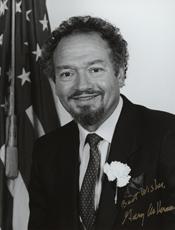
Mr. Speaker, I yield myself such time as I may consume. Mr. Speaker, I rise in strong support of the resolution. First, let me thank Chairman Hyde and Ranking Member Lantos for bringing this matter…
Mr. Speaker, I yield myself such time as I may consume.
Mr. Speaker, I rise in strong support of the resolution.
First, let me thank Chairman Hyde and Ranking Member Lantos for bringing this matter to the floor.
Yesterday, I read a news article quoting a Hamas representative who thanked the United States for providing Hamas with ``the weapon of democracy.'' The weapon of democracy. Like other Hamas spokesmen, this man was being completely frank. In my experience, people who think they are on a mission from God generally do not dissemble about their intentions. The decision by the Bush administration to press for elections that did not exclude Hamas, as the Oslo agreements required, is seen by Hamas, quite literally, as a gift from heaven. Indeed, it is a fact of surpassing strangeness that the same President who would not deal with Yasser Arafat because he was tainted by terrorism is in large measure responsible for insisting on the elections that brought Hamas to power.
Allowing Hamas to compete was substantially our grave mistake. Electing Hamas, however, was the Palestinian people's own free choice. No one questions the mechanics of the election itself, only the nature of the elected. Let us recall that Hitler's National Socialists, the Nazi party, also came to power in free elections. References of this type are usually inappropriate. The Holocaust was a unique, horrible event, and nothing should ever be done to diminish it or turn it into another rhetorical cheap shot. But in this case the comparison of how coming to power was the same is very apt.
What is Hamas? Hamas is declared to be, by our government and the European Union, a terrorist organization. It is an ally and an aid recipient of Iran. It is an organization of religious zealots who put bombs in stores and clubs and restaurants, hotels and discos and buses and proclaim their work to be the will of God. It is an organization that insistently proclaims its intention to exterminate the State of Israel and to replace it with an Islamic state under Sharia law. It is an organization that proudly declares its beliefs that Jews are the descendants of ``pigs and monkeys.'' Hamas is responsible not only for the cold-blooded murder of hundreds of Israeli citizens but also dozens of Americans.
And while they may be crazy, they are not stupid. They are watching us very closely, and they are looking for any sign of weakness, any departure from principle, any signal of grudging acceptance. It is absolutely vital that they see nothing of the sort. When Hamas looks at America, at the administration, at the Congress, they must see nothing but fierce, unrelenting, and implacable rejection.
There can be no political absolution for this pack of killers; and the very idea of giving our taxpayers' money to these bloody-handed fanatics, people who have slaughtered our own citizens, is offensive. Suggesting that we do it indirectly, that we merely subsidize rather than fund their rule, is no less unacceptable.
People in the executive branch trying to figure out how to square this circle should pay close attention to this debate. I would say to them: Before you urge the President to ask the Congress to provide assistance to the Palestinians, you had better start counting votes. This Congress is more likely to restore British sovereignty over the United States than it is to appropriate even $1 for the West Bank or Gaza.
Hamas is a terrorist organization, and the United States has clear policy for dealing with terrorists: We do not do it. We do not legitimize them, and we do not acknowledge phony distinctions between their political and their terrorist ``wings.'' We do not forgive them for the hundreds they have murdered in exchange for a handful of promises. And we certainly do not pay them. Not in cash, not in coupons, not in vouchers, not in green stamps, not in airline miles. Americans do not give money to terrorists, to terrorist governments, and to people who elect terrorists. We have better things to do with our money.
When President Abbas was first elected, I was among those who were strongly encouraging the administration to boost his prestige and help build him up with assistance and projects. But he never demanded that Hamas and other terrorist groups disarm and disband. Now we see that after a year of trying things the way Abu Mazen wanted and not feeling they got any real benefits, Palestinians have voted to go in a different direction. That is their right. But it is absolutely critical that our policies adjust to reflect their decisions.
Just as I believed that the Palestinian choice of Abu Mazen's vision of nonviolence and peace deserved our support and assistance, I think the election of Hamas, with its dogmatic adherence to terror and its insistence on Israel's extermination, deserves our strongest condemnation and is an unmistakable change in how we do business.
Elected terrorists are still terrorists. We should not give them legitimacy. We should not deal with them diplomatically. And, most obviously, we should not give them hundreds of millions of dollars from our taxpayers. U.S. foreign assistance is a gift, not a right. The Palestinian Authority, as long as it is led by Hamas, is a terrorist organization responsible for the deaths of dozens of Americans and obviously disqualified from this kind of aid.
Not doing business as usual means, by definition, that things have to change across the board. Only a comprehensive rejection of Hamas's leadership can satisfy the requirements of continued U.S. leadership in the war on terror. The message and the methods of Hamas must not only fail but they must be seen to fail throughout the world and especially in the Middle East.
Compromising with Hamas and doing a little bit of business here, a little bit of business there, accepting phony commitments and using back-door intermediaries will prove to Islamic radicalists that there is no price they pay for terrorism as long as you succeed in taking the reins of power. We cannot afford to send that message to the Palestinians or to anybody else.
I strongly encourage the adoption of this resolution and prompt consideration by the House of additional legislation to respond to the challenge to America and our interests that are posed by Hamas.
Mr. Speaker, I reserve the balance of my time.
Mr. Speaker, I yield myself such time as I may consume.
Mr. Speaker, just in brief response to my good friend, the chairman, Mr. Hyde, who always stands up and fights so well and eloquently for democracy, my concern about allowing Hamas to participate in the election is not just my opinion. This was part of the Oslo Accords, to which the Israelis and Palestinians both agreed and signed. It is a governing document that no group that participates in violence and commits themselves to the destruction of the other will be allowed to participate in the election. That is the law. That is the doctrine.
I just express my dismay that our President, with his great leadership against terror, would take a pass and lean on the Israelis to allow this election to take place with Hamas.
Mr. Speaker, I yield 3 minutes to the gentleman from Maryland (Mr. Hoyer).
Mr. Speaker, it is my pleasure to yield 5 minutes to the gentlewoman from Nevada (Ms. Berkley), a member of the committee.
Mr. Speaker, I yield back the balance of my time.

Mr. Speaker, I rise in opposition to H. Res. 575, expressing the sense of Congress that Hamas should not participate in elections held by the Palestinian Authority. Now, many of my colleagues might…
Mr. Speaker, I rise in opposition to H. Res. 575, expressing the sense of Congress that Hamas should not participate in elections held by the Palestinian Authority.
Now, many of my colleagues might suggest that my opposition to this non-binding resolution means that I stand with the terrorists. I would argue that it means exactly the opposite.
You see, Mr. Speaker, like many of my colleagues, I want to see peace between the Israelis and the Palestinians. I want a free and democratic Palestinian state to stand side by side with the free and democratic Israeli state. And most importantly, I want both states and their peoples to be safe and secure.
For the first time, the Palestinians are engaging in a truly democratic process. I would defer to Palestinian Authority President Mahmoud Abbas and the Palestinian people on how to do this. Mr. Speaker, I have to be honest with you, I do not want foreign leaders telling the United States how to conduct our elections and I think we owe President Abbas and the Palestinian people the same courtesy.
In fact, this is one of the rare occasions that I actually agree with the Bush Administration. On September 20th, Secretary of State Condoleezza Rice said in response to a question regarding Hamas being a part of the election, ``. . . we understand that the Palestinian political system is in transition, that it is in transition toward a democratic system, and that has to be a Palestinian process.'' Secretary Rice went on to say, ``This is going to be a Palestinian process and I think we have to give the Palestinians some room for the evolution of their political system.''
We need to vest Hamas in the democratic process.
I want to be clear, Mr. Speaker, terrorism is wrong and it should not be tolerated.
However, if Hamas is brought into the process and given the opportunity to run for political office and become part of the political establishment, they will assume responsibility for governance--leading to moderation.
I would submit for the Record a statement by Debra DeLee, President and CEO of Americans for Peace Now. Ms. DeLee nicely lays out the position that Palestinian Authority President Abbas is in and why it is important for the elections to go forward in a way that is inclusive in order to moderate those who traditionally turned to terrorism.
Mr. Speaker, I find myself in the interesting position of voting against this resolution and agreeing with Secretary Rice: the United States must let the Palestinians find their way to a democratic state.
The Sharonization of Hamas
(By Debra DeLee)
Israeli Prime Minister Ariel Sharon's recent statement that
he would withhold Israeli cooperation from Palestinian
legislative elections in January if Hamas candidates take
part flies in the face of his own experience with the
moderating influence that holding public responsibility can
have on extremist views. In explaining his 180 degree turn
from being a strong advocate of Israeli settlements in Gaza
to the driving force behind their evacuation, Sharon has
repeatedly observed that, ``what you see from here [in the
Prime Minister's Office], you don't see from there.'' In
other words, it was not until he obtained a position of
ultimate responsibility for Israel that Sharon began to
recognize the burden that the Gaza settlements imposed on the
state.
There is no equivalence between the horrific terrorist acts
that Hamas has inflicted on Israelis and Sharon's passion for
settlement expansion.
Yet it's clear that Palestinian President Mahmoud Abbas is
trying to rein in his Islamist opposition through the process
of Sharonization (i.e., co-opting the militants by
encouraging them to run for public office and to assume
responsibility for governance, in the hope that this process
will lead to their moderation. )
In an ideal world, Abbas would decide to round up
Palestinian terrorists, place a call to his Interior
Minister, then sit back to watch the thugs put in prison
or die in attempting to evade arrest. But we do not live
in an ideal world. While Abbas deplores terrorism, he
wants to avoid a Palestinian civil war. And even if he was
willing to launch one, with Abbas already struggling to
control events on the ground, it's doubtful that the
troops at his disposal would win.
Further, if defeating Palestinian terrorists with force
alone was so easy, Israel would have done it long ago.
Israel's military might has been vigorously applied to the
occupied territories for nearly 40 years. It's chalked up
some impressive tactical victories. But it has not succeeded
in drying out the swamp of terror. Hamas and its fellow
travelers are still around, which is why Sharon is busy
encouraging Abbas to fight them.
Abbas deserves a chance to see if his way will work better,
with the caveat that he must be prepared after the
Palestinian legislative elections to forcefully confront
those individuals who continue to engage in terror. It is in
Israel's interest to see that Abbas is fortified with
development aid and encouraged to carry out internal reforms,
as well as to ensure that the Palestinian security forces
loyal to him are strengthened in order for him to be able to
carry out this task.
It is also in Israel's interest to ensure that these
upcoming elections go as smoothly as possible. With its
departure from Gaza, Israel will not be able to impede the
contests in that region. But it could decide--as Sharon has
said--to make it impossible for Palestinian voters in East
Jerusalem to cast ballots or for candidates, campaign
workers, and voters to move from town to town in the West
Bank. If such Israeli impediments are put in place, they
would delegitimize any victory that secular nationalist
candidates might achieve over Hamas candidates, thereby
strengthening the hand of the very terrorists that Israel
seeks to weaken. They would also shatter the calm that
allowed Israel to withdraw quietly from Gaza.
If the Bush Administration has been less than enthusiastic
about Sharon's views of the Palestinian elections, it's
because the White House has been pursuing the Sharonization
of militants operating in areas under American control.
Kurdish and Shiite militias have not been forced to disband
in Iraq, yet that hasn't stopped representatives of those
groups from running in elections and winning top positions in
the current government. If the U.S. demanded that the armed
supporters of these candidates lay down their weapons before
their leaders could assume power, it must have done so in a
whisper.
Hamas candidates did well in two earlier rounds of
municipal elections. Lo and behold, they have found it
necessary to work with Israelis at the local level in order
to deal with mundane issues like sewage and water. And their
Israeli counterparts have been willing to talk to them. This
kind of practical contact is a long way from having
terrorists beat their spears into pruning hooks, but perhaps
it points to a way forward.
The Bush Administration should encourage Sharon to let
Abbas see if he can duplicate this process at the national
level of Palestinian politics. If It succeeds, Israel will be
more secure, and Palestinian society will be more stable. If
it fails, Israel will still have ample military strength upon
which it can rely.
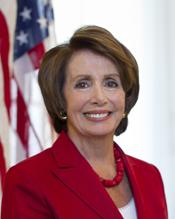
Mr. Speaker, I rise to commend the gentleman from California (Mr. Lantos), our ranking Democrat on the International Relations Committee, for his leadership to make our country safer, our military…
Mr. Speaker, I rise to commend the gentleman from California (Mr. Lantos), our ranking Democrat on the International Relations Committee, for his leadership to make our country safer, our military stronger, and to bring stability to the region. While we may not always agree on the approach to take, Mr. Lantos strove very hard for a bipartisan resolution, and I want to just read from the resolution that he would put forth in the spirit of congratulating the people of Iraq.
He said: ``Resolved, That the House of Representatives congratulates the people of Iraq on the three national elections conducted in Iraq in 2005.'' Imagine, in January, in October, and now in December, three times courageously they went to the polls, and his resolution spells that out.
His resolution would encourage ``all Americans to express support for the people of Iraq in their efforts to achieve a free, open, and democratic society,'' and again, throughout his resolution he makes that point.
And he expresses ``thanks and admiration to the members of the United States Armed Forces and the armed forces of other nations in Iraq, including the members of the security forces of Iraq, whose heroism permitted the Iraqi people to vote safely.''
That is the spirit of the resolution that we should be voting on today, one that brings us together, that is clear to the Iraqi people that their courage is an example to the world.
But, sadly, this Congress is not an example of democracy to the world when instead of using an occasion to unify, once again, the Republican majority brings to the floor a resolution rejecting the good offers of the gentleman from California (Mr. Lantos) to come together in a bipartisan way and uses what should be a cause for celebration as instead a means to denounce those who disagree, not very democratic, and also to insist that if you want to congratulate the people of Iraq, you must support the status quo.
More of the same in Iraq is not making the American people safer. More of the same in Iraq is not making our military stronger. More of the same in Iraq is not bringing stability to the region.
So I think you will see Democrats united in congratulating the people of Iraq, commending our men and women in the armed services, and supporting
that in a democracy we will have different views and that we will respect them. I have said it before and I will say it again, Senator Taft, who would become the Republican leader of the Senate during World War II, he said disagreement in time of war is essential to a governing democracy, and this was during World War II. Why do the Republicans think that we cannot have disagreement in time of war?
So as we go into this holiday season, I know that we can come together and say to our men and women in harm's way that we honor them for their service; we are grateful to them for their patriotism, their courage and the sacrifice they are willing to make for our country; and in this holiday season, we strive for peace on Earth and goodwill toward man, which would not be possible without our men and women in the armed services.
That should be the spirit in which we go forward, not in the divisive manner the Republicans have put forward. That is really quite sad, but I hope that in the vote that we have today that the Iraqi people will know that on both sides of the aisle we all see them as an example of democracy and hope that they will not be discouraged by this suppression of dissent in the United States.
Mr. Speaker, this marks the second time in a month that House Republicans have gone to extreme lengths to avoid a fair and open debate on the war in Iraq. Last month, after being stung by a resolution introduced by Mr. Murtha calling for the redeployment of U.S. forces in Iraq, Republicans brought to the floor a measure that was an act of deception and an attempt to mischaracterize the Murtha legislation.
Today, under the guise of commending the people of Iraq for yesterday's election, the Republicans present a resolution that spends more time trying to justify the continued presence of U.S. troops in Iraq than congratulating the Iraqis.
If the majority wants to debate the President's Iraq policy then let us do that. A war that is now more than 1,000 days old, has cost the lives of more than 2,150 Americans, and has not made the American people safer or the Middle East more secure, certainly merits debate in this House. But let us do so in a way that does not insult the intelligence of the American people or trivialize an issue of the utmost importance.
We should debate the war in Iraq thoroughly, with full consideration of the points of view of all Members. Sadly, the Republican leadership did not permit that debate today.
Millions of Iraqis voted in Iraq's three national elections this year, and all Americans should salute that fact. They should salute as well the courage of the 160,000 American troops and the courage of the thousands of soldiers from other nations and from Iraq itself, who made the safe conduct of these elections possible. It should appropriately be acknowledged that the elections are hopeful steps toward a more stable Iraq.
Mr. Lantos brought a resolution to the Rules Committee, which would have done those things, but the majority refused to allow it to be considered. It can only be that the majority does not want to let commending the Iraqis get in the way of a tightly controlled tribute to the President's war policies. As we lecture the Iraqis about the need to accommodate differing points of view, let us hope that they do not devote too much attention to the example provided by this Republican House.
The Lantos resolution provides well-deserved recognition to all of the Iraqis who have taken part in their country's political development this year. It recognizes the heroism of the soldiers who strive each day to bring security to Iraq.
Commending them should be our focus today, but Mr. Lantos was not allowed to offer his resolution. It would be unfortunate if the message we sent to the Iraqi people and our troops was that scoring political points is more important in this House than acknowledging their achievements this year.
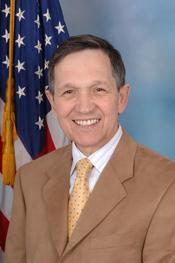
Mr. Speaker, I want to join with my colleagues in standing up in support of the state of Israel and in demanding that the Palestinian Authority do everything it can to set aside all the statements…
Mr. Speaker, I want to join with my colleagues in standing up in support of the state of Israel and in demanding that the Palestinian Authority do everything it can to set aside all the statements made by people within its sphere that would call for the destruction of Israel. And they must take action to stop terrorists and their infrastructure.
I would just like to respectfully suggest, however, that this resolution, as well intended as it is, has the potential to have an impact that would be contrary to what you are hoping for. Let me state how, that Congress passing this resolution could actually have a reverse effect in the streets of the Palestinian Authority and end up actually engendering more support for Hamas. I think that, as we are approaching the midnight hour and coming close to the 15th of December, the date when the elections are taking place in Iraq, it is kind of ironic that we are in this situation of, on one hand, encouraging the broadest participation in the Iraqi elections of people in some cases who have been shooting at our own soldiers and, on the other hand, saying that, in the Palestinian Authority, we are going to start to say, well, these groups cannot participate. No matter how much we object, and I do object, to their attacks on Israel; I would just again like to respectfully suggest that all of us who are here in support of a peaceful resolution of the conflict that is taking place in the Middle East, that maybe have a third way that we could proceed other than this resolution.
Letter From Americans for Peace Now:
Later today H. Res. 575 is scheduled to come to a vote on
the House floor. This resolution deals with the participation
of Hamas in the upcoming Palestinian parliamentary elections,
scheduled for January 25, 2006. Americans for Peace Now (APN)
rejects terror and has consistently called on President Abbas
and the Palestinian Authority to undertake meaningful,
sustained action to stop terrorists and destroy terrorist
infrastructure. APN agrees that the Palestinian Authority
must establish ``One Authority, One Law, and One Gun.''
However, APN believes that this resolution misses the point
on both democracy and Hamas.
APN urges Members, whether or not they vote for the
resolution, to speak out during the floor debate and to
submit statements for the record drawing attention to the
problems with this resolution.
Nobody (except the terrorists) is happy with the prospect
of Hamas and other terrorist organizations participating in
Palestinian elections. Likewise, few people are happy that
Hizballah is an active participant in Lebanon's political
process, including a longstanding presence in its parliament
and government. Likewise, few people are happy with the
participation of armed militias in elections in Iraq.
In the cases of Lebanon and Iraq, however, the decision has
been to ``not allow the perfect to be the enemy of the
good.'' The goal of eradicating terror and consolidating
weapons in the hands of the legal government remains, but the
elections were applauded and the process of democratization
was not put on hold. Nobody argued that eradicating terror
and establishing ``one gun'' should, in these cases, be a
prerequisite for democratic elections, or threatened that if
it was not made a prerequisite, the U.S. relationship with
the resulting democratically elected body--and U.S.
assistance to its people--would suffer.
President Abbas is trying to do in the territories what the
U.S. has encouraged the government to do in Iraq: absorb
militias into the official armed forces in order to make them
accountable to official command and control.
Israel spent nearly three decades trying to defeat Hamas
through military means alone, and failed. Since coming to
power less than a year ago, President Abbas has made a very
public commitment to take on Hamas and other terrorist
organizations after elections--a strategy based on the
reasonable assertion that, backed by a democratically-elected
parliament, he will have the strength and credibility to move
forward with this difficult task. He should be held to this
commitment.
The reduction of terror against Israeli citizens requires
the containment and eventual dismantling of militias,
including Hamas. Israeli General (Ret.) Ephraim Sneh, who
served as military governor of the West Bank and Deputy
Defense Minister of Israel, recently stated:
``Under current conditions in the Palestinian territories,
especially given the Palestinian government's weakness,
political containment should precede the dismantling of
Hamas's military infrastructure. The urgent objective is to
defeat it in the next parliamentary elections. Steps that
could strengthen it in the elections should be strictly
avoided. Attempts to postpone the elections yet again, or to
prevent Hamas's participation, or Israeli disruption of the
elections as `punishment' for the participation of Hamas,
will strengthen Hamas in the Palestinian street instead of
weakening it. The short time left before the elections must
be used to empower all who oppose Hamas, first and foremost
the supporters of the elected Palestinian president, Mahmoud
Abbas.'' (Washington Post, October 19, 2005)
In the countdown to the elections, for the sake of
democracy and peace in the Middle East--vital components to
Israel's security--the focus should be on strengthening
Palestinian moderates, including President Abbas. Actions
that risk elevating the status of Hamas and other extremists
should be avoided.
After the January 25th election, Israel, the Bush
Administration, and the international community--as well as
the Palestinian people--should hold President Abbas to his
commitment, and hold him accountable if he fails to take
action.
Mr. Speaker, I rise in strong support of this resolution, and yield myself as much time as I may consume. A few weeks ago, the Palestinian people stunned the world by giving majority control of the…
Mr. Speaker, I rise in strong support of this resolution, and yield myself as much time as I may consume.
A few weeks ago, the Palestinian people stunned the world by giving majority control of the Palestinian Legislative Council to Hamas, an entity determined to be a foreign terrorist organizations by both the United States and the Europe Union. Some may point out that the Fatah party's fragmentation combined with the nature of the electoral system chosen by the Palestinian Authority led to this strong Hamas majority.
We will be discussing these and other explanations for Hamas's victory over the coming weeks and months. But they do not change the reality that 74 out of 132 seats in the Palestinian Legislative Council were won by an organization that not only preaches the destruction of Israel, but has sent suicide bomber after suicide bomber to kill innocent civilians, including young children, and that has been implicated in the deaths of Americans. Mr. Speaker, the resolution we are considering today is simple and to the point: There should be no money for the Palestinian Authority as long as its legislature is controlled by a party that is both a terrorist organization and advocates the destruction of Israel.
This is not some plot to effect regime change--this is merely to send a message that the civilized world does not tolerate and will not support terrorists. This resolution means no American funding for the Palestinian Authority as long as Hamas controls the legislature, since there is absolutely no credible sign that Hamas intends to change its ugly charter or do anything else to demonstrate that it now accepts Israel's right to exist. Mr. Speaker, our action on this resolution today will not be the final word of the Congress on this issue. We will return to it again and again.
Last week, our colleague from Florida, Congresswoman Ros-Lehtinen, and I--with over 50 of our colleagues--introduced H.R. 4681, the Palestinian Anti-Terrorism Act of 2006, and I am confident that it will soon be brought to the floor. H.R. 4681 puts legislative teeth into the resolution we are considering today. It would, among other things, prohibit by law the funding of a Palestinian Authority controlled by a terrorist organization.
Mr. Speaker, the basic thrust of American foreign policy is to fight terrorism globally, and it is self-evident that the United States will not fund an organization such as Hamas that continues to advocate and carry out terrorist acts in the Middle East. Nor will we fund a government which is controlled by a terrorist organization or in which major institutions, such as the legislature, are controlled by a terrorist organization. This should not come as a surprise to anyone. In December, the House of Representatives overwhelmingly adopted House Resolution 575 by a vote of 397-17 which warned that there would be serious consequences--including financial consequences--for U.S.- Palestinian relations if Hamas were to take over the Palestinian Authority.
Mr. Speaker, not one thin dime of American taxpayer money should be devoted to supporting a terrorist organization. Nor should one thin dime be devoted to making a terrorist organization look good. Our desire to support strictly humanitarian assistance for the Palestinian people, of course, will continue unabated. But we should not fund major projects, whatever their purpose. Such projects would only make a Hamas government look like a success story. They would be taken as evidence that Hamas can defy the international community and continue to receive financial support, while supporting terrorism, rejecting Israel's right to exist, and spitting on pre-existing Israeli-Palestinian agreements.
Mr. Speaker, that is why the Ros-Lehtinen-Lantos legislation will put severe restrictions on all Palestinian assistance that is not strictly for humanitarian purposes. The notion that an organization hell-bent on destroying the sole democratic state in the Middle East should be receiving or exploiting U.S.-taxpayer funds is simply unacceptable. We will be relentless in isolating and fighting terrorists. Hamas officials and their representatives will not be given visas to visit the United States. American officials will not deal with Hamas representatives unless--and this is a major unless--unless they publicly and without reservation recognize the right of the democratic State of Israel to exist, renounce terrorism as a means of achieving their goals and objectives, and accept all previous Israeli-Palestinian agreements. And we will fight direct assistance to a
terrorist-controlled Palestinian Authority through any international institution. Hamas must understand that their ability to deal with the United States and to be accepted in the community of civilized nations rests on a thorough repudiation of their hateful policies.
Governments have made such changes in the past. Organizations and movements have made such changes in the past. And certainly, Hamas has that opportunity. But if Hamas does not clearly take full advantage of this opportunity, our legislation will soon come into effect and we will prohibit American funds. If Hamas does take advantage of this opportunity and definitively and unequivocally meets these requirements, then our government would be willing to deal with it, continue assistance, and work to see that the long-suffering Palestinian people have a better life in the future. Otherwise, I fear the Palestinians and prospects for Middle East peace will face a long, difficult winter that could be measured in years not months.
Mr. Speaker, I support this resolution, and I urge all my colleagues to do likewise.

Mr. Speaker, once again, the House Republican leadership refuses to allow an honest debate over the future of the U.S. military presence in Iraq. The American people, and in particularly our men and…
Mr. Speaker, once again, the House Republican leadership refuses to allow an honest debate over the future of the U.S. military presence in Iraq. The American people, and in particularly our men and women in uniform serving honorably in difficult circumstances in Iraq, deserve more than cheerleading and sloganeering by Congress and the President. Unfortunately, empty gestures are all this Congress provides with this resolution.
Like all of my colleagues in Congress, I was heartened when millions of Iraqis, even at risk of life and limb, voted in late January to establish an interim government and constitutional assembly and again in October in support of a new Constitution. And, the early reporting on yesterday's election for a new four-year parliament in Iraq has been positive. There has been progress in Iraq. I congratulate the Iraqis on the election, and I commend our troops for helping to provide security for the election.
Unfortunately, I cannot support the resolution on the floor today because it contains the blatantly false assertion that negotiating a time line for withdrawal of U.S. forces with the Iraqi government is somehow inconsistent with achieving victory in Iraq. To the contrary, I believe that negotiating a timeline for withdrawal of U.S. forces is a prerequisite for stabilizing Iraq and bringing our troops home with honor beginning early next year.
Announcing the termination of the open-ended U.S. military commitment in Iraq and providing a concrete plan, including a timeline negotiated with the Iraqi government, for withdrawal could well undermine support for insurgents. The majority of insurgent fighters are Iraqi Sunnis who have stoked the wide variety of grievances of ordinary Iraqis arising from the U.S. military presence to generate popular support for their cause. Most importantly, establishing a withdrawal plan and timeline would remove one of the chief causes of instability in Iraq, the U.S. military presence itself, by separating nationalist Iraqi insurgents trying to end the U.S. military presence, both Sunni and Shia, from foreign elements in Iraq for their own reasons. As, the Commander of U.S. forces in Iraq, General George Casey, testified to Congress earlier this year that ``the perception of occupation in Iraq is a major driving force behind the insurgency.'' A specific withdrawal plan, with benchmarks for measuring success in stabilizing Iraq, could turn Iraqis, both Sunni and Shia, against the foreign terrorists operating in Iraq. This could be a key turning point in stabilizing the country.
A time line and withdrawal plan negotiated with the Iraqi government would also boost the Iraqi government's legitimacy and claim to self- rule, and force the Iraqi government to take responsibility for itself and its citizens. Negotiating a withdrawal timeline and strategy with the Iraqi government could, more than possibly anything else, improve the standing of the Iraqi government in the eyes of its own people, a significant achievement in a region in which the standing of rulers and governments is generally low.
Similarly, establishing a firm timeline for withdrawal could accelerate the development of Iraqi security forces and deepen their commitment to defending their own country and their own government. It would eliminate the conflict they now feel by working with what many of them see as an occupying force. It would allow them to defend a sovereign Iraqi government, rather than fight alongside U.S. forces. As long as the U.S. military remains in Iraq, Iraqi politicians and security forces will use it as a crutch and will likely fail to take the necessary steps to settle their differences and establish an effective, inclusive and independent government.
Negotiating a timeline for withdrawal with the newly elected Iraqi government would show that democracy ended the U.S. occupation of Iraq, not terrorist or insurgent violence, and would allow our troops to come home with honor.
Just as importantly, a specific plan and timeline for withdrawal would provide much needed relief to over-burdened military personnel and their families and provide some certainty to U.S. taxpayers regarding the financial burden they'll be forced to bear.
Finally, a plan for withdrawal could also help the United States in our broader fight against Islamic extremists with global ambitions, most notably al-Qaeda, by taking away a recruiting tool and training ground. Porter Goss, the Director of the Central Intelligence Agency, testified to Congress that, ``Islamic extremists are exploiting the Iraqi conflict to recruit new anti-U.S. jihadists. These jihadists who survive will leave Iraq experienced and focused on acts of urban terrorism.'' He went on to say, ``The Iraq conflict, while not a cause of extremism, has become a cause for extremists.''
The House should be debating this important issue and strategies for moving forward in Iraq instead of politically motivated misleading resolutions.

Mr. Speaker, I strongly object to the procedures under which this resolution is being debated. I voted against those procedures because the House should have been able to have a full and free debate…
Mr. Speaker, I strongly object to the procedures under which this resolution is being debated. I voted against those procedures because the House should have been able to have a full and free debate and to consider possible changes in the resolution.
For example, Representative Lantos proposed that we congratulate the Iraqi people on three national elections conducted in Iraq this year, encourage all Americans to express support for the people of Iraq, and express thanks to the members of the U.S. armed forces whose heroism permitted the Iraqi people to vote safely in yesterday's elections. That would have been something all Members of the House could support, if the Republican leadership had permitted that to be considered.
Still, I will vote for the resolution that is now before us, for several reasons.
First, the resolution calls yesterday's parliamentary elections a ``crucial victory for the Iraqi people and Iraq's new democracy.'' I couldn't agree more.
Reports are still coming in and we won't know the results for some time, but it's clear that the day was a success in terms of high turnout and low levels of violence. To the extent that increased Sunni participation means a greater political role for Sunnis in the new parliament, we could see weakened support for the insurgency. And the Iraqi people should be commended for their courage in coming out to vote--not once, but three times this year.
The resolution then goes on to call for a commitment to victory in Iraq, although it doesn't define ``victory.'' I strongly suspect this language was added, not so much to send a positive message to our soldiers or the Iraqi people so much as it was designed to bolster President Bush's recent speeches in Iraq where the word ``victory'' looms large.
Unlike American success in World War II, ``victory'' in Iraq cannot be measured by military success alone. This was achieved when our troops toppled Saddam Hussein's regime in 2003. What we can hope for in Iraq is that a responsible withdrawal of American forces can be linked to measurable benchmarks of political stability. This means that Iraqi security forces must be capable of providing for the safety of Iraqis. It means that Iraq's cities and infrastructure are rebuilt and its citizens have access to electricity and clean water. A successful withdrawal strategy means that America will no longer bear the brunt of the burden--that the U.N., other international organizations, our allies, and countries in the region will step up to assist with the nation-building mission in Iraq.
A successful outcome in Iraq is essential because failure in this part of the world could lead to wider war, greater terrorism and a disaster for our national security. To be frank, it is not so much ``victory'' that ought to concern us so much as a need to avoid ``failure.''
Unfortunately, whether we can avoid a failure in Iraq is a question that is not completely in our hands because only the Iraqis themselves can find the will necessary to live
alongside each other and to make the compromises necessary to build a functioning government based on an inclusive constitution.
For the record, I opposed the Iraq war resolution, but I have resisted supporting an artificial deadline for withdrawing troops. I believe we need a plan that is designed to bring our troops home and make clear to the Islamic world that we harbor no ambitions for permanent bases, Iraqi oil revenues or any military occupation. But how we withdraw is as important as when we withdraw. This means giving the Iraqis time to form a permanent government and establish the means for international support. We must exercise deep care in the way our country withdraws because leaving a failed state in Iraq will deeply endanger our country.
We were led into war as a divided nation and today we are even more divided. That's why I led a letter last month to Defense Authorization conferees with my colleagues Rep. Tom Osborne (R-NE), Rep. Ellen Tauscher (D-CA), and Rep. Joe Schwarz (R-MI) urging conferees to include language passed overwhelmingly in the Senate urging President Bush to outline his strategy for withdrawal from Iraq and to provide Members of Congress with quarterly reports on the progress of American operations in Iraq. We wrote this letter because we believe that a successful withdrawal from Iraq can only be helped if Congress and the Bush Administration work to bring unity at home.
It is in our national interest to show the greatest amount of unity possible to the American people, to the international community, and to the Iraqi people, who so bravely made their way to polling stations all over Iraq yesterday.
Sending a message of encouragement to the Iraqi people to build stable institutions based on democratic principles is important at this critical time. it is for this fundamental reason that I vote today in support of this resolution.

Mr. Speaker, I rise in support of S. Con. Res. 79 and am pleased that the House leadership has decided to pursue this thoughtful and constructive response to the success of Hamas in the recent…
Mr. Speaker, I rise in support of S. Con. Res. 79 and am pleased that the House leadership has decided to pursue this thoughtful and constructive response to the success of Hamas in the recent Palestinian Legislative Council elections.
With passage of this resolution, the Congress will be on record in opposition of any direct U.S. aid to the Palestinian Authority if the majority party in parliament maintains a position calling for the destruction of Israel.
This reflects longstanding U.S. policy. And it is clearly the right policy. Hamas is a ruthless terrorist organization with the blood of innocents on its hands. When Hamas assumes control of the Palestinian parliament, it must recognize Israel's right to exist and renounce terror. If not, the Palestinian Authority should receive no direct U.S. aid. It's as simple as that.
But I would like to use this opportunity, Mr. Speaker, to point out that the outcome of the Palestinian election does not lend itself to simple analysis. And the U.S. response to this development must not be knee-jerk and simplistic.
Let us first remember that the Palestinian people went to the polls and conducted an election that was remarkably democratic, free, fair, and devoid of violence. We may not like the results, but we should take note of what is among the most democratic elections the Arab world has ever seen.
And while Hamas attracted the most votes, there is little evidence that Palestinian voters were in fact endorsing Hamas's call for Israel's destruction. Exit polls show that three-quarters of all Palestinian voters support reconciliation between Israel and the Palestinians based on a two-state solution. Armed with the ballot, Palestinians gave political voice to their anger and anguish over two related problems--the rampant corruption and cronyism within the Fatah establishment, and the lack of any tangible improvement of the quality of life under Israeli occupation.
So what should the United States do in response to this election? One thing we cannot do is simply throw up our hands and refuse to engage in efforts to help Israel and the Palestinians achieve peace. We cannot turn back the clock. Every week that goes by without any progress to achieve a solution to this conflict increases the threat to U.S. national interests. This was true before Hamas came to power and it is just as true today.
Yesterday, I received a letter from the Assistant Secretary of State for Legislative Affairs assuring me that the administration ``remain(s) committed to working toward the peaceful resolution of the Israeli- Palestinian conflict . . .'' This is a positive statement, and Congress should play a positive role in partnership with the President to advance our interests in the region.
For this reason, I am concerned about some legislative proposals that have been introduced in the House which would, in my view, sharply curtail our ability to engage constructively in the Israeli-Palestinian conflict.
Future legislation should include a mix of sticks and carrots--not just sticks. Clearly, direct aid to a Hamas-led Palestinian Authority must be stopped right now, but we should keep the door open for future aid if the P.A. undertakes the changes and reforms we are demanding of them. Permanently restricting our assistance provides little incentive and dramatically limits the President's options. Similarly, we must distinguish between the Hamas elements of the Palestinian Government and members of the PLO with whom the U.S. and Israel have negotiated for many years. Terminating diplomatic contact with the entire Palestinian leadership will do nothing but undermine the very moderates who oppose violence and support dialogue with Israel.
In addition, I am concerned about legislative efforts that would restrict the delivery of U.S. humanitarian assistance to the Palestinian people through credible and transparent non-governmental organizations. I am pleased that the recent report in the New York Times about a coordinated American-Israeli effort to ``starve'' the Palestinian people has been strongly denied by both countries. The average Palestinian on the West Bank and Gaza leads a very difficult life and the further deterioration of economic conditions will not only be devastating for the Palestinians, but will also weaken Israel's security.
Mr. Speaker, today the House is taking an important step by stating unequivocally that U.S. assistance will not flow to a government dominated by a terrorist group bent on Israel's destruction. I hope, in the weeks and months ahead, as the situation in Israel and Palestine evolves, we can come back to this floor and enact thoughtful legislation that helps the Palestinian people, secures the State of Israel, and advances our own important interests in the Middle East.
Show 11 more

Mr. Speaker, I thank my distinguished friend from California who I have had the privilege of serving with on the International Relations Committee. Mr. Speaker, first I want to thank Mr. Cantor for…
Mr. Speaker, I thank my distinguished friend from California who I have had the privilege of serving with on the International Relations Committee.
Mr. Speaker, first I want to thank Mr. Cantor for his work on this resolution, my counterpart on it, and his efforts to bring the resolution to the floor. I also want to thank Mr. Lantos, Mr. McCaul, Ms. Ros-Lehtinen and Mr. Wexler, among all the others. There is an enormous number of bipartisan supporters of this resolution which speaks volumes, I think, about where the Congress stands.
We are here today to send a clear message to the Palestinian Authority that terrorism and democracy do not mix. Today we are here to send a clear message to President Abbas and to Hamas before the Palestinian elections on January 25. If Hamas and other terrorist organizations participate in the upcoming legislative elections, without first disarming and renouncing terrorism and their goal of eliminating the State of Israel, they will undermine Palestinian democracy and the Palestinian Authority's relationship with the United States of America.
As Mahatma Gandhi once said, ``The spirit of democracy cannot be established in the midst of terrorism, whether governmental or popular.''
That is why we are simply asking the Palestinians to join democracies around the world in taking a stand against hatred and terrorism. In fact, the Palestinian Authority's own election law would disqualify groups like Hamas from participating. These groups, who espouse racism, terrorism, intolerance and hatred, have no place in democratic elections.
When I met with President Abbas a few months ago, I made it clear to him that we hoped that he would deal with this issue before the elections. I gave him a letter signed by nearly 300 Members of the House of Representatives, which I wrote with Representative Pryce, from the House leadership and the International Relations Committee, urging him to take immediate action. Yet we have only to look at the recent suicide bombing in Netanya, which killed five people and wounded at least 30 others, to see that President Abbas has not taken the necessary steps to dismantle the terrorist organizations.
And while President Abbas has taken some steps to quell incitement and has condemned terrorist attacks, I believe that his failure to fully confront Hamas will only hurt him in the future and will threaten Palestinian democracy.
Let me be clear, I simply do not believe that Hamas should be given the ability to use democracy to carry out terrorism.
President Abbas has asked Hamas to respect one authority, one law and one gun. But Hamas has refused to accept that policy. Hamas leaders have even vowed to turn the Palestinian Authority forces into a ``resistance force'' against Israel.
That is why I am deeply concerned that President Abbas is allowing Hamas to participate in elections. Perhaps he is hoping that, by buying time now, he will be able to disarm them later. But a policy of hoping will not work.
Look at Hezbollah. Hezbollah, a terrorist group funded by Iran and waiting right across Israel's northern border, took part in elections in Lebanon. Now they are armed with political power, as well as guns, and they have used their seats in parliament to avoid disarming.
I can think of no clearer example of the danger of a state run by those who support terrorism and espouse violence and anti-Semitism than the country of Iran. The Iranian president has spewed anti-Semitism and hatred in his calls for the destruction of the state of Israel and his denial of the Holocaust. Meanwhile, his government continues to defy the world with its dangerous nuclear programs.
It is all too clear what President Abbas must do: He should take responsibility as leader of the Palestinian people and demonstrate that the Palestinian Authority can establish the rule of law. That is why we are urging Mr. Abbas to confront Hamas and fully dismantle the terrorist network. Otherwise, we risk more violence, more terror and more Israeli and Palestinian blood. We risk jeopardizing a nascent Palestinian democracy. We risk too much.
Today this Congress needs to send a clear message to Hamas that you cannot manipulate democracy to carry out terrorism.
Today this Congress sends a clear message to President Abbas that we support true democracy for the Palestinian people. Today this Congress needs to send a clear message to Israel that the United States will never waiver, and we will never falter in our support for our historic ally. We will never waiver nor falter in our support for Israeli democracy, and we will never waiver or falter in our fight against terrorism, anti-Semitism, hatred and violence.
As we vote for this resolution, the United States is proud to stand with Israel and the Israeli people.
Mr. Speaker, I rise in strong support of this resolution, and I yield myself such time as I may consume. I want to commend my colleagues and friends, Mr. Cantor and Mr. Menendez, for introducing this…
Mr. Speaker, I rise in strong support of this resolution, and I yield myself such time as I may consume.
I want to commend my colleagues and friends, Mr. Cantor and Mr. Menendez, for introducing this important resolution.
Mr. Speaker, I would like to ask my colleagues on both sides to suspend disbelief for a moment and imagine that this body included not just Democrats and Republicans but also representatives of an armed terrorist militia. Imagine that colleagues knew that those who opposed the militia's proposals might be killed as a result. It would certainly change the dynamics of this body just a bit, would it not, Mr. Speaker?
Well, that is exactly the circumstance that the Palestinian Legislative Council will face when it convenes after the January 25 elections, when Hamas, by current projections, is likely to hold over a quarter of the council seats.
Mr. Speaker, corruption of the legislative process is just one of many reasons that parties, so-called parties representing militias have no place in a Democratic system. When terrorist militias participate in elections, voters are intimidated. The concepts of the will of the majority and the rights of the minority are rendered meaningless.
Mr. Speaker, terrorist Hamas has no business participating in a Palestinian election that is supposed to advance the cause of peace; indeed, in a Palestinian election for a legislative body whose very basis is an Israeli-Palestinian agreement in which the Palestinians agreed to foreswear all violence.
In fact, Hamas should be disqualified on two grounds: as a terrorist group and as a group that denies Israel's right to exist. And there is a third reason as well: Hamas is a fundamentalist jihadist organization that has nothing but contempt for democracy, though it is more than happy to exploit democracy for its own nefarious ends.
Mr. Speaker, the participation of Hamas in the January 25 Palestinian election now appears likely. Just today, Hamas submitted its list of candidates. But Hamas participation will be a mistake of historic proportions for the cause of Israeli Palestinian peace. The very first clause of the Middle East roadmap requires that the Palestinians dismantle all terrorist infrastructure.
If that is what Abu Mazen wants to do, he is going about it in an entirely wrong way. With Hamas inside the legislative chicken coop in huge numbers, supported there in the cause of violence and gun-bearing by numerous other factions from Abu Mazen's own Fatah party, it will be more difficult than ever for Abu Mazen and the Palestinian authority to take the necessary action to dismantle Hamas' terrorist infrastructure, much less to convince it and other terrorist groups to disarm peacefully.
I deeply regret that Abu Mazen has welcomed Hamas' unconditional participation in the upcoming Palestinian elections. In passing this resolution, we will call on Abu Mazen to reverse course at the eleventh hour to prevent Hamas from participating and thereby try to help these elections prepare the ground for meaningful post-election peacemaking.
But, Mr. Speaker, even if Abu Mazen does not heed our advice, this resolution sends a powerful message to all the Palestinian people. The United States will have no interest in dealing with a Palestinian government that includes Hamas. Abu Mazen and his colleagues will have to keep that in mind when they form their cabinet.
Moreover, the inclusion of Hamas representatives in the government of the Palestinian Authority will have a profound effect on the attitude of the United States, both our government and the American people, toward Palestinians.
It will inform every decision that this body makes regarding any issue related to the Palestinians, including economic assistance. I urge Abu Mazen in the strongest terms to reconsider his decision to welcome Hamas participation in Palestinian elections. I urge all of my colleagues to support Middle East peace and to fight terrorism by voting for this important resolution.
Mr. Speaker, I reserve the balance of my time.
Mr. Speaker, I yield 4 minutes to the gentlewoman from Nevada (Ms. Berkley), a co-author of this resolution, my dear friend and distinguished colleague.
Mr. Speaker, I am very pleased to yield 6 minutes to the gentleman from New Jersey (Mr. Menendez), the distinguished chairman of the Democratic Caucus, who will soon move over to the other body to continue his good works.
(Mr. MENENDEZ asked and was given permission to revise and extend his remarks.)
Mr. Speaker I yield 2 minutes to the gentleman from Ohio (Mr. Kucinich).
(Mr. KUCINICH asked and was given permission to revise and extend his remarks.)
Mr. Speaker, I have no additional requests for time, and I yield back the balance of my time.
Mr. Speaker, I thank the gentlewoman for the time and really wanted to stand in support of the resolution and believe that the resolution is a good one and that yesterday in this week's election…
Mr. Speaker, I thank the gentlewoman for the time and really wanted to stand in support of the resolution and believe that the resolution is a good one and that yesterday in this week's election speaks volumes for all the work that we have accomplished.
I want to speak more importantly in memory and honor of Sergeant Daniel Clay, who was killed when the marines were attacked in Fallujah on December 1. His dad, Mr. Bud Clay, wrote the President a letter and said that ``I am writing to tell you how proud and thankful we, his parents and family, are of you and what you are trying to do to protect us all. This was Dan's second tour in Iraq and he knew and said that his being there was to protect us.
``I want to encourage you. I hear in your speeches about `staying the course.' I also know that many'' of you are against this war and you must get weary of fighting to try to do what is right. ``We and many others are praying for you to see this through, as Lincoln said `that these might not have died in vain.'''
I also have the actual letter that Daniel Clay wrote his family to be opened in the event of his death, and I think it would be in his honor to read it. This is of course by a very young man:
``Mom, Dad, Kristie, Jodie, Kimberly, Robert, Katy, Richard, and my Lisa.
``Boy do I love each and every one of you. This letter being read means that I have been deemed worthy of being with Christ. With Mama Jo, Mama Clay, Jennifer, all those we have been without for our time during the race. This is not a bad thing. It is what we hope for. The secret is out. He lives and His promises are real! It is not faith that supports this but fact and I now am part of the promise. Here is notice! Wake up! All that we hope for is real. Not a hope but real.
``But here is something tangible. What we have done in Iraq is worth my sacrifice. Why? Because it was our duty. That sounds simple. But all of us have a duty. Duty is defined as a God-given task. Without duty life is worthless. It holds no type of fulfillment. The simple fact that our bodies are built for work has to lead us to the conclusion that God, who made us, put us together to do His work. His work is different for each of us. Mom, yours was to be the glue of our family, to be a pillar for those women, all women around you. Dad, yours was to train us and build us, like a platoon sergeant, to better serve Him. Kristie, Kim, Katy, you are the fire team leaders who support your squad leaders, Jodie, Robert and Richard. Lisa, you too. You are my XO and you did a hell of a job. You all have your duties. Be thankful that God in His wisdom gives us work. Mine was to ensure that you did not have to experience what it takes to protect what we have as a family. This I am so thankful for. I know what honor is. It is not a word to be thrown around. It has been our honor to protect and serve all of you. I faced death with the secure knowledge that you would not have to. This is as close to Christ-like I can be. That emulation is where all honor lies . . . I thank you for making it worthwhile.
``As a marine this is not the last chapter. I have the privilege of being one who has finished the race. I have been in the company of heroes. I now am counted among them. Never falter! Don't hesitate to honor and support those of us who have the honor of protecting that which is worth protecting.
``Now here are my final wishes. Do not cry! To do so is to not realize what we have placed all our hope and faith in. We should not fear. We should not be sad. Be thankful. Be so thankful. All we hoped for is true. Celebrate! My race is over. My time in the war zone is over. My trials are done. A short time separates all of us from His reality. So laugh. Enjoy the moments and your duty. God is wonderful.
``I love each and every one of you.
``Spread the word. Christ lives and He is real.
``Semper Fidelis.
``Sergeant Daniel Clay.''
Daniel Clay is like so many others who have fought to make yesterday possible, and yesterday is certainly not a conclusion but let us hope a beginning of a new and significant chapter in Iraq where the military sacrifices become smaller and the political engagement becomes greater.
One thing I have learned and loved about this House is the fact that we are using politics as a substitute for civil war. Let us hope that Iraq learns that lesson and that 200 years from now they will look back at yesterday as one of their first most significant days in democracy.

Mr. Speaker, I yield myself such time as I may consume. Mr. Speaker, I rise today in support of this resolution to express the idea that democracy and terrorism are not compatible and that statesmen…
Mr. Speaker, I yield myself such time as I may consume.
Mr. Speaker, I rise today in support of this resolution to express the idea that democracy and terrorism are not compatible and that statesmen and terrorists cannot coexist. I want to thank Mr. Cantor and Ms. Ros-Lehtinen for their assistance and hard work in bringing this important resolution to the floor. I would also like to thank Mr. Menendez, Mr. Lantos, Ms. Berkley, and Mr. Wexler for their partnership on this issue.
We have come here today in a very bipartisan fashion in order to deliver a message to Mr. Abbas and to all other developing democracies in the rest of the world.
The future of Palestinian democracy cannot include terrorists and religious fanatics. The first step of President Bush's road map to peace calls for the disarming of Hamas and other terrorist organizations, as well as the dismantling of the terrorist infrastructure. The Palestinian people will have a future only if their leaders begin to take responsibility for the well-being of their citizens, and they must end their obsession with the destruction of the State of Israel.
Democratic parties cannot control armed militias. If the Palestinians wish to have a democratic country, Hamas must lay down its arms, and it must renounce the use of terrorism and violence, and it must recognize Israel's right to exist; or they must know that this Congress will not be a friend to their government. Terrorist organizations do not have a place in a peaceful political process.
It is not unprecedented in recent history for a terrorist organization to lay down its arms, to renounce its violent ways, and then to be accepted into a legitimate democratic government. The IRA has accomplished this, and Hamas
has had the opportunity to do this. But instead, they have repeatedly vowed to continue bloody terrorist acts against innocent Israeli citizens and stated their intentions to seek the destruction of the State of Israel.
President Abbas himself has called for the Palestinian Authority to act with one authority, one law, and one gun. But actions speak louder than words, and this upcoming election is the test for him and for Palestinian democracy.
The Palestinian government has not taken the necessary steps to accomplish this goal, and President Abbas' apparent willingness to allow Hamas to participate without preconditions is disheartening.
The United States has a longstanding policy of not dealing with or making concessions to terrorists. We do not negotiate, we do not trade with, and we do not fund terrorists. Therefore, there is no diplomacy to be had with terrorists, and the Palestinian Authority will be a terrorist government if Hamas candidates are elected.
And what if members of terrorist organizations are elected? Should American taxpayers be forced to send foreign aid to the hands of these terrorists? Should we be giving them an opportunity to divert American foreign aid directly into the hands of terrorists who have pledged to kill innocent civilians? The answer is no.
This resolution is a message to President Abbas. If the Palestinian Authority is determined to continue and allow Hamas to participate as planned, then this government will have to take a new look at our relationship with the Palestinian government.
I urge my colleagues to support emerging democracies in the Middle East and to support this important resolution.
Mr. Speaker, I reserve the balance of my time.
Mr. Speaker, I yield such time as he may consume to the gentleman from Virginia (Mr. Cantor).
Mr. Speaker, I yield myself as much time as I may consume.
In closing, I would submit that we all would like to see a peaceful resolution to this. There are many ways to build a democracy. We encourage statesmen to explore all of them and to find the one that will benefit their people the most. However, to allow terrorists and murderers to participate and allowing political parties who control armed militias to gain phony legitimacy through elections is not productive and will ultimately lead their country off the path to democracy. Furthermore, it will force us to reassess our relationship with the Palestinian Authority.
I strongly urge President Abbas to heed this warning, and I strongly urge my colleagues to vote for this resolution.
Mr. Speaker, I yield back the balance of my time.
Mr. Speaker, on that I demand the yeas and nays.
Mr. Speaker, I rise today to congratulate the Iraqi people on their participation in a successful election. The successful vote was a major stride for many Iraqis. Guns, bombs and violence were…
Mr. Speaker, I rise today to congratulate the Iraqi people on their participation in a successful election. The successful vote was a major stride for many Iraqis. Guns, bombs and violence were largely set aside for the day as a large majority of Iraqis went to the polls and exercised their right to vote. It is my sincere hope that with the new government in order, the bloodshed in Iraq will be replaced by an open, democratic debate.
I cannot, however, support this flawed resolution. The resolution focuses more on affirming the President's strategy for a continued military presence in Iraq than actually congratulating the Iraqis. And, while I agree with this resolution that a timeline for a U.S. Armed Forces withdrawal is not the proper course of action at this time, I strongly believe our military effort needs to be exceeded by the diplomatic effort to come. Unfortunately though, this resolution does not express that sense. It is nothing more than another political tactic by the Republican leadership meant to squash a real debate on Iraq in favor of a one-sided avowal of faith in an administration that has proved unfaithful.
We have never had a real debate on Iraq here in the House and this resolution does not offer real deliberation either. I call on my friends in the leadership to allow this House, the greatest legislative body in the world, to have a candid discussion, a full and fair debate, for at least 2 days, on this critical matter.
It is becoming increasingly clear that the United States is not doing enough to ensure that diplomacy will win out over violence. Certainly that is our objective, I do not deny that, but without a clear plan from the administration to achieve this aim I fear that our presence in Iraq could be protracted for much longer than it could or should be. This war will not turn to peace by military means alone. Diplomacy, democracy, and dialogue are the only true ways that Iraq can be a success. After four major speeches on Iraq from the President, I still have not seen an honest appraisal from this administration on the progress that has been made, and more importantly, what we are doing to ensure future progress. This is the type of discussion that we should be having here in the House, not a bogus debate on a hollow political resolution veiled as a congratulatory message to the Iraqi people.
We need a change of course in Iraq. We should hasten the shift of control to the Iraqis and move away from military conflict. Peace in Iraq can only be achieved by the Iraqis themselves. Therefore, there must be more emphasis on finding diplomatic solutions to Iraqi problems; to bringing in more nations to work with the Iraqis to rebuild and restructure their country; and there must be support for Iraqi democracy in all its forms. The Iraqi constitution clearly needs to be revisited and the administration must put pressure on the ruling parties, no matter who emerges victorious from the election, to engage in an honest, open deliberation on the amendment process to ensure that all Iraqis feel that they have a legitimate stake in the future of their country.
We have lost more than 2,000 brave men and women in Iraq. In excess of 100,000 active and reserve soldiers continue to serve in Iraq. We must honor the sacrifices and achievements of our troops, the pain borne by their families, and we must celebrate what they have been able to accomplish in spite of the incompetence and arrogance of this administration. Yesterday's elections give hope to the success of a free Iraq. Let us build on this momentum and show Iraqis and the world that the U.S. is truly committed to a stable and free Iraq achieved through diplomacy, not through military might.
Again, I congratulate the Iraqi people on a successful election yesterday. They showed the world that freedom knows no bounds. And I believe we must give our brave men and women all the support they need to achieve victory. However, I urge my colleagues to vote against this cynical, and frankly, disgracefully political, resolution, and ask that my colleagues seek a debate beyond platitudes in this House and demand more honesty and action from this administration.

Mr. Speaker, I am troubled and disappointed that this particular resolution concerning Iraq is before the House today. It is intentionally divisive, and unnecessarily so. Yesterday, the Iraqi people…
Mr. Speaker, I am troubled and disappointed that this particular resolution concerning Iraq is before the House today. It is intentionally divisive, and unnecessarily so.
Yesterday, the Iraqi people engaged in the most basic civic activity of a true democracy; they voted. I congratulate the millions of Iraqi citizens who bravely went to the polls to elect their parliament. I am greatly encouraged by this significant accomplishment, and I am proud to strongly support the Iraqi people as they struggle to build their own democracy.
I also strongly support our troops on the ground in Iraq. I recognize and honor their service and tremendous sacrifice. I also honor the sacrifices that have been made by their family members over the past 4 years. They have served bravely and skillfully, even when they have not been given the equipment and strategic support they require. As they come home, their Government must live up to its promise and provide the long term support they will need.
Every member of the House would support a resolution celebrating and honoring the Iraqi people and successful elections that occurred yesterday.
Every member of the House would also support a resolution honoring the sacrifice and commitment of our service members who are serving in Iraq.
The ranking minority member of the International Relations Committee introduced a resolution that would have done those things.
Unfortunately, the majority has chosen to play politics with our troops and to use the historic Iraqi elections as an opportunity to try to split us apart.
The resolution before us today fails on two fronts. First it fails for what it is not: Not a strategy for success, no change of course, and nothing to communicate to the American People or our troops that we recognize the facts on the ground and have learned from our past mistakes.
It also fails for what it is: an empty, self-congratulatory statement that the current policy is working, without regard for the facts. There is enough good to recognize--the Iraqi elections, the service of our soldiers--that we should not be waving around our own statements of self-appreciation and manufactured on imaginary good news.
Let us discuss real, solid evidence and real, substantive plans. How do we move towards a more stable, functional Iraq?
It is worth discussing, for a moment, the meaning of victory. I would have hoped that the President and Majority would have learned 3 years ago that saying ``Mission Accomplished'' does not make it so. Giving wishful speeches in front of signs that says ``Victory'' does not make it so. And using the word ``victory'' in the titles of counterproductive resolutions like this brings us no closer to a stable and functional Iraq.
Now that the Iraqi people have a framework for a constitution and have elected a parliament, it is time for the United States to bring our troops home. This will do more to erode support for the insurgency than a continued U.S. military occupation can ever hope to accomplish.
As my colleges know, Congressman John Murtha, a respected defense expert and a decorated Marine veteran, recently introduced H.J. Res. 73, which would bring our troops home from Iraq and bring an end to an occupation that does not serve the interests of the Iraqis or America. This resolution recognizes the ground truth in Iraq and will help to end the insurgency, I am proud to support it, and not this one.
Also, publicly stating that we will not seek to build permanent bases in the country would help to reassure the population of Iraq that we mean what we say when we tell them we have no designs of occupation. That is why I have cosponsored the Iraq Sovereignty Promotion Act, H.R. 3142, which calls for America to make such a public pledge.
Unfortunately, today we are not discussing either of these bills, or any of the many other pieces of legislation that have been introduced by my colleagues on what to do in Iraq. Instead, we have wasted an opportunity to have a substantive debate in favor of yet another divisive hollow resolution.

Mr. Speaker and my fellow Representatives, we have before us a resolution that, in its brevity, expresses the apprehension, concern, and resoluteness of our country in response to the victory of…
Mr. Speaker and my fellow Representatives, we have before us a resolution that, in its brevity, expresses the apprehension, concern, and resoluteness of our country in response to the victory of Hamas in the Palestinian elections 3 weeks ago.
I stand here to support the sense of Congress that an organization that does not recognize the right of another sovereign state to exist should not be the recipient of our aid. I have grave reservations about this resolution, however. Rather than pressure Hamas to recognize Israel, we may instead add more fire to the hostilities and prematurely halt the peace process by asserting this punitive resolution.
I hope that the Palestinian Authority will engage in diplomatic relations and come to an understanding that is satisfactory to all involved. The violence and suicide bombings are still present in our minds, and our objective is to never have to witness events such as these again.
But I also know that the Palestinian people need our help desperately. They are vulnerable. They need food, shelter, warmth, sanitation, medicine, schools. But they also need safety, protection, confidence, and a reason to believe that they may someday witness and achieve stability and peace. By joining in the sense of Congress today and refusing aid to a government that does not recognize Israel, we cannot forget the Palestinian people, who still urgently need our humanitarian aid.
Some may say that the majority voted for a historically terrorist political party. But the picture is never as simple as it seems on the surface--Palestinians had a choice between corruption and terrorism. They have seen the wasted resources and the ineffectiveness. They voiced their disgust in their leadership by democratically voting them out of office. The elections were a success in that regard--campaigning was energetic and nonviolent, and the election turnout was beyond expectations. They chose to replace the party in power with an alternative that promised more solidity, more leadership, and more hope for the future.
I do, however, implore that Hamas recognize the state of Israel and renounce violence. We can help them achieve many great things, including their own sovereign state. I hope that they will take us up on our offer.
Israel has found a way to exist as both a religious state and as an international diplomatic partner while protecting its own interests. Many Arab states have also tried this with varying degrees of success. Hamas needs to understand that you can run your country holding religious values close, while participating in a secular process that will give you what you seek. Daily, we see reports that Hamas refuses to acknowledge Israel's right to exist. Although we understand the anger, we've been shocked and dismayed at the violence in the Islamic community as a result of the publication of offensive cartoons. Unfortunately these images are present in our minds as we consider our relationship with the Middle East. I strongly urge Hamas to reassess its tactics and its position in relation to its goals, as well as reassess how best it can serve its people in its new position of government leadership. I know that your religion values human life. Prove it by protecting your people, and assuming the authority you have democratically earned by recognizing Israel's right to exist, just as you assert your right to exist.
The Israeli national anthem is entitled ``The Hope,'' and it expresses an optimistic, yet sober understanding of what is needed to attain peace. Today, as a Member of Congress, I will join my colleagues in telling the Palestinian Authority that it must step onto the international diplomatic arena with honesty, openness, and a willingness to compromise. I still believe that a State of Palestine and a State of Israel will someday be able to coexist in peace, but in order for that to happen, both must acknowledge one another.
Mr. Speaker, I thank the chairman for yielding me this time. I rise in support of the resolution before us, S. Con. Res. 79, because this resolution is a reinforcement and a restatement of…
Mr. Speaker, I thank the chairman for yielding me this time.
I rise in support of the resolution before us, S. Con. Res. 79, because this resolution is a reinforcement and a restatement of longstanding U.S. policy to prohibit direct assistance to the Palestinian Authority except under such strict and specific circumstances in furtherance of U.S. foreign policy and our security objectives.
It has long been U.S. policy to bring both sides of the Israeli- Palestinian conflict to the negotiation tables and to work out a peaceful compromise. For years, we supported Abu Mazen economically and politically, hoping and praying and wishing that it would strengthen the moderate constituency that does exist in the Palestinian territories. Yet time and again we have repeatedly asked the Palestinian leadership to dismantle the Islamist terrorist infrastructure in its midst, to disarm these jihadists, to promote tolerance and to accept Israel. But this was not to be.
The U.S. has spent hundreds of millions of dollars on programs to address the needs of the Palestinian people. Those include work programs, infrastructure projects, in addition to humanitarian aid, aimed at providing food, sanitation services, and medicine to the Palestinian people. We have done all of this, Mr. Speaker, in an effort to foster the conditions that would bring about peace and security for both the Israeli and the Palestinian people.
Last summer, Israel underwent a sacrifice of historic proportions by withdrawing from Gaza. Why did Israel do this? Israel withdrew from Gaza in hopes of making progress toward a peaceful solution to this conflict. Yet, despite all of these efforts, Hamas, an Islamist extremist jihadist entity, was allowed to participate in the recent Palestinian elections and, as all of us know, won control of the Palestinian government. U.S. monetary and political investment has produced little, if anything, in return.
In fact, soon after these Palestinian elections in January, Hamas placed disturbing videos on its Web site, videos which glorified bloodshed and terror. One of the clips included a farewell scene between a mother and her Palestinian terrorist son as she helps him dress for his suicide mission against Israel. Another clip is of two Hamas terrorists expressing their message to the Jews. And the first terrorist says: ``My message to the loathed Jews is that there is no God but Allah. We will chase you everywhere. We are a nation that drinks blood, and we know that there is no blood better than the blood of the Jews. We will not leave you alone until we have quenched our thirst with your blood and our children's thirst with your blood. We will not leave until you leave the Muslim countries.''
The second Hamas terrorist made the following statement: ``In the name of Allah, we will destroy you, blow you up, take revenge against you, and purify the land of you, pigs that have defiled our country. This operation is revenge against the sons of monkeys and pigs.''
These horrific clips, again, were posted on an official Web site of the entity that now controls the Palestinian Authority.
Hamas' victory in the parliamentary elections poses a direct threat to U.S. strategies for regional stability. We must not and cannot allow taxpayer funds to directly or indirectly assist or support in any way Hamas or any other Palestinian terrorist groups that glorify blood, bloodshed and terror and use violence as a political tool. We must take immediate steps to prevent any further manipulation of U.S. assistance to the Palestinians.
Mr. Speaker, on that I demand the yeas and nays.
Mr. Speaker, I move to suspend the rules and agree to the resolution (H. Res. 575), providing that Hamas and other terrorist organizations should not participate in elections held by the Palestinian…
Mr. Speaker, I move to suspend the rules and agree to the resolution (H. Res. 575), providing that Hamas and other terrorist organizations should not participate in elections held by the Palestinian Authority, and for other purposes, as amended.
Mr. Speaker, I ask unanimous consent that all Members may have 5 legislative days to revise and extend their remarks and include extraneous material on the resolution under consideration.
Mr. Speaker, I yield myself such time as I may consume. I rise in strong support of House Resolution 575, and I commend my distinguished colleague and friend, Congressman Cantor, for introducing this resolution and Congressman McCaul for his efforts on this measure. I thank also the House leadership, Chairman Hyde and Ranking Member Lantos of the International Relations Committee for helping to bring House Resolution 575 to the House floor today.
This resolution takes a united stand against the attempts of the murderous Islamic extremist organizations to hijack the elections that will be taking place within the Palestinian Authority.
Hamas, in particular, is inserting itself in the political process while fully maintaining and reportedly expanding its militant activities. That organization's continuing violence against Israel and its refusal to disarm has been a constant and incendiary impediment in the U.S. efforts to promote peace and security in the region.
Allowing a group with a track record like Hamas to obtain significant influence and legitimacy within the Palestinian Authority severely jeopardizes our goal of eliminating jihadist safe havens through preemptive democratic reform. Conversely, allowing these organizations to masquerade as political parties and abuse the political process would be a triumph for those who wish to spread fear and violence throughout the region.
The participation of Islamist jihadist organizations, such as Hamas, in Palestinian elections will destroy any hope for peace and security for Israel, or for peace, democratic governance, and economic growth and prosperity for the Palestinian people.
A mistake was already made this summer, my colleagues, by allowing Hezbollah, another military jihadist entity, to participate in the Lebanese elections. Despite Hezbollah's refusal to disarm their militias and dismantle their terrorist infrastructure in violation of U.N. Security Council Resolution 1559.
Hezbollah's participation this summer in Lebanon's first elections after Syrian military withdrawal was allowed despite its continued targeting of Israelis, including the recent violence on Israel's northern border. The U.S. must not allow a similar error with respect to Hamas in the upcoming Palestinian elections. The stakes are too high, and the negative consequences are far too ominous.
We must continue to raise our strong opposition to the participation of jihadist organizations in Palestinian elections. Their participation will run counter to both U.S. policy priorities and statements from the Palestinian leadership regarding political reform and the fight against worldwide terrorism.
For the sake of peace and security, and for the benefit of both the Palestinian and the Israeli people, we must leverage our influence to promote and support positive change within the Palestinian Authority and prevent Islamist extremist organizations like Hamas from hijacking the process.
Mr. Speaker, I yield the balance of my time to the gentleman from Texas (Mr. McCaul), and I ask unanimous consent that he be permitted to control the time as the author of the resolution.

Mr. Speaker, it seems that every time the Palestinian people take one step forward, they take two steps back. When Abu Mazen was elected, he pledged to root out terrorism and end corruption within…
Mr. Speaker, it seems that every time the Palestinian people take one step forward, they take two steps back. When Abu Mazen was elected, he pledged to root out terrorism and end corruption within the Palestinian Authority. Unfortunately, he has done nothing to help his people. He has continued the corruption that is rampant in the Palestinian Authority, and he has refused to disarm and dismantle the terrorists and their terrorist organizations.
We all know that Yaser Arafat did a tremendous disservice to the Palestinian people. He was a disgrace to humanity. Abu Mazen and the Fatah Party have done, sadly, no better. They had a historic opportunity to make peace. Instead, they chose a path of continued corruption, terror, and violence.
This resolution sends a strong and unambiguous message: if you choose terrorism, the United States will not support you. Road map to peace is also unambiguous. The Palestinian Authority must denounce terrorism, disarm and dismantle the terrorist infrastructure and shut down the terrorist organizations before, before, there can be a two-state solution.
Hamas has never accepted Israel's right to exist, and it has never accepted the peace process. It continues to support terrorism and violence. In fact, Hamas not only supports it, it is it. Since 1989, Hamas has killed more than
500 people, including more than two dozen American citizens.
Just last week, and this is after the election, so if anybody thinks being elected to the Palestinian Authority is going to moderate Hamas, just last week the leader of Hamas reiterated their commitment to destroy the Zionist state. Hamas also promised that the armed struggle will not end.
Hamas' control of the new Palestinian government further undercuts the ability of its government to engage in true reforms and further strengthens the enemies of Israel and those who oppose peace.
Hamas must disavow its stated goal of destroying Israel and change its charter to recognize Israel's right to exist as a free and independent Jewish state. Until the Palestinian government recognizes Israel's right to exist as a Jewish state, renounces its demand for right of return, which will create two Palestinian states, not a Jewish state and a Palestinian state, ceases all forms of incitement and violence, condemns terrorism, dismantles its terrorist infrastructure, and, most important, removes terrorist organizations from the government, Congress must end all U.S. aid.
If negotiating with terrorists is not an option for this country, and it is not, then funneling Americans' hard-earned tax dollars to terrorists certainly is not an option either.
I argued unsuccessfully while I was standing in this very spot that the United States Congress should not give additional aid to the Palestinian Authority until they demonstrated with deeds, not rhetoric, with deeds that they were serious about making peace with Israel and took concrete steps to show us that they were indeed serious. Unfortunately, my colleagues did not agree with me, and we continued to fund Abu Mazen and the Palestinian Authority, although they did nothing to earn our trust and they certainly did nothing to earn taxpayers' hard-earned dollars.
I urge in this resolution that my colleagues stand with me in supporting the resolution that will end all U.S. aid to the Palestinian Authority until Hamas recognizes Israel's right to exist and, indeed, does it with deeds, not words.

Mr. Speaker, I rise today in support of H. Res. 575, a resolution that renews our commitment to the security of the State of Israel. Israel has long been a friend and ally to the United States. As…
Mr. Speaker, I rise today in support of H. Res. 575, a resolution that renews our commitment to the security of the State of Israel. Israel has long been a friend and ally to the United States. As our two nations enter the 21st century, we must continue to work together against violence and terrorism and in support of peace. A crucial part of the peace process is the emergence of a democratic Palestinian Government that denounces and combats terrorism, and respects the boundaries and sovereignty of all of its neighbors, including Israel.
This cannot happen if Hamas participates in the January 25, 2006 elections held by the Palestinian Authority, PA. H. Res. 575 would make it clear to PA President Abbas that Congress strongly disapproves of Hamas's inclusion in the elections and would have a difficult time working with the PA should Hamas delegates be elected.
In December 2003, Israeli Prime Minister Ariel Sharon announced that Israel would unilaterally withdraw from the Gaza Strip; that evacuation was completed on August 23, 2005. Prime Minister Sharon has taken tremendous steps, and incurred great risk, to encourage peace through the disengagement plan.
PA President Abbas, however, has not followed up on his role in disarming terrorist groups and helping to secure peace. Additionally, Hamas, a U.S. designated terrorist organization that calls for the destruction of Israel, wants to participate in Palestinian parliamentary elections. Hamas is directly responsible for over 200 attacks in Israel and the killing of American citizens. Hamas participation in PA elections violates existing Israeli-Palestinian agreements and undermines internationally supported efforts to establish a stable, democratic and non-violent Palestinian state.
There is wide international precedent for democratic countries to ban extremist and violent political parties from participating in elections until they have disavowed such views or renounced violence. Under the road map peace plan, backed by the quartet--the United States, Russia, the European Union and the United Nations--the PA is required to launch ``sustained, targeted, and effective operations aimed at confronting all those engaged in terror'' and to begin the ``dismantlement of terrorist capabilities and infrastructure.'' Instead of taking such action, the PA has invited Hamas to participate in the elections with no requirement to disarm. This poses a direct threat to establishing a stable Palestinian state and a peaceful Middle East.
Mr. Speaker, Secretary of State Condoleezza Rice has said ``Hamas is a terror organization and it has to be disbanded, both for the sake of peace and security in the Middle East and for the sake of the proper functioning of the Palestinian Authority.'' I oppose Hamas's participation in the upcoming election as it would legitimize a known terror network. The PA leadership needs to disarm and gain control of Hamas and other terror networks. A party running on a platform calling for Israel's destruction is innately an advocate of violence. Further, a party that would use force for political leverage is a threat to the democratic process. That is why, Mr. Speaker, I will vote in favor of H. Res. 575 today and I urge my colleagues to join me in this front of the war on terror.
Bill Text
2 versions available
        [Congressional Bills 109th Congress]
[From the U.S. Government Publishing Office]
[H. Res. 575 Engrossed in House (EH)]

H. Res. 575

In the House of Representatives, U.S.,

December 16, 2005.
Whereas the foundation for the Israeli-Palestinian peace process was Palestinian
recognition of Israel's right to exist and a solemn obligation to end
terrorism and violence;
Whereas the removal of all Israeli presence in Gaza signifies an end to Israeli
responsibility there and a shift in security responsibility of Gaza to
the Palestinian Authority;
Whereas Israel's evacuation of Gaza affords the Palestinian Authority, now the
responsible governing authority in Gaza, the opportunity to demonstrate
its ability to govern, to establish the rule of law, to end corruption,
and thereby to demonstrate that it is a partner for peace;
Whereas Palestinian Authority President Mahmoud Abbas has repeatedly called for
the establishment of ``One Authority, One Law, and One Gun'';
Whereas since the withdrawal of Israeli military forces, the Palestinian
Authority has taken few steps to establish rule of law in Gaza;
Whereas Hamas, Islamic Jihad, the al-Aqsa Martyrs' Brigade, and other terrorist
organizations have vowed to continue terrorism against Israeli
civilians, seek the destruction of the State of Israel, and employ
violence and terror in fulfillment of that aim;
Whereas the inclusion of Hamas, or any other terrorist group on the State
Department list of foreign terrorist organizations, into the Palestinian
structure could be construed as an implicit endorsement of their anti-
American and anti-Israeli terrorist ideology;
Whereas the first provision of the Road Map to Middle East Peace calls for the
Palestinians to dismantle the terrorist infrastructure;
Whereas these terrorist organizations, including Hamas and Islamic Jihad,
operate virtually without interference from the Palestinian Authority;
Whereas Hamas has announced its intention to run in Palestinian legislative
elections scheduled for January 2006;
Whereas Abbas has indicated his willingness to see Hamas participate in the
elections without first calling for it to disband its militia or for it
to renounce its goal of destroying the State of Israel;
Whereas the United States has clearly stated that armed militias attached to
political parties are incompatible with democratic societies;
Whereas President Bush has stated that Hamas ``seeks to end dissent in every
form, to control every aspect of life * * * the terrorists are preparing
a future of oppression and misery'';
Whereas the forces of freedom must continue to keep an untiring vigil against
the enemies of rising democracies; and
Whereas the United States has a longstanding policy of not dealing or
negotiating with terrorists: Now, therefore, be it
Resolved, That the House of Representatives--
(1) reaffirms its commitment to the safety and security of the
democratic State of Israel;
(2) asserts that terrorist organizations, such as Hamas, should not
be permitted to participate in Palestinian elections until such
organizations recognize Israel's right to exist as a Jewish state, cease
incitement, condemn terrorism, and permanently disarm and dismantle
their terrorist infrastructure;
(3) calls on the Palestinian Authority President Abbas before the
election to declare openly his intention to take action to dismantle the
terrorist organizations;
(4) asserts that the inclusion of Hamas, or any other terrorist
group on the Department of State's list of foreign terrorist
organizations, in the Palestinian Authority's government will inevitably
raise serious questions for the United States about the commitment of
the Palestinian Authority and its leadership to making peace with Israel
and will potentially undermine the ability of the United States to have
a constructive relationship with, or provide further assistance to, the
Palestinian Authority; and
(5) states its strong belief that, as underlined in every recent
Israeli-Palestinian peace agreement, progress in the peace process
requires sustained Palestinian effort to dismantle the terrorist
infrastructure, and that delay in confronting that principal obligation
only emboldens the opponents of peace and threatens its realization.

Attest:

Clerk.