Providing for consideration of the bill (H.R. 4297) to provide for reconciliation pursuant to section 201(b) of the concurrent resolution on the budget for fiscal year 2006.

Legislative Activity
Stay on top of the latest movement without scrolling through every action
Motion to reconsider laid on the table Agreed to without objection.
December 8, 2005 • 11:34 AM
View full timeline
Introduced in House
December 7, 2005
The House Committee on Rules reported an original measure, H. Rept. 109-330, by Mr. Putnam.
December 7, 2005
Rule provides for consideration of H.R. 4297 with 1 hour of general debate. Previous question shall be considered as ordered without intervening motions except motion to recommit with or without instructions. Measure will be considered read. A specified amendment is in order.
December 7, 2005 • 6:23 PM
Placed on the House Calendar, Calendar No. 128.
December 7, 2005
Considered as privileged matter. (consideration: CR H11227-11234)
December 8, 2005 • 10:26 AM
DEBATE - The House proceeded with one hour of debate on H. Res. 588.
December 8, 2005 • 10:28 AM
The previous question was ordered without objection. (consideration: CR H11234)
December 8, 2005 • 11:34 AM
Passed/agreed to in House: On agreeing to the resolution Agreed to by voice vote.(text: CR H11227)
December 8, 2005 • 11:34 AM
On agreeing to the resolution Agreed to by voice vote. (text: CR H11227)
December 8, 2005 • 11:34 AM
Motion to reconsider laid on the table Agreed to without objection.
December 8, 2005 • 11:34 AM
Floor Debate
24 membersWhat members said about H.Res. 588 on the floor
 CBRAHP
 DC
DC WMT
WMT SJL+19
Floor Debate
24 membersWhat members said about H.Res. 588 on the floor
Mr. Speaker, the gentleman picked a heck of a time to lose his voice here now. I am terribly sorry. I will take it up then when we have the opportunity. Mr. Speaker, I do not want to get technical…
Mr. Speaker, the gentleman picked a heck of a time to lose his voice here now.
I am terribly sorry. I will take it up then when we have the opportunity.
Mr. Speaker, I do not want to get technical about this. I just want to set the record straight, and that is that we all agree that the alternative minimum tax is an unfair tax on people because it was not planned by the Ways and Means Committee and by the Congress. So, of course, we thought yesterday and we think today that these people, who through inflation were thrown into this category, should be protected. And that is why we were so disappointed that the Republicans, by party line, rejected the Democrats when we were doing the bill in the committee from not being included in the reconciliation bill.
Now, we all know that the bill that we passed yesterday on the suspension calendar is not protected like this $56 billion is protected today. As a matter of fact, people should know that it may appear to be a technicality, but the only way that this alternative minimum release bill that we passed yesterday in the suspension calendar is that not one of the 100 Senators over there objects. We need the consent of every Senator to provide the AMT bill with protection. That is not so. If the Republicans were so concerned about these people who got caught into this trap in getting the alternative minimum tax treatment, it would be placed in the reconciliation bill.
So I do not think you ought to bring up things when the facts are against you. It is true that you have decided that those people who want relief on capital gains taxes and corporate dividends, even though they do not get hit until 2009, that you are prepared to have the people who get by the AMT this year or next year, rather, in their tax burden to get hit at the expense of those people that are much richer and much smaller in number.
So I really think that in this holiday season, we are doing enough damage without distorting the truth. You have had your priorities in terms of protecting the AMT people or protecting the group that is going to be allegedly protected today, even though they do not need any, not today, not next year, and not the year after.
So those are the facts, and I thank the gentlewoman from New York for affording us the opportunity to at least, in this holiday season, whether we like the bill or not, let truth prevail.
Mr. Speaker, I yield myself such time as I may consume.
(Mr. RANGEL asked and was given permission to revise and extend his remarks.)
Mr. Speaker, I welcome the opportunity to join with the Republicans to send this holiday message to millions of Americans that will be affected by this bill, especially to the fraction of 1 percent that would be the beneficiaries of a substantial reduction in capital gains and corporate dividends. It is true, while this only represents 20 to 25 percent of the bill, it should be made abundantly clear that these benefits would not be effective until sometime in 2009 and 2010.
Now, I am here on the floor to try to get people to understand that this tax cut for the rich is really to grow the economy, and I want to make it clear to those people who have lost their jobs and not counted among the unemployed, those that are looking at automobile plants closing and airlines going bankrupt, that basically the economy is good, and it is good because the President told us so. And if they do not think that we are moving forward fast enough, then they ought to really listen to the President as he shares with us the great economic recovery that has happened in Iraq, and if they are just a little patient, things will get better here in the United States.
Now, we all know that whenever we give this type of tax cut that there is going to be a tremendous revenue loss, and in the last few days, that revenue loss has been something like $100 billion. But fear not, because we are not charging all of this to the deficit. It is true that as the deficit increases more than history ever expected under this administration, that soon 40 percent of the tax revenues that we get will be going just to pay the interest on this outstanding debt, and that is why our Republican friends believe that we just cannot expand the deficit, that we have to cut spending.
Now, they have looked all over to the to decide where to do the cutting. And in this holiday season, I just want to join them in letting people know where these cuts are going to take place. But I do not want people to worry about it because the President says that the economy is booming and the Republicans here say that the tax cuts for
the rich is for economic growth. So how can one be against that formula?
First of all, if one is a mother trying to raise her children and she got support from the local and State government to go after the father, or whatever the case may be, to get that money to take care of her and her family, not to worry, that this is going to be cut and she will not be able to get the money because under this bill, whether people know it or not, it is for economic growth.
Say you are considering using food stamps for your Christmas meal. You find out that the food stamps are going to be cut. Not to worry, because soon there will be economic growth.
Maybe you are just a student trying to get a student loan, and you really think that you should get some help from your government because, after all, we want you to be productive and make a contribution to society. Not to worry, these tax cuts are for economic growth.
What I do not understand, with all of the opportunity that we have had to take care of economic growth, why do we wait until this time of the season and target the least among us in order to do the budget cuts?
It is not as though we do not have $2 or $3 billion in terms of expenses in Iraq, which if you did not know lately, you should know that victory is in sight and we are winning that too. So we do not want you to lose confidence in all of government. If you find out that this bill rewards the richest of the people in the United States whose income is not going to be adversely affected, or their tax is adversely affected for 3 or 4 years, but we have to do something to target the poor today, then you have to have some trust in the Republicans, because they say we have got to have victory in war, we have got to grow the economy, and this is the best thing that ever happened to you.
Now, the Democrats are not just saying vote ``no.'' We will have an opportunity for Members to vote ``yes.'' And unlike the Republicans, we thought enough of the alternative minimum tax to include it in reconciliation. What does that mean? It means it is protected when it gets over to the other side, so we did not have to depend on 100 Senators sitting down and not objecting. It is in our bill. All of the good things that can come out of a bill, we have included, including relief for those people that have State taxes.
And so, my friends in this holiday season, you may find it very difficult if you are unemployed, if you are concerned about the economy, or the cuts that we have, including Medicaid, which is only a $10 billion cut, but you must trust the majority and the Republicans in this House, because they, like the President of the United States, say the economy is booming. We are going to have victory in the Middle East, and this is going to make it easier for you, if not today, if not tomorrow, then sometime in the future.
Mr. Speaker, I reserve the balance of my time.
Mr. Speaker, I yield myself such time as I may consume.
Mr. Speaker, I would just like to say briefly, if the chairman of the Ways and Means Committee is saying that the alternative minimum tax is in the other body's bill, then he must be saying that the tax cuts that we are talking about today are not in the other body's bill.
So it is 3-card Molly. The House Republicans passed both of them, one on the Suspension Calendar that is not protected here, but is protected in the other body; and this bill which provides for relief for the taxes for corporate dividends and capital gains, which is protected in our bill, but is not in their bill.
And so what we are doing is shooting dice to see which one will prevail.
Mr. Speaker, I yield 3\1/2\ minutes to the gentleman from Washington (Mr. McDermott).
(Mr. McDERMOTT asked and was given permission to revise and extend his remarks.)
Mr. Speaker, I would like to ask the gentleman just one question on my time.
These very important tax cuts or extension of tax cuts you are talking about, could you share with me as simply as possible as to when they expire, what year?
The tax cut that we are talking about is the $20 billion in capital gains and corporate dividends. Does that not expire in 2009?
Don't get rattled.
It is just a simple question. Because there seems to be some degree of urgency in this and unless it is a projected gift, then these things don't expire this year or next year.
Please.
I think the gentleman has answered the question. There is no urgency in this. You just want to give a projected Christmas gift to the very wealthy. So I need some help on this. If I can't get answers from you, I will get someone that can give answers.
Mr. Speaker, I yield 3 minutes to the gentleman from Massachusetts (Mr. Neal) to answer some of these important questions, a distinguished and acknowledged expert in this on the Ways and Means Committee.
Mr. Speaker, I yield 30 seconds to the gentleman from Massachusetts (Mr. Neal) to give a rhetorical response to the chairman's question.
Mr. Speaker, I yield 2 minutes to the gentleman from North Dakota (Mr. Pomeroy), a distinguished member of the Ways and Means Committee.
Mr. Speaker, I yield 2 minutes to the gentleman from Texas (Mr. Doggett), a distinguished member of the Ways and Means Committee.
Mr. Speaker, I yield 2 minutes to the gentleman from California (Mr. Thompson), a distinguished member of the Ways and Means Committee.
Mr. Speaker, I yield myself such time as I may consume.
I am so glad to hear my friend from Florida talk about the economic growth that we can expect by making certain that the capital gains tax cut and the corporate dividend tax cut do not expire. What bewilders most people is that this does not expire until 2008. Nobody would be adversely affected until 2009, and unless the gentleman does not believe he will be in the majority in the next few years, I do not see why he would have to say that people who are out of work, who are looking for work, who have lost their pension should believe that this tax cut that will continue to 2009 is going to help them.
But maybe the gentleman from Mississippi, who understands that not many of his constituents are going to understand this, might clarify some of the problems we have.
Mr. Speaker, it is my pleasure to yield 3 minutes to the gentleman from Mississippi (Mr. Taylor), who really knows what economic growth should be.
Mr. Speaker, I had an old law professor, and he once told me, if you don't have the facts going for you, raise your voice. I never understood it, but I do now.
Mr. Speaker, I yield 30 seconds to the gentleman from Mississippi (Mr. Taylor) to share with us what economic growth means to him under this bill.
Mr. Speaker, I yield 2\1/2\ minutes to the gentleman from Illinois (Mr. Emanuel), a distinguished Member of the Ways and Means Committee.
Mr. Speaker, I reserve the balance of my time, having only one speaker remaining, until the other side reaches that point.
Mr. Speaker, I continue to reserve the balance of my time.
Mr. Speaker, I yield for a unanimous consent request to the gentleman from American Samoa (Mr. Faleomavaega).
(Mr. FALEOMAVAEGA asked and was given permission to revise and extend his remarks.)
Mr. Speaker, I yield myself the balance of my time.
Mr. Speaker, we have now come to the conclusion of this debate, and I want my colleagues to know that if you are looking for some of the things that are worthwhile that are in the majority's bill, we have an opportunity in the substitute to take care of it. But if you really believe this is the time for America to give a $20 billion tax cut to these people who will not be affected until 2009, why would they want to give this incentive to less than 5 percent, 1 percent of the richest people that we have in our country, and do it in this Christmas season?
So you have an alternative. You can take care of the wealthy in years ahead, since this does not expire this year, or you can do what they have not done and that is to take care of those people who find themselves subjected to an alternative minimum tax only because the majority has not seen fit to give them relief in a decade. And so as this number has increased, instead of taking care of them in the bill that is before us, they have decided to just send a message over there to tell the Senate if you would like, by unanimous consent, and if no one objects, then you can take care of the AMT problem.
We do not do this as Democrats. We take care of it up front. We take care of the military, we take care of those people from Hurricane Katrina, and we take care of the job credits that are important. We take care of those things that are important in our substitute.
In this holiday season, we really do not believe that you ought to take $10 billion out of health care for the poorest people in this country. We do not
believe that you should, in order to pay for this bill, that you should cut food stamps. We do not believe that students that have been getting help from this great government of ours should be adversely affected to pay for this tax cut.
So we ask you to really consider in this holiday season these families that have kids in foster care, these families that are having their benefits not being received because we are letting them down. You just weigh this and ask, is there any equity involved in this? If you want to give these tax cuts, why do you not wait until the thing expires? Perhaps we will have a new Congress. Perhaps there will be new equity. Perhaps it can be discussed. Perhaps the committee members, Democrats and Republicans, would come together and find out not what is just good for the wealthy, but what is good for the strength of this great Nation of ours.
One of the greatest threats to our national security is poverty. One of the greatest threats to our national security is the inability to get an education. The people who died in Hurricane Katrina did not die because of their color. The hurricane was color blind. But they died because they were poor. Why can we not invest and make certain that all Americans, black and white, Republicans and Democrats, can this holiday season say Congress did the right thing and not the political thing?
Mr. Speaker, I offer an amendment in the nature of a substitute.
Mr. Speaker, I yield myself such time as I may consume.
Mr. Speaker, we have a Democrat substitute that really is not in sharp conflict with the Republican bill. Many things we tried and include and did suggest in the brief time we had to work on this bill. Basically, what we have done, though, is to pay more attention to the middle class that really are the victims of the alternative minimum tax than we pay attention to the richest of America who do not find their Republican tax cuts being threatened until 2009. Why did we do this? Is it merely a technicality? It is a very important difference.
Yes, we voted on the Suspension Calendar to provide relief for these people, not as much as we do in our substitute; but people have to understand the Suspension Calendar in the House is not protected under the other body's rules. They protected those people that they wanted to protect, those enjoying capital gains and will continue to enjoy capital gains and corporate dividend tax cuts until 2009. Why would they not include right in this bill, that would be protected on the other side, I do not know their political reasons.
But I do know this: what we refuse to do is to give tax cuts that would extend the deficit. We do not do that to generations that follow. Nor do we hit the poor who are sick or the kids that want to go to school or the foster kids or those kids that are dependent on money from their fathers who have abandoned their mothers. We do not do it in this season, nor do we do it anytime, because there is a difference in what we believe in.
I am suggesting this: if Members support the substitute, you are supporting deductions for State and local taxes, real estate taxes, the deduction for college tuition, the research credit they talk about that we agree is so important, the work opportunity tax credit, tax incentives for the District of Columbia and for Indian reservations, 15-year depreciation period for leasehold improvements and restaurant improvements, qualified zone academic bonds, the brownfields cleanups, and several other important, but minor, provisions.
What I am suggesting is that the major decision of those of you who will have to vote is whether or not you want to give $20 billion of tax relief to people who would not need it until 2009 at the expense not only of the deficit but at the expense of the poorest among us; or whether you want to take the good things that we could find in this bill, not increase the deficit and not cut the programs for the poor, and have a Democratic substitute that makes sense to the American people and, hopefully, to the House of Representatives.
Mr. Speaker, I reserve the balance of my time.
Mr. Speaker, I yield 3 minutes to the gentleman from Michigan (Mr. Levin), a distinguished member of the Committee on Ways and Means.
(Mr. LEVIN asked and was given permission to revise and extend his remarks.)
There must be some chart around to show how many people were pushed into poverty during that same period of time and our wages have been reduced, but we have it in the back if any of our Members would like to use it.
Mr. Speaker, I yield 3 minutes to the gentleman from Maryland (Mr. Cardin), a distinguished Member of our Ways and Means Committee.
(Mr. CARDIN asked and was given permission to revise and extend his remarks.)
Mr. Speaker, I yield 3\1/2\ minutes to the gentleman from Tennessee (Mr. Tanner), an outstanding member of this committee who truly understands the problem of the deficit.
(Mr. TANNER asked and was given permission to revise and extend his remarks.)
Mr. Speaker, I yield myself such time as I may consume.
I have all the respect for the majority leader, and it is true that he knows some of these people that have gone from upper middle income to become higher-income people, and there are other people in this country that have seen middle-income people slip into the rolls of poverty. So in order to have a more well-balanced bill, we concentrated on the middle class by putting the alternative minimum tax into
this bill to make certain that when it gets to the body, it is protected and we do not have to depend on just one of those people over there rejecting it for this higher tax cut, which, of course, does not adversely affect anybody, as the majority leader said, until 2009.
Mr. Speaker, I yield 3 minutes to the gentleman from California (Mr. Becerra), a hardworking member of the Ways and Means Committee.
Mr. Speaker, I yield 3 minutes to the gentlewoman from Ohio (Mrs. Jones), a distinguished member of the Ways and Means Committee.
(Mrs. JONES of Ohio asked and was given permission to revise and extend her remarks.)
Mr. Speaker, I agree with my distinguished friend from New York (Mr. Reynolds) that the Republicans did send a signal to protect the alternative minimum tax. We want to do a lot more.
Mr. Speaker, I yield 3 minutes to the gentleman from Washington (Mr. McDermott), who can explain the difference between what you want to do and what we want to do in this substitute.
(Mr. McDERMOTT asked and was given permission to revise and extend his remarks.)
Mr. Speaker, I yield 3 minutes to the gentleman from South Carolina (Mr. Spratt).
Mr. Speaker, I yield 3 minutes to the gentleman from Maryland (Mr. Hoyer).
Mr. Speaker, I yield for the purpose of making a unanimous consent request to the gentlewoman from Texas (Ms. Jackson- Lee).
(Ms. JACKSON-LEE of Texas asked and was given permission to revise and extend her remarks.)
Mr. Speaker, it is my distinct honor to yield the remaining time to the gentlewoman from California (Ms. Pelosi) to close on our side, who represents the minority at this historic time.
Parliamentary inquiry.
Does the gentleman from California? A parliamentary inquiry is no longer the Speaker's responsibility?
Well, I just wanted to know how many closing speakers they had.
Mr. Speaker, on that I demand the yeas and nays.
Mr. Speaker, I offer a motion to recommit.
I am, Mr. Speaker.
Mr. Speaker, I yield 2\1/2\ minutes to the gentleman from Massachusetts (Mr. Neal).
(Mr. NEAL of Massachusetts asked and was given permission to revise and extend his remarks.)
Well, Mr. Speaker, you can take away our right to go to conference, our right to amend bills, but one thing you cannot take away is our right to vote. We have a game called 3 Card Molly in New York. You never know which one is under the shell. So they have an opportunity to say that they want to help the wealthiest Americans, but they like to give a whole lot of talk to those people who, through no fault of their own, except the ineptness and the inability of the Republicans to correct it, they got caught in the alternative minimum tax. Now, they will scream out that they took care of it on the suspension bill. Well, you do not have to be a parliamentarian to know when you send something to that other side and put it on the suspension calendar, you had better send a prayer over with it because any one guy can stand up and say I object.
But when you cover it because you believe in it and put it in the reconciliation bill, it means that is what you really want to do. At the end of the
day, when we vote, all we are saying is, we ask the conferees, whenever they might meet, that they are instructed by this House to take care of those who really deserve the tax privilege the most. Take care of those who were not really thrown into this thing because of increased income, but were thrown into the alternative minimum tax that was not supposed to capture them, but they got there because of inflation.
In 3 Card Molly, you do not know what is going to happen. But we will know at the end of this vote something that John Lewis knows that they said in the civil rights movement, and that is, which side are you on? What a great opportunity. Take away everything you want. Take away our votes, our opportunity to express ourselves, give us rules that you like to give us. But, on this vote, at the end of the day, people might ask how did you treat the alternative minimum tax? Some people might say, well, it did come up in the House. It was not important enough to put in the reconciliation bill and it was not important enough to allow a lot of debate. We put it on the suspension calendar because it was not paid for and we did not think it would be controversial. And so, with all of the debate, what is going to happen when you get back home is did you protect those that were most vulnerable. Forget about the poor. Forget about the rich that you are giving the incentives to. Just ask, on this one thing, no matter what happens in conference, where was the alternative minimum tax protected? It is protected in our motion to recommit.
Mr. Speaker, on that, I demand the yeas and nays.
Mr. Speaker, by direction of the Committee on Rules, I call up House Resolution 588 and ask for its immediate consideration. Mr. Speaker, for the purpose of debate only, I yield the customary 30…
Mr. Speaker, by direction of the Committee on Rules, I call up House Resolution 588 and ask for its immediate consideration.
Mr. Speaker, for the purpose of debate only, I yield the customary 30 minutes to the gentlewoman from Rochester, New York (Ms. Slaughter), pending which I yield myself such time as I may consume. During consideration of this resolution, all time yielded is for the purpose of debate only.
(Mr. PUTNAM asked and was given permission to revise and extend his remarks.)
Mr. Speaker, in April Congress passed a responsible budget that called for spending restraint, reduction of the deficit; and by slowing the unsustainable and automatic growth of mandatory spending programs and extending tax relief to families and small businesses, we have successfully accomplished the first two. Now, this rule will provide for consideration of our final commitment to American taxpayers, extending numerous important tax relief provisions.
In 2001, 2003 and 2004, Congress enacted responsible tax relief to help create new jobs, grow America's economy, and put more money in the hands of workers, families, small businesses, farms, and ranches. Following this tax relief, unemployment dropped a full percentage point to 5 percent, and we have experienced 10 uninterrupted quarters of real growth in our economy, above 3 percent, the longest stretch since the 1980s. As was proven by the tax cuts during the Kennedy and Reagan administrations, Federal revenues actually increase after taxes are lowered.
Our expanding economy is led by consumer spending, job growth, and business investment. This is a result of allowing workers to keep more of their hard-earned money, decreasing the tax burden on small businesses so they can expand and hire more workers, and providing incentives for families to save and invest.
Unless we take action today, many of the important tax provisions that have helped our economy grow strong will expire. Without passage of this legislation, workers, families, and small businesses will have less of their paycheck to take home each week.
Mr. Speaker, H.R. 4297, the Tax Relief Extension Reconciliation Act, not the most eloquent of names but an important one, will continue to build on the economic progress we have already made.
A key part of the American Jobs Creation Act of 2004 was a return to fairness for those who live, work, and raise families in States with no State income tax. The State and local sales tax deduction is particularly important to those in my home State of Florida and nine other States because it gives every taxpayer the opportunity to deduct State sales tax from his Federal tax bill, something that other higher- tax States have enjoyed for some time. This provision is set to expire in 3 weeks. While I will continue to work to make the State and local sales tax deduction permanent, this bill extends the provision for an additional year, which is an important step forward for fairness.
The bill also extends several tax incentives to enhance the affordability of higher education, including tax-deferred education savings accounts and tax credits for post-secondary education. It allows all taxpayers to deduct up to $4,000 of higher education expenses, which will help more students go to college.
For teachers, the tax bill extends an important above-the-line deduction to help them contain the costs of out-of-pocket classroom expenses such as books, supplies, and computer equipment. We all know that our hardworking educators are covering for some of our neediest students, and this bill lets them keep the tax deductibility of their generosity.
In an effort to encourage savings and stable retirement security, this tax bill allows lower-income families that contribute to individual retirement accounts and pension plans to continue receiving a Federal match in the form of an income tax credit for the first $2,000 of annual contributions. This encourages families to save and plan for their own retirement. While we were unable as a body to settle on a Social Security reform plan, surely we can all agree that encouraging low-income families to save for retirement and giving them the tools to do so is a sound economic policy.
Our bill freezes the rate on capital gains and dividends and prevents an increase of the tax burden on 24 million families. It is imperative that we extend this tax relief so our economy will continue on its upward track.
New data released at the start of December show that our economy continues to strengthen and grow. The Labor Department reported that employers added 215,000 jobs in November, after adding 44,000 in October and 17,000 in September in the wake of devastating hurricanes.
The jobless rate remains unchanged at 5 percent. The economy grew at an annual rate of 4.3 percent in the third quarter, much stronger than expected.
Forecasters' outlooks for coming months are upbeat as well. November's increase in payroll, the largest since July, was broad- based. Construction employment rose by 37,000. Employment in professional and technical services rose by 22,000. Health care employment rose by 20,000 jobs. Manufacturers added 11,000 jobs last month following an increase of 15,000 in October.
The most recent Commerce Department report shows overall consumer spending increased at a 4.2 percent annual rate, exceeding expectations. Purchases of nondurable goods surged 3.6 percent, exceeding expectations. Housing spending came in at 8.4 percent. Business investment spending rose at 8.8 percent, exceeding expectations.
Obviously, the current tax policy of this Congress has encouraged economic growth, and to raise taxes now would close the door of opportunity that is open for so many today.
Mr. Speaker, this rule provides for consideration of a substitute bill.
While we often hear Democrats decry tax relief, they have decided to offer a substitute that extends many of the same tax provisions as this underlying bill does, but let us look at who they left out.
The Democratic substitute does not extend an income tax credit for low-income families who contribute to individual retirement accounts, IRAs, and pension plans. This hurts low-income families who are struggling to save for retirement, people who are doing the right things to prepare for their future rather than solely depending on the government to do it for them.
The Democratic substitute does not extend enhanced small business depreciation expensing, so it increases taxes on small businesses, the very engines of innovation and growth and employment in this country.
The Democratic substitute does not include an extension of the reduced rates on capital gains and dividends. Without this extension, 24 million families will see a tax increase, including 7 million seniors who have benefited an average of $1,200 annually from that change. At a time when concern is growing about foreign investment in the United States, the Democratic substitute throws up barriers to Americans investing in America.
The Democratic substitute does include a tax increase on families and small businesses to pay for the bill. Many of these individuals are small businesses who do much of the hiring and buying in this economy.
The Democratic substitute bill leaves behind small businesses, omits low-income savers, and hurts families and seniors. At a time when home heating bills are rising and local property taxes are growing, why would the Democratic substitute take even more from the wallets and purses and piggy banks of the American taxpayer?
Mr. Speaker, the Republican tax reforms of 2001, 2003 and 2004 have created jobs, strengthened our economy, and increased Federal revenues in the process. They quantifiably aided in shortening and curtailing the severity of the recession of 2000 and 2001. They buoyed the economy through major terrorist attacks, devastating natural disasters, and a global war on terrorism. Now is not the time to increase taxes on the American people. Failure to pass this bill would result in higher taxes on seniors, savers, small businesses, and farmers. We must continue the policies that grow our economy and keep our tax bills from rising.
I urge my colleagues to support this resolution and the underlying bill, the Tax Relief Extension Reconciliation Act.
Mr. Speaker, I reserve the balance of my time.
Mr. Speaker, I yield 3 minutes to the gentleman from Georgia (Mr. Gingrey).
Mr. Speaker, I am pleased to yield such time as he may consume to the gentleman from California (Mr. Dreier), the distinguished chairman of the Rules Committee.
(Mr. DREIER asked and was given permission to revise and extend his remarks.)
Mr. Speaker, I yield 1\1/2\ minutes to the gentleman from Tennessee (Mr. Duncan).
Mr. Speaker, I yield 3 minutes to the gentleman from Texas (Mr. Hensarling).
Mr. Speaker, I yield myself such time as I may consume.
I would remind the gentleman that AMT relief is not in our package because it passed yesterday in the House by a vote of 414-4. That is why it is not in this package, because it passed yesterday.
We all talk about what we do here in Washington as it relates to the economy. The bottom line is that the economy is doing quite well because Americans are out there working hard every day. A lot of them are getting up before the sun comes up and not getting home until the sun goes down, bringing in food and fiber from our fields, manufacturing the devices that we take for granted each and every day in our manufacturing facilities, and working hard in an expanding and robust services economy, going into classrooms, going into hospitals, building houses that are part of the American Dream for more and more Americans. In fact, a record number of Americans now have achieved that piece of the American Dream through homeownership.
So it is ordinary Americans doing every day what they do best that is allowing this economy to move forward, and our role in that is to create the climate that allows them to maximize that opportunity, to put in place policies that keep inflation in check, keep interest rates low, and reduce the tax burden in their lives.
Today, more corporations pay dividends than at any other time. In fact,
there has been a 69 percent increase in S&P 500 companies that pay dividends. It is not only wealthy people that are benefiting from dividend taxes being cut and the corresponding increase in companies paying dividends. In fact, it typically is your retirees who are owning those stocks that they have invested in their whole lives that are paying the dividends to supplement their retirement income.
Prior to us changing that policy, the number of companies paying dividends over the last several years had actually gone down by 45 percent; and since the change in the tax that lowered the dividend tax, it went up almost 70 percent. That is a clear indication that what we did here in that small policy changed behavior in the business world to the benefit of all Americans: poor Americans, seniors, middle class, professionals, people who make six figures, people who make five figures. Everybody benefited from that. In fact, disproportionately, seniors benefited from that.
Everybody benefits from the fact that unemployment is now at 5 percent. That is indisputable. Would we like to see it go lower? Of course. Would we like to put policies in place that do that? Of course. Does raising taxes on the American people help lower the unemployment rate? I do not think so. Perhaps some on the other side of the aisle would disagree.
More Americans own stock today than ever before. This is not a class- warfare argument: 91 million individuals own stock in America. This bill puts in place a policy that encourages more Americans to invest in America. That, I believe, is sound economic policy.
Mr. Speaker, I reserve the balance of my time.
Addressing the gentleman's concerns, yesterday 414 Members of the House voted for AMT relief. I am unclear which piece of that the gentleman is referring to that the Democrats had that paid for that as it relates to that. And the gentleman, in reference to his concern about the deficit, which is legitimate and shared by all of us about the growth of the deficit, failed to point out that the deficit has gone down over $100 billion in the last year. The size of the U.S. deficit dropped $100 billion based on the strength of the economy.
And finally, to the gentleman's point, he illustrated and spoke very clearly and directly about the Democratic intentions with regard to tax policy. They want to pick and choose the winners in American society, and we want everyone, everyone on equal footing to have the opportunity to achieve their piece of the American dream. We do not propose to pick winners and losers in economic policy and tax policy. We say everybody has got a shot at making the most of their opportunities in this country. Everybody has got a shot at paying less in taxes on capital gains. Everybody has got a shot at paying less in taxes on dividends that are paid by companies that support all Americans. Everybody has got an opportunity to go to college through the tax incentives that are in there for higher education opportunities. Everybody has got an opportunity to achieve home ownership through economic policies that keep interest rates low and inflation in check. That is the difference, an opportunity for each and every individual, according to their own merits and their own hard work, and their own character and their own ability to get out there every day to do it. And the other side's proposal to pick and choose the winners in our society.
Mr. Speaker, I reserve the balance of my time.
Mr. Speaker, I yield myself such time as I may consume.
Recognizing that volume does not always make up for sound policy, I would just pose the question as to why the Democratic substitute leaves out many of the people that the gentleman purported to speak for. The Democratic substitute does not include the savers credit for low income families, those low income families who are contributing to IRAs and pension plans, scrimping and saving every day, every week, every month to put aside money to prepare for their own retirement, to
prepare for their own retirement security so that they are not solely dependent on the government. Their substitute is silent on that point.
Why are they silent on the point of assistance for small businesses, allowing them to increase section 179 expensing so that they can get that new piece of equipment, add the new line, which means more employees, more growth, more purchasing and a better economic ripple effect in the community? Why do you leave out small businesses along with your low income savers?
Why do you leave out the part that impacts domestic manufacturers who finance sales of large equipment to foreign customers?
We hear an awful lot of concern about outsourcing. Here you have American-based companies doing everything they can to trade in an increasingly complex globalized economy, and you leave them out of your substitute.
Why do you leave out the parts that deal with capital gains and dividends? Why is it only about the wealthy and not about every one of those 91 million Americans who own stock, who are trying to invest in America, who understand that markets offer them an opportunity to grow and create opportunities that they may not have had otherwise?
Why are all of those 91 million Americans who participate in our capital market so bad? Why are they such awful people that they ought to be singled out and excluded from the tax policy that you have created?
Why do you leave out the tax credits for cleaning up brownfield sites? That is something that I have always thought was the cornerstone of the Democratic Party, cleaning up our environment. It is certainly something that we are proud of our record on with Teddy Roosevelt and our conservation effort. We believe that you can use the Tax Code to encourage businesses to go into areas that formerly were environmentally damaged sites and clean them up and create jobs and opportunity in otherwise blighted areas. This is an issue that impacts disproportionately urban areas. Why would we leave them out? The Democratic substitute is silent on these points.
It is important that we move forward together with sound economic policies that encourage people to invest and save and be a part of this ever complicated globalized economy, not pick and choose the winners and single out individual cases of success to be punished, which is what their bill seeks to do.
Mr. Speaker, I reserve the balance of my time.
I have one remaining speaker as well.
Mr. Speaker, I yield 3 minutes to the distinguished chairman of the Ways and Means Committee, the gentleman from California (Mr. Thomas).
(Mr. THOMAS asked and was given permission to revise and extend his remarks.)
Mr. Speaker, I yield myself the balance of my time.
Mr. Speaker, the debate here has been consumed by the discussion of capital gains and dividends, and that is a big part of this and that is appropriate.
But the AMT relief component, which has been the source of much recent debate, we dealt with yesterday. We dealt with it on a vote of 414-4, overwhelming, bipartisan, on the suspension calendar, which I will remind Members under the rule, requires a two-thirds vote to pass. It is out of here. The AMT relief bill moved through here in an expeditious manner on a bipartisan basis.
What this bill does is provide continued assistance for those people who are saving to go to college. Middle- and low-income students, this is their shot at going to college. Assistance for those who are saving for retirement, seniors, low income, saving through an IRA and a pension plan for retirement. Ten States that do not have a State income tax that want the same tax treatment that high-tax States have, this expires in 3 weeks unless we pass the bill. Just one of several important components in this tax relief package.
It is vitally important that we pass this and not allow taxes to go up 3 weeks from now on those 10 States, not allow teachers to lose their deductibility on classroom supplies, not allow low-income seniors and savers to be punished under the Democratic plan.
Mr. Speaker, I urge the Members to support the rule and support the underlying bill.
Mr. Speaker, I yield back the balance of my time, and I move the previous question on the resolution.
The previous question was ordered.
Mr. Speaker, I yield 2 minutes to the gentleman from Indiana (Mr. Chocola), a distinguished member of the Ways and Means Committee. Mr. Speaker, I yield 2 minutes to the gentleman from Pennsylvania…
Mr. Speaker, I yield 2 minutes to the gentleman from Indiana (Mr. Chocola), a distinguished member of the Ways and Means Committee.
Mr. Speaker, I yield 2 minutes to the gentleman from Pennsylvania (Mr. English), a distinguished member of the Ways and Means Committee.
Mr. Speaker, I yield 2 minutes to the gentleman from Florida (Mr. Shaw), a distinguished member of the Ways and Means Committee and chairman of the Trade Subcommittee.
Mr. Speaker, I yield myself such time as I may consume.
I just want to point out to the Members that yesterday the House passed the Gulf Opportunities Zone Act 415-4 which dealt with many items to help gulf coast area residents who had been hurt by the hurricane, incentives to help rebuild housing, investment to provide depreciation and expensing for small businesses, bonding authority so that tax-exempt bond authority could help rebuild devastated infrastructure in the hurricane zone.
So this House has acted to help hurricane victims.
Mr. Speaker, I yield 2\1/2\ minutes to the gentleman from Arizona (Mr. Hayworth), a distinguished member of the Ways and Means Committee.
(Mr. HAYWORTH asked and was given permission to revise and extend his remarks.)
Mr. Speaker, I yield 2 minutes to the gentleman from Colorado (Mr. Beauprez), a distinguished member of the Ways and Means Committee.
Mr. Speaker, I yield 2 minutes to the gentleman from California (Mr. Herger), a distinguished member of the Ways and Means Committee and chairman of the Human Resources Subcommittee.
Mr. Speaker, I yield 2 minutes to the gentleman from Illinois (Mr. Weller), a distinguished member of the Ways and Means Committee.
Mr. Speaker, I yield 2 minutes to the gentleman from Texas (Mr. Sam Johnson), a distinguished member of the Ways and Means Committee.
Mr. Speaker, I yield 1 minute to the gentleman from Ohio (Mr. Turner).
Mr. Speaker, I yield myself the balance of my time.
Mr. Speaker, the bill before us today extends important tax relief for families and small businesses all across this country. Much of the relief in this bill is already in current law and will expire next month. If we do not pass this bill, Americans will be hit with tax increases.
The tax relief in this bill goes directly to the issues of poverty and education that the gentleman from New York mentioned. This bill will allow America's teachers to receive tax deductions on out-of- pocket classroom expenses. Students will be able to use tax incentives to enhance the affordability of higher education. Employers will be eligible for incentives for hiring low-income Americans transitioning from welfare to work, getting on that first rung of the economic ladder, and States and local governments will continue to be able to qualify for tax credit bonds to help repair schools, purchase school equipment and train teachers in economically distressed areas.
These are just a handful of the important tax benefits this bill will provide to low- and middle-income Americans and small business owners.
This bill is also a big win for our Nation's economy; and without a strong economy, we will not see families achieve the kind of economic independence they need to realize the American Dream. This bill reauthorizes and strengthens the research and development tax credit amendment which passed the committee with a unanimous vote. It is a valuable tool in promoting U.S. businesses to innovate.
When I hear about distressed manufacturers in Michigan, one of the main issues they are competing on is to innovate and find the newest technology to remain competitive in a global economy. Michigan's economy, my home State, is closely tied to the ability of Michigan companies to make a sustained commitment to long-term, high-cost research. The manufacturing sector in the United States is the highest user of the research and development tax credit. Michigan, for example, is one of the top 10 States in reported research and development activity with more than 1,300 companies performing research and development in that State.
This bill is a positive piece of legislation across the board. It helps small and low-income businesses and working families, as well as helps our manufacturers to rebound, and also our high-tech community to stay competitive in a global economy. I urge my colleagues to support this legislation and vote ``yes'' on the bill.
Mr. Speaker, I yield myself such time as I may consume.
Mr. Speaker, I would say to my friend from New York that we have dealt with the AMT issue. In our legislation, we did not choose to raise taxes, as the gentleman's substitute does, to the tune of $40 billion. So because of that, the AMT is done outside of the reconciliation process.
When I hear so many on the other side of the aisle talk about high- income earners, I remind Members that many small businesses in the United States file as individuals. So when they have this $40 billion tax increase, that is really on small businesses and the families that those small businesses support. According to the Treasury Department, 80 percent of the people affected by the $40 billion tax increase in their substitute are small and entrepreneurial businesses. That is the engine of job creation in America, and that is why our economy has recovered, because we have helped those small businesses.
Mr. Speaker, I reserve the balance of my time.
Mr. Speaker, I yield 2 minutes to the gentlewoman from Pennsylvania (Ms. Hart), a distinguished Member of the Ways and Means Committee.
Mr. Speaker, I yield 2 minutes to the gentleman from Texas (Mr. Brady), a distinguished Member of the Ways and Means Committee.
Mr. Speaker, I yield 1 minute to the gentleman from Missouri (Mr. Blunt), the distinguished majority leader.
Mr. Speaker, I yield 2 minutes to the gentleman from Virginia (Mr. Cantor), distinguished member of the Ways and Means Committee.
Mr. Speaker, and the $40 billion in taxes in the Democrat substitute certainly will not give many Americans a break.
Mr. Speaker, I yield 3 minutes to the gentleman from New York (Mr. Reynolds), a distinguished member of the Ways and Means Committee.
(Mr. REYNOLDS asked and was given permission to revise and extend his remarks.)
Mr. Speaker, the current rate structure of the AMT was created by the Democrats in 1993 with no Republicans supporting the bill.
I yield 2 minutes to the gentleman from Texas (Mr. Hensarling).
Mr. Speaker, I yield 2 minutes to the gentlewoman from Tennessee (Mrs. Blackburn).
Mr. Speaker, I yield 3 minutes to the gentleman from Missouri (Mr. Hulshof), a distinguished member of the Ways and Means Committee.
Mr. Speaker, I yield 2 minutes to the gentleman from New York (Mr. Fossella).
(Mr. FOSSELLA asked and was given permission to revise and extend his remarks.)
Mr. Speaker, I yield 4 minutes to the gentleman from Louisiana (Mr. McCrery), distinguished member of the Ways and Means Committee.
Mr. Speaker, I yield 2 minutes to the gentleman from Texas (Mr. Brady), a distinguished member of the Ways and Means Committee.
Mr. Speaker, I yield 1 minute to the gentleman from Florida (Mr. Shaw), a distinguished member of the Ways and Means Committee, chairman of the Trade Subcommittee.
Mr. Speaker, I yield myself 2 minutes.
Actually, in a few minutes we will have a vote on two tax bills, and we have heard a lot of debate this afternoon about the two approaches the bill takes, and I certainly appreciate my friends on the other side for recognizing the need for tax relief.
In fact, in many important ways these bills are very similar. Twenty- two provisions in our underlying bill were taken by my friends on the other side and put into their bill. I guess imitation is the sincerest form of flattery.
For example, the income tax deduction for State and local taxes; the research and development tax credit, so important to our high-tech and manufacturing sectors of our economy; the above-the-line deduction for higher education expenses; and the bonds for school modernization equipment and teacher training; as well as the enhanced charitable deduction for computer donations to schools. These are provisions that we have that are the same.
What the Democrat substitute does not include is the extension of a saver's credit for low-income families; the expensing for small businesses so small entrepreneurs can grow their companies, buy the equipment, increase their businesses and hire more people; cleaning up brownfields sites so we can continue economic development in so many small towns and communities in our Nation; as well as helping our domestic manufacturers finance those large equipment sales overseas so we can export more.
Also capital gains and dividends. We have heard a great deal about that this afternoon. That tax provision, that benefit, has helped 24 million American families in this country. Twenty-five percent of those families have incomes under $50,000 a year. Are those the rich we hear talked about so much on the other side? Fifty-seven percent, almost 60 percent of the families have incomes under $100,000 a year. Are those the very rich our friends on the other side are so worried about us assisting?
What is irresponsible is the part of the Democrat substitute which raises taxes. Forty billion dollars in tax increases. And 80 percent of those taxes, that tax burden, would fall on small entrepreneurial businesses. I urge a vote against the substitute and in favor of the underlying bill.
Mr. Speaker, I yield the balance of my time to the gentleman from California (Mr. Thomas), the distinguished chairman of the Ways and Means Committee.
(Mr. THOMAS asked and was given permission to revise and extend his remarks.)
Mr. Speaker, I yield back the balance of my time.
Well, I guess we are going to be telling Christmas stories. Rather than fiction, I would rather deal with fact. Yesterday 414 Members of the House voted to assist a group who, on average, are far…
Well, I guess we are going to be telling Christmas stories. Rather than fiction, I would rather deal with fact. Yesterday 414 Members of the House voted to assist a group who, on average, are far richer than those who receive dividends and cap gains. There were four no votes. All four of them were on the Democratic side of the aisle. And I respect those people for casting what I believe was a sincere vote. But out of the 188 Democrats who voted aye, I just have to point out that my friend who just finished speaking, who is on the Ways and Means Committee, protesting the amount in this vote, voted aye. Some of the other folks, just let me run down the list alphabetically, which tends to touch on Lowey, Lynch, Maloney, Markey, you heard him, Marshall, Matheson, Matsui, McCarthy, McCollum, McDermott, all of them voted to assist those individuals in this society that are far richer, on average, than many of those seniors who, investing prudently over the years, receive dividends and capital gains on their investment in deferred consumption that they need, in their senior years.
So as we listen to the rhetoric and the term ``millionaire'' is repeated over and over again by my friends on the other side of the aisle, it begins to be a question of whose millionaire are they talking about. If one is a millionaire in Massachusetts, it seems, we want to protect them. If one is a millionaire in New York, we want to protect them.
At some point the rhetoric, the fiction, has to be compared to the truth. The truth is 188 Democrats, every Democrat member of the Ways and Means Committee, voted to assist people yesterday that are far richer on average than the individuals who receive dividends and cap gains. That is not a Christmas story. That is the truth.
Mr. Speaker, will the gentleman yield?
I thought the gentlewoman from New York indicated she had one final speaker, and that final speaker spoke, Mr. Pomeroy.
I was asking the gentlewoman from New York.
Notwithstanding the equal time, Mr. Speaker, if the gentlewoman says it is a final speaker, we normally honor that.
Mr. Speaker, pursuant to House Resolution 588, I call up the bill (H.R. 4297) to provide for reconciliation pursuant to section 201(b) of the concurrent resolution on the budget for fiscal year 2006, and ask for its immediate consideration.
Mr. Speaker, I yield myself such time as I may consume.
(Mr. THOMAS asked and was given permission to revise and extend his remarks.)
Mr. Speaker, this is a bill that does not deserve the kind of rhetoric that is being delivered so far, at least that which I have heard on the rule. This bill consists of extending current tax provisions. It virtually breaks no new ground. It merely retains those structures supported in committee, for example, in a bipartisan way, to allow people to continue to utilize current tax privileges.
I have a hard time when I listen to the rhetoric associated with the description of this bill when one of the provisions, for example, is the authority to issue qualified zone academy bonds for school modernization, equipment in high-poverty areas. I cannot believe my colleagues on the other side of the line are opposed to that. Above- the-line deduction for higher education expenses, in opposing this bill, I guess they are opposed to that. Continue the deduction for State and local sales taxes due to expire, I guess they are opposed to that.
I could go through and point out a number of items. For example, the work opportunity tax credits for hiring individuals who face barriers to employment, in addition to the extension. The age limit for eligible food stamp recipients is increased from 25 to 35. Maybe they are opposed to that.
I guess when we go through and examine these various provisions, if those are items that are reserved for the rich, the millionaires and the privileged, I guess I just do not understand it.
But they are required to attack any bill that allows Americans to hang on to their own hard-earned money. That is just kind of fundamental, I guess.
My concern is if they are going to produce the kind of rhetoric they are producing on a piece of tax legislation which simply extends current law, what are they going to do when we have to rethink the way in which we tax people today to make sure that we do not destroy the economic engine in this country that produces the quality of life-style for each and every American?
Mr. Speaker, I reserve the balance of my time.
Mr. Speaker, I yield myself 30 seconds.
Mr. Speaker, perhaps the gentleman from New York (Mr. Rangel) is not aware that the Senate has included the alternative minimum tax in their reconciliation tax package. They have already voted on it. So there is no need to provide any assurance from the House side, because the Senate has already included it. But, again, that is reality.
The economy is not good because the President told us so. Leading economic indicators tell us so: the unemployment numbers, the productivity numbers. The real problem with my friends on the other side of the aisle is that if reality does not coincide with their rhetoric, they choose rhetoric rather than reality.
Mr. Speaker, I yield 2\1/2\ minutes to the gentlewoman from Connecticut (Mrs. Johnson).
Mr. Speaker, I yield 2 minutes to the gentleman from Wisconsin (Mr. Ryan) to explain to the gentleman from Washington that it is not a zero sum game that is what has made the American standard of living.
Mr. Speaker, I yield myself such time as I may consume to ask a rhetorical question.
If the gentleman from Massachusetts (Mr. Neal) voted yes on this alternative minimum tax bill yesterday he either was protecting the very rich in Massachusetts.
No, it is a rhetorical question.
Whose time is it, Mr. Speaker?
Either he was voting to protect the incomes of the very rich in Massachusetts or he exercised a futile procedure.
There were four Members of his party who voted no. He had an opportunity, if he believed it was not real to vote no. He voted yes. The problem is they always want it both ways.
Mr. Speaker, I yield 2\1/2\ minutes to the gentlewoman from Pennsylvania (Ms. Hart), a member of the committee.
Mr. Speaker, I yield the remainder of my time to the gentleman from Michigan, the chairman of the Select Revenue Subcommittee, and ask unanimous consent that Mr. Camp control the remainder of my time.
Mr. Speaker, actually, I do not need 12 minutes, I only need 10 seconds. This bill is a----
No.
Mr. Speaker, who has the time?
Mr. Speaker, it is obvious the gentleman from New York wants to make sure you do not hear this.
As I said, you do not need 12 minutes to say this: If you vote ``yes'' for the Democrat substitute, you are increasing taxes over 5 years by $40 billion.
That is the single largest tax increase since they were in the majority in 1993.
Mr. Speaker, I rise in opposition to the motion to recommit.
Mr. Speaker, I do not need to mention yesterday or the 414 who voted to fix this problem. I would tell my friend from New York that you only need 60 votes outside of a reconciliation to pass this. But I do want to mention 1985. The Tax Reform Act of 1985, under their watch, said this: ``Other regular tax itemized deductions such as those for State and local taxes paid and for certain investment expenses, are not allowed for minimum tax purposes.'' I assume they did that knowingly. They were the ones who did it.
In 1993, they passed the largest tax increase on the American people and had a chance to adjust it again then. I will say that we have made progress today. This is an appropriate motion to recommit. It does not kill the bill. The gentleman from Massachusetts said this is about upper income groups. In fact, there was an editorial recently that said it is between the rich and the very rich. But I do want to mark the landmark comment of the gentleman from Massachusetts who said this was about middle income people. And on page 2 of the motion to recommit, ``For purposes of this paragraph, the term `threshold amount' means $100,000 and $200,000 in the case of a joint return.'' So $200,000 is now middle income. I believe that is correct. They are the ones who have always said those are the very rich. Now, the other thing you need to understand, it is this business of how many people are going to fall under the alternative minimum tax. Do you know why?
The reason, in 1994 that there were so few people who fell under the alternative minimum tax is because the regular tax was so high. What has happened in 2001, 2002, 2003 and 2004 we have driven down the rates. And because we have lower taxes, there are more people who fall under the alternative minimum tax. Do we need to address it? Of course. But the vote today is far more fundamental than that. This vote, if you vote yes, gives money to rich people to spend on consumption. Surely, you know that pure consumption does not move the economy very much. What they want to do is deny people the opportunity to invest and to save to supply fuel to the engine of the economy so we can continue with the lowest unemployment rate and the highest productivity rate than we have seen in years. This vote is very simple. A yes vote, consumption, not much bang for the buck. A no vote, investment and savings and a lot of bang for the buck. Vote no on reconciliation, yes on the bill. If we have limited dollars to spend, spend them for the highest and best purpose.
Mr. Speaker, we have before us a very important piece of legislation, H.R. 4297, the Tax Reconciliation Act. It is very important to understand this piece of legislation within the big picture the…
Mr. Speaker, we have before us a very important piece of legislation, H.R. 4297, the Tax Reconciliation Act. It is very important to understand this piece of legislation within the big picture the Republicans are painting here. Just last month, the Republicans passed a bill called ``The Deficit Reduction Act.'' This was a spending cut bill that slashed funding to many vital programs my constituents depend on, including to Medicaid, student loans, food stamps, and child support programs. The Republicans lectured us on the need to make sacrifices to control the national debt. By passing the spending cut bill, the Republicans
actually asked the poor, the downtrodden, the disabled and the young to sacrifice on behalf of the rest of the country.
Now we are faced with the Tax Reconciliation Act, which will actually add $86 billion dollars to the deficit over the next 5 years. This proposed tax cut will not help the poor and middle class, either. An estimated forty percent of the tax cuts will go to families with incomes of $1 million or more, and 84 percent of the major tax cuts in this bill will go to the richest 20 percent of families.
In fact, under this bill, over 17 million middle class Americans will face a tax increase next year from the Alternative Minimum Tax (the AMT)! An important aspect of this bill is the House's failure to adequately address the AMT. The Alternative Minimum Tax was enacted over 35 years ago to ensure that the richest Americans would pay their fair share of income tax. Unfortunately, when the AMT was enacted, Congress neglected to index the tax rates to inflation. The AMT has now begun to add an extra burden to middle class taxpayers at an alarming rate. The senate bill provides $30 billion for AMT relief to the middle class, while the House Republican leadership could only find $2.8 billion for this cause.
Republicans couldn't find the money to adequately pay for AMT relief for the middle class. They can't find any money for tax relief for those affected by hurricane Katrina in the Gulf Coast. Last month, the Republicans couldn't find the money to spare the elderly from Medicaid cuts, to spare the students from loan increases, or spare our children from child care cuts. They couldn't find the money because they are choosing to extend the dividend and capital gains tax cuts for the richest in our country.
This is not how we take care of our own in Texas, and this is not how we do things in the United States. The Republicans are launching an unabashed attack on the American way by ignoring the neediest in our country to give tax cuts to the richest.
Mr. Speaker, the decision to vote up or down on this legislation isn't a blurry line involving political ideology; it isn't a debate of Republican vs. Democratic philosophy. The priorities in this bill are misguided. Congress should not be providing additional tax breaks for the rich less than a month after huge spending cuts aimed at the most vulnerable. Congress should not be providing tax cuts for the rich in a time of war! In the end, this tax bill will either exacerbate our already large federal deficits, or will force even deeper cuts in critically important domestic programs. I am strongly opposed to this legislation, and I implore my colleagues on both sides of the aisle to vote against these unreasonable cuts and instead consider the revenue neutral Democratic alternative.
Mr. Speaker, because the Republican tax bill raises the deficit $3 trillion and because of the valuable aspect of the substitute deductions for State and local retail taxes and other provisions for working Americans, I rise in support of the substitute and oppose the underlying bill.
Mr. Speaker, we have before us a very important piece of legislation, H.R. 4297, the Tax Reconciliation Act. It is very important to understand this piece of legislation within the big picture the republicans are painting here. Just last month, the Republicans passed a bill called ``The Deficit Reduction Act.'' This was a spending cut bill that slashed funding to many vital programs my constituents depend on, including to Medicaid, student loans, food stamps, and child support programs. The Republicans lectured us on the need to make sacrifices to control the national debt. By passing the spending cut bill, the Republicans actually asked the poor, the downtrodden, the disabled and the young to sacrifice on behalf of the rest of the country.
Now we are faced with the Tax Reconciliation Act, which will actually add $86 billion dollars to the deficit over the next 5 years. This proposed tax cut will not help the poor and middle class, either. An estimated 40 percent of the tax cuts will go to families with incomes of $1 million or more, and 84 percent of the major tax cuts in this bill will go to the richest 20 percent of families.
In fact, under this bill, over 17 million middle class Americans will face a tax increase next year from the Alternative Minimum Tax (the AMT)! An important aspect of this bill is the House's failure to adequately address the AMT. The Alternative Minimum Tax was enacted over 35 years ago enacted to ensure that the richest Americans would pay their fair share of income tax. Unfortunately, when the AMT was enacted, Congress neglected to index the tax rates to inflation. The AMT has now begun to add extra burden to middle class taxpayers at an alarming rate. The senate bill provides $30 billion for AMT relief to the middle class, while the House republican leadership could only find $2.8 billion for this cause.
Republicans couldn't find the money to adequately pay for AMT relief for the middle class. They can't find any money for tax relief for those affected by hurricane Katrina in the gulf coast. Last month, Republicans couldn't find the money to spare the elderly from Medicaid cuts, to spare the students from loan increases, or spare our children from child care cuts. They couldn't find the money because they are choosing to extend the dividend and capital gains tax cuts for the richest in our country. They also choose to pass the burden of paying for these tax cuts on to our children in the form of a huge deficit.
This is not how we take care of our own in Texas, and this is not how we do things in the United States. The Republicans are launching an unabashed attack on the American way by ignoring the neediest in our country to give tax cuts to the richest.
The Democrats have instead offered an amendment in the form of the substitute that is much more fiscally responsible and equitable. The Democratic Substitute extends for one year all temporary tax provisions that expire at the end of this year, similar to the majority's bill. The major difference, however is that the Democratic substitute addresses the problem of the AMT by eliminating all liabilities for middle class individuals. This will reduce the number of individuals that pay the AMT next year by 16 million people, to just over 3 million people. This provision would cost about $45 billion dollars, but would be fully offset by rolling back a portion of the tax cuts that would otherwise go to those with annual incomes of over $1 million for joint returns and $500,000 for other returns. The Democratic substitute, unlike the Republican option, is a fiscally responsible bill that goes to help those who really need it instead of the very rich.
Mr. Speaker, the decision to vote up or down on this legislation isn't a blurry line involving political ideology; it isn't a debate of Republican vs. Democratic philosophy. The priorities in the republican bill are misguided. Congress should not be providing additional tax breaks for the rich less than a month after huge spending cuts aimed at the most vulnerable. In the end, this tax bill will either exacerbate our already large Federal deficits, or will force even deeper cuts in critically important domestic programs. I am strongly opposed to this legislation, and I implore my colleagues on both sides of the aisle to vote against these unreasonable cuts and instead consider the revenue neutral Democratic alternative.
Show 8 more
Mr. Speaker, I thank the distinguished gentleman from New York, our ranking member on the Ways and Means Committee, for yielding me the time. I thank you and our colleagues on the committee on the…
Mr. Speaker, I thank the distinguished gentleman from New York, our ranking member on the Ways and Means Committee, for yielding me the time. I thank you and our colleagues on the committee on the Democratic side for the excellent work you did in putting forth the Democratic alternative today. You have made an excellent case for your substitute and indictment against what the Republicans are doing.
Let us talk about what is happening here today. A few weeks ago, right before Thanksgiving, there was a bill on the floor which was the Republican budget bill. So bad was this bill in terms of it not representing the values of our country that the religious community gathered in the rotunda of the Capitol of the United States, and they prayed that this Congress would make the right decisions and reject the Republican budget proposal.
They asked some questions about why we would be giving tax cuts to the wealthiest people in our country while taking food out of the mouths of America's children. They said they were going to draw a moral line in the sand because a budget should be a statement of our national values, and what we care about in our country should be reflected in that budget.
Today, we are talking about a tax bill which is hand-in-glove part of the reconciliation that the Republicans are putting forth. So embarrassed were they by their own budget and so embarrassed were they by this tax bill that they had to have 3 weeks come between the two of them so that the American people would separate the cause and effect of what they were doing with their budget bill that was poor in its values, poor in its priorities and increasing our deficit because of this tax bill today.
Yesterday, they engaged in another sham, which was to pretend that they were giving alternative minimum tax relief for middle-class families in America. If they cared about middle-class families in America, they would have put that in this bill today which has the full protection as it goes over to the Senate. They know that that bill they passed yesterday has no weight in the Senate. It does not have the protection of the parliamentary process on the Senate side, and the same applies to what they did to try to give the illusion that they were helping our men and women in combat so that they would qualify for the low-income tax credit. If they cared about them, they would have them in the bill today.
This budget, as I said, should be a statement of our national values; and while we talk about that, let us talk about what those values are.
America has always cherished the value of opportunity, and one place where that is possible for more Americans is in the issue of education. Taking these two bills together, we are giving tax cuts to the wealthiest people in America while we are putting a burden on our young people by saying that they will pay $5,800 more in their student loans so that we can give tax cuts to people making over $1 million a year. That is not a statement of our national values. That takes from our children their opportunity when we should be expanding it.
Fairness. Fairness has always been a cherished American value. Fairness. We see that during the last 5 years, these 5 years of the Bush administration, 7 million more people in our country go to sleep hungry, without adequate food, because they cannot afford to buy food. Seven million more people, an increase of 12 percent, and what does this combination of reconciliation in order to give tax cuts to people making over $1 million a year, that cuts food stamps and takes many tens of thousand of children off the school lunch program do? As the religious community said, how can we as a country give tax cuts to the wealthiest and take food out of the mouths of our children? That is not about fairness. Fairness is an American value.
Community. America has always been about community. Alexis de Tocqueville said it about the origins of our country, and community means safe neighborhoods, the safety of our people, homeland security and the rest. We are not putting adequate resources to COPS on the Beat or anything else in order for us to give these tax cuts at the high end. That is not about community. That is totally unfair, and it is diminishing opportunity.
Let us take the value of responsibility, personal responsibility, fiscal responsibility, which should be the order of the day in this conversation here. The combination of their tax bill and their budget bill in reconciliation, which I do not blame them for separating by 3 weeks because it is a total embarrassment with that, they are increasing the deficit. They are increasing the deficit by $20 billion in order to give tax cuts to the wealthiest Americans. They are putting the burden of debt on America's children, individual debt with their student loans and fiscal debt in terms of our national debt and what our kids will be burdened with.
It is just totally irresponsible and at the same time increases the deficit. Democrats support pay-as-you-go. No deficit spending. If something is important to you, figure out how to pay for it, but do not make my children and grandchildren have to pay for it or anybody's children and grandchildren have to pay for it.
Every opportunity I get I want to sing the praises of the Clinton administration. Coming out of that administration we were on a trajectory of 5.6 trillion with a TR, dollars in surplus. In the years of the Bush administration, that has been almost fully reversed, over $4 trillion in deficit, a swing of around $10 trillion, an incredible burden on the future, a tax on our children's future.
And this is the party of fiscal responsibility? Republicans have completely abdicated that. The Democrats are the party of fiscal responsibility. We showed we can do it then. We can do it again. We should not today be catering to this appetite for deficits that the Republicans cannot seem to get over. It is just absolutely immoral, immoral for us to heap those deficits on our children.
I want to commend my colleagues on the Democratic side for what they have done and put into their proposal. The House Democrats are committed to an America that works for everyone, not just the privileged few.
Our Democratic substitute reflects the values of community by shielding the middle-class Americans from the alternative minimum tax in a bill that really counts, not in some suspension of yesterday that has no weight in the conference with the Senate; and it provides tax relief, the Democratic alternative does, for our soldiers in combat in the bill. That really matters as well.
The Democratic substitute demonstrates fairness by not adding to the deficit; and it creates opportunities, spurring economic growth, generating jobs and supporting our small businesses.
Our Democratic members on the committee have eloquently made an indictment against this budget which is immoral because of the $70 billion in tax cuts, mostly for America's wealthiest. The Republican budget decimates the very initiatives that middle-class Americans rely upon to get ahead. The poor suffer, the rich benefit, the middle class is paying the bill.
The number of people without health insurance has increased 4 years in a row. People are hungry, a 12 percent increase. The number of people who do not have health insurance has grown. They are cutting $45 billion in Medicaid, a health insurance program that is mostly for America's poor children, many of them Katrina survivors.
Alexis de Tocqueville talked about community in America. He wrote back to the French: ``America is great because America is good. If America ever ceases to be good,'' he concluded, ``America will cease to be great.''
This is a moment that no one in this body wants to hasten. We all want America to be great and America to be good. Together, we can do better by returning to our fundamental values to maintain America's goodness by rejecting this immoral tax bill.
Mr. Speaker, I just heard the gentleman from Wisconsin talk about job creation. He singled out one month. 22 million jobs created during the Clinton years. 22 million. Economic growth has been paltry…
Mr. Speaker, I just heard the gentleman from Wisconsin talk about job creation. He singled out one month. 22 million jobs created during the Clinton years. 22 million. Economic growth has been paltry and everybody knows it. In addition to which he talked about the deficit--with a straight face. They have rolled up the national deficit, $2.2 trillion we are in the hole. On their time this has happened.
Let me say this and I think it is very important to point out, Mr. Speaker, the Republican majority now says, as they did yesterday with a straight face, incidentally, well, the Democrats did not do anything about the alternative minimum tax when they were in the majority. In 1994, and I hope that anybody who is listening to this will write this number down, when the Republicans took control of the House of Representatives there were approximately 200,000 people paying AMT, 200,000 people. Next year 19.3 million people are kicked into AMT.
I would like to think, as the gentleman from New York has indicated, that I have had some consistency on the issue of alternative minimum tax, not only in the committee, but here on the House floor. We did a big nothing yesterday about AMT and everybody knows it. 19.3 million people next year are kicked into AMT. But the House of Representatives had time to repeal the estate tax and now to address the dividend and capital gains tax, but they really never have time to do anything about AMT. And the reason they do not have time to do anything about AMT is pretty simple, it goes to middle income Americans to bear that burden.
So if we do not have time here to do something for the wealthy, we really do not have time to do anything. We are rich and we are not going to take it anymore. We watch these numbers as they are presented to us. The Republican party, at one time, stood for anti-Communism and balanced budgets. Well, Communism is gone and the deficits have really soared, all from a party that preaches fiscal discipline. They have rolled those deficits up for one reason, after, by the way, robbing the Social Security trust fund to pay for tax cuts for the wealthiest.
In this institution we hear, well, the Social Security trust fund is going broke. It is going broke because they took $2 trillion out of it in tax cuts during the next 10 years. There is no pressure to do what we have to do today. They are contributing to the national deficit, contributing to the debt, all under the guise of paying for tax cuts for the wealthiest among us.
Lastly, I defy anybody here to not acknowledge this static. The dividend relief bill that we are entertaining here overwhelmingly 53 percent of that benefit goes to people who made more than $1 million last year. That is where we find ourselves now.
Will the gentleman yield?
I am happy to participate.
Mr. Speaker, I thank the gentleman from New York (Mr. Rangel) for yielding me time.
The chairman did raise a rhetorical question. Let me give a rhetorical answer.
We are all so desperate here after these 10 years of Republican rule to do something about AMT we are prepared to vote for any procedure that comes before this institution just to hopefully move it along.
Remember, when the Republicans took control, 200,000 people were paying AMT. Next year 19.3 million people will be paying alternative minimum tax.
Mr. Speaker, I want to thank the gentleman from New York (Mr. Rangel) for offering this motion to recommit today.
The Rangel motion to recommit is about two things: truth in budgeting and truth in borrowing.
In almost 14 years now on the Ways and Means Committee, we have spoken of addressing the alternative minimum tax issue. There has been a lot of talk and not a lot of action. And you are going to hear in a couple of seconds, well, yesterday, we took up the Alternative Minimum Tax. What we did yesterday was a procedural maneuver that allowed everybody to cover themselves, but will have very little reality as it addresses alternative minimum tax.
The gentleman from New York's motion to recommit goes right to the heart of the matter. You can, in a few minutes, cast a vote on really doing something about alternative minimum tax.
Now, the next thing we are going to hear today is this: The Democrats were in charge for 40 years and did not address the alternative minimum tax issue. In 1994, a couple of 100,000 people paid alternative minimum tax in America. On January 1, that number kicks up, next year, to 19 million people who will begin to pay alternative minimum tax. Mr. Rangel's proposal addresses this issue, and we pay for it, as I indicated at the outset of my remarks, honestly. The dividends and capital gains proposal does not even expire until the year 2008. And yet, we are doing that instead of doing alternative minimum tax.
Now, this Congress had time, in the last 5 years, to repeal a series of taxes on the American people, all, by the way, for upper income groups. We certainly had plenty of time to repeal the estate tax. We had time to address dividends and capital gains. But we did not have time to address alternative minimum tax other than with Band-Aid approaches. Today, you have a chance to do something. Mr. Rangel's proposal lacks complexity. You can, in the next couple of minutes, choose between fixing AMT or extending dividends and capital gains cuts for the wealthiest among us. And by the way, when we hear the other side say that these cuts to middle income people for dividends and capital gains, the dividend proposal that they have ought to be understood in this light. More than 50 percent, I believe, 53 or 54 percent of their dividend proposal, goes to people who made more than $1 million last year. Alternative minimum tax is a middle class issue across this country and we can do something about it.
Embrace Mr. Rangel's proposal. Give him a positive vote on AMT. But most importantly, give those 19.3 million Americans next year some much needed relief in alternative minimum tax.

Mr. Speaker, I yield myself such time as I may consume. (Ms. SLAUGHTER asked and was given permission to revise and extend her remarks.) Mr. Speaker, just 2 weeks ago, the majority forced a budget…
Mr. Speaker, I yield myself such time as I may consume.
(Ms. SLAUGHTER asked and was given permission to revise and extend her remarks.)
Mr. Speaker, just 2 weeks ago, the majority forced a budget vote by two votes to cut $50 billion from education, from health care, from foster care, child support, and a host of other vital programs. They claimed that they were simply eliminating waste and promoting fiscal responsibility and, most importantly, curbing our national debt.
But today, they want us to agree to a tax cut for $56 billion. If we take away the $50 billion in the budget tax cuts, but we add $56 billion in tax giveaways, we end up with more debt, not less. In fact, we end up adding $6 billion to the largest deficit in our country's history, the one created by this Republican Congress.
Now, if reducing the deficit is not a priority, what has made the majority's agenda? How we control the purse strings in our hands reveals who we work for. Of the proposed $56 billion in cuts, 50 percent, that is, $28 billion, will go to the superrich, those among us who need it the least. This bill is for them, the men and women among us who earn more than $1 million a year, a mere fraction of 1 percent of Americans.
At the same time, the middle class will continue to be squeezed, while workers who make $40,000 or less, in other words, those who need help the most, will receive 1 percent of today's cuts.
That is what this is about. Does the Republican Party really think the American people do not see what is going on here?
What this bill shows us today is that Republicans care about entrenching privilege, the work of a corrupt and inefficient government, all while talking about tough choices and cutting government waste; but their rhetoric does not add up.
If they were serious about making government work better, they would fulfill their responsibility to conduct proper congressional oversight and ensure that the money we do spend is spent efficiently.
They would look for the $9 billion misplaced during Iraq reconstruction, and we have tried time and time again to have amendments approved that would do just that. Now, the loss of $9 billion in Iraq is what I call government waste, but there is not a court in this country which could find Republicans guilty of enforcing accountability in government. There would not be the evidence to convict them. Instead, they cut social services for the needy and send the savings to the rich.
Have tax cuts for the rich become the sole agenda of the majority party? Sadly, in the face of numerous challenges from both abroad and home, this increasingly seems to be the case.
Their solution to rehabilitating the lives of those devastated by natural disasters? Cut taxes for the rich. Their solution to curbing an out-of-control national debt? Cut taxes for the rich.
My friends on the other side of the aisle talk about the agenda of reform, but they have controlled the Congress for over 10 years, and now they are the status quo. As much as they may want to say they are the solution, we know that they have become the problem.
If they were committed to solutions, they would not funnel money to the rich while they leave the working middle class to fend for themselves, all while cutting education and health care programs and adding billions to the massive debt that is crushing this Nation. Let me point out that the 400,000 persons who lost their food stamps in the budget cuts and over 300,000 children who lost their breakfast programs, that money is being used today to finance these tax cuts.
The pursuit of such an agenda violates the trust our constituents have invested in their elected representatives, and it is an abdication of the most fundamental responsibilities of this Congress.
America can be better than this. We can do better than selling out the vast majority of our citizens so that Congress can give another tax cut to a tiny minority. We can do better than increasing our staggering national debt and calling it fiscal responsibility.
This leadership has forgotten what made America great. It has forgotten what made the 20th century the American century, which was investment in the middle class, investment in society, investment in education, investment in opportunity, investment in the future, not investment in the rich.
It is time for a new direction. Together, America can do better than what this leadership is proposing here today.
I urge my colleagues to defeat this bill and defeat this rule.
Mr. Speaker, I reserve the balance of my time.
Mr. Speaker, I am pleased to yield 4 minutes to the gentleman from Oregon (Mr. DeFazio).
Mr. Speaker, I yield 3 minutes to the gentleman from Georgia (Mr. Lewis).
Mr. Speaker, I yield 3 minutes to the gentleman from Ohio (Mr. Kucinich).
Mr. Speaker, I yield 2 minutes to the gentleman from Washington (Mr. Baird).
Mr. Speaker, I yield 1 minute to the gentleman from Washington (Mr. Baird) to explain AMT.
Mr. Speaker, I yield 3 minutes to the gentleman from Massachusetts (Mr. Markey).
Mr. Speaker, I have one remaining speaker. May I inquire if my colleague is about ready to close?
Mr. Speaker, I yield 4 minutes to the gentleman from North Dakota (Mr. Pomeroy).
Mr. Speaker, I yield 3 minutes to the gentleman from New York (Mr. Rangel).
As it happens, I have extra time, and I yielded to Mr. Rangel to respond to your comments.
Mr. Speaker, I yield myself the balance of my time.
I would like to urge a ``no'' vote on the rule, a ``no'' vote on the bill, and say to every Member of the House of Representatives if they want the AMT fix protected, the only way in the world they can do it today is to vote for the Democrat substitute.
Mr. Speaker, I have no further requests for time, and I yield back the balance of my time.
Mr. Speaker, I got up this morning and here is the Washington Post's eminent columnist, David Broder. He begins his story: ``If the House of Representatives were a person, it would be blushing these…
Mr. Speaker, I got up this morning and here is the Washington Post's eminent columnist, David Broder. He begins his story: ``If the House of Representatives were a person, it would be blushing these days. Unfortunately, the House is beyond embarrassment.''
Now, I used this before, but I wanted to bring it out here again because I think we need to demonstrate to people what is going on. We have Christmastime, and we have socks. We have poor people's socks and rich people's socks. And the rich people need $100 billion in tax cuts.
The Republicans, for whatever reason, have decided that it is $100 billion yesterday and today, $100 billion. Now where do you get the money for that? Well you have to cut somebody to get it. You have got to cut something, or else you are going to drive up the deficit.
So the first thing you do is take child care away from 300,000 children. And you put that in the sock, the stocking of the rich. And then you have Social
Security, SSI benefits for the disabled and the elderly. And you take $700 million away from them and put it into the rich folks' stocking.
And then you come to child support enforcement. We do not want children who are in divorced families to get money from those deadbeat dads. That is not what the Republicans say. They say, let us save $21 billion. We will take it away from the children in divorces and put it in the rich people's stocking.
And Medicaid. Oh, well, they do not need health care. Why, there is $10 billion we can take away from poor people's health care and put it in the rich people's stocking.
And then there is student loans, $14 billion from college students. We are going to load it on them. That is the middle class. That is the lower-class people who are trying to get through on loans. We take their loans and we say, no, no, no, no, the rich people need it.
And then we have one of the best ones of all: food stamps. Let us take food stamps away from 300,000 people; 300,000 people getting food stamps. Oh, these are the rich. Oh, but we have to cut them. We have to take this away from them.
You cannot have food stamps, poor people or ordinary people; we got to give a tax break to the rich people. And then finally we have foster children. Way down here in the bottom of the sock. We have $600 million taken away from the program that we took those children out of another family and took responsibility for. We have taken these children away from a family we have accepted responsibility for in this foster care payment, and we cut it and we give it to the rich folks.
Now, you kind of wonder what might be left down here for the poor people. Well, look at that. A lump of coal. The poor people better save that lump of coal, because there is nothing in here for their heating bills, the LIHEAP program has not been expanded, and all they are going to have to heat their house is the lump of coal that the Republicans put in the poor people's sock.
Merry Christmas. I certainly hope you enjoy all the festivities. This is a bad bill. Vote ``no.''
Mr. Speaker, you say one thing for political cover, and then you do another thing for your friends. That is what we are doing here today.
Just last month the Speaker said, ``I will tell you that the most mean-spirited thing we can do is leave our children with a debt they cannot pay.'' That came from the Speaker. That did not come from our side. That is the authority of the majority in this House.
Well, the words were right. But, you know, the Speaker knows, and I know him well, he went to a college where you know about the Bible. And there is a Bible verse that says, by their deeds ye shall know them. And it is the deeds out here that really make the difference.
Now, the difference between what happened yesterday and what is happening in the gentleman from New York's bill is very simply this. Yesterday you sent a signal. You sent a press release. You sent a message out up into the ether knowing, absolutely knowing, it would not pass, because it is not protected in the Senate. You know that. You know how to run this place.
You can confuse the people, but you cannot confuse anybody who knows what is going on in here. The fact is that the gentleman from New York's proposal is one that puts it in law and protects it so that we can do something about the AMT.
Let me say something about the AMT. I bet you most people listening to this do not know what AMT stands for. It stands for alternative minimum tax. It was put in in 1986 because there were people at the top of the scale who were not paying one single penny of tax.
So it was decided in this body that everybody who benefits from the United States of America should pay some taxes for a civil society. The failure to index that tax has allowed it to creep down to people making $75,000 or $100,000; and suddenly, instead of being a few people at the top, it is now 14 or 20 million, depending on how you want to figure. That was never the intent.
From 1994 to the present, you have allowed it to go from covering 200,000 people to 14-plus million people. You want to use that as an excuse for trying to get rid of the tax structure. And we know that it was intended and you know it was intended to tax everybody in this country.
The repeal that you tried to put through here under Clinton was an attempt to let the top off taxes at all. You simply wanted to give them an internal tax holiday if they could figure out how to manipulate the tax structure. The average janitor does not have a way to manipulate the system.
And that is why the gentleman from New York's (Mr. Rangel) is the only honest way if you want to protect the middle class. I urge your vote for the alternative minimum tax proposal.

Mr. Speaker, much of the rhetoric coming from the majority in defense of this sinful package is pure fiction. So let us discuss it in those terms. You know, Charles Dickens has written perhaps one of…
Mr. Speaker, much of the rhetoric coming from the majority in defense of this sinful package is pure fiction. So let us discuss it in those terms. You know, Charles Dickens has written perhaps one of the most famous pieces of fiction discussed at this time of year, the holiday season, A Christmas Carol. The lesson of Christmas Carol, Scrooge, this miserly man, very, very well fixed financially that chose not to give to others. And we know that in the course of this beautiful story the ghosts of Christmas past help him reflect upon the paucity of his life, and in the end he has a new spirit of community, helping others, including the Cratchett family, with the crippled son, Tiny Tim.
Well, I think that what the majority wants to do is rewrite the Christmas Carol. It is probably going to be titled ``A Christmas Carol II, Revenge of the Scrooge.'' And in this Christmas Carol, Scrooge, sitting in his mansion, contemplating his wealth, wants more. And rather than be challenged as to the paucity of his inclination, we have a Republican majority, bought and paid for, that is all too eager to placate the most selfish whim of Mr. Scrooge.
And so, as the story unfolds, there is more and more for Scrooge, and taking, from the very beginning, a low base, less and less for Mr. Cratchett who loses his job when it is outsourced overseas, tries to find something at minimum wage which has not been raised since 1997, and Tiny Tim, Tiny Tim is left out all together.
Let us ask ourselves some basic questions about this. After passing a $31 billion tax reduction yesterday out of this House, do we really want to add an additional $56 billion without having it paid for?
Look at this. This shows that we are north of $8 trillion in accumulated debt, that the average share is $27,000 of debt per American.
You know, another Christmas story talks about naughty children getting a lump of coal in their stocking. Well, this majority gives every child $27,000 of debt, debt that will fall on their shoulders when the baby boomers retire with this debt woefully unpaid.
The second question, do we need it? You know about half of this package today, for all the talk about how desperately it is needed, does not take effect until 2009 and 2010. Existing Tax Code makes the very provision that they are talking about in 2006, in 2007 and in 2008. It is there for the next 3 years. They are talking about driving us deeper in debt today, cutting programs that help people today so that we can deal with something that happens in 2009 and 2010.
Next question. Is it fair? Well, in looking at who gets what under this bill, you know, most of the people in this country, 55 percent, earn less than $40,000. They will come out on average $7, $7 per under this dividend and tax cut provision. One out of 500, one out of 500 taxpayers, the most affluent of the 500, one out of 500 get nearly half of this bill. And they will average, per taxpayer, more than $30,000 back. So in this Christmas season, we are hammering on programs that help those who need help.
We are passing a tax package that gives nothing, virtually, to most under this capital gains dividend tax cut provision, and we are absolutely loading it up for the wealthiest few in this country. This is Christmas Carol II. This is Revenge of the Scrooge. This is totally bad policy, and it must be stopped.
I urge a no vote on this rule.
Mr. Speaker, I thank the gentleman for yielding.
The preceding speaker on the Republican side said we have got to pass this, we have got to continue the pro-growth policies. She was talking specifically as she referenced capital gains and dividends. Well, the fact is the very tax cuts that she is talking about remain in place. They are in existing law for 2006, for 2007, for 2008. Doing nothing keeps the very provisions she was hyperventilating about just a moment ago.
But what is the matter then? If we got them and we got them through 2008, why not kick them out through 2009 and 2010? This is the reason. This is the national debt. This fall it went north of $8 trillion.
I brought this chart to illustrate what a huge burden we are racking up for our children. This averages out to $27,000 of debt per person. And in this environment, the majority in bringing this bill to the floor today after yesterday's vote will be passing $87 billion in additional tax cuts that are not paid for.
Alan Greenspan has got some words of caution on this. He was quoted in November saying, We should not be cutting taxes by borrowing. Well, when they do not pay for their tax cuts, they are basically borrowing, leaving the debt to our children to offset the funding of these tax cuts, just what Greenspan warns against.
Earlier in the month of December, just last week, he says, An expected deficit casts an ever larger shadow over the growth of living standards. In the end, the consequences for the U.S. economy could be severe.
The dirty little secret in this budget reconciliation plan is that it increases borrowing authority for this country nearly $1 trillion, from 750 to $780 billion of additional debt they will be authorizing to fund the tax cuts that they want to commence.
As they talk about growth, don't believe it. They would not have to increase the borrowing limit to this country if this all worked. They are adding to the debt to pass tax cuts disproportionately for the wealthiest.

Mr. Speaker, unless we enact H.R. 4297, Americans will receive a most unwelcomed Christmas gift from the Democrats: a huge automatic tax increase. This will cost families billions of their dollars…
Mr. Speaker, unless we enact H.R. 4297, Americans will receive a most unwelcomed Christmas gift from the Democrats: a huge automatic tax increase. This will cost families billions of their dollars and jeopardize millions of their jobs. We cannot sit idly by and let the Democrats do this.
Tax relief has already created more than 4.4 million new jobs; but if you raise taxes, you start taking these jobs away.
Mr. Speaker, let me tell you about a few of the jobs from my east Texas district that could be lost if the Democrats succeed in their tax increase plan today. Let me tell you about Hugh Dublin who owns East Texas Right of Way in Tennessee Colony, Texas. He specializes in the land-leasing business. Due to tax relief, his company has grown from two full-time employees to four full-time employees and four part- timers. His two new full-time employees are named Dan and David. They were unemployed, but now they are able to start new careers in a growing business.
The Democrats want to raise taxes on Hugh Dublin and his small business. They want to jeopardize Dan's and David's paychecks and replace them with welfare checks, and they call that compassion.
Eddie Alexander owns Triple S Electric in Henderson County, Texas. They are an electrical contracting business. For the first 3\1/2\ years he was in business, it was just him and one part-time helper. Since the passage of the President's economic growth plan, he has been able to hire two more additional employees named Jarad and John, both of whom were out of work but both of whom now provide homes for their families.
The Democrats now want to raise taxes on Eddie Alexander and his small business. They want to jeopardize Jarad's and John's paychecks and replace them with welfare checks; and this they call compassion.
Gill Travers owns Travers & Company. They are a home building company in Athens, Texas. Thanks to the housing boom created by President Bush's tax relief plan, Travers & Company has had to hire three new workers. Jan, who was previously unemployed, was hired to help clean up the job sites. Business is so good she had to turn around and hire Calvin and Christy. They were unemployed, too. The Democrats now want to raise taxes on Gill Travers and his small business. They want to jeopardize Jan, Calvin, and Christy's paychecks and replace them with welfare checks; and this they call compassion.
Mr. Speaker, tax relief has created over 4.4 million new tax-paying jobs of the future; 4.4 million hard-working Americans can now provide for their families this Christmas. More than just providing food and shelter, these jobs are providing newfound hope and opportunity. The Democrats would take all of this away.
We cannot go back. We must prevent this massive Democrat tax increase. We must support jobs and support the rule for H.R. 4297.
Mr. Speaker, unless we enact H.R. 4297 and defeat the Democratic substitute, Americans will receive a most unwelcome Christmas gift from the Democrats, a huge automatic tax increase. This will cost families billions of dollars and jeopardize millions of their jobs.
Mr. Speaker, let me tell you just about a few of those jobs that could be lost in my east Texas district if the Democrats have their way in raising taxes. Hugh Dublin owns a small business called East Texas Right of Way in my district. He specializes in the leasing of land.
Due to tax relief, his company has grown from two full-time employees to four full-time employees. His two new employees are called Dan and David. They were unemployed. They were out of work. But due to the expansion of this business, they were able to start new careers.
The Democrats now want to raise taxes on Hugh Dublin and his small business. They want to jeopardize Dan and David's paychecks and replace them with welfare checks, and this they call compassion.
Eddie Alexander owns Triple S Electric in Henderson, Texas, an electrical contracting business. Since the passage of our economic growth program with tax relief, he has been able to hire two more full- time employees, Jared and
John, both of whom were out of work, but both now provide homes for their families. The Democrats want to raise taxes on Eddie Alexander and his small business.
They want to jeopardize Jared and John's paychecks and replace them with welfare checks, and this they call compassion.
Gil Travers owns Travers & Company, a home building company in Athens, Texas. Due to the housing boom from tax relief, they have had to hire three new workers, Jan, Calvin and Christy. They were all previously unemployed. They have been hired to help clean up all of the job sites from the new homes.
But the Democrats now want to raise taxes on Gil Travers and his small business. They want to jeopardize Jan's, Calvin's, and Christy's paychecks and replace them with welfare checks, and this they call compassion.
Mr. Speaker, tax relief has credited 4.4 million new tax-paying jobs with a future: 4.4 million hardworking Americans can now provide for their families this Christmas. And more than just providing food and shelter, these jobs are providing new-found hope and opportunity. We cannot go back. We must prevent this Democratic tax increase.

Mr. Speaker, I rise in strong support of this rule, and I thank and congratulate my great friend from Florida, such a hardworking member of the Rules Committee, and I thank all those involved in this…
Mr. Speaker, I rise in strong support of this rule, and I thank and congratulate my great friend from Florida, such a hardworking member of the Rules Committee, and I thank all those involved in this effort, which I hope at the end of the day will be bipartisan. Because we all know that of that proverbial saying that everyone is entitled to their own opinion but not their own facts.
As I listened to the pathetic, and that is really the only way you can describe it, the pathetic old class warfare, us versus them argument, cleaning yachts and mowing lawns and all this stuff. The facts are 56.9 million American families, 56.9 million American families, nearly 60 percent of American families are members of the investor class. The investor class, people who have some kind of investment. And, Mr. Speaker, 30 percent, 30 percent of the members of the investor class earn less than $50,000 a year. Now, those are the ultra rich we continue to hear about who might benefit from job creations.
I will tell you that if you look at the arguments that were made, and I listened to my good friend from Rochester, Ms. Slaughter, in her opening statement in which she talked about investing in all these important things, of course we all want to invest in the future. But she said, do not invest in the rich. Well, the fact of the matter is we are encouraging investment with this because we want to do everything we possibly can to make sure that those people who are out there creating jobs have the incentive to do that.
And we also need to look at long-term planning. People can stand up and malign the dividend cuts and the capital gains cuts, but I actually believe we should have no tax on capital gains at all. It is a double tax and, frankly, it discourages growth.
I will never forget a few years ago visiting New Zealand, which is certainly a left of center government. The prime minister there, Prime Minister Clark, well, let us just say she is not what you would call center right. But I met with a number of people in New Zealand, and I raised with them the
prospect of establishing a capital gains. They have zero capital gains there. They said that they did a study in New Zealand and found that the mere establishment of a capital gains tax would be devastating to the economy of New Zealand. And all we are saying is we should allow people for another couple of years to plan at a 15 percent capital gains rate.
Mr. Speaker, we know, as we look at the arguments that were provided in 2001, 2002, 2003, that our wonderful colleagues on the other side of the aisle regularly said the following things: Number one, if you put into place these tax cuts, the economy is going to head straight into the tank.
And I listened to my friend from Oregon go through the Herbert Hoover argument, and I thought we had sort of beaten that one back in the 2004 campaign when in the last 3 years we have seen the creation of 4\1/2\ million jobs under the payroll survey guideline and 5 million jobs under the household survey guideline. I thought we had pretty much beaten that argument back, but obviously, they are continuing to try and dredge this up.
They said that if we put into place this tax cut that the economy would go into the tank and the deficit would go sky high. We know the exact opposite has been the case. We, in fact, have had a reduction of $94 billion in the deficit simply because of economic growth, simply because of the enhanced flow of revenues to come into the Federal Treasury.
Now, obviously, we are not going to see probably the best improvement in the deficit number next year because of Hurricane Katrina and other costs that we have faced, and we are doing everything we can, so many of us, to try to rein in mandatory spending with the reconciliation process we have gone through, and to try to do what we can on both discretionary as well as mandatory, as I said. But the fact of the matter is, Mr. Speaker, the single most important thing that we can do to deal with the challenges of investing in all those things that Ms. Slaughter mentioned, is to make sure that the economy continues to grow.
I can think of nothing, nothing worse for the potential future growth of our economy than to not pass this measure. So if you believe in bringing unemployment down even further, if you believe in seeing the already record level of minority home ownership go even higher, if you believe in enhanced productivity and incentives for that, it is absolutely essential that this rule and this legislation be passed.
So I commend it to my colleagues. The tired old arguments of the past are not carrying any weight at all with the American people, I am happy to say. They get it. They understand it. So that is why we should have Democrats join with Republicans in doing the right thing here.

Mr. Speaker, today I rise in strong support of the Rangel Substitute to H.R. 4297, the Tax Reconciliation Act and in opposition to the underlying bill. Instead of stopping a tax increase for the…
Mr. Speaker, today I rise in strong support of the Rangel Substitute to H.R. 4297, the Tax Reconciliation Act and in opposition to the underlying bill. Instead of stopping a tax increase for the middle class in 2006, Republicans have chosen to keep taxes low for the wealthiest Americans in 2009. What kind of priorities favor the wealthy in the future over working families today? We can ill afford the continued ``tax cut and spend'' mentality that has marked the House during the last few years. Without a change in fiscal policy, future generations will be buried under a mountain of debt created by Congress.
The bill before us today has many provisions I support, including the extension of the research and development tax credit, small business expensing, the deduction of higher education expenses, and brownfield sites expensing. In fact, I am a cosponsor of a bill to make the Research and Development Tax Credit permanent, as it keeps American companies competitive and provides a strong incentive for businesses to invest in the future and create jobs. I also support other provisions in this bill that help make college more affordable to millions of students and allow teachers to deduct out-of-pocket expenses.
Unfortunately, the Republicans did not stop there. H.R. 4297 also includes a two year extension of the capital gains and dividend tax cuts, which are not scheduled to expire until 2008. Nearly half of these tax cuts will go directly into the pockets of the 1 in 500 taxpayers who earn more than $1 million per year. The contrast is stark: those who earn less than $40,000 will see an average tax cut of $7, while those earning more than a million will save an average of $32,000 in taxes.
While Republicans claim that the dividend tax cut boosts the economy, the facts are not on their side. The Federal Reserve Board recently released a report declaring that the dividend tax cuts of 2003 have not boosted the stock market. To quote the report, ``We fail to find much, if any, imprint of the dividend tax cut news on the value of the aggregate stock market.'' There you have it: the Nation's top economists have determined that dividend tax reduction does not boost the stock market or increase wealth for shareholders.
Most disingenuous is the fact that just three weeks ago, the House voted to cut Medicaid, student loans, foster care assistance, and food stamps under the guise of deficit reduction. However, today, we are voting for tax cuts that cost more than the money saved from the spending cuts. The Republicans have exposed their real agenda: they are robbing the poor to pay the rich.
This year, we have a projected deficit of more than $300 billion. In addition, we will spend billions more in Iraq and Afghanistan, as well as rebuilding the Gulf Coast in the wake of Hurricanes Katrina, Rita, and Wilma. We simply cannot afford all of these emergency expenses while cutting taxes for the richest Americans.
Thankfully, there is an alternative. The Rangel Substitute includes all the noncontroversial tax extensions I mentioned earlier and also contains three important provisions not found in H.R. 4297. First, the substitute drops the capital gains and dividend tax cuts in order to fix the Alternative Minimum Tax (AMT). The substitute would eliminate AMT liability for individuals who earn less than $100,000 and joint filers with incomes below $200,000, cutting taxes for 16 million families. Without this provision, more than half of all families with two children and incomes between $75,000 and $100,000 will be saddled with the AMT. This tax increase hits the middle class, and the Republicans are content to sit idly and let it happen. The Democratic AMT fix is similar to the Senate-passed tax reconciliation legislation, which would ensure a speedy conference and protect taxpayers before the provision expires at the end of the year.
In addition, the substitute extends the tax-free status of combat pay. While our military personnel are risking their lives abroad to keep us safe, the least we can do is prevent burdening them and their families with a huge tax increase.
Best of all, the substitute is fully offset, and will not add a dime to the national debt. The Rangel substitute will revive the economy, relieve the tax burden on working families, encourage companies to invest in the future, and create jobs. The Republican bill will hand out money to rich people and increase the deficit.
The Rangel Substitute is a common-sense alternative that prevents a tax increase on working families, honors our troops, and does not cost a dime. We need responsible tax policies instead of the reverse Robin Hood approach taken by Republicans. I urge my colleagues to join me in supporting the Rangel Substitute and opposing the underlying bill.
Show 11 more

Mr. Speaker, I thank the chairman for yielding me time. Mr. Speaker, I rise in support of H.R. 4297 because this legislation will ensure that our economy will continue to expand. That is right,…
Mr. Speaker, I thank the chairman for yielding me time.
Mr. Speaker, I rise in support of H.R. 4297 because this legislation will ensure that our economy will continue to expand. That is right, expand.
If you would listen to those on the other side of the aisle, you would think that we are in a shrinking economy. However, since the capital gains and dividend taxes were reduced in 2003, we have seen ten straight quarters of what is it? Growth.
Now, what does growth mean? It means more jobs. It means more opportunity. I spoke recently with an entrepreneur group back home, women who started businesses in their homes. Most of them have children and did not want to be out of the house all the time, very small businesses. And you know what they said to me their top priority is? Make sure you extend the capital gains cuts. Make sure you make sure you pass legislation that will prevent a tax increase.
That is what we are doing today. Preventing a tax increase on these entrepreneurs who, one by one, are creating new jobs in our economy. The national economy has produced impressive growth. Our pro-growth policy will continue only if we do not increase taxes. In the 10 quarters prior to the passage of this legislation, we averaged just 1.2 percent of growth, never exceeded 2.9. In the 10 quarters since, we have averaged 3.3 percent of growth and have averaged over 4 percent. Now, I think 4 percent growth is better than 1 percent growth. And if we do not continue this tax situation and increase taxes, we will see our growth go away.
What does this mean, this business investment that happens because of the capital gains reduction, the dividends reduction? It means new jobs. In a district like mine where we need new jobs, and I know some Members on the other side of the aisle apparently have more jobs than they need, we need jobs. This climate is the climate we need for growth. We have seen, in fact, unemployment go from 6.1 percent down over 1 point to 5 percent.
Despite challenges that this country has faced over the last couple of years, including terrorist attacks and natural disasters, we have still seen an increase of job creation.
Now, if anybody at the end of August and the beginning of September expected that we would see 215,000 jobs created in the United States in the last month, I do not think you are telling me the truth. But the good climate that was created by those cuts made it happen.
We need to continue good policy. We need to realize what good policy is. Good policy is allowing the people to invest their money, create jobs, create a strong economy and create job growth. I urge my colleagues to continue this situation and not allow a tax increase on the American public.
Mr. Speaker, I rise in opposition to the Democrat substitute. This proposal actually does not continue some very important provisions for low income Americans. It does not extend a savers credit which actually allows a match for savings for poorer people by the government. Their substitute does not include an expensing provision for small businesses that allows them to use more of their money instead of sending it to the government so that they can grow their business and create jobs. It does not allow a provision that provides tax benefits to those who clean up brownfield sites to encourage new job creation in some of our older towns. It does not include the most important provision, which is the reduced rate on capital gains and dividends that has created all of these new jobs.
Now, you do not have to be an economist to understand these lines. On the left-hand side, you see all the bars below the line. On the right- hand side, all the bars are above the line. And what do those bars represent? Well, on the first half it is from January 2001 until we passed the capital gains and dividends tax reductions.
Interestingly enough, taxes were high, investment was low. These bars show job losses. All of the bars underneath the line are job losses. We passed the capital gains cut, the dividends cut, what happens? Businesses save more of their money, reinvest, create jobs. All the bars above the line, they show an average job gain, per month, since we passed the capital gains and dividends cuts of 148,700 jobs. That is just an average. As you can see, some months were higher than others, but across the board we created almost 150,000 jobs a month as a result of a provision that the Democrat substitute would cancel.
I urge my colleagues to cancel the Democrat substitute.

It is extraordinary. If you assert something that is not true, it is true on the floor of the House. There is no truth test here. Cut taxes for the rich, it will stimulate the economy. Put the little…
It is extraordinary. If you assert something that is not true, it is true on the floor of the House. There is no truth test here. Cut taxes for the rich, it will stimulate the economy. Put the little people to work who will pay taxes for their job cutting the lawns or washing their yachts. That is the argument we are hearing from that side of the aisle. Trickle down economics works, they tell us.
Unfortunately, that is not what most Americans find with their real incomes stalled out over the last 5 years. No, trickle down economics does one simple thing: It rewards the benefactors of the Republican Party.
Let us just look at one of the elements of the ``not raising taxes today.'' It would be let the tax cuts in dividends on stocks. Now, I go to my town meetings and I say, everybody who has dividend paying stocks, raise your hand. And I have a lot of people coming to my town meetings, but usually it is one, maybe two. And I think that is pretty much the same across America. But the millionaires and, yeah, the billionaires, they have a lot of dividend paying stocks. In fact, their tax cuts average $127,000, while the average family averaged $800.
Now, that is not even talking about the dividend tax. Let us talk about the dividend tax. This bill will extend the cut in dividend taxes. Now, the American Enterprise Institute, no liberal bastion there, they just issued a report and it says the dividend tax break has not generated more business investment or jobs or productive economic activity but it has enhanced investor wealth. That is what this is about. This bill is to enhance investor wealth.
Now, they have a newfound concern about the sea of red ink they have created, the 60 percent increase in our debt in the last 5 years. So a couple of weeks ago we jammed through a bill at 2 a.m. in the morning that cut things like student financial aid, Medicaid, health care to poor people, dumping that burden on the States; foster care, long-term care, the school lunch program. Those little kids are just eating too much. They are chowing down. They are going to help the obesity problem on this side of the aisle by starving kids.
Now, what are we buying with those cuts? Well, the student loan cuts, they say, oh, we are not cutting student loans, we are just charging them more for the loans. Right, you are not cutting student loans, you are just increasing their debt burden. You are not cutting the loans, you are just jacking up the interest rate, charging them twice as much to take out a loan, and charging them a special new fee to get a very high fixed interest rate, something they can get now for free at a lower rate.
But they are not whacking the students too hard, only $14 billion. And what do we get for that $14 billion? An extension of the dividend tax cut. That is great. So now the wealthy will be able to buy more yachts to float on the sea of red ink that the Republicans have created. They will be able to hire more help around the mansion. That is trickle down economics.
They talk about how great the economy is doing. Here is a few facts. Unemployment rate, yes, it is recently down, but it is up eight-tenths of a percent over when the Republican administration took charge. There is 1.6 million more unemployed workers than when George Bush took office. There is the slowest private sector job growth of any administration since Herbert Hoover. He is doing better than Herbert Hoover. That is great. The largest projected surpluses turned into the largest projected deficits, with $4.2 trillion more debt in 2008.
Now, that is the grand success of trickle down. And they come out here and assert baldly that giving tax cuts to rich people will not only stimulate the economy, put people to work, but that it will reduce the deficit. Sure. You really believe that? I do not think so. The American people do not believe it.
What you are doing here is giving very generous tax cuts to the people who give you very generous campaign contributions.

Mr. Speaker, I am in opposition to the substitute because I am for the underlying bill and I am for the things it has done for our economy. One of the great changes that this bill showed in what…
Mr. Speaker, I am in opposition to the substitute because I am for the underlying bill and I am for the things it has done for our economy. One of the great changes that this bill showed in what happens in the Federal Government is a belief that people are better at solving economic problems than government is. When the tax structure that we are voting today to extend was put in place, the determination was made that we were in a difficult economic time, and the way to get out of that difficult economic time was to trust the people, not to come up with some big complicated government program, but to trust the people to let them keep more of their money, to put some minor incentives in the Tax Code to do whatever they wanted to do sooner, rather than later, but no incentive in the Tax Code to do a specific thing.
The incentive was to trust the American people to see what we could do to get the economy growing again and going again, and that is what has happened. But this is no time for that to stop. This is no time to say we should put the brakes on this economy, just because the unemployment rate is lower than the average of the 1970s, 1980s and 1990s. It is still 5 percent. We should want it to be lower than that. Just because income to the Federal Government increased last year at a rate three times the projection, the highest increase in Federal Government ever without a tax increase, how did that happen? It happened because the economy was working. It happened because more people had jobs, that $100 billion that came in in the fiscal year that ended September 30 that we did not anticipate, did not come in by accident. It came in because of a strong and growing economy. What the underlying bill does is say, let us not increase taxes. Let us keep the tax structure that is growing this economy in place. Let us send a signal that that tax structure is in place, at least until 2010, and it makes a difference.
I was listening to the debate earlier, and so much of the debate earlier was about wealthy Americans. Amazingly, those same Americans yesterday were the upper middle class. Overnight somehow the upper middle class became wealthy Americans.
But not just the upper middle class benefits from this. All Americans benefit from this in their own way. In the reduction in the capital gains rate, one out of five people that take advantage and benefit from the capital gains rate has an income below $50,000. Fifty-eight percent of the people that have a benefit from that have an income below $100,000.
The capital gains, I know these people, as other Members do. The janitor at school who has figured out how his renters help him pay for two rental houses, and every time the pipes freeze, he is crawling under that rental house. It has depreciated down to where the value for tax purposes may not be very high, but it is everything that man or woman had been able to accumulate, and that person benefits greatly from this 15 percent rate. Why raise that rate back? Why send a signal that that rate is going to go back?
The dividend tax, six times as many companies are paying dividends to people that own the company today as were paying dividends in just 2003 when we made that change. And the numbers are about the same. For the dividend rates, one out of four people that benefit from that tax make under $50,000. Fifty-nine percent of the people that benefit from that tax make under $100,000. Those are the same people that on this floor yesterday we talked about how important it was they not be negatively affected by the alternative minimum tax. I agree with that. So did everybody but four people on the floor of the House that voted yesterday.
I agree that we ought to continue these tax policies that are working for America. That means we need to reject the substitute, even a substitute from my good friend (Mr. Rangel), and move to the underlying bill and keep this economy growing.

I appreciate my colleague from Michigan, his leadership in helping boost our economy, extend this tax relief. I strongly support the original bill over the substitute. The substitute takes a step…
I appreciate my colleague from Michigan, his leadership in helping boost our economy, extend this tax relief. I strongly support the original bill over the substitute. The substitute takes a step backward in how we treat our soldiers and how we treat our families, small businesses that are affected by the alternative minimum tax, compared to legislation that this House passed just yesterday, we treated soldiers better, by providing them immediate cash refunds on their tax treatment. I do not want to step back from that today in the substitute. We help 2\1/2\ million more families and small businesses with their alternative minimum tax yesterday, again, almost nearly unanimously.
I do not want to step back from that with this substitute. And the original bill provides three provisions that are really helpful for a lot of families in this country. It extends for 1 year the sales tax deduction, which provides every family in the country a choice to deduct either their state and local income taxes or their State and local sales taxes. What it means is sales taxes, as you know, add up a great deal, add up fast for families. This tax relief just stretches the family paycheck a little farther and prevents hundreds of millions of dollars of tax increases on families that would start right after this Christmas holiday. That would be unfair. The original bill extends this. This also provides help to universities that receive dollars, higher education from the public higher
education utility fund that extends a provision that helps provide more higher education dollars for certain universities. And then it also, for 10 states, allows more veterans to get low interest home loans in order when they come back from the war in Iraq and the war on terrorism to get an opportunity to get that first home. That is very important to a state like Texas. I strongly support the underlying bill as very important tax relief for this country.
Mr. Speaker, it is, I think, a terrible mistake to leave out tax relief for dividends. These are the usually small amounts of money that go to people, many seniors, who have invested in a company; and these are the dividends that help ease their retirement.
Back a few years ago, we saw a number of Wall Street companies go under, the Enrons, the WorldComs, all those dot-com technology companies. They had big stock prices. They had great pieces of paper saying they were wonderful companies, but the fact of the matter is they were built on thin air. What we did under this legislation is we said to the companies, prove that you have a solid profit-and-loss statement, you have real assets, show us the money; pay it out in dividends, we will lower the cost, lower the taxes on those dividends.
Since we created this tax legislation, now Fortune 500 companies, one out of four that did not provide dividends in the past, are now providing real money to real people who have invested in them. In other words, we have changed the culture from what is good this quarter and what is good for my stock price to what is the best long term, real growth, solid businesses in America. We have changed the culture of Wall Street because of this dividend tax relief.
It is very important we not go back to the bad old days of high stock prices but built on thin air. We need businesses that are in it for the long term, that pay cash to real people, that when my mom or your mom or some other senior invests they know they are going to get a chance for a solid dividend that they can actually keep because they invested. This dividend relief, Mr. Speaker, is vitally important.
I oppose the Democrat substitute. I support keeping in dividend relief, both for our seniors and our investors, and to keep Wall Street honest.

Mr. Speaker, as we begin debate on additional tax cuts-- H.R. 4297--we must consider them in the larger context of the challenges this nation is facing and the impact these tax cuts will have, on our…
Mr. Speaker, as we begin debate on additional tax cuts-- H.R. 4297--we must consider them in the larger context of the challenges this nation is facing and the impact these tax cuts will have, on our ability to face these challenges as well as future challenges. Our decisions must always prioritize protecting the future of this nation for our children and their children.
Over the Thanksgiving recess, I participated in a program in my district that sought to increase early literacy by incorporating reading into doctors' visits. During my visit, I read to these children--who are about my granddaughter Anna's age--about ``Clifford the Big Red Dog.''
It is truly a wonderful program, and as I recall the joy and animation on each child's face with every turn of the page, I am reminded just how important the decisions we make today are . . . because we are merely stewards of this nation for them--and we must act as such. Are we being wise stewards in choosing to pass another tax cut--on top of the nearly $2 trillion in cuts we have already passed?
Congress has already transformed a $5.6 trillion surplus into a more than $3 trillion debt.
Yet, we are still financing the war in Iraq and the reconstruction from the war in Afghanistan. Regardless of your view on our nation's military policy over the past five years--we must pay for the wars and their subsequent cleanup, yet to date they have been financed by deficit spending. And we have only just begun the rebuilding efforts in New Orleans, Gulfport and other Gulf Coast cities struck by Hurricane Katrina.
Which brings us back to the legislation we are considering today. There are many positive provisions in this bill. They would create an even better future for our children and grandchildren, like my granddaughter Anna--particularly the provision to strengthen and extend the research and development tax credit. I am a strong supporter of this investment.
Unfortunately, the centerpiece of this bill--the dividends and capital gains tax cut extensions--is unnecessary at this time. Not only do these cuts not expire until 2008, they primarily help the same individuals who have already benefited lavishly from the previous rounds of tax cuts.
So we are at war, we are in debt and yet again we are cutting taxes without fully paying for it. The path we are beginning to turn down, as begun by this budget package, may ultimately include tax cuts that will far outstrip the some $50 billion worth of unwise spending cuts. Just the tax cuts in this bill will add at least $6 billion to the deficit and it seems more may be added outside this reconciliation process.
Sadly, it seems the only Americans asked to sacrifice are the brave men and women in uniform fighting in the Middle East and our children and grandchildren, like my Anna, who will bear the burden of our massive debt. This defies historical precedent and common sense.
We do, however, have an opportunity to make a decision that will return us to the path of fiscal responsibility. Ranking member Rangel has offered a pragmatic and effective substitute bill and I am glad today's rule will allow a vote on it.
This alternative will extend the tax cuts that expire at the end ofthe year and provide a muchneeded AMT patch. And the Democratic alternative will be paid for by taking back a small portion of the tax cuts that benefit families earning more than $500,000. Simply, we extend only what is necessary and we pay for it--Anna and other future generations deserve no less.
I urge my colleagues to embrace the principle of shared sacrifice and reject this tax reconciliation package in favor of the responsible Democratic substitute.
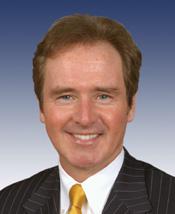
Mr. Speaker, I rise to express my opposition to the irresponsible tax reconciliation bill the House passed earlier today. I strongly support tax relief, but I oppose this bill because it does not…
Mr. Speaker, I rise to express my opposition to the irresponsible tax reconciliation bill the House passed earlier today. I strongly support tax relief, but I oppose this bill because it does not target tax relief to middle class families, because it is paid for by slashing health care and education programs and because it will needlessly increase our national debt.
Mr. Speaker, this tax bill is the second half of a misguided budget reconciliation package that raids the wallets of my Western New York constituents and gives their money to those making over a million dollars. The first half of the budget reconciliation occurred last month, when the Majority passed a series of devastating spending cuts to health and education programs in order to free up funding for these tax cuts. That means that these tax cuts are paid for by cutting $11 billion from Medicaid at a time when over 45 million Americans are without health insurance. They are paid for by throwing 300,000 people off food stamps when hunger in this country is on the rise.
They are paid for by slashing $14 billion from student loan programs when the cost of college tuition is skyrocketing. And they are paid for by cutting child support enforcement and foster care programs.
Mr. Speaker, the tax reconciliation bill is paid for out of the pockets of the middle class, yet working families receive little of its benefits. If this bill were a serious attempt to provide real tax relief to the middle class it would include an extension of the alternative minimum tax (AMT) fix. The AMT fix is set to expire at the end of the year, and without an extension taxes will increase on the 17 million middle class families who will be snared by the AMT. Yet this legislation does not include AMT relief. Instead, the centerpiece of this bill is a reduction of tax rates for capital gains and corporate dividends. Mr. Speaker, taxing investment income at a lower rate than earned income is rewarding wealth, not work. A fairer bill would have reduced taxes on the paychecks of the middle class working families who most need and deserve it.
Mr. Speaker, not only does this reconciliation package slash programs for working families and fail to target tax relief at the middle class, but it does nothing at all to reduce the federal budget deficit or the national debt. In fact, this package increases the deficit because it reduces spending by $50 billion and cuts taxes by $56 billion. In other words, this so-called ``deficit reduction'' package actually increases the deficit to the tune of $6 billion! Maybe this fiscal approach explains why the Chairman of the President's own Commission on Tax Reform said recently that he was not worried by tax policies that increase the national debt because we can always borrow some more from China. But I refuse to pass this bill and saddle the elementary school children in Jamestown and Buffalo with that debt.
Mr. Speaker, I support tax cuts. I supported the AMT stand-alone bill because the bulk of that relief goes to middle class families, and I will continue to support tax cuts for working Americans. I am not philosophically opposed to tax cuts for upper income Americans. But there is a proper time for everything, and at this juncture--when we are running record budget deficits, when we are funding our troops in Iraq, and when we are incurring huge costs to recover from Hurricane Katrina--at this juncture, we cannot cut taxes to the rich and increase the burden on the middle class. Buffalo won't hear it and neither will

Mr. Speaker, like many of my colleagues, I spent much of the Thanksgiving recess holding office hours throughout my congressional district to listen to the concerns of my constituents.…
Mr. Speaker, like many of my colleagues, I spent much of the Thanksgiving recess holding office hours throughout my congressional district to listen to the concerns of my constituents. Understandably, I heard how worried they are about skyrocketing energy prices, our lack of progress in Iraq, rising health care costs, and the recently passed budget cuts that predominately hurt the poor.
One need look no further than the tax bill on the floor today to see why many Americans are frustrated and disappointed with the work of this Congress. Republicans just don't seem to get it. Instead of trying to make progress on the pressing issues facing American families, House Republican's top priority is passing this $56 billion tax bill that primarily benefits wealthy investors. H.R. 4297 is truly shameful as it clearly puts enriching the wealthiest Americans before the biggest concerns of working Americans.
The centerpiece of the Republican's tax bill today is a $20 billion provision that would extend tax rate cuts for investors who receive capital gains or corporate dividends. According to Citizens for Tax Justice, the vast majority of Americans would receive no benefit at all from this tax provision.
Specifically, 78 percent of Americans would get no tax benefit from the capital gains and dividends provision, while an additional 10 percent would get less than $100. In my home State of Wisconsin, the wealthiest 1 percent of taxpayers (those with an average income of more than $1.3 million) would receive 43 percent of the tax benefits, or an average tax cut of $18,523 in 2009 and 2010 combined.
This bill does contain a number of tax measures I strongly support, such as the extension of the important research and development tax credit, the state sales tax deduction, and the college tuition tax credit. These provisions are good for our Nation and working families, but they should not be simply used as ``sweeteners'' to garner more support for the underlying bill and more tax cuts for investors.
I find it heartless that Republicans would bring this bill to the House floor right after they I passed a Budget Reconciliation bill that makes harmful cuts to health care for children and the elderly, food stamps for needy families, student loans, and child support enforcement. Let us be clear: these $50 billion in budget cuts were made solely to pay for these tax cuts for the wealthiest Americans. How can any Member of this Congress who has an ounce of compassion--justify making college students, the poor, children, and the elderly shoulder the cost of providing more tax cuts for the wealthy? I certainly cannot.
In Wisconsin, 91,000 children lack health insurance, up over 7% in just the last year. American families are struggling with soaring costs for fuel, housing, health care, child care, and college. Yet today, this Congress again turns a deaf ear to those concerns--not to reduce the deficit, not to pay for the war in Iraq, not to help the hurricane and tornado victims of 2005, but simply to satisfy those whose greed has no bounds.
Mr. Speaker, H.R. 4297 is a sad indication of who House Republicans are fighting for in this Congress. It should come as no surprise as we have seen the very wealthiest Americans receive special tax breaks every year since President Bush took office. The question today is whether this House will ever stand up for the many, not just the few, with budget and tax policies focused on need, not greed? I strongly urge my colleagues to vote against this bill.

Mr. Speaker, I thank the gentleman for yielding me time. Mr. Speaker, it is a curious application of tax benefits that have been left out of the minority substitute. Let me just go over a few of…
Mr. Speaker, I thank the gentleman for yielding me time.
Mr. Speaker, it is a curious application of tax benefits that have been left out of the minority substitute. Let me just go over a few of those because I think you will agree with me that it is curious which ones are left out.
The savers credit for low income families. My friends on the other side of the aisle continually stand up for low income families and to their credit, why on earth would they leave out a strong incentive for low income families to save? They do. They leave out the savers credit. And that goes only to lower income families in this country. Generally, those on the other side of the aisle harp about the--I will not say evils, but the excess profits, some of the bad things that big business does in this country, and yet they leave out the tax benefit for small businesses in this country, something known as section 179, expensing to help small businesspeople cope with the costs of keeping their businesses up to date, modernizing their businesses so that they can compete, so they can compete in the market place, sometimes with those big bad businesses. They leave that out.
Tax benefits for cleaning up brownfield sites. Brownfield sites are dirty sites, polluted sites where business has gone away. There is pollution there. They are usually the champions of the environment, cleaning up the environment. But they leave out that tax benefit to encourage cleaning up these dirty polluted sites. Very curious.
Now, certainly there are a couple that they leave out that I can understand. They leave out an extension of the active finance section of subpart F. That is a lot of big words. What that means is this particular tax provisional allows companies in this country who conduct financial operations to compete on a level playing field with their competitors overseas. That is what this does that they leave out of their bill. It allows American companies to compete effectively with companies overseas. They leave that out. But then they, as I said, they do not particularly like big business.
The one that gave them the most glee, of course, by leaving it out was capital gains and dividends. You have heard all the rhetoric, and I am sure you are confused about who benefits from these. The Joint Tax Committee, the committee that is vested with crunching the numbers in this Congress, has produced these statistics: For the capital gains tax, one in five Americans who claims capital gains on his tax return has income below $50,000. Fifty-eight percent of those who claim capital gains on their tax return have incomes below $100,000. Somewhat different from the statistics you have heard from the other side.
Dividends are even better. One in four, 25 percent of Americans who have dividend income have incomes below $50,000; 59 percent have incomes below $100,000.
Nearly 60 percent of Americans who claim either capital gains or dividend income have incomes of $100,000 or less. That is basically middle class.
Another thing that the minority sometimes likes to do, I think, is tax. They like taxes, and they want to increase taxes; and when they can double tax, boy, that is a real joy. That is what dividends do. That income has already been taxed once at the corporate level. They want to tax it again at the individual level as high a rate as possible.
So those are the things they leave out of this bill, Mr. Speaker; and I hope we will reject the substitute.
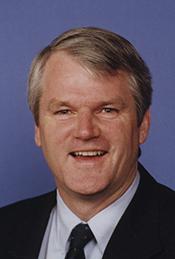
Mr. Speaker, since I first came to Congress, I made it a priority to restore sales tax deductibility for my constituents in Washington State. Last year, working with a bipartisan coalition lead by…
Mr. Speaker, since I first came to Congress, I made it a priority to restore sales tax deductibility for my constituents in Washington State. Last year, working with a bipartisan coalition lead by Mr. Kevin Brady and myself, we did successfully do that. This deduction saved Washington State taxpayers over $500 million last year alone.
Unfortunately, the sales tax deduction will expire at the end of this year, and we must extend that deduction. Accordingly, I applaud both the Democrats and the Republicans for including in their packages a 1- year extension. Frankly, I would like to have made it a permanent extension.
Nevertheless, I am concerned at a time of war in the aftermath of this country's most devastating natural disaster how we can in good conscience support a tax bill that will add at least $20 billion to our national debt to provide a tax break that goes predominantly to the wealthy, and by that I mean the capital gains and dividend tax cut.
Earlier, the distinguished chairman of the Rules Committee said the American people get it. I have to say, I just had five town halls in my district; the American people do get it. They get that this bill, the Republican majority bill, is passing on enormous deficits to our children. Debt to our children, that is what we are doing.
The Democratic substitute, by comparison, is revenue neutral. It extends the tax breaks that benefit small individual taxpayers and small businesses, and it extends sales tax deductibility without increasing the deficit. What is more, the Democratic substitute protects taxpayers against the AMT hit as people's income brings them into the AMT category.
If my friends on the other side of the aisle want to say if we do not extend the dividend and capital gains tax cut, we have an automatic tax increase, why not say the same about the AMT fix? You have not chosen to put the AMT fix in your bill. Does that not constitute an automatic tax increase? I believe it does. The Democrats have prevented that.
The difference is this: when Republicans talk about choices, the choices they are talking about is whether the most wealthy people in this country will choose to take their earnings, or winnings, from capital gains or dividends. The poor people in this country have to choose between heating their houses and providing food for their children.
Mr. Speaker, I am well aware of the issues with AMT. The issue with me is this: you have not paid for it; the Democrats have. What you are not talking about is you are passing deficit on to our kids. You are passing debt on to our kids.
I visited with high schools and had town halls last weekend, and people said they are desperately concerned about the size of the Nation's deficit and the size of the Nation's debt. The Democratic package is paid for; the Republican package is not. The Democratic package does support small businesses and low-income folks and supports the middle class. The Republican package, the bulk of the economic benefits from these tax cuts go to the people who need it least at a time when we are fighting a war and trying to recover from a disaster. I think that is a mistake.
We support tax cuts, but we would target them to the people who most need it; and you target them to the people who most want it, but least need it. That is the fundamental difference, and I think the American people see that difference.
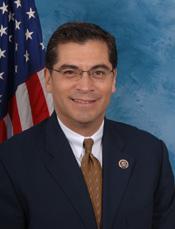
Mr. Speaker, I thank the gentleman for yielding me this time. Mr. Speaker, I urge the Members of this body to support the Rangel substitute. If we recall the words of a famous President this country…
Mr. Speaker, I thank the gentleman for yielding me this time.
Mr. Speaker, I urge the Members of this body to support the Rangel substitute.
If we recall the words of a famous President this country had, a man of heroic proportions, Harry Truman, he said, ``The buck stops here.'' And, unfortunately, we are forgetting the words of Harry Truman because today it seems like the mantra of the leadership in this House of Representatives is the buck stops with your children or perhaps your grandchildren, because we are in a portion of our Nation's history where we have run up national deficits bigger than we have ever seen in our life. We run up deficits in 1 year that it would have taken 200 years of Presidents to run up in the history of this Nation.
Mr. Speaker, in a time of disasters, Rita, Katrina, on and on; in a time of massive deficits; and in a time of war, it is irresponsible to run up the Nation's debt. It is irresponsible to then give money to run up this debt and give it to the wealthiest Americans in this Nation. Mr. Speaker, it is irresponsible to put debt on top of massive debt when we know at the end of the horizon there is still more debt that will come in the years to come: $27,000 is what each and every man, woman, and child in this country owes as a result of our Nation's debt.
It is irresponsible, Mr. Speaker, to take Social Security surplus money, which the President said back in 2001 he could protect and never touch as he moved forward with these tax cuts. It is irresponsible, Mr. Speaker, to take those Social Security surpluses and then contribute them to the wealthiest Americans. In essence, we are gifting the Social Security surplus moneys contributed by working Americans; we are gifting that to the wealthiest Americans in this country through these tax cuts.
Mr. Speaker, it is irresponsible to move forward with these tax cuts at the same time that we are telling American families, mostly middle class that rely on student loans so they can send their young men and women to college, their young daughters and sons are going to have to pay $5,000 more a year in their student loans so we can take care of the 1 percent wealthiest Americans in this Nation in these bills. It is irresponsible, Mr. Speaker, to move forward in that way.
It is irresponsible then to further say we still need to make more cuts and we need to go into the foster care program and take $600 million out of the foster care program which helps us take a child out of an abusive home and move that child into a safe setting. It is irresponsible to take $5 billion out of a child support system that says to deadbeat dads that we are going to take money from them, we need to enforce that, to take $5 billion, make it into cuts, and therefore make it more impossible for us to get those deadbeat dads to help the mothers who are taking care of their sons and daughters in this country. It is irresponsible.
Mr. Speaker, it is responsible when we have a Democratic substitute, as Mr. Rangel has, that says we are going to cut taxes, but in a targeted way, for the middle class, in a responsible way by making sure we pay for it so we do not increase the size of the deficit. And that is what should pass, Mr. Speaker.
President Truman was right. The buck stops here. Let us do it today for ourselves. Let us not leave the debt to our children.
Mr. Speaker, I think the American people just want to hear us try to get along and give them the level, be on the level with them, give them straight talk. What has happened here in the last several…
Mr. Speaker, I think the American people just want to hear us try to get along and give them the level, be on the level with them, give them straight talk.
What has happened here in the last several years is we have reduced revenues with bills like this and increased spending. Now, you can do that for a little while, and all of us have done it from time to time, I assume, with our credit cards. But you cannot do it forever and every American knows that.
To give you some recent history, in 2002, we had to increase the debt limit of money that we could borrow by $450 billion in this country. In 2003, we had to increase it again by $984 billion. In 2004, again, by $800 billion. And in the budget resolution, it is not in this bill, they propose another $781 billion increase in the limit that we can borrow.
Now, what that means is, since 2001, the Federal debt has grown from 5.6 to $8.1 trillion. This is available on www.publicdebt.treas.gov. Do not take my word for it. Go, please, look it up. In 2004, 16 of 23 Federal agencies could not provide an acceptable audit. That is available at www.gao.gov. Right now, mainland China and Hong Kong have accumulated over $300 billion worth of our debt. That data is available on the Treasury Department's Web site. Again, this is not an argument. This is fact. Go look it up. I said the other day when I was talking, things are so bad with our borrowing out of control that if China attacked Taiwan, we would have to borrow the money from China to defend Taiwan. 16 percent of all the taxes we collect now in this country go to pay interest. And it gets worse by the minute. Interest on the public debt grew more rapidly than any other spending category in the Federal Government last year. In 2005 we paid in checks $184 billion, in checks. If you assume that we continue to do these tax bills without paying for them, the GAO projects that in the year 2040, every dime collected by this government will go to pay interest on past consumption on interest only debt.
Now, what does that mean? Where are we now? This is hard to imagine, but so far, in this fiscal year, we have borrowed $130 billion and spent $39 billion on interest in just the first 2 months of this fiscal year. November's $22 billion payment was the largest ever. Debt interest grew more rapidly in the first 2 months, 38 percent, relative to the same rate last year. The Federal Reserve is raising interest rates and has 12 times. Really, all I am saying is this. We are on an unsustainable financial glide path and every reputable economist will tell you that. We want to work with the Republicans. We want to try to do tax relief when it makes sense and makes more commerce happen and so forth. But we cannot do it because we cannot reach the real problem.
You know what the problem is around here? You let the PAYGO rules lapse in 2002. We do not have meaningful enforceable budget caps. We do not have a balanced budget amendment that has ever been voted on. And what we have is a failure of not only communication but a failure of management of the budget process. And we are getting deeper and deeper in trouble by the minute.
Bill Text
2 versions available
        [Congressional Bills 109th Congress]
[From the U.S. Government Publishing Office]
[H. Res. 588 Engrossed in House (EH)]

H. Res. 588

In the House of Representatives, U.S.,

December 8, 2005.
Resolved, That upon the adoption of this resolution it shall be in order
without intervention of any point of order to consider in the House the bill
(H.R. 4297) to provide for reconciliation pursuant to section 201(b) of the
concurrent resolution on the budget for fiscal year 2006. The bill shall be
considered as read. The amendment in the nature of a substitute recommended by
the Committee on Ways and Means now printed in the bill shall be considered as
adopted. The previous question shall be considered as ordered on the bill, as
amended, to final passage without intervening motion except: (1) one hour of
debate on the bill, as amended, equally divided and controlled by the chairman
and ranking minority member of the Committee on Ways and Means; (2) the
amendment in the nature of a substitute printed in the report of the Committee
on Rules accompanying this resolution, if offered by Representative Rangel of
New York or his designee, which shall be in order without intervention of any
point of order, shall be considered as read, and shall be separately debatable
for one hour equally divided and controlled by the proponent and an opponent;
and (3) one motion to recommit with or without instructions.
Attest:

Clerk.