Madam Speaker, by direction of the Committee on Rules, I call up House Resolution 319 and ask for its immediate consideration. Mr. Speaker, for the purpose of debate only, I yield the customary 30…
Madam Speaker, by direction of the Committee on Rules, I call up House Resolution 319 and ask for its immediate consideration.
Mr. Speaker, for the purpose of debate only, I yield the customary 30 minutes to the gentleman from Florida (Mr. Hastings), pending which I yield myself such time as I may consume. During consideration of this resolution, all time yielded is for the purpose of debate only.
This resolution waives all points of order against consideration of the bill H.R. 2745, the Henry J. Hyde United Nations Reform Act of 2005, and provides a structured rule for consideration of 28 different amendments, including an amendment in the nature of a substitute offered by the minority.
The rule provides for the offering of the 28 specified amendments according to subject areas as designated in the text of the resolution, and with a cumulative total of an hour and 40 minutes of general debate to be divided equally by the chairman and ranking minority member of the Committee on International Relations.
Madam Speaker, I am pleased to stand before the House today in strong support of this rule and the underlying legislation, H.R. 2745, the Henry J. Hyde United Nations Reform Act of 2005. Madam Speaker, with 28 amendments in order, to poorly paraphrase Winston Churchill, never will so much be said by so many about so little, in this case, just a single subject act.
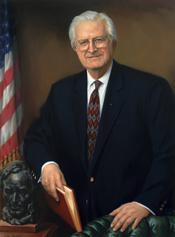
It is fitting, though, Madam Speaker, that this bill be named after our esteemed colleague to my right, the gentleman from Illinois (Chairman Hyde), who has served and is serving with such distinction and integrity and has been a stalwart in these halls for the past 30 years. He is to be commended for putting together a well-thought-out, comprehensive measure aimed at helping to bring about real and needed reforms within the United Nations.
I commend also the gentleman from California (Mr. Lantos), the ranking member, as well for the long-standing cooperation and dedication to bipartisanship in the area of U.S. policy and diplomacy which is evident in many important aspects of this legislation.
In fact, Madam Speaker, when these two distinguished gentlemen were testifying before the Committee on Rules on this bill, I was struck by the fact that the House, and indeed the entire Nation, is the beneficiary of decades' worth of their collective wisdom and firsthand experience.
We spent the last few weeks discussing DOD authorization and appropriations, Interior, State and Justice appropriations, and these acts have a wide range of topics and generated a multitude of amendments. This specific act has generated 28 potential amendments on a single topic, and, Madam Speaker, I know my colleagues are going to love listening to all 28 of those amendments, but let that not overshadow the reality of this bill.
This bill is unusual in the bipartisan unity of the content. When it comes to the issue of United Nations reform, I was also impressed that both gentlemen, the gentleman from Illinois (Chairman Hyde) and the gentleman from California (Ranking Member Lantos), seemed to be of one mind when it relates to the necessity for reforms in the wake of continued scandals within various United Nations functions.
There was also a unique, bipartisan unity in supporting the need for a penalty to follow failure of reform. There is a small disagreement on who should trigger that penalty, which differences I know my colleagues on the other side of the aisle will bring forward, but there can be no doubt as to the underlying need of this penalty phase. That is telling.
To put it in a nutshell, Madam Speaker, this legislation is long overdue. It would require 39 very specific reforms within the areas of U.N. budgeting, oversight, accountability, and human rights. It provides clarity and a reasonable timetable under which the U.N. must act. With the U.S. footing the largest share of dues of any Nation, a share consistent with our voice, this act should provide some real teeth and real incentives to get the job done. To not require such withholdings would only create a paper tiger.
As an old teacher, I learned that I never made a threat that I was not willing to carry out. If students ever thought I was not seriously going to follow through on my disciplinary commitments, I would lose all credibility and lose both the respect and the cooperation of the kids. It would create an atmosphere of weakness and chaos. No learning would take place. Such an atmosphere of distrust cannot be part of our foreign policy. We have seen that too often, and such a potential cannot be ignored.
There are indeed precedents for what we are trying to do both in the 1980s and 1990s when actions by Congress ensured change within the United Nations.
It is regrettable, Madam Speaker, that this bill is even necessary. It is regrettable that the United Nations would not undertake to clean up its own act in the wake of the oil-for-food scandal, irregularities in the accounting and uses of its funds, misconduct by entrenched U.N. bureaucrats, and the deplorable state of the U.N. Commission on Human Rights.
We all witnessed the appalling lack of resolve and consistency in the U.N. when it failed to live up to and enforce the 17 different resolutions condemning Saddam Hussein's murderous regime.
When I am at home in my district, some of my constituents will say to me that we ought to pull out of the United Nations entirely. It is hard to argue with many of them who say that the U.N. is merely a haven for corruption, waste and, frankly, anti-Americanism. We must do all we can to try and rectify all these problems, and to not act would indeed be irresponsible.
This act sends an unmistakably clear message that specific reforms must be enacted or face real consequences. If these reforms are not enacted, the future looks bleak and will only increase the calls to replace the United Nations with a more updated handling of international disputes.
In conclusion, Madam Speaker, this rule is a good and fair rule. It made every single amendment in order, all 28, which were filed before the Committee on Rules. In short, the only complaint that one may have with this rule is that is may be somewhat parsimonious in its general debate, and we will provide in those 28 amendments a
long and wide-ranging debate of all of these important issues.
With that, Madam Speaker, I urge adoption of this rule.
Madam Speaker, I reserve the balance of my time.
Madam Speaker, I yield 1 minute to the distinguished gentleman from Illinois (Mr. Hyde), the chairman of the Committee on International Relations.
(Mr. HYDE asked and was given permission to revise and extend his remarks.)
Madam Speaker, I am pleased to yield 3 minutes to the gentleman from Florida (Mr. Crenshaw).
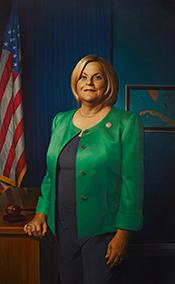
Madam Speaker, I yield 4 minutes to the gentlewoman from Florida (Ms. Ros-Lehtinen), one of the leading voices on the Committee on International Relations.
Mr. Speaker, I yield myself such time as I may consume.
I love history. In fact, this is not necessarily unprecedented. The Kassebaum-Solomon amendment in 1985 asked for change, and meaningful change took place. In 1994, we insisted on an oversight committee and an oversight committee took place. And under the bipartisan Helms-Biden approach, once again we insisted on changes with the United Nations. The United Nations responded to it. This bill is keeping a tradition that is historical going back for at least 20 years in this body.
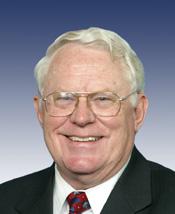
Mr. Speaker, I yield 3\1/2\ minutes to the distinguished gentleman from Indiana (Mr. Burton).
Mr. Speaker, I am pleased to yield 2 minutes to the gentlewoman from North Carolina (Ms. Foxx).
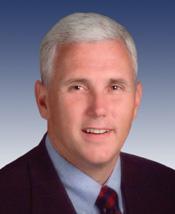
Mr. Speaker, I yield 3 minutes to the gentleman from Indiana (Mr. Pence), a member of the Committee on International Relations.
Mr. Speaker, I am pleased to yield 2 minutes to the gentleman from Pennsylvania (Mr. Pitts).
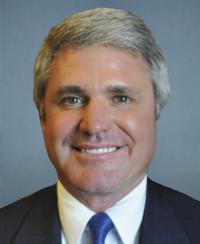
Mr. Speaker, I yield 2 minutes to the gentleman from Texas (Mr. McCaul), also a member of the Committee on International Relations.
Mr. Speaker, I yield 1 minute to the gentleman from New Jersey (Mr. Smith).
Mr. Speaker, I appreciate the kindness and flexibility of my good friend from Florida.
Mr. Speaker, I yield 1 minute to the gentleman from Texas (Mr. Gohmert).
Mr. Speaker, I yield 1 minute to the gentleman from Georgia (Mr. Gingrey).
Mr. Speaker, I yield myself the balance of my time.
Mr. Speaker, I appreciate the opportunity for having had a very quality debate here today. It is interesting to note once again that the ranking member and the chairman have said the need for reform is obvious. There is no disagreement on that point. It is seemingly the mechanism of doing that.
Once again I point out that in 1985, 1994 and 1999, this House set precedent by doing the exact same concept that is there. And it is true that maybe I have heard a new concept here that I do not need to make all Ten Commandments to get to heaven, but I also know that when I was in my classroom and I put high standards and high expectations, my kids met those standards; and if I wavered, then they wavered at the same time.
This is a good piece of legislation. It is an excellent rule, and I urge its adoption and passage of the underlying legislation.
Mr. Speaker, I yield back the balance of my time, and I move the previous question on the resolution.
The previous question was ordered.