Condemning the terrorist bombing attack that occurred on February 14, 2005, in Beirut, Lebanon, that killed former Lebanese Prime Minister Rafik Hariri and killed and wounded others.
Legislative Activity
Stay on top of the latest movement without scrolling through every action
The title of the measure was amended. Agreed to without objection.
February 17, 2005 • 1:54 PM
View full timeline
Introduced in House
February 14, 2005
Referred to the House Committee on International Relations.
February 14, 2005
Mr. Issa moved to suspend the rules and agree to the resolution, as amended.
February 16, 2005 • 2:28 PM
Considered under suspension of the rules. (consideration: CR H669-673)
February 16, 2005 • 2:28 PM
DEBATE - The House proceeded with forty minutes of debate on H. Res. 91.
February 16, 2005 • 2:28 PM
At the conclusion of debate, the Yeas and Nays were demanded and ordered. Pursuant to the provisions of clause 8, rule XX, the Chair announced that further proceedings on the motion would be postponed until Feb. 17.
February 16, 2005 • 3:08 PM
Considered as unfinished business. (consideration: CR H755-756)
February 17, 2005 • 1:47 PM
Passed/agreed to in House: On motion to suspend the rules and agree to the resolution, as amended Agreed to by the Yeas and Nays: (2/3 required): 409 - 0 (Roll no. 39).(text: CR 2/16/2005 H669 )
February 17, 2005 • 1:54 PM
On motion to suspend the rules and agree to the resolution, as amended Agreed to by the Yeas and Nays: (2/3 required): 409 - 0 (Roll no. 39). (text: CR 2/16/2005 H669 )
February 17, 2005 • 1:54 PM
Motion to reconsider laid on the table Agreed to without objection.
February 17, 2005 • 1:54 PM
The title of the measure was amended. Agreed to without objection.
February 17, 2005 • 1:54 PM
Voting History
1 vote recorded • Roll call available
Floor Debate
20 membersWhat members said about H.Res. 91 on the floor
 FJS
FJS RP
RP JCJ
JCJ BG
BG CHS+15
Floor Debate
20 membersWhat members said about H.Res. 91 on the floor
Madam Speaker, pursuant to House Resolution 96, I call up the Senate bill (S. 5) to amend the procedures that apply to consideration of interstate class actions to assure fairer outcomes for class…
Madam Speaker, pursuant to House Resolution 96, I call up the Senate bill (S. 5) to amend the procedures that apply to consideration of interstate class actions to assure fairer outcomes for class members and defendants, and for other purposes, and ask for its immediate consideration.
Madam Speaker, I ask unanimous consent that all Members may have 5 legislative days within which to revise and extend their remarks and include extraneous material on S. 5.
Madam Speaker, I yield myself such time as I may consume.
Madam Speaker, I rise in strong support of S. 5, the Class Action Fairness Act of 2005. Today marks the culmination of nearly a decade of legislative efforts to end systematic abuse of our Nation's class action system. We stand on the cusp of sending landmark legislation on civil-justice reform to the President that has been approved by increasing majorities each time it has been considered by the House in each of the last three Congresses and which passed the other body last week with an overwhelming majority of 72 votes.
Since these reforms were first proposed, the magnitude of the class action crisis, the need to address it has become more and more urgent. The crisis now threatens the integrity of our civil justice system and undermines the economic vitality upon which job creation depends.
A major element of the worsening crisis is the exponential increase in State class action cases in a handful of ``magnet'' or ``magic'' jurisdictions, many of which deal with national issues in classes. In the last 10 years, State court class actions filings nationwide have increased over 1,315 percent. The infamous handful of magnet courts known for certifying even the most speculative class action suits, the increase in filings now exceeds 5,000 percent. The only explanation for this phenomenon is aggressive forum shopping by trial lawyers to find courts and judges who will act as willing accomplices in a judicial power grab, hearing nationwide cases and setting policy for the entire country.
A second major feature of the present class action crisis is a system producing outrageous settlements that benefit only lawyers and trample the rights of class members. Class actions were originally created to efficiently address a large number of similar claims by people suffering small harms. Today they are too often used to efficiently transfer the large fees to a small number of trial lawyers, with little benefit to the plaintiffs.
The present rules encourage a race to any available State courthouse in the hopes of a rubber-stamped nationwide settlement that produces millions in attorney's fees for the winning plaintiff's attorney. The race to settle produces outcomes that favor expediency and profits for lawyers over justice and fairness for consumers. The losers in this race are the victims who often gain little or nothing through the settlement, yet are bound by it in perpetuity. And all Americans bear the cost of these settlements through increased prices for goods and services.
The bill before the House today offers commonsense procedural changes that will end the most serious abuses by allowing more interstate class actions to be heard in Federal courts while keeping truly local cases in State courts. Its core provisions are similar to those passed by this body in the last three Congresses. S. 5 also implements a consumer bill of rights that will keep class members from being used by the lawyers they never hired to engage in litigation they do not know about or to extort money they will never see.
Madam Speaker, when the House considered this important reform in the last Congress, I remarked that, ``The class action judicial system has become a joke, and no one is laughing except the trial lawyers . . . all the way to the bank.''
I imagine that laughter turned to nervous chuckles when S. 5 emerged unscathed from the gauntlet in the other body with 72 votes last week. Today, as the House prepares to pass this bill, I suspect you could hear a pin drop in the halls of infamous courthouses located in Madison County, Illinois and Jefferson County, Texas, where for so long the good times have rolled for forum-shopping plaintiffs' attorneys and the judges who enable them. And when this legislation is signed by the President one day soon, those same halls may echo with sobs and curses because this time justice and fairness and the American people will have the last laugh.
Madam Speaker, after years of toil, the moment has arrived. The opportunity to restore common sense, rationality, and dignity to our class action system is now before us, and the need for reform has never been more certain. I urge my colleagues to support the Class Action Fairness Act of 2005.
Madam Speaker, I reserve the balance of my time.
(Mr. CONYERS asked and was given permission to revise and extend his remarks.)
Madam Speaker, I yield 3 minutes to the gentleman from Virginia (Mr. Boucher) to show the breadth of the bipartisan support of this legislation.
(Mr. BOUCHER asked and was given permission to revise and extend his remarks.)
Madam Speaker, I yield myself such time as I may consume.
(Mr. SENSENBRENNER asked and was given permission to revise and extend his remarks.)
Madam Speaker, first, I have a lengthy additional statement explaining how this bill is to work. We do not have the time in general debate for me to give this statement on the floor, so I will insert the statement relative to the intent of the managers of the bill in the Record at this point.
Madam Speaker, I would like to provide a brief summary of the provisions in Sections 4 and 5 of S. 5, the Class Action Fairness Act of 2005. Section 4 gives Federal courts jurisdiction over class action lawsuits in which the aggregate amount in controversy exceeds $5 million, and at least one plaintiff and one defendant are diverse. Overall, new section 1332(d) is intended to expand substantially Federal court jurisdiction over class actions. Its provisions should be read broadly, with a strong preference that interstate class actions should be heard in a Federal court if removed by any defendant. If a purported class action is removed under these jurisdictional provisions, the named plaintiff(s) should bear the burden of demonstrating that the removal was improper. And if a Federal court is uncertain about whether the $5 million threshold is satisfied, the court should err in favor of exercising jurisdiction over the case.
The Sponsors intend that in a case seeking injunctive relief, a matter be subject to Federal jurisdiction under this provision if the value of the matter in litigation exceeds $5 million either from the viewpoint of the plaintiff or the defendant, and regardless of the type of relief sought (e.g., damages, injunctive relief, or declaratory relief). Similarly, in assessing the jurisdictional amount in declaratory relief cases, the Federal court should include in its assessment the value of all relief and benefits that would logically flow from granting the declaratory relief sought by the claimants. For example, a declaration that a defendant's conduct is unlawful or fraudulent will carry certain consequences, such as the need to cease and desist from that conduct, that will often ``cost''
the defendant in excess of $5 million. In addition, the law is clear that, once a Federal court properly has jurisdiction over a case removed to Federal court, subsequent events cannot ``oust'' the Federal court of jurisdiction. While plaintiffs can seek to avoid Federal jurisdiction by defining a proposed class in particular ways, they lose that power once the case was properly removed.
New subsections 1332( d)(3) and (d)(4)(B) address the jurisdictional principles that will apply to class actions filed against a defendant in its home State, dividing such cases into three categories. First, for cases in which two-thirds or more of the members of the plaintiff class and the primary defendants are citizens of the State in which the suit was filed, subsection 1332(d)(4)(B) states that such cases will remain in State court. Second, cases in which more than two-thirds of the members of the plaintiff class or one or more of the primary defendants are not citizens of the forum State will be subject to Federal jurisdiction since such cases are predominantly interstate in nature. Finally, there is a middle category of class actions in which more than one-third but fewer than two-thirds of the members of the plaintiff class and the primary defendants are all citizens of the State in which the action was filed. In such cases, the numbers alone may not always confirm that the litigation is more fairly characterized as predominantly interstate in character. New subsection 1332(d)(3) therefore gives Federal courts discretion, in the ``interests of justice,'' to decline to exercise jurisdiction over such cases based on the consideration of five factors.
First, the court should consider whether the claims asserted are of ``significant national or interstate interest.'' Under this factor, if a case presents issues of national or interstate significance, that argues in favor of the matter being handled in Federal court. Second, the court should consider whether the claims asserted will be governed by laws other than those of the forum State. Under this factor, if the Federal court determines that multiple State laws will apply to aspects of the class action, that determination would favor having the matter heard in the Federal court system, which has a record of being more respectful of the laws of the various States in the class action context. The third factor is whether the class action has been pleaded in a manner that seeks to avoid Federal jurisdiction. The purpose of this inquiry is to determine whether the plaintiffs have proposed a ``natural'' class that encompasses all of the people and claims that one would expect to include in a class action, as opposed to proposing a class that appears to be gerrymandered solely to avoid Federal jurisdiction by leaving out certain potential class members or claims. If the Federal court concludes evasive pleading is involved, that factor would favor the exercise of Federal jurisdiction. The fourth factor considers whether there is a ``distinct'' nexus between: (a) The forum where the action was brought, and (b) the class members, the alleged harm, or the defendants. This factor is intended to take account of a major concern that led to this legislation--the filing of lawsuits in out-of-the-way ``magnet'' State courts that have no real relationship to the controversy at hand. Thus, for example, if the majority of proposed class members and the defendant reside in the county where the suit is brought, the court might find a distinct nexus exists.
The fifth factor asks whether the number of citizens of the forum State in the proposed plaintiff class(es) is substantially larger than the number of citizens from any other State, and the citizenship of the other members of the proposed class(es) is dispersed among a substantial number of States. If all of the class members who do not reside in the State where the action was filed are widely dispersed among many other States, that point would suggest that the interests of the forum State in litigating the controversy are preeminent. However, if a court finds that the citizenship of the other class members is not widely dispersed, the opposite balance would be indicated and a Federal forum would be favored. Finally, the sixth factor is whether one or more class actions asserting the same or similar claims on behalf of the same or other persons have been filed in the last three years. The purpose of this factor is efficiency and fairness: To determine whether a matter should be subject to Federal jurisdiction so that it can be coordinated with other overlapping or parallel class actions. If other class actions on the same subject have been (or are likely to be) filed elsewhere, the Sponsors intend that this consideration would strongly favor the exercise of Federal jurisdiction. It is the Sponsors' intention that this factor be interpreted liberally and that plaintiffs not be able to plead around it with creative legal theories. If a plaintiff brings a product liability suit alleging consumer fraud or unjust enrichment, and another suit was previously brought against some of the same defendants alleging negligence with regard to the same product, this factor would favor the exercise of Federal jurisdiction over the later-filed claim.
New subsection 1332(d)(4)(A) is the ``Local Controversy Exception.'' This subsection prohibits Federal courts from exercising diversity jurisdiction over a class action under the foregoing provisions if the plaintiffs clearly demonstrate that each and every one of the following criteria are satisfied in the case at issue. First, more than two- thirds of class members are citizens of the forum State. Second, there is at least one in-State defendant from whom significant relief is sought by members of the class and whose conduct forms a significant basis of plaintiffs' claims. Third, the principal injuries resulting from the alleged conduct, or related conduct, of each defendant were incurred in the State where the action was originally filed. And fourth, no other class action asserting the same or similar factual allegations against any of the defendants on behalf of the same or other persons has been filed during the preceding three years.
This provision is intended to respond to concerns that class actions with a truly local focus should not be moved to Federal court under this legislation because State courts have a strong interest in adjudicating such disputes. At the same time, this is a narrow exception that was carefully drafted to ensure that it does not become a jurisdictional loophole. Thus, in assessing whether each of these criteria is satisfied by a particular case, a Federal court should bear in mind that the purpose of each of these criteria is to identify a truly local controversy--a controversy that uniquely affects a particular locality to the exclusion of all others. For example, under the second criterion, there must be at least one real local defendant. By that, the Sponsors intend that the local defendant must be a primary focus of the plaintiffs' claims--not just a peripheral defendant. The local defendant must be a target from whom significant relief is sought by the class (as opposed to just a subset of the class membership), as well as being a defendant whose alleged conduct forms a significant basis for the claims asserted by the class. Similarly, the third criterion is that the principal injuries resulting from the actions of all the defendants must have occurred in the State where the suit was filed. By this criterion, the Sponsors mean that all or almost all of the damage caused by defendants' alleged conduct occurred in the State where the suit was brought. The purpose of this criterion is to ensure that this exception is used only where the impact of the misconduct alleged by the purported class is localized. For example, a class action in which local residents seek compensation for property damage resulting from a chemical leak at a manufacturing plant in that community would fit this criterion, provided that the property damage was limited to residents in the vicinity of the plant. However, if the defendants engaged in conduct that could be alleged to have injured consumers throughout the country or broadly throughout several States (such as an insurance or product case), the case would not qualify for this exception, even if it were brought only as a single-State class action.
The fourth and final criterion is that no other class action involving similar allegations has been filed against any of the defendants over the last three years on behalf of the same or other persons. Once again, the Sponsors wish to stress that the inquiry under this criterion should not be whether identical (or nearly identical) class actions have been filed. Rather, the inquiry is whether similar factual allegations have been made against the defendant in multiple class actions, regardless of whether the same causes of actions were asserted or whether the purported plaintiff classes were the same (or even overlapped in significant respects).
New subsections 1332(d)(5)(A) and (B) specify that S. 5 does not extend Federal diversity jurisdiction to class actions in which (a) the primary defendants are States, State officials, or other governmental entities against whom the district court may be foreclosed from ordering relief, or (b) the number of members of all proposed plaintiff classes in the aggregate is fewer than 100 class members. The purpose of the ``State action'' cases provision is to prevent States, State officials, or other governmental entities from dodging legitimate claims by removing class actions to Federal court and then arguing that the Federal courts are constitutionally prohibited from granting the requested relief. However, Federal courts should proceed cautiously before declining Federal jurisdiction under the ``State action'' case exception, and do so only when it is clear that the primary defendants are indeed States, State officials, or other governmental entities against whom the ``court may be foreclosed from ordering relief.'' The Sponsors wish to stress that this provision should not become a subterfuge for avoiding Federal jurisdiction. In particular, plaintiffs should not be permitted to name State entities as defendants as a mechanism to avoid Federal jurisdiction over class actions that largely target non-governmental defendants. The Sponsors intend that ``primary defendants'' be interpreted
to reach those defendants who are the real ``targets'' of the lawsuit-- i.e., the defendants that would be expected to incur most of the loss if liability is found. It is the Sponsors' intention with regard to each of these exceptions that the party opposing Federal jurisdiction shall have the burden of demonstrating the applicability of an exemption.
The Sponsors understand that in assessing the various criteria established in all of these new jurisdictional provisions, a Federal court may have to engage in some fact-finding, not unlike what is necessitated by the existing jurisdictional statutes. The Sponsors further understand that in some instances, limited discovery may be necessary to make these determinations. However, the Sponsors caution that these jurisdictional determinations should be made largely on the basis of readily available information. Allowing substantial, burdensome discovery on jurisdictional issues would be contrary to the intent of these provisions to encourage the exercise of Federal jurisdiction over class actions.
Under new subsection 1332(d)(9), the Act excludes from its jurisdictional provisions class actions that solely involve claims that relate to matters of corporate governance arising out of State law. The purpose of this provision is to avoid disturbing in any way the Federal vs. State court jurisdictional lines already drawn in the securities litigation class action context by the enactment of the Securities Litigation Uniform Standards Act of 1998. The Sponsors intend that this exemption be narrowly construed. By corporate governance litigation, the Sponsors mean only litigation based solely on (a) State statutory law regulating the organization and governance of business enterprises such as corporations, partnerships, limited partnerships, limited liability companies, limited liability partnerships, and business trusts; (b) State common law regarding the duties owed between and among owners and managers of business enterprises; and (c) the rights arising out of the terms of the securities issued by business enterprises.
New subsection 1332(d)(11) expands Federal jurisdiction over mass actions--suits that are brought on behalf of numerous named plaintiffs who claim that their suits present common questions of law or fact that should be tried together even though they do not seek class certification status. Mass action cases function very much like class actions and are subject to many of the same abuses. Under subsection 1332(d)(11), any civil action in which 100 or more named parties seek to try their claims for monetary relief together will be treated as a class action for jurisdictional purposes. The Sponsors wish to stress that a complaint in which 100 or more plaintiffs are named fits the criteria of seeking to try their claims together, because there would be no other apparent reason to include all of those claimants in a single action unless the intent was to secure a joint trial of the claims asserted in the action. The Sponsors also wish to stress that this provision is intended to mean a situation in which it is proposed or ordered that claims be tried jointly in any respect--that is, if only certain issues are to be tried jointly and the case otherwise meets the criteria set forth in this provision, the matter will be subject to Federal jurisdiction. However, it also should be noted that a mass action would not be eligible for Federal jurisdiction under this provision if any of several criteria are satisfied by the action, including (1) when all the claims asserted in the action arise out of an event or occurrence in the State where, the suit is filed and the injuries were incurred in that State and contiguous States (e.g., a toxic spill case) and (2) when the claims are asserted on behalf of the general public (and not on behalf of individual claimants or members of a purported class) pursuant to a State statute specifically authorizing such an action.
The first exception would apply only to a truly local single event with no substantial interstate effects. The purpose of this exception is to allow cases involving environmental torts such as a chemical spill to remain in State court if both the event and the injuries were truly local, even though there are some out-of-State defendants. By contrast, this exception would not apply to a product liability or insurance case. The second exception also addresses a very narrow situation, specifically a law like the California Unfair Competition Law, which allows individuals to bring a suit on behalf of the general public.
Subsection 1332(d)(11)(B)(i) includes a statement indicating that jurisdiction exists only over those plaintiffs whose claims in a mass action satisfy the jurisdictional amount requirements under section 1332(a). It is the Sponsors' intent that although remands of individual claims not meeting the section 1332 jurisdictional amount requirement may take the action below the 100-plaintiff jurisdictional threshold or the $5 million jurisdictional amount requirement, those subsequent remands should not extinguish Federal diversity jurisdiction over the action as long as the mass action met the various jurisdictional requirements at the time of removal.
Under subsection 1332(d)(11)(C), a mass action removed to a Federal court under this provision may not be transferred to another Federal court under the MDL statute (28 U.S.C. Sec. 1407) unless a majority of the plaintiffs request such a transfer. The Sponsors wish to make clear that this restriction on MDL transfers applies only to mass actions as defined in subsection 1332(d)(11); the legislation does not more broadly restrict the authority of the Judicial Panel on Multidistrict Litigation to transfer class actions removed to Federal court under this legislation. Under subsection 1332(d)(11)(D), the statute of limitations for any claims that are part of a mass action will be tolled while the mass action is pending in Federal court.
The removal provisions in Section 5 of the legislation are self- explanatory and attempt to put an end to the type of gaming engaged in by plaintiffs' lawyers to keep cases in State court. They should thus be interpreted with this intent in mind. In addition, new subsection 1453(c) provides that an order remanding a class action to State court is reviewable by appeal at the discretion of the reviewing court. The Sponsors note that the current prohibition on remand order review was added to section 1447 after the Federal diversity jurisdictional statutes and the related removal statutes had been subject to appellate review for many years and were the subject of considerable appellate level interpretive law. The Sponsors believe it is important to create a similar body of clear and consistent guidance for district courts that will be interpreting this legislation and would particularly encourage appellate courts to review cases that raise jurisdictional issues likely to arise in future cases.
Thank you, Madam Speaker, for allowing me to provide an explanation of these jurisdictional provisions.
Madam Speaker, for purposes of engaging in a colloquy with the two gentlemen from Virginia (Mr. Goodlatte) and (Mr. Boucher), I yield to the gentleman from Virginia (Mr. Goodlatte).
Madam Speaker, reclaiming my time, I appreciate the gentleman's question.
Section 4 of the bill gives Federal courts jurisdiction over class action lawsuits in which the matter in controversy exceeds the sum or value of $5 million, excluding interests and costs and at least one proposed class member and one defendant are citizens of different States or countries.
For purposes of the citizenship element of this analysis, S. 5 does not alter current law. Thus, a corporation will continue to be deemed a citizen of any State by which it has been incorporated and of the State where it has its principal place of business. However, the bill provides that for purposes of this new section, and section 1453 of title 28, an unincorporated association shall be deemed to be a citizen of the State where it has its principal place of business and the State under whose laws it organized. This provision is added to ensure that unincorporated associations receive the same treatment as corporations for purposes of diversity jurisdiction. New subsection 1332(d)(10) corrects this anomaly.
I yield to the gentleman from Virginia.
Madam Speaker, reclaiming my time, under new subsection 1332(d)(6), the claims of the individual class members in any class action shall be aggregated to determine whether the amount in controversy exceeds the sum or value of $5 million. The sponsors intend this subsection to be interpreted broadly, and if a purported class action is removed under this provision, the plaintiff shall bear the burden of demonstrating that the $5 million threshold is not satisfied. By the same token, if a Federal court is uncertain about whether a case puts $5 million or more in controversy, the court should favor exercising jurisdiction over the case.
This principle applies to class actions seeking injunctive relief as well. The sponsors intend that a matter be subject to Federal jurisdiction under this provision if the value of the matter in litigation exceeds the $5 million, either from the viewpoint of the plaintiff or the viewpoint of the defendant, regardless of the type of relief sought, such as damages, injunctive relief or declaratory relief.
The sponsors are aware that some courts, especially in the class action context, have declined to exercise Federal jurisdiction over cases on the grounds that the amount in controversy in those cases exceeded the jurisdictional threshold only when assessed from the viewpoint of the defendant.
For example, a class action seeking injunctive relief that would require a defendant to restructure its business in some fundamental way might cost a defendant well in excess of $75,000 under current law, but might have substantially less value to each plaintiff or even to the class of plaintiffs as a whole. Because S. 5 explicitly allows aggregation for the purposes of determining the amount of controversy in class actions, that concern is no longer relevant.
To the extent plaintiffs seek to avoid this rule by framing their cases as individual actions for injunctive relief, most Federal courts have properly held that in an individual case the cost of injunctive relief is viewed from the defendant's perspective. This legislation extends that principle to class actions as well.
The same approach would apply in a case involving declaratory relief. In determining how much money a declaratory relief case puts in controversy, the Federal court should include in its assessment the value of all relief and benefits that would logically flow from the granting of the declaratory relief sought by the plaintiffs.
For example, a declaration that a defendant's conduct is unlawful or fraudulent will carry certain consequences, such as the need to cease and desist from that conduct that will often cost the defendant in excess of $5 million; or a declaration that a standardized product sold throughout the Nation is defective might well put a case over the $5 million threshold, even if the class complaint did not affirmatively seek a determination that each class member was injured by the product.
The bottom line is that new section 1332(d) is intended to substantially expand Federal court jurisdiction over class actions, not to create loopholes. This provision should be read broadly, with a strong preference that interstate class actions should be heard in a Federal court if properly removed by a defendant.
Reclaiming my time, Madam Speaker, I am pleased to answer the gentleman.
The first factor is whether the claims asserted are of significant national or interstate interest. Under this factor, if a case presents issues of national or interstate significance that argues in favor of the matter being handled in Federal Court, for example, if a class action alleges a nationally distributed pharmaceutical product caused side effects, those cases presumably should be heard in Federal court because of the nationwide ramifications of the dispute and the potential interface with Federal drug laws.
Under this factor, the Federal court should inquire whether the case does present issues of national or interstate significance of this sort. If such issues are identified, that point favors the exercise of the Federal jurisdiction.
The second factor is whether the claims asserted will be governed by laws other than those of the forum State. The sponsors believe that one of the significant problems posed by multistate class actions in State court is the tendency of some State courts to be less than respectful of the laws of other jurisdictions, applying the law of one State to an entire nationwide controversy and thereby ignoring the distinct and varying State laws that should apply to various claims included in the class, depending upon where they arose.
Under this factor, if the Federal court determines that multiple State laws will apply to aspects of the class action, the determination would favor having the matter handled in the Federal court system, which has a record of being more respectful of the laws of various States in the class action controversy. Conversely, if the court concludes that the laws of the State to which the action was filed will apply to the entire controversy, that factor will favor keeping the case in State court.
The third factor is whether the class action has been pleaded in a manner that seeks to avoid Federal jurisdiction. The purpose of this inquiry is to determine whether the plaintiffs have proposed a natural class, a class that encompasses all the people and claims that one would expect to include in a class action, as opposed to proposing a class that appears to be gerrymandered solely to avoid Federal jurisdiction by leaving out certain potential class members or claims.
If the Federal court concludes that evasive pleading is involved, that factor would favor the exercise of Federal jurisdiction. On the other hand, if the class definition and claims appear to follow a natural pattern, that consideration would favor allowing the matter to be handled by a State court.
The fourth factor is whether there is a distinct nexus between, A, the forum where the action was brought, and, B, the class members, the alleged harm or the defendants. This factor is intended to take account of a major concern that led to this legislation, the filing of lawsuits in the out-of-the-way magnet State courts that have no real relationship to the controversy at hand.
Thus, if a majority of the proposed class action members and the defendants reside in the county where the suit is brought, the court might find a distinct nexus exists. The key to this factor is the notion of there being a distinct nexus. If the allegedly injured parties live in many other localities, the nexus is not distinct, and this factor would weigh heavily in favor of the exercise of Federal jurisdiction over the matter.
The fifth factor is whether the number of citizens in the forum State in the proposed plaintiff class is substantially larger than the number of citizens from any other State, and the citizens of the other members of the proposed class is dispersed among a substantial number of States.
This factor is intended to look at the geographic distribution of class members in an effort to determine the forum State's interest in handling the litigation. If all of the out-of-State class members are widely dispersed among many other States, that point would suggest that the interest of the forum State in litigating the controversy are preeminent.
The sponsors intend that such a conclusion would favor allowing the State court in which the action was originally filed to handle the litigation. However, if a court finds that the citizenship of the other class members is not widely dispersed, then a Federal forum would be more appropriate because several States other than the forum State would have a strong interest in the controversy.
The final factor is whether one or more class actions asserting the same or similar claims on behalf of the same or other persons have been filed in the last 3 years. The purpose of this factor is to determine whether a matter should be subject to Federal jurisdiction so that it can be coordinated with other overlapping or parallel class actions.
If the other class actions on the same subject have been or are likely to be filed elsewhere, the sponsors intend that this consideration would strongly favor the exercise of Federal jurisdiction. It is the sponsors' intention that this factor be broadly interpreted and that plaintiffs not be able to plead around it with creative legal theories.
If a plaintiff brings a product liability suit alleging consumer fraud or unjust enrichment, and another suit was previously brought against some of the same defendants alleging negligence with regard to the same product, this factor would favor the exercise of Federal jurisdiction over the later-filed claim.
Madam Speaker, I now yield to my colleague, the gentleman from Virginia (Mr. Boucher), to provide some examples that illustrate how these six factors would work in litigation.
I yield to the other gentleman from Virginia (Mr. Goodlatte).
Madam Speaker, reclaiming my time, yes, this provision is intended to respond to concerns that class actions with a truly local focus should not be moved to Federal court under this legislation because State courts have a strong interest in adjudicating such disputes. At the same time, this is a narrow exception that was carefully drafted to ensure that it does not become a jurisdictional loophole. Thus, each of the criteria is intended to identify a truly local class action.
First, there must be a primarily local class. Secondly, there must be at least one real local defendant. And by that the drafters meant that the local defendant must be a primary focus of the plaintiffs' claims, not just a retailer or other peripheral defendant. The defendant must be a target from whom significant relief is sought by the class, as opposed to just a subset of the class membership, as well as being a defendant whose alleged conduct forms a significant basis for the claims asserted by the class.
For example, in a consumer fraud case, alleging that an insurance company incorporated and based in another State misrepresented its policies, the local agent of the company named as a defendant presumably would not fit this criteria. He or she probably would have had contact with only some of the purported class members and, thus, would not be a person from whom significant relief would be sought by the plaintiff class viewed as a whole. And, from a relief standpoint, the real demand of the full class in terms of seeking significant relief would be on the insurance company itself.
Third, the principal injuries resulting from the actions of all the defendants must have occurred in the State where the suit was filed. This criterion means that all or almost all of the damage caused by the defendants' conduct occurred in the State where the suit was brought. If defendants engaged in conduct that allegedly injured consumers throughout the country, the case would not qualify for the local controversy exception, even if it was only brought as a single State class action.
And, fourth, no other class action involving similar allegations has been filed against any of the defendants over the last 3 years. In other words, if we are talking about a situation that results in multiple class actions, those are not the types of cases that this exception is intended to address. I would like to stress that the inquiry under this criterion should not be whether identical or nearly identical class actions have been filed. Rather, the inquiry is whether similar factual allegations have been made against the defendant in multiple class actions, regardless of whether the same causes of action were asserted or whether the proposed plaintiff classes in the prior case was the same.
Madam Speaker, I yield to the gentleman from Virginia (Mr. Goodlatte).
I yield to the gentleman from Virginia (Mr. Boucher).
Mr. Speaker, reclaiming my time, I will be happy to explain.
The mass action provision was included in the bill because mass actions are really class actions in disguise. They involve an element of people who want their claims adjudicated together, and they often result in the same abuses as class actions. In fact, sometimes the abuses are even worse because the lawyers seek to join claims that have little to do with each other and confuse a jury into awarding millions of dollars to individuals who have suffered no real injury.
Here is how the mass action provision and the current amount-in- controversy provision would work in tandem: suppose 200 people file a mass action in Mississippi against a New Jersey drug manufacturer and also name a local drug store. Three of them assert claims for a million dollars apiece, and the rest assert claims of $20,000.
The Federal Court would have jurisdiction over the mass action because there are more than 100 plaintiffs, there is minimal diversity, and the total amount of controversy exceeds $5 million, and a product liability case does not qualify for the local occurrence exception in the provision.
Then the question becomes, which claims would, in the mass action, the Federal judge keep in Federal Court, and which would be remanded? At this point the judge would have to look at each of the claims very carefully and determine whether or not they meet the $75,000 minimum.
In this regard, I would note that the plaintiffs often seek to minimize what they are seeking in the complaint so that they can stay in State court. For example, sometimes plaintiffs leave their claim for punitive damages off the original complaint to make it seem like their claims are smaller than they really are.
It is our expectation that a Federal judge would read a complaint very carefully and only remand claims that clearly do not meet the $75,000 threshold. If it is likely that a plaintiff is going to turn around in a month and add an additional claim for punitive damages, the Federal court should obviously assert jurisdiction over that individual's claims.
Finally, I would like to stress that this provision in no way is intended to abrogate 8 United States Code 3867 to narrow current jurisdictional rules. Thus, if a Federal court believed it to be appropriate, the court could apply supplemental jurisdiction in the mass action context as well.
With regard to the exceptions, it is our intent that they be interpreted strictly by a court so that they do not become loopholes for an important jurisdictional provision. Thus, the first exception would apply only in a situation where we are talking about a truly local single event with no substantial interstate effects.
The purpose of this exception is to allow cases involving environmental torts, such as a chemical spill, to remain in State court if both the event and the injuries were truly local, even though there are some out-of-state defendants.
By contrast, this exception would not apply to a product liability or insurance case. The sale of a product to different people does not qualify as an event, and the alleged injuries in such a case would be spread out over more than one State or contiguous States even if all of the plaintiffs in a particular case came from one single State.
The third exception addresses a very narrow situation, specifically a law like the California Unfair Competition Law, which allows individuals to bring a suit on behalf of the general public. Such a suit would not qualify as a mass action. However, the vast majority of cases brought under other States' consumer fraud laws which do not have a parallel provision could qualify as removable class actions.
I yield to the gentleman from Virginia.
Mr. Speaker, reclaiming my time, once again, critics of the legislation have it backwards. This legislation will streamline jurisdictional inquiries by putting an end to all of the gaming that takes place under the current system, and the so-called delay refers to procedural rules that already exist under the current system.
Under existing law, diversity of citizenship between the parties must exist, both at the time a complaint is filed and at the time a complaint is removed to Federal court. However, if the plaintiff files an amended complaint in State court that creates jurisdiction,
or if subsequent events create jurisdiction, the defendant can then remove the case to Federal court.
Current law is also clear that once a complaint is properly removed to Federal court, the Federal court's jurisdiction cannot be ousted by later events. Thus, for example, changes in the amount of controversy after the complaint has been removed would not subject a lawsuit to be remanded to State court.
Mr. Speaker, I reserve the balance of my time.
Mr. Speaker, I always thought that Federal judges protected the rights of everybody.
Mr. Speaker, I yield 3 minutes to the gentleman from Utah (Mr. Cannon).
Mr. Speaker, I yield 2 minutes to the gentleman from Florida (Mr. Keller).
Mr. Speaker, I yield myself the balance of the time.
Mr. Speaker, notwithstanding what we have heard from opponents of this legislation, its passage would not extinguish the legal right of any injured party, whether it be a class action, a mass action, or an individual lawsuit from proceeding in a court of competent jurisdiction in the United States. What the bill does do is it puts some sense into the class action system so that the members of the plaintiff's class will be fairly and adequately compensated rather than seeing all of their gains go to attorneys and them just getting coupon settlements from the people who have allegedly done them wrong.
I was particularly perturbed listening to the gentleman from Massachusetts (Mr. Markey), who said that the kids who start smoking at 13 and 14 years old are going to be denied their day in court, and that the tobacco companies are going to end up cashing in on a big bonanza.
Well, I had my staff, while this was going on, look at what has happened to Altria, the parent company of Philip Morris. Since the other body passed this bill, Altria stock has gone down by at least $1.50, or 2 percent. And today, the Reuters story that came out less than an hour ago says that the Dow has been dragged down by Altria.
Now, if this was the bonanza to investors in Altria, the stock would not be going down. It is not. That is a fallacious argument. Reject the substitute and pass the bill.
Mr. Speaker, pursuant to the rule, I claim the time in opposition.
Mr. Speaker, I yield myself such time as I may consume.
Mr. Speaker, I rise in opposition to the Democratic substitute amendment and urge my colleagues to reject it. The new math behind the substitute amendment rests on the following arithmetic: if you add a number of amendments rejected by large bipartisan majorities in the other body last week and combine them with the amendment ideas overwhelmingly rejected on the House floor by a bipartisan vote last year, the sum will somehow equal a credible solution. Funny math.
Mr. Speaker, this formula simply does not add up. The American consumers and businesses will be left with change in their pockets if the amendment passes. The Democratic substitute is less than the sum of its parts and represents a quotient that renders Senate Bill 5's core reform elements meaningless.
The individual elements of this proposal deserve some comment and explanation. First, I note with some amusement that the substitute totally recycles the findings of S. 5. The pages of findings discuss abusive class action windfall settlements for trial attorneys, forum shopping, and the need for more of these large interstate class action cases to be in Federal court.
While the minority substitute reargues the compelling case for reform of the class action system, it is followed by text that will only perpetuate the crisis the findings identify. Their admitting you have a problem is the first step to recovery, and we appreciate that admission; but the minority sponsors clearly are not ready for step two.
One element of the substitute amendment is the State attorney general provision allowing any class action to be brought by or on behalf of the State attorney general to be in State court. This provision is unnecessary because when State attorneys general sue on behalf of their citizens, those actions are almost always ``parens patriae'' actions, and not class actions; and the former will be in no way affected by this bill.
Also, the provision could produce troubling associations between attorneys general and plaintiffs' lawyers. For these reasons, the Pryor amendment in the other body that this provision copies verbatim failed to garner even 40 votes on the Senate floor last week.
A second element of the substitute is the ``choice of law'' provision. This provision would not only eviscerate the bill, but also would overturn 70 years of established Supreme Court precedent and would export to Federal courts a primary expedient of class action abuse we seek to remedy: the reckless application by local courts of the law of one State to the entire Nation in large interstate cases.
This provision is reprinted from a Senate amendment by Senator Feinstein and Senator Bingaman. It was also soundly defeated.
The third element of the substitute is the so-called labor and civility rights carveout. This provision seeks to keep all class actions involving alleged civil rights and labor law violations in State court, despite the fact that the most generous racial discrimination and employment class action settlements in recent years have been in the Federal courts. The language was also offered in the other body and rejected.
Other major elements of the substitute include one our colleagues might remember as the Jackson-Lee House floor amendment to the bill in the last Congress. That amendment makes companies that incorporate abroad for tax purposes a citizen of a State and punishes them by keeping them out of Federal court. This is at least an admission that going into certain State courts as a defendant is indeed punishment, and that amendment was defeated in this House by the last Congress by a vote of 183 to 238. There is also a loophole creating a provision on mass actions and a completely unnecessary public disclosure provision, both based on Senate amendments in the other body that were offered and withdrawn.
What the minority has chosen as a substitute package certainly belies any grumblings about the lack of regular order this year. Since there is not a single original idea among the provisions that has not already been debated and defeated either in this House or the other body, it is hard to give credence to such complaints. This is a package of oldies but not goodies; oldies that have been rejected and should not be resurrected.
Finally, Mr. Speaker, a vote on this substitute is clearly just a vote to further deny or delay meaningful class action reform, and a vote on the substitute could not in any way be construed as reform of any kind but, rather, support for the trial-lawyer-dominated status quo.
I urge my colleagues to reject this recycled package of recycled amendments. The time for reform of a class action system which is out of control is now.
I urge my colleague to vote ``no'' on the substitute, and ``yes'' on
Mr. Speaker, I yield 4 minutes to the gentleman from Missouri (Mr. Blunt), the distinguished majority Whip.
Mr. Speaker, I yield 2\1/2\ minutes to the gentleman from Texas (Mr. Smith).
Mr. Speaker, I yield 5 minutes to the gentleman from Virginia (Mr. Goodlatte), the author of the bill.
Mr. Speaker, I yield 2 minutes to the gentleman from Virginia (Mr. Goodlatte).
Mr. Speaker, I yield myself the balance of my time.
Mr. Speaker, the amendment in the nature of a substitute completely guts this bill. Every crippling amendment that was rejected either in this House or the other body in this Congress or the previous Congress is incorporated in this amendment. They do not have any new ideas over there. They just repackage and try to regurgitate the old ideas that have been found lacking.
The issue in this bill is very clear, and that is that we have to restore some sanity to the civil justice system by dealing with the abuses that a small group of lawyers have turned the class action system into.
When the framers of the Constitution wrote that inspired document, they gave Congress the power to regulate interstate Congress. What has happened as a result of the abuse of the class action system is that judges in small out-of-the-way counties, like Madison County, Illinois and Jefferson County, Texas end up being the ultimate arbiters of interstate commerce.
This bill puts some balance back into the system. The amendment perpetuates the existing system. Vote ``no'' on the amendments, vote ``no'' on the motion to recommit, and pass the bill.
Mr. Speaker, I yield back the balance of my time.
Mr. Speaker, on that I demand the yeas and nays.
Mr. Speaker, if neither gentlemen is opposed to the bill, I request the time in opposition. I am opposed to it. Mr. Speaker, I yield myself such time as I may consume. Mr. Speaker, I have taken the…
Mr. Speaker, if neither gentlemen is opposed to the bill, I request the time in opposition.
I am opposed to it.
Mr. Speaker, I yield myself such time as I may consume.
Mr. Speaker, I have taken the time in opposition to this resolution because I very sincerely believe that resolutions of this sort actually do more harm than good. I know that it is very good to condemn the violence, and I certainly do agree with that.
But I am convinced that when we get involved and send strong messages, such as this resolution will, that it ends up expanding the war rather than diminishing the conflict, and that ultimately it comes back to haunt us.
Generally speaking, I follow a policy in foreign affairs called noninterventionism. It is not generally acceptable in this current time that we do this, but I think there is every reason to consider it. It certainly was something that the founders talked about.
The Constitution really doesn't authorize us to be the policemen of the world. And for this reason, we should talk about it. And that is why I take this opportunity to do so, with the sincere belief that we would be better off with less intervention overseas.
The founders talked about that, about rejecting entangling alliances. And we have been involved in a lot of entangling alliances since World War I, especially after World War II, and we have been doing a lot of things, losing a lot of men and women and costing a lot of money; and too often, these events have come back to haunt us. There is blow-back from our policy.
The policy of interventionism, which I object to, really doesn't work. It is well intended, and we have these grandiose plans and schemes to solve the problems of the world, but if you are really honest with yourself and you look at the success and failure, it doesn't have a good record. I mean, are you going to defend the great victory in Korea, the great victory in Vietnam? And on and on. The great victory in Iraq?
And I see resolutions like this step in the wrong direction. Actually, I believe it is going to expand the war in the Middle East.
The other reason why I strongly object to interventionism is it costs a lot of money. And someday we will have to deal with that. Supplemental bills come up now to the tune of tens of billions, and next year, already, they are planning to come up with another $100 billion for our intervention overseas. But it is off the regular budgetary process, so it doesn't meet the budgetary restraints that we are supposed to follow. So it becomes emergency funding, although we have been in Iraq for 3 years, and with plans to stay endlessly. We are building permanent bases in Iraq. So there is a lot of cost, and eventually that will come home to haunt us, and it already has.
And then there is the problem of unintended consequences. We went into Iraq for all kinds of reasons, some disproven, and all well intended, and who knows what the real motivations were. But one thing was that we would gain access to oil, and oil would be produced and would help pay the bills. Yet oil, when we went into Iraq was $28 a barrel. Now it is $75 a barrel. That is an unintended consequence.
We have done more to fall into the trap of what Osama bin Laden wanted in Iraq than anything else. And actually we have helped Iran. Iran is stronger. They have probably already more influence with the grass roots, the democratic process in Iraq, than we do. Those are the kind of unintended consequences that, on principle, I strongly object to.
I believe that the founders were correct in advocating avoiding entangling alliances, to have a strong national defense, to defend this country, I believe that is just plain common sense. Most Americans, if you just flat-out put it to them, think we should not be the policemen of the world. Do you think we should be involved in the internal affairs of other nations? People say no. We shouldn't do this. The Constitution doesn't give us the authority to do it.
And we now are in the business of maintaining an empire. A noninterventionist foreign policy concedes up front that is not our goal. We are not supposed to be going overseas and building permanent bases and staying there endlessly. Even the election campaign of 2000 was won partially on the foreign policy issue that, you know, it was said that we shouldn't be the policemen of the world and we shouldn't be in nation building.
I think those are good ideas and the American people agree. They didn't object to it. But each step along the way we dig a deeper hole for ourselves. And that is the general philosophic reasons why I believe nonintervention is beneficial. Intervention is very, very dangerous. Later there will be a lot of specifics that I would like to mention.
Mr. Speaker, I reserve the balance of my time.
Mr. Speaker, I yield 8 minutes to the gentleman from Illinois (Mr. LaHood).
(Mr. LaHOOD asked and was given permission to revise and extend his remarks.)
Mr. Speaker, I yield myself such time as I may consume.
Mr. Speaker, I would like to comment just briefly on the comments made by the gentleman from Illinois (Mr. LaHood), because I think his point is well taken about the emphasis on this legislation, and to deny that would be just trying to fool one's self.
It is very clear that if one were objective and read this resolution, all the terrorists are on one side and all the victims and the innocents are on the other side, which I, quite frankly, find unfair, especially coming from the position that I want to advocate, neutrality, rather than picking sides.
But he also mentioned the fact about trying to change the resolution. I would like to emphasize also that being on the International Relations Committee, I was anxious to see the resolution, but characteristically it was very difficult to get. We didn't hold hearings and we didn't debate it and we didn't get a chance to have amendments to it, and even last night I couldn't receive it. There were some news articles very early this morning. Lo and behold, they had copies of it. It took me until about 9 o'clock this morning to get it.
So I think it would be fairer within this Congress to allow us to have a chance to debate these in the committee, to bring them to the floor.
Mr. Speaker, I yield 8 minutes to the gentleman from West Virginia (Mr. Rahall).
Mr. Speaker, I yield myself such time as I may consume.
Mr. Speaker, the gentleman from California (Mr. Lantos) derogatorily said there is no room to talk about neutrality, as if it were a crime. I would suggest there is room for an open mind to another type of policy that may save American lives.
I was in the Congress in the early 1980s, and then I left Congress, and I just come back recently. But I was here when the Marines were sent in to Lebanon, and I strenuously came to the floor before they went, when they went, and before they were killed, arguing my case. And then they were killed. Ronald Reagan, when he sent the troops in, said he would never turn tail and run.
Then, after the marines were killed, he had a reassessment of the policy. When he wrote his autobiography a few years later after leaving the Presidency, he wrote this.
He says, ``Perhaps we didn't appreciate fully enough the depth of the hatred and the complexity of the problems that made the Middle East such a jungle. Perhaps the idea of a suicide car bomber committing mass murder to gain instant entry to Paradise was so foreign to our own values and consciousness that it did not create in us the concern for the marines' safety that it should have.''
In the weeks immediately after the bombing, I believe the last thing that we should do was turn tail and leave. Yet the irrationality of Middle Eastern politics forced us to rethink our policy there. If there would be some rethinking of policy before our men die, we would be a lot better off. If that policy had changed towards more of a neutral position and neutrality, those 241 marines would be alive today.
Mr. Speaker, I yield 4 minutes to the gentleman from Louisiana (Mr. Boustany).
Mr. Speaker, I yield myself such time as I may consume.
I just want to make a couple of comments before yielding. It has been well advertised about the three prisoners that have been taken, the three Israeli prisoners. Everybody in the country knows about it. What I find a bit interesting is that some people estimate between 8,000 and 10,000 Palestinians and Lebanese are in prisons and under the authority of the Israeli police and government.
It is also known that one-third of the Cabinet of Palestine have been arrested and held hostage by the Israeli Government, and once again, I think this is a distortion of what is going on. It is hard to get the information out to find out exactly what is happening in this area.
Also, I would like to make one additional point that it is very easy to criticize the Government of Lebanon for not doing more about Hezbollah. I object to everything Hezbollah does because I am a strong opponent to all violence on both sides. So I object, too, but I also object to the unreasonable accusations that the Government of Lebanon has not done enough, when we realize that Israel was there for 18 years, and Hezbollah did not get any weaker, and they are stronger than ever. So I think, again, a little bit of balance is worth considering.
Mr. Speaker, I yield 6 minutes to the gentleman from California (Mr. Issa).
(Mr. ISSA asked and was given permission to revise and extend his remarks.)
Mr. Speaker, I yield myself such time as I may consume.
Mr. Speaker, there has been a lot of accusations made about who precipitated the crisis, the charges made that it all occurred because three prisoners were taken, and that Hezbollah and Hamas deliberately provoked the situation. And it may well be true. I have no idea exactly what is true.
But there are others who have indicated that they believe that it was precipitated mainly with the intent of our foreign policy, along with Israel's foreign policy, as an initial step to go into Iran. We have talked about Iran around the House and around Washington, and there are a lot of people very, very concerned. Our administration talks about it all the time; taking out Iran, taking out the nuclear sites. But to do that, the theory is that these missiles had to be removed and, in a practical military sense, that seems very reasonable. So there could be the deliberateness of Hamas and Hezbollah precipitating the crisis for whatever gain they think, or deliberately precipitated by both the United States and Israel with the intent to follow up with bombing in Iran. And I am frightened about that. I think that may well occur.
I have talked to a lot of military people, a lot of CIA people, who actually believe this is a possibility within months. And this is the reason I have such great concern about what is happening in this area of the country, because if us going into Iraq didn't go so well, can anybody imagine what is going to happen when the bombs start to fall on Iran? I think it is going to be catastrophic. And there has been talk on television this past weekend, the beginning of World War III. And this war is about to spread, and this is the reason that I oppose this resolution, because, deep down in my heart, I believe that what we do here helps to provoke things and agitate things and bring us closer to a greater conflict. And I am just arguing that there is an alternative other than violence to settle some of these problems.
Now, a lot of bombs have fallen on both sides, and of course, if they are coming from Lebanon, Syria and Iran are blamed, and they may well deserve the blame. But we haven't talked about who gets the blame for the other side. More people are getting killed on the other side. And as we mentioned before, innocent people are killed, and a lot of nonmilitary targets have been hit, farms and buildings and electrical plants and airports that have nothing to do with the military.
And yet the reason I believe this is going to be worse is because we see it in this country the way we want to see it. And we have no willingness to think about how it might be seen elsewhere, like how is it going to be seen by 1 billion Muslims around the world? And you know, quite frankly, every single bomb that is dropped by Israel, by their calculation, and they have reason to believe so, those are U.S. bombs. Those are our airplanes. We paid for them. And they get the money to buy these weapons. So whether it is deliberate or whatever, it doesn't matter. It is the perception by the Muslims who are radicalized by this.
You can't deny it. There are more radicals today than there were 2 or 3 years ago. And the reason why I am worried about this is we are now getting the information about the reaction to 9/11. 9/11 occurred, and the immediate response by many of our leaders and the administration said, let's go to Iraq. People would say, well, why Iraq? Well, we have been planning on it all along. This is the opportunity.
As soon as this crisis built, we heard very similar comments. Let's go to Iran, you know, to go forward.
There are others who suggest that this crisis has come about not out of our strength, but out of our weakness. If Hezbollah and Hamas has deliberately done this, they might have calculated we have been stretched fairly thin around the world and with Iraq, and know that a lot of the American people and the taxpayers are getting tired of the war, so they may have seen this as a sign of weakness on our part. But then the ``neocons'' say, yeah, that may well be true, that is why we have to be tougher than ever. We have got to unleash the bombs. We have got to consider nuclear weapons, and back and forth and back and forth, until one day we are going to get ourselves in such a fix that World War III will be here and it will be irrevocable.
And there are some people who sort of like this idea. There are some ``neocons'' who thrive on chaos, because their theory is they want regime change. They want regime change in Syria, and they want regime change in Iran. They wanted it in Iraq. And we are, by gosh, we are going to have regime change, and they are going to be our friends and they are going to be democrats. We are going to have democratic elections.
So we go to war and our men and women die. We spend all this money, and we have elections. And then sometimes we don't like the results of the elections, so we ignore them.
What if we had elections in Saudi Arabia? What if we had elections in Egypt? And then what if their radicals were elected?
So we are fighting and dying to spread democracy. And it is probably one of the most dangerous things for us with our current foreign policy, is that when they do vote and elect Hezbollah and Hamas, then we have to reject the principle of democracy.
Self-determination is a great principle, and we should permit it and encourage self-determination. But encouraging elections under these circumstances, and by force, in hopes that we get our man in charge just doesn't work.
I think we are going to have regime changes, a lot more regime changes than most people want around here. I think the regime changes are coming in Saudi Arabia, and I think there will be a regime change maybe in Egypt. Who knows? In Libya. And you are going to be very unhappy with those regime changes.
So, yes, it was well intended to have regime change in Iraq. But what has it gotten us?
And now we want to spread that philosophy and have more regime changes, and who knows what the results are going to be? They are not going to be good. They are going to backfire on us.
You know, when Osama bin Laden responded to why, he had a list of reasons on why he encouraged or directed the attack on 9/11. And the one thing that he listed we shouldn't ignore, because as bad as that individual is, and as violent as he is, nobody has ever proven he tells lies. Nobody has ever proven this. Nobody says he is a liar. So we ought to listen to what he says.
And one of the reasons that he listed for this was back in 1982, back to the problems we had in Lebanon, there were 18,000 Lebanese and Palestinians killed. And who knows whose bombs and who was doing it? But you know, we were in there, although our troops weren't fighting and we left, but Israel was involved, 18,000. But regardless of whether or not we directed it or wanted it is irrelevant. The conclusion was that we were participants, and it rallied his troops and helped him organize to get people so hateful that they were willing to commit suicide terrorism and come here.
Now, we can ignore it and say, well, he is a liar. That is not the reason they did it. But we do that at our own peril.
Now, one of the reasons why I believe that it wouldn't be difficult to put the label USA on these weapons, obviously the airplanes have been built here. But what about the money? How much money have we given for weapons?
Between 1997 and 2004, and that doesn't even count the last 2 years, we gave over $7 billion in weapons grants. It wasn't a loan. It was a weapons grant.
Now, the neat thing about this, this was an economic deal because it was beneficial because under the foreign military financing program that we have, Israel is required to spend 74 percent of that back here. So you are talking about a military-industrial complex, a pretty good deal. You know, we subsidize them, send the money over here, it comes over here, and our arms manufacturers make even more money and then dig a bigger hole for us in foreign policy and contribute to the many problems that we have. And that amount of money, they get $2.3 billion of these military grants, and they automatically increase it $60 million per year. So it is locked in place.
Now, you say, well, that is money for our ally. And fine, if it was used for defense, maybe. But if it is used to antagonize 1 billion Muslims and there is no willingness to even consider the fact that we should look at it in a balanced way, and instead it is ridiculed and said, oh, this is ridiculous to think of neutrality or balance and think about both sides, and the innocent people dying on both sides should be considered.
So we are moving toward a major crisis, a major crisis financially and a major crisis in our foreign policy. I don't believe we can maintain this.
So even if you totally disagree with our aggressive empire building and policing the world, let me tell you, I am going to win the argument, because we are running out of money. We are in big debt, and we are borrowing it. We borrowed $3 billion a day from countries like China and Japan and Saudi Arabia to finance this horrendous debt. And it won't be, it can't be continued. The dollar will eventually weaken. You are going to have horrendous inflation. Interest rates are going to go up, and it is going to be worse than the stagflation of the 1970s.
And domestic spending is never curtailed. We have been in charge of the Congress and the Presidency for several years now, and the government gets bigger, probably faster than it was getting before.
So we are facing a crisis that is liable to escalate and get out of control in the Middle East. At the same time, it has a bearing on our finances, because when it contributes to the deficit, there is a limit to how much foreigners will loan to us. We have to print the money. We have to go to the Fed, create new money. That is the inflation.
And what does it do to the cost of oil? Inflation pushes the cost of oil up. That should be a concern to everybody. And at the same time, the production of the oil didn't work. I mean, the oil production went down in Iraq.
What happens if this happens to be true? I actually pray that I am completely wrong about this. And you can say, well, you are, so don't sweat it. But what if I am right? It is frightening, because if this leads to bombing in Iran, look for oil at $150 a barrel. Then the American people will wake up. They will say, hey, what's going on here? Why is gasoline so expensive? It is expensive because we have less production out of Iraq, and it is expensive because the value of the dollar is going down. And it is expensive because they are anticipating that this crisis is not going away, and what we do are antagonizing the world.
So, once again, I come to this from a slightly different viewpoint than those who like to pick sides. There is nothing wrong with considering the fact that we don't have to be involved in every single fight. That was the conclusion that Ronald Reagan came to, and he was not an enemy of Israel. He was a friend of Israel. But he concluded that that is a mess over there. Let me just repeat those words that he used. He said, he came to the conclusion, ``The irrationality of Middle Eastern politics forced us to rethink our policy there.''
I would like you to rethink our policy, not only there, but the kind of policy that led to 60,000 people dying in Vietnam and then walking away. And what happened after we walked away? We are better off than ever. We had a naval ship going into Vietnam just recently. We trade with them. We do
deals with them. Yet it was a total fiasco and a total loss because of the way we went to war.
And this is also the reason that I am determined to persist that if we take our country to war, that we ought to be responsible. We should never send these kids and young people to war without a declaration, win the war, and get it over with. When we don't declare it, it goes on and on and on. We don't win them.
And literally, this Persian Gulf War, and this Iraqi war, it has been going on since 1990. We never stopped bombing Iraq, never stopped bugging them, and antagonizing them and inciting them.
So it is not a sign of weakness to talk about neutrality. It is a sign of strength that you have a little bit of courage and you believe in your own system. If we want to spread our values, it is a good way to do it. Set a good example. Put our financial house in order. Treat people evenly, and trade with people, and talk to people and travel.
But don't think that we can force our values at the point of a gun, and think they are all going to be democratic elected governments that we are going to be pleased with. It is not going to happen.
So there is reason to reconsider the total policy that has been followed in this country essentially for 100 years. And it hasn't been productive for us. Essentially, Woodrow Wilson started it. We are going to make the world safe for democracy. And look how safe the world has been since Woodrow Wilson introduced that. We are less safe than ever. And our financial condition is worse than ever.
And we are running our program, whether it is our domestic welfare program or our foreign policy, it is being run on borrowed money. It is borrowed money from overseas, and it is also from inflated currency. And we can get away with it for a while longer, but let me tell you, there is a crisis coming, and it is going to be dealing with the dollar and it is going to involve our foreign policy. And then we will, as a sign of weakness, we will have to come home. We will have to come home because we can't afford the empire. It is not wise to have it, and we should have more confidence and more belief that what we have in this country, and what America used to stand for, that we should spread that message more by setting an example and through a voluntary approach. And when that time comes, I think that maybe more people will reconsider it.
Mr. Speaker, I reserve the balance of my time.
Mr. Speaker, I am going to yield 3 minutes to Mr. Rahall, but first I would ask how much time I have left after I yield the 3 minutes.
Madam Speaker, I yield myself such time as I may consume. Madam Speaker, with the consideration of this legislation, the majority begins their assault on our Nation's civil justice system. Today we…
Madam Speaker, I yield myself such time as I may consume.
Madam Speaker, with the consideration of this legislation, the majority begins their assault on our Nation's civil justice system. Today we will attempt to preempt State class actions. Next month we will take up a bankruptcy bill that massively tilts the playing field in favor of credit card companies and against ordinary consumers and workers alike. On deck and pending are equally one-sided medical malpractice bills and asbestos bills that both cap damages and eliminate liability to protect some of the most egregious wrongdoers in America.
The majority's assault on victims and consumers is unprecedented in its scope and stunning in its breadth. Collectively, these measures will close the courthouse doors on millions of Americans harmed by intentional wrongdoing, negligence, and fraud. And so, long after the 109th Congress has forgotten, American consumers and workers will be paying the price for these special interest bills through needless injuries and uncompensated harm.
This legislation will remove class actions involving State law issues from State courts, the forum most convenient for victims of wrongdoing and with the judges most familiar with the substantive law, and this legislation will move it to the Federal courts where the case will take far longer to resolve and is far less likely to be certified.
Now, you do not need to take my word for it. Let us just ask big business itself. The Nation's largest bank, Citicorp admits ``the practical effect (of the bill will) be that many cases will never be heard. Federal judges facing overburdened dockets and ambiguities about applying State laws in a Federal court, often refuse to grant standing to class action plaintiffs.''
Forbes Magazine writes, ``The legislation will . . . make it more difficult for plaintiffs to prevail, since . . . federal courts are . . . less open to considering . . . class action claims.''
Passage of this legislation would be particularly devastating for civil rights cases and labor law cases. As the Lawyers Committee For Civil Rights Under The Law explained, ``The consequences of the legislation for civil rights class actions . . . will be astounding and, in our view, disastrous. Redirecting State law class actions to the Federal courts will choke Federal court dockets and delay or foreclose the timely and effective determination of Federal (civil rights) cases.''
Since the November election we have heard a lot of talk about values, and that is fine; but will someone during this discourse today tell me where the value is in denying senior citizens who suffered heart attacks because they took Vioxx for their arthritis? Where is the morality in preventing poor workers from joining together to obtain compensation when unscrupulous employers pay them slave-labor wages?
Where is the righteousness in telling victims of discrimination that they will have to wait years for a Federal court to consider violations of their own State laws?
If we have learned anything from the Enron, TYCO, Firestone, and other legal debacles, it is that our citizens need more protection against wrongdoers in our society, not less. And yet the class action bill before us takes us in precisely the opposite direction.
The House should reject this one-sided, anti-consumer and anti-civil rights legislation.
Madam Speaker, I reserve the balance of my time.
Madam Speaker, I yield myself as much time as I may consume.
The gentleman from Virginia (Mr. Boucher) is a dear friend of mine, and I merely want to take one observation that he made, that this is just a procedural process and that there is no substantive changes, but I say to him, if the legal system is rigged and the rules are stacked against you, you never have to get to the substance; you do not even get your day in court.
That is the problem with this bill. It is a procedural process that prevents people from bringing actions in State courts, and we are sending it to the Federal courts when both the Federal judiciary has spoken against this measure and the State judges have spoken against this measure as well. I think that that should be a very instructive criticism against this bill.
The proposal before us is opposed by both State and Federal judiciaries. It is opposed by the National Council of State Legislatures; consumers and public interest groups, including Public Citizen, the Consumers Federation of America, the Consumers Union, the United States PIRG; a coalition of environmental advocates; health advocates, including the Campaign for Tobacco Free Kids; civil rights groups such as the Alliance for Justice, the Leadership Conference on Civil Rights, the National Association for the Advancement of Colored People, and the Lawyers' Committee for Civil Rights and labor such as the American Federation of Labor-Congress of Industrial Organizations,
Mr. Speaker, I am pleased to yield 4 minutes to my good friend, the gentleman from Massachusetts (Mr. Markey) from the Committee on Energy and Commerce. He has worked with us on many of these issues.
Mr. Speaker, I yield 2\1/2\ minutes to the gentlewoman from California (Ms. Linda T. Sanchez).
(Ms. LINDA T. SANCHEZ and was given permission to revise and extend her remarks.)
Mr. Speaker, I yield 3 minutes to the distinguished gentleman from Virginia (Mr. Scott).
Mr. Speaker, I yield 4 minutes to the distinguished gentleman from North Carolina (Mr. Watt).
Mr. Speaker, I yield 3 minutes to the gentleman from Virginia (Mr. Moran).
Mr. Speaker, I yield myself 1 minute. I would like to respond to my good friend, the gentleman from Virginia (Mr. Moran).
First of all, I think the NAACP and the civil rights groups will be eager to find out that his wisdom is superior to their experience in the civil rights movement. What the gentleman was suggesting may have been correct a number of years ago, but I would point out to the gentleman that the Federal courts more recently have not been as desirable a forum for civil rights activities.
The Bank of Boston case, that was 10 years ago and an anomaly. There are not other examples of class actions where class members lost money. No other court has made the same mistake. I would urge that neither the gentleman nor any of us rewrite class action rules because of one mistake.
Mr. Speaker, I yield 3 minutes to the gentleman from Washington (Mr. Inslee).
(Mr. INSLEE asked and was given permission to revise and extend his remarks.)
Mr. Speaker, I am pleased to yield 5 minutes to the distinguished gentlewoman from Texas (Ms. Jackson-Lee), a member of the Committee on the Judiciary and a ranking subcommittee member.
(Ms. JACKSON-LEE of Texas asked and was given permission to revise and extend her remarks, and include extraneous material.)
Mr. Speaker, I yield myself such time as I may consume.
Mr. Speaker, we have listened carefully to the discussion here, and it is very clear that one thing is for sure: this is not a simple procedural fix to class actions in our courts.
Another thing, it is clear that all of the totally unsatisfactory provisions have not been removed.
First, the bill, as the gentlewoman from Texas has said, harms working Americans and victims of discrimination who are in no position to bring individual actions of wage-and-hour cases or civil rights discrimination claims. Moving the cases to Federal court will result in many never being ever heard at all.
Many State laws provide better protection than Federal statutes. For example, 20 States provide protection for marital status and Federal law does not. Twenty-one States extend Federal definitions of national origin discrimination by including ancestry, place of birth, and citizenship status; and 31 States prohibit genetic discrimination in the workplace, not provided under Federal law.
Secondly, this bill closes the door on victims of large-scale personal injury cases resulting from accidents, environmental disasters, or dangerous drugs that are widely sold. Although these cases are filed in State courts under State law, the bill will treat them as class actions and throw them willy-nilly into the Federal court.
While harming victims of personal injury, this provision greatly helps the companies, like Merck, the company that manufactured the deadly drug Vioxx. Since the discovery of the dangers of Vioxx, hundreds of cases from all over the country have been filed against Merck, and we can anticipate likely thousands more. However, under this proposal before us today, those who suffered harm from the drug will be denied their day in court and their ability to seek justice.
Finally, this bill makes it difficult for consumers to pursue claims against defendants who violated consumer protection laws. The bill will force many of these cases filed in State courts into the Federal system. But some Federal courts will not certify class actions involving the laws of multiple States because they deem the case too complex and unmanageable. Result: harmed consumers will never have their cases adjudicated in the courts.
It also makes it impossible for States to pursue actions against defendants who have caused harm to the State's citizens. State attorneys general often pursue these claims under State consumer protection statutes, antitrust laws, often with the attorney general acting as the class representative for the consumers of the State.
Under this bill, would we want these cases to be thrown into Federal court and severely impede the State's ability to enforce its own laws for its own citizens? That is what will happen. That is what will take place.
So I am very pleased to put in the Record the letter from the States attorneys general opposing this legislation, those attorneys general from California, Illinois, Iowa, Kentucky, Maine, Maryland, Massachusetts, Minnesota, New Jersey, New Mexico, New York, Oklahoma, Oregon, Vermont, and West Virginia.
I would also like to add the letter from the environmental organizations which have made their case as to why this would be a very harmful measure. The signatories of this letter include the United States Public Interest Research Group, PIRG; the Wilderness Society; the Sierra Club; the National Environment Trust; Greenpeace; Friends of the Earth; and the National Audubon Society, and many others.
Finally, Mr. Speaker, I include in this debate from the Leadership Conference and the AFL-CIO, and the Alliance For Justice, all writing on one letter, and they plead with us in the House of Representatives to protect working men and women and civil rights litigants by opposing the measure that is before us.
Washington, DC, February 15, 2005.
Dear Representative: On behalf of the undersigned civil
rights and labor organizations, we write to urge you to vote
against the Class Action Fairness Act (S. 5), which passed
the Senate last week. While the bill was pending before the
Senate, we pushed for an amendment offered by Senator Kennedy
that would have exempted civil rights and wage and hour state
law cases. Because the amendment was not adopted, we ask you
to reject S. 5 in order to ensure that the Class Action
Fairness Act does not adversely impact the workplace and
civil rights of ordinary Americans by making it extremely
difficult to enforce civil rights and labor rights.
During Congress' extensive examination into the merits of
class action lawsuits, nowhere has a case been made that
abuses exist in anti-discrimination and wage and hour class-
action litigation. By allowing dozens of employees to bring
one lawsuit together, the class-action device is frequently
the only means for low wage workers who have been denied mere
dollars a day to recover their lost wages. Moreover, class
actions also are often the only means to effectively change a
policy of discrimination. These suits level the playing field
between individuals and those with more power and resources,
and permit courts to decide cases more efficiently.
Wage and hour class actions are most often brought in state
courts under the law of the state in which the claims arise.
The reason is that state wage and hour laws typically provide
more complete remedies for victims of wage and hour
violations than the federal wage and hour statute. For
instance, the federal Fair Labor Standards Act (FLSA) offers
no protection for a worker who works 30 hours and is paid for
20, so long as the worker's total pay for the 30 hours worked
exceeds the federal minimum wage. However, many states have
``payment of wage'' laws that would require that the worker
be fully paid for those additional 10 hours of work. Also,
federal law provides no remedy for part-time workers who
often work 10-16 hour days, yet earn no overtime because they
work less than 40 hours per week. At least six states and
territories, however, including California and Alaska,
require payment of overtime after a prescribed number of
hours are worked in a single day.
Likewise, state laws increasingly provide greater civil
rights protection than federal law. For example, every state
has passed a law prohibiting discrimination on the basis of
disability. Some of these state statutes provide a broader
definition of disability and a greater range of protection in
comparison to the federal Americans with Disabilities Act
including California, Minnesota, New Jersey, New York, Rhode
Island, Washington, and West Virginia. In addition, every
state has enacted a law prohibiting age discrimination in
employment, and some of these state laws--including those of
California, Michigan, Ohio and the District of Columbia--
contain provisions affording greater protection to older
workers than comparable provisions of the federal Age
Discrimination in Employment Act (ADEA).
In addition, many state laws provide protections to
classifications not covered by federal law. For example, the
following states provide protection for marital status:
Alaska, California, Connecticut, Delaware, Florida, Hawaii,
Illinois, Maryland, Michigan, Minnesota, Montana, Nebraska,
New Hampshire, New Jersey, New York, North Dakota, Oregon,
Virginia, Washington, and Wisconsin. Moreover, several states
have expanded Title VII's ban on national origin
discrimination to prohibit discrimination on the basis of
ancestry, or place of birth, or citizenship status. These
states include Arkansas, California, Colorado, Connecticut,
Hawaii, Illinois, Indiana, Kansas, Maine, Massachusetts,
Missouri, New Jersey, New Mexico, Ohio, Pennsylvania, South
Dakota, Vermont, West Virginia, Wisconsin, Wyoming, and the
Virgin Islands.
Finally, 31 states have enacted legislation prohibiting
genetic discrimination in the workplace--an important
protection given the rapid increase in the ability to gather
this type of information. The 31 states are Arizona,
Arkansas, California, Connecticut, Delaware, Hawaii, Iowa,
Kansas, Louisiana, Maine, Maryland, Massachusetts, Michigan,
Minnesota, Missouri, Nebraska, Nevada, New Hampshire, New
Jersey, New York, North
Carolina, Oklahoma, Oregon, Rhode Island, South Dakota,
Texas, Utah, Vermont, Virginia, Washington, and Wisconsin. In
addition, Florida and Illinois have enacted more limited
protections against genetic discrimination.
Under S. 5, citizens are denied the right to use their own
state courts to bring class actions against corporations that
violate these state wage and hour and state civil rights
laws, even where that corporation has hundreds of employees
in that state. Moving these state law cases into federal
court will delay and likely deny justice for working men and
women and victims of discrimination. The federal courts are
already overburdened. Additionally, federal courts are less
likely to certify classes or provide relief for violations of
state law.
In light of the lack of any compelling need to sweep state
wage and hour and civil rights claims into the scope of the
bill, which is done in the current bill, we urge you to vote
against S. 5. In the event that amendments are offered, we
support any amendment that, like the Kennedy amendment and
others offered in the Senate, preserves the right of
individuals to bring class actions in an effective, efficient
manner.
If you have any questions, or need further information,
please call Nancy Zirkin, Deputy Director of the Leadership
Conference on Civil Rights (202-263-2880); Sandy Brantley,
Legislative Counsel, Alliance for Justice (202-822-6070); or
Bill Samuel, Legislative Director, AFL-CIO (202-637-5320).
Sincerely,
AARP; AFL-CIO; Alliance for Justice; American-Arab Anti-
Discrimination Committee; American Association of People with
Disabilities; American Association of University Women;
American Civil Liberties Union; American Federation for the
Blind; American Federation of Government Employees; American
Federation of School Administrators; American Federation of
State, County & Municipal Employees; American Federation of
Teachers; American Jewish Committee; Americans for Democratic
Action.
The Arc of the United States; Association of Flight
Attendants; Bazelon Center for Mental Health Law; Center for
Justice and Democracy; Coalition of Black Trade Unionists;
Communications Workers of America; Consortium for Citizens
with Disabilities Civil Rights Task Force; Department for
Professional Employees, AFL-CIO; Disability Rights Education
and Defense Fund; Epilepsy Foundation; Federally Employed
Women; Federally Employed Women's Legal & Education Fund,
Inc.; Food & Allied Service Trades Department, AFL-CIO; Human
Rights Campaign.
International Association of Machinists and Aerospace
Workers; International Brotherhood of Boilermakers, Iron Ship
Builders, Blacksmiths, Forgers and Helpers; International
Brotherhood of Electrlcal Workers; International Brotherhood
of Teamsters; International Federation of Professional &
Technical Engineers; International Union of Bricklayers and
Allied Craftworkers; International Union of Painters and
Allied Trades of the United States and Canada; International
Union, United Automobile, Aerospace & Agricultural Workers of
America; Jewish Labor Committee; Lawyers' Committee for Civil
Rights Under Law; Lawyers' Committee for Civil Rights of the
San Francisco Bay Area; Leadership Conference on Civil
Rights; Legal Momentum; Mexican American Legal Defense and
Educational Fund.
NAACP; NAACP Legal Defense & Educational Fund, Inc.;
National Alliance of Postal and Federal Employees; National
Asian Pacific American Legal Consortium; National Association
for Equal Opportunity in Higher Education; National
Association of Protection and Advocacy Systems; National
Association of Social Workers; National Employment Lawyers
Association; National Fair Housing Alliance; National
Organization for Women; National Partnership for Women and
Families; National Women's Law Center; Paper, Allied-
Industrial, Chemical and Energy Workers International Union;
Paralyzed Veterans of America.
People For the American Way; Pride At Work, AFL-CIO;
Service Employees International Union; Transport Workers
Union of America; Transportation Communications International
Union; UAW; Unitarian Universalist Association of
Congregations; UNITE!; United Cerebral Palsy; United Food and
Commercial Workers International Union; United Steelworkers
of America; Utility Worker Union of America; and Women
Employed.
Mr. Speaker, I offer an amendment in the nature of a substitute.
Mr. Speaker, I yield myself such time as I may consume.
Mr. Speaker, I would like to briefly describe why this substitute is the superior piece of legislation before us today. The substitute is much better for the following reasons: civil rights carve-out. The substitute would carve out State civil rights claims in order to make sure that civil rights plaintiffs, especially those seeking immediate injunctive relief, can have their grievances addressed in a timely manner.
Believe me, this is an issue of great moment to those of us who are still prosecuting for a fair day in our Nation and have civil rights laws to back us up, but we now are pleading to keep the proper forums. For example, every State in the Union has passed a law prohibiting discrimination on the basis of disability. The language does not affect the Federal jurisdiction over Federal claims.
The second consideration for this is the wage-and-hour carve-out. Wage-and-hour class actions are often brought in State courts because State wage-and-hour remedies are often, I am sorry to say, more complete than the Federal wage-and-hour statute; and we have examples of that.
The third reason: we exclude non-class action cases involving physical injuries. The measure before us applies not only to class actions, but also to mass torts. The Democratic substitute removes the mass tort language. And then, of course, the attorney general carve-out which clarifies cases brought by State attorneys general are excluded from the provisions of the class action bill and would not be forced into Federal court.
These are the major reasons why we encourage a supportive vote for the substitute to the measure that is being debated today.
Mr. Speaker, I reserve the balance of my time.
Mr. Speaker, I yield 3 minutes to the gentleman from Virginia (Mr. Scott).
Mr. Speaker, I yield 1 minute to the gentlewoman from California (Ms. Pelosi), the minority leader of our caucus.
Mr. Speaker, I am pleased to yield 3 minutes to the gentleman from New York (Mr. Nadler), a distinguished member of the Committee on the Judiciary.
Mr. Speaker, I am pleased to yield 4 minutes to the gentleman from New York (Mr. Weiner), a distinguished member of the Committee on the Judiciary.
Mr. Speaker, I yield 30 seconds to the gentleman from New York (Mr. Weiner).
Mr. Speaker, I am pleased to yield the balance of my time to the gentlewoman from Texas (Ms. Jackson-Lee), a cosponsor of the substitute amendment.
(Ms. JACKSON-LEE of Texas asked and was given permission to revise and extend her remarks.)
Mr. Speaker, I object to the vote on the ground that a quorum is not present and make the point of order that a quorum is not present.
Madam Speaker, I thank the chairman very much for yielding. Madam Speaker, the general principles behind S. 5 and many of the provisions in the legislation are similar to those in H.R. 1115, which…
Madam Speaker, I thank the chairman very much for yielding.
Madam Speaker, the general principles behind S. 5 and many of the provisions in the legislation are similar to those in H.R. 1115, which the House passed in 2003, and S. 274, which was voted out of committee in the Senate in 2003 but did not ultimately pass.
To the extent these provisions are the same, the House Committee on the Judiciary's report on H.R. 1115 and the Senate Committee on the Judiciary's report on S. 274 reflect the intent and understanding of the committee and the sponsors as to the import of these provisions. However, there are several new provisions in S. 5 regarding Federal jurisdiction over class actions that were not included in prior versions of the legislation.
I would like to ask my colleague, the chairman of the Committee on the Judiciary, to provide an overview of the jurisdictional provisions in the legislation, and I would like to discuss the various exceptions included in the legislation and the intent of the sponsors with regard to these exceptions.
Madam Speaker, will the gentleman yield?
Madam Speaker, I would also like to discuss the home State exception in the legislation.
New subsections 1332(d)(3) and (d)(4)(B) address the jurisdictional principles that will apply to class actions filed against the defendant in its home State, dividing such cases into three categories.
First, for cases in which two-thirds or more of the members of the plaintiff class and the primary defendants are citizens of the State in which the suit was filed, section 1332(d)(4)(B) states that Federal jurisdiction will not be extended by S. 5. Such cases will remain in State courts.
Second, cases in which more than two-thirds of the members of the plaintiff class are not citizens of the State in which the action was filed will be subject to Federal jurisdiction. Federal courts should be able to hear such lawsuits because they have a predominantly interstate component. They affect people in many jurisdictions, and the laws of many States will be at issue.
Finally, there is a middle category of class actions in which more than one-third, but fewer than two-thirds, of the members of the plaintiff class and the primary defendants are all citizens of the State in which the action was filed. In such cases, the numbers alone may not always confirm that the litigation is more fairly characterized as predominantly interstate in character. New subsection 1332(d)(3), therefore, gives Federal courts discretion in the interests of justice to decline to exercise jurisdiction over such cases based on the consideration of five factors.
Madam Speaker, I would ask the chairman to explain these factors.
Madam Speaker, if the chairman would continue to yield.
I thank the chairman for yielding to me. I think those examples really reflect the intent of the legislation.
Madam Speaker, the legislation also includes a local controversy exception which is intended to ensure that truly local class actions can remain in State court under the legislation. Under this provision, Federal courts are instructed not to exercise jurisdiction over cases that meet all of the following four criteria:
First, more than two-thirds of the class members must be the citizens of the State where the suit is brought; second, there must be at least one in-State defendant from whom significant relief is sought by members of the class and whose conduct forms a significant basis of plaintiffs' claims; third, the principal injuries resulting from the alleged conduct or related conduct of each defendant must have occurred in the State where the action was originally filed; and, fourth, no other class action has been filed during the preceding 3 years asserting the same or similar factual allegations against any of the defendants.
Madam Speaker, I would ask that the chairman elaborate on these criteria.
I thank the chairman for yielding once again.
Madam Speaker, in this regard I think it is important to note that the exceptions in this legislation are just that, exceptions, and they should not be interpreted in ways that turn them into loopholes. For example, the legislation excludes actions against States. Obviously, this does not mean that plaintiffs can simply name a State in every consumer class action and stay out of Federal court. To the contrary, Federal courts should proceed cautiously before declining Federal jurisdiction under the subsection 1332(d)(5)(a) ``state action'' case exception, and do so only when it is clear that the primary defendants are indeed States, State officials, or other governmental entities against whom the court may be foreclosed from ordering relief.
The sponsors intend that primary defendants be intended to reach those defendants who are the real targets of the lawsuit, i.e. the defendants who would be expected to incur most of the loss if liability is found. Thus, the term ``primary defendant'' should include any person who has substantial exposure to significant portions of the proposed class in the action, particularly any defendant that is allegedly liable to the vast majority of the members of the proposed classes, as opposed to simply a few individual class members.
It is the sponsors' intention with regard to each of these exceptions that the party opposing Federal jurisdiction shall have the burden of demonstrating the applicability of an exemption. Thus, if a plaintiff seeks to have a class action remanded on the ground that the primary defendants and two-thirds or more of the class members are citizens of the home State, that plaintiff has the burden of demonstrating that these criteria are met.
Similarly, if a plaintiff seeks to have a purported class action remanded because a primary defendant is a State, that plaintiff should have the burden of demonstrating that the exception should apply.
I thank the gentleman for yielding.
Finally, Mr. Speaker, some critics have complained that the legislation removal provisions will result in delay. Can the gentleman explain why that is simply not the case?
Mr. Speaker, I thank the gentleman for his leadership in moving this legislation forward and in working with the Senate to accomplish that as well.
I hope this colloquy will provide guidance on the very important jurisdictional provisions in S. 5 and the sponsor's intent.
Mr. Speaker, I thank the chairman for yielding me time and for his leadership in bringing this legislation to the floor and for working with the Senate to achieve the compromise that we need.
The gentlewoman from California (Ms. Pelosi), the minority leader, called this an extreme Republican measure. Apparently, she has not spoken to her own fellow San Franciscan and senior Senator from her State, Dianne Feinstein, who negotiated the compromise that has brought this legislation to the floor of the House, or to Senator Chuck Schumer, also a member of the Committee on the Judiciary on the Democratic side in the Senate, or 16 other Democratic Senators who voted for this legislation.
She also apparently has not spoken to members of her own Democratic Caucus, many of whom have voted for this legislation in each of the last three Congresses that have passed the House of Representatives and many more of whom will vote for the legislation today.
A number of the folks who have spoken on the other side of the aisle criticizing the legislation have cited total inaccuracies about what the legislation will do.
The gentleman from Massachusetts (Mr. Markey) would not yield to me, but he said that the Amerada Hess case in New Hampshire, with gasoline leaking into groundwater, would not be heard in the State court; but if you live in New Hampshire and you have gasoline leaking in your groundwater and virtually all of the plaintiffs are New Hampshire residents, the case, under this bill, would be heard in the State courts.
Some have mentioned the Vioxx case against Merck would be affected by this, and they have argued that Senate 5 should be rejected because it will hurt consumers bringing Vioxx cases against Merck. The truth, however, is that this legislation will have absolutely no effect on Vioxx suits. Here is why: the majority of personal injury cases brought against Merck are individual cases that would not be affected by the bill in any manner whatsoever. These include more than 400 personal injury cases that are part of a coordinated proceeding in New Jersey State court. None of these cases will be affected by the bill because they are neither class actions nor mass actions.
Now, what kind of cases would be affected by this legislation? Well, let me show my colleagues how a select number of class action trial lawyers play the class action wheel of fortune.
How about the Kay Bee Toys case where the lawyers got $1 million in attorneys fees and the consumers got 30 percent off selected products of an advertised sale at Kay Bee Toys for one week.
Or the Poland Spring Water case where the lawyers got $1.35 million in the wheel of fortune and the consumers got coupons to buy more of the water that the lawyers were alleging was defective.
How about the Ameritech case. The price goes up, $16 million for those lawyers; the consumers, $5 phone cards.
How about the Premier Cruise line case. The lawyers got nearly $900,000. The consumers got $30 to $40 off of their next thousand dollar cruise, with a coupon to buy more of the product the lawyers were alleging was defective.
Or the computer monitor litigation, $6 million in attorneys fees in a case alleging that the size of the computer screen was slightly off, and therefore, they were entitled to something. What did the consumers get? A $13 rebate to purchase their next purchase.
How about the register.com case, $642,500 to the lawyers. The consumers, $5-off coupons.
My favorite case, the case against Chase Manhattan Bank, the lawyers got $4 million in attorneys fees, but the plaintiffs that allegedly the opponents of this bill are protecting, they got 33 cents. Here is one of the actual checks. The catch was that at the time, to accept this 33-cent magnanimous check, they had to use a 34-cent postage stamp to send in the acceptance to get their 33-cent fee.
How about the case that President Bush cited last week when he highlighted problems with this of the woman who had a defective television set against Thompson Electronics, found she had been made a member of a class action seeking redress of her grievances and many others against Thompson Electronics. What did the lawyers get? $22 million in attorneys fees. What did she get? A coupon for $25 to $50 off her next purchase of exactly what she did not want, another Thompson Electronics television set.
Now, the gentlewoman from California, the minority leader, also cited the Washington Post. Let me tell my colleagues, the Washington Post has repeatedly endorsed this legislation, along with over a hundred other major newspapers, the Washington Post, the Wall Street Journal, the Financial Times, Christian Science Monitor, on and on the list goes. And here is what the Washington Post said, and that is why we need to pass this legislation today. The clients get token payments while the lawyers get enormous fees. This is not justice. It is an extortion racket that only Congress can fix.
I urge my colleagues to pass the bill.
Mr. Speaker, I thank the gentleman from Wisconsin for yielding me this time, and I thank the gentleman from New York (Mr. Weiner) for raising the points on those cases on the class action wheel of fortune because he makes a good point. In not one of those cases was there any wrongdoing found on the part of any of those defendants because all of those were settlements. They were extortionate settlements because they are in the jurisdiction of a court where they know they are facing a hanging judge and a hanging jury.
The gentleman also raised another good point, and we should not leave plaintiffs in the situation where they get a 33-cent check or a coupon for a box of Cheerios, like in another case, and that is what this bill does. It requires extra-special scrutiny for coupon settlement cases so the courts will no longer let the manufacturers' attorneys and the defendants' attorneys come in with a settlement that simply gets out of the case, that gives the plaintiffs' attorney a huge sum of money and everyone else walks away and the plaintiffs get left holding the bag.
Mr. Speaker, the gentleman ought to talk to his colleague, the senior Senator from New York, the predecessor of his seat, who supported this legislation.
In addition, when the gentleman talks about abuse of plaintiffs in these cases, take into consideration the nationwide class action lawsuit filed in Alabama against the Bank of Boston, headquartered in Massachusetts, over mortgage escrow accounts. The class members won the case but actually lost money. Amazing.
Under the settlement agreement, the 700,000 class members received small payments of just a couple of dollars or no money at all. About a year later, they found out that anywhere from $90 to $140 had been deducted from their escrow accounts. For what? To pay their lawyers' legal fees, of what? $8.5 million. And when some of those class members, some of those beleaguered plaintiffs, that I am glad the gentleman from New York is standing up for, sued their class action lawyers for malpractice, the lawyers countersued them for $25 million saying that their former clients were trying to harass them.
This is an extortionate practice. A small cartel of class action lawyers around the country are abusing the system and we need to change it.
Mr. Speaker, I rise in opposition to the motion to commit.
Mr. Speaker, first let me thank Chairman Sensenbrenner for his leadership in bringing us to this historic point. He and I have been working on this for over 6 years. It has passed the House of Representatives three times before.
Due to his good work, it has now passed the Senate and we have the opportunity to send it to the President. He is waiting to sign it and we shouldn't waste any more time.
Now the truth about class action fairness and Vioxx. Critics have been arguing in the press that S. 5 should be rejected because it will hurt consumers bringing Vioxx cases against Merck. The truth is, however, that this legislation will have absolutely no effect on Vioxx suits, and here is why. The majority of personal injury cases brought against Merck are individual cases that would not be affected by the bill in any manner whatsoever. These include more than 400 personal injury cases that are part of a coordinated proceeding in New Jersey State Court. None of these cases will be affected by the bill because they are neither class actions nor mass actions.
Merck has been named in more than 75 statewide and nationwide class actions involving Vioxx, but only a small percentage are personal injury class actions. To the extent these cases do involve personal injury, most were already brought in or removed to Federal Court because each potential class member's claims exceeds $75,000. Thus, these cases are removable to Federal Court under the old rules.
There are a few cases which plaintiffs have joined together in mass action-type cases against Merck. However, not a single Vioxx case has been brought against Merck in State court by more than 100 plaintiffs, one of the requirements for removal to Federal Court under the class action legislation. Thus, there is no reason to believe that the mass action provision would affect any Vioxx-related cases whatsoever.
Most of the class actions have been brought against Merck. Since the legislation is not retroactive, it would absolutely have no effect on the 75 class actions already filed against Merck in the wake of the Vioxx withdrawal.
Mr. Speaker, I do not yield.
Mr. Speaker, given the large number of suits already filed and the fact that every former Vioxx taker in America is already a proposed class member in numerous class actions, it is unlikely there will be many more class actions after the legislation is enacted.
It is bad legislation to have something pass that covers all class actions in the country for all time and name one specific product or one specific company in the legislation. It is irrelevant anyway.
Now, let me tell you the kinds of cases that are affected by this legislation. Take a look at the ``Class Action Wheel of Fortune'' on this chart. It will tell you what we are doing here today.
You have got the case against Ameritech. Ameritech, the attorneys for the plaintiffs got $16 million in attorneys fees. What did the plaintiffs they represent get? Five-dollar phone cards.
The Premier Cruise Line case, the lawyers got almost $1 million; the consumers got a $30- to $40-off coupon for their next cruise.
The computer monitor litigation case, the lawyers, $6 million in fees; the consumers, a $13 rebate against your next future purchase of the alleged defective product.
Register.com, $650,000 for the lawyers; $5 for the consumers.
KB Toys, $1 million for the lawyers; 30 percent off your selected product in a unadvertised 1-week sale at KB Toys.
Poland Spring Water, $1.35 million for the lawyers; a coupon for more of the allegedly defective water for the consumers.
My favorite case, however, is this one, the Chase Manhattan Bank case, where the lawyers got $4 million in attorneys fees; the plaintiffs, a check, we have got one right here, for 33 cents. But there was a catch, because if you wanted to accept the 33 cents, you had to use a 34-cent postage stamp to send in your acceptance notice. How is that for a bargain for you?
And how about the $22 million case that President Bush cited last week against Thompson Electronics? The lawyers got $22 million in attorneys fees; the plaintiffs, one of whom was there, got a $25- to $50-off coupon to buy more of what? The very television set that she was complaining was defective in the first place.
It is a racket, it is extortionate. The people of the country know it. When they are asked the question, who benefits from our class action industry today, 47 percent say it is the plaintiffs' lawyers; 20 percent say it is the lawyers for the companies; 67 percent of our public recognizes it is the lawyers who benefit from this system.
It is time we change it. This bill does just that. It protects American consumers and makes sure that they get justice by examining these ridiculous coupon settlements.
Mr. Speaker, I urge my colleagues to support this legislation, defeat the motion to commit, and send the bill to the President, and starting very soon, we will have justice for American consumers.
Mr. Speaker, I yield back the balance of my time.
Parliamentary Inquiry
Mr. Speaker, I move to suspend the rules and agree to the concurrent resolution (H. Con. Res. 81) expressing the sense of Congress regarding the two-year anniversary of the human rights crackdown in…
Mr. Speaker, I move to suspend the rules and agree to the concurrent resolution (H. Con. Res. 81) expressing the sense of Congress regarding the two-year anniversary of the human rights crackdown in Cuba.
Mr. Speaker, I yield myself such time as I may consume.
Mr. Speaker, 2 years ago, with the world's attention riveted on Iraq, Fidel Castro ordered his feared state security apparatus to round up at least 75 of Cuba's best and bravest and brightest, prominent and even lesser-known dissidents. Among these are 28 independent journalists and 40 Varela project workers. With sickening speed, these men and women were paraded before kangaroo courts and given prison sentences ranging from 6 to 28 years; 61 remain in prison.
When the Committee on International Relations met on April 16, 2003 to decry this vile abrogation of justice, I stated at that time that ``Even some of the most outspoken leftists who once saw in Fidel Castro something to admire now admit that Castro's unbridled cruelty, his thirst for blood, and extreme paranoia are indefensible.'' I regret to report that Castro has not given me and, frankly, he has given no one else as well, any reason to reassess that statement or those sentiments.
What were the so-called crimes that these brave men and women committed? They were advocating democracy, writing as independent journalists, and being men and women of faith.
Their real offense was to dare to question the authority of a single man: Fidel Castro. The Cuban Revolution is really about Castro's vanity and pursuit of personal power. From the beginning, Castro has shot and jailed anyone, even close friends, who have dared to get in the way of his personal ambitions.
Dictatorships, reflecting the whims of a despot, always subject their people to deprivations and absurdities. The Castro regime recently let a handful of its political prisoners out on parole, citing health reasons. The regime's callousness toward ailing political prisoners is well documented.
Now, independent Cuban journalists are reporting that Cuba's prisons have been virtually emptied of medical personnel. Why? Mr. Castro decided to send them to Venezuela and other places to advance his personal expansionist agenda.
Mr. Speaker, writing in the Spanish newspaper, El Pais, Nobel Prize winner Jose Saramago, a Portuguese Communist and close friend of Castro, commented after 3 alleged Havana ferry hijackers were killed by a firing squad in Cuba in May of 2003, ``Cuba has won no heroic victory by executing these three men, but it has lost my confidence, damaged my hopes, and robbed me of illusions.''
Illusions, as Castro-lover Jose Saramago has only now begun to acknowledge, often persist despite overwhelming evidence to the contrary. Nowhere has this been more evident than in the case of Castro's Cuba.
Despite decades of credible reports of widespread egregious violations of human rights, including the pervasive use of torture and vicious beatings of political prisoners by the Cuban Government, some have clung to indefensibly foolish illusions of Castro's revolution.
Despite the fact that the Cuban Government systematically denies its people freedom of speech, press freedom, assembly and association, and severely restricts workers' rights, including the right to form independent trade unions, some have nevertheless clung to illusion.
Despite the fact that Cuba and Castro maintain an unimaginably vast network of surveillance by the thugs in his secret police and the committees for the defense of the revolution, or CDRs, neighbors spying on neighbors, some continue to embrace bogus perceptions, illusions about Castro and about Cuba.
In his book ``Against All Hope,'' the book that I have actually read twice now, a memoir of life in Castro's gulags, Armando Valladares, a courageous and amazing man who spent 22 years in Cuban prisons wrote: ``The government of Cuba and its defenders of the Cuban revolution denied that the incidents that I recount in the book ever happened.'' He says, ``Castro sympathizers who were more subtle said the incidents that he described were exaggerations. And there were others, well meaning who simply could not bring themselves to believe that such horrors, crimes and torture existed in the political prisons of Cuba.
``My response,'' Armando Valladares goes on to say, ``to those who still try to justify Castro's tyranny with the excuse that he built schools and hospitals, is this: Stalin and Hitler and Pinochet all built schools and hospitals, and like Castro, they all tortured and assassinated opponents. They built concentration and extermination camps and eradicated all liberties, committing the worst crimes against humanity.''
Armando Valladares goes on to say: ``Unbelievably while many NGOs like Amnesty International and America's Watch have denounced the human rights situation in Cuba, there has been a continuing love affair on the part of the media and many intellectuals with Fidel Castro.''
Mr. Speaker, that love affair, that illusion seemed to crash and burn with the onset of the current crackdown on dissidents. The EU for its part took action in June of 2003 by limiting high-level EU governmental visits and inviting Cuban dissidents to National Day celebrations. But, sadly, their memories are short. In January of this year, at the initiative of the Spanish Government, the EU temporarily suspended these measures for a 6-month period.
Mr. Speaker, at the 61st session of the U.N. Commission on Human Rights in Geneva, which was held this past month, the United States, I am very proud to say the United States offered a resolution on the human rights situation in Cuba. The resolution recalled the resolutions of the previous 15 years; and I would just say, parenthetically, I was there 15 years ago when Armando Valladares led the U.S. delegation, having been sent out of the government or out of Cuba by Castro, and got that body, which is dysfunctional in many ways, to finally focus on these ongoing and persistent violations of human rights in Cuba, and that was the first time.
I am glad to say that we just, at U.S. insistence, were able to get another statement by the U.N. Commission on Human Rights focused on the ongoing abuses by Cuba. The resolution passed by a vote of 21 to 17 with 15 abstentions, but only after a full court press by the U.S. delegation led by Rudy Boschwitz, which included personal pleas from President Bush to the presidents of Ukraine and Mexico.
I am sad to point out that China, Congo, Cuba, Egypt, Eritrea, Ethiopia, Guinea, India, Indonesia, Kenya, Malaysia, Nigeria, Qatar, Russia, South Africa, Sudan and Zimbabwe all voted against the resolution, in effect putting their stamp of approval on Castro's actions.
Let me just say finally, Mr. Speaker, that this resolution we have today is a reiteration. It is a bipartisan resolution offered by my friend and colleague from New Jersey (Mr. Menendez). And I hope that every member will vote in favor of it.
Two years ago, with the world's attention riveted on Iraq, Fidel Castro ordered his feared State Security apparatus to round up at least 75 of Cuba's bravest and brightest, prominent and lesser-known dissidents. Among these are 28 independent journalists and 40 Varela project workers. With sickening speed, these men and women were paraded before kangaroo courts and given prison sentences ranging from 6 to 28 years. Sixty-one remain in jail.
When the Committee on International Relations met April 16, 2003 to decry this vile abrogation of justice, I stated at that time: ``Even some of the most outspoken leftists, who once saw in Fidel Castro something to admire, now admit that Castro's unbridled cruelty, thirst for blood and extreme paranoia are indefensible.''
I regret to report that Castro has given me no cause to reassess that statement.
What were the so-called crimes of these brave men and women? Advocating democracy . . . writing as independent journalists . . . being men and women of faith.
Their real offense was to dare to question the authority of a single man, Mr. Castro. The Cuban Revolution is really about Castro's vanity and pursuit of personal power. From the beginning, Castro has shot and jailed anyone--even his close friends--who has dared get in the way of his personal ambition.
Dictatorships, reflecting the whims of a despot, always subject their people to deprivations and absurdities. The Castro regime recently let a handful of its political prisoners out on ``parole,'' citing health reasons. The regime's callousness towards ailing political prisoners is well documented.
Now, independent Cuban journalists are reporting that Cuba's prisons have been virtually emptied of medical personnel. Why? Mr. Castro decided to send them to Venezuela and other places to advance his personal expansionist agenda.
Writing in the Spanish newspaper, El Pais, Noble prize winner Jose Saramago, a Portuguese communist and close friend of Castro commented after three alleged Havana ferry hijackers were killed by firing squad in Cuba in May 2003, ``Cuba has won no heroic victory by executing these three men, but it has lost my confidence, damaged my hopes and robbed me of illusions.''
Illusions, as Castro lover Jose Saramago has only now begun to acknowledge, often persist despite overwhelming evidence to the contrary.
Nowhere has this been more evident than in the case of Castro's Cuba.
Despite decades of credible reports of widespread egregious violations of human rights, including the pervasive use of torture and vicious beatings of political prisoners by the Cuban government, some have clung to indefensibly foolish illusions of Castro's revolution.
Despite the fact that the Cuban government systematically denies its people the freedoms of speech, press, assembly, and association, and severely restricts workers' rights, including the right to form independent trade unions, some have, nevertheless, clung to illusion.
Despite the fact that Castro maintains an unimaginably vast network of surveillance by the thugs in his secret police and Committees for the Defense of the Revolution (CDRs)--neighbors spying on neighbors-- some continue to embrace bogus perceptions--illusions about Cuba.
In his book, ``Against All Hope, a Memoir of Life in Castro's Gulags'' Armando Valladares, a courageous and amazing man who spent 22 years in Cuban prisons wrote:
The government of Cuba and defenders of the Cuban
Revolution denied that incidents that I recount (in the book)
ever happened. Castro sympathizers, who were more subtle,
said the incidents I described were exaggerations. And there
were others, well meaning, who simply could not bring
themselves to believe that such horrors, crimes and torture
existed in the political prisons of Cuba.
My response to those who still try to justify Castro's
tyranny with the excuse that he has built schools and
hospitals is this: Stalin, Hitler and Pinochet also built
schools and hospitals, and like Castro, they also tortured
and assassinated opponents. They built concentration and
extermination camps and eradicated all liberties, committing
the worst crimes against humanity.
Unbelievably, while many non-governmental organizations
like Amnesty International and America's Watch have denounced
the human rights situation in Cuba, there has been a
continuing love affair on the part of the media and many
intellectuals with Fidel Castro.
That love affair--that illusion--seemed to crash and burn with the onset of the current crackdown on dissidents. The EU took action in June 2003 by limiting high-level EU governmental visits and inviting Cuban dissidents to national day celebrations. But their memories are short. In January of this year, at the initiative of the Spanish government, the EU temporarily suspended these measures for a six-month period.
At the 61st session of the United Nations Commission on Human Rights in Geneva this past month, the United States offered a resolution on the human rights situation in Cuba. The resolution recalled the resolutions of the previous 15 years which the Commission had passed on Cuba, and asked that the mandate of the Personal Representative of the High Commissioner be continued. The resolution passed by a vote of 21- 17, with 15 abstentions, but only after a fullcourt lobbying press by the U.S. delegation which included personal pleas from President Bush to the Presidents of Ukraine and Mexico. China, Congo, Cuba, Egypt, Eritrea, Ethiopia, Guinea, India, Indonesia, Kenya, Malaysia, Nigeria, Qatar, Russia, South Africa, Sudan and Zimbabwe all voted against the resolution, in effect putting their stamp of approval on Castro's actions.
Let me mention a few of the ones who were summarily sentenced and remain in prison. Omar Rodriguez Saludes, an independent journalist known to ride his bicycle to news conferences: 27 years. Hector Palacios, one of the key figures promoting the Varela Project: 25 years. Oscar Espinosa Chepe, who wrote critical articles about the Cuban economy for the Internet: 25 years. The President of the Independent United Confederation of Cuban Workers (CUTC), Pedro Pablo Alvarez, 25 years. Journalist Raul Rivero and Ricardo Gonzalez Afonso, an editor at ``De Cuba'' magazine, each got 20 years. The list goes on and on.
For its part, the Bush Administration has made its deep and abiding concern for the political prisoners and the protection of elemental human rights in Cuba abundantly clear. At the time of the crackdown, former Secretary of State Colin Powell declared:
In recent days the Cuban government has undertaken the most
significant act of political repression in decades. We call
on Castro to end this despicable repression and free these
prisoners of conscience. The United States and the
international community will be unrelenting in our insistence
that Cubans who seek peaceful change be permitted to do so.
In like manner, the Congress has consistently demanded the immediate release of all the prisoners and support of the right of the Cuban people to exercise fundamental political and civil liberties. H. Res. 179, a resolution offered by Congresswoman Ros-Lehtinen in April 2003, passed by a vote of 414-0, 11 present. In April of 2001, I sponsored a resolution, H. Res. 91, calling on the U.N. Human Rights Commission in Geneva to condemn Cuba's human rights abuse and appoint a Special Rapporteur for Cuba. While it passed, there were a disturbing number of negative votes. That vote was 347-44 with 22 voting present.
We have another opportunity today to move forward a resolution offered by my Colleague, Mr. Menendez, to show that these prisoners are not forgotten. Fidel Castro, his brother Raul, and numerous leaders of Cuba's dictatorship, are directly responsible for crimes against humanity past--and present. Some day these oppressors will be held to account and the people of Cuba will live in freedom.
Mr. Speaker, I reserve the balance of our time.
Mr. Speaker, I yield such time as she may consume to the distinguished gentlewoman from Florida (Ms. Ros- Lehtinen).
Mr. Speaker, we have no further requests for time.
Mr. Speaker, I yield back the balance of my time.
Show 8 more

Mr. Speaker, I thank the gentleman for the time that he has spent on this legislation. I think we have seen this come across our desks for a number of sessions, and we have tried to work in a…
Mr. Speaker, I thank the gentleman for the time that he has spent on this legislation. I think we have seen this come across our desks for a number of sessions, and we have tried to work in a bipartisan manner in order to find a way to respond to some of the larger class actions that are now proceeding before us in the courts.
Mr. Speaker, let me start out by trying to address some of the large dilemmas that have seemingly been the underpinnings of this overhaul of a system that is not broken.
I know some two or three sessions ago we were in the midst of conversations about the asbestos lawsuits. Frankly, I believe that with a reasonable dialogue and exchange, we were nearing some sort of resolution that would have allowed that heinous series of events over the years, the asbestos poisoning for many, many workers, to be brought to a conclusion.
For some reason, those favoring class action reform want to paint with a broad brush the victims, those who have been victimized by asbestos poisoning. Even today as we are looking to reconstruct some of the older buildings in my community, we are finding an asbestos problem. But because of the notice that was given through these class action lawsuits, we now have companies who are protecting workers who are going in trying to clean out asbestos. We would not have had that had we had not had this asbestos crisis.
It is the same thing with tobacco. Although there has been some humor about ``don't you know when to stop smoking,'' we know that for years and years, years and years, there was no labeling of cigarettes to suggest that they in fact caused cancer. So the tobacco lawsuits are not in fact frivolous. They may be high in return, but they are not frivolous.
This class action lawsuit legislation, I believe, is excessive and overreaching. What it simply wants to do is burden Federal courts without giving them any resources. There is nothing in this legislation that increases the funding of our Federal courts.
Take the southern district, for example. We are so overburdened with criminal cases, immigration cases, smuggling cases, drug cases, there is absolutely no room to orderly now prosecute or allow to proceed class action lawsuits from people who have been damaged enormously.
This legislation wants to federalize mass torts, that is thousands and thousands of people, when they realize that the compromise, for example, that was offered in the Senate, the Feinstein compromise, does not do anything, because what it says is you can go into State court if you can find one of the defendants of a large corporation in your State. If you happen to be a small State or maybe some State that is not the headquarters of corporate entities, like on the east coast, for example, you will find no defendant, so you will be languishing year after year after year trying to get into Federal court.
What it also does is minimizes the opportunity of those who can secure their local lawyer to get them into a State court and burdens them with the responsibility of finding some high-priced counsel that they cannot afford to try to understand Federal procedure law to get into the Federal court. It closes the door to the least empowered: the poor, the working class and the middle class.
What we find as well is that this legislation is much broader than is needed. Why close the door to those who are injured by the failings of products? Why close the doors to those who are injured by the mass and unfortunate activities of a company like Enron in my congressional district, penalizing thousands of workers all over America unfairly and giving them no relief, giving no relief to the pensioners who lost all of their dollars?
Mr. Speaker, what we have here is a response to no crisis, a response to no problem. Frankly, I believe that if we reasonably look at this legislation, we will find that all it does is it zippers the courthouse door.
To my good friend who mentioned that civil rights can take place wherever is necessary, let me just share with you that civil rights is not a popular cause; and, therefore, to then add it to get in line now with thousands of other cases, you can be assured that there will be a crisis.
Mr. Speaker, let me simply say I rise to support the substitute that has the civil rights carve-out, the wage-and-hour carve-out. It excludes non-action cases involving physical injuries, an attorney general carve-out, the anti-secrecy language; and in particular it does not allow companies to go offshore to avoid class action lawsuits.
Mr. Speaker, let me simply say this is a bill on the floor with no problem. But I can tell you, America, you are going to have a big problem once this bill is passed, and I am saddened by the fact that time after time we come to this floor and we close out the working people, we close out the middle-class, and we close out those who need relief.
Mr. Speaker, that pig may have lipstick, but I can tell my colleagues that it is still pretty unattractive.
It is interesting that my good friend from Virginia keeps talking about coupons and this 30 cents. What he is not telling those of us who understand what class action settlements really mean is that in the settlement comes the punishment for not doing or the incentive to not violate the law again. In the settlement comes an injunction that argues or stops the culprit, the violator, from doing harm again. There is an action. Class actions do not always generate into dollars to petitioners. If you have been done harm, you want that harm to stop immediately so someone else cannot be harmed.
And the class action lawsuit and the so-called millions of dollars to attorneys for attorneys fees does not take into account the preparation for that case, the depositions, the travel. So it looks as if there is a great bounty or a gift being given to lawyers who are working to ensure that the punitive entity, the entity that has caused thousands of employees to lose pensions from corporations, the entity such as MCI and others who have thrown away their corporate responsibility to their employees and caused them to lose all their money, who violated corporate laws and had the violation of trust and made sure that they did the self-dealing, these class actions were to say ``and do that no more,'' and ``we will not allow you to do that anymore.''
For example, the particular amendment that is included in the Conyers-Nadler-Jackson-Lee substitute, which I rise enthusiastically to support, the tax traitor corporation which leaves America and incorporates somewhere else and depletes all of its savings accounts, or all of its accounts, so therefore if there is an action, if you are harmed, if you are hurt and you sue here in the United States, you look up in the court and you find out there is empty pockets. Why? Because they have overcome the laws of this land. They have absconded and you have no way of seeking relief. The substitute includes the relief that is necessary to ensure that citizens and consumers are protected.
There is a civil rights carveout, so that you have a right to address your grievances without the expenses of a Federal Court. There is a wage and hour carveout, so that you can file against a company in your local jurisdiction as a class action when you have been violated on the minimum wage. Physical injuries, so that when your child is injured in a park because of a defective product you have the right to go into your State courts and seek relief.
Now, I want to share with those who feel that we are now opening the doors of opportunity with the Federal courts. Let me share this with you. This is why this is a bogus litigation or legislation that will not work. Arizona has 159 State judges, only 13 Federal courts. Tell me the difference in being able to go into a court that has 159 judges versus those who have 13.
What about the State of South Carolina, with 48 State judges and merely 10 federal judges; or Rhode Island with 22 State judges and three Federal judges; New York with 593 State judges and a mere 52 Federal courts; Louisiana, 211 State judges and 22 Federal courts?
Frankly, there is a farce going on here. At the end of the 108th Congress there were 35 judicial vacancies in the Federal courts. There is no opportunity to go into the Federal courts. They are overburdened and overworked. Justice Rehnquist said something very important. He said, ``I have criticized Congress and the President for their propensity to enact more and more legislation which brings more and more cases into the Federal Court system. This criticism received virtually no public attention. If Congress enacts and the President signs new laws, allowing more cases to be brought into the Federal courts, just filling the vacancies will not be enough. We need additional judgeships.''
This is a farce, I am saddened to say, even with the compromise. We all want to see the judicial system work. I know my good friend from Virginia has good intentions, but this responds to a noncrisis with no resources, no added courts to the Federal bench, and the backlog of cases all over America simply slams the door to injured parties across this land.
The substitute is fair. It allows you to go into the State courts that have a bounty of judges, allows you to be heard, and it allows those corporate offenders or those products that have offended and harmed and maybe killed, those defective automobiles, to be in the courthouse and to have their concerns heard.
Mr. Speaker, I rise in opposition to this bill, S. 5, the Class Action Fairness Act. Unfortunately for the millions of aggrieved plaintiffs in America with legitimate claims, this body has brought yet another piece of legislation to the floor that threatens to close the doors of the court.
This bill, despite its name, is not fair to all complainants who come to the courts for relief. In addition, it fails to render accountability to parties who are in the best financial position. One issue that I planned to address by way of amendment was that of punishing fraudulent parties to class action proceedings by preventing them from removing the matter to federal court.
I am a co-sponsor of the amendment in nature of a substitute that will be offered by my colleagues. With the provisions that it contains, requirements for Federal diversity jurisdiction will not be watered down resulting in the removal of nearly all class actions to Federal court. A wholesale stripping of jurisdiction from the State courts should not be supported by this body. Therefore, it needs to be made more stringent as to all parties and it needs to contain provisions to protect all claimants and their right to bring suit.
Contained within the amendment in nature of a substitute is a section that I proposed in the context of the Terrorist Penalties Enhancement Act that was included in the bill passed into law. This section relates to holding ``tax traitor corporations'' accountable for their terrorist acts. With respect to S. 5, the right to seek removal to Federal courts will be precluded for tax traitor corporations.
The ``tax traitor corporation'' refers to a company that, in bad faith, takes advantage of loopholes in our tax code to establish bank accounts or to ship jobs abroad for the main purpose of tax avoidance. A tax-exempt group that monitors corporate influence called ``Citizen Works'' has compiled a list of 25 Fortune 500 Corporations that have the most offshore tax-haven subsidiaries. The percentage of increase in the number of tax havens held by these corporations since 1997 ranges between 85.7 percent and 9,650 percent.
This significant increase in the number of corporate tax havens is no coincidence when we look at the benefits that can be found in doing sham business transactions. Some of these corporations are tax traitor corporations because they have given up their American citizenship; however, they still conduct a substantial amount of their business in the United States and enjoy tax deductions of domestic corporations.
The provision in the substitute amendment will preclude these corporations from enjoying the benefit of removing State class actions to Federal court. Forcing these corporate entities to defend themselves in State courts will ensure that these class action claims will be fairly and fully litigated.
Mr. Speaker, S. 5 applies not only to class actions but to all tort cases. It is highly inefficient to overwhelm the Federal courts with the massive number of State claims that will come their way. Not only are the Federal courts less sympathetic to this kind of litigation, the practical effect will be that many cases will never be heard.
The barriers to gaining Federal jurisdiction to have a case heard is much higher than in State courts by virtue of their creation. As a result, the Federal courts will be quick to
refuse class certification in complex litigation matters. State courts are better suited to adjudicate complex class actions.
I oppose this legislation and urge my colleagues to join me.
Mr. Speaker, I ask my colleagues to vote for the substitute and defeat the underlying bill.
Mr. Speaker, I thank the gentleman for yielding me this time. Mr. Speaker, we hear all this hoopla about these coupon settlements, but we do not hear any suggestion as to what to do about them. There…
Mr. Speaker, I thank the gentleman for yielding me this time.
Mr. Speaker, we hear all this hoopla about these coupon settlements, but we do not hear any suggestion as to what to do about them. There are a lot of situations where corporations are ripping people off for small amounts of money.
For example, if a person at a checkout counter calibrates the machine to just cheat one out of a few cents, what is one's recovery in that case? Just a few cents. And the only way one can stop that is with a class action. But they would suggest there is no point in bringing the class action; as long as they did not rip them off for too much, they ought to get away with it.
Furthermore, a lot of these coupon settlements are in Federal courts anyway, so there is not going to be much change. But some of these coupon cases are the only way that we can rein in corporate abuse.
But this bill just increases complications in a gratuitous way. It took a half an hour for the proponents to explain when it is a class action and when it is not a class action. In normal cases they file it in State court. Either they certify it or not, and then one goes forward. There is not much complication. But this invites mischief. Whether it is really a class action or not, remove it anyway, and let the Federal courts mess around with it and mess around with it and mess around with it. They may never get their day in court. And if they do not certify it, what happens to one's case? They may not be able to get back to State court. So the fact that they did not certify a class action will deny one the right to even have their day in court.
This complicates venue. They do not know where the case is going to be heard. It could be that an injury happens in one State, they have corporations in that State involved, they have State plaintiffs, and here one has to go chasing around, trying to figure out where they are going to be.
The Attorneys General across the States, 47 Attorneys General in States and territories, have come out against the bill because it puts the Attorneys General in the same crack. They do not know where the case is going to be heard. If they bring a State action in State court, they may get removed. Some of the States have better wage laws, civil rights laws, sometimes consumer protections, and if the Attorneys General want to come in to protect their own citizens in their own States, they ought to have that right and not get jerked around to Federal court.
Finally, Mr. Speaker, some Federal courts are more clogged up than State courts. Some in the same area, the State courts are more clogged up than the Federal courts. Why do we have to always go into Federal court on these cases rather than have some kind of choice? Every time we have a criminal case, it will take preference over the civil cases. And in some cases where we have some terrorist cases or a backlog of Federal cases, one may never get to hear their case in Federal court.
If we want consumers to get timely justice, we need to defeat this bill, and I hope that is what we do.
Mr. Speaker, I rise in support of the substitute. One of the problems with the substitute is you have to debate all of the different
issues all at once. If we had the opportunity to introduce individual amendments, we could have discussed them one at a time and had a much more coherent discussion.
As it has been said, the underlying bill does not extinguish the right to get to court but it does gratuitously complicate the litigation. It does not fix coupons, it just moves them from State court to Federal courts. It adds procedural hurdles, and this substitute removes many of those hurdles.
The main thing it does is it carves out many of the different cases that belong in State court or at least ought to have the opportunity in the State court. It also fixes the yo-yo effect where you start off in State court, get removed to Federal court, Federal court does not certify the class, and then what happens? I guess you come back to State court or, I do not know, you might not be able to get back to State court. You may end up in a procedural trap where you have lost your case just in the time it takes to get over there and try to get back.
This amendment fixes that quagmire. It also carves out, as has been said, the State civil rights cases where some States have civil rights laws that are stronger and cover different people, different classes than the Federal laws. Wage and hour laws, some States have better laws than the Federal court. Mass torts where you have not class actions per se, but a lot of different litigants all in the same State. It fixes the problem with Attorneys General in bringing a case in State court on behalf of not only members of their State, but if the injury has occurred to a lot of other people, the Attorney General might want to bring that case.
I have a letter, Mr. Speaker, signed on this specific issue by 47 Attorneys General.
It also denies benefits under the bill for tax traitors, those who move their corporate headquarters off shore to avoid corporate taxes; and it also provides a limitation on sealed settlements that the gentleman from New York (Mr. Nadler) has been very active in making sure that cases that are settled cannot be sealed beyond public view, unless if such a sealing would violate public health or other important considerations.
This is a well-reasoned substitute. It eliminates many but not all of the problems in the underlying bill, and I would hope that the House would adopt the substitute.
National Association
of Attorneys General,
Washington, DC, February 7, 2005.
Hon. Bill Frist,
Senate Majority Leader, U.S. Senate,
Dirksen Building, Washington, DC.
Hon. Harry Reid,
Senate Minority Leader, U.S. Senate,
Hart Building, Washington, DC.
Dear Senate Majority Leader Frist and Senate Minority
Leader Reid: We, the undersigned State Attorneys General,
write to express our concern regarding one limited aspect of
pending Senate Bill 5, the ``Class Action Fairness Act,'' or
any similar legislation. We take no position on the Act as a
general matter and, indeed, there are differing views among
us on the policy judgments reflected in the Act. We join
together, however, in a bipartisan request for support of
Senator Mark Pryor's potential amendment to S. 5, or any
similar legislation, clarifying that the Act does not apply
to, and would have no effect on, actions brought by any State
Attorney General on behalf of his or her respective state or
its citizens.
As Attorneys General, we frequently investigate and bring
actions against defendants who have caused harm to our
citizens. These cases are usually brought pursuant to the
Attorney General's parens patriae authority under our
respective consumer protection and antitrust statutes. In
some instances, such actions have been brought with the
Attorney General acting as the class representative for the
consumers of the state. It is our concern that certain
provisions of S. 5 might be misinterpreted to hamper the
ability of the Attorneys General to bring such actions,
thereby impeding one means of protecting our citizens from
unlawful activity and its resulting harm.
The Attorneys General have been very successful in
litigation initiated to protect the rights of our consumers.
For example, in the pharmaceutical industry, the States have
recently brought enforcement actions on behalf of consumers
against large, often foreign-owned, drug companies for
overcharges and market manipulations that illegally raised
the costs of certain prescription drugs. Such cases have
resulted in recoveries of approximately 235 million dollars,
the majority of which is earmarked for consumer restitution.
In several instances, the States' recoveries provided one
hundred percent reimbursement directly to individual
consumers of the overcharges they suffered as a result of the
illegal activities of the defendants. This often meant
several hundred dollars going back into the pockets of those
consumers who can least afford to be victimized by illegal
trade practices, senior citizens living on fixed incomes and
the working poor who cannot afford insurance.
We encourage you to support the aforementioned amendment
exempting all actions brought by State Attorneys General from
the provisions of S. 5, or any similar legislation. It is
important to all of our constituents, but especially to the
poor, elderly and disabled, that the provisions of the Act
not be misconstrued and that we maintain the enforcement
authority needed to protect them from illegal practices. We
respectfully submit that the overall purposes of the
legislation would not be impaired by such an amendment that
merely clarifies the existing authority of our respective
States.
Thank you for your consideration of this very important
matter. Please contact any of us if you have questions or
comments.
Sincerely,
Mike Beebee, Attorney General, Arkansas.
Gregg Renkes, Attorney General, Alaska.
Mark Shurtleff, Attorney General, Utah.
Fiti Sunia, Attorney General, American Samoa.
Terry Goddard, Attorney General, Arizona.
John Suthers, Attorney General, Colorado.
Jane Brady, Attorney General, Delaware.
Charlie Crist, Attorney General, Florida.
Mark Bennett, Attorney General, Hawaii.
Stephen Carter, Attorney General, Indiana.
Bill Lockyer, Attorney General, California.
Richard Blumenthal, Attorney General, Connecticut.
Robert Spagnoletti, Attorney General, District of Columbia.
Thurbert Baker, Attorney General, Georgia.
Lawrence Wasden, Attorney General, Idaho.
Tom Miller, Attorney General, Iowa.
Greg Stumbo, Attorney General, Kentucky.
Steven Rowe, Attorney General, Maine.
Tom Reilly, Attorney General, Massachusetts.
Mike Hatch, Attorney General, Minnesota.
Jay Nixon, Attorney General, Missouri.
Jon Bruning, Attorney General, Nebraska.
Kelly Ayotte, Attorney General, New Hampshire.
Charles Foti, Attorney General, Louisiana.
Joseph Curran, Attorney General, Maryland.
Mike Cox, Attorney General, Michigan.
Jim Hood, Attorney General, Mississippi.
Mike McGrath, Attorney General, Montana.
Brian Sandoval, Attorney General, Nevada.
Peter Harvey, Attorney General, New Jersey.
Eliot Spitzer, Attorney General, New York.
Wayne Stenehjem, Attorney General, North Dakota.
Jim Petro, Attorney General, Ohio.
Hardy Myers, Attorney General, Oregon.
Roberto Sanchez Ramos, Attorney General, Puerto Rico.
Henry McMaster, Attorney General, South Carolina.
Roy Cooper, Attorney General, North Carolina.
Pamela Brown, Attorney General, N. Mariana Islands.
W.A. Drew Edmondson, Attorney General, Oklahoma.
Tom Corbett, Attorney General, Pennsylvania.
Patrick Lynch, Attorney General, Rhode Island.
Lawrence Long, Attorney General, South Dakota.
Paul Summers, Attorney General, Tennessee.
Darrell McGraw, Attorney General, West Virginia.
Patrick Crank, Attorney General, Wyoming.
Rob McKenna, Attorney General, Washington.
Peg Lautenschlager, Attorney General, Wisconsin.

I strongly support this legislation, Mr. Speaker. Mr. Speaker, I yield myself such time as I may consume. Mr. Speaker, I rise in strong support of this resolution. The conflict now raging in the…
I strongly support this legislation, Mr. Speaker.
Mr. Speaker, I yield myself such time as I may consume.
Mr. Speaker, I rise in strong support of this resolution. The conflict now raging in the Middle East is between a stable, pro-Western democracy and the terrorists who seek to destroy it. It is obviously in our country's interest and that of the civilized world as a whole to oppose and denounce the vicious war against Israel by Hezbollah and Hamas. We simply cannot accept a world in which terrorist bands can trigger cross-border conflicts in violation of international law. Even the 22 member states of the Arab League have recognized this fact. They unequivocally denounced Hezbollah for provoking the current crisis because they know that Hezbollah's nihilism threatens not just Lebanon but their own stability.
Hezbollah's contempt for human suffering is total, as it showed once again this morning when its rockets murdered two Israeli Arab children in Nazareth.
Mr. Speaker, Israel is doing all it can to limit the civilian suffering as any civilized, responsible, legitimate government would do. Its air bases, weapons and other military assets are located as far from population centers as they can be. But Hezbollah and Hamas have deliberately placed their weapons among the people, in their homes, in their schools, in their mosques. In a struggle between the two sides, the risk of civilian casualties is naturally disproportionate. The terrorists care nothing for human life, and care only to the extent that they can cynically leverage the damage in their favor in the court of public opinion.
Of course, Mr. Speaker, Israel is not facing just the terrorists Hamas and Hezbollah. Those criminal groups are merely proxies for the real masters of terror, Syria and Iran. If there was ever any doubt as to whether Hezbollah is a wholly owned subsidiary of Iran, it has now been put to rest. The unprovoked murder and kidnapping of Israeli soldiers on undisputed Israeli territory clearly served Tehran's interests. It occurred just days before the G-8 summit in St. Petersburg, which was set to focus on Iran's nuclear projects and transgressions. And, Mr. Speaker, the plot worked. The G-8 was indeed preoccupied with events in the Arab-Israeli arena, rather than with Iran's unrelenting march to secure nuclear weapons. But it is a mark of how alarmed the G-8 members were at the current situation that even Russia joined in the final communique condemning Hezbollah's actions.
Mr. Speaker, U.N. Security Council Resolution 1559, passed in 2004, declared that all foreign forces should be removed from Lebanon, all militias dismantled, and the Lebanese Armed Forces be deployed to the entire border with Israel. In fact, none of this happened. Iranian Revolutionary Guard troops roam freely. And thanks to Hezbollah, Iran has established, effectively, a base in southern Lebanon right on Israel's border.
This is the same Iran that has called for Israel to be wiped off the map, the same Iran that has armed Hezbollah with 13,000 deadly missiles.
Meanwhile, Mr. Speaker, the Lebanese Government stands by, helplessly watching its sovereignty evaporate. Hezbollah and Iran are holding Lebanon hostage as surely as they are holding the two Israeli soldiers.
Mr. Speaker, there will never be real Lebanese democracy or real Lebanese sovereignty as long as Hezbollah is armed and occupies southern Lebanon.
We also know that Syria is the primary culprit behind the Hamas kidnapping of an Israeli soldier, which also took place, unprovoked, on undisputed Israeli territory. It strains credulity to believe that the Syrian regime is merely a passive host for the Damascus-based Hamas leader, Khaled Meshaal. Syria is his master.
Mr. Speaker, how often have we heard the complaint that there would be peace in the Middle East if only the Israelis ended their occupation?
The watchword of this school of thought was land for peace. But as events of the last week have shown, it should have been land for war. Israel ended its occupation of Lebanon and of Gaza. There was not one Israeli citizen in either Gaza or Lebanon when this murderous and cynical pair of attacks took place. And where did the murderers and kidnappers attack from when they invaded Israeli territory? The very places from which Israel withdrew.
How are we ever to establish peace?
How will decent people in the region ever believe in peace if Arab terrorists interpret every gesture of peace as a display of weakness and then act accordingly?
Israel has withdrawn from Lebanon and Gaza. But where is the goodwill on the other side? Since Israel evacuated Gaza, more than 1,000 Hamas rockets have been fired at Israeli homes and Israeli schools. Since Israel evacuated Lebanon, the terrorist gang Hezbollah that occupies south Lebanon has stockpiled 13,000 rockets. As we have learned in recent days, these rockets travel farther and are far more deadly than had been previously believed. No wonder, Mr. Speaker, that Israeli support for Prime Minister Olmert's plan to withdraw from large areas of the West Bank has been plummeting even while Olmert himself enjoys wide support among his people.
Given the stakes, I believe that the United States must support Israel in combating enemies who will not be mollified by anything less than Israel's total destruction. Any result of this fighting that leaves Hezbollah in occupation of southern Lebanon will be a victory for Iran and for Syria, for fanaticism and for terror, and the defeat for Lebanon and for Middle East peace.
That, in my view, is the message of the resolution before us today, Mr. Speaker. And that is why I strongly support this resolution, and that is why I urge all of my colleagues on both sides of the aisle to do likewise.
Mr. Speaker, I reserve the balance of my time.
Mr. Speaker, will my friend yield?
I thank my friend for yielding.
First, let me react to your comment that the resolution does not deal with the loss of innocent life. The resolution expresses its condolences to all families of innocent victims of recent violence.
Secondly, it is critical to prevent the resupply of deadly rockets from Iran and Syria. Unless the airport is closed down, unless the border with Syria is closed down, these deadly weapons will be resupplied in no time. That is why the airport was attacked. That is why the border crossings with Syria were attacked.
Mr. Speaker, I yield myself such time as I may consume.
Before yielding to our distinguished whip, I would like to make a couple of observations. I first visited Lebanon in 1956, in the summer of 1956.
It was the jewel of the Middle East. And what has destroyed Lebanon during the course of the last half century were various terrorist groups, first Arafat's PLO and now Hezbollah.
No one is in favor of hurting a single innocent human being. The fact is that with Hezbollah placing its weaponry in the midst of population centers, collateral damage is unavoidable. Israel has gone to every length to minimize collateral damage.
As a matter of fact, the difference between the tragedies befalling the Lebanese people and the tragedies befalling the Israeli people is very simple: Hezbollah deliberately, deliberately, attacks civilians. Israel does its utmost not to attack innocent civilians.
I am glad to yield to my friend, the gentleman from Illinois.
Mr. Speaker, I am delighted to yield such time as he may consume to the distinguished Democratic whip, my good friend, the gentleman from Maryland (Mr. Hoyer).
Mr. Speaker, I yield for the purpose of making a unanimous consent request to the gentleman from Texas (Mr. Gene Green).
(Mr. GENE GREEN of Texas asked and was given permission to revise and extend his remarks.)
Mr. Speaker, before yielding to my friend from Massachusetts, I yield myself such time as I may consume to make a comment about Mr. Paul's observation as he calls for neutrality.
Calling for neutrality between a democratic ally of the United States and a gang of terrorists is not worthy of this body. There is no neutrality between a gang of terrorists who indiscriminately kill and the democratic state.
May I also say that it was Hezbollah terrorists who killed the largest number of U.S. Marines in Beirut a quarter century ago. Some of us were there visiting with them just a couple of weeks before they were all killed. Lee Hamilton, a distinguished former Member of this body, and I visited with our marines just days before they were all killed by Hezbollah terrorist activity.
Mr. Speaker, I yield 5 minutes to the gentleman from Massachusetts (Mr. Frank), the distinguished ranking member of the Financial Services Committee.
Mr. Speaker, I want to commend my good friend from Louisiana for his very thoughtful statement, and let me just add that if Hezbollah is, in fact, defanged, the primary beneficiary will be the people and the State of Lebanon.
Mr. Speaker, I am very pleased to yield 3\1/3\ minutes to my distinguished friend from Illinois (Mr. Emanuel).
Mr. Speaker, I want to commend my friend from California for his very thoughtful observations, and I am pleased to yield 3 minutes to the gentleman from New York (Mr. Rangel), the distinguished ranking member of the Ways and Means Committee, my very good friend.
Mr. Speaker, I am delighted to yield 3 minutes to the distinguished gentleman from California (Mr. Berman), ranking member of the International Relations Committee.
Mr. Speaker, I rise in support of democratic reformers in Cuba, on the second anniversary of Castro's brutal crackdown of pro-democracy advocates. Two years ago, with the world's attention riveted on…
Mr. Speaker, I rise in support of democratic reformers in Cuba, on the second anniversary of Castro's brutal crackdown of pro-democracy advocates.
Two years ago, with the world's attention riveted on Iraq, Fidel Castro ordered his feared State Security apparatus to round up at least 75 of Cuba's bravest and brightest, prominent and lesser-known dissidents. Among these are 28 independent journalists and 40 Varela project workers. With sickening speed, these men and women were paraded before kangaroo courts and given prison sentences ranging from 6 to 28 years. 61 remain in jail.
When the Committee on International Relations met April 16, 2003 to decry this vile abrogation of justice, I stated at that time: ``Even some of the most outspoken leftists, who once saw in Fidel Castro something to admire, now admit that Castro's unbridled cruelty, thirst for blood and extreme paranoia are indefensible.''
I regret to report that Castro has given me no cause to reassess that statement.
What were the so-called crimes of these brave men and women? Advocating democracy . . . writing as independent journalists . . . being men and women of faith . . .
Their real offense was to dare to question the authority of a single man, Mr. Castro. The Cuban Revolution is really about Castro's vanity and pursuit of personal power. From the beginning, Castro has shot and jailed anyone--even his close friends--who has dared get in the way of his personal ambition.
Dictatorships, reflecting the whims of a despot, always subject their people to deprivations and absurdities. The Castro regime recently let a handful of its political prisoners out
on ``parole,'' citing health reasons. The regime's callousness towards ailing political prisoners is well documented.
Now, independent Cuban journalists are reporting that Cuba's prisons have been virtually emptied of medical personnel. Why? Mr. Castro decided to send them to Venezuela and other places to advance his personal expansionist agenda.
Writing in the Spanish newspaper, El Pais, Nobel prize winner Jose Sarampo, a Portuguese communist and close friend of Castro commented, ``Cuba has won no heroic victory by executing these three men, but it has lost my confidence, damaged my hopes and robbed me of illusions.''
Without anything that resembles due process, three alleged ferry hijackers were killed by firing squad in Cuba, while others got long jail terms.
Illusions, as Castro lover Jose Sarampo has only now begun to acknowledge, often persist despite overwhelming evidence to the contrary.
Nowhere has this been more evident than in the case of Castro's Cuba.
Despite decades of credible reports of widespread egregious violations of human rights, including the pervasive use of torture and vicious beatings of political prisoners by the Cuban government, some have clung to indefensibly foolish illusions of Castro's revolution.
Despite the fact that the Cuban government systematically denies its people the freedoms of speech, press, assembly, and association, and severely restricts workers' rights, including the right to form independent trade unions, some have, nevertheless, clung to illusion.
Despite the fact that Castro maintains an unimaginably vast network of surveillance by the thugs in his secret police and Committees for the Defense of the Revolution (CDRs)--neighbors spying on neighbors-- some continue to embrace bogus perceptions--illusions about Cuba.
In his book, ``Against All Hope, a Memoir of Life in Castro's Gulags'' Armando Valladares, a courageous and amazing man who spent 22 years in Cuban prisons wrote:
``The government of Cuba and defenders of the Cuban
Revolution denied that incidents that I recount (in the book)
ever happened. Castro sympathizers, who were more subtle,
said the incidents I described were exaggerations. And there
were others, well meaning, who simply could not bring
themselves to believe that such horrors, crimes and torture
existed in the political prisons of Cuba.''
``My response to those who still try to justify Castro's
tyranny with the excuse that he has built schools and
hospitals is this: Stalin, Hitler and Pinochet also built
schools and hospitals, and like Castro, they also tortured
and assassinated opponents. They built concentration and
extermination camps and eradicated all liberties,
committing the worst crimes against humanity.''
``Unbelievably, while many non-governmental organizations
like Amnesty International and America's Watch have denounced
the human rights situation in Cuba, there has been a
continuing love affair on the part of the media and many
intellectuals with Fidel Castro.''
That love affair--that illusion--seemed to crash and burn
with the onset of the current crackdown on dissidents. The EU
took action in June 2003 by limiting high-level EU
governmental visits and inviting Cuban dissidents to national
day celebrations. But their memories are short. In January of
this year, at the initiative of the Spanish government, the
EU temporarily suspended these measures for a six-month
period.
Let me mention a few of the ones who were summarily
sentenced and remain in prison. Omar Rodriguez Saludes, an
independent journalist known to ride his bicycle to news
conferences: 27 years. Hector Palacios, one of the key
figures promoting the Varela Project: 25 years. Oscar
Espinosa Chepe, who wrote critical articles about the Cuban
economy for the Internet: 25 years. The President of the
Independent United Confederation of Cuban Workers (CUTC),
Pedro Pablo Alvarez, 25 years. Journalist Raul Rivero and
Ricardo Gonzalez Afonso, an editor at ``De Cuba'' magazine,
each got 20 years. The list goes on and on.
It was a true honor to hear from Economist Morta Beatriz
Rogue today, who was sentenced to 20 years in prison and
released for health reasons in 2004. We salute her courage to
continue the fight on behalf of those who are still in prison
today.
For its part, the Bush Administration has made its deep and
abiding concern for the political prisoners and the
protection of elemental human rights in Cuba abundantly
clear. At the time of the crackdown, former Secretary of
State Colin Powell declared:
``In recent days the Cuban government has undertaken the
most significant act of political repression in decades. We
call on Castro to end this despicable repression and free
these prisoners of conscience. The United States and the
international community will be unrelenting in our insistence
that Cubans who seek peaceful change be permitted to do so.''
In like manner, the Congress has consistently demanded the immediate release of all the prisoners and support of the right of the Cuban people to exercise fundamental political and civil liberties. H. Res. 179, a resolution offered by Congresswoman Ros-Lehtinen in April 2003, passed by a vote of 414-0, 11 present. In April of 2001, I sponsored a resolution, H. Res. 91, calling on the UN Human Rights Commission in Geneva to condemn Cuba's human rights abuse and appoint a Special Rapporteur for Cuba. While it passed, there were a disturbing number of negative votes. That vote was 347-44 with 22 voting present. We have another opportunity today to move forward a resolution offered by my Colleague, Mr. Menendez, to show that these prisoners are not forgotten.
Fidel Castro, his brother Raul, and numerous leaders of
Cuba's dictatorship, are directly responsible for crimes
against humanity past--and present. Someday these oppressors
will be held to account and the people of Cuba will live in
freedom.
Note on the Varela Project: Named after a 19th century
anti-slavery, pro-independence priest, Felix Varela, the
Varela Project was a petition to the National Assembly
seeking a nationwide referendum calling for basic human
rights, an amnesty for political prisoners, private
enterprise and election law reform to facilitate free and
fair elections. On May 10th of 2002, more than 11,000
signatures were initially submitted--easily exceeding the
constitutionally prescribed 10,000. Castro, however,
responded by orchestrating his own petition drive that said
Cuba's socialist system could not be changed, leading the
rubber stamp National Assembly to declare Cuba's socialist
system ``irrevocable''.
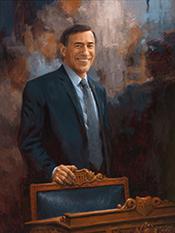
Mr. Speaker, I would like to thank the gentleman from Texas for yielding, and yielding, I note, time in opposition. I will be voting for this important resolution, not because it is perfect. As a…
Mr. Speaker, I would like to thank the gentleman from Texas for yielding, and yielding, I note, time in opposition.
I will be voting for this important resolution, not because it is perfect. As a matter of fact, I think the one consistent thing that, Mr. Speaker, you are going to see tonight is not one, not two, not three, but all four of the Members of Congress on both sides of the aisle whose families emigrated from Lebanon basically 100 years ago or more are finding that this resolution does not say enough.
Mr. Speaker, I want to bring to the attention and will be including in my remarks H. Res. 926, which was submitted as a draft to the Committee on International Relations and to the Subcommittee on the Middle East on which I serve on both.
For those who think that Members of Congress who come from Lebanese ancestry would somehow think differently than many of the rest, I would like to share just a few short portions.
First of all, the opening of the resolution: ``Condemning the kidnapping of Israeli soldiers by Hamas and Hezbollah, affirming the right of Israel to conduct operations to secure the kidnapped soldiers, urging all parties to protect innocent life and civilian infrastructure, and for other purposes.''
Many of the passages are similar, but some notably are different than the
resolution being considered tonight. It goes on to blame directly Nasrallah, the Secretary General of Hezbollah, responsible for these attacks and responsible for taking hostages.
It further, in its whereases: ``Whereas Iran, Syria, and elements of the Government of Lebanon have a well-documented history of supporting the terrorist groups responsible for these kidnappings.''
And, Mr. Speaker, it is important to note that the Lebanese Americans were the first to come out and say in no uncertain terms that the elements in Lebanese society, including those who were elected from the occupied south, not occupied by Israel any longer, but occupied by Hezbollah, did send representatives sympathetic to Hezbollah.
But I think what is not said in this resolution and has not been said well enough here tonight, in my opinion, is that the Cedar Revolution clearly denounced that direction. It went against the illegally reelected or illegally extended Presidency of Emile Lahoud, and it made very clear by backing the so-called Saad Hariri bloc, the bloc of the assassinated former Prime Minister in securing a multidenominational, across-the-board, including Shi'a, government that wants a sovereign, independent and peaceful Lebanon.
Unfortunately, the resolution we are considering tonight does talk about the failure of the Lebanese Government. I think that is fair, but it is only fair if we also include the failure of the United States Government.
We have provided nothing to the Lebanese since they bravely stood up to Syria, demanded their withdrawal, rioted in the street, were bombed and killed for their attempt to give themselves that freedom and liberty. We have not provided them any kind of capability of going to the south and enforcing. We have talked about it. We have planned to do it. The administration has prepared to do it. Our committees have explored it, but today, as of yet, we have not yet done what we must do.
Mr. Speaker, I call on this committee that is here today on this floor to dedicate itself to immediately upon us coming back to work in the morning begin the process of providing the lawful Government of Lebanon the ability to, in fact, send those troops to the south to, in fact, displace Hezbollah. It is going to take time, energy, money and training.
We are spending billions of dollars every month arming the Iraqi people so, in fact, they can replace a government that we had to topple. The Lebanese already toppled a government that had been a puppet of Syria and Iran for a long time, and they, in fact, were the movement that led to Syria being forced out after decades of occupation.
The Lebanese have earned the right, and this resolution in part says that, they have earned the right to have that ability, and we have to give them that ability.
So I go further than simply say I hope we will. I demand that if we care enough about the words we say in our resolution tonight and in H. Res. 926, which is the underlying document submitted by four Lebanese Americans, if we care enough to denounce Hezbollah for what they have, and Iran and Syria for what they have done, then we have to be willing to confront them in Lebanon, something we have not been willing to do.
So, tonight I stand with Israel's right to get its kidnapped soldiers back. I stand with Israel's right to reduce the ability of Hezbollah to rain rockets down on Israel, but I also stand with the people of Lebanon who have been traded like pawns again and again and say, yes, let us pass this resolution, but let us also start in the morning to do the job so that the next resolution, when it says the Lebanese Government has failed to do something, it will not also have the right to say the Lebanese Government did not have a snowball's chance in a summer in Hades of actually doing it.
A government with armored personnel carriers donated by the U.S. Government in the 1970s made of aluminum is not going to take on Hezbollah, not if tanks from Israel could not do it in 18 years.
So, yes, I am voting for this resolution. I appreciate the gentleman giving me time from the opposition, but I want to include H. Res. 926 in this debate, and I want to include the statement by the four Lebanese Americans that, yes, we will support Israel, but we want to support Lebanon's ability to be free and independent, and that will take a commitment starting tomorrow morning.
H. Res. 926
Whereas on June 25, 2006, Israeli Defense Forces Corporal
Gilad Shalit was kidnapped and taken hostage by a Palestinian
militant group that included members of the military wing of
Hamas;
Whereas Hamas political leader Khaled Meshaal, in Damascus,
Syria, has acknowledged the role of Hamas in holding Corporal
Shalit hostage;
Whereas on July 12, 2006, operatives of the terrorist group
Hezbollah carried out an attack in Israel, killing three
Israeli soldiers and taking two others hostage;
Whereas Hezbollah Secretary General Hasan Nasrallah has
acknowledged Hezbollah's responsibility for the attack and
taking hostages;
Whereas Iran, Syria, and elements of the Government of
Lebanon have a well-documented history of supporting the
terrorist groups responsible for these kidnappings;
Whereas President George W. Bush stated on July 13, 2006,
``[t]he democracy of Lebanon is an important part of laying a
foundation of peace'', that the government of Lebanese Prime
Minister Faoud Sinoria must not be undermined during the
current crisis, and that Syria and Iran must be held to
account for their shared responsibility in the recent hostage
taking; and
Whereas Secretary of State Condoleezza Rice stated on July
12, 2006, ``All sides must act with restraint to resolve this
incident peacefully and to protect innocent life and civilian
infrastructure.'': Now, therefore, be it
Resolved, That the House of Representatives--
(1) condemns Hamas and Hezbollah for engaging in the
reprehensible terrorist act of taking hostages;
(2) affirms the right of Israel to conduct operations, both
inside and outside its own borders and in the territory of
countries supporting the hostage takers, in pursuit of the
release of hostages;
(3) notes that all governments that have provided continued
support to Hamas or Hezbollah share responsibility for the
hostage taking and urges these countries to use all efforts
to secure the unconditional release of the hostages;
(4) urges all parties to protect innocent life and civilian
infrastructure;
(5) declares its continued commitment to aiding Israel and
the administration of President George W. Bush in battling
terrorism and securing the unconditional release of hostages;
and
(6) expresses its condolences to all innocent victims of
recent violence in Israel, Lebanon, and the Palestinian
territories and their families, including those of the three
Israeli hostages.
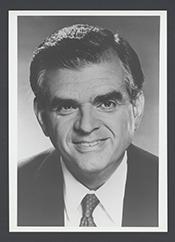
Mr. Speaker, I thank the gentleman from Texas for yielding me this time. I would like to stipulate that in the 12 years I have been in the House, I have visited Lebanon on 10 occasions, and 2 years…
Mr. Speaker, I thank the gentleman from Texas for yielding me this time.
I would like to stipulate that in the 12 years I have been in the House, I have visited Lebanon on 10 occasions, and 2 years ago when I was there, I called upon the President of Lebanon, who has the same name as I do, although he is no relation, that he should not extend his term as President of the country, and that troops should be moved into the southern part of the country. I want to stipulate that now so people understand.
I believe this resolution does not go far enough, and I believe the resolution should stipulate some humanitarian interest in the Lebanese people who are the ones that are being injured and killed by the attacks on the country. But I do not believe the current President should be in office. He has extended his term, and that should not have been. They should have moved troops into the southern part of the country and gone after Hezbollah, but that has not happened.
But over the last 10 years, the country of Lebanon, in particular Beirut, has been rebuilt. It has been rebuilt primarily by the assassinated former Prime Minister, who did an extraordinary job and showed extraordinary leadership over the last several years in helping to rebuild the country and helping to rebuild, in particular, the city of Beirut.
Late last week I decried the capture of two Israeli soldiers, and I decried the Hezbollah for doing that. But I also decry the idea that the attacks that are being made are well beyond the boundaries of where Hezbollah is at, well beyond the boundaries of the southern part of Lebanon, to completely shut down the airport, to bomb every road so there is no way for peace-loving people who have no fight in this battle at all to exit the country.
Over 25,000 Americans are trapped in Lebanon, many students, many American students, who go to school at American University of Beirut. And also many peace-loving Americans who are there, many from my home community of Peoria, over 300, who traditionally go to the country in the summertime to visit their mothers and their fathers and their aunts and their uncles, are trapped there.
Now, I give the administration credit for allowing these cruise ships now to come to the Mediterranean and help them exit. But the point that I want to make here is there is nothing in the resolution about the innocent people that are being killed. Over 300 people have been killed in the last 7 days who have no fight in this. They do not live in the southern part of the country. And there are many people that are trapped there. And I wish the resolution would have allowed for some idea that you can go into the southern part, you can go after Hezbollah, you can run them out of the country, and we are well within our right to do that, but not to shut down every way and every means of people to escape the country, not to kill innocent people, not to go into neighborhoods where there are absolutely no Hezbollah.
I yield to the gentleman.
Mr. Speaker, reclaiming my time, I would say the resolution is not specific to the Lebanese innocent people. It mentions innocent people, but there is no specificity about those Lebanese people, particularly Lebanese Americans who are there visiting their families and the students that are there.
The only road that was not bombed, the only road that was not closed, is the road that goes to Syria. And I know people and I have talked to them that have exited the country through Syria, and the Syrian Government is allowing them to go into Syria, go into Damascus, and take flights out to other parts in order to get back to the United States.
I have served on the Intelligence Committee now for 8 years. There is something I think I know. Hezbollah is well armed. They have all the ammunition they need, and we need to shut them down. We need to eliminate them from the southern part of Lebanon.
I do not buy this idea that they were going to be able to ship arms in through the airport. They have all they need. They have the kind of capability, and they have shown that.
So I have heard that argument that the airport was bombed. I believe it was bombed so you could close off a way for people to get out of there. And I do not quite buy the argument that it was bombed so that they could be resupplied. They do not need to be resupplied. They have got all they need.
Look, I have said pretty much what I wanted to. I know what the debate is going to be about. My obligation is to peace-loving people who live in Lebanon, who have made their homes there. My grandfather on my father's side came to this country in 1895 to Peoria, Illinois, from Lebanon. We have a large Lebanese population in Peoria. And I hope there are others, I think there will be, that will speak up for the common, ordinary, decent people of Lebanon who are suffering as a result.
They want Hezbollah out of the country, and there is no argument with that, but they do not want to see their own neighborhoods, where there is no presence of Hezbollah, to be bombed and innocent people killed.
If this were going on in Israel, which it is, the resolution stipulates that our hearts go out to those people. The innocent, peace- loving people of Lebanon in neighborhoods where Hezbollah does not exist, they get no recognition in this resolution. With all due respect, Mr. Lantos, they simply do not. They did in a resolution that was prepared earlier on, but that language was taken out.
So I think the resolution is inadequate, and I want to stick up for the people of Lebanon. I want to also compliment the administration for waiving the fees that they were going to charge innocent people for getting outside of the country. Obviously, that was a no-brainer. For getting the cruise ships to come in, to allow helicopters to transport people from the embassy over to Cyprus, all of these things are good things.
I have talked to the administration. I have asked Secretary Rice and her team to talk more about restraint, particularly in the parts of Lebanon that do not deserve to be bombed, where innocent people do not deserve to be killed.
I am just going to wrap up. It is going to take millions of dollars to rebuild areas of Lebanon that have been damaged. I mean, it is going to take millions of dollars to rebuild bridges and roads and infrastructure that have been built over the last 10 years. Beirut was so well positioned. This year in the city of Beirut, they had more tourism. The economy was booming. And now when you see what is happening, not only the innocent life, but so much of the infrastructure has been destroyed. I hope our government is going to be willing to step up and provide some of the dollars to help rebuild the country.
So my objection is that I think the resolution is inadequate, and I want to speak up for the people of Lebanon.
I thank the gentleman from Texas very much for yielding me this time.
Mr. Speaker, will the gentleman yield?
Mr. Speaker, I thank the gentleman for yielding.
I agree with everything you have said, Mr. Lantos. My only problem is, why not give the same kind of consideration in the resolution to the common, ordinary, decent people of Lebanon who are being hurt by these attacks? That is really all we were asking earlier on when we presented a resolution to the majority leader's office.
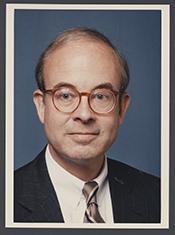
Madam Speaker, I thank the gentleman from Wisconsin (Mr. Sensenbrenner) for yielding me time. Madam Speaker, I am pleased to rise this morning in support of the bill before us. In the two decades…
Madam Speaker, I thank the gentleman from Wisconsin (Mr. Sensenbrenner) for yielding me time.
Madam Speaker, I am pleased to rise this morning in support of the bill before us. In the two decades that I have been privileged to serve in the House, the class action measure that is before us today is the most modest litigation reform that has been debated, and it strikes in a narrow and appropriate way at an egregious abuse of justice.
The bill before us makes procedural changes only. There are no restrictions on the substantive rights of plaintiffs. There are no caps on damages. There is no elimination on the rights of plaintiffs to recover.
The bill simply permits the removal to Federal courts of class actions that are truly national in scope, with plaintiffs living across the Nation and the large corporate defendant, even if the current diversity of citizenship rules are not strictly met.
This change is much needed. Cases that are truly national in scope are being filed as State class actions before certain favored judges who employ an almost ``anything goes'' approach that remedies virtually any controversy subject to certification as a class action. Once certification occurs, there is then a rush to settle the cases. The lawyer who filed the case makes an offer that is hard for the corporate defendant to refuse.
He asks for large fees in the millions of dollars for himself and coupons for the plaintiff class members that he represents. Rather than go through years of expensive litigation, the defendant settles. The judge who certified the class quickly approves the settlement. The lawyer who filed the case gets rich. The plaintiff class members get virtually nothing.
That is the problem that this bill is designed to address. It permits the removal of these national cases to the Federal court in the State in which the State class action has been filed.
In the Federal court, the rights of plaintiffs will be more carefully observed. Any settlement involving non-cash compensation will be carefully reviewed to assure that it is fair. Under the bill, cases that are local in scope will remain in the State court where they are initially filed.
I want to commend the gentleman from Virginia (Mr. Goodlatte) for the thoughtful leadership that he has provided in steering this measure to the point of passage today. The gentleman from Virginia (Mr. Goodlatte) has exhibited both foresight and patience and as chief sponsor of the bill through three Congresses deserves tremendous credit for the success that we are now on the brink of achieving.
I also want to commend the gentleman from Wisconsin (Mr. Sensenbrenner) for the wise course that he has followed as chairman of the House Committee on the Judiciary in permitting the Senate to act in advance of our action today.
I want to commend our former House colleague, Senator Tom Carper, for the outstanding work he performed in negotiating changes to the measure which resulted in 72 Members of the Senate voting to approve this reform.
I hope the House will also lend its support to this reform.
Madam Speaker, will the gentleman yield?
Madam Speaker, I thank the gentleman for yielding.
What about the amount-in-controversy component, the $5 million? Under current law, some Federal courts have determined the value for
requests for injunctive relief by considering the value to each individual plaintiff. Since that value is usually less than $75,000, these courts have kept such cases in State court. This is sometimes known as the plaintiff's viewpoint, defendant's viewpoint problem. Would the Chairman explain how the bill resolves this challenge?
Madam Speaker, I thank the gentleman for yielding to me, and I will be pleased to provide two examples.
Suppose that a California State court class action were filed against a California pharmaceutical drug company on behalf of a proposed class of 60 percent California residents and 40 percent Nevada residents alleging harmful side effects attributed to a drug sold nationwide.
In such a case, it would make sense to leave the matter in Federal court. After all, the State laws that would apply in all of these cases would vary, depending on where the drug was prescribed and purchased. As a result, allowing a single Federal court to sort out such issues and handle the balance of the litigation would make sense both from added efficiency and a federalism standpoint.
Now, suppose, in a second example, a checking account fee disclosure class action were filed in a Nevada State court against a Nevada bank located in a border city, and the class consisted of 65 percent Nevada residents and 35 percent California residents who crossed the border in order to conduct transactions in the Nevada bank.
In this hypothetical, it might make sense to allow that matter to proceed in State court. It is likely that Nevada banking law would apply to all of these claims, even those of the California residents, since all of the transactions occurred in the State of Nevada. There is also less likelihood that multiple actions will be filed around the country on the same subject so as to give rise to a coordinating Federal multidistrict litigation proceeding.
Madam Speaker, if the gentleman from Wisconsin will yield once again.
Madam Speaker, I thank the gentleman for yielding.
The principles that have just been enumerated apply to another provision that I would like to discuss, the mass action provision. Under this provision, defendants will be able to remove mass actions to Federal court under the same circumstances in which they will be able to remove class actions.
However, a Federal court would only exercise jurisdiction over these claims that meet the $75,000 minimum. In addition, a mass action cannot be removed to Federal court if it falls under one of the following four categories: number one, if all of the claims arise out of an event or occurrence that happened in the State where the action was filed and that resulted in injuries only in that State or in contiguous States;
number two, if it is the defendants who seek to have the claims joined for trial;
number three, if the claims are asserted on behalf of the general public pursuant to a State statute authorizing such an action;
and, number four, if the claims have been consolidated or coordinated for pretrial purposes only.
I would appreciate the gentleman from Wisconsin clarifying how the $75,000 amount in controversy minimum would apply to assessing whether Federal jurisdiction exists over a mass action, and, most importantly, explaining the intent of the sponsors with regard to the first and third exceptions.
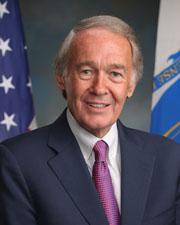
Mr. Speaker, I thank the gentleman from Michigan for yielding, and I thank him for his leadership on this most critical of all consumer issues before Congress this year. So you have all heard now the…
Mr. Speaker, I thank the gentleman from Michigan for yielding, and I thank him for his leadership on this most critical of all consumer issues before Congress this year.
So you have all heard now the technical arguments made by the Bush administration proponents here on the House floor. So you have heard the Bush administration argument on why this is good.
Now, you want to hear what the bill is really about? Do you want to hear what the Bush administration is really interested in? Well, here it is, ladies and gentlemen. Citigroup's Smith Barney subdivision: ``Tobacco. Flash--Senate Just Passed Class Action Bill--Positive For Tobacco.'' Let me read it to you:
``The Senate just passed a bill, 72-26.'' This has gone out from Smith Barney to all their investors. ``This bill is designated to funnel class action suits with plaintiffs in different States out of State courts and into the Federal court system, which is typically much less sympathetic to such litigation.
``The practical effect of the change could be that many cases will never be heard given how overburdened Federal judges are, which might help limit the number of cases.''
Smith Barney advised its clients that this bill will be positive in general for the tobacco industry and that tobacco stocks have rallied on this favorable news given that this bill could have a positive impact on tobacco litigation.
That is what it is all about, ladies and gentlemen. You heard the technical defense of it for the last half hour. The impact is they are trying to protect the tobacco industry from being sued. So if you are out there, one of your family members has just found that they have a spot on their lung, they have smoked for the last 20 or 30 years, what this bill will do is it will make it more difficult for you and the other people in your States who also have found that they have spots on their lungs to get together to sue the tobacco companies.
If your children are beginning to smoke, they are 13, 14, 15, this bill is intended to make it more difficult for the people in the State of New Hampshire, or Kansas, or Oklahoma to bring a suit to stop it. That is what it is all about. Smith Barney gives the good news to the tobacco industry investors, not to smokers.
And so what they have done is this. It is brilliant in the Bush administration and that is what this side of the aisle is all about. The FDA, is it going to move in to regulate tobacco? No, they made sure they appoint people who will not do it. The EPA, are they going to move in to make sure that the oil industry does not pollute your groundwater so that the children in your neighborhood do not contract leukemia; that breast cancers do not rise? No. Are they going to have a Department of Labor which protects you against asbestos in the workplace? No.
You are not going to see those suits, ladies and gentlemen. So it comes to you and your families to go to court. And what this bill is intended to do is to not let you go to court. So it is perfect. If you are an asbestos company, your stocks are going up. If you are a tobacco company, your stocks are going up. If you are an oil company, a chemical company, your stocks are going up. Smith Barney gives you the good news, Mr. and Mrs. Investor of America.
But if you are afraid for the health of your family, if you know that the groundwater in New Hampshire has been poisoned by Amerada Hess and 22 other oil companies that are not in New Hampshire, you know what the Republicans say? You know what the Bush administration says? The case should not be held in New Hampshire. If Amerada Hess, the big oil company, is a defendant, the case should be outside of New Hampshire, not protecting the person whose family's health has been injured.
And so that is what it is all about. It is the final payback to the tobacco industry, to the asbestos industry, to the oil industry, to the chemical industry at the expense of ordinary families who need to be able to go to court to protect their loved ones when their health has been compromised. And these people are saying, your State is not smart enough, your jurors are not smart enough to understand how the MTBE ruined the groundwater in their State and poisoned thousands of people, that it has to go to a State where Amerada Hess or some large oil company feels comfortable, because they are not headquartered in New Hampshire, they do not have a large plant in New Hampshire. All they did was sell the material which poisoned your neighborhood.
That is what it is all about, ladies and gentlemen. You just watch across the board every single interest that harms the health and well- being of America skyrocket as soon as we take the vote on final passage of this bill today because President Bush is going to sign this bill with great joy because the oil, the chemical and polluting industries are going to be happy.
Industry Note: Tobacco--Senate Just Passed Class Action Bill--Positive
for Tobacco
(By Bonnie Herzog)
Summary
The Senate just passed a bill 72-26 which is designed to
funnel class-action suits with plaintiffs in different states
out of state courts and into the federal court system, which
is typically much less sympathetic to such litigation.
The practical effect of the change could be that many cases
will never be heard given how overburdened federal judges
are, which might help limit the number of cases.
Although this news is positive in general for the tobacco
industry, we do not necessarily believe that class actions
pose a big threat to the industry. Furthermore, this type of
legislation would have been a bigger help to the industry if
it was passed 10 years ago.
The bill now moves to the House floor and the chances are
high that it passes since the House Republican leadership
said last week that it would pass the Senate's version of
this legislation as long as there were no amendments.
Show 11 more

Mr. Speaker, at this time I am proud to yield 3 minutes to the gentleman from Missouri (Mr. Blunt), our distinguished majority whip. Mr. Speaker, at this time I am proud to yield 2 minutes to my…
Mr. Speaker, at this time I am proud to yield 3 minutes to the gentleman from Missouri (Mr. Blunt), our distinguished majority whip.
Mr. Speaker, at this time I am proud to yield 2 minutes to my colleague the distinguished gentleman from Florida (Mr. Shaw), who is a staunch supporter of Israel and who has been there many times.
Mr. Speaker, I yield 1\1/2\ minutes to the gentleman from Connecticut (Mr. Shays).
Mr. Speaker, I yield myself such time as I may consume.
Mr. Speaker, I rise tonight in strong support of the resolution before us, introduced by our distinguished majority leader and two foreign policy giants, our International Relations chairman, Henry Hyde and our ranking member, Tom Lantos. We wish that circumstances were different in the Middle East, and we regret the loss of innocent human life.
However, silence on our part in the face of these outrageous attacks against Israel would only serve to embolden these Islamic terrorists and their neighbors. Our stance, therefore, must be clear, Mr. Speaker; we condemned these armed attacks against Israel.
We fully support Israel's right to take appropriate action to defend itself in the face of these existential threats, and we must hold not just Hamas and Hezbollah but also Iran and Syria accountable.
Mr. Speaker, the current conflict in the Middle East is not simply the result of these most recent developments. Rather, it results from the efforts of the chain of interrelated extremist entities and their state sponsors who threaten not just Israel but our own security interests as well.
It stems from a deep-seated desire to destroy the State of Israel, or, as the Iranian leader has said, to wipe Israel off the map. It stems from Iran's desire to export its revolution and to exert regional domination. It is based on a world view that led to the taking of American hostages in 1979, who were held for 444 days, and that hatred against the U.S. as not gone unabated.
The events of the recent weeks find their roots in an alliance between Iran and Syria and their terrorist proxies, which, throughout the years, have caused the deaths and injuries of countless Israelis and Americans alike. Current developments are also linked to the failure of the United Nations to ensure full implementation of Security Council Resolution 1559 requiring Hezbollah to dismantle and disarm.
Over the past year, Israel has shown tremendous restraint in the face of continued assault from Islamic extremists. Despite Israel's withdrawal from Gaza last year, terror attacks targeting innocent Israeli civilians continued and, in fact, have increased.
In the last year extremists in Gaza have launched over 1,000 rockets at Israelis. Weapons, money and manpower were smuggled to Gaza through tunnels, enabling continued terrorism and transforming the areas controlled by the Palestinian Authority into havens for international terror groups like al Qaeda.
Hamas and other jihadist groups use such underground tunnels to sneak into Israel, to kill two soldiers and kidnap Corporal Shalit in order to exchange him for imprisoned, condemned, Palestinian terrorists. The situation intensified on July 12 when members of Hezbollah, without a hint of provocation, went into Israel and killed three Israeli soldiers and took two others hostages.
Again, this was not an isolated incident by Hezbollah. In the past year these extremists launched at least four attacks into Israel. One of these took place on November 2005 when Hezbollah launched rockets into Israel while a large number of its jihadists infiltrated and attacked an Israeli village.
The enemy should not and must not be underestimated. Iran and Syria and other terrorist enablers are engaged in a never-ending struggle to improve their relative power position. They have declared war on freedom and democracy, and will use any means available to them to achieve their ends.
They not only present a threat to Israel and to the U.S., but also to moderate reforming Arab governments in the region. In turn, we must resolve, as this resolution clearly states, to work with Israel and other U.S. allies to fight these extremists worldwide.
As Robert Satloff of the Washington Institute for Near East Policies recently said, defeat for Israel is a defeat for U.S. interests. It will inspire radicals of every stripe. It will release Iran and Syria to spread more mayhem inside Iraq, and make more likely our own eventual confrontation with this emboldened alliance of extremists.
By contrast, Satloff adds, victory in the form of Hezbollah disarmament, the expulsion of Iran's military presence from Lebanon, the eviction of Meshal and friends from Damascus, and the demise of the Hamas government in Gaza is, by the same token, also a victory for the U.S. and for Western interests.
Mr. Speaker, this says it all. I urge my colleagues to support this resolution.
Mr. Speaker, I reserve the balance of my time, and I also ask unanimous consent that the time for debate on this measure be extended for 40 minutes, to be equally divided between the proponent and opponent.
Mr. Speaker, further, I yield 10 minutes of my time to the gentleman from California (Mr. Lantos), the ranking member of the Committee on International Relations, and ask unanimous consent that he be permitted to control that time.
Mr. Speaker, I yield to the gentleman from Florida (Mr. Foley) for a unanimous consent request.
(Mr. FOLEY asked and was given permission to revise and extend his remarks.)
Mr. Speaker, I yield 2 minutes to the gentleman from New Jersey (Mr. Smith), the chairman of the Subcommittee on Africa, Global Human Rights and International Operations.
Mr. Speaker, at this time I am proud to yield 2 minutes to the gentleman from Virginia (Mr. Cantor), the chief deputy whip.
Mr. Speaker, I yield myself such time as I may consume. I rise in support of H. Res. 91, condemning the monstrous terrorist bombing in Beirut, Lebanon that killed the late Prime Minister of Lebanon,…
Mr. Speaker, I yield myself such time as I may consume.
I rise in support of H. Res. 91, condemning the monstrous terrorist bombing in Beirut, Lebanon that killed the late Prime Minister of Lebanon, Rafik Hariri, and killed and wounded many others. I want to commend the gentleman from Illinois (Mr. Hyde) for bringing this matter to the floor in such a timely fashion, and I want to thank the gentleman from West Virginia (Mr. Rahall) and all other colleagues who have worked on this resolution.
Mr. Speaker, I met the late Prime Minister Hariri on many occasions. Although I did not always agree with him, I held him in the highest regard because I recognized in him a man who was a true patriot, single-mindedly devoted to healing his nation after 15 years of a bloody civil war. He was a man not only of charm and drive but of vision. He worked a minor miracle in reviving downtown Beirut, and it was characteristically cynical that the murderers chose that particular area of the city as the site for their cruel crime.
I knew that part of Beirut very well. I first visited it in 1956 and it was one of the gems of the Middle East. The late Prime Minister Hariri returned that portion of Beirut to its former outstanding aesthetic qualities. Given his immense wealth, he could be alive right now, living the good life somewhere on the French Riviera with a mansion and a private beach. Instead, he threw himself into the treacherous world of Lebanese politics, Lebanese politics played out under a menacing Syrian shadow, and like so many before him, he paid the ultimate price.
Among Mr. Hariri's most impressive attributes was his capacity for growth. Over time, he evolved from a Lebanese leader who was close to the Syrians, into one who was wary of them, and finally, in his last days, into one who outright opposed them. Of course it is a near certainty that it was that evolution, particularly the final stage, that led to his demise. A long time ago in a private talk with the President of Egypt, Hosni Mubarak, he taught me a lesson. He said, ``Every country has its
exports and Syria exports trouble.'' No wiser words were ever said in connection with this latest tragedy.
Mr. Speaker, as I stand here, I do not know for certain who murdered Rafik Hariri. I only know that this thuggish action bears all the hallmarks of infamous Syrian-inspired assassinations in Lebanon's past, going back to the then-shocking killing of Druze leader Kamal Jumblatt in 1977. I also know that Syria makes little effort to hide the fact that these assassinations are intended to intimidate other potential opponents.
Bashar al-Assad was supposed to represent a new, more humane Syria, but that unfortunately has not been the case at all, and certainly not in Lebanon. Just this past fall, a pro-Hariri cabinet minister who resigned his post over Syrian manipulation of Lebanese politics was the victim of a shooting widely believed to be inspired by Syria.
Mr. Speaker, Lebanese politics is highly complex, but I do know that when Rafik Hariri turned decisively against Syria, he cast his lot with the opposition in recent months. Damascus had plenty of reasons to be concerned. With international respect and domestic popularity, and with Lebanese parliamentary elections on the horizon for this spring, Hariri was just the sort of opponent who could make life very uncomfortable for the Syrian occupying overlords.
So is Syria guilty of the murder of Rafik Hariri? None of us is certain at this moment, Mr. Speaker, but I share the sentiments of the late Mr. Hariri's son, Saad Eddeen, who when asked why his father was killed replied simply, ``It's obvious, isn't it?'' I believe it is obvious, Mr. Speaker.
We do not yet know for certain who is responsible for the brutal assassination of former Prime Minister Hariri, but that brutal act is all too reminiscent of similar murders of Lebanese political leaders by Syrian henchmen over the past three decades, and we cannot ignore the similarities.
Our Department of State, Mr. Speaker, took exactly the right step yesterday in recalling our Ambassador from Damascus. And I find myself in the rare position of agreeing with the French, who said that there should be an international investigation of this crime, because I am certain that we cannot trust the Syrian-dominated Lebanese Government to conduct a thorough and impartial inquiry.
Whether through international investigation or through other means, Mr. Speaker, the culprits of this heinous crime and their sponsors and their masters must be found and brought to justice and the Lebanese people must now act decisively to truly take their future into their own hands.
Mr. Speaker, Syria has an international legal obligation to remove its troops and its security forces from Lebanon. When I met with the Syrian President some time ago, I reminded him of this obligation. So did former Secretary of State Colin Powell. Removing the boot of Syria from the neck of Lebanon would unleash the talents and resources of this beautiful and potentially rich country which has suffered unspeakably under the Syrian yoke.
Mr. Speaker, I strongly support this resolution and I call on all my colleagues to support it as well.
Mr. Speaker, I reserve the balance of my time.
Mr. Speaker, I yield such time as he may consume to the gentleman from West Virginia (Mr. Rahall), the principal author of this resolution we are considering.
Mr. Speaker, I yield 3\1/2\ minutes to the gentleman from New York (Mr. Engel), the distinguished senior member of the Committee on International Relations.
Mr. Speaker, I urge all of my colleagues to join me in voting for this resolution, and I yield back the balance of my time.
Mr. Speaker, I move to suspend the rules and agree to the resolution (H. Res. 91) honoring the life and legacy of former Lebanese Prime Minister Rafik Hariri, as amended. Mr. Speaker, I ask unanimous…
Mr. Speaker, I move to suspend the rules and agree to the resolution (H. Res. 91) honoring the life and legacy of former Lebanese Prime Minister Rafik Hariri, as amended.
Mr. Speaker, I ask unanimous consent that all Members may have 5 legislative days in which to revise and extend their remarks and include extraneous materials on H. Res. 91, the resolution under consideration.
Mr. Speaker, I yield myself such time as I may consume.
Mr. Speaker, today I rise in support of House Resolution 91, introduced by the gentleman from West Virginia (Mr. Rahall) on February 14, 2005, that condemns the terrorist bombing attack that occurred in Beirut, Lebanon, which killed former Lebanese Prime Minister Rafik Hariri and killed and wounded over 100 others. I and my cosponsors had a hard time writing this resolution with the gentleman from West Virginia, not because there was not an abundance of material, not because the attack was not heinous, but because it is so hard to summarize in a few words on the House floor the devastating effect that his assassination has already had on the people of Lebanon and on this troubled region. As we speak, day after day, the people of Lebanon march in the streets and they chant, ``Syria out. Syria out. Syria, who's next?''
There is no proof that Syria is directly responsible for this assassination, but there is no doubt that Syria has remained in Lebanon far longer either than their mandate or than the agreements under the Taif Accords of 1989. Syria has claimed to be the responsible party in Lebanon for security. Yet even after warnings of the possibility of an attack on these and other leaders who have voiced their opposition to the continued presence of Syria in Lebanon, this heinous attack was allowed to occur.
This resolution calls on all foreign forces in Lebanon to leave the country. This resolution calls on many things. But for today, I would like all of us to remember it calls on a remembrance of the life of a man who had great personal wealth, who had great success, who had been granted even the citizenship of another country in which he had worked but returned to Lebanon, and, at his own expense and at his own peril, campaigned tirelessly for Lebanese citizenship, Lebanese nationality, Lebanon for the Lebanese.
There is little more that we can say. I would hope that all of us would not forget today, and that day after day and month after month we would return to this body and deal with his legacy until his dreams become a reality.
Mr. Speaker, I reserve the balance of my time.
Mr. Speaker, it is an honor to yield 5 minutes to the gentleman from Illinois (Mr. LaHood), someone whose ancestry is from Lebanon, someone who has been a student of Lebanon, and someone who was in periodic communication directly and indirectly with the former Prime Minister.
Mr. Speaker, I yield 5 minutes to the gentleman from California (Mr. Cox).
Mr. Speaker, I yield myself such time as I may consume.
Mr. Speaker, many people today have spoken and many more will insert into the Record their comments on the devastation to the Lebanese people of this assassination. I suspect all of us can only sit by in horror and imagine the effect if one of our heads of state running to regain, in this case equivalency of the Presidency in many ways, were to be assassinated by parties unknown who opposed his politics, what a chilling effect that would have on elections.
Mr. Speaker, this spring there will be elections in Lebanon. If I may speak for a moment as best I can, as though I were Rafik Hariri, what would he say here today in order to protect the country he loved so well? I suspect that he would say, ``To the people of the world, to the people of this country, make those elections this spring free and fair. Empower the Lebanese people and their candidates not to be chilled by this terrible event.'' And as the prime mover of the Tai'f Accord, a man who came as a Sunni Muslim to a troubled region and said it does not matter if you are Sunni, Shia, Kurd, Orthodox or Maronite, we must come together, we must put behind us the many sins of the past.
I believe that Prime Minister Hariri would not say ``Do not find out who killed me,'' not for a moment. But I think what he would say is, ``The best memory that you can have, the best way to eulogize me, is to make my country free. Have all foreign forces leave my country, including their secret police. Allow my country to be what it once was and would be again, given the opportunity to be free of foreign influence.''
Mr. Speaker, I believe very strongly that those words, and more, would be from this great man, who cared more about freedom for his people and about peace than he cared about vengeance.
So as Americans we must demand to know who killed this great leader, this selfless servant of the people. But in his name we must also make sure that those elections go forward in a way that presently they will not. We must take the steps to make sure that we do that. I look forward to working on a bipartisan basis to craft such legislation or to urge the administration to bring such sanctions and such force to bear that will cause that to happen.
Mr. Speaker, I yield 3 minutes to the gentlewoman from Ohio (Ms. Kaptur).
Mr. Speaker, I have no further requests for time, and I yield back the balance of my time.
Mr. Speaker, on that I demand the yeas and nays.
Mr. Speaker, first, this Israeli retaliation did not come in the abstract. Let's be clear what happened. I speak here as someone who has been critical in the past of Israeli Governments that were, in…
Mr. Speaker, first, this Israeli retaliation did not come in the abstract. Let's be clear what happened. I speak here as someone who has been critical in the past of Israeli Governments that were, in my judgment, sufficiently willing to take risks for peace. I have been an advocate of giving up land in the interests of a comprehensive settlement.
What happened tragically in the last couple of weeks is that Israel was attacked by entities who do not think there should be any Israel at all. It was attacked by people dedicated to the abolition of the Jewish State in the Middle East from two territories from which it had withdrawn.
What was attacked was not just individual Israelis, but those in Israel within that democratic nation who have pushed for peace. In April, after the withdrawal from Gaza, very controversial, the people willing in Israel to withdraw from territory in pursuit of peace won an election. Those in Israel who would reject that approach lost. Sadly, the rejectionists then won in the Palestinian Authority. So you have people who had risked themselves in a democratic nation for peace now being undercut by those who use those very territories from which they withdrew for attacking them. And again these were not disputes over specifics.
Hamas and Hezbollah both agreed there should be no Israel. These are people who want to return not to the borders of 1967, but to the borders of 1947 when there was no Israel. Now, no democratic nation can be expected to not respond, and that is what we have, a response to attacks across the internationally recognized border of Israel by people committed to destroying its very existence from territories from which they withdrew. So the attacks were clearly justified.
Then the question is, well, how have they conducted the war? I think there were things that they should not have done. I wish they had not bombed the power plant in Gaza. But, you know, I look at what Israel is doing in Lebanon, and I must tell you what it most resembles in my recent memory, the American action in Yugoslavia when we bombed and bombed and bombed Belgrade and much of Yugoslavia, much of Serbia, to get them to withdraw from Kosovo. That was not a conventional military action. Now, I must note that Israel has not at this point taken out any embassies. We in the Yugoslav war took out the Chinese Embassy. We bombed convoys.
Sadly, when people go to war, innocent people die. That is why I am very reluctant to vote for war. But that happens. But what happened in Serbia was America punishing the Serbian territory to get them to withdraw from Kosovo, and it worked.
Now, I understand the pride of the Lebanese Government, but let me say this, first of all, in response to my friend from West Virginia. The resolution does not demand that the Lebanese Government disarm Hezbollah. It demands that the Lebanese do everything within its power, within its power, to change things.
In contrast, the resolution does make an unconditional demand of Syria and Iran that they do the right thing. So it does differentiate between Lebanon and Syria and Iran.
Now, let me say, with regard to Lebanon, I am struck by the pride of the Lebanese people, but I have to say this. Many of those who are now critical of Israel and say, what do you want from poor Lebanon, where were they when poor Lebanon needed them? Where were they when the Lebanese were unable to get Hezbollah to move? Why did they not get involved then?
In defense of the Israelis, what they are saying is this: Look, a U.N. resolution said get Hezbollah away from us, because if they keep this up, we will have to retaliate, and nothing happened until they started killing Israelis inside Israel, and then Israel retaliated.
So those who now say, well, you know what, do not blame the poor Government of Lebanon, I do not. I blame those in the Arab world and elsewhere who could have gone into that situation and avoided this.
So now the question is what do you do? A simple cease-fire that leaves Hezbollah on the Israeli border, in violation of a U.N. resolution, free to continue to kill across that international border in their pursuit of their effort to destroy the State is not good enough. I would like to see us be involved.
What the resolution says is have Syria and Iran be pressured by the rest of the world, including those great humanitarian nations of Russia and China and elsewhere that have expressed opinions here; let them intervene not simply to stop the shooting, but to get Hezbollah away from that border. Then it will be reasonable to ask Israel to stop, and I believe they want to.
So it is not simply release the soldiers today so four more can be captured and more people killed tomorrow. Let the international community show its real concern for the Government of Lebanon by providing them with the assistance they need to move Hezbollah away.
Let Hamas honor the fact that Israel withdrew at great political internal cost from Gaza and not use that as a lunching pad for their efforts to destroy Israel.
So I must say, I think it is justified in terms of the response, in terms of the way it is conducted. Yeah, it is messy and bloody, and innocent people die, and that is why you try to avoid those situations, and why Syria and Iran should be pressured to get Hezbollah to move back so we can put an end to it.
Mr. Speaker, I thank the gentleman from Michigan for the time. Sometimes during these debates I like to step in to take a perspective of someone on the committee who is not a lawyer; but I have to…
Mr. Speaker, I thank the gentleman from Michigan for the time.
Sometimes during these debates I like to step in to take a perspective of someone on the committee who is not a lawyer; but I have to tell my colleagues, the previous speaker, the gentleman from Virginia, went to great lengths to talk about the lawyers fees. There is nothing in this bill that limits lawyers fees, and there is not anything in the bill actually that argues for his point, which is apparently that there should be a minimum amount that wrongdoers pay to each individual aggrieved person, which is a novel argument, I have not heard it made by my colleague before, saying that the plaintiffs are receiving too little now.
Let me explain very briefly why it is that we have situations like that. Those of us who are individuals of modest means, if we have been aggrieved by a major company, if they have done something that has harmed our health or our community or our family, we as individuals frankly do not have the ability to take on a major company to stop them from doing the wrongful things, to make sure they understand that there is a cost of doing it. So we join together as a community and we bring these actions as a group. We cannot, frankly, pay the lawyer up front so they are paid on contingencies, and that is the way these actions get taken.
One thing the gentleman from Virginia did not say even once through that whole wheel of rhetoric was that any of those that were held accountable by juries of their peers were not guilty of those things. In those cases, those parties, each and every one of them, on the wheel of rhetoric actually was found by a judge or a jury to have done substantial bad things to the community. The system actually worked in those cases.
We can quibble about the person, the individual that wound up getting a payment. There were so many of them, millions of people who had been harmed by those companies, that when they were done divvying up what seemed like a very large judgment, tens of millions of dollars, there was only left a 35, 40-cent coupon and the like.
I stand perfectly ready to vote in favor of an amendment by the gentleman from Virginia to have minimum payments to people who have been harmed. If the gentleman thinks it is not enough that they get 35 cents, I am with him. Some of those companies did outrageous things to our community, and they should be held accountable. If my colleague thinks a 35-cent check is not enough, I am with him. Let us make minimum amounts that they pay for the injuries, that they have to get, because the harm is so great.
I want to remind my colleagues and the citizens watching this why the system is structured this way. Imagine for a moment if someone who is making a shoddy automobile, who was not paying attention to whether sharp objects got into a cereal box, did not have to be concerned about lawsuits anymore. Do my colleagues think they would really say let us hire that extra safety precaution, that extra employee to keep an eye out for consumers? No. They would be less inclined to do that.
The system works as it is intended. Are there abuses? I am sorry to say that there are some, and I wish we would address some of them in this legislation which, of course, we do not; but frankly to stand before the wheel of rhetoric, which really is a wheel of bad doers who got caught by the justice system, which we are trying to dismantle here today, and say this is evidence that the system does not work is entirely the opposite of the truth, unless my colleagues believe that a jury of people's peers cannot make these informed decisions, that we are the only people brilliant enough to make these decisions. I love these small government types who believe we have better judgment on these things than 12 men and women in a community, then we have to believe that the system in those cases worked.
I would say to my colleagues on both sides of the aisle that the Conyers/Nadler/Jackson-Lee substitute only puts lipstick on a fraud. It still leaves a very, very flawed bill; but at least we go from being completely destructive to only being moderately destructive, and we protect ourselves from some of the worst abuses.
Mr. Speaker, I urge a ``yes'' vote on the substitute, a ``no'' vote on the base bill, and I urge us to stop this drumbeat on the other side of blaming average Americans for being victimized by big corporations.
Mr. Speaker, I thank the gentleman very much for yielding me this additional time, and I am surprised that such an able lawyer would be unwilling to engage in a debate on his time, but I will take 30 seconds simply to rebut what the gentleman said.
In every one of those cases on the wheel of rhetoric that the gentleman put up, those that were found guilty, those who were found to be responsible, those who were found to be culpable of doing harmful things to our community admitted it, paid a fine, paid a penalty, that was approved by a judge, and that is the fact; that the gentleman took cases of people who admitted with their actions there was wrongdoing involved.
And if they had not been caught by this system, I ask the gentleman, what system would they be caught by?

Mr. Speaker, I thank the gentleman from California. Mr. Speaker, first let me say that, unfortunately, there wasn't as much bipartisan drafting of this resolution as I would have hoped. Hopefully…
Mr. Speaker, I thank the gentleman from California.
Mr. Speaker, first let me say that, unfortunately, there wasn't as much bipartisan drafting of this resolution as I would have hoped.
Hopefully there is no one in this Chamber who does not empathize with those who want peace, those who work for peace, those who are caught in the environment of hate, those who are caught in the environment of attacks on innocent people, those who are harboring in their midst those who attack a nation because of the religion and ethnicity of their population. All of us have empathy for innocent people caught in the grip of terror and terrorism.
But all of us also ought to have the expectation that those people would exorcise from their societies those who undermine peace, security and safety, and the Lebanese people have not done that. They have either not done it because they are incapable of doing it, or they have not done it, as too often I hear verbalized, I tell my friend, because of their sympathy for Hezbollah.
Mr. Speaker, I strongly support this resolution condemning the recent terrorist attacks against our Nation's staunchest democratic ally in the Middle East and supporting Israel's inherent right for self- defense, and I urge Members on both sides of the aisle to support this resolution as well.
Israel is absolutely justified in undertaking the defense of its territory and its people. As the Israeli columnist Ari Shavit recently wrote, Israel's actions are ``not a war of occupation, but rather a war of defense. Not a settlements war, but rather a green line war. A war over the validity of an international border that was drawn, defined and recognized by the United Nations.''
No one should be mistaken: The actions taken by Israel over the last 8 days have been a direct response to the premeditated, unprovoked attacks of Hamas and Hezbollah, terrorist organizations which are underwritten and encouraged by their sponsors, Syria and Iran.
Palestinian militants, including members of Hamas, dug a tunnel 300 yards inside of Israel territory. And when, on June 25th, militants emerged from that tunnel, they killed two Israeli soldiers, wounded three and kidnapped one.
Then last Wednesday, July 12, Hezbollah terrorists crossed Israel's internationally recognized northern border, and in a brazen daylight attack killed three Israeli soldiers and kidnapped two. Another five Israeli soldiers were killed by Hezbollah terrorists when they tried to retrieve the bodies of their fallen comrades.
Mr. Speaker, these premeditated, unprovoked terrorist attacks on Israel are indefensible. One can only imagine the American response if a terrorist group attacked and killed American citizens from just across our border.
It also must be noted that Israel has exercised great restraint over the last year, during which Palestinian militants, as has been referenced on this floor, have launched over 1,000 rockets from Gaza into Israel and Hezbollah has launched four separate attacks on Israel.
While I am convinced that Israel is using every possible effort to avoid civilian casualties, it is clear that the terrorists in Hamas and Hezbollah purposely, purposely, staged their actions from within civilian communities, thereby putting civilians at grave risk.
Furthermore, while Israel makes every effort to minimize civilian casualties, it is clear that the terrorists of Hamas and Hezbollah deliberately attempt to maximize such casualties by indiscriminately firing rockets upon Israeli population centers.
Mr. Speaker, as a first step towards restoring calm, it is absolutely imperative that Israel's soldiers in Gaza and Lebanon be returned unconditionally and unharmed and that indiscriminate rocket attacks on Israeli civilians by Hamas and Hezbollah cease immediately.
It is also long past the time for the international community to facilitate the implementation of Security Council Resolution 1559. If that U.N. resolution had been carried out, there would be no innocent citizens on either side being killed this day. The tragedy of our international community is the United Nations talks a much better game than it ever plays. That resolution, which was adopted in September of 2004, calls for the Lebanese army to control southern Lebanon's border, and for all militias, including Hezbollah, to be disabled and disbanded.
So long as the international community fails to ensure the implementation of Security Council Resolution 1559, I believe Israel as a sovereign nation with an inherent right of self-defense has every right to strike armed terrorists which seek her destruction. Disarming and disbanding terrorist organizations is essential to Middle East peace.
We empathize, we sympathize, we have deep concern for those caught in this web of violence and terror, but that will not rationalize nor will it excuse the lack of action to exorcise those terrorists from the body politic of the Middle East. Until that happens, innocent civilians will ever be at risk.
Mr. Speaker. A todos mis hermanos y hermanas quienes sufren en las carceles de Castro bajo su regimen, a sus familias y amistades aqui en los Estados Unidos y en Cuba, les digo que el pueblo…
Mr. Speaker. A todos mis hermanos y hermanas quienes sufren en las carceles de Castro bajo su regimen, a sus familias y amistades aqui en los Estados Unidos y en Cuba, les digo que el pueblo americano esta con ustedes. Y, aqui en el Congreso de los Estados Unidos, vamos a defender su libertad y ganar la lucha contra la brutalidad y la opresion.
Por eso, junto con mis otras colegas en el Congreso, escribi esta resolucion que condena la ola represiva contra los disidentes que hizo la regimen Castro hace dos anos y que declara que la gente cubana debe tener los derechos humanos y la libertad--la libertad de expresion y de asociacion--y el derecho de tener elecciones libres.
To all my friends here today who don't speak Spanish, don't worry, I won't spend the rest of my time speaking in Spanish. But I did want to take a moment to speak directly to the Cuban people to let them know that we stand with them in their fight for freedom and human rights.
We are debating this resolution today under the shadow of the 2nd anniversary of the crackdown on dissidents in Cuba. We often think of an anniversary as a moment to celebrate--but clearly we have nothing to celebrate today. Instead, we use this anniversary to mark a tragedy in the lives of the Cuban people and to the lives of all those who support democracy and human rights in the hemisphere.
The whole world was horrified as more than 75 journalists, human rights activists, and opposition political figures were arrested, given summary trials, and then sentenced to prison terms of up to 28 years. Many of the prisoners, along with other prisoners of conscience, spent over a year in solitary confinement. Some have been deprived of adequate medical treatment and reports from Cuba detail beatings and harassment.
I am not fooled by the recent release of a number of dissidents, by this attempt to trick the international community. I am not fooled because I know that when they released those dissidents, who should never have been in jail in the first place, they also arrested new dissidents. I am not fooled because I know that they only released these dissidents on ``parole,'' meaning that they could be arrested again at any time.
Hundreds of political prisoners remain in Castro's jails today. Clearly, the Castro regime has no respect for the Universal Declaration of Human Rights, which states in Article 4 that, ``No one shall be subjected to torture or to cruel, inhuman or degrading treatment or punishment.'' And the world has recognized these injustices. The State Department calls this wave, ``the most despicable act of political repression in the Americas in a decade.''
Castro's human rights record has been condemned by Amnesty International, Freedom House, and other human rights groups.
In a statement, Amnesty International said that these ``prisoners of conscience'' should be immediately released and called on the Cuban regime to, ``comply with the principles laid out in international rights standards for the treatment of prisoners.''
Freedom House included Cuba in its report entitled, ``The Worst of the Worst, The World's Most Repressive Societies, 2004.'' And the House of Representatives has condemned Castro's human rights record as well, in multiple resolutions. This year, on the two-year anniversary, we are here to pass a resolution that condemns Castro's brutal crackdown and demands that the Cuban regime immediately release all political prisoners, legalize all political parties, labor unions, and the press, and hold free and fair elections.
Today is a time for all of us to come together, from both sides of the aisle, to stand together for a universal cause: human rights.
Today, in voting for this resolution, we will celebrate the strength and perseverance of the Cuban people.
Today, we will vote for the universal values which we all share.
So I call on all of the Members of the House of Representatives to join me in the fight for human rights and democracy for the Cuban people.
Now is the time for us to stand together against brutality, torture and dictatorship.
Now is the time for us to stand together for freedom, for the right to free speech and free association, and for human rights in general.
Now is the time for us to stand together as we call on the Cuban regime to immediately release these prisoners of conscience, who were jailed for standing up for democracy and human rights against a brutal dictatorship.
To my brothers and sisters who suffer in Castro's jails, to their families and friends both here in the United States and Cuba, and to the Cuban people, I say that Castro will not succeed in his vain attempt to suppress the spirit of the Cuban people. I look forward to the day, which is coming soon, when we will all celebrate a free and democratic Cuba. It is the spirit of the Cuban people and their courage that will ultimately be Castro's downfall.
So, I ask each of you to join me in voting yes for this resolution.
Mr. Speaker, I thank the gentleman from California for yielding me this time, and I thank him for his help on this resolution. I thank as well the gentleman from Illinois (Mr. Hyde), the chairman of…
Mr. Speaker, I thank the gentleman from California for yielding me this time, and I thank him for his help on this resolution.
I thank as well the gentleman from Illinois (Mr. Hyde), the chairman of the full committee; the gentlewoman from Florida (Ms. Ros-Lehtinen), subcommittee chairwoman; and especially the gentleman from California (Mr. Issa) for his invaluable help in drafting this resolution. I thank the gentleman from Illinois (Mr. LaHood), the gentleman from Michigan (Mr. Dingell), the gentleman from Louisiana (Mr. Boustany), my initial co-sponsors, for their quick action as well following the events of Monday morning this week.
Mr. Speaker, both of my grandfathers were born in Lebanon. It is a heritage
of which I am proud. I am proud as well about the relationship between our two countries. I am proud of the Lebanese people. I am proud of the contributions that the Lebanese society has given to not only America but to the world and vice versa. We can look across all sectors of American life, cultural, educational, medical, and see examples of where our two people have worked closely for the betterment of humankind. And that relationship is strong. It has been strong over decades and decades, and it will continue to be strong.
I have traveled Beirut a number of times. I was there at the height of the Israeli bombardment in July/August of 1982. I have been in Lebanon at the height of the fighting, at the height of the hostage taking. I have been in Lebanon in peaceful times. Recently, I have seen the reconstruction and the beauty that has returned and the safety and security that has returned to that city and most all of the country. And that has made me proud of the land of my grandfathers. It has made me proud of the Lebanese people, the dedication they have.
They have been through a lot, there is no doubt about it. The civil war took its toll on the country. During that time, we saw Lebanon serve as the chessboard for many outside foreign forces to play their power games upon the land of Lebanon. The government was weak then. They could not control their borders. They could not control the outside forces that came into Lebanon to play their deadly, deadly games.
But in 1990 that civil war came to an end. It came to an end with the tremendous help of the former Lebanese prime minister, he was not prime minister at that time, Rafik Hariri. He was born in Lebanon but raised and made most of his fortune in Saudi Arabia. He represented that country as well as Lebanon in bringing the various militias together to end the civil war in the early 1990s time frame. He also used his personal wealth to rebuild that country, as has already been stated on the floor today.
Solidaire, the reconstruction company that rebuilt downtown Beirut, did it in a fashion that much of ancient history was preserved at the same time that Beirut looked forward to the future. And it was done in a way that had to reconcile many factions within Beirut itself. So Rafik Hariri spent not only his personal fortune in this rebuilding, but he put his life on the line for his native country of Lebanon.
The fate that he suffered this past Monday morning is a fate that no human being on the face of the Earth should suffer. It was a criminal act; it was a heinous act of terrorism from those who do not have the courage to work through the political systems or differences. I do not know who is to blame. Certainly there are enough outside forces in the region that once again are looking at Lebanon to play their ugly, deadly games. It is well known Rafik Hariri's background with the Saudi royal family. They have enemies in the region. Certainly we know that al Qaeda would use every chance to strike at the Saudi royal family.
Much has been said about the Syrian influence. Syria is a neighborly Arab country, a brotherly country to Lebanon; and it certainly has its interest in that country, as two neighbors always will have.
But that is beside the point today. As the gentleman from Illinois (Mr. LaHood) said today, we honor the legacy and the presence of a man who was huge in Lebanon, but huge in the world as well. He was a friend to many in this country, including the current occupant of the White House. When Rafik Hariri would come to Washington, D.C., he was received with respect, and he was received with hospitality by many of my colleagues and by many around this country.
So today to his widow, to his sisters and brothers, to his children, we extend our deepest sympathy; and we know that his presence is big in Lebanon and around this world and is big in this Congress of the United States because he had many friends here, and we pay our respects to him today.
Once again, Mr. Speaker, we have before us a bill that would sweep aside generations of State laws that protect consumers. Citizens will be denied their basic right to use their own State courts to…
Once again, Mr. Speaker, we have before us a bill that would sweep aside generations of State laws that protect consumers. Citizens will be denied their basic right to use their own State courts to file class action lawsuits against companies--even if there are clear violations of State labor laws or State civil rights laws. This bill comes after a lobbying campaign costing business interests tens of millions of dollars. Well, that was money well spent. With this sweeping legislation, corporations will have free reign to avoid responsibility for the wrongs they commit.
It is just shameful that the victims of corporate misconduct do not have the same level of influence here in the halls of Congress. Let's not forget the people who died as a result of defective tires manufactured by Firestone. What about countless individuals who died as a result of the tobacco industry's failure to disclose the risks of cigarettes?
Well, if it is any indication of this bill's intent--tobacco is already celebrating this week. Stocks are up and the industry is glowing. Let me quote their take on this bill, ``The practical effect of the change could be that many cases will never be heard given how overburdened Federal judges are.''
Plainly that is the goal of the bill. The goal is to ensure that legitimate plaintiffs are denied any recovery at all. And that whatever recovery they do receive is delayed as long as possible. I have spent decades in courtrooms and I can tell my colleagues--from my own experience--that justice delayed is justice denied. The doors to the courthouse will be locked shut. And this Republican leadership is handing the key to corporate America.
With complete disregard for precedent-setting individual and class action litigation, the Republican leadership is determined to destroy America's civil justice system, eliminating protections for the poor and powerless. This bill is a disgrace to the historic victories in courts across the country--to expand consumer rights, protect our environment, and strengthen workers' rights.
And there has been complete disregard for the legislative process in the House. While we have had hearings and markups on class action legislation in the past, this bill is quite complex and very different than previous versions. The fact that the other Chamber has already approved this matter in no way justifies a ``rush to judgment'' in the House, when so many important rights are at stake.
Class actions have addressed the looting of company after company by corporate insiders, whose brazen misconduct and self-dealing defrauded creditors and investors of billions of dollars, and stripped employees and retirees of their livelihood and life savings.
Yet if this bill becomes law, the victims of those practices will face new obstacles in their efforts to call those executives to task.
This bill is not about protecting plaintiffs. It's not about protecting the public. It's about protecting large corporations whose conduct has been egregious. It's about protecting the powerful at the expense of the powerless. And to prevent people from banding together as a class to challenge that power in the only way they can.
We must also see this bill in its proper context. It is part of an ambitious and multi-pronged campaign by major corporations to evade their obligations to society.
Under the guise of ``deregulation'' we're watching the wholesale dismantling of health and safety standards, environmental protections, and longstanding limits on concentration of ownership within the media and other key industries.
Today's bill completes this picture. It takes aim at the civil justice system that exists to correct the wrongs that the government cannot or will not address. I urge my colleagues to oppose this blatant effort to muzzle the courts. This bill is but the latest in a series of assaults by those on the other side attacking the ability of individuals to seek relief from the courts. And it is also but the latest in a series of assaults on States' rights to provide legal remedies for harm suffered by their citizens.
We cannot allow them to do it, Mr. Speaker. I urge my colleagues to vote ``no.''
Mr. Speaker, I yield myself such time as I might consume. Mr. Speaker, I rise in strong support of this resolution. Let me first thank my colleague, the distinguished chairman of the International…
Mr. Speaker, I yield myself such time as I might consume. Mr. Speaker, I rise in strong support of this resolution. Let me first thank my colleague, the distinguished chairman of the International Relations Committee, the gentleman from Illinois (Mr. Hyde), for facilitating our body's consideration of the resolution so expeditiously. And let me thank my two friends on the other side, the gentleman from New Jersey (Mr. Smith) and the gentlewoman from Florida (Ms. Ros-Lehtinen), for their indefatigable fight for all human rights issues globally. I also want to thank my friend, the ranking Democratic member of the Western Hemisphere Subcommittee, the gentleman from New Jersey (Mr. Menendez), for his ongoing battle for human rights in Cuba.
Mr. Speaker, it is inexcusable that 2 years after 75 Cuban lovers of freedom were tried in kangaroo courts in Havana, sentenced to prison terms ranging from 6 to 28 years for a total prison term of a thousand years and imprisoned in rat-infested dank cells, Castro's totalitarian machine is still trying to crack the backs of that Caribbean island's internal opposition by continuing to lock up some of its most distinguished civic and human rights leaders.
These political prisoners, Mr. Speaker, are suffering unspeakable horrors at the hands of Cuban police agents simply because they dare to articulate their disagreement with Castro's Communist government; because they dared to share their personal book collections with their friends and neighbors; because they dared to advocate for labor unions; and because they refused to compromise their journalistic integrity.
These soldiers of freedom, Mr. Speaker, who stand shoulder to shoulder in spirit with the likes of Poland's Lech Walesa and the Czech Republic's Vaclav Havel, were thrown behind bars because they practiced their professions or attempted to exert their political rights and civil liberties without the blessings of Castro's oppressive regime.
Many of those arrested were supporters of the so-called Varela Project, a grassroots, nonviolent citizens' movement in Cuba that seeks fundamental political change on the island by petitioning the Cuban Government for a referendum on reform.
Mr. Speaker, it is painfully clear that Castro still does not grasp what has become obvious to many leaders of isolated countries, that the ideological contest between democratic liberty and totalitarian suppression was won over a decade ago. There is no question today, as there was during World War II or throughout the long years of the Cold War, that systems and individuals who seek to repress and terrorize their people ultimately will not prevail.
It is only a matter of time before the Communist government of Cuba will realize that the choice before it is not whether the cronies of Castro will be able to maintain power, for the answer to that question is a clear and resounding no; but rather whether they want to participate constructively in a process that will surely transition Cuba to a future of freedom, democracy, and economic opportunity for all.
Mr. Speaker, recently, the Subcommittee on the Western Hemisphere convened a remarkable hearing at which members of the internal opposition spoke via telephone from Havana, despite placing themselves at risk of state persecution. These courageous political dissidents forcefully argued that we in Congress should call upon the international community to denounce Cuba's human rights record at every opportunity.
Mr. Speaker, here in this House we may disagree on how best to bring about change in Cuba. But we stand together in steadfast solidarity with those who endure the depths of human depravity solely because they strive each day to loosen the shackles of communist repression for themselves and their fellow countrymen and women.
I strongly urge my colleagues to support H. Con. Res. 81, and I reserve the balance of my time.
Mr. Speaker, we have no additional requests for time, and I yield back the balance of our time.
Mr. Speaker, on that I demand the yeas and nays.
Mr. Speaker, I rise in strong opposition to this legislation. Today Republicans are bringing to the floor as their first major legislative action a payback to big business at the expense of…
Mr. Speaker, I rise in strong opposition to this legislation.
Today Republicans are bringing to the floor as their first major legislative action a payback to big business at the expense of consumers. The Republican agenda is to ensure that some Americans do not get their day in court.
Make no mistake that this class action bill before us today is an extreme bill. It is not a compromise bill as some have claimed. It is an extreme bill that is an injustice to consumers and a windfall for irresponsible corporations. Consumers will be hit hard by this bill, Mr. Speaker. It lumps together individual personal injury cases such as those involving Vioxx, which are not class action under current procedures, and forces them into the Federal courts. Doing so will greatly increase the likelihood that such cases will never be heard.
When Americans are injured or even killed by Vioxx or Celebrex or discriminated against by WalMart, they may never get their day in court. Those cases that do go forward will take significantly longer because the Federal courts are overburdened and unequipped for this caseload. That is why the bill is opposed by Federal judges, including The Judicial Conference of the United States. Special interests have even admitted that the real intent of this bill is to clog the Federal courts and, therefore, stop the cases.
To irresponsible corporations, however, the class action bill is a belated Valentine. It is exactly what they have asked for. Powerful corporations will largely be immune from the accountability that currently comes from meritorious State class action cases. For example, this bill would help shield large corporations from any accountability for Enron-style shareholder fraud, for activities that violate employee rights under State law, and for telemarketing fraud targeted at the elderly.
It should come as no surprise, however, that Republicans are seeking yet another way to protect irresponsible corporations.
The Washington Post reported that last year's Republican medical malpractice bill contained special liability protections that would have precluded consumers from suing to recover punitive damages arising for the types of injuries caused by Vioxx and Celebrex. Protecting big drug companies is always at the top of the Republican agenda. We saw that in the prescription drug bill under Medicare. This is yet again another example of Republicans being the handmaidens of the pharmaceutical industry.
This bill also runs counter to the principles of federalism that my colleagues on the other side of the aisle claim to support. It throws thousands of State cases into Federal courts that are not equipped to adjudicate State laws. For instance, lawsuits involving the enforcement of the State hourly wage laws, which often have greater protections than Federal wage laws, would be forced into Federal courts. In fact, 46 State Attorneys General on a bipartisan basis have requested an exemption so that they can continue to protect their citizens under the State consumer protection laws in State courts. The Republicans have rejected that request while Democrats have incorporated it into our substitute.
Democrats in our substitute support sensible approaches that weed out frivolous lawsuits but not meritorious claims. Our Democratic substitute says that certain kinds of cases must always have their day in court. Physical injury cases, civil rights cases, wage and hour cases, State Attorneys General cases, and others must be heard if we are to remain a Nation that strives for justice for all.
President Harry Truman said it so well. ``The Democratic party stands for the people. The Republican party stands, and has always stood, for special interest.''
I urge my colleagues to stand up to the special interests, to support the Democratic substitute, to listen, to listen to the recommendation of the Federal judges and the Judicial Conference of the United States and oppose this extreme legislation.
Bill Text
2 versions available
        [Congressional Bills 109th Congress]
[From the U.S. Government Publishing Office]
[H. Res. 91 Engrossed in House (EH)]

In the House of Representatives, U.S.,

February 17, 2005.
Whereas on February 14, 2005, a bomb exploded in Beirut, Lebanon, killing at
least 15 people, including Rafik Hariri, former Prime Minister of
Lebanon, and wounding at least 100 people;
Whereas Rafik Hariri, a leader and public servant, was believed to be the target
of the attack;
Whereas on June 14, 2003, the Future TV studio in Lebanon, which is owned by
Rafik Hariri, was targeted by a rocket attack;
Whereas Rafik Hariri, born into a humble family in Sidon, Lebanon, on November
1, 1944, became a successful businessman and politician who served the
people of Lebanon in numerous roles;
Whereas Rafik Hariri contributed to the mediation between Lebanese militias
during the Lebanese civil war and was a primary architect of the 1989
Taif Accords, which put an end to the Lebanese civil war;
Whereas Rafik Hariri contributed to the economic development and post-war
reconstruction of Lebanon, attracting foreign investments from
throughout the world;
Whereas Rafik Hariri founded several philanthropic, humanitarian, and
educational foundations to provide assistance to needy individuals;
Whereas Rafik Hariri was respected by the international community, as
exemplified by the international community's support for the Paris II
conference on relieving Lebanon's debt in November 2002;
Whereas the assassination of Rafik Hariri should not be allowed to discourage
participation and open debate in Lebanon's upcoming parliamentary
elections, which the United States expects to take place in the spring
of 2005 as scheduled and be credible, democratic, and free of foreign
interference;
Whereas in response to the terrorist bombing attack, President George W. Bush
stated: ``Mr. Hariri was a fervent supporter of Lebanese independence,
and worked tirelessly to rebuild a free, independent, and prosperous
Lebanon following its brutal civil war and despite its continued foreign
occupation. His murder is an attempt to stifle these efforts to build an
independent, sovereign Lebanon free of foreign domination.''; and
Whereas President Bush further stated: ``The people of Lebanon deserve the
freedom to choose their leaders free of intimidation, terror, and
foreign occupation, in accordance with UN Security Council Resolution
1559. The United States will consult with other governments in the
region and on the Security Council today about measures that can be
taken to punish those responsible for this terrorist attack, to end the
use of violence and intimidation against the Lebanese people, and to
restore Lebanon's independence, sovereignty, and democracy by freeing it
from foreign occupation.'': Now, therefore, be it
Resolved,  That the House of Representatives--
(1) condemns, in the strongest possible terms, the terrorist bombing
attack that occurred on February 14, 2005, in Beirut, Lebanon, that
killed former Lebanese Prime Minister Rafik Hariri and killed and
wounded others;
(2) extends its deepest sympathy and condolences to the families of
all the victims in this terrorist attack and to the people of Lebanon in
this moment of tragedy;
(3) recognizes the significant contributions made by Rafik Hariri
during his lifetime;
(4) reaffirms the right of the people of Lebanon to choose their
leaders in a manner that is free of intimidation, terror, and foreign
occupation in accordance with United Nations Security Council Resolution
1559 (2004); and
(5) urges all members of the international community to facilitate
any investigation into this terrorist attack and help bring the
perpetrators to justice.
Attest:

Clerk.