National Offshore Aquaculture Act of 2005
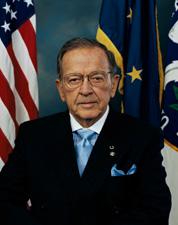 Sen. Ted Stevens (R-AK)
Legislative Activity
Stay on top of the latest movement without scrolling through every action
Read twice and referred to the Committee on Commerce, Science, and Transportation.
June 8, 2005
View full timeline
Introduced in Senate
June 8, 2005
Sponsor introductory remarks on measure. (CR S6228)
June 8, 2005
Read twice and referred to the Committee on Commerce, Science, and Transportation.
June 8, 2005
Floor Debate
12 membersWhat members said about S. 1195 on the floor




 +7
+7
Floor Debate
12 membersWhat members said about S. 1195 on the floor
Mr. President, I am pleased to announce today the introduction of the Biden/Hatch/Specter Violence Against Women Act of 2005. Many in this chamber are well aware that I consider the Violence Against…
Mr. President, I am proud to join Senators Biden, Hatch, Specter and other cosponsors to introduce today the bipartisan VAWA, the Violence Against Women Act of 2005. Our Nation has made remarkable…
Mr. President, I strongly support the Violence Against Women Act of 2005, and I commend Senator Biden, Senator Specter, and Senator Hatch for their bipartisan leadership on these major issues.…
Mr. President, I rise today with Senators Durbin and Stabenow to introduce GRAD, the Getting Results for Advanced Degrees Act. The purpose of this bill is to encourage students to pursue graduate…
Mr. President, I rise today to introduce the International Solid Waste Importation and Management Act. I want to thank Senator Levin for cosponsoring this bill and for his tireless work to stop…
Show 7 more

Mr. President, today I introduce a bill that is long overdue and would require American nuclear power plants to follow the same procedures that we would like to impose on nuclear power plants in…

Mr. President, I rise today to introduce the ``Campus Fire Safety Right-to-Know Act of 2005''. I first introduced this legislation in the l07th Congress in response to a tragic fire at New Jersey's…

Mr. President, the ability of communities to provide its citizens with clean, safe drinking water is one of the most important public utility services any municipality can offer. I support many of…

Mr. President, every week, thousands of truckloads of solid municipal waste are being imported into the United States for disposal in US. landfills. Most of these shipments enter at three border…

Mr. President, I come to the floor today to introduce legislation that would significantly reduce the Social Security Disability payment waiting period for people diagnosed with the fatal cancer of…

Mr. President, today I am introducing the Ratepayers Protection Act of 2005. This bill will ensure that the poor and elderly and other groups who are disproportionately harmed by rising energy prices…
Mr. President, by request of the Administration, Senator Inouye and I introduce today the ``National Offshore Aquaculture Act of 2005'', a bill to provide the regulatory framework for the development…
Bill Text
Latest available legislative text
        [Congressional Bills 109th Congress]
[From the U.S. Government Publishing Office]
[S. 1195 Introduced in Senate (IS)]

109th CONGRESS
1st Session
S. 1195

To provide the necessary authority to the Secretary of Commerce for the
establishment and implementation of a regulatory system for offshore
aquaculture in the United States Exclusive Economic Zone, and for other
purposes.

_______________________________________________________________________

IN THE SENATE OF THE UNITED STATES

June 8, 2005

Mr. Stevens (for himself and Mr. Inouye) (by request) introduced the
following bill; which was read twice and referred to the Committee on
Commerce, Science, and Transportation.

_______________________________________________________________________

A BILL

To provide the necessary authority to the Secretary of Commerce for the
establishment and implementation of a regulatory system for offshore
aquaculture in the United States Exclusive Economic Zone, and for other
purposes.

SECTION 1. SHORT TITLE.

This Act may be cited as the ``National Offshore Aquaculture Act of
2005''.

SEC. 2. FINDINGS.

The Congress finds the following:
(1) It is the policy of the United States to--
(A) support an offshore aquaculture industry that
will produce food and other valuable products, protect
wild stocks and the quality of marine ecosystems, and
be compatible with other uses of the Exclusive Economic
Zone;
(B) encourage the development of responsible marine
aquaculture in the Exclusive Economic Zone by providing
the necessary authorities and procedures for offshore
marine aquaculture operations, demonstrations, and
research, through public-private partnerships;
(C) establish a permitting process for aquaculture
in the Exclusive Economic Zone to encourage private
investment in aquaculture operations, demonstrations,
and research; and
(D) promote research and development in marine
aquaculture science, technology, and related social,
economic, legal, and environmental management
disciplines that will enable marine aquaculture
operations and demonstrations to achieve operational
objectives while protecting marine ecosystem quality.
(2) Offshore aquaculture activities within the Exclusive
Economic Zone of the United States constitute activities with
respect to which the United States has proclaimed sovereign
rights and jurisdiction under Presidential Proclamation 5030 of
March 10, 1983.

SEC. 3. DEFINITIONS.

In this Act:
(1) Demonstration.--The term ``demonstration'' means pilot-
scale testing of aquaculture science and technologies, or farm-
scale research.
(2) Exclusive economic zone.--The term ``Exclusive Economic
Zone'' means, unless otherwise specified by the President in
the public interest in a writing published in the Federal
Register, a zone, the outer boundary of which is 200 nautical
miles from the baseline from which the breadth of the
territorial sea is measured, except as established by a
maritime boundary treaty in force for the United States, or in
the absence of such a treaty where the distance between the
coastal State and another State is less than 400 nautical
miles, an equidistance line between the 2 States. The inner
boundary of that zone is--
(A) a line coterminous with the seaward boundary of
each of the several coastal States, as defined in
sections 2(b) and 4 of the Submerged Lands Act (43
U.S.C. 1301(b) and 1312);
(B) a line 3 marine leagues from the coastline of
the Commonwealth of Puerto Rico;
(C) a line 3 geographical miles from the coastlines
of American Samoa, the Virgin Islands, and Guam,
respectively; and
(D) for any other Commonwealth (including the
Commonwealth of the Northern Marianas), territory, or
possession of the United States not referred to in
subparagraph (B) or (C), the outer boundary of the 12-
mile territorial sea, and, for the purposes of applying
this Act to any such commonwealth, territory, or
possession, that zone shall also include the area
within the territorial sea.
(3) Indian tribe and alaska native organization.--The term
``Indian Tribe and Alaska Native organization'' has the meaning
given the term ``Indian Tribe'' in section 102 of the Federally
Recognized Indian Tribe List Act of 1994 (25 U.S.C. 479a).
(4) Lessee.--The term ``lessee'' means the party authorized
by a lease, or an approved assignment thereof, to explore for
and develop and produce leased deposits of oil, gas, or sulphur
pursuant to 43 U.S.C. 1441 et seq.
(5) Marine species.--The term ``marine species'' means
finfish, mollusks, crustaceans, marine algae, and all other
forms of marine life, excluding marine mammals and birds.
(6) Offshore aquaculture.--The term ``offshore
aquaculture'' means all activities, including the operation of
offshore aquaculture facilities, involved in the propagation
and rearing, or attempted propagation and rearing, of marine
species in the United States Exclusive Economic Zone.
(7) Offshore aquaculture facility.--The term ``offshore
aquaculture facility'' means--
(A) an installation or structure used for offshore
aquaculture; or
(B) an area of the seabed or the subsoil used for
offshore aquaculture of living organisms belonging to
sedentary species.
(8) Operating permit.--The term ``operating permit'' means
an authorization issued under section 4(c) to raise specified
marine species in a specific offshore aquaculture facility
within the area described in an offshore aquaculture site
permit.
(9) Person.--The term ``person'' means any individual
(whether or not a citizen or national of the United States),
any corporation, partnership, association, or other non-
governmental entity (whether or not organized or existing under
the laws of any State), and State, local or tribal government
or entity thereof, and, except as otherwise specified by the
President in writing, the Federal Government or an entity
thereof, and, to the extent specified by the President in
writing, a foreign government or an entity thereof.
(10) Secretary.--The term ``Secretary'' means the Secretary
of Commerce.
(11) Site permit.--The term ``site permit'' means an
authorization issued under section 4(b) to use a specified area
of the U.S. Exclusive Economic Zone for a specified period of
time for purposes of offshore aquaculture.
(12) State.--The term ``State'' means each of the several
States, the District of Columbia, the Commonwealth of Puerto
Rico, American Samoa, the United States Virgin Islands, Guam,
the Commonwealth of the Northern Mariana Islands, and any other
Commonwealth, territory, or possession of the United States.

SEC. 4. OFFSHORE AQUACULTURE PERMITS.

(a) In General.--
(1) The Secretary is authorized to establish, in
consultation as appropriate with other relevant Federal
agencies, a process to make areas of the Exclusive Economic
Zone available to eligible persons for the development and
operation of offshore aquaculture facilities, which shall
include--
(A) the development of procedures necessary to
implement a permitting process under this Act, the form
and manner in which applications for permits may be
made, and the inclusion of any special conditions that
may apply to a permit; and
(B) the coordination of the offshore aquaculture
permitting process, together with the regulations for
siting criteria, environmental protection, monitoring
and enforcement, research, and economic and social
development, with similar activities administered by
other Federal agencies and States.
(2) Permits for offshore aquaculture located on leases or
easements authorized or for which a permit has been issued
under the Outer Continental Shelf Lands Act (43 U.S.C. 1331 et
seq.), or within 1 mile of any other facility for which a
permit has been issued under that Act, shall require the
concurrence of the Secretary of the Interior.
(3) It shall be unlawful to engage in offshore aquaculture
except in accordance with the terms of a valid site permit and
a valid operating permit issued by the Secretary under this
Act.
(4) An offshore aquaculture permit holder shall--
(A) be a resident of the United States;
(B) be a corporation, partnership or other entity
organized and existing under the laws of a State or the
United States; or
(C) to the extent required by the Secretary of
Commerce by regulation after coordination with the
Secretary of State, waive any immunity, and consent to
the jurisdiction of the United States and its courts,
for matters arising in relation to such permit and
appoint and maintain agents within the United States
who are authorized to receive and respond to any legal
process issued in the United States with respect to
such permit holder.
(5) Applications for site permits and operating permits may
be submitted and reviewed concurrently.
(6) Within 120 days after determining that a permit
application is complete and has satisfied all applicable
statutory and regulatory requirements, the Secretary shall
render a permit decision. If the Secretary is unable to render
a permit decision within this time period, the Secretary shall
provide written notice to the applicant indicating the reasons
for the delay and establishing a reasonable timeline for a
permit decision.
(7) Permits issued under this Act do not supersede or
substitute for any other authorization required under
applicable Federal or State law or regulation and shall
authorize the permit holder to conduct activities consistent
with the provisions of this Act, regulations issued under this
Act, and any specific terms, conditions, and restrictions
applied to the permit by the Secretary.
(8) Vessels owned or used by any offshore aquaculture
permit holder shall be exempt from the requirement for
documentation or a fishery endorsement under sections 12102 and
12108 of title 46, United States Code, for only so long as the
vessel is owned or used in support of activities under the
permit. All other sections of that title apply as if the
exempted vessel was documented.
(b) Site Permits.--
(1) The Secretary is authorized to issue an offshore
aquaculture site permit to any person meeting the eligibility
criteria in subsection (a)(4) under such terms and conditions
as the Secretary shall prescribe.
(2) The Secretary shall establish the terms, conditions,
and restrictions applicable to such permit, and shall specify
in the site permit the duration, size, and location of the
offshore aquaculture facility.
(3) Except for demonstration projects and offshore
aquaculture permits requiring concurrence of the Secretary of
the Interior under subsection (a)(2), the site permit shall
have a duration of 10 years, renewable thereafter at the
discretion of the Secretary in 5-year increments. The duration
of permits subject to the provisions of subsection (a)(2) shall
be developed in consultation as appropriate with the Secretary
of the Interior, except that each such permit shall expire no
later than the date that the oil and gas lessee, or the
lessee's operator, submits to the Secretary of the Interior a
final application for the removal of the facility upon which
the offshore aquaculture facility is located.
(4) At the expiration or termination of a site permit for
any reason, the site permit holder shall remove all structures,
gear, and other property from the site, and take other measures
to restore the site as may be prescribed by the Secretary.
(5) For offshore aquaculture located on facilities
authorized or for which a permit has been issued under the
Outer Continental Shelf Lands Act (43 U.S.C. 1331 et seq.), the
aquaculture permit holder and all parties that are or were
lessees of the lease on which the facilities are located during
the term of the site permit shall be jointly and severally
liable for the removal of any construction or modifications
related to aquaculture operations if the aquaculture permit
holder fails to do so and bonds established under this Act for
aquaculture operations prove insufficient to cover those
obligations. This subsection does not affect obligations to
decommission facilities under the Outer Continental Shelf Lands
Act (43 U.S.C. 1331 et seq.).
(c) Operating Permits.--
(1) The Secretary is authorized to issue operating permits,
under such terms and conditions as the Secretary shall
prescribe, to site permit holders.
(2) The holder of, or applicant for, a site permit under
subsection (b) shall submit an application to the Secretary
specifying the marine species to be propagated or reared, or
both, at the offshore aquaculture facility, and other design,
construction, and operational details and information, as
specified by regulation, to facilitate review.
(3) Failure to apply for and obtain an operating permit
within a reasonable period of time, as specified by the
Secretary under the terms and conditions of the offshore
aquaculture site permit, may result in the revocation of the
site permit.
(d) Criteria for Issuing Permits.--
(1) The Secretary shall consult as appropriate with other
Federal agencies to ensure that offshore aquaculture for which
a permit has been issued under this section meets the
environmental requirements established under section 5(a) and
is compatible with the use of the Exclusive Economic Zone for
navigation, fishing, resource protection, recreation, national
defense (including military readiness), mineral exploration and
development, and other activities.
(2) The Secretary shall consider risks to and impacts on
natural fish stocks, marine ecosystems, biological, chemical
and physical features of water quality, habitat, marine
mammals, other forms of marine life, birds, endangered species,
and other features of the environment, as identified by the
Secretary in consultation as appropriate with other Federal
agencies.
(3) Federal agencies implementing this Act, persons subject
to this Act, and coastal States seeking to review permit
applications under this Act shall comply with the applicable
provisions of the Coastal Zone Management Act of 1972
(including subsections (c)(1), (c)(3)(A), (c)(3)(B), and (d) of
section 307 (16 U.S.C. 1456(c)(1), (c)(3)(A), (c)(3)(B), and
(d)) and the corresponding Federal regulations.
(4) When an aquaculture facility is proposed to be
associated with an offshore oil and gas platform licensed under
the Outer Continental Shelf Lands Act (43 U.S.C. 1331 et seq.),
and if the offshore aquaculture applicant is required to submit
to a coastal State a consistency certification for its
aquaculture application under section 307(c)(3)(A) of the
Coastal Zone Management Act of 1972 (16 U.S.C. 1456(c)(3)(A)),
the coastal State's review under that Act and corresponding
Federal regulations shall also include any modification to an
offshore oil or gas or mineral lessee's development and
production plan or development operations coordination document
for which a consistency certification would otherwise be
required under applicable Federal regulations, including
changes to its plan for decommissioning any facilities,
resulting from or necessary for the issuance of the offshore
aquaculture permit, provided that information related to such
modifications or changes are received by the coastal State at
the time the coastal State receives the offshore aquaculture
permit applicant's consistency certification. In this case,
offshore oil and gas or mineral lessees are not required to
submit a separate consistency certification for any such
modification or change under section 307(c)(3)(B) of that Act
(16 U.S.C. 1456(c)(3)(B)) and the coastal State's concurrence
or objection, or presumed concurrence, under section
307(c)(3)(A) of that Act (16 U.S.C. 1456(c)(3)(A)) shall apply
to both the offshore aquaculture permit and to any related
modifications or changes to offshore oil and gas or mineral
plans requiring approval by the Department of the Interior.
(5) If a coastal State is not authorized by section
307(c)(3)(A) of the Coastal Zone Mangement Act (16 U.S.C.
1456(c)(3)(A)) and corresponding Federal regulations to review
an offshore aquaculture project proposed under this Act, then
any modifications or changes to offshore oil and gas or mineral
development and production plans or development operations
coordination documents requiring approval from the Department
of the Interior, shall be subject to coastal State review
pursuant to the requirements of section 307(c)(3)(B) of that
Act (16 U.S.C. 1456(c)(3)(B)), if a consistency certification
for those modifications or changes is required under applicable
Federal regulations.
(6) The Secretary shall periodically review the criteria
for issuance of site and operating permits for offshore
aquaculture and modify them as appropriate, in consultation as
appropriate with other Federal agencies, based on the best
available science.
(e) Exclusion From Provisions of Magnuson-Stevens Fishery
Conservation and Management Act.--
(1) Offshore aquaculture conducted in accordance with
permits issued pursuant to this section 4 is excluded from the
definition of ``fishing'' as that term is defined in section
3(15) of the Magnuson-Stevens Fishery Conservation and
Management Act (16 U.S.C. 1802(15)).
(2) The Secretary shall ensure, to the extent practicable,
that offshore aquaculture does not interfere with conservation
and management measures promulgated under the Magnuson-Stevens
Fishery Conservation and Management Act (16 U.S.C. 1801 et
seq.).
(3) The Secretary shall consult with the appropriate
Regional Fishery Management Council under that Act before
issuing a permit.
(4) The Secretary may require permit holders to track,
mark, or otherwise identify fish or other marine species in the
offshore aquaculture facility or harvested from such facility.
(f) Fees and Other Payments.--
(1) The Secretary is authorized to establish, through
regulation, a schedule of application fees and annual permit
fees.
(2) The Secretary shall require the site permit holder to
post a bond or other form of financial guarantee, in an amount
to be determined by the Secretary as sufficient to cover any
unpaid fees, the cost of removing an offshore aquaculture
facility at the expiration or termination of a site permit, and
other financial risks as identified by the Secretary.
(3) The Secretary may reduce or waive applicable fees or
other payments established under this section for facilities
used primarily for research or for raising cultured stock for
the replenishment of wild fisheries.
(4) The Secretary shall deposit all fees collected under
this Act in accordance with section 3302(b) of title 31, United
States Code.
(g) Authority to Modify or Suspend Permits.--
(1) Subject to paragraph (2), if the Secretary, after
consultation with Federal agencies as appropriate and after
affording the permit holder notice and an opportunity to be
heard, determines that suspension of, or modification of, a
permit is in the national interest, the Secretary may suspend
or modify such permit.
(2) If the Secretary determines that an emergency exists
that poses a risk to the safety of humans, to the marine
environment or marine resources, or to the security of the
United States and that requires suspension or modification of a
permit, the Secretary may suspend or modify the permit for such
time as the Secretary may determine necessary to meet the
emergency. The Secretary shall afford the permit holder a
prompt post-suspension or post-modification opportunity to be
heard regarding the suspension or modification.
(h) Actions Affecting the Outer Continental Shelf.--
(1) For aquaculture projects or operations located on
facilities subject to the Outer Continental Shelf Lands Act (43
U.S.C. 1331 et seq.), the Secretary of the Interior is
authorized--
(A) to enforce all requirements contained in
Federal mineral leases and regulations issued pursuant
to the Outer Continental Shelf Lands Act;
(B) to require and enforce such additional terms or
conditions as the Secretary of the Interior deems
necessary to protect the marine environment, property,
or human life or health to ensure the compatibility of
aquaculture operations with all activities for which
permits have been issued under the Outer Continental
Shelf Lands Act; and
(C) to issue orders to any offshore aquaculture
permit holder to take any action the Secretary of the
Interior deems necessary to ensure safe oil and gas or
other mineral operations on any facility to protect the
marine environment, property, or human life or health.
The failure to comply with the Secretary of the Interior's
orders under this paragraph will be deemed to constitute a
violation of the Outer Continental Shelf Lands Act.
(2) The Secretary of the Interior shall review and approve
any agreement between an operator of a facility for which a
permit has been issued under the Outer Continental Shelf Lands
Act and a prospective aquaculture operator to ensure that it is
consistent with the Federal mineral lease terms, Department of
the Interior regulations, and the Secretary of the Interior's
role in the protection of the marine environment, property, or
human life or health. An agreement under this subsection shall
be part of the information reviewed pursuant to the Coastal
Zone Management Act of 1972 review process described in
subsection (d)(4) of this section and shall not be subject to a
separate Coastal Zone Management Act of 1972 review.
(3) No offshore aquaculture may be located on facilities
authorized or for which a permit has been issued under the
Outer Continental Shelf Lands Act without the prior consent of
the owner of the facility.
(4) The Secretary of the Interior shall promulgate such
rules and regulations as are necessary and appropriate to carry
out the provisions of this subsection.
(i) Transferability of Permits.--The Secretary is authorized to
establish procedures for transferring permits from the original permit
holder to any person meeting the eligibility criteria in subsection
(a)(4) and able to satisfy the requirements for bonds or other
guarantees prescribed under subsection (f)(2).

SEC. 5. ENVIRONMENTAL REQUIREMENTS.

(a) Environmental Requirements.--The Secretary shall consult as
appropriate with other Federal agencies to identify the environmental
requirements applicable to offshore aquaculture under existing laws and
regulations. The Secretary may establish additional environmental
requirements for offshore aquaculture facilities, if deemed necessary,
in consultation with appropriate Federal agencies, coastal States, and
the public. Environmental requirements may include, but are not limited
to, environmental monitoring, data archiving, and reporting by the
permit holder, as deemed necessary or prudent by the Secretary. The
environmental requirements shall consider risks to and impacts on--
(1) natural fish stocks,
(2) marine ecosystems,
(3) biological, chemical and physical features of water
quality and habitat,
(4) marine mammals, other forms of marine life, birds, and
endangered species, and
(5) other features of the environment,
as identified by the Secretary, in consultation as appropriate with
other Federal agencies.
(b) Siting, Monitoring, and Evaluation.--
(1) The Secretary is authorized to collect information
needed to evaluate the suitability of sites for offshore
aquaculture.
(2) The Secretary is authorized to promulgate regulations
regarding monitoring and evaluation of compliance with the
provisions of site and operating permits, including the
collection of biological, chemical and physical oceanographic
data, and social, production, and economic data.
(3) The Secretary is authorized to monitor the effects of
offshore aquaculture on marine ecosystems and implement such
measures as may be necessary to protect the environment,
including temporary or permanent relocation of offshore
aquaculture sites, a moratorium on additional sites within a
prescribed area, and other appropriate measures as determined
by the Secretary.
(4) The Secretary is authorized to establish monitoring and
evaluation protocols.

SEC. 6. RESEARCH AND DEVELOPMENT.

(a) In General.--In consultation as appropriate with other Federal
agencies, the Secretary is authorized to establish an integrated,
multidisciplinary, scientific research and development program to
further offshore aquaculture technologies that are compatible with the
protection of marine ecosystems.
(b) Research Partnerships.--The Secretary is authorized to conduct
research and development in partnership with site permit holders.

SEC. 7. ADMINISTRATION.

(a) In General.--The Secretary shall promulgate such rules and
regulations as are necessary and appropriate to carry out the
provisions of this Act. The Secretary may at any time prescribe and
amend such rules and regulations as the Secretary determines to be
necessary and proper, and such rules and regulations shall, as of their
effective date, apply to all operations conducted under permits issued
under the provisions of this Act.
(b) Navigational Safety Zones.--
(1) The Secretary may promulgate rules that the Secretary
finds to be reasonable and necessary to protect offshore
aquaculture facilities, and, where appropriate, shall request
that the Secretary of the department in which the Coast Guard
is operating establish navigational safety zones around such
facilities.
(2) After consultation with the Secretary of Commerce, the
Secretary of State, and the Secretary of Defense, the Secretary
of the department in the which the Coast Guard is operating may
designate a zone of appropriate size around and including any
offshore aquaculture facility for the purpose of navigational
safety. In such zone, no installations, structures, or uses
will be allowed that are incompatible with the operation of the
offshore aquaculture facility. The Secretary of the department
in which the Coast Guard is operating may by regulation define
activities that are allowed within such zone.
(c) Consultation with Other Agencies.--The Secretary shall consult
as appropriate with Federal agencies that are authorized to issue
permits within the Exclusive Economic Zone to develop a coordinated and
streamlined permitting process for offshore aquaculture. The process
shall factor in the needs, requirements, and authorities of each
Agency, including the need to consult with State agencies and the
requirement for public review and involvement.
(d) Memoranda of Agreement.--The Secretary may enter into memoranda
of agreement, memoranda of understanding, or other agreements with
heads of Federal agencies, as appropriate, to implement this Act, and
the Secretary and the heads of such agencies may issue such regulations
as may be necessary to ensure coordination of Federal activities to
implement this Act.
(e) Utilization of Federal and State Personnel, Services, and
Equipment.--The Secretary may, with or without reimbursement, utilize
in the performance of functions under this Act the personnel, services,
equipment (including aircraft and vessels), and facilities of--
(1) any Federal agency under a written agreement with the
head of that agency; and
(2) any agency of a State under a written agreement with
the head of that agency, to the extent allowed by the law of
that State.
(f) Effect on Jurisdiction, Responsibilities, and Rights of Other
Entities.-- Nothing in this Act shall be construed to displace,
supersede, limit, or modify the jurisdiction, responsibilities, or
rights of any Federal or State agency, or Indian Tribe or Alaska Native
organization, under any Federal law or treaty.
(g) Application of Certain Laws.--
(1) In addition to this Act and other statutes of the
United States that apply in the Exclusive Economic Zone, the
following shall apply with respect to offshore aquaculture
facilities in the Exclusive Economic Zone for which a permit
has been issued under this Act and to activities in the
Exclusive Economic Zone connected, associated, or potentially
interfering with the use or operation of such facilities:
(A) Titles 18 and 28, United States Code.
(B) The provisions of any other statute of the
United States, when the Secretary has determined that
it is in the public interest that such provision so
apply and has published that determination in the
Federal Register and until the Secretary determines to
the contrary and publishes a notice in the Federal
Register to the contrary.
(2) The jurisdiction of the Federal courts with respect to
the provisions of paragraph (1).
(3) Nothing in this Act shall be construed to relieve,
exempt, or immunize any person from any other requirement
imposed by an applicable Federal law, treaty, or regulation.
(4) Nothing in this Act shall be construed to confer
citizenship to a person by birth or through naturalization or
to entitle a person to avail himself of any law pertaining to
immigration, naturalization, or nationality.
(h) Application of Coastal State Law.--The law of the nearest
adjacent coastal State, now in effect or hereafter adopted, amended, or
repealed, is declared to be the law of the United States, and shall
apply to any offshore aquaculture facility for which a permit has been
issued pursuant to this Act, to the extent applicable and not
inconsistent with any provision or regulation under this Act or other
Federal laws and regulations now in effect or hereafter adopted,
amended, or repealed. All such applicable laws shall be administered
and enforced by the appropriate officers and courts of the United
States. For purposes of this subsection, the nearest adjacent coastal
State shall be that State whose seaward boundaries, if extended beyond
3 miles, would encompass the site of the offshore aquaculture facility.
State taxation laws shall not apply in the Exclusive Economic Zone.

SEC. 8. AUTHORIZATION OF APPROPRIATIONS.

There are authorized to be appropriated to the Secretary such sums
as may be necessary for purposes of carrying out the provisions of this
Act.

SEC. 9. UNLAWFUL ACTIVITIES.

It is unlawful for any person--
(1) to falsify any information required to be reported,
communicated, or recorded pursuant to this Act or any
regulation or permit issued under this Act, or to fail to
submit in a timely fashion any required information, or to fail
to report to the Secretary immediately any change in
circumstances that has the effect of rendering any such
information false, incomplete, or misleading;
(2) to engage in offshore aquaculture within the Exclusive
Economic Zone of the United States except in full compliance
with this Act, any regulations promulgated under this Act, and
the terms and conditions of any permit issued by the Secretary
under this Act;
(3) to refuse to permit an authorized officer to conduct
any lawful search or lawful inspection in connection with the
enforcement of this Act or any regulation or permit issued
under this Act;
(4) to forcibly assault, resist, oppose, impede,
intimidate, or interfere with an authorized officer in the
conduct of any search or inspection in connection with the
enforcement of this Act or any regulation or permit issued
under this Act;
(5) to resist a lawful arrest or detention for any act
prohibited by this section;
(6) to interfere with, delay, or prevent, by any means, the
apprehension, arrest, or detection of another person, knowing
that such person has committed any act prohibited by this
section;
(7) to violate any provision of this Act or any regulation
or permit issued under this Act; or
(8) to attempt to commit any act described in paragraph
(1), (2), (6) or (7).

SEC. 10. ENFORCEMENT PROVISIONS.

(a) Duties of Secretaries.--This Act shall be enforced by the
Secretary and the Secretary of the Department in which the Coast Guard
is operating. The Secretaries each may exercise for this purpose the
same authority as is granted to the Secretary by section 7(e) of this
Act.
(b) District Court Jurisdiction.--The several district courts of
the United States shall have jurisdiction over any actions arising
under this Act. The venue provisions of title 18, United States Code,
and title 28, United States Code, shall apply to any actions arising
under this Act. The judges of the district courts of the United States
and the United States magistrate judges may, within their respective
jurisdictions, upon proper oath or affirmation showing probable cause,
issue such warrants or other process as may be required for enforcement
of this Act, or any regulation or permit issued under this Act.
(c) Powers of Enforcement.--
(1) Any officer who is authorized pursuant to the first
sentence of subsection (a) of this section by the Secretary or
the Secretary of the Department in which the Coast Guard is
operating to enforce the provisions of this Act may--
(A) with or without a warrant or other process--
(i) arrest any person, if the officer has
reasonable cause to believe that such person
has committed or is committing an act
prohibited by section 9 of this Act;
(ii) search or inspect any offshore
aquaculture facility;
(iii) seize any offshore aquaculture
facility (together with its equipment,
furniture, appurtenances, stores, and cargo)
used or employed in aid of, or with respect to
which it reasonably appears that such offshore
aquaculture facility was used or employed in
aid of, the violation of any provision of this
Act or any regulation or permit issued under
this Act;
(iv) seize any living marine resource
(wherever found) retained, in any manner, in
connection with or as a result of the
commission of any act prohibited by section 9
of this Act; and
(v) seize any evidence related to any
violation of any provision of this Act or any
regulation or permit issued under this Act;
(B) execute any warrant or other process issued by
any court of competent jurisdiction; and
(C) exercise any other lawful authority.
(2) Any officer who is authorized pursuant to the first
sentence of subsection (a) of this section by the Secretary or
the Secretary of the department in which the Coast Guard is
operating to enforce the provisions of this Act may make an
arrest without a warrant for (A) an offense against the United
States committed in his presence, or (B) for a felony
cognizable under the laws of the United States, if he has
reasonable grounds to believe that the person to be arrested
has committed or is committing a felony. Any such authorized
person may execute and serve a subpoena, arrest warrant or
search warrant issued in accordance with Rule 41 of the Federal
Rules of Criminal Procedure, or other warrant of civil or
criminal process issued by any officer or court of competent
jurisdiction for enforcement of the Act, or any regulation or
permit issued under this Act.
(d) Issuance of Citations.--If any authorized officer finds that a
person is engaging in or has engaged in offshore aquaculture in
violation of any provision of this Act, such officer may issue a
citation to that person.
(e) Liability for Costs.--Any person who violates this Act, or a
regulation or permit issued under this Act, shall be liable for the
cost incurred in storage, care, and maintenance of any living marine
resource or other property seized in connection with the violation.
(f) Upon the request of the Secretary, the Attorney General of the
United States may seek to enjoin any person who is alleged to be in
violation of any provision of this Act, or regulation or permit issued
under this Act.

SEC. 11. CIVIL ENFORCEMENT AND PERMIT SANCTIONS.

(a) Civil Penalties.--
(1) Any person who is found by the Secretary, after notice
and opportunity for a hearing in accordance with section 554 of
title 5, United States Code, to have violated this Act, or a
regulation or permit issued under this Act, shall be liable to
the United States for a civil penalty. The amount of the civil
penalty under this paragraph shall not exceed $120,000 for each
violation. Each day of a continuing violation shall constitute
a separate violation. The amount of such civil penalty shall be
assessed by the Secretary by written notice. In determining the
amount of such penalty, the Secretary shall take into account
the nature, circumstances, extent, and gravity of the
prohibited acts committed and, with respect to the violation,
the degree of culpability, any history of prior violations, and
such other matters as justice may require.
(2) The Secretary may compromise, modify, or remit, with or
without conditions, any civil penalty under paragraph (1) that
is subject to imposition or that has been imposed under this
section.
(b) Civil Judicial Penalties.--Any person who violates any
provision of this Act, or any regulation or permit issued thereunder,
shall be subject to a civil penalty of not to exceed $240,000 for each
such violation. Each day of a continuing violation shall constitute a
separate violation. The Attorney General, upon the request of the
Secretary, may commence a civil action in an appropriate district court
of the United States, and such court shall have jurisdiction to award
civil penalties and such other relief as justice may require. In
determining the amount of a civil penalty, the court shall take into
account the nature, circumstances, extent, and gravity of the
prohibited acts committed and, with respect to the violation, the
degree of culpability, any history of prior violations and such other
matters as justice may require.
(c) Permit Sanctions.--
(1) In any case in which--
(A) an offshore aquaculture facility has been used
in the commission of an act prohibited under section 9
of this Act;
(B) the owner or operator of an offshore
aquaculture facility or any other person who has been
issued or has applied for a permit under section 4 of
this Act has acted in violation of section 9 of this
Act; or
(C) any amount in settlement of a civil forfeiture
imposed on an offshore aquaculture facility or other
property, or any civil penalty or criminal fine imposed
under this Act or imposed on any other person who has
been issued or has applied for a permit under any
fishery resource statute enforced by the Secretary, has
not been paid and is overdue,the Secretary may--
(i) revoke any permit issued with respect
to such offshore aquaculture facility or
applied for by such a person under this Act,
with or without prejudice to the issuance of
subsequent permits;
(ii) suspend such permit for a period of
time considered by the Secretary to be
appropriate;
(iii) deny such permit; or
(iv) impose additional conditions and
restrictions on such permit.
(2) In imposing a sanction under this subsection, the
Secretary shall take into account--
(A) the nature, circumstances, extent, and gravity
of the prohibited acts for which the sanction is
imposed; and
(B) with respect to the violator, the degree of
culpability, any history of prior violations, and such
other matters as justice may require.
(3) Transfer of ownership of an offshore aquaculture
facility, by sale or otherwise, shall not extinguish any permit
sanction that is in effect or is pending at the time of
transfer of ownership. Before executing the transfer of
ownership of an offshore aquaculture facility, by sale or
otherwise, the owner shall disclose in writing to the
prospective transferee the existence of any permit sanction
that will be in effect or pending with respect to the offshore
aquaculture facility at the time of the transfer. The Secretary
may waive or compromise a sanction in the case of a transfer
pursuant to court order.
(4) In the case of any permit that is suspended under this
subsection for nonpayment of a civil penalty or criminal fine,
the Secretary shall reinstate the permit upon payment of the
penalty or fine and interest thereon at the prevailing rate.
(5) No sanctions shall be imposed under this subsection
unless there has been prior opportunity for a hearing on the
facts underlying the violation for which the sanction is
imposed, either in conjunction with a civil penalty proceeding
under this section or otherwise.
(d) Hearing.--For the purposes of conducting any hearing under this
section, the Secretary may issue subpoenas for the attendance and
testimony of witnesses and the production of relevant papers, books,
and documents, and may administer oaths. Witnesses summoned shall be
paid the same fees and mileage that are paid to witnesses in the courts
of the United States. In case of contempt or refusal to obey a subpoena
served upon any person pursuant to this subsection, the district court
of the United States for any district in which such person is found,
resides, or transacts business, upon application by the United States
and after notice to such person, shall have jurisdiction to issue an
order requiring such person to appear and give testimony before the
Secretary or to appear and produce documents before the Secretary, or
both, and any failure to obey such order of the court may be punished
by such court as a contempt thereof.
(e) Judicial Review.--Any person against whom a civil penalty is
assessed under subsection (a)(1) of this section or against whose
offshore aquaculture facility a permit sanction is imposed under
subsection (c) of this section (other than a permit suspension for
nonpayment of penalty or fine) may obtain review thereof in the United
States district court for the appropriate district by filing a
complaint against the Secretary in such court within 30 days from the
date of such penalty or sanction. The Secretary shall promptly file in
such court a certified copy of the record upon which such penalty or
sanction was imposed, as provided in section 2112 of title 28, United
States Code. The findings and order of the Secretary shall be set aside
by such court if they are not found to be supported by substantial
evidence, as provided in section 706(2) of title 5, United States Code.
(f) Collection.--If any person fails to pay an assessment of a
civil penalty after it has become a final and unappealable order, or
after the appropriate court has entered final judgment in favor of the
Secretary, the matter may be referred to the Attorney General, who may
recover the amount (plus interest at currently prevailing rates from
the date of the final order). In such action the validity, amount and
appropriateness of the final order imposing the civil penalty shall not
be subject to review. Any person who fails to pay, on a timely basis,
the amount of an assessment of a civil penalty shall be required to
pay, in addition to such amount and interest, attorney's fees and costs
for collection proceedings and a quarterly nonpayment penalty for each
quarter during which such failure to pay persists. The nonpayment
penalty shall be in an amount equal to 20 percent of the aggregate
amount of such person's penalties and nonpayment penalties which are
unpaid as of the beginning of such quarter.

SEC. 12. CRIMINAL OFFENSES.

Any person who knowingly violates subsection (a)(3) or (b)(4) of
section 4, or subsection (a), (b), or (g) of section 9, upon
conviction, shall be imprisoned for not more than 5 years and shall be
fined not more than $500,000, if that person is an individual, or
$1,000,000 if that person is not an individual. Any person who
knowingly violates any other provision of section 9 or a measure issued
pursuant to section 5(b)(3) commits a Class C felony subject to the
penalties of title 18, United States Code. The district courts of the
United States shall have jurisdiction over any actions arising under
this Act. For the purpose of this Act, American Samoa shall be included
within the judicial district of the District Court of the United States
for the District of Hawaii. Each violation shall be a separate offense
and the offense shall be deemed to have been committed not only in the
district where the violation first occurred, but also in any other
district as authorized by law. Any offenses not committed in any
district are subject to the venue provisions of section 3238 of title
18, United States Code.

SEC. 13. FORFEITURES.

(a) In General.--Any offshore aquaculture facility (including its
structure, equipment, furniture, appurtenances, stores, and cargo) used
in aid of and any living marine resources (or the fair market value
thereof) taken or retained, in any manner, in connection with or as a
result of the violation of any provision of section 9 or subsection
(a)(3) or (b)(4) of section 4 shall be subject to forfeiture to the
United States. All or part of such offshore aquaculture facility may,
and all such living marine resources (or the fair market value thereof)
shall, be forfeited to the United States pursuant to a civil proceeding
under this section.
(b) Jurisdiction of the Courts.--Any district court of the United
States shall have jurisdiction, upon application of the Attorney
General on behalf of the United States, to order any forfeiture
authorized under subsection (a) of this section and any action provided
for under subsection (d) of this section.
(c) Judgment.--If a judgment is entered for the United States in a
civil forfeiture proceeding under this section, the Attorney General
may seize any property or other interest declared forfeited to the
United States, which has not previously been seized pursuant to this
Act or for which security has not previously been obtained. The
provisions of the customs laws relating to--
(1) the seizure, forfeiture, and condemnation of property
for violation of the customs law,
(2) the disposition of such property or the proceeds from
the sale thereof, and
(3) the remission or mitigation of any such forfeiture,
shall apply to seizures and forfeitures incurred, or alleged to have
been incurred, under the provisions of this Act, unless such provisions
are inconsistent with the purposes, policy, and provisions of this Act.
(d) Procedure.--
(1) Any officer authorized to serve any process that is
issued by a court under section 10(b) of this Act shall--
(A) stay the execution of such process, or
(B) discharge any living marine resources seized
pursuant to such process,
upon receipt of a satisfactory bond or other security from any
person claiming such property. The bond or other security shall
be conditioned upon such person delivering such property to the
appropriate court upon order thereof, without any impairment of
its value, or paying the monetary value of such property
pursuant to an order of such court. Judgment shall be
recoverable on such bond or other security against both the
principal and any sureties in the event that any condition
thereof is breached, as determined by such court.
(2) Any living marine resources seized pursuant to this Act
may be sold, subject to the approval of the appropriate court,
for not less than the fair market value thereof. The proceeds
of any such sale shall be deposited with such court pending the
disposition of the matter involved.
(e) Rebuttable Presumption.--For purposes of this section, all
living marine resources found within an offshore aquaculture facility,
and which are seized in connection with an act prohibited by section 9
of this Act, are presumed to have been taken or retained in violation
of this Act, but the presumption can be rebutted by an appropriate
showing of evidence to the contrary.
<all>