Water Infrastructure Financing Act
 Sen. Lincoln Chafee (R-RI)
Legislative Activity
Stay on top of the latest movement without scrolling through every action
Placed on Senate Legislative Calendar under General Orders. Calendar No. 304.
December 8, 2005
View full timeline
Introduced in Senate
July 14, 2005
Read twice and referred to the Committee on Environment and Public Works. (text of measure as introduced: CR S8311-8317)
July 14, 2005
Committee on Environment and Public Works. Ordered to be reported with amendments favorably.
July 20, 2005
Committee on Environment and Public Works. Reported by Senator Inhofe under authority of the order of the Senate of 11/18/2005 with an amendment in the nature of a substitute. With written report No. 109-186.
December 8, 2005
Placed on Senate Legislative Calendar under General Orders. Calendar No. 304.
December 8, 2005
Floor Debate
14 membersWhat members said about S. 1400 on the floor



 +9
+9
Floor Debate
14 membersWhat members said about S. 1400 on the floor
Mr. President, today I will introduce the Lobbying and Ethics Reform Act of 2005. This bill builds on similar legislation that was introduced in the House by Representatives Marty Meehan and Rahm…
Mr. President, sustained military operations in Afghanistan and Iraq have brought to light another example of how outdated and burdensome government policies can punish generous employers. Employers…
Mr. President, sustained military operations in Afghanistan and Iraq have brought to light another example of how outdated and burdensome government policies can punish generous employers. Employers…
Mr. President, I ask unanimous consent that the Committee on Agriculture, Nutrition and Forestry be authorized to conduct a hearing during the session of the Senate on Wednesday, July 20, 2005 at 10…
Mr. President, I rise today on behalf of myself and Senator Hillary Rodham Clinton of New York, to introduce the Jessica Lunsford and Sarah Lunde Act. This bill will provide grants for State and…
Show 8 more
Mr. President, I rise today with Senators Bill Nelson, Stevens, Inouye, McCain, and Pryor to introduce the Identity Theft Protection Act of 2005. The introduction of this bill has been a bipartisan…
Mr. President, I am pleased to join with my distinguished colleague, Senator Santorum, in introducing the Increased Capital Access for Growing Businesses Act. The legislation would help many small…
Mr. President, today I am introducing the ``Preserving Patient Access to Inpatient Rehabilitation Hospitals Act of 2005'' to make changes to a rule issued by the Centers for Medicare and Medicaid…
Mr. President, I am pleased to join Senators Inouye, Smith, McCain, Nelson, and Pryor in introducing a bipartisan bill to address the growing perpetration of identity theft against American…

Mr. President, I rise today to introduce the ``Respirator Access Assurance Act of 2005.'' This legislation is not a complex or lengthy proposal, but it is critically important for our men and women…

Mr. President, I rise today to introduce legislation that will allow for the continued expansion of non-primary hub airports across the country. The simple fact of the matter is that demand for…

Mr. President, I rise to introduce a bill that will allow the Environmental Protection Agency to continue to provide grant funding and technical assistance to small, rural communities in Alaska for…
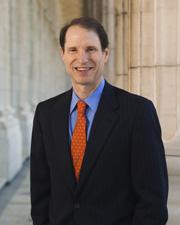
Mr. President, when Congress passed the Medicare Modernization Act, Medicare cost contracts were kept as a health plan option for seniors. However, Congress also limited the ability of cost contracts…
Show 3 more
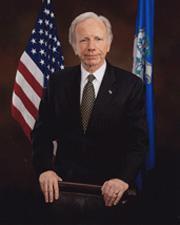
Mr. President, I ask unanimous consent that the text of the bill be printed in the Record.
Mr. President, I ask unanimous consent that the text of the bill be printed in the Record.
Mr. President, I ask unanimous consent that the text of the bill be printed in the Record.
Bill Text
2 versions available
        [Congressional Bills 109th Congress]
[From the U.S. Government Publishing Office]
[S. 1400 Reported in Senate (RS)]

Calendar No. 304
109th CONGRESS
1st Session
S. 1400

[Report No. 109-186]

To amend the Federal Water Pollution Control Act and the Safe Drinking
Water Act to improve water and wastewater infrastructure in the United
States.

_______________________________________________________________________

IN THE SENATE OF THE UNITED STATES

July 14, 2005

Mr. Chafee (for himself, Mrs. Clinton, Mr. Inhofe, Mr. Jeffords and Mr.
Voinovich) introduced the following bill; which was read twice and
referred to the Committee on Environment and Public Works

December 8, 2005

Reported under authority of the order of the Senate of November 18,
2005, by Mr. Inhofe, with an amendment
[Strike out all after the enacting clause and insert the part printed
in italic]

_______________________________________________________________________

A BILL

To amend the Federal Water Pollution Control Act and the Safe Drinking
Water Act to improve water and wastewater infrastructure in the United
States.

Be it enacted by the Senate and House of Representatives of the
United States of America in Congress assembled,

<DELETED>SECTION 1. SHORT TITLE; TABLE OF CONTENTS.</DELETED>

<DELETED>    (a) Short Title.--This Act may be cited as the ``Water
Infrastructure Financing Act''.</DELETED>
<DELETED>    (b) Table of Contents.--The table of contents of this Act
is as follows:</DELETED>

<DELETED>Sec. 1. Short title; table of contents.
<DELETED>TITLE I--WATER POLLUTION INFRASTRUCTURE

<DELETED>Sec. 101. Technical assistance for rural and small treatment
works.
<DELETED>Sec. 102. Projects eligible for assistance.
<DELETED>Sec. 103. Water pollution control revolving loan funds.
<DELETED>Sec. 104. Affordability.
<DELETED>Sec. 105. Transferability of funds.
<DELETED>Sec. 106. Costs of administering water pollution control
revolving loan funds.
<DELETED>Sec. 107. Water pollution control revolving loan funds.
<DELETED>Sec. 108. Noncompliance.
<DELETED>Sec. 109. Authorization of appropriations.
<DELETED>Sec. 110. Critical water infrastructure projects.
<DELETED>TITLE II--SAFE DRINKING WATER INFRASTRUCTURE

<DELETED>Sec. 201. Preconstruction work.
<DELETED>Sec. 202. Affordability.
<DELETED>Sec. 203. Safe drinking water revolving loan funds.
<DELETED>Sec. 204. Other authorized activities.
<DELETED>Sec. 205. Priority system requirements.
<DELETED>Sec. 206. Authorization of appropriations.
<DELETED>Sec. 207. Critical drinking water infrastructure projects.
<DELETED>Sec. 208. Small system revolving loan funds.
<DELETED>Sec. 209. Study on lead contamination in drinking water.
<DELETED>Sec. 210. District of Columbia lead service line replacement.
<DELETED>TITLE III--MISCELLANEOUS

<DELETED>Sec. 301. Definitions.
<DELETED>Sec. 302. Demonstration grant program for water quality
enhancement and management.
<DELETED>Sec. 303. Agricultural pollution control technology grant
program.
<DELETED>Sec. 304. State revolving fund review process.
<DELETED>Sec. 305. Cost of service study.
<DELETED>Sec. 306. Water resources study.

<DELETED>TITLE I--WATER POLLUTION INFRASTRUCTURE</DELETED>

<DELETED>SEC. 101. TECHNICAL ASSISTANCE FOR RURAL AND SMALL TREATMENT
WORKS.</DELETED>

<DELETED>    (a) In General.--Title II of the Federal Water Pollution
Control Act (33 U.S.C. 1281 et seq.) is amended by adding at the end
the following:</DELETED>

<DELETED>``SEC. 222. TECHNICAL ASSISTANCE FOR RURAL AND SMALL TREATMENT
WORKS.</DELETED>

<DELETED>    ``(a) Definition of Qualified Nonprofit Technical
Assistance Provider.--In this section, the term `qualified nonprofit
technical assistance provider' means a qualified nonprofit technical
assistance provider of water and wastewater services to small rural
communities that provide technical assistance to treatment works
(including circuit rider programs and training and preliminary
engineering evaluations) that--</DELETED>
<DELETED>    ``(1) serve not more than 10,000 users;
and</DELETED>
<DELETED>    ``(2) may include a State agency.</DELETED>
<DELETED>    ``(b) Grant Program.--</DELETED>
<DELETED>    ``(1) In general.--The Administrator may make
grants to qualified nonprofit technical assistance providers
that are qualified to provide assistance on a broad range of
wastewater and stormwater approaches--</DELETED>
<DELETED>    ``(A) to assist small treatment works to
plan, develop, and obtain financing for eligible
projects described in section 603(c);</DELETED>
<DELETED>    ``(B) to capitalize revolving loan funds
to provide loans, in consultation with the State in
which the assistance is provided, to rural and small
municipalities for predevelopment costs (including
costs for planning, design, associated preconstruction,
and necessary activities for siting the facility and
related elements) associated with wastewater
infrastructure projects or short-term costs incurred
for equipment replacement that is not part of regular
operation and maintenance activities for existing
wastewater systems, if--</DELETED>
<DELETED>    ``(i) any loan from the fund is
made at or below the market interest rate, for
a term not to exceed 10 years;</DELETED>
<DELETED>    ``(ii) the amount of any single
loan does not exceed $100,000; and</DELETED>
<DELETED>    ``(iii) all loan repayments are
credited to the fund;</DELETED>
<DELETED>    ``(C) to provide technical assistance and
training for rural and small publicly owned treatment
works and decentralized wastewater treatment systems to
enable those treatment works and systems to protect
water quality and achieve and maintain compliance with
this Act; and</DELETED>
<DELETED>    ``(D) to disseminate information to rural
and small municipalities with respect to planning,
design, construction, and operation of publicly owned
treatment works and decentralized wastewater treatment
systems.</DELETED>
<DELETED>    ``(2) Distribution of grant.--In carrying out this
subsection, the Administrator shall ensure, to the maximum
extent practicable, that technical assistance provided using
funds from a grant under paragraph (1) is made available in
each State.</DELETED>
<DELETED>    ``(3) Consultation.--As a condition of receiving a
grant under this subsection, a qualified nonprofit technical
assistance provider shall consult with each State in which
grant funds are to be expended or otherwise made available
before the grant funds are expended or made available in the
State.</DELETED>
<DELETED>    ``(4) Annual report.--For each fiscal year, a
qualified nonprofit technical assistance provider that receives
a grant under this subsection shall submit to the Administrator
a report that--</DELETED>
<DELETED>    ``(A) describes the activities of the
qualified nonprofit technical assistance provider using
grant funds received under this subsection for the
fiscal year; and</DELETED>
<DELETED>    ``(B) specifies--</DELETED>
<DELETED>    ``(i) the number of communities
served;</DELETED>
<DELETED>    ``(ii) the sizes of those
communities; and</DELETED>
<DELETED>    ``(iii) the type of financing
provided by the qualified nonprofit technical
assistance provider.</DELETED>
<DELETED>    ``(c) Authorization of Appropriations.--There is
authorized to be appropriated to carry out this section $25,000,000 for
each of fiscal years 2006 through 2010.''.</DELETED>
<DELETED>    (b) Guidance for Small Systems.--Section 602 of the
Federal Water Pollution Control Act (33 U.S.C. 1382) is amended by
adding at the end the following:</DELETED>
<DELETED>    ``(c) Guidance for Small Systems.--</DELETED>
<DELETED>    ``(1) Definition of small system.--In this
subsection, the term `small system' means a system--</DELETED>
<DELETED>    ``(A) for which a municipality or
intermunicipal, interstate, or State agency seeks
assistance under this title; and</DELETED>
<DELETED>    ``(B) that serves a population of 10,000
or fewer households.</DELETED>
<DELETED>    ``(2) Simplified procedures.--Not later than 1
year after the date of enactment of this subsection, the
Administrator shall assist the States in establishing
simplified procedures for small systems to obtain assistance
under this title.</DELETED>
<DELETED>    ``(3) Publication of manual.--Not later than 1
year after the date of enactment of this subsection, after
providing notice and opportunity for public comment, the
Administrator shall publish--</DELETED>
<DELETED>    ``(A) a manual to assist small systems in
obtaining assistance under this title; and</DELETED>
<DELETED>    ``(B) in the Federal Register, notice of
the availability of the manual.''.</DELETED>

<DELETED>SEC. 102. PROJECTS ELIGIBLE FOR ASSISTANCE.</DELETED>

<DELETED>    Section 603 of the Federal Water Pollution Control Act (33
U.S.C. 1383) is amended by striking subsection (c) and inserting the
following:</DELETED>
<DELETED>    ``(c) Projects Eligible for Assistance.--Funds in each
State water pollution control revolving fund shall be used only for--
</DELETED>
<DELETED>    ``(1) providing financial assistance to any
municipality or an intermunicipal, interstate, or State agency
that principally treats municipal wastewater or domestic sewage
for construction (including planning, design, associated
preconstruction, and activities relating to the siting of a
facility) of a treatment works (as defined in section
212);</DELETED>
<DELETED>    ``(2) implementation of a management program
established under section 319;</DELETED>
<DELETED>    ``(3) development and implementation of a
conservation and management plan under section 320;</DELETED>
<DELETED>    ``(4) providing financial assistance to a
municipality or an intermunicipal, interstate, or State agency
for projects to increase the security of wastewater treatment
works (excluding any expenditure for operations or
maintenance);</DELETED>
<DELETED>    ``(5) providing financial assistance to a
municipality or an intermunicipal, interstate, or State agency
for measures to control municipal stormwater, the primary
purpose of which is the preservation, protection, or
enhancement of water quality;</DELETED>
<DELETED>    ``(6) water conservation projects, the primary
purpose of which is the protection, preservation, and
enhancement of water quality; or</DELETED>
<DELETED>    ``(7) reuse, reclamation, and recycling projects,
the primary purpose of which is the protection, preservation,
and enhancement of water quality.''.</DELETED>

<DELETED>SEC. 103. WATER POLLUTION CONTROL REVOLVING LOAN
FUNDS.</DELETED>

<DELETED>    Section 603(d) of the Federal Water Pollution Control Act
(33 U.S.C. 1383(d)) is amended--</DELETED>
<DELETED>    (1) in paragraph (6), by striking ``and'' at the
end;</DELETED>
<DELETED>    (2) in paragraph (7), by striking the period at
the end and inserting ``; and''; and</DELETED>
<DELETED>    (3) by adding at the end the following:</DELETED>
<DELETED>    ``(8) to carry out a project under paragraph (2)
or (3) of section 601(a), which may be--</DELETED>
<DELETED>    ``(A) operated by a municipal,
intermunicipal, or interstate entity, State, public or
private utility, corporation, partnership, association,
or nonprofit agency; and</DELETED>
<DELETED>    ``(B) used to make loans that will be
fully amortized not later than 30 years after the date
of the completion of the project.''.</DELETED>

<DELETED>SEC. 104. AFFORDABILITY.</DELETED>

<DELETED>    (a) In General.--Section 603 of the Federal Water
Pollution Control Act (33 U.S.C. 1383) is amended--</DELETED>
<DELETED>    (1) by redesignating subsections (e) through (h)
as subsections (f) through (i), respectively; and</DELETED>
<DELETED>    (2) by inserting after subsection (d) the
following:</DELETED>
<DELETED>    ``(e) Types of Assistance for Disadvantaged Communities.--
</DELETED>
<DELETED>    ``(1) Definition of disadvantaged community.--In
this subsection, the term `disadvantaged community' means the
service area, or portion of a service area, of a treatment
works that meets affordability criteria established after
public review and comment by the State in which the treatment
works is located.</DELETED>
<DELETED>    ``(2) Loan subsidy.--Notwithstanding any other
provision of this section, in a case in which the State makes a
loan from the water pollution control revolving loan fund in
accordance with subsection (c) to a disadvantaged community or
a community that the State expects to become a disadvantaged
community as the result of a proposed project, the State may
provide additional subsidization, including--</DELETED>
<DELETED>    ``(A) the forgiveness of the principal of
the loan; and</DELETED>
<DELETED>    ``(B) an interest rate on the loan of zero
percent.</DELETED>
<DELETED>    ``(3) Total amount of subsidies.--For each fiscal
year, the total amount of loan subsidies made by the State
pursuant to this subsection may not exceed 30 percent of the
amount of the capitalization grant received by the State for
the fiscal year.</DELETED>
<DELETED>    ``(4) Extended term.--A State may provide an
extended term for a loan if the extended term--</DELETED>
<DELETED>    ``(A) terminates not later than the date
that is 30 years after the date of completion of the
project; and</DELETED>
<DELETED>    ``(B) does not exceed the expected design
life of the project.</DELETED>
<DELETED>    ``(5) Information.--The Administrator may publish
information to assist States in establishing affordability
criteria described in paragraph (1).''.</DELETED>
<DELETED>    (b) Conforming Amendment.--Section 221(d) of the Federal
Water Pollution Control Act (33 U.S.C. 1301(d)) is amended in the
second sentence by striking ``603(h)'' and inserting
``603(i)''.</DELETED>

<DELETED>SEC. 105. TRANSFERABILITY OF FUNDS.</DELETED>

<DELETED>    Section 603 of the Federal Water Pollution Control Act (33
U.S.C. 1383) (as amended by section 104(a)(1)) is amended by adding at
the end the following:</DELETED>
<DELETED>    ``(j) Transfer of Funds.--</DELETED>
<DELETED>    ``(1) In general.--The Governor of a State may--
</DELETED>
<DELETED>    ``(A)(i) reserve not more than 33 percent
of a capitalization grant made under this title;
and</DELETED>
<DELETED>    ``(ii) add the funds reserved to any funds
provided to the State under section 1452 of the Safe
Drinking Water Act (42 U.S.C. 300j-12); and</DELETED>
<DELETED>    ``(B)(i) reserve for any year an amount
that does not exceed the amount that may be reserved
under subparagraph (A) for that year from
capitalization grants made under section 1452 of that
Act (42 U.S.C. 300j-12); and</DELETED>
<DELETED>    ``(ii) add the reserved funds to any funds
provided to the State under this title.</DELETED>
<DELETED>    ``(2) State match.--Funds reserved under this
subsection shall not be considered to be a State contribution
for a capitalization grant required under this title or section
1452(b) of the Safe Drinking Water Act (42 U.S.C. 300j-
12(b)).''.</DELETED>

<DELETED>SEC. 106. COSTS OF ADMINISTERING WATER POLLUTION CONTROL
REVOLVING LOAN FUNDS.</DELETED>

<DELETED>    Section 603(d)(7) of the Federal Water Pollution Control
Act (33 U.S.C. 1383(d)(7)) is amended by striking ``4 percent'' and
inserting ``6 percent''.</DELETED>

<DELETED>SEC. 107. WATER POLLUTION CONTROL REVOLVING LOAN
FUNDS.</DELETED>

<DELETED>    Section 603 of the Federal Water Pollution Control Act (33
U.S.C. 1383) is amended by striking subsection (h) (as redesignated by
section 104) and inserting the following:</DELETED>
<DELETED>    ``(h) Priority System Requirement.--</DELETED>
<DELETED>    ``(1) Definitions.--In this subsection:</DELETED>
<DELETED>    ``(A) Restructuring.--The term
`restructuring' means--</DELETED>
<DELETED>    ``(i) the consolidation of
management functions or ownership with another
facility; or</DELETED>
<DELETED>    ``(ii) the formation of
cooperative partnerships.</DELETED>
<DELETED>    ``(B) Traditional wastewater approach.--
The term `traditional wastewater approach' means a
managed system used to collect and treat wastewater
from an entire service area consisting of--</DELETED>
<DELETED>    ``(i) collection sewers;</DELETED>
<DELETED>    ``(ii) a centralized treatment
plant using biological, physical, or chemical
treatment processes; and</DELETED>
<DELETED>    ``(iii) a direct point source
discharge to surface water.</DELETED>
<DELETED>    ``(2) Priority system.--In providing financial
assistance from the water pollution control revolving fund of
the State, the State shall--</DELETED>
<DELETED>    ``(A) give greater weight to an
application for assistance by a treatment works if the
application includes such other information as the
State determines to be appropriate and--</DELETED>
<DELETED>    ``(i) an inventory of assets,
including a description of the condition of
those assets;</DELETED>
<DELETED>    ``(ii) a schedule for replacement
of the assets;</DELETED>
<DELETED>    ``(iii) a financing plan
indicating sources of revenue from ratepayers,
grants, bonds, other loans, and other
sources;</DELETED>
<DELETED>    ``(iv) a review of options for
restructuring the treatment works;</DELETED>
<DELETED>    ``(v) a review of options for
approaches other than a traditional wastewater
approach that may include actions or projects
that treat or minimize sewage or urban
stormwater discharges using--</DELETED>
<DELETED>    ``(I) decentralized or
distributed stormwater
controls;</DELETED>
<DELETED>    ``(II) decentralized
wastewater treatment;</DELETED>
<DELETED>    ``(III) low impact
development technologies;</DELETED>
<DELETED>    ``(IV) stream
buffers;</DELETED>
<DELETED>    ``(V) wetland restoration;
or</DELETED>
<DELETED>    ``(VI) actions to minimize
the quantity of and direct connections
to impervious surfaces;</DELETED>
<DELETED>    ``(vi) demonstration of
consistency with State, regional, and municipal
watershed plans;</DELETED>
<DELETED>    ``(vii) a review of options for
urban waterfront development or brownfields
revitalization to be completed in conjunction
with the project; or</DELETED>
<DELETED>    ``(viii) provides the applicant
the flexibility through alternative means to
carry out responsibilities under Federal
regulations, that may include watershed
permitting and other innovative management
approaches, while achieving results that--
</DELETED>
<DELETED>    ``(I) the State, with the
delegated authority under section
402(a)(5), determines meet permit
requirements for permits that have been
issued in accordance with the national
pollution discharge elimination system
under section 402; or</DELETED>
<DELETED>    ``(II) the Administrator
determines are measurably superior when
compared to regulatory
standards;</DELETED>
<DELETED>    ``(B) take into consideration appropriate
chemical, physical, and biological data that the State
considers reasonably available and of sufficient
quality;</DELETED>
<DELETED>    ``(C) provide for public notice and
opportunity to comment on the establishment of the
system and the summary under subparagraph
(D);</DELETED>
<DELETED>    ``(D) publish not less than biennially in
summary form a description of projects in the State
that are eligible for assistance under this title that
indicates--</DELETED>
<DELETED>    ``(i) the priority assigned to
each project under the priority system of the
State; and</DELETED>
<DELETED>    ``(ii) the funding schedule for
each project, to that extent the information is
available; and</DELETED>
<DELETED>    ``(E) ensure that projects undertaken with
assistance under this title are designed to achieve, as
determined by the State, the optimum water quality
management, consistent with the public health and water
quality goals and requirements of this title.</DELETED>
<DELETED>    ``(3) Savings clause.--Nothing in paragraph
(2)(A)(viii) affects the authority of the Administrator under
section 402(a)(5).''.</DELETED>

<DELETED>SEC. 108. NONCOMPLIANCE.</DELETED>

<DELETED>    Section 603 of the Federal Water Pollution Control Act (33
U.S.C. 1383) (as amended by section 105) is amended by adding at the
end the following:</DELETED>
<DELETED>    ``(k) Noncompliance.--</DELETED>
<DELETED>    ``(1) In general.--Except as provided in paragraph
(2), no assistance (other than assistance that is to be used by
a treatment works solely for planning, design, or security
purposes) shall be provided under this title to a treatment
works that has been in significant noncompliance with any
requirement of this Act for any of the 4 quarters in the
previous 8 quarters, unless the treatment works is in
compliance with, or has entered into, an enforceable
administrative order to effect compliance with the
requirement.</DELETED>
<DELETED>    ``(2) Exception.--A treatment works that is
determined under paragraph (1) to be in significant
noncompliance with a requirement described in that paragraph
may receive assistance under this title if the Administrator
and the State providing the assistance determine that--
</DELETED>
<DELETED>    ``(A) the entity conducting the
enforcement action on which the determination of
significant noncompliance is based has determined that
the use of assistance would enable the treatment works
to take corrective action toward resolving the
violations; or</DELETED>
<DELETED>    ``(B) the entity conducting the
enforcement action on which the determination of
significant noncompliance is based has determined that
the assistance would be used on a portion of the
treatment works that is not directly related to the
cause of finding significant
noncompliance.''.</DELETED>

<DELETED>SEC. 109. AUTHORIZATION OF APPROPRIATIONS.</DELETED>

<DELETED>    The Federal Water Pollution Control Act is amended by
striking section 607 (33 U.S.C. 1387) and inserting the
following:</DELETED>

<DELETED>``SEC. 607. AUTHORIZATION OF APPROPRIATIONS.</DELETED>

<DELETED>    ``(a) In General.--There are authorized to be appropriated
to carry out this title--</DELETED>
<DELETED>    ``(1) $3,200,000,000 for each of fiscal years 2006
and 2007;</DELETED>
<DELETED>    ``(2) $3,600,000,000 for fiscal year
2008;</DELETED>
<DELETED>    ``(3) $4,000,000,000 for fiscal year 2009;
and</DELETED>
<DELETED>    ``(4) $6,000,000,000 for fiscal year
2010.</DELETED>
<DELETED>    ``(b) Availability.--Amounts made available under this
section shall remain available until expended.</DELETED>
<DELETED>    ``(c) Reservation for Needs Surveys.--Of the amount made
available under subsection (a) to carry out this title for a fiscal
year, the Administrator may reserve not more than $1,000,000 per year
to pay the costs of conducting needs surveys under section
516(2).''.</DELETED>

<DELETED>SEC. 110. CRITICAL WATER INFRASTRUCTURE PROJECTS.</DELETED>

<DELETED>    (a) Establishment.--Not later than 180 days after the date
of enactment of this Act, the Administrator shall establish a program
under which grants are provided to eligible entities for use in
carrying out projects and activities the primary purpose of which is
watershed restoration through the protection or improvement of water
quality.</DELETED>
<DELETED>    (b) Project Selection.--</DELETED>
<DELETED>    (1) In general.--The Administrator may provide
funds under this section to an eligible entity to carry out an
eligible project described in paragraph (2).</DELETED>
<DELETED>    (2) Equitable distribution.--The Administrator
shall ensure an equitable distribution of projects under this
section, taking into account cost and number of requests for
each category listed in paragraph (3).</DELETED>
<DELETED>    (3) Eligible projects.--A project that is eligible
to be carried out using funds provided under this section may
include projects that--</DELETED>
<DELETED>    (A) are listed on the priority list of a
State under section 216 of the Federal Water Pollution
Control Act (33 U.S.C. 1296);</DELETED>
<DELETED>    (B) mitigate wet weather flows, including
combined sewer overflows, sanitary sewer overflows, and
stormwater discharges;</DELETED>
<DELETED>    (C) upgrade publicly owned treatment works
with a permitted design capacity to treat an annual
average of at least 500,000 gallons of wastewater per
day, the upgrade of which would produce the greatest
nutrient load reductions at points of discharge, or
result in the greatest environmental benefits, with
nutrient removal technologies that are designed to
reduce total nitrogen in discharged wastewater to an
average annual concentration of 3 milligrams per
liter;</DELETED>
<DELETED>    (D) implement locally based watershed
protection plans created by local nonprofit
organizations that--</DELETED>
<DELETED>    (i) provide a coordinating
framework for management that focuses public
and private efforts to address the highest
priority water-related problems within a
geographic area, considering both ground and
surface water flow; and</DELETED>
<DELETED>    (ii) includes representatives from
both point source and nonpoint source
contributors;</DELETED>
<DELETED>    (E) are contained in a State plan
developed in accordance with section 319 or 320 of the
Federal Water Pollution Control Act (33 U.S.C. 1329,
1330); or</DELETED>
<DELETED>    (F) include means to develop alternative
water supplies.</DELETED>
<DELETED>    (c) Local Participation.--In prioritizing projects for
implementation under this section, the Administrator shall consult
with, and consider the priorities of--</DELETED>
<DELETED>    (1) affected State and local governments;
and</DELETED>
<DELETED>    (2) public and private entities that are active in
watershed planning and restoration.</DELETED>
<DELETED>    (d) Cost Sharing.--Before carrying out any project under
this section, the Administrator shall enter into a binding agreement
with 1 or more non-Federal interests that shall require the non-Federal
interests--</DELETED>
<DELETED>    (1) to pay 45 percent of the total costs of the
project, which may include services, materials, supplies, or
other in-kind contributions;</DELETED>
<DELETED>    (2) to provide any land, easements, rights-of-way,
and relocations necessary to carry out the project;
and</DELETED>
<DELETED>    (3) to pay 100 percent of any operation,
maintenance, repair, replacement, and rehabilitation costs
associated with the project.</DELETED>
<DELETED>    (e) Waiver.--The Administrator may waive the requirement
to pay the non-Federal share of the cost of carrying out an eligible
activity using funds from a grant provided under this section if the
Administrator determines that an eligible entity is unable to pay, or
would experience significant financial hardship if required to pay, the
non-Federal share.</DELETED>
<DELETED>    (f) Authorization of Appropriations.--There is authorized
to be appropriated to carry out this section $300,000,000 for each of
fiscal years 2006 through 2010.</DELETED>

<DELETED>TITLE II--SAFE DRINKING WATER INFRASTRUCTURE</DELETED>

<DELETED>SEC. 201. PRECONSTRUCTION WORK.</DELETED>

<DELETED>    Section 1452(a)(2) of the Safe Drinking Water Act (42
U.S.C. 300j-12(a)(2)) is amended in the second sentence--</DELETED>
<DELETED>    (1) by striking ``(not'' and inserting
``(including expenditures for planning, design, and associated
preconstruction and for recovery for siting of the facility and
related elements but not''; and</DELETED>
<DELETED>    (2) by inserting before the period at the end the
following: ``or to replace or rehabilitate aging collection,
treatment, storage (including reservoirs), or distribution
facilities of public water systems or provide for capital
projects to upgrade the security of public water
systems''.</DELETED>

<DELETED>SEC. 202. AFFORDABILITY.</DELETED>

<DELETED>    Section 1452(d)(3) of the Safe Drinking Water Act (42
U.S.C. 300j-12(d)(3)) is amended in the first sentence by inserting ``,
or portion of a service area,'' after ``service area''.</DELETED>

<DELETED>SEC. 203. SAFE DRINKING WATER REVOLVING LOAN FUNDS.</DELETED>

<DELETED>    Section 1452(g) of the Safe Drinking Water Act (42 U.S.C.
300j-12(g)) is amended--</DELETED>
<DELETED>    (1) paragraph (2)--</DELETED>
<DELETED>    (A) in the first sentence, by striking
``4'' and inserting ``6''; and</DELETED>
<DELETED>    (B) by striking ``1419,'' and all that
follows through ``1933.'' and inserting ``1419.'';
and</DELETED>
<DELETED>    (2) by adding at the end the following:</DELETED>
<DELETED>    ``(5) Transfer of funds.--</DELETED>
<DELETED>    ``(A) In general.--The Governor of a State
may--</DELETED>
<DELETED>    ``(i)(I) reserve not more than 33
percent of a capitalization grant made under
this section; and</DELETED>
<DELETED>    ``(II) add the funds reserved to
any funds provided to the State under section
601 of the Federal Water Pollution Control Act
(33 U.S.C. 1381); and</DELETED>
<DELETED>    ``(ii)(I) reserve for any fiscal
year an amount that does not exceed the amount
that may be reserved under clause (i)(I) for
that year from capitalization grants made under
section 601 of that Act (33 U.S.C. 1381);
and</DELETED>
<DELETED>    ``(II) add the reserved funds to
any funds provided to the State under this
section.</DELETED>
<DELETED>    ``(B) State match.--Funds reserved under
this paragraph shall not be considered to be a State
match of a capitalization grant required under this
section or section 602(b) of the Federal Water
Pollution Control Act (33 U.S.C. 1382(b)).''.</DELETED>

<DELETED>SEC. 204. OTHER AUTHORIZED ACTIVITIES.</DELETED>

<DELETED>    Section 1452(k)(2)(D) of the Safe Drinking Water Act (42
U.S.C. 300j-12(k)(2)(D)) is amended by inserting before the period at
the end the following: ``(including implementation of source water
protection plans)''.</DELETED>

<DELETED>SEC. 205. PRIORITY SYSTEM REQUIREMENTS.</DELETED>

<DELETED>    Section 1452(b)(3) of the Safe Drinking Water Act (42
U.S.C. 300j-12(b)(3)) is amended--</DELETED>
<DELETED>    (1) by redesignating subparagraph (B) as
subparagraph (D);</DELETED>
<DELETED>    (2) by striking subparagraph (A) and inserting the
following:</DELETED>
<DELETED>    ``(A) Definition of restructuring.--In
this paragraph, the term `restructuring' means changes
in operations (including ownership, accounting, rates,
maintenance, consolidation, and alternative water
supply).</DELETED>
<DELETED>    ``(B) Priority system.--An intended use
plan shall provide, to the maximum extent practicable,
that priority for the use of funds be given to projects
that--</DELETED>
<DELETED>    ``(i) address the most serious
risk to human health;</DELETED>
<DELETED>    ``(ii) are necessary to ensure
compliance with this title (including
requirements for filtration); and</DELETED>
<DELETED>    ``(iii) assist systems most in
need on a per-household basis according to
State affordability criteria.</DELETED>
<DELETED>    ``(C) Weight given to applications.--After
determining project priorities under subparagraph (B),
an intended use plan shall further provide that the
State shall give greater weight to an application for
assistance by a community water system if the
application includes such other information as the
State determines to be necessary and--</DELETED>
<DELETED>    ``(i) an inventory of assets,
including a description of the condition of the
assets;</DELETED>
<DELETED>    ``(ii) a schedule for replacement
of assets;</DELETED>
<DELETED>    ``(iii) a financing plan
indicating sources of revenue from ratepayers,
grants, bonds, other loans, and other
sources;</DELETED>
<DELETED>    ``(iv) a review of options for
restructuring the public water
system;</DELETED>
<DELETED>    ``(v) demonstration of consistency
with State, regional, and municipal watershed
plans; or</DELETED>
<DELETED>    ``(vi) a review of options for
urban waterfront development or brownfields
revitalization to be completed in conjunction
with the project;''; and</DELETED>
<DELETED>    (3) in subparagraph (D) (as redesignated by
paragraph (1)), by striking ``periodically'' and inserting ``at
least biennially''.</DELETED>

<DELETED>SEC. 206. AUTHORIZATION OF APPROPRIATIONS.</DELETED>

<DELETED>    Section 1452 of the Safe Drinking Water Act (42 U.S.C.
300j-12) is amended by striking subsection (m) and inserting the
following:</DELETED>
<DELETED>    ``(m) Authorization of Appropriations.--</DELETED>
<DELETED>    ``(1) In general.--There are authorized to be
appropriated to carry out this section--</DELETED>
<DELETED>    ``(A) $1,500,000,000 for fiscal year
2006;</DELETED>
<DELETED>    ``(B) $2,000,000,000 for each of fiscal
years 2007 and 2008;</DELETED>
<DELETED>    ``(C) $3,500,000,000 for fiscal year 2009;
and</DELETED>
<DELETED>    ``(D) $6,000,000,000 for fiscal year
2010.</DELETED>
<DELETED>    ``(2) Availability.--Amounts made available under
this subsection shall remain available until
expended.</DELETED>
<DELETED>    ``(3) Reservation for needs surveys.--Of the
amount made available under paragraph (1) to carry out this
section for a fiscal year, the Administrator may reserve not
more than $1,000,000 per year to pay the costs of conducting
needs surveys under subsection (h).''.</DELETED>

<DELETED>SEC. 207. CRITICAL DRINKING WATER INFRASTRUCTURE
PROJECTS.</DELETED>

<DELETED>    (a) Establishment.--Not later than 180 days after the date
of enactment of this Act, the Administrator of the Environmental
Protection Agency shall establish a program under which grants are
provided to eligible entities for use in carrying out projects and
activities the primary purpose of which is to assist community water
systems in meeting the requirements of the Safe Drinking Water Act (42
U.S.C. 300f et seq.).</DELETED>
<DELETED>    (b) Project Selection.--A project that is eligible to be
carried out using funds provided under this section may include
projects that--</DELETED>
<DELETED>    (1) develop alternative water sources;</DELETED>
<DELETED>    (2) provide assistance to small systems;
or</DELETED>
<DELETED>    (3) assist a community water system--</DELETED>
<DELETED>    (A) to comply with a national primary
drinking water regulation; or</DELETED>
<DELETED>    (B) to mitigate groundwater
contamination.</DELETED>
<DELETED>    (c) Eligible Entities.--An entity eligible to receive a
grant under this section is--</DELETED>
<DELETED>    (1) a community water system as defined in section
1401 of the Safe Drinking Water Act (42 U.S.C. 300f);
or</DELETED>
<DELETED>    (2) a system that is located in an area governed
by an Indian Tribe, as defined in section 1401 of the Safe
Drinking Water Act (42 U.S.C. 300f);</DELETED>
<DELETED>    (d) Priority.--In prioritizing projects for implementation
under this section, the Administrator shall give priority to community
water systems that--</DELETED>
<DELETED>    (1) serve a community that, under affordability
criteria established by the State under section 1452(d)(3) of
the Safe Drinking Water Act (42 U.S.C. 300j-12), is determined
by the State to be--</DELETED>
<DELETED>    (A) a disadvantaged community;
or</DELETED>
<DELETED>    (B) a community that may become a
disadvantaged community as a result of carrying out an
eligible activity; or</DELETED>
<DELETED>    (2) serve a community with a population of less
than 10,000 households.</DELETED>
<DELETED>    (e) Local Participation.--In prioritizing projects for
implementation under this section, the Administrator shall consult
with, and consider the priorities of, affected States, Tribes, and
local governments.</DELETED>
<DELETED>    (f) Cost Sharing.--Before carrying out any project under
this section, the Administrator shall enter into a binding agreement
with 1 or more non-Federal interests that shall require the non-Federal
interests--</DELETED>
<DELETED>    (1) to pay 45 percent of the total costs of the
project, which may include services, materials, supplies, or
other in-kind contributions;</DELETED>
<DELETED>    (2) to provide any land, easements, rights-of-way,
and relocations necessary to carry out the project;
and</DELETED>
<DELETED>    (3) to pay 100 percent of any operation,
maintenance, repair, replacement, and rehabilitation costs
associated with the project.</DELETED>
<DELETED>    (g) Waiver.--The Administrator may waive the requirement
to pay the non-Federal share of the cost of carrying out an eligible
activity using funds from a grant provided under this section if the
Administrator determines that an eligible entity is unable to pay, or
would experience significant financial hardship if required to pay, the
non-Federal share.</DELETED>
<DELETED>    (h) Authorization of Appropriations.--There is authorized
to be appropriated to carry out this section $300,000,000 for each of
fiscal years 2006 through 2010.</DELETED>

<DELETED>SEC. 208. SMALL SYSTEM REVOLVING LOAN FUNDS.</DELETED>

<DELETED>    Section 1442(e) of the Safe Drinking Water Act (42 U.S.C.
300j-1(e)) is amended--</DELETED>
<DELETED>    (1) in the first sentence, by striking ``The
Administrator may provide'' and inserting the
following:</DELETED>
<DELETED>    ``(1) In general.--The Administrator may
provide''; and</DELETED>
<DELETED>    (2) by adding at the end the following:</DELETED>
<DELETED>    ``(2) Small system revolving loan fund.--
</DELETED>
<DELETED>    ``(A) In general.--In addition to amounts
provided under this section, the Administrator may
provide grants to qualified private, nonprofit entities
to capitalize revolving funds to provide financing to
eligible entities described in subparagraph (B) for--
</DELETED>
<DELETED>    ``(i) predevelopment costs
(including costs for planning, design,
associated preconstruction, and necessary
activities for siting the facility and related
elements) associated with proposed water
projects or with existing water systems;
and</DELETED>
<DELETED>    ``(ii) short-term costs incurred
for replacement equipment, small-scale
extension services, or other small capital
projects that are not part of the regular
operations and maintenance activities of
existing water systems.</DELETED>
<DELETED>    ``(B) Eligible entities.--To be eligible
for assistance under this paragraph, an entity shall be
a small water system (as described in section
1412(b)(4)(E)(ii)).</DELETED>
<DELETED>    ``(C) Maximum amount of loans.--The amount
of financing made to an eligible entity under this
paragraph shall not exceed--</DELETED>
<DELETED>    ``(i) $100,000 for costs described
in subparagraph (A)(i); and</DELETED>
<DELETED>    ``(ii) $100,000 for costs
described in subparagraph (A)(ii).</DELETED>
<DELETED>    ``(D) Term.--The term of a loan made to an
eligible entity under this paragraph shall not exceed
10 years.</DELETED>
<DELETED>    ``(E) Annual report.--For each fiscal
year, a qualified private, nonprofit entity that
receives a grant under subparagraph (A) shall submit to
the Administrator a report that--</DELETED>
<DELETED>    ``(i) describes the activities of
the qualified private, nonprofit entity under
this paragraph for the fiscal year;
and</DELETED>
<DELETED>    ``(ii) specifies--</DELETED>
<DELETED>    ``(I) the number of
communities served;</DELETED>
<DELETED>    ``(II) the sizes of those
communities; and</DELETED>
<DELETED>    ``(III) the type of
financing provided by the qualified
private, nonprofit entity.</DELETED>
<DELETED>    ``(F) Authorization of appropriations.--
There is authorized to be appropriated to carry out
this subsection $25,000,000 for each of fiscal years
2006 through 2010.''.</DELETED>

<DELETED>SEC. 209. STUDY ON LEAD CONTAMINATION IN DRINKING
WATER.</DELETED>

<DELETED>    (a) In General.--As soon as practicable after the date of
enactment of this Act, the Administrator of the Environmental
Protection Agency shall enter into a cooperative agreement with the
National Academy of Sciences to carry out a study to analyze existing
market conditions for plumbing components, including pipes, faucets,
water meters, valves, household valves, and any other plumbing
components that come into contact with water commonly used for human
consumption.</DELETED>
<DELETED>    (b) Components.--In conducting the study under subsection
(a), the National Academy of Sciences shall evaluate for each category
of plumbing components described in subsection (a)--</DELETED>
<DELETED>    (1) the availability of plumbing components in
each category with lead content below 8 percent, including
those between 0 percent and 4 percent and those between 4
percent and 8 percent;</DELETED>
<DELETED>    (2) the relative market share of the plumbing
components;</DELETED>
<DELETED>    (3) the relative cost of the plumbing
components;</DELETED>
<DELETED>    (4) the issues surrounding transition from current
market to plumbing components with not more than 0.2 percent
lead;</DELETED>
<DELETED>    (5) the feasibility of manufacturing plumbing
components with lead levels below 8 percent; and</DELETED>
<DELETED>    (6) the use of lead alternatives in plumbing
components with lead levels below 8 percent.</DELETED>
<DELETED>    (c) Report.--Not late than 1 year after the date of
enactment of this Act, the National Academy of Sciences shall submit to
the Committee on Environment and Public Works of the Senate and the
Committee on Energy and Commerce of the House of Representatives a
report describing the findings of the study under this
section.</DELETED>
<DELETED>    (d) Authorization of Appropriations.--There is authorized
to be appropriated to carry out this section $500,000.</DELETED>

<DELETED>SEC. 210. DISTRICT OF COLUMBIA LEAD SERVICE LINE
REPLACEMENT.</DELETED>

<DELETED>    (a) Authorization of Appropriations.--There is authorized
to be appropriated to carry out lead service line replacement in the
District of Columbia $30,000,000 for each of fiscal years 2007 through
2011.</DELETED>
<DELETED>    (b) Lead Service Line Replacement Assistance Fund.--
</DELETED>
<DELETED>    (1) In general.--Of the funds provided under
subsection (a), not more than $2,000,000 per year may be
allocated for water service line replacement grants to provide
assistance to low-income residents to replace the privately-
owned portion of lead service lines.</DELETED>
<DELETED>    (2) Limitation.--Individual grants shall be
limited to not more than $5,000.</DELETED>
<DELETED>    (3) Definition of low income.--For the purpose of
this subsection, the term ``low-income'' shall be defined by
the District of Columbia.</DELETED>

<DELETED>TITLE III--MISCELLANEOUS</DELETED>

<DELETED>SEC. 301. DEFINITIONS.</DELETED>

<DELETED>    In this title:</DELETED>
<DELETED>    (1) Administrator.--The term ``Administrator''
means the Administrator of the Environmental Protection
Agency.</DELETED>
<DELETED>    (2) Secretary.--The term ``Secretary'' means the
Secretary of the Interior, acting through the Director of the
United States Geological Survey.</DELETED>

<DELETED>SEC. 302. DEMONSTRATION GRANT PROGRAM FOR WATER QUALITY
ENHANCEMENT AND MANAGEMENT.</DELETED>

<DELETED>    (a) Establishment.--</DELETED>
<DELETED>    (1) In general.--As soon as practicable after the
date of enactment of this Act, the Administrator shall
establish a nationwide demonstration grant program to--
</DELETED>
<DELETED>    (A) promote innovations in technology and
alternative approaches to water quality management or
water supply; or</DELETED>
<DELETED>    (B) reduce costs to municipalities
incurred in complying with--</DELETED>
<DELETED>    (i) the Federal Water Pollution
Control Act (33 U.S.C. 1251 et seq.);
and</DELETED>
<DELETED>    (ii) the Safe Drinking Water Act
(42 U.S.C. 300f et seq.).</DELETED>
<DELETED>    (2) Scope.--The demonstration grant program shall
consist of 10 projects each year, to be carried out in
municipalities selected by the Administrator under subsection
(b).</DELETED>
<DELETED>    (b) Selection of Municipalities.--</DELETED>
<DELETED>    (1) Application.--A municipality that seeks to
participate in the demonstration grant program shall submit to
the Administrator a plan that--</DELETED>
<DELETED>    (A) is developed in coordination with--
</DELETED>
<DELETED>    (i) the agency of the State having
jurisdiction over water quality or water supply
matters; and</DELETED>
<DELETED>    (ii) interested
stakeholders;</DELETED>
<DELETED>    (B) describes water impacts specific to
urban or rural areas;</DELETED>
<DELETED>    (C) includes a strategy under which the
municipality, through participation in the
demonstration grant program, could effectively--
</DELETED>
<DELETED>    (i) address water quality or water
supply problems; and</DELETED>
<DELETED>    (ii) achieve the water quality
goals that--</DELETED>
<DELETED>    (I) could be achieved
using more traditional methods;
and</DELETED>
<DELETED>    (II) are required under--
</DELETED>
<DELETED>    (aa) the Federal
Water Pollution Control Act (33
U.S.C. 1251 et seq.);
or</DELETED>
<DELETED>    (bb) the Safe
Drinking Water Act (42 U.S.C.
300f et seq.); and</DELETED>
<DELETED>    (D) includes a schedule for achieving the
water quality or water supply goals of the
municipality.</DELETED>
<DELETED>    (2) Types of projects.--In carrying out the
demonstration grant program, the Administrator shall provide
grants for projects relating to water supply or water quality
matters such as--</DELETED>
<DELETED>    (A) excessive nutrient growth;</DELETED>
<DELETED>    (B) urban or rural population
pressure;</DELETED>
<DELETED>    (C) lack of an alternative water
supply;</DELETED>
<DELETED>    (D) difficulties in water conservation and
efficiency;</DELETED>
<DELETED>    (E) lack of support tools and technologies
to rehabilitate and replace water supplies;</DELETED>
<DELETED>    (F) lack of monitoring and data analysis
for water distribution systems;</DELETED>
<DELETED>    (G) nonpoint source water pollution
(including stormwater);</DELETED>
<DELETED>    (H) sanitary overflows;</DELETED>
<DELETED>    (I) combined sewer overflows;</DELETED>
<DELETED>    (J) problems with naturally occurring
constituents of concern;</DELETED>
<DELETED>    (K) problems with erosion and excess
sediment;</DELETED>
<DELETED>    (L) new approaches to water treatment,
distribution, and collection systems; and</DELETED>
<DELETED>    (M) new methods for collecting and
treating wastewater (including system design and
nonstructural alternatives).</DELETED>
<DELETED>    (3) Responsibilities of administrator.--In
providing grants for projects under this subsection, the
Administrator shall--</DELETED>
<DELETED>    (A) ensure, to the maximum extent
practicable, that--</DELETED>
<DELETED>    (i) the demonstration program
includes a variety of projects with respect
to--</DELETED>
<DELETED>    (I) geographic
distribution;</DELETED>
<DELETED>    (II) innovative
technologies used for the projects;
and</DELETED>
<DELETED>    (III) nontraditional
approaches (including low-impact
development technologies) used for the
projects; and</DELETED>
<DELETED>    (ii) each category of project
described in paragraph (2) is adequately
represented;</DELETED>
<DELETED>    (B) give higher priority to projects
that--</DELETED>
<DELETED>    (i) address multiple problems;
and</DELETED>
<DELETED>    (ii) are regionally
applicable;</DELETED>
<DELETED>    (C) ensure, to the maximum extent
practicable, that at least 1 community having a
population of 10,000 or fewer individuals receives a
grant for each fiscal year; and</DELETED>
<DELETED>    (D) ensure that, for each fiscal year, no
municipality receives more than 25 percent of the total
amount of funds made available for the fiscal year to
provide grants under this section.</DELETED>
<DELETED>    (4) Cost sharing.--</DELETED>
<DELETED>    (A) In general.--Except as provided in
subparagraph (B), the non-Federal share of the total
cost of a project funded by a grant under this section
shall be not less than 20 percent.</DELETED>
<DELETED>    (B) Waiver.--The Administrator may reduce
or eliminate the non-Federal share of the cost of a
project for reasons of affordability.</DELETED>
<DELETED>    (c) Reports.--</DELETED>
<DELETED>    (1) Reports from grant recipients.--A recipient of
a grant under this section shall submit to the Administrator,
on the date of completion of a project of the recipient and on
each of the dates that is 1, 2, and 3 years after that date, a
report that describes the effectiveness of the
project.</DELETED>
<DELETED>    (2) Reports to congress.--Not later than 2 years
after the date of enactment of this Act, and every 2 years
thereafter, the Administrator shall submit to the Committee on
Environment and Public Works of the Senate and the Committee on
Transportation and Infrastructure and the Committee on Energy
and Commerce of the House of Representatives a report that
describes the status and results of the demonstration
program.</DELETED>
<DELETED>    (d) Incorporation of Results and Information.--To the
maximum extent practicable, the Administrator shall incorporate the
results of, and information obtained from, successful projects under
this section into programs administered by the Administrator.</DELETED>
<DELETED>    (e) Research and Development.--</DELETED>
<DELETED>    (1) In general.--As soon as practicable after the
date of enactment of this Act, the Administrator shall, through
a competitive process, award grants and enter into contracts
and cooperative agreements with research institutions,
educational institutions, and other appropriate entities
(including consortia of such institutions and entities) for
research and development on the use of innovative and
alternative technologies to improve water quality or drinking
water supply.</DELETED>
<DELETED>    (2) Types of projects.--In carrying out this
subsection, the Administrator may select projects relating to
such matters as innovative or alternative technologies,
approaches, practices, or methods--</DELETED>
<DELETED>    (A) to increase the effectiveness and
efficiency of public water supply systems, including--
</DELETED>
<DELETED>    (i) source water
protection;</DELETED>
<DELETED>    (ii) water use
reduction;</DELETED>
<DELETED>    (iii) water reuse;</DELETED>
<DELETED>    (iv) water treatment;</DELETED>
<DELETED>    (v) water distribution and
collection systems; and</DELETED>
<DELETED>    (vi) water security;</DELETED>
<DELETED>    (B) to encourage the use of innovative or
alternative technologies or approaches relating to
water supply or availability;</DELETED>
<DELETED>    (C) to increase the effectiveness and
efficiency of new and existing treatment works,
including--</DELETED>
<DELETED>    (i) methods of collecting,
treating, dispersing, reusing, reclaiming, and
recycling wastewater;</DELETED>
<DELETED>    (ii) system design;</DELETED>
<DELETED>    (iii) nonstructural
alternatives;</DELETED>
<DELETED>    (iv) decentralized
approaches;</DELETED>
<DELETED>    (v) assessment;</DELETED>
<DELETED>    (vi) water efficiency;
and</DELETED>
<DELETED>    (vii) wastewater
security;</DELETED>
<DELETED>    (D) to increase the effectiveness and
efficiency of municipal separate storm sewer
systems;</DELETED>
<DELETED>    (E) to promote new water treatment
technologies, including commercialization and
dissemination strategies for adoption of innovative or
alternative low impact development technologies in the
homebuilding industry; or</DELETED>
<DELETED>    (F) to maintain a clearinghouse of
technologies developed under this subsection and
subsection (a) at a research consortium or
institute.</DELETED>
<DELETED>    (3) Authorization of appropriations.--There is
authorized to be appropriated to carry out this subsection
$20,000,000 for each of fiscal years 2006 through
2010.</DELETED>
<DELETED>    (f) Authorization of Appropriations.--There is authorized
to be appropriated to carry out this section (other than subsection
(e)) $20,000,000 for each of fiscal years 2006 through 2010.</DELETED>

<DELETED>SEC. 303. AGRICULTURAL POLLUTION CONTROL TECHNOLOGY GRANT
PROGRAM.</DELETED>

<DELETED>    (a) Definitions.--In this section:</DELETED>
<DELETED>    (1) Administrator.--The term ``Administrator''
means the Administrator of the Environmental Protection
Agency.</DELETED>
<DELETED>    (2) Agricultural commodity.--The term
``agricultural commodity'' means--</DELETED>
<DELETED>    (A) agricultural, horticultural,
viticultural, and dairy products;</DELETED>
<DELETED>    (B) livestock and the products of
livestock;</DELETED>
<DELETED>    (C) the products of poultry and bee
raising;</DELETED>
<DELETED>    (D) the products of forestry;</DELETED>
<DELETED>    (E) other commodities raised or produced
on agricultural sites, as determined to be appropriate
by the Secretary; and</DELETED>
<DELETED>    (F) products processed or manufactured
from products specified in subparagraphs (A) through
(E), as determined by the Secretary.</DELETED>
<DELETED>    (3) Agricultural project.--The term ``agricultural
project'' means an agricultural pollution control technology
project that, as determined by the Administrator--</DELETED>
<DELETED>    (A) is carried out at an agricultural
site; and</DELETED>
<DELETED>    (B) achieves demonstrable reductions in
air and water pollution.</DELETED>
<DELETED>    (4) Agricultural site.--The term ``agricultural
site'' means a farming or ranching operation of a
producer.</DELETED>
<DELETED>    (5) Producer.--The term ``producer'' means any
person who is engaged in the production and sale of an
agricultural commodity in the United States and who owns, or
shares the ownership and risk of loss of, the agricultural
commodity.</DELETED>
<DELETED>    (6) Revolving fund.--The term ``revolving fund''
means an agricultural pollution control technology State
revolving fund established by a State using amounts provided
under subsection (b)(1).</DELETED>
<DELETED>    (7) Secretary.--The term ``Secretary'' means the
Secretary of Agriculture.</DELETED>
<DELETED>    (b) Grants for Agricultural State Revolving Funds.--
</DELETED>
<DELETED>    (1) In general.--As soon as practicable after the
date of enactment of this section, the Administrator shall
provide to each eligible State described in paragraph (2) 1 or
more capitalization grants, that cumulatively equal no more
than $1,000,000 per State, for use in establishing, within an
agency of the State having jurisdiction over agriculture or
environmental quality, an agricultural pollution control
technology State revolving fund.</DELETED>
<DELETED>    (2) Eligible states.--An eligible State referred
to in paragraph (1) is a State that agrees, prior to receipt of
a capitalization grant under paragraph (1)--</DELETED>
<DELETED>    (A) to establish, and deposit the funds
from the grant in, a revolving fund;</DELETED>
<DELETED>    (B) to provide, at a minimum, a State
share in an amount equal to 20 percent of the
capitalization grant;</DELETED>
<DELETED>    (C) to use amounts in the revolving fund
to make loans to producers in accordance with
subsection (c); and</DELETED>
<DELETED>    (D) to return amounts in the revolving
fund if no loan applications are granted within 2 years
of the receipt of the initial capitalization
grant.</DELETED>
<DELETED>    (c) Loans to Producers.--</DELETED>
<DELETED>    (1) Use of funds.--A State that establishes a
revolving fund under subsection (b)(2) shall use amounts in the
revolving fund to provide loans to producers for use in
designing and constructing agricultural projects.</DELETED>
<DELETED>    (2) Maximum amount of loan.--The amount of a loan
made to a producer using funds from a revolving fund shall not
exceed $250,000, in the aggregate, for all agricultural
projects serving an agricultural site of the
producer.</DELETED>
<DELETED>    (3) Conditions on loans.--A loan made to a
producer using funds from a revolving fund shall--</DELETED>
<DELETED>    (A) have an interest rate that is not more
than the market interest rate, including an interest-
free loan; and</DELETED>
<DELETED>    (B) be repaid to the revolving fund not
later than 10 years after the date on which the loan is
made.</DELETED>
<DELETED>    (d) Requirements for Producers.--</DELETED>
<DELETED>    (1) In general.--A producer that seeks to receive
a loan from a revolving fund shall--</DELETED>
<DELETED>    (A) submit to the State in which the
agricultural site of the producer is located an
application that--</DELETED>
<DELETED>    (i) contains such information as
the State may require; and</DELETED>
<DELETED>    (ii) demonstrates, to the
satisfaction of the State, that each project
proposed to be carried out with funds from the
loan is an agricultural project; and</DELETED>
<DELETED>    (B) agree to expend all funds from a loan
in an expeditious and timely manner, as determined by
the State.</DELETED>
<DELETED>    (2) Maximum percentage of agricultural project
cost.--Subject to subsection (c)(2), a producer that receives a
loan from a revolving fund may use funds from the loan to pay
up to 100 percent of the cost of carrying out an agricultural
project.</DELETED>
<DELETED>    (e) Authorization of Appropriations.--There is authorized
to be appropriated to carry out this section $50,000,000.</DELETED>

<DELETED>SEC. 304. STATE REVOLVING FUND REVIEW PROCESS.</DELETED>

<DELETED>    As soon as practicable after the date of enactment of this
Act, the Administrator shall--</DELETED>
<DELETED>    (1) consult with States, utilities, and other
Federal agencies providing financial assistance to identify
ways to expedite and improve the application and review process
for the provision of assistance from--</DELETED>
<DELETED>    (A) the State water pollution control
revolving funds established under title VI of the
Federal Water Pollution Control Act (33 U.S.C. 1381 et
seq.); and</DELETED>
<DELETED>    (B) the State drinking water treatment
revolving loan funds established under section 1452 of
the Safe Drinking Water Act (42 U.S.C. 300j-
12);</DELETED>
<DELETED>    (2) take such administrative action as is
necessary to expedite and improve the process as the
Administrator has authority to take under existing
law;</DELETED>
<DELETED>    (3) collect information relating to innovative
approaches taken by any State to simplify the application
process of the State, and provide the information to each
State; and</DELETED>
<DELETED>    (4) submit to Congress a report that, based on the
information identified under paragraph (1), contains
recommendations for legislation to facilitate further
streamlining and improvement of the process.</DELETED>

<DELETED>SEC. 305. COST OF SERVICE STUDY.</DELETED>

<DELETED>    (a) In General.--Not later than 2 years after the date of
enactment of this Act, the Administrator shall enter into a contract
with the National Academy of Sciences for, and the National Academy of
Sciences shall complete and provide to the Administrator the results
of, a study of the means by which public water systems and treatment
works selected by the Academy in accordance with subsection (c) meet
the costs associated with operations, maintenance, capital replacement,
and regulatory requirements.</DELETED>
<DELETED>    (b) Required Elements.--</DELETED>
<DELETED>    (1) Affordability.--The study shall, at a
minimum--</DELETED>
<DELETED>    (A) determine whether the rates at public
water systems and treatment works for communities
included in the study were established using a full-
cost pricing model;</DELETED>
<DELETED>    (B) if a full-cost pricing model was not
used, identify any incentive rate systems that have
been successful in significantly reducing--</DELETED>
<DELETED>    (i) per capita water
demand;</DELETED>
<DELETED>    (ii) the volume of wastewater
flows;</DELETED>
<DELETED>    (iii) the volume of stormwater
runoff; or</DELETED>
<DELETED>    (iv) the quantity of pollution
generated by stormwater;</DELETED>
<DELETED>    (C) identify a set of best industry
practices that public water systems and treatment works
may use in establishing a rate structure that--
</DELETED>
<DELETED>    (i) adequately addresses the true
cost of services provided to consumers by
public water systems and treatment works,
including infrastructure replacement;</DELETED>
<DELETED>    (ii) encourages water
conservation; and</DELETED>
<DELETED>    (iii) takes into consideration the
needs of disadvantaged individuals and
communities, as identified by the
Administrator;</DELETED>
<DELETED>    (D) identify existing standards for
affordability;</DELETED>
<DELETED>    (E) determine the manner in which those
standards are determined and defined;</DELETED>
<DELETED>    (F) determine the manner in which
affordability varies with respect to communities of
different sizes and in different regions; and</DELETED>
<DELETED>    (G) determine the extent to which
affordability affects the decision of a community to
increase public water system and treatment works rates
(including the decision relating to the percentage by
which those rates should be increased).</DELETED>
<DELETED>    (2) Disadvantaged communities.--The study shall,
at a minimum--</DELETED>
<DELETED>    (A) survey a cross-section of States
representing different sizes, demographics, and
geographical regions;</DELETED>
<DELETED>    (B) describe, for each State described in
subparagraph (A), the definition of ``disadvantaged
community'' used in the State in carrying out projects
and activities under the Safe Drinking Water Act (42
U.S.C. 300f et seq.);</DELETED>
<DELETED>    (C) review other means of identifying the
meaning of the term ``disadvantaged'', as that term
applies to communities;</DELETED>
<DELETED>    (D) determine which factors and
characteristics are required for a community to be
considered ``disadvantaged''; and</DELETED>
<DELETED>    (E) evaluate the degree to which factors
such as a reduction in the tax base over a period of
time, a reduction in population, the loss of an
industrial base, and the existence of areas of
concentrated poverty are taken into account in
determining whether a community is a disadvantaged
community.</DELETED>
<DELETED>    (c) Selection of Communities.--The National Academy of
Sciences shall select communities, the public water system and
treatment works rate structures of which are to be studied under this
section, that include a cross-section of communities representing
various populations, income levels, demographics, and geographical
regions.</DELETED>
<DELETED>    (d) Use of Results of Study.--On receipt of the results of
the study, the Administrator shall--</DELETED>
<DELETED>    (1) submit to Congress a report that describes the
results of the study; and</DELETED>
<DELETED>    (2) make the results available to treatment works
and public water systems for use by the publicly owned
treatment works and public water systems, on a voluntary basis,
in determining whether 1 or more new approaches may be
implemented at facilities of the publicly owned treatment works
and public water systems.</DELETED>
<DELETED>    (e) Authorization of Appropriations.--There is authorized
to be appropriated to carry out this section $1,000,000 for each of
fiscal years 2006 and 2007.</DELETED>

<DELETED>SEC. 306. WATER RESOURCES STUDY.</DELETED>

<DELETED>    (a) Assessment.--</DELETED>
<DELETED>    (1) In general.--The Secretary shall--</DELETED>
<DELETED>    (A) not later than 2 years after the date
of enactment of this Act, conduct an assessment of
water resources in the United States; and</DELETED>
<DELETED>    (B) update the assessment every 2 years
thereafter.</DELETED>
<DELETED>    (2) Components.--The assessment shall, at a
minimum--</DELETED>
<DELETED>    (A) measure the status and trends of--
</DELETED>
<DELETED>    (i) fresh water in rivers and
reservoirs;</DELETED>
<DELETED>    (ii) groundwater levels and volume
of useable fresh water stored in aquifers;
and</DELETED>
<DELETED>    (iii) fresh water withdrawn from
streams and aquifers in the United States;
and</DELETED>
<DELETED>    (B) provide those measurements for--
</DELETED>
<DELETED>    (i) watersheds defined by the 352
hydrologic accounting units of the United
States; and</DELETED>
<DELETED>    (ii) major aquifers of the United
States, as identified by the
Secretary.</DELETED>
<DELETED>    (3) Report.--Not later than 1 year after the date
of completion of the assessment and every 2 years thereafter,
the Secretary shall submit to Congress a report--</DELETED>
<DELETED>    (A) describing the results of the
assessment; and</DELETED>
<DELETED>    (B) containing any recommendations of the
Secretary relating to the assessment that--</DELETED>
<DELETED>    (i) are consistent with existing
laws, treaties, decrees, and interstate
compacts; and</DELETED>
<DELETED>    (ii) respect the primary role of
States in adjudicating, administering, and
regulating water rights and uses.</DELETED>
<DELETED>    (b) Water Resource Research Priorities.--</DELETED>
<DELETED>    (1) In general.--The Secretary shall coordinate a
process among Federal agencies and appropriate State agencies
to develop and publish, not later than 1 year after the date of
enactment of this Act, a list of water resource research
priorities that focuses on--</DELETED>
<DELETED>    (A) water supply monitoring;</DELETED>
<DELETED>    (B) means of capturing excess water and
flood water for conservation and use in the event of a
drought;</DELETED>
<DELETED>    (C) strategies to conserve existing water
supplies, including recommendations for repairing aging
infrastructure;</DELETED>
<DELETED>    (D) identifying incentives to ensure an
adequate and dependable supply of water;</DELETED>
<DELETED>    (E) identifying available technologies and
other methods to optimize water supply reliability,
availability, and quality, while safeguarding the
environment; and</DELETED>
<DELETED>    (F) improving the quality of water
resource information available to State, tribal, and
local water resource managers.</DELETED>
<DELETED>    (2) Use of list.--The list published under
paragraph (1) shall be used by Federal agencies as a guide in
making decisions on the allocation of water research
funding.</DELETED>
<DELETED>    (c) Information Delivery System.--</DELETED>
<DELETED>    (1) In general.--The Secretary shall coordinate a
process to develop an effective information delivery system to
communicate information described in paragraph (2) to--
</DELETED>
<DELETED>    (A) decisionmakers at the Federal,
regional, State, tribal, and local levels;</DELETED>
<DELETED>    (B) the private sector; and</DELETED>
<DELETED>    (C) the general public.</DELETED>
<DELETED>    (2) Types of information.--The information
referred to in paragraph (1) may include--</DELETED>
<DELETED>    (A) the results of the national water
resource assessments under subsection (a);</DELETED>
<DELETED>    (B) a summary of the Federal water
research priorities developed under subsection
(b);</DELETED>
<DELETED>    (C) near real-time data and other
information on water shortages and surpluses;</DELETED>
<DELETED>    (D) planning models for water shortages or
surpluses (at various levels including State, river
basin, and watershed levels);</DELETED>
<DELETED>    (E) streamlined procedures for States and
localities to interact with and obtain assistance from
Federal agencies that perform water resource functions;
and</DELETED>
<DELETED>    (F) other water resource materials, as the
Secretary determine appropriate.</DELETED>
<DELETED>    (d) Report to Congress.--Not later than 2 years after the
date of enactment of this Act, and every 2 years thereafter through
fiscal year 2009, the Secretary shall submit to Congress a report on
the implementation of this section.</DELETED>
<DELETED>    (e) Savings Clause.--Nothing in this section--</DELETED>
<DELETED>    (1) modifies, supercedes, abrogates, impairs, or
otherwise affects in any way--</DELETED>
<DELETED>    (A) any right or jurisdiction of any State
with respect to the water (including boundary water) of
the State;</DELETED>
<DELETED>    (B) the authority of any State to allocate
quantities of water within areas under the jurisdiction
of the State; or</DELETED>
<DELETED>    (C) any right or claim to any quantity or
use of water that has been adjudicated, allocated, or
claimed--</DELETED>
<DELETED>    (i) in accordance with State
law;</DELETED>
<DELETED>    (ii) in accordance with
subsections (a) through (c) of section 208 of
the Department of Justice Appropriation Act,
1953 (43 U.S.C. 666);</DELETED>
<DELETED>    (iii) by or pursuant to an
interstate compact; or</DELETED>
<DELETED>    (iv) by a decision of the United
States Supreme Court;</DELETED>
<DELETED>    (2) requires a change in the nature of use or the
transfer of any right to use water or creates a limitation on
the exercise of any right to use water; or</DELETED>
<DELETED>    (3) requires modifying the delivery, diversion,
non-diversion, allocation, storage, or release from storage of
any water to be delivered by contract.</DELETED>
<DELETED>    (f) Authorization of Appropriations.--There are authorized
to be appropriated--</DELETED>
<DELETED>    (1) to carry out the report authorized by this
section, $3,000,000, to remain available until expended;
and</DELETED>
<DELETED>    (2) to carry out the updates authorized by
subsection (a)(1)(B), such sums as are necessary.</DELETED>

SECTION 1. SHORT TITLE; TABLE OF CONTENTS.

(a) Short Title.--This Act may be cited as the ``Water
Infrastructure Financing Act''.
(b) Table of Contents.--The table of contents of this Act is as
follows:

Sec. 1. Short title; table of contents.

TITLE I--WATER POLLUTION INFRASTRUCTURE

Sec. 101. Technical assistance for rural and small treatment works.
Sec. 102. Projects eligible for assistance.
Sec. 103. Water pollution control revolving loan funds.
Sec. 104. Affordability.
Sec. 105. Transferability of funds.
Sec. 106. Costs of administering water pollution control revolving loan
funds.
Sec. 107. Water pollution control revolving loan funds.
Sec. 108. Noncompliance.
Sec. 109. Allotment of funds.
Sec. 110. Authorization of appropriations.
Sec. 111. Critical water infrastructure projects.
Sec. 112. Capitalization grant agreements.

TITLE II--SAFE DRINKING WATER INFRASTRUCTURE

Sec. 201. Preconstruction work.
Sec. 202. Affordability.
Sec. 203. Safe drinking water revolving loan funds.
Sec. 204. Other authorized activities.
Sec. 205. Priority system requirements.
Sec. 206. Authorization of appropriations.
Sec. 207. Critical drinking water infrastructure projects.
Sec. 208. Small system revolving loan funds.
Sec. 209. Study of plumbing components.
Sec. 210. District of Columbia lead service line replacement.
Sec. 211. Contaminant prevention, detection, and response.
Sec. 212. Labor standards.

TITLE III--MISCELLANEOUS

Sec. 301. Definitions.
Sec. 302. Demonstration grant program for water quality enhancement and
management.
Sec. 303. Agricultural pollution control technology grant program.
Sec. 304. State revolving fund review process.
Sec. 305. Cost of service study.
Sec. 306. Water resources study.

TITLE I--WATER POLLUTION INFRASTRUCTURE

SEC. 101. TECHNICAL ASSISTANCE FOR RURAL AND SMALL TREATMENT WORKS.

(a) In General.--Title II of the Federal Water Pollution Control
Act (33 U.S.C. 1281 et seq.) is amended by adding at the end the
following:

``SEC. 222. TECHNICAL ASSISTANCE FOR RURAL AND SMALL TREATMENT WORKS.

``(a) Definition of Qualified Nonprofit Technical Assistance
Provider.--In this section, the term `qualified nonprofit technical
assistance provider' means a qualified nonprofit technical assistance
provider of water and wastewater services to small rural communities
that provide technical assistance to treatment works (including circuit
rider programs and training and preliminary engineering evaluations)
that--
``(1) serve not more than 10,000 individuals; and
``(2) may include a State agency.
``(b) Grant Program.--
``(1) In general.--The Administrator may make grants to
qualified nonprofit technical assistance providers that are
qualified to provide assistance on a broad range of wastewater
and stormwater approaches--
``(A) to assist small treatment works to plan,
develop, and obtain financing for eligible projects
described in section 603(c) or 518(c);
``(B) to capitalize revolving loan funds to provide
loans, in consultation with the State in which the
assistance is provided, to rural and small
municipalities for predevelopment costs (including
costs for planning, design, associated preconstruction,
and necessary activities for siting the facility and
related elements) associated with wastewater
infrastructure projects or short-term costs incurred
for equipment replacement that is not part of regular
operation and maintenance activities for existing
wastewater systems, if--
``(i) any loan from the fund is made at or
below the market interest rate, for a term not
to exceed 10 years;
``(ii) the amount of any single loan does
not exceed $100,000; and
``(iii) all loan repayments are credited to
the fund;
``(C) to provide technical assistance and training
for rural and small publicly owned treatment works and
decentralized wastewater treatment systems to enable
those treatment works and systems to protect water
quality and achieve and maintain compliance with this
Act; and
``(D) to disseminate information to rural and small
municipalities with respect to planning, design,
construction, and operation of publicly owned treatment
works and decentralized wastewater treatment systems.
``(2) Distribution of grant.--In carrying out this
subsection, the Administrator shall ensure, to the maximum
extent practicable, that technical assistance provided using
funds from a grant under paragraph (1) is made available in
each State.
``(3) Consultation.--As a condition of receiving a grant
under this subsection, a qualified nonprofit technical
assistance provider shall consult with each State in which
grant funds are to be expended or otherwise made available
before the grant funds are expended or made available in the
State.
``(4) Annual report.--For each fiscal year, a qualified
nonprofit technical assistance provider that receives a grant
under this subsection shall submit to the Administrator a
report that--
``(A) describes the activities of the qualified
nonprofit technical assistance provider using grant
funds received under this subsection for the fiscal
year; and
``(B) specifies--
``(i) the number of communities served;
``(ii) the sizes of those communities; and
``(iii) the type of financing provided by
the qualified nonprofit technical assistance
provider.
``(c) Authorization of Appropriations.--There is authorized to be
appropriated to carry out this section $25,000,000 for each of fiscal
years 2006 through 2010.''.
(b) Guidance for Small Systems.--Section 602 of the Federal Water
Pollution Control Act (33 U.S.C. 1382) is amended by adding at the end
the following:
``(c) Guidance for Small Systems.--
``(1) Definition of small system.--In this subsection, the
term `small system' means a system--
``(A) for which a municipality or intermunicipal,
interstate, or State agency seeks assistance under this
title; and
``(B) that serves a population of 10,000 or fewer
individuals.
``(2) Simplified procedures.--Not later than 1 year after
the date of enactment of this subsection, the Administrator
shall assist the States in establishing simplified procedures
for small systems to obtain assistance under this title.
``(3) Publication of manual.--Not later than 1 year after
the date of enactment of this subsection, after providing
notice and opportunity for public comment, the Administrator
shall publish--
``(A) a manual to assist small systems in obtaining
assistance under this title; and
``(B) in the Federal Register, notice of the
availability of the manual.''.

SEC. 102. PROJECTS ELIGIBLE FOR ASSISTANCE.

Section 603 of the Federal Water Pollution Control Act (33 U.S.C.
1383) is amended by striking subsection (c) and inserting the
following:
``(c) Projects Eligible for Assistance.--Funds in each State water
pollution control revolving fund shall be used only for--
``(1) providing financial assistance to any municipality or
an intermunicipal, interstate, or State agency or private
utility that principally treats municipal wastewater or
domestic sewage for construction (including planning, design,
associated preconstruction, and activities relating to the
siting of a facility) of a treatment works (as defined in
section 212);
``(2) implementation of a management program established
under section 319;
``(3) development and implementation of a conservation and
management plan under section 320;
``(4) providing financial assistance to a municipality or
an intermunicipal, interstate, or State agency for projects to
increase the security of wastewater treatment works (excluding
any expenditure for operations or maintenance);
``(5) providing financial assistance to a municipality or
an intermunicipal, interstate, or State agency for measures to
control municipal stormwater, the primary purpose of which is
the preservation, protection, or enhancement of water quality
to support public purposes;
``(6) water conservation projects, the primary purpose of
which is the protection, preservation, and enhancement of water
quality to support public purposes; or
``(7) reuse, reclamation, and recycling projects, the
primary purpose of which is the protection, preservation, and
enhancement of water quality to support public purposes.''.

SEC. 103. SMALL STORMWATER POLLUTION CONTROL REVOLVING LOAN FUNDS.

Section 603(d) of the Federal Water Pollution Control Act (33
U.S.C. 1383(d)) is amended--
(1) in paragraph (6), by striking ``and'' at the end;
(2) in paragraph (7), by striking the period at the end and
inserting ``; and''; and
(3) by adding at the end the following:
``(8) to carry out a project under paragraph (2) or (3) of
section 601(a), which may be--
``(A) operated by a municipal, intermunicipal, or
interstate entity, State, public or private utility,
corporation, partnership, association, or nonprofit
agency; and
``(B) used to make loans that will be fully
amortized not later than 30 years after the date of the
completion of the project.''.

SEC. 104. AFFORDABILITY.

(a) In General.--Section 603 of the Federal Water Pollution Control
Act (33 U.S.C. 1383) is amended--
(1) by redesignating subsections (e) through (h) as
subsections (f) through (i), respectively; and
(2) by inserting after subsection (d) the following:
``(e) Types of Assistance for Disadvantaged Communities.--
``(1) Definition of disadvantaged community.--In this
subsection, the term `disadvantaged community' means the
service area, or portion of a service area, of a treatment
works that meets affordability criteria established after
public review and comment by the State in which the treatment
works is located.
``(2) Loan subsidy.--Notwithstanding any other provision of
this section, in a case in which the State makes a loan from
the water pollution control revolving loan fund in accordance
with subsection (c) to a disadvantaged community or a community
that the State expects to become a disadvantaged community as
the result of a proposed project, the State may provide
additional subsidization, including--
``(A) the forgiveness of the principal of the loan;
and
``(B) an interest rate on the loan of zero percent.
``(3) Total amount of subsidies.--For each fiscal year, the
total amount of loan subsidies made by the State pursuant to
this subsection may not exceed 30 percent of the amount of the
capitalization grant received by the State for the fiscal year.
``(4) Extended term.--A State may provide an extended term
for a loan if the extended term--
``(A) terminates not later than the date that is 30
years after the date of completion of the project; and
``(B) does not exceed the expected design life of
the project.
``(5) Information.--The Administrator may publish
information to assist States in establishing affordability
criteria described in paragraph (1).''.
(b) Conforming Amendment.--Section 221(d) of the Federal Water
Pollution Control Act (33 U.S.C. 1301(d)) is amended in the second
sentence by striking ``603(h)'' and inserting ``603(i)''.

SEC. 105. TRANSFERABILITY OF FUNDS.

Section 603 of the Federal Water Pollution Control Act (33 U.S.C.
1383) (as amended by section 104(a)(1)) is amended by adding at the end
the following:
``(j) Transfer of Funds.--
``(1) In general.--The Governor of a State may--
``(A)(i) reserve not more than 33 percent of a
capitalization grant made under this title; and
``(ii) add the funds reserved to any funds provided
to the State under section 1452 of the Safe Drinking
Water Act (42 U.S.C. 300j-12); and
``(B)(i) reserve for any year an amount that does
not exceed the amount that may be reserved under
subparagraph (A) for that year from capitalization
grants made under section 1452 of that Act (42 U.S.C.
300j-12); and
``(ii) add the reserved funds to any funds provided
to the State under this title.
``(2) State match.--Funds reserved under this subsection
shall not be considered to be a State contribution for a
capitalization grant required under this title or section
1452(b) of the Safe Drinking Water Act (42 U.S.C. 300j-
12(b)).''.

SEC. 106. COSTS OF ADMINISTERING WATER POLLUTION CONTROL REVOLVING LOAN
FUNDS.

Section 603(d)(7) of the Federal Water Pollution Control Act (33
U.S.C. 1383(d)(7)) is amended by striking ``4 percent'' and inserting
``6 percent''.

SEC. 107. WATER POLLUTION CONTROL REVOLVING LOAN FUNDS.

Section 603 of the Federal Water Pollution Control Act (33 U.S.C.
1383) is amended by striking subsection (h) (as redesignated by section
104) and inserting the following:
``(h) Priority System Requirement.--
``(1) Definitions.--In this subsection:
``(A) Restructuring.--The term `restructuring'
means--
``(i) the consolidation of management
functions or ownership with another facility;
or
``(ii) the formation of cooperative
partnerships.
``(B) Traditional wastewater approach.--The term
`traditional wastewater approach' means a managed
system used to collect and treat wastewater from an
entire service area consisting of--
``(i) collection sewers;
``(ii) a centralized treatment plant using
biological, physical, or chemical treatment
processes; and
``(iii) a direct point source discharge to
surface water.
``(2) Priority system.--In providing financial assistance
from the water pollution control revolving fund of the State,
the State shall--
``(A) give greater weight to an application for
assistance by a treatment works if the application
includes such other information as the State determines
to be appropriate and--
``(i) an inventory of assets, including a
description of the condition of those assets;
``(ii) a schedule for replacement of the
assets;
``(iii) a financing plan that factors in
all life-cycle costs indicating sources of
revenue from ratepayers, grants, bonds, other
loans, and other sources;
``(iv) a review of options for
restructuring the treatment works;
``(v) a review of options for or use of
approaches other than a traditional wastewater
approach that may include actions or projects
that treat or minimize sewage or urban
stormwater discharges using--
``(I) decentralized or distributed
stormwater controls;
``(II) decentralized wastewater
treatment;
``(III) low impact development
technologies;
``(IV) stream buffers;
``(V) wetland restoration; or
``(VI) actions to minimize the
quantity of and direct connections to
impervious surfaces;
``(vi) demonstration of consistency with
State, regional, and municipal watershed plans;
``(vii) a review of options for urban
waterfront development or brownfields
revitalization to be completed in conjunction
with the project; or
``(viii) provides the applicant the
flexibility through alternative means to carry
out responsibilities under Federal regulations,
that may include watershed permitting and other
innovative management approaches, while
achieving results that--
``(I) the State authorized under
section 402(a)(5) to issue national
pollution discharge elimination permits
determines meet permit requirements for
permits that have been issued in
accordance with the national pollution
discharge elimination system under
section 402; or
``(II) the Administrator determines
are measurably superior when compared
to regulatory standards;
``(B) take into consideration appropriate chemical,
physical, and biological data that the State considers
reasonably available and of sufficient quality;
``(C) provide for public notice and opportunity to
comment on the establishment of the system and the
summary under subparagraph (D);
``(D) publish not less than biennially in summary
form a description of projects in the State that are
eligible for assistance under this title that
indicates--
``(i) the priority assigned to each project
under the priority system of the State; and
``(ii) the funding schedule for each
project, to that extent the information is
available; and
``(E) ensure that projects undertaken with
assistance under this title are designed to achieve, as
determined by the State, the optimum water quality
management, consistent with the public health and water
quality goals and requirements of this title.
``(3) Savings clause.--Nothing in paragraph (2)(A)(viii)
affects the authority of the Administrator under section
402(a)(5).''.

SEC. 108. NONCOMPLIANCE.

Section 603 of the Federal Water Pollution Control Act (33 U.S.C.
1383) (as amended by section 105) is amended by adding at the end the
following:
``(k) Noncompliance.--
``(1) In general.--Except as provided in paragraph (2), no
assistance (other than assistance that is to be used by a
treatment works solely for planning, design, or security
purposes) shall be provided under this title to a treatment
works that has been in significant noncompliance with any
requirement of this Act for any of the 4 quarters in the
previous 8 quarters, unless the treatment works is in
compliance with, or has entered into, an enforceable
administrative order to effect compliance with the requirement.
``(2) Exception.--A treatment works that is determined
under paragraph (1) to be in significant noncompliance with a
requirement described in that paragraph may receive assistance
under this title if the Administrator and the State providing
the assistance determine that--
``(A) the entity conducting the enforcement action
on which the determination of significant noncompliance
is based has determined that the use of assistance
would enable the treatment works to take corrective
action toward resolving the violations; or
``(B) the entity conducting the enforcement action
on which the determination of significant noncompliance
is based has determined that the assistance would be
used on a portion of the treatment works that is not
directly related to the cause of finding significant
noncompliance.''.

SEC. 109. ALLOTMENT OF FUNDS.

Section 604 of the Federal Water Pollution Control Act (33 U.S.C.
1384) is amended by striking subsection (a) and inserting the
following:
``(a) Allocation of Funds.--
``(1) In general.--Funds made available to carry out this
section for a fiscal year shall be allocated by the
Administrator in accordance with this subsection.
``(2) Indian tribes.--Of the total amount of funds
available, 1.5 percent shall be allocated to Indian tribes (as
that term is used in section 518(c)).
``(3) States and territories.--Of the total amount of funds
available after the allocation made under paragraph (2), funds
shall be allocated among the States and territories in
accordance with the following chart:

``State:                            Percentage:
Alabama.........................  0.68
Alaska..........................  1.00
Arizona.........................  0.91
Arkansas........................  0.50
California......................  8.02
Colorado........................  0.50
Connecticut.....................  1.34
Delaware........................  1.00
Florida.........................  3.46
Georgia.........................  1.81
Hawaii..........................  0.50
Idaho...........................  0.50
Illinois........................  6.39
Indiana.........................  2.48
Iowa............................  0.82
Kansas..........................  0.55
Kentucky........................  1.29
Louisiana.......................  1.49
Maine...........................  0.50
Maryland........................  1.47
Massachusetts...................  2.06
Michigan........................  4.36
Minnesota.......................  1.12
Mississippi.....................  0.92
Missouri........................  2.89
Montana.........................  1.00
Nebraska........................  0.50
Nevada..........................  0.75
New Hampshire...................  0.61
New Jersey......................  5.77
New Mexico......................  0.50
New York........................  12.89
North Carolina..................  1.93
North Dakota....................  0.75
Ohio............................  5.80
Oklahoma........................  1.07
Oregon..........................  0.69
Pennsylvania....................  4.02
Rhode Island....................  1.00
South Carolina..................  1.13
South Dakota....................  1.00
Tennessee.......................  1.48
Texas...........................  2.78
Utah............................  0.50
Vermont.........................  1.00
Virginia........................  2.17
Washington......................  1.06
West Virginia...................  1.58
Wisconsin.......................  1.64
Wyoming.........................  0.50
District of Columbia............  0.50
Puerto Rico.....................  0.50
Territories.....................  0.32.''.

SEC. 110. AUTHORIZATION OF APPROPRIATIONS.

The Federal Water Pollution Control Act is amended by striking
section 607 (33 U.S.C. 1387) and inserting the following:

``SEC. 607. AUTHORIZATION OF APPROPRIATIONS.

``(a) In General.--There are authorized to be appropriated to carry
out this title--
``(1) $3,200,000,000 for each of fiscal years 2006 and
2007;
``(2) $3,600,000,000 for fiscal year 2008;
``(3) $4,000,000,000 for fiscal year 2009; and
``(4) $6,000,000,000 for fiscal year 2010.
``(b) Availability.--Amounts made available under this section
shall remain available until expended.
``(c) Reservation for Needs Surveys.--Of the amount made available
under subsection (a) to carry out this title for a fiscal year, the
Administrator may reserve not more than $1,000,000 for the fiscal year.
to remain available until expended, to pay the costs of conducting
needs surveys under section 516(2).''.

SEC. 111. CRITICAL WATER INFRASTRUCTURE PROJECTS.

(a) Establishment.--Not later than 180 days after the date of
enactment of this Act, the Administrator shall establish a program
under which grants are provided to eligible entities for use in
carrying out projects and activities the primary purpose of which is
watershed restoration through the protection or improvement of water
quality.
(b) Project Selection.--
(1) In general.--The Administrator may provide funds under
this section to an eligible entity to carry out an eligible
project described in paragraph (3).
(2) Equitable distribution.--The Administrator shall ensure
an equitable distribution of projects under this section,
taking into account cost and number of requests for each
category listed in paragraph (3).
(3) Eligible projects.--A project that is eligible to be
carried out using funds provided under this section may include
projects that--
(A) are listed on the priority list of a State
under section 216 of the Federal Water Pollution
Control Act (33 U.S.C. 1296);
(B) mitigate wet weather flows, including combined
sewer overflows, sanitary sewer overflows, and
stormwater discharges;
(C) upgrade publicly owned treatment works with a
permitted design capacity to treat an annual average of
at least 500,000 gallons of wastewater per day, the
upgrade of which would produce the greatest nutrient
load reductions at points of discharge, or result in
the greatest environmental benefits, with nutrient
removal technologies that are designed to reduce--
(i) total nitrogen in discharged wastewater
to an average annual concentration of not more
than 3 milligrams per liter;
(ii) total phosphorous in discharged
wastewater to an average annual concentration
of not more than 1 milligram per liter; or
(iii) both nitrogen and phosphorous as
described in clauses (i) and (ii);
(D) implement locally based watershed protection
plans created by local nonprofit organizations that--
(i) provide a coordinating framework for
management that focuses public and private
efforts to address the highest priority water-
related problems within a geographic area,
considering both ground and surface water flow;
and
(ii) includes representatives from both
point source and nonpoint source contributors;
(E) are contained in a State plan developed in
accordance with section 319 or 320 of the Federal Water
Pollution Control Act (33 U.S.C. 1329, 1330); or
(F) include means to develop alternative water
supplies.
(c) Local Participation.--In prioritizing projects for
implementation under this section, the Administrator shall consult
with, and consider the priorities of--
(1) affected State and local governments; and
(2) public and private entities that are active in
watershed planning and restoration.
(d) Cost Sharing.--Before carrying out any project under this
section, the Administrator shall enter into a binding agreement with 1
or more non-Federal interests that shall require the non-Federal
interests--
(1) to pay 45 percent of the total costs of the project,
which may include services, materials, supplies, or other in-
kind contributions;
(2) to provide any land, easements, rights-of-way, and
relocations necessary to carry out the project; and
(3) to pay 100 percent of any operation, maintenance,
repair, replacement, and rehabilitation costs associated with
the project.
(e) Waiver.--The Administrator may waive the requirement to pay the
non-Federal share of the cost of carrying out an eligible activity
using funds from a grant provided under this section if the
Administrator determines that an eligible entity is unable to pay, or
would experience significant financial hardship if required to pay, the
non-Federal share.
(f) Authorization of Appropriations.--There is authorized to be
appropriated to carry out this section $300,000,000 for each of fiscal
years 2006 through 2010.

SEC. 112. CAPITALIZATION GRANT AGREEMENTS.

Section 602(b) of the Federal Water Pollution Control Act (33
U.S.C. 1382(b)) is amended by striking paragraph (6) and inserting the
following:
``(6) treatment works eligible under section 603(c)(1) that
are constructed, in whole or in part, using funds made
available by a State water pollution control revolving loan
fund under this title will meet the requirements of section 513
in the same manner as treatment works constructed using
assistance provided under title II;''.

TITLE II--SAFE DRINKING WATER INFRASTRUCTURE

SEC. 201. PRECONSTRUCTION WORK.

Section 1452(a)(2) of the Safe Drinking Water Act (42 U.S.C. 300j-
12(a)(2)) is amended in the second sentence--
(1) by striking ``(not'' and inserting ``(including
expenditures for planning, design, and associated
preconstruction and for recovery for siting of the facility and
related elements but not''; and
(2) by inserting before the period at the end the
following: ``or to replace or rehabilitate aging treatment,
storage (including reservoirs), or distribution facilities of
public water systems or provide for capital projects to upgrade
the security of public water systems''.

SEC. 202. AFFORDABILITY.

Section 1452(d)(3) of the Safe Drinking Water Act (42 U.S.C. 300j-
12(d)(3)) is amended in the first sentence by inserting ``, or portion
of a service area,'' after ``service area''.

SEC. 203. SAFE DRINKING WATER REVOLVING LOAN FUNDS.

Section 1452(g) of the Safe Drinking Water Act (42 U.S.C. 300j-
12(g)) is amended--
(1) paragraph (2)--
(A) in the first sentence, by striking ``4'' and
inserting ``6''; and
(B) by striking ``1419,'' and all that follows
through ``1993.'' and inserting ``1419.''; and
(2) by adding at the end the following:
``(5) Transfer of funds.--
``(A) In general.--The Governor of a State may--
``(i)(I) reserve not more than 33 percent
of a capitalization grant made under this
section; and
``(II) add the funds reserved to any funds
provided to the State under section 601 of the
Federal Water Pollution Control Act (33 U.S.C.
1381); and
``(ii)(I) reserve for any fiscal year an
amount that does not exceed the amount that may
be reserved under clause (i)(I) for that year
from capitalization grants made under section
601 of that Act (33 U.S.C. 1381); and
``(II) add the reserved funds to any funds
provided to the State under this section.
``(B) State match.--Funds reserved under this
paragraph shall not be considered to be a State match
of a capitalization grant required under this section
or section 602(b) of the Federal Water Pollution
Control Act (33 U.S.C. 1382(b)).''.

SEC. 204. OTHER AUTHORIZED ACTIVITIES.

Section 1452(k)(2)(D) of the Safe Drinking Water Act (42 U.S.C.
300j-12(k)(2)(D)) is amended by inserting before the period at the end
the following: ``(including implementation of source water protection
plans)''.

SEC. 205. PRIORITY SYSTEM REQUIREMENTS.

Section 1452(b)(3) of the Safe Drinking Water Act (42 U.S.C. 300j-
12(b)(3)) is amended--
(1) by redesignating subparagraph (B) as subparagraph (D);
(2) by striking subparagraph (A) and inserting the
following:
``(A) Definition of restructuring.--In this
paragraph, the term `restructuring' means changes in
operations (including ownership, cooperative
partnerships, accounting, rates, maintenance,
consolidation, and alternative water supply).
``(B) Priority system.--An intended use plan shall
provide, to the maximum extent practicable, that
priority for the use of funds be given to projects
that--
``(i) address the most serious risk to
human health;
``(ii) are necessary to ensure compliance
with this title (including requirements for
filtration); and
``(iii) assist systems most in need on a
per-household basis according to State
affordability criteria.
``(C) Weight given to applications.--After
determining project priorities under subparagraph (B),
an intended use plan shall further provide that the
State shall give greater weight to an application for
assistance by a community water system if the
application includes such other information as the
State determines to be necessary and--
``(i) an inventory of assets, including a
description of the condition of the assets;
``(ii) a schedule for replacement of
assets;
``(iii) a financing plan indicating sources
of revenue from ratepayers, grants, bonds,
other loans, and other sources;
``(iv) a review of options for
restructuring the public water system;
``(v) demonstration of consistency with
State, regional, and municipal watershed plans;
or
``(vi) a review of options for urban
waterfront development or brownfields
revitalization to be completed in conjunction
with the project;''; and
(3) in subparagraph (D) (as redesignated by paragraph (1)),
by striking ``periodically'' and inserting ``at least
biennially''.

SEC. 206. AUTHORIZATION OF APPROPRIATIONS.

Section 1452 of the Safe Drinking Water Act (42 U.S.C. 300j-12) is
amended by striking subsection (m) and inserting the following:
``(m) Authorization of Appropriations.--
``(1) In general.--There are authorized to be appropriated
to carry out this section--
``(A) $1,500,000,000 for fiscal year 2006;
``(B) $2,000,000,000 for each of fiscal years 2007
and 2008;
``(C) $3,500,000,000 for fiscal year 2009; and
``(D) $6,000,000,000 for fiscal year 2010.
``(2) Availability.--Amounts made available under this
subsection shall remain available until expended.
``(3) Reservation for needs surveys.--Of the amount made
available under paragraph (1) to carry out this section for a
fiscal year, the Administrator may reserve not more than
$1,000,000 per year to pay the costs of conducting needs
surveys under subsection (h).''.

SEC. 207. CRITICAL DRINKING WATER INFRASTRUCTURE PROJECTS.

(a) Establishment.--Not later than 180 days after the date of
enactment of this Act, the Administrator of the Environmental
Protection Agency shall establish a program under which grants are
provided to eligible entities for use in carrying out projects and
activities the primary purpose of which is to assist community water
systems in meeting the requirements of the Safe Drinking Water Act (42
U.S.C. 300f et seq.).
(b) Project Selection.--A project that is eligible to be carried
out using funds provided under this section may include projects that--
(1) develop alternative water sources;
(2) provide assistance to small systems; or
(3) assist a community water system--
(A) to comply with a national primary drinking
water regulation; or
(B) to mitigate groundwater contamination.
(c) Eligible Entities.--An entity eligible to receive a grant under
this section is--
(1) a community water system as defined in section 1401 of
the Safe Drinking Water Act (42 U.S.C. 300f); or
(2) a system that is located in an area governed by an
Indian Tribe, as defined in section 1401 of the Safe Drinking
Water Act (42 U.S.C. 300f);
(d) Priority.--In prioritizing projects for implementation under
this section, the Administrator shall give priority to community water
systems that--
(1) serve a community that, under affordability criteria
established by the State under section 1452(d)(3) of the Safe
Drinking Water Act (42 U.S.C. 300j-12), is determined by the
State to be--
(A) a disadvantaged community; or
(B) a community that may become a disadvantaged
community as a result of carrying out an eligible
activity; or
(2) serve a community with a population of less than 10,000
individuals.
(e) Local Participation.--In prioritizing projects for
implementation under this section, the Administrator shall consult
with, and consider the priorities of, affected States, Tribes, and
local governments.
(f) Cost Sharing.--Before carrying out any project under this
section, the Administrator shall enter into a binding agreement with 1
or more non-Federal interests that shall require the non-Federal
interests--
(1) to pay 45 percent of the total costs of the project,
which may include services, materials, supplies, or other in-
kind contributions;
(2) to provide any land, easements, rights-of-way, and
relocations necessary to carry out the project; and
(3) to pay 100 percent of any operation, maintenance,
repair, replacement, and rehabilitation costs associated with
the project.
(g) Waiver.--The Administrator may waive the requirement to pay the
non-Federal share of the cost of carrying out an eligible activity
using funds from a grant provided under this section if the
Administrator determines that an eligible entity is unable to pay, or
would experience significant financial hardship if required to pay, the
non-Federal share.
(h) Authorization of Appropriations.--There is authorized to be
appropriated to carry out this section $300,000,000 for each of fiscal
years 2006 through 2010.

SEC. 208. SMALL SYSTEM REVOLVING LOAN FUNDS.

Section 1442(e) of the Safe Drinking Water Act (42 U.S.C. 300j-
1(e)) is amended--
(1) in the first sentence, by striking ``The Administrator
may provide'' and inserting the following:
``(1) In general.--The Administrator may provide''; and
(2) by adding at the end the following:
``(2) Small system revolving loan fund.--
``(A) In general.--In addition to amounts provided
under this section, the Administrator may provide
grants to qualified private, nonprofit entities to
capitalize revolving funds to provide financing to
eligible entities described in subparagraph (B) for--
``(i) predevelopment costs (including costs
for planning, design, associated
preconstruction, and necessary activities for
siting the facility and related elements)
associated with proposed water projects or with
existing water systems; and
``(ii) short-term costs incurred for
replacement equipment, small-scale extension
services, or other small capital projects that
are not part of the regular operations and
maintenance activities of existing water
systems.
``(B) Eligible entities.--To be eligible for
assistance under this paragraph, an entity shall be a
small water system (as described in section
1412(b)(4)(E)(ii)).
``(C) Maximum amount of loans.--The amount of
financing made to an eligible entity under this
paragraph shall not exceed--
``(i) $100,000 for costs described in
subparagraph (A)(i); and
``(ii) $100,000 for costs described in
subparagraph (A)(ii).
``(D) Term.--The term of a loan made to an eligible
entity under this paragraph shall not exceed 10 years.
``(E) Annual report.--For each fiscal year, a
qualified private, nonprofit entity that receives a
grant under subparagraph (A) shall submit to the
Administrator a report that--
``(i) describes the activities of the
qualified private, nonprofit entity under this
paragraph for the fiscal year; and
``(ii) specifies--
``(I) the number of communities
served;
``(II) the sizes of those
communities; and
``(III) the type of financing
provided by the qualified private,
nonprofit entity.
``(F) Authorization of appropriations.--There is
authorized to be appropriated to carry out this
subsection $25,000,000 for each of fiscal years 2006
through 2010.''.

SEC. 209. STUDY OF PLUMBING COMPONENTS.

(a) In General.--As soon as practicable after the date of enactment
of this Act, the Administrator of the Environmental Protection Agency
shall enter into a cooperative agreement with the National Academy of
Sciences to carry out a study to analyze existing market conditions for
plumbing components, including pipes, faucets, water meters, valves,
household valves, and any other plumbing components that come into
contact with water commonly used for human consumption.
(b) Components.--In conducting the study under subsection (a), the
National Academy of Sciences shall evaluate for each category of
plumbing components described in subsection (a)--
(1) the availability of plumbing components in each
category with lead content below 8 percent, including those
between 0 percent and 4 percent and those between 4 percent and
8 percent;
(2) the variation of lead levels in components that make up
a faucet assembly;
(3) the relative market share of the plumbing components;
(4) the relative cost of the plumbing components;
(5) the issues surrounding transition from current market
to plumbing components with not more than 0.2 percent lead;
(6) the feasibility of manufacturing plumbing components
with lead levels below 8 percent; and
(7) the use of lead alternatives in plumbing components
with lead levels below 8 percent.
(c) Consultation.--In conducting the study under subsection (a),
the National Academy of Sciences shall consult with individuals with
appropriate expertise in plumbing components, plumbing products,
plumbing materials, engineering, economics, and other appropriate
fields from academia, industry, the National Sanitation Foundation, and
other organizations as appropriate.
(d) Report.--Upon receipt of the report, but not later than 18
months after the date on which the Administrator enters into the
cooperative agreement, the Administrator shall submit to the Committee
on Environment and Public Works of the Senate and the Committee on
Energy and Commerce of the House of Representatives a report describing
the findings of the study under this section.
(e) Authorization of Appropriations.--There is authorized to be
appropriated to carry out this section $500,000.

SEC. 210. DISTRICT OF COLUMBIA LEAD SERVICE LINE REPLACEMENT.

(a) Authorization of Appropriations.--There is authorized to be
appropriated to carry out lead service line replacement in the District
of Columbia $30,000,000 for each of fiscal years 2006 through 2010.
(b) Lead Service Line Replacement Assistance Fund.--
(1) In general.--Of the funds provided under subsection
(a), not more than $2,000,000 per year may be allocated for
water service line replacement grants to provide assistance to
low-income residents to replace the privately-owned portion of
lead service lines.
(2) Limitation.--Individual grants shall be limited to not
more than $5,000.
(3) Definition of low income.--For the purpose of this
subsection, the term ``low-income'' shall be defined by the
District of Columbia.

SEC. 211. CONTAMINANT PREVENTION, DETECTION, AND RESPONSE.

Section 1434 of the Safe Drinking Water Act (42 U.S.C. 300i-3) is
amended by striking subsection (b) and inserting the following:
``(b) Report.--Not later than 180 days after the date of enactment
of the Water Infrastructure Financing Act, the Administrator shall
submit to Congress a report that includes--
``(1) a description of the progress made as of that date in
implementing this section;
``(2) a description of any impediments to that
implementation identified by the Administrator, including--
``(A) difficulty in coordinating the implementation
with other Federal, State, or local agencies or
organizations;
``(B) insufficient funding for effective
implementation;
``(C) a lack of authorization to take certain
actions (including the authority to hire necessary
personnel) required to carry out the implementation;
and
``(D) technological impediments to developing the
methods, means, and equipment specified in subsection
(a)(1).
``(c) Implementation Plan.--The Administrator shall develop and
carry out an implementation plan for this section consistent with
actions taken to date and incorporating the results of the report under
subsection (b).
``(d) Funding.--There is authorized to be appropriated to carry out
this section $7,500,000 for each of fiscal years 2006 through 2010.''.

SEC. 212. LABOR STANDARDS.

Section 1450 of the Safe Drinking Water Act (42 U.S.C. 300j-9) is
amended by striking subsection (e) and inserting the following:
``(e) Wage Requirements.--
``(1) In general.--The Administrator shall take such action
as is necessary to ensure that laborers and mechanics employed
by contractors and subcontractors on construction projects
financed, in whole or in part, by a grant, loan, loan
guarantee, refinancing, or any other form of assistance
provided under this title (including assistance provided from
the State drinking water revolving fund under section 1452) are
paid at rates that are not less than the rates prevailing for
the same type of work for similar construction in the immediate
locality, as determined by the Secretary of Labor in accordance
with subchapter IV of chapter 31 of title 40, United States
Code (commonly known as the `Davis-Bacon Act').
``(2) Authority.--The Secretary of Labor shall have, with
respect to the labor standards specified in this subsection,
the authority and functions set forth in Reorganization Plan
Numbered 14 of 1950 (15 Fed. Reg. 3176) and section 3145 of
title 40, United States Code.''.

TITLE III--MISCELLANEOUS

SEC. 301. DEFINITIONS.

In this title:
(1) Administrator.--The term ``Administrator'' means the
Administrator of the Environmental Protection Agency.
(2) Secretary.--The term ``Secretary'' means--
(A) as used in section 303, the Secretary of
Agriculture; and
(B) as used in section 306, the Secretary of the
Interior, acting through the Director of the United
States Geological Survey.

SEC. 302. DEMONSTRATION GRANT PROGRAM FOR WATER QUALITY ENHANCEMENT AND
MANAGEMENT.

(a) Research and Development.--
(1) In general.--As soon as practicable after the date of
enactment of this Act, the Administrator shall, through a
competitive process, award grants and enter into contracts and
cooperative agreements with research institutions, educational
institutions, and other appropriate entities (including
consortia of such institutions and entities) for research and
development on the use of innovative and alternative
technologies to improve water quality or drinking water supply.
(2) Types of projects.--In carrying out this subsection,
the Administrator may select projects relating to such matters
as innovative or alternative technologies, approaches,
practices, or methods--
(A) to increase the effectiveness and efficiency of
public water supply systems, including--
(i) source water protection;
(ii) water use reduction;
(iii) water reuse;
(iv) water treatment;
(v) water distribution and wastewater
collection systems; and
(vi) water security;
(B) to encourage the use of innovative or
alternative technologies or approaches relating to
water supply or availability;
(C) to increase the effectiveness and efficiency of
new and existing treatment works, including--
(i) methods of collecting, treating,
dispersing, reusing, reclaiming, and recycling
wastewater;
(ii) system design;
(iii) nonstructural alternatives;
(iv) decentralized approaches;
(v) assessment;
(vi) water efficiency; and
(vii) wastewater security;
(D) to increase the effectiveness and efficiency of
municipal separate storm sewer systems;
(E) to promote new water treatment technologies,
including commercialization and dissemination
strategies for adoption of innovative water,
wastewater, and stormwater technologies or alternative
low impact development technologies in the homebuilding
industry; or
(F) to maintain a clearinghouse of technologies
developed under this subsection and subsection (b) at a
research consortium or institute.
(3) Authorization of appropriations.--There is authorized
to be appropriated to carry out this subsection $20,000,000 for
each of fiscal years 2006 through 2010.
(b) Establishment.--
(1) In general.--As soon as practicable after the date of
enactment of this Act, the Administrator shall establish a
nationwide demonstration grant program to--
(A) promote innovations in technology and
alternative approaches to water quality management or
water supply; or
(B) reduce costs to municipalities incurred in
complying with--
(i) the Federal Water Pollution Control Act
(33 U.S.C. 1251 et seq.); and
(ii) the Safe Drinking Water Act (42 U.S.C.
300f et seq.).
(2) Scope.--The demonstration grant program shall consist
of 10 projects each year, to be carried out in municipalities
selected by the Administrator under subsection (c).
(c) Selection of Municipalities.--
(1) Application.--A municipality that seeks to participate
in the demonstration grant program shall submit to the
Administrator a plan that--
(A) is developed in coordination with--
(i) the agency of the State having
jurisdiction over water quality or water supply
matters; and
(ii) interested stakeholders, including
universities and related research institutions;
(B) describes water impacts specific to urban or
rural areas;
(C) includes a strategy under which the
municipality, through participation in the
demonstration grant program, could effectively--
(i) address water quality or water supply
problems; and
(ii) achieve the water quality goals that--
(I) could be achieved using more
traditional methods; and
(II) are required under--
(aa) the Federal Water
Pollution Control Act (33
U.S.C. 1251 et seq.); or
(bb) the Safe Drinking
Water Act (42 U.S.C. 300f et
seq.); and
(D) includes a schedule for achieving the water
quality or water supply goals of the municipality.
(2) Types of projects.--In carrying out the demonstration
grant program, the Administrator shall provide grants for
projects relating to water supply or water quality matters such
as--
(A) excessive nutrient growth;
(B) urban or rural population pressure;
(C) lack of an alternative water supply;
(D) difficulties in water conservation and
efficiency;
(E) lack of support tools and technologies to
rehabilitate and replace water supplies;
(F) lack of monitoring and data analysis for water
distribution systems;
(G) nonpoint source water pollution;
(H) sanitary overflows;
(I) combined sewer overflows;
(J) problems with naturally occurring constituents
of concern;
(K) problems with erosion and excess sediment;
(L) new approaches to water treatment,
distribution, and wastewater collection systems;
(M) new methods for collecting and treating
wastewater (including system design and nonstructural
alternatives); and
(N) stormwater.
(3) Responsibilities of administrator.--In providing grants
for projects under this subsection, the Administrator shall--
(A) ensure, to the maximum extent practicable,
that--
(i) the demonstration program includes a
variety of projects with respect to--
(I) geographic distribution;
(II) innovative technologies used
for the projects; and
(III) nontraditional approaches
(including low-impact development
technologies) used for the projects;
and
(ii) each category of project described in
paragraph (2) is adequately represented;
(B) give higher priority to projects that--
(i) address multiple problems; and
(ii) are regionally applicable;
(C) ensure, to the maximum extent practicable, that
at least 1 community having a population of 10,000 or
fewer individuals receives a grant for each fiscal
year; and
(D) ensure that, for each fiscal year, no
municipality receives more than 25 percent of the total
amount of funds made available for the fiscal year to
provide grants under this section.
(4) Cost sharing.--
(A) In general.--Except as provided in subparagraph
(B), the non-Federal share of the total cost of a
project funded by a grant under this section shall be
not less than 20 percent.
(B) Waiver.--The Administrator may reduce or
eliminate the non-Federal share of the cost of a
project for reasons of affordability.
(d) Reports.--
(1) Reports from grant recipients.--A recipient of a grant
under this section shall submit to the Administrator, on the
date of completion of a project of the recipient and on each of
the dates that is 1, 2, and 3 years after that date, a report
that describes the effectiveness of the project.
(2) Reports to congress.--Not later than 2 years after the
date of enactment of this Act, and every 2 years thereafter,
the Administrator shall submit to the Committee on Environment
and Public Works of the Senate and the Committee on
Transportation and Infrastructure and the Committee on Energy
and Commerce of the House of Representatives a report that
describes the status and results of the demonstration program.
(e) Incorporation of Results and Information.--To the maximum
extent practicable, the Administrator shall incorporate the results of,
and information obtained from, successful projects under this section
into programs administered by the Administrator.
(f) Authorization of Appropriations.--There is authorized to be
appropriated to carry out this section (other than subsection (a))
$20,000,000 for each of fiscal years 2006 through 2010.

SEC. 303. AGRICULTURAL POLLUTION CONTROL TECHNOLOGY GRANT PROGRAM.

(a) Definitions.--In this section:
(1) Administrator.--The term ``Administrator'' means the
Administrator of the Environmental Protection Agency.
(2) Agricultural commodity.--The term ``agricultural
commodity'' means--
(A) agricultural, horticultural, viticultural, and
dairy products;
(B) livestock and the products of livestock;
(C) the products of poultry and bee raising;
(D) the products of forestry;
(E) other commodities raised or produced on
agricultural sites, as determined to be appropriate by
the Secretary; and
(F) products processed or manufactured from
products specified in subparagraphs (A) through (E), as
determined by the Secretary.
(3) Agricultural project.--The term ``agricultural
project'' means an agricultural pollution control technology
pilot project that, as determined by the Administrator--
(A) is carried out at an agricultural site; and
(B) achieves demonstrable reductions in air and
water pollution.
(4) Agricultural site.--The term ``agricultural site''
means a farming or ranching operation of a producer.
(5) Producer.--The term ``producer'' means any person who
is engaged in the production and sale of an agricultural
commodity in the United States and who owns, or shares the
ownership and risk of loss of, the agricultural commodity.
(6) Revolving fund.--The term ``revolving fund'' means an
agricultural pollution control technology State revolving fund
established by a State using amounts provided under subsection
(b)(1).
(b) Grants for Agricultural State Revolving Funds.--
(1) In general.--As soon as practicable after the date of
enactment of this section, the Administrator shall provide to
each eligible State described in paragraph (2) 1 or more
capitalization grants, that cumulatively equal no more than
$1,000,000 per State, for use in establishing, within an agency
of the State having jurisdiction over agriculture or
environmental quality, an agricultural pollution control
technology State revolving fund.
(2) Eligible states.--An eligible State referred to in
paragraph (1) is a State that agrees, prior to receipt of a
capitalization grant under paragraph (1)--
(A) to establish, and deposit the funds from the
grant in, a revolving fund;
(B) to provide, at a minimum, a State share in an
amount equal to 20 percent of the capitalization grant;
(C) to use amounts in the revolving fund to make
loans to producers in accordance with subsection (c);
and
(D) to return amounts in the revolving fund if no
loan applications are granted within 2 years of the
receipt of the initial capitalization grant.
(c) Loans to Producers.--
(1) Use of funds.--A State that establishes a revolving
fund under subsection (b)(2) shall use amounts in the revolving
fund to provide loans to producers for use in designing and
constructing agricultural projects.
(2) Maximum amount of loan.--The amount of a loan made to a
producer using funds from a revolving fund shall not exceed
$250,000, in the aggregate, for all agricultural projects
serving an agricultural site of the producer.
(3) Conditions on loans.--A loan made to a producer using
funds from a revolving fund shall--
(A) have an interest rate that is not more than the
market interest rate, including an interest-free loan;
and
(B) be repaid to the revolving fund not later than
10 years after the date on which the loan is made.
(d) Requirements for Producers.--
(1) In general.--A producer that seeks to receive a loan
from a revolving fund shall--
(A) submit to the State in which the agricultural
site of the producer is located an application that--
(i) contains such information as the State
may require; and
(ii) demonstrates, to the satisfaction of
the State, that each project proposed to be
carried out with funds from the loan is an
agricultural project; and
(B) agree to expend all funds from a loan in an
expeditious and timely manner, as determined by the
State.
(2) Maximum percentage of agricultural project cost.--
Subject to subsection (c)(2), a producer that receives a loan
from a revolving fund may use funds from the loan to pay up to
100 percent of the cost of carrying out an agricultural
project.
(e) Authorization of Appropriations.--There is authorized to be
appropriated to carry out this section $50,000,000.

SEC. 304. STATE REVOLVING FUND REVIEW PROCESS.

As soon as practicable after the date of enactment of this Act, the
Administrator shall--
(1) consult with States, utilities, nonprofit
organizations, and other Federal agencies providing financial
assistance to identify ways to expedite and improve the
application and review process for the provision of assistance
from--
(A) the State water pollution control revolving
funds established under title VI of the Federal Water
Pollution Control Act (33 U.S.C. 1381 et seq.); and
(B) the State drinking water treatment revolving
loan funds established under section 1452 of the Safe
Drinking Water Act (42 U.S.C. 300j-12);
(2) take such administrative action as is necessary to
expedite and improve the process as the Administrator has
authority to take under existing law;
(3) collect information relating to innovative approaches
taken by any State to simplify the application process of the
State, and provide the information to each State; and
(4) submit to Congress a report that, based on the
information identified under paragraph (1), contains
recommendations for legislation to facilitate further
streamlining and improvement of the process.

SEC. 305. COST OF SERVICE STUDY.

(a) In General.--Not later than 2 years after the date of enactment
of this Act, the Administrator shall enter into a contract with the
National Academy of Sciences for, and the National Academy of Sciences
shall complete and provide to the Administrator the results of, a study
of the means by which public water systems and treatment works selected
by the Academy in accordance with subsection (c) meet the costs
associated with operations, maintenance, capital replacement, and
regulatory requirements.
(b) Required Elements.--
(1) Affordability.--The study shall, at a minimum--
(A) determine whether the rates at public water
systems and treatment works for communities included in
the study were established using a full-cost pricing
model;
(B) if a full-cost pricing model was not used,
identify any incentive rate systems that have been
successful in significantly reducing--
(i) per capita water demand;
(ii) the volume of wastewater flows;
(iii) the volume of stormwater runoff; or
(iv) the quantity of pollution generated by
stormwater;
(C) identify a set of best industry practices that
public water systems and treatment works may use in
establishing a rate structure that--
(i) adequately addresses the true cost of
services provided to consumers by public water
systems and treatment works, including
infrastructure replacement;
(ii) encourages water conservation; and
(iii) takes into consideration the needs of
disadvantaged individuals and communities, as
identified by the Administrator;
(D) identify existing standards for affordability;
(E) determine the manner in which those standards
are determined and defined;
(F) determine the manner in which affordability
varies with respect to communities of different sizes
and in different regions; and
(G) determine the extent to which affordability
affects the decision of a community to increase public
water system and treatment works rates (including the
decision relating to the percentage by which those
rates should be increased).
(2) Disadvantaged communities.--The study shall, at a
minimum--
(A) survey a cross-section of States representing
different sizes, demographics, and geographical
regions;
(B) describe, for each State described in
subparagraph (A), the definition of ``disadvantaged
community'' used in the State in carrying out projects
and activities under the Safe Drinking Water Act (42
U.S.C. 300f et seq.);
(C) review other means of identifying the meaning
of the term ``disadvantaged'', as that term applies to
communities;
(D) determine which factors and characteristics are
required for a community to be considered
``disadvantaged''; and
(E) evaluate the degree to which factors such as a
reduction in the tax base over a period of time, a
reduction in population, the loss of an industrial
base, and the existence of areas of concentrated
poverty are taken into account in determining whether a
community is a disadvantaged community.
(c) Selection of Communities.--The National Academy of Sciences
shall select communities, the public water system and treatment works
rate structures of which are to be studied under this section, that
include a cross-section of communities representing various
populations, income levels, demographics, and geographical regions.
(d) Use of Results of Study.--On receipt of the results of the
study, the Administrator shall--
(1) submit to Congress a report that describes the results
of the study; and
(2) make the results available to treatment works and
public water systems for use by the publicly owned treatment
works and public water systems, on a voluntary basis, in
determining whether 1 or more new approaches may be implemented
at facilities of the publicly owned treatment works and public
water systems.
(e) Authorization of Appropriations.--There is authorized to be
appropriated to carry out this section $1,000,000 for each of fiscal
years 2006 and 2007.

SEC. 306. WATER RESOURCES STUDY.

(a) Assessment.--
(1) In general.--The Secretary shall--
(A) not later than 2 years after the date of
enactment of this Act, conduct an assessment of water
resources in the United States; and
(B) update the assessment every 2 years thereafter.
(2) Components.--The assessment shall, at a minimum--
(A) measure the status and trends of--
(i) fresh water in rivers and reservoirs;
(ii) groundwater levels and volume of
useable fresh water stored in aquifers; and
(iii) fresh water withdrawn from streams
and aquifers in the United States; and
(B) provide those measurements for--
(i) watersheds defined by the 352
hydrologic accounting units of the United
States; and
(ii) major aquifers of the United States,
as identified by the Secretary.
(3) Report.--Not later than 1 year after the date of
completion of the assessment and every 2 years thereafter, the
Secretary shall submit to Congress a report--
(A) describing the results of the assessment; and
(B) containing any recommendations of the Secretary
relating to the assessment that--
(i) are consistent with existing laws,
treaties, decrees, and interstate compacts; and
(ii) respect the primary role of States in
adjudicating, administering, and regulating
water rights and uses.
(b) Water Resource Research Priorities.--
(1) In general.--The Secretary shall coordinate a process
among Federal agencies and appropriate State agencies to
develop and publish, not later than 1 year after the date of
enactment of this Act, a list of water resource research
priorities that focuses on--
(A) water supply monitoring;
(B) means of capturing excess water and flood water
for conservation and use in the event of a drought;
(C) strategies to conserve existing water supplies,
including recommendations for repairing aging
infrastructure;
(D) identifying incentives to ensure an adequate
and dependable supply of water;
(E) identifying available technologies and other
methods to optimize water supply reliability,
availability, and quality, while safeguarding the
environment; and
(F) improving the quality of water resource
information available to State, tribal, and local water
resource managers.
(2) Use of list.--The list published under paragraph (1)
shall be used by Federal agencies as a guide in making
decisions on the allocation of water research funding.
(c) Information Delivery System.--
(1) In general.--The Secretary shall coordinate a process
to develop an effective information delivery system to
communicate information described in paragraph (2) to--
(A) decisionmakers at the Federal, regional, State,
tribal, and local levels;
(B) the private sector; and
(C) the general public.
(2) Types of information.--The information referred to in
paragraph (1) may include--
(A) the results of the national water resource
assessments under subsection (a);
(B) a summary of the Federal water research
priorities developed under subsection (b);
(C) near real-time data and other information on
water shortages and surpluses;
(D) planning models for water shortages or
surpluses (at various levels including State, river
basin, and watershed levels);
(E) streamlined procedures for States and
localities to interact with and obtain assistance from
Federal agencies that perform water resource functions;
and
(F) other water resource materials, as the
Secretary determine appropriate.
(d) Report to Congress.--Not later than 2 years after the date of
enactment of this Act, and every 2 years thereafter through fiscal year
2009, the Secretary shall submit to Congress a report on the
implementation of this section.
(e) Savings Clause.--Nothing in this section--
(1) modifies, supercedes, abrogates, impairs, or otherwise
affects in any way--
(A) any right or jurisdiction of any State with
respect to the water (including boundary water) of the
State;
(B) the authority of any State to allocate
quantities of water within areas under the jurisdiction
of the State; or
(C) any right or claim to any quantity or use of
water that has been adjudicated, allocated, or
claimed--
(i) in accordance with State law;
(ii) in accordance with subsections (a)
through (c) of section 208 of the Department of
Justice Appropriation Act, 1953 (43 U.S.C.
666);
(iii) by or pursuant to an interstate
compact; or
(iv) by a decision of the United States
Supreme Court;
(2) requires a change in the nature of use or the transfer
of any right to use water or creates a limitation on the
exercise of any right to use water; or
(3) requires modifying the delivery, diversion, non-
diversion, allocation, storage, or release from storage of any
water to be delivered by contract.
(f) Authorization of Appropriations.--There are authorized to be
appropriated--
(1) to carry out the report authorized by this section,
$3,000,000, to remain available until expended; and
(2) to carry out the updates authorized by subsection
(a)(1)(B), such sums as are necessary.

Calendar No. 304

109th CONGRESS

1st Session

S. 1400

[Report No. 109-186]

_______________________________________________________________________

A BILL

To amend the Federal Water Pollution Control Act and the Safe Drinking
Water Act to improve water and wastewater infrastructure in the United
States.

_______________________________________________________________________

December 8, 2005

Reported with an amendment