Safety Net Inpatient Drug Affordability Act
Legislative Activity
Stay on top of the latest movement without scrolling through every action
Read twice and referred to the Committee on Finance.
October 6, 2005
View full timeline
Introduced in Senate
October 6, 2005
Sponsor introductory remarks on measure. (CR 10/07/2005 S11230-11231)
October 6, 2005
Read twice and referred to the Committee on Finance.
October 6, 2005
Floor Debate
23 membersWhat members said about S. 1840 on the floor
 MLL
MLL BLD
BLD JMJ
JMJ OGH
OGH RCB+18
Floor Debate
23 membersWhat members said about S. 1840 on the floor
I object. I suggest the absence of a quorum. Mr. President, I ask unanimous consent that the order for the quorum call be rescinded. Mr. President, I ask to speak for as much time as I may consume. I…
I object. I suggest the absence of a quorum.
Mr. President, I ask unanimous consent that the order for the quorum call be rescinded.
Mr. President, I ask to speak for as much time as I may consume. I understand there will be other amendments that may be offered. We are trying to debate and pass the Defense appropriations bill. I thank the Senator from Alaska and the Senator from Hawaii for their good work in trying to move this bill through because they have done an outstanding job.
I find myself in a very unusual position because, of course, I voted for cloture because I want to pass this bill. We absolutely have to pass a Defense appropriations bill. Unfortunately, we have had 48 soldiers from Louisiana die, many more wounded. Families are still mourning those losses and we have to figure out a way to get the job done over there, and get it done right and get our soldiers home.
We need to move on with this bill. As my colleagues know, at about 4:30 this morning this bill will pass under the cloture rules and we are going to go on. But I have decided to take some time until 4:30 this morning to talk about a war that is going on at home and that is a war we are fighting on the gulf coast to stay alive, to protect our way of life, to keep the American flag flying over Louisiana, Mississippi, and Alabama.
Yes.
Mr. President, I probably will not take all 94 minutes at this moment, but I will probably take that and even some more as we move through the evening trying to get some closure on a subject we have now been talking about, unfortunately, it seems, with no end in sight, or no resolution on the horizon to try to get some real money-- not photo ops, not promises, not press conferences, not visits, but some real money to some real people in Louisiana who need help, our cities that were devastated, our parishes that have been crippled, our law enforcement that has been set back on its heels. Three hospitals stayed open the entire time in the New Orleans metropolitan area to provide desperately needed emergency health care in a region of almost 1.5 million people. Heroically, they stayed up, and because they did, one of those hospitals cannot claim insurance because the only way they can claim it is if they closed down. They stayed open so they may lose their hospital if we do not try to get some money.
The reason I do not feel the least bit guilty standing here asking for it on this bill is because the underlying Defense bill--if the staff will bring me the final numbers of this bill--has a tremendous amount of money we are spending in Iraq for our defense and for the standing up of Iraq. While I have questions about some of the things we are doing, some of the things we have done, and how we are going to get ourselves back home after stabilizing it, I have to say when I went on the Web site today, it was hard to actually read. The people of Louisiana, Mississippi, and Alabama are going to be quite surprised if they go on this U.S. Army Corps of Engineers Web site and pull up this gulf region division because they might think this is about the gulf region right here in the United States. But it is not. It is about the gulf region in Iraq.
In the underlying bill we are passing, and we need to pass, I am trying to get the administration--the leadership here to at least agree to take $1 billion of the FEMA money we have already allocated, $62 billion, and send to Louisiana to begin some construction projects and some standing up of some critical programs to keep cities, parishes, and law enforcement whole as we begin our rebuilding program from the largest natural disaster that ever occurred. That is all we are trying to do is give $1 billion to the cities and parishes so they can hold heart and soul together, so as we pass additional help, whether it comes from levee construction, or whether it comes from small business, or whether it comes from health care, the entities of the government, the parish presidents, the cities, the sheriffs, the police officers, and the fire departments are there to help us build a region.
I was surprised to see on the Web page that this is the goal we have in Iraq: to establish a government, provide security, enhance basic services to the Government of Iraq. It sounds like something we are trying to do in Louisiana, Mississippi, and Alabama--provide security, enhance basic services, and keep our cities, our police forces, our fire departments operating through the worst and largest natural disaster in the history of the United States.
We are getting ready to send billions of dollars to Iraq, finance billions of tax cuts for other people, finance billions for programs. We have already given $62 billion to FEMA that everyone says does not work, and I can personally testify to that, having been in the State now almost every day since this hurricane. We cannot seem to get an agreement to get $1 billion for the people of the gulf coast to keep their security open, their basic services operating, their electricity running, and their water turned on.
We have been working for weeks diligently on these 815 projects in Iraq for ports of entry, military facilities, police facilities, fire facilities, prisons, and courts. The last time I checked the New Orleans court system, we did not even have a court operating. The last time I checked, the supreme court had moved to Zachary. The supreme court used to be operating in New Orleans until Katrina came. The whole supreme court went to Zachary, LA. They do not even have a court building to operate in.
I am all for this bill. To my knowledge, I have never voted against a Defense appropriations bill and do not intend to tonight, but because Senator Vitter and I have been asking for some money directly, not even new money, not even money out of this bill, for the House of Representatives to send us a commitment, for the President to send us a commitment of $1 billion to our sheriffs, to our police force, to our firefighters for 3 months, to keep them operating, is it any surprise that I cannot sit in my chair and smile while we are sending all of this money to stand up public works in Iraq--354 planned projects in water treatment, sewer projects, buildings for health and education; 1,091 projects, including schools, primary health care centers, hospitals, and public buildings?
This is what my city looks like. Actually, this is not New Orleans. This is probably Waveland or Bay St. Louis, but it could be New Orleans. It could be Slidell.
This is what the gulf coast of the United States looks like today. Most of it is gone. These are the cities Senator Vitter and I and our delegation have been trying to get help to. I do not see any houses here, but maybe someone does. I do not know how we collect ad valorem taxes to pay for police and fire protection. There are no stores people can shop in to generate the sales tax necessary to keep the mayor and city hall functioning. When we pass tax credits, which we might want to do and have already done to entice businesses to come back, where would they go to get a permit? When they file their plans for construction, who would review them? When they have to file their plan to meet the EPA standards that would be required before they could build here, who would be there to take their application?
This photo is what my constituents look like. I wouldn't be surprised if this man was in the Army or the Navy. Maybe he is a Reserve officer. I wouldn't be surprised at all because I have thousands of them who put the uniform on and went to Iraq and came back, and this is what they have come back to. I have an administration that is going to pass this Defense bill to put electricity in Baghdad, build schools in Baghdad, and will not give the Louisiana delegation $1 billion--out of $62 billion that has already been allocated so it wouldn't cost anybody a penny--to help keep the lights on in the cities that were destroyed.
This is what my people look like. I don't know how many times they have to cry. I am sorry she doesn't have a lobbyist to send to Washington. I happen to be her lobbyist.
Here is one for the books. ``Here lies Vera. God help us.'' I think this grave is in New Orleans. I am not certain. But neighbors in the middle of the flood, when no one would come to get them, took this 65- year-old woman who was killed in the flood and built a grave for her and wrote ``Here lies Vera. God help us,'' before they left.
This is a picture of a woman who the news media does not think a lot of--not all of them, but a lot of them don't think she is self-reliant. We don't have self-reliant people in Louisiana because we have the nerve to come up here and ask for money. That is our money that we put in the Treasury. We don't have self-reliant people, one of the newspapers said, in Louisiana.
Our people put money in the Federal Treasury thinking they belonged to the United States of America, so when one county or one parish or one State is hurt, the other 49 might come to their aid. That is what the United States is about.
This woman looks pretty self-reliant to me. She does not have much, but you know what. She has her two children in her arms. And if she had three, I am sure she would have figured out how to bring the other one on her back. She brought them to safety.
This woman may be complaining, but I can tell you I have seen a lot of people who have been through a lot of stuff, and they still come up to me and say: Senator, we appreciate everything everybody is doing for us. I just wish you would hurry up.
Not everybody is complaining. But let me put it down right now: I am complaining. This Senator is complaining about the treatment that our people have received.
I tried to be patient. I tried to say: Fine, FEMA is not working. I understand it. We all made a mistake. We all messed up. We put it where it can't work. We put someone in charge who didn't know what he was doing. We gave them money, they can't spend it, so let me just have $1 billion of the $62 billion that they have. There is $43 billion sitting there they cannot even use. Let me just please get it to my firemen, to my police officers, to the mayors to let them operate for 3 more months.
I have to be told: Senator, I am sorry. We want to go home on a break. You know what. We are not leaving until 4:30 in the morning. We might go home on a break, but it will be 4:30 tonight.
Right after the storm, a lot of people didn't have electricity. After hurricanes you don't have a lot of electricity, so people are used to it. After about a week or 2 weeks, the electricity comes on, but of course a lot of things are ruined in your house. But I still have places with no electricity. How do you get businesses to come back if they don't have electricity? I still have places that don't have running water.
Please stop sending us bottled water. We have enough. It is not the bottles we need, it is the faucets that need to get turned on. But we are going to stand here and pass a bill delivering on power for Iraq.
A total of 2,760 megawatts of power have been added to the grid in Iraq to service more than 5 million Iraqi homes, and I can't get $1 billion to help keep electrical workers on the ground in New Orleans turning on the power in Louisiana, Mississippi, or Alabama.
We never have any money for anything, but here in the Corps of Engineers budget here is $4.3 billion allocated from supplemental appropriations for general system improvements for electricity. The World Bank estimates the total necessity to be $12 billion, so I am sure we are going to come up with the other $8 billion to turn the lights on in Iraq. But the people who produce the electricity in the United States of America to turn on lights everywhere in the country, from Chicago to New York to California, can't get the lights turned on in their own backyard because nobody around here can find $1 billion to give to us.
They say: Senator, how do you know FEMA is not working? I have been home just about every day and have been to most of the shelters, talked to most of my mayors, talked to my sheriffs, talked to everybody at home, trying to be patient, understanding they are working little kinks out. But let me tell you what comes into our office on a daily basis.
Phone calls to my office:
The attached pages are records of some [underline some] of
the calls received in the last few days. Nearly all of them
from constituents who have not received any assistance from
the Federal Government or Red Cross.
Some of the first calls were for search and rescue, and in
the 35 days since Hurricane Katrina made landfall, countless
Louisianans are in no better shape than they were on the day
the hurricane hit.
I am sure Senator Vitter has a stack at least this thick, if not thicker, as has every member of our congressional delegation, and even some of our neighbors from the neighboring States. They have calls recorded--names, phone numbers.
When people say, Senator, how do you know FEMA is not working, I do have an idea it might not be working very well. So we could take $1 billion from FEMA, send it through an already existing program called the Community Disaster Loan Program that worked in New York, that worked in Puerto Rico, that has worked everywhere in the country when disasters strike, and transfer some of that money there and just give it to our cities, our sheriffs, our law enforcement, and the three hospitals that stood up. Not the 21 other hospitals that are closed, not all the other needs that we have, from levees to environment to housing to education to health care--none of that. We can wait for that until we get back. Just keep us operating while we are on vacation.
We have yet to hear from the White House, from the House of Representatives. I know the Senate would pass such a proposal, but the reason I cannot accept the passage from the Senate is because all that would be is a Senate-passed bill.
I am sure the Senate would pass it unanimously, but it would pass and it
would sit and no one in Louisiana or Mississippi would get help because until the House of Representatives acts, until the President says that he will do this, it cannot be done.
I know the President wants to help. He has been down to the State. He recognizes that FEMA is having some problems. He has said he wants to help. But we just cannot keep waiting. So I am going to stay here through the evening. I am going to continue to negotiate. I am going to continue to talk with the Senators handling this bill. I am going to continue to have telephone calls and meetings with anybody who would like to talk about this subject and see what we can do to get this money committed, in real dollars, in any bill in any way for this one community disaster assistance program.
Then we need a commitment when we get back to have a vote on Grassley-Baucus, a bill that gives emergency health care that this Senate has already approved in a bipartisan way, and three amendments to that bill. They would cover some emergency education for elementary and secondary grades and emergency education for our universities that are teetering on the brink of collapse--all of them, public and private, and historically black colleges included. If we can have a vote when we come back--the Senate can vote no, the House can vote no, or you know what--the President can veto the bills. But at least I will think I did everything I could to try to get people help. If the President wants to veto the bills, fine. If the Senate wants to vote them down, fine. If the House wants to vote them down, fine. But at least we can get a commitment to get votes on those bills, get the $1 billion now, and we will come back.
I assure you we will be working on this not for weeks but for months, for perhaps years--until we stand up this region.
I am not one who doesn't believe in nation building. Some people don't think we should be engaged in it. I happen to be inspired by the idea that maybe the United States has some things we could share in a positive way and help countries to achieve what we have achieved, which is remarkable in the history of the world. But I have to tell you, the first nation we need to be building is our own. We have had the largest natural disaster in the history of the country, Katrina, followed by Rita, which was a vicious and very tough storm, and in between those things a disastrous collapsing of a levee system that put the Nation's energy coast underwater--or a large segment of it. It put 10 feet of water in a major American city and virtually has shut it down and shut down the surrounding areas.
I have to walk around the Senate for 31 days pretending. Are people saying to me, What can we do to help? We have laid down many things that can help. Many committees have responded. Yet the only thing that has happened for 31 days is that we have given FEMA money, and they can't seem to get it out. So we need to try something a little different. We need to try something a little different.
I wish FEMA was the way it used to be, and maybe it will be again. But it is not today, and it won't be next week, and it won't be next month. We can't keep waiting for FEMA to organize itself. We are the Congress of the United States. We are Senators. We understand these things. We have been through them before. And to just keep doing the same old thing and expecting different results is crazy. It doesn't make any sense. It is not right.
Let us figure out a way to take $1 billion out of FEMA, transfer it either through this bill or through another vehicle, and send the money to our parishes, to our cities, to our police, to our fire for 3 months of operation, which is already authorized in the law. But the reason it can't be done administratively is because there is a legislative cap of $5 million. The budget for the city of New Orleans alone, salaries only, is $20 million a month. Why would anybody think that a program that only allows you to borrow $5 million would help them? We have to find $1 billion, approximately, to keep these entities up and running, or by the time we get back in 10 days they might have already had to lay off police, fire, and critical personnel. How do you start building up again once you have closed down your city hall, shut down your fire department, shut down your police department, and people have had to go out and search for jobs elsewhere? How do you recruit them to come back? How do you get them back after you have broken their spirits and laid them off is beyond me.
Let me correct myself. No matter what Congress does, having represented this State for a long time, I want to say that you are not going to break our spirit. It has been around a long time. We are a pretty old place. We were here before the country and are worth saving. We will figure it out.
But people in Louisiana are having a hard time figuring out how we can spend weeks on the Defense appropriations bill, which is doing more than supporting our troops, which is building up Iraq, actually, with a gulf coast region. I want to repeat, gulf region division. We don't even have a gulf region division of the Corps of Engineers in the United States of America today. We have a New Orleans district which covers the southern part of Louisiana. We don't even have a gulf coast region. That would be an advancement. But we have one in Iraq. Meanwhile, the gulf coast of this United States, the heart of the energy industry, looks something like this with the water down.
As I said many times, while there is a lot of vacationing that goes on in the gulf coast, particularly along the coast of Mississippi, we have enjoyed that beautiful coastline for years, and we have enjoyed the beautiful sandy beaches in Alabama. Most of the people in the coast of Louisiana and many in Mississippi and Alabama work at the ports. They work at shipbuilding. They are shipbuilders or they are commercial fishermen who put food on the table that everybody in America eats, and around the world. They light up Chicago, and they are proud of it.
Do you know what the National Geographic said about it? I think this is a very reputable publication, and it is written, I am very proud to say, with the help of the Times-Picayune, our newspaper which has been in the city I think as long as the city has been there, evacuated itself. They are writing the paper in Baton Rouge and printing it in Houma. We don't even have a newspaper in the city of New Orleans, not the major newspaper. We have several other good publications, and they are all struggling to stay in business. But with nobody in the city, where would you deliver your paper and to whom would you sell the advertising? There are no businesses in the city that are operating very well. But our newspaper, thank goodness, is still working. They collaborated with the National Geographic and the Dallas Morning News and put together this amazing report on Hurricane Katrina, ``Why It Became a Manmade Disaster and Where It Could Happen Next.'' I highly recommend it for reading here and around the country.
On page 49, it talks about an economic powerhouse brought to its knees. We are not a charity case in Louisiana. We are an economic powerhouse, and we have been so for over 350 years. I reminded my colleagues today, thank God for President's like Thomas Jefferson who understood borrowing money and what you borrow it for. He borrowed money from the Treasury and bought the Louisiana Purchase for 3 cents an acre because he knew that this country could not grow and meet its destiny, that western expansion and getting to the West was impossible without the Mississippi River.
Andrew Jackson went down there after he fought one war and defended it again. Why? Because after he won the first war, the British tried to come and take New Orleans because if they could take New Orleans, we could never be the country we are. Thank God Andrew Jackson knew about it, and thank goodness the storm didn't topple his statue, which is still in Jackson Square.
An economic powerhouse brought to its knees. Eight hundred manned and thousands of unmanned platforms are in the Gulf of Mexico. The largest platform, Mars, is teetering on its side. They cannot produce oil and gas. We are trying to get it stood up again.
If anybody wants to know why the price is going up, it is because this monster hurricane hit the heart of the oil and gas industry. Despite our best efforts to protect these infrastructures, despite begging for decades--decade after decade after decade--to restore
our marsh, to protect the investment this country has made, for 200 years we have been turned down time and time again. So now it is time to pay the piper. And I am sorry if it is going to cost $40 billion. I am sorry that is what it is going to cost over the next 10 to 20 years to stand this powerhouse up again. If anybody wants to check the figures, just come to the Hart Building on the 7th floor, and I will go over every single dollar with you.
Do you know what the biggest ports are in America? It is not New York, it is not Seattle, and it is not Houston. It is the Port of South Louisiana, the Port of New Orleans and the Port of Baton Rouge. We dwarf the other ports. We dwarf them. Our port comes up here and asks for some money, and they get told they are a charity case. They have been taking grain out of Kansas for 200 years. We have been draining the whole continental United States for 200 years. We have been shipping everything--goods--all over the world for 200 years. And I have to hear that when our port comes here for help, maybe not even a grant, just a loan to get them through the next 3 or 4 months until they can get back up on their feet, that there is something un-American about them, they need to be more self-reliant.
Over 9,000 miles of pipeline connect the gulf with the Eastern United States. We have laid pipelines. No one in America wants them, but we have been laying them down for a long time. Why? Because we have oil and gas. We believe in energy, energy independence. We don't think we should get everything from Saudi Arabia. We would like America to be more independent, so we produce some oil and gas, and we make no apologies for it. But when you lay these pipelines and do not invest in the marsh in which you lay them down and you let it erode and the saltwater comes in and you levee your rivers for channelization and you don't invest in the technology and science that we know would protect our marsh, catastrophes happen.
Unfortunately, as in every case, the poor have suffered the worst. But they are not the only ones who have suffered. Middle-class families, very successful, money in the bank, house paid for, children through college, looking forward to the next 10 or 15 years, 20 years maybe, and they deserve it; they have worked hard all of their lives, they have paid their taxes, they have kept up with their interests, they go to church every week, and this is what they look like today. They are told to be more self-reliant? I do not know how much more self-reliant people can be.
I will continue to explain why our region is an economic powerhouse, why it needs to be so again, why we need to rebuild it, and why, unfortunately, it is going be more expensive than it should have been because of the things we should have been doing for the last 40 years and haven't, the investments the Federal Government should have made and didn't, even when they knew that this was inevitable. Yet there are some things that we didn't do at our State level. And yes, there are some things we didn't do at our city level.
But again, this river does not serve only the 4.5 million people who live in Louisiana, it serves the 300 million people who live in this Nation and the billions of people who live in this world and depend on trade for prosperity and for commerce and for peace, because the more we trade with each other, the more we know each other, the more we can rely on each other in a mutually respectful way, the greatest chance we have for peace.
These levees do not just protect the people who live in the neighborhoods around them. They protect billions and billions of dollars in investment made by this country over a long period of time. And a levee system failed. We have struggled to keep the levees up. We have spent a lot of money keeping them up. But we needed more help from the Federal Government. We could have been more efficient on our end as well. We could have taxed our people more. But it gets hard on all of those fronts. People want tax relief. They don't really want to face the expense of what we have to do. We are not always disciplined about the way we build.
But again, it is not impossible if we make some decisions now to get some emergency money to our cities, to our sheriffs, to our law enforcement officers, and to our very basic health care in the region. This is not just New Orleans, this is all through south Louisiana and Mississippi and Alabama. This would cover all of them. Under current law, that is no help to them right now--or very little help. We can cover some places in Texas if they need help. I don't know if they need as much help as we do in Louisiana or as we do along the gulf coast in Mississippi which I am more familiar with than I am the coast of Texas, although of course I have been there. I really grew up on the coast of Mississippi, as well as on the coast of Louisiana, so I am more familiar with it. But I can tell you that these cities that look a lot like this throughout the gulf coast are going to have a hard time meeting payroll.
Some cities have money in the bank, but the needs are so great and so overwhelming and FEMA has not been, as I said, very efficient. If we can't get them just a bridge loan, if you will, for 3 months a lot of our cities won't operate.
Now, I understand--and this is a Mississippi coast. You can tell because they have white beaches. We don't have beaches. Our coastline is marshy. I am pretty sure this is Mississippi. In Mississippi, I understand their legislature has borrowed $500 million so their cities could get some money, and that might be a solution for them. The problem with Louisiana is that our Constitution prevents us from borrowing money for operating expenses. And that is, in my view as a former State treasurer and current Appropriations Committee member, not a bad rule, if you will. You don't want to borrow money for operating expenses. If you are going to borrow money and have people have to pay it back, you want to invest it in that which will return to you something in the future. So you borrow money to build ports, to build highways, for capital improvements. So our State cannot borrow money at the legislative level to give out to our cities for operating expenses or to our firefighters and police. The FEMA law today only allows the payment of overtime. So while we can get overtime paid, we can't get straight time paid. We can't get regular time paid. Even if we would, they can't lend them more than $5 million. And as I said, the operating budget in the city of New Orleans is $20 million a month, so $5 million will not do us very much good. If I thought we could organize a constitutional amendment in 30 days and have a vote, I might suggest that. But the polling places have been washed away, and I am not sure how we would find all of our people to vote since there are people in all 50 States, and we have no mechanism right now to do that, to my knowledge.
So we cannot borrow money at the State level to help them. The cities can't go to the capital market. We are restricted by the Constitution. FEMA has $63 billion, with $43 billion sitting there, and Senator Vitter and I and our delegation have asked for $1 billion to keep the lifeline until we get back from our vacation, and we are told we can't afford it, but we are going to stay here and pass a bill to stand up the country of Iraq by building schools, health care facilities, electric grid, sewer and water, water treatment plants.
Well, I can understand, you all can understand why the people of my State would want me to stand here and try to make this case. So we will be standing here, I will be standing here until 4:30 in the morning until we get a resolution on what we are asking for. I am asking for $1 billion of real money anyway, outside of FEMA or take the $1 billion from FEMA. Let us keep our lifeline going until we get back, and when we get back have a vote on Grassley-Baucus, which this Senate has put together in a bipartisan way, with three amendments for emergency funding for our schools and our universities, for health care, and housing.
I reserve the remainder of my time.
I suggest the absence of a quorum.
Mr. President, I ask unanimous consent the order for the quorum call be rescinded. Mr. President, because we are at this point postcloture, I want to speak on a subject unrelated to the bill. I ask…
Mr. President, I ask unanimous consent the order for the quorum call be rescinded.
Mr. President, because we are at this point postcloture, I want to speak on a subject unrelated to the bill. I ask unanimous consent to do that.
Mr. President, I want to speak about the price of oil and gasoline. I know there are a lot of discussions around this country about many issues of public interest. The American people are concerned and interested about a lot of challenges we face. We have the biggest budget deficit in the history of this country. I know people say it is getting better. The fact is, it is not. They show a little smaller budget deficit by using the Social Security surpluses to make it look smaller. We also have the largest trade deficit in the history of the country. The trade deficit and the budget deficit combined are over $1 trillion this year. We have challenges there.
We have challenges in Iraq dealing with foreign policy. We have our men and women wearing America's uniform in harm's way. Our hearts go out to them and our prayers are with them.
We have a lot of issues. The gulf coast was hit by a devastating natural disaster, by Hurricane Katrina followed by Hurricane Rita. Hundreds of thousands of Americans have lost their homes. Many of them have lost everything, living still today in shelters with a bleak prospect ahead. And our country is coming together to try to say to them, You are not alone. We face some challenges.
Let me speak about one other challenge; that is, the challenge of the people who drive up to the gas pump this afternoon and buy 15, 16, or 18 gallons of gas, put it in their tanks, and discover it costs over $50. There are a whole lot of families in this country who cannot afford that. While people drive to the gas pump and put in 15 or 18 gallons and have a $50 bill to pay, the major integrated oil companies in the country have reaped the highest profits in their history. These major integrated oil companies are bigger, stronger, more powerful and muscular than they have ever been.
Thanks to megamergers that have occurred in recent years, all these oil companies fell in love with each other, started dating, got hitched, and now, instead of two companies, it is one company. It is ExxonMobil. It used to be Exxon and Mobil, but it is now ExxonMobil. The list goes on. So we have bigger, stronger, and more powerful companies that have more impact in the marketplace, and they are more profitable than ever in their history.
Let me use a few statistics.
In January of last year, the average price of oil was $34.5 a barrel in this country. At that rate, the major integrated oil companies made the largest profits in their history--Exxon earned $25 billion. What did they do with it? Nearly $10 billion went to buy back their stock another story I will talk about in a moment. At $34.5 a barrel, the integrated oil companies had the highest profits in their history. Add $30 a barrel to that. Then ask yourself, What are the profits going to be this year? You have the answer. Profits are windfall, excess profits far above anything justified.
We use 21 million barrels of oil a day in this country. The world uses 84 million barrels of oil every single day. We use a fourth of it. Think about that. We use a fourth of the oil pumped out of the ground every day in this country. Sixty percent of it we buy from other countries, and 40 percent we produce in this country.
People say--well, those who support the oil industry; there are plenty of them here--it is fine for them to be making $60 or $65 or $70 a barrel. That gives them a chance to invest in more production and refineries. Let me show you what was printed in Business Week in June of last year entitled ``Why Isn't Big Oil Drilling More?''
Rather than developing new fields, oil giants have
preferred to buy rivals--``drilling for oil on Wall Street.''
There ain't no oil on Wall Street. Wall Street is about big finance, high finance, buying and selling. There is no oil.
``Why Isn't Big Oil Drilling More?''
Oil has been over $20 a barrel almost continuously since
mid-1999. That should have been ample incentive for companies
to open new fields, since new projects are designed to be
profitable with prices as low as the mid-teens. Nevertheless,
drilling has lagged.
This is Business Week. This isn't some liberal rag. This is Business Week, a conservative business journal.
Far from raising money to pursue opportunities, oil
companies are paying down debt, buying back shares, and
hoarding cash.
While the American people pull up to the gas pumps to pay $50 for gas, where
it is going? Is it going into the ground to look for more oil or build refineries? No, it is not. The pain of the person at the gas pump is the gain of the treasury of the major integrated oil companies. It is a fat treasury on the one hand and enormous pain on the other.
Katrina and Rita hit this country, and we have people here who say that is what is causing this angst about the price of gasoline and oil. Not true. The fact is, oil was in the mid-60s a barrel before Hurricane Katrina was bearing down on the gulf coast. The price of oil was well above $60 a barrel. This isn't about the hurricane.
Others of my colleagues say this is a free market in oil.
I was on one television program--I think a CNBC segment--and the moderator, a real thoughtful gentleman he was, said: You are a socialist because you want to take the windfall profits that exist and tax them and use that money to give a rebate to consumers. This is socialism, he said. I was tempted to say: Grow up. But he was a television commentator, so I didn't do that. But the point is, there is no free market in oil. There is no free market. Some OPEC oil officials that sit around the table and make decisions about supply and price to some extent can influence it.
Then what you have are the now giant integrated oil companies that have been made larger by blockbuster mergers in recent years. In addition to that, you have the futures market which is supposed to provide liquidity for trading which has become an unbelievable bazaar of speculation. So those are the elements that tell me there is no free market here.
You have a market in which the price of a gallon of gasoline is delivered. In fact, nobody ever sees it. It shows up at the gasoline pumps, you pump it into the tank of your car, and the money goes from your wallet. There are a lot of hard-working families in this country and low-income people who can't afford it--from their wallet into the treasury of the major integrated oil companies.
Then the question is, Why isn't big oil drilling more? I made a proposition. I introduced a piece of legislation, along with my colleague, Senator Dodd, and others, to say anything above $40 a barrel--incidentally, $40 a barrel is the price at which the oil companies had the largest profits in their history by far--if you are not using it to drill for more oil or build more refineries, you get hit with a 50-percent excise tax on those windfall profits, and all of that money is used to give rebates to consumers. It is not money for the Federal Treasury. It takes the money back from the oil companies that are soaking people at the gas pump and returns it to consumers. There is a huge cry about that--interfering with the market, we are told.
Let me refer to this article from the New York Times. This is February of this year. This goes back 8 months or so.
. . . the worlds 10 biggest oil companies earned more than
$100 billion in 2004, a windfall greater than the economic
output of Malaysia. . . .Their sales are expected to exceed
$1 trillion for 2004, which is more than Canada's gross
domestic product.
Exxon Mobil, the world's largest publicly traded oil
company, earned more than $25 billion last year and spent
$9.95 billion to buy back its own stock; Royal Dutch/Shell
Group . . . pledged to hand out at least $10 billion as
dividends to shareholders this year.
Last year, the largest integrated oil companies spent 24
percent of their cash on dividends, 12 percent on share buy-
backs, and 12 percent on paring debt . . . As a share of
exploration and production expenses, spending on exploration
has declined over the last decade, and now accounts for 20
percent of the total.
There was an interesting piece in a newspaper just days ago. Most people know what AAA is, the American Automobile Association--headline:
Finger-pointing Begins After Gas Prices Jump 24 Cents in 24
Hours; Exxon Dealers--
These are the gas station dealers--
--Say They Are Chafing Under Higher Prices Decreed From Atop.
A growing chorus of Exxon dealers in the Washington metro
area are raising their voices and accusing the world's
largest oil company, Exxon Mobil, of profiting from the
exorbitant prices at the pump in the wake of Hurricane
Katrina . . . In candid conversations with AAA Mid-Atlantic,
a handful of local dealers accused the oil giant of raising
their wholesale price to service stations by 24 cents in a
24-hour period.
The disgruntled dealers say the steep price increases put
them on the horns of a dilemma . . . By raising their prices,
they risk losing their loyal customer base, which has taken
them years to build. By raising their voices against Exxon
Mobil's practices, they risk losing their contracts.
Question: What is happening here? What is going on? It is really an interesting dilemma. The inclination, I suspect, of most people here in the Congress is to do nothing. Go to ``parade rest'' is the most comfortable position for politicians. It has always been and perhaps always will be. But we not only see prices at the gas pumps coming from the price of a barrel of oil, now $30 above last year's prices and record profits, we are now heading into a winter season where folks from my home State, the State of North Dakota, folks from the home State of the Presiding Officer, the State of Minnesota, and others will be paying 70 percent more for natural gas.
We had a vote yesterday on the low-income home heating assistance program. We lost that vote. We will come back and have it again. We will eventually have that vote. We don't have a choice. Low-income folks have to heat their homes, and heating a home in winter is not a luxury.
But this is not just about them. What about the other folks, the folks who are in the middle-income ranges who are still trying to figure out how to make ends meet? How do we buy school clothes for our kids and pay for gas for our car and pay our mortgage, buy the groceries each week, and do all the things we need to do for our family, and then pay a 70-percent increase in the cost of heating our homes for winter? What about those people? Does anybody here care, or are we just content to thumb our suspenders and light our cigar under the glare of klieg lights? God bless the free market. Let it all go. What utter, sheer nonsense.
There is no free market in oil. I know people with suits that cost a whole lot more than mine are going to be cranky about this statement. There is no free market. They will say: Of course there is a free spot market. There are people trading right now as you speak, Senator Dorgan. There are people trading back and forth, and of course there is a market.
Totally absurd. There are the OPEC ministers, there are the larger and more powerful through blockbuster mergers integrated oil companies, and then there is rampant speculation in the futures market. They are combined to make a pretty interesting dance, but there is no free market.
There is substantial pain in this country at the price of gasoline, substantial pain that will occur this winter with a 70-percent increase in natural gas prices, a 40-percent increase in home heating fuel prices, and people are going to ask the question, Why is this happening? Who is on my side? Why do we have a circumstance where the biggest in this country, the largest economic enterprises, make record profits and smile all the way to the bank while all the rest of the folks are bearing the pain?
I have often spoken about the Texas Playboys, a band from the 1930s that had the refrain in their song, ``Little bees suck the blossom, but the big bee gets the honey. The little guy picks the cotton, and the big guy gets the money.'' If ever those lyrics meant something, it means something now in this circumstance with respect to the pain and the gain in this energy policy.
So I introduced a piece of legislation. It is very simple. It says that at oil prices above $40 a barrel, if the windfall profits accrued from those prices are not being used to explore for more oil and natural gas and if they are not being used to build refineries and add capacity, then they shall be taxed at 50 percent, and all of the proceeds will be used to provide rebates to American consumers. It is a form of revenue sharing from the oil companies that are experiencing windfall profits to the folks who are pulling up to the gas pumps and the folks who are going to try to pay a heating bill that is exorbitant.
I don't have any idea whether this Senate will act on this legislation. It is more likely the Senate will do what it usually does in areas of controversy: it will stand with those who have the most economic clout. The question of whose side are you on, regrettably, at least in recent years, the Senate has
demonstrated that it is not on your side. It is not on the side of the little guy, that is for sure. We can pretend and act as if we have our hands over our eyes for some months and say it just didn't work out that we could do anything, really. So the market system works. If it costs $50 to fill your tank, that is the way the market is. God bless you. See you tomorrow. Good luck, by the way.
Or when you find the 70-percent increase in your home heating fuel and it is 30 below zero and the wind is blowing 40 miles per hour--and yes, it does in some parts of our country--and you are cranking up the furnace to make sure there is enough heat in the house for you, the family, and the kids, so you can go to bed and not freeze, and those who say this is just the free market, good for you, God bless you, keep that furnace high, but you have to make it a priority to pay the heating bill. It is not our fault the heating bill is so high. Congress decided not to do anything.
By the way, now it is December and the Congress is not in session anymore, and it is, you know, good luck to you. God bless you. Go back and forth to the post office and visit a little bit about how high the prices are, but nobody is going to help you much.
I don't believe we are a country that can do without oil. We produce oil in my State. I support the oil industry in many areas. I believe we ought to produce more in this country. I believe we are dangerously addicted to foreign oil. It is unusual, to say the least, that one- fourth of the world's oil is consumed in this country every day. We share this globe with 6.5 billion people, and in this country alone we have a claim on one-fourth of all the oil that is consumed.
It is a peculiar thing that somehow given how this planet is put together, there is this little area halfway around the world covered with sand where most of the oil deposits exist, and the largest deposits are in countries called Saudi Arabia, Iran, and Iraq. That is a curious and strange thing and one that is also dangerous for us.
We have become so dependent on that supply of oil--and now I am not talking about the price and windfall profits of domestic companies; I am talking about the dangerous addiction we have to foreign oil. If we do not as a country decide we will try to find a way to break this addiction--I am not suggesting we will not always dig and drill--but if our energy policy is just digging and drilling, that is a ``yesterday forever'' policy and it is one that is destined for failure.
We have to become independent in terms of our energy needs, particularly of those troubled countries in the Middle East. I find it fascinating we have such a relationship with the Saudis. The Saudis have the largest reserves of oil in the world. Under their sands exist the world's largest oil reserves. Because of that, even our foreign policy is altered.
I have spoken in the Senate many times about the 28 redacted pages in the 2002 December report about the September 11 terrorist attack in this country. Fifteen of the 19 terrorists were Saudi citizens. The combined Intelligence Committees of the House and the Senate did this first investigation of September 11. They sent it to the White House. The White House published the book, but 28 pages were redacted. What were they? Twenty-eight pages, according to published reports and according to my colleague Senator Graham, in his book, had to do with the Saudis. Why? Because all that we do with the Saudis, all we do with them in foreign policy, even with respect to this issue of terrorist attacks, has to do with our incredible dependence on Saudi oil and on Middle East oil.
This is dangerous for our country. We have to remove ourselves from that, remove that addiction. How do we do that? There is a wide range of things. We passed energy legislation in this Congress. It is not great, but it is not bad. I voted for it. It moves us in the right direction. That is the immediate term. In the short term, we are confronted with this unusual price for a barrel of oil which converts to an unusual price for a gallon of gasoline. Every American driving up to the gas pump today understands the shock value of having to pay these prices. Every American trying to heat their home this winter will understand the same shock value.
They will and should ask the question, Is anybody doing anything about this, or is this an appropriate form of a new market system we do not understand? The answer is, the Congress should do something about it. Again, let me say there are all kinds of reasons and excuses and especially distortions that are moved around on these subjects. Let me give an example of one.
We have people who say, look, the reason we did not have more oil flowing, which would relate to supply and demand, with the supply- demand curve, if you have more supply going in against a fixed demand or an increasing demand, a greater supply means lower price. The reason we do not have that is because of the eggheaded environmentalists, they would claim. They have prevented oil companies from building refineries, so shame on them, that is the problem today. We do not have enough refineries.
We hear that in the Senate and the House and all political debate, over and over. It is a branding technique, the notion if you say it often enough, people will start believing it: 150 refineries have been closed in the past 25 years and no new refineries have been sited in the same period.
The fact is most of the evidence points to the oil companies themselves as making the decisions about closing refineries. They have decided to shut down existing refineries and decrease output as a business matter. They do that following big mergers and also restructuring. The big integrated oil companies control a majority of the Nation's refined oil and gas products. In many cases, they control this process from the point of pulling oil from the ground to pumping it into your gas tank.
The fact is, there is an interesting amount of evidence about this issue of refineries. We had an Energy Committee hearing about this. We had three experts who knew about all this. Why are there not more refineries being built? Because the margins are not higher, is why. That is from the experts. It has nothing do with environmentalists. The margins are not higher. So when oil companies restructure and merge, they close refineries because they want to. The fact is there is a wealth of information about this refinery issue that suggests this is not about environmentalists; it is about the oil companies deciding in their own interests how much refining capacity they want and what kind of margins they want from refining.
My point is very simple. We have a serious problem in this country with an energy crisis. It is not getting better. We have a dislocation, terrible pain, for a lot of working folks, a lot of low-income people, not just to drive their cars but also to heat their homes as we approach this winter. And they will ask the question, and should, is anyone going to care about this? Will somebody do something about it? Will someone be on our side and stand for us?
We will have some people say this is the free market and if you do not like it, tough luck, we do not intend to intervene in a free market.
Then there are others, such as me, who say that is nonsense, this is not a free market, this is not fair competition. A free market economy is about competition. Easy entry, easy exit, competition around price. There is no free market here. We have OPEC, oil companies, and rampant speculation. They have created a distortion of so-called market prices.
The American people deserve a Senate that will stand in at times when oil prices reach $60 and $70 a barrel and we have profits that represent the biggest profits in the history of corporate America. The American people deserve a Senate that will stand up and say, We are on your side and we will do something about it when the market system does not work.
America can do better. The fact is we can do better on energy policy. We can do better on policy I just described. We owe it to people to intervene in circumstances where we must intervene. The Senate should make it a priority to consider this kind of legislation.
We have meandered our way through this year. There has been no discernible pattern, no discernible journey that makes much sense to me. But in this Congress we have wandered
around, place to place. We did not pass our appropriations bills, intervened in a whole range of issues, including the Terri Schiavo case. I could go on and on and on. We intervened in all the other issues.
The key things most people are concerned about in their daily lives, that they talk about at the supper table when they sit around and have something to eat together--this is one of those key issues. What is the price of energy? Can we afford it? If not, what do we do?
The proposal I have offered with some of my colleagues for a windfall profits recapture would not injure any major integrated oil company under any set of circumstances because they would not have to pay it. They would choose not to pay it if, in fact, they are using their windfall profit to explore for more oil and build more refineries; and if not, they would choose to repay part of that profit in a form of rebate back to their consumers.
My hope remains in these coming days as the Congress lurches toward the end of this year, that Congress and the Senate, particularly, will find time to do what is the bull's eye, the agenda the American people want, to deal with things that affect them every day in a very significant way.
I yield the floor and suggest the absence of a quorum.
Mr. President, I ask unanimous consent that the order for the quorum call be rescinded.
Last Friday I was in the Senate briefly and indicated we were introducing legislation that repeals the law that was passed in the emergency response to Hurricane Katrina that took the limitation on the credit cards carried by Federal employees from $2,500 to $250,000. That is right, the bill that responded with emergency funding for Katrina also included a provision that increased the limit on Federal credit cards that are carried by some 300,000 Federal workers, increased the top limit from $2,500 per purchase for $250,000 per purchase.
When I discovered that, I thought, that is not right, that cannot be believable. It, in fact, was. I discovered the White House had requested that increase in the limit on Federal credit cards be provided.
In fact, the person who came down to brief the Congress on that was Mr. Safavian, top procurement officer at the Office of Management and Budget, who was arrested 2 weeks later by the FBI and now has been indicted. But all this happened some weeks ago. The credit card limit went from $2,500 to $250,000 on the credit card that is carried by a Federal worker, and there are 390,000 or so around.
I introduced with my colleague Senator Wyden a bill that would restore it back to the $2,500 limit. My point was, this is nuts. It is goofy to put a $250,000 limit on a credit card. It is unbelievable. I pointed out the Inspector General's reports and also the GAO reports about abuse of credit cards by some Federal employees.
One Federal employee put breast enlargements for his girlfriend on a Federal credit card. Buying liquor, trips, guns, unbelievable expenditures in the abuse found by the GAO, and we will increase the top limit on the credit cards to $250,000?
I introduced that legislation and I am pleased to say on Monday of this week the Office of Management and Budget and the White House announced they support the legislation to take this back to $2,500. So it is actually $2,500 plus an emergency $15,000 post September 11, that happened after September 11, which is what we would take this back to. The White House has said they want to rescind the $250,000 and take it back to $2,500.
That is the legislation I have introduced with my colleague Senator Wyden. My hope is at the first opportunity, given the support of the White House, that I can offer this as an amendment, perhaps not to this bill, because I think we are limited in amendments and we are probably on auto pilot with respect to the amendments. The very next piece of legislation, it would be my intention to offer that.
As I said, that will have the support of the White House. Without it, of course, the law still exists. It was put in law at the request of the White House to take the top limit from $2,500 to $250,000. I want to take it back. The White House says they want it back. So let's decide here in the Senate to put it on a bill and get it to conference and get this sort of thing done.
Let me also say to OMB and the White House, I appreciate their candor and their willingness to do the right thing. Everyone understood what was requested was a mistake. It should not have been requested. The decision now is to change the law and to make it where it ought to be, a $2,500 limit on the credit cards.
Yes, we have to respond in a significant way to Hurricane Katrina. Sometimes that might encourage somebody or require somebody in certain circumstances to have a larger purchase, but there are plenty of ways to accommodate that without risking the waste, fraud, and abuse that will go with having credit cards with $250,000 limits.
Our legislation is pending. I make the point I appreciate the administration deciding to do a U-turn on this policy. We will offer this legislation in the Senate as soon as we are eligible to offer it on perhaps the next piece of legislation brought to the floor.
I yield the floor and I suggest the absence of a quorum.
Mr. President, over the past several weeks, in the wake of two hurricanes, we have felt the heartbreak of Americans forced from their homes with no return in sight. Safe and affordable housing is not…
Mr. President, over the past several weeks, in the wake of two hurricanes, we have felt the heartbreak of Americans forced from their homes with no return in sight. Safe and affordable housing is not something we should take for granted.
Today I am introducing the Affordable Housing Preservation Act of 2005. I am proud to be joined by my colleagues, Senators Paul Sarbanes and Mark Dayton. This bill provides federal matching funds for the acquisition and rehabilitation of existing federally-assisted or - insured affordable housing properties that are in danger of being lost from the affordable housing inventory.
There is a great need for affordable housing. All across the country, housing is becoming less attainable for more and more families. In my own State of Vermont, renting--let alone owning--a home is becoming difficult if not impossible for many families. The minimum wage in Vermont is seven dollars. However, a family must earn almost $28,000 in yearly income to afford a two-bedroom apartment, which requires a wage of over $13 per hour. For example, in Vermont, a two-bedroom apartment costs about $698 per month, and a minimum wage earner can afford no more than $364 for rent. This trend is not unique to Vermont. Nationwide, the wage needed to afford a two-bedroom apartment is over $15 an hour. Approximately one-quarter of the U.S. earns less than $10 per hour. There are some communities where affordable housing was never a concern before, but are now facing a shortage growing ever more severe. I ask unanimous consent to have a chart compiled by the National Low Income Housing Coalition (NLIHC), ``State Ranks Based on Two Bedroom Housing Wage'', inserted in the Record. As my colleagues read this chart, I encourage them to refer to the NLIHC report issued last year, ``Out of Reach'', for a more comprehensive overview of housing prices and diminishing affordability. I found this report particularly alarming and eye-opening.
There are several strategies to consider in combating the affordable housing crisis. A comprehensive plan of economic and community development and revitalization--from public and private sector sources--is one strategy that has proved successful. Some of the increasing need for affordable housing is met with the construction of new units. But in many communities, a stock of affordable housing already exists, and there is a desire among local leaders to preserve it. My bill helps States, localities, and other entities do just that.
The bill I am introducing today, the Affordable Housing Preservation Act of 2005, represents an effort to complement the good work being done throughout the country on Section 8 initiatives, and it strives to preserve existing affordable housing. Specifically, this legislation would conserve federally-subsidized housing units by providing matching grants to states and localities, who then may work with other housing entities, seeking to preserve privately owned, affordable housing.
The Secretary of Housing and Urban Development, HUD, would make determinations for the grants based on a number of factors, including the number of affordable housing units at risk of being lost and the local market conditions in which displaced residents would have to find comparable new housing options. States and localities could use the funds to acquire or rehabilitate housing, which may be done by working with established not-for-profit organizations that specialize in providing affordable housing. They could use the funds, in part, for administrative and operating expenses. Properties with mortgages insured by HUD, Section 8 project-based assisted housing, and properties that are being purchased by residents would all be eligible for the matching grant funds. I believe that flexibility with the funding would make this program more efficient and cost effective, and, most importantly, more helpful to the recipients themselves.
What's more important to a family than a place to call home? Affordable, quality, and safe housing is the foundation, literally and figuratively, that communities are built upon. As the Senate crafts a comprehensive federal response to the housing crisis, including emergency housing assistance for those affected by the hurricanes Katrina and Rita, I am eager to work with my colleagues to integrate the principles of housing preservation into affordable housing, economic and community development and revitalization initiatives.
Mr. President, I rise today to introduce the Gulf Coast Infrastructure Redevelopment and Recovery Act of 2005 on behalf of the minority side of the EPW Committee. We have introduced three bi- partisan bills to date in our committee's jurisdiction. One of them even passed the Senate last week. Those bills, which I would characterize as tweaks to existing authorities, were good first steps and are included in the package we introduce today.
But, we feel that the breadth and the magnitude of the damage after Hurricane Katrina demands a more significant response. As I look at the pictures of the damage in the areas hit hardest by Hurricane Katrina, I think of the visitors from Terrebonne Parish that visited me in my office to seek support for flood control projects in Louisiana. At the time, I was struck by the vulnerability of this community to the effects of nature. Today, we are seeing those effects firsthand. I have thought
often in the past month of the strong spirit shown by those who visited my office, and I know, that while it is almost unimaginable today, in a few years, there will be thriving communities in Louisiana, Mississippi, and Alabama once again.
The bill I am introducing today is not intended to address every need of every person in the Katrina-affected area. It is a bill that seeks to take action for those agencies within the jurisdiction of the EPW Committee to ensure that they have the authority and the direction they need. I am a big believer in a single coordinated Federal disaster response process through the Stafford Act. Our bill complements the single, coordinated approach, yet recognizes the unique conditions in this case.
FEMA has shown itself to be ineffective, in my opinion, largely due to the bureaucracy of the Department of Homeland Security and FEMA's lack of independence. At the time of the creation of DHS, I said: I cannot understand why, after years of frustration and failure, we would jeopardize the Federal government's effective response to natural disasters by dissolving FEMA into this monolithic Homeland Security Department. I fear that FEMA will no longer be able to adequately respond to hurricanes, fires, floods, and earthquakes, begging the question, who will? (November 20, 2002)
Today, unfortunately, we know the answer--no one.
The Federal aid provided for Katrina must be coordinated in a wise, targeted manner. To perform this task, our bill creates a Federal infrastructure Task Force to make spending decisions and establish Federal investment standards.
There have been large storms before--in 1965 Hurricane Betsy hit almost this same area. There will be large storms again. This bill recognizes that and establishes National Preparedness Grants and several readiness studies to update emergency response plans, resolve inadequacies, and identify infrastructure vulnerabilities.
To speed economic recovery, the bill provides 200M to both the Economic Development Administration and the Delta Regional Authority.
Part of the long-term recovery of the region will be the clean-up of the environmental damage. Our bill provides direction to EPA to ensure that adequate sampling is performed, that the public knows the results, that drinking water and wastewater services are restored, and that cleanups are prioritized.
The Army Corps of Engineers has a lot of explaining to do after the levee failure in New Orleans. The Corps also has a lot of clean up to do and a lot of rebuilding to do. The flood control system in place today was built in the wake of the damage caused by Hurricane Betsy in 1965. I believe it is critical that we fully evaluate the entire Corps process to determine what changes should be made. This bill takes only a first step to be sure that we don't simply rebuild what was already in New Orleans without thinking. The bill requires the Corps to assess all projects in the area and repair or modify them with one comprehensive approach.
We establish a National Levee Safety Program in this bill, similar to the Dam Safety Program to be sure our nation's levees can be counted on.
Finally, our bill allows communities that provide incentives for the use of public transportation or ridesharing after a disaster to seek Federal reimbursement.
What doesn't our bill do? Our bill does not waive environmental statutes. Since the Stafford Act was passed in 1974, there have been thousands of declared disasters. Never before have we faced a proposal to haphazardly waive environmental statutes across the Nation in the name of economic recovery in one devastated area. In the last few weeks several proposals have been introduced to give the President or EPA broad waiver authority in the wake of Hurricane Katrina. These proposals put human health and the environment at risk throughout the Nation by allowing permanent waivers to environmental or other laws, anywhere in the Nation, to be granted with few or no criteria, and no public involvement.
The consequences of such an action could be significant. For example, new refineries or power generating facilities could be built while exempt from the Clean Air Act, causing long-term air quality impacts. Congressional offshore drilling bans could be waived to alleviate a fuel shortage. Safe Drinking Water Act regulations could be changed to waive limits on pollutant levels in an effort to speed reoccupancy of hurricane-affected areas, putting public health at risk. Protections for minorities or low-income people such as OSHA safety regulations or the minimum wage could be waived.
I want to help the people of Louisiana, Mississippi, and Alabama. The people of my home State of Vermont are appalled at the state of affairs there and want to help. But, I cannot accept a proposal this broad which will put human health and the environment throughout the Nation at the mercy of one President or appointed official with no time limits, no consideration of human health or the environment, no public participation, and no guidance. Such as effort will only hurt the people of an already devastated region in the long run, not help them.
We must not just act to help the victims of Katrina. We must act in a thoughtful, meaningful, positive way.
The Gulf Coast Infrastructure Redevelopment and Recovery Act of 2005 meets that test. I urge my colleagues to co-sponsor this legislation.
If I could. Mr. President, I rise with a heavy heart to announce the untimely passing of one of the Senate's own, our long-time staffer and former colleague, Shawn Bentley. What can you say about a…
If I could.
Mr. President, I rise with a heavy heart to announce the untimely passing of one of the Senate's own, our long-time staffer and former colleague, Shawn Bentley.
What can you say about a 41-year-old man who died: That he was brilliant and talented; that he was a loving family man, a wonderful father to Katie and Samantha, and a devoted husband to his wife, Becky; That he loved James Joyce and William Shakespeare and Elton John; and the law; and the Senate; and life.
Shawn worked for the Judiciary Committee for a decade, from 1993 to 2003. Starting as my counsel, in the minority, Shawn worked on a variety of legal issues, from healthcare antitrust, to radiation compensation, to the balanced budget amendment. He rose through the ranks, ending his Senate tenure as the majority's chief intellectual property counsel and deputy chief counsel to the committee, one of the top jobs in the Senate.
Although we were sad to see him leave the Senate, I was so proud of him when he joined Time Warner as vice president of intellectual property and global public policy.
In the Senate, the major bills Shawn helped write are among the most important laws in the intellectual property world: the Satellite Home Viewer Improvement Act; the Digital Millennium Copyright Act, the American Inventors Protection Act, the Patent Fee Integrity and Innovation Protection Act, the Anti-Counterfeiting Consumer Protection Act, and the Trademark Dilution Act, just to name a few.
Shawn was so bright and so accomplished a lawyer, that we did not hesitate to assign him any subject. And it was such a joy to work with him, because all knew he was a model of decency, humility, and spirituality. As the Elders' Quorum President of his church congregation, and man of remarkably strong faith, Shawn lived a life of service to his fellow man and woman. In whatever he did, Shawn handled the matter with both talent and a remarkable good humor.
In all the years that Shawn worked for me, I cannot recall one time when he was not warm and engaging. Even when he was a little frustrated, as all of us are sometimes, Shawn still had a smile on his face. In fact, Shawn had a calmness about him that was almost serene. Yet, he had a very sharp sense of humor that made him a delight to be around.
Shawn was among the brightest and most informed. Yet, he was never arrogant, a rare quality in one so talented, especially on Capitol Hill!
Shawn was more than the chief intellectual property counsel to the Judiciary Committee, he was our in-house professor of arts and humanities. Visiting Shawn's office was not like visiting a typical counsel's office on the Hill. Visiting Shawn was more like visiting your favorite classics professor at his desk with his exquisite fountain pen in hand.
To be fair, Shawn's lair in the Hart Building had the requisite congressional directories, codes and public laws. But he also had a vast book collection of classics, poetry, Shakespeare anthologies, first edition novels, and British history books. And did I mention the miniature busts of philosophers and great thinkers?
Then, there was the collection of CDs ranging from Creed and Metallica to Beethoven to Brahms to Mozart and Bach. While his book collection in the office was impressive, we knew there had to be a much more extensive collection at home.
Pressed about his office supply of nonlegal books, Shawn admitted that it was growing because his wife Becky had imposed a moratorium on bringing any more books to their home, so the overflow ended up in the office. When Shawn found out that a colleague lived near the used book store in Bethesda where he often located some treasures, he enlisted her to pick us some volumes from time to time, thus saving him the trip and the explanation of a voyage to Bethesda. That was probably Shawn's closest thing to a vice: sneaking a volume of poetry into his collection.
Shawn was the only heavy metal enthusiast I know who also loved to read Shakespeare and could discuss both topics with equal enthusiasm and knowledge. Indeed, it was this respect for the importance of creativity in helping shape culture that may have attracted Shawn to IP--intellectual property--law and policy. He helped me with so many important IP issues, many of which I listed before, it is hard to single out Shawn's most important work.
One event does stand out in my mind. In 2000, as chairman of the Judiciary Committee, I scheduled a hearing on peer-to-peer copyright infringement. Shawn arranged to have witnesses from Metallica, Lars Ulrich, the Recording Industry Association of America, and several Internet company executives testify on the same panel. To demonstrate how P-2-P services worked, Shawn suggested I download from the Internet the rock band Creed's then-hit ``With Arms Wide Open.''
Just then, the bells rang for a vote and committee members started to
leave. I'll never forget looking back as I left Hart 216 and seeing the almost surreal scene of Senators mixing with media and staff, talking to Internet pirates and heavy metal band rock stars with rock music playing in the background. It was a scene that only Shawn could have pulled off.
Shawn did all this--he succeeded at all he undertook--without boasting or calling attention to himself. He knew there were more important things in life than a battle of wills and, as a result, he won the respect and trust of people on both sides of the aisle.
There is not one person on the Hill or in business who would call Shawn an adversary or enemy. Those who worked with Shawn learned a lot more from him than the other way around.
Two other fond memories of Shawn from early in his career come to mind. When the Senate was debating the constitutional amendment for a balanced budget, the BBA, I asked Shawn to develop some materials supporting the need for the amendment.
With customary good staffing, Shawn put together a very impressive set of volumes which he drove out to my home the weekend before the debate. I was astounded by the depth, and to be truthful, the volume of the materials. ``Shawn,'' I said, ``I'm just overwhelmed by the amount of material you developed. You didn't need to do all that.'' Shawn thought a moment, paused, and said, ``With all due respect, Senator, could you have told me that yesterday?'' That was the wit of Shawn Bentley. Quickly recovering, I replied, ``Shawn, I don't need all those materials if I have you sitting by my side. That's good enough.''
And I meant it. I could always count on Shawn to be well-prepared, succinct, and oh-so-witty. But Shawn was Shawn. So, then we got to the floor with the BBA.
As chairman of the Judiciary Committee, I was managing this constitutional amendment's debate on the floor with Shawn right there beside me. One of the most contentious issues was over how the amendment would affect the Social Security fund.
Senator Fritz Hollings, then the junior Senator from South Carolina, for some 40 years I might add, was recognized by the Chair to speak in opposition. Knowing his remarks were long, I took that opportunity to go to the cloakroom and make a phone call. I asked Shawn and another capable staffer, Larry Block, to please take notes and write down five points to respond to Senator Hollings.
The trouble was that with his deep South Carolinian accent, neither Shawn nor Larry had absolutely any idea what Senator Hollings said. After about five minutes, my two staffers were getting pretty nervous on the floor anticipating my return. Suddenly, Shawn gave a big smile. ``I've got it,'' he said. ``All we need to do is write down five points supporting the BBA and why its enactment would not have a negative impact on Social Security.''
I soon returned and read the talking points, adding several points of my own. All went well. Only later did I realize what Shawn had intuitively grasped. If we could not understand Senator Hollings, no one else could either!
The moral of this story: As President Andrew Jackson opined many years ago, ``Take time to deliberate, but when the time for action arrives, stop thinking and go in.''
Shawn was probably one of the most deliberate lawyers ever to have worked on the Judiciary Committee. On Capitol Hill, where the emphasis too often seems to be on getting there first, Shawn's primary concern was always getting it right first. I could count on him to have the right answer to my questions, and if he did not know the answer, he wouldn't guess--he would do the work and get it right and then make his recommendation to me.
I cannot say enough good things about Shawn Bentley. Indeed, his loss is a loss to the Senate family, to his family, and indeed the Nation.
As we head into this season of Autumn, as the leaves change colors and the temperature turns, some verses from Ecclesiastes 3 seem so appropriate:
There is a time for everything,
And a season for every activity under heaven:
A time to be born and a time to die,
A time to plant and a time to uproot,
A time to tear down and a time to build,
A time to weep and a time to laugh,
A time to mourn and a time to dance,
A time to embrace and a time to refrain,
A time to search and a time to give up,
A time to tear and a time to mend,
A time to be silent and a time to speak, and
A time to love and a time to hate.
Let us take comfort in those words, knowing that it was God's will that this be Shawn Bentley's time. But we can still rejoice in his life, and embrace all that was good about Shawn Bentley, the son, husband, father and friend we all loved so dearly. And may his family find comfort in the lasting memory of this great man, Shawn Marion Bentley, who indeed lived his life by the words of ``With Arms Wide Open'':
``If I had just one wish
Only one demand
I hope he understands
That he can take his life
And hold it by the hand
And he can greet the world
With arms wide open . . .''
Shawn Bentley's untimely passing is this Nation's loss.
On behalf of the Senate, let me say that our hearts go out to the Bentley family--to his loving wife Becky, their beautiful daughters Katie and Samantha, his parents DeAnna and Marion, and his five brothers Jared, Derek, Justin, Christopher and Gavin.
Mr. President, I am grateful to my distinguished colleague from Vermont for the kindness that he has shown here today and the friendship that he has shown to me and to the family of Shawn Bentley. I am very grateful to him.
Mr. President, I ask unanimous consent that the order for the quorum call be rescinded. Mr. President, I understand that the distinguished Senator from Louisiana, Ms. Landrieu, wishes to continue her…
Mr. President, I ask unanimous consent that the order for the quorum call be rescinded.
Mr. President, I understand that the distinguished Senator from Louisiana, Ms. Landrieu, wishes to continue her speech. I ask unanimous consent that I may speak briefly for not to exceed 10 minutes and that she then be recognized to continue her speech.
I thank the distinguished Senator from Alaska, and I thank the distinguished Senator from Utah.
Mr. President, last night, in a closely divided vote, the Senate rejected an attempt to add much of the Defense authorization bill to the Defense appropriations bill. Each of these bills is vitally important to the men and women of the U.S. Armed Forces but for different reasons. Inasmuch as I am a member of both the Senate Appropriations Committee and the Senate Armed Services Committee, the importance of each of these bills is very clear to me.
The Defense appropriations bill contains the funds that are needed to keep our military running. This bill contains $440 billion that is required to, among other things, pay, train, and equip our troops for the next 12 months. It is often said that our troops are the best trained, the best equipped, and the most capable military force in the world. In large part, this is true because Congress has appropriated the moneys that are needed to create this outstanding fighting force. That, in a nutshell, is the importance of the Defense appropriations bill.
The Defense authorization bill also has an important purpose. That bill is intended to establish in law critical defense policies. The Defense authorization bill contains provisions that relate, among other things, to the setting forth of the number of military personnel that the United States is to maintain; expanding health care options for our troops and their families; and increasing pay and compensation for active-duty, National Guard, and retired servicemembers. The bill also includes many complex technical provisions, such as changes to military acquisitions policy. The authorization bill is important to our troops, but it is a very different bill from the Defense appropriations bill.
Last night, I opposed the effort to fuse these two bills into one. That move, had it been approved, would have resulted in a delay in our troops getting the appropriations that they require. It also would have resulted in less attention to the policy matters in the authorization bill that affect our troops in so many ways.
The Senate owes our troops and their families a conscientious, well- informed debate on such important authorization matters as improving health care benefits for the National Guard, among other things. The American people need to know what their elected representatives in Washington are doing when it comes to defense policy. The American people have given their sons and daughters to fight for their country. Can't the Senate give a few days to them? Can't the Senate give them a few days of debate to inform them about what the Congress proposes to make the law of the land concerning defense policy?
Many believe that the Senate could debate, amend, and approve the Defense authorization bill within a week, plus or minus a few days, if it were brought before the Senate for open debate and amendment. Passing the authorization bill in that way would serve our troops far better than keeping that legislation on the shelf, where it has been for several months now.
The Senate will pass the Defense appropriations bill later today. Surely--surely--Senators can spare the time required to finish action on the Defense authorization bill. Our troops are overseas. They are serving in harm's way and need both of these bills to be debated, passed, and signed into law.
The Senate has spent all too much time conjuring up complex parliamentary procedures instead of facing the real issues confronting our military servicemembers. The Senate should call up the Defense authorization bill and let the sun shine on our deliberations and debate.
We are the servants of the people. We are the servants of the people, not their masters. We owe the people a public accounting of decisions on such important matters, instead of a fast shuffle that avoids difficult issues and difficult votes.
Iraq
Mr. President, on another matter, next week, the people of Iraq will go to the polls and cast a critical ballot. They will decide whether to endorse the constitution as drafted by their political leaders. It is an important day, and I pray that it goes well.
No matter how well the vote goes, whether or not the constitution is ratified, it appears that the men and women of our Nation's Armed Forces will be in Iraq for a long time to come.
I applaud those men and women. Our soldiers, our sailors, our airmen, our marines, our National Guard, our Reserves--our troops--have displayed unique courage in the face of great trials. My support for them has never--and will never--waiver. They have earned the respect and thanks of this Nation.
But even more than laudatory words, our troops deserve a plan for Iraq from their Commander in Chief. The American people deserve the same. We must have a plan with measurable goals and objectives, a plan that gives some surety to our military as well as to the people of this Nation.
Today, in a speech to the National Endowment for Democracy, the President talked a great deal of why we have forces in Iraq, but the President did little to provide any plan for success.
The American people want to know how we will measure progress. In response, the President said:
We never back down, never give in and never accept anything
less than complete victory.
No specifics, no plans, no way to measure success.
Maybe the President did not offer specifics because the specifics are not very encouraging.
Consider the Iraqi troops. For a new American soldier, basic training takes 9 weeks to complete--9 weeks. The United States has, for more than 2\1/2\ years, been training a new Iraqi military. Basic training for all Iraqis, and specialized training after that--2\1/2\ years.
In June, the Senate was told by the Department of Defense that 3 of 100 Iraqi battalions were fully trained, equipped, and capable of operating independently--what the Defense Department calls ``level one trained.'' Two and a half years: three battalions--three battalions.
Between June and the end of September, one would assume that we would be growing that number. Yes, one would assume that we would be growing that number. We are training more Iraqi forces, so more Iraqis should be ready to stand up and defend themselves.
Yet, in testimony before the Senate Armed Services Committee on September 29--just a few days ago--GEN John Abizaid, the Commander of the U.S. Central Command, poured cold water--cold water--on hopes for progress. Between June and September,
the number of ``level one trained'' battalions went from three to one. How about that? Instead of moving forward, we are going backward.
Perhaps the reason that the President did not tell the American people how to gauge success is because he does not have success to report. I must admit, I listen to every address--every address--about Iraq with great skepticism. And it is because of the track record of this administration. Don't just take my word for it. The record is replete with examples that cause one to look askance at the White House claims.
One example is from this past May. Vice President Cheney was asked about progress against the insurgency by CNN. He responded:
I think they're in the last throes, if you will, of the
insurgency.
The Vice President was confident. The Vice President was unwavering. The Vice President was wrong.
Again, in testimony before the Senate Armed Services Committee last Thursday, GEN George Casey, the Commanding General of the Multinational Force in Iraq, explained that the ``last throes'' was a rosy scenario.
The average counterinsurgency in the 20th century has
lasted nine years. Fighting insurgencies is a long-term
proposition, and there's no reason that we should believe the
insurgency in Iraq will take any less time to deal with.
Now, those are the words not of Robert C. Byrd, but they are the words of General Casey.
Whom should the American people believe? What should the American people believe? It is time for the deceptions and the distortions and the misrepresentations to end. The American people deserve the truth.
Instead of broad platitudes, the American people deserve the facts. Most importantly, the American people deserve a plan. When will the Iraqi people be able to defend themselves? When will the Iraqi military be able to fight the insurgency without the American forces? When will the Iraqi police forces be able to control the streets? What is the timetable for reconstruction? What is the target for constant electrical power in the major cities? For communications? For safe transportation? What is our strategy for preparing the Iraqi people to be able to defend themselves?
We seem to have no strategy--no strategy--with benchmarks for success, no plan for progress. How will we know victory if we cannot even define it? What is the plan for our heroes in Iraq? What is the plan to stabilize that nation? The American people and the Iraqi people deserve to know the answers.
The people of the United States must know not only how
their country became involved, but where we are heading.
That is the end of the quotation. I agree with those words. But they are not mine. Those words belong to a Congressman from the State of Illinois in August 1965. Those words belong to our current Secretary of Defense, Donald Rumsfeld. And they echo as true today as they did in that summer 40 years ago.
I urge the Bush administration to level with the American people. Moreover, I urge the White House to level with itself. Face the facts. Stop the spinning. Get a grip on the situation. Then please, please, oh, please, explain to us all where we are heading in Iraq.
Mr. President, I thank all Senators and I yield the floor.
Show 8 more

Mr. President, I ask unanimous consent that the order for the quorum call be rescinded. Mr. President, the much awaited speech by President Bush this morning about the challenges we face in Iraq and…
Mr. President, I ask unanimous consent that the order for the quorum call be rescinded.
Mr. President, the much awaited speech by President Bush this morning about the challenges we face in Iraq and Afghanistan was promised to be a new perspective. It was promised to offer the possibility that at least we would be considering a new approach.
I was disappointed. The President has offered the American people a false choice between resolve and retreat. The real choice should be between a strategy of accountability and the vague generalities which we continue to hear from this administration. We have to move beyond the policies of fear to a plan of forceful commitment to protecting America and our values.
The most telling line in President Bush's speech this morning about the threat of terrorism was this:
There is no alternative.
Once again, the President tells us there is no alternative but to stay the course in Iraq. But he fails to answer the most basic questions that more and more Americans are asking every single day: How do we know that progress is being made? How do we measure success? How much longer will America, with its best and bravest men and women in uniform, be facing this insurgency, killing, and the terrible conditions which we find in Iraq? Most importantly, what is President Bush's plan to ensure that our troop commitment in Iraq does not compromise our safety here at home? The White House promised us new details in this speech. We did not receive them, just old generalities.
All Americans are committed to our troops, make no mistake about that. When we take a look at the appropriations bills that come before this Congress to provide the resources for the troops in Iraq, one could not pick out which Senators voted for or against Iraq in terms of the invasion. All Senators--Democrats and Republicans--regardless of their feeling about the wisdom of this strategy are committed to our troops and committed to the resources they need to come home safely. That is not the question. The question is, What is President Bush's plan to achieve the goals that he states over and over? He failed to answer that question today.
Once again, we are presented with false connections between why we are in Iraq and why we were attacked on September 11. The implication is distorting. It is false. The 9/11 Commission put that allegation to rest. They found no operational relationship between Iraq and what happened in America on September 11, 2001.
But now, 2\1/2\ years into Iraq, the war has not made us safer from terrorism. It has altered the strategic environment to our disadvantage. Today we have fewer allies in Iraq than we did when this war began. We have less credibility.
The search for Osama bin Laden has been diverted. The President quoted Osama bin Laden today. I think it is time to capture Osama bin Laden, as we have been promised so many times would happen.
We have fewer options dealing with Iran and North Korea, and the administration knows it. Our army is strong and brave and resilient, but it is being pushed to the limit. Our National Guard and Reserves and their families are loyal and courageous Americans. They have carried an extraordinary burden in this war in Iraq, and there is no end in sight.
The President gave a rousing speech, but we learned nothing about how we will either win the war in Iraq or the war on terror. The choice in Iraq is not to stay the course or withdraw tomorrow. That is a false choice. We don't want or need to retreat and allow that part of the world to descend into chaos politically. We need to implement a strategy that gives the Iraqis a chance to build a government that stands on its own. That is the only government that can succeed in Iraq.
This morning, the Department of Defense reported that we have 148,810 soldiers in Iraq; 1,945 Americans have died since our invasion; 14,902 have been wounded. How many innocent civilian Iraqis have been killed? It is anyone's estimate at this point, but some say between 20,000 and 40,000 Iraqis have lost their lives since the invasion.
We owe it to our men and women in uniform, we owe it to those who believe in America to let them know what our path for success will be. And we certainly owe it to America's taxpayers who are spending $1.5 billion a week in Iraq to let them know what our strategy will be.
Last week in Washington, a piece of information came out that had been protected and classified for a long period of time. I had heard about it, but we were not allowed to speak about it. Then Generals Casey and Abizaid came to testify in an open and public hearing and conceded the fact that out of over 100 battalions of the Iraqi Army in that country, only 1 out of the 100 were battle ready; 1 out of 100 prepared for battle to stand and fight on their own. That is a shocking disclosure--the billions of dollars we have put into Iraq, the amount we have invested in the premise that once the Iraqi Army was up and ready to fight, we could come home, and then to learn after all of this time that only one battalion stands ready to fight.
This week, we addressed a letter to the President--some 40 Democratic Senators joined together--and asked the President critical questions which we think need to be answered, questions which were not answered today. Here are the questions:
How many Iraqi forces must be capable of operating without U.S. assistance or with minimal U.S. support before we can begin reducing our military presence? When will that number be reached? When can we start bringing American soldiers home?
The next question: What specific measures does the administration plan to take before and after this critical October 15 constitutional referendum to forge the necessary political consensus and reconcile the growing differences, sectarian and religious, in the nation of Iraq? If such consensus is not reached, what policy changes will be required?
Just 2 weeks ago, the President of Iraq came to visit us in the Capitol. He is a man of Kurdish ethnic origin. It was interesting because his entire delegation he brought with him was Kurds. His closest aide and his security detail were all Kurdish. The interesting thing about that is, we are talking about an Iraq where all factions are coming together, and yet it appears their leaders are traveling in these little enclaves that represent their sect, their ethnic background. There is not an indication
that Iraq is viewing the prospect of nationhood in the way these top officials are conducting their public lives. How are we dealing with that?
Another question the President and the administration must face: What efforts have they made or will they make to obtain broader international support, including engaging Iraq's neighbors and other nations, particularly Muslim nations, in an effort to stabilize Iraq?
There is no question that many in Iraq resent our presence. They view us as an occupying force. When the generals brief us, they tell us bluntly: We cannot defeat the insurgency. It will take political and economic forces. We cannot do this militarily. And yet our force is there. Our sons and daughters, those in uniform whom we love, are there with their lives at risk every single day.
What is this administration doing to change the face of that force that stabilizes Iraq until they can control their own fate and their own future? What are they doing, if anything, to bring in troops from Muslim nations so that we no longer face the criticism that we are somehow invading this Muslim country? It is an important question to be answered.
How should the American people, we ask the President, assess the progress in reconstituting Iraq, in reconstructing it? What are the tangible results of the billions of dollars America has provided for Iraq's reconstruction? Does the administration have a plan to ensure that those who misuse taxpayers' funds will be held accountable? How much more will taxpayers be asked to contribute to Iraq's reconstruction? What steps is the administration taking to ensure that future investment will not be misused?
We continue to hear that when it comes to the basics of life, there is less electricity today for the families and people of Iraq than there was before the invasion. We know they are struggling with the basics of life--water, sewage, safety in the streets, safety for children to go to school.
What we are saying at this point is this administration--every administration--must be held accountable for its policies. We must be able to measure whether progress is being made and whether staying the course will result in the kind of success the President is looking for.
None of these questions were answered today. We have no clearer picture of where we go from here than we did yesterday. At this point, the President has a special responsibility to the American people--not to convince us of the danger of global terrorism; we are convinced. We lived through 9/11. We know that these people who are engaged in that terrorism are looking for an opportunity to strike again. But the President has a responsibility to explain to the American people why Iraq, which was not the testing grounds for terrorism before our invasion, has become that, why it has become a magnet for these terrorists to come from all over the Middle East and around the world to detonate car bombs and to attack our troops, and what we are doing to bring it to an end.
Those are the questions the American people still face. I know why the President held this press conference. He knows as well as I do, when you speak to people across this country, they have serious misgivings, not about the bravery of our troops, not about the need to make America strong, but that this strategy this administration is pursuing will bring us to a conclusion where America and its values are truly protected.
Mr. President, I yield the floor and suggest the absence of a quorum.
Mr. President, are we in morning business? Mr. President, may I proceed for 7 or 8 minutes as in morning business between now and the time Senator Hatch comes at 2:30? I thank the Senator. Mr.…
Mr. President, are we in morning business?
Mr. President, may I proceed for 7 or 8 minutes as in morning business between now and the time Senator Hatch comes at 2:30?
I thank the Senator.
Mr. President, today, in his speech to the National Endowment for Democracy, President Bush gave a vivid and, I believe, compelling description of the threat to America and to
freedom from radical Islamic fundamentalism. He made, in my view, a powerful case for what is at stake for every American.
Simply put, the radical fundamentalists seek to kill our citizens in great numbers, to disrupt our economy, and to reshape the international order. They would take the world backwards, replacing freedom with fear and hope with hatred. If they were to acquire a nuclear weapon, the threat they would pose to America would be literally existential.
The President said it well. The President is right that we cannot and will not retreat. We will defend ourselves and defeat the enemies of freedom and progress. But in order to know where we are going to go from here, we have to understand, in my view, how we got to this point in the fight. Unfortunately, the many fundamental mistakes this administration has made over the past 4 years have dug us into a hole that is making it harder for us to get out.
First, the administration took our eye off the ball in Afghanistan and diverted our attention and resources to Iraq prematurely. As a result, while we made progress in Afghanistan, violence in Afghanistan is now worse than it has been since the war, and the Taliban, al-Qaida, and the warlords are, once again, on the move in Afghanistan.
Meanwhile, we have captured some al-Qaida leaders, but many others have risen to take their place, and the terrorist threat has literally metastasized to many other countries. Around the world, terrorist attacks are on the rise, not decline.
Second, this administration turned unilateral military preemption from the option it has always been into a one-size-fits-all doctrine in the war on terror. We forgot that the power of our example is as important as the example of our power, that our ideas and our ideals are among our greatest assets. We forgot to draw on the totality of America's strength in order to be able to deal with the hearts and minds of 1.2 billion Muslims around the world.
Third, once we decided to focus on Iraq, we went to war too soon. We went without the rest of the world, and we went under false premises.
This administration told us we would be greeted with open arms, that we had enough troops to stabilize the country, that Iraqi oil would pay for the reconstruction. They were wrong on each of these counts and many more.
The result is a terrible irony. Iraq now risks becoming what it was not before the war: a haven for the very radical Islamic fundamentalists who would do us such harm.
But today the President of the United States seemed to recognize some of this self-inflicted damage. That is a good thing, and I applaud him for it. He said: ``the terrorists have now set their sights on Iraq''-- finally acknowledging that they did not before the war.
He said that in the broader fight against the radical fundamentalists and in Iraq itself, we can't succeed alone, that we need partners-- finally acknowledging what many of us on both sides of the aisle have been saying for years.
He implied that while our military might is essential, it is not sufficient--finally acknowledging that we can and must call on the totality of America's strength, including our economic and political might and the power of our example.
He said that the fight for freedom is long term and that democracy can't be imposed by force--finally acknowledging that we can't simply topple tyrants and leave, that we have to work day in and day out to support moderates and modernizers and build the institutions of democracy.
And he said that much more sacrifice will be required--finally acknowledging the difficulty of the challenge and the burden every American must bear.
So the President said some very important things today. But there are also a lot of things he did not say that leaves me, and I suspect many others, feeling frustrated. He told us broadly what we have to do, but he said virtually nothing about how he plans to go about doing it and what the American people can expect.
Consider what he said, and what he did not say, on Iraq.
Yes, we have to train Iraqi forces, as he said. But we still do not know how many of those forces must be capable of operating on their own or with minimal U.S. support before we can begin to reduce our military presence in Iraq. And we do not have any idea when those numbers might be reached.
Yes, we have to support the creation of a strong Iraqi political system that enjoys legitimacy with all the major groups, as the President said. But we still do not know what the plan is to overcome deep Sunni hostility to the constitution and to reconcile the growing sectarian differences that threaten to divide Iraq, not unite it.
Yes, we have to engage the international community to stabilize Iraq, as the President has said. But we still do not know what concrete actions the administration is taking to do just that. We still do not know why it will not organize a contact group of leading nations to show a united international front. We still do not know the plans for getting Iraq's neighbors to act responsibly, as we did in the Balkans and in Afghanistan.
Yes, we have to continue to help the Iraqis rebuild, as the President said. But we still do not know what the administration is going to do to actually deliver more electricity, to clean up the sewage, to get the oil flowing.
My colleagues remember, right after we went in, Mr. Bremer laid out a game plan. He said: By August we will have X number of megawatts and pump Y numbers of barrels of oil; and by December we will have--and there were goals. If you notice, we have not heard a thing, not a single thing about any of that. We have no idea what the administration's timetables or goals are, other than generically to help them rebuild.
What do we need to do to turn the tide on delivering basic services? And when can we expect them to succeed? Because in each of these areas, Iraqis today, as I speak, are worse off than they were before the war.
The President today was eloquent, and he was determined. But eloquence and determination, although necessary, are not sufficient.
The American people need--and our troops deserve--a clear plan for the way forward in Iraq, which has now become the central front in the war against radical Islamic fundamentalism.
As I have said many times before, the American people need this administration to speak openly and forthrightly about its plan for success in Iraq, for no foreign policy can be sustained--as we are noticing by the numbers--without the informed consent of the American people. They must be informed.
The American people also need--and our troops deserve--not the assertion that we finally have a comprehensive strategy in the fight against the fundamentalists but a detailed explanation of what that strategy is and the steps the administration is taking to build it.
It is precisely because all of us recognize what is at stake for our generation and those who follow that we will continue to speak out and insist that our Government act not only with determination but with effectiveness, not only with conviction but with wisdom.
Finally, though I continue to have differences with the President about how he has gone about prosecuting the war on terror--and I have spoken out as forcefully as I know how--let our enemies make no mistake--make no mistake at all--Americans are united in the struggle for freedom. We stand together in our determination with the President to fight the forces of tyranny and terrorism. In this right, America will prevail.
I thank the Chair and yield the floor.
No, I am fine. I thank the Senator.
Amendment No. 1896, as Further Modified
Mr. President, today I join my colleague and the chairman of the Committee on Energy and Natural Resources, Senator Domenici, in introducing three bills, by request, to make necessary changes to law…
Mr. President, today I join my colleague and the chairman of the Committee on Energy and Natural Resources, Senator Domenici, in introducing three bills, by request, to make necessary changes to law regarding the U.S.-affiliated islands. As chairman and ranking minority member of this committee, Senator Domenici and I have a special responsibility for matters relating to our fellow U.S. citizens who live in the territories of the United States. While the people
of the territories are U.S. citizen or nationals, they lack full voting representation in the U.S. Congress. Their problems and concerns are just as deserving of attention as are those of U.S. citizens who live in the 50 States, and it is the committee on Energy and Natural Resources which has the responsibility for considering island issues that are brought to our attention, and for making recommendations, as appropriate, to the full Senate.
The committee is also responsible for authorization and oversight of U.S. financial assistance to the freely associated states of the Republic of Palau, the Federated States of Micronesia, and the Republic of the Marshall Islands--three sovereign nations that were formerly administered by the U.S. as districts of the United Nations Trust Territory of the Pacific Islands. While not under U.S. sovereignty, these nations enjoy a unique relationship with the U.S. which developed following the Pacific battles of World War II and which continues to be based on our mutual interest in security, democracy, and economic development.
The first bill being introduced, the Compacts of Free Association Amendments Act of 2005, would make several changes to the Compact of Free Association Amendments Act, CFAAA, of 2003, (Public Law 108-188) which was enacted in December 2003. That law continued the close relationships that were established in 1986 between the U.S. and the Federated States of Micronesia, FSM, and between the U.S. and the Republic of the Marshall Islands, RMI by revising and extending U.S. financial and program assistance until 2023. Final consensus was not reached in 2003, however, on continuation of U.S. disaster assistance programs and services to the FSM and RMI. Instead, section 105(f)(1)(A) of the CFAAA directed the Secretary of State, in consultation with FEMA, to negotiate disaster assistance agreements with the FSM and RMI, report to Congress on the outcome of the negotiations, and make recommendations to Congress on any necessary changes to law.
On August 19, 2004, the State Department transmitted new agreements regarding disaster assistance to Congress along with the legislative language needed to bring them into effect. Generally, these agreements provide that FEMA and USAID will jointly consult on disaster damage assessments and on disaster declaration recommendations; FEMA will provide all disaster recovery funding consistent with past policy and practice and transfer those funds to USAID which will then administer all disaster response and recovery activities. In addition to approving these new disaster assistance agreements, this bill would make several other conforming, clarifying, and technical amendments to the CFAAA of 2003. The second bill being introduced today would convey submerged lands, out to 3 miles, to the Commonwealth of the Northern Mariana Islands, CNMI, and hopefully resolve a long standing dispute between the U.S. and the CNMI over the extent of the CNMI's territorial limit.
The CNMI became a U.S. territory in 1976 pursuant to the covenant between the U.S. and CNMI, as approved by Public Law 94-241. However, interpretation of the covenant regarding the CNMI's territorial limit came into dispute, and then became the subject of discussions under the formal government-to-government consultation procedures of the covenant. The U.S. executive branch took the position that the CNMI had the same territorial limit as the other territories--that is 3 miles-- while the CNMI claimed a 200-mile exclusive economic zone. After discussions deadlocked, the CNMI pursued their claim in Federal court. Earlier this year, the Federal Appeals court upheld, in Northern Mariana Islands v. United States, 399 F. 3d 1057, the district court decision that the CNMI not only did not have 200-mile jurisdiction but did not have a 3-mile limit either. Establishing Federal ownership up to the mean high-water mark has compromised local authority to manage activities in the near-shore areas, such as shoreline permitting activities that are normally handled by State and local authorities. The District Court is allowing the local government to continue to exercise near-shore jurisdiction temporarily.
On June 6, 2005, the attorney general of the CNMI wrote to Chairman Domenici and myself requesting that legislation be enacted to establish a 3-mile territorial limit for the CNMI--the same distance granted the other territories. This bill would grant the CNMI's request without prejudice to their right to further appeal their claim, and would allow the local government to continue management of near-shore areas.
A second provision in this bill, also requested by the attorney general of the CNMI, would support an alternative process for the resolution of disputes between the U.S. and the CNMI. As mentioned above, there is an existing, but very formal, consultation process established under the covenant which requires the President and the Governor to designate official representatives to hold formal meetings. These procedures have generally been ineffective because their formality makes compromise difficult, particularly for those representing the CNMI. This proposed provision would offer a less formal alternative by indicating that Congress expects the Secretary of the Interior to take initial responsibility for seeking to resolve disputes. It would encourage the Secretary, in consultation with the other agencies involved, to settle any claim arising under the covenant, and it authorizes appropriations for any settlement. It would also allow the Secretary to use other funds that may have been appropriated under the covenant for the settlement of a dispute, if agreed to by the CNMI. For example, article VII of the covenant provides annual direct spending for capital construction projects. Disputes that may arise and be addressed under this new less-formal process include those relating to leases of land for defense purposes, construction of infrastructure, eligibility for Federal programs, or payments due the CNMI.
The third bill being introduced today is requested by the delegate from the United States Virgin Islands, USVI, Donna Christensen, on behalf of herself and the Governor of the USVI. This bill would repeal sections of the United States Code that were enacted in 1936 to determine how real property taxes would be assessed in the USVI. These sections were thought to have been effectively repealed in 1954 with enactment of the Virgin Islands Organic Act--a law that substantially expanded the scope of local self-government. Last year, however, the Third Circuit Court of Appeals ruled that the 1936 law remains in effect. The court ruling has, therefore, effectively overturned 50 years of local tax law. The simple solution to this situation, which this bill proposes, is to repeal the 1936 provisions as soon as possible. This approach is consistent with the intent of the 1954 law, and it is consistent with our general Federal territorial policy of delegating local real property tax policy to the local government.
Consideration of these bills is important to meeting our Nation's responsibilities to the governments and residents of the islands. I look forward to working with Chairman Domenici, the representatives of the island governments, the administration, and the other members of the committee in considering these bills and reporting our recommendations to the Senate.
Mr. President, I am pleased to be introducing the Influenza Vaccine Security Act with Senator Clinton today because I believe this legislation is critical to strengthening our public health…
Mr. President, I am pleased to be introducing the Influenza Vaccine Security Act with Senator Clinton today because I believe this legislation is critical to strengthening our public health preparedness here in the U.S. The experiences of the flu vaccine shortage last year made us all aware that our system needs improvement. This legislation takes a comprehensive approach to addressing the root causes of seasonal flu vaccine shortages by creating stability in the U.S. vaccine market.
Our legislation requires the Department of Health and Human Services to set annual production targets for the flu vaccine, to stockpile up to 10 percent of the vaccine each year in the event of a shortage, and to create a vaccine buyback program to provide market guarantees for our vaccine manufacturers. This legislation also provides a much-needed framework for public health officials to track vaccines and provides increased education and outreach about getting an annual flu vaccine.
I now want to turn to some of the provisions in this legislation that deal with an issue I believe deserves our utmost attention: pandemic influenza. I think we can agree that we all learned a good lesson from Hurricane Katrina: government at all levels must be prepared to deal with a large-scale public health emergency. Unfortunately, our government is not currently not prepared to deal with pandemic influenza. Our legislation seeks to address this by strengthening the underlying public health infrastructure to heighten our ability to respond to both seasonal and pandemic flu.
As Chairman of the Senate Intelligence Committee and a member of both the Senate Agriculture Committee and Senate Health, Education, Labor and Pensions (HELP), I take the threat of an influenza pandemic very seriously. I view it as not only a public health concern, but a national security concern. The timing for a large-scale worldwide influenza outbreak is ripe. Many experts believe the next flu pandemic will come in the form of avian flu.
Unlike the seasonal flu, humans have no natural immunity to avian flu. A routine flu shot for more common influenza viruses won't protect against the deadly avian flu. The Department of Health and Human Services is working with vaccine manufacturers to develop a vaccine, but it is unclear when and how many doses will be ready.
Other than a vaccine, the only defense against a new flu strain such as avian flu is an antiviral medication such as Tamiflu. Currently, the United States currently only has enough pills to treat less than one percent, or about 2.3 million people.
This is why experts believe the effects of avian flu in the U.S. and around the world could be devastating. Some have predicted the loss of life could reach as high as 160-200 million. A pandemic might infect a third of the U.S. population and cost more than $100 billion alone in medical treatments. A pandemic of this sort could also have catastrophic economic or social effects.
It is for these reasons I am pleased our legislation addresses some of the underlying public health infrastructure concerns that can help us effectively respond to pandemic flu. Our vaccine industry here in the U.S. is extremely fragile and our manufacturers need the necessary tools to effectively produce and deliver vaccines in the event of either seasonal or pandemic flu. First and foremost, our legislation ensures vaccine manufacturers and health care providers are not held liable in the event of a public health emergency involving pandemic influenza. Without this necessary liability protection, the ability to develop or deliver a vaccine during an outbreak could be significantly hampered.
Our legislation also encourages improved technologies for influenza vaccine development by providing additional funding for NIH research into alternative methods of vaccine development, such as cell-based cultures and a permanent flu vaccine. Currently, flu vaccine production is a strenuous process and takes several months, leaving us extremely vulnerable in the event of a large-scale outbreak and a subsequent need for a mass production of vaccines.
Our legislation encourages more companies to enter the U.S. market with domestic-based production facilities and to improve the ability of the current manufacturers to remain in the market. Manufacturers currently do not have the capacity to simultaneously produce enough flu vaccine for seasonal flu and an avian flu vaccine in the event of an outbreak. We must assist our manufacturers in increasing production capacity.
Aside from vaccines, our legislation also requires the government to purchase and store additional antiviral medications, such as Tamiflu, to protect against an influenza epidemic.
Finally, our legislation provides a framework to identify public health professionals that can provide services in the event of a public health emergency through the use of a medical personnel registry linked at the Federal, State and local levels.
I am pleased to introduce the Influenza Vaccine Security Act with Senator Clinton today. We need to fix our seasonal flu vaccine production and distribution problems not only to prevent future shortages, but also to strengthen our public health infrastructure in case of pandemic.
As Senator Clinton knows, the HELP Committee will soon be considering legislation to develop countermeasures to protect the U.S. from deliberate and natural public health threats. This legislation, known as Bioshield II, will present a great opportunity to build on the first steps we take in this legislation to protect against pandemic flu. I look forward to working with Senator Clinton and my other colleagues on the committee to deliver a comprehensive package to ensure we are prepared and can respond to all types of public health threats.
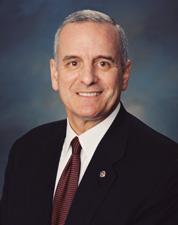
Mr. President, I send a modification of my amendment to the desk, and I ask unanimous consent it be so modified. The staff is working on slight adjustments to the amendment so it meets the concerns…
Mr. President, I send a modification of my amendment to the desk, and I ask unanimous consent it be so modified.
The staff is working on slight adjustments to the amendment so it meets the concerns of the chairman. I thank the chairman for his willingness to consider the amendment as part of the managers' amendment as modified. It needs to be further modified to conform to the desire of the chairman to have the language read up to the particular amounts which are $40 million for the increased antinarcotics efforts of the National Guard, $50 million for increased funding for childcare, and $10 million for increased funding for family assistance centers.
If it is agreeable to the chairman, I will spend about 5 minutes discussing the amendment at this time, and I will proceed on that basis and recognize the amendment itself is still subject to further discussions.
I thank Senator Stevens for his support and assistance in this matter. I thank him and the ranking member and members of the committee and acknowledge in every one of these three areas the Senate Committee on Appropriations has added funding already above the President's recommendation. I recognize, also, that the committee is dealing with the budget constraints that were imposed upon it by the Senate budget, but conditions in the real world do not always conform to those constraints. This funding is essential to address these critical areas, beginning with an additional $40 million for the National Guard counterdrug efforts which would enable State coordinators to increase their border security, to increase reconnaissance, and to expand their effort to interdict the flood of illegal drugs into our country.
These National Guard antidrug efforts are under the control of the Governors and Adjutant Generals so they do not violate Federal passe comitatus laws. Yet they are essential to our national security.
Other than international terrorism, there is no greater threat to the safety, the health, and the well-being of our citizens than the increasing flow of illegal drugs into our country, into our neighborhoods, into our schools, and into our homes. They are destroying lives, they are destroying families, and they are destroying communities.
In my home State of Minnesota I am told by local law enforcement leaders there are direct pipelines of illegal drugs now, especially methamphetamine from Mexico, right into the State of Minnesota.
Border security is not just a Southern State crisis or a Northern State problem. Homeland Security is not just a Federal agency with increased priorities.
As I listen to local law enforcement officials throughout Minnesota, they say we are losing the war against these narcotics terrorists. We are losing because our resources are being overwhelmed by their resources. These are battles that are going on not halfway around the world but right here at home, right within our own country, every day and every night.
These are narcotics terrorists. They are drug-dealing gangs. They are dangerous predators. They are preying on Americans, young and old, rich and poor. They are pouring highly dangerous, very addictive, and corrosively expensive drugs into our country and our citizens' lives, and we are letting then get away with it.
In many cases they get away with it entirely scot-free and leave the country with millions and millions of our dollars. These are very dangerous, destructive, evil people who are winning the war on drugs in this country because we--all of us, collectively, all of us Americans collectively--do not have enough good guys out there on our behalf who are fighting them. My amendment brings more money for the good guys to win this terribly destructive battle.
Second, $50 million would go to increase the childcare services for military families. Again, I commend the committee, Chairman Stevens, for increasing the President's recommendation in this critical area. My amendment would add another $50 million because the Office of the Secretary of Defense currently estimates that 38,000 children of Active-Duty military families are not able to access military childcare because of the lack of spaces and facilities. This is especially critical because so many of these family members are being deployed for 12 or 18 months, leaving their spouses as single parents, financially strapped, needing to work and therefore needing quality childcare even more than before.
Finally, my amendment adds $10 million for family assistance centers and personnel who are responding to the increased needs of military families--Active-Duty, Reserves, and National Guard, whose families are being seriously and severely impacted by the increased number of deployments for extended periods of time.
The stresses of those long separations, the constant anxieties and uncertainties about the well-being of their loved ones abroad, the financial pressures, the difficulties emotionally of single parenting all add up and have put additional needs for these family assistance centers and their personnel for families while their loved ones are serving and after they have returned. And some wounded and seriously maimed are causing enormous family stress and strains for the next number of years.
I thank, again, the chairman, and I thank the ranking member for his willingness to consider taking this amendment into the managers' package. I commend them for their leadership in these very important areas. I hope this amendment will be seen as constructive to that, and I hope the conference committee will see fit to include these increases because I can assure all the Members that it will be very much needed and very well used.
I yield the floor.
No, I have no objection.
I do.
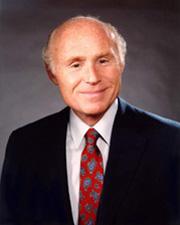
Mr. President, I rise today to discuss an issue that will greatly affect our Nation's aging population, workforce, and economy: the need to expand opportunities for older Americans to continue…
Mr. President, I rise today to discuss an issue that will greatly affect our Nation's aging population, workforce, and economy: the need to expand opportunities for older Americans to continue working into their later years if they so choose.
As older Americans live longer and healthier lives, many are planning to work longer. According to a recent survey, 80 percent of baby boomers expect to work past traditional retirement age. Some may recognize the physical and mental benefits of work, while some may need the additional income to remain financially secure. Whatever the reason people decide to stay on the job, it's time to change the way our Nation thinks about retirement. A one-size-fits-all retirement will no longer match the very different plans that seniors and baby boomers have for their later years.
Rethinking retirement is also vital to our Nation's economic future. By 2030, businesses could face a labor force shortage of 35 million workers, and the projected slowdown in labor force growth could translate into lower economic growth and living standards. However, we can soften the potentially serious impact of these trends if we develop policies that expand opportunities for older Americans to work longer.
Today, we are taking a first step by introducing The Older Worker Opportunity Act. This legislation addresses a variety of issues that affect older workers and employers: workplace flexibility, pensions, health insurance coverage, job training, and caregiving needs. Back in April, as ranking member of the Aging Committee, I chaired a hearing on older workers which identified barriers and disincentives to working longer. This legislation specifically targets those.
First, today's workplace rarely offers flexible and part-time work arrangements for older workers. Most older workers would choose to work past traditional retirement age, but would prefer to gradually transition into retirement instead of fully retiring at a traditional retirement age.
To encourage employers to offer flexible and part-time work arrangements, we propose a tax credit for employers that give their older workers such opportunities while protecting them from the loss of health or pension benefits. Our aim is to encourage more workplace flexibility, which would benefit both older workers and employers through increased productivity and job retention.
Second, the bill provides an extra safety net for older workers who reduce their work but whose employers do not keep them on their health plan. In those cases, of course, the employer would not qualify for the tax credit we are offering. However, we would extend COBRA coverage from 18 to 36 months for their workers from the age of 62 until they are eligible for Medicare.
Third, one major reason why older workers exit the workforce is the need to care for aging family members. Older workers who are also caregivers often face a significant loss of earnings and retirement income, and their employers lose up to $29 billion per year in lost work time and productivity. To help older workers balance the demands of work and caregiving, and to help employers by increasing productivity and reducing turnover costs, we propose expanding the dependent care credit to cover the care of chronically ill family members.
Fourth, as GAO has found, job training programs are often discouraged
from enrolling older workers because their effectiveness is measured in part by participants' earnings. Older workers tend to seek part-time work and receive lower earnings when they get new jobs. As a result, older workers do not have access to the training services they need to develop their technological skills and increase their productivity. We propose adjusting older workers' lower earnings when measuring the success of job training programs in order to more accurately reflect the value of job training programs to the older workforce. We also ask states to collect more data on the success of our current job training programs in meeting the unique needs of older workers.
Fifth, it is clear that the barriers this bill addresses are not the only barriers facing older workers. This bill is just the beginning. Therefore, we propose a ``Task Force on Older Workers,'' composed of experts from all relevant federal agencies, to further identify barriers and disincentives in current law, and recommend solutions.
We face an historic challenge, and with it, an historic opportunity. We need a 21st century workplace that is a win-win for both older workers and their employers--and an effective strategy for retaining our competitive advantage against other countries facing the same demographic tidal wave. We need to usher in a new age of work and retirement in which seniors are not limited to a choice between one or the other. We need to empower seniors to make the continued contributions we all know they can to our economy and our communities.
Many older Americans and employers have already begun to pave the way. More older Americans are willing and able to continue making a contribution to the workplace and our economy, and more employers are beginning to recognize the value of older workers. We must incorporate this new mindset into our national culture, and develop policies that reflect this reality. Our seniors deserve it, and our economic future may well depend on it.
Mr. President, I ask unanimous consent that the text of the bill be printed in the Record, and that the attached letters of endorsement also be printed in the Record.
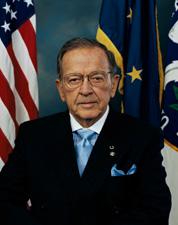
Mr. President, the time is equally divided on this amendment. This amendment would add $100 million to childcare services and $20 million for family assistance centers. I will speak in response to…
Mr. President, the time is equally divided on this amendment. This amendment would add $100 million to childcare services and $20 million for family assistance centers.
I will speak in response to the Senator's explanation of this amendment when he is finished.
We would like to see the modification before it is accepted.
We have no objection to the modification.
What is the situation with regard to when we vote on this amendment?
I ask unanimous consent that time be changed to 2:30 with no amendments in the second degree in order.
Now I address the Senator, the sponsor of the amendment. Senator Mikulski wants 15 minutes between now and 2:30. Does Senator Dayton have any objection to that?
I will take a few minutes before that time, and Senator Mikulski would have from 2:15 until 2:30.
Mr. President, we have provided $25 million to respond in this bill for the National Guard counterdrug program. We already have $20 million for childcare, $20 million for family counseling, $18 million for National Guard and assistance centers, for a total of $58.6 million.
The Senator's amendment adds $60 million for childcare and $20 million for family assistance centers but, as he said, we have already gone in excess of the President's request. We have tried to balance the requirement to fight the war on global terrorism and maintenance for our technological advantage against potential rivals and the care of our servicemembers and their families.
We have worked closely with the Department of Defense to identify these requirements. We believe the Senator's amendment is subject to a point of order.
We raise a point of order under section 302(f) of the Congressional Budget Act that the amendment provides for spending in excess of the 302(b) allocations under the fiscal year 2006 concurrent resolution on the budget.
Having raised that, does the Senator wish to waive that point of order?
The Senator moves to waive the point of order. I ask for the yeas and nays on the motion to waive the point of order that I have submitted.
For the information of Members, we hope we will have another amendment ready to be considered at 3 o'clock. Senator Hatch has asked for 30 minutes beginning at 2:30 to speak on a matter that is not pertinent to this bill, but he has that right to speak under his allocation of time.
I ask unanimous consent Senator Hatch have 30 minutes from 2:30 to 3 o'clock. He has had a terrible disaster in his office. One of his close personal friends on his staff has passed away. He wishes to speak about that person for
30 minutes starting at 2:30. We want to put the vote to 3 o'clock. So I move we move the vote to 3 o'clock so Senator Hatch can speak at 2:30.
I yield the floor to Senator Mikulski.
We have no objection to that. The Senator is entitled to speak on any matter he wishes, using his own time. But we have time set for Senator Hatch to begin at 2:30.
Mr. President, I say to the Senator from Delaware, if he wishes to speak further, we will be happy to extend him more time, if he wishes.
Mr. President, I send to the desk a modification to Senator Dayton's amendment.
Mr. President, I ask unanimous consent that the modified amendment be considered and that it be adopted.
I move to reconsider the vote and to lay the motion on the table.
The motion to lay on the table was agreed to.
That cancels the vote for 2:30, correct?
The bill is still subject to amendment. No other Senator has asked us to consider an amendment.
I suggest the absence of a quorum.
Mr. President, I ask unanimous consent that the order for the quorum call be rescinded.
Mr. President, I ask unanimous consent that the Senator from South Dakota be entitled to introduce a bill and have time as though in morning business, with the clock on cloture continuing to run.
Mr. President, the hour is now almost 4:30 p.m. We have waited and waited and waited for Senators to bring their amendments. No further amendments have been noticed to either side.
Amendments Nos. 1981, 2053, 2054, 2055, En Bloc
Mr. President, I have a managers' package which I send to the desk for Senator Chambliss, amendment No. 1981, literacy on military installations; an amendment for myself on advisers for the Joint Chiefs of Staff; an amendment for Senator Frist on certain youth organizations; and an amendment for Senator Byrd regarding Hurricane Katrina relief.
I ask these items be considered en bloc.
Mr. President, I ask that the Senate consider the amendments and adopt them en bloc.
I move to reconsider the vote.
Mr. President, again I say, we have told our colleagues time and time again we were waiting for amendments. No amendments have been noticed on either side.
I ask for third reading.
Mr. President, may I inquire how much time does the Senator have?
How much time does the Senator from Louisiana have remaining?
I would object to that. The Senator from Louisiana has not asked for time. The Senator does not have to ask for time. He is entitled to an hour right now at his own request. So we do not have to have any consent. But I do not object to the Senator speaking as long as he wishes. But I do object that only the Senator from Louisiana can be recognized when he is finished. And Senator Hatch, by the way, is here. He had a very sad thing occur in his office, and he wants to speak when the Senator is finished.
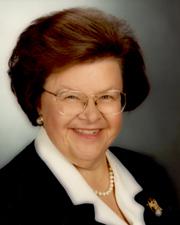
Yes. Mr. President, as I noted under the request made by the chairman of the Senate Defense appropriations, I have time at 2:30. I know it is a minute or two earlier, but I ask for the ability to…
Yes.
Mr. President, as I noted under the request made by the chairman of the Senate Defense appropriations, I have time at 2:30. I know it is a minute or two earlier, but I ask for the ability to proceed.
Mr. President, I know we are considering the Defense appropriations bill, and we congratulate the leadership of the subcommittee of which I am a proud member. Senators Stevens and Inouye have brought an excellent appropriations bill to the Senate.
I rise about another security issue which is the high price of gasoline. I rise today to urge President Bush to convene a White House jawboning session of the American oil and gas companies to urge them to be good corporate citizens and lower the price of gasoline, home heating oil, and natural gas.
I think it is swell the President is agreeing that conservation is an important goal. But it is very little and very late. Yes, we do need conservation. But wearing sweaters just will not be enough. The President needs to call on CEOs of the oil and gas companies to be patriots. It is time for the oil and gas company CEOs to be looking at the ways they can help the American people, not only their profits.
These sky-high prices have created a crisis for American families and businesses--from families that must commute to work, to small businesses that deliver flowers, to truckers that deliver food, and watermen in the Chesapeake Bay who are paying $4 a gallon to take their boats out. This is going to have a tremendous inflationary pressure on our economy. We in Maryland are feeling it very severely. Maryland has the third highest gas prices in the country, at more than $3 per gallon. It has been a 30-percent increase in little more than 1 month.
Maryland is not the only State affected. The national price for a gallon of gas is now as high as it has been in 20 years. Some are saying: Well, gas prices are going down. Well, they have been going down a penny or two, but they are still very high.
As people go to the gasoline pump, they feel this great anxiety. People are nervous about getting gas. As for what that means to families, I have seen on our local TV a soccer mom filling up her minivan, and seeing that it cost $90, she just put her head down on the window crying about what her family was going to do?
That is why I have asked the President today to convene a White House ``jawbone'' session. There is precedent for this. Forty years ago, Jack Kennedy felt that big steel was really pushing up the prices. Some called it price gouging. He called in the CEOs of the steel industry to the White House. He made the case for the American people. He said the steel industry action was unjustified and irresponsible and not in the public interest. President Kennedy publicly pressed them hard. Guess what happened? Roger Blough and the steel industry decreased their prices.
I am asking President Bush to follow President Kennedy's example and call in these oil and gas CEOs. He has called in the oil and gas CEOs before to help write the energy policy. Well, now we need a new energy policy. We need one based on conservation. We need one based on innovation, to come up with new ideas on alternative fuel supplies. We need a new energy policy to look at what we can do to rebuild the gulf. And we understand oil and gas has suffered some damage there. But we also need them to take a look at the prices they are charging and the consequences to our economy. So we feel if they could write a national policy a few years ago, they can come in and write a new national policy.
So I have sent this letter to the President, signed by many Senators. I would hope the President would think about how we can engage the private sector to come to grips with what is happening here. He should also reach out to get their advice on innovation, to get their advice on boosting our supplies, to get their advice on what to do about having more refining capacity and, at the same time, meet some of our environmental constraints.
We understand we are at a crossroads in this country. Now is the time to bring them together, but bring them together as patriots. I believe they will be able to make profits and be patriots at the same time.
Mr. President, I ask unanimous consent that the letter to the President, dated October 6, 2005, be printed in the Record.
Mr. President, I yield the floor.
Show 11 more
Mr. President, I rise to make a statement regarding an important bill I am introducing today. It is a bill that is meant to provide a straightforward and commonsense fix to a nettlesome problem that…
Mr. President, I rise to make a statement regarding an important bill I am introducing today. It is a bill that is meant to provide a straightforward and commonsense fix to a nettlesome problem that plagues communities throughout the west: pollution from abandoned mines.
The bill simply says that we should make life easier for Good Samaritans. Surprisingly, that is not currently the case.
The Western United States is pockmarked with old mines and mining residues, and many of these sites continuously pollute the water, the land, and the air. Our rivers and streams suffer particularly from this type of pollution.
In many cases, no one alive is legally responsible for cleaning these sites. In other cases, those who are legally responsible lack the money or other resources necessary to clean them up, and the pollution continues.
Fortunately, some people and some companies are willing to clean up mine sites in whole or in part, even though they are not legally responsible. These are Good Samaritans.
They act for many reasons. Some are people who live nearby and suffer directly from the pollution. Others are companies that want to perform a service to the community and to address less fortunate aspects of the history of the mining industry. Still others act for other reasons.
Unfortunately, though, our environmental laws create great risks of broad, long term, and very expensive liabilities for anyone who acts at a mine site, even if they act only as Good Samaritans. This problem understandably dissuades Good Samaritans from cleaning mine sites.
My bill is designed to fix this problem. It is written to encourage meritorious projects to proceed provided they have the full approval of the governments involved and full participation by the public--all to benefit the environment.
This bill intentionally is simple and intentionally straightforward. No Good Samaritan project will proceed unless it creates a true, overall environmental benefit. No project will gain approval unless the U.S. Environmental Protection Agency, the state involved, and local authorities affected agree that it is a good thing. The public will be fully involved in the process from the very beginning.
And, finally, the permit system and the standards in the bill are intentionally uncomplicated, so that permits for simple projects can be issued using simple proceedings.
My idea is to make clear that the work of Good Samaritans is very welcome. Some cleanup of the environment in these circumstances is far better than none at all.
The bill encourages Good Samaritans to clean pollution by freeing them from the large environmental liabilities that ordinarily burden anyone who acts to fix the pollution.
The bill applies to the cleanup of non-coal inactive and abandoned mines anywhere in the United States.
Its approach--which wraps all environmental requirements for a Good Samaritan project into a single permit that must be agreed to first by the Federal Government, the affected State, and local communities--is straightforward.
Its inclusion of the states and local communities as well as the affected publics--including by assuring that State and local authorities have a say in the provision of any permit--are based on the best traditions of the west.
And its impact is clear--only projects that benefit the environment will be permitted, and the work done pursuant to that permit will be afforded clear legal protection.
I am proud of this bill. It is the result of a series of meetings I held around my state earlier this year. And it is endorsed by the National Mining Association, the Colorado Mining Association, and the Great State of Colorado.
It is the right thing to do, and I look forward to working with my colleagues to ensure its enactment.
I ask unanimous consent that the text of my bill be printed in the Record.
Mr. President, I ask unanimous consent that the text of the bills be printed in the Record.
Mr. President, the rising cost of prescription drugs has squeezed not only the budgets of American consumers but also the budgets of America's health care providers. The rural hospitals in my State…
Mr. President, the rising cost of prescription drugs has squeezed not only the budgets of American consumers but also the budgets of America's health care providers. The rural hospitals in my State of South Dakota serve as a lifeline to thousands of constituents living in medically underserved areas. They cannot afford to have the cost of their inpatient and outpatient drugs rising faster than the rate of inflation.
In 1992, Congress created the 340B program to lower the cost of drugs purchased by a limited number of entities serving a high number of low- income and uninsured individuals, such as federally qualified health care centers and nonprofit hospitals providing care to a disproportionate share of Medicaid patients.
Under the 340B program, pharmaceutical manufacturers are required to provide eligible 340B entities discounts on outpatient drugs as part of the manufacturers' Medicaid participation agreement. The rising cost of prescription drugs has created the need to modify the 340B program and extend these discounts to the inpatient side of disproportionate share hospitals, as well as to critical access hospitals.
Today, I and my colleague from New Mexico, Mr. Bingaman, are providing relief on the cost of drugs purchased by America's health care providers by introducing the Safety Net Inpatient Drug Affordability Act.
Our bill extends the 340B discounted drug prices to inpatient drug purchases of disproportionate share hospitals and allows critical access hospitals to participate in the 340B program. This not only saves hospitals money on the cost of drugs, it relieves them from the burden of carrying two different inventories for inpatient and outpatient drugs.
Our legislation also generates savings for the Medicaid program by requiring hospitals that participate in the 340B program to rebate Medicaid a percentage of their 340B savings on inpatient drugs administered to Medicaid patients. Specifically, the Safety Net Inpatient Drug Affordability Act would require disproportionate share and critical access hospitals to determine the acquisition cost of drugs used on Medicaid patients and apply the minimum Medicaid rebate percentages applicable to outpatient-dispensed brand name and generic drugs.
Extending the 340B program to critical access hospitals also helps reduce expenditures in the Medicare Program. Critical access hospitals are a vital part of the rural health care delivery
system. They provide emergency outpatient and limited inpatient care to individuals in remote rural areas. Out of the 61 hospitals in my State of South Dakota, 37 qualify as critical access hospitals.
Outpatient care in critical access hospitals is reimbursed by Medicare at 101 percent of reasonable costs. Allowing critical access hospitals to participate in the 340B program will lower the cost of drugs in the outpatient setting and ultimately lower the cost of care provided by these hospitals. Decreasing the cost of care in critical access hospitals lowers the amount the Medicare Program expends on reimbursement.
The Safety Net Inpatient Drug Affordability Act is commonsense legislation that reduces the cost of drugs for health care providers serving society's most vulnerable citizens. Lowering the cost of care in these settings means lowering the cost of health care for all American taxpayers. I look forward to working with my colleagues on both sides of the aisle in getting this bipartisan legislation passed and signed into law.
Mr. President, the rising cost of prescription drugs has squeezed not only the budgets of American consumers but also the budgets of America's health care providers. The rural hospitals in my State…
Mr. President, the rising cost of prescription drugs has squeezed not only the budgets of American consumers but also the budgets of America's health care providers. The rural hospitals in my State of South Dakota serve as a lifeline to thousands of constituents living in medically underserved areas. They cannot afford to have the cost of their inpatient and outpatient drugs rising faster than the rate of inflation.
In 1992, Congress created the 340B program to lower the cost of drugs purchased by a limited number of entities serving a high number of low- income and uninsured individuals, such as federally qualified health care centers and nonprofit hospitals providing care to a disproportionate share of Medicaid patients.
Under the 340B program, pharmaceutical manufacturers are required to provide eligible 340B entities discounts on outpatient drugs as part of the manufacturers' Medicaid participation agreement. The rising cost of prescription drugs has created the need to modify the 340B program and extend these discounts to the inpatient side of disproportionate share hospitals, as well as to critical access hospitals.
Today, I and my colleague from New Mexico, Mr. Bingaman, are providing relief on the cost of drugs purchased by America's health care providers by introducing the Safety Net Inpatient Drug Affordability Act.
Our bill extends the 340B discounted drug prices to inpatient drug purchases of disproportionate share hospitals and allows critical access hospitals to participate in the 340B program. This not only saves hospitals money on the cost of drugs, it relieves them from the burden of carrying two different inventories for inpatient and outpatient drugs.
Our legislation also generates savings for the Medicaid program by requiring hospitals that participate in the 340B program to rebate Medicaid a percentage of their 340B savings on inpatient drugs administered to Medicaid patients. Specifically, the Safety Net Inpatient Drug Affordability Act would require disproportionate share and critical access hospitals to determine the acquisition cost of drugs used on Medicaid patients and apply the minimum Medicaid rebate percentages applicable to outpatient-dispensed brand name and generic drugs.
Extending the 340B program to critical access hospitals also helps reduce expenditures in the Medicare Program. Critical access hospitals are a vital part of the rural health care delivery
system. They provide emergency outpatient and limited inpatient care to individuals in remote rural areas. Out of the 61 hospitals in my State of South Dakota, 37 qualify as critical access hospitals.
Outpatient care in critical access hospitals is reimbursed by Medicare at 101 percent of reasonable costs. Allowing critical access hospitals to participate in the 340B program will lower the cost of drugs in the outpatient setting and ultimately lower the cost of care provided by these hospitals. Decreasing the cost of care in critical access hospitals lowers the amount the Medicare Program expends on reimbursement.
The Safety Net Inpatient Drug Affordability Act is commonsense legislation that reduces the cost of drugs for health care providers serving society's most vulnerable citizens. Lowering the cost of care in these settings means lowering the cost of health care for all American taxpayers. I look forward to working with my colleagues on both sides of the aisle in getting this bipartisan legislation passed and signed into law.
Mr. President, today I join my colleague, the Ranking member of the Committee on Energy and Natural Resources, Senator Bingaman, in introducing three bills, by request, to make necessary changes to…
Mr. President, today I join my colleague, the Ranking member of the Committee on Energy and Natural Resources, Senator Bingaman, in introducing three bills, by request, to make necessary changes to law regarding the U.S.-affiliated islands.
Briefly, the bills include: First, legislation requested by the Attorney General of the Commonwealth of the Northern Mariana Islands (CNMI). This bill accomplishes two objectives--to provide the Commonwealth with the same ownership and jurisdiction over offshore submerged lands as has been provided to other United States territories and to provide a less formal mechanism for the Governor of the CNMI to raise issues with the Federal Government than the procedures under section 902 of the Covenant that established the Commonwealth in political union with the United States.
The legislation also provides a general authorization for the Commonwealth to raise issues arising under provisions of the Covenant with the Secretary and for the Secretary to resolve those issues with assistance from other agencies as appropriate. This would provide a less formal approach than the more elaborate procedures for issue resolution set forth under section 902 of the Covenant which require, among other items, the formal appointment of negotiators. Section 902 is unique to the Commonwealth and legislative approval of a less formal approach may serve to improve Federal-commonwealth relations and the ability of both sides to reach agreements. As with the submerged lands issue, further legislation may be required, but such legislation will likely be easier to achieve if both sides are not either tied up in the processes of 902 or at opposite sides in court.
The second bill, requested by the House Delegate from the United States Virgin Islands, Representative Donna M. Christensen, came as a result of Federal court rulings which invalidated many of the Real Property tax provisions of the Virgin Islands Code. The bill would repeal sections l401-l401e of Title 48, of the United States Code to provide the Government of the United States Virgin Islands the ability to fully regulate real property tax matters in the territory.
Finally, the last bill would make several changes to the Compact of Free Association Amendments Act (CFAAA) of 2003 P.L. 108-188, which was enacted in December, 2003. Because of the 2003 deadline on the term of the original Compact assistance, several issues were left unresolved. One of these unresolved issues was whether the Republic of the Marshall Islands (RMI) and the Federated States of Micronesia (FSM) would continue to receive disaster assistance from FEMA. Since the passage of P.L. 108-188, the Administration has transmitted language to Congress that would provide authority for the RMI and FSM to obtain disaster assistance. In addition to this new authority, the bill makes several technical changes to P.L. 108-188
I look forward to working with my colleagues, the Administration, and officials from the RMI, FSM, and the U.S. Virgin Islands to move these bills through the process.
I ask unanimous consent that the text of the bills, be printed in the Record.

Mr. President, I am pleased to be joined by my colleagues and cosponsors Senators Stabenow and Harkin as we introduce the Medicare Informed Choice Act of 2005. This bill provides additional essential…
Mr. President, I am pleased to be joined by my colleagues and cosponsors Senators Stabenow and Harkin as we introduce the Medicare Informed Choice Act of 2005. This bill provides additional essential protections for Medicare beneficiaries during the first year of implementation of the new Medicare prescription drug benefit.
Medicare beneficiaries are understandably concerned and confused about the new benefit. They face a number of private plan options and sorting through these plans will be complicated. Medicare beneficiaries will have to make many difficult decisions about what is the best course of action for them.
Choosing the right plan will be a challenge for all beneficiaries, but it will be most difficult for those who are frail and living with problems like dementia. The task will be virtually impossible for Hurricane Katrina victims who do not have permanent addresses and, therefore, won't even be able to obtain Part D materials. Yet, beneficiaries who do not act by the May 15, 2006 deadline and who enroll at a later date will face a substantial financial penalty.
In response, we are introducing this legislation which will provide added protections for beneficiaries during the first year of the new program. By delaying late enrollment penalties and giving every beneficiary a chance to change plans once during the first year, we can make sure that our constituents are not forced to make hasty decisions they may later regret.
The Medicare Informed Choice Act of 2005 contains three important protections:
1. Delays late enrollment penalties: The bill expands the existing six-month open enrollment period to the entire year of 2006. This will give people added time to do the research and make the best decisions for themselves.
2. Protections against bad choices: The bill gives every Medicare beneficiary the opportunity to make a one-time change in plan enrollment at any point in 2006. Given the importance of the decision they make, it is appropriate to give beneficiaries a one-time chance to correct an initial mistake made during the first year of implementation.
3. Protections for employer-provided retiree benefits: This provision would protect employees from being dropped by their former employer's plan during the first year of implementation, so that beneficiaries have time to correct enrollment mistakes.
The Medicare Informed Choice Act is a small, time-limited step that would help ease the pressure of the first year of this new drug program. It is also critical for all those beneficiaries who face hurdles in obtaining Medicare Part D materials or are unaware that they will be penalized by failure to act. We urge all of our colleagues to join us in this effort to help protect Medicare beneficiaries during the benefit's implementation period.
I ask unanimous consent that the text of the bill be printed in the Record.
Mr. President, today I proudly rise to introduce the ``Fort Reno Mineral Leasing Act''. Fort Reno was established as a frontier cavalry post in 1874, and it played a key role in the settlement of the…
Mr. President, today I proudly rise to introduce the ``Fort Reno Mineral Leasing Act''.
Fort Reno was established as a frontier cavalry post in 1874, and it played a key role in the settlement of the west. It is a historic site of National significance and it is listed on the National Register of Historic places. Over 9,000 visitors view the fort each year.
In 1948 the U.S. Army turned its lands and buildings, at Fort Reno, over to the U.S. Department of Agriculture. Today, the original site remains intact as a complete frontier post. Dozens of buildings constructed by the military, as early as the 1880's, still stand around the Historic District.
The Agricultural Research Service administers the fort site which includes the Grazinglands Research Facility, the Fort Reno Historic District, and the Fort Reno Science Park.
Many of the historic buildings are in desperate need of restoration. A small agency like the Agricultural Research Service is not financially able to keep up with the continued costs of maintenance of so much aged infrastructure. Independent studies show that over $18 million is now needed to restore the most important of the many old officers' quarters and other key buildings.
I have been an active supporter of Fort Reno and its facilities. For instance, several years ago I helped secure a Save America's Treasures Grant of $300,000 to assist a local historical organization with the costs of stabilization of exteriors on those deteriorating buildings that are most in need of renovation. In fiscal year 2004, I arranged for an appropriation of $2.1 million for construction of two greenhouses for use in research on forage grasses that is conducted by the Agricultural Research Service at the Fort Reno site.
The legislation I am introducing today will provide a revenue- neutral, non-appropriated source of funding which will be adequate to restore the historical buildings of Fort Reno, so that they will be here for future generations.
In addition, this bill authorizes the development of the oil and gas that lies beneath Fort Reno's 6,737 acres and places those funds in a special account in the U.S. Treasury that will be utilized for restoration and maintenance of those facilities. These funds will also be used to assist with handling visitors to the fort, historic interpretation and related activities. The remaining funds will be used to pay down the national debt.
The Fort Reno Mineral Leasing Act is fully supported by State legislators, local municipalities, the Chamber of Commerce, farm groups, the USDA, and the ARS Administrator at Fort Reno.
I look forward to seeing this Oklahoma-specific legislation enacted and am proud to have Senator Coburn as my original cosponsor.
I ask unanimous consent that letters of support be printed in the Record.
Mr. President, today I introduce the Rhode Island Fishermen's Fairness Act of 2005. This legislation would address a serious flaw in our Nation's regional fisheries management system by adding Rhode…
Mr. President, today I introduce the Rhode Island Fishermen's Fairness Act of 2005. This legislation would address a serious flaw in our Nation's regional fisheries management system by adding Rhode Island to the Mid-Atlantic Fishery Management Council (MAFMC), which currently consists of representatives from New York, New Jersey, Delaware, Pennsylvania, Maryland, Virginia, and North Carolina.
The MAFMC manages the following 13 species, all of which are landed in Rhode Island: Illex squid, loligo squid, Atlantic mackerel, black sea bass, bluefish, butterfish, monkfish, scup, spiny dogfish, summer flounder, surfclam, ocean quahog, and tilefish.
In 2003, the most recent year for which final data are available, Rhode Island fishermen brought in 30 percent of MAFMC landings by weight--more than any of the MAFMC member States except New Jersey, which is responsible for about 60 percent of total MAFMC landings.
If Rhode Island fishermen are responsible for a large percentage of overall MAFMC landings, these species make up an even larger proportion of landings within Rhode Island every year. Between 1995 and 2003, MAFMC species represented between 32 percent and 56 percent of all finfish landed in Rhode Island annually, for an average of 44 percent of total landings by weight. In eight of the years between 1990 and 2003, squid, Illex and loligo, was the number one marine species landed in Rhode Island, with a value of between $11.6 million and $20.1 million annually.
Yet Rhode Island has no voice in the management of these species.
Following council tradition and Federal fisheries law, the Rhode Island Fishermen's Fairness Act would create two seats on the MAFMC for Rhode Island: one seat nominated by the Governor of Rhode Island and appointed by the Secretary of Commerce, and a second seat filled by Rhode Island's principal State official with marine fishery management responsibility. The MAFMC would increase in size from 21 voting members to 23.
There is a precedent for this proposed legislation. In 1996, North Carolina's representatives in Congress succeeded in adding that state to the MAFMC through an amendment to the Sustainable Fisheries Act. Like Rhode Island, a significant proportion of North Carolina's landed fish species were managed by the MAFMC, yet the State had no vote on the council. Today, Rhode Island's share of total landings for species managed by the MAFMC is more than six times greater than that of North Carolina.
I look forward to working with my colleagues to restore a measure of equity to the fisheries management process by passing the Rhode Island Fishermen's Fairness Act. I ask unanimous consent that the text of the legislation be printed in the Record.
Mr President, I rise today in favor of the amendment I am offering to H.R. 2863 that will establish pilot projects regarding pediatric early literacy on military installations. Reach Out and Read,…
Mr President, I rise today in favor of the amendment I am offering to H.R. 2863 that will establish pilot projects regarding pediatric early literacy on military installations.
Reach Out and Read, ROR, is a program that trains doctors and nurses to advise parents about the importance of reading aloud to their children. The program provides books for all children from the age of 6 months to 5 years receiving a check up at participating pediatric centers. From the start, the purpose of ROR was to encourage parents to read to their children and provide them with the tools to do so. This premise is the basis for the ROR model utilized by 2,337 program sites across the United States today.
Currently, the program sites are all located at clinics, hospitals, office practices and other primary care sites serving more than 2 million children distributing more than 3.2 million books annually. While I am pleased that the program has a strong presence in Georgia, with over forty participating sites, I am also aware that none of the participating sites are on any of our thirteen military installations.
It is important that the children growing up on our Nation's military installations are allowed the option to
participate in the same federally funded programs that are offered to non-military families and children. Initially, Reach Out and Read began as a collaboration between pediatricians and early childhood educators. By working together, these two groups found that pediatricians and nurse practitioners were in a unique position to promote early literacy because they enjoyed and had regular contact with young children and their parents through well-child check-ups. Reach Out and Read builds on the unique relationships between medical providers and parents, and helps families and communities encourage early literacy skills so that children will enter school better prepared for success in reading.
ROR plans to launch 300 new program sites per year for the next 5 years, which will double the number of children receiving books and guidance. My amendment will establish Reach Out and Read pilot programs on a limited number of military bases across the country. I ask for support of this amendment.
Mr. President, I rise today to offer a bill that would require hospitals to disclose their charges for the most common procedures and drugs. This bill recognizes that consumers seeking routine…
Mr. President, I rise today to offer a bill that would require hospitals to disclose their charges for the most common procedures and drugs.
This bill recognizes that consumers seeking routine hospital services need to know what they are paying so they can make educated decisions about their own health care. This legislation aims to give Americans that information in a user friendly format.
Specifically, the bill would require hospitals to regularly report to the Secretary of U.S. Department of Health and Human Services the amount they charge for the 25 most commonly performed inpatient procedures, the 25 most common outpatient procedures, and the 50 most frequently administered medications. The Department would then post this information on the Internet for easy access.
Under the current system, patients often have no idea what they will be charged until they receive a bill. This is a problem because hospital charges vary significantly based on facility and procedure. Some hospitals charge one-hundred and twenty dollars for a chest x-ray while others charge more than fifteen hundred. Uninsured patients and those who pay with cash are often surprised with unexpected hospital charges because there is no way for them to know what they will be charged up front.
No other industry expects consumers to commit to buying before they know the true cost. Patients should have access to price information before they commit to a procedure.
This bipartisan bill is good for the uninsured and for consumer driven healthcare. Individuals cannot be expected to get comfortable making their own health care decisions unless they know how much they will be expected to pay for different services.
I am grateful to Senators Richard Durbin and John Cornyn for joining me as original cosponsors of this bi-partisan legislation. I am also pleased that Representatives Bob Inglis and Dan Lipinski have introduced companion legislation in the House. They recognize that information is power, and this bill is an important step in empowering Americans with the tools to be smart consumers. I urge my Senate colleagues to support this bill.
I ask unanimous consent that the text of the bill be printed in the Record.
Mr. President, today I rise to introduce the ``Federal and District of Columbia Government Real Property Act of 2005,'' a bill to authorize the exchange of certain land parcels between the Federal…
Mr. President, today I rise to introduce the ``Federal and District of Columbia Government Real Property Act of 2005,'' a bill to authorize the exchange of certain land parcels between the Federal Government and the District of Columbia. This proposal was submitted to Congress by the administration with support of the District.
As Chairman of the Subcommittee on Oversight of Government Management, the Federal Workforce and the District of Columbia, I understand the special relationship shared with the Federal Government and the District. Because of this relationship, Congress shares in the responsibility of ensuring that the Nation's capital remains a socially, economically, and culturally vibrant city.
Under this legislation, the Federal properties to be transferred to the District of Columbia will be put to better use. This will free up tax dollars being used to maintain the underutilized land to be spent on more important needs facing our Nation. The vast majority of the conveyance is contained in three large properties at or near the Anacostia River: Popular Point, Reservation 13, and several acres of National Park Service land near Robert F. Kennedy Stadium. The bill also would transfer buildings and property located on the west campus of St. Elizabeth's Hospital and several smaller properties from the District of Columbia to the Federal Government.
Conveying these properties will allow the Federal Government to better manage its properties. Additionally, the District gains the ability to spur economic development in Southeast Washington, better address the needs of its citizens, and increase the local tax base. I urge all of my colleagues to support this legislation and I am confident that it can be enacted this year.
I ask unanimous consent that the text of the bill be printed in the Record.

Mr. President, I suggest the absence of a quorum. Mr. President, the Senator from Utah and I are here to talk about something where somebody's schedule has been terribly changed, the schedule of his…
Mr. President, I suggest the absence of a quorum.
Mr. President, the Senator from Utah and I are here to talk about something where somebody's schedule has been terribly changed, the schedule of his whole family. I am talking about Shawn Bentley and how all of us who knew him are offering our deepest sympathy for him.
Certain people on the Senate Judiciary Committee are like family, and Shawn had most Senators and staff among his many friends. He was extremely well liked on both sides of the aisle, both for who he was and for what he did.
In his decade as a senior intellectual property counsel to my friend from Utah, Senator Hatch, he touched every significant piece of legislation that we undertook: The Satellite Home Viewer Act, the Digital Millennium Copyright Act, the Federal Trademark Dilution Act. Those were the significant ones. There are a lot of others, important ones, that he was intimately involved with. But he touched us not only with his skill as a lawyer, his devotion as a public servant, his generosity as a colleague, but especially just his innate decency as a human being.
I know that he was a loving and devoted husband, father, and son. Leaving behind a young family makes it even more tragic. I hope his family, his young daughters who did not begin to get enough time to know their father, will know that those of us in the Senate mourn his loss. It is a tragic one.
My wife Marcelle and I will keep him and his loved ones in our prayers.
I thank the distinguished senior Senator from Utah for arranging the time for us to speak.
I yield the floor.
Mr. President, I ask unanimous consent that whatever time remains to me in the hour allowed under cloture be transferred to the time of the distinguished Democratic leader.
Bill Text
Latest available legislative text
        [Congressional Bills 109th Congress]
[From the U.S. Government Publishing Office]
[S. 1840 Introduced in Senate (IS)]

109th CONGRESS
1st Session
S. 1840

To amend section 340B of the Public Health Service Act to increase the
affordability of inpatient drugs for Medicaid and safety net hospitals.

_______________________________________________________________________

IN THE SENATE OF THE UNITED STATES

October 6, 2005

Mr. Thune (for himself and Mr. Bingaman) introduced the following bill;
which was read twice and referred to the Committee on Finance

_______________________________________________________________________

A BILL

To amend section 340B of the Public Health Service Act to increase the
affordability of inpatient drugs for Medicaid and safety net hospitals.

Be it enacted by the Senate and House of Representatives of the
United States of America in Congress assembled,

SECTION 1. SHORT TITLE.

This Act may be cited as the ``Safety Net Inpatient Drug
Affordability Act''.

SEC. 2. EXTENSION OF DISCOUNTS TO INPATIENT DRUGS.

(a) In General.--Section 340B(b) of the Public Health Service Act
(42 U.S.C. 256b(b)) is amended by inserting before the period the
following: ``, except that, notwithstanding the limiting definition set
forth in section 1927(k)(3) of the Social Security Act, the terms
`covered outpatient drug' and `covered drug' include any inpatient or
outpatient drug purchased by a hospital described in subsection
(a)(4)(L)''.
(b) Payment of Medicaid Rebates on Inpatient Drugs.--Section
340B(c) of such Act (42 U.S.C. 256b(c)) is amended to read as follows:
``(c) Payment of Medicaid Rebates on Inpatient Drugs.--
``(1) In general.--For the cost reporting period covered by
the most recently filed Medicare cost report, a hospital
described in subsection (a)(4)(L) shall provide to each State
with an approved State plan under title XIX of such Act--
``(A) a rebate on the estimated annual costs of
single source and innovator multiple source drugs
provided to Medicaid recipients for inpatient use; and
``(B) a rebate on the estimated annual costs of
noninnovator multiple source drugs provided to Medicaid
recipients for inpatient use.
``(2) Calculations of rebates.--
``(A) Single source and innovator multiple source
drugs.--For purposes of paragraph (1)(A)--
``(i) the rebate under such paragraph shall
be calculated by multiplying the estimated
annual costs of single source and innovator
multiple source drugs provided to Medicaid
recipients for inpatient use by the minimum
rebate percentage described in section
1927(c)(1)(B) of the Social Security Act;
``(ii) the estimated annual costs of single
source drugs and innovator multiple source
drugs provided to Medicaid recipients for
inpatient use under clause (i) shall be equal
to the product of--
``(I) the hospital's actual
acquisition costs of all drugs
purchased during the cost reporting
period for inpatient use;
``(II) the Medicaid inpatient drug
charges as reported on the hospital's
most recently filed Medicare cost
report divided by total inpatient drug
charges reported on the cost report;
and
``(III) the percent of the
hospital's annual inpatient drug costs
described in subclause (I) arising out
of the purchase of single source and
innovator multiple source drugs; and
``(iii) the terms `single source drug' and
`innovator multiple source drug' have the
meanings given such terms in section 1927(k)(7)
of the Social Security Act.
``(B) Noninnovator multiple source drugs.--For
purposes of subparagraph (1) (B)--
``(i) the rebate under such paragraph shall
be calculated by multiplying the estimated
annual costs of noninnovator multiple source
drugs provided to Medicaid recipients for
inpatient use by the applicable percentage as
defined in section 1927(c)(3)(B) of the Social
Security Act;
``(ii) the estimated annual costs of
noninnovator multiple source drugs provided to
Medicaid recipients for inpatient use shall be
equal to the product of--
``(I) the hospital's actual
acquisition cost of all drugs purchased
during the cost reporting period for
inpatient use;
``(II) the Medicaid inpatient drug
charges as reported on the hospital's
most recently filed Medicare cost
report divided by total inpatient drug
charges reported on the cost report;
and
``(III) the percent of the
hospital's annual inpatient drug costs
described in subclause (I) arising out
of the purchase of noninnovator
multiple source drugs; and
``(iii) the term `noninnovator multiple
source drug' has the meaning given such term in
section 1927(k)(7) of the Social Security Act.
``(3) Payment deadline.--The rebates provided by a hospital
under paragraph (1) shall be paid within 90 days of the filing
of the hospital's most recently filed Medicare cost report.
``(4) Offset against medical assistance.--Amounts received
by a State under this subsection in any quarter shall be
considered to be a reduction in the amount expended under the
State plan in the quarter for medical assistance for purposes
of section 1903(a)(1) of the Social Security Act.''.
(c) Clarification That Group Purchasing Prohibition for Certain
Hospitals Is Not Applicable to Inpatient Drugs.--Section
340B(a)(4)(L)(iii) of such Act (42 U.S.C. 256b(a)(4)(L)(iii)) is
amended by inserting ``(not including such drugs purchased for
inpatient use)'' after ``covered outpatient drugs''.

SEC. 3. PROVIDING ACCESS TO DISCOUNTED DRUG PRICES FOR CRITICAL ACCESS
HOSPITALS.

(a) In General.--Section 340B of the Public Health Service Act (42
U.S.C. 256b) is amended--
(1) in subsection (a)(4), by adding at the end the
following:
``(M) An entity that--
``(i) is a critical access hospital (as
determined under section 1820(c)(2) of the
Social Security Act); and
``(ii) does not obtain covered outpatient
drugs though a group purchasing organization or
other group purchasing arrangement (not
including such drugs purchased for inpatient
use).'';
(2) in subsection (b), as amended by section 2(a), by
inserting ``or subsection (a)(4)(M)'' after ``subsection
(a)(4)(L)''; and
(3) in subsection (c)(1), as added by inserting ``or
subsection (a)(4)(M)'' after ``subsection (a)(4)(L)''.
(b) Exclusion From Medicaid Best Price Calculations.--Section
1927(c)(1)(C)(i)(I) of the Social Security Act (42 U.S.C. 1396r-
8(c)(1)(C)(i)(I)) is amended by inserting ``and to critical access
hospitals described in section 340B(a)(4)(M) of such Act'' after
``Public Health Service Act''.
(c) Effective Date.--The amendments made by this section shall
apply to drugs purchased on or after January 1, 2006.
<all>