A bill to provide for the improvement of foreign stabilization and reconstruction capabilities of the United States Government.
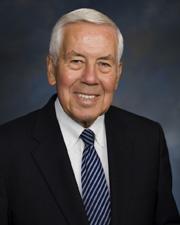 Sen. Richard G. Lugar (R-IN)
Legislative Activity
Stay on top of the latest movement without scrolling through every action
Read twice and referred to the Committee on Armed Services. (text of measure as introduced: CR S601-604)
January 26, 2005
View full timeline
Introduced in Senate
January 26, 2005
Sponsor introductory remarks on measure. (CR S600-601)
January 26, 2005
Read twice and referred to the Committee on Armed Services. (text of measure as introduced: CR S601-604)
January 26, 2005
Floor Debate
20 membersWhat members said about S. 192 on the floor



 +15
+15
Floor Debate
20 membersWhat members said about S. 192 on the floor
Mr. President, today I rise, along with Senator Vitter, to introduce a bill to establish the Atchafalaya National Heritage Area in Louisiana. This legislation has particularly special meaning to…
Mr. President, I rise today to introduce a bill to reauthorize the Native Hawaiian Health Care Improvement Act. Senator Akaka joins me in sponsoring this measure. The Native Hawaiian Health Care…
Mr. President, I rise today with my distinguished colleague Senator Bennett to introduce the Indian School Bus Route Safety Reauthorization Act of 2005. This bill continues an important Federal…
Mr. President, I rise today to announce the introduction of the Military Retiree Survivor Benefit Equity Act of 2005. This bill is a major step forward in making our military's Survivor Benefit…
Mr. President, I ask unanimous consent that the text of the bill be printed in the Record. Mr. President, I would like to discuss a bill Senator Dodd and I are introducing today. This is a bill about…
Show 8 more

Mr. President, today I am pleased to introduce the Sierra National Forest Land Exchange Act of 2005, the companion to legislation authored by Representative Radanovich. This legislation would assist…
Mr. President, I rise today on behalf of myself and Senator Domenici to introduce legislation to allow a transfer of land to Rio Arriba County, NM from the Bureau of Land Management. The land is…
Mr. President, I am re-introducing today a bill that was on the legislative calendar of the 108th Congress when it adjourned in December. The Stabilization and Reconstruction Civilian Management Act…
Mr. President, I am here to introduce legislation and to talk about an issue that my colleagues have heard me speak about on numerous occasions during the course of the past two years, frequently at…
Mr. President, I am proud to join with my colleague from the great State of Kansas, Senator Pat Roberts, and introduce the Bleeding Kansas National Heritage Area Act. I appreciate the Senator's hard…

Mr. President, I rise to discuss an issue of considerable importance to the people of southern Colorado. For nearly 50 years, the people of southern Colorado have lived with the knowledge that within…

Mr. President, I come to the floor today, along with my good friend Senator Mike DeWine, to introduce the Compassionate Care for Children Act of 2005. This important legislation is designed to…

Mr. President, I rise today to introduce the calling for a 2-1-1 Act with my colleague Senator Elizabeth Dole. This bill will make an invaluable difference for the citizens of New York and the…
Show 11 more

Mr. President, I rise today to reintroduce a piece of legislation that is of paramount importance to the State of New Mexico and many other western States. This bill will address the mounting…
Mr. President, I am pleased to join my good friend Senator Grassley, the Chairman of the Senate Finance Committee, in introducing the National Employee Savings and Trust Equity Guarantee Act. Senator…
The bill I am introducing today seeks to enhance United States effectiveness in dealing with countries that are either emerging from civil strife and conflict or threatened with instability. It calls…
The bill I am introducing today seeks to enhance United States effectiveness in dealing with countries that are either emerging from civil strife and conflict or threatened with instability. It calls…

Mr. President, I rise today to introduce the No Taxation Without Representation Act of 2005 in an effort to right a persistent injustice experienced by the 600,000 citizens of the District of…

Mr. President, today I am joined by Senator Mikulski of Maryland and seven of our colleagues in introducing legislation to repeal one of the most egregious tax subsidies found in the U.S. Tax Code.…

Mr. President, on behalf of myself and Senators Corzine, Hagel, Durbin and Dayton, I am honored to introduce legislation today that we are convinced is necessary to fix a long- standing problem in…
Mr. President, I rise today to introduce, along with my colleagues Senators Sununu and Dole, the Federal Housing Enterprise Regulatory Reform Act of 2005. This is needed regulatory reform at a…

Mr. President, I commend Senator Harkin for introducing the Overtime Rights Protection Act to restore overtime protections for the more than 6 million Americans denied overtime pay and denied the…

Mr. President, I rise today along with my colleague, Senator Baucus, the Ranking Member of the Finance Committee, to re- introduce the National Employee Savings and Trust Equity Guarantee Act--or the…
Mr. President, it is an honor once again to join my colleague Senator Grassley in introducing the Family Opportunity Act to remove the health care barriers for children with disabilities that so…
Bill Text
Latest available legislative text
        [Congressional Bills 109th Congress]
[From the U.S. Government Publishing Office]
[S. 192 Introduced in Senate (IS)]

109th CONGRESS
1st Session
S. 192

To provide for the improvement of foreign stabilization and
reconstruction capabilities of the United States Government.

_______________________________________________________________________

IN THE SENATE OF THE UNITED STATES

January 26, 2005

Mr. Lugar introduced the following bill; which was read twice and
referred to the Committee on Armed Services

_______________________________________________________________________

A BILL

To provide for the improvement of foreign stabilization and
reconstruction capabilities of the United States Government.

Be it enacted by the Senate and House of Representatives of the
United States of America in Congress assembled,

SECTION 1. FINDINGS AND SENSE OF CONGRESS.

(a) Findings.--Congress makes the following findings:
(1) The Armed Forces of the United States are extremely
capable of effectively projecting military force and achieving
conventional military victory. However, achieving United States
objectives not only requires military success but also
successful stabilization and reconstruction operations in
countries affected by conflict.
(2) Without success in the aftermath of large-scale
hostilities, the United States will not achieve its objectives.
Success in the aftermath follows from success in preparation
before hostilities.
(3) Providing safety, security, and stability is critical
to successful reconstruction efforts and for achieving United
States objectives. Making progress toward achieving those
conditions in a country is difficult when daily life in that
country is largely shaped by violence of a magnitude that
cannot be managed by indigenous police and security forces.
(4) Reconstruction activities cannot and should not wait
until safety and security has been achieved. Many elements of
reconstruction, including restoration of essential public
services and creation of sufficient jobs to instill a sense of
well-being and self-worth in a population of a country, are
necessary precursors to achieving stabilization in a country
affected by conflict. Stabilization operations and
reconstruction operations are intrinsically intertwined.
(5) Since the end of the Cold War, the United States has
begun new stabilization and reconstruction operations every 18
to 24 months. Because each such operation typically lasts for
five to eight years, cumulative requirements for human
resources can total three to five times the level needed for a
single operation.
(6) History indicates that--
(A) stabilization of societies that are relatively
ordered, without ambitious goals, may require five
troops per 1,000 indigenous people; and
(B) stabilization of disordered societies, with
ambitious goals involving lasting cultural change, may
require 20 troops per 1,000 indigenous people.
(7) That need, with the cumulative requirement to maintain
human resources for three to five overlapping stabilization
operations, presents a formidable challenge. It has become
increasingly clear that more people are needed in-theater for
stabilization and reconstruction operations than for combat
operations.
(8) Since the end of the Cold War, the United States has
spent at least four times more on stabilization and
reconstruction activities than on large-scale combat
operations.
(9) One overarching lesson from history is that the
quality, quantity, and kind of preparation in peacetime
determines success in a stabilization and reconstruction
operation before it even begins. If an operation starts badly,
it is difficult to recover.
(10) It is clear from experience in Afghanistan and Iraq
that the United States must expect to encounter significant
challenges in its future stabilization and reconstruction
efforts, including efforts that seek to ensure stability,
democracy, human rights, and a productive economy in a nation
affected by conflict. Achieving these ends requires effective
planning and preparation in the years before the outbreak of
hostilities in order for the Armed Forces and civilian agencies
of the United States Government to have the capabilities that
are necessary to support stabilization and reconstruction. Such
capabilities are not traditionally found within those entities.
(11) The United States can be more effective in meeting the
challenges of the transition to and from hostilities,
challenges that require better planning, new capabilities, and
more personnel with a wider range of skills.
(12) Orchestration of all instruments of United States
power in peacetime would obviate the need for many military
expeditions to achieve United States objectives, and better
prepare the United States to achieve its objectives during
stabilization and reconstruction operations.
(13) Choosing the priority and sequence of United States
objectives, acknowledging that not everything is equally
important or urgent, and noting that in other cultures certain
social and attitudinal change may take decades, all require
explicit management-decisionmaking and planning in the years
before stabilization and reconstruction operations might be
undertaken in a region.
(14) To be fully effective, the United States needs to have
Federal Government personnel deployed continuously abroad for
years-long tours of duty, far longer than the length of
traditional assignments, so that they become familiar with the
local scene and the indigenous people come to trust them as
individuals.
(15) There is a significant need for skilled personnel to
be stationed abroad in support of stabilization and
reconstruction activities. The active components of the Armed
Forces cannot meet all of these requirements. Personnel from
other Federal agencies, reserve component forces, contractors, United
States allies and coalition partners, and indigenous personnel must
help.
(b) Sense of Congress.--It is the sense of Congress that--
(1) enhancing United States effectiveness in the transition
to and from hostilities will require--
(A) management discipline, that is--
(i) the extension of the management focus
of the Armed Forces (covering the full gamut of
personnel selection, training, and promotion;
(ii) planning, budgeting, and resource
allocation;
(iii) education, exercises, games,
modeling, and rehearsal, performance and
readiness measurement; and
(iv) development of doctrine (now focused
on combat operations) to include peacetime
activities, stabilization and reconstruction
operations and intelligence activities that
involve multi-agency participation and
coordination; and
(B) building and maintaining certain fundamental
capabilities that are critical to success in
stabilization and reconstruction, including training
and equipping sufficient numbers of personnel for
stabilization and reconstruction activities, strategic
communication, knowledge, understanding, and
intelligence, and identification, location, and
tracking for asymmetric warfare;
(2) these capabilities, without management discipline,
would lack orchestration and be employed ineffectively, and
management discipline without these capabilities would be
impotent; and
(3) the study of transition to and from hostilities, which
the Defense Science Board carried out in the summer of 2004 at
the request of the Secretary of Defense, provides an
appropriate framework within which the Department of Defense
and personnel of other departments and agencies of the Federal
Government should work to plan and prepare for pre-conflict and
post-conflict stability operations.

SEC. 2. DIRECTION, PLANNING, AND OVERSIGHT.

(a) Findings.--Congress finds that a new coordination and
integration mechanism is needed to bring management discipline to the
continuum of peacetime, combat, and stabilization and reconstruction
operations.
(b) Presidential Action.--It is the sense of Congress that the
President should issue a directive to develop an intensive planning
process for stabilization and reconstruction activities, and that the
directive should provide for--
(1) contingency planning and integration task forces, that
is, full-time activities that could continue for months or
years, to be staffed by individuals from all involved agencies
who have expertise in the countries of interest and in needed
functional areas to work under the general guidance of the
Assistant to the President for National Security Affairs;
(2) joint interagency task forces composed of senior
Government executives and military officers who operate in a
particular country or area of interest and are created to
ensure coordination and integration of the activities of all
United States personnel in that country or area; and
(3) a national center for contingency support, that is, a
federally funded research and development center with country
and functional expertise that would support the contingency
planning and integration task forces and joint interagency task
forces and would augment skills and expertise of the Government
task forces, provide a broad range of in-depth capability,
support the planning process, and provide the necessary
continuity.
(c) Actions by Secretary of Defense.--While a directive described
in subsection (b) is being implemented, the Secretary of Defense
shall--
(1) take immediate action to strengthen the role and
capabilities of the Department of Defense for carrying out
stabilization and reconstruction activities;
(2) actively support the development of core competencies
in planning in other departments and agencies, principally the
Department of State;
(3) instruct regional combatant commanders to maintain a
portfolio of operational contingency plans for stabilization
and reconstruction activities similar in scope to that
currently maintained for combat operations; and
(4) instruct each regional combatant commander to create a
focal point within their command for stabilization and
reconstruction planning and execution.

SEC. 3. STABILIZATION AND RECONSTRUCTION CAPABILITIES.

(a) Core Competency.--The Secretary of Defense and the Secretary of
State shall each--
(1) make stabilization and reconstruction one of the core
competencies of the Department of Defense and the Department of
State, respectively;
(2) achieve a stronger partnership and closer working
relationship between the two departments; and
(3) augment their existing capabilities for stabilization
and reconstruction.
(b) Department of Defense.--
(1) Mission.--The Secretary of Defense shall designate the
planning for stabilization and reconstruction as a mission of
the Department of Defense that has the same priority as the
mission of the Department of Defense to carry out combat
operations.
(2) Supporting actions.--In administering the planning,
training, execution, and evaluation necessary to carry out the
stabilization and reconstruction mission, the Secretary of
Defense shall--
(A) designate the Army as executive agent for
stabilization and reconstruction;
(B) ensure that stabilization and reconstruction
operational plans are fully integrated with combat
operational plans of the combatant commands;
(C) require the Army and the Marine Corps to
develop, below the brigade level, modules of
stabilization and reconstruction capabilities to
facilitate task organization and exercise and
experiment with them to determine where combinations of
these capabilities can enhance United States
effectiveness in stability operations;
(D) require the Secretary of the Army to accelerate
restructuring of Army Reserve and Army National Guard
forces with an emphasis on providing the capability for
carrying out the stabilization mission; and
(E) ensure that stabilization and reconstruction
becomes a core competency of general purpose forces
through training, leader development, doctrine
development, and use of other force readiness tools
and, to do so, shall require that--
(i) the Secretaries of the military
departments and the Joint Chiefs of Staff
integrate stabilization and reconstruction
operations into the professional military
education programs of each of the Armed Forces
and the joint professional military education
programs, by including in the curricula courses
to increase understanding of cultural,
regional, ideological, and economic concerns,
and to increase the level of participation by
students from other agencies and departments in
those programs;
(ii) stabilization and reconstruction be
integrated into training events and exercises
of the Armed Forces at every level;
(iii) the commander of the United States
Joint Forces Command further develop, publish,
and refine joint doctrine for stability and
reconstruction operations;
(iv) the Director of Defense Research and
Engineering and the senior acquisition
executive of each of the military departments
develop and implement a process for achieving
more rapid and coherent exploitation of service
and departmental science and technology
programs and increase the investment in force-
multiplying technologies, such as language
translation devices and rapid training;
(v) the resources for support of stability
operations be increased; and
(vi) a force with a modest stabilization
capability of sufficient size to achieve
ambitious objectives in small countries,
regions, or areas, and of sufficient capability
to achieve modest objectives elsewhere be
developed, and consideration be given to the
actual capability of that force in making a
decision to commit the force to a particular
stabilization and reconstruction operation or
to expand the force for that operation.
(c) Department of State.--
(1) Policy on reconstruction integration.--It is the policy
of the United States that the capabilities to promote political
and economic reform that exist in many civilian agencies of the
United States Government, in international organizations, in
nongovernmental and private voluntary organizations, and in
other governments be integrated based upon a common vision and
coordinated strategy.
(2) Responsibilities of the secretary of state.--The
Secretary of State shall--
(A) be the focus for carrying out the policy on
reconstruction integration set forth in paragraph (1);
and
(B) develop in the Department of State
capabilities--
(i) to develop, maintain, and execute a
portfolio of detailed and adaptable plans and
capabilities for the civilian roles in
reconstruction operations;
(ii) to prepare, deploy, and lead the civil
components of reconstruction missions; and
(iii) to incorporate international and
nongovernmental capabilities in planning and
execution.
(d) Collaboration and Cooperation Between Departments of Defense
and State.--The Secretary of Defense shall--
(1) assist in bolstering the development of the Office of
Stabilization and Reconstruction of the Department of State and
otherwise support that objective through the sharing of the
extensive expertise of the Department of Defense in crisis
management planning and in the process of deliberate planning;
(2) work collaboratively with that office and assign to
that office at least 10 experts to provide the intellectual
capital and guidance on the relevant best practices that have
been developed within the Department of Defense; and
(3) ensure that extensive joint and collaborative planning
for stabilization and reconstruction operations occurs before
commencement of a conflict that leads to such an operation.

SEC. 4. STRATEGIC COMMUNICATION.

(a) Presidential Directive.--Recognizing an increase in anti-
American attitudes around the world, particularly in Islamic and
Middle-Eastern countries, the use of terrorism, and the implications of
terrorism for national security issues, it is the sense of Congress
that the President should issue a directive to strengthen the United
States Government's ability--
(1) to better understand global public opinion about the
United States, and to communicate with global audiences;
(2) to coordinate all components of strategic
communication, including public diplomacy, public affairs, and
international broadcasting; and
(3) to provide a foundation for new legislation on the
planning, coordination, conduct, and funding of strategic
communication.
(b) NSC Organization.--It is, further, the sense of Congress that
the President should establish a permanent organizational structure
within the National Security Council to oversee the efforts undertaken
pursuant to a directive described in subsection (a) and that such
structure should include--
(1) a deputy national security advisor for strategic
communication to serve as the President's principal advisor on
all matters relating to strategic communication;
(2) a strategic communication committee, chaired by the
deputy national security advisor for strategic communication
and with a membership drawn from officers serving at the under
secretary level of departments and agencies, to develop an
overarching framework for strategic communication (including
brand identity, themes, messages, and budget priorities) and to
direct and coordinate interagency programs to maintain focus,
consistency, and continuity; and
(3) an independent, nonprofit, nonpartisan center for
strategic communication to serve as a source of independent,
objective expertise to support the National Security Council
and the strategic communication committee, by (among other
actions) providing information and analysis, developing and
monitoring the effectiveness of themes, messages, products, and
programs, determining target audiences, contracting with
commercial sector sources for products and programs, and
fostering cross-cultural exchanges of ideas, people, and
information.
(c) Actions by Departments of State and Defense.--
(1) In general.--The Secretary of State and the Secretary
of Defense shall each allocate substantial funding to strategic
communication.
(2) Department of state.--Within the Department of State,
the Under Secretary of State for Public Diplomacy and Public
Affairs shall be the principal policy advisor and manager for
strategic communication.
(3) Department of defense.--Within the Department of
Defense, the Under Secretary of Defense for Policy shall serve
as that department's focal point for strategic communication.

SEC. 5. KNOWLEDGE, UNDERSTANDING, AND INTELLIGENCE.

(a) Findings.--Congress makes the following findings:
(1) The knowledge necessary to be effective in conducting
stabilization and reconstruction operations is different from
the military knowledge required to prevail during hostilities,
but is no less important.
(2) To successfully achieve United States political and
military objectives, knowledge of culture and development of
language skills must be taken as seriously as development of
combat skills.
(b) Sense of Congress.--It is the sense of Congress that--
(1) the collection, analysis, and integration of cultural
knowledge and intelligence should be ongoing to ensure its
availability far in advance of stabilization and reconstruction
operations for which such knowledge and intelligence are
needed; and
(2) a new approach is needed to establish systematic ways
to access and coordinate the vast amount of knowledge available
within the United States Government.
(c) Commanders of Combatant Commands.--
(1) Intelligence plans.--The Secretary of Defense shall
require the commanders of the combatant commands to develop
intelligence plans as a required element of their planning
process. Each such plan shall satisfy information needs for
peacetime, combat, and stabilization and reconstruction
(including support to other departments and agencies) and be
developed by use of the same kinds of tools that are useful in
traditional pre-conflict and conflict planning.
(2) Resources.--The Secretary of Defense shall provide
resources to the regional combatant commands for the
establishment of offices for regional expertise outreach to
support country and regional planning and operations, and to
provide continuity, identify experts, and build relationships
with outside experts and organizations.
(3) Area experts.--In order to increase the number of
competent area experts, the Under Secretary of Defense for
Personnel and Readiness shall lead a process to set
requirements and develop career paths for foreign area officers
and a new cadre of enlisted area specialists, a process based
on a more formal, structured definition of requirements by the
commanders of the combatant commands.
(4) Military education.--The Secretaries of the military
departments shall improve the regional and cultural studies
curricula in the joint professional military education system,
as well as in online regional and cultural self-study
instruction, in order to broaden cultural knowledge and
awareness.
(d) Intelligence Reform.--
(1) Sense of congress.--It is the sense of Congress that
the United States should shift the focus of intelligence reform
from reorganization to the solving of substantive problems in
intelligence.
(2) Actions.--The Director of National Intelligence, in
consultation with the Secretary of Defense, shall--
(A) establish a human resource coordination office
charged with the responsibility to develop a
comprehensive human resource strategy for planning,
management, and deployment of personnel that would
serve as the basis for optimizing the allocation of
resources against critical problems;
(B) adopt a new counterintelligence and security
approach that puts the analyst in the role of
determining the balance between need-to-share and need-
to-know that will enable the intelligence community to
enlarge its circle of trust from which to draw information and skills;
(C) improve integration between networks and data
architectures across the intelligence community to
facilitate enterprise-wide collaboration;
(D) harmonize special operations forces, covert
action, and intelligence, and ensure that sufficient
capabilities in these specialized areas are developed;
(E) accelerate the reinvention of defense human
intelligence and ensure that there are enough such
personnel assigned and sustained for a sufficient
number of years in advance of the nation's need for
their services; and
(F) enhance the analysis of intelligence collected
from all sources, including by improving the selection,
recruitment, training, and continuing education of
analysts, producing regular and continuous assessment
and post-operation appraisal of intelligence products,
and creating incentives to promote the creativity and
independence of analysts.
(e) Foreign Language Proficiency.--
(1) Finding.--Congress finds that the utilization of
individuals with foreign language skills is critical to
understanding a country or a region, yet the Department of
Defense lacks sufficient personnel with critical foreign
language skills.
(2) Actions by secretary of defense.--The Secretary of
Defense shall--
(A) prescribe the specific foreign language and
regional specialist requirements that must be met in
order to meet the needs of the Department of Defense,
including the needs of the commander of the United
States Joint Forces Command and the commanders of the
other combatant commands and the needs of the Armed
Forces generally, and shall provide the resources for
meeting these requirements in the annual budget
submissions; and
(B) develop a more comprehensive system for
identifying, testing, tracking, and accessing personnel
with critical foreign language skills.
(f) Exploitation of Open Sources of Information.--
(1) Findings.--Congress finds that open sources of
information--
(A) can provide much of the information needed to
support peacetime needs and stabilization and
reconstruction needs; and
(B) can be used to develop a broad range of
products needed for stabilization and reconstruction
operations, including such products as genealogical
trees, electricity generation and transmission grids,
cultural materials in support of strategic
communication plans, and background information for
noncombatant evacuation operations.
(2) Executive agent for department of defense.--The
Secretary of Defense shall designate the Director of the
Defense Intelligence Agency to serve as executive agent of the
Department of Defense for the development and administration of
a robust and coherent program for the exploitation of open
sources of information.

SEC. 6. IDENTIFICATION, LOCATION, AND TRACKING IN ASYMMETRIC WARFARE.

The Secretary of Defense, in consultation with the Director of
National Intelligence, shall immediately develop a program administered
by a new organization established by those officers to provide--
(1) an overall technical approach to--
(A) the identification, location, and tracking of
asymmetric warfare operations carried out against the
Armed Forces of the United States or allied or
coalition armed forces; and
(B) tracking targets in asymmetric warfare in which
the Armed Forces of the United States, or allied or
coalition armed forces may be engaged;
(2) the systems and technology to implement the approach;
(3) the analysis techniques for translating sensor data
into useful identification, location, and tracking information;
(4) the field operations to employ, utilize, and support
the hardware and software produced; and
(5) feedback to the Secretary of Defense and the Director
of National Intelligence on the impact of related policy
decisions and directives on the creation of a robust
identification, location, and tracking capability.

SEC. 7. MANAGEMENT IMPLEMENTATION PLANS.

(a) Requirement for Plans.--Not later than 90 days after the date
of the enactment of this Act, the Secretary of Defense and the
Secretary of State shall each submit to Congress a management plan for
carrying out the responsibilities of the Secretary of Defense (and the
duties of other officials of the Department of Defense) and the
responsibilities of the Secretary of State (and the duties of other
officials of the Department of State), respectively, under this Act.
(b) Content.--Each plan submitted under this section shall include
objectives, schedules, and estimates of costs, together with a
discussion of the means for defraying the costs.

SEC. 8. AUTHORIZATIONS OF APPROPRIATIONS.

(a) Department of Defense.--There is authorized to be appropriated
to the Department of Defense for the Office for Stability Operations
such sums as may be necessary to enable that office to carry out the
planning, oversight, and related stabilization and reconstruction
activities required of the Department of Defense under this Act.
(b) Department of State.--There is authorized to be appropriated to
the Department of State such sums as may be necessary for carrying out
the planning, oversight, and related stabilization and reconstruction
activities required of the Department of State under this Act.

<all>