TANF and Related Programs Extension Act of 2005
Legislative Activity
Stay on top of the latest movement without scrolling through every action
Read twice and referred to the Committee on Finance.
December 16, 2005
View full timeline
Introduced in Senate
December 16, 2005
Sponsor introductory remarks on measure. (CR S13788)
December 16, 2005
Read twice and referred to the Committee on Finance.
December 16, 2005
Floor Debate
14 membersWhat members said about S. 2119 on the floor
 JM
JM HRC
HRC OGH
OGH JSC
JSC JDR+9
JDR+9
Floor Debate
14 membersWhat members said about S. 2119 on the floor
Mr. President, today I introduce legislation to provide greater transparency into the process of influencing our Government and ensure greater accountability among public officials. The legislation…
Mr. President, today I introduce legislation to provide greater transparency into the process of influencing our Government and ensure greater accountability among public officials.
The legislation does a number of things. It provides for faster reporting and greater public access to reports filed by lobbyists and their employers under the Lobbying Disclosure Act of 1995.
It requires greater disclosure of the activities of lobbyists, including for the first time grassroots lobbying firms.
The bill also requires greater disclosure from both lobbyists and Members and employees of Congress about travel that is arranged or financed by a lobbyist or his client.
To understand more thoroughly the actions lobbyists take to influence elected officials, the bill requires lobbying firms, lobbyists, and their political action committees to disclose their campaign contributions to Federal candidates and officeholders, their political action committees and political party committees. It further mandates disclosure of fundraisers hosted, cohosted, or otherwise sponsored by these entities, and disclosure of contributions for other events involving legislative and executive branch officials.
To get behind anonymous coalitions and associations and discover who actually is seeking to influence Government, the bill requires registrants to list as clients those entities that contribute $10,000 or more to a coalition or association. The bill expressly keeps intact, however, existing law governing the disclosure of the identities of members and donors to organizations designated as 501(c) groups under the Internal Revenue Code.
To address the problem of the revolving door between Government and the private sector, the bill lengthens the period during which senior members of the executive, Members of Congress, and senior congressional staff are restricted from lobbying.
The bill also modifies the provision in current law that exempts from the revolving door laws former employees who go to work for Indian tribes by applying these laws to those employees retained by tribes as outside lobbyists and agents.
To ensure compliance with congressional restrictions on accepting gifts, the bill requires registrants under the Lobbying Disclosure Act to report gifts worth $20 or more. I repeat that: The person who gives the gift is now responsible for reporting a gift of $20 or more.
To accurately reflect the true value of benefits received, the bill also requires Members of Congress and staff to pay the fair market value for travel on private planes and the value of sports and entertainment tickets and skyboxes at the cost of the highest priced ticket in the arena. The legislation increases the penalty for violating the reporting requirements, and it contains other provisions on enforcement and oversight.
This bill is regrettably necessary. Over the past year and a half, the Committee on Indian affairs has unearthed a story of excess and abuse by former lobbyists of a few Indian tribes. The story is alarming in its depth and breadth of potential wrongdoing. It has spanned across the United States, sweeping up tribes throughout Indian country. It has taken us from tribal reservations across America to luxury skyboxes in town, from a sham international think tank in Rehoboth Beach, DE, to a sniper workshop in Israel and beyond. It involves tens of millions of dollars that we know about and likely more that we do not.
Much of what the committee learned was extraordinary. Yet much of what we uncovered in the investigation was, unfortunately, the ordinary way of doing business in this town.
The bill I am introducing today seeks to address business as usual in the Nation's Capital. How these lobbyists sought to influence policy and opinionmakers is a case study in the ways lobbyists seek to curry favor with legislators and their aides. For example, they sought to ingratiate themselves with public servants with tickets to plush skyboxes at the MCI Center, FedEx Field, and Camden Yards for sports and entertainment events. They
arranged extravagant getaways to tropical islands, the famed golfing links of St. Andrews and elsewhere. They regularly treated people to meals and drinks. Fundraisers and contributions abounded. The bill casts some disinfectant on those practices by simply requiring greater disclosure. If there is nothing inherently wrong with such activities, then there is no good reason to hide them from public scrutiny. The American people deserve no less.
During its investigation, the committee also learned about unscrupulous tactics employed to lobby Members and to shape public opinion. We found a sham international think tank in Rehoboth Beach, DE, established in part to disguise the true identity of clients. We saw phony Christian grassroots organizations consisting of a box of cell phones and a desk drawer.
I submit that in the great marketplace of ideas we call public discourse, truth is a premium that we cannot sacrifice. Through these practices, the lobbyists distorted the truth not only with false messages but also with fake messengers.
I hope by having for the first time disclosure of grassroots activities in the financial interests beyond misleading front groups that such a fraud on Members and voters can be avoided. Many cast blame only on the lobbying industry. But we should not forget that we as Members owe it to the American people to conduct ourselves in a way that reinforces rather than diminishes the public's faith and confidence in Congress.
The bill thus requires more accurate accounting of the benefits and privileges that sometimes come with public office. Requiring lobbyists to disclose all gifts over $20 will cause not only the lobbyist but also the recipient to more scrupulously adhere to existing gift limits. Fair evaluation of tickets to sporting and entertainment events and for air travel aboard private planes is another way of giving real effect to the gift rules of Congress.
I have read news reports that the Department of Justice is investigating job negotiations that some public officials may have had with lobbying firms while still in Government, negotiations that may have compromised their job performance. I have long been concerned with the revolving door between public service and the private sector, how that door is spun to personal gain, and the corrupting influences that can creep through that door into Government decisionmaking. To address the problem, I am proposing to expand the cooling off period to 2 years for Members of Congress and senior staff and certain executive branch officials. And to ensure a level playing field, I am seeking to close a loophole that has existed in Federal conflict-of-interest laws for those who represent Indian tribes.
Informed citizenry is essential to a thriving democracy. A democratic government operates best in the disinfecting light of the public eye. The approach on this bill is thus one of greater disclosure of and transparency into the interactions of lobbyists with our public officials.
The bill is intended to balance the right of the public to know with its right to petition Government, the ability of lobbyists to advocate their clients' cause with a need for truthful public discourse, and the ability of Members to legislate with the imperative that our Government must be free from corrupting influences, both real and perceived.
We must act now to ensure that the erosion we see today in the public's confidence in Congress does not become a collapse of confidence. That is why I would hope my colleagues would carefully examine this measure. I have had conversations with numerous other Members of this body, and I hope that both Republican and Democrat can join together on this issue.
I noted in today's--Friday, December 16--Congress Daily, there is a little chart in the corner, and it says: ``2005 Congressional Approval Ratings.'' I notice a very interesting trend. On February 1 of this year, approximately 40-some percent--about 44 percent--of the people approved, and about 43 percent disapproved. Those numbers have changed somewhat dramatically to a disapproval rating, in the last couple of days, of 64 percent, with a 26-percent approval rating. I repeat: 64 percent disapprove, 26 percent approve.
Now, I am not sure that is divided up between Democrats and Republicans. From my travels--and I have been traveling a lot lately in the last few weeks around the country--I find that disapproval is nonpartisan in nature. I think there are a number of reasons for that disapproval, and many of them I will not chronicle here. But one of them is that there is a deep perception that we do not act on the priorities of the American people, that special interests set our agenda here rather than the people's interest.
Now, I do not pretend that a lobbying reform bill will be the panacea for all the ills that I think beset this Capitol of ours, but I do believe it is part of an effort we all need to make--and seriously make--in order to try to turn these kinds of numbers around, not only for our individual well-being but for the well-being of the people of the United States because it will be more difficult to act effectively if we do not have at least a significant amount of support from the people whom we purport to represent.
I would like to say another word about lobbyists. Lobbying is an honorable profession. I have no problem with it. I have no problem with people working in order to bring the people's interests and agenda and priorities to the attention of Congress. Almost all of us who I know of rely on their input on various issues. Many supply us with policy papers, with data, et cetera.
But, Mr. President--Mr. President--when we have the behavior that we highlighted, what actually was brought to our attention during our Indian Affairs Committee hearings, it is not believable: luxury sports boxes, a sham international think tank in Rehoboth Beach, a sniper workshop in Israel, the list goes on and on. And, of course, the way the Native Americans were treated was especially insulting.
Congress, according to the Constitution, has a special obligation in regard to Indian affairs. But I will tell you what, I greatly fear that these practices we have uncovered concerning Native Americans are far more widespread than just lobbying efforts on behalf of Native Americans--or exploitation of Native Americans is probably the better description.
I do not think there is any doubt that one of the reasons the American people mistrust us is they think there is wrongdoing, if not corruption, in this town. We have an obligation to fix this system as well as we can, and I believe that one of the measures that needs to be taken is to have a lobbying transparency and accountability that can give us confidence.
I note the presence of my friend from Connecticut on the floor whom I have had discussions with on this issue. I have had them with my colleague, Senator Feingold, and many others. I hope we can, over the recess, think about this issue and be prepared to address it as early as possible. We have a long way to go to restore accountability, transparency, and the confidence of the American people.
Mr. President, I yield the floor.
Mr. President, I rise today to introduce a bill to help parents protect their children against violent and sexual media. In rising, I stand with the parents and children of New York and of the…
Mr. President, I rise today to introduce a bill to help parents protect their children against violent and sexual media. In rising, I stand with the parents and children of New York and of the Nation, all of whom are being victimized by a culture of violence.
As parents, we monitor the kind of people who interact with our children. We attend parent night at school. We meet our children's teachers. We look over their textbooks to make sure they are installing our values and attitudes in our children. We meet our children's friends and their parents to make sure they are a positive source of influence.
If somebody is exposing our children to material we find inappropriate, we remove our children from that person.
If you hired a babysitter who exposed your children to violence and sexual material that you thought was inappropriate, what would you do? If you are like me, you would fire that babysitter and never invite him or her to come back.
Yet our children spend more time consuming media than doing anything else but sleeping and attending school. Media culture is like having a stranger in your house, and it exerts a major influence over your children.
It is this attack on the sensibilities of our children that is the subject of the bill I introduce today. It is a bill that I consider to be of tremendous importance to our families.
This bill would take an important step towards helping parents protect their children against influences they often find to be inappropriate--violent and sexually explicit video games. Quite simply, the bill would put teeth into the video game industry's rating system, which specifies which video games are inappropriate for young people under 17. By fining retailers who do not abide by the ratings system, this bill sends a message that the ratings system is to be taken seriously.
I know many of my colleagues, myself included, don't play video games and aren't aware of exactly what is contained in these games. So, I hope you will listen as I describe a few scenes so we know what is at issue here today.
Consider the following scenario: You have been captured by a demented film-maker who drops you into a gang-infested slum. While the gangs think they are hunting you, they don't know the real plot: that you are hunting them, while the director records each act of murder on film. Since you are outnumbered and could easily be mobbed, you cannot just jump in and fight everyone. Rather, you must be silent and patient, tracking your prey so that you can strike from behind. You strangle a villain with a sharp wire, and a finely rendered mist of blood sprays from his severed carotid artery. . . .
This is just one scene from one game. It happens not to be a game that has gotten a tremendous amount of attention lately. Frankly, I don't know if it's one of the most popular games out
there or not. But I do know, if my daughter was still young, I wouldn't want her playing it.
Here is another one: Carl Johnson long ago escaped the hardships of street life in San Andreas. Now his mother is murdered, his old buddies are in trouble, and Carl must come home to clean up the mess--San Andreas style. That means spraying people with uzi bullets, blowing them up, or sniper shooting them from the top of buildings. It also means killing police officers and visiting prostitutes.
No one doubts that this material is inappropriate for children. The video game industry itself developed and implemented the ratings system that parents rely on today. They are responsible for developing the ``M'' for Mature or ``AO'' for Adults Only labels, which signal to parents that the content is too violent and/or sexually explicit for a child to play.
Unfortunately, enforcement has been lax and minors can purchase Mature-rated games with relative ease. A 2001 study by the Federal Trade Commission showed that 85 percent of unaccompanied minors, ages 13 to 16, could purchase games rated Mature. A study by the National Institute on Media and the Family found that nearly half of children, as young as age 9, succeed in buying Mature-rated games. And close to a quarter of retailers did not understand the ratings system and half did not provide any training to their employees.
This is a terrible problem that needs to be fixed. And this bill does just that.
I want to be clear--this bill is not an attack on video games. Video games are a fun part of the lives of millions of Americans, young and old alike. They can teach coordination and strategy. They can introduce children to computer technology. They can provide practice in learning to problem solve and they can help children hone their fine motor and spatial skills.
This bill is also not an attack on free and creative expression. Relying on the growing body of scientific evidence that demonstrates a causal link between exposure to these games and antisocial behavior in our children, this bill was carefully drafted to pass constitutional strict scrutiny.
Furthermore, nothing in this bill limits the production or sale of these games beyond current practice. If retailers are following the rules--established voluntarily by the video game industry--then this bill will have absolutely no impact on them.
And this bill does not overlook or undervalue the critical role parents play in protecting their children, and instilling in them, their own values. This bill is designed to buoy the efforts of parents, who too often feel like they are fighting an uphill battle against the violent and sexually explicit messages that are just a trip to the mall away.
The unfortunate truth is there is a darkside to some video games, which has lead to a universal agreement--among parents, advocates, policymakers, and the gaming industry--that some games are not suitable for children. What we are seeking to do today is to ensure that that value judgment is meaningful.
Much of the public concern about the exposure of children to M-rated games focuses on sexually explicit content. Parents are rightly worried about this content and we should come together to take steps to keep these games out of the hands of our kids. But let's not discount the awful effect of violence in the media because, frankly, the evidence on this point is overwhelming and deserves more of our attention.
Consider the Joint Statement on the Impact of Entertainment Violence on Children from the Congressional Public Health Summit in July of 2000. I quote: ``Well over 1,000 studies--including reports from the Surgeon General's office, the National Institute of Mental Health, and numerous studies conducted by leading figures within our medical and public health organizations . . . point overwhelmingly to a causal connection between media violence and aggressive behavior in some children,'' states their report.
The American Academy of Pediatrics stated, in a report entitled Media Exposure Feeding Children's Violent Acts, ``Playing violent video games is to an adolescent's violent behavior what smoking tobacco is to lung cancer.'' I ask to have printed in the Record a resolution adopted by the American Psychological Association about the effect of violence in video games and interactive media.
In June, a groundbreaking study by researchers at the University of Indiana School of Medicine, which was published in the Journal of Clinical Psychology, concluded that adolescents exposed to high levels of violent media were less able to control and to direct their thoughts and behavior, to stay focused on a task, to plan, to screen out distractions, and to use experience to guide inhibitions.
A 2004 meta-analysis of over 35 research studies that included over 4,000 participants, found similar results. It concluded that playing violent video games significantly increases aggressive behavior, physiological arousal and feelings of anger and hostility, and significantly decreases pro-social helping behavior.
And according to testimony by Craig Andersen before the Commerce Committee in 2000, violent video games have been found to increase violent adolescent behavior by 13 to 22 percent. Eighty-six percent of African American females in the games are victims of violence. And, the most common role for women in video games is prostitutes.
Research also demonstrates the opposite--reducing exposure to violence reduces aggressive behavior. A 2001 study by Stanford University School of Medicine found that reducing TV and video violence consumption to under one hour per day reduces verbal aggression by 50 percent and physical aggression by 40 percent among 3rd and 4th grade children.
Now, if you don't find the scientists compelling, consider a child named Devon Thompson, who shot three police officers after being brought in under suspicion of driving a stolen car. He grabbed one of the officer's guns, shot three men and then jumped into a police car, a scene remarkably like one found in the game Grand Theft Auto. When Thompson was apprehended he said ``Life is a video game. You've got to die sometime.''
In the face of this mountain of scientific and anecdotal evidence, the same company that developed Grand Theft Auto is coming out with a new game called Bully. In Bully, the player is a student who beats up other students in school.
Again, I am not here to argue that these games shouldn't be developed or made available. But, I am here to ask, can't we as a society do better by our kids? Can't we give parents the tools to make sure they know what may fall into the hands of their children?
That is what this bill is all about and I urge my colleagues to join me in supporting it.
Mr. President, joined by my friend from Kansas, Senator Brownback, I am today introducing the Protecting Children from Sexual Exploitation Act of 2005. This bill will strengthen an important tool for…
Mr. President, joined by my friend from Kansas, Senator Brownback, I am today introducing the Protecting Children from Sexual Exploitation Act of 2005.
This bill will strengthen an important tool for protecting children from the exploitation of child pornography.
Pornography is devastating communities, families, and individual lives.
On November 10, the Senator from Kansas chaired a hearing in the Judiciary Subcommittee on the Constitution titled ``Why the Government Should Care About Pornography.''
Witnesses at that hearing included authors and researchers documenting the devastation wrought by pornography.
Children are pornography's most vulnerable and most devastated victims.
Abusing children through early exposure to pornography has lifelong effects.
Even worse, however, is the actual use of children to make sexually explicit material.
This is perhaps the worst form of sexual exploitation because the abuse only begins with its production.
Children lack the maturity to choose participation in that activity and to accept its aftermath.
Everyone who intentionally copies, distributes, advertises, purchases, or consumes sexually explicit material involving children should be held responsible as part of the ongoing chain of exploitation.
For this compelling reason, Federal law prohibits using children to produce visual depictions of either actual or simulated sexually explicit conduct.
As an additional deterrent to this abhorrent practice, Federal law also requires those who produce sexually explicit material to keep records regarding the age of performers and to make those records available for inspection.
That recordkeeping statute is found in the United States Code in section 2257 of title 18.
Section 2257 is inadequate for its crucial task and the bill I introduce today strengthens it in four ways.
First, section 2257 defines actual sexually explicit conduct too narrowly, incorporating only four of the five. part definition found right next door in the definitional section 2256.
Our bill makes these definitions consistent.
Second, and more importantly, while Federal law prohibits using children to make depictions of either actual or simulated sexually explicit conduct, section 2257 applies only to those who produce depictions of actual conduct.
Our bill applies the same recordkeeping requirements to those who produce depictions of simulated conduct.
The purpose is obvious.
If you produce sexually explicit material, you have to keep age- related records.
Period.
Third, while section 2257 requires maintaining records and making them available for inspection, it only makes unlawful failure to maintain the records.
This implies that while making these important records available for inspection is a duty, refusing to do so is not a crime.
Our bill corrects that error by explicitly stating that refusal to permit inspection of these records is also a crime.
Eliminating such ambiguity is very important.
Maintaining records is necessary, but not sufficient, to ensure that children are not being exploited.
Because inspection of those records makes the circle of protection complete, we must make crystal clear that refusal to permit inspections is a crime.
Fourth, the definition in section 2257 of what it means to produce sexually explicit material is inadequate.
That definition must be guided by the nature of the harm that flows from this kind of sexual exploitation.
Filming or taking a picture of a child engaged in sexually explicit conduct is certainly sexual exploitation by itself.
But the abuse does not end there.
Those whose actions constitute links in the chain of exploitation must be covered by this recordkeeping statute if it is to be an effective tool to protect children.
My friend from Kansas, Senator Brownback, graciously allowed me to participate in the latest hearing in his subcommittee on the effects of pornography.
Witnesses highlighted how new technology can magnify those effects.
While the Internet can be a powerful tool for good, it can also be an insidious tool for evil.
It can compound the sexual exploitation of children by disseminating and commercializing child pornography.
And while we all know how difficult it is for sound public policy to keep pace with developing and changing technology, failing to do so in this area leaves children even more exposed to ongoing victimization and exploitation.
For that reason, our bill provides both a substantive definition of that important term, ``produces,'' and lists five targeted exceptions, five specific categories of those who are not included in this definition.
The definition includes obvious activities such as filming or photographing someone but also activities such as duplicating or reissuing images for commercial distribution.
It also includes managing the sexually explicit content of a computer site.
At the same time, our bill does not include in the definition of the term ``produces'' activities that do not involve the hiring, managing, or arranging for the performers' participation.
It exempts provision of Web-hosting services when the provider does not manage sexually explicit content.
In strengthening section 2257, the bill we are introducing today meets three important objectives.
First and foremost, this bill will make the recordkeeping statute a more effective tool for protecting children from sexual exploitation.
Second, our bill strengthens the recordkeeping statute while minimizing unintended consequences.
I mentioned the care with which our bill defines key terms such as ``produces.''
Our bill also places the extension of recordkeeping requirements regarding depictions of simulated material in a separate section 2257A.
This step responded to a legitimate concern by the motion picture industry.
Third, our bill strengthens the recordkeeping statute in ways that make it a more workable and practical tool for the prosecutors who have to use it.
I believe that as the Congress deals with this difficult issue, we must keep all three of these objectives in mind.
Some might want to create a draconian statute that sweeps too broadly.
Others may want to water down the statute in ways that create obstacles for prosecutors and make the statute ineffective.
My bill strengthens this important tool for protecting children without sweeping too broadly and without needlessly hobbling prosecutors.
Finally, let me say just a few things about the process leading up to introduction of this bill today.
Two versions of this bill have been introduced in the other body, most recently last week as title VI of H.R.4472, the Children's Safety and Violent Crime Reduction Act of 2005.
Representatives of the motion picture industry and Internet companies have been working with us to refine this legislation.
I also commend my colleagues in the House, Representative Mike Pence and Chairman Jim Sensenbrenner, for their leadership on this issue.
In addition, the Department of Justice has provided valuable input in this
process. I applaud Attorney General Gonzales for making the prosecution of obscenity, child pornography, and other forms of child exploitation a real priority.
I understand that the Attorney General today announced arrests in several States as part of its Innocence Lost initiative against child prostitution.
I want to be very clear here.
Those who produce either actual or simulated sexually explicit material are breaking the law if that material depicts children.
The primary goal of protecting those children from such exploitation requires that all producers of sexually explicit material must keep age-related records, make those records available for inspection, and face criminal penalties if they refuse.
We have taken several concrete steps to respond to legitimate concerns from the motion picture industry and Internet companies.
We have already modified our bill several times and in several ways as a response to our meetings with the Department of Justice and affected parties.
We remain open to making further refinements in this language if it will strengthen the bill.
But that process of compromise must stop if it undermines the primary objective of protecting children from sexual exploitation or begins to make the statute unenforceable or feckless.
I hope that those who are affected by this legislation and have participated in helping us craft this bill will demonstrate their concern for protecting children by supporting this straighforward and commonsense bill.
Again, I want to thank my friend from Kansas for joining me in cosponsoring this bill and for his efforts in this area.
I hope all my colleagues will join us in strengthening this tool for protecting children.
Mr. President, I rise to in support of the End Racial Profiling Act a bill being introduced today by Senators Feingold, Obama and myself. This bill addresses an issue that is critical to the people…
Mr. President, I rise to in support of the End Racial Profiling Act a bill being introduced today by Senators Feingold, Obama and myself. This bill addresses an issue that is critical to the people of my home State of New Jersey and to all Americans.
I start by recognizing two of my colleagues with whom I have been working to address the problem of racial profiling. Senator Russ Feingold has been a tremendous leader on this issue he held the first Senate hearings on racial profiling in 2001, and he and his staff have worked tirelessly to elevate the importance of this issue as a matter of civil rights. I also want to recognize Senator Obama he has been a constant champion of efforts to combat racial profiling. Senator Obama took the lead in writing one of the Nation's most innovative pieces of legislation on the collection of racial profiling data when he was in the Illinois State Senate, and he has been equally committed to the issue since joining the U.S. Senate. Both Senators Feingold and Obama have worked tirelessly to make the bill we are introducing today a reality.
Racial profiling is anathema to the principles on which our Nation was founded, sowing division within our communities and striking at the heart of our democratic values.
Stopping people on our highways, our streets, and at our borders because of the color of their skin is simply wrong, and it is incompatible with the fundamental American belief in fairness, justice, and equal protection under the law.
Every American is entitled to equal protection under the law. Our Constitution tolerates nothing less, and we should demand nothing less.
There is no equal protection there is no equal justice if law enforcement agencies engage in policies and practices that are premised on a theory that the way to stop crime is to go after minorities on the hunch that they are more likely to be criminals.
Let me add that not only is racial profiling wrong, it is simply not an effective law enforcement tool. There is no evidence that stopping people of color adds up to catching the ``bad guys.''
In fact, empirical evidence shows that singling out Black motorists or Hispanic motorists for stops and searches doesn't lead to a higher percentage of arrests because minority motorists are no more likely to break the law than white motorists.
What is more, the practice of racial profiling actually undermines public
safety, by contributing to the perception in minority neighborhoods that the criminal justice system is unfair, and eroding the trust between communities and the police that is so essential to effective law enforcement.
Nonetheless, racial profiling persists.
Unfortunately, the practice is real and widespread throughout the Nation.
A 2005 report of the Department of Justice found that Blacks and Hispanics throughout the Nation were much more likely to be handcuffed and have their cars searched by law enforcement during traffic stops, even though they were less likely to be harboring contraband.
A Government Accountability Office report on the U.S. Customs Service released in March 2000 found that Black, Asian, and Hispanic women were four to nine times more likely than White women to be subjected to xrays after being frisked or patted down.
But on the basis of the xray results, Black women were less than half as likely as White women to be found carrying contraband.
This is law enforcement by hunch. No warrants. No probable cause.
And what is the hunch based on?
Race, ethnicity, national origin, or religion plain and simple. And that is plain wrong.
Now--we know that many law enforcement agencies, including some from my home state, have acknowledged the danger of the practice and have taken steps to combat it. I commend them for their efforts.
That said, it is clear that this is a national problem that requires a Federal response applicable to all.
Our legislation is a strong but measured response to the destructive problem of racial profiling.
First, it defines racial profiling and bans it.
Racial profiling is defined in the bill to include routine or spontaneous investigatory stops based on race, ethnicity, national origin, or religion. This conduct is wrong and must be stopped. The President and the Attorney General have said just that. The legislation would be the first Federal statute to prohibit this practice at the Federal, State, and local level.
To guarantee that the statute does not impede legitimate and responsible policing, the statute is careful to exclude from the ban on racial profiling those cases where there is trustworthy information that links a person of a particular race, ethnicity, national origin, or religion to a particular crime.
Our bill also gives the ban on racial profiling teeth by allowing the Department of Justice or an individual harmed by racial profiling to obtain declaratory or injunctive relief from a court if the Government does not take steps to end racial profiling.
Next, the statute will require the collection of statistical data to measure whether progress is being made. By collecting this data we will get a fair and honest picture of law enforcement at work. And we will provide law enforcement agencies with the information they need to detect problems early on.
Our bill directs the Attorney General to develop standards for data collection and instructs the Attorney General to consult with law enforcement and other stakeholders in developing those standards. It also specifically directs the Attorney General to establish standards for setting benchmarks against which the collected data should be measured so that no data is taken out of context, as some in law enforcement rightly fear. Finally, we will require the Bureau of Justice Statistics in the Department of Justice to analyze these statistics on an annual basis so that the Nation can gauge the success of its efforts to combat this corrosive practice.
Finally, we will encourage a change in law enforcement culture through the use of the carrot and the stick.
First, the carrot: We recognize that law enforcement shouldn't be expected to do this alone. So this bill says that if you do the job right fairly and equitably you are eligible to receive development grants to help pay for the following: Advanced training programs; computer technology to help collect data and statistics; video cameras and recorders for patrol cars; establishing or improving systems for handling complaints alleging ethnic or racial profiling; and establishing management systems to ensure that supervisors are held accountable for the conduct of subordinates.
Further, we will direct the Attorney General to conduct a demonstration project that will give grants to police departments to help them collect racial profiling data and then work with an institution of higher learning to analyze the collect data.
But if law enforcement agencies don't do the job right, there is also the stick. Our bill will require law enforcement agencies to put in place procedures to receive and investigate complaints alleging racial profiling. The bill gives the law enforcement agencies the flexibility and the options to adopt the procedures that best fit the needs of their local communities. Further, the bill permits localities to cooperate with other communities and with the State in which they are located to develop shared procedures to invest racial profiling problems in the community.
If State and local law enforcement agencies refuse to implement procedures to end and prevent profiling, they will be subject to a loss of Federal law enforcement funds.
Let me be clear this bill is not about blaming law enforcement. Most law enforcement officers discharge their duties responsibly. But stopping people based solely on race, ethnicity, national origin, or religion will be outlawed.
We have introduced two bills in the last 5 years to eliminate racial profiling. The President of the United States has condemned racial profiling in his State of the Union address. There is a broad and bipartisan consensus that it is an unfair and destructive practice. And yet we have failed to act.
In the meantime, racial profiling has continued to breed humiliation, anger, resentment, and cynicism throughout this country.
It has weakened respect for the law by everyone, not just those offended.
Simply put it is wrong and we must finally end it. Today we pledge to do just that to define it, to ban it, and to enforce this ban.
Mr. President, the massive devastation inflicted upon our southern States by hurricanes Katrina, Rita, and Wilma reminded all Americans how important it is that the Federal Government be able to…
Mr. President, the massive devastation inflicted upon our southern States by hurricanes Katrina, Rita, and Wilma reminded all Americans how important it is that the Federal Government be able to respond quickly and effectively when disaster strikes. We also learned from those tragedies that we must assist in ways few of us had imagined--for example, to meet the needs of evacuees who were dispersed far from the disaster.
Other events of the past few years, both here at home and abroad, have taught us that we must prepare for more than just natural disasters. Accidents, acts of terrorism, and pandemic illnesses also threaten us with death, injury, and destruction. And while we work to minimize the threats, we must assume that such disasters will really happen.
I have concluded that the President's current statuary authority to respond to disasters is not sufficient to meet the threats that we all now recognize as real, though once they were unimaginable. Today, I am introducing the Disaster Relief Act 2005 to modernize our disaster response capability for the 21st century.
One of the principal authorities we have given the President for disaster management is the Robert T. Stafford Disaster Relief and Emergency Assistance Act. This is the law that authorizes the President, at the request of a Governor, to declare an ``Emergency'' or a ``Major Disaster,'' which then enables various types of Federal assistance. Emergency is the lower level declaration. The President is given great latitude in the types of events that can be declared emergencies, but relief is generally limited to $5 million per declaration. A major disaster declaration allows much greater assistance, but can be made only for natural disasters or, from any cause, fire, flood, or explosion.
The Department of Homeland Security uses 15 disaster scenarios to guide planning for the types of catastrophes it has concluded threaten our country. Besides natural disasters, the list includes various types of terrorist attacks--chemical, biological, radiological, cyber--as well as major health disasters. Though the President could respond to any of these scenarios by issuing an Emergency declaration, only seven of the fifteen would currently qualify under the Stafford Act to be declared a major disaster.
This bill will modify the definition of a major disaster in the Stafford Act to direct the President to focus on the impacts of an event in determining whether to issue a declaration. It is indeed the suffering--deaths, injuries, destruction--and not the cause of that suffering, which should determine our response. Catastrophic events, foreseeable and yet unimagined, will be covered if the suffering exceeds the capacity of the State to respond.
Furthermore, under the Stafford Act it is not clear whether States affected indirectly by a disaster occurring elsewhere--for example, by receiving evacuees or by the spread of nuclear, toxic, or infectious agents--could receive a major disaster declaration. It became clear in the aftermath of Hurricane Katrina that meeting the needs of evacuees can be a difficult challenge. Four States received major disaster declarations following Katrina. Forty-four others received emergency declarations to assist evacuees, but not even Texas, which hosted over 200,000 evacuees, received a major disaster declaration to assist them. Even if it were possible to declare a major disaster in a State receiving evacuees, assistance to meet some of their needs--education, healthcare, long-term housing and resettlement--is not adequately authorized under the Stafford Act.
Being able to meet the needs of evacuees is an important issue for West Virginia. We hosted several hundred evacuees from Hurricane Katrina, just enough to understand the special needs of people who have lost their homes and livelihoods, have been moved to unfamiliar places without resources, have been separated from their families, and suffered in many other ways. A disaster in the Washington-Baltimore region, or in Pennsylvania or Ohio, could bring far more evacuees to West Virginia than we could assist with presently available resources.
This bill acknowledges the fact that the impacts of a major disaster can extend far beyond the location of the event, and enables the President to make major disaster declarations in affected States, wherever they may be located. Additional forms of assistance to evacuees, found necessary after hurricane Katrina--for education, healthcare, long-term housing, and resettlement--will be made available.
Several other aspects of the Stafford Act require our attention, and are addressed in the bill. Authorization for Predisaster Hazard Mitigation under Title II, set to expire at the end of this year, will be extended to 2010. The modest levels of direct assistance to individuals, though indexed to inflation, will be increased because of rapid increases in housing costs in recent years. The duration of assistance that can be provided by the Department of Defense, for the preservation of life and property, will be increased from 10 to 30 days, to meet needs following extreme disasters. It will be clarified that events occurring within the waters surrounding the United States are eligible for emergency and major disaster declarations, Efforts to recover costs of assistance when emergencies or major disasters are caused by gross negligence will be authorized. The process for appropriating funds for disaster relief will be improved. And other minor improvements will be made.
I ask my colleagues in the Senate to join me to pass this bill and improve our preparedness for disasters in the 21st century.
I ask unanimous consent that the text of this bill be printed in the Record.
Mr. President, today I am pleased to introduce the Earned Income Tax Credit Simplification Act. This legislation will greatly improve one of our Nation's most important antipoverty programs and streamline one of the most complicated sections of our income tax code. And I am extremely pleased that my good friend from Maine, Senator Olympia Snowe, has agreed to be an original cosponsor of this bill. I look forward to working with her, as members of the Senate Finance Committee, to enact this important tax simplification proposal.
In 2003, almost 21 million hard-working Americans benefited from the earned income tax credit, including 141,707 in my own State of West Virginia. Many of those serving in our Armed Forces benefit from the EITC. The EITC rewards hard work and helps these families make ends meet. However, the eligibility criteria for claiming the credit are so complicated that many people legitimately entitled to benefit from the credit do not even realize it. And unfortunately, too many erroneous claims occur. The tax credit should not be so complicated that cash- strapped families need the help of an accountant to file their taxes.
The Earned Income Tax Credit Simplification Act would make four important changes to the eligibility requirements of the credit. First, it would simplify the ``abandoned spouse'' rule so that custodial parents who are separated but not divorced would be able to claim the credit. Second, it would allow a taxpayer living in the same house with a qualifying child but not claiming that child for the EITC benefit to qualify for EITC benefits available to taxpayers without children. Third, the bill would eliminate the qualifying investment income test for EITC claimants. Finally, the bill would make sure that only immigrants who comply with all of the immigration rules would qualify for the EITC, preventing people who are not allowed to
work in the United States from claiming the credit.
These are commonsense reforms based on recommendations in the budget submitted to Congress by the Bush administration. I hope that they can be enacted quickly so that taxpayers whom Congress intended to help with the EITC will be able to claim the benefits without unnecessary and intimidating paperwork. I look forward to working with my colleagues to enact this legislation.
Show 8 more

Mr. President, today I will introduce the End Racial Profiling Act of 2005. I am proud to be joined again by my friend from New Jersey, Senator Corzine, and a number of other cosponsors. It is…
Mr. President, today I will introduce the End Racial Profiling Act of 2005. I am proud to be joined again by my friend from New Jersey, Senator Corzine, and a number of other cosponsors. It is fitting that this bill will be introduced in one of the final days of Senator Corzine's service in this body. He has been a major force in efforts to advance this legislation from the day he joined the Senate 4 years ago.
Ending racial profiling in America has been a priority for me for many years. I worked with the senior Senator from New Jersey, Mr. Lautenberg, back in 1999 on a bill to collect statistics on racial profiling. In 2001, in his first State of the Union address, President Bush told the American people that ``racial profiling is wrong and we will end it in America.'' He asked the Attorney General to implement a policy to end racial profiling.
The Department of Justice released a Fact Sheet and Policy Guidance addressing racial profiling in 2003, stating that racial profiling is wrong and ineffective and perpetuates negative racial stereotypes in our country. Though these guidelines are helpful, they do not end racial profiling and they do not have the force of law. Unfortunately, more than 4 years after the President's ringing endorsement of our goal, racial profiling has not ended in this country.
I am proud today, therefore, to introduce the End Racial Profiling Act of 2005. This bill will do what the President promised; it will help America achieve the goal of bringing an end to racial profiling. This bill bans racial profiling and requires Federal, State and local law enforcement officers to take steps to end it.
Racial profiling is the practice by which some law enforcement agents routinely stop African Americans, Latinos, Asian Americans, Arab Americans and others simply because of their race, ethnicity, national origin, or perceived religion. Reports in States from New Jersey to Florida, and Maryland to Texas all show that African Americans, Hispanics, and members of other minority groups are being stopped by some police far more often than their share of the population and the crime rates for those racial categories.
Passing this bill is even more urgent after September 11, as we have seen racial profiling used against Arab and Muslim Americans or Americans perceived to be Arab or Muslim. The September 11 attacks were horrific, and I share the determination of many Americans that finding those responsible and preventing future attacks should be this Nation's top priority. This is a challenge that our country can and must meet. But we need improved intelligence and law enforcement. Making assumptions based on racial, ethnic, or religious stereotypes will not protect our nation from crime and future terrorist attacks.
Numerous Government studies have shown that racial profiling is entirely ineffective. Some police departments around the country have recognized the many problems with racial profiling. In response, those departments have developed programs and policies to prevent racial profiling and comply with the Department of Justice's policy guidance. In my own State of Wisconsin, law enforcement officials have taken steps to train police officers, improve academy training, establish model policies prohibiting racial profiling, and improve relations with our State's diverse communities. I applaud the efforts of Wisconsin law enforcement. This is excellent progress and shows widespread recognition that racial profiling harms our society. But like the DOJ policy guidance, local programs don't have the force of law behind them. The Federal Government must step up, as President Bush promised. The Government must play a vital role in protecting civil rights and acting as a model for State and local law enforcement.
Now, perhaps more than ever before, our Nation cannot afford to waste precious law enforcement resources or alienate Americans by tolerating discriminatory practices. It is past time for Congress and the President to enact comprehensive Federal legislation that will end racial profiling once and for all.
In clear language, the End Racial Profiling Act of 2005 bans racial profiling. It defines racial profiling in terms that are consistent with the Department of Justice's Policy Guidance. But this bill does more than prohibit and define racial profiling--it gives law enforcement agencies and officers the tools necessary to end the harmful practice. For that reason, the End Racial Profiling Act of 2005 is a pro-law enforcement bill.
This bill will allow the Justice Department or individuals the ability to enforce the prohibition by filing a suit for injunctive relief. The bill would also require Federal, State, and local law enforcement agencies to adopt policies prohibiting racial profiling, implement effective complaint procedures or create independent auditor programs, implement disciplinary procedures for officers who engage in the practice, and collect data on stops. In addition, it requires the Attorney General to report to Congress so Congress and the American people can monitor whether the steps outlined in the bill to prevent and end racial profiling have been effective.
Like the bills introduced in past Congresses, this bill also authorizes the Attorney General to provide incentive grants to help law enforcement comply with the ban on racial profiling, including funds to conduct training of police officers or purchase in-car video cameras.
This year's bill makes one significant improvement to ERPA. In past proposals, DOJ grants for State, local, and
tribal law enforcement agencies were tied to the agency having some kind of procedure for handling complaints of racial profiling. This year, at the suggestion of experts in the field, the bill requires law enforcement agencies to adopt either an administrative complaint procedure or an independent auditor program to be eligible for DOJ grants. The Attorney General must promulgate regulations that set out the types of procedures and audit programs that will be sufficient. We believe that the independent auditor option will be preferable for many local law enforcement agencies. And such programs have proven to be an effective way to discourage racial profiling. Also, under this year's bill, the Attorney General is required to conduct a 2-year demonstration project to help law enforcement agencies with data collection.
Let me emphasize that local, State, and Federal law enforcement agents play a vital role in protecting the public from crime and protecting the Nation from terrorism. The vast majority of law enforcement agents nationwide discharge their duties professionally and without bias and we are all indebted to them for their courage and dedication. This bill should not be misinterpreted as a criticism of those who put their lives on the line for the rest of us every day. Rather, it is a statement that the use of race, ethnicity, religion, or national origin in deciding which persons should be subject to traffic stops, stops and frisks, questioning, searches, and seizures is wrong and ineffective, except where there is specific information linking persons of a particular race, ethnicity, religion, or national origin to a crime.
The provisions in this bill will help restore the trust and confidence of the communities that our law enforcement have pledged to serve and protect. That confidence is crucial to our success in stopping crime and in stopping terrorism. The End Racial Profiling Act of 2005 is good for law enforcement and good for America.
I urge the President to make good on his pledge to end racial profiling, and I urge my colleagues to join me in supporting the End Racial Profiling Act of 2005.
I ask unanimous consent that the text of the bill be printed in the Record.
Mr. President, I am pleased to introduce a bill today to formally convey title a portion of the American Falls Reservoir District from the Bureau of Reclamation to the National Park Service. The…
Mr. President, I am pleased to introduce a bill today to formally convey title a portion of the American Falls Reservoir District from the Bureau of Reclamation to the National Park Service. The Minidoka Internment National Monument Draft General Management Plan and Environment Impact Statement proposes the transfer of these two publicly owned parcels of land, which are both within and adjacent to the existing 73-acre NPS boundary, and have been identified as important for inclusion as part of the monument. The sites were both within the original 33,000-acre Minidoka Relocation Center that was operated by the War Relocation Authority, where approximately 13,500 Japanese and Japanese Americans were held from 1942 through 1945.
The smaller 2.31-acre parcel is located in the center of the monument in the old warehouse area and includes three historical buildings and other important cultural features. The Draft General Management Plan proposes to use this site for visitor services, including a Visitor Contact Station within an original warehouse to greet visitors and provide orientation for the monument. The other, a 7.87-acre parcel, is on the east end of the monument and was undeveloped during WWII. The NPS proposes to use this area for special events and to provide a site for the development of a memorial for the Issei, first-generation Japanese immigrants. These two publicly-owned properties are critical for long-term development, visitor services, and protection and preservation of historical structures and features at Minidoka Internment National Monument.
I would like to add that this legislation was developed with and is strongly supported by both the agencies involved and the local communities. I ask my colleagues to join me in enacting this small land transfer that we might move a step closer toward properly memorializing an important, but often forgotten, chapter of our Nation's history.
I ask unanimous consent that the text of the bill be printed in the Record.
Mr. President, I rise to introduce legislation on behalf of myself, Senator Burns of Montana and my Colleague Senator Craig that would include the States of Idaho and Montana as affected areas under the Radiation Exposure Compensation Act, or RECA.
Since our goals of giving affected citizens in our States the opportunity to receive compensation under RECA, and the challenges faced by our constituents are the same, it is appropriate to combine our efforts toward rectifying the problem.
Nuclear testing in Nevada during the 1950s and 1960s released radiation into the atmosphere that settled in States far away from the original test site. Certain elements of this radiation such as the radioactive isotope Iodine-131 settled in States such as Idaho and Montana and found their way into the milk supply. After time, in some cases 25 to 50 years after the fact, this contamination manifested itself as various forms of cancer, leukemia and other illnesses, particularly thyroid cancer. Those affected in this way are often referred to as ``downwinders,'' to denote their location downwind from the fallout.
In 1990, Congress recognized the need for the Federal Government to make amends for the harm caused to innocent citizens by nuclear testing and the Radiation Exposure Compensation Act was passed into law. Unfortunately, the science at the time did not recognize that radioactive fallout did not restrict itself by State lines.
This was highlighted in 1999, when a group of Senators, led by Senator Hatch, amended the law to include additional counties in Arizona. During debate on this legislation, Senator Hatch said, ``Our current state of scientific knowledge allows us to pinpoint with more accuracy which diseases are reasonably believed to be related to radiation exposure, and that is what necessitated the legislation we are considering today.'' Since that time, even greater advances in science have been made in the area of radiation exposure.
When the RECA disparity was first brought to my attention by the Idaho downwinders, I met with them to discuss ways to help them. The National Academy of Sciences staff came to Idaho in 2004 to hear testimony from those affected and ensure that their concerns and comments were included in the process.
Their voices were heard; the NAS report released in April of 2005 recognized that, among the 25 counties with the highest per capita dosage of radiation, 20 of those counties are in Idaho and Montana. In fact, Idaho is home to four of the top five counties in this regard. The report also stated that, ``To be equitable, any compensation program needs to be based on scientific criteria and similar cases must be treated alike. The current geographic limitations are not based on the latest science.'' Understanding these facts, it is of prime importance that we rectify the problem quickly.
The NAS report recognizes that the RECA program needs to be updated and that affected Idahoans and Montanans deserve equal treatment with those in other States. The report makes several specific recommendations, chief among them that Congress should establish a new process for reviewing individual claims, based on probability of causation, or ``assigned share,'' a method which is used in the courts and for other radiation compensation programs. I am currently working with my colleagues to legislatively address the suggestions made by the NAS report and work out a long-term solution for the challenges currently posed by RECA.
We all recognize that this problem requires a two-part solution-- expanding the current RECA program to include those left behind while at the same time working on the long-term fixes recommended by the NAS. These efforts must happen simultaneously and I am pleased that my colleagues are partnering with me on this course.
Tragically, for some, it is already too late. A long-time advocate for the downwinders, and personal friend, Sheri Garmon, passed away from cancer this summer. Others preceded her and some are sick right now. There are still a number of those affected who are still waiting for the Government to do the right thing and make them eligible for compensation for their injuries. The facts are in and the science shows that they should not have to wait any longer for their rightful opportunity to seek appropriate redress. Let's fix this while we still have some of those who are sick because of Government actions with us.
I would exhort my colleagues to join with me and Senators Burns and Craig to take up this legislation we have introduced today and bring needed fairness to those in Idaho and Montana and extend them eligibility under the current Radiation Exposure Compensation Act.
Mr. President, I ask unanimous consent that the text of the bill be printed in the Record.

Mr. President, I join in echoing the comments of the Senator from Connecticut about what we just heard from the Senator from Arizona. He has really touched an important issue. There is no doubt in my…
Mr. President, I join in echoing the comments of the Senator from Connecticut about what we just heard from the Senator from Arizona. He has really touched an important issue. There is no doubt in my mind there is a crisis in confidence in terms of the integrity of Congress. Unless and until we deal with that directly, little else we might do will be noticed or believed. I believe he is on the right track.
But I would suggest to him there is something more to the story. It is not just a question of lobbyists larding Members of Congress with gifts, trips to Scotland for golf outings or lavish meals or whatever it happens to be. There is more to the story, and it really goes to the heart of the issue about how we get to Congress and how we get to the Senate.
It is no longer ``Mr. Smith Goes to Washington,'' if it ever was. It is no longer a matter of putting your candidacy before the people of the State and asking that they consider you and wait for the consequence. It is a money chase. It is a huge money chase. And unless you happen to be one of the fortunate few and independently wealthy, you have to spend an awful lot of time chasing it, an awful lot of time raising money.
If you come from a State, as I do, like Illinois, you know an ordinary Senate campaign in my State is going to cost anywhere from $5 million to $20 million to $40 million. Now, imagine, if you will, for a moment that you had to raise that sum of money, and the largest contribution was in the range of $4,000. It takes a lot of time, and it takes a lot of contacts, and it takes a lot of commitment. So what you find is that as people of the Senate are running for reelection, for example, they are spending more and more and more time on the road raising money. They are finding precious little time to dedicate to their constituents or to the work of Congress because they are out raising huge sums of money.
That is part of the reality of the relationship between Members of Congress and lobbyists. Many of these lobbyists also are fundraisers, so to have them on your side is to guarantee they will not only buy you diner, if that is what you are looking for, but also help you in this fundraising effort. I think real, ethical reform, which gets to the heart of the issue, has to get to the issue of how we finance these campaigns.
Unless and until we bring campaigns for election and reelection to the U.S. Senate and the House of Representatives to a level where they are affordable for common people, I am afraid we are going to continue to be enslaved by the current system, which requires us to raise so much money from so many people.
I can recall when the Republican leader Tom DeLay announced he was starting something called the K Street project. He was a House leader, and he said he was going to set out to make sure that the lobbyists who came to see him were all loyal Republicans, loyal contributors. He didn't want to see Democratic lobbyists. He prevailed on major associations and organizations not to hire anybody other than a Republican who had met with his approval.
For those of us who have been around this Hill for a while, it was pretty clear what he was creating. He was creating a very generous network of people, who would lobby him on legislation, whom he would possibly reward and then find their support in his campaign. It had built into it some very perilous opportunities. I won't talk about his situation in Texas. Let that be decided in Texas. But unless and until we get to the heart of the issue, the financing of campaigns, I am afraid we are not going to be able to deal forthrightly with the charges of corruption against Congress.
Let me add why campaigns cost so much money. Certainly in Illinois and most other States, it is all about television. It is all about millions of dollars which I have to raise to then give to television stations in my State. It troubles me because what those television stations are selling to me is something I own, something all Americans own--the airwaves. So we are paying premium dollars to television stations to run our ads for election and reelection. We are raising millions of dollars to make sure that we transfer this money as if it were a trust fund from our contributors directly to TV stations. It is about time we change the fundamentals in America. In changing the fundamentals, we can bring real reform.
I supported McCain-Feingold. Senators McCain and Feingold talked about limiting soft money. That is the tip of the iceberg. It is insidious, the soft money that came into campaigns, but the real problem is the cost of campaigns and the millions you have to raise to pay for television. If we said basically that in our country incumbents and challengers will have access to a certain amount of television to deliver their message at an affordable rate, we would dramatically drop the cost of campaigns, dramatically reduce the need to fund raise, and dramatically reduce our dependence on the sources of funds, whether they are generous individuals, special interest groups, or lobbyists.
We have to get to the heart of the issue. It isn't an appetite for golfing in Scotland; it is an appetite for money you need to run your campaign.
Mr. President, I ask unanimous consent that the text of the bill be printed in the Record.
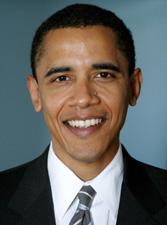
Mr. President, I rise today, on behalf of Senator Brownback, Senator Durbin, and Senator DeWine to introduce the Democratic Republic of the Congo Relief, Security and Democracy Promotion Act. As we…
Mr. President, I rise today, on behalf of Senator Brownback, Senator Durbin, and Senator DeWine to introduce the Democratic Republic of the Congo Relief, Security and Democracy Promotion Act.
As we try to conclude our business for the year here in the Senate, we are in the midst of sharp debates on a large number of issues. In the foreign policy arena alone, the Administration and Congress are consumed with nurturing a political process and defeating insurgents in Iraq, attempting to halt proliferation by Iran and North Korea, and trying to end the bloodshed in Darfur, Sudan.
But there is another country embroiled in conflict that has not yet received the high-level attention or resources it needs. It's the Democratic Republic of Congo, and right now it is in the midst of a humanitarian catastrophe.
An International Rescue Committee report from 2004 found that 31,000 people were dying in the Congo each month and 3.8 million--3.8 million--people had died in the previous 6 years. This means that this conflict, which still smolders and burns in some regions, has cost more lives than any other conflict since World War II.
Beyond the humanitarian catastrophe, resolving the problems in the Congo will be critical if Africa is to achieve its promise. The country, which is the size of Western Europe, lies at the geographic heart of Africa and borders every major region across the continent. If left untended, Congo's tragedy will continue to infect Africa--from North to South; from East to West.
I believe that the United States can make a profound difference in this crisis. According to international aid agencies, there are innumerable cost-effective interventions that could be quickly undertaken--such as the provision of basic medical care, immunization and clean water--that could save thousands of lives. On the political front, sustained U.S. leadership could fill a perilous vacuum.
The bill that we are introducing here today is an important step on the long road towards bringing peace and prosperity to the Congo. I am proud to be a part of a collaborative, bipartisan effort with some of the Senate's leading voices on Africa--Senators Brownback, Durbin and DeWine.
This bill establishes 14 core principles of U.S. policy across a range of issues; authorizes a 25 percent increase in U.S. assistance for the Democratic Republic of the Congo; calls for a Special Envoy to resolve the situation in Eastern Congo; and urges the Administration to use its voice and vote at the
United Nations Security Council to strengthen the U.N. peacekeeping force that is providing security in parts of the Congo.
The legislation has been endorsed by a number of faith-based and humanitarian nongovernmental organizations, including some with extensive field operations in Congo: CARE, Catholic Relief Services, Global Witness, International Crisis Group, International Rescue Committee, and Oxfam America. I ask unanimous consent that these letters of support be printed in the Record.
I want to stress something before closing. We are under no illusion that enacting the policies in this bill would be a panacea for Congo's many ills. But the one thing we do know is that the one way to ensure that a complex problem will not be resolved is to accept the status quo.
The other thing we know is that status quo in the Democratic Republic of Congo is unacceptable--unacceptable to the women and children caught up in the crossfire, unacceptable to the civilians being felled by preventable disease, unacceptable to a continent that is making great strides, and unacceptable to our country, the United States, which has the financial and diplomatic resources to make a profound difference.
I look forward to working with my colleagues and the administration to enacting this bill and working to promote peace and prosperity in the Congo.
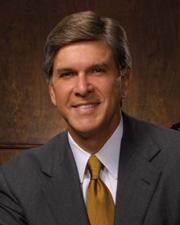
Mr. President, I rise today with Senators Kohl and DeWine to introduce the Manufacturing Technology Competitiveness Act of 2005. The manufacturing sector is a critical component of our economy and an…
Mr. President, I rise today with Senators Kohl and DeWine to introduce the Manufacturing Technology Competitiveness Act of 2005.
The manufacturing sector is a critical component of our economy and an engine of job creation for millions of Americans. Investment and continued growth in this industry is vital in order to strengthen manufacturing in the United States and increase our global competitiveness.
Through a number of measures, my legislation is aimed at further improving productivity, advancing technology and increasing the competitiveness of the U.S. manufacturing industry.
My bill authorizes funding through fiscal year 2008 for the Manufacturing Extension Partnership (MEP) and the National Institute of Standards and Technology (NIST).
MEP is a nationwide network with centers in all 50 states that provide assistance to help small- and medium-sized manufacturers succeed by providing expertise and services customized to meet their critical needs.
Small and medium sized manufacturers in my home State of Oregon have benefited from the efforts of the Oregon MEP resulting in increased jobs, investment and overall productivity. In 2004, the Oregon MEP helped manufacturers generate new or retain sales of $6,835,400 and a save costs of $18,736,000. MEP's assistance has yielded similar success for countless manufacturers in states across the country.
In addition to authorizing funding for MEP, this bill will amend partnership to include a mechanism for review and re-competition of MEP Centers and establish an additional competitive grant program from which these centers can obtain supplemental funding for manufacturing- related projects.
The National Institute of Standards and Technology with its expertise in technology, measurement and standards helps U.S. industry manufacture leading products and deliver high quality services. NIST has aided U.S. companies in competing in domestic and foreign markets through technology-based innovations in areas such as biotechnology, information technology and advanced manufacturing. NIST's capabilities will allow them to make further valuable contributions with emerging technologies in the future.
My bill establishes programs aimed at enhancing research and advancements in the manufacturing industry including a fellowship program and a manufacturing research pilot program, which involves cost-sharing collaborations aimed at developing new processes and materials to improve manufacturing performance and productivity.
The Advanced Technology Program (ATP) which supports research and development of high-risk, cutting edge technologies is authorized funding in this legislation. ATP partners with private sector entities to invest in early stage, innovative technologies that enable U.S. companies to develop next generation products and services that improve the quality of life for all of us. These public-private partnerships lead to innovations that otherwise could not be developed by a single entity.
I urge my colleagues to support the Manufacturing Technology Competitiveness Act of 2005 and ask unanimous consent that the text of the bill be printed in the Record.

Mr. President, I rise to re-introduce the Fair Contracts for Growers Act of 2005. This bill would simply give farmers a choice of venues to resolve disputes associated with agricultural contracts.…
Mr. President, I rise to re-introduce the Fair Contracts for Growers Act of 2005. This bill would simply give farmers a choice of venues to resolve disputes associated with agricultural contracts. This legislation would not prohibit arbitration. Instead, it would ensure that the decision to arbitrate is truly voluntary and that the rights and remedies provided for by our judicial system are not waived under coercion.
I certainly recognize that arbitration has tremendous benefits. It can often be less costly than other dispute settlement means. It can also remove some of the workload from our Nation's overburdened court system. For these reasons, arbitration must be an option--but it should not be a coerced option.
Mandatory arbitration clauses are used in a growing number of agricultural contracts between individual farmers and processors. These provisions limit a farmer's ability to resolve a dispute with the company, even when a violation of Federal or State law is suspected. Rather than having the option to pursue a claim in court, disputes are required to go through an arbitration process that puts the farmer at a severe disadvantage. Such disputes often involve instances of discrimination, fraud, or negligent misrepresentation. The effect of these violations for the individual farmer can be bankruptcy and financial ruin, and mandatory arbitration clauses make it impossible for farmers to seek redress in court.
When a farmer chooses arbitration, the farmer is waving rights to access to the courts and the constitutional right to a jury trial. Certain standardized court rules are also waived, such as the right to discovery. This is important because the farmer must prove his case, the company has the relevant information, and the farmer can not prevail unless he can compel disclosure of relevant information.
Examples of farmers' concerns that have gone unaddressed due to limitations on dispute resolution options include; mis-weighed animals, bad feed cases, wrongful termination of contracts, diseased swine or birds provided by the company, fraud and misrepresentation to induce a grower to enter a contract, and retaliation by companies against farmers who join producer associations.
During consideration of the Farm Bill, the Senate passed, by a vote of 64-31, the Feingold-Grassley amendment
to give farmers a choice of venues to resolve disputes associated with agricultural contracts.
I have some letters supporting this legislation and ask unanimous consent that they be printed in the Record.
I also ask unanimous consent that the text of bill be printed in the Record.
Mr. President, I applaud my colleague from Utah for helping lead the fight against child pornography. This is an issue upon which all Senators can unite, and it is a battle we must not lose.…
Mr. President, I applaud my colleague from Utah for helping lead the fight against child pornography. This is an issue upon which all Senators can unite, and it is a battle we must not lose.
Pornography is no longer isolated to a small segment of society. It has pervaded our culture. As we learned in a recent hearing I chaired in the Judiciary Subcommittee on the Constitution, Civil Rights and Property Rights, pornography has infiltrated homes and families and is having devastating effects. According to recent reports, 1 in 5 children between the ages of 10 and 17 have received a sexual solicitation over the Internet, and 9 out of 10 children between the ages of 8 and 16 who have Internet access have viewed porn Web sites, usually in the course of looking up information for homework.
Perhaps the ugliest aspect of the pornography epidemic is child pornography. Children as young as 5 years old are being used for profit in this fast-growing industry. We have a duty to protect the weakest members of our society from exploitation and abuse. I believe this bill is the first step in that fight.
First, this bill will expand recordkeeping requirements to those who produce soft-core, or simulated, pornography. Current law only requires that records be kept by producers of hardcore, or actual, pornography. Under this language, producers will now be required to verify the ages of their actors and keep records of such information, regardless of whether the material they produce contains actual sexual activity or only a simulation of such activity. Further, this bill will require producers of such materials to disclose such records to the Attorney General for inspection. It will make refusal to permit inspection of such records a crime. This will be effective not only as a tool in prosecutions as a means of deterrence. Producers will be less likely to use child actors if they know they may be required to disclose the ages of their actors.
Today, recordkeeping requirements apply only to ``actual'' sexual conduct, leaving a loophole for soft-core pornography. Such material is no less damaging to children than hardcore pornography and recordkeeping and disclosure requirements must apply to this material as well. This bill will close the current loophole.
Again, I appreciate the leadership of Senator Hatch, and I hope my colleagues will join us passing this legislation to protect children from victimization and abuse.
Mr. President, I thank the Chair. Mr. President, I came to the floor to thank my friend from Arizona not just for the legislation he has just introduced but for his characteristically courageous…
Mr. President, I thank the Chair.
Mr. President, I came to the floor to thank my friend from Arizona not just for the legislation he has just introduced but for his characteristically courageous investigation of the events surrounding a particular lobbyist, Jack Abramoff, and the way in which they demonstrate the extent to which the system has gone out of control.
The direct victims here, of course, are those whose money was essentially taken without cause, who were cheated. But the indirect, yet very real, victims of these abuses are the Members of Congress, and the extent to which there has been abuse of a classic and very critical function of our Government--lobbying--the extent to which there has been abuse of that role breaks the public trust in Congress itself.
Disclosures, investigations such as Senator McCain and his committee have been involved in, fearlessly, are critically important, but these disclosures and revelations and abuses cry out to us now to take some legislative action. I have not had the opportunity yet to review fully the provisions of the legislation Senator McCain has introduced. I look forward to doing that
over the recess. I hope that will put me in a position to join him as a sponsor of this legislation. It would be an honor and a privilege to work with him on this matter, as it has been to work on so many other matters.
For today, I did not want this moment to go by without thanking him for coming forward with this legislation. It makes the point we are due--perhaps, in fact, overdue--for a review of our lobbying and disclosure laws. They need strengthening, and they need strengthening because it is right to do so and it is necessary to do so to restore the public trust in our Government.
Mr. President, I am privileged to serve as the ranking member on the Homeland Security and Governmental Affairs Committee. In the normal course of the Senate rules, I believe this legislation would be referred to our committee, and there I look forward, along with the chairman, Senator Collins, to reviewing it. But in a personal sense, I want to work with Senator McCain and his staff and mine over the recess and hope that I can join him as a cosponsor of this legislation after the first of the year.
I thank my friend, Senator Durbin, for yielding me these few moments. I yield the floor.
Show 2 more
Mr. President, I am here to introduce bill to provide a 6-month extension of the Nation's largely successful welfare program. It is known as the Temporary Assistance for Needy Families Program, or
Mr. President, I am here to introduce bill to provide a 6-month extension of the Nation's largely successful welfare program. It is known as the Temporary Assistance for Needy Families Program, or
Mr. President, I am here to introduce bill to provide a 6-month extension of the Nation's largely successful welfare program. It is known as the Temporary Assistance for Needy Families Program, or
Mr. President, I am here to introduce bill to provide a 6-month extension of the Nation's largely successful welfare program. It is known as the Temporary Assistance for Needy Families Program, or
Bill Text
Latest available legislative text
        [Congressional Bills 109th Congress]
[From the U.S. Government Publishing Office]
[S. 2119 Introduced in Senate (IS)]

109th CONGRESS
1st Session
S. 2119

To reauthorize the Temporary Assistance for Needy Families block grant
program through June 30, 2006, and for other purposes.

_______________________________________________________________________

IN THE SENATE OF THE UNITED STATES

December 16, 2005

Mr. Baucus introduced the following bill; which was read twice and
referred to the Committee on Finance

_______________________________________________________________________

A BILL

To reauthorize the Temporary Assistance for Needy Families block grant
program through June 30, 2006, and for other purposes.

Be it enacted by the Senate and House of Representatives of the
United States of America in Congress assembled,

SECTION 1. SHORT TITLE.

This Act may be cited as the ``TANF and Related Programs Extension
Act of 2005''.

SEC. 2. EXTENSION OF THE TEMPORARY ASSISTANCE FOR NEEDY FAMILIES
(TANF), TRANSITIONAL MEDICAL ASSISTANCE (TMA), AND
ABSTINENCE PROGRAMS THROUGH JUNE 30, 2006.

(a) In General.--Activities authorized by part A of title IV of the
Social Security Act, and by sections 510, 1108(b), and 1925 of such
Act, shall continue through June 30, 2006, in the manner authorized for
fiscal year 2005, notwithstanding section 1902(e)(1)(A) of such Act,
and out of any money in the Treasury of the United States not otherwise
appropriated, there are hereby appropriated such sums as may be
necessary for such purpose. Grants and payments may be made pursuant to
this authority on a quarterly basis through the third quarter of fiscal
year 2006 at the level provided for such activities for each
corresponding quarter of fiscal year 2005.
(b) Conforming Amendment.--Section 403(a)(3)(H)(ii) of the Social
Security Act (42 U.S.C. 603(a)(3)(H)(ii)) is amended by striking
``December 31, 2005'' and inserting ``June 30, 2006''.

SEC. 3. EXTENSION OF THE NATIONAL RANDOM SAMPLE STUDY OF CHILD WELFARE
AND CHILD WELFARE WAIVER AUTHORITY THROUGH JUNE 30, 2006.

Activities authorized by sections 429A and 1130(a) of the Social
Security Act shall continue through June 30, 2006, in the manner
authorized for fiscal year 2005, and out of any money in the Treasury
of the United States not otherwise appropriated, there are hereby
appropriated such sums as may be necessary for such purpose. Grants and
payments may be made pursuant to this authority on a quarterly basis
through the third quarter of fiscal year 2006 at the level provided for
such activities for each corresponding quarter of fiscal year 2005.
<all>