Carl D. Perkins Career and Technical Education Improvement Act of 2006
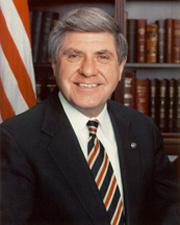
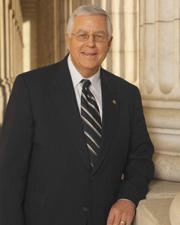 Sen. Michael B. Enzi (R-WY)
Legislative Activity
Stay on top of the latest movement without scrolling through every action
Became Public Law No: 109-270.
August 12, 2006
View full timeline
Introduced in Senate
February 1, 2005
Sponsor introductory remarks on measure. (CR S755-756)
February 1, 2005
Read twice and referred to the Committee on Health, Education, Labor, and Pensions. (text of measure as introduced: CR S756-766)
February 1, 2005
Committee on Health, Education, Labor, and Pensions. Ordered to be reported with an amendment in the nature of a substitute favorably.
March 9, 2005
Committee on Health, Education, Labor, and Pensions. Reported by Senator Enzi with an amendment in the nature of a substitute. Without written report.
March 9, 2005
Placed on Senate Legislative Calendar under General Orders. Calendar No. 39.
March 9, 2005
Measure laid before Senate by unanimous consent. (consideration: CR S2428-2459, S2462; text of measure as reported in Senate: CR S2428-2449)
March 10, 2005
Passed Senate with an amendment by Yea-Nay Vote. 99 - 0. Record Vote Number: 43.
March 10, 2005
Received in the House.
March 14, 2005 • 12:30 PM
Message on Senate action sent to the House.
March 14, 2005
Held at the desk.
March 14, 2005 • 7:05 PM
By Senator Enzi from Committee on Health, Education, Labor, and Pensions filed written report. Report No. 109-65.
May 10, 2005
Mr. McKeon asked unanimous consent to take from the Speaker's table and consider.
July 12, 2006 • 11:48 AM
Considered by unanimous consent. (CR H5062-5078, H5080)
July 12, 2006 • 11:48 AM
The House struck all after the enacting clause and inserted in lieu thereof the provisions of a similar measure H.R. 366. Agreed to without objection.
July 12, 2006 • 11:48 AM
Passed/agreed to in House: On passage Passed without objection.(text: CR H5062-5073)
July 12, 2006 • 11:48 AM
On passage Passed without objection. (text: CR H5062-5073)
July 12, 2006 • 11:48 AM
Motion to reconsider laid on the table Agreed to without objection.
July 12, 2006 • 11:48 AM
The title of the measure was amended. Agreed to without objection.
July 12, 2006 • 11:48 AM
Mr. McKeon asked unanimous consent that the House insist upon its amendments, and request a conference. (CR H5073)
July 12, 2006 • 11:49 AM
On motion that the House insist upon its amendments, and request a conference Agreed to without objection.
July 12, 2006 • 11:49 AM
Mr. Miller, George moved that the House instruct conferees. (consideration: CR H5073-5078, H5080; text: CR H5073)
July 12, 2006 • 11:50 AM
DEBATE - The House proceeded with one hour of debate on the George Miller (CA) motion to instruct conferees. Instructions seek to direct the managers on the part of the House to include in the conference substitute recommended by the committee of conference the following: In section 3(2) of the bill, after the phrase "high wage" insert "(in no case less than $7.25 an hour)".
July 12, 2006 • 11:50 AM
POSTPONED PROCEEDINGS - At the conclusion of debate on the George Miller (CA) motion to instruct, the Chair put the question on adoption of the motion and by voice vote, announced that the noes had prevailed. Mr. George Miller (VA) demanded the yeas and nays and the Chair postponed further proceedings until later in the legislative day.
July 12, 2006 • 11:50 AM
On motion that the House instruct conferees Agreed to by the Yeas and Nays: 260 - 159 (Roll no. 366).
July 12, 2006 • 1:19 PM
The Speaker appointed conferees: McKeon, Castle, Souder, Osborne, Musgrave, Miller, George, Woolsey, and Kind.
July 12, 2006 • 1:21 PM
Message on House action received in Senate and at desk: House amendments to Senate bill House requests a conference.
July 13, 2006
Senate disagreed to House amendments, agreed to request for conference, and appointed conferees. Enzi; Gregg; Frist; Alexander; Burr; Isakson; DeWine; Ensign; Hatch; Sessions; Roberts; Kennedy; Dodd; Harkin; Mikulski; Jeffords; Bingaman; Murray; Reed; Clinton.
July 13, 2006
Message on Senate action sent to the House.
July 14, 2006
Conference committee actions: Conferees agreed to file conference report.
July 20, 2006 • 4:14 PM
Conferees agreed to file conference report.
July 20, 2006
Conference report filed: Conference report H. Rept. 109-597 filed.(text of conference report: CR H5773-5790)
July 25, 2006 • 4:52 PM
Conference report H. Rept. 109-597 filed. (text of conference report: CR H5773-5790)
July 25, 2006 • 4:52 PM
Rules Committee Resolution H. Res. 946 Reported to House. Rule provides for consideration of the conference report to S. 250. Upon the adoption of this resolution, it shall be in order to consider the conference report to accompany S. 250. All points of order against the conference report and against its consideration are waived. The conference report shall be considered as read.
July 25, 2006 • 7:15 PM
Conference papers: Senate report and manager's statement official papers held at the desk in Senate.
July 26, 2006
Conference report agreed to in Senate: Senate agreed to conference report by Unanimous Consent.(consideration: CR S8321-8328)
July 26, 2006
Senate agreed to conference report by Unanimous Consent. (consideration: CR S8321-8328)
July 26, 2006
Message on Senate action sent to the House.
July 27, 2006
Rule H. Res. 946 passed House.
July 27, 2006 • 10:45 AM
Mr. McKeon brought up conference report H. Rept. 109-597 for consideration under the provisions of H. Res. 946. (consideration: CR H5973-5978)
July 27, 2006 • 12:38 PM
DEBATE - The House proceeded with one hour of debate on the conference report to accompany S. 250.
July 27, 2006 • 12:39 PM
The previous question was ordered without objection. (consideration: CR H5978)
July 27, 2006 • 1:09 PM
POSTPONED PROCEEDINGS - At the conclusion of debate the Chair put the question on adoption of the conference report and by voice vote announced that the ayes had prevailed. Mr. Castle made a point of order that a quorum was not present and pursuant to the rule the yeas and nays were ordered and the Chair postponed further proceedings on adoption of the conference report until later in the legislative day. The point of no quorum was considered as withdrawn.
July 27, 2006 • 1:09 PM
The House proceeded to consider the conference report H.Rept. 109-597 as unfinished business. (consideration: CR 7/28/2005 H6221)
July 29, 2006 • 1:41 AM
Conference report agreed to in House: On agreeing to the conference report Agreed to by recorded vote: 399 - 1 (Roll no. 426).
July 29, 2006 • 1:48 AM
Motions to reconsider laid on the table Agreed to without objection.
July 29, 2006 • 1:48 AM
On agreeing to the conference report Agreed to by recorded vote: 399 - 1 (Roll no. 426).
July 29, 2006 • 1:48 AM
Presented to President.
August 2, 2006
Signed by President.
August 12, 2006
Became Public Law No: 109-270.
August 12, 2006
Voting History
3 votes recorded • Roll call available
HOUSE
Roll Call AvailableJuly 29, 2006 at 1:48 AM
On Agreeing to the Conference Report
Majority required: 1/2 (50%)
399 - 1
HOUSE
Roll Call AvailableJuly 12, 2006 at 1:21 PM
On Motion to Instruct Conferees
Majority required: 1/2 (50%)
260 - 159
SENATE
Roll Call AvailableMarch 10, 2005 at 4:31 PM
On Passage of the Bill S. 250
Majority required: 1/2 (50%)
99 - 0
Floor Debate
19 membersWhat members said about S. 250 on the floor



 +14
+14
Floor Debate
19 membersWhat members said about S. 250 on the floor
Mr. President, Senator Wyden and I broke new ground together when we introduced the first bipartisan Medicare Prescription drug bill known as SPICE back in 1999. And after Congress passed the…
Mr. President, first of all, I join all of our colleagues on this side of the aisle who have the good opportunity to work on the Health, Education, Labor, and Pensions Committee in commending our…
Mr. Speaker, I offer a motion to instruct conferees. Mr. Speaker, I yield myself such time as I may consume, and I rise as we consider going to conference with the Senate on the Vocational Education…
Mr. President, I rise today in support of the conference report to accompany S. 250, the Carl D. Perkins Career and Technical Education Improvement Act of 2006. This legislation reflects a lengthy…
Mr. President, I rise today for myself, Senator Ensign and Senator Bennett to introduce this bill, which will establish a National Heritage Route in eastern Nevada and western Utah. National Heritage…
Show 8 more
Mr. President, I am pleased that we are acting on this bipartisan legislation to reauthorize the Perkins Career and Technical Education Act, and I commend the chairman of our committee, Senator Enzi,…

Mr. Speaker, I ask unanimous consent that the House insist on its amendments to the Senate bill, S. 250, and request a conference with the Senate thereon. Mr. Speaker, I yield myself such time as I…

Mr. President, the continuing activation of military reservists to serve in Iraq and the war on terror has imposed a tremendous burden on many of our country's small businesses, their employees and…

Mr. Speaker, I yield myself such time as I may consume. (Mr. McGOVERN asked and was given permission to revise and extend his remarks.) Mr. Speaker, I want to thank the gentleman from Utah (Mr.…

Mr. President, I rise today to support the conference report accompanying S. 250, the Carl D. Perkins Career and Technical Education Act of 2006. More than ever, this country needs rigorous, relevant…
Mr. Speaker, I yield myself 4 minutes. Mr. Speaker, it obviously gives me great pleasure to be here today and to rise in support of the conference report to the Carl D. Perkins Career and Technical…
Mr. President, I rise today to speak in support of a critical piece of legislation, the reauthorization of the Carl D. Perkins Vocational and Technical Education Act. More than ever, we need…

Mr. Speaker, pursuant to House Resolution 966, I call up the bill (H.R. 5970) to amend the Internal Revenue Code of 1986 to increase the unified credit against the estate tax to an exclusion…
Show 11 more

Mr. President, I rise today to join my colleagues Senator Snowe, Senator Wyden and Senator McCain in introducing the bipartisan Medicare Enhancement for Needed Drugs, MEND, Act of 2005. This…
Mr. Speaker, I want to thank Chairman McKeon for his leadership and Mr. Miller for his leadership in working in a bipartisan effort with this. But I want to say, first off, that it affirms what…

Mr. President, I ask unanimous consent the order for the quorum call be rescinded. Mr. President, I understand there will be a vote on the Leahy-Sarbanes amendment at 2 o'clock; is that correct? Mr.…
Mr. President, I again commend my able colleague from Vermont for coming forward with this amendment. I am very pleased to join with him in cosponsoring it, and I urge its adoption upon our…

Mr. President, I am pleased to rise in support of the Carl D. Perkins Vocation and Technical Education Improvement Act. I am proud to be a cosponsor of this legislation and am extremely pleased that…
Mr. President, I thank the Senate for considering this bill at this moment. It is a bill that has wide bipartisan support. I thank Senator Kennedy and all of the members of the Health, Education,…
Mr. President, I am very pleased today to support the Carl D. Perkins Career and Technical Education Improvement Act. I was proud to cosponsor this legislation in the Senate, and I am proud that the…

Mr. President, I rise to introduce the Abrupt Climate Change Research Act of 2005. This bill would authorize $10 million per year for the next six years for the National Oceanic and Atmospheric…
Mr. Speaker, I want to thank the gentlewoman for yielding and also thank her for all of her work on this legislation, along with Chairman Boehner and Chairman McKeon and Chairman Castle. And, of…

Mr. President, I rise today, along with my colleague from New York, Senator Clinton, to introduce the Improved Vaccine Supply Act--a bill that would help ensure that our Nation's public health system…
Mr. President. Today, I introduce legislation that will overturn a new regulation that is putting critical access hospitals (CAH) at risk by arbitrarily lowering the Medicare reimbursement for…
Bill Text
6 versions available
        [Congressional Bills 109th Congress]
[From the U.S. Government Publishing Office]
[S. 250 Enrolled Bill (ENR)]

S.250

One Hundred Ninth Congress

of the

United States of America

AT THE SECOND SESSION

Begun and held at the City of Washington on Tuesday,
the third day of January, two thousand and six

An Act

To amend the Carl D. Perkins Vocational and Technical Education Act of
1998 to improve the Act.

Be it enacted by the Senate and House of Representatives of the
United States of America in Congress assembled,

SECTION 1. SHORT TITLE; AMENDMENT.

(a) Short Title.--This Act may be cited as the ``Carl D. Perkins
Career and Technical Education Improvement Act of 2006''.
(b) Amendment.--The Carl D. Perkins Vocational and Technical
Education Act of 1998 (20 U.S.C. 2301 et seq.) is amended to read as
follows:

``SECTION 1. SHORT TITLE; TABLE OF CONTENTS.

``(a) Short Title.--This Act may be cited as the `Carl D. Perkins
Career and Technical Education Act of 2006'.
``(b) Table of Contents.--The table of contents for this Act is as
follows:

``Sec. 1. Short title; table of contents.
``Sec. 2. Purpose.
``Sec. 3. Definitions.
``Sec. 4. Transition provisions.
``Sec. 5. Privacy.
``Sec. 6. Limitation.
``Sec. 7. Special rule.
``Sec. 8. Prohibitions.
``Sec. 9. Authorization of appropriations.

``TITLE I--CAREER AND TECHNICAL EDUCATION ASSISTANCE TO THE STATES

``PART A--Allotment and Allocation

``Sec. 111. Reservations and State allotment.
``Sec. 112. Within State allocation.
``Sec. 113. Accountability.
``Sec. 114. National activities.
``Sec. 115. Assistance for the outlying areas.
``Sec. 116. Native American programs.
``Sec. 117. Tribally controlled postsecondary career and technical
institutions.
``Sec. 118. Occupational and employment information.

``PART B--State Provisions

``Sec. 121. State administration.
``Sec. 122. State plan.
``Sec. 123. Improvement plans.
``Sec. 124. State leadership activities.

``PART C--Local Provisions

``Sec. 131. Distribution of funds to secondary education programs.
``Sec. 132. Distribution of funds for postsecondary education programs.
``Sec. 133. Special rules for career and technical education.
``Sec. 134. Local plan for career and technical education programs.
``Sec. 135. Local uses of funds.

``TITLE II--TECH PREP EDUCATION

``Sec. 201. State allotment and application.
``Sec. 202. Consolidation of funds.
``Sec. 203. Tech prep program.
``Sec. 204. Consortium applications.
``Sec. 205. Report.
``Sec. 206. Authorization of appropriations.

``TITLE III--GENERAL PROVISIONS

``PART A--Federal Administrative Provisions

``Sec. 311. Fiscal requirements.
``Sec. 312. Authority to make payments.
``Sec. 313. Construction.
``Sec. 314. Voluntary selection and participation.
``Sec. 315. Limitation for certain students.
``Sec. 316. Federal laws guaranteeing civil rights.
``Sec. 317. Participation of private school personnel and children.
``Sec. 318. Limitation on Federal regulations.

``PART B--State Administrative Provisions

``Sec. 321. Joint funding.
``Sec. 322. Prohibition on use of funds to induce out-of-state
relocation of businesses.
``Sec. 323. State administrative costs.
``Sec. 324. Student assistance and other Federal programs.

``SEC. 2. PURPOSE.

``The purpose of this Act is to develop more fully the academic and
career and technical skills of secondary education students and
postsecondary education students who elect to enroll in career and
technical education programs, by--
``(1) building on the efforts of States and localities to
develop challenging academic and technical standards and to assist
students in meeting such standards, including preparation for high
skill, high wage, or high demand occupations in current or emerging
professions;
``(2) promoting the development of services and activities that
integrate rigorous and challenging academic and career and
technical instruction, and that link secondary education and
postsecondary education for participating career and technical
education students;
``(3) increasing State and local flexibility in providing
services and activities designed to develop, implement, and improve
career and technical education, including tech prep education;
``(4) conducting and disseminating national research and
disseminating information on best practices that improve career and
technical education programs, services, and activities;
``(5) providing technical assistance that--
``(A) promotes leadership, initial preparation, and
professional development at the State and local levels; and
``(B) improves the quality of career and technical
education teachers, faculty, administrators, and counselors;
``(6) supporting partnerships among secondary schools,
postsecondary institutions, baccalaureate degree granting
institutions, area career and technical education schools, local
workforce investment boards, business and industry, and
intermediaries; and
``(7) providing individuals with opportunities throughout their
lifetimes to develop, in conjunction with other education and
training programs, the knowledge and skills needed to keep the
United States competitive.

``SEC. 3. DEFINITIONS.

``Unless otherwise specified, in this Act:
``(1) Administration.--The term `administration', when used
with respect to an eligible agency or eligible recipient, means
activities necessary for the proper and efficient performance of
the eligible agency or eligible recipient's duties under this Act,
including the supervision of such activities. Such term does not
include curriculum development activities, personnel development,
or research activities.
``(2) All aspects of an industry.--The term `all aspects of an
industry' means strong experience in, and comprehensive
understanding of, the industry that the individual is preparing to
enter, including information as described in section 118.
``(3) Area career and technical education school.--The term
`area career and technical education school' means--
``(A) a specialized public secondary school used
exclusively or principally for the provision of career and
technical education to individuals who are available for study
in preparation for entering the labor market;
``(B) the department of a public secondary school
exclusively or principally used for providing career and
technical education in not fewer than 5 different occupational
fields to individuals who are available for study in
preparation for entering the labor market;
``(C) a public or nonprofit technical institution or career
and technical education school used exclusively or principally
for the provision of career and technical education to
individuals who have completed or left secondary school and who
are available for study in preparation for entering the labor
market, if the institution or school admits, as regular
students, individuals who have completed secondary school and
individuals who have left secondary school; or
``(D) the department or division of an institution of
higher education, that operates under the policies of the
eligible agency and that provides career and technical
education in not fewer than 5 different occupational fields
leading to immediate employment but not necessarily leading to
a baccalaureate degree, if the department or division admits,
as regular students, both individuals who have completed
secondary school and individuals who have left secondary
school.
``(4) Articulation agreement.--The term `articulation
agreement' means a written commitment--
``(A) that is agreed upon at the State level or approved
annually by the lead administrators of--
``(i) a secondary institution and a postsecondary
educational institution; or
``(ii) a subbaccalaureate degree granting postsecondary
educational institution and a baccalaureate degree granting
postsecondary educational institution; and
``(B) to a program that is--
``(i) designed to provide students with a
nonduplicative sequence of progressive achievement leading
to technical skill proficiency, a credential, a
certificate, or a degree; and
``(ii) linked through credit transfer agreements
between the 2 institutions described in clause (i) or (ii)
of subparagraph (A) (as the case may be).
``(5) Career and technical education.--The term `career and
technical education' means organized educational activities that--
``(A) offer a sequence of courses that--
``(i) provides individuals with coherent and rigorous
content aligned with challenging academic standards and
relevant technical knowledge and skills needed to prepare
for further education and careers in current or emerging
professions;
``(ii) provides technical skill proficiency, an
industry-recognized credential, a certificate, or an
associate degree; and
``(iii) may include prerequisite courses (other than a
remedial course) that meet the requirements of this
subparagraph; and
``(B) include competency-based applied learning that
contributes to the academic knowledge, higher-order reasoning
and problem-solving skills, work attitudes, general
employability skills, technical skills, and occupation-specific
skills, and knowledge of all aspects of an industry, including
entrepreneurship, of an individual.
``(6) Career and technical student organization.--
``(A) In general.--The term `career and technical student
organization' means an organization for individuals enrolled in
a career and technical education program that engages in career
and technical education activities as an integral part of the
instructional program.
``(B) State and national units.--An organization described
in subparagraph (A) may have State and national units that
aggregate the work and purposes of instruction in career and
technical education at the local level.
``(7) Career guidance and academic counseling.--The term
`career guidance and academic counseling' means guidance and
counseling that--
``(A) provides access for students (and parents, as
appropriate) to information regarding career awareness and
planning with respect to an individual's occupational and
academic future; and
``(B) provides information with respect to career options,
financial aid, and postsecondary options, including
baccalaureate degree programs.
``(8) Charter school.--The term `charter school' has the
meaning given the term in section 5210 of the Elementary and
Secondary Education Act of 1965.
``(9) Cooperative education.--The term `cooperative education'
means a method of education for individuals who, through written
cooperative arrangements between a school and employers, receive
instruction, including required rigorous and challenging academic
courses and related career and technical education instruction, by
alternation of study in school with a job in any occupational
field, which alternation--
``(A) shall be planned and supervised by the school and
employer so that each contributes to the education and
employability of the individual; and
``(B) may include an arrangement in which work periods and
school attendance may be on alternate half days, full days,
weeks, or other periods of time in fulfilling the cooperative
program.
``(10) Displaced homemaker.--The term `displaced homemaker'
means an individual who--
``(A)(i) has worked primarily without remuneration to care
for a home and family, and for that reason has diminished
marketable skills;
``(ii) has been dependent on the income of another family
member but is no longer supported by that income; or
``(iii) is a parent whose youngest dependent child will
become ineligible to receive assistance under part A of title
IV of the Social Security Act (42 U.S.C. 601 et seq.) not later
than 2 years after the date on which the parent applies for
assistance under such title; and
``(B) is unemployed or underemployed and is experiencing
difficulty in obtaining or upgrading employment.
``(11) Educational service agency.--The term `educational
service agency' has the meaning given the term in section 9101 of
the Elementary and Secondary Education Act of 1965.
``(12) Eligible agency.--The term `eligible agency' means a
State board designated or created consistent with State law as the
sole State agency responsible for the administration of career and
technical education in the State or for the supervision of the
administration of career and technical education in the State.
``(13) Eligible institution.--The term `eligible institution'
means--
``(A) a public or nonprofit private institution of higher
education that offers career and technical education courses
that lead to technical skill proficiency, an industry-
recognized credential, a certificate, or a degree;
``(B) a local educational agency providing education at the
postsecondary level;
``(C) an area career and technical education school
providing education at the postsecondary level;
``(D) a postsecondary educational institution controlled by
the Bureau of Indian Affairs or operated by or on behalf of any
Indian tribe that is eligible to contract with the Secretary of
the Interior for the administration of programs under the
Indian Self-Determination and Education Assistance Act (25
U.S.C. 450 et seq.) or the Act of April 16, 1934 (25 U.S.C. 452
et seq.);
``(E) an educational service agency; or
``(F) a consortium of 2 or more of the entities described
in subparagraphs (A) through (E).
``(14) Eligible recipient.--The term `eligible recipient'
means--
``(A) a local educational agency (including a public
charter school that operates as a local educational agency), an
area career and technical education school, an educational
service agency, or a consortium, eligible to receive assistance
under section 131; or
``(B) an eligible institution or consortium of eligible
institutions eligible to receive assistance under section 132.
``(15) Governor.--The term `Governor' means the chief executive
officer of a State.
``(16) Individual with limited english proficiency.--The term
`individual with limited English proficiency' means a secondary
school student, an adult, or an out-of-school youth, who has
limited ability in speaking, reading, writing, or understanding the
English language, and--
``(A) whose native language is a language other than
English; or
``(B) who lives in a family or community environment in
which a language other than English is the dominant language.
``(17) Individual with a disability.--
``(A) In general.--The term `individual with a disability'
means an individual with any disability (as defined in section
3 of the Americans with Disabilities Act of 1990 (42 U.S.C.
12102)).
``(B) Individuals with disabilities.--The term `individuals
with disabilities' means more than 1 individual with a
disability.
``(18) Institution of higher education.--The term `institution
of higher education' has the meaning given the term in section 101
of the Higher Education Act of 1965.
``(19) Local educational agency.--The term `local educational
agency' has the meaning given the term in section 9101 of the
Elementary and Secondary Education Act of 1965.
``(20) Non-traditional fields.--The term `non-traditional
fields' means occupations or fields of work, including careers in
computer science, technology, and other current and emerging high
skill occupations, for which individuals from one gender comprise
less than 25 percent of the individuals employed in each such
occupation or field of work.
``(21) Outlying area.--The term `outlying area' means the
United States Virgin Islands, Guam, American Samoa, the
Commonwealth of the Northern Mariana Islands, and the Republic of
Palau.
``(22) Postsecondary educational institution.--The term
`postsecondary educational institution' means--
``(A) an institution of higher education that provides not
less than a 2-year program of instruction that is acceptable
for credit toward a bachelor's degree;
``(B) a tribally controlled college or university; or
``(C) a nonprofit educational institution offering
certificate or apprenticeship programs at the postsecondary
level.
``(23) Postsecondary education tech prep student.--The term
`postsecondary education tech prep student' means a student who--
``(A) has completed the secondary education component of a
tech prep program; and
``(B) has enrolled in the postsecondary education component
of a tech prep program at an institution of higher education
described in clause (i) or (ii) of section 203(a)(1)(B).
``(24) School dropout.--The term `school dropout' means an
individual who is no longer attending any school and who has not
received a secondary school diploma or its recognized equivalent.
``(25) Scientifically based research.--The term `scientifically
based research' means research that is carried out using
scientifically based research standards, as defined in section 102
of the Education Sciences Reform Act of 2002 (20 U.S.C. 9501).
``(26) Secondary education tech prep student.--The term
`secondary education tech prep student' means a secondary education
student who has enrolled in 2 courses in the secondary education
component of a tech prep program.
``(27) Secondary school.--The term `secondary school' has the
meaning given the term in section 9101 of the Elementary and
Secondary Education Act of 1965.
``(28) Secretary.--The term `Secretary' means the Secretary of
Education.
``(29) Special populations.--The term `special populations'
means--
``(A) individuals with disabilities;
``(B) individuals from economically disadvantaged families,
including foster children;
``(C) individuals preparing for non-traditional fields;
``(D) single parents, including single pregnant women;
``(E) displaced homemakers; and
``(F) individuals with limited English proficiency.
``(30) State.--The term `State', unless otherwise specified,
means each of the several States of the United States, the District
of Columbia, the Commonwealth of Puerto Rico, and each outlying
area.
``(31) Support services.--The term `support services' means
services related to curriculum modification, equipment
modification, classroom modification, supportive personnel, and
instructional aids and devices.
``(32) Tech prep program.--The term `tech prep program' means a
tech prep program described in section 203(c).
``(33) Tribally controlled college or university.--The term
`tribally controlled college or university' has the meaning given
the term in section 2(a) of the Tribally Controlled College or
University Assistance Act of 1978 (25 U.S.C. 1801(a)).
``(34) Tribally controlled postsecondary career and technical
institution.--The term `tribally controlled postsecondary career
and technical institution' means an institution of higher education
(as defined in section 101 of the Higher Education Act of 1965,
except that subsection (a)(2) of such section shall not be
applicable and the reference to Secretary in subsection (a)(5) of
such section shall be deemed to refer to the Secretary of the
Interior) that--
``(A) is formally controlled, or has been formally
sanctioned or chartered, by the governing body of an Indian
tribe or Indian tribes;
``(B) offers a technical degree or certificate granting
program;
``(C) is governed by a board of directors or trustees, a
majority of whom are Indians;
``(D) demonstrates adherence to stated goals, a philosophy,
or a plan of operation, that fosters individual Indian economic
and self-sufficiency opportunity, including programs that are
appropriate to stated tribal goals of developing individual
entrepreneurships and self-sustaining economic infrastructures
on reservations;
``(E) has been in operation for at least 3 years;
``(F) holds accreditation with or is a candidate for
accreditation by a nationally recognized accrediting authority
for postsecondary career and technical education; and
``(G) enrolls the full-time equivalent of not less than 100
students, of whom a majority are Indians.

``SEC. 4. TRANSITION PROVISIONS.

``The Secretary shall take such steps as the Secretary determines
to be appropriate to provide for the orderly transition to the
authority of this Act (as amended by the Carl D. Perkins Career and
Technical Education Improvement Act of 2006) from any authority under
the provisions of the Carl D. Perkins Vocational and Technical
Education Act of 1998, as in effect on the day before the date of
enactment of the Carl D. Perkins Career and Technical Education
Improvement Act of 2006. The Secretary shall give each eligible agency
the opportunity to submit a transition plan for the first fiscal year
following the date of enactment of the Carl D. Perkins Career and
Technical Education Improvement Act of 2006.

``SEC. 5. PRIVACY.

``(a) GEPA.--Nothing in this Act shall be construed to supersede
the privacy protections afforded parents and students under section 444
of the General Education Provisions Act (20 U.S.C. 1232g).
``(b) Prohibition on Development of National Database.--Nothing in
this Act shall be construed to permit the development of a national
database of personally identifiable information on individuals
receiving services under this Act.

``SEC. 6. LIMITATION.

``All of the funds made available under this Act shall be used in
accordance with the requirements of this Act.

``SEC. 7. SPECIAL RULE.

``In the case of a local community in which no employees are
represented by a labor organization, for purposes of this Act, the term
`representatives of employees' shall be substituted for `labor
organization'.

``SEC. 8. PROHIBITIONS.

``(a) Local Control.--Nothing in this Act shall be construed to
authorize an officer or employee of the Federal Government to mandate,
direct, or control a State, local educational agency, or school's
curriculum, program of instruction, or allocation of State or local
resources, or mandate a State or any subdivision thereof to spend any
funds or incur any costs not paid for under this Act, except as
required under sections 112(b), 311(b), and 323.
``(b) No Preclusion of Other Assistance.--Any State that declines
to submit an application to the Secretary for assistance under this Act
shall not be precluded from applying for assistance under any other
program administered by the Secretary.
``(c) Prohibition on Requiring Federal Approval or Certification of
Standards.--Notwithstanding any other provision of Federal law, no
State shall be required to have academic and career and technical
content standards or student academic and career and technical
achievement standards approved or certified by the Federal Government,
in order to receive assistance under this Act.
``(d) Rule of Construction.--Nothing in this section shall be
construed to affect the requirements under section 113.
``(e) Coherent and Rigorous Content.--For the purposes of this Act,
coherent and rigorous content shall be determined by the State
consistent with section 1111(b)(1)(D) of the Elementary and Secondary
Education Act of 1965.

``SEC. 9. AUTHORIZATION OF APPROPRIATIONS.

``There is authorized to be appropriated to carry out this Act
(other than sections 114, 117, and 118, and title II) such sums as may
be necessary for each of the fiscal years 2007 through 2012.

``TITLE I--CAREER AND TECHNICAL EDUCATION ASSISTANCE TO THE STATES

``PART A--ALLOTMENT AND ALLOCATION

``SEC. 111. RESERVATIONS AND STATE ALLOTMENT.

``(a) Reservations and State Allotment.--
``(1) Reservations.--From the sum appropriated under section 9
for each fiscal year, the Secretary shall reserve--
``(A) 0.13 percent to carry out section 115; and
``(B) 1.50 percent to carry out section 116, of which--
``(i) 1.25 percent of the sum shall be available to
carry out section 116(b); and
``(ii) 0.25 percent of the sum shall be available to
carry out section 116(h).
``(2) State allotment formula.--Subject to paragraphs (3), (4),
and (5), from the remainder of the sum appropriated under section 9
and not reserved under paragraph (1) for a fiscal year, the
Secretary shall allot to a State for the fiscal year--
``(A) an amount that bears the same ratio to 50 percent of
the sum being allotted as the product of the population aged 15
to 19 inclusive, in the State in the fiscal year preceding the
fiscal year for which the determination is made and the State's
allotment ratio bears to the sum of the corresponding products
for all the States;
``(B) an amount that bears the same ratio to 20 percent of
the sum being allotted as the product of the population aged 20
to 24, inclusive, in the State in the fiscal year preceding the
fiscal year for which the determination is made and the State's
allotment ratio bears to the sum of the corresponding products
for all the States;
``(C) an amount that bears the same ratio to 15 percent of
the sum being allotted as the product of the population aged 25
to 65, inclusive, in the State in the fiscal year preceding the
fiscal year for which the determination is made and the State's
allotment ratio bears to the sum of the corresponding products
for all the States; and
``(D) an amount that bears the same ratio to 15 percent of
the sum being allotted as the amounts allotted to the State
under subparagraphs (A), (B), and (C) for such years bears to
the sum of the amounts allotted to all the States under
subparagraphs (A), (B), and (C) for such year.
``(3) Minimum allotment for years with no additional funds.--
``(A) In general.--Notwithstanding any other provision of
law and subject to subparagraphs (B) and (C), and paragraph
(5), for a fiscal year for which there are no additional funds
(as such term is defined in paragraph (4)(D)), no State shall
receive for such fiscal year under this subsection less than
\1/2\ of 1 percent of the amount appropriated under section 9
and not reserved under paragraph (1) for such fiscal year.
Amounts necessary for increasing such payments to States to
comply with the preceding sentence shall be obtained by ratably
reducing the amounts to be paid to other States.
``(B) Requirement.--No State, by reason of the application
of subparagraph (A), shall receive for a fiscal year more than
150 percent of the amount the State received under this
subsection for the preceding fiscal year.
``(C) Special rule.--
``(i) In general.--Subject to paragraph (5), no State,
by reason of the application of subparagraph (A), shall be
allotted for a fiscal year more than the lesser of--

``(I) 150 percent of the amount that the State
received in the preceding fiscal year; and
``(II) the amount calculated under clause (ii).

``(ii) Amount.--The amount calculated under this clause
shall be determined by multiplying--

``(I) the number of individuals in the State
counted under paragraph (2) in the preceding fiscal
year; by
``(II) 150 percent of the national average per
pupil payment made with funds available under this
section for that year.

``(4) Minimum allotment for years with additional funds.--
``(A) In general.--Subject to subparagraph (B) and
paragraph (5), for a fiscal year for which there are additional
funds, no State shall receive for such fiscal year under this
subsection less than \1/2\ of 1 percent of the amount
appropriated under section 9 and not reserved under paragraph
(1) for such fiscal year. Amounts necessary for increasing such
payments to States to comply with the preceding sentence shall
be obtained by ratably reducing the amounts to be paid to other
States.
``(B) Special rule.--In the case of a qualifying State, the
minimum allotment under subparagraph (A) for a fiscal year for
the qualifying State shall be the lesser of--
``(i) \1/2\ of 1 percent of the amount appropriated
under section 9 and not reserved under paragraph (1) for
such fiscal year; and
``(ii) the sum of--

``(I) the amount the qualifying State was allotted
under paragraph (2) for fiscal year 2006 (as such
paragraph was in effect on the day before the date of
enactment of the Carl D. Perkins Career and Technical
Education Improvement Act of 2006); and
``(II) the product of--

``(aa) \1/3\ of the additional funds;
multiplied by
``(bb) the quotient of--
``(AA) the qualifying State's ratio
described in subparagraph (C) for the fiscal
year for which the determination is made;
divided by
``(BB) the sum of all such ratios for all
qualifying States for the fiscal year for which
the determination is made.
``(C) Ratio.--For purposes of subparagraph
(B)(ii)(II)(bb)(AA), the ratio for a qualifying State for a
fiscal year shall be 1.00 less the quotient of--
``(i) the amount the qualifying State was allotted
under paragraph (2) for fiscal year 2006 (as such paragraph
was in effect on the day before the date of enactment of
the Carl D. Perkins Career and Technical Education
Improvement Act of 2006); divided by
``(ii) \1/2\ of 1 percent of the amount appropriated
under section 9 and not reserved under paragraph (1) for
the fiscal year for which the determination is made.
``(D) Definitions.--In this paragraph:
``(i) Additional funds.--The term `additional funds'
means the amount by which--

``(I) the sum appropriated under section 9 and not
reserved under paragraph (1) for a fiscal year; exceeds
``(II) the sum of--

``(aa) the amount allotted under paragraph (2)
for fiscal year 2006 (as such paragraph (2) was in
effect on the day before the date of enactment of
the Carl D. Perkins Career and Technical Education
Improvement Act of 2006);
``(bb) the amount reserved under paragraph
(1)(C) for fiscal year 2006 (as such paragraph
(1)(C) was so in effect); and
``(cc) $827,671.
``(ii) Qualifying state.--The term `qualifying State'
means a State (except the United States Virgin Islands)
that, for the fiscal year for which a determination under
this paragraph is made, would receive, under the allotment
formula under paragraph (2) (without the application of
this paragraph and paragraphs (3) and (5)), an amount that
would be less than the amount the State would receive under
subparagraph (A) for such fiscal year.
``(5) Hold harmless.--
``(A) In general.--No State shall receive an allotment
under this section for a fiscal year that is less than the
allotment the State received under part A of title I of the
Carl D. Perkins Vocational and Applied Technology Education Act
(20 U.S.C. 2311 et seq.) (as such part was in effect on the day
before the date of enactment of the Carl D. Perkins Vocational
and Applied Technology Education Amendments of 1998) for fiscal
year 1998.
``(B) Ratable reduction.--If for any fiscal year the amount
appropriated for allotments under this section is insufficient
to satisfy the provisions of subparagraph (A), the payments to
all States under such subparagraph shall be ratably reduced.
``(b) Reallotment.--If the Secretary determines that any amount of
any State's allotment under subsection (a) for any fiscal year will not
be required for such fiscal year for carrying out the activities for
which such amount has been allotted, the Secretary shall make such
amount available for reallotment. Any such reallotment among other
States shall occur on such dates during the same year as the Secretary
shall fix, and shall be made on the basis of criteria established by
regulation. No funds may be reallotted for any use other than the use
for which the funds were appropriated. Any amount reallotted to a State
under this subsection for any fiscal year shall remain available for
obligation during the succeeding fiscal year and shall be deemed to be
part of the State's allotment for the year in which the amount is
obligated.
``(c) Allotment Ratio.--
``(1) In general.--The allotment ratio for any State shall be
1.00 less the product of--
``(A) 0.50; and
``(B) the quotient obtained by dividing the per capita
income for the State by the per capita income for all the
States (exclusive of the Commonwealth of Puerto Rico and the
United States Virgin Islands), except that--
``(i) the allotment ratio in no case shall be more than
0.60 or less than 0.40; and
``(ii) the allotment ratio for the Commonwealth of
Puerto Rico and the United States Virgin Islands shall be
0.60.
``(2) Promulgation.--The allotment ratios shall be promulgated
by the Secretary for each fiscal year between October 1 and
December 31 of the fiscal year preceding the fiscal year for which
the determination is made. Allotment ratios shall be computed on
the basis of the average of the appropriate per capita incomes for
the 3 most recent consecutive fiscal years for which satisfactory
data are available.
``(3) Definition of per capita income.--For the purpose of this
section, the term `per capita income' means, with respect to a
fiscal year, the total personal income in the calendar year ending
in such year, divided by the population of the area concerned in
such year.
``(4) Population determination.--For the purposes of this
section, population shall be determined by the Secretary on the
basis of the latest estimates available to the Department of
Education.
``(d) Definition of State.--For the purpose of this section, the
term `State' means each of the several States of the United States, the
District of Columbia, the Commonwealth of Puerto Rico, and the United
States Virgin Islands.

``SEC. 112. WITHIN STATE ALLOCATION.

``(a) In General.--From the amount allotted to each State under
section 111 for a fiscal year, the eligible agency shall make
available--
``(1) not less than 85 percent for distribution under section
131 or 132, of which not more than 10 percent of the 85 percent may
be used in accordance with subsection (c);
``(2) not more than 10 percent to carry out State leadership
activities described in section 124, of which--
``(A) an amount equal to not more than 1 percent of the
amount allotted to the State under section 111 for the fiscal
year shall be made available to serve individuals in State
institutions, such as State correctional institutions and
institutions that serve individuals with disabilities; and
``(B) not less than $60,000 and not more than $150,000
shall be available for services that prepare individuals for
non-traditional fields; and
``(3) an amount equal to not more than 5 percent, or $250,000,
whichever is greater, for administration of the State plan, which
may be used for the costs of--
``(A) developing the State plan;
``(B) reviewing a local plan;
``(C) monitoring and evaluating program effectiveness;
``(D) assuring compliance with all applicable Federal laws;
``(E) providing technical assistance; and
``(F) supporting and developing State data systems relevant
to the provisions of this Act.
``(b) Matching Requirement.--Each eligible agency receiving funds
made available under subsection (a)(3) shall match, from non-Federal
sources and on a dollar-for-dollar basis, the funds received under
subsection (a)(3).
``(c) Reserve.--From amounts made available under subsection (a)(1)
to carry out this subsection, an eligible agency may award grants to
eligible recipients for career and technical education activities
described in section 135 in--
``(1) rural areas;
``(2) areas with high percentages of career and technical
education students; and
``(3) areas with high numbers of career and technical education
students.

``SEC. 113. ACCOUNTABILITY.

``(a) Purpose.--The purpose of this section is to establish and
support State and local performance accountability systems, comprised
of the activities described in this section, to assess the
effectiveness of the State and the eligible recipients of the State in
achieving statewide progress in career and technical education, and to
optimize the return of investment of Federal funds in career and
technical education activities.
``(b) State Performance Measures.--
``(1) In general.--Each eligible agency, with input from
eligible recipients, shall establish performance measures for a
State that consist of--
``(A) the core indicators of performance described in
subparagraphs (A) and (B) of paragraph (2);
``(B) any additional indicators of performance (if any)
identified by the eligible agency under paragraph (2)(C); and
``(C) a State adjusted level of performance described in
paragraph (3)(A) for each core indicator of performance, and
State levels of performance described in paragraph (3)(B) for
each additional indicator of performance.
``(2) Indicators of performance.--
``(A) Core indicators of performance for career and
technical education students at the secondary level.--Each
eligible agency shall identify in the State plan core
indicators of performance for career and technical education
students at the secondary level that are valid and reliable,
and that include, at a minimum, measures of each of the
following:
``(i) Student attainment of challenging academic
content standards and student academic achievement
standards, as adopted by a State in accordance with section
1111(b)(1) of the Elementary and Secondary Education Act of
1965 and measured by the State determined proficient levels
on the academic assessments described in section 1111(b)(3)
of such Act.
``(ii) Student attainment of career and technical skill
proficiencies, including student achievement on technical
assessments, that are aligned with industry-recognized
standards, if available and appropriate.
``(iii) Student rates of attainment of each of the
following:

``(I) A secondary school diploma.
``(II) A General Education Development (GED)
credential, or other State-recognized equivalent
(including recognized alternative standards for
individuals with disabilities).
``(III) A proficiency credential, certificate, or
degree, in conjunction with a secondary school diploma
(if such credential, certificate, or degree is offered
by the State in conjunction with a secondary school
diploma).

``(iv) Student graduation rates (as described in
section 1111(b)(2)(C)(vi) of the Elementary and Secondary
Education Act of 1965).
``(v) Student placement in postsecondary education or
advanced training, in military service, or in employment.
``(vi) Student participation in and completion of
career and technical education programs that lead to non-
traditional fields.
``(B) Core indicators of performance for career and
technical education students at the postsecondary level.--Each
eligible agency shall identify in the State plan core
indicators of performance for career and technical education
students at the postsecondary level that are valid and
reliable, and that include, at a minimum, measures of each of
the following:
``(i) Student attainment of challenging career and
technical skill proficiencies, including student
achievement on technical assessments, that are aligned with
industry-recognized standards, if available and
appropriate.
``(ii) Student attainment of an industry-recognized
credential, a certificate, or a degree.
``(iii) Student retention in postsecondary education or
transfer to a baccalaureate degree program.
``(iv) Student placement in military service or
apprenticeship programs or placement or retention in
employment, including placement in high skill, high wage,
or high demand occupations or professions.
``(v) Student participation in, and completion of,
career and technical education programs that lead to
employment in non-traditional fields.
``(C) Additional indicators of performance.--An eligible
agency, with input from eligible recipients, may identify in
the State plan additional indicators of performance for career
and technical education activities authorized under this title,
such as attainment of self-sufficiency.
``(D) Existing indicators.--If a State has developed, prior
to the date of enactment of the Carl D. Perkins Career and
Technical Education Improvement Act of 2006, State career and
technical education performance measures that meet the
requirements of this section (as amended by such Act), the
State may use such performance measures to measure the progress
of career and technical education students.
``(E) State role.--Indicators of performance described in
this paragraph shall be established solely by each eligible
agency with input from eligible recipients.
``(F) Alignment of performance indicators.--In the course
of developing core indicators of performance and additional
indicators of performance, an eligible agency shall, to the
greatest extent possible, align the indicators so that
substantially similar information gathered for other State and
Federal programs, or for any other purpose, is used to meet the
requirements of this section.
``(3) State levels of performance.--
``(A) State adjusted levels of performance for core
indicators of performance.--
``(i) In general.--Each eligible agency, with input
from eligible recipients, shall establish in the State plan
submitted under section 122, levels of performance for each
of the core indicators of performance described in
subparagraphs (A) and (B) of paragraph (2) for career and
technical education activities authorized under this title.
The levels of performance established under this
subparagraph shall, at a minimum--

``(I) be expressed in a percentage or numerical
form, so as to be objective, quantifiable, and
measurable; and
``(II) require the State to continually make
progress toward improving the performance of career and
technical education students.

``(ii) Identification in the state plan.--Subject to
section 4, each eligible agency shall identify, in the
State plan submitted under section 122, levels of
performance for each of the core indicators of performance
for the first 2 program years covered by the State plan.
``(iii) Agreement on state adjusted levels of
performance for first 2 years.--The Secretary and each
eligible agency shall reach agreement on the levels of
performance for each of the core indicators of performance,
for the first 2 program years covered by the State plan,
taking into account the levels identified in the State plan
under clause (ii) and the factors described in clause (vi).
The levels of performance agreed to under this clause shall
be considered to be the State adjusted level of performance
for the State for such years and shall be incorporated into
the State plan prior to the approval of such plan.
``(iv) Role of the secretary.--The role of the
Secretary in the agreement described in clauses (iii) and
(v) is limited to reaching agreement on the percentage or
number of students who attain the State adjusted levels of
performance.
``(v) Agreement on state adjusted levels of performance
for subsequent years.--Prior to the third and fifth program
years covered by the State plan, the Secretary and each
eligible agency shall reach agreement on the State adjusted
levels of performance for each of the core indicators of
performance for the corresponding subsequent program years
covered by the State plan, taking into account the factors
described in clause (vi). The State adjusted levels of
performance agreed to under this clause shall be considered
to be the State adjusted levels of performance for the
State for such years and shall be incorporated into the
State plan.
``(vi) Factors.--The agreement described in clause
(iii) or (v) shall take into account--

``(I) how the levels of performance involved
compare with the State adjusted levels of performance
established for other States, taking into account
factors including the characteristics of participants
when the participants entered the program and the
services or instruction to be provided; and
``(II) the extent to which such levels of
performance promote continuous improvement on the
indicators of performance by such State.

``(vii) Revisions.--If unanticipated circumstances
arise in a State resulting in a significant change in the
factors described in clause (vi), the eligible agency may
request that the State adjusted levels of performance
agreed to under clause (iii) or (v) be revised. The
Secretary shall issue objective criteria and methods for
making such revisions.
``(B) Levels of performance for additional indicators.--
Each eligible agency shall identify in the State plan State
levels of performance for each of the additional indicators of
performance described in paragraph (2)(C). Such levels shall be
considered to be the State levels of performance for purposes
of this title.
``(4) Local levels of performance.--
``(A) Local adjusted levels of performance for core
indicators of performance.--
``(i) In general.--Each eligible recipient shall agree
to accept the State adjusted levels of performance
established under paragraph (3) as local adjusted levels of
performances, or negotiate with the State to reach
agreement on new local adjusted levels of performance, for
each of the core indicators of performance described in
subparagraphs (A) and (B) of paragraph (2) for career and
technical education activities authorized under this title.
The levels of performance established under this
subparagraph shall, at a minimum--

``(I) be expressed in a percentage or numerical
form, consistent with the State levels of performance
established under paragraph (3), so as to be objective,
quantifiable, and measurable; and
``(II) require the eligible recipient to
continually make progress toward improving the
performance of career and technical education students.

``(ii) Identification in the local plan.--Each eligible
recipient shall identify, in the local plan submitted under
section 134, levels of performance for each of the core
indicators of performance for the first 2 program years
covered by the local plan.
``(iii) Agreement on local adjusted levels of
performance for first 2 years.--The eligible agency and
each eligible recipient shall reach agreement, as described
in clause (i), on the eligible recipient's levels of
performance for each of the core indicators of performance
for the first 2 program years covered by the local plan,
taking into account the levels identified in the local plan
under clause (ii) and the factors described in clause (v).
The levels of performance agreed to under this clause shall
be considered to be the local adjusted levels of
performance for the eligible recipient for such years and
shall be incorporated into the local plan prior to the
approval of such plan.
``(iv) Agreement on local adjusted levels of
performance for subsequent years.--Prior to the third and
fifth program years covered by the local plan, the eligible
agency and each eligible recipient shall reach agreement on
the local adjusted levels of performance for each of the
core indicators of performance for the corresponding
subsequent program years covered by the local plan, taking
into account the factors described in clause (v). The local
adjusted levels of performance agreed to under this clause
shall be considered to be the local adjusted levels of
performance for the eligible recipient for such years and
shall be incorporated into the local plan.
``(v) Factors.--The agreement described in clause (iii)
or (iv) shall take into account--

``(I) how the levels of performance involved
compare with the local adjusted levels of performance
established for other eligible recipients in the State,
taking into account factors including the
characteristics of participants when the participants
entered the program and the services or instruction to
be provided; and
``(II) the extent to which the local adjusted
levels of performance promote continuous improvement on
the core indicators of performance by the eligible
recipient.

``(vi) Revisions.--If unanticipated circumstances arise
with respect to an eligible recipient resulting in a
significant change in the factors described in clause (v),
the eligible recipient may request that the local adjusted
levels of performance agreed to under clause (iii) or (iv)
be revised. The eligible agency shall issue objective
criteria and methods for making such revisions.
``(B) Levels of performance for additional indicators.--
Each eligible recipient may identify, in the local plan, local
levels of performance for any additional indicators of
performance described in paragraph (2)(C). Such levels shall be
considered to be the local levels of performance for purposes
of this title.
``(C) Local report.--
``(i) Content of report.--Each eligible recipient that
receives an allocation described in section 112 shall
annually prepare and submit to the eligible agency a
report, which shall include the data described in clause
(ii)(I), regarding the progress of such recipient in
achieving the local adjusted levels of performance on the
core indicators of performance.
``(ii) Data.--Except as provided in clauses (iii) and
(iv), each eligible recipient that receives an allocation
described in section 112 shall--

``(I) disaggregate data for each of the indicators
of performance under paragraph (2) for the categories
of students described in section 1111(h)(1)(C)(i) of
the Elementary and Secondary Education Act of 1965 and
section 3(29) that are served under this Act; and
``(II) identify and quantify any disparities or
gaps in performance between any such category of
students and the performance of all students served by
the eligible recipient under this Act.

``(iii) Nonduplication.--The eligible agency shall
ensure, in a manner that is consistent with the actions of
the Secretary under subsection (c)(3), that each eligible
recipient does not report duplicative information under
this section.
``(iv) Rules for reporting of data.--The disaggregation
of data under clause (ii) shall not be required when the
number of students in a category is insufficient to yield
statistically reliable information or when the results
would reveal personally identifiable information about an
individual student.
``(v) Availability.--The report described in clause (i)
shall be made available to the public through a variety of
formats, including electronically through the Internet.
``(c) Report.--
``(1) In general.--Each eligible agency that receives an
allotment under section 111 shall annually prepare and submit to
the Secretary a report regarding--
``(A) the progress of the State in achieving the State
adjusted levels of performance on the core indicators of
performance; and
``(B) information on the levels of performance achieved by
the State with respect to the additional indicators of
performance, including the levels of performance for special
populations.
``(2) Data.--Except as provided in paragraphs (3) and (4), each
eligible agency that receives an allotment under section 111 or 201
shall--
``(A) disaggregate data for each of the indicators of
performance under subsection (b)(2) for the categories of
students described in section 1111(h)(1)(C)(i) of the
Elementary and Secondary Education Act of 1965 and section
3(29) that are served under this Act; and
``(B) identify and quantify any disparities or gaps in
performance between any such category of students and the
performance of all students served by the eligible agency under
this Act, which shall include a quantifiable description of the
progress each such category of students served by the eligible
agency under this Act has made in meeting the State adjusted
levels of performance.
``(3) Nonduplication.--The Secretary shall ensure that each
eligible agency does not report duplicative information under this
section.
``(4) Rules for reporting of data.--The disaggregation of data
under paragraph (2) shall not be required when the number of
students in a category is insufficient to yield statistically
reliable information or when the results would reveal personally
identifiable information about an individual student.
``(5) Information dissemination.--The Secretary--
``(A) shall make the information contained in such reports
available to the general public through a variety of formats,
including electronically through the Internet;
``(B) shall disseminate State-by-State comparisons of the
information; and
``(C) shall provide the appropriate committees of Congress
with copies of such reports.

``SEC. 114. NATIONAL ACTIVITIES.

``(a) Program Performance Information.--
``(1) In general.--The Secretary shall collect performance
information about, and report on, the condition of career and
technical education and on the effectiveness of State and local
programs, services, and activities carried out under this title in
order to provide the Secretary and Congress, as well as Federal,
State, local, and tribal agencies, with information relevant to
improvement in the quality and effectiveness of career and
technical education. The Secretary shall report annually to
Congress on the Secretary's aggregate analysis of performance
information collected each year pursuant to this title, including
an analysis of performance data regarding special populations.
``(2) Compatibility.--The Secretary shall, to the extent
feasible, ensure that the performance information system is
compatible with other Federal information systems.
``(3) Assessments.--As a regular part of its assessments, the
National Center for Education Statistics shall collect and report
information on career and technical education for a nationally
representative sample of students. Such assessment may include
international comparisons in the aggregate.
``(b) Miscellaneous Provisions.--
``(1) Collection of information at reasonable cost.--The
Secretary shall take such action as may be necessary to secure at
reasonable cost the information required by this title. To ensure
reasonable cost, the Secretary, in consultation with the National
Center for Education Statistics, the Office of Vocational and Adult
Education, and an entity assisted under section 118 (if
applicable), shall determine the methodology to be used and the
frequency with which information is to be collected.
``(2) Cooperation of states.--All eligible agencies receiving
assistance under this Act shall cooperate with the Secretary in
implementing the information systems developed pursuant to this
Act.
``(c) Single Plan for Research, Development, Dissemination,
Evaluation, and Assessment.--
``(1) In general.--The Secretary may, directly or through
grants, contracts, or cooperative agreements, carry out research,
development, dissemination, evaluation and assessment, capacity
building, and technical assistance with regard to the career and
technical education programs under this Act. The Secretary shall
develop a single plan for such activities.
``(2) Plan.--Such plan shall--
``(A) identify the career and technical education
activities described in paragraph (1) that the Secretary will
carry out under this section;
``(B) describe how the Secretary will evaluate such career
and technical education activities in accordance with
subsection (d)(2); and
``(C) include such other information as the Secretary
determines to be appropriate.
``(d) Advisory Panel; Evaluation; Reports.--
``(1) Independent advisory panel.--
``(A) In general.--The Secretary shall appoint an
independent advisory panel to advise the Secretary on the
implementation of the assessment described in paragraph (2),
including the issues to be addressed and the methodology of the
studies involved to ensure that the assessment adheres to the
highest standards of quality.
``(B) Members.--The advisory panel shall consist of--
``(i) educators, administrators, State directors of
career and technical education, and chief executives,
including those with expertise in the integration of
academic and career and technical education;
``(ii) experts in evaluation, research, and assessment;
``(iii) representatives of labor organizations and
businesses, including small businesses, economic
development entities, and workforce investment entities;
``(iv) parents;
``(v) career guidance and academic counseling
professionals; and
``(vi) other individuals and intermediaries with
relevant expertise.
``(C) Independent analysis.--The advisory panel shall
transmit to the Secretary, the relevant committees of Congress,
and the Library of Congress an independent analysis of the
findings and recommendations resulting from the assessment
described in paragraph (2).
``(D) FACA.--The Federal Advisory Committee Act (5 U.S.C.
App.) shall not apply to the panel established under this
paragraph.
``(2) Evaluation and assessment.--
``(A) In general.--From amounts made available under
subsection (e), the Secretary shall provide for the conduct of
an independent evaluation and assessment of career and
technical education programs under this Act, including the
implementation of the Carl D. Perkins Career and Technical
Education Improvement Act of 2006, to the extent practicable,
through studies and analyses conducted independently through
grants, contracts, and cooperative agreements that are awarded
on a competitive basis.
``(B) Contents.--The assessment required under subparagraph
(A) shall include descriptions and evaluations of--
``(i) the extent to which State, local, and tribal
entities have developed, implemented, or improved State and
local career and technical education programs assisted
under this Act;
``(ii) the preparation and qualifications of teachers
and faculty of career and technical education (such as
meeting State established teacher certification or
licensing requirements), as well as shortages of such
teachers and faculty;
``(iii) academic and career and technical education
achievement and employment outcomes of career and technical
education, including analyses of--

``(I) the extent and success of the integration of
rigorous and challenging academic and career and
technical education for students participating in
career and technical education programs, including a
review of the effect of such integration on the
academic and technical proficiency achievement of such
students (including the number of such students
receiving a secondary school diploma); and
``(II) the extent to which career and technical
education programs prepare students, including special
populations, for subsequent employment in high skill,
high wage occupations (including those in which
mathematics and science skills are critical), or for
participation in postsecondary education;

``(iv) employer involvement in, and satisfaction with,
career and technical education programs and career and
technical education students' preparation for employment;
``(v) the participation of students in career and
technical education programs;
``(vi) the use of educational technology and distance
learning with respect to career and technical education and
tech prep programs; and
``(vii) the effect of State and local adjusted levels
of performance and State and local levels of performance on
the delivery of career and technical education services,
including the percentage of career and technical education
and tech prep students meeting the adjusted levels of
performance described in section 113.
``(C) Reports.--
``(i) In general.--The Secretary shall submit to the
relevant committees of Congress--

``(I) an interim report regarding the assessment on
or before January 1, 2010; and
``(II) a final report, summarizing all studies and
analyses that relate to the assessment and that are
completed after the interim report, on or before July
1, 2011.

``(ii) Prohibition.--Notwithstanding any other
provision of law, the reports required by this subsection
shall not be subject to any review outside the Department
of Education before their transmittal to the relevant
committees of Congress and the Secretary, but the
President, the Secretary, and the independent advisory
panel established under paragraph (1) may make such
additional recommendations to Congress with respect to the
assessment as the President, the Secretary, or the panel
determine to be appropriate.
``(3) Collection of state information and report.--
``(A) In general.--The Secretary may collect and
disseminate information from States regarding State efforts to
meet State adjusted levels of performance described in section
113(b).
``(B) Report.--The Secretary shall gather any information
collected pursuant to subparagraph (A) and submit a report to
the relevant committees in Congress.
``(4) Research.--
``(A) In general.--From amounts made available under
subsection (e), the Secretary, after consulting with the
States, shall award a grant, contract, or cooperative
agreement, on a competitive basis, to an institution of higher
education, a public or private nonprofit organization or
agency, or a consortium of such institutions, organizations, or
agencies to establish a national research center--
``(i) to carry out scientifically based research and
evaluation for the purpose of developing, improving, and
identifying the most successful methods for addressing the
education, employment, and training needs of participants,
including special populations, in career and technical
education programs, including research and evaluation in
such activities as--

``(I) the integration of--

``(aa) career and technical instruction; and
``(bb) academic, secondary and postsecondary
instruction;

``(II) education technology and distance learning
approaches and strategies that are effective with
respect to career and technical education;
``(III) State adjusted levels of performance and
State levels of performance that serve to improve
career and technical education programs and student
achievement;
``(IV) academic knowledge and career and technical
skills required for employment or participation in
postsecondary education; and
``(V) preparation for occupations in high skill,
high wage, or high demand business and industry,
including examination of--

``(aa) collaboration between career and
technical education programs and business and
industry; and
``(bb) academic and technical skills required
for a regional or sectoral workforce, including
small business;
``(ii) to carry out scientifically based research and
evaluation to increase the effectiveness and improve the
implementation of career and technical education programs
that are integrated with coherent and rigorous content
aligned with challenging academic standards, including
conducting research and development, and studies, that
provide longitudinal information or formative evaluation
with respect to career and technical education programs and
student achievement;
``(iii) to carry out scientifically based research and
evaluation that can be used to improve the preparation and
professional development of teachers, faculty, and
administrators, and to improve student learning in the
career and technical education classroom, including--

``(I) effective in-service and preservice teacher
and faculty education that assists career and technical
education programs in--

``(aa) integrating those programs with academic
content standards and student academic achievement
standards, as adopted by States under section
1111(b)(1) of the Elementary and Secondary
Education Act of 1965; and
``(bb) coordinating technical education with
industry-recognized certification requirements;

``(II) dissemination and training activities
related to the applied research and demonstration
activities described in this subsection, which may also
include serving as a repository for information on
career and technical skills, State academic standards,
and related materials; and
``(III) the recruitment and retention of career and
technical education teachers, faculty, counselors, and
administrators, including individuals in groups
underrepresented in the teaching profession; and

``(iv) to carry out such other research and evaluation,
consistent with the purposes of this Act, as the Secretary
determines appropriate to assist State and local recipients
of funds under this Act.
``(B) Report.--The center conducting the activities
described in subparagraph (A) shall annually prepare a report
of the key research findings of such center and shall submit
copies of the report to the Secretary, the relevant committees
of Congress, the Library of Congress, and each eligible agency.
``(C) Dissemination.--The center shall conduct
dissemination and training activities based upon the research
described in subparagraph (A).
``(5) Demonstrations and dissemination.--The Secretary is
authorized to carry out demonstration career and technical
education programs, to replicate model career and technical
education programs, to disseminate best practices information, and
to provide technical assistance upon request of a State, for the
purposes of developing, improving, and identifying the most
successful methods and techniques for providing career and
technical education programs assisted under this Act.
``(e) Authorization of Appropriations.--There are authorized to be
appropriated to carry out this section such sums as may be necessary
for each of fiscal years 2007 through 2012.

``SEC. 115. ASSISTANCE FOR THE OUTLYING AREAS.

``(a) Outlying Areas.--From funds reserved pursuant to section
111(a)(1)(A), the Secretary shall--
``(1) make a grant in the amount of $660,000 to Guam;
``(2) make a grant in the amount of $350,000 to each of
American Samoa and the Commonwealth of the Northern Mariana
Islands; and
``(3) make a grant of $160,000 to the Republic of Palau,
subject to subsection (d).
``(b) Remainder.--
``(1) First year.--Subject to subsection (a), for the first
fiscal year following the date of enactment of the Carl D. Perkins
Career and Technical Education Improvement Act of 2006, the
Secretary shall make a grant of the remainder of funds reserved
pursuant to section 111(a)(1)(A) to the Pacific Region Educational
Laboratory in Honolulu, Hawaii, to make grants for career and
technical education and training in Guam, American Samoa, and the
Commonwealth of the Northern Mariana Islands, for the purpose of
providing direct career and technical educational services,
including--
``(A) teacher and counselor training and retraining;
``(B) curriculum development; and
``(C) the improvement of career and technical education and
training programs in secondary schools and institutions of
higher education, or improving cooperative education programs
involving secondary schools and institutions of higher
education.
``(2) Subsequent years.--Subject to subsection (a), for the
second fiscal year following the date of enactment of the Carl D.
Perkins Career and Technical Education Improvement Act of 2006, and
each subsequent year, the Secretary shall make a grant of the
remainder of funds reserved pursuant to section 111(a)(1)(A) and
subject to subsection (a), in equal proportion, to each of Guam,
American Samoa, and the Commonwealth of the Northern Mariana
Islands, to be used to provide direct career and technical
educational services as described in subparagraphs (A) through (C)
of paragraph (1).
``(c) Limitation.--The Pacific Region Educational Laboratory may
use not more than 5 percent of the funds received under subsection
(b)(1) for administrative costs.
``(d) Restriction.--The Republic of Palau shall cease to be
eligible to receive funding under this section upon entering into an
agreement for an extension of United States educational assistance
under the Compact of Free Association, unless otherwise provided in
such agreement.

``SEC. 116. NATIVE AMERICAN PROGRAMS.

``(a) Definitions.--In this section:
``(1) Alaska native.--The term `Alaska Native' means a Native
as such term is defined in section 3 of the Alaska Native Claims
Settlement Act (43 U.S.C. 1602).
``(2) Bureau-funded school.--The term `Bureau-funded school'
has the meaning given the term in section 1141 of the Education
Amendments of 1978 (25 U.S.C. 2021).
``(3) Indian, indian tribe, and tribal organization.--The terms
`Indian', `Indian tribe', and `tribal organization' have the
meanings given the terms in section 4 of the Indian Self-
Determination and Education Assistance Act (25 U.S.C. 450b).
``(4) Native hawaiian.--The term `Native Hawaiian' means any
individual any of whose ancestors were natives, prior to 1778, of
the area which now comprises the State of Hawaii.
``(5) Native hawaiian organization.--The term `Native Hawaiian
organization' has the meaning given the term in section 7207 of the
Native Hawaiian Education Act (20 U.S.C. 7517).
``(b) Program Authorized.--
``(1) Authority.--From funds reserved under section
111(a)(1)(B)(i), the Secretary shall make grants to or enter into
contracts with Indian tribes, tribal organizations, and Alaska
Native entities to carry out the authorized programs described in
subsection (c), except that such grants or contracts shall not be
awarded to secondary school programs in Bureau-funded schools.
``(2) Indian tribes and tribal organizations.--The grants or
contracts described in this section that are awarded to any Indian
tribe or tribal organization shall be subject to the terms and
conditions of section 102 of the Indian Self-Determination Act (25
U.S.C. 450f) and shall be conducted in accordance with the
provisions of sections 4, 5, and 6 of the Act of April 16, 1934 (25
U.S.C. 455-457), which are relevant to the programs administered
under this subsection.
``(3) Special authority relating to secondary schools operated
or supported by the bureau of indian affairs.--An Indian tribe, a
tribal organization, or an Alaska Native entity, that receives
funds through a grant made or contract entered into under paragraph
(1) may use the funds to provide assistance to a secondary school
operated or supported by the Bureau of Indian Affairs to enable
such school to carry out career and technical education programs.
``(4) Matching.--If sufficient funding is available, the Bureau
of Indian Affairs shall expend an amount equal to the amount made
available under this subsection, relating to programs for Indians,
to pay a part of the costs of programs funded under this
subsection. During each fiscal year the Bureau of Indian Affairs
shall expend not less than the amount expended during the prior
fiscal year on career and technical education programs, services,
and technical activities administered directly by, or under
contract with, the Bureau of Indian Affairs, except that in no year
shall funding for such programs, services, and activities be
provided from accounts and programs that support other Indian
education programs. The Secretary and the Assistant Secretary of
the Interior for Indian Affairs shall prepare jointly a plan for
the expenditure of funds made available and for the evaluation of
programs assisted under this subsection. Upon the completion of a
joint plan for the expenditure of the funds and the evaluation of
the programs, the Secretary shall assume responsibility for the
administration of the program, with the assistance and consultation
of the Bureau of Indian Affairs.
``(5) Regulations.--If the Secretary promulgates any
regulations applicable to paragraph (2), the Secretary shall--
``(A) confer with, and allow for active participation by,
representatives of Indian tribes, tribal organizations, and
individual tribal members; and
``(B) promulgate the regulations under subchapter III of
chapter 5 of title 5, United States Code, commonly known as the
`Negotiated Rulemaking Act of 1990'.
``(6) Application.--Any Indian tribe, tribal organization, or
Bureau-funded school eligible to receive assistance under this
subsection may apply individually or as part of a consortium with
another such Indian tribe, tribal organization, or Bureau-funded
school.
``(c) Authorized Activities.--
``(1) Authorized programs.--Funds made available under this
section shall be used to carry out career and technical education
programs consistent with the purpose of this Act.
``(2) Stipends.--
``(A) In general.--Funds received pursuant to grants or
contracts awarded under subsection (b) may be used to provide
stipends to students who are enrolled in career and technical
education programs and who have acute economic needs which
cannot be met through work-study programs.
``(B) Amount.--Stipends described in subparagraph (A) shall
not exceed reasonable amounts as prescribed by the Secretary.
``(d) Grant or Contract Application.--In order to receive a grant
or contract under this section, an organization, tribe, or entity
described in subsection (b) shall submit an application to the
Secretary that shall include an assurance that such organization,
tribe, or entity shall comply with the requirements of this section.
``(e) Restrictions and Special Considerations.--The Secretary may
not place upon grants awarded or contracts entered into under
subsection (b) any restrictions relating to programs other than
restrictions that apply to grants made to or contracts entered into
with States pursuant to allotments under section 111(a). The Secretary,
in awarding grants and entering into contracts under this section,
shall ensure that the grants and contracts will improve career and
technical education programs, and shall give special consideration to--
``(1) programs that involve, coordinate with, or encourage
tribal economic development plans; and
``(2) applications from tribally controlled colleges or
universities that--
``(A) are accredited or are candidates for accreditation by
a nationally recognized accreditation organization as an
institution of postsecondary career and technical education; or
``(B) operate career and technical education programs that
are accredited or are candidates for accreditation by a
nationally recognized accreditation organization, and issue
certificates for completion of career and technical education
programs.
``(f) Consolidation of Funds.--Each organization, tribe, or entity
receiving assistance under this section may consolidate such assistance
with assistance received from related programs in accordance with the
provisions of the Indian Employment, Training and Related Services
Demonstration Act of 1992 (25 U.S.C. 3401 et seq.).
``(g) Nonduplicative and Nonexclusive Services.--Nothing in this
section shall be construed--
``(1) to limit the eligibility of any organization, tribe, or
entity described in subsection (b) to participate in any activity
offered by an eligible agency or eligible recipient under this
title; or
``(2) to preclude or discourage any agreement, between any
organization, tribe, or entity described in subsection (b) and any
eligible agency or eligible recipient, to facilitate the provision
of services by such eligible agency or eligible recipient to the
population served by such eligible agency or eligible recipient.
``(h) Native Hawaiian Programs.--From the funds reserved pursuant
to section 111(a)(1)(B)(ii), the Secretary shall award grants to or
enter into contracts with community-based organizations primarily
serving and representing Native Hawaiians to plan, conduct, and
administer programs, or portions thereof, which are authorized by and
consistent with the provisions of this section for the benefit of
Native Hawaiians.

``SEC. 117. TRIBALLY CONTROLLED POSTSECONDARY CAREER AND TECHNICAL
INSTITUTIONS.

``(a) Grants Authorized.--The Secretary shall, subject to the
availability of appropriations, make grants pursuant to this section to
tribally controlled postsecondary career and technical institutions
that are not receiving Federal support under the Tribally Controlled
College or University Assistance Act of 1978 (25 U.S.C. 1801 et seq.)
or the Navajo Community College Act (25 U.S.C. 640a et seq.) to provide
basic support for the education and training of Indian students.
``(b) Uses of Grants.--Amounts made available under this section
shall be used for career and technical education programs for Indian
students and for the institutional support costs of the grant,
including the expenses described in subsection (e).
``(c) Amount of Grants.--
``(1) In general.--If the sums appropriated for any fiscal year
for grants under this section are not sufficient to pay in full the
total amount which approved applicants are eligible to receive
under this section for such fiscal year, the Secretary shall first
allocate to each such applicant who received funds under this part
for the preceding fiscal year an amount equal to 100 percent of the
product of the per capita payment for the preceding fiscal year and
such applicant's Indian student count for the current program year,
plus an amount equal to the actual cost of any increase to the per
capita figure resulting from inflationary increases to necessary
costs beyond the institution's control.
``(2) Per capita determination.--For the purposes of paragraph
(1), the per capita payment for any fiscal year shall be determined
by dividing the amount available for grants to tribally controlled
postsecondary career and technical institutions under this section
for such program year by the sum of the Indian student counts of
such institutions for such program year. The Secretary shall, on
the basis of the most accurate data available from the
institutions, compute the Indian student count for any fiscal year
for which such count was not used for the purpose of making
allocations under this section.
``(3) Indirect costs.--Notwithstanding any other provision of
law or regulation, the Secretary shall not require the use of a
restricted indirect cost rate for grants issued under this section.
``(d) Applications.--Any tribally controlled postsecondary career
and technical institution that is not receiving Federal support under
the Tribally Controlled College or University Assistance Act of 1978
(25 U.S.C. 1801 et seq.) or the Navajo Community College Act (25 U.S.C.
640a et seq.) that desires to receive a grant under this section shall
submit an application to the Secretary in such manner and form as the
Secretary may require.
``(e) Expenses.--
``(1) In general.--The Secretary shall, subject to the
availability of appropriations, provide for each program year to
each tribally controlled postsecondary career and technical
institution having an application approved by the Secretary, an
amount necessary to pay expenses associated with--
``(A) the maintenance and operation of the program,
including development costs, costs of basic and special
instruction (including special programs for individuals with
disabilities and academic instruction), materials, student
costs, administrative expenses, boarding costs, transportation,
student services, daycare and family support programs for
students and their families (including contributions to the
costs of education for dependents), and student stipends;
``(B) capital expenditures, including operations and
maintenance, and minor improvements and repair, and physical
plant maintenance costs, for the conduct of programs funded
under this section;
``(C) costs associated with repair, upkeep, replacement,
and upgrading of the instructional equipment; and
``(D) institutional support of career and technical
education.
``(2) Accounting.--Each institution receiving a grant under
this section shall provide annually to the Secretary an accurate
and detailed accounting of the institution's operating and
maintenance expenses and such other information concerning costs as
the Secretary may reasonably require.
``(f) Other Programs.--
``(1) In general.--Except as specifically provided in this Act,
eligibility for assistance under this section shall not preclude
any tribally controlled postsecondary career and technical
institution from receiving Federal financial assistance under any
program authorized under the Higher Education Act of 1965, or under
any other applicable program for the benefit of institutions of
higher education or career and technical education.
``(2) Prohibition on alteration of grant amount.--The amount of
any grant for which tribally controlled postsecondary career and
technical institutions are eligible under this section shall not be
altered because of funds allocated to any such institution from
funds appropriated under the Act of November 2, 1921 (commonly
known as the `Snyder Act') (25 U.S.C. 13).
``(3) Prohibition on contract denial.--No tribally controlled
postsecondary career and technical institution for which an Indian
tribe has designated a portion of the funds appropriated for the
tribe from funds appropriated under the Act of November 2, 1921 (25
U.S.C. 13), may be denied a contract for such portion under the
Indian Self-Determination and Education Assistance Act (except as
provided in that Act), or denied appropriate contract support to
administer such portion of the appropriated funds.
``(g) Complaint Resolution Procedure.--The Secretary shall
establish (after consultation with tribally controlled postsecondary
career and technical institutions) a complaint resolution procedure for
grant determinations and calculations under this section for tribally
controlled postsecondary career and technical institutions.
``(h) Definitions.--In this section:
``(1) Indian; indian tribe.--The terms `Indian' and `Indian
tribe' have the meanings given the terms in section 2 of the
Tribally Controlled College or University Assistance Act of 1978
(25 U.S.C. 1801).
``(2) Indian student count.--
``(A) In general.--The term `Indian student count' means a
number equal to the total number of Indian students enrolled in
each tribally controlled postsecondary career and technical
institution, as determined in accordance with subparagraph (B).
``(B) Determination.--
``(i) Enrollment.--For each academic year, the Indian
student count shall be determined on the basis of the
enrollments of Indian students as in effect at the
conclusion of--

``(I) in the case of the fall term, the third week
of the fall term; and
``(II) in the case of the spring term, the third
week of the spring term.

``(ii) Calculation.--For each academic year, the Indian
student count for a tribally controlled postsecondary
career and technical institution shall be the quotient
obtained by dividing--

``(I) the sum of the credit hours of all Indian
students enrolled in the tribally controlled
postsecondary career and technical institution (as
determined under clause (i)); by
``(II) 12.

``(iii) Summer term.--Any credit earned in a class
offered during a summer term shall be counted in the
determination of the Indian student count for the
succeeding fall term.
``(iv) Students without secondary school degrees.--

``(I) In general.--A credit earned at a tribally
controlled postsecondary career and technical
institution by any Indian student that has not obtained
a secondary school degree (or the recognized equivalent
of such a degree) shall be counted toward the
determination of the Indian student count if the
institution at which the student is enrolled has
established criteria for the admission of the student
on the basis of the ability of the student to benefit
from the education or training of the institution.
``(II) Presumption.--The institution shall be
presumed to have established the criteria described in
subclause (I) if the admission procedures for the
institution include counseling or testing that measures
the aptitude of a student to successfully complete a
course in which the student is enrolled.
``(III) Credits toward secondary school degree.--No
credit earned by an Indian student for the purpose of
obtaining a secondary school degree (or the recognized
equivalent of such a degree) shall be counted toward
the determination of the Indian student count under
this clause.

``(v) Continuing education programs.--Any credit earned
by an Indian student in a continuing education program of a
tribally controlled postsecondary career and technical
institution shall be included in the determination of the
sum of all credit hours of the student if the credit is
converted to a credit hour basis in accordance with the
system of the institution for providing credit for
participation in the program.
``(i) Authorization of Appropriations.--There are authorized to be
appropriated to carry out this section such sums as may be necessary
for each of fiscal years 2007 through 2012.

``SEC. 118. OCCUPATIONAL AND EMPLOYMENT INFORMATION.

``(a) National Activities.--From funds appropriated under
subsection (g), the Secretary, in consultation with appropriate Federal
agencies, is authorized--
``(1) to provide assistance to an entity to enable the entity--
``(A) to provide technical assistance to State entities
designated under subsection (c) to enable the State entities to
carry out the activities described in such subsection;
``(B) to disseminate information that promotes the
replication of high quality practices described in subsection
(c); and
``(C) to develop and disseminate products and services
related to the activities described in subsection (c); and
``(2) to award grants to States that designate State entities
in accordance with subsection (c) to enable the State entities to
carry out the State level activities described in such subsection.
``(b) State Application.--
``(1) In general.--A jointly designated State entity described
in subsection (c) that desires to receive a grant under this
section shall submit an application to the Secretary at the same
time the State submits its State plan under section 122, in such
manner, and accompanied by such additional information, as the
Secretary may reasonably require.
``(2) Contents.--Each application submitted under paragraph (1)
shall include a description of how the jointly designated State
entity described in subsection (c) will provide information based
on trends provided pursuant to section 15 of the Wagner-Peyser Act
to inform program development.
``(c) State Level Activities.--In order for a State to receive a
grant under this section, the eligible agency and the Governor of the
State shall jointly designate an entity in the State--
``(1) to provide support for career guidance and academic
counseling programs designed to promote improved career and
education decision making by students (and parents, as appropriate)
regarding education (including postsecondary education) and
training options and preparations for high skill, high wage, or
high demand occupations and non-traditional fields;
``(2) to make available to students, parents, teachers,
administrators, faculty, and career guidance and academic
counselors, and to improve accessibility with respect to,
information and planning resources that relate academic and career
and technical educational preparation to career goals and
expectations;
``(3) to provide academic and career and technical education
teachers, faculty, administrators, and career guidance and academic
counselors with the knowledge, skills, and occupational information
needed to assist parents and students, especially special
populations, with career exploration, educational opportunities,
education financing, and exposure to high skill, high wage, or high
demand occupations and non-traditional fields, including
occupations and fields requiring a baccalaureate degree;
``(4) to assist appropriate State entities in tailoring career
related educational resources and training for use by such
entities, including information on high skill, high wage, or high
demand occupations in current or emerging professions and on career
ladder information;
``(5) to improve coordination and communication among
administrators and planners of programs authorized by this Act and
by section 15 of the Wagner-Peyser Act at the Federal, State, and
local levels to ensure nonduplication of efforts and the
appropriate use of shared information and data;
``(6) to provide ongoing means for customers, such as students
and parents, to provide comments and feedback on products and
services and to update resources, as appropriate, to better meet
customer requirements; and
``(7) to provide readily available occupational information
such as--
``(A) information relative to employment sectors;
``(B) information on occupation supply and demand; and
``(C) other information provided pursuant to section 15 of
the Wagner-Peyser Act as the jointly designated State entity
considers relevant.
``(d) Nonduplication.--
``(1) Wagner-peyser act.--The jointly designated State entity
described under subsection (c) may use funds provided under
subsection (a)(2) to supplement activities under section 15 of the
Wagner-Peyser Act to the extent such activities do not duplicate
activities assisted under such section.
``(2) Public law 105-220.--None of the functions and activities
assisted under this section shall duplicate the functions and
activities carried out under Public Law 105-220.
``(e) Funding Rule.--Of the amounts appropriated to carry out this
section, the Federal entity designated under subsection (a) shall use--
``(1) not less than 85 percent to carry out subsection (c); and
``(2) not more than 15 percent to carry out subsection (a).
``(f) Report.--The Secretary, in consultation with appropriate
Federal agencies, shall prepare and submit to the appropriate
committees of Congress, an annual report that includes--
``(1) a description of activities assisted under this section
during the prior program year;
``(2) a description of the specific products and services
assisted under this section that were delivered in the prior
program year; and
``(3) an assessment of the extent to which States have
effectively coordinated activities assisted under this section with
activities authorized under section 15 of the Wagner-Peyser Act.
``(g) Authorization of Appropriations.--There are authorized to be
appropriated to carry out this section such sums as may be necessary
for each of the fiscal years 2007 through 2012.

``PART B--STATE PROVISIONS

``SEC. 121. STATE ADMINISTRATION.

``(a) Eligible Agency Responsibilities.--The responsibilities of an
eligible agency under this title shall include--
``(1) coordination of the development, submission, and
implementation of the State plan, and the evaluation of the
program, services, and activities assisted under this title,
including preparation for non-traditional fields;
``(2) consultation with the Governor and appropriate agencies,
groups, and individuals including parents, students, teachers,
teacher and faculty preparation programs, representatives of
businesses (including small businesses), labor organizations,
eligible recipients, State and local officials, and local program
administrators, involved in the planning, administration,
evaluation, and coordination of programs funded under this title;
``(3) convening and meeting as an eligible agency (consistent
with State law and procedure for the conduct of such meetings) at
such time as the eligible agency determines necessary to carry out
the eligible agency's responsibilities under this title, but not
less than 4 times annually; and
``(4) the adoption of such procedures as the eligible agency
considers necessary to--
``(A) implement State level coordination with the
activities undertaken by the State boards under section 111 of
Public Law 105-220; and
``(B) make available to the service delivery system under
section 121 of Public Law 105-220 within the State a listing of
all school dropout, postsecondary education, and adult programs
assisted under this title.
``(b) Exception.--Except with respect to the responsibilities set
forth in subsection (a), the eligible agency may delegate any of the
other responsibilities of the eligible agency that involve the
administration, operation, or supervision of activities assisted under
this title, in whole or in part, to 1 or more appropriate State
agencies.

``SEC. 122. STATE PLAN.

``(a) State Plan.--
``(1) In general.--Each eligible agency desiring assistance
under this title for any fiscal year shall prepare and submit to
the Secretary a State plan for a 6-year period, together with such
annual revisions as the eligible agency determines to be necessary,
except that, during the period described in section 4, each
eligible agency may submit a transition plan that shall fulfill the
eligible agency's obligation to submit a State plan under this
section for the first fiscal year following the date of enactment
of the Carl D. Perkins Career and Technical Education Improvement
Act of 2006.
``(2) Revisions.--Each eligible agency--
``(A) may submit such annual revisions of the State plan to
the Secretary as the eligible agency determines to be
necessary; and
``(B) shall, after the second year of the 6-year period,
conduct a review of activities assisted under this title and
submit any revisions of the State plan that the eligible agency
determines necessary to the Secretary.
``(3) Hearing process.--The eligible agency shall conduct
public hearings in the State, after appropriate and sufficient
notice, for the purpose of affording all segments of the public and
interested organizations and groups (including charter school
authorizers and organizers consistent with State law, employers,
labor organizations, parents, students, and community
organizations), an opportunity to present their views and make
recommendations regarding the State plan. A summary of such
recommendations and the eligible agency's response to such
recommendations shall be included in the State plan.
``(b) Plan Development.--
``(1) In general.--The eligible agency shall--
``(A) develop the State plan in consultation with--
``(i) academic and career and technical education
teachers, faculty, and administrators;
``(ii) career guidance and academic counselors;
``(iii) eligible recipients;
``(iv) charter school authorizers and organizers
consistent with State law;
``(v) parents and students;
``(vi) institutions of higher education;
``(vii) the State tech prep coordinator and
representatives of tech prep consortia (if applicable);
``(viii) entities participating in activities described
in section 111 of Public Law 105-220;
``(ix) interested community members (including parent
and community organizations);
``(x) representatives of special populations;
``(xi) representatives of business and industry
(including representatives of small business); and
``(xii) representatives of labor organizations in the
State; and
``(B) consult the Governor of the State with respect to
such development.
``(2) Activities and procedures.--The eligible agency shall
develop effective activities and procedures, including access to
information needed to use such procedures, to allow the individuals
and entities described in paragraph (1) to participate in State and
local decisions that relate to development of the State plan.
``(c) Plan Contents.--The State plan shall include information
that--
``(1) describes the career and technical education activities
to be assisted that are designed to meet or exceed the State
adjusted levels of performance, including a description of--
``(A) the career and technical programs of study, which may
be adopted by local educational agencies and postsecondary
institutions to be offered as an option to students (and their
parents as appropriate) when planning for and completing future
coursework, for career and technical content areas that--
``(i) incorporate secondary education and postsecondary
education elements;
``(ii) include coherent and rigorous content aligned
with challenging academic standards and relevant career and
technical content in a coordinated, nonduplicative
progression of courses that align secondary education with
postsecondary education to adequately prepare students to
succeed in postsecondary education;
``(iii) may include the opportunity for secondary
education students to participate in dual or concurrent
enrollment programs or other ways to acquire postsecondary
education credits; and
``(iv) lead to an industry-recognized credential or
certificate at the postsecondary level, or an associate or
baccalaureate degree;
``(B) how the eligible agency, in consultation with
eligible recipients, will develop and implement the career and
technical programs of study described in subparagraph (A);
``(C) how the eligible agency will support eligible
recipients in developing and implementing articulation
agreements between secondary education and postsecondary
education institutions;
``(D) how the eligible agency will make available
information about career and technical programs of study
offered by eligible recipients;
``(E) the secondary and postsecondary career and technical
education programs to be carried out, including programs that
will be carried out by the eligible agency to develop, improve,
and expand access to appropriate technology in career and
technical education programs;
``(F) the criteria that will be used by the eligible agency
to approve eligible recipients for funds under this Act,
including criteria to assess the extent to which the local plan
will--
``(i) promote continuous improvement in academic
achievement;
``(ii) promote continuous improvement of technical
skill attainment; and
``(iii) identify and address current or emerging
occupational opportunities;
``(G) how programs at the secondary level will prepare
career and technical education students, including special
populations, to graduate from secondary school with a diploma;
``(H) how such programs will prepare career and technical
education students, including special populations, academically
and technically for opportunities in postsecondary education or
entry into high skill, high wage, or high demand occupations in
current or emerging occupations, and how participating students
will be made aware of such opportunities;
``(I) how funds will be used to improve or develop new
career and technical education courses--
``(i) at the secondary level that are aligned with
rigorous and challenging academic content standards and
student academic achievement standards adopted by the State
under section 1111(b)(1) of the Elementary and Secondary
Education Act of 1965;
``(ii) at the postsecondary level that are relevant and
challenging; and
``(iii) that lead to employment in high skill, high
wage, or high demand occupations;
``(J) how the eligible agency will facilitate and
coordinate communication on best practices among successful
recipients of tech prep program grants under title II and
eligible recipients to improve program quality and student
achievement;
``(K) how funds will be used effectively to link academic
and career and technical education at the secondary level and
at the postsecondary level in a manner that increases student
academic and career and technical achievement; and
``(L) how the eligible agency will report on the
integration of coherent and rigorous content aligned with
challenging academic standards in career and technical
education programs in order to adequately evaluate the extent
of such integration;
``(2) describes how comprehensive professional development
(including initial teacher preparation and activities that support
recruitment) for career and technical education teachers, faculty,
administrators, and career guidance and academic counselors will be
provided, especially professional development that--
``(A) promotes the integration of coherent and rigorous
academic content standards and career and technical education
curricula, including through opportunities for the appropriate
academic and career and technical education teachers to jointly
develop and implement curricula and pedagogical strategies, as
appropriate;
``(B) increases the percentage of teachers that meet
teacher certification or licensing requirements;
``(C) is high quality, sustained, intensive, and focused on
instruction, and increases the academic knowledge and
understanding of industry standards, as appropriate, of career
and technical education teachers;
``(D) encourages applied learning that contributes to the
academic and career and technical knowledge of the student;
``(E) provides the knowledge and skills needed to work with
and improve instruction for special populations;
``(F) assists in accessing and utilizing data, including
data provided under section 118, student achievement data, and
data from assessments; and
``(G) promotes integration with professional development
activities that the State carries out under title II of the
Elementary and Secondary Education Act of 1965 and title II of
the Higher Education Act of 1965;
``(3) describes efforts to improve--
``(A) the recruitment and retention of career and technical
education teachers, faculty, and career guidance and academic
counselors, including individuals in groups underrepresented in
the teaching profession; and
``(B) the transition to teaching from business and
industry, including small business;
``(4) describes efforts to facilitate the transition of
subbaccalaureate career and technical education students into
baccalaureate degree programs at institutions of higher education;
``(5) describes how the eligible agency will actively involve
parents, academic and career and technical education teachers,
administrators, faculty, career guidance and academic counselors,
local business (including small businesses), and labor
organizations in the planning, development, implementation, and
evaluation of such career and technical education programs;
``(6) describes how funds received by the eligible agency
through the allotment made under section 111 will be allocated--
``(A) among career and technical education at the secondary
level, or career and technical education at the postsecondary
and adult level, or both, including the rationale for such
allocation; and
``(B) among any consortia that will be formed among
secondary schools and eligible institutions, and how funds will
be allocated among the members of the consortia, including the
rationale for such allocation;
``(7) describes how the eligible agency will--
``(A) improve the academic and technical skills of students
participating in career and technical education programs,
including strengthening the academic and career and technical
components of career and technical education programs through
the integration of academics with career and technical
education to ensure learning in--
``(i) the core academic subjects (as defined in section
9101 of the Elementary and Secondary Education Act of
1965); and
``(ii) career and technical education subjects;
``(B) provide students with strong experience in, and
understanding of, all aspects of an industry; and
``(C) ensure that students who participate in such career
and technical education programs are taught to the same
challenging academic proficiencies as are taught to all other
students;
``(8) describes how the eligible agency will annually evaluate
the effectiveness of such career and technical education programs,
and describe, to the extent practicable, how the eligible agency is
coordinating such programs to ensure nonduplication with other
Federal programs;
``(9) describes the eligible agency's program strategies for
special populations, including a description of how individuals who
are members of the special populations--
``(A) will be provided with equal access to activities
assisted under this Act;
``(B) will not be discriminated against on the basis of
their status as members of the special populations; and
``(C) will be provided with programs designed to enable the
special populations to meet or exceed State adjusted levels of
performance, and prepare special populations for further
learning and for high skill, high wage, or high demand
occupations;
``(10) describes--
``(A) the eligible agency's efforts to ensure that eligible
recipients are given the opportunity to provide input in
determining the State adjusted levels of performance described
in section 113; and
``(B) how the eligible agency, in consultation with
eligible recipients, will develop a process for the negotiation
of local adjusted levels of performance under section 113(b)(4)
if an eligible recipient does not accept the State adjusted
levels of performance under section 113(b)(3);
``(11) provides assurances that the eligible agency will comply
with the requirements of this Act and the provisions of the State
plan, including the provision of a financial audit of funds
received under this Act which may be included as part of an audit
of other Federal or State programs;
``(12) provides assurances that none of the funds expended
under this Act will be used to acquire equipment (including
computer software) in any instance in which such acquisition
results in a direct financial benefit to any organization
representing the interests of the acquiring entity or the employees
of the acquiring entity, or any affiliate of such an organization;
``(13) describes how the eligible agency will report data
relating to students participating in career and technical
education in order to adequately measure the progress of the
students, including special populations, and how the eligible
agency will ensure that the data reported to the eligible agency
from local educational agencies and eligible institutions under
this title and the data the eligible agency reports to the
Secretary are complete, accurate, and reliable;
``(14) describes how the eligible agency will adequately
address the needs of students in alternative education programs, if
appropriate;
``(15) describes how the eligible agency will provide local
educational agencies, area career and technical education schools,
and eligible institutions in the State with technical assistance;
``(16) describes how career and technical education relates to
State and regional occupational opportunities;
``(17) describes the methods proposed for the joint planning
and coordination of programs carried out under this title with
other Federal education programs;
``(18) describes how funds will be used to promote preparation
for high skill, high wage, or high demand occupations and non-
traditional fields;
``(19) describes how funds will be used to serve individuals in
State correctional institutions; and
``(20) contains the description and information specified in
sections 112(b)(8) and 121(c) of Public Law 105-220 concerning the
provision of services only for postsecondary students and school
dropouts.
``(d) Plan Options.--
``(1) Single plan.--An eligible agency not choosing to
consolidate funds under section 202 shall fulfill the plan or
application submission requirements of this section, and section
201(c), by submitting a single State plan. In such plan, the
eligible agency may allow recipients to fulfill the plan or
application submission requirements of section 134 and subsections
(a) and (b) of section 204 by submitting a single local plan.
``(2) Plan submitted as part of 501 plan.--The eligible agency
may submit the plan required under this section as part of the plan
submitted under section 501 of Public Law 105-220, if the plan
submitted pursuant to the requirement of this section meets the
requirements of this Act.
``(e) Plan Approval.--
``(1) In general.--The Secretary shall approve a State plan, or
a revision to an approved State plan, unless the Secretary
determines that--
``(A) the State plan, or revision, respectively, does not
meet the requirements of this Act; or
``(B) the State's levels of performance on the core
indicators of performance consistent with section 113 are not
sufficiently rigorous to meet the purpose of this Act.
``(2) Disapproval.--The Secretary shall not finally disapprove
a State plan, except after giving the eligible agency notice and an
opportunity for a hearing.
``(3) Consultation.--The eligible agency shall develop the
portion of each State plan relating to the amount and uses of any
funds proposed to be reserved for adult career and technical
education, postsecondary career and technical education, tech prep
education, and secondary career and technical education after
consultation with the State agency responsible for supervision of
community colleges, technical institutes, or other 2-year
postsecondary institutions primarily engaged in providing
postsecondary career and technical education, and the State agency
responsible for secondary education. If a State agency finds that a
portion of the final State plan is objectionable, the State agency
shall file such objections with the eligible agency. The eligible
agency shall respond to any objections of the State agency in the
State plan submitted to the Secretary.
``(4) Timeframe.--A State plan shall be deemed approved by the
Secretary if the Secretary has not responded to the eligible agency
regarding the State plan within 90 days of the date the Secretary
receives the State plan.

``SEC. 123. IMPROVEMENT PLANS.

``(a) State Program Improvement.--
``(1) Plan.--If a State fails to meet at least 90 percent of an
agreed upon State adjusted level of performance for any of the core
indicators of performance described in section 113(b)(3), the
eligible agency shall develop and implement a program improvement
plan (with special consideration to performance gaps identified
under section 113(c)(2)) in consultation with the appropriate
agencies, individuals, and organizations during the first program
year succeeding the program year for which the eligible agency
failed to so meet the State adjusted level of performance for any
of the core indicators of performance.
``(2) Technical assistance.--If the Secretary determines that
an eligible agency is not properly implementing the eligible
agency's responsibilities under section 122, or is not making
substantial progress in meeting the purposes of this Act, based on
the State's adjusted levels of performance, the Secretary shall
work with the eligible agency to implement the improvement
activities consistent with the requirements of this Act.
``(3) Subsequent action.--
``(A) In general.--The Secretary may, after notice and
opportunity for a hearing, withhold from an eligible agency
all, or a portion, of the eligible agency's allotment under
paragraphs (2) and (3) of section 112(a) if the eligible
agency--
``(i) fails to implement an improvement plan as
described in paragraph (1);
``(ii) fails to make any improvement in meeting any of
the State adjusted levels of performance for the core
indicators of performance identified under paragraph (1)
within the first program year of implementation of its
improvement plan described in paragraph (1); or
``(iii) fails to meet at least 90 percent of an agreed
upon State adjusted level of performance for the same core
indicator of performance for 3 consecutive years.
``(B) Waiver for exceptional circumstances.--The Secretary
may waive the sanction in subparagraph (A) due to exceptional
or uncontrollable circumstances, such as a natural disaster or
a precipitous and unforeseen decline in the financial resources
of the State.
``(4) Funds resulting from reduced allotments.--The Secretary
shall use funds withheld under paragraph (3) for a State served by
an eligible agency to provide technical assistance, to assist in
the development of an improved State improvement plan, or for other
improvement activities consistent with the requirements of this Act
for such State.
``(b) Local Program Improvement.--
``(1) Local evaluation.--Each eligible agency shall evaluate
annually, using the local adjusted levels of performance described
in section 113(b)(4), the career and technical education activities
of each eligible recipient receiving funds under this title.
``(2) Plan.--If, after reviewing the evaluation in paragraph
(1), the eligible agency determines that an eligible recipient
failed to meet at least 90 percent of an agreed upon local adjusted
level of performance for any of the core indicators of performance
described in section 113(b)(4), the eligible recipient shall
develop and implement a program improvement plan (with special
consideration to performance gaps identified under section
113(b)(4)(C)(ii)(II)) in consultation with the eligible agency,
appropriate agencies, individuals, and organizations during the
first program year succeeding the program year for which the
eligible recipient failed to so meet any of the local adjusted
levels of performance for any of the core indicators of
performance.
``(3) Technical assistance.--If the eligible agency determines
that an eligible recipient is not properly implementing the
eligible recipient's responsibilities under section 134, or is not
making substantial progress in meeting the purposes of this Act,
based on the local adjusted levels of performance, the eligible
agency shall work with the eligible recipient to implement
improvement activities consistent with the requirements of this
Act.
``(4) Subsequent action.--
``(A) In general.--The eligible agency may, after notice
and opportunity for a hearing, withhold from the eligible
recipient all, or a portion, of the eligible recipient's
allotment under this title if the eligible recipient--
``(i) fails to implement an improvement plan as
described in paragraph (2);
``(ii) fails to make any improvement in meeting any of
the local adjusted levels of performance for the core
indicators of performance identified under paragraph (2)
within the first program year of implementation of its
improvement plan described in paragraph (2); or
``(iii) fails to meet at least 90 percent of an agreed
upon local adjusted level of performance for the same core
indicator of performance for 3 consecutive years.
``(B) Waiver for exceptional circumstances.--In determining
whether to impose sanctions under subparagraph (A), the
eligible agency may waive imposing sanctions--
``(i) due to exceptional or uncontrollable
circumstances, such as a natural disaster or a precipitous
and unforeseen decline in the financial resources of the
eligible recipient; or
``(ii) based on the impact on the eligible recipient's
reported performance of the small size of the career and
technical education program operated by the eligible
recipient.
``(5) Funds resulting from reduced allotments.--The eligible
agency shall use funds withheld under paragraph (4) from an
eligible recipient to provide (through alternative arrangements)
services and activities to students within the area served by such
recipient to meet the purposes of this Act.

``SEC. 124. STATE LEADERSHIP ACTIVITIES.

``(a) General Authority.--From amounts reserved under section
112(a)(2), each eligible agency shall conduct State leadership
activities.
``(b) Required Uses of Funds.--The State leadership activities
described in subsection (a) shall include--
``(1) an assessment of the career and technical education
programs carried out with funds under this title, including an
assessment of how the needs of special populations are being met
and how the career and technical education programs are designed to
enable special populations to meet State adjusted levels of
performance and prepare the special populations for further
education, further training, or for high skill, high wage, or high
demand occupations;
``(2) developing, improving, or expanding the use of technology
in career and technical education that may include--
``(A) training of career and technical education teachers,
faculty, career guidance and academic counselors, and
administrators to use technology, including distance learning;
``(B) providing career and technical education students
with the academic and career and technical skills (including
the mathematics and science knowledge that provides a strong
basis for such skills) that lead to entry into technology
fields, including non-traditional fields; or
``(C) encouraging schools to collaborate with technology
industries to offer voluntary internships and mentoring
programs;
``(3) professional development programs, including providing
comprehensive professional development (including initial teacher
preparation) for career and technical education teachers, faculty,
administrators, and career guidance and academic counselors at the
secondary and postsecondary levels, that support activities
described in section 122 and--
``(A) provide in-service and preservice training in career
and technical education programs--
``(i) on effective integration and use of challenging
academic and career and technical education provided
jointly with academic teachers to the extent practicable;
``(ii) on effective teaching skills based on research
that includes promising practices;
``(iii) on effective practices to improve parental and
community involvement; and
``(iv) on effective use of scientifically based
research and data to improve instruction;
``(B) are high quality, sustained, intensive, and
classroom-focused in order to have a positive and lasting
impact on classroom instruction and the teacher's performance
in the classroom, and are not 1-day or short-term workshops or
conferences;
``(C) will help teachers and personnel to improve student
achievement in order to meet the State adjusted levels of
performance established under section 113;
``(D) will support education programs for teachers of
career and technical education in public schools and other
public school personnel who are involved in the direct delivery
of educational services to career and technical education
students to ensure that teachers and personnel--
``(i) stay current with the needs, expectations, and
methods of industry;
``(ii) can effectively develop rigorous and
challenging, integrated academic and career and technical
education curricula jointly with academic teachers, to the
extent practicable;
``(iii) develop a higher level of academic and industry
knowledge and skills in career and technical education; and
``(iv) effectively use applied learning that
contributes to the academic and career and technical
knowledge of the student; and
``(E) are coordinated with the teacher certification or
licensing and professional development activities that the
State carries out under title II of the Elementary and
Secondary Education Act of 1965 and title II of the Higher
Education Act of 1965;
``(4) supporting career and technical education programs that
improve the academic and career and technical skills of students
participating in career and technical education programs by
strengthening the academic and career and technical components of
such career and technical education programs, through the
integration of coherent and relevant content aligned with
challenging academic standards and relevant career and technical
education, to ensure achievement in--
``(A) the core academic subjects (as defined in section
9101 of the Elementary and Secondary Education Act of 1965);
and
``(B) career and technical education subjects;
``(5) providing preparation for non-traditional fields in
current and emerging professions, and other activities that expose
students, including special populations, to high skill, high wage
occupations;
``(6) supporting partnerships among local educational agencies,
institutions of higher education, adult education providers, and,
as appropriate, other entities, such as employers, labor
organizations, intermediaries, parents, and local partnerships, to
enable students to achieve State academic standards, and career and
technical skills, or complete career and technical programs of
study, as described in section 122(c)(1)(A);
``(7) serving individuals in State institutions, such as State
correctional institutions and institutions that serve individuals
with disabilities;
``(8) support for programs for special populations that lead to
high skill, high wage, or high demand occupations; and
``(9) technical assistance for eligible recipients.
``(c) Permissible Uses of Funds.--The leadership activities
described in subsection (a) may include--
``(1) improvement of career guidance and academic counseling
programs that assist students in making informed academic and
career and technical education decisions, including--
``(A) encouraging secondary and postsecondary students to
graduate with a diploma or degree; and
``(B) exposing students to high skill, high wage
occupations and non-traditional fields;
``(2) establishment of agreements, including articulation
agreements, between secondary school and postsecondary career and
technical education programs in order to provide postsecondary
education and training opportunities for students participating in
such career and technical education programs, such as tech prep
programs;
``(3) support for initiatives to facilitate the transition of
subbaccalaureate career and technical education students into
baccalaureate degree programs, including--
``(A) statewide articulation agreements between associate
degree granting career and technical postsecondary educational
institutions and baccalaureate degree granting postsecondary
educational institutions;
``(B) postsecondary dual and concurrent enrollment
programs;
``(C) academic and financial aid counseling; and
``(D) other initiatives--
``(i) to encourage the pursuit of a baccalaureate
degree; and
``(ii) to overcome barriers to participation in
baccalaureate degree programs, including geographic and
other barriers affecting rural students and special
populations;
``(4) support for career and technical student organizations,
especially with respect to efforts to increase the participation of
students who are members of special populations;
``(5) support for public charter schools operating career and
technical education programs;
``(6) support for career and technical education programs that
offer experience in, and understanding of, all aspects of an
industry for which students are preparing to enter;
``(7) support for family and consumer sciences programs;
``(8) support for partnerships between education and business
or business intermediaries, including cooperative education and
adjunct faculty arrangements at the secondary and postsecondary
levels;
``(9) support to improve or develop new career and technical
education courses and initiatives, including career clusters,
career academies, and distance education, that prepare individuals
academically and technically for high skill, high wage, or high
demand occupations;
``(10) awarding incentive grants to eligible recipients--
``(A) for exemplary performance in carrying out programs
under this Act, which awards shall be based on--
``(i) eligible recipients exceeding the local adjusted
levels of performance established under section 113(b) in a
manner that reflects sustained or significant improvement;
``(ii) eligible recipients effectively developing
connections between secondary education and postsecondary
education and training;
``(iii) the adoption and integration of coherent and
rigorous content aligned with challenging academic
standards and technical coursework;
``(iv) eligible recipients' progress in having special
populations who participate in career and technical
education programs meet local adjusted levels of
performance; or
``(v) other factors relating to the performance of
eligible recipients under this Act as the eligible agency
determines are appropriate; or
``(B) if an eligible recipient elects to use funds as
permitted under section 135(c)(19);
``(11) providing for activities to support entrepreneurship
education and training;
``(12) providing career and technical education programs for
adults and school dropouts to complete their secondary school
education, in coordination, to the extent practicable, with
activities authorized under the Adult Education and Family Literacy
Act;
``(13) providing assistance to individuals, who have
participated in services and activities under this title, in
continuing the individuals' education or training or finding
appropriate jobs, such as through referral to the system
established under section 121 of Public Law 105-220;
``(14) developing valid and reliable assessments of technical
skills;
``(15) developing and enhancing data systems to collect and
analyze data on secondary and postsecondary academic and employment
outcomes;
``(16) improving--
``(A) the recruitment and retention of career and technical
education teachers, faculty, administrators, and career
guidance and academic counselors, including individuals in
groups underrepresented in the teaching profession; and
``(B) the transition to teaching from business and
industry, including small business; and
``(17) support for occupational and employment information
resources, such as those described in section 118.
``(d) Restriction on Uses of Funds.--An eligible agency that
receives funds under section 112(a)(2) may not use any of such funds
for administrative costs.

``PART C--LOCAL PROVISIONS

``SEC. 131. DISTRIBUTION OF FUNDS TO SECONDARY EDUCATION PROGRAMS.

``(a) Distribution Rules.--Except as provided in section 133 and as
otherwise provided in this section, each eligible agency shall
distribute the portion of funds made available under section 112(a)(1)
to carry out this section to local educational agencies within the
State as follows:
``(1) Thirty percent.--Thirty percent shall be allocated to
such local educational agencies in proportion to the number of
individuals aged 5 through 17, inclusive, who reside in the school
district served by such local educational agency for the preceding
fiscal year compared to the total number of such individuals who
reside in the school districts served by all local educational
agencies in the State for such preceding fiscal year, as determined
on the basis of the most recent satisfactory--
``(A) data provided to the Secretary by the Bureau of the
Census for the purpose of determining eligibility under title I
of the Elementary and Secondary Education Act of 1965; or
``(B) student membership data collected by the National
Center for Education Statistics through the Common Core of Data
survey system.
``(2) Seventy percent.--Seventy percent shall be allocated to
such local educational agencies in proportion to the number of
individuals aged 5 through 17, inclusive, who reside in the school
district served by such local educational agency and are from
families below the poverty level for the preceding fiscal year, as
determined on the basis of the most recent satisfactory data used
under section 1124(c)(1)(A) of the Elementary and Secondary
Education Act of 1965, compared to the total number of such
individuals who reside in the school districts served by all the
local educational agencies in the State for such preceding fiscal
year.
``(3) Adjustments.--Each eligible agency, in making the
allocations under paragraphs (1) and (2), shall adjust the data
used to make the allocations to--
``(A) reflect any change in school district boundaries that
may have occurred since the data were collected; and
``(B) include local educational agencies without
geographical boundaries, such as charter schools and secondary
schools funded by the Bureau of Indian Affairs.
``(b) Waiver for More Equitable Distribution.--The Secretary may
waive the application of subsection (a) in the case of any eligible
agency that submits to the Secretary an application for such a waiver
that--
``(1) demonstrates that a proposed alternative formula more
effectively targets funds on the basis of poverty (as defined by
the Office of Management and Budget and revised annually in
accordance with section 673(2) of the Community Services Block
Grant Act (42 U.S.C. 9902(2))) to local educational agencies within
the State than the formula described in subsection (a); and
``(2) includes a proposal for such an alternative formula.
``(c) Minimum Allocation.--
``(1) In general.--Except as provided in paragraph (2), a local
educational agency shall not receive an allocation under subsection
(a) unless the amount allocated to such agency under subsection (a)
is greater than $15,000. A local educational agency may enter into
a consortium with other local educational agencies for purposes of
meeting the minimum allocation requirement of this paragraph.
``(2) Waiver.--The eligible agency shall waive the application
of paragraph (1) in any case in which the local educational
agency--
``(A)(i) is located in a rural, sparsely populated area; or
``(ii) is a public charter school operating secondary
school career and technical education programs; and
``(B) demonstrates that the local educational agency is
unable to enter into a consortium for purposes of providing
activities under this part.
``(3) Redistribution.--Any amounts that are not allocated by
reason of paragraph (1) or paragraph (2) shall be redistributed to
local educational agencies that meet the requirements of paragraph
(1) or (2) in accordance with the provisions of this section.
``(d) Limited Jurisdiction Agencies.--
``(1) In general.--In applying the provisions of subsection
(a), no eligible agency receiving assistance under this title shall
allocate funds to a local educational agency that serves only
elementary schools, but shall distribute such funds to the local
educational agency or regional educational agency that provides
secondary school services to secondary school students in the same
attendance area.
``(2) Special rule.--The amount to be allocated under paragraph
(1) to a local educational agency that has jurisdiction only over
secondary schools shall be determined based on the number of
students that entered such secondary schools in the previous year
from the elementary schools involved.
``(e) Allocations to Area Career and Technical Education Schools
and Educational Service Agencies.--
``(1) In general.--Each eligible agency shall distribute the
portion of funds made available under section 112(a)(1) for any
fiscal year by such eligible agency for career and technical
education activities at the secondary level under this section to
the appropriate area career and technical education school or
educational service agency in any case in which the area career and
technical education school or educational service agency, and the
local educational agency concerned--
``(A) have formed or will form a consortium for the purpose
of receiving funds under this section; or
``(B) have entered into or will enter into a cooperative
arrangement for such purpose.
``(2) Allocation basis.--If an area career and technical
education school or educational service agency meets the
requirements of paragraph (1), then the amount that would otherwise
be distributed to the local educational agency shall be allocated
to the area career and technical education school, the educational
service agency, and the local educational agency based on each
school, agency or entity's relative share of students who are
attending career and technical education programs (based, if
practicable, on the average enrollment for the preceding 3 years).
``(3) Appeals procedure.--The eligible agency shall establish
an appeals procedure for resolution of any dispute arising between
a local educational agency and an area career and technical
education school or an educational service agency with respect to
the allocation procedures described in this section, including the
decision of a local educational agency to leave a consortium or
terminate a cooperative arrangement.
``(f) Consortium Requirements.--
``(1) Alliance.--Any local educational agency receiving an
allocation that is not sufficient to conduct a program which meets
the requirements of section 135 is encouraged to--
``(A) form a consortium or enter into a cooperative
agreement with an area career and technical education school or
educational service agency offering programs that meet the
requirements of section 135;
``(B) transfer such allocation to the area career and
technical education school or educational service agency; and
``(C) operate programs that are of sufficient size, scope,
and quality to be effective.
``(2) Funds to consortium.--Funds allocated to a consortium
formed to meet the requirements of this subsection shall be used
only for purposes and programs that are mutually beneficial to all
members of the consortium and can be used only for programs
authorized under this title. Such funds may not be reallocated to
individual members of the consortium for purposes or programs
benefitting only 1 member of the consortium.
``(g) Data.--The Secretary shall collect information from eligible
agencies regarding the specific dollar allocations made available by
the eligible agency for career and technical education programs under
subsections (a), (b), (c), (d), and (e) and how these allocations are
distributed to local educational agencies, area career and technical
education schools, and educational service agencies, within the State
in accordance with this section.
``(h) Special Rule.--Each eligible agency distributing funds under
this section shall treat a secondary school funded by the Bureau of
Indian Affairs within the State as if such school were a local
educational agency within the State for the purpose of receiving a
distribution under this section.

``SEC. 132. DISTRIBUTION OF FUNDS FOR POSTSECONDARY EDUCATION PROGRAMS.

``(a) Allocation.--
``(1) In general.--Except as provided in subsections (b) and
(c) and section 133, each eligible agency shall distribute the
portion of the funds made available under section 112(a)(1) to
carry out this section for any fiscal year to eligible institutions
or consortia of eligible institutions within the State.
``(2) Formula.--Each eligible institution or consortium of
eligible institutions shall be allocated an amount that bears the
same relationship to the portion of funds made available under
section 112(a)(1) to carry out this section for any fiscal year as
the sum of the number of individuals who are Federal Pell Grant
recipients and recipients of assistance from the Bureau of Indian
Affairs enrolled in programs meeting the requirements of section
135 offered by such institution or consortium in the preceding
fiscal year bears to the sum of the number of such recipients
enrolled in such programs within the State for such year.
``(3) Consortium requirements.--
``(A) In general.--In order for a consortium of eligible
institutions described in paragraph (2) to receive assistance
pursuant to such paragraph, such consortium shall operate joint
projects that--
``(i) provide services to all postsecondary
institutions participating in the consortium; and
``(ii) are of sufficient size, scope, and quality to be
effective.
``(B) Funds to consortium.--Funds allocated to a consortium
formed to meet the requirements of this section shall be used
only for purposes and programs that are mutually beneficial to
all members of the consortium and shall be used only for
programs authorized under this title. Such funds may not be
reallocated to individual members of the consortium for
purposes or programs benefitting only 1 member of the
consortium.
``(4) Waiver.--The eligible agency may waive the application of
paragraph (3)(A)(i) in any case in which the eligible institution
is located in a rural, sparsely populated area.
``(b) Waiver for More Equitable Distribution.--The Secretary may
waive the application of subsection (a) if an eligible agency submits
to the Secretary an application for such a waiver that--
``(1) demonstrates that the formula described in subsection (a)
does not result in a distribution of funds to the eligible
institutions or consortia within the State that have the highest
numbers of economically disadvantaged individuals and that an
alternative formula will result in such a distribution; and
``(2) includes a proposal for such an alternative formula.
``(c) Minimum Grant Amount.--
``(1) In general.--No institution or consortium shall receive
an allocation under this section in an amount that is less than
$50,000.
``(2) Redistribution.--Any amounts that are not distributed by
reason of paragraph (1) shall be redistributed to eligible
institutions or consortia in accordance with this section.

``SEC. 133. SPECIAL RULES FOR CAREER AND TECHNICAL EDUCATION.

``(a) Special Rule for Minimal Allocation.--
``(1) General authority.--Notwithstanding the provisions of
sections 131 and 132 and in order to make a more equitable
distribution of funds for programs serving the areas of greatest
economic need, for any program year for which a minimal amount is
made available by an eligible agency for distribution under section
131 or 132, such eligible agency may distribute such minimal amount
for such year--
``(A) on a competitive basis; or
``(B) through any alternative method determined by the
eligible agency.
``(2) Minimal amount.--For purposes of this section, the term
`minimal amount' means not more than 15 percent of the total amount
made available for distribution under section 112(a)(1).
``(b) Redistribution.--
``(1) In general.--In any academic year that an eligible
recipient does not expend all of the amounts the eligible recipient
is allocated for such year under section 131 or 132, such eligible
recipient shall return any unexpended amounts to the eligible
agency to be reallocated under section 131 or 132, as appropriate.
``(2) Redistribution of amounts returned late in an academic
year.--In any academic year in which amounts are returned to the
eligible agency under section 131 or 132 and the eligible agency is
unable to reallocate such amounts according to such sections in
time for such amounts to be expended in such academic year, the
eligible agency shall retain such amounts for distribution in
combination with amounts provided under section 112(a)(1) for the
following academic year.
``(c) Construction.--Nothing in section 131 or 132 shall be
construed--
``(1) to prohibit a local educational agency or a consortium
thereof that receives assistance under section 131, from working
with an eligible institution or consortium thereof that receives
assistance under section 132, to carry out career and technical
education programs at the secondary level in accordance with this
title;
``(2) to prohibit an eligible institution or consortium thereof
that receives assistance under section 132, from working with a
local educational agency or consortium thereof that receives
assistance under section 131, to carry out postsecondary and adult
career and technical education programs in accordance with this
title; or
``(3) to require a charter school, that provides career and
technical education programs and is considered a local educational
agency under State law, to jointly establish the charter school's
eligibility for assistance under this title unless the charter
school is explicitly permitted to do so under the State's charter
school statute.
``(d) Consistent Application.--For purposes of this section, the
eligible agency shall provide funds to charter schools offering career
and technical education programs in the same manner as the eligible
agency provides those funds to other schools. Such career and technical
education programs within a charter school shall be of sufficient size,
scope, and quality to be effective.

``SEC. 134. LOCAL PLAN FOR CAREER AND TECHNICAL EDUCATION PROGRAMS.

``(a) Local Plan Required.--Any eligible recipient desiring
financial assistance under this part shall, in accordance with
requirements established by the eligible agency (in consultation with
such other educational training entities as the eligible agency
determines to be appropriate) submit a local plan to the eligible
agency. Such local plan shall cover the same period of time as the
period of time applicable to the State plan submitted under section
122.
``(b) Contents.--The eligible agency shall determine the
requirements for local plans, except that each local plan shall--
``(1) describe how the career and technical education programs
required under section 135(b) will be carried out with funds
received under this title;
``(2) describe how the career and technical education
activities will be carried out with respect to meeting State and
local adjusted levels of performance established under section 113;
``(3) describe how the eligible recipient will--
``(A) offer the appropriate courses of not less than 1 of
the career and technical programs of study described in section
122(c)(1)(A);
``(B) improve the academic and technical skills of students
participating in career and technical education programs by
strengthening the academic and career and technical education
components of such programs through the integration of coherent
and rigorous content aligned with challenging academic
standards and relevant career and technical education programs
to ensure learning in--
``(i) the core academic subjects (as defined in section
9101 of the Elementary and Secondary Education Act of
1965); and
``(ii) career and technical education subjects;
``(C) provide students with strong experience in, and
understanding of, all aspects of an industry;
``(D) ensure that students who participate in such career
and technical education programs are taught to the same
coherent and rigorous content aligned with challenging academic
standards as are taught to all other students; and
``(E) encourage career and technical education students at
the secondary level to enroll in rigorous and challenging
courses in core academic subjects (as defined in section 9101
of the Elementary and Secondary Education Act of 1965);
``(4) describe how comprehensive professional development
(including initial teacher preparation) for career and technical
education, academic, guidance, and administrative personnel will be
provided that promotes the integration of coherent and rigorous
content aligned with challenging academic standards and relevant
career and technical education (including curriculum development);
``(5) describe how parents, students, academic and career and
technical education teachers, faculty, administrators, career
guidance and academic counselors, representatives of tech prep
consortia (if applicable), representatives of the entities
participating in activities described in section 117 of Public Law
105-220 (if applicable), representatives of business (including
small business) and industry, labor organizations, representatives
of special populations, and other interested individuals are
involved in the development, implementation, and evaluation of
career and technical education programs assisted under this title,
and how such individuals and entities are effectively informed
about, and assisted in understanding, the requirements of this
title, including career and technical programs of study;
``(6) provide assurances that the eligible recipient will
provide a career and technical education program that is of such
size, scope, and quality to bring about improvement in the quality
of career and technical education programs;
``(7) describe the process that will be used to evaluate and
continuously improve the performance of the eligible recipient;
``(8) describe how the eligible recipient will--
``(A) review career and technical education programs, and
identify and adopt strategies to overcome barriers that result
in lowering rates of access to or lowering success in the
programs, for special populations;
``(B) provide programs that are designed to enable the
special populations to meet the local adjusted levels of
performance; and
``(C) provide activities to prepare special populations,
including single parents and displaced homemakers, for high
skill, high wage, or high demand occupations that will lead to
self-sufficiency;
``(9) describe how individuals who are members of special
populations will not be discriminated against on the basis of their
status as members of the special populations;
``(10) describe how funds will be used to promote preparation
for non-traditional fields;
``(11) describe how career guidance and academic counseling
will be provided to career and technical education students,
including linkages to future education and training opportunities;
and
``(12) describe efforts to improve--
``(A) the recruitment and retention of career and technical
education teachers, faculty, and career guidance and academic
counselors, including individuals in groups underrepresented in
the teaching profession; and
``(B) the transition to teaching from business and
industry.

``SEC. 135. LOCAL USES OF FUNDS.

``(a) General Authority.--Each eligible recipient that receives
funds under this part shall use such funds to improve career and
technical education programs.
``(b) Requirements for Uses of Funds.--Funds made available to
eligible recipients under this part shall be used to support career and
technical education programs that--
``(1) strengthen the academic and career and technical skills
of students participating in career and technical education
programs, by strengthening the academic and career and technical
education components of such programs through the integration of
academics with career and technical education programs through a
coherent sequence of courses, such as career and technical programs
of study described in section 122(c)(1)(A), to ensure learning in--
``(A) the core academic subjects (as defined in section
9101 of the Elementary and Secondary Education Act of 1965);
and
``(B) career and technical education subjects;
``(2) link career and technical education at the secondary
level and career and technical education at the postsecondary
level, including by offering the relevant elements of not less than
1 career and technical program of study described in section
122(c)(1)(A);
``(3) provide students with strong experience in and
understanding of all aspects of an industry, which may include
work-based learning experiences;
``(4) develop, improve, or expand the use of technology in
career and technical education, which may include--
``(A) training of career and technical education teachers,
faculty, and administrators to use technology, which may
include distance learning;
``(B) providing career and technical education students
with the academic and career and technical skills (including
the mathematics and science knowledge that provides a strong
basis for such skills) that lead to entry into the technology
fields; or
``(C) encouraging schools to collaborate with technology
industries to offer voluntary internships and mentoring
programs, including programs that improve the mathematics and
science knowledge of students;
``(5) provide professional development programs that are
consistent with section 122 to secondary and postsecondary
teachers, faculty, administrators, and career guidance and academic
counselors who are involved in integrated career and technical
education programs, including--
``(A) in-service and preservice training on--
``(i) effective integration and use of challenging
academic and career and technical education provided
jointly with academic teachers to the extent practicable;
``(ii) effective teaching skills based on research that
includes promising practices;
``(iii) effective practices to improve parental and
community involvement; and
``(iv) effective use of scientifically based research
and data to improve instruction;
``(B) support of education programs for teachers of career
and technical education in public schools and other public
school personnel who are involved in the direct delivery of
educational services to career and technical education
students, to ensure that such teachers and personnel stay
current with all aspects of an industry;
``(C) internship programs that provide relevant business
experience; and
``(D) programs designed to train teachers specifically in
the effective use and application of technology to improve
instruction;
``(6) develop and implement evaluations of the career and
technical education programs carried out with funds under this
title, including an assessment of how the needs of special
populations are being met;
``(7) initiate, improve, expand, and modernize quality career
and technical education programs, including relevant technology;
``(8) provide services and activities that are of sufficient
size, scope, and quality to be effective; and
``(9) provide activities to prepare special populations,
including single parents and displaced homemakers who are enrolled
in career and technical education programs, for high skill, high
wage, or high demand occupations that will lead to self-
sufficiency.
``(c) Permissive.--Funds made available to an eligible recipient
under this title may be used--
``(1) to involve parents, businesses, and labor organizations
as appropriate, in the design, implementation, and evaluation of
career and technical education programs authorized under this
title, including establishing effective programs and procedures to
enable informed and effective participation in such programs;
``(2) to provide career guidance and academic counseling, which
may include information described in section 118, for students
participating in career and technical education programs, that--
``(A) improves graduation rates and provides information on
postsecondary and career options, including baccalaureate
degree programs, for secondary students, which activities may
include the use of graduation and career plans; and
``(B) provides assistance for postsecondary students,
including for adult students who are changing careers or
updating skills;
``(3) for local education and business (including small
business) partnerships, including for--
``(A) work-related experiences for students, such as
internships, cooperative education, school-based enterprises,
entrepreneurship, and job shadowing that are related to career
and technical education programs;
``(B) adjunct faculty arrangements for qualified industry
professionals; and
``(C) industry experience for teachers and faculty;
``(4) to provide programs for special populations;
``(5) to assist career and technical student organizations;
``(6) for mentoring and support services;
``(7) for leasing, purchasing, upgrading or adapting equipment,
including instructional aids and publications (including support
for library resources) designed to strengthen and support academic
and technical skill achievement;
``(8) for teacher preparation programs that address the
integration of academic and career and technical education and that
assist individuals who are interested in becoming career and
technical education teachers and faculty, including individuals
with experience in business and industry;
``(9) to develop and expand postsecondary program offerings at
times and in formats that are accessible for students, including
working students, including through the use of distance education;
``(10) to develop initiatives that facilitate the transition of
subbaccalaureate career and technical education students into
baccalaureate degree programs, including--
``(A) articulation agreements between sub-baccalaureate
degree granting career and technical education postsecondary
educational institutions and baccalaureate degree granting
postsecondary educational institutions;
``(B) postsecondary dual and concurrent enrollment
programs;
``(C) academic and financial aid counseling for sub-
baccalaureate career and technical education students that
informs the students of the opportunities for pursuing a
baccalaureate degree and advises the students on how to meet
any transfer requirements; and
``(D) other initiatives--
``(i) to encourage the pursuit of a baccalaureate
degree; and
``(ii) to overcome barriers to enrollment in and
completion of baccalaureate degree programs, including
geographic and other barriers affecting rural students and
special populations;
``(11) to provide activities to support entrepreneurship
education and training;
``(12) for improving or developing new career and technical
education courses, including the development of new proposed career
and technical programs of study for consideration by the eligible
agency and courses that prepare individuals academically and
technically for high skill, high wage, or high demand occupations
and dual or concurrent enrollment opportunities by which career and
technical education students at the secondary level could obtain
postsecondary credit to count towards an associate or baccalaureate
degree;
``(13) to develop and support small, personalized career-themed
learning communities;
``(14) to provide support for family and consumer sciences
programs;
``(15) to provide career and technical education programs for
adults and school dropouts to complete the secondary school
education, or upgrade the technical skills, of the adults and
school dropouts;
``(16) to provide assistance to individuals who have
participated in services and activities under this Act in
continuing their education or training or finding an appropriate
job, such as through referral to the system established under
section 121 of Public Law 105-220 (29 U.S.C. 2801 et seq.);
``(17) to support training and activities (such as mentoring
and outreach) in non-traditional fields;
``(18) to provide support for training programs in automotive
technologies;
``(19) to pool a portion of such funds with a portion of funds
available to not less than 1 other eligible recipient for
innovative initiatives, which may include--
``(A) improving the initial preparation and professional
development of career and technical education teachers,
faculty, administrators, and counselors;
``(B) establishing, enhancing, or supporting systems for--
``(i) accountability data collection under this Act; or
``(ii) reporting data under this Act;
``(C) implementing career and technical programs of study
described in section 122(c)(1)(A); or
``(D) implementing technical assessments; and
``(20) to support other career and technical education
activities that are consistent with the purpose of this Act.
``(d) Administrative Costs.--Each eligible recipient receiving
funds under this part shall not use more than 5 percent of the funds
for administrative costs associated with the administration of
activities assisted under this section.

``TITLE II--TECH PREP EDUCATION

``SEC. 201. STATE ALLOTMENT AND APPLICATION.

``(a) In General.--For any fiscal year, the Secretary shall allot
the amount made available under section 206 among the States in the
same manner as funds are allotted to States under paragraph (2) of
section 111(a).
``(b) Payments to Eligible Agencies.--The Secretary shall make a
payment in the amount of a State's allotment under subsection (a) to
the eligible agency that serves the State and has an application
approved under subsection (c).
``(c) State Application.--Each eligible agency desiring an
allotment under this title shall submit, as part of its State plan
under section 122, an application that--
``(1) describes how activities under this title will be
coordinated, to the extent practicable, with activities described
in the State plan submitted under section 122; and
``(2) contains such information as the Secretary may require.

``SEC. 202. CONSOLIDATION OF FUNDS.

``(a) In General.--An eligible agency receiving an allotment under
sections 111 and 201 may choose to consolidate all, or a portion of,
funds received under section 201 with funds received under section 111
in order to carry out the activities described in the State plan
submitted under section 122.
``(b) Notification Requirement.--Each eligible agency that chooses
to consolidate funds under this section shall notify the Secretary, in
the State plan submitted under section 122, of the eligible agency's
decision to consolidate funds under this section.
``(c) Treatment of Consolidated Funds.--Funds consolidated under
this section shall be considered as funds allotted under section 111
and shall be distributed in accordance with section 112.

``SEC. 203. TECH PREP PROGRAM.

``(a) Grant Program Authorized.--
``(1) In general.--From amounts made available to each eligible
agency under section 201, the eligible agency, in accordance with
the provisions of this title, shall award grants, on a competitive
basis or on the basis of a formula determined by the eligible
agency, for tech prep programs described in subsection (c). The
grants shall be awarded to consortia between or among--
``(A) a local educational agency, an intermediate
educational agency, educational service agency, or area career
and technical education school, serving secondary school
students, or a secondary school funded by the Bureau of Indian
Affairs; and
``(B)(i) a nonprofit institution of higher education that--
``(I)(aa) offers a 2-year associate degree program or a
2-year certificate program; and
``(bb) is qualified as an institution of higher
education pursuant to section 102 of the Higher Education
Act of 1965, including--

``(AA) an institution receiving assistance under
the Tribally Controlled College or University
Assistance Act of 1978 (25 U.S.C. 1801 et seq.); and
``(BB) a tribally controlled postsecondary career
and technical institution; or

``(II) offers a 2-year apprenticeship program that
follows secondary education instruction,
if such nonprofit institution of higher education is not
prohibited from receiving assistance under part B of title IV
of the Higher Education Act of 1965 pursuant to the provisions
of section 435(a)(2) of such Act; or
``(ii) a proprietary institution of higher education that
offers a 2-year associate degree program and is qualified as an
institution of higher education pursuant to section 102 of the
Higher Education Act of 1965, if such proprietary institution
of higher education is not subject to a default management plan
required by the Secretary.
``(2) Special rule.--In addition, a consortium described in
paragraph (1) may include 1 or more--
``(A) institutions of higher education that award a
baccalaureate degree; and
``(B) employers (including small businesses), business
intermediaries, or labor organizations.
``(b) Duration.--Each consortium receiving a grant under this title
shall use amounts provided under the grant to develop and operate a 4-
or 6-year tech prep program described in subsection (c).
``(c) Contents of Tech Prep Program.--Each tech prep program
shall--
``(1) be carried out under an articulation agreement between
the participants in the consortium;
``(2) consist of a program of study that--
``(A) combines--
``(i) a minimum of 2 years of secondary education (as
determined under State law); with
``(ii)(I) a minimum of 2 years of postsecondary
education in a nonduplicative, sequential course of study;
or
``(II) an apprenticeship program of not less than 2
years following secondary education instruction; and
``(B) integrates academic and career and technical
education instruction, and utilizes work-based and worksite
learning experiences where appropriate and available;
``(C) provides technical preparation in a career field,
including high skill, high wage, or high demand occupations;
``(D) builds student competence in technical skills and in
core academic subjects (as defined in section 9101 of the
Elementary and Secondary Education Act of 1965), as
appropriate, through applied, contextual, and integrated
instruction, in a coherent sequence of courses;
``(E) leads to technical skill proficiency, an industry-
recognized credential, a certificate, or a degree, in a
specific career field;
``(F) leads to placement in high skill or high wage
employment, or to further education; and
``(G) utilizes career and technical education programs of
study, to the extent practicable;
``(3) include the development of tech prep programs for
secondary education and postsecondary education that--
``(A) meet academic standards developed by the State;
``(B) link secondary schools and 2-year postsecondary
institutions, and if possible and practicable, 4-year
institutions of higher education, through--
``(i) nonduplicative sequences of courses in career
fields;
``(ii) the use of articulation agreements; and
``(iii) the investigation of opportunities for tech
prep secondary education students to enroll concurrently in
secondary education and postsecondary education coursework;
``(C) use, if appropriate and available, work-based or
worksite learning experiences in conjunction with business and
all aspects of an industry; and
``(D) use educational technology and distance learning, as
appropriate, to involve all the participants in the consortium
more fully in the development and operation of programs;
``(4) include in-service professional development for teachers,
faculty, and administrators that--
``(A) supports effective implementation of tech prep
programs;
``(B) supports joint training in the tech prep consortium;
``(C) supports the needs, expectations, and methods of
business and all aspects of an industry;
``(D) supports the use of contextual and applied curricula,
instruction, and assessment;
``(E) supports the use and application of technology; and
``(F) assists in accessing and utilizing data, information
available pursuant to section 118, and information on student
achievement, including assessments;
``(5) include professional development programs for counselors
designed to enable counselors to more effectively--
``(A) provide information to students regarding tech prep
programs;
``(B) support student progress in completing tech prep
programs, which may include the use of graduation and career
plans;
``(C) provide information on related employment
opportunities;
``(D) ensure that students are placed in appropriate
employment or further postsecondary education;
``(E) stay current with the needs, expectations, and
methods of business and all aspects of an industry; and
``(F) provide comprehensive career guidance and academic
counseling to participating students, including special
populations;
``(6) provide equal access, to the full range of technical
preparation programs (including preapprenticeship programs), to
individuals who are members of special populations, including the
development of tech prep program services appropriate to the needs
of special populations;
``(7) provide for preparatory services that assist participants
in tech prep programs; and
``(8) coordinate with activities conducted under title I.
``(d) Additional Authorized Activities.--Each tech prep program
may--
``(1) provide for the acquisition of tech prep program
equipment;
``(2) acquire technical assistance from State or local entities
that have designed, established, and operated tech prep programs
that have effectively used educational technology and distance
learning in the delivery of curricula and services;
``(3) establish articulation agreements with institutions of
higher education, labor organizations, or businesses located inside
or outside the State and served by the consortium, especially with
regard to using distance learning and educational technology to
provide for the delivery of services and programs;
``(4) improve career guidance and academic counseling for
participating students through the development and implementation
of graduation and career plans; and
``(5) develop curriculum that supports effective transitions
between secondary and postsecondary career and technical education
programs.
``(e) Indicators of Performance and Accountability.--
``(1) In general.--Each consortium shall establish and report
to the eligible agency indicators of performance for each tech prep
program for which the consortium receives a grant under this title.
The indicators of performance shall include the following:
``(A) The number of secondary education tech prep students
and postsecondary education tech prep students served.
``(B) The number and percent of secondary education tech
prep students enrolled in the tech prep program who--
``(i) enroll in postsecondary education;
``(ii) enroll in postsecondary education in the same
field or major as the secondary education tech prep
students were enrolled at the secondary level;
``(iii) complete a State or industry-recognized
certification or licensure;
``(iv) successfully complete, as a secondary school
student, courses that award postsecondary credit at the
secondary level; and
``(v) enroll in remedial mathematics, writing, or
reading courses upon entering postsecondary education.
``(C) The number and percent of postsecondary education
tech prep students who--
``(i) are placed in a related field of employment not
later than 12 months after graduation from the tech prep
program;
``(ii) complete a State or industry-recognized
certification or licensure;
``(iii) complete a 2-year degree or certificate program
within the normal time for completion of such program; and
``(iv) complete a baccalaureate degree program within
the normal time for completion of such program.
``(2) Number and percent.--For purposes of subparagraphs (B)
and (C) of paragraph (1), the numbers and percentages shall be
determined separately with respect to each clause of each such
subparagraph.

``SEC. 204. CONSORTIUM APPLICATIONS.

``(a) In General.--Each consortium that desires to receive a grant
under this title shall submit an application to the eligible agency at
such time and in such manner as the eligible agency shall require.
``(b) Plan.--Each application submitted under this section shall
contain a 6-year plan for the development and implementation of tech
prep programs under this title, which plan shall be reviewed after the
second year of the plan.
``(c) Approval.--The eligible agency shall approve applications
under this title based on the potential of the activities described in
the application to create an effective tech prep program.
``(d) Special Consideration.--The eligible agency, as appropriate,
shall give special consideration to applications that--
``(1) provide for effective employment placement activities or
the transfer of students to baccalaureate or advanced degree
programs;
``(2) are developed in consultation with business, industry,
institutions of higher education, and labor organizations;
``(3) address effectively the issues of school dropout
prevention and reentry, and the needs of special populations;
``(4) provide education and training in an area or skill,
including an emerging technology, in which there is a significant
workforce shortage based on the data provided by the eligible
entity in the State under section 118;
``(5) demonstrate how tech prep programs will help students
meet high academic and employability competencies; and
``(6) demonstrate success in, or provide assurances of,
coordination and integration with eligible recipients described in
part C of title I.
``(e) Performance Levels.--
``(1) In general.--Each consortium receiving a grant under this
title shall enter into an agreement with the eligible agency to
meet a minimum level of performance for each of the performance
indicators described in sections 113(b) and 203(e).
``(2) Resubmission of application; termination of funds.--An
eligible agency--
``(A) shall require consortia that do not meet the
performance levels described in paragraph (1) for 3 consecutive
years to resubmit an application to the eligible agency for a
tech prep program grant; and
``(B) may choose to terminate the funding for the tech prep
program for a consortium that does not meet the performance
levels described in paragraph (1) for 3 consecutive years,
including when the grants are made on the basis of a formula
determined by the eligible agency.
``(f) Equitable Distribution of Assistance.--In awarding grants
under this title, the eligible agency shall ensure an equitable
distribution of assistance between or among urban and rural
participants in the consortium.

``SEC. 205. REPORT.

``Each eligible agency that receives an allotment under this title
annually shall prepare and submit to the Secretary a report on the
effectiveness of the tech prep programs assisted under this title,
including a description of how grants were awarded within the State.

``SEC. 206. AUTHORIZATION OF APPROPRIATIONS.

``There are authorized to be appropriated to carry out this title
such sums as may be necessary for fiscal year 2007 and each of the 5
succeeding fiscal years.

``TITLE III--GENERAL PROVISIONS

``PART A--FEDERAL ADMINISTRATIVE PROVISIONS

``SEC. 311. FISCAL REQUIREMENTS.

``(a) Supplement Not Supplant.--Funds made available under this Act
for career and technical education activities shall supplement, and
shall not supplant, non-Federal funds expended to carry out career and
technical education activities and tech prep program activities.
``(b) Maintenance of Effort.--
``(1) Determination.--
``(A) In general.--Except as provided in subparagraphs (B)
and (C), no payments shall be made under this Act for any
fiscal year to a State for career and technical education
programs or tech prep programs unless the Secretary determines
that the fiscal effort per student or the aggregate
expenditures of such State for career and technical education
programs for the fiscal year preceding the fiscal year for
which the determination is made, equaled or exceeded such
effort or expenditures for career and technical education
programs for the second fiscal year preceding the fiscal year
for which the determination is made.
``(B) Computation.--In computing the fiscal effort or
aggregate expenditures pursuant to subparagraph (A), the
Secretary shall exclude capital expenditures, special 1-time
project costs, and the cost of pilot programs.
``(C) Decrease in federal support.--If the amount made
available for career and technical education programs under
this Act for a fiscal year is less than the amount made
available for career and technical education programs under
this Act for the preceding fiscal year, then the fiscal effort
per student or the aggregate expenditures of a State required
by subparagraph (A) for the preceding fiscal year shall be
decreased by the same percentage as the percentage decrease in
the amount so made available.
``(2) Waiver.--The Secretary may waive the requirements of this
section, with respect to not more than 5 percent of expenditures by
any eligible agency for 1 fiscal year only, on making a
determination that such waiver would be equitable due to
exceptional or uncontrollable circumstances affecting the ability
of the eligible agency to meet such requirements, such as a natural
disaster or an unforeseen and precipitous decline in financial
resources. No level of funding permitted under such a waiver may be
used as the basis for computing the fiscal effort or aggregate
expenditures required under this section for years subsequent to
the year covered by such waiver. The fiscal effort or aggregate
expenditures for the subsequent years shall be computed on the
basis of the level of funding that would, but for such waiver, have
been required.

``SEC. 312. AUTHORITY TO MAKE PAYMENTS.

``Any authority to make payments or to enter into contracts under
this Act shall be available only to such extent or in such amounts as
are provided in advance in appropriation Acts.

``SEC. 313. CONSTRUCTION.

``Nothing in this Act shall be construed to permit, allow,
encourage, or authorize any Federal control over any aspect of a
private, religious, or home school, regardless of whether a home school
is treated as a private school or home school under State law. This
section shall not be construed to bar students attending private,
religious, or home schools from participation in programs or services
under this Act.

``SEC. 314. VOLUNTARY SELECTION AND PARTICIPATION.

``No funds made available under this Act shall be used--
``(1) to require any secondary school student to choose or
pursue a specific career path or major; or
``(2) to mandate that any individual participate in a career
and technical education program, including a career and technical
education program that requires the attainment of a federally
funded skill level, standard, or certificate of mastery.

``SEC. 315. LIMITATION FOR CERTAIN STUDENTS.

``No funds received under this Act may be used to provide career
and technical education programs to students prior to the seventh
grade, except that equipment and facilities purchased with funds under
this Act may be used by such students.

``SEC. 316. FEDERAL LAWS GUARANTEEING CIVIL RIGHTS.

``Nothing in this Act shall be construed to be inconsistent with
applicable Federal law prohibiting discrimination on the basis of race,
color, sex, national origin, age, or disability in the provision of
Federal programs or services.

``SEC. 317. PARTICIPATION OF PRIVATE SCHOOL PERSONNEL AND CHILDREN.

``(a) Personnel.--An eligible agency or eligible recipient that
uses funds under this Act for in-service and preservice career and
technical education professional development programs for career and
technical education teachers, administrators, and other personnel
shall, to the extent practicable, upon written request, permit the
participation in such programs of career and technical education
secondary school teachers, administrators, and other personnel in
nonprofit private schools offering career and technical secondary
education programs located in the geographical area served by such
eligible agency or eligible recipient.
``(b) Student Participation.--
``(1) Student participation.--Except as prohibited by State or
local law, an eligible recipient may, upon written request, use
funds made available under this Act to provide for the meaningful
participation, in career and technical education programs and
activities receiving funding under this Act, of secondary school
students attending nonprofit private schools who reside in the
geographical area served by the eligible recipient.
``(2) Consultation.--An eligible recipient shall consult, upon
written request, in a timely and meaningful manner with
representatives of nonprofit private schools in the geographical
area served by the eligible recipient described in paragraph (1)
regarding the meaningful participation, in career and technical
education programs and activities receiving funding under this Act,
of secondary school students attending nonprofit private schools.

``SEC. 318. LIMITATION ON FEDERAL REGULATIONS.

``The Secretary may issue regulations under this Act only to the
extent necessary to administer and ensure compliance with the specific
requirements of this Act.

``PART B--STATE ADMINISTRATIVE PROVISIONS

``SEC. 321. JOINT FUNDING.

``(a) General Authority.--Funds made available to eligible agencies
under this Act may be used to provide additional funds under an
applicable program if--
``(1) such program otherwise meets the requirements of this Act
and the requirements of the applicable program;
``(2) such program serves the same individuals that are served
under this Act;
``(3) such program provides services in a coordinated manner
with services provided under this Act; and
``(4) such funds are used to supplement, and not supplant,
funds provided from non-Federal sources.
``(b) Applicable Program.--For the purposes of this section, the
term `applicable program' means any program under any of the following
provisions of law:
``(1) Chapters 4 and 5 of subtitle B of title I of Public Law
105-220.
``(2) The Wagner-Peyser Act.
``(c) Use of Funds as Matching Funds.--For the purposes of this
section, the term `additional funds' does not include funds used as
matching funds.

``SEC. 322. PROHIBITION ON USE OF FUNDS TO INDUCE OUT-OF-STATE
RELOCATION OF BUSINESSES.

``No funds provided under this Act shall be used for the purpose of
directly providing incentives or inducements to an employer to relocate
a business enterprise from one State to another State if such
relocation will result in a reduction in the number of jobs available
in the State where the business enterprise is located before such
incentives or inducements are offered.

``SEC. 323. STATE ADMINISTRATIVE COSTS.

``(a) General Rule.--Except as provided in subsection (b), for each
fiscal year for which an eligible agency receives assistance under this
Act, the eligible agency shall provide, from non-Federal sources for
the costs the eligible agency incurs for the administration of programs
under this Act, an amount that is not less than the amount provided by
the eligible agency from non-Federal sources for such costs for the
preceding fiscal year.
``(b) Exception.--If the amount made available from Federal sources
for the administration of programs under this Act for a fiscal year
(referred to in this section as the `determination year') is less than
the amount made available from Federal sources for the administration
of programs under this Act for the preceding fiscal year, then the
amount the eligible agency is required to provide from non-Federal
sources for costs the eligible agency incurs for the administration of
programs under this Act for the determination year under subsection (a)
shall bear the same ratio to the amount the eligible agency provided
from non-Federal sources for such costs for the preceding fiscal year,
as the amount made available from Federal sources for the
administration of programs under this Act for the determination year
bears to the amount made available from Federal sources for the
administration of programs under this Act for the preceding fiscal
year.

``SEC. 324. STUDENT ASSISTANCE AND OTHER FEDERAL PROGRAMS.

``(a) Attendance Costs Not Treated as Income or Resources.--The
portion of any student financial assistance received under this Act
that is made available for attendance costs described in subsection (b)
shall not be considered as income or resources in determining
eligibility for assistance under any other program funded in whole or
in part with Federal funds.
``(b) Attendance Costs.--The attendance costs described in this
subsection are--
``(1) tuition and fees normally assessed a student carrying an
academic workload as determined by the institution, and including
costs for rental or purchase of any equipment, materials, or
supplies required of all students in that course of study; and
``(2) an allowance for books, supplies, transportation,
dependent care, and miscellaneous personal expenses for a student
attending the institution on at least a half-time basis, as
determined by the institution.
``(c) Costs of Career and Technical Education Services.--Funds made
available under this Act may be used to pay for the costs of career and
technical education services required in an individualized education
program developed pursuant to section 614(d) of the Individuals with
Disabilities Education Act and services necessary to meet the
requirements of section 504 of the Rehabilitation Act of 1973 with
respect to ensuring equal access to career and technical education.''.

SEC. 2. TECHNICAL AMENDMENTS TO OTHER LAWS.

(a) Immigration and Nationality Act.--Section 245A(h)(4)(C) of the
Immigration and Nationality Act (8 U.S.C. 1255a(h)(4)(C)) is amended by
striking ``Carl D. Perkins Vocational and Technical Education Act of
1998'' and inserting ``The Carl D. Perkins Career and Technical
Education Act of 2006''.
(b) Trade Act of 1974.--The Trade Act of 1974 (19 U.S.C. 2101 et
seq.) is amended--
(1) in section 231(c)(1)(F) (19 U.S.C. 2291(c)(1)(F))--
(A) by striking ``area vocational education schools'' and
inserting ``area career and technical education schools''; and
(B) by striking ``Carl D. Perkins Vocational and Technical
Education Act of 1998'' and inserting ``Carl D. Perkins Career
and Technical Education Act of 2006''; and
(2) in section 236(a)(1)(D) (19 U.S.C. 2296(a)(1)(D)), by
striking ``area vocational'' and all that follows through ``Act of
1963'' and inserting ``area career and technical education schools,
as defined in section 3 of the Carl D. Perkins Career and Technical
Education Act of 2006''.
(c) Higher Education Act of 1965.--The Higher Education Act of 1965
(20 U.S.C. 1001 et seq.) is amended--
(1) in section 102(a)(3)(A) (20 U.S.C. 1002(a)(3)(A))--
(A) by striking ``section 521(4)(C)'' and inserting
``section 3(3)(C)''; and
(B) by striking ``Carl D. Perkins Vocational and Applied
Technology Education Act'' and inserting ``Carl D. Perkins
Career and Technical Education Act of 2006''; and
(2) in section 484(l)(1)(B)(i) (20 U.S.C. 1091(l)(1)(B)(i)), by
striking ``section 521(4)(C) of the Carl D. Perkins Vocational and
Technical Education Act of 1998'' and inserting ``section 3(C) of
the Carl D. Perkins Career and Technical Education Act of 2006''.
(d) Education for Economic Security Act.--Section 3(1) of the
Education for Economic Security Act (20 U.S.C. 3902(1)) is amended--
(1) by striking ``area vocational education school'' and
inserting ``area career and technical education school''; and
(2) by striking ``section 521(3) of the Carl D. Perkins
Vocational Educational Act..'' and inserting ``section 3(3) of the
Carl D. Perkins Career and Technical Education Act of 2006.''.
(e) Education Flexibility Partnership Act of 1999.--Section 4(b)(2)
of the Education Flexibility Partnership Act of 1999 (20 U.S.C.
5891b(b)(2)) is amended by striking ``Carl D. Perkins Vocational and
Technical Education Act of 1998'' and inserting ``Carl D. Perkins
Career and Technical Education Act of 2006''.
(f) Elementary and Secondary Education Act of 1965.--The Elementary
and Secondary Education Act of 1965 (20 U.S.C. 6301 et seq.) is
amended--
(1) in section 1111(a)(1) (20 U.S.C. 6311(a)(1)), by striking
``Carl D. Perkins Vocational and Technical Education Act of 1998''
and inserting ``Carl D. Perkins Career and Technical Education Act
of 2006'';
(2) in section 1112(a)(1) (20 U.S.C. 6312(a)(1)), by striking
``Carl D. Perkins Vocational and Technical Education Act of 1998''
and inserting ``Carl D. Perkins Career and Technical Education Act
of 2006'';
(3) in section 1114(b)(2)(B)(v) (20 U.S.C. 6314(b)(2)(B)(v)),
by striking ``Carl D. Perkins Vocational and Technical Education
Act of 1998'' and inserting ``the Carl D. Perkins Career and
Technical Education Act of 2006''; and
(4) in section 7115(b)(5) (20 U.S.C. 7425(b)(5)), by striking
``Carl D. Perkins Vocational and Technical Education Act of 1998''
and inserting ``Carl D. Perkins Career and Technical Education Act
of 2006''.
(g) Wagner-Peyser Act.--Section 15(f) of the Wagner-Peyser Act (29
U.S.C. 49l-2(f)) is amended by striking ``Carl D. Perkins Vocational
and Applied Technology Education Act'' and inserting ``Carl D. Perkins
Career and Technical Education Act of 2006''.
(h) Public Law 105-220.--Public Law 105-220 is amended--
(1) in section 101(3) (29 U.S.C. 2801(3))--
(A) by striking ``given the term'' and inserting ``given
the term `area career and technical education school'''; and
(B) by striking ``Carl D. Perkins Vocational and Technical
Education Act of 1998'' and inserting ``Carl D. Perkins Career
and Technical Education Act of 2006'';
(2) in section 101(50) (29 U.S.C. 2801(50)), by striking
``given'' and all that follows through the period at the end and
inserting ``given the term `career and technical education' in
section 3 of the Carl D. Perkins Career and Technical Education Act
of 2006.'';
(3) in section 111(d)(3) (29 U.S.C. 2821(d)(3)), by striking
``section 113(b)(14) of the Carl D. Perkins Vocational and Applied
Technology Education Act'' and inserting ``section 113(b)(3) of the
Carl D. Perkins Career and Technical Education Act of 2006'';
(4) in section 112(b)(8)(A)(iii) (29 U.S.C.
2822(b)(8)(A)(iii))--
(A) by striking ``postsecondary vocational education
activities'' and inserting ``career and technical education
activities at the postsecondary level''; and
(B) by striking ``Carl D. Perkins Vocational and Applied
Technology Education Act'' and inserting ``Carl D. Perkins
Career and Technical Education Act of 2006'';
(5) in section 121(b)(1)(B)(vii) (29 U.S.C.
2841(b)(1)(B)(vii))--
(A) by striking ``postsecondary vocational education
activities'' and inserting ``career and technical education
activities at the postsecondary level''; and
(B) by striking ``Carl D. Perkins Vocational and Applied
Technology Education Act'' and inserting ``Carl D. Perkins
Career and Technical Education Act of 2006'';
(6) in section 134(d)(2)(F) (29 U.S.C. 2864(d)(2)(F)), by
striking ``postsecondary vocational'' and all that follows through
``Education Act'' and inserting ``career and technical education
activities at the postsecondary level, and career and technical
education activities available to school dropouts, under the Carl
D. Perkins Career and Technical Education Act of 2006'';
(7) in section 501(b)(2)(A) (20 U.S.C. 9271(b)(2)(A))--
(A) by striking ``secondary vocational education programs''
and inserting ``career and technical education programs at the
secondary level''; and
(B) by striking ``Carl D. Perkins Vocational and Applied
Technology Education Act'' and inserting ``Carl D. Perkins
Career and Technical Education Act of 2006'';
(8) in section 501(b)(2)(B) (20 U.S.C. 9271(b)(2)(B))--
(A) by striking ``postsecondary vocational education
programs'' and inserting ``career and technical education
programs at the postsecondary level''; and
(B) by striking ``Carl D. Perkins Vocational and Applied
Technology Education Act'' and inserting ``Carl D. Perkins
Career and Technical Education Act of 2006''; and
(9) in section 501(d)(2)(B) (20 U.S.C. 9271(d)(2)(B)), by
striking ``Carl D. Perkins Vocational and Applied Technology
Education Act'' and inserting ``Carl D. Perkins Career and
Technical Education Act of 2006''.
(i) Title 31.--Section 6703(a)(12) of title 31, United States Code,
is amended by striking ``Carl D. Perkins Vocational and Applied
Technology Education Act'' and inserting ``Carl D. Perkins Career and
Technical Education Act of 2006''.
(j) Title 40.--Section 14507(a)(1)(A)(iv) of title 40, United
States Code, is amended by striking ``Carl D. Perkins Vocational and
Technical Education Act of 1998'' and inserting ``Carl D. Perkins
Career and Technical Education Act of 2006''.
(k) Older Americans Act of 1965.--The Older Americans Act of 1965
(42 U.S.C. 3001 et seq.) is amended--
(1) in section 502(b)(1)(N)(i) (42 U.S.C. 3056(b)(1)(N)(i)), by
striking ``Carl D. Perkins Vocational and Technical Education Act
of 1998'' and inserting ``Carl D. Perkins Career and Technical
Education Act of 2006'';
(2) in section 503(b)(2) (42 U.S.C. 3056a(b)(2)), by striking
``Carl D. Perkins Vocational and Technical Education Act of 1998''
each place that term appears and inserting ``Carl D. Perkins Career
and Technical Education Act of 2006''; and
(3) in section 505(c)(2) (42 U.S.C. 3056c(c)(2)), by striking
``Vocational and Technical Education Act of 1998'' and inserting
``Career and Technical Education Act of 2006''.
(l) Compact of Free Association Amendments Act of 2003.--Section
105(f)(1)(B)(iii) of the Compact of Free Association Amendments Act of
2003 (48 U.S.C. 1921d(f)(1)(B)(iii)) is amended by striking ``Carl D.
Perkins Vocational and Technical Education Act of 1998'' and inserting
``Carl D. Perkins Career and Technical Education Act of 2006''.

Speaker of the House of Representatives.

Vice President of the United States and
President of the Senate.