Call Home Act of 2006

Legislative Activity
Stay on top of the latest movement without scrolling through every action
Became Public Law No: 109-459.
December 22, 2006
View full timeline
Introduced in Senate
April 26, 2006
Sponsor introductory remarks on measure. (CR S3591-3592)
April 26, 2006
Read twice and referred to the Committee on Commerce, Science, and Transportation.
April 26, 2006
Senate Committee on Commerce, Science, and Transportation discharged by Unanimous Consent.
December 6, 2006
Measure laid before Senate by unanimous consent. (consideration: CR 12/7/2006 S11387)
December 6, 2006
Passed Senate with an amendment by Unanimous Consent.
December 6, 2006
Received in the House.
December 7, 2006 • 2:42 PM
Message on Senate action sent to the House.
December 7, 2006
Held at the desk.
December 7, 2006 • 4:05 PM
Considered by unanimous consent. (consideration: CR 12/8/2006 H9256)
December 9, 2006 • 2:06 AM
Mr. Barton (TX) asked unanimous consent to take from the Speaker's table and consider.
December 9, 2006 • 2:06 AM
Passed/agreed to in House: On passage Passed without objection.(text: CR 12/8/2006 H9256)
December 9, 2006 • 2:07 AM
On passage Passed without objection. (text: CR 12/8/2006 H9256)
December 9, 2006 • 2:07 AM
Motion to reconsider laid on the table Agreed to without objection.
December 9, 2006 • 2:07 AM
Presented to President.
December 20, 2006
Signed by President.
December 22, 2006
Became Public Law No: 109-459.
December 22, 2006
Floor Debate
22 membersWhat members said about S. 2653 on the floor
 LA
LA SMC
SMC LEC
LEC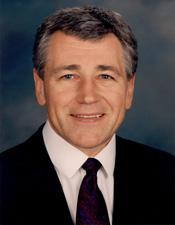 CH
CH CSB+17
Floor Debate
22 membersWhat members said about S. 2653 on the floor
Mr. President, I salute Senator Hagel for his leadership and his contribution on this issue. I am glad to be here with my colleague, Senator Craig, who is one of the Senate's real authorities on…
Mr. President, I salute Senator Hagel for his leadership and his contribution on this issue. I am glad to be here with my colleague, Senator Craig, who is one of the Senate's real authorities on energy.
We have had some trouble passing an energy bill in the Senate. We are having some trouble passing a clean air bill in the Senate. If we are being logical--which is hard for a Senate to be--we would set clean air objectives and pass a clean energy bill to help reach that objective, do it at once, and give ourselves a low cost, reliable supply of energy, less dependent on the rest of the world, and do it in a way that is environmentally sound.
That is our objective. We have different approaches on this, but Senator Hagel has put his emphasis today exactly where it needs to be. The United States of America is a country that has about a third of all the GDP in the world. We have 5 to 6 percent of the people and a third of all the money is one way to put it.
How did we get that money? How did we get our position? The National Academy of Sciences says that since World War II, half our new jobs have come from advances in science and technology. There are other countries in the world--a growing number of countries--that have great capacity for science and technology. Some of the greatest scientists and engineers who have worked in this country have come from other countries in the world. But if any country in the world ought to be putting a focus on science and technology as a way of helping not just their country but the rest of the world deal with the issue of greenhouse gases, it ought to be the United States of America. Senator Hagel is exactly right to put the spotlight there. He does it in a three-part bill. In the first part, he talks about international cooperation. That also makes a lot of sense.
Three weeks ago, I was visiting with the chairman of one of the largest energy companies in Germany. If there is a country in the world that has a more irrational energy policy than we do, it would be Germany. They have just decided to close 19 nuclear powerplants at the same time, across the Rhine river, France is 85 percent nuclear power. Of course, Germany will never do that because they will not be able to meet the Kyoto carbon standards if they close the plants. But the point that my friend from Germany was making is that we are headed, in his words, toward an energy catastrophe.
It is a catastrophe of two kinds. One is energy supply, and one is clean air. Now, why is that? It is because other countries in the world are growing. In China, the average Chinese person uses about one-sixth the amount of energy that the average person in the European Union uses, in the 15 original countries. Now, in China, when the average Chinese person, with all the people there, gets up to three-sixths or four-sixths or five-sixths or six-sixths, as they will, there will be an unbelievable demand for energy in this country. We are already seeing it in the prices for natural gas, in the prices for oil.
The figures we heard in our Energy Committee were that over the next 25 years--and my numbers are approximate--China might build 650 new coal plants to begin to supply its energy, and India might build 800. That does not count the rest of Southeast Asia or what Brazil might do. So we cannot just look at this issue in terms of what is happening in the United States.
If there is not a supply of energy, and the other countries are demanding so much, our prices will be so high that our million chemical jobs in the country will move overseas looking for cheap natural gas. And it will not make much difference how we clean the air in the United States of America if China and India and Brazil build so many old coal plants and throw stuff up in the air because it will blow around the world and come over here.
So we have, on two counts, a major, major challenge: energy supply and clean air. It would make enormous sense for the scientists and engineers in the United States to work with the scientists and engineers in Germany who have exactly the same challenge and the scientists and engineers in China who have even more of a challenge. They have just stopped 26 of their coal plants because of environmental concerns, but they will not be able to stop them for long because of their need for an energy supply.
What the Senator from Nebraska has done is to say to us, hey, we are talking about mandates and rules and regulations, but what we ought to be trying to do is to create a solution to the problem using the thing that we in the United States do better than anybody, or historically have, and that is our science and technology. This is the country with the 50 great research universities. This is the country with the 20 National Laboratories. The Oak Ridge National Laboratory, in my home State, is already doing important work on how we recapture carbon.
One of the things we can do in the Senate, without arguing about Kyoto, without arguing about mandates, is to say, let's see if we can-- through technology, working with people in other parts of the world, and encouraging our own businesses and laboratories--find better ways to deal with greenhouse gases. I salute the Senator for that. I am glad to have a chance to be associated with this bill.
Now, the second thing I would like to say is that is not all there is to do. We have different opinions in this body about so-called global warming. I believe, of course, there is global warming. Our grandparents can tell us that. The question, as Senator Craig said, is, What is causing it? And do we know enough about it to take steps? We have different opinions about that issue. That does not mean we are all unconcerned about it; we just have different
degrees of understanding of it and different opinions about the evidence we see.
I have a little different opinion than the Senator from Idaho. I support legislation that Senator Carper and Senator Chafee and Senator Gregg and I supported in the last session of Congress that put modest caps on the utilities section for the production of carbon. I was not willing to go further than that because of the science I read and I'm not sure we know exactly how to solve this problem. My reading of it did not persuade me, one, that we know all that we need to know about global warming; and, two, maybe more importantly, I was not sure we knew what we were doing by just saying, OK, we will do this, and without having the solution.
Again, Senator Hagel has suggested, well, let's come up with some technology. Let's come up with some science. And then we can make a better assessment about what we would be able to do if we were to put a cap on it.
I would suggest that in addition to Senator Hagel's technology that he encourages in his legislation--that is one way to do it--a second way to do it is with some kind of caps, and there are a variety of proposals in this body to do that. That also encourages, in my opinion, technology. But then there is also a third point to make, and that takes us out of the debate as to whether it is a good idea or a bad idea to put on mandatory caps.
If China is going to build hundreds of coal-fired powerplants and India is going to build hundreds of coal-fired powerplants because that is the only technology available to them and the only source of fuel they have readily available, then we had better get busy trying to figure out a way to recapture carbon--not to comply with the Kyoto Treaty, but because we are going to have to have it in this world. Any realistic look at the sources of energy in the world says that for the next 20 or 25 years, nuclear power, natural gas, oil, and coal will be almost all of it.
There is a lot of support for renewable energy. Some people want to put up wind turbines taller than football fields covering square miles. I do not. I think that destroys the American landscape, and it does not produce much energy.
But one of the most thoughtful presentations I have heard on the solution to our common issues of clean energy and clean air has come from the National Resources Defense Council, one of the leading environmental organizations in this country. They are in favor of a coal solution--I hope I am attributing this correctly to them--of a coal solution for our clean air, clean energy policy. A big part of their reasoning is, they see what is happening in the rest of the world. If the United States, they reason, can figure out a way to gasify coal and then recapture the carbon, that gets rid of most of the noxious pollutants--sulfur, nitrogen, mercury. It recaptures the carbon, which we have not really figured out how to do yet, but it does not just do that for the United States, it shows the rest of the world how to do it. And then China, instead of building 800 new coal plants with the old technology, will build 800 coal gasification plants and recapture the carbon. India will do the same, and maybe Germany will do the same. There will be more energy, and we will all be able to breathe. And that is quite irrespective of mandatory caps.
One of the things I like about Senator Hagel's proposal is there is not any way to study the technology of how we deal with greenhouse gases without getting into questions of coal gasification and the recapturing of carbon. There is not any way to do that. He is leading us to the tantalizing possibility that in the United States we might one day be able to say: We are the Saudi Arabia of coal. We have 500 years' worth of it. We can turn it into gas. We can recapture the carbon. We can use that to create the hydrogen for the hydrogen economy that we think might one day be down the road, and that, plus our supplies of natural gas and nuclear power, will give us clean energy and will give us clean air and will show the world how to do the same.
The Senator from Nebraska has put the spotlight where the spotlight ought to be. The United States of America, of all countries, should start with technology and science and say: Greenhouse gases is a problem. We are still researching how much of a problem it is. But we should, working with other countries, use our science and technology to deal with it and, in the process, see if it can lead us toward that brilliant intersection of clean energy and clean air that will one day give us a steady supply of energy and clean air that we can breathe.
I salute the Senator for his leadership and am glad to be a cosponsor. I look forward to working with him. As chairman of the Senate subcommittee on energy, we have some jurisdiction over global warming as well as energy technology commercialization. Senator Domenici, chairman of our full committee, had a full roundtable the other day on natural gas. We have one coming up on coal and coal gasification. I can assure my colleagues that the Hagel legislation will be an important part of that roundtable. I will do my best to make it an important part of energy hearings.
Mr. President, I am very pleased today to join several of my colleagues--Senator Pryor, Senator DeWine, Senator Bingaman, Senator Smith, Senator Lieberman, and the Presiding Officer, Senator…
Mr. President, I am very pleased today to join several of my colleagues--Senator Pryor, Senator DeWine, Senator Bingaman, Senator Smith, Senator Lieberman, and the Presiding Officer, Senator Coleman--in introducing the Keeping Families Together Act. This legislation is intended to reduce the barriers to care for children who are struggling with serious mental illness. It is intended to ensure their parents are no longer forced to give up custody of their children solely for the purpose of securing mental health treatment.
As the Presiding Officer is well aware, because he was an active participant in them, the Governmental Affairs Committee in the last Congress held extensive hearings on this issue.
What we heard was a tragedy. We heard case after case where families
made the wrenching choice to give up custody of their children in order to secure the mental health treatment that they needed. No family should ever be forced to make that decision.
Imagine what it feels like for a child who is suffering from mental illness to be wrenched from his family, put into either the juvenile justice system or the foster care system simply because that is the only way to get that child the care that he so desperately needs.
Serious mental illness afflicts millions of our Nation's children and adolescents. It is estimated that as many as 20 percent of American children under the age of 17 suffer from a mental, emotional or behavioral illness. What I find most disturbing, however, is the fact that two-thirds of all young people who need mental health treatment are not getting it.
Behind each of these statistics is a family that is struggling to do the best it can to help a son or a daughter with serious mental health needs to be just like every other kid--to develop friendships, to do well in school, and to get along with their siblings and other family members. These children are almost always involved with more than one social service agency, including the mental health, special education, child welfare, or the juvenile justice systems. Yet no one agency, at either the State or the Federal level, is clearly responsible or accountable for helping these children and their families.
My interest in this issue was triggered by a compelling series of stories by Barbara Walsh in the Portland Press Herald which detailed the obstacles that many Maine families have faced in getting desperately needed mental health services for their children. Too many families in Maine and elsewhere have been forced to make wrenching decisions when they have been advised that the only way to get the care that their children so desperately need is to relinquish custody and place them in either the child welfare or juvenile justice system.
When a child has a serious physical health problem like diabetes or a heart condition, the family turns to their doctor. When the family includes a child with a serious mental illness, it is often forced to go to the child welfare or juvenile justice system to secure treatment.
Yet neither system is intended to serve children with serious mental illness. Child welfare systems are designed to protect children who have been abused or neglected. Juvenile justice systems are designed to rehabilitate children who have committed criminal or delinquent acts. While neither of these systems is equipped to care for a child with a serious mental illness, in far too many cases, there is nowhere else for the family to turn.
In some extreme cases, families feel forced to file charges against their child or to declare that they have abused or neglected them in order to get the care that they need. As one family advocate observed, ``Beat 'em up, lock 'em up, or give 'em up,'' characterizes the choices that some families face in their efforts to get help for their children's mental illness.
In 2003, the Government Accountability Office, GAO, issued a report that I requested with Representatives Pete Stark and Patrick Kennedy that found that, in 2001, parents placed more than 12,700 children into the child welfare or juvenile justice systems so that these children could receive mental health services. I believe that this is just the tip of the iceberg, since 32 States--including five States with the largest populations of children--did not provide the GAO with any data.
Other studies indicate that the problem is even more pervasive. A 1999 survey by the National Alliance for the Mentally III found that 23 percent--or one in four of the parents surveyed--had been told by public officials that they needed to relinquish custody of their children to get care, and that one in five of these families had done so.
Some States have passed laws to limit custody or prohibit custody relinquishment. Simply banning the practice is not a solution, however, since it can leave children with mental illness and their families without services and care. Custody relinquishment is merely a symptom of the much larger problem, which is the lack of available, affordable and appropriate mental health services and support systems for these children and their families.
Last Congress, I chaired a series of hearings in the Governmental Affairs Committee to examine this issue further. We heard compelling testimony from mothers who told us that they were advised that the only way to get the intensive care and services that their children needed was to relinquish custody and place them in the child welfare or juvenile justice system. This is a wrenching decision that no family should be forced to make. No parent should have to give up custody of his or her child just to get the services that the child needs.
The mothers also described the barriers they faced in getting care for their children. They told us about the limitations in both public and private insurance coverage. They also talked about the lack of coordination and communication among the various agencies and programs that service children with mental health needs. One parent, desperate for help for her twin boys, searched for 2 years until she finally located a program--which she characterized as ``the best kept secret in Illinois''--that was able to help.
Parents should not be bounced from agency to agency, knocking on every door they come to, in the hope that they will happen upon someone who has an answer. It simply should not be such a struggle for parents to get services and treatment for their children.
We also need to question what happens to these children when they are turned over to the child welfare or juvenile justice authorities. I released a report last year with Congressman Henry Waxman that found that all too often they are simply left to languish in juvenile detention centers, which are ill-equipped to meet their needs, while they wait for scarce mental health services.
Our report, which was based on a national survey of juvenile detention centers, found that the use of juvenile detention facilities to ``warehouse'' children with mental disorders is a serious national problem. It found that, over a six month period, nearly 15,000 young people--roughly 7 percent of all of the children in the centers surveyed--were detained solely because they were waiting for mental health services outside the juvenile justice system. Many were held without any charges pending against them, and the young people incarcerated unnecessarily while waiting for treatment were as young as seven years old. Finally, the report estimated that juvenile detention facilities are spending an estimated $100 million of the taxpayers' money each year simply to warehouse children and teenagers while they are waiting for mental health services.
The Keeping Families Together Act, which we are introducing today, will help to improve access to mental health services and assist states in eliminating the practice of parents relinquishing custody of their children solely for the purpose of securing treatment.
The legislation authorizes $55 million over 6 years for competitive grants to states to create an infrastructure to support and sustain statewide systems of care to serve children who are in custody or at risk of entering custody of the State for the purpose of receiving mental health services. States already dedicate significant dollars to serve children in state custody. These Family Support Grants would help States to serve children more effectively and efficiently, while keeping them at home with their families.
The legislation would also remove a current statutory barrier that prevents more States from using the Medicaid home and community-based services waiver to serve children with serious mental health needs. This waiver provides a promising way for States to address the underlying lack of mental health services for children that often leads to custody relinquishment. While a number of States have requested these waivers to serve children with developmental disabilities, very few have done so for children with serious mental health conditions. Our legislation would provide parity to children with mental illness by making it easier for States to offer them home- and community-based services under this waiver as an alternative to institutional care.
And finally, the legislation calls for the creation of a federal interagency task force to examine mental health issues in the child welfare and juvenile
justice systems and the role of those agencies in promoting access by children and youth to needed mental health services. The task force would also be charged with monitoring the Family Support grants, making recommendations to Congress on how to improve mental health services, and fostering interagency cooperation and removing interagency barriers that contribute to the problem of custody relinquishment.
The Keeping Families Together Act takes a critical step forward to meeting the needs of children with serious mental or emotional disorders. Our legislation has been endorsed by a broad coalition of mental health and children's groups, including the National Alliance for the Mentally Ill, the Federation of Families for Children's Mental Health, the Bazelon Center for Mental Health Law, the National Child Welfare League, the National Mental Health Association, the American Correctional Association, the American Psychological Association, the American Psychiatric Association, the American Academy of Child and Adolescent Psychiatry, and Fight Crime, Invest in Kids.
Mr. President, I ask unanimous consent that their letters of endorsement for the bill be printed in the Congressional Record, and I urge all of our colleagues to join us as cosponsors.
Mr. President, I rise today to encourage increased production of influenza vaccines in the United States. I am happy to honor my commitment to reintroduce the Flu Protection Act of 2005, along with…
Mr. President, I rise today to encourage increased production of influenza vaccines in the United States. I am happy to honor my commitment to reintroduce the Flu Protection Act of 2005, along with Senator Bayh.
We dodged a bullet this year because we had a relatively mild flu season. Also, because the administration and public health officials did an excellent job of immediately addressing the vaccine shortage when it was announced in October. While this season's vaccine shortage didn't have as strong an impact as it might have, we should not go a day without looking for a path toward solving this problem so that we don't have the same issues in years to come. We may not always be so fortunate. Scientists believe that the return of an especially strong pandemic strain of flu is overdue. This legislation supports the administration's efforts to take steps to prepare for the imminent threat of avian flu.
The Bush administration has made progress on this issue, but Congress needs to address the underlying problems. The United States is disturbingly underprepared to deal with a massive outbreak or a sudden shortage of vaccine. We don't want to get caught short next year. We must aggressively encourage vaccine companies to come into this market and pass building incentives for existing companies.
I am encouraged that some sections of this legislation have been included in the majority's priority legislative package and look forward to working with other Members of Congress to ensure that the most comprehensive piece of legislation possible can be approved. We must move quickly to pass legislation that ensures sufficient flu vaccine supply, encourages an increase in production capacity, supports a flu vaccine awareness campaign, and prepares the United States to combat a pandemic or epidemic.
Mr. President, I am pleased to be on the floor at this moment to join my colleague Chuck Hagel in the introduction of legislation that he has put together out of a variety of avenues of interest and importance to deal with the issue of climate change, a issue in which he and I have been engaged for a good long while. I am not quite sure how many years ago it was that I, as the freshman chairman of the Republican Policy Committee, turned to Chuck to see if he could bring Senators together in a bipartisan way on what we believed at the moment--and we still believe today--was a critically important issue to be addressed.
Out of that effort grew the Hagel-Byrd resolution which passed this body by an overwhelming vote, and was a very clear message to America-- and to the world--on what we believed was necessary and important if we were to responsibly and effectively engage in the debate of climate change outside and well beyond the Kyoto protocol.
The legislation Senator Hagel brings to the floor today, of which I am proud to be a cosponsor, is what I believe is a needed and necessary next step to work cooperatively with this administration and with countries around the world to begin to recognize all that is the makeup of this issue.
Our policy must recognize the legitimate needs of our bilateral trading partners to use their resources to meet the needs of their people. Yet, at the same time, the initial debate basically suggested that if in fact human involvement in the climate of the world was changing the climate of the world, the only way you could save the climate was to turn the lights out. It did not address the human need. It did not address the economic growth that was critically necessary at that time. That is why our country pushed back and said no, we would not ratify Kyoto; that we would go much further than that in bringing about the changes that were necessary and that this administration engaged in.
This legislation does a great deal more toward recognizing the need for bringing resources together.
Senator Hagel has made clear the other important things this legislation will do. Above all, this legislation is a true acknowledgment that climate variability and change is a top priority as an issue for the United States--and for all nations--to be involved in.
There can be an honest debate about whether the United States should do more or whether too much reliance is being placed on voluntary initiatives, but to claim that the United States is not acting seriously reflects, at best, a lack of knowledge or, at worst, political posturing.
An objective review of Government and private sector programs to reduce increases in greenhouse gas now and in the future would have to conclude that the United States is doing at least as much, if not more, than countries that are part of the Kyoto Protocol which will go into effect tomorrow. The best evidence of this is our domestic rate of improvement in greenhouse gas intensity relative to the improvements other countries are making.
The term I just used, ``greenhouse gas intensity,'' is defined in legislation as the ratio of greenhouse gas emissions to economic output. This is a far wiser measure of progress because it complements, rather than conflicts with, a nation's goal of growing its economy and meeting the needs and aspirations of its people.
Too much attention is being paid to the mandatory nature of Kyoto. Too little results are being achieved. It is very interesting to note that most of the countries that ratified Kyoto will not meet the greenhouse gas reduction targets by the deadlines required by Kyoto. Indeed, when I and Senator Craig Thomas and Congressman Joe Barton were in Buenos Aires at the COP-10 conference in December, many nations were quietly acknowledging that they could not get to where they promised they would get, and, in fact, some have even suggested that by 2012 they would find it incumbent upon themselves and their nations to back out of Kyoto. However, all still recognize the importance of this issue, understanding it, and clearly defining it.
What Senator Hagel's legislation does is shape for us a variety of things that are already underway, while still allowing us clearly to define them and to say, both here at home with our domestic policy as well as internationally, that we mean what we say and we mean what we do.
The United States is currently spending in excess of $5 billion annually in scientific and technological initiatives. When we were in Buenos Aires, I was very proud to stand before my colleagues from around the world and before nongovernmental organizational groups and state that the United States is spending more on this issue, in both advances in science and technological change, than the rest of the world combined times two. Then I reminded them that all that we do, they could have also: that our technology would be in the world, that our science would be available to them, and that to work our way out of or to change the character of our economies without damaging those economies would in large part be the responsibility of new technologies.
This legislation does not pick one technology over another or one energy source over another. That has always been the debate. Somehow we had to go around and selectively turn out the lights if we were going to change the climate around us. We knew that was not acceptable to the developing world and in large part that is why the developing world would not come along. How can you deny a country the right to use its resources for the economic, humanitarian, and health benefits of its people? You cannot do that. Nor should we be engaged in trying to do that.
What we can do as a developed and advanced Nation is offer up exactly what we are doing; offer up what the Hagel legislation brings together. That is all we are doing now, and advancing and incentivizing, through this legislation, countries to do more in the area of technology.
These programs are designed to advance our state of knowledge, accelerate the development and the deployment of energy technologies, aid developing countries in using energy more efficiently, and achieve an 18-percent reduction in energy intensity by 2012--a phenomenally responsive goal and something we clearly can take to the world community.
Our administration today in a series of bilateral agreements is working with other countries to help them get to where we want and where they want to get, and for the sake of the environment, where we all want us all to go.
I was extremely proud sitting in different forums in Buenos Aires to see the United States talk about the leadership role it has taken and the bilateral partnerships it has agreed to, and all the things that we can help with in the world of change today. It is clearly to our advantage and to the advantage of the world at large.
What Senator Hagel has effectively done today is to get our arms around this issue to try to more directly define it, and to show that we are sensitive to it; that we are responding to the issue as clearly as our administration has and continues to do.
Domestically, the United States has and continues to make world leading investments in climate change science technology. The United States has also implemented a wide range of national greenhouse control initiatives, cash sequestration programs, and international collaborative programs. All of those are bound up within the bilaterals I have talked about that we are engaged in.
The legislation we have introduced today furthers all of these goals.
President Bush has consistently acknowledged how human activity can affect our climate, and that the climate variability does not recognize national borders. The key issue is not whether there is any human- influenced effect. Instead, the issues are how large any human influence may be as compared to natural variability; how costly and how effective human intervention may be in reversing climate variability; and how and what technology may be required over the near and the long term as determined by developments in climate science.
As I said, there can be a legitimate debate about whether more can be done while meeting our Nation's economic objectives. I, for one, support doing more in the areas of technological development to help lift developing countries from the depths of their plights and to advance their cause as we advance ours. That is why I am proud to be working with my colleagues in the Senate. I thank Senator Hagel, Senator Alexander, Senator Dole, and others for the hard work they have put in and the cooperative effort reflected in the bill introduced this afternoon.
I yield the floor.
Mr. President, on Wednesday, the U.N. Global Climate Treaty known as the Kyoto Protocol will enter into force, requiring more than 30 industrialized nations to significantly cut manmade greenhouse…
Mr. President, on Wednesday, the U.N. Global Climate Treaty known as the Kyoto Protocol will enter into force, requiring more than 30 industrialized nations to significantly cut manmade greenhouse gas emissions by 2012.
I rise today to introduce three pieces of legislation which I believe can help contribute to a new domestic and international consensus on climate change. This legislation builds upon three principles: the need for shared responsibilities between developed and developing countries; the linkages between environmental, economic, and energy policies; and the employment of greenhouse gas intensity as the best measurement upon which to build an effective climate policy.
I thank Senators Alexander, Craig, and Dole for their support and for agreeing to cosponsor these bills, which are titled: The Climate Change Technology Deployment in Developing Countries Act; The Climate Change Technology Deployment Act; and, The Climate Change Technology Tax Incentives Act.
Global climate policy affects the world's economic, energy, and environmental policies. These circles of interest in policy are interconnected. Climate change does not recognize national borders. It is a shared responsibility for all nations. Dealing with global climate policy requires a level of diplomatic intensity and coordination worthy of the magnitude of the challenge.
We all agree on the need for a clean environment and stable climate. The debate is about solutions. The question we face is not whether we should take action, but what kind of action we should take.
Climate change initiatives should include commitments to research and development, technology, and a more efficient and productive use of energy and resources.
My climate change legislation authorizes new programs, policies, and incentives to address the reduction of greenhouse gas emissions.
It focuses on the role of technology, private and public partnerships, and developing countries.
Any climate policy initiative must include clear metrics that recognize the links between energy, the economy, and the environment. Too often these policies are considered in vacuums. It is a global issue.
Bringing in the private sector and creating incentives for technological innovation will be critical to real progress on global climate policy. I believe that greenhouse gas intensity, or the amount of carbon emitted relative to economic output, is the best measurement for dealing with climate change.
Greenhouse gas emission intensity is the measurement of how efficiently a nation uses carbon emitting fuels and technology in producing goods and services. It captures the links between energy efficiency, economic development, and the environment.
The first bill, the Climate Change Technology Deployment in Developing Countries Act, provides the Secretary of State with new authority for coordinating assistance to developing countries for projects and technologies that reduce greenhouse gas intensity.
It supports the development of a U.S. global climate strategy to expand the role of the private sector, develop public-private partnerships, and encourage the deployment of greenhouse gas reducing technologies in developing countries. This bill directs the Secretary of State to engage global climate change as a foreign policy issue.
It directs the U.S. Trade Representative to negotiate the removal of trade-related barriers to the export of greenhouse gas intensity reducing technologies, and establishes an inter-agency working group to promote the export of greenhouse gas intensity reducing technologies and practices from the United States.
The legislation authorizes fellowship and exchange programs for foreign officials to visit the United States and acquire the expertise and knowledge to reduce greenhouse gas intensity in their countries. Current international approaches to global climate change overlook the role of developing countries as part of either the problem or the solution.
In July 1997, months before the Protocol was signed, the Senate unanimously passed. S. Res. 98, the Byrd-Hagel Resolution, which called on the President not to sign any treaty or agreement in Kyoto unless two conditions were met.
First, the United States should not be party to any legally binding obligations on greenhouse gas emission reductions unless developing country, parties are required to meet the same standards. Second, the President should not sign any treaty that ``would result in serious harm to the economy of the United States.''
Kyoto does not meet either of these conditions. As it stands, developing countries are exempt from the Kyoto obligations, leaving more than 30 developed countries to address greenhouse gas emissions. Developing nations are becoming the major emitters of greenhouse gases, but they are exempted from the Kyoto Protocol.
A recent Congressional Budget Office--CB0--report explains that developing countries are projected within the next 20 years to account for two-thirds of the growth in carbon dioxide emissions as their populations and economies expand. There are reasons for this.
Developing nations cannot achieve. greenhouse gas reductions until they achieve higher standards of living. They lack clean energy technology and they cannot absorb the economic impact of the changes necessary for emissions reductions. New policies will require recognition of the limitations of developing nations to meet these standards, and the necessity of including them in any successful future initiative.
Because Kyoto does not include developing countries, its approach is unrealistic. Any reduction in greenhouse gas emissions by the United States and other developed countries will soon be eclipsed by emissions from developing nations, such as China, which will soon be the world's largest emitter of manmade greenhouse gases.
It is in the shared interests of the United States and industrialized nations to help developing countries by sharing cleaner technology. Developing countries can then ``leapfrog'' over the highly polluting stages of development that countries like the U.S. have already been through.
My legislation includes tax incentives for American businesses to work with foreign countries to help develop clean energy projects and fuel-efficient technologies.
Our second bill, the Climate Change Technology Deployment Act, supports establishing domestic public-private partnerships for demonstration projects that employ greenhouse gas intensity reduction technologies. Our plan provides credit-based financial assistance and investment protection for American businesses and projects that deploy advanced climate technologies or systems. Federal financial assistance includes direct loans, loan guarantees, standby interest coverage, and power production incentive payments.
We are most successful in confronting the most difficult issues when we draw on the strength of the private sector. Public-private partnerships meld together the institutional leverage of the government with the innovation of industry.
This bill directs the Secretary of Energy to lead an inter-agency process to develop and implement a national climate strategy provided by the Office of Science and Technology Policy. It establishes a Climate Coordinating Committee and Climate Credit Board to assess, approve, and fund these projects.
Our third bill, the Climate Change Technology Tax Incentives Act, amends the tax code to provide incentives for investment in climate change technology. It also expresses our support for making permanent the current research and development tax credit, which otherwise expires on December 31, 2005. An article in the Wall Street Journal on February 4, 2005, reported on the potential for ``geologic storage'' of carbon dioxide as a means to dramatically reduce carbon dioxide emissions.
Geologic storage involves pumping carbon dioxide into the ground, rather than dumping it into the atmosphere. BP has been using geologic storage in Algeria's Sahara Desert and Statoil has been working on this in Norway's North Sea. Chevron Texaco is planning a project off the coast of Australia.
The article reports that:
the concept is drawing growing interest because it could
curb global warming more quickly than switching to
alternative energy sources or cutting energy use.
There is still much work to be done. But this kind of technology that was described in the Wall Street Journal article is the kind of technology that must be employed around the world to achieve results in reducing greenhouse gas emissions. My legislation would support more of this type of activity.
The American people and all global citizens need to better understand global climate change, its connections to our economic and energy policies, and what the realistic options are for addressing this challenge. Any recommendations regarding climate policy must meet the demands of economic growth and development, especially in the developing world. This will require a market-driven, technology-based approach that complements the world's environmental interests, and connects the public and private sectors.
Achieving reductions in greenhouse gas emissions is one of the important challenges of our time. America has an opportunity and a responsibility for global climate policy leadership. But it is a responsibility to be shared by all nations. I look forward to working with my colleagues in the Congress, the Bush administration, the private sector, public interest groups, and America's allies on achievable climate change policy.
By harnessing our many strengths, we can help shape a worthy future for all people, and build a better world.
I yield the floor.
Mr. President, today I join my friend and fellow cochair of the Senate National Guard caucus, Senator Pat Leahy, in introducing bipartisan legislation to strengthen one of our Nation's most important…
Mr. President, today I join my friend and fellow cochair of the Senate National Guard caucus, Senator Pat Leahy, in introducing bipartisan legislation to strengthen one of our Nation's most important military and civilian resources--the National Guard.
The Guard has a long and proud history of contributing to America's military away game, while providing vital support and security to civil authorities in the home game. Since September 11, 2001, our citizen- soldiers have taken on greater responsibilities and risks from fighting the war on terror to disaster assistance.
Today, the Guard supports the Nation's military strategy overseas, functions as a primary line of defense here at home, and helps local responders deal with overwhelming natural disasters.
We have seen the tremendous value of Guard forces as they confront terrorists in Afghanistan, Iraq, and other hotspots, and as they provide water, food, and health supplies to victims of Hurricane Katrina and other natural disasters.
More than 1,300 guardsmen from my home State of Missouri were deployed in less than 72 hours following Hurricane Katrina, providing medical, transportation, airlift, military police, engineering, and communications capabilities. For example, the 139th Airlift Wing evacuated 23 critically ill young patients from Children's Hospital in New Orleans and brought them to Children's Mercy Hospital in Kansas City for the high-level care they needed.
Stories such as this were repeated all over the country in most if not all our States.
Why was the Guard successful when other elements of the Katrina response were not? Quite simply, the Guard is the entity best organized and trained to initiate and coordinate a civil response to any disaster on the scale of Katrina.
In addition, more than 200,000 Guard troops have left their homes, their
jobs, and their families to participate in another critical mission: the global war on terror. The National Guard has provided as much as half the combat force and 40 percent of the total force in Iraq.
I point out that the Guard is a tremendous value for the capabilities it provides. It gives 40 percent of the total military force for around 4.5 percent of the budget. Whether at home or abroad, the men and women of the Guard are performing their duties with honor and valor, often at great sacrifice to their families and their own lives. As they willingly make these sacrifices to preserve American lives and freedoms, we have a responsibility to support them as they carry out their unique dual mission.
While serving abroad, National Guard troops serve under Air Force and Army commands under title 10 status. But when the Guard operates at home, they serve under the command and control of the Nation's Governors in title 32 status.
There is a lot more we can do to make this work more smoothly.
Despite their importance on the street, as it were, the Guard is often given short shrift back at Pentagon headquarters, which has proposed repeatedly to cut Guard personnel and equipment budgets.
The Guard will play a critical role in response to another terrorist attack or natural disaster, but the Pentagon has allowed its equipment levels to sink to dangerously low levels. Currently, the National Guard has only about 35 percent of the equipment it needs. In Missouri, only one of two engineering battalions that were requested to assist with Katrina could respond because the other one did not have the equipment they needed.
With the support of 75 of my colleagues, Senator Leahy and I led an effort to increase equipment funding for the Guard by almost $1 billion. We are going to continue that fight this year to ensure the Guard has equipment it needs to carry out both missions.
Just a few months ago, the Army proposed significant cuts to Guard troop strength. Three-quarters of the Senate again joined us in a letter opposing this, and I thank all of our colleagues who joined us.
We need to do more to empower the Guard. We need to give the Guard more bureaucratic muscle. Time and again, the Guard has had to rely on Congress, not its total force partners in the active duty, to provide and equip fully the resources it needs to fulfill its missions.
That the Guard is left out of the Pentagon decisionmaking process is beyond dispute. In the most recent Quadrennial Defense Review, during the BRAC review process of 2004 and 2005, when the Army and Air Force reduced National Guard force structure in 2005, and when equipment levels of the Army and National Guard reached the dangerously low levels of 35 percent, Congress has had to step in.
To remedy this, the legislation we introduce today to strengthen the Guard consists of three central planks.
One, we will allow the National Guard Bureau to establish more formal relationships with the Secretary of Defense and the Joint Chiefs.
We will give the Guard more muscle in existing relationships, elevating the Chief of the National Guard Bureau to a four-star position and providing a seat for him on the Joint Chiefs of Staff.
It goes without saying that to be a part of a big decision, you have to be at the table. Having a four-star Guard general providing advice to the SECDEF instead of a two-star major general will give our governors and 450,000 citizen-soldiers and airmen access to the highest level of the DOD and ensure key policy decisions are heard and taken into account.
To put things in perspective, the Active-Duty Army has 12 four-star generals and 46 lieutenant generals. The Air Force has 13 four-star generals and 35 lieutenant generals. The National Guard, which represents over 40 percent of the entire force structure, is represented by three lieutenant generals and zero four-star generals.
Can anyone tell me with a straight face how the Guard one four-star general and an additional three-star will endanger our national security? The only element endangered would be the Pentagon status quo which is outdated.
Facts are stubborn things. Clearly, the facts demonstrate a glaring, disproportionate number of three- and four-star generals in the Army and the Air Force when compared with the Guard.
Second, we will ensure that the Deputy Commander of the Northern Command is a member of the Guard, a new command with the mission of coordinating responses to emergencies within the United States.
The Guard is the entity best suited to respond to major incidents, and they need that capability. With both the Guard and NorthCom's missions being defense of the homeland, it only makes sense to have substantive input through a lieutenant general as deputy commander.
Finally, we must ensure the Guard plays a role in identifying and filling any gaps between civilian emergency response capabilities and those of the military. Current DOD policy prohibits procurement of supplies or equipment for providing military support to civilian authorities during emergencies except with the permission of SECDEF. That policy is outdated. It will give the National Guard Bureau, in consultation with the State adjutant generals, the budgetary power to research, validate, and make those equipment purchases.
Neither the homeland support nor the military support missions of the Guard are likely to diminish. They are needed more now than ever. But we must strengthen the decisionmaking capability of Guard leaders within the Department of Defense.
As we heard today from General Blum, Chief of the National Guard Bureau, before the Defense Appropriations Subcommittee when he was asked questions by Senator Inouye, he responded with a football analogy. When we asked him if he was in the huddle, he said he was ``not in the huddle'' during the QDR.
This legislation would empower the Guard to respond in the affirmative the next time it is asked, ``are you in the huddle'' on this major decision.
I thank my colleagues for their past support. I ask for their support of this legislation.
Mr. President, I ask unanimous consent that congressional findings regarding National Guard Forces be printed in the Record.
Show 8 more

Mr President, I am pleased today to join my friend and co- chair of the Senate National Guard Caucus, the Senator from Missouri, Senator Bond, in introducing far-reaching legislation that will…
Mr President, I am pleased today to join my friend and co- chair of the Senate National Guard Caucus, the Senator from Missouri, Senator Bond, in introducing far-reaching legislation that will strengthen our Nation's defense and the National Guard, which is an inextricable part of the bedrock of our security. The National Defense Enhancement and National Guard Empowerment Act of 2006 would empower the National Guard.
It offers the Guard new authorities and a greater and more fitting voice in policy and budgetary discussions that is more line with the reliance that we place on this force of proud men and women.
The Nation asks the Guard to provide a large part of the ground forces in Iraq, but then we give the force no say in strategic planning and budget discussions. In fact, there have been recent efforts within the armed services to cut the force precipitously.
Anyone who has watched recent events knows that the role of the Guard is dramatically changed as we come into this century.
We ask the Guard to carry out missions at home in response to disasters and possible domestic attacks, but then give the force no real ability to develop new equipment for this unique mission. And, in a crunch, our senior defense leaders--including the President--turn to the Chief of the National Guard for guidance in addressing and responding to emergencies within the domestic United States, yet those same senior Guard leaders receive only mediated and filtered advice at other points. This gap between the Guard's real world missions and its institutional position is simply unacceptable. It is not efficient, and it is not smart. It violates basic notions of logic, and it hinders our ability to get the full potential out of the National Guard.
Our legislation will take them from the 19th and 20th century structure into the 21st century's reality.
Our legislation directly addresses this troubling missions-to- authorities gap in three very specific ways. First, the National Defense Enhancement and National Guard Empowerment Act of 2006 would elevate the Chief of the National Guard to the rank of General with four-stars, also installing this senior officer on the Joint Chiefs of Staff. The Joint Chiefs is the highest military advisory body to the President and the Secretary of Defense. Without a Guard representative at the four-star level, the Secretary and the President receive only filtered advice from the Chiefs of Staff of the Army and the Air Force about National Guard matters.
The Army and the Air Force chiefs can provide keen insights about the Guard's role as a prime military reserve to the active components. However, they are not responsible for, and therefore are not experts on, disaster relief and homeland security functions that the Guard carries out at the State level, often under the command-and-control of the Nation's governors. Placing a National Guard General on the Joint Chiefs offers the fullest and most sensible guidance to our leaders on all aspects of the Guard, and this arrangement would give the Nation's governors a straight line to the Joint Chiefs and the President on military matters.
Creating a Guard senior advisor to the Secretary of Defense and the President streamlines and formalizes an arrangement that already arises in real emergencies. During the darkest early days of Katrina, for example, the current National Guard Bureau Chief General Steven Blum was by the side of the Secretary of Defense and the President. A permanent Guard presence on the Joint Chiefs ensures that this advisory relationship is in no way last-minute and ad-hoc.
The second way that this legislation puts the National Guard's authorities more in line with its real-world missions is by giving the force more budgetary authority. The Act gives the National Guard the ability to research, develop and procure equipment that is peculiar to its unique mission in the realm of homeland security.
This authority would be similar to the authority of the Special Operations Command, given under the Nunn-Cohen legislation of the mid- 1980s, to develop unique equipment for the special forces.
Last year, Congress appropriated almost $1 billion for the National Guard to procure equipment that has application for homeland security. This legislation establishes more formal structure for the Guard to refine such equipment requirements and work in close coordination with the states to ensure an adequate force structure--fully adequate in domestic emergencies--is in place.
The final way that this legislation brings realistic authorities to the Guard is by ensuring that the Deputy Commander of Northern Command is a three-star general from the National Guard. This Command is charged with planning for the active military's response to federal emergencies, as well as coordinating the response with other federal agencies and civilian authorities. Any military response in the domestic United States will surely include the National Guard, in many cases with the State governor overseeing the effort.
Currently, there are few if any senior Guard officers at the highest reaches of
the Command, and the legislation would ensure expertise on the force exists there.
There has been a lot of discussion already about this legislation after Senator Bond and I last month expressed our intention to pursue it. To clear up any confusion, let me say what this legislation does not do. This legislation does not affect the National Guard's role as one of the primary military reserves to the Air Force and the Army, which we believe is beneficial for the country.
It also does not inflate the size of National Guard headquarters here in Washington. We put a firm cap on the size of the Guard Bureau in this legislation. The legislation further does not create any new general office positions beyond the four-star Joint Chiefs position. It only ensures that the adequate seats of representation is in place in key positions; in fact, the legislation actually removes a less influential Major General officer slot on the Joint Staff.
What this bill does do--and with great intensity--is to give the National Guard the institutional muscle commensurate with the Guard's missions. With this bill, we can ask the Guard to do all that it does, but then say that, yes, it can have a seat at the table during key discussions involving the Guard's missions and readiness. With this bill, we can tap into the Guard for situations like the war in Iraq and the response to Hurricane Katrina and tell these proud men and women that we take are committed to taking real steps to keep the size of this force steady and improve its stock of available equipment.
With this bill, we can ensure that our senior leaders--the Secretary of Defense and the President--are making decisions about the National Guard based on the best available information.
With this bill, we strengthen the National Guard, the military chain- of-command, and the Guard's ability to effectively serve each of the States and the entire Nation.
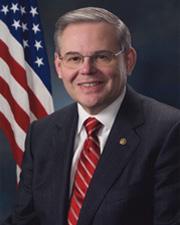
Mr. President, today, families across this country face a growing problem of rising credit card debt. In 2004, the average American household had $9,300 in credit card debt, up from $3,200 just 12…
Mr. President, today, families across this country face a growing problem of rising credit card debt. In 2004, the average American household had $9,300 in credit card debt, up from $3,200 just 12 years earlier. More and more Americans are using credit card debt to manage daily living expenses such as basic living costs, medical bills, and house or automotive repairs. And for college students, the problem cannot be overstated. According to university administrators, colleges lose more students to credit card debt than to academic failure.
To fuel that growth, credit card issuers have increased the number of
solicitations sent to consumers 500 percent since 1990 to a record 5.23 billion in 2004. And they start sending them to children at younger and younger ages. Last year, AJ, the son of my State director received his very first solicitation at the age of 2 years old. If you have a pulse and a social security number, you can get a credit card.
Credit card companies are increasingly targeting people who are likely to default. They have focused their attention on teenagers and college students, people who live beyond their means, and those who have declared bankruptcy. Clearly, credit card companies are not paying attention to whom they are giving a credit card, much less if the applicant can afford to pay the balance.
There is no question that we must demand personal responsibility from consumers, but at the same time credit card companies should not be allowed to take advantage of consumers with excessive fees and unreasonable interest rates. One study found that people in this Nation pay $90 billion each year in penalty fees and interest payments. Just think about that for a second--- $90 billion annually. It is money that could be used to send our children to college, to pay the health care bills of both our children in the dawn of their lives and our parents in the sunset of theirs, while still saving for our own retirements.
One of the most egregious practices is known as ``universal default.'' It involves credit card companies raising interest rates, up to 30 percent APR, on customers who have a perfect record with the credit card but miss a payment with any other creditor. So a person can make their credit card payment on time every month but see their interest rate skyrocket because they paid their gas bill late. Further, this penalty interest rate is often applied not only to future purchases but retroactively to current balances as well. This is a completely arbitrary rate-hike intended solely to hike the company's bottom line.
That is why I am introducing the Credit Card Bill of Rights--two pieces of legislation that, taken together, will stop some of the most egregious practices of credit card issuers while also ensuring that future generations have the information to make financial decisions.
Many American adolescents are inadequately prepared for the complex financial world that awaits them. In 2004, almost two-thirds of the students who took a personal finance survey failed the test.
The causes for this failure are largely due to the lack of high school finance courses available to teenagers combined with insufficient parental mentoring. Statistics show that while a large majority of both college and high school students rely on their parents for financial guidance, only 26 percent of 13- to 21-year-olds reported their parents actively taught them how to manage money. Public education has not filled this void as only about one in five students between the ages of 16 and 22 say they have taken a personal finance course in school.
Credit card companies are exploiting this financial inexperience of young Americans with an aggressive marketing strategy designed to maximize enrollment and profit, with little regard for a potential customer's ability to pay. As a result, over 20 percent of children between the ages of 12 to 19 have access to a credit card.
This credit card marketing blitz further intensifies once an individual enters college. During the first week college freshmen arrive on campus, they are barraged by an average of eight credit card offers. Students actually double their average credit card debt, and triple the number of credit cards in their wallets, from the time they arrive on campus until graduation. This large number of new credit card owners combined with the lack of financial illiteracy of high school graduates leads to high levels of debt amongst undergrads.
Credit card companies have actually encouraged this rise in credit card debt through increasing the median balance for undergraduates. As a result, 21 percent of undergraduates that have credit cards, have high-level balances between $3,000 and $7,000.
The Protection of Young Consumers Act will protect people, especially college students and other young people, against skyrocketing consumer debt and the barrage of credit card solicitations that lead to it. The bill will do so by building on the current opt-out program for pre- approved credit card solicitations by requiring young consumers under age 21 to proactively opt-in to receive solicitations from credit card companies. This proposal will also establish a financial literacy and education program in elementary and secondary schools to help prepare young people to be financially responsible consumers.
In addition to targeting high school and college students, credit card companies have become very adept at increasing their profits through hidden fees and deceptive advertising, taking advantage of Americans of all ages.
The Credit Card Reform Act will protect consumers against hidden fees and excessive interest rates. It does so by: 1) prohibiting ``universal defaults'' that I mentioned earlier, 2) banning unilateral changes in credit card agreements without written consent, and 3) requiring that the fees charged by creditors are ``reasonably related'' to the cost incurred by the issuer.
The bill will also establish standards that would prohibit unfair or deceptive acts or practices, while tightening regulations on credit card companies to ensure that they are not offering credit to high-risk cardholders without verifying their ability to pay.
I would like to be clear that I am not trying to remove the obligation for consumers to behave responsibly. Every individual must take responsibility for their own actions, but at the same time it is the obligation of the companies who are earning billions in profits from credit cards to behave ethically as well.
This Credit Card Bill of Rights will help ensure that New Jersey consumers and consumers across the country are given a fair chance at being responsible consumers who will enjoy economic security as well as economic opportunity in their futures.
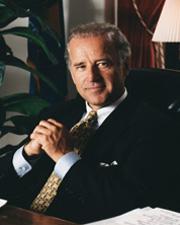
Mr. President, I rise today to introduce the Reducing Crime and Terrorism at America's Seaports Act, along with the Chairman of the Judiciary Committee Senator Specter, and the Chairman and Ranking…
Mr. President, I rise today to introduce the Reducing Crime and Terrorism at America's Seaports Act, along with the Chairman of the Judiciary Committee Senator Specter, and the Chairman and Ranking Member of the Terrorism Subcommittee, Senators Kyl and Feinstein. My colleagues and I have worked on this legislation for the past four years and I am hopeful this package of common-sense criminal law improvements will be approved by the Senate early this Session.
The bipartisan legislation we introduce today should be familiar to my colleagues. It was introduced as S. 2653 in the 108th Congress, where I worked closely with the then-Chairman of the Committee Senator Hatch and Senator Leahy to ensure they were comfortable with the bill's provisions. The language has been reviewed by the United States Coast Guard, the American Association of Port Authorities, the American Institute of Marine Underwriters, the Inland Marine Underwriters Association, the Maritime Exchange for the Delaware River and Bay, the Transportation Security Administration, and the AFL-CIO. Senator Kyl included this language in his Tools to Fight Terrorism Act of 2004 and it was the subject of a hearing in the Judiciary Subcommittee on Terrorism on September 13, 2004. This Congress, identical language was introduced by Senator Gregg at Title IV of S. 3, the majority's Protecting America in the War on Terror Act of 2005.
Our bill will double the maximum term of imprisonment for anyone who fraudulently gains access to a seaport or waterfront. The Interagency Commission on Crime and Security at U.S. Seaports concluded that ``control of access to the seaport or sensitive areas within the seaports'' poses one of the greatest potential threats to port security. Such unauthorized access continues and exposes the nation's seaports, and the communities that surround them, to acts of terrorism, sabotage or theft. Our bill will help deter those who seek unauthorized access to our ports by imposing stiffer penalties.
Our bill would also increase penalties for noncompliance with certain manifest reporting and record-keeping requirements, including information regarding the content of cargo containers and the country from which the shipments originated. An estimated 95 percent of the cargo shipped to the U.S. from foreign countries, other than Canada and Mexico, arrives through our seaports. Accordingly, the Interagency Commission found that this enormous flow of goods through U.S. ports provides a tempting target for terrorists and others to smuggle illicit cargo into the country, while also making ``our ports potential targets for terrorist attacks.'' In addition, the smuggling of non-dangerous, but illicit, cargo may be used to finance terrorism. Despite the gravity of the threat, we continue to operate in an environment in which terrorists and criminals can evade detection by underreporting and misreporting the content of cargo. Increased penalties can help here.
The legislation we introduce today would also make it a crime for a vessel operator to fail to slow or stop a ship once ordered to do so by a Federal law enforcement officer, for any person on board a vessel to impede boarding or other law enforcement action authorized by Federal law, or for any person on board a vessel to provide false information to a Federal law enforcement officer. The Coast Guard is the main Federal agency responsible for law enforcement at sea. Yet, its ability to force a vessel to stop or be boarded is limited. While the Coast Guard has the authority to use whatever force is reasonably necessary, a vessel operator's refusal to stop is not currently a crime. This bill would create that offense.
In addition, the Coast Guard maintains over 50,000 navigational aids on more than 25,000 miles of waterways. These aids, which are relied upon by all commercial, military and recreational mariners, are critical for safe navigation by commercial and military vessels. They could be inviting targets for terrorists. Our legislation would make it a crime to endanger the safe navigation of a ship by damaging any maritime navigational aid maintained by the Coast Guard, place in the waters anything which is likely to damage a vessel or its cargo, interfere with a vessel's safe navigation, or interfere with maritime commerce, or dump a hazardous substance into U.S. waters with the intent to endanger human life or welfare.
Each year, thousands of ships enter and leave the U.S. through seaports, smugglers and terrorists exploit this massive flow of maritime traffic to transport dangerous materials and dangerous people into this country. This legislation would make it a crime to use a vessel to smuggle into the United States either a terrorist or any explosive or other dangerous material for use in committing a terrorist act. The bill would also make it a crime to damage or destroy any part of a ship, a maritime facility, or anything used to load or unload cargo and passengers, commit a violent assault on anyone at a maritime facility, or knowingly communicate a hoax in a way which endangers the safety of a vessel. In addition, the Interagency Commission concluded that existing laws are not stiff enough to stop certain crimes, including cargo theft, at seaports. Our legislation would increase the maximum term of imprisonment for low-level thefts of interstate or foreign shipments from 1 year to 3 years and expand the statute to outlaw theft of goods from trailers, cargo containers, warehouses, and similar venues.
These are improvements we should make to our criminal code. I am under no illusion, however, that enactment of our bill will guarantee the security of our seaports. We need to dramatically increase the financial assistance we are giving our ports so that they can harden their own facilities against potential attackers. I was disappointed to read in the Administration's budget that the President wants to eliminate the Department of Homeland Security's dedicated port security grant program. His budget instead will force our ports to compete against all other transit systems for scarce federal funds. We've spent only about $750 million to secure seaports since September 11th--the Coast Guard reports that is not nearly enough to meet the requirements of the Maritime Transportation Security Act. We also need to increase the number of inspections of ships and shipping containers that are coming into our ports. But the amendments to Federal criminal law that we propose here will provide an important deterrent effect and they will give Federal prosecutors new tools to go after terrorists who would target our seaports. I urge my colleagues to support our bill, and I look forward to its prompt consideration.
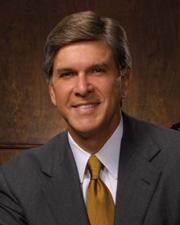
Mr. President, I rise today to join my colleagues, Senator Collins and Senator Pryor, in introducing the ``Keeping Families Together Act''. This bill will expand Medicaid's home and community based…
Mr. President, I rise today to join my colleagues, Senator Collins and Senator Pryor, in introducing the ``Keeping Families Together Act''. This bill will expand Medicaid's home and community based services waiver to cover children and adolescents in residential treatment facilities. Currently, most state Medicaid agencies, including Oregon, do not cover this intensive treatment.
In 2001, 101 Oregon children and adolescents were placed in State custody because this was the only way they could get the mental health treatment they need. This situation occurs most often in middle-income families, where the family's employer-based insurance does not cover intensive treatment for serious mental illness, but the family income is too high for them to qualify for Medicaid services. With no other way to get their child treatment, parents are forced to choose between custody and care. Passage of this legislation is urgently needed so that thousands of parents are not forced to relinquish their custody rights to State child welfare or juvenile agencies in order to obtain mental health care for their seriously mentally ill children.
In Oregon, children with serious mental illnesses are being taken away from their families at a time when they most need to be close to home. The availability of family support services, community-based services and other effective interventions will help reduce the need for costly residential care and consequently reduce the need to place children in a setting away from their homes, families and communities. Keeping Families Together Act will also establish a Federal interagency task force to examine mental health issues in the child welfare and juvenile justice systems so that we can hopefully see an end to this practice, not just in Oregon, but in every State in our nation.
I urge my colleagues to join me in support of this critical legislation.
Mr. President, America will soon be facing a new and serious retirement challenge. Americans are living longer. Yet, recent economic and demographic shifts will put the retirement security of many retirees at risk. Current projections regarding the solvency of the Social Security program are not favorable. And, with 77 million baby boomers set to begin retiring in 2008, the number of retirees in the Social Security program is expected to double. In addition, fewer retirees in the future will be able to depend on monthly pension checks that many employers once paid. A growing number of retirees will be facing the difficult challenge of managing their own savings.
In response to these trends, I am offering legislation aimed at assisting Americans maintain their financial independence and their standard of living throughout their retirement by making it easier for them to secure a steady income for life. Under the Retirement Security for Life Act that Senator Conrad and I are introducing today, a tax incentive would be enacted that encourages retirees to provide themselves with a guaranteed lifetime income. Specifically, the proposal would exclude from federal taxes one-half of the income payments from an annuity purchased with after tax dollars, a so- called non-qualified annuity.
Importantly, we have proposed a cap on the exclusion so that no more that $20,000 could be excluded in a year. For a typical American in the 25 percent tax bracket, this would provide an annual maximum tax savings of up to $5,000. I believe that this modest tax incentive will enable some retirees to consider annuitizing a portion of their nest egg so that they have a guaranteed lifetime of income.
In recent years, the ``retirement security'' debate in Congress has almost entirely focused on the need to accumulate a nest egg prior to retirement. And, Congress is doing much to encourage personal saving and employer-provided retirement plans. I am proud of both our successes and our continuing efforts in these areas. Encouraging more savings is an important step, but it is not enough. What has received little attention is the retirement income or ``payout'' phase of the retirement security equation. That is, we need to be thinking about the management of market and longevity risk so that a life's savings can provide a secure retirement. Longevity risk--the risk of outliving one's savings--is one of the biggest risks facing retirees. While we have some control over when we retire, we have very little control over how long we will live. It is my goal that Americans will be able to enjoy a lifetime of income from their hard-earned savings long after they have put their years in the workforce behind them.
Please join me in supporting our proposal as a crucial step in providing a secure retirement for all Americans. I ask unanimous consent that the text of the legislation be printed in the Record.

Mr. President, I introduce today legislation to require the White House to notify Congress when it declassifies information. This bill will both enhance Congress's oversight abilities and ensure that…
Mr. President, I introduce today legislation to require the White House to notify Congress when it declassifies information. This bill will both enhance Congress's oversight abilities and ensure that intelligence is not used for political gain.
This legislation recognizes that as the head of the executive branch, the President has the authority to declassify any information he so chooses. It does not place any conditions or procedures on that declassification process, it only requires that the Congress be provided with notice so that it can meet its own constitutional responsibilities.
Information is usually declassified because the public's need to know outweighs the security risks to intelligence sources and methods. In such cases, it is important for the Congress to be informed so that Senators and Representatives can discuss the issues with the American people.
And if the President declassifies information so that his subordinates can discuss intelligence with reporters, Congress should be alerted so that the intelligence committees can ensure that national secrets are not being used for political purposes.
According to court filings and media reports, the Vice President's chief of staff, I. Lewis Libby, acting on the direction and authorization of the President and Vice President, disclosed information in the 2002 National Intelligence Estimate on Iraq's weapons of mass destruction to select journalists. This was not done to provide the American people with a fuller understanding of the pre-Iraq war intelligence; the Estimate was fully and publicly declassified shortly afterwards in a more appropriate manner. Rather, the selective declassification and leak was intended to stem a tide of bad press and discredit an administration critic through a subtle campaign of media manipulation.
According to the prosecutor in Mr. Libby's case, Libby provided information on Iraq's purchase of uranium from Niger to New York Times reporter Judith Miller. The Niger claim was not a ``key judgment'' of the NIE, meaning that it was not deemed by the intelligence community to be a priority. It was included in the body of the report ``for completeness,'' according to the primary author. At the time, the Department of State's intelligence office found the Niger uranium claim to be ``highly dubious,'' and the intelligence community downplayed the Niger connection afterwards:
The CIA had deleted a reference to Niger from the President's October 7, 2002 speech in Cincinnati;
Two senior intelligence officials had downplayed the assessment in testimony to the Senate Intelligence Committee;
The International Atomic Energy Agency had denounced the claim as being based on forged documents; and
The intelligence community had retracted the intelligence.
Let me say that again: the intelligence community had retracted this piece of intelligence. None of this additional information, apparently, was provided by Mr. Libby.
Had the Senate and House intelligence committees been informed of this declassification, as would be required by this legislation, Members could have corrected the public record.
I would hope that with this reporting requirement, administrations of both political parties will be deterred from improper use of intelligence.
In addition to stemming the politicization of intelligence, the bill I introduce today also notes the importance of keeping the full intelligence community informed of declassifications. If the President chooses, for whatever reason, to declassify information, the intelligence agency that had been responsible for those secrets has to take steps to protect intelligence sources and methods.
Similarly, the National Archives are to be informed upon a Presidential declassification so the Nation's records can be appropriately maintained. As has been highlighted again today with the release of the Archives audit over the reclassification of intelligence, the Archives play an important role in providing declassified intelligence to the public. To do so, it must be informed when information enters the public domain.
It should be made clear that there are more traditional procedures by which individual intelligence agencies declassify information on a regular basis, when the release of that information is seen as no longer damaging the national security. This is done thousands of times a week throughout the intelligence community.
It is important that the public have access to as much information on its government's activities as possible. To that end, I look forward, through this legislation and otherwise, to working with my colleagues and the executive branch to ensure that declassification is done as extensively and as quickly as possible without risking our national security.

Mr. President, I rise to introduce the ``Community College Opportunity Act.'' Community colleges are the gateway to the future--for first time students looking for an affordable college education,…
Mr. President, I rise to introduce the ``Community College Opportunity Act.'' Community colleges are the gateway to the future--for first time students looking for an affordable college education, and for mid-career students looking to get ahead in the workplace. As college tuition at four-year colleges continues to rise, more and more students are turning to community colleges for the education they need to prepare for 21st century jobs.
Yet soon we may not be able to count on our community colleges being available to everyone. The combination of budget cuts and increased enrollments is forcing community colleges to make tough choices-- between raising tuition and turning students away. This important legislation will help keep the doors of our community colleges open to increasing numbers of students without sending tuition through the roof. My bill authorizes $500 million for a competitive grant program to help community colleges serve more students. Community colleges could apply
for a grant to help with the cost of constructing or renovating facilities, hiring faculty, purchasing new computers and scientific equipment, and investing in creative ways of addressing overcrowding-- like distance learning.
Why is this important? Community colleges are one of the great American social inventions. I used to teach night school at Baltimore City Community College. I know firsthand the vital role they play in our communities. Their low cost, convenient location, and open door admissions policy have made them the key to the American dream for so many. Many generations of immigrants pursued the American dream by working all day and going to night school at night. After World War II, the GI bill gave returning veterans a chance to get ahead by going to local junior colleges.
Now, more than ever, it's important to invest in community colleges. In the next ten years, 40 percent of new jobs will require college education. At the same time, college tuition is on the rise. Tuition at the University of Maryland is up by as much as 32 percent. That's causing many students to take a second look at community colleges because they're more affordable. They're also leaders in training workers for 21st century jobs--from nurses to computer techies, and even lab techs for new industries, like biotechnology. They're playing a key role in addressing shortages in nursing and teaching. In Maryland, community colleges train 55 percent of new nurses.
Yet our community colleges are bursting at the seams. They're growing faster than 4-year colleges. Enrollment at Maryland's community colleges is expected to grow 30 percent in the next 10 years, while 4- year colleges will grow by 15 percent. Community colleges are holding classes from 7 in the morning to 10 at night, on weekends, and over the internet. In my own State of Maryland, they are starting to turn students away because there isn't enough room. Almost 1,000 students were shut out of Montgomery College last spring because they couldn't get into the classes they needed or they couldn't afford the cost. Prince George's Community College had to turn away 630 prospective nursing students and 1,000 prospective education students.
It's great that so many Americans are going to community colleges. For so many Americans, community colleges are the only way to get the education they need to be competitive for 21st century jobs. Yet the rapid increase of students is threatening the very mission of community colleges. If we want a world-class workforce, we need to invest in higher education. We need to make sure we always have institutions available to everyone who wants a college degree--or just a couple of courses. That means investing in our community colleges, so they can continue to be affordable, accessible, and successful at training the next generation of nurses, teachers, and techies.
I ask unanimous consent that the text of the bill be printed in the Record.

Mr. President, I come to the floor today, along with my colleague Senator Jim Bunning, to introduce the Screening Abdominal Aortic Aneurysms Very Efficiently SAAAVE Act of 2005. This important…
Mr. President, I come to the floor today, along with my colleague Senator Jim Bunning, to introduce the Screening Abdominal Aortic Aneurysms Very Efficiently SAAAVE Act of 2005. This important legislation would provide Medicare coverage for screening for a dangerous condition known as abdominal aortic aneurysm--or AAA.
The SAAAVE Act is designed to save the lives of those suffering from abdominal aortic aneurysms, a silent killer that claims the lives of 15,000 Americans each year. AAAs occur when there is a weakening of the walls of the aorta, the body's largest blood vessel. This artery begins to bulge, most often very slowly and without symptoms, and can lead to rupture and severe internal bleeding. AAA is a devastating condition that is often fatal without detection, with less than 15 percent of those afflicted with a ruptured aorta surviving. Estimates indicate that 2.7 million Americans suffer from AAA.
With introduction of this important legislation, Congress recognizes abdominal aortic aneurysm screening as essential to stopping its deadly effects. Research indicates that when detected before rupturing, AAAs are treatable and curable in 95 percent of the cases. And while most AAAs are never diagnosed, nearly all can be detected through an inexpensive and painless screening.
I am particularly pleased that the U.S. Preventive Services Task Force recently recommended AAA screening for all men between the ages of 65 and 75 that have ever smoked. This independent panel of experts in primary care and prevention concluded that screening for abdominal aortic aneurysms for this particularly vulnerable population is especially important. The
recognition of this screening measure by this respected body makes perfectly clear the lifesaving potential offered by AAA screening.
For more than four decades the Medicare program has provided a literal lifeline for America's seniors and individuals with disabilities. However, for far too long this valuable program-- originally crafted only to provide needed care after an illness--failed to cover valuable preventive services. Recently, though, Medicare has evolved to include a number of preventive measures, such as mammography and colorectal screenings. With today's introduction of the SAAAVE Act, we again move Medicare toward greater inclusion of lifesaving preventive measures. This legislation reflects the changing attitudes toward the value of preventive health care services and moves us toward modernizing the Medicare program to better meet the needs of its more than 40 million beneficiaries. With enactment of the SAAAVE Act, instead of waiting to treat a ruptured aorta, Medicare will now help high-risk seniors avert this often-deadly disease through preventive and lifesaving screening.
Lastly, I want to thank the legislation's chief sponsors in the House of Representatives, Gene Green and John Shimkus. Representatives Green and Shimkus have been tireless advocates on behalf of patients suffering from abdominal aortic aneurysms and their devotion to modernizing the Medicare program to include greater preventive services is truly admirable. I look forward to continuing working with my colleagues from the House to advance the SAAAVE Act in the 109th Congress.
When Senator Bunning and I first introduced this legislation in the last Congress, we were joined by patients who had suffered a ruptured aorta as result of an AAA and their families. At this event these patients shared with us their harrowing and personal stories of battling this deadly condition. It is because of struggles like theirs that we are here today at the outset of an effort to prevent abdominal aortic aneurysms from advancing to the point of rupture by providing coverage for a simple yet lifesaving screening. Simply, Mr. President, this legislation is about saving lives. I urge all of my colleagues to support the SAAAVE Act.
Mr. President, I rise today to introduce the ``Localism in Broadcasting Reform Act of 2005.'' This legislation would reduce the license term for broadcasters from 8 years to 3 years, thereby…
Mr. President, I rise today to introduce the ``Localism in Broadcasting Reform Act of 2005.'' This legislation would reduce the license term for broadcasters from 8 years to 3 years, thereby requiring broadcasters to provide the Federal Communications Commission (FCC or Commission) with information every 3 years on why their license should be renewed. Prior to 1981, broadcast licenses were granted for a term of 3 years.
The bill would require the full Commission to review 5 percent of all license and renewal applications. Currently, the Media Bureau randomly audits 5 percent of all license renewal applications. The FCC first started an audit process back in the 1980s when the FCC changed its license renewal process from one where stations submitted evidence of ``public interest'' obligations compliance to one where stations self certify compliance, critics call it a ``post card renewal''. This section would take the audit process a step further by requiring the Commissioners to review the applications selected for audit rather than the Media Bureau.
The bill would command broadcasters to post on their Internet sites information detailing their commitment to local public affairs programming and children's programming. The bill also calls for the FCC to complete
its proceeding on whether public interest obligations should apply to broadcasters in the digital era.
To ensure that viewers or listeners can fully participate in a broadcaster's license renewal, the bill would codify the Commission's rule that a viewer or listener has standing to challenge a license if he demonstrates either that he resides in the station's service area or that he regularly listens or views the station and that such listening or viewing is not the result of transient contacts with the station.
Lastly, the bill would allow the Commission, during a license renewal proceeding, to review not only the performance of the station seeking renewal, but also the performance of all stations owned by the licensee seeking renewal. The current statute restricts the Commission's review only to that station seeking the renewal.
Last June, FCC Chairman Michael Powell and I challenged all local broadcast television and radio stations to provide their local communities with significant information on the local political issues facing communities, the local candidates' campaign platforms, and the local candidate debates during the 2004 election. In response to the challenge, many broadcasters sent volumes of material detailing their extensive election coverage and committing to increase their coverage in 2004. Today, the Norman Lear Center at the Annenberg School for Communication at the University of Southern California released findings showing that local news coverage of local political campaigns is dismal. Specifically, the study found that 92 percent of the news broadcasts studied contained no stories about races for the U.S. House, State senate or assembly, mayor, city council, law-enforcement posts, judgeships, education offices, or regional or county offices.
Therefore, I feel it is now time to introduce legislation to bring local back into local broadcasting. I believe this legislation is a step in the right direction. It will have a small impact on those stations that are currently meeting their public interest obligations, but it should have a large impact on those citizens whose local broadcaster is not meeting its obligations. I refuse to believe that the ``public interest'' is served by minimal campaign coverage, such as a 12 second sound bite on from a candidate during a half-hour local news program as found in the study. Citizens deserve more from their local broadcaster.
I ask unanimous consent that the text of the bill be printed in the Record.
Show 10 more

Mr. President, I rise today to introduce the Fire Safe Cigarette Act of 2005. Last year the State of New York enacted a bold new law. As of June 2004, all cigarettes sold in the State are tested for…
Mr. President, I rise today to introduce the Fire Safe Cigarette Act of 2005. Last year the State of New York enacted a bold new law. As of June 2004, all cigarettes sold in the State are tested for fire safety and required to self-extinguish.
Nationwide the statistics regarding cigarette-related fires are startling. Cigarette-ignited fires account for an estimated 140,800 fires in the United States, representing the most common ignition source for fatal home fires and causing 30 percent of the fire deaths in the United States. Such fires cause more than 900 deaths and 2,400 injuries every year. Annually, more than $400 million in property damage is reported due to a fire caused by a cigarette. According to the National Fire Protection Association, one out of every four fire deaths in the United States are attributed to tobacco products--by far the leading cause of fatal home fires in the United States. Overall, the Consumer Product Safety Commission estimates that the cost of the loss of human life and personal property from not having a fire-safe cigarette standard is approximately $4.6 billion per year.
In my State of Illinois, cigarette-related fires have also caused too many senseless tragedies. In 1998 alone, the most recent year for which we have data, there were more than 1,700 cigarette-related fires, of which more than 900 were in people's homes. These fires led to 109 injuries and 8 deaths.
Tobacco companies spend billions on marketing and learning how to make cigarettes appealing to kids. It is not unreasonable to ask those same companies to invest in safer cigarette paper to make their products less likely to bum down a house. As of today cigarettes are designed to continue burning when left unattended. A common scenario is the delayed ignition of a sofa or mattress by a lit cigarette dropped by a smoker.
The Fire Safe Cigarette Act of 2005 requires the Consumer Product Safety Commission to promulgate a fire safety standard, specified in the legislation, for cigarettes. The CPSC would also have the authority to regulate the ignition propensity of cigarette paper for roll-your- own tobacco products. The Act gives the Consumer Product Safety Commission authority over cigarettes only for purposes of implementing and enforcing compliance with this Act and with the standard promulgated under the Act. It also allows states to pass more stringent fire-safety standards for cigarettes.
Two decades ago Joe Moakley set out to ensure that the tragic cigarette-caused fire that killed five children and their parents in Westwood, MA was not repeated. He introduced three bills, two of which passed. One commissioned a study that concluded it was technically feasible to produce a cigarette with a reduced propensity to start fires. The second required that the National Institute of Standards and Technology develop a test method for cigarette fire safety, and the last and final bill, the Fire-Safe Cigarette Act of 1999, mandates that the Consumer Product Safety Commission use this knowledge to regulate cigarettes with regard to fire safety.
Today I respectfully introduce this bill to bring fire-safe standards to all cigarettes sold in this country. I hope that the Commerce Committee will consider this legislation very soon and that my Colleagues will join me in supporting this effort. Now that New York serves as an example of success, it is time to establish a national standard to ensure that our Nation's children, elderly and families are protected.
I ask unanimous consent that the text of the bill be printed in the Record.

Mr. President, today, February 15, 2005, I rise to introduce a bill, proposing we enact the Fair Currency Enforcement Act of 2005. The present legislation addresses the practice of some governments…
Mr. President, today, February 15, 2005, I rise to introduce a bill, proposing we enact the Fair Currency Enforcement Act of 2005. The present legislation addresses the practice of some governments to intervene aggressively in currency markets, or to peg their currencies at a fixed--artificially low--exchange rate, thus subsidizing their export sales and raising price barriers to imports from the United States. I introduced similar legislation last Congress, yet the problem remains unsolved.
In recent years, particularly China has been pressed to float their currency upward. Specifically, the Europeans, the International Monetary Fund and the Bank for International Settlements have put pressure on the Chinese to at a minimum repeg their currency to a higher dollar value. The Administration has talked about this idea, but has been ineffective. As a consequence there has been no movement on the part of the Chinese.
As a result of the heavy dollar buying, the Asian Central banks have allowed their foreign-exchange reserves to swell from less than $800 billion at the start of 1999 to over $1.5 trillion in 2003. This is almost two-thirds of the global total.
The world's seven biggest holders of foreign-exchange reserves are all in Asia.
This legislation proposes that our Administration promptly open negotiations with the four Asian countries that exemplify this practice, with the intent to put a stop to it. These countries are: China, Japan, South Korea, and Taiwan. This practice hurts American manufacturers: it impedes their ability to introduce new products and technologies and provide Americans with quality jobs. It has caused and continues to cause the current economic recovery to be a jobless one, particularly in the manufacturing sector.
Experts indicate that the United States has the right and the power to address unfair competitive practices under the following laws, rules and agreements: 1. Section 3004 of the Omnibus Trade and Competitiveness Act of 1988 2. Article IV of the Articles of Agreement of the International Monetary Fund Article 3. XV of the Exchange Agreements of the General Agreement on Tariffs and Trade 4. The Agreement on Subsidies and Countervailing Measures of the World Trade Organization (as described in section 101(d)(12)) of the Uruguay Round Agreements Act. 5. Article XXIII of the General Agreement on Tariffs and Trade. 6. Sections 301 and 406 of the Trade Act of 1974. 7. The provisions of the United States-China Bilateral Agreement on World Trade Organization Accession.
These laws, rules and agreements provide us with ample process to do this right and it is important we act now. Therefore, beginning on the date of enactment of this Act, the President will be required to start a 90 day period of negations. If these negotiations fail to bear fruit, he is required to seek redress through the various international trade laws by instituting appropriate proceedings, or report to congress in detail why this is not a proper course of action.
I ask unanimous consent that the text of the Bill be printed in the Record.
Mr. President, I rise to introduce a bill that will make much-needed improvements to our container security system. The Federal Government currently has no coordinated strategy which integrates the…
Mr. President, I rise to introduce a bill that will make much-needed improvements to our container security system. The Federal Government currently has no coordinated strategy which integrates the many aspects of inter-modal container shipping.
We may not be able to physically screen every container on the move in our Nation's vast economy, but we should not leave vast shipments of cargo completely unchecked. My bill lays out a systematic plan to coordinate and expand existing methods of screening and securing materials using available technology.
The cost to the U.S. economy of port closures on the West Coast due to a labor dispute last year was approximately $1 billion per day for the first five days, and rose sharply thereafter. These disruptions have become so costly because the container shipping system is designed for speed and efficiency; as a result, the U.S. and its global trading partners have in effect become hostages to a ``just-in-time'' distribution model where any disruption of the system has far reaching and immediate global impact.
I am eager to prevent a similar situation from occurring, since in my home State the Port of Houston, a $15 billion petrochemical complex, is the second-largest port in the U.S. and first in international tonnage. Texas has 13 deepwater ports, many of which subsequently move freight by rail, a model typical nationwide.
My bill will require the Department of Homeland Security to incorporate aviation, maritime, rail and highway security in a single plan. We need a coordinated strategy to make the most of federal, state, and local capabilities.
The bill requires a ``smart box'' standard to reduce the cost of inspecting shipping containers and calls for all containers to meet this standard by 2009. It establishes penalties for commercial shippers, to hold them, and by extension their clients, responsible for properly documenting the contents of their shipments. Finally, it significantly increases U.S. Customs' presence overseas, because identifying a dirty bomb after it is unloaded onto U.S. soil may be too late.
I urge my colleagues to support this legislation and I ask unanimous consent that the text of the bill be printed in the Record.

Mr. President, the American people recognize the importance of the family farmer to our Nation, and the need to provide an adequate safety net for family farmers. In recent years, however, assistance…
Mr. President, the American people recognize the importance of the family farmer to our Nation, and the need to provide an adequate safety net for family farmers. In recent years, however, assistance to farmers has come under increasing scrutiny.
Critics of farm payments have argued that the largest corporate farms reap most program benefits. The reality is over 72 percent of the payments have gone to only 10 percent of our Nation's farmers. There is good reason to be critical of our farm programs.
What's more, farm payments that were originally designed to benefit small- and medium-sized family farmers have contributed to their own demise. Unlimited farm payments have placed upward pressure on land prices
and have contributed to overproduction and lower commodity prices, driving many family farmers off the farm.
The Senate has agreed, by an overwhelming bipartisan vote during the 2002 farm bill debate and two Senate Budget Committee markups that targeting Federal assistance to small- and medium-sized family farmers is the right thing to do.
It has been my hope since the 2002 farm bill conference committee dropped the payment limit amendment that Congress would establish legitimate, reasonable payment limits similar to S. 667, the payment limits bill we introduced last session.
While we have not yet achieved our ultimate goal, no one can question that the votes have been there for payment limits. Unfortunately, a two-thirds majority in the Senate hasn't been enough to protect this issue in conference. But times are clearly changing thanks to the President's support for payment limits in his budget proposal.
The legislation we are introducing today adopts the President's proposed cap of $250,000, while maintaining other concepts from S. 667 that the President has embraced like limiting the subterfuge surrounding the three-entity rule, curtailing the use of generic certificates, and developing a measurable standard to determine who should and should not be receiving farm subsidies.
I look forward to working with Senator Dorgan again on this issue. With the President's support I believe we will have success.
I ask unanimous consent, that the text of the bill be printed in the Record.
Mr. President, the Call Home Act of 2006 would require the Federal Communications Commission to take such actions as may be necessary to reduce telephone rates for Armed Forces personnel deployed…
Mr. President, the Call Home Act of 2006 would require the Federal Communications Commission to take such actions as may be necessary to reduce telephone rates for Armed Forces personnel deployed overseas, including the waiver of government fees, assessments, or other costs.
In seeking to reduce phone rates, the legislation would require the FCC to evaluate and analyze the costs of calls to and from official duty stations including vessels whether in port or under way; evaluate methods of reducing rates including deployment of new technology such as Voice over Internet protocol, VOIP, or other Internet protocol technology; encourage phone companies to adopt flexible billing procedures and policies call to and from Armed Forces personnel; and seek agreements with foreign governments to reduce international surcharges on phone calls.
The legislation would, however, prohibit the FCC from regulating rates in order to carry out the Call Home Act's requirements.
The Call Home Act of 2006 would replace similar legislation from 1992 that limited the FCC's efforts to reduce rates to specific countries. The Call Home Act would expand the FCC's efforts to benefit troops wherever they are deployed in support of the global war on terrorism.
We have received a letter of support from the Military Coalition, which represents 36 military and veterans groups. We have also received letters of support from individual members of that coalition and others urging Congress to enact this legislation: Veterans of Foreign Wars; Association of the United States Army; Enlisted Association of the National Guard; Military Officers Association of America; American Legion; Naval Reserve Association; Naval Enlisted Reserve Association; Gold Star Wives of America; and Air Force Sergeants Association.
The Veterans of Foreign Wars' letter of support says that calls home are ``lifeline'' for the brave men and women stationed abroad.
I urge you to vote for this important legislation.
I ask unanimous consent letters in support of this legislation be printed in the Record.
Mr. President, the Call Home Act of 2006 would require the Federal Communications Commission to take such actions as may be necessary to reduce telephone rates for Armed Forces personnel deployed…
Mr. President, the Call Home Act of 2006 would require the Federal Communications Commission to take such actions as may be necessary to reduce telephone rates for Armed Forces personnel deployed overseas, including the waiver of government fees, assessments, or other costs.
In seeking to reduce phone rates, the legislation would require the FCC to evaluate and analyze the costs of calls to and from official duty stations including vessels whether in port or under way; evaluate methods of reducing rates including deployment of new technology such as Voice over Internet protocol, VOIP, or other Internet protocol technology; encourage phone companies to adopt flexible billing procedures and policies call to and from Armed Forces personnel; and seek agreements with foreign governments to reduce international surcharges on phone calls.
The legislation would, however, prohibit the FCC from regulating rates in order to carry out the Call Home Act's requirements.
The Call Home Act of 2006 would replace similar legislation from 1992 that limited the FCC's efforts to reduce rates to specific countries. The Call Home Act would expand the FCC's efforts to benefit troops wherever they are deployed in support of the global war on terrorism.
We have received a letter of support from the Military Coalition, which represents 36 military and veterans groups. We have also received letters of support from individual members of that coalition and others urging Congress to enact this legislation: Veterans of Foreign Wars; Association of the United States Army; Enlisted Association of the National Guard; Military Officers Association of America; American Legion; Naval Reserve Association; Naval Enlisted Reserve Association; Gold Star Wives of America; and Air Force Sergeants Association.
The Veterans of Foreign Wars' letter of support says that calls home are ``lifeline'' for the brave men and women stationed abroad.
I urge you to vote for this important legislation.
I ask unanimous consent letters in support of this legislation be printed in the Record.
Mr. President, I am pleased to be joining Senator Dodd from Connecticut today in re-introducing the Screening Abdominal Aortic Aneurysms Very Efficiently Act of 2005--also known as the SAAAVE Act--…
Mr. President, I am pleased to be joining Senator Dodd from Connecticut today in re-introducing the Screening Abdominal Aortic Aneurysms Very Efficiently Act of 2005--also known as the SAAAVE Act-- in the 109th Congress.
This is an important bill that could potentially save the lives of many Medicare beneficiaries. Unfortunately, too many Americans die from ruptured abdominal aortic aneurysms each year without ever knowing they had this condition. In fact, less than 15 percent of people who have a ruptured abdominal aortic aneurysm survive.
That is why our bill is so important. The SAAAVE Act would add a new screening benefit to Medicare so that people at risk for abdominal aortic aneurysms could be tested. The test is simple. In fact, it's just an ultrasound test, which is painless, non-invasive and inexpensive.
Medicare beneficiaries found to have an abdominal aortic aneurysm could have surgery if needed or could simply be monitored by their doctors.
Early detection is the key to preventing ruptures of these aneurysms and preventing deaths. In fact, these aneurysms can be successfully treated 95 percent of the time if they are detected before rupturing.
The legislation also includes a national educational and information campaign to get the word out about the health risks associated with abdominal aortic aneurysms. Too often, those with these aneurysms simply don't know they have one until it ruptures. The educational campaign requires the Department of Health and Human Services to focus their education efforts not only on the general public, but also among health care practitioners as well.
I am pleased we are introducing this bill today, and I look forward to working with my colleague from Connecticut in getting it passed.
Mr. President, I rise today to introduce an important piece of legislation for our Native American veterans. The Native American Veterans Cemetery Act of 2006 would provide tribal organizations…
Mr. President, I rise today to introduce an important piece of legislation for our Native American veterans. The Native American Veterans Cemetery Act of 2006 would provide tribal organizations eligibility for Department of Veterans Affairs grants to establish veterans cemeteries on trust lands. Currently, VA does not have the authority to make such grants.
Native American veterans have a long and proud history of military service on behalf of this Nation. Per capita, Native Americans have the highest percentage of people serving in the U.S. Armed Forces. Native Americans have honorably served in every war fought by the United States. After completion of their service, many Native American veterans return to their communities on trust lands. Passage of this legislation would provide them the option of veterans cemetery burial in a location convenient for their families and loved ones.
Throughout my tenure in Congress, I have always fought for the rights of our indigenous peoples. The Native American Veterans Cemetery Act of2006 is another step forward in helping native peoples. The Department of Veterans Affairs supports enactment of this legislation and estimates it to be budget neutral. It is my hope that the Senate will expeditiously proceed to the consideration of this important bill.
I ask unanimous consent that the full text of the bill be printed in the Record.
Mr. President, I ask unanimous consent that the Committee on Commerce be discharged from further consideration of S. 2653 and the Senate proceed to its immediate consideration. Mr. President, I ask…
Mr. President, I ask unanimous consent that the Committee on Commerce be discharged from further consideration of S. 2653 and the Senate proceed to its immediate consideration.
Mr. President, I ask unanimous consent that the Stevens amendment that is at the desk be agreed to, the bill, as amended, be read a third time and passed, the motion to reconsider be laid upon the table, and that any statements relating to the bill be printed in the Record.

Mr. Speaker, I ask unanimous consent to take from the Speaker's table the Senate bill (S. 2653) to direct the Federal Communications Commission to make efforts to reduce telephone rates for Armed…
Mr. Speaker, I ask unanimous consent to take from the Speaker's table the Senate bill (S. 2653) to direct the Federal Communications Commission to make efforts to reduce telephone rates for Armed Forces personnel deployed overseas, and ask for its immediate consideration in the House.
Bill Text
4 versions available
        [Congressional Bills 109th Congress]
[From the U.S. Government Publishing Office]
[S. 2653 Enrolled Bill (ENR)]

S.2653

One Hundred Ninth Congress

of the

United States of America

AT THE SECOND SESSION

Begun and held at the City of Washington on Tuesday,
the third day of January, two thousand and six

An Act

To direct the Federal Communications Commission to make efforts to
reduce telephone rates for Armed Forces personnel deployed overseas.

Be it enacted by the Senate and House of Representatives of the
United States of America in Congress assembled,

SECTION 1. SHORT TITLE.

This Act may be cited as the ``Call Home Act of 2006''.

SEC. 2. TELEPHONE RATES FOR MEMBERS OF ARMED FORCES DEPLOYED ABROAD.

(a) In General.--The Federal Communications Commission shall take
such action as may be necessary to reduce the cost of calling home for
Armed Forces personnel who are stationed outside the United States
under official military orders or deployed outside the United States in
support of military operations, training exercises, or other purposes
as approved by the Secretary of Defense, including the reduction of
such costs through the waiver of government fees, assessments, or other
charges for such calls. The Commission may not regulate rates in order
to carry out this section.
(b) Factors To Consider.--In taking the action described in
subsection (a), the Commission, in coordination with the Department of
Defense and the Department of State, shall--
(1) evaluate and analyze the costs to Armed Forces personnel of
such telephone calls to and from American military bases abroad;
(2) evaluate methods of reducing the rates imposed on such
calls, including deployment of new technology such as voice over
Internet protocol or other Internet protocol technology;
(3) encourage telecommunications carriers (as defined in
section 3(44) of the Communications Act of 1934 (47 U.S.C.
153(44))) to adopt flexible billing procedures and policies for
Armed Forces personnel and their dependents for telephone calls to
and from such Armed Forces personnel; and
(4) seek agreements with foreign governments to reduce
international surcharges on such telephone calls.
(c) Definitions.--In this section:
(1) Armed forces.--The term ``Armed Forces'' has the meaning
given that term by section 2101(2) of title 5, United States Code.
(2) Military base.--The term ``military base'' includes
official duty stations to include vessels, whether such vessels are
in port or underway outside of the United States.

SEC. 3. REPEAL OF EXISTING AUTHORIZATION.

Section 213 of the Telecommunications Authorization Act of 1992 (47
U.S.C. 201 note) is repealed.

SEC. 4. PUBLIC SAFETY INTEROPERABLE COMMUNICATIONS GRANTS.

Pursuant to section 3006 of Public Law 109-171 (47 U.S.C. 309
note), the Assistant Secretary for Communications and Information of
the Department of Commerce, in consultation with the Secretary of the
Department of Homeland Security, shall award no less than
$1,000,000,000 for public safety interoperable communications grants no
later than September 30, 2007 subject to the receipt of qualified
applications as determined by the Assistant Secretary.

Speaker of the House of Representatives.

Vice President of the United States and
President of the Senate.