Wind Cave National Park Boundary Revision Act of 2005
Legislative Activity
Stay on top of the latest movement without scrolling through every action
Became Public Law No: 109-71.
September 21, 2005
View full timeline
Introduced in Senate
February 3, 2005
Sponsor introductory remarks on measure. (CR S982)
February 3, 2005
Read twice and referred to the Committee on Energy and Natural Resources. (text of measure as introduced: CR S982)
February 3, 2005
Committee on Energy and Natural Resources. Ordered to be reported without amendment favorably.
February 16, 2005
Committee on Energy and Natural Resources. Reported by Senator Domenici without amendment. With written report No. 109-21.
March 8, 2005
Placed on Senate Legislative Calendar under General Orders. Calendar No. 32.
March 8, 2005
Passed Senate without amendment by Unanimous Consent. (consideration: CR S9018-9052; text as passed Senate: CR S9027)
July 26, 2005
Received in the House.
July 27, 2005 • 10:33 AM
Message on Senate action sent to the House.
July 27, 2005
Referred to the House Committee on Resources.
July 27, 2005
Referred to the Subcommittee on National Parks.
August 2, 2005
Mr. Fortuno moved to suspend the rules and pass the bill.
September 13, 2005 • 2:48 PM
Considered under suspension of the rules. (consideration: CR H7829-7830)
September 13, 2005 • 2:49 PM
DEBATE - The House proceeded with forty minutes of debate on S. 276.
September 13, 2005 • 2:49 PM
At the conclusion of debate, the Yeas and Nays were demanded and ordered. Pursuant to the provisions of clause 8, rule XX, the Chair announced that further proceedings on the motion would be postponed.
September 13, 2005 • 2:52 PM
Considered as unfinished business. (consideration: CR H7834)
September 13, 2005 • 7:03 PM
Passed/agreed to in House: On motion to suspend the rules and pass the bill Agreed to by the Yeas and Nays: (2/3 required): 295 - 106 (Roll no. 467).(text: CR H7829-7830)
September 13, 2005 • 7:20 PM
On motion to suspend the rules and pass the bill Agreed to by the Yeas and Nays: (2/3 required): 295 - 106 (Roll no. 467). (text: CR H7829-7830)
September 13, 2005 • 7:20 PM
Motion to reconsider laid on the table Agreed to without objection.
September 13, 2005 • 7:20 PM
Cleared for White House.
September 13, 2005
Presented to President.
September 15, 2005
Signed by President.
September 21, 2005
Became Public Law No: 109-71.
September 21, 2005
Voting History
1 vote recorded • Roll call available
Floor Debate
21 membersWhat members said about S. 276 on the floor
 CJD
CJD MD
MD HK
HK SMC
SMC CSB+16
Floor Debate
21 membersWhat members said about S. 276 on the floor
Mr. President, I am pleased to join with my colleagues Senator Kennedy, Senator Mikulski, Senator Murray, Senator Clinton, Senator Durbin, Senator Lautenberg, Senator Leahy, Senator Akaka, Senator…
Mr. President, I am pleased to join with my colleagues Senator Kennedy, Senator Mikulski, Senator Murray, Senator Clinton, Senator Durbin, Senator Lautenberg, Senator Leahy, Senator Akaka, Senator Boxer, and Senator Corzine, to introduce the ``Family and Medical Leave Expansion Act.'' Today marks the 12th anniversary of the enactment of the Family and Medical Leave Act. This landmark legislation was nearly a decade in the making, but today, more than 50 million Americans have taken leave under FMLA.
Despite the many Americans the Family and Medical Leave Act has helped, too many continue to be left behind. Too many continue to have to choose between job and family. The facts are clear: millions of Americans remain uncovered by the Family and Medical Leave Act. And too many who are eligible for the Family and Medical Leave Act cannot afford to take unpaid leave from work. The ``Family and Medical Leave Expansion Act'', which we are introducing today addresses both these problems.
The ``Family and Medical Leave Expansion Act'' would expand the scope and coverage of FMLA. It would fund pilot programs at the state level to offer partial or full wage replacement programs to ensure that employees do not have to choose between job and family.
Times have changed over the years. More and more mothers are working. While decades ago only a tiny fraction of mothers with infants under one year of age were working, in 2004 about 55 percent of mothers with infants were working. Even as employment rates within this group rises, family responsibilities remain constant, a reality that lies at the core of the FMLA. According to an employee survey by the Department of Labor, about one-fifth of U.S. workers have a need for some form of leave covered under the FMLA, and about 40 percent of all employees think they will need FMLA-covered leave within the next 5 years.
According to a Department of Labor study in 2000, leave to care for one's own health or for the health of a seriously ill child, spouse or parent, together account for almost 80 percent of all FMLA leave. Approximately 52 percent of the leave taken is due to employees' own serious health problems, while 26 percent of the leave is taken by young parents caring for their children at birth or adoption.
The FMLA requires that all public sector employers and private employers of 50 or more employees provide up to 12 weeks of unpaid leave for medical and family care reasons for eligible employees. About 77 percent of employees in the private and public sector currently work in FMLA-covered sites, although only 62 percent of employees are actually eligible for leave.
However, only 11 percent of private sector work sites are covered under FMLA. Individuals working for smaller private employers deserve the same work protections afforded to other employees. As a step toward expanding protection to more hard-working Americans, this bill would extend FMLA coverage to all private sector worksites with 25 or more employees within a 75-mile radius. This would mean that an additional 13 million Americans would be eligible for leave under the Act--roughly 240,000 in my own State of Connecticut.
Mothers and fathers, adult sons and daughters have the same family responsibilities and personal health problems, regardless of whether they work for the government, a large private enterprise, or a medium- sized private business. Expanding the FMLA to businesses with 25 or more employees is a crucial acknowledgment of this reality.
The bill recognizes the enormous physical and emotional toll domestic violence takes on victims. The bill expands the scope of FMLA to include leave for individuals to care for themselves or to care for a daughter, son, or parent suffering from domestic violence.
Expanding the scope and coverage of FMLA is a positive step for many Americans. But, alone, it is not enough. According to a Department of Labor study, 3.5 million covered Americans needed leave but--without wage replacement--could not afford to take leave. Over four-fifths of those who needed leave but did not take it said they could not afford unpaid leave.
Others cut their leave short, with the average duration of FMLA leave being 10 days. Of those individuals taking leave under the Family and Medical Leave Act, nearly three-quarters had incomes above $30,000.
While the financial sacrifice is often enormous, the need for leave can be even more so. Every year, many Americans bite the bullet and accept unpaid leave. As a result, nine percent of leave takers go on public assistance to cover their lost wages. Almost twelve percent of female leave takers use public assistance for this reason. These individuals are far from being unwilling to work. Instead, they are trying to balance work with family--often during a crisis, too often with inadequate means to get by.
Other major industrialized nations have implemented policies far more family-friendly to promote early childhood development and family caregiving. At least 128 countries provide paid and job-protected maternity leave, with an average of sixteen weeks of basic paid leave. In 1992, before we enacted the Family and Medical Leave Act, the European Union mandated a paid fourteen-week maternity leave as a health and safety measure. Among the 29 Organization for Economic Cooperation and Development (OECD) countries, the average childbirth- related leave is 44 weeks, while the average duration of paid leave is 36 weeks.
Compared to these other developed nations, the United States is far behind in efforts to promote stronger families and worker productivity. The ``Family and Medical Leave Expansion Act'' builds on current law to provide pilot programs for States and the federal government to provide for partial or full wage replacement for at least 6 weeks. At a minimum, this will ensure that parents can continue to make ends meet while taking family and medical leave.
When we talk about a more compassionate America, nowhere is that more evident than in our caregiving leave policies. No one should have to choose between work and family. Women and men deserve to take leave when family or health conditions require it without fear of losing their job or livelihood. We must not simply pay lip service to family integrity and the promotion of a healthy workplace.
We talk often of our need to strengthen family values. We cite studies about the importance of the first few months of a newborn's life. This bill offers more parents the opportunity to spend time with their families when their families most need them.
I urge my colleagues to support the ``Family and Medical Leave Expansion Act'' to promote our family values and to ensure the welfare and health of hard-working Americans.
I ask unanimous consent that a copy of a brief summary of the Family and Medical Leave Expansion Act be printed in the Record.
Mr. President, I rise and am joined by my colleagues Senators Mikulski, Jeffords, Murray, Lieberman, Sarbanes, Landrieu, Dayton, Levin, Lautenberg, Inouye,
Corzine, Durbin and Akaka to introduce legislation to amend the Higher Education Act to improve access to higher education for low- and middle-income students by raising the authorized maximum Pell Grant to $11,600 within five years. This bill has the strong support of the Student Aid Alliance, whose 60 organizations represent students, colleges, parents, and others who care about higher education.
Pell Grants were established in the early 1970s by our former colleague, I Claiborne Pell, of Rhode Island. They are the largest source of Federal grant aid for college students. For millions of low- and middle-income students they are the difference between attending or not attending college. But, unfortunately, they don't make as much of a difference as they used to.
In 1975, the maximum appropriated Pell Grant covered all of the average student's tuition, fees, room, and board at community colleges. It covered about 80 percent of those costs at public universities and about 40 percent at private universities. In 2003, the average Pell Grant covered 32 percent of tuition, room and board at community colleges, 23 percent of the total charges at public universities, and 9 percent of total charges at private universities. That's not just a drop, it's a free-fall.
For low- and middle-income families, the cost of college also has increased significantly as a percentage of income. College is getting farther and farther out of reach for an entire generation of students.
As a result of all this, low- and middle-income students who want to attend college are forced to finance their education with an ever- increasing percentage of loans as opposed to grants. This increases the cost of attendance for these students even more, and in many cases, keeps them from going to college at all.
For four years now, the Administration has not raised the maximum Pell Grant. On top of leaving millions of children behind by failing to meet the bipartisan promises of the No Child Left Behind Act, they have left even more children behind who work hard and do well in school and want to go on to college. If we're serious about leaving no child behind, if we're serious about having a society where equal opportunity for all is more than just rhetoric, then we need to reinvigorate the Pell program.
It has been said that investing in a student's future is investing in our Nation's future. We can start investing in our Nation's future by supporting this bill to increase the maximum appropriated Pell Grant to $11,600. This bill won't bring the Pell Grant's purchasing power back to where it was in 1975, but it is a critical first step, and I intend to continue my efforts on this matter throughout this Congress. I hope that my colleagues will join me.
I ask unanimous consent that the text of the bill be printed in the Record.
Mr. President, I rise today, along with Senators Leahy and Domenici, to introduce a bill that would reauthorize ``America's Law Enforcement and Mental Health Project Act.'' This program addresses the…
Mr. President, I rise today, along with Senators Leahy and Domenici, to introduce a bill that would reauthorize ``America's Law Enforcement and Mental Health Project Act.'' This program addresses the impact that mentally ill offenders have had on our criminal justice system and the impact the system has had on the offenders and their special needs.
My interest in, and experience with this issue began over 30 years ago, when I was working as Assistant County Prosecuting Attorney in Greene County, OH, and then as County Prosecutor. What I learned then-- and what I have continued to encounter throughout my career in public service--is that our State and local correctional facilities have become way stations for far too many mentally ill individuals in our Nation.
A recent Justice Department study revealed that 16 percent of all inmates in America's State prisons and local jails today are mentally ill. The American Jails Association estimates that 600,000 to 700,000 seriously mentally ill persons each year are booked into local jails, alone. In Ohio, nearly one in five prisoners need psychiatric services or special accommodations. As these statistics make clear, far too many of our Nation's mentally ill persons have ended up in our prisons and jails. In fact, on any given day, the Los Angeles County Jail is home to more mentally ill inmates than the largest mental health care institution in our country.
How did we wind up in this situation? What happens is that all too often, the mentally ill act out their symptoms on the streets. They are arrested for minor offenses and wind up in jail. They serve their sentences or are paroled, but do not receive any treatment for their underlying mental illness. Not surprisingly, they often find themselves right back in the system only a short time later after committing additional--often more serious--crimes.
Throughout this destructive cycle, law enforcement and corrections spend time and money trying to cope with the unique problems posed by these individuals. Certainly, many mentally ill
offenders must be incarcerated because of the severity of their crimes. However, those who commit very minor, non-violent offenses don't necessarily need to be incarcerated; instead, if given appropriate treatment early, their illnesses could be addressed, helping the offenders, while reducing recidivism and decreasing the burdens on our police and corrections officials.
That is why, six years ago Senator Domenici and I introduced America's Law Enforcement and Mental Health Project, to begin to identify--early in the process--mentally ill offenders within our justice system and to use the power of the courts to assist them in obtaining the treatment they need.
This program has been a success. In pilot programs around the country, mental health courts have begun to help local communities take steps toward effectively addressing the issues raised by the mentally ill in our justice system, and these steps must continue. The legislation that we are introducing today will help do that. Our bill would establish a Federal grant program to help States and localities develop mental health courts in their jurisdictions. These courts are specialized courts with separate dockets. They hear cases exclusively involving nonviolent offenses committed by individuals with a mental illness. Fundamentally, mental health courts enable State and local courts to offer alternative sentences or alternatives to prosecution for those offenders who could be served best by mental health services. These courts are designed to address the historic lack of coordination between local law enforcement and social service systems and bring them together to work within the criminal justice system.
To deal with the separate needs of mentally ill offenders, these mental health courts are staffed by a core group of specialized professionals, including a dedicated judge, prosecutor, public defender, and court liaison to the mental health services community. The courts promote efficiency and consistency by centrally managing all outstanding cases involving a mentally ill defendant referred to the mental health court.
Mental health court judges decide whether or not to hear each case referred to them. The courts only deal with defendants deemed mentally ill by qualified mental health professionals or the mental health court judge. Similarly, participation in the court by the mentally ill is voluntary; however, once the defendant volunteers for the Mental Health Court, he or she is expected to follow the decision of the court.
For instance, in any given case, the mental health court judge, attorneys, and health services liaison may all agree on a plan of treatment as an alternative sentence or in lieu of prosecution. The defendant must adhere strictly to this court-imposed treatment plan. The court must then provide supervision, and quickly deal with any failure. This way, the court can quickly deal with any failure of the defendant to fulfill the treatment plan obligations. The mental health courts provide supervision of participants that is more intensive than might otherwise be available, with an emphasis on accountability and monitoring the participant's performance. In this sense, the mental heath courts function similarly to drug courts.
Offenders with a mental illness who choose to have their cases heard in a mental health court often do so because that is the first real opportunity that many of these people have to seek treatment. A judicial program offering the possibility of effective treatment-- rather than jail time--gives a measure of hope and a chance for rehabilitation to these defendants.
The successes of mental health courts are encouraging and show that we can improve the health and safety of our communities through these programs. In Ohio, the Alcohol, Drug and Mental Health Services Board which serves Athens, Hocking and Vinton Counties, began operating its program on August 2003 after receiving a mental health court grant under the original America's Law Enforcement and Mental Health Project Act. Success stories from this program are numerous, but let me focus on one individual here. D.L. is a 53 year old man who struggled with Bipolar Disorder for years. Arrested for trespassing in 2003, D.L. was the ideal candidate for the Mental Health Court. Having completed individual counseling, and never missing a single psychiatric appointment, D.L. completed the program last May. He is now viewed as a potential mentor for other program participants.
Many jurisdictions across America have established mental health courts as a result of the program that we established four years ago. Our Nation's communities are trying desperately to find the best way to cope with the problems associated with mental illness. Law enforcement agencies and correctional facilities remain challenged by difficulties posed by mental illnesses.
Mental health courts offer a solution.
Mental health courts have shown great success, and we must ensure their continuation. Our Nation has long been enriched by the dual ideals of compassion and justice, and these programs are a wonderful embodiment of both ideals. I urge my colleagues to join in support of this important legislation.
I ask unanimous consent that the text of the bill be printed in the Record.
Mr. President, I am pleased to join with a long list of colleagues in introducing a bill to extend the MILC program. This measure is supported by members from different regions of the country and…
Mr. President, I am pleased to join with a long list of colleagues in introducing a bill to extend the MILC program. This measure is supported by members from different regions of the country and both political parties. This broad base of support is a clear indication of this issue's importance.
MILC, as most of my colleagues know, is the program created in the 2002 Farm Bill after a very painful battle over the Northeast Dairy Compact. Many recall what a difficult time that was, with one group of dairymen pitted against another. I don't want to revisit that time. The MILC program bridged a bitter regional divide by providing a critical safety net when prices are low. And when prices rebound, the MILC program becomes dormant and costs nothing. The problem with MILC is that it expires on September 30 of this year--two years before the rest of the Farm Bill.
In addition to the cosponsors, MILC extension is supported by sixteen governors, including the governors of Wisconsin, Minnesota, Virginia, Vermont, Missouri, North Carolina, Pennsylvania, Idaho, Maine, Iowa, Michigan, New York, South Dakota, Ohio, Louisiana, and North Dakota. Moreover, the President of the United States committed himself to MILC extension during the presidential campaign.
I am hopeful the President's budget will include MILC extension when we receive it next Monday. That would be a helpful next step. But the fact of the matter is that budget resolutions never get signed into law in and of themselves. They are merely a framework for further discussion and work. And it will take effort both from Congress and the administration to see this extension translated into law. I look forward to working with the President and his new Secretary of Agriculture to make sure that happens.
Mr. President, I am introducing legislation today with Senator Snowe to reauthorize funding for the Hollings Manufacturing Extension Partnership. This successful Commerce Department program, based in the National Institute of Standards and Technology, is a nationwide network of Hollings Manufacturing Extension Partnership Centers working with small- and medium-sized manufacturers in all 50 States. These local centers have played a critical role in helping our manufacturers turn out the most advanced products, using cutting edge technology and processes, to prevent these firms from being forced out of the global marketplace.
My State of Wisconsin is a great manufacturing State. Small- and medium-sized manufacturers and a few larger concerns make us the State economy most dependent on manufacturing--save Indiana. Thus, I am keenly aware of the devastating job losses experienced by American manufacturers. In Wisconsin alone, we lost more than 90,000 manufacturing jobs over the last four years.
While 2004 brought encouraging news in which we saw a net gain of 3.1 percent or 15,400 manufacturing jobs in my State, this pace of economic growth will never bring us back to where we were before.
That is why I am committed to doing all I can to help our manufacturers. And that is why I am such a strong supporter of the MEP program, one of the only Federal programs which has provided tangible assistance to the manufacturing sector to help companies stay in business and retain jobs. The MEP program served 18,422 manufacturers in fiscal year 2003 alone, and over the life of the program has assisted more than 184,000 firms across the Nation.
MEP's top areas of assistance are process improvement, quality inspection, business system and management, human resources, plant layout and manufacturing cells and product development. MEP streamlines operations, integrates new technologies, shortens production times and lowers costs, leading to improved efficiency by offering resources to manufacturers, including organized workshops and consulting projects. MEP removes the drag on profits and maximizes the potential of our manufacturing firms.
Wisconsin is the home to two MEP centers which have both had a significant impact on the productivity of companies throughout the State. Since 1996, Wisconsin MEP has helped over 1,300 Wisconsin manufacturers improve their productivity and profitability. Over that time WMEP customers have reported a positive impact of nearly $400 million in improvements attributable to the assistance provided by MEP. And, since 1994, the Northwest Wisconsin Manufacturing Outreach Center, targeting the more rural northwestern part of the State, has provided over 3,189 technical assistance activities to over 942 companies, created or retained 1,979 jobs, and achieved client-reported impacts of over $132 million.
One of the novel aspects of the MEP program is that it is a Federal- State-private partnership. Federal funding leverages State and private funding. Manufacturers pay reduced fees for the services and States match the Federal funding. In many cases, the Federal component is only one-third of the funding for the program.
Although the MEP program has broad bipartisan support, with 55 senators writing a letter in support of the program last year, we have had to struggle in recent years to ensure that MEP centers receive the funding they deserve. In the last two years, the Administration has proposed deep reductions in the program that would have forced MEP centers around the country to close. In fiscal year 2004, despite Senate support for full funding for the MEP Program, funding was reduced by 60 percent from $106 million to $39.6 million. As a result, 58 MEP centers closed and staff was reduced by 15 percent. Working with several other Senators, we succeeded in having amendments adopted on the fiscal year 2005 Defense authorization and appropriations bills to permit and direct the Commerce Department to reprogram unobligated funds to the MEP program in fiscal year 2004 to keep the MEP network intact. Fortunately, in the fiscal year 2005 Omnibus Appropriations bill, MEP received $109 million and was renamed the Hollings MEP program, in recognition of the strong support Senator Hollings gave this program during his tenure in the Senate.
Next week the President will be sending us his proposed budget for fiscal year 2006. I am deeply concerned at reports that indicate that the Administration intends to propose yet again to cut this vital program. We have introduced this legislation today as a sign that there continues to be bipartisan support for the Manufacturing Extension Partnership. I hope that these reports were incorrect and that the Administration recognizes that we cannot abandon our small- and medium- sized manufacturers. They are the key to economic growth, good paying jobs, and a healthy balance of trade.
I ask unanimous consent that the text of this bill be printed in the Record.
Mr. President, the recent shortage of H-2B nonimmigrant visas for temporary or seasonal non-agricultural foreign workers is a matter of great concern to many small businesses in my home State of…
Mr. President, the recent shortage of H-2B nonimmigrant visas for temporary or seasonal non-agricultural foreign workers is a matter of great concern to many small businesses in my home State of Maine, particularly those in the hospitality sector that rely on these seasonal workers to supplement their local employees during the height of the tourism season.
On January 4, a mere 3 months into fiscal year 2005, the U.S. Citizenship and Immigration Services, CIS, announced that it would immediately
stop accepting applications for H-2B visas because the annual statutory cap of 66,000 visas had been met. In other words, many employers who require temporary workers in the spring, summer, or fall will be unable to hire such workers because all 66,000 H-2B visas will already have been issued within the first few months of the fiscal year. Once again, Maine's employers will be left out in the cold, disadvantaged by their later tourism season.
Without these visas, employers will be unable to hire enough workers to keep their businesses running at normal levels. Last year, unable to locate enough American workers willing and able to take these jobs, and without temporary foreign workers to fill the gap, many business owners were forced to initiate stop-gap measures that were neither ideal nor sustainable in the long term. Many of these businesses fear that, this year, they will have to decrease their hours of operation during what is their busiest time of year. This would translate into lost jobs for American workers, lost income for American businesses, and lost tax revenue from those businesses. These losses will be significant, and they can be avoided.
This is why I am today introducing the Summer Operations and Seasonal Equity Act of 2005. Similar to legislation that I cosponsored last year, this bill would exclude from the cap returning workers who were counted against the cap within the past 3 years. Ths legislation also seeks to address the inequities in the current system by requiring that no fewer than 12,000 visas be made available in each quarter of the fiscal year. By holding back a limited number of visas for use in each quarter, we will ensure that employers across the country, operating in all four seasons, have a fair and equal opportunity to hire these much- needed workers.
We must act quickly on this legislation, however, or we will be too late to help thousands of American businesses that need our help now. We cannot be content to say: ``It's too late for this year; maybe next year.'' It is true that comprehensive, long-term solutions may be necessary, but we have immediate needs as well. This problem demands immediate solutions.
In my home State of Maine, the economic impact of this visa shortage will be harmful and widespread. When people think of Maine, what often comes to mind is its rugged coastline, picturesque towns and villages, and its abundant lakes and forests. Not surprisingly, tourism is the State's largest industry. Temporary and seasonal workers play an important role in this very important industry.
This is because, unfortunately, there are not enough American workers willing and able to fill the thousands of jobs necessary to provide the level of service that Maine's visitors have come to expect. Over the years, seasonal workers have filled this gap, becoming an integral part of Maine's tourism and hospitality industry. In fiscal year 2003, the last time Maine's employers were able to fully utilize the H-2B program, Maine employed more than 3,000 seasonal workers. The majority of these individuals worked in the State's resorts, inns, hotels, and restaurants. Many are people who have returned to the same employer summer after summer.
Let me emphasize that employers are not permitted to hire these foreign workers unless they can prove that they have tried, and failed, to locate available and qualified American workers through advertising and other means. As a safeguard, current regulations require the U.S. Department of Labor to certify that such efforts have occurred before CIS will process the visa applications. Therefore, unless and until more H-2B visas are made available, many of these jobs will remain unfilled and American businesses will suffer.
A similar situation faces Maine's forest products industry, which contributes approximately $5.6 billion annually to Maine's economy. In 2003, more than 600 temporary workers--mostly from Canada--were employed as forestry workers in Maine. Many work in remote areas of the State where there are not enough Americans able to take these jobs. By some estimates, these foreign workers account for as much as 30-40 percent of the wood fiber that supplies paper and saw mills throughout Maine and the Northeast. This number represents roughly 4.8 million tons of wood annually. With an already significant shortage in the wood supply, the loss of these temporary workers poses a serious threat to the industry and to Maine's economy. With fewer workers available to bring wood out of the forest and into mills, supplies will dwindle, prices will continue to rise, and mills may be forced to curtail production, or even temporarily discontinue operations. If this happens, it is American workers who may lose their jobs.
The effects of the H-2B visa shortage are not limited to the tourism and forest products industries, however. It will also be felt by fisheries and lobstermen, junior league hockey and minor league baseball teams. It will affect small businesses and large, visitors and locals, young and old, from Maine to Maryland, to Wyoming and Alaska.
The shortage of nonimmigrant temporary or seasonal worker visas is a problem that must be addressed, and soon. I believe that this legislation offers a workable short-term solution, and I urge us to move forward with this solution. We must resist the tendency to let this problem, and the people who are affected by it, become entangled in the larger debate about our Nation's immigration policies. This is not about the number of immigrants we should allow to come to the United States each year, or what to do with those who violate our immigration laws. It is about temporary workers who, for the most part, respect our laws, go home at the end of their authorized stay, and in many cases, return again next year to provide services that benefit our nation's economy. It is about American businesses that rely on these workers to take jobs that many Americans do not want. It is about the economic impact that will be felt across the Nation if these businesses are unable to hire temporary workers. We need to solve this problem now, before it is too late and our economy is harmed and jobs lost.
Mr. President, I ask unanimous consent that the Committee on Banking, Housing, and Urban Affairs be authorized to meet during the session of the Senate on Wednesday, February 16, 2005, at 10 a.m., to…
Mr. President, I ask unanimous consent that the Committee on Banking, Housing, and Urban Affairs be authorized to meet during the session of the Senate on Wednesday, February 16, 2005, at 10 a.m., to conduct an oversight hearing on the semi-annual monetary policy report of the Federal Reserve.
Mr. President, I ask unanimous consent that the Committee on Energy and Natural Resources be authorized to meet during the session of the Senate, on Wednesday, February 16 at 11:30 a.m., to consider pending calendar business.
Agenda
Agenda Item 1: S. 48--A bill to reauthorize appropriations for the New Jersey Coastal Heritage Trail Route, and for other purposes.
Agenda Item 2: S. 52--A bill to direct the Secretary of the Interior to convey a parcel of real property to Beaver County, Utah.
Agenda Item 3: S. 54--A bill to amend the National Trails System Act to require the Secretary of the Interior to update the feasibility and suitability studies of four national historic trails, and for other purposes.
Agenda Item 4: S. 55--A bill to adjust the boundary of Rocky Mountain National Park in the State of Colorado.
Agenda Item 5: S. 56--A bill to establish the Rio Grande Natural Area in the State of Colorado, and for other purposes.
Agenda Item 6: S. 57--A bill to further the purposes of the Sand Creek Massacre National Historic Site Establishment Act of 2000.
Agenda Item 7: S. 97--A bill to provide for the sale of bentonite in Big Horn County, Wyoming.
Agenda Item 8: S. 99--A bill to authorize the Secretary of the Interior to contract with the city of Cheyenne, Wyoming, for the storage of the city's water in the Kendrick Project, Wyoming.
Agenda Item 9: S. 101--A bill to convey to the town of Frannie, Wyoming, certain land withdrawn by the Commission of Reclamation.
Agenda Item 10: S. 128--A bill to designate certain public land in Humboldt, Del Norte, Mendocino, Lake, and Napa Counties in the State of California as wilderness, to designate certain segments of the Black Butte River in Mendocino County, California as a wild or scenic river, and for other purposes.
The PRESIDING OFFICIER. Without objection, it is so ordered.
Agenda Item 11: S. 136--A bill to authorize the Secretary of the Interior to provide supplemental funding and other services that are necessary to assist certain local school districts in the State of California in providing education services for students attending schools located within Yosemite National Park, and to authorize the Secretary of the Interior to adjust the boundaries of the Golden Gate National Recreation Area.
Agenda Item 12: S. 152--A bill to enhance ecosystem protection and the range of outdoor opportunities protected by statute in the Skykomish River valley of the State of Washington by designating certain lower-elevation Federal lands as wilderness, and for other purposes.
Agenda Item 13: S. 161--A bill to provide for a land exchange in the State of Arizona between the Secretary of Agriculture and Yavapai Ranch Limited Partnership.
Agenda Item 14: S. 164--A bill to provide for the acquisition of certain property in Washington County, Utah.
Agenda Item 15: S. 182--A bill to provide for the establishment of the Uintah Research and Curatorial Center for Dinosaur National Monument in the States of Colorado and Utah, and for other purposes.
Agenda Item 16: S. 272--A bill to designate certain National Forest System land in the Commonwealth of Puerto Rico as components of the National Wilderness Preservation System.
Agenda Item 17: S. 276--A bill to revise the boundary of the Wind Cave National Park in the State of South Dakota.
Agenda Item 18: S. 301--A bill to authorize the Secretary of the Interior to provide assistance in implementing cultural heritage, conservation, and recreational activities in the Connecticut River watershed of the States of New Hampshire and Vermont. In addition, the Committee may turn to any other measures that are ready for consideration.
Mr. President, I ask unanimous consent that the Committee on Environment and Public Works be authorized to meet on Wednesday, February 16, 2005, at 9:30 a.m., to conduct a hearing regarding S. 131, Clear Skies Act 2005 and S. 125 to designate the United States courthouse at 501 I Street in Sacramento, CA as the ``Robert T. Matsui United States Courthouse''.
The hearing will be held in SD 406.
Mr. President, I ask unanimous consent that the Committee on Finance be authorized to meet during the session on Wednesday, February 16, 2005, at 10 a.m., to hear testimony on the President's budget proposals.
Mr. President, I ask unanimous consent that the Committee on Foreign Relations be authorized to meet during the session of the Senate on Wednesday, February 16, 2004, at 10 a.m., to hold a meeting on the foreign affairs budget.
Mr. President, I ask unanimous consent that the Committee on Health, Education, Labor, and Pensions be authorized to hold a hearing during the session of the Senate on Wednesday, February 16, 2005, at 10 a.m., in SD-430.
Mr. President, I ask unanimous consent that the Committee on Homeland Security and Governmental Affairs be authorized to meet on Wednesday, February 16, 2005, at 10 a.m., for a hearing titled ``Transforming Government for the 21st Century.''
Mr. President, I ask unanimous consent that the Committee on Indian Affairs be authorized to meet on Wednesday, February 16, 2005, at 9:30 a.m., in room 485 of the Russell Senate Office Building to conduct an oversight hearing on the President's fiscal year 2006 budget request for Indian programs.
Mr. President, I ask unanimous consent that the Select Committee on Intelligence be authorized to meet during the session of the Senate on February 16, 2005, at 10 a.m., to hold an open hearing.
Mr. President, I ask unanimous consent that the Subcommittee on the Constitution, Civil Rights and Property Rights be authorized to meet to conduct a hearing on ``Obscenity Prosecution and the Constitution'' on Wednesday, February 16, 2005, at 3 p.m., in
Show 8 more
Mr. President, I rise today to introduce legislation concerning a critical issue that affects many States--disaster assistance. Last year was one of the worst hurricane seasons that Florida had seen…
Mr. President, I rise today to introduce legislation concerning a critical issue that affects many States--disaster assistance. Last year was one of the worst hurricane seasons that Florida had seen in recent years. The Sunshine State was battered by four hurricanes in a six week period. Many residents of Florida had to evacuate more than three times during last year's hurricane season only to return home and find their homes leveled, their crops uprooted, their neighborhoods flooded, and their dreams shattered.
In my home State of Missouri, we are no strangers to natural disasters. Located smack in the middle of Tornado Alley, Missouri has been hit by some of the largest storms in U.S. history. In May of 2003, a string of tornadoes ripped through the western part of the state causing major damage and devastation.
With two big rivers--the Mississippi and the Missouri--we have also seen our fair share of flooding through the years, including flash flooding. I will never forget when the Mississippi River breached its banks in 1993--one of the most devastating floods in U.S. history. Of the nine Midwestern States affected, the State of Missouri was the hardest hit and State officials estimate that damages totaled $3 billion.
One specific example of the benefits of disaster mitigation in flash- flood situations comes to mind when I think of the City of Union, located about 45 minutes from St. Louis, where many of the residents suffered tremendous damage from a severe flash flood in May of 2000. After the flood, the City of Union applied to the State of Missouri Emergency Management Agency to seek help in a demolition and acquisition project. With the mitigation grant money, 17 properties were acquired in residential areas with substantial damage. These properties are now deed restricted for ``open space,'' which will prevent future development and the potential for flash flood related deaths in that area because many of the homes and people will no longer be in harm's way. This is an excellent example of the value of disaster and mitigation money invested by the Federal, State and local governments.
The disaster mitigation program has also been used to provide grant money to an individual, as opposed to a municipality. In some instances, these homeowners may be located in areas highly susceptible to tornadoes. Often
times, disaster mitigation grants have been issued to individual homeowners enabling them to build storm shelters underneath their homes, ultimately saving lives.
Over the years, the State of Missouri has worked with the Federal Emergency Management Agency (FEMA) to build structures that prevent flooding and other damage from occurring when natural disasters strike. Time and time again, FEMA has come to the rescue by establishing funding for disaster relief and mitigation activities within the State of Missouri and in other states across the country.
Having served as the Chairman of the Senate Appropriations Subcommittee on VA, HUD, and Independent Agencies, which until recently oversaw FEMA, I know first hand the value of the agency's disaster mitigation grant programs--the Hazards Mitigation Grant Program (HGMP), the Pre-Disaster Mitigation program (PDM), and the Flood Mitigation Assistance (FMA) program. Designed to manage future emergencies, these programs have been essential to countless communities, and without them, thousands of lives would be in jeopardy.
Last Congress, some very disturbing news was brought to my attention. According to a June 2004 legal memorandum issued by the Internal Revenue Service (IRS), FEMA mitigation grants may be subject to income taxation. While some may argue that this is merely the IRS's interpretation of the statute, it is clearly the position the IRS intends to take against American taxpayers whose only recourse will be to fight the agency in court.
Let me tell you what this means for the American taxpayer. In my example of Union, Missouri, it is the individuals whose homes have been purchased by the city who ultimately will be forced to pay taxes on the proceeds of the buyout. For the homeowner building a storm shelter with grant money, he or she might be taxed upon receipt of the grant.
I must say that I am absolutely stunned by this determination by the IRS!! How in the world could the IRS possibly think that Congress intended to tax these types of grants to prevent natural disasters, especially when we went out of our way to ensure that disaster-relief payments to individuals recovering from a hurricane, flood, tornado or other natural disaster are not subject to income taxes?
Today, I am offering a bill that will stop the IRS in its tracks and prevent the taxation of disaster mitigation grants. This language will ensure that any federal grants to construct or modify property to mitigate future disaster damage will not be deemed to be income by the IRS's tortured reasoning. This bill will ensure that any grants currently out there, especially in light of the current hurricanes that have happened, are not subject to tax. In addition, there should be no inference by this legislation that Congress intended such grants to be taxable prior to the effective date of this legislation.
Why is this important? Why am I out here today? Because the Missouri and Mississippi Rivers rise, because tornadoes will ravage through the state once again, and because flash flooding can decimate an entire community. The last thing Americans who are working to prevent such potential destruction need is for government-grant funding to be subject to tax. My bill ensures that such taxes do not see the light of day.
I thank the original cosponsors of this bill, Senators Talent, Inhofe, Vitter, Conrad, Landrieu, and Nelson, for their support, and I urge my other colleagues to join us. Finally, Mr. President, I ask unanimous consent that the bill and a letter from the Stafford Act Coalition be printed in the Record.
Mr. President, I rise today to introduce legislation to require the Joint Committee on Taxation and the Congressional Budget Office to use dynamic scoring, in addition to traditional static scoring,…
Mr. President, I rise today to introduce legislation to require the Joint Committee on Taxation and the Congressional Budget Office to use dynamic scoring, in addition to traditional static scoring, when estimating the effects of tax policy changes.
For too long, Congress has debated changes to the tax code without the benefit of knowing how those changes might affect the Federal Government's revenue and the overall economy. I have believed that Washington, DC should consider the dynamic effect of tax cuts ever since I was first elected to Congress. This is why I am introducing this legislation today and why I first introduced this bill back in 2003.
On January 24, 2005, The Wall Street Journal published an article that explained the need for dynamic scoring. I agree with the article: certain tax cuts can stimulate our Nation's economy, and in turn, increase the Federal Government's revenue. What the article explains is that a dollar in tax cuts does not necessarily result in a dollar of lost revenue. The right type of tax cut will encourage growth and job creation and will expand the economy. This expansion will in turn increase tax revenue. I would ask unanimous consent that the text of that article be reprinted in the Record.
The current method of assessing proposed changes in tax policy, static scoring, assumes tax cuts or tax hikes have no effect on how taxpayers work, save, and invest their money. This model implies that tax policy changes have no effect on our economy, never produce higher or lower revenues, and never cause resources to shift within our federal budget. This is simply incorrect. Tax policy changes can have a huge impact on our economy.
The idea that tax relief and investment incentives will strengthen our economy is not a new one. On April 15, 1986, President Reagan spoke about the positive effects tax relief can have on economic growth. He stated: ``whatever you want to call it, supply side economics or incentive economics . . . it's launching the American economy into a new era of growth and opportunity. . . .''
What President Reagan stated so eloquently in 1986 holds true today. Economic growth is more easily achieved in an atmosphere where more Americans are able to save and invest their money. Tax relief provides economic growth. When we draft legislation, we should understand not only the cost of tax relief to the federal budget but also the benefits that tax relief provides to the economy. To create jobs. And to ultimately increase tax revenue for the federal government in the long run.
Tax relief provides jobs and profits, no matter who is in the White House and no matter who holds the majority in Congress. It is time for Congress to make choices with a better understanding of the real-world implications of those choices. This will better enable us to determine how much relief we can afford to give to American families.
The debate on dynamic versus static scoring may sound like an inside- the-Beltway squabble but as I have said today, the decision on how to estimate revenues does have important real-world implications. For example, better revenue estimating methods would make it easier to implement tax rate reductions. This would put more money into the pockets of taxpayers, which would have a very real positive effect on our economy.
Today, American families face the challenge of providing food, clothing, and shelter for their children; saving for their children's education; and paying for health care. When government raises taxes, we force parents to work even harder so that they can meet these obligations and have money left over to enjoy a family vacation or put money away for their retirement. I believe in the American family because it is these families that make America great. I trust the American family and believe that they can far better take care of their needs when Congress demands less of what they earn.
I should clarify that this legislation does not negate Congress' use of the currently used static scoring model. This bill simply directs CBO and the Joint Tax Committee to develop both static and dynamic scoring estimates for Congress to consider. This will create a system that will allow Congress a side-by-side analysis of both scoring methods so that Congress can better make decisions regarding tax policy that will grow our economy and create jobs.
I ask unanimous consent that the text of the bill be printed in the Record.
Mr. President, I rise today to re-introduce legislation from the previous Congress that will revise and expand the boundary to the Wind Cave National Park in Custer and Fall River County South…
Mr. President, I rise today to re-introduce legislation from the previous Congress that will revise and expand the boundary to the Wind Cave National Park in Custer and Fall River County South Dakota. I am pleased that my colleague, Senator John Thune, has joined me today in introducing this important bill.
Wind Cave National Park is one of the Nation's first national parks, containing in its boundaries one of the greatest expanses of underground cave complexes in North America. Established in 1903, Wind Cave National Park protects one of the world's oldest known cave formations with hundreds of miles of underground compartments. Amazingly, scientific measurements indicate that only five percent of the total cave has been discovered.
With the option to acquire approximately 5,500 acres of land from willing sellers, Wind Cave National Park has a once-in-a-generation opportunity to significantly enhance one of the last remaining mixed- grass prairie ecosystems in the world. The acquisition of this land adjacent to the southern boundary of the park will preserve a key archaeological site described as one of the only existing buffalo jumps used by Native Americans as they hunted the giant animal.
I believe that the local park officials and the willing-seller landowner have done a good job in reaching out to the community and working to modify their original proposal to conform to the interests of adjacent landowners and the State of South Dakota. As with any land acquisition initiative the question of compensating local government's for the lost tax revenue is extremely important. The matter is particularly acute in western South Dakota, where large tracts of federal land result in particular challenges. To that end, I call on Congress to fully fund the Payment in Lieu of Taxes program and provide a dedicated revenue source to compensate local communities that have significant amounts of federal lands in the counties.
The Wind Cave National Park is a South Dakota treasure shared with the entire world through the stewardship of the National Park Service. Some four million visitors come to the Black Hills each year and tourism is one of South Dakota's leading economic engines. It is my strong desire that the Congress will quickly take the appropriate steps necessary and demonstrate positive action in the consideration of this bill.
I ask unanimous consent that the text of the bill be printed in the Record.
Mr. President, I am pleased to introduce the Hearing Health Acessibility Act with our colleagues Senator DeWine and Senator Harkin. This legislation is the companion bill to legislation that was introduced in the House by Representative Jim Ryun, with a number of cosponsors.
This legislation will, in short, provide Medicare beneficiaries with the option of direct access to audiology services, as is the case for the health care programs administered by the Department of Veterans Affairs and the Office of Personnel Management. Direct access works well for our veterans and for Federal employees, including Members of Congress, and should be available to senior citizens in the Medicare program.
In 2003, the Congress in the Appropriations Conference Report number 108-10 recommended that the Center for Medicare and Medicaid Services make this change. We have since learned from Mr. Joel Kaplan, Deputy Director, Office of Management and Budget, that CMS does not have the authority to do so under current law. Therefore, I hope that we can all agree that this is a common sense idea whose time has come, and move this legislation forward to enactment.
Direct access would facilitate access to hearing care without expanding the scope of practice for audiologists. This legislation will make it easier for Medicare beneficiaries, particularly in rural America, to have the same high quality hearing care provided by the VA and OPM. It is also important to point out that both the Medicare and Medicaid programs now recognize State licensure as the appropriate standard for determining who is a qualified audiologist.
This legislation enjoys the support the American Academy of Audiology, the American Speech-Language and Hearing Association, and the Academy of Dispensing Audiologists. I commend this legislation to the attention of my colleagues.
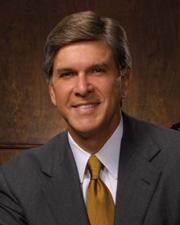
President, I rise today to shine a spotlight on one of the most lopsided and unfair programs in the Federal Government, and to reintroduce legislation to correct it. Every year, the Federal…
President, I rise today to shine a spotlight on one of the most
lopsided and unfair programs in the Federal Government, and to reintroduce legislation to correct it.
Every year, the Federal Government collects millions of dollars in ``universal service'' surcharges on telephone bills. In part, this money is intended to be used to provide, affordable telephone service in isolated, rural areas--a goal we all support.
Unfortunately, instead of sending these funds equitably to rural areas throughout the United States, many residents in 40 States-- including some of the most rural States in the country--receive no support from this program, while a few States receive enormous windfalls. In 2005, about 75 percent of a key universal service fund account is projected to go to just three States and a single State will receive more than half of the funding provided by this program. All of this continues the pattern of lopsided funding distribution seen in recent years.
I am referring to the Federal Universal Service Fund program for so- called ``non-rural carriers.'' This is a ridiculous misnomer because more than 70 percent of all rural Americans are served by one of 30 so- called ``non-rural'' carriers. If you live in a small, isolated town or rural area, you are likely served by one these carriers, and chances are your community is receiving none of the benefits of this program.
The calls to fix this program have been growing louder and louder. In the 108th Congress, more than 80 independent organizations and state and local officials called on us to fix this unfair, broken program, including 21 governors, 38 State utility commissioners, the American Farm Bureau Federation, the National Grange, and groups representing business, labor, consumers, minorities, and the rural poor.
Responding to that broad support, more than 30 Senators and 80 Representatives cosponsored my bill or the House companion measure offered by Mr. Terry of Nebraska and Mr. Stupak of Michigan last Congress. And the Senate Commerce Committee approved my bill on a strong bipartisan vote.
Today, I am reintroducing the Rural Universal Service Equity Act, along with 19 of my colleagues. This legislation would guarantee a fairer, more targeted distribution of the non-rural-carrier account by requiring allocations to be based on actual community needs, not an arbitrary mathematical formula.
Beyond basic fairness for the majority of rural America, there are at least two additional reasons to enact this legislation.
First, it will help overcome the ``digital divide'' between urban and rural America, and prevent it from growing worse. As long as the current rules remain in place, the majority of rural communities and the telephone companies that serve them will suffer a significant competitive disadvantage in today's digital economy.
Second, the bill will fix this program while keeping a tight rein on USF expenditures. My legislation would redistribute existing funds more fairly, without imposing any additional burdens on the USF or requiring increased federal spending or revenues.
Finally, my bill would not interfere with important efforts to fix other serious problems in the Universal Service Fund. We all know the USF must be modernized and reformed to reflect the challenges and technologies of the 21st Century.
But the broader USF reform debate is likely to be contentious and protracted. In the meantime, we should be able to correct a shameful inequity in a program that is intended to benefit the majority of rural Americans. And we should do it as soon as possible.
Once again I thank my colleagues and friends across America who have helped in this effort to date, and I call upon all members of the Senate to become cosponsors of the Rural Universal Service Equity Act. I ask unanimous consent that the text of legislation be printed in the Record.
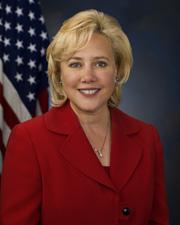
Mr. President, in Louisiana, hurricanes and floods are as much a part of life as crawfish boils and Mardi Gras. Twenty percent of the coastal zone of my State lies below sea level, including 80…
Mr. President, in Louisiana, hurricanes and floods are as much a part of life as crawfish boils and Mardi Gras. Twenty percent of the coastal zone of my State lies below sea level, including 80 percent of our largest city New Orleans. Because of this our State has one of the finest and extensive levee systems in the world. Our communities have well developed flood plain management plans. We have built flood walls to protect neighborhoods from rising waters and homeowners in flood zones have built their houses on stilts.
Even with all of this preparation, flood damage does occur. It is estimated that Louisiana suffered more than $47 million in losses from flooding in 2003. To address this, 377,000 property owners participate in the National Flood Insurance Program--a program that is a real godsend to the people of my State. This program is fully financed by insurance premiums paid by property owners to cover damage to their homes and businesses as a result of flooding. The program also provides funding for property owners to flood-proof their homes under the mitigation grant program. They can use these grants to put their homes on stilts, improve drainage, and obtain waterproofing materials.
All the people in my state ask for is a warning and an opportunity to protect themselves, their homes, and their loved ones from these disasters. Through the state-of-the-art systems developed by the National Weather Service, we can get a warning about a hurricane. We have sophisticated radar to track these storms as they move through the Gulf of Mexico, or up the East Coast. When a Category 4 is coming we can prepare and pray.
But they did not have any warning that the Federal government--more specifically the IRS--would begin to tax the money they received to prevent damages to their property from hurricanes and floods. Yet that has not stopped the IRS from making and implementing one of the most misguided and unfair decisions.
Let me be clear about what this has meant for people in my State. I heard from one man who told me that he was going to be liable for tax on an additional $218,000 in income for grant money used to do mitigation work on his home. He said he would have to work until he was 90 years old in order to pay off the tax bill.
What is worse, is that this misguided decision by the IRS will hit all natural disaster mitigation assistance covered by the Pre-Disaster Mitigation Program, the Hazard Mitigation Grant Program, and the National Flood Insurance Programs. Instead of protecting their properties, the IRS decision will force people to take risks that they will not be hit by a disaster.
I applaud my colleague from Missouri for introducing this legislation to fix this problem and I am proud to be an original cosponsor. This is not a regional, special-interest bill. Natural disasters can strike almost anywhere at any time. If your citizens have used a federal program to help make their property safer, the tax man will come for them too. I urge my colleagues to support this bill.
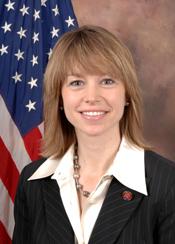
Madam Speaker, I rise today in support of the Wind Cave National Park Boundary Revision Act of 2005. Wind Cave National Park is one of our Nation's oldest national parks and one of the jewels in our…
Madam Speaker, I rise today in support of the Wind Cave National Park Boundary Revision Act of 2005.
Wind Cave National Park is one of our Nation's oldest national parks and one of the jewels in our national park system. Established over 100 years ago, Wind Cave was the first cave in the world to be set aside as a national park. At the turn of the 20th century, its first explorers reported that the cave was only three miles long. Well, that report was a little off. Today, we know that the cave has over 117 miles of mapped tunnels and explorers are still discovering new passages. This makes it the fifth largest cave in the world.
These passages contain many natural treasures--rare and exceptional displays of box work, a honeycomb-shaped formation that protrudes from the cave's ceilings and walls, as well as other rare cave formations, and a geology that scientists are still working to understand. Past Congresses recognized the value of these treasures by creating the park; our ability to enjoy them today is a testament to their foresight.
With over 28,000 acres today, the park's surface is an impressive asset as well. The Wind Cave National Park Boundary Revision act would expand this stewardship to include an additional 5,000 acres of mixed grass prairie, ponderosa pine forest, and a dramatic river canyon. Home to native wildlife such as bison, elk, pronghorn, mule deer, coyotes, and prairie dogs, the park is one of the few remaining mixed-grass ecosystems in the country. The expansion would be a natural extension of this habitat and enhance the park's holdings.
This project began when the ranching family that owns the land approached the National Parks Service over 3 years ago. The Black Hills region of South Dakota is developing rapidly and, rather than allow the land to be developed into subdivisions and strip malls, they envisioned preserving it for future generations. That initial discussion expanded to the surrounding community, State government, and eventually, the United States Congress. The bill's passage in the Senate and its consideration here today are the fruits of those discussions.
In addition to receiving support in the House of Representatives from my two predecessors and myself, this bill enjoys the bipartisan backing of the South Dakota Senate delegation and South Dakota Governor Mike Rounds. As the expansion project has proceeded, interested parties have weighed in with their concerns and they have been answered.
Wind Cave National Park has protected and preserved a national treasure for over 100 years. The Wind Cave National Park Boundary Revision Act is a unique opportunity to expand the park and enhance its value to the public so that visitors can enjoy it forever. It is my hope that my colleagues will support the expansion of this park and vote in favor of this important legislation.

Mr. President, I rise to introduce the Caribbean National Forest Act of 2005 along with Senator Schumer. The Caribbean National Forest Act designates approximately 10,000 acres of the Caribbean…
Mr. President, I rise to introduce the Caribbean National Forest Act of 2005 along with Senator Schumer.
The Caribbean National Forest Act designates approximately 10,000 acres of the Caribbean National Forest, CNF, as the El Toro Wilderness. The El Toro Wilderness would be the only tropical forest wilderness in the U.S. National Forest system.
The CNF has long been recognized as a special area, worthy of protection. The Spanish Crown proclaimed much of the current CNF as a forest reserve in 1824. Just over 100 years ago, President Theodore Roosevelt reasserted the protection of the CNF by designating the area as a forest reserve.
Located 25 miles east of San Juan, the CNF is a biologically diverse area. Although it is the smallest forest in the national forest system, the CNF ranks number one in the number of species of native trees with 240. In addition, the CNF has 50 varieties of orchids and over 150 species of ferns. The area is also rich in wildlife with over 100 species of vertebrates, including the endangered Puerto Rican parrot. The only native parrot in Puerto Rico, they numbered nearly one million at the time that Columbus set sail for the New World. Today there are fewer than 100 of these parrots. The Forest Service, the U.S. Fish and Wildlife Service and Puerto Rico's Department of Natural Resources and the Environment have initiated a recovery program for the Puerto Rican Parrot. Wilderness designation will ensure that the forest home to the parrot will remain protected and the ongoing recovery efforts, consistent with the Wilderness Act, will continue.
The CNF also provides valuable water to the people of Puerto Rico. The CNF receives over 10 feet of rain each year. As a result, the major watersheds in the CNF are able to provide water to over 800,000 residents. In addition, the CNF provides a variety of recreational opportunities to almost one million Puerto Ricans and tourists each year. Families, friends and school groups come to the forest to hike, bird watch, picnic, swim and enjoy the scenic vistas.
Wilderness designation of the El Toro will protect approximately one third of the forest. During a House hearing on this measure in 2003 the U.S. Forest Service stated its support for the designation of the El Toro Wilderness Area. Those views were reconfirmed last July, when Mark Rey, the Department of Agriculture's Under Secretary for Natural Resources and Environment, supported my legislation during his testimony before the Senate Energy and National Resources Subcommittee on Public Lands and Forests.
I ask unanimous consent that the text of the legislation be printed in the Record.
Mr. President, I rise today to re-introduce legislation from the previous Congress that will revise and expand the boundary to the Wind Cave National Park in Custer and Fall River County South…
Mr. President, I rise today to re-introduce legislation from the previous Congress that will revise and expand the boundary to the Wind Cave National Park in Custer and Fall River County South Dakota. I am pleased that my colleague, Senator John Thune, has joined me today in introducing this important bill.
Wind Cave National Park is one of the Nation's first national parks, containing in its boundaries one of the greatest expanses of underground cave complexes in North America. Established in 1903, Wind Cave National Park protects one of the world's oldest known cave formations with hundreds of miles of underground compartments. Amazingly, scientific measurements indicate that only five percent of the total cave has been discovered.
With the option to acquire approximately 5,500 acres of land from willing sellers, Wind Cave National Park has a once-in-a-generation opportunity to significantly enhance one of the last remaining mixed- grass prairie ecosystems in the world. The acquisition of this land adjacent to the southern boundary of the park will preserve a key archaeological site described as one of the only existing buffalo jumps used by Native Americans as they hunted the giant animal.
I believe that the local park officials and the willing-seller landowner have done a good job in reaching out to the community and working to modify their original proposal to conform to the interests of adjacent landowners and the State of South Dakota. As with any land acquisition initiative the question of compensating local government's for the lost tax revenue is extremely important. The matter is particularly acute in western South Dakota, where large tracts of federal land result in particular challenges. To that end, I call on Congress to fully fund the Payment in Lieu of Taxes program and provide a dedicated revenue source to compensate local communities that have significant amounts of federal lands in the counties.
The Wind Cave National Park is a South Dakota treasure shared with the entire world through the stewardship of the National Park Service. Some four million visitors come to the Black Hills each year and tourism is one of South Dakota's leading economic engines. It is my strong desire that the Congress will quickly take the appropriate steps necessary and demonstrate positive action in the consideration of this bill.
I ask unanimous consent that the text of the bill be printed in the Record.
Show 10 more
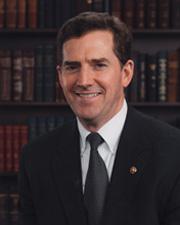
Mr. President, in 1999, the Social Security Administration began mailing the new Your Social Security Statement to all Americans over the age of 25 but not retired. These statements include an…
Mr. President, in 1999, the Social Security Administration began mailing the new Your Social Security Statement to all Americans over the age of 25 but not retired.
These statements include an accounting of Social Security taxes the individual worker has paid to date, the worker's eligibility status for benefits, and an estimate of the benefits the worker could receive.
For most Americans, this personal statement will be the sole source of official information on Social Security; yet it downplays or omits important information about the program.
The bill I am introducing today is called the Social Security Right to Know Act and would correct this problem at no cost by simply changing the statement to include information available in official reports.
The improved statement would inform workers, using information in the Social Security Trustees' Report, that the taxes paid into the program may not be sufficient to fund all of their benefits in retirement.
It would also inform workers, using information from the Office of Management and Budget, that the Social Security Trust Fund does not consist of real economic assets that can be drawn down in the future to fund benefits.
The new statement would inform workers that they pay 6.2 percent of their earnings and their employer pays 6.2 percent on their behalf, for a total Social Security payroll tax of 12.4 percent.
It would also illustrate and explain to workers using information from the Government Accounting Office that while Social Security has performed well in the past, its average rate of return is expected to decline in the future.
While we may not agree on specific changes to Social Security, we should all agree that Americans have a right to know the true financial status of the program and how it will affect their retirement.
I ask unanimous consent that the text of the bill be printed in the Record.
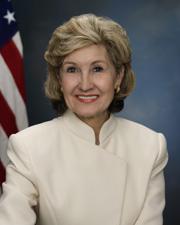
Mr. President, I rise today to offer a bill that will bolster our energy independence by clarifying current tax law regarding domestic oil and gas production. We need to promote domestic energy…
Mr. President, I rise today to offer a bill that will bolster our energy independence by clarifying current tax law regarding domestic oil and gas production.
We need to promote domestic energy supplies because we are increasingly dependent on foreign oil to meet our energy needs. We currently import almost 60 percent from foreign countries. Promoting domestic production is both an economic and national security issue.
The rational treatment of costs associated with exploration and production of energy resources is vital to attracting and retaining financing in an inherently capital-intensive industry. The bill I am introducing helps in this regard by allowing accelerated deduction of geological and geophysical (G&G) costs and delay rental payments. Specifically, this legislation will allow these expenses to be amortized over a 2 year period. This will encourage further development of the United States oil and gas industry.
There is no reason G&G expenditures should be considered capital expenditures with a long amortization period rather than treating them more like research and development costs. Our current tax code needlessly limits the ability of domestic producers to develop our national petroleum reserves.
Congress also needs to clarify that delay rental payments are deductible as ordinary and necessary business expenses. This is important for developers who cannot afford to run continuous operations on the properties they hold. The current uncertainty of how these costs are to be treated has led to costly litigation; prompt clarification will eliminate needless administrative burdens on taxpayers and the Internal Revenue Service.
I urge my colleagues to support this bill as an important step in developing energy independence. I ask unanimous consent that the text of the bill be printed in the Record.
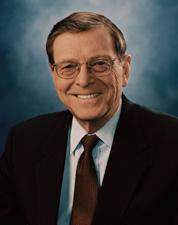
Mr. President, I rise today with my colleague, Senator Bingaman, to introduce legislation to address a serious problem in the State of New Mexico. State case law currently holds that the State of New…
Mr. President, I rise today with my colleague, Senator Bingaman, to introduce legislation to address a serious problem in the State of New Mexico. State case law currently holds that the State of New Mexico does not have jurisdiction to prosecute crimes that occur on privately held land within the exterior boundaries of a Pueblo. Federal case law holds that the Federal Government does not have jurisdiction to prosecute crimes that occur on these lands. Read in tandem, these court decisions lead to the result that neither Federal, State nor tribal law-enforcement officials have jurisdiction on thousands of acres of privately owned lands within the boundaries of Indian pueblos. As a result, in recent years there have been stabbings, criminal sexual-contact cases, and aggravated battery charges that have stalled in court over jurisdiction questions.
The prospect of having lands in my State where anyone can commit any crime and not be prosecuted for it is untenable and something that needs to be fixed. The legislation I am introducing today clearly outlines who is responsible for trying these cases by clarifying when a crime should be prosecuted in Federal, tribal, or State court. At the same time, the bill honors tribal sovereignty.
If we do not address this problem, it will only worsen. This legislation culminates a lot of work among the New Mexico delegation, the pueblos, and the State. It is a necessary bill. It is a good bill. And I hope that my colleagues will act quickly to clarify jurisdiction over these lands.
I ask unanimous consent that the text of the bill be printed in the Record.
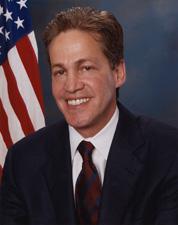
Mr. President, I ask unanimous consent that my legislation, which I introduce today, to extend the Milk Income Loss Compensation (MILC) program be printed in the Record. I am pleased to be joined by…
Mr. President, I ask unanimous consent that my legislation, which I introduce today, to extend the Milk Income Loss Compensation (MILC) program be printed in the Record.
I am pleased to be joined by 26 of my colleagues--over a quarter of the United States Senate. This is a bipartisan piece of legislation that has nation-wide support including in the Midwest, Northeast, Mid- Atlantic, South, and West. This is not only rare for legislative efforts generally but extremely rare in the world of dairy.
MILC is important because it provides a critical safety net for dairy farmers that is equitable to all farmers across the country--also a departure from traditional federal dairy policy.
When milk prices fell to a 25 year low not long ago, MILC was vital in preventing a mass exodus of dairy farm families in my State. Fortunately, prices have recovered more recently. But should prices fall again, my dairy farm families need the kind of safety net provided by MILC.
MILC is important in that it provides a strong safety net to all the Nation's dairy farmers in a market-oriented way that does not increase milk prices on the grocery shelf.
For these and other reasons President Bush did the right thing and endorsed the extension of MILC. I am pleased to have the support of the President in this important endeavor and I hope my colleagues will join me in our effort.
I ask unanimous consent that the text of the bill be printed in the Record.
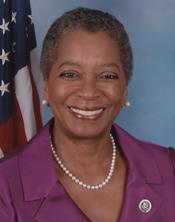
Madam Speaker, I yield myself such time as I may consume. Madam Speaker, as the gentleman from Puerto Rico (Mr. Fortuno) of the majority has explained, S. 276 will further the purposes of Wind Cave…
Madam Speaker, I yield myself such time as I may consume.
Madam Speaker, as the gentleman from Puerto Rico (Mr. Fortuno) of the majority has explained, S. 276 will further the purposes of Wind Cave National Park by enabling significant lands to be added to the national park.
This bill, S. 276, is the Senate companion measure to the bill H.R. 456 introduced by the gentlewoman from South Dakota (Ms. Herseth), my colleague on the Committee on Resources. The gentlewoman from South Dakota (Ms. Herseth) is to be commended for her leadership on this important legislative initiative which will add lands to the park that will protect archaeological sites, enhance the viewshed, and preserve prairie and forest lands that are natural extensions of the existing park.
Since coming to Congress, the gentlewoman from South Dakota (Ms. Herseth) has been a strong advocate for these additions to the park, and we are pleased to see her work coming to fruition today.
Madam Speaker, S. 276 will help advance the preservation and interpretation of Wind Cave National Park, and we support adoption of the legislation by the House today.
Madam Speaker, I yield back the balance of my time.
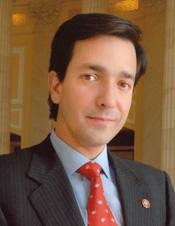
Madam Speaker, I move to suspend the rules and pass the Senate bill (S. 276) to revise the boundary of the Wind Cave National Park in the State of South Dakota. Madam Speaker, I ask unanimous consent…
Madam Speaker, I move to suspend the rules and pass the Senate bill (S. 276) to revise the boundary of the Wind Cave National Park in the State of South Dakota.
Madam Speaker, I ask unanimous consent that all Members may have 5 legislative days within which to revise and extend their remarks and include extraneous material on S. 276, the bill under consideration.
Madam Speaker, I yield myself such time as I may consume.
S. 276, introduced by Senators Tim Johnson and John Thune of South Dakota, is the companion bill to H.R. 546, introduced by the gentlewoman from South Dakota (Ms. Herseth), my committee colleague.
S. 276 would authorize the expansion of Wind Cave National Park located in the famous Black Hills of South Dakota. The boundary adjustment would allow for the protection of such archaeological sites as a 1,000-year-old buffalo jump.
I urge adoption of the bill.
Madam Speaker, I reserve the balance of my time.
Madam Speaker, I have no additional speakers, and I yield back the balance of my time.

Mr. Speaker, on September 13, 2005, I was unavoidably detained and missed rollcall votes numbered 465, 466, and 467. Rollcall vote 465 was on the motion to suspend the rules and agree to SCONRES 26,…
Mr. Speaker, on September 13, 2005, I was unavoidably detained and missed rollcall votes numbered 465, 466, and 467. Rollcall vote 465 was on the motion to suspend the rules and agree to SCONRES 26, a bill honoring and memorializing the passengers and crew of United Airlines Flight 93. Rollcall vote 466 was on the motion to suspend the rules and pass H.R. 3649, the Sportfishing and Recreational Boating Safety Amendments Act. Rollcall vote 467 was on the motion to suspend the rules and pass S. 276, the Wind Cave National Park Boundary Revision Act.
Had I been present I would have voted ``yea'' on rollcall votes 465, 466, and 467.
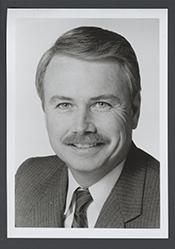
Mr. Speaker, on Tuesday, September 13, 2005, I was unable to vote on the motion to suspend the rules and agree to S. Con. Res. 26, Honoring and memorializing the passengers and crew of United…
Mr. Speaker, on Tuesday, September 13, 2005, I was unable to vote on the motion to suspend the rules and agree to S. Con. Res. 26, Honoring and memorializing the passengers and crew of United Airlines Flight 93 (rollcall 465); on the motion to suspend the rules and pass H.R. 3649, the Sportfishing and Recreational Boating Safety Amendments Act (rollcall 466); and on the motion to suspend the rules and pass S. 276, the Wind Cave National Boundary Revision Act (rollcall 467). Had I been present, I would have voted ``yea'' on all three measures.
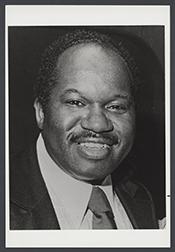
Mr. Speaker, I was absent on Tuesday September 13, 2005 due to a unavoidable circumstances in my Congressional District. Had I been present, I would have voted: ``Yea'' to S. Con Res. 26--Honoring…
Mr. Speaker, I was absent on Tuesday September 13, 2005 due to a unavoidable circumstances in my Congressional District. Had I been present, I would have voted: ``Yea'' to S. Con Res. 26--Honoring and memorializing the passengers and crew of United Airlines Flight 93; ``Yea'' to H.R. 3649--the Sportfishing and Recreational Boating Safety Amendments Act and ``Yea'' to S. 276--the Wind Cave National Park Boundary Revision Act.
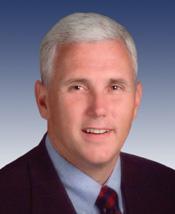
Mr. Speaker, on that I demand the yeas and nays.
Mr. Speaker, on that I demand the yeas and nays.
Bill Text
6 versions available
        [Congressional Bills 109th Congress]
[From the U.S. Government Publishing Office]
[S. 276 Enrolled Bill (ENR)]

S.276

One Hundred Ninth Congress

of the

United States of America

AT THE FIRST SESSION

Begun and held at the City of Washington on Tuesday,
the fourth day of January, two thousand and five

An Act

To revise the boundary of the Wind Cave National Park in the State of
South Dakota.

Be it enacted by the Senate and House of Representatives of the
United States of America in Congress assembled,

SECTION 1. SHORT TITLE.

This Act may be cited as the ``Wind Cave National Park Boundary
Revision Act of 2005''.

SEC. 2. DEFINITIONS.

In this Act:
(1) Map.--The term ``map'' means the map entitled ``Wind Cave
National Park Boundary Revision'', numbered 108/80,030, and dated
June 2002.
(2) Park.--The term ``Park'' means the Wind Cave National Park
in the State.
(3) Secretary.--The term ``Secretary'' means the Secretary of
the Interior.
(4) State.--The term ``State'' means the State of South Dakota.

SEC. 3. LAND ACQUISITION.

(a) Authority.--
(1) In general.--The Secretary may acquire the land or interest
in land described in subsection (b)(1) for addition to the Park.
(2) Means.--An acquisition of land under paragraph (1) may be
made by donation, purchase from a willing seller with donated or
appropriated funds, or exchange.
(b) Boundary.--
(1) Map and acreage.--The land referred to in subsection (a)(1)
shall consist of approximately 5,675 acres, as generally depicted
on the map.
(2) Availability of map.--The map shall be on file and
available for public inspection in the appropriate offices of the
National Park Service.
(3) Revision.--The boundary of the Park shall be adjusted to
reflect the acquisition of land under subsection (a)(1).

SEC. 4. ADMINISTRATION.

(a) In General.--The Secretary shall administer any land acquired
under section 3(a)(1) as part of the Park in accordance with laws
(including regulations) applicable to the Park.
(b) Transfer of Administrative Jurisdiction.--
(1) In general.--The Secretary shall transfer from the Director
of the Bureau of Land Management to the Director of the National
Park Service administrative jurisdiction over the land described in
paragraph (2).
(2) Map and acreage.--The land referred to in paragraph (1)
consists of the approximately 80 acres of land identified on the
map as ``Bureau of Land Management land''.

SEC. 5. GRAZING.

(a) Grazing Permitted.--Subject to any permits or leases in
existence as of the date of acquisition, the Secretary may permit the
continuation of livestock grazing on land acquired under section
3(a)(1).
(b) Limitation.--Grazing under subsection (a) shall be at not more
than the level existing on the date on which the land is acquired under
section 3(a)(1).
(c) Purchase of Permit or Lease.--The Secretary may purchase the
outstanding portion of a grazing permit or lease on any land acquired
under section 3(a)(1).
(d) Termination of Leases or Permits.--The Secretary may accept the
voluntary termination of a permit or lease for grazing on any acquired
land.

Speaker of the House of Representatives.

Vice President of the United States and
President of the Senate.