Mr. Speaker, I first want to thank our majority whip, the chairman of Government Reform Committee and Senator Coburn in particular for the way they moved this bill, introduced the bill and moved this…
Mr. Speaker, I first want to thank our majority whip, the chairman of Government Reform Committee and Senator Coburn in particular for the way they moved this bill, introduced the bill and moved this bill through. We all realize that the government needs to be more transparent and we are working towards those directions.
But as you heard Mr. Blunt mention earlier, our subcommittee, the one that I chair, had one of the more frustrating experiences. Chairman Davis, myself, many of the subcommittee chairmen in Government Reform's job is to do oversight over the executive branch, and it is very hard to get the data we need to do proper oversight.
We started in December, actually October 6, 2005, to ask USAID for some information on whether they were following congressional guidelines as far as a particular group and program that we had been tipped off may not have been following those guidelines. USAID at the meeting denied they were funding this organization.
We asked them for documentation. They said documentation didn't exist. My staff director, Marc Wheat, and our hard-working staff, dug up on Google in actuality documents that the State Department said didn't exist. We also had people from other agencies that leaked us documents. So they in effect came to us and told us a mistruth about what existed and didn't exist. They also buried it in subcontractors.
This organization, SANGRAM, had in fact been a high risk candidate already because they had publicly opposed having prostitution be illegal. They had written, We believe that when involuntarily initiation into prostitution occurs, a process of socialization within the institution of prostitution exists, whereby the involuntary nature of the business changes increasingly into one of active acceptance, not necessarily with resignation. This is not a coercive process.'' In other words, they believe prostitution is a legitimate form of a job.
Now, that is contrary to Federal law. But even though this group had taken that position and even though our government had let them participate, they had tried to disguise in the grant process who was getting the money. We had a case of an organization that went in to rescue some women from prostitution, and when they were rescued, this organization, funded with taxpayer dollars, contrary to U.S. law, went and took the women back into prostitution in Asia.
We cannot on the one hand be trying to get women out of prostitution, and on the other hand be funding it contrary to law. The fundamental problem here was we couldn't follow the grants.
The reason you need transparency and the reason we need transparency in the executive branch and the reason we need transparency in the legislative branch is so we can at least see where the money goes. Then you can debate with your politicians whether it is the right policy or the wrong policy. But when you can't find where the money goes, it is impossible to do responsible legislation and absolutely impossible to do responsible oversight.
I thank the chairman of the Government Reform Committee for making the executive branch be accountable as well, and for our leader and for the cooperation of the Democrats on this issue. This should be a bipartisan effort. Let the sun shine on all earmarks and let the sun shine on all grants
Mr. Speaker, I rise in support of S. 2590, Federal Funding Accountability and Transparency Act. The database envisioned in this act will be a vital tool for creating a more open spending process.
As we all know, government spending is often an impenetrable web of confusion and dead-ends. Exactly who receives taxpayer money may be difficult to ascertain. In some instances, agencies cannot answer definitively if an organization receives taxpayer funding or not. Such messy records and bookkeeping would not be tolerated in the private sector. Furthermore, the government does not allow the private sector to keep such abysmal records. Establishing the database proposed in this bill will cut through this web and allow easy access to who receives money and for what purpose. The need for this type of system will help not only in area of earmarks, but also in the awarding of government grants and contracts.
The necessity of such a database is best illustrated by an exchange between USAID and the Government Reform Subcommittee on Criminal Justice, Drug Policy, and Human Resources. In my capacity as Chairman of the subcommittee, on October 6, 2005, I sent a letter to USAID seeking information about its funding of the pro-prostitution non- governmental organization called SANGRAM in violation of Public Law 108-25, the United States Leadership Against HIV/AIDS, Tuberculosis, and Malaria Act of 2003.
According to an unclassified State Department memorandum obtained by subcommittee staff, Restore International, an anti-trafficking NGO that works with law enforcement agencies in India, was ``confronted by a USAID-funded NGO [SANGRAM] while the former attempted to rescue and provide long-term care for child victims of sex trafficking. The confrontation led to the release of 17 minor girls--victims of trafficking--into the hands of traffickers and trafficking accomplices.'' According to this memorandum, SANGRAM ``allowed a brothel keeper into a shelter to pressure the girls not to cooperate with counselors. The girls are now back in the brothels, being subjected to rape for profit.''
On November 16, 2005, a USAID briefer asserted to Government Reform Committee staff that USAID had ``nothing to do with'' the grant to the pro-prostitution SANGRAM, and that the Committee's inquiries were ``destructive.'' The Subcommittee is now in possession of documents that demonstrate that USAID must provide a revised briefing to Congress on its true role.
These documents prove that USAID money financed the pro-prostitution SANGRAM through a second organization named Avert, which was established with the assistance of four USAID employees as a pass- through entity. USAID has held the ex-officio Vice Chairmanship of Avert since inception.
According to these documents, the USAID board member of Avert voted twice to award funding to SANGRAM (July 27, 2002 and again on December 3, 2004), the last time
being some 18 months after the provisions of Public Law 108-25 prohibited taxpayer funding of pro-prostitution groups like SANGRAM.
That SANGRAM was a high-risk candidate for not complying with Public Law 108-25 should not have been a surprise to USAID. SANGRAM was a cosigner, along with many other high-risk candidates, of a May 18, 2005 letter to President Bush opposing the anti-prostitution pledge. Subcommittee staff found posted on a USAID-sponsored Web site, a 5- year-old report from SANGRAM that states: ``We believe that when involuntary initiation into prostitution occurs, a process of socialization within the institution of prostitution exists, whereby the involuntary nature of the business changes increasingly into one of active acceptance, not necessarily with resignation. This is not a coercive process.''
I agree with President Bush that ``It takes a special kind of depravity to exploit and hurt the most vulnerable members of society. Human traffickers rob children of their innocence; they expose them to the worst of life before they have seen much of life. Traffickers tear families apart. They treat their victims as nothing more than goods and commodities for sale to the highest bidder.'' It is inconceivable that an organization like SANGRAM could have received funding from the American taxpayer had USAID put in place an adequate management system to carry out Public Law 108-25.
On December 13, 2005, a large briefing team from the Department of State and USAID met with staff from the Subcommittee I chair concerning this matter, in order to demonstrate ownership of the problem and to layout corrective measures being taken. To my dismay and astonishment, the briefers were not prepared to discuss (and exhibited little knowledge of) the pass-through entity known as Avert that USAID established and which served as the mechanism whereby NGOs in India were monitored and financed with American tax dollars. Subcommittee staff knew more than the State/USAID briefing team about this matter thanks to Google searches on the web for critical documents that had not been provided to the Subcommittee by the Administration.
In the months since that December 13 appeal was made for an electronic registry, the Subcommittee request has inspired two pieces of legislation: first in the other body, and the second we are debating here today. This scandal of financing pro-prostitution groups by USAID was highlighted by the authors in both chambers as illustrating the need for this legislation.
I urge the swift passage of this legislation. If we are going to continue to spend tax-payer money, the American people deserve to know how it is being spent and by whom. Flagrantly disgusting examples of the misuse of tax-payer funds must be made known and eliminated.
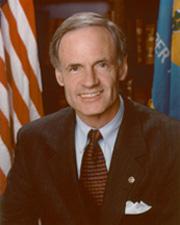 Sen. Thomas R. Carper (D-DE)