North Korea Nonproliferation Act of 2006
Legislative Activity
Stay on top of the latest movement without scrolling through every action
Became Public Law No: 109-353.
October 13, 2006
View full timeline
Introduced in Senate
July 25, 2006
Submitted in the Senate, read twice, considered, read the third time, and passed without amendment by Unanimous Consent. (consideration: CR S8206-8208; text as passed Senate: CR S8207; text of measure as introduced: CR S8202)
July 25, 2006
Received in the House.
July 25, 2006 • 8:19 PM
Message on Senate action sent to the House.
July 25, 2006
Held at the desk.
July 25, 2006 • 9:07 PM
Considered by unanimous consent. (consideration: CR 9/29/2006 H8044-8048)
September 30, 2006 • 12:36 AM
Mr. Royce asked unanimous consent to take from the Speaker's table and consider.
September 30, 2006 • 12:36 AM
Passed/agreed to in House: On passage Passed without objection.(text: CR 9/29/2006 H8047-8048)
September 30, 2006 • 1:04 AM
On passage Passed without objection. (text: CR 9/29/2006 H8047-8048)
September 30, 2006 • 1:04 AM
Motion to reconsider laid on the table Agreed to without objection.
September 30, 2006 • 1:04 AM
Presented to President.
October 5, 2006
Signed by President.
October 13, 2006
Became Public Law No: 109-353.
October 13, 2006
Floor Debate
11 membersWhat members said about S. 3728 on the floor
 SMC
SMC JIL
JIL DJKWHF
 DW+6
DW+6
Floor Debate
11 membersWhat members said about S. 3728 on the floor
Mr. President, I rise to introduce S. 3721, the Post- Katrina Emergency Management Reform Act of 2006. It contains a vital set of reforms and innovations for our emergency-management systems that are…
Mr. President, I rise to introduce S. 3721, the Post- Katrina Emergency Management Reform Act of 2006. It contains a vital set of reforms and innovations for our emergency-management systems that are designed to save lives and ease suffering when disaster strikes. The crafting of this bill has benefited from the insights of my principal cosponsor, Senator Lieberman, and from the support of our other cosponsor, Senator Salazar.
The Senate has already acted on one critical measure to apply the bitter lessons of Hurricane Katrina. The 87 to 11 vote on July 11, adding creation of the U.S. Emergency Management Authority to the Homeland Security appropriations bill, adopted a major element of today's bill. That was a great step forward.
The Senate Homeland Security Committee conducted an 8-month investigation with 23 hearings, more than 325 formal interviews, and a review of more than 838,000 pages of documents to ascertain why the response to Hurricane Katrina was so inadequate at all levels of government. The investigation revealed serious failures of leadership. It also revealed an urgent need for broad reforms ranging from communication-technology standards to the structure and missions of entire Federal agencies.
Some of the 88 recommendations that flowed from our investigation can be adopted by administrative action. The Post-Katrina Emergency Management Reform Act comprises important steps that only Congress can take. I will outline the five key components of our bill.
First, we strengthen FEMA and rename it as the United State Emergency Management Authority, or US-EMA, to signify a fresh start. We elevate US-EMA within DHS, restore its preparedness authority, and protect it from departmental reorganizations that could erode its budget and assets. These measures give the agency mission and asset protections like those of its DHS siblings, the Coast Guard and the Secret Service.
These statutory protections are important. Securing the integrity of FEMA preserves the cooperative benefits of its operating within easy reach of other DHS agencies. It also avoids the duplication, cost, and confusion for State and local officials that would come from carving FEMA out as a weak, stand-alone agency for natural disasters. Keeping FEMA where it was placed by the Homeland Security Act of 2002 avoids the need for DHS to recreate a similar terror-response capability.
Improving contact and coordination among Federal, State, and local agencies is essential. For that reason, our bill provides for regionally based, multi-agency Federal strike teams that will be ready to act and deploy in a region they will already know and understand before a disaster occurs.
The bill also provides continued funding for the interstate Emergency Management Assistance Compact that proved so valuable in marshaling aid for the gulf coast last year. It commits the US-EMA to work with States and localities to develop a standardized credentialing system that will help responders and selected private-sector personnel move quickly into disaster areas anywhere in the country, and it requires the US-EMA to offer technical assistance to State and local governments.
To help remedy the communications gaps revealed by Hurricane Katrina, we also improve the agency's organizational and technical communications systems. Our bill designates the Administrator of the US-EMA as the principal advisor to the President on emergency- management issues. Meanwhile, national and regional advisory councils will ensure that the US-EMA has open channels of communication with State and local officials, emergency responders, key private-sector and nongovernmental entities, and with representatives of people with disabilities.
On the equally important technical side, our bill consolidates several communications programs within a new Office of Emergency Communications within US-EMA. This office will devise a national emergency-communications strategy, administer grants for interoperable communications, and regularly assess the operability and interoperability of the communication systems that are essential for disaster response and that failed so widely during the Katrina catastrophe.
This US-EMA portion of the bill has received a great deal of attention. But it is only one part of this package of essential reforms.
The second part of our bill permits an enhanced Federal role in emergency management when major disasters require it. The Robert T. Stafford Disaster Relief and Emergency Assistance Act, better known as the Stafford Act, authorizes a variety of Federal assistance measures to State and local governments when the President has declared a disaster.
Congress has amended the Stafford Act over time to make it more effective. Our bill continues that process of improvement by applying lessons learned from Katrina.
At the highest level, it directs the Federal Government to develop and maintain a national disaster-recovery strategy in coordination with the State and local governments which will lead each recovery. This fills a remarkable planning void in our current system, which focuses on response. When disaster overwhelms state and local governments and devastates large areas, recovery can be a long process requiring extended Federal assistance.
We increase the potential for more effective Federal aid in several ways. For example, the legislation enhances Federal agencies' ability to respond when the President uses his authority to direct their assistance in major-disaster response and recovery.
The bill requires a national-disaster housing strategy and authorizes making semipermanent housing units a part of Stafford Act assistance. In many cases, the modular ``Katrina cottages,'' for example, would be less costly, safer, more livable, more easily sited, and more durable than the notorious trailers FEMA purchased.
A new title VII for the Stafford Act gives the President discretion to offer increased Federal assistance when disaster overwhelms state and local governments. This discretionary--but limited--authority for catastrophes includes raising the cap on individual assistance, assisting victims with rent or mortgage costs, extending disaster- unemployment benefits, increasing community loans, and raising the reimbursement to communities for the cost of food, clothes, and other essential goods they distribute to victims.
Among other Stafford Act revisions, our bill clarifies that Federal mitigation efforts can extend to man-made hazards like the Mississippi River Gulf Outlet that funneled deadly storm-surge waters toward New Orleans. It establishes a missing-child location system and a database to help reunite families, a major problem in the aftermath of Katrina. And it requires that planning and training exercises, as well as evacuation and sheltering plans, give consideration to people with disabilities or special needs, or who are not fluent in English, or who have pets.
These improvements to the Stafford Act would be a major accomplishment by themselves. But the demonstrated need for reforms goes deeper still.
The third key element of our bill will provide more and better- trained emergency professionals. The US-EMA will establish a contingency cadre to meet surge workforce needs; implement a human- capital strategy to improve recruitment, development, and retention; and make quarterly reports to Congress on staffing levels. These actions should reduce the chronic workforce shortfalls--at times as great as 25 percent--that have hobbled FEMA in the past.
Looking to staffing quality across the full spectrum, our bill creates a National Homeland Security Academy. The academy will offer both classroom and distance-learning instruction and training to DHS, state, and local homeland-security professionals.
The fourth element in our reform bill will correct the confusion and lack of training on incident management and unified-command operations that frustrated a fully effective response to Katrina. Our bill mandates a comprehensive review of the National Response Plan, and requires that the DHS Secretary employ the NRP and the National Incident Management System to guide Federal actions in a natural or manmade disaster.
The Secretary is also directed to work with the US-EMA Administrator and with the National Advisory Committee to implement a national training-and-exercise program to ensure that vital knowledge and skills are in place and are kept sharp.
The fifth key aspect of our bill targets the waste, fraud, and abuse that outraged both our compassion for disaster victims and our sense of stewardship for taxpayer dollars. Based on the investigations by our committee, the GAO, and the DHS inspector general, I believe far more than a billion dollars has been lost to waste, fraud, and abuse in the aftermath of Katrina. The purchase of unusable mobile homes, long- distance moving and storage of unneeded ice, and abuse of debit cards indicate that DHS has lacked even rudimentary controls to safeguard tax dollars.
Our bill directs the Department to identify emergency-response requirements that can be contracted in advance with pre-screened vendors, so that vital commodities and services can be secured and delivered promptly. This simple change could curtail the waste of time and money as officials scramble to make ad-hoc purchase and distribution arrangements, often paying excessive prices. We also provide for a contingency corps of Federal contracting officers who can work in the field for an extended period following a disaster, so that response and recovery spending is better directed and controlled than with Katrina.
Our bill also faces the unfortunate reality that thieves and con artists will try to abuse even programs for disaster victims. Our bill imposes civil and criminal penalties for misrepresentation, requires fraud-awareness training for contracting officers and for the relief workforce, mandates systems to verify identities and addresses, and requires issuing explicit directions on legitimate uses of purchase cards.
Our bill is no single-issue, silver-bullet exercise but a careful and comprehensive program of improvement and innovation. It takes on each of the vital areas that our Hurricane Katrina investigation determined require action by Congress: reconstituting FEMA, updating and expanding the Stafford Act, improving emergency staffing, enhancing planning and preparedness, and reducing waste, fraud, and abuse.
Floods, earthquakes, storms, fires, and other natural disasters are abiding threats that exempt no one living on this planet. And the threat of manmade disasters has, perhaps permanently, forced itself into our plans for sustaining this great Nation.
Hurricane Katrina showed us in tragic terms that our mechanisms for disaster mitigation, preparation, response, and recovery urgently need many improvements. If we leave untouched the gaps, the confusions, and the missteps revealed during Katrina, we will see more unnecessary loss of life and prolonged misery. We do not know when the next great disaster will strike, or what form it will take. But we know it will come. We know what needs to be done. The Post-Katrina Emergency Management Reform Act gives us the tools to do it.
Mr. President, I rise today to offer my support for and cosponsorship of this comprehensive piece of legislation that Chairman Collins and I are proposing based on our investigation into the failed…
Mr. President, I rise today to offer my support for and cosponsorship of this comprehensive piece of legislation that Chairman Collins and I are proposing based on our investigation into the failed preparations and response to Hurricane Katrina.
About 1 month ago, we introduced a bill to transform FEMA into the U.S. Emergency Management Authority to guarantee that our national emergency response system can handle a catastrophe--whether it is a hurricane the size and scope of Katrina or a terrorist attack. U.S. EMA would have special, protected status--much like the Coast Guard has within the Department of Homeland Security. The Senate overwhelmingly adopted that legislation by a vote of 87 to 11 as part of the Department of Homeland Security fiscal year 2007 Appropriations Act.
Today, we reintroduce that legislation backed up by additional reforms to improve emergency communications, planning, training, and to make necessary changes to the Stafford Act, which governs relief and emergency assistance to victims of disasters.
The Homeland Security and Governmental Affairs Committee, at the request of the Senate leadership, spent 7 months culling through hundreds of thousands of documents, interviewing hundreds of witnesses, and holding scores of hearings into the botched Government response to that catastrophic hurricane.
We found that at all levels, our Government was ill-equipped to deal with the massive human suffering all along the gulf coast that followed the storm's landfall, suffering that shocked and angered the American people who expect more from their government when fellow Americans are in need. These failings were the result of many things--negligence, lack of resources, lack of capability. But most of all they were the result of a failure of leadership--by the White House, DHS, FEMA, the Louisiana Governor's office, and the New Orleans mayor's office.
To this day, the Department of Homeland Security does not make sufficient distinction between everyday problems that States must deal with on a seasonal basis and the larger catastrophes which, as Katrina demonstrated, quickly overwhelm local and State authorities.
The legislation we are introducing today is an effort to get the Department of Homeland Security to understand that distinction better and to target its preparedness and response to cope better with normal disasters as well as with those rarer but truly catastrophic events. It addresses--to the extent possible--many of the Federal shortcomings exposed by our investigation. And it reflects many of the 88 recommendations the committee reached in its final report on the Katrina investigation.
Let me briefly summarize the bill. First and foremost, we are concerned about our first responders who rush into the middle of catastrophes to save lives. First responders must have the tools they need to protect and save our communities. Think back to September 11. Hundreds of firefighters lost their lives that day for many reasons. Among them was that their radio equipment was not compatible with the police force radios, making it more difficult to learn of the warnings others had that the Twin Towers were going to fall.
During Hurricane Katrina, first responders not only lacked compatible radio equipment, but they lost communication completely when power lines and sub stations were knocked out of operation.
Whether responding to a terrorist attack, natural disaster, fire, a missing
child, or a fleeing suspect, police, firefighters, emergency medical technicians, and other responders too frequently cannot share crucial, lifesaving information at the scene of a disaster.
Senator Collins and I introduced a bill, reported out of committee last year, to improve emergency communications, the Assure Emergency and Interoperable Communications for First Responders Act of 2005, S.1725. We have borrowed liberally from it. For example, today's legislation, like S.1725, would require the development of a national strategy for emergency communications; the establishment of an emergency communications research and development program; and dedicated funding for State and local communications and interoperability grants, authorized at $3.3 billion over 5 years.
We would also establish a new Office of Emergency Communications within U.S. EMA by combining existing offices at the Department of Homeland Security that deal with various aspects of emergency communications. Among the offices to be combined are SAFECOM within the Science and Technology Directorate and the National Communications System, which was under the Infrastructure Protection Office during Katrina. This office will make sure that DHS actually has someone in charge of leading the Department's splintered efforts to fix these persistent communications problems.
This legislation also makes changes to the Stafford Act and improves upon other recovery and assistance benefits for the victims of disaster. Among other things, we would require U.S. EMA to develop housing and recovery strategies; we would increase the assistance provided under the Hazard Mitigation Grant Program from 7.5 percent of funds paid out under title IV of the Stafford Act up to 15 percent, depending on the size of the disaster; and we would expand FEMA's authority so that in addition to providing temporary housing it could provide permanent or semipermanent housing, giving it greater flexibility to meet the needs of those affected by a disaster. Unlike FEMA, U.S. EMA would not have to reflexively rely on travel trailers to house victims when other types of housing make more sense.
Victims would be aided further under this legislation by elimination of the subcaps that limited the amount of specific assistance for repairs and home replacement during Katrina and by increased transportation benefits. We would clarify the statute by reinforcing Congress's intent to allow for the use of rental assistance to pay for utility costs and to provide treatment of mental health problems resulting from or aggravated by a disaster. And we would allow U.S. EMA to provide temporary residences to all parts of a household that necessarily must split following a disaster--because of multiple relocations or cases of domestic violence, for example.
If the President finds ``catastrophic damages'' to a locale hit by disaster, he would be able to provide even more assistance under our legislation. The President would be able to double the cap for individual assistance from $26,000 to $52,000, provide unemployment benefits for 52 weeks instead of 26 weeks, provide help with mortgage and rental assistance, and waive maximum limitations on the amount of assistance that can be provided under the Community Disaster Loan Program.
Other provisions in our bill call for increased planning for people with special needs, better ways to get disaster information to those who need it, and measures to assist with family reunification. We would also require government contractors to hire more local firms and local workers.
This legislation also has an extensive section dedicated to saving money for the taxpayers while preventing waste, fraud, and abuse. For example, we would require the U.S. EMA Director to establish an identity verification process to ensure that victims who apply for benefits under the Individuals and Households Program are who they say they are and are in true need. We would create a registry of contractors able to perform common postdisaster work and use advance, competitively awarded contracts for predictably required goods and services. And we would create a contingent of volunteer contracting officers from throughout the Federal Government to assist with additional contracting needs during emergencies.
Our bill would also require U.S. EMA to plan for a disaster far more extensively than it has previously. It requires the development of a national training and exercise program, involving both Federal and State officials, to prepare for natural and manmade disasters. And the U.S. EMA Administrator would have to review the National Response Plan and clarify overlapping or confusing law enforcement, search and rescue, and medical responsibilities.
Mr. President, we are approaching the 1-year anniversary of Katrina-- August 29. Much has changed since that time. Certainly, the gulf coast is better prepared to meet a disaster this hurricane season. Yet many victimized by Hurricane Katrina, as well as those vulnerable to natural disasters or terrorist attacks elsewhere, still face uncertain futures.
We cannot forget those still struggling to rebuild their lives from the devastation wrought by Katrina almost a year ago. This legislation was designed to address specific problems exposed by Katrina, so as it moves through the legislative process, we must do all that we can to ensure that the President has the authority he needs to provide assistance to past victims, as well as to victims of future disasters. We must also make certain that, unlike FEMA, U.S. EMA has all of the resources it needs to lead a national preparedness effort and to respond to whatever occurs in a manner that the American people have a right to expect.
The committee's investigation found that FEMA had never been prepared for a catastrophic event but also that it had budget shortages that hindered its preparedness and impeded its performance. Scott Wells, FEMA's Deputy Federal Coordinating Officer in Lousiana, summed it up. He said, ``This was a catastrophic disaster. We don't have the structure; we don't have the people for catastrophic disaster. It's that simple . . . If you want a big capability, you've got to make a big investment. And there is no investment in response operations for a catastrophic disaster. It's not there.''
Clearly, if the Federal Government is to improve its performance in the next disaster, we must give it sufficient resources. This legislation takes an important step in that direction by providing a $49 million increase for FEMA's two key operating accounts in fiscal year 2008 and an additional $53 million in fiscal year 2009. However, I believe even more is necessary, and I will work to secure additional resources as U.S. EMA becomes a reality.
The Department of Homeland Security was established not to address average disasters--the hurricanes that reliably strike certain parts of the country each year or flooding from heavy rains. DHS was established to prevent, prepare for, and if necessary respond to horrific catastrophes that demand all the resources our Federal Government has to offer in times of need or when local and State governments are overwhelmed by what has befallen them.
This legislation is a reminder of that original purpose, an effort to get the Department of Homeland Security back to where Congress originally envisioned it should be. This bill will help the Department be as prepared for and able to respond to catastrophes as the American public expects it to be.
Reserving the right to object, Mr. Speaker, this bill will not bring relief to the millions of North Koreans who are suffering every day. It is estimated that 2 million people have died of starvation…
Reserving the right to object, Mr. Speaker, this bill will not bring relief to the millions of North Koreans who are suffering every day. It is estimated that 2 million people have died of starvation in North Korea. More than 13 million North Koreans suffer from malnutrition, including 60 percent of all children, the worst rate among 110 developing nations surveyed by the World Health Organization and UNICEF. North Korea had an infant mortality rate of 2 percent in 2000. South Korea's infant mortality rate for the same year by contrast was 0.5 percent. There are chronic shortages of food and fuel already. Heavy military spending, estimated at between one-quarter and one-third of gross domestic product, has constrained and skewed economic development. North Korea has a per capita GDP of $1,000. South Korea's per capita GDP by contrast is $18,000.
Despite significant inflows of international assistance over the past decade, harsh economic and political conditions have caused tens of thousands of persons to flee the country.
The better approach the U.S. should be supporting is the approach adhered to by the South Koreans. They have taken the approach of unification as a way to pull North Korea into the modern world. It worked for East Germany,
and it can work for North Korea again. The downside of this approach is that missile defense advocates will have to create another false reason to spend in excess of $9 billion a year on the failed system. I am confident they can conjure up some new enemy and protect defense industry profits.
Now, it is true, Mr. Speaker, that North Korea has declared that it possesses nuclear weapons, this according to a report by Dr. Hans Blix that was presented and remarked on in a congressional subcommittee the other day. He said this report says it has not provided evidence of this claim. It has violated the NPT and twice declared its withdrawal from the treaty.
It operates a nuclear fuel cycle consisting of a 5-megawatt research reactor, which uses natural uranium; a reprocessing facility which produces plutonium; and various uranium processing and fuel fabrication facilities. The United States has claimed that the country also has an enrichment capability.
In 2005 Pakistan's President Musharaff stated that the A.Q. Khan network had provided centrifuge machines and designs to North Korea, although the scale of its enrichment capability remains unknown. North Korea has not signed the Comprehensive Nuclear Test Ban Treaty.
Now, under a section called ``What Must be Done'' in the report that Dr. Blix delivered, the Weapons of Mass Destruction Commission makes many specific and detailed recommendations. The most important of them are summarized as, number one, to agree on general principles of action; number two, to reduce the danger of present arsenals, no use by states, no access by terrorists; number three, to prevent proliferation, no new weapons systems, no new possessors; number four, work towards outlawing all weapons of mass destruction once and for all, including preventing an arms race in space by prohibiting any stationing or use of weapons in outer space. I would recommend this to the reading by Members of this Congress who are concerned about nuclear proliferation.
Finally, Mr. Speaker, I think that it is time that this Congress calls for the abolition of all nuclear weapons. That, in effect, is what the Nonproliferation Treaty is all about. It is true that the use of nuclear weapons threatens the future of mass public, cities, nations, civilization itself, and, indeed, all of life on Earth. Nuclear weapons in the arsenal of any country undermine the security of all countries, including the United States. Under the Treaty of Nonproliferation of Nuclear Weapons, the NPT, all nuclear weapon states are committed to good-faith negotiations to achieve nuclear disarmament.
On June 6, 2006, the Chair and Vice Chair of the National Commission on Terrorist Attacks Upon the United States, commonly known as the 9/11 Commission, cited as their number one concern for the security of the United States the availability of nuclear weapons materials for attack upon the American people. The 2006 report of the Weapons of Mass Destruction Commission concludes: ``So long as any state has nuclear weapons, others will want to use them. So long as any weapons remain, there is a risk that they will one day be used by design or accident. Any such use will be catastrophic. The model nuclear weapons convention circulated by the United Nations demonstrates the feasibility of achieving the global elimination of nuclear weapons.''
So, Mr. Speaker, I am once again asking this House to call for the abolition of all nuclear weapons and to ask that the House call upon the President to initiate multilateral negotiations for the abolition of nuclear weapons. We can start by opening up direct negotiations with North Korea for the purpose of getting their participation, and I think that is a much better approach than the legislation that we are about to send over to the President.
And for that purpose, I withdraw my reservation of objection.
I want to say that the gentleman from Oregon's point is well taken. As someone who engaged in the debate over India, I am familiar with the concerns that he has raised. And there are concerns about the ability of the United States Congress, which is being asked to on one hand ascent to the proliferation of one group, and deny the proliferation of another, for this Congress to be in a position of trying to help this country have a consistent program of nuclear nonproliferation, which I know is exactly the point that the gentleman relates to.
In addition to that, the Weapons of Mass Destruction Commission has said that North Korea ought to be given the same kinds of guarantees that is in the agreed framework of 1994 that they are not going to be attacked. This is the same thing that has been recommended that is done with Iran as well. So we do not need to get into these nuclear crises and say that people are threats if we engage them in talks that work towards nonproliferation.
This group made recommendations, Mr. Wu, that I am sure you are familiar with. They said that a negotiation with North Korea should aim at a verifiable agreement, including as a principle element, North Korea's manifestation of its adherence to the MPT and accepting the 1997 additional protocol, as well as the revival and a legal confirmation of the commitments made in the 1992 joint declaration on the denuclearization of the Korean Peninsula.
And notably saying that neither North nor South Korea shall have nuclear weapons nor nuclear reprocessing and uranium enrichment facilities, and fuel cycle services should be assured through international agreements. The agreements should also cover biological and chemical weapons as well as the comprehensive nuclear test ban treaty, thus making the Korean Peninsula a zone free of weapons of mass destruction.
So what Mr. Wu is asking about, and which I certainly support, is some consistency in policy. And it beings with Congress since we are being called upon, as Mr. Wu stated, to either agree or disagree with these policies.
I want to thank the gentleman for raising that, because this is the appropriate time to raise that.
This is a discussion that should have been happening a long time ago in this Congress. Because no one really talked that deeply about the implication of our decision granting India the ability to gain access to fissile materials, in terms of the potential dialectic of conflict which develops between the proliferator, Pakistan, and India gaining the fissile materials.
Mr. Wu has raised the point that is really central to the discussion about how do we protect world peace. How do we stop some kind of a conflagration from breaking out on the subcontinent if we do not have a consistent policy?
I mean, we know as was pointed out in the WMDC report here, that in February of 1999, India and Pakistan signed a memorandum of understanding on a variety of nuclear confidence building measures.
Both countries, however, this report says: ``Are continuing their efforts to develop and produce nuclear weapons and their delivery vehicles.'' So, Mr. Wu is right on in raising this. And this is the exact time this has to be raised, even though it is almost one in the morning on Saturday. I yield.
Mr. Speaker, if I could make just one last comment in support of what the gentleman is saying, I am sure many are familiar that in the Hindu religion Brahma, the Creator; and Vishnu, the Preserver; and Shiva, the Destroyer exist simultaneously and represent the multiplicity of God.
We here are called upon to determine which of the principles, Creator, Preserver or Destroyer, shall work through each of us. As the gentleman from Oregon says, if we continue to pursue nuclear proliferation as embodied in the nuclear agreement with India, we will be open to the principles of destruction. At this moment when world tensions are rising and violence is cycling higher, we need to take the direction of preserving the peace and creating a new opening through the abolition of all nuclear weapons.
Again, I want to thank my friend from Oregon for raising this point at this propitious moment.
Mr. President, I ask unanimous consent that the Senate proceed to the immediate consideration of S. 3728, introduced earlier today. Mr. President, I ask unanimous consent that the bill be read a…
Mr. President, I ask unanimous consent that the Senate proceed to the immediate consideration of S. 3728, introduced earlier today.
Mr. President, I ask unanimous consent that the bill be read a third time and passed, the motion to reconsider be laid upon the
table, and that any statements relating to the bill be printed in the Record.
Mr. President, the bill that we just passed, S. 3728, to promote nuclear nonproliferation in North Korea was introduced by myself, Senator Biden, and others.
As we all know, earlier this month, the North Korean regime defied the international community and launched seven long and medium-range missiles into the Sea of Japan. One of the missiles, the Taepodong-2, has a potential range of approximately 9,000 miles, placing the United States well within reach of attack by North Korea.
Kim Jong Il's regime took this dangerous and provocative action despite repeated warnings not to do so from the United States, its close neighbors and participants in the six-party talks, and many others in the international community.
The unanimous consent which was just approved focuses on this issue of nuclear nonproliferation in North Korea.
The North Korean missile launches reminded us yet again of the threat posed by Kim Jong Il's regime.
North Korea's pursuit of nuclear weapons and its possession of long- range missiles that could potentially strike our Nation is a grave threat to the security of the American people and to peace and stability in East Asia.
This combination of nuclear weapons and long range missiles is a threat that the United States should not tolerate.
Since November 2005, North Korea has boycotted the six-party talks aimed at ending the regime's illicit nuclear weapons program.
In an effort to revive this diplomatic track, the People's Republic of China 2 weeks ago sent a high-level delegation to Pyongyang to convince North Korea to return to the six-party talks.
North Korea remained intransigent and gave no indication of any willingness to allow diplomatic efforts to succeed.
The U.N. Security Council then decided to act.
On July 15, the United Nations Security Council sent a strong, unambiguous, and unified message to the North Koreans that their latest provocations are unacceptable.
The Security Council unanimously passed Resolution 1695. This resolution condemned unequivocally the North Korean missile launches.
In addition, the Security Council demanded that North Korea reestablish its moratorium on missile launches. It also requires all U.N. member states to do everything they can to prevent the procurement and transfer of missiles, missile-related items, materials, goods, technology, or financial resources to or from North Korea's missile and WMD programs.
As Ambassador Bolton stated:
The United States expects that the DPRK and all other UN
Member States will immediately act in accordance with the
requirements of this resolution.
However, soon afterwards, North Korea announced that it had no intention of abiding by the resolution's requirements--yet another act of defiance and brinkmanship.
North Korea's continued defiance of the international community leaves our Nation with no alternative but to act.
For all these reasons, I rise today to call up the North Korea Nonproliferation Act of 2006, which I originally introduced last week. This legislation will add North Korea to the list of countries currently covered by the Iran and Syria Nonproliferation Act.
Under this bill, the President would be required to submit a report to Congress every 6 months listing all foreign persons believed to have transferred to or acquired from North Korea materials that could contribute to the production of missiles, nuclear weapons, other weapons of mass destruction, and certain conventional weapons.
This legislation also authorizes the President to impose sanctions on all foreign persons identified on this list.
These sanctions include prohibitions on U.S. Government procurement from such persons and the issuance of U.S. Government export licenses for exports to such persons.
Ultimately, the bill will lead to U.S. sanctions on any foreign persons or foreign companies that transfer missile and WMD-related items, as well as certain advanced conventional weapons, to North Korea, or that buy such items from North Korea.
The U.S. is already doing this with respect to transfers of these items to and from Iran and Syria under the Iran and Syria Nonproliferation Act. The time has come for us to treat transfers of these items to North Korea no less seriously than we already treat transfers of these same items to Iran and Syria.
Of course, no transfers of missile and WMD-related items to or from North Korea should be taking place now that the Security Council has forbidden all such commerce with that country.
Experience teaches us, however, that detennined proliferators are likely to ignore these new U.N. sanctions, which is why this legislation is so criticaUy important. It will provide a partial remedy in such cases, and should deter violations of the new U.N. sanctions on North Korea.
The North Korea Nonproliferation Act of 2006 will reinforce Security Council Resolution 1695 and demonstrate that the United States is, indeed, doing all that it can to stop the transfer of these dangerous materials to and from North Korea.
The U.N. Security Council has spoken. The United States must now step up its efforts to fulfill its responsibility to protect the American homeland from the North Korean threat.
Section 4 of this bill calls on all other countries to consider measures similar to the ones that we will adopt pursuant to this law to reinforce Security Council Resolution 1695.
I would hope that, in particular, countries such as Japan that are especially threatened by North Korea's provocative actions will consider taking steps like those provided for under this legislation to deter the transfer by others to or from North Korea of sensitive items with weapons applications.
These items in the hands of Kim Jong Il pose a direct threat to the American people, the people of the region, and peace and security in East Asia.
If we are in earnest about protecting the American homeland, then it's imperative that we prevent the North Korean regime from acquiring these dangerous materials. I thank the cosponsors of this bill: Chairman Lugar, as well as Senators Inouye, Brownback, Biden, Bunning, Akaka, and Dole, as well as the rest of my Senate colleagues for their support.
Mr. Speaker, reserving the right to object, I would like to inquire of the chairman what his reasoning is in moving this bill when he was so supportive of selling fissile materials to India, which,…
Mr. Speaker, reserving the right to object, I would like to inquire of the chairman what his reasoning is in moving this bill when he was so supportive of selling fissile materials to India, which, like North Korea, is not a signatory to the Comprehensive Nuclear Test Ban Treaty and, unlike North Korea, has a demonstrated nuclear capability.
Now, I was only a kid then, but I remember when we sold F-15s to Iran so that Iran could offset Soviet power in South Asia. And because we sold F-15s and other things to Iran, we wound up selling chemical weapon precursor materials to Iraq to offset Iran in the Middle East. Now we are told that we should sell fissile materials to India, which would free up Indian nuclear reactors to produce many more nuclear weapons for the Indian nuclear weapons program as an offset to Chinese power in Asia.
Mr. Chairman, if we do this with India, what it would do is encourage the Chinese to increase their nuclear arsenal, and I submit to you that we are one of the potential targets of that enhanced Chinese nuclear arsenal.
Even more worrisome is that this Indian nuclear build-up would accelerate further the Pakistani nuclear build-up, which my friend from Ohio referred to a moment ago.
And while I have strong confidence in the stability of the Indian government, and in the stability of Indian democracy, I have much less faith in the stability of the Pakistani government, and of Pakistani democracy, and of the Pakistani government's ability to keep under control those nuclear weapons which it already has, and more of which it would be encouraged to build because of the sale of fissile material to India.
And in a military coup, if there is a military coup in Pakistan, which there has been multiple times in the last 20 years, we should be very, very concerned about the stability of not only south Asia, but of the world.
I think the chairman, as one of the subcommittee chairs of the International Relations Committee would surely agree with me that rather than sanctioning nonsignatory States, approving of nonsignatory States to those nonproliferation treaties, the better course of action is to respect these international agreements and to immediately bring to the Senate a total ban on nuclear testing, and comprehensive treaties concerning nuclear proliferation.
I would be happy to yield to the chairman for his response.
Reclaiming my time. Is not ultimately the big picture effect of permitting India to go forward with this basically blowing out of the water the entire treaty system with which we have tried to restrain nuclear nonproliferation in this world? I yield to the gentleman.
Reclaiming my time. Is the gentleman citing something from the United Nations? I yield to the the gentleman.
Reclaiming my time. Is this the Congress of the United States or are we abdicating responsibility to the United Nations?
Reclaiming my time. It is a very short question, amenable to a ``yes'' or ``no'' answer. Is this not the United States Congress? Are we not abdicating responsibility under your comment to the United Nations rather than taking responsibility ourselves?
I mean taking responsibility for Indian nuclear weapons, which will be produced as a result of our sale of fissile materials to India.
I thank the gentleman and yield to the question from Ohio.
Reclaiming my time. I thank the gentleman. I want to make clear that I am certainly not defending the North Korea regime. But, I am calling into question the actions of this Congress and the strong advocacy of the chairman in favor of a proposed treaty with India which would have the result of starting a nuclear arms race or accelerating a nuclear arms race in south Asia and, just as importantly, which in the big picture blows out the whole treaty system for restraining the proliferation of nuclear weapons.
I would be happy to yield to the gentleman.
I share with the gentleman the concerns about the export of nuclear weapons from North Korea. The point of my earlier comments is not about export from India, but because of our actions with respect to India, that we would be encouraging and accelerating the Pakistani nuclear program from which there is a real risk of exportation. I yield to the gentleman from Ohio.
Reclaiming my time. I would be happy to yield to the chairman.
Reclaiming my time. Unlike the gentleman from Ohio, the dialectic of proliferation is way beyond me.
I do recognize a bad idea when I see one, and encouraging India by selling it nuclear fissile materials, which would ultimately result in the increase of Chinese nuclear weapons and Pakistani nuclear weapons, is surely that bad idea.
There are times when we are all in the minority at one time or another. There was 68 of us who voted against approving the treaty to sell nuclear fissile materials to India. On that vote, I would have been happy to have been a minority of one because I do believe that it would add fuel to the fire of nuclear proliferation in south Asia in that it basically does blow out of the water any hope we have of treaty constraints on the proliferation of nuclear weapons.
I want to make it clear in this Record and for history that the actions of this administration in nuclear proliferation or trying to contain nuclear proliferation have been patently
irresponsible. This administration has underfunded the Nunn-Lugar legislation which seeks to purchase fissile materials, which would be otherwise available to terrorists on the open market.
This administration has proposed a treaty with India that would sell India nuclear fissile materials that would result in a nuclear arms race between India and China and India and Pakistan, and Pakistan is not a stable country. There is great danger of the leakage of nuclear weapons from Pakistan. You heard earlier from another speaker about Pakistani aid to nuclear proliferation elsewhere in the world.
Let the record show that if or when a mushroom cloud ever erupts over an American city, it will be traced back to this unwise vote in the United States Congress and to a bone-headed policy of this administration with respect to treaty rights, to Nunn-Lugar and this sale of nuclear materials to India.
Mr. Speaker, I yield to the gentleman from Ohio.
Mr. Speaker, I simply wanted to yield to the chairman for any further comments he might have.
Mr. Speaker, I appreciate the chairman's forbearance and the Speaker's forbearance.
Mr. Speaker, I withdraw my reservation of objection.
Show 8 more
Mr. Speaker, I ask unanimous consent to take from the Speaker's table the Senate bill (S. 3728) to promote nuclear nonproliferation in North Korea, and ask for its immediate consideration in the…
Mr. Speaker, I ask unanimous consent to take from the Speaker's table the Senate bill (S. 3728) to promote nuclear nonproliferation in North Korea, and ask for its immediate consideration in the House.
Yes. Let me explain to the gentleman that, first, our efforts with respect to India is to bring India into the nonproliferation regime.
Mr. Aliberti supports, and the United Nations Security Council resolution supports actions by member States in response to North Korea pulling out of the nonproliferation agreement, to go forward and put these types of prohibitions on the transfer of technologies to North Korea that would allow it to develop these types of weapon systems.
North Korea is a proliferator, India is not.
I am citing the United Nations Security Council resolution adopted on July 15, 2006.
I am pointing out that all member States, in response to the actions by North Korea to develop and to proliferate weapons of mass destruction such as long-range ballistic missiles and atomic weapons, have attempted to curtail the transfer of technologies to this State, since it has adopted a very aggressive posture and thus has become a direct threat to the United States and to our allies in northeast Asia.
We are taking responsibility because North Korea is a direct threat to the United States.
Our attempt with respect to India is to bring India into the MPT regime and lead it to peaceful purposes of nuclear energy and away from producing weapons outside of an MPT regime.
With respect to the strategy to bring India into the MPT, in our considered judgment, and the judgment of the majority of the Members of this House, it is a wiser policy to bring them into the tent, to get their cooperation and to focus on using nuclear energy to produce energy for peaceful purposes in India.
Now, with respect to North Korea, it remains a very real threat with over a million troops, possibly several nuclear weapons, and most importantly, the propensity to export these types of weapons. This is not something we have seen from India in the past.
But North Korea is an exporter of its missiles and of its technology. And for that very reason, the goal of this legislation is to put a prohibition on the transfer to North Korea of the types of technologies that could be used by North Korea in order to further develop its weapons systems. It is that simple.
It is the same with respect to Iran. It is the same with respect to Syria. Now, we are putting in place a provision stating that North Korea shall not have the ability to receive from the United States or any companies in the United States this type of technology. U.S. companies will not be able to be licensed to export this kind of technology. They will be sanctioned if they attempt it.
Yes. In response, I do not think the opposition is to this bill. But I understand the concept, and the argument relating to the nonproliferation regime as you have laid it out.
But I think we have an honest disagreement about the approach to India and whether or not that will strengthen the regime. And that is what is playing itself out in debate here.
From my standpoint, the proliferation issues have been between Pakistan and North Korea, whereas India has shown itself resistant to proliferation, and has shown a willingness to look at a way to be brought into the fold of the MPT. So I saw that earlier initiative to bring India within the framework agreement and with the MPT as a positive step forward.
And with respect to this legislation, basically what it does is to apply exactly the same system of forced compliance on companies that now exist with respect to Iran and Syria.
That is to say, that in terms of getting a licensing agreement or having the ability to ship technologies into North Korea that could be used for the purpose of eventually developing those weapon systems, that will be prohibited. That is the intent of the legislation. And I thank the gentleman for yielding.
I am going to yield back, and I appreciate the gentleman yielding.

Mr. President, today I join with my colleague Senator Lieberman to introduce the Eightmile Wild and Scenic River Act to designate certain segments of the Eightmile River in the State of Connecticut…
Mr. President, today I join with my colleague Senator Lieberman to introduce the Eightmile Wild and Scenic River Act to designate certain segments of the Eightmile River in the State of Connecticut as components of the National Wild and Scenic Rivers System.
The National Wild and Scenic Rivers System was created by Congress in 1968 to create a ``Hall of Fame'' for exceptional rivers. Eligible rivers or river segments must meet two criteria; first,
the river corridor must be free flowing and, second, it must contain at least one outstanding remarkable resource deserving special recognition, such as a prominent natural, cultural, scenic, or recreational resource.
Over the course of the past few years, the National Park Service has responded to interest and inquiries from local advocates and town officials regarding a potential Wild and Scenic River designation for the Eightmile River located in south central Connecticut. While a local management plan has been developed, studies have shown that fifteen miles of the Eightmile River and its East Branch through the communities of Lyme, East Haddam, and Salem, CT, were already included on the National Park Service's Nationwide Rivers Inventory of potential Wild and Scenic River segments. Both segments have great recreational value and are included on the inventory for outstanding scenic, geologic, and fish and wildlife values. More than 80 percent of the Connecticut River watershed is still forested, including large tracts of unfragmented hardwood forests that are home to a diverse assemblage of plants and animals including bobcats, great horned owls, red foxes and roughly 180 other species of birds, plants, fish, and reptiles.
The impetus for gaining wild and scenic designation of segments of the Eightmile River originated locally in 1995 when local officials and citizens began working on protection efforts. A variety of local, State, and Federal watershed protection programs were considered, and a Wild & Scenic River study and designation were determined to be the best way to achieve the local vision of a protected watershed. It was found that six special ``resource values'' are present in the Eightmile River Watershed. These resource values are: Watershed hydrology, water quality, unique species and natural communities, geology, the watershed ecosystem, and the cultural landscape. Preserving and enhancing these values is the basis of the Eightmile River Management Plan and ultimately the pursuit of wild and scenic designation. Earlier this year I joined with residents of East Haddam, CT, to endorse the management plan.
Connecticut is a small State in area, but it is densely populated and it is essential that balance is achieved between conservation and economic growth. As one of the most diverse and thriving ecosystems in the lower Connecticut River Valley, it is essential that we work to preserve this river while all parties, local, State and Federal, are willing and able to support this ecosystem. The Eightmile River, like many other rivers in America, can still be stewarded for future generations of Americans as both a recreational treasure and an unblemished ecological haven.
I ask unanimous consent that the text of the bill be printed in the Record.

Mr. Speaker, I rise today in strong support of S. 3728, the North Korea Non-Proliferation Act of 2006. This legislation would amend the Iran and Syria Nonproliferation Act to extend the provisions of…
Mr. Speaker, I rise today in strong support of S. 3728, the North Korea Non-Proliferation Act of 2006. This legislation would amend the Iran and Syria Nonproliferation Act to extend the provisions of the Act to North Korea. Enactment of this legislation would impose sanctions on persons who transfer such weapons and related goods and technology to and from North Korea. This legislation would authorize sanctions that are equivalent to those required under current law for persons who are found to transfer such items to and from Iran and Syria. S. 3728 also calls on the international community to act in accordance with the provisions of United Nations Security Council Resolution 1695 (UNSCR 1695), which prevents member states from conducting missile and related transfers to or from North Korea in reaction to the tests. This bill is timely and important. It deserves steadfast support from this body.
North Korea's nuclear ambitions are destabilizing. Its recent missile tests on July 5, 2006, were conducted against the urging of the international community. Ultimately, this recent missile test was a failure. But that act, taken together with its previous tests and North Korea's intransigent behavior during international talks on this matter, is indicative of the recalcitrant nature of the North Korean regime. North Korea is in fact continuing to pursue its nuclear and ballistic missiles programs in spite of diplomatic efforts by the international community and in contradiction with North Korea's previous commitments. North Korea's pursuit of nuclear weapons and ballistic missiles technology and capabilities is an emerging danger to the national security of the United States.
North Korea's recent missile test also disappointed the international community. On July 16, 2006, the United Nations Security Council adopted UNSCR 1695 in order to prevent United Nations member states from conducting missile and related technology transfers to North Korea in reaction to the tests. UNSCR 1695 also requires North Korea to suspend all activities related to its ballistic missile program and return to the negotiating table. Enactment of S. 3728 would strengthen U.S. laws, authorizing the U.S. government to investigate, sanction, and prevent proliferation efforts made by or on behalf of the North Korean regime by government or private entities.
But sanctions alone will not ultimately solve this problem. Robust and constant diplomatic pressure on the North Korean regime must continue to be applied by the United States in coordination with the United Nations and other countries. North Korea and its pursuit of nuclear weapons and delivery vehicles is not only the United States' problem. I am encouraged by the fact that China, Japan, South Korea, and Russia remain desirous of a peaceful resolution to this problem. The Six Party Talks involving these countries and North Korea should continue.
More progress should be made toward constraining North Korea's ability to develop nuclear weapons and ballistic missile technology and capabilities while we continue diplomatic efforts to encourage that government to abandon its nuclear ambitions. S. 3728, the North Korea Non-Proliferation Act of 2006, will help to achieve those goals.

Mr. Speaker, I rise in strong support of S. 3728, the North Korea Non-Proliferation Act of 2006. Mr. Speaker, Americans around the nation celebrated the Fourth of July this year by watching…
Mr. Speaker, I rise in strong support of S. 3728, the North Korea Non-Proliferation Act of 2006.
Mr. Speaker, Americans around the nation celebrated the Fourth of July this year by watching fireworks, hosting backyard barbecues, and spending time with their families. The North Koreans chose to observe America's birthday in a far more threatening fashion: they test launched a series of missiles, one of which was potentially capable of hitting American soil with a nuclear payload.
Pyongyang's destabilizing actions not only angered Washington, but set off alarm bells in Seoul, Tokyo, Beijing and Moscow, our partners in the Six Party Talks. The UN Security Council quickly adopted a resolution requiring all Member States to prevent overseas sales of North Korea missiles, and to stop transfers of any financial resources to North Korea related to its missile or WMD programs.
The legislation before the House today implements this groundbreaking Security Council Resolution. By adding North Korea to the Iran and Syria Nonproliferation Act, the United States will take concrete actions against foreign firms that engage in missile- and WMD-related trade with North Korea.
The Executive Branch will now be forced to review every six months all credible intelligence regarding commercial transfers to North Korea of items applicable for the development of weapons of mass destruction and ballistic missiles.
On the basis of these reviews, the President must sanction foreign firms that engaged in such trade, or explain to Congress why he has not done so.
This is Congressional direction at its best. We must remember that the Iran and Syria Nonproliferation Act, which this amends, forced the Executive Branch to take actions against firms engaging in illicit trade with both Iran and Syria, actions that the President would otherwise not have taken. Dozens of firms have been sanctioned for such Iran- and Syria-related trade in the years since, focusing global attention on their activities and on their governments.
The regime of Kim Jong-Il poses as much of a threat to international security as Iran and Syria. Common sense requires us to undertake the same review and sanctions for Pyongyang's activities and their commercial co-conspirators as we do for Iran and Syria.
Mr. Speaker, the North Korean leadership was hoping to gain the world's attention with its July missile launches. Pyongyang succeeded. But rather than forcing the world to bring a new tray of goodies to North Korea, the tests unified the world in opposition to North Korea's destabilizing actions, and brought about a new round of UN-approved sanctions.
Mr. Speaker, with the right package of carrots and sticks, I remain optimistic that the U.S. and its Six Party allies can negotiate a comprehensive and verifiable deal with North Korea. I hope that by July 4th next year, we will have such an agreement in hand. Until then, we must bring our laws in line with the recent UN Security Council resolution, and act decisively to undermine North Korea's missile and WMD programs.
Mr. Speaker, I strongly support this legislation, and am gratified that it has passed this House.

Mr. President, today, I introduce the EPSCoR Research and Competitive Act of 2006, and I am proud to have the bipartisan support of my colleagues, Senators Snowe, Inouye, Cochran and Johnson. The…
Mr. President, today, I introduce the EPSCoR Research and Competitive Act of 2006, and I am proud to have the bipartisan support of my colleagues, Senators Snowe, Inouye, Cochran and Johnson.
The Experimental Program to Stimulate Competitive Research, EPSCoR, at the National Science Foundation, NSF, is designed to help states that historically do not receive much NSF funding to compete more effectively for grants. NSF maintains it high standards, but it also provides help to States to meet such standards. Such an investment is fundamental to help promote our country's competitiveness nationwide. Twenty-six States are eligible for the EPSCoR program, and these States represent 20 percent of our population, 25 percent of our doctoral and research universities, and 18 percent of our academic scientists and engineers. The EPSCoR states also represent unique environments for scientific research with Hawaii and Alaska having unique features. Montana is a major area for paleontology. Six of the top ten energy producing States are EPSCoR States. It is common sense to invest in building research capacity in our EPSCoR States.
We also know that EPSCoR works. More than one-half of the researchers supported by NSF's EPSCoR program during the first 10 years later were successful in competing for non-EPSCoR funding. Also, 75 percent of new technology companies started by university research are based in the States where the original research was done. To strengthen our research and enhance competitiveness EPSCoR is a smart investment.
Within the American Innovation and Competitiveness Act of 2006, is a provision authorizing the EPSCoR program at $125 million, and stating that EPSCoR funding should increase in proportion with the overall NSF budget. This package was marked up by the Senate Commerce Committee on May 18, 2006 with bipartisan support.
Clearly, there is agreement that EPSCoR needs to be part of our national strategy for competitiveness. This legislation adds some specifics to that goal. The bill proposes that the Research Infrastructure Improvements Grant increase to $75 million. It seeks 20 percent of the EPSCoR budget for the co-funding program, an innovative initiative to help encourage each of the NSF directorates to collaborate and fund meritorious projects from the EPSCoR States. It encourages the NSF Director to develop creative ways to ensure that the EPSCoR States are part of the new major initiatives of the foundation, including cyber-infrastructure and major research instrumentation.
West Virginia has truly benefited from the EPSCoR program. Since 2001, competitive Federal research in West Virginia has risen from $35.8 million to $60.1 million which is a 68 percent increase. In 2005 alone, research created more than $147 million in economic activity and supported 4,432 jobs. EPSCoR has also been the catalyst for enhanced cooperation between West Virginia's leading universities, West Virginia University and Marshall University.
This legislation will add to the American Innovation and Competitiveness Act's goal of promoting competitiveness in the EPSCoR States which helps our entire country.
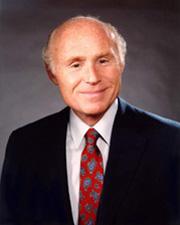
Mr. President, today I am introducing the Medicare Residency Program Fairness Act of 2006. This bill would provide for an adjustment to the reduction of Medicare resident positions based on settled…
Mr. President, today I am introducing the Medicare Residency Program Fairness Act of 2006. This bill would provide for an adjustment to the reduction of Medicare resident positions based on settled cost reports. The reason I am introducing this bill is because unintended consequences of Section 422 of the Medicare Modernization Act of 2003 have resulted in a decrease of residents slots in Wisconsin's Fox Valley and potentially in other small urban and rural family medicine practices across the Nation.
For more than a year, I have been working with the University of Wisconsin School of Medicine and the Fox Valley Fami1y Medicine Residency Program to urge CMS to restore funding for its residency training positions that was taken away as a result of an audit that incorrectly determined that the positions were not used. Now, a Final Mediation Agreement between Appleton Medical Center and United Government Services demonstrates that the positions were being used and that the program met the Medicare requirement for those positions. I believe it is only fair that Appleton Medical Center's residency positions be reinstated.
The Fox Valley Family Practice Residency Program is an important contributing member to the Fox Valley and surrounding community, providing health care services to some 10,000 families. This is exactly the type of program that we should be supporting, not reducing. My legislation will right this wrong and provide for the same opportunity for any other small urban or rural program that can demonstrate that its residency slots were erroneously de-funded by CMS. I ask that my Senate colleagues join me by supporting this bill. I ask unanimous consent that the text of the bill be printed in the Record.
Mr. President, I ask unanimous consent that the text of the bill be printed in the Record.
Mr. President, I ask unanimous consent that the text of the bill be printed in the Record.
Mr. President, I ask unanimous consent that the text of the bill be printed in the Record.
Mr. President, I ask unanimous consent that the text of the bill be printed in the Record.
Bill Text
4 versions available
        [Congressional Bills 109th Congress]
[From the U.S. Government Publishing Office]
[S. 3728 Enrolled Bill (ENR)]

S.3728

One Hundred Ninth Congress

of the

United States of America

AT THE SECOND SESSION

Begun and held at the City of Washington on Tuesday,
the third day of January, two thousand and six

An Act

To promote nuclear nonproliferation in North Korea.

Be it enacted by the Senate and House of Representatives of the
United States of America in Congress assembled,

SECTION 1. SHORT TITLE.

This Act may be cited as the ``North Korea Nonproliferation Act of
2006''.

SEC. 2. STATEMENT OF POLICY.

(a) In view of --
(1) North Korea's manifest determination to produce missiles,
nuclear weapons, and other weapons of mass destruction and to
proliferate missiles, in violation of international norms and
expectations; and
(2) United Nations Security Council Resolution 1695, adopted on
July 15, 2006, which requires all Member States, in accordance with
their national legal authorities and consistent with international
law, to exercise vigilance and prevent--
(A) missile and missile-related items, materials, goods,
and technology from being transferred to North Korea's missile
or weapons of mass destruction programs; and
(B) the procurement of missiles or missile-related items,
materials, goods, and technology from North Korea, and the
transfer of any financial resources in relation to North
Korea's missile or weapons of mass destruction programs,
it should be the policy of the United States to impose sanctions on
persons who transfer such weapons, and goods and technology related
to such weapons, to and from North Korea in the same manner as
persons who transfer such items to and from Iran and Syria
currently are sanctioned under United States law.

SEC. 3. AMENDMENTS TO IRAN AND SYRIA NONPROLIFERATION ACT.

(a) Reporting Requirements.--Section 2 of the Iran and Syria
Nonproliferation Act (Public Law 106-178; 50 U.S.C. 1701 note) is
amended--
(1) in the heading, by inserting ``, north korea,'' after
``iran''; and
(2) in subsection (a)--
(A) in the matter preceding paragraph (1)--
(i) by striking ``Iran, or'' and inserting ``Iran,'';
and
(ii) by inserting after ``Syria'' the following: ``, or
on or after January 1, 2006, transferred to or acquired
from North Korea'' after ``Iran''; and
(B) in paragraph (2), by inserting ``, North Korea,'' after
``Iran''.
(b) Conforming Amendments.--Such Act is further amended--
(1) in section 1, by inserting ``, North Korea,'' after
``Iran'';
(2) in section 5(a), by inserting ``, North Korea,'' after
``Iran'' both places it appears; and
(3) in section 6(b)--
(A) in the heading, by inserting ``, North Korea,'' after
``Iran''; and
(B) by inserting ``, North Korea,'' after ``Iran'' each
place it appears.

SEC. 4. SENSE OF CONGRESS ON INTERNATIONAL COOPERATION.

Congress urges all governments to comply promptly with United
Nations Security Council Resolution 1695 and to impose measures on
persons involved in such proliferation that are similar to those
imposed by the United States Government pursuant to the Iran, North
Korea, and Syria Nonproliferation Act (Public Law 106-178; 50 U.S.C.
1701 note), as amended by this Act.

Speaker of the House of Representatives.

Vice President of the United States and
President of the Senate.