A bill to extend the existence of the Nazi War Crimes and Japanese Imperial Government Records Interagency Working Group for 2 years.

Legislative Activity
Stay on top of the latest movement without scrolling through every action
Became Public Law No: 109-5.
March 25, 2005
View full timeline
Introduced in Senate
February 15, 2005
Introduced in the Senate. Read twice. Ordered Placed on Senate Legislative Calendar under General Orders. Calendar No. 6.
February 15, 2005
Measure laid before Senate by unanimous consent. (consideration: CR S1445-1448)
February 16, 2005
Passed Senate without amendment by Voice Vote. (text: CR S1448)
February 16, 2005
Received in the House.
February 17, 2005 • 10:03 AM
Message on Senate action sent to the House.
February 17, 2005
Referred to the House Committee on Government Reform.
February 17, 2005
Committee Consideration and Mark-up Session Held.
March 10, 2005
Mr. Shays moved to suspend the rules and pass the bill.
March 14, 2005 • 4:25 PM
Considered under suspension of the rules. (consideration: CR H1401-1403)
March 14, 2005 • 4:25 PM
DEBATE - The House proceeded with forty minutes of debate on S. 384.
March 14, 2005 • 4:25 PM
At the conclusion of debate, the Yeas and Nays were demanded and ordered. Pursuant to the provisions of clause 8, rule XX, the Chair announced that further proceedings on the motion would be postponed.
March 14, 2005 • 4:41 PM
Considered as unfinished business. (consideration: CR H1405)
March 14, 2005 • 7:03 PM
On motion to suspend the rules and pass the bill Agreed to by the Yeas and Nays: (2/3 required): 391 - 0 (Roll no. 68). (text: CR H1401)
March 14, 2005 • 7:19 PM
Motion to reconsider laid on the table Agreed to without objection.
March 14, 2005 • 7:19 PM
Cleared for White House.
March 14, 2005
Presented to President.
March 18, 2005
Signed by President.
March 25, 2005
Became Public Law No: 109-5.
March 25, 2005
Voting History
1 vote recorded • Roll call available
Floor Debate
15 membersWhat members said about S. 384 on the floor
MD CBM
 TD
 CS
 DF+10
Floor Debate
15 membersWhat members said about S. 384 on the floor
Mr. President, I ask unanimous consent to add the following members as original cosponsors of S. 384: Senators Coleman, Collins, and Santorum. Mr. President, I rise this morning to urge support for…
Mr. President, I ask unanimous consent to add the following members as original cosponsors of S. 384: Senators Coleman, Collins, and Santorum.
Mr. President, I rise this morning to urge support for S. 384, a bill that would extend a very important law; that is, the Nazi War Crimes Disclosure Act. This act launched a mission of discovery, and what we have learned from this bill has been extremely disturbing. It has been necessary that we learn what we have learned from this bill.
I will take a few moments to talk about the act's specific merits, but before I do that, there are some people I will thank. First, I thank the majority leader and his staff for allowing us time today on the Senate floor to debate this measure. I also thank Judiciary Chairman Arlen Specter for agreeing some time ago to schedule a hearing about our bill. It was not necessary to hold the hearing, but it was important that he schedule it. It was his strong support for our efforts that allowed us to move so quickly on this issue. Senator Specter gave a strong push to all involved to resolve their differences and to move forward so we could be in the position that we are today. I thank him for his leadership and for his support.
In 1998, Congress first passed the Nazi War Crimes Disclosure Act, which our friend and colleague the late Senator Daniel Patrick Moynihan and I introduced, along with my friend Congresswoman Carolyn Maloney, who introduced it in the House.
The purpose of this law was to make public previously classified information about a terrible part of history, the history of Nazi persecution and also the relationship of the U.S. Government to the Nazi war criminals in the aftermath of World War II and during the Cold War.
The bill provided that we would disclose, within the constraints of national security, the information we had about these Nazi war criminals. Undeniably, the Nazi era was one of the darkest chapters in human existence and there is a natural tendency not to even want to think or talk about it. Congress passed the Nazi war crimes law because we understood that we owe it to all those who suffered and died in the death camps. We also owe it to their families to bring the whole truth to light.
The Nazi War Crimes Disclosure Act has been in effect since 1998, and it has resulted in a tremendous amount of information. These results have been produced primarily through the good efforts of a group called the Interagency Working Group, also known as the IWG, which was created by that law. By statute, the IWG includes the director of the Holocaust Museum, the historian of the Department of State, the Archivist of the United States, representatives from the CIA, FBI, Department of Justice, specifically the Office of Special Investigations, the Department of Defense, and three outside appointees, known as public members, who are Elizabeth Holtzman, Richard Ben-Veniste, and Thomas Baer.
The IWG also includes a number of professional historians and archivists, who, along with the public members and the other IWG members, took on the task of locating, identifying, and recommending documents for declassification, of course always provided as long as the declassification posed no threat to national security.
At this point I think it is important to offer thanks to all the members of the IWG for their years of hard work on this project. The staff, including the archivists and historians, has done remarkable work and has helped to produce a tremendous amount of research on this critical project. In particular, we owe a debt of gratitude to the public members of the IWG--Elizabeth Holtzman, Richard Ben-Veniste and Thomas Baer--who have worked without compensation and spent literally hundreds and hundreds of hours of their own time on this effort. We give them our thanks. They have contributed mightily to the knowledge of this terrible era in world history.
Once the IWG was created, it worked closely with the CIA, the FBI, the NSA, the Army, and a number of other agencies to examine and evaluate an enormous number of documents. In fact, since 1998, the Interagency Working Group has coordinated the single largest specifically focused declassification effort in American history. In its first year of operation alone, the IWG screened so many documents for possible declassification and uncovered so much work to do that Congress extended its life in 2001, under the leadership of Senator Feinstein, and then again with my sponsorship in 2004.
At this point, over 100 million documents have been screened for possible relevancy, and over 8 million documents have been declassified and used to create a book titled, U.S. Intelligence and the Nazis. This book, which I have right here, now provides us with 15 chapters of insight into the Holocaust and the post-World War II era--insight into what U.S. Government officials knew and when they knew it. It makes for absolutely fascinating reading. We can be assured that, as more documents are uncovered and as historians have the opportunity to study what has already been uncovered, there will be more articles published, more interpretation, more understanding of history.
When I came to the floor almost 7 years ago to introduce and help pass the Nazi War Crimes Disclosure Act, I brought with me several aerial U.S. intelligence photographs taken in 1944 of Auschwitz. In the photographs, which were discovered by photo analysts from the CIA in 1978, prisoners were being led into gas chambers. This confirmed that our government knew that these atrocities were occurring. What else did they know? At that time, we could not be sure.
Now, however, due in great part to this law, we are much closer to answering that question. The book has contributed to our understanding of history--much more so than we ever hoped. Let me tell just a couple of the many stories this research has uncovered.
Let me tell a couple of the many stories that this research has uncovered so far.
For example, the historians were able to examine a range of documents produced by Gonzalo Montt, the Chilean consul in Prague during the early 1940s. Montt was a Nazi sympathizer and, as such, appears to have had significant access to Nazi plans regarding ``the Jewish problem'' and how the regime was planning to address it--and that plan involved moving the Jews into ghettos, expropriating their assets, and eventually eradicating the Jewish population.
British intelligence got access to many of Montt's dispatches to his home government and provided them to the United States as early as March 1942. Under the law, the IWG recommended that these documents be declassified, and our government agreed. These documents show that certain officials in our government had some evidence of Nazi intentions toward the Jews at least 6 months earlier than had previously been known.
Further, as the authors, themselves, say, these documents show again that:
for many Americans and Britons inside and outside of
government, the central, overriding concern during 1939-1945
was the war, itself--not the barbaric policies that
accompanied it.
Our job in Congress, at least in passing the law, was not to judge history. That is up to historians. That is up to the people who read it. That will be up to us, later on. As these documents come out, we can begin to judge it.
The point is, though, to make this information available, to let the truth come out, whatever that truth is. Let these raw documents come out to let people make judgments based on those documents. Let historians view it. Let historians argue about them. But to get those documents out in front of the historians and, ultimately, in front of the American people and in front of the world.
We learn from history. We learn from the truth. What this bill is about is getting out the truth.
Other documents showed other details. For example, in a chapter written by Professor Norman J.W. Goda, a professor at Ohio University, the book details how the German government, in coordination with a number of U.S. and European banks, worked together to funnel money illegally expropriated from the accounts of German Jewish nationals back to Germany. Although the details are somewhat complex, in essence, the German government used these expropriated assets to lure a prior generation of German immigrants back to Germany from the United States and, essentially, invest in the German war effort.
A large U.S. bank was intimately involved in this scheme, and profited greatly from it. The scheme was discovered in late 1940 by the FBI, and it began a lengthy investigation. Rather than shut down the operation, the Bureau surveilled the many participants and eventually did arrest a large number of them. At some point during the investigation, the bank, itself, did cooperate with the investigation and was never prosecuted in order to protect FBI and Army intelligence sources. Until this project began, this story had never fully been exposed.
As this book shows and those stories illustrate, this project has been a great success, and the IWG has been very effective at their task--but the law is due to expire at the end of March and the IWG needs more time. Unfortunately, during the course of the last year, the IWG and the CIA have had several ongoing disagreements about the correct interpretation of the law and what type of disclosure the law requires.
After a great deal of effort, the parties have finally come to a common understanding of what the law requires. Specifically, it is now understood that the law was drafted broadly, so that as much information as possible may be released--both about specific Nazi war crimes and also about the relationship the U.S. Government had with Nazi war criminals in the post World War II and Cold War era.
With this understanding going forward, the various parties who comprise the IWG agree that there is a need for some more time to conclude their important work, and I agree, as well. Accordingly, yesterday I introduced, along with Senators Feinstein and Cornyn, legislation that will extend the life of the IWG for 2 additional years, until March 2007. Both the IWG and the CIA agree that 2 years is a reasonable amount of time for the extension, and I agree.
I hope and expect that well within those 2 years, the IWG, working closely with the CIA, will be able to examine the remaining documents and release the important information that still lays within the files of the CIA--unexamined by the public until now. We have come a long way and told a large part of the story, and it is time to finish the job.
Finally, I would like to note for the record the contributions of the many people who have helped us to get to where we are today. Once again, Senator Specter, the chairman of the Judiciary Committee, was instrumental in putting the power of the Judiciary Committee behind our effort to move this issue quickly. I also would like to thank Senator Leahy, the ranking member of the Judiciary Committee, who has been a leader on this issue since the beginning, along with our co-sponsors on the Committee, Senator Feinstein and Senator Cornyn.
In the House of Representatives, as I mentioned earlier, Representative Carolyn Maloney has been my counterpart and the leader on this issue since the beginning. I look forward to working with Representative Maloney and with Chairman Davis, Chairman Sensenbrenner and Chairman Hoekstra to help move this legislation in the House.
Of course, I also must recognize the commitment, dedication, and vision of the late Senator Daniel Patrick Moynihan. He spent countless hours involved in this issue. He knew how important this was to deepening our understanding of history. He appreciated the value of uncovering this information and what it would mean to those who suffered through the Holocaust and their families.
I also must mention that the CIA, of course, has played a critical role in resolving this dispute and moving forward toward the completion of this project. I'd like to thank former DCI George Tenet for his efforts in that regard and, in particular, mention current DCI Porter Goss, who, as a Congressman from Florida, was a cosponsor of the original legislation in the House. Again, as I noted earlier, the members and staff of the IWG, including the public members, deserve our special thanks.
I should mention again the efforts of leadership and Floor staff, particularly Sharon Soderstrom and Laura Dove, for helping to move this legislation so quickly and make sure we had the opportunity to consider it prior to the expiration of the IWG next month.
Finally, on a personal note, I thank the staffs of all of the Members who have played such a large role on this issue. In particular, I would like to recognize the contributions of my former Judiciary Committee Staff Director Louis Dupart. Louis was a critical part of the team that helped us turn this idea into law back in 1998. Even though he is no longer working in the Senate, he has never stopped working to help promote this legislation and the effective implementation of the law. His ongoing efforts have been crucial to the success of our efforts here today.
Again I urge my colleagues to vote for this important and timely legislation to extend our efforts to finally and fully open our files regarding this horrific period in history and give the victims of the Nazi era and their families as complete an accounting as possible. We owe them no less.
Mr. President, I ask unanimous consent that the order for the quorum call be dispensed with.
Mr. President, I ask unanimous consent that Senators Leahy, Graham, and Allen be added as cosponsors to the bill.
Mr. President, I suggest the absence of a quorum.
Mr. President, I yield all time.
Madam Speaker, I yield myself such time as I may consume. Madam Speaker, I thank the gentleman from Connecticut (Mr. Shays) for his leadership on this issue and so many others. I rise in strong…
Madam Speaker, I yield myself such time as I may consume.
Madam Speaker, I thank the gentleman from Connecticut (Mr. Shays) for his leadership on this issue and so many others. I rise in strong support of S. 384 that would extend the Nazi War Crimes and Japanese Imperial Government Records Interagency Working Group for 2 years.
The 1989 law opened up the government files of Nazi and Japanese war activities. Many, many agencies cooperated and declassified an enormous amount of documents, including the CIA, FBI, NSA, DOD, the Army, and many others. The law resulted in the largest specifically focused declassification effort in American history. It provided important information for historians to better understand World War II and the Cold War. Already, over 100 million documents have been screened and over 8 million have been declassified.
The extension will allow time for the remaining documents to be released and studied. The remaining documents are mainly in the CIA. We thank them for their agreed cooperation as we go forward.
Madam Speaker, I want to make clear that the original legislation required the disclosure of Nazi war criminal records specifically related to individuals. It should in no way be interpreted as inhibiting the release of other more general records such as policy directives or memoranda. If such records are uncovered during the search of files, the bill requires and necessitates that they become public along with the rest of the documents. The intent of the original legislation was to bring to the light information which may be in the files and archives of the U.S. Government. This may well include information from the postwar period showing a relationship between those agencies and Nazi war criminals.
It was not the intent that the exemptions included in the underlying bill be used to shield this type of information from disclosure. We included the exemptions that currently exist in executive order. They should not be revoked simply to protect any agency from embarrassment.
It is important that this move forward, and it is important that we pass this extension today as the terms of the Interagency Working Group were set to expire at the end of March 2005. So we are at a critical juncture which this bill addresses.
Madam Speaker, I first introduced the Nazi War Crimes Disclosure Act in
1994. It was in response to an article that I read in the New York Times written by Mr. Abe Rosenthal. In the article he described the work of a professor from the University of South Carolina who was trying to obtain information on Kurt Waldheim, a former director of the United Nations. Yet our government would not allow him to have access to any information.
The KGB had opened up their files; many governments had opened up their files. It was many years after the war, and I could see no reason why this information should be kept from the public.
I introduced the bill, along with former Congressman Steve Horn. At first there was great opposition to the bill from the intelligence community. In 1996, we passed a sense of Congress in support of the bill because nothing passes without the support of the intelligence community. The bill drew the attention of former Congressman Porter Goss, Senator DeWine, and then-Senator Moynihan who worked with me and others to finally pass the bill 7 years ago in 1998. It was signed into law by President Clinton in an Oval Office ceremony that year.
In December of 2000, we extended the law for an additional 2 years and expanded it to cover the Japanese crime documents. Then in January of 2004, we extended the term of the Interagency Working Group another year so it would be able to fulfill its charter and produce a comprehensive, historically accurate report on the United States' knowledge of Nazi and Japanese war criminals and their activities.
Now because of the bill, the legislation, millions of pages of U.S. intelligence documents are organized and available to the public through the National Archives. As a result of this law, we are beginning to understand the relationship of the U.S. Government to Nazi war criminals in the aftermath of World War II and during the Cold War.
While it is a difficult subject to address, finding out about the terrible and ugly aspects of the wartime era will help to shed light and bring us closer to the truth. ``U.S. Intelligence and the Nazis'' is one book that has already resulted from the documents. I know there will be many more in the future. In this book, they talk about the role of intelligence agencies, especially the U.S. of war criminals by U.S. intelligence organizations after the war.
We now understand because of these documents that German spymaster General Reinhard Gehlen, who served as Hitler's most senior military intelligence officer on the Eastern Front, was an officer who became a key U.S. intelligence resource after the war. During the postwar period, he ran an extensive network of spies, some with Nazi collaborationist backgrounds, that made them vulnerable to the Soviet Union during the height of the Cold War.
As we can see, the documents provided thus far to the IWG have revealed that there was a closer relationship between the U.S. Government and Nazi war criminals than previously known. It is an important fact that is crucial to the understanding of history. This significant knowledge would not have been possible without the cooperation of so many in this body, and so many agencies. But particularly I cite the dedicated work of the Interagency Working Group, former Congresswoman Elizabeth Holtzman, Tom Baer and Richard Ben-Veniste. They served with great dedication, without compensation and are continuing to serve and have been appointed by two Presidents.
Many people worked to bring this bill to the floor, and I want to especially express my gratitude to the gentleman from Virginia (Chairman Tom Davis), who went beyond the call of duty to ensure there was a markup so we could get this to the floor to extend it before the time expired. I appreciate the work of his staff, Mason Aligner and Rob Borden; and I also want to thank the ranking member, the gentleman from California (Mr. Waxman), and his staff, Michelle Ash and David McMillan, who are always helpful and supportive, and this time was no exception.
I also express my appreciation to the gentleman from Texas (Mr. DeLay), the majority leader, and his staff, Brad Loper. They were extremely helpful in making sure we are debating this bill on the floor today and that the Interagency Task Force will be able to continue its work.
I would also like to thank the gentleman from Wisconsin (Mr. Sensenbrenner) and Robert Tracci on his staff who have been extremely accommodating so we could move this forward. But I would especially like to thank my colleague in the other body, Senator DeWine, and his staff, Peter Levitas, and his former staff member, Louis DePartt, for their tireless and selfless work and for the energy they put forth to ensure that we know as much as we can about our government's past involvement with Nazi war criminals.
I would also like to recognize Ben Chevat and Orly Isaacson of my own staff who have shown tremendous persistence and dedication.
I also thank former Senator Moynihan. Today, I was supposed to be in Syracuse for a dedication to a research facility that bears his name to continue his work. He worked with me on this bill. Part of his devotion was protecting privacy and combating unnecessary confidentiality of government papers. I really feel being here today helps extend and empower the work that he so brilliantly did in this body.
Our work today is extremely important; but it is far surpassed by the persistence that Holocaust survivors, historians, and researchers have shown for their search for the truth. I thank everyone who has worked to make this happen today.
Madam Speaker, I yield back the balance of my time.
Madam Speaker, on that I demand the yeas and nays.
Mr. Speaker, I include the following exchange of letters between Chairman F. James Sensenbrenner, Jr., of the Committee on the Judiciary, Chairman Peter Hoekstra of the Permanent Select Committee on…
Mr. Speaker, I include the following exchange of letters between Chairman F. James Sensenbrenner, Jr., of the Committee on the Judiciary, Chairman Peter Hoekstra of the Permanent Select Committee on Intelligence and myself.
Committee on the Judiciary,
House of Representatives,
Washington, DC, March 14, 2005.
Hon. Tom Davis
Chairman, Committee on Government Reform,
House of Representatives, Washington, DC.
Dear Chairman Davis: In recognition of the desire to
expedite floor consideration of S. 384, ``To extend the
existence of the Nazi War Crimes and Japanese Imperial
Government Records Interagency Working Group for two years,''
the Committee on the Judiciary hereby waives consideration of
provisions of the legislation within the Committee's Rule X
subject matter jurisdiction. Specifically, S. 384 extends the
operation of the Nazi War Criminal Interagency Working Group
established by Public Law 105-267. Section 3(b) of Public Law
105-267 created certain exceptions for the disclosure of
records obtained by the Working Group. Section 3(b)(2)(A)
excepts the disclosure of information that would ``constitute
a clearly unwarranted invasion of personal privacy.'' This
matter falls within the Committee on the Judiciary's subject
matter jurisdiction under rule X(l)(l)(5)(``Civil
liberties''). Section 3(b)(2)(C) also excepts the disclosure
of information that would ``reveal information that would
assist in the development or use of weapons of mass
destruction.'' This matter falls within the Committee on the
Judiciary's subject matter jurisdiction under rule
X(l)(l)(19)(``Subversive activities affecting the internal
security of the United States''). In addition, section (3)(c)
creates an exception to the National Security Act of 1947.
This section implicates the Committee on the Judiciary's
jurisdiction under rule X(1)(1)(19)(``Subversive activities
affecting the internal security of the United States'')
Finally, Section 3(3) pertains to the disclosure of records
``related to or supporting any active or inactive
investigation, inquiry, or prosecution of the Office of
Special Investigations of the Department of Justice.'' This
matter falls with the Committee on the Judiciary's subject
matter jurisdiction under rule X(l)(l) (``The judiciary and
judicial proceedings, civil and criminal.'')
S. 384 also extends the operation of the ``Japanese
Imperial Government Disclosure Act'' (Public Law 106-567),
which expanded the scope of the Working Group to encompass
the examination of crimes committed
by the Japanese government during World War II. Section
803(b)(1) of this legislation excepts the disclosure of
information that would ``constitute a clearly unwarranted
invasion of personal privacy.'' This matter falls within the
Committee on the Judiciary's subject matter jurisdiction
under rule X(l)(l)(5)(``Civil liberties''). Section 803(b)(3)
also excepts the disclosure of information that would
``reveal information that would assist in the development or
use of weapons of mass destruction.'' This matter falls
within the Committee on the Judiciary's subject matter
jurisdiction under rule X(l)(l)(10)(``Subversive activities
affecting the internal security of the United States'').
Finally, Section 803(d) pertains to the disclosure of records
``related to or supporting any active or inactive
investigation, inquiry, or prosecution of the Office of
Special Investigations of the Department of Justice.'' This
matter falls with the Committee on the Judiciary's subject
matter jurisdiction under rule X(l)(l) (``The judiciary and
judicial proceedings, civil and criminal'').
The Committee on the Judiciary takes this action with the
understanding that the Committee's jurisdiction over these
provisions is in no way altered or diminished. I would
appreciate the inclusion of this letter and your response to
it in the Congressional Record during consideration of S. 384
on the House floor. Thank you for your consideration in this
matter.
Sincerely,
F. James Sensenbrenner, Jr.,
Chairman.
Mr. Speaker, I move to suspend the rules and pass the Senate bill (S. 384) to extend the existence of the Nazi War Crimes and Japanese Imperial Government Records Interagency Working Group for 2…
Mr. Speaker, I move to suspend the rules and pass the Senate bill (S. 384) to extend the existence of the Nazi War Crimes and Japanese Imperial Government Records Interagency Working Group for 2 years.
Mr. Speaker, I ask unanimous consent that all Members may have 5 legislative days within which to revise and extend their remarks and include extraneous material on S. 384, the Senate bill under consideration.
Mr. Speaker, I yield myself such time as I may consume.
Mr. Speaker, as a member of the Committee on Government Reform, I am pleased to call for the consideration of S. 384, a bill that extends the existence of the Nazi War Crimes and Japanese Imperial Government Records Interagency Working Group. I commend the esteemed Senator from Ohio, Mike DeWine, and my distinguished colleague in this body, the gentlewoman from New York (Mrs. Maloney), for working on this bill. I am proud to be a cosponsor of it.
Senate 384 extends by 2 years this worthy working group that was originally created by Congress through Public Law 105-246 in 1998. The group is made up of government agency representatives who are directed to oversee the declassification of U.S. Government records that contain information about Nazi war crimes.
Such information includes trafficking of assets seized by the Nazis and post-war communications between U.S. Government and former Nazi officials, unless declassification would unduly violate personal privacy or harm national security or foreign policy interests. The law also allowed for expedited processing of Freedom of Information, FOIA, requests made by survivors of the Holocaust.
On December 6, 2000, as part of the Intelligence Authorization Act for 2001, Congress changed the group's name to the Nazi War Crimes and Japanese Imperial Government Records Interagency Working Group. This action expanded the mission of the group to include the declassification of U.S. Government records related to World War II era war crimes committed by the Japanese Imperial government.
The project has produced some valuable accomplishments. It has allowed the release of over 8 million previously classified documents and generated a great deal of historical research.
However, the CIA has resisted disclosing certain files, preventing the completion of the work within the 3-year time frame anticipated by the original law. Recently, however, the CIA has agreed to modify its position on a number of key issues and work with the National Archives and other groups to declassify remaining relevant information. Accordingly, S. 384 would extend the law for another 2 years, to give all parties sufficient time to complete the project.
Madam Speaker, all in all, the Nazi War Crimes and Japanese Imperial Government Records Interagency Working Group is a valuable effort that informs the American people of the actions of their government while balancing the protection of legitimate national secrets.
Again, I thank the gentlewoman from New York and the Senator from Ohio for seeing this legislation through both Chambers of Congress. I urge strong support for this measure.
Madam Speaker, I reserve the balance of my time.
Madam Speaker, I yield myself the balance of my time.
Madam Speaker, again I thank the gentlewoman from New York (Mrs. Maloney) for her extensive work on this legislation over a long period of time. I reinforce the gentlewoman's thank you and say that the gentleman from Virginia (Chairman Tom Davis) wants to be on the record thanking the gentleman from Wisconsin (Chairman Sensenbrenner) and the gentleman from Michigan (Chairman Hoekstra) for waiving jurisdiction on S. 384 so we could take it up more quickly, and that was obviously very important.
I just want to say that I know the gentlewoman is going to ask for a roll call vote, and I join in that effort because I think Members want an opportunity to vote on this bill. I urge all Members to support the passage of S. 384.
Madam Speaker, I yield back the balance of my time.
Mr. President, I rise today in support of legislation to authorize the extension of the Nazi War Crimes Records Disclosure Act and the Japanese Imperial Army Disclosure Act for an additional 2 years.…
Mr. President, I rise today in support of legislation to authorize the extension of the Nazi War Crimes Records Disclosure Act and the Japanese Imperial Army Disclosure Act for an additional 2 years.
In 1998, Congress passed the Nazi War Crimes Records Disclosure Act to ensure that the records of our national security and intelligence agencies related to the criminal activities of the Nazi regime could, after more than half a century, become public.
During the 106th Congress, I introduced, and the President signed into law, the Japanese Imperial Army Disclosure Act which expanded the scope of the original statute to cover war crimes that occurred in the Pacific theater.
That legislation was sought by a large number of Californians who believed that there was an effort to keep information about possible Japanese Imperial Army abuse of war prisoners from the public record.
Indeed, both pieces of legislation were much needed because many of the records and documents regarding Germany's and Japan's wartime activities were classified and hidden in U.S. government archives and repositories. Even worse, according to some scholars, some of these records were being inadvertently destroyed.
The statutes were designed to work through an Interagency working group which would ensure that the documents that needed to be declassified would be declassified, and that the process would occur in an orderly and expeditious manner.
At the time, it was recognized that there could be circumstances where classification was still appropriate, so the best way for the working group to conduct its work was to do so in coordination with other agencies. What we did not recognize was the bureaucratic setbacks that the working group would encounter.
The bottom line here is that the working group did its part and tried diligently to meet its deadline. Nevertheless, despite the group's best efforts, it appears that delay and confusion on the part of the CIA have obstructed its progress.
As a result, the working group, through no fault of its own, was unable to complete this important work within the timetable that the legislation contemplated and now requires additional time to finish.
I find this to be very unfortunate because the time has already long since passed for the full truth to come out.
However, I have been assured that the intelligence community, in general, and the CIA, in particular, have a renewed understanding of the importance of this matter and will now work expeditiously with the working group until the work is completed.
With the fast-thinning ranks of our brave American World War II veterans, it is all the more imperative that the truth comes out sooner, not later. Especially for those that were the victims of war crimes, there should be a full accounting of what happened so that old wounds have a chance to heal.
We need to pass this legislation now so the working group can finish the work that it has started before it is too late. Our veterans gave and risked their lives for this country. The least we can do is provide them with the truth before they are all gone.
Mr. President, I yield the floor and suggest the absence of a quorum.
Show 8 more

Mr. President, I am a strong supporter of this bill, and I am pleased to again work with Senator DeWine to help ensure that our government discloses what it knows about Nazi war criminals and their…
Mr. President, I am a strong supporter of this bill, and I am pleased to again work with Senator DeWine to help ensure that our government discloses what it knows about Nazi war criminals and their counterparts in the Japanese Imperial Government.
We passed the Nazi War Crimes Disclosure Act in 1998, and I had the opportunity to work on the bill in the Judiciary Committee. The act required U.S. Government agencies to disclose documents in its possession that related to Nazi war criminals and was later expanded to cover the Japanese Government. Congress took care to respect legitimate national security concerns, including exemptions to allow agencies to withhold documents under a variety of circumstances, provided they reported such withholding promptly to the relevant committees.
The act also established the Interagency Working Group, IWG, to study and report on the documents held by government agencies. Through no fault of its own, the IWG has not been able to complete its work, and the legislation before us today would extend its life for an additional 2 years.
President Clinton instructed agencies to comply fully and rapidly with the act. Most have done so. The Central Intelligence Agency, however, has until recently insisted on a cramped interpretation of the statute that did not accord with congressional intent. The CIA's approach if left unquestioned would have denied researchers and the American people a complete accounting of U.S. Government information about Nazi war criminals.
The plain reading of the act says that if the CIA, or any other agency, possesses documents relating to war criminals, all such documents must be disclosed unless a specific statutory exemption applies. I understand that the FBI, the Army, and other agencies covered by the law adopted that interpretation. The CIA, however, took the position that it must disclose only those documents directly relating to the individual's criminality.
In recent weeks, however, under the continued prodding of Senator DeWine and the public members of the IWG, the CIA has agreed to revise its interpretation of the law and provide the IWG with the additional documentation it has sought. Richard Ben-
Veniste, Elizabeth Holtzman, and Tom Baer, the public members, deserve our thanks for their persistent efforts to uncover the whole truth about the criminals of World War II that is contained in U.S. Government files.
In addition to providing additional information, the CIA must also comply with its obligation under the act to report to the Senate Judiciary Committee and the House Government Reform Committee whenever it invokes an exemption to avoid disclosing documents. Seven years after enactment, we have yet to receive any such report from the CIA, even as it declined to disclose a number of documents sought by the
Mr. Speaker, I rise today in support of S. 384, a bill extending the Nazi War Crimes and Japanese Imperial Government Records Interagency Working Group for two years. This crucial legislation amends…
Mr. Speaker, I rise today in support of S. 384, a bill extending the Nazi War Crimes and Japanese Imperial Government Records Interagency Working Group for two years. This crucial legislation amends the Japanese Imperial Government Disclosure Act of 2000 to extend from four to six years the existence of the Nazi War Crimes and Japanese Imperial Government Records Interagency Working Group. H.R. 842 extends by two years this worthy working group, which was originally created by Congress through Public Law 105-246 in 1998. The group is made up of government agency representatives who are directed to oversee the declassification of U.S. Government records that contain information about Nazi war crimes.
Such information includes trafficking of assets seized by the Nazis and post-war communications between U.S. Government and former Nazi officials, unless declassification would unduly violate personal privacy or harm national security or foreign policy interests. The law also allowed for expedited processing of Freedom of Information, requests made by survivors of the Holocaust.
On December 6, 2000, as part of the Intelligence Authorization Act for 2001, Congress changed the group's name to the Nazi War Crimes and Japanese Imperial Government Records Interagency Working Group. This action expanded the mission of the group to include the declassification of U.S. Government records related to World War II-era war crimes committed by the Japanese Imperial government.
Mr. Speaker, the Nazi War Crimes and Japanese Imperial Government Records Interagency Working Group is a valuable effort that informs the American people of the actions of their government while balancing the protection of legitimate national secrets.
I support this noble effort so that we can continue to confront this dark chapter in American History.
The vicious and barbaric war crimes committed by the Nazis, and the atrocities committed by the Japanese Imperial Government during World War II, were some of the worse criminal acts of the 20th century. Both of these historical crimes against humanity must be studied and chronicled in their entirety. The acts of barbarism and genocide committed by the German Nazi and Japanese Imperial governments should never be forgotten. Therefore, it is up to the elected representatives of the American people to ensure that the United States Government complies completely with the Nazi War Crimes and Japanese Imperial Government Records Interagency Working Group and makes accessible all information that is allowable by law.
I urge my colleagues to support this bill.
Mr. Speaker, today, I, along with 12 of my bipartisan colleagues, including Chairmen Davis and Hoekstra and Ranking Members Waxman, Harman, and Conyers, introduce a bill that will extend the term of…
Mr. Speaker, today, I, along with 12 of my bipartisan colleagues, including Chairmen Davis and Hoekstra and Ranking Members Waxman, Harman, and Conyers, introduce a bill that will extend the term of the Nazi War Crimes Interagency Working Group by 2 years. This is the companion bill of S. 384, a bill introduced by Senator DeWine and passed in the Senate today. Mr. Speaker, I am very proud of the history and the impact of this legislation. I would like to thank Senator DeWine and his staff for their tireless work and for the energy they have put forth to ensure that we know as much as we can about our Government's past involvement with Nazi War criminals.
In 1998, Congress passed the Nazi War Crimes Disclosure Act, a law that was enacted to explain the relationship between the U.S. Government and former Nazis. The act required the release of all previously classified information on the topic to the Interagency Working Group on Nazi War Crimes, IWG. The documents provided thus far to the IWG have revealed that there was a closer relationship between the U.S. Government and Nazi war criminals than previously known, a revelation that is crucial to the understanding of history. This significant knowledge would not have been possible without the cooperation of many agencies including the Department of Justice, Department of Defense, and the Federal Bureau of Investigation.
Until recently, the CIA had not complied with the law and did not release the documents needed to complete the IWG's task, as defined by law. Fortunately, after discussions with Senator DeWine and myself and under the leadership of Director Porter Goss, the CIA agreed to release the requisite documents. With the term of the IWG set to expire at the end of March 2005, we are now at a critical juncture.
This bill is simple. It extends the term of the IWG so that it can complete its work, write a comprehensive report, and send it to Congress. We hope to move this quickly in the House, as they did in the Senate, to avoid a lapse in this important work. History, and the memory of the millions who perished in the Holocaust, deserve nothing less than full disclosure.
Mr. President, I ask unanimous consent that when the Senate completes its business today, the Senate adjourn until 9:30 a.m. on Wednesday, February 16. I further ask that following the prayer and…
Mr. President, I ask unanimous consent that when the Senate completes its business today, the Senate adjourn until 9:30 a.m. on Wednesday, February 16. I further ask that following the prayer and pledge, the morning hour be deemed expired, the Journal of proceedings be approved to date, the time for the two leaders be reserved, and the Senate then proceed to a period for morning business for up to 90 minutes, with the first 30 minutes under the control of the majority leader or his designee and the second 30 minutes under the control of the Democratic leader or his designee; provided that following morning business, the Senate proceed to the consideration of S. 384, the Nazi War Crimes Working Group Extension Act as provided under the previous order.
In response through the Chair, this bill is a critically important bill, in my mind, in that we have worked on it for 7 years. We have passed it with an overwhelming majority in this body. It does good things for people who have a whole range of illnesses. It really represents the great advances in science today, advances in research, advances that come in large part because of what this body did with the human genome project in funding over a period of about 10 years, the unraveling of the genetic code which makes us all human, which is still mind-boggling. With that, it introduces all sorts of privacy issues and a potential for discrimination and this comes back and addresses it head on. It is a bill upon which we generally have all agreed.
We are working with the Finance Committee and with the HELP Committee internally as well as with the House. I do not want to be overly optimistic, but I think by tomorrow we will work this out and get it to the Senate floor.
Mr. President, we will move on.
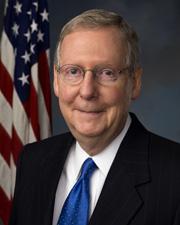
Mr. President, today we have a period of morning business for up to 90 minutes. The first hour of that time is divided with the majority controlling the first 30 minutes, and the minority in control…
Mr. President, today we have a period of morning business for up to 90 minutes. The first hour of that time is divided with the majority controlling the first 30 minutes, and the minority in control of the second 30 minutes.
At about 11 o'clock, the Senate will begin consideration of S. 384, the Nazi War Crimes Working Group extension bill. Senator DeWine is the primary sponsor of that legislation, and he will be here to begin the debate.
Last night, we reached an agreement for 90 minutes of debate on the bill to accommodate several Senators who want to speak on the underlying legislation. It does not appear that a rollcall vote will be necessary on passage of S. 384, and we will notify everyone if someone requests a vote.
We are also working on agreements for the genetic nondiscrimination bill and the high-risk pooling bill.
This week, we also hope to consider the committee funding resolution, as well as any additional nominations that become available.
Finally, I remind all of our colleagues of the traditional reading of George Washington's Farewell Address that will occur this Friday. The junior Senator from North Carolina, Mr. Richard Burr, has agreed to deliver that address, and we thank him in advance for his contribution to this longstanding Senate tradition.
Mr. President, I ask unanimous consent that the final 30 minutes of the allotted morning business time be under the control of Senators Cornyn and Leahy, or their designees.
Mr. President, I suggest the absence of a quorum.

Mr. President, if the distinguished majority leader would yield, I am disappointed but I understand that we are not going to be able to move tomorrow to the genetic nondiscrimination matter. It is my…
Mr. President, if the distinguished majority leader would yield, I am disappointed but I understand that we are not going to be able to move tomorrow to the genetic nondiscrimination matter. It is my understanding that there is a potential blue-slip problem with the House. I had hoped we could get that done. That is something that is very important to do. We will be happy to cooperate with the majority leader in any way we can to move that along. It passed last time with 90-some-odd votes. I hope we can get that done. Even with a little bump in the road, maybe we can still get that done this week.
Mr. President, if the distinguished leader would yield again, I am sure others have felt this way in the past, but it is interesting to me that anytime there is anything that the distinguished majority leader talks about that deals with medicine, it is almost as if there is a light that comes on. It is just so apparent why he was such a good physician.
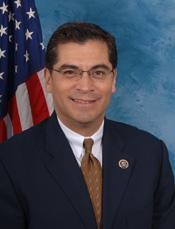
Mr. Speaker, on Monday, March 14, 2005, I was unable to cast my floor vote on rollcall Nos. 66, 67, and 68. The votes I missed include rollcall No. 66 on motion to suspend the rules and agree to H.…
Mr. Speaker, on Monday, March 14, 2005, I was unable to cast my floor vote on rollcall Nos. 66, 67, and 68. The votes I missed include rollcall No. 66 on motion to suspend the rules and agree to H. Res. 135, providing for the establishment of a commission in the House of Representatives to assist parliaments in emerging democracies; rollcall No. 67 on the motion to suspend the rules and agree to H. Res. 101, urging the European Union to add Hezbollah to the European
Union's wide-ranging list of terrorist organizations; and on the motion to suspend the rules and agree to S. 384, to extend the existence of the Nazi War Crimes and Japanese Imperial Government Records Interagency Working Group for two years.
Had I been present for the votes, I would have voted ``aye'' on rollcall votes 66, 67, and 68.
Mr. President, I ask unanimous consent that at 11 a.m. on Wednesday, February 16, the Senate proceed to the consideration of S. 384, a bill to extend the existence of the Nazi War Crimes Working…
Mr. President, I ask unanimous consent that at 11 a.m. on Wednesday, February 16, the Senate proceed to the consideration of S. 384, a bill to extend the existence of the Nazi War Crimes Working Group; provided that there be 90 minutes of debate equally divided between the majority leader or his designee and the Democratic leader or his designee; provided further that no amendments be in order, and that following the use or yielding back of the time the bill be read a third time and the Senate proceed to a vote on passage without any intervening action or debate.
I further ask unanimous consent that S. 384 be placed on the Senate Calendar.
Show 4 more
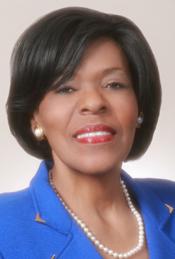
Mr. Speaker, personal business in my district prevents me from being present for legislative business scheduled for today, Monday, March 14, 2005. Had I been present, I would have voted ``yea'' on…
Mr. Speaker, personal business in my district prevents me from being present for legislative business scheduled for today, Monday, March 14, 2005. Had I been present, I would have voted ``yea'' on H.R. 135, authorizing the establishment of a House Democracy Assistance Commission (rollcall No. 66); ``yea'' on H. Res. 101, a resolution urging the European Union to Add Hezbollah to the List of Terrorist Organizations (rollcall No. 67); and ``yea'' on S. 384, to extend the Nazi and Japanese War Crimes Working Group (rollcall No. 68).
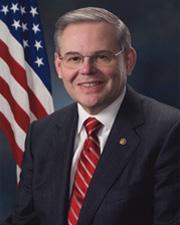
Mr. Speaker, I was absent from votes in the House on Monday, March 14th, due to a previous and unavoidable commitment. Therefore, I was unable to vote on H. Res. 135 (Rollcall No. 66), H. Res. 101…
Mr. Speaker, I was absent from votes in the House on Monday, March 14th, due to a previous and unavoidable commitment. Therefore, I was unable to vote on H. Res. 135 (Rollcall No. 66), H. Res. 101 (Rollcall No. 67), and S. 384 (Rollcall No. 68). Had I been present, I would have voted ``aye'' on all three measures considered before the House.
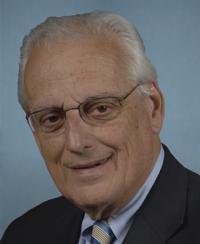
Mr. Speaker, I rise to offer a personal explanation. Earlier today, I was unavoidably detained on rollcall votes 66, 67, and 68 due to prior obligation. Had I been present, I would have voted ``yea''…
Mr. Speaker, I rise to offer a personal explanation. Earlier today, I was unavoidably detained on rollcall votes 66, 67, and 68 due to prior obligation. Had I been present, I would have voted ``yea'' on rollcall vote 66 (H. Res. 135), ``yea'' on rollcall vote 67 (H. Res. 101), and ``yea'' on rollcall vote 68 (S. 384).
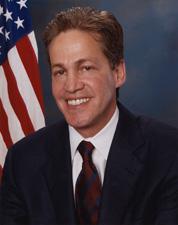
Mr. President, I ask unanimous consent that the order for the quorum call be dispensed with.
Mr. President, I ask unanimous consent that the order for the quorum call be dispensed with.
Bill Text
5 versions available
        [Congressional Bills 109th Congress]
[From the U.S. Government Publishing Office]
[S. 384 Enrolled Bill (ENR)]

S.384

One Hundred Ninth Congress

of the

United States of America

AT THE FIRST SESSION

Begun and held at the City of Washington on Tuesday,
the fourth day of January, two thousand and five

An Act

To extend the existence of the Nazi War Crimes and Japanese Imperial
Government Records Interagency Working Group for 2 years.

Be it enacted by the Senate and House of Representatives of the
United States of America in Congress assembled,

SECTION 1. TWO-YEAR EXTENSION OF WORKING GROUP.

Section 802(b)(1) of the Japanese Imperial Government Disclosure
Act of 2000 (Public Law 106-567; 114 Stat. 2865) is amended by striking
``4 years'' and inserting ``6 years''.

Speaker of the House of Representatives.

Vice President of the United States and
President of the Senate.