OPEN Government Act of 2005
Legislative Activity
Stay on top of the latest movement without scrolling through every action
Placed on Senate Legislative Calendar under General Orders. Calendar No. 628.
September 21, 2006
View full timeline
Introduced in Senate
February 16, 2005
Sponsor introductory remarks on measure. (CR S1520-1524)
February 16, 2005
Read twice and referred to the Committee on the Judiciary. (text of measure as introduced: CR S1524-1525)
February 16, 2005
Committee on the Judiciary Subcommittee on Terrorism, Technology and Homeland Security. Hearings held.
March 15, 2005
Committee on the Judiciary. Ordered to be reported without amendment favorably.
September 21, 2006
Committee on the Judiciary. Reported by Senator Specter without amendment. Without written report.
September 21, 2006
Placed on Senate Legislative Calendar under General Orders. Calendar No. 628.
September 21, 2006
Floor Debate
17 membersWhat members said about S. 394 on the floor
JC DF
DF RDF
RDF NC
NC SMC+12
Floor Debate
17 membersWhat members said about S. 394 on the floor
Mr. President, I rise today to introduce a bill, along with the Senator from Vermont who we will hear from shortly, that will help enhance the openness of the Federal Government. This bill is called…
Mr. President, I rise today to introduce a bill, along with the Senator from Vermont who we will hear from shortly, that will help enhance the openness of the Federal Government. This bill is called the Open Government Act of 2005. It is a bipartisan effort to improve and update our public information laws--particularly the Freedom of Information Act.
The purpose of the bill is to arm the American people with the information they need to make certain that ours remains a government whose legitimacy is derived from the consent of the governed. This legislation will significantly expand the accessibility, accountability, and openness of the Federal Government.
Open government, of course, is one of the most basic requirements of a healthy democracy. It allows taxpayers to see where their money is going. It permits the honest exchange of information that ensures government accountability, and it upholds the ideal that government never rules without the consent of the governed. As is so often the case, Abraham Lincoln said it best:
No man is good enough to govern another without that
person's consent.
But achieving the true consent of the governed requires something more than just holding elections every couple of years. What we need is informed consent. Informed consent is impossible without open and accessible government.
It has been nearly a decade since Congress has approved major reforms to the Freedom of Information Act. The Senate Judiciary Committee has not convened an oversight hearing to examine the Freedom of Information Act compliance issue since 1992. And at that time, I believe it is clear that the growth of technology and the Internet has created a real desire among the American people to achieve direct, efficient, and open access to government information.
I thank my colleague from Vermont, the ranking member of the Judiciary Committee, who has long been a champion of these issues, for his hard work on this bill. Together our offices have spent a good deal of time meeting with open government advocates. I am proud to say this bill is supported by a broad coalition across the ideological spectrum, because I believe this legislation should not be a partisan or special interest bill. Indeed, it is not.
I ask unanimous consent that these endorsement letters from dozens of watchdog groups across the political spectrum be printed in the Record at the close of my remarks.
Mr. President, as the Senator from Vermont said at a recent Judiciary Committee hearing:
I have always found that every administration, Republican
or Democrat, would love to keep a whole lot of things from
the public. They do something they are proud of, they will
send out a hundred press releases. Otherwise, they will hold
it back. We have the Freedom of Information Act, which is
a very good thing. It keeps both Democratic and Republican
administrations in line.
I agree with that. Essentially, we are talking about human nature. It is only natural that elected officials and Government leaders want recognition for their successes but not their failures. But we, as a healthy democracy, need to know the good, the bad, and the ugly.
The news media, of course, is the main way people get information about the Government. The media pushes Government entities and elected officials, bureaucrats, and agencies to release information that the people have the right to know, occasionally exposing waste, fraud, and abuse--and hopefully more often than that letting the American people know what a good job their public officials are doing.
But we have also seen in recent years an expansion of other outlets for sharing information outside of the mainstream media to online communities, discussion groups, and blogs. I believe all these outlets can and do contribute to the health of our political democracy.
Let me make this clear. This is not just a bill for the media, lest anybody be confused. This is a bill that will benefit every man, woman, and child in the United States of America who cares about the Federal Government, cares about how the Federal Government operates, and ultimately cares about the success of this great democracy.
By reforming our information policies in order to guarantee true access by all citizens to Government records, we will revitalize the informed consent that keeps America free. The Open Government Act contains over a dozen substantive provisions, designed to achieve the following four objectives:
First, it will strengthen the Freedom of Information Act and close loopholes.
Secondly, it will help Freedom of Information Act requesters obtain timely responses to their requests.
Third, it will ensure that agencies have strong incentives to comply with the law in a timely fashion.
Fourth, it will provide Freedom of Information Act officials; that is, people within Government agencies, with all the tools, including the education, they need in order to ensure that our Government remains open and accessible.
This legislation is not just pro-openness, pro-accountability and pro-accessibility; it is also pro-Internet. It contains important congressional findings to reiterate the presumption of openness. It includes a provision for a hotline that enables citizens to track the requests and even allows tracking of those requests via the Internet. As a whole, the Open Government Act reiterates the principle that our Government is based not on the need to know but rather on the right to know.
We all recognize that America's security should never take a back seat. But nor should the claim, without justification, of national security be used as a barrier against allowing taxpayers to know how their money is being spent.
There is a broad consensus across the aisle, the political spectrum, that we currently overclassify Government documents, and that many documents and much information is placed beyond the public view without any real justification. I believe we need a system of classification that strikes the right balance between the need to classify documents in the interest of our national security and our national values of open government.
Our default position of the U.S. Government must be one of openness. If records can be open, they should be open. If there is a good reason to keep something closed, it is the Government that should bear the burden, not the other way around.
Open government is fundamentally an American issue. It is literally necessary to preserve our way of life as a self-governing people. Ensuring the accessibility, accountability, and openness of the Federal Government is a cause worthy of preservation, and I call on my colleagues to join the Senator from Vermont and I today in taking a meaningful step toward that goal.
Finally, before I yield the floor to the Senator from Vermont, let me again express my appreciation to him and his staff. They have worked very closely with my staff. This is one of those good Government initiatives that knows no party affiliation, no ideological affiliation, but is really one that is essential to the preservation of our way of life as a self-governing democracy.
Exhibit 1
Openness Promotes Effectiveness in our National Government Act of 2005
Led by U.S. Senators John Cornyn and Patrick Leahy, the
OPEN Government Act of 2005 is a bipartisan effort to achieve
meaningful reforms to federal government information laws--
including most notably the Freedom of Information Act of 1966
(``FOIA''). If enacted, the legislation would substantially
enhance and expand the accessibility, accountability, and
openness of the federal government. It has been nearly a
decade since Congress has approved major reforms to FOIA.
Moreover, the Senate Judiciary Committee has not convened an
oversight hearing to examine FOIA compliance issues since
April 30, 1992. (The Senate Homeland Security and
Governmental Affairs Committee, which shares jurisdiction
over federal government information laws with the Judiciary
Committee, has not held a FOIA oversight hearing since 1980.)
This legislation is the culmination of months of extensive
discussions between the offices of Senators Cornyn and Leahy
and various members of the requestor community. The bill is
supported by Texas Attorney General Greg Abbott and a broad
coalition of organizations across the ideological spectrum,
including:
American Association of Law Libraries
American Civil Liberties Union
American Library Association
American Society of Newspaper Editors
Associated Press Managing Editors
Association of Health Care Journalists
Center for Democracy & Technology
Coalition of Journalists for Open Government
Committee of Concerned Journalists
Education Writers Association
Electronic Privacy Information Center
Federation of American Scientists/Project on Government
Secrecy
Free Congress Foundation/Center for Privacy & Technology
Policy
Freedom of Information Center, University of Missouri
The Freedom of Information Foundation of Texas
The Heritage Foundation/Center for Media and Public Policy
Information Trust
National Conference of Editorial Writers
National Freedom of Information Coalition
National Newspaper Association
National Security Archive/George Washington University
Newspaper Association of America
People for the American Way
Project on Government Oversight
Radio-Television News Directors Association
The Reporters Committee for Freedom of the Press
Society of Environmental Journalists
The Act contains important Congressional findings to
reiterate and reinforce the view that the Freedom of
Information Act establishes a presumption of openness, and
that our government is based not on the need to know, but
upon the fundamental right to know. The Act also contains
over a dozen substantive provisions, designed to achieve the
following four objectives:
(1) Strengthen FOIA and close loopholes
(2) Help FOIA requestors obtain timely responses to their
requests
(3) Ensure that agencies-have strong incentives to act on
FOIA requests in a timely fashion
(4) Provide FOIA officials with all of the tools they need to
ensure that our government remains open and accessible
strengthen foia and close loopholes
Ensure that FOIA applies when agency recordkeeping
functions are outsourced
Establish a new open government impact statement, by
requiring that any future Congressional attempt to create a
new FOIA exemption be expressly stated within the text of the
legislation
Impose annual reporting requirement on usage of the DHS
disclosure exemption for critical infrastructure information
Protect access to FOIA fee waivers for legitimate
journalists, regardless of institutional association--
including bloggers and other Internet-based journalists
Provide reliable reporting of FOIA performance, by
requiring agencies to distinguish between first person
requests for personal information and other kinds of requests
help foia requestors obtain timely responses
Establish FOIA hotline services, either by telephone or on
the Internet, to enable requestors to track the status of
their requests
Create a new FOIA ombudsman, located at the Administrative
Conference of the United States, to review agency FOIA
compliance and provide alternatives to litigation
Authorize reasonable recovery of attorney fees when
litigation is inevitable
ensure that agencies have strong incentives to act on foia requests in
timely fashion
Restore meaningful deadlines for agency action by ensuring
that the 20-day statutory clock runs immediately upon the
receipt of the request
Impose real consequences on federal agencies for missing
statutory deadlines
Enhance authority of the Office of Special Counsel to take
disciplinary action against government officials who
arbitrarily and capriciously deny disclosure
Strengthen reporting requirements on FOIA compliance to
identify agencies plagued by excessive delay, and to identify
excessive delays in fee status determinations
provide foia officials with the tools they need to ensure that our
government remains open and accessible
Improve personnel policies for FOIA officials to enhance
agency FOIA performance
Examine the need for FOIA awareness training for federal
employees
Determine appropriate funding levels needed to ensure
agency FOIA compliance
Openness Promotes Effectiveness in our National Government Act of 2005
Section-by-Section Analysis
Sec. 1. Short Title. The Open Government Act of 2005.
Sec. 2. Findings. The findings reiterate the intent of
Congress upon enacting the Freedom of Information Act (FOIA),
5 D.S.C. 552 as amended, and restate FOIA's presumption in
favor of disclosure.
Sec. 3. Protection of Fee Status for News Media. This
section amends 5 U.S.C. 552(a)(4)(A)(ii) to make clear that
independent journalists are not barred from obtaining fee
waivers solely because they lack an institutional affiliation
with a recognized news media entity. In determining whether
to grant a fee waiver, an agency shall consider the prior
publication history of the requestor. If the requestor has no
prior publication history and no current affiliation with a
news organization, the agency shall review the requestor's
plans for disseminating the requested material and whether
those plans include distributing the material to a reasonably
broad audience.
Sec. 4. Recovery of Attorney Fees and Litigation Costs.
This section, the so-called Buckhannon fix, amends 5 U.S.C.
552(a)(4)(E) to clarify that a complainant has substantially
prevailed in a FOIA lawsuit, and is eligible to recover
attorney fees, if the complainant has obtained a substantial
part of his requested relief through a judicial or
administrative order or if the pursuit of a claim was the
catalyst for the voluntary or unilateral change in position
by the opposing party. The section responds to the Supreme
Court's ruling in Buckhannon Board and Care Home, Inc. v.
West Virginia Dep't of Health and Human Resources, 532 U.S.
598 (2001), which eliminated the ``catalyst theory'' of
attorney fee recovery under certain Federal civil rights
laws. FOIA requestors have raised concerns that the holding
in Buckhannon could be extended to FOIA cases. This section
preserves the ``catalyst theory'' in FOIA litigation.
Sec. 5. Disciplinary Actions for Arbitrary and Capricious
Rejections of Requests. FOIA currently requires that when a
court finds that agency personnel have acted arbitrarily or
capriciously with respect to withholding documents, the
Office of Special Counsel
shall determine whether disciplinary action against the
involved personnel is warranted. See 5 U.S.C. 552(a)(4)(F).
This section of the bill amends FOIA to require the Attorney
General to notify the Office of Special Counsel of any such
court finding and to report the same to Congress. It further
requires the Office of Special Counsel to report annually to
Congress on any actions taken by the Special Counsel to
investigate cases of this type.
Sec. 6. Time Limits for Agencies to Act on Requests. The
section clarifies that the 20-day time limit on responding to
a FOIA request commences on the date on which the request is
first received by the agency. Further, the section states
that if the agency fails to respond within the 20-day limit,
the agency may not then assert any FOIA exemption under 5
U.S.C. 552(b), except under limited circumstances such as
endangerment to national security or disclosure of personal
private information protected by the Privacy Act of 1974,
unless the agency can demonstrate, by clear and convincing
evidence, good cause for failure to comply with the time
limits.
Sec. 7. Individualized Tracking Numbers for Requests and
Status Information. Requires agencies to establish tracking
systems by assigning a tracking number to each FOIA
request: notifying a requestor of the tracking number
within ten days of receiving a request; and establishing a
telephone or Internet tracking system to allow requestors
to easily obtain information on the status of their
individual requests, including an estimated date on which
the agency will complete action on the request.
Sec. 8. Specific Citations in Exemptions. 5 U.S.C.
552(b)(3) states that records specifically exempted from
disclosure by statute are exempt from FOIA. This section of
the bill provides that Congress may not create new statutory
exemptions under this provision of FOIA unless it does so
explicitly. Accordingly, for any new statutory exemption to
have effect, the statute must cite directly to 5 U.S.C.
552(b)(3), thereby conveying congressional intent to create a
new (b)(3) exemption.
Sec. 9. Reporting Requirements. This section adds to
current reporting requirements by mandating disclosure of
data on the 10 oldest active requests pending at each agency,
including the amount of time elapsed since each request was
originally filed. This section further requires agencies to
calculate and report on the average response times and range
of response times of FOIA requests. (Current requirements
mandate reporting on the median response time.) Finally, this
section requires reports on the number of fee status requests
that are granted and denied and the average number of days
for adjudicating fee status determinations by individual
agencies.
Sec. 10. Openness of Agency Records Maintained by a Private
Entity. This section clarifies that agency records kept by
private contractors licensed by the government to undertake
recordkeeping functions remain subject to FOIA just as if
those records were maintained by the relevant government
agency.
Sec. 11. Office of Government Services. This section
establishes an Office of Government Information Services
within the Administrative Conference of the U.S. Within that
office will be appointed a FOIA ombudsman to review agency
policies and procedures, audit agency performance, recommend
policy changes, and mediate disputes between FOIA requestors
and agencies. The establishment of an ombudsman will not
impact the ability of requestors to litigate FOIA claims, but
rather will serve to alleviate the need for litigation
whenever possible.
Sec. 12. Accessibility of Critical Infrastructure
Information. This section requires reports on the
implementation of the Critical Infrastructure Information Act
of 2002, 6 U.S.C. 133. Reports shall be issued from the
Comptroller General to the Congress on the number of private
sector, state, and local agency submissions of CII data to
the Department of Homeland Security and the number of
requests for access to records. The Comptroller General will
also be required to report on whether the nondisclosure of
CII material has led to increased protection of critical
infrastructure.
Sec. 13. Report on Personnel Policies Related to FOIA. This
section requires the Office of Personnel Management to
examine how FOIA can be better implemented at the agency
level, including an assessment of whether FOIA performance
should be considered as a factor in personnel performance
reviews, whether a job classification series specific to FOIA
and the Privacy Act should be considered, and whether FOIA
awareness training should be provided to federal employees.
Exhibit 2
February 15, 2005.
Hon. John Cornyn,
Chairman, U.S. Senate Judiciary Subcommittee on the
Constitution, Civil Rights & Property Rights, Washington
Mr. President, I ask unanimous consent that the text of the bill be printed in the Record.
Mr. President, I rise today to introduce a bill, along with the Senator from Vermont who we will hear from shortly, that will help enhance the openness of the Federal Government. This bill is called…
Mr. President, I rise today to introduce a bill, along with the Senator from Vermont who we will hear from shortly, that will help enhance the openness of the Federal Government. This bill is called the Open Government Act of 2005. It is a bipartisan effort to improve and update our public information laws--particularly the Freedom of Information Act.
The purpose of the bill is to arm the American people with the information they need to make certain that ours remains a government whose legitimacy is derived from the consent of the governed. This legislation will significantly expand the accessibility, accountability, and openness of the Federal Government.
Open government, of course, is one of the most basic requirements of a healthy democracy. It allows taxpayers to see where their money is going. It permits the honest exchange of information that ensures government accountability, and it upholds the ideal that government never rules without the consent of the governed. As is so often the case, Abraham Lincoln said it best:
No man is good enough to govern another without that
person's consent.
But achieving the true consent of the governed requires something more than just holding elections every couple of years. What we need is informed consent. Informed consent is impossible without open and accessible government.
It has been nearly a decade since Congress has approved major reforms to the Freedom of Information Act. The Senate Judiciary Committee has not convened an oversight hearing to examine the Freedom of Information Act compliance issue since 1992. And at that time, I believe it is clear that the growth of technology and the Internet has created a real desire among the American people to achieve direct, efficient, and open access to government information.
I thank my colleague from Vermont, the ranking member of the Judiciary Committee, who has long been a champion of these issues, for his hard work on this bill. Together our offices have spent a good deal of time meeting with open government advocates. I am proud to say this bill is supported by a broad coalition across the ideological spectrum, because I believe this legislation should not be a partisan or special interest bill. Indeed, it is not.
I ask unanimous consent that these endorsement letters from dozens of watchdog groups across the political spectrum be printed in the Record at the close of my remarks.
Mr. President, as the Senator from Vermont said at a recent Judiciary Committee hearing:
I have always found that every administration, Republican
or Democrat, would love to keep a whole lot of things from
the public. They do something they are proud of, they will
send out a hundred press releases. Otherwise, they will hold
it back. We have the Freedom of Information Act, which is
a very good thing. It keeps both Democratic and Republican
administrations in line.
I agree with that. Essentially, we are talking about human nature. It is only natural that elected officials and Government leaders want recognition for their successes but not their failures. But we, as a healthy democracy, need to know the good, the bad, and the ugly.
The news media, of course, is the main way people get information about the Government. The media pushes Government entities and elected officials, bureaucrats, and agencies to release information that the people have the right to know, occasionally exposing waste, fraud, and abuse--and hopefully more often than that letting the American people know what a good job their public officials are doing.
But we have also seen in recent years an expansion of other outlets for sharing information outside of the mainstream media to online communities, discussion groups, and blogs. I believe all these outlets can and do contribute to the health of our political democracy.
Let me make this clear. This is not just a bill for the media, lest anybody be confused. This is a bill that will benefit every man, woman, and child in the United States of America who cares about the Federal Government, cares about how the Federal Government operates, and ultimately cares about the success of this great democracy.
By reforming our information policies in order to guarantee true access by all citizens to Government records, we will revitalize the informed consent that keeps America free. The Open Government Act contains over a dozen substantive provisions, designed to achieve the following four objectives:
First, it will strengthen the Freedom of Information Act and close loopholes.
Secondly, it will help Freedom of Information Act requesters obtain timely responses to their requests.
Third, it will ensure that agencies have strong incentives to comply with the law in a timely fashion.
Fourth, it will provide Freedom of Information Act officials; that is, people within Government agencies, with all the tools, including the education, they need in order to ensure that our Government remains open and accessible.
This legislation is not just pro-openness, pro-accountability and pro-accessibility; it is also pro-Internet. It contains important congressional findings to reiterate the presumption of openness. It includes a provision for a hotline that enables citizens to track the requests and even allows tracking of those requests via the Internet. As a whole, the Open Government Act reiterates the principle that our Government is based not on the need to know but rather on the right to know.
We all recognize that America's security should never take a back seat. But nor should the claim, without justification, of national security be used as a barrier against allowing taxpayers to know how their money is being spent.
There is a broad consensus across the aisle, the political spectrum, that we currently overclassify Government documents, and that many documents and much information is placed beyond the public view without any real justification. I believe we need a system of classification that strikes the right balance between the need to classify documents in the interest of our national security and our national values of open government.
Our default position of the U.S. Government must be one of openness. If records can be open, they should be open. If there is a good reason to keep something closed, it is the Government that should bear the burden, not the other way around.
Open government is fundamentally an American issue. It is literally necessary to preserve our way of life as a self-governing people. Ensuring the accessibility, accountability, and openness of the Federal Government is a cause worthy of preservation, and I call on my colleagues to join the Senator from Vermont and I today in taking a meaningful step toward that goal.
Finally, before I yield the floor to the Senator from Vermont, let me again express my appreciation to him and his staff. They have worked very closely with my staff. This is one of those good Government initiatives that knows no party affiliation, no ideological affiliation, but is really one that is essential to the preservation of our way of life as a self-governing democracy.
Exhibit 1
Openness Promotes Effectiveness in our National Government Act of 2005
Led by U.S. Senators John Cornyn and Patrick Leahy, the
OPEN Government Act of 2005 is a bipartisan effort to achieve
meaningful reforms to federal government information laws--
including most notably the Freedom of Information Act of 1966
(``FOIA''). If enacted, the legislation would substantially
enhance and expand the accessibility, accountability, and
openness of the federal government. It has been nearly a
decade since Congress has approved major reforms to FOIA.
Moreover, the Senate Judiciary Committee has not convened an
oversight hearing to examine FOIA compliance issues since
April 30, 1992. (The Senate Homeland Security and
Governmental Affairs Committee, which shares jurisdiction
over federal government information laws with the Judiciary
Committee, has not held a FOIA oversight hearing since 1980.)
This legislation is the culmination of months of extensive
discussions between the offices of Senators Cornyn and Leahy
and various members of the requestor community. The bill is
supported by Texas Attorney General Greg Abbott and a broad
coalition of organizations across the ideological spectrum,
including:
American Association of Law Libraries
American Civil Liberties Union
American Library Association
American Society of Newspaper Editors
Associated Press Managing Editors
Association of Health Care Journalists
Center for Democracy & Technology
Coalition of Journalists for Open Government
Committee of Concerned Journalists
Education Writers Association
Electronic Privacy Information Center
Federation of American Scientists/Project on Government
Secrecy
Free Congress Foundation/Center for Privacy & Technology
Policy
Freedom of Information Center, University of Missouri
The Freedom of Information Foundation of Texas
The Heritage Foundation/Center for Media and Public Policy
Information Trust
National Conference of Editorial Writers
National Freedom of Information Coalition
National Newspaper Association
National Security Archive/George Washington University
Newspaper Association of America
People for the American Way
Project on Government Oversight
Radio-Television News Directors Association
The Reporters Committee for Freedom of the Press
Society of Environmental Journalists
The Act contains important Congressional findings to
reiterate and reinforce the view that the Freedom of
Information Act establishes a presumption of openness, and
that our government is based not on the need to know, but
upon the fundamental right to know. The Act also contains
over a dozen substantive provisions, designed to achieve the
following four objectives:
(1) Strengthen FOIA and close loopholes
(2) Help FOIA requestors obtain timely responses to their
requests
(3) Ensure that agencies-have strong incentives to act on
FOIA requests in a timely fashion
(4) Provide FOIA officials with all of the tools they need to
ensure that our government remains open and accessible
strengthen foia and close loopholes
Ensure that FOIA applies when agency recordkeeping
functions are outsourced
Establish a new open government impact statement, by
requiring that any future Congressional attempt to create a
new FOIA exemption be expressly stated within the text of the
legislation
Impose annual reporting requirement on usage of the DHS
disclosure exemption for critical infrastructure information
Protect access to FOIA fee waivers for legitimate
journalists, regardless of institutional association--
including bloggers and other Internet-based journalists
Provide reliable reporting of FOIA performance, by
requiring agencies to distinguish between first person
requests for personal information and other kinds of requests
help foia requestors obtain timely responses
Establish FOIA hotline services, either by telephone or on
the Internet, to enable requestors to track the status of
their requests
Create a new FOIA ombudsman, located at the Administrative
Conference of the United States, to review agency FOIA
compliance and provide alternatives to litigation
Authorize reasonable recovery of attorney fees when
litigation is inevitable
ensure that agencies have strong incentives to act on foia requests in
timely fashion
Restore meaningful deadlines for agency action by ensuring
that the 20-day statutory clock runs immediately upon the
receipt of the request
Impose real consequences on federal agencies for missing
statutory deadlines
Enhance authority of the Office of Special Counsel to take
disciplinary action against government officials who
arbitrarily and capriciously deny disclosure
Strengthen reporting requirements on FOIA compliance to
identify agencies plagued by excessive delay, and to identify
excessive delays in fee status determinations
provide foia officials with the tools they need to ensure that our
government remains open and accessible
Improve personnel policies for FOIA officials to enhance
agency FOIA performance
Examine the need for FOIA awareness training for federal
employees
Determine appropriate funding levels needed to ensure
agency FOIA compliance
Openness Promotes Effectiveness in our National Government Act of 2005
Section-by-Section Analysis
Sec. 1. Short Title. The Open Government Act of 2005.
Sec. 2. Findings. The findings reiterate the intent of
Congress upon enacting the Freedom of Information Act (FOIA),
5 D.S.C. 552 as amended, and restate FOIA's presumption in
favor of disclosure.
Sec. 3. Protection of Fee Status for News Media. This
section amends 5 U.S.C. 552(a)(4)(A)(ii) to make clear that
independent journalists are not barred from obtaining fee
waivers solely because they lack an institutional affiliation
with a recognized news media entity. In determining whether
to grant a fee waiver, an agency shall consider the prior
publication history of the requestor. If the requestor has no
prior publication history and no current affiliation with a
news organization, the agency shall review the requestor's
plans for disseminating the requested material and whether
those plans include distributing the material to a reasonably
broad audience.
Sec. 4. Recovery of Attorney Fees and Litigation Costs.
This section, the so-called Buckhannon fix, amends 5 U.S.C.
552(a)(4)(E) to clarify that a complainant has substantially
prevailed in a FOIA lawsuit, and is eligible to recover
attorney fees, if the complainant has obtained a substantial
part of his requested relief through a judicial or
administrative order or if the pursuit of a claim was the
catalyst for the voluntary or unilateral change in position
by the opposing party. The section responds to the Supreme
Court's ruling in Buckhannon Board and Care Home, Inc. v.
West Virginia Dep't of Health and Human Resources, 532 U.S.
598 (2001), which eliminated the ``catalyst theory'' of
attorney fee recovery under certain Federal civil rights
laws. FOIA requestors have raised concerns that the holding
in Buckhannon could be extended to FOIA cases. This section
preserves the ``catalyst theory'' in FOIA litigation.
Sec. 5. Disciplinary Actions for Arbitrary and Capricious
Rejections of Requests. FOIA currently requires that when a
court finds that agency personnel have acted arbitrarily or
capriciously with respect to withholding documents, the
Office of Special Counsel
shall determine whether disciplinary action against the
involved personnel is warranted. See 5 U.S.C. 552(a)(4)(F).
This section of the bill amends FOIA to require the Attorney
General to notify the Office of Special Counsel of any such
court finding and to report the same to Congress. It further
requires the Office of Special Counsel to report annually to
Congress on any actions taken by the Special Counsel to
investigate cases of this type.
Sec. 6. Time Limits for Agencies to Act on Requests. The
section clarifies that the 20-day time limit on responding to
a FOIA request commences on the date on which the request is
first received by the agency. Further, the section states
that if the agency fails to respond within the 20-day limit,
the agency may not then assert any FOIA exemption under 5
U.S.C. 552(b), except under limited circumstances such as
endangerment to national security or disclosure of personal
private information protected by the Privacy Act of 1974,
unless the agency can demonstrate, by clear and convincing
evidence, good cause for failure to comply with the time
limits.
Sec. 7. Individualized Tracking Numbers for Requests and
Status Information. Requires agencies to establish tracking
systems by assigning a tracking number to each FOIA
request: notifying a requestor of the tracking number
within ten days of receiving a request; and establishing a
telephone or Internet tracking system to allow requestors
to easily obtain information on the status of their
individual requests, including an estimated date on which
the agency will complete action on the request.
Sec. 8. Specific Citations in Exemptions. 5 U.S.C.
552(b)(3) states that records specifically exempted from
disclosure by statute are exempt from FOIA. This section of
the bill provides that Congress may not create new statutory
exemptions under this provision of FOIA unless it does so
explicitly. Accordingly, for any new statutory exemption to
have effect, the statute must cite directly to 5 U.S.C.
552(b)(3), thereby conveying congressional intent to create a
new (b)(3) exemption.
Sec. 9. Reporting Requirements. This section adds to
current reporting requirements by mandating disclosure of
data on the 10 oldest active requests pending at each agency,
including the amount of time elapsed since each request was
originally filed. This section further requires agencies to
calculate and report on the average response times and range
of response times of FOIA requests. (Current requirements
mandate reporting on the median response time.) Finally, this
section requires reports on the number of fee status requests
that are granted and denied and the average number of days
for adjudicating fee status determinations by individual
agencies.
Sec. 10. Openness of Agency Records Maintained by a Private
Entity. This section clarifies that agency records kept by
private contractors licensed by the government to undertake
recordkeeping functions remain subject to FOIA just as if
those records were maintained by the relevant government
agency.
Sec. 11. Office of Government Services. This section
establishes an Office of Government Information Services
within the Administrative Conference of the U.S. Within that
office will be appointed a FOIA ombudsman to review agency
policies and procedures, audit agency performance, recommend
policy changes, and mediate disputes between FOIA requestors
and agencies. The establishment of an ombudsman will not
impact the ability of requestors to litigate FOIA claims, but
rather will serve to alleviate the need for litigation
whenever possible.
Sec. 12. Accessibility of Critical Infrastructure
Information. This section requires reports on the
implementation of the Critical Infrastructure Information Act
of 2002, 6 U.S.C. 133. Reports shall be issued from the
Comptroller General to the Congress on the number of private
sector, state, and local agency submissions of CII data to
the Department of Homeland Security and the number of
requests for access to records. The Comptroller General will
also be required to report on whether the nondisclosure of
CII material has led to increased protection of critical
infrastructure.
Sec. 13. Report on Personnel Policies Related to FOIA. This
section requires the Office of Personnel Management to
examine how FOIA can be better implemented at the agency
level, including an assessment of whether FOIA performance
should be considered as a factor in personnel performance
reviews, whether a job classification series specific to FOIA
and the Privacy Act should be considered, and whether FOIA
awareness training should be provided to federal employees.
Exhibit 2
February 15, 2005.
Hon. John Cornyn,
Chairman, U.S. Senate Judiciary Subcommittee on the
Constitution, Civil Rights & Property Rights, Washington
Mr. President, I ask unanimous consent that the text of the bill be printed in the Record.
Mr. President, I am pleased to join Senator Coleman again this year to re-introduce the Ryan Haight Internet Pharmacy Consumer Protection Act. Our legislation will protect the safety of Americans who…
Mr. President, I am pleased to join Senator Coleman again this year to re-introduce the Ryan Haight Internet Pharmacy Consumer Protection Act. Our legislation will protect the safety of Americans who choose to purchase their prescription drugs legally over the Internet.
This legislation is necessary because of a growing problem of illegal prescription drug diversion and abuse of prescription drugs. Coupled with the ease of access to the Internet, it has led to an environment where illegitimate pharmacy websites can bypass traditional regulations and established safeguards for the sale of prescription drugs. Internet websites that allow consumers to obtain prescriptions drugs without the existence of a bona fide physician-patient relationship pose an immediate threat to public health and safety.
To address this problem, the Internet Pharmacy Consumer Protection Act makes several critical steps, to ensure safety and to assist regulatory authorities in shutting down ``rogue'' Internet pharmacies.
First, this bill establishes disclosure standards for Internet pharmacies.
Second, this bill prohibits the dispensing or sale of a prescription drug based solely on communications via the Internet such as the completion of an online medical questionnaire.
Third, it allows a State Attorney General to bring a civil action in a Federal district court to enjoin a pharmacy operation and to enforce compliance with the provisions of this law.
Under this bill, for a domestic Web site to sell prescription drugs legally, the web site would have to display identifying information such as the names, addresses, and medical licensing information for pharmacists and physicians associated with the Web site.
In addition, if a person wants to use the Internet to purchase their prescription drugs he or she will not be prohibited from doing so under this bill but, in order to do so, must already have a prescription for the drug that is valid in the United States prior to making the Internet purchase.
Reliance on the Internet for public health purposes and the expansion of telemedicine, particularly in rural areas, make it essential that there be at the very least a minimum standard for what qualifies as an acceptable medical relationship between patients and their physicians.
According to the American Medical Association, a health care practitioner who offers a prescription for a patient he or she has never seen before, based solely on an online questionnaire, generally does not meet the appropriate medical standard of care.
Let me illustrate the situation facing our country today. If a physician's office prescribed and dispensed prescription drugs the same way Internet pharmacies currently can do, it would look something like this: a physician opens a physical office, asks a patient to fill out a medical history questionnaire in the lobby and give his or her credit card information to the office manager. There is no nurse, and therefore no one to take the patients' height, weight, blood pressure, verify his or her medical history, and so forth and no one to answer the patient's questions regarding their health.
The questionnaire is then slipped through a hole in the window; the office manager takes it to the physician, or person acting as the physician, who then writes the prescription and hands it to the pharmacist, or person acting as the pharmacist, in the next room. Once the patient signs his credit card, he is on his way out the door, drugs in hand.
No examination is performed, no questions asked, and no verification or clarification of the answers provided on the medical history questionnaire.
This illustration is not an exaggeration. It occurs everyday all across the United States. The National Association of Boards of Pharmacy estimates that there are around 500 identifiable rogue pharmacy Web sites operating on the Internet.
According to the Federation of State Medical Boards, 31 States and the District of Columbia either have laws or medical board initiatives addressing Internet medical practice.
Many States have already enacted laws defining acceptable practices for qualifying medical relationships between doctors and patients and this bill would not affect any existing State laws.
For example, California law was changed in 2000 to say: ``no person or entity may prescribe, dispense, or furnish, or cause to be prescribed, dispensed, or furnished dangerous drugs or dangerous devices [defined as any drug or device unsafe for self-use] on the Internet for delivery to any person in this state, without a good faith prior examination and medical indication . . .''
I believe California's law is a perfect example of why this legislation is needed. The law only applies to persons living in California. As we all know, however, the Internet is not bound by State or even country borders.
This legislation makes a critical step forward by providing additional authority for State Attorneys General to file an injunction in Federal court to shut down an Internet site operating in another State that violates the provisions in the bill.
Under current law, in order to close down an Internet website selling prescription drugs prosecutors must take enforcement actions in every State where the Internet pharmacy operates, requiring a tremendous amount of resources in an environment where the location of the website is difficult, if not impossible, to determine or keep track of.
This bill will allow a State Attorney General to bring a civil action in a Federal district court to enjoin a pharmacy operation and to enforce compliance with the provisions of the law in every jurisdiction where the pharmacy is operating.
While this legislation pertains to domestic Internet pharmacies, the practice of international pharmacies selling low-cost drugs to U.S. consumers who have valid prescriptions from their doctors deserves to be discussed and debated on the Senate floor. It is my hope that the Senate will act this year on prescription drug importation legislation.
In closing, I want to share with you the story of Ryan T. Haight of La Mesa, California in whose memory this bill is named.
Ryan was an 18-year old honor student from La Mesa, CA, when he died in his home on February 12, 2001.
His parents found a bottle of Vicodin in his room with a label from an out-of-State pharmacy.
It turns out that Ryan had been ordering addictive drugs online and paying with a debit card his parents gave him to buy baseball cards on eBay.
Without a physical exam or his parents' consent, Ryan had been obtaining controlled substances, some from an Internet site in Oklahoma. It only took a few months before Ryan's life was ended by an overdose on a cocktail of painkillers.
Ryan's story and others like it force us to ask why anyone in the U.S. would be able to access such highly addictive and dangerous drugs over the Internet with such ease?
Why was there no physician or pharmacist on the other end of this teenager's computer verifying his age, his medical history and that there was a valid prescription?
That is why I support this legislation. It makes sensible requirements of Internet pharmacy websites that will not impact access to convenient, oftentimes cost-saving drugs.
With simple disclosure requirements for Internet sites such as names, addresses and medical or pharmacy licensing information, patients will be better off and State medica1 and pharmacy boards can ensure that pharmacists and doctors are properly licensed.
Lastly, this bill will give State attorneys general the authority they need to shut down rogue Internet pharmacies operating in other states.
I urge my colleagues to support this bill.
Mr. President, I rise today to offer a resolution with Senators Snowe, McCain, Chafee, Murray, Jeffords, Durbin, Lieberman, Leahy, Lautenberg, Boxer, Cantwell, Akaka and Reed that urges the Administration to participate in international negotiations and actively reduce our greenhouse gas emissions that contribute to global warming.
The Kyoto Protocol goes into effect today. More than 140 nations, including all 25 members of the European Union, Russia and China, have ratified the agreement to reduce man-made emissions of greenhouse gases.
The United States, which accounts for about one-fourth of the greenhouse gases believed responsible for global warming, has refused to ratify the treaty.
Thirty-five of the world's thirty-eight industrialized countries-- except for the United States, Australia, and Monaco--have ratified this important treaty.
This means that industrialized nations are bound to cut their combined greenhouse gases by 5 percent below 1990 levels between 2008 and 2012.
The United States is missing an important opportunity to protect our planet's environment by not ratifying the Protocol.
I believe this is a huge mistake.
There is emerging consensus that global warming is real.
According to the National Academy of Sciences, ``Since the 1900s global average temperature and atmospheric carbon dioxide concentration have increased dramatically, particularly compared to their levels in the 900 preceding years.''
Scientists now agree on three main Facts about global warming.
Fact 1: The Earth is warming.
Fact 2: The primary cause of this warming is man-made activities, especially fossil fuel consumption.
Fact 3: If we don't act now to reduce emissions, the problem will only get worse.
We have already begun to see the impacts of climate change: four hurricanes of significant force pounded the state of Florida in a six week period last fall. The storms formed over an area of the ocean where surface temperatures have increased an average of 17 degrees over the past decade.
Eskimos are being forced inland in Alaska as their native homes on the coastline are melting into the sea.
Glaciers are beginning to disappear in Glacier National Park in Montana. In 100 years, the Park has gone from having 150 glaciers to fewer than 30. And the 30 that remain are two-thirds smaller than they once were.
In California, water supplies are threatened by smaller snowpacks in the Sierra Nevada. Record snowfalls this winter have provided hope for this summer but the region still could face drought or floods unless temperatures stay cold enough to maintain the snowpack and average snowfall continues for the rest of the precipitation season.
If we take strong action to reduce greenhouse gas emissions, there will be 27 percent snowpack remaining in the Sierras at the end of the century.
However, if we do nothing to reduce our greenhouse gas emissions, there will only be 11 percent snowpack left in the Sierras at the end of the century.
The San Diego based Scripps Institution of Oceanography, a preeminent center for marine science research, will release a study later this week showing that global warming will likely have serious ramifications in the very near future, including: a water crisis in the western United States in the next 20 years due to smaller snowpacks.
The disappearance of the glaciers in the Andes in Peru in as little as 10 years, leaving the population without an adequate water supply during the summer.
The melting of two-thirds of the glaciers in western China by 2050, seriously diminishing the water supply for the region's 300 million inhabitants.
Further, the UN Comprehensive Assessment of Freshwater Resources of the World estimates that by 2025, around 5 billion people, out of a total
world population of 8 billion, will not have access to adequate water supplies.
And concern about the effects of climate change is mounting around the world.
Scientists fear that an ``ecological catastrophe'' is developing in Tibet with the melting of the region's glaciers as a result of global warming.
Glaciers in West Antarctica are thinning twice as fast as they did in the 1990s
The mean air temperature has risen 4-5 degrees in Alaska in the past three decades causing glaciers to melt and the coastline to recede.
Peru's Quelccaya ice cap, the largest in the tropics, could be gone by 2100 if it continues to melt at its current rate--contracting more than 600 feet a year in some places.
In addition, according to National Geographic, ``the famed snows of Kilimanjaro have melted more than 80 percent since 1912. Glaciers in the Garhwal Himalaya in India are retreating so fast that researchers believe that most central and eastern Himalayan glaciers could virtually disappear by 2035. Arctic sea ice has thinned significantly over the past half century, and its extent has declined by about 10 percent in the past 30 years. Greenland's ice sheet is shrinking.''
The Pew Center for Climate Change reports strong evidence of global warming in the United States. The findings included: the red fox has shifted its habitat northward, where it is encroaching on the Arctic fox's range.
Southern, warm-water fish have begun to infiltrate waters off Monterey, California, which were previously dominated by colder-water species.
The Alaskan tundra, which has for thousands of years been a depository for carbon dioxide, has begun to release more of the gas into the air than it removes because warmer winters are causing stored plant matter to decompose.
There have been documented trends in which the natural timing of animal or insect life cycles changed and the plants on which they depended did not. Many Southern species of butterflies have disappeared entirely over the past century as their range contracted.
According to the International Climate Change Taskforce, of which Senator Snowe is a Co-Chair, if the earth's average temperature increases by more than 2 degres Celsius, or 3.6 degrees Fahrenheit, the world could face substantial agricultural losses, countless people at risk of water shortages, and widespread adverse health impacts such as malaria.
Even more critically, if the temperature rises more than 3.6 degrees Fahrenheit, we could be at risk for catastrophic/weather events. For instance, we would risk losing the West Antarctic and Greenland ice sheets, which could raise sea levels, shut down the Gulf Stream, and destroy the world's forests.
Climate change is real. Its impacts are already being felt. If emissions keep growing at projected levels, greenhouse gases in our atmosphere will reach levels unknown since the time of the dinosaurs during the lifetimes of children born today.
That is why my colleagues and I have introduced this resolution that: Urges the Administration to engage in international discussions on post-Kyoto greenhouse gas reductions.
Calls upon the Administration to take action NOW to reduce emissions domestically.
Encourages the United States to keep global average temperatures from increasing more than 3.6 degrees Fahrenheit over pre-industrial levels.
As the world's largest emitter of greenhouse gases, it is the responsibility of the United States to lead by example. By not ratifying the Kyoto Protocol, we have sent a harsh message to the world that the largest emitter and contributor to global warming refuses to participate in a worldwide program aimed at reducing greenhouse gases.
But fortunately, even though the federal government has refused to acknowledge global warming, many States have recognized that in spite of the federal government's inaction, action must be taken.
Nearly 40 States have developed their own climate plans.
A emission trading system is emerging in the Northeast that will require large power plants from Maine to Delaware to reduce their carbon emissions.
Eighteen States and Washington, DC have enacted renewable portfolio standards. They include Arizona, California, Colorado, Connecticut, Hawaii, Iowa, Maine, Maryland, Massachusetts, Minnesota, Nevada, New Jersey, New Mexico, New York, Pennsylvania, Rhode Island, Texas, and Wisconsin.
California has enacted legislation that will reduce greenhouse gas emissions from vehicle tailpipes--it is expected that the Northeastern States and Canada will also follow California's lead.
Yet without concerted Federal action, the United States will not be able to achieve real, significant greenhouse gas reductions.
As the world's largest greenhouse gas emitter, we must act now to reduce the impacts of climate change and save the environment for future generations.
The Kyoto Protocol ends in 2012. Though the Protocol ends, the United States needs to lead and move to negotiate a post-Kyoto framework. There are many things we can do. For example, we can: use our forests and our farmland as a depository for carbon to prevent it from being released into the atmosphere; develop new technologies such as clean coal, renewable energy, and hydrogen vehicles; make better use of existing technologies such as hybrid vehicles and energy efficient buildings, appliances, and power generation; and use market-based programs, such as cap and trade, to reduce emissions with the least harm to economy.
Being a responsible steward of the climate is more than just taking steps to pollute less. It also requires participating in international negotiations on the policies the world will need to achieve significant, long-term reductions in greenhouse gas emissions.
I ask unanimous consent that the text of the joint resolution be printed in the Record.
Mr. President, today I am introducing the second in a series of bills intended to support American companies and American workers. Yesterday, I submitted S. Con. Res. 12, which would set some minimum…
Mr. President, today I am introducing the second in a series of bills intended to support American companies and American workers. Yesterday, I submitted S. Con. Res. 12, which would set some minimum standards for future trade agreements into which our country enters.
The bill that I am introducing today, the Buy American Improvement Act, focuses on the Federal Government's responsibility to support domestic manufacturers and workers and on the role of Federal procurement policy in achieving this goal. The reintroduction of this bill, which I first introduced in 2003, is part of my ongoing effort to find ways to stem the flow of manufacturing jobs abroad.
The Buy American Act of 1933 is the primary statute that governs Federal procurement. The name of this law accurately and succinctly describes its purpose: to ensure that the Federal Government supports domestic companies and domestic workers by buying American-made goods. This is an important law but, regrettably, it contains a number of loopholes that make it too easy for government agencies to buy foreign- made goods.
My bill, the Buy American Improvement Act, would strengthen the existing act by tightening its waiver provisions. Currently, the heads of Federal departments and agencies are given broad discretion to waive the Act and buy foreign goods. We should ensure that the Federal Government makes every effort to give Federal contracts to companies that will perform the work domestically. We should also ensure that certain types of industries do not leave the United States completely, thus making the Federal Government dependent on foreign sources for goods, such as plane or ship parts, that our military may need to acquire on short notice.
I have often heard my colleagues say on this floor that American-made goods are the best in the world. I could not agree more. Regrettably, nearly 80,000 good-paying manufacturing jobs have left my state since 2000. And the country has lost more than two-and-one-half million manufacturing jobs since January 2001, including more than 25,000 jobs last month alone. This hemorrhaging of jobs shows no signs of stopping. Congress should do more to support domestic manufacturers and their employees. One way to do this is to ensure that the Federal Government makes every effort to buy American-made goods.
There are five primary waivers to the Buy American Act, and my bill addresses four of them The first of these waivers allows an agency head to buy foreign goods if complying with the Act would be ``inconsistent with the public interest.'' I am concerned that this waiver, which includes no definition for what is ``inconsistent with the public interest,'' is actually a gaping loophole that gives too much discretion to department secretaries and agency heads. My bill would modify this waiver provision to prohibit it from being invoked by an agency or department head after a request for proposals, or RFP, has been published in the Federal Register. Once the bidding process has begun, the Federal Government should not be able to pull an RFP by saying that it is in the ``public interest'' to do so. This determination, sometimes referred to as the Buy American Act's national security waiver, should be made well in advance of placing a procurement up for bid. To do otherwise pulls the rug out from under companies that are spending valuable time and resources to prepare a bid for a Federal contract.
The Buy American Act may also be waived if the head of the agency determines that the cost of the lowest-priced domestic product is ``unreasonable,'' and a system of price differentials is used to assist in making this determination. My bill would modify this waiver to require that preference be given to the American company if that company's bid is substantially similar to the lowest foreign bid or if the American company is the only domestic source for the item to be procured.
I have a long record of supporting efforts to help taxpayers get the most bang for their buck and of opposing wasteful Federal spending. I don't think anyone can argue that supporting American jobs is ``wasteful.'' We owe it to American manufacturers and their employees to make sure they get a fair shake. I would not support awarding a contract to an American company that is price gouging, but we should make every effort to ensure that domestic sources for goods needed by the Federal Government do not dry up because American companies have been slightly underbid by foreign competitors.
The Buy American Act also includes a waiver for goods bought by the Federal Government that will be used outside of the United States. There is no question that there are occasions when the Federal Government needs to procure items quickly for use outside the United States, such as in a time of war. However, there may be items that are bought on a regular basis and used at foreign military bases or United States embassies, for example, that could reasonably be procured from domestic sources and shipped to the location where they will be used. My bill would require Federal agencies to compare the difference in cost for obtaining articles that are used on regular basis outside the U.S., or that are not needed immediately, between an overseas versus a domestic source--including the cost of shipping--before awarding the contract to the company that will do the work overseas.
The Buy American Act's domestic source requirements may also be waived if the articles to be procured are not available from domestic sources ``in sufficient and reasonably available commercial quantities and of a satisfactory quality.'' My bill would require that an agency or department head, prior to issuing such a waiver, determine whether domestic production can be initiated to meet the procurement needs and whether a comparable article, material, or supply is available domestically.
My bill would also strengthen the Buy American Act in four other ways. It would, for the first time, make the Buy American requirement applicable to the United States Congress. The current definition of a Federal agency in the Act specifically exempts the Senate, the House, and Architect of the Capitol, and activities under the direction of the Architect. I believe that Congress should lead by example and comply with the Buy American Act--a requirement that we have imposed on executive agencies.
Secondly, my bill would increase the minimum American content standard qualification under the Act from the current 50 percent to 75 percent. The definition of what qualifies as an American-made product has been a source of much debate. To me, it seems clear that American- made means manufactured in this country. This classification is a source of pride for manufacturing workers around our country. The current 50 percent standard should be raised to a minimum of 75 percent.
In addition, my bill would make permanent the expanded reporting requirement that I authored which was first enacted as part of the fiscal year 2004 omnibus spending bill and was extended as part of the fiscal year 2005 omnibus spending bill. Prior to the enactment of these provisions, only the Department of Defense was required to report to Congress on its use of Buy American waivers and purchases of foreign goods. It is virtually impossible to get hard numbers on the Federal Government's purchases of foreign- and domestic-made goods and to ensure that there is disclosure and accountability in the waiver process.
The annual report to be submitted by agency heads will be required to include the following information: the dollar value of any items purchased that were manufactured outside of the United States; an itemized list of all applicable waivers granted with respect to such items under the Buy American Act; and a summary of the total procurement funds spent by the Federal agency on goods manufactured in the United States versus on goods manufactured overseas. In addition, my bill also requires that the heads of all Federal agencies make these annual reports publicly available on the Internet.
My bill also seeks to prevent dual-use technologies from falling into the hands of terrorists or countries of concern by prohibiting the awarding of overseas contracts or sub-contracts that would require the transfer of information relating to any item that is classified as a dual-use item on the Commerce Control List unless approval for such a contract has been obtained through the Export Administration Act process. It only makes sense that we would not award contracts that require the transfer of sensitive technology without following our own export licensing process. It is possible that this technology could later be used by some countries to make their own products to sell to countries that cannot obtain such goods from the United States. This loophole in our export control laws should be closed.
Finally, my bill would require the Government Accountability Office to report to Congress with recommendations for defining the terms ``inconsistent with the public interest'' and ``unreasonable cost'' for purposes of invoking the corresponding waivers in the Act. I am concerned that both of these terms lack definitions, and that they can be very broadly interpreted by agency or department heads. GAO would require to make recommendations for statutory definitions of both of these terms, as well as for establishing a consistent waiver process that can be used by all federal agencies.
I am pleased that my legislation is supported by a broad array of business and labor groups. The groups are committed to ensuring that we have a strong domestic manufacturing base that provides good-paying, stable jobs for American workers, and they include Save American Manufacturing, the national and Wisconsin AFL-CIO, the U.S. Business and Industry Council, the International Association of Machinists and Aerospace Workers, the International Brotherhood of Boilermakers, and the United Auto Workers.
In addition to strengthening the Buy American Act, Congress should support trade agreements that do not undermine it. As I have repeatedly stated on this floor, Congress and Administrations of both parties have a dismal record of promoting trade agreements that send American jobs overseas. And many of those same flawed trade agreements have repeatedly weakened the Buy American Act and other domestic preference laws.
Last year, the Ranking Member of the Homeland Security and Governmental Affairs Committee, Mr. Lieberman, and I asked the GAO to study the effect of trade agreements on domestic source requirements such as those contained in the Buy American Act. That study found that the United States government is required to give
favorable treatment to certain goods from a total of 45 countries as a result of trade agreements and reciprocal defense procurement agreements. The report notes that the United States is a party to seven trade agreements, including the North American Free Trade Agreement (NAFTA) and the World Trade Organization's Government Procurement Agreement, that prevents the U.S. from applying domestic preference laws fully. The report also identifies 21 Department of Defense (DoD) Memoranda of Understanding that allow DoD to procure goods and services from foreign countries.
The gaping loopholes in the Buy American Act and the trade agreements and defense procurement agreements that contain additional waivers of domestic source restrictions have combined to weaken our domestic manufacturing base by allowing--and sometimes actually encouraging--the Federal Government to buy foreign-made goods. Congress can and should do more to support American companies and American workers. We must strengthen the Buy American Act and we must stop entering into bad trade agreements that send our jobs overseas and undermine our own domestic preference laws.
By strengthening Federal procurement policy, we can help to bolster our domestic manufacturers during these difficult times. As I have repeatedly noted, Congress cannot simply stand on the sidelines while tens of thousands of American manufacturing jobs have been and continue to be shipped overseas. While there may be no single solution to this problem, I believe that one way in which Congress should act is by strengthening the Buy American Act.
I ask unanimous consent that the text of my bill be printed in the Record.
Mr. President, I rise to introduce two bills that expand Federal authority to prevent controlled substances from flooding into the U.S., authorizing States to shut down illegitimate virtual…
Mr. President, I rise to introduce two bills that expand Federal authority to prevent controlled substances from flooding into the U.S., authorizing States to shut down illegitimate virtual pharmacies, and bar Internet drug stores from dispensing drugs to customers referred to on-line doctors for a prescription.
Americans are increasingly turning to the Internet for access to affordable drugs. In 2003, consumer spending on drugs procured over the Internet exceeded $3.2 billion. Unfortunately, rogue Internet sites have proliferated and rake in millions of dollars by selling unproven, counterfeit, defective or otherwise inappropriate medications to unsuspecting consumers. Even more dangerously, these sites are profiting by selling addictive and potentially deadly controlled substances to consumers without a prescription or any physician oversight. This must stop before more individuals die or become addicted to easily obtainable narcotic drugs.
The first bill I am introducing was developed in close consultation with Senator Feinstein, who is an original cosponsor. In appreciation for her role in helping write this legislation it is named after a young man from her state who died from an overdose of drugs purchased over the Internet. I am also pleased to announce that Congressmen Tom Davis and Henry Waxman are introducing this exact measure in the House today. The issue of rogue Internet sites and the availability of controlled substances on-line is indeed a bi-partisan and bi-cameral issue.
17-year-old Ryan Haight of La Mesa, CA was an honor roll student, and avid baseball card collector about to enter college. As his mom says, ``he was a good kid.'' But in May of 2000 Ryan started hanging out with a different crowd of friends. He joined an online chat forum, which advocates the safe use of drugs, and he began buying prescription drugs from the Internet.
He used the family computer late at night and a debit card his parents gave him to buy baseball cards on Ebay. You might wonder how did a healthy 17-year-old obtain prescriptions for painkillers without a medical exam. He got them from Dr. Robert Ogle an ``online'' physician based out of Texas. With the prescriptions from Dr. Ogle, Ryan was able to order hydrocodone, morphine, Valium and Oxazepam and have them shipped via US mail right to his front door.
In February 2001, Ryan overdosed on a combination of these prescription drugs. His mother found him dead on his bedroom floor.
The Ryan Haight Internet Pharmacy Consumer Protection Act counters the growing sale of prescription drugs over the Internet without a valid prescription by one, providing new disclosure standards for Internet pharmacies; two, barring Internet sites from selling or dispensing prescription drugs to consumers who are provided a prescription solely on the basis of an online questionnaire; and three, allowing State Attorneys General to go to Federal court to shut down rogue sites.
The bill is geared to counter domestic Internet pharmacies that sell drugs without a valid prescription, not international pharmacies that sell drugs at a low cost to individuals who have a valid prescription from their U.S. doctors.
Under current law, purchasing drugs online without a valid prescription can be simple: a consumer just types the name of the drug into a search engine, quickly identifies a site selling the medication, fills in a brief questionnaire, and then clicks to purchase. The risks of self-medicating, however, can include potential adverse reactions from inappropriately prescribed medications, dangerous drug interactions, use of counterfeit or tainted products, and addiction to habit-forming substances. Several of these illegitimate sites fail to provide information about contraindications, potential adverse effects, and efficacy.
Regulating these Internet pharmacies is difficult for Federal and
State authorities. State medical and pharmacy boards have expressed the concern that they do not have adequate enforcement tools to regulate practice over the Internet. It can be virtually impossible for states to identify, investigate, and prosecute these illegal pharmacies because the consumer, prescriber, and seller of a drug may be located in different States.
The Internet Pharmacy Consumer Protection Act amends the Federal Food, Drug, and Cosmetic Act to address this problem in three steps. First, it requires Internet pharmacy web sites to display information identifying the business, pharmacist, and physician associated with the website.
Second, the bill bars the selling or dispensing of a prescription drug via the Internet when the website has referred the customer to a doctor who then writes a prescription without ever seeing the patient.
Third, the bill provides States with new enforcement authority modeled on the Federal Telemarketing Sales Act that will allow a State attorney general to shut down a rogue site across the country, rather than only bar sales to consumers of his or her State.
I am proud to say that the Ryan Haight Internet Pharmacy Consumer Protection Act is supported by the Federation of State Medical Boards, the National Community Pharmacists Association, and the American Pharmacists Association.
The second bill I am introducing enables Customs and Border Protection to immediately seize and destroy any package containing a controlled substance that is illegally imported into the U.S. without having to fill out duplicative forms and other unnecessary administrative paperwork. The Act will allow Customs to focus on interdicting and destroying potentially addictive and deadly controlled substances. The Act is dedicated to Todd Rode, a young man who died after overdosing on imported drugs.
Todd Rode had the heart and soul of a musician. He graduated from college magna cum laude with a major in psychology and a minor in music. The faculty named him the outstanding senior in the Psychology Department. He worked in this field for a number of years, but he constantly fought bouts of depression and anxiety.
Unfortunately Todd ordered controlled drugs from a pharmacy and doctor in another country. These drugs included Venlafaxine, Propoxyphene, and Codeine. All were controlled substances and all were obtained from overseas pharmacies without any safeguards. To obtain these controlled substances all Todd had to do was to fill out an online questionnaire and with the click of a mouse they were shipped directly to his front door.
In October of 1999, Todd's family found him dead in his apartment.
A six-month investigation by the Permanent Subcommittee on Investigations has revealed that tens of thousands of dangerous and addictive controlled substances are streaming into the U.S. on a daily basis from overseas Internet pharmacies. For example, on March 15 and 17, 2004, at JFK airport, home to the largest International Mail Branch in the U.S., at least 3000 boxes from a single vendor in the Netherlands containing hydrocodone and Diazepam (Valium) were seized by Customs and Border Protection (Customs).
In fact, senior Customs inspectors at JFK estimate that 40,000 parcels containing drugs are imported on a daily basis. During last summer's FDN Customs blitz, 28 percent of the drugs tested were controlled substances. Extrapolating these figures, 11,200 drug parcels containing controlled substances are imported through JFK daily, 78,400 weekly, 313,600 monthly and 3,763,200 annually. Top countries of origin include Brazil, India, Pakistan, Netherlands, Spain, Portugal, Canada, Mexico, and Romania.
Likewise, as of March 2003, senior Customs officials at the Miami International Airport indicated that as much as 30,000 packages containing drugs were being imported on a daily basis. A large percentage of these are controlled substances as well. Customs is simply overwhelmed. At Mail facilities across the U.S., Customs regularly seizes shipments of oxycodone, hydroquinone, tranquilizers, steroids, codeine laced product, GHB, date rape drug, and morphine.
In order to comply with paperwork requirements, Customs is forced to devote investigators solely to opening, counting, and analyzing drug packages, filling out duplicative forms, and logging into a computer all of the seized controlled substances. It takes Customs at least one hour to process a single shipment of a controlled substance. This minimizes the availability of inspectors to screen incoming drug packages. In fact, last year at JFK, there were as many as 20,000 packages of seized controlled substances waiting processing. Customs acknowledges that, because of the sheer volume of product, bureaucratic regulations, and lack of manpower, the vast majority of controlled substances that are illegally imported are simply missed and allowed into the U.S. stream of commerce.
The Act to Prevent the Illegal Importation of Controlled Substances is a simple bill to address this burgeoning and potentially lethal problem.
I am confident that, if enacted as stand-alone measures, each of these bills will make on-line drug purchasing safer. However, I have worked with Senator Gregg to ensure these safety features are included in his comprehensive reimportation bill and urge my colleagues to help make sure that this important piece of legislation becomes law this year.
I ask unanimous consent that the text of the bill be printed in the Record.
Mr. President, today I am pleased to introduce the Federal Youth Coordination Act with my good friends, Senator Mike DeWine and Senator Lamar Alexander.
The idea for this legislation emanated from the 2003 White House Task Force for Disadvantaged Youth report that indicated Federal youth programs were spread across 12 different departments and agencies. It identified 150 programs that served children and youth up to age 21, but also discovered several of these programs were no longer in existence.
Today, there is a real need for strong role models in our communities to help at-risk youth. As a parent, I know there are a number of things that influence and shape our children's lives and unfortunately sometimes there are more negative things than positive. Youth programs help combat the negative influences and help restore hope, provide guidance, and help kids stay on the right track. While we have the resources to help our kids, a lack of coordination among youth programs has limited the full potential we have to change lives. Our bill will unleash that potential and bring our youth groups to full strength.
The Federal Youth Coordination Act will bring efficiency and accountability to federal youth policy by developing a Federal Youth Development Council. Composed of Department Secretaries, youth serving organizations and youth themselves, the Council will coordinate existing federal programs, research and other initiatives, enabling a more comprehensive approach to serving the nation's young people.
The purpose of the Council is not to eliminate existing programs, nor to create new ones. The Council will ensure communication among youth serving agencies, assess the needs of youth, set quantifiable goals and objectives for federal youth programs and develop a coordinated plan to achieve those goals. This approach is also cost-effective. The Council will only cost about $1.5 million, and the cost-savings that will be achieved through improved efficiency and reduced duplication of efforts will easily recoup those costs.
This legislation has bipartisan support and the strong support of our nation's youth serving organizations including the Boy Scouts of America, the Girl Scouts of America, the Boys & Girls Clubs of America, the YMCA and the Child Welfare League of America. I hope the Senate will be able to act on this important legislation early this year to ensure our kids have the support they need.
I ask unanimous consent that the text of the bill be printed in the Record.
Show 8 more
Mr. President, our Nation's manufacturers and their employees can compete against the best in the world, but they cannot compete against nations that provide huge subsidies and other unfair…
Mr. President, our Nation's manufacturers and their employees can compete against the best in the world, but they cannot compete against nations that provide huge subsidies and other unfair advantages to their producers. I hear from manufacturers in my State time and time again whose efforts to compete successfully in the global economy simply cannot overcome the practices of illegal pricing and subsidies of nations such as
China. The results of these unfair practices are lost jobs, shuttered factories, and decimated communities.
Consider this one example. The American residential wood furniture industry has experienced devastating losses due to surges of unfairly priced furniture imports from China. According to the U.S. Bureau of Labor, 34,700 jobs, or 28 percent of the workforce, have been lost in the U.S. furniture industry since 2000. One furniture manufacturer in Maine, Moosehead Manufacturing, was forced to eliminate a quarter of its employees due to the unfair market conditions it faces.
Unfairly priced imports from China are a leading cause in these job losses. China's wooden bedroom furniture exports to the U.S., which amounted to just $169 million in 1999, reached an estimated $1.2 billion in 2003. By subsidizing investments in furniture manufacturing facilities, China is exploiting the U.S. market to the benefit of its producers and putting our employees at an unfair advantage.
This is why I am introducing the ``Stopping Overseas Subsidies Act,'' a bill I introduced in the 108th Congress. I am pleased to be joined by my good friend and colleague from Indiana, Senator Bayh, who has worked closely with me on this legislation. This bill revises current trade remedy laws to ensure that U.S. countervailing duty laws apply to imports from non-market economies, such as China.
Our Nation's trade remedy laws are intended to give American industries and their employees relief from the effects of illegal trade practices. Unfortunately, some countries in the world choose to cheat instead of compete fairly. In these cases, U.S. industries can file petitions under U.S. trade remedy laws for relief. Under current Commerce Department practice, however, U.S. industries competing with these unfairly advantaged foreign producers can file an anti-subsidy petitions against any market economy--such as Canada or Chile--but not against a non-market economy such as China. As a result, those countries, such as China, that subsidize their industries the most heavily and cause the most injury to U.S. industries and workers are exempt from the reach of American anti-subsidy laws.
It is time that this was changed. It is simply not fair to prevent U.S. industries from seeking redress from these unfair trade practices because our trade remedy laws are outdated.
Over the past two decades, there have been significant economic changes in many of the countries classified as non-market economies. This is particularly true in China, one of our largest trading partners and the country with which the United States currently runs its largest trade deficit.
Beginning in the early 1980's and continuing today, China has undertaken major economic reforms. Today, China's economy is not completely state-controlled. Government price controls on a wide range of products have been eliminated. Many enterprises and even entire industries have been allowed to operate and compete in an economic system that has elements of a free market. And, of course, China has taken steps toward fully integrating into the global trading system by joining the World Trade Organization and by working toward the establishment of a modern commercial, financial, legal, and regulatory infrastructure.
The problem is not China's economic liberalization and modernization. The problem is this: now that China has the capacity to be a key international economic player, the country has repeatedly refused to comply with standard international trading rules and practices. And these violations include the use of subsidies and other economic incentives that are designed to give its producers an unfair competitive advantage.
Perhaps the most glaring subsidy comes in the form of currency manipulation. By keeping the Chinese yuan pegged to the U.S. dollar at artificially low levels, the Chinese undervalue the prices of their exports. Not only does this practice provide their producers with a price advantage, but also it violates International Monetary Fund and WTO rules. The Chinese government also reimburses many enterprises for their operating losses and provides loans to uncreditworthy companies.
Currently, U.S. industries have no direct recourse to combat these unfair practices. They instead must rely upon government-to-government negotiations or on the dispute settlement processes of international organizations such as the WTO. While these channels might eventually lead to relief, it usually takes years to see results--and by that time, that industry could already be decimated.
Unfair market conditions cannot continue to cause our manufacturers to hemorrhage jobs. No state understands this more than my home state of Maine. According to a recent study by the National Association of Manufacturers, on a percentage basis, Maine lost more manufacturing jobs in the previous three years than any other state. This is why organizations such as the Maine Forest Products Council and the Maine Wood Products Association have strongly endorsed my proposal.
The Stopping Overseas Subsidies bill is a bipartisan, bicameral bill that has a broad range of support across many industries and geographical areas. A companion bill is being introduced today in the House by Representatives Phil English of Pennsylvania and Artur Davis of Alabama. Last year, the Senate bill had eighteen cosponsors.
I am proud that over twenty organizations and a number of private companies, representing a range of industries, have endorsed this bill. Some of these organizations include: The American Forest & Paper Association, the National Council of Textile Organizations, the Printing Industries of America, the Steel Manufacturers Association, and the Catfish Farmers of America. Of particular note, the National Association of Manufacturers has endorsed this bill and has listed it as one of its top trade agenda items in 2005.
In addition, the United States Economic and Security Review Commission, a bipartisan organization established by Congress in 2000 to provide recommendations to Congress on the relationship between the United States and China, has endorsed the goals of this bill. In its annual report to Congress in June 2004, the Commission stated, ``U.S. policy currently prevents application of countervailing duty laws to nonmarket economy countries such as China. This limits the ability of the United States to combat China's extensive use of subsidies that give Chinese companies an unfair competitive advantage. The Commission recommends that Congress urge the Department of Commerce to make countervailing duty laws application to nonmarket economies. If Commerce does not do so, Congress should pass legislation to achieve the same effect.''
U.S. industries don't want protection--they want fair competition. Illegal subsidies distort fair competition, regardless of the economic system in which they are used. Our legislation simply levels the playing field by allowing anti-subsidy petitions to be brought against non-market economies in addition to market economies.
Countries such as China want to have all the benefits of engaging in international trading institutions and systems and continue to cheat on the system with no penalties. It is time these countries were held to the same standards as other countries around the world. I ask you to join me in supporting the SOS bill to ensure that all countries are held accountable for their trade practices.
Mr. President, as the Senate co-chair of the Bipartisan Task Force on Alzheimer's Disease, I am pleased to join Senators Bond and Mikulski in introducing the Ronald Reagan Alzheimer's Breakthrough Act of 2005.
Alzheimer's is a devastating disease that takes a tremendous personal and economic toll on both the individual and the family. As someone whose family has experienced the pain of Alzheimer's, I know that there is no more helpless feeling than to watch the progression of this dreadful disease. It is an agonizing experience to look into the eyes of a loved one only to receive a confused look in return.
Ronald Reagan had a profound effect on our Nation in many ways during his Presidency. But what many of us will remember most is the grace and dignity with which he and his wife Nancy faced the final battle against Alzheimer's--the one campaign they knew he wouldn't win.
Ironically, it was President Reagan who first drew national attention to Alzheimer's disease when he launched a national campaign against the disease some 22 years ago. In 1983, President Reagan proclaimed November as National Alzheimer's Disease Month. In his proclamation, President Reagan said: ``The emotional, financial and social consequences of Alzheimer's disease are so devastating that it deserves attention. Science and clinical medicine are striving to improve our understanding of what causes Alzheimer's disease and how to treat it successfully. Right now, research is the only hope for victims and their families.''
An estimated 4.5 million Americans have Alzheimer's disease, more than double the number in 1980. Moreover, Alzheimer's disease costs the United States more than $100 billion a year, primarily in nursing home and other long-term care costs. This figure will only increase exponentially as the baby boom generation ages. As the baby boomers move into the years of highest risk for Alzheimer's disease, a strong and sustained research effort is our best tool to slow down the progression and prevent the onset of this terrible disease.
Our investments in Alzheimer's disease research have begun to pay dividends. Effective treatments for Alzheimer's disease and a possible vaccine are tantalizingly within our grasp. Moreover, if scientists can find a way to delay the onset of this devastating disease for even five years, our Nation will save at least $50 billion in annual health and long-term care costs and an incalculable amount in human suffering.
If we are to keep up the momentum we have established, we must increase our investment in Alzheimer's disease research. Millions of Americans, including the families of Alzheimer patients, are profoundly grateful for our historic accomplishment of doubling funding for biomedical research at the National Institutes of Health. We have made tremendous progress, but more must be done. The bill we are introducing today therefore doubles the authorization levels for Alzheimer's research at the NIH from the current funding level of $700 million to $1.4 million.
In addition to increasing funding for research, our bill provides much needed support for Alzheimer's patients and their families by increasing funding for the National Family Caregiver Support Program and by providing a tax credit of up to $3,000 to help families meet the costs of caring for a loved one with long-term care needs.
The Ronald Reagan Alzheimer's Breakthrough Act of 2005 will serve as a living tribute to President Reagan and will offer hope to all of those suffering from the disease today. It is now time for Congress to pick up the banner and pass this important legislation, and I urge all of my colleagues to sign on as cosponsors.
Mr. President, I am pleased to join Senator Baucus in the reintroduction of the Encouraging Work Act of 2005. The Work Opportunity Tax Credit (WOTC) and We1fare-to-Work Tax Credit (W-t-W) are tax…
Mr. President, I am pleased to join Senator Baucus in the reintroduction of the Encouraging Work Act of 2005. The Work Opportunity Tax Credit (WOTC) and We1fare-to-Work Tax Credit (W-t-W) are tax incentives that encourage employers to hire public assistance recipients and other individuals with barriers to employment. The combination of Welfare Reform passed by Congress in 1996 and the assistance to employers found in the WOTC and W-t-W has enabled expanded opportunity for many Americans. Yet more can be done. We were pleased that the Senate JOBS bill passed last year included a permanent WOTC/W-t-W provision along with helpful reforms largely supported by the Administration. Unfortunately, it was only extended in another tax relief bill. Without action by Congress WOTC and W-t-W will expire on January 1, 2006.
Under present law, WOTC provides a 40 percent tax credit on the first $6,000 of wages for those working at least 400 hours, or a partial credit of 25 percent for those working 120-399 hours. W-t-W provides a 35 percent tax credit on the first $10,000 of wages for those working 400 hours in the first year. In the second year, the W-t-W credit is 50 percent of the first $10,000 of wages earned. WOTC and W-t-W are key elements of welfare reform. A growing number of employers use these programs in the retail, health care, hotel, financial services, food, and other industries. These programs have helped over 2,700,000 previously dependent persons to find jobs.
WOTC and W-t-W eligibility is limited to: 1. Recipients of Temporary Assistance to Needy Families (TANF) in 9 of the 18 months ending on the hiring date; 2. individua1s receiving Supplemental Security Income (SSI) benefits; 3. disabled individuals with vocational rehabilitation referrals; 4. veterans on food stamps; 5. individuals in households receiving food stamp benefits; 6. qualified summer youth employees; 7. low-income ex-felons; and 8. individua1s age 18-24 1iving in empowerment zones or renewal communities. Eligibility for W-t-W is limited to individuals receiving welfare benefits for 18 consecutive months ending on the hiring date. More than 80 percent of WOTC and W-t- W hires were previously dependent on public assistance programs. These credits are both a hiring incentive--offsetting some of the higher costs of recruiting, hiring, and retaining public assistance recipients and other low-skilled individua1s--and a retention incentive, providing a higher reward for those who stay longer on the job.
After eight years of experience with these programs, their value has been well demonstrated. In 2001, the GAO issued a report that indicated that employers have significantly changed their hiring practices because of WOTC. With the resources provided by WOTC, employers have provided job mentors, lengthened training periods, engaged in recruiting outreach, and listed jobs or requested referrals from public agencies or partnerships. WOTC and W-t-W have become a true public- private partnership in which the Department of Labor, the Internal Revenue Service, the states, and employers have forged excellent working relationships.
But the challenges for employers and those looking for better opportunities are real. The job skills of eligible persons leaving welfare are sometimes limited, and the costs of recruiting, training, and supervising low-skilled individuals cause many employers to look elsewhere for employees. WOTC and W-t-W are proven incentives for encouraging employers to seek employees from the targeted groups. Despite the considerable success of WOTC and W-t-W, many vulnerable individuals still need a boost in finding employment. There are several legislative changes that would strengthen these programs, expand employment opportunities for needy individuals, and make the programs more attractive to employers.
Combine WOTC and W-t-W. The Administration's FY 2006 budget proposes to simplify these important employment incentives by combining them into one credit and making the rules for computing the combined credits simpler. The credits would be combined by creating a new welfare-to- work target group under WOTC. The minimum employment periods and credit rates for the first year of employment under the present work opportunity tax credit would apply to W-t-W employees. The maximum amount of eligible wages would continue to be $10,000 for W-t-W employees and $6,000 for other target groups ($3,000 for summer youth). In addition, the second year 50-percent credit under W-t-W would continue to be available for W-t-W employees under the modified WOTC.
Eliminate Requirement to Determine Family Income for Ex-Felons. Under current law, only those ex-felons whose annual family income is 70 percent or less than the Bureau of Labor Statistics lower living standard during the six months preceding the hiring date are eligible for WOTC. The Administration's FY 2006 budget proposes to eliminate the family income attribution rule.
Permanent Extension of WOTC and W-t-W. Permanent extension would provide these programs with greater stability, thereby encouraging more employers to participate, make investments in expanding outreach to identify potential workers from the targeted groups, and avoid the wasteful disruption of termination and renewal. A permanent extension would also encourage the state job services to invest the resources needed to make the certification process more efficient and employer- friendly.
Raise the WOTC age eligibility ceiling from 24 to 39 years of age for members of food stamp households and ``high-risk youth'' living in enterprise zones or renewal communities. Current WOTC eligibility rules heavily favor the hiring of women because single mothers are much more likely to be on welfare or food stamps. Women constitute about 80 percent of those hired under the WOTC program, but men from welfare households face the same or even greater barriers to finding work. Increasing the age ceiling in the ``food stamp category'' would greatly improve the job prospects for many absentee fathers and other ``at risk''
males. This change would be completely consistent with program objectives because many food stamp households include adults who are not working, and more than 90 percent of those on food stamps live below the poverty line.
WOTC and W-t-W are also key elements of welfare reform. Employers in the retail, health care, hotel, financial services, and food industries have incorporated this program into their hiring practices and through these programs, more than 2,700,000 previously dependent persons have found work. A recent report issued by the New York State Department of Labor bears this out in economic terms. Comparing the cost of WOTC credits, taken by New York state employers during the period 1996-2003 (for a total of $192.59 million), with savings achieved through closed welfare cases and reductions in vocational rehabilitation programs and jail spending (for a total of $199.89 million), the State of New York concluded that WOTC provided net benefits to the taxpayers even without taking into account the additional economic benefits resulting from the addition of new wages.
In that regard, the New York State analysis concluded that the roughly $90 million in wages paid to WOTC workers since 1996 generated roughly $225 million in increased economic activity. Perhaps even more importantly, the study found that roughly fifty-eight percent of the TANF recipients who entered private sector employment with the assistance of WOTC stayed off welfare. I mention the New York State study because it is the first of its kind; however, I am certain that similar conclusions would be reached in the Commonwealth of Pennsylvania or any of the other forty-eight states and the District of Columbia. These programs work and do so at a net savings to taxpayers. In fact, over a 7-year period there were more than 110,000 certifications for both WOTC and W-t-W in Pennsylvania, alone enabling many to leave welfare and find private sector work. The legislation is supported by hundreds of employers throughout Pennsylvania and around the country. WOTC and W-t-W have received high praise as well from the federal government. A 2001 GAO study concluded that employers have significantly changed their hiring practices because of WOTC by providing job mentors, longer training periods, and significant recruiting outreach efforts.
WOTC and W-t-W are not traditional government jobs programs. Instead they are precisely the type of program that we should champion in a time when we need to be fiscally responsible. These are efficient and low cost public-private partnerships that have as their goal to provide a means by which individuals can transition from welfare to a lifetime of work and dignity.
The Work Opportunity Credit and Welfare-to-Work Credit have been successful in moving traditionally hard-to-employ persons off welfare and into the workforce, where they contribute to our economy. However, employer participation in these important programs can be increased, particularly among small and medium-sized employers. This is due to the complexity of the credits and the fact that they are both only temporary provisions of the tax code subject to renewal every year or two. Small, medium, and even some large employers find it difficult to justify developing the necessary infrastructure to administer and participate in these programs when their continued existence beyond one or two years is constantly in question.
This legislation will remedy this problem by combining WOTC and W-t-W into one, more easily administered tax credit, and by making it a permanent part of the tax code. Many organizations including the National Council of Chain Restaurants, National Retail Federation, Food Marketing Institute, National Association of Convenience Stores, National Restaurant Association, American Hotel & Lodging Association, National Roofing Contractors Association, National Association of Chain Drug Stores, American Nursery and Landscape Association, and the American Health Care Association support this legislaiton. Representatives Jerry Weller R-IL, Charles Rangel D-NY, and Phil English R-PA are introducing identical legislation in the House of Representatives. I urge my colleagues to join us in supporting this legislation.

Mr. President, as Chair of the Committee on Small Business and Entrepreneurship, I rise to introduce the Small Business Health Fairness Act of 2005. I am joined in this bipartisan effort by Senators…
Mr. President, as Chair of the Committee on Small Business and Entrepreneurship, I rise to introduce the Small Business Health Fairness Act of 2005. I am joined in this bipartisan effort by Senators Talent, Bond, Byrd, Dole, McCain, Hutchison, Coleman, Vitter and Martinez.
This bill creates Association Health Plans (AHPs), also called Small Business Health Plans, that give small businesses the same market based advantages and leverage that large employers and unions currently enjoy when providing health insurance to their employees.
AHPs directly address one of the most critical issues facing small businesses nationwide: the crisis small businesses face trying to provide health insurance for their employees. No other issue has been mentioned so frequently or by so many of the small businesses with whom I have met since I became Chair. While the problem has been growing for years, the outcry has built so that now it is indeed a loud chorus of small businesses desperate for relief and demanding that something be done.
Without exception, every small business person who has approached me has asked me to do something about the crushing burden from increased health insurance costs. The anecdotal accounts that I have heard have been confirmed by reports detailing how much health insurance costs are increasing across the board for all employers and especially for small businesses.
The Kaiser Family Foundation has reported that health insurance premiums increased between the spring of 2003 and spring of 2004 by 11.2 percent. This is the fourth such year of double digit increases and follows increases of 13.9 percent, 12.9 percent and 10.9 percent. In contrast, overall inflation during the last three years was 2.3 percent, 2.2 percent and 1.6 percent, wage gains for non-supervisory workers were similarly stable at 2.2 percent, 3.1 percent and 3.2 percent, respectively. This is an astonishing trend.
Not only are the costs for employers increasing, but these are now being passed onto the employees. As a result, the amount of premium employees pay for family coverage has increased almost 64 percent over the past 4 years, from $1,619 to $2,661. As I have heard from many small businesses, increases in insurance costs often mean employees do not get the benefit of salary and wage increases. Employers are rewarding employees with raises and then requiring them to pay more of their health insurance. These employers are disheartened that they are giving a raise with one hand and then turning around and taking it away with the other.
The Kaiser report also shows that this year, firms with 3 to 199 workers had premium increases of 9.1 percent and the smallest firms with 3 to 9 workers averaged 12.4 percent increases. So we see that as bad as things have gotten they're worse for the smallest businesses who are the source of as much as 75 percent of our country's new jobs. In my meetings with small businesses, they invariably report increases far greater than even these percentages, generally 30 percent, 40 percent or more.
The increase in these costs can not be dismissed as just another cost of doing business and absorbed or passed on to customers, because we know small businesses often have lower profit margins for their goods and services than other businesses. These skyrocketing costs often mean the difference between the business expanding or struggling to survive.
The high cost of health insurance can even make the difference in whether a small business creates new jobs. Small businesses have told me that the high cost of providing health care is preventing small businesses from adding more employees because they can not afford the additional health insurance expenses. In other cases, employers are turning to temporary or part time employees, again to avoid paying outrageous health insurance costs.
The result of these higher costs is that, according to the U.S. Census Bureau, in 2003 there were 45 million people without insurance, 1.4 million more than the year before and 3.8 million since 2001. This is being attributed to a decrease in the number of people covered by insurance through their employers--down 61 percent in 2004. Disturbingly, the Kaiser study says that only 52 percent of firms with 3 to 9 employees offer health benefits. Indeed, sometimes I wonder how small businesses can provide insurance at all. The fact that so many do is testimony to their recognition of how essential this is to their employees, and their determination to offer this benefit even in the face of constantly skyrocketing costs.
Last year's Kaiser report suggests that the greater increase in premiums for traditionally insured plans of 15.6 percent versus self insured plans at 12.4 percent ``may indicate that part of the rise in health care premiums is due to insurers expanding their underwriting gains.'' They also say that one of the factors driving the high rate of premium growth appears to be ``insurers' efforts to emphasize profitability in their pricing.''
What these statements really mean is that insurance companies are getting as much as they can out of their small business customers because they know these customers have no other options. Large employers, unlike small businesses, have competition for their business because they have many employees through whom to spread the risks. This makes them attractive to insurance companies who compete for their business.
Large employers also have the option of self insuring under ERISA which is only practical for employers who are large enough to afford the costs. This approach, though, offers significant savings by eliminating the administrative costs of the middle man--the insurance companies. A study by SBA's Office of Advocacy has shown that these plans have administrative costs as much as 30 percent lower.
Small businesses from my home state of Maine have made it clear that they have only one choice for their health care. Even when they band together in local purchasing pools, they are unable to attract any other insurance carriers to provide them with less expensive and more flexible options. Right after small businesses tell me how high their rates are they tell me how they have no choices and in some cases are even lucky to have anyone offering them any coverage at all.
In response to this health care crisis facing the small business community, I am introducing the Small Business Health Fairness Act of 2005.
This bill creates national Association Health Plans which allow small businesses to pool their employees together under the auspices of their bona fide associations to get the same bulk purchasing and administrative efficiencies already enjoyed by large employers and unions with their health care plans. It builds on the success of the ERISA self
insurance plans used by large employers and the Taft-Hartley plans available to union employers. These two types of plans currently provide health benefits for 72 million people, more than half of the 130 million total people who get their health insurance through their employer.
It is ludicrous that we have a two tiered health insurance system in this country where one group of employers--large ones and those who are union employers--get preferential treatment over those who create over 75 percent of the new jobs. I am at a loss to understand why small businesses should be denied the same advantages that these other employers already have. This is a matter of basic fairness.
AHPs will be able to offer less expensive plans, and also greater flexibility because they will be exempt from the myriad state benefit regulations. Associations will be able to design their plans to meet the needs of their members and their employees. By administering one national plan, it will further reduce the administrative costs instead of trying to administer a plan subject to the mandates of each state.
Even though the benefit mandates will not be in effect, associations will need to design their plans so that enough members participate in them to attract the necessary employees to make them work. This means that they will naturally provide a full range of benefits similar to what many states currently require. In many cases, the plans offered by large employers and unions, which are also exempt from the state benefit mandates, are the most generous plans available. People will often stay in those jobs specifically to keep their health care coverage.
The bill would also provide extensive new protections to ensure that the health care coverage is there when employees need it. Associations sponsoring these plans would need to be established for at least three years for purposes other than providing health insurance--this is intended to prevent the current epidemic of fraud and abuse that is occurring through sham associations who take money from unsuspecting small businesses and then cease to exist when someone files a claim.
In addition, self-funded AHPs would be required to have sufficient funds in reserve, specific stop-loss insurances, indemnification insurance, and other funding and certification requirements to make sure the insurance coverage would be available when needed. None of these requirements apply to any of the plans currently regulated by the Department of Labor, either the large employer plans under the Employee Retirement Income Security Act (ERISA), or the union plans under the Taft-Hartley Act.
Yet, the opponents of this bill have mis-characterized it in ways that make it sound like this would be the worst thing in the world for small businesses.
They have said that this bill would lead to ``cherry picking''--where AHPs would only take young healthy people. There is language in the bill which explicitly states that an association which offers a plan must offer it to all of their members, and a member who participates in the plan must offer the plan to every employee. Violation of these requirements is subject to enforcement by the Department of Labor under
Mr. President, I come to the floor today to reiterate that I am extremely concerned about President Bush's proposed Social Security restructuring, privatization--whatever the code word of the day…
Mr. President, I come to the floor today to reiterate that I am extremely concerned about President Bush's proposed Social Security restructuring, privatization--whatever the code word of the day is--restructuring, which I believe is going to put at real risk the security of all Americans in this country, from our young workers who will be retiring in future decades, to our seniors who are retiring today or who are already retired.
As President Bush's plan has come out, we are realizing what it will do. It will end the guaranteed benefit that is such a critical part of this insurance program today. We also see that it is going to do nothing to fix the long-term issues that face Social Security. Just privatizing and restructuring it is not going to solve those long-term issues.
I am also here today to emphasize the fact that this restructuring or privatization plan is going to add trillions of dollars to our national debt--trillions of dollars when we already have record deficits that future generations will be responsible for. This privatization plan adds trillions of dollars to our national debt.
As President Bush has been traveling around the country to sell his privatization plan, we hear him say:
We have an obligation and a duty to confront problems and
not pass them on to future generations.
Well, many of us, on both sides of the aisle, agree with him. We should not create new problems for the next generation to handle. But the trouble is, that is exactly what this President's plan does. It actually adds to the problems of the next generation. It does nothing to solve them.
I think it is time for President Bush to level with the American people about what his program really is. It really is a new recipe for a continuing fall into a black hole of debt. This plan, as the President is proposing, is going to run up $5 trillion in debt that our generation will not pay for. It is going to fall squarely on the shoulders of our children and our grandchildren.
The President not only wants to gamble away the secure future that retirees count on today, he wants to burden them with a huge new $5 trillion debt.
Now, there is another point worth making about the President's plan as well. I keep hearing him say that anyone over 55 will not be affected. Anyone over 55--well, let's be clear. Anyone over 55 will be impacted by this tremendous new debt that is incurred.
President Bush can say he will not cut your benefits now, but how can he guarantee that if we take trillions of dollars from the Social Security trust fund for this privatization plan?
All we have to do, to understand this situation, is to look at the record.
Just last week, we got a budget with the biggest deficit in our Nation's history--4 short years after the budget had the largest surplus in our Nation's history. A few days later, we saw cost estimates for the Medicare prescription drug benefit balloon from the $400 billion we were told it would cost to now it costing more than $700 billion.
Now the Bush administration plans to add trillions to our balance sheet by privatizing Social Security. Let's take a look at this chart. It tells the picture clearly. As we see with this chart, there is more red ink in the President's budget than we care to see for years to come. Unfortunately, if his privatization plan goes into effect, massive new debt increases are added in the years after this plan takes effect. The President, as he did with Medicare, likes to talk about the cost of implementation over 10-year periods. What he does not mention is that for 5 years under those projections, the plan is not fully phased in. So rather than considering his already bloated $700 billion transition projection, let's look at an outside source.
The Center on Budget and Policy Priorities says the borrowing numbers we have heard from the administration ``are misleadingly low.''
They are generated by using a ten-year budget window (2006
to 2015) that includes only five years of the fully phased-in
plan. The plan would not be launched until 2009 and not be in
full effect until 2011.
Over the first ten years that the plan actually was in
effect (2009 to 2018) it would add $1.4 trillion to the debt.
Over the next ten years (2019 to 2028) it would add about
$3.5 trillion more to the debt. All told, the plan would add
$4.9 trillion (14 percent of GDP in 2028) to the debt over
the first 20 years.
That is almost $5 trillion. That money is going to have to come from somewhere, and it is pretty naive to think that huge new borrowing will not affect our current retirees. It is naive to think massive new borrowing won't affect programs such as Medicare or Medicaid that do need our attention. And it is naive to think we will simply go along and pass this massive new problem on to our children and grandchildren.
A story a couple of days ago in the Washington Post was headlined ``After Bush Leaves Office, His Budget Costs Balloon.'' I want to read a few lines from that story.
It warned that ``the numbers released in recent days add up to a budgetary landmine that could blow up just as the next president moves into the Oval Office.''
Philip G. Joyce, professor of public policy at George Washington University, said in the piece:
It's almost like you've got a budget and you've got a
shadow budget coming in behind that's a whole lot more
expensive.
And a Republican adviser to one of our colleagues said:
Hopefully some very difficult decisions will be addressed
between now and the time we have a new White House resident
so that occupant isn't faced with some very expensive
chickens coming home to roost. There are some things that we
can do, but unfortunately in the political world kicking down
the road is often seen as leadership.
That is what kicking down the road is going to give us. That says it all.
This huge new debt is not the only bad part of privatization. In fact, we need to remember this plan that is being put forward does nothing to extend Social Security solvency--not for a year, a day, not for an hour. That is the issue we are trying to solve. The President's plan, at least the part he has been willing to share with us, does not address that. It is an ideological gamble that we in the Senate and those who depend on Social Security today and tomorrow and around the country should not stand for.
Rather than gambling away our security and running up this huge new debt, we should promote personal savings to help every American with their retirement security and we should stop raiding the Social Security trust fund to pay for misguided priorities such as massive tax cuts for the wealthy.
The ideas we have heard from the President are too dangerous for this generation's retirees or those who are to follow. As you can imagine, like all of my colleagues, I have heard a lot about this proposal from my constituents in Washington. I have heard from current retirees, from disabled workers whom we have not even begun to talk about how this plan will affect, and from young people who would supposedly benefit. President Bush would be very surprised by the tremendous number of comments I have been getting and the tone of them. I will share a few.
From a retiree who lives on Whidbey Island:
The administration should be ashamed of its effort to
confuse and mislead the hard-working citizens of the United
States.
I heard from a 20-something, who supposedly is going to benefit from privatization, who said:
I want Social Security to be left in its current form.
I heard from a 51-year-old self-employed fisherman who said:
My main concern about Social Security is that it survive
for my children. The risks are simply too great for the
future of our citizens and our country.
I agree with him. This plan is a plan for social insecurity. It is a guaranteed gamble, not a guaranteed benefit. We are going to continue to stand up for future generations, the young people who are following us, against a private solution that simply will add trillions of dollars in debt to the future generations we are supposedly thinking about here in the Senate. We want to be proud of what we pass along to our children and grandchildren.
I yield the floor.
Mr. President, I rise today to introduce the ``Neighbor Islands Veterans Health Care Improvements Act.'' My State of Hawaii is home to 115,000 veterans, nearly 18,000 of whom avail themselves of VA…
Mr. President, I rise today to introduce the ``Neighbor Islands Veterans Health Care Improvements Act.'' My State of Hawaii is home to 115,000 veterans, nearly 18,000 of whom avail themselves of VA health care. Unfortunately, the level of care provided to those living on Oahu and the Neighbor Islands--Kauai, Molokai, Lanai, Maui, and the Big Island--is not at the optimal level. My legislation would significantly improve the level of care the veterans residing in Hawaii have so bravely earned.
Hawaii is undoubtedly an exceptional place to make one's home, and its population continues to grow each year. As such, the number of veterans seeking VA health care has grown. However, the level of services provided to Hawaii's veterans has failed to keep pace. Additionally, each day more veterans are returning home to Hawaii from the Global War on Terror, including Operations Enduring and Iraqi Freedom. It is critical that these brave men and women receive adequate care. It is equally critical that today's veterans receive needed long- term care and mental health care.
My bill would ensure that care and facilities are optimized, that the burden of VA personnel is diminished, and that veterans throughout the state receive specialized care. Specifically, my legislation calls for new Community Based Outpatient Clinics and Vet Centers in areas that desperately need additional health care facilities, as well as expanding services at those already in existence. Satellite clinics providing both medical care and mental health counseling would be opened on the islands of Molokai and Lanai, which currently lack VA facilities. Staff levels at existing clinics and Vet Centers would be increased to compensate for these new clinics and to provide needed community-based long-term care, such as home care. My legislation also authorizes the construction of a $10 million mental health center on the grounds of Tripler Army Medical Center, which will include an inpatient Post-Traumatic Stress Disorder residential treatment program.
That our veterans receive the long-term care to which they are entitled is of major concern to me. In fact, the Committee on Veterans' Affairs, of which I am Ranking Member, held a hearing on the potential demand for long-term care just this May. I would like to point out that the VA Center for Aging in Honolulu--the only VA nursing home in the State--has a mere 60 beds. This is nowhere near sufficient to care for the number of veterans who reside there. Furthermore, community nursing home beds are limited. Given the dearth of nursing home beds, both VA and community, the Neighbor Islands Veterans Health Care Improvements Act authorizes a medical care foster program on the Island of Oahu. Modeled on the successful Medical Care Foster Program at the Central Arkansas Veterans Health Care System, such a system places veterans in a permanent foster home, allowing them to remain in the community while receiving the care they need.
Because I believe specialized care, such as orthopedics and opthamology, are limited on the neighbor islands, the bill directs that VA fully study the provision of such care. VA would then be required to make a formal determination as to the adequacy of specialized care. I may seek to direct improvements in this area at a later date.
This bill is vital to those veterans residing in Hawaii. Though they may live far from the other veterans on the mainland, they are just as entitled to quality health care.
I ask unanimous consent that the text of the bill be printed in the Record.
Mr. President, I rise proudly today to introduce legislation that would enhance the Department of Veterans Affairs' (VA) ability to provide mental health and other specialized services to its patients. At a time when our Nation is at war, it is imperative that we ensure that all veterans have access to top quality mental health care, whether they visit a VA hospital or clinic.
At the time of its creation, the VA health care system was tasked with meeting the special needs of its veteran patients. Those veterans who suffered from spinal cord injuries, amputations, blindness, Post- Traumatic Stress Disorder, substance abuse, and homelessness required unique forms of treatment and rehabilitation. During the past few decades, VA has emerged as the industry leader in providing specialized services to these types of patients. Much of VA's expertise in these areas remains unparalleled in the larger health care community-- particularly with regard to mental health care.
However, it is with great dismay that I rise today, as VA's specialized programs are in jeopardy due to budget constraints. Increased demand and flatline budget increases over the past
few years have literally starved the system. Sadly, this problem is not a new one. Back in 1996, Congress recognized the merits of these specialized programs and that they could be vulnerable to cuts because of their smaller scale. As such, we enacted legislation that required VA to retain its capacity to provide specialized services at the levels in place at the time of the bill's passage in 1996, and to annually report as to the status of its compliance with this requirement.
Despite this effort by Congress and the actions of my predecessors on this Committee to subsequently strengthen the original legislation to protect VA's specialized services, VA continues to underfund and cut back resources for these vital programs. Additionally, VA has employed measures such as counting dollars according to 1996 levels to appear as if they are in compliance. In the area of mental health care, this has been especially true. My proposed legislation amends the statute to ensure that capacity funding levels are adjusted for inflation. We need to be talking about real dollars--not 1996 dollars--to get a true sense of VA's capacity to care for veterans with mental health needs.
This legislation would also mandate that VA carry out a number of measures designed to improve mental health and substance abuse treatment capacity at Community-Based Outpatient Clinics and throughout the VA system. Currently, many clinics do not even provide mental health services at all. My bill would ensure that at least 90 percent of all clinics can provide mental health services, either onsite or through referrals. Furthermore, it would establish more comprehensive performance measures to provide incentives for clinics to maintain mental health capacity, for primary care doctors to screen patients for mental illness, and require that every primary health care facility be able to provide at least five days of inpatient detoxification services.
Finally, the bill seeks to foster greater cooperation between VA and the Department of Defense (DoD) in treating servicemembers and subsequently veterans who suffer from some form of mental health or readjustment disorder. It has been estimated that anywhere from 20 to 30 percent of the men and women who are currently serving in Iraq and Afghanistan will require treatment for a mental health issue. The bill would direct the two Departments to agree upon standardized separation screening procedures for sexual trauma and mental health disorders, as well as establish a joint VA-DoD Workgroup to examine potential ways of combating stigma associated with mental illness, educate servicemembers' families, and make VA's expertise in the field of mental health more readily available to DoD providers.
We still have much work to do in the area of mental illness associated with service in the armed forces. But this bill is a step in the right direction. I ask my colleagues for their support of this bill, for it not only seeks to combat disorders that can be very debilitating, but it also would protect specialized services that are at the heart of VA's mission.
I ask unanimous consent that the full text of the bill be printed in the Record.

Mr. President, I seek recognition today to introduce legislation that will expand the services available to our Nation's veterans and their dependents, and improve the ability of the Department of…
Mr. President, I seek recognition today to introduce legislation that will expand the services available to our Nation's veterans and their dependents, and improve the ability of the Department of Veterans Affairs (VA) to provide health care services to this same group of deserving Americans. I take a few moments now to explain the provisions of this legislation.
First, the bill would, in section 2, exempt veterans enrolled for VA care from all copayments for hospice care services provided by VA. Over the past several years, VA has greatly expanded its efforts to provide compassionate end-of-life care for our Nation's heroes. Last year, Congress made efforts to ensure that the surviving spouses and children would not receive bills for such services following the deaths of such veterans who were in the hospice program. Unfortunately, last year's legislation did not go far enough, and today some veterans' families are still paying for this care. This provision would end that practice in all hospice care settings.
Section 3 of the bill would exempt former Prisoners of War from copayments that are applicable to care in a VA extended care facility. Congress has already exempted this deserving group of veterans from other VA medical copayments, and this provision would complete the range of services available to these veterans free of charge. In addition, this section bill would remove the requirement that VA maintain the exact number of nursing home care beds in VA facilities as it had during fiscal year 1998. Now before some suggest that I am advocating the reduction in services available to veterans, I'd like to explain how the current requirement came about and why I believe it should be reconsidered.
The requirement that VA maintain a specified level of nursing home beds was inserted into the law in 1999 when Congress enacted legislation to expand options for non-institutional, long-term care services available to veterans. At that time, some felt that by growing the non-institutional care program, VA would seek simply to shut all of its institutional care capacity. So in a compromise, Congress decided that fiscal year 1998 would be the year against which changes in the institutional care program would be measured. And then it required that VA maintain all of the beds it had in 1998.
Since 1998, VA has increased the number of veterans it treats by nearly 2 million. Yet, year after year, VA reports to Congress that it does not need to maintain the number of nursing home beds required by law. Does that mean VA is closing beds unnecessarily? No. It means VA has followed the progress of medicine and is offering tens-of-thousands of veterans non-institutional care services while keeping them at home rather than in VA nursing home beds. I do not believe that Congress should continue to mandate the maintenance of an arbitrarily-determined number of beds in a system that is trying to effectively use every dollar it can to provide real and needed services to our veterans. This provision reflects that belief.
The fourth section of the legislation, if enacted, would ensure that veterans who seek emergency medical services at the nearby community medical facilities are treated no differently financially than if the care had been provided at a VA medical facility. This is an important issue in the provision of quality health care for our veterans. VA has some evidence that veterans who need emergency services are bypassing local medical facilities, and are attempting to ``make it'' to a VA facility even in the face of an emergency, because of concerns that VA's reimbursement policies for non-VA provided
emergency care will result in the veteran paying more out-of-pocket costs. Clearly, that is not the kind of behavior Congress wants to encourage in our veterans. Nor is it good medicine. This provision would clarify once and for all that veterans will be treated equally regardless of where emergency care treatment is sought.
Section 5 of the bill would authorize VA to provide or pay for up to the first fourteen days of care for a newborn child of an enrolled female veteran who delivers her baby under VA provided, or VA financed, care. As most of my colleagues know, VA provides what it calls a ``comprehensive package of health benefits for eligible veterans.'' Unfortunately, for the increasing number of female veterans enrolling for VA care, the word ``comprehensive'' does not include coverage for a newborn's first few days of needed care. This type of arrangement is common in the private sector. In my judgment, this is an issue we must address to assure our female service members that, as more and more of them join the service and change the face of the American military, we will make certain that the face of VA changes right along with it.
Section 6 would allow private health care providers to recoup costs for care provided to children afflicted with spina bifida of Vietnam veterans--children who are, by law, entitled to VA-provided care--when the costs are not fully covered by VA reimbursements. This so-called ``balance billing'' authority would prohibit charging individual patients or veterans themselves. Only a beneficiary with private insurance could have his or her insurance cover charges not covered by VA. This provision is important because it will provide a financial incentive to many providers who, unfortunately in some cases today, are not willing to provide the very specialized services needed by these children because some costs are not reimbursed by VA at a sufficient rate.
Section 7 of this bill would increase the authorized level of funding for the Homeless Grant and Per Diem Program at the Department of Veterans Affairs. I know all of my colleagues would agree that any man or woman who served this country in uniform should not be among the unfortunate Americans who find themselves on the street without shelter. VA has made tremendous strides in this area by providing grant programs, health care services, mental health treatment, and other assistance to those veterans who do find themselves on the street. This provision would ensure that good programs remain on track for the foreseeable future.
The eighth section of this bill would authorize VA medical centers to employ Marriage and Family Therapists. I realize that to some of my colleagues this may sound as though VA is beginning to become a family health care system and not a veterans' health care system. I want to assure any who harbor such concerns that this is not the intention or the purpose of this proposed authority. Rather, this proposal seeks to recognize that for some veterans, the trauma and experiences of war may lead to troubles at home. Often in these situations, treatment as a family is more effective for the betterment of the veteran. Of course, preservation of the family is an extremely important byproduct of this treatment approach as well. I do not believe it is incompatible with the mission of treating our veterans to focus on their family well- being when it is appropriate. The military is offering many of these services already to those who are returning from overseas. These programs are receiving good reviews from those in the mental health and counseling professions. It seems only logical that we extend successful ideas from the military experience to our veterans.
Section 9 would provide pay equity for the national Director of VA's Nursing Service. Currently, this position is paid at a rate that is less than all of the other service chiefs at VA's Central Office. I believe correcting this inequity is not only a matter of fairness, but a long overdue recognition that VA's nursing service is just as important to the provision of health services for our veterans as the pharmacy service, the dental service, and other such services within
Mr. President, I rise to express strong support for S. 1181, concerning the Federa1 Freedom of Information Act--or FOIA. The bill is cosponsored by Senator Leahy--with whom I am pleased to be working…
Mr. President, I rise to express strong support for S. 1181, concerning the Federa1 Freedom of Information Act--or FOIA. The bill is cosponsored by Senator Leahy--with whom I am pleased to be working on a number of FOIA issues--as well as by Senators Alexander, Feingold, Isakson, and Specter. I am pleased that S. 1181 enjoys strong bipartisan support and the support of numerous organizations across the ideological spectrum. I can't imagine a more commonsense, good government bill. It should not be controversial. I am aware of any opposition to it. I am informed that the administration has no concerns about it. The Senate Judiciary Committee approved the measure by voice vote on June 9, and I am hopeful that the Senate will take up this matter shortly.
On February 16, shortly before the President's Day recess, the Senator from Vermont and I introduced the OPEN Government Act of 2005, S. 394--bipartisan legislation to promote accountability, accessibility, and openness in government, principally by strengthening and enhancing the Federal law commonly known as the Freedom of Information Act. On March 15, the Terrorism subcommittee convened a hearing on that legislation. Like S. 1181, the OPEN Government Act is a good bill to strengthen and enhance FOIA. But I recognize that the OPEN Government Act will take some time to work through.
When I served as attorney general of Texas, it was my responsibility to enforce Texas's open government laws. I am pleased to report that Texas is known for having one of the strongest set of open government laws in our Nation. And since that experience, I have long believed that our Federal Government could use ``a little Texas sunshine.'' I am thus especially enthusiastic about the OPEN Government Act because that bill attempts to incorporate some of the most important principles and elements of Texas law into the Federal Freedom of Information Act. And I am gratified that Senators Alexander, Feingold, Isakson, and Nelson of Nebraska are cosponsors of this bipartisan Cornyn-Leahy legislation.
The OPEN Government Act is the culmination of months of extensive discussions between the offices of Senators Cornyn and Leahy and members of the requestor community. It is supported by Texas Attorney General Greg Abbott and a broad coalition of organizations across the ideological spectrum, including:
American Association of Law Libraries; American Civil
Liberties Union; American Library Association: American
Society of Newspaper Editors; Associated Press Managing
Editors; Association of Alternative Newsweeklies;
Association of Health Care Journalists; Center for
Democracy & Technology; Coalition of Journalists for Open
Government; Committee of Concerned Journalists; Common
Cause; Defenders of Property Rights; Education Writers
Association; Electronic Privacy Information Center;
Federation of American Scientists/Project on Government
Secrecy; Free Congress Foundation/Center for Privacy &
Technology Policy; Freedom of Information Center, Univ. of
Mo.; The Freedom of Information Foundation of TX; The
Heritage Foundation/Center for Media and Public Policy;
Information Trust; League of Women Voters of the United
States; Liberty Legal Institute; Magazine Publishers of
America; National Conference of Editorial Writers;
National Freedom of Information Coalition; National
Newspaper Association; National Press Club; National
Security Archive/Geo. Wash. Univ.; Newspaper Association
of America; OMB Watch; One Nation Indivisible;
OpenTheGovernment.org; People for the American Way;
Project on Government Oversight; Radio-Television News
Directors Association; Reporters Committee for Freedom of
the Press; Society of Environmental Journalists.
I am particularly pleased to report the recent endorsements of three conservative public interest groups--one devoted to the defense of property rights--Defenders of Property Rights, led by Nancie G. Marzulla--one devoted to the issue of racial preferences in affirmative action programs--One Nation Indivisible, led by Linda Chavez--and one devoted to the protection of religious liberty--Liberty Legal Institute, led by Kelly Shackelford.
This broad and diverse support across political parties and across the ideological spectrum is important because it demonstrates that the cause of open government is neither a Republican nor a Democrat issue-- neither a conservative nor a liberal issue. Rather, it is an American issue. Accordingly, I look forward to future Senate action on the OPEN Government Act.
In the meantime, S. 1181 should be very easy for the Senate to approve today. It simply implements section 8 of the OPEN Government Act. It would simply help to ensure an open and deliberate process in Congress by providing that any future legislation to establish a new exemption to the Federal Freedom of Information Act must be stated explicitly within the text of the bill. Specifically, any future attempt to create a new so-called ``(b)(3) exemption'' to the Federal FOIA law must specifically cite section (b)(3) of FOIA if it is to take effect.
The justification for this provision is simple: Congress should not establish new secrecy provisions through secret means. If Congress is to establish a new exemption to FOIA, it should do so in the open and in the light of day. FOIA establishes a presumption of disclosure. But if documents are to be kept secret pursuant to a future act of Congress, as is sometimes appropriate and necessary, we should at least make sure that that act of Congress itself not be undertaken in secret.
I want to be clear: This bill does not affect current law in any way, and it does not affect the executive branch in any direct way. It only applies to the process through which Congress must enact any FOIA exemption in the future. For those who are interested in the technical aspects of this bill, I will point out that this provision is modeled after other Federal laws--such as the War Powers Resolution--50 U.S.C. Sec. 1547(a)--and the Federal Vacancies Reform Act--5 U.S.C. Sec. 3347--which also require Congress to act in an explicit fashion in order to carry out particular objectives. Think of it as a direction to the courts--a canon of interpretation, advising on how to construe future acts of Congress.
Senator Leahy and I firmly believe that all of the provisions of the OPEN Government Act are important--and that, as a recent Cox News Service report demonstrates, section 8 in particular is a worthy provision that can and should be quickly enacted into law.
July 4 is the anniversary of the 1966 enactment of the original Federal Freedom of Information Act. Accordingly, we have devoted our efforts this month to getting section 8 approved by Congress and submitted to the President for his signature by that anniversary date. Toward that end, we ask our Senate colleagues to support this measure. And we look forward to working with our colleagues in the House-- including Representatives Lamar Smith and Brad Sherman, the lead sponsors of the OPEN Government Act
in the House, H.R. 867; Chairman Tom Davis, who leads the House Committee on Government Reform; Chairman Todd Platts, who leads the House Government Reform Subcommittee that recently held a hearing to review the Federal FOIA law; and Representatives Henry Waxman and Edolphus Towns, the ranking members of the committee and subcommittee.
S. 1181 is a commonsense, uncontroversial provision that deserves the support of every Member of Congress. I hope that it can be enacted into law quickly, and that Congress will then move to consider the other important provisions of the OPEN Government Act.
I ask unanimous consent that a copy of the news report I previously mentioned be printed in the Record.
Mr. President, I ask unanimous consent that the Committee on Banking, Housing, and Urban Affairs be authorized to meet during the session of the Senate on Thursday, September 21, 2006, at 10 a.m. to…
Mr. President, I ask unanimous consent that the Committee on Banking, Housing, and Urban Affairs be authorized to meet during the session of the Senate on Thursday, September 21, 2006, at 10 a.m. to mark up an original bill entitled the Export-Import Bank Reauthorization Act of 2006.
Mr. President, I ask unanimous consent that the Committee on Commerce, Science, and Transportation be authorized to hold a full committee hearing on pending nominations on Thursday, September 21, 2006 at 2:30 p.m.
President, I ask unanimous consent that the Committee on Energy and Natural Resources be authorized to meet during the session of the Senate on Thursday, September 21 at 10 a.m. The purpose of the hearing is to consider the nomination of Mary Amelia Bomar, of Pennsylvania, to be Director of the National Park Service, Vice Frances P, Mainella, resigned.
Mr. President: I ask unanimous consent that on Thursday, September 21st, 2006 at 10:15 a.m. the Committee on Environment and Public Works be authorized to hold a Business Meeting to consider the following agenda:
Legislation:
H.R. 1463, To designate a portion of the Federal building located at 2100 Jamieson Avenue, in Alexandria, VA, as the `Justin W. Williams United States Attorney's Building.'
Nominations:
Roger Romulus Martella, Jr. to be Assistant Administrator of the Environmental Protection Agency
Alex A. Beehler to be Assistant Administrator of the Environmental Protection Agency
William H. Graves to be a Member of the Board of Directors of the Tennessee Valley Authority
Brigadier General Bruce Arlan Berwick to be a Member of the Mississippi River Commission
Colonel Gregg F. Martin to be a Member of the Mississippi River Commission
Brigadier General Robert Crear to be a Member of the Mississippi River Commission
Rear Admiral Samuel P. DeBow, Jr. to be a Member of the Mississippi River Commission
Resolutions:
6 Committee resolutions authorizing prospectuses from GSA's fiscal year 2007 Capital Investment and Leasing Program
Committee resolution to direct GSA to prepare a Report of Building Project Survey
Mr. President, I ask unanimous consent that the Committee on Foreign Relations be authorized to meet during the session of the Senate on Thursday, September 21, 2006, at 9:30 a.m. to hold a hearing on Afghanistan.
Mr. President, I ask unanimous consent that the Committee on the Judiciary be authorized to meet to conduct a markup on Thursday, September 21, 2006, at 9:30 a.m. in the Dirksen Senate Office Building Room 226.
Agenda
I. Nominations
Terrence W. Boyle, to be U.S. Circuit Judge for the Fourth Circuit; William James Haynes II, to be U.S. Circuit Judge for the Fourth Circuit; Kent A. Jordan, to be U.S. Circuit Judge for the Third Circuit; Peter D. Keisler, to be U.S. Circuit Judge for the District of Columbia Circuit; William Gerry Myers III, to be U.S. Circuit Judge for the Ninth Circuit; Norman Randy Smith, to be U.S. Circuit Judge for the Ninth Circuit; Valerie L. Baker, to be U.S. District Judge for the Central District of California; Francisco Augusto Besosa, to be U.S. District Judge for the District of Puerto Rico; Nora Barry Fischer, to be U.S. District Judge for the Western District of Pennsylvania; Gregory Kent Frizzell, to be U.S. District Judge for the Northern District of Oklahoma; Philip S. Gutierrez, to be U.S. District Judge for the Central District of California; Marcia Morales Howard, to be U.S. District Judge for the Middle District of Florida; John Alfred Jarvey, to be U.S. District Judge for the Southern District of Iowa; Sara Elizabeth Lioi, to be U.S. District Judge for the Northern District of Ohio; Lawrence Joseph O'Neill, to be U.S. District Judge for the Eastern District of California; Lisa Godbey Wood; to be U.S. District Judge for the Southern District of Georgia.
II. Bills
S. 2831, Free Flow of Information Act of 2006, Lugar, Specter, Schumer, Graham, Biden, Grassley;
S. 155, Gang Prevention and Effective Deterrence Act of 2005, Feinstein,
Hatch, Grassley, Cornyn, Kyl, Specter;
S. 1845, Circuit Court of Appeals Restructuring and Modernization Act of 2005, Ensign, Kyl;
S. 394, Open Government Act of 2005, Cornyn, Leahy, Feingold;
S. 3880, Animal Enterprise Terrorism Act, Inhofe, Feinstein;
S. 2644, Perform Act of 2006, Feinstein, Graham, Biden;
S. 3818, Patent Reform Act of 2006, Hatch, Leahy.
Mr. President, I ask unanimous consent that the Subcommittee on Corrections and Rehabilitation be authorized to meet to conduct a hearing on ``Oversight of Federal Assistance for Prisoner Rehabilitation and Reentry in Our States'' on Thursday, September 21, 2006, at 2:30 p.m. in SD226.
Witness List:
Panel I: Mason Bishop, Deputy Assistant Secretary, Employment and Training Administration, U.S. Department of Labor, Washington, DC, Regina Schofield, Assistant Attorney General, Office of Justice Programs, U.S. Department of Justice, Washington, DC, Robert Bogart, Director, Center for Faith Based and Community Initiatives, U.S. Department of Housing and Urban Development, Washington, DC, Cheri Nolan, Senior Policy Advisor, Criminal and Juvenile Justice at the Substance Abuse and Mental Health Administration, Department of Health and Human Services, Washington, DC.
Panel II: Roger Werholtz, Secretary of Corrections, Kansas Department of Corrections, Topeka, KS, Diane Williams, President and CEO, Safer Foundation, Chicago, IL.
Mr. President, I ask unanimous consent that the Select Committee on Intelligence be authorized to meet during the session of the Senate on September 21, 2006 at 2:30 p.m to hold a closed hearing.
Mr. President, I ask unanimous consent that the Special Committee on Aging be authorized to meet Thursday, September 21, 2006 from 10 a.m.-12 p.m. in Dirksen 562 for the purpose of conducting a hearing.
Mr. President, I ask unanimous consent that the Subcommittee on Water and Power be authorized to meet during the session of the Senate on Thursday, September 21 at 2:30 p.m.
The purpose of the hearing is to receive testimony on S. 1106, to authorize the construction of the Arkansas Valley conduit in the State of Colorado, and for other purposes; S. 1811, to authorize the Secretary of the Interior to study the feasibility of enlarging the Argur V. Watkins Dam Weber Basin Project, UT, to provide additional water for the Weber Basin Project to fulfill the purposes for which that project was authorized; S. 2070, to provide certain requirements for hydroelectric projects on the Mohawk River in the State of New York; S. 3522, to amend the Bonneville Power Administration portions of the Fisheries Restoration and Irrigation Mitigation Act of 2000 to authorize appropriations for fiscal years 2006 through 2012, and for other purposes; S. 3832, to direct the Secretary of the Interior to establish criteria to transfer title to reclamation facilities, and for other purposes; S. 3851, to provide for the extension of preliminary permit periods by the Federal Energy Regulatory Commission for certain hydroelectric projects in the State of Alaska; S. 3798, to direct the Secretary of the Interior to exclude and defer from the pooled reimbursable costs of the unused capacity of the Folsome South Canal, Auburn-Folsom South Unit, Central Valley Project, and for other purposes; H.R. 2563, to authorize the Secretary of the Interior to conduct feasibility studies to address certain water shortages within the Snake, Boise, and Payette River systems in Idaho, and for other purposes; and H.R. 3897, to authorize the Secretary of the Interior, acting through the Bureau of Reclamation to enter into a cooperative agreement with the Madera Irrigation District for purposes of supporting the Madera Water Supply Enhancement Project.
Show 11 more

Mr. President, during the last Session of the 108th Congress, I informed my colleagues of my intention to introduce bipartisan legislation in the 109th Congress, to authorize the awarding of the…
Mr. President, during the last Session of the 108th Congress, I informed my colleagues of my intention to introduce bipartisan legislation in the 109th Congress, to authorize the awarding of the Congressional Gold Medal, collectively, to the ``Tuskegee Airmen.''
Congress has commissioned the gold medal as its highest expression of national appreciation for distinguished achievements and contributions. Today, I am pleased to be joined by Senators McCain, Stabenow, Dole, Obama, Graham, Rockefeller, Pryor, Ben Nelson, Landrieu and Kerry in introducing legislation, S. 392, that would bestow this great honor on the Tuskegee Airmen, in recognition of their extraordinary courage and unwavering determination to become America's first black military airmen.
The Tuskegee Airmen were not only unique in their military record, but they inspired revolutionary reform in the armed forces, paving the way for integration of the Armed Services in the U.S. The largely college educated Tuskegee Airmen overcame the enormous challenges of prejudice and discrimination, succeeding, despite obstacles that threatened failure. What made these men exceptional was their willingness to leave their families and put their lives on the line to defend rights that were denied them here at home. Congresswoman Helen Gahagan Douglas of California, in remarks on the floor of the U.S. House of Representatives on February 1, 1946 summed it up this way:
The Negro soldier made his contribution in World War II . .
. he has met the test of patriotism and heroism. We should be
especially mindful . . . remembering that he fought and shed
his blood for a freedom which he has not as yet been
permitted fully to share. I wish to pay him the respect and
to express the gratitude of the American people for his
contribution in the greatest battle of all time the battle
which decided whether or not we were to remain a free people.
The names of Negro heroes in this war are everlastingly
recorded among the living and the dead . . . in every combat
area, on land, on sea, in the air.
Former Senator Bill Cohen, in remarks on the floor of the Senate decades later, in July of 1995, said: ``. . . I listened to the stories of the Tuskegee airmen and . . . the turmoil they experienced fighting in World War II, feeling they had to fight two enemies: one called Hitler, the other called racism in this country.''
The superior record of the Tuskegee Airmen in World War II was accomplished by individuals who accepted the challenge and proudly displayed their skill and determination in the face of racism and bigotry at home, despite their distinguished war records. Prior to the 1940s, many in the military held the sadly, mistaken view that black servicemen were unfit for most leadership roles and mentally incapable of combat aviation. Between 1924 and 1939, the Army War College commissioned a number of studies aimed at increasing the military role of blacks. According to The Air Force Magazine , Journal of the Air Force Association, March 1996, ``. . . these studies asserted that blacks possessed brains significantly smaller than those of white troops and were predisposed to lack physical courage. The reports maintained that the Army should increase opportunities for blacks to help meet manpower requirements but claimed that they should always be commanded by whites and should always serve in segregated units.''
Overruling his top generals and to his credit, President Franklin Roosevelt in 1941 ordered the creation of an all black flight training program at Tuskegee Institute. He did so one day after Howard University student Yancy Williams filed suit in Federal Court to force the Department of Defense to accept black pilot trainees. Yancy Williams had a civilian pilot's license, and received an engineering degree. Years later, ``Major Yancy Williams,'' participated in an air surveillance project created by President Eisenhower.
``We proved that the antidote to racism is excellence in performance,'' said retired Lt. Col. Herbert Carter, who started his military career as a pilot and maintenance officer with the 99th Fighter Squadron. ``Can you imagine . . . with the war clouds as heavy as they were over Europe, a citizen of the
United States having to sue his government to be accepted to training so he could fly and fight and die for his country?'' The government expected the experiment to fail and end the issue, said Carter. The mistake they made was that they forgot to tell us . . .''
The first class of cadets began in July of 1941 with thirteen men, all of whom had college degrees, some with PhD's and all had pilot's licenses. Based on the aforementioned studies, the training of the Tuskegee Airmen was an experiment established to prove that ``coloreds'' were incapable of operating expensive and complex combat aircraft.
By 1943, the first of contingent of black airmen were sent to North Africa, Sicily and Europe. Their performance far exceeded anyone's expectation. They shot down six German aircraft on their first mission, and were also the first squad to sink a battleship with only machine guns. Overall, nearly 1000 black pilots graduated from Tuskegee, 450 of whom served in combat with the last class finishing in June of 1946,. Sixty-six of the aviators died in combat, while another 33 were shot down and captured as prisoners of war. The Tuskegee Airmen were credited with 261 aircraft destroyed, 148 aircraft damaged, 15,553 combat sorties and 1,578 missions over Italy and North Africa. They destroyed or damaged over 950 units of ground transportation and escorted more than 200 bombing missions. Clearly, the experiment, as it was called, was an unqualified success. Black men could not only fly, they excelled at it, and were equal partners in America's victory.
A number of Tuskegee Airmen have lived in Michigan, including Alexander Jefferson, Washington Ross, Wardell Polk, and Walter Downs, among others. Tuskegee Airmen also trained at Michigan's Selfridge and Oscoda air fields in the early 40's. In the early 1970's, the Airmen established their first chapter in Detroit. Today there are 42 chapters located in major cities of the U.S. The chapters support young people through scholarships, sponsorships to the military academies, and flight training programs. Detroit is also the location of The Tuskegee Airmen National Museum, which is on the grounds of historic Fort Wayne. The late Coleman Young, former Mayor of the City of Detroit was trained as a navigator bombardier for the 477th bombardment group of the Tuskegee Airmen. This group was still in training when WWII ended so they never saw combat. However, the important fact is that all of those receiving flight related training--nearly 1,000--were instrumental in breaking the segregation barrier. They all had a willingness to see combat, and committed themselves to the segregated training with a purpose to defend their country.
The Tuskegee Airmen were awarded three Presidential Unit Citations,150 Distinguished Flying Crosses and Legions of Merit, along with The Red Star of Yugoslavia, 9 Purple Hearts, 14 Bronze Stars and more than 700 Air medals and clusters. It goes without question that the Tuskegee Airmen are deserving of the Congressional Gold Medal. According to existing records, I am proud to say that 155 Tuskegee Airmen originated from my State of Michigan.
In closing, I urge my colleagues in the Senate to swiftly act on this legislation, a most deserving honor and tribute to the Tuskegee Airmen. I also ask unanimous consent that the text of the legislation be printed in the Record.
Mr. President, I rise today to introduce again legislation to eliminate one of the great inconsistencies in the Internal Revenue Code. The bill I am introducing today with Senator Schumer is designed…
Mr. President, I rise today to introduce again legislation to eliminate one of the great inconsistencies in the Internal Revenue Code.
The bill I am introducing today with Senator Schumer is designed to restore some internal consistency to the tax code as it applies to art and artists. No one has ever said that the tax code is fair even though it has always been a theoretical objective of the code to treat similar taxpayers similarly.
The bill I am introducing today would address two areas where similarly situated taxpayers are not treated the same.
Internal inconsistency number one deals with the long-term capital gains tax treatment of investments in art and collectibles. If a person invests in stocks or bonds and sells at a gain, the tax treatment is long term capital gains. The top capital gains tax rate is 15 percent. However, if the same person invests in art or collectibles the top rate is hiked up to 28 percent. Art for art's sake should not incur a higher tax rate simply for revenue's sake. That is a big impact on the pocketbook of the beholder.
Art and collectibles are alternatives to financial instruments as an investment choice. To create a tax disadvantage with respect to one investment compared to another creates an artificial market and may lead to poor investment allocations. It also adversely impacts those who make their livelihood in the cultural sectors of the economy.
Santa Fe, NM, is the third largest art market in the country. We have a diverse colony of artists, collectors and gallery owners. We have fabulous Native American rug weavers, potters and carvers. Creative giants like Georgia O'Keeffe, Maria Martinez, E. L. Blumenshein, Allan Houser, R.C. Gorman, and Glenna Goodacre have all chosen New Mexico as their home and as their artistic subject. John Nieto, Wilson Hurley, Clark Hulings, Veryl Goodnight, Bill Acheff, Susan Rothenberg, Bruce Nauman, Agnes Martin, Doug Hyde, Margaret Nez, and Dan Ostermiller are additional examples of living artists creating art in New Mexico.
Art, antiques, and collectibles are a $12 to $20 billion annual industry nationwide. In New Mexico, it has been estimated that art and collectible sales range between $500 million and one billion a year.
Economists have always been interested in the economics of the arts. Adam Smith is a well-known economist. He was also a serious, but little-known essayist on painting, dancing, and poetry. Similarly, Keynes was both a famous economist and a passionate devotee of painting. However, even artistically inclined economists have found it difficult to define art within the context of economic theory.
When asked to define jazz, Louis Armstrong replied: ``If you gotta ask, you ain't never going to know.'' A similar conundrum has challenged Galbraith and other economists who have grappled with the definitional issues associated with bringing art within the economic calculus. Original art objects are, as a commodity group, characterized by a set of attributes: every unit of output is differentiated from every other unit of output; art works can be copied but not reproduced; and the cultural capital of the nation has significant elements of public good.
Because art works can be resold, and their prices may rise over time, they have the characteristics of financial assets, and as such may be sought as a hedge against inflation, as a store of wealth, or as a source of speculative capital gain. A study by Keishiro Matsumoto, Samuel Andoh and James P. Hoban, Jr. assessed the risk-adjusted rates of return on art sold at Sotheby's during the 14-year period ending September 30, 1989. They concluded that art was a good investment in terms of average real rates of return. Several studies found that rates of return from the price appreciation on paintings, comic books, collectibles and modern prints usually made them very attractive long- term investments. Also, when William Goetzmann was at the Columbia Business School, he constructed an art index and concluded that painting price movements and stock market fluctuations are correlated.
I conclude that with art, as well as stocks, past performance is no guarantee of future returns, but the gains should be taxed the same.
In 1990, the editor of Art and Auction asked the question: ``Is there an `efficient' art market?'' A well-known art dealer answered ``Definitely not. That's one of the things that makes the market so interesting.'' For everyone who has been watching world financial markets lately, the art market may be a welcome distraction.
Why do people invest in art and collectibles? Art and collectibles are something you can appreciate even if the investment doesn't appreciate. Art is less volatile. If buoyant and not so buoyant bond prices drive you berserk and spiraling stock prices scare you, art may be the appropriate investment for you. Because art and collectibles are investments, the long-term capital gains tax treatment should be the same as for stocks and bonds. This bill would accomplish that.
Artists will benefit. Gallery owners will benefit. Collectors will benefit. And museums benefit from collectors. About 90 percent of what winds up in museums like New York's Metropolitan Museum of Art comes from collectors.
Collecting isn't just for the hoity toity. It seems that everyone collects something. Some collections are better investments than others. Some collections are just bizarre. The Internet makes collecting big business, and flea market fanatics are avid collectors. In fact, people collect the darndest things. Books, duck decoys, chia pets, snowglobes, thimbles, handcuffs, spectacles, baseball cards, and guns are a few such ``collectibles.''
For most of these collections, capital gains isn't really an issue, but you never know. You may find that your collecting passion has created a tax predicament to phrase it politely. Art and collectibles are tangible assets. When you sell them, capital gains tax is due on any appreciation over your purchase price.
The bill provides capital gains tax parity because it lowers the top capital gains rate from 28 percent to 15 percent.
Internal inconsistency number two deals with the charitable deduction for artists donating their work to a museum or other charitable cause. When someone is asked to make a charitable contribution to a museum or to a fund raising auction, it shouldn't matter whether that person is an artist or not. Under current law, however, it makes a big difference. As the law stands now, an artist/creator can only take a deduction equal to the cost of the art supplies. The bill I am introducing will allow a fair market deduction for the artist.
It's important to note that this bill includes certain safeguards to keep the artist from ``painting himself a tax deduction.'' This bill applies to literary, musical, artistic, and scholarly compositions if the work was created at least 18 months before the donation was made, has been appraised, and is related to the purpose or function of the charitable organization receiving the donation. As with other charitable contributions, it is limited to 50 percent of adjusted gross income (AGI). If it is also a capital gain, there is a 30 percent of AGI limit. I believe these safeguards bring fairness back into the code and protect the Treasury against any potential abuse.
I hope my colleagues will help me put this internal consistency into the Internal Revenue Code.
I ask unanimous consent that and the text of the bill be printed in the Record.

Mr. President, I rise today to introduce an important bill related to education and our national, homeland, and economic security. I am pleased to be joined in this bipartisan effort with Senators…
Mr. President, I rise today to introduce an important bill related to education and our national, homeland, and economic security. I am pleased to be joined in this bipartisan effort with Senators Lieberman, Roberts, Stabenow, Allen, and Durbin. I am grateful to each of them for working closely with me in crafting this legislation.
Our ability to remain ahead of the curve in scientific and technological advancements is a key component to ensuring America's national, homeland and economic security in the post 9/11 world of global terrorism. Yet alarmingly, the bottom line is that America faces a huge shortage of home-grown, highly trained scientific minds.
The situation America faces today is not unlike almost fifty years ago. On October 4, 1957, the Soviet Union successfully launched the first man-made satellite into space, Sputnik. The launch shocked America, as many of us had just assumed that we were preeminent in the scientific fields. While prior to that unforgettable day America enjoyed an air of post World War II invincibility, afterwards our nation recognized that there was a cost to its complacency. We had fallen behind.
In the months and years to follow, we would respond with massive investments in science, technology and engineering. In 1958, Congress passed the National Defense Education Act to stimulate advancement in science and math education. In addition, President Eisenhower signed into law legislation that established the National Aeronautics and Space Administration (NASA). And a few years later, in 1961, President Kennedy set the Nation's goal of landing a man on the moon within the decade.
These investments paid off. In the years following the Sputnik launch, America not only closed the scientific and technological gap with the Soviet Union, we surpassed them. Our renewed commitment to science and technology not only enabled us to safely land a man on the moon in 1969, it spurred research and development which helped ensure that our modern military has always had the best equipment and technology in the world. These post-Sputnik investments also laid the foundation for the creation of some of the most significant technologies of modern life, including personal computers and the Internet.
Why is any of this important to us today? Because as the old saying goes--he or she who fails to remember history is bound to repeat it.
The truth of the matter is that today, America's education system is coming up short in training the highly technical American minds that we now need and will continue to need far into the future.
The 2003 Program for International Student Assessment found that the math, problem solving, and science skills of fifteen year old students in the United States were below average when compared to their international counterparts in industrialized countries.
While slightly better news was presented by the recently released 2003 Trends in International Mathematics and Science Study (TIMSS), it is still nothing we should cheer about. TIMSS showed that eighth grade students in the U.S. had lower average math scores than fifteen other participating countries. U.S. science scores weren't much better.
Our colleges and universities are not immune to the waning achievement in math and science education. The National Science Foundation reports the percentage of bachelor degrees in science and engineering have been declining in the U.S. for nearly two decades. In fact, the proportion of college-age students earning degrees in math, science, and engineering was substantially higher in 16 countries in Asia and Europe than it was in the United States.
In the past, this country has been able to compensate for its shortfall in homegrown, highly trained, technical and scientific talent by importing the necessary brain power from foreign countries. However, with increased global competition, this is becoming harder and harder. More and more of our imported brain power is returning home to their native countries. And regrettably, as they return home, many American high tech jobs are being outsourced with them.
The effects of these educational trends are already being felt in various important ways. For example: according to the National Science Board, by 2010, if current trends continue, significantly less than 10 percent of all physical scientists and engineers in the world will be working in America. The American Physical Society reports that the proportion of articles by American authors in the Physical Review, one of the most important research journals in the world, has hit an all time low of 29 percent, down from 61 percent in 1983. And the U.S. production of patents, probably the most direct link between research and economic benefit, has declined steadily relative to the rest of the world for decades, and now stands at only 52 percent of the total.
Fortunately, we already have an existing Federal program up and running that, if modified, can help. Under current law, the $14 billion a year Pell Grant program awards recipients grants regardless of the course of study that the recipient chooses to pursue. So, under current law, two people from the same financial background are eligible for the same grant even though one chooses to major in the liberal arts while the other majors in engineering or science.
While I believe studying the liberal arts is an important component to having an enlightened citizenry, I also believe that given the unique challenges we are facing in this country, it is appropriate for us to add an incentive to the Pell Grant program to encourage individuals to pursue courses of study where graduates are needed to meet our national, homeland, and economic security needs.
That is why today I am introducing this legislation. The legislation is simple. It provides that at least every two
years, our Secretary of Education, in consultation with the Secretary of Defense, the Secretary of Homeland Security, and others, should provide a list of courses of study where America needs home-grown talent to meet our national, homeland, and economic security needs. Those students who pursue courses of study in these programs will be rewarded with a doubling of their Pell Grant to help them with the costs associated with obtaining their education.
We in the Congress have an obligation when expending taxpayer money, to do so in a manner that meets our nation's needs. Our Nation desperately needs more highly trained domestic workers. That is an indisputable fact. And, in the Pell Grant program, we have approximately $14 billion that is readily available to help meet this demand.
In closing, our world is vastly different today than it was when the Pell Grant program was created in 1972. My legislation is a common- sense modification of the Pell Grant program that will help America meet its new challenges. I hope my colleagues will join me in this endeavor.
I ask unanimous consent that the text of the legislation be printed in the Record.
Mr. President, today, I rise to introduce the ``Electric Transmission and Reliability Enhancement Act of 2005''. It is my intention to build on the competitive wholesale open access policies adopted…
Mr. President, today, I rise to introduce the ``Electric Transmission and Reliability Enhancement Act of 2005''. It is my intention to build on the competitive wholesale open access policies adopted by the Congress in the 1992 Energy Policy Act. My legislation would extend and improve these open, non-discriminatory access policies; remove antiquated federal statutory barriers that stand in the way of competitive wholesale markets; encourage increased investment in our transmission system and establish enforceable reliability standards to help ensure the continued reliability of the interstate transmission system.
The Congress has been debating how to update the antiquated statutory and regulatory framework governing the electric industry for over eight years. We repeatedly have tried and failed to enact legislation that would provide the right economic signals and regulatory certainty necessary for industry and wholesale market modernization. The loser in all of this has been the consumer, who has been denied the full benefits that access provides to fairly priced, reliable supplies of power. I have come to the conclusion that if we are to legislate successfully, we will have to pare down our wish list to the bare essentials plus those issues necessary for the electric industry to attract the capital it needs to keep our lights on and ensure that customers pay no more for their power than is fair and necessary.
It seems clear that if truly competitive wholesale markets are to exist, there is a need to ensure that all industry participants play by the same rules. While the Federal Energy Regulatory Commission has tried to ensure this, the Commission's tools are limited. Only Congress can give FERC the tools it needs to ensure that all industry participants in competitive wholesale markets play by the same rules.
Under present federal law FERC has no jurisdiction or authority over transmission facilities owned by public power agencies, municipalities and cooperatives. In the West these types of entities own a substantial portion, perhaps as much as half of the interstate electric transmission system. As a matter of fact, in the Western Electric Coordinating Council, an area that encompasses all or part of 11 Western states and parts of Canada, non-FERC jurisdictional facilities account for 52 percent of transmission miles.
My legislation would permit FERC to require certain nonregulated utilities to offer transmission service at comparable rates to those they charge themselves, and on terms and conditions comparable to those applicable to jurisdictional public utilities. Currently nonregulated transmitting utilities would not be subject to the full panoply of FERC regulation under this provision. Instead, a ``light handed'' form of regulation would apply and small nonregulated entities, such as those that sell less than 4,000,000 MW/h per year, would be entirely exempt from these nondiscrimination requirements.
It also seems clear that the Public Utility Holding Company Act is hindering necessary restructuring of the industry and the deployment of capital into an industry that desperately needs it. Investors are deterred simply because they do not want to deal with the PUHCA rules and restrictions. If repealed, utility securities will continue to be regulated by the SEC, FERC and most state commissions. Mergers and acquisitions of jurisdictional assets would still require FERC and state commission approval and review by the Department of Justice, DOJ, and the Federal Trade Commission, FTC. FERC and state commissions would still be able to monitor rates and prevent cross-subsidies.
Despite State progress in administering the Public Utility Regulatory Policies Act of 1978, it is clear that PURPA continues to provide special privileges to certain favored generators at the expense of utilities and their customers. Like PUHCA, PURPA is no longer needed in today's competitive wholesale markets. My legislation prospectively eliminates the mandatory purchase and sell obligations of PURPA.
Over the years the grid has been well protected through voluntary standards established by the North American Electric Reliability Council. NERC's voluntary reliability standards--which are not enforceable--have generally been complied with by the electric power industry. But with the opening of the wholesale power market to competition, our transmission grid is being used in ways for which it was not designed. New system strains are also being created by the break-up of vertically integrated utilities and by the emergence of new market structures and participants. The results of these changes have been an increase in the number and severity of violations of NERC's voluntary rules.
My legislation converts the existing NERC voluntary reliability system into a mandatory reliability system. A North America-wide organization would have the authority to establish and enforce reliability standards, and take into account regional differences. The new reliability organization will be run by market participants, and will be overseen by the FERC in the U.S. The organization will be made up of representatives of everyone who is affected--residential, commercial and industrial consumers; State public utility commissions; independent power producers; electric utilities and others. There is no question that we need a new system to safeguard the integrity of our electric grid. My legislation would do this, using language that was agreed upon in the last Congress by House and Senate conferees for the energy bill.
During the last energy debate, efforts were made to address some of the more egregious behavior and attempted market manipulation by certain entities through legislation. While this area is obviously very complex, we need to address this issue if regulatory gaps truly do exist. I realize my attempt might not be perfect, but I wanted to initiate discussion on this very important topic if in fact regulatory agencies do need additional authority to police and monitor the industry.
My legislation will provide more information on prices of electricity and
transmission availability, outlaw the practice of round trip trading and prohibit reporting of false information for the purpose of manipulating price indices. In addition I've included authority the FERC has requested and that would increase civil and criminal penalties for violation of the Federal Power Act and accelerate the refund effective date to the date of filing of a complaint.
In the end it's about the consumer. It is my hope and vision that this legislation will produce a more reliable and efficient transmission system and that these improvements will result in more dependable and affordable electricity for all consumers.
I ask unanimous consent that the text of the bill be printed in the Record.
Mr. President, I am pleased to introduce with my colleague from Indiana, Senator Bayh, important legislation to encourage the cleanup of contaminated sites commonly known as ``brownfields.'' I urge…
Mr. President, I am pleased to introduce with my colleague from Indiana, Senator Bayh, important legislation to encourage the cleanup of contaminated sites commonly known as ``brownfields.'' I urge all my colleagues to join Senator Bayh and me as supporters of this legislation and ask that they actively work with us towards its enactment.
The United States Environmental Protection Agency, EPA, defines brownfields as ``abandoned, idled, or under used industrial commercial sites where expansion or redevelopment is complicated by real or perceived environmental contamination that can add cost, time, or uncertainness to redevelopment projects.''
Brownfields are not unique to my State of Pennsylvania, nor are they to Senator Bayh's State of Indiana. In every State in the Nation, there are areas blighted by run down, abandoned properties and unsightly vacant lots. They are the shut down manufacturing facilities, deserted warehouses and gas stations that are all too familiar to us. On these properties once stood vibrant and productive enterprises, but changing times and events have drained their vitality and they are now in desperate need of revitalization and redevelopment. Compounding the problem is that over the years, the activities on these sites have left the soil and water tables contaminated with environmental pollutants.
The negative social and economic effects that these sites cause on their surrounding communities are significant. There are serious financial impacts not only to the market values of the brownfield properties themselves, but also to property values in the surrounding neighborhoods. As middle class citizens are working to gain assets and potentially be able to borrow against, or even sell their homes in the future, property values become a very serious issue. A reduction of property values in brownfield neighborhoods hits hardest the families who can least afford it.
Brownfields have other serious repercussions, extending far beyond the pocketbook. The unsightliness of brownfields can lead to the characterization of entire neighborhoods as run-down and undesirable. The once vibrant spirit of these centrally located and thriving urban areas can be dampened as these eyesores drag down residents' morale and sense of connection with their community.
The U.S. Conference of Mayors and the Government Accountability Office estimate that there are over 400,000 brownfield sites across the country. According to a recent U.S. Conference of Mayors survey of 187 cities throughout the nation, redevelopment of their existing brownfields would bring additional tax revenues of up to $2 billion annually and could create hundreds of thousands of jobs.
Many brownfields are located in prime business locations near critical infrastructure, including transportation, and close to an already productive workforce. Putting these sites back into use will generate good paying jobs and affordable housing in areas where they are most needed. Rehabilitating and reusing these sites also serves to help prevent urban sprawl. We should encourage the cleanup and use of these brownfield sites rather than abandon them and instead always look to develop at new locations. A powerful example from my State of a successful brownfield revitalization effort and how it can have substantial and positive effects on a community is the city of Chester.
In the midst of a major revitalization, Chester is redeveloping its blighted and vacant waterfront district, including the former PECO power station. The city is striving to turn a former industrial site into a business center. Chester will be able to create new office space, and by working with a private developer Chester has received an initial commitment to move 2,000 jobs into the area. This initiative will help bring more business and infrastructure back to the community, adding to the area's prosperity and making Chester an even safer and more pleasant place to live.
Unfortunately, a big reason that so many brownfield properties are languishing in a state of decay and disrepair is the substantial clean up costs associated with them and the unfavorable tax treatment of those costs.
As part of the Community Renewal and Revitalization Act of 2000, Congress enacted section 198 of the Internal Revenue Code, which allowed cleanup costs to be expensed in the year they were incurred. Prior to that, these costs had to be capitalized to the land, postponing any recovery of these costs for tax purposes until the property was sold.
This expedited writeoff of clean up expenses helps a redeveloper manage the cost of rehabilitating existing properties which typically is much more expensive than developing new sites. Brownfield cleanup costs can be an imposing obstacle to redevelopment. While the price tag varies with each site, it is not unreasonable for the cleanup of a major site to cost between $500,000 and $1 million.
We in the Senate, and our colleagues in the House, were wise to enact section 198 and renew it for 2 years through the Working Families Tax Relief Act of 2004. That was a start, but more needs to be done in this area.
The bill my colleague and I are introducing today has three provisions. First, it makes section 198 a permanent provision in the Tax Code. Second, it broadens the definition of ``hazardous substances'' in section 198 to include petroleum. Finally, it repeals the provision in the law requiring the recapture of the section 198 deduction when the property is sold.
The tax policy of allowing the expensing of clean up costs should be a permanent fixture in the Tax Code. Brownfields are a long-term problem and this solution will allow us to complete this important task.
Furthermore, a shortcoming of the law passed in 2000 was the absence of petroleum as a contaminant that allowed a site to qualify as a brownfield under section 198. A large percentage of brownfields across the country are contaminated with petroleum. Extending the law to cover petroleum contamination makes much more sense and the law much more effective.
Finally, the provision in section 198 that requires a taxpayer who uses the clean up deduction to pay income tax on that amount when he or she sells the property is illogical. This sends a message to developers, that if they undertake the worthy endeavor of remediation of brownfield sites they will be subjected to substantial tax penalties for doing so. This policy is counterproductive to the efforts we are trying to encourage and it should be repealed.
The benefits of brownfields cleanup are obvious. Remediation of these sites revitalizes our neighborhoods and communities, and I urge my colleagues to support this legislation.
Mr. President, this week our country is celebrating the second annual National Sunshine Week, established last year by an extraordinary coalition of print, radio, television, and online media…
Mr. President, this week our country is celebrating the second annual National Sunshine Week, established last year by an extraordinary coalition of print, radio,
television, and online media associations and outlets. And yesterday was national Freedom of Information Day--celebrated every year at a national conference held at the Freedom Forum's World Center in Arlington, VA, on James Madison's birthday.
As we celebrate National Sunshine Week, it is an appropriate time to evaluate the significant progress of the past year toward reforming the Freedom of Information Act. But we must also recognize that we can--and should--certainly do more to preserve the open-government principles on which our great country was founded.
At a time when Americans reportedly know more about the television show ``The Simpsons'' than they do about the five provisions of the first amendment--freedom of press, speech, religion, assembly, and petition for redress of grievances--or can name the three ``American Idol'' judges more readily than three first amendment provisions, Congress must do its utmost to preserve these protections while also educating the public about reform efforts.
The Declaration of Independence makes clear that our inalienable rights to life, liberty, and the pursuit of happiness may be secured only where ``Governments are instituted among Men, deriving their just powers from the consent of the governed.'' And James Madison, the father of our Constitution, wrote that consent of the governed means informed consent--that ``a people who mean to be their own Governors, must arm themselves with the power which knowledge gives.''
As attorney general of Texas, I was responsible for enforcing Texas's open government laws. I have always been proud that Texas is known for having one of the strongest, most robust freedom of information laws in the country, and I have enjoyed working with my colleagues here in Washington to spread a little of that ``Texas Sunshine''.
I would specifically like to express my gratitude to Senator Leahy and to his staff for all their hard work on these issues of mutual interest and national interest. And I would like to thank and to commend Senator Leahy for his decades-long commitment to freedom of information. He has been a strong ally and valuable advocate in this process, and he and I have both noted that openness in government is not a Republican or a Democratic issue. Any party in power is always reluctant to share information, out of an understandable--albeit ultimately unpersuasive--fear of arming its enemies and critics. But regardless of our differences on various policy controversies of the day, we should all agree that those policy differences deserve a full debate before the American people.
While much of the FOIA reform efforts, to date, have focused on providing access generally, more can be done to improve the process specifically. Access to information is certainly essential, but so is accelerating the rate at which these requests are fulfilled. Access is of little value when requests for information are subjected to lengthy delay.
Open government is one of the most basic requirements of a healthy democracy. The default position of our Government must be one of openness. If records can be open, they should be open. If good reason exists to keep something closed, it is the Government that should bear the burden to prove that need--not the other way around.
Back in December, President Bush signed an Executive order that enhances current FOIA policies. That move was just one important step toward more sunshine in government.
But the President's directive moves the country forward toward strengthening open government laws and reinforcing a national commitment to freedom of information in several important ways that I will discuss here just briefly:
It affirms that FOIA has provided citizens with important information about the functioning of government;
It directs FOIA officials to reduce agency backlogs, create a process for everyday citizens to track the status of their request, and establishes a protocol for requestors to resolve FOIA disputes short of filing litigation;
It creates a FOIA service center where people seeking information can track the status of their requests;
And one very good step is that it creates a FOIA public liaison who acts as a supervisor of FOIA personnel. This person will be available to resolve any disagreements that might arise between people seeking information and the Government. It also requires each chief FOIA officer to review his or her agency's practices, including ways that technology is used, in order to set concrete milestones and timetables to reduce backlogs and carry out its FOIA responsibilities.
Other important progress was made throughout 2005. In June, the Senate passed the legislation Senator Pat Leahy and I authored, and hopefully the House of Representatives will quickly pass this important legislation. This particular reform creates additional legislative transparency by requiring that any future legislation containing exemptions to requirements be ``stated explicitly within the text of the bill.
In addition, we introduced the Openness Promotes Effectiveness in our National Government Act of 2005--OPEN Government Act, S. 394--in February and a separate bill in March to establish an advisory Commission on Freedom of Information Act Processing Delays. A hearing held in March examined the OPEN Government Act. And I urge Congress to pass this law as quickly as is possible.
But, as I said, more remains to be done to ensure that American citizens have access to the information they need. One way we could do that, and something I believe would be a positive and welcome step in this area, would be to provide additional, dedicated funding for FOIA resources, to address request backlogs. I believe this could be accomplished much in the same way Congress offered assistance to local law enforcement through providing additional funds so they could address their DNA backlogs or the assistance it provided to the FBI to address its backlog of untranslated intercepts of terrorists' telephone calls. Additional funding dedicated to this problem will speed the rate information is given to the requestors. Working toward these goals means that we continue to ensure the public's access to information.
Our Founders understood that a free society could not exist without informed citizens and open, accessible government. And as our country celebrates National Sunshine Week, Congress must continue its work to restore and strengthen its commitment to open government and freedom of information.

Mr. President, I am pleased to join as a partner with the Senator from Texas in introducing the OPEN Government Act of 2005. I have devoted a considerable portion of my work in the Senate to…
Mr. President, I am pleased to join as a partner with the Senator from Texas in introducing the OPEN Government Act of 2005. I have devoted a considerable portion of my work in the Senate to improving Government oversight, Government openness and citizen ``right-to-know'' laws to make Government work better for the American people, and at times it has been a lonely battle. Finding dedicated allies on the other side of the aisle has proven difficult. That is why I am delighted to have a partner in John Cornyn. Senator Cornyn has a distinguished record of supporting open government dating back to his days as Attorney General of Texas. In fact,
some of the provisions in the bill we introduce today are modeled after sections of the Texas Public Information Act.
I believe that we both see this effort as the first of many bipartisan steps we can take together in the new Congress. Senator Cornyn and I began to forge a partnership on improving public access to Government information well over a year ago when, during the 108th Congress, we worked with several other Senators and with the Library of Congress to improve the publicly accessible congressional information website, THOMAS. He and I also cooperated last fall in a successful effort to ensure that ``government information,'' including the application of the Freedom of Information Act, FOIA, be subject to the jurisdiction of both the Judiciary Committee and the newly constituted Homeland Security and Governmental Affairs Committee.
The bill we introduce today is a collection of commonsense modifications designed to update FOIA and improve the timely processing of FOIA requests by Federal agencies. It was drafted after a long and thoughtful process of consultation with individuals and organizations that rely on FOIA to obtain information and share it with the public, including the news media, librarians, and public interest organizations representing all facets of the political spectrum.
The OPEN Government Act reaffirms the fundamental premise of FOIA: Government information belongs to all Americans and should be subject to a presumption in favor of disclosure. James Madison said that ``a popular government, without popular information, or the means of acquiring it, is but a prologue to a farce or tragedy or perhaps both.'' His caution rings just as true today. The public's right to know what its government is doing promotes accountability, imbues trust and contributes to our system of checks and balances.
First enacted in 1966, FOIA represents the foundation of our modern open Government laws. In 1996, I was the principal author of the Electronic Freedom of Information Act Amendments, which updated FOIA for the internet age. The bill we introduce today is the next step: a practical set of important modifications that respond to common complaints and limitations in the current system that we have heard, whether from frequent FOIA requestors, such as representatives of the press, or individual citizens who may only occasionally rely on FOIA, but who nonetheless deserve timely and comprehensive responses to their requests.
Chief among the problems with FOIA implementation is agency delay. Following the successful model of the Texas Public Information Act, this legislation imposes penalties on agencies that miss statutory deadlines to release documents and strengthens reporting requirements on FOIA compliance.
The OPEN Government Act responds to some confusion over the applicability of FOIA to agency records that are held by outside private contractors. It does this by clarifying that such records are subject to FOIA wherever they are located.
Our legislation establishes an ombudsman to mediate FOIA disputes between agencies and requestors, a step that many FOIA requestors believe will help to ameliorate the need for FOIA litigation in the Federal courts. We hope that this mechanism will work to the benefit of all parties. However, where mediation fails to resolve disputes, our bill preserves the rights of requestors to litigate under FOIA.
Our bill responds to recent Federal jurisprudence by explicitly providing for recovery of attorneys' fees under the so-called ``catalyst theory.'' That is, where a FOIA lawsuit was the catalyst for an agency determination to release documents prior to a court's entry of judgment, the plaintiff may recover attorneys' fees.
Finally, the bill requires reports on a controversial law, the Critical Infrastructure Information Act, enacted as part of the Homeland Security Act of 2002, and it protects fee-waiver status for journalists under FOIA.
Letters of support for the OPEN Government Act have been submitted by the American Association of Law Libraries, American Civil Liberties Union, American Library Association, American Society of Newspaper Editors, Associated Press Managing Editors, Association of Health Care Journalists, Center for Democracy & Technology, Coalition of Journalists for Open Government, Committee of Concerned Journalists, Education Writers Association, Electronic Privacy Information Center, Federation of American Scientists/Project on Government Secrecy, Free Congress Foundation/Center for Privacy & Technology Policy, Freedom of Information Center/University of Missouri, The Freedom of Information Foundation of Texas, The Heritage Foundation/Center for Media and Public Policy, Information Trust, National Conference of Editorial Writers, National Freedom of Information Coalition, National Newspaper Association, National Security Archive/George Washington University, Newspaper Association of America, People for the American Way, Project on Government Oversight, Radio-Television News Directors Association, The Reporters Committee for Freedom of the Press, and the Society of Environmental Journalists.
The Freedom of Information Act is an invigorating mechanism that helps keep our government more open and effective and closer to the American people. FOIA has had serious setbacks in recent years that endanger its effectiveness. This legislation is a rare chance to advance the public's right to know.
I thank my colleague, the Senator from Texas, for the time and effort he has devoted to protecting the public's right to know, and I urge all members of the Senate to join us in supporting this important legislation.
Mr. President, I am pleased to join as a partner with the Senator from Texas in introducing the OPEN Government Act of 2005. I have devoted a considerable portion of my work in the Senate to…
Mr. President, I am pleased to join as a partner with the Senator from Texas in introducing the OPEN Government Act of 2005. I have devoted a considerable portion of my work in the Senate to improving Government oversight, Government openness and citizen ``right-to-know'' laws to make Government work better for the American people, and at times it has been a lonely battle. Finding dedicated allies on the other side of the aisle has proven difficult. That is why I am delighted to have a partner in John Cornyn. Senator Cornyn has a distinguished record of supporting open government dating back to his days as Attorney General of Texas. In fact,
some of the provisions in the bill we introduce today are modeled after sections of the Texas Public Information Act.
I believe that we both see this effort as the first of many bipartisan steps we can take together in the new Congress. Senator Cornyn and I began to forge a partnership on improving public access to Government information well over a year ago when, during the 108th Congress, we worked with several other Senators and with the Library of Congress to improve the publicly accessible congressional information website, THOMAS. He and I also cooperated last fall in a successful effort to ensure that ``government information,'' including the application of the Freedom of Information Act, FOIA, be subject to the jurisdiction of both the Judiciary Committee and the newly constituted Homeland Security and Governmental Affairs Committee.
The bill we introduce today is a collection of commonsense modifications designed to update FOIA and improve the timely processing of FOIA requests by Federal agencies. It was drafted after a long and thoughtful process of consultation with individuals and organizations that rely on FOIA to obtain information and share it with the public, including the news media, librarians, and public interest organizations representing all facets of the political spectrum.
The OPEN Government Act reaffirms the fundamental premise of FOIA: Government information belongs to all Americans and should be subject to a presumption in favor of disclosure. James Madison said that ``a popular government, without popular information, or the means of acquiring it, is but a prologue to a farce or tragedy or perhaps both.'' His caution rings just as true today. The public's right to know what its government is doing promotes accountability, imbues trust and contributes to our system of checks and balances.
First enacted in 1966, FOIA represents the foundation of our modern open Government laws. In 1996, I was the principal author of the Electronic Freedom of Information Act Amendments, which updated FOIA for the internet age. The bill we introduce today is the next step: a practical set of important modifications that respond to common complaints and limitations in the current system that we have heard, whether from frequent FOIA requestors, such as representatives of the press, or individual citizens who may only occasionally rely on FOIA, but who nonetheless deserve timely and comprehensive responses to their requests.
Chief among the problems with FOIA implementation is agency delay. Following the successful model of the Texas Public Information Act, this legislation imposes penalties on agencies that miss statutory deadlines to release documents and strengthens reporting requirements on FOIA compliance.
The OPEN Government Act responds to some confusion over the applicability of FOIA to agency records that are held by outside private contractors. It does this by clarifying that such records are subject to FOIA wherever they are located.
Our legislation establishes an ombudsman to mediate FOIA disputes between agencies and requestors, a step that many FOIA requestors believe will help to ameliorate the need for FOIA litigation in the Federal courts. We hope that this mechanism will work to the benefit of all parties. However, where mediation fails to resolve disputes, our bill preserves the rights of requestors to litigate under FOIA.
Our bill responds to recent Federal jurisprudence by explicitly providing for recovery of attorneys' fees under the so-called ``catalyst theory.'' That is, where a FOIA lawsuit was the catalyst for an agency determination to release documents prior to a court's entry of judgment, the plaintiff may recover attorneys' fees.
Finally, the bill requires reports on a controversial law, the Critical Infrastructure Information Act, enacted as part of the Homeland Security Act of 2002, and it protects fee-waiver status for journalists under FOIA.
Letters of support for the OPEN Government Act have been submitted by the American Association of Law Libraries, American Civil Liberties Union, American Library Association, American Society of Newspaper Editors, Associated Press Managing Editors, Association of Health Care Journalists, Center for Democracy & Technology, Coalition of Journalists for Open Government, Committee of Concerned Journalists, Education Writers Association, Electronic Privacy Information Center, Federation of American Scientists/Project on Government Secrecy, Free Congress Foundation/Center for Privacy & Technology Policy, Freedom of Information Center/University of Missouri, The Freedom of Information Foundation of Texas, The Heritage Foundation/Center for Media and Public Policy, Information Trust, National Conference of Editorial Writers, National Freedom of Information Coalition, National Newspaper Association, National Security Archive/George Washington University, Newspaper Association of America, People for the American Way, Project on Government Oversight, Radio-Television News Directors Association, The Reporters Committee for Freedom of the Press, and the Society of Environmental Journalists.
The Freedom of Information Act is an invigorating mechanism that helps keep our government more open and effective and closer to the American people. FOIA has had serious setbacks in recent years that endanger its effectiveness. This legislation is a rare chance to advance the public's right to know.
I thank my colleague, the Senator from Texas, for the time and effort he has devoted to protecting the public's right to know, and I urge all members of the Senate to join us in supporting this important legislation.
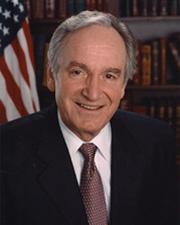
Mr. President, today, Senator Specter and I and others introduce the Medicaid Community-Based Attendant Services and Supports Act of 2003 (MiCASSA). This legislation is needed to truly bring people…
Mr. President, today, Senator Specter and I and others introduce the Medicaid Community-Based Attendant Services and Supports Act of 2003 (MiCASSA). This legislation is needed to truly bring people with disabilities into the mainstream of society and provide equal opportunity for employment and community activities.
We anticipate that there will be some discussions of so called ``reform'' of the Medicaid system in this Congress. The Medicaid program is a critical source of services and supports for millions of Americans with disabilities. Any attempt to cap resources or decrease the availability of services under that program will meet strong opposition from myself and others.
But there is one area where Medicaid should be improved. Services should be expanded to increase access to personal attendant services. In order to work or live in their own homes, Americans with Disabilities and older Americans need access to community-based services and supports. Unfortunately, under current Federal Medicaid policy, the deck is stacked in favor of living in an institutional setting. Federal law requires that states cover nursing homes in their Medicaid programs. But there is no similar requirement for attendant services. The purpose of our bill is to level the playing field and give eligible individuals equal access to community-based services and supports they need.
The Medicaid Community Attendant Services and Supports Act will accomplish four goals.
First, the bill amends Title XIX of the Social Security Act to provide a new Medicaid plan benefit that would give individuals who are currently eligible for nursing home services or an intermediate care facility for the mentally retarded equal access to community-based attendant services and supports.
Second, for a limited time, States would have the opportunity to receive additional funds to support community attendant services and supports and for certain administrative activities. Each State currently gets federal money for their Medicaid program based on a set percentage. This percentage is the Medicaid match rate. This bill would increase that percentage to provide some additional funding to States to help them reform their long term care systems.
Third, the bill provides States with financial assistance to support ``real choice systems change initiatives'' that include specific action steps to increase the provision of home and community based services.
Finally, the bill establishes a demonstration project to evaluate service coordination and cost sharing approaches with respect to the provision of services and supports for individuals with disabilities under the age of 65 who are dually eligible for Medicaid and Medicare.
Although some states have already recognized the benefits of home and community based services, they are unevenly distributed and only reach a small percentage of eligible individuals. Every State offers services under home and community based waiver programs, but they only serve a capped number of individuals. Some states also are now providing the personal care optional benefit through their Medicaid program, but others do not.
Those left behind are often needlessly institutionalized because they cannot access community alternatives. A person with a disability's civil right to be integrated into his or her community should not depend on his or her address. In Olmstead v. LC, the Supreme Court recognized that needless institutionalization is a form of discrimination under the Americans With Disabilities Act. We in Congress have a responsibility to help States meet their obligations under Olmstead.
This MICASSA legislation is designed to do just that and make the promise of the ADA a reality. It will help rebalance the current Medicaid long term care system, which spends a disproportionate amount on institutional services. For example, in 2003, 67 percent of long term care Medicaid dollars were spent on institutional care, compared to 33 percent community based care.
And that means that individuals do not have equal access to community based care throughout this country. An individual should not be asked to move to another state in order to avoid needless segregation. They also should not be moved away from family and friends because their only choice is an institution.
Federal Medicaid policy should reflect the consensus reached in the ADA that Americans with Disabilities should have equal opportunity to contribute to our communities and participate in our society as full citizens. That means no one has to sacrifice their full participation in society because they need help getting out of the house in the morning or assistance with personal care or some other basic service.
I applaud the President's New Freedom Initiative for People with Disabilities and believe that this legislation helps promote the goals of that initiative. I will be reintroducing the Money Follows the Person legislation that is part of the New Freedom Initiative and believe that MICASSA and Money Follows the Person complement each other. Together these two bills could substantially reform long term services in this country.
Community based attendant services and supports allow people with disabilities to lead independent lives, have jobs, and participate in the community. Some will become taxpayers, some will get an education, and some will participate in recreational and civic activities. But all will experience a chance to make their own choices and govern their own lives.
This bill will open the door to full participation by people with disabilities in our workplaces, our economy, and our American Dream, and I urge
all my colleagues to support us on this issue. I want to thank Senator Specter for his leadership on this issue and his commitment to improving access to home and community based services for people with disabilities. I would also like to thank Senators Kennedy, Kerry, Biden, Dayton, Landrieu, Corzine, Schumer, Lautenberg, Lieberman and Dodd for joining me in this important initiative.
I ask unanimous consent that the text of the bill be printed in the Record.
Mr. President, as we take stock during the second annual Sunshine Week, we confront the disturbing reality that the foundations of our open government are under direct assault from the first White…
Mr. President, as we take stock during the second annual Sunshine Week, we confront the disturbing reality that the foundations of our open government are under direct assault from the first White House in modern times that is openly hostile to the public's right to know.
The right to know is a cornerstone of our democracy. Without it, citizens are kept in the dark about key policy decisions that directly affect their lives. Without open government, citizens cannot make informed choices at the ballot box. Without access to public documents and a vibrant free press, officials can make decisions in the shadows, often in collusion with special interests, escaping accountability for their actions. And once eroded, these rights are hard to win back.
The right to know is nourished by openness and vigorous congressional oversight of Federal agencies, but both are sorely lacking, and government effectiveness and accountability have been among the casualties. The disastrous failure to prepare for and respond to Hurricane Katrina is only the most recent example, but a glaring one. Despite misleading assertions in the storm's horrific aftermath, we now know that the White House was warned in advance that the levees could fail in a hurricane. We have belatedly seen videotapes in which President Bush was cautioned by FEMA officials of this great danger.
The Freedom of Information Act, FOIA, empowers the American people to pry information from their Government that agencies would prefer to keep locked away. Americans learned more about Abu Ghraib and conditions at Guantanamo from FOIA requests than from oversight by Congress.
As we celebrate FOIA's fourth decade as law, we also watch its erosion as a target of attacks such as when the administration pushed an overly broad FOIA waiver for the Department of Homeland Security's charter the single biggest rollback of FOIA in its 40-year history.
It has been nearly a decade since Congress has approved major reforms to the Freedom of Information Act. Last year during Sunshine Week, Senator Cornyn and I introduced bipartisan legislation, S.394, to curtail the assault on FOIA. The Open Government Act contains more than a dozen substantive provisions, designed to strengthen FOIA and close loopholes, to help FOIA requestors obtain timely responses to their requests, to ensure that agencies have strong incentives to act on FOIA requests, and to provide FOIA officials with all of the tools they need to make sure that our government remains open and accessible.
A second bill that I introduced with Senator Cornyn last year, the Faster FOIA Act, S.589, would specifically address the issue of agency delay in processing FOIA requests. We propose to establish a commission to review the persistent issue of delay and to make recommendations for reducing impediments to the efficient processing of requests. This bill was reported by the Judiciary Committee and awaits floor action.
Our free press and the consciences of whistleblowers also serve the public's right to know. We would not know of the domestic spying program conducted in secret by the National Security Agency, with the full approval of the White House, unless the press had revealed it last December. The Department of Justice is stonewalling Congress's efforts to obtain facts on this program while threatening to prosecute reporters who disclosed the illegal program to the public.
The Bush administration has kept vital facts secret by silencing scientists and experts. We saw it with the gagging of NASA scientist James Hansen, whose conclusions about the dangers of greenhouse gas emissions and global warming differed with administration policy. This administration also secretly let lobbyists from polluting industries write rules on mercury emissions, overriding the advice of the EPA's scientists and even drawing a harsh rebuke from EPA's inspector general. This tacit war on science--trumping scientific evidence with ideology--has also victimized women's access to the Plan B pill and cut international family planning funds which help the poorest of the poor, even though the evidence is clear that these funds reduce the numbers of abortions.
This kind of secrecy produces bad policies, as we saw when the Bush administration tried to hide the true cost of its Medicare prescription drug plan from Congress and the American people. While they were twisting congressional arms for votes on the program, political leaders at Medicare told Congress the price tag was $400 billion. Medicare's own accountants projected the cost to be $500 billion to $600 billion, but one of those career staff, Richard Foster, was threatened with being fired if he told Congress the truth.
We saw it again when the political leadership of the Justice Department overruled career lawyers who found that Congressman Tom DeLay's Texas redistricting plan illegally diluted Black and Hispanic voting power. Career attorneys also found that a Georgia voter- identification law would discriminate against Black voters. The Department's political leaders dismissed these findings and quietly approved both plans. We only learned of these politically motivated decisions later when the press obtained documents and made them public.
In a situation that borders on the absurd, the intelligence agencies have
been quietly reclassifying documents that were open for years. This program began in 1999 but has exploded under this administration, which has reclassified more than 55,000 pages. Even the Archivist of the United States said he knew ``precious little'' of the program until it was revealed by the press.
The examples go on and on. The Bush administration has displayed a near-total disdain for the free press and the public's right to know.
Sunshine Week invites an inventory check on tools like the Freedom of Information Act that make real the public's right to know. Attacks on these tools only erode that right. A free, open, and accountable democracy is what our forefathers fought and died for, and it is the duty of each new generation to protect this vital heritage and inheritance.
Mr. President, on February 16, shortly before the President's Day recess, the Senator from Vermont and I introduced the OPEN Government Act of 2005 (S. 394)--bipartisan legislation to promote…
Mr. President, on February 16, shortly before the President's Day recess, the Senator from Vermont and I introduced the OPEN Government Act of 2005 (S. 394)--bipartisan legislation to promote accountability, accessibility, and openness in government, principally by strengthening and enhancing the Federal law commonly known as the Freedom of Information Act. s
When I served as Attorney General of Texas, it was my responsibility to enforce Texas's open government laws. I am pleased to report that Texas is known for having one of the strongest sets of open government laws in our Nation. And since that experience, I have long believed that our Federal Government could use ``a little Texas sunshine.'' I am thus especially enthusiastic about the OPEN Government Act, because that legislation attempts to incorporate some of the most important principles and elements of Texas law into the Federal Freedom of Information Act. And I am gratified that Senators Alexander, Feingold, Isakson, and Nelson of Nebraska are cosponsors of the bipartisan Cornyn-Leahy bill.
This legislation enjoys broad support across the ideological spectrum. Indeed, since its introduction on February 16, the legislation has attracted additional support. In particular, I am pleased to report the endorsements of three conservative public interest groups--one devoted to the defense of property rights, Defenders of Property Rights, led by Nancie G. Marzulla, one devoted to the issue of racial preferences in affirmative action programs, One Nation Indivisible, led by Linda Chavez, and one devoted to the protection of religious liberty, Liberty Legal Institute, led by Kelly Shackelford. I ask unanimous consent that their endorsement letters be printed in the Record at the close of my remarks. The point of including these letters in the Record, of course, is not that these groups are right or wrong in the pursuit of their respective causes, but that the cause of open government is neither a Republican nor a Democrat issue--neither a conservative nor a liberal issue--rather, it is an American issue.
I would like to take a few moments to emphasize one particular provision of the Cornyn-Leahy bill--section 8. It is a common sense provision. This provision should not be at all controversial, and indeed, I am not aware of any opposition whatsoever to it. The provision would simply help to ensure an open and deliberate process in Congress, by providing that any future legislation to establish a new exemption to the Federal Freedom of Information Act must be stated explicitly within the text of the bill. Specifically, any future attempt to create a new so-called ``(b)(3) exemption'' to the Federal FOIA law must specifically cite section (b)(3) of FOIA if it is to take effect. The justification for this provision is simple: Congress should not establish new secrecy provisions through secret means. If Congress is to establish a new exemption to FOIA, it should do so in the open and in the light of day.
A recent news report published by the Cox News Service amply demonstrates the importance of this issue, and specifically emphasizes the need for section 8 of the Cornyn-Leahy bill. I ask unanimous consent that a copy of this news report be printed at the close of my remarks.
Senator Leahy and I firmly believe that all of the provisions of the OPEN Government Act are important--and that, as the recent Cox News Service report demonstrates, section 8 in particular is a worthy provision that can and should be quickly enacted into law. We note that July 4 is the anniversary of the 1966 enactment of the original Federal Freedom of Information Act. Accordingly, we plan to devote our efforts this month to getting section 8 approved by Congress and submitted to the President for his signature by that anniversary date.
Toward that end, we rise today to introduce separate legislation to enact section 8 of the OPEN Government Act into law. We ask our colleagues in this chamber to support this measure, first in the Senate Judiciary Committee, and then on the floor of the United States Senate. And we look forward to working with our colleagues in the House-- including Representative Lamar Smith, the lead sponsor of the OPEN Government Act in the House, H.R. 867, as well as Chairman Tom Davis, who leads the House Committee on Government Reform, and Chairman Todd Platts, who leads the House Government Reform subcommittee that recently held a hearing to review the Federal FOIA law.
Section 8 of the Cornyn-Leahy bill is a common-sense, uncontroversial provision that deserves the support of every member of Congress. It simply provides that, when Congress enacts legislation--specifically, legislation to exempt certain documents from disclosure under FOIA--it do so in the open. After all, if documents are to be kept secret by an act of Congress, we should at least make sure that that very act of Congress itself not be undertaken in secret.
A Senate Judiciary subcommittee held a hearing on the OPEN Government Act on March 15. I hope that at least section 8 of the legislation can be enacted into law quickly, and that Congress will then move to consider the other important provisions of the bill.
Bill Text
2 versions available
        [Congressional Bills 109th Congress]
[From the U.S. Government Publishing Office]
[S. 394 Reported in Senate (RS)]

Calendar No. 628
109th CONGRESS
2d Session
S. 394

To promote accessibility, accountability, and openness in Government by
strengthening section 552 of title 5, United States Code (commonly
referred to as the Freedom of Information Act), and for other purposes.

_______________________________________________________________________

IN THE SENATE OF THE UNITED STATES

February 16, 2005

Mr. Cornyn (for himself, Mr. Leahy, Mr. Isakson, Mr. Alexander, Mr.
Nelson of Nebraska, and Mr. Feingold) introduced the following bill;
which was read twice and referred to the Committee on the Judiciary

September 21, 2006

Reported by Mr. Specter, without amendment

_______________________________________________________________________

A BILL

To promote accessibility, accountability, and openness in Government by
strengthening section 552 of title 5, United States Code (commonly
referred to as the Freedom of Information Act), and for other purposes.

Be it enacted by the Senate and House of Representatives of the
United States of America in Congress assembled,

SECTION 1. SHORT TITLE.

This Act may be cited as the ``Openness Promotes Effectiveness in
our National Government Act of 2005'' or the ``OPEN Government Act of
2005''.

SEC. 2. FINDINGS.

Congress finds that--
(1) the Freedom of Information Act was signed into law on
July 4, 1966, because the American people believe that--
(A) our constitutional democracy, our system of
self-government, and our commitment to popular
sovereignty depends upon the consent of the governed;
(B) such consent is not meaningful unless it is
informed consent; and
(C) as Justice Black noted in his concurring
opinion in Barr v. Matteo (360 U.S. 564 (1959)), ``The
effective functioning of a free government like ours
depends largely on the force of an informed public
opinion. This calls for the widest possible
understanding of the quality of government service
rendered by all elective or appointed public officials
or employees.'';
(2) the American people firmly believe that our system of
government must itself be governed by a presumption of
openness;
(3) the Freedom of Information Act establishes a ``strong
presumption in favor of disclosure'' as noted by the United
States Supreme Court in United States Department of State v.
Ray (502 U.S. 164 (1991)), a presumption that applies to all
agencies governed by that Act;
(4) ``disclosure, not secrecy, is the dominant objective of
the Act,'' as noted by the United States Supreme Court in
Department of Air Force v. Rose (425 U.S. 352 (1976));
(5) in practice, the Freedom of Information Act has not
always lived up to the ideals of that Act; and
(6) Congress should regularly review section 552 of title
5, United States Code (commonly referred to as the Freedom of
Information Act), in order to determine whether further changes
and improvements are necessary to ensure that the Government
remains open and accessible to the American people and is
always based not upon the ``need to know'' but upon the
fundamental ``right to know''.

SEC. 3. PROTECTION OF FEE STATUS FOR NEWS MEDIA.

Section 552(a)(4)(A)(ii) of title 5, United States Code, is amended
by adding at the end the following:
``In making a determination of a representative of the news media under
subclause (II), an agency may not deny that status solely on the basis
of the absence of institutional associations of the requester, but
shall consider the prior publication history of the requester. Prior
publication history shall include books, magazine and newspaper
articles, newsletters, television and radio broadcasts, and Internet
publications. If the requestor has no prior publication history or
current affiliation, the agency shall consider the requestor's stated
intent at the time the request is made to distribute information to a
reasonably broad audience.''.

SEC. 4. RECOVERY OF ATTORNEY FEES AND LITIGATION COSTS.

Section 552(a)(4)(E) of title 5, United States Code, is amended by
adding at the end the following: ``For purposes of this section, a
complainant has `substantially prevailed' if the complainant has
obtained a substantial part of its requested relief through a judicial
or administrative order or an enforceable written agreement, or if the
complainant's pursuit of a nonfrivolous claim or defense has been a
catalyst for a voluntary or unilateral change in position by the
opposing party that provides a substantial part of the requested
relief.''.

SEC. 5. DISCIPLINARY ACTIONS FOR ARBITRARY AND CAPRICIOUS REJECTIONS OF
REQUESTS.

Section 552(a)(4)(F) of title 5, United States Code, is amended--
(1) by inserting ``(i)'' after ``(F)''; and
(2) by adding at the end the following:
``(ii) The Attorney General shall--
``(I) notify the Special Counsel of each civil action
described under the first sentence of clause (i); and
``(II) annually submit a report to Congress on the number
of such civil actions in the preceding year.
``(iii) The Special Counsel shall annually submit a report to
Congress on the actions taken by the Special Counsel under clause
(i).''.

SEC. 6. TIME LIMITS FOR AGENCIES TO ACT ON REQUESTS.

(a) Time Limits.--
(1) In general.--Section 552(a)(6)(A)(i) of title 5, United
States Code, is amended by inserting ``, and the 20-day period
shall commence on the date on which the request is first
received by the agency, and shall not be tolled without the
consent of the party filing the request'' after ``adverse
determination''.
(2) Effective date.--The amendment made by this subsection
shall take effect 1 year after the date of enactment of this
Act.
(b) Availability of Agency Exemptions.--
(1) In general.--Section 552(a)(6) of title 5, United
States Code, is amended by adding at the end the following:
``(G)(i) If an agency fails to comply with the applicable time
limit provisions of this paragraph with respect to a request, the
agency may not assert any exemption under subsection (b) to that
request, unless disclosure--
``(I) would endanger the national security of the United
States;
``(II) would disclose personal private information
protected by section 552a or proprietary information; or
``(III) is otherwise prohibited by law.
``(ii) A court may waive the application of clause (i) if the
agency demonstrates by clear and convincing evidence that there was
good cause for the failure to comply with the applicable time limit
provisions.''.
(2) Effective date and application.--The amendment made by
this subsection shall take effect 1 year after the date of
enactment of this Act and apply to requests for information
under section 552 of title 5, United States Code, filed on or
after that effective date.

SEC. 7. INDIVIDUALIZED TRACKING NUMBERS FOR REQUESTS AND STATUS
INFORMATION.

(a) In General.--Section 552(a) of title 5, United States Code, is
amended by adding at the end the following:
``(7) Each agency shall--
``(A) establish a system to assign an individualized
tracking number for each request for information under this
section;
``(B) not later than 10 days after receiving a request,
provide each person making a request with the tracking number
assigned to the request; and
``(C) establish a telephone line or Internet service that
provides information about the status of a request to the
person making the request using the assigned tracking number,
including--
``(i) the date on which the agency originally
received the request; and
``(ii) an estimated date on which the agency will
complete action on the request.''.
(b) Effective Date and Application.--The amendment made by this
section shall take effect 1 year after the date of enactment of this
Act and apply to requests for information under section 552 of title 5,
United States Code, filed on or after that effective date.

SEC. 8. SPECIFIC CITATIONS IN EXEMPTIONS.

Section 552(b) of title 5, United States Code, is amended by
striking paragraph (3) and inserting the following:
``(3) specifically exempted from disclosure by statute
(other than section 552b of this title), provided that such
statute--
``(A) if enacted after the date of enactment of the
Openness Promotes Effectiveness in our National
Government Act of 2005, specifically cites to this
section; and
``(B)(i) requires that the matters be withheld from
the public in such a manner as to leave no discretion
on the issue; or
``(ii) establishes particular criteria for
withholding or refers to particular types of matters to
be withheld;''.

SEC. 9. REPORTING REQUIREMENTS.

Section 552(e)(1) of title 5, United States Code, is amended--
(1) in subparagraph (F), by striking ``and'' after the
semicolon;
(2) in subparagraph (G), by striking the period and
inserting a semicolon; and
(3) by adding at the end the following:
``(H) data on the 10 active requests with the earliest
filing dates pending at each agency, including the amount of
time that has elapsed since each request was originally filed;
``(I) the average number of days for the agency to respond
to a request beginning the date on which the request was
originally filed, the median number of days for the agency to
respond to such requests, and the range in number of days for
the agency to respond to such requests; and
``(J) the number of fee status requests that are granted
and denied, and the average number of days for adjudicating fee
status determinations.
When reporting the total number of requests filed, agencies shall
distinguish between first person requests for personal records and
other kinds of requests, and shall provide a total number for each
category of requests.''.

SEC. 10. OPENNESS OF AGENCY RECORDS MAINTAINED BY A PRIVATE ENTITY.

Section 552(f) of title 5, United States Code, is amended by
striking paragraph (2) and inserting the following:
``(2) `record' and any other term used in this section in
reference to information includes--
``(A) any information that would be an agency
record subject to the requirements of this section when
maintained by an agency in any format, including an
electronic format; and
``(B) any information described under subparagraph
(A) that is maintained for an agency by an entity under
a contract between the agency and the entity.''.

SEC. 11. OFFICE OF GOVERNMENT INFORMATION SERVICES.

(a) In General.--Chapter 5 of title 5, United States Code, is
amended--
(1) by redesignating section 596 as section 597; and
(2) by inserting after section 595 the following:
``Sec. 596. Office of Government Information Services
``(a) There is established the Office of Government Information
Services within the Administrative Conference of the United States.
``(b) The Office of Government Information Services shall--
``(1) review policies and procedures of administrative
agencies under section 552 and compliance with that section by
administrative agencies;
``(2) conduct audits of administrative agencies on such
policies and compliance and issue reports detailing the results
of such audits;
``(3) recommend policy changes to Congress and the
President to improve the administration of section 552,
including whether agencies are receiving and expending adequate funds
to ensure compliance with that section; and
``(4) offer mediation services between persons making
requests under section 552 and administrative agencies as a
non-exclusive alternative to litigation and, at the discretion
of the Office, issue advisory opinions if mediation has not
resolved the dispute.''.
(b) Technical and Conforming Amendment.--The table of sections for
chapter 5 of title 5, United States Code, is amended by striking the
item relating to section 596 and inserting the following:

``596. Office of Government Information Services.
``597. Authorization of appropriations.''.
(c) Effective Date.--The amendments made by this section shall take
effect 1 year after the date of enactment of this Act.

SEC. 12. ACCESSIBILITY OF CRITICAL INFRASTRUCTURE INFORMATION.

(a) In General.--Not later than January 1 of each of the 3 years
following the date of the enactment of this Act, the Comptroller
General of the United States shall submit to Congress a report on the
implementation and use of section 214 of the Homeland Security Act of
2002 (6 U.S.C. 133), including--
(1) the number of persons in the private sector, and the
number of State and local agencies, that voluntarily furnished
records to the Department under this section;
(2) the number of requests for access to records granted or
denied under this section;
(3) such recommendations as the Comptroller General
considers appropriate regarding improvements in the collection
and analysis of sensitive information held by persons in the
private sector, or by State and local agencies, relating to
vulnerabilities of and threats to critical infrastructure,
including the response to such vulnerabilities and threats; and
(4) an examination of whether the nondisclosure of such
information has led to the increased protection of critical
infrastructure.
(b) Form.--The report shall be submitted in unclassified form, but
may include a classified annex.

SEC. 13. REPORT ON PERSONNEL POLICIES RELATED TO FOIA.

Not later than 1 year after the date of enactment of this Act, the
Office of Personnel Management shall submit to Congress a report that
examines--
(1) whether changes to executive branch personnel policies
could be made that would--
(A) provide greater encouragement to all Federal
employees to fulfill their duties under section 552 of
title 5, United States Code; and
(B) enhance the stature of officials administering
that section within the executive branch;
(2) whether performance of compliance with section 552 of
title 5, United States Code, should be included as a factor in
personnel performance evaluations for any or all categories of
Federal employees and officers;
(3) whether an employment classification series specific to
compliance with sections 552 and 552a of title 5, United States
Code, should be established;
(4) whether the highest level officials in particular
agencies administering such sections should be paid at a rate
of pay equal to or greater than a particular minimum rate;
(5) whether other changes to personnel policies can be made
to ensure that there is a clear career advancement track for
individuals interested in devoting themselves to a career in
compliance with such sections; and
(6) whether the executive branch should require any or all
categories of Federal employees to undertake awareness training
of such sections.
Calendar No. 628

109th CONGRESS

2d Session

S. 394

_______________________________________________________________________

A BILL

To promote accessibility, accountability, and openness in Government by
strengthening section 552 of title 5, United States Code (commonly
referred to as the Freedom of Information Act), and for other purposes.

_______________________________________________________________________

September 21, 2006

Reported without amendment