Christopher Kangas Fallen Firefighter Apprentice Act
Legislative Activity
Stay on top of the latest movement without scrolling through every action
Placed on Senate Legislative Calendar under General Orders. Calendar No. 128.
June 16, 2005
View full timeline
Introduced in Senate
March 2, 2005
Sponsor introductory remarks on measure. (CR S1932)
March 2, 2005
Read twice and referred to the Committee on the Judiciary.
March 2, 2005
Committee on the Judiciary. Ordered to be reported without amendment favorably.
June 16, 2005
Committee on the Judiciary. Reported by Senator Specter without amendment. Without written report.
June 16, 2005
Placed on Senate Legislative Calendar under General Orders. Calendar No. 128.
June 16, 2005
Floor Debate
21 membersWhat members said about S. 491 on the floor
 RW
RW MM
MM KS
KS JSC
JSC CG+16
CG+16
Floor Debate
21 membersWhat members said about S. 491 on the floor
Mr. President, how much time remains under the Smith unanimous consent request for a half hour? Thank you, Mr. President. Mr. President, I have come to the floor today to join my colleague at this…
Mr. President, how much time remains under the Smith unanimous consent request for a half hour?
Thank you, Mr. President.
Mr. President, I have come to the floor today to join my colleague at this time to discuss the Catastrophic Health Coverage Promotion Act that Senator Smith and I are introducing today.
Mr. President, first, I want to say how much I appreciate Senator Gordon Smith. At a time when our citizens all across the land and in our home State of Oregon believe there needs to be more bipartisanship, Senator Smith doesn't just talk about it, he is consistently willing to meet me more than halfway on critical issues, and he does that with other colleagues in the Senate.
As we begin our time discussing this legislation, I want to let him know how much I appreciate the chance to cooperate with him once again. As he stated, we did put the issue of catastrophic health coverage at the top of our bipartisan agenda for the Senate session.
What it comes down to, Mr. President, is that Senator Smith and I believe it is a moral blot on our Nation for a country as good and rich as ours to send millions of its citizens to bed at night fearing they will be wiped out if a serious medical illness hits them. That is the reality. It is the reality for families who have no coverage at all, and it is the reality for families who have some measure of coverage, say, through an employer, but it doesn't stretch far enough.
Senator Smith and I want, in a bipartisan way, to tackle both of those kinds of concerns. That is why we have put forward the legislation we introduced today. I think now is an ideal time for bipartisanship on the catastrophic health coverage issue.
If you look back over the last few years, Senator Kerry, in the 2004 Presidential campaign, had an excellent proposal with respect to catastrophic coverage, and I said so in the course of that campaign. But I also said at the time that I thought our distinguished majority leader, Senator Frist, also had a good catastrophic coverage proposal. You could debate the various merits of the Kerry proposal and the Frist proposal--which approach involved a little more government, which approach involved the private sector--but at the end of the day, for the purposes of government work, they were pretty darn similar.
So when Senator Smith and I sat down after the 2004 election, we said let's finally get this done. Democrats and Republicans have been talking for years about how to make sure that all our citizens have a safety net under them so that they will not get wiped out from medical illness. We settled on this approach, which we thought would give us the opportunity to try some fresh, creative ideas for protecting our citizens.
Let me give an example of what happens in, for example, South Carolina, Oregon, or anywhere else in this country. If you have a small business with six people working there, and one of them gets sick, that essentially blows up the whole health premium structure for all six of the employees.
What we ought to look at is something called reinsurance. Under reinsurance, that employee who gets sick could get a bit of help for their high bills through a modest role for government, and if government steps in, in that kind of instance, you have an opportunity to hold down all of the costs for the entire six-person firm. So we should have been looking at reinsurance years ago, but because Senator Smith, who chairs the Senate Aging Committee, has been examining these questions and has worked with me, now we are going to have a chance to tackle it in a way that I think is going to give us the opportunity to get the job done.
We are also very concerned about people who have no coverage at all. So what happens if you have no coverage at all is folks walk into a hospital in Oregon or in South Carolina, usually they show up in the emergency room, and the hospital has to absorb those costs. What we would do is give that person who now has no coverage at all the possibility of actually buying some private coverage in the marketplace with a bit of a subsidy in order to be able to have coverage that would pick up at least a portion of those bills that the hospital is now absorbing.
At the end of the day, those are the two principal kinds of instances we are facing--folks who have some coverage through a private employer, but it doesn't stretch far enough, and folks who don't have any coverage at all. Under that approach, we would like to make it possible for them to get into the private insurance market, protect them from catastrophic illness. We think we can do it with a modest subsidy coming from government.
My sense is that we are now looking at health care on two tracks in our country. The first track is a track that suggests we can take steps right now in areas like catastrophic coverage to protect our citizens. There are other ideas I have advanced during this Congress. For example, Senator Snowe and I have now gotten a majority of Senators to agree with our proposal to lift the restriction so Medicare can bargain and hold down the costs. That, like the question of catastrophic coverage, is a step you can take right now. Let's protect our citizens from the catastrophic illness and let's hold down the costs of medicine. Those are practical, bipartisan approaches that can be taken today. We ought to pursue them and get them done.
I also think there is another track to health care. I noticed that Senator Hatch was on the Senate floor. He and I were the authors of the legislation creating the Citizens' Health Care Working Group that is going to look at opportunities to make sure that all Americans have decent, affordable coverage. We have only been on that issue for more than 60 years--going back to the 81st Congress, in 1945, and Harry Truman. I have said let's also work on that second track that involves getting all Americans under the tent for essential and affordable health care coverage.
That obviously isn't going to get done in the next 15 minutes. But if the Senate, on a bipartisan basis, as Senator Smith and I have sought to do on the catastrophic issue, and as Senator Hatch and I have sought to do on a broader approach to look at health care that works for all Americans--if we team up and look at health care on those two tracks, I think we can make a great contribution for our country.
There are no costs going up in the United States like medical bills. We spent $1.7 trillion last year on health care. There are 290 million Americans--I guess we are approaching 300 million. When you divide $1.7 trillion by 290 million Americans, it comes to something like $25,000 that could be sent to every family of four in America with the amount of money now being spent on health care.
So while we are spending enough money, my sense is that we are not spending it in the right places. Once again, Senator Smith has given us an opportunity to think creatively about better ways to approach the use of the health care dollars. I was pleased when Senator Smith suggested in our legislation that we also make it possible to include a focus on health care prevention. We are not doing enough with health care prevention in this country. The Medicare Program shows that pretty well. Medicare Part A, for example, will pay huge checks for senior citizens' hospital bills, but Medicare Part B pays virtually nothing for prevention to keep people well. That makes no sense. We need a sharper focus on health care prevention, and one of the things that I think is attractive about Senator Smith's leadership on this issue is that he has said even in the context of looking at catastrophic health care, let's put a sharper focus on prevention. We are going to make it possible in this legislation to do that.
I note we have other colleagues on the floor. I have secured time to focus on the Voting Rights Act legislation later in the afternoon, but I am very pleased to have the opportunity to talk for a few minutes about the Catastrophic Health Coverage Promotion Act Senator Smith and I are introducing today. We have focused on a number of issues in a bipartisan fashion over our years in the Senate, but this has the potential to be the biggest as it relates to the needs of our citizens at home.
We want to make sure when folks go to bed at night, they don't have to fear they are going to be wiped out financially by a serious medical illness. This legislation moves us one step closer toward the goal. We hope many colleagues on both sides of the aisle will want to support the legislation.
Mr. President, Senator Snowe and I today are introducing the
Medicare Prescription Drug Lifeline Act. This legislation provides a solution for those seniors falling into the coverage gap, also known as the doughnut hole of the Medicare prescription drug benefit. The doughnut hole occurs when the spending for a senior's drug expenses reaches $2,250: at the point, the senior is on their own until their spending for prescription drugs reaches a total of $5,100, where the benefit picks up again. The Kaiser Family Foundation estimated that nearly 7 million seniors will fall into the coverage gap this year.
Seniors who enter this ``no man's land'' of spending face the same problems seniors faced before the drug benefit even began: they skip doses, they don't take all their medicine to make it stretch, and they are forced to choose between their food and fuel costs and their prescription drug costs.
This legislation would take three steps to deal with this problem: First, the Secretary of HHS would be required to let seniors know they are approaching the coverage gap. Second, it would allow seniors, when they are notified that they are reaching the coverage gap, to switch plans to avoid the gap. Finally, the legislation requires the Government Accountability Office to examine ways in which the benefit could be redesigned to eliminate the gap without increasing Federal spending. Together, these provisions will give seniors a lifeline to coverage.
Senator Snowe and I both voted for the legislation that created the Medicare prescription drug benefit. When we did so, we pledged that we would continue to work to improve the benefit. Senator Snowe and I have teamed up together on many occasions to try to reduce the cost of the prescription drug program by giving the Secretary the same power other Government officials have to bargain for better prices. Our legislation has won a majority of votes in the Senate, and we intend to continue to press for that power.
The latest effort is aimed at another shortcoming in the law: finding a way to help seniors avoid falling into the coverage gap. Senator Snowe and I believe that our legislation will help seniors a straightforward way to avoid the gap.
Congress needs to address both these issues and we will continue our strong commitment to seniors by working to improve the drug benefit.
Mr. President, today I rise with my colleagues, Senators Feinstein, Nelson of Florida, Hutchison, and Bingaman, on the 37th anniversary of the lunar landing when American astronauts Neil Armstrong…
Mr. President, today I rise with my colleagues, Senators Feinstein, Nelson of Florida, Hutchison, and Bingaman, on the 37th anniversary of the lunar landing when American astronauts Neil Armstrong and Edwin Aldrin set foot on the Moon, to introduce the Spaceport Equity Act of 2006--a bill to help bring additional investment to the space transportation industry.
On June 18th, the Washington Post reported on the launching of Kazakhstan's first satellite and their catapult into the space transportation industry. Home to the world's largest space center, the Baikonur Consmodrome, this ex-Soviet state is joining the list of rivals to the U.S. space industry. America's competitive edge is declining and will continue to do so unless we act now. My colleagues and I recognize this, and that is why we are introducing this most important legislation.
U.S. satellite manufacturers face increasing pressure to consider the use of foreign launch vehicles and launch sites, due to the lack of a sufficient domestic launch capability. The United States once dominated the commercial satellite-manufacturing field with an average market share of 83 percent;
however, that market share has since declined to 50 percent. An even smaller share of U.S.-manufactured satellites is actually launched from U.S. spaceports. This comes at an estimated loss of $1.5 to $3.0 billion to the U.S. economy.
The space economy is made up infrastructure of manufacturers, service providers, and technologists in both the Government and private sector that deploy and operate launch vehicles, satellites, and space platforms. Many everyday goods and services rely on space infrastructure, including broadcast, cable, and satellite television, global internet services, satellite radio, cellular and international phone calls, etc.
Satellites are also used for global positioning systems, known as GPS, which enable us to have hands-on directions in our cars and vehicles. GPS is also influential in the trucking, aviation, and maritime industries for day-to-day operations and for our Nation's military operations. Thousands of gas stations use inexpensive small satellite dishes to connect to credit card networks so customers can pay instantly at the pump. Satellites also generate 90 percent of the weather forecasting data in the United States and are used to track hurricanes, tsunamis, and other weather phenomenon.
These satellites are launched vertically atop of rockets, propelling them into orbit in space. Because most U.S. space-launch facilities are operated by NASA, priority for launches at these facilities is given to Government projects. This means our commercial satellite needs take a back seat to Government operations. This often leaves U.S. commercial satellite ventures without reliable launch availability. This in turn has forced many companies seeking manufacturing and launch services toward our international competitors.
Spaceports are subdivisions of State governments that provide additional launch infrastructure than that available at Federal facilities. They attract and promote the U.S. commercial space transportation industry. Spaceport authorities function much like airport and port authorities by providing economic and transportation incentives to the industry, which in turn benefits the surrounding communities. Many States are forming space authorities to pursue ways of developing space transportation infrastructure.
The Florida Space Authority was the first such entity, which was created as a subdivision of the Florida State government by Florida's Governor and State legislature in 1989. Florida Space Authority is focused on leading the State's space industry in new directions through partnering with the commercial space industry to improve space transportation and provide innovative, forward-thinking solutions to the challenges facing this evolving industry.
The last few years have begun a new phase in space exploration. Spaceports presently operate in Florida, California, Virginia, and Alaska, but efforts are underway to establish 13 additional commercial spaceports in Alabama, California, Montana, Nevada, Oklahoma, South Dakota, Texas, Utah, Washington, and Wisconsin.
The commercial space transportation industry includes not only spaceports themselves but also companies that develop the needed infrastructure for testing and servicing launch vehicles. When including these industry partners with spaceports, at least 23 States are directly impacted by the commercial space transportation industry. Both spaceports and industry partners face increasing pressure from government-sponsored or subsidized competitors in Europe, China, Japan, India, Australia, Russia, and now Kazakhstan.
Commercial space transportation is a growing part of the U.S. economy. In 2004, this industry alone generated a total of nearly $98.1 billion dollars in economic activity, over $25 billion in earnings, and over 550,000 jobs; and $56.5 billion, more than half of this economic activity, was from satellite services. A 2004 Gallup poll shows overwhelming public support for space exploration. Roughly 80 percent of Americans agree that ``America's space program helps give America the scientific and technological edge it needs to compete in the international marketplace.'' And 76 percent agree that our space program ``benefits the nation's economy'' and inspires ``students to pursue careers in technical fields.''
The space industry has also led to a number of ``spin-off'' technologies--those influenced by space technology research and development. Home roof insulation and air filtration, antilock brakes, athletic shoes, vehicle protective airbags, cellular phones, and lasik surgery all owe thanks to NASA and space-based research. The list of space ``spin-off' technologies is estimated to exceed 40,000. These related technologies have helped employ tens of millions of Americans. Encouraging commercial investment in the space industry and increasing U.S. marketshare in this industry will certainly lead to additional innovation and technology that will impact other fields.
As you can see, this once government-dominated industry is now becoming a diverse mix of government and commercial entities--also leading way into future avenues of commercial space transportation, such as space tourism.
The increase in recent commercial launches includes the debut of the first commercial crewed suborbital launches of SpaceShipOne--leading the way to public space travel. ``Space tourism,'' as public space travel is now referred, has the potential to become a major growth industry. Recent market studies have shown space tourism has the potential to become a billion-dollar industry within 20 years.
Even though the average American may not be able to participate in public space travel, its potential impact on our economy and international competitiveness is something to be appreciated. Space tourism industry players expect there to be a market demand of at least 15,000 Americans per year to travel into suborbit and orbital flights. This would require an estimated 665 launches per year by 2010. If the United States continues as is, we will only be able to capture 10 percent market share, at best, of this emerging industry. If needed infrastructure is added, however, the United States is expected to pick up 60 to 70 percent of space flight demand by 2010. Every launch that we do not provide for in the United States means a loss to our economy and a gain for our international competitors. The Federal Aviation Administration's Commercial Space Transportation Division expects a $3 billion dollar loss to our economy if we do not meet the rising demand for space tourism.
Currently, U.S. launch facilities are few and most are owned and operated by the Federal Government, putting commercial users in direct competition with the U.S. military, NASA, and other Government entities, which get priority over commercial projects. If the United States is to remain competitive in the commercial space industry, added and improved infrastructure will be needed to support this growing industry.
On a more local note, my own State of Florida could stand to gain much by way of economic development from increased investment in spaceport infrastructure. According to recent studies by the Florida Space Authority, increase spaceport infrastructure and activity in Florida could mean as much as $29.7 million in additional economic activity by the year 2015--this does not include the economic activity generated from impacted tourism, secondary contracts, and spinoff technologies.
Other modes of transportation--highways, airports, and seaports-- currently enjoy a tax incentive for meeting their infrastructure needs, so why not spaceports?
This Spaceport Equity Act of 2006 would provide spaceports with the same treatment provided for airports, seaports, rail, and other transit projects under the exempt facility bond rules. With international competition on the rise, our Nation's spaceports are a vital component of the infrastructure needed to expand and enhance the U.S. role in the international space arena. The Spaceport Equity Act is an important step to increasing our competitiveness in this field because it will stimulate investment in expanding and modernizing our space launch facilities and lower the costs of financing spaceport projects.
Since 1968, tax-exempt bonds have played a crucial role in meeting airport investment needs, with 50 percent or more of major airport projects being financed through municipal tax-exempt
bonds. By extending this favorable tax treatment to spaceports, this bill will help meet spaceport needs and increase our Nation's ability to compete with expanded international interests in space exploration and technology. Similar legislation has been considered since the 1980s, and we cannot afford to wait any longer to address the needs of this important sector.
This proposal does not provide direct Federal spending for our commercial space transportation industry but, rather, creates the conditions necessary to stimulate private capital investment in industry infrastructure. By issuing tax-free bonds to finance spaceport infrastructure, space authorities could provide site-specific and vehicle-specific tailoring to promote the competition and innovation necessary to maintain the U.S. competitive edge in the space transportation industry.
This is an efficient means for achieving our space transportation needs, and I urge my colleagues in the Senate to join us in this most important effort by cosponsoring this bill.
Mr. President, I ask unanimous consent that the text of this bill be printed in the Record.
Mr. President, I rise to speak about two bills I am introducing today and to speak out in support of rural Colorado and rural America. The two bills--one to increase investment in broadband…
Mr. President, I rise to speak about two bills I am introducing today and to speak out in support of rural Colorado and rural America. The two bills--one to increase investment in broadband technology in rural areas, and another to permanently fund the payment in lieu of taxes program--are the first bills I am introducing as a Senator. I am proud they are both targeted at rural Colorado.
Over 400 years ago, in 1598, my family helped found the oldest city in what is now these United States. They named the city Santa Fe--the City of Holy Faith--because they knew the hand of God would guide them through the struggles of survival in the ages ahead.
For the next four centuries, that faith in their future guided them to overcome extremely painful and challenging times. As humble and poor farmers, the circumstances of their lives forged the priceless and tireless values of my father Henry and mother Emma. And they instilled those values in their children.
My family has now farmed the same lands in southern Colorado, 110 miles north of Santa Fe, for almost 150 years. On that ranch, we did not have a telephone, and the power lines did not reach us until 1981. Although we were poor in material goods, we were rich in spirit. My parents were part of the World's ``greatest generation''--my father a proud veteran of World War II and my mother a proud servant in the War Department. Although neither had a college degree, they taught us about the values and the promise of America. All eight of their children became first-generation college graduates, inspired by their dedication to God, family, community, and country.
As Colorado's U.S. Senator, I am proud of my values and roots in rural Colorado. Rural America is the heart of our great Nation.
The values my parents taught me are the fundamental values that make this country the place I am privileged to call home.
Unfortunately, the America where I grew up is vanishing, left behind by a Washington DC that has lost touch with what is important to the people of the heartland. I fear that rural Colorado, like the rest of rural America, has become ``the forgotten America.''
Rural America has given up its sons and daughters to the cause of freedom without hesitation and in numbers that far exceed its proportion of the country's population. It has worked quietly to put food on our tables, and remains humbly grounded, seeking neither praise nor thanks.
Yet when the President reported on the State of the Union, there was not a word on the state of the more than 3,000 counties that make up rural America--not a word. And in the administration's budget, the programs and investments vital to those communities--PILT, block grants, conservation programs, investments in animal and food safety, and investments in technology, schools and law enforcement--were drastically cut.
Last week, I traveled nearly 2,000 miles to every corner of Colorado and convened 17 meetings with elected officials representing Colorado's 64 counties.
In those meetings, I heard the state of rural America in the words of the people who are fighting for their families everyday.
The state of rural America is sadly the state of the forgotten America.
In rural Colorado, residents face lower incomes and are far more likely to be unemployed than people in urban and suburban areas.
In Crowley County, east of Pueblo, there is only one nurse practitioner to serve a county of nearly 6,000 people. If you get sick in Crowley County, you have three choices: wait, go to the emergency room, or hope you get better.
In Routt County, veterans have to travel nearly 200 miles to Grand Junction to see a doctor in the VA clinic. A few months ago, there was no waiting list to see a doctor. Now, there's a waiting list of 400, which means veterans in western Colorado wait 5 months to see a doctor.
The Dolores County Sheriff, Jerry Martin, has to make hiring decisions based not on public security demands but on the ability of his department to provide health care to the prospective employee. Health care premiums have risen 20 percent every year the last 3 years in Dolores County.
Across the State, people told me that their health care premiums dwarf their mortgage payments because in many cases they pay over $1,000 per month for health insurance for their families.
Between 1996 and 2000, one in three of our rural schools saw its enrollment drop more than 10 percent.
Though they continue to excel on State tests, too many of our rural schools have been forced to divert valuable resources to fulfill the unfunded mandates of No Child Left Behind.
In Kiowa, Moffat, and Custer Counties, our teachers are paid much less than teachers in the big cities. In Kit Carson County, where teachers sometimes teach two and three subjects, only half of our teachers right now would meet new Federal standards requiring them to be certified for each subject.
And in the town of Rico, half of Main Street is boarded up: there's a liquor store, but not much else. According to the Kansas City Federal Reserve Bank, that may be part of a larger trend: Main Street in rural Colorado is losing its storefronts at an alarming rate.
Compare those needs to the budget the Administration recently proposed.
While we are facing a shortage of qualified and trained health care employees, the administration budget this year cut health professions training by almost two thirds, $290 million.
While our State tries to deal with a devastating budget crisis, the Administration dramatically reduced funding for the Community Development Block Grants on which towns, from Greeley to Grand Junction to Denver, depend.
For the fifth year in a row, the Administration's budget fails to fulfill the funding promises made in the No Child Left Behind law, but still heaps mandates on local schools.
Moreover, the proposed budget eliminates low-interest loans for students who have the grades but can't afford to go to college and eliminates funding for vocational training that many rural Colorado students use.
The proposed budget cuts $250 million from one of the most successful small business investment programs and decimates USDA investments in rural economic development.
While we combat methamphetamine production and invest precious resources in meth lab clean up, the budget cuts Safe and Drug Free School grants, the COPS program by nearly $500 million, and State and local homeland security training programs by 60 percent.
I want to propose two small steps in my effort to reinvest in rural America. In coming months I intend to introduce measures to strengthen rural law enforcement, revitalize rural health care, invest in Main Street, strengthen rural education, help ensure efficient and equitable sharing of water resources and underscore the values that shape every rural community in Colorado.
The first bill is on the PILT program. I know that education in rural America is funded through a variety of means, including through resources passed to rural counties through the Payment in Lieu of Taxes program.
The idea behind the PILT program is simple. It makes sure that local communities in States like Colorado--States that have seen large parts of land set aside by the Federal Government for public use--do not lose valuable resources from foregone property taxes. Those resources fund programs from education to law enforcement.
Unfortunately, this year the administration's budget is again proposing to cut that funding. Thanks to the efforts of my Democratic and Republican colleagues, such as Senator Bingaman, some of that funding has been won back over the last several years, and I
am hopeful we will do so again this year.
But our local communities should not have to wait and wonder every year whether their resources for schools, roads and law enforcement will make it into the budget, and that is why I am introducing a bill to make permanent the funding for the payment in lieu of taxes program.
I am also introducing a bill to increase investment in broadband technology in rural communities. Bringing broadband to our rural schools will give our students there access to technology that millions of other students take for granted. With broadband will come world class research and access to AP courses at Colorado's universities. And with broadband we will see the economic development for which rural Colorado has been waiting.
The benefits of this investment do not stop in education and business. Telehealth is increasingly vital in rural Colorado, held back in some cases by the lack of investment in infrastructure. That same infrastructure limits investment opportunities in rural communities.
With this bill I am building on the hard work of others and saying that it is long past time for us to invest in the world class broadband that rural communities need and are right to expect. My bill does that in three ways.
First, it will establish our Nation's first Rural Broadband Office to coordinate all Federal Government resources as they relate to broadband.
Second, it will help broadband providers keep pace with our rapidly changing technology.
And third, it calls on the Congress to live up to its responsibility to fully fund rural utilities.
It has been a long road that has carried me from that ranch in the San Luis Valley, growing up as one of eight siblings and proudly attending college and law school before having the privilege to serve in U.S. Senate.
In all of this, I have never forgotten where I come from. In my office, I have a sign on my desk that reads ``No Farms, No Food.'' Every day I look at it, and I am reminded of just how dependent we are on the people of rural Colorado, and in rural communities all across America.
At a meeting with leaders from Colorado's farmer and rancher community last month, a wheat farmer from southeastern Colorado told me this: ``Senator, you'd never believe how many farmers refuse to go to the doctor when they get sick. It's not that they aren't really sick. It's that they can't afford the doctor.''
Unfortunately, Mr. President, I do believe that wheat farmer, and I know rural America needs our help.
In America, the most powerful, prosperous, idealistic country the world has ever known, we can do better.
And protecting that way of life--in our churches and town halls, Main Streets and living rooms, ranches and independent drug stores--demands it. Together, we can make sure that no one anywhere in this country feels that he is part of a ``Forgotten America'' any longer.
I yield the floor.
Mr. President, I appreciate the comments from the Senator from New Jersey.
I ask unanimous consent that the text of the bills be printed in the Record.
Mr. President, I rise to talk about the Darfur Accountability Act. This is an issue that I and a number of my colleagues have as much passion about and as much conviction and concern as anything that…
Mr. President, I rise to talk about the Darfur Accountability Act. This is an issue that I and a number of my colleagues have as much passion about and as much conviction and concern as anything that we could speak about on this floor. As we stand here today, 225,000, maybe more, Darfurians in the Sudan have died over the last 2 years. A million and three quarters are displaced, living in camps. Senator Brownback is a cosponsor of the Darfur Accountability Act, along with Senators DeWine, Talent, Dodd, Durbin, Feingold, and Lieberman--a bipartisan basis. All believe strongly and passionately that we need to act now.
This bill, which we will be introducing today, provides the tools, the authorities to confront the crisis of humanity that is taking place in Darfur. It can be a reflection of our Nation's commitment to live up to the most solemn promise of our time and our Nation's values--to never stand by quietly while genocide goes forth, while genocide rages in a part of the world. ``Never again'' is the rallying cry we have all heard from the tragedy of World War II, from the response and understanding of the tragedy of Rwanda and genocides across history. Man's horrific treatment of his fellow man in genocide must be stood up against, must be pushed back against. We must say no.
It has been more than 7 months since the resolution introduced by Senator Brownback and myself declaring the atrocities in Darfur to be declared genocide passed the Senate. It has been more than 7 months since the House of Representatives passed a similar resolution. And it has been 6 months since Secretary of State Colin Powell made the same declaration.
Genocide continues. Just 1 month ago a U.N. commission confirmed a litany of atrocities that have become all too familiar in this situation:
Government forces and militias conducted indiscriminate
attacks, including killing of civilians, torture, enforced
disappearances, destruction of villages, rape and other forms
of sexual violence, pillaging and forced displacement
throughout Darfur.
It has been going on for 2 years. The report stated that the atrocities were ``conducted on a widespread and systematic basis,'' and that the ``magnitude and large-scale nature of some crimes against humanity, as well as their consistency over a long period of time, necessarily imply that these
crimes result from a central planning operation.''
This is public policy in the Sudan--public policy. Maybe more compelling is a series of articles, two of which I will put into the Record, that are reflective of the public and transparent and dogged coverage by a New York Times columnist, Nicholas Kristof, which document completely the nature of the atrocities going on, including, unfortunately, some of the pictorial efforts that bring forth the certainty that genocide is taking place.
I will submit a column written on February 23, ``The Secret Genocide Archive,'' which carries pictures in the New York Times of some of the outcomes of our failure to act. Then there is a second column which I will put into the Record. It is in today's paper, March 2, 2005, ``The American Witness,'' where a U.S. marine on the ground, a captain in the Marine Corps, is citing and stating and documenting the continuation of this tragedy in the lives of these people in Darfur.
I ask unanimous consent that these articles be printed in the Record.
Mr. President, we are truly at a historic moment. The U.N. Commission confirmed that these atrocities were continuing even as it was doing its investigation. By the way, we just released from the U.S. State Department a report on human rights practices in countries around the world. The February 28 report reconfirmed our own Government's view that what is taking place is genocide.
We bear the responsibility that came out of the Holocaust to remember the horrors that lead to genocide. That is why we passed the genocide convention, and it is time to act. That is what this accountability act is all about. It has a lot of detail in it. But the fact is, it is to get us up and moving. I could use a little more graphic language. We have no right to stand by while human life is being taken day after day and displacement is taking place day after day. All over this country, people of faith of all denominations, student groups, and people from all walks of life are speaking out about this in our churches, our community centers, everywhere. They expect our Government and the international community to act. The time to act is now.
Let me describe the legislation, if I may. First, it reconfirms that genocide continues in Darfur. Last week, Human Rights reported new accounts of rapes, tortures, and mutilations from eyewitnesses. This needs to be dealt with. There is little doubt whatsoever that this continues. Again, I refer to the Kristof articles, which are very graphic in their explanation. Reflecting on time, I will not go through the details. There are many of these accounts.
There is no reason to turn our backs on this issue. Remember the imperative: Never again. This legislation offers specifics about how the genocide should be stopped. It calls for a military no-fly zone in Darfur. This discussion about no-fly zones has been going on for the better part of a year. It is time to make sure that we as an international community, as a nation, stand up and say, let's implement that.
Recent reports state that as recently as January, the Government of Sudan used aircraft and helicopters to impose its desire in implementing its genocide on the people of Darfur along with the jingaweit militia, which are notorious about implementing this.
The legislation also lays out the report for the African Union mission in Darfur. In September of last year, the Senate passed an amendment by Senator DeWine and myself that sets aside $75 million in aid to the African Union so they could accelerate their monitoring and assistance on the ground in Darfur. So far, we have begun to use some of those resources. I think at this point it is about $20 million. Unfortunately, the authorization was for 3,300 African Union troops on the ground, but there are about 1,800 there today. This is 7 months after our efforts to get this done. We need to stop the killing now. That means we need to get the troops on the ground now; we have to spend the money now. It is absolutely time that we stand up and take notice and move on this issue.
The legislation also provides specifics about what should be done in a new U.N. Security Council resolution, including sanctions that have previously been threatened by the council but never imposed. For instance, we have an arms embargo against the government in Darfur. We don't have an arms embargo against the Government of Sudan. We have one in Darfur. So they can get the guns and military equipment into Khartoum, and I guess we think somehow they are not going to use it where they are actually taking the lives of the people in Darfur. It is crazy that we have such a limited and ineffectual arms embargo on Sudan. We need to act. It is clear that
we needed it last summer, and it is clear that we need it today.
I was offered the opportunity to visit Darfur last August during that 30-day period when the U.N. Security Council was examining whether Sudan was moving to correct some of the problems, get control of the jingaweit, and actually respond to the international community's imperative that they change their actions. It was clear then that the only thing that was moving the Sudanese Government was the transparency that both journalists and the international community were providing the people who were on the ground, but they had no real interest in stopping the jingaweit or the tragedy on the ground in Darfur. None. It was only pressure from the outside that was going to have any impact on moving forward.
Unfortunately, from that moment on, we have stepped back. We said we were going to do things, and we did not. Guess what. The tragedy continues and has accelerated in many places, particularly south Darfur. It is time to act.
I will save going through the rest of the pieces of legislation, but I hope my colleagues will keep in mind that we have had over 200,000 deaths and one and three-quarter million people displaced, more or less. Nobody is certain of the numbers. Estimates are that 10,000 people die a month in Darfur. Do we have to wake up and understand that we have ``Rwanda 2'' on our hands to act? Do we have to have some incredible tragedy at a single point in time for us to act? It is time to put down serious accountability requirements on the Government of Sudan and to act to stop the killing in Darfur. I can only say that there is nothing that reflects our moral values in this country more than standing up to genocide. Our humanity is being challenged, the very essence of who we are as human beings. Genocide is evil. It should be stopped, and we should remember the imperative: Never again.
I yield the floor.
Mr. President, I congratulate my colleague from Colorado. His maiden speech was as brilliant as his life has been. It is an honor to serve with him, when I think about the story of his family and its presence and contribution to this country and the power with which he speaks for those he represents in rural America. This will be one of many speeches that make a great impact on our country. I am honored to serve with him and congratulate him on his initial voyage.
Mr. President, I am reintroducing a bill I proposed in the last Congress to help prepare new teachers to recognize and meet the needs of gifted and talented students. According to the federally…
Mr. President, I am reintroducing a bill I proposed in the last Congress to help prepare new teachers to recognize and meet the needs of gifted and talented students. According to the federally funded National Research Center on the Gifted and Talented, the large majority of gifted and talented students spend at least 80 percent of their time in a regular education classroom. Of course, gifted students are not gifted only 20 percent of the time. They are gifted all the time. Unfortunately, the lack of teacher preparation means that gifted students are not being challenged during much of the time they spend in the classroom. Their educational needs are not being met.
Unfortunately, there are many misconceptions about the needs of gifted children. You might say, ``Why should we worry about these children? They
are the smart ones that the teacher doesn't have to spend so much time on.'' First of all, I'm not talking about your average straight A student who maybe learns the material easily, but much the same way as other students in the classroom. What makes a child gifted and talented is not how well the child does in school, but how he or she learns. A straight A student may or may not be gifted and a gifted student may not always get good grades in school. Gifted and talented children actually have a different way of looking at the world. They tend to have distinct approaches to learning and interacting socially, and they frequently learn at a different pace, and to different depths, than others their age. The bottom line is that gifted and talented children have unique learning needs that need to be met in order for them to achieve to their potential.
To illustrate this point, I would like to remind the Senate of an example I first cited two years ago while speaking on another piece of legislation related to gifted and talented students. It concerns a young elementary school student from Iowa City named Jose. Jose was not putting much effort into his schoolwork and was getting bad grades. He was a good kid but he also had a tendency to act up in class. He got along with his classmates, but didn't have many friends. Jose's teacher was frustrated and couldn't figure out what to do with him. Still, Jose's parents saw in him a real hunger for learning and had his IQ tested over the summer. It turns out that what the teacher saw as behavior problems or a lack of work ethic were really symptoms of a gifted student who was not being properly challenged. Jose started leaving his regular classroom a couple of times a week to work with a teacher who was trained in meeting the needs of gifted students. As a result of the added stimulation he received, Jose started to enjoy school more, made friends with his gifted peers, and began to succeed with his regular school work.
Jose was fortunate that his parents were so perceptive and were able to have him assessed privately. However, not all parents are in a position to recognize the signs of giftedness or to advocate for their child's needs. Even in schools where there are active gifted and talented programs, many students go unidentified. Moreover, even with pull-out programs like the one I described that supplement the classroom experience and other strategies like grade skipping, it is inevitable that many gifted students will spend much of their time in a regular classroom with non-gifted students of the same age but far different ability levels. This is not necessarily a bad thing, but it means that all classroom teachers should have at least a basic knowledge about how to recognize and meet the needs of gifted and talented students in their classrooms. However, a national survey of third and fourth grade teachers by the National Research Center on the Gifted and Talented found that 61 percent of teachers had no training whatsoever in teaching highly able students.
Only one State currently requires regular classroom teachers to have coursework in gifted education. Some of the techniques used in classrooms to accommodate gifted kids include differentiated curriculum, cluster grouping, and accelerated learning. The time to make sure teachers have the necessary knowledge is when prospective teachers are in their pre-service teacher training programs. If teachers aren't exposed to information and strategies to meet the needs of gifted students in their pre-service training, they may never acquire the necessary knowledge and skills. With the Higher Education Act due for reauthorization, this is the perfect opportunity to encourage schools of education and States to take a greater look at how they can improve teacher preparation programs to integrate instruction on the unique needs of gifted learners.
Title II of the Higher Education Act already contains grants designed to enhance the quality of teacher preparation programs. My bill would simply add allowable uses to these existing grants to provide an incentive for states and teacher training programs to incorporate the needs of gifted and talented students into teacher preparation and licensure requirements. I should point out that this change would not cost the taxpayers any additional money.
Under current law, Title II State grants are awarded directly to States and are to be used to reform State teacher preparation requirements. The law lists seven potential reforms under the allowable uses for grant funds. The first three allowable uses include: strengthening state requirements for teacher preparation programs to ensure teachers are highly competent in their respective academic content areas, reforming certification and licensure requirements with respect to competency in content areas, and providing alternatives to traditional teacher preparation programs. My legislation would add another allowable use, referencing these three reforms, to encourage states to incorporate a focus on the learning needs of gifted and talented students into reforms of state requirements for teacher preparation programs, reforms of state certification and licensure requirements, or new alternative teacher preparation programs. In addition, my bill would add a new allowable use so that States could use grant funds to create or expand new-teacher mentoring programs on the needs of gifted and talented students. This way, new teachers could learn from veteran teachers about how to identify classroom indicators of giftedness and provide appropriate instruction to gifted students.
My bill would also add language to the Partnership Grants, which provide funds to partnerships among teacher preparation institutions, school of arts and sciences, and high-need school districts to strengthen new teacher education. These grants come with three required uses, including reforming teacher preparation programs to ensure teachers are highly competent in academic content areas, providing pre- service clinical experience, and creating opportunities for enhanced and ongoing professional development. One allowable use for which a partnership may use funds is preparing teachers to work with diverse populations, including individuals with disabilities and limited English proficient individuals. To this section, my legislation would add gifted and talented students. Recognizing that every teacher could have gifted students in his or her classroom, my bill would also add a new allowable use so that teacher preparation programs could use the funds to infuse teacher coursework with units on the characteristics of high-ability learners. In other words, the idea is not to require additional courses, but rather to discuss how to accommodate for the needs of gifted students throughout the teacher preparation curriculum when new teachers are learning how to present lessons.
Again, my bill does not create a new grant program and doesn't cost any more money. It simply provides an incentive through existing grant programs to encourage States and teacher preparation programs to make sure that new teachers have the skills they will need to identify and meet the unique needs of the gifted and talented students who will be in their classrooms. I think we all recognize how important a quality teacher can be in helping a student achieve. This is no less true with gifted and talented students. Having a teacher that is equipped to meet the unique needs of gifted students can mean the difference between a child hating school and a child loving school; a child falling behind, and a child succeeding beyond all expectations. When a gifted child is left behind, the loss of human potential is doubly tragic. Gifted and talented children are a national resource that we must nurture now for our nation's future. This modest step could reap rewards for generations to come. I urge my colleagues to join me in this investment in our future.
Show 8 more
Mr. President, I rise today to introduce a bill to establish medicare health savings accounts, HSAs. This bill will make HSAs available under Medicare in lieu of Medicare medical savings accounts,…
Mr. President, I rise today to introduce a bill to establish medicare health savings accounts, HSAs. This bill will make HSAs available under Medicare in lieu of Medicare medical savings accounts, MSAs. I have long been dedicated to quality health care and believe that seniors should have the ability to make their own decisions regarding their health care, so they can receive the health care they need and deserve. As a senior myself, I appreciate how imperative it is that we seniors be provided with a wide array of choices.
My desire to see my fellow Oklahomans and all Americans receive the best possible health care is evidenced by my involvement in various health-related issues. I have always been a champion of rural health care providers. In 1997, I was one of the few Republicans to vote against the Balanced Budget Act because of its lack of support for rural hospitals. At that time, I made a commitment to not allow our rural hospitals to be closed and am pleased we finally addressed that important issue in the Medicare Modernization Act of 2003 by providing great benefits for rural health care providers as well as a voluntary prescription drug benefit to seniors. In 2003, I also co-sponsored the Health Care Access and Rural Equity Act, to protect and preserve access of Medicare beneficiaries to health care in rural regions.
In order to assist my State and other States suffering from large reduction in their Federal medical assistance percentage, FMAP, for Medicaid, I introduced S.1754, a bill to apply a State's FMAP from fiscal year 2005 to fiscal years 2006 through 2014 on September 22, 2005. The purpose of this legislation is to prevent drastic reductions in FMAP while revision of the formula itself is considered.
I am a strong advocate of medical liability reform and am an original cosponsor of S. 22, the Medical Care Access Protection Act, and S. 23, the Healthy Mothers and Healthy Babies Access to Care Act. These bills protect patients' access to quality and affordable health care by reducing the effects of excessive liability costs. I am committed to this vital reform that would alleviate the burden placed on physicians and patients by excessive medical malpractice lawsuits.
I have also worked with officials from the Centers for Medicare and Medicaid Services, CMS, to expand access to life-saving implantable cardiac defibrillators and many other numerous regulations that would affect my rural State such as the 250-yard rule for critical access hospitals.
As a supporter of safety and medical research, I have cosponsored legislation to increase the supply of pancreatic islet cells for research and a bill to take the abortion pill RU-486 off the market in the United States.
I also introduced S. 96, the Flu Vaccine Incentive Act, to help prevent any future shortages in flu vaccines in both the 108th and 109th Congresses. My bill removes suffocating price controls from government purchasing of the flu vaccine while encouraging more companies to enter the market. Also, my bill frees American companies to enter the flu vaccine industry by giving them an investment tax credit towards the construction of flu vaccine production facilities.
As a result of my sister's death from cancer and treatment we learned about not accessible in the United States that might have saved her life, Senator Sam Brownback and I introduced S. 1956, the Access, Compassion, Care and Ethics for Seriously-ill Patients Act--ACCESS--on November 3, 2005. This bill would offer a three-tiered approval system for treatments showing efficacy during clinical trials, for use by the seriously ill patient population. Seriously ill patients, who have exhausted all alternatives and are seeking new treatment options, would be offered access to these treatments with the consent of their physician.
On April 4, 2006, my resolution to designate April 8, 2006, as ``National Cushing's Syndrome Awareness Day'' passed by unanimous consent. The intent of this resolution is to raise awareness of Cushing's syndrome, a debilitating disorder that affects an estimated 10 to 15 million people per million. It is an endocrine or hormonal disorder caused by prolonged exposure of the body's tissue to high levels of the hormone cortisol.
Additionally, I have consistently cosponsored yearly resolutions designating a day in October as ``National Mammography Day'' and a week: in August as ``National Health Center Week'' to raise awareness regarding both these issues and have supported passage and enactment of numerous health-care-related bills, such as the Rural Health Care Capital Access Act of 2006, which extends the exemption respecting required patient days for critical access hospitals under the Federal hospital mortgage insurance program.
As the Federal Government invests in improving hospitals and health care initiatives I have fought hard to ensure that Oklahoma gets its fair share. Specifically, over the past 3 years, I have helped to secure $5.2 million in funding for the Oklahoma Medical Research Foundation, the Oklahoma State Department of Health planning initiative for a rural telemedicine system, the INTEGRIS Healthcare System, the University of Oklahoma Health Sciences Center, the Oklahoma Center for the Advancement of Science and Technology, St. Anthony's Heart Hospital, the Hillcrest Healthcare System, and the Morton Health Center.
As a long supporter of HSAs, I believe all people should have access to them since they provide great flexibility in the health market and allow individuals to have control over their own health care. Medicare MSAs have existed since January 1, 1997, revised in December of 2003, but they have not worked. No insurer whatsoever has yet offered any Medicare MSA under the current law.
To fix this problem, my legislation creates a new HSA program under Medicare that incorporates a high-deductible health plan and an HSA account while dissolving the existing Medicare MSA.
In tandem with my efforts, the Centers for Medicare and Medicaid Services, CMS, are launching an HSA demonstration project that would test allowing health insurance companies to offer Medicare beneficiaries products similar to HSA. This activity points to the administration's support of HSAs and desire to see all seniors receive the best possible coverage.
As the July 13, 2006 edition of The Hill, explains, ``no legislation is pending that would integrate HSAs into the Medicare program . . .'' Thus, my legislation is necessary because real Medicare HSA reform is needed in order for seniors to have true flexibility and freedom of choice in their health care.
Under my bill, beneficiaries who choose the HSA option will receive an annual amount that is equal to 95 percent of the annual Medicare Advantage, MA, capitation rate with respect to the individual's MA payment area. These funds provided through the Medicare HSA program can only be used by the beneficiary for the following purposes: as a contribution into an HSA or for payment of high deductible health plan premiums. However, the individual also has the opportunity to deposit personal funds in to the Medicare HSA.
My bill also guarantees that seniors be notified of the amount they will receive 90 days before receipt to ensure they have time to determine the best and most appropriate HSA to accommodate needs. The bill also allows the Secretary of Health and Human Services to deal with fraud appropriately and requires providers to accept payment by individuals enrolled in a Medicare HSA just as they would with an individual enrolled in traditional Medicare.
Please join me in supporting this important legislation to give our seniors more choices regarding their health care.
Mr. President, it is a privilege to join my Senate and House colleagues in introducing the Protecting Children's Health in Schools Act of 2006. This bill will ensure that the Nation's 7 million…
Mr. President, it is a privilege to join my Senate and House colleagues in introducing the Protecting Children's Health in Schools Act of 2006. This bill will ensure that the Nation's 7 million school children with disabilities will have continued access to health care in school.
In 1975, the Nation made a commitment to guarantee children with disabilities equal access to education. For these children to learn and thrive in schools, the integration of education with health care is of paramount importance. Coordination with Medicaid makes an immense difference to schools in meeting the needs of these children.
This year, however, the Bush administration has declared its intent to end Medicaid reimbursements to schools for the support services they need in order to provide medical and health-related services to disabled children. The administration is saying ``NO'' to any further financial help to Medicaid-covered disabled children who need specialized transportation to obtain their health services at school. It is saying ``NO'' to any legitimate reimbursement to the school for costs incurred for administrative duties related to Medicaid services.
It's bad enough that Congress and the administration have not kept the commitment to ``glide-path'' funding of IDEA needs in 2004. Now the administration proposes to deny funding to schools under the federal program that supports the health needs of disabled children. It makes no sense to make it so difficult for disabled children to achieve in school--both under IDEA and the No Child Left Behind.
At stake is an estimated $3.6 billion in Medicaid funds over the next 5 years. Such funding is essential to help identify disabled children and connect them to services that can meet their special health and learning needs during the school day.
This decision by the administration follows years of resisting Medicaid reimbursements to schools that provide these services, without clear guidance on how schools should appropriately seek reimbursement.
The ``Protecting Children's Health in Schools Act'' recognizes the importance of schools as a site of delivery of health care. It ensures that children with disabilities can continue to obtain health services during the school day. The bill also provides for clear and consistent guidelines to be established, so that schools can be held accountable and seek appropriate reimbursement.
The legislation has the support of over 60 groups, including parents, teachers, principals, school boards, and health care providers--people who work with children with disabilities every day and know what is needed to facilitate their growth, development, and long-term success.
I urge all of our colleagues to join us in supporting these children across the Nation, by providing the realistic support their schools need in order to meet these basic health care requirements of their students.
I ask unanimous consent that the attached bill be printed into the Record.
Mr. President, today I am introducing the Teacher Center Act of 2006, to help establish and fund teacher centers across the Nation. Its goal is to provide more effective and relevant professional development for teachers, and create a network of support for them to share best practices, improve classroom training, and improve working conditions in their schools. It's a privilege to join my distinguished colleague, Congressman George Miller, who is introducing companion legislation for teacher centers in the House of Representatives.
As research makes clear, good teachers are the single most important factor in achieving the success of students, both academically and developmentally. Students who receive good instruction can reach new heights through the hard work, vision, and energy of their teachers. Good teaching can also overcome the harmful effects of poverty and other disadvantages on student learning.
In 2002, with the No Child Left Behind Act, we made a commitment to put a first-rate teacher in every classroom to help all students succeed in school and in life. But to reach that goal, we need to recruit, train, retain, and support our teachers. Today, about half of all teachers who enter the profession leave the classroom within five years. That's an unacceptable loss--the 5-year mark is just the time when teachers have mastered their work and are consistently able to improve the education of their students.
Too often, teachers lack the training and support needed to do well in the classroom. Eliminating this deficit can make all the difference in their decision to remain in the profession. Teacher centers can help see that teachers have the professional development, mentoring, and support they need in order to succeed. Developing and expanding these centers is an important step toward enriching teachers' lives, enhancing their knowledge and skills, and encouraging them to stay in the profession and succeed in the classroom.
The teacher centers model grew out of an innovative approach to supporting the professional development of teachers in England. That model enables teachers to become leaders and decision-makers in their own professional growth and in the environments in which they work. It enables them to collaboratively plan and implement staff development and reform that can be shared with their colleagues, as a means for reflection and improvement in their teaching practice.
Since the initial creation of teacher centers in the United States in the late 1970s, we have seen how effective they can be in supporting teachers, so that they can respond more effectively to student needs and help them reach the high standards now required by the No Child Left Behind Act.
Teacher centers offer valuable programs for educators when aligned with State standards and school district curriculums. The centers support new teachers during their first years in the profession, and their peer-to-peer networks facilitate communication and collaboration among teachers to improve instruction. The centers also help teachers incorporate new research into their daily routines, and support the use of technology and proven strategies to keep students engaged and help them do well in school.
Most important, teacher centers are essential to the development of teacher capability and leadership. The training provided is aimed at building the capability of teachers to reach all of their students through differentiated instruction--a goal central to the promise of leaving no child behind. And by
taking advantage of the support provided by teacher centers, educators can have a more active role in their own professional growth and eventually hold leadership positions in their schools and communities.
As we know, teachers are on the front lines in the Nation's schools and in our efforts to improve public education. We cannot expect the quality of our classrooms to improve without investing more in the quality of our teachers. Teacher centers ensure that the nation's educators have the time, resources, and support they need to work and learn with one another.
I urge my colleagues to join in supporting this bill, and I ask unanimous consent that the text of the bill be printed in the Record.

Mr. President, let me salute the Senator from New Jersey, Mr. Corzine, as well as Senator Brownback, a Democrat and a Republican, one from the east coast and another from the Midwest, for bringing to…
Mr. President, let me salute the Senator from New Jersey, Mr. Corzine, as well as Senator Brownback, a Democrat and a Republican, one from the east coast and another from the Midwest, for bringing to the Senate floor today the issue of Darfur. They have been leaders in this issue. I can recall Senator Corzine as the first Member of the Senate standing up and making a point many months ago about the senseless killing going on in the Sudan and the fact that the United States could not turn a blind eye to this issue. He returned to the floor today with the same message. I commend him for his humanitarian commitment to the poor people who are losing their lives in this conflict.
A little over a week ago in Chicago, IL, we had the visit of a rather famous man. He was a man who none of us knew and, frankly, could not even pronounce his name. He came to tell a story. His name is Paul Rusesabagina. He is the manager of the hotel in Hotel Rwanda, which has become a very famous film. He had a luxury hotel in Rwanda in the midst of the terrible genocide. Because of his personal courage and the fact that he was willing to stand up, he saved over 1,200 lives of people who sought refuge in the hotel, who otherwise would have been hacked to death by machete during the Rwanda genocide. He came to Chicago, to St. Sabinas Church on the South Side, where Father Michael Flager was his host. He told the story of Rwanda. It wasn't just a reminiscence of history; he told us that we needed to look today to the genocides we face in the world. He pointed specifically to Darfur in Sudan.
He asked us what was asked of many during the Rwanda genocide: What will you do now that you know that innocent people are being killed by the hundreds of thousands? What will you do? Will you ignore it because it is so far away? Will you ignore it because it is Africa? Will you ignore it because it may call for sacrifice on the part of U.S. leadership?
It is a challenge he made to us, an interesting challenge from a man who literally risked his life to save others during a genocide. He asked us, in our comfort in America, whether we were willing to risk anything to save these victims in Darfur. He touched my soul, and I told him that when I get back to Washington, I will take to the floor of the Senate and raise this issue as often as I can. I will try everything I can find to move the United States into a stronger position of leadership.
Yesterday, President Bush invited about 20 leaders in Congress to the White House for a briefing on his trip to Europe. It was an excellent briefing. We were allowed to ask questions at the end. I asked the President, with Steven Hadley close at hand: What are we going to do about Darfur? Sadly, the response was what I have heard over and over again from so many different sources: We are going to count on the African Union, a group of soldiers from Africa who are moving into the region. How many soldiers are moving into this region where helpless people are being killed? Their best estimates are 3,000 soldiers. How big is this region? It is about the size of the State of Texas. How in the world can we expect to have an impact on this senseless killing?
That is why I am supporting this Darfur Accountability Act. This bill we are pushing seeks to prod the world to do what it needs to do to stop the genocide in Sudan. ``Genocide'' is a word this is rarely used in human history. There have been genocides against the Armenian people and the Jewish people during the Holocaust, perhaps in Pol Pot's times in Cambodia, and other times we can point to. Rarely do we use the word. It is a word that is freighted with responsibility. You cannot just say there is genocide in some part of the world and isn't that a shame. We signed a genocide treaty that said once we detect a genocide, we go to international organizations--the United States does--and demand action. So using the word ``genocide,'' as the Bush administration has done, is a good thing because it prods us to do something, but it is a challenge that we must meet on something this timely and important.
This act calls for the United States to call on the United Nations to immediately take action in Darfur. Some will say, well, that is pointless; Russia and China will veto that action in the Security Council. Regardless, we should force the issue to a vote. We should confront the Russians and the Chinese and ask them what they would do in light of this senseless killing.
The horrific stories keep piling up. The jingaweit, the armed militias, running amok in Darfur are killing innocent people right and left. Sudanese aircraft strafed a village in southern Darfur, killing more than 100 men, women, and children, in January, according to Human Rights Watch. The world has witnessed this in Darfur. We know it has happened. We must do something about it. That is why I join my colleague in this request that we take action now, move this Darfur Accountability Act, join Senator Corzine, join Senator Brownback, and make this happen.
Let me also say this. My closest friend in politics was Paul Simon, who preceded me in the Senate. He spoke out on the Rwandan genocide when very few did. He called on the Clinton administration to do something, and they did not. They look back now with sorrow and some shame that they did not. President Clinton has said that. We do not want to be in that same situation.
The United States should not be a guilty bystander in this genocide. We will be guilty if we do not act. We will be bystanders if we come up with excuses to do nothing. We need to take the risk to save these people, as Paul Rusesabagina did in Rwanda. We can step in today and save and protect innocent lives, call on the United Nations to act, and if they fail to act, take the next step, even if it involves commitments from the United States which may not be immediately popular.
I think the American people will understand. We are a compassionate, caring people who will not stand idly by in the face of a genocide as we did during Rwanda.
I ask unanimous consent that the text of the bill be printed in the Record.
Mr. President, every Congress and a number I have served in since 1997, nearly 10 years ago, Senator Wyden and I, my colleague from Oregon, have put forward a bipartisan agenda of things we could do…
Mr. President, every Congress and a number I have served in since 1997, nearly 10 years ago, Senator Wyden and I, my colleague from Oregon, have put forward a bipartisan agenda of things we could do as a Republican and Democrat to advance the interests of our Nation and specifically the interests of our State. It has been a genuine pleasure to work with him in achieving much good for Oregon and trying to set a better example of how Republicans and Democrats can function first as Americans and not as partisans.
Today as part of our agenda for the 109th Congress, we introduce what was item No. 1 on our bipartisan agenda. We have entitled it the Catastrophic Health Coverage Promotion Act. It addresses one of the most difficult challenges facing Congress, that of rising health care costs. Getting to a solution on this is daunting. It is not easy to solve. Health care is the ultimate turf battle. But for decades health care costs have increased consistently and little has been done to slow them.
While there are a number of factors driving this growth, the uninsured play a major role in driving those costs up. Last year 46 million Americans reported lacking health insurance coverage. In our State of Oregon, 600,000 individuals, 17 percent of the population, are uninsured. What some fail to realize is that the individuals without health insurance coverage nevertheless get health coverage. They do so through emergency rooms, even when they haven't the money to pay. The result is billions of dollars of uncompensated care incurred by State governments, community providers, physicians, and hospitals.
In 2006 alone, Oregon's hospitals provided a total of $500 million in uncompensated care, a 262-percent increase since 1995. Americans absorb the impact of uncompensated care by having to pay higher prices for health services overall. They are simply passed on in the cost of our insurance policies. Small businesses have been hit hard by rising health care costs as well. Most report they would love to be able to offer health care, but most small businesses are trying to save their economic lives, not cover the health care of their employees. But they would like to.
If we do our work right, Senator Wyden and I may have come up with a product that may help them to provide some coverage. If a small business had extra protection in the form of a catastrophic policy for their employees, it might be able to extend the most basic kind of care, the kind that says: If you lose your health, you don't lose your home; you don't penalize everyone else in the business.
I know something of this, Mr. President, because having provided health care for hundreds of employees, it was the inexpensive comprehensive package that overlaid those that ultimately was tapped by one or two employees every year that helped us, in a way, to keep health care costs more manageable.
The legislation Senator Wyden and I have developed will address the issue of catastrophic health costs on all fronts. The Catastrophic Health Coverage Promotion Act creates at least four State-based pilot projects that will provide basic coverage to uninsured, as well as additional protection for individuals with significant out-of-pocket health costs. One of these projects, we hope, will be located in Oregon. Certainly, it can be if it chooses.
Two of the pilots will target the uninsured. States will be given the tools they need to offer hybrid health insurance plans that combine a primary and preventive health care benefit with high-deductible catastrophic coverage. Private insurance providers will market these plans to uninsured individuals and small businesses.
Creating affordable basic coverage options for the uninsured is a much needed step to reduce the impact of uncompensated care on our health system. By doing this, we should be able to stabilize, if not reduce, overall health care costs. To help make this coverage more affordable for low-income workers and families, the bill provides a graduated subsidy to reduce the costs of premiums. Individuals with incomes at or below 200 percent of the Federal poverty level would be eligible for extra help with coverage costs.
Many have asked why Senator Wyden and I would decide to focus on catastrophic health coverage, considering that similar policy options already exist and are made widely available. While that may be true, the Federal Government is often in a unique position to help to grow existing markets. I believe the targeted funding included in our bill will help make catastrophic coverage more affordable and more attractive to both individuals and small businesses. The solution in this case does not necessarily have to be as big as the problem.
While our proposal may not seem to be the ``silver bullet,'' the kind of reform our system so desperately needs, it is nevertheless a step in the right direction. As is the case with many difficult problems, change is made incrementally. We are hopeful that the four pilot projects created in this bill will provide policymakers with much needed insight on how to better manage catastrophic health costs.
At the end of the day, individuals should not lose their homes just because they lose their health. Anyone--whether they are uninsured or have generous comprehensive coverage--can fall victim to a serious health care problem.
I am pleased that my colleague and I were able to work together in a bipartisan fashion to develop a modest yet workable solution to this longstanding and nagging problem. I urge my colleagues to support the legislation, and I encourage the Senate's leadership to move it quickly through the process.
With that, I yield the floor to my colleague from Oregon, Senator Ron Wyden.
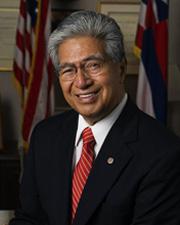
Mr. President. Today I rise to reintroduce the Federal Employee Protection of Disclosures Act, which was unanimously reported out of the Senate Homeland Security and Governmental Affairs Committee…
Mr. President. Today I rise to reintroduce the Federal Employee Protection of Disclosures Act, which was unanimously reported out of the Senate Homeland Security and Governmental Affairs Committee last year with strong bipartisan support. I am joined again in this effort by Senator Collins, chairman of the committee, whose focus on this issue and willingness to work with me in developing this legislation demonstrates how important it is to ensure that Federal employees are protected when they disclose government waste, fraud, and abuse. I am pleased to be joined by our committee's ranking member, Senator Lieberman.
Once again, I am proud to have the support of Senator Charles Grassley and Senator Carl Levin, both of whom are longstanding advocates of Federal whistleblowers. My colleagues from Iowa and Michigan championed the 1989 Whistleblower Protection Act and have supported my legislation since 2001. Their support, along with the strong bipartisan support of Senators Leahy, Voinovich, Coleman, Durbin, Dayton, Pryor, Johnson, Lautenberg, and Carper demonstrates the importance of this good government legislation.
Our legislation will strengthen the protections given to Federal whistleblowers and encourage employees to come forward to disclose government waste, fraud, and abuse. Providing meaningful protection to whistleblowers fosters an environment that promotes the disclosure of government wrongdoing and mismanagement that may adversely affect the American public. If Federal employees fear reprisal for blowing the whistle, we fail to protect the whistleblower, taxpayers, and, in notable instances, national security and our public health.
The most recent example is the disclosure by Dr. David Graham of the Food and Drug Administration, FDA, who exposed problems at the FDA regarding the safety of new pharmaceuticals. By revealing the threat posed to public health and the safety of pharmaceuticals currently on the market, as well as the organizational structure of the Center for Drug Evaluation and Research, CDER, and CDER's internal conflict of interest in evaluating the safety of drugs both pre- and post- marketing, Dr. Graham risked his career to report hazards to our public health.
As a direct result of Dr. Graham's decision to speak publicly, Americans are now more aware of the potential risks of various pharmaceuticals and government leaders are seeking ways to increase transparency of the oversight of new medications. Two weeks ago, the FDA announced the creation of a new Drug Safety Oversight Board to monitor the safety of prescription and over-the-counter drugs on the market more effectively. This new board is aimed at eliminating the conflict of interest found under the current CDER structure as disclosed by Dr. Graham.
Other examples of whistle blowers who uncovered government mismanagement and threats to public safety include: Ms. Colleen Rowley who disclosed institutional problems at the Federal Bureau of Investigation prior to 2001 which affected national security, Mr. Richard Foster, who sought to disclose the actual cost of pending Medicare legislation to Congress, and Border Patrol Agents Mark Hall and Bob Lindemann, who revealed security lapses at our northern border immediately after September 11, 2001.
In spite of the positive changes resulting from their disclosures, we are concerned that the very public struggles these individuals have endured after alerting Americans to waste, fraud, abuse, and security and health violations in the Federal Government may discourage others from coming forward. The root of these struggles lies in part with problems with the current legal structure and interpretation of the Whistleblower Protection Act. As a result of recent court decisions, legitimate whistleblowers have been denied adequate protection from retaliatory I practices. In fact, Federal whistleblowers have prevailed on the merits of their claims before the Federal Circuit Court of Appeals, which has sole jurisdiction over Federal employee whistleblower appeals, only once since 1994.
To address these issues, our legislation would clarify congressional intent regarding the scope of protection provided to whistleblowers; provide for an independent determination as to whether a whistleblower was retaliated against by the revocation of his or her security clearance; establish a pilot program to suspend the Federal Circuit Court of Appeals' monopoly on Federal employee whistleblower cases for a period of five years; and provide the Office of Special Counsel, which is charged with representing the interests of Federal whistleblowers, the authority to file amicus briefs with federal courts in support of whistleblowers.
Several of the provisions in the legislation reflect our efforts to address concerns raised by the Justice Department. While the Department still has objections to the intent of the legislation, partially because of its role in representing the interests of the alleged retaliatory agencies, I will continue to work with the Department. I am optimistic that we can reach an agreement on this good government measure in the near future.
Congress has a duty to provide strong and meaningful protections for Federal whistleblowers. Only when Federal employees are confident that they will not face retaliation will they feel comfortable coming forward to disclose information that can be used to improve government operations, our national security, and the health of our citizens. I look forward to working with my colleagues to make this goal a reality.
I ask unanimous consent that the text of the bill be printed in the Record.
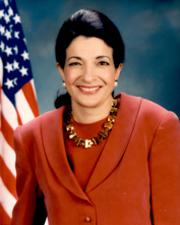
Mr. President, I am pleased to be here today with my colleague and friend, Senator Wyden, with whom I have worked for many years to achieve affordable prescription drug coverage for our seniors. We…
Mr. President, I am pleased to be here today with my colleague and friend, Senator Wyden, with whom I have worked for many years to achieve affordable prescription drug
coverage for our seniors. We have certainly come a long way from back where we were nearly 10 years ago.
Yet much remains to be done. As we have seen, the implementation of the Medicare Part D benefit has been difficult, and there is no doubt we are still on the road to a sustainable benefit which our seniors can easily navigate. The complexity of the benefit is certainly posing a hazard to many of our seniors.
Today we face a crisis as millions of seniors are entering a gap in their prescription drug coverage--the so-called doughnut hole. In fact, when a senior's drug costs exceed $2,250 this year, they will no longer receive benefits until their spending reaches $5,100. That leaves seniors with a full $2,850 of drug costs to absorb before they receive a single cent of coverage. And they must continue to pay premiums. The Kaiser Foundation has reported that an estimated 7 million seniors will be affected by this coverage gap. How will they continue to receive essential medications?
Earlier this year, I offered legislation which would have addressed this issue by allowing every beneficiary to change their plan once this year so that those beneficiaries who realized that they require a more comprehensive plan could choose to change to an appropriate plan. We know that selecting drug coverage was a challenging process for seniors, all the more so as the deadline loomed and they struggled to get assistance.
Many may have made a good decision, but their circumstances may have since changed significantly. How many of us know of a senior who has had a major illness or hospitalization just since January? Most seniors in that situation will have changes in their medications as a result and often will use more prescription drugs and likely more expensive ones as well.
Finally, with coverage available, there is little doubt that physicians were encouraged to prescribe medications that at last their patients could afford--drugs which could prevent serious illness, such as heart disease. Yet now, just as seniors see the possibility of a future with better health, the cost of that critical treatment may be unsustainable. So millions are facing the dilemma we have seen before-- cutting doses or even discontinuing medications. This must not occur again.
As many medical experts will tell you, to stop taking essential medications or to begin rationing their use will pose serious safety risks to many of our beneficiaries. That undermines the benefits we should see from Part D--improved health and decreased health expenditures.
So Senator Wyden and I are here to offer a solution--one which, I might add, both HHS Secretary Michael Leavitt and Dr. Mark McClellan, the Administrator of the Centers for Medicare and Medicaid Services, have previously suggested they would pursue. That solution is a simple one--to allow those facing a coverage gap to change to a plan which would offer continuous coverage. That solution has simply not been employed and that compels us to act today, to protect our seniors.
The bill I rise to introduce today--the Medicare Prescription Drug Lifeline Act--truly gives a second chance to those who most need this coverage. Under this legislation we require that CMS notify those who are approaching the coverage gap and give them an option of making a one-time plan change in order to obtain essential drug coverage. Under our legislation, beneficiaries could change to any plan which would provide continuous coverage. That includes drug plans which provide generic or brand-name drugs as well as Medicare Advantage plans offering comprehensive drug coverage.
In a few States, there is simply not an option which allows a beneficiary to obtain continuous brand-name drug coverage. I note that in my State of Maine, as well as in New Hampshire and Alaska, such coverage simply cannot be obtained. So this legislation directs the Secretary to provide an option for beneficiary enrollment in a plan with brand-name drug coverage outside their region. That is simply fair, and it is essential to ensure that we don't see the doughnut hole threaten the health of our seniors.
We know that this coverage gap is an issue we simply must address. Seniors need to be able to plan and budget and count on a predictable monthly cost for their essentials of life. When the Congress adopted Part D 3 years ago, we said we never wanted to make seniors again choose between buying food and buying essential medicines. Yet without addressing the doughnut hole now, we will put seniors in that exact position again.
So this legislation also asks the GAO to undertake a study of options for eliminating the doughnut hole--looking at ways to level the benefit structure--including how we might do so without increasing federal expenditures. I note that one might be able to accomplish this, without changing the beneficiary's copayment rates appreciably. Obviously, if we saw some improvement in the pricing of drugs, that certainly would help get us there.
Today our most critical need is to avoid the harm this coverage gap poses, and I call on my colleagues to join us in this effort--to preserve drug access for our seniors so both they, ad our Medicare system, realize the benefits of modern medicine.
Mr. President, I seek recognition today to introduce a bill to provide private relief to the survivors of Christopher Kangas of Brookhaven, PA. This is a final attempt to recognize the public service…
Mr. President, I seek recognition today to introduce a bill to provide private relief to the survivors of Christopher Kangas of Brookhaven, PA. This is a final attempt to recognize the public service of Christopher Kangas, a junior firefighter of the Brookhaven, PA, fire department, who, on May 4, 2002, was struck by a car and killed while riding his bicycle to the site of a fire emergency.
I characterize the bill I introduce today as a ``final attempt'' to recognize the public service of Christopher Kangas as a fallen firefighter because previous legislative corrections have been blocked while the Kangas family languishes in the lengthy appeals process to overturn the U.S. Department of Justice's, DOJ, denial of public safety officer benefits. During both the 108th and 109th Congresses, I introduced the Christopher Kangas Fallen Firefighter Apprentice Act, S. 2695 and S. 491, respectively, designed to correct a flaw in the current definition of ``firefighter'' under the Public Safety Officer Benefits Act. That legislation would clarify that all firefighters will be recognized as such ``regardless of age, status as an apprentice or trainee, or duty restrictions imposed because of age or status as an apprentice or trainee'' and applies retroactively to the date of Christopher Kangas' death in 2002. However, this legislation has been prevented from moving forward due to objections that expansion of benefits under the program would result in a serious drain on the Treasury when, in fact, the Congressional Budget Office has estimated that this bill would cost approximately $2 million in the first year of enactment and an average of less than $500,000 in each year thereafter.
In addition to a legislative remedy, Christopher Kangas' family has been pursuing the Federal benefit through the U.S. Federal Claims Court. On March 27, 2006, the court ruled in favor of the Kangas family ordering DOJ to pay $250,000. However, on May 26, 2006, DOJ filed a notice of appeal to this decision, further delaying recognition of Christopher Kangas' public service and status as a fallen firefighter.
Under Pennsylvania law, 14- and 15-year-olds such as Christopher are permitted to serve as volunteer junior firefighters. While they are not allowed to operate heavy machinery or enter burning buildings, the law permits them to fill a number of important support roles, such as providing first aid. In addition, the junior firefighter program is an important recruitment tool for fire stations throughout the Commonwealth. In fact, prior to his death Christopher had received 58 hours of training that would have served him well when he graduated from the junior program.
It is clear to me that Christopher Kangas was a firefighter killed in the line of duty. Were it not for his status as a junior firefighter and his prompt response to a fire alarm, Christopher would still be alive today. Indeed, the Brookhaven Fire Department, Brookhaven Borough, and the Commonwealth of Pennsylvania have all
recognized Christopher's public service as a fallen public safety officer and provided the appropriate death benefits to his family.
Yet while those closest to the tragedy have recognized Christopher as a fallen firefighter, the Federal Government has not. The Department of Justice determined that Christopher Kangas was not eligible for benefits based on a twofold interpretation of the law. First, because he was deemed as not acting within a narrow range of duties at the time of his death that are the measured criteria to be considered a ``firefighter,'' and therefore, was not a ``public safety officer'' for purposes of the Public Safety Officer Benefits Act. Second, that his death was deemed as not sustained in the ``line of duty'' because as a junior firefighter he was prohibited from operating a hose on a ladder or entering a burning building. As a result of this determination, Christopher's family cannot receive a Federal line-of-duty benefit. In addition, Christopher is barred from taking his rightful place on the National Fallen Firefighters Memorial in Emmitsburg, MD. For a young man who dreamed of being a firefighter and gave his life rushing to a fire, keeping him off of the memorial is a grave injustice.
Any firefighter will tell you that there are many important roles to play in fighting a fire beyond operating the hoses and ladders. Firefighting is a team effort, and everyone in the Brookhaven Fire Department viewed young Christopher as a full member of their team. As such, I support amending the Public Safety Officer Benefits Act to ensure that the Federal Government will recognize Christopher Kangas and others like him as firefighters. However, considering the significant opposition to that solution, I am offering this private bill in honor of Christopher Kangas to provide his family with the $250,000 as ordered by the Federal Claims Court and to allow his name to be included on the National Fallen Firefighter's Memorial.
I urge my colleagues to support this important legislation.
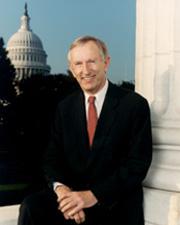
Mr. President, I rise to introduce the Global Warming Pollution Reduction Act of 2006. One of the most important issues facing mankind is the problem of global warming. Global warming is real and it…
Mr. President, I rise to introduce the Global Warming Pollution Reduction Act of 2006.
One of the most important issues facing mankind is the problem of global warming. Global warming is real and it is already happening. Its effects are being felt across the globe and the longer we delay, the more severe these effects will be. The broad consensus within the scientific community is that global warming has begun, is largely the result of human activity, and is accelerating. Atmospheric greenhouse gas concentrations have risen to 378 parts per million, nearly one- third above preindustrial levels and higher than at any time during the past 400,000 years. Projections indicate that stabilizing concentrations at 450 parts per million would still mean a temperature increase of 2 to 4 degrees Fahrenheit. Such warming will result in more extreme weather, increased flooding and drought, disruption of agricultural and water systems, threats to human health and loss of sensitive species and ecosystems.
In order to prevent and minimize these effects, we must take global actions to address this issue as soon as possible. We owe that to ourselves and to future generations.
The overwhelming majority of Americans support taking some form of action on climate change. I am today introducing the Global Warming Pollution Reduction Act, which I believe responds to that call. I believe this is the most far-reaching and forward-thinking climate change bill ever introduced. It sets a goal of an 80 percent reduction in global warming pollutants by 2050. It provides a roadmap for actions that we will need to take over the next few decades to combat global warming. I believe that if this bill were passed, it would put us on the path to potentially solving the global warming problem. If it were passed, we would reshape our economy to become more energy independent, cleaner, and more economically competitive. If it were passed, we would have a chance of avoiding some of the worst and most
dangerous effects of global warming. If it were passed, we would be in a position to negotiate with other countries as part of the global solution.
Some will say that this bill imposes requirements that ask too much of industry. Some will say that this bill contains requirements that we cannot easily meet. I say first of all that the costs of inaction vastly outweigh the costs of action and that we have a responsibility to future generations not to leave the Earth far worse off than when we found it--with a fundamentally altered climate system. Temperature changes, sea level rise, hurricanes, floods, and droughts can affect food production, national security, the spread of disease, and the survival of endangered species. These are not things to trifle with on the basis of industry cost estimates, which have frequently been overstated.
But perhaps more importantly, we can act to reduce global warming. We can reduce emissions to 1990 levels between now and 2020 through a reduction of just 2 percent per year. Energy efficiency alone could play a major part in reaching reductions, and new technologies can help as well. Moreover, additional deployment of existing renewable energy sources, including biofuels, can also help substantially. If we were to take the actions suggested in this bill, we would find that we would enhance our energy independence, and we would become a world leader in clean energy technologies. American innovation can position us as the world leader in clean technologies.
In my final year in the Senate, I have often asked myself, What lasting actions can I take to make the world a better place? I hope that by proposing real action on climate change, and passing the torch to a new generation of those committed to protecting the environment, that I can help make a difference for us all. Global warming is upon us now. The question is, Can we take action now, before it is too late?
We know what we need to do, we know how much we must reduce, and we have the technology to do so. The question for this body is, Do we have the political will? Can we overcome our fears and insecurity and act decisively to combat global warming? That is the opportunity and challenge of the coming years, which my bill on global warming seeks to address. I urge my colleagues to join me in the quest for a better, safer world that is free of the enormous threat posed by dangerous global warming. I urge my colleagues to support this important piece of legislation.
Show 10 more
Mr. President, I seek recognition today to introduce the Christopher Kangas Fallen Firefighter Apprentice Act, a bill designed to correct a flaw in the current definition of ``firefighter'' under the…
Mr. President, I seek recognition today to introduce the Christopher Kangas Fallen Firefighter Apprentice Act, a bill designed to correct a flaw in the current definition of ``firefighter'' under the Public Safety Officer Benefits Act.
On May 4, 2002, 14-year-old Christopher Kangas was struck by a car and killed while he was riding his bicycle in Brookhaven, PA. The local authorities later confirmed that Christopher was out on his bike that day for an important reason: Chris Kangas was a junior firefighter, and he was responding to a fire emergency.
Under Pennsylvania law, 14- and 15-year-olds such as Christopher are permitted to serve as volunteer junior firefighters. While they are not allowed to operate heavy machinery or enter burning buildings, the law permits them to fill a number of important support roles, such as providing first aid. In addition, the junior firefighter program is an important recruitment tool for fire stations throughout the Commonwealth. In fact, prior to his death Christopher had received 58 hours of training that would have served him well when he graduated from the junior program.
It is clear to me that Christopher Kangas was a firefighter killed in the line of duty. Were it not for his status as a junior firefighter and his prompt response to a fire alarm, Christopher would still be alive today. Indeed, the Brookhaven Fire Department, Brookhaven Borough, and the Commonwealth of Pennsylvania have all recognized Christopher as a fallen public safety officer and provided the appropriate death benefits to his family.
Yet, while those closest to the tragedy have recognized Christopher as a fallen firefighter, the Federal Government has not. The U.S. Department of Justice (DOJ) determined that Christopher Kangas was not eligible for benefits because he was not acting within a narrow range of duties at the time of his death that are the measured criteria to be considered a ``firefighter,'' and therefore, was not a ``public safety officer'' for purposes of the Public Safety Officer Benefits Act. In order to be eligible for benefits under the Public Safety Officer Benefits Act, an officer's death must be considered the ``direct and proximate result of a personal injury sustained in the line of duty.'' Although the United States Code includes firefighters in the definition of ``public safety officer'' and specifies a firefighter as ``an individual serving as an officially-recognized or designated member of a legally-organized volunteer fire department;'' it offers no definition of ``line of duty''. DOJ had to defer to an arbitrarily narrow definition of ``line of duty,'' as described in the Code of Federal Regulations that restricts activities to the ``suppression of fires.'' DOJ decided that the only people who qualify as firefighters are those who play the starring role of operating a hose on a ladder or entering a burning building. According to this interpretation, those, such as junior firefighters, who play the essential supporting roles of directing traffic, performing first aid, or dispatching fire vehicles do not contribute to the act of suppressing the fire.
Any firefighter will tell you that there are many important roles to play in fighting a fire beyond operating the hoses and ladders. Firefighting is a team effort, and everyone in the Brookhaven Fire Department viewed young Christopher as a full member of their team.
As a result of this DOJ determination, Christopher's family will not receive a $267,000 Federal line-of-duty benefit. In addition, Christopher will be barred from taking his rightful place on the National Fallen Firefighters Memorial in Emmitsburg, MD. For a young man who dreamed of being a firefighter and gave his life rushing to a fire, keeping him off of the memorial is a grave injustice.
The bill I introduce today will ensure that the Federal Government will recognize Christopher Kangas and others like him as firefighters. The bill clarifies that all firefighters will he recognized as such ``regardless of age, status as an apprentice or trainee, or duty restrictions imposed because of age or status as an apprentice or trainee.'' The bill applies retroactively back to May 4, 2002 so that Christopher, as well as three others, can benefit from it.
I urge my colleagues to support this important legislation.
Mr. President, I seek recognition today to introduce the Christopher Kangas Fallen Firefighter Apprentice Act, a bill designed to correct a flaw in the current definition of ``firefighter'' under the…
Mr. President, I seek recognition today to introduce the Christopher Kangas Fallen Firefighter Apprentice Act, a bill designed to correct a flaw in the current definition of ``firefighter'' under the Public Safety Officer Benefits Act.
On May 4, 2002, 14-year-old Christopher Kangas was struck by a car and killed while he was riding his bicycle in Brookhaven, PA. The local authorities later confirmed that Christopher was out on his bike that day for an important reason: Chris Kangas was a junior firefighter, and he was responding to a fire emergency.
Under Pennsylvania law, 14- and 15-year-olds such as Christopher are permitted to serve as volunteer junior firefighters. While they are not allowed to operate heavy machinery or enter burning buildings, the law permits them to fill a number of important support roles, such as providing first aid. In addition, the junior firefighter program is an important recruitment tool for fire stations throughout the Commonwealth. In fact, prior to his death Christopher had received 58 hours of training that would have served him well when he graduated from the junior program.
It is clear to me that Christopher Kangas was a firefighter killed in the line of duty. Were it not for his status as a junior firefighter and his prompt response to a fire alarm, Christopher would still be alive today. Indeed, the Brookhaven Fire Department, Brookhaven Borough, and the Commonwealth of Pennsylvania have all recognized Christopher as a fallen public safety officer and provided the appropriate death benefits to his family.
Yet, while those closest to the tragedy have recognized Christopher as a fallen firefighter, the Federal Government has not. The U.S. Department of Justice (DOJ) determined that Christopher Kangas was not eligible for benefits because he was not acting within a narrow range of duties at the time of his death that are the measured criteria to be considered a ``firefighter,'' and therefore, was not a ``public safety officer'' for purposes of the Public Safety Officer Benefits Act. In order to be eligible for benefits under the Public Safety Officer Benefits Act, an officer's death must be considered the ``direct and proximate result of a personal injury sustained in the line of duty.'' Although the United States Code includes firefighters in the definition of ``public safety officer'' and specifies a firefighter as ``an individual serving as an officially-recognized or designated member of a legally-organized volunteer fire department;'' it offers no definition of ``line of duty''. DOJ had to defer to an arbitrarily narrow definition of ``line of duty,'' as described in the Code of Federal Regulations that restricts activities to the ``suppression of fires.'' DOJ decided that the only people who qualify as firefighters are those who play the starring role of operating a hose on a ladder or entering a burning building. According to this interpretation, those, such as junior firefighters, who play the essential supporting roles of directing traffic, performing first aid, or dispatching fire vehicles do not contribute to the act of suppressing the fire.
Any firefighter will tell you that there are many important roles to play in fighting a fire beyond operating the hoses and ladders. Firefighting is a team effort, and everyone in the Brookhaven Fire Department viewed young Christopher as a full member of their team.
As a result of this DOJ determination, Christopher's family will not receive a $267,000 Federal line-of-duty benefit. In addition, Christopher will be barred from taking his rightful place on the National Fallen Firefighters Memorial in Emmitsburg, MD. For a young man who dreamed of being a firefighter and gave his life rushing to a fire, keeping him off of the memorial is a grave injustice.
The bill I introduce today will ensure that the Federal Government will recognize Christopher Kangas and others like him as firefighters. The bill clarifies that all firefighters will he recognized as such ``regardless of age, status as an apprentice or trainee, or duty restrictions imposed because of age or status as an apprentice or trainee.'' The bill applies retroactively back to May 4, 2002 so that Christopher, as well as three others, can benefit from it.
I urge my colleagues to support this important legislation.
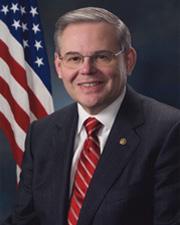
Mr. President, I rise today with my good friend Senator Lautenberg to introduce Danielle's Act, an important piece of legislation that I know will save countless lives. I also recognize…
Mr. President, I rise today with my good friend Senator Lautenberg to introduce Danielle's Act, an important piece of legislation that I know will save countless lives. I also recognize Representative Rush Holt, who has championed the bill in the House and has been a tireless advocate for individuals with disabilities. This bill is named in memory of a young woman from New Jersey, Danielle Gruskowski, whose life was cut tragically short by a failure to call 9- 1-1. The great State of New Jersey has already passed Danielle's Law, and it is time for Congress to act as well.
In order to understand the importance of this legislation, I would like to share Danielle's story. She was born December 6, 1969, to Diane and Doug Gruskowski and raised in Carteret, NJ. Danielle was developmentally disabled and diagnosed with Rett Syndrome, a neurological disorder that causes a delay or regression in development, including speech, hand skills, and coordination. While Danielle needed help with daily activities, she managed to lead a full and active life. As a young adult, Danielle moved to a group home to experience the positive benefits of independent living. Tragically, on November 5, 2002, Danielle passed away at the age of 32 because no one in the group home called 9-1-1 when she was clearly in need of emergency medical attention.
So that no other mother would lose her child in such a tragic circumstance, Danielle's mother and her aunt, Robin Turner, developed a strong coalition of supporters and worked with their State representatives to develop and pass what we know as Danielle's Law. Like the New Jersey law, my bill will require staff working with individuals who have a developmental disability or traumatic brain injury to call emergency services in the event of a life-threatening situation. The legislation would raise the standard of care by improving staff training and ensuring that individuals with developmental disabilities get emergency care when they need it.
All Americans deserve an advocate, and today I am speaking for those who often cannot speak for themselves. I am proud to be an advocate for individuals with disabilities, and I am proud to be an advocate for the families in New Jersey who are counting on safe, secure, and healthy independent living environments for their loved ones with disabilities. I also would like to recognize the hard-working caregivers and staff who help provide for the needs of those with disabilities. They show their compassion every day when they show up for work, performing one of the most difficult but rewarding jobs in our society--caring for someone's mother, father, son, or daughter. These caregivers play such a critical role in our society and their contributions are to be commended. By raising awareness and education about Danielle's Law, my hope is that more caregivers will realize how important it is to call 9-1-1 for all life-threatening situations and
that better training and support will be provided to staff across the country.
I am introducing this legislation to remember Danielle and to make sure no other family or community experiences the pain and suffering of losing a loved one to an avoidable death. I hope my colleagues will join me in supporting this important bill.
Mr. President, I ask unanimous consent that the bill be printed in the Record.
Mr. President, I ask unanimous consent that the Committee on Agriculture, Nutrition and Forestry be authorized to conduct a hearing during the session of the Senate on Thursday, June 9, 2005 at 2…
Mr. President, I ask unanimous consent that the Committee on Agriculture, Nutrition and Forestry be authorized to conduct a hearing during the session of the Senate on Thursday, June 9, 2005 at 2 p.m. in SR-328A. The purpose of this hearing will be to review the nominations of Mr. Walter Lukken and Mr. Reuben Jeffries to be commissioners of the Commodity Futures Trading Commission and also for Mr. Jeffries to be chairman of the Commission.
Mr. President, I ask unanimous consent that the Committee on Banking, Housing, and Urban Affairs be authorized to meet during the session of the Senate on Thursday, June 9, 2005, at 10 a.m. to mark up S. 582 ``The Little Rock Central High School Desegregation 50th Anniversary Commemorative Coin Act,'' and to vote on the nomination of Mr. Ben S. Bernanke, of New Jersey, to be a member of the Council of Economic Advisers; and Mr. Brian D. Montgomery, of Texas, to be assistant secretary of Housing/Federal Housing Commissioner, U.S. Department of Housing and Urban Development.
Mr. President, I ask unanimous consent that the Committee on Commerce, Science, and Transportation be authorized to meet on Review of General Aviation Security, at 11 a.m., on Thursday, June 9, 2005, in SR-253.
Mr. President, I ask unanimous consent that the Committee on Foreign Relations be authorized to meet during the session of the Senate on Thursday, June 9, 2005 at 10:30 a.m. to hold a hearing on nominations.
Mr. President, I ask unanimous consent that the Committee on Foreign Relations be authorized to meet during the session of the Senate on Thursday, June 9, 2005 at 2:30 p.m. to hold a hearing on the Western Hemisphere.
Mr. President, I ask unanimous consent that the Committee on Health, Education, Labor, and Pensions be authorized to hold a hearing during the session of the Senate on Thursday, June 9, 2005 at 10 a.m. in SD-430.
Mr. President, I ask unanimous consent that the Committee on the Judiciary be authorized to meet to conduct a markup on Thursday, June 9, 2005, at 9:30 a.m. in Dirksen Room 226.
Agenda
I. Nominations:
Terrence W. Boyle, II to be U.S. Circuit Judge for the Fourth Circuit; Brett M. Kavanaugh to be U.S. Circuit Judge for the District of Columbia; Rachel Brand to be an Assistant Attorney General for the Office of Legal Policy; Alice S. Fisher to be an Assistant Attorney General for the Criminal Division.
II. Bills:
S. 491, Christopher Kangas Fallen Firefighter Apprentice Act, Specter, Leahy;
S. 1181, Which is Section 8 of Openness Promotes Effectiveness in our National Government Act of 2005, Cornyn, Leahy, Feingold.
III. Matters:
Senate Judiciary Committee Rules.
Mr. President, I ask unanimous consent that the Committee on Veterans' Affairs be authorized to meet during the session of the Senate on Thursday, June 9, 2005, for a committee hearing to receive testimony on various healthcare-related bills pending before the Committee.
The hearing will take place in Room 418 of the Russell Senate Office Building at 10 a.m.
Mr. President, I ask unanimous consent that the Subcommittee on Bioterrorism and Public Health Preparedness, be authorized to hold a hearing during the session of the Senate on Thursday, June 9, 2005 at 2 p.m. in SD-430.

Mr. President, I ask unanimous consent that the Committee on Banking, Housing, and Urban Affairs be authorized to meet during the session of the Senate on June 16, 2005, at 10 a.m. to conduct a…
Mr. President, I ask unanimous consent that the Committee on Banking, Housing, and Urban Affairs be authorized to meet
during the session of the Senate on June 16, 2005, at 10 a.m. to conduct a hearing on ``Meeting the Housing and Service Needs of Seniors.''
Mr. President, I ask unanimous consent that the Committee on Science, and Transportation be authorized to meet on Thursday, June 16, 2005, at 10 a.m., on a hearing to Examine Federal Legislative Solutions to Data Breach and Identity Theft.
Mr. President, I ask unanimous consent that the Committee on Commerce, Science, and Transportation be authorized to meet on Thursday, June 16, 2005, at 2:30 p.m. on the nominations of William Jeffrey, to be Director of the National Institute of Standards and Technology, Ashok Kaveeshwar, to be Administrator of the Research and Innovative Technology Administration, Edmund S. Hawley, to be Assistant Secretary of Homeland Security, and Israel Hernandez, to be Assistant Secretary of Commerce and Director General of the U.S. Foreign and Commercial Service.
Mr. President, I ask unanimous consent that the Committee on Finance be authorized to meet in open Executive Session during the session on Thursday, June 16, 2005, at 10:30 a.m., to consider an original bill entitled, ``Energy Policy Tax Incentives Act of 2005''.
Mr. President, I ask unanimous consent that the Committee on Foreign Relations be authorized to meet during the session of the Senate on Thursday, June 16, 2005 at 9:30 a.m. to hold a hearing on Stabilization and Reconstruction.
Mr. President, I would like to announce that the Committee on Indian Affairs will meet on Thursday, June 16, 2005, at 9:30 a.m., in room 485 of the Russell Senate Office Building to conduct an oversight hearing on Indian Education.
Mr. President, I ask unanimous consent that the Committee on the Judiciary be authorized to meet to conduct a markup on Thursday, June 16, 2005, at 9:30 a.m., in Senate Dirksen Office Building room 226. The agenda will be provided when it becomes available today.
Agenda
I. Nominations: Terrence W. Boyle, II, to be U.S. Circuit Judge for the Fourth Circuit; Rachel Brand, to be an Assistant Attorney General for the Office of Legal Policy; Alice S. Fisher, to be an Assistant Attorney General for the Criminal Division.
II. Bills: S. 491, Christopher Kangas Fallen Firefighter Apprentice Act [Specter, Leahy]
III. Matters: Senate Judiciary Committee Rules.
Mr. President, I ask unanimous consent that the Select Committee on Intelligence be authorized to meet during the session of the Senate on June 16, 2005, at 3 p.m., to hold a confirmation hearing.
Mr. President, I ask unanimous consent that the Permanent Subcommittee on Investigations of the Committee on Homeland Security and Governmental Affairs be authorized to meet on Thursday, June 16, 2005, at 9:30 a.m., for a hearing entitled ``Civilian Contractors Who Cheat On Their Taxes And What Should Be Done About It.''

Mr. President, I rise today to introduce legislation with Senator Snowe that will provide our Nation's migrant agricultural and forest workers with a safe ride to work. The Farm and Forestry Worker…
Mr. President, I rise today to introduce legislation with Senator Snowe that will provide our Nation's migrant agricultural and forest workers with a safe ride to work. The Farm and Forestry Worker Transportation Safety Act would require a designated seat and seatbelt for each person riding in a vehicle used to transport these workers.
Today, many migrant workers travel to their jobs in dangerous and unsafe conditions. It is not uncommon for these workers to ride in overcrowded vans and trucks while sitting on benches and buckets with no access to seatbelts.
According to the Bureau of Labor Statistics, 78 agricultural workers lost their lives and 440 were injured in transportation accidents in 2004.
I would like to take a moment to share with you just a few of the accidents that have resulted from the lack of adequate safety regulations for these workers:
In December of 2005, two Guatemalan forest workers were killed when their vehicle crashed driving off icy roads in Washington. Five Guatemalan forest workers were killed in the same manner the previous year.
In June of 2004, 2 migrant workers were killed in Port St. Lucie, FL, when their overcrowded van carrying 11 people rolled over on Interstate 95. Two months later, 9 citrus workers were killed in Fort Pierce when their 15-passenger van rolled over and ejected all 19 passengers.
In September 2002, 14 forestry workers were killed when their van transporting them to work toppled off a bridge in Maine.
In August 1999, 13 tomato field workers were killed when their van slammed into a tractor-trailer in Fresno County, CA. Most of the victims were riding on three benches in the back of the van.
As you can see, this issue does not just affect my home State of California. It is a problem that requires national attention. Congress needs to take action to ensure these workers safe travel to and from their jobs. My bill would seek to provide these workers with a designated seat and operating seatbelt.
This legislation would also address the issue of converted vehicles. The bill would direct the Department of Transportation to develop interim seat and seatbelt safety standards for vehicles that have been converted for the purpose of transporting migrant workers. Owners and operators of these vehicles would have 7 years to make the necessary improvements so that their vehicles would meet the same safety standards as new vehicles.
I hope my colleagues will join me in standing up for the safety of our Nation's migrant workforce.
Mr. President, I request that the text of this legislation appear immediately following this statement in the Congressional Record.
Mr. President, today with several bipartisan colleagues, Senator Corzine and I introduced the Darfur Accountability Act of 2005. For nearly a year, this body has been aware of the ongoing genocide in…
Mr. President, today with several bipartisan colleagues, Senator Corzine and I introduced the Darfur Accountability Act of 2005. For nearly a year, this body has been aware of the ongoing genocide in Sudan. Last July we declared genocide in Darfur, followed shortly thereafter by the same declaration by former Secretary of State Colin Powell. Yet no punitive measure has been taken by the international community against the Government of Sudan for these egregious human rights violations. Some sources estimate that as many as 400,000 people have died as a result, and nearly 2 million have been displaced from their homes.
Yesterday I spoke on the Senate floor in an attempt to display the face of genocide. Photographs of scorched bodies, castrated men, dead children, and burned villages were provided to me by Nicholas Kristof of the New York Times. These photos do nothing less than display the cruel impunity of those committing genocide. The haunting reality is that the international community has failed on their promise of ``never again.''
The United Nations should take immediate steps to end this genocide and Kofi Annan should lead the Security Council to pass a strong, meaningful resolution that will immediately change the situation on the ground. There is no longer an excuse; we must call this what this is, and we must immediately act to prevent further pillaging and death. I have called on Annan several times to lead or leave. He should pass a resolution with mechanisms to see that the impunity ends and if he fails to do so, resign in moral protest at the international community's inaction and complacency.
Our bill, the Darfur Accountability Act of 2005, calls for several key measures to be taken, including: a multilateral arms embargo to include the government of Sudan; a no fly zone; multilateral sanctions; targeted sanctions including travel bans and the freezing of assets of criminals; accelerated assistance to AU monitoring troops, and several other items that will secure a peaceful Darfur.
I encourage my colleagues to join us in moving this bill through Congress. We do not have days or weeks to spare when millions of lives are in jeopardy. We cannot grant the government of
Sudan and the janjaweed more time to execute the African tribes in Darfur. I look forward to working with Senator Corzine and other colleagues to see passage of this bill immediately.

Mr. President, I rise today to introduce legislation, the Credit CARD Act of 2005 (the Credit Card Accountability Responsibility and Disclosure Act of 2005), designed to protect our Nation's…
Mr. President, I rise today to introduce legislation, the Credit CARD Act of 2005 (the Credit Card Accountability Responsibility and Disclosure Act of 2005), designed to protect our Nation's consumers from the predatory practices of the credit card industry.
The Credit CARD Act is substantially the same as legislation I previously introduced in the 108th Congress. As the Senate considers bankruptcy reform legislation, which I believe will adversely impact consumers and inappropriately reward the credit card industry, the Credit CARD Act is needed now more than ever before.
I ask unanimous consent that the text of the legislation be printed in the Record.
Mr. President, I ask unanimous consent that the text of the bill be printed in the Record.
Mr. President, I ask unanimous consent that the text of the bill be printed in the Record.
Mr. President, I ask unanimous consent that the text of the bill be printed in the Record.
Mr. President, I ask unanimous consent that the text of the bill be printed in the Record.
Bill Text
2 versions available
        [Congressional Bills 109th Congress]
[From the U.S. Government Publishing Office]
[S. 491 Reported in Senate (RS)]

Calendar No. 128
109th CONGRESS
1st Session
S. 491

To amend the Omnibus Crime Control and Safe Streets Act of 1968 to
expand the definition of firefighter to include apprentices and
trainees, regardless of age or duty limitations.

_______________________________________________________________________

IN THE SENATE OF THE UNITED STATES

March 2, 2005

Mr. Specter (for himself, Mr. Santorum, and Mr. Leahy) introduced the
following bill; which was read twice and referred to the Committee on
the Judiciary

June 16, 2005

Reported by Mr. Specter, without amendment

_______________________________________________________________________

A BILL

To amend the Omnibus Crime Control and Safe Streets Act of 1968 to
expand the definition of firefighter to include apprentices and
trainees, regardless of age or duty limitations.

Be it enacted by the Senate and House of Representatives of the
United States of America in Congress assembled,

SECTION 1. SHORT TITLE.

This Act may be cited as the ``Christopher Kangas Fallen
Firefighter Apprentice Act''.

SEC. 2. EXPANSION OF DEFINITION OF FIREFIGHTER TO INCLUDE APPRENTICES
AND TRAINEES.

Section 1204(4) of the Omnibus Crime Control and Safe Streets Act
of 1968 (42 U.S.C. 3796b(4)) is amended by inserting ``, regardless of
age, status as an apprentice or trainee, or duty restrictions imposed
because of age or status as an apprentice or trainee,'' after ``fire
department''.

SEC. 3. EFFECTIVE DATE.

The amendment made by this Act shall apply with respect to deaths
and injuries which occur on or after May 4, 2002.

Calendar No. 128

109th CONGRESS

1st Session

S. 491

_______________________________________________________________________

A BILL

To amend the Omnibus Crime Control and Safe Streets Act of 1968 to
expand the definition of firefighter to include apprentices and
trainees, regardless of age or duty limitations.

_______________________________________________________________________

June 16, 2005

Reported without amendment