Health Professionals Substance Abuse Education Act
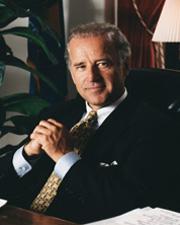 Sen. Joseph R. Biden Jr. (D-DE)
Legislative Activity
Stay on top of the latest movement without scrolling through every action
Read twice and referred to the Committee on Health, Education, Labor, and Pensions. (text of measure as introduced: CR S2162-2164)
March 7, 2005
View full timeline
Introduced in Senate
March 7, 2005
Sponsor introductory remarks on measure. (CR S2162)
March 7, 2005
Read twice and referred to the Committee on Health, Education, Labor, and Pensions. (text of measure as introduced: CR S2162-2164)
March 7, 2005
Floor Debate
8 membersWhat members said about S. 538 on the floor
 +3
+3
Floor Debate
8 membersWhat members said about S. 538 on the floor
Mr. President, when I began my first campaign for the U.S. Senate in 1995, I published a booklet entitled ``Where I Stand.'' I wrote it because the first obligation of a candidate is to tell voters…
Mr. President, I am pleased to introduce the Native American Omnibus Act of 2005 to amend a variety of Federal statutes affecting Indian tribes and Indian people. This Act contains nineteen…
Mr. President, I rise today to re-introduce a bill that I offered last year that I hope will be the first in a series of proposals to simplify the Tax Code for small business owners. Once enacted,…
Mr. President, I rise today to introduce legislation to address the problem of substance abuse in our country. The Robert Wood Johnson Foundation has called substance abuse America's No. 1 health…
Mr. President, I rise today to introduce legislation to address the problem of substance abuse in our country. The Robert Wood Johnson Foundation has called substance abuse America's No. 1 health…
Show 4 more
Mr. President, today I am joined by Senator Smith of Oregon and several of our colleagues in introducing legislation to extend the soon-to-expire tax credits in Federal law that incentivize the…

Mr. President, today I am reintroducing legislation to eliminate from the Federal tax code percentage depletion allowances for hardrock minerals mined on Federal public lands. I thank Senator…

Mr. President, the landmark report Mental Health: A Report of the Surgeon General brought the hidden mental health crisis to the attention of the U.S. public. According to that report, 13.7 million…
Mr. President, I rise today to introduce the Native American Connectivity Act. Senator Cantwell joins me in sponsoring this measure. Over 70 years ago, we passed the Communications Act of 1934 and…
Bill Text
Latest available legislative text
        [Congressional Bills 109th Congress]
[From the U.S. Government Publishing Office]
[S. 538 Introduced in Senate (IS)]

109th CONGRESS
1st Session
S. 538

To educate health professionals concerning substance use disorders and
addiction.

_______________________________________________________________________

IN THE SENATE OF THE UNITED STATES

March 7, 2005

Mr. Biden introduced the following bill; which was read twice and
referred to the Committee on Health, Education, Labor, and Pensions

_______________________________________________________________________

A BILL

To educate health professionals concerning substance use disorders and
addiction.

Be it enacted by the Senate and House of Representatives of the
United States of America in Congress assembled,

SECTION 1. SHORT TITLE.

This Act may be cited as the ``Health Professionals Substance Abuse
Education Act''.

SEC. 2. FINDINGS AND PURPOSE.

(a) Findings.--Congress makes the following findings:
(1) Illegal drugs and alcohol are responsible for thousands
of deaths each year, and they fuel the spread of a number of
communicable diseases, including AIDS and Hepatitis C, as well
as some of the worst social problems in the United States,
including child abuse, domestic violence, and sexual assault.
(2) There are an estimated 19,500,000 current drug users in
America, nearly 4,000,000 of whom are addicts. An estimated
14,800,000 Americans abuse alcohol or are alcoholic.
(3) There are nearly 27,000,000 children of alcoholics in
America, almost 11,000,000 of whom are under 18 years of age.
Countless other children are affected by substance abusing
parents or other caretakers. Health professionals are uniquely
positioned to help reduce or prevent alcohol and other drug-
related impairment by identifying affected families and youth
and by providing early intervention.
(4) Drug addiction is a chronic relapsing disease. As with
other chronic relapsing diseases (such as diabetes,
hypertension and asthma), there is no cure, although a number
of treatments can effectively control the disease. According to
an article published in the Journal of the American Medical
Association, treatment for addiction works as well as treatment
for other chronic relapsing diseases.
(5) Drug treatment is cost effective, even when compared
with residential treatment, the most expensive type of
treatment. Residential treatment for cocaine addiction costs
between $15,000 and $20,000 a year, a substantial savings
compared to incarceration (costing nearly $40,000 a year), or
untreated addiction (costing more than $43,000 a year). Also,
in 1998, substance abuse and addiction accounted for
approximately $10,000,000,000 in Federal, State, and local
government spending simply to maintain the child welfare
system. The economic costs associated with fetal alcohol
syndrome were estimated at $54,000,000,000 in 2003.
(6) Many doctors and other health professionals are
unprepared to recognize substance abuse in their patients or
their families and intervene in an appropriate manner. Only 56
percent of residency programs have a required curriculum in
preventing or treating substance abuse.
(7) Fewer than 1 in 5 doctors (only 19 percent) feel
confident about diagnosing alcoholism, and only 17 percent feel
qualified to identify illegal drug use.
(8) Most doctors who are in a position to make a diagnosis
of alcoholism or drug addiction do not believe that treatment
works (less than 4 percent for alcoholism and only 2 percent
for drugs).
(9) According to a survey by the National Center on
Addiction and Substance Abuse at Columbia University (referred
to in this section as ``CASA''), 94 percent of primary care
physicians and 40 percent of pediatricians presented with a
classic description of an alcoholic or drug addict,
respectively, failed to properly recognize the problem.
(10) Another CASA report revealed that fewer than 1 percent
of doctors presented with the classic profile of an alcoholic
older woman could diagnose it properly. Eighty-two percent
misdiagnosed it as depression, some treatments for which are
dangerous when taken with alcohol.
(11) Training can greatly increase the degree to which
medical and other health professionals screen patients for
substance abuse. It can also increase the manner by which such
professionals screen children and youth who may be impacted by
the addiction of a parent or other primary caretaker. Boston
University Medical School researchers designed and conducted a seminar
on detection and brief intervention of substance abuse for doctors,
nurses, physician's assistants, social workers and psychologists.
Follow-up studies reveal that 91 percent of those who participated in
the seminar report that they are still using the techniques up to 5
years later.
(12) The total economic costs of untreated addiction is
estimated to be $274,800,000,000. Arming health care
professionals with the information they need in order to
intervene and prevent further substance abuse could lead to a
significant cost savings.
(13) A study conducted by doctors at the University of
Wisconsin found a $947 net savings per patient in health care,
accident, and criminal justice costs for each individual
screened and, if appropriate, for whom intervention was made,
with respect to alcohol problems.
(b) Purpose.--It is the purpose of this Act to--
(1) improve the ability of health care professionals to
identify and assist their patients in obtaining appropriate
treatment for substance abuse;
(2) improve the ability of health care professionals to
identify and refer children and youth affected by substance
abuse in their families for effective treatment; and
(3) help establish an infrastructure to train health care
professionals about substance abuse issues and the impact on
families.

SEC. 3. HEALTH PROFESSIONALS SUBSTANCE ABUSE EDUCATION.

Part D of title V of the Public Health Service Act (42 U.S.C. 290dd
et seq.) is amended by adding at the end the following:

``SEC. 544. SUBSTANCE ABUSE EDUCATION FOR GENERALIST HEALTH
PROFESSIONALS.

``(a) Secretary of Health and Human Services.--The Secretary shall
carry out activities to train health professionals (who are generalists
and not already specialists in substance abuse) so that they are
competent to--
``(1) recognize substance abuse in their patients or the
family members of their patients;
``(2) intervene, treat, or refer for treatment those
individuals who are affected by substance abuse;
``(3) identify and assist children of substance abusing
parents;
``(4) serve as advocates and resources for community-based
substance abuse prevention programs; and
``(5) appropriately address the non-therapeutic use of
prescription medications.
``(b) Use of Funds.--Amounts received under this section shall be
used--
``(1) to continue grant support through cooperative
agreements to the Association for Medical Education and
Research in Substance Abuse (AMERSA) Interdisciplinary Faculty
Development Project;
``(2) to continue grants to the Association for Medical
Education and Research in Substance Abuse (AMERSA)
Interdisciplinary Faculty Development Project; and
``(3) to support the Addiction Technology Transfer Centers
counselor training programs to train substance abuse counselors
and other health professionals such as dental assistants,
allied health professionals including dietitians and
nutritionists, occupational therapists, physical therapists,
respiratory therapists, speech-language pathologists and
audiologists, and therapeutic recreation specialists.
``(c) Collaboration.--The Secretary shall participate in
interdisciplinary collaboration and collaborate with other
nongovernmental organizations with respect to activities carried out
under this section.
``(d) Academic Credits.--The Secretary shall encourage community
colleges and other academic institutions determined appropriate by the
Secretary to recognize classes offered by the Addiction Technology
Transfer Centers for purposes of academic credit.
``(e) Evaluations.--The Secretary shall conduct a process and
outcome evaluation of the programs and activities carried out with
funds received under this section, and shall provide annual reports to
the Secretary and the Director of the Office of National Drug Control
Policy.
``(f) Definitions.--In this section--
``(1) the term `health professional' means a allopathic or
osteopathic physician, advanced practice nurse, physician
assistant, social worker, psychologist, pharmacist, dental
health professional, psychiatrist, allied health professional,
drug and alcohol counselor, or other individual who is
licensed, accredited, or certified under State law to provide
specified health care services and who is operating within the
scope of such licensure, accreditation, or certification; and
``(2) the terms `allopathic or osteopathic physician',
`nurse', `physician assistant', `advanced practice nurse',
`social worker', `psychologist', `pharmacist', `dental health
professional', and `allied health professional' shall have the
meanings given such terms for purposes of titles VII and VIII
of the Public Health Service Act (42 U.S.C. 292 et seq. and 296
et seq.).
``(g) Authorization of Appropriations.--There is authorized to be
appropriated to carry out this section, $9,000,000 for each of fiscal
years 2006 through 2010. Amounts made available under this subsection
shall be used to supplement and not supplant amounts being used on the
date of enactment of this section for activities of the types described
in this section.

``SEC. 545. SUBSTANCE ABUSE INTERDISCIPLINARY EXPERT EDUCATOR.

``(a) Establishment.--The Secretary shall establish and administer
a substance abuse faculty fellowship program through grants and
contacts under which the Secretary shall provide assistance to eligible
institutions to enable such institutions to employ interdisciplinary
faculty who will serve as advanced level expert educators (referred to
in this section as `expert educators').
``(b) Eligibility.--
``(1) Institutions.--To be eligible to receive assistance
under this section, an institution shall--
``(A) be an accredited medical school or
undergraduate or graduate nursing school, or be an
institution of higher education that offers one or more
of the following--
``(i) an accredited physician assistant
program;
``(ii) an accredited dental health
professional program;
``(iii) a graduate program in pharmacy;
``(iv) a graduate program in public health;
``(v) a graduate program in social work;
``(vi) a graduate program in psychology;
``(vii) a graduate program in marriage and
family therapy; or
``(viii) a graduate program in counseling;
and
``(B) prepare and submit to the Secretary an
application at such time, in such manner, and
containing such information as the Secretary may
require.
``(2) Qualifications for expert educators.--To be eligible
to receive an advanced level expert educator faculty
appointment from an eligible institution under this section, an
individual shall prepare and submit to the institution an
application at such time, in such manner, and containing such
information as the institution may require. Expert educators
should have advanced level training in education about
substance use disorders and expertise in such areas as
culturally competent and gender specific prevention and
treatment strategies for vulnerable populations (such as adults
and adolescents with dual diagnosis, older individuals,
children in families affected by substance abuse, and
individuals and families involved in the criminal justice
system) and will serve as resources and advisors for health
professional training institutions.
``(c) Use of Funds.--
``(1) In general.--An eligible institution shall utilize
assistance received under this section to provide one or more
fellowships to eligible individuals. Such assistance shall be
used to pay a sum of not to exceed 50 percent of the annual
salary of the individual under such a fellowship for a 5-year
period.
``(2) Fellowships.--Under a fellowship under paragraph (1),
an individual shall--
``(A) devote a substantial number of teaching hours
to substance abuse issues (as part of both required and
elective courses) at the institution involved during
the period of the fellowship;
``(B) incorporate substance abuse issues, including
the impact on children and families, into the required
curriculum of the institution in a manner that is
likely to be sustained after the period of the
fellowship ends (courses described in this subparagraph
should be provided as part of several different health
care training programs at the institution involved);
and
``(C) educate health professionals about issues
related to the nontherapeutic use of prescription
medications.
``(3) Evaluations.--The Secretary shall conduct a process
and outcome evaluation of the programs and activities carried
out with amounts appropriated under this section and shall
provide annual reports to the Director of the Office of
National Drug Control Policy and the appropriate committees of
Congress.
``(d) Authorization of Appropriations.--There is authorized to be
appropriated to carry out this section, $6,000,000 for each of the
fiscal years 2006 through 2010. Amounts made available under this
subsection shall be used to supplement and not supplant amounts being
used on the date of enactment of this section for activities of the
types described in this section.

``SEC. 546. CENTER OF EXCELLENCE.

``(a) In General.--The Secretary shall establish centers of
excellence at medical centers or universities throughout the United
States to--
``(1) initiate, promote, and implement training, research,
and clinical activities related to targeted issues or special
areas of focus such as brief intervention in general health
settings, children and families affected by substance abuse,
older individuals, maternal and child health issues,
individuals with dual diagnosis, prevention in the general
health setting, and clinical practice standards for primary
care providers; and
``(2) provide opportunities for interdisciplinary
collaboration in curriculum development, course development,
clinical practice, research and translation of research into
practice, and policy analysis and formulation.
``(b) Use of Funds.--Centers of excellence established under
subsection (a) shall use funds provided under this section to--
``(1) disseminate information on evidence-based approaches
concerning the prevention and treatment of substance use
disorders; and
``(2) assist health professionals and alcohol and drug
treatment counselors to incorporate the latest research into
their treatment practices.
``(c) Authorization of Appropriations.--There is authorized to be
appropriated to carry out this section, $6,000,000 for each of the
fiscal years 2006 through 2010.''.
<all>