A bill for the relief of the family of Theresa Marie Schiavo.
Legislative Activity
Stay on top of the latest movement without scrolling through every action
Referred to the House Committee on the Judiciary.
March 20, 2005
View full timeline
Introduced in Senate
March 17, 2005
Introduced in the Senate, read twice, considered, read the third time, and passed without amendment by Voice Vote. (consideration: CR S2926-2929; text as passed Senate: CR S2929)
March 17, 2005
Message on Senate action sent to the House.
March 17, 2005
Received in the House.
March 20, 2005 • 1:00 PM
Referred to the House Committee on the Judiciary.
March 20, 2005
Floor Debate
23 membersWhat members said about S. 653 on the floor
 JG
JG KC
KC RCB
RCB HR
HR FRL+18
Floor Debate
23 membersWhat members said about S. 653 on the floor
Mr. President, how much time is remaining? Mr. President, what is the time situation? Mr. President, this is a sense-of-the-Senate resolution. Therefore, it has no impact that involves actual events…
Mr. President, how much time is remaining?
Mr. President, what is the time situation?
Mr. President, this is a sense-of-the-Senate resolution. Therefore, it has no impact that involves actual events or activity. It expresses the sense of the Senate as to what we think we should do on something. We have had a few of those.
The attempt has been, of course, to reduce the number of sense-of- the-Senate amendments. This would be subject to a 60-vote point of order on a sense-of-the-Senate budget resolution. I will not make that point of order.
I will say this: We will probably take this sense of the Senate. This is about SCAAP. SCAAP has some serious problems. That is why it has always been looked at in a fairly suspect way, not only by the Bush administration but before that the Clinton administration had concerns about it. And the concerns are these: It essentially is a revenue- sharing event. Essentially these dollars go back to the States in very large amounts of money. They go to the border States, primarily California and Texas, New Mexico and Arizona, but primarily California and Texas are the two major beneficiaries of this program. But they go back without any strings attached.
The theory is that they are going to be spent to relieve some of the burden that is put on these States relative to incarcerating illegal aliens who are captured in those States and are detained within those States in State prison facilities. That is a legitimate purpose. We should be assisting those States in that area because we are putting pressure on those States in a unique way. Other States don't have the same pressure. But there is nothing to say the money has to be spent that way. It is literally a check which the Federal Government writes to the States of Texas, California, or Arizona. And if the Governors want to use it to build a road or use it to buy a new school or for some other activity, the Governors can do that.
I have always said let us put some language into this which makes it clear that this money is going to go to the States for the purpose of giving those States assistance with detaining illegal aliens but isn't going to end up being used, as I suspect, for primarily a basic State commitment to its own correctional system.
I think you can make a pretty good case that there is a history here of this money essentially being used to supplement efforts on the part of the States in their own correctional systems.
I hope when we reauthorize this language, which will come through the Senate's Judiciary Committee, that type of language which makes it clear this money has to be used for the purpose for which it is designated will be included. That is a debate between the authorizing committee and the appropriating committee. The Budget Committee doesn't have any direct impact on that. We don't do programmatic activity at the Budget Committee level.
I haven't read the sense of Senate yet, but I suspect we will simply accept it. After I read it, I may change my mind. That can be a mistake, as we know, around here. That is my concern and reservation about the program.
I yield back the remainder of my time.
Can I ask the Chair what the status of the time is, Mr. President?
Mr. President, this proposal increases spending over the bill by approximately $30 billion. That is a fairly significant amount of money. It also raises taxes by $14 billion, which is also a significant amount of money. We are now at a point where amendments offered from the other side of the aisle increase spending by approximately $100 billion and increase taxes by approximately $60 billion. At some point you must ask the question, What is the purpose of a budget if the only purpose is to simply increase taxes and increase spending?
From my viewpoint, the purpose of the budget is to actually try to put in fiscal discipline and have some controls over spending and, as a result, have some controls over the amount of money we are taking out of people's pockets. Remember, it is their money, not our money, and spending it for them rather than allowing them to spend it themselves.
So I obviously oppose this amendment. As the Senator from West Virginia noted, I voted against the $318
billion when it came through the first time. And I do note that, yes, there were a number of people who voted for that at the time. But I do note the President, working with the Members of the Congress, has reached an agreement as to what we can afford in the area of highway funds, and that agreement is $284 billion.
Now, we put that in the budget. That is what we put in the budget. Now, some might say, well, that is not enough, but actually I think it is almost $50 billion more than where we started. I think we started at $236 billion for this highway bill, or somewhere in that range.
So there has been a fair amount of movement upward toward trying to address the issue of infrastructure in this country and making sure that highway construction is adequately funded. So $284 billion is not a small amount of change. It is a rather significant amount of money and is a very strong commitment to the highways.
There is a second amendment floating around here on the issue of highways, which is offered by the Senator from Missouri, and was discussed earlier today, which would change the way that we might add money into the highway bill. We put in the budget resolution a reserve fund which essentially said that more dollars could go into the highway bill, you could get to the number the Senator from West Virginia proposed, if you legitimately raised revenues to pay for it. And legitimately raising revenues means having proposals which actually will produce revenues as versus ones that are a lot of smoke and a lot of mirrors.
So the language is not overly restrictive, it is reasonable. But it does expect that if we raise this highway fund up, it will be done in a way that is paid for appropriately out of highway-related activity, not out of the general fund.
That is a very important point because when this highway bill was put together there was some movement of dollars from the general fund into the highway fund through basically moving around the accounting mechanism for the ethanol tax. So we put in place this reserve fund which does allow for the dollars spent on highways to go up.
I put that in because there were a lot of people here who believed $284 billion was not an acceptable number.
Now, the President says it is an acceptable number. In fact, he said he will veto anything over that number. But I believed as long as it has hard pay-fors we will consider it. And that is reasonable.
Now, the amendment that is floating around here would basically take those hard pay-fors and move them back to what I would call, not illusory because they are not that specious, but they really are not very hard pay-fors. There could be a lot of games played with the language that is being proposed relative to what the pay-fors would be, and you might end up, unfortunately, spending the money but not ever getting the revenues in to cover those costs.
So I oppose that language, too, because I do feel very strongly that if we are going to go above the $284 billion level, we need to go above it with hard pay-fors that come out of highway activity, not out of the general fund.
So these two amendments are floating around here. I guess they are going to be voted in sequence probably. I just want to point out that I think both of them do damage to this budget in the area of fiscal discipline. And the one that is before us right now would raise taxes by $14 billion and increase spending by $35 billion, which is just too much to handle in the context of this budget, where the highway number is an agreed-to number between the two bodies and the President.
Mr. President, I yield the remainder of my time on this amendment.
The Senator may use the time.
I ask the Senator from North Dakota, through the Chair, if he would mind yielding a couple of minutes off the 7\1/2\ minutes to the Senator from Kentucky to respond to the Senator's point.
Mr. President, I will yield 1 minute off of my time, if the Senator from Kentucky needs it.
Mr. President, it is not a unique procedure to use reconciliation to address the debt limit. The debt limit is something that as a Government we have to do. If the debt is run up, the debt limit has to be run up or else the bonds cannot be issued in order to set up the debt properly.
If that is not done, what happens? The Government shuts down. So in a number of instances, and I believe even in the Democratic Party, in two instances when the Democratic Party controlled the Senate, reconciliation included the debt limit. So it is the responsible thing to do to have this vehicle available.
That does not mean the Finance Committee will use it. It may be that we will not use it. But we need to have this vehicle available in order to make sure the Government continues to operate. In fact, one could argue that if this amendment were to pass, it would put in jeopardy at some point down the road the operation of the Government because the debt limit might be put in the position where it could not pass. That is not hyperbole. That is a distinct possibility and a hypothetical that could actually occur.
So the responsible thing to do is to have debt limit reconciliation instructions as one of the elements. That is why the Budget Act allows for it. Interestingly enough, this is not something we created. It was created by the Budget Act which was, of course, written under a Democratic Congress. As I mentioned, it has been used twice when the Democratic Party was in the majority. So it is a reasonable approach. It is something that needs to be included within the budget, and I would certainly hope this amendment would be rejected.
I yield back the remainder of my time on the amendment.
Mr. President, I ask unanimous consent the order for the quorum call be rescinded.
Mr. President, I ask unanimous consent the time remaining which I have and the Democratic manager has, Senator Conrad, that we be able to reserve that time and use it at a later period in the day, during the voting.
Mr. President, I now move that we go to the first issue, which is going to be the Medicaid amendment offered by Senator Frist, the majority leader, and I yield myself a minute on that. Each side has a minute?
Mr. President, I make a point of order a quorum is not present.
Mr. President, I ask unanimous consent that when we begin to vote the order of votes will be as follows, for the initial set of amendments.
We will begin with the majority leader's amendment relative to Medicaid, which is No. 229; followed by the Bingaman for Senator Smith amendment on Medicaid, No. 204; followed by the Carper amendment on full consideration of tax cuts, No. 207; followed by the Snowe-Wyden drug pricing amendment, No. 214; followed by the Harkin vocational education amendment, No. 172; followed by the Hutchison-Ensign Border Patrol amendment, No. 218; followed by the Landrieu National Guard amendment, No. 219; followed by the Salazar-Conrad rural education and health amendment, No. 215; followed by the Dorgan runaway corporations amendment, No. 210; followed by the Lieberman-Collins first responder amendment, No. 220; followed by the Vitter port security, amendment, No. 223; followed by the Vitter Corps of Engineers amendment, No. 224; followed by the Allen, as modified, NASA amendment, No. 197; followed by the Sarbanes CDBG amendment, No. 156, followed by the Coleman CDBG amendment, No. 230; followed by the Cochran emergency retirement amendment, No. 208; followed by the Kennedy education amendment, No. 177; followed by the Baucus-Conrad amendment No. 234, agriculture; followed by the Biden COPS amendment, No. 239; followed by the Feinstein State Criminal Assistance Program, No. 188; followed by the Byrd highways amendment, No. 240; followed by the Talent highway amendment, No. 225; followed by the Conrad sense of the Senate regarding Social Security tax, No. 243; followed by the Bunning repeal of Social Security tax, No. 241; followed by the Clinton-Reid prevention first amendment, No. 244; followed by the Lautenberg debt limit amendment, No. 187.
That is the first group of amendments which we will be taking up.
Mr. President, we are going to move to the Frist amendment in a few minutes, and begin to vote.
I think the Democratic leader has made a very constructive suggestion for the process. I would be happy to accept that.
I am happy to go to 30 seconds for each side.
Mr. President, recognizing that the first amendment to be considered is the Frist amendment, are the yeas and nays ordered?
Mr. President, I ask for the yeas and nays.
Mr. President, I ask unanimous consent that all amendments after this amendment be 10 minutes.
Mr. President, I rise on behalf the majority leader, who is detained at another location. The majority leader's amendment simply accomplishes the best of both worlds in the sense that he continues the reconciliation instruction so we will move forward with Medicaid reform.
This year, he also sets up a commission which makes it very clear that Medicaid reform will not impact services to children or people who are in need but would, rather, look at how we improve this process of delivering Medicaid services without undermining the process of Medicaid services.
As I said before, if we do not move forward with reconciliation this year, we are not going to do it at all.
It is my understanding that the proponents will speak first. We will let the time run.
Mr. President, to the extent there is a Damocles sword, it is hanging over the generations to come who are going to have to pay the bills for our generation. The failure to address those bills today is going to make it virtually impossible for our children and their children to have the quality of life we have had because of the tax burden we are going to pass on. I hope people vote ``no.''
I move to reconsider the vote.
I ask unanimous consent we accept the Hutchison-Ensign amendment.
Mr. President, the time will run.
Mr. President, has the minute run?
I suggest we go to a vote.
Mr. President, can I have order. I am going to suggest something, and I would like to get everyone's attention.
We are going to move to the Dorgan amendment.
Mr. President, to begin with, I ask unanimous consent that the Vitter amendment No. 223 on port security, a sense of the Senate, be agreed to.
Mr. President, we are now going to go to the Dorgan amendment for which we will have the 10-minute vote, but we have decided--Senator Conrad and myself, after consulting with the leadership--that for the next 3 amendments there will be 5-minute votes. There will be no statements between the votes. That will be the Lieberman-Collins amendment on first responders, the Vitter amendment on the Corps of Engineers, and the Allen amendment, as modified, on NASA. I ask unanimous consent that be the order.
Mr. President, at the request of a number of Senators who are sponsors of amendments, we have decided that we are going to restore the minute that was equally divided so Members can explain their amendments. But we are staying with the 5-minute vote for the next three amendments. However, we are skipping over Senator Allen's amendment because we hope to work that out. That would mean that Senator Sarbanes' amendment on CDBG would be the third 5-minute vote. But there will be a minute equally divided before the votes.
I believe we are now on the Lieberman amendment.
Mr. President, I ask unanimous consent that amendment No. 223, agreed to earlier, be modified with the language at the desk. It has been cleared on both sides.
Mr. President, I ask unanimous consent that amendment No. 224 be agreed to, regarding the Corps of Engineers.
Yes.
Mr. President, we are now on the Sarbanes amendment. If this experiment is going to work--and I am not sure it is--I think it would be more likely to succeed if everybody sat at their desks as the clerk called the roll. Again, we are on the Sarbanes amendment.
Mr. President, it has the practical effect of increasing spending by $1.9 billion and increasing taxes by $1.9 billion. Of course, there is no binding language that would have any effect on the Appropriations Committee. Jurisdiction as to how this money would be spent would be entirely with the Appropriations Committee, and they could spend it any way they want. It breaks the cap and raises taxes. I hope we oppose it.
We have now done a 5-minute vote two times. Senator Conrad and I were wondering what the reaction of the Chamber is. We thought we would ask for a show of hands.
How many want to keep going 5 minutes or go back to 10 minutes? All those in favor of 5 minutes raise your hand.
(Showing of hands.)
How many want to stay at 10 minutes?
(Showing of hands.)
We are going to try 5 minutes some more. What a democracy. It is very impressive.
Amendment No. 230
Mr. President, of course, the committee of jurisdiction will have the decision on how these monies are spent and what decisions are made. But the practical effect--I think Members should know this-- the practical effect of a 920 cut is an across-the-board cut. So, for example, a $2 billion item such as this means a billion dollars comes out of defense and a certain percentage comes out of education, a certain percentage comes out of health care, a certain percentage comes out of homeland security. That is the way this would work were the Appropriations Committee to follow these instructions.
Mr. President, please recognize Senator Bayh.
Mr. President, this returns us to a point of order that existed in prior days when the President participated in emergency designations relative to nondefense activity. It only applies to nondefense activity. It avoids issues such as placing in emergency bills items which are clearly not emergency issues unless the President agrees they are emergency issues also.
I think it creates a much more balanced approach to how we address spending, and it protects the cap and does not allow the emergency bills to basically circumvent the cap.
Mr. President, the COPS Program was a program put in place by President Clinton. It was supposed to have expired 5 years ago. It was fully funded under President Clinton, and 100,000 police officers were put on the streets; in fact, 110,000. It continues to exist even though it has served its purpose, and there was a consensus that it would not go any longer. It is time to ask the program to be terminated.
I ask for the yeas and nays.
Mr. President, Senator Gregg and I will work out how the time is used right here. It will either come out of the time in opposition or perhaps we could work out how we are using the balance of the…
Mr. President, Senator Gregg and I will work out how the time is used right here. It will either come out of the time in opposition or perhaps we could work out how we are using the balance of the time here, the 7\1/2\ minutes. Did the Senator want to use the time in opposition or should I use this time?
I will use the time and talk about the side by side. So we will be using the 7\1/2\ minutes on the other side of this amendment.
It is the best way, I say to my colleagues, to try to keep this all on track. We are trying to get to the 1 o'clock mark and be able to proceed with all of the amendments that are stacked.
Amendment No. 243
I send to the desk an amendment and ask for its immediate consideration.
I ask unanimous consent that reading of the amendment be dispensed with.
Mr. President, this amendment is very simple. It says it is the sense of the Senate that the tax cuts assumed in this resolution include repeal of the 1993 law that subject 85 percent of certain Social Security benefits to the income tax, provided that the revenue lost to the medical hospital insurance trust fund is fully replaced so that seniors' access to health care is not adversely affected. If the inclusion of these proposals would otherwise cause the cost of the tax cuts to exceed the level authorized in the resolution, any excess should be fully offset by closing corporate tax loopholes.
We are proposing eliminating that tax on Social Security, as Senator Bunning is proposing. We are proposing doing it in a way that the revenue lost to the Medicare hospital insurance trust fund is fully replaced so that seniors' access to health care is not adversely affected. As I have indicated, if the inclusion of these proposals would otherwise cause the cost of the tax cuts to exceed the level authorized in the underlying resolution, any excess should be fully offset by closing corporate tax loopholes.
This will now be in the queue, along with the Bunning amendment.
I retain my time.
I am happy to yield 2 minutes to the Senator.
Let's be very clear: The legal effect of our two amendments is precisely the same--precisely the same. Why is that the case? Because a budget resolution cannot compel the Finance Committee to do anything in terms of policy. That is just a fact. I know it is confusing to our colleagues, but the chairman has said a dozen times at least on the floor of the Senate that the budget resolution cannot compel the Finance Committee to make any specific policy determination with respect to revenue. All we are doing is telling them how much revenue to raise. That is the same with respect to the appropriations committees. A budget resolution does not tell the appropriators what specific way they are to reach the numbers. It just gives them a number.
So let us be absolutely clear--the force and effect of our two amendments is no different. Senator Bunning is attempting to send a signal to the Finance Committee about how they should treat the reconciliation process. That is what my amendment does as well. We are sending the same signal in the sense that we are both saying, take this Social Security benefits tax as it relates to income tax off the table.
The place where I think he has made a very important point is that, since these taxes were put in place back in 1993, there has never been any change in the income levels that it relates to.
That is something that I think we can absolutely agree on. This just doesn't make any sense. It is indefensible that there has not been any adjustment. So we are sending this amendment to our colleagues with the hope and the expectation that they will pay the same attention to it that they will pay to the amendment of the Senator from Kentucky. We are about to enter the time when we will cast a series of votes. I don't know how many votes we now have in the queue; I think it is approaching 30 amendments. It may be useful at this point to send a message to our colleagues about how we are going to try to conduct these votes.
We are going to be asking our colleagues to accept short time limits on the votes. People will have a chance to make arguments for and against the amendments to remind people of the subject of their amendments. It is important for colleagues to structure their schedules for the remainder of the day that will allow them to stay in or close to the Chamber. We don't want colleagues to miss votes.
At the same time, we want to move these votes as expeditiously as possible. Thirty votes is just the beginning. Let us alert our colleagues one more time. In addition to the 30 votes, or thereabouts, already in the queue, we have dozens and dozens of additional amendments that have been noticed. When the first vote starts, we will be asking the leadership--at least on our side, and the Senator can speak to his side--to go to Members who have noticed amendments and ask them to sharply reduce the number of amendments they intend to offer.
I thank the Chair.
Mr. President, I ask unanimous consent that the order for the quorum call be rescinded.
How much time remains on both sides?
Mr. President, I am going to use time off Senator Clinton's time on this amendment.
We have before us a budget resolution that purports to be fiscally responsible. This budget resolution before us is anything but that. The hard reality is that the budget before us increases the debt every year of its terms by over $600 billion.
When they say this is going to cut the deficit in half, their own document shows their projections of debt increase are over $600 billion a year, each and every year of this budget. That is not fiscally responsible.
I see that the Senator from New York has arrived in the Chamber. I advise her that she has about 3 minutes left of her time.
I suggest the absence of a quorum, with the time to be charged equally.
Parliamentary inquiry: In terms of the time, when we
are charging the time equally at this point, we are charging time equally off the amendment; is that correct?
I thank the Chair.
I suggest the absence of a quorum.
Mr. President, parliamentary inquiry: What is left in the queue, so colleagues who are watching can be informed where we stand with respect to the schedule?
To recap, if I can, so colleagues understand about where we are, is this correct, that we would have 10 minutes on the Lautenberg amendment equally divided which is in relationship to debt limit?
And then Senator Gregg has 5 minutes in relationship to the Clinton amendment.
Then the schedule of going to the votes that are in sequence would start at 1 o'clock?
So our colleagues should be advised that the voting will begin at or about 1 o'clock. Can the Chair advise us of how many amendments are pending?
So I think it is fair, in terms of advising our colleagues, very shortly we are going to start on a voting sequence that will include--is it 25 amendments?
So 25 amendments are in queue. We can generally do-- correct me if I am wrong--we can roughly do three votes an hour.
I just say, I have never seen us accomplish four. We have tried.
With 25 votes stacked, we are talking about 8 hours of voting; would that not be correct?
I thank the Chair. We are awaiting Senator Lautenberg to take up the 10 minutes on his amendment, unless Senator Gregg wants the remaining time on the Clinton amendment.
I thank the Chair and suggest the absence of a quorum.
Mr. President, will the Chair advise us when the time on the Clinton amendment has been eliminated and the time on the Lautenberg amendment commences?
I thank the Chair. I again suggest the absence of a quorum.
I yield an additional minute to the Senator from New Jersey.
Mr. President, parliamentary inquiry: Having now reached the hour of 1, the order would provide that the votes start at 1; is that correct?
The chairman of the committee and I have agreed we will put in a quorum call at this moment, and we will remind colleagues that we will begin the voting very shortly.
I suggest the absence of a quorum.
Mr. President, I personally think that would be a mistake. My experience here has been when we have so many votes occurring that if there is not some explanation, people literally may not know what they are voting on. If we want to reduce it to 30 seconds, I think you need at least a moment for people to have it brought to their attention what the vote pertains to.
I urge us to have at least a limited amount of time for those who are for and against to have some explanation before the vote.
Mr. President, if I could say this: Yes, people have staff. But the staff who are here are the staff of those of us who are managing this resolution. Many individuals don't have staff in this Chamber. I have found that when we start having 25 or 30 votes in a row, Members can get almost disoriented about what they are voting on. I think it would be a mistake not to have a chance to say what it is.
I absolutely agree with the Senator on the need to compress the time. As the Senator knows, we have been working diligently to try to organize this in a way that reduces the time. I would accept going to 30 seconds on a side.
Mr. President, I rise as a strong supporter of the bill of the Senator from Florida. I think it is absolutely imperative that we as a body take action to give a Federal court an opportunity to review this determination.
A woman's life is at stake, and it is absolutely imperative that we take action today. We are working diligently on both sides--I thank the majority leader and I thank the Senator from Pennsylvania, Mr. Santorum--and we are going to take action today. So we have to try to work through some issues to make certain we get that opportunity. But I pledge as the manager of this bill that we will interrupt this bill at any time when we have a resolution so that we can take action to save this woman's life or to give a court an opportunity to review this case.
I ask unanimous consent we accept the Salazar amendment No. 215.
Mr. President, I ask unanimous consent that Senator Lindsey Graham be added as a cosponsor on Senator Landrieu's amendment.
Could we have order because we are going to be talking about something Members need to hear.
Mr. President, let me very quickly explain why we are going to try this experiment on three votes. Here is the situation we face. In 2 hours we have done six amendments. We have 26 amendments in this queue. We have 40 or 50 amendments after that. You do the math: 20 and 40 is 60; three amendments an hour; that is 20 more hours of voting.
Now, we can either subject ourselves to that or try to find a way to break through this morass and make more progress. The leadership has agreed to try on three amendments an experiment: 5-minute votes. Please, colleagues, let's see if we can't make this go more efficiently.
Amendment No. 210
Mr. President, I ask for the yeas and nays.
Mr. President, the previous Vitter amendment is vitiated because this is a replacement--it is modified.
Modified by 224.
Amendment No. 156
Mr. President, if we might have a moment to review for our colleagues where we stand, I think it is important to do so at this moment. I alert our colleagues that we have nine more amendments in this queue. We have 33 additional amendments noticed. That is 42 total. We are doing just over four amendments an hour. If we continue on this course, we are going to be here until 2 or 2:30 this morning.
There are a number of colleagues who have multiple amendments still noticed. I am asking colleagues to please notify leadership, please notify the whip, of what amendments you can wait on until another vehicle and another time.
At this point, I plead with colleagues. Let us not have a situation in which we are here until 3 o'clock this morning. This is our opportunity now during these votes for Members to notify which amendments they are willing to hold off on. Please do that.
Mr. President, I thank the distinguished Senator from Montana for his overly charitable and very gracious comments concerning my efforts. I thank him for his work, likewise. Mr. President, I rise to…
Mr. President, I thank the distinguished Senator from Montana for his overly charitable and very gracious comments concerning my efforts. I thank him for his work, likewise.
Mr. President, I rise to offer an amendment to allow the Senate to once again pass a $318 billion highway bill. That is precisely the bill that the Senate approved last year by a vote of 76 to 21.
Now, my good friend, the chairman of the Budget Committee, Senator Gregg, was among the 21 Senators who voted against last year's highway bill. I don't have any expectations he will support the amendment. My plea is to the 73 Senators still serving in the Senate who voted for that highway bill last year, Republicans and Democrats alike. We must reverse the continuing deterioration of the highways and transit systems in our State. We know the right vote was cast in February of last year when we approved a $318 billion highway bill despite the veto threats of the President.
We know that the highway and transit needs in the States have not diminished one thin dime since that vote last year. Today I am asking my colleagues to vote again for a budget that will allow for a $318 billion highway bill.
Just yesterday, the Environment and Public Works Committee marked up a new highway will. The bill marked up yesterday in committee provides far less funding than the bill passed last year, so that the bill's total would stay within the level of funding that President Bush has said he would accept, namely, $284 billion. That lower level of funding, $284 billion, is the level incorporated in the budget resolution before the Senate. The product of yesterday's committee markup is harsh medicine--harsh medicine, indeed--to all 50 States in our Nation. The bill approved in committee yesterday distributes almost $25 billion less to our States in formula funds than the bill approved by more than three-quarters of the Senate last year.
We now see precisely the amount of money that States will lose as a result of this retreat because it represents the elimination of almost 1.2 million jobs that would have been created without that lost funding. A major benefit of the committee having marked up its bill yesterday is that every Senator can see what their State will lose as a result of this retreat.
Currently sitting on every Senator's desk is a table comparing the amount of funding that was distributed by a formula to every State between 2005 and 2009 under the bill approved by the Senate last year and the smaller bill approved by the Environment and Public Works Committee yesterday. I have taken the liberty of including in this table the size of the job loss that results from these funding reductions. I ask unanimous consent this table be printed in the Record at this point.
I ask every Senator to take a close look at this table before voting on this amendment. Senators should be aware of precisely the amount of investment and the number of jobs their State will be losing if they vote against this amendment. In my state of West Virginia, failure to adopt this amendment will mean a loss of almost $275 million and this amendment will mean a loss of almost $275 million and more than 13,000 desperately needed jobs.
For several larger States--such as Florida, Georgia, and Ohio--the loss over a 5-year-period to each State is more than $1 billion and more than 50,000 jobs.
Mr. President, before any Senator argues that my amendment just increases spending without ensuring it will be spent on highways and mass transit, let me point out that my amendment restores the special highway and transit budget categories. Every additional penny provided by this amendment will be required to be spent on our highways or mass transit programs.
The offset for my amendment is the very same type of financing mechanism that served to enhance the receipts to the highway trust fund and were included in last year's highway bill with the bipartisan support of the Senate Finance Committee.
Mr. President, may I ask for 1 additional minute?
Mr. President, I know that some Members are saying that it is foolhardy to try to pass a highway bill at $318 billion because the President has already vowed to veto a measure of that size. But I wish to remind my colleagues that our job--our job here--is to legislate based on our recognition of what is needed by our States and by the Nation. It is the President's job to either sign that bill or veto it.
So I ask my colleagues, why do our constituents send us here if we do not look out for their needs? We have been sent here to vote our conscience and to stand for the needs of our constituents. So in offering this amendment today, I am saying to my colleagues, let's do our job. Let's adopt a budget that will enable us to pass a highway bill that we believe addresses the transportation and commerce needs of the Nation. The President will review that piece of legislation, and he will either sign or veto it. That is his job. That is his prerogative. But now is not the time to back away from the country's transportation needs.
When the roll is called on this amendment, Senators will be faced with a stark choice. They can either vote for the level of highway spending that they received in last year's highway bill or they can resign their constituents to ever worsening congestion.
I thank the Chair and implore my colleagues to vote for the amendment.
Mr. President, I send the amendment to the desk.
Mr. President, I ask unanimous consent that reading of the amendment be waived.
Mr. President, I oppose the taxation of Social Security benefits. Nevertheless, deficits continue to rise to alarming levels, and the tax cuts authorized by this budget resolution will worsen those deficits significantly. I urge the Finance Committee to pay for any tax cuts included in the reconciliation bill authorized by this budget resolution.
In 1993, Congress was at it again, and that year the Clinton tax was passed. The Clinton tax allows 85 percent of a senior's Social Security Benefit to be taxed if their income is above $34,000 for a single and $44,000 for a couple.
The additional money this tax raises doesn't even go to help Social Security's solvency--instead it goes into the Medicare program.
I was in Congress in 1993, and I fought with many of my colleagues against the Clinton tax. Unfortunately, we lost that fight and the tax went into place.
Some people may argue that this is a tax only on so-called ``rich'' seniors, but that just isn't the case. In fact, the income thresholds both for the 50 percent tax and the 85 percent tax haven't changed since they were first enacted back in 1983 and 1993.
A lot has changed in the last two decades, and more and more seniors are being affected by these taxes. In fact, it
is estimated that over 15 million beneficiaries pay taxes on their Social Security benefits.
Eleven million of these pay taxes on up to 85 percent of their Social Security benefit.
On one hand, we tell seniors to plan and save for retirement, and on the other we tax them for doing just that. In the past, there have been efforts by members of Congress--including myself--to remove the Clinton tax.
Today, the amendment I am introducing finally takes steps to repeal the Clinton tax. The amendment provides additional money under reconciliation so that this tax can be rolled back.
This means that the 85 percent tax tier would be eliminated and the maximum amount of Social Security benefits that could be taxed would be 50 percent.
This amendment will allow millions of seniors to keep more of their Social Security benefits in their pocket. Some of us have been trying to undo this tax for years, and this amendment finally gives us an opportunity to do that.
I urge my colleagues to support this amendment and to end this unfair tax on seniors and their Social Security benefits.
Mr. President, I yield back my time.
Mr. President, what is the next amendment in order? It is my understanding that on this amendment there are 20 minutes equally divided. Mr. President, I send an amendment to the desk on behalf of…
Mr. President, what is the next amendment in order?
It is my understanding that on this amendment there are 20 minutes equally divided.
Mr. President, I send an amendment to the desk on behalf of Senator Clinton and others.
Mr. President, whether you are pro-life or pro-choice, Democrat or Republican, this amendment advances goals we should all share: reducing the number of unintended pregnancies, abortions, and improving access to women's health care.
This amendment would allow us to increase funding for national family planning, title X, pass the measure Senator Snowe and I have worked on, and improve awareness of emerging contraception and improved teen pregnancy prevention programs.
One-half of the unintended pregnancies in this country wind up with abortion. Why can't we move forward with this amendment? It should be bipartisan. It is an amendment that would really help--$100 million to help these programs. These moneys come from closing tax loopholes for corporations that go overseas and, I believe, cheat Americans out of their rightful tax dollars. This money would stay in America.
There was a column in the paper yesterday that said this bill--now this amendment--has been greeted with the sound of one party clapping: the Democrats. Why can't we get support from the majority party for this amendment? We continually talk about the issue of abortion. Here is a way to cut as many as 3 million abortions over a 2-year period of time. That seems like a worthy goal. That is what this amendment is all about. It is about fairness, about making progress in a problem that is creating problems in this country. We should hold our heads high in doing this.
I hope this doesn't become a pro-life, pro-choice issue. This is an American issue. It is good for the American people, and it is especially good for young girls, teenagers. We need to stop the scourge of teenage pregnancy. There are only a couple of nations in the world that we are behind in teenage pregnancies. I hope that this amendment will be adopted by an overwhelming vote. I have some doubts that it will be, because we seem to be in partisan mode here, and that is too bad.
I suggest the absence of a quorum and ask that the time run equally.
Mr. President, through the Chair to the two managers of the bill, it is my personal feeling we shouldn't have the 1 minute on each side. It is an inordinate amount of time. It never amounts to 1 minute. I think we should just vote. When we take 1 minute when we have 25 or 30 votes, it will add an inordinate amount of time to these amendments. I have not spoken to the majority leader, but it would be my feeling that the Members have had
their say and we should run right through the votes.
This can only be done by unanimous consent, obviously. One of the managers of the bill doesn't agree. I should tell everyone this is going to add at least an hour to the votes--I will bet more than that. We have staff here. We have nice staff. If people do not know what the votes are, that is unfortunate. But, anyway, it takes unanimous consent, and I understand that.
Does the Senator think that 30 seconds for each side would be better than the 1 minute? Could we accept that? I am indicating that if everything goes well, we will be finished with this stuff at 12 or 1 o'clock tonight.
I have not checked with Senator Frist. I wouldn't want to do anything without checking with him. I don't think it would be appropriate. If he doesn't agree to this, I would be happy to rescind the unanimous consent request. In the meantime, I ask unanimous consent the time between votes be 30 seconds per side.
Mr. President, before we start, I know the majority leader would agree. We have to keep a better tab on the time around here. It is possible to speed things up. I am sure this vote will take more than 10 minutes. After that I think we should enforce the 10-minute rule. If people can't get here to vote because they have business to conduct, they may have to miss some votes.
I hope the majority would allow the 10-minute vote to be a 10-minute vote. I understand that if there is a vote which is close and people have to play around the votes a little bit, that stalls a little bit. The majority has the right to call votes to a close. I hope they would do it, recognizing that every minute they allow these votes to go beyond the 10 minutes is additional time people could be doing other things.
Amendment No. 229
Reserving the right to object, we are working with a number of Senators on this side of the aisle to see if we can work out something on this legislation. So I tell the majority leader that we need more time because there is a number of Senators who have concerns. So I object.
I ask for the regular order.
Mr. President, the manager of our bill, the Senator from North Dakota, is very busy, and his person to work with on these amendments is Senator Durbin. If people would help Senator Durbin and Senator Conrad and help us move through amendments on our side.
I suggest the absence of a quorum.
Mr. President, I ask unanimous consent that the order for the quorum call be rescinded. I ask unanimous consent that the pending amendment be set aside. I call up amendment No. 187 and ask for its…
Mr. President, I ask unanimous consent that the order for the quorum call be rescinded.
I ask unanimous consent that the pending amendment be set aside.
I call up amendment No. 187 and ask for its immediate consideration.
Mr. President, I ask unanimous consent that the reading of the amendment be dispensed with.
I ask unanimous consent that Senator Schumer be added as a cosponsor to amendment No. 187.
Mr. President, this budget resolution includes a reconciliation instruction to raise the debt limit by $446 billion. That is a lot of money. That is $1,510 for every man, woman, and child in America. I think the Senate ought to have a debate on whether to add $1,500 to the indebtedness of each and every American, and that is why I am offering this amendment.
The amendment is to strike the reconciliation instruction. This budget resolution includes a debt limit increase automatically for one reason: that my friends on the other side of the aisle do not want to have a debate about how exploding budget deficits are piling up our national debt. Instead, what we see is an attempt to hide yet another debt limit increase by burying it deep in the budget.
We used to have debt limit increase debates on a regular basis, and we made it hard to increase the debt limit because we knew ultimately the deficits would overwhelm us.
This record-setting deficit the administration is running will have real consequences for every family. As the Government borrows more money, much of it from foreign central banks, eventually it is going to cause interest rates to go up. It is inevitable. When interest rates go up, it hurts each and every American. Houses cost more. Cars cost more. College certainly costs more. Investment capital for small businesses costs more.
We often hear the money our Government spends is the people's money. That is true, but it is also true that the money our Government borrows is the people's debt.
We passed a bankruptcy bill that I think is punitive to working Americans who lose their jobs, have a catastrophic illness or an injury, or run up their credit card debt to try to pay their bills. Over and over again, our friends on the other side say people have to pay their debts. Well, is this any different?
What I have here is the Bush administration's credit card. We like to use this as a reference. It is issued by the Bank of Our Children's Future. That is what it says. It says the President is over the limit. That is because public debt under this administration has been run up to $7.7 trillion and each American's share of that debt is over $26,000. Hear this: Every American is going to be saddled with a debt amounting to $26,000 as a result of our increasing indebtedness. But $7.7 trillion apparently is not enough, which is where we are. President Bush wants this credit limit increased.
When they make that kind of request, it usually needs some scrutiny. The majority party in the Senate wants to give him that increase, but they want to do it without anybody noticing, without any conversation about it. So they bury it in the budget resolution.
We need to discuss whether it is a good idea to increase this credit limit because each and every American gets stuck paying the bill, including our children and our grandchildren.
We should be talking about paying off the debt on this card, as we did in 1997. I was then the ranking member of the Budget Committee.
I ask unanimous consent for an additional 30 seconds.
Let us face up to our responsibility. Let us quit piling debt on the backs of our children and grandchildren. I urge my colleagues, support this amendment, let the debate begin, and let us examine it in the light of day.
I ask for the yeas and nays, and I yield the floor.
Mr. President, is there a response time available on this?
I thank the Senator.
Mr. President, I say to the distinguished chairman of the Budget Committee, yes, we have to pay our bills. We cannot ignore our obligations. But when one borrows money, there is a contract that is signed and it is done with an open mind. Here we are being asked to take on more debt without having any discussion about what it is that would compel us to increase the national debt.
The national debt is going to drown us and we now have a chance to examine it in the light of day, and that is what I would like to see us do. That is why we should take it from this budget resolution and discuss it in an open debate.
I yield the floor.
Show 8 more
Mr. President, I ask for the yeas and nays. I move to lay that motion on the table. The motion to lay on the table was agreed to. Mr. President, I make another appeal to our colleagues. We are going…
Mr. President, I ask for the yeas and nays.
I move to lay that motion on the table.
The motion to lay on the table was agreed to.
Mr. President, I make another appeal to our colleagues. We are going to start strictly cutting off the votes. We are going to ask people to stay in the Chamber or right outside the Chamber. Again, we have a lot of votes. We have to get through them.
I also want to take 2 minutes to address an issue that I mentioned this morning in opening, and it has to do with a particular case in Florida, the Terri Schiavo case. Over the course of the day and, indeed, yesterday, we have been working together, both sides of the aisle, to bring resolution to an issue that has fallen to us which we, for the most part in this body, agree we need to address before leaving today.
I am going to propound two unanimous consent requests. We do not want to have at this point a large debate or discussion on the issue, but it is important that we act now because in working with the House of Representatives, we do, at the end of the day, want to pass legislation. And because they will be going out shortly over the course of the day, we want to make it clear it is an issue we are all working toward and I believe we can solve today and, thus, I will propound will have these two unanimous consent requests. I will explain very briefly the first of the two unanimous consent requests. The House has a bill they have passed. It is a bill that, for the most part, on both sides of the aisle there has been some concern that we have not been able to get unanimous consent just in our discussions. That will be the first unanimous consent request.
The second unanimous consent request will be a private relief bill that is targeted to this particular case. It is a bill that both sides are discussing, and it is a bill on which I think over the next several hours we can come to some sort of mutual agreement.
What is important is that this body act. If we do not act, there is a possibility that a woman who is alive today--and everybody agrees she is alive today--while we are on recess will have termination of all feeding and water. She will be starved to death. Without going into a lot of details--a lot of people are discussing it--that is what we would do from a procedural standpoint.
The first unanimous consent request relates to a House bill that many people told me is unacceptable. The second unanimous consent request relates to a bill on which we worked together and is very targeted.
Unanimous Consent Request--H. R. 1332
Mr. President, I ask unanimous consent that the Senate proceed to the immediate consideration of H.R. 1332, the House-passed legislation relating to Theresa Marie Schiavo, that the bill be read a third time and passed, the motion to reconsider be laid upon the table, and that any statements relating to the bill be printed in the Record.
Mr. President, I ask unanimous consent that the Senate proceed to the immediate consideration of S. 653, a bill introduced by Senator Martinez regarding Theresa Marie Schiavo, that the bill be read a third time and passed, the motion to reconsider be laid upon the table, and that any statements relating to the bill be printed in the Record.
Mr. President, I will be happy to yield to the floor manager.
Mr. President, there will be opportunities later when we address the bill for people who feel passionately about it to speak. We are on the budget resolution. People know we are working in a bipartisan way to resolve this matter to save her life which, at the end of the day, is the goal.
I request people not say a lot right now so we can proceed with the budget votes unless there is something new to be said; otherwise, we will have an opportunity later tonight.
Regular order.
Mrs. FEINSTEIN addressed the Chair.
Mr. President, the Senator from West Virginia is not here at this moment, so I yield myself a couple of minutes for the proponents of the amendment. I strongly support this amendment. There are many…
Mr. President, the Senator from West Virginia is not here at this moment, so I yield myself a couple of minutes for the proponents of the amendment.
I strongly support this amendment. There are many Senators who are very distressed with the very low level in the amount of transportation obligation funds passed out of the Environment and Public Works Committee the other day. There are donor States that are very upset with the donor levels not being high enough, and the so-called donee States are concerned that they are not properly taken care of. There are States that believe the minimum obligation should be higher.
In my experience, I have never experienced such consternation among so many Senators so concerned we are not paying enough for our infrastructure and our highways as is the case now, compared with the previous highway bill we passed a few years ago; that is, with TEA-21, which was passed about 6 years ago.
In the meantime, the Finance Committee is working on a provision to administer money to the highway bill. Chairman Grassley and I are working diligently to find a way to administer money to the highway bill. We hope to bring that amendment to the floor. We will not raise gasoline prices. We will not raise gasoline prices. There will be
offsets, so it will be budget neutral. The offsets will be in the nature of fuel fraud, to prevent fuel fraud, and close corporate or tax loopholes which we all agree should be closed.
I strongly urge Members to recognize we do need more money. We all know that. We are finding ways in the Finance Committee to find more money. I do not know the exact amount, but it will not be a significant amount. It will help solve the problems that Senators have in meeting their legitimate concerns as we try to meet the formula and have enough money in the highway program to build our roads and streets. This amendment will not be a huge amount, but it will be helpful.
I urge Members to support the amendment that is offered by the senior Senator from West Virginia. Senator Byrd is in the Senate, and I highly compliment the Senator for his work. He has been a champion over the years. I am so impressed with the efforts he undertook about 6 years ago when they got TEA-21 up and passed. I thank the Senator.
Mr. President, could we have order, please?
Mr. President, this amendment strikes the cuts in the budget resolution with respect to agriculture. Two main points: Today, agricultural spending constitutes 1 percent of total Federal spending. These cuts here constitute 16 percent of the cuts in the budget resolution. It is just not right to single out agriculture 16 times more than other cuts in this resolution.
No. 2, the Europeans today spend $37 billion a year on agricultural price supports. We spend about $17 billion, half of what they spend. We should not unilaterally disarm now, before the Doha WTO talks.
Two points why the amendment should be agreed to. We should not make these cuts.
I ask for the yeas and nays.

Mr. President, this is a bipartisan sense of the Senate. President Bush, when he was Governor, used this program. The Governor of my State, Governor Schwarzenegger, supports it. It is a huge item, as…
Mr. President, this is a bipartisan sense of the Senate. President Bush, when he was Governor, used this program. The Governor of my State, Governor Schwarzenegger, supports it. It is a huge item, as has been stated by Senators Kyl and Cornyn, for border States.
This is a tremendous responsibility to the Federal Government. It is an unfunded mandate. It is a program that should not be allowed to lapse.
We have come to the floor with this sense of the Senate to ask the Senate to pass this resolution so that those of us on the authorizing committee and on Appropriations can move to get this job done.
As I mentioned, this is a 7-year reauthorization. The amounts requested for each year are spelled out in the resolution. This is a total Federal responsibility, and I am hopeful that the Senate will accept their responsibility.
I yield the floor at this time and reserve the remainder of my time.
Mr. President, I respond to the distinguished Senator that essentially what he said is correct. I have no objection to an amendment in the program. My State is a big user of this program at $111 million last year. He is right, Texas, California, and the big immigrant States are the States that are most affected by this program.
Moneys go to every single State. I have no objection to mandating the money must go directly into the State prison system or the county jail system, whatever that might be.
I point out also to the Senator when I was mayor, we had a revenue- sharing program. We had a community block grant program, all of which looked as though they were going to go by the boards, certainly CDBG with this budget. This is a total Federal responsibility. For our Government not to take that responsibility and recompense those States that provide the incarceration--these people are not in Federal prison, they are in State prisons--is a huge mistake.
I have objection, certainly, to mandating where the funds would go. If the managing Senator wishes to move this by unanimous consent, I certainly have no objections to that, either.
Amendment No. 240
Excuse me?
May I make a point of parliamentary inquiry?
Mr. President, I would like to know with whom this legislation has been shared? It certainly has not been shared with me, and I do not intend to just sit here while we change the nature of all of these things to put this in the political arena without a hearing.
Amendment No. 207

Mr. President, I thank my friend, who knows more about the budget than I think anybody in Washington. He has, once again, done a tremendous job in trying to help educate all of us about the…
Mr. President, I thank my friend, who knows more about the budget than I think anybody in Washington. He has, once again, done a tremendous job in trying to help educate all of us about the consequences.
I strongly endorse the amendment that Senator Reid and I have offered, the Prevention First amendment. This is an area where Senator Reid and I absolutely agree that we need to do more to cut the rate of unintended pregnancies; therefore, the rate of abortions in our country.
The statistics are pretty stark that half of the pregnancies in the United States are unintended, and nearly half of those are terminated. Making contraception more accessible will help us reduce the number of unintended pregnancies and abortions.
The Prevention First amendment will ensure there is money in the budget that will provide more family planning services and that will change our health insurance law to give women equal rights of access to prescription contraception. It just boggles my mind that insurance companies pay for Viagra and they will not pay for birth control. I do not understand that at all. That is just backward, in my mind.
It increases the title X services that are so important in providing that support, as well as ending insurance discrimination when it comes to contraceptive coverage.
It provides better public awareness for emergency contraception, which could prevent many thousands of abortions. It is a prescription drug that, if FDA approves over the counter, does not interrupt or disrupt an established pregnancy. According to the Journal of the American Medical Association, there is no risk associated with emergency contraception.
Finally, this amendment provides funding to programs dedicated to decreasing teen pregnancy. In my husband's 1995 State of the Union Address, he made that a goal of his administration, and we accomplished a lot. But we still have a long way to go.
If you are pro-choice or pro-life, if you believe we should do more to find common ground on this often difficult and contentious issue, and if you want to spend some money to save money and decrease abortions and unintended pregnancies, then please support the Clinton- Reid amendment to the budget.
I thank the Chair.
Mr. President, I have an amendment at the desk. Mr. President, I ask unanimous consent that reading of the amendment be dispensed with. Mr. President, today, I rise to offer a very important…
Mr. President, I have an amendment at the desk.
Mr. President, I ask unanimous consent that reading of the amendment be dispensed with.
Mr. President, today, I rise to offer a very important amendment dealing with taxes on Social Security benefits. For too many years, senior citizens have carried an unnecessary and unfair tax burden on their shoulders. Today we have an opportunity to remove it.
Historically, Social Security benefits were not taxed. However, in 1983, Congress changed the rules of the game. That year, Congress passed legislation to begin taxing up to 50 percent of a senior's Social Security benefit if their income was over $25,000 for a single individual or $32,000 for a couple.
This move subjected many seniors across the country to an unanticipated tax increase and forced them to send a portion of their Social Security benefit back to the IRS.
It won't take long. I am encouraged that the Senator from North Dakota agrees with me that this is an unfair tax. Everybody here knows what a sense of the Senate is. It does not get into law. It is just how we feel and makes ourselves feel good by offering a sense of the Senate. The amendment I have offered actually removes the 35 percent increase that was put on in 1993. The sense of the Senate doesn't touch it. It just says: We should take a look at it. We feel good about doing it. But we are not going to do it at this time.
I urge all of my colleagues who are watching, listening, if they want to really reduce the tax on Social Security recipients, they should vote for the Bunning amendment. If they want to feel good about what they are doing and not really remove the 35 percent tax, then I would encourage them to vote for the amendment of the Senator from North Dakota.
The only thing I want to say is that my amendment gives the Finance Committee the resources to do this. A sense of the Senate does not give the Finance Committee the resources to make the changes in the law that reduces the 35 percent tax on senior citizens.
I yield back my time.
Mr. President, I urge all our colleagues to support Senator Byrd's amendment, because our Nation's interstates, roads, and subways are at the breaking point, and our future economic health is at…
Mr. President, I urge all our colleagues to support Senator Byrd's amendment, because our Nation's interstates, roads, and subways are at the breaking point, and our future economic health is at stake.
This shouldn't be a hard vote, because we did it before. Just last year, the Senate voted 76-21 to support the funding levels called for by the Byrd amendment.
Senators Bond, Baucus, Inhofe, Jeffords, Shelby, and Sarbanes have worked hard to construct a transportation bill under the constraints they have been placed, but the fact is they don't have enough money.
The White House has issued an edict: $284 billion or nothing. Let's do what we know is right for our States, for our economy, for our Nation's future.
The U.S. DOT says that each $1 billion of transportation investment supports and sustains 47,000 jobs.
Let's pass the Byrd amendment, and reaffirm our commitment to a strong U.S. economy and good-paying American jobs.
Mr. President, I have a modification at the desk and ask that my amendment be modified.
I have cleared that both with the majority leader and minority leader.
Mr. President, my amendment as modified increases the education funding by $5.4 billion paid for by the corporate tax loophole closure and now includes no additional deficit reduction.
The amendment does three things. No. 1, it will make immediately available the Pell grant increase to $4,500. No. 2, it provides for the protection of the GEAR UP Program, the TRIO Programs, and vocational education. No. 3, it will ensure 60,000 math and science teachers every single year. That is effectively what this amendment does.
I ask for the yeas and nays.
Mr. President, I move to reconsider the vote.
Mr. President, this amendment increases taxes by $24 billion and purports to give $7.5 billion to vocational education. The bill only controls the top discretionary number Government-wide. So the…
Mr. President, this amendment increases taxes by $24 billion and purports to give $7.5 billion to vocational education. The bill only controls the top discretionary number Government-wide. So the motion isn't enforceable and would likely be ignored by the committee of jurisdiction. The money could go over into some other account. There is no guarantee that the tax-and-spend amendment will result in one dollar of education.
The subcommittee chairman and the chairman for Education have looked at the budget, and there is money available for it. We know where to get it to make sure vocational education happens. That is why we put the Perkins through already.
I ask the Senate to reject it.
Mr. President, I would agree that this amendment does increase taxes by $5.4 billion. I could not agree that it will actually wind up adding money for education. It gives the nonbinding suggestion that it be directed toward various higher education programs, but it does not guarantee it. The Budget Resolution controls the top-line discretionary number government-wide. No such suggestion is enforceable. There is no guarantee that this tax-and-spend amendment will result in one new dollar for education, let alone the programs suggested by the amendment. I ask that my colleagues vote no.

Mr. President, the effect of this amendment is obviously to take the reconciliation process out of the budget. The reconciliation process is going to guarantee to the Senate the opportunities to get…
Mr. President, the effect of this amendment is obviously to take the reconciliation process out of the budget. The reconciliation process is going to guarantee to the Senate the opportunities to get things done that need to be done without making tax issues a political football. That tax policy was made in 2001 and 2003 to keep that current law. We have seen too many times that laws that have widespread political support are filibustered and do not get passed.
Mr. President, I am surprised that there are so many wise Members of this Senate who know exactly how the prescription drug bill is going to work when it doesn't even start until January 1, 2006. We took language in Democratic proposals on this subject and put them in a bipartisan bill so that there was a consensus of what ought to be done. Now they want to strike them out.
The chief actuary and OMB says this will not save money. It will not increase competition because we have competition written into this by the plans competing against each other. Don't strike that out.
I ask for the yeas and nays.
Show 11 more
Mr. President, this is a community development block grant amendment. Our mayors, Governors, and county officials are all desperate for this program. This restores the cuts, keeps it in HUD.…
Mr. President, this is a community development block grant amendment. Our mayors, Governors, and county officials are all desperate for this program. This restores the cuts, keeps it in HUD. Bernardi, the Deputy Secretary, said:
We must continue to support and build upon programs that
work, those that have a proven record of flexibility and the
ability to fit in the local determined needs. CDBG is such a
program and ranks among our Nation's oldest and most
successful programs.
This amendment would fund it by using the closing of tax loopholes, which previously passed this body. I urge support for the amendment.
Mr. President, I ask for the yeas and nays.
Mr. President, will the Senator yield?
Mr. President, having lost the previous amendment, I support the amendment of the Senator from Minnesota. It is not my preference to do an across-the-board cut of other programs, but the CDBG Program is so important that we should adopt this amendment.
Mr. President, the Senator from Montana is correct; that the cuts in agricultural spending now constitute 16 percent. That is another good reason why we should have supported Medicaid savings. We…
Mr. President, the Senator from Montana is correct; that the cuts in agricultural spending now constitute 16 percent. That is another good reason why we should have supported Medicaid savings. We wouldn't be in this position now.
What we committed to do relative to agriculture savings is, first of all, not to change the policy in the farm bill. We are not going to do that. We are simply not going to change policy.
Lastly, let me just say that over the last 3 years, farmers themselves have saved $5 billion per year from the projected farm bill expenditures in 2002. If we cannot find $2.8 billion over the next 5 years, then something is wrong. We are going to find it. We are going to treat every commodity fairly and equitably, and every title of the farm bill fairly and equitably in achieving these savings. I urge a ``no'' vote.

Mr. President, I am going to be speaking for 30 seconds for both myself and Senator Wyden on this amendment. This is the one initiative before the Senate that addresses the escalating costs with…
Mr. President, I am going to be speaking for 30 seconds for both myself and Senator Wyden on this amendment.
This is the one initiative before the Senate that addresses the escalating costs with respect to Medicare Part D that, as we know, has been reestimated by the administration from $400 billion to $534 billion.
The CBO has stated that our amendment would be able to negotiate real savings. They said there is a potential for some savings if the Secretary were to have the authority to negotiate prices with the manufacturers of single source drugs. Former Secretary Thompson said he wished that he had the opportunity to negotiate. He said that in his press conference upon his resignation.
Finally, 80 percent of seniors support this authority, and so does the American Medical Association for the first time.
Mr. President, this amendment restores the Perkins Vocational Education Program and pays for it by eliminating two tax provisions that haven't even come into force yet. We are not raising anyone's…
Mr. President, this amendment restores the Perkins Vocational Education Program and pays for it by eliminating two tax provisions that haven't even come into force yet. We are not raising anyone's taxes. We are not rolling back anything. There are two items in the 2001 tax bill called PEP and Pease. They start next year. They don't have to go into effect.
Who gets the benefits? Ninety-seven percent of the benefits go to people making more than $200,000 a year, and 54 percent go to people making over $1 million a year.
I am just saying, don't let that go into effect. That saves $146 billion over 10 years. This amendment would reduce the deficit with the money, and also put the money into restoring the Perkins Vocational Education Program.
Mr. President, I ask for the yeas and nays.
Mr. President, if we could have regular order, just a very brief explanation and we will proceed. We are going to interrupt the budget for a few minutes to discuss a bill we have been talking about…
Mr. President, if we could have regular order, just a very brief explanation and we will proceed. We are going to interrupt the budget for a few minutes to discuss a bill we have been talking about over the course of the day. It has to do with a particular case in Florida. We will talk a little bit about the background for a very limited period of time. Then we will resume with the debate on the budget and the amendment process. This should take a total of about 15 or 16 minutes. It is important we do it now. The House is preparing to leave--if they have not left--and the immediacy of this bill centers on the life of
a particular person. That is why we are interrupting the debate now.
With that, I turn to my colleague.
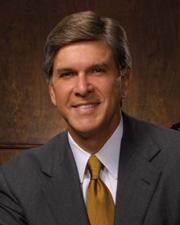
Mr. President, 200-plus groups who support the Smith- Bingaman amendment believe this would be a poison pill. I fear the same because it tries to put the Senate on record as requiring the Senate…
Mr. President, 200-plus groups who support the Smith- Bingaman amendment believe this would be a poison pill. I fear the same because it tries to put the Senate on record as requiring the Senate Finance Committee, under the Damocles sword of reconciliation, to report out an agreement that Secretary Leavitt may reach with any group of Governors--not even a majority, not even from the National Governors Association.
I urge a ``no'' vote.
Mr. President, briefly, all the arguments have been made. Everybody knows we are dealing with a Damocles sword when you put reconciliation on Medicaid that covers the most vulnerable Americans. I think right now is simply the time to say vote your conscience.
Thank you.

Mr. President, this amendment seeks to ensure that it is Congress who sets the discretionary caps and enforces them. It does not transfer to the President a new power of enforcement. If the President…
Mr. President, this amendment seeks to ensure that it is Congress who sets the discretionary caps and enforces them. It does not transfer to the President a new power of enforcement. If the President submits an urgent supplemental, as he has done now, and the House passes a supplemental bill and it comes to the Senate, if we add an emergency designation for an item, you can make a 60-vote point of order against that if it exceeds the caps, and we enforce that cap in that fashion.
This adds that the President has to enforce it by specifically agreeing that it is an emergency. That is not in the law now, and it should not be added on this resolution.
Mr. President, I move to reconsider the vote.
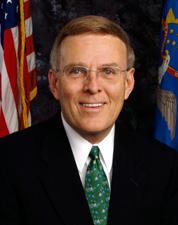
Mr. President, are we doing 1 minute a side? Mr. President, the purpose of this amendment is to repeal the provision of the Tax Code that actually rewards companies to shut down their American plant…
Mr. President, are we doing 1 minute a side?
Mr. President, the purpose of this amendment is to repeal the provision of the Tax Code that actually rewards companies to shut down their American plant and move their jobs overseas. Yes, we actually reward companies in the current Tax Code for shutting down their American plants and moving jobs. It is the most pernicious part of the Tax Code. In my judgment, this is only a baby step in the right direction.
A vote against this amendment is a vote against fairness and a vote against American jobs. I hope this Senate will approve this amendment.
I ask for the yeas and nays.
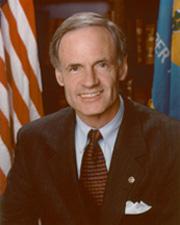
Mr. President, this is a simple amendment. This is a straightforward amendment. If my colleagues agree with me, a U.S. Senator who wants to reduce taxes in a way that decreases the budget deficit, it…
Mr. President, this is a simple amendment.
This is a straightforward amendment. If my colleagues agree with me, a U.S. Senator who wants to reduce taxes in a way that decreases the budget deficit, it is OK to do that.
For this Senator or any Senator who wishes to reduce taxes, we can do that under this amendment, but if those taxes increase the budget deficit and the debt for this country, we need to muster 60 votes. The moneys for the offset can come from other taxes or
they can come from reducing spending to provide the offset.
I urge a ``yes'' vote, Mr. President.
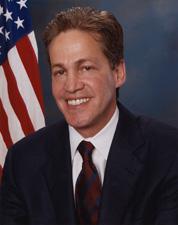
Mr. President, my amendment is simple. It says no cuts in the Community Development Block Grant Program or other programs such as the Community Service Block Grant Program, the Brownfield…
Mr. President, my amendment is simple. It says no cuts in the Community Development Block Grant Program or other programs such as the Community Service Block Grant Program, the Brownfield Redevelopment Program, and the Rural Housing and Economic Development Program.
My amendment is fully offset by function 920.
Yes, I yield.
I move to reconsider the vote.
MR. SARBANES. I move to lay that motion on the table.
The motion to lay on the table was agreed to.
Amendment No. 208
Mr. President, my amendment restores $1 billion for local law enforcement, three big programs that have essentially been zeroed out, the COPS Program, the law enforcement block grants. Four years ago…
Mr. President, my amendment restores $1 billion for local law enforcement, three big programs that have essentially been zeroed out, the COPS Program, the law enforcement block grants. Four years ago we spent $2.3 billion helping local law enforcement. It is down to $118 million.
My friend from New Hampshire said we are going to prove we can end the program. Let us pick one that is not working to end. This one works.
I urge my colleagues to support the amendment.
Bill Text
3 versions available
        [Congressional Bills 109th Congress]
[From the U.S. Government Publishing Office]
[S. 653 Referred in House (RFH)]

1st Session
S. 653

_______________________________________________________________________

IN THE HOUSE OF REPRESENTATIVES

March 20, 2005

Referred to the Committee on the Judiciary

_______________________________________________________________________

AN ACT

For the relief of the parents of Theresa Marie Schiavo.

Be it enacted by the Senate and House of Representatives of the
United States of America in Congress assembled,

SECTION 1. RELIEF OF THE PARENTS OF THERESA MARIE SCHIAVO.

The United States District Court for the Middle District of Florida
shall have jurisdiction to hear, determine, and render judgment on a
suit or claim by or on behalf of Theresa Marie Schiavo for the alleged
violation of any right of Theresa Marie Schiavo under the Constitution
or laws of the United States relating to the withholding or withdrawal
of food, fluids, or medical treatment necessary to sustain her life.

SEC. 2. PROCEDURE.

Any parent of Theresa Marie Schiavo shall have standing to bring a
suit under this Act. The suit may be brought against any other person
who was a party to State court proceedings relating to the withholding
or withdrawal of food, fluids, or medical treatment necessary to
sustain the life of Theresa Marie Schiavo, or who may act pursuant to a
State court order authorizing or directing the withholding or
withdrawal of food, fluids, or medical treatment necessary to sustain
her life. In such a suit, the District Court shall determine de novo
any claim of a violation of any right of Theresa Marie Schiavo within
the scope of this Act, notwithstanding any prior State court
determination and regardless of whether such a claim has previously
been raised, considered, or decided in State court proceedings. The
District Court shall entertain and determine the suit without any delay
or abstention in favor of State court proceedings, and regardless of
whether remedies available in the State courts have been exhausted.

SEC. 3. RELIEF.

After a determination of the merits of a suit brought under this
Act, the District Court shall issue such declaratory and injunctive
relief as may be necessary to protect the rights of Theresa Marie
Schiavo under the Constitution and laws of the United States relating
to the withholding or withdrawal of food, fluids, or medical treatment
necessary to sustain her life.

SEC. 4. TIME FOR FILING.

Notwithstanding any other time limitation, any suit or claim under
this Act shall be timely if filed within 30 days after the date of
enactment of this Act.

SEC. 5. STAY.

Upon the filing of a suit or claim under this Act, the District
Court may issue a stay of any State court order authorizing or
directing the withholding or withdrawal of food, fluids, or medical
treatment necessary to sustain the life of Theresa Marie Schiavo
pending the determination of the suit.

SEC. 6. NO CHANGE OF SUBSTANTIVE RIGHTS.

Nothing in this Act shall be construed to create substantive rights
not otherwise secured by the Constitution and laws of the United States
or of the several States.

SEC. 7. NO EFFECT ON ASSISTING SUICIDE.

Nothing is this Act shall be construed to confer additional
jurisdiction on any court to consider any claim related--
(1) to assisting suicide, or
(2) a State law regarding assisting suicide.

SEC. 8. NO PRECEDENT FOR FUTURE LEGISLATION.

Nothing is this Act shall constitute a precedent with respect to
future legislation.

SEC. 9. NO AFFECT ON THE PATIENT SELF-DETERMINATION ACT OF 1990.

Nothing in this Act shall affect the rights of any person under the
Patient Self-Determination Act of 1990.

Passed the Senate March 17, 2005.

Attest:

EMILY J. REYNOLDS,

Secretary.