A bill to amend title 38, United States Code, to make permanent the pilot program for direct housing loans for Native American veterans.
Legislative Activity
Stay on top of the latest movement without scrolling through every action
Committee on Veterans' Affairs. Provisions of measure incorporated into measure S. 1235, as amended, ordered to be reported.
July 28, 2005
View full timeline
Introduced in Senate
April 27, 2005
Sponsor introductory remarks on measure. (CR S4405)
April 27, 2005
Read twice and referred to the Committee on Veterans' Affairs. (text of measure as introduced: CR S4405)
April 27, 2005
Committee on Veterans' Affairs. Hearings held.
June 23, 2005
Committee on Veterans' Affairs. Provisions of measure incorporated into measure S. 1235, as amended, ordered to be reported.
July 28, 2005
Floor Debate
21 membersWhat members said about S. 917 on the floor
 JSC
JSC JB
JB GA
GA JDR
JDR RDF+16
Floor Debate
21 membersWhat members said about S. 917 on the floor
Mr. President, I rise today to introduce the TANF Financial Education Promotion Act of 2005 in order to call attention to an important issue for low-income families financial literacy. I am proud to…
Mr. President, I rise today to introduce the TANF Financial Education Promotion Act of 2005 in order to call attention to an important issue for low-income families financial literacy. I am proud to be reintroducing this bill during the month of April, which is Financial Literacy Month.
One of the goals of the Temporary Assistance for Needy Families (TANF) Program is to help low-income families transition from welfare to work. However, there is more to leaving poverty than just finding a job. Welfare recipients must learn the skills that will help them build savings and establish good credit so that they can stay off welfare. Currently, TANF does not offer financial education to low-income individuals, leaving welfare recipients at risk of dependence upon public assistance.
Furthermore, millions of low-income families, including families receiving TANF, are unbanked. These households tend to do their banking at check-cashing outlets that charge exorbitant fees for such services. A lack of basic consumer finance education, including lack of familiarity with how a checking or savings account works, has been cited as a major reason why millions of Americans do not set up such accounts.
Not only are low-income people more likely to be unbanked than other individuals, but they are also the most vulnerable to abusive lending practices and hostile credit arrangements. Those with the fewest financial resources end up paying the most to obtain financing. Financial education that addresses predatory lending will help prevent low-income families from becoming victims of unaffordable loan payments, equity stripping, and foreclosure.
Burdened by significant financial needs, welfare recipients need practical information on the fundamentals of saving, household budgeting, taxes, and credit. With this knowledge, individuals will be better equipped to move toward self-sufficiency and maintain financial independence.
The TANF Financial Education Promotion Act makes strides in financial literacy for welfare recipients by requiring states to use TANF funds to collaborate with community-based organizations, banks, and community colleges to create financial education programs for low-income families receiving welfare and for those transitioning from welfare to work.
I am not alone in advocating financial literacy for TANF recipients. Federal Reserve Chairman Alan Greenspan has said, ``Educational and training programs may be the most critical service offered by community-based organizations to enhance the ability of lower-income households to accumulate assets.''
I urge my colleagues to join me in helping the most vulnerable families in the United States get access to the tools they will need to successfully make the transition from welfare to work.
I ask unanimous consent that the text of the bill be printed in the Record.
Mr. President, I would like to speak today about an issue that I believe should be a lifelong goal for all Americans-- financial literacy.
More specifically, I want to highlight the necessity of financial literacy for men and women who are close to retirement. Senior citizens are too often the victims of predatory mortgage and lending abuses and other financial scams. AARP surveys show that over half of telemarketing fraud victims are age 50 or older. In fact, financial exploitation is the largest single category of abuse against older persons. It is clear that the vulnerability of this population stems from a lack of financial knowledge, so it is more important than ever that this Congress take steps to increase the availability of financial education for midlife and senior citizens.
Not only does poor financial literacy leave older Americans vulnerable to financial fraud, but it also leads to poor retirement planning. In the next thirty years, the number of Americans over the age of 65 will double. For many of these Americans, Social Security alone will be insufficient to cover all their expenses, particularly as health care costs rise. Only about half of American workers are currently participating in any pension plan, leaving more than 75 million Americans without an employer-sponsored pension. Even worse is the fact that fifty million Americans have no retirement savings whatsoever. These statistics are frightening. As our population lives longer, we must focus on retirement education for mid-life and aging Americans as well as consumer education for seniors.
My legislation, the Education for Retirement Security Act will address the need for financial literacy among seniors by creating a $100 million competitive grant program that would provide resources to State and area agencies on aging, and nonprofit community based organizations, to provide financial education to mid-life and older Americans. The goal of this education is to enhance these individuals' financial and retirement knowledge and reduce their vulnerability to financial abuse and fraud, including telemarketing, mortgage, and pension fraud. The bill also creates a national technical assistance program that will designate at least one national grantee to provide financial education materials and training to local grantees.
I am proud to be reintroducing this legislation during the month of April, which is Financial Literacy Month.
We must offer those individuals who are close to or in retirement the tools they will need to make sound financial decisions and prepare appropriately for their retirement. The Education for Retirement Security Act will help older Americans learn how to avoid scams and invest well. With savvy financial planning and smart consumer skills, senior citizens will be more empowered to protect themselves and ultimately be better able to enjoy a more secure retirement.
I ask unanimous consent that the text of the bill be printed in the Record.
Mr. President, I rise today to introduce the Youth Financial Education Act. I am pleased to introduce this bill during the month of April--Financial Literacy Month.
It is hard to underestimate the importance of financial literacy for our youth. As credit, banking, and financial systems in this country become more and more complex, it is time to make sure that our education system teaches our children the fundamental principles of earning, spending, saving and investing, so that they can be successful citizens. Federal Reserve Chairman Alan Greenspan said himself that ``Improving basic financial education at the elementary and secondary school levels is essential to providing a foundation for financial literacy that can help prevent younger people from making poor financial decisions.'' It is crucial not only for the well-being of our children, but for the future of our society as a whole that all citizens understand how to manage a checking account, use a credit card, and estimate their taxes.
According to the Jump$tart Coalition for Personal Financial Literacy's Survey of High School Seniors, which measures students' aptitude and ability to manage financial resources such as credit cards, insurance, retirement funds and savings accounts, only 52.3 percent of students answered the survey questions correctly. In less than a year, 54 percent of these students who go onto college will carry a credit card. These statistics make it evident that we must do more to arm our youth with the tools they need to make informed decisions about the fiscal realities they will face upon entering college or the workforce.
In 2004, only 7 states required students to complete a course that includes personal finance before graduating from high school. In my home State of New Jersey, New Egypt High School is the only school that requires a course financial education. Several years ago I had the pleasure of teaching a class of these students, and came away impressed with their knowledge and competency in financial matters.
While awareness of the importance of financial literacy is improving, it is still not being addressed appropriately in schools. Our schools must prepare our children to succeed in every way, including in their financial decisions.
I am pleased that I successfully added a provision to the No Child Left Behind Act giving elementary and secondary schools access to funds that will allow them to include financial education as part of their basic educational curriculum. Although this was an important step in the right direction, Congress can and should do more to address this Issue.
The legislation I am introducing today will provide grants to States to help them develop and implement financial education programs in elementary and secondary schools. These programs will offer professional development for teachers and prepare them to provide financial education. It would also establish a national clearinghouse for instructional materials and information regarding model financial education programs.
Earlier this year, the Senate debated the Bankruptcy Reform Bill that seeks to change the rules governing bankruptcy. While I agree that bankruptcy reform should provide an incentive for capable individuals to honor their financial obligations, this legislation will make it that much more difficult for people who have fallen into debt to declare bankruptcy. With these reforms imminent, it will be all the more critical to take a proactive approach to the problem of personal debt in this country and make sure that the next generation learns how to better manage their money.
I ask for my colleagues to join me in support of the Youth Financial Education Act, which will equip our nation's youth with skills to become responsible consumers and enjoy economic security as well as economic opportunity in their futures.
I ask unanimous consent that the text of the bill be printed in the Record.
Mr. President, I rise today to introduce a very important piece of legislation, the Medicare Mental Health Modernization Act of 2005.
Our Nation's Medicare beneficiaries--our elderly and disabled population--have limited access to mental health services. Medicare restricts the types of mental health services available to beneficiaries and the types of providers who are allowed to offer such care. It also charges higher copayments for mental health services than it does for all other health care. In order to receive mental health care, seniors and the disabled must pay 50 percent of the cost of a visit to their mental health specialist, as opposed to the 20 percent that they pay for other services. Medicare also limits the number of days a beneficiary can receive mental health care in a hospital setting to 190 days over an individual's lifetime.
We must address this problem. The need is glaring. Almost 20 percent of Americans over age 65 have a serious mental disorder. They suffer from depression, Alzheimer's disease, dementia, anxiety, late-life schizophrenia and, all too often, substance abuse. These are serious illnesses that must be treated. Unfortunately, they are often unidentified by primary care physicians, or the appropriate services are simply out of reach. Americans age 65 and older have the highest rate of suicide of any other population in the United States. An alarming 70 percent of elderly suicide victims have visited their primary care doctor in the month prior to committing suicide.
Medicare is also the primary source of health insurance for millions of nonelderly disabled. More than 20 percent of these individuals suffer from mental illness and/or addiction. This very needy population faces the same discrimination in their mental health coverage.
As our population ages, the burden of mental illness on seniors, their families, and the health care system will only continue increase. Experts estimate that by the year 2030, 15 million people over 65 will have psychiatric disorders, with the number of individuals suffering from Alzheimer's disease doubling. If we do not reform the Medicare program to provide greater access to detection and treatment of mental illness, the cost of not treating these diseases will rapidly escalate. Without the appropriate outpatient mental health services, too many of our seniors are forced into nursing homes and hospitals. If We truly want to modernize Medicare and make it more efficient, we must provide access to these services. Not only will they likely reduce costs in the long term, but they will also increase Medicare beneficiaries' quality of life.
The Medicare Mental Health Modernization Act takes critical steps to address these issues. First, the bill reduces the 50 percent copayment for mental health services to 20 percent. The proposed 20 percent copayment is the same as the copayment for all other outpatient services in Medicare. Second, the bill would provide access to intensive residential services for those who are suffering from severe mental illness. This will give people with Alzheimer's disease and other serious mental illness the opportunity to be cared for in their homes or in community-based settings. Third, the bill expands the number of qualified mental health professionals eligible to provide services through the Medicare program. This includes licensed professional mental health counselors, clinical social workers, and marriage and family therapists. This expansion of qualified providers is critical to ensuring that seniors throughout the nation, particularly those in rural areas, are able to receive the services they need.
In closing, I urge all of my colleagues to step forward to support the Medicare Mental Health Modernization Act of 2005. It is time for the Medicare program to stop discriminating against seniors and the disabled who are suffering from mental illness.
Mr. President, I am pleased to join with my colleague Senator Domenici today to introduce legislation that I believe will go a long way in helping to improve the safety and durability of the Nation's…
Mr. President, I am pleased to join with my colleague Senator Domenici today to introduce legislation that I believe will go a long way in helping to improve the safety and durability of the Nation's highway bridges. It is with great pleasure we are today introducing the New Mexico State University Bridge Research Center Establishment Act of 2005.
The purpose of our bill is to authorize the Secretary of Transportation to establish a new University Transportation Center focused on the safety of highway bridges. The new center will lead the Nation in the research and development of technologies for bridge testing and monitoring, procedures for ensuring bridge safety and security, and training in methods of bridge inspection. New Mexico State University is one of the Nation's leaders in bridge research and I believe worthy of being designated as one of the Nation's university transportation centers.
Our highway network is a central component of our economy and fundamental to our freedom and quality of life. America's mobility is the engine of our free market system. Transportation via cars, buses, and trucks plays a central role in our basic quality of life. Much of the food we eat, the clothes we wear, the materials for our homes and offices, comes to us over the 4 million miles of our road network.
One critical element of our highway network is the highway bridges that span streams, rivers, and canyons of our cities and rural areas. Bridges also help traffic flow smoothly by carrying one road over another.
Most highway bridges are easy to overlook. Notable exceptions are New England's covered bridges, the new Zakim Charles River Bridge in Boston, San Francisco's Golden Gate Bridge, and the spectacular Rio Grande Gorge Bridge near Taos, NM. The fact is, according to the Federal Highway Administration, we have about 590,000 highway bridges in this country that are more than 20-feet long. The total bridge-deck area of these 590,000 bridges is an amazing 120 square miles, or slightly smaller in area than the entire city limits of Albuquerque, NM, roughly twice the size of the entire District of Columbia, or five times the area of New York's Manhattan Island. The State of Texas leads the Nation with almost 49,000 bridges, about ten percent of the total. Ohio is second with about 28,000 highway bridges.
A little known and disturbing fact about these 590,000 highway bridges is that nearly 78,000, or 13 percent, are considered to be structurally deficient according to the most recent statistics from the FHWA. The percent of structurally deficient bridges varies widely among the 50 states. For example, this chart shows the top ten states with the highest percentage of deficient bridges.
------------------------------------------------------------------------------------------------------------------------------------------------------------------------------------------------
Percent of structurally deficient bridges
State Number of bridges Number of structurally deficient bridges (percent) ------------------------------------------------------------------------------------------------------------------------------------------------------------------------------------------------ Oklahoma..................................................... 23,312 7,307 31.3 Rhode Island................................................. 749 193 25.8 Pennsylvania................................................. 22,253 5,464 24.6 Missouri..................................................... 23,791 5,028 21.1 Iowa......................................................... 24,902 5,259 21.1 Mississippi.................................................. 16,838 3,379 20.1 Vermont...................................................... 2,690 484 18.0 South Dakota................................................. 5,961 1,072 18.0 North Dakota................................................. 4,507 803 17.8 Nebraska..................................................... 15,455 2,550 16.5 Michigan..................................................... 10,818 1,764 16.3 ------------------------------------------------------------------------------------------------------------------------------------------------------------------------------------------------ The source is the FHWA National Bridge Inventory System, December 2004
Florida and Arizona have the lowest percentages of structurally deficient bridges at less than 3 percent each.
Structurally deficient bridges are a particular concern in rural areas of our country. According to FHWA's 2002 edition of its Conditions and Performance Report to Congress, 16 percent or rural bridges are structurally deficient compared to only 10 percent of urban bridges. The report estimates the average costs required to maintain the existing 590,000 highway bridges is $7.3 billion per year.
Another surprising fact about our Nation's highway bridges is their age. Almost one-third of all highway bridges are more than 50 years old, and over 10,000 bridges are at least 100 years old. About 4,200 of these century-old bridges are currently rated as structurally deficient.
I do believe the number of deficient bridges in this country should be a concern to all Senators. Ensuring that States and local communities have the funds they need to help correct these deficient bridges will be one of my priorities when Congress reauthorizes TEA-21. However, because there may not be sufficient Federal and State funding to address all of the deficient bridges, it will be important to identify the bridges that are most in need of replacement or rehabilitation.
To ensure the most efficient use of limited resources, Congress should also address the need for new technologies to help States monitor the condition of the Nation's 590,000 highway bridges and determine priorities for repair or replacement. Such monitoring technologies, or ``smart bridges,'' should be quick, efficient, and not damage the bridge in any way. I am very pleased that New Mexico State University is one of the Nation's pioneers in the development of non- destructive methods of determining the physical condition of highway bridges. Such smart bridges can record and transmit information on their current structural condition as well as on the traffic crossing them. Sensors embedded in the concrete monitor the stresses on the bridge as the weather changes or under the weight of vehicles and show how the materials change with age. The information can then be used by engineers to help design more durable and economical bridges. Eventually NMSU's methods could be used to help design better buildings.
In 1998, NMSU installed 67 fiber-optic sensors on an existing steel bridge on Interstate 10 in Las Cruces and converted it into a ``smart bridge.'' This award-winning project was the first application of fiber-optic sensors to highway bridges. In 2000, sensors were incorporated directly in a concrete bridge during construction to monitor the curing of the concrete; the bridge crosses the Rio Puerco on Interstate 40, west of Albuquerque. A third smart bridge, on I10 over University Avenue in Las Cruces, opened in July 2004.
In February 2003 I had an opportunity to tour the facilities at NMSU and to see firsthand the fine facilities and work being conducted on bridge technology. NMSU has an actual 40-foot ``bridge'' in a laboratory on campus to allow studies of instrumentation and data collection.
I will ask unanimous consent that two recent articles describing NMSU's accomplishments on smart bridge technology be printed in the Record at the end of my statement.
New Mexico State is also a leader in other areas of bridge inspection. The university has provided training for bridge inspectors for over 30 years. It has also developed expertise in using a virtual reality approach to document a bridge's physical condition.
This is just a glimpse at the high quality bridge research at New Mexico Sate University. The university is widely recognized as national leader in
all aspects of bridge research and technology. I believe it is fully appropriate for NMSU to be recognized as the university technology bridge research center.
The bill we are introducing today authorizes the Secretary of Transportation to establish and operate the New Mexico State University Bridge Research Center. I do believe NMSU has earned this honor. The bill mirrors the language for University Transportation Centers in the Senate-passed SAFETEA from the 108th Congress and provides $40 million in funding over 6 years from the Highway Trust Fund to operate the bridge technology center.
The Federal Highway Administration has long recognized the quality of the work at NMSU and has provided grants to support their outstanding work. In November 2004, NMSU's bridge center was awarded a $400,000 grant to install fiber-sensors in a new bridge over Interstate 10 in Dona Ana, NM. The sensors will relay information about the effects of stress on the bridge long before any signs of aging are visible. This is the fourth bridge in New Mexico to be equipped with the smart bridge technology. NMSU's Dr. Rola Idriss is the principal investigator of these projects.
NMSU's work is also being recognized internationally. Highway departments in Switzerland, Belgium, and Japan are experimenting with the smart bridge technology. In October 2004, NMSU's Dr. David Jauregui and Dr. Ken White were invited speakers for the International Conference on Bridge Inspection and Bridge Management in Beijing, China. Dr. White delivered the keynote address for the conference. NMSU is currently developing a memorandum of agreement with the Chinese bridge community to develop a bridge inspection and management training program.
Congress has also already recognized the fine work at NMSU. For example, at my request, Congress provided $600,000 in 2001 for bridge research at New Mexico State University, $250,000 in 2003, $500,000 in 2004 and $125,000 for the current fiscal year.
The specific purpose of NMSU's Bridge Research Center will be to contribute to improving the performance of the Nation's highway bridges. The center will emphasize five goals: 1. Increasing the number of skilled individuals entering the field of transportation; 2. Improving the monitoring of the structural health of highway bridges; 3. Developing innovative technologies for testing and assessment of bridges; 4. Developing technologies and procedures for ensuring bridge safety, reliability, and security; and 5. Providing training in the methods of bridge inspection and evaluation.
Building on NMSU's research work, the University Technology Center will develop a strong educational component, including degree opportunities in bridge engineering at both the undergraduate and graduate levels. In addition, the center will have a cooperative certificate program for training and professional development. Distance education technology and computer-based learning will allow programs to be offered at any of the universities.
The engineers at New Mexico State University have applied their vast talents, tools, and techniques to solving technological problems with highway bridges for over 30 years. The team is well established and maintains cutting-edge expertise. The members of the team are recognized and respected at the national and international levels through accomplishments in bridge testing, monitoring, and evaluation.
I ask all senators to support the designation of the New Mexico State University Bridge Research Center. I look forward to working this year with the Chairman of the Environment and Public Works Committee, Senator Inhofe, and Senator Jeffords, the ranking member, to incorporate this bill into the full 6-year reauthorization of the transportation bill.
I now ask unanimous consent that the letters to which I referred be printed in the Record.
Mr. President, I rise in support of legislation that I reintroduced today with a number of my Senate colleagues--the Volunteer Pilot Organization Protection Act of 2005. The spirit of volunteerism is…
Mr. President, I rise in support of legislation that I reintroduced today with a number of my Senate colleagues--the Volunteer Pilot Organization Protection Act of 2005.
The spirit of volunteerism is indelibly rooted in our Nation's history. From when early settlers landed in Jamestown in 1607 to when our citizen soldiers took up arms against the British Crown in the Revolutionary War, volunteerism has always been a part of American culture.
But that unwavering spirit did not stop there, it has continued and thrived in many individuals and charitable organizations today. One such group of organizations that has selflessly given back so much to Virginians and Americans are charitable medical transportation systems operated by volunteer pilot organizations, VPOs.
The mission and purpose of public benefit and non-profit volunteer pilot organizations involved in patient transport is to ensure that no financially needy patient is denied access to distant specialized medical evaluation, diagnosis or treatment for lack of a means of long- distance medical air transportation. The principal goal is to remove the geographical and financial burdens that would deny access to specialized care.
Last year public benefit flying non-profit volunteer pilot organizations provided long-distance, no-cost transportation for over 40,000 patients and their escorts in times of special need. Mr. President, this year, that figure will likely grow to roughly 54,000 people.
One such organization that has played an intricate part in this mission is Angel Flight. Angel Flight is a not-for-profit grassroots organization with a volunteer corps of more than 6,200 volunteer pilots/plane owners--divided into six regions across the United States--who fly under the banner of Angel Flight America. Angel Flight provides flights of hope and healing by transporting patients and their families in private planes, free of charge, to hospitals for medical treatment.
Following the terrorist attacks of September 11, 2001, the Department of Transportation and the FAA closed airports and grounded commercial air traffic, but the FAA allowed Angel Flight volunteers to fly. Angel Flight pilots flew firefighters, families of victims of the bombings, Red Cross personnel, medical and other supplies including the protective booties for the Search and Rescue dogs to New York and Washington, DC.
In my years of public service, I have always maintained that we must provide access to care to all Virginians and Americans. Medical care should be available to all individuals. Sadly, our Nation is facing a medical crisis. Medical malpractice insurance costs and Medicare physician reimbursement are forcing many of our doctors to stop seeing ``high-risk'' patients or Medicare beneficiaries and in some cases forcing our doctors to give up practice altogether and retire. As a result, patients have to travel great distances to receive the medical care that they need to live happy, healthy and productive lives. Unfortunately, a number of these patients do not have the financial means to travel long distances, thus, ultimately denying patients access to life-saving or quality of life improving specialized treatment.
We can say the same with patients who rely on volunteer pilot organizations such as Angel Flight or one of its subsidiary groups like Mercy Medical Airlift in my home Commonwealth of Virginia. Unfortunately, due to the public's apparent notion that organizations that use airplanes are financially well-off and have deep pockets, many of the volunteer pilot organizations are open to frivolous and junk lawsuits. This leads to an access to care issue.
Also, aviation insurance has skyrocketed up in price and non-owned aircraft liability insurance is no longer reasonably available to volunteer pilot organizations. Many insurance companies had always provided this type of insurance but post September 11, 2001, this insurance is scarcely found and if found, the costs have increased greatly, to the astronomical sums of $5 million a year. Because of the exorbitant costs of insurance, volunteer pilot organizations have a difficult time recruiting and retaining pilots and professional persons.
I would like to submit an editorial written by the Virginian Pilot. This editorial correctly identifies the obstacles that these volunteer pilot organizations have to go through. I would like that editorial inserted here.
That is why I decided to introduce the Volunteer Pilot Organization Protection Act. In 1997, Congress passed the Volunteer Protection Act, which handled much of the liability issue for volunteer endeavors in the country; however, this legislation did not adequately address aviation-related matters.
My bill amends the highly regarded Good Samaritan Act to provide necessary liability protections in the area of charitable medical air transportation and promote volunteer pilot organizations. More specifically, this legislation will protect volunteer pilot organizations, their boards and small paid staff and nonflying volunteers from liability should there be an accident. The VPOs are simply the ``match-makers'' between the volunteer pilot willing to help a neighbor and the needy patient family. The pilot has full and sole responsibility for conducting the flight in a safe manner in accordance with Federal Aviation Regulations. In addition, this legislation will provide liability protection for the individual volunteer pilot over and above the liability insurance that they are required to carry.
Furthermore, the Volunteer Pilot Protection Act will provide liability protection for ``referring agencies'' who tell their patients that the charitable flight service is available. Referring hospitals and clinics are becoming unwilling to inform their patients that charitable medical air transportation help is available for fear of a liability against them should something happen in a subsequent volunteer pilot flight. Hence, organizations like the Shriners Hospital System and the American Cancer Society would be able to make known available volunteer pilot services to transport their patients to Shriners or other hospitals where they receive care.
I know a few people have concerns that this bill would provide blanket immunity to Volunteer Pilot Organizations but I want to stress that my bill requires insurance on the part of the pilot and if there is negligence on behalf of the pilot, the injured party does have legal recourse. This bill does not provide blanket immunity to VPOs, but has been carefully worded to allow
legal action to be brought against the insurance policy of the pilot in event of negligence.
By providing volunteer pilots with liability protection, insurance rates for these pilots will ultimately be reduced. Therefore, more pilots will be able to afford insurance and fly for the public good. With less-costly insurance available, I am confident that more pilots will generously give their time to fly for and help the medically needy.
This bill enjoys the support of a number of charitable organizations, including the Children's Organ Transplant Association, the National Organization for Rare Disorders, the Air Care Alliance, the Independent Charities of America, the Health and Medical Research Charities of America, the National Association of Hospital Hospitality Houses, and many others.
Not only does this legislation enjoy the support of numerous charitable organizations, it also enjoyed the support of the United States House of Representatives. On September 14, 2004, the House of Representatives passed the Volunteer Pilot Organization Protection Act of2004 by a vote of 385-12. Mr. President, this is a clear indication that this bill has broad bipartisan support in the House and I know the House will once again pass this commonsense legislation.
I am confident that this legislation will start a trend to help curb the large amounts of counterproductive lawsuits, lower insurance costs, and promote the spirit of volunteerism that has been rooted in the framework of our country's storied history. I, along with the volunteer pilots and organizations, and with the thousands of families who rely and may rely on the help of volunteer pilot organizations, urge the Senate to quickly and finally pass this legislation in the 109th Congress.
I would like to thank Congresswoman Thelma Drake, our newest member to the Virginia team, for taking over this legislation for former Congressman Ed Schrock and introducing the companion bill on the House side. In addition, I would also like to thank the original cosponsors of this legislation, Senators Chambliss, Inhofe, Coburn, Talent, Cornyn, and Isakson for their support as we work to pass this vitally necessary legislation.
[From the (Norfolk) Virginian-Pilot,
Mar. 11, 2003]
Shield Helpful Pilots From Frivolous Lawsuits
In the realm of volunteers, few outshine the generous folks
at Angel Flight.
This nonprofit organization flies patients for whom air
transport would be otherwise unaffordable to medical
facilities around the country. Private pilots spirit
individuals to dialysis, chemotherapy sessions, organ
transplants and other surgeries by donating their aircraft
and their valuable time. The goal is a noble one: to ensure
that no one in need is denied medical care for lack of long-
distance transportation.
But in our lawsuit-happy society, even these warmhearted
souls can't escape the possibility of landing in court. While
a law known as the Volunteer Protection Act shields most
people who give their time to worthy causes from frivolous
suits, it doesn't cover volunteer pilots or flight
organizers. Liability insurance costs for Angel Flight and
similar nonprofits have skyrocketed from $1,000 to more than
$25,000 annually.
This prohibitive price tag threatens the future of Angel
Flight, which is funded solely through donations. A
spokeswoman for Angel Flight Mid-Atlantic, headquartered in
Virginia Beach, said the burden will ultimately fall on sick
and needy patients. And with 600 volunteer pilots
transporting an average of 100 medical cases a month,
literally thousands of lives may be affected by this
oversight in the law.
Fortunately, lawmakers are paying attention. U.S. Rep. Ed
Schrock recently introduced bipartisan legislation to add
volunteer-pilot organizations to the ranks of those covered
by the Volunteer Protection Act. U.S. Sen. George Allen is
expected to introduce a similar measure in the Senate.
Congress should pass these bills, the sooner the better.
Keeping Angel Flight aloft is literally a life-and-death
matter.
Mr. President, it is my pleasure today to join with my colleagues Senator Burns, Senator Dorgan, Senator Craig, Senator Dayton, Senator Vitter, Senator Johnson, Senator Thune, Senator Coleman, and…
Mr. President, it is my pleasure today to join with my colleagues Senator Burns, Senator Dorgan, Senator Craig, Senator Dayton, Senator Vitter, Senator Johnson, Senator Thune, Senator Coleman, and Senator Baucus to introduce the Railroad Competition Act of 2005. This legislation encourages the competition and consumer protection in the freight railroad market that Congress intended when it partially deregulated the industry in 1980 with the passage of the Staggers Act.
Introduction of legislation in this vein is a bit of a ritual for this Senator. West Virginia industries depend on efficient and dependable rail service at fair prices to move their products to market. This is a perfectly reasonable goal. However, for shippers without competitive rail access--referred to as captive shippers--it is a cruel and impossible dream. I have tried for years, with partners from both sides of the aisle and all parts of the country, to change the status quo, and improve the economic situation for rail shippers and retail shoppers. This is the seventh time since 1985 I have sponsored legislation to address this issue, and the fifth congress in a row in which I have worked closely with my good friends Conrad Burns and Byron Dorgan to help shippers and their customers. And I won't give up until I actually succeed.
Predictably, the railroads will overreact to this bill with scathing accusations of what we are doing. In truth, we intend nothing more radical than helping shippers, consumers, and the railroads themselves, reap the benefits of the basic principles of capitalism--the ability of sophisticated actors to conduct arms-length negotiations for competition, service, and fair prices. Currently, Class I railroads overcharge and underserve captive shippers with impunity, and with an antitrust exemption preventing meaningful oversight by Congress. Customers have no power. This means higher prices for electricity, food, medicine, paper products; the chemicals to protect our water supply and crops, and the basic ingredients of the plastics in many of the goods we purchase. This is crucial to protecting commerce in the United States. So far, we have been thwarted, though we remain undeterred in our efforts and confident of the validity of our objectives.
In the 1970s, Congress observed a bloated freight rail network, unprofitable railroads, and service was anything but efficient and dependable. When the Staggers Act was passed in 1980, Congress gave a green light to deregulation of the railroad industry. But, as with the deregulation of every other industry that Congress has allowed, there were to be constraints on the ability of railroads to abuse shippers left captive to just one railroad. The Staggers Act left it to the Interstate Commerce Commission (ICC) to watch over a partially deregulated industry carrying out Staggers' dual goals: Improving the financial health and viability of the railroads; and improving and maintaining service for shippers. The ICC was responsible for ensuring fair treatment and reasonable rates for those shippers made captive by mergers or business decisions allowed under Staggers.
The success of Staggers has been completely one-sided. Captive rail shippers in my state of West Virginia have told me--since before I came to the United States Senate--that service was horrible and rates being charged were too high. That is still true today. When I was first running for the Senate, the country was served by about 40 ``Class I'' railroads. After Staggers the railroad industry ``rationalized'' its routes--meaning it dropped unprofitable lines and left more and more shippers captive to just one railroad.
A virtually unimpeded string of rail mergers during the last 25 years has only compounded the problem. The number of Class I railroads has dropped to seven. Four of these--CSX and Norfolk Southern in the East and Burlington Northern Santa Fe and the Union Pacific in the West-- completely dominate the industry, accounting for about 90 percent of the freight rail traffic in the nation.
This is simple. Fewer market participants mean less competition, and less competition opens up the possibility of the abuse of local monopoly power. Under the misadministration of the Staggers Act, first by the ICC, and later by its successor agency the Surface Transportation Board (STB), abuse of captive shippers has not only gotten worse, but it has been unjustly bestowed a veneer of propriety by a series of unwise administrative decisions and at least one court case that gave grudging deference to an agency, the STB, that has failed to carry out the clear directions of Congress. The STB, to which shippers have looked for a solution, has become a facilitator of the problem.
The goals of the Railroad Competition Act are really quite mundane. My colleagues and I hope only to give life to a freight rail system originally envisioned by the drafters of the Staggers Act. We hope to send to the President a bill that will allow captive shippers the most basic right in business negotiations: They will be able to get the railroads that ship their products simply to quote a rate for the service.
My colleagues may be amazed to find out that the STB's current reading of the Staggers Act allows shippers no such right. Our legislation will simply require railroads to tell their customers the cost of moving a certain quantity of product from their manufacturing facility to their customer. Point A to Point B. Nothing in business is more basic, but it is a basic of business negotiations captive shippers do not currently enjoy. Additionally, our legislation also would do the following: clarifies that the STB shall promote competition among rail carriers, helping to maintain both reasonable freight rail rates and consistent and efficient rail service; creates a system of ``final offer'' arbitration for matters before the STB; authorizes the STB to remove so-called ``paper barriers'' that prevent short-line and regional railroads from providing improved service to shippers; requires STB to act in the public interest and removes required showing of railroads' anti-competitive conduct; caps filing fees for STB rate cases at the level of federal district courts (reducing filing fee from the current fee $65,000, which is to be doubled in 2005); calls for a Department of Transportation (DOT) study of rail competition; allows elected officials and state railroad regulators to petition the STB for declarations of ``areas of inadequate rail competition,'' with appropriate remedies; creates position of Rail Customer Advocate at U.S. Department of Agriculture (USDA); and expands infrastructure modernization loan guarantee program.
In closing I would suggest that, rather than the highly charged arguments we have engaged in over the years, my colleagues encourage the railroads to take shippers' concerns seriously, and that we all work to create a freight rail marketplace made up of companies hungry, in the best capitalist sense of that word, to do business. That is the goal of the Railroad Competition Act, and I look forward to its consideration by the full Senate.
Mr. President, today I am introducing important legislation to affirm Federal jurisdiction over the waters of the United States. I am pleased to have three members of the Environment and Public Works…
Mr. President, today I am introducing important legislation to affirm Federal jurisdiction over the waters of the United States. I am pleased to have three members of the Environment and Public Works Committee--the Senator from Vermont, Mr. Jeffords, the Senator from New Jersey, Mr. Lautenberg, the Senator from California, Mrs. Boxer--as original cosponsors of this bill. I also thank Senators Dayton, Kerry, Schumer, and Durbin for joining me in introducing this important legislation.
In the U.S. Supreme Court's January 2001 decision, Solid Waste Agency of Northern Cook County versus the Army Corps of Engineers, a 5 to 4 majority limited the authority of Federal agencies to use the so-called migratory bird rule as the basis for asserting Clean Water Act jurisdiction over non-
navigable, intrastate, isolated wetlands, streams, ponds, and other bodies of water.
This decision, known as the SWANCC decision, means that the Environmental Protection Agency and Army Corps of Engineers can no longer enforce Federal Clean Water Act protection mechanisms to protect a waterway solely on the basis that it is used as habitat for migratory birds.
In its discussion of the case, the Court went beyond the issue of the migratory bird rule and questioned whether Congress intended the Clean Water Act to provide protection for isolated ponds, streams, wetlands and other waters, as it had been interpreted to provide for most of the last 30 years. While not the legal holding of the case, the Court's discussion has resulted in a wide variety of interpretations by EPA and Corps officials that jeopardize protection for wetlands, and other waters. The wetlands at risk include prairie potholes and bogs, familiar to many in Wisconsin, and many other types of wetlands.
In effect, the Court's decision removed much of the Clean Water Act protection for between 30 percent to 60 percent of the Nation's wetlands. An estimated 60 percent of the wetlands in my home State of Wisconsin lost Federal protection. Wisconsin is not alone. The National Association of State Wetland Managers has been collecting data from States across the country. For example, Nebraska estimates that it will lose protection for more than 40 percent of its wetlands. Indiana estimates it will lose 31 percent of total wetland acreage and 74 percent of the total number of wetlands. Delaware estimates the loss of protection for 33 percent or more of its freshwater wetlands.
These wetlands absorb floodwaters, prevent pollution from reaching our rivers and streams, and provide crucial habitat for most of the Nation's ducks and other waterfowl, as well as hundreds of other bird, fish, shellfish and amphibian species. Loss of these waters would have a devastating effect on our environment.
In addition, by narrowing the water and wetland areas subject to federal regulation, the decision also shifts more of the economic burden for regulating wetlands to state and local governments. My home State of Wisconsin has passed legislation to assume the regulation of isolated waters, but many other States have not. This patchwork of regulation means that the standards for protection of wetlands nationwide are unclear and confusing, jeopardizing the migratory birds and other wildlife that depend on these wetlands.
Since 2001, the confusion over the interpretation of the SWANCC decision has grown. On January 15, 2003, the EPA and Army Corps of Engineers published in the Federal Register an Advanced Notice of Proposed Rulemaking raising questions about the jurisdiction of the Clean Water Act. Simultaneously, they released a guidance memo to their field staff regarding Clean Water Act jurisdiction.
The agencies claim these actions are necessary because of the SWANCC case. But both the guidance memo and the proposed rulemaking go far beyond the holding in SWANCC. The guidance took effect right away and has had an immediate impact. It tells the Corps and EPA staff to stop asserting jurisdiction over isolated waters without first obtaining permission from headquarters. Based on this guidance, waters that the EPA and Corps judge to be outside the Clean Water Act can be filled, dredged, and polluted without a permit or any other long-standing Clean Water Act safeguard.
The rulemaking announced the Administration's intention to consider even broader changes to Clean Water Act coverage for our waters. Specifically, the agencies are questioning whether there is any basis for asserting Clean Water Act jurisdiction over additional waters, like intermittent streams. The possibility for a redefinition of our waters is troubling because there is only one definition of the term ``water'' in the Clean Water Act. The wetlands program, the point source program which stops the dumping of pollution, and the non-point program governing polluted runoff all depend on this definition. Even though the Administration rescinded this proposed rulemaking in December 2003, the policy guidance remains in effect.
If we don't protect a category of waters from being filled under the wetlands program, we also fail to protect them from having trash or raw sewage dumped in them, or having other activities that violate the Clean Water Act conducted in them as well.
Congress needs to re-establish the common understanding of the Clean Water Act's jurisdiction to protect all waters of the U.S.--the understanding that Congress held when the Act was adopted in 1972--as reflected in the law, legislative history, and longstanding regulations, practice, and judicial interpretations prior to the SWANCC decision.
The proposed legislation is very simple. It does three things. First, it adopts a statutory definition of ``waters of the United States'' based on a longstanding definition of waters in the EPA and Corps of Engineers' regulations. Second, it deletes the term ``navigable'' from the Act to clarify that Congress's primary concern in 1972 was to protect the nation's waters from pollution, rather than just sustain the navigability of waterways, and to reinforce that original intent. Finally, it includes a set of findings that explain the factual basis for Congress to assert its constitutional authority over waters and wetlands on all relevant constitutional grounds, including the Commerce Clause, the Property Clause, the Treaty Clause, and Necessary and Proper Clause.
In conclusion, I am very pleased to have the support of so many environmental and conservation groups, as well as organizations that represent those who regulate and manage our country's wetlands, such as: the Natural Resources Defense Council, Earthjustice, the National Wildlife Federation, Sierra Club, American Rivers, the National Audubon Society, U.S. Public Interest Research Group, Defenders of Wildlife, the Ocean Conservancy, Trout Unlimited, the Izaac Walton League, and the Association of State Floodplain Managers. They know, as I do, that we need to re-affirm the Federal Government's role in protecting our water. This legislation is a first step in doing just that.
I ask unanimous consent that the text of the legislation be printed in the Record.
Show 8 more

Mr. President, as the Senate begins the important task of debating the highway bill reauthorization, another critical infrastructure issue comes to mind: railroads. In Montana, we rely heavily on…
Mr. President, as the Senate begins the important task of debating the highway bill reauthorization, another critical infrastructure issue comes to mind: railroads. In Montana, we rely heavily on both passenger and freight rail for our transportation needs. However, Montana is served by only one major railroad, resulting in shippers being captive to little or no competition for price or service quality. That lack of competition hurts our competitiveness for agriculture and manufacturing. It drives up the cost of electricity, because of the increased costs for coal. Sometimes, it even costs us jobs in Montana.
To address the problems faced by many captive shippers, I am introducing today the Railroad Competition Act of 2005. I am joined by my colleagues, Senators Rockefeller, Dorgan, Craig, Dayton, Vitter, Thune, Johnson, Baucus, and Coleman. This legislation will extend competition to many captive rail customers and correct problems in the Surface Transportation Board's implementation of railroad deregulation. Specifically, the legislation ensures that rail customers will receive rate quotes for movements between various points on a railroad's system; frees regional and short line railroads to provide access to additional major systems; provides captive rail customers who cannot afford to participate in expensive rate challenge proceedings access to arbitration; and directs the STB to adopt a more realistic and workable rate reasonableness standard.
In addition to a lack of competition in many markets, the rail industry in America is badly in need of investment into its infrastructure. To address the infrastructure problem, the legislation increases ten-fold the current Railroad Rehabilitation and Infrastructure Financing program. The legislation also expands who is eligible for the loans and loan guarantees, so that qualified shipping entities can also invest in rail infrastructure.
This is about jobs, plain and simple. Last year, when the intermodal hub in Shelby, Montana was closed, over 40 jobs were lost. The Port Authority in Shelby reached out to the railroads to persuade them to keep the hub open, but without competition, the single supplier chose to close. Those jobs are real losses in Shelby, a town of a little over 3,000 people. As high rail rates make U.S. products less competitive, imports flow in to fill the gap--and that costs us jobs. I understand that the rail industry employs a lot of people, and I am glad for those jobs. But we can not let lack of choice and competition in price and service cost us jobs in other areas.
Since passage of the Staggers Act in 1980, the railroad industry has experienced significant consolidation, from over 40 major railroads down to 7. Roughly 35 percent of the rail traffic in America is captive, driving up the cost of transportation and placing a heavy burden on shippers.
Captive shippers, like my farmers in Montana, have nowhere to go to seek relief. The Surface Transportation Board, the watchdogs over the rail system, is a complicated and expensive mess that hardly provides a fair forum for disputes. To bring a rate reasonableness case, challenging the unfair rates charged to captive shippers, a rail customer must first file huge fees--fees that will double in the coming weeks. Then, the customer must construct a hypothetical railroad and prove to the STB that rail transportation theoretically can be provided at a lower fee. That process can cost over $2 million per case, and take years to see through. At the end, even if the shipper wins, all he gets is a lower fee in the future. Too often, damages for past overcharging are not awarded. Meanwhile, the railroad sits idly by, under no obligation to justify its rates, and continues to collect the exorbitant fees that are under dispute. This system can not stand.
The Railroad Competition Act of 2005 directs the STB to address this nonsensical system, and develops a final offer arbitration option, allowing shippers to take their case to a neutral arbiter. These provisions are necessary, not to
punish railroads, but to develop a level playing field that keeps my small businesses and agriculture producers in business.
Railroads are an essential part of our nation's infrastructure, a vast system that includes our highways, railroads, electric transmission lines, pipelines, and digital infrastructure. In a rural state like Montana, we rely on the rails to cover long distances efficiently, so rail must remain a viable shipping option. We need to achieve affordability, while still allowing sustainability for the railroads. There is a necessary public interest in our shared infrastructure, and the Railroad Competition Act of 2005 is designed to address legitimate public concerns, in Montana and around the nation, about rail operations. I look forward to working with my colleagues to secure passage of this important legislation.
Mr. President, today I am introducing legislation to address the difference between the import tariff placed on unfinished cork and refined cork. Unfinished cork has a higher import tariff than already-refined cork--this problem is in need of a resolution.
Unfinished cork is the principal element of a fishing pole's grip and must be imported as it is not available domestically. Many fishing rod companies reside in Montana, such as the R.L. Winston Rod Company of Twin Bridges. I am aware that fishing rod manufacturers, particularly fly-fishing rod manufacturers, are under pressure to increase the price of their equipment because of prohibitively high tariff on the import of unfinished cork.
While the tariff on already-finished cork is 6 percent, unfinished cork is subject to a 14 percent tariff. It just does not make good sense to charge a significantly higher levy on an unfinished product that is imported and then handcrafted by American workers.
This inconsistency must end by leveling the difference between the two tariffs. The reduction will enable American workers to continue manufacturing custom-made fishing rod grips, keep the price of all fishing poles down, and bring a measure of common sense to this portion of our tariff law. Once resolved, domestic businesses will be able to finish fly rods here, leading to an increasingly competitive place in the market for American goods. With this change Montana's small businesses will benefit as will our overall economy in the state.
I am pleased that some of my colleagues in the House have decided to assist in this effort. I truly appreciate the work of Representative Simmons of Connecticut, who is leading this legislation in the House. He has already signed on 17 co-sponsors to this legislation at last count. His assistance has been invaluable, and I look forward to working with him as this legislation moves forward.
I ask unanimous consent that the text of the bill be printed in the Record.
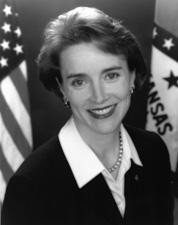
Mr. President, four years ago, as projected budget surpluses reached over $5 trillion, Congress passed a tax cut bill that began the process of addressing the unfairness of the estate tax. Now in…
Mr. President, four years ago, as projected budget surpluses reached over $5 trillion, Congress passed a tax cut bill that began the process of addressing the unfairness of the estate tax. Now in 2005, the surpluses have long since disappeared, and Congress has made no further progress on estate tax relief for America's family- owned farms and businesses--many of whom still pay this tax today.
Earlier this month, the House once again voted for a complete repeal of the estate tax. I myself have consistently supported complete repeal, I have voted in favor of full repeal on multiple occasions, and I will continue to support full repeal should that option be brought to the floor of the U.S. Senate for a vote in the future. Nevertheless, given the persistent state of our more than $400 billion annual deficits, it is increasingly doubtful such a bill could obtain the necessary votes in the Senate for passage right now.
I'm not alone in feeling that the votes just aren't there for full repeal. President of the U.S. Chamber, Tom Donahue, was quoted this week stating that the Chamber would likely support a good compromise coming out of the Senate. We all understand the state of affairs and I want to echo Mr. Donahue's sentiments. We must work together to bring relief to those that this tax affects most--family-owned farms and businesses.
It is the family-owned farms and businesses across Arkansas and all across this Nation that serve as the backbone of our rural communities. To put it simply, they are the economic engines of rural America. It is the family-owned businesses that provide jobs, wages, and health care for my constituents. It is the family-owned businesses that sponsor Little League, they pay local taxes, they are a part of the community. They live there. And that's why family-owned businesses aren't the ones that are shutting down and heading off-shore. When we force family businesses to spend valuable assets on estate planning and life insurance rather than on investing and expanding their businesses, we are putting them at a disadvantage to their publically-traded competitors. I, for one, intend to fight for these family businesses, fight for these communities, and fight for the jobs in rural America.
In the wake of the House vote and the real lack of votes here in the Senate to pass a complete repeal bill, talk of compromise has raised speculation of higher exemptions and/or lower tax rates as an alternative to complete repeal.
Quite frankly, I believe these compromise approaches are incomplete solutions to the problems faced by family-owned farms and businesses. Certainly, I understand that a higher exemption and lower rates will be considered as part of a compromise. But both are expensive and inefficient methods to specifically reach family-owned farms and businesses.
Given the restraints of our budget deficits today, I ask, how can we raise the exemption high enough, or lower the rates low enough, to provide necessary relief for family farms and businesses?
We could not get there in 2001 when projected surpluses reached $5 trillion. What makes us think we can solve this problem today with projected deficits totaling $2.6 trillion in the President's budget?
We took these approaches in 2001, and family-owned farms and businesses still face this tax today, so we should be leery of any compromise approach that considers only rates and exemptions. They were incomplete compromise solutions then--and they will be tomorrow.
In this environment, I feel we are seriously losing ground on coming to a fair and final resolution of this issue. In the meantime, the current state of the law places many family-owned businesses in an extremely uncertain and precarious position--a law that taxes family- owned businesses today, then repeals the tax in 2010, and then snaps back to pre-2001 law in 2011 is simply not responsible on our part. This amounts to nothing more than a nightmarish rollercoaster ride for the businesses we intended to help!
So, we need to set some priorities and go about the business of lifting this tax from these family-owned farms and businesses first.
On the subject of setting priorities, I would like to relay a statistic that may startle my colleagues a bit. The IRS Statistics of Income for 2003 show that only 7.4 percent of the estate tax is paid on ``farm assets, closely held stock, or other non-corporate business assets.'' These 7.4 percent should be our first priority in any compromise the estate tax. The remaining 92.6 percent of assets--such as widely-held stock, bonds, insurance proceeds, art, and real estate partnerships--should not drive or dictate our actions at the expense of America's family-owned farms and businesses.
This simple statistic helps lead us to a targeted solution which should cost less and immediately help those we intended to help in the first place. Today, I introduce the ``Estate Tax Repeal Acceleration for Family-Owned Businesses and Farms Act''--or ExTRA. Under ExTRA, an estate may voluntarily elect to exclude an unlimited portion of family business assets from the estate tax. The carryover basis rules will apply to these business assets and no estate tax will be paid on them. That is the same deal that repeal promises--but we do so immediately and permanently--and at a fraction of the cost.
My bill does not seek to change current law to repeal the estate tax. It would leave in place the scheduled increases in the unified credit, the decreases in rates, and the repeal of the estate tax in 2010. My bill would only seek to rectify the special circumstances of family- owned businesses and farms, in an attempt, not to inflame the issue further, but to resolve this issue now and forever for those this effort was originally intended to help.
The goal of the Lincoln bill is that no family-owned farm or business will ever pay the estate tax. Americans are driven to build their lives and their communities and they want to be able to pass that on to the next generation. What comes of the American dream if someone works hard all their life to build something to pass on to their family, their legacy, and it has to be sold for taxes.
If there is an idea that will protect the American dream and the family-owned business, we should not be reluctant to put it on the table. Today, I am introducing such an idea, and I firmly believe such an approach must be part of any compromise if one is reached. In fact, I will not support any compromise that does not take care of family businesses in Arkansas.
I urge my colleagues to take a look and study the Lincoln bill to immediately and permanently repeal the estate tax for family owned farms and businesses.
I ask unanimous consent that the text of the bill be printed in the Record.
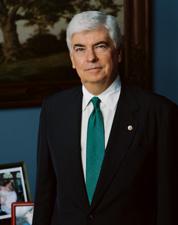
Mr. President, I rise today to join Senator Grassley in announcing the introduction of the Food and Drug Administration Safety Act of 2005 (FDASA). I would like to thank Senator Grassley for his…
Mr. President, I rise today to join Senator Grassley in announcing the introduction of the Food and Drug Administration Safety Act of 2005 (FDASA). I would like to thank Senator Grassley for his commitment to this issue and his willingness to work on this important legislation in a bipartisan manner. Senator Grassley and I have spent the past several months crafting this legislation, which will create a new center within the FDA that will be responsible for ensuring that prescription drugs are safe once they are on the market.
Our hope is that the creation of this new center will restore confidence in the medicines that so many Americans rely on to safeguard their health and well-being. Patients should be able to rest-assured that the drugs they take to help them will not hurt them instead.
The American pharmaceutical industry is a true success story. Their incredible innovations over the last few decades have saved and improved millions of lives, and made prescription drugs an integral part of quality health care. I am proud to say that Connecticut is home to a number of leading pharmaceutical companies. There is very little question that the American drug industry is the world leader. This is due, in no small part, to the FDA. Throughout the world, the FDA seal of approval--the words ``FDA Approved''--has stood as the gold standard for safety and quality.
Unfortunately, events of the past year have put patients at risk and have seriously tarnished the FDA's image. Recent developments have cast into doubt the FDA's ability to ensure that the drugs that it approves are safe--especially once they are on the market. These concerns are bad for patients, bad for physicians, and bad for the drug industry.
Like many Americans, I have been deeply disturbed by the revelations of significant risk associated with widely used medications to treat pain and depression. These revelations raise real and legitimate questions about the safety of drugs that have already been approved. It would be one thing if these drugs were in a trial phase, but safety issues are being identified in drugs that are already on the market and widely used. Health risks significant enough to remove drugs from the market or significantly restrict their use are becoming clear only after millions of Americans have been exposed to real or potential harm.
It has been estimated that more than 100,000 Americans might have been seriously injured or killed by a popular pain medication, while millions of children have been prescribed antidepressants that could put them at risk. This recent spate of popular medicines being identified as unsafe underscores the need to take additional steps to monitor and protect safety after a drug has been approved.
The legislation that Senator Grassley and I are introducing today will do three things to restore confidence in the words ``FDA Approved,'' and ensure that the FDA has all the tools that it needs to protect patients. First and foremost, it will establish within the FDA a new center--the Center for Postmarket Drug Evaluation and Research (CPDER)--which will report directly to the FDA Commissioner and be responsible for ensuring the safety and effectiveness of drugs and biological products once they are on the market.
I strongly believe that the creation of such a new, independent center is necessary. There have been disturbing reports that suggest that the FDA does not place enough emphasis on drug safety, and that concerns raised by those in the Office of Drug Safety (ODS) are sometimes ignored and even suppressed. An internal study conducted by the HHS Office of the Inspector General in 2002 revealed that approximately one-fifth of drug reviewers had been pressured to approve a drug despite concerns about safety, efficacy, or quality. In addition, more than one-third said they were ``not at all'' or only ``somewhat'' confident that final decisions of the Center for Drug Evaluation and Research (CDER) adequately assessed safety. The creation of a new center will raise the profile of drug safety within the agency.
Second, our bill will provide the Director of CPDER with significant new authorities, including: the authority to require drug companies to conduct postmarket studies of their products if there are questions about safety or effectiveness; the authority to take corrective actions, such as labeling changes, restricted distribution, and other risk management tools, if an unreasonable risk exists; the authority to review drug advertisements before they are disseminated, and to require certain disclosures about increased risk; and in extreme cases, the authority to pull the product off the market.
These new authorities will allow the FDA to act quickly to get answers when there are questions about the safety of a drug, and to act decisively to mitigate the risks when the evidence shows that a drug presents a safety issue. With these authorities, we will never again have a situation where a critical labeling change takes two years to complete, as was the case with Vioxx. When we are talking about drugs that are already on the market and in widespread use, any delay can put millions of patients in harm's way.
Third and lastly, this legislation will authorize the appropriation of $500 million over the next 5 years to provide the new center with the resources to carry out the provisions of this legislation.
I would like to thank several groups that have endorsed this bill, and that were instrumental in its drafting, including Consumer's Union, the Elizabeth Glaser Pediatric AIDS Foundation, the National Organization for Rare Disorders (NORD), the National Women's Health Network (NWHN), the U.S. Public Interest Research Group (PIRG), the Consumer Federation of America, and the Center for Medical Consumers.
I look forward to working with all of my colleagues, including Senator Enzi and Senator Kennedy on the HELP Committee, to see this legislation enacted as soon as possible. By strengthening the ability of the FDA to ensure the safety of prescription drugs once they are on the market, this legislation will allow physicians to prescribe, and patients to use, prescription drugs without wondering if the medicines intended to help them will hurt them instead. It will help ensure that the term ``FDA-Approved'' will remain the gold standard for safety and quality.

Mr. President, today I introduce Senate Bill 930, the Food and Drug Administration Safety Act of 2005. I am pleased that Senator Dodd is co-sponsoring another piece of drug safety legislation with…
Mr. President, today I introduce Senate Bill 930, the Food and Drug Administration Safety Act of 2005. I am pleased that Senator Dodd is co-sponsoring another piece of drug safety legislation with me. This legislation is part of a sustained effort to restore public confidence in the Federal Government's food and drug safety agency. Enactment of this bill will be another meaningful step toward greater accountability and transparency at the FDA. Importantly, this legislation provides the FDA with some much needed authorities to ensure the safety and efficacy of drugs for the long haul.
The Food and Drug Administration cannot always serve the American people and the interests of the drug industry at the same time. These two interests are often at odds with each other. When there is a conflict the American people should win out each and every time. The Vioxx situation is a classic example of this inherent conflict. American consumers demand and deserve assurances that the medicines in their cabinets are safe. The risks associated with a drug should be outweighed by its benefits, and this risk-benefit analysis should not be negotiated by the industry behind closed doors. Unfortunately, reforms at the FDA are necessary to place drug safety front and center once and for all.
When drugs go on the market, they are used by exponentially larger numbers of people than were involved in the pre-approval trials. What John Q. Public deserves and demands is for the FDA to embrace a renewed mission to pursue aggressively key safety questions that the industry would sometimes prefer to ignore. The FDA must protect the health of the public by considering not only the benefits but also the risks of drugs for the tens of millions of Americans who actually use new drugs already available in the marketplace. The FDA's post-market evaluation and research needs to be a separate but equal partner with pre-approval evaluation. Indeed FDA's post marketing surveillance function can no longer take a back seat within the agency.
I have been pressing for necessary reforms at the FDA--both administrative and legislative--and the focus of these reforms center on a reorganization of the FDA. The Food and Drug Administration Safety Act of 2005 will establish an independent Center within the FDA--the Center for Post-market Drug Evaluation and Research (CPDER). The new Center's primary mission, vision and values will focus on conducting risk assessment for approved drugs and biological products once they are on the market. The Director of the Center will report directly to the FDA Commissioner and will be responsible for monitoring and assessing the safety and efficacy of drugs and biological products.
Today's legislation is focused on the equal importance of pre- marketing evaluations by the Center for Drug Evaluation and Research (CDER)--the pre-market Center--and post-marketing evaluations by the newly established post-market Center. Consultation and coordination between pre-market and post-market Centers will be essential, but their relationship will place them on equal footing with the other. The present Office of Drug Safety will no longer be effectively under the thumb of the Office of New Drugs. We are hopeful that this reorganization of the FDA will go a long way toward eliminating the conflict of interest that shadows the FDA's post-market risk assessment presently.
Today's legislation will also: authorize the Director to require manufacturers to conduct post-market clinical or observational studies if there are questions about the safety or efficacy of a drug or biological product.
Authorize the Director to determine whether an approved drug or licensed biological product may present an unreasonable risk to the health of patients or the general public, given the known benefits.
Authorize the Director to take corrective action if a drug or biological product presents an unreasonable risk to patients or the general public--including the authority to make changes to the label or approved indication, place restrictions on product distribution, require physician and consumer education, and require the use of other risk management tools.
Allow the Director to withdraw approval of a drug or biological product if necessary to protect the public health.
Require submission of advertising prior to dissemination, and certain advertising disclosures related to risks and benefits to patients, if one or more
of the three following conditions is met: the Director has determined that the product may present an unreasonable risk to patients, the product is the subject of an outstanding post-market study requirement, or the product was approved within the last two years.
Establish strong enforcement mechanisms, including civil monetary penalties, for those who fail to comply.
Ensure that the Director benefits from all appropriate resources, including but not limited to consultation with the Center for Drug Evaluation and Research (CDER) or the Center for Biologics Evaluation and Research (CBER), and makes all decisions based on a risk-benefit analysis.
Ensure that all findings and decisions made by CPDER are transparent.
Require a report and recommendations to Congress on post-market surveillance of medical devices.
Authorize graduated appropriations totaling $500 million over five years to ensure that CPDER has the resources to accomplish its goals.
Today's legislation is another important step toward reforming the FDA. I urge my colleagues to join me in this effort by cosponsoring this important legislation.
Mr. President, I along with Senator Lieberman am introducing the Savings and Working Families Act of 2005. The need for this legislation comes at a time when Americans face an ongoing savings and…
Mr. President, I along with Senator Lieberman am introducing the Savings and Working Families Act of 2005.
The need for this legislation comes at a time when Americans face an ongoing savings and assets crisis. One third of all Americans have no assets available for investment, and another fifth have only negligible assets. The United States household savings rate lags far behind that of other industrial nations, constraining national economic growth and keeping many Americans from entering the economic mainstream by buying a house, obtaining an adequate education, or starting a business.
Low-income Americans face a huge hurdle when trying to save. Individual Development Accounts, IDAs, provide them with a way to work toward building assets while instilling the practice of savings into their everyday lives. IDAs are one of the most promising tools that enable low-income and low-wealth American families to save, build assets, and enter the financial mainstream. Based on the idea that all Americans should have access, through the tax code or through direct expenditures, to the structures that subsidize homeownership and retirement savings of wealthier families, IDAs encourage savings efforts among the poor by offering them a one-to-one match for their own deposits. IDAs reward the monthly savings of working-poor families who are trying to buy their first home, pay for post-secondary education, or start a small business. These matched savings accounts are similar to 401(k) plans and other matched savings accounts, but can serve a broad range of purposes.
The Savings and Working Families Act of 2005 builds on existing IDA programs by creating tax credit incentives for an additional 900,000 accounts. Individuals between 18 and 60 who are not dependents or students and meet the income requirements would be eligible to establish and contribute to an IDA. For single filers, the income limit would be $20,000 in modified aggregate gross income, AGI. The corresponding thresholds for head-of-household and joint filers would be $30,000 and $40,000, respectively.
Participants could generally withdraw their contributions and matching funds for qualified purposes, which include certain higher education expenses, first-time home purchase expenditures, and small business capitalization.
Additionally, this bill would create a tax credit to defray the cost of establishing and running IDA programs, contributing matching funds to the appropriate accounts, and providing financial education to account holders. Program sponsors could be qualified institutions, qualified nonprofits, or
qualified Indian tribes, and would have to be an institution eligible under current law to serve as the custodian of IRAs. Sponsors could claim a tax credit that would have two components. The first would be a $50 credit per account to offset the ongoing costs of maintaining and administering each account and providing financial education to participants. Except for the first year that an account is open, the credit would be available only for accounts with a balance, at year's end, of more than $100. In addition, there would be a credit for the dollar-to-dollar matching amounts.
IDAs work to spur savings by low-income individuals. The American Dream Demonstration, ADD, a 14-site IDA program, has proven that low- income families, with proper incentives and support, can and do save for longer-term goals. In ADD, average monthly net deposits per participant were $19.07, with the average participant saving 50 percent of the monthly savings target and making deposits in 6 of 12 months. Participants accumulated an average of $700 per year including matching contributions. Importantly, deposits increased as the monthly target increased, indicating that low-income families' saving behavior, like that of wealthier individuals; is influenced by the incentives they receive.
Additionally, key to the success of IDAs is the economic education that participants receive. Information about repairing credit, reducing expenditures, applying for the Earned Income Tax Credit, avoiding predatory lenders, and accessing financial services helps IDA participants to reach savings goals and to integrate themselves into the mainstream economic system. The encouragement and connection to supportive services helps low-income individuals to keep early withdrawals to a minimum and overcome obstacles to saving. Banks and credit unions benefit from these new customer relations, and States benefit from decreased presence of check-cashing, pawnshop, and other predatory outlets.
But more than income enhancement, asset accumulation affects individuals' confidence about the future, willingness to defer gratification, avoidance of risky behavior, and investment in community. In families where assets are owned, children do better in school, voting participation increases, and family stability improves. Reliance on public assistance decreases as families use their assets to access higher education and better jobs, reduce their housing costs through ownership, and create their own job opportunities through entrepreneurship.
We must re-instill the value that Americans once put into saving and promote an ownership society. Saving must once again become a national virtue. At stake are not just the financial security and prosperity of Americans as individuals but America as a nation. This bill takes a step in reaching out to low-income Americans to meet this goal.
I urge my colleagues to support the Savings and Working Families Act of 2005.

Mr. President, I have sought recognition to comment on S. 1235, the Veterans' Housing Opportunity and Benefits Act of 2006. This legislation is the product of a compromise agreement reached between…
Mr. President, I have sought recognition to comment on S. 1235, the Veterans' Housing Opportunity and Benefits Act of 2006. This legislation is the product of a compromise agreement reached between the Senate and House Committees on Veterans' Affairs. The legislation cleared the House on Monday by a unanimous vote of 372 to 0. Its passage today in the Senate will continue the tradition of cooperation between the two Houses of Congress and among all political parties when it comes to legislation to improve the benefits and services available for our nation's veterans.
Before I thank my colleagues on both sides of the aisle who worked diligently on the provisions of this bill, I would like to take a few moments to comment on provisions that I was particularly interested in seeing enacted in that they will impact the lives of servicemembers returning from the global war on terrorism who have severe disabilities.
It is quite natural, and in many cases necessary for therapeutic or rehabilitative reasons, for a young servicemember who is severely wounded to spend some time convalescing at the home of his or her family before moving on to live a fully independent life. The nature of some severely wounded servicemembers' wounds require adaptations to the homes in which they live--such as larger doorways, ramps, hand rails, and other modifications. VA has a grant program to assist servicemembers and veterans with expenses associated with these modifications, but the program needs greater flexibility to address the reality of how young wounded warriors convalesce. Section 101 of the legislation provides that flexibility. It authorizes VA to equip a family member's home using a partial grant--with some portion, or all, of the remainder of the grant available for later use--of between $2,000 and $14,000. I was proud to join Senator John Sununu on an amendment that cleared the Senate earlier this year that contained this provision. I am even prouder that we were able to include it in the final bill.
Section 301 of S. 1235 is another provision that makes a reasonable accommodation in a benefit program to meet the realities faced by convalescing, severely disabled servicemembers. Servicemembers adjudicated as totally disabled at the time of their separation from service have up to one year after separation to apply to receive premium-free Servicemembers' Group Life Insurance coverage during the 1-year, post separation period, and to convert their coverage to Veterans' Group Life Insurance, or an individual plan or policy. Taking advantage of the conversion option is especially critical for totally disabled veterans who, because of their disabilities, may not be insurable at competitive commercial rates after military service. Through a targeted outreach effort to this population, VA learned that many totally disabled veterans do not convert their coverage to VGLI because they may have neglected post-separation financial planning due to the effects of their disabilities, or because they were simply unaware of the extension option. To give these convalescing servicemembers as much time as possible to make informed decisions about their future financial security, section 301 would extend from 1 to 2 years the available conversion period.
There are many other enhancements contained in this legislation. They cover housing, insurance, employment and other miscellaneous benefit programs. And, not a small point in this time of fiscal austerity, the legislation is budget neutral.
I would like to take a moment to thank those who are responsible for bringing this compromise agreement to the brink of enactment. First, the committee's ranking member, Senator Daniel Akaka, provided his customary--and indispensable--cooperation and leadership. He and his staff worked very closely with me and my staff to shepherd the original legislation through the Senate, and then to work together with my House colleagues on this compromise. Veterans in Hawaii should be proud to have Senator Akaka at the helm. And I am proud to have him as the committee's ranking member.
I salute Chairman Steve Buyer and Ranking Member Lane Evans of the House Veterans' Committee; Subcommittee on Disability Assistance and Memorial Affairs Chairman Jeff Miller and Ranking Member Shelley Berkley; and Subcommittee on Economic Opportunity Chairman John Boozman and Ranking Member Stephanie Herseth for their work and for their spirit of accommodation. They and their staffs are to be commended for a job well done.
Yesterday, the Congress sent bipartisan legislation, the Respect for America's Fallen Heroes Act, to the President for his signature. Today, I am also asking my colleagues in the Senate to send the Veterans' Housing Opportunity and Benefits Act of 2006, to the President. I am thankful that our celebration of Memorial Day on Monday coincides with the Congress sending so strong a message of support to those who have worn the uniform.
Mr. President, I ask unanimous consent that the text of the attached joint explanatory statement be printed in the Record.
Mr. President, I ask unanimous consent that the Committee on Armed Services be authorized to meet during the session of the Senate on July 28, 2005, at 9:30 a.m., in open session to consider the…
Mr. President, I ask unanimous consent that the Committee on Armed Services be authorized to meet during the session of the Senate on July 28, 2005, at 9:30 a.m., in open session to consider the following nominations: Lieutenant General Norton A. Schwartz, USAF, for appointment to the grade of general and to be Commander, U.S. Transportation Command; Dr. Ronald M. Sega to be Under Secretary of the Air Force; Mr. Philip Jackson Bell to be Deputy Under Secretary of Defense for Logistics and Materiel Readiness; Mr. John G. Grimes to be Assistant Secretary of Defense for Networks and Information Integration; Mr. Keith E. Eastin to be Assistant Secretary of the Army for Installations and Environment; Mr. William C. Anderson to be Assistant Secretary of the Air Force for Installations, Environment and Logistics.
The presiding officer. Without objection, it is so ordered.
Committee on Banking Housing, and Urban Affairs
Mr. President, I ask unanimous consent that the Committee on Banking, Housing, and Urban Affairs be authorized to meet during the session of the Senate on Thursday, July 28, 2005, at 10 a.m. to mark up S. 190 ``The Federal Housing Enterprise Regulatory Reform Act of 2005'', as amended by the Committee Print; S. 705 ``Meeting the Housing and Service Needs of Seniors Act of 2005;'' H.R. 804 ``To Exclude From Consideration as Income Certain Payments Under the National Flood Insurance Program;'' S. 1047 ``The Presidential $1.00 Coin Act of 2005,'' and pending nominations.
Mr. President, I ask unanimous consent that the Committee on Commerce, Science, and Transportation be authorized to meet on Thursday, July 28, 2005, at 10 a.m., on pending committee business.
Mr. President, I ask unanimous consent that the Committee on Commerce, Science, and Transportation be authorized to meet on Thursday, July 28, 2005, at 2:30 p.m., on issues related to MGM v. Grokster and the appropriate balance between copyright protection and communications technology innovation, in SR-253.
Mr. President, I would like to announce that the Committee on Indian Affairs will meet on Thursday, July 28, 2005, at 9:30 a.m. in Room 485 of the Russell Senate Office Building to conduct an oversight hearing on the Native American Graves Protection and Repatriation Act. Those wishing additional information may contact the Indian Affairs Committee at 224-2251.
Mr. President, I ask unanimous consent that the Committee on the Judiciary be authorized to meet to conduct a markup on Thursday, July 28, 2005 at 9:30 a.m. in Senate Dirksen Office Building Room 226.
Agenda
I. Bills: S. 1088, Streamlined Procedures Act of 2005, Kyl, Cornyn, Grassley, Hatch; S. 103, Combat Meth Act of 2005, Talent, Feinstein,
Mr. President, I ask unanimous consent that the Committee on Veteran's Affairs be authorized to meet during the session of the Senate on Thursday, July 28, 2005, for a markup to consider the following:
Nomination of James Philip Terry to be Chairman of the Board of Veterans' Appeals, Department of Veterans' Affairs and Charles S. Ciccolella to be Assistant Secretary for Veterans' Employment and Training, Department of Labor.
Pending Legislation as follows:
A. Committee Print of S. 1182, the ``Veterans' Health Care Improvements Act of 2005'', incorporating provisions derived from S. 1182, as introduced; S. 1177; S. 1189; and S. 1190.
B. S. 716, the ``Vet Center Enhancement Act of 2005''.
C. S. 1234, the ``Veterans' Compensation Cost-of-Living Adjustment Act of 2005''.
D. Committee Print of S. 1235, the ``Veterans' Benefits Improvement Act of 2005'', incorporating provisions derived from S. 1235, as introduced; S. 552; S. 917; S. 151; S. 1259; S. 1271; and S. 423.
The markup will take place in Room 418 of the Russell Senate Office Building at 9:30 a.m.
Mr. President, I ask unanimous consent that the subcommittee on National Parks be authorized to meet during the session of the Senate on Thursday, July 28 at 10 a.m.
The purpose of the hearings is to receive testimony on the following bills: S. 584 and H.R. 432, bills to require the secretary of the interior to allow the continued occupancy and use of certain land and improvements within rocky mountain National Parks; S. 652, a bill to provide financial assistance for the rehabilitation of the Benjamin Franklin National Memorial in Philadelphia, PA, and the development of an exhibit to commemorate the 300th anniversary of the birth of Benjamin Franklin; S. 958, a bill to amend the National Trails System Act to designate the Star-Spangled Banner Trail in the states of Maryland and Virginia and the District of Columbia as a national historic trail; S. 1154, a bill to extend the Acadia National Park Advisory Commission, to provide improved visitor services at the park, and for other purposes; S. 1166, a bill to extend the authorization of the Kalaupapa National Historical Park Advisory Commission; and S. 1436, a bill to direct the Secretary of the Interior to conduct a study of maritime sites in the states of Michigan.
Mr. President, I am pleased today to introduce a bill with Senators Durbin, Kennedy, and Clinton that will help our Nation's high school students graduate with the knowledge necessary to succeed in…
Mr. President, I am pleased today to introduce a bill with Senators Durbin, Kennedy, and Clinton that will help our Nation's high school students graduate with the knowledge necessary to succeed in post-secondary education and the skills needed to succeed in the workforce.
Unfortunately too many high school students today are not completing high school at all or with the skills necessary to enter post-secondary education or the workforce. The statistics are staggering. Every day, 3,000 teenagers drop out of high school. This year over 500,000 students will drop out of high school. Overall, less than 70 percent of high school students will graduate and less than 50 percent of high school students of color will graduate.
Of 100 9th graders, less than 70 percent will graduate on time, only 38 percent will directly enter college, only 26 percent will still be enrolled in their sophomore year, and only 18 percent will graduate from college. That number is even lower for minority students. Forty percent of students entering 4-year colleges and nearly 70 percent of students entering community colleges will take remedial classes in reading, writing or math, extending their years in and the cost of college.
Only one-third of the U.S. workforce has any post-secondary education but it is estimated that 60 percent of new jobs in the 21st century will require a post-secondary education. Business will spend billions of dollars on remediation for their employees in reading, writing and math.
We can do better and we must do better for our Nation's students, their families, and American business. Currently, high school students are graduating at meager rates and even if they are graduating from high school, they are not leaving high school with the skills and knowledge to enter the workforce or be successful in college. That is why I have written and am introducing the Pathways for All Students to Succeed Act or the PASS Act.
The PASS Act targets high school reform in three key areas: core academics, improving graduation rates, and assistance to low-performing schools to improve student achievement through innovative models. The PASS Act will help improve student achievement in core academics and reduce the need for remediation in college and the workplace through grants for schools to hire literacy and math coaches. Literacy and math coaches bring professional development back into schools and classrooms. Coaches help teachers identify which students are having reading or math problems, how to respond to such problems, and how to integrate literacy and math skills across curricula.
The PASS Act also targets dropouts and low graduation rates through grants for academic counselors and a meaningful graduation rate calculation. Time after time I have talked to students in their senior year who have said, ``I didn't know I needed four years of math to graduate and get into college.'' Part of the problem is that our counselors are completely overwhelmed. The current national average ratio of students to counselors is over 450 to 1. My bill would provide grants to bring that ratio down to 150 to 1. Academic counselors will also work with students and their families to create 6 year graduation and career plans that will help students identify what classes they need to graduate and achieve their post-secondary goals, whether those goals are training or college, and identify support services such as GEAR UP and TRIO that are available to the student.
The PASS Act also provides grants to schools for data collection, and specifically on graduation rates. Currently schools do not have a way to accurately calculate graduation rates. The Department of Education only requires schools to report the graduation rate based on 12th grade data and we all know that is not when students drop out. The PASS Act provides schools with funding to collect, disaggregate, and report accurate graduation rates so that schools can correctly diagnose and address problems facing specific student populations.
And lastly the PASS Act provides additional funding for schools labeled ``in need of improvement'' to implement proven, innovative reforms leading to gains in student achievement. I often talk to principals who tell me they know what they need to do to improve their schools; they just don't have the funds to make the necessary changes. Such reforms include smaller learning communities, adolescent literacy programs, whole school reforms, personalized learning environments, and programs that target transitions between middle and secondary school.
Congress must act now and act boldly to correct the shortfalls in our nation's high schools. We can and must do better. I hope my colleagues will join me in supporting this bill and addressing the needs of our high school students.
I ask unanimous consent that the text of the bill be printed in the Record.
Show 11 more
Mr. President, today I rise in strong support of S. 1235, the Veterans' Housing Opportunity and Benefits Improvement Act of 2006. This legislation passed the House unanimously on Monday, and I urge…
Mr. President, today I rise in strong support of S. 1235, the Veterans' Housing Opportunity and Benefits Improvement Act of 2006. This legislation passed the House unanimously on Monday, and I urge my Senate colleagues to do the same.
S. 1235 contains many important provisions, but I would like to focus my remarks on section 101 of the bill, which deals with adaptive housing grants. Section 101 upgrades eligibility criteria for housing assistance grants to better reflect the needs of today's veteran community and will help all disabled veterans move home from medical facilities sooner. The language in section 101 is almost identical to my bipartisan legislation, S. 1947, The Specially Adapted Housing Improvements Grants Act and a bi-partisan amendment I introduced to S. 1932, the Deficit Reduction Act, which passed the Senate unanimously by voice vote.
First, I want to acknowledge my House colleague, Representative John Boozman of Arkansas, who serves as Chairman of the Veterans' Affairs Subcommittee on Economic Opportunity and has demonstrated real leadership on this issue. I am grateful to him for his considerable efforts to advance this measure in the House and I am happy to do so here in this Chamber. I also appreciate the hard work of the Chairman of the Veterans' Affairs Committee here in the Senate, Senator Craig, and the bipartisan group of Senators who cosponsored both my bill and amendment. The broad support of S. 1235 and its provisions represent a bipartisan belief on Capitol Hill that Congress must constantly evaluate veterans programs to make certain that our Nation provides responsive support to veterans.
While representing New Hampshire in the House and Senate, I have worked to ensure that those who served in our armed services receive their hard-earned benefits quickly and in full. Too often, out-of-date and burdensome regulations deny qualified veterans from receiving the benefits to which they are entitled. Whenever possible, it is imperative that we remove red tape that does not take into account the realities faced by today's veterans.
That is why I introduced legislation to reform rules that determine requirements for a Department of Veterans Affairs, VA, grant program that helps many disabled veterans make their
homes suitable for occupancy. Currently, a disabled veteran must at least partly own his or her residence to receive VA housing assistance grants to perform necessary residence modifications, such as installing wheelchair ramps or railings. However, many younger veterans returning from Iraq and Afghanistan have not yet had the opportunity to become homeowners. Being ineligible for VA funding assistance to modify their homes, these veterans and their families often are compelled to either shoulder the costs of retrofitting their residences or face extended stays in VA medical facilities.
Section 101 of S. 1235 will establish a 5-year pilot program to allow severely disabled veterans who live temporarily with family to receive up to $10,000 in adaptive housing assistance; less severely disabled veterans could receive a maximum of $2,000. This grant money will help ensure that all disabled veterans--regardless of whether they own property--are able to leave hospitals and return home as quickly as possible.
Also, mindful that these individuals will likely purchase their own residence, the bill will allow disabled veterans to receive two additional specially adaptive housing grants to be used for homes that they own in the future. Severely disabled veterans could receive a total of $50,000 to modify residences; less severely disabled veterans would be eligible for a total of $10,000. Only one of the three total grants could be used for a temporary residence, such as a family-owned home.
America's veterans have made enormous sacrifices to protect our Nation and the ideals for which it stands. Our country owes a special obligation to those men and women who have become disabled as a result of their service. Under no circumstances should these American heroes be divided into groups of ``haves'' and ``have nots.''
This Nation must do no less than to ensure that all disabled veterans are returned to the normalcy of home life as quickly and comfortably as possible. The common sense changes put forth in section 101 of S. 1235 do just that, and I urge my colleagues in the Senate to send this bill to President Bush to sign in to law in time, fittingly, for Memorial Day.
Mr. President, as ranking member of the Committee on Veterans' Affairs, I urge my colleagues to support our current servicemembers, veterans, and their families by supporting the pending measure, the…
Mr. President, as ranking member of the Committee on Veterans' Affairs, I urge my colleagues to support our current servicemembers, veterans, and their families by supporting the pending measure, the final agreement on the Veterans' Housing Opportunity and Benefits Improvement Act of 2006. This is a vital and timely piece of legislation that has already passed the House of Representatives. With Senate passage today and the President's signature it will quickly become public law.
Mr. President, this measure, which I shall refer to as the ``Compromise Agreement,'' will improve and expand a wide variety of veterans benefits and programs, including, among others, housing benefits for Native American veterans and severely disabled servicemembers; insurance benefits for certain disabled veterans; compensation benefits for former prisoners of war; and programs that provide assistance to homeless veterans.
This legislation is appropriate at a time when our servicemembers are in harm's way. We must always remember the sacrifices that our servicemembers, both past and present, have made on behalf of this great Nation and we must do our part to respond to their service by improving and expanding veterans benefits.
In 1992, I authored the legislation that established a pilot program to make direct housing loans to Native American veterans for homes on tribal lands. As of the end of April, VA had made 504 loans to this group of veterans. Under this program, VA offers loan guarantees that protect lenders against loss up to the amount of the guaranty if the borrower fails to repay the loan. Prior to the enactment of this law, Native American veterans residing on tribal lands were unable to qualify for VA home loan benefits. With the Native American Veteran Housing Loan Program indigenous peoples residing on trust lands are now able to use this very important VA benefit. I am pleased that the Compromise Agreement contains a provision derived from legislation I offered, S. 917, that would make this pilot program, which was set to expire on December 31, 2008, permanent.
The Compromise Agreement also extends, from 1 to 2 years, the amount of time a disabled servicemember has to convert his or her Servicemembers' Group Life Insurance coverage into Veterans' Group Life Insurance coverage. This change is being made so that veterans may concentrate on recovering from their injuries or conditions, and not on meeting deadlines for life insurance conversion.
Under current law, former prisoners of war have to been held for a minimum of 30 days before they can benefit from a presumption that certain diseases are linked to their service. The Compromise Agreement also would add heart disease and stroke to presumptive conditions for service-connection for former prisoners of war.
Homelessness among veterans is a critical problem. It is particularly troubling to me that an estimated 56 percent of today's homeless veterans are minorities. The homeless rate in my home state of Hawaii has nearly doubled since early 2000, with the majority of Hawaii's new homeless being Native Hawaiians. The city of Honolulu has a tremendous problem with affordable housing, increasing the possibility of becoming homeless for those who already struggle to make ends meet. The Compromise Agreement would reauthorize through fiscal year 2009 the Homeless Veterans Reintegration Programs, which are the only Federal programs dedicated wholly to providing employment services to homeless veterans.
Also included in the Compromise Agreement is my provision that would make a technical change to the specially adapted housing grant program. Last session, the law that allows severely disabled members of the Armed Forces to receive specially adapted housing grants from VA, while still on active duty, was inadvertently repealed. My provision would correct this and restore the grant to its original intent.
In conclusion, I thank Senator Craig and the benefits staff on the majority for their work on this comprehensive bill, especially Jon Towers, Amanda Meredith, and Lupe Wissel and, on the Democratic staff Dahlia Melendrez, Pat Driscoll, and Noe Kalipi for their hard work on this legislation.
Mr. President, I urge my colleagues to support this legislation on behalf of America's veterans and their families.
Mr. President, today I rise to offer legislation that would make the Native American Veteran Housing Loan Pilot Program permanent. In April 1992, I sponsored a bill that established the Native…
Mr. President, today I rise to offer legislation that would make the Native American Veteran Housing Loan Pilot Program permanent. In April 1992, I sponsored a bill that established the Native American Veteran Housing Loan Pilot Program. That bill later became Public Law 102-547 and authorized the Department of Veterans Affairs (VA) to establish a pilot program that would provide veterans with assistance in purchasing, constructing, and improving homes through 1997. This pilot program has been extended several times. In fact, last Session Congress extended this pilot program by three years.
Through January of this year, 443 loans were created under this program. It is time to make this program permanent.
The Native American home ownership rate is about half the rate of the general U.S. population. This issue partially stems from the fact that lenders generally require that buyers own the parcel of land on which their homes will be located. This is difficult for many in Indian Country, Alaska, and Hawaii because their homes are on trust lands. Most lenders decline these loan applications because Federal law prohibits a lender from taking possession of Native trust lands in the event of a default. Several Federal programs have been developed to provide home ownership opportunities to Native Americans. The Native American Veteran Housing Loan Program is one such program that has helped to make home ownership a reality for indigenous peoples, particularly Native Hawaiians.
Under this program, VA offers loan guaranties that protect lenders against loss up to the amount of the guaranty if the borrower fails to repay the loan. Previous to the Native American Veteran Housing Loan Program, Native American veterans who resided on these lands were unable to qualify for VA home-loan benefits. With the Native American Veteran Housing Loan Program, indigenous peoples residing on trust lands are now able to use this very important VA benefit.
The Native American Veteran Housing Loan Program is intended to serve veterans who are eligible for homes under the Hawaiian Homes Commission Act, and who reside on Pacific Islands lands that have been communally owned by cultural tradition and on Native American trust lands on the continental United States. This VA-administered program assists Native American veterans by providing them direct loans to build or purchase homes on such lands.
Before VA can make a loan on tribal trust land, the tribe must enter into a Memorandum of Understanding with VA to clarify some of the issues that could arise when administering the program. During fiscal year 2004, VA entered into two Memoranda of Understanding with tribal entities. In addition, VA is currently negotiating nine Memoranda of Understanding with Native American tribes. Trust lands that are eligible for this program include tribally and individually held trusts. Per a Memorandum of Understanding between VA and the Bureau of Indian Affairs (BIA), VA and BIA Regional Offices work to implement this loan program together. Additionally, VA personnel continue to conduct outreach with tribal representatives to solicit assistance in reaching out to tribal members who are veterans.
Per capita, Native Americans have the highest percentage of people serving in the United States Armed Forces. While they represent less that 1 percent of the population, they make up 1.6 percent of the Armed Forces. I want to reiterate that through January of 2005, 443 loans have been made to Native Americans under this program. This allows those who have served our nation so honorably and their families to be a part of the American Dream of home ownership. We need to make the Native American Veteran Housing Loan permanent this year.
I ask unanimous consent that the text of the bill be printed in the Record.
Mr. President, today I rise to offer legislation that would make the Native American Veteran Housing Loan Pilot Program permanent. In April 1992, I sponsored a bill that established the Native…
Mr. President, today I rise to offer legislation that would make the Native American Veteran Housing Loan Pilot Program permanent. In April 1992, I sponsored a bill that established the Native American Veteran Housing Loan Pilot Program. That bill later became Public Law 102-547 and authorized the Department of Veterans Affairs (VA) to establish a pilot program that would provide veterans with assistance in purchasing, constructing, and improving homes through 1997. This pilot program has been extended several times. In fact, last Session Congress extended this pilot program by three years.
Through January of this year, 443 loans were created under this program. It is time to make this program permanent.
The Native American home ownership rate is about half the rate of the general U.S. population. This issue partially stems from the fact that lenders generally require that buyers own the parcel of land on which their homes will be located. This is difficult for many in Indian Country, Alaska, and Hawaii because their homes are on trust lands. Most lenders decline these loan applications because Federal law prohibits a lender from taking possession of Native trust lands in the event of a default. Several Federal programs have been developed to provide home ownership opportunities to Native Americans. The Native American Veteran Housing Loan Program is one such program that has helped to make home ownership a reality for indigenous peoples, particularly Native Hawaiians.
Under this program, VA offers loan guaranties that protect lenders against loss up to the amount of the guaranty if the borrower fails to repay the loan. Previous to the Native American Veteran Housing Loan Program, Native American veterans who resided on these lands were unable to qualify for VA home-loan benefits. With the Native American Veteran Housing Loan Program, indigenous peoples residing on trust lands are now able to use this very important VA benefit.
The Native American Veteran Housing Loan Program is intended to serve veterans who are eligible for homes under the Hawaiian Homes Commission Act, and who reside on Pacific Islands lands that have been communally owned by cultural tradition and on Native American trust lands on the continental United States. This VA-administered program assists Native American veterans by providing them direct loans to build or purchase homes on such lands.
Before VA can make a loan on tribal trust land, the tribe must enter into a Memorandum of Understanding with VA to clarify some of the issues that could arise when administering the program. During fiscal year 2004, VA entered into two Memoranda of Understanding with tribal entities. In addition, VA is currently negotiating nine Memoranda of Understanding with Native American tribes. Trust lands that are eligible for this program include tribally and individually held trusts. Per a Memorandum of Understanding between VA and the Bureau of Indian Affairs (BIA), VA and BIA Regional Offices work to implement this loan program together. Additionally, VA personnel continue to conduct outreach with tribal representatives to solicit assistance in reaching out to tribal members who are veterans.
Per capita, Native Americans have the highest percentage of people serving in the United States Armed Forces. While they represent less that 1 percent of the population, they make up 1.6 percent of the Armed Forces. I want to reiterate that through January of 2005, 443 loans have been made to Native Americans under this program. This allows those who have served our nation so honorably and their families to be a part of the American Dream of home ownership. We need to make the Native American Veteran Housing Loan permanent this year.
I ask unanimous consent that the text of the bill be printed in the Record.
Mr. President, April 27, 2005, marks an important day for health care, especially personnel involved in public health specialties, because it is the day that I introduced the Veterinary Workforce…
Mr. President, April 27, 2005, marks an important day for health care, especially personnel involved in public health specialties, because it is the day that I introduced the Veterinary Workforce Expansion Act, VWEA. This bill will create a new competitive grant program in the Department of Health and Human Services for capital improvements to the Nation's veterinary medical colleges.
Many Americans do not realize that veterinarians are essential for early detection and response to unusual disease events that could be linked to newly emerging infectious diseases such as monkeypox, SARS, and West Nile Virus, just to name a few. The training and education that veterinarians receive prepares them to address the concerns of bioterrorism and emerging infectious diseases, most of which are transmitted from animals to man. In fact, 80 percent of biothreat agents of concern fall into this category. I believe veterinarians should be our first-responders when it comes to these threats. I know that they are uniquely qualified to address these issues because I have received this training myself. I received my DVM from Colorado State University and have kept my license current every year since I closed my clinic and ran for elected office.
Veterinarians are a unique national resource, as they are the only health professionals trained in multi-species comparative medicine. As a result of this training, the veterinary profession is able to provide an extraordinary link between agriculture and human medicine. The uses made of this link have been extensive, with multiple benefits to society.
Currently, approximately 20 percent, 15,000, of all veterinarians in the United States are I engaged in either private population-health practice with a significant food animal component or public practice in one of its various forms. The need for new graduates entering the field is imperative to preparing the country for the threats of agroterrorism and bioterrorism. If new graduates do not enter these fields, government, nongovernmental organizations, industry, and agribusiness will employ lesser qualified individuals to fill their needs.
There is a critical shortage of veterinarians working in public health areas. The Health Resources and Services Administration, U.S. Department of Agriculture, U.S. Public Health Service, veterinary academia, National Research Council, and the Bureau of Labor Statistics are unified in reporting that the shortage of veterinarians in the workforce will only continue to worsen. Combined with a rapidly growing population and increased human to animal interaction, there is an urgent need to adequately prepare the Nation's veterinary colleges so they may educate the workforce of the future.
The VWEA would allow credentialed schools of veterinary medicine to compete for Federal grant funding under the Department of Health and Human Services. These grants would be for capital costs associated with expanding the existing schools of veterinary medicine or their academic programs in the areas of public health practice. This new grant program will be authorized for 10 fiscal years. At that point, it is my hope and goal that the veterinary medical colleges will be adequately prepared to educate the veterinary workforce for the future.
For more than 100 years, veterinary medical colleges have effectively delivered a core educational program that has enabled veterinarians to adapt and respond to evolving societal needs. Being a veterinarian myself, I want to continue this tradition by expanding existing veterinary colleges. I hope that you will join me in my efforts to protect the Nation's public health by providing much-needed support for veterinary medical education.
Mr. President, we have all heard from folks back home about the high price of gasoline. When you pull into a gas station to fill up your tank, you're now paying some of the highest prices of all…
Mr. President, we have all heard from folks back home about the high price of gasoline. When you pull into a gas station to fill up your tank, you're now paying some of the highest prices of all time.
And when you turn on the news, you see that our dependence on foreign oil keeps us tied to one of the most dangerous and unstable regions in the world. With oil at more than $50 per barrel, some argue that the best way to deal with high gasoline prices is to wait it out--to wait until the world market dynamics change.
I disagree with that mindset. For too long now, we've relied too heavily on foreign oil to fuel our energy needs in this country. This is not good for the United States--not for our economy, not for our national security, and not for our people.
The bill I am introducing today, along with my distinguished colleagues from Illinois and Missouri, is designed to do something about fuel prices and our reliance on foreign oil--something rooted in reality, something achievable in the short term, and something that actually works.
Last week, I visited a gasoline station in Springfield, IL, where along with regular gasoline, a new kind of fuel is offered for consumers--a fuel known as E-85. E-85 is a clean, alternative form of transportation fuel consisting of a blend of 85 percent ethanol and 15 percent gasoline. Ethanol is made from renewable, Midwestern corn, and it is 40-60 cents cheaper per gallon than standard gasoline. Last week, at this Springfield station, regular gasoline was listed at $2.06 and E-85 was selling for $1.69.
Not every car can run on E-85 fuel--but there are millions of cars that can. They're known as ``flexible-fuel vehicles,'' and the auto industry is turning out hundreds of thousands of them every year. And if any of you are wondering whether cars will run as well on E-85 as they would on regular gas, just ask the Indy 500, which recently announced that all of their cars will soon run on E-85 fuel.
The only problem we have now is that we're in short supply of E-85 stations. While there are more than 180,000 gas stations all over America, there are only about 400 E-85 stations. And although E-85 has many environmental benefits and is a higher performing fuel, the fuel economy of E-85 is slightly lower than that of regular gasoline. An additional incentive is needed to help ensure that the cost of this clean fuel remains competitive with that of regular gasoline.
That is why I'm introducing a bill to provide a tax credit of 50% for building an E-85 fuel station and a tax credit of 35 cents per gallon of E-85 fuel. This provision is similar to a provision that already has passed the Senate three times. I hope my colleagues will pass this provision again.
We've talked for too long about energy independence in this country, and I think this bill gives us an opportunity to actually get something done about it. I urge the support of my colleagues of this bill, and I thank the Chair.
I ask unanimous consent that the text of the bill be printed in the Record.

Mr. President, the ability of American families to live the American dream is becoming harder and harder. With each passing month, it's more difficult for families to earn a living--to pay the…
Mr. President, the ability of American families to live the American dream is becoming harder and harder. With each passing month, it's more difficult for families to earn a living--to pay the mortgage and the doctor bills, and send their sons and daughters to college.
In the Bush economy, families are worried about their job security, their income, and the cost of living. They're working longer and harder and finding it more and more difficult to balance their work and their family responsibilities.
Most Americans assume that paid sick days are a right. They're not. Half of all American workers are not guaranteed the right to time off when they're ill, without losing their pay, or even their job.
In 1993, Congress and the administration guaranteed unpaid leave for millions of working men and women to deal with serious medical problems.
It's time to build on this success, and ensure that millions of workers can also take time off when they need an annual check-up, when their children are sick with a cold, and when their ailing elderly parents need to be taken to the doctor.
Hard-working men and women deserve better. That's why Congresswoman DeLauro and I are introducing legislation to guarantee workers 7 days of paid sick leave a year to care for their own medical needs and those of their family members. This proposal covers workers at all businesses, except small businesses with fewer than 15 employees.
This is a family issue. When my son was diagnosed with cancer in his leg as a child, and had to undergo surgery, I was able to take the time I needed to be there for him. But year after year, countless employees have to choose between the job they need and the family they love. Families deserve the flexibility to care for each other when they get sick.
It's an economic issue. Paid sick days actually save businesses money through reduced turnover and increased productivity. A recent study by Cornell University examined the problem of employees coming to work despite medical problems. They found it costs business $180 billion annually in lost productivity.
It's also a public health issue. Too often, employees come to work sick and co-workers and many others can easily be infected. Recently, a court ruled that because of the lack of paid sick leave, a stomach virus in one worker infected 600 guests and 300 employees at the Reno Hilton Hotel in Nevada.
Paid sick days will help prevent the spread of illnesses like that. Taking time off to treat illnesses and injuries will save health costs in the long run. It will make an important difference for insurers, for hospitals, and for the health of millions of Americans.
It's long past time to provide paid sick days for workers. This bill is a first step to guarantee that every worker who needs sick leave has it and can afford to take it.
Mr. President, today I proudly rise to introduce The Natural Gas Production Act of 2005. One of the challenges facing our economy is increasing energy prices. Take, for example, natural gas that…
Mr. President, today I proudly rise to introduce The Natural Gas Production Act of 2005.
One of the challenges facing our economy is increasing energy prices. Take, for example, natural gas that accounts for 22 percent of American energy consumption. According to the Energy Information Administration, over the next 20 years, U.S. natural gas consumption will increase by over 50 percent. At the same time, U.S. natural gas production will only grow by 14 percent. At a time when natural gas prices are already at an all time high, it is critical that we increase our supply by developing our domestic natural gas.
This legislation will provide an incentive to increase the supply of domestically produced natural gas, which in turn will help alleviate high natural gas prices.
The Natural Gas Production Act of 2005 will add natural gas produced from formations more than 15,000 feet deep (Deep Gas), to the list of qualifying fuels for the Section 29 non-conventional tax credit. Experts consider deep gas drilling at more than 15,000 feet to be a non-conventional source of energy production.
Studies show the resource potential below 15,000 feet for natural gas is great. The Department of Energy's Strategic Center for Natural Gas has estimated there to be 130 trillion cubic feet below 15,000 feet in the lower 48. In comparison, that is equal to the proven and potential reserves on the Alaskan North Slope.
While these vast reserves remain, very little production is occurring from depths greater than 15,000. Deep gas wells require a considerable amount of time and money. On average these wells cost more than $6.1 million, and for wells deeper than 20,000 feet costs can exceed $16 million. Add to that the minimum one-year and longer drilling time and you can clearly see that Federal drilling incentives are needed to help promote and speed production of this enormous potential resource.
To drill a deep well, a drilling rig will employ about 25 people directly. In 1979, 128 deep well completions in Oklahoma created 2,630 jobs. In addition to direct jobs, economists estimate that 60 to 75 indirect jobs will be created as well.
Due to changes in the regulatory governance of the industry and cyclical market conditions over the next two and one-half decades, deep drilling activity all across the country has declined substantially.
I am introducing this legislation, along with Senator Vitter, today to encourage more domestic production in an area of proven reserves that will increase our supply. I thank Senator Vitter for his work and I urge members to support us in this effort. I ask consent that the text of the bill be printed in the Record.
If you have any questions, please contact Mike Ference on my Staff at 224-1036.
Mr. President, today I am introducing the Improving Access to Nurse-Midwifery Care Act of 2005. For too many years, certified nurse midwives, CNMs, have not received adequate reimbursement under the…
Mr. President, today I am introducing the Improving Access to Nurse-Midwifery Care Act of 2005. For too many years, certified nurse midwives, CNMs, have not received adequate reimbursement under the Medicare program, despite evidence that shows the quality of care and outcomes for services provided by CNMs are comparable to obstetricians and gynecologists. My legislation takes important steps to improve reimbursement for these important healthcare providers.
There are approximately three million disabled women on Medicare who are of childbearing age; however, if they choose to utilize a CNM for ``well women'' services, the CNM is only reimbursed at 65 percent of the physician fee schedule. In practical terms, the typical well-woman visit costs, on average, $50. But Medicare currently reimburses CNMs in rural areas only $14 for this visit, which could include a pap smear, mammogram, and other pre-cancer screenings. CNMs administer the same tests and incur the same costs as physicians but receive only 65 percent of the physician fee schedule for these services. This reduced payment is unfair and does not adequately reflect the services CNMs provide to beneficiaries. At this incredibly low rate of reimbursement, the Medicare Payment Advisory Committee, MedPAC, agrees that a CNM simply cannot afford to provide services to Medicare patients and has supported increasing reimbursement for CNMs.
My legislation would make several changes to improve the ability of CNMs and certified midwives, CMs, to effectively serve the Medicare- eligible population. First, and most importantly, my bill recognizes the need to increase Medicare reimbursement for CNMs by raising the reimbursement level from 65 percent to 100 percent of the physician fee schedule. CNMs provide the same care as physicians; therefore, it is only fair to reimburse CNMs at the same level.
In addition, the Improving Access to Nurse-Midwifery Care Act would guarantee payment for graduate medical education and includes technical corrections that will clarify the reassignment of billing rights for CNMs who are employed by others. Finally, my bill would establish recognition for a certified midwife, CM, to provide services under Medicare. Despite the fact that CNMs and CMs provide the same services, Medicare has yet to recognize CMs as eligible providers. My bill would change this.
This bill will enhance access to ``well woman'' care for thousands of women in underserved communities and make several needed changes to improve access to midwives. I urge my colleagues to support this legislation.

Mr. President, I am pleased to support the introduction today, along with my colleagues Senators Clinton and Kennedy, of Senator Murray's bill to improve America's high schools. We have all heard a…
Mr. President, I am pleased to support the introduction today, along with my colleagues Senators Clinton and Kennedy, of Senator Murray's bill to improve America's high schools.
We have all heard a lot of talk these days about the need to improve America's high schools. Bill Gates makes the point that the academic caliber of our high school graduates is one of the greatest factors in our country's ability to innovate and to compete internationally in technological advancements. The CEO of Intel, Craig Barrett, tells the story of the how U.S. students are eclipsed in the international science competition his firm sponsors. University presidents I meet with talk about the strain that remedial education for incoming freshmen places on the school's faculty and budgets.
The President's budget this year includes his high school initiative, which proposes to redirect money to high schools. There's a big catch, though. The President says that to fund his high school initiative we need to eliminate one of our most effective education programs for high schools, technical schools and colleges--Perkins Vocational and Technical Education grants.
There is a better way. The Pathways for All Students to Success (PASS) Act provides the resources schools need to sharpen the focus on literacy and math--skills critical to success in the workforce or in post-secondary studies. High schools can employ literacy and math coaches to help support and supplement the teachers in traditional classrooms. The legislation also allows for additional academic counseling, to provide that targeted, individualized assistance that many students need to achieve proficiency in key academic areas.
The PASS Act also provides funding that allows schools not meeting national standards to implement proven, comprehensive school reform to help students learn. Finally, current data on high school graduation rates is incomplete, inconsistent and often inaccurate. That makes it harder for schools to know which populations of students are most in need of additional attention. This legislation provides funding for school systems to collect, disaggregate and report accurate graduation rates.
Now is the time to strengthen our high schools. Expectations in the workplace and on post-secondary campuses are higher than ever for high school graduates. The PASS Act supports students working toward high school graduation, enhancing their pathway to success.

Mr. President, I rise today to introduce the Orchard Detention Basin Flood Control Act for myself and Senator Ensign. This Act will release approximately 65 acres of land managed by the Bureau of…
Mr. President, I rise today to introduce the Orchard Detention Basin Flood Control Act for myself and Senator Ensign. This Act will release approximately 65 acres of land managed by the Bureau of Land Management in Clark County, NV; from the Sunrise Mountain Instant Study Area to allow the construction of an important flood control project.
The Orchard Detention Basin project is part of the Clark County Regional Flood Control District's Master Plan to protect the Las Vegas Valley from flooding. This comprehensive floodplain management program is designed to protect private and public lands from flood damage and to save lives in this rapidly growing metropolitan area. When completed, the Orchard Detention Basin project will protect approximately 1,800 acres of urban development from flooding and reduce the magnitude of flooding further downstream.
The boundary change executed by this legislation is needed because a portion of the detention basin project lies within the boundaries of the Sunrise Mountain Instant Study Area. An ``instant study area'' designation places development restrictions on public lands similar to those on wilderness study areas. This designation currently prevents the construction of this important flood control project, leaving the land and residents living downstream vulnerable to flood damage.
Even though the Las Vegas Valley is a desert, flash flooding is an all too common problem affecting the people in Las Vegas. Along with property damage and deaths related to flooding, Clark County residents experience inconvenience resulting from impassable roads during flooding events. Support services such as police, fire and ambulance can also be delayed, creating life-threatening incidents.
I look forward to working with the Energy Committee and my other distinguished friends to move this bill in a timely manner during the current session.
I ask unanimous consent that the text of the bill be printed in the Record.
Bill Text
Latest available legislative text
        [Congressional Bills 109th Congress]
[From the U.S. Government Publishing Office]
[S. 917 Introduced in Senate (IS)]

109th CONGRESS
1st Session
S. 917

To amend title 38, United States Code, to make permanent the pilot
program for direct housing loans for Native American veterans.

_______________________________________________________________________

IN THE SENATE OF THE UNITED STATES

April 27, 2005

Mr. Akaka introduced the following bill; which was read twice and
referred to the Committee on Veterans' Affairs

_______________________________________________________________________

A BILL

To amend title 38, United States Code, to make permanent the pilot
program for direct housing loans for Native American veterans.

Be it enacted by the Senate and House of Representatives of the
United States of America in Congress assembled,

SECTION 1. PERMANENT AUTHORITY FOR HOUSING LOANS FOR NATIVE AMERICAN
VETERANS.

(a) Permanent Authority.--Section 3761 of title 38, United States
Code, is amended to read as follows:
``Sec. 3761. Authority for housing loans for Native American veterans
``(a) The Secretary shall make direct housing loans to Native
American veterans in accordance with the provisions of this subchapter.
``(b) The purpose of loans under this subchapter is to permit
Native American veterans to purchase, construct, or improve dwellings
on trust land.''.
(b) Conforming Amendments.--Section 3762 of such title is amended--
(1) in subsection (a), by inserting ``under this
subchapter'' after ``Native American veteran'' in the matter
preceding paragraph (1);
(2) in subsection (b)(1)(E), by striking ``in order to
ensure'' and all that follows and inserting a period;
(3) in subsection (c)(1)(B), by striking ``shall be the
amount'' and all that follows in the second sentence and
inserting ``shall be such amount as the Secretary considers
appropriate for the purpose of this subchapter.'';
(4) in subsection (d)(1), by striking the second sentence;
(5) in subsection (i)--
(A) in paragraph (1), by striking ``of the pilot
program'' and all that follows and inserting ``of the
availability of direct housing loans for Native
American veterans under this subchapter.''; and
(B) in paragraph (2)--
(i) in subparagraph (A), by striking
``under the pilot program'' and all that
follows and inserting ``under this
subchapter''; and
(ii) in subparagraph (E), by striking ``in
participating in the pilot program'' and
inserting ``in participating in the making of
direct loans under this subchapter''; and
(6) by striking subsection (j).
(c) Clerical Amendments.--(1) The heading of subchapter V of
chapter 37 of such title is amended to read as follows:

``SUBCHAPTER V--HOUSING LOANS FOR NATIVE AMERICAN VETERANS''.

(2) The table of contents for such chapter is amended--
(A) by striking the matter relating to the subchapter
heading of subchapter V and inserting the following new item:

``subchapter v--housing loans for native american veterans'';
and
(B) by striking the item relating to section 3761 and
inserting the following new item:

``3761. Authority for housing loans for Native American
veterans.''.
<all>