A joint resolution approving the renewal of import restrictions contained in the Burmese Freedom and Democracy Act of 2003.
Legislative Activity
Stay on top of the latest movement without scrolling through every action
Returned to the Calendar. Calendar No. 158.
July 19, 2005
View full timeline
Introduced in Senate
May 10, 2005
Sponsor introductory remarks on measure. (CR S4877-4878)
May 10, 2005
Read twice and referred to the Committee on Finance. (text of measure as introduced: CR S4878)
May 10, 2005
Committee on Finance. Committee consideration and Mark Up Session held.
June 28, 2005
Committee on Finance. Ordered to be reported without amendment favorably.
June 29, 2005
Committee on Finance. Reported by Senator Grassley without amendment. With written report No. 109-101.
July 12, 2005
Placed on Senate Legislative Calendar under General Orders. Calendar No. 158.
July 12, 2005
Measure laid before Senate by unanimous consent. (consideration: CR S8440)
July 19, 2005
The joint resolution was advanced to third reading pursuant to the order of July 18, 2005.
July 19, 2005
Returned to the Calendar. Calendar No. 158.
July 19, 2005
Floor Debate
14 membersWhat members said about S.J.Res. 18 on the floor
 MB
MB DFMM
DFMM JM
JM JIL+9
JIL+9
Floor Debate
14 membersWhat members said about S.J.Res. 18 on the floor
Mr. President, I ask unanimous consent that the order for the quorum call be rescinded. Mr. President, a little more than 2 years ago, thugs working for the military strongmen of Burma attacked Aung…
Mr. President, I ask unanimous consent that the order for the quorum call be rescinded.
Mr. President, a little more than 2 years ago, thugs working for the military strongmen of Burma attacked Aung San Suu Kyi and members of the opposition party that she leads, the National League for Democracy. The Government put Suu Kyi into what they call ``protective custody.'' She remains under house arrest to this day.
In response to this heinous attack, America banned imports from Burma. We in Congress believed something had to be done. In 2002, those imports were valued at $350 million, mostly in garments.
In the autumn of 2003, Burmese Prime Minister Nyunt, who had opposed the attack on the opposition party, called for a seven-point road map to Democracy.
But the road map led to nowhere. And a rigged national convention broke down when opposition representatives rightly decided to boycott it.
The strongmen of Burma then removed Prime Minister Nyunt from his post. They placed him under house arrest, for supposed corruption. And they replaced him with a hard-line general, whom many believe to have planned the attack.
Where does this leave Burma? In short, the ruling generals have consolidated their grip on power. And government security forces continue to inflict innumerable human rights violations on the Burmese people.
This is a tragic situation. The long-suffering people of Burma deserve to be rid of the criminals who purport to represent them.
But what is the best way to do that?
When the Senate first considered banning Burmese imports, Senator Grassley and I worked hard to ensure two key conditions.
First, we made sure that Congress would retain its constitutionally vested power to impose and evaluate trade sanctions. We should never write the President a blank check.
Second, we made sure that the law would direct the administration to work with other nations, to make these sanctions work. Unilateral sanctions seldom work. Unilateral sanctions typically harm innocent citizens far more than the odious rulers against whom they are aimed.
Sadly, events on the ground in Burma suggest that these unilateral sanctions have proved no exception to the rule. The sanctions have harmed innocent citizens. And the odious rulers remain in place.
The U.S. ban on Burmese imports caused a number of Burmese garment factories to close. Tens of thousands of garment workers, overwhelmingly women, lost their jobs. And more Burmese women, with nowhere else to go, turned to prostitution.
Today, the Burmese garment industry has to some extent rebounded, sustained by new orders from Canada, Europe and Latin America.
U.S. sanctions against Burma might have been more effective if other countries would join us in isolating the Burmese regime. But that has not happened.
To the contrary, China has embraced the Burmese government. China has invested in Burma's energy sector. And China has extended generous aid packages to Burma, including a $356 million aid package that more than makes up for Burma's loss of America's import market.
Thailand and India share a long border with Burma. But Thailand and India have their own ideas about how to deal with Burma's military rulers. And those ideas do not include joining U.S. sanctions.
And ASEAN member countries continue to welcome Burma to their economic summits.
This is not a record of success.
Nevertheless, I will vote to renew the sanctions on Burma for another year. But I do so with an eye toward next year, when the sanctions automatically expire.
I know that most of my colleagues will vote reflexively to renew these import sanctions. Boycotting Burmese imports allows us to express our collective disapproval of the awful regime running Burma. But I hope that my colleagues will take a moment to consider whether a boycott is the best thing for the Burmese people.
Next year, if my colleagues seek to extend the Burmese import sanctions, Congress will have to enact new legislation to do so. At that time, I hope that we can have a more extensive debate on how best we can help the cause of freedom, and how best we can help the Burmese people.
Mr. President, I note the presence of the Senator from California on the floor, a leader on this issue.
I yield the floor.
Mr. President, how much time remains in control of the Democratic Senators on this resolution?
Mr. President, I ask unanimous consent that 10 minutes of that time be reserved for Senator Kennedy and that I may use such of the remaining Democratic time as I consume for a statement as in morning business.
Mr. President, 600 years ago this month, a great fleet of more than 300 ships lifted anchor at Nanjing, China, on the first of 7 voyages of trade and discovery. The Chinese fleet counted the largest wooden ships ever built, some with nine masts, massive keels of teak, and decks 400 feet long--you can imagine, longer than a football field.
The Ming Emperor gave his nearly 7-foot tall admiral orders to sail on July 11, 1405, nearly a century before Christopher Columbus and Vasco da Gama left Europe. And all of those European explorers' ships could have fit on a single deck of one of the Chinese treasure ships. The 36-foot rudder of one of the ships stood almost as tall as Columbus' flagship, the Nina, was long.
The Ming fleet carried a crew of nearly 28,000, with a medical officer for every 150 souls on board. The fleets carried more than a million tons of silk, porcelain, copper coins, and spices to trade for the riches of the world, on to what the Chinese called the Western Ocean--what we call the Indian Ocean. They reached Sumatra, Ceylon, and India. They went to the Arabian peninsula and Africa's Swahili coast. They made a side trip to Mecca.
At each port, ships with colorful prows delivered platoons of Chinese merchants, ready to do business. In Siam--now Thailand--they acquired sandalwood, peacocks, and cardamom. In Indonesia, they acquired tin. In Oman, they traded porcelain for frankincense, myrrh, and aloe. The Sultan of Aden gave them zebras, lions, and ostriches. In east Africa, they acquired a giraffe.
In 1451, one of the fleet's interpreters would write a memorial of the voyages, exclaiming:
How could there be such diversity in the world?
In Sri Lanka, the admiral engraved a granite slab in Chinese, Tamil, and Persian, seeking blessing from Buddha, Siva, and Allah alike.
In the south Chinese harbor of Changle, the admiral inscribed on a pillar:
[We] have recorded the years and months of the voyages . .
. in order to leave [the memory] forever.
He listed his destinations, ``altogether more than 30 countries large and small.''
He wrote of his efforts:
. . . to manifest the transforming power of virtue and to
treat distant people with kindness.
He wrote:
We have traversed more than 100,000 li--
That is 40,000 miles--
of immense water spaces and have beheld in the oceans huge
waves like mountains rising sky-high, and we have set eyes on
. . . regions far away hidden in a blue transparency of light
vapors. . . .
Today, approximately 600 years later, Chinese officials will proudly recall the voyages of the Ming fleet. They will observe that Ming China amassed one of the most powerful naval forces ever assembled, and they will pointedly note that China used the fleet not for conquest but for business and exploration, trade and diplomacy.
Three weeks ago, on June 24, 2005, a fleet of Chinese-made cars began rolling onto a ship in Guangzhou, China, bound for Europe. The fleet counted cars made at a gleaming new Honda factory on the outskirts of the sprawling city of 12 million souls near Hong Kong.
As reporter Keith Bradsher of the New York Times described:
At the new Honda factory . . . white robots poke and crane
their long, vulture-like heads into gray, half-completed car
bodies to perform 2,100 of the 3,000 welds needed to assemble
each car. Workers in white uniforms and gray caps complete
the rest of the welds, working as quickly as workers in
American factories--but earning roughly $1.50 an hour in
wages and benefits, compared to the $55 an hour for General
Motors and Ford factories in the United States.
In America, General Motors and Ford struggle to pay high health care costs for autoworkers with an average age of nearly 50. In China, most of Honda's autoworkers are in their twenties. They do not go to the doctor much, and when they do, Chinese doctors charge less than $5 for an office visit and a few stitches.
China's manufacturing companies are rapidly building wealth, and they have begun to trade that wealth for the riches of the world, across the Pacific Ocean.
At airports throughout the world, airplanes with colorful tail wings deliver platoons of Chinese merchants, ready to do business. In May, the Chinese company Lenovo acquired the personal computer division of IBM. In June, a Chinese company bid $2.25 billion for the Iowa-based appliance company Maytag. Also in June, China National Offshore Oil Corporation bid $18.5 billion for Los Angeles-based Unocal, whose ``76'' marketing symbol is one of the most recognized and enduring corporate symbols in America. And all this buying pales next to the acquisition by China's central bank of $230 billion of American Government debt.
China is pursuing trade agreements with India, Australia, New Zealand, and Thailand. China is reaching out to the 10 countries of the Association of Southeast Asian Nations, known as ASEAN.
The Chinese are visiting the rest of Asia in greater numbers than before. They bring with them money and optimism about the ``new China.'' The new China has gleaming skyscrapers, modern, productive industries, and a rapidly developing infrastructure.
China has launched a major charm offensive across Asia to promote itself as a desirable place to visit, to invest, and to live. Through ventures such as China Radio International, worldwide television broadcasts, and Chinese language and cultural centers across Asia, China advertises itself as an attractive destination. Increasingly, Asians are forgoing trips to Los Angeles, traveling to Beijing instead. For many young Asians, the gleaming lights of Shanghai illuminate the new Manhattan.
Already 90 million people in China's coastal cities have access to the Internet, and the Chinese own more cell phones than any other people in the world. There are more cell phones in China than there are people in the United States.
China has the world's largest population, the fastest growing economy, the second largest foreign currency reserves, and the third largest trade. China creates one-fifth of world trade growth.
In 2004, America exported 2\1/2\ times more to China than it did in 1999, 5 years earlier. My State of Montana exported 11\1/2\ times more. But America's merchandise trade deficit with China has more than doubled in the same time. China accounted for a quarter of America's $652 billion trade deficit last year.
As Tom Friedman writes in his book, ``The World is Flat,'' which I recommend for everyone:
[W]hat is really scary is that China is not attracting so
much global investment by simply racing everyone to the
bottom. . . . China's long-term strategy is to outrace
America and the EU countries to the top, and the Chinese are
off to a good start.
China is amassing one of the most powerful economies ever assembled. So America must ask: Will the result be as benign as the voyages of the Ming treasure fleet 600 years ago?
Asia accounts for one-third of the world economy. It is the world's most economically dynamic region. And America needs to pay attention. This administration has launched 20 free-trade agreements, but only one has been in Asia--with Thailand.
Instead of embracing ASEAN, this administration has largely ignored it. The Government has ceded the initiative in Southeast Asia to China. That is how ASEAN views the recent decisions of Secretary of State Rice to skip an important ASEAN gathering later this month. U.S. Secretaries of State have traditionally attended that conference. And this administration has failed to use the Asia Pacific Economic
Cooperation, otherwise known as APEC, as a platform for trade integration. Rather, this administration has turned the organization into little more than a venue to discuss security options.
Since 2000, this administration has negotiated bilateral and regional trade agreements at a furious pace, but most of the agreements the Government has been negotiating offer little real value to America's commercial interests. Why? Because the Government is choosing trading partners more for foreign policy reasons than it is for commercial reasons.
The U.S. Trade representative has finite resources. To be effective, to deliver the greatest benefits to Americans, our Government must direct their efforts where they are most likely to have the greatest effects.
In 1962, Congress created the Special Trade Representative--the predecessor of the U.S. Trade Representative--to remove trade policy from the State Department precisely so that commercial interests rather than foreign policy interests would drive American trade policy. I don't think that has happened. I believe trade shots are called by the White House.
We must focus trade policy efforts where they promise the greatest return for our ranchers, businesses, and our workers. First and foremost, we need to devote more effort to the ongoing Doha round of WTO negotiations. From all appearances, the negotiations are dragging. The pace of progress will have to improve considerably to meet the goal of an agreement by the end of 2006, and that will require a substantial commitment of U.S. leadership and resources.
We need to look more to Asia for bilateral agreements as well. For example, South Korea is our seventh largest trading partner, with a two-way trade totaling $70 billion. Korea has promised real reforms in its agricultural markets. It has liberalized investment restrictions and lowered merchandise tariffs. I have met with Korean trade officials on several occasions, and they are serious about reforms.
Regional trade agreements in Asia, perhaps under the auspices of APEC, also hold promise. APEC's 21-member economies account for a third of the world's population and about three-fifths of world production. American exporters will get a major boost from a regional free-trade agreement on this scale.
We also need to seek out further sectoral agreements such as the WTO's hugely successful Information Technology Agreement negotiated largely by America, Japan, and Singapore.
We should launch an initiative in the advanced medical equipment sector. Asia has a rapidly aging population, particularly in Japan, Korea, and China. This demographic shift translates into growing demand for advanced medical equipment. America already exports half a billion dollars a year in medical devices to China and Hong Kong, and these exports are expanding 12 percent a year.
We need to do a better job of enforcing our existing trade agreements.
In China, piracy--the theft of American copyrights and patents--is at epidemic levels. In the past 2 years, companies from General Motors to Sony to Cisco have complained that Chinese have stolen their intellectual property. More than 90 percent of software in China is stolen. American innovators are losing billions of dollars a year.
Combating piracy would help the American economy far more than further agreements with countries whose entire economies are but a fraction the size of our losses to piracy alone. I need only mention CAFTA. CAFTA is a blip compared to other commercial interests we should be pursuing.
China also maintains a troubling currency peg. But retaliatory tariffs are not the answer. Tariffs would violate our WTO commitments. Tariffs would inflame already difficult trade relations with China, invite Chinese retaliation in other areas, and make Chinese imports nearly a third more expensive. Tariffs would hurt American consumers who would pay more for many of the goods that they buy. And tariffs would hurt U.S. companies who rely on Chinese inputs to develop their own products.
Having said that, China's currency peg is a problem. It distorts world markets and hurts both America and China itself. China needs to revise its currency policy.
While issues with China dominate the headlines, there are other enforcement priorities, including in our own hemisphere. In Brazil for example, the government recently forced an American pharmaceutical company to reduce its price for one of its medicines. It did so by threatening to break its promise to protect the American company's patent, and to let a state-owned company make generic copies of the medicine, an outrage.
This is blackmail, pure and simple. And it is illegal. This sort of coercion has no place in our trade relations. It hurts our companies and our workers. And it dampens the incentive to create new and innovative pharmaceuticals.
Our problems with Brazil go beyond just pharmaceuticals. Until recently, Brazil banned the sale of genetically engineered seeds for use in agriculture. These are the kind of high-tech seeds American companies like Monsanto and Pioneer Hi-Bred develop and sell all over the world--but not in Brazil. How odd then, that roughly 30 percent of Brazil's soybeans are grown with genetically engineered seeds. The figure is nearly 90 percent in Brazil's southernmost state of Rio Grande do Sul.
How can this be? Theft. These seeds were smuggled in from neighboring countries where they are allowed, and planted illegally. They were not purchased. They were stolen.
And just like piracy in China, piracy in Brazil costs American industries dearly. Last year, American companies lost $930 million in Brazil because of piracy of audiovisual goods. Some estimate that three-quarters of these audiocassettes sold in Brazil are pirated.
Of course we cannot launch a full-fledged WTO dispute to address each and every foreign trade barrier. And the U.S. Trade Representative often rightly attempts to resolve many of these issues through negotiation and other means.
But there can be little doubt that trade enforcement has received a lower priority of late. In the 6 years from 1995 through 2000, the United States filed 67 WTO dispute settlement cases. In the 5 years since, we have filed only 12. That is about an 80 percent decrease.
Too often, our tools to address trade barriers are lying unused, on the shelf. That burdens Americans with economic losses. But what is more, when Americans see that others are cheating, their enthusiasm for trade cools. And we all suffer as a result.
Americans also cool to trade when they see nothing being done to help those who lose from trade. Lowering tariffs and barriers increases competition and benefits many more than it hurts, but it inevitably hurts some.
For more than 40 years, the Government has been helping to retrain workers affected by trade to give them the skills that they need to find new jobs. These programs were expanded in 2002 under the Trade Adjustment Assistance Reform Act, a bipartisan effort and one of my proudest achievements as chairman of the Finance Committee at that time. The reforms expanded eligibility to new categories of workers, created a new health coverage tax credit, and helped older workers with a new wage insurance benefit. Last year, these programs helped nearly 150,000 workers.
TAA is an integral part of a successful trade policy. A few weeks ago, I discussed this very issue with Federal Reserve Chairman Alan Greenspan during a Finance Committee hearing. Chairman Greenspan stated, as he has before, that our trade policy should ``assist those who are on the wrong side of the adjustment'' caused by trade.
Lately, the Government has not supported TAA. This year, the administration's budget zeroed out funding for the TAA for Firms Program, which pretty much everyone agrees has been useful and cost effective. Last month, the Senate Finance Committee passed an amendment offered by my colleague from Oregon, Senator Wyden, to extend TAA benefits to workers in the service industry. The administration stripped the language out of the CAFTA implementing bill that it submitted to the Congress.
Liberalizing trade requires a grand bargain with workers. Workers agree to be exposed to increased international competition It is helpful. But society agrees to erect a strong social safety net to help workers adjust.
When workers' old skills become obsolete, society helps them learn new skills to compete. If we undercut this bargain, we do so at the peril of further trade liberalization and our international competitiveness.
We must press forward with trade liberalization. For, 600 years later, international trade remains as vital to the world economy today as it was to Ming China.
Trade allows Americans to specialize in what we do best. That allows us to improve our international competitiveness and maximize our standard of living.
What Americans do best today is manufacture capital-intensive goods: airplanes, automobiles, and construction equipment.
Americans invent whole new fields, like biotech and nanotechnology, that lead to new products to make our lives better. University of Michigan scientists recently used nanotechnology to deliver a powerful drug inside cancerous tumor cells, increasing the drug's cancer-killing activity and reducing its toxic side effects.
Americans pioneer new services to make our lives better, like Internet banking. We export our services all over the world. Hollywood movies and American television programs are translated into countless languages and watched around the world. American universities educate students from virtually every country on Earth. American insurance companies insure assets in jungles, deserts, and savannas.
And American ranchers and farmers feed and clothe people around the globe.
Freer trade helps us find and open new markets for what Americans do best. New markets provide new opportunities for American workers and their companies. New markets mean greater demand for what Americans produce. And new markets mean more jobs and more investment opportunities to meet the demand.
As we meet the demand of foreign consumers through trade, American products become global products. American brands become global brands. Coke is Coke, the world over.
I might digress and say 40 years ago I hitchhiked around the world with a knapsack on my back in northern Ghana. I went to a little hut. I got off from the back of a truck. I was riding with the cattle in the back of the truck. My driver stopped to pray. He pointed his little prayer mat toward Mecca. In that little hut there was a little refrigerator, no electricity, and there was Coca-Cola. It was a world brand back then. Just think of all the world brands we could have today. On today's voyages, one can find the familiar yellow arches of McDonald's in Cyprus, Slovenia, and Oman.
The American standard becomes the global standard and the international sign of excellence. Excellence means that half of the world's 20 largest companies are American companies--companies like Citigroup, IBM, and General Electric.
Importing products from our trading partners challenges domestic companies to compete. Competition keeps American companies nimble. American companies are constantly coming up with new products and better ways to make them.
Just look at the number of U.S. patents filed by Americans versus the rest of the world. Americans filed nearly 90,000 patents in 2003. That is 50,000 more than the next most innovative country, Japan. In innovation, we are still number one.
The biggest payoff from international trade goes to the American consumer. As more and more companies trade and produce what they are best at producing, prices in supermarkets and department stores plummet. Cheaper products mean that we can afford more of what we need, and our standard of living improves.
The now-ubiquitous cell phone provides a great example. Ten years ago, it was an unaffordable luxury for most Americans. Using one in public aroused curiosity, but trade forced prices to drop. Now many Americans see cell phones as a necessity.
Leaders have not always appreciated the benefits of trade. After the stock market crash in 1929, America enacted the Tariff Act of 1930. That act imposed the now-infamous Smoot-Hawley tariffs that deepened the Great Depression.
During the Presidential campaign of 1932, President Hoover warned that repealing the Smoot-Hawley tariffs would devastate the U.S. economy, why? Because Americans could not compete successfully with workers in poorer countries with lower wages and lower costs of production. It was Franklin Roosevelt who argued that worldwide reduction of trade barriers would benefit both America and its trading partners.
Roosevelt's victory, along with his signing of the Reciprocal Trade Agreements Act, ushered in the modern era of American trade policy.
During World War II, Secretary of State Cordell Hull argued that economic protectionism had fed the animosities that led to the war. He advocated freer trade in the postwar era as a bulwark for peace and prosperity.
This vision led to the General Agreement on Tariffs and Trade, otherwise known as GATT, negotiated during the Truman administration. This forerunner to today's World Trade Organization brought down the disastrously high Smoot-Hawley tariffs and freed $10 billion of trade from duties.
Democrats can be proud of our role in expanding free trade. Democratic administrations completed and implemented the last three rounds of GATT negotiations. In 1967, the Johnson administration completed the Kennedy Round. In 1979, the Carter administration completed the Tokyo Round. In 1994, the Clinton administration completed the Uruguay Round.
The Clinton administration completed the North American Free Trade Agreement, negotiated the historic bilateral trade agreement with Vietnam, and granted permanent normal trade relations to China, ultimately paving the way for China's membership in the WTO.
The success of trade liberalization has been spectacular, touching the lives and well-being of all Americans. Freer trade has lowered our tariffs from about 40 percent in 1946 to about 4 percent today, and made our trading partners do the same. Freer trade has increased our national income by nearly $1 trillion a year. Freer trade has increased the average American household's income by nearly $10,000 a year. Freer trade with China alone saves American households $600 each year.
Today, 12 million Americans, 1 of every 10 workers, depend on exports for their jobs. International trade now accounts for a quarter of our gross domestic product, up from just 10 percent in the 1950s.
Trade opens our lives to new opportunities and choices. Trade gives us new foods to eat, new movies to watch, and new products to buy.
Strengthening trade ties also contributes to peaceful relations with our trading partners. Our quality of life improves as the world grows ever smaller, shrinking with the better communications and transportation links that develop with increased commerce.
Back in China, Guangzhou Airport has a terminal designed by an American company, boarding gates supplied by a Danish company, and an air traffic control tower engineered by a company from Singapore.
America's Dell Computers is giving the Chinese competitor Lenovo a run for its money in China. Dell now has become China's third-largest seller of PCs, and Dell now produces 3 million PCs in China, as many as Lenovo.
America should welcome China's greater integration into the world market. It may mean that we will have to work a little harder, study a little bit harder, and think a little bit quicker to keep ahead. But those are talents at which Americans excel.
In the middle of the 15th century, China made an abrupt change in foreign policy. Remember just earlier all those ships around the world? China turned inward and abandoned outward-looking trade. Imperial edicts banned overseas travel. To reduce commerce with foreign nations, the new Chinese dynasty burned a swath of land 30 miles deep for 700 miles of its southern coast. Any merchant caught engaging in foreign trade was tried as a pirate and executed.
With the Emperor's death in 1435, the government put a stop to the voyages of the Treasure fleet. Chinese court officials destroyed the plans for the Treasure ships, the accounts of their
voyages, and almost every map and document of the previous period. Sadly, China's golden Ming age came to an end, China's economy fell backward, and the treasure ships became shrouded in the mists of history.
We cannot yet know whether the voyages of today's fleets of Chinese ships will lead to another golden age for China like that of the Ming Dynasty. But we also cannot expect that China will somehow once again abruptly reverse course and turn inward. That will not happen.
Try as regimes after the Ming dynasty did, they could not erase the history of the Ming treasure fleets, whose voyages will leave a memory forever.
Let us respond to today's Chinese fleets with the best spirit of the Ming admiral, and the best spirit of America.
Let us work to advance freer trade, so that for America and for China, we can, in the words of the Ming admiral, ``manifest the transforming power of virtue.''
Let us work to advance freer trade, to make a better world both for ourselves, and for ``regions far away hidden in a blue transparency of light vapors.''
And let us work to advance freer trade, because both in terms of new innovations and new trading partners, America's greatest voyages of discovery still lie ahead of her.
Mr. President, under the previous order, do we have up to 10 minutes reserved for the Senator from Massachusetts, Senator Kennedy?
Mr. President, I thank the Chair and the distinguished ranking member of the Finance Committee. I caught the tail end of his remarks, and what I heard I agree with. I rise today with my colleague…
Mr. President, I thank the Chair and the distinguished ranking member of the Finance Committee. I caught the tail end of his remarks, and what I heard I agree with.
I rise today with my colleague from Kentucky, Senator McConnell, in support of the resolution renewing import sanctions against Burma. The House overwhelmingly passed this resolution in a 423-to-2 vote. I believe it is time for the Senate to follow suit.
Almost a month ago, Nobel Peace Prize winner and leader of Burma's democracy movement Aung San Suu Kyi celebrated her 60th birthday under house arrest. She has spent the better part of the past 15 years imprisoned under house arrest.
The brutal military regime, the State Peace and Development Council, has gone to extraordinary lengths to prevent Suu Kyi and her National League for Democracy from assuming their rightful place as leaders of the Burmese state.
It is worth repeating that the NLD decisively won their parliamentary elections in 1990, results that were soon nullified by the military junta.
Two years ago, Congress passed the original sanctions legislation, the Burmese Freedom and Democracy Act, following a brutal attack by progovernment thugs on a motorcade carrying Suu Kyi and several of her NLD colleagues. That bill imposed a complete ban on all imports from Burma for 1 year and allowed those sanctions to be renewed 1 year at a time for up to 3 years.
Last year, in response to the failure of the SPDC to make ``substantial and measurable progress'' toward a true national dialog on national reconciliation and recognition of the results of the 1990 elections, Congress passed and President Bush signed into law a renewal of the import sanctions for another year.
One year later, it is clear the military junta has taken no steps toward restoring democracy, releasing Suu Kyi and all political prisoners, and respecting human rights and the rule of law and, therefore, we believe we have no choice but to renew the sanctions again for another year.
Some may argue that since we are no closer to a free and democratic Burma since Congress passed the Burmese Freedom and Democracy Act 2 years ago, we should let the import ban expire and attempt to ``engage'' Rangoon.
I disagree. I urge my colleagues to stay the course for this additional year. I ask them to remember that the Burmese Freedom and Democracy Act of 2003--a 1-year ban on Burmese imports--allowed those sanctions to be renewed twice for 1 year at a time if Burma failed to make ``substantial and measurable'' progress toward restoring democracy.
We have almost completed 2 years of the import ban and, if we pass this joint resolution, we will renew the sanctions for a third year.
If Congress does not renew the import ban when the military junta has so clearly failed to meet the conditions set out in the original legislation for having the sanctions lifted, we will reward the SPDC for its inaction and for their continued suppression of the entire Burmese people and we will send a clear message to Aung San Suu Kyi and the National League for Democracy that the United States does not stand with them.
Brutal regimes around the world would know that if you simply wait for the United States to give in, they will do so. The damage to our reputation as leader for freedom and human rights will be devastated and will take years to repair. We simply cannot afford to make that mistake.
Let me be clear, I don't support sanctions as a panacea for every foreign policy dispute we have with another country.
Each case needs to be judged on its own merits and needs to have substantive debate. Congress needs the opportunity to revisit sanctions on other countries in a timely fashion. Indeed, next year, when the import ban contained in our original bill of 2003 expires, we will have the opportunity to judge any progress made by Rangoon over the next year towards restoring democracy and possibly debate new sanctions legislation, or let the legislation expire.
We know in some cases sanctions can be effective. I think South Africa is the one case where that has proved to be the case. While Burma's military regime has totally failed to respect democracy, human rights, and the rule of law, world opinion is coming together to put additional pressure on Rangoon.
In fact, members of the Association of Southeast Asian Nations, called ASEAN, from Malaysia to Singapore and Indonesia, have expressed concerns about Burma assuming chairmanship of the organization next year and have pushed Burma to make progress on democratic reform.
I, frankly, believe ASEAN's prestige and effectiveness would be substantially undermined and reduced if Burma assumed a leadership position in ASEAN. More fundamentally, it would signal that ASEAN has been totally ineffective in moving this military junta toward elections in Burma, or any reconciliation, for that matter, with the duly elected government led by Aung San Suu Kyi.
The way Senator Bill Cohen and I began this many years ago was to give a period of 6 months for ASEAN to exert its influence on Burma, and then we gave the Secretary of State--who was then Madeleine Albright--the ability to trigger these sanctions. In fact, ASEAN was unable to achieve any change in Burmese military behavior. So Secretary Albright, at the time, triggered the sanctions.
In a recent op-ed in The Nation, Datuk Zaid Ibrahim, president of the ASEAN Caucus on Burma, called on the members of ASEAN to defer Burma's chairmanship for 1 year and condition its assuming the chairmanship at a later date on progress toward democracy and national reconciliation.
This is important. I hope the ASEAN nations defer the chairmanship. I hope they insist on progress. I hope they say the time has come to release Aung San Suu Kyi and to effect a democratic reconciliation to this impasse.
Mr. Ibrahim added:
A mere facade of political reform will not lead to
stability and progress in Burma and will not alleviate the
impact throughout the region. ASEAN stands ready to assist
Burma, but ASEAN's good will must be met with the Burmese
government's political will.
I strongly agree. I hope this will be ASEAN's posture. I hope it will be strong, formidable and, to the extent it can, unrelenting.
Of course, I would like to see ASEAN take additional measures to put pressure on Burma, particularly since the spread of narcotics, HIV/ AIDS, and refugees across the region can all be traced back to Rangoon.
Denied the most basic of human rights by the repressive regime-- including education and health care--the Burmese people endure forced labor, rape, and conscription. Those who dare speak out against the SPDC and its abuses are harassed, imprisoned, or killed. Few realize there are between 600,000 and 1 million internally displaced persons in Burma today, with up to 1,300 political prisoners.
The people of Burma also face a severe epidemic of HIV infection. Measures of the HIV burden are always difficult to assess, but estimates suggest that Burma is believed to have one of the largest HIV rates in Asia, with up to 1 percent of its population infected. That amounts to a half million people. After initial and outgoing outbreaks among injecting drug users, HIV rates have rapidly risen among heterosexual men, blood donors, and are now rapidly rising among women and infants.
I believe the United States can gain additional international support for change in Burma by continuing to take a leadership role on sanctions against this military regime. Now is not the time to turn our backs on the very brave Aung San Suu Kyi and the people of Burma who voted for democracy in 1990. Let's finish what we started with the Burmese Freedom and Democracy Act of 2003. I urge my colleagues to
support a free and democratic Burma and support the joint resolution renewing import sanctions for another year.
I thank the Chair. I yield the floor.
If the Senator from Massachusetts will yield for a moment, I believe I have the last amount of time before the vote. I ask the Chair, how much time do I have? I will not likely use the entire 18\1/2\…
If the Senator from Massachusetts will yield for a moment, I believe I have the last amount of time before the vote. I ask the Chair, how much time do I have?
I will not likely use the entire 18\1/2\ minutes. The vote is scheduled to begin at the end of the time, or do we have a time specific for the vote?
I thank my friend from Arizona for bringing it up.
Let me point out to my colleagues that the Senator from Arizona has actually had an opportunity to meet Aung San Suu Kyi. I heard him say before what an inspirational experience that was. I wish I had the opportunity to actually meet her at some point. As the Senator from Arizona pointed out, she basically has been under house arrest for some 15 years.
This outrageous regime in Burma is scheduled, as the Senator from Arizona pointed out, to host in Rangoon the ASEAN meeting in 2006. It will be an interesting test of whether the policies of the governments in ASEAN, which basically add up to constructive engagement, will be honored even through that, and everybody will go traipsing to a meeting in Rangoon.
I had an opportunity to have a few words with the Prime Minister of India. They, like ourselves, abhor the regime there and revere Suu Kyi but nevertheless pursue this policy of constructive engagement. Maybe the scheduled meeting in Rangoon will be a way to bring this whole issue to a head and move the governments in the area in the direction of some kind of policy other than constructive engagement. Obviously, this policy is not going to work. I share the Senator's view.
It is unacceptable for ASEAN to meet in Rangoon while this regime is in power and Suu Kyi is in jail.
I make a further observation to my good friend from Arizona. The Prime Minister of India mentioned a meeting that Than Shwe, the head thug of the thug regime that controls Burma, apparently came to in New Delhi sometime within the last
year. One of the arguments he made with reference to reform was that Burma was so ethnically diverse that it simply could not handle democracy. I am sure my friend from Arizona shares my view of the irony of that. What could be a more ethnically diverse country than India?
No one knows this, but India is the second-largest Muslim country in the world, whose President is a Muslim and has had a total democracy by Western standards these many years, going back to independence. India has done a superb job of absorbing all of these different minorities, many of whom do not speak the same language, into a genuine democracy for over 50 years.
India itself is a repudiation of the argument that the head thug was using against any kind of reform in Burma.
I thank, again, the Senator from Arizona for his continuous interest and outspoken involvement in this issue over the years. It has been fun to be in collaboration with him.
I will say a few words on Burma before the Senate votes, and at the end of my remarks I will ask for the yeas and nays on the measure to renew sanctions for another year on Burma.
These sanctions are absolutely necessary. If you do not want to take my word for it, here is what a Thai journalist wrote in a recent opinion piece in that country's newspaper called the Nation:
Whatever momentum was gained from the international calls
to free Aung San Suu Kyi and to allow for democracy in Burma
on the occasion of the opposition leader's recent 60th
birthday must be sustained at all costs. The outpouring of
support from presidents, prime ministers, intellectuals,
Nobel laureates and activists demonstrated one simple truth--
the Lady matters. Contrary to conventional wisdom,
perpetuated by junta apologists and other vested interests in
the past five years, that the long-suffering opposition
leader of the National League for Democracy has been the main
stumbling block of progress because of her attitude toward
political processes and national reconciliation, Suu Kyi is
in fact loved and respected by the Burmese and other people
around the world.
He had it right. The Lady matters.
Under the paranoid misrule of Burmese hard-liner Than Shwe, the human rights and dignity of the Burmese people continue to be grossly abused. The litany of atrocities--from the use of rape as a weapon of war to the murder, torture and intimidation of political activists--are well- known and well-documented. It seems as though the only ones denying that a problem exists in Burma are the very miscreants responsible for creating and propagating that problem.
Second, with the SPDC scheduled to assume chairmanship of the Association of Southeast Asian Nations, ASEAN, next year, as Senator McCain and I were just discussing, the time has come for ASEAN to fish or cut bait.
Again, listen to what others from that region are saying, such as former deputy prime minister of Malaysia Anwar Ibrahim who wrote last month in the Asian Wall Street Journal:
. . . It is now evident that constructive engagement [by
ASEAN with the SPDC] has not only failed to bring about
democratization, but was never seriously intended to
encourage any move in this direction. Instead, as far as
ASEAN is concerned, the policy amounts to a subconscious
manifestation of collective guilt.
I offer that the absence of Secretary of State Condoleezza Rice at the recent security meeting in Laos portends America's involvement with ASEAN should the SPDC be at the helm. The difference might be that no American official attends ASEAN events in her stead.
In case ASEAN members have not noticed, President Bush is a stalwart supporter of freedom in Burma.
As is Secretary Rice. As is the U.S. Congress.
My colleagues may recall that 14 Nobel laureates wrote an open letter on the occasion of Suu Kyi's 60th birthday, which applauded ``those countries that have imposed sanctions to deny the regime the wealth it craves to sustain itself'' and reminded the world that ``Burma was admitted to ASEAN to lift its people up, not to drag the organization down.'' ASEAN members should feel similarly--how could they not?
Finally, the world must press for the immediate and unconditional release of Burmese democracy activists Aung San Suu Kyi and all prisoners of conscience.
Suu Kyi, the National League for Democracy and Burma's ethnic minorities have an indisputable role to play in the peaceful reconciliation of that country's myriad problems. This role cannot, and will not, be fulfilled so long as these courageous individuals remain behind prison walls or in the gun sights of SPDC goons.
Earlier today we had an opportunity to hear India's Prime Minister address a joint meeting of Congress.
In my discussion with Senator McCain in the Senate, I just pointed out the Indian Government certainly does not approve of the regime. I questioned the policy of the constructive engagement of India. They are at least thinking about whether that is the appropriate policy in India for the future. It was interesting and noteworthy the Prime Minister of India happened to be here on the very same day we took this measure up.
I particularly thank Senator McCain, Senators Feinstein, Reid, Frist, and Leahy, to name but a few, who have been involved in this issue from the beginning. This is an important statement of principle for America. I urge my colleagues to support this measure overwhelmingly.
I ask for the yeas and nays.
Mr. President, I rise today in support of a resolution introduced by myself, Senator McConnell, Senator Leahy, Senator McCain, Senator Brownback, and Senator Obama to renew the sanctions imposed on…
Mr. President, I rise today in support of a resolution introduced by myself, Senator McConnell, Senator Leahy, Senator McCain, Senator Brownback, and Senator Obama to renew the sanctions imposed on Burma by the Burmese Freedom and Democracy Act of 2003.
Last year, in response to the failure by the military junta--the State Peace and Development Council, SPDC--to take any meaningful steps towards restoring democracy and releasing Nobel Peace Prize winner and National League for Democracy, NLD, leader Aung San Suu Kyi, Congress overwhelmingly renewed a complete ban on all imports from Burma for another year.
One year later, it is clear that Rangoon has once again failed to make ``substantial and measurable progress'' toward putting Burma on a irreversible path of national reconciliation and democracy.
Suu Kyi remains under house arrest. On her 60th birthday on June 19, 2005, she will have spent a total of 2,523 days in detention.
NLD Vice Chairman Tin Oo has also remained in custody since May 2003. And 1,400 political prisoners are still in jail.
The military junta's ``road map'' to democracy and national convention to draft a new constitution has produced no timetable for restoring democracy and shut out the participation of Suu Kyi and the NLD, the legitimate winners of the 1990 elections.
The United Nations Commission on Human Rights passed a resolution last month highlighting continued human rights abuses by Rangoon including ``extrajudicial killings,'' rape, torture, sex trafficking and forced labor.
And let us not forget that Congress passed the original ``Burmese Freedom and Democracy Act of 2003'' in response to a brutal coordinated assault by progovernment paramilitary thugs on Suu Kyi and other members of the NLD. Is anyone surprised that no one has been brought to justice for these crimes?
The generals who run the country have shown a remarkable ability to ignore the demands of their own people and the international community. The simple truth is that as long as the SPDC remains in power the democratic hopes and aspirations of the Burmese people will continue to be denied.
Now is not the time to let the sanctions expire and try to ``engage'' the military junta.
Doing so without any meaningful steps toward democracy taken by Rangoon would only serve to bolster the regime's campaign against democratic government, the rule of law, and basic human rights.
I point out that the democratic movement in Burma continues to support sanctions against the SPDC. We must give them more time to effect change in Burma.
Let us not fall into the trap of thinking true representative democracy cannot come to Burma and the Burmese people. I agree with Deputy Secretary of State Robert Zoellick when he said recently:
What we see throughout the world, even in places where
people don't expect it, like the Middle East, is a process of
openness and democracy. There's no reason it can't happen in
Burma as well.
As champions of freedom and respect for human rights, we must stand in solidarity with Suu Kyi, the people of Burma, and the international community in once again calling on the SPDC to release Suu Kyi, relinquish power, and respect the 1990 elections. Archbishop Desmond Tutu has rightly said:
As long as [Suu Kyi] remains under house arrest, none of us
is truly free.
In the face of human rights abuses and terror, approximately 300,000 Burmese citizens have already defied the military junta and signed their names on a petition calling for true democratic change in Burma. We must back their courage. I urge my colleagues to support the resolution.
Mr. McCain. Mr. President, I would like to thank Senators McConnell and Feinstein for their efforts to renew again the sanctions contained in the 2003 Burmese Freedom and Democracy Act. I am proud to join along with Senators Leahy, Brownback, and Obama as sponsors of this resolution.
As we take action to renew this legislation, the situation inside Burma grows ever dimmer. The military junta in that country controls the population through a campaign of violence and terror, and the lack of freedom and justice there is simply appalling. The Burmese regime has murdered political opponents, used child soldiers and forced labor, and employed rape as a weapon of war. Political activists remain imprisoned, including elected members of parliament, and Aung San Suu Kyi remains a captive.
Aung San Suu Kyi's courageous and steadfastness in the face of tyranny inspires me and, I believe, every individual who holds democracy dear. Because she stands for freedom, this heroic woman has endured attacks, arrest, captivity, and untold sufferings at the hands of the regime. Burma's rulers fear Aung San Suu Kyi because of what she represents--peace, freedom and justice for all Burmese people. The thugs who run the country have tried to stifle her voice, but they will never extinguish her moral courage. Her leadership and example shine brightly for the millions of Burmese who hunger for freedom and for those of us outside Burma who seek justice for its people.
The work of Aung San Suu Kyi and the members of the National League for Democracy must be the world's work. We must continue to press the junta until it is willing to negotiate an irreversible transition to democratic rule. The Burmese people deserve no less. And I see encouraging signs that the world is no longer content to sit on the sidelines.
The U.S. Congress has been in the forefront, and we stepped up our pressure significantly in 2003 with the Burmese Freedom and Democracy Act. In doing so, we took active steps to pressure the military junta, and we sent a signal to the Burmese people that they are not forgotten--that the American people care about their freedom and will stand up for justice in their country.
Now the Europeans and the countries of Southeast Asia are finally stepping up their own pressure. While they can and should do more, the signs are encouraging. I have recently seen a report that 78 Thai senators have sponsored a motion opposing Burma's chairmanship of ASEAN, scheduled for next year. Similar moves by governments of other Southeast Asian nations suggest that opposition to Burma's rotation is becoming widespread, as it should--ASEAN's credibility would crumble under Burmese leadership. A unified message from all ASEAN countries that Burma's behavior is simply unacceptable would make clear to its leaders that they cannot practice repression forever.
For our part, I support today the joint resolution that will renew the import restrictions--sanctions that are
supported by the National League for Democracy. These restrictions must remain until Burma embarks on a true path of reconciliation--a process that must include the NLD and Burmese ethnic minorities.
The picture today in Burma is tragically clear. So long as a band of thugs rules Burma, its people will never be free. They will remain mired in poverty and suffering, cut off from the world, with only their indomitable spirit to keep them moving forward. With our action today, we will support this spirit.
Mr. President, I rise today in support of a resolution introduced by myself, Senator McConnell, Senator Leahy, Senator McCain, Senator Brownback, and Senator Obama to renew the sanctions imposed on…
Mr. President, I rise today in support of a resolution introduced by myself, Senator McConnell, Senator Leahy, Senator McCain, Senator Brownback, and Senator Obama to renew the sanctions imposed on Burma by the Burmese Freedom and Democracy Act of 2003.
Last year, in response to the failure by the military junta--the State Peace and Development Council, SPDC--to take any meaningful steps towards restoring democracy and releasing Nobel Peace Prize winner and National League for Democracy, NLD, leader Aung San Suu Kyi, Congress overwhelmingly renewed a complete ban on all imports from Burma for another year.
One year later, it is clear that Rangoon has once again failed to make ``substantial and measurable progress'' toward putting Burma on a irreversible path of national reconciliation and democracy.
Suu Kyi remains under house arrest. On her 60th birthday on June 19, 2005, she will have spent a total of 2,523 days in detention.
NLD Vice Chairman Tin Oo has also remained in custody since May 2003. And 1,400 political prisoners are still in jail.
The military junta's ``road map'' to democracy and national convention to draft a new constitution has produced no timetable for restoring democracy and shut out the participation of Suu Kyi and the NLD, the legitimate winners of the 1990 elections.
The United Nations Commission on Human Rights passed a resolution last month highlighting continued human rights abuses by Rangoon including ``extrajudicial killings,'' rape, torture, sex trafficking and forced labor.
And let us not forget that Congress passed the original ``Burmese Freedom and Democracy Act of 2003'' in response to a brutal coordinated assault by progovernment paramilitary thugs on Suu Kyi and other members of the NLD. Is anyone surprised that no one has been brought to justice for these crimes?
The generals who run the country have shown a remarkable ability to ignore the demands of their own people and the international community. The simple truth is that as long as the SPDC remains in power the democratic hopes and aspirations of the Burmese people will continue to be denied.
Now is not the time to let the sanctions expire and try to ``engage'' the military junta.
Doing so without any meaningful steps toward democracy taken by Rangoon would only serve to bolster the regime's campaign against democratic government, the rule of law, and basic human rights.
I point out that the democratic movement in Burma continues to support sanctions against the SPDC. We must give them more time to effect change in Burma.
Let us not fall into the trap of thinking true representative democracy cannot come to Burma and the Burmese people. I agree with Deputy Secretary of State Robert Zoellick when he said recently:
What we see throughout the world, even in places where
people don't expect it, like the Middle East, is a process of
openness and democracy. There's no reason it can't happen in
Burma as well.
As champions of freedom and respect for human rights, we must stand in solidarity with Suu Kyi, the people of Burma, and the international community in once again calling on the SPDC to release Suu Kyi, relinquish power, and respect the 1990 elections. Archbishop Desmond Tutu has rightly said:
As long as [Suu Kyi] remains under house arrest, none of us
is truly free.
In the face of human rights abuses and terror, approximately 300,000 Burmese citizens have already defied the military junta and signed their names on a petition calling for true democratic change in Burma. We must back their courage. I urge my colleagues to support the resolution.
Mr. McCain. Mr. President, I would like to thank Senators McConnell and Feinstein for their efforts to renew again the sanctions contained in the 2003 Burmese Freedom and Democracy Act. I am proud to join along with Senators Leahy, Brownback, and Obama as sponsors of this resolution.
As we take action to renew this legislation, the situation inside Burma grows ever dimmer. The military junta in that country controls the population through a campaign of violence and terror, and the lack of freedom and justice there is simply appalling. The Burmese regime has murdered political opponents, used child soldiers and forced labor, and employed rape as a weapon of war. Political activists remain imprisoned, including elected members of parliament, and Aung San Suu Kyi remains a captive.
Aung San Suu Kyi's courageous and steadfastness in the face of tyranny inspires me and, I believe, every individual who holds democracy dear. Because she stands for freedom, this heroic woman has endured attacks, arrest, captivity, and untold sufferings at the hands of the regime. Burma's rulers fear Aung San Suu Kyi because of what she represents--peace, freedom and justice for all Burmese people. The thugs who run the country have tried to stifle her voice, but they will never extinguish her moral courage. Her leadership and example shine brightly for the millions of Burmese who hunger for freedom and for those of us outside Burma who seek justice for its people.
The work of Aung San Suu Kyi and the members of the National League for Democracy must be the world's work. We must continue to press the junta until it is willing to negotiate an irreversible transition to democratic rule. The Burmese people deserve no less. And I see encouraging signs that the world is no longer content to sit on the sidelines.
The U.S. Congress has been in the forefront, and we stepped up our pressure significantly in 2003 with the Burmese Freedom and Democracy Act. In doing so, we took active steps to pressure the military junta, and we sent a signal to the Burmese people that they are not forgotten--that the American people care about their freedom and will stand up for justice in their country.
Now the Europeans and the countries of Southeast Asia are finally stepping up their own pressure. While they can and should do more, the signs are encouraging. I have recently seen a report that 78 Thai senators have sponsored a motion opposing Burma's chairmanship of ASEAN, scheduled for next year. Similar moves by governments of other Southeast Asian nations suggest that opposition to Burma's rotation is becoming widespread, as it should--ASEAN's credibility would crumble under Burmese leadership. A unified message from all ASEAN countries that Burma's behavior is simply unacceptable would make clear to its leaders that they cannot practice repression forever.
For our part, I support today the joint resolution that will renew the import restrictions--sanctions that are
supported by the National League for Democracy. These restrictions must remain until Burma embarks on a true path of reconciliation--a process that must include the NLD and Burmese ethnic minorities.
The picture today in Burma is tragically clear. So long as a band of thugs rules Burma, its people will never be free. They will remain mired in poverty and suffering, cut off from the world, with only their indomitable spirit to keep them moving forward. With our action today, we will support this spirit.
Show 8 more
Mr. President, today I am introducing ``The Restoring Safety to Indian Women Act'' and I look forward to working with the Committee on the Judiciary to ensure that the provisions of this bill are…
Mr. President, today I am introducing ``The Restoring Safety to Indian Women Act'' and I look forward to working with the Committee on the Judiciary to ensure that the provisions of this bill are given consideration, particularly as the reauthorization of the Violence Against Women Act moves forward. I also wish to thank Senator Byron Dorgan for co-sponsoring this legislation and for his dedication to addressing the health and welfare needs of Indian tribes.
This legislation creates a new Federal criminal offense authorizing Federal prosecutors to charge repeat domestic violence offenders before they seriously injure or kill someone and to use tribal court convictions for domestic violence for that purpose. It authorizes the creation of tribal criminal history databases to document these convictions and protection orders for use by all law enforcement. The bill authorizes BIA and tribal officers to make arrests for domestic violence assaults committed outside of their presence and would authorizes a comprehensive study of domestic violence in Indian Country to determine its impact to Indian tribes.
The 1994 Violence Against Women Act has had a tremendous impact on raising the national awareness of domestic violence and providing communities, including Indian tribes, the resources to respond to the devastating impact of domestic violence. National studies show that one in four women are victims of domestic violence. Since 1999, the Department of Justice has issued various studies which report that Indian women experience the highest rates of domestic violence compared to all other groups in the United States. These reports state that one out of every three Indian women are victims of sexual assault; that from 1979 to 1992, homicide was the third leading cause of death of Indian females between the ages of 15 to 34 and that 75 percent of those deaths were committed by a family member or acquaintance. These are startling statistics that require our close examination and a better understanding of how to prevent and respond to domestic violence in Indian Country.
Domestic violence is a national problem and not one that is unique to Indian Country. Yet, due to the unique status of Indian tribes, there are obstacles faced by Indian tribal police, Federal investigators, tribal and Federal prosecutors and courts that impede their ability to respond to domestic violence in Indian Country. This bill is intended to remove these obstacles at all levels and to enhance the ability of each agency to respond to acts of domestic violence when they occur.
The division of criminal jurisdiction between Federal and tribal law enforcement and prosecutors working in Indian Country present challenges. For example, Federal prosecutors prosecute acts of domestic violence in Indian Country using the Assault or, unfortunately, the Murder statutes in the Major Crimes Act. These statutes require the prosecutor to prove beyond a reasonable doubt that the victim was disfigured, suffered a serious risk of death or was killed before these felony charges can be filed. Meanwhile, the research has shown that perpetrators of domestic violence become increasingly more violent over time. Under the existing statutory scheme, these perpetrators may escape felony charges until they seriously injure or kill someone.
This bill would create a new Federal offense aimed at the habitual domestic violence offender and allow tribal court convictions to count for purposes of Federal felony prosecution when the perpetrator has at least two separate Federal, State or tribal convictions for crimes involving assault, sexual abuse or a violent felony against a spouse or intimate partner. This provision is similar to many state laws that apply a felony penalty to an individual who commits multiple offenses. It will empower Indian tribal prosecutors and courts to document domestic violence cases at the local level and give federal prosecutors the ability to intervene in the cycle of violence by charging repeat offenders before they seriously injure or kill someone.
The bill would also encourage the use of existing grants authorized by the Violence Against Women Act to create tribal criminal history databases for use by Indian tribes and tribal, State and Federal law enforcement agencies to document final convictions, stay away orders and orders of protection issued by tribal courts. As I understand it, no such database exists today. This database would be used solely as a law enforcement and court tracking tool. It would enable tribal, State and Federal law enforcement officers to determine whether an individual is a habitual domestic violence offender and therefore subject to the felony crime described above. It also would enhance the implementation of the criminal provisions that already exist in the Violence Against Women Act.
All manner of law enforcement agencies report that responding to domestic violence disturbances are among the most dangerous situations that a police officer faces. Therefore, many States have enacted immediate arrest or removal policies that enable responding officers to diffuse these dangerous situations. Currently, the primary law enforcement authority for Indian tribes, the BIA police, are only authorized to make an arrest without a warrant for an offense committed in Indian Country if the offense is committed in the presence of the officer or the offense is a felony. This legislation would expand the authority of the BIA police, and tribal police agencies that derive their arrest authority by contract with the BIA, to make an arrest without a warrant for a domestic violence offense when the officer has reasonable grounds to believe the person arrested committed the offense. This arrest authority will enable a responding officer to diffuse the dangerous situation by arresting the perpetrator. This will go a long way toward improving public safety for both the officer and the domestic violence victim.
Finally, while the national data on the rates of violence affecting Indian women are astounding, we do not know the full extent to which Indian women residing in Indian Country are impacted by domestic violence or the impact of domestic violence on Indian tribes. For example, we know that nationally, domestic violence costs $4.1 billion each year for direct medical and mental health services and in my own State of Arizona, last year, police received approximately 100,000 domestic violence calls, but we do not know the extent to which tribal prevention programs, law enforcement, court or medical intervention resources are similarly impacted. Therefore, this bill would require that a comprehensive study be done on the scope of the domestic violence problem in Indian Country.
I look forward to working with my colleagues on the Indian Affairs Committee and the Judiciary Committee to ensure that these statistics become a record of the past. I urge my colleagues to support this important legislation.
I ask unanimous consent that the text of the bill be printed in the Record.
Mr. President, I rise today to introduce, along with my colleague from Connecticut, Mr. Dodd, legislation that will bolster the content and pedagogical knowledge of our K-12 teacher workforce. This…
Mr. President, I rise today to introduce, along with my colleague from Connecticut, Mr. Dodd, legislation that will bolster the content and pedagogical knowledge of our K-12 teacher workforce. This measure provides resources and incentives to enlist college and university faculties in partnerships with public school districts throughout the Nation in an effort to strengthen public school instruction.
My proposal will establish, over the next five years, forty new Teacher Professional Development Institutes in locales throughout the Nation. Based on the model which has been operating at Yale University and the City of New Haven for over 25 years, Teacher Professional Development Institutes consist of partnerships between one or more institutions of higher education and local, economically disadvantaged public school systems. These Institutes will strengthen the present teacher workforce by giving participants an opportunity to gain more sophisticated content knowledge and instructional skills, and will provide them a chance to develop--in conjunction with their Institute colleagues--practical curriculum units that they can implement in their classrooms and share with their schools and districts.
Since 1978, the Yale-New Haven Institute has offered five to seven thirteen-session seminars each year, led by Yale faculty, on topics that teachers have selected to enhance their teaching mastery. To begin the process, teacher representatives from the Institute solicit teachers throughout the school district for ideas on how to help meet their perceived needs--for example, improving content area knowledge, preparing instructional materials, managing the classroom, or addressing accountability standards. As a consensus emerges regarding seminar content, the Institute director identifies and enlists university faculty members with the appropriate expertise, interest, and desire to lead the seminar. Because the topics are ultimately determined by the teachers who participate, seminars offer content which teachers believe is pertinent, valuable, and practical for both themselves and their students.
It is, in fact, the cooperative and emergent nature of the Institute seminar planning process that ensures its success--rigorous topical instruction
and relevant materials are provided based on participants' self- identified needs. Granted the opportunity to examine and act on their own skills and knowledge, teachers gain a sense of self-sufficiency, and are more enthusiastic about their participation. Teachers gain further confidence as they practice using the materials they obtain and develop among their peers, ensuring that the experience not only increases their subject-matter proficiency, but also provides immediate hands-on active learning materials that can be transferred to the classroom. In short, by allowing teachers to determine the seminar subjects and providing them the resources to develop curricula relevant to their classroom and their students, the Institutes empower teachers. Teachers are the front line--they are the interface between the educational system and the students it aspires to shape and inform--and they know what should be done to improve their schools and increase student achievement. The Teacher Professional Development Institutes promote this philosophy.
From 1999-2002, the Yale-New Haven Teachers Institute conducted a National Demonstration Project to create comparable Institutes at four diverse sites with large concentrations of disadvantaged students. These demonstration projects were located in Pittsburgh, PA; Houston, TX; Albuquerque, NM; and Santa Ana, CA. Based on the success of that Project, the Institute has launched the Yale National Initiative--a long-term endeavor to establish exemplary Teachers Institutes in states throughout the nation, just as the legislation I have introduced would do.
Follow-up evaluations have garnered encouraging reactions from teachers who have participated both in the Yale-New Haven Institute and in the demonstration Institutes. These data strongly support the conclusions that virtually all teachers felt substantially strengthened in their mastery of content knowledge and that they developed increased expectations for students' achievement. Further, because of their personal involvement in the course selection and curriculum development process, teacher participants have found these seminars to be especially relevant and useful in their classroom practices--in fact, ninety-five percent of all participating teachers reported them to be beneficial. Finally, study results have found that these Institutes foster teacher leadership, develop supportive teacher networks, heighten university faculty commitments to improving K-12 public education, and create more positive partnerships between school districts and institutions of higher education--something I believe is essential to improving students' readiness for college.
Several studies assert that teacher quality is the single most important school-related factor in determining student achievement. Accordingly, the No Child Left Behind Act requires a ``highly qualified'' teacher to be in every classroom by the end of the 2005- 2006 academic year. Effective teacher professional development programs that focus on content area and pedagogical knowledge are proven means of enhancing the success of classroom teachers and helping to meet the ``highly qualified'' criteria. Yet, a 2003 Government Accountability Office Report on Teacher Quality found that many state and local school districts view shortcomings in their current professional development practices as a significant barrier to meeting this requirement. These local agencies are looking for innovative, research-proven alternatives to their current programs, and this is precisely what Teacher Professional Development Institutes will provide.
Nationwide, projects developed to conform to the Yale-New Haven Institute model have proven to be successful in providing innovative teacher professional development. Virtually all teacher participants felt substantially strengthened in their mastery of content knowledge and their teaching skills. My proposal would open this opportunity to many more urban teachers and would provide high quality professional development to educators and policy makers throughout the Nation. In this way, we can set high standards for effective teacher professional development as we have done for student achievement outcomes.
I ask unanimous consent that the text of the Teachers Professional Development Institutes Act be printed in the Record.
Mr. President, I rise today to speak on the issue of currency policies and to offer a bill, the Fair Currency Practices Act of 2005, that will address key concerns regarding the Treasury Department's…
Mr. President, I rise today to speak on the issue of currency policies and to offer a bill, the Fair Currency Practices Act of 2005, that will address key concerns regarding the Treasury Department's statutory review and reporting requirements on currency manipulation. In particular, this bill strengthens Treasury's hand in addressing currency manipulation, including the current practices of countries such as China.
Through the practice of pegging its currency to the dollar, China artificially maintains the yuan, at 8.28 per dollar. While economists differ over the extent that China's currency is undervalued, it is often estimated to be undervalued by as much as fifteen to forty percent, rendering Chinese manufactured goods cheaper in the U.S.--and U.S. manufactured goods more expensive in China.
China's deliberate and unfair currency practices have contributed to our Nation's trade deficit with China, reaching a record $162 billion last year. The yuan's undervaluation has had a profound impact on our Nation's manufacturing sector--particularly on U.S. manufacturing employment.
As Chair of the Senate Committee on Small Business and Entrepreneurship, Co-Chair of the Senate Task Force on Manufacturing, and a Senator from a State with a rich history in manufacturing, I am keenly aware of this issue's importance. Indeed, our manufacturers--who are integral to our economic security and national defense-- unjustifiably struggle to compete with countries that disregard their international obligations.
The U.S.-China Economic and Security Review Commission released a report today, which focuses on China's exchange rate problem. In the report, the Commission notes that foreign exchange markets are sending clear signals that China should revalue its yuan, and that in recent years all major currencies have adjusted upward with the exception of China's. The Commission explains that an appreciation of foreign currencies is needed to help correct the U.S. current account deficit.
In the report, the Commission discusses the value of improving the process by which the Treasury Department assesses and reports upon the issue of foreign countries' currency manipulation. The legislation that I offer today, which is cosponsored by Senator Dole, makes substantial improvements to that process.
Chair Manzullo, my counterpart in the House of Representatives is offering this bill today in the House. I thank him for his leadership on issues affecting our Nation's small businesses, and particularly for his efforts on behalf of our Nation's manufacturers.
Specifically, the legislation amends the Exchange Rates and Economic Policy Coordination Act of 1988, to clarify that a country is manipulating its currency if it is engaged in ``protracted large-scale intervention in one direction in the exchange market.''
The legislation also amends the 1988 Act to eliminate the necessity that a country have both a material global current account surplus and a significant bilateral trade surplus with the United States, before the Secretary of the Treasury is required to enter into negotiations with the offending country to end its unfair practices. The change requires such negotiations if there is either a material global current account surplus or a significant bilateral trade surplus with the United States.
Currently, the Treasury Department, the International Monetary Fund, and others rely largely upon suspect Chinese data in determining China's trade balance with other countries. The legislation's final provision instructs the Treasury Department to undertake an exercise examining China's trade surplus. The investigation would include an analysis of why China's reported trade surplus with the U.S. and other countries differs from that reported by China's trading partners. The legislation requires that the Treasury Department submit a report of its investigation to Congress.
Representative Manzullo and I will continue to collaborate on addressing unfair currency practices by offending countries. We Are both well aware of the negative effects these practices have on our Nation's small businesses. One of our combined efforts commissioned a General Accounting Office study which examined issues related to foreign government manipulation of world currency markets. That study is expected to be released soon.
As in the past, I will continue to strive to draw greater attention to the effects of China's currency practices
and to find solutions that enable our domestic industries to compete on a level and fair playing field.
I ask unanimous consent that the text of the bill and that a section- by-section summary of the bill be printed in the Record.
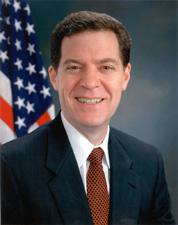
Mr. President, I rise with several of my colleagues to speak about the importance of the renewal of the Burma sanctions. I also wish to speak candidly about the Burmese Military Junta's continued…
Mr. President, I rise with several of my colleagues to speak about the importance of the renewal of the Burma sanctions. I also wish to speak candidly about the Burmese Military Junta's continued oppression of their people through rape, torture and other severe human rights abuses.
As the world's only imprisoned Nobel Peace Prize recipient, Aung San Suu Kyi continues to inspire the democracy movement and seek support for their peaceful cause. It has been reported that the National League for Democracy has collected more than 300,000 signatures on a petition calling for change in the country. Those who sign are actively putting their lives in danger by publicly stating that they seek democratic change and some 1,400 political prisoners are locked up for supporting human rights and democracy.
The human rights abuses in Burma continue daily against ethnic minorities, political activists and others who simply suffer as innocent bystanders. A 2002 Human Rights Watch report found that Burma has nearly 70,000 child soldiers in its army, more than any other country in the world. Up to 2 million people have been forced to flee the country as refugees and migrants and the burning of villages continues in eastern Burma, especially in the Karen and Karenni states. Last year I drew to your attention a report titled ``Shattering Silences'', in which the Karen Women's Organization carefully investigated and recorded the Burmese military regime's use of rape as a weapon of war against ethnic minority women, revealing a shockingly brutal and callous practice.
For the past two years, I have joined my colleagues in reauthorizing the Burmese Freedom and Democracy Act, which bans mainly textile and garment imports from Burma. When I chaired the East Asia and Pacific Subcommittee I held a hearing on this very subject. In that hearing I spoke about the importance of a multilateral isolation policy. I urge my colleagues to consider the strides that have been made in just two years of promoting such a policy.
In a major and important move, the European Union, in October 2004, followed the lead of the United States and significantly strengthened its sanctions on Burma, including a ban on investments in enterprises of the ruling regime and a strengthened visa ban. The EU also pledged to join the United States in opposing loans to Burma's regime from the International Monetary Fund and World Bank. The European Parliament passed a resolution calling ``on the UN Security Council to address the situation in Burma as a matter of urgency.'' Additionally, 289 members of the British parliament tabled a motion calling on the UN Security Council to address the situation in Burma.
After both houses of Congress passed resolutions in October 2004 calling on the UN Security Council to address the situation in Burma, the parliament of Australia followed suit. The Australian motion called on the government to, ``support the Burmese National League for Democracy's call for the UN Security Council to convene a special session to consider what further measures the UN can take to encourage democratic reform and respect for human rights in Burma.''
Support at the United Nations is growing as well. Burma was one of only a few countries on which resolutions were passed by the United Nations Commission on Human Rights. This was led by the European Union with strong support from the United States as well as support from Japan. The resolution strongly condemned what it called ``the systematic ongoing violation of human rights'' in Burma.
There has been unprecedented action on Burma within ASEAN. Whereas in the past ASEAN refused to even comment on what it deemed Burma's ``internal affairs'', many members of the organization are now publicly pressuring Burma to step aside as the chair of the association in 2006.
The tough approach maintained by the United States towards Burma, including import sanctions and a possible boycott of 2006 meetings, is for the first time encouraging many Asian nations to rethink whether the Burmese regime should assume the rotating chairmanship. There is widespread belief within the leadership of ASEAN countries that Burma has failed to deliver on its promises to the region.
In all of the above-mentioned instances, the strong stand of the United States has influenced countries around the world. The movement at the EU, UN, and within ASEAN is unprecedented. We must keep up the tough pressure by the United States.
I urge my colleagues to reauthorize the sanctions as a strong and clear signal that the United States will not support this brutal regime and their continued oppression of activists and minorities.
Mr. President, I rise with several of my colleagues to speak about the importance of the renewal of the Burma sanctions. I also wish to speak candidly about the Burmese Military Junta's continued…
Mr. President, I rise with several of my colleagues to speak about the importance of the renewal of the Burma sanctions. I also wish to speak candidly about the Burmese Military Junta's continued oppression of their people through rape, torture and other severe human rights abuses.
As the world's only imprisoned Nobel Peace Prize recipient, Aung San Suu Kyi continues to inspire the democracy movement and seek support for their peaceful cause. It has been reported that the National League for Democracy has collected more than 300,000 signatures on a petition calling for change in the country. Those who sign are actively putting their lives in danger by publicly stating that they seek democratic change and some 1,400 political prisoners are locked up for supporting human rights and democracy.
The human rights abuses in Burma continue daily against ethnic minorities, political activists and others who simply suffer as innocent bystanders. A 2002 Human Rights Watch report found that Burma has nearly 70,000 child soldiers in its army, more than any other country in the world. Up to 2 million people have been forced to flee the country as refugees and migrants and the burning of villages continues in eastern Burma, especially in the Karen and Karenni states. Last year I drew to your attention a report titled ``Shattering Silences'', in which the Karen Women's Organization carefully investigated and recorded the Burmese military regime's use of rape as a weapon of war against ethnic minority women, revealing a shockingly brutal and callous practice.
For the past two years, I have joined my colleagues in reauthorizing the Burmese Freedom and Democracy Act, which bans mainly textile and garment imports from Burma. When I chaired the East Asia and Pacific Subcommittee I held a hearing on this very subject. In that hearing I spoke about the importance of a multilateral isolation policy. I urge my colleagues to consider the strides that have been made in just two years of promoting such a policy.
In a major and important move, the European Union, in October 2004, followed the lead of the United States and significantly strengthened its sanctions on Burma, including a ban on investments in enterprises of the ruling regime and a strengthened visa ban. The EU also pledged to join the United States in opposing loans to Burma's regime from the International Monetary Fund and World Bank. The European Parliament passed a resolution calling ``on the UN Security Council to address the situation in Burma as a matter of urgency.'' Additionally, 289 members of the British parliament tabled a motion calling on the UN Security Council to address the situation in Burma.
After both houses of Congress passed resolutions in October 2004 calling on the UN Security Council to address the situation in Burma, the parliament of Australia followed suit. The Australian motion called on the government to, ``support the Burmese National League for Democracy's call for the UN Security Council to convene a special session to consider what further measures the UN can take to encourage democratic reform and respect for human rights in Burma.''
Support at the United Nations is growing as well. Burma was one of only a few countries on which resolutions were passed by the United Nations Commission on Human Rights. This was led by the European Union with strong support from the United States as well as support from Japan. The resolution strongly condemned what it called ``the systematic ongoing violation of human rights'' in Burma.
There has been unprecedented action on Burma within ASEAN. Whereas in the past ASEAN refused to even comment on what it deemed Burma's ``internal affairs'', many members of the organization are now publicly pressuring Burma to step aside as the chair of the association in 2006.
The tough approach maintained by the United States towards Burma, including import sanctions and a possible boycott of 2006 meetings, is for the first time encouraging many Asian nations to rethink whether the Burmese regime should assume the rotating chairmanship. There is widespread belief within the leadership of ASEAN countries that Burma has failed to deliver on its promises to the region.
In all of the above-mentioned instances, the strong stand of the United States has influenced countries around the world. The movement at the EU, UN, and within ASEAN is unprecedented. We must keep up the tough pressure by the United States.
I urge my colleagues to reauthorize the sanctions as a strong and clear signal that the United States will not support this brutal regime and their continued oppression of activists and minorities.
Mr. President, along with my colleagues from California, Arizona, Vermont, Kansas and Illinois, I come to the floor to introduce legislation to renew sanctions against the illegitimate and repressive…
Mr. President, along with my colleagues from California, Arizona, Vermont, Kansas and Illinois, I come to the floor to introduce legislation to renew sanctions against the illegitimate and repressive State Peace and Development Council (SPDC) in Burma.
I do not intend today to recount the litany of abuses committed by the military junta in Rangoon against the Burmese people and their neighbors given the extensive documentation of these violations by credible sources, including the U.S. Department of State, the United Nations and numerous nongovernmental organizations, my colleagues are undoubtedly familiar with many of the SPDC's heinous crimes--from the production and trafficking of illicit drugs, to the use of rape as a weapon of war against ethnic minority women and girls and the forced conscription of children into military service.
Instead, I urge my colleagues to act quickly--as we have in the past--in considering and passing the renewal of sanctions, which include an import ban on Burmese goods and visa restrictions on officials from the SPDC and affiliated organizations.
We must act quickly as the SPDC poses an immediate danger to the entire region, whether through the trafficking of illicit drugs, the unchecked spread of HIV/AIDS, or the forced movement of people who seek refuge and safety in neighboring countries.
There is no more definitive expression of support for democracy and human rights--for solidarity with those struggling for freedom--than an import ban. As Archbishop Desmond Tutu has eloquently pointed out on several occasions, sanctions worked in South Africa, and they can work in Burma, too.
We must act resolutely as the junta continues to imprison those who nonviolently struggle for freedom and justice, including Nobel laureate and Burmese democracy leader Daw Aung San Suu Kyi. Burma has a rising prisoner of conscience population, with over 1,300 political prisoners. I renew my call that Suu Kyi and other prisoners of conscience be immediately and unconditionally released.
Just last month, the European Union renewed sanctions against the SPDC that restrict members of the junta and their families from entering the EU, and bans EU companies from doing business in Burma. While I applaud this action, I call upon the EU and other multilateral organizations, including the United Nations, to do more in support of freedom in Burma.
Specifically, the EU, along with the United States, should not participate
in any Association of Southeast Asian Nations (ASEAN) related meetings should the SPDC assume chairmanship of that Association next year. It is worth noting that some ASEAN member states are now publicly discussing the junta's possible leadership with growing concern. This increased attention--and a growing chorus for political reform in Burma in the region by likeminded lawmakers--is also appreciated.
Finally, while I welcome UN Secretary-General Kofi Annan's personal comments in support of freedom in Burma, the time for talk is over. The UN must act on Burma--in New York. It is past time for the UN to discuss and debate the myriad threats Burma poses to the region. What are they waiting for?
The people of Burma must know that they have no better friends in this body than Senators Feinstein, McCain, Leahy, Brownback and Obama. There is an unofficial Burma Caucus in the Senate, and I am proud to stand shoulder-to-shoulder with my dedicated colleagues on this issue.
To them--and to Suu Kyi and all who nonviolently struggle for freedom in Burma--I say ``we will prevail.''
I ask unanimous consent that the text of the joint resolution be printed in the Record.
Mr. President, along with my colleagues from California, Arizona, Vermont, Kansas and Illinois, I come to the floor to introduce legislation to renew sanctions against the illegitimate and repressive…
Mr. President, along with my colleagues from California, Arizona, Vermont, Kansas and Illinois, I come to the floor to introduce legislation to renew sanctions against the illegitimate and repressive State Peace and Development Council (SPDC) in Burma.
I do not intend today to recount the litany of abuses committed by the military junta in Rangoon against the Burmese people and their neighbors given the extensive documentation of these violations by credible sources, including the U.S. Department of State, the United Nations and numerous nongovernmental organizations, my colleagues are undoubtedly familiar with many of the SPDC's heinous crimes--from the production and trafficking of illicit drugs, to the use of rape as a weapon of war against ethnic minority women and girls and the forced conscription of children into military service.
Instead, I urge my colleagues to act quickly--as we have in the past--in considering and passing the renewal of sanctions, which include an import ban on Burmese goods and visa restrictions on officials from the SPDC and affiliated organizations.
We must act quickly as the SPDC poses an immediate danger to the entire region, whether through the trafficking of illicit drugs, the unchecked spread of HIV/AIDS, or the forced movement of people who seek refuge and safety in neighboring countries.
There is no more definitive expression of support for democracy and human rights--for solidarity with those struggling for freedom--than an import ban. As Archbishop Desmond Tutu has eloquently pointed out on several occasions, sanctions worked in South Africa, and they can work in Burma, too.
We must act resolutely as the junta continues to imprison those who nonviolently struggle for freedom and justice, including Nobel laureate and Burmese democracy leader Daw Aung San Suu Kyi. Burma has a rising prisoner of conscience population, with over 1,300 political prisoners. I renew my call that Suu Kyi and other prisoners of conscience be immediately and unconditionally released.
Just last month, the European Union renewed sanctions against the SPDC that restrict members of the junta and their families from entering the EU, and bans EU companies from doing business in Burma. While I applaud this action, I call upon the EU and other multilateral organizations, including the United Nations, to do more in support of freedom in Burma.
Specifically, the EU, along with the United States, should not participate
in any Association of Southeast Asian Nations (ASEAN) related meetings should the SPDC assume chairmanship of that Association next year. It is worth noting that some ASEAN member states are now publicly discussing the junta's possible leadership with growing concern. This increased attention--and a growing chorus for political reform in Burma in the region by likeminded lawmakers--is also appreciated.
Finally, while I welcome UN Secretary-General Kofi Annan's personal comments in support of freedom in Burma, the time for talk is over. The UN must act on Burma--in New York. It is past time for the UN to discuss and debate the myriad threats Burma poses to the region. What are they waiting for?
The people of Burma must know that they have no better friends in this body than Senators Feinstein, McCain, Leahy, Brownback and Obama. There is an unofficial Burma Caucus in the Senate, and I am proud to stand shoulder-to-shoulder with my dedicated colleagues on this issue.
To them--and to Suu Kyi and all who nonviolently struggle for freedom in Burma--I say ``we will prevail.''
I ask unanimous consent that the text of the joint resolution be printed in the Record.

Mr. President, I rise today to re-introduce the Kinship Caregiver Support Act with my friend and colleague, Senator Olympia Snowe. I would like to acknowledge Senators Tim Johnson and Thad Cochran…
Mr. President, I rise today to re-introduce the Kinship Caregiver Support Act with my friend and colleague, Senator Olympia Snowe. I would like to acknowledge Senators Tim Johnson and Thad Cochran who are original co-sponsors of this legislation.
Over the weekend, America celebrated Mother's Day, a special day when we honored our mothers, whose love and nurturing sustains us throughout our lives. Mother's Day offers a wonderful opportunity to honor the millions of mothers who offer the gifts of love and nurturing for children in need. They give so much to the most vulnerable among us, and too often they go unnoticed and unthanked. Many of these women earn the title of Mother not through biology, but by their unconditional love for children.
In New York alone, more than 500,000 children are cared for by non- parent relative caregivers. Nationwide, grandparents head 4.5 million households and other relatives head another 1.5 million households. Linda James of Rochester, NY is one such mother. She became a second- time mother at the age of 41 when her granddaughter Jasmine was born prematurely and her daughter, Jasmine's mother, was unable to care for her daughter. When the hospital needed authorization to perform an emergency operation on tiny Jasmine, Linda stepped in and assumed responsibility. Since that day, Linda has been Jasmine's only resource for stability and happiness.
Over time, Linda, like many relative caregivers, faced many challenges as she tried to raise Jasmine. Simple tasks such as enrolling her in school and securing health insurance were daunting because she had trouble finding basic information about how to approach the process. Linda made many sacrifices to ensure Jasmine's success, even taking a leave of absence from her job so she could give Jasmine the constant medical attention she required, but she often felt like the cards were stacked against her. Emotionally, physically, and financially, the experience of raising little Jasmine was nothing short of exhausting.
Kinship caregivers like Linda are often the best chance for a loving and stable childhood for the children in their care, but Federal law does little to support these families. In fact, unless a child's parents relinquish their parental rights, and the relative caregivers become adoptive parents, kinship caregivers are no different from strangers in the eyes of Federal law.
In these sad cases, children often linger in foster care unnecessarily while a stable, permanent, loving option is overlooked.
That is why Senator Snowe and I are introducing The Kinship Caregiver Support Act. This proposal will provide relative caregivers with the information and assistance they need to thrive as non-traditional families. This bill will link kinship families with localized information about the services and support available to them. By creating one-stop centers for kinship caregivers, this bill will provide essential support that will keep these families afloat. This legislation will also allow States to use their Federal foster care funds to provide kinship caregiver assistance payments for children languishing in foster care while a kinship caregiver stands ready to step in.
At this time of year, when we remember and honor our mothers, let us also remember the contributions that unconventional mothers make, mothers who each and every day go above and beyond the call of duty to help some of the most vulnerable of our children.
Show 10 more
I thank Senators McConnell and Feinstein for their leadership in renewing the sanctions contained in the 2003 Burmese Freedom and Democracy Act. I am proud to cosponsor this legislation. As we renew…
I thank Senators McConnell and Feinstein for their leadership in renewing the sanctions contained in the 2003 Burmese Freedom and Democracy Act. I am proud to cosponsor this legislation.
As we renew the sanctions, I note with sadness that the situation inside Burma grows ever dimmer. The military junta in that country controls the population through a campaign of violence and terror, and the lack of freedom and justice there is simply appalling. The Burmese regime has murdered political opponents, used child soldiers, and forced labor, and employed rape as a weapon of war. Political activists remain in prison, including elected members of Parliament, and last month the courageous woman Aung San Suu Kyi celebrated her 60th birthday in captivity. Her resolve in the face of tyranny inspires me and I believe every individual who holds democracy dear. Because she stands for freedom, this heroic woman has endured attacks, arrest, captivity, and untold sufferings at the hands of the regime. Burma's rulers fear Aung San Suu Kyi because of what she represents: peace, freedom, and justice for all Burmese people. The thugs who run the country have tried to stifle her voice, but they will never extinguish her moral courage. Her leadership and example shine brightly for the millions of Burmese who hunger for freedom and those of us outside Burma who seek justice for its people.
I know my friend from Kentucky has been very involved in this issue. I ask unanimous consent the Senator from Kentucky and I engage in a brief colloquy.
I again thank my friend and colleague from Kentucky for his commitment to democracy and freedom in Burma in general and his continuing advocacy on behalf of this Nobel Prize winner and truly great citizen of the world.
One of the issues I would like to discuss with the Senator from Kentucky is the fact that a few years ago, Burma was allowed into ASEAN on the premise that there would be some kind of progress made and by being part of this organization they would seek some kind of legitimacy.
Now, apparently, next year ASEAN is scheduled to meet in Burma. I wondered about the Senator's thoughts about that. Maybe we should give that some more attention as the time approaches.
I thank my friend for his continued sponsorship for and renewal of the Burmese Freedom and Democracy Act. I believe it has had an effect inside Burma. I do believe the people who are in prisons and mistreated, as well as San Suu Kyi herself, are aware of our efforts on their behalf.
I thank my friend from Kentucky for his continued efforts on behalf of these people. I believe we should continue to ask that one day they will achieve their freedom--not if, but when. I think the Senator's efforts and our passage of this legislation will help get them there. I look forward to exploring other options and ways we can put continued pressure on this bunch of thugs to at least allow this brave woman a chance to live some semblance of a normal life. She certainly deserves it.
Mr. President, I know my friend from Kentucky and the Senator from California and all Members will renew our assurance to the people of Burma and their brave leader that we will not rest and we will not stop until they achieve freedom and democracy, which is a God- given right.
I thank my colleague from Kentucky.

Mr. President, I ask unanimous consent that the Committee on Agriculture, Nutrition, and Forestry be authorized to conduct a hearing during the session of the Senate at 10 a.m. on Tuesday, June 28,…
Mr. President, I ask unanimous consent that the Committee on Agriculture, Nutrition, and Forestry be authorized to conduct a hearing during the session of the Senate at 10 a.m. on Tuesday, June 28, 2005, in SR-328A, the Russell Senate Office Building. The purpose of this hearing will be to review the Agricultural Risk Protection Act of 2000 and related crop insurance issues.
Mr. President, I ask unanimous consent that the Committee on Finance be authorized to meet in open Executive Session during the session on Tuesday, June 28, 2005, at 9 a.m. to consider favorably reporting S. 1307, the Dominican Republic-Central America-United States Free Trade Agreement Implementation Act, and S.J. Res. 18, a joint resolution approving the renewal of import restrictions contained in the Burmese Freedom and Democracy Act of 2003.
Mr. President, I ask unanimous consent that the Committee on Finance be authorized to meet during the session on Tuesday, June 28, 2005, at 10 a.m., to hear testimony on ``Medicaid Waste, Fraud and Abuse: Threatening the Health Care Safety Net.''
Mr. President, I ask unanimous consent that the Commission on Indian Affairs be authorized to meet on Tuesday, June 28, 2005, at 10 a.m. in Room 106 of the Dirksen Senate Office Building to conduct an oversight hearing on the Regulation of Indian Gaming.
Mr. President, I ask unanimous consent that the Committee on Veterans' Affairs be authorized to meet during the session of the Senate on Tuesday, June 28, 2005, for a committee hearing titled ``Emergency Hearing to Examine the Shortfall in VA's Medical Care Budget.''. The hearing will take place in Room 418 of the Russell Senate Office Building at 10:30 a.m.
Mr. President, I ask unanimous consent that the Special Committee on Aging be authorized to meet, Tuesday, June 28, 2005, from 2:30 p.m.-5 p.m. in Dirksen G50 for the purpose of conducting a hearing.
Mr. President, I ask unanimous consent that the Subcommittee on National Parks be authorized to meet during the session of the Senate on Tuesday, June 28th, 2005, at 10 a.m.
The purpose of the hearings is to receive testimony on the following bills: S. 206, a bill to designate the Ice Age Floods National Geologic Trail, and for other purposes; S. 556, a bill to direct the Secretary of the Interior and the Secretary of Agriculture to jointly conduct a study of certain land adjacent to the Walnut Canyon National Monument in the State of Arizona; S. 588, a bill to amend the National Trails System Act to direct the Secretary of the Interior and the Secretary of Agriculture to jointly conduct a study on the feasibility of designating the Arizona trail as a national scenic trail or a national historic trail; and S. 955, a bill to direct the Secretary of the Interior to conduct a special resource study to determine the suitability and feasibility of including in the national park system certain sites in Williamson County, Tennessee, relating to the battle of Franklin.
Mr. President, I ask unanimous consent that the Subcommittee on Oversight of Government Management, the Federal Workforce, and the District of Columbia be authorized to meet on Tuesday, June 28, 2005 at 10 a.m. for a hearing entitled, ``Access Delayed: Fixing the Security Clearance Process.''

Mr. President, the bill imposes an excise tax, equal to 100 percent of the acquisition costs, on the taxable acquisition of any interest in an applicable insurance contract. An applicable insurance…
Mr. President, the bill imposes an excise tax, equal to 100 percent of the acquisition costs, on the taxable acquisition of any interest in an applicable insurance contract. An applicable insurance contract is any life insurance, annuity or endowment contract in which both an applicable exempt organization and any person that is not an applicable exempt organization have, directly or indirectly, held an interest in the contract (whether or not the interests are held at the same time).
An applicable exempt organization generally includes an organization that is exempt from Federal income tax by reason of being described in section 501(c)(3) (including one organized outside the United States), a government or political subdivision of a government, and an Indian tribal government.
The bill provides that an interest in an applicable insurance contract includes any right with respect to the contract, whether as an owner, beneficiary, or otherwise. An indirect interest in a contract includes an interest in an entity that, directly or indirectly, holds an interest in the contract.
Exceptions apply under the bill. An exception is provided if each person (other than the exempt organization) with an interest in the contract has an insurable interest in the insured person independent of any interest of the exempt organization. Another exception is provided if each person, other than an exempt organization, has an interest solely as a named beneficiary. An exception is also provided for a person, other than the exempt organization, with an interest as a trust beneficiary, if the beneficiary designation is purely gratuitous, or with an interest as a trustee who holds in a fiduciary capacity for an applicable exempt organization or another permitted beneficiary.
The bill provides reporting rules requiring an applicable exempt organization or other person that makes a taxable acquisition of an applicable insurance contract to file a return showing required information. A statement is required to be furnished to each person whose taxpayer identification information is required to be reported on the return. Penalties apply for failure to file the return or furnish the statement, including, in the case of intentional disregard of the return filing requirement, a penalty equal to the amount of the excise tax that has not been paid with respect to the items required to be included on the return.
The bill is effective for contracts issued after May 3, 2005. The bill requires reporting of existing life insurance, endowment and annuity contracts issued on or before that date, in which an applicable exempt organization holds an interest and which would be treated as an applicable insurance contract under the bill. This reporting is required within one year after the date of enactment.
Mr. President, today, I am proposing to strike the consumptive demand clause from Section 307 of the Tariff Act of 1930 (19 U.S.C. 1307). Section 307 prohibits the importation of any product or good…
Mr. President, today, I am proposing to strike the consumptive demand clause from Section 307 of the Tariff Act of 1930 (19 U.S.C. 1307). Section 307 prohibits the importation of any product or good produced with forced or indentured labor including forced or indentured child labor.
The consumptive demand clause creates an exception to this prohibition. Under the exception, if a product is not made in the United States, and there is a demand for it, then a product made with forced or indentured child labor may be imported into this country.
Let us be clear: forced or indentured labor means work which is extracted from any person under the menace of penalty for nonperformance and for which the worker does not offer himself voluntarily. Let us be really clear: this means slave labor. In the case of children, it means child slavery.
Some examples of goods that are made with child slave labor include cocoa beans, hand-knotted carpets, beedis, which are small Indian cigarettes, soccer balls and cotton.
Throughout my Senate career, I have worked to reduce the use of forced child labor worldwide.
In 2003, my staff was invited by Customs to meet with field agents on Section 307 to discuss what appropriations were needed to enforce the statute. At the meeting, the field agents reported that the consumptive demand clause was an obstacle to their ability to enforce the law that is supposed to prevent goods made with slave labor from being imported into the United States.
The consumptive demand clause is outdated. Since this exception was enacted in the 1930s, the U.S. has taken numerous steps to stop the scourge of child slave labor. Most notably, the United States has ratified International Labor Organization's Convention 182 to Prohibit the Worst forms of Child Labor. Currently, 152 other countries have also ratified this ILO Convention.
Retaining the consumptive clause contradicts our international commitments to eliminate abusive child labor. Maintaining the consumptive demand clause says to the world that the United States justifies the use of slave labor, if US consumers need an item not produced in this country. There should be no exception to a fundamental stand against the use of slave labor. it is my hope that Congress will act.
I ask unanimous consent that the text of the bill be printed in the Record.

Mr. President, the Pension Fairness and Full Disclosure Act we are introducing today is urgently needed to end the nightmare that the current pension system is becoming for millions of families…
Mr. President, the Pension Fairness and Full Disclosure Act we are introducing today is urgently needed to end the nightmare that the current pension system is becoming for millions of families across the Nation.
Thousands of flight attendants and machinists from United Airlines have suffered heavily in pay and job security in recent years, and now they're losing their pensions, too. Yet corporate CEO's are still receiving bonuses worth millions of dollars a year.
This nightmare is happening to workers all across America. Companies are cutting employees' pensions by switching to cash balance plans, or even going into bankruptcy. But executive retirement is still going through the roof. A recent report found over 20 percent of America's top 500 largest companies have promised pensions worth more than $1 million a year for their CEOs.
President Bush has said that what is good for the top floor is good for the shop floor. It's wrong for it to be business as usual on the top floor when so much pain is spreading on the shop floor.
Polaroid in Massachusetts filed for bankruptcy in 2001 and terminated its pension plan in 2002. Its pension plan was underfunded by over $300 million dollars. Thousands of retirees had their benefits cut when the Pension Benefit Guaranty Corporation took over. Yet the principal executives of the company received millions of dollars in bonuses. Last week, the company was sold again, and the chairman and CEO received golden parachutes of nearly $10 million each.
The bill we are introducing will end that injustice. It prohibits companies from lining executives' pockets and ignoring commitments to rank-and-file workers. It will require companies to inform employees about executive compensation.
These changes are long overdue. It's an issue of basic fairness, and only Congress can solve this.
I see my friend and colleague from Arizona on the floor. I understand by previous agreement we are voting at 12:20, so I am glad to divide the time that is remaining. Fine. I will proceed then for my…
I see my friend and colleague from Arizona on the floor. I understand by previous agreement we are voting at 12:20, so I am glad to divide the time that is remaining.
Fine. I will proceed then for my 10 because I understand there will be adequate time for the others.
Mr. President, I ask unanimous consent my statement appear at an appropriate part of the debate on this issue.
(The remarks of Mr. Kennedy are printed in today's Record under ``Morning Business.'')
Mr. President, on the matter before the Senate today, the Burma sanctions, I want to point out that this legislation addresses one of the worst human rights tragedies in the world, the atrocious acts of the Burmese junta. They suppress dissent. They jail opponents. They deny the basic rights of free speech, freedom of religion, and freedom of assembly, and they have had Aung San Suu Kyi under house arrest for many years. So the action we take today is appropriate.
I am proud Massachusetts has led the way to encourage sanctions against this abusive government. In 1996, the Massachusetts legislature adopted a law barring State agencies from doing business with companies that do business with Burma. It was the first step toward national action.
I hope our Senate colleagues will support this measure here today.
Mr. President, I ask unanimous consent that at 11 a.m. in the morning on Tuesday, the Senate proceed to the consideration of S.J. Res. 18, the Burma import restrictions bill, the joint resolution be…
Mr. President, I ask unanimous consent that at 11 a.m. in the morning on Tuesday, the Senate proceed to the consideration of S.J. Res. 18, the Burma import restrictions bill, the joint resolution be read a third time and placed back on the Senate calendar. I further ask consent that the Senate then proceed to the immediate consideration of H.J. Res. 52, the House-passed Burma resolution, and there then be 1 hour and 20 minutes for debate, with the following Senators in control of the time: myself, 20 minutes; Senator Baucus, 20 minutes; Senator Feinstein, 20 minutes; Senator Lautenberg, 20 minutes. I further ask consent that following the use or yielding back of time, the joint resolution be read a third time and the Senate proceed to a vote on the resolution with no intervening action or debate.
Mr. President, I ask unanimous consent that at 11 a.m. in the morning on Tuesday, the Senate proceed to the consideration of S.J. Res. 18, the Burma import restrictions bill, the joint resolution be…
Mr. President, I ask unanimous consent that at 11 a.m. in the morning on Tuesday, the Senate proceed to the consideration of S.J. Res. 18, the Burma import restrictions bill, the joint resolution be read a third time and placed back on the Senate calendar. I further ask consent that the Senate then proceed to the immediate consideration of H.J. Res. 52, the House-passed Burma resolution, and there then be 1 hour and 20 minutes for debate, with the following Senators in control of the time: myself, 20 minutes; Senator Baucus, 20 minutes; Senator Feinstein, 20 minutes; Senator Lautenberg, 20 minutes. I further ask consent that following the use or yielding back of time, the joint resolution be read a third time and the Senate proceed to a vote on the resolution with no intervening action or debate.

I announce that the Senator from Louisiana (Ms. Landrieu), and the Senator from West Virginia (Mr. Rockfeller), are necessarily absent.
I announce that the Senator from Louisiana (Ms. Landrieu), and the Senator from West Virginia (Mr. Rockfeller), are necessarily absent.

Mr. President, I suggest the absence of a quorum, and ask unanimous consent that the time run equally against all participants.
Mr. President, I suggest the absence of a quorum, and ask unanimous consent that the time run equally against all participants.
Bill Text
2 versions available
        [Congressional Bills 109th Congress]
[From the U.S. Government Publishing Office]
[S.J. Res. 18 Reported in Senate (RS)]

Calendar No. 158
109th CONGRESS
1st Session
S. J. RES. 18

[Report No. 109-101]

Approving the renewal of import restrictions contained in the Burmese
Freedom and Democracy Act of 2003.

_______________________________________________________________________

IN THE SENATE OF THE UNITED STATES

May 10, 2005

Mr. McConnell (for himself, Mrs. Feinstein, Mr. McCain, Mr. Leahy, Mr.
Brownback, Mr. Obama, Ms. Murkowski, Mr. Alexander, Mr. Sarbanes, Mr.
Allard, Mr. Allen, Mr. Bunning, Mr. Burns, Mr. Chambliss, Mr. Cochran,
Mr. DeWine, Mrs. Dole, Mr. Domenici, Mr. Ensign, Mr. Frist, Mr. Hagel,
Mr. Kyl, Mr. Lugar, Mr. Santorum, Mr. Smith, Mr. Voinovich, Mr.
Bennett, Mr. Burr, Mr. Durbin, Mrs. Boxer, Mr. Martinez, Mr. Corzine,
Ms. Mikulski, Mr. Kohl, Mr. Feingold, Mr. Bingaman, Mr. Kerry, Mrs.
Clinton, Mr. Nelson of Nebraska, Ms. Collins, Mr. Wyden, Mr. Kennedy,
Mr. Lieberman, Mr. Salazar, Mr. Sununu, and Mr. Chafee) introduced the
following joint resolution; which was read twice and referred to the
Committee on Finance

July 12, 2005

Reported by Mr. Grassley, without amendment

_______________________________________________________________________

JOINT RESOLUTION

Approving the renewal of import restrictions contained in the Burmese
Freedom and Democracy Act of 2003.

Resolved by the Senate and House of Representatives of the United
States of America in Congress assembled, That Congress approves the
renewal of the import restrictions contained in section 3(a)(1) of the
Burmese Freedom and Democracy Act of 2003.
Calendar No. 158

109th CONGRESS

1st Session

S. J. RES. 18

[Report No. 109-101]

_______________________________________________________________________

JOINT RESOLUTION

Approving the renewal of import restrictions contained in the Burmese
Freedom and Democracy Act of 2003.

_______________________________________________________________________

July 12, 2005

Reported without amendment