Approving the renewal of import restrictions contained in the Burmese Freedom and Democracy Act of 2003.

Legislative Activity
Stay on top of the latest movement without scrolling through every action
Became Public Law No: 109-39.
July 27, 2005
View full timeline
Introduced in House
May 26, 2005
Referred to the House Committee on Ways and Means.
May 26, 2005
Mr. Shaw moved to suspend the rules and pass the resolution.
June 21, 2005 • 10:49 AM
Considered under suspension of the rules. (consideration: CR H4813-4817)
June 21, 2005 • 10:50 AM
DEBATE - The House proceeded with forty minutes of debate on H.J. Res. 52.
June 21, 2005 • 10:50 AM
At the conclusion of debate, the Yeas and Nays were demanded and ordered. Pursuant to the provisions of clause 8, rule XX, the Chair announced that further proceedings on the motion would be postponed.
June 21, 2005 • 11:11 AM
Considered as unfinished business. (consideration: CR H4858-4859)
June 21, 2005 • 4:46 PM
Passed/agreed to in House: On motion to suspend the rules and pass the resolution Agreed to by the Yeas and Nays: (2/3 required): 423 - 2 (Roll no. 291).(text: CR H4813)
June 21, 2005 • 4:53 PM
On motion to suspend the rules and pass the resolution Agreed to by the Yeas and Nays: (2/3 required): 423 - 2 (Roll no. 291). (text: CR H4813)
June 21, 2005 • 4:53 PM
Motion to reconsider laid on the table Agreed to without objection.
June 21, 2005 • 4:53 PM
Received in the Senate. Read twice. Placed on Senate Legislative Calendar under General Orders. Calendar No. 135. Pursuant to P.L. 108-61, section 9 (c)(2)(B), incorporating 19 U.S.C. 2192(f)(1)(A)(ii).
June 22, 2005
Measure laid before Senate by unanimous consent. (consideration: CR S8440-8446)
July 19, 2005
Passed Senate without amendment by Yea-Nay Vote. 97 - 1. Record Vote Number: 191.
July 19, 2005
Message on Senate action sent to the House.
July 19, 2005
Cleared for White House.
July 19, 2005
Presented to President.
July 22, 2005
Signed by President.
July 27, 2005
Became Public Law No: 109-39.
July 27, 2005
Voting History
2 votes recorded • Roll call available
Floor Debate
24 membersWhat members said about H.J.Res. 52 on the floor
 MB
MB PH
PH JH
JH ECS
ECS DF+19
DF+19
Floor Debate
24 membersWhat members said about H.J.Res. 52 on the floor
Mr. President, I ask unanimous consent that the order for the quorum call be rescinded. Mr. President, a little more than 2 years ago, thugs working for the military strongmen of Burma attacked Aung…
Mr. President, I ask unanimous consent that the order for the quorum call be rescinded.
Mr. President, a little more than 2 years ago, thugs working for the military strongmen of Burma attacked Aung San Suu Kyi and members of the opposition party that she leads, the National League for Democracy. The Government put Suu Kyi into what they call ``protective custody.'' She remains under house arrest to this day.
In response to this heinous attack, America banned imports from Burma. We in Congress believed something had to be done. In 2002, those imports were valued at $350 million, mostly in garments.
In the autumn of 2003, Burmese Prime Minister Nyunt, who had opposed the attack on the opposition party, called for a seven-point road map to Democracy.
But the road map led to nowhere. And a rigged national convention broke down when opposition representatives rightly decided to boycott it.
The strongmen of Burma then removed Prime Minister Nyunt from his post. They placed him under house arrest, for supposed corruption. And they replaced him with a hard-line general, whom many believe to have planned the attack.
Where does this leave Burma? In short, the ruling generals have consolidated their grip on power. And government security forces continue to inflict innumerable human rights violations on the Burmese people.
This is a tragic situation. The long-suffering people of Burma deserve to be rid of the criminals who purport to represent them.
But what is the best way to do that?
When the Senate first considered banning Burmese imports, Senator Grassley and I worked hard to ensure two key conditions.
First, we made sure that Congress would retain its constitutionally vested power to impose and evaluate trade sanctions. We should never write the President a blank check.
Second, we made sure that the law would direct the administration to work with other nations, to make these sanctions work. Unilateral sanctions seldom work. Unilateral sanctions typically harm innocent citizens far more than the odious rulers against whom they are aimed.
Sadly, events on the ground in Burma suggest that these unilateral sanctions have proved no exception to the rule. The sanctions have harmed innocent citizens. And the odious rulers remain in place.
The U.S. ban on Burmese imports caused a number of Burmese garment factories to close. Tens of thousands of garment workers, overwhelmingly women, lost their jobs. And more Burmese women, with nowhere else to go, turned to prostitution.
Today, the Burmese garment industry has to some extent rebounded, sustained by new orders from Canada, Europe and Latin America.
U.S. sanctions against Burma might have been more effective if other countries would join us in isolating the Burmese regime. But that has not happened.
To the contrary, China has embraced the Burmese government. China has invested in Burma's energy sector. And China has extended generous aid packages to Burma, including a $356 million aid package that more than makes up for Burma's loss of America's import market.
Thailand and India share a long border with Burma. But Thailand and India have their own ideas about how to deal with Burma's military rulers. And those ideas do not include joining U.S. sanctions.
And ASEAN member countries continue to welcome Burma to their economic summits.
This is not a record of success.
Nevertheless, I will vote to renew the sanctions on Burma for another year. But I do so with an eye toward next year, when the sanctions automatically expire.
I know that most of my colleagues will vote reflexively to renew these import sanctions. Boycotting Burmese imports allows us to express our collective disapproval of the awful regime running Burma. But I hope that my colleagues will take a moment to consider whether a boycott is the best thing for the Burmese people.
Next year, if my colleagues seek to extend the Burmese import sanctions, Congress will have to enact new legislation to do so. At that time, I hope that we can have a more extensive debate on how best we can help the cause of freedom, and how best we can help the Burmese people.
Mr. President, I note the presence of the Senator from California on the floor, a leader on this issue.
I yield the floor.
Mr. President, how much time remains in control of the Democratic Senators on this resolution?
Mr. President, I ask unanimous consent that 10 minutes of that time be reserved for Senator Kennedy and that I may use such of the remaining Democratic time as I consume for a statement as in morning business.
Mr. President, 600 years ago this month, a great fleet of more than 300 ships lifted anchor at Nanjing, China, on the first of 7 voyages of trade and discovery. The Chinese fleet counted the largest wooden ships ever built, some with nine masts, massive keels of teak, and decks 400 feet long--you can imagine, longer than a football field.
The Ming Emperor gave his nearly 7-foot tall admiral orders to sail on July 11, 1405, nearly a century before Christopher Columbus and Vasco da Gama left Europe. And all of those European explorers' ships could have fit on a single deck of one of the Chinese treasure ships. The 36-foot rudder of one of the ships stood almost as tall as Columbus' flagship, the Nina, was long.
The Ming fleet carried a crew of nearly 28,000, with a medical officer for every 150 souls on board. The fleets carried more than a million tons of silk, porcelain, copper coins, and spices to trade for the riches of the world, on to what the Chinese called the Western Ocean--what we call the Indian Ocean. They reached Sumatra, Ceylon, and India. They went to the Arabian peninsula and Africa's Swahili coast. They made a side trip to Mecca.
At each port, ships with colorful prows delivered platoons of Chinese merchants, ready to do business. In Siam--now Thailand--they acquired sandalwood, peacocks, and cardamom. In Indonesia, they acquired tin. In Oman, they traded porcelain for frankincense, myrrh, and aloe. The Sultan of Aden gave them zebras, lions, and ostriches. In east Africa, they acquired a giraffe.
In 1451, one of the fleet's interpreters would write a memorial of the voyages, exclaiming:
How could there be such diversity in the world?
In Sri Lanka, the admiral engraved a granite slab in Chinese, Tamil, and Persian, seeking blessing from Buddha, Siva, and Allah alike.
In the south Chinese harbor of Changle, the admiral inscribed on a pillar:
[We] have recorded the years and months of the voyages . .
. in order to leave [the memory] forever.
He listed his destinations, ``altogether more than 30 countries large and small.''
He wrote of his efforts:
. . . to manifest the transforming power of virtue and to
treat distant people with kindness.
He wrote:
We have traversed more than 100,000 li--
That is 40,000 miles--
of immense water spaces and have beheld in the oceans huge
waves like mountains rising sky-high, and we have set eyes on
. . . regions far away hidden in a blue transparency of light
vapors. . . .
Today, approximately 600 years later, Chinese officials will proudly recall the voyages of the Ming fleet. They will observe that Ming China amassed one of the most powerful naval forces ever assembled, and they will pointedly note that China used the fleet not for conquest but for business and exploration, trade and diplomacy.
Three weeks ago, on June 24, 2005, a fleet of Chinese-made cars began rolling onto a ship in Guangzhou, China, bound for Europe. The fleet counted cars made at a gleaming new Honda factory on the outskirts of the sprawling city of 12 million souls near Hong Kong.
As reporter Keith Bradsher of the New York Times described:
At the new Honda factory . . . white robots poke and crane
their long, vulture-like heads into gray, half-completed car
bodies to perform 2,100 of the 3,000 welds needed to assemble
each car. Workers in white uniforms and gray caps complete
the rest of the welds, working as quickly as workers in
American factories--but earning roughly $1.50 an hour in
wages and benefits, compared to the $55 an hour for General
Motors and Ford factories in the United States.
In America, General Motors and Ford struggle to pay high health care costs for autoworkers with an average age of nearly 50. In China, most of Honda's autoworkers are in their twenties. They do not go to the doctor much, and when they do, Chinese doctors charge less than $5 for an office visit and a few stitches.
China's manufacturing companies are rapidly building wealth, and they have begun to trade that wealth for the riches of the world, across the Pacific Ocean.
At airports throughout the world, airplanes with colorful tail wings deliver platoons of Chinese merchants, ready to do business. In May, the Chinese company Lenovo acquired the personal computer division of IBM. In June, a Chinese company bid $2.25 billion for the Iowa-based appliance company Maytag. Also in June, China National Offshore Oil Corporation bid $18.5 billion for Los Angeles-based Unocal, whose ``76'' marketing symbol is one of the most recognized and enduring corporate symbols in America. And all this buying pales next to the acquisition by China's central bank of $230 billion of American Government debt.
China is pursuing trade agreements with India, Australia, New Zealand, and Thailand. China is reaching out to the 10 countries of the Association of Southeast Asian Nations, known as ASEAN.
The Chinese are visiting the rest of Asia in greater numbers than before. They bring with them money and optimism about the ``new China.'' The new China has gleaming skyscrapers, modern, productive industries, and a rapidly developing infrastructure.
China has launched a major charm offensive across Asia to promote itself as a desirable place to visit, to invest, and to live. Through ventures such as China Radio International, worldwide television broadcasts, and Chinese language and cultural centers across Asia, China advertises itself as an attractive destination. Increasingly, Asians are forgoing trips to Los Angeles, traveling to Beijing instead. For many young Asians, the gleaming lights of Shanghai illuminate the new Manhattan.
Already 90 million people in China's coastal cities have access to the Internet, and the Chinese own more cell phones than any other people in the world. There are more cell phones in China than there are people in the United States.
China has the world's largest population, the fastest growing economy, the second largest foreign currency reserves, and the third largest trade. China creates one-fifth of world trade growth.
In 2004, America exported 2\1/2\ times more to China than it did in 1999, 5 years earlier. My State of Montana exported 11\1/2\ times more. But America's merchandise trade deficit with China has more than doubled in the same time. China accounted for a quarter of America's $652 billion trade deficit last year.
As Tom Friedman writes in his book, ``The World is Flat,'' which I recommend for everyone:
[W]hat is really scary is that China is not attracting so
much global investment by simply racing everyone to the
bottom. . . . China's long-term strategy is to outrace
America and the EU countries to the top, and the Chinese are
off to a good start.
China is amassing one of the most powerful economies ever assembled. So America must ask: Will the result be as benign as the voyages of the Ming treasure fleet 600 years ago?
Asia accounts for one-third of the world economy. It is the world's most economically dynamic region. And America needs to pay attention. This administration has launched 20 free-trade agreements, but only one has been in Asia--with Thailand.
Instead of embracing ASEAN, this administration has largely ignored it. The Government has ceded the initiative in Southeast Asia to China. That is how ASEAN views the recent decisions of Secretary of State Rice to skip an important ASEAN gathering later this month. U.S. Secretaries of State have traditionally attended that conference. And this administration has failed to use the Asia Pacific Economic
Cooperation, otherwise known as APEC, as a platform for trade integration. Rather, this administration has turned the organization into little more than a venue to discuss security options.
Since 2000, this administration has negotiated bilateral and regional trade agreements at a furious pace, but most of the agreements the Government has been negotiating offer little real value to America's commercial interests. Why? Because the Government is choosing trading partners more for foreign policy reasons than it is for commercial reasons.
The U.S. Trade representative has finite resources. To be effective, to deliver the greatest benefits to Americans, our Government must direct their efforts where they are most likely to have the greatest effects.
In 1962, Congress created the Special Trade Representative--the predecessor of the U.S. Trade Representative--to remove trade policy from the State Department precisely so that commercial interests rather than foreign policy interests would drive American trade policy. I don't think that has happened. I believe trade shots are called by the White House.
We must focus trade policy efforts where they promise the greatest return for our ranchers, businesses, and our workers. First and foremost, we need to devote more effort to the ongoing Doha round of WTO negotiations. From all appearances, the negotiations are dragging. The pace of progress will have to improve considerably to meet the goal of an agreement by the end of 2006, and that will require a substantial commitment of U.S. leadership and resources.
We need to look more to Asia for bilateral agreements as well. For example, South Korea is our seventh largest trading partner, with a two-way trade totaling $70 billion. Korea has promised real reforms in its agricultural markets. It has liberalized investment restrictions and lowered merchandise tariffs. I have met with Korean trade officials on several occasions, and they are serious about reforms.
Regional trade agreements in Asia, perhaps under the auspices of APEC, also hold promise. APEC's 21-member economies account for a third of the world's population and about three-fifths of world production. American exporters will get a major boost from a regional free-trade agreement on this scale.
We also need to seek out further sectoral agreements such as the WTO's hugely successful Information Technology Agreement negotiated largely by America, Japan, and Singapore.
We should launch an initiative in the advanced medical equipment sector. Asia has a rapidly aging population, particularly in Japan, Korea, and China. This demographic shift translates into growing demand for advanced medical equipment. America already exports half a billion dollars a year in medical devices to China and Hong Kong, and these exports are expanding 12 percent a year.
We need to do a better job of enforcing our existing trade agreements.
In China, piracy--the theft of American copyrights and patents--is at epidemic levels. In the past 2 years, companies from General Motors to Sony to Cisco have complained that Chinese have stolen their intellectual property. More than 90 percent of software in China is stolen. American innovators are losing billions of dollars a year.
Combating piracy would help the American economy far more than further agreements with countries whose entire economies are but a fraction the size of our losses to piracy alone. I need only mention CAFTA. CAFTA is a blip compared to other commercial interests we should be pursuing.
China also maintains a troubling currency peg. But retaliatory tariffs are not the answer. Tariffs would violate our WTO commitments. Tariffs would inflame already difficult trade relations with China, invite Chinese retaliation in other areas, and make Chinese imports nearly a third more expensive. Tariffs would hurt American consumers who would pay more for many of the goods that they buy. And tariffs would hurt U.S. companies who rely on Chinese inputs to develop their own products.
Having said that, China's currency peg is a problem. It distorts world markets and hurts both America and China itself. China needs to revise its currency policy.
While issues with China dominate the headlines, there are other enforcement priorities, including in our own hemisphere. In Brazil for example, the government recently forced an American pharmaceutical company to reduce its price for one of its medicines. It did so by threatening to break its promise to protect the American company's patent, and to let a state-owned company make generic copies of the medicine, an outrage.
This is blackmail, pure and simple. And it is illegal. This sort of coercion has no place in our trade relations. It hurts our companies and our workers. And it dampens the incentive to create new and innovative pharmaceuticals.
Our problems with Brazil go beyond just pharmaceuticals. Until recently, Brazil banned the sale of genetically engineered seeds for use in agriculture. These are the kind of high-tech seeds American companies like Monsanto and Pioneer Hi-Bred develop and sell all over the world--but not in Brazil. How odd then, that roughly 30 percent of Brazil's soybeans are grown with genetically engineered seeds. The figure is nearly 90 percent in Brazil's southernmost state of Rio Grande do Sul.
How can this be? Theft. These seeds were smuggled in from neighboring countries where they are allowed, and planted illegally. They were not purchased. They were stolen.
And just like piracy in China, piracy in Brazil costs American industries dearly. Last year, American companies lost $930 million in Brazil because of piracy of audiovisual goods. Some estimate that three-quarters of these audiocassettes sold in Brazil are pirated.
Of course we cannot launch a full-fledged WTO dispute to address each and every foreign trade barrier. And the U.S. Trade Representative often rightly attempts to resolve many of these issues through negotiation and other means.
But there can be little doubt that trade enforcement has received a lower priority of late. In the 6 years from 1995 through 2000, the United States filed 67 WTO dispute settlement cases. In the 5 years since, we have filed only 12. That is about an 80 percent decrease.
Too often, our tools to address trade barriers are lying unused, on the shelf. That burdens Americans with economic losses. But what is more, when Americans see that others are cheating, their enthusiasm for trade cools. And we all suffer as a result.
Americans also cool to trade when they see nothing being done to help those who lose from trade. Lowering tariffs and barriers increases competition and benefits many more than it hurts, but it inevitably hurts some.
For more than 40 years, the Government has been helping to retrain workers affected by trade to give them the skills that they need to find new jobs. These programs were expanded in 2002 under the Trade Adjustment Assistance Reform Act, a bipartisan effort and one of my proudest achievements as chairman of the Finance Committee at that time. The reforms expanded eligibility to new categories of workers, created a new health coverage tax credit, and helped older workers with a new wage insurance benefit. Last year, these programs helped nearly 150,000 workers.
TAA is an integral part of a successful trade policy. A few weeks ago, I discussed this very issue with Federal Reserve Chairman Alan Greenspan during a Finance Committee hearing. Chairman Greenspan stated, as he has before, that our trade policy should ``assist those who are on the wrong side of the adjustment'' caused by trade.
Lately, the Government has not supported TAA. This year, the administration's budget zeroed out funding for the TAA for Firms Program, which pretty much everyone agrees has been useful and cost effective. Last month, the Senate Finance Committee passed an amendment offered by my colleague from Oregon, Senator Wyden, to extend TAA benefits to workers in the service industry. The administration stripped the language out of the CAFTA implementing bill that it submitted to the Congress.
Liberalizing trade requires a grand bargain with workers. Workers agree to be exposed to increased international competition It is helpful. But society agrees to erect a strong social safety net to help workers adjust.
When workers' old skills become obsolete, society helps them learn new skills to compete. If we undercut this bargain, we do so at the peril of further trade liberalization and our international competitiveness.
We must press forward with trade liberalization. For, 600 years later, international trade remains as vital to the world economy today as it was to Ming China.
Trade allows Americans to specialize in what we do best. That allows us to improve our international competitiveness and maximize our standard of living.
What Americans do best today is manufacture capital-intensive goods: airplanes, automobiles, and construction equipment.
Americans invent whole new fields, like biotech and nanotechnology, that lead to new products to make our lives better. University of Michigan scientists recently used nanotechnology to deliver a powerful drug inside cancerous tumor cells, increasing the drug's cancer-killing activity and reducing its toxic side effects.
Americans pioneer new services to make our lives better, like Internet banking. We export our services all over the world. Hollywood movies and American television programs are translated into countless languages and watched around the world. American universities educate students from virtually every country on Earth. American insurance companies insure assets in jungles, deserts, and savannas.
And American ranchers and farmers feed and clothe people around the globe.
Freer trade helps us find and open new markets for what Americans do best. New markets provide new opportunities for American workers and their companies. New markets mean greater demand for what Americans produce. And new markets mean more jobs and more investment opportunities to meet the demand.
As we meet the demand of foreign consumers through trade, American products become global products. American brands become global brands. Coke is Coke, the world over.
I might digress and say 40 years ago I hitchhiked around the world with a knapsack on my back in northern Ghana. I went to a little hut. I got off from the back of a truck. I was riding with the cattle in the back of the truck. My driver stopped to pray. He pointed his little prayer mat toward Mecca. In that little hut there was a little refrigerator, no electricity, and there was Coca-Cola. It was a world brand back then. Just think of all the world brands we could have today. On today's voyages, one can find the familiar yellow arches of McDonald's in Cyprus, Slovenia, and Oman.
The American standard becomes the global standard and the international sign of excellence. Excellence means that half of the world's 20 largest companies are American companies--companies like Citigroup, IBM, and General Electric.
Importing products from our trading partners challenges domestic companies to compete. Competition keeps American companies nimble. American companies are constantly coming up with new products and better ways to make them.
Just look at the number of U.S. patents filed by Americans versus the rest of the world. Americans filed nearly 90,000 patents in 2003. That is 50,000 more than the next most innovative country, Japan. In innovation, we are still number one.
The biggest payoff from international trade goes to the American consumer. As more and more companies trade and produce what they are best at producing, prices in supermarkets and department stores plummet. Cheaper products mean that we can afford more of what we need, and our standard of living improves.
The now-ubiquitous cell phone provides a great example. Ten years ago, it was an unaffordable luxury for most Americans. Using one in public aroused curiosity, but trade forced prices to drop. Now many Americans see cell phones as a necessity.
Leaders have not always appreciated the benefits of trade. After the stock market crash in 1929, America enacted the Tariff Act of 1930. That act imposed the now-infamous Smoot-Hawley tariffs that deepened the Great Depression.
During the Presidential campaign of 1932, President Hoover warned that repealing the Smoot-Hawley tariffs would devastate the U.S. economy, why? Because Americans could not compete successfully with workers in poorer countries with lower wages and lower costs of production. It was Franklin Roosevelt who argued that worldwide reduction of trade barriers would benefit both America and its trading partners.
Roosevelt's victory, along with his signing of the Reciprocal Trade Agreements Act, ushered in the modern era of American trade policy.
During World War II, Secretary of State Cordell Hull argued that economic protectionism had fed the animosities that led to the war. He advocated freer trade in the postwar era as a bulwark for peace and prosperity.
This vision led to the General Agreement on Tariffs and Trade, otherwise known as GATT, negotiated during the Truman administration. This forerunner to today's World Trade Organization brought down the disastrously high Smoot-Hawley tariffs and freed $10 billion of trade from duties.
Democrats can be proud of our role in expanding free trade. Democratic administrations completed and implemented the last three rounds of GATT negotiations. In 1967, the Johnson administration completed the Kennedy Round. In 1979, the Carter administration completed the Tokyo Round. In 1994, the Clinton administration completed the Uruguay Round.
The Clinton administration completed the North American Free Trade Agreement, negotiated the historic bilateral trade agreement with Vietnam, and granted permanent normal trade relations to China, ultimately paving the way for China's membership in the WTO.
The success of trade liberalization has been spectacular, touching the lives and well-being of all Americans. Freer trade has lowered our tariffs from about 40 percent in 1946 to about 4 percent today, and made our trading partners do the same. Freer trade has increased our national income by nearly $1 trillion a year. Freer trade has increased the average American household's income by nearly $10,000 a year. Freer trade with China alone saves American households $600 each year.
Today, 12 million Americans, 1 of every 10 workers, depend on exports for their jobs. International trade now accounts for a quarter of our gross domestic product, up from just 10 percent in the 1950s.
Trade opens our lives to new opportunities and choices. Trade gives us new foods to eat, new movies to watch, and new products to buy.
Strengthening trade ties also contributes to peaceful relations with our trading partners. Our quality of life improves as the world grows ever smaller, shrinking with the better communications and transportation links that develop with increased commerce.
Back in China, Guangzhou Airport has a terminal designed by an American company, boarding gates supplied by a Danish company, and an air traffic control tower engineered by a company from Singapore.
America's Dell Computers is giving the Chinese competitor Lenovo a run for its money in China. Dell now has become China's third-largest seller of PCs, and Dell now produces 3 million PCs in China, as many as Lenovo.
America should welcome China's greater integration into the world market. It may mean that we will have to work a little harder, study a little bit harder, and think a little bit quicker to keep ahead. But those are talents at which Americans excel.
In the middle of the 15th century, China made an abrupt change in foreign policy. Remember just earlier all those ships around the world? China turned inward and abandoned outward-looking trade. Imperial edicts banned overseas travel. To reduce commerce with foreign nations, the new Chinese dynasty burned a swath of land 30 miles deep for 700 miles of its southern coast. Any merchant caught engaging in foreign trade was tried as a pirate and executed.
With the Emperor's death in 1435, the government put a stop to the voyages of the Treasure fleet. Chinese court officials destroyed the plans for the Treasure ships, the accounts of their
voyages, and almost every map and document of the previous period. Sadly, China's golden Ming age came to an end, China's economy fell backward, and the treasure ships became shrouded in the mists of history.
We cannot yet know whether the voyages of today's fleets of Chinese ships will lead to another golden age for China like that of the Ming Dynasty. But we also cannot expect that China will somehow once again abruptly reverse course and turn inward. That will not happen.
Try as regimes after the Ming dynasty did, they could not erase the history of the Ming treasure fleets, whose voyages will leave a memory forever.
Let us respond to today's Chinese fleets with the best spirit of the Ming admiral, and the best spirit of America.
Let us work to advance freer trade, so that for America and for China, we can, in the words of the Ming admiral, ``manifest the transforming power of virtue.''
Let us work to advance freer trade, to make a better world both for ourselves, and for ``regions far away hidden in a blue transparency of light vapors.''
And let us work to advance freer trade, because both in terms of new innovations and new trading partners, America's greatest voyages of discovery still lie ahead of her.
Mr. President, under the previous order, do we have up to 10 minutes reserved for the Senator from Massachusetts, Senator Kennedy?
Mr. Speaker, pursuant to House Resolution 331, I call up the bill (H.R. 2475) to authorize appropriations for fiscal year 2006 for intelligence and intelligence-related activities of the United…
Mr. Speaker, pursuant to House Resolution 331, I call up the bill (H.R. 2475) to authorize appropriations for fiscal year 2006 for intelligence and intelligence-related activities of the United States Government,
the Community Management Account, and the Central Intelligence Agency Retirement and Disability System, and for other purposes and ask for its immediate consideration.
Mr. Speaker, I yield myself 5 minutes.
Mr. Speaker, I rise in strong support of H.R. 2475, the Intelligence Authorization Act for Fiscal Year 2006. This is a very good bill, a bill we can be very
proud of, and a bill that every Member of the House can and should support.
Before I talk about some of the details in the bill, I would like to recognize the gentlewoman from California (Ms. Harman). We have worked hard on the Permanent Select Committee on Intelligence to keep this committee focused on the job that needs to be done and to do so on a bipartisan basis, and I thank the gentlewoman for working with us in that process and being able to maintain that spirit as we bring this bill to the floor on a bipartisan basis. I also thank her staff and our staff for helping us through this process in bringing this bill here today.
Mr. Speaker, 3 years ago when he was chairman of the Permanent Select Committee on Intelligence, Porter Goss, now director of the Central Intelligence Agency, asked me to take a strategic look at the technical capabilities within the United States intelligence community. He wanted me to see how the technical intelligence collection systems all work together, evaluate their individual contributions to national security, and see if there were redundancies to understand the affordability of the many systems and, most importantly, understand the impacts on the rest of the intelligence community.
What Mr. Goss really asked us to do was to go back, and we have expanded that in the committee over the past 8 or 9 months, to take a look at the strategic framework that we face in the world today and how we should respond to the threats. So we spent a considerable amount of time looking at the threats that America faces: What is the threat environment that is out there today; what do we expect it to be in 3, 5 and 7 years, so we can shape the proper intelligence community to give our policymakers and our military the right information to make good decisions and keep our soldiers safe?
We have then taken that to take a look at the feedback we have gotten from the 9/11 Commission, the feedback we have gotten from the WMD Commission as to the particular strengths within the intelligence community and also some of the particular weaknesses.
So as we put this bill together, we really focused on making sure that we had a good balance between our human capabilities, the investment we were making in our human capabilities for the long term, and the investment we were making in our technical capabilities. This bill does that by investing more in our human capabilities.
On the technical capabilities, it takes a very, very hard look at the different programs that we have in place there. It makes sure that what we do is put in place programs that will complement each other, give us the information that we need, and hopefully put us on a framework and on a pathway to balancing human capabilities with our technical capabilities.
Also in that area, this bill moves forward and holds some of our contractors accountable for their performance. This is an area where tactically we may disagree on some of the points on how to make that happen, but we are very much in sync on a bipartisan basis that we need a strategic plan and we need to have our contractors perform. It will also lay the framework for a discussion we will have throughout this year about how to make sure that in a time where we have limited budgets and limited programs underway, that we maintain the industrial base here in the United States.
So there are a lot of things that we do in this bill to make sure that we have got the balance and are moving in the right direction on our technical capabilities.
Another key element of this bill is we have heard consistently from our field personnel and others within the intelligence community, especially those involved in the counterterrorism effort, that we cannot fund counterterrorism on an ad hoc basis. So what we did in this bill is we have authorized the majority of the dollars that we believe will be needed to build our intelligence capability and to fund the war on terrorism.
We think it is important to send to the intelligence community a clear signal of how much money they are going to have so they can do the appropriate planning and the ramping up of resources in the waging of this global war on terrorism.
As I said at the beginning of my statement, we have done this on a bipartisan basis. We have taken a strategic look at what the intelligence community, where it needs to be and where it needs to go. We are going to continue working in that effort. I think as Members see through the debate, we have made a lot of progress and there is more work to do.
Mr. Speaker, I reserve the balance of my time.
Mr. Speaker, I yield 2 minutes to the gentleman from Arizona (Mr. Renzi), a member of the committee.
Mr. Speaker, I yield 3 minutes to the gentlewoman from New Mexico (Mrs. Wilson), the chairwoman of the Subcommittee on Technical and Tactical Intelligence.
Mr. Speaker, I yield 3 minutes to the gentleman from Texas (Mr. Thornberry), the chairman of the Subcommittee on Oversight who has been working very effectively with the gentleman from Alabama (Mr. Cramer) to do the work that an oversight subcommittee is expected to do.
Madam Speaker, I yield 3 minutes to the gentleman from New York (Mr. McHugh), a new member of the committee, a very valuable member, and also a member of the House Committee on Armed Services.
Madam Speaker, I reserve the balance of my time.
Madam Speaker, I yield 2 minutes to the gentleman from California (Mr. Hunter), the chairman of the House Committee on Armed Services, and our partner in making sure that we have a solid and strong intelligence community as well as the best fighting forces, the best military in the world.
Madam Speaker, I yield myself 2 minutes.
Madam Speaker, as we take a look at the technical programs and we take a look at the structure of the intelligence community, at the end of the day it is about the people in the intelligence community. As we have conducted our oversight responsibilities in developing this bill, we have had the opportunity to meet and work with many of the intelligence professionals throughout the community and around the world. I believe I can speak for the rest of my colleagues when I say that we hold in the highest regard the work accomplished by these dedicated U.S. intelligence community personnel.
At great sacrifice, often under extreme and intense conditions, and at great personal risk, the men and women of the intelligence community continue to perform their missions with great energy, professionalism, and devotion to the national security mission. I commend these patriots for their heroism, their integrity, and their perseverance. These honorable people form the first line of defense for our Nation. Our freedoms and the very security of our country rely on their successes. Those successes are things we cannot and do not often have the opportunity to talk about.
Unfortunately, and quite wrongly, it is the rare but overlooked publicized failures that they are credited with. I stand here today and say thank you to these tremendous people. They deserve our support, and that is what we are doing with this legislation today.
Madam Speaker, I reserve the balance of my time.
Madam Speaker, I yield myself 2 minutes.
Madam Speaker, I would like to get to some of the specifics of the legislation. I want to make an observation about the overall position we have
taken. It is my belief, and we have seen it today, that we may be harshly criticized by some for being too bold or aggressive with some of our actions. Indeed, we have already been told that we were not incremental enough. I want to take head-on those who take such positions.
There is no question that what is being proposed today is bold and sweeping in some areas. Without getting into the classified specifics, based on our strategic review, we are cutting back dramatically in some cases, on some technical programs that have had poor performance or could be modified for better utility for the Nation's intelligence efforts.
We are terminating some programs that we do not believe fit in the overall architecture for the intelligence community. We have analyzed these programs extensively, asked the tough questions, and focused on the resulting intelligence output. To paraphrase from a Hollywood movie line, these programs have been weighed, they have been measured, and they have been found wanting.
We are then taking the resulting savings and applying that to historically underfunded areas in the human intelligence and human capital areas. Specifically, we are focusing needed emphasis on adding human intelligence specialists, improving the training of analysts, improving the training of case officers, and making more robust the infrastructure necessary to gain their expertise, and then better employ that expertise.
We have quite simply in the past paid too much lip service to those basic needs, while continuing to fund expensive technical programs that, although important, do not make up for the lack of analysts, lack of worldwide coverage, lack of training, and lack of basic infrastructure. In sum, we are doing the heavy lifting that should have been done long ago. We are acting boldly and positively on the task our former chairman gave us.
Madam Speaker, I reserve the balance of my time.
Madam Speaker, I yield 2 minutes to my colleague, the gentleman from Connecticut (Mr. Shays).
Madam Speaker, we have no additional speakers at this time either, so I believe I have the right to close. The gentlewoman will close on her side, and we will have no additional speakers. I will close on our side.
Madam Speaker, I yield myself the balance of my time.
Madam Speaker, today before closing general debate, I would like to briefly offer congratulations and recognition to Mr. Charles G. Allen, as many of us know him, Charlie, as he completes his tour of duty as the assistant director of the Central Intelligence Agency for collection.
He has served the intelligence community with great distinction, and I will later seek consent in the House to submit a more lengthy tribute into the Record.
But just briefly, he is a native of North Carolina. Mr. Allen has served the Central Intelligence Agency and the Nation with distinction since 1958, holding a variety of positions of increasing responsibility, both in analytical and managerial capacity. He served overseas in an intelligence liaison capacity from 1974 to 1977, and from 1977 to 1980 he held management positions of increasing responsibility and importance in the Directorate of Intelligence.
I think that all of the Members in the House, and all of the Members and the staff on the committee who have gotten to know Mr. Allen over the last number of years, number one, we are glad that he is still working on special assignment with Mr. Goss; but we really want to extend our congratulations to him for almost slightly over 45 years of service to this country within the intelligence community, a real national asset in the intelligence business.
Madam Speaker, I include for the Record a statement on Assistant Director Allen.
Madam Speaker, I rise today to offer congratulations and recognition to Mr. Charles E. Allen as he completes his tour of duty as the Assistant Director of Central Intelligence for Collection. Since its creation by the Congress 7 years ago, he has served in this position with distinction.
Mr. Allen was appointed as the first Assistant Director of Central Intelligence for Collection. As such, he was responsible for Intelligence Community collection management, and specifications for our next generation of collection systems. During these past 7 years he has come to personify the position, personalize the management of this nation's scarce intelligence collection assets, confound his early critics, and overall achieve positive results beyond even the expectations of his supporters, who are legion. His service has been a great asset, and Congress has regularly drawn upon his experience and judgment.
A native of North Carolina, Mr. Allen has served the Central Intelligence Agency and the Nation with distinction since 1958, holding a variety of positions of increasing responsibility both in analytic and managerial capacities. He served overseas in an intelligence liaison capacity from 1974 to 1977, and from 1977 to 1980 he held management positions of increasing responsibility and importance in the Directorate of Intelligence.
Mr. Allen served as program manager of a major classified project, from 1980 to 1982 in the Office of the Director of Central Intelligence, and was subsequently detailed to the Office of the Secretary of Defense where he held a senior position in strategic mobilization planning.
In 1985 the Director of Central Intelligence requested Mr. Allen's return from the Secretary of Defense's office to serve as the National Intelligence Officer for Counterterrorism, and later as Chief of Intelligence in the CIA's newly established Counterterrorist Center. Many of Mr. Allen's successes have and shall continue to remain secret, but two that have become more publicly known illustrate his contributions; he played a key role in apprehending the hijackers who killed an American citizen on the cruise ship Achille Lauro, and he correctly brought to the DCI's attention certain matters which served to stimulate the Iran-Contra investigation.
Mr. Allen served as the National Intelligence Officer for Warning from 1988 to 1994 and chaired the Intelligence Community's Warning Committee. From these positions he issued timely warnings of events of momentous importance, confounding most intelligence officers who did not share his prescience.
Mr. Allen was awarded the National Intelligence Medal for Achievement in 1983 by DCI Casey and the President's Award for Distinguished Federal Civilian Service in 1986 by President Reagan. In 1991, he was presented the CIA Commendation Medal for provision of warning intelligence in Desert Shield/Desert Storm.
He and his wife, Kay, reside in Herndon, Virginia, where they raised four children.
Madam Speaker, Mr. Allen has already enjoyed a long and luminous career in intelligence, and as he steps down from his current position I hope all my colleagues will recognize the extraordinary contributions Mr. Charles E. Allen has made to our National Security as a lifelong professional intelligence officer. I hope my colleagues will honor him as a great American and pioneer in the management of intelligence collection inter alia.
Finally, Madam Speaker, I ask my colleagues to join me in expressing our confidence in his continued ability and willingness to serve the Nation as she shall call upon him.
I yield to the gentlewoman from California.
Madam Speaker, in closing, again I would like to thank my colleagues on the other side of the aisle, the staff on both sides of the aisle who have worked to put together a very, very good bill, my colleagues on my side of the aisle.
We have put together, I think, a very, very strong bill. I think it deserves broad bipartisan support. It sets us in the right direction. As my colleague has indicated, there is more work to do. We do need to take a look at the technical programs. These are critical to the long- term success of our intelligence community, to make sure that public policymakers have the information that we need to make the right decisions.
I appreciate the gentlewoman from California's (Ms. Harman) support as we have gone through this process and recognizing that there are issues and concerns about the performance of some of these programs and so that we have the agreement on that.
Where we are disagreeing and having some discussions right now is what is the most effective way to respond to those problems and issues. We want accountability. We want performance. We want to spend the taxpayer dollars wisely. And I am sure that as we continue to go through this process, work with our colleagues on the other side of this building, and work with the administration, we will come to a conclusion, hopefully, that we can all agree to.
I applaud the committee and our work in taking some of these steps
that I think we all recognize needed to be taken and that we are committed to addressing those problems.
With that, Madam Speaker, I would encourage my colleagues to support this bill.
Madam Speaker, I yield back the balance of my time.
Madam Speaker, I rise to claim the time in opposition to the amendment, but I do not object to the amendment.
Madam Speaker, I yield myself such time as I may consume.
Madam Speaker, I will not oppose this amendment. I believe the author will have a perfecting amendment.
I yield to the gentlewoman from New York.
Reclaiming my time, I thank my colleague, the gentlewoman from New York (Mrs. Maloney) for that change.
I think the reason we are accepting the amendment is in the spirit that it was offered by my colleague from New York and, I believe, my colleague from Connecticut. We on the committee, the gentlewoman from California (Ms. Harman) and myself have laid down as one of the parameters and one of the things that we expect from the oversight subcommittee is to vigorously and aggressively track the implementation of the intelligence reform bill.
I agree in the time that the gentlewoman and I have been in Congress together until we pass Federal prison industries reform, this will be one of the most significant pieces of legislation that we will have worked on together.
There are some talking points on the technicality as to what ``fully operational'' means, and those types of things; and whether it is fully operational now and whether it could have been fully operational before June 17, because that is when the law came into effect, we fully understand and appreciate the concern that the gentlewoman has in bringing this amendment forward, that we on the committee and that Congress and the American people be fully informed as to the progress we are making in implementing the intelligence reform bill.
We are committed to doing that. We are committed to staying informed on
the committee, riding herd over the director of National Intelligence to make sure that this bill is implemented to the full intent of Congress when we passed it.
So it is in light of the spirit of that approach that we accept this amendment.
Madam Speaker, I reserve the balance of my time.
Madam Speaker, I yield myself the balance of my time.
I thank my colleagues for working through this amendment and making the necessary changes. As I indicated earlier, we are willing to accept this amendment.
Madam Speaker, I yield back the balance of my time.
Mr. Speaker, I rise in opposition to the motion to recommit.
Mr. Speaker, I am a little confused, as I listened to those on the other side as to whether we have or have not done oversight. The author of the amendment says there has been no oversight. My ranking member applauds the work that the committee has done in its role of doing oversight on a bipartisan basis.
Mr. Speaker, we are at a time of war that was not begun by the making of the United States. We are at war against an international terrorist movement that has engaged our country in a clash of values driven by those who fundamentally oppose American democracy and freedom.
The 9/11 Commission emphasized the importance of engaging the terrorists in the ``struggle of ideas,'' noting that many views in the Muslim world of the United States are ``at best uninformed about the United States and, at worst, informed by cartoonish stereotypes among intellectuals who caricature U.S. values and policies. Local newspapers and the few influential satellite broadcasters, like al Jazeera, often reinforce the jihadist theme that portrays the United States as anti- Muslim.''
Mr. Speaker, comments that significantly exaggerate and overstate the situation in Guantanamo Bay do nothing but reinforce the false perceptions of America that have encouraged our enemies.
There is aggressive oversight under way by the executive branch and by Congress into our detention procedures. It is only because of this aggressive oversight and the freedoms provided by American democracy that we are having this discussion in the first place. The system is working properly, and we should continue to let it work; and for those who do not know about the work that is going on, perhaps they could ask.
So when senior Members of Congress, including a member of the minority leadership in the Senate, exaggerate and distort these issues, including by comparing American soldiers to Nazis, those comments do nothing but reinforce the false prejudices abroad that have led us to war.
As an example, I note that the al Jazeera network gave prominent coverage to the remarks of a Member of the Senate comparing the actions of U.S. soldiers to Nazis, Soviet gulags, and a mad regime like Pol Pot's Khmer Rouge in Cambodia.
A columnist in the Chicago Sun Times said of those remarks: ``He should at least be made a little uncomfortable over what he's done.'' What did he do? ``In a time of war, make an inflammatory libel against his country's military that has no value whatsoever except to America's enemies.''
We are better than those who oppose us. Our oversight has exposed our weaknesses. Now is the time to move on.
To quote from President Roosevelt's ``Man in the Arena'' speech: ``It is not the critic who counts, not the man who points out how the strong man stumbles or where the doer of deeds could have done them better.''
I want this Congress to be seen as a doer of deeds. If we fail, we fail while daringly great. To do anything less would be unworthy of the House of Representatives.
Self-loathing of America on the floor of this House accomplishes nothing but fueling the fires abroad that seek to destroy America's democracy and our way of life. I encourage my colleagues to vote ``no'' on this motion to recommit.
Mr. Speaker, on that I demand the yeas and nays.
Mr. Speaker, I yield myself 5 minutes. Mr. Speaker, I rise in support of H.R. 2475, the strongest intelligence authorization bill to emerge from the Permanent Select Committee on Intelligence in…
Mr. Speaker, I yield myself 5 minutes.
Mr. Speaker, I rise in support of H.R. 2475, the strongest intelligence authorization bill to emerge from the Permanent Select Committee on Intelligence in recent memory. Without the funding authorized in this bill, the brave men and women of the intelligence community would not be able to do their jobs which are so vital to the defense of our country. I and many other members of the committee have visited these intelligence professionals in some of the most austere places of the world, and they deserve our gratitude and support.
I appreciate the comments of the gentleman from Michigan (Mr. Hoekstra) and thank him and all of the members and staff of our hardworking committee for their bipartisanship and patriotism. As one of our members, the gentleman from Maryland (Mr. Ruppersberger) often says, we put America first.
Our members have made a difference. In April 2004, all nine Democrats on the Intelligence Committee introduced legislation that became the basis for the 9/11 Commission's Report and the intelligence reform legislation passed by Congress last fall. That reform dramatically reshaped our intelligence community, unifying 15 agencies under the leadership of a director of National Intelligence.
This year's intelligence authorization bill authorizes funds for that new office. The DNI must succeed in his job and he deserves our support. He is responsible for ensuring that intelligence is timely, accurate and actionable. To do this, he needs authority to build and execute budgets and move personnel. So I am pleased that we removed a provision in this bill that would have severely eroded the DNI's authority to move personnel around the intelligence community.
Mr. Speaker, in the fight against terrorists, intelligence is the tip of the spear. Some see this fight as a traditional war, requiring wartime emergency budgets and wartime authorities for the President. That may have been the right approach immediately after 9/11. We fought a war in Afghanistan and achieved an impressive victory.
But the terrorist threat has changed. Today we no longer face a centralized top-down terrorist organization operating out of one country. We face a network of loosely affiliated terrorist groups which operate as franchises around the world, and that is why I believe we are living in an era of terror.
This legislation does some good things to help us achieve victory in an era of terror.
First, it ends our reliance on emergency supplemental budgets for counterterrorism. The budget the President sent to Congress this year funded less than 40 percent of the intelligence community counterterrorism requirements, leaving the rest for emergency supplementals. This bill changes that on a bipartisan basis, and we fund 100 percent of CT requirements.
Second, this legislation incorporates a resolution introduced by all nine Democrats, urging the new DNI to establish a multi-tiered security clearance system to allow patriotic Americans with relatives in foreign countries to obtain security clearances and serve our Nation. It is high time we do this. This will help with field officers who can speak the languages and blend in with terrorist groups, penetrate proliferation networks, and recruit spies against the toughest targets.
Victory in an era of terror will not be achieved by military might alone, Mr. Speaker. Victory will require America to win the argument for the hearts and minds of the next generation in the Arab and Muslim world. I fear that we are presently losing that argument.
The ongoing revelations about abuses at Guantanamo Bay and elsewhere undermine our ability to maintain the moral high ground and be seen as a beacon of democracy and human
rights. I am encouraged that our committee's new oversight subcommittee is investigating abuses that have occurred in our interrogation and detention programs within the intelligence community. This is a serious bipartisan investigation. But I also support a broader public bipartisan inquiry into detention policies across the government so that our efforts to fight the terrorists do not become a moral black eye for America that undermines our security.
One area where this legislation can be improved, Mr. Speaker, is in its approach to technical systems. The details of these systems are classified and cannot be discussed openly. But I am concerned that we have made sudden, drastic cuts to certain programs that may lead to a gap in our intelligence capabilities and erode the industrial base needed to develop critical capabilities in the future. I am pleased that the chairman is committed to addressing this problem with me as the bill moves to conference.
Overall, Mr. Speaker, this is strong legislation that puts us on the right track to achieve victory in an era of terror. There is more, much more, we must do and we will. The brave men and women of the intelligence community deserve nothing less.
Mr. Speaker, I reserve the balance of my time.
Mr. Speaker, I am pleased to yield 2 minutes to the gentleman from Iowa (Mr. Boswell) who is ranking member of the Subcommittee on Terrorism, Human Intelligence, Analysis and Counterintelligence, a mouthful that we call HACI.
(Mr. BOSWELL asked and was given permission to revise and extend his remarks.)
Mr. Speaker, the new news on our committee is that we have stood up an oversight subcommittee. Much discussion has been made about this already today.
It is my pleasure to yield 2 minutes to the gentleman from Alabama (Mr. Cramer) who is ranking member of the intelligence oversight subcommittee.
Madam Speaker, my home State of California produces many of the platforms and systems that give us the technical edge in intelligence, and I yield 2\1/2\ minutes to the gentlewoman from California (Ms. Eshoo), my California friend, ranking member of the Technical and Tactical Intelligence Subcommittee of the Permanent Select Committee on Intelligence.
Madam Speaker, I now yield 2 minutes to the gentleman from New Jersey (Mr. Holt), ranking member on the Intelligence Policy Subcommittee.
Madam Speaker, I served for 6 years on the Committee on Armed Services and came to admire greatly our next speaker.
Madam Speaker, I yield 2 minutes to the gentleman from Missouri (Mr. Skelton), ranking member.
Madam Speaker, I yield myself 15 seconds to say to the last speaker that I applaud his comments about the need for this new legislation to succeed. It is critical, in my view, to move from a 1947 business model, which is the one we were operating under, to this one.
I also would point out to our colleagues, as the last speaker knows, that battlefield intelligence is not included in the DNI construct that we built.
Madam Speaker, it is now my pleasure to yield 2 minutes to the gentleman from Maryland (Mr. Ruppersberger), a recent addition to our committee, who is a very active member of our new Subcommittee on Oversight.
Madam Speaker, I associate myself totally with the comments that our chairman just made.
Madam Speaker, it is now my pleasure to yield 2\1/4\ minutes to the gentleman from Massachusetts (Mr. Tierney), our rookie on our side.
Madam Speaker, I yield myself 1 minute to comment on the remarks the chairman just made.
Madam Speaker, it is not a zero-sum game, it is not a trade-off between what we call HUMINT, that is, human intelligence, which is primarily the use of spies to tell us the plans and intention of the bad guys, and technology. It is a positive-sum game, or we hope it is a positive-sum game, that balances correctly our investments in HUMINT and our investments in technology.
I said earlier that my home State of California makes many of the technical platforms that we use effectively to gather intelligence. I agree with our chairman that we should take a clear-eyed look at what works and what does not work and what capabilities we need to defeat present and future threats. But some of us, I would say a majority on the minority side, believe that the weighing, measuring, and finding wanting that has gone on in this bill needs further review, that the balance can be better struck.
I look forward to working with the chairman on a better balance as this bill comes to conference, keeping in mind that we want a positive- sum outcome.
Madam Speaker, it is now my pleasure to yield 1 minute to the gentleman from New York (Mr. Crowley), a very serious Member of this body, not on our committee.
Madam Speaker, I thank the last speaker for his generous words and ask how much time remains on each side.
Madam Speaker, we at the moment have no other speakers on the floor. And I reserve the right to close for our side.
Madam Speaker, I reserve the balance of my time.
Madam Speaker, I yield myself the balance of our time.
Madam Speaker, the last 4 years have witnessed two of the worst intelligence failures in our Nation's history. Congress passed intelligence reform and created the DNI position to give the brave women and men of the intelligence community the tools they need to collect and analyze accurate and timely intelligence.
We cannot have any more catastrophic failures where we fail to connect the dots or believe too fervently in the claims of bogus sources. This legislation, the authorization bill we are considering today, is the first funding bill under our new intelligence organization.
It is a strong bill that deserves our support. As we said earlier, for the first time we fully funded counterterrorism in the base budget so we can plan CT operations against our enemies. For the first time we have urged the DNI to create multitier security clearances so we can field a diverse group of intelligence officers who speak the languages and understand the cultures of our adversaries.
I am proud to say these were two ideas offered by the committee Democrats that gained bipartisan support in our committee. As I have said, there are ways this bill can be improved further. And I look forward to working on
this as we move to conference. But this is a bipartisan product that deserves bipartisan support.
And before I close, I do want to thank again the hard-working members on both sides of the committee who put so much effort into it day after day, and moreover the hard-working staff on a bipartisan basis.
And let me just identify those on the minority side who are sitting on the floor with me today: David Buckley, staff director; Chuck Gault, deputy staff director; Jeremy Bash, general counsel; Mike DeLaney; Larry Hanauer; John Keefe; Pam Moore; Wyndee Parker, special counsel; and Christine York. They make us look good, and I urge passage of this legislation before us.
Madam Speaker, I yield back the balance of my time.
(Mr. HOEKSTRA asked and was given permission to revise and extend his remarks, and include extraneous material.)
Madam Speaker, will the gentleman yield?
I thank the chairman for yielding to me. Charlie Allen is as close as you can come to a legend in the intelligence community. Before the intelligence reform bill passed last year, he was one of the few senior intelligence officers who could get 15 disparate agencies to function as a community. He did that mainly through sheer force of personality.
Our Nation collects intelligence through a variety of means, from spies on the ground to satellites overhead, and everything in between. In his capacity as the assistant director for collection, Charlie got the collectors to understand that they were most effective when they worked together as a team against the hardest targets.
He got them to understand that integrated collection strategies yielded the best outcomes. Under Charlie's leadership, the collectors in the intelligence community have scored some truly impressive victories, and it is unfortunate that these cannot be recounted in public.
I will just tell you that Charlie's service to the Nation was made clear to me the day he told the committee that he had been with the CIA for nearly 50 years. That is an astounding record, and it is certainly appropriate as we close debate on what I think is one of the best authorization bills ever, that we recognize Charlie's service to our Nation.
Madam Speaker, I thank the gentlewoman for yielding me time. I want to commend her and the gentleman from Connecticut (Mr. Shays) for the enormous work they did outside the intelligence committee. As we were considering the intelligence reform legislation last year, the faces that I saw on a constant basis were theirs and the families. And I often have said that the families were the wind beneath our wings. I would add a couple of Members of Congress to that, too, and I thank them for all they did.
I am very pleased that the majority is accepting the amendment. It is a good idea for us to make absolutely clear that the NCTC, the National Counter Terrorism Center, is a vital piece of the reform we enacted last year and that it needs to be fully operational ASAP.
To explain further, one of the big mistakes we made leading up to 9/ 11 is everyone now knows our failure to connect the dots. Obviously, having a fusion center designed for this purpose is a very good way to make sure we do not fail to connect the dots the next time.
So it took, I would say, the introduction of this amendment to cause the President to nominate a very able fellow, Vice Admiral Redd, to be the director of the NCTC. He did that 2 days after this amendment was presented in the Committee on Rules. And perhaps now that we are accepting it as part of today's debate, the NCTC will become fully operational even before that prison reform bill is enacted.
In conclusion, Madam Speaker, I strongly support this. I support the team that has brought this to us. And I would note to this body, that bill last year that we worked so hard on gets its real sea legs today as the House takes this necessary step in funding its critical parts and in making clear that we will not accept any efforts to roll back the jurisdiction of the DNI, who is going to be the commander of the tip of the spear in this era of terror.
Mr. Speaker, I thank the gentleman for yielding to me and commend him for sponsoring this notion of an independent commission to look at detainee abuses.
Mr. Speaker, though I am a strong supporter of this legislation, I think it would be even better if it included language to establish this commission, and so I support the motion to recommit the bill for the purpose of adding the gentleman from California's (Mr. Waxman) amendment.
Military historians often talk about the ``fog of war.'' I believe our intelligence professionals operate in a fog of law, a confusing patchwork of treaties, laws, memos and policies.
Article I, section 8 of the Constitution says that it is Congress' responsibility to establish rules concerning captures on land and water. I hope that we will seize this responsibility.
But as Congress studies the policy options going forward, it is vital that we have the facts. Only a bipartisan, independent commission can get to the bottom of what happened among administration policymakers within the military chain of command and out in the field.
The steady stream of revelations about Guantanamo and other facilities around the world erode our moral credibility, just as we are trying to win the hearts and minds of the Arab and Muslim world.
It is vital to our national security, Mr. Speaker, that we fix this problem so that our detention and interrogation policies get us actionable intelligence without creating a whole new generation of terrorist recruits. Pretending that there is no problem is not a strategy for success.
So in conclusion, Mr. Speaker, our committee, on a bipartisan basis, is looking into these issues through our Subcommittee on Oversight. I commend our progress; but in addition, I think the public will have more confidence in what we are doing if we also have an outside, independent commission.
In that spirit, I support the Waxman motion to recommit.
Madam Speaker, I move to suspend the rules and agree to the joint resolution (H.J. Res. 52) approving the renewal of import restrictions contained in the Burmese Freedom and Democracy Act of 2003.…
Madam Speaker, I move to suspend the rules and agree to the joint resolution (H.J. Res. 52) approving the renewal of import restrictions contained in the Burmese Freedom and Democracy Act of 2003.
Madam Speaker, I yield myself such time as I may consume.
Madam Speaker, I rise in support of the resolution offered by the gentleman from California (Mr. Lantos), my friend. In 2003, Congress passed the Burmese Freedom and Democracy Act, which among a number of things imposed an import ban on all products from Burma. Today, the House considers extending this import ban for an additional year.
Madam Speaker, the situation in Burma remains deeply troubling. The actions by the military in Burma continue to demonstrate its inability to promote an equitable way of life for millions of Burmese.
Despite the deplorable conditions in Burma today, the United States remains committed to political and social change in Burma. In fact, the United States is one of the few leaders willing to shine the light on the lack of human rights in Burma. Within the international community, the United States has cosponsored resolutions within the United Nations Commission on Human Rights condemning the human rights situation in Burma. It is tremendously important that we continue to pressure the Burmese Government to become a transparent society, free from human rights abuses that have plagued this Asian nation for so many years.
Pressure must remain in place. Extending trade sanctions puts pressure on the Burmese junta to change its ways. For the pressure to be truly effective, the sanctions must be multilateral and include Burma's main trading partners. Therefore, I encourage the administration to continue to pursue a multilateral response to the atrocities in Burma. This is a critical component for ending the military stranglehold on this society.
I urge all my colleagues to support the resolution that is before us today.
Madam Speaker, I reserve the balance of my time.
Madam Speaker, I yield 5 minutes to the gentleman from New Jersey (Mr. Smith) who himself has gained a great reputation in this Congress as being a champion of human freedoms.
Madam Speaker, I yield 2 minutes to the gentleman from Pennsylvania (Mr. Pitts).
Mr. Speaker, I yield 2 minutes to the gentleman from Texas (Mr. Poe).
Mr. Speaker, I yield myself the balance of my time.
Mr. Speaker, I include for the Record an article that appeared in the International Herald Tribune this past Sunday, written by Seth Mydans. The article is on Ms. Aung San Suu Kyi who we have heard so much about during this debate, really a true heroine in our time.
[From the International Herald Tribune, June 19, 2005]
Test of Wills: the Burmese Captive Who Will Not Budge
(By Seth Mydans)
Bangkok.--Seventeen years ago, as the people of Myanmar
filled the streets in mass protests against their military
dictatorship, a striking, self-possessed woman rose to
address a rally at the great golden Shwedagon Pagoda. At the
time, nobody realized the price she would pay for her
outspokenness.
The woman, Daw Aung San Suu Kyi, was visiting from her home
in England to tend to her sick mother when pro-democracy
protests swelled throughout the country in August 1988
despite a brutal response by the military that took thousands
of lives.
In the months that followed she emerged, through a
combination of charisma and pedigree, to lead what has so far
been a futile opposition to the country's military leaders.
On Sunday, Mrs. Aung San Suu Kyi will mark her 60th
birthday under house arrest, where she has spent most of the
intervening years, in an increasingly dilapidated house, more
cut off than ever from contacts outside her weed-filled
compound.
Her birthday has become an occasion for new international
protests against a military junta that holds the country in
its grip, jailing its opponents while ruining the country's
economy and waging war against its ethnic minorities.
From one of the region's most refined and richly endowed
nations, Myanmar has become its most desperate and reviled.
As the daughter of the country's founding hero, U Aung San,
she held a nearly mystical appeal for people desperate to
regain their freedoms and self-respect. With her dignity,
self-sacrifice and perseverance, she has created a legend of
her own.
She was awarded the Nobel Peace Prize in 1991 and has
joined the company of Nelson Mandela and the Dalai Lama of
Tibet as international icons of a struggle for freedom. But
in a contest between brute force and principle,
between repression and the clearly expressed will of the
people of Myanmar, it is the men with the guns who have
managed so far to prevail, and the country's moral symbol
who is their prisoner.
Calls for the release of Mrs. Aung San Suu Kyi have come
from around the world in recent days, including statements
from Washington and from Secretary General Kofi Annan of the
United Nations.
In Norway, the chairman of the Nobel Committee, Ole D.
Mjoes, issued a rare statement about a past laureate, saying;
``We ask that she be set free immediately. We look forward to
the day that democracy again rules her country.''
But the generals have released her twice already, most
recently in May 2002, only to be shaken and shamed at her
continuing, overwhelming popularity: huge crowds that
gathered wherever she appeared.
One year after her last release, her convoy was attacked by
an organized mob in what some analysts believe was an attempt
to kill her, and she was returned to house arrest after a
period of harsh treatment in prison.
``She has become the only leader that the Burmese people
have acknowledged since the death of her father in 1947,''
said Josef Silverstein, an expert on Myanmar at Rutgers
University. ``I would add that she has in every way possible
emulated what her father stood for, which was for the right
of the people to govern themselves and to have a free and
democratic country.''
Shortly after her address at the Shwedagon Pagoda, she
explicitly assumed her father's mantle, saying she would
dedicate her life to the people of her country as he had
done.
She made that clear in 1999 when she chose not to visit her
husband, Michael Aris, in England, when he was dying of
cancer, because she feared that the government would bar her
from re-entering Myanmar. The Myanmar authorities had refused
to allow him to visit her.
The United States, the European Union and other nations
have responded to repression in Myanmar with economic
penalties that have done little to affect its leadership.
Myanmar's giant neighbors, China and India, with several
other Asian nations, offer it an economic lifeline.
But opposition from the West is putting pressure on the
junta now as it prepares to take over the rotating leadership
of the regional 10-member political and economic grouping,
the Association of Southeast Asian Nations, next year.
The United States and some other nations have hinted
strongly in recent weeks that they will boycott an annual
meeting to which they are invited if it is held in Myanmar.
Its regional neighbors, facing potential embarrassment, are
beginning to press the junta to skip its turn as regional
leader if it does not release Mrs. Aung San Suu Kyi and
improve its record on human rights.
At the same time, there has been an eruption of internal
turmoil among the ruling generals, though like most things in
Myanmar its details and its causes are unclear.
In October, Prime Minister Khin Nyunt, who was the head of
military intelligence and one of the country's most powerful
leaders, was fired and placed under house arrest. His trial
on expected corruption charges has either begun or is about
to begin, according to conflicting reports.
Over the years, as repression has continued in Myanmar,
some of Mrs. Aung San Suu Kyi's allies abroad have complained
about what they call her stubbornness and intransigence. But
it is the military leaders who have several times switched
track, ignoring her and vilifying her, opening and closing
dialogues, freeing and rearresting her.
She has also been criticized for demanding that the
government recognize the results of a parliamentary election
in 1990 that was won overwhelmingly by her party, the
National League for Democracy.
The remarkably open parliamentary election was a
characteristic misjudgment by the junta, which had apparently
expected to win. When Mrs. Aung San Suu Kyi's party won more
than 80 percent of the seats, the generals refused to
recognize the results and clung to power.
Many who won seats were arrested. Bit by bit over the years
the junta has whittled away at their party. Today its leaders
are aging--Mrs. Aung San Suu Kyi is the youngest--and its
youth wing has atrophied
More and more, the democratic opposition to military rule
in Myanmar is personified by one isolated and determined
woman. ``Her stubbornness is her strength,'' Mr. Silverstein
said. ``This woman will not bend and will not break.''
Mr. Speaker, I yield back the balance of my time.
Mr. Speaker, on that I demand the yeas and nays.
Mr. President, I thank the Chair and the distinguished ranking member of the Finance Committee. I caught the tail end of his remarks, and what I heard I agree with. I rise today with my colleague…
Mr. President, I thank the Chair and the distinguished ranking member of the Finance Committee. I caught the tail end of his remarks, and what I heard I agree with.
I rise today with my colleague from Kentucky, Senator McConnell, in support of the resolution renewing import sanctions against Burma. The House overwhelmingly passed this resolution in a 423-to-2 vote. I believe it is time for the Senate to follow suit.
Almost a month ago, Nobel Peace Prize winner and leader of Burma's democracy movement Aung San Suu Kyi celebrated her 60th birthday under house arrest. She has spent the better part of the past 15 years imprisoned under house arrest.
The brutal military regime, the State Peace and Development Council, has gone to extraordinary lengths to prevent Suu Kyi and her National League for Democracy from assuming their rightful place as leaders of the Burmese state.
It is worth repeating that the NLD decisively won their parliamentary elections in 1990, results that were soon nullified by the military junta.
Two years ago, Congress passed the original sanctions legislation, the Burmese Freedom and Democracy Act, following a brutal attack by progovernment thugs on a motorcade carrying Suu Kyi and several of her NLD colleagues. That bill imposed a complete ban on all imports from Burma for 1 year and allowed those sanctions to be renewed 1 year at a time for up to 3 years.
Last year, in response to the failure of the SPDC to make ``substantial and measurable progress'' toward a true national dialog on national reconciliation and recognition of the results of the 1990 elections, Congress passed and President Bush signed into law a renewal of the import sanctions for another year.
One year later, it is clear the military junta has taken no steps toward restoring democracy, releasing Suu Kyi and all political prisoners, and respecting human rights and the rule of law and, therefore, we believe we have no choice but to renew the sanctions again for another year.
Some may argue that since we are no closer to a free and democratic Burma since Congress passed the Burmese Freedom and Democracy Act 2 years ago, we should let the import ban expire and attempt to ``engage'' Rangoon.
I disagree. I urge my colleagues to stay the course for this additional year. I ask them to remember that the Burmese Freedom and Democracy Act of 2003--a 1-year ban on Burmese imports--allowed those sanctions to be renewed twice for 1 year at a time if Burma failed to make ``substantial and measurable'' progress toward restoring democracy.
We have almost completed 2 years of the import ban and, if we pass this joint resolution, we will renew the sanctions for a third year.
If Congress does not renew the import ban when the military junta has so clearly failed to meet the conditions set out in the original legislation for having the sanctions lifted, we will reward the SPDC for its inaction and for their continued suppression of the entire Burmese people and we will send a clear message to Aung San Suu Kyi and the National League for Democracy that the United States does not stand with them.
Brutal regimes around the world would know that if you simply wait for the United States to give in, they will do so. The damage to our reputation as leader for freedom and human rights will be devastated and will take years to repair. We simply cannot afford to make that mistake.
Let me be clear, I don't support sanctions as a panacea for every foreign policy dispute we have with another country.
Each case needs to be judged on its own merits and needs to have substantive debate. Congress needs the opportunity to revisit sanctions on other countries in a timely fashion. Indeed, next year, when the import ban contained in our original bill of 2003 expires, we will have the opportunity to judge any progress made by Rangoon over the next year towards restoring democracy and possibly debate new sanctions legislation, or let the legislation expire.
We know in some cases sanctions can be effective. I think South Africa is the one case where that has proved to be the case. While Burma's military regime has totally failed to respect democracy, human rights, and the rule of law, world opinion is coming together to put additional pressure on Rangoon.
In fact, members of the Association of Southeast Asian Nations, called ASEAN, from Malaysia to Singapore and Indonesia, have expressed concerns about Burma assuming chairmanship of the organization next year and have pushed Burma to make progress on democratic reform.
I, frankly, believe ASEAN's prestige and effectiveness would be substantially undermined and reduced if Burma assumed a leadership position in ASEAN. More fundamentally, it would signal that ASEAN has been totally ineffective in moving this military junta toward elections in Burma, or any reconciliation, for that matter, with the duly elected government led by Aung San Suu Kyi.
The way Senator Bill Cohen and I began this many years ago was to give a period of 6 months for ASEAN to exert its influence on Burma, and then we gave the Secretary of State--who was then Madeleine Albright--the ability to trigger these sanctions. In fact, ASEAN was unable to achieve any change in Burmese military behavior. So Secretary Albright, at the time, triggered the sanctions.
In a recent op-ed in The Nation, Datuk Zaid Ibrahim, president of the ASEAN Caucus on Burma, called on the members of ASEAN to defer Burma's chairmanship for 1 year and condition its assuming the chairmanship at a later date on progress toward democracy and national reconciliation.
This is important. I hope the ASEAN nations defer the chairmanship. I hope they insist on progress. I hope they say the time has come to release Aung San Suu Kyi and to effect a democratic reconciliation to this impasse.
Mr. Ibrahim added:
A mere facade of political reform will not lead to
stability and progress in Burma and will not alleviate the
impact throughout the region. ASEAN stands ready to assist
Burma, but ASEAN's good will must be met with the Burmese
government's political will.
I strongly agree. I hope this will be ASEAN's posture. I hope it will be strong, formidable and, to the extent it can, unrelenting.
Of course, I would like to see ASEAN take additional measures to put pressure on Burma, particularly since the spread of narcotics, HIV/ AIDS, and refugees across the region can all be traced back to Rangoon.
Denied the most basic of human rights by the repressive regime-- including education and health care--the Burmese people endure forced labor, rape, and conscription. Those who dare speak out against the SPDC and its abuses are harassed, imprisoned, or killed. Few realize there are between 600,000 and 1 million internally displaced persons in Burma today, with up to 1,300 political prisoners.
The people of Burma also face a severe epidemic of HIV infection. Measures of the HIV burden are always difficult to assess, but estimates suggest that Burma is believed to have one of the largest HIV rates in Asia, with up to 1 percent of its population infected. That amounts to a half million people. After initial and outgoing outbreaks among injecting drug users, HIV rates have rapidly risen among heterosexual men, blood donors, and are now rapidly rising among women and infants.
I believe the United States can gain additional international support for change in Burma by continuing to take a leadership role on sanctions against this military regime. Now is not the time to turn our backs on the very brave Aung San Suu Kyi and the people of Burma who voted for democracy in 1990. Let's finish what we started with the Burmese Freedom and Democracy Act of 2003. I urge my colleagues to
support a free and democratic Burma and support the joint resolution renewing import sanctions for another year.
I thank the Chair. I yield the floor.
Show 8 more
Madam Speaker, the preamble to the Constitution tells us that one of the first responsibilities of the Federal government is to ``provide for the common defense.'' My 10 years on the House…
Madam Speaker, the preamble to the Constitution tells us that one of the first responsibilities of the Federal government is to ``provide for the common defense.''
My 10 years on the House Intelligence Committee have given me an appreciation for the vital role the men and women in our intelligence agencies play in doing just that.
Many of them take extraordinary risks on a daily basis in an effort to gather the information policy makers and military commanders need to make sound decisions. They are deeply dedicated to preserving our country's security, and each of us is grateful for their hard work and sacrifice.
They need an intelligence system that is as strong, smart, and competent as they are, and this bill takes several strong steps towards making sure we have that system.
I want to commend Chairman Hoekstra and Ranking Member Harman for their leadership and hard work in making sure that this legislation addresses not only the immediate needs of the intelligence community, but helps plan for the future as well.
However, it would be a mistake for us to pass this bill and declare that our work is done and that we have fulfilled our responsibility to the intelligence community and the American people.
It has now been more than 1,700 days since the September 11th terrorist attacks changed our Nation, and laid bare the holes in our intelligence gathering system.
It has been 11 months since the independent 9/11 Commission issued its findings and made its recommendations about how to close those gaps.
It has been nearly a year since the Senate Intelligence Committee concluded that our intelligence on Iraq's weapons of mass destruction capabilities was fundamentally flawed--a conclusion that was recently confirmed by the Presidential Commission on the Intelligence Capabilities of the United States Regarding Weapons of Mass Destruction.
In part, this bill provides the resources the intelligence community needs to prepare for the future by learning from mistakes made in the past. However, these recent reports--notably those of the 9/11 Commission and the Robb-Silberman Commission--point to the need to do far more than simply fund the intelligence community.
These two commissions made many recommendations for significant change in the way the intelligence agencies operate and are overseen by Congress, the way the intelligence community is managed, and in other matters associated with better protecting the American people from the threats posed by terrorists, particularly terrorists armed with weapons of mass destruction.
It was an intelligence authorization bill that established the 9/11 Commission, and it is therefore appropriate that in the context of the debate on this authorization measure, and with the first anniversary of the release of the Commission's report and recommendations fast approaching, we reflect on the recommendations that have been implemented, and on those that have not.
The Commission concluded that more centralized management of the intelligence community was needed, and that the manager had to have considerable power over people and money. The first Director of National Intelligence, Ambassador Negroponte is now in office. He faces a daunting task. We all hope he is successful in it.
That is why it was so surprising and regrettable that the Intelligence Committee, over the objections of Congresswoman Harman and the other Democratic Members, chose to welcome him with an effort to restrict his power. What a terribly negative message that provision sent about the commitment of the majority to intelligence reform. This bill is much improved with that provision removed, as the rule has done.
The impetus for this ill-advised action reportedly came from officials in the Department of Defense. We created the position of DNI to help address the interagency squabbling that leads to intelligence failures. This is simply no place for power grabs or bureaucratic self- protection and preservation on the part of the Pentagon.
Just as it was an intelligence authorization bill that created the 9/ 11 commission, I had hoped that this intelligence authorization would include Mr. Waxman's proposal to create a commission to investigate the prisoner abuses in Afghanistan, at Abu Ghraib, and at Guantanamo.
That will not occur as a result of actions taken by the Republican majority on the Rules Committee. For our international standing, our sense of fairness and decency, and to establish more effective means of intelligence gathering, these abuses must be examined.
As former Ambassador Thomas Pickering, attorney Floyd Abrams, and our former colleague Bob Barr wrote in The Washington Post on June 7: ``This is a time when we should be making extra efforts to reach out to Muslims and to ask them to work with us in the war against terrorism. Instead, our failure to undertake a thorough and credible investigation has caused severe resentment of the United States.''
Some of those who opposed most strongly an independent investigation of the 9/11 attacks also oppose an independent investigation of the prisoner abuse scandal. That is unacceptable.
But just as the American people would not accept the initial refusal to establish a 9/11 Commission, so too will demands continue for an independent commission to investigate the prisoner abuses in Iraq, Guantanamo Bay, and elsewhere.
Our country's standing in the eyes of the world depends on getting to the bottom of the prisoner abuse matter--a fact that will ultimately force the majority of this House to stop placing obstacles in the path of a full and independent inquiry.
Unfortunately this is not the only initiative this Congress has failed to act on. Despite the unanimity with which they were adopted and the near universal acclaim they have produced, some critical recommendations made by the 9/11 Commission have gone unfulfilled. For example, Chairman Kean pointed earlier this month to the failure to allocate more of the broadcast spectrum to first responder communications as ``almost a scandal.'' Congresswoman Harman has been a leader in trying to resolve this problem and I congratulate her for her efforts.
Chairman Kean also emphasized what has long been known to Members of the Intelligence Committee: the greatest danger facing the United States is a terrorist attack involving weapons of mass destruction, and the best way to address that is to safeguard or destroy WMD components, especially nuclear material, at its source.
Intelligence plays a huge role in efforts to combat proliferation of nuclear material and technology, but money is needed to better protect or acquire these materials in the countries where they were developed. We are simply not providing enough resources to this effort.
Finally, the 9/11 Commissioners have been clear in their assessment that, unless Congress overhauls the procedures by which it oversees the work of the intelligence agencies, intelligence reform will not be successful.
The House has not undertaken the kind of comprehensive review of the oversight process that the Commission believes to be necessary. I have let the Speaker know, repeatedly, that Democrats are prepared to work cooperatively on this review. It is imperative that we begin this task soon--we have already waited far too long.
This bill enjoys broad bipartisan support from members of the Committee, and I intend to support it. In doing so, however, I urge that the House dedicate itself to finishing the job begun last fall with the adoption of the 9/11 intelligence reform bill and address completely all of the recommendations of the 9/11 Commission.
If the Senator from Massachusetts will yield for a moment, I believe I have the last amount of time before the vote. I ask the Chair, how much time do I have? I will not likely use the entire 18\1/2\…
If the Senator from Massachusetts will yield for a moment, I believe I have the last amount of time before the vote. I ask the Chair, how much time do I have?
I will not likely use the entire 18\1/2\ minutes. The vote is scheduled to begin at the end of the time, or do we have a time specific for the vote?
I thank my friend from Arizona for bringing it up.
Let me point out to my colleagues that the Senator from Arizona has actually had an opportunity to meet Aung San Suu Kyi. I heard him say before what an inspirational experience that was. I wish I had the opportunity to actually meet her at some point. As the Senator from Arizona pointed out, she basically has been under house arrest for some 15 years.
This outrageous regime in Burma is scheduled, as the Senator from Arizona pointed out, to host in Rangoon the ASEAN meeting in 2006. It will be an interesting test of whether the policies of the governments in ASEAN, which basically add up to constructive engagement, will be honored even through that, and everybody will go traipsing to a meeting in Rangoon.
I had an opportunity to have a few words with the Prime Minister of India. They, like ourselves, abhor the regime there and revere Suu Kyi but nevertheless pursue this policy of constructive engagement. Maybe the scheduled meeting in Rangoon will be a way to bring this whole issue to a head and move the governments in the area in the direction of some kind of policy other than constructive engagement. Obviously, this policy is not going to work. I share the Senator's view.
It is unacceptable for ASEAN to meet in Rangoon while this regime is in power and Suu Kyi is in jail.
I make a further observation to my good friend from Arizona. The Prime Minister of India mentioned a meeting that Than Shwe, the head thug of the thug regime that controls Burma, apparently came to in New Delhi sometime within the last
year. One of the arguments he made with reference to reform was that Burma was so ethnically diverse that it simply could not handle democracy. I am sure my friend from Arizona shares my view of the irony of that. What could be a more ethnically diverse country than India?
No one knows this, but India is the second-largest Muslim country in the world, whose President is a Muslim and has had a total democracy by Western standards these many years, going back to independence. India has done a superb job of absorbing all of these different minorities, many of whom do not speak the same language, into a genuine democracy for over 50 years.
India itself is a repudiation of the argument that the head thug was using against any kind of reform in Burma.
I thank, again, the Senator from Arizona for his continuous interest and outspoken involvement in this issue over the years. It has been fun to be in collaboration with him.
I will say a few words on Burma before the Senate votes, and at the end of my remarks I will ask for the yeas and nays on the measure to renew sanctions for another year on Burma.
These sanctions are absolutely necessary. If you do not want to take my word for it, here is what a Thai journalist wrote in a recent opinion piece in that country's newspaper called the Nation:
Whatever momentum was gained from the international calls
to free Aung San Suu Kyi and to allow for democracy in Burma
on the occasion of the opposition leader's recent 60th
birthday must be sustained at all costs. The outpouring of
support from presidents, prime ministers, intellectuals,
Nobel laureates and activists demonstrated one simple truth--
the Lady matters. Contrary to conventional wisdom,
perpetuated by junta apologists and other vested interests in
the past five years, that the long-suffering opposition
leader of the National League for Democracy has been the main
stumbling block of progress because of her attitude toward
political processes and national reconciliation, Suu Kyi is
in fact loved and respected by the Burmese and other people
around the world.
He had it right. The Lady matters.
Under the paranoid misrule of Burmese hard-liner Than Shwe, the human rights and dignity of the Burmese people continue to be grossly abused. The litany of atrocities--from the use of rape as a weapon of war to the murder, torture and intimidation of political activists--are well- known and well-documented. It seems as though the only ones denying that a problem exists in Burma are the very miscreants responsible for creating and propagating that problem.
Second, with the SPDC scheduled to assume chairmanship of the Association of Southeast Asian Nations, ASEAN, next year, as Senator McCain and I were just discussing, the time has come for ASEAN to fish or cut bait.
Again, listen to what others from that region are saying, such as former deputy prime minister of Malaysia Anwar Ibrahim who wrote last month in the Asian Wall Street Journal:
. . . It is now evident that constructive engagement [by
ASEAN with the SPDC] has not only failed to bring about
democratization, but was never seriously intended to
encourage any move in this direction. Instead, as far as
ASEAN is concerned, the policy amounts to a subconscious
manifestation of collective guilt.
I offer that the absence of Secretary of State Condoleezza Rice at the recent security meeting in Laos portends America's involvement with ASEAN should the SPDC be at the helm. The difference might be that no American official attends ASEAN events in her stead.
In case ASEAN members have not noticed, President Bush is a stalwart supporter of freedom in Burma.
As is Secretary Rice. As is the U.S. Congress.
My colleagues may recall that 14 Nobel laureates wrote an open letter on the occasion of Suu Kyi's 60th birthday, which applauded ``those countries that have imposed sanctions to deny the regime the wealth it craves to sustain itself'' and reminded the world that ``Burma was admitted to ASEAN to lift its people up, not to drag the organization down.'' ASEAN members should feel similarly--how could they not?
Finally, the world must press for the immediate and unconditional release of Burmese democracy activists Aung San Suu Kyi and all prisoners of conscience.
Suu Kyi, the National League for Democracy and Burma's ethnic minorities have an indisputable role to play in the peaceful reconciliation of that country's myriad problems. This role cannot, and will not, be fulfilled so long as these courageous individuals remain behind prison walls or in the gun sights of SPDC goons.
Earlier today we had an opportunity to hear India's Prime Minister address a joint meeting of Congress.
In my discussion with Senator McCain in the Senate, I just pointed out the Indian Government certainly does not approve of the regime. I questioned the policy of the constructive engagement of India. They are at least thinking about whether that is the appropriate policy in India for the future. It was interesting and noteworthy the Prime Minister of India happened to be here on the very same day we took this measure up.
I particularly thank Senator McCain, Senators Feinstein, Reid, Frist, and Leahy, to name but a few, who have been involved in this issue from the beginning. This is an important statement of principle for America. I urge my colleagues to support this measure overwhelmingly.
I ask for the yeas and nays.

Madam Speaker, I thank the gentleman from Florida (Mr. Shaw) for his leadership on this issue and so many other issues on the Committee on Ways and Means. I also commend the gentleman from California…
Madam Speaker, I thank the gentleman from Florida (Mr. Shaw) for his leadership on this issue and so many other issues on the Committee on Ways and Means. I also commend the gentleman from California (Mr. Lantos), the ranking member of the Committee on International Relations, for offering this legislation which would renew the Freedom and Democracy Act of 2003 for Burma and the import restrictions that are contained in that important legislation.
As my colleagues know, Burma today remains one of the most repressive military dictatorships in the world, where human rights are routinely and systematically repressed and violated. So it is fitting and necessary that Congress today is moving to renew this important legislation.
The Burmese dictatorship today incarcerates 1,400 political prisoners and continues to harass and repress one of the bravest leaders of our time, Nobel Peace Prize winner Aung San Suu Kyi, who, by the way, turned 60 this past weekend. I, like many other Members in this body, have tried to get into Burma to press for human rights; and my visa, like others, has been turned down, denying Member of Congress the opportunity to even meet with the military junta that continues to repress its citizens.
Madam Speaker, up to 70,000 child soldiers are exploited in Burma, more than any other country in the world. Up to 2 million people have been forced to flee the country as refugees and migrants. Burning of villages continues in eastern Burma, especially in Karen and Karenni states. And Aung San Suu Kyi continues to be persecuted and harassed by this brutal dictatorship.
Sanctions do work, I say to my colleagues. But they often take time. Other countries, I'm happy to say, are beginning to follow the lead of the United States. In a major and important move, the European Union in October 2004 followed the lead of the United States and significantly strengthened its sanctions in Burma, including a ban on investments in enterprises of the ruling regime and a strengthened visa ban. The EU also pledged to join the United States in opposing loans to Burma's regime from the International Monetary Fund and the World Bank. Support at the United Nations is growing as well. Burma was one of the few countries on the resolution's list that passed at the United Nations Commission on Human Rights. I was there in Geneva working that resolution as well as resolutions on Cuba, Sudan, and Belaurus, and it was as one of the few that made it through.
After the United States Senate and the House passed resolutions in October 2004 calling on the Security Council to address the situation in Burma, the Parliament of Australia followed suit. Their motion called on the government to support the Burmese National League for Democracy's call for the U.N. Security Council to convene a special session to consider what further measures the U.N. can take to encourage democratic reform and respect for human rights in Burma.
Additionally, the European Parliament passed a resolution calling on the U.N. Security Council to address the situation in Burma as a matter of urgency. Additionally, 289 members of our friends in the British Parliament tabled a motion calling on the U.N. Security Council to address the situation in Burma.
There has even been unprecedented action within the ASEAN countries. Whereas in the past they refused to even comment on what they deemed to be Burma's internal affairs, many members of that organization are now publicly pressing Burma to step aside as the chair of the association in 2006. The tough approach maintained by the U.S. toward Burma, including import sanctions and a possible boycott of 2006 meetings, is encouraging many Asian countries to rethink whether the Burmese regime should assume that rotating chairmanship. There is widespread belief within the leadership of the ASEAN countries that Burma has failed, and failed miserably, to deliver on its promises to the region.
All in all, and I point to these above-mentioned instances, the strong stand of the United States, and I commend President Bush and former President Clinton because both have been united in their belief that Burma needs to be sanctioned and isolated in a way that hopefully leads to reform and change. Moreover, our resolution to promote freedom and democracy in Burma has stiffened the backbones of many countries around the world.
Today the EU, the U.N., and ASEAN countries are moving in the right direction to take a strong stand against Burma's dictatorship.
And to Aung San Suu Kyi: Your courage and goodness and persistence are beyond extraordinary. Our prayers are with you.

Madam Speaker, I thank the gentlewoman from California for yielding me this time, and I also thank the chairman and the staff for putting together in a congenial atmosphere a good bill. There are…
Madam Speaker, I thank the gentlewoman from California for yielding me this time, and I also thank the chairman and the staff for putting together in a congenial atmosphere a good bill.
There are some good features to the bill, and I am pleased that it gives the new Director of National Intelligence the authority and resources necessary for him to succeed, and I am also satisfied that the bill gives the intelligence community 100 percent of the funds that it needs for counterterrorism programs. I am encouraged by the bill's emphasis on human intelligence and the recommendation to create a multilevel security clearance system that will allow the intelligence community to harness the power of America's diversity.
More must be done, however, to encourage the use of open source, or public, information. Last year we gave the intelligence community an urging to increase its collection, analysis, and use of open-source information. And I look forward to working with the DNI to move these efforts forward.
I am also pleased that the bill advances our foreign language training efforts within the intelligence community, and I will continue to work with my colleagues to strengthen our language capabilities throughout the Federal Government.
I do want to express serious concern about a couple of matters. First, the administration's recommendations to close or realign military bases has the potential to disrupt vital intelligence expertise. Bases like Fort Monmouth, in my home State of New Jersey, play critical intelligence roles that have not been taken fully into account in the process. I would like to thank the chairman and ranking member for urging the Director of National Intelligence to evaluate the effect of base realignment on our Nation's intelligence capabilities, and I will include their letter at this point in the Record.
House of Representatives, Permanent Select Committee on
Intelligence,
Washington, DC, May 26, 2005.
Ambassador John Negroponte,
Director of National Intelligence, New Executive Office
Building, Washington, DC.
Dear Ambassador Negroponte: During the markup of the Fiscal
Year 2006 Intelligence Authorization bill, Members of the
Committee raised questions about the potential impacts that
the Defense Department's Base Realignment and Closure (BRAC)
Commission recommendations could have on the nation's
intelligence capabilities. The Members believe strongly that
such impacts should be factored into the final decision
process.
Many intelligence programs, for example, are dependent on
subject matter experts made up of military personnel,
government civilians, and contractors. These people form the
analytic depth and breadth of the Intelligence Community, as
well as much of the core of its engineering, scientific and
technical expertise. Based on past BRAC experiences, we can
logically assume that many of the intelligence personnel that
would be affected by the latest recommendations could refuse
to uproot their families and relocate. The Intelligence
Community depends on this intellectual capital, and we should
well understand how the resulting loss of these people would
affect intelligence activities and, thereby, the nation's
security.
The BRAC recommendations could affect the nation's
intelligence capabilities in many other ways. Accordingly, we
want to ensure that these intelligence-related impacts be
considered in the deliberations that result in the final BRAC
decisions. We believe that your position as the Director of
National Intelligence puts you in a unique position to best
understand and, accordingly, respond to these potential
impacts.
Therefore, we ask you to evaluate the affects of base
realignment and closure on the nation's intelligence
capabilities. We further ask that you provide the Committee
with the results of your review no later than the date that
the President provides his final approval and certification
of the BRAC report to the Congress.
Sincerely,
Peter Hoekstra,
Chairman.
Jane Harman,
Ranking Member.
Madam Speaker, I also express my deep disappointment with the decision of the Committee on Rules to disallow a moderate and reasonable amendment by the gentleman from California (Mr. Waxman) that would have mandated the creation of a 9/11-style commission to investigate how the executive branch has handled detainees. We need that investigation, and we can do some of it within the committee; but we do need a public 9/11-style commission.
Madam Speaker, I support this bill, and I urge my colleagues to support it as well.
Mr. Speaker, I thank the gentleman for yielding me this time, and I rise in support of this bill. I also rise in appreciation for the work that the chairman and the ranking member have done in this…
Mr. Speaker, I thank the gentleman for yielding me this time, and I rise in support of this bill. I also rise in appreciation for the work that the chairman and the ranking member have done in this bill and in fulfilling Congress' role vis-a-vis the intelligence agencies in general. Further, I appreciate my partner on the oversight subcommittee, the gentleman from Alabama (Mr. Cramer), and all that he means to this joint effort.
Mr. Speaker, the members of this committee are serious, hardworking, knowledgeable, committed members. So much of what we do on the Intelligence Committee is done behind closed doors. That can be an advantage and a disadvantage. It is an advantage, in a sense, not to do work in front of the television cameras and without press releases and without all the partisanship that sometimes attends some of what we do in Congress. It can be a disadvantage because we cannot talk with our constituents or even many of our colleagues about what we do. The only reason to be on this committee is to contribute to the national security of the country, and I believe that all members on both sides of the aisle in fact do that.
At the beginning of this Congress, the chairman and the ranking member decided to create an oversight subcommittee. It became clear from the report of the 9/11 Commission, from the Rob Silverman Commission on Weapons of Mass Destruction, in fact, a host of other studies and reports, some even before the attacks of September 11, 2001, that Congress has to do its job.
It is not enough just to say that the executive branch needs to change the way it does its work in the post-Cold War world. We have to do our job as well, and we should expect more of ourselves.
One of the things we have done differently is to create this oversight subcommittee to, as I mentioned a few moments ago, have greater depth but also greater persistence in our oversight of key intelligence issues. The rules of the full Permanent Select Committee on Intelligence give us our mandate this year, which include oversight of the intelligence reform bill that Congress passed last fall. It gives specific emphasis on items for oversight that include community- wide information-sharing, leaks of classified information, analysis and information-assuring technologies, as well as audits and investigation and tracking congressionally directed actions.
That is our mandate and it is a full plate, but members on both sides of the aisle are going about that agenda working in not just a bipartisan but really nonpartisan way.
And, in addition, I think Members on both sides agree with the Robb- Silberman panel when they suggest that we should have these oversight subcommittees, but we should not just hop around following newspaper articles and doing our efforts, that we ought to have strategic oversight. In fact, they say on page 338 of their commission report: ``We suggest that . . . the oversight committees limit their activities to 'strategic oversight,' meaning they would set an agenda at the start of the year or session of Congress, based on top priorities, such as information sharing, and stick to that agenda.''
That is exactly what the gentleman from Alabama (Mr. Cramer) and I are attempting to do: to be tough but fair, to not be apologists for the administration but not to be bashers of the administration, to try to pursue the national security interests of the country as it relates to intelligence oversight. That is the way serious oversight is done, and I look forward to continuing to work from that perspective.
Mr. Speaker, In recognition of the Burmese State Peace and Development Council's (SPDC) failure to comply with the conditions described in H.R. 2330, ``Burmese Freedom and Democracy Act of 2003,'' I…
Mr. Speaker, In recognition of the Burmese State Peace and Development
Council's (SPDC) failure to comply with the conditions described in H.R. 2330, ``Burmese Freedom and Democracy Act of 2003,'' I commend my colleague and the ranking Member of the Committee on International Relations, Rep. Tom Lantos for his strong stand on restoring democracy in Burma and holding the military Junta accountable.
Seventeen years ago the people of Myanmar rose up in mass protest against the SPDC, which had established power through a military coup. Daw Aung San Suu Kyi, daughter of the country's founding hero, U Aung San, was arrested as a result of her pro-democracy stance during these protests. Following in her father's footsteps, she devotes her life to the people of Burma and freedom. As a leader of the National League for Democracy, NLD, she was seen as a threat to the SPDC power basis and unjustly imprisoned.
In 1990 Parliamentary elections were held, in which an eighty percent majority voted in support the NLD. In 1991, Mrs. Kyi was awarded the Nobel peace prize in recognition for her instrumental role in Burma's struggle for freedom.
Since the SPDC has taken power, it has continued to dismiss and neglect any meaningful dialogue with the United Nations in addressing their continuing persecution of opposition members. The SPDC continually fails to address their past and present human rights violations and fails to cooperate with U.S. efforts to stop the exporting of heroin and methamphetamines; while providing safety and harbor for persons involved with narcotics trafficking.
The SPDC supports the integration of the military into all facets of the economy, thus destroying all notions of a free economy; while using currency generated from the Burmese people to purchase and sponsor an institution of terror and repression.
The SPDC has done everything in its power to repress democracy and the will of the people of Burma.
It is clear further sanctions must be taken in order for this struggle to come to an end. Despite sanctions taken by the U.S. the European Union and many other nations, economic relief is still available for the SPDC. China, India and many other ASEAN countries still trade with Burma providing them with the necessary lifeline to maintain their reign of oppression.
If economic penalties are to be effective, multi-lateral support is necessary.
Mr. Speaker, I rise in support with President Bush, Secretary General Kofi Annan of the United Nations, Ole D. Mjoes of the Nobel Committee and my fellow Congressional colleagues in calling for an end of state sponsored tyranny in Burma. Justice can only be served when the release of all political prisoners, freedom of speech and the press, freedom of association and the peaceful exercise of religion become constitutional rights.
The fact that Bufria will be the rotating chair of the Association of South East Asian Nations, ASEAN is troubling. I believe President Bush and Secretary Rice should engage our allies Singapore, Thailand, India as well as China to focus on using their ties with the government of Burma to promote democracy in Burma and freedom for the Burmese people.
An agreement between the SPDC and NLD must be made so that the transfer of power to a civilian government, that is accountable to the Burmese people through democratic elections under the rule of law, can be made. For those reasons H.R. 2330 must be renewed. We cannot waiver on our policy until democracy and freedom are restored to the people or Burma.
Madam Speaker, I want to thank my friend and distinguished colleague from Maryland for the time, who has been a champion of human rights globally throughout his tenure. I also want to express my…
Madam Speaker, I want to thank my friend and distinguished colleague from Maryland for the time, who has been a champion of human rights globally throughout his tenure.
I also want to express my appreciation to the gentleman from California (Mr. Thomas), the chairman of the Committee on Ways and Means, my friend, and the gentleman from Florida (Mr. Shaw) for their consistent support of human rights work.
Madam Speaker, in this day and age, nothing is in shorter supply than men and women of moral authority and courage. Burmese democracy leader and Nobel Laureate Aung San Suu Kyi is among the giants of our age. She is right there with Nelson Mandela of South Africa and Vaclav Havel of the Czech Republic, both of whom were prepared to sacrifice years of their lives so that their people could live in a free and open and democratic society.
Madam Speaker, this past weekend, this great lady and champion of democracy celebrated her 60th birthday; but instead of being surrounded by family and friends on this happy day, Aung San Suu Kyi remained imprisoned in Burma, cut off from her supporters, both her family and the people of Burma.
Last Friday, I attempted to deliver 6,000 birthday cards from Americans from across this Nation to Aung San Suu Kyi to the Burmese embassy in Washington. The gate was locked. No Burmese diplomat was willing to accept the birthday greetings to Burma's greatest citizen; but Madam Speaker, I have been dealing with dictatorial regimes all my life, and I do not expect a warm reception from any of them.
I do want Aung San Suu Kyi to know that the entire Congress of the United States and the American people wish her a very happy birthday and the moral fortitude and physical stamina to continue her struggle for the Burmese people and, indeed, for democracy globally.
Madam Speaker, I can think of no better birthday present for Aung San Suu Kyi than the legislation we are discussing at this moment. The only hope for promoting far-reaching political change is by making Burma's ruling thugs pay an economic price for running the Burmese nation and their economy into the ground. By renewing import sanctions for an additional year, fewer dollars will flow into the Swiss bank accounts of the Burmese thugs who run that country.
The tough approach maintained by our country towards Burma, including import sanctions, is encouraging other nations to reconsider their more shortsighted and lenient views on the Rangoon regime.
Some members of the Association of Southeast Asian Nations for the first time have begun to criticize Burma for its human rights abuses.
Last November, the European Union itself strengthened its Burma policy in response to ongoing human rights violations. In both cases, it was the strong stand of this Congress that has stiffened backbones and increased the prospects that a multilateral sanctions regime against Burma is possible.
Madam Speaker, Congress must act decisively to renew import sanctions against Burma. We must send a strong signal of support for the restoration of democracy and human rights in that impoverished and subdued Nation.
This great woman, Aung San Suu Kyi, before long will occupy her rightful position as the democratically elected leader of the people of Burma, and I look forward to being there in Rangoon as she is sworn in as the leadership of a free and democratic country. I urge all of my colleagues to support the Burmese Freedom and Democracy Act in its accession.
Madam Speaker, I reserve the balance of my time.

Madam Speaker, I certainly thank the gentlewoman for yielding me this time. She is doing such a superb job on the Permanent Select Committee on Intelligence. We thank her for her efforts, along with…
Madam Speaker, I certainly thank the gentlewoman for yielding me this time. She is doing such a superb job on the Permanent Select Committee on Intelligence. We thank her for her efforts, along with the chairman as well.
Let me say I rise in support of this intelligence authorization bill. In doing so, I want to make a few observations about the state of our national intelligence capabilities, as well as some comments about the bill.
Within the span of 2 years, the United States had two very obvious and public examples of intelligence failures: the September 11, 2001, terrorist attacks; and the completely incorrect conclusions reached about Iraq's weapons of mass destruction programs. These and other failures have been recognized by both the 9/11 Commission and the Robb- Silberman Commission on Weapons of Mass Destruction.
Last year's intelligence reform bill was an important first step in rectifying deficiencies in our intelligence capabilities. I believe intelligence is the tip of the spear. It is the tip of the spear in helping our warfighters. The new Director of National Intelligence represents an important benchmark in the creation of a Goldwater- Nichols-like structure for our intelligence community.
The Goldwater-Nichols law, as we all know, altered command relationships among our military services in such a way that has fostered joint operations and enabled our military to become the very best in the world.
I am optimistic that the new director of Intelligence will be able to unify the group of disparate intelligence organizations that comprise the intelligence community to produce better capability, communication, and inoperability than has been the case in the past. I am also pleased that the gentleman from California (Chairman Hunter) and the gentleman from Michigan (Chairman Hoekstra) have been able to resolve their differences over the transfer of personnel who perform intelligence functions.
While the establishment of the director of National Intelligence is an important step, I believe much more remains to be done if we are to really improve our intelligence capability. First, I think Congress needs to do a better job of overseeing our intelligence operations than it has in the past. My own view is that some of our intelligence failures could have been avoided with vigorous congressional oversight.
Second, we need to aggressively follow up on the 9/11 Commission's recommendations.
We need to expand our efforts to secure international stores of nuclear materials, particularly in the nations ofthe former Soviet Union. Governor Kean, co-chair of the 9/11 Commission, recently said there is no greater danger to our country than a terrorist group acquiring these materials. I want to echo his concern that we must be sensitive to the fact that intelligence activities can sometimes intrude upon the lives of Americans. In a free society, we must have checks and balances. I think we need to appoint a Federal civil liberties board to prevent and redress constitutional abuses by intelligence and law enforcement agencies. Although last year's law created a civil liberties board, the administration has yet to name any members to the board, something that is long overdue.
Madam Speaker, this is a good bill I believe members should support. I commend the gentleman from Michigan, Chairman Hoekstra, and the gentlewoman from California, Ranking Member Harman, for a job well done.
Show 11 more

Madam Speaker, first I would like to thank the gentlewoman from California (Ms. Harman), our distinguished ranking member, for her exceptional leadership on the committee; certainly to the gentleman…
Madam Speaker, first I would like to thank the gentlewoman from California (Ms. Harman), our distinguished ranking member, for her exceptional leadership on the committee; certainly to the gentleman from Michigan (Chairman Hoekstra) for the tone that he has brought to the committee. I think it is much improved, and I think it is a result of the bipartisanship that we have enjoyed since the chairman has arrived that we see it in this piece of legislation which I am proud to support.
I am especially pleased to see the multilevel security clearance legislation introduced in March by committee Democrats, my colleagues that I am so
proud of, that is in this bill. This provision will help the intelligence community leverage the cultural and linguistic skills of a broader candidate pool, which is so important to our intelligence community.
During the markup of this bill, I offered an amendment requiring inspectors general at the Defense and State Departments, the CIA, and the DNI inspector general to establish telephone hotlines for intelligence professionals to report complaints if they believe policymakers are attempting to unduly or improperly influence them. I think that it is an important effort because there is a question mark in the mind of the American people on this very subject.
As a result, the chairman agreed to include language in this bill about the need to ensure ombudsmen in these agencies to fulfill their role to protect analysts and other professionals within the intelligence community. The committee made a commitment to perform effective oversight in this matter; so I withdraw my amendment, and I thank the chairman for that effort.
As the ranking member of the Technical and Tactical Intelligence Subcommittee, I am concerned that this bill reduces or eliminates funding for several key programs in the administration's request without full justification. Missing is an in-depth consideration of the effect that funding reductions will have on the overall intelligence architecture, the viability of our industrial base, which is essential. Once that disassembles, we cannot put Humpty Dumpty back together again, as well as overarching national security requirements. I hope the DNI and the Secretary of Defense will conduct a comprehensive review and explain the strategic linkages between collection requirements, capabilities, and developing programs. This review would better support future funding deliberations and decisions by the committee. It is very important that that be done.
In closing, I want to express one of my deep concerns, and I know that it is the concern that many of my colleagues share, and that is the continuing reports of torture and other abuses of detainees. From Abu Ghraib to Guantanamo Bay, the mounting revelations have become more than an embarrassment to our country. They are a liability to our deployed servicemembers. If, in fact, the Congress and its committees of jurisdiction fail to fully investigate, I support a special commission to do so. We have to have a full accounting for the American people and have the determination to seek that.
So, in closing, I want to thank my colleagues, the chairman, certainly our ranking member, all of my colleagues on the committee, and most especially a superb and dedicated staff. I salute them. I respect them for the work that they have done certainly on both sides of the aisle.
I thank Senators McConnell and Feinstein for their leadership in renewing the sanctions contained in the 2003 Burmese Freedom and Democracy Act. I am proud to cosponsor this legislation. As we renew…
I thank Senators McConnell and Feinstein for their leadership in renewing the sanctions contained in the 2003 Burmese Freedom and Democracy Act. I am proud to cosponsor this legislation.
As we renew the sanctions, I note with sadness that the situation inside Burma grows ever dimmer. The military junta in that country controls the population through a campaign of violence and terror, and the lack of freedom and justice there is simply appalling. The Burmese regime has murdered political opponents, used child soldiers, and forced labor, and employed rape as a weapon of war. Political activists remain in prison, including elected members of Parliament, and last month the courageous woman Aung San Suu Kyi celebrated her 60th birthday in captivity. Her resolve in the face of tyranny inspires me and I believe every individual who holds democracy dear. Because she stands for freedom, this heroic woman has endured attacks, arrest, captivity, and untold sufferings at the hands of the regime. Burma's rulers fear Aung San Suu Kyi because of what she represents: peace, freedom, and justice for all Burmese people. The thugs who run the country have tried to stifle her voice, but they will never extinguish her moral courage. Her leadership and example shine brightly for the millions of Burmese who hunger for freedom and those of us outside Burma who seek justice for its people.
I know my friend from Kentucky has been very involved in this issue. I ask unanimous consent the Senator from Kentucky and I engage in a brief colloquy.
I again thank my friend and colleague from Kentucky for his commitment to democracy and freedom in Burma in general and his continuing advocacy on behalf of this Nobel Prize winner and truly great citizen of the world.
One of the issues I would like to discuss with the Senator from Kentucky is the fact that a few years ago, Burma was allowed into ASEAN on the premise that there would be some kind of progress made and by being part of this organization they would seek some kind of legitimacy.
Now, apparently, next year ASEAN is scheduled to meet in Burma. I wondered about the Senator's thoughts about that. Maybe we should give that some more attention as the time approaches.
I thank my friend for his continued sponsorship for and renewal of the Burmese Freedom and Democracy Act. I believe it has had an effect inside Burma. I do believe the people who are in prisons and mistreated, as well as San Suu Kyi herself, are aware of our efforts on their behalf.
I thank my friend from Kentucky for his continued efforts on behalf of these people. I believe we should continue to ask that one day they will achieve their freedom--not if, but when. I think the Senator's efforts and our passage of this legislation will help get them there. I look forward to exploring other options and ways we can put continued pressure on this bunch of thugs to at least allow this brave woman a chance to live some semblance of a normal life. She certainly deserves it.
Mr. President, I know my friend from Kentucky and the Senator from California and all Members will renew our assurance to the people of Burma and their brave leader that we will not rest and we will not stop until they achieve freedom and democracy, which is a God- given right.
I thank my colleague from Kentucky.
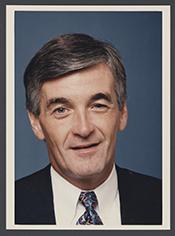
Madam Speaker, I thank the chairman for yielding me this time. Madam Speaker, I rise in strong support of this legislation, H.R. 2475. As the distinguished chairman so graciously recognized, I am one…
Madam Speaker, I thank the chairman for yielding me this time.
Madam Speaker, I rise in strong support of this legislation, H.R. 2475. As the distinguished chairman so graciously recognized, I am one of the newer members of this committee; and I must say in that respect, I am enormously impressed by the bipartisan attitude that all the members bring to this very important issue, that of national security and its interface with our intelligence communities. That is a tribute to all of the members, Democrat and Republican alike, but I think it is a particular tribute to the distinguished gentleman from Michigan (Chairman Hoekstra) and also the gentlewoman from California (Ms. Harman), ranking member, who have worked so well together and provided that leadership of bipartisanship.
The chairman noted, Madam Speaker, that I am a member of the House Committee on Armed Services, and in that capacity I have the honor of serving as chairman of the Military Personnel Subcommittee; and as such, I have been particularly interested in programs that aid the warfighter, those brave men and women who are putting their lives on the line each and every day for our freedoms and for our interests. And I am pleased to report that this legislation contains very important increases in funding for military intelligence programs.
In particular, H.R. 2475 includes significant increases in funding for operations in Iraq, Afghanistan, for the global war on terrorism, and thereby decreases the reliance on supplemental budgeting. Budgeting by supplemental, at least in my opinion, Madam Speaker, is inefficient; and it hinders the effective planning of our intelligence operations. And this bill very importantly takes a major step away from reliance on those supplementals and seeks to provide full funding to fight terrorism and for intelligence operations in Iraq.
There is also increased funding for critical initiatives such as foreign language training for our troops in the field and for greater numbers of defense intelligence analysts. This intelligence authorization bill builds upon actions already taken by the House Committee on Armed Services dictating a career path for military linguists, and we should be very proud of this initiative in these regards.
The net result, Madam Speaker, is that our intelligence personnel and our military will be better trained and equipped to perform their invaluable missions. These are important steps, and they have been taken with the necessary consultation with the Committee on Armed Services. And I am happy to report that the Permanent Select Committee on Intelligence has worked very closely with the gentleman from California (Chairman Hunter), with the gentleman from Missouri (Mr. Skelton), distinguished ranking member, with respect to our authorizations. And I would certainly argue that they complement one another very closely. To the extent that there are differences, and I think differences are and will continue to be inevitable, I know all of us on both sides of the aisle and in both committees will work to constructively breach those differences and bring about agreements on remaining issues as the authorization process continues.
So I urge unanimous support of this very fine piece of legislation.

Madam Speaker, I offer an amendment. Madam Speaker, I yield myself such time as I may consume. Our amendment requires the President to keep the Congress and the American people updated monthly on the…
Madam Speaker, I offer an amendment.
Madam Speaker, I yield myself such time as I may consume.
Our amendment requires the President to keep the Congress and the American people updated monthly on the progress of the implementation and operation of the National Counterterrorism Center until it is fully implemented and operational.
The Congress and the President recognize the National Counterterrorism Center as a critical office for the safety of our country. The Congress and the President agreed that it had to be up and running, fully operational and fully staffed, by June 17, 2005, or last Friday.
While director Admiral John Redd was nominated on June 10, he has yet to be confirmed by the Senate, and he
has many challenges before him, chief among which is to get this center fully staffed and operational.
The Bush administration manages by goals and reports. A fully operational and staffed NCTC is a goal that must be attained as quickly as possible.
The National Counterterrorism Center was a core element of the Intelligence Reform and Terrorism Prevention Act of 2004. The center must be the central organization for analyzing and integrating all foreign and domestic intelligence on terrorism.
It also is to conduct strategic operational planning for counterterrorism operations at home and abroad, integrating all elements of national power. In short, the NCTC was created to bring all of the pieces together to prevent a future attack. The Congress and the President established June 17, last Friday, as the deadline for the
Madam Speaker, will the gentleman yield?
Madam Speaker, I appreciate very much the gentleman from Michigan (Chairman Hoekstra) not opposing my amendment and all the hard work that he and the gentlewoman from California (Ms. Harman) did on the intelligence bill.
I would like to note the concern that the gentleman reported to me or gave to me about the reporting requirement.
Modification to Amendment Offered by Mrs. Maloney
Madam Speaker, I ask unanimous consent that the amendment be modified to accept changing the reporting requirement in the amendment from the President to the Director of National Intelligence, Ambassador Negroponte.
Madam Speaker, I yield such time as she may consume to the gentlewoman from California (Ms. Harman), the ranking member.
Madam Speaker, I yield such time as he may consume to the gentleman from Connecticut (Mr. Shays), and I commend his leadership and support on this amendment and his hard work on the intelligence reform committee. We both had many victims that were lost from our respective districts and we worked closely throughout that period with the families and with our colleagues on that important bill. I thank the gentleman for his hard work.
Madam Speaker, I yield myself the balance of my time.
I thank the gentleman from Michigan (Chairman Hoekstra) for accepting the amendment. Certainly certain issues are above partisan politics. The defense, the protection of our Nation, intelligence reform, is certainly among them.
The gentleman and the ranking member have really worked together in the best interest of the American people on this important issue. I thank the gentleman for his support.
Madam Speaker, I yield back the balance of my time.

Madam Speaker, I thank the gentlewoman for yielding me this time. I rise to discuss H.R. 2475. It is a bill that, as people have said, takes a number of steps to strengthen our intelligence…
Madam Speaker, I thank the gentlewoman for yielding me this time.
I rise to discuss H.R. 2475. It is a bill that, as people have said, takes a number of steps to strengthen our intelligence capabilities and, for those reasons, is supportable. Nevertheless, like most bills, it has parts that need to be moved on and worked on still.
As was mentioned, I am new to this committee, so first I want to recognize the efforts of all of my colleagues on the committee and the staff who did incredible work on this. I also want to acknowledge the fact that my minority colleagues have been outspoken during the past couple of years on a number of issues, and I want to thank them and my majority colleagues for incorporating those issues in this bill and, of course, the majority adding their own approval.
On the plus side, as has been mentioned, 100 percent funding for counterterrorism in the base budget is a huge step forward. We need to make sure we build on that. The White House proposal to fund 60 percent of that in a supplemental budget would have undermined our plans and operations, so 100 percent is a big step in the right direction. The bipartisan willingness to keenly scrutinize architectural programs for the quality, for the program management, for the budget responsibility, for cost is also important. It is helpful to allow for investments in human intelligence, and it can bring more public confidence to the work we do in this area.
I think it would be well-placed to put that kind of scrutiny on the whole budget at large, and I think we should consider making more of the Select Committee on Intelligence budget process public, to the extent possible, including at least the aggregate amount of money being spent so that the public will be able to focus on that and have more confidence.
The best intelligence oversight begins with looking at the 9/11 Commission's recommendations for reform of Congress's intelligence committees. We still need to do a considerable amount of work there concerning how those committees will be formulated and what budgetary appropriation aspect will be within what body. We need renewed oversight, and the Subcommittee on Oversight that has been formed and mentioned earlier is an improvement. Its time would be well spent if we ensure that the DNI and the DNI office is set up largely in line with Commission recommendations. We do not need another sprawling bureaucracy. It will be well-served to have a streamlined executive staff that utilizes existing agencies and moves forward on that basis. And it has to have the authority to ensure that the network agencies are reformed, coordinated, and effective. It also needs the authority to make sure that we have the appropriate budgetary and personnel powers within the DNI to work.
The DNI should follow the recommendation of the blue ribbon commission to establish a Civil Liberties Board and ensure that it effectively protects the civil liberties, even as we make sure aggressive intelligence measures are pursued. This too is essential to maintain public trust. It is as important as it is to require that we use taxpayer money wisely, and it is every bit as essential that our intelligence operate within the law.
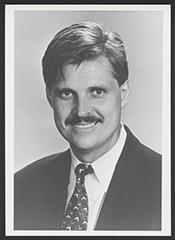
Mr. Speaker, I rise in support of H.R. 2475, ``The Intelligence Authorization Act for Fiscal Year 2006''. I thank my friend and colleague from Michigan for yielding me this time. For almost 4 years,…
Mr. Speaker, I rise in support of H.R. 2475, ``The Intelligence Authorization Act for Fiscal Year 2006''. I thank my friend and colleague from Michigan for yielding me this time.
For almost 4 years, the U.S. Intelligence Community has been at the forefront of the Global War on Terror. Working long hours, under often primitive conditions, the men and women of the Intelligence Community have performed spectacularly under the most stressing of operational tempos. The legislation before us today authorizes the funding necessary to support the men and women of the Intelligence Community and to keep our country safe. However, a sufficient balance must be maintained between fighting terror and maintaining global awareness of emerging threats. Therefore, the legislation before us lays the budgetary and programmatic groundwork that will ensure that the U.S. Intelligence Community is prepared and able to face the challenges and national security threats of the future.
First and foremost, this legislation provides the appropriate balance between technical, human and open source collection.
This bill provides sufficient funds to ensure that the U.S. retains its technical collection edge for the next 20 years. It also increases the resources necessary to provide a strong, global human and open source intelligence collection capability. Achieving this balance required some hard choices on several highly regarded technical collection systems, however, the Committee was able to reach bipartisan consensus on the need to eliminate some redundant or outdated systems.
Second, this legislation strengthens innovation across the Intelligence Community.
The legislation includes a significant increase in the resources devoted to advanced research and technology development including increased funding for new sensors and platforms, data mining and information assurance technologies. To ensure that these resources are used wisely, this legislation also strengthens the authorities and responsibilities of the Intelligence Community's Chief Scientist.
Third, this legislation revitalizes our intelligence analysis and production capabilities.
Our intelligence community analysts are frequently asked to turn fragmentary and seemingly random puzzle pieces into a coherent picture. To help bring the picture into focus, this legislation provides for improved training opportunities (particularly for languages), new analytic tools, increased personnel and better tools to enable information sharing.
Fourth and finally, this legislation continues the efforts begun in the Intelligence Reform and Terrorism Prevention Act of 2004 to strengthen and define the authorities and responsibilities of the Director of National Intelligence.
The Intelligence Community is our first-line of defense against an elusive and unstructured threat that has shown willingness to harm America. It is vital that this community has the resources and authorities necessary to effectively target both the terrorist threats of today as well as new threats of tomorrow. H.R. 2475 provides those resources.
I strongly urge my colleagues to support this legislation in the bipartisan manner that our national security efforts demand.
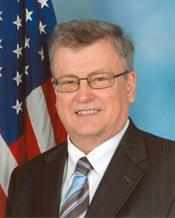
Mr. Speaker, I rise in strong support of H.J. Res. 52 and of the people of Burma. The people of Burma toil every day under the cruel and heavy yoke of military dictatorship. The military rulers of…
Mr. Speaker, I rise in strong support of H.J. Res. 52 and of the people of Burma. The people of Burma toil every day under the cruel and heavy yoke of military dictatorship. The military rulers of Burma stifle dissent, persecute minorities, and thwart every attempt at democracy.
The democratically elected and legal leader of Burma, Aung San Suu Kyi, remains imprisoned. Contact between Suu Kyi and the outside is virtually non-existent. Despite growing calls for her release, there is no sign that she will be released from her prison any time soon. Many hundreds of other Burmese men and women remain in appallingly horrible prisons, not because of any truly criminal act, but because of their efforts to bring freedom to Burma.
Burma has more than 600,000 internally displaced people. Furthermore, over 100,000 people are living in refugee camps along the Thai-Burma border. Thousands more are in hiding in China and India. Where Burma was once a country of peaceful coexistence, it has, under this brutal regime, become a place of strife and discord.
The military junta in Burma continues to persecute minority groups. The Burmese military continues to burn villages, destroy crops, and eliminate opponents no matter how peaceful or non-threatening. The destruction of medical supplies and first aid stations continues apace. These acts are not random acts of a few rogue military units far from any authority. These acts are orchestrated at the highest levels by cruel generals sitting in government offices in Rangoon.
Now more than ever, the democratic forces at work in Burma need the continued support of the United States of America. H.J. Res. 52, which I am proud to co-sponsor, will continue the sanctions imposed by the Burmese Freedom and Democracy Act.
When the Burmese Freedom and Democracy Act was passed, few other countries paid more than scant attention to the tragedy unfolding in Burma. More interested in regional comity or economic gain, many of the same countries we call allies were content to turn a blind eye to Burma's abuses and despicable cruelty.
Since 2003, the veil has been lifted somewhat. Calls for the release of Aung San Suu Kyi and other political prisoners and the establishment of democracy have gone out from previously silent quarters. Once mute ASEAN nations, particularly Singapore, the Philippines, and Malaysia, have gradually increased pressure on Burma to change.
Support for this bill will make it clear to Burmese despots that their military dictatorship, which maintains power through force and terror, is unacceptable. Support for continued sanctions will demonstrate to the world that the United States is serious about bringing change to Burma. It is my hope that our efforts embodied in the Burmese Freedom and Democracy Act sanctions will encourage more countries, organizations, and individuals to work for freedom, democracy, and a prosperous Burma.
I urge a ``yes'' vote on H.J. Res. 52.

Madam Speaker, I offer a motion to recommit with instructions. I am, Madam Speaker, in its current form. Madam Speaker, this motion to recommit would amend the bill to add language establishing an…
Madam Speaker, I offer a motion to recommit with instructions.
I am, Madam Speaker, in its current form.
Madam Speaker, this motion to recommit would amend the bill to add language establishing an independent commission to examine detainee abuses.
In the year since the horrific photographs of prisoner abuse at Abu Ghraib surfaced, more and more instances of detainee abuse from a growing number of locations around the world have come to light.
The reports of detainee abuse are undermining one of our Nation's most valuable assets: our reputation for respect for human rights.
The Pentagon's internal investigations of the abuse allegations have resulted in conflicting conclusions. Some of these reports have been little more than whitewashes.
Congress has failed to conduct a comprehensive public investigation of detainee abuse allegations at Guantanamo, Abu Ghraib, Bagram and other facilities. We have abdicated our constitutional duty to conduct responsible oversight.
My motion to recommit would fill the huge oversight gap. A lack of oversight leads to a lack of accountability, and no accountability breeds arrogance and abuse of power.
It is time for this House to take our oversight responsibility seriously, and I urge a ``yes'' vote on the motion to recommit.
Mr. Speaker, I yield to the gentlewoman from California (Ms. Harman), the ranking member of the Permanent Select Committee on Intelligence, my colleague.
Mr. Speaker, the failure to have an investigation of detainee abuse is eroding our moral standard in the world. It is also endangering our Armed Forces and inciting hatred against the United States. As Senator Biden said about Guantanamo, it is the greatest propaganda tool for the recruitment of terrorists worldwide.
Some of the allegations that have been repeated over and over again may not be true. In fact, I hope they are not true. President Bush calls them absurd, but we do not know what is true and what is not unless we investigate; and when we refuse to conduct a thorough, independent, credible investigation, the rest of the world thinks we have something to hide.
The independent commission established by this proposal would establish a 10-member bipartisan commission modeled on the successful 9/11 commission. I think we need this. I think we need it badly.
If the Congress had done its job of oversight, we might well say the job is done and we do not need to do anything further; but Congress has done relatively little on this whole matter. The reports that have been issued by the
various investigative agencies have been in conflict.
This is why I ask my colleagues to support this motion to recommit. Vote ``aye.''
Mr. Speaker, I object to the vote on the ground that a quorum is not present and make the point of order that a quorum is not present.
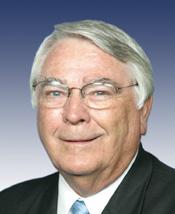
Madam Speaker, I rise today in strong support of H.R. 2475, the Intelligence Authorization Bill for fiscal year 2006. As one of several ``cross-over'' members who serve on both the Intelligence and…
Madam Speaker, I rise today in strong support of H.R. 2475, the Intelligence Authorization Bill for fiscal year 2006.
As one of several ``cross-over'' members who serve on both the Intelligence and Armed Services Committees, this legislation strikes a reasonable balance between our national intelligence needs, and the needs of our warfighters. As we know from our work on the Intelligence Reform Act last fall, this is not an easy task.
Madam Speaker, it would be disingenuous to state that all is well within the Intelligence Community. For a number of years, the Select Committee on Intelligence has been systematically identifying major shortfalls in providing for our foreign intelligence needs. These include: funding shortfalls, major limitations in human intelligence, limited capabilities in foreign language specialists, aging information technology systems, and the lack of strategic planning with regard to the Intelligence Community's overhead intelligence collection programs.
Madam Speaker, this bill represents a major step forward in correcting many of these problems by funding programs, operations, and personnel that are vital to the security of the United States. The policies and programs in this bill will enable us to strengthen our intelligence capabilities to ensure that we are providing the best foreign intelligence efforts possible.
In particular, this bill begins to balance the resources applied to technical collection programs with those applied to human source collection. In years past, funding cuts greatly reduced the Intelligence Community's ability to provide global collection and analytic coverage. The global war on terrorism has led to increased funding, but there is still only limited capability to focus on other issues around the
world. This bill reinvigorates capabilities that have long been ignored.
I have a personal concern about the Intelligence Community's capabilities against foreign missile systems. Therefore, at my direction the bill includes specific funding increases to allow for expanded modeling and simulation of foreign systems, exploitation of foreign missile systems, and all-source missile event analysis.
Madam Speaker, this bill puts a great deal of emphasis on getting the Intelligence Community ``back to the basics.'' In short, this bill continues to correct the systemic problems that left us underprepared for warning against terrorist attacks on America, and begins the process of returning human intelligence collection to a worldwide endeavor.
I feel that this is a good bill that balances the increased investment against critical priorities with procedures for effectively monitoring the wise investment of the taxpayers' money. Madam Speaker, I urge my colleagues to support H.R. 2475.

Madam Speaker, I want to just first compliment the chairman and ranking member for their excellent work on this legislation, their excellent work in general, and frankly the work that they have done…
Madam Speaker, I want to just first compliment the chairman and ranking member for their excellent work on this legislation, their excellent work in general, and frankly the work that they have done in helping to create such a strong structure for intelligence.
The Cold War is over. The world is a more dangerous place. We need to be able to not contain and react to an event; we need to be able to detect and prevent it. It means that we need very good intelligence, both intelligence directed with technology and intelligence that occurs from very good human capital.
I think the gentleman from Michigan (Mr. Hoekstra) and our incredible ranking member, the gentlewoman from California (Ms. Harman), have done an excellent job in drafting this legislation. My compliments to both of them. They give credit to the full Congress and the work that they have done.
Madam Speaker, I thank the gentlewoman for yielding me time. I thank her for her very hard work and the work again of the gentleman from Michigan (Mr. Hoekstra) and the gentlewoman from California (Ms. Harman).
I rise, obviously, in support of this amendment that we are offering, as amended, which would require the director of National Intelligence to provide Congress written explanation why the National Counter Terrorism Center, NCTC, is not fully operational since the June 17 deadline set forth in Public Law 108-458.
The Joint Inquiry and the 9/11 Commission both found that the lack of information-sharing and coordination within the intelligence community led to numerous missed opportunities to detect and prevent September 11 terrorist attacks.
The establishment of the NCTC was a key 9/11 Commission recommendation and an integral part of the effort to increase information-sharing and coordination among intelligence agencies.
The director will serve a critical function in our Nation's intelligence capability, as he will report to the President and to the director of National Intelligence.
The NCTC, once fully operational, will be the Nation's primary agency for now analyzing terrorist threats and planning counterterrorism operations at home and abroad.
The deadline by which the NCTC was required by law to be fully operational has passed, and while I am pleased the President nominated Vice Admiral John Redd as the Center's permanent director on June 10, I wish Congress had received this nomination sooner than a week before the deadline so that the Center could have been operational on time.
The bottom line is it has been done. We are making progress. I thank the gentleman from Michigan (Mr. Hoekstra) for accepting this amendment and the gentlewoman from California (Ms. Harman) as well. It is an amendment that I think deserves passage and I thank them for accepting it.

Madam Speaker, I rise in strong support of H.R. 2475, the Intelligence Authorization Act of 2006. I congratulate Chairman Hoekstra for presenting a strong bill that addresses our major intelligence…
Madam Speaker, I rise in strong support of H.R. 2475, the Intelligence Authorization Act of 2006. I congratulate Chairman Hoekstra for presenting a strong bill that addresses our major intelligence requirements.
Madam Speaker, as chair of the Intelligence Policy Subcommittee, I have been tasked to look at the vast range of threats faced by the United States, and work to ensure that the intelligence services devote the necessary resources to respond to those threats.
As we consider this bill, we are in the midst of a war with a vicious enemy--a war on terrorism that must be won. Our troops are also engaged in a bloody effort to stabilize Iraq.
Our war-fighters must have timely, accurate information about the enemy, and this bill makes every effort to guarantee that intelligence is provided. Thus, there is an essential force protection component to this authorization.
But we cannot focus solely on the collection of near-term, tactical battlefield intelligence. We must also ensure that our political leaders have good information about big picture threats to U.S. interests globally.
The Intelligence Community must focus its resources on the nuclear programs in Iran, North Korea, and other major proliferators of weapons of mass destruction.
We must fully understand the ongoing military modernization of China, and know how Beijing intends to use its emerging capabilities. Russia remains a nuclear superpower with thousands of nuclear warheads, and prudence dictates we have good intelligence regarding Russia's intentions.
The behavior of these important nations can have a deep impact on our national security, and the United States must not become the victim of a ``strategic surprise''.
To protect our people and inform our political leaders, we must have the capability to collect good, accurate information. It is increasingly difficult to predict where the next crisis may erupt, but our leaders must have the ability to anticipate significant events.
H.R. 2475 places much needed emphasis on our collection and analysis capabilities. I am pleased that this bill increases the investment in human intelligence and the capabilities they provide for us.
It provides additional resources for professional training and language education for intelligence officers being deployed overseas.
The legislation also authorizes powerful new tools that will assist our intelligence analysts to sort through and properly understand the information that has been gathered.
At a time when the threats to u.s. national security are so great, H.R. 2475 supports the effort to provide our leaders with focused, timely intelligence. I urge my colleagues to support this legislation and once again, I congratulate my chairman on his outstanding effort.
Bill Text
5 versions available
        [Congressional Bills 109th Congress]
[From the U.S. Government Printing Office]
[H.J. Res. 52 Enrolled Bill (ENR)]

H.J.Res.52

One Hundred Ninth Congress

of the

United States of America

AT THE FIRST SESSION

Begun and held at the City of Washington on Tuesday,
the fourth day of January, two thousand and five

Joint Resolution

Approving the renewal of import restrictions contained in the Burmese
Freedom and Democracy Act of 2003.

Resolved by the Senate and House of Representatives of the United
States of America in Congress assembled, That Congress approves the
renewal of the import restrictions contained in section 3(a)(1) of the
Burmese Freedom and Democracy Act of 2003.

Speaker of the House of Representatives.

Vice President of the United States and
President of the Senate.