A joint resolution calling upon the President to issue a proclamation recognizing the 30th anniversary of the Helsinki Final Act.
Legislative Activity
Stay on top of the latest movement without scrolling through every action
Message on House action received in Senate and at desk: House Amendment to Senate Preamble.
September 8, 2005
View full timeline
Introduced in Senate
May 17, 2005
Sponsor introductory remarks on measure. (CR S5366-5367)
May 17, 2005
Read twice and referred to the Committee on Foreign Relations.
May 17, 2005
Senate Committee on Foreign Relations discharged by Unanimous Consent.(consideration: CR S9200-9201)
July 27, 2005
Senate Committee on Foreign Relations discharged by Unanimous Consent. (consideration: CR S9200-9201)
July 27, 2005
Passed Senate without amendment and with a preamble by Unanimous Consent.
July 27, 2005
Received in the House.
July 28, 2005 • 11:37 AM
Message on Senate action sent to the House.
July 28, 2005
Referred to the House Committee on International Relations.
July 28, 2005
Mr. Smith (NJ) moved to suspend the rules and pass the resolution, as amended.
September 6, 2005 • 2:46 PM
Considered under suspension of the rules. (consideration: CR H7655-7658)
September 6, 2005 • 2:46 PM
DEBATE - The House proceeded with forty minutes of debate on S.J. Res. 19.
September 6, 2005 • 2:46 PM
At the conclusion of debate, the Yeas and Nays were demanded and ordered. Pursuant to the provisions of clause 8, rule XX, the Chair announced that further proceedings on the motion would be postponed.
September 6, 2005 • 2:59 PM
Considered as unfinished business. (consideration: CR H7659-7660)
September 6, 2005 • 7:03 PM
Passed/agreed to in House: On motion to suspend the rules and pass the resolution, as amended Agreed to by the Yeas and Nays: (2/3 required): 393 - 1 (Roll no. 455).(text: CR H7655)
September 6, 2005 • 7:17 PM
On motion to suspend the rules and pass the resolution, as amended Agreed to by the Yeas and Nays: (2/3 required): 393 - 1 (Roll no. 455). (text: CR H7655)
September 6, 2005 • 7:17 PM
Motion to reconsider laid on the table Agreed to without objection.
September 6, 2005 • 7:17 PM
Message on House action received in Senate and at desk: House Amendment to Senate Preamble.
September 8, 2005
Voting History
1 vote recorded • Roll call available
Floor Debate
22 membersWhat members said about S.J.Res. 19 on the floor
 DKI
DKI JDR
JDR CJD
CJD CHS
CHS DF+17
DF+17
Floor Debate
22 membersWhat members said about S.J.Res. 19 on the floor
Mr. President, I rise as a leading co-sponsor of the Transportation Security Improvement Act of 2005 introduced today by my colleague and Chairman, Ted Stevens, along with Senators Jay Rockefeller,…
Mr. President, I rise as a leading co-sponsor of the Transportation Security Improvement Act of 2005 introduced today by my colleague and Chairman, Ted Stevens, along with Senators Jay Rockefeller, Olympia Snowe, Frank Lautenberg, Byron Dorgan, Barbara Boxer, Maria Cantwell, Mark Pryor, Hillary Clinton, and Chuck Schumer.
Nearly 4 years after the enactment of landmark aviation and maritime security laws, it is time to build upon that foundation, make needed improvements and enhancements to our transportation security efforts across all modes, and reestablish the requisite funding levels. Most importantly, we must restore the sense of urgency that is essential if we are to keep our transportation systems, and our economy, strong, vibrant, and secure. We have worked hard to develop this legislation, and we will continue to improve it with the assistance of committee members and the Department of Homeland Security as we move forward through the legislative process.
Over the past 3\1/2\ years, the administration and Congress have slowly lost the sense of immediacy that once allowed us to recognize that transportation security is a matter of national security. The administration's budget and priorities indicate that they are overlooking glaring security vulnerabilities, disregarding the continuing threats and risks that are reported almost daily, and underestimating the economic consequences that would undoubtedly result from another attack on our transportation systems. I am hopeful that the new leadership will reinvigorate transportation security.
The economic importance of those systems can hardly be overstated: 95 percent of the Nation's cargo comes through the ports; our rail system and our motor carriers move all of those goods from our coasts and borders throughout the interior U.S. to retail outlets and manufacturers that rely on on-time delivery; our aviation system carried 629.7 million domestic passengers during 2004 and averaged 1.5 million enplanements per day in January this year; approximately 24 million passengers ride Amtrak annually, and there are nearly 3.4 billion passenger and commuter rail trips in this country each year. The loss of our aviation system for just 4 days after the September 11th attacks sent shockwaves through the economy that are still being felt today. The al Qaida attack on the passenger trains in Madrid, Spain, killing nearly 200 people and injuring 1,800, unfortunately proved that railroads are vulnerable targets for terrorists. If there is an incident at any one seaport, the whole system for moving cargo into and out of the country would screech to a halt, as we scramble to ensure security at other ports. In addition to the horrible loss of life, the resulting economic damage would be widespread, catastrophic and possibly irreversible. We cannot afford to risk this kind of damage due to a lack of preparedness and forethought.
The terrorists that seek to do us harm are cunning, dynamic, and most of all, patient. While they have not successfully struck our homeland since September 11, 2001, it does not mean that they are not preparing to do so. They work 24 hours a day, studying what we do and how we do it. It is imperative that we stay ahead of them. That means we must constantly anticipate, innovate, and plan. We must continually research and implement the most effective technologies. We must recruit, train and deploy the most skilled security force. Simply put, our entire economy relies on a well-functioning, secure, transportation system. It is in our greatest economic interest to ensure that this system, and the passengers and cargo that use it, are well protected. And, in keeping with transportation security's impact on the nation's physical and economic security, it is the responsibility of the federal government to properly finance that protection.
Following passage of our new aviation security laws, the Transportation Security Administration, TSA, was assembled quickly, presented with an enormous task, and expected to produce immediate results. It has performed admirably, despite the administration's near- constant reorganization of the agency with little to no input from Congress. While we take seriously recent reports about financial mismanagement and the limits of the human capacity to detect security breaches, we cannot and must not use these inadequacies as justification to cast aside the critical work of this agency. There are some in Congress that have never been comfortable with the new Federal role in transportation security, and they look to every negative report to help usher in a return to private security screening companies. We contend, however, that transportation security must not be judged only by the bottom-line commercial pressures of the private sector. Transportation security is a unique national security function and an economic necessity, and like our national defense, it must remain a primary responsibility of the federal government.
The need for Congressional action to secure all forms of transportation infrastructure across the country remains essential, and I, along with many of my colleagues on the Senate Commerce Committee, have expressed great reservations about the direction our Nation is now headed on matters of transportation security.
As I noted during the Senate's consideration of the nomination of Michael Chertoff to be the Secretary of the Department of Homeland Security, the administration's budget demonstrates the lost sense of urgency. It shifts critical work away from the TSA. It erodes the Agency's limited focus and accountability. It undermines the effectiveness of our maritime and land security efforts. It underfunds efforts across all modes, but particularly port and rail.
The legislation we are introducing today renews the importance and commitment transportation security deserves. It identifies the numerous, lingering shortcomings that currently exist, re-dedicates our efforts on maritime and surface transportation security, and provides the guidance necessary to adequately defend the nation's infrastructure.
The TSA should not focus almost exclusively on aviation, nor should it be transformed into a glorified, security screener training and placement agency. The TSA is essential, and it possesses critical expertise that must be cultivated and put to proper use. We believe that the TSA, as outlined by our bill, can and will be the difference between a flourishing economy fueled by smooth-running transportation systems and an economy crippled by transportation systems that could fall victim to terrorist attacks.
As such, the Transportation Security Improvement Act of 2005 will authorize the TSA for the next 3 fiscal years and re-dedicate the agency to its mission of providing specialized security for all modes of transportation. It provides further direction to the agency's cargo security functions, strengthens aviation, maritime, rail, hazardous materials, and pipeline security efforts, and enhances interagency cooperation. While the proposal incorporates several Commerce Committee and Senate-passed bills or initiatives from the prior Congress, it also puts forth new ideas to enhance transportation security across all modes.
We recognize that Secretary Chertoff has had only a short time to make changes and that his comprehensive review is pending. Our legislation provides the flexibility necessary to address his findings and prerogatives. However, it is incumbent upon Congress to provide guidance and clarify the expectations.
On the matter of port security, our legislation seeks to improve interagency cooperation with the further development of joint operation command centers. It clarifies the roles and responsibilities for cargo security programs, while establishing criteria for contingency response plans to resume the flow of commerce in the event of a seaport attack. By setting a minimum floor for research and development funding related to maritime and land security, the bill further encourages the development of effective technologies that detect terrorist threats. Conversely, the administration has
continued to consolidate critical infrastructure grant programs, which we believe will effectively decrease funding for port security and eliminate the appropriate expertise necessary to review grant proposals and distribute the funds accordingly.
In addressing aviation security, we continue to be concerned that current budget proposals diminish the TSA's authority and squander its expertise. Airport directors are still struggling to receive the technological and capital improvements that would increase the efficiency and effectiveness of the current security system and lower costs considerably. Instead of addressing these shortcomings with aggressive support, the administration has chosen to place a greater burden on the airlines through increased security fees at the same moment that the carriers are facing the most difficult financial period in their history. Not only has the industry lost more than $30 billion cumulatively since 2000, the Federal government has had to bail out the carriers twice. Increasing the carriers' financial burden is ill conceived and counterproductive.
Quietly but consistently, we also hear of some of our colleagues' desire to return to the same privatized security apparatus that proved disastrously inadequate on September 11, 2001. These efforts are short- sighted, defy our experience, and will reverse much of the progress we have made since September 11. Those seeking to return to the old system, at times, claim that the system is no better than pre-September 11. We all know that is not the case. We also know that with new technology, we can improve screener performance. There is no doubt that human factors limit the capabilities of screeners, but as we fund and deploy new equipment, the security system will continue to improve. Our bill seeks to enhance the current screener workforce by directing a more appropriate use of the TSA's resources and through improved training. It would also stimulate efforts to streamline and improve collections of existing airline and passenger security fees to promote a more efficient and healthy aviation industry.
On rail security, our legislation will incorporate an updated version of the Rail Security Act of 2004, which the Senate passed by unanimous consent last year. It features new efforts to ensure the security of hazardous materials that are shipped by rail and improves security training and awareness for our railroad workers and the public. The tragic events in Madrid, Spain, demonstrated to all of us the clear threats to our rail system. We have already been warned publicly twice by the FBI that al Qaida may be directly targeting U.S. passenger trains and that their operatives may try to destroy key rail bridges and sections of track to cause derailments. The rail threat assessment required by our legislation and the grant programs and other measures designed to respond to those threats will strengthen our ability to address them. Until we pass a rail security package, this body is failing its responsibility to try to secure our national transportation system. We owe it to the American people to strengthen the security of our passenger and freight railroads.
To address the security needs of our other surface transportation modes, the proposal will include funding to improve intercity bus security, strengthen hazardous material transportation security efforts, establish new security guidelines for truck rental and leasing operations, and develop pipeline security incident recovery plans. Such action is long overdue as the administration has consistently failed to develop dedicated programs, much less financial support, for rail and other surface transportation security efforts.
We have reached a critical juncture for transportation security in the United States and the steps that we take in the coming months will impact our safety, security and one of our most essential freedoms-- movement--for years to come. We must commit ourselves to ensuring that our transportation security remains a priority and is as strong and effective as possible. I believe the Transportation Security Improvement Act of 2005 will continue to move us in that direction.
Mr. President, it is my honor today to join the distinguished cochairmen of the Senate Commerce, Science, and Transportation Committee, Senators Ted Stevens and Daniel Inouye, along with our…
Mr. President, it is my honor today to join the distinguished cochairmen of the Senate Commerce, Science, and Transportation Committee, Senators Ted Stevens and Daniel Inouye, along with our colleagues Senators Byron Dorgan, Frank Lautenberg, Mark Pryor, Barbara Boxer, Maria Cantwell, Hillary Clinton, and Chuck Schumer, to introduce the Transportation Security Improvements Act of 2005. This is a vitally important contribution to the security of all Americans, and I commend it to my colleagues for their consideration.
The Transportation Security Improvements Act will increase authorizations for the Transportation Security Administration, TSA, by more than $19 billion through fiscal year 2008, and will forthrightly address continuing vulnerabilities in the security of our various transportation modes that Congress and the administration have as yet virtually ignored.
Americans were shocked to learn just how lax our aviation security was on September 11. Even those terrorists on official Government watch lists, who should have been barred from entering the United States, were able to board planes that they then turned into weapons without any significant interference from airport security staffs. As a wounded Nation tried to overcome the horrors of that day, Congress immediately went about fixing what was so obviously wrong with our aviation security.
Now, as we approach the fourth anniversary of that fateful day, Americans are regaining their confidence about aviation security. There is still work to be done, and my colleagues and I endeavor in this bill to further secure air travel. Still, we have done much to improve domestic aviation security by improving the security procedures we demand of airlines and airport personnel both here and abroad. We need to remain vigilant and avoid the inexcusable error of believing we have done all that needs to be done. We must act with the knowledge that our enemies will continue to probe the system they so successfully breached in 2001 to find new and additional opportunities to kill and terrorize Americans.
What my colleagues and I also have realized for some time is that in devoting our energy and resources to aviation security we have been, in a manner of speaking, ``fighting the last war.'' While the aviation sector is prepared for today's threats, congressional action regarding the level of security of our other transportation modes is not much changed from the blissfully naive standards of September 10.
To be fair, industries in the other transportation modes have worked hard to improve the security of their respective sectors. The relatively little money Congress and the administration have dedicated to improving transportation security has been put to good use. Industry and Government working together, even given the overwhelming scope of the threat, have improved transportation security and protected the lives and property of Americans. We just have not done enough.
The Transportation Security Improvements Act seeks to make overdue improvements to the overall security of this Nation's vast transportation infrastructure. Our bill addresses the security practices and requirements of our Nation's freight and passenger rail network, as well as those of our ocean-going and inland ports, the trucking industry, intercity buses, and the special risks of hazardous materials transportation, regardless of the mode of transportation. It makes the TSA responsible for coordinating international and domestic cargo security. It calls on TSA to work cooperatively with stakeholders in the various transportation modes on preparedness and incident response, and establishes new maritime and land security command procedures. Perhaps most importantly, we acknowledge the need of TSA management to deploy such human resources as it sees fit to protect Americans' lives and property, and it removes the current statutory cap on the agency of 45,000 full-time employees.
To continue the TSA's efforts to improve aviation security, our bill authorizes $15.75 billion over the next 3 fiscal years to fully fund key security programs to defend our Nation's air transportation system. In lieu of recent reports regarding the performance of the airport screening workforce, our bill could not be more timely. We have
included provisions to provide TSA greater flexibility in meeting the staffing needs of screening checkpoints through elimination of an arbitrary staffing cap that was put in place shortly after the agency was created, while also requiring TSA to review the adequacy of recurrent training for these employees. With the difficult economic environment currently faced by the airline industry, the bill takes steps to relieve the carriers of some of the burden that they face through collection of these fees. We would prohibit increasing aviation security fees without Congressional review and approval, while requiring TSA to consider alternative means of collecting such fees. Finally, the bill prohibits the certification of any foreign repair stations until TSA and FAA strengthen the oversight of such facilities by reviewing, auditing and developing regulations to ensure an adequate level of safety and security.
To dramatically improve maritime and land security, we increase funding by $1.099 billion to develop and implement cargo screening and inspection standards, with special attention given to high-risk cargoes. We authorize 10 additional Joint Operation Command Centers to supplement the current positive interagency and public-private cooperation at our ports. We streamline procedures for foreign vessels and those with Coast Guard-certified security plans, require funding for port security technology improvements, and impose a January 2006 deadline for development of a comprehensive Transportation Worker Identification Credentialing Program.
We assist our railroads and hazardous materials shippers in maintaining and improving security along the Nation's nearly 150,000 miles of freight and passenger rail infrastructure. We increase rail security funding by nearly $800 million over 3 years, and with those funds require the TSA to conduct a comprehensive security threat assessment that I first advocated in October 2001. We authorize grants to Amtrak and our freight railroads for overall security improvements, and establish a revamped security training program for railroad employees. Our legislation would allow Amtrak to make specific and long-overdue security improvements along its well-traveled Northeast corridor, and it authorizes development of baggage, passenger, and cargo screening programs, as well as reviews of procedures used by foreign railroads and research into additional improvements.
We seek in this legislation to improve the security of the highway system that is the envy of the world. Our bill makes it a priority to better protect and address the unique security vulnerabilities of intercity buses and their passengers. This is a topic first brought to the attention of Congress by our former colleague Max Cleland, and which I hope we can now see enacted into law as a rightful part of his legacy of service to this country. We further seek to improve highway security by imposing the same level of background checks on foreign drivers transporting hazardous materials as we already require of American drivers. We require vehicles carrying hazardous materials to be equipped with wireless communications equipment, and that their drivers have established plans for the use of alternate routes. We provide funding for the TSA to conduct security inspections of our pipeline network, to develop a pipeline incident response plan, and to analyze the security plans in place for hazmat carriers. We create a public sector response center, and provide for the distribution of emergency wireless communications equipment to first responders, hazmat carriers, and TSA personnel.
Our constituents have sent us here, first and foremost, to protect them. The ruthless attacks of September 11, 2001, exposed inexcusable gaps in our efforts in that regard. At a time when the air in this city is acrid with accusation and acrimony, I ask my colleagues to consider this legislation a priority for quick passage, and an example of the good work this institution can do when we remember why Americans elected us. I ask my colleagues to join us in this effort, and I ask the majority leader to find time on the Senate Calendar for its expeditious consideration by the full Senate.
Mr. President, I rise today to introduce the Children and Family HIV/AIDS Research and Care Act of 2005. This bipartisan legislation is similar to a bill that was introduced last year. This…
Mr. President, I rise today to introduce the Children and Family HIV/AIDS Research and Care Act of 2005. This bipartisan legislation is similar to a bill that was introduced last year. This legislation will address the special needs of children and youth with HIV/AIDS--needs that are too often overlooked, both domestically and internationally. It recognizes the, simple fact that when it comes to HIV prevention, research, care, and treatment, children and youth are not just small adults. To give them a chance for a healthy future, we must ensure that their unique needs are met. I want to thank my good friend Senator Bond of Missouri for joining me in introducing this important legislation. I am very pleased to work with him to move this bill forward.
Children's growing bodies are especially susceptible to the rapid advancement of HIV infection. Because their immune systems are still immature, the disease typically progresses more rapidly and differently in children than in adults. For example, children with HIV infection are more prone to neurological abnormalities and certain opportunistic infections than adults. In addition, because children's bodies are growing and developing, HIV/AIDS can have profound effects on children's physical growth and ability to reach developmental milestones such as crawling, walking and learning to talk.
While research has definitively shown that initiating drug treatment in children in a timely manner promotes normal growth and development, and prolongs life, treating children with HIV/AIDS presents particular challenges. Appropriately formulated and dosed HIV/AIDS drugs are urgently needed to ensure that children receive optimal care. Currently, liquid formulations that young children can swallow are not always readily available. In addition, pediatric dosing and safety information for these powerful drugs is often lacking, particularly for younger children. This lack of information puts children at risk; too much medication can be toxic and too little will not effectively suppress the virus. Over time, under-dosing can lead to drug resistance, a particularly serious concern for children who will need to use these medications for years, if not decades.
Appropriate HIV/AIDS care and treatment for children and youth also requires that special attention be paid to their social development needs. Children and youth have unique concerns regarding disclosure and stigma that may be exacerbated by frequent absences from school and social activities, and the onset of sexual maturity. Working with schools and other social and community institutions is imperative to promoting a sense of normalcy. Because children are not typically medical decision-makers, developing long-term care partnerships with parents and other caregivers is also crucial to successful care and treatment. At the same time, maximizing each child's own ability to take active participation in different aspects of his or her own care can increase a child's sense of ownership over treatment, improving adherence and overall health.
By reauthorizing and expanding Title IV of the Ryan White CARE Act this legislation will help to ensure that the unique care and treatment needs of children are addressed. This program is a lifeline for more than 53,000 women, children, and youth affected by HIV/AIDS served annually by Title IV-funded projects. Through 91 grants in 35 states, the District of Columbia, Puerto Rico and the Virgin Islands, Title IV projects provide medical care, case management, support services, mental health, transportation, child care, and other crucial services to families affected by HIV/AIDS. Title IV is the smallest of the four main titles of the Ryan White CARE Act, yet reaches the highest proportion of minorities.
Key to the success of Title IV projects is the model of ``family- centered care.'' This model of care treats the whole family as the client, whether several family members are infected by HIV, or just a parent or child. The family-centered care model is crucial to developing strong partnerships between consumers and providers, leading to better health outcomes for women, children, and youth. By allowing affected family members to receive services, as well as the infected individuals, Title IV projects promote health at the family level, thereby prolonging life, improving quality of life, and saving money by keeping people out of the hospital.
I would like to take a moment to recognize the work done by the Children, Youth and Family AIDS Network of Connecticut, which provides Title IV services to more than 500 children, youth, women, and families affected by HIV/AIDS in my home state. Just earlier today, I had an opportunity to meet with some of these individuals. They made it clear just how important these services are to their quality of life.
While recommitting the Health Resources and Services Administration (HRSA) to family-centered care and the unique work of Title IV, this legislation will also expand the innovative strategies Title IV projects have used to prevent mother-to-child HIV transmission. Since 1994, when the administration of preventive drug interventions was shown to significantly reduce perinatal HIV transmission, the number of newborns infected with HIV has decreased dramatically. Yet mother-to- children transmission does continue to occur, largely due to missed opportunities for identifying HIV-positive pregnant women and providing the supportive services needed to ensure adherence to recommended treatment regimens. We propose to fund demonstration grants to assess the effectiveness of two strategies in reducing mother-to-children transmission: (1) increasing routine, voluntary HIV testing of pregnant women and (2) increasing access to prenatal care, intensive case management, and supportive services for HIV-positive pregnant women.
In addition, this bill will encourage research into key care and treatment questions affecting the pediatric populations. These include: the long-term health effects of preventive drug regimens on HIV-exposed children; the
long-term health, psycho-social, and prevention needs for children and adolescents perinatally HIV-infected; the transition to adulthood for HIV-infected children; and safer and more effective treatment options for infants, children, and adolescents with HIV disease.
Since history suggests that a vaccine may prove to be the most effective, affordable, long-term approach to stopping the spread of HIV, this legislation will also ensure that children are not an afterthought when it comes to the development of an HIV vaccine. Currently, some of the populations hardest hit by the pandemic--infants and youth--are at risk of being left behind in the search for an effective vaccine. Because we cannot assume that a vaccine tested in adults will also be safe and effective when used in pediatric populations, it will be important to ensure that promising vaccines are tested in infants and youth as early as is medically and ethically appropriate. Failure to begin planning for the inclusion of these groups in clinical trials could mean significant delays in the availability of a pediatric HIV vaccine, at the cost of countless thousands of lives. This legislation will ensure that we begin now to address the logistical, regulatory, medical, and ethical issues presented by pediatric testing of HIV vaccines so that children can share in the benefits of any advances in vaccines research.
I want to thank several organizations for lending their expertise to the development of this legislation, in particular the Elizabeth Glaser Pediatric AIDS Foundation, the AIDS Alliance for Children, Youth and Families, and the American Academy of Pediatrics, all of whom endorse this bill.
HIV/AIDS is the single greatest health care catastrophe facing the world today. We need to do much more to seek effective treatments and, eventually, a cure for this horrible illness. This legislation is by no means sufficient to reach that goal, but it is a step towards ensuring that children are not left behind as we make progress, and then when we do finally eradicate HIV/AIDS once and for all, children and youth are able to benefit immediately. I urge all of my colleagues to join us in support of this legislation.
Mr. Speaker, I move to suspend the rules and pass the Senate joint resolution (S.J. Res. 19) calling upon the President to issue a proclamation recognizing the 30th anniversary of the Helsinki Final…
Mr. Speaker, I move to suspend the rules and pass the Senate joint resolution (S.J. Res. 19) calling upon the President to issue a proclamation recognizing the 30th anniversary of the Helsinki Final Act, as amended.
Mr. Speaker, I ask unanimous consent that all Members may have 5 legislative days within which to revise and extend their remarks and include extraneous material on S.J. Res. 19.
Mr. Speaker, I yield myself such time as I may consume.
Mr. Speaker, I rise today in very strong support of Senate Joint Resolution 19, as amended, calling on the President to issue a proclamation in recognition of the 30th anniversary of the signing of the Helsinki Final Act.
The resolution urges the 55 states of North America, Europe and Eurasia which comprise the Organization For Security and Cooperation in Europe to abide by their obligations under the Helsinki Final Act. The Congress further calls on the President to reiterate the United States' agreement that respect for human rights and fundamental freedoms, democratic principles and economic liberty are vital elements in promoting a new era of democracy, peace and unity in this region of the world.
For all of the history that we make here, Mr. Speaker, it is not too often that we in this body have the opportunity to celebrate and honor an event that has so conspicuously marked such a turning point in human affairs. Too often the history of international relations is one of false starts and missed opportunities. The victories, when they do happen, are more often ones of prevention, disasters averted or crises ended. Or if not that, then the results are realized too far into the future to be judged with any clarity. This is not the case with the Helsinki Final Act signed on August 1, 1975.
With that historic event, what we saw was a recognition not just by the United States or even the West, but
even in Eastern Europe and the Soviet Union, that human rights are the pivot, the linchpin of true security and peace in the world. What the Helsinki Final Act asserted and what subsequent history has taught beyond any reasonable doubt is this: The way governments treat their people is the concern not just of those governments but of all the nations and peoples of the world. In essence, security and human dignity and human rights are one and indivisible.
Indeed, it is in the fall of the Communist regimes in Europe that we have seen the principles of the Helsinki Final Act, and the process that the act inaugurated, unleashed forces of good and of hope. The document spoke truth to power and empowered millions to rise up and demand democracy and fundamental freedoms, especially religious freedom. Many became Helsinki monitors in dictatorships, in places like Czechoslovakia where members of Charter 77 risked their lives and often went to prison in demanding that their dictatorship allow them fundamental freedoms.
We saw it in places like Perm 35, a horrible gulag that the gentleman from Virginia (Mr. Wolf) and I visited back in the 1980s, where men were actively clamoring for their rights. For instance Mikhail Kazachkov, a physcist by training imprisoned for his dissident activites, took the Helsinki Final Act and, even at risk of cruel retribution, would speak up and demand his freedoms and those of his fellow inmates.
Recently, the United States Helsinki Commission of which I am the Co- chair hosted an event commemorating the 30th anniversary. We had Dr. Henry Kissinger as our principal speaker. Dr. Kissinger, as many will know and recall, was Secretary of State in that period, and he pointed out how rough the world was at the time, how close we were to superpower conflict between ourselves and the Soviet Union. The arsenals were brimming over with nuclear weapons that unfortunately seemed to be at the ready.
Dr. Kissinger pointed out that the Helsinki Final Act was not popular at the time. Many thought it was a concession to the Soviet Union, that somehow they would make propaganda, and they would reap tremendous benefits from it. People had serious misgivings about what the Helsinki Final Act would actually do. The United States signed onto the Final Act and, of the three baskets, we emphasized the human rights dimension and promoted it and promoted it and promoted it, much to the chagrin of leaders in the Kremlin, as well as those who were part of the Warsaw Pact.
In reality, Dr. Kissinger noted the Helsinki process served as a catalyst to ``promote change in the political situation and also to change the human rights situation.'' He said, ``I can think of nothing that the Soviet Union got out of this, except that their position in Eastern Europe and their position along the dividing line in Germany was undermined.''
Whenever we met with Soviet authorities or Polish leaders or any leaders of those occupied countries, we always had lists of political prisoners and of religious prisoners. We always based our inquiries on the fact that all of these nations were voluntary signatories to the Helsinki Final Act. This was a matter of international concern. These were not simply American values, these were universally recognized and agreed to values.
Mr. Speaker, let me also say that the Helsinki process continues. We need to continue fighting. We are now fighting to try to stem the rise of anti-Semitism, that ugly specter of hate toward Jews throughout the countries that make up the OSCE, including the United States. We are working to combat racism and xenophobic behavior. We are now working very hard, and have been since the 1990s, to combat this hideous form of slavery known as human trafficking, especially for prostitution where women are turned into chattel and into commodities and their lives destroyed.
We are also working on a number of other human rights issues within the Helsinki process, trying to get the Central Asian countries to realize that they have commitments that need to be abided by. Mr. Speaker, this is not a document that we only look back on. This is a living document that we work to implement as we go forward.
Mr. Speaker, one of the hallmarks of the Helsinki Final Act is our ability to use it to promote democracy and elections. No organization does a better job than the OSCE monitors when it comes to elections. When the commitments have been implemented, political parties have had the opportunity for free and fair elections. When emphasis is given to the conduct of free elections, we have witnessed some amazing changes, including Kyrgyzstan's Tulip Revolution, Ukraine's Orange Revolution, Georgia's Rose Revolution and Serbia's Democratic Revolution. These events in the last 5 years alone testify to the power of the principles inscribed in the Helsinki Final Act and the other OSCE documents that followed on.
Some participating States, however, most notably Belarus, Russia, Turkmenistan and Uzbekistan, seem determined to not live up to their commitments. These remain some of the areas of concern that our Helsinki Commission works on on a daily basis.
Finally, Mr. Speaker, having served as a member of the Helsinki Commission since my second term in 1983, I believe the U.S. must hold vigorously to the values that have inspired fundamental and democratic change in much of the OSCE region. As I said a moment ago, our work is not done. Much needs to be done going forward. I know we will do it. We will use this now famous document, the Helsinki Final Act, as our inspiration going forward.
Mr. Speaker, I reserve the balance of my time.
Mr. Speaker, we have no further requests
for time, and I yield back the balance of our time as well.
Mr. Speaker, on that I demand the yeas and nays.
Mr. President. I rise today with Senator Ensign to introduce a bill to ensure that Title I funds are directed towards instructional services to teach our neediest students. Title I provides…
Mr. President. I rise today with Senator Ensign to introduce a bill to ensure that Title I funds are directed towards instructional services to teach our neediest students.
Title I provides assistance to virtually every school district in the country to serve children attending schools with high concentrations of low-income students, from preschool to high school.
It has been the ``anchor'' of Federal assistance to schools, since its inception in 1965. Although it has always
been the intent of Congress for Title I funds to be used for instruction and instructional services, the Federal Government has never provided a clear definition of what instructional services should entail.
This lack of federal guidance has become especially clear now, as States scramble to comply with the Title I accountability standards established in ``No Child Left Behind.''
While State Administrators of Title I are directed by law to meet these specific requirements, they have been given little guidance as to how to ensure that they are in compliance with the law.
I believe that the Federal Government is responsible for making this process as clear to States as possible.
In my view, as it relates to Title I, we have not lived up to our end of the bargain.
During consideration of ``No Child Left Behind,'' I worked hard to get my bill defining appropriate Title I uses included in the Senate version of the bill.
Unfortunately, during conference consideration, my bill was stripped out and in its place language directing the General Accounting Office (GAO) to report on how states use their Title I funds was inserted.
In April 2003, GAO released the report that Congress directed them to submit on Title I Administrative Expenditures.
What GAO found is that while districts spent a relatively small amount, no more than 13 percent, of Title I funds on administrative services, these findings were based on their own definition ``because there is no common definition on what constitutes administrative expenditures.''
Therefore, the accounting office could not precisely measure how much of schools' Title I funds were used for administration.
Because Title I funds are not defined consistently throughout the states, the accounting office created their own definition by compiling aspects of state priorities to complete the report.
You see, the very reason I worked to define how Title I funds should be used--to create consistency and distribution priority nationwide-- became the definitive aspect preventing GAO from effectively drawing conclusions to their report.
The report highlights two concerns that I have with the absence of universal definitions in the Title I program: the lack of Federal guidance on effective uses of Title I funds. The government's inability to accurately measure whether the academic needs of low-income students are being met.
My bill takes some strong steps by balancing the needs for states to retain Title I flexibility and providing them with the guidance needed to administer the program uniformly throughout the country.
Current law on Title I is much too vague.
It says, ``a State or local educational agency shall use funds received under this part only to supplement the amount of funds that would, in the absence of such Federal funds, be made available from non-Federal sources for the education of pupils participating in programs assisted under this part, and not to supplant such funds.''
Basically, it says that Title I funds are to be used for the ``education of pupils.'' This is too nebulous.
The U.S. Department of Education has given states a guidance document that explains how Title I funds can be used.
Under this guidance document, only two uses are specifically prohibited: 1. construction or acquisition of real property; and 2. payment to parents to attend a meeting or training session or to reimburse a parent for a salary lost due to attendance at a ``parental involvement'' meeting.
I believe we should give the Department, states and districts a clearer guidance in law.
This legislation does the following: defines Title I direct and indirect instructional services. Sets a standard for the amount of Title I funds that can be used to achieve the academic and administrative objectives of this program. Ensures that the majority of Title I funds are used to improve academic achievement by stipulating that a local educational agency may use not more than 10 percent of Title I funds received for indirect instructional services.
By limiting the amount of funds that schools can spend on administrative or indirect services, school districts are restricted from shuffling the majority of Title I to pay for non-academic services, but it also gives the districts flexibility to use the remaining funds for the indirect costs administering Title I distribution.
Furthermore, by defining direct and indirect services, all states can apply the same standards for how Title I funds are used nationwide.
Examples of permissible Direct Services are: employing teachers and other instructional personnel, including employee benefits. Intervening and taking corrective actions to improve student achievement. Extending academic instruction beyond the normal school day and year, including summer school. Providing instructional services to pre-kindergarten children for the transition to kindergarten. Purchasing instructional resources such as books, materials, computers, and other instructional equipment. Professional development. Developing and administering curriculum, educational materials and assessments.
Examples of Indirect Services limited to no more than 10 percent of Title I expenditures are: business services relating to administering the program. Purchasing or providing facilities maintenance, janitorial, gardening, or landscaping services or the payment of utility costs. Buying food. Paying for travel to and attendance at conferences or meetings, except if necessary for professional development.
My reasons for introducing this bill are two-fold: First, I believe that states must use their limited federal dollars for the fundamental purpose of providing academic instruction to help students learn.
Secondly, I believe that it is nearly impossible to do so without providing a clear definition of what is considered an instructional service.
I am not suggesting that it is the fault of the school districts for not focusing their Title I funds on academic instruction. They are simply exercising the flexibility that Congress has given them.
If Congress also intended for those funds to educate our neediest children, Federal guidance must be given to ensure that it happens.
It is my view that Title I cannot do everything. Federal funding is only 8 percent of the total funding for elementary and secondary education and Title I is even a smaller percentage of total support for public schools.
That is why it is imperative to better focus Title I funds on academic instruction, teaching the fundamentals and helping disadvantaged children achieve.
Schools must focus their general administrative budget to pay for expenses that fall outside of the realm of direct educational services and retain the majority of Federal funds to improve academic achievement.
It is time to better direct Title I funds to the true goal of education: to help students learn. This is one step towards that important goal.
I urge my colleagues to support this legislation.
I ask for unanimous consent that the text of the legislation directly follow this statement in the Record.
Show 8 more
Mr. President, as Chairman of the Commission on Security and Cooperation in Europe I am pleased to submit a bipartisan resolution in support of the vital work of the Organization for Security and…
Mr. President, as Chairman of the Commission on Security and Cooperation in Europe I am pleased to submit a bipartisan resolution in support of the vital work of the Organization for Security and Cooperation in Europe (OSCE) in conjunction with the 30th anniversary of the signing of the Helsinki Final Act on August 1. I am pleased that Senate Commissioners Smith of Oregon, Chambliss, Dodd, Feingold, and Clinton are included as original cosponsors of this resolution.
For three decades the OSCE has provided an important framework for advancing democracy, human rights and the rule of law in an expansive region encompassing the U.S. and Canada, Europe and the countries of Central Asia. Over the years, the OSCE participating States have hammered out an extensive body of commitments agreed on the basis of consensus. Our Commission was established by Congress to monitor and encourage the OSCE participating States--now numbering 55--to implement the commitments they have accepted. The Commission's mission can be distilled to a single word, accountability. As President Ford remarked when signing the Final Act on behalf of the United States, ``History will judge this Conference . . . not only by the promises we make, but by the promises we keep.''
The Final Act inspired courageous individuals in the Soviet Union and Eastern Europe to form monitoring groups to assess how their respective governments lived up to the commitments they had endorsed on paper. For their temerity in seeking accountability most activists were imprisoned, banished or exiled. Many endured years of suffering in the gulag. Some paid the price with their very lives. Ultimately, their sacrifice and the work of countless others began to bear fruit, ushering in the dramatic changes of the late 1980's and early 90's.
A catalyst for change, the Helsinki Final Act and the process it began provided an important backdrop against which President Ronald Reagan, standing in front of Berlin's Brandenburg Gate, could boldly declare, ``Mr. Gorbachev, tear down this wall.'' Bold leadership led to concrete results with the resolution of hundreds of cases of political prisoners and prisoners of conscience as well as the reunification of tens of thousands of families. Progress in implementing existing commitments paved the way for the participating States to address the need for systemic change to ensure sustained respect for human rights. In 1990, as the Iron Curtain began to fall, the leaders of the then--35 participating States declared, ``We undertake to build, consolidate and strengthen democracy as the only system of government of our nations.'' The following year they categorically and irrevocably declared that human rights commitments ``are matters of direct and legitimate concern to all participating States and do not belong exclusively to the internal affairs of the State concerned.'' In a step designed to preserve the unity of the Helsinki process, each country that joined the OSCE after 1975 submitted a letter in which the accepted in their entirety all commitments and responsibilities contained in the Helsinki Final Act, and all subsequent documents adopted prior to their membership. To underscore this continuity, the leaders of each of these countries signed the actual original 1975 Final Act document.
With the break up of the Soviet Union, many observers believed--or hoped--that the fall of communism would usher in a new era and the relatively speedy emergence of states that treat their citizens and neighbors with respect. Regrettably, the gap between commitment and the situation on the ground in a number of OSCE participating States remains wide, and in at least a couple of countries is growing alarmingly wider.
Elsewhere, the OSCE has played an important role in the aftermath of conflicts that ravaged much of the Balkans region. The atrocities committed during these conflicts, in particular during the Bosnian conflict from 1992 to 1995, represent the most egregious violations of Helsinki principles in Europe since the Final Act was signed, indeed since World War II. By placing field missions throughout that region, the OSCE has helped heal the wounds, in particular by facilitating the return
of those displaced from their homes, by improving conditions for elections, by training local police and by monitoring borders used by criminal gangs who profit from the chaos of conflict. There have been improvements in recent years, but there is still plenty of work to do to build the democratic institutions and respect for the rule of law.
Freedom is on the march in places some had written off as unsuited for democracy. Kyrgyzstan's Tulip Revolution, Ukraine's Orange Revolution, Georgia's Rose Revolution, and Serbia's Democratic Revolution testify to the enduring power of the ideas reflected in the Helsinki Final Act and other OSCE documents. As we approach the 30th anniversary of the Final Act, a number of signatory states--most notably Russia and Belarus--seem determined to diminish the democratic content of the OSCE and rewrite related commitments they accepted when they joined the OSCE. It is imperative that the United States hold firm to the values that have inspired democratic change in much of the OSCE region, even as we redouble our efforts to encourage all participating States to implement their freely accepted commitments.
In recent years the OSCE has made significant inroads in confronting and combating the rise in anti-Semitism and related violence in the OSCE region, including the United States. I would point out that the OSCE was the first multilateral institution to speak out against anti- Semitism. While many OSCE states have responded appropriately, vigorously investigating the perpetrators and pursuing criminal prosecution, we must remain vigilant in addressing manifestations of anti-Semitism. The OSCE conference on anti-Semitism and other forms of intolerance to be held in June in Cordoba will provide a timely opportunity for countries to report on measures they are taking to address these concerns.
The OSCE is also playing an important role in promoting the right of individuals to freely profess and practice their faith. A number of countries in the OSCE region have adopted or are considering laws on religion that would severely restrict or otherwise regulate this fundamental right. Similarly, the OSCE has given priority attention to efforts to combat trafficking in human beings, encouraging a number of participating States to adopt measures to prevent trafficking, prosecute perpetrators, and protect victims.
In her confirmation testimony, Secretary of State Rice referred to the potential role that multilateral institutions can play in multiplying the strength of freedom-loving nations. Indeed, the OSCE has tremendous potential to play an even greater role in promoting democracy, human rights, and rule of law in a region of strategic importance to the United States.
Over the past three decades the OSCE has served as an important catalyst for change. An important aspect of the success of the Helsinki Process has been the strong partnership forged with human rights advocates, including non-governmental organizations. As we look toward the work ahead, we would do well to recall the insightful observation of renowned physicist, humanitarian, and Nobel Peace Prize laureate, Andrei Sakharov, ``The whole point of the Helsinki Accords is mutual monitoring, not mutual evasion of difficult problems.''
Mr. President, as Chairman of the Commission on Security and Cooperation in Europe I am pleased to submit a bipartisan resolution in support of the vital work of the Organization for Security and…
Mr. President, as Chairman of the Commission on Security and Cooperation in Europe I am pleased to submit a bipartisan resolution in support of the vital work of the Organization for Security and Cooperation in Europe (OSCE) in conjunction with the 30th anniversary of the signing of the Helsinki Final Act on August 1. I am pleased that Senate Commissioners Smith of Oregon, Chambliss, Dodd, Feingold, and Clinton are included as original cosponsors of this resolution.
For three decades the OSCE has provided an important framework for advancing democracy, human rights and the rule of law in an expansive region encompassing the U.S. and Canada, Europe and the countries of Central Asia. Over the years, the OSCE participating States have hammered out an extensive body of commitments agreed on the basis of consensus. Our Commission was established by Congress to monitor and encourage the OSCE participating States--now numbering 55--to implement the commitments they have accepted. The Commission's mission can be distilled to a single word, accountability. As President Ford remarked when signing the Final Act on behalf of the United States, ``History will judge this Conference . . . not only by the promises we make, but by the promises we keep.''
The Final Act inspired courageous individuals in the Soviet Union and Eastern Europe to form monitoring groups to assess how their respective governments lived up to the commitments they had endorsed on paper. For their temerity in seeking accountability most activists were imprisoned, banished or exiled. Many endured years of suffering in the gulag. Some paid the price with their very lives. Ultimately, their sacrifice and the work of countless others began to bear fruit, ushering in the dramatic changes of the late 1980's and early 90's.
A catalyst for change, the Helsinki Final Act and the process it began provided an important backdrop against which President Ronald Reagan, standing in front of Berlin's Brandenburg Gate, could boldly declare, ``Mr. Gorbachev, tear down this wall.'' Bold leadership led to concrete results with the resolution of hundreds of cases of political prisoners and prisoners of conscience as well as the reunification of tens of thousands of families. Progress in implementing existing commitments paved the way for the participating States to address the need for systemic change to ensure sustained respect for human rights. In 1990, as the Iron Curtain began to fall, the leaders of the then--35 participating States declared, ``We undertake to build, consolidate and strengthen democracy as the only system of government of our nations.'' The following year they categorically and irrevocably declared that human rights commitments ``are matters of direct and legitimate concern to all participating States and do not belong exclusively to the internal affairs of the State concerned.'' In a step designed to preserve the unity of the Helsinki process, each country that joined the OSCE after 1975 submitted a letter in which the accepted in their entirety all commitments and responsibilities contained in the Helsinki Final Act, and all subsequent documents adopted prior to their membership. To underscore this continuity, the leaders of each of these countries signed the actual original 1975 Final Act document.
With the break up of the Soviet Union, many observers believed--or hoped--that the fall of communism would usher in a new era and the relatively speedy emergence of states that treat their citizens and neighbors with respect. Regrettably, the gap between commitment and the situation on the ground in a number of OSCE participating States remains wide, and in at least a couple of countries is growing alarmingly wider.
Elsewhere, the OSCE has played an important role in the aftermath of conflicts that ravaged much of the Balkans region. The atrocities committed during these conflicts, in particular during the Bosnian conflict from 1992 to 1995, represent the most egregious violations of Helsinki principles in Europe since the Final Act was signed, indeed since World War II. By placing field missions throughout that region, the OSCE has helped heal the wounds, in particular by facilitating the return
of those displaced from their homes, by improving conditions for elections, by training local police and by monitoring borders used by criminal gangs who profit from the chaos of conflict. There have been improvements in recent years, but there is still plenty of work to do to build the democratic institutions and respect for the rule of law.
Freedom is on the march in places some had written off as unsuited for democracy. Kyrgyzstan's Tulip Revolution, Ukraine's Orange Revolution, Georgia's Rose Revolution, and Serbia's Democratic Revolution testify to the enduring power of the ideas reflected in the Helsinki Final Act and other OSCE documents. As we approach the 30th anniversary of the Final Act, a number of signatory states--most notably Russia and Belarus--seem determined to diminish the democratic content of the OSCE and rewrite related commitments they accepted when they joined the OSCE. It is imperative that the United States hold firm to the values that have inspired democratic change in much of the OSCE region, even as we redouble our efforts to encourage all participating States to implement their freely accepted commitments.
In recent years the OSCE has made significant inroads in confronting and combating the rise in anti-Semitism and related violence in the OSCE region, including the United States. I would point out that the OSCE was the first multilateral institution to speak out against anti- Semitism. While many OSCE states have responded appropriately, vigorously investigating the perpetrators and pursuing criminal prosecution, we must remain vigilant in addressing manifestations of anti-Semitism. The OSCE conference on anti-Semitism and other forms of intolerance to be held in June in Cordoba will provide a timely opportunity for countries to report on measures they are taking to address these concerns.
The OSCE is also playing an important role in promoting the right of individuals to freely profess and practice their faith. A number of countries in the OSCE region have adopted or are considering laws on religion that would severely restrict or otherwise regulate this fundamental right. Similarly, the OSCE has given priority attention to efforts to combat trafficking in human beings, encouraging a number of participating States to adopt measures to prevent trafficking, prosecute perpetrators, and protect victims.
In her confirmation testimony, Secretary of State Rice referred to the potential role that multilateral institutions can play in multiplying the strength of freedom-loving nations. Indeed, the OSCE has tremendous potential to play an even greater role in promoting democracy, human rights, and rule of law in a region of strategic importance to the United States.
Over the past three decades the OSCE has served as an important catalyst for change. An important aspect of the success of the Helsinki Process has been the strong partnership forged with human rights advocates, including non-governmental organizations. As we look toward the work ahead, we would do well to recall the insightful observation of renowned physicist, humanitarian, and Nobel Peace Prize laureate, Andrei Sakharov, ``The whole point of the Helsinki Accords is mutual monitoring, not mutual evasion of difficult problems.''

Mr. President, I am pleased to be introducing bipartisan legislation today with Senators Frist, Cantwell, Lugar, Santorum, Collins, Cochran, Murray, and Feinstein named the ``Covering Kids Act of…
Mr. President, I am pleased to be introducing bipartisan legislation today with Senators Frist, Cantwell, Lugar, Santorum, Collins, Cochran, Murray, and Feinstein named the ``Covering Kids Act of 2005.'' This legislation is intended to improve outreach and enrollment efforts targeted toward children and pregnant women and is very similar to language included in legislation I introduced in the 107th Congress entitled the ``Children's Health Coverage Improvement Act'' and earlier this year with Senator Lugar entitled ``Children's Express Lane to Health Coverage Act.''
The legislation provides $100 million in grants over the next two years to community and faith-based organizations, safety net organizations such as community health centers, disproportionate share hospitals, tribal providers or organizations, schools, or State or local governments for the purposes of conducting innovative outreach and enrollment efforts.
The bill includes language from legislation introduced by Senator Lugar and me that would promote what is called ``Express Lane Eligibility.'' This approach uses two strategies to find and enroll eligible but uninsured children by: 1. targeting large numbers of eligible children in other public benefit programs like school lunch and food stamps; 2. expediting their enrollment in health coverage by using income-eligibility information already submitted by parents when they enrolled their children in these other public programs.
In combination, these two common-sense ideas could have a dramatic impact on reducing the uninsured rate among our Nation's children, which we must do.
According to the American College of Physicians, uninsured children, when compared to insured children, are: up to 6 times more likely to have gone without needed medical, dental, or other health care; 2 times more likely to have gone without a physician visit during the previous year; up to 4 times more likely to have delayed seeking medical care; up to 10 times less likely to have a regular source of medical care; 1.7 times less likely to receive medical treatment for asthma; and, up to 30 percent less likely to receive medical attention for any injury.
Another study estimated that the 15 percent rise in the number of children eligible for Medicaid between 1984 and 1992 decreased child mortality by 5 percent. I would add that the expansion period occurred during the Reagan and George H.W. Bush administrations with strong Democratic congressional support, so this is clearly a bipartisan issue that deserves further bipartisan action once again.
In fact, during the last presidential campaign, President Bush made very few promises when it came to reducing the number of uninsured in this country. However, he did make the promise to reduce the number of uninsured by conducting additional efforts in outreach and enrollment. As he said in a speech in Pennsylvania on October 21, 2004, ``We'll keep our commitment to America's children by helping them get a healthy start in life. I'll work with governors and community leaders and religious leaders to make sure every eligible child is enrolled in our government's low-income health insurance program. We will not allow a lack of attention, or information, to stand between millions of children and the health care they need.''
I agree and hope that with the support of the Administration and the Majority Leader in his introduction of this bipartisan legislation today that we can secure passage of it this year.
Despite the passage of the State Children's Health Insurance Program, or SCHIP, which has, in combination with Medicaid, caused a reduction in the rate of uninsured children in recent years, it is estimated that 5-6 million of the remaining 9.2 million uninsured children are eligible for but unenrolled in either Medicaid or SCHIP. In New Mexico, there are an estimated 80,000,
or 15.2 percent, of the children in my State without health insurance despite the fact that Medicaid and SCHIP cover children all the way up to 235 percent of the poverty level.
Thus, ineligibility for coverage is no longer a barrier for the vast majority of uninsured children. As the Urban Institute has said, ``A major challenge today is how to reach and enroll the millions of children who are eligible but who remain uninsured.''
The biggest problems are knowledge gaps, confusion about program rules, and problems created by bureaucratic barriers to coverage. The State of California has taken some important strides to eliminate some of these barriers through what they call their Express Lane Eligibility, or ELE, initiative, which allowed the sharing of income- eligibility information across public programs. Unfortunately, Down Horner, Beth Marrow, and Wendy Lazarus of the Children's Partnership in California found in their report entitled ``Building an On-Ramp to Children's Health Coverage: A Report on California's Express Lane Eligibility Program": ``A clear lesson from California's experience is that there is only so far a state can go in putting an ELE system in place. In the end, existing Federal rules tend to thwart efforts to create a truly efficient process. In California, instead of allowing Medi-Cal to use a school lunch program's income determination, both school lunch and Medi-Cal have to recount a family's income based on their own rules.''
If we can engage in innovative enrollment and outreach activities and promote ELE types of activities in the states, it clearly could have a profound impact on reducing the uninsured rate among our nation's children.
I would like to express my thanks to the Majority Leader and his staff for working through a number of issues with me prior to the introduction of this legislation. I think the bill is stronger, as a result, and look forward to working with him on trying to get the bill enacted in this Congress.
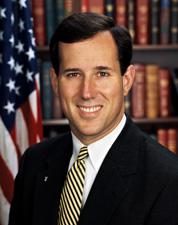
Mr. President, I rise today to introduce the Community Health Center Volunteer Physician Protection Act of 2005 along with Senator Ron Wyden. Representative Tim Murphy of Pennsylvania introduced…
Mr. President, I rise today to introduce the Community Health Center Volunteer Physician Protection Act of 2005 along with Senator Ron Wyden. Representative Tim Murphy of Pennsylvania introduced identical bipartisan legislation in the House of Representatives, H.R. 1313.
Community health centers offer primary and preventive health care services to everyone, including low-income, underinsured and uninsured families. Community health centers are typically located in high-need areas identified by the Federal Government as having elevated poverty, higher than average infant mortality, and where few physicians practice. They tailor their services to fit the special needs and priorities of their communities, and offer services that help their patients access health care such as health education, transportation and home visitation.
While low-income individuals have access to Medicaid and the elderly and the disabled have access to Medicare, uninsured and underinsured families often delay seeing a doctor or turn to emergency departments where treatment is several times more expensive.
Community health centers, however, provide comprehensive and preventive care that adjusts charges for patient care according to family income. The Federal Government spends over $23 billion a year to offset losses incurred by hospitals for patients unable to pay their bills, and the Department of Health and Human Services note that medical care at community health centers cost only about $1.30 per day per patient served. In fact, medical care at community health centers is around $250 less per patient served than the average annual expenditure for an office-based medical provider.
Community health centers offer an affordable source of quality health care, but we need more of them. The President has proposed a $304 million increase for community health center programs to create 1,200 new or expanded sites to serve an additional 6.1 million people by next year. In order to meet that goal, the centers must double their workforce by adding double the clinicians by 2006. Hiring this many doctors would be costly, but encouraging more to volunteer would help to meet this need. While many physicians are willing to volunteer their services at these centers, they often hesitate due to the high cost of medical liability insurance. As a result, there are too few volunteer physicians to meet our health care needs.
By comparison, volunteer physicians at free health clinics and paid physicians at community health centers already receive comprehensive medical liability coverage under the Federal Tort Claims Act (FTCA).
Accordingly, the Community Health Center Volunteer Physician Protection Act of 2005 would extend the medical liability protections of FTCA to volunteer physicians at community health centers. These protections are necessary to ensure that the centers can continue to play an important role in lowering our Nation's health care costs and meeting the needs for affordable and access quality health care. The Community Health Center Volunteer Physician Protection Act of 2005 is supported by the National Association of Community Health Centers, the American Medical Association and the American Osteopathic Association.
The impact that community health centers have on the citizens of the Commonwealth of Pennsylvania is significant. Pennsylvania is the home to twenty-nine Federal grantees, including 11 of which are rural, and 151 different service delivery sites. These services are crucial in my home state which also faces a severe medical liability crisis.
We must continue to encourage the spirit of giving and volunteerism, particularly in the healthcare arena. I urge my colleagues to support the Community Health Center Volunteer Physician Protection Act of 2005.

Mr. President, currently, more than 3,700 children and youth under the age of 13 are living with HIV or AIDS in the United States and of the more than 40,000 Americans newly infected with HIV each…
Mr. President, currently, more than 3,700 children and youth under the age of 13 are living with HIV or AIDS in the United States and of the more than 40,000 Americans newly infected with HIV each year, half are young people under the age of 25 years old. When we think about this devastating virus we do not often associate it with children, especially infants or newborn babies, but the fact is this disease does not discriminate on the basis of age. It affects children in very specific and very different ways than adults.
For instance, the medical experience of children with HIV/AIDS can differ significantly from that of adults. Because children's immune systems are still immature, the disease typically progresses more rapidly in children than in adults and can have different manifestations. For example, the majorities of children with HIV have neurological abnormalities and are more susceptible to certain opportunistic infections than adults. In addition, because children's bodies are growing and developing, HIV/AIDS can have profound effects on children's physical growth and ability to reach developmental milestones such as crawling, walking and learning to walk.
Medication for young children living with HIV/AIDS can also be very different than that of an adult living with HIV/AIDS. For example, children of certain ages cannot swallow pills and require liquid formulations of life-saving HIV/AIDS drugs that are not always readily available. In addition, dosing and safety information for these powerful drugs are often strikingly different for children and adults, and for younger children, this information is typically completely missing. This lack of information puts children at risk by requiring health care providers to estimate correct dosing. Too much medication can be toxic, and too little will not effectively suppress the virus. Over time, underdosing can lead to drug resistance.
Children are not just small adults and their growing bodies are especially susceptible to the rapid advancement of HIV infection. Early awareness that a child has HIV infection, combined with good care and support, can enhance survival and quality of life, which is why I am introducing, with my colleague Senator Dodd, The Children and Family HIV/AIDS Research and Care Act.
This legislation will address those needs of children and adolescents living with HIV/AIDS by reauthorizing Title IV of the Ryan White CARE Act and expanding its focus on reaching and caring for adolescents with HIV/AIDS. Moreover, this legislation will continue to work to reduce mother-to-child transmission of HIV, by promoting routine, voluntary prenatal HIV testing and intensive care management for HIV-positive pregnant women. In addition, because children are at risk of being left behind in the search for an effective HIV vaccine, the bill will require federal agencies funding and regulating HIV vaccine research to develop plans and guidelines for including pediatric populations in clinical trials as quickly as is medically and ethically appropriate. This legislation will also encourage research on key remaining pediatric research questions, including how to provide safer and more effective treatment options for children with HIV/AIDS.
For a young person living with HIV or AIDS there is no cure and there is no remission. It is with them at home, on the playground, in the classroom, and at a Friday night sleepover. It will be with them as they enter high school, go to college and get their first job. For a person born with this virus it is a permanent part of their life. This bill will help to ensure that the needs of infants, children, and adolescents living with HIV/AIDS are not overlooked.
Mr. President, today, we celebrate Flag Day, honoring an enduring symbol of our democracy, of our shared values, of our allegiance to justice, and of those who have sacrificed to defend these…
Mr. President, today, we celebrate Flag Day, honoring an enduring symbol of our democracy, of our shared values, of our allegiance to justice, and of those who have sacrificed to defend these principles.
On this day, I renew my support for S.J. Res. 12, a resolution that would let the people decide whether they want a constitutional amendment to protect the American flag.
Many moving images of the flag are etched into our Nation's collective conscience. We are all familiar with the image of marines raising the flag on Iwo Jima, with the New York firefighters raising the flag amid the debris of the World Trade Center and with the large flag that hung over the side of the Pentagon while part of it was rebuilt after 9/11.
It is more than a piece of material to so many of us. For our veterans, the flag represents what they fought for--democracy and freedom. Today there are almost 300,000 troops serving overseas, putting their lives on the line every day fighting for the fundamental principles that our flag symbolizes.
Last December, I traveled to Iraq and met with some of the brave men and women in the Armed Forces who are stationed there. We flew out of Baghdad on a C-130 that we shared with a flag-draped coffin being accompanied by a military escort.
This was very moving. It showed clearly how significant the meaning of the flag is and why protecting it is so important.
In the 1989 case Texas v. Johnson, the Supreme Court struck down a State law prohibiting the desecration of American flags in a manner that would be offensive to others. The Court held that the prohibition amounted to an impermissible content-based regulation of the first amendment right to free speech. Until this case, 48 of the 50 States had statutes preventing burning or otherwise defacing our flag.
After the Johnson case was decided, Congress passed the Flag Protection Act of 1989, which sought to ban flag desecration in a content-neutral way that would withstand judicial scrutiny. Nevertheless, the Supreme Court justices struck down that Federal statute as well.
It is clear that without a constitutional amendment there is no Federal statute protecting the flag which will pass constitutional muster.
S.J. Res. 12 would not ban flag burning. It would not ban flag desecration. This amendment would do one thing only: give Congress the opportunity to construct, deliberately and carefully, precise statutory language that clearly defines the contours of prohibitive conduct.
Some critics say that we are making a choice between trampling on the flag and trampling on the first amendment. I strongly disagree.
Protecting the flag will not prevent people from expressing their points of view. I believe a constitutional amendment returning to our flag the protected status it has had through most of this Nation's history, and that it deserves, is consistent with free speech.
I do not take amending the Constitution lightly. It is serious business and we need to tread carefully. But the Constitution is a living text. In all, it has been amended 27 times.
Securing protection for this powerful symbol of America would be an important, but very limited, change to the Constitution. It is a change that would leave both the flag and free speech safe.
Now it is time to give Americans the opportunity to amend the Constitution for something that we all agree is sacred to so many people all across this country. It is time to let the people decide.
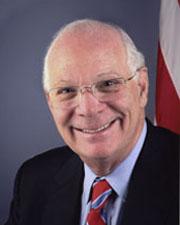
Mr. Speaker, I rise in strong support of S.J. Res. 19, which recognizes the 30th anniversary of the Helsinki Final Act. The President issued a proclamation on August 1, 2005 which celebrated this…
Mr. Speaker, I rise in strong support of S.J. Res. 19, which recognizes the 30th anniversary of the Helsinki Final Act. The President issued a proclamation on August 1, 2005 which celebrated this important anniversary.
I am privileged to serve as the Ranking Member of the Helsinki Commission, formally known as the U.S. Commission on Security and Cooperation in Europe. The Commission encourages compliance with the Helsinki Final Act by the 55 nations of the Organization for Security and Cooperation in Europe (OSCE), which is the largest regional security organization in the world.
The United States has actively participated in the Helsinki process since its inception 30 years ago. Today we acknowledge and celebrate that participation. This resolution recalls the importance of the Helsinki process in promoting human rights, democracy, and the rule of law within the OSCE. The Helsinki process consists of three ``baskets'' of rights which are essential to security: political, economic, and human rights.
Our Commission is unusual in that it is an independent Federal agency which has both the legislative and executive branches working together side by side. I have greatly appreciated this opportunity to work as equal partners in the Helsinki process, which I think has frankly increased our effectiveness on a number of issues within the OSCE region.
I have enjoyed working with our colleagues on the International Relations Committee, Mr. Hyde and Mr. Lantos, as well as with my Helsinki Commission Co-Chairman Chris Smith and Chairman Sam Brownback from the Senate.
Our work on the Helsinki Commission is bipartisan, and I do not think I can ever recall a moment in my entire service on this Commission where we have had a partisan difference. Our bipartisan record has led to numerous accomplishments on critical issues in the OSCE. The OSCE is perhaps best known for leading election monitoring missions to insure free and fair elections in emerging democracies in Europe and Eurasia.
The Helsinki process allowed many Jews to leave the former Soviet Union. Today the Helsinki process has taken the lead in fighting the growing scourge of anti-Semitism in Europe, culminating in an unprecedented conference on anti-Semitism and the issuance of the Berlin Declaration, which adopts a number of concrete commitments for States to fight anti-Semitism.
I am also privileged to serve as the Chairman of the economic committee of the Parliamentary Assembly (PA) of the OSCE, which has focused on anti-corruption measures and the promotion of small businesses, particularly those owned by women and minorities. I commend the gentleman from Florida, Mr. Hastings, for his excellent leadership of the OSCE PA as the first American to serve as President of this organization.
Earlier this year Chairman Smith and I visited Ukraine to meet with the new democratic government. Many of the former Soviet republics are still struggling today with their transition to a democratic form of government, and the OSCE plays an integral role in assisting these governments in establishing the rule of law.
Many challenges remain for the Helsinki process, but today we celebrate its rich legacy and record of accomplishments. I look forward to using the Helsinki process as we confront the new political, economic, and human rights challenges of the 21st century.
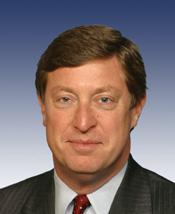
Mr. Speaker, I rise in strong support of this Senate Joint Resolution 19, as amended, and Mr. Speaker, I yield myself such time as I may consume. Mr. Speaker, in 1975, in an effort to reduce the…
Mr. Speaker, I rise in strong support of this Senate Joint Resolution 19, as amended, and Mr. Speaker, I yield myself such time as I may consume.
Mr. Speaker, in 1975, in an effort to reduce the risks of war between the North Atlantic Alliance and the Warsaw Pact, the countries of the North Atlantic community and Eastern and Central Europe could agree on a common set of principles on peaceful relations and decent treatment of their citizens.
As the gentleman from New Jersey (Mr. Smith) so passionately and so eloquently said, it was a true watershed in human history. At the time, I am sure that the leaders of the Soviet Union thought that they had achieved much, such as the de facto recognition of a divided Germany, and given little. What, after all, they thought, is the danger of a few words about freedom on a piece of paper? Thirty years later, it is clear what was wrought by these words.
The principles of human rights and fundamental freedoms empowered the dissidents of Russia, Ukraine, the Baltic States, Czechoslovakia, Poland and others to establish Helsinki monitoring or similar groups to try to push their governments to live up to the commitments of the Helsinki Final Act.
Indeed, many of those dissidents lost their personal freedom and sometimes even their lives in their courageous and vocal support for these principles. And the Helsinki Final Act is not merely an artifact of history, not merely an artifact of history. The Organization for Security and Cooperation in Europe, the successor to the conference that drafted the act, continues to promote freedom and human rights throughout Europe, including the newly independent States of the former Soviet Union.
Just in the last year, the OSCE through its Offices for Democratic Institutions and Human Rights has supported civil society in Belarus; sent election observers to Kyrgyzstan as it makes efforts to transition to an authoritarian regime; provided training on human rights monitoring to groups in the Caucasus; and assisted countries throughout the region in stopping the scourge of modern day slavery, the trafficking in persons.
Later this year, OSCE will make efforts to have a successful free and fair parliamentary election in Azerbaijan, a critical country to our efforts in Afghanistan and a country that is seeking to throw off the communist bonds of its past.
The Organization for Security and Cooperation in Europe does not stop in Europe.
It is helping the countries of Africa and other regions in their efforts at democratization.
Indeed, many have talked about a Helsinki Final Act for the Middle East to bring the value of the accords to the
people of those countries. Some have argued for a democracy charter for the countries of the Arab League, similar to the charter adopted by the Organization of American States.
Mr. Speaker, I hope the administration is seriously taking the lessons of the Helsinki process to heart as it moves forward with its efforts to promote democracy and pluralism through the broader Middle East and North Africa Initiative.
I strongly support this legislation, and may we strike more blows for basic human rights in the world.
Mr. Speaker, I have no other requests for speaking time, and I yield back the balance of my time.
Show 11 more
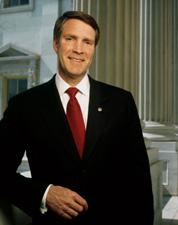
Mr. President, today, Senator Bingaman and I introduced the ``Covering Kids Act of 2005.'' This legislation provides $100 million in funding to a host of entities including the States, local…
Mr. President, today, Senator Bingaman and I introduced the ``Covering Kids Act of 2005.'' This legislation provides $100 million in funding to a host of entities including the States, local communities, schools, faith-based organizations, Indian tribes, safety net providers. The goal is to increase enrollment of eligible children in Medicaid and the State Children's Health Insurance Program (SCHIP).
I believe that all Americans should have the security of lifelong, affordable access to health care, especially America's children. Programs like SCHIP help provide a critical safety net.
But, unfortunately, there are still too many families who are not aware of the coverage available to them, or face barriers to enrollment. In fact, over 5.6 million kids are eligible for Medicaid and SCHIP, but are not enrolled. The Covering Kids Act will help close that gap.
The legislation will fund innovative outreach and enrollment efforts to expand coverage among minority and underserved children, and to those living in rural areas. It will also give states additional flexibility to streamline enrollment in these programs, reducing administrative costs for the government and eliminating paperwork and hassles for families.
Covering children is the right thing to do. And by ensuring that children have access to preventive care, it is also one of the best ways of reducing long-term strain on America's health care system.
Since arriving in the Senate in 1995, I have advanced worked hard to expand
coverage to uninsured Americans and improve health care for those in need. I have sponsored numerous pieces of bipartisan legislation including: the ``Closing the Health Care Gap Act of 2004,'' the ``Pediatric Research Equity Act of 2003,'' the ``Birth Defects and Developmental Disabilities Prevention Act of 2003,'' and the ``Children's Health Act of 2000.'' Last Congress, we took a critical step forward in expanding affordable health coverage to millions more Americans by authorizing tax-free, portable Health Savings Accounts as part of the Medicare Modernization Act of 2003.
Today, we build on that record of progress.
I first proposed expanding outreach efforts to help lower income children in July of last year. Today, I join with Senator Jeff Bingaman and other cosponsors in taking a critical step toward fulfilling that goal.
I also want to applaud the President for his leadership on this issue. President Bush has made the expansion of Medicaid and SCHIP coverage a cornerstone of his agenda. I am confident that with his leadership, and the efforts of my colleagues on the other side of the aisle, we can help millions of kids who need coverage by passing this common sense legislation. All of our children should have access to the affordable quality health care.
I'm proud to introduce this bipartisan legislation with Senators Bingaman, Lugar, Cantwell, Santorum, Collins, Cochran, and Murray. I look forward to working with them, and with all of my colleagues, to strengthen our Nation's health care system and expand affordable health coverage.
I ask unanimous consent that the text of the bill be printed in the Record.

Mr. President, I rise today for myself and Senator Ensign to introduce the Southern Nevada Limited Transition Area Act, which will enhance the ability of a rapidly growing community to diversify its…
Mr. President, I rise today for myself and Senator Ensign to introduce the Southern Nevada Limited Transition Area Act, which will enhance the ability of a rapidly growing community to diversify its economy, gainfully employ its residents, and achieve fiscal sustainability.
In addition to creating a vital economic center in Henderson with this legislation, we hope at a future date to add another title to this bill that will allow Clark County to convey a small parcel of land to the Nevada National Guard for no consideration so that a new armory can be developed. Conversations are currently taking place at the State and county levels that may impact this conveyance, so we are awaiting more information.
The bill I am introducing today would convey approximately 547 acres of land from the Bureau of Land Management to the city of Henderson, NV, for development as an employment and business center.
The Bureau of Land Management has designated this parcel for disposal because of its urban surroundings and its isolation from other public land, which renders it difficult for the agency to manage.
The parcel is located in a rapidly growing area of the city, but is impacted by aircraft noise and overflights from the nearby Henderson Executive Airport, making it unsuitable for residential use.
Rather than shying away from this property because of the limitations on its use, the city of Henderson has put together a forward looking plan that will turn the area into a bustling business center. In addition to productively diversifying the land use pattern in the Las Vegas Valley, the proposed development of this land will encourage a broad range of employment opportunities for the region, while also helping to pay for public infrastructure in nearby residential areas.
The way that the land privatization would work is as follows. The bill would convey the land to the city by patent. The city would then subdivide and sell lots at fair market value. As in previous conveyances of Federal land designated in the Southern Nevada Public Lands Management Act for disposal, 85 percent of the proceeds from sales would return to the BLM's Special Account for a variety of conservation purposes in Nevada. Five percent of the proceeds would fund the State of Nevada's general education program. And the city of Henderson could use the remaining 10 percent to cover expenses associated with subdividing the property and providing infrastructure.
Henderson is a rapidly growing city. Its leaders are dedicated to making the city a national model of logical development, diversified employment, and fiscal sustainability. This bill helps establish the conditions needed to realize that vision.
This bill provides key assistance to southern Nevada by enabling the City of Henderson to move forward with an important economic development project. This is a simple, but an important effort that this body can make to further strengthen our Nation's economy. I look forward working with the Energy Committee and the Senate to pass this legislation.
I ask unanimous consent that the text of the bill be printed in the Record.

Mr. Speaker, I strongly support this Joint Resolution calling on President Bush to issue a proclamation recognizing the 30th anniversary of the signing of the Final Act of the Conference on Security…
Mr. Speaker, I strongly support this Joint Resolution calling on President Bush to issue a proclamation recognizing the 30th anniversary of the signing of the Final Act of the Conference on Security and Cooperation in Europe, commonly known as the Helsinki Agreement.
The Helsinki Final Act--which was signed on August 1, 1975--was the first international agreement to accord human rights the status of a fundamental principle in regulating international relations, and has been widely credited with helping to expose human rights violations in the former Soviet bloc.
In fact, I firmly believe that the political process set in motion by the signing of the Helsinki Final Act laid the groundwork for the forces that consumed the former Soviet empire.
In 1975, many of the Final Act signatory states viewed the language of the act dealing with human rights and the obligation that each state had toward its own citizens, as well as those of other states, as essentially meaningless window dressing. Their objective was to secure a framework in which their international political position and the then-existing map of Europe would be adjudged a fait accompli.
They were proved wrong. The Helsinki process, which provided a forum and international backing for Refuseniks and others fighting behind the Iron Curtain for fundamental freedoms and human rights--led inevitably to the collapse of Soviet communism.
Today, we celebrate the freedom yielded by our steadfast commitment to the Helsinki process and by our demand that the former Soviet bloc countries adhere to and implement the human rights standards enshrined by the accords.
The fall of the Berlin Wall transformed the world and demonstrated without reservation that respect for the dignity of all individuals is fundamental to democracy.
As we reflect on this 30th anniversary, we understand that the countries and peoples of the region are still in transition and will be for decades to come. Great strides have been made by many former communist countries in building democratic societies and market economies.
But in my view, Mr. Speaker, it is critical that the United States remain engaged with the peoples and governments of Europe and the countries that emerged from the former Soviet Union, especially Russia.
We must remain committed to a Europe whole, free, democratic and at peace. It is in our strategic and national interest to do so. And by doing so, we honor the memory of all those who sacrificed so much to hold high the banner of freedom.
Finally, let me note that this Joint Resolution reasserts the commitment of the United States to fully implement of the Helsinki Act; urges all participating states to abide by their obligations under the Act; and encourages Americans to join the President and Congress in observing this 30th anniversary.
I urge my colleagues to support this important Resolution.
Mr. Speaker, I rise today in support of S.J. Res. 19, a joint resolution calling upon the President to issue a proclamation recognizing the 30th anniversary of the Helsinki Final Act. As a…
Mr. Speaker, I rise today in support of S.J. Res. 19, a joint resolution calling upon the President to issue a proclamation recognizing the 30th anniversary of the Helsinki Final Act. As a Commissioner of the Organization for Security and Cooperation in Europe (OSCE), I am pleased to continue to work with my fellow commissioners in Congress, the Administration and our counterparts in the other 54 member nations.
The Organization for Security and Cooperation in Europe (OSCE) had its origin in the early 1950s when the Soviet Union first proposed the creation of an all-European security conference. However it wasn't until November 1972 when representatives from the original 35 nations met for nearly three years to work out the arrangements. On August 1, 1975, the leaders of the original 35 participating States gathered in Helsinki and signed the Final Act of the Conference on Security and Cooperation in Europe.
Also known as the Helsinki Accords, the Final Act is a binding agreement consisting of three main sections, known as Baskets, regarding political, economic and human rights.
Since 1975, the number of countries signing the Helsinki Accords has expanded to 55, reflecting changes such as the breakup of the Soviet Union, Czechoslovakia and Yugoslavia. Institutionalization of the Conference in the early 1990s led to its transformation to the Organization for Security and Cooperation in Europe, effective January 1995.
The Helsinki Final Act and the process it began provided an important backdrop against which President Ronald Reagan, standing in front of Berlin's Brandenburg Gate, could boldly declare, ``Mr. Gorbachev, tear down this wall.'' This began the process of systemic change, eventually leading to the release of hundreds of cases of political prisoners and prisoners of conscience as well as the reunification of tens of thousands of families.
In a step designed to preserve the unity of the Helsinki process, each country that joined the OSCE after 1975 submitted a letter in which the accepted in their entirety all commitments and responsibilities contained in the Helsinki Final Act, and all subsequent documents adopted prior to their membership. To underscore this continuity, the leaders of each of these countries signed the actual original 1975 Final Act document.
I have been particularly interested in working with former Chairman Smith and now with Chairman Brownback on human rights and religious freedom. There remains a great deal of work to do on these matters throughout the OSCE member countries. I look forward to continuing to work with the OSCE members and their outstanding staff.
Mr. President today I am pleased to introduce the Indian Health Care Improvement Act Amendments of 2005 to revise and extend the Act. Six years ago a steering committee of Tribal leaders, with…
Mr. President today I am pleased to introduce the Indian Health Care Improvement Act Amendments of 2005 to revise and extend the Act.
Six years ago a steering committee of Tribal leaders, with extensive consultation by the Indian Health Service, developed a broad consensus in Indian Country about what needs to be done to improve and update health services for Indian people. In the 108th Congress significant progress was made in crafting a bill that was acceptable to all parties but still did not pass the full Senate. In the legislation introduced today, I have tried to address concerns raised last year, but understand that there may still be some differences. I look forward to continuing discussions on these differences, but am introducing the bill to get the process moving because we want to get this legislation enacted.
Over the years, Indian health care delivery has greatly expanded and tribes are taking over more health care services on the local level. Nearly 30 years ago, Congress enacted the Indian Health Care Improvement Act to meet the fundamental trust obligation of the United States to ensure that comprehensive health care would be provided to American Indians and Alaska Natives. The health status of Indian people remains much worse than that of other Americans.
The Indian Health Care Improvement Act is the statutory framework for the Indian health system and covers just about every aspect of health care. It provides grants and scholarships to recruit Indians into health professions serving native communities and funds to expand the health care infrastructure. It lifted the prohibition against Medicare and Medicaid reimbursement for health services provided by the Indian Health Service or the Indian tribes, and established health services for Indians in urban areas.
Reauthorization of this Act is a high legislative priority. Critical improvements have been provided in this bill including provisions exploring options for long-term care, governing children and senior issues and the following: new sources of funding for recruitment and retention purposes; access to health care, especially for Indian children and low-income Indians; more flexibility in facility construction programs; consolidated behavioral health programs for more comprehensive care; and a Commission to study and recommend the best means of providing Indian health care.
I look forward to working with my colleagues on both sides of the aisle to ensure passage of this important legislation. I ask unanimous consent that the full text of the bill be printed in the Record.
Mr. President, I am pleased to join my good friend, Senator Inouye, Co-Chairman of the Commerce Committee, and several of our colleagues, today in introducing the ``Transportation Security…
Mr. President, I am pleased to join my good friend, Senator Inouye, Co-Chairman of the Commerce Committee, and several of our colleagues, today in introducing the ``Transportation Security Improvement Act of 2005.'' The Commerce Committee is committed to fulfilling its oversight responsibilities with respect to the security of all major modes of transportation.
It has been four years since Congress enacted landmark aviation and maritime transportation security laws after the September 11 attacks. We must remain diligent in carrying out our responsibility to secure the Nation's domestic transportation system so as to ensure consumer trust and the uninterrupted flow of commerce. Recent reorganizations and budgetary decisions affecting the Transportation Security Administration (TSA) have effectively marginalized maritime and surface transportation security, suggested re-privatization of aviation security, and offered inadequate funding for the security of all modes.
The bill that we introduce today recognizes transportation security as a national security function and an economic necessity. The legislation would address security vulnerabilities that exist within our aviation, maritime, rail, and surface transportation systems. More specifically, the bill would, among other things: make notable changes to aviation security policy, including prohibiting the Administration from increasing passenger fees without the approval of Congress; eliminate the existing cap of 45,000 full time equivalent aviation security screening employees; enhance maritime cargo security by improving the examination of shipments before they reach U.S. shores; require TSA to conduct a railroad sector threat assessment and submit prioritized recommended solutions for improving rail security; make improvements to bus and motor carrier security by subjecting foreign commercial drivers transporting hazardous materials into the U.S. to submit to security background checks; and encourage the deployment of rail car tracking equipment for high-hazard materials rail shipments.
This is an important first step toward bolstering our nation's security with respect to transportation and I
look forward to working with Senator Inouye, as well as the Department of Homeland Security, DOT, and private industry, on this legislation in committee and on the Senate floor.
I thank Chairman McCain for his leadership in introducing the Indian Health Care Improvement Act Amendments of 2005. I have been pleased to work with him in constructing this legislation. He and I…
I thank Chairman McCain for his leadership in introducing the Indian Health Care Improvement Act Amendments of 2005. I have been pleased to work with him in constructing this legislation. He and I are united in our agreement that getting the Indian Health Care Improvement Act reauthorized this year is the Indian Affairs Committee's top priority.
This legislation was last reauthorized in 1992. Since 1999, the director of the Indian Health Service and his staff have worked with a national steering committee of tribal leaders and representatives of Indian health organizations, as well as with the congressional authorizing committees, on reauthorization of and amendments to the Indian Health Care Improvement Act.
The bill that we introduce today reflects many elements of these discussions and negotiations over recent years, as well as testimony received at a number of hearings held by the Senate Indian Affairs Committee and House Resources Committee. It is important that we begin as soon as possible to receive the views of Indian Country, the administration and others on this legislation.
I am sure that in the course of this Congress, there will be changes to the bill that is being proposed today. As Chairman McCain knows, I am committed to addressing the serious issue of teen suicide that is epidemic on several Indian reservations, in North Dakota and other areas of the country. I hope that the recommendations of Indian parents, students, tribal officials and health professionals may lead to additional provisions in the Act to deal with this very serious problem.
I look forward to the comments of the administration, especially the Indian Health Services, as well as other committees of the Congress, tribes and tribal organizations, urban Indian entities, and others to help us craft legislation that will provide creative and effective solutions to address the health care needs of American Indian and Alaska Native communities.
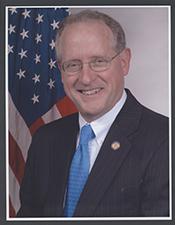
Mr. Speaker, due to a death in the family, I missed rollcall votes on September 6th, 7th, and 8th. Had I been in Washington, I would have voted: ``Yea,'' on rollcall No. 454, H. Res. 360,…
Mr. Speaker, due to a death in the family, I missed rollcall votes on September 6th, 7th, and 8th. Had I been in Washington, I would have voted:
``Yea,'' on rollcall No. 454, H. Res. 360, commemorating the 60th anniversary of V-J Day and the end of World War II in the Pacific.
``Yea,'' on rollcall No. 455, S.J. Res. 19, calling upon the President to issue a proclamation recognizing the 30th anniversary of the Helsinki Final Act.
``Yea,'' on rollcall No. 456, H.R. 365, to allow United States Courts to conduct business during emergency conditions, and for other purposes.
``Yea,'' on rollcall No. 457, H.R. 3169, to provide the Secretary of Education with waiver authority for students who are eligible for Pell Grants who are adversely affected by a natural disaster.
``Yea,'' on rollcall No. 460, H.R. 3673, further Emergency Supplemental Appropriations, Hurricane Katrina, 2005.
``Yea,'' on rollcall No. 461, H.R. 3669, to temporarily increase the borrowing authority of the Federal Emergency Management Agency for carrying out the national flood Insurance program.
``Yea,'' on rollcall No. 462, H.R. 3668, student Grant Hurricane and Disaster Relief Act.
``Yea,'' on rollcall No. 463, H. Res. 428, expressing the sincere gratitude of the House of Representatives to the foreign individuals, organizations, and governments that have offered material assistance and other forms of support to those who have been affected by Hurricane Katrina.
``Yea,'' on rollcall No. 464, H. Res. 427, relating to the terrorist attacks against the United States on September 11, 2001.
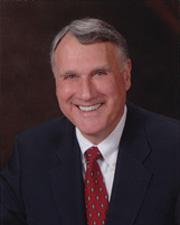
Mr. President, I rise today to ask unanimous consent that the following analysis of the 1993 Hawaii apology resolution, prepared by constitutional scholar Bruce Fein, be entered into the Record…
Mr. President, I rise today to ask unanimous consent that the following analysis of the 1993 Hawaii apology resolution, prepared by constitutional scholar Bruce Fein, be entered into the Record following my present remarks.
To be sure, I do not think that the nature of the events that led to the end of the Kamehameha monarchy is relevant to the question whether we should establish a race-based government in Hawaii today. I believe that America is a good and great Nation, and that all Americans should be proud to be a part of it. The United States does not deserve to have its government carved up along racial lines.
Nevertheless, proponents of racially separate government in Hawaii have advanced their arguments for S. 147, the Native Hawaiian Government Reorganization Act, in terms of history. It is thus instructive to take a close look at that history.
[The Grassroot Institute of Hawaii, Jun. 1, 2005]
Hawaii Divided Against Itself Cannot Stand--An Analysis of the Apology
Resolution
(By Bruce Fein)
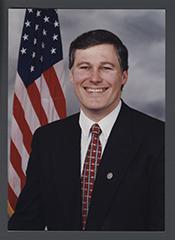
Mr. Speaker, over the Labor Day weekend, I volunteered at the Houston Astrodome to assist in relieving the victims of Hurricane Katrina. On Tuesday, September 6, 2005, en route to Washington, DC,…
Mr. Speaker, over the Labor Day weekend, I volunteered at the Houston Astrodome to assist in relieving the victims of Hurricane Katrina. On Tuesday, September 6, 2005, en route to Washington, DC, from Houston, a passenger on my aircraft attempted to commit suicide and the flight was temporarily rerouted to Nashville, TN. As a result, my flight was significantly delayed in landing at Dulles airport, causing me to miss votes for both H. Res. 360, commemorating the 60th anniversary of V-J Day and the end of World War II in the Pacific, and S.J. Res. 19, a joint resolution calling upon the President to issue a proclamation recognizing the 30th anniversary of the Helsinki Final Act.
Had I been present in the House of Representatives, I would have voted in support of both resolutions, H. Res. 360 and S.J. Res. 19.

Mr. Speaker, on September 6, 2005, I was unavoidably detained and missed rollcall votes numbered 454 and 455. Rollcall vote 454 was on the motion to suspend the rules and agree to, H. Res. 360,…
Mr. Speaker, on September 6, 2005, I was unavoidably detained and missed rollcall votes numbered 454 and 455. Rollcall vote 454 was on the motion to suspend the rules and agree to, H. Res. 360, commemorating the 60th anniversary of V-J Day and the end of World War II in the Pacific. Rollcall vote 455 was on the motion to suspend the rules and agree to, S.J. Res. 19, a joint resolution calling upon the President to issue a proclamation recognizing the 30th anniversary of the Helsinki Final Act.
Had I been present I would have voted ``yea'' on rollcall votes 454 and 455.
Bill Text
4 versions available
        [Congressional Bills 109th Congress]
[From the U.S. Government Publishing Office]
[S.J. Res. 19 Engrossed Amendment House (EAH)]

109th CONGRESS

1st Session

S. J. Res. 19

_______________________________________________________________________

AMENDMENT
In the House of Representatives, U. S.,

September 6, 2005.

Resolved, That the resolution from the Senate (S. J. Res. 19) entitled
``Joint Resolution calling upon the President to issue a proclamation
recognizing the 30th anniversary of the Helsinki Final Act'', do pass with the
following

AMENDMENT:

Strike the preamble and insert:

Whereas August 1, 2005, is the 30th anniversary of the Final Act of
the Conference on Security and Cooperation in Europe
(CSCE), renamed the Organization for Security and
Cooperation in Europe (OSCE) in January 1995 (hereafter in
this resolution referred to as the ``Helsinki Final Act'');
Whereas the Helsinki Final Act established a new framework for
relations among countries in Europe and the North Atlantic
region that recognized that respect for human rights is a
fundamental principle in regulating international
relations;
Whereas, during the Communist era, members of nongovernmental
organizations, such as the Helsinki Monitoring Groups in
Russia, Ukraine, Lithuania, Georgia, and Armenia and
similar groups in Czechoslovakia and Poland, sacrificed
their personal freedom and even their lives in their
courageous and vocal support for the principles enshrined
in the Helsinki Final Act;
Whereas Congress contributed to advancing the aims of the Helsinki
Final Act by creating the Commission on Security and
Cooperation in Europe to monitor and encourage compliance
with provisions of the Helsinki Final Act;
Whereas, in the 1990 Charter of Paris for a New Europe, the
participating States in the OSCE (hereafter in this
resolution referred to as the ``participating States'')
declared that ``[h]uman rights and fundamental freedoms are
the birthright of all human beings, are inalienable and are
guaranteed by law'' and that ``[t]heir protection and
promotion is the first responsibility of government'';
Whereas, in the 1991 Document of the Moscow Meeting of the
Conference on the Human Dimension of the CSCE, the
participating States ``categorically and irrevocably
declare[d] that the commitments undertaken in the field of
the human dimension of the CSCE are matters of direct and
legitimate concern to all participating States and do not
belong exclusively to the internal affairs of the State
concerned'';
Whereas, in the 1990 Charter of Paris for a New Europe, the
participating States committed themselves ``to build,
consolidate and strengthen democracy as the only system of
government of our nations'';
Whereas the pro-democracy revolution in Serbia in 2000, the Rose
Revolution in Georgia in 2003, the Orange Revolution in
Ukraine in 2004, and the popular revolution in Kyrgyzstan
in 2005 demonstrate the primacy of popular sovereignty and
the importance of OSCE commitments on free and fair
elections;
Whereas the OSCE and the participating States have undertaken a
series of measures aimed at combating anti-Semitism,
racism, xenophobia, and discrimination and should report on
related progress during the OSCE Conference on anti-
Semitism and on Other Forms of Intolerance in Cordoba,
Spain, in June 2005;
Whereas the 1999 Istanbul OSCE Charter for European Security and
the November 19, 1999, Istanbul Summit Declaration note the
particular challenges of ending violence against women and
children as well as sexual exploitation and all forms of
trafficking in human beings, and commit the participating
States to strengthen efforts to combat corruption,
eradicate torture, and end discrimination against Roma;
Whereas the main challenge facing the participating States remains
the implementation of the principles and commitments
contained in the Helsinki Final Act and other OSCE
documents adopted on the basis of consensus;
Whereas the participating States have recognized that economic
liberty, social justice, and environmental responsibility
are indispensable to prosperity;
Whereas the participating States have committed themselves to
promoting economic reforms through enhanced transparency
for economic activity, with the aim of advancing the
principles of market economies;
Whereas the participating States have stressed the importance of
respect for the rule of law and vigorous efforts to fight
organized crime and corruption, which constitute a great
threat to economic reform and prosperity;
Whereas OSCE has expanded the scope and substance of its efforts,
undertaking a variety of preventive diplomacy initiatives
designed to prevent, manage, and resolve conflict within
and among the participating States;
Whereas the politico-military aspects of security remain vital to
the interests of the participating States and constitute a
core element of OSCE's concept of comprehensive security;
Whereas the OSCE has played an increasingly active role in civilian
police-related activities, including training, as an
integral part of OSCE's efforts in conflict prevention,
crisis management, and post-conflict rehabilitation; and
Whereas the participating States bear primary responsibility for
raising awareness of violations of commitments contained in
the Helsinki Final Act and other OSCE documents: Now,
therefore, be it
Attest:

Clerk.