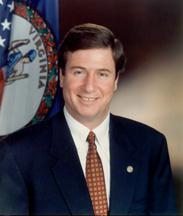
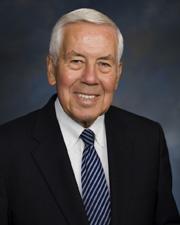
Mr. President, I join with my colleague, the junior senator from Virginia, to resubmit our resolution of apology for the Senate's failure to pass anti-lynching legislation. We brought this…
Mr. President, I join with my colleague, the junior senator from Virginia, to resubmit our resolution of apology for the Senate's failure to pass anti-lynching legislation. We brought this legislation to the Senate's attention in the closing days of the 108th Congress, and indicated then that we would return in February, Black History Month, and seek its adoption his body.
When submitting the resolution earlier, I provided a narrative that described the horrors lynching. It is not necessary to review those facts at this time. The focus of my comments today concerns a critique of the need for this bill. As with many historical errors, there are those who suggest that we are looking at history with twenty-twenty vision. They assert we cannot pass judgment on people living in another context; everyone is blind to their own prejudices, while seeing those of the past clearly.
That is a critique that has a lot of merit in some cases. Societal morays evolve. In fact, our nation's entire history may be viewed as a giant experiment. Viewed from this perspective we find a slow, evolutionary understanding of the meanings of justice, liberty and democracy. However, Senator Allen and I remain confident in what we are seeking to do. The reason is that the Senate's failure to pass anti- lynching legislation is not merely a tragedy now, it was a tragedy then.
Socrates taught us that ``the greatest way to live with honor in this world is
to be what we pretend to be.'' The Senate filibusters that blocked anti-lynching legislation on three separate occasions besmirched the honor of this institution. We style ourselves the greatest deliberative body in the world, yet we showed little real deliberation on those days. We think of ourselves as the ``saucer'' that cools the passions of the House of Representatives. Yet the passions that needed cooling were found in this chamber. We argue that the Senate is the institution that protects the grand traditions of our nation, yet it was the traditions of the Declaration of Independence that we trampled over on those occasions. In short, when we consider the Senate's role in anti- lynching legislation, we simply were not what we pretend to be.
There is other contextual evidence that the Senate was out of step with justice and morality even when viewed at the time. In 1918, in the midst of the First World War, President Woodrow Wilson pleaded for the enactment of anti-lynching legislation. He stated:
There have been many lynchings and every one of them has
been a blow at the heart of ordered law and humane justice.
No man who loves America, no man who really cares for her
fame and honor and character, or who is truly loyal to her
institutions, can justify mob action while the courts of
justice are open and the Governments of the States and the
Nation are ready and able to do their duty . . . We proudly
claim to be the champions of democracy. If we really are in
deed and in truth, let us see to it that we do not discredit
our own. I say, plainly, that every American who takes part
in the action of a mob or gives any sort of countenance is no
true son of this great democracy, but its betrayer, and does
more to discredit her by that single disloyalty to her
standards of law and right than the words or her statesmen or
the sacrifices of her heroic boys in the trenches can do to
make suffering peoples believe her to be their savior.
There are two remarkable things about this quote. First, it is an indication of just how much lynching was impacting our country's reputation. In the middle of an enormous military effort that allied the forces of democracy against the great autocratic empires, the President had to take to reprimand his own countrymen. Furthermore, historians have long noted that President Wilson did not hold particularly progressive views of African Americans. Nevertheless, here he is taking his countrymen to task. Why? Because the injustice of our actions was clear to him, and were being laid bare--rather embarrassingly--before the whole world. While we struggled to demonstrate the strength and righteousness of democracy, we were belying our own story with lynchings. Once again, we simply were not being what we pretended to be.
Finally, I know in my heart that the people of the South were aware of the injustice that they were inflicting on African Americans. I know because I understand how deeply important religion and Christianity are to the people of the South. It pervades every aspect of our culture and history. But it was surely lost on no one in the South that the greatest victim of mob violence was Jesus. When looking at James Allen's book ``Without Sanctuary'' I think people will get a sense of God's suffering. You will also see the tragedy of humanity in the faces of the crowds. You quickly realize that man's inhumanity to man is an ancient question that still plagues us today. Yet in the helpless nobility of the victims, we are also reminded that God intends true peace and justice to come in the next world and not this one.
We have an opportunity today to teach, an opportunity to express remorse, and most importantly an opportunity to be what we pretend to be. In so doing, I hope we may return some of the lost honor of this Chamber.
Mr. President, it has been said that ``ignorance, allied with power, is the most ferocious enemy justice can have.'' Sadly, this great body, in which I am so proud to serve, once allied its power with ignorance. In so doing, it condoned unspeakable injustice that diminished the role of the Senate, and heaped untold suffering on Americans sorely in need of our protection. I am referring to the Senate's role in the decades long campaign to end lynching in this country. On three separate occasions, our colleagues in the House of Representatives passed anti- lynching legislation with overwhelming majorities. On all three of those occasions members of this Chamber blocked, or filibustered the consideration of that legislation.
Between 1882, when records first began to be collected, and 1968 4,742 Americans lost their lives to lynch mobs. The experts believe that undocumented cases might double that figure. The vast majority of those killed --3,445 Americans--were African American. Sadly, a disproportionate number of those deaths occurred within my home region of the South, but 46 of the 50 States experienced these atrocities. Lynching was truly a national problem deserving the attention of the national legislative bodies.
Frederick Douglas seems to have captured the real reason for this dark period of our national history. These acts of terrorism were not so much an admission of African Americans' weakness, but of their perseverance, and indomitable spirit. Douglas wrote:
It is proof that the Negro is not standing still. He is not
dead, but alive and active. He is not drifting with the
current, but manfully resisting it . . . A ship rotting at
anchor meets with no resistance, but when she sails on the
sea, she has to buffet opposing billows. The enemies of the
Negro see that he is making progress and they naturally wish
to stop him and keep him in just what they consider his
proper place.
It was, in short, the ability of African Americans to overcome Jim Crow laws, to overcome share-cropping, to overcome second-class citizenship that provoked such savagery. Its an old story that repeats itself throughout human history. Whether it was the Israelites in Egypt, the colonial empires in Africa or America's own history of Apartheid, rulers that assume superiority inevitably prove themselves models of mankind's basest instincts.
It should also be noted that this was not only an outrage committed against African Americans. The effort to dehumanize people on the basis of race or ethnicity did not limit itself to black Americans. In fact, the single largest incident of lynching occurred in my home State, in my home town of New Orleans. Yet, the victims were not black. They were Italians. On March 14, 1891, 11 Italian immigrants were lynched in the city of New Orleans. These immigrants too were thought to be less than human, and were simply rounded up as a group of the ``usual suspects'' following the murder of Police Superintendent David Hennessy. Already edgy from a media prompted Mafia scare, a mob surrounded the prison and eventually battered down the doors. An armed group of 25 men overtook the guards and summarily riddled the bodies of the 11 Italian prisoners with bullets. Their bodies were hung on lampposts outside the prison. Eyewitnesses described the cheering of the crowd as deafening.
Of course, the attacks on that day are an example of mob justice and its irrational prejudices. However, in nearly 25 percent of all lynchings the motivations of the attackers came down to a bald attempt to maintain a caste system in this country. The NAACP cataloged the reported motivations for these forms of attack. They included: using disrespectful, insulting, slanderous, boastful, threatening or incendiary language; insubordination, impertinence, or improper demeanor, a sarcastic grin, laughing at the wrong place, a prolonged silence; refusing to take off one's hat to a white person or to give the right-of-way when encountering a white on the sidewalk; resisting assault by whites; being troublesome generally; disorderly conduct, petty theft or drunkenness; writing an improper letter to a white person; paying undue or improper attention to a white female; accusing a white man of writing love letters to a black woman; or living or keeping company with a white woman; turning or refusing to turn State's evidence; testifying or bringing suit against a white person; being related to a person accused of a crime and already lynched; political activities; union organizing; conjuring; discussing a lynching; gambling; operating a house of ill fame; a personal debt; refusing to accept an employment offer; vagrancy; refusing to give up one's farm; conspicuously displaying one's wealth or property; and trying to act like a white man.
In many instances, lynchings were little more than a way to remove an economic competitor and confiscate his property. This was true in a number of cases in Mississippi involving successful African American landowners,
and in one notorious Hawaiian case involving a Japanese immigrant competing with established white businessmen.
Many of my colleagues might wonder why now? After all, some of these incidents are over a century old. There are two reasons. First, this aspect of American history is not well known or understood. As reconstruction concluded in the South, a very ugly struggle to reassert the social structure that preceded the Civil War took place. A great deal of it occurred with the tacit consent of the Federal Government, and the most part, the media either shared in the common prejudice, or simply ignored what was occurring.
Fortunately, we have the publication of the book ``Without Sanctuary'' by James Allen, Hilton Als, Congressman John Lewis, and Leon F. Litwak to serve as a focal point for our attention to this neglected history. This is a difficult book to examine. It serves as a catalog of inhuman crime perpetrated by very ordinary citizens. Looking at anything so tragic as the victims of these crimes would be disturbing, but that is not what will leave a lasting impression. It is the festive attitude, the smiles and smirks on the crowd gathered around the victim. They clearly take a perverse pride in this act. Hannah Arendt, the famous political philosopher, subtitled her book on Adolph Eichman's war crimes trials ``A Report on the Banality of Evil.'' When you look at the expressions on the faces of the murders in these photos, that is all you can think about. These are not crazed killers, these are rational people going about their every day lives, and committing unspeakable acts in the process.
Photos like these serve to remind us that a healthy society is not something that is built up over time, and then like a great monument, exists for centuries. Rather, a healthy society is a thin levee that must be constantly improved and maintained to hold back the worst instincts of mankind. I think the horrible pictures that came from Abu Gharib prison served as a reminder of this lesson. This book is even greater testimony that atrocities are not events that only occur in far off places. They can and have occurred here in the United States.
The only way to maintain a healthy society is to acknowledge and discuss our mistakes. No one would defend the Senate's filibuster of anti-lynching legislation today. I would like to think that any Senator who did so would quickly be looking for another line of work. However, despite the change of attitude we have taken no action to remedy our wrong. That is the purpose of this resolution today. I would like to extend my deep thanks to my courageous colleague, the Junion Senator from Virginia. He seemed to instantly understand the significance of this effort, and I believe it was vitally important to proceed with this resolution in a bipartisan manner. His input and drive have made this effort much more successful than it otherwise would have been.
It is our intention to introduce this legislation today, and use the recess period to confer with our colleagues about it. When we reconvene next year, we will re-introduce this resolution, and at that time, we hope to have the co-sponsorship of every member of this body. Then, we endeavor to enact the resolution to commemorate Black History month.
I said ignorance allied with power is justice's most ferocious enemy. Yet imagine what truth allied with power can bring. For over 50 years, African American achievement was seen as a threat to the majority of people in this nation. It is time to close the book on that tragic period and begin to celebrate the achievements of black Americans as accomplishments that have bettered us all. I believe that this resolution of apology will be an important symbolic step in this process of healing and growth.
Mr. President, we have all heard the expression, ``To err is human.'' We teach our children that mistakes are okay because we learn from them. However, there are some mistakes that are more costly to make than others. In 2000, the Institute of Medicine released a report entitled, ``To Err is Human: Building a Safer Health System.'' The report revealed the following devastating statistic: every year, between 44,000 and 98,000 hospitalized people in the United States die due to medical errors.
Science has not yet found a cure to cancer or even the common cold, but it has discovered a way to prevent the thousands of fatalities that occur every year due to medical errors. The Joint Commission on Accreditation of Healthcare Organizations developed a universal protocol that calls for surgical teams to literally call a ``time out'' before surgeries begin. This ``time out'' serves a brief period for surgeons and nurses to verify the patient's identity, the procedure to be performed, and the site of the procedure. Endorsed by the American College of Surgeons, the American Society of Anesthesiologists, the American Hospital Association, the Association of periOperative Registered Nurses, and the American Society for Healthcare Risk Management, this idea of a ``time out'' may seem almost simplistic, but the fact of the matter is even the best surgeon in the world can make a very costly mistake if he or she does not stop for a moment for surgery and take a ``time out.
Therefore, it is my pleasure to rise today to submit this resolution, which promotes a National Time Out Day and promotes the adoption of the Joint Commission on Accreditation of Healthcare Organization's universal protocol for preventing errors in the operating room.
To err may be human, but for the thousands of relatives that are currently sitting in a hospital waiting room, waiting for a loved one to come out of surgery, human error is not an acceptable answer.
 Sen. Edward M. Kennedy (D-MA)