
H.Con.Res. 136House110th Congress (2007-2009)Passed House

Expressing the sense of Congress regarding high level visits to the United States by democratically-elected officials of Taiwan.

Introduced May 1, 2007

Legislative Activity

Stay on top of the latest movement without scrolling through every action

11 earlier actions
SenateIntro Referral Latest Action

Referred to the Committee on Foreign Relations.

August 3, 2007

View full timeline
HouseIntro Referral

Introduced in House

May 1, 2007

HouseIntro Referral

Referred to the House Committee on Foreign Affairs.

May 1, 2007

HouseCommittee

Committee Consideration and Mark-up Session Held.

June 26, 2007

HouseCommittee

Committee Agreed to Seek Consideration Under Suspension of the Rules, (Amended) by Unanimous Consent.

June 26, 2007

HouseFloor

Mr. Faleomavaega moved to suspend the rules and agree to the resolution, as amended.

July 30, 2007 • 2:28 PM

HouseFloor

Considered under suspension of the rules. (consideration: CR 7/31/2007 H8868-8870)

July 30, 2007 • 2:29 PM

HouseFloor

DEBATE - The House proceeded with forty minutes of debate on H. Con. Res. 136.

July 30, 2007 • 2:29 PM

HouseFloor

Passed/agreed to in House: On motion to suspend the rules and agree to the resolution, as amended Agreed to by voice vote.(text: CR 7/31/2007 H8868)

July 30, 2007 • 2:40 PM

HouseFloor

On motion to suspend the rules and agree to the resolution, as amended Agreed to by voice vote. (text: CR 7/31/2007 H8868)

July 30, 2007 • 2:40 PM

HouseFloor

Motion to reconsider laid on the table Agreed to without objection.

July 30, 2007 • 2:40 PM

SenateIntro Referral

Received in the Senate.

July 31, 2007

SenateIntro Referral

Referred to the Committee on Foreign Relations.

August 3, 2007

Floor Debate

6 members

What members said about H.Con.Res. 136 on the floor

4 Republicans2 Democrats
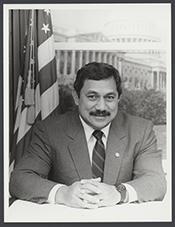
Eni F. H. Faleomavaega
Rep. Eni F. H. FaleomavaegaD-AS · Jul 30, 2007

Mr. Speaker, I move to suspend the rules and agree to the concurrent resolution (H. Con. Res. 136) expressing the sense of Congress regarding high level visits to the United States by…

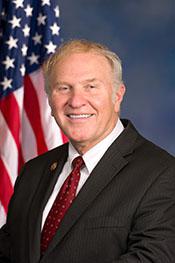
Stevan Pearce
Rep. Stevan PearceR-NM-2 · Jul 30, 2007

Mr. Speaker, I would again say thanks to the gentleman from American Samoa (Mr. Faleomavaega) and the gentlewoman from Florida (Ms. Ros-Lehtinen) for their work on this issue and for the time that…

Ileana Ros-Lehtinen
Rep. Ileana Ros-LehtinenR-FL-18 · Jul 30, 2007

Mr. Speaker, I yield myself such time as I may consume. Mr. Speaker, the sponsor of this resolution, Mr. Chabot, is unfortunately delayed due to airport difficulties, but his statement will be…

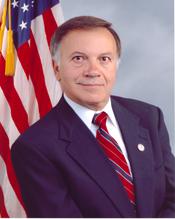
Thomas G. Tancredo
Rep. Thomas G. TancredoR-CO-6 · Jul 30, 2007

Mr. Speaker, I rise in support of House Concurrent Resolution 136. ... This common-sense legislation is long overdue. This resolution will help open the lines of communication between government…

Eliot L. Engel
Rep. Eliot L. EngelD-NY-17 · Jul 30, 2007

Mr. Speaker, I rise today in strong support of H. Con. Res. 136 which expresses the sense of Congress that restrictions on visits to the United States by high-level elected officials from…

Show 1 more
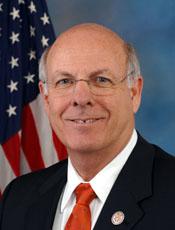
Steve Chabot
Rep. Steve ChabotR-OH-1 · Jul 30, 2007

Mr. Speaker, it's very unfortunate that we have to come back year after year to urge that restrictions should be lifted for high-level visits by appointed and democratically elected leaders of…

Bill Text

3 versions available

Reading Mode
Latest
Referred in SenateIssued August 3, 2007

III

110th CONGRESS

1st Session

H. CON. RES. 136

IN THE SENATE OF THE UNITED STATES

July 31, 2007

Received

August 3, 2007

Referred to the Committee on Foreign Relations

CONCURRENT RESOLUTION

Expressing the sense of Congress regarding high level visits to the United States by democratically-elected officials of Taiwan.

Whereas, for over half a century, a close relationship has existed between the United States and Taiwan, which has been of enormous political, economic, cultural, and strategic advantage to both countries;

Whereas Taiwan is one of the strongest democratic allies of the United States in the Asia-Pacific region;

Whereas it is United States policy to support and strengthen democracy around the world;

Whereas, during the late 1980s and early 1990s, Taiwan made a remarkable transition to a full-fledged democracy with a vibrant economy and a vigorous multi-party political system that respects human rights and the rule of law;

Whereas in spite of its praise for democracy in Taiwan, the United States Government continues to adhere to guidelines from the 1970s that bar the President, Vice President, Premier, Foreign Minister, and Defense Minister of Taiwan from coming to Washington, DC;

Whereas these restrictions deprive the President, Congress, and the American public of the opportunity to engage in a direct dialogue regarding developments in the Asia-Pacific region and key elements of the relationship between the United States and Taiwan;

Whereas whenever high-level visitors from Taiwan, including the President, seek to come to the United States, their request results in a period of complex, lengthy and humiliating negotiations;

Whereas lifting these restrictions will help bring a United States friend and ally out of its isolation, which will be beneficial to peace and stability in the Asia-Pacific region;

Whereas in consideration of the major economic, security, and political interests shared by the United States and Taiwan, it is to the benefit of the United States for United States officials to meet and communicate directly with the democratically-elected officials of Taiwan;

Whereas since the Taiwan Strait is one of the flashpoints in the world, it is essential that United States policymakers directly communicate with the leaders of Taiwan; and

Whereas section 221 of the Immigration and Nationality Technical Corrections Act of 1994 (8 U.S.C. 1101 note) provides that the President or other high-level officials of Taiwan may visit the United States, including Washington, DC, at any time to discuss a variety of important issues: Now, therefore, be it

That it is the sense of Congress that—

(1)

restrictions on visits to the United States by high-level elected and appointed officials of Taiwan, including the democratically-elected President of Taiwan, should be lifted;

(2)

the United States should allow direct high-level exchanges at the Cabinet level with the Government of Taiwan, in order to strengthen a policy dialogue with Taiwan; and

(3)

it is in the interest of the United States to strengthen links between the United States and the democratically-elected officials of Taiwan and demonstrate stronger support for democracy in the Asia-Pacific region.

Passed the House of Representatives July 30, 2007.

Lorraine C. Miller,

Clerk.