Expressing the sense of Congress that the President should grant a posthumous pardon to John Arthur "Jack" Johnson for the 1913 racially motivated conviction of Johnson, which diminished his athletic, cultural, and historic significance, and tarnished his reputation.
Legislative Activity
Stay on top of the latest movement without scrolling through every action
Referred to the Committee on the Judiciary.
October 2, 2008
View full timeline
Introduced in House
September 18, 2007
Referred to the House Committee on the Judiciary.
September 18, 2007
Ms. Lofgren, Zoe moved to suspend the rules and agree to the resolution.
September 25, 2008 • 12:05 PM
Considered under suspension of the rules. (consideration: CR H9886-9887)
September 25, 2008 • 12:05 PM
DEBATE - The House proceeded with forty minutes of debate on H. Con. Res. 214.
September 25, 2008 • 12:05 PM
At the conclusion of debate, the chair put the question on the motion to suspend the rules. Mr. Cannon objected to the vote on the grounds that a quorum was not present. Further proceedings on the motion were postponed. The point of no quorum was withdrawn.
September 25, 2008 • 12:11 PM
Considered as unfinished business. (consideration: CR H10059)
September 26, 2008 • 3:28 PM
Passed/agreed to in House: On motion to suspend the rules and agree to the resolution Agreed to by voice vote.(text: CR 9/25/2008 H9886)
September 26, 2008 • 3:29 PM
On motion to suspend the rules and agree to the resolution Agreed to by voice vote. (text: CR 9/25/2008 H9886)
September 26, 2008 • 3:29 PM
Motion to reconsider laid on the table Agreed to without objection.
September 26, 2008 • 3:29 PM
Received in the Senate.
September 26, 2008
Floor Debate
12 membersWhat members said about H.Con.Res. 214 on the floor
 DD
DD KC
KC LD
LD GW
GW DAC+7
DAC+7
Floor Debate
12 membersWhat members said about H.Con.Res. 214 on the floor
Mr. Speaker, I would like to inquire of my colleague; I understand that the customary 30 minutes was yielded to my friend from Pasco, Washington. And I would just like to state for the record that I…
Mr. Speaker, I would like to inquire of my colleague; I understand that the customary 30 minutes was yielded to my friend from Pasco, Washington. And I would just like to state for the record that I will be managing the rule on this side, and so I would hope very much that my friend from Tampa might consider yielding to me.
Mr. Speaker, I thank my distinguished Rules Committee colleague, my friend from Tampa, for yielding me the customary 30 minutes, even though we went through that little bump with my colleague from Pasco temporarily handling it. And I have to say that this is obviously a very solemn, serious and difficult time for our Nation as we are in the midst of facing a financial crisis the likes of which no Member of this House has seen, probably even our oldest Members have not witnessed. Maybe we have a couple of people. Maybe Ralph Hall lived during the Depression. But it is something that most of us clearly have never witnessed before.
People are likening this to the economic challenges that we faced following the Second World War. And we are attempting, as we all know, in a bipartisan way to deal with this issue. Our distinguished Republican whip, Mr. Blunt, is involved in these bipartisan negotiations so that we will be able to have a package emerge from this institution in a bipartisan way that will be able to stabilize the markets, respect the American taxpayer and ensure the kind of stability when people are seeking to keep their homes, run their small businesses and engage in the normal activities that exist in the United States of America.
And it's with that as a backdrop, Mr. Speaker, that I have to paraphrase the statement of the former running mate of Ross Perot, the late Admiral James Stockdale, who, in the famous oft-quoted Vice Presidential debate in 1992, said: ``Who am I and why am I here?'' I would ask that somewhat rhetorically, Mr. Speaker, because we are here dealing with a very important issue. Of course job creation is priority number one. Making sure that we can stimulate our economy is a very, very important issue. But this is not the way to do it. And 1 hour ago, the United States Senate made that decision by defeating the motion to proceed in the Senate. So this is dead.
The President of the United States put out a statement of administration policy in which he said that this measure would be vetoed if it were to get to the President. And it's not going to. And so that is why I ask, Who are we and why are we here? Because there is absolutely nothing but political posturing taking place.
Mr. Speaker, it is being done in the most outrageous of ways in that we regularly show here something that was touted 2 years ago, but we never hear the majority Members talk about any longer, and that is a document called ``A New Direction for America.'' This document was designed to talk about the very important degree of openness and transparency that would exist if in fact the Democrats were to take control of the United States Congress. And unfortunately with where we are, we have completely eviscerated that entire concept of ``A New Direction for America.''
Now, Mr. Speaker, we are all accustomed to hectic, get-out-of-town weeks. The heaviest lifting typically falls to weeks prior to district work periods, when we're all anxious to return home to hear from our constituents. But even under the circumstances, this week's proceedings are absolutely unprecedented. The emergency negotiations, as I mentioned, on a financial rescue package are very difficult. And they are very challenging. And we want to see it done in an appropriate way. But they have been made all the
more frantic because they're set against a backdrop of a year's worth of unfinished business right here in the House of Representatives.
The Democratic majority has unfortunately shirked virtually every one of its core duties and obligations as legislators. Our most basic and fundamental job is the responsible and efficient spending of the taxpayers' dollars. That is the single most important thing that we do here, is responsibly, with the power of the purse, spending these dollars. This is done through the passage of 12 appropriations bills as we all know.
Now, Mr. Speaker, how many of these 12 bills has the House passed as we began this very difficult week? One. Only one of the 12 appropriations bills was passed. And how many have become law? Zero. Not a one. So we arrived at this last week of session for the fiscal year without enacting a single appropriations bill.
The Democratic leadership had long since abandoned any plan for attempting to make progress on our constitutional power of the purse. Their solution? Write a bill to put off their duties for another 6 months. They can't be bothered to do their jobs now or after the election. They want to wait until the fiscal year is half over before finally getting to work.
So we started this week after what amounts to a 9-month vacation from responsible legislating. The Democratic majority decided to take three of the 12 appropriations bills, one of which never even went through committee, and slap them together. They tacked on $55 billion in extra funding for various causes, extended their fiscal deadline for 6 months and sent it up to the Rules Committee barely an hour before we reported it out.
The entire body of their appropriations work for the entire year was put together in one bill, the bulk of which was delayed by half a year. They were kind enough to give us an hour before meeting on the rule at nearly 11 o'clock at night. It was on the floor the next morning. And voila. They put the entire Federal budget to bed as far as they were concerned.
But that was Tuesday. What did we do yesterday? The Democratic majority's flawed tax extenders bill, and a $100 million mistake. In their rush to pump out bad legislation, the Rules Committee ended up passing out a rule and bringing it to the floor for a bill that no longer existed. Democrats and Republicans were actually voting on two different bills. The discrepancy, as I said, was over $100 million in tax increases.
Now to many in this institution on the other side of the aisle who have this sort of tax-and-spend mentality, $100 million in taxes may seem to be very insignificant. But not to the American people. Not to the American taxpayer, Mr. Speaker, and certainly not at times like these. Fortunately this mistake was caught, and we returned to the Rules Committee to fix it. What other mistakes have gone unnoticed? We may never know until it's too late. But this is the very real risk when you jam through a flawed agenda in a frantic and haphazard way.
And this bill is a perfect example of that.
Having punted on appropriations and jamming through the tax extenders bill after two tries, now the Democratic majority is free to turn to everything else they meant to do this year. How do you do a year's worth of work in 1 week? For starters, you don't, Mr. Speaker. You just don't.
There are a host of very critical issues that simply won't be addressed this week, such as our Nation's energy crisis. But you can certainly move things along by shutting down due process entirely. We did their hodgepodge appropriations bill without a single amendment or even a motion to recommit. We did their tax extenders bill without a single amendment either.
Now we are considering a rule to waive the rules to allow the underlying bill to be expedited. Then we will consider a rule to bring up the underlying bill. Again, this is a bill that the President has said he would veto and a bill that is similar to it is not even going to get through the United States Senate. So once again, under a completely closed process, there is no opportunity whatsoever for Members to participate in any kind of real debate.
What is the result of this haphazard way of legislating? First and foremost, there is clearly no deliberation. Now say what you want about this place, but the American people do send us here to think about, to discuss, to ponder and to try and work out a compromise in a bipartisan way as we proceed with what it is that we are trying to do. So no deliberation at all. I mean, there is no means for amendment. There is no means for open debate. Second, as we have just seen again from that tax extenders bill, mistakes are inevitable.
This clearly goes beyond poor policy. And shirking our duties for another 6 months is clearly very, very poor policy. As yesterday's proceedings demonstrate, Mr. Speaker, we are also talking about the sloppy mistakes that are an inevitable result of shoddy work.
The Democrats roundly criticized us for moving our agenda too quickly in the past few Congresses. They were particularly critical of not giving Members or the American people enough time to review legislation so this deliberative process could proceed.
Now on this document which I pointed to when I first stood up here entitled ``A New Direction for America,'' this document, by the way, I would say to our colleagues, is still available on the Speaker's Web site. So if anyone would like to read a copy of ``A New Direction for America,'' I commend it to them.
In this document, they promised this new direction, as I said. And it reads as follows: ``Members should have at least 24 hours to examine bill and conference report text prior to floor consideration.
``Rules governing floor debate,'' it reads, ``must be reported before 10 p.m. for a bill to be considered the following day.''
Now, Mr. Speaker, I have no idea how ``2 hours'' equals ``at least 24 hours,'' which is what was promised in this New Direction for America by Speaker Pelosi. It is that kind of math, long on promises, short on results, that got us into our current financial crisis.
Mr. Speaker, as we consider today's underlying bill, amusingly called a stimulus bill by the Democratic majority, the American people should know it was written through the night and sent to us at 9:43 this morning. Not even Republican appropriators had seen it, so not even members of the Appropriations Committee have seen it.
I just had a chance to look through it, and we have some unbelievable things we have found in this. Members should know the Democratic majority is rushing to cover up 9 months of nothing with a flurry of activity in these waning hours of the 110th Congress. They are resorting to draconian measures and shutting out all meaningful debate in this charade. They are pushing off the real work for another 6 months. And they are producing such shoddy work that a $100 million tax increase is ``a mistake,'' and that kind of thing is appearing here.
Mr. Speaker, this is one sorry week for the House of Representatives. I don't believe that the American people will be fooled.
Now, of course, as my colleague talked about the importance of infrastructure construction, building schools, making sure that we provide relief to those who are truly in need and have suffered from the economic downturn that we all know is there, to do it in the way that is being done is, I think, a very, very sad commentary on this great deliberative institution.
So I urge my colleagues to oppose this rule. It is a martial law rule which is very, very unfair. We do need to, at the very least, give our Members an opportunity to have a chance to read this bill.
Mr. Speaker, I reserve the balance of my time.
Mr. Speaker, I yield myself such time as I may consume.
I would like to as I do this engage in a colloquy with my good friend from Hood River, Oregon, who has long been a great champion of something known as the Secure Rural Schools Program, something that has enjoyed very strong bipartisan support. In fact, five Democratic members the Rules Committee are cosponsors of legislation designed to address that.
I will say that obviously we know that as we deal with this economic downturn, everyone has acknowledged it, there are many things that do need to be addressed. And we know that FMAP is one of them, dealing with Medicaid reimbursement to our States, infrastructure construction, as I said, working to do what we can to stimulate economic growth.
We happen to believe very strongly that it is also essential for us to do all that we can to stimulate private sector economic growth. Now, I know that that term may be difficult for some in this institution to comprehend, but we do have a $14 trillion, that is with a T, a $14 trillion economy in the United States of America. We are the world's only complete superpower. And we are going through extraordinarily challenging economic times. But we need to remember that our goal with the package that we put together in dealing with this financial crisis will be one that is designed to create stability, security and confidence in our credit markets and in the overall financial system. No doubt about that.
My State of California, the West and other parts of the country are dealing with the fact that the Washington Mutual Bank was just taken over, and I have to say having spoken with top leaders at J.P. Morgan, I am very grateful that all of those deposits are in fact secure with J.P. Morgan's acquisition having taken place there. But we know in other areas there is a lot of uncertainty.
So, Mr. Speaker, I want to say that we want to do what we can to put into place policies that will encourage private sector economic growth. Unfortunately, this so-called stimulus package that has been presented to us is one that is focused on public sector economic growth.
Again, many parts of it we support. It is very key for us to have an infrastructure system in this country if we are going to encourage the private sector movement of goods in the country and for people to be able to move around. We know that these are very important items. But there are many, many other things that we need to do to deal with private economic growth.
Now, I talked about the procedural problem that we have and the fact that this New Direction for America has been eviscerated by the actions that we are taking here, and that has been the case for the entire Congress, tragically. But we just now had, as my friend from Hood River said very well, received this at 9:43 this morning, so a number of us are having a chance to look at this.
My friend just pointed to me on page 12, the fact that we have something in this bill known as the 21st Century Green High Performing Public School Facilities for the Department of Education, which would allow for the construction of so-called green schools, putting roughly $3 billion, $3 billion in this, to build schools in the Mariana Islands, Micronesia and other spots. And I know that the package that my friend from Hood River, Oregon, has been championing, working with our Rules Committee colleague Mr. Hastings on for secure rural schools, has a cost of about $3.1 billion over a 4-year period.
So we are just finding these things out in this measure. To me, it is beyond the pale that they would come forward without allowing a single opportunity to work in a bipartisan way.
I congratulate my friend from Tampa for talking about the need for us to work in a bipartisan way. She is absolutely right. I totally concur with that. Unfortunately, this legislation is doing anything but that.
I would like to now yield to my friend from Hood River, Oregon, a great champion of the Secure Rural Schools Program.
Mr. Speaker, reclaiming my time, I would be happy to yield to my friend from Tampa if she would like to explain exactly how this is going to be paid for.
If I could reclaim my time, Mr. Speaker, I began my remarks by talking about the fact that we are dealing with a very serious economic downturn and a financial crisis in this country, and very serious attempts are being made to work in a bipartisan way. We have Republican representation. I know Speaker Pelosi and those at the White House are working on this.
Now, to liken this $60 billion package that was just dropped on us, which is designed to dramatically increase public spending, with the effort that Democrats and Republicans alike are pursuing to try and deal with the economic challenges that we face as a country when it comes to the confidence level of markets and people who are losing their homes, is just preposterous.
I would be happy to further yield to my friend from Hood River.
If I could reclaim my time, it was not only this morning, but it was last night. It has been day in, day out in the Rules Committee. We have repeatedly offered an amendment that five Democratic Members of the Rules Committee have cosponsored as legislation that the gentleman has. Yet they have refused vote after vote upstairs in the Rules Committee to allow us to deal with this very important issue of secure rural schools.
I am happy to further yield to my friend.
If I could reclaim my time, I would like to thank my friend for his very thoughtful contribution.
Here we are dealing with these very, very serious and important challenges that exist all over the country. The gentleman has come forward with Democratic and Republican support for his effort, and it's being denied, once again, under a process that really undermines the deliberative nature of the institution.
Mr. Speaker, I reserve the balance of my time.
Mr. Speaker I reserve the balance of my time.
Mr. Speaker, I would like to inquire of my friend from Tampa how many speakers she has remaining.
Mr. Speaker, in light of the fact that my friend is going to provide her closing statement, I would inquire, how much time do I have remaining?
Mr. Speaker, let me just say that we are, as I pointed out at the beginning of the debate on this issue, faced with a very serious economic downturn. A crisis of confidence exists in our financial markets. An attempt is being made in a bipartisan way to deal with that at this very moment. We all hope that there can be a resolution that ensures that taxpayers are not going to be unfairly saddled with a responsibility, and that the government is not going to expand its reach any further.
As we look at those bipartisan negotiations going on right now between the two bodies, including the White House, Democrats and Republicans alike, it seems to me that we need to recognize that what we are engaging in here is little more than posturing. Yes, we all acknowledge that there are things in this measure that are very important that we need to address, but this is not the way to do it--in an overnight package that was presented at 9:43 this morning, 46 pages long, rammed through the Rules Committee with a partisan vote, and already terminated in the United States Senate, and with the President of the United States stating that if he were to get this measure, he would, in fact, veto it. So I wonder why it is that we are here.
The distinguished chairman of the Appropriations Committee has twice this week, before the Rules Committee, said that the most famous line from Franklin Delano Roosevelt's famous speech was, ``We have nothing to fear but fear itself,'' but, he said, the line that got the greatest ovation was, ``We must take action.''
It is very clear that we do need to take action. But action should not be taken in a way that completely undermines the deliberative process.
There were mistakes that were made in the past Congresses, and I will acknowledge that. Some of those mistakes that were made led to the establishment of this document called ``A New Direction for America.''
This ``A New Direction for America'' has just been obliterated. It is absolutely worthless, because it has been thrown out the window, a commitment made that has been ignored.
I want to say that I hope that we can defeat this rule. We are going to try to defeat the previous question. Recognizing that this Nation needs to use more of its natural resources while looking to the future with renewable sources of energy, Republicans are advocating an all-of- above approach. We believe that this legislation will lower the price of gasoline, which is what fuels America's cars today.
If the previous question is defeated, I will move to amend the rule to allow a resolution which will prevent Congress from skipping town until we pass comprehensive legislation that will bring down the high cost of energy for American consumers. My colleagues will have the opportunity to support giving States the opportunity to explore and extract energy resources right off their own coasts, opening America's Arctic energy slope, extending renewal energy incentives, supporting research for alternative clean fuels, and minimizing unnecessary litigation that delays or prevents American energy production.
Mr. Speaker, I ask unanimous consent to have the text of the amendment and extraneous materials inserted into the Record prior to the vote on the previous question.
Mr. Speaker, I yield back the balance of my time.
Mr. Speaker, on that I demand the yeas and nays.
Mr. Speaker, by direction of the Committee on Rules, I call up House Resolution 1503 and ask for its immediate consideration. Mr. Speaker, for the purpose of debate only, I yield the customary 30…
Mr. Speaker, by direction of the Committee on Rules, I call up House Resolution 1503 and ask for its immediate consideration.
Mr. Speaker, for the purpose of debate only, I yield the customary 30 minutes to the gentleman from Washington (Mr. Hastings). All time yielded during consideration of the rule is for purposes of debate only.
Mr. Speaker, I yield myself such time as I may consume.
Mr. Speaker, I will correct that. I will yield the customary 30 minutes to my colleague and good friend from California, the ranking member on the Rules Committee, Mr. Dreier.
General Leave
I also ask unanimous consent that all Members be given 5 legislative days in which to revise and extend their remarks on House Resolution 1503.
Mr. Speaker, House Resolution 1503 waives clause 6(a) of rule XIII, which requires a two-thirds vote to consider a rule on the same day it is reported from the Rules Committee. This waiver would apply to any rule reported on the legislative day of September 26, 2008 that provides for consideration or disposition of a measure making supplemental appropriations for job creation and preservation, infrastructure investment, and economic and energy assistance for the fiscal year ending September 30, 2009.
Mr. Speaker, I rise today as a humble first-term Representative who represents hundreds of thousands of hardworking families and seniors who are caught in the center of an economic storm. For them, the economic squeeze did not arise last week or last month, but it has been ongoing for well over a year.
I also rise as the daughter of parents who worked hard all of their lives and saved for retirement and, like millions of Americans, they are watching their savings dwindle and decline. And I rise as a parent, who, along with my husband, is saving for our children's college education.
For students and families across America, the cost of attending college has risen. And as we look out to future years, like other parents, our college savings accounts for our kids feel a little less tangible now, and I fear that college for students may be a little less attainable unless we act in a bipartisan way this week.
Many middle class American families are unable to even save now for retirement or their children's college fund because they've lost a job, or if they do have a job, the raise did not come, or the raise came, and it was not enough to meet the rising cost of living in America today.
So at this time, as our country's leaders join together to develop a rescue plan--which has been dramatically altered from the beginning of the week when it was proposed in a two-and-a-half page proposal to spend $700 billion--we must join together, Mr. Speaker, in a bipartisan way to provide a lifeline to families as well.
Mr. Speaker, we must stand up for everyday Americans. While stabilizing financial markets on the day of the largest bank failure in history is vitally important, correspondingly, stabilizing families and taxpayers is just as important. American families need a little breathing room, and they need a job if they're out of work. So it is our moral imperative, at this moment in history, to examine this modest stimulus proposal, create jobs back home through an infusion of cash for infrastructure projects, for unemployment benefits, and for health care dollars for Americans who have no other place to turn.
This stimulus package will jump-start America's economy. And here's our action plan:
First; jobs, jobs, jobs through infrastructure investments. We're talking about highways, transit capital grants, Amtrak, airport improvements. Do you know how many thousands of construction jobs have been let go and we have lost across America? This will put Americans back to work.
We're also going to provide resources to our local communities to help them with clean water projects, sewer projects, the Corps of Engineers, Mississippi River and tributaries, and also vital--and I speak as a parent of two young daughters--school construction dollars.
We also provide, as part of our action plan, energy development dollars for energy efficiency and renewable energy, electricity delivery, and reliability programs. That is the major portion of our economic stimulus proposal for American families.
We will also provide unemployment compensation and job training dollars, which seems oh so modest because it totals merely $6 billion. It's modest in the face of a proposal this week to spend $700 billion, unfettered, at the beginning of the week.
We will also respond to the least among us, Medicaid dollars. Now, that's a term that gets thrown around a lot, but I want the American people to understand that when we talk Medicaid--and you will hear the discussion here today will be FMAP, Federal Medical Assistance Percentage in Medicaid. What Medicaid is is largely health care dollars for children from poor families. Now, many middle class families are now slipping into that lower socioeconomic level today. Their parents don't have health insurance. If they're working, they're working maybe at a small business or part-time, and there is no other place to turn during this dire economic downturn.
The least we can do, when we're discussing a bailout for Wall Street and for banks and financial markets, is to also consider, at the same time, a very modest proposal of $60 billion for America's families, for jobs, for health care for kids, seniors who have no other place to turn, and unemployment compensation.
First, on jobs. You know, today's wages are stagnant; they're at the most stagnant point that they have been since World War II. Medium household income was .6 percent lower in 2007 than it was at the end of the 1990s. And even more troubling are the rising inequities of incomes among families in different communities. Data released from the Joint Economic Committee reports that over the past decade, median incomes for the richest households have risen while middle and low-income families have seen their income fall.
Mr. Speaker, the U.S. unemployment rate rose to 9.4 million Americans--a 6.1 percent increase--in August, the highest it has been since 2003. This continues the unfortunate job loss for the
eighth consecutive month, with over 600,000 American jobs lost this year.
Unemployment benefits under our action plan will be extended for merely another 7 weeks, a very modest proposal. It extended in every State an additional 13 weeks, and an additional 13 weeks in States with unemployment rates higher than 6 percent, like my home State of Florida.
Florida families have been especially hard hit by the economic downturn. In the past year, Florida has lost over 100,000 jobs, and the unemployment rate continues to rise. The housing crisis has dragged down job opportunities in construction and other related fields, and we keep seeing continued joblessness and layoffs. At the same time, in Florida we have seen a 21 percent increase in families receiving food stamps over the past year, which is one of the highest increases in the Nation.
But fortunately, under this stimulus plan, we're going to immediately take action to fund new jobs through infrastructure projects. See, investing in infrastructure can rapidly move people from unemployment rolls to payrolls. Just this week, we heard our Republican Governor, Charlie Christ, sent his DOT secretary to the Hill to meet with the bipartisan Florida delegation. She advised that there are projects ready to go, have been permitted, are ready to go. So this action plan will take those projects off the shelf and put people to work building roads, building bridges, sewer projects all across America.
For hundreds of thousands of Floridians who are unemployed, and other Americans, they're still looking for work, and this package will help them find a job. It's that simple.
On health care, on the Medicaid portion which remember largely goes to health care services for children so they can get to the doctors' office, seniors in nursing homes and pregnant women, this stimulus package will improve and bolster that health care safety net at this critical time in our Nation's history. Unlike the hope of trickle-down, this action plan and economic stimulus project is a rapid and effective way to support those hardworking families.
During the last economic downturn, the Congress approved $10 billion to temporarily enhance the health care safety net of Medicaid. This similar increase today will again provide vital, basic health services to families that need it most as quickly as possible. And at the same time, an increase in health care funding will help families who are not served by Medicaid but are taking up the slack in this economy, that are paying higher premiums and co-pays because the charity care in the emergency room, someone has to pay for that. And that usually is tacked on to the cost of the typical family's employer-provided health care cost. Higher co-pays and higher premiums are a direct result of many families in this country not having anyplace else to turn for health care.
In fact, the Kaiser Family Foundation and the Center for Studying Health System Change released a report yesterday that says that employees are paying more medical expenses out of their own pockets. They're having a harder time coming up with money to pay their bills. The study displayed the mounting additional strain that medical care is placing on working Americans. It is estimated that 57 million Americans live in families struggling with medical bills, and 43 million of those have health insurance coverage.
Mr. Speaker, it is no secret across America that with stagnant wages and a higher cost of living, be it health care, be it higher gas prices, be it home heating oil, be it, in Florida, property insurance, that we have got to take action for them. And it cannot simply be a trickle-down rescue package. It also needs to be a very modest, but at the same time meaningful, support for families.
When we are able to provide additional moneys to States for health care and for infrastructure and jobs, what this does is it takes the pressure off all other programs that are funded by our State and local governments, including education. In my State of Florida, they have had to cut billions and billions of dollars out of our State budget. Unbelievably, for the first time in many decades, this year the State of Florida ratcheted back the amount of money provided per student in our public school system. The State university chancellor of the State of Florida announced yesterday that there is a freeze on new students being allowed into the Florida college system because they simply do not have the resources during this economic downturn to provide a seat for new freshmen in our colleges and universities.
Mr. Speaker, economists agree that any stimulus package must put money in the hands of those who will spend it right away in order to stimulate the economy. This package will do just that by focusing funding where it is needed most, creating jobs, jobs, jobs through infrastructure, enhancing the health care safety net for our children and our seniors and providing a lifeline to American families who are struggling during this economic downturn.
At this point, I will reserve the balance of my time.
Mr. Speaker, I think it is very important at this critical time in our Nation's economic history, in the history of what is going on in people's lives today, that we really try to rise above partisanship. That is what is going on right now. The White House and leaders here in the Congress are meeting on a very important economic package. This is a separate piece of that. We do intend to address it. We will stay here for as long as it takes.
I would be happy to yield for a moment.
I thank the gentleman, and reclaiming my time, Mr. Speaker, we did consider the amendment in the Rules Committee on a couple of occasions. It was not accepted.
What is important right now is our leaders meet to focus on the economic condition of this country and that we do not get bogged down in the process. The American people cannot wait for these costly, time- consuming debates. They are out of work, they need to get their kids to the doctor's office, and we will stay and work here for as long as it takes to provide that additional relief to the American people.
Mr. Speaker, I am very pleased to yield 3 minutes to the gentleman from New Jersey (Mr. Pallone).
Mr. Speaker, similar to the administration's $700 billion emergency economic rescue package, this emergency stimulus package, to provide jobs to the American people, to enhance the health care safety net, this is an emergency situation.
Mr. Speaker, may I inquire, please, how much time is left on both sides.
Mr. Speaker, I yield 3 minutes to the gentlewoman from Texas (Ms. Jackson-Lee).
(Ms. JACKSON-LEE of Texas asked and was given permission to revise and extend her remarks.)
Mr. Speaker, I yield the gentlelady an additional 10 seconds.
Mr. Speaker, I yield 2 minutes to the gentleman from New York (Mr. Hall).
Mr. Speaker, we are done with speakers on our side.
I would like to submit for the Record a copy of a letter from the Republican Governor from the State of Florida, Charlie Crist, who writes: ``I am writing to you in the last days of the 110th Congress to reiterate my support for congressional action regarding the Federal Medical Assistance Percentage,'' the Medicaid portion of this bill.
Office of the Governor,
Tallahassee, FL, September 25, 2008.
Hon. Alcee Hastings,
House of Representatives, 2353 Rayburn House Office Building,
Washington, DC.
Hon. Lincoln Diaz-Balart,
House of Representatives, 2244 Rayburn House Office Building,
Washington, DC.
Dear Congressmen Hastings and Diaz-Balart: I am writing to
you in the last days of the 110th Congress to reiterate my
support for Congressional action regarding the Federal
Medical Assistance Percentage (FMAP).
As you will recall, the impact of seven hurricanes in 2004
and 2005 and subsequent reconstruction has disproportionately
affected Florida's FMAP allotment, resulting in $213.5
million in additional state expenditures in federal fiscal
year 2009. Furthermore, continued decline is expected in
2010. For every percentage point reduction in federal support
for Florida, our state loses approximately $150 million and
makes it increasingly more difficult to serve residents who
need care. This reduction in the federal share of Medicaid
funding has placed additional pressure on the state during
these economic times.
Our goal is to continue to provide quality services to
those currently receiving benefits, and those who just now
find themselves in need of assistance. Florida continues to
seek a temporary increase in its FMAP and hopes to work with
you on a longer term solution to address natural disaster
implications to the FMAP allotment. As Congress considers
providing relief for states, I ask for your support in
ensuring FMAP relief in a manner that will best enable
Florida to serve the most residents in need.
I appreciate your willingness to work on this issue as well
as other matters impacting our great state.
Sincerely,
Charlie Crist.
Mr. Speaker, I will reserve until my colleague from the Rules Committee has made his closing statement.
Mr. Speaker, the economic crisis for many American families did not begin this week. The economic squeeze has been ongoing for a long time. For example, just this summer in my district in the Tampa Bay area that I have the privilege to represent, we held foreclosure workshops for families facing foreclosure, maybe they had just gotten their first notice. I was shocked, hundreds of families showed up at the workshop where we sat them down with a lender, one on one, to try to begin that workout period. It was great. They could get a little grace period, they could get a little breathing room. I heard numerous stories about a lost job in a family, something that was completely unanticipated.
Mr. Speaker, at this time when our Nation's leaders are meeting in a bipartisan way with the White House, the leaders here in the Congress, the folks at Treasury, listening to experts from all around the country and listening to everyday, average Americans weigh in on this emergency situation, I think it is very important that all of our colleagues hear the American people.
If you vote for this rule and the underlying bill, I think everyone here can prove that they are listening and hear the American people and understand their struggles today, understand that they have lost jobs. And that's what this package will provide--jobs, jobs, jobs. We are going to expedite infrastructure projects across the country, bridge building, road building, put a lot of these folks that have been put out of work in the construction sector back to work.
Health care, health care services for our children and for our seniors that do not have any place else to turn. Hear the American people, hear their voices. It is not just health care for those children and the seniors that have nowhere else to turn, but it takes the burden off all the rest who are paying higher copays and higher premiums. They won't have to pick up that tab that is being put upon them unfairly because everyone is going to the emergency room for primary care. Hear the American people.
I think that most of the Nation's leaders are taking this very seriously. They are meeting right now to address the emergency. But part of the emergency response must be carving a modest sliver directly for people at home.
At the beginning of the week, the administration came with a 2\1/2\ page proposal for $700 billion. People got to work. Everyone understood that was unreasonable. You can't give a blank check. So they went back to the drawing board and ratcheted it back, and they keep working on it. But think about it, $700 billion that a lot of experts thought was okay for Wall Street, largely; and what we are asking for here is $60 billion for families, for jobs, for health care for kids and our seniors, to give breathing room for unemployment compensation for a few more weeks to, hopefully, get them through this emergency.
I really do appreciate the White House's response to this because yesterday after their meeting, they did not rule out this stimulus package. They don't like what the Senate is doing. It is a little different there, but this is serious business. Do you hear the American people?
It is our moral imperative at this time of emergency to hear the American people. Now, most of us weren't around during the Great Depression, but I know there are many people who are students of history and love to read about FDR and how he handled that crisis. Hopefully we are not there yet. Hopefully these times are not as dire as the times that I heard about from my parents and grandparents.
But let's act now to ensure that we do not face such hard times.
Mr. Speaker, do you hear the American people? Do you hear what they are saying about their retirement accounts? Do you hear what they are saying about their saving for college for their kids?
I hope all of our colleagues hear the American people, support this rule, support this job creation and infrastructure investment package. I urge a ``yes'' vote on the previous question and on the rule.
I yield back the balance of my time, and I move the previous question on the resolution.
Madam Speaker, I would like to thank my good friend, Mr. Cardoza, the gentleman from California, for the time; and I yield myself such time as I may consume. Madam Speaker, on the opening day of this…
Madam Speaker, I would like to thank my good friend, Mr. Cardoza, the gentleman from California, for the time; and I yield myself such time as I may consume.
Madam Speaker, on the opening day of this Congress, the distinguished chairwoman of the Rules Committee, Ms. Slaughter, came to the floor and said that the new majority would, `` . . . begin to return this Chamber to its rightful place as the home of democracy and deliberation in our great Nation.'' That pledge echoed a document by Speaker Pelosi titled A New Direction For America. That document said, ``bills should generally come to the floor under a procedure that allows open, full, and fair debate.''
Now as we approach the closing hours of the 110th Congress, I think it is appropriate for us to take a look at whether the majority has actually lived up to those promises.
Let us begin with closed rules. There really can be few, if any, parliamentary procedures that are more offensive to the essential spirit of democracy, the spirit of democracy, than a closed rule. A closed rule shuts off, blocks Members from both sides of the aisle from offering any amendments to legislation that is considered on the floor. As I said, no matter what their party affiliation, if and when Congress operates under a closed rule, all Members are shut out from the legislative process on the floor.
Even though the majority promised a more open Congress, as I referred to in the beginning of my remarks, they silenced the vote of every Member and thus all of every Member's constituents a record 63 times this Congress. Sixty-three times. No other Congress in the history of the Republic has ever brought forth so many closed rules. No other Congress in the history of the Republic has brought so many pieces of legislation to the floor under that legislative framework that prohibits every Member of this House from offering amendments to the legislation.
The consistent use of closed rules by the majority constitutes an affront to the democratic spirit as well as to their own promises. But that is not the only way that they have failed to live up to their promises. They have also systematically bypassed what is known as the conference process, effectively shutting out the minority from having a say on legislation that makes its way to the President's desk.
Madam Speaker, as you know, the conference process is the process by which the House and Senate work out differences, resolve their differences and achieve a final legislative product that is exact to be passed by the House and the Senate and sent to the President.
Now the majority has also used a technique known as ``ping-pong'' to avoid that conference process. They have used that technique in order to subvert the rights of the minority to offer motions to recommit and amendments. For comparison, in the 108th Congress and 109th Congress-- those Congresses combined--that technique known as ping-ponging was used three times during the 108th Congress and 109th Congress.
But that is not all. The majority has also considered 45 bills outside the regular order. They also blocked minority substitute amendments, allowing only 10 minority substitute amendments even though they promised a procedure that, and again I remind the majority of its own words, they promised that they would ``grant the minority the right to offer its alternatives, including a substitute.''
So here we are today with a rule that a distinguished senior member of the majority on the Rules Committee said, and I quote, is `` . . . outside the normal parameters of the way that the House should conduct its business . . . it effectively curtails our rights and responsibilities as serious legislators.''
Prior to becoming Speaker, Ms. Pelosi pledged, and I quote, ``to conduct our work with civility and bipartisanship and to act in partnership, not partisanship, with the President and the Republicans in Congress.''
Obviously, the record has been another story.
Now with regard to what the majority is doing today, the majority is bringing forth 44 bills for consideration under what is known as suspension of the rules. It's a process by which usually noncontroversial bills, as my friend described them, bills that generally have bipartisan support because they require two-thirds of the House in order to pass, under the rule being brought forth today, we will be authorizing under this rule 44 bills for consideration under suspension of the rules. At least they're telling us what the 44 bills are. That's why it took some time for the Clerk to read them, because there are 44 bills to read the titles. So at least I think the majority should be commended for telling us what the 44 bills are.
Now, unfortunately, we're informed that the Rules Committee is meeting at this time, as we speak, to pass a rule to authorize more suspensions, but not telling us what they are; in other words, a blanket authority. So, obviously everything has to be put in perspective.
Compared to what the Rules Committee is doing now for the rest of the session, this is a commendable rule because at least it is informing us and the American people what we will be considering. At least the titles have been brought forth. So that is something that, when we consider how the majority has acted procedurally in this Congress, we have to be grateful that we're being informed at least what bills are being authorized for consideration under the rule today.
Madam Speaker, as we look back at this 110th Congress that is nearing its end, I think it would be fair to say that when one considers the promises for openness and fairness and transparency made by the majority at the beginning of this Congress and in their campaign before this Congress began, when one compares that with their record of having broken all precedent in terms of the number, the number, having broken the record in terms of the number of pieces of legislation brought to this floor authorizing no amendments, in other words, closed rules, there is an extraordinary difference between the promise and the reality by our friends on the other side of the aisle.
I reserve the balance of my time.
No, I would inform my friend that we have no other speakers. So at this time I yield back the balance of my time.
Mr. Speaker, will the gentlewoman yield? I appreciate that, because I appreciate her comment about rising above partisanship. I guess what troubles us on this side of the aisle is we are being denied…
Mr. Speaker, will the gentlewoman yield?
I appreciate that, because I appreciate her comment about rising above partisanship. I guess what troubles us on this side of the aisle is we are being denied any opportunity to even offer a bipartisan amendment to this bill, for example on the county roads and schools issue.
I wonder, I would like to ask the gentlewoman, would she be willing to allow us on the Republican side to offer a single amendment, any amendment to this bill that was just provided to us at 9:43 this morning? That would sure go a long way toward bridging the gap that seems to be down the center aisle.
Would the gentlewoman be willing to work with us on allowing us any opportunity to amend this bill?
I thank my friend from California for his leadership in the Rules Committee and his steadfast support for rural community schools. Even though you don't necessarily represent a rural district, you have certainly shown your interest in my State and in helping out.
I guess one of the issues that arises today, it is sort of hard to figure this
floor anymore and the Democrat majority, because the Democrat major lectured us in the Rules Committee last night and down here on the floor all day, saying we are not going to put rural schools reauthorization funding in the $60 billion tax extenders bill because it is not paid for, and we are not going to do this and we are not going to do that. So they raised $60 billion in taxes to cut $60 billion in taxes. So that was the reason then, not paid for.
Now we have dropped upon us a bill that most of us are just getting to see for the first time that is at least 46 pages long that spends $60 billion. $60 billion. I guess we will borrow more money from China to do it. And I don't see a single offset in here.
I would ask if the gentlewoman for Tampa would yield to a question. Is there a single offset in here to offset any of this $60 billion?
I thank the gentleman, because clearly we weren't going to get the answer, and I will give it to you. There are no offsets here. There are no offsets here, it's $60 billion in spending, which apparently is okay for the Democrat majority to do after 2:15 in the afternoon in Washington, D.C., but earlier we were told we couldn't fund a 100 year-old commitment to rural counties and school districts because there wasn't an offset. That was this morning when they dealt with the tax extender.
I will tell you what I hear when I go home: Why does the Federal Government make promises it can't keep? Why does it start new programs when it doesn't take care of the programs it has in place?
This is a real-time perfect example. This program, identified on page 12 of this bill, would allocate $3 billion for this green school program. Now, I am actually one of the cochairs of the Renewable Energy Caucus. I believe firmly in renewable energy, I am a fan of it.
There is probably more renewable energy in my district than anywhere in the State of Oregon, and the State of Oregon is about to be leader in the country in wind energy. All of that is good. Conservation is good. I believe in it fully.
But what happens here is you are starting a new program for $3 billion, and you are throwing over the cliff the people in rural America, the 4,400 counties, 600 school districts in 42 States who had a commitment with this Federal Government, dating back 100 years, where there are forested lands, that revenues would be shared, and that the Federal Government would be a good partner, a good neighbor.
That's why Theodore Roosevelt, when he created the great forest reserves, said the only way they will continue to survive and thrive is if the local communities are brought into the process. For my colleagues who may be from the east coast, understand this is a map of the United States. It shows Federal landownership.
Look at how much is owned by the Federal Government in the western States versus the eastern States. If you had 55 percent of your State owned by the Federal Government, and it was in forests that you, the Congress, are refusing to allow proper management of, this is what you end up with. This is after the Egli fire in 2007. These children are out where the fire burned. In the southern part of my district today, there's 500,000 acres that are ready to do this, because they are dead, in our Federal forests.
The legislation that I had hoped to get a bipartisan opportunity to offer a bipartisan amendment in a House that should be bipartisan would restore the county Secure Rural Schools and Community Self- Determination Act, a part of which allows for collaborative organizations, including environmental groups, to work with local communities to develop plans to get in and manage the forests so we don't burn them all up. If you care about greenhouse gas emissions, as I know many on that side of the aisle does, stop allowing your forests to burn up.
I would have, if given the opportunity, substituted the $3 billion that you are going to send out to every State in the country, and especially to areas that I recall Jake Abramoff used to lobby for, the Mariana Islands and everywhere else, I would have substituted that $3 billion and put it in place to keep a pledge and promise and commitment to the rural communities in this country and their schools and their sheriffs' departments and their search and rescue departments, and their teachers.
Because, you see, we have got to quit in this Congress starting new programs and not taking care of the old ones. We have got to stop breaking promises and commitments to the people of this country. It could have started here. When I hear, oh, gee, I wish this were all bipartisan, and I wish that, you know, process didn't matter, I've just got to call it the way I see it.
Madam Speaker, by direction of the Committee on Rules, I call up House Resolution 1491 and ask for its immediate consideration. Madam Speaker, for the purpose of debate only, I yield the customary 30…
Madam Speaker, by direction of the Committee on Rules, I call up House Resolution 1491 and ask for its immediate consideration.
Madam Speaker, for the purpose of debate only, I yield the customary 30 minutes to the gentleman from Florida (Mr. Lincoln Diaz-Balart). All time yielded during consideration of the rule is for debate only.
General Leave
Madam Speaker, I ask unanimous consent that all Members may have 5 legislative days in which to revise and extend their remarks on House Resolution 1491.
Madam Speaker, I yield myself such time as I may consume.
Madam Speaker, H. Res. 1491 authorizes the Speaker to entertain motions that the House suspend the rules at any time on the legislative day of Thursday, September 25, 2008, on 44 separate measures. This rule is necessary because under clause 1(a) of rule XV, the Speaker may entertain motions to suspend the rules only on Monday, Tuesday or Wednesday of each week. In order for suspensions to be considered on other days, the Rules Committee must authorize consideration of these motions.
This is not unusual. In fact, in the 109th Congress, my friends on the other side of the aisle reported at least six rules that provided for additional suspension days. This bill limits the suspension of rules only to those measures listed in the rule itself so Members on both sides of the aisle are aware of exactly what bills may be considered under this suspension of the rules.
This is standard procedure at the end of the legislative session and includes both House bills that we will send to the Senate for consideration and Senate-passed bills that are ready to become law once they pass the House.
I would remind my colleagues on both sides of the aisle that bills considered under suspension of the rules must receive strong bipartisan support in order to pass the House.
I urge my colleagues to join me in supporting this rule which will simply help us move important, noncontroversial legislation before we adjourn that is important to our constituents and
that will receive overwhelmingly bipartisan support and that will hopefully become law.
I reserve the balance of my time.
Madam Speaker, I would like to inquire of the gentleman from Florida if he has any additional speakers. I am the last speaker on my side.
Madam Speaker, my friend from Florida has raised several issues with regard to the procedures of the House for the last 2 years. The gentleman is correct that there have been a number of closed rules this year. But I would like to just say, in response to that, that we have had to try and manage this House with a very obstinate Republican minority in the Senate.
There has been a record number of filibusters that have been put forward this year to try and stop everything that we have tried to accomplish in this body. In fact, there has been an absolute stonewalling on the number of conference committees, breaking down the bipartisan process, breaking down the comity that engages both Houses, so that we can get something done for the American people. By refusing to go to conference, this has gummed up the arteries of this body, and it, frankly, is the Republican minority in the other body that has really made this a very difficult House and institution to manage.
Madam Speaker, I would also say that the gentleman mentioned that this is--well, first of all, he acknowledged that we are telling everyone today the 44 bills that we are, in fact, bringing forward in this rule. Six times the gentleman's party, in the last Congress, did not tell us what they were bringing forward in a rule. And I can cite the dates. We have the information.
The reality is that this is not an uncommon practice at the end of the session. We would like to, as we are doing in this rule, do it every time, but sometimes it's possible at the end of the session we're simply running out of time.
So, Madam Speaker, as I said, this is a standard procedure at the end of the legislative session that will simply
help us move important, noncontroversial legislation before we adjourn that will receive overwhelming bipartisan support.
I urge a ``yes'' vote on the rule and on the previous question, Madam Speaker.
I yield back the balance of my time, and I move the previous question on the resolution.
The previous question was ordered.
Show 7 more
Mr. Speaker, I yield myself such time as I may consume. The gentlewoman from California has eloquently set forth the facts, the simple facts that relate to why we are here today. This is a profoundly…
Mr. Speaker, I yield myself such time as I may consume.
The gentlewoman from California has eloquently set forth the facts, the simple facts that relate to why we are here today. This is a profoundly important piece of legislation because it transforms a wrong in American history.
I would just like to say that one of the profoundly important things in our time, one of the things that I am most proud of and most pleased with, in fact one of the things that gives me the greatest pleasure in life, is the fact that we are in a time when a person's ethnicity is less important than his or her capabilities.
I think it is time that we ask the President to pardon Jack Johnson, because he represents some of the difficulty in our past. I am impressed that he was killed in a car accident after he sped away from a restaurant that refused to serve him. Every American today is uncomfortable with that. It was a standard at one point in time. It is not the standard in America today, something that I think is wonderful in our country.
At a time with other crises going on around us, I am pleased to ask for our colleagues to support this bill and do something right, or recognize that some wrong was done in America and do something about that.
I support the passage of House Concurrent Resolution 214, which calls on the President to grant a posthumous pardon to Jack Johnson for a racially motivated conviction for violating the Mann Act.
Jack Johnson was the first African American boxer to become the heavyweight champion of the world. But the Mann Act conviction diminished Mr. Johnson's athletic, cultural, and historic significance and tarnished his reputation.
Jack Johnson was born in Galveston, TX, in 1878. The son of former slaves, Johnson grew up poor. He attended school only until the fifth grade and began boxing as a young teenager.
By 1902, Johnson had won at least 50 fights against both white and black opponents. However, his efforts to win the heavyweight title were thwarted as world champion Jim Jeffries refused to face him. In 1905, Jeffries retired from the sport rather than give Johnson a title fight.
In 1908, Johnson finally won the heavyweight title when he knocked out Tommy Burns in Sydney, Australia. However, Johnson was not officially recognized as champion until 1910, when he bested Jim Jeffries who came out of retirement specifically for the fight.
Johnson went on to defend his title a number of times. But in 1913, at the height of his career, the boxer was convicted of violating the Mann Act--a law that outlawed the transportation of women across state lines for ``any immoral purpose.''
After his conviction, Jack Johnson fled the country and spent several years abroad as a fugitive. In 1915, he lost his title to Jess Willard in Cuba.
Five years later, Johnson returned to the United States, surrendered to authorities, and served 1 year and 1 day in prison. He was never given another shot at the heavyweight title, and he never cleared his name. He died in a traffic accident in 1946 at age 68. He was furiously speeding away from a restaurant that refused to serve him.
In 2004, filmmaker Ken Burns initiated the movement for a pardon after producing a documentary about Jack Johnson's life. That year, the Senate approved Senate Resolution 447, an earlier version of today's resolution, by unanimous consent.
In 2005, a bipartisan group of Senators, led by Senator McCain, wrote a letter to the President to request a pardon. The letter stated that a pardon ``would be a strong and necessary symbol to the world of America's continuing resolve to live up to the noble ideals of freedom, opportunity and equal justice for all.''
Although it has been over 90 years since Jack Johnson's conviction and over 50 years since his death, a Presidential pardon would be untimely but still just.
I join my colleagues in supporting this resolution and ask that the President grant a long-awaited pardon to Jack Johnson.
Mr. Speaker, I yield back the balance of my time.
Mr. Speaker, I object to the vote on the ground that a quorum is not present and make the point of order that a quorum is not present.
Mr. Speaker, I move to suspend the rules and agree to the concurrent resolution (H. Con. Res. 214) expressing the sense of Congress that the President should grant a posthumous pardon to John Arthur…
Mr. Speaker, I move to suspend the rules and agree to the concurrent resolution (H. Con. Res. 214) expressing the sense of Congress that the President should grant a posthumous pardon to John Arthur ``Jack'' Johnson for the 1913 racially motivated conviction of Johnson, which diminished his athletic, cultural, and historic significance, and tarnished his reputation.
Mr. Speaker, I ask unanimous consent that all Members have 5 legislative days to revise and extend their remarks and include extraneous material on the bill under consideration.
Mr. Speaker, I yield myself such time as I may consume.
I rise today in support of this resolution expressing the sense of Congress that the President should grant a posthumous pardon to John Arthur ``Jack'' Johnson for the 1913 racially motivated conviction of Mr. Johnson, which diminished his athletic, cultural and historic significance and tarnished his reputation.
More importantly, Mr. Speaker, adoption of this resolution and granting of this posthumous pardon by the President would remove a nearly century-old stain from the reputation of this Nation. Although the harm inflicted on Mr. Johnson can never be undone, it is nevertheless important that we set the record straight and acknowledge that he was wrongfully convicted in a disgraceful climate of racial hatred.
John Arthur ``Jack'' Johnson was a flamboyant, defiant and controversial figure in American history who challenged racial biases. The son of former slaves, Jack Johnson was a professional boxer who traveled throughout the United States and the world, fighting both black and white heavyweight boxers. He was without question one of the greatest boxers this Nation has ever produced.
The resentment felt towards Mr. Johnson by many whites was not limited to his successes in the ring. It was compounded by his relationship with white women, an issue which aroused not just anger, but brutal violence. Between 1901 and 1910, 754 African Americans were lynched, some simply for being perceived as ``too familiar'' with white women.
In 1912, Jack Johnson was arrested by United States marshals and charged with transporting his future wife, Lucille Cameron, across State lines for an ``immoral purpose'' in violation of the Mann Act. Ms. Cameron refused to cooperate with the authorities, the charges were dropped, and she later married the champion.
Federal authorities continued to pursue Jack Johnson and subsequently sought to prosecute him based on charges of ``prostitution and debauchery.'' This time they were able to obtain a conviction, and Mr. Johnson was forced to flee the country.
He returned to the United States in July 1920, surrendered to the authorities, and served nearly 1 year in the
United States Penitentiary at Leavenworth, Kansas. Jack Johnson fought boxing matches after his release from prison, but never regained the heavyweight championship title.
Although this Nation failed him, Jack Johnson remained a patriotic American. He supported this Nation during World War II by encouraging citizens to buy war bonds and by participating in exhibition boxing matches to promote the sale of war bonds. He died in 1946. In 1954, Jack Johnson was finally inducted into the Boxing Hall of Fame, a fitting recognition of the outstanding accomplishments of this great sportsman.
It is time that we also recognize the wrong that was done and do what is in our power to make amends for this wrongful conviction, which destroyed a great boxing career, but not a courageous and indomitable sportsman.
I urge my colleagues to support the measure.
I reserve the balance of my time.
Mr. Speaker, I urge adoption of this measure. I appreciate Mr. Cannon's comments, and yield back the balance of my time.

I thank the gentlelady very much. Mr. Speaker, I think it's important for the American people and my colleagues here to understand just what we are discussing. I am delighted that the gentlelady from…
I thank the gentlelady very much.
Mr. Speaker, I think it's important for the American people and my colleagues here to understand just what we are discussing. I am delighted that the gentlelady from Florida indicated, she used the word, the appropriate word, it is the economic emergency stimulus package. What we are doing right here is to insist that we are able to move that package forward as quickly as possible.
To my good friend from Oregon, I think it's important to note that we do care about rural schools. In fact, we had a bill by Peter DeFazio to fund those rural schools. Of course, it was not responded to warmly by our friends on the other side of the aisle.
But what we do have, as was indicated, $3 billion to green our schools. Whether they be rural or whether they be urban, that creates jobs much that
is the public-private partnership that this economic stimulus package addresses.
Now I stand here wearing several hats. One, my whole area now in the gulf region has been impacted by Hurricane Ike. Hurricane Gustav came through and a number of other hurricanes.
We need this emergency economic stimulus package. Let me tell you why, very briefly, and I think it's important for us to realize, whatever the government does, it has impact in the private sector. If we put $3.6 billion to purchase buses and equipment to the American people, it is the private sector that will provide that for us. This is an emergency economic engine.
As a chairperson of the Transportation Security and Infrastructure Protection Subcommittee, I can tell you that airport improvement grants are crucial in determining major safety and security. That is the private sector that will be put to work. Now, some 84,000 Americans have lost their jobs.
It is important to have an extension of unemployment benefits to help these people restart their lives to pay their rent or mortgage. It is equally important to fund Amtrak and public housing, then, of course, to break down this thing called highway infrastructure, crumbling, that is, by its very nature, a partnership with the private sector.
Thousands upon jobs of contractors, of engineers, architects and designers will be working to put the Nation's crumbling infrastructure back to work, and fixing crumbling schools. I have 180 schools out because the power is down. That's an infrastructure issue that needs to be fixed and rebuilt.
What we are doing here is responding to the emergency needs of America. This is an economic stimulus package that is thoughtful, that is sound, and it addresses the concerns of the American people.
My people, or these people in the gulf region, are strong, they are resilient, they are rebuilding. But I must say to you this economic is something that we need. It is crucial that we begin to put America back together again.
I am supporting this legislation because it balances the needs of America, but, yet, yields to the concept of public and private partnership. It helps a broken system with Medicaid assistance because it recognizes that people who are unemployed cannot provide for themselves.
Pass this same-day rule and pass the stimulus package.
Pass this stimulus package, because on behalf of the gulf region and all of those, the gulf region, the Midwest who suffered horrific devastation by Mother Nature's devastation, this economic stimulus passage is needed today, not yet today, not tomorrow, but needed today.
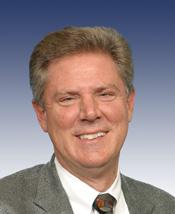
I want to thank the gentlewoman from Florida, and I certainly associate myself with her remarks with regard to this very important stimulus bill. I want to rise in strong support of the rule allowing…
I want to thank the gentlewoman from Florida, and I certainly associate myself with her remarks with regard to this very important stimulus bill.
I want to rise in strong support of the rule allowing for H.R. 7110 to be considered, but I would particularly like to focus on the FMAP, or the Medicaid provisions of the bill, which would provide important financial assistance to cash-strapped States in order to maintain their Medicaid programs.
Medicaid provides over 61 million Americans with access to medical care and specialized support and services. It protects our most vulnerable populations, our poor and disabled.
Unfortunately, as State economies face growing fiscal pressures, the Medicaid programs in many States are threatened and millions of American citizens are in danger of losing access to the health care coverage that they desperately need. These cuts affect not only those already on Medicaid, but also those who will come to need it as the economy continues to plummet. As people lose their jobs, they also lose access to employer-sponsored health care coverage, forcing more people to turn to Medicaid for their health care needs.
A study conducted by the Kaiser Family Foundation found that increasing the national unemployment rate by 1 percentage point increases Medicaid and SCHIP enrollment by 1 million. At a time when States are already struggling to balance their budgets, this type of change in unemployment rates would increase State spending by approximately $1.4 billion.
H.R. 7110 will provide a temporary FMAP increase to help avert cuts to State Medicaid programs. In effect, we are increasing the Federal share. This is a proven strategy for stimulating the economy. A similar provision was passed in 2003 by the Republican Congress and signed into law by President Bush as part of the Jobs and Growth Tax Relief Reconciliation Act. So I essentially consider this a bipartisan effort. Studies have shown that the temporary increase then provided the funding needed to successfully avert or limit cuts to State Medicaid programs and helped stimulate the economies of the States back in 2003.
Mr. Speaker, the FMAP provision included in H.R. 7110 is an important measure that will help provide much-needed fiscal relief to our States and help protect access to health care services for some of our most vulnerable citizens. And it is an economic stimulus. It basically means that more money would be available to the States to cover more people, and that means more jobs. It means the actual delivery of health care services serves as a major stimulator of the economy.
I urge Members on both sides of the aisle to support the rule, as well as the underlying bill.
Mr. Speaker, today I rise in support of H. Con. Res. 214, a resolution granting a posthumous pardon to John Arthur ``Jack'' Johnson for his 1913 racially motivated conviction. On September 17, 2007,…
Mr. Speaker, today I rise in support of H. Con. Res. 214, a resolution granting a posthumous pardon to John Arthur ``Jack'' Johnson for his 1913 racially motivated conviction. On September 17, 2007, I introduced this resolution with Congressman Jesse Jackson, and I join today with 40 of my cosponsoring colleagues in urging the House to pass this resolution today.
Jack Johnson became the first black World Heavyweight Boxing Champion in 1908 after defeating Tommy Burns in Australia and kept the title until 1915. He was a flamboyant and controversial figure in American history who paved the way for African-American athletes to participate and succeed in racially integrated professional sports in the United States.
Prompted by his success in the boxing ring and his relationship with a white woman, Jack Johnson was wronged by a racially motivated conviction under the Mann Act. He was convicted in 1913 after fleeing to Canada, Europe and South America and served one year in prison. Being convicted ruined his career and wrongly destroyed his reputation.
Because of this, we believe the President should grant a posthumous pardon to Jack Johnson to clear his name and recognize his athletic and cultural contributions to society. I am proud to have sponsored this resolution on his behalf
Mr. Speaker, I urge all my colleagues to support this resolution.
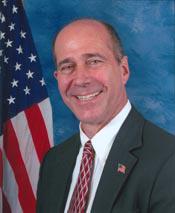
I thank the gentlelady. Mr. Speaker, I stand here in strong support of this economic stimulus package, which will have an immediate effect on our economy by creating investments in infrastructure…
I thank the gentlelady.
Mr. Speaker, I stand here in strong support of this economic stimulus package, which will have an immediate effect on our economy by creating investments in infrastructure projects that can start fast, meet existing needs and create jobs. These projects provide short-term benefits by putting people to work, buying goods, and leave behind long-term infrastructure assets that will benefit Americans for years to come.
Outside of the crumbling schools that will be repaired, the water projects, the transit, the advanced battery technologies, et cetera, I want to just mention the one that I am thinking right now about the most, highway infrastructure, $12.8 billion for our Nation's crumbling, aging, highways and bridges, to improve our safety and reduce traffic congestion. In my district, there are 13 bridges on the deficient list that was released after the I-35 bridge collapse in Minnesota.
If we can spend $12 billion a month in Iraq, certainly we can come up with this $12.8 billion to repair the bridges that our school buses, our trucks carrying commerce, and our family vehicles are going across every day. This will be a job-creation program whose jobs cannot be outsourced. We would be rebuilding the value of our own country, nation building here at home, and creating jobs for our people that cannot be sent abroad.
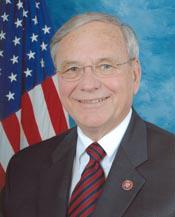
Mr. Speaker, on rollcall 650, had I been present, I would have voted ``aye'' and on rollcall 654, I would have voted ``yea.''
Mr. Speaker, on rollcall 650, had I been present, I would have voted ``aye'' and on rollcall 654, I would have voted ``yea.''
Bill Text
3 versions available
        [Congressional Bills 110th Congress]
[From the U.S. Government Printing Office]
[H. Con. Res. 214 Referred in Senate (RFS)]

2d Session
H. CON. RES. 214

_______________________________________________________________________

IN THE SENATE OF THE UNITED STATES

September 26 (legislative day, September 17), 2008

Received

October 2 (legislative day, September 17), 2008

Referred to the Committee on the Judiciary

_______________________________________________________________________

CONCURRENT RESOLUTION

Expressing the sense of Congress that the President should grant a
posthumous pardon to John Arthur ``Jack'' Johnson for the 1913 racially
motivated conviction of Johnson, which diminished his athletic,
cultural, and historic significance, and tarnished his reputation.

Whereas John Arthur ``Jack'' Johnson was a flamboyant, defiant, and
controversial figure in American history who challenged racial biases;
Whereas Jack Johnson was born in Galveston, Texas, in 1878 to parents who were
former slaves;
Whereas Jack Johnson was a professional boxer who traveled throughout the United
States and the world, fighting both Black and White heavyweight boxers;
Whereas in 1908, after being denied the opportunity to fight two White boxing
champions on purely racial grounds, Jack Johnson was granted an
opportunity by an Australian promoter to fight Tommy Burns, the reigning
world heavyweight champion;
Whereas Jack Johnson defeated Burns to become the first African American to hold
the title of world heavyweight champion;
Whereas the victory of Jack Johnson over Burns prompted the search for a White
boxer who could beat him, a recruitment effort dubbed the search for the
``Great White Hope'';
Whereas in Reno, Nevada, in 1910, in what was referred to by many as the
``Battle of the Century'', a White former heavyweight champion named
James ``Jim'' Jeffries came back from retirement to fight, and lose to,
Jack Johnson;
Whereas the defeat of Jeffries by Jack Johnson sparked rioting and aggression
toward African Americans and led to racially motivated murders of
African Americans nationwide;
Whereas the resentment felt toward Jack Johnson by many Whites was compounded by
his relationships with White women;
Whereas between 1901 and 1910, 754 African Americans were lynched, some simply
for being ``too familiar'' with White women;
Whereas in 1910, Congress passed the White-slave traffic Act (commonly known as
the ``Mann Act''), which outlawed the transportation of women in
interstate or foreign commerce ``for the purpose of prostitution or
debauchery, or for any other immoral purpose'';
Whereas in October 1912, Jack Johnson became involved with a White woman,
Lucille Cameron, whose mother disapproved of the relationship, claimed
that Johnson had abducted her daughter, and sought action from the
Department of Justice;
Whereas Jack Johnson was arrested by United States marshals on October 18, 1912,
for transporting Lucille Cameron across State lines for an ``immoral
purpose'' in violation of the Mann Act, but Cameron refused to cooperate
with authorities, the charges were dropped, and Cameron later married
the champion;
Whereas Federal authorities continued to pursue Jack Johnson and summoned Belle
Schreiber, a White woman, to testify that Johnson had transported her
across State lines for the purposes of ``prostitution and debauchery'';
Whereas in 1913, Jack Johnson was convicted of violating the Mann Act and was
sentenced to 1 year and 1 day in Federal prison, but fled the country to
Canada and then to various European and South American countries;
Whereas Jack Johnson lost the heavyweight championship title to Jess Willard in
Cuba in 1915;
Whereas Jack Johnson returned to the United States in July 1920, surrendered to
the authorities, and served nearly 1 year in the United States
Penitentiary at Leavenworth, Kansas;
Whereas Jack Johnson fought boxing matches after his release from prison, but
never regained the heavyweight championship title;
Whereas Jack Johnson supported this Nation during World War II by encouraging
citizens to buy war bonds and by participating in exhibition boxing
matches to promote the sale of war bonds;
Whereas Jack Johnson died in an automobile accident in 1946; and
Whereas in 1954, Jack Johnson was inducted into the Boxing Hall of Fame: Now,
therefore, be it
Resolved by the House of Representatives (the Senate concurring),
That it is the sense of Congress that--
(1) John Arthur ``Jack'' Johnson paved the way for African
American athletes to participate and succeed in racially
integrated professional sports in the United States;
(2) Jack Johnson was wronged by a racially motivated
conviction prompted by his success in the boxing ring and his
relationships with White women;
(3) the criminal conviction of Jack Johnson unjustly ruined
his career and destroyed his reputation; and
(4) the President should grant a posthumous pardon to Jack
Johnson to expunge from the annals of American criminal justice
a racially motivated abuse of the prosecutorial authority of
the Federal Government, and to recognize Jack Johnson's
athletic and cultural contributions to society.

Passed the House of Representatives September 26, 2008.

Attest:

LORRAINE C. MILLER,

Clerk.