Expressing the sense of Congress that Earl Lloyd should be recognized and honored for breaking the color barrier and becoming the first African American to play in the National Basketball Association League 58 years ago.
Legislative Activity
Stay on top of the latest movement without scrolling through every action
Received in the Senate and referred to the Committee on the Judiciary.
March 6, 2008
View full timeline
Introduced in House
January 29, 2008
Referred to the House Committee on Oversight and Government Reform.
January 29, 2008
Committee Consideration and Mark-up Session Held.
February 26, 2008
Ordered to be Reported by Voice Vote.
February 26, 2008
Mr. Davis (IL) moved to suspend the rules and agree to the resolution.
March 5, 2008 • 12:44 PM
Considered under suspension of the rules. (consideration: CR H1244-1246)
March 5, 2008 • 12:45 PM
DEBATE - The House proceeded with forty minutes of debate on H. Con. Res. 286.
March 5, 2008 • 12:45 PM
At the conclusion of debate, the Yeas and Nays were demanded and ordered. Pursuant to the provisions of clause 8, rule XX, the Chair announced that further proceedings on the motion would be postponed.
March 5, 2008 • 12:55 PM
Considered as unfinished business. (consideration: CR H1273-1274)
March 5, 2008 • 4:20 PM
Passed/agreed to in House: On motion to suspend the rules and agree to the resolution Agreed to by the Yeas and Nays: (2/3 required): 412 - 0 (Roll no. 98).(text: CR H1244)
March 5, 2008 • 4:27 PM
On motion to suspend the rules and agree to the resolution Agreed to by the Yeas and Nays: (2/3 required): 412 - 0 (Roll no. 98). (text: CR H1244)
March 5, 2008 • 4:27 PM
Motion to reconsider laid on the table Agreed to without objection.
March 5, 2008 • 4:27 PM
Received in the Senate and referred to the Committee on the Judiciary.
March 6, 2008
Voting History
1 vote recorded • Roll call available
Floor Debate
21 membersWhat members said about H.Con.Res. 286 on the floor
 DH
DH KC
KC PCB
PCB PS
PS DKD+16
Floor Debate
21 membersWhat members said about H.Con.Res. 286 on the floor
I thank the gentleman for yielding. I could hardly believe my ears when I heard my friend from Florida say that this is a dilatory tactic, and the idea was to, what was it, to deny a vote on this…
I thank the gentleman for yielding.
I could hardly believe my ears when I heard my friend from Florida say that this is a dilatory tactic, and the idea was to, what was it, to deny a vote on this bill? For goodness sakes. Last night there were several attempts, several attempts to try to improve this bill in a way that would make it more palatable to more people in this House, and they were turned down every time by the majority, Democrat majority, in the Rules Committee. And so for my friend from Florida to stand up and say that that is an attempt to kill this bill, when last night she participated in an exercise to do exactly that, is just beyond me.
Mr. Speaker, I want to thank the gentlewoman from Florida (Ms. Castor) for yielding me the customary 30 minutes, and I yield myself such time as I may consume.
(Mr. HASTINGS of Washington asked and was given permission to revise and extend his remarks.)
Mr. Speaker, history is being made today in the U.S. House of Representatives. Yesterday, Democrat leaders and the Democrat-controlled Rules Committee chose for a record-setting, a record-setting 50th time to consider legislation under a completely closed process that allows no amendments, no alternatives, no substitute proposals, and permits not a single Member of this House the opportunity to change or improve the underlying bill.
Last January, the new Democrat majority promised the American people a new era of openness in the U.S. House, but they have delivered the most restrictive and unfair process in the history of the House. It is only March in the first part of the second session of this Congress, but the Democrats have already exceeded the 49 closed rules of the entire 109th Congress.
Mr. Speaker, that is a historic low. We were promised change, and we have gotten it. Only it has been change, Mr. Speaker, for the worse.
Mr. Speaker, time after time, Democrat leaders have shut down any and all opportunity for Members of the House to amend, alter or debate legislation. This is a sad and disrespectful way to approach the business of the American people and the people's House. It doesn't have to be this way, and it certainly isn't what the Democrat leaders promised a little more than a year ago. That promise has been tossed out the window, along with any pretense to seek out bipartisan compromise in passing legislation.
Mr. Speaker, the Senate has passed a bipartisan bill on mental health parity, and, Mr. Speaker, it passed unanimously. Yet House Democrat leaders refuse to even allow the bipartisan Senate compromise to be voted on in the House. An amendment to allow a House vote on the Senate compromise was blocked by the Democrat Rules Committee, just as it blocked every other amendment offered by Members of this House, and that only happened last night.
Yet the reach of this bill goes far beyond mental health parity. The $1.3 billion cost it would impose on businesses providing health care to employees is an issue that, frankly, is not addressed, or any loss of care that may result from new government mandates that are contained in the bill is also not addressed.
The reach of this bill stretches deep into the ability of doctors to provide care to patients across this country through a $3 billion cut in health care to Americans served by doctor-owned hospitals. This is the second time in 7 months that the House will vote on legislation that seeks to ban doctor-owned hospitals by cutting funding from Medicare and Medicaid to these facilities, and, as such, Mr. Speaker, it imposes a very real and serious threat to some Americans' ability to access health care.
One of the hospitals threatened by this proposal is Wenatchee Valley Medical Center in my district in central Washington. The Wenatchee Valley Medical Center, Mr. Speaker, was founded in 1940 by three physicians. In the last 68 years it has grown, and now employs 1,500 people. It serves a population of 250,000 people in an area the size of the State of Maryland and it treats 150,000 patients a year. It has been designated by the State of Washington as a ``critical need hospital'' that is serving a rural underserved area.
Today, Mr. Speaker, it is 100 percent owned by 150 doctors. Apparently, that is a crime, because this bill would outlaw this facility as it has existed for 68 years, because this bill would prohibit any hospital from being more than 40 percent owned by doctors if they are to continue receiving Medicare patients for the care that they provide to their seniors.
Mr. Speaker, the Wenatchee Valley Medical Center has been treating and caring for patients longer than there has been even 50 States in our Union, and yet this bill could end that care.
When I discussed this threat to Wenatchee with the proposal sponsors last night in the Rules Committee, they said the simple answer was to sell the 60 percent stake in a government-ordered fire sale so it meets the 40 percent limit on doctor ownership. Not only is a fair price, Mr. Speaker, unlikely to be paid when selling under a threat of government action, but it is unfair and disruptive to any institution with a long record of excellent care.
Mr. Speaker, what is so nefarious about 100 percent doctor ownership, or 75 percent, or 50 percent, or even, Mr. Speaker, 41 percent? What is magically solved with the ownership of 40 percent? The answer is nothing, nothing when it comes to Wenatchee.
The irony is not lost on me that this bill only bans doctor-owned hospitals in an effort to supposedly target bad behavior. Consider this, Mr. Speaker: If a corporation engages in the exact, in the exact same practices that this bill tries to stop doctor-owned hospitals from doing, the corporation would pay no penalty. It wouldn't even be touched. So apparently patients are safer if corporations are in charge, but patients are in danger and taxpayers are being ripped off if doctors prosper from owning a hospital and are providing excellent care.
What is really happening in this bill is a push to move our country ever closer to a Canadian-style government-run health care system, as under this bill such a Canadian-style system will replace good, high quality care from down-home doctors with the extensive medical expertise of Congress. The Federal Government will decide where Americans will get care and what hospitals will be banned or shutdown. The Federal Government will also decide when Americans are allowed to get care, if they are allowed to get care at all.
If the Federal Government can ban doctors from owning a hospital, then the health care access of every American, Mr. Speaker, in my view, is at risk. I fundamentally disagree with those who believe that an all-knowing Congress and thousands of Federal bureaucrats can deliver Americans the best health care possible.
Keep in mind, this ban on doctor-owned hospitals, quote-unquote, saves $3 billion. Ironically, Mr. Speaker, this is accomplished by denying or reducing access to care for seniors and poor Americans on Medicaid and Medicare. Instead of growing the size and power of the Federal Government by taking decisions away from local doctors and removing freedoms from individual Americans, we should be allowing American patients to make more choices and free doctors to focus on their profession of healing.
Mr. Speaker, when it comes to Wenatchee Valley Medical Center, the accusations of negligent care and fiscal rip-offs that are leveled at doctor-owned hospitals simply don't apply to this facility. Wenatchee is not guilty of the sins of others simply because it is a doctor-owned hospital since 1940. It should not be targeted or threatened for the real or anecdotal failures of recently created doctor-owned hospitals.
The language in this bill is simply not ready for passage as it is currently written. It is too broad and imprecise. It would punish honest, well-performing hospitals and doctors and their patients for the actions of others. If there is bad behavior, Mr. Speaker, to be banned, then target that behavior. Don't impose an overreaching ban that harms innocent patients and doctors.
My constituents are not alone in facing this threat. Both Mr. Hinojosa of Texas and Mr. Kagen of Wisconsin have similar concerns about health care institutions in their districts.
Efforts to improve this legislation so that it doesn't threaten and harm our home-grown hospitals have not been met with openness. In fact, we have been denied on a bipartisan basis. Last night in the Rules Committee I made three separate attempts to try to offer an amendment to protect innocent hospitals. However, Democrats on the Rules Committee chose to deny each and every attempt to preserve the stricture of my hospital and the hospitals of Mr. Hinojosa and Mr. Kagen.
Mr. Speaker, there are legitimate bipartisan concerns about the toll this language would have on local hospitals that have done no harm and who provide important health care access to thousands of Americans.
This bill needs to be corrected, not forced through the House with zero opportunity for improvement or amendment. This record-setting closed rule denies any chance for help to be provided to Wenatchee Valley Medical Center or to patients in hospitals in Texas and Wisconsin. The rule deserves to be defeated and this House allowed to vote on correcting this flawed bill.
Mr. Speaker, I reserve the balance of my time.
Mr. Speaker, I yield myself 15 seconds.
If the issue is to go after doctor-owned hospitals that are not doing the ethical thing, then why not go after them instead of writing a bill that covers everything carte blanche including this facility in my district? The gentleman has not answered that. He didn't answer it last night, and he probably won't answer it today.
I yield to my friend from Texas, a member of the Rules Committee, Mr. Sessions, 2\1/2\ minutes.
Mr. Speaker, I am pleased to yield 4 minutes to the gentlelady from New Mexico (Mrs. Wilson), a member of the Energy and Commerce Committee.
Mr. Speaker, I am pleased to yield 3 minutes to the gentleman from Georgia (Mr. Gingrey), a former member of the Rules Committee.
Mr. Speaker, I am pleased to yield 2 minutes to the gentleman from Washington (Mr. Reichert).
Mr. Speaker, I reserve the balance of my time.
Mr. Speaker, I yield myself 4 minutes.
Mr. Speaker, there are several parts to this bill. And obviously by the remarks that I made previously, I am worried about what we call the pay-for part of that because it would have a detrimental effect, as I mentioned, on doctor-owned facilities, particularly in my district, but also in other parts of the country.
Since this issue came up some 7 months ago, we discovered that there are very few doctor-owned facilities that are unique in the sense of what I was talking about today, and I think my colleagues from Wisconsin and Texas talked about last night in the Rules Committee, and so I want to ask my friend from New Jersey who is the sponsor of this legislation, and I will be happy to yield to him.
He talked about the issue of overutilization. Now, I simply have to bring this up because I doubt that the 150,000 patients of the Wenatchee Valley Clinic would say that they are overutilizing that clinic. I think they go there because they want to have their health needs taken care of. So I don't think that is applicable to that facility, and I mentioned that in my previous remarks.
I want to ask my friend from New Jersey a question.
As I mentioned, apparently there are just a few hospitals that fall in the category that I was describing.
But there are bipartisan concerns about the effects of this bill on good hospitals providing quality care. I made that point.
Will you work with me and other Members from both sides of the aisle to protect these hospitals and to exempt them totally from this ban on doctor ownership?
I yield to my friend from New Jersey.
Reclaiming my time, I asked if the gentleman would work with me, and apparently the gentleman is saying that he won't work with me, even though this apparently is a very, very small universe, a universe of hospitals that deserve, I think, to have some sort of special consideration because if you have, for example, a government-mandated fire sale, what is the value of the enterprise that you're trying to sell? Yet that is precisely the language that you have in place.
So I'm asking you again. Since there are very few of these facilities, in three different States, would you work with us to exempt them totally from the ban that's imposed by this bill?
The gentleman answered me yes. Now go ahead with your no. Please explain your no.
I yield to the gentleman.
Reclaiming my time, I appreciate the gentleman's explanation.
To me, Mr. Speaker, this sounds precisely as a look into the future, as we move towards what I would consider, I know that some would want, a government-style health care in this country, where conditions are going to be set forth on what kind of care, when that care is, what's the condition of ownership. All of these things apparently are on the horizon, and we are seeing an inkling into the future of how that would be effected.
Mr. Speaker, I reserve my time.
Mr. Speaker, I yield myself the balance of my time.
Mr. Speaker, there's been a lot of discussion here today on the underlying bill, the subject of which has broad support. The issues are the PAYGO and the issues are the denial, denial of the Democrat leadership in this House to allow a vote on a bill that passed in the other body unanimously. So much for openness that was promised a little over a year ago.
Mr. Speaker, I want to focus my closing remarks on another issue, another issue that has not been taken up and needs to be addressed, and that's the FISA issue that we have talked about so many times.
It has come to my attention today, and it will be in a publication presumably tomorrow, that the distinguished majority leader said that the electronic surveillance bill, or the FISA bill, will not be taken up this week.
We are becoming unprotected in this country because we don't have all the capabilities that we need in our intelligence community.
With that, Mr. Speaker, in this rule, Democrat leaders have blocked the House from voting on a bipartisan compromise on mental health parity, as I had mentioned.
I want to talk now about modernizing the Foreign Intelligence Surveillance Act into the 21st century. The Senate has passed legislation that will
bring this 1970s Jimmy Carter-era law up to date to reflect today's age of disposable cell phones and the Internet. Yet for weeks now, House Democrat leaders have refused to allow Representatives to vote on this Senate bill. They've done this despite the public support given the bipartisan Senate compromise by 21 members of the Democrat Blue Dog Coalition.
House Democrat leaders are tying the hands of our intelligence professionals to make them jump through unnecessary red tape and paperwork to protect our country. If foreign persons in foreign places are conspiring and plotting to harm Americans and our country, then our intelligence personnel should be listening to them. They shouldn't have to waste precious time and energy on bureaucratic hurdles.
We can protect and are protecting the constitutional rights of Americans, but we also must protect their lives by recognizing the terrorist threat to our country and modernizing FISA.
I ask all my colleagues to join with me in defeating the previous question so that we can immediately move to vote on the bipartisan Senate FISA bill.
Mr. Speaker, I ask unanimous consent to have the text of the amendment and extraneous material inserted into the Record prior to the vote on the previous question.
Mr. Speaker, I urge my colleagues to oppose this 50th closed rule, record-setting 50th closed rule that denies every Member from offering an amendment on the House floor, and to vote ``no'' on the previous question and in favor of a bipartisan permanent solution that closes the terrorist loophole.
With that, Mr. Speaker, I yield back the balance of my time.
Mr. Speaker, on that I demand the yeas and nays.
Mr. Speaker, by direction of the Committee on Rules, I call up House Resolution 1014 and ask for its immediate consideration. Mr. Speaker, I yield myself such time as I may consume. I strongly oppose…
Mr. Speaker, by direction of the Committee on Rules, I call up House Resolution 1014 and ask for its immediate consideration.
Mr. Speaker, I yield myself such time as I may consume.
I strongly oppose the gentleman's point of order.
This point of order is being raised today for one purpose and one purpose only, that is, to block this rule and ultimately the underlying bill, an underlying bill that prohibits discrimination against Americans with mental illness.
I'm heartened by the fact that I do not believe the gentleman's point of order comes from a unanimous opinion of the other side of the aisle because the underlying bill is a bipartisan effort cosponsored by 274 Members of the House of Representatives. Yet there are opponents of this bill, and they will raise these dilatory tactics. The opponents don't even want to allow a debate or a final vote on this critical measure. They simply want to stop the process and kill the bill through this procedural maneuver.
So despite whatever dilatory procedural devices the other side tries to use to stop this bill, we will stand up for the millions of Americans who need parity in mental health coverage, and we will vote to consider this important legislation today.
We must consider this rule, and we will pass the Paul Wellstone Mental Health and Addiction Equity Act today.
Mr. Speaker, I reserve the balance of my time.
Will the gentleman yield?
Mr. Speaker, I am pleased at this time to yield 2 minutes to my colleague from Tennessee (Mr. Cohen).
At this time I will reserve the balance of my time.
Mr. Speaker, I urge a ``yes'' vote on the consideration of the resolution so we can move forward on the rule and to consider the bill.
Those that oppose our efforts to end discrimination when it comes to mental health services will get their opportunity to debate the bill and to vote against these measures.
So with that, Mr. Speaker, I urge a ``yes'' vote to consider the rule.
Mr. Speaker, on that I demand the yeas and nays.
Mr. Speaker, for the purpose of debate only, I yield the customary 30 minutes to my colleague from the Rules Committee, the gentleman from Washington (Mr. Hastings). All time yielded during consideration of the rule is for debate only.
General Leave
Mr. Speaker, I ask unanimous consent that all Members be given 5 legislative days in which to revise and extend their remarks on House Resolution 1014.
I yield myself such time as I may consume.
Mr. Speaker, House Resolution 1014 provides for the consideration of H.R. 1424, the Paul Wellstone Mental Health and Addiction Equity Act of 2007, which expands the Mental Health Parity Act of 1996 to provide for equity in the terms of employer-sponsored health benefits for mental health and substance-related disorders compared to medical and surgical disorders.
Mr. Speaker, this is an anti-discrimination bill, this is a health care bill, this is a pro-business economic development bill, this is also a pro-family bill, and this is a bill that supports our veterans. This is a bipartisan effort, with 274 cosponsors in the House, of which I am proud to be one.
Unfortunately, Federal action is necessary because Americans who suffer from illnesses like depression, postpartum depression, severe anxiety, bipolar disorder, and many other diseases are being discriminated against. You see, HMOs and many health insurance companies have been more focused on their bottom lines than on the health of our families. Mental health is just as critical to our lives and well-being as any physical ailments or disease. And yet health insurers continue to treat mental illness differently from physical illness.
In America, more than 50 million adults, at least 22 percent of the U.S. population, suffer from mental health issues or substance abuse disorders. In addition, one out of every 10 children or adolescents has a serious mental health problem and another 10 percent have mild to moderate problems. Untreated mental illness harms our families and children, emotionally and financially. Untreated mental illness results in higher costs for businesses in lost productivity. Untreated mental illness often leads to criminal activity, which is very costly. Mental disorders are the leading cause of disability for individuals aged 15 to 44 in the United States.
A study sponsored by the National Institute of Mental Health revealed that mental and addictive disorders cost our country more than $300 billion annually. This includes productivity losses of $150 billion, health care costs of over $70 billion, and $80 billion for costs such as criminal justice.
Unfortunately, less than one-third of the people with a mental disorder who seek care receive adequate treatment. Despite the losses suffered in our society as a result of mental illness and all of the studies that demonstrate this, national employer survey data indicates that mental health coverage still is not offered at comparable coverage to other medical conditions.
Even after passage of the 1996 Mental Health Parity Act and all of the efforts of the States, the Government Accountability Office found that 87 percent of plans had more restrictive design features for mental health benefits than for medical and surgical benefits. In addition, many employers have adopted restrictive measures, such as limiting the number of covered outpatient visits for mental illness. This is so shortsighted. It is so costly.
Former Surgeon General Dr. David Satcher found that when health insurance plans unevenly impose higher costs for mental health services, the result, of course, is a reduction in treatment for those who need it, lost productivity and higher costs in the long run. Dr. Satcher stated that this is a true issue of fairness in coverage.
Similarly, another recent study found that deductibles and outpatient cost sharing were much higher for substance abuse than for general medical care. Well, this legislation addresses those inequities and provides a cost-effective way of providing increased access to mental health care. The bill prohibits discrimination by diagnosis by requiring coverage of all mental illnesses and substance-related disorders, just as we provide for Members of Congress and others covered by the Federal Employees Health Benefits Program. Treatment for mental illness is a proven money-saver. In fact, for every $1 spent on treatment, we save over $12.
Mr. Speaker, we all owe a debt of gratitude to Mr. Kennedy of Rhode Island and Mr. Ramstad of Minnesota for their bipartisan leadership on this legislation and their work to provide for the mental health needs of our families, our neighbors, our veterans and our children. We also owe great thanks to the Wellstone family. But, most of all, we can't forget the families throughout America who have a modest request of their Congress, and that is that they be treated fairly.
Mr. Speaker, I reserve the balance of my time.
Mr. Speaker, I yield myself such time as I may consume.
Mr. Speaker, this is truly a good-news story for American families today, because not only are we going to outlaw discrimination against those who suffer from mental illness, but we adhere to the pay-as-you- go rules that were adopted by this Congress, led by Democrats, at the beginning of this Congress. Pay-as-you-go means that this bill is paid for.
And while I certainly respect the gentleman from Washington for speaking up for a medical center which operates in his district, there is a bigger picture here. And to explain that bigger picture, I yield 2\1/2\ minutes to the gentleman from New Jersey (Mr. Pallone), who chairs the Subcommittee on Health for the Energy and Commerce Committee.
Mr. Speaker, I am proud to yield 2 minutes to the gentlewoman from the powerful Rules Committee and the State of California (Ms. Matsui).
Mr. Speaker, I yield 2 minutes to the gentlewoman from Texas (Ms. Jackson-Lee).
(Ms. JACKSON-LEE of Texas asked and was given permission to revise and extend her remarks.)
Mr. Speaker, I yield 2 minutes to the gentleman from Minnesota (Mr. Ellison).
Mr. Speaker, I yield 1 minute to the gentlewoman from California, a champion for America's families, children, and veterans, and the Speaker of the House, Ms. Pelosi.
Mr. Speaker, I yield 2 minutes to the gentleman from Illinois (Mr. Davis).
(Mr. DAVIS of Illinois asked and was given permission to revise and extend his remarks.)
Mr. Speaker, I yield 2 minutes to the gentleman from Maryland (Mr. Cummings).
Mr. Speaker, I have the right to close, and we do not have any additional speakers, so I will reserve the balance of my time until my colleague has made his closing remarks.
Mr. Speaker, back on the Paul Wellstone Mental Health Equity Act, I submit for the Record a letter of support from the Federation of American Hospitals along with a related letter from the American Hospital Association, Coalition of Full Service Community Hospitals and Federation of American Hospitals.
Federation of American Hospitals,
March 3, 2008.
Speaker Nancy Pelosi,
U.S. Congress,
Washington, DC.
Minority Leader John Boehner,
U.S. Congress,
Washington, DC.
Dear Speaker Pelosi and Leader Boehner: The Federation of
American Hospital (FAH), representing America's investor-
owned and managed hospitals and health systems, supports
swift passage of the Paul Wellstone Mental Health and
Addiction Equity Act of 2007 (H.R. 1424). This 1egislation
will provide greatly needed access to mental health treatment
for Americans who need it most.
This bipartisan legislation would end prevalent forms of
health insurance discrimination against patients with
debilitating chronic mental illnesses. Additionally, H.R.
1424 will assist millions of Americans in obtaining the
necessary hospital care they need and were previously denied
because of inadequate mental health coverage.
H.R. 1424 is paid for, in part, by prohibiting physician
self-referral to a hospital in which a physician has an
ownership interest. Physician self-referral presents an
inherent conflict of interest, creates an unlevel, anti-
competitive playing field; threatens patient safety; fails
low-income and uninsured patients; and, has resulted in the
overutilization of limited Medicare resources. We strongly
support this provision.
We deeply appreciate Congress's ongoing commitment to
mental health parity and strengthening the Medicare program.
Sincerely,
Mr. Speaker, I yield back the balance of my time, and I move the previous question on the resolution.
Mr. Speaker, I make a point of order against the consideration of the resolution because it is in violation of section 426(a) of the Congressional Budget Act. The resolution provides that ``all…
Mr. Speaker, I make a point of order against the consideration of the resolution because it is in violation of section 426(a) of the Congressional Budget Act.
The resolution provides that ``all points of order against consideration of the bill are waived except those arising under clause 9 and 10 of rule XXI.'' This waiver of all points of order includes a waiver of section 425 of the Congressional Budget Act which causes the resolution to be in violation of section 426(a).
Mr. Speaker, I have both professional and personal interest in this bill. I'm a medical doctor, and for years I've treated depression, anxiety, a lot of panic disorders. I'm also an addictionologist. I've treated drug and alcohol addiction and eating disorders. And so I've had many patients over the years that have had these kinds of problems.
My mom has been involved in dealing with her own depression all the way up until she died of metastatic breast cancer, and she worked with the mental health society in our home community.
I also have personal interest in this bill because my wife has suffered from depression. She has an eating disorder and has dealt with this in her history. She has suffered from depression to the point that several years ago she even tried to take her own life, and except for the grace of God she should have died. And so I do have a very personal interest in this bill. Mr. Speaker, this is why I have a vested interest in how Congress addresses health care, and especially mental health coverage.
CBO estimates that the cost of the mandates to the private sector in this bill would be at least $1.3 billion in 2008; and this would rise to $3 billion in 2012. The Unfunded Mandates Reform Act, or UMRA, establishes an annual threshold that cannot be exceeded, at least without Congress waiving this rule. For 2007, that threshold amount is $131 million, a great deal of money. This bill exceeds the $131 million threshold by over $1 billion, and it will place a crushing burden on private health insurers and millions of Americans seeking affordable health insurance. These mandates will directly harm businesses and Americans' ability to obtain affordable health insurance.
This legislation is very well intended. It is also rash and very poorly drafted and I assure you that if this mental health parity bill is signed into law in its current form, it will result in at least three things:
H.R. 1424 will increase health insurance and mental health costs;
H.R. 1424 will result in Americans losing their mental health coverage due to the mandates and the increased costs of those mandates;
H.R. 1424 will result in a myriad of lawsuits.
I testified before the Rules Committee last night and offered two amendments that would have drastically improved this legislation. Well, the Democratic majority, instead of choosing to allow an honest dialogue and an open debate on an extremely important issue of mental health, they chose to deny all amendments to this legislation. Not only that, the majority changed the underlying bill's language late last night and inserted the text of the Genetic Information Non- Discrimination Act. This legislation will further erode mental health parity and jeopardize affordable group health insurance in America.
Mr. Speaker, I reserve the balance of my time.
Mr. Speaker, I yield 1 minute to the gentleman from Washington (Mr. Hastings).
Mr. Speaker, I want to say that I resent my sincerity on this being questioned by the gentlelady from Florida. I am very sincere about this.
No, ma'am.
I am very sincere about this. I talked to the Rules Committee last night. I have talked on this floor here tonight. And for you to make these charges that I'm not sincere about this bill is absolutely incorrect. Maybe the gentlelady didn't hear me, but I have very personal interests in mental health. It is an extremely important issue to me, to my wife, to my family. And for you to say I'm not sincere about this, I am just very shocked about that. But I am sincere.
This bill, the way it's written, is going to actually deny people mental health coverage. We tried to fix it last night, make it better. And those attempts were denied over and over and over again.
Mr. Speaker, I reserve the balance of my time.
Mr. Speaker, in addition to the concerns that I raised earlier regarding the provisions of the mental health parity bill, that it will actually decrease mental health coverage and increase health insurance costs, let me share several additional concerns I have with the Genetic Information Non-Discrimination Act that was inserted late last night.
Title I of the GINA legislation imposes Federal mandates on health plans regarding insurance coverage, while title II imposes mandates on employers regarding employment and related hiring decisions. However, there is no explicit language in this legislation clarifying that group health insurance plan sponsors may not be subjected to the more expansive remedies provided by title II.
Why is that a problem? Because title II provides for rulemaking by the EEOC, the Equal Employment Opportunity Commission, and remedies before the EEOC and, ultimately, Federal courts.
During floor debate on H.R. 493, Congressman Rob Andrews suggested that ``employers, including to the extent employers control or direct benefit plans, are subject to the requirements of title II of this bill,'' including the much broader definition of genetic testing and tougher penalties associated with that title.
I believe that this lack of clarity could and will lead to additional lawsuits through the use of broader remedies available in title II that are intended to be reserved for employers who violate their employees' civil rights, not for employees seeking to litigate group health plan disputes.
Further, section 502 of ERISA says that all lawsuits must go through Federal court, which is not addressed in the mental health parity legislation. Nothing in this bill states that section 502 is preserved, so lawsuits can and will be brought in State court.
Mr. Speaker, I reserve the balance of my time.
Mr. Speaker, I want to go through just a list of some things that this bill will do.
It's going to increase health care costs. CBO estimates that H.R. 1424 would impose mandates on private insurance companies, a total of $3 billion annually by 2012. These costs will ultimately be borne by employers offering health insurance and employees seeking to obtain coverage.
Number two, it will increase the cost of business due to private sector mandates. The bill contains multiple new Federal mandates on the private sector, affecting the design and structure of health insurance plans.
The bill also increases the threshold level at which employees suffering increased claim costs as a result of implementing the new Federal mandates can claim an exemption from the provisions of H.R. 1424.
Number three, I think this will decrease the mental health coverage. While the bill imposes several new Federal mandates on those employers who choose to offer mental health coverage, there is nothing in H.R. 1424 that would require plans to cover these conditions. Thus H.R. 1424 could have the perverse effect of actually decreasing mental health coverage by encouraging an employee who is frustrated with the bill's onerous burdens to drop mental health insurance altogether.
Four, I think it will increase the number of uninsured. It will erode the Federal preemption for employers. This codification of treatment mandate for health plans, they are going to use DSM-IV to codify that. And this book, DSM-IV, was generated for physicians to use just to be able to classify mental health. It has a whole lot of things in here that most employers would not want to cover.
It will increase an intergovernmental mandate. It is a violation of UMRA. It has a lack of conscience clause, and it has a lack of medical management tools.
I thank the gentleman for giving me this time. I am shocked and stunned that we financed overutilization and that is why we are doing this. Yet we understand that utilizing these physician hospitals,…
I thank the gentleman for giving me this time.
I am shocked and stunned that we financed overutilization and that is why we are doing this. Yet we understand that utilizing these physician hospitals, these new hospitals, saved the government money and are all about patient choice and are all about making sure that people who utilize these new hospitals don't get infections, don't get sick, don't check into a hospital to have surgery where other sick people are. It is a concept that keeps America not only the leading health care provider in the world; it is done in an efficient and cost-effective way. I am surprised that we find out it is overutilization.
Mr. Speaker, rather than taking this opportunity to bring parity to our health care delivery system, the Democrat leadership today is using this legislation as a vehicle to restrict future health care choices for Medicare patients. That is what this is about. It is to further own the opportunity for Medicare patients to be able to get the choices that they want, and the Democrat leadership is taking that away. Instead of using this opportunity to focus on mental health parity, the Democrats have decided to pay for this bill by pushing patients and limiting their options that they can receive for their own care.
Mr. Speaker, we will be real honest about this. According to HealthGrades, which is a nationwide study to look at hospitals and how efficient they are and how safe they are, three of the Nation's top 10 cardiac programs and three of the Nation's top 10 programs for joint replacement are at physician-owned hospitals. And despite the fact that these physician-owned hospitals make up only 3 percent of the Nation's hospitals, they are among the most efficient and the safest hospitals for people, our seniors, to go in and receive care. What will happen here today is an absolute mistake.
Mr. Speaker, I submit for the Record the Statement of Administrative Policy on this issue and I will quote from that:
``First, the bill would place new restrictions on physician-owned hospitals. This administration opposes this provision, which is unnecessary and could restrict patient choice without decreasing Medicare costs.''
That is right, it is going to be more expensive to argue about overutilization. Incredibly silly.
Statement of Administration Policy--H.R. 1424--Paul Wellstone Mental
Health and Addiction Equity Act of 2007
The Administration supports passage of mental health parity
legislation that does not significantly increase health
coverage costs. However, the Administration has concerns with
H.R. 1424, which would effectively mandate coverage of a
broad range of diseases and conditions and would have a
negative effect on the accessibility and affordability of
employer-provided health benefits and would undermine the
uniform administration of employee benefit plans. For
example, the bill's confusing preemption provisions could be
read to add a patchwork of remedies that vary from State to
State. Therefore the Administration strongly opposes House
passage of H.R. 1424 or any legislation that expands benefits
and remedies beyond what is included in the Senate-passed S.
558.
H.R. 1424 also includes two provisions to offset the
approximately $3 billion in on-budget costs associated with
the bill. First, the bill would place new restrictions on
physician-owned hospitals. The Administration opposes this
provision, which is unnecessary and could restrict patient
choice without decreasing Medicare costs. HHS already has
administrative policies in place to address concerns about
physician-owned hospitals, including disclosure of physician
ownership, patient safety measures, and revisions to
Medicare's payment systems to better reflect patients'
severity of illness and the resources needed to treat
patients.
Second, the bill also would increase the Medicaid drug
rebate. The Administration objects to any offset that would
legislatively mandate an increase to the rebate percentage.
As CBO has noted in its 2007 analysis of budget options, it
is unknown how this change would impact non-Medicaid
beneficiaries and other payers. The Administration is
concerned that the proposal would have an adverse impact on
private purchasers, including the uninsured, further distort
the market for prescription drugs, and discourage innovation
in the drug development process.
The Administration urges Congress to offer meaningful
protections to American workers and their families by
eliminating the disparities between mental health benefits
and medical and surgical benefits, without broadly mandating
new benefits. The Administration believes the Senate bill
strikes the necessary balance of treating mental illness with
the same urgency as physical illnesses without significantly
increasing health care costs. The Administration would also
urge the House to preserve uniformity in health plan
administration as has been done in S. 558.
Genetic Information Non-discrimination Act
The rule requires that the provisions of H.R. 493 as passed
by the House be added to the Mental Health Parity bill after
the House passes H.R. 1424. While the Administration strongly
supports passage of legislation to prevent the misuse of an
individual's personal genetic information and believes such
legislation is critical to realizing the full potential of
genomic medicine, the Administration has both substantive and
process objections to the rule. The Administration is
strongly opposed to the lack of a clear ``firewall'' between
title I of the Genetic Information Nondiscrimination Act
(GINA), which addresses genetic discrimination in health
benefits provided by health insurers and plans, and title 11
of GINA, which addresses genetic discrimination in
employment. The Administration is concerned that the bill
fails to ensure that health benefits disputes are properly
brought under the appropriate remedies in ERISA, the Public
Health Service Act, or the Internal Revenue Code and that it
could unintentionally permit ``forum shopping.'' The
Administration also is concerned that unless the legislation
is clarified, the bill could be construed to have the
unintended effect of prohibiting health plans and issuers
from using information about the manifested disease of a
dependent covered under an individual's plan for appropriate
and routine insurance purposes. The Administration also
believes it is important that the legislation's relationship
with other provisions of law, such as Health Insurance
Portability and Accountability Act, be clearly defined.
Finally, the Administration looks forward to working with
Congress to address these concerns and pass Mental Health
Parity and Genetic Nondiscrimination legislation this year.
Mr. Speaker, I move to suspend the rules and agree to the concurrent resolution (H. Con. Res. 286) expressing the sense of Congress that Earl Lloyd should be recognized and honored for breaking the…
Mr. Speaker, I move to suspend the rules and agree to the concurrent resolution (H. Con. Res. 286) expressing the sense of Congress that Earl Lloyd should be recognized and honored for breaking the color barrier and becoming the first African-American to play in the National Basketball Association League 58 years ago.
Mr. Speaker, I ask unanimous consent that all Members may have 5 legislative days in which to revise and extend their remarks.
Mr. Speaker, I yield such time as he may consume to the author of this legislation, Jim Moran from Virginia.
Mr. Speaker, I yield myself such time as I may consume.
Mr. Speaker, I always knew that Representative Dan Burton was indeed a superstar. I just didn't get a chance to watch him play. Of course, Ed Towns often talks about his days as a star athlete and basketball player.
But as a member of the House Committee on Oversight and Government Reform, I am pleased to join my colleagues in the consideration of H. Con. Res. 286, which acknowledges sports legend Earl Lloyd for breaking the color barrier and becoming the first African American to play in the National Basketball Association League 58 years ago.
H. Con. Res. 286 was introduced by our colleague, Representative Jim Moran of Virginia, on January 29, 2008, and was considered by and reported from the Oversight Committee on February 26, 2008, by voice vote. The measure has the support of over 85 Members of Congress and provides our body a chance to reflect on and remember another individual's inspiring story as part of our country's long history of racial integration.
Mr. Lloyd's participation in the 1950-51 professional basketball season marked the integration of the National Basketball Association, which has since then become one of the most diverse professional sporting leagues in the world.
A native of Alexandria, Virginia, Earl Lloyd has long been recognized as
one of the NBA's early defense greats. Earl Lloyd, also known as ``Big Cat,'' played college basketball at West Virginia State College before being selected in the ninth round of the 1950 NBA draft by the Washington Capitols. Under Lloyd's leadership, West Virginia State became the only undefeated college team in the United States during the 1947-48 season.
After his years with the Washington Capitols, Lloyd joined the Syracuse Nationals and became the first black player to win an NBA championship. Later, with the Detroit Pistons, he was the first African American to be named an assistant coach and the first to be named the bench coach.
Mr. Speaker, let us also note that although Lloyd was the first to play in an NBA game, there were actually three African Americans to enter the NBA in the 1950-51 season. During this season, Charles ``Chuck'' Cooper played with the Boston Celtics, and Nat ``Sweetwater'' Clifton became the first African American to play for the New York Knicks.
Even today, as we continue to see African Americans break barriers and become the first in an array of fields from athletics to business, Presidential campaigns to research and discovery, let us take an opportunity to look back on what occurred 58 years ago to make our Nation a more perfect Union.
Therefore, Mr. Speaker, I urge passage of H. Con. Res. 286, which expresses the sense of Congress that Earl Lloyd should be recognized and honored for breaking the color barrier and becoming the first African American to play in the National Basketball Association.
Mr. DAVIS of Virginia. Mr. Speaker, I join in honoring Earl ``Big Cat'' Lloyd, a Northern Virginia native who rose to become the first black player in the history of the NBA.
Earl Lloyd grew up in Alexandria, learned his basketball on the always-competitive playgrounds of Washington, DC. He played his high school ball at the segregated Parker-Gray High in Alexandria. Today, of course, all students in the city attend T.C. Williams High. The merger of the three high schools that existed then served as the plot line for the movie ``Remember the Titans.'' Today, the basketball court in the recently rebuilt T.C. Williams is named for him.
Lloyd actually was one of 3 African-Americans to enter the NBA at the same time. It was only because his team played its first game a day before the Boston Celtics unveiled Charles Cooper and 4 days before the New York Knicks' Nat ``Sweetwater'' Clifton made his debut that it was Lloyd who broke the color barrier.
Lloyd scored 6 points in that game on Halloween night of 1950 and averaged 8.4 points and 6.4 rebounds over his 560-game, 8-season career. But he, Cooper and Clifton endured the taunts, showed the class and provided the quality of play that paved the way for Michael, Magic, Kareem and all the rest who came behind. He also served as the first African-American assistant coach when he worked for the Detroit Pistons for two seasons after retiring as a player.
It also should be noted that Lloyd, a member of the National Basketball Hall of Fame, took 2 years out of his career to serve in the U.S. Army. His job these days--community outreach for a concern headed by Dave Bing, another product of the playgrounds of Washington, DC., to make good in the pros--seems a hand-and-glove fit for a man who, throughout his life, has made everyone around him better.
His play on the court made all his teammates better--he led his college team to two conference titles and his pro team to one NBA championship. His class on and off the court made those who signed him and helped him start his NBA career look smart. And his professional accomplishments make his teachers in those segregated schools in Alexandria, his professors at West Virginia State, his family and all those responsible for his upbringing and education justifiably proud.
Mr. Speaker, I yield back the balance of my time.
Mr. Speaker, on that I demand the yeas and nays.
Show 8 more
Madam Speaker, during the week of February 25-29, 2008, I was unavoidably absent from rollcall votes 69-87. Had I been present I would have voted ``yea'' on rollcall vote 69, H. Res. 978, ``yea'' on…
Madam Speaker, during the week of February 25-29, 2008, I was unavoidably absent from rollcall votes 69-87.
Had I been present I would have voted ``yea'' on rollcall vote 69, H. Res. 978, ``yea'' on rollcall vote 70, H. Res. 930, ``yea'' on rollcall vote 71, H. Res. 944, ``yea'' on rollcall vote 74, H. Res. 974, ``yea'' on rollcall vote 75, H.R. 3521 the Sires of New Jersey Amendment, ``yea'' on rollcall vote 76, H.R. 3521 the Meek of Florida Amendment, ``yea'' on rollcall vote 81, H. Res. 1001, ``nay'' on rollcall vote 83, H.R. 5351 on Motion to Recommit with Instructions, ``yea'' on rollcall vote 84, H.R. 5351, ``yea'' on rollcall vote 85, S. 2272, ``yea'' on rollcall vote 86, H.R. 4454, ``yea'' on rollcall vote 87, H.R. 4454.
Madam Speaker, during the week of March 3-7, 2008, I was unavoidably absent from rollcall votes 88-106.
Had I been present I would have voted ``yea'' on rollcall vote 88, H.R. 1143, ``yea'' on rollcall vote 89, H.R. 1311, ``yea'' on rollcall vote 90, H.R. 816, ``yea'' on rollcall vote 91, H.R. 4191, ``yea'' on rollcall vote 92, H. Con. Res. 278, ``yea'' on rollcall vote 93, H. Res. 951, ``yea'' on rollcall vote 96, H. Res. 1014, ``yea'' on rollcall vote 97, H.R. 4774, ``yea'' on rollcall vote 98, H. Con. Res. 286, ``nay'' on rolicall vote 100, H.R. 1424 the Motion to Recommit with Instructions, ``yea'' on rollcall vote 101, H.R. 1424, ``yea'' on rollcall vote 102, H.R. 5400, ``yea'' on rollcall vote 104, H. Res. 1015, ``nay'' on rollcall vote 105, H.R. 2857 the Flake of Arizona Amendment, ``yea'' on rollcall vote 106, H.R. 2857 the Inslee of Washington Amendment.
Madam Speaker, during the week of March 10-14, 2008, I was unavoidably absent from rollcall votes 108-145.
Had I been present I would have voted ``yea'' on rollcall vote 108, H. Res. 537, ``yea'' on rollcall vote 109, H.R. 3196, ``yea'' on rollcall vote 110, H.R. 4166, ``yea'' on rollcall vote 115, H. Res. 924, ``yea'' on rollcall vote 116, Motion, ``yea'' on rollcall vote 117, H.R. 2082, ``yea'' on rollcall vote 118, H. Res. 948, ``yea'' on rollcall vote 119, H. Res. 493, ``yea'' on rollcall vote 122, H. Res. 1031, ``yea'' on rollcall vote 130, H. Res. 1036, ``yea'' on rollcall vote 131, H.R. 5563, ``yea'' on rollcall vote 132, H. Con. Res. 316, ``yea'' on rollcall vote 133, H. Res. 936, ``yea'' on rollcall vote 134, S. 2733, ``yea'' on rollcall vote 137, H. Con. Res. 312 Kilpatrick of Michigan Amendment, ``yea'' on rollcall vote 138, H. Con. Res. 312 Lee of California Amendment, ``nay'' on rollcall vote 140, H. Con. Res. 312 Ryan of Wisconsin Amendment, ``yea'' on rollcall vote 141, H. Con. Res. 312, ``yea'' on rollcall vote 142, H. Res. 991, ``yea'' on rollcall vote 143, H. Res. 1041 On Ordering the Previous Question, ``yea'' on rollcall vote 144, H. Res. 1041 On Agreeing to the Resolution, ``yea'' on rollcall vote 145, H.R. 3773.
Madam Speaker, during the week of March 31-April 4, 2008, I was unavoidably absent from rolicall votes 147-160.
Had I been present I would have voted ``yea'' on rollcall vote 147, H.R. 3352, ``yea'' on rollcall vote 148, H.R. 2675, ``yea'' on rollcall vote 149, H. Con. Res. 302, ``yea'' on rollcall vote 150, H. Con. Res. 310, ``yea'' on rollcall vote 151, H. Res. 1005, ``yea'' on rollcall vote 152, H. Res. 1021, ``yea'' on rollcall vote 154, H. Res. 1065 On Ordering the Previous Question, ``yea'' on rollcall vote 155, H. Res. 1065 On Agreeing to the Resolution, ``yea'' on rollcall vote 156, H.R. 5501 Carson of Indiana Amendment, ``nay'' on rollcall vote 157, H.R. 5501 On Motion to Recommit with Instructions, ``yea'' on rollcall vote 158, H.R. 5501 On Passage, ``nay'' on rollcall vote 159, H.R. 4847 On Motion to Recommit with Instructions, ``yea'' on rollcall vote 160, H.R. 4847 On Passage.
Madam Speaker, during the week of April 7-11, 2008, I was unavoidably absent from rollcall votes 161-182.
Had I been present I would have voted ``yea'' on rollcall vote 161, H.J. Res. 70, ``yea'' on rollcall vote 162, H.R. 2464, ``yea'' on rollcall vote 163, S. 793, ``yea'' on rollcall vote 164, H. Res. 1084 On Ordering the Previous Question, ``yea'' on rollcall vote 165, H. Res.
1084 On Agreeing to the Resolution, ``yea'' on rollcall vote 166, H. Res. 1077, ``yea'' on rollcall vote 167, H.R. 2016 the Grijalva of Arizona Amendment, ``nay'' on rollcall vote 168, H.R. 2016 the Bishop of Utah Amendment, ``nay'' on rollcall vote 169, H.R. 2016 the Bishop of Utah Amendment, ``nay'' on rollcall vote 170, H.R. 2016 the Bishop of Utah Amendment, ``yea'' on rollcall vote 171, H.R. 2016 the Altmire of Pennsylvania Amendment, ``nay'' on rollcall vote 172, H.R. 2016 the Pearce of New Mexico Amendment, ``nay'' on rollcall vote 173, H.R. 2016 On Motion to Recommit with Instructions, ``yea'' on rollcall vote 174, H.R. 2016 On Passage, ``yea'' on rollcall vote 175, H.R. 2419, ``yea'' on rollcall vote 176, H.R. 5489, ``yea'' on rollcall vote 177, H.R. 5472, ``yea'' on rollcall vote 179, H. Res. 1083, ``yea'' on rollcall vote 180, H. Res. 1038, ``yea'' on rollcall vote 181, H. Res. 1092, ``nay'' on rollcall vote 182, H.R. 2537 the Flake of Arizona Amendment.
Mr. Speaker, I yield myself such time as I may consume. Mr. Speaker, I would just like to ask of the bill's sponsor if he would mind adding my name as a cosponsor of the bill. Mr. Speaker, the reason…
Mr. Speaker, I yield myself such time as I may consume.
Mr. Speaker, I would just like to ask of the bill's sponsor if he would mind adding my name as a cosponsor of the bill.
Mr. Speaker, the reason I want to do that is because I remember ``Big Cat.'' When I was a boy, I remember when he broke into the NBA, and he was an outstanding basketball player.
The prejudice that occurred back in those days was unbelievable. I played sports at Shortridge High School, and we used to go down to a place called St. Andrews and we played against some really great basketball players who understood how the game was to be played.
Big Cat said, and I just read his biography, his background here, said it was tougher playing basketball on the grass courts and the asphalt courts than it was when he went into college and the NBA, and I can attest to the fact that that was pretty rough basketball.
We played against a guy, he probably doesn't remember me very well, but we played against a guy named Oscar Robertson back in the fifties who was a pretty good basketball player from Indiana. And ``Biscuit'' Williams and Herschel Turner and some of the other guys that had to endure the prejudices of that time were really outstanding basketball players. You have to give an awful lot of credit to people who were willing to fight and overcome the racial prejudice and barriers that existed at that time.
So Big Cat gets my vote, along with Oscar Robertson and all these other guys. I really admire them for what they went through, and I also admire them for their basketball ability. I am telling you, some of those guys were unbelievable. Oscar Robertson was the only guy I ever saw play basketball who could go in five different directions at once and hit a shot without touching the rim. He was unbelievable. And Big Cat was in that league as well.
Mr. Speaker, I rise today in support of H. Con. Res. 286, honoring the accomplishments of Lloyd, the first African-American man to play in the NBA.
How strange it must seem to young people that a league now 80 percent populated by African-American players once didn't allow them.
But before Earl Lloyd signed with the Washington Capitols in 1950, that wasn't the case.
Mr. Speaker, I don't want to take away anything from the well- chronicled accomplishments of Jackie Robinson. But in some ways, it must have been more difficult to do what Earl Lloyd did.
Baseball is played on a big field, and the players are rarely close enough to the fans to hear their comments.
Basketball is played in a room--sometimes not all that big of a room. Players wear what amounts to glorified underwear. In basketball, players hear the comments that get directed at them.
But Earl Lloyd was used to that. Raised in Alexandria, Virginia, Lloyd honed his skills on the tough playgrounds of this very city, Mr. Speaker. He once said college and even pro basketball were easy after the education he'd received on the Banneker and Parkview playgrounds in Washington, DC.
Mr. Speaker, Earl Lloyd did not accomplish what he did because of his skin color. And how did he do it? He helped his teams win. At West Virginia State, he led his team to two conference championships and one runner-up finish. In the pros, after being drafted by Washington, he played six seasons with the Syracuse Nationals.
In 1955, the Nationals won the NBA title, making Lloyd the first African-American man to own an NBA championship ring.
Today, he works in community relations for the Bing Group, which was founded by another D.C. basketball legend--Dave Bing.
He continues to contribute and make his community proud.
Mr. Speaker, I ask my colleagues to join me in supporting this fitting tribute.
Mr. Speaker, I yield back the balance of my time.
Mr. Speaker, I thank the gentlewoman for yielding and for her leadership in bringing the rule to the floor, which will enable us to debate legislation that is very important to many people in…
Mr. Speaker, I thank the gentlewoman for yielding and for her leadership in bringing the rule to the floor, which will enable us to debate legislation that is very important to many people in America. I thank Mr. Pallone for his leadership on the committee of jurisdiction, a House subcommittee of Energy and Commerce, and I thank Mr. Hastings as well for the opportunity to debate this important issue.
This is a very special day in the Congress of the United States. We are all very proud of our work, but there are some days that really stand out as historic, days that represent breakthroughs for America's families.
Today we are debating an issue that is relevant to the lives of so many people in our country. And we owe a great debt of gratitude to two of our colleagues, Congressman Patrick Kennedy of Rhode Island and Congressman Ramstad of Minnesota, for their great knowledge of the issue of mental illness and addiction, for their political astuteness of the political process here, and for their generosity of spirit to share their personal experience with us, to use their knowledge of issues relating to mental illness and addiction to benefit so many people in our country. It is painful, I know, and therefore very courageous of them to do so. And simply said, without their leadership, we would not have this opportunity today. So I am pleased to salute the leadership of Congressman Kennedy and Congressman Ramstad. With this legislation, they have given hope to millions of Americans.
Mr. Speaker, I rise in support of the legislation also because illness of the brain must be treated just like illness anywhere else in the body. The Paul Wellstone Mental Health and Addiction Equity Act is a comprehensive bill to help end discrimination against those who seek treatment for mental illness.
There is no shame in mental illness. The great shame would be if Congress did not take action to ensure that individuals with mental health illnesses and addictions are given the attention, treatment, and resources they need to lead a healthy life.
This is an issue of national significance. Did you know, and I found the figure startling, every year mental illness results in 1.3 billion lost days of work or school; 1.3 billion days. That adds up to more lost productivity for mental illness than arthritis, stroke, heart attack, and cancer combined. Combined. Yet bipartisan and independent research shows that there is no significant cost to insuring mental illness like any other medical disease.
This legislation will be especially relevant for our returning veterans from Iraq and Afghanistan who later become employed in the private sector. This will be potentially life-saving for those brave men and women who served in the National Guard and Reserves but who don't receive VA care for their entire lifetime.
Mr. Speaker, to help remove the stigma against mental illness, for the millions suffering from mental illness and addiction, and because it is the right thing for our Nation, I urge my colleagues to support the Paul Wellstone Mental Health and Addiction Equity Act. It is legislation that is long overdue. It gives hope to millions of people in our country and their families.
I urge my colleagues to support the legislation and honor the leadership, the courage, the generosity of spirit of Mr. Kennedy and Mr. Ramstad in making this day possible for us.
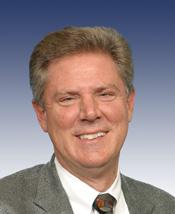
Mr. Speaker, I want to thank the gentlewoman from Florida. She makes the point that this physician self-referral provision in the bill actually serves two purposes. On the one hand, it is about half…
Mr. Speaker, I want to thank the gentlewoman from Florida. She makes the point that this physician self-referral provision in the bill actually serves two purposes. On the one hand, it is about half of the pay-for for the cost of the legislation. The physicians self-referral basically generates about $2.4 billion over 10 years, which is about half of the pay-for in this bill.
But beyond that, in addressing the gentleman from Washington's concerns, it is actually a good thing. It is a good government proposal. And what it does, it ends the ability of physicians to self- refer to a hospital in which they have ownership. This change is consistent with the original intent of the physicians self-referral laws. The loophole for whole hospital ownership was only there because of tiny rural hospitals that were then owned by one doctor who practiced there.
Now that structure is no longer commonplace and that is why the hospital associations all endorse our bill. The bill does provide a grandfather for hospitals that currently have physician ownership and had a provider agreement with Medicare as of July 2007, the date of introduction of the bill. Within 18 months of enactment, they need to meet a standard that no physician owned more than 2 percent of the facility individually and that aggregate physician ownership was 40 percent or less.
So it is possible for the hospital in the State of Washington to reconfigure and meet this provision. But I just want to understand why we are doing this. These physician-owned hospitals essentially are a problem because they are being overutilized. There is overutilization. In other words, physicians are referring patients to these hospitals in many cases for unnecessary procedures. The reason why CBO scores this and uses it as a pay-for is because we know that these unnecessary procedures or overutilization takes place and is not basically a good thing. So we are trying to end this practice of self-referral. We are not completely precluding a hospital from reconfiguring itself and staying open, but, generally speaking, we need to end the practice.
The answer to that is that we believe that the legislation, as it is before you today, accomplishes that goal. In other words, as I said, these hospitals within 18 months of enactment, they can essentially reconfigure, so if no physician owned more than 2 percent--
The answer is, no, if I could explain why just very briefly.
I've been trying to explain that the reason that the money is saved pursuant to this provision is because physician self- referrals inherently are not a good thing. We are trying to discourage it as much as possible and not having it be the case in the future. Now there are some hospitals that, as you said, historically had this configuration. But we don't want to encourage it. We want to discourage it. That's why we're saying that we'll have a standard with the 40 percent and the 2 percent and we'll even allow some of them to grow if they meet certain standards. But we're not looking to have this continue because it inherently is not a good thing.
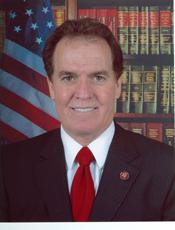
Mr. Speaker, I thank the gentleman for yielding. We have heard, particularly from our side of the aisle, the objection to this bill, H.R. 1424, in regard to procedure and in regard to pay- fors,…
Mr. Speaker, I thank the gentleman for yielding.
We have heard, particularly from our side of the aisle, the objection to this bill, H.R. 1424, in regard to procedure and in regard to pay- fors, which basically I agree with. The fact is that this is the 50th time that the Democratic majority has brought forth a bill, an important bill, with a closed rule and no opportunity for our side. In the case of myself as a physician member, I think I had some good thoughts about this bill. In fact, I was proud to support the extension of the original Paul Wellstone Mental Health and Addiction Equity Act. I thought that was a good thing. But now my objection to the rule and the underlying bill, Mr. Speaker, is mainly about policy. I think they have taken this bill and adulterated it to an extent that it is unbelievable that the gentlelady from Florida in her opening remarks said that this is a business-friendly piece of legislation.
Now if we were talking about covering things like bipolar disorder, depressive disorders, anxiety disorders, post-traumatic stress syndrome, certainly this is very important that we have mental health parity. But as one of the previous speakers on our side of the aisle said, what you have done in expanding this to cover things on a mandated basis to our employees, diseases in the Diagnostic Statistical Manual of Mental Illnesses, jet lag fatigue, caffeine intoxication, sibling rivalry, substance induced sexual dysfunction, transvestite fetishism, can you imagine any employer being willing to cover things like that?
You are throwing the baby out with the bath water. You had a good bill. I was proud to support it, and I would proudly support it today, but to expand it to the point where no employer will offer mental health coverage, that means so many of these people, families with adult children, adult dependent children, who are suffering from some of these conditions that we know of that I mentioned, bipolar disorder, schizophrenia, they desperately need help, and they need health parity. I am in favor of that and I would support it. That is why I am supportive of the Senate version.
But I stand here, and I ask all of my colleagues to look at this and read it and understand why hardly any employer would accept this and provide health coverage when it provides all of these things that are totally unnecessary.
With that, I ask my colleagues to defeat this rule and this underlying legislation. Let's take it back to the drawing board and do probably what Paul Wellstone intended originally, and my friend Patrick Kennedy as well. We have ruined an otherwise good bill.
Mr. Speaker, I thank my good friend Mr. Davis, and also his excellent staff assistance provided by William Miles and Roberto Valencia. I very much appreciate the work that has gone into this. I rise…
Mr. Speaker, I thank my good friend Mr. Davis, and also his excellent staff assistance provided by William Miles and Roberto Valencia. I very much appreciate the work that has gone into this.
I rise in support of H. Con. Res. 286. It recognizes and honors Earl ``Big Cat'' Lloyd for tearing down the color barrier and becoming the first African American to play in the National Basketball Association.
Earl Lloyd was born in Alexandria, Virginia, on April 3, 1928, at a time in our Nation's history when racial prejudice was intense.
Mr. Lloyd developed his passion for the game of basketball as a star at the segregated Parker-Gray High School. This was well before Parker- Gray was joined with George Washington High School into T.C. Williams, which subsequently has been made famous by the movie ``Remember the Titans.''
He was twice named an All-American at West Virginia State College, where he led his collegiate alma mater to two conference and tournament championships, including the school's only undefeated season in 1947- 1948. I am told our colleague Ed Towns was actually recruited by West Virginia State or played with them, but, anyway, he has some connection. But this is about Earl Lloyd.
Drafted by the Washington Capitols in 1950, Mr. Lloyd played his first game in the NBA on October 31, 1950. Imagine. This was the first time that the NBA actually allowed somebody to play in the NBA who could actually jump. Over the course of nine seasons, interrupted by a 2-year stint in the Army, Mr. Lloyd played in 560 games, helping carry his team to an NBA championship in 1955. Mr. Lloyd later became the NBA's first African American assistant coach, and went on to be the head coach of the Detroit Pistons.
When I spoke to Earl yesterday, he wanted to acknowledge this honor on behalf of all the great African American players along the way who never got a chance to play in the NBA solely because of their race. His mom used to tell him, ``Earl, never fold up your tent, never give up, and never disappoint the people who love you.'' He had just returned from the Central Intercollegiate Athletic Association Tournament. For decades, that used to be called the Colored Intercollegiate Athletic Tournament. How easy it is to forget the way things used to be, even in our lifetimes.
I trust that this resolution will receive the unanimous support of my colleagues, and I thank the dozens of Members who were willing to sign on as cosponsors. Mr. Lloyd deserves this recognition.
Done. We would be very proud of that.
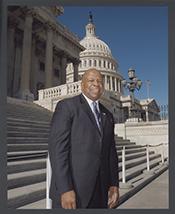
Mr. Speaker, I rise today in support of the rule for the Paul Wellstone Mental Health and Addiction Equity Act of 2007. The time is long past due for Congress to, once and for all, act to end…
Mr. Speaker, I rise today in support of the rule for the Paul Wellstone Mental Health and Addiction Equity Act of 2007.
The time is long past due for Congress to, once and for all, act to end discrimination against patients seeking treatment for mental illness and addiction. More than 57 million Americans suffer from mental illness and more than 26 million suffer from addiction. Unfortunately, our Nation's investment in services for individuals with mental illness and addiction has not kept pace with the trend. Last year, untreated mental illness cost the U.S. economy over $150 billion, and untreated addiction cost over $400 billion.
H.R. 1424 reverses this trend by guaranteeing that plans cover the same range of mental illnesses and addiction disorders offered by the Federal employee health plan that Members of Congress use; prohibiting insurers and group health plans from imposing treatment of financial limitations when they offer mental health benefits that are more restrictive from those applied to medical and surgical services; and creating medical management tools that are based on valid medical evidence and pertinent to the patient's medical condition so that specific coverage is not arbitrary and is more transparent to the patient.
This is a piece of legislation that is critically important to our Nation and to my constituents.
Just the other day I received a letter from a Mr. Smith in my district, whose son, a 16-year-old, was diagnosed with attention deficit hyperactivity disorder.
Last spring Mr. Smith's son started using marijuana and used it increasingly as the months progressed in what was described as self- medication. His grades dropped and he withdrew from his friends and showed other signs of substance abuse.
When his parents placed him in an outpatient counseling facility, Mr. Smith learned, to his surprise, that the necessary treatment was not covered under his employer-based health insurance. After that counseling proved ineffective, he sent his son to a facility for in- patient treatment which cost approximately $25,000.
This legislation is very important, and I would urge my colleagues to vote in favor of the rule and the legislation.

Let me thank the gentlelady from Florida and the gentleman from Minnesota for yielding and their indulgence. Mr. Speaker, I am rising to first of all take my hat off to Congressman Patrick Kennedy.…
Let me thank the gentlelady from Florida and the gentleman from Minnesota for yielding and their indulgence.
Mr. Speaker, I am rising to first of all take my hat off to Congressman Patrick Kennedy. This is a day in waiting, for he has worked without tiring in the tradition of my good friend, Senator Paul Wellstone, now deceased, who worked and committed themselves to changing the inequity, really, I would think, constitutionally wrong, to disallow mental health parity and those who suffered from mental health issues.
All of our family members, or all of our families, have faced these crises. We ask the question, what do we do? That is why I am so disappointed that we have taken the work of Patrick Kennedy and imploded it. We have dissolved the bipartisan allegiance to this bill, the commitment to mental health parity, by destroying hospitals in our districts, hospitals that are serving the poor of our districts. Why they would think that this was an important element of this bill, I don't know. And that is, of course, to end the growth of physician- owned hospitals in urban and rural areas for poor and those who are without access to hospitals.
This would restrict the ability and capacity of physician-owned hospitals. It doesn't matter if the hospital is rural or in the inner city, big or small. It punishes these hospitals. In Houston, in the 18th Congressional District, it punishes St. Joseph's, it punishes the Heights Hospital, and it does so without any reason.
We could pay for this by the tax cuts that we are taking away from those making over $250,000, or the tax cuts on the energy company. But why are you breaking the backs of those who clearly need an opportunity?
This bill should include a robust State license emergency care with doctors on call at all times to care for patients. That is what these hospitals need to have. Maintain a minimum number of physicians available at all times to provide service and provide charity care equal to at least 4 percent of its operating budget. We can put criteria on these hospitals. We don't have to destroy them. I am saddened by what we have done to this bill.
Announcement by the Speaker Pro Tempore
Show 10 more
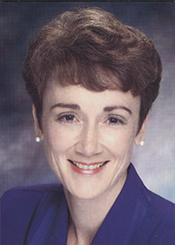
Mr. Speaker, I will be asking for a recorded vote on the previous question today, and the reason is that the House majority leader, Mr. Hoyer, has just announced that the House will not take up the…
Mr. Speaker, I will be asking for a recorded vote on the previous question today, and the reason is that the House majority leader, Mr. Hoyer, has just announced that the House will not take up the electronic surveillance bill this week, further delaying any decisions in the closing of an important intelligence gap. We have now gone 18 days since the expiration of the Protect America Act. If the previous question is defeated, we will immediately bring up the Senate legislation to close that gap.
I also rise today to oppose this rule. I commend Mr. Ramstad and Mr. Kennedy for their work on mental health parity. In the past, I have been a cosponsor of their legislation. But I offered a substitute amendment in the Rules Committee last night which was not ruled in order. The alternative is supported by 285 organizations that support the Senate version of the mental health parity bill which passed the United States Senate unanimously in September. The differences are on policy, and my amendment was not made in order. Instead, we have the 50th closed rule of this Congress. No amendments. This floor can't stomach debate on policy issues, and I think that is a sad commentary on the way this House is being run.
This is a major bill, one of the most important, I think, we will consider this year. I believe very strongly that mental illness and a disease of the brain is a medical condition that should be treated as seriously as a disease of the heart or the liver or the lungs.
The amendment that I offered, the substitute, is a bipartisan compromise that was worked out in negotiations lasting over 2 years. It is supported by mental health providers, the mental health community, business and the insurance industry.
Mr. Speaker, I submit for the Record a list of 285 organizations supporting the alternative I offered.
285 Organizations Supporting the Mental Health Parity Act of 2007, S.
558, or the Domenici/Kennedy/Enzi Manager's Amendment
Abilities in Motion.
ACCESS--DSPA Alliance.
Addictions Care Center of Albany (NY).
Mr. Speaker, I rise today in support of H. Con. Res. 286 recognizing and honoring Earl Lloyd, the first African- American to play in the National Basketball Association. Earl Lloyd was born April 3,…
Mr. Speaker, I rise today in support of H. Con. Res. 286 recognizing and honoring Earl Lloyd, the first African- American to play in the National Basketball Association.
Earl Lloyd was born April 3, 1928, in Alexandria, Virginia. It was at the city of Alexandria's segregated Parker-Gray High School that Lloyd began to develop his passion and skills for basketball. He began his collegiate career playing at West Virginia State College, a historically black college at the time. Before entering the NBA, Earl Lloyd earned titles for All-Conference and All-American for his tremendous basketball skills.
On October 31, 1950, Earl Lloyd integrated the NBA. Three years prior to Lloyd's integration of the NBA, Jackie Robinson became the first African-American to play Major League Baseball in 1947. Jackie Robinson has received national iconic status for breaking baseball's color barrier, yet Earl Lloyd has been overlooked for breaking that same barrier in basketball. Lloyd once said, ``In 1950 basketball was like a babe in the woods, it didn't enjoy the notoriety that baseball enjoyed.'' It is now 2008 and the NBA is long out of the woods and the time is long overdue for us to recognize and honor one of its pathfinders, Earl Lloyd. He is responsible for lighting that path and since then many great African-Americans have traveled the road paved by Earl Lloyd.
Earl Lloyd's journey was beset with people yelling cruel and derogatory words. He used their insults to fuel his passion to excel. He proved that African-Americans could successfully enter into the National Basketball Association. He should continue to be a source of inspiration to all and for this reason he should be commemorated.
This accomplishment must be saluted as Mr. Lloyd's life serves as an inspiration to many, both athletes and non-athletes.
Mr. Speaker, it has been an honor for me to speak in support of the Paul Wellstone Mental Health and Addiction Equity Act of 2007. I want to thank both Congressman Kennedy and Congressman Ramstad for…
Mr. Speaker, it has been an honor for me to speak in support of the Paul Wellstone Mental Health and Addiction Equity Act of 2007. I want to thank both Congressman Kennedy and Congressman Ramstad for their dedication to ending the insurance discrimination and ensuring that all Americans have access to mental health and addiction services.
As a Minnesotan, I'm struck by the emotion of this day because the late Paul Wellstone's tireless efforts to ensure mental health parity might finally be realized. Paul Wellstone knew it was wrong for health insurers to place discriminatory restrictions on treatments, and I am honored to be part of this effort to finally guarantee that millions of Americans who need mental health and addiction services can obtain the services they deserve.
The urgent need for the Paul Wellstone Mental Health and Addiction Equity Act is surely best expressed by those who have seen a loved one in need denied coverage. I think immediately of Kitty Westin, a Minnesotan whose daughter Anna suffered from anorexia, a deadly disease that affects approximately 8 million Americans and ultimately claimed Anna's life. During her daughter's battle with anorexia, Kitty took Anna to the hospital. Anna was refused care by the insurance company because it did not consider access to mental health treatment important enough to cover.
Kitty knows this is completely unacceptable and has been fighting selflessly to make sure that no other family experiences the same frustration and pain. I commend her for carrying on Anna's legacy so impressively through her advocacy efforts and community work. For Kitty and all of those who have encountered insurance discrimination, I carry Paul Wellstone's message that access to mental health and addiction services is imperative and must take place now.
Mr. Speaker, I thank my colleague from the State of Washington, and I rise in strong opposition to this closed rule. This rule gives the House no opportunity to engage in meaningful debate about this…
Mr. Speaker, I thank my colleague from the State of Washington, and I rise in strong opposition to this closed rule. This rule gives the House no opportunity to engage in meaningful debate about this important issue.
I am disappointed that the majority did not make in order a substitute amendment I cosponsored to consider the bipartisan legislation that was unanimously approved by the Senate last year.
Let me be clear: I strongly support mental health parity. That is precisely why I am so concerned that the bill before us today could derail our efforts to pass mental health parity legislation altogether.
While the House bill could reduce access to care for the mentally ill, decrease the affordability for health care coverage, and even close a hospital in my State, the Senate measure represents some of the very best that can come from bipartisan collaboration and compromise. It reflects the interests of mental health advocates and providers while also respecting the rights of States like Washington to enact mental health laws that go beyond the Federal standard.
Mr. Speaker, I came to this House, this body, a little over 3 years ago. My previous profession was in law enforcement for 33 years, so I came here in a little bit different way than most Members of the House of Representatives. So today I make the statement not as a Republican but as a citizen of the United States of America. I am standing here today as an American saying that we need to stop the partisan bickering and we need to come together as Democrats and Republicans and we need to address this issue of not having opportunity, not having a voice, to share in the decisions that are being made in this House. It is time that we come together.
The Senate bill that passed unanimously needs to be considered on the House floor.
I thank the gentlelady from Florida for making this time available. My father was a physician. After being a pediatrician for many years, he chose to change his specialty and go into psychiatry, and…
I thank the gentlelady from Florida for making this time available.
My father was a physician. After being a pediatrician for many years, he chose to change his specialty and go into psychiatry, and then child adolescent psychiatry. As a result of that, I was exposed to mental health issues and mental health treatment and the need for mental health professionals throughout this country.
There has been a misconception in this country about people needing mental health treatment and their being adequately covered by insurance. In the same way that a physical illness affects people, mental illnesses do. And mental health treatment has been woefully undercovered and underserved, people who suffer from that in our country.
I am proud to be a cosponsor of this bill and to join with the gentleman from Minnesota and the gentleman from Rhode Island who brought the bill and other cosponsors, because I think it shows that this Congress understands that mental health treatment needs to be covered, that diseases of the mind are similar to diseases of the body, the effect they can have on a person's overall well-being, but that their mental health and their physical health are also intertwined, and if mental health is not treated, physical health is affected.
We need to be concerned about all of our fellow citizens, our brothers and sisters who might suffer from any illness. And it's time that we came out from the cloak of an ancient time when we looked upon mental health treatment as something to be shunned, to be embarrassed about if it was somebody
in our families, our friends, or even ourselves. And so I wholeheartedly endorse this bill and feel that the passage of this bill will be a great day for Americans and for science.
I thank the gentlewoman from Florida for yielding me time. Mr. Speaker, I would like to begin today by thanking my colleagues, Mr. Kennedy and Mr. Ramstad. Their advocacy on this issue has been truly…
I thank the gentlewoman from Florida for yielding me time.
Mr. Speaker, I would like to begin today by thanking my colleagues, Mr. Kennedy and Mr. Ramstad. Their advocacy on this issue has been truly remarkable.
We held a field hearing in my district last year on mental health. It provided my constituents with a forum for important dialogue about an issue that affects millions of Americans.
Mr. Speaker, anyone who has had a family member with a mental illness knows how difficult living with the disease can be for everyone involved. They also know one thing above all else: physical illness and mental illness are equally painful and equally challenging. In many ways, mental health patients suffer more because our insurance system discriminates against them. That is why this legislation is so important, because it is about people, people who struggle with mental illness every day and every night, people who suffer in silence without a doctor's help because their insurance will not cover mental health or addiction treatments.
This House has the chance to demonstrate its compassion and commitment to these people, Mr. Speaker. With one vote, we can put behind us the false conception that mental illness is not as serious as cancer or diabetes or many other diseases covered by health insurance plans.
On the contrary, mental illnesses are some of the most serious health conditions we face. The battle against them has been enormously difficult for millions of families across our Nation.
It has been tough, but this is a battle that we must win, Mr. Speaker. With mental health parity, it is a battle we can and will win.
Again, I thank Mr. Kennedy and Mr. Ramstad for their courageous commitment to this legislation.
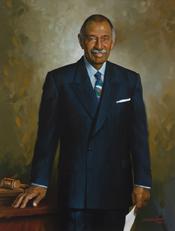
Mr. Speaker, on March 5, 2008, I was unavoidably detained due to weather-related travel delays. The following list describes how I would have voted had I been in attendance this afternoon.…
Mr. Speaker, on March 5, 2008, I was unavoidably detained due to weather-related travel delays. The following list describes how I would have voted had I been in attendance this afternoon.
``Yea''--H.R. 4191, To redesignate Dayton Aviation Heritage National Historic Park in the State of Ohio as ``Wright Brothers-Dunbar National Historic Park'', and for other purposes.
``Yea''--H. Con. Res. 278, Supporting Taiwan's fourth direct and democratic presidential elections in March 2008.
``Present''--H. Res. 951, Condemning the ongoing Palestinian rocket attacks on Israeli civilians, and for other purposes.
``Yea''--On motion to consider the resolution H. Res. 1014, providing for the consideration of H.R. 1424, Paul Wellstone Mental Health and Addiction Equity Act.
``Yea''--On ordering the previous question on H. Res. 1014, providing for the consideration of H.R. 1424, Paul Wellstone Mental Health and Addiction Equity Act.
``Yea''--H. Res. 1014, Providing for the consideration of H.R. 1424, Paul Wellstone Mental Health and Addiction Equity Act.
``Yea''--H.R. 4774, To designate the facility of the United States Postal Service located at 10250 John Saunders Road in San Antonio, Texas, as the ``Cyndi Taylor Krier Post Office Building''.
``Yea''--H. Con. Res. 286, Expressing the sense of Congress that Earl Lloyd should be recognized and honored for breaking the color barrier and becoming the first African American to play in the National Basketball Association League 58 years ago.
Mr. Speaker, I want to thank the gentlewoman from Florida for yielding. I rise in strong support of this rule and the underlying bill. Like all of my colleagues, I want to commend Representatives…
Mr. Speaker, I want to thank the gentlewoman from Florida for yielding. I rise in strong support of this rule and the underlying bill. Like all of my colleagues, I want to commend Representatives Kennedy and Ramstad for their unrelenting advocacy for mental health. As a matter of fact, we have watched them travel all across the country, holding hearing after hearing, engaging people, trying to help them understand that mental illness, that mental health is just as important as any other aspect.
I have heard us debate cost. All of us know that insanity is doing the same
thing over and over again and expecting a different result. We know that education, early diagnosis and prevention can save us billions of dollars in mental health. And so I would urge passage of this rule and passage of the underlying bill.
Mr. Speaker, on Wednesday, March 5, 2008, I was unavoidably detained and missed rollcall vote No. 94. Had I been present and voting, I would have voted as follows: Rollcall vote No. 94: ``nay'' (On…
Mr. Speaker, on Wednesday, March 5, 2008, I was unavoidably detained and missed rollcall vote No. 94.
Had I been present and voting, I would have voted as follows: Rollcall vote No. 94: ``nay'' (On Question of consideration on the Rule to provide for consideration of H.R. 1424--Paul Wellstone Mental Health and Addiction Equity Act of 2007).
Mr. Speaker, on that I demand the yeas and nays.
Mr. Speaker, on that I demand the yeas and nays.
Bill Text
3 versions available
        [Congressional Bills 110th Congress]
[From the U.S. Government Printing Office]
[H. Con. Res. 286 Referred in Senate (RFS)]

2d Session
H. CON. RES. 286

_______________________________________________________________________

IN THE SENATE OF THE UNITED STATES

March 6, 2008

Received and referred to the Committee on the Judiciary

_______________________________________________________________________

CONCURRENT RESOLUTION

Expressing the sense of Congress that Earl Lloyd should be recognized
and honored for breaking the color barrier and becoming the first
African-American to play in the National Basketball Association League
58 years ago.

Whereas Earl Lloyd was born in Alexandria, Virginia on April 3, 1928;
Whereas Earl Lloyd first developed his passion for basketball at the city of
Alexandria's segregated Parker-Gray High School;
Whereas Earl Lloyd was drafted by the NBA in 1950 as a ninth round pick by the
Washington Capitols;
Whereas on October 31, 1950, Earl Lloyd became the first African-American to
play in the NBA;
Whereas Earl Lloyd dissolved the color barrier in the NBA 3 years after Jackie
Robinson had done the same in baseball;
Whereas Earl Lloyd proudly put his professional career on hold and served in the
Army for 2 years before returning to the NBA;
Whereas Earl Lloyd played 560 NBA games and won a championship before retiring
in 1960;
Whereas in 2003, Earl Lloyd was inducted into the Naismith Memorial Basketball
Hall of Fame; and
Whereas the newly constructed basketball court at T.C. Williams in his home town
of Alexandria was named in his honor: Now, therefore, be it
Resolved by the House of Representatives (the Senate concurring),
That it is the sense of Congress that Earl Lloyd should be recognized
and honored for breaking the color barrier and becoming the first
African-American to play in the National Basketball Association League
58 years ago.

Passed the House of Representatives March 5, 2008.

Attest:

LORRAINE C. MILLER,

Clerk.