Celebrating the 50th anniversary of the United States Explorer I satellite, the world's first scientific spacecraft, and the birth of the United States space exploration program.
 Rep. Mark Udall (D-CO)
Legislative Activity
Stay on top of the latest movement without scrolling through every action
Received in the Senate and referred to the Committee on Commerce, Science, and Transportation.
February 7, 2008
View full timeline
Introduced in House
January 29, 2008
Sponsor introductory remarks on measure. (CR E92)
January 29, 2008
Referred to the House Committee on Science and Technology.
January 29, 2008
Mr. Melancon moved to suspend the rules and agree to the resolution.
February 6, 2008 • 3:13 PM
Considered under suspension of the rules. (consideration: CR H573-575)
February 6, 2008 • 3:13 PM
DEBATE - The House proceeded with forty minutes of debate on H. Con. Res. 287.
February 6, 2008 • 3:13 PM
Passed/agreed to in House: On motion to suspend the rules and agree to the resolution Agreed to by voice vote.(text: CR H573)
February 6, 2008 • 3:22 PM
On motion to suspend the rules and agree to the resolution Agreed to by voice vote. (text: CR H573)
February 6, 2008 • 3:22 PM
Motion to reconsider laid on the table Agreed to without objection.
February 6, 2008 • 3:22 PM
Received in the Senate and referred to the Committee on Commerce, Science, and Transportation.
February 7, 2008
Floor Debate
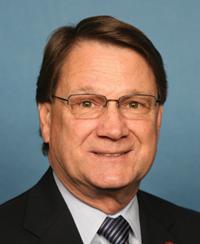
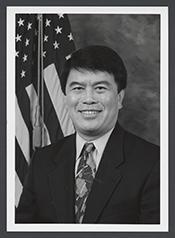
5 membersWhat members said about H.Con.Res. 287 on the floor


Floor Debate
5 membersWhat members said about H.Con.Res. 287 on the floor
Madam Speaker, this year we celebrate many important anniversaries in our Nation's civil space and aeronautics programs. Earlier this year, I introduced H. Con. Res 287, which celebrated the 50th…
Mr. Speaker, I would yield myself such time as I may consume. I rise in support of House Concurrent Resolution 287, offered by my friend and Space Subcommittee chairman, Mark Udall, as well as Mr.…
Mr. Speaker, I move to suspend the rules and agree to the concurrent resolution (H. Con. Res. 287) celebrating the 50th anniversary of the United States Explorer I satellite, the world's first…
Mr. Speaker, today we consider H. Con. Res. 287, Celebrating the 50th Anniversary of the U.S. Explorer I Satellite and the Birth of the United States' Space Exploration Program, which I introduced…
Mr. Speaker, I rise in support of H. Con. Res. 287 to celebrate the 50th anniversary of the launch of Explorer I and the birth of an era of United States space exploration. On January 31, 1958, the…
Show 1 more
Mr. Speaker, I rise in support of H. Con. Res 287, recognizing the anniversary of the launch of Explorer I. The launch of Sputnik I by the Russians in October 1957 created alarm in the U.S. Many…
Bill Text
3 versions available
        [Congressional Bills 110th Congress]
[From the U.S. Government Publishing Office]
[H. Con. Res. 287 Referred in Senate (RFS)]

2d Session
H. CON. RES. 287

_______________________________________________________________________

IN THE SENATE OF THE UNITED STATES

February 7 (legislative day, February 6), 2008

Received and referred to the Committee on Commerce, Science, and
Transportation

_______________________________________________________________________

CONCURRENT RESOLUTION

Celebrating the 50th anniversary of the United States Explorer I
satellite, the world's first scientific spacecraft, and the birth of
the United States space exploration program.

Whereas January 31, 2008, is the 50th anniversary of the launch of Explorer I,
the first United States satellite to be successfully lofted into space
and the world's first scientific satellite;
Whereas the launch of Explorer I marks the birth of the era of United States
space exploration, a half-century of advances in both robotic and human

exploration of space, including the first footsteps by humanity on another
world;

Whereas, since the launch of Explorer I, the United States has launched
spacecraft--

(1) to explore each of the solar system's planets and the Earth's Moon;

(2) to observe the Earth and the interactions of its atmospheric,
oceanic, and land systems;

(3) to conduct studies of the Sun and its interactions with Earth;

(4) to investigate asteroids and comets;

(5) to peer deeper into space to understand the origin of the universe
and the formation of the stars, galaxies, and planets; and

(6) to extend human presence into space;

Whereas Explorer I and the impetus for scientific satellites occurred as part of
the International Geophysical Year, a major scientific initiative of 67
nations to collect coordinated measurements of the Earth, whose spirit
continues to be embodied in the international partnerships that enhance
space endeavors;
Whereas Explorer I carried a scientific instrument designed and built by Dr.
James A. Van Allen of the University of Iowa to detect cosmic rays;
Whereas the cosmic ray measurements from Explorer I led to the discovery of
regions of energetic charged particles trapped in the Earth's magnetic
field, later named the Van Allen radiation belts;
Whereas the combined efforts of Dr. James A. Van Allen and his science team,
individuals at the Jet Propulsion Laboratory, and individuals at the
Army Ballistic Missile Agency made possible the successful development
and launch of Explorer I and ushered in a new age of United States
scientific and human exploration of space;
Whereas the next 50 years of United States accomplishments in outer space will
rely on individuals possessing strong mathematics, science, and
engineering skills and the educators who will train such individuals;
Whereas the United States space program enables the development of advanced
technologies, skills, and capabilities that support United States
competitiveness and economic growth;
Whereas Dr. Van Allen, commenting on the future of space science a decade ago,
said ``there is no shortage of great ideas on what we'd like to do. ...
There is virtually no limit to what can be investigated in
interplanetary science and astronomy.''; and
Whereas over the next 50 years the United States will attain additional exciting
and significant achievements in robotic and human space exploration:
Now, therefore, be it
Resolved by the House of Representatives (the Senate concurring),
That the Congress--
(1) celebrates the achievement of the late Dr. James A. Van
Allen and his science team and all of the individuals at the
Jet Propulsion Laboratory and Army Ballistic Missile Agency
who, through the successful launch of Explorer I, brought the
United States into the space age and science into the realm of
space;
(2) supports science, technology, engineering, and
mathematics education programs, which are critical for
preparing the next generation to lead future United States
space endeavors;
(3) recognizes the role of the United States space program
in strengthening the scientific and engineering foundation that
contributes to United States innovation and economic growth;
and
(4) looks forward to the next 50 years of United States
achievements in the robotic and human exploration of space.

Passed the House of Representatives February 6, 2008.

Attest:

LORRAINE C. MILLER,

Clerk.