Recognizing the importance of bicycling in transportation and recreation.
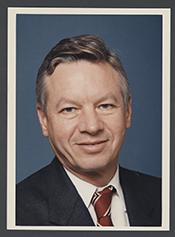
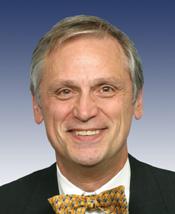 Rep. Earl Blumenauer (D-OR)
Legislative Activity
Stay on top of the latest movement without scrolling through every action
Received in the Senate and referred to the Committee on Commerce, Science, and Transportation.
June 2, 2008
View full timeline
Introduced in House
February 28, 2008
Sponsor introductory remarks on measure. (CR E270)
February 28, 2008
Referred to the House Committee on Transportation and Infrastructure.
February 28, 2008
Referred to the Subcommittee on Highways and Transit.
February 29, 2008
Committee Consideration and Mark-up Session Held.
May 15, 2008
Ordered to be Reported by Voice Vote.
May 15, 2008
Subcommittee on Highways and Transit Discharged.
May 15, 2008
Reported by the Committee on Transportation. H. Rept. 110-653.
May 19, 2008
Placed on the House Calendar, Calendar No. 219.
May 19, 2008
Ms. Hirono moved to suspend the rules and agree to the resolution.
May 19, 2008 • 3:11 PM
Considered under suspension of the rules. (consideration: CR H4102-4104)
May 19, 2008 • 3:11 PM
DEBATE - The House proceeded with forty minutes of debate on H. Con. Res. 305.
May 19, 2008 • 3:11 PM
At the conclusion of debate, the chair put the question on the motion to suspend the rules. Mr. Petri objected to the vote on the grounds that a quorum was not present. Further proceedings on the motion were postponed. The point of no quorum was withdrawn.
May 19, 2008 • 3:16 PM
Considered as unfinished business. (consideration: CR H4432-4433)
May 21, 2008 • 9:30 PM
Passed/agreed to in House: On motion to suspend the rules and agree to the resolution Agreed to by voice vote.(text: CR 5/19/2008 H4102-4103)
May 21, 2008 • 9:31 PM
On motion to suspend the rules and agree to the resolution Agreed to by voice vote. (text: CR 5/19/2008 H4102-4103)
May 21, 2008 • 9:31 PM
Motion to reconsider laid on the table Agreed to without objection.
May 21, 2008 • 9:31 PM
Received in the Senate and referred to the Committee on Commerce, Science, and Transportation.
June 2, 2008
Floor Debate
5 membersWhat members said about H.Con.Res. 305 on the floor
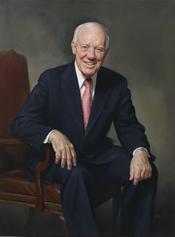
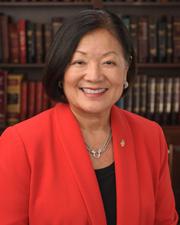
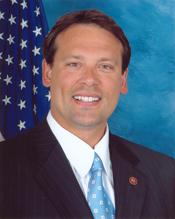
Floor Debate
5 membersWhat members said about H.Con.Res. 305 on the floor
Thank you, Madam Speaker. This week, hundreds of cyclists from around America will descend on Capitol Hill to advocate on behalf of America's 100 million people who enjoy bicycling for recreation,…
Mr. Speaker, I rise today in support of H. Con. Res. 305. H. Con. Res. 305 recognizes the important role bicycling plays in both transportation and recreation, and is an appropriate resolution to…
Mr. Speaker, I move to suspend the rules and agree to the concurrent resolution (H. Con. Res. 305) recognizing the importance of bicycling in transportation and recreation. Mr. Speaker, I ask…
Madam Speaker, I rise today with a heavy heart to honor the memory of Margaret Lois Pryor Queen. Born 86 years ago in Henderson County, North Carolina, Lois Queen was a tireless advocate throughout…
Mr. Speaker, today I am pleased to rise in strong support of H. Con. Res. 305, the National Bike Bill. This resolution recognizes the bicycle as an important part of our transportation system.…
Show 1 more
Mr. Speaker, I yield myself such time as I may consume. Mr. Speaker, I rise in support of House Concurrent Resolution 305, introduced by our colleague, Earl Blumenauer from Oregon. The resolution…
Bill Text
4 versions available
        [Congressional Bills 110th Congress]
[From the U.S. Government Printing Office]
[H. Con. Res. 305 Referred in Senate (RFS)]

2d Session
H. CON. RES. 305

_______________________________________________________________________

IN THE SENATE OF THE UNITED STATES

June 2, 2008

Received and referred to the Committee on Commerce, Science, and
Transportation

_______________________________________________________________________

CONCURRENT RESOLUTION

Recognizing the importance of bicycling in transportation and
recreation.

Whereas a national transportation system conducive to bicycling produces
enriched health, reduced traffic congestion and air pollution, economic
vitality, and an overall improved quality of living is valuable for the
Nation;
Whereas by dramatically increasing levels of bicycling in United States cities
tangible and intangible

benefits to the quality of life for cities and towns across the country
will be realized;

Whereas we now live in a Nation with 300 million people, and that number is
expected to grow to 365 million by 2030 and to 420 million by 2050 with
the vast majority of that growth occurring in urban areas with limited
ability to accommodate increased motor vehicle travel;
Whereas since 1980, the number of miles Americans drive has grown 3 times faster
than the United States population, and almost twice as fast as vehicle
registrations;
Whereas one-third of the current population does not drive due to age,
disability, ineligibility, economic circumstances, or personal choice;
Whereas the United States is challenged by an obesity epidemic, 65 percent of
United States adults are either overweight or obese, and 13 percent of
children and adolescents are overweight, due in large part to a lack of
regular activity;
Whereas the Center for Disease Control estimates that if all physically inactive
Americans became active, we would save $77 billion in annual medical
costs;
Whereas over 753 of our Nation's Mayors have signed onto the climate protection
agreement of the United States Conference of Mayors urging the Federal
Government to enact policies and programs to meet or exceed a greenhouse
gas emission reduction target of a 7 percent reduction from 1990 levels
by 2012;
Whereas the transportation sector contributes one-third of the greenhouse gas
emissions in the United States and passenger automobiles and light
trucks alone contribute 21 percent;
Whereas bicycle commuters annually save on average $1,825 in auto-related costs,
reduce their carbon emissions by 128 pounds, conserve 145 gallons of
gasoline, and avoid 50 hours of gridlock traffic;
Whereas the greatest potential for increased bicycle usage is in our major urban
areas where 40 percent of trips are 2 miles or less and 28 percent are
less than one mile;
Whereas in 1969 approximately 50 percent of children in the United States got to
school by walking or bicycling, but in 2001 only 15 percent of students
were walking or bicycling to school;
Whereas as much as 20 to 30 percent of morning traffic is often generated by
parents driving their children to schools, and in the United States,
motor vehicle crashes are the leading cause of death for children ages 3
to 14;
Whereas many public agencies in cities are using bicycles to deliver critical
municipal services, for example, more than 80 percent of police
departments serving populations of 50,000 to 249,999 and 96 percent of
those serving more than 250,000 residents now have routine patrols by
bicycle;
Whereas surveys show that a majority of people want to ride and walk more but
are dissuaded by concern over traffic danger and other barriers, and
case studies have shown that when those barriers to bicycling are
removed, people start riding;
Whereas investment used for improvements for bicyclists and promoting bicycle
use resulted in the quadrupling of bicycle use in Portland, Oregon,
since 1994 and a recent report to Congress on the nonmotorized
transportation pilot program reveals that 19.6 percent of trips in
Minneapolis, Minnesota, are made by biking and walking, reflecting the
benefit of initial investments in nonmotorized infrastructure;
Whereas the American bicyclist generates enormous economic returns, in 2006, the
national bicycling economy contributed $133 billion to the United States
economy, supported nearly 1.1 million jobs across the United States,
generated $17.7 billion in annual Federal and State tax revenue,
produced $53.1 billion annually in retail sales and services, and
provided sustainable growth in rural communities;
Whereas a national network of interconnected urban and rural bikeways can
provide valuable community benefits, including low or no-cost recreation
and alternative transportation options for people of all ages and
abilities;
Whereas mountain biking is an environmentally friendly, healthy nonmotorized
outdoor recreation activity that encourages young people to experience
our natural world, and engenders community support for preservation of
open space;
Whereas each year major charity bike rides in communities across the country
raise in excess of $100 million for critical medical research to find
cures for life-threatening diseases;
Whereas 57 million adults in the United States bicycle each year, and bicycling
and walking currently account for nearly 10 percent of trips and 13
percent of traffic fatalities, yet less than 2 percent of Federal
transportation safety funding is currently spent to make bicycling and
walking safer; and
Whereas communities across the United States are seeking ways to reduce traffic
congestion, improve air quality, increase the safety of their
neighborhoods, and decrease petroleum dependence, bicycles offer a
simple, healthy, energy-saving alternative to driving: Now, therefore,
be it
Resolved by the House of Representatives (the Senate concurring),
That the Congress--
(1) recognizes that increased and safe bicycle use for
transportation and recreation is in the national interest;
(2) supports policies that--
(A) establish national target levels for increased
bicycle use, reduce the number of motor vehicle miles
traveled (VMT), improve bicycle safety to be achieved
within a specific timeframe, and collect data needed to
monitor progress;
(B) increase intermodal travel between public
transportation and bicycles;
(C) provide incentives for State and local
governments to adopt and implement complete street
policies designed to accommodate all users, including
motorists, pedestrians, bicyclists, transit riders, and
people of all ages and abilities;
(D) encourage bicycle use in communities where
significant segments of the population do not drive and
where short trips are most common;
(E) expand funding for core Federal transportation
programs that support non-motorized infrastructure,
education, and encouragement programs by--
(i) safeguarding existing funding sources
for nonmotorized transportation from
inequitable treatment in the Federal
transportation funds rescission process;
(ii) supporting funding for core Federal
transportation programs that support
nonmotorized travel, including transportation
enhancements, safe routes to school, and
recreational trails; and
(iii) ensuring that highway safety
improvement program funds are spent in
proportion to the percentage of bicyclist and
pedestrian fatalities in each State;
(F) facilitate the development of a coordinated
system of United States bicycle routes across the
country that cross state borders and connect
metropolitan regions;
(G) create bicycle-friendly Federal land protection
legislation, such as national recreation areas, to
encourage regulations and management practices for
mountain biking as an environmentally friendly
nonmotorized use of natural surface trails;
(H) provide flexibility in Federal transportation
law that would speed up the delivery of nonmotorized
infrastructure without sacrificing necessary
environmental protections;
(I) provide Federal tax or funding incentives to--
(i) States that adopt motor vehicle laws
that protect the rights of bicyclists to share
the road;
(ii) businesses that expand bicycle-
friendly programs for their employees;
(iii) the health care industry to develop
more member discount programs, that target
increased physical activity such as bicycling
and walking; and
(iv) provide bicycle commuters the
transportation fringe benefits currently
provided to people who commute by car or mass
transit; and
(J) build upon the ``Green the Capitol Initiative''
as a model, create and provide an environmentally
sustainable and healthy working environment for
employees that includes the promotion of bicycling as a
transportation alternative;
(3) encourages the Department of Transportation to provide
leadership and coordination by reestablishing the Federal
bicycle task force to include representatives from all relevant
Federal agencies.

Passed the House of Representatives May 21, 2008.

Attest:

LORRAINE C. MILLER,

Clerk.

By Robert F. Reeves,

Deputy Clerk.