Supporting the goals and ideals of "National Sudden Cardiac Arrest Awareness Month".
Legislative Activity
Stay on top of the latest movement without scrolling through every action
Referred to the Committee on Health, Education, Labor, and Pensions.
October 2, 2008
View full timeline
Introduced in House
July 22, 2008
Sponsor introductory remarks on measure. (CR E1523)
July 22, 2008
Referred to the House Committee on Energy and Commerce.
July 22, 2008
Mr. Pallone moved to suspend the rules and agree to the resolution.
September 23, 2008 • 8:59 PM
Considered under suspension of the rules. (consideration: CR H8684-8685; text of measure as introduced: CR H8684)
September 23, 2008 • 8:59 PM
DEBATE - The House proceeded with forty minutes of debate on H. Con. Res. 393.
September 23, 2008 • 8:59 PM
At the conclusion of debate, the chair put the question on the motion to suspend the rules. Mr. Burgess objected to the vote on the grounds that a quorum was not present. Further proceedings on the motion were postponed. The point of no quorum was withdrawn.
September 23, 2008 • 9:06 PM
Considered as unfinished business.
September 25, 2008 • 6:29 PM
Passed/agreed to in House: On motion to suspend the rules and agree to the resolution Agreed to by voice vote.
September 25, 2008 • 6:29 PM
On motion to suspend the rules and agree to the resolution Agreed to by voice vote.
September 25, 2008 • 6:29 PM
Motion to reconsider laid on the table Agreed to without objection.
September 25, 2008 • 6:29 PM
Received in the Senate.
September 26, 2008
Referred to the Committee on Health, Education, Labor, and Pensions.
October 2, 2008
Floor Debate
8 membersWhat members said about H.Con.Res. 393 on the floor
 KBM
KBM CM
CM TR
TR DWS
DWS FPJ+3
FPJ+3
Floor Debate
8 membersWhat members said about H.Con.Res. 393 on the floor
Thank you so very much, Mr. Murphy. It is an honor to be here on the floor with you. I look forward to having a discussion not only with you, but also other Members of the House about what is coming…
Thank you so very much, Mr. Murphy. It is an honor to be here on the floor with you. I look forward to having a discussion not only with you, but also other Members of the House about what is coming up this week. I know that you alluded to last week's action that took place here on this floor. Democrats and Republicans and the majority were able to pass an emergency supplemental war bill that would not only put benchmarks in to make sure that the Iraqi Government is doing all that they should do to make sure that they carry out their responsibility since the U.S. taxpayer will be spending over $100 billion and counting over in Iraq in this piece of legislation, this supplemental, but also the $400-plus billion that have already been spent.
And also security for the troops, making sure that Department of Defense regulations, Mr. Speaker, that have been put forth to protect our troops, that they have what they need: the up-armor that they need, the training that they need, the equipment that they need, the personal equipment that they need.
And also making sure that our troops, as it relates to their rotation into theater, that they actually get an opportunity to have a Defense Department that has to do what they said they would do, and making sure they have enough time to be with their families, make sure they are able to maintain a job, those that are Reservists and National Guard men and women back home. And to also make sure that their families have an opportunity to be a part of their father or their mother's lives, or their parents having an opportunity to enjoy their son or daughter. And I think that is so very, very important as family values, and it is also standing by our word.
If we can't stand by our word while they are enlisted or federalized to serve in Iraq and Afghanistan, then how do they expect for us to stand next to them and behind them when they are veterans and they are out in the world of veterans health care?
I can tell you also, Mr. Speaker, that I am very pleased with the fact that we did put something in the legislation that will hopefully point towards redeployment of our troops. This war will continue and continue and continue if left up to the President of the United States. But before I start talking about the action really that we took, passing that legislation, seeing the voice vote that took place in the Senate last week, moving on legislation even with a closer time line and different benchmarks, which, Mr. Speaker, you know we will come together in conference to talk about a little further and iron out and be able to get a work product to the President.
But as you know, today, March 26 of 2007, the number stands at 3,235 U.S. servicemen and women that have died in Iraq; some 13,415 of U.S. troops have been injured and returned back to battle. You have to think about it, injured and then returned back to battle; 10,000 U.S. troops have been injured and have not been able to return back to battle.
Hearing those numbers and hearing how they continue to move up, Mr. Speaker, even speaks further to the kind of oversight that this Congress must have in this conflict in Iraq, this civil war in Iraq, I must add, that we are officiating.
We know that the President had a press conference after we took our action here on the floor. I want to commend the Members again who voted in the affirmative to make sure that we were able to take action, the first time the U.S. Congress has taken action with benchmarks, even against profiteering with U.S. contractors that are the third largest, you may call it coalition partner, or the second largest outside of U.S. servicemen and women in Iraq. You would assume that there are other countries in the world, since this is such a world issue that the United States is involved in, you would assume that there would be a number of countries before U.S. contractors, but U.S. contractors are the second largest number of individuals that are there.
Mr. Speaker, when I talk about these numbers and when we talked about the action last week, the President, then he sprung into action. He had a press conference talking about how the Congress is now holding dollars back from our men and women in theater and asking us to please stop. Well, I am glad that I lived long enough over the weekend to come back here to the floor, Mr. Speaker, to not only share with the President, but those that may think that by us standing up on behalf of veterans health care, by us making sure that Walter Reed Hospital gets the necessary dollars they need to be able to take on the influx of men and women coming back from theater that are injured of the 10,772 that cannot and will not go back to theater and the 13,415, when that number continues to increase, that when they get their care in the field and then they move on to Germany and they get even further care, and some of them have to come back here to Washington, D.C. to even get physical therapy and all the things that they need to get back to the theater, if that is stopping the dollars from getting to the troops, then I think that we need to go back to a civics lesson of what this is all about.
We are putting dollars in what the Republican majority did not put in. Anything that the President asked for, the Republican majority rubber-stamped it. As a matter of fact, the Republican majority in the last Congress
was so loyal to the President of the United States that whatever he said, whatever he wanted, they did it. And guess what, Mr. Speaker? I am here to report that that is one of the big reasons why we have a Democratic majority right now in the U.S. House of Representatives and in the Senate. Some 30-odd seats were lost living under that philosophy. And all of the hours that we spent on this floor, all of the hours that we spent in committee saying that if you give us the opportunity to lead, we will lead. Democrats, Republicans, Independents and some Americans who never voted before in their life went out and voted last November.
Now, the President can have a press conference, that's fine, he is the President of the United States. I can go out and have a press conference. The bottom line is let's not have the people of the United States of America feel that the U.S. House and the Senate are holding money back from the troops. As a matter of fact, we have given more than what the President called for as it relates to armor. We've given the troops more as it relates to troop safety and force protection. We've added three new brigades to the Marines. We've added 36,000 more soldiers to the Army to make sure we are at the readiness level. Under the Republican majority of the 109th and the 108th Congress, as this war started and continued to escalate to the numbers of where it is now, our readiness levels, and when I speak of readiness levels, Mr. Speaker, I speak of the fact that if we had to go into another conflict, we are not ready.
There is not a National Guard unit right now that is ready to go to battle. Now, what do we mean by readiness? Making sure that they have the equipment, making sure that they have enough personnel to be able to rise to the occasion, all the specialists that are needed, all the striker brigades that are needed. We have 100 of them, but we are not at the readiness level that we need to be, and we haven't been at this low level that we are now since the Vietnam war. I am not giving out any national secrets. Everyone knows that this is the case. So if we know the obvious, why not take care of it?
We are doing more than what the President has asked for. The President just has a problem. Do you know what the problem is? It is the fact that the Congress has said: Guess what, Mr. President. I know you have been saying a lot over the last 4 or 5 years of this war, now within its fifth year, the third escalation of troops that you have sent over to Iraq; and we pass a nonbinding resolution in the majority and Republicans voted for that, too, saying that we disagree with that philosophy. The American people are far beyond the President on this issue. So we are here to represent the American people.
The second point, when you look at this issue of the binding resolution, it says that if the Iraqi government does not meet the benchmarks set by who, the President of the United States, George W. Bush, then the redeployment of troops will start. The clock will start at that point for a redeployment of a number of troops within 6 months.
What else took place? The President said that it is important that we are not there forever. Well, still living under going in the old direction, the President wants the prerogative to be able to say, well, they are going to be there as long as they need to be there, and there is not necessarily a plan, and you haven't given an opportunity for the plan to work of the new escalation of troops.
Well, guess what? We saw plan one, and the violence did not go down. We sat here and watched plan two, and the violence did not subside. They weren't using Vice President Cheney's, the enemies are in the last throes of their insurgency, later to find out that that is not the truth.
So I guess we are just are supposed to continue to go on and on and on.
So, Mr. Murphy, I guess when we start looking at the benchmarks, that is the problem. Why doesn't the President say, that is my problem; I have a problem with the fact that the U.S. Congress is saying they no longer want to go with my original thoughts? There is nothing wrong with that. He is an American. He can say it.
But the bottom line is every last one of us sitting in these seats here in Congress and across the hall in the Senate, our obligation is to the individuals that have sent us here. Our constituents that have Federalized us here to make decisions on their behalf.
We are not generals. Some of us served in the military, some of us did not serve in the military, some of us never wore a uniform in our lives, but I can tell you this much. We have been sent here to watch over the U.S. taxpayer dollars, have the well-being of our U.S. troops that are allowing us to salute one flag, and to make sure that our number one obligation is to be loyal to the American people, and not one person.
So I speak very firmly and I stand very firmly on this point. Because I sat here the last 4 years in the minority not having an opportunity to be a part of the decisionmaking, not even being able to agenda a bill in committee or subcommittee, not able to bring a bill up here on the floor that the Republican majority did not allow me to. I mean, under the rules, they didn't allow me to. To now say, well, the President says that we are holding up dollars, emergency dollars for the war in Iraq?
Let me just share a few other things, and then possibly we can go into an exchange.
In the summer of 2005, there was a shortfall as it relates to veterans' health care, $2.7 billion.
In March of 2006, the President's budget cut funding by $6 billion over 5 years that was passed by a Republican-controlled Congress. And the first time, Mr. Murphy, that we had an opportunity to do anything, when I say the Democratic majority, the first action, and it was because of the inaction by the Republican Congress that did not pass the appropriations bills on time, that we passed a continuing resolution to keep this government running, and what did we do?
Well, we went into that bill and we made sure some of the special interest tax breaks and all of the things that the Republicans had in place, being loyal to individuals that had great influence in this House, and I am not talking about Members, I am talking about outside forces. We took $3.6 billion of the U.S. taxpayer dollars to increase the VA health care program and to make sure that their budget was in place so that our veterans would have somewhere that they can get care and their families.
That was our action. The President didn't ask for that. As a matter of fact, the President didn't even want it. But we did it because it was the right thing to do, and that was prior to the Walter Reed.
I keep saying that because that is so very, very important. People think that politicians and some folks do things just because somebody was looking or somebody said that you should do it or you are under some political pressure. That was a natural thing for the Democratic majority to do, and we did it.
And for the President to stand and say, well, you know, there is things in there that should not be in there and things that I didn't ask for. Well, guess what, we have to ask for it. I am even going to go down memory lane again.
January of 2003, the same administration, President Bush cuts veterans' health care for 164,000 veterans.
March of 2003, Republican budget cut $14 billion from veterans' health care, passed by the Congress, with 199 Democrats voting against it. That is House Concurrent Resolution 95, vote number 82.
March, 2004, Republican budget shortchanged veterans health care by $1.5 billion. It was passed by the Congress, 201 Democrats voting against it. That is House Concurrent Resolution 393, vote number 92.
March, 2005, President Bush's budget shortchanged veterans' health care by more than $2 billion for 2005 and cut veterans' health care by $14 billion over 5 years. That was passed with 201 Democrats voting against it. That is House Concurrent Resolution, vote number 88.
I think it is very important that we outline that.
Just like I said here earlier when I talked about the 2005 shortfall, after Democrats pressured the Bush administration and finally acknowledged that the 2006 shortfall for veterans' health care totaled $2.7 billion, Democrats fought all summer to make sure that
those dollars were placed back in the right direction as it relates to veterans' health care.
Also in March, 2006, President Bush's budget cut veterans' funding by $6 billion over 5 years, passed by the Republican-controlled Congress and, like I said, at $3.6 billion.
Mr. Speaker, we come to the floor and we mean business. We are not coming here to have a press conference and talk to some folks that may not quite understand exactly what is going on day to day in Congress. That is why we are here. We are here to make sure the American people know exactly what is going on here.
The reason why we speak very passionately about, you may say, well, it is Iraq, Iraq, Iraq, Iraq and, guess what, that other issue, Iraq. The reason we speak very passionately about that is that we have seen so much on this floor and so many words that Mr. Murphy talked about earlier, Members going on passing out inaccurate information every now and then, or the spirit of the information, whichever way you want to frame it, and to see the hard-core reality of these issues are still not addressed.
I had something here where all of the veteran groups, I must add here, Mr. Speaker, ``This much-needed funding increase will allow the Department of Veterans Affairs to better meet its needs for the men and women returning from Iraq and Afghanistan, as well as all veterans who have served in the past.'' That is from the National Commander of Disabled American Veterans. That press release was March 21, 2007. ``The American Legion and its 2.8 million members applaud the Budget Committee for the budget resolution recommendation for $43.1 billion in discretionary funding for veterans. Your recommendations are close with the views that are estimated, that was estimated by the American Legion earlier this year.'' That is by the legislative director and the lead on the American Legion.
I think it is very, very important that Members understand that. Veteran groups are 110 percent, 110 percent, Mr. Speaker, about what this Democratic-controlled Congress is doing; and we are just getting started. This is Monday. We are talking about the things that we need to put in place to make sure that our men and women need to have what they need to have when they are in theater and when they are out of theater.
I challenge the President to think within his heart and within his mind that he would turn a new leaf, and making sure that when we send this emergency supplemental to his desk, if he vetoes it, it will be his action that will be delaying the dollars to go to our men and women in harm's way.
I have said once before last week, Mr. Speaker, I voted for two emergency supplementals, a lot that I did not agree with, but the last thing I wanted to do was to leave our men and women in harm's way without the necessary funding that they need. So if I, someone that has a different opinion than the President and the old Republican majority as it relates to this war in Iraq, we are all Americans first and, guess what, life is not perfect and everything is not going to come the way you want it to come when you want it to come.
There are other people in this democracy that have something to say about it, and I know there are Republicans in America that feel the way the way that we feel. I know that there are Independents in America that feel the way we feel, and I know that there are Democrats and those that are looking to vote in coming elections to be a part of this democracy.
So I come very proud of the work that has been done and the work that will continue to be done here in this House.
If I may, and then I will yield and you can share all the great information. And Ms. Wasserman Schultz happens to be in between us today, so all we need is Mr. Ryan down here, and she will have a real challenge. But I can tell you from past experience of serving with her for 12 plus years now that she is very capable of rising to the occasion here.
Let me just point out, just today, Mr. Murphy and Ms. Wasserman Schultz, we took a vote. We took a vote saying that we would like for the appointed U.S. District Attorneys to come and be confirmed before Congress. Something that is very, very important, giving the chief judge an opportunity to appoint a temporary U.S. District Attorney, for that opportunity to take place because of what is happening now in the Justice Department. And I think it is important. I saw Ms. Wasserman Schultz earlier talking today about this very subject.
But, on the Republican side, you have some Republicans that are saying it is just horrible of what is happening. Because if what we think or believe what happened, these political appointees and then they got taken out because they were either going after someone that the administration did not want them to go after or they weren't going after certain individuals as it relates to political motivation. And under what we may call regular order in the 109th Congress or the 108th Congress or beyond, the kind of grip that this administration had over the House and the Senate, the chokehold that they had over the House and Senate, this would have never been an issue. It never would have been followed up on. There never would have been a hearing.
Guess what? Now, Mr. Speaker, there are hearings in both House and Senate, and now the Attorney General is getting caught in his own words. One minute he had nothing to do with it, and he didn't know what anyone was talking about. Now we understand that he led a meeting even talking about this issue.
So when you look at it, and Mr. Murphy and Ms. Wasserman Schultz, 329 Members of the House. It goes to show you, with the right leadership in place, we have a Democratic majority, Republicans will vote, some Republicans will vote and move in the right direction. Only one Member of the Republican leadership voted for this commonsense approach. There are still Members on the Republican side that are in the leadership that are still holding on to what used to be. The election took place last November. You would think, well, maybe the American people are not with this.
So I am just saying that this issue is continuing to evolve, and I bring these examples up so that the Members can see that we have a lot of work to do. It is not about partisanship. This is about leadership, and we are providing the leadership here.
I know Ms. Wasserman Schultz who serves on the Judiciary Committee can speak more eloquently on this issue. But this is one example amongst many. You called out those bipartisan votes at the beginning of the hour. We have to continue to embrace bipartisanship because that is what the American people want. They don't want us to be Democrats and Republicans. They want us to be Members of Congress watching out for the better good.
Mr. Speaker, it is good to see you in the Chair this evening. This has been a pretty amazing first 3 months for a new Member such as myself, who just joined this Chamber after having watched it from…
Mr. Speaker, it is good to see you in the Chair this evening.
This has been a pretty amazing first 3 months for a new Member such as myself, who just joined this Chamber after having watched it from afar for a number of years. As our majority leader said at an engagement earlier tonight, this has really been one of the most remarkably productive Congresses in as long as he can remember being here. That is important. That is important to me.
Mr. Speaker, we are going to be joined later tonight by Ms. Wasserman Schultz, who is just beginning her second term. I think she shares a lot of the same frustration that the new Members do, that for all of the important policy changes that this Congress has started, whether you want to talk about raising the minimum wage, starting to repeal some of these massive tax breaks we have given to the oil industry, the very important action that we took on Friday that we will talk about in terms of Iraq and the new direction that this Democratic Congress is beginning to set on what we do in Iraq, maybe the most important thing was that we started getting this place to work again and starting to give our constituents out there faith that Congress is back to work for the people of this country. Instead of sort of waiting for the special interests and
the lobbyists to line up and come into the offices of the prior leadership to tell them what they wanted, now actually we have got the American people, middle-class families, working class families, their priorities are back in charge here again. That is what makes me proud to be part of this group.
This is the hour that the 30-Something Working Group gets to spend on the floor of the House. I am proud to be a member of that group, a new member, proud that Speaker Pelosi has allowed us this opportunity.
We are going to cover I think a couple of subjects tonight. We will certainly talk about what happened here on Friday.
But I want to first just rewind for a second, to rewind to what happened when we first got here in January. Because it is interesting. I watched C-SPAN occasionally when I got home from the campaign trail, I got home from the State capital where I served in Connecticut for a few years, so I have some familiarity with some of the talk that goes on in this place.
But now I get to sort of listen it to with new ears, because now I listen to a lot of the revisionist history that gets thrown around this place late at night, listen to our friends on the other side of the aisle, and they are friends.
It is important to put up this chart, Mr. Speaker, to remind the American people that we actually can be friends when it actually comes to putting on the floor of the House of Representatives up or down votes on issues that matter to regular, middle-class families out there.
We can talk about 68 Republican votes along with the Democrats voting to implement the recommendations of the 9/11 Commission. When we raised the minimum wage, set that bill on a path forward in this House, we got 82 Republican votes for that. Stem cell research, passed 253-174, 37 Republicans. Better prescription drug programs for our elderly, 24 Republicans. And on and on and on.
When it matters, where you put up-or-down votes in front of this House for things that make lives better for regular people out there, you are going to have Republicans and Democrats agreeing. So we are friends. We are friends when we put things before us we can all agree on.
But there has been some revisionist history. There has been some interesting 20-20 hindsight happening on this floor often. We heard just a little bit of it before. A lot the decrying about the situation that our Federal budget has gotten into is pretty curious, seeing that the reason that I am here in large part is because a whole bunch of people out in northwestern Connecticut who voted for one person for 24 years decided that the budget priorities, along with the priorities on our foreign policy, were gravely out of whack.
A $9 trillion deficit, Mr. Speaker. A President that inherited a budget surplus, who ran on very fiscally conservative principles, managed to turn that into a record deficit in his first 6 years in office. A Republican Congress, I am sure there were some Democrats that were at the trough as well, but a Republican-led Congress that was complicit in racking up record amounts of debt that we know are not owned in large part by domestic banks but are increasingly owned by foreign banks, Asian banks and, in fact, it will put us in a very difficult position with when we are sitting down at a table to negotiate foreign policy with a lot of these foreign debt holders that have fairly decent leverage over us.
So we hear a lot about how we need to do something about this deficit. How it is our children, our children are going to be crippled under the weight of this deficit. They absolutely are. They absolutely are.
We had 6 years with a Republican President, 6 years with a Republican House, a Republican Senate for much of that time. Could have fixed it during that time; didn't get the job done.
Let's take a look at this chart for just one second. Let's make this clear, when we borrow money, all of this debt that we have racked up over the past several years, it is owned by Japan, China, the United Kingdom, Caribbean nations, Taiwan, OPEC nations, right down the line. That is who owns our foreign debt. That is what places us in incredibly compromising positions when we try to bring them to the table to be a multilateral player in actions throughout this world.
So here is why I am here: I am here because people in northwestern Connecticut wanted us to finally challenge this President on his disastrous policy in Iraq. I am here because they were sick and tired of the programs that make communities strong, the health care programs, education programs, job training programs, we are getting slashed and burned and cut to the bone by this Congress, while they gave away more and more massive tax breaks to their friends in the upper .1 percent of income earners in this Nation.
But they are also upset because the party that I think they thought was, you know, you see it in the polls, people for years and years and years thought that the Republicans were the ones that could manage their money and the Democrats they weren't so sure on. Well, they finally wised up after a while to realize that this place wasn't so responsible even under Republican rule; that in fact after budget after budget that got put before here, that President Bush put before this Congress was rubber-stamped over and over and over again and led to some of the most fiscally irresponsible policies that this Congress has ever seen, that this Nation, in fact, has ever seen. Largest Federal debt in the history of this country, growing by the day.
Now, here is the good news: it's changing. Now, as many times as folks on the other side of the aisle want to talk and use the term ``biggest tax increase in the history of the Federal Government,'' well, I'm still searching through that budget resolution, I'm still searching through what I am going to vote on this week and I don't see it. I don't see it because it's not there because we are actually going to do the responsible thing. Because what happened to create this Federal budget deficit was not just these massive tax breaks that they gave away to the folks way at the top, top, top of the income bracket, but they also spent money in a way that would have your eyes spin to the back of your head if you dug into some of the things they were doing here.
A Medicare prescription drug program that deliberately ties the hands of the Federal Government, doesn't allow the Federal Government to negotiate lower prices with the drug industry, Mr. Speaker, making millions, hundreds of millions, in dollars in profit for the drug industry at the expense of American taxpayers.
A defense policy which asks virtually no questions of how we spend our money in Iraq. We find out that there was $9 billion sent over to Iraq on pallets, thrown out of SUVs in duffel bags, unaccounted for; disappeared in that country. Stories of these pork barrel projects that would make your head spin, the ``bridge to nowhere'' in Alaska, simply the tip of the iceberg when it comes to some of the frivolous spending that happens from this supposedly fiscally conservative Congress.
You could run through the examples over and over and over again. Mr. Speaker, we just had a hearing in the Government Oversight Committee that I sit on where we found out that the government does audits, each Department does an audit every year to try to make sure that we are spending money in a fiscally sound manner, just like any business would, that government should act like a business. Well, the analogy isn't particularly apt in a lot of facets. But when you are talking about at least having generally accepted accounting principles to make sure that money comes in and goes out in an efficient manner, well, yes, we should start acting like a business does.
The only agency in the Federal Government that can't give a clean audit year after year after year, the Department of Defense. Nobody here is putting pressure on them to account for how they spend money, to make sure that the billions of dollars that we hand to the Department of Defense in order to protect this country is being spent in the means that make sure that we are not saddling our children or grandchildren with the enormous amount of debt that we have racked up in this Congress.
I mean, you want to talk about spending money wisely, our friends on the other side of the aisle have to look themselves in the mirror, have to wonder why this election happened. I know
that this war was a major factor in people's choice at the polls. I also know that were a lot of people in my district, and I have got the run of the economic spectrum in the Fifth Congressional District, from people living in places like New Britain and Waterbury that used to have good, solid middle-class jobs who are still struggling to get back to that level of sustenance, to folks that are doing pretty well with their lives that have made a buck in this economy. Those folks at the upper end of the economic spectrum are wondering how this government is spending their money.
So this week we are going to put a budget before this House. And Mr. Meek, who has joined us and Ms. Wasserman Schultz, who sits on the Appropriations Committee, can talk more intelligently than I can about this. We are going to finally put a budget before this House that is going to start to reflect the priorities of the American people; we are going to get our financial ship in order. All the things that folks over there talk about are actually going to be reality in this budget.
We are going to make sure that we invest in the programs that make America strong. We are going to make sure that we end this disastrous policy of unbalanced budgets. We can do it in the next 5 years. That budget says that we can and we will. And it is going to continue at a pretty important precedent that we have set in this Congress, which is to change course on some of the most disastrous policies of this administration, particularly the vote that we took on Friday on the war in Iraq, and I know that we will talk about that, but also start to get our fiscal ship in order, to put our money where our mouth is.
It is one thing for people to come up to this dais day after day after day and talk about fiscal responsibility. It is another thing to actually do it and put it into practice.
The budget that we are going to vote on will be, as I have learned, this place calls a pay-as-you-go budget. It is simply this, what every family lives with every day. You want to spend some new money, show how you are going to pay for it. You want to cut some taxes, show how you are going to account for it. Pretty simple budget rule, Mr. Speaker. But not to be too partisan here, it took a Democratic Congress in order to start playing by those very simple rules.
So, Mr. Speaker, I want to want to hand it over to Mr. Meek for some words, who normally gets to kick off this hour. But let me say that it has been a proud first three months. Probably the proudest day I have had was on Friday, when we came together to stand up to the President's policy in Iraq. It is going to be another proud week this week when we set the budget policies of this country straight and we finally stand up to the President and don't do what every other Congress has done, which is take this massive document, throwing our deficit into an increasingly upward spiral, throwing our families into turmoil. We are going to finally take this very weighted document and hold it up to the light, not just rubber-stamp it.
It is going to be another good week here, Mr. Speaker. And with that, I yield to Mr. Meek.
Mr. Meek, just as a transition to Ms. Wasserman Schultz, I would just say, elections matter; and there is probably no better example of that in recent history than the election in November. Things have just changed here. The air is different, the priorities are different, the rate of action is different.
And, Mr. Meek, I get why we had to have an election in order to change course in Iraq. I understand that this is a very difficult subject that has divided people for a number of years. Over the past several years, people, large numbers of people came to the conclusion that we needed to change course from the President's policy, that we needed to put a Congress here that is going to start standing up to this guy and insisting that there are some other fights that matter in this world, and that we need to invest back in Afghanistan, that we need to make sure that our borders here are protected and that we needed to start redeploying our forces.
So I get that we had to go to a national referendum in order to set a new course. That is an important issue that has divided people.
Now, people have come down pretty firmly in the past 12 or 18 months on the side of a new direction. That is why Friday, to me, was maybe the most gratifying day in the short number that I have been here. But, Mr. Meek, I don't get why we had to have an election to decide to support veterans.
I know that some of this administration are supposedly not great students of history; but if you read of recent Presidencies, you might find out if you tell the truth right off the bat, you get yourself in a lot less trouble than if you try to place the blame.
Ms. Wasserman Schultz, there is going to be a lot of stuff over the next couple months about Executive privilege and who said what, and there may be a lot of terms that may not seem like it matters to regular people.
The heart of the matter is the difference between America and some Third World nations out there is we have a system of blind justice which holds people accountable for their actions based on whether they were right or wrong, whether they broke the law or didn't break the law; not whether they have some powerful friend sitting in the halls and corridors of power in Washington, D.C. or their State legislature. That is what separates this country from a lot of other places in the world where you can get hauled off to jail simply because you have fallen in disfavor with someone who is in a high political position. That is the essence of the genius of this country, that we have made sure that our legal system operates separate from our political system.
There is going to be a lot of commotion about Executive privilege. What it comes down to is what may have happened is that this administration violated one of the basic principles of American democracy: don't mix justice with politics.
And you are very right, maybe people wouldn't have found out about this if we did have Democrats in the majority.
What we have gotten ourselves into, this is a religious war.
This is a religious war that we helped to create in part. It did not exist until the bull sort of rushed into the China shop, but I think we all find it appalling, some of us, this simplistic terminology that gets rolled out here that we cannot leave until victory has been achieved. Explain to me what victory is because if we have to stay there until we have completely eliminated a civil/ religious conflict, well, it was not raging for the decades before we got there and is one that has almost no historical bounds. That is a difficult victory to ask our brave men and women to achieve, to try to somehow remediate a dispute between Shia and Sunni that cannot be resolved through the military actions of our men and women.
Victory is much broader than that. Victory is about going after the fight that really mattered in the first place which is in Afghanistan, Mr. Speaker. Victory is about making sure that we secure our borders here at home; that every container that comes into American ports gets checked; that every airport has the proper screening technology to make sure that the ports of entry who brought in the terrorists who harmed this country have all the technology they need to make sure that it never happens again.
That's victory in the end. So it's frustrating as a new Member to come down here and to listen to this new terminology get thrown out there that doesn't have any basis in reality. That is part of what we did on Friday as well, to start to broaden that definition of what victory means and try to challenge the people to rise to that.
The Web site now, Mr. Ryan, is updated.
The bipartisan spirit preached by the 30- something working group put in practice.
The sense I am getting from my district now is that this is all fine probably if everything is going okay for everyone else. But the fact that things aren't going well, people are struggling to pay…
The sense I am getting from my district now is that this is all fine probably if everything is going okay for everyone else. But the fact that things aren't going well, people are struggling to pay for their health care and college tuition. They are living paycheck to paycheck, bankruptcies are up, foreclosures, and kids are getting killed because of an administration that has been less than forthright with the facts. I think that is what is stirring among the American people.
That is what happened in the election in November; and I think quite frankly the key to moving the kind of agenda we want to move here is going to be organize and tap that energy that is back home in a lot of our districts. Unless we do that, we are going to struggle. But I think we have the wind at our back. We have the American people at our back. They like what we are doing. There are good responses from the bill we passed on Friday.
We have got to get out of Iraq, and this President does not have the credibility to I think withstand the kind of pressure that is coming from the American people. The American people want out. They are tired of watching what is happening. Five more soldiers got killed, more kids maimed, more kids injured, more kids at Walter Reed, more kids go into a VA system that is less than adequate, and the American people are looking for the kind of changes that you have talked about, Congressman Meek has talked about.
The bottom line I think is this, and whether you are talking about the war or anything else. For the war, it is like, well, there is only two options here. We either go down the road the President has taken us down and keep going or we have this alternative that we presented to get us out in the next year, hopefully earlier. An alternative to not going with our proposition is to continue to give the President a blank check, continue to have kids get killed, continue to not have a plan with absolutely no explanation as to what we are doing over there. No one even knows anymore.
To go along with the President's budget means that as we look through our notes here and the research we did, 1 million children who are currently covered under the SCHIP program will get cut out of it. Our plan, invest $50 billion to cover millions of children who are currently uninsured. Which way do you want to go? I mean, this is not brain surgery. The President wants to continue to give tax cuts to the top 1 percent. We want to cover kids with health care, without raising taxes.
Announcement by the Speaker Pro Tempore
Mr. Speaker, I thank the Speaker, but this Congress wants to add up to $50 billion to cover $50 million of new children on the State Children's Health Insurance Program. We want to get the Pell grant up to at least $4,600 and we reject the President's proposals for cuts.
Now, imagine the leadership in the United States of America in 2007, Mr. Speaker, 2007 where he is going to say we want to not fund Pell Grants, we want to not fund children's health insurance and we want to continue to spend $2 billion a week in Iraq.
We said that you said these are the benchmarks, and guess what, we are going to hold you accountable for what you have said, because up to this point, you have been saying whatever you want and there has not been the kind of force of law which we passed out of here on Friday.
Is that not interesting that the soldiers we talked to, Mr. Speaker, at Walter Reed, back home, the kids that have gone, come back, gone, come back, and they are going back again, the reason you hear about why these kids want to go back and you think why would you want to go back, they want to go back because their buddies are still there. They feel like if they go back that they will be able to save their lives.
The last couple of funerals I have been to with kids who were stop- loss and were supposed to come home but ended up staying longer than they probably should have and ended up not making it back, the reason they wanted to go back in the first place was to protect their friends, and that is the heroism, that is the valor, that is the nobility of the cause. That is why these kids go back.
To talk about that the debate last week, and many of us did not get an opportunity to speak for a variety of different reasons, but to hear, Mr. Speaker, some people say that if we bring these kids home, somehow that is going to make us less safe here in the United States, is an appalling argument, that this administration and this Republican Congress would rubber stamp this war to go over there, and that National Intelligence Estimate has told us that this war has created more terrorists, not less. It has created terrorists, Mr. Speaker, and then now that we have thousands and thousands and thousands of more people gunning for us here, these folks have the audacity to tell us, Mr. Speaker, that somehow us bringing our kids home is going to make us less safe.
Now, that, to me, is appalling and to continue that kind of disjointed logic is unacceptable to me because we have kids in our districts who are not back home. They are either in Iraq, and many of them have gotten killed under the guise of the war, and to tell us that by bringing our kids home and getting them out of a civil war is going to make us less safe does not make any sense because all of the intelligence in the whole world is saying this war in Iraq has completed the final piece of the fanaticism of the Middle East.
We have given anyone who kind of wanted to join but did not really want to, they are now joining. They are now a part of everything. They are now a part of the terrorist groups. They are now a part of the terrorist organizations. They now hate the United States more than they ever have, and so I find the whole operation appalling.
Civil war.
On behalf of the American people, I think they are trying to see what we are trying to do. We are trying to end this war, stop the killing of our own kids, stop the maiming of our own soldiers, get them out of a civil war, try to calm down what's happening, stop the $8-plus billion a month that we are spending over there, and try to take some of that money and invest that into our own students, our own kids.
I was, just before I got here, having dinner with an old friend of mine, who is a Republican. He said, we have spent $400 billion, soon to be $500-and-some-billion dollars on this war. Can you just imagine, we could have covered all of our citizens for health care, we could have paid for everyone's college education, and, you know, gotten some stuff done in this country.
Instead, we have $500 billion, we have well over 3,000 kids have gotten killed, adults and soldiers, some 25,000 maimed or injured and God knows how many innocent Iraqi civilians, many of them children.
Our e-mail is 30somethingdems@mail.house.gov if any Members would like to e-mail us or visit us at www.speaker.gov/ 30something, e-mail us, 30somethingdems@mail.house.gov.
All of the new statistics from our budget will be on there, I am sure.
I think this is an appropriate time to make the announcement of our key staffer for years and years and years here at the 30-something Working Group, Tom Manatos has gotten engaged. He is going to be married to a beautiful young Republican.
Who works at the White House, and the engagement, I guess, was blessed by the Greek Orthodox archbishop. How about that for off to a good start?
Right up to the staff level.
Mr. Speaker, we yield back the balance of our time.
Thank you, Mr. Meek and Mr. Murphy, it is great to be here again. I had an opportunity to engage in some dialogue with the caucus chairman on the Republican side, the gentleman from Florida (Mr.…
Thank you, Mr. Meek and Mr. Murphy, it is great to be here again.
I had an opportunity to engage in some dialogue with the caucus chairman on the Republican side, the gentleman from Florida (Mr. Putnam). I fully expected to be engaged in a point-counterpoint discussion on the U.S. Attorney General and the U.S. Attorney scandal, and that he would be defensive, as many of his colleagues have been. But knowing Mr. Putnam as we do, he was very frustrated. He expressed deep concern. He was beyond comprehension how the administration could have dealt with this problem in the way that they did.
I was asked how I felt about it as a member of the Judiciary Committee. Quite honestly, under normal circumstances the President does have the right to appoint and unappoint and ask for the resignation of U.S. Attorneys that serve at his pleasure. Had it been a matter of him just saying, yes, I asked for their resignation, we have some other needs, we are moving in a different direction, whatever he said, just be straight with the American people. Just be straight with the Congress. If he had said, yes, I asked for their resignation, I can do that, I am the President. Fine.
But, instead, it is fabrication, it is distortion, it is no, it was not him, it was the guy behind the tree. It was his mother. Just own up to what you did.
Now, if the problem is what you did, you asked for their resignation because they were too good at their job and they were pursuing public corruption cases against Republicans, and we have colleagues that picked up the phone and put some pressure on these U.S. Attorneys whose resignation ultimately was asked for, that is a horse of a different color.
But this would have never exploded to the level it has if they had just said, yes, we did. What I pointed out in my conversion with Mr. Putnam, in past years, and I was happy to see he was frustrated and concerned and there is bipartisan concern about the action that this administration has taken repeatedly on the war in Iraq, on the U.S. Attorney firings, and on the handling of the Valerie Plame issue, and the list goes on and on.
Had there not been Democrats in charge of the Congress, this would have been another thing that would have been swept aside. They would have moved on or waited it out. They would have squeezed their eyes tight shut and hoped that this, too, would pass.
I want to go back to my ``mom'' analogy that I had last week. It is like how I deal with my kids. I told them, as all little kids, they get nervous when they have done something wrong. Sometimes they might not be completely truthful. And I have sat them down time and again, and said, listen, honey, if you just tell me the truth right away, it is going to be easier. I might be a little mad, but I am going to be more upset if I find out you lied on top of a lie. Young kids might not completely understand this, but grownups like the President and the Attorney General can certainly understand the more you stretch the truth, because we have to be careful about the words we use here, the harder it is to remember the last one you told, the last version of the truth you told.
We absolutely have to make sure that we continue to exercise the system of checks and balances in our oversight role here. If we don't, I am really fearful about what else. And we have already seen the evidence of how far this administration will push and how obsessed they are with the notion of a unitary Executive and the concentration of power that they have tried to gather in the Executive, through signing statements which are notations, whole paragraphs and pages and pages of notations on legislation that we pass here.
We will say ``X'' must happen. And in a signing statement, the President will actually write a note that says why he doesn't have to do ``X'' even though Congress passed a law and he signed it. He has exercised more than any other President combined the so-called right to, essentially if he doesn't think a provision in the law that we have passed is constitutional, he has exercised his belief that he can ignore it or not implement it. That is what the judiciary is for.
So between signing statements and the abuse of power with the PATRIOT Act and National Security Letters and essentially not being entirely straightforward, for lack of a better term, I am coming up with a lot of adjectives and synonyms for the ``L'' word here, there is an incredible effort being made that seems to require more energy than the straight-up truth does.
That is why the oversight role is so important. If we are not here asking questions, then the administration will run rough shod over the Constitution. They have proven that.
I thank the gentleman. On Friday, what we said was no more blank checks, no more war without a strategy and a plan to get our men and women in uniform home, no more sending troops over into combat, into harm's way without the armor they need, without the preparation they need, without the rest they need. All of those items were in that Iraq War supplemental.
The alternative, what the President preferred, was just give me the money, just give me the money; do not ask me any questions. He was opposed to his own benchmarks. The benchmarks that he laid out on January 10 were in the bill, the ones that he said the Iraqi people have to meet, that the Iraqi leadership has to meet, and we added some that said, you know what, you have to make sure that you think about protecting the men and women we are sending over there.
Words are nice, but when you go, like each of us have, to Walter Reed Army Medical Center and you look those troops in the eye and you have a chance to spend some time with them, the words ring really hollow unless you know you can back those words up with some action, with some commitment, with some belief in the mission and understand how devoted these men and women are to getting the job done.
I mean, listen to some of the folks that are in that hospital, they all, to a person, have told me when I have been there, they want to go back. They want to get better, and they want to go back to join their comrades, their buddies, and help finish the job, but we have to make sure that we have their back.
As we conclude, the President is so stubborn and so ``my way or the highway,'' that his own definition of victory, the benchmarks that we have put in this bill, he is threatening to veto. That is
what is mind-boggling, even when we insert his milestones. Still, that is not acceptable.
If the gentleman would like to talk about our Web site.
Who works at the White House.
Absorbed, even, by the 30-something leadership.
Mr. Speaker, I move to suspend the rules and agree to the concurrent resolution (H. Con. Res. 393) supporting the goals and ideals of ``National Sudden Cardiac Arrest Awareness Month''. Mr. Speaker,…
Mr. Speaker, I move to suspend the rules and agree to the concurrent resolution (H. Con. Res. 393) supporting the goals and ideals of ``National Sudden Cardiac Arrest Awareness Month''.
Mr. Speaker, I ask unanimous consent that all Members may have 5 legislative days to revise and extend their remarks and include extraneous material on the resolution under consideration.
Mr. Speaker, I yield myself such time as I may consume.
Mr. Speaker, I rise in strong support of H. Con. Res. 393, a resolution expressing support for the goals and ideals of National Sudden Cardiac Arrest Awareness Month.
While many of us are aware of the importance of maintaining a healthy diet in order to mitigate the risk of heart attacks, there is much less information concerning the risk of cardiac arrest. However, the dangers to the public are no less severe. It's estimated that more than 250,000 people die each year from sudden cardiac arrest.
Sudden cardiac arrest occurs when the heart stops functioning properly, usually as a result of an irregular heart rhythm. Any type of heart disease can lead to cardiac arrest.
Often, though, two or more major coronary arteries are narrowed due to fatty buildups.
H. Con. Res. 393 recognizes October as an appropriate month to support National Sudden Cardiac Heart Awareness. This resolution would support efforts to educate the American public about cardiac arrest and raise awareness regarding prevention and warning signs.
It's especially important that warning signs are recognized immediately because death can occur in as little as 6 minutes after experiencing cardiac arrest. Moreover, women and African Americans need to make themselves particularly familiar with this health problem as they are at a higher risk than other populations.
I want to thank my colleague, Representative Pickering, for his work in bringing this resolution to the floor. I urge my colleagues to join me in support of H. Con. Res. 393.
I reserve the balance of my time.
Mr. Speaker, I would yield 2 minutes to the sponsor of the legislation, the gentlewoman from California (Mrs. Capps).
Mr. Speaker, I have no additional speakers. I would urge passage of this resolution with regard to sudden cardiac arrest.
I yield back the balance of my time.
Show 3 more
Mr. Speaker, I rise in strong support of House Concurrent Resolution 393 which would recognize October as Sudden Cardiac Arrest Awareness Month, and I want to thank my colleague from New Jersey, our…
Mr. Speaker, I rise in strong support of House Concurrent Resolution 393 which would recognize October as Sudden Cardiac Arrest Awareness Month, and I want to thank my colleague from New Jersey, our chairman of our Health Subcommittee, for recognizing me. I also want to thank the resolution's sponsor, Chip Pickering, and thank him for his leadership on this topic.
I have proudly served with Mr. Pickering as cochair of the Heart and Stroke Coalition for the past 2 years. I have enjoyed working with him as well on the Stop Stroke Act, which we are so close to passing into law, and for his advocacy on behalf of these issues. He will sorely be missed when he retires this year from Congress.
Sudden cardiac arrest claims the life of over 300,000 people per year. It's known as SCA, and it can strike at any age in people who appear to be otherwise healthy. We all know the famous stories of young athletes mysteriously dying on the basketball court or the football field. But perhaps none of us know enough about how to prevent it from happening in the future in our families with our loved ones and in the future.
There are certain warning signs for sudden cardiac arrest which can be identified through screenings, and we hope that establishing a Sudden Cardiac Awareness Month will help more Americans learn what those warning signs are and to encourage more medical professionals to conduct proper screenings.
I'd also like to take this time to promote awareness about the greatest chance for survival after a sudden cardiac arrest: the automated external defibrillators, or AEDs. Throughout my tenure in Congress, I have been proud of the efforts to increase the presence of AEDs on school campuses and other public buildings. Many of you are probably familiar with the placement of AEDs on every floor through the Capitol and our office buildings. They are so simple to use and are crucial to improving survival.
I urge my colleagues to vote in favor of House Concurrent Resolution 393 and help improve awareness about sudden cardiac events and AEDs.
Mr. Speaker, I will yield myself such time as I may consume. I rise today in support of House Concurrent Resolution 393, recognizing October as the National Sudden Cardiac Awareness Month. Sudden…
Mr. Speaker, I will yield myself such time as I may consume.
I rise today in support of House Concurrent Resolution 393, recognizing October as the National Sudden Cardiac Awareness Month.
Sudden cardiac arrest is one of the Nation's leading killers, claiming the lives of over a quarter million Americans a year. The most incidents of sudden cardiac arrest occur without any warning signs and can strike at any age, even in healthy infants, high school athletes, and adults with no prior signs of distress or heart disease.
Most victims of sudden cardiac arrest--95 percent--die because they are not able to receive a life-saving shock from an automated external defibrillator within 4 to 6 minutes before brain and permanent death start to occur.
Sudden cardiac arrest occurs when the heart stops working and no blood is
pumped to vital organs. The heart's electrical system malfunctions. And in fact, for those who can be identified to be at risk for SCA, an implantable cardioverter-defibrillator is very effective at preventing a deadly arrest.
This resolution will support continued efforts to raise awareness about the risk of sudden cardiac arrest, to improve the public's ability to identify warning signs and encourage individuals to seek medical attention in a timely manner.
I certainly would like to thank the Heart Rhythm Society and the 29 organizations that comprise the Sudden Cardiac Arrest Coalition for their support. I would also like to point out their ongoing efforts promoting public awareness and education campaigns that will be held each year during the month of October.
Certainly I also want to thank the sponsor of the resolution, Mr. Chip Pickering of Mississippi, for raising awareness about sudden cardiac arrest and improving national cardiovascular health.
I encourage all of my colleagues to vote in favor of this resolution.
I will yield back the balance of my time.
Mr. Speaker, I object to the vote on the ground that a quorum is not present and make the point of order that a quorum is not present.
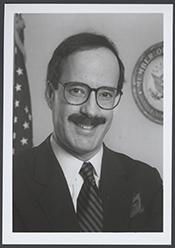
Madam Speaker, I ask unanimous consent that the motions to suspend the rules relating to the following measures be considered as adopted in the form considered by the House on Tuesday, September 23,…
Madam Speaker, I ask unanimous consent that the motions to suspend the rules relating to the following measures be considered as adopted in the form considered by the House on Tuesday, September 23, 2008:
House Resolution 1461, House Concurrent Resolution 393, House Resolution 988, and H.R. 3018.
Bill Text
3 versions available
        [Congressional Bills 110th Congress]
[From the U.S. Government Printing Office]
[H. Con. Res. 393 Referred in Senate (RFS)]

2d Session
H. CON. RES. 393

_______________________________________________________________________

IN THE SENATE OF THE UNITED STATES

September 26 (legislative day, September 17), 2008

Received

October 2 (legislative day, September 17), 2008

Referred to the Committee on Health, Education, Labor, and Pensions

_______________________________________________________________________

CONCURRENT RESOLUTION

Supporting the goals and ideals of ``National Sudden Cardiac Arrest
Awareness Month''.

Whereas sudden cardiac arrest is a leading cause of death in the United States;
Whereas sudden cardiac arrest takes the lives of more than 250,000 people in the
United States each year, according to the Heart Rhythm Society;
Whereas anyone can experience sudden cardiac arrest, including infants, high
school athletes, and people in their 30s and 40s who have no sign of
heart disease;
Whereas sudden cardiac arrest is extremely deadly, with the National Heart,
Lung, and Blood Institute giving the disease a mortality rate of
approximately 95 percent;
Whereas to have a chance of surviving an attack, the American Heart Association
states that victims of sudden cardiac arrest must receive a lifesaving
defibrillation within the first 4 to 6 minutes of an attack;
Whereas for every minute that passes without a shock from an automated external
defibrillator, the chance of survival decreases by approximately 10
percent;
Whereas lifesaving treatments for sudden cardiac arrest are effective if
administered in time;
Whereas according to joint research by the American College of Cardiology and
the American Heart Association, implantable cardioverter defibrillators
are 98 percent effective at protecting people at risk for sudden cardiac
arrest;
Whereas according to the American Heart Association, cardiopulmonary
resuscitation and early defibrillation with an automated external
defibrillator more than double the chances that a victim will survive;
Whereas the Yale-New Haven Hospital and the New England Journal of Medicine
state that women and African-Americans are at a higher risk than the
general population for dying as a result of sudden cardiac arrest, yet
this fact is not well known to people at risk;
Whereas there is a need for comprehensive educational efforts designed to
increase awareness of sudden cardiac arrest and related therapies among
medical professionals and the greater public in order to promote early
detection and proper treatment of this disease and to improve quality of
life; and
Whereas the Heart Rhythm Society and the Sudden Cardiac Arrest Coalition are
preparing related public awareness and education campaigns on sudden
cardiac arrest to be held each year during the month of October: Now,
therefore, be it
Resolved by the House of Representatives (the Senate concurring),
That Congress--
(1) supports the goals and ideals of ``National Sudden
Cardiac Arrest Awareness Month'';
(2) supports efforts to educate people about sudden cardiac
arrest and to raise awareness about the risk of sudden cardiac
arrest, identifying warning signs, and the need to seek medical
attention in a timely manner;
(3) acknowledges the critical importance of sudden cardiac
arrest awareness to improving national cardiovascular health;
and
(4) calls upon the people of the United States to observe
this month with appropriate programs and activities.

Passed the House of Representatives September 25, 2008.

Attest:

LORRAINE C. MILLER,

Clerk.