Senator Paul Simon Study Abroad Foundation Act of 2007
 Rep. Tom Lantos (D-CA)
Legislative Activity
Stay on top of the latest movement without scrolling through every action
Placed on Senate Legislative Calendar under General Orders. Calendar No. 592.
March 4, 2008
View full timeline
Introduced in House
March 12, 2007
Sponsor introductory remarks on measure. (CR E519)
March 12, 2007
Referred to the House Committee on Foreign Affairs.
March 12, 2007
Committee Consideration and Mark-up Session Held.
March 27, 2007
Reported by the Committee on Foreign Affairs. H. Rept. 110-138.
May 9, 2007
Placed on the Union Calendar, Calendar No. 80.
May 9, 2007
Mr. Lantos moved to suspend the rules and pass the bill, as amended.
June 5, 2007 • 3:05 PM
Considered under suspension of the rules. (consideration: CR H5944-5948)
June 5, 2007 • 3:05 PM
DEBATE - The House proceeded with forty minutes of debate on H.R. 1469.
June 5, 2007 • 3:05 PM
Passed/agreed to in House: On motion to suspend the rules and pass the bill, as amended Agreed to by voice vote.(text: CR H5944-5946)
June 5, 2007 • 3:15 PM
On motion to suspend the rules and pass the bill, as amended Agreed to by voice vote. (text: CR H5944-5946)
June 5, 2007 • 3:15 PM
Motion to reconsider laid on the table Agreed to without objection.
June 5, 2007 • 3:15 PM
Received in the Senate and Read twice and referred to the Committee on Foreign Relations.
June 7, 2007
Star Print ordered on the bill.
July 17, 2007
Committee on Foreign Relations. Ordered to be reported with amendments favorably.
February 13, 2008
Committee on Foreign Relations. Reported by Senator Biden with amendments and an amendment to the title. With written report No. 110-272.
March 4, 2008
Placed on Senate Legislative Calendar under General Orders. Calendar No. 592.
March 4, 2008
Floor Debate
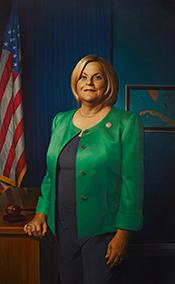
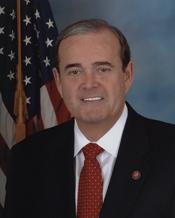
5 membersWhat members said about H.R. 1469 on the floor


Floor Debate
5 membersWhat members said about H.R. 1469 on the floor
Mr. Speaker, I move to suspend the rules and pass the bill (H.R. 1469) to establish the Senator Paul Simon Study Abroad Foundation under the authorities of the Mutual Educational and Cultural…
Mr. Speaker, I yield myself such time as I may consume. I am very proud to join Chairman Lantos in introducing his bill, H.R. 1469, the Senator Paul Simon Study Abroad Foundation Act of 2007. The Act…
Mr. Speaker, I am pleased to rise in support of H.R. 1469, the Senator Paul Simon Study Abroad Act of 2007. This important piece of legislation seeks to enhance the enrollment, diversity, and range…
Mr. Speaker, I rise today in strong support of H.R. 1469, the Senator Paul Simon Study Abroad Foundation Act of 2007, legislation which establishes an educational foundation to increase the number of…
Mr. Speaker, I rise today in support of H.R. 1469, the Paul Simon Study Abroad Foundation Act, which will significantly enhance opportunities for Americans to gain international education, build…
Bill Text
5 versions available
        [Congressional Bills 110th Congress]
[From the U.S. Government Printing Office]
[H.R. 1469 Reported in Senate (RS)]

Calendar No. 592
110th CONGRESS
2d Session
H. R. 1469

[Report No. 110-272]

_______________________________________________________________________

IN THE SENATE OF THE UNITED STATES

June 7, 2007

Received; read twice and referred to the Committee on Foreign
Relations

March 4, 2008

Reported by Mr. Biden, with amendments and an amendment to the title
[Omit the part struck through and insert the part printed in italic]

_______________________________________________________________________

AN ACT

To establish the Senator Paul Simon Study Abroad Foundation under the
authorities of the Mutual Educational and Cultural Exchange Act of
1961.

Be it enacted by the Senate and House of Representatives of the
United States of America in Congress assembled,

SECTION 1. SHORT TITLE.

This Act may be cited as the ``Senator Paul Simon Study Abroad
Foundation Act of 2007''.

SEC. 2. FINDINGS.

Congress makes the following findings:
(1) According to President George W. Bush, ``America's
leadership and national security rest on our commitment to
educate and prepare our youth for active engagement in the
international community.''.
(2) According to former President William J. Clinton,
``Today, the defense of United States interests, the effective
management of global issues, and even an understanding of our
Nation's diversity require ever-greater contact with, and
understanding of, people and cultures beyond our borders.''.
(3) Congress authorized the establishment of the Commission
on the Abraham Lincoln Study Abroad Fellowship Program pursuant
to section 104 of the Miscellaneous Appropriations and Offsets
Act, 2004 (division H of Public Law 108-199). Pursuant to its
mandate, the Lincoln Commission has submitted to Congress and
the President a report of its recommendations for greatly
expanding the opportunity for students at institutions of
higher education in the United States to study abroad, with
special emphasis on studying in developing nations.
(4) According to the Lincoln Commission, ``[s]tudy abroad
is one of the major means of producing foreign language
speakers and enhancing foreign language learning'' and, for
that reason, ``is simply essential to the [N]ation's
security''.
(5) Studies consistently show that United States students
score below their counterparts in other advanced countries on
indicators of international knowledge. This lack of global
literacy is a national liability in an age of global trade and
business, global interdependence, and global terror.
(6) Americans believe that it is important for their
children to learn other languages, study abroad, attend a
college where they can interact with international students,
learn about other countries and cultures, and generally be
prepared for the global age.
(7) In today's world, it is more important than ever for
the United States to be a responsible, constructive leader that
other countries are willing to follow. Such leadership cannot
be sustained without an informed citizenry with significant
knowledge and awareness of the world.
(8) Study abroad has proven to be a very effective means of
imparting international and foreign-language competency to
students.
(9) In any given year, only approximately one percent of
all students enrolled in United States institutions of higher
education study abroad.
(10) Less than 10 percent of the students who graduate from
United States institutions of higher education with bachelors
degrees have studied abroad.
(11) Far more study abroad must take place in developing
countries. Ninety-five percent of the world's population growth
over the next 50 years will occur outside of Europe. Yet in the
academic year 2004-2005, 60 percent of United States students
studying abroad studied in Europe, and 45 percent studied in
four countries--the United Kingdom, Italy, Spain, and France--
according to the Institute of International Education.
(12) The Final Report of the National Commission on
Terrorist Attacks Upon the United States (The 9/11 Commission
Report) recommended that the United States increase support for
``scholarship, exchange, and library programs''. The 9/11
Public Discourse Project, successor to the 9/11 Commission,
noted in its November 14, 2005, status report that this
recommendation was ``unfulfilled,'' and stated that ``The U.S.
should increase support for scholarship and exchange programs,
our most powerful tool to shape attitudes over the course of a
generation.''. In its December 5, 2005, Final Report on the 9/
11 Commission Recommendations, the 9/11 Public Discourse
Project gave the government a grade of ``D'' for its
implementation of this recommendation.
(13) Investing in a national study abroad program would
help turn a grade of ``D'' into an ``A'' by equipping United
States students to communicate United States values and way of
life through the unique dialogue that takes place among
citizens from around the world when individuals study abroad.
(14) An enhanced national study abroad program could help
further the goals of other United States Government initiatives
to promote educational, social, and political reform and the
status of women in developing and reforming societies around
the world, such as the Middle East Partnership Initiative.
(15) To complement such worthwhile Federal programs and
initiatives as the Benjamin A. Gilman International Scholarship
Program, the National Security Education Program, and the
National Security Language Initiative, a broad-based
undergraduate study abroad program is needed that will make
many more study abroad opportunities accessible to all
undergraduate students, regardless of their field of study,
ethnicity, socio-economic status, or gender.

SEC. 3. PURPOSES.

The purposes of this Act are--
(1) to significantly enhance the global competitiveness and
international knowledge base of the United States by ensuring
that more United States students have the opportunity to
acquire foreign language skills and international knowledge
through significantly expanded study abroad;
(2) to enhance the foreign policy capacity of the United
States by significantly expanding and diversifying the talent
pool of individuals with non-traditional foreign language
skills and cultural knowledge in the United States who are
available for recruitment by United States foreign affairs
agencies, legislative branch agencies, and nongovernmental
organizations involved in foreign affairs activities;
(3) to ensure that an increasing portion of study abroad by
United States students will take place in nontraditional study
abroad destinations such as the People's Republic of China,
countries of the Middle East region, and developing countries;
and
(4) to create greater cultural understanding of the United
States by exposing foreign students and their families to
United States students in countries that have not traditionally
hosted large numbers of United States students.

SEC. 4. DEFINITIONS.

In this Act:
(1) Appropriate congressional committees.--The term
``appropriate congressional committees'' means--
(A) the Committee on Foreign Affairs and the
Committee on Appropriations of the House of
Representatives; and
(B) the Committee on Foreign Relations and the
Committee on Appropriations of the Senate.
(2) Board.--The term ``Board'' means the Board of Directors
of the Foundation established pursuant to section 5(d).
(3) Chief executive officer.--The term ``Chief Executive
Officer'' means the chief executive officer of the Foundation
appointed pursuant to section 5(c).
(4) Foundation.--The term ``Foundation'' means the Senator
Paul Simon Study Abroad Foundation established by section 5(a).
(5) Institution of higher education.--The term
``institution of higher education'' has the meaning given the
term in section 101(a) of the Higher Education Act of 1965 (20
U.S.C. 1001(a)).
(6) National of the united states.--The term ``national of
the United States'' means a national of the United States or an
alien lawfully admitted for permanent residence (as those terms
are defined in section 101 of the Immigration and Nationality
Act (8 U.S.C. 1101)).
<DELETED>(6)</DELETED>(7) Nontraditional study abroad
destination.--The term ``nontraditional study abroad
destination'' means a location that is determined by the
Foundation to be a less common destination for United States
students who study abroad.
<DELETED>(7)</DELETED>(8) Study abroad.--The term ``study
abroad'' means an educational program of study, work, research,
internship, or combination thereof that is conducted outside
the United States and that carries academic credit toward
fulfilling the participating student's degree requirements.
<DELETED>(8)</DELETED>(9) United states.--The term ``United
States'' means any of the several States, the District of
Columbia, Puerto Rico, the Northern Mariana Islands, the Virgin
Islands, Guam, American Samoa, and any other territory or
possession of the United States.
<DELETED>(9)</DELETED>(10) United states student.--The term
``United States student'' means a national of the United States
who is enrolled at an institution of higher education located
within the United States.

SEC. 5. ESTABLISHMENT AND MANAGEMENT OF THE SENATOR PAUL SIMON STUDY
ABROAD FOUNDATION.

(a) Establishment.--
(1) In general.--There is established in the executive
branch a corporation to be known as the ``Senator Paul Simon
Study Abroad Foundation'' that shall be responsible for
carrying out this Act <DELETED>under the authorities of the
Mutual Educational and Cultural Exchange Act of 1961 (22 U.S.C.
2451 et seq.)</DELETED>. The Foundation shall be a government
corporation, as defined in section 103 of title 5, United
States Code.
(2) Board of directors.--The Foundation shall be governed
by a Board of Directors <DELETED>chaired by the Secretary of
State (or the Secretary's designee)</DELETED> in accordance
with subsection (d).
(3) Intent of congress.--It is the intent of Congress in
establishing the structure of the Foundation set forth in this
subsection to create an entity that will administer a study
abroad program that--
(A) serves the long-term foreign policy and
national security needs of the United States; but
(B) operates independently of short-term political
and foreign policy considerations.
(b) Mandate of Foundation.--In administering the program referred
to in subsection (a)(3), the Foundation shall--
(1) promote the objectives and purposes of this Act;
(2) through responsive, flexible grant-making, promote
access to study abroad opportunities by United States students
at diverse institutions of higher education, including two-year
institutions, minority-serving institutions, and institutions
that serve nontraditional students;
(3) through creative grant-making, promote access to study
abroad opportunities by diverse United States students,
including minority students, students of limited financial
means, and nontraditional students;
(4) <DELETED>raise</DELETED> solicit funds from the private
sector to supplement funds made available under this Act; and
(5) <DELETED>be committed to minimizing administrative
costs and to maximizing</DELETED> minimize administrative costs
and maximize the availability of funds for grants under this
Act.
(c) Chief Executive Officer.--
(1) In general.--There shall be in the Foundation a Chief
Executive Officer who shall be responsible for the management
of the Foundation.
(2) Appointment.--The Chief Executive Officer shall be
appointed by the Board and shall be a recognized leader in
higher education, business, or foreign policy, chosen on the
basis of a rigorous search.
(3) Relationship to board.--The Chief Executive Officer
shall report to and be under the direct authority of the Board.
(4) Compensation and rank.--
(A) In general.--The Chief Executive Officer shall
be compensated at the rate provided for <DELETED>level
III</DELETED> level IV of the Executive Schedule under
section 5314 of title 5, United States Code.
(B) Amendment.--Section 5314 of title 5, United
States Code, is amended by adding at the end the
following:
``Chief Executive Officer, Senator Paul Simon Study Abroad
Foundation.''.
(5) Authorities and duties.--The Chief Executive Officer
shall be responsible for the management of the Foundation and
shall exercise the powers and discharge the duties of the
Foundation.
(6) Authority to appoint officers.--In consultation and
with approval of the Board, the Chief Executive Officer shall
appoint all officers of the Foundation.
(d) Board of Directors.--
(1) Establishment.--There shall be in the Foundation a
Board of Directors.
(2) Duties.--The Board shall perform the functions
specified to be carried out by the Board in this Act and may
prescribe, amend, and repeal bylaws, rules, regulations, and
procedures governing the manner in which the business of the
Foundation may be conducted and in which the powers granted to
it by law may be exercised.
(3) Membership.--The Board shall consist of--
(A) the Secretary of State (or the Secretary's
designee), the Secretary of Education (or the
Secretary's designee), the Secretary of Defense (or the
Secretary's designee), and the Administrator of the
United States Agency for International Development (or
the Administrator's designee); and
(B) five other individuals with relevant experience
in matters relating to study abroad (such as
individuals who represent institutions of higher
education, business organizations, foreign policy
organizations, or other relevant organizations) who
shall be appointed by the President, by and with the
advice and consent of the Senate, of which--
(i) one individual shall be appointed from
among a list of individuals submitted by the
majority leader of the House of
Representatives;
(ii) one individual shall be appointed from
among a list of individuals submitted by the
minority leader of the House of
Representatives;
(iii) one individual shall be appointed
from among a list of individuals submitted by
the majority leader of the Senate; and
(iv) one individual shall be appointed from
among a list of individuals submitted by the
minority leader of the Senate.
(4) Chief executive officer.--The Chief Executive Officer
of the Foundation shall serve as a nonvoting, ex officio member
of the Board.
(5) Terms.--
(A) Officers of the federal government.--Each
member of the Board described in paragraph (3)(A) shall
serve for a term that is concurrent with the term of
service of the individual's position as an officer
within the other Federal department or agency.
(B) Other members.--Each member of the Board
described in paragraph (3)(B) shall be appointed for a
term of 3 years and may be reappointed for <DELETED>a
term of an additional 3 years</DELETED> one additional
3 year term.
(C) Vacancies.--A vacancy in the Board shall be
filled in the manner in which the original appointment
was made.
(6) Chairperson.--There shall be a Chairperson of the
Board. The Secretary of State (or the Secretary's designee)
shall serve as the Chairperson.
(7) Quorum.--A majority of the members of the Board
described in paragraph (3) shall constitute a quorum, which,
except with respect to a meeting of the Board during the 135-
day period beginning on the date of the enactment of this Act,
shall include at least one member of the Board described in
paragraph (3)(B).
(8) Meetings.--The Board shall meet at the call of the
Chairperson.
(9) Compensation.--
(A) Officers of the federal government.--
(i) In general.--A member of the Board
described in paragraph (3)(A) may not receive
additional pay, allowances, or benefits by
reason of the member's service on the Board.
(ii) Travel expenses.--Each such member of
the Board shall receive travel expenses,
including per diem in lieu of subsistence, in
accordance with applicable provisions under
subchapter I of chapter 57 of title 5, United
States Code.
(B) Other members.--
(i) In general.--Except as provided in
clause (ii), a member of the Board described in
paragraph (3)(B) while away from the member's
home or regular place of business on necessary
travel in the actual performance of duties as a
member of the Board, shall be paid per diem,
travel, and transportation expenses in the same
manner as is provided under subchapter I of
chapter 57 of title 5, United States Code.
(ii) Limitation.--A member of the Board may
not be paid compensation under clause (i) for
more than 90 days in any calendar year.

SEC. 6. ESTABLISHMENT AND OPERATION OF PROGRAM.

(a) Establishment of the Program.--There is hereby established a
program, which shall--
(1) be administered by the Foundation; and
(2) award grants to--
(A) United States students for study abroad;
(B) nongovernmental institutions that provide and
promote study abroad opportunities for United States
students, in consortium with institutions described in
subparagraph (C); and
<DELETED>(c)</DELETED> (C) institutions of higher
education, individually or in consortium,
in order to accomplish the objectives set forth in subsection
(b).
(b) Objectives.--The objectives of the program established under
subsection (a) are that, within 10 years of the date of the enactment
of this Act--
(1) not less than one million undergraduate United States
students will study abroad annually for credit;
(2) the demographics of study-abroad participation will
reflect the demographics of the United States undergraduate
population, including students enrolled in community colleges,
minority-serving institutions, and institutions serving large
numbers of low-income and first-generation students; and
(3) an increasing portion of study abroad will take place
in nontraditional study abroad destinations, with a substantial
portion of such increases taking place in developing countries.
(c) Mandate of the Program.--In order to accomplish the objectives
set forth in subsection (b), the Foundation shall, in administering the
program established under subsection (a), take fully into account the
recommendations of the Commission on the Abraham Lincoln Study Abroad
Fellowship Program (established pursuant to section 104 of the
Miscellaneous Appropriations and Offsets Act, 2004 (division H of
Public Law 108-199)).
<DELETED>    (d) Structure of Grants.--In accordance with the
recommendations of the Commission on the Abraham Lincoln Study Abroad
Fellowship Program, grants awarded under the program established under
subsection (a) shall be structured to the maximum extent practicable to
promote appropriate reforms in institutions of higher education in
order to remove barriers to participation by students in study
abroad.</DELETED>
(d) Structure of Grants.--
(1) Promoting reform.--In accordance with the
recommendations of the Commission on the Abraham Lincoln Study
Abroad Fellowship Program, grants awarded under the program
established under subsection (a) shall be structured to the
maximum extent practicable to promote appropriate reforms in
institutions of higher education in order to remove barriers to
participation by students in study abroad.
(2) Grants to individuals and institutions.--It is the
sense of Congress that--
(A) the Foundation should award not more than 25
percent of the funds awarded as grants to individuals
described in subparagraph (A) of subsection (a)(2) and
not less than 75 percent of such funds to institutions
described in subparagraphs (B) and (C) of such
subsection; and
(B) the Foundation should ensure that not less than
85 percent of the amount awarded to such institutions
is used to award scholarships to students.
(e) Balance of Long-Term and Short-Term Study Abroad Programs.--In
administering the program established under subsection (a), the
Foundation shall seek an appropriate balance between--
(1) longer-term study abroad programs, which maximize
foreign-language learning and intercultural understanding; and
(2) shorter-term study abroad programs, which maximize the
accessibility of study abroad to nontraditional students.
(f) Quality and Safety in Study Abroad.--In administering the
program established under subsection (a), the Foundation shall require
that institutions receiving grants demonstrate that--
(1) the study abroad programs for which students receive
grant funds are for academic credit; and
(2) the programs have established health and safety
guidelines and procedures.

SEC. 7. ANNUAL REPORT.

(a) Report Required.--Not later than <DELETED>March 31, 2008, and
each March 31 thereafter</DELETED> December 15, 2008, and each December
15 thereafter, the Foundation shall submit to the appropriate
congressional committees a report on the implementation of this Act
during the prior fiscal year.
(b) Contents.--The report required by subsection (a) shall
include--
(1) the total financial resources available to the
Foundation during the year, including appropriated funds, the
value and source of any gifts or donations accepted pursuant to
section 8(a)(6), and any other resources;
(2) a description of the Board's policy priorities for the
year and the bases upon which <DELETED>competitive</DELETED>
grant proposals were solicited and awarded to institutions of
higher education, nongovernmental institutions, and consortiums
pursuant to section 6(a)(2)(B) and 6(a)(2)(C);
(3) a list of grants made to institutions of higher
education, nongovernmental institutions, and consortiums
pursuant to section 6(a)(2)(B) and 6(a)(2)(C) that includes the
identity of the institutional recipient, the dollar
amount<DELETED>, and the</DELETED> , the estimated number of
study abroad opportunities provided to United States students
by each grant, the amount of the grant used by each institution
for administrative expenses, and information on cost-sharing by
each institution receiving a grant;
(4) a description of the bases upon which the Foundation
made grants directly to United States students pursuant to
section 6(a)(2)(A);
(5) the number and total dollar amount of grants made
directly to United States students by the Foundation pursuant
to section 6(a)(2)(A); and
(6) the total administrative and operating expenses of the
Foundation for the year, as well as specific information on--
(A) the number of Foundation employees and the cost
of compensation for Board members, Foundation
employees, and personal service contractors;
(B) costs associated with securing the use of real
property for carrying out the functions of the
Foundation;
(C) total travel expenses incurred by Board members
and Foundation employees in connection with Foundation
activities; and
(D) total representational expenses.

SEC. 8. POWERS OF THE FOUNDATION; RELATED PROVISIONS.

(a) Powers.--The Foundation--
(1) shall have perpetual succession unless dissolved by a
law enacted after the date of the enactment of this Act;
(2) may adopt, alter, and use a seal, which shall be
judicially noticed;
(3) may make and perform such contracts, grants, and other
agreements with any person or government however designated and
wherever situated, as may be necessary for carrying out the
functions of the Foundation;
(4) may determine and prescribe the manner in which its
obligations shall be incurred and its expenses allowed and
paid, including expenses for representation;
(5) may lease, purchase, or otherwise acquire, improve, and
use such real property wherever situated, as may be necessary
for carrying out the functions of the Foundation;
(6) may accept cash gifts or donations of services or of
property (real, personal, or mixed), tangible or intangible,
for the purpose of carrying out the provisions of this Act;
(7) may use the United States mails in the same manner and
on the same conditions as the executive departments;
(8) may contract with individuals for personal services,
who shall not be considered Federal employees for any provision
of law administered by the Office of Personnel Management;
(9) may hire or obtain passenger motor vehicles; and
(10) shall have such other powers as may be necessary and
incident to carrying out this Act.
(b) Principal Office.--The Foundation shall maintain its principal
office in the metropolitan area of Washington, District of Columbia.
(c) Applicability of Government Corporation Control Act.--
(1) In general.--The Foundation shall be subject to chapter
91 of subtitle VI of title 31, United States Code, except that
the Foundation shall not be authorized to issue obligations or
offer obligations to the public.
(2) Conforming amendment.--Section 9101(3) of title 31,
United States Code, is amended by adding at the end the
following:
``(R) the Senator Paul Simon Study Abroad
Foundation.''.
(d) Inspector General.--
(1) In general.--The Inspector General of the Department of
State shall serve as Inspector General of the Foundation, and,
in acting in such capacity, may conduct reviews,
investigations, and inspections of all aspects of the
operations and activities of the Foundation.
(2) Authority of the board.--In carrying out the
responsibilities under this subsection, the Inspector General
shall report to and be under the general supervision of the
Board.
(3) Reimbursement and authorization of services.--
(A) Reimbursement.--The Foundation shall reimburse
the Department of State for all expenses incurred by
the Inspector General in connection with the Inspector
General's responsibilities under this subsection.
(B) Authorization for services.--Of the amount
authorized to be appropriated under section 10(a) for a
fiscal year, up to $2,000,000 is authorized to be made
available to the Inspector General of the Department of
State to conduct reviews, investigations, and
inspections of operations and activities of the
Foundation.

SEC. 9. GENERAL PERSONNEL AUTHORITIES.

(a) Detail of Personnel.--Upon request of the Chief Executive
Officer, the head of an agency may detail any employee of such agency
to the Foundation on a reimbursable basis. Any employee so detailed
remains, for the purpose of preserving such employee's allowances,
privileges, rights, seniority, and other benefits, an employee of the
agency from which detailed.
(b) Reemployment Rights.--
(1) In general.--An employee of an agency who is serving
under a career or career conditional appointment (or the
equivalent), and who, with the consent of the head of such
agency, transfers to the Foundation, is entitled to be
reemployed in such employee's former position or a position of
like seniority, status, and pay in such agency, if such
employee--
(A) is separated from the Foundation for any
reason, other than misconduct, neglect of duty, or
malfeasance; and
(B) applies for reemployment not later than 90 days
after the date of separation from the Foundation.
(2) Specific rights.--An employee who satisfies paragraph
(1) is entitled to be reemployed (in accordance with such
paragraph) within 30 days after applying for reemployment and,
on reemployment, is entitled to at least the rate of basic pay
to which such employee would have been entitled had such
employee never transferred.
(c) Hiring Authority.--Of persons employed by the Foundation, not
to exceed <DELETED>30 persons</DELETED> 20 persons may be appointed,
compensated, or removed without regard to the civil service laws and
regulations.
(d) Basic Pay.--The Chief Executive Officer may fix the rate of
basic pay of employees of the Foundation without regard to the
provisions of chapter 51 of title 5, United States Code (relating to
the classification of positions), subchapter III of chapter 53 of such
title (relating to General Schedule pay rates), except that no employee
of the Foundation may receive a rate of basic pay that exceeds the rate
for level IV of the Executive Schedule under section 5315 of such
title.
(e) Definitions.--In this section--
(1) the term ``agency'' means an executive agency, as
defined by section 105 of title 5, United States Code; and
(2) the term ``detail'' means the assignment or loan of an
employee, without a change of position, from the agency by
which such employee is employed to the Foundation.

SEC. 10. GAO REVIEW.

(a) Review Required.--Not later than two years after the date of
the enactment of this Act, the Comptroller General of the United States
shall commence a review of the operations of the Foundation.
(b) Content.--In conducting the review required under subsection
(a), the Comptroller General shall analyze--
(1) whether the Foundation is organized and operating in a
manner that will permit it to fulfill the purposes of this Act,
as set forth in section 3;
(2) the degree to which the Foundation is operating
efficiently and in a manner consistent with the requirements of
paragraphs (4) and (5) of section 5(b);
(3) whether grantmaking by the Foundation is being
undertaken in a manner consistent with subsections (d), (e),
and (f) of section 6;
(4) the extent to which the Foundation is using best
practices in the implementation of this Act and the
administration of the program described in section 6; and
(5) other relevant matters, as determined by the
Comptroller General, after consultation with the appropriate
congressional committees.
(c) Report Required.--The Comptroller General shall submit a report
on the results of the review conducted under subsection (a) to the
Secretary of State (in the capacity of the Secretary as Chairperson of
the Board of the Foundation) and to the appropriate congressional
committees.

SEC. <DELETED>10</DELETED>11. AUTHORIZATION OF APPROPRIATIONS.

(a) Authorization of Appropriations.--
(1) In general.--There are authorized to be appropriated to
carry out this Act $80,000,000 for fiscal year 2008 and each
subsequent fiscal year.
(2) Amounts in addition to other available amounts.--
Amounts authorized to be appropriated by paragraph (1) are in
addition to amounts authorized to be appropriated or otherwise
made available for educational exchange programs, including the
J. William Fulbright Educational Exchange Program and the
Benjamin A. Gilman International Scholarship Program,
administered by the Bureau of Educational and Cultural Affairs
of the Department of State.
(b) Allocation of Funds.--
(1) In general.--The Foundation may allocate or transfer to
any agency of the United States Government any of the funds
available for carrying out this Act. Such funds shall be
available for obligation and expenditure for the purposes for
which the funds were authorized, in accordance with authority
granted in this Act or under authority governing the activities
of the United States Government agency to which such funds are
allocated or transferred.
(2) Notification.--The Foundation shall notify the
appropriate congressional committees not less than 15 days
prior to an allocation or transfer of funds pursuant to
paragraph (1).
Amend the title so as to read: ``An Act to establish the
Senator Paul Simon Study Abroad Foundation.''.
Calendar No. 592

110th CONGRESS

2d Session

H. R. 1469

[Report No. 110-272]

_______________________________________________________________________

AN ACT

To establish the Senator Paul Simon Study Abroad Foundation under the
authorities of the Mutual Educational and Cultural Exchange Act of
1961.

_______________________________________________________________________

March 4, 2008

Reported with amendments and an amendment to the title