Mr. Speaker, I move to suspend the rules and pass the bill (H.R. 890) to establish requirements for lenders and institutions of higher education in order to protect students and other borrowers…
Mr. Speaker, I move to suspend the rules and pass the bill (H.R. 890) to establish requirements for lenders and institutions of higher education in order to protect students and other borrowers receiving educational loans, as amended.
Mr. Speaker, I ask unanimous consent that all Members may have 5 legislative days to insert materials relevant to H.R. 890 into the Record.
Mr. Speaker, I yield myself such time as I may consume.
Mr. Speaker, I rise in support of this legislation, H.R. 890, the Student Loan Sunshine Act of 2007. I offer this legislation along with Mr. McKeon, the senior Republican on the Education and Labor Committee; and Mr. Hinojosa, the subcommittee Chair of the Higher Education Subcommittee on the Education and Labor Committee.
This legislation would protect students and families from the corrupt practices and abuses that for too long have been allowed to run rampant within the student loan industry.
Ensuring that our Nation's student loan programs are working as effectively as possible to help students and parents pay for the cost of a college education, it is paramount to the goals of this Nation recognizing the importance of students' achieving a college education so they can fully participate in American society and the American economy. And working to make that more accessible and affordable has been the long-term goal of both parties of this government.
But now what we see is that this program has been badly corrupted. This program has started to be hollowed out by the activities of lenders, of universities, of individuals within the government, individuals within the university system, individuals within the lending community. For 6 years this administration has been put on notice of these activities taking place in the student lending program with ever-mounting evidence and public statements and concerns echoed by members within the administration from the previous administration calling to the problems that were occurring within the student loan programs. It is becoming increasingly clear that the student loan program has been hijacked by third parties who saw that they could run this program to their financial benefit. Unfortunately, that meant that it was being run to the detriment of the students and the families who are borrowing the money who are struggling to pay this money back so that they could achieve a college education.
We introduced this legislation first in February when it was disclosed by New York Attorney General Andrew Cuomo that he was expanding an investigation into the relationships between lenders and colleges and universities across the country.
Throughout the previous years, stories have surfaced about inducements and kickbacks and conflicts of interests, bribes and payoffs ranging from sending college employees on exotic vacations to staffing school financial aid offices during the busiest time of the student aid calendar. These inducements are offered by lenders to secure a spot on the preferred lender list, a list that supposedly presents to the students and to their families that this is a list of trust, that these are the best loans available for a number of reasons to those students. But we now learn that securing a position on a preferred lender list was really, in many instances with many universities and with many lenders, an act of corruption, not an act of transparency, not an act of honesty, not an act in the best interest of the students and/or their parents, and not in the best interest of achieving the lowest possible cost for those students' education.
But entry into the preferred lender meant more than just having this coveted spot. It meant a near guarantee of business. It meant an opportunity for lenders to prey on families and offer them private loans. It also meant that students weren't given the best information, the most accurate information. It also meant increased cost to the students and to their families.
Since we first introduced this bill, ongoing investigations at the Federal and State levels and by news organizations have shed new light on the scope of the corruption and the conflicts of interest surrounding these lists that are undermining the Federal student loan aid program that millions of borrowers have come to depend upon. We have learned more about the astonishing degree to which lenders buy their way into colleges and universities through excessive inducements, which is the polite word, or what might be termed ``bribery,'' which might be a better word, in order to boost their marginal profits.
All of this, all of this was known to the Department of Education. Suggested changes were left behind by the Clinton administration to this program. Department employees raised these concerns and others with the Department of Education, and no action was, in fact, taken. And what we see, of course, is that less protection was provided to students and to their families.
We have learned that these inducements include college officials being paid to serve on lender advisory boards and receiving stock in the companies. We have learned that these conflicts of interest do not end with college financial aid officers. It has been revealed that at least one public official in the Office of Federal Student Aid, the arm of the Department of Education that runs the student aid program, held hundreds of thousands of dollars of stock in a major student loan company.
But this is just the tip of the iceberg. Lenders and schools must be held accountable for any practice that compromises the trust that students and parents deserve to have in our Federal student aid program. Today, by passing the Student Aid Sunshine Act, we are taking clear and important actions to put an end to the corrupt practices and conflicts of interest that for too long have been allowed to dominate this industry.
We call on lenders, institutions and the Department of Education to also take appropriate action to end these practices, and we insist that they recognize their fiduciary responsibility to the students and their parents who are the borrowers of this money, the borrowing of money that they struggle to pay back for many years afterwards.
I am proud to be joined by my colleagues on the Education and Labor Committee, Buck McKeon, the senior Republican, and, again, Ruben Hinojosa of the Subcommittee on Higher Education to bring to the floor a stronger, more comprehensive, bipartisan Student Loan Sunshine Act. This bill will prevent these egregious practices from occurring in the future by reinstating trust in our schools through strict codes of conduct, guaranteeing loan options and ensuring the best loan possible, ensuring equal and timely processing of loans, giving students full and fair information when taking out and repaying loans, protecting students from aggressive marketing practices and inserting the fiduciary responsibility for all parties to these agreements.
Further, this bill bans all gifts, participation on advisory boards and risk-sharing agreements between lenders and schools and ensures greater transparency and accountability when schools recommend lenders for the students.
I urge all of my colleagues to join us in voting for this legislation. Today, I think we can take this critical step toward returning these programs to the very people they were intended to serve, students and parents who are borrowing this money. It's time to protect these students and parents and end the exploitation and the abuses of the student loan program.
Again, I want to thank my colleagues on the committee for all their assistance in drafting this legislation.
Mr. Speaker, I reserve the balance of my time.
Mr. Speaker, I yield myself 15 seconds.
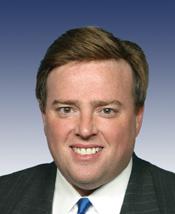
Mr. Speaker, I failed to acknowledge and I want to acknowledge Mr. Keller's help in the drafting of this legislation. He is the senior Democrat on the Higher Education Subcommittee.
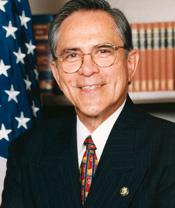
I would like to yield 3\1/2\ minutes to the Chair of that subcommittee, Mr. Hinojosa.
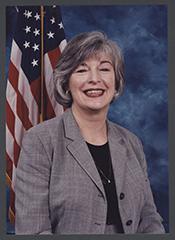
I yield 2 minutes to the gentlewoman from California (Ms. Woolsey).
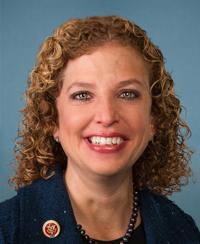
Mr. Speaker, I yield 2 minutes to the gentlewoman from Florida (Ms. Wasserman Schultz).
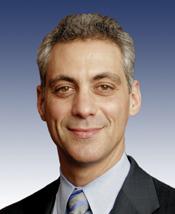
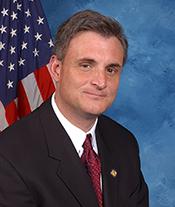
Mr. Speaker, I yield 2\1/2\ minutes to the gentleman from Illinois (Mr. Emanuel).
Mr. Speaker, I thank the gentleman.
Mr. Speaker, I yield 1 minute to the gentleman from Texas (Mr. Hinojosa).
Mr. Speaker, I thank the gentleman from Texas for his remarks and for his leadership on this. I thank Mr. McKeon and Mr. Keller for all of their cooperation, for their suggestions and for the introduction of the bill soon after this came to light by Mr. McKeon. I think it was very helpful in our discussions with Attorney General Andrew Cuomo. I certainly want to thank him for his diligence and the speed with which he responded to this information.
Tragically, much of this information has been available for a considerable period of time. Tragically, what we now are making against the law, the conduct we are now changing almost became the preferred way of doing business among many of the colleges and universities and the lenders which they utilized on behalf of their students.
It is just inconceivable that when people understand, and it is brought to our attention every day, the decisions that students and their families have to make about whether to pursue a college degree, the costs that are incurred, the sacrifices that are made by working families, by all families, by the students, many of whom then work part time and full time to augment the cost of that college, when that sacrifice and those determinations and decisions are made by those families, to have that process corrupted by some of the largest corporations in America, some of the wealthiest corporations in America, that they would see somehow a way to skim off, to skim off the profits and the costs at the expense of these students and of the taxpayers that put up the money.
The reason we guarantee these loans is to try to drive this money to the students and their families at the lowest possible cost so that they can afford to go to college; they can afford to take a job and pay back the cost of their college. That is the public purpose. Now that public purpose has absolutely been prostituted by the Department of Education, by many of the lending institutions and by many of the colleges and much of the personnel that works for them.
This legislation is a first step, a bipartisan step to stop those practices in their tracks, to get this program right side up for the benefit of the families and the students who are borrowing the money. To serve notice on the institutions, the lenders, the institutions of higher education and the people who work in these programs that this will no longer be tolerated.
Once again, this program has to come to the point where it is again serving the families and the students who are making this sacrifice to achieve a college education at the lowest possible cost. That is the public interest, that is the public purpose, and we will not have that corrupted. We will not have that corrupted, either by the public agencies or the private agencies that are engaged in this program.
The next step is to bar those agencies if they continue in this practice. That would be a horrible thing to do for those institutions, but we will not allow this to continue. And as we consider the Higher Education Act, we are going to continue to pursue ways in which we can reform this program and make it work for those for whom it was designed, the families and the students.
I want to thank the staff on both sides of the committee that were so helpful in understanding the programs and the changes that needed to be made, that went through the evidence and responded in this legislation, so that the House of Representatives could go on record that we will not allow this to happen on our watch.
Mr. Speaker, I urge the House to pass H.R. 890, as amended, and I yield back the balance of my time.
Mr. Speaker, on that I demand the yeas and nays.