Mr. Speaker, I move to suspend the rules and pass the Senate bill (S. 2739) to authorize certain programs and activities in the Department of the Interior, the Forest Service, and the Department of…
Mr. Speaker, I move to suspend the rules and pass the Senate bill (S. 2739) to authorize certain programs and activities in the Department of the Interior, the Forest Service, and the Department of Energy, to implement further the Act approving the Covenant to Establish a Commonwealth of the Northern Mariana Islands in Political Union with the United States of America, to amend the Compact of Free Association Amendments Act of 2003, and for other purposes.
Mr. Speaker, I ask unanimous consent that all Members may have 5 legislative days in which to revise and extend their remarks and include extraneous material on the resolution under consideration.
Mr. Speaker, I am pleased to call up this legislation which is comprised of 61 separate measures that were already considered by this body, packaged by the Senate, and sent back to us for further and final consideration. This is a bipartisan package, almost evenly split between bills sponsored by Democrats and Republicans.
Further, I would note that 57 of the measures included in this package originated in the Committee on Natural Resources. In this regard, I salute the committee's Chairs who worked so hard on this legislation:
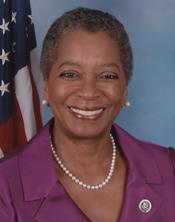
Raul Grijalva, chairman of the Subcommittee on National Parks, Forests and Public Lands; Grace Napolitano, chairwoman of the Subcommittee on Water and Power, and Donna Christensen, chairwoman of the Subcommittee on Insular Affairs.
In this body, these three Members did all of the heavy lifting, the hearings, the managing of the individual bills on the floor, the listening from other Members of this body that helped to make the package we are considering today possible.
The pending measures include new protections for wilderness, national parks, historic sites and trails, and precious water resources from sea to shining sea.
I will not speak to each and every provision of this legislation today but would like to highlight two in particular.
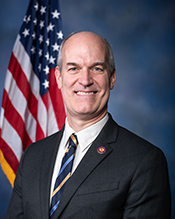
This bill will finally designate the long-awaited Wild Sky Wilderness in Washington State, championed by our colleague, Rick Larsen. As I noted last week when the House considered wilderness legislation for my home State of West Virginia, to be in a wilderness area is truly a humbling experience. To be part of designating the wilderness is even more humbling because wilderness is an effort to retain the landscape as God created it. And as with God's good graces, we are working toward designating new wilderness areas in West Virginia today.
Let this be the next-to-last action, other than the President's signature, on establishing the Wild Sky Wilderness in the State of Washington.
The other measure I would like to highlight would finally bring badly needed immigration, national security and labor protections for the Commonwealth of the Northern Mariana Islands. Further, this legislation would also grant a nonvoting delegate to the U.S. House of Representatives to the Northern Mariana Islands.
For too long, abuses took place in the CNMI, and for too long remedial legislation was held hostage in this body. Let this legislation bring forth a new dawn, the start of a new era with a delegate to this body, that the people of the CNMI's voices be heard.
Again, I want to thank the gentlelady from the Virgin Islands, the chairman of the Subcommittee on Insular Affairs, Dr. Donna Christensen, for her great work on this matter.
There are other issues of note in this bill. It would expand parks in Maine, Massachusetts, North Carolina, Washington and Idaho. It would improve visitor transportation options at Denali National Park and Acadia National Park. And it would expand and increase the authorization for the National Underground Railroad Network to Freedom. Three new national heritage areas and nine existing areas will receive Federal assistance under this measure. Seven other areas will be examined as possible new park units.
This bill would also authorize Federal participation in new and expanded water recycling projects around the west, projects which will provide an estimated 52,600 acre-feet of water annually in an area experiencing severe drought.
It's a good bill, Mr. Speaker. I urge all Members to vote for this package.
Mr. Speaker, I reserve the balance of my time.
Mr. Speaker, I yield 3 minutes to a senior member of our Committee on Natural Resources, Mr. DeFazio from Oregon.
Mr. Speaker, I have already commended her profusely, but I want to once again thank the chairwoman of our Subcommittee on Insular Affairs, Donna Christensen, from the Virgin Islands for the hard work and long hours that she has put in on this legislation. I now yield her 3 minutes.
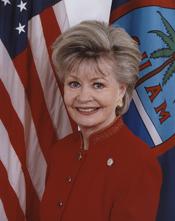
Mr. Speaker, I want to yield 2 minutes to another of our subcommittee chairwomen who has put in long hours and very hard work on this legislation, the chairwoman of the Subcommittee on Fisheries, Wildlife and Oceans (Ms. Bordallo).
Mr. Speaker, I yield 2 minutes to a member of our Committee on Natural Resources, the gentleman from Washington (Mr. Inslee).
(Mr. INSLEE asked and was given permission to revise and extend his remarks.)
Mr. Speaker, I have commended this gentleman in my opening remarks because he truly has worked hard over a number of years for a major part of this package. It is a highlight of the package, and I yield 2 minutes to the gentleman from Washington (Mr. Larsen) to explain it.
Mr. Speaker, a simple response to the gentleman who just spoke. There's no eminent domain authority whatsoever granted in this legislation.
Mr. Speaker, I yield 2 minutes to the gentleman from Connecticut, a very valued Member that has worked hard on this bill and has done a superb job, and I want to commend Mr. Courtney for his leadership and work on this legislation.
I am prepared to close on this side, Mr. Speaker.
Mr. Speaker, I yield myself such time as I may consume.
Mr. Speaker, as I mentioned in my opening remarks, this is 60-some pieces of legislation in this bill, and it may not be perfect, but it's the nature of the beast, as the process is. Of the 60-some measures in this legislation, 57 that went through our committee on
Natural Resources were pretty well examined. They weren't just thrown into this bill without any consideration whatsoever. Either in this Congress or the previous Congress, these bills have had hearings on them. I mentioned the subcommittee process that worked its will in our Committee on Natural Resources. So this bill has had pretty careful scrutiny.
I'd like to conclude by commending the majority leader of the other body, Mr. Reid. He has called me on this legislation. It passed through the other body after a tortuous process. The final vote over there was 91-4. I also want to commend the Chairman of the Energy and Natural Resources Committee on the other side, Mr. Bingaman, for his work and his tenacity.
Again, I commend my ranking member, the gentleman from Alaska (Mr. Young) and the subcommittee ranking member, Mr. Bishop, and the staffs on both sides of our committee on Natural Resources for the long hours that they have put in on this legislation. It is indeed, as the process goes, an excellent piece of legislation, and I am very proud and highly commend it to my colleagues for passage and on to the President for his signature.
Mr. UDALL of Colorado, Mr. Speaker, I rise in support of this Senate- passed bill, and urge that it be passed and sent to the President for signing into law.
It gathers into one omnibus measure some 60 bills--dealing with various public land, national park, water, and territorial issues--that have already been passed by the House but on which the Senate has not taken separate action. To expedite their consideration, Senator Bingaman, the Chairman of the other body's Committee on Energy and Natural Resources, gathered them into one package after most if not all of them had been favorably reported by that committee and been pending on the Senate calendar for some time. Each part of the package is important, but I want to highlight three.
produced water legislation
Section 514, entitled ``More Water, More Energy, Less Waste,'' is based on my bill, H.R. 902, the ``More Water and More Energy Act,'' which passed the House last year.
Its purpose is to facilitate the use of water produced in connection with development of energy resources for irrigation and other uses in ways that will not adversely affect water quality or the environment.
I think there is a possibility that it can help change an energy- industry problem into an opportunity, not just for oil and gas producers but for everyone else who would benefit from increased supplies of useable water. And especially in the arid west, that covers everyone--not least our hard-pressed ranchers and farmers.
The focus of the section is the underground water extracted in connection with development of energy sources like oil, natural gas or coalbed methane. It would do two things:
First, it would direct the Bureau of Reclamation and the USGS to identify the obstacles to greater use of produced water and how those obstacles could be reduced or eliminated without adversely affecting water quality or the environment.
Second, it would provide for Federal help in building pilot plants to demonstrate ways to treat produced water to make it suitable for irrigation or other uses, again without adversely affecting water quality or the environment. At least one of these pilot plants would be in each of the States in the Upper Basin of the Colorado River--that is, Colorado, New Mexico, Utah, and Wyoming--and at least one would be in one of the States in the Colorado River's lower basin--Arizona, California, and Nevada. This is to assure that, together, the plants would demonstrate techniques applicable to a variety of geologic and other conditions. The Federal Government could pay up to half the cost of building each plant, but no more than $1 million for any one plant. No Federal funds could be used for operating the plants.
The extent of the potential benefits was shown by the testimony of Mr. David Templet at a hearing on the similar bill of mine the House considered in the 109th Congress.
Testifying on behalf of the Domestic Petroleum Council and several other groups, including the Colorado Oil & Gas Association, he noted that produced water is the most abundant byproduct associated with the production of oil and gas, with about 18 billion barrels being generated by onshore wells in 1995. And he pointed out that if only an additional 1 percent of that total could be put to beneficial use, the result would be to make over 75 billion gallons annually available for use for irrigation or other agriculture, municipal purposes, or to benefit fish and wildlife.
Now, remember that in the west we usually measure water by the acre- foot--the amount that would cover an acre to the depth of one foot--and an acre-foot is about 328,560 gallons, so an additional 75 billion gallons is more than 230,000 acre feet--more water, indeed.
And at the same time making produced water available for surface uses, instead of just reinjecting it into the subsurface, can help increase the production of oil and gas.
At the hearing, this was illustrated by the testimony of Dr. David Stewart, a registered professional engineer from Colorado. He cited the example of an oil field in California from which an estimated additional 150 million barrels of oil could be recovered if water were removed from the subsurface reservoir. And he pointed out that where oil recovery is thermally enhanced, a reduced amount of underground water means less steam--and so less cost--is needed to recover the oil.
The potential for having both more water and more energy is also illustrated by the example of a project near Wellington, Colorado, that treats produced water as a new water resource. I had the opportunity to visit it last year, and found it very interesting. An oil company is embarking on the project to increase oil production while a separate company will purchase the produced water to supplement existing supplies, eventually allowing the town of Wellington and other water users in the area to have increased water for drinking and other purposes.
In view of its potential for leading to both ``more water'' and ``more energy'' as well as ``less waste,'' I was pleased but not surprised that the Administration, through the Interior Department, has testified that it ``agrees that the goals of the bill are commendable and the needs that could be addressed are real.'' So, I welcome the fact that the Senate has followed the lead of the House in approving this legislation, and I look forward to its enactment.
platte river recovery implementation legislation
Section 515 of this Senate-passed bill is also based on a bill (H.R. 1462) I introduced last year. It will authorize the Interior Department to participate in the implementation of the Platte River Recovery Implementation Program for Endangered Species in the Central and Lower Platte River Basin.
As I said when the House debated that bill, I consider myself fortunate to have the honor of introducing it, and am gratified that it was cosponsored by my Colorado colleagues, Representatives DeGette, Salazar, and Perlmutter, as well as the entire House delegations of our neighboring States of Wyoming and Nebraska.
Its purpose is to continue a cooperative effort involving the Federal Government and the States of Colorado, Nebraska, and Wyoming (and other entities and groups) aimed at recovery of endangered species in ways that will not involve the creation of Federal water rights or requiring the grant of water rights to Federal entities. It is the result of 14 years of negotiations that culminated in 2006 when the Governors of Colorado, Wyoming, and Nebraska joined Secretary Kempthorne in signing the agreement.
The program is modeled after a somewhat similar program for the recovery of several endangered species of fish in the upper basin of the Colorado River. I have strongly supported that program because it has enabled us in Colorado and other participating States to meet the requirements of the Endangered Species Act while allowing continued development and use of water for other purposes as well. While such arrangements are not easy to work out, I think doing so is far better than alternative approaches that are more likely to be marked by conflicts or litigation. So, I think all concerned in the negotiation of this important agreement are to be congratulated.
The Program has three main elements--(1) increasing stream flows in the central Platte River during relevant periods through retiming and water conservation/supply projects; (2) enhancing, restoring and protecting habitat lands for the target bird species; and (3) accommodating certain new water related activities. Its purpose is to benefit three endangered species (interior least tern, whooping crane, and pallid sturgeon) and one threatened species (piping plover) referred to as the ``target species.'' The Federal Government is to pay half the cost, for which the total authorization would be $157.14 million plus any needed inflation adjustments. Implementation of the Program will mitigate the adverse impacts of certain new water related activities through the implementation of state and federal depletions plans. This will allow continued growth and water development to occur in the Platte River basin along with improving conditions for the target species.
The legislation is important for Colorado and our neighbors in Wyoming and Nebraska. I am glad that the Senate has approved it and look forward to its becoming law.
Northern Marianas Legislation
Finally, Mr. Speaker, I want to note that Title VII of the bill before us includes important provisions related to the Commonwealth of the Northern Mariana Islands, or CNMI.
Subtitle A of that Title responds to longstanding Federal concerns regarding immigration, labor, and law enforcement in the CNMI.
Its enactment will bring completion, at long last, to more than a decade of congressional and executive branch efforts to extend the U.S. immigration laws to the CNMI including the establishment of Federal border control as anticipated by the 1976 covenant agreement between the CNMI and the United States.
And Subtitle B will enable the citizens of the CNMI--who have been U.S. citizens and members of the U.S. family for over 20 years--to elect a Delegate to the House of Representatives, a necessary step if we are to keep faith with our Nation's founding principle of representative government.
The CNMI, a U.S. Territory located in the western Pacific Ocean, is an archipelago comprised of fourteen islands. The majority of CNMI's population lives on three of the most southern islands: its capital Saipan, Rota, and Tinian. At the end of World War II, along with most of the other islands in the Micronesian region, they were included in a United Nations Strategic Trust Territory administered by the United States. In the early 1970's, the Northern Marianas sought greater self- government, and in 1975 submitted a ``Covenant'' proposal to the U.S. for final approval. After favorable consideration by Congress, that Covenant, which established the Commonwealth of the Northern Mariana Islands in political union with the United States, was signed into law in 1976 by President Gerald Ford.
During the negotiations over the Covenant, island officials expressed concern about possible adverse effects on their culture and economic development that could come from application of certain U.S. laws. In response, the Marianas government was given temporary responsibility for determining minimum wage laws, immigration standards, and an income tax system.
Beginning in the late 1980s, the CNMI focused on developing a garment industry and used its local control of immigration policy to allow for the recruitment and importation of foreign guest workers. But there were increasing reports of abuses.
For example, after visiting the islands in July, 1997, the U.S. Commission on Immigration Reform reported it had found problems ``ranging from bureaucratic inefficiencies to labor abuses to an unsustainable economic, social and political system that is antithetical to most American values,'' including exploitation of foreign workers with retaliation against protesters, suppression of basic freedoms, and flagrant abuses of household workers, agricultural workers, and bar girls. The Commission said the CNMI's guest-worker policy had created major policy problems and resulted in a two-class system where the majority of workers were denied political and social rights.
That and similar reports prompted efforts to achieve reforms through Federal legislation, and both the George H. W. Bush Administration and the Clinton Administration were concerned about repeated allegations that foreign guest workers were being mistreated and exploited. Both Administrations supported addressing the problem through legal reforms.
I have long supported those reforms. In 1999--my first year as a Representative from Colorado--I joined as a cosponsor of a bill a bill entitled the ``United States-Commonwealth of the Northern Marianas Human Dignity Act'' to bar use of the ``Made in the USA'' label on textiles produced in the CNMI unless they were produced in plants that conformed with American labor laws, including those aimed at protecting health and safety and guarding against exploitation.
And ever since, I have supported similar legislation, including the bill (H.R. 3079, the ``Northern Mariana Islands Immigration, Security, and Labor Act'') which passed the House last year and which is the basis for Subtitle A of Title VII of the bill before us today.
I did so, in part, because in September, 1999, the Committee on Resources (as it was then named) held an oversight hearing regarding the enforcement of federal laws and the use of federal funds in the CNMI at which officials of the Interior Department and the Departments of Justice and Labor, testified that reform legislation was needed.
As the witness from the Justice Department put it, ``in order to control crime in the CNMI, the U.S. government must be able to prevent criminals from gaining unlimited access to the islands. We cannot expect to stop the flow of drugs, or guns, or trafficking in women and forced prostitution, unless we keep out the people who we know are already committing these crimes'' and ``the only way to fight effectively the larger crime problem on the CNMI is to apply the Act as it is applied in other U.S. jurisdictions with appropriate transitional phase-in provisions to prevent avoidable adverse impacts on the economy.'' And the witness from the Labor Department told our committee that ``there are extremely serious, pervasive, and stubbornly persist[ing] immigration, labor, and human rights problems in the Commonwealth of the Northern Marianas'' which ``derive from systematic, structural weaknesses in the legal framework in the Commonwealth and any solution to these problems demands a comprehensive, structural solution.''
In short, in the words of the witness from the Interior Department, ``current Federal law is insufficient to correct the continuing inadequacies caused by CNMI immigration and labor policy'' and ``the need to apply . . . Federal immigration, wage, and trade standards is inescapable.''
Unfortunately Mr. Speaker, while responsible Federal officials saw the need as inescapable, for too long Congress did not act to meet that need. In part, that was because those responsible for some of the worse abuses had friends in powerful positions here in the House of Representatives.
That evidently was why the then-leadership of the House refused to even allow the House to debate a reform bill (S. 1052 of the 106th Congress) sponsored by the Republican Senator who chaired the Committee on Energy and Natural Resources that passed the Senate without dissent in 2000.
Instead of being brought to the House floor, like this bill, that measure was bottled up in the Resources Committee and Jack Abramoff, the lobbyist who represented some of its most important opponents, reportedly informed his clients that ``We erected a roadblock in the House to stop the bill from moving.''
But now that roadblock is gone, and today we can write an end to that sad chapter by approving reforms that have been delayed far too long.
Mr. Speaker, this is a good bill that deserves enactment, and I urge the House to approve it.
I yield back the balance of my time.