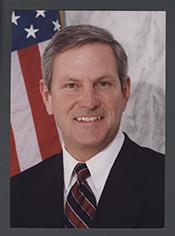
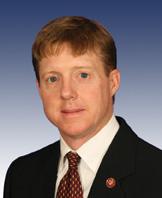
Mr. Speaker, I stand before you tonight to lead a discussion among the Blue Dog Coalition as we talk about issues of fiscal responsibility, pursuing a balanced budget, and doing the right thing for…
Mr. Speaker, I stand before you tonight to lead a discussion among the Blue Dog Coalition as we talk about issues of fiscal responsibility, pursuing a balanced budget, and doing the right thing for future generations.
I would like to open this discussion by recognizing one of my colleagues, one of the newest members of the Blue Dogs, Mr. Cazayoux from Louisiana, and I would yield to him as much time as he may consume.
I thank my colleague for his comments, a new Member of this body, but someone who recognizes the importance of fiscal responsibility.
I think that it's important to expand on what PAYGO is. This is a term that gets thrown around a lot in Washington, but we really ought to review what it means. And at its basis, it's a pretty simple concept, and that is that if you have new spending, you've got to pay for it. You've got to pay for it by cutting spending elsewhere or raising revenues, but you've got to pay for it.
And, you know, this isn't a new concept even here in Washington. It turns out back in 1990, during the presidency of George H.W. Bush, Congress passed legislation to put a pay-as-you-go, or PAYGO, policy into effect. And at that time, Congress came together in a bipartisan way and then President Bush signed that into law.
And when it was passed, it put us on a path to where decisions had to be made where you had to live within a budget. Everybody in this town can come up with a new idea about how to spend money, both sides of the aisle, everyone can come up with those ideas. It's easy to say yes to that. It's a lot more difficult to say, you know what, we're going to live within a budget. But you know what, we ought to be doing that because that's what everyone in this country does, everyone who runs a business, everyone in their own household budget, everybody does that.
So let's look at what happened after passage of that law in 1990. There were a number of other things that happened during the decade of the 1990s. There was a strong economic growth period, the dot-com industry really took off, and a whole series of reasons, including restraint on spending in Washington, allowed us to move from annual deficits to annual surpluses. It was a remarkable period in our country's history to have that transition take place. And it was an exciting time for this country. And it was good for the government's books to be balanced and it was good for our economy, and it led to a stronger dollar. I mention that, and we'll come back to that later in this discussion, because today we all know we're suffering from a rather low dollar situation in the global economy.
So if that was such a good idea, if it worked so well, why is it that we aren't having both the House and the Senate live by that same law today? Well, it turns out that law expired at the end of 2001. And that was really unfortunate that it did because it provided that set of constraints, if you will, on Washington--on Congress, on the President, on everybody, on Democrats, on Republicans. It provided that constraint that asked people to live within a budget.
And after it expired, I think we all know what happened. You had over 6 years, 2001 through 2006, you had an explosion of spending. You had an explosion of debt. Annual deficits were so large. And over those 6 years, our national debt went from $6 trillion to $9 trillion. Now, you throw these numbers around, it almost gets to the point where it's hard to recognize what they really mean. But I think we all know a trillion dollars is a lot of money. And I think we all know that when you have $6 trillion created through the whole country's history through the first 42 Presidents, and then during the first 6 years of the 43rd President you add another $3 trillion, you're adding a lot of debt in a short amount of time. And PAYGO didn't exist. Spending took off at a huge rate, greatest increase in government spending since the 1960s, in fact.
That is what happened during those first 6 years. And the Blue Dog Coalition during all that time said, wait a minute. Wait a minute. Let's not get into a deficit mode again. Let's not create more debt that creates a burden on future generations who have to pay the interest on that debt. Let's not ensure high taxes on future generations to pay the interest on the debt. Let's recognize that we have an obligation to future generations that they shouldn't have to pay for obligations that we have created on our watch.
But we could never get the PAYGO principles put back into place. We couldn't get a vote to put it into statute. We couldn't get it in a rule of the House of Representatives, either, until January of 2007. There was a change in control in the House of Representatives. And on the first day when we were all sworn in here to take the oath of office for the 110th Congress, we set the rules that we are going to work under during that 2-year session. And in that rule, pay-as-you-go was put in place for the House of Representatives.
And I am really proud of the Blue Dog Coalition for taking the lead on pushing that rule to be put in place. It is not easy to live under a budget. The PAYGO rule has been attacked. And yes, there have been a couple of circumstances where it has been waived. But I think that the Blue Dog Coalition deserves a lot of credit for taking a stand, forcing the tough decisions, and quite frankly, creating the dynamic where I think there has been a real restraint on this body in terms of what could have happened instead in terms of additional spending and adding to our national debt.
It is at the start of a real challenging period we face in this country, because we all know that as baby boomers retire and additional pressures occur on Social Security and Medicare that it is going to take a very thoughtful and aggressive effort by this body in a bipartisan way to navigate through that challenge and make sure that we maintain fiscal discipline and fiscal responsibility. And pay-as-you- go, the PAYGO principles, provide a tool. They provide a tool that would benefit all of us.
So this isn't really, again, about Democrats or Republicans. This isn't about trying to place blame on people or anything else. It is really just talking about the fact that if you look at the way we are set up in this country as a government, in the Federal side we are allowed to run deficits. You can have deficits if you don't bring in as much revenues as you spend. In a lot of States, they have constitutional amendments that require a balanced budget. That doesn't exist here in Washington.
As a result, as I said earlier, it is easy to spend money. And over the years both parties have shown an ability to spend money. There's no doubt about that. And so we need this external constraint, if you will, of pay-as-you-go. And I will go beyond that to say the Blue Dogs support a balanced budget, as well. That is one of the guiding principles of the Blue Dog Coalition, is a balanced budget amendment to the Constitution. It takes a long time to amend the Constitution. It takes many years to get enough States to ratify and whatnot. And that is an important goal. But pay-as-you-go we can do right away. We've had it as a rule in the House. We would like to see it as a law. We want a statute passed by the House and the Senate because it will serve us all so well.
I will close with one more comment. And I will recognize a couple of my colleagues from the Blue Dog Coalition to participate in this discussion. But I just want to come back, as I mentioned, to the issue of the low dollar we have today. When you're borrowing lots of money, and the United States has been borrowing a lot of money from foreign lenders, that devalues the dollar. It's a supply-and-demand issue. And we're having to borrow to pay for so much in this country. And we know that that low dollar has had some serious implications for us. Oil is priced on a dollar-per-barrel basis. The global market is one market for everybody. And as other currencies in the world go up, as the dollar goes down, that means the price per barrel in dollars is going up. That's just one example of where a low-dollar policy can have a serious impact on our economy and on the daily lives of all of us.
A strong dollar and a dollar that we can be proud of can be reinforced by public policy that encourages balanced budgets. A government that lives within its means has a stronger currency. And again, that shouldn't be about Democrats or Republicans, or the left or the right. That's about what's right for this country. And that's what the Blue Dogs are about. And that's why I'm proud to be a member of the Blue Dog Coalition, because the Blue Dogs like to look out for what's right for this country. And they take an independent approach. And they want to sit down, roll up their sleeves, tackle these issues and work with everybody on these issues.
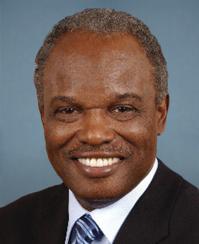
So that's why we are here tonight, to talk about pay-as-you-go, to talk about the benefits of this country. I have been joined by some of my other Blue Dog colleagues. And I would like to now recognize my good friend and colleague from the State of Georgia, Representative David Scott, for as much time as he might consume.
I want to thank my colleague from Georgia for those words. He is an excellent member of the Blue Dog Coalition.
And Mr. Speaker, I would like to yield back my portion to let Mr. Boyd control the rest of the 60 minutes if I could.