Madam Speaker, I move to suspend the rules and agree to the resolution (H. Res. 272) commemorating the 200th anniversary of the abolition of the transatlantic slave trade, as amended. Madam Speaker,…
Madam Speaker, I move to suspend the rules and agree to the resolution (H. Res. 272) commemorating the 200th anniversary of the abolition of the transatlantic slave trade, as amended.
Madam Speaker, I ask unanimous consent that all Members have 5 legislative days to revise and extend their remarks and include extraneous material on the resolution under consideration.
Madam Speaker, I rise in strong support of this resolution and yield myself as much time as I may consume.
I would like to first commend our distinguished colleague and former member of the Foreign Affairs Committee, Ms. Lee of California, for introducing this very important resolution.
I am honored and humbled to commemorate the 200th anniversary of the abolition of transatlantic slave trade with this resolution, for its legacy continues to reflect the racial biases and socioeconomic disparities that still exist in this country and throughout the Americas.
As we consistently admonish the prevalence of modern-day slavery worldwide, because it still exists in some parts of the world, it would be hypocritical if we did not acknowledge the history of transatlantic slave trade which existed for so long in this country, and therefore it is appropriate that we speak about it at this time, its 200th anniversary.
For over 300 years the United Kingdom and other European countries kidnapped and sold millions of Africans into slavery. The transatlantic slave trade is known as the largest forced migration in the history of the world. Estimates range from 25 to 50 million Africans were forcibly brought to the United States, the Caribbean, Central and South America and to Europe. Sharks migratory patterns were changed because these predators followed the ships in the Middle Passage because when a slave died they were thrown overboard, or if they were killed because they were protesting, or if they committed suicide, the sharks knew that they could follow the ships, and it changed the migratory patterns of sharks during this period of time.
African labor was an essential feature of economic development in Europe and her former colonies, including the United States. All of the nations involved flourished economically as a result of slave labor.
The fact that slavery was not abolished in the United States until Abraham Lincoln declared to end slavery in the Confederacy in 1863 with the Emancipation Proclamation. However, slavery was really not abolished in the Union.
Interestingly enough, in my State of New Jersey, slavery continued until 1866. In New Jersey, a mother, a woman could become free at the age of 21, and a man at the age of 25, but their children had to continue in slavery. And so
the emancipation only freed slaves in the Confederacy, and did not free slaves in the Union. And so, as I have indicated in New Jersey, there were still slaves a year after the end of the Civil War in 1866.
The dignity of our Nation demands our recognition of this tragic part of American history. I extend my highest respect and appreciation for the contributions and struggles of African Americans to create an equitable and just society from which we all benefit today.
I strongly support this resolution, and urge my colleagues to do the same.
Madam Speaker, I reserve the balance of my time.
Madam Speaker, I thank the gentlewoman for her generosity.
Madam Speaker, at this time I would like to yield 7 minutes to the sponsor of the resolution, Representative Barbara Lee from the Ninth District of California, member of the Committee on Appropriations.
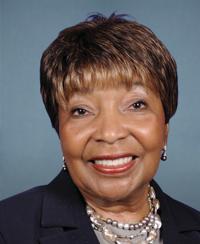
Madam Speaker, I yield 2 minutes to the gentlewoman from Texas, Representative Eddie Bernice Johnson, chairman of the Transportation and Infrastructure's Subcommittee on Water Resources and Environment.
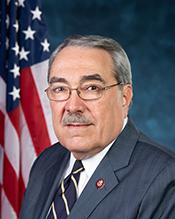
Madam Speaker, I yield 3 minutes to the gentleman from North Carolina, Representative G. K. Butterfield, the vice chairman of the Energy and Commerce Subcommittee on Energy and Air Quality.
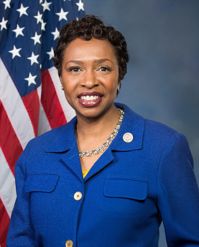
Madam Speaker, I yield 3 minutes to the gentlewoman from the 11th District of New York, Representative Yvette Clarke, a member of the Commerce and Small Business Committee.
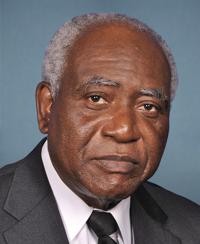
Madam Speaker, I yield 3 minutes to the gentleman from the Seventh District of Illinois, chairman of the Oversight and Government Reform Subcommittee on Federal Workforce, Postal Service and the District of Columbia, Representative Danny K. Davis.
Madam Speaker, it is my pleasure to yield 3 minutes to the Representative from the Sixth District of California, Representative Lynn Woolsey.
I yield 3 minutes to the gentlelady from the 18th District of Texas, Representative Sheila Jackson-Lee, chairwoman of the Homeland Security Subcommittee on Transportation, Security and Infrastructure Protection.
(Ms. JACKSON-LEE of Texas asked and was given permission to revise and extend her remarks.)
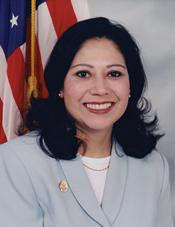
Madam Speaker, I yield 1 minute to the gentlelady from California (Ms. Solis), a member of the Committee on Energy and Commerce.
Madam Speaker, I yield 3\1/2\ minutes to the gentlewoman from the 13th District of Michigan (Ms. Kilpatrick), the chairperson of the Congressional Black Caucus and a member of the Appropriations Committee.
Madam Speaker, I yield myself such time as I may consume.
Madam Speaker, let me thank the gentlelady from California once again. As she said, we hope that the history will be integrated into our textbooks. In New Jersey, I am proud to say, William Payne, assemblyman, passed Amistad legislation that will integrate the history of African Americans in the history of New Jersey. Our current Member of Congress, Albio Sires, was the Speaker of the Assembly when that great legislation was brought through with his assistance.
When we read about Patrick Henry, who said, ``Give me liberty or give me death,'' or Nathan Hale, who said ``I regret that I only have one life to give for my country,'' we will read about Crispus Attucks, the first person killed in the Revolutionary War on March 3, 1770. We will read about Peter Salem and Salem Poor at the Battle of Bunker Hill, that fired the shot. They said, ``Don't fire until you see the whites of their eyes.'' They killed Major Pitcairn, who led the Boston Massacre.
When we hear about the Civil War, 50 percent of the Navy were African Americans, once Frederick Douglass convinced President Lincoln to allow them.
In the Spanish-American War, as I conclude, we hear about the Rough Riders of Teddy Roosevelt, but it was the Buffalo Soldiers at the Battle of San Juan Hill that saved the Rough Riders of Teddy Roosevelt from annihilation, which has been kept from our history.
I could go on and on, but since the time has expired, at another time I will hope to be able to get through World War I and World War II and to the present time.
Madam Speaker, I have no further requests for time, and I yield back the balance of my time.